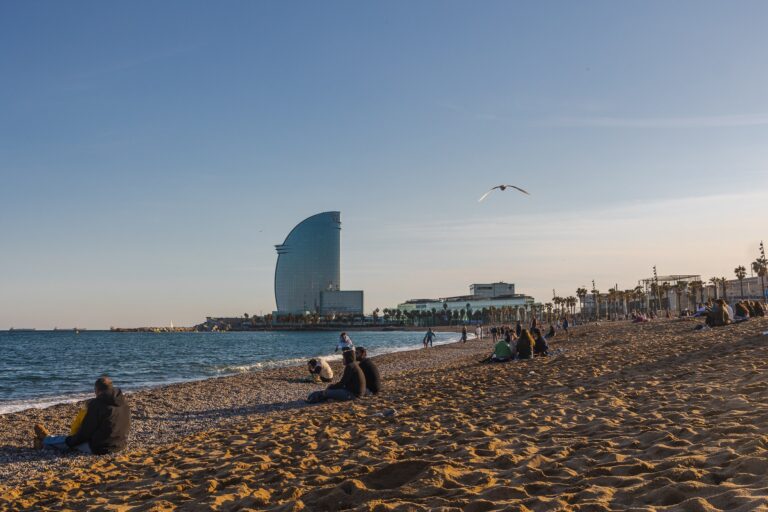
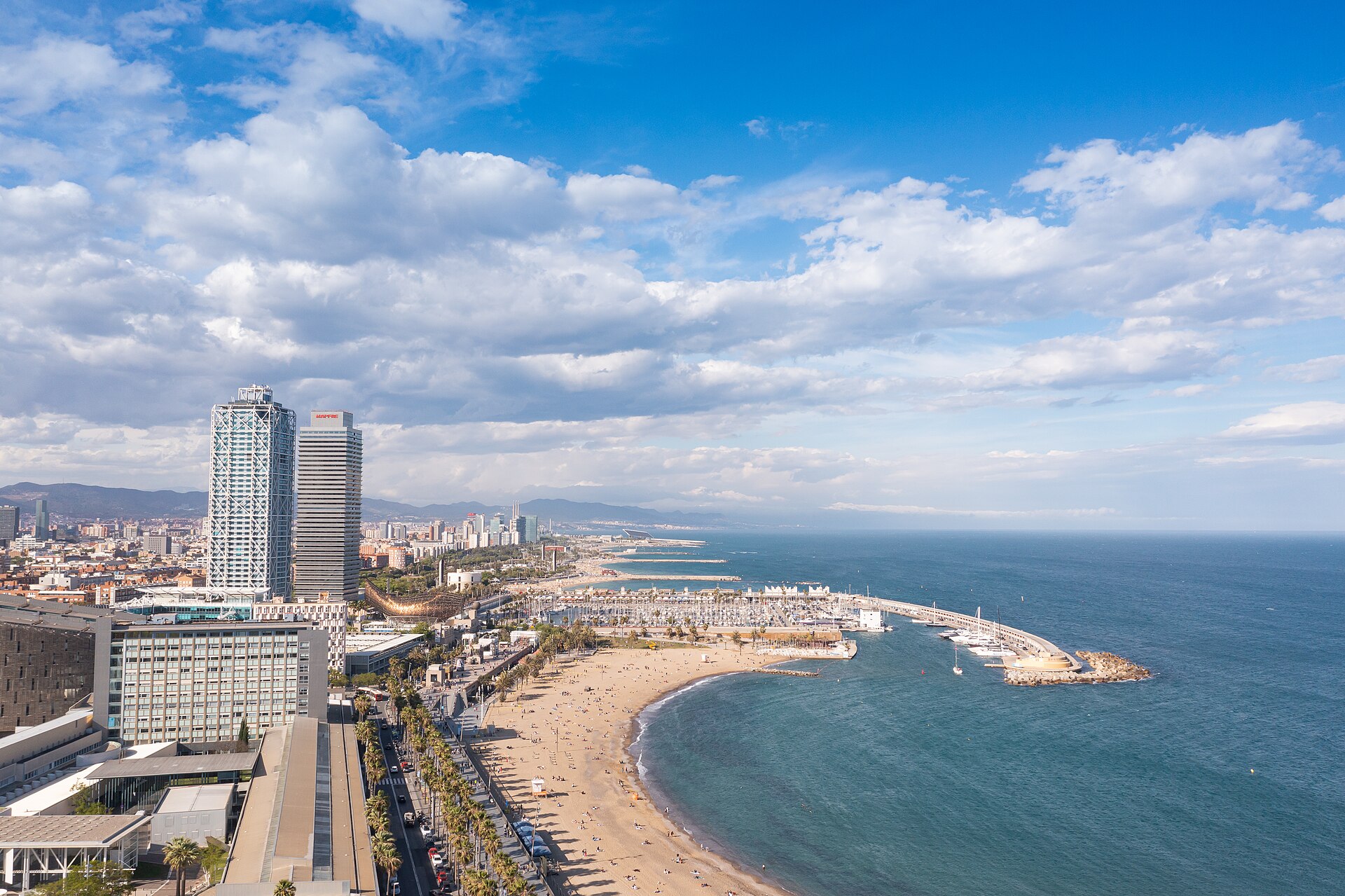
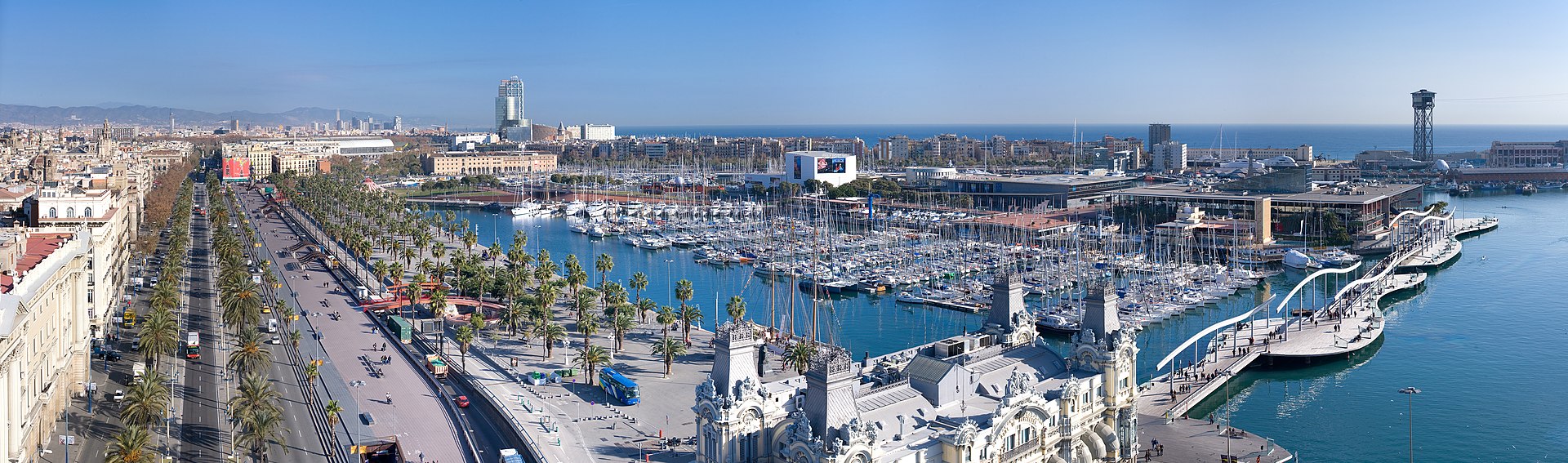
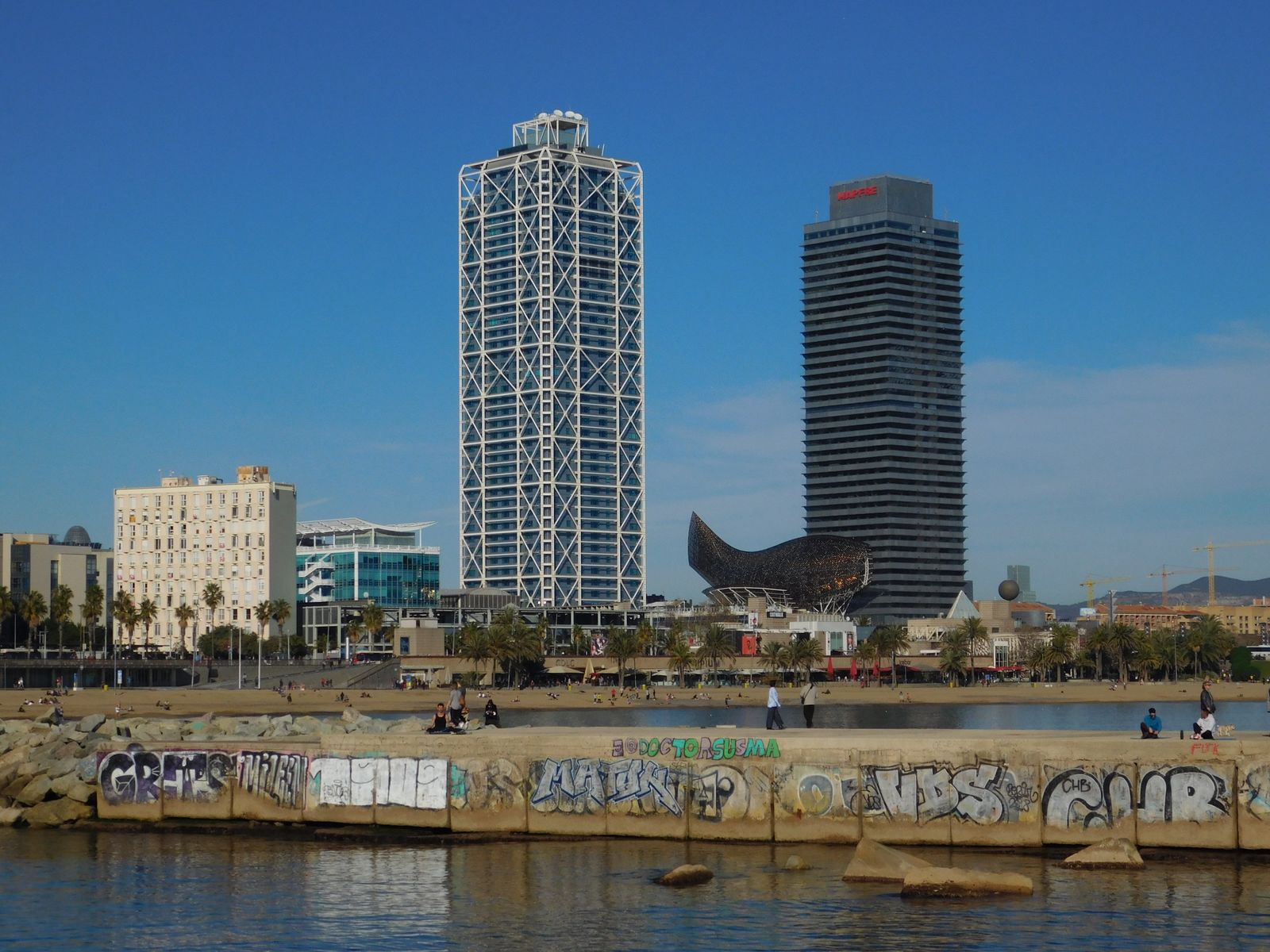
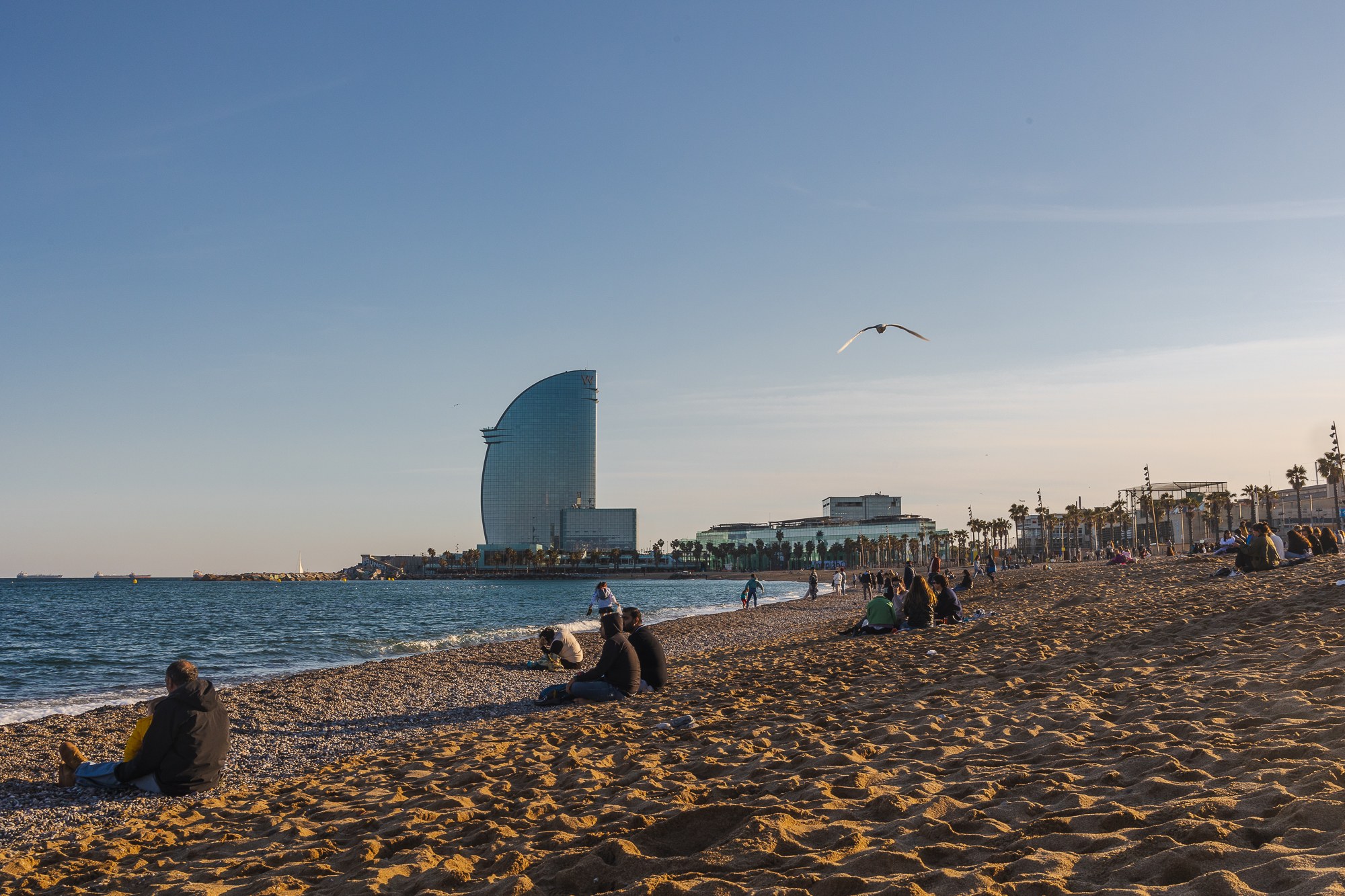
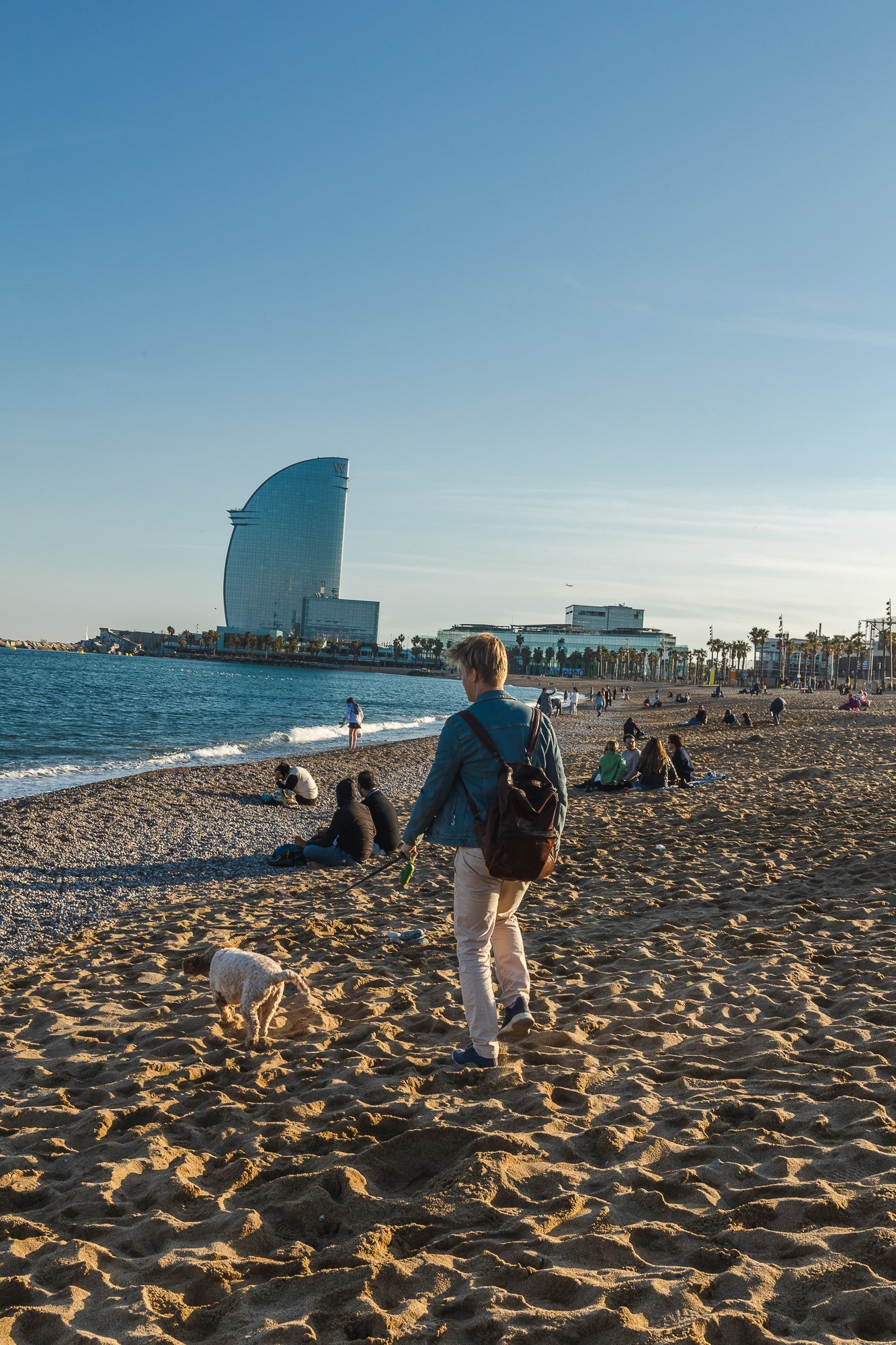
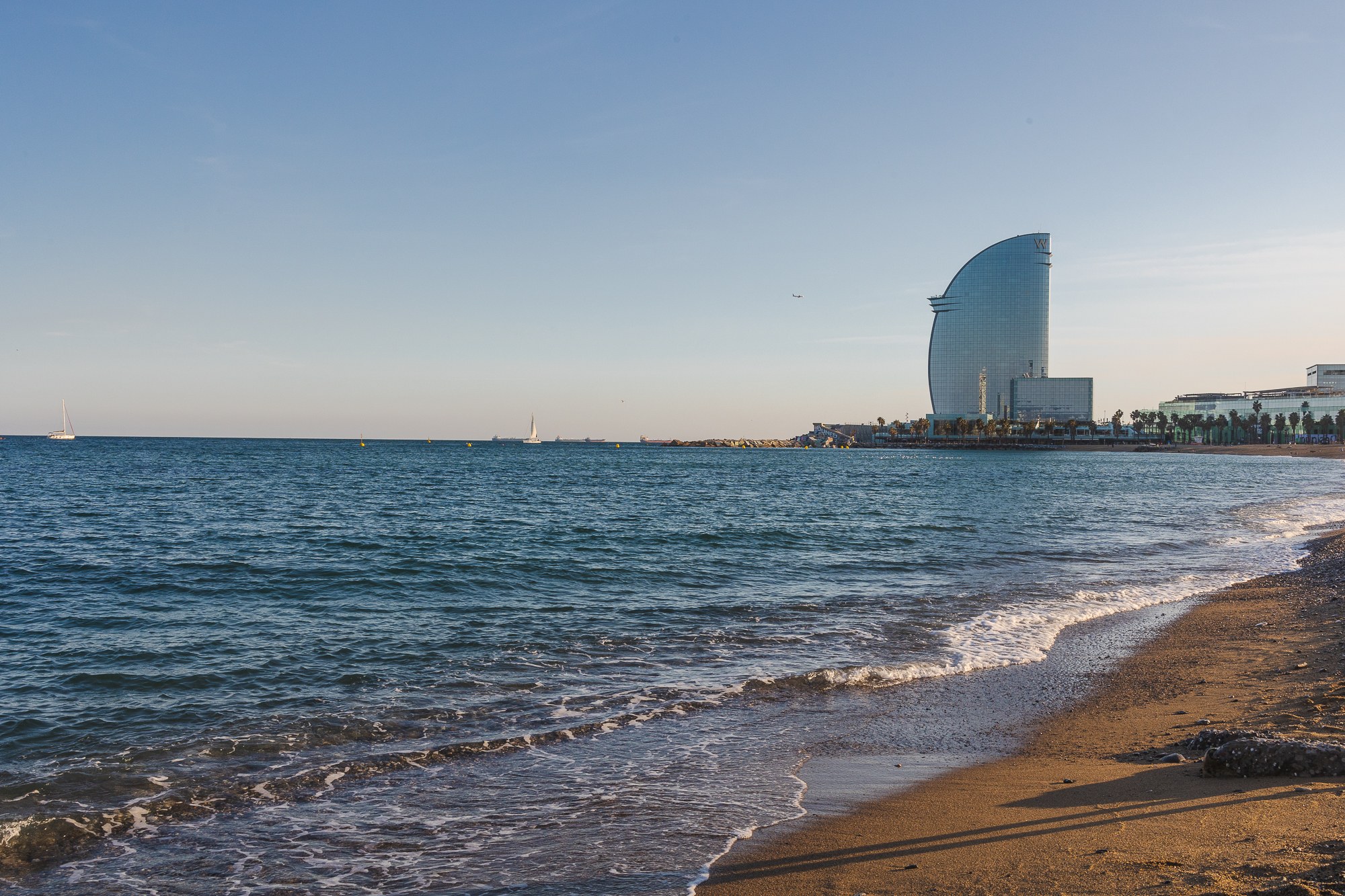
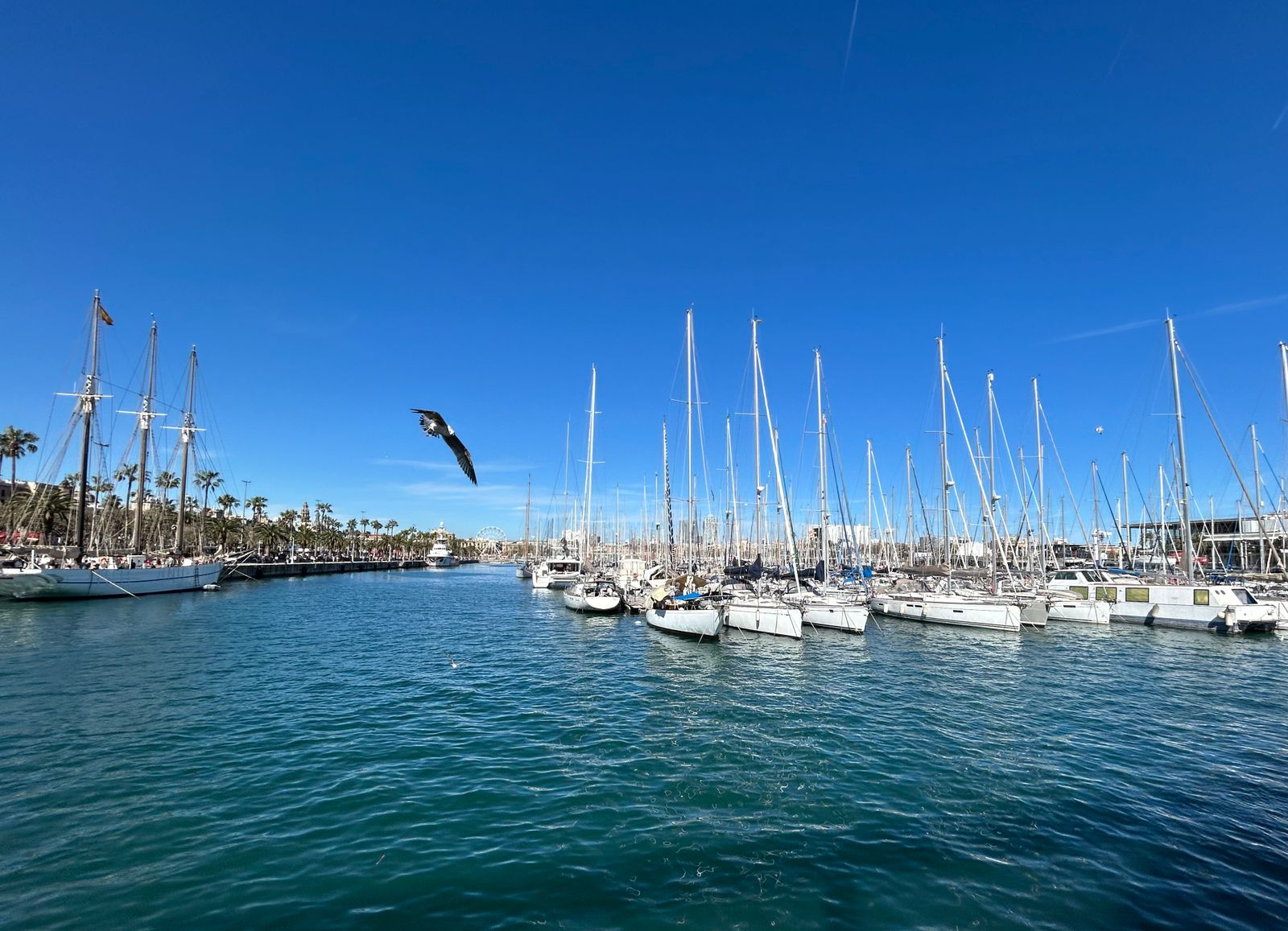
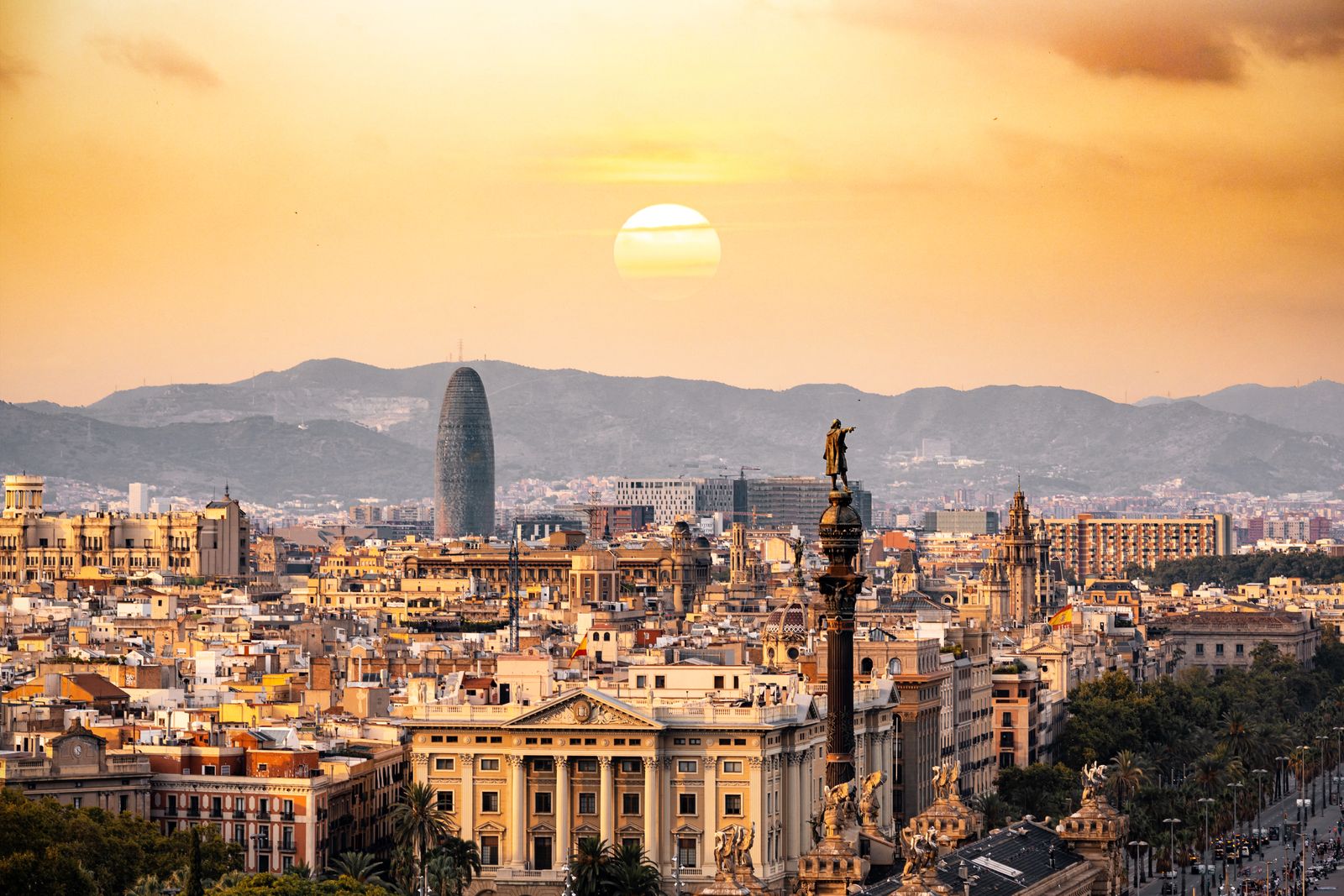
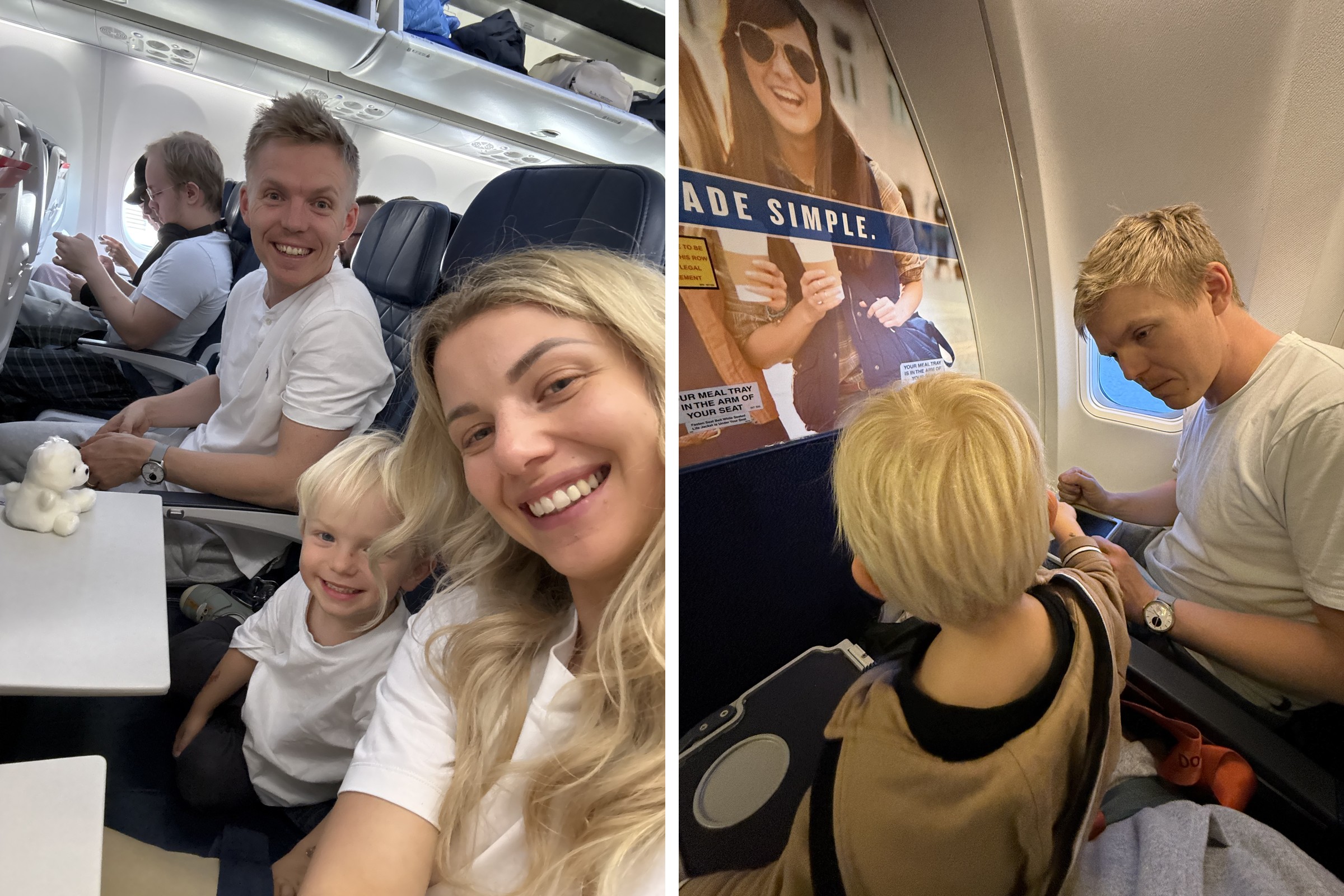
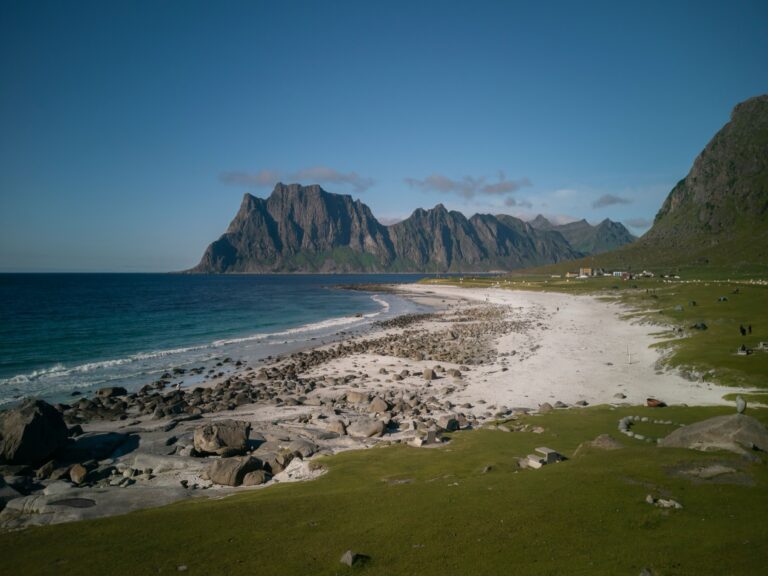
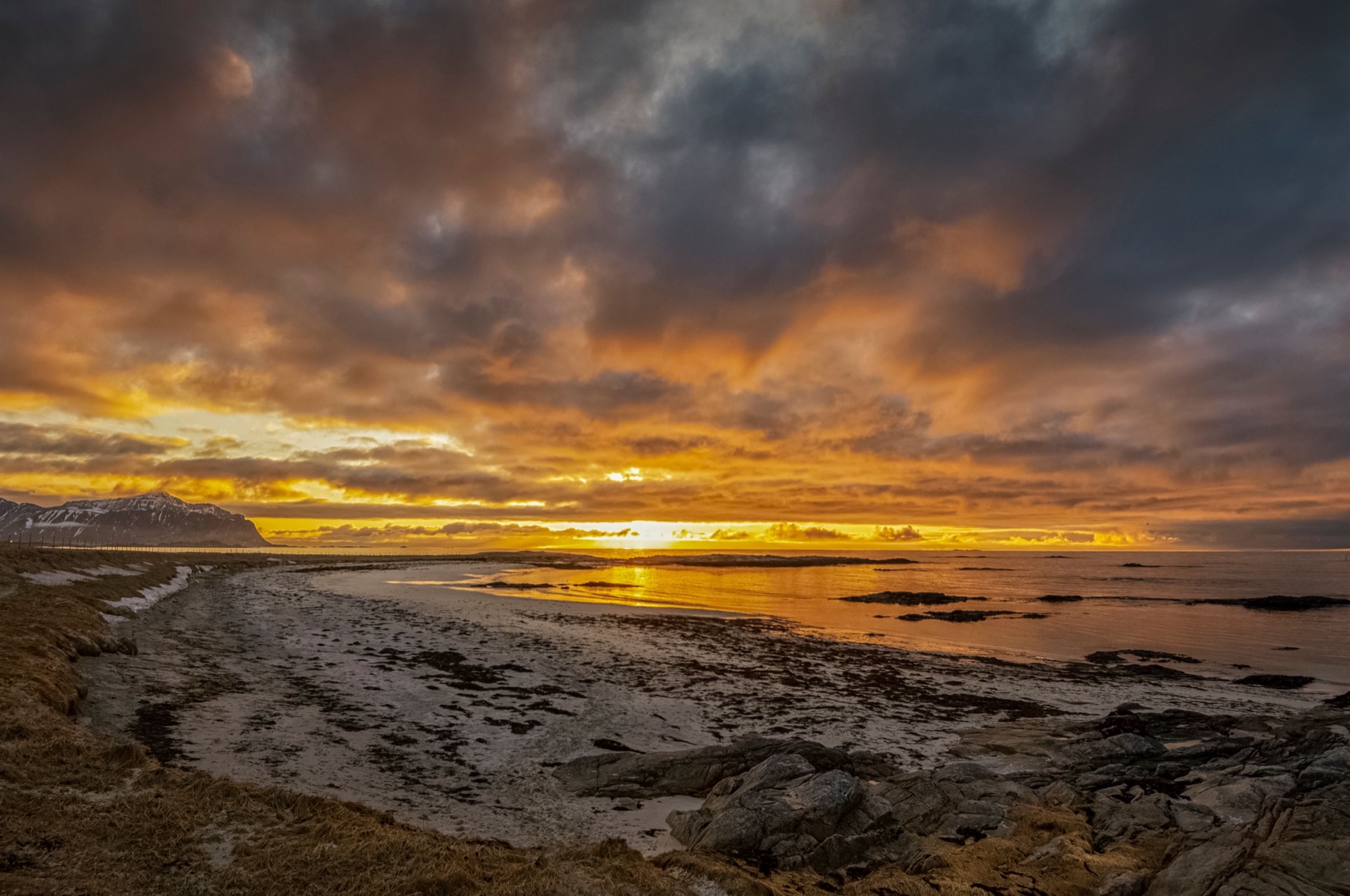
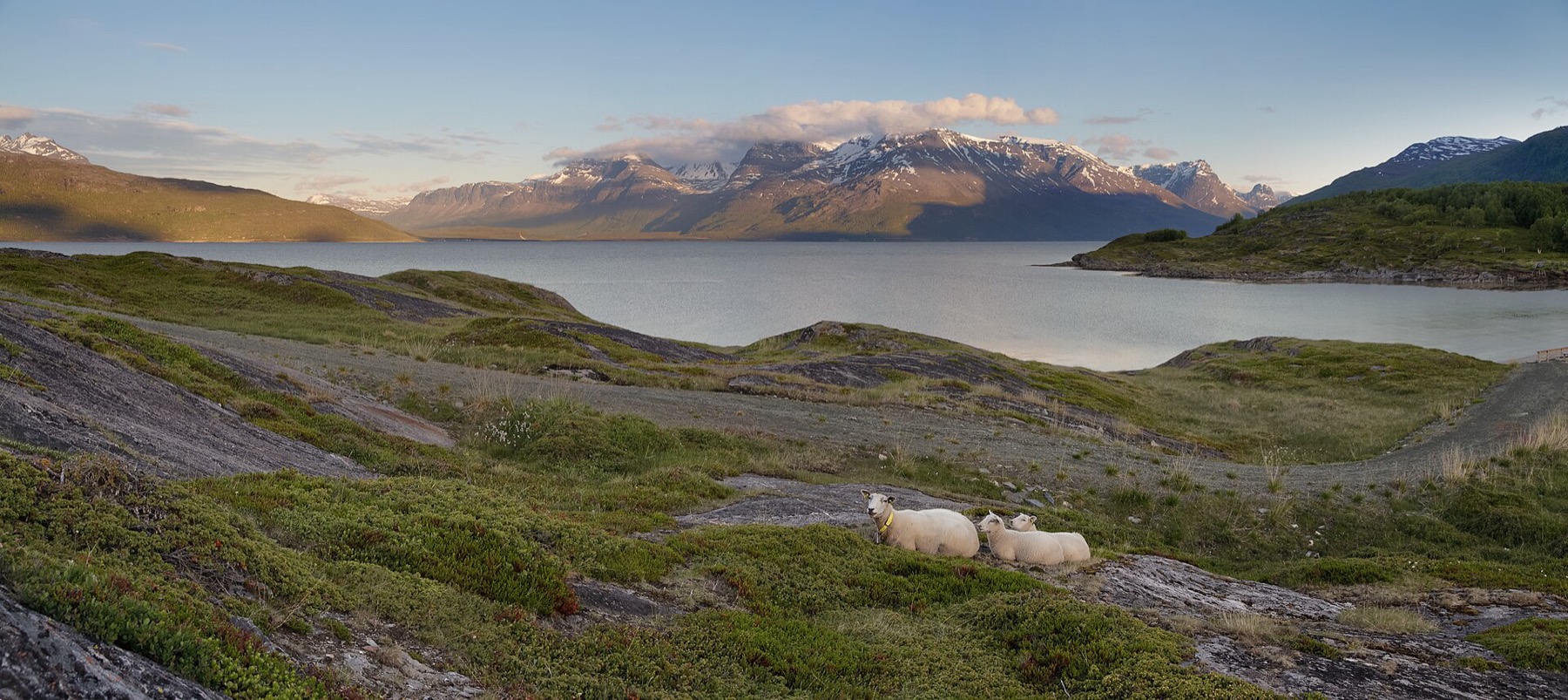
When Lukáš and I set off for Barcelona at the beginning of March, one of our very first stops was the famous Barceloneta. We were only there for a long walk, because it definitely wasn’t swimming weather at the time, but honestly, even in the height of summer we probably wouldn’t have gone in the water there. If you’re wondering about the best beaches in Barcelona, local blogger Diana recently summed it up perfectly when she wrote that locals today skip Barceloneta entirely and head north instead, or straight out of the city.
It’s the most famous beach in Barcelona and looks absolutely stunning in photos, but in reality it’s probably the worst spot in the city to lay down your towel. All the city beaches are artificial, created during the enormous redevelopment of the coastline before the 1992 Olympic Games. The swimming experience, though, changes dramatically with every metro stop you travel away from the historic centre.
That’s why I’ve put together 12 tips for beaches in Barcelona and the surrounding area, so you know where to find clean sand and where, on the other hand, to keep a close eye on your wallet. We’ll look at when the sea is at its ideal temperature, what strict rules apply along the coast, and why it sometimes pays off to hop on a commuter train and travel a few stops further south or north.
TL;DR
Better to avoid Barceloneta. It’s the closest to the centre, but it’s full of pickpockets and street vendors, and the sand isn’t exactly the cleanest.
Locals love Bogatell beach. It lies just a little further north, boasts a Blue Flag for cleanliness, and offers much more space to relax.
The best swimming is in August and September. The sea warms up very slowly, so in June the water is only around 20 °C, while in autumn you’ll enjoy a pleasant 23 °C.
Take the R1 train to Ocata. In just 20 minutes from the centre you’ll discover an unfairly overlooked, gloriously wide beach without the tourist crowds.
Castelldefels is a paradise in the south. This beach lies just 200 metres from the train station and offers an incredible five kilometres of golden sand.
Beware of strict fines. Barcelona’s beaches have an absolute smoking ban, you can’t drink alcohol, and you’re not allowed to walk around the city in just your swimwear.
When to Head to the Sea in Barcelona
This is an absolutely crucial detail that can save your entire summer holiday. Barcelona’s sea warms up very slowly and cools down even more slowly, so when planning your trip, definitely don’t go by air temperature alone. In June the city is already baking at 26 °C, but the water is only 20 °C, which for most of us is pretty borderline for a longer swim. If you set off as early as May, be prepared for the fact that the water is an icy 17 °C and only true cold-water enthusiasts will brave the waves.
The best swimming conditions are found in August and September, when the sea finally warms up properly. In August the water averages a lovely 25 °C, but you have to reckon with the fact that the city is overcrowded and the beaches are literally bursting at the seams. In September, on the other hand, the water temperature drops only slightly to a very pleasant 23 °C, but the tourist crowds noticeably thin out and the sun doesn’t burn as aggressively. Autumn swimming in Barcelona is therefore paradoxically a much better choice than spring. Even in October, when it occasionally rains and the air is around 22 °C, the water stays just as warm as in early June, so you can dip in without any problem.
If you’re interested in detailed monthly averages, take a look at our article Weather in Barcelona: temperatures by month and when to go. We were here in early March, and although we mostly walked around the city in light jackets, it was nowhere near swimming weather. In March the beaches serve more for strolls with a coffee in hand than for catching a tan, even though the sun can already be quite pleasant during the day.
Photo: Diliff / Wikimedia Commons, CC BY 2.5
Where to Stay in Barcelona Near the Beach
💡 Tip for accommodation and experiences: We prefer to look for accommodation on Booking.com, which usually has the best cancellation terms. Tickets, tours and activities are then worth comparing and booking through GetYourGuide.
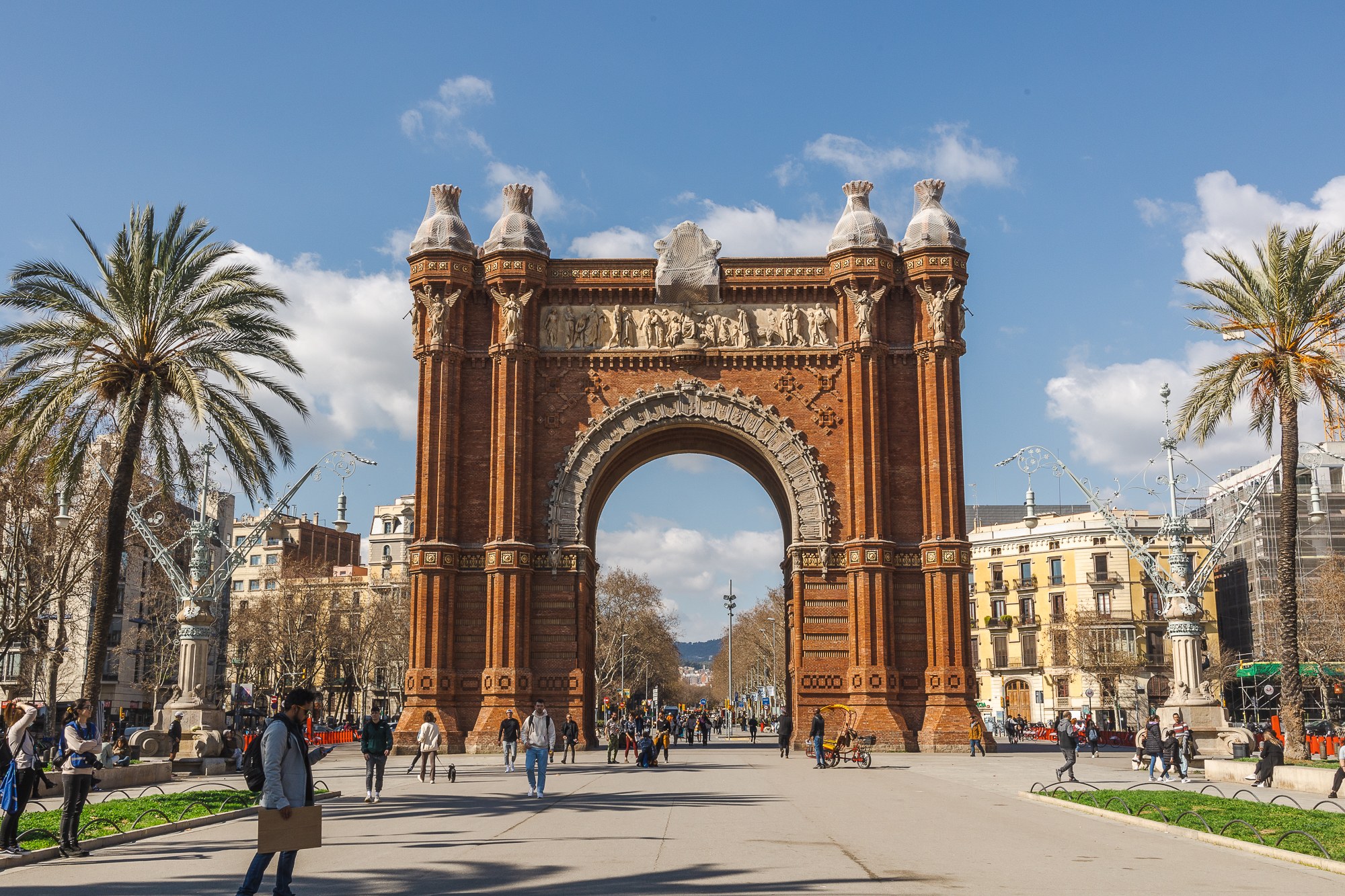
When Lukáš and I were exploring Barcelona, we chose the beautiful Hotel Gaudí, which has a fantastic rooftop terrace and sits right next to the famous Palau Güell palace. From here we could walk to the sea, to the Arc de Triomf, and to the La Boqueria market, but if you’re going purely for beach relaxation, it pays off to stay in the Poblenou or Barceloneta districts instead. Bear in mind, though, that as of April 2026 the tourist tax in Barcelona has risen significantly. For a five-star hotel you now pay €12 in taxes per person per night, while for tourist apartments the fee has gone up to €9.50 per person. Fortunately, this tax is charged for a maximum of seven consecutive nights.
If you’re looking for accommodation that combines proximity to the beach and quality service, I definitely recommend booking hotels well in advance via Booking.com. On top of that, Barcelona is gradually revoking all licences for short-term apartment rentals with the aim of eliminating them completely by the end of 2028. This means that classic hotels tend to sell out very quickly and average room prices keep rising, especially in the summer season. You can read more about the individual districts in our guide Where to stay in Barcelona: 10 districts.
Of the specific hotels that have great reviews and are strategically located near the sea, definitely check out these three popular options, with something for every budget:
Hotel Gaudí – This is where we stayed and we can’t recommend it enough. It’s a short walk from the sea near La Rambla, but thanks to the amazing rooftop terrace with a pool, you have a perfect view straight onto the colourful chimneys of the nearby Palau Güell.
W Barcelona – An iconic luxury hotel shaped like a giant glass sail, standing right on Sant Sebastià beach. If you’re after absolute luxury with a view over the endless sea and don’t mind the higher price, this is quite simply the best choice in the whole city.
Ilunion Barcelona – A great, more affordable hotel in the Poblenou district, from where it’s just a pleasant ten-minute walk to the best city beach, Bogatell. It also offers a lovely rooftop pool where you can unwind after a full day of sightseeing.
Photo: Diliff / Wikimedia Commons, CC BY-SA 3.0
12 Tips for Beaches in Barcelona and Nearby
The coastline is divided into several main stretches, and the differences between them are enormous, whether it’s the crowds, the noise, or the cleanliness of the sand. Let’s take a look at the most famous beaches right in the city as well as the hidden gems that a commuter train will comfortably take you to.
Photo: Samar L. / Pexels
1. Barceloneta Beach: The Famous Spot Locals Skip
This is the absolute epicentre of the tourist industry and the first place most visitors head from the centre. If you do come here, take the locals’ advice: take a look at the incredible buzz, but pick a different spot to actually lay down. In July and August it’s packed shoulder to shoulder, music blares from dozens of portable speakers, and street vendors constantly weave between the blankets. These so-called manteros will offer you a massage every five minutes or cups of mojito. But they mix the drinks on the sly without any refrigeration and often store them right in the drains by the road, so this purchase is entirely at your own risk.
The Barceloneta metro station on the yellow L4 line is also one of the five most critical spots in the city when it comes to pickpockets. Thieves know exactly that huge crowds in flip-flops with phones in their back pockets flow through here, so be extremely vigilant and never leave your belongings on the blanket unattended.
So why come here at all? Clearly for the great food. Don’t head onto the sand itself, but slip into the grid of narrow streets of the old fishing quarter. You’ll find the historic 7 Portes here, or the excellent Can Majó restaurant, which offers great vegetarian versions of tapas and rice dishes coloured with squid ink.
💡 Tip: If you do come here, don’t forget that once you cross the road back into the city you must put on a T-shirt or shirt. Barcelona’s bylaw is uncompromising, and walking around in just your swimwear away from the beach can cost you a fine of up to €300.
2. Sant Sebastià and Sant Miquel: Under the Iconic Sail
If you walk along Barceloneta beach heading south, you’ll reach the Sant Sebastià and Sant Miquel stretches, dominated by the enormous glass building of the renowned W Barcelona hotel. Sant Sebastià is one of the oldest beaches in the city and historically even had a section reserved for nudists, though today you’ll mostly find crowds of tourists with cameras who’ve come to photograph the famous hotel sail.
The atmosphere here is very similar to neighbouring Barceloneta, so you can only dream of a peaceful rest. The upside, though, is that here you’ll find several more upscale beach clubs and bars where you can rent a comfortable sun lounger with a parasol for a fee. Just bear in mind that prices for a full-day rental can climb quite high in peak summer season, and the spots disappear really fast.
Interestingly, the historic red Teleférico del Puerto cable car departs right from here, carrying you high above the busy harbour up to Montjuïc hill. It’s a great experience and the views over the entire sun-drenched coastline are definitely worth it, just be aware that longer queues often form at the ticket booths by the beach, especially around midday.
Photo: dronepicr / Wikimedia Commons, CC BY 2.0
3. Somorrostro: Buzzing Day and Night
Right beyond Barceloneta heading north lies Somorrostro beach, which is firmly tied to Barcelona’s nightlife. It sits right next to the Port Olímpic marina, home to the biggest and most famous nightclubs like Opium or Pacha. During the day, you’ll often see people sunbathing here who danced all night and are now sleeping it off on the hot sand, while lively beach volleyball tournaments go on around them.
Despite its party reputation, this beach is very well maintained and you’ll find all the facilities you need, including spacious showers and clean toilets. Overall, there’s a very youthful and energetic atmosphere here, so you certainly won’t be bored. But if you’re after silence, the murmur of the sea, and peace to read a book, head a bit further north, where the buzz noticeably fades.
💡 Tip: On all of Barcelona’s city beaches there’s a strict ban on drinking alcohol bought from a shop, the so-called botellón. If you throw a party here with a case of beer from the corner shop, you risk an unpleasant fine of €100 to €600. And if minors are with you, the rate rockets up to €1,500.
4. Nova Icària: The Ideal Choice for Families
Once you pass the busy Port Olímpic and head further north, the atmosphere finally starts to noticeably calm down. Nova Icària is an immensely popular family beach that you can reach from the historic centre in roughly fifteen minutes at a brisk pace. It offers very calm water ideal for swimming and excellent facilities for all kinds of water sports.
Compared with the previous beaches, you’ll find much more space here and the sand tends to be considerably cleaner. Right by the beach there are also several quality restaurants and so-called chiringuitos, the typical beach bars. They usually open from spring to autumn and offer great refreshment right by the water, so you can have a coffee or a lemonade with a view of the waves.
This beach is also wonderfully accessible for wheelchair users, and in the summer season there’s even an assistance service for people with limited mobility. They have special amphibious chairs available that allow safe and comfortable entry right into the sea, which makes Nova Icària one of the friendliest spots on the coast.
5. Bogatell: The Real Local Favourite
If you ask locals where they go to the sea after work, most of them will send you right here. Bogatell works as a completely calm alternative to the busy city beaches. From the Poblenou metro station on the yellow L4 line, you can reach it on a leisurely twenty-minute walk, and along the way you can take in the modern architecture of this up-and-coming district.
The sand here is visibly cleaner, the crowds have noticeably thinned, and you have plenty of room to comfortably spread out a blanket and enjoy the space. The beach also boasts the prestigious Blue Flag, which guarantees high water quality and good beach facilities. This is exactly the place where you’ll finally enjoy that longed-for relaxation without constant interruptions from street vendors.
Right on the beach you’ll also find El Xiringuito Escribà, which is one of the best establishments in the city, where people come for its famous paella and excellent vegetable tapas. Definitely make a reservation well in advance, though, because this bar is hugely popular even with locals and is often hopelessly full.
💡 Tip: All of Barcelona’s beaches have a strict smoking ban. The police actively enforce it to protect non-smokers and prevent cigarette butts piling up in the sand, which are a huge environmental burden. With a cigarette in hand you’ll at the very least be shamefully ordered off the beach.
If you keep going even further north, you’ll come across Mar Bella beach, which has a very distinctive, free-spirited character. Since the 1990s, its left section has been reserved as a nudist beach, and historically it’s also the very favourite summer haven for Barcelona’s LGBTQ+ community.
Don’t be misled, though, Mar Bella offers great activities even if you’re travelling with small children or teenagers. Right behind the beach there’s an excellent concrete skatepark, plenty of modern climbing frames, and even a giant slide that can keep kids entertained for hours, while you can read a book on your blanket in peace.
Thanks to its considerably greater distance from the main harbour, the water here tends to be beautifully clear and the horizon isn’t spoiled by as many cruise and cargo ships. It’s a great compromise between good city accessibility by bike or on foot and a pleasantly relaxed beach atmosphere.
7. Nova Mar Bella: Calm Beneath Modern Skyscrapers
Nova Mar Bella lies surrounded by the glass skyscrapers of the modern Diagonal Mar district. You’ll definitely find peace here, but you have to accept that it completely lacks the typical historic backdrop of the old town that you know from colourful postcards and guidebooks. The buildings here are much newer and feel more like a modern residential neighbourhood somewhere in Miami.
This beach is sought out mainly by locals who live in the adjacent new developments, and only an absolute minimum of ordinary tourists stray here. The sand is beautifully fine and the entry into the water fairly gentle, which you’ll appreciate especially during autumn swimming, when the waves are a little calmer and the water temperature is still very pleasant.
Interestingly, thanks to the much more open space, the wind here is often a bit stronger, which makes Nova Mar Bella an ideal spot for flying kites in spring and autumn, and you’ll occasionally come across enthusiasts of various windy beach sports.
8. Llevant and the Fòrum Zone: The Far North of the City
These are the very northernmost points of Barcelona’s coastline. Llevant is a relatively new beach that only officially opened to the public in 2006, and it offers a complete escape from the city madness. It’s usually beautifully calm here, and on part of the beach there’s even a special fenced-off area during the summer season where you can bring your dogs for a swim without worry.
Right next to it is the enormous concrete Fòrum zone. Here you actually won’t find any classic sand, but rather paved concrete surfaces with an artificially created sea pool that’s protected from big waves. You descend into the water on metal steps, much like at a classic public lido.
The Fòrum zone is known above all for the fact that huge music festivals are held here, such as the world-famous Primavera Sound. If you just want a quick swim in clean water at the weekend without having to laboriously brush sand off your legs and belongings, it’s quite an interesting and unconventional alternative.
9. Ocata and El Masnou: A Northern Gem Without Tourists
If you want truly wide beaches and crystal-clear sea, do what the Catalans do at the weekend and hop on a commuter train. At Plaça Catalunya, Sants, or Arc de Triomf, board the R1 line towards Maresme and in twenty to thirty minutes you’ll get off at Ocata station. Trains run every half hour and a one-way ticket costs you roughly €4 to €5.
Local bloggers call this beach utterly underrated, because tourists usually travel much further south by train and here you’ll mostly meet only local residents. Awaiting you is an exceptionally wide beach, clean sand, and perfect peace. It’s the ideal choice for those who just want to lie in silence, read a book, and swim in the gorgeous turquoise water.
Right next to it lies El Masnou beach, which seamlessly follows on from Ocata. Here you’ll find a lovely harbour full of small cafés and excellent restaurants, where after a full day of sunbathing you can enjoy great vegetable tapas with a view of the moored sailboats. And if you’d like to go a bit further, in forty-five minutes you’ll reach Caldes d’Estrac, where the beach is lined with old, colourful modernist villas.
Photo: Katrīne Skrebele / Pexels
10. Castelldefels: Five Kilometres of Golden Sand in the South
If instead you take the commuter train south, your first big destination should definitely be Castelldefels. The journey from the centre takes roughly twenty-five minutes and has one absolutely unbeatable advantage. The train station lies just 200 metres from the sand, so as soon as you step off with your towel, in two minutes you can already take off your shoes and run straight to the water.
The beach offers an incredible five kilometres of golden sand and is considerably emptier than the overcrowded city beaches in Barcelona. It’s beautifully wide, flat, and thanks to the distinctive gentle wind that blows here regularly, it’s also a very popular spot for kitesurfing and other adrenaline-fuelled wind sports.
On the well-kept promenade along the beach you’ll find a huge number of chiringuitos that stay open late into the warm evening. Here you can comfortably rent sun loungers and parasols, whose price usually hovers around €15 to €20 a day, and enjoy the murmur of the sea in peace.
11. Sitges: Blue Flags and Historic Streets
A little further south lies the beautiful and immensely photogenic little town of Sitges. On the R2 Sud line train from Sants or Passeig de Gràcia, you’ll get there in a pleasant thirty-five minutes. Sitges isn’t just about ordinary swimming; it’s a full-fledged all-day trip with stunning architecture that’s definitely worth adding to your itinerary.
The town offers a choice of an incredible 17 different beaches, has old white streets, a beautiful church rising on a cliff right above the sea, and a famous nightlife. It also boasts as many as nine Blue Flags for cleanliness, which is the most in all of Catalonia. On the way by train you’ll also pass the village of Garraf, famous for its iconic green-and-white beach huts set in a small, romantic cove.
⚠️ Important notice for 2026: Extensive construction work is taking place this year on the railway line in the Garraf–Sitges section, and an alternative transport plan is in place. Before your trip, always check the current status at rodalies.gencat.cat so you don’t get stranded on a service disruption and have your plans thrown off.
12. Costa Brava: Cliffs and Pines Further North
If you don’t mind travelling a little longer, the romantic cliffs and fragrant pine groves of the famous Costa Brava coast are definitely worth the journey of over an hour. From the Estació del Nord bus station, which lies a short walk from the Arc de Triomf metro stop, direct and comfortable buses run by the Moventis company.
The journey to the picturesque resort of Tossa de Mar takes roughly an hour and twenty minutes and a one-way ticket costs €15 to €27. Tossa is absolutely breathtaking, because a beautiful and superbly preserved medieval castle rises right above its main beach, beneath which you can swim in crystal-clear turquoise water.
A cheaper and slightly more adventurous option is to buy a combined Tren + Bus ticket at the commuter train station. By train you comfortably travel along the coast as far as the town of Blanes, and there you seamlessly transfer to a connecting Autocars Pujol bus that will take you to further seaside resorts along the cliffs.
Where to Go Next from Barcelona
We also have these detailed guides to Barcelona for you:
Once you’ve had enough of the salty air and beaches, you can set off to discover the city itself or head out on more trips. As I mentioned, during our March visit we mostly walked everywhere, explored the awe-inspiring Sagrada Família inside and out, and sat on that famous mosaic bench in Park Güell. Back then we skipped Tibidabo because of the bad weather and worrying reviews about cars being broken into.
If you’d like help planning your whole stay, take a look at our other articles:
Yes, they occasionally appear, especially when warm winds drive them towards the shore. Always u003cstrongu003ewatch the flag systemu003c/strongu003e by the lifeguards, who monitor safety during the summer season. Green means safe swimming, while yellow urges caution, very often due to increased jellyfish presence or strong currents. Red means an absolute ban on entering the water.
Can I leave my things on a towel when I go in the water?
This is an absolute basic rule you must remember. u003cstrongu003eNever leave your belongings unattended.u003c/strongu003e Theft from towels is a massive phenomenon on Barcelona’s beaches. Pickpockets work in teams and as soon as you turn to face the waves, your bag instantly disappears. One of you should always stay on the blanket, or don’t bring anything valuable to the water at all, just a few coins for water.
Is drinking alcohol on the beach allowed?
Absolutely not, drinking alcohol in public, the so-called botellón, is strictly prohibited. u003cstrongu003eFines range from €100 to €600u003c/strongu003e and if there are minors with you, the amount can climb to an incredible €1,500. The ban applies both on beaches and in the streets throughout the city.
Is smoking allowed on the beaches?
No, Barcelona has an u003cstrongu003eabsolute smoking banu003c/strongu003e on all city beaches. The city is trying to combat the huge environmental burden of cigarette butts in the sand and protect non-smokers. Police patrol and will at the very least shame you off the beach with a cigarette.
What are chiringuitos and when are they open?
Chiringuitos are typical beach bars that stand right on the sand. They offer refreshing drinks, coffee and simple tapas. u003cstrongu003eTheir season usually starts in springu003c/strongu003e and they close in autumn. Right at these bars you can legally have a drink and they often rent out comfortable beach loungers with umbrellas.
Can I walk from the beach into the city in a swimsuit?
Definitely don’t try it. Barcelona’s civic ordinance from 2025 u003cstrongu003estrictly prohibits moving through the streets without a shirtu003c/strongu003e or just in swimwear. As soon as you cross the road from the sea into the city, you must get dressed, otherwise you risk a fine of up to €300 and they won’t let you into any establishment or church anyway.
Are there showers available on the beaches?
Yes, all main city beaches are u003cstrongu003eequipped with public showers and toiletsu003c/strongu003e. In past years they were occasionally turned off due to extreme drought, but in 2026 the water reservoirs in Catalonia are full again, so there are currently no restrictions for tourists in this regard.
Tips and Tricks for Your Vacation
Don’t Overpay for Flights
Search for flights on Kayak. It’s our favorite search engine because it scans the websites of all airlines and always finds the cheapest connection.
Book Your Accommodation Smartly
The best experiences we’ve had when looking for accommodation (from Alaska to Morocco) are with Booking.com, where hotels, apartments, and entire houses are usually the cheapest and most widely available.
Don’t Forget Travel Insurance
Good travel insurance will protect you against illness, accidents, theft, or flight cancellations. We’ve had a few hospital visits abroad, so we know how important it is to have proper insurance arranged.
Where we insure ourselves: SafetyWing (best for everyone) and TrueTraveller (for extra-long trips).
Why don’t we recommend any Czech insurance company? Because they have too many restrictions. They set limits on the number of days abroad, travel insurance via a credit card often requires you to pay medical expenses only with that card, and they frequently limit the number of returns to the Czech Republic.
Find the Best Experiences
Get Your Guide is a huge online marketplace where you can book guided walks, trips, skip-the-line tickets, tours, and much more. We always find some extra fun there!
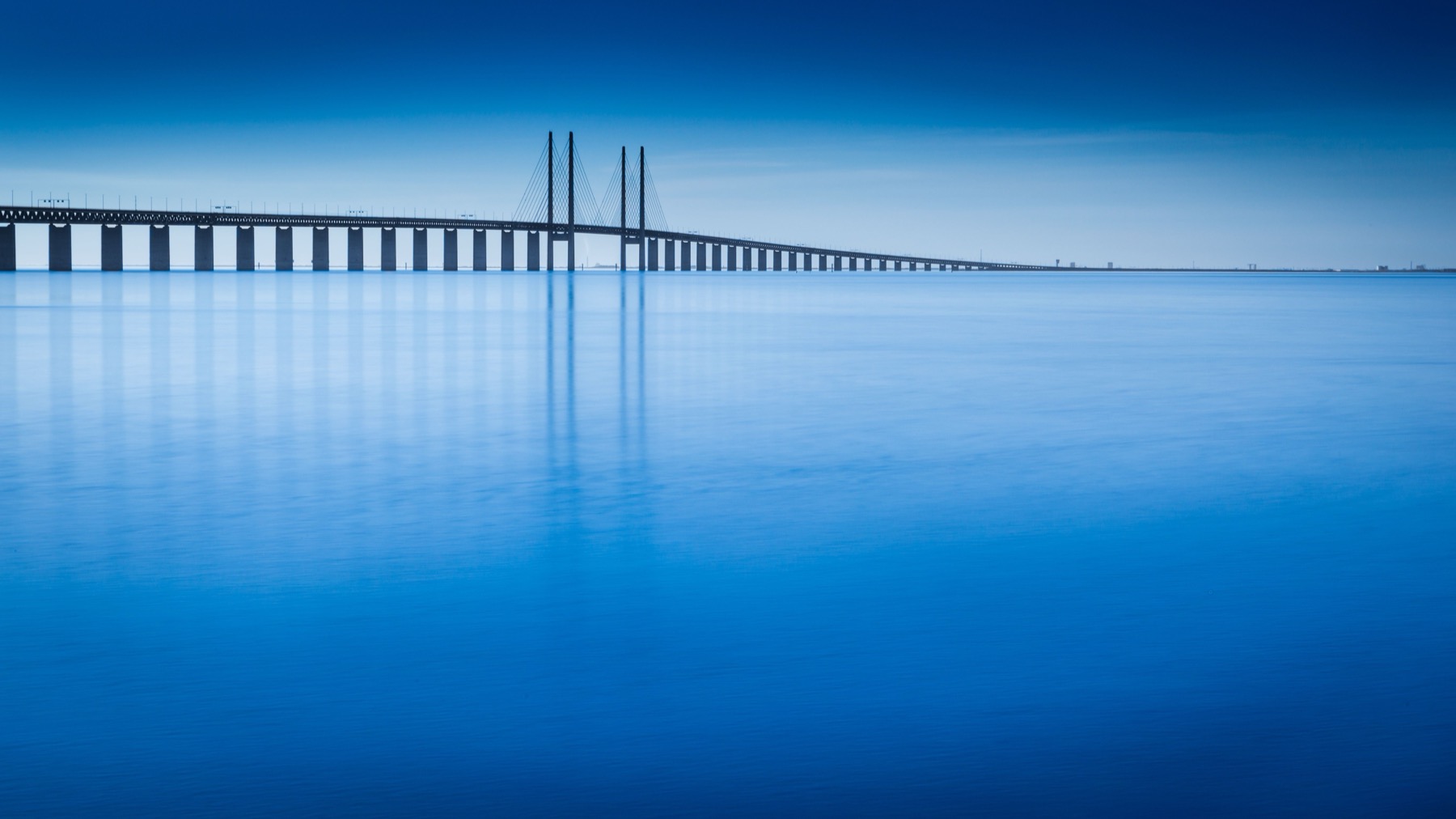
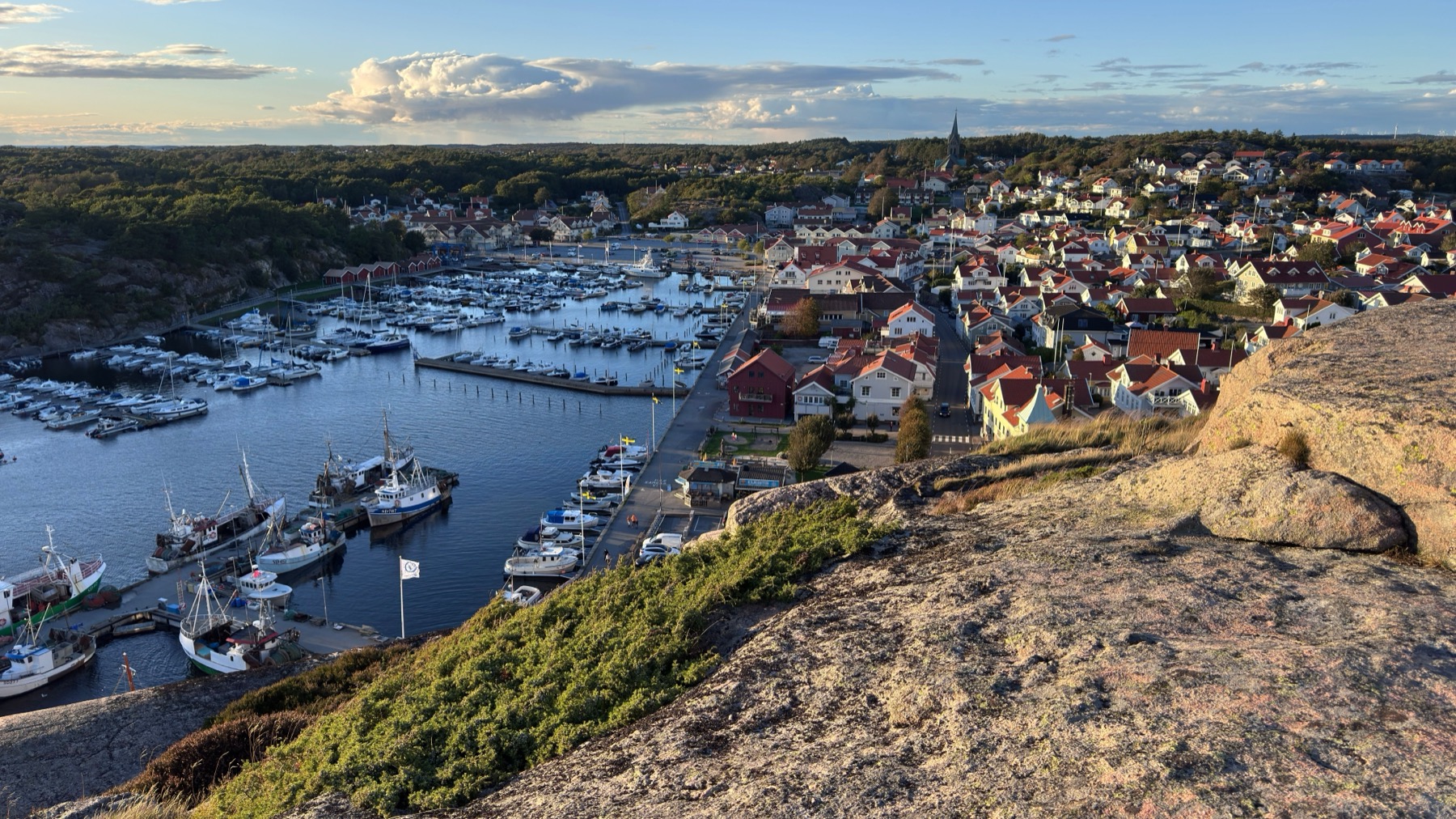
Malmö in Sweden is the country’s youngest and by far its most multicultural city, a place where former rusting shipyards have transformed into a hypermodern district crowned by an iconic skyscraper. Right in the centre you can swim in the sea without a second thought, gazing out at a gigantic bridge, and you’ll reach that same bridge from Copenhagen airport on a comfortable train in just twenty minutes. This city works as an absolutely ideal and affordable gateway to Sweden, one you can easily explore over a single long weekend.
While Stockholm can sometimes feel a touch stiff and pricey, Malmö is bold, relaxed and incomparably cheaper. You can comfortably explore it on foot or on a rented bike, because the terrain here is as flat as neighbouring Denmark. On every corner you’ll also stumble across fantastic street food, led by the legendary falafel that will reliably rescue your travel budget.
We’ve put together 18 concrete tips on what to see and do in Malmö, from the historic castle through the best falafel to a sauna above the sea. So you won’t miss anything key. I’ll tell you which districts to head to for history and where modern architecture pulses instead, recommend strategic spots for accommodation, and add a detailed budget so you know exactly how much this Nordic stop will really cost you.
Photo: Nik Nikolla / Pexels
TL;DR
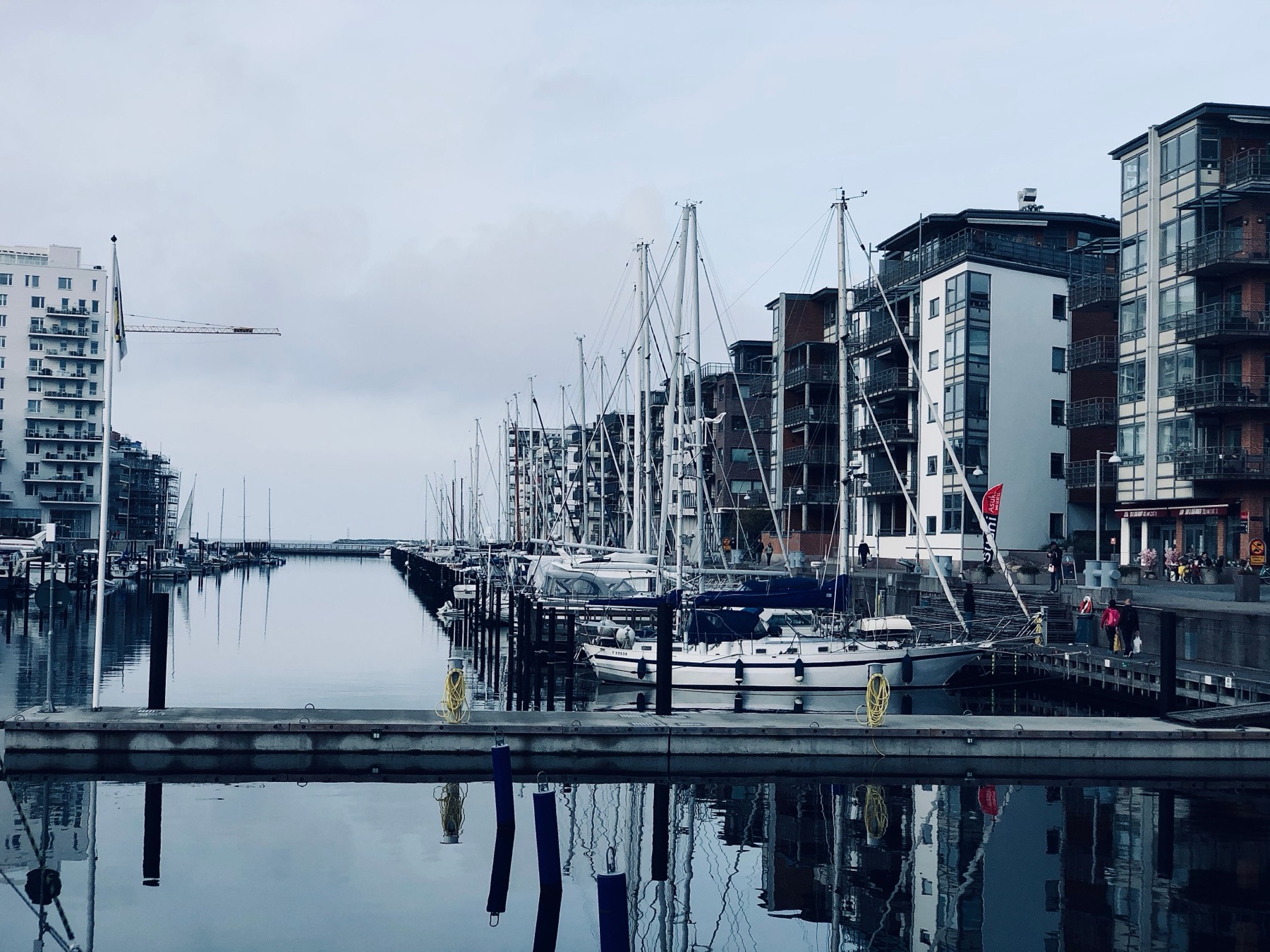
Biggest architectural draw: the Turning Torso skyscraper, towering over the sustainable Västra hamnen district full of swimming jetties.
Historic heart: the little Lilla Torg square with its half-timbered houses is an absolute must for a traditional Swedish fika (coffee break).
Where to eat cheaply: the Möllevångstorget (Möllan) district serves the unbeatably best and cheapest falafel in all of Scandinavia.
City beach: Ribersborgsstranden offers kilometres of sand and the historic Kallbadhus baths with saunas right above the sea.
Transport: from Copenhagen–Kastrup airport you’re in central Malmö by train in 20 minutes, and around the city itself a bike is best.
Budget: Malmö is significantly cheaper than Stockholm; a midday main course (dagens lunch) will run you around 120 to 150 SEK (€11 to €14).
Day trips: across the Öresund Bridge to Copenhagen, or a short train hop to the historic university town of Lund.
Photo: Leah / Pexels
When to visit Malmö and what the weather in Malmö, Sweden is like
If you want to experience the city at its very best, head here between May and the end of August. The south of Sweden has a fairly mild climate and in summer temperatures sit very pleasantly around 20 to 25 degrees. The days are unbelievably long, the sun sets late in the evening, and the whole Västra hamnen district and Ribersborg beach come alive with picnics and swimming. May is downright magical, too, because the entire surrounding province of Skåne bursts into millions of yellow rapeseed flowers.
During August the city hosts the huge Malmöfestivalen festival, which lasts a whole week and turns the centre into one big party. The streets fill with concerts, food stalls from all over the world and art installations, and most of the programme is completely free for visitors. Just bear in mind that accommodation disappears at lightning speed during this period and hotel prices shoot sky-high. A smaller pitfall lurks at the end of June during the summer solstice celebrations (Midsommar), when Swedes head en masse to the countryside and plenty of city businesses may be unexpectedly closed over the weekend.
The winter months, by contrast, have a very specific, even slightly melancholic atmosphere. December tempts you with traditional Advent markets on Gustav Adolfs Torg square and gorgeous light displays, but the days are extremely short and darkness falls around three in the afternoon. Temperatures hover near zero and a sharp wind often blows in off the sea, so you’ll bundle up in a scarf and spend most of the time dashing between warm cafés, museums and saunas.
Photo: Efrem Efre / Pexels
Where to stay: hotels in Malmö, Sweden
💡 Tip for accommodation and experiences: We prefer to look for accommodation on Booking.com, where the cancellation terms tend to be best. Tickets, tours and activities are then worth comparing and booking through GetYourGuide.
Choosing the right district will save you plenty of time and money on public transport, because Malmö is fairly compact. The most strategic choice is the area around the main station (Malmö Centralstation), from where it’s just a few steps into the historic centre and you can hop on a train towards Copenhagen or the airport whenever you like. Another great alternative is the modern Västra hamnen district, which offers stunning sea views and a calmer atmosphere, even though it’s about a twenty-minute walk into the old town.
If you’re after absolute comfort and fantastic views, Clarion Hotel Malmö Live is probably the best choice in the whole city. It’s an unmissable modern building right by the station, from which you’ll see the harbour and the historic centre laid out below you. A double room here goes for roughly 1,400 SEK (about €130) a night, and the price includes an utterly lavish breakfast that, thanks to the enormous selection, will keep you going for a good half of the day.
If you love industrial design and stylish interiors, definitely consider Story Hotel Studio Malmö right beside the water canals. The rooms have bare concrete ceilings and huge windows with sea views, and there’s a great restaurant with a terrace on the top floor. Prices here are very similar, usually starting around 1,300 SEK (about €120) a night.
If you prefer sustainable architecture and complete quiet, you’ll definitely be won over by Ohboy Hotell right in the eco-friendly Västra hamnen district. It offers unique rooms with their own street entrance, in front of which a city bike is automatically parked for you free of charge for the whole stay. A night here costs around 1,200 SEK (about €110) and, thanks to a little kitchenette, you can comfortably make your own breakfast from local ingredients. Anyone travelling on a very tight budget, on the other hand, can go for the clean and practical STF Malmö City Hostel in the centre, where a bed runs to about 300 SEK (roughly €28).
Photo: Farhad Ibrahimzade / Pexels
Where to eat in Malmö
Thanks to its enormous mix of cultures, the local food scene is incredibly varied and, trust me, you certainly won’t go hungry here. Malmö also offers great value for money, especially if you know exactly where to go and what to taste. Whether you’re in the mood for a culinary experience or just looking for something warm to grab while wandering the city, you’ll always find a great option here.
If you’re after something quick and don’t want to hurt your wallet, head straight to the Möllevången (Möllan) district. This is where the legendary Malmö falafel is made, perfected to an art and available for just a few euros. Try renowned spots like Jalla Jalla or Falafel N.1. For lovers of calmer seating and a slightly more polished atmosphere, I’d recommend the modern covered market hall Malmö Saluhall, where you’ll find the best of local and world cuisine neatly under one industrial roof. ☺️
Photo: Nikolai Kolosov / Pexels
18 things to do in Malmö, Sweden
Here’s where the fun part begins: what makes Malmö win you over and what you’ll carry away in your memory. Historic landmarks blend seamlessly here with hypermodern architecture and tell the story of a city that transformed from an industrial port into a green metropolis of the future. You can comfortably reach most locations on foot, but for the more distant spots I recommend making use of the excellent city bike network.
Photo: Susanne Jutzeler, suju-foto / Pexels
1. Turning Torso: the twisting skyscraper
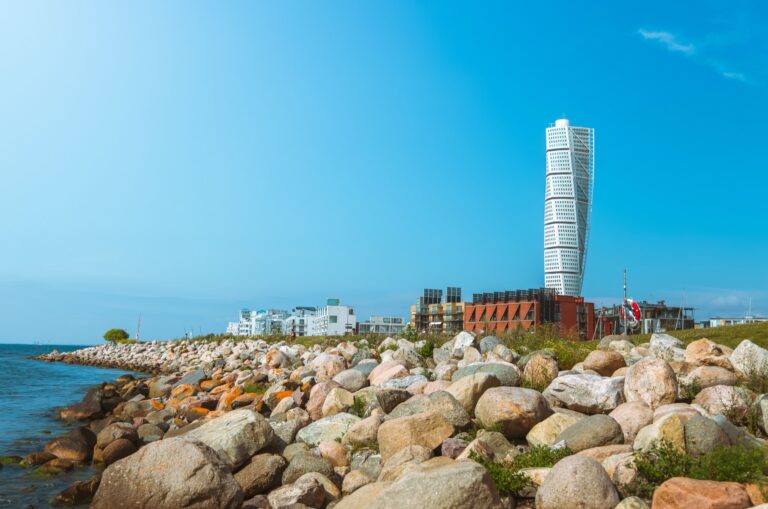
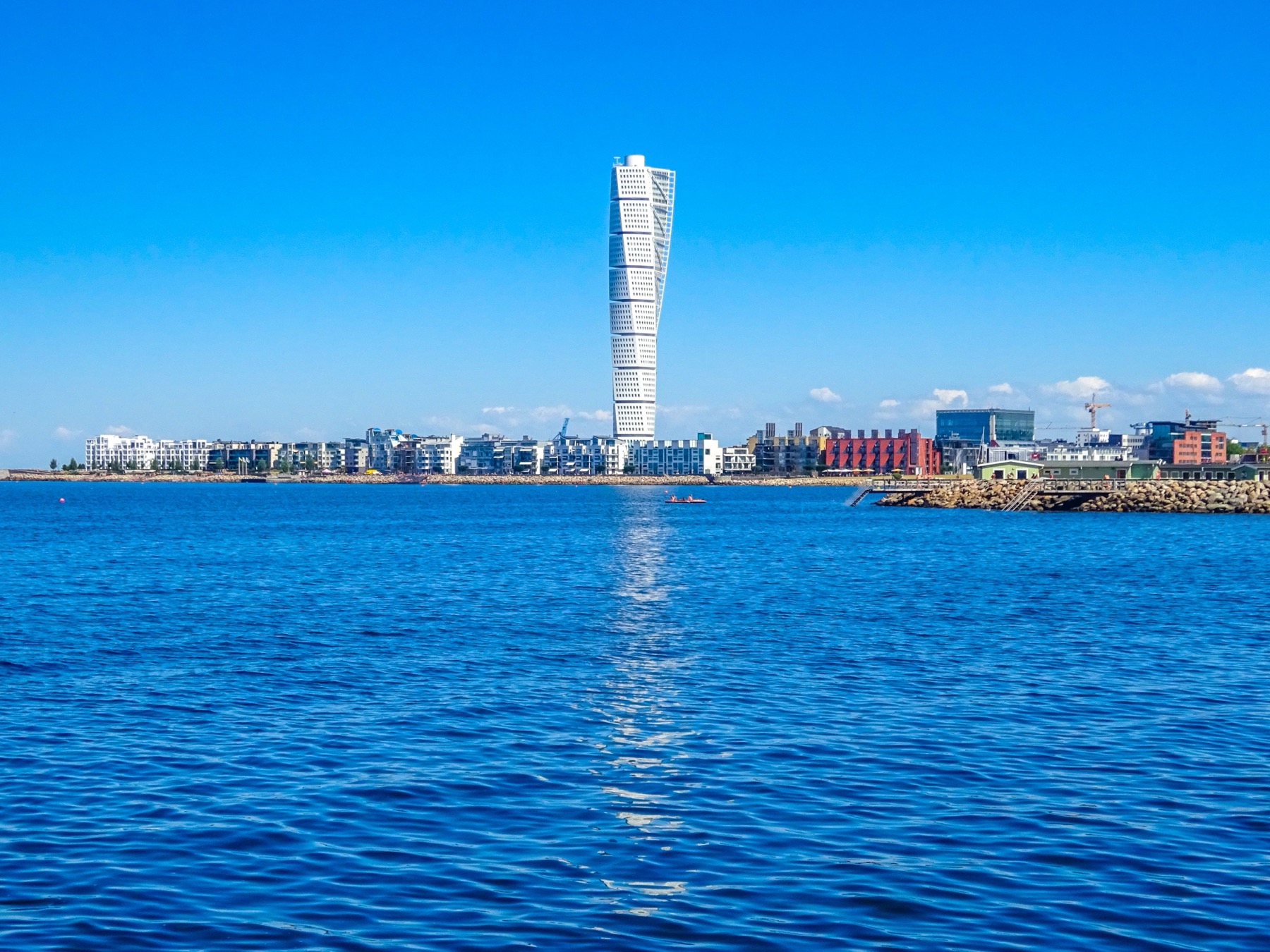
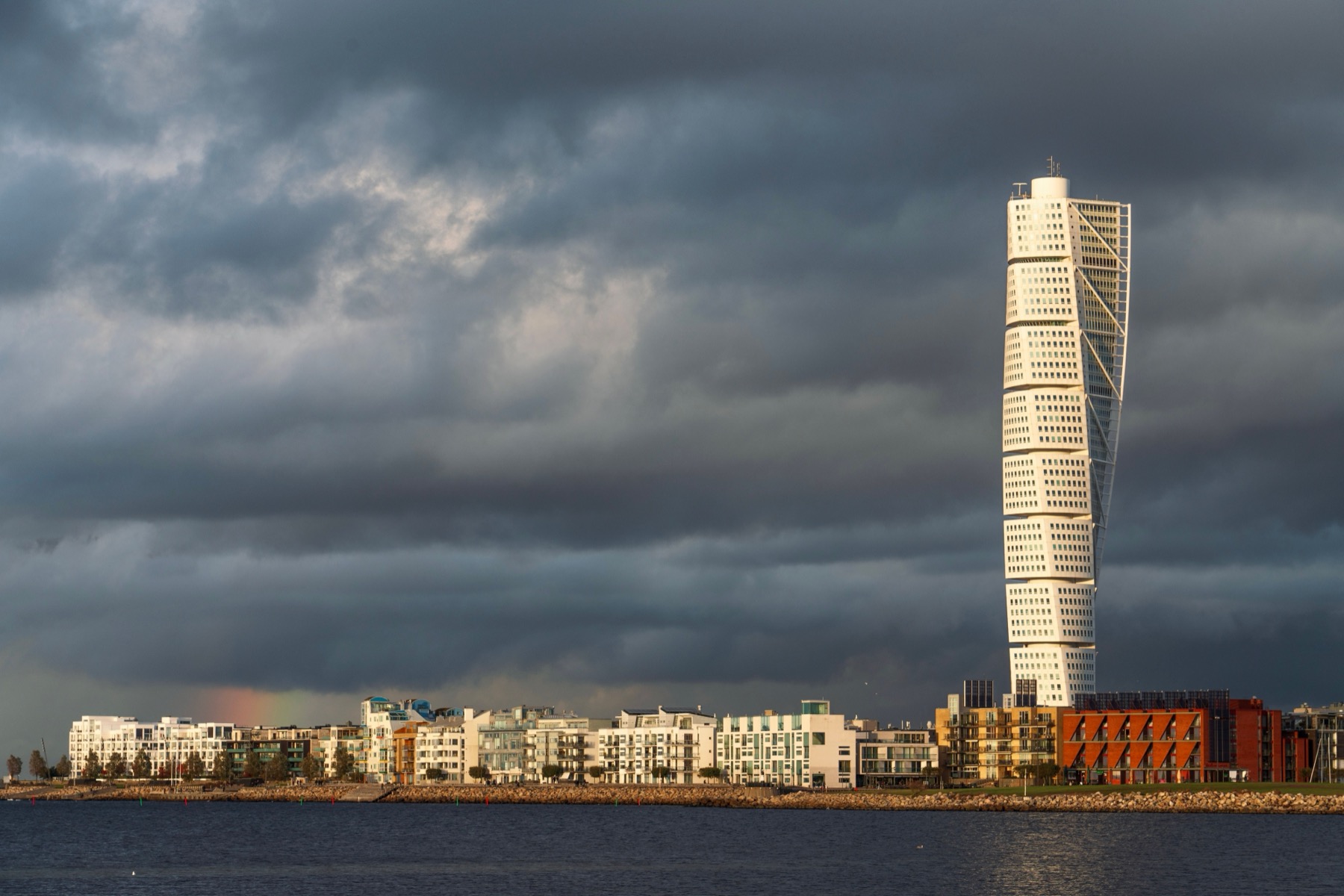
The symbol of the new Malmö is undoubtedly the unmissable Turning Torso skyscraper, which rises to an impressive 190 metres and serves as a perfect landmark for the entire coastline. It was designed by the famous Spanish architect Santiago Calatrava, and its unique shape resembles a human body twisting around its own axis. Until recently it was the tallest building in all of Scandinavia, before it was overtaken by a few metres by the new Karlatornet project in neighbouring Gothenburg.
The building has 54 floors in total, and its construction was incredibly technologically demanding because the area is battered by strong sea winds. The façade twists a full 90 degrees from base to top, which in real life looks truly stunning (the building twists before you like a petrified dancer). If you want to take the best photos, I’d recommend shooting from a slight distance from the neighbouring Scaniaparken, where the whole twisted silhouette stands out against the Nordic sky and you get just the right angle without distracting elements.
There’s one small catch, though, that plenty of disappointed tourists run into right at the entrance. The skyscraper serves exclusively as luxury residential housing and offices, so there’s absolutely no observation deck for the public and no way to look inside. You’ll therefore see it only from the outside, but even so it’s an architectural experience you can easily reach on foot or on city bus number 2.
💡 Tip: the most beautiful view of the Turning Torso is at sunset, when the snow-white façade turns orange and the surrounding water canals reflect the last of the daylight.
Photo: Efrem Efre / Pexels
2. Västra hamnen: a sustainable district built from shipyards
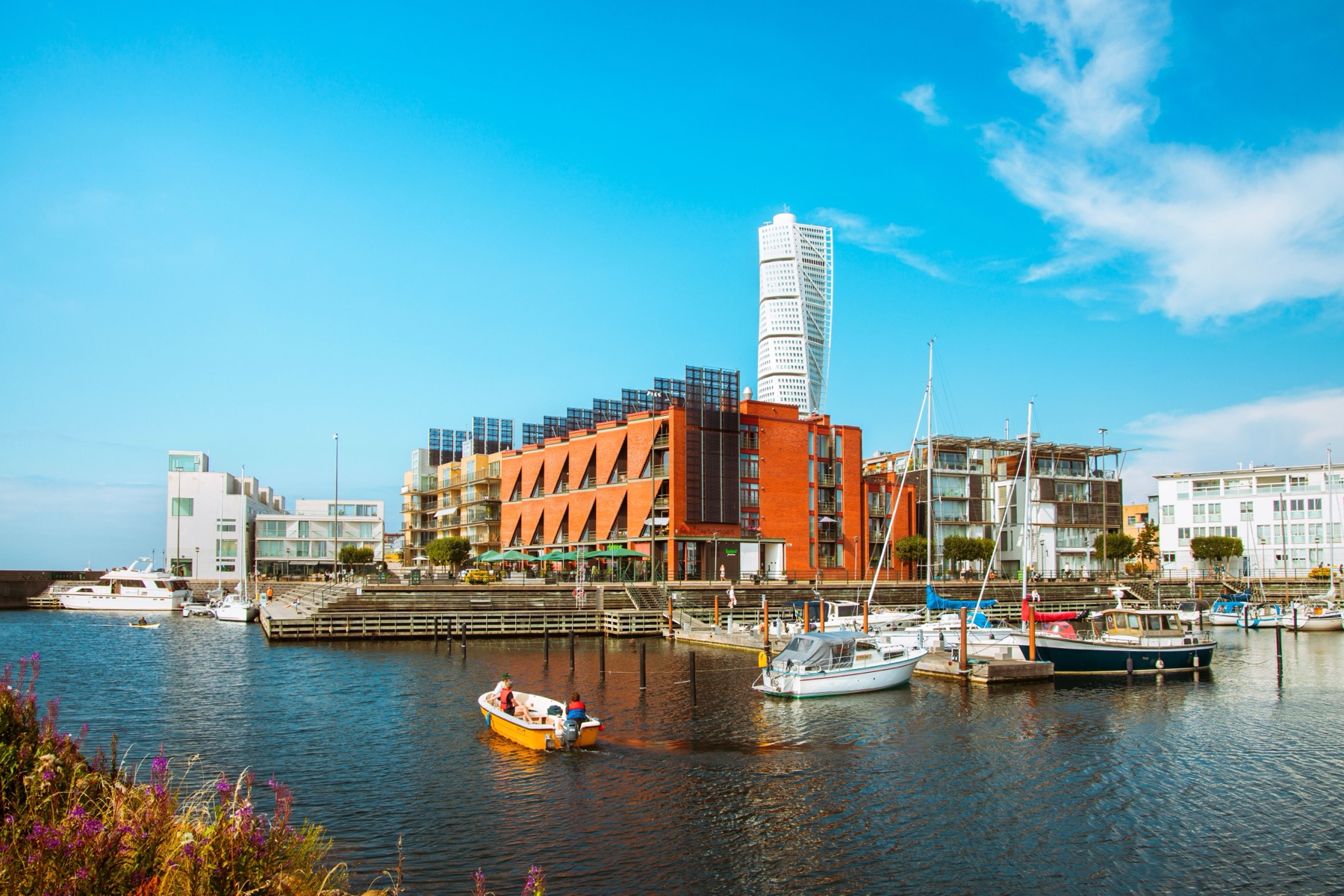
Right beneath the skyscraper spreads Västra hamnen (the Western Harbour), probably the most interesting urban development project in all of Sweden. As recently as the 1980s, heavy industrial halls stood here and the giant Kockums shipyards operated, but after they went bankrupt the city opted for a radical cut. They levelled the whole area to the ground and built a district that runs one hundred percent on local renewable energy.
A stroll through the maze of modern houses, narrow streets and water canals will completely absorb you, and you’ll barely encounter any cars. Local residents collect rainwater here and grow vegetables on the rooftops, and the whole waste system is cleverly handled by innovative vacuum pipes hidden deep underground. The architecture is incredibly varied, since each block of houses was designed by a different studio, so you won’t find two identical buildings side by side.
The district’s biggest draw, though, is the long coastal Sundspromenaden promenade with its gorgeous wooden jetties. In the summer months locals spend whole days here, sunbathing on the boards and jumping straight into the sea, which is surprisingly clean. Grab a coffee at one of the seafront cafés, sprawl out on a wooden jetty and let your eyes wander over the silhouette of the Öresund Bridge in the distance.
💡 Tip: in the afternoon a fairly strong wind blows in off the sea, so even in summer it’s best to pack a light windbreaker or sweater in your backpack so you don’t get chilled needlessly by the water.
Photo: Susanne Jutzeler, suju-foto / Pexels
3. Ribersborgsstranden: city beach and the Kallbadhus baths
Just fifteen minutes’ walk from the historic centre you’ll come across Ribersborgsstranden, which locals lovingly nickname Malmö’s Copacabana. It’s an incredible three-kilometre stretch of fine, pale sand lined by a well-kept grassy park full of old trees. In summer you’ll find hundreds of people playing beach volleyball here, families with children on picnics and enthusiastic swimmers enjoying the refreshing water of the Öresund strait.
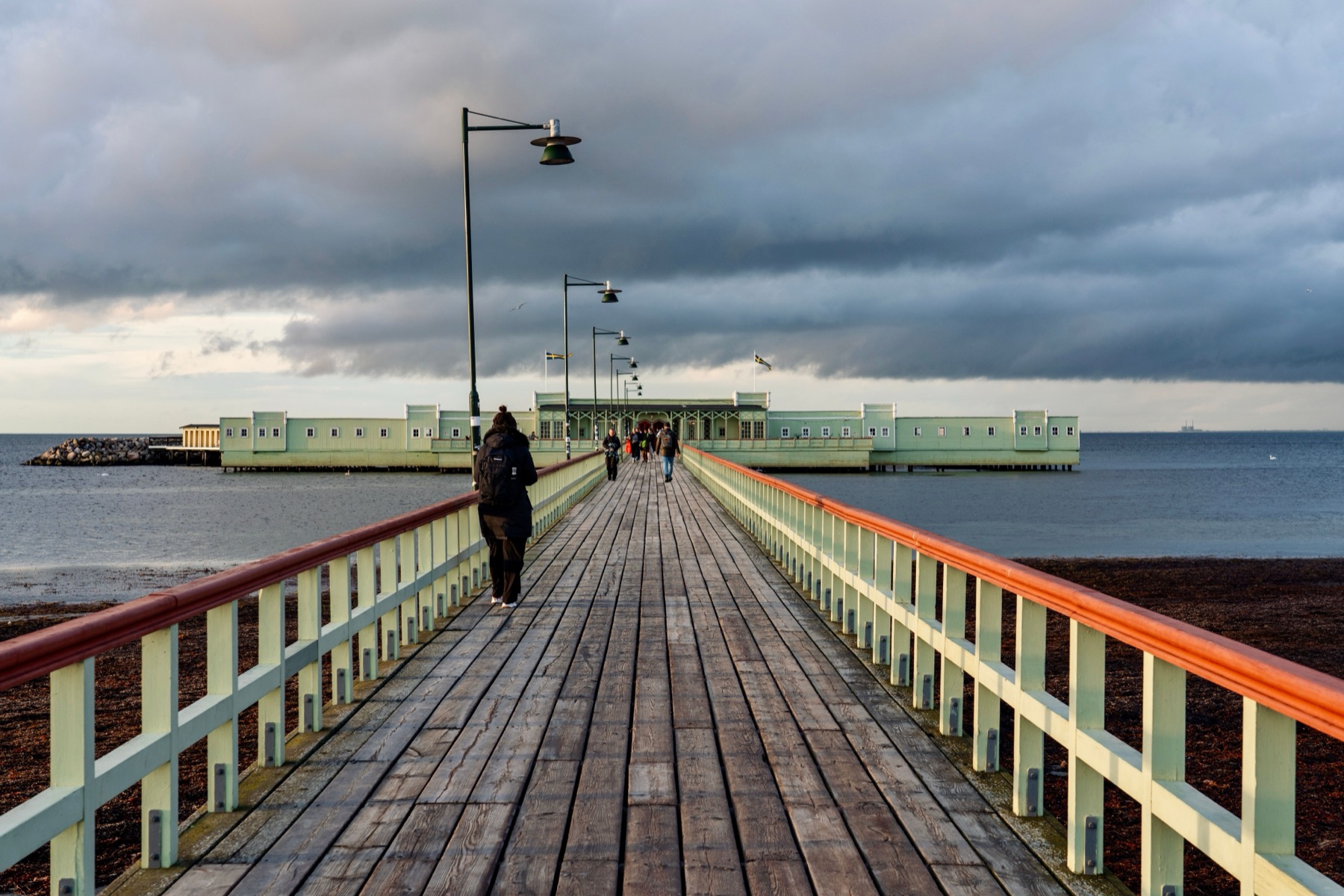
At the very end of the beach, a long wooden jetty stretches out into the sea, and at its end proudly stands the historic Ribersborgs Kallbadhus baths. This gorgeous wooden building from 1898 looks like something cut straight from an old period film and offers an utterly authentic Nordic experience. Locals come here to practise the traditional Swedish ritual of winter bathing (vinterbad), which involves alternating between a scorching sauna and then jumping into the icy sea water.
The baths are very strictly divided into a men’s and a women’s section, because you bathe here in the saunas and the sea exclusively without swimwear. Entry works out to about 85 SEK (roughly €8) and you get unlimited time to relax. Believe it or not, after an hour of sauna and icy water you’ll drag yourself out of the baths with the feeling that you’ve just survived a full-body reset, and you’ll love it. Even if the initial shock of the icy water takes a bit of courage.
💡 Tip: after your sauna, don’t forget to sit down in the cosy local café, which is accessible clothed for everyone and offers a fantastic hot tea with a view over the waves.
Photo: Shvets Anna / Pexels
4. Lilla Torg: the heart of the old town and the fika culture
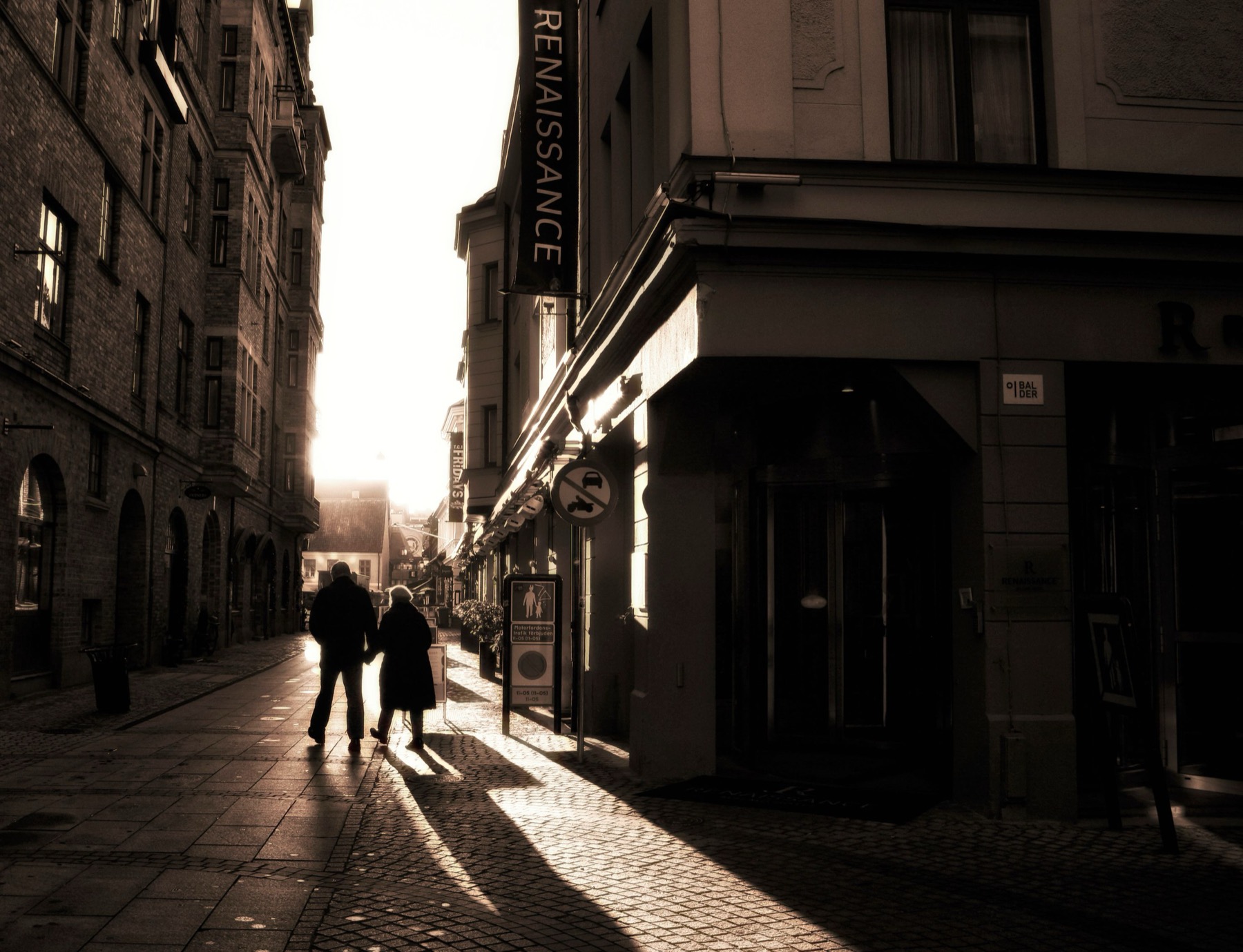
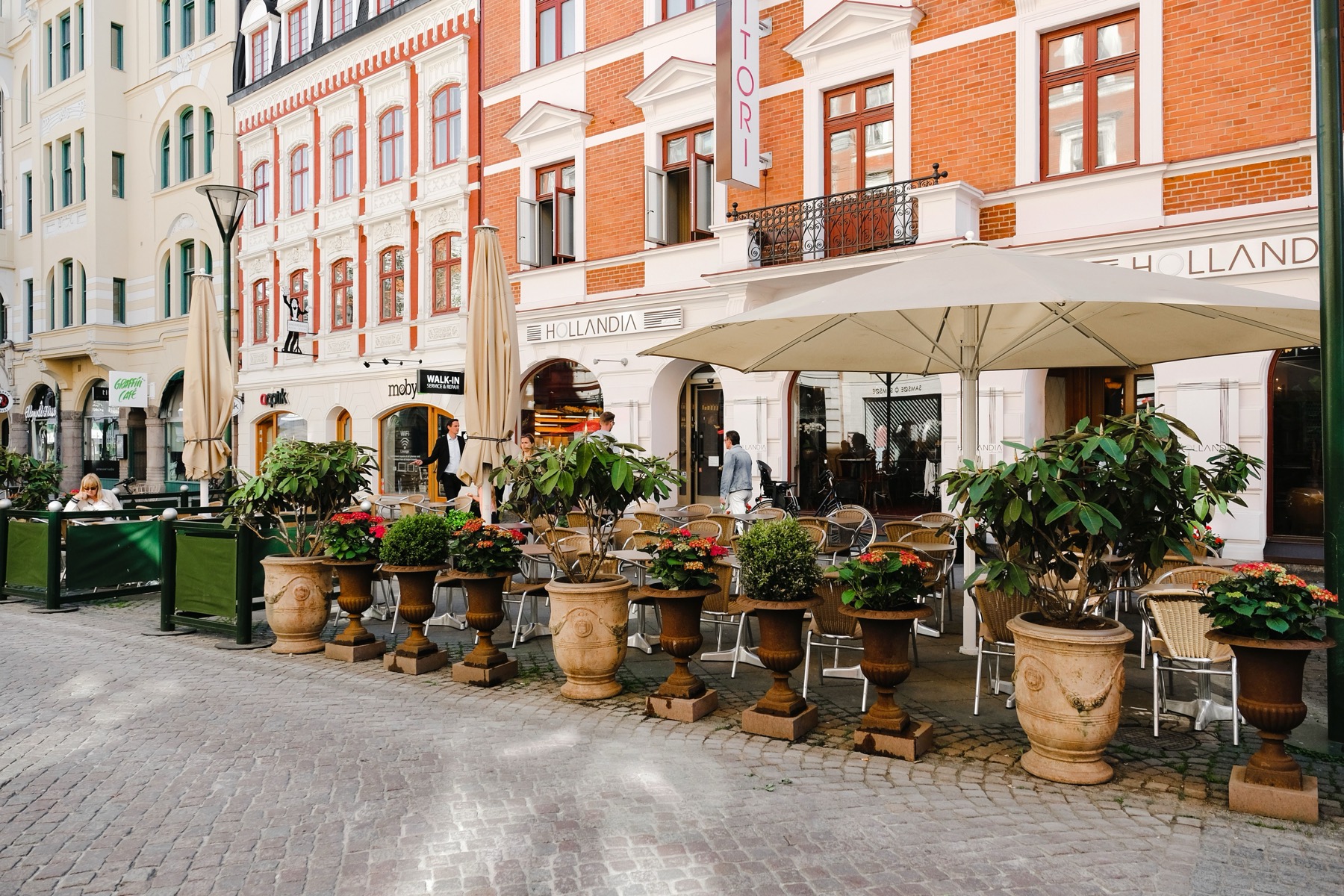
Once you’ve had your fill of modern architecture by the sea, head into Gamla staden (the Old Town), whose beating heart is the picturesque little Lilla Torg (Small Square). It was founded back in 1592 and to this day has kept its utterly unique historic atmosphere thanks to the original cobbled streets and beautifully restored half-timbered houses from the 16th century that frame the space on all sides.
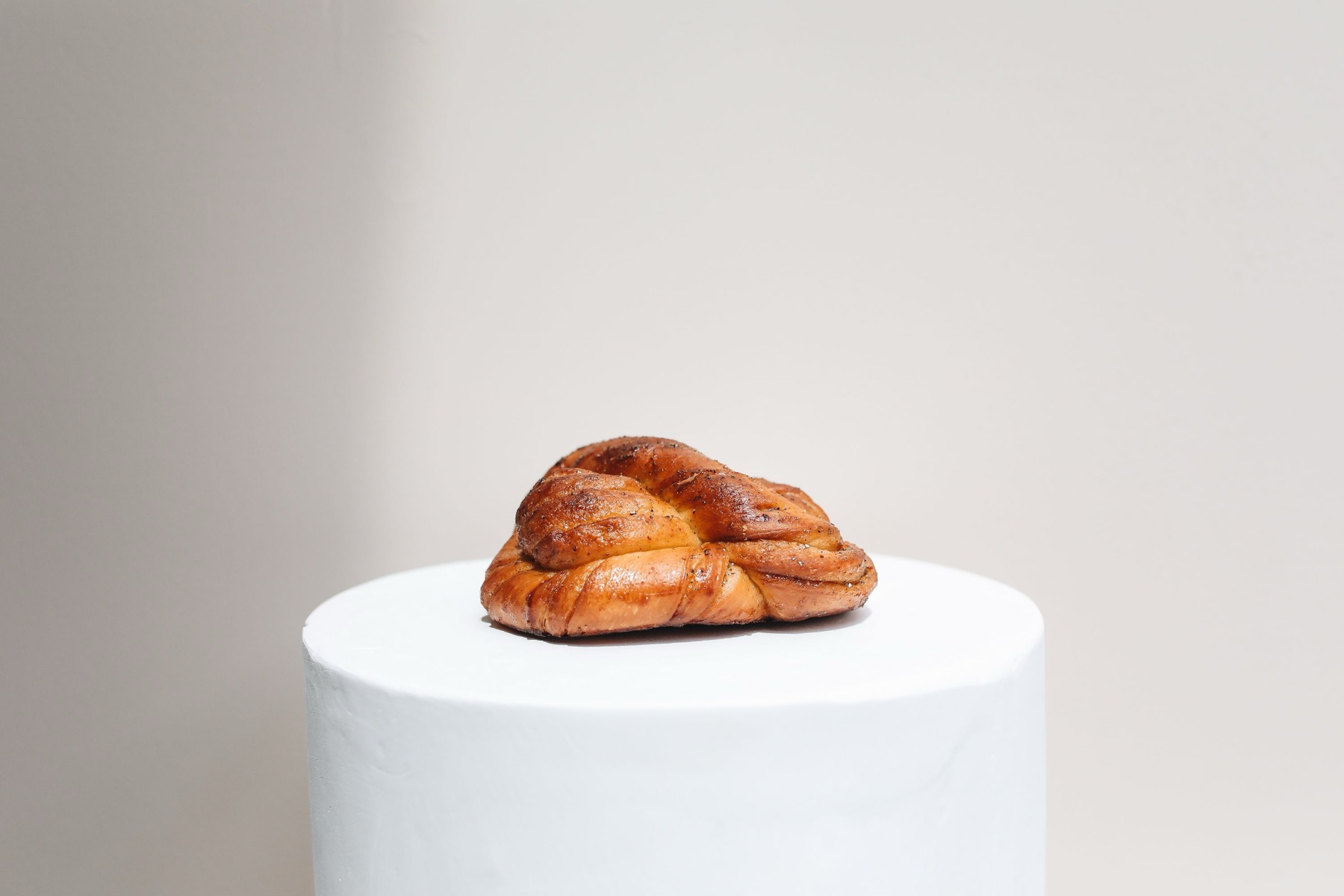
During the day the square works as an ideal and very photogenic refuge. Fika is Sweden’s national ritual (an afternoon break with coffee and a cinnamon bun, without which you simply can’t survive here), and you’ll pay on average around 65 to 100 SEK (€6 to €9) for one. The most iconic building here is the so-called Hedmanska gården, an old merchant’s courtyard that today houses the wonderful Form/Design Center with free entry.
As evening strikes, the whole mood changes radically and the square’s cobblestones turn into one big pulsing open-air bar. Restaurants and pubs fill their heated terraces to the last seat and locals head here for a drink after work. The prices of alcoholic drinks here are admittedly among the higher in the city (a beer will easily cost 80 SEK, around €7), but for that wonderful historic character it’s definitely worth it.
💡 Tip: if you find the terraces on the main square full, try the tucked-away courtyard behind Café Pronto, where you’ll often find a free table and far more peace away from the main bustle.
Photo: Tove Liu / Pexels
5. Stortorget and the historic town hall
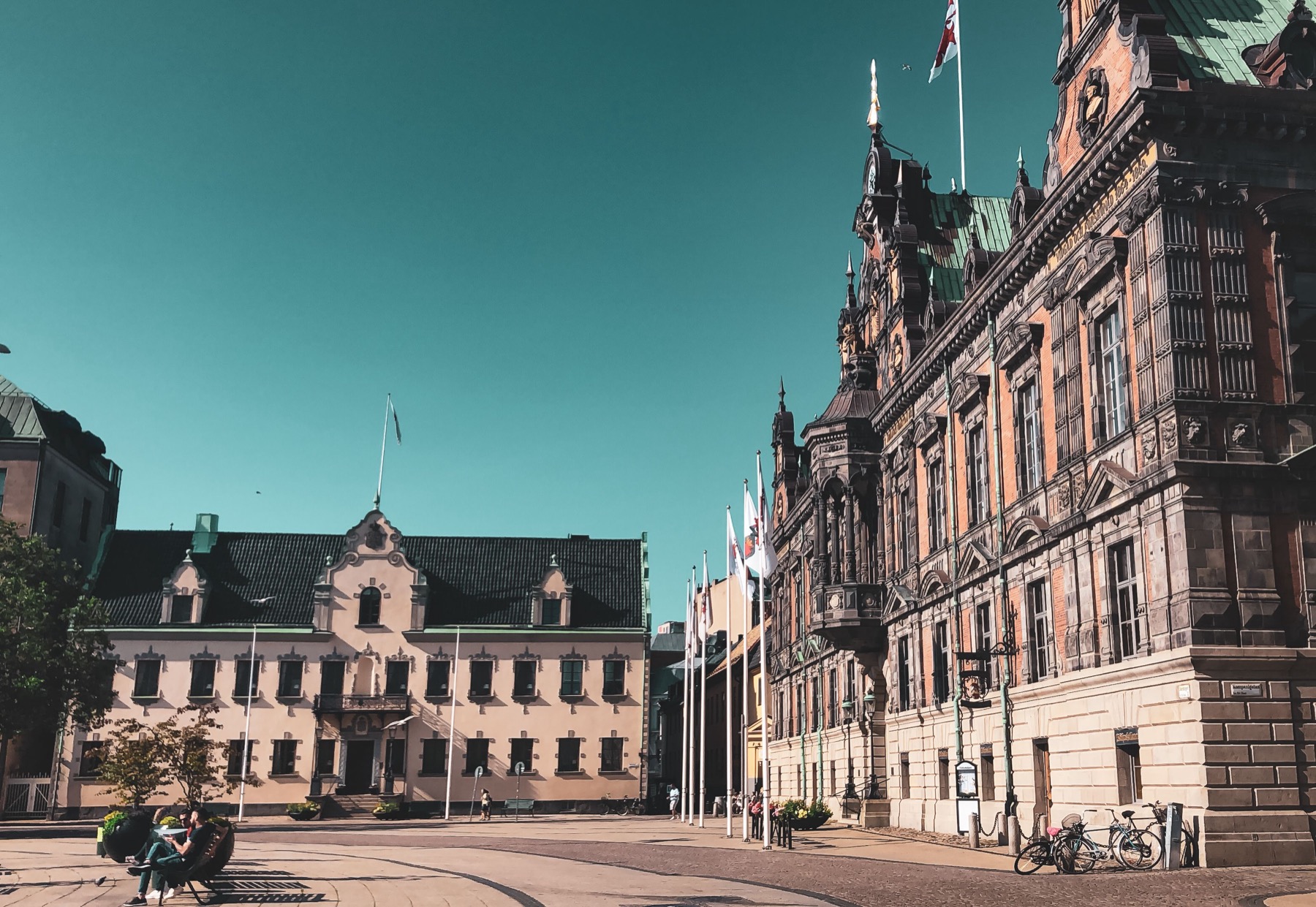
Right next to the intimate Lilla Torg opens up the enormous expanse of the main Stortorget square, one of the very largest in Scandinavia. It was created in the 16th century under the rule of the powerful Danish mayor Jörgen Kock, who wanted to give the city suitable grandeur and space for large markets. At the centre of the square looms a mighty equestrian statue of the Swedish king Charles X Gustav, who definitively won the city back from the Danes in bloody wars.
The most striking dominant feature of the whole space, though, is the gorgeous historic town hall building (Rådhuset) from 1546. It was originally built in a fairly austere Gothic style, but in the 19th century it underwent an extensive rebuild into its current form, strongly influenced by Dutch Renaissance. Its richly decorated façade with brick details and statues of historic figures is one of the most popular photo spots in the very centre of the city.
While strolling across the square, definitely don’t miss the historic Apoteket Lejonet pharmacy (the Lion Pharmacy), which stands right on the corner. It’s one of the oldest working pharmacies in Sweden, and its wonderful 19th-century wooden interior full of carved cabinets, old apothecary jars and brass scales resembles a museum from the magical world of Harry Potter more than an ordinary prescription shop.
💡 Tip: try to make time for a walk around the town hall after dark too, when the whole building is beautifully lit and the square takes on a very calm, almost mysterious atmosphere.
Photo: Sinikka Halme / Wikimedia Commons, CC BY-SA 4.0
6. Malmöhus Castle: a Renaissance fortress in the centre
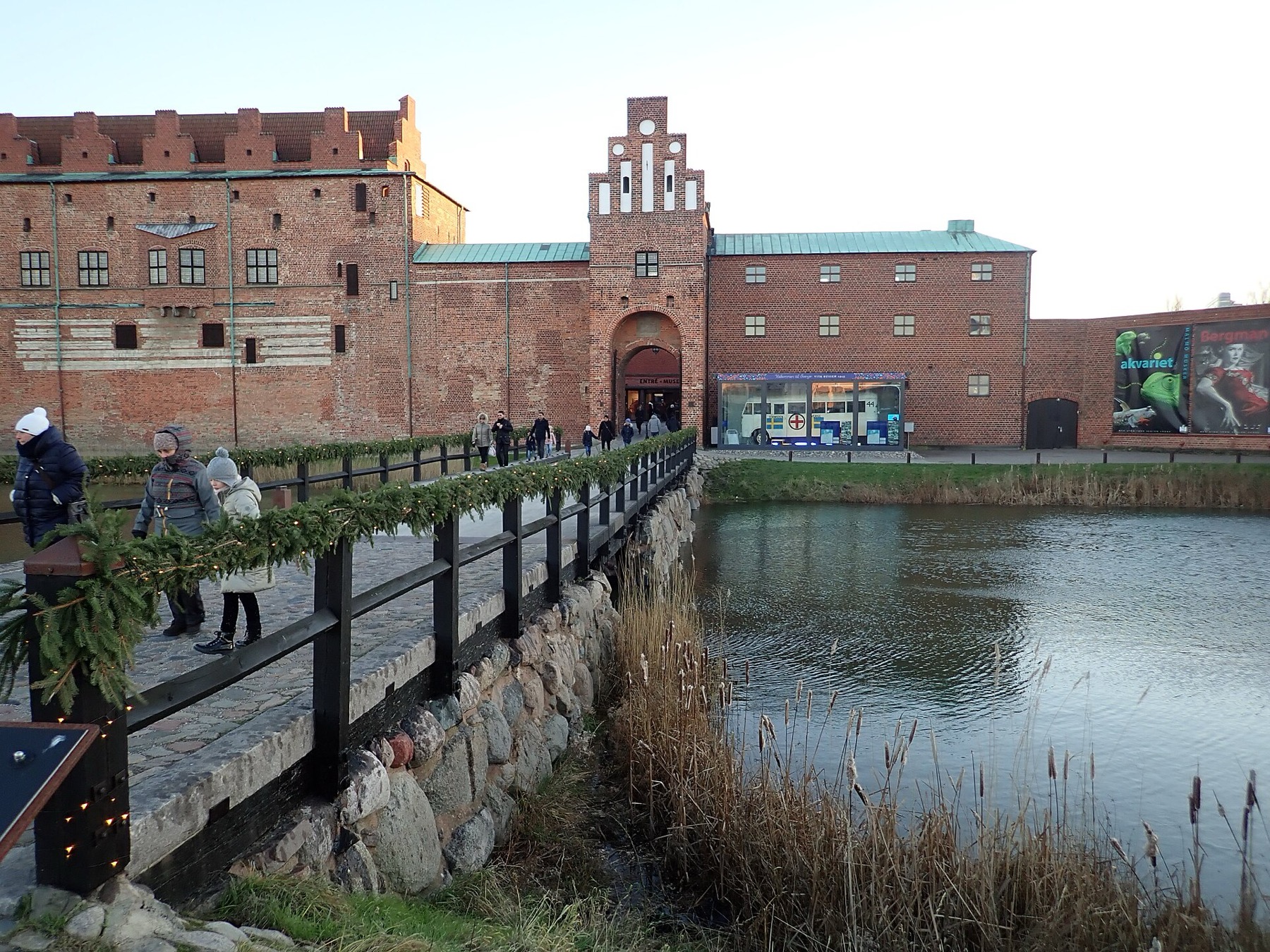
A short walk from the main square, surrounded by a deep moat and mature trees, lies Malmöhus, the oldest surviving Renaissance castle in all of Scandinavia. The original fortress stood here as far back as the 14th century, but its current form of massive red brick was given to it by the Danish king Christian III in the mid-16th century. The castle played an absolutely key role in the constant bloody wars between Denmark and Sweden over control of the lucrative Öresund strait.
The history of this building is fairly dark and immensely fascinating. During the 19th century the castle served as a feared state prison, where the toughest criminals in the whole country served their sentences, and even the Scottish Earl of Bothwell, third husband of Mary, Queen of Scots, was imprisoned here for five years. Today, thankfully, nothing at all remains of the grim atmosphere, and the whole castle complex has become an enormous and welcoming cultural centre.
A walk along the mighty defensive ramparts and around the moat is also free, and in the surrounding park with a windmill you can easily carve out a peaceful afternoon away from the busy centre.
💡 Tip: set aside at least two hours to visit the area around the castle, the park really is enormous and offers plenty of hidden benches ideal for an afternoon picnic.
Photo: Cihan Yüce / Pexels
7. Malmö Museer: aquariums and Nordic art
Right inside Malmöhus Castle and in several adjacent historic buildings sits a complex of museums joined under the shared name Malmö Museer. It’s by far the largest museum institution in all of southern Sweden, and you should set aside at least half a day for a thorough visit. Admission is very friendly by Swedish standards, working out to 40 SEK (about €4) for an adult, and for that single ticket you get access to all the exhibitions across the huge complex.
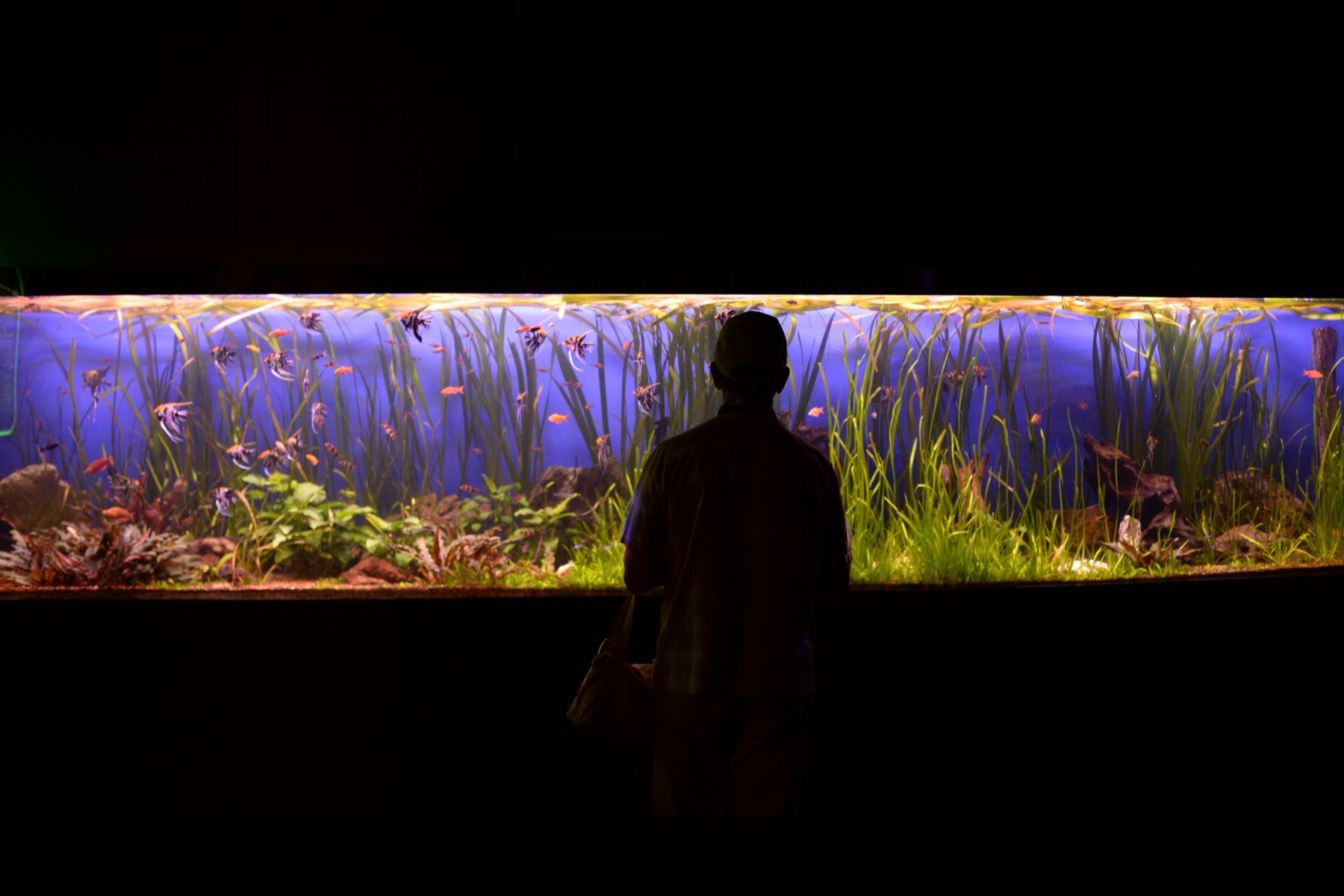
The biggest hit, especially if you’re travelling with family and younger children, is the extensive aquarium and terrarium located on the castle’s ground floor. You’ll see absolutely everything here, from local fish living in the nearby Öresund through colourful coral reefs to venomous snakes and frogs. On the next floor you can then explore an engaging historical exhibition about the harsh Swedish–Danish wars and walk through carefully restored royal chambers with original furniture.
Right opposite the castle, in a separate building called Teknikens och Sjöfartens hus, is the technology and maritime museum, whose biggest draw is a real submarine, the U3. You can actually climb into the belly of this retired World War II military submarine and experience first-hand the incredibly cramped conditions in which sailors had to live and operate here for weeks on end.
💡 Tip: the museum tends to be fairly full of families with children at weekends, so if you can, plan your visit for a weekday morning instead, when you’ll have complete peace.
Photo: Minh Ngọc / Pexels
8. Moderna Museet Malmö: contemporary art in a power station
Lovers of modern art must not miss Moderna Museet Malmö on their visit, an independent branch of the famous Stockholm museum. The building itself is a fascinating architectural contrast, because the museum sits in the premises of a former historic power station from 1901, to which architects sensitively attached a modern extension with an unmissable bright-orange façade of perforated sheet metal.
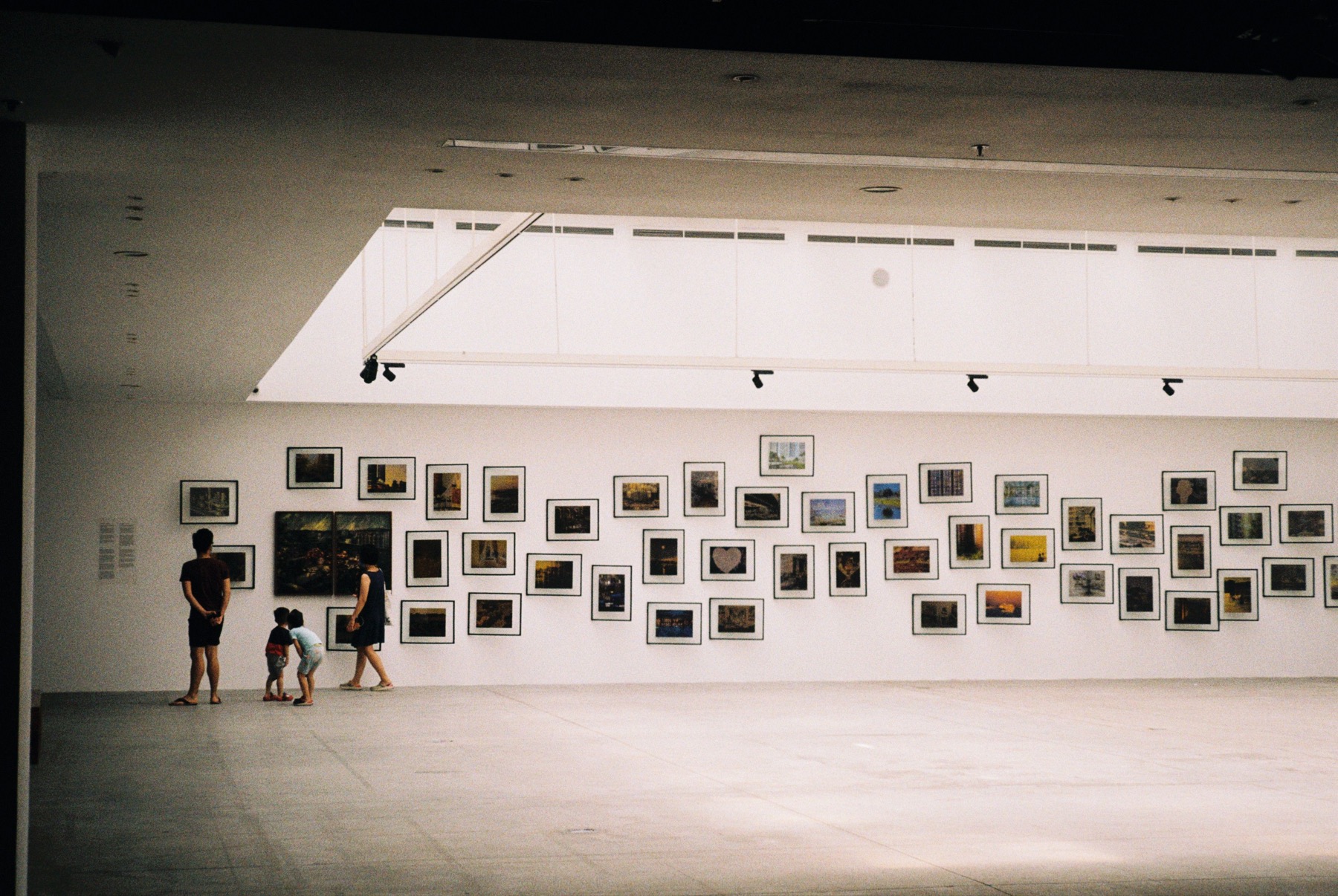
The exhibitions here change regularly and the gallery focuses on top-tier international and Swedish modern and contemporary art. You’ll come across installations, video projections and giant paintings, and thanks to the space of the old turbine hall, even the most bizarre works have room to breathe. Ordinary constrained galleries simply couldn’t handle pieces like these.
Great news for all travellers on a tight budget is the fact that entry to the museum’s permanent collections is often completely free, and you only pay for some specific temporary exhibitions. After your visit, definitely pop into the cosy local café, which offers excellent speciality coffee and a quiet spot to sit in a gorgeous design setting full of art publications.
💡 Tip: the museum is usually closed on Mondays, so always check the current opening hours on the official website before your visit, so you’re not left standing in front of locked doors.
Photo: No machine-readable author provided. Fred J assumed (based o / Wikimedia Commons, CC BY 1.0
9. Sankt Petri Church and the Gothic core
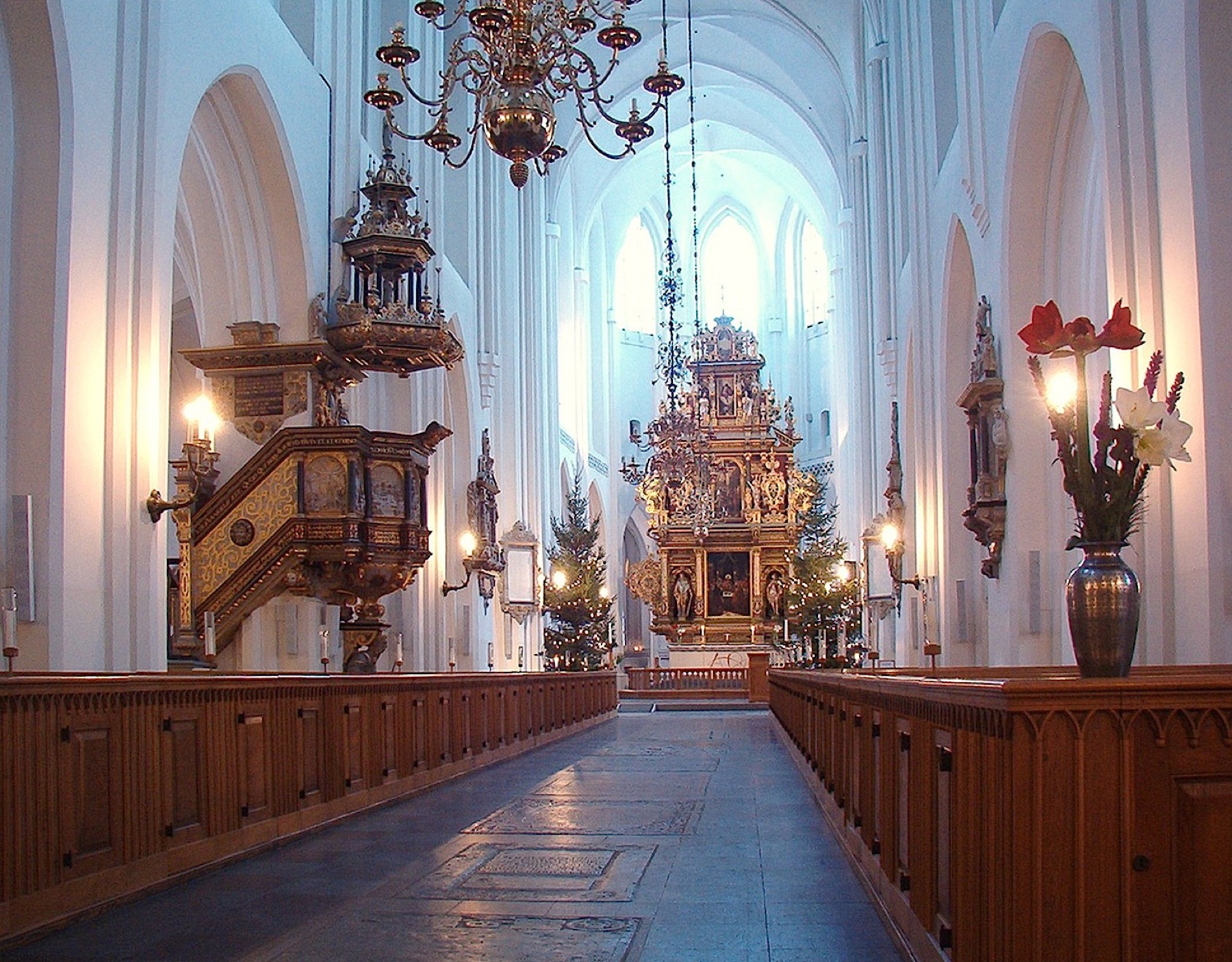
When you weave through the narrow cobbled streets behind the town hall, you’ll come across Sankt Petri Church (Sankt Petri kyrka), the absolute oldest surviving building in all of Malmö. This majestic church from the early 14th century is built in the typical style of so-called Baltic brick Gothic, so instead of traditional grey stone you’ll be struck by enormous expanses of red brick and an ingenious system of flying buttresses on the outside.
The church interior may surprise you at first glance, because the high vaults and walls are brilliantly clean and snow-white. During the harsh period of the Reformation, almost all the original Catholic decoration was painted over. Only the wonderful carved wooden altar from 1611 and a few fragments of fascinating medieval frescoes in a side chapel were saved, and these have recently undergone very careful restoration.
Entry to the church is completely free for everyone and it offers a perfect escape from the constant noise of the surrounding city. The huge tall windows let in gorgeous soft Nordic light, and you can often stumble upon rehearsals of the local choir or organ concerts, which thanks to the enormous vaults gain absolutely fantastic acoustics.
💡 Tip: during the summer months the church occasionally offers guided tours of the tower, from where a great view opens up over the whole historic centre; just ask at the entrance.
Photo: Valentin Angel Fernandez / Pexels
10. Möllevångstorget: the multicultural heart of Möllan
If you want to experience the real, unfaked soul of today’s Malmö, you have to head to the Möllevången district, which locals call nothing but Möllan. It’s here that you’ll fully feel the fact that people from 180 different countries around the world live in the city. The district feels slightly punk, brick walls are decorated with colourful street art, and the overall atmosphere differs radically from the tidy and quiet historic centre.
The centrepiece of the whole district is Möllevångstorget square, where a huge market of fresh produce takes place from Monday to Saturday. Stallholders loudly call out prices and the air carries the scent of exotic spices, mounds of fresh coriander and crates of cheap fruit from all over the world. It’s a fantastic spot for stocking up if you plan to cook for yourself, because prices here are a fraction of those in the usual Swedish supermarkets like ICA or Coop.
The streets running off the square are lined with dozens of Asian grocers, Middle Eastern bakeries and cheap bistros. In the evening Möllan turns into a hub of alternative entertainment, craft-beer pubs burst at the seams and you’ll hear a mix of languages from all over the world. It’s busy, loud and utterly authentic, a place you definitely shouldn’t skip on your visit.
💡 Tip: at the markets it can be tricky to pay with an ordinary bank card, since stallholders often require payment via the local Swish app, which you can’t get as a tourist, so bring a little cash here just to be safe.
Photo: Uğur Çetin / Pexels
Lukáš and Lucie recommend
Where to stay in Malmö
5 accommodations — resorts, hotels and other lodging options
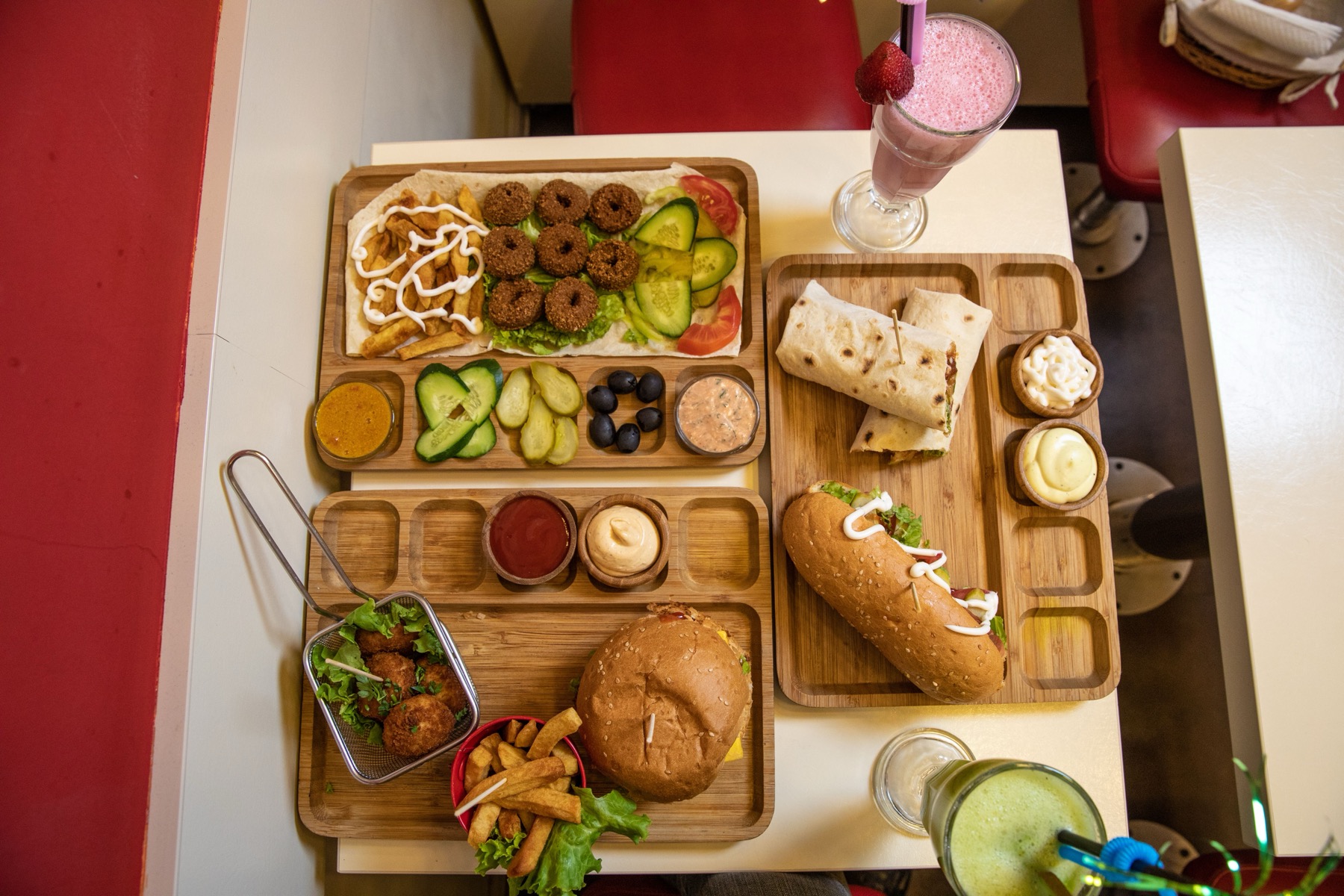
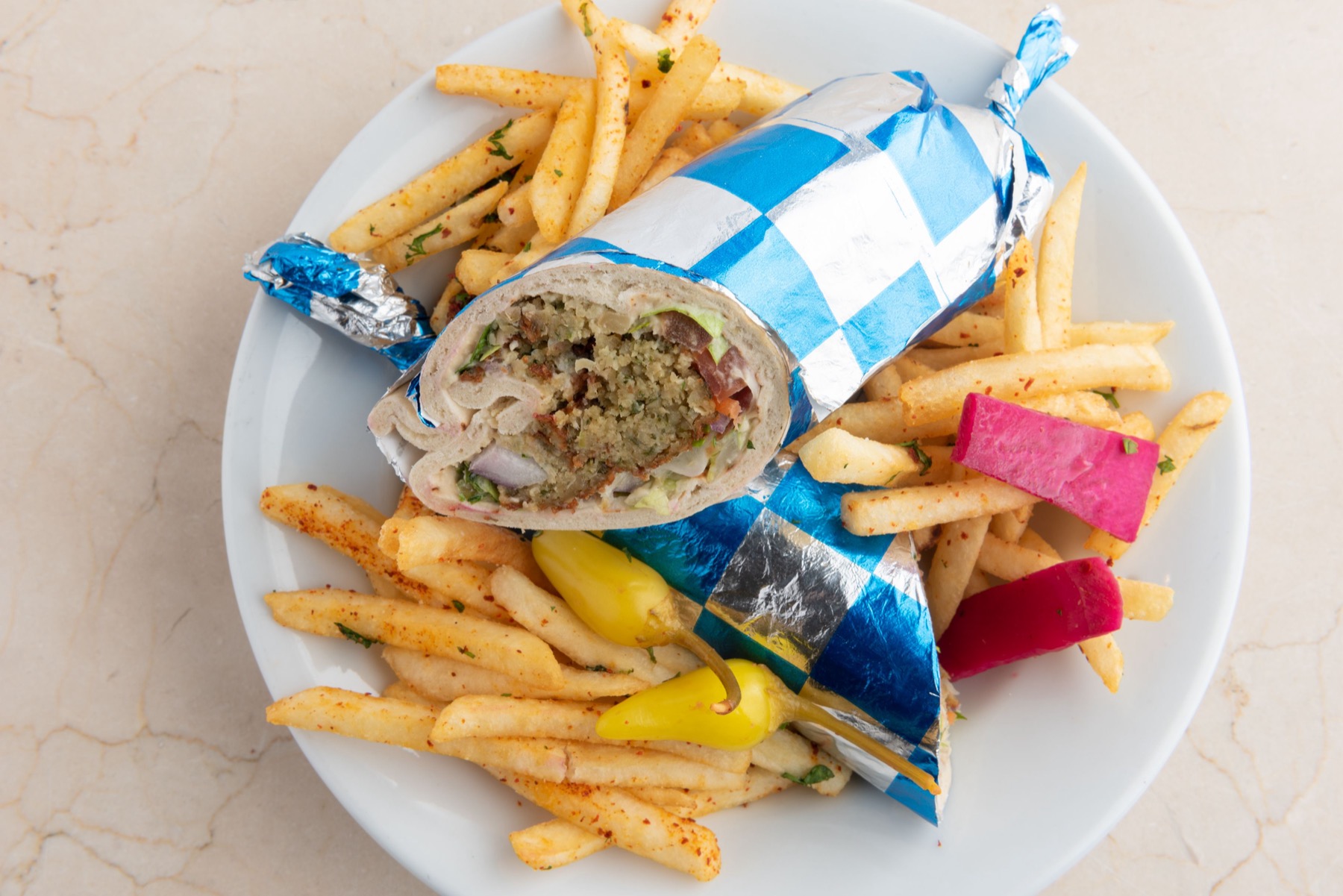
We’ll stay in Möllan a little longer, because this is where the city’s greatest culinary treasure is found: the legendary Malmö falafel. Thanks to the strong, well-established community of immigrants from the Middle East, the preparation of these fried chickpea balls has been perfected here, and Swedes from other cities deliberately and happily make the trip for it.
It’s a proper local institution and at the same time the absolute cheapest hot meal you’ll find in all of Sweden. A huge falafel roll (falafel wrapped in freshly baked Arabic bread with a pile of vegetables and sauces) will cost you an incredible 50 to 70 SEK (about €5 to €6.50), roughly a third of the price of an ordinary restaurant lunch. You can choose from many kinds of sauce, from mild garlic to fiery hot, and the giant portion will reliably fill you up for half a day.
Vegetarians and vegans will find themselves in absolute paradise here, because the meat-free options are endless. Travellers most often recommend trying spots like Jalla Jalla or Falafel N.1 right by the square, where queues form even late at night. The balls are fried right in front of you, perfectly crispy on the outside and beautifully green inside from fresh herbs.
💡 Tip: when ordering, always have some pickled vegetables and a bit of hot sauce added, it gives the whole meal that right kick that locals are used to and that makes the local falafel so famous.
Photo: Lars A / Wikimedia Commons, CC BY-SA 4.0
12. Malmö Saluhall: an industrial market hall full of flavours
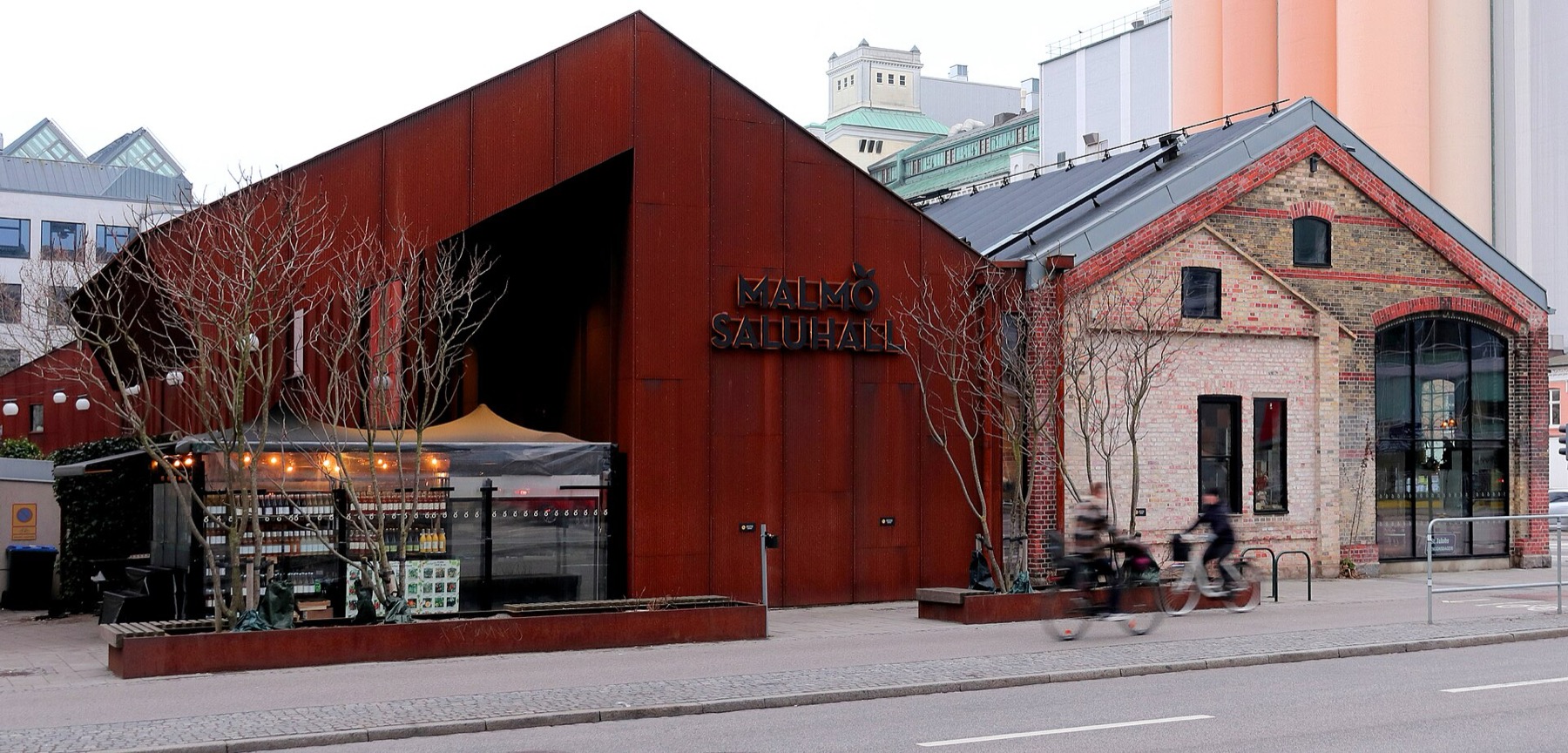
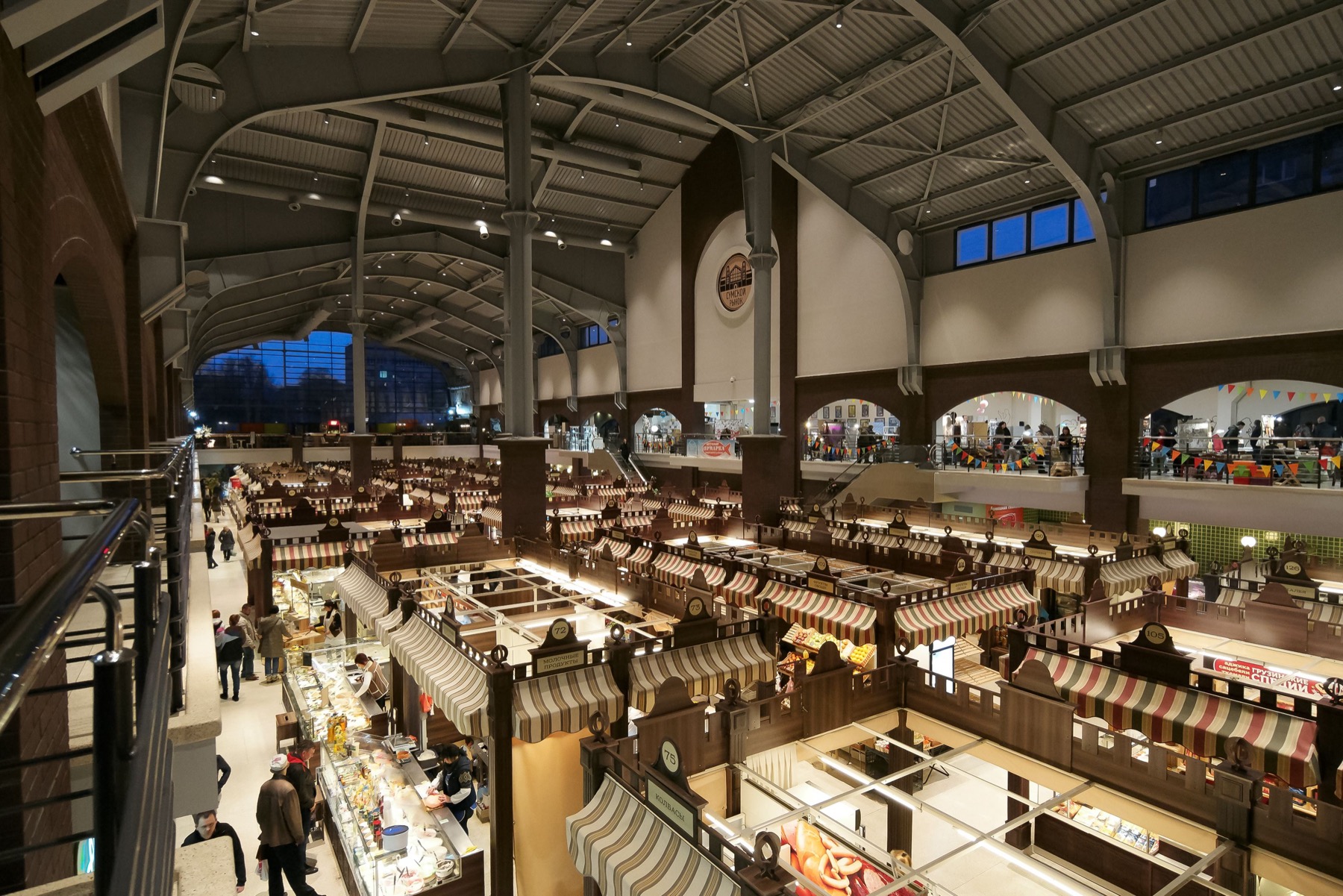
If you prefer a slightly more polished culinary experience and don’t mind paying a little extra, your steps should lead you to Malmö Saluhall. It’s a modern covered market built into the crumbling ruins of a former freight station, and that contrast of old and new works surprisingly well. The exposed old brick walls are complemented by black steel and a huge glass façade, so the whole space feels airy and industrially stylish.
Inside you’ll find around twenty carefully chosen stalls and bistros that represent the best of contemporary Swedish and world gastronomy under one roof. You can buy fresh sourdough bread from local artisan bakers, wonderful cheeses, or sit straight down at the counter and enjoy lunch. Prices here are noticeably higher than on the street in Möllan, but they perfectly match the top quality of the ingredients used.
For meat-free dining, the market hall is an absolutely ideal choice, especially if you’re travelling in a group where everyone fancies something different. You’ll find fantastic stalls with hand-pulled noodles, rich salad bars and modern vegetarian tapas. Buy your food, grab a tray and sit down at the large communal tables in the middle of the hall, where you can soak up the busy, friendly atmosphere of this culinary hub.
💡 Tip: the market hall is a great place to buy edible souvenirs from your travels, you’ll find premium Swedish jams, local mustards or luxury chocolate in gorgeous packaging here.
Photo: Thái Trường Giang / Pexels
13. Slottsträdgården: gardens and urban farming
Right behind the historic Malmöhus Castle spreads Slottsträdgården (the Castle Garden), an utterly enchanting piece of calm nature in the middle of the city. It’s not a classic dull castle park with strictly clipped hedges, but a fascinating community project focused on sustainable and organic urban farming. The garden is cleverly divided into several themed sections, from a soothing Japanese one through a romantic rose garden to a wild meadow full of buzzing insects.
Local enthusiastic gardeners grow seasonal vegetables, fresh herbs and hundreds of kinds of flowers on the neat beds here, which on certain days you can even legally pick and buy home for a small fee. The whole green space is visually dominated by a beautiful historic windmill (Slottsmöllan), which rises on a gentle hill and forms a perfect romantic backdrop for your photos from an afternoon stroll.
Hidden in the middle of the gardens is the wonderful glass-walled Slottsträdgårdens Kafé café, which you definitely shouldn’t miss on your visit. It operates year-round; in winter you’ll warm up in a heated greenhouse full of plants, and in summer you can sit outside among the flowering beds. They make fantastic vegetarian sandwiches, warming creamy soups and, of course, there’s no shortage of excellent coffee and fresh homemade cakes for the perfect fika.
💡 Tip: during summer weekends smaller farmers’ markets are occasionally held here, where you can buy fresh vegetables directly from the people who grew them in the park.
Photo: Ekrem KÖSE / Pexels
14. Kungsparken: a picnic under centuries-old trees
Slottsträdgården flows seamlessly into Kungsparken (the King’s Park), which proudly holds the title of the oldest public park in the whole city. It was founded back in 1872 on the site of former military defensive ramparts, and its design draws heavily on classic English landscape gardens with winding sandy paths and sprawling green lawns.
The park is threaded with a dense network of water canals, along which you can go for a ride in summer on rented pedal boats or hire a small rowing boat and explore the city from an entirely different perspective. Huge centuries-old trees from all over the world grow here, including mighty oaks and exotic plane trees, which on hot summer days provide perfect shade for an afternoon rest. In the middle of the park you’ll come across a beautiful cast-iron fountain that lights up strikingly after dark.
For locals, Kungsparken is by far the most popular spot for weekend picnics and casual gatherings with friends. Pack fresh pastries from the nearby Saluhall in your backpack, grab a coffee to go, spread a blanket on the soft grass and enjoy that calm Swedish ease (lagom) right in the heart of an otherwise very busy and pulsing city.
💡 Tip: you can bring your own grill into the park without worry, at several designated spots you’ll find special concrete slabs where locals commonly cook up a warm dinner.
Photo: Brett Sayles / Pexels
15. Folkets Park: a people’s park full of fun
Another utterly unique green space is Folkets Park (the People’s Park), which lies near the Möllan district and is the very oldest park of its kind in all of Sweden. It sprang up at the end of the 19th century as an affordable place for the working class to relax, and to this day it has thankfully kept its very informal, slightly fairground-like and immensely relaxed atmosphere that entertains all generations.
Entry is free and inside awaits a remarkable hodgepodge: a 19th-century Moorish pavilion sits next to children’s climbing frames and a reptile terrarium, nobody knows exactly why, but it works. During the warm summer, regular free concerts by local bands are held here, along with popular outdoor cinema screenings; there’s a giant children’s paddling pool and you can even play a tricky game of mini golf with friends.
The park is lined with pleasant, unassuming cafés and fast-food stalls, so you can easily spend a whole lazy afternoon here watching local families and young people. In winter the paddling pool magically transforms into a popular public ice rink, where you can hire skates and enjoy a true Nordic atmosphere under strings of lights strung across the trees.
💡 Tip: if you’re travelling with children, feel free to set aside half a day for Folkets Park, they’ll find so many free climbing frames and activities here that you’ll struggle to drag them away.
Photo: Martin Magnemyr / Pexels
16. Malmö by bike: a city of bicycles
If you want to get to know and experience Malmö like a true local, you absolutely have to hop on a bike and join the local traffic. The city regularly ranks in prestigious lists of the most bike-friendly cities in the world, and with its more than 500 kilometres of perfectly separated cycle paths it’s snapping at the heels of nearby, famous Copenhagen. The terrain here is also absolutely flat, so you won’t break a sweat even on longer rides between districts.
Renting a bike here is an utterly trivial affair thanks to the excellently run and cheap Malmö by bike shared-bike system. You’ll find dozens of docking stations all over the city; just download the app to your phone, link a payment card and for about 80 SEK (roughly €7) you get unlimited access to bikes for a full 24 hours. The bikes are sturdy, heavy, very stable and have a practical front basket for shopping or a backpack.
By bike is by far the most comfortable way to get from the centre to the more distant Ribersborg beach, ride through the whole modern Västra hamnen district and reach the markets in Möllan without any trouble. Cyclists here have absolute priority at intersections and their own special traffic lights, so you’ll feel completely safe even in heavy morning traffic.
💡 Tip: when you’re cycling, always signal the direction of your turn with your hand and raise your hand when stopping, local cyclists ride very fast and an unexpected stop in the middle of the path can cause an unpleasant accident.
Photo: Pixabay / Pexels
17. Shopping at Emporia: architecture and consumerism
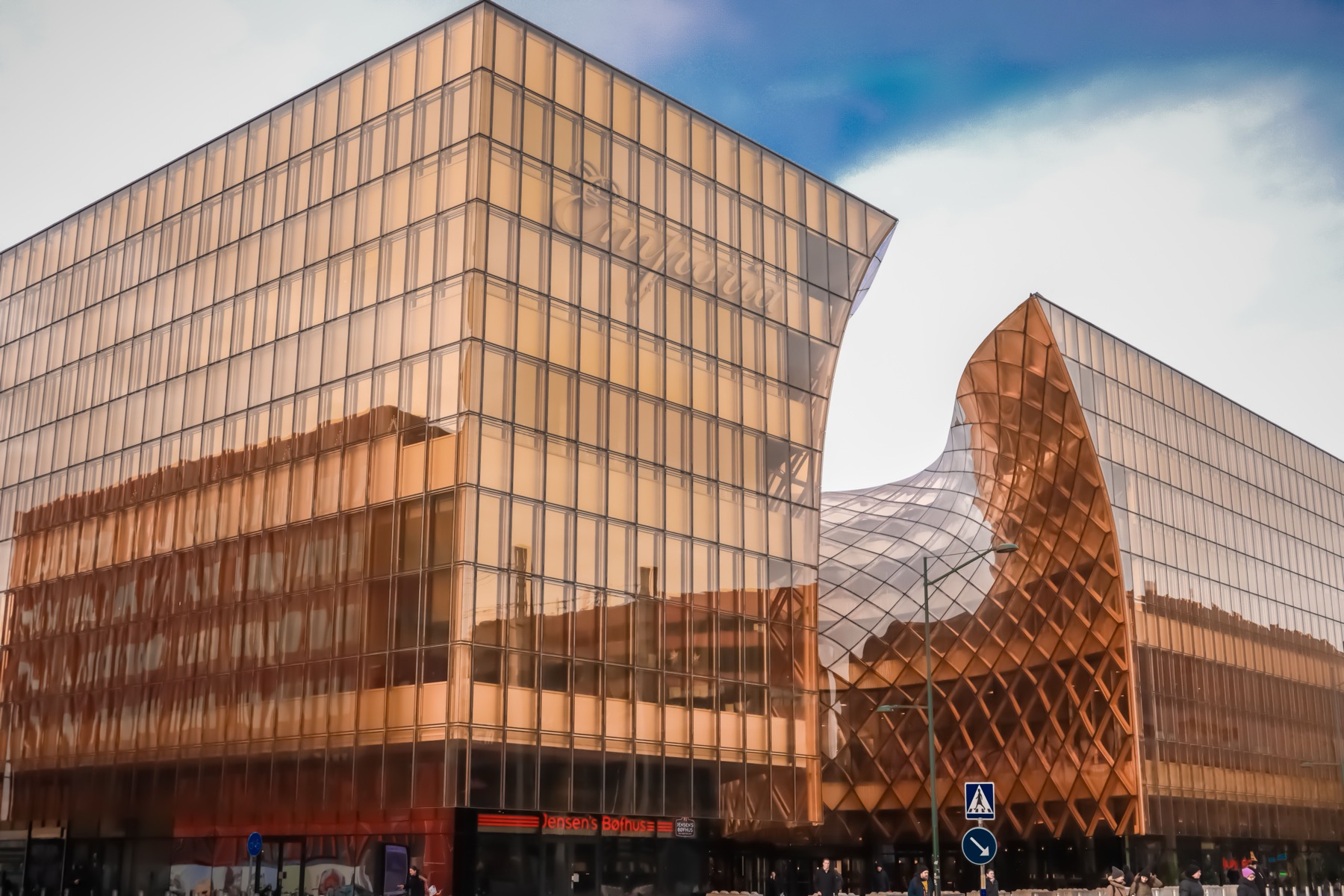
Even if you’re not exactly a keen fan of shopping, the Emporia shopping centre in the Hyllie district is worth a visit for its breathtaking modern architecture alone. This gigantic building lies a short distance from the first train exit off the Öresund Bridge, and its main façade is formed by an enormous, deeply curved glass crack of golden colour that from the outside looks as if someone crushed the building in the middle with great force.
Inside you’ll find hundreds of shops, including all the well-known Scandinavian fashion brands and luxury design boutiques. The interior is logically divided into colour-coded zones with giant spiral staircases and futuristic lighting, so at times you’re not sure whether you’re in a classic mall or a museum of modern art. It’s an ideal and warm rescue in case the weather doesn’t cooperate during your trip and it starts to rain steadily.
Emporia’s biggest hidden secret, though, is the huge public rooftop garden, which you reach by escalator completely free of charge. The green roof full of hardy grasses and benches offers a fantastic panoramic view over the whole growing city, the majestic Öresund Bridge, and on a clear day you can see all the way to the coast of neighbouring Denmark.
💡 Tip: the quickest way to reach Emporia is by train from the main station (Hyllie stop), the journey takes barely a few minutes and the station lies right in front of the main iconic entrance to the centre.
Photo: Patrik Stoltz / Pexels
18. A trip to Copenhagen across the Öresund Bridge
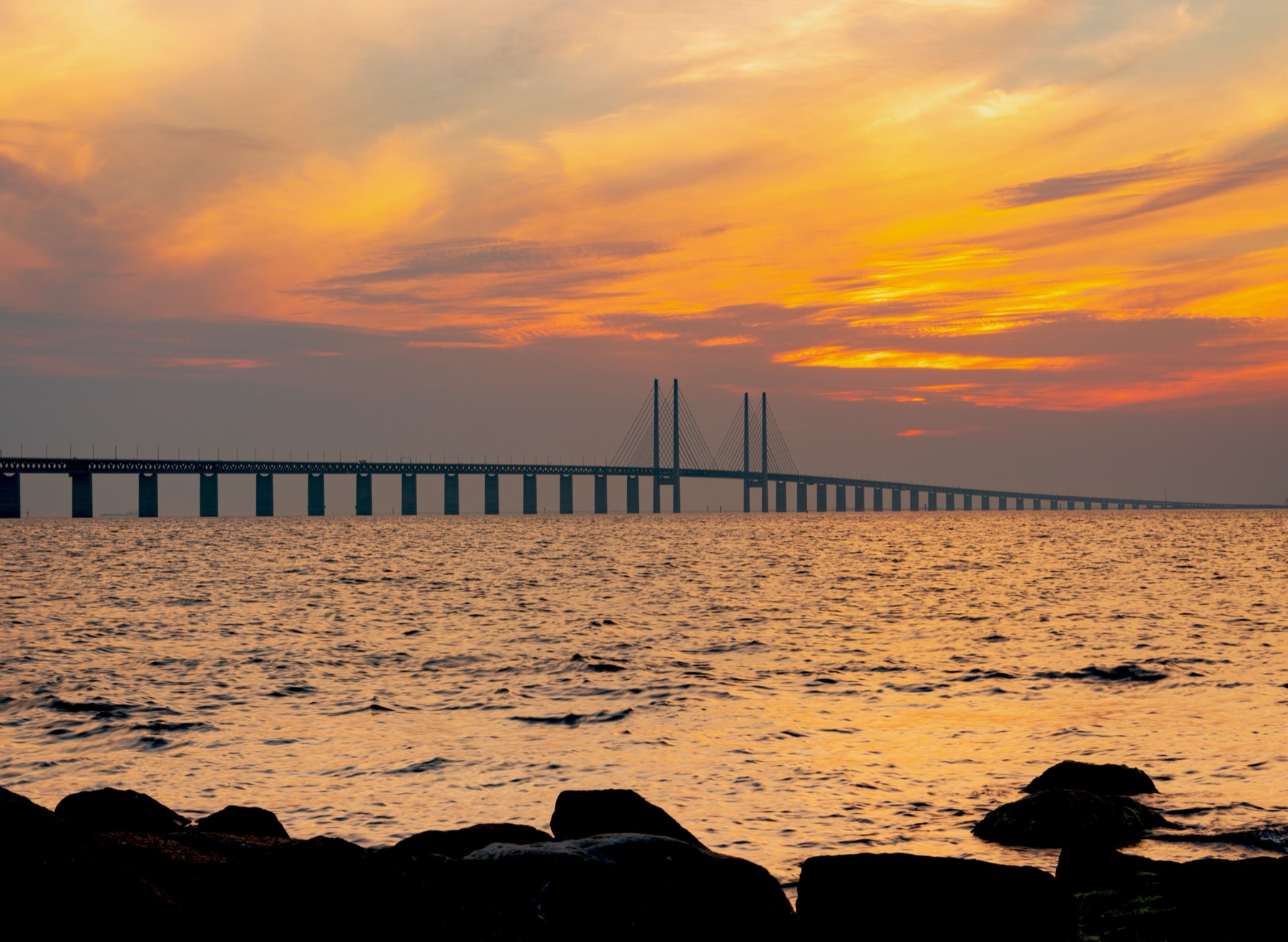
The final tip doesn’t point to Malmö itself, but to its absolute greatest strategic advantage: thanks to the Öresund Bridge you have the Danish capital, Copenhagen, completely within reach. This unique feat of engineering measures an incredible 16 kilometres, part of which is a suspension bridge high above the waves and part an undersea tunnel, into which you smoothly descend on the artificially created island of Peberholm.
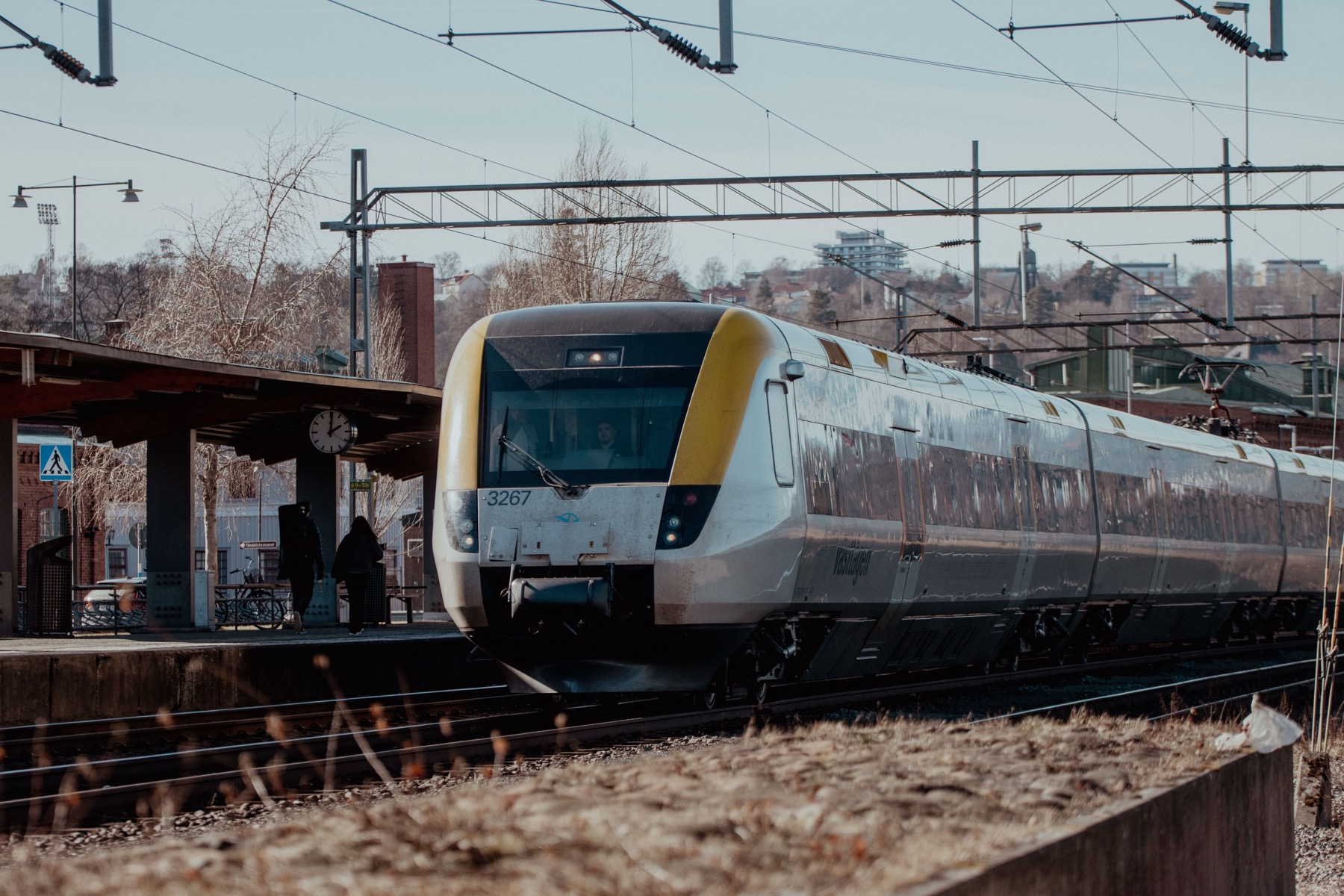
The easiest and by far the cheapest way to get to the other side is to use the frequent train connection (Öresundståg) straight from Malmö’s main station. Trains run every 20 minutes, a one-way ticket costs about 135 SEK (roughly €12) and in less than half an hour you’re already stepping off in central Copenhagen. This gives you a unique and very easy chance to combine a visit to two wonderful Nordic countries into a single weekend.
If you’re travelling in your own car, crossing the bridge will cost you fairly dearly; a one-way toll is around 470 DKK (roughly €63). That’s why most people choose the comfortable train, which is worry-free and saves you the hassle of hunting for overpriced parking in the Danish capital. Don’t forget, though, to pack a valid ID card or passport in your backpack, because the Swedes carry out strict, random border checks on the way back.
💡 Tip: if you plan to cross the bridge by car both ways, it pays to register online for the ØresundGO programme, which, thanks to an annual fee, cuts the price of a single crossing to a fraction of the original.
Photo: Efrem Efre / Pexels
How to get to Malmö and how to get around
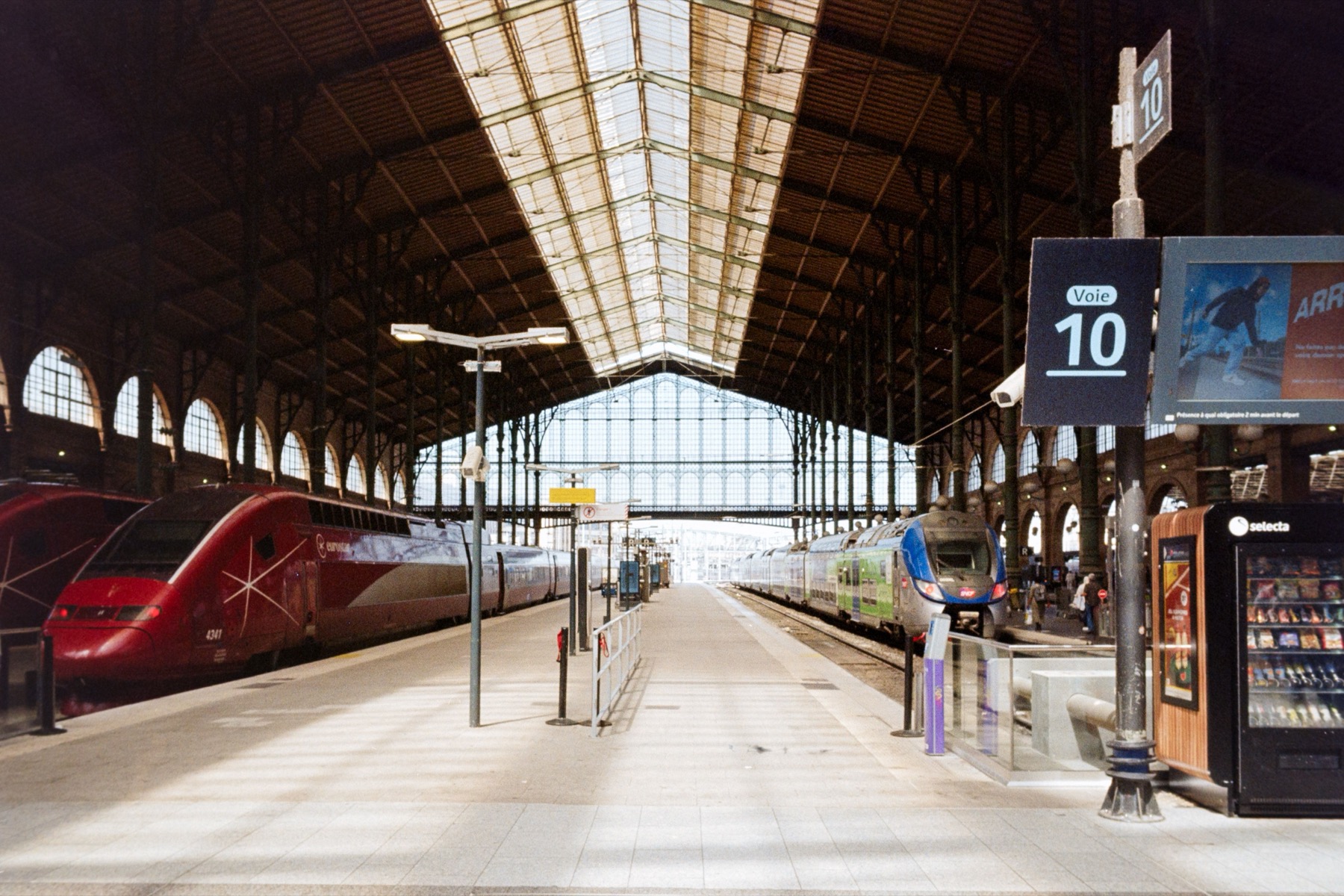
The fastest air route to Malmö surprisingly leads through the neighbouring country. The ideal option is to book a flight straight to Danish Copenhagen, to Kastrup airport, which lies right on the doorstep of the Öresund Bridge. Carriers like Ryanair, easyJet and Lufthansa serve it from many European hubs. As soon as you collect your luggage, you take the escalator down to the underground train station. You board the Öresundståg service and in an incredible 20 minutes you’re already stepping off in central Malmö. It’s often faster and more comfortable than the journey from airport to centre in many other European capitals.
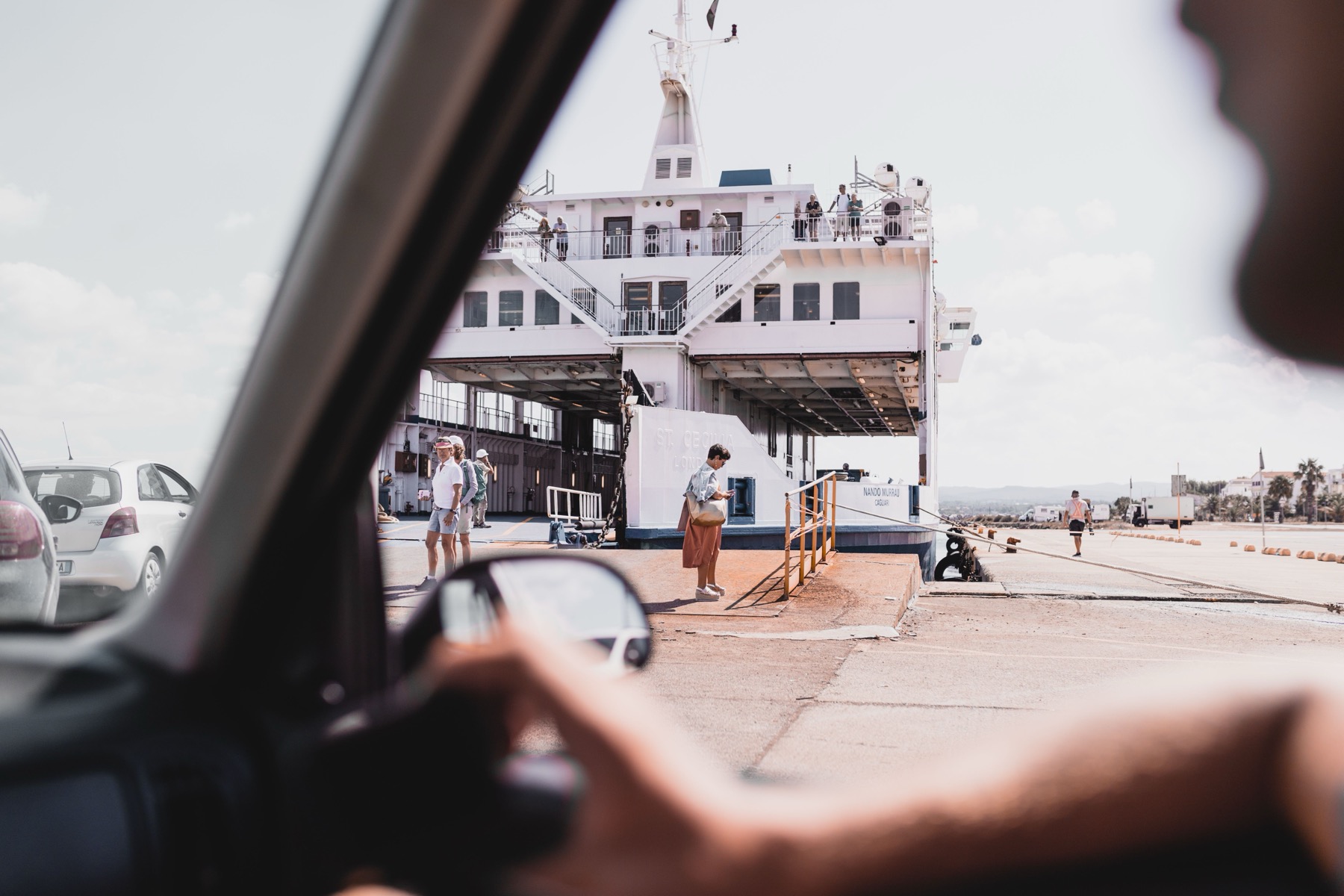
If you’re moving around Sweden, super-fast X2000 trains of the Swedish railways SJ run here from Stockholm, covering the distance in under four and a half hours. But buy tickets well in advance, since they work like plane tickets and their price rises steeply just before departure. For travellers with a car or campervan, one option is the overnight ferries from Germany or Poland, which dock in nearby Trelleborg or Ystad, from where it’s just a short hop to Malmö along excellent motorways (which, incidentally, are completely free for cars in Sweden, so no motorway vignette needed, unlike in Austria or Switzerland).
Getting around the city itself is then an absolute breeze. The historic centre is very compact and largely reserved for pedestrians only, so you can cover most of the sights on foot without any trouble. For longer transfers, for example to Ribersborg beach or the modern Västra hamnen district, I warmly recommend using the already mentioned Malmö by bike shared green-bike system, because the cycling infrastructure here is honed to absolute perfection.
When it starts to rain, the excellently run green buses of Skånetrafiken will save you. You can’t pay the driver in cash on board the bus, you have to download the official Skånetrafiken mobile app in advance and buy your ticket through it, or simply tap your payment card at the terminal when boarding. Bonus news: if you arrive in the second half of 2026, the Swedish government has drastically cut the prices of monthly public transport passes, so the bus works out even cheaper than before.
Photo: cottonbro studio / Pexels
A weekend in Malmö, day by day
If you have just two days for the city, I recommend splitting your programme into a historic and a modern part, so you soak up all the contrasts Malmö offers. Devote the first day to exploring the centre on foot. Start with a morning walk across Stortorget and peek into the oldest church, Sankt Petri. Around eleven, move on to the picturesque Lilla Torg for a traditional fika with coffee and a cinnamon bun.
For lunch, pop into the wonderful Malmö Saluhall market hall, where you’ll find great vegetarian tapas or Asian noodles, and in the afternoon calmly explore Malmöhus Castle with the adjacent Slottsträdgården park. In the evening, definitely head to the pulsing Möllan district, where you’ll taste the best falafel in the city (70 SEK, about €6.50, will be plenty for one) and wash it down with a local craft beer in one of the busy bars.
On the second morning, hire a city bike via the app and set off to discover the city’s modern face by the sea. Head to the sustainable Västra hamnen district, take a close look at the Turning Torso skyscraper and ride along the wooden promenade. From there continue along the coast to Ribersborgsstranden beach, where you can have a lunch menu (dagens lunch) with a generous salad buffet at one of the beach cafés. You can then spend the afternoon relaxing in the historic Kallbadhus saunas, or hop on a train for a quick shopping trip to the architecturally stunning Emporia centre.
Where to go next from Malmö
If you have more time in Sweden, Skåne offers wonderful opportunities for further exploring. Just 20 minutes by train from Malmö lies the historic university town of Lund, which will charm you with its cobbled streets, ivy-covered houses and a majestic Romanesque cathedral with a fascinating astronomical clock.
Lovers of crime fiction should head east to the coastal town of Ystad, where the stories of the gloomy detective Wallander were filmed and set. A short distance away you’ll then find the magical megalithic stones of Ales stenar rising on a cliff above the sea. To the south-west, on the other hand, the Falsterbo peninsula tempts you with its white sandy beaches reminiscent of the Caribbean and picturesque pastel beach huts. For detailed planning of a car trip, check out our article Öresund Bridge: toll, train and how to cross it.
Before you throw yourself into packing your bags, I’ve summed up the answers to the most common questions I get about Malmö. Whether you’re sorting out budget, safety or transport, you’ll find it all neatly together here 😉.
How many days do I need for Malmö?
For the city itself, u003cstrongu003eone packed day or a more relaxed long weekend is more than enoughu003c/strongu003e. In two days you can comfortably explore the historic centre, cycle along the coast in Västra hamnen, visit the museums in the castle, and enjoy the buzz of Möllevången in the evening without any rush. If you’re also planning a trip across the bridge to Copenhagen in Denmark or an excursion to the university city of Lund, you’d better set aside three days.
Is Malmö safe?
Yes, from the perspective of the average tourist u003cstrongu003eMalmö is a perfectly safe cityu003c/strongu003e, even though the media sometimes dramatise the situation. Gang-related problems are concentrated in outlying estates like Rosengård, where you have absolutely no reason to go. In the centre, on the beach, and in the lively Möllevången area, the same common-sense rules apply as in any other European city, so just keep an eye on your pockets in crowds or at the train station.
How do I get from Copenhagen to Malmö?
The fastest and most convenient way is by u003cstrongu003edirect train (Öresundståg), which departs from Copenhagen’s Kastrup airport and the main stationu003c/strongu003e. Trains run every 20 minutes, the journey takes about half an hour, and tickets can be easily purchased at machines at the station or via the Skånetrafiken mobile app. A single journey costs around 135 SEK (approx. €12). Don’t forget to bring valid ID; the Swedes conduct random border checks.
Is Malmö cheaper than Stockholm?
Definitely, u003cstrongu003eyou’ll notice the price difference especially in accommodation and foodu003c/strongu003e. While in Stockholm you’ll spend a fortune on an average lunch, in Malmö you can rely on ubiquitous falafel for just a few kronor or great-value lunch menus (dagens lunch) with unlimited salad buffet, coffee, and bread, which cost around 120 to 150 SEK (€11–14). Even hotels in the centre are noticeably cheaper than in the capital.
Can you swim in central Malmö?
Yes, u003cstrongu003eswimming is hugely popular here and locals love itu003c/strongu003e. You can head to the three-kilometre-long city sandy beach Ribersborgsstranden, which lies just a short distance from the centre. Another great option is jumping into the water from the long wooden piers in the modern eco-district of Västra hamnen, where the water of the Öresund strait is surprisingly clean and offers very pleasant refreshment during the summer months after a full day of walking.
Where do they have the best falafel?
For the best falafel u003cstrongu003eyou need to head to the Möllevången district (Möllan)u003c/strongu003e, which has a strong Middle Eastern community and where the preparation of this dish has been perfected. Absolute legends include Jalla Jalla and Falafel N.1 right by Möllevångstorget square. You’ll get freshly fried crispy balls in warm Arabic bread with loads of vegetables and sauces for under 70 SEK, which will reliably save your budget.
Do I need to rent a bike in the city?
It’s not absolutely necessary, as you can comfortably explore the historic centre on foot, but u003cstrongu003erenting a bike will save you loads of time and offer a truly local experienceu003c/strongu003e. Malmö is perfectly flat, has over 500 kilometres of dedicated cycle paths, and operates the Malmö by bike bike-sharing system, which is cheap and very easy to use via a mobile app. With a bike you can easily reach more distant beaches too.
What can you fit into one weekend?
In a weekend u003cstrongu003eyou can see the best bits without unnecessary rushingu003c/strongu003e. On Saturday morning explore the historic centre and Lilla Torg square, in the afternoon discover the castle with its museums, and finish the evening in the lively bars of Möllevången. You can then spend Sunday cycling to the Turning Torso skyscraper in the modern Västra hamnen district, swimming at Ribersborg beach, and enjoying a relaxing wander in the castle gardens before heading home.
Tips and Tricks for Your Vacation
Don’t Overpay for Flights
Search for flights on Kayak. It’s our favorite search engine because it scans the websites of all airlines and always finds the cheapest connection.
Book Your Accommodation Smartly
The best experiences we’ve had when looking for accommodation (from Alaska to Morocco) are with Booking.com, where hotels, apartments, and entire houses are usually the cheapest and most widely available.
Don’t Forget Travel Insurance
Good travel insurance will protect you against illness, accidents, theft, or flight cancellations. We’ve had a few hospital visits abroad, so we know how important it is to have proper insurance arranged.
Where we insure ourselves: SafetyWing (best for everyone) and TrueTraveller (for extra-long trips).
Why don’t we recommend any Czech insurance company? Because they have too many restrictions. They set limits on the number of days abroad, travel insurance via a credit card often requires you to pay medical expenses only with that card, and they frequently limit the number of returns to the Czech Republic.
Find the Best Experiences
Get Your Guide is a huge online marketplace where you can book guided walks, trips, skip-the-line tickets, tours, and much more. We always find some extra fun there!
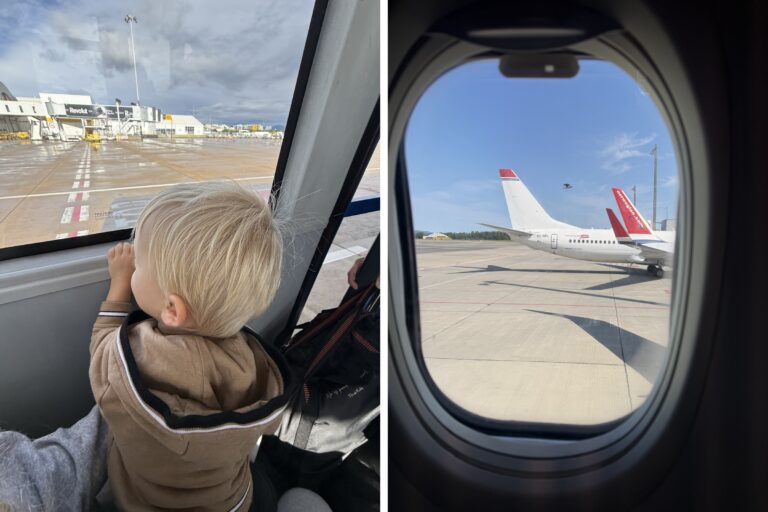
Behind most crying on a plane you’ll usually find blocked and aching ears. Ear pain flying is far worse for the youngest passengers, because their narrower Eustachian tube can’t equalise the changing cabin pressure fast enough, so it bothers them far more than it does adults.
While take-off usually goes smoothly, the descent causes the most pain right before landing. Active swallowing is a guaranteed first aid, so it pays to have a pacifier, a drink with a straw, or the option to breastfeed close at hand.
Below I’ll explain in detail which aids actually work and what to do about a simple runny nose. You’ll also learn why, with an acute middle ear infection, it’s better to postpone the trip entirely after talking to your doctor.
For the youngest children, breastfeeding or a bottle works best for the ears.
TL;DR
Descent is worse than take-off: Cabin pressure changes during descent in a way that pushes much harder on a child’s eardrum, so save your best tricks for the end of the flight.
Swallowing works best: Breastfeeding, a bottle of milk, or a pacifier help open the Eustachian tube, which is by far the most effective way for babies to equalise pressure.
A cold is a risk: Blocked sinuses prevent natural pressure equalisation, so it always pays to check nasal spray use with your pediatrician before the flight.
Watch the liquid limits: Rules vary by airport and terminal — some now allow up to 2 litres in one container thanks to new CT scanners, while others still enforce the strict 100 ml limit (baby milk gets an exemption everywhere).
Don’t give kids sleeping aids: Melatonin is strongly discouraged for children under two, and for older kids it must always be expressly approved by your doctor.
Noise won’t damage hearing: The widely shared claim that cabin noise destroys hearing in 90 seconds comes from online shops, and kids’ headphones mainly serve comfort and better sleep.
Passenger rights are changing: The revision of EU Regulation 261/2004 was approved on 13 July 2026, but it won’t fully apply in practice until mid-2027.
10 Things You Must Know About Ear Pain Flying
Let’s look at what you should know before the trip and what will genuinely help your child.
1. The physics of the ears and why descent is much worse than take-off
The most common cause of a child crying on board isn’t fear of the unfamiliar surroundings — it’s plain physics. Ear pain arises the moment cabin pressure isn’t equalised through the so-called Eustachian tube. When this tube stays closed, the higher pressure on one side starts pressing uncomfortably on the eardrum. In small children the tube is also narrower and more horizontal than in adults, which makes the whole equalisation process much harder — a condition known as airplane ear or ear barotrauma.
One crucial rule often surprises even seasoned travellers: the difference between the flight phases. Descent tends to be far worse and more unpleasant for a child’s ears than take-off itself. During climb, the air in the middle ear naturally expands and finds its way out fairly easily. On descent the situation reverses — air has to get back into the middle ear, which requires actively opening the Eustachian tube.
Parents often make the mistake of using up all their energy and aids during the first twenty minutes of the flight. Always time your heaviest weapons for the moment the captain announces the start of descent to the destination airport. During this phase — usually about twenty to thirty minutes before touchdown — your child will need the most help equalising pressure.
💡 Tip: Watch the flight attendants in the aisle closely. As soon as the crew start collecting the last rubbish and checking seatbelts, that’s a clear sign the plane is beginning its descent and you should start acting.
2. Breastfeeding, the bottle and pacifier as a lifesaver for the youngest
Swallowing opens the Eustachian tube, so a bottle or breastfeeding comes in handy during descent. Photo: Sarah Chai / Pexels
So what actually works on that unpleasant physics in the ears? The answer is surprisingly simple: plain swallowing. The movement of a child’s jaw and the natural swallowing reflex help mechanically open the Eustachian tube. When you’re flying with a small baby for the first time, you essentially have three main options: breastfeeding, a bottle of their favourite milk, or a classic pacifier.
The experience of countless parents on online forums speaks clearly in favour of breast milk. Breastfeeding during take-off and landing is the most reliable method, because the baby is lying on your lap, actively sucking and swallowing, while being hugely calmed by your physical closeness. If for any reason you don’t breastfeed, a bottle of prepared formula or plain baby tea works perfectly well too.
A pacifier works as a great backup in case your child isn’t hungry or refuses a drink. Here we hit a small trade-off you should know as a parent. ⚠️ Studies often link frequent, long-term pacifier use with a higher incidence of middle ear infections — in some observations up to a fifty percent rise in frequency. For a single holiday flight that’s absolutely no argument against a pacifier, but it’s worth keeping this link in mind for children prone to infections.
💡 Tip: Don’t start feeding your child too early. Wait with breastfeeding or the bottle until the moment the engines are at full power and the plane actually leaves the ground, otherwise your child will finish the whole portion while still taxiing on the runway.
3. What reliably works for toddlers and older children
With toddlers and preschoolers, breastfeeding usually no longer plays much of a role and you’ll need slightly different strategies. This is where plain drinking through a straw comes in, along with chewing a favourite gum or sucking a hard sweet. Drinking from a bottle with a straw forces the child into more pronounced jaw movement, which has an almost magical effect on opening a blocked tube.
With older school-age kids and teens the situation is much easier. Usually it’s enough to give them ordinary gum before take-off or teach them to deliberately swallow with an empty mouth and yawn widely. Yawning is a natural defence mechanism that equalises ear pressure almost instantly, and older children can learn to do it on command.
Sometimes you’ll run into an unexpected snag with onboard safety rules. Children under two must be strapped in during take-off and landing with a special child belt attached to your own seatbelt. As I mentioned at the start, our Jonáš absolutely hated this on the flight to Paris and threw quite a fit. At such moments the only things that help are calm, distraction with a new toy, and quickly offering a favourite snack.
💡 Tip: Pack a lollipop in your hand luggage. A lollipop lasts in a child’s mouth much longer than a sweet, keeps them constantly swallowing sweet saliva, and occupies their hands and attention for a really long time.
4. A cold and blocked sinuses: when it becomes a problem
With a cold and blocked sinuses, always check with your pediatrician before flying.
While a healthy child’s clear Eustachian tube usually copes with the pressure, the problem starts the moment your child has a cold. Blocked sinuses significantly raise the risk of unpleasant ear pain after flying with a cold, because the swollen lining blocks the tube and pressure has no way to equalise naturally. Parents’ experiences in travel discussions are quite outspoken here, full of warnings.
Many parents on forums describe flying with a cold as genuine misery, comparing the sinus pain to having your ears cemented shut. The practical approach of experienced travellers therefore includes preparation, which means applying a nasal spray before take-off and again before descent. For small children who can’t yet blow their own nose, parents often swear by a travel nasal aspirator to clear the sinuses.
Against these warnings stand pragmatic counter-views from parents who don’t worry about a mild residual cold at all, or they’d never make it to most holidays. The truth lies somewhere in the middle and depends on the specific child. ⚠️ For children with recurring ear pain, some parents consider giving ibuprofen or paracetamol about half an hour before take-off, but any solution involving medication or nasal spray must always be discussed in advance with your pediatrician.
💡 Tip: The cabin air is extremely dry, which visually makes a cold worse. Don’t forget to give your child plenty of fluids, and some families find a light dab of plain petroleum jelly under the nose helps stop the lining drying out so much.
5. When it’s better to postpone the flight entirely and stay home
The decision whether to still fly with a child who has a cold, or stay home, ultimately always rests with you. But there are specific health conditions where a plane is out of the question and you belong in the doctor’s surgery instead. With an acute middle ear infection, a high fever, or shortly after ear surgery, you must always leave the decision entirely to your treating pediatrician.
If you decide to cancel the flight at the last minute, you’ll hit a very unpleasant practical trap in the cancellation terms. Cancellation insurance does cover a child’s sudden illness, but when the fever strikes at three in the morning before an early departure, you physically won’t manage to click through the airline’s cancellation online in time. Your case is then handled in airline terminology as a so-called unused flight, or no-show.
To later deal with your insurer about a refund, you’ll need two absolutely key things. You must request a confirmation of non-boarding from the carrier and also hold an official medical report from the pediatrician clearly confirming the child was unfit to travel that day. Without these two documents, the insurer will most likely not refund the family’s tickets.
💡 Tip: Most insurers offer comprehensive family packages. These family tariffs work out far better financially than stacking individual policies for each family member separately, and they often have more lenient cancellation terms too.
6. Headphones and earplugs: myths about cabin noise
Keep the tablet as a last resort and download content in advance. Photo: RDNE Stock project / Pexels
There’s a huge amount of misunderstanding and needless panic online around cabin noise. ⚠️ Many websites circulate dramatic figures of 85 to 105 decibels that supposedly can damage a small child’s hearing in just 90 seconds. But these figures are spread mainly by online shops selling ear protectors, so definitely don’t cite them as an independently verified medical fact.
What we can say with complete certainty is that there’s a constant, monotonous engine noise in the cabin. This noise is strongest during take-off and steep climb, while at cruising altitude it settles into a bearable hum. For an adult it becomes tiring over time, but for healthy hearing it poses no acute danger you’d need to panic about.
Many parents, however, have a genuinely great experience with kids’ active noise-cancelling headphones. These ANC headphones let older children calmly watch a cartoon without cranking the volume to maximum. For the little ones they create a quieter bubble for sleep, but it certainly isn’t true that a child would go deaf without them.
💡 Tip: Never use earplugs or noise-muffling ear defenders as a solution for pressure. These aids serve solely to dampen ambient sound and won’t equalise middle ear pressure at all, so they can’t relieve your child’s ear pain.
7. Liquids, baby milk and airport security
If you need to bring liquid medicines, baby food or water for formula on board, you must know the current rules. Baby food and breast or formula milk are exempt at airports and are generally excluded from the classic 100 ml per-container limit. You can pack exactly as much as your child will need for the whole journey.
But pay huge attention to which terminal you’re departing from, as rules can differ within the same airport. ⚠️ Some terminals now allow containers of up to 2 litres per person thanks to new CT scanners (a change that rolled out at Prague’s Terminal 2 from 1 October 2025, for example). Others — often the ones serving non-Schengen flights with carriers like Ryanair or Wizz Air — still enforce the strict 100 ml limit and only apply the exemption for baby food to larger volumes.
Experiences shared by many families across various forums show that security practice can differ dramatically abroad. Security staff may ask you to show the contents of baby milk, swab the surface of the bottle with a special strip, or even ask you to taste the liquid in front of them.
💡 Tip: If you want to avoid haggling over water for a toddler, take just an empty child’s bottle with a spout through security and fill it with fresh water from the airport fountains in the transit area past the scanners.
8. Motion sickness and vomiting high in the clouds
The hardest moments are take-off and landing, when the child must be strapped in.
Motion sickness in children rarely gets discussed in connection with flying, but in practice it’s far more common than you’d expect. It’s not just about drops during unexpected turbulence — the movement of the plane, changes in altitude and banking in turns can all reliably upset a child’s stomach. A toddler’s brain, especially one constantly wriggling on your lap, gets confused signals about body position, which leads to nausea.
How best to prepare for motion sickness on a plane? The foundation of success is a strategic seat choice. ⚠️ If your child is prone to nausea in the car, parents on forums traditionally recommend securing a seat over the wing, where the movement of the plane should be felt a little less, and steering well clear of the tail — although there’s no hard scientific data for this. With older children, seating them by the window and letting them fix their eyes on the distant horizon works great.
Before the flight, skip heavy, fatty or overly sweet meals and go for dry crackers instead. Definitely don’t rely on that single paper bag you might find in the seat pocket in front of you. The British forum Mumsnet is full of stories about parents who spent a twelve-hour flight covered in their eight-month-old’s vomit.
💡 Tip: Always pack a spare change of clothes in your hand luggage. Pack a complete spare set not just for the child but for yourself too, because spending several hours of a flight in a vomit-covered T-shirt is a huge test of mental resilience.
9. Medicines on the plane: what to bring and what to skip entirely
The topic of sleep aids and artificially shifting the body clock during long flights is very sensitive among parents. ⚠️ In discussions you’ll often come across tips on giving children melatonin on a long-haul flight so they sleep peacefully the whole way. But children’s sleep experts are absolutely clear: giving melatonin to children under two is strongly and unconditionally discouraged.
For older children its use should be limited to specific cases after consulting a doctor. Never recommend or give classic children’s sleeping medicines, because their effect in a pressurised cabin can be unpredictable. ⚠️ On top of that, some children have a paradoxical reaction to melatonin, meaning instead of calming down they become incredibly wired and their sleep is drastically disrupted — something you definitely don’t want to discover high above the ocean.
Your basic onboard first-aid kit should be much more sober and practical. It should mainly contain the medicines your child takes regularly, with enough of a buffer in case of flight delays. Also pack a thermometer, plasters, disinfectant in a small pack under 100 ml, and possibly medicines containing paracetamol — but always after explicit consultation with your pediatrician.
💡 Tip: Always keep all important medicines with you in your hand luggage. Life-essential medicines don’t belong in the big suitcase in the hold, because a suitcase can be delayed at any transfer or lost completely.
10. Fear of embarrassment and how to handle the inevitable meltdowns
The biggest burden during a flight often isn’t carried by the children, but by nervous parents’ state of mind. The fear of how those around you will react and whether you’ll embarrass yourself is one of the most frequently mentioned worries that needlessly puts families off flying. But if you board with a knotted stomach, darting your eyes over the other passengers, that unease quickly transfers to your child.
And now to the very worst possible scenario. Your child simply decides they’ve had enough, starts crying and screaming and can’t be soothed. Half the plane turns around and you’d love to open the emergency exit. In that moment, stop and take a breath. You paid for your ticket exactly like the grumpy man in the suit two rows ahead, and your child has every right to be on that plane.
A plane is simply a means of mass transport, not a silent library reading room. People who demand absolute silence should pay for a private jet, and you certainly don’t have to apologise for the fact that your child exists and expresses emotions. When someone turns around and starts staring, breaking the tension with a direct, smiling comment helps — for example, explaining that your child is just teething.
💡 Tip: Parents’ experience is clear: you’re more scared than everyone around you. Don’t fret needlessly, it’ll all work out somehow, and even the worst flight always lands in the end and everyone scatters off home.
Practical summary and rough prices
Rules for travelling with small children change very quickly, so I’ve prepared two clear tables with current data for 2026. The first will help you figure out from what age each airline will actually let you board with a baby, and the second summarises the key changes in liquid rules at Prague’s largest airport.
Airline
Minimum age of child for carriage
Important conditions and restrictions
:—
:—
:—
Smartwings
From 48 hours after birth
Up to 7 days of age a special medical form is required.
Ryanair
From 8 days of age
Children up to and including 7 days are strictly not allowed on board.
easyJet & Wizz Air
From 14 days of age
Applies as standard for children from two weeks to two years.
KLM
No age limit
A newborn can fly practically right from birth.
If you’re departing from a major hub, pay huge attention to which terminal your flight operates from. ⚠️ The terminal isn’t decided by the airline (Ryanair flies from both) but by the destination. While the rules for baby food are more lenient, hard restrictions apply to your own water or coffee.
Terminal (Prague Airport example)
Validity of new rules
Liquid limit per person
Exemption for baby milk
:—
:—
:—
:—
Terminal 2 (Schengen)
From 1 October 2025
Up to 2 litres in one container (thanks to CT scanners).
Yes, no restriction.
Terminal 1 (non-Schengen)
Unchanged (also in 2026)
Max 100 ml in a clear bag.
Yes, but subject to detailed inspection.
Where to go next
If your first trip into the clouds is coming up and you want everything under control, we’ve written more detailed guides on the blog. In them you’ll find out exactly what to pack in your first-aid kit, which toys work best, or where to head with the family.
🔗 These are affiliate links — they don't change your price and help us create content. · All experiences →
Frequently asked questions
Why do children’s ears hurt more during descent than during takeoff?
During ascent, the air in the middle ear naturally expands and escapes fairly easily. During descent, however, the ambient pressure increases and air must actively get back into the middle ear through the Eustachian tube, which requires swallowing. If the tube doesn’t open, the higher external pressure painfully pushes against the eardrum.
Can I fly with a child who currently has a runny nose?
A common post-nasal drip can be managed, but blocked sinuses significantly increase the risk of ear pain. Parents often apply nasal spray before takeoff and descent, but the use of any medications or sprays should always be consulted with your pediatrician beforehand. Flying is not allowed if there is a fever or ear infection.
Does a pacifier cause middle ear infections on planes?
A pacifier is a great aid during takeoff and landing for opening the Eustachian tube. ⚠️ While studies do link very frequent and long-term pacifier use with higher incidence of middle ear infections, use during a single holiday flight does not dramatically increase this risk.
Is it true that cabin noise can damage a child’s hearing?
⚠️ Claims that aircraft noise reaches 85 to 105 decibels and destroys hearing in 90 seconds come mainly from online shops selling hearing protection. The cabin has monotonous noise that is tiring, but won’t damage a healthy child’s hearing. Headphones primarily serve for better comfort and sleep.
Can I give my child melatonin for sleep on a long flight?
Child sleep experts agree that giving melatonin to children under two years old is strongly discouraged. For older children, it’s only possible after explicit consultation with a pediatrician. ⚠️ Additionally, in some children melatonin can have a paradoxical effect and instead of sleep, it may strongly stimulate them.
What are the rules for liquids and baby milk at the airport?
Baby milk and food have an exemption and you can bring enough for the entire journey. ⚠️ Be careful about terminals, though: regulations vary by airport—some newer terminals allow up to 2 litres per container, while others maintain the strict 100 ml limit, and baby milk may undergo detailed screening.
What to do when a child is prone to motion sickness and vomiting?
The movement and tilting of the aircraft itself can easily upset a child’s stomach. ⚠️ Experienced parents recommend reserving a seat over the wing, avoiding heavy meals before the flight, and most importantly having sturdy bags and a complete change of clothes for both the child and yourself ready in your carry-on luggage.
Do I have to pay for an infant who sits on my lap the entire time?
Yes, most airlines charge a fee for an infant without their own seat; for example, Ryanair typically charges €25 per segment. ⚠️ While the revision of EU Regulation 261/2004 was approved in July 2026 and brings free seating next to a parent for children under 14, it won’t actually come into effect until mid-2027 in practice.
Tips and Tricks for Your Vacation
Don’t Overpay for Flights
Search for flights on Kayak. It’s our favorite search engine because it scans the websites of all airlines and always finds the cheapest connection.
Book Your Accommodation Smartly
The best experiences we’ve had when looking for accommodation (from Alaska to Morocco) are with Booking.com, where hotels, apartments, and entire houses are usually the cheapest and most widely available.
Don’t Forget Travel Insurance
Good travel insurance will protect you against illness, accidents, theft, or flight cancellations. We’ve had a few hospital visits abroad, so we know how important it is to have proper insurance arranged.
Where we insure ourselves: SafetyWing (best for everyone) and TrueTraveller (for extra-long trips).
Why don’t we recommend any Czech insurance company? Because they have too many restrictions. They set limits on the number of days abroad, travel insurance via a credit card often requires you to pay medical expenses only with that card, and they frequently limit the number of returns to the Czech Republic.
Find the Best Experiences
Get Your Guide is a huge online marketplace where you can book guided walks, trips, skip-the-line tickets, tours, and much more. We always find some extra fun there!
Above the Arctic Circle in summer, the midnight sun in Norway only just brushes the horizon before slowly climbing back up again. Midnight at these latitudes looks like one endlessly long sunset that never quite drops below the horizon. Lukáš and I experienced these unbelievably bright nights in the Lofoten Islands in July 2026 with our little Jonáš, and I vividly remember how that magical light reliably kept us awake until two in the morning. It’s a truly fascinating natural wonder that will completely throw off your natural body clock — but it’s absolutely worth seeing at least once in your life. So where should you go, when should you set off, and how on earth do you get a few hours of sleep? You’ll find all of that below.
Foto: stein egil liland / Pexels
TL;DR
The ideal window: The best time to travel to northern Norway is roughly from 10 June to 5 July, when the sun never sets across a huge area and you also stand the best chance of the warmest weather.
The right location: You’ll only see the midnight sun above the Arctic Circle — that means destinations like Bodø, the Lofoten Islands, Tromsø, the North Cape, or Svalbard.
The Oslo myth: Neither the capital, Oslo, nor popular Bergen get the midnight sun, because they lie too far south. There you’ll only experience bright nights in summer.
The weather reality: Northern Norway is a coastal region, and fog or low cloud are far more common here than the postcard-perfect clear skies you might imagine.
Nighttime activities: The complete absence of darkness means you can head out on a mountain hike, rent a sea kayak, or play golf at two in the morning without a second thought.
Saving your sleep: A good blackout eye mask is an absolute must, because even with hotel curtains, plenty of light will still find its way into your room.
Foto: Ximonic (Simo Räsänen) / Wikimedia Commons, CC BY-SA 3.0
10 Things You Need to Know About the Midnight Sun in Norway
Now let’s get down to it: here’s the practical information that will genuinely save you a headache before your trip above the Arctic Circle. I’ll show you where to find the most beautiful spots without the crowds, how to deal with a wrecked sleep schedule, and why you should pack a winter hat even in mid-July.
Foto: Valugi / Wikimedia Commons, CC BY-SA 3.0
1. What It Actually Is and Why You Shouldn’t Go to Oslo
The midnight sun is an astronomical phenomenon in which the sun’s disc stays above the horizon for a full 24 hours. In practical terms, it means that if you look north at midnight, you’ll see the sun sitting just above the horizon. This only happens above the Arctic Circle (66°33′ north), because the Earth’s axis is tilted and in summer the North Pole leans directly toward the Sun. Thanks to atmospheric refraction, which bends the light, the sun is even visible a touch south of this magical line. In winter it works exactly the opposite way (the polar night, in Norwegian mørketid) and the sun simply doesn’t appear. Personally, we’d rather not choose that one. 😅
A huge mistake many travellers make is assuming they’ll see the midnight sun in Oslo, Bergen, or Trondheim. These cities do offer so-called white or bright nights, but the sun there really does dip below the horizon before midnight. In Oslo, for example, the sun sets around a quarter to eleven in the evening in mid-June and rises again before four in the morning. The night there never turns completely black and you can see perfectly well in the streets even at two a.m., but that iconic disc of sun hanging over the sea will simply be missing. If the midnight sun is your main reason for the trip, you’ll need to book flights much farther north.
💡 Tip: The midnight sun always shines from the north. When choosing accommodation or a camping spot, look for locations with a clear view to the north or northwest, otherwise the mountains will hide the sun from you.
Foto: stein egil liland / Pexels
2. When and Where You’ll See It Best (Handy Table)
The farther north you go in Norway, the longer the period during which the sun doesn’t set at all. While just above the Arctic Circle the phenomenon lasts only a few weeks, on far-flung Svalbard people enjoy an incredible four months of constant daylight. Here’s an overview of dates for the most popular destinations. Just find your spot and plan your flights. The dates are based on astronomical calculations, so from year to year they shift by a day or two, which is nothing dramatic.
Place
Latitude
Midnight sun period
Approx. length
Bodø
67.3°
4 June – 8 July
5 weeks
Lofoten (Svolvær)
68.2°
28 May – 14 July
7 weeks
Harstad / Vesterålen
68.8°
25 May – 18 July
8 weeks
Tromsø
69.6°
20 May – 22 July
9 weeks
Hammerfest
70.7°
16 May – 27 July
10.5 weeks
North Cape (Nordkapp)
71.2°
14 May – 29 July
11 weeks
Svalbard (Longyearbyen)
78.2°
20 April – 22 August
18 weeks (4 months)
The sun reaches its lowest point in the sky exactly at midnight, and slightly to the northeast. At the beginning and end of the periods listed, the sun’s disc only licks the horizon, whereas around the summer solstice (21 June) it sits noticeably higher in the sky at midnight. The second half of July in Lofoten no longer officially offers the midnight sun, but the nights there are still so extremely bright that the average visitor can barely tell the difference with the naked eye. Another great fringe destination is the remote little town of Vardø on the very northeast tip of the country, where the sun doesn’t set from 17 May to 26 July.
💡 Tip: If you’re planning your trip for late June or early July, I recommend heading to the Tromsø area or the Lofoten Islands. That’s exactly where you’ll find the ideal compromise between the length of the midnight sun and reasonable summer temperatures.
Foto: Artem Podrez / Pexels
3. How on Earth to Sleep and What to Do with Kids
Constant daylight is a huge strain on the human body. Your body naturally loses its time anchors, and your brain simply refuses to start producing melatonin, which is absolutely essential for falling asleep. Most hotels up north do have decent blackout curtains, but if you’re travelling by camper, sleeping in a tent, or in a traditional Norwegian cabin, you’ll be fighting a real battle with that light. A personal eye mask and possibly earplugs (because the birds sing all night as if their lives depend on it) are the best investment you can make in your Nordic holiday.
If you’re travelling with small children, be prepared for the fact that explaining bedtime to them in full sunlight is a superhuman task. From our own experience with Jonáš in Lofoten, I can confirm that getting them to sleep in broad daylight takes an enormous amount of patience and a good dose of improvisation. A portable travel blind with suction cups for the window worked fantastically for us — it managed to make the room at least partially dark — and for outings we had the pushchair fitted with a special blackout cover. The key is to keep an absolutely uncompromising evening routine strictly by the clock, and to stop exposing the kids to direct sun about two hours before sleep.
💡 Tip: If you’re sleeping in a car or a cabin without blinds, locals recommend the old, tried-and-tested trick of taping tinfoil or black bin bags over the windows. It’s not exactly a design feature, but it works absolutely perfectly.
Foto: Adam Destro / Wikimedia Commons, CC BY-SA 4.0
4. North Cape vs. Knivskjellodden: The Cliché and the Secret Tip
The North Cape (Nordkapp) is a huge 307-metre-high cliff on the island of Magerøya, marketed with the title of the northernmost point of Europe. Around the summer solstice, dozens of coaches from all over Europe pull up to the iconic globe-shaped monument so people can watch the sun over the Arctic Ocean together. It’s undoubtedly a powerful experience with a genuine end-of-the-world atmosphere, but you’ll have to reckon with enormous crowds and a fairly steep entry fee. Access to the entire visitor complex at the viewing platform costs around 300 to 400 NOK per person.
Few people know, however, that the real northernmost point of mainland Europe lies about 1.4 kilometres farther north and is called Knivskjellodden. No convenient road leads there — you can only reach it on foot along a fairly demanding eighteen-kilometre trail. It starts at a free car park right beside the main E69 road, and the round trip takes you five to six hours. Your reward will be an utterly raw place completely free of tourists, and above all a fascinating view back at the monumental North Cape cliff itself, bathed in the golden light of the midnight sun. In my opinion it’s a far better and more authentic experience.
💡 Tip: The island of Magerøya is world-famous for its treacherous fog. Before you set off on the hike to Knivskjellodden, check the radar carefully, because the weather there can change from one minute to the next.
Foto: stein egil liland / Pexels
5. Lofoten: The Most Beautiful Beaches and an Eternal Sunset
The Lofoten Islands are one of the most beautiful places on the planet in their own right, but under the midnight sun they take on an even more dramatic dimension. The key to success is finding spots that face north or northwest, because that’s exactly where the sun drops lowest at night. Uttakleiv and Haukland beaches on the island of Vestvågøy are among the most photogenic locations in all of Norway, and at midnight you’ll experience real magic here. White sand, turquoise water, and steep mountain peaks form a backdrop over which the sun hangs like a giant orange lightbulb at midnight. Just bear in mind that parking at the beach costs 50 to 100 NOK and camping runs to around 250 NOK.
If you don’t just want to sit on the beach, local operators offer fantastic experiences right out on the water. You can head out on organised sea kayak expeditions that regularly set off from the villages of Reine or Eggum. Gliding across quiet fjords when the sky is tinted purple and orange and the sea is completely calm is one of the best memories you can make. For those who prefer comfort, watching the sun straight from the deck of the famous Hurtigruten ships is a great option — in summer they sail along the entire Lofoten coast and offer unforgettable views.
💡 Tip: If you want to book a midnight kayak trip hassle-free in advance, I recommend using the GetYourGuide portal. Spots on these evening expeditions tend to sell out very quickly in high season.
Foto: JoachimKohlerBremen / Wikimedia Commons, CC BY-SA 4.0
6. Tromsø: A Cable Car to the Views and the Midnight Sun Marathon
Tromsø is the largest city in northern Norway and makes the perfect base for Arctic adventures. The most popular spot for watching the midnight sun here is the viewpoint on Mount Storsteinen, which sits at an altitude of 421 metres. The Fjellheisen cable car whisks you up there in comfort, and in season from late May to late July it runs daily until midnight. A return ticket costs an adult 495 NOK, and for a child you’ll pay 280 NOK. Riding up around half past ten in the evening and watching the sun light up the whole city and the tangle of fjords far below you is simply an absolute classic.
But the city also lives the midnight sun very actively. Every June the famous Midnight Sun Marathon is held here — the only marathon in the world that starts at night and is run in full daylight. The next edition falls on 19 June 2027, and the organisers offer five different distances, from a children’s run to a full marathon. Around nine thousand runners from nearly ninety countries are said to line up at the start. And all of it in broad daylight, which is about as absurd as it sounds. 😁 If running isn’t your thing, you can head to the unique midnight concerts in the beautiful Arctic Cathedral (Ishavskatedralen), whose enormous glass wall lets in stunning golden light.
💡 Tip: If you’re planning to visit Tromsø during the marathon, book your accommodation as much as nine months in advance. The city’s capacity tends to be hopelessly sold out for these dates and prices shoot up.
Foto: Ximonic (Simo Räsänen) / Wikimedia Commons, CC BY-SA 4.0
7. Senja and Vesterålen: Wild Nature Without the Crowds
The island of Senja, often nicknamed “Norway in miniature” by locals, is a wonderful alternative to the overcrowded Lofoten. It offers equally dramatic mountains plunging straight into the ocean, but with far fewer tourists. For watching the midnight sun there’s the utterly perfect Tungeneset viewpoint, which opens up the iconic view of the jagged Okshornan peaks. Another huge draw is the climb up the majestic Mount Segla, which starts from the tiny village of Fjordgård. In summer people commonly hike here even at night to avoid the afternoon heat and enjoy this monumental peak all to themselves.
A little farther south you’ll find the Vesterålen archipelago, world-famous for its whale safaris. Boats set out from the towns of Andenes and Bleik on the island of Andøya in search of giant sperm whales, and in the summer months they even offer special midnight cruises. Seeing an enormous whale fluke rise from the ocean against the backdrop of the midnight sun is a scene straight out of a National Geographic documentary. According to many travellers, it’s an even more powerful experience than watching from the mainland.
💡 Tip: In summer, the Gryllefjord–Andenes ferry line runs between Senja and Vesterålen. It saves you hundreds of kilometres of tedious driving and is a gorgeous scenic experience among the fjords in its own right.
Foto: Pixabay / Pexels
8. Golf, Kayaks, and Night Hikes: What to Do When the Day Never Ends
The very best thing about the midnight sun is that incredible sense of freedom, when you’re never under pressure from approaching darkness. Your itinerary can loosen up completely, and activities you’d normally have to squeeze in before evening can be shifted to the middle of the night without any stress at all. Night hikes are a huge hit up north, and what’s more, they’re perfectly safe. The popular climb up the steep stone steps of Reinebringen in Lofoten, for example, is usually clogged with crowds during the day, but if you set off at 11 p.m. you’ll have the hill almost to yourself and see the most beautiful colours in the sky.
And then there’s something I never expected to care about: the Lofoten Links golf course on the island of Gimsøy, straddling the 68th parallel. It regularly ranks among the best courses in the world, and the prestigious Golf Magazine named it the outright number one in Norway for 2025. Roughly from mid-May to late July it offers so-called Midnight Sun Unlimited Golf. Here players can hit balls for an incredible 24 hours a day right on the rugged Arctic coast — a concept you won’t experience anywhere else on the planet at this quality. There’s also a stylish lodge with ocean views right by the course.
💡 Tip: If you head out on a night hike, take a thermos of hot tea and a little something to eat. Most cafés and restaurants up north are long closed by midnight, so you’ll have to rely on your own supplies.
Looking at those perfect Instagram photos, it’s easy to get the impression that the midnight sun means endless evenings in a t-shirt and sunglasses. But the reality of northern Norway is far harsher — fog, low cloud, and persistent rain are utterly common phenomena here. The northern peninsula of Magerøya in particular, where the famous North Cape sits, is downright notorious for its treacherous Arctic fog. The chances that, after a long journey, you’ll see nothing at all at midnight because of that white murk are statistically fairly high, and you simply have to factor them in.
Temperatures in June and July up north most often range between 10 and 16 degrees Celsius, and once astronomical midnight approaches, the air off the ocean cools noticeably. Warm layers, a windbreaker, and a winter hat belong in your backpack even in July — but paradoxically, don’t underestimate the solar radiation either, because when the sun shines on you 24 hours straight, the total UV dose is simply enormous. You’ll need sunglasses and sunscreen up north even at three in the morning.
💡 Tip: Learn to read the detailed forecasts on the Norwegian weather site yr.no. It’s often worth driving just twenty kilometres farther to the next fjord, where the rain and cloud cover can be completely different.
Foto: Alimurat Üral / Pexels
10. Photography: An Endless Golden Hour
For every keen photographer, the midnight sun season is an absolute dream come true. The classic golden hour, which in Central Europe lasts just a few dozen minutes before sunset, stretches out here into several long hours. It usually runs from roughly 9 p.m. until 2 a.m. The sun shines from a very low angle, creating unbelievably soft, warm light and casting dramatic, long shadows. That annoying stress of having to quickly catch the right moment before the sun drops behind the hill for good vanishes entirely.
One thing that’s easy to forget: at midnight the sun sits exactly to the north, so plan where you’ll stand accordingly. It’s very useful to download an app like PhotoPills to your phone, which shows you precisely where the sun’s disc will move at any given hour. You’ll get the best shots by placing the horizon in the lower third of the frame and letting the sky, reflected in the water’s surface, take centre stage. Because the light is very contrasty, modern phones sometimes struggle with exposure. Try manually lowering the brightness while shooting so the sky isn’t needlessly blown out and the colours stay beautifully saturated.
💡 Tip: Don’t forget to protect not just your eyes but also your camera lens. The low sun has a huge tendency to throw unwanted flare, so using a good lens hood is an absolute must.
Foto: Francesco Ungaro / Pexels
Where to Stay (and Not Go Mad from the Light)
💡 Accommodation and experience tip: We prefer to look for accommodation on Booking.com, which tends to have the best cancellation terms. Tickets, tours, and activities are then worth comparing and buying through GetYourGuide.
Accommodation up north is a chapter in itself. I’ve learned that a west-facing window won’t save your sleep, trust me. So what should you focus on? Look for places that offer views to the north, so you can watch the sun straight from your window with a mug of tea in hand. Before booking, always open the map and check which way your room’s windows face. At the same time, verify in the reviews that the hotel has good blackout curtains. Here are some great picks across popular destinations that meet these strict conditions:
Lofoten (Hamnøy): Stay in a traditional red fishermen’s cabin known as a rorbu, steeped in history. The utterly iconic choice is Eliassen Rorbuer, which offers the most beautiful views of the surrounding mountains and fjords straight from the wooden terrace. The cabins have their own little kitchen and comfortable beds.
Tromsø: Right in the buzzing city centre I recommend the Scandic Ishavshotel. It sits right on the waterfront with a fantastic view of the harbour and the iconic Arctic Cathedral. It has great blackout curtains in the rooms and a fantastic, generous breakfast that will get you back on your feet after a sleepless night.
North Cape (Honningsvåg): As a strategic base for trips to the cape and the trek to Knivskjellodden, the Scandic Nordkapp works brilliantly. It sits right by the main E69 road, offers easy parking and comfortable, quiet rooms.
Bodø: If you’re starting your Nordic journey right here, the modern Scandic Havet is a great choice. It’s one of the tallest buildings in town, so from the upper floors you’ll get a luxurious ocean view straight from your bed.
Foto: Wolfmann / Wikimedia Commons, CC BY-SA 4.0
Practical Summary and Ballpark Prices
A holiday in Norway isn’t among the cheapest, and the northern regions are a notch pricier still than the south. I’ve put together a rough price overview for you (valid for 2026) so you can get a rough idea of your budget. I quote prices in Norwegian kroner (NOK); the exchange rate usually sits around €0.085 to €0.09 per 1 NOK.
Fjellheisen cable car in Tromsø: 495 NOK (adult return), 280 NOK (child aged 6–17)
Entry to the North Cape cliff: approx. 300–400 NOK per person (covers access to the visitor centre and parking)
Parking at the Lofoten beaches (Uttakleiv): usually 50–100 NOK per day, camping around 250 NOK
Guided midnight kayak trip: from 900 to 1,500 NOK per person
Good sleep mask from the pharmacy: 150–200 NOK (worth bringing your own from home)
A cup of coffee in a café: 45–60 NOK
Gryllefjord–Andenes ferry: from 600 NOK for a car
Foto: PNW Production / Pexels
Where to Eat (When You’re Hungry Even at Midnight)
Finding an open restaurant in the middle of a white night can be quite a challenge in northern Norway, even though the sun is blazing away. Most places close their kitchen uncompromisingly at 10 p.m., so if you head out on a night hike, plan a little ahead and keep supplies in your backpack — coming back from a trip to a sleeping town with a starving crew is otherwise a fairly common scenario.
Here are a few of our favourite spots that will save you, or at least offer a great culinary experience during the day:
Foto: Hans Olav Lien / Wikimedia Commons, CC BY-SA 3.0
Fiskekrogen in Henningsvær (Lofoten)
The traditional restaurant Fiskekrogen sits right in the harbour of picturesque Henningsvær, and its fish soup is renowned far and wide. The kitchen no longer cooks at midnight, but during the day it’s one of the local classics; vegetarians in Henningsvær will do better in the cafés and bakery.
Foto: Heikki Immonen / Wikimedia Commons, CC BY 3.0
Mathallen in Tromsø
In the heart of the north, Mathallen Tromsø is worth a mention — a restaurant and delicatessen focused on local Arctic ingredients; the menu is dominated by reindeer and fish, and a reservation is a good idea because it tends to be full.
Foto: Wikimedia Commons
Where to Next
If you’re already planning your Norwegian itinerary, you’ll definitely find our other detailed articles handy. We’ve put together in-depth guides to the most beautiful places:
Northern Norway and the phenomenon of the midnight sun raise plenty of questions, and believe me, the answers are surprisingly hard to track down. Because you often ask me the same things on Instagram and the blog, I’ve decided to gather everything in one place.
Here are the most common questions, which will hopefully help you get a little more clarity as you plan.
Tips and Tricks for Your Vacation
Don’t Overpay for Flights
Search for flights on Kayak. It’s our favorite search engine because it scans the websites of all airlines and always finds the cheapest connection.
Book Your Accommodation Smartly
The best experiences we’ve had when looking for accommodation (from Alaska to Morocco) are with Booking.com, where hotels, apartments, and entire houses are usually the cheapest and most widely available.
Don’t Forget Travel Insurance
Good travel insurance will protect you against illness, accidents, theft, or flight cancellations. We’ve had a few hospital visits abroad, so we know how important it is to have proper insurance arranged.
Where we insure ourselves: SafetyWing (best for everyone) and TrueTraveller (for extra-long trips).
Why don’t we recommend any Czech insurance company? Because they have too many restrictions. They set limits on the number of days abroad, travel insurance via a credit card often requires you to pay medical expenses only with that card, and they frequently limit the number of returns to the Czech Republic.
Find the Best Experiences
Get Your Guide is a huge online marketplace where you can book guided walks, trips, skip-the-line tickets, tours, and much more. We always find some extra fun there!
For years, airlines deliberately profited from parents’ fear of being split up from their family during a flight. They pushed us to pay extra for specific seats just to be sure a small child wouldn’t be seated at the opposite end of the plane. But airplane seating for children is finally starting to change for the better.
New European rules have helped. Thanks to them, you’ll get a seat next to a child under 14 for free — but in practice they only kick in from mid-2027. Until then, you have to work with each carrier’s booking system and safety regulations.
In the paragraphs below, I’ll explain exactly where you’re allowed to sit with your kids. You’ll also learn why Ryanair seats you strictly by the window when you have an infant on your lap (it’s all about the oxygen masks) and what to watch out for if you’re travelling as the only adult.
A flight scheduled around naptime is the surest route to a calm journey.
TL;DR
New European rules: In July 2026, legislation was approved requiring a child under 14 to sit next to a parent for free. In reality, though, it only takes effect from mid-2027.
Changes at Ryanair: Since the end of June 2026, the system assigns children under 12 to one adult for free — but you’ll usually end up at the back of the plane.
Oxygen masks: An adult with an infant on their lap must sit by the window on many airlines.
Hidden bassinet fees: A bassinet on a long-haul flight is often free, but some airlines charge up to $160 for the seat in that row.
The end of open seating: In January 2026, America’s Southwest dropped its open-seating system, showing a global trend toward stricter control.
Child-free zones: Corendon introduced an adults-only zone for a €45 surcharge; other European airlines are still refusing to follow.
10 Things You Need to Know Before You Fly
Let’s take a look at the most important things you should know.
1. The End of Ryanair’s Family Tax — With a Catch
💡 Tip: If you leave seating to chance, the system will most likely put you right at the back.
The biggest earthquake in the European market was recently caused by Ryanair itself. Under strong pressure from regulators, it scrapped the mandatory seat-reservation fee for families on 25 June 2026. Until recently, if you flew with children under 12, at least one adult had to buy a seat. Only then did the system let you add the children’s seats for free. It was a very clever trick for squeezing extra money out of families.
Today the system works differently and far more kindly. If you choose random seat allocation when buying your ticket, the booking system automatically — and completely free of charge — assigns children under 12 to one adult on your booking. Ryanair doesn’t specify exactly when this allocation happens, but you now have a guarantee of sitting together with one parent.
It sounds like an absolute win for the family budget, but there’s one massive catch hidden in it. When you leave seating to the random algorithm, you’ll almost always end up as a family at the back of the plane. The reason is purely mathematical and very logical. The front rows get snapped up by business travellers and passengers who happily paid to choose their seats. That logically leaves the seats at the back for families with free allocation.
2. The Oxygen Trap for Lap Babies
According to the FAA, the safest option is a certified car seat, not a parent’s lap.
💡 Tip: With a lap infant without their own seat, you can’t sit just anywhere — the oxygen masks limit you.
This is absolutely critical information if you’re flying for the first time with a baby aged from newborn to two years, who doesn’t have their own seat and travels on your lap the whole time. Online you’ll often hear the universal advice not to pay for seats because the system will seat you together anyway. But with infants, for safety reasons, it isn’t that simple.
Ryanair, for example — an airline many of us use — has a fairly strict requirement. An adult with an infant on their lap must sit strictly by the window. The reason isn’t a lovely view of the clouds, of course, but pure safety. Above the window seats there are two oxygen masks, whereas above the other seats there’s only one. That’s why an adult with a lap infant absolutely has to sit there.
You can’t sit in the aisle with a baby, and you can’t sit in the middle either. If you don’t buy a specific window seat and rely on random allocation, the system will indeed put you by the window, but it may scatter the rest of your family across the surrounding rows. Next to you will probably be a complete stranger. If you’re flying as two adults with a baby and you want a 100% guarantee, it’s better to just buy one window seat and one middle seat outright.
3. The European Revolution and the Rules for 2027
💡 Tip: The law on free seating for children under 14 has already been approved, but it only really takes effect in mid-2027.
In the summer of 2026, the long-awaited revision of the passenger rights regulation — which had been fought over in the European institutions for several long years — was finally completed. The European Parliament adopted the text on 7 July 2026 by an overwhelming majority, and the Council of the EU gave it the final green light on 13 July. For families with children, it’s an absolutely landmark moment.
A sentence made it into European law that changes the rules of the game for every airline. A child under 14 must be seated next to their accompanying person, completely free of charge. Airlines simply can no longer use children’s seating as a pressure lever to extract extra seat-selection fees from parents.
There’s one very important catch you need to watch out for, though. The regulation takes effect with a one-year transition period for all carriers. So in reality, we won’t get this legal certainty and the absolute end of fees until mid-2027. Until then, we’re in a transitional state where each airline tweaks the rules a little in its own way.
4. Car Seats Always Go by the Window
💡 Tip: If you buy your child their own seat and bring a certified car seat, strict rules apply to where it can go.
If you’re flying with a toddler for whom you’ve bought a separate ticket and you bring a certified car seat on board, you can’t choose just any seat in the cabin. A very tough safety rule applies here, required by airlines like Wizz Air as well as classic network carriers. The car seat must always be placed strictly on a window seat.
Next to that car seat there must be a parent or accompanying person over 16. Practical experience and safety regulations make it clear that a car seat should never block the way for other passengers in the event of an emergency evacuation. That’s why it can never be in the aisle or on a middle seat.
The American FAA even states that the safest place for a child is an approved restraint system on their own seat. Lukáš and I haven’t taken a car seat on board yet, because our little Jonáš flew on our laps until he was two, but for older toddlers it’s the best possible solution for safety during turbulence. The car seat must, however, have a special certification label for use in air travel.
5. Front or Back? The Eternal Parents’ Dilemma
Most low-cost carriers offer priority boarding with children. Photo: Markus Winkler / Pexels
💡 Tip: The front rows offer huge legroom, while the back of the plane saves the day with its proximity to the toilets.
Once you decide to pay for seats, you face a fundamental decision about where to actually sit with your family. Traveller discussions are completely split into two irreconcilable camps on this. There’s no universally right answer, because it always depends on your children’s age and what your priority is during the flight.
The front-row fans swear by the space. In the first row behind the bulkhead you get loads of legroom, your child can in theory play on the floor for a while, and no one can recline their seat in front of you. You’re also first on the plane and first off, which is priceless with a tired toddler. The downside is that during takeoff and landing you can’t have any bags of toys under your feet at all, and the armrests are fixed, so they can’t be raised.
The back-row team, on the other hand, bets on practicality. The rear seats are a short walk from the toilets, which is absolutely key with recently potty-trained kids. Right next door is the galley, where you can go to warm up milk or stand and rock a crying baby in a carrier. The downside of the back is more noise, the constant stream of people heading to the loo, and the fact that you get off the plane dead last. For safety reasons, they’ll never seat you and your children by an emergency exit.
6. Bassinets and Their Hidden Cost
Hotels often provide travel cots for free — you just need to request one in advance. Photo: kaboompics.com / Pexels
💡 Tip: An aircraft bassinet for your baby is usually free, but the airline often charges a hefty fee for the seat in that row.
When it comes to sleeping on a plane with a small child on a long-haul flight, most parents immediately look for a so-called bassinet. It’s a special aircraft cot that the cabin crew physically attach to the solid bulkhead in front of the first row of seats after takeoff. Your child lies in it, sleeps, and you finally have your hands free. You won’t find them at all on short European routes with Ryanair or Wizz Air, though.
The bassinet itself is usually free to borrow on most classic carriers. The trap is that you have to reserve a seat in the bulkhead row, which airlines charge heavily for. An extreme example is Turkish Airlines, which charges a bulkhead-row surcharge of an incredible $80 to $160 per person per flight segment. A family can end up paying a real chunk just to get access to a bassinet at all.
On top of that, every airline has completely different weight and length limits for bassinets. The maximum weight usually ranges from 8 to 12.5 kilograms. As soon as the child exceeds the limit, the crew won’t give you the cot for safety reasons. It’s also crucial to know that during any stronger turbulence, when the seatbelt sign comes on, you have to immediately take your sleeping child out of the bassinet and back onto your lap.
7. The Empty Middle Seat Trick
💡 Tip: In a three-and-three seat configuration, book the window and aisle seats and leave the middle one empty.
Once you’ve got a few flights under your belt, you start thinking tactically. If you’re flying as two adults with a baby on your lap, experienced travellers recommend not buying seats right next to each other. When selecting seats, reserve a window seat and an aisle seat and deliberately leave the middle one empty.
The psychology of both the booking systems and the passengers themselves is clear. Nobody voluntarily chooses a middle seat unless they really have to. People only get assigned one as the very last resort, once the whole plane is full. If the flight isn’t 100% sold out, there’s a fairly high chance the middle seat stays empty and you get the whole three-seat row to yourself.
And what happens if the plane sells out to the last seat and someone does end up in the middle? You simply offer them a swap on board. Most passengers are more than happy to trade a cramped middle seat between a stranger’s family for a more comfortable aisle or window seat, so in the end you sit together anyway.
8. Seating Rules at Other Low-Cost Carriers
💡 Tip: With easyJet, check in the moment it opens; Wizz Air tries to keep children under 14 with their companion.
Every low-cost airline has a slightly different system during this transition period. If you’re flying with the British easyJet, their rules say that every child under 12 will be seated close to an adult on the booking. But the key word is “close,” together with the fact that seats are allocated strictly by check-in order. If you only remember to check in three hours before departure, the system physically won’t get you seats next to each other.
The Hungarian Wizz Air has its rules set up slightly differently. A child under 14 must be accompanied by a person over 16, and the airline tries to seat them together. Again, the earlier you check in online, the better your chances of sensible seats. On charter flights with carriers like Smartwings the situation is more specific, and a car seat can often only be bought by phone through the tour operator.
The European Union Aviation Safety Agency, EASA, has issued a fairly clear recommendation. Children under 12 should sit next to a parent, or at most across the aisle or in the row immediately in front of or behind them. For now, though, it’s only a non-binding recommendation, not a hard law, so airlines interpret it with varying degrees of leniency.
9. Child-Free Zones as the New Trend of 2026
💡 Tip: Some airlines are starting to experiment with adults-only zones; at Corendon you’ll pay an extra €45 for one.
As tensions on board rise, a service has appeared that stirs up huge emotions and debate. Corendon Airlines became the first European airline to introduce a so-called Adult Zone reserved exclusively for passengers aged 16 and over. The zone is physically separated within the plane, and the airline charges a €45 surcharge per one-way trip for a seat in it.
For families with children, it represents unnecessary extra psychological pressure. The economics of these zones are still very uncertain, though. European giants like KLM, TUI and Transavia have publicly stated they have no plans to introduce similar zones. Malaysia Airlines even quietly ended its child-free seating experiment.
On the other side of the Atlantic, though, things are tightening in a different way. The American giant Southwest abandoned its legendary open-seating system on 27 January 2026. The move triggered a huge wave of confusion and split-up families, which only confirms the global trend of airlines wanting absolute control over passenger seating.
10. What to Do If the System Splits You Up Anyway
One adult may have only one child under two on their lap.
💡 Tip: Never try to fix split seats with other passengers on board — sort it out with the airline before departure.
It can happen to anyone. The aircraft type changes, the system crashes and you find out your five-year-old is supposed to sit ten rows away from you. In 2026, the solution definitely no longer lies in boarding the plane and begging people to swap seats with you. Passengers are less and less willing to give way to families.
As soon as you spot the problem, go straight to the carrier’s live chat. Write clearly and politely that the system has split up your family and that, under their own conditions of carriage, you’re requesting free reseating. If the chat doesn’t help, get to the airport very early and go straight to the check-in desk, even if you only have hand luggage. Airport staff have far greater powers in the system than you do in the app.
Only as an absolute last resort should you approach the cabin manager directly on board. Don’t argue with other passengers — deal only with the crew. Remember, though, that the crew can only move seat assignments in justified cases and you can’t force reseating on board, so it’s always better to sort everything out at the airport.
Practical Summary and Rough Prices
To help you get a better picture of what to expect from each airline, I’ve put together two clear tables. The rules can change, so before buying your ticket, always double-check them on the carrier’s official website.
Seating Rules by Airline (as of 2026)
Carrier
Children’s seating
What to watch out for most
:—
:—
:—
Ryanair
Random allocation assigns children under 12 to 1 adult for free.
You’ll probably end up at the back of the plane. A lap infant must be by the window.
easyJet
Seats children under 12 close to an adult.
Seats are allocated by order. Check in the second online check-in opens.
Wizz Air
A child under 14 must be accompanied by a person over 16.
A toddler’s car seat must always be on a window seat.
Lufthansa
Always tries to seat parents with children together.
Bassinets can be reserved up to 52 hours before departure and fill up fast.
Turkish Airlines
Seats you together within the same class.
Brutal surcharges (up to $160) for a seat in the bassinet row.
Corendon
Standard family seating.
Offers a paid child-free zone (Adult Zone) for €45 per segment.
Where to Sit on a Plane Based on Your Child’s Age
Child’s age
Ideal spot on the plane
Main reason and benefit
:—
:—
:—
Baby (0–1 year)
Long-haul: first row behind the bulkhead. Europe: by the window.
Option to hang a bassinet. Window required because of the oxygen masks.
Toddler (1–3 years)
Rear of the plane, ideally the whole three-seat row.
Very close to the toilets and the crew galley (warming milk, room to rock the baby).
Preschooler (4–6 years)
A window seat in the front of the cabin.
The view keeps the child entertained; the front means a quicker exit after landing.
School-age (7+ years)
Aisle or window anywhere on the plane.
The child can sit still now; comfort and room for headphones and a tablet matter more.
Where to Go Next
If you’ve got your first trip with kids coming up and need to soak up more practical tips, be sure to check out our other articles. We’ve written detailed guides that will save you a lot of nerves and money on airport fees.
🔗 These are affiliate links — they don't change your price and help us create content. · All experiences →
Frequently Asked Questions
When will the new European rule about free seating for children come into effect?
Although the revision of the regulation was approved by the European Parliament and EU Council back in July 2026, there is a twelve-month transitional period. u003cstrongu003eIn reality, free seating for children under 14 next to their parent won’t happen until mid-2027u003c/strongu003e. Until then, airlines can still set their own transitional rules.
Are children’s suitcases like JetKids or inflatable bed boxes allowed?
This is a huge problem because the airline industry is very divided on this. u003cstrongu003eAirlines like Emirates, British Airways, Air France or Delta explicitly ban these accessoriesu003c/strongu003e for safety reasons. On the other hand, KLM or Virgin Atlantic allow them under certain conditions. Always carefully check the policy of the specific carrier in advance, otherwise the flight attendant will order you to deflate the accessory and put it away.
Am I entitled to compensation for a delayed flight even for a lap infant?
This area is unfortunately very contentious. u003cstrongu003eThe deciding criterion is usually whether you paid any fee for the childu003c/strongu003e, for example the €25 at Ryanair or ten percent of the fare at traditional carriers. If the child flew completely free, airlines often refuse compensation. But definitely always submit a claim.
What should I do if the airline damages my stroller?
According to the Montreal Convention, the airline is liable for your stroller up to a fairly high amount. u003cstrongu003eThe most critical mistake parents make is late reporting of damageu003c/strongu003e. You must report everything in writing within a maximum of 7 days of receipt, ideally right away at the airport at the baggage claim desk. For example, Smartwings now also requires the stroller to be wrapped in protective cover, otherwise they bear no liability.
Do sleep medications or melatonin help children on planes?
Experts from the International Paediatric Sleep Association have issued a clear warning that u003cstrongu003emelatonin should not be given to children under two years oldu003c/strongu003e. For older children without a specific diagnosis, its use is not recommended and can even have the opposite, disruptive effect. Always rely primarily on adjusting sleep schedules and daylight exposure.
What about liquids and baby food in 2026?
Baby food and breast milk are exempt from the 100-milliliter limit. u003cstrongu003eBut be very careful about which terminal you’re flying fromu003c/strongu003e. Prague Airport has relaxed the rules to two liters, but this only applies to Terminal 2 (flights within Schengen). At Terminal 1, where Ryanair flies to places like London, the old strict 100-milliliter rule still applies.
Do children handle ear pain during takeoff and landing?
Descent is always much worse for children’s ears than takeoff itself. u003cstrongu003eThe most effective weapon is encouraging swallowingu003c/strongu003e, in the form of breastfeeding, bottle feeding, or for older children drinking from a straw. If the child has a cold, nasal drops before descent are recommended, but always consult your pediatrician in advance about the specific dosage.
Tips and Tricks for Your Vacation
Don’t Overpay for Flights
Search for flights on Kayak. It’s our favorite search engine because it scans the websites of all airlines and always finds the cheapest connection.
Book Your Accommodation Smartly
The best experiences we’ve had when looking for accommodation (from Alaska to Morocco) are with Booking.com, where hotels, apartments, and entire houses are usually the cheapest and most widely available.
Don’t Forget Travel Insurance
Good travel insurance will protect you against illness, accidents, theft, or flight cancellations. We’ve had a few hospital visits abroad, so we know how important it is to have proper insurance arranged.
Where we insure ourselves: SafetyWing (best for everyone) and TrueTraveller (for extra-long trips).
Why don’t we recommend any Czech insurance company? Because they have too many restrictions. They set limits on the number of days abroad, travel insurance via a credit card often requires you to pay medical expenses only with that card, and they frequently limit the number of returns to the Czech Republic.
Find the Best Experiences
Get Your Guide is a huge online marketplace where you can book guided walks, trips, skip-the-line tickets, tours, and much more. We always find some extra fun there!
If you’re planning a trip up north, taking one of the many Sweden ferries is often the best possible choice, especially if you don’t want to be tied to expensive car rentals once you arrive. Sure, you can fly to Sweden in under two hours, but hand on heart, flying means giving up an enormous amount of freedom. Anyone who wants to bring a car full of camping gear, bikes or even a whole motorhome simply chooses the sea route. Crossing the sea isn’t just a tedious transfer, it’s a brilliant start to your holiday that also saves you a night’s accommodation along the way. You can stretch your legs, stock up on supplies and set off into the Nordic forests the next morning feeling rested.
Choosing the right route can be a real head-scratcher, though, because there are several options from Central Europe. It all depends on exactly where you’re setting off from and where in the north you’re heading. Let’s take a detailed look at how to pick the ideal route, how much it costs this year and which mistakes to avoid when booking your tickets.
Photo: Mr Alex Photography / Pexels
TL;DR
Before we dive into a detailed breakdown of individual routes, ships and practical tips, I’ve put together a quick overview of the absolute essentials. If you’re in a big hurry or just want to refresh the basic rules for Nordic travel, these few points will give you enough to get your bearings.
Book your tickets well in advance: Ferry prices work much like plane tickets, so summer dates booked at the last minute can end up costing up to three times as much.
Poland is ideal from the east: Routes from Świnoujście or Gdynia mean shorter driving and a longer rest on board.
Germany suits western travellers: The ports of Rostock and Travemünde offer quick motorway access and very frequent sailings.
Consider an overnight crossing: Although a ticket with a cabin is pricier, you save a night’s hotel on the mainland and don’t lose a day travelling.
Take everything you need on board: During the crossing, the car decks are strictly locked for safety reasons and you won’t be able to reach your belongings.
Don’t forget your documents: Sweden has extended its border checks at least until November 2026, so you must always carry your passport or ID card.
The Øresund Bridge as an alternative: If you don’t want to be tied to an exact ferry departure, the Danish overland route across the famous bridge is a great option.
Photo: Erik Mclean / Pexels
15 Things You Need to Know About Sweden Ferries
Choosing the right route and the crossing itself might look a little complicated at first glance, but once you know a few basic tricks, it’s actually a total breeze. While planning, you’ll definitely come across plenty of questions, whether about the correct car size in your booking, choosing a cabin, or travelling with pets.
That’s why I’ve put together this detailed list to walk you through everything that matters. You’ll find out what to watch out for the most, where you can cleverly save, and why it’s a good idea not to leave too many things until you’re at the port.
Photo: needtofly / Pexels
1. Why a Ferry Beats Flying
Travelling in your own vehicle gives you a freedom in a big country that flying simply can’t offer, and Sweden is made for camping, road trips and overnight stays in the wild. Car rentals up north will painfully inflate any holiday, whereas into your own boot you can easily stuff a tent, sleeping bags, a stove, supplies and even a paddleboard. Just the transport costs for a family come to roughly €750 to €780, and flying simply can’t beat that. Just add up plane tickets for four people with luggage, plus insurance on a pricey rental car and child car seats. Your own car comes out as the clear winner.
Another huge advantage of ferries is the complete absence of weight limits for luggage. On board, nobody cares how many heavy suitcases, bags or crates of drinks you’ve packed into the car. You simply pay for the total length and height of your vehicle and off you go with peace of mind. For families with kids that means the end of packing stress, with no need to weigh every backpack, worry about liquids in hand luggage or dread excess baggage at the airport desk. You just throw everything into the car, from your favourite camping chairs to sturdy waterproof hiking boots.
A ferry also gives you the brilliant option of bringing your pets up north without the stress of a flight in the dark cargo hold of a plane. On many ships, dogs can stay with you in special cabins or on designated decks, which makes the trip north an ideal doggy holiday. Thanks to its right of public access to nature (allemansrätten), Sweden is very friendly and welcoming for travellers with animals.
💡 Tip: Be sure to pack your own supply of your favourite wine or beer. In Sweden, you can only buy alcohol at the state-run Systembolaget shops, which have very limited opening hours, high prices due to excise duty, and are closed entirely on Sundays. Within the European Union you can legally bring up to 110 litres of beer and 90 litres of wine per person for personal consumption.
Photo: Margo Evardson / Pexels
2. The Polish Classic: Ferries Between Sweden and Poland
If you’re setting off from the east, it makes no sense to drag yourself across the whole of Germany. The port of Świnoujście lies under six hours of comfortable driving from the Czech border and offers excellent connections to Ystad or Trelleborg in Sweden. Three big companies operate here, namely Polferries, TT-Line and Unity Line. That means ships depart several times a day and you can pick the time that suits you best. On top of that, the drive through Poland along the new S3 expressway and the A1 motorway is perfectly smooth and very cheap on tolls.
The crossing from here takes around six to seven hours, which is absolutely ideal for a proper rest, a coffee in the restaurant and admiring the views out over the open sea. But do watch out for a change introduced in summer 2026, as Polferries has moved the check-in for motorised passengers in Ystad to new stands. So always check the port map that comes with your ticket by email very carefully beforehand, so you don’t end up wandering around right before departure.
Another great Polish option is the popular route from Gdynia to Karlskrona, operated by Stena Line. The crossing takes just under ten hours and it’s a totally strategic point if you’re planning to explore the eastern islands of Öland and Gotland, or if you’re heading straight towards Stockholm. You’ll avoid the long and often tiring drive across the whole of southern Sweden. Gdynia also has the advantage that you can make a lovely stop in historic Gdańsk before departure.
💡 Tip: When booking tickets on Polish websites, always try switching the currency from euros to Polish złoty. It very often works out that paying in the local currency ends up a few euros cheaper once your bank converts it. The same goes for filling up on the motorway on your way to the port.
Photo: Wendy Wei / Pexels
3. Ferries to Sweden From Germany: The Motorway Express
Travellers coming from further west usually prefer the German ports, because getting onto the motorway heading north is very smooth and the journey flies by incredibly quickly. From major European hubs you can reach the port of Rostock in under six hours of comfortable driving, spending most of that time on the toll-free German motorway. From Rostock to Trelleborg, modern ships operated by TT-Line and Stena Line sail regularly, with the crossing itself taking a very pleasant six hours. Just remember that German motorways tend to get very congested on Friday afternoons, so it’s better to travel overnight or early in the morning.
A little closer still lies the town of Travemünde, near historic Lübeck. From here, huge Finnlines ferries sail to Malmö, and TT-Line ships to Trelleborg. The sea crossing from here takes a bit longer, usually around nine hours, which makes it a great overnight route. You board in the evening, have dinner, sleep beautifully in a cabin and wake up right in Sweden.
German routes generally have the busiest timetables and enormous car capacity, so tickets are a bit easier to find here even outside the main booking windows. Even so, the Friday and Saturday evening departures disappear from the booking systems first, and leaving your purchase to the last minute definitely doesn’t pay off. The ports also have short-term parking well sorted out, in case you arrive well ahead of time and want to rest.
💡 Tip: If you choose the overnight crossing from Travemünde, arrive at the port a couple of hours early and take a stroll through the historic centre of nearby Lübeck, a UNESCO World Heritage Site famous for its traditional marzipan.
Photo: Wolfgang Weiser / Pexels
4. Ferries From Denmark to Sweden and Short Hops
If you love driving, savour the feeling of freedom behind the wheel and don’t want to spend half a day on a ship, the Danish route is made for you. The most commonly used option is the very short ferry from the German port of Puttgarden to the Danish town of Rødby. This extremely busy route is operated by Scandlines, the crossing takes just 45 minutes and the ships shuttle back and forth practically non-stop, day and night. You’ve barely parked the car and grabbed a coffee on the top deck before they’re calling you back to your vehicle. Scandlines also has a very flexible Smile loyalty programme, where you collect points on food and drink purchases.
Alternatively, you can take the slightly longer route from Rostock to the Danish port of Gedser, which takes roughly two hours. Once you’re in Denmark, you’ll cruise comfortably along excellent motorways all the way to Copenhagen. From there, your dream of Sweden is within easy reach across the majestic Øresund Bridge, or you can choose another short ferry. Danish motorways are free, but do watch out for the strict speed limits, which the local police like to measure often.
That next hop is the legendary and heavily used shuttle between Helsingør in Denmark and Helsingborg in Sweden. The crossing across the strait takes just under twenty minutes and is a fantastic alternative for all travellers who want to avoid the heavy Copenhagen traffic and the high toll on the big Øresund Bridge. From the ship you get a lovely view of the famous Kronborg Castle.
💡 Tip: Scandlines offers so-called combined tickets, which include both the ferry to Denmark and the subsequent toll for crossing the Øresund Bridge. Buying this combination in advance online saves you a fair bit of money compared with paying on the spot.
Photo: Leeloo The First / Pexels
5. Sweden Ferry Prices and How They’re Calculated
Pricing at sea strongly resembles the airlines, so a fixed price list practically doesn’t exist. The price always depends on the exact length and height of your car, the number of passengers, the chosen cabin and above all the date of the crossing. A car with two adults on the Rostock to Trelleborg route will cost a comfortable €60 off-season, but in mid-July it can easily climb over €200. I’d recommend considering so-called flexi tickets, which cost a little more but let you move your departure time if you get delayed in a queue.
Caravans and motorhomes have their own special tariffs, which are significantly more expensive due to the large space they take up below deck. Always enter the absolutely precise dimensions into the booking system, including a roof box, antenna or bike rack. If the port staff discover the car is actually longer or taller than stated, you’ll face a hefty surcharge, or in the worst case they won’t let you onto the packed ship at all. Booking systems often check your registration plate too, which you can usually change online up to a few hours before departure with most companies.
As a rough guide for 2026, budget around €100 to €200 for one crossing with a standard car, depending on the chosen route and how early you book. It always pays to compare different departure days, because shifting your holiday even by a single day forwards or backwards can knock as much as a decent third off the total price.
💡 Tip: The most expensive crossings tend to be Friday evening and Saturday morning, when changeover days occur. If you can set off on a Tuesday or Wednesday, you’ll not only save a lot of money but also avoid the endless queues at boarding.
Photo: Oktay Köseoğlu / Pexels
6. Daytime Versus Overnight Crossing
This is by far the biggest dilemma when planning any Nordic trip. Daytime crossings are logically always cheaper and you don’t necessarily need to add a cabin. You can sit in the huge glass-fronted café, read your favourite book on deck, explore the duty-free shops or simply stroll along the outer decks watching the waves. The main downside is that you lose practically a whole day of your holiday just crossing the sea.
An overnight ferry, on the other hand, works like your own floating hotel. You do pay a little more for the compulsory cabin, but on the other hand you save on mainland accommodation, which in Sweden commonly costs from around €80 a night upwards. In the morning you wake up beautifully rested, have breakfast with a view of the approaching Swedish coast and have the whole long day ahead of you for exploring and travelling. Most ships also offer an evening entertainment programme on overnight crossings.
Experienced travellers very often go for a clever combination of both options. On the way there, when everyone is full of energy and excited about the holiday, they travel during the day and enjoy the views. On the way back, when fatigue from the demanding road trip and the miles clocked up tends to take over, they prefer the overnight route to get a proper rest before the long drive home.
💡 Tip: If you go for a daytime crossing without a cabin, head straight for a good spot in the lounge right after boarding. The comfortable armchairs by the big windows tend to get snapped up within the first ten minutes of the deck opening.
Photo: Mathias Reding / Pexels
7. Cabins and Recliners: When to Pay Extra
On long overnight crossings, such as the typical Gdynia to Karlskrona route or Travemünde to Trelleborg, a cabin is usually absolutely compulsory for safety reasons. You can choose between a cheaper inner cabin without a window and a significantly pricier outer option with a beautiful sea view. Every single cabin has its own bathroom with a shower, toilet and clean bedding, so comfort is guaranteed. There’s even a small desk and chair.
If you’re travelling during the day, you don’t need a cabin, but you can rent a so-called Pullman seat. It’s a more comfortable reclining chair in a designated quiet zone, which costs just a tiny fraction of the price of a whole cabin. It’s a nice compromise for those who want to quietly nap for a few hours away from the noisy public areas. Just bear in mind that charging sockets tend to be scarce here, so a charged power bank comes in handy.
For families with younger children, though, a daytime cabin is enormously worth it and I warmly recommend it. The kids have their own space for an afternoon nap, you can put down all your heavy bags, shower in peace and rest in private. Unlike overnight crossings, the daytime rental price tends to be very reasonable, and that peace and quiet on a crowded ship is simply priceless in the summer season.
💡 Tip: Cabins sell out far faster than the actual car spaces below deck. If you’re planning a summer overnight crossing, book your tickets ideally four to five months ahead, otherwise you’ll be left with only the most expensive luxury suites.
Photo: Nguyen Ngoc Tien / Pexels
8. Food on Board: Buffets and Your Own Snacks
Every larger ferry works like a small floating town and has several dining options. By far the most popular are the huge self-service buffets, which offer generous breakfasts and hearty dinners for a fixed price. You pay once at the entrance and eat as much as you can manage, and believe me, the salad counters, cheeses and fresh bread won’t let you leave empty. 😄 The onboard restaurants also serve traditional meatballs, and on most ships you can conveniently pay by card, in euros or in Swedish kronor.
Besides the big buffet, the ships also have smaller cosy cafés and bistros, where you can buy excellent coffee, a slice of pizza or a sweet cinnamon bun. Prices here are of course a bit higher than on the mainland, but they’re still perfectly manageable without ruining your travel budget. Coffee here is most often sold as a bottomless cup, so with a single mug you can sit and sip all morning long.
If you want to save money for experiences in Sweden, it’s perfectly legal to bring your own food on board. Nobody will chase you away if you pull your own filled baguettes, cheese from a cool bag or a flask of coffee out of your backpack on a public deck. Travellers do this completely routinely, it’s just really not polite to eat your own supplies at tables reserved for paying restaurant guests.
💡 Tip: If you know you’ll want to go for a big buffet dinner, buy your entry when booking your ferry ticket online. Most companies offer a discount of around ten to fifteen percent for buying in advance compared with paying on the spot.
Photo: Katya Wolf / Pexels
9. What to Take Up Top and What to Leave in the Car
This is an absolutely crucial safety rule that often catches newcomers off guard and can spoil the start of their trip. During the entire crossing, the car decks are strictly locked and separated by watertight doors for strict safety reasons. Once you’ve parked after boarding and gone up the stairs to the passenger areas, there’s no way you’ll reach your car again, not even if you’ve forgotten important medication.
So prepare a handy carry bag (let’s call it your ship backpack) with everything essential while still at home. You’ll absolutely need your documents, wallet, phone, power bank, any medication, a warmer jumper and toiletries. The air conditioning on ships tends to be set to very low temperatures, and the sea wind will chill you quickly out on the top deck. If you plan to watch films, don’t forget to download them onto your tablet in advance, because onboard Wi-Fi tends to be expensive and slow.
In the car, on the other hand, leave all your heavy suitcases, camping gear and, most importantly, switch off the car alarm before you leave. The rocking of the ship on the waves reliably sets off the more sensitive motion sensors, and you really don’t want to be the person whose car flashes and honks wildly below deck the whole crossing, constantly draining its own battery while the ship’s PA calls out your registration plate.
💡 Tip: Before departure, find out from your vehicle’s manual exactly how to deactivate the tilt and interior motion sensor. On modern cars this is often done by double-pressing a button on the key, or deep in the on-board computer menu.
Photo: Riccardo Pitzalis / Pexels
10. Check-In, Ports and Border Controls
Always arrive at the busy port with plenty of time to spare to avoid needless stress. As standard, you’re required to arrive sixty to ninety minutes before the ship actually departs. If you have a large motorhome or a car with a trailer, better allow a full two hours, because getting large vehicles on board and manoeuvring them takes considerably longer. The check-in process is otherwise very simple and resembles driving through classic motorway toll gates. Watch the signs above the lanes carefully, they tend to be split into cars, lorries and high-roof vehicles.
At the window you show your printed ticket or QR code and the documents of all passengers. Bear in mind that Sweden has extended its border checks at least until November 2026, so random police checks at the ferry exit are a common thing. They’ll check you right through your rolled-down window and the whole procedure usually takes just a few minutes.
So have your passport or ID card ready for every member of the party, including small children. If you’re travelling in a van or with a caravan, customs officers may ask you to open the boot or take a look inside the living area. But they’re always very polite and ask about the purpose of your trip. The good news is that the new European EES and ETIAS systems don’t apply to EU citizens at all.
💡 Tip: Store your documents in the glovebox so you have them instantly to hand. Digging for a passport lost at the bottom of a backpack in the boot while a queue of vehicles honks behind you isn’t exactly a pleasant experience.
Photo: Bingqian Li / Pexels
11. Travelling by Train and Bus Without a Car
Ferries are of course not intended exclusively for drivers. Every ferry company caters for foot passengers too. Most large ports, whether it’s Rostock in Germany, Gdynia in Poland or Ystad in Sweden, have a direct train connection right to the terminal, or at least offer connecting shuttle buses from the city centre straight to the ship, so making your way over with a suitcase is a matter of moments.
A foot passenger ticket costs a real pittance and often comes to just a few dozen euros, which makes it a great option for students or Interrail pass holders. A big hit for 2026 is also the Snälltåget night train, which from August runs from Dresden via Berlin all the way to Stockholm. Here you don’t have to bother with the ferry at all, because the train either drives onto the ship in Germany or crosses the Danish bridges while you sleep soundly in a comfortable couchette car. Seat prices start at a very reasonable 499 Swedish kronor.
If you take a long-distance bus to Stockholm (often with FlixBus), the ferry price is already automatically included in the ticket. The bus drives smoothly below deck, the driver asks you to leave the vehicle, you take your valuables in your backpack and spend the crossing on the upper decks of the ship together with the other passengers from the cars. You return to the bus roughly fifteen minutes before docking at the port.
💡 Tip: If you plan a journey by Swedish trains connecting to the ferry, buy your tickets far in advance on the Swedish railways’ SJ website. They use dynamic pricing and tickets bought at the last minute on the day of travel tend to be extremely expensive.
For families with younger children, a ferry is an outright blessing and a great start to the holiday. Most large ships have fantastically equipped children’s play areas with entertainers, where the little ones can safely amuse themselves for hours in a ball pit. Restaurants automatically offer discounted children’s menus and there are usually microwaves for warming up your own baby food. Older kids will appreciate the onboard cinema, arcade games or exploring the vast decks with views of the lighthouses. The journey passes for them incomparably faster than being strapped into a car seat somewhere on a scorching motorway.
If you’re travelling with your dog, you must absolutely declare it when you first book your ticket. The rules vary slightly by company, but generally the dog isn’t allowed to stay locked in the car below deck. You have to book it a special pet-friendly cabin, which often has a lino floor instead of carpet, or stay with it the whole time in designated areas in the corridors. On the outer decks you’ll then find special walking zones fitted with artificial grass, sand and a water hydrant.
Always keep the dog on a lead and don’t forget a valid European pet passport with up-to-date rabies vaccination, which Swedish customs officers check very diligently on entry to the country. Sweden is a wonderful country for dogs, just remember that from March to the end of August your dog must always be on a lead in nature. The reason is nesting birds and the protection of their young, and the locals take this really seriously.
Photo: Tuấn Vũ / Pexels
13. Weather, Storms and Seasickness
The Baltic Sea is usually gorgeously calm in the summer months and its surface resembles a mirror, but occasionally it can get properly choppy. You needn’t be afraid, though. Modern ferries are enormous steel giants well over two hundred metres long and equipped with incredibly powerful stabilisers, so you practically won’t feel the ordinary smaller waves inside the ship at all. The crossing is very smooth and maximally comfortable even for those who are otherwise a little afraid of water.
If you nevertheless know you suffer from unpleasant seasickness, book a cabin as low down near the waterline as possible and, ideally, as close to the middle of the ship as you can. It’s precisely in these spots that the rocking is felt the least. Definitely pack some ginger sweets or ordinary motion-sickness tablets (they can often be bought right at the ship’s information desk) and during the crossing try to look out at the fixed horizon, which greatly helps the brain process the whole situation better. Spending time in fresh, cold air also helps a lot.
In the event of extreme autumn or winter storms, it can occasionally happen that the ferry company delays the crossing by a few hours for safety reasons, or cancels it altogether. In that case they’ll automatically offer you a free rebooking onto the next available sailing, or a full refund. During summer this happens only very rarely, though, so there’s no need to stress about it.
💡 Tip: Avoid eating heavy fried food and drinking large amounts of alcohol before the crossing if the sea doesn’t look completely calm. A light snack and fresh air on the top deck work real miracles.
Photo: Damir K . / Pexels
14. The Øresund Bridge as an Overland Alternative
Anyone who doesn’t want to keep an eye on precise ferry timetables and prefers absolute freedom will choose the legendary Øresund Bridge, which elegantly connects Copenhagen in Denmark with Malmö in Sweden. This structure is sixteen kilometres long, part of the route runs through a tunnel beneath the sea, then the bridge rises above the surface and suddenly you have nothing but water and sky on both sides. Honestly, it’s worth the toll. Along the way you also pass over the artificial island of Peberholm, which serves solely to support the structure and nature.
A standard one-way toll for an ordinary car comes to roughly 470 to 510 Danish kronor, which works out at about €63 to €68 depending on the current exchange rate and season. On the Danish side, you can conveniently pay with any bank card at the automatic toll booths. If you know in advance you’ll be driving over the bridge both ways, it’s absolutely worth getting an annual ØresundGO subscription. With it, the price per crossing drops sharply to around 178 Danish kronor, and the whole initial investment pays for itself on your very first return trip.
The bridge is a great choice if you’re travelling at night or well off-season, when ferries don’t run as often. Just bear in mind that you’ll extend your journey a little by driving across the Danish islands, which means more fuel burned and possibly a toll for the other huge Danish bridge, Storebælt. For drivers, though, it means they can stay in the car the whole time and don’t have to wait around anywhere to board.
💡 Tip: Sort out your ØresundGO subscription contract online from the comfort of home at least a few days before your trip and link it to your registration plate. At the toll gate, the camera then automatically reads your plate and the barrier opens smoothly without any hold-up.
Photo: Geert Rozendom / Pexels
15. Where to Sleep After Landing and Where to Go
When you finally drive off the ship, especially after a long overnight crossing early in the morning, it’s nice to have a clear plan for what’s next. Some people head straight up the motorway to the far north, but the port towns and their nearby surroundings offer a huge number of lovely places for the first days of a Nordic road trip. It would be a huge shame to just breeze past this magical southern region of Skåne without a second glance, because it has a much milder climate and resembles continental Europe more.
If you land in Trelleborg after the journey from Rostock, head straight to the south-western tip towards the Falsterbo peninsula. Here you’ll find kilometres of dazzling white sand, picturesque colourful beach huts and an atmosphere that’s rightly nicknamed the Swedish Hamptons. It’s an ideal place to stretch your legs after the journey, walk the dog and breathe in the fresh sea air. Parking right by the beaches is paid, but it can easily be settled through Swedish parking apps.
Arriving in idyllic Ystad, you’ll find yourself right in the middle of romantic half-timbered houses that were made famous by the detective stories featuring Inspector Wallander. The town has a wonderful atmosphere and a short drive away lie the magical megaliths of Ales stenar, nicknamed the Swedish Stonehenge. The stones rise on a high cliff right above the sea and the view from there really takes your breath away.
If you arrive from Gdynia in Poland into Karlskrona, you’ll find yourself in a town wonderfully scattered across dozens of islands. From here it’s only a short hop to the famous island of Öland, which you reach across a free bridge. There you’ll find hundreds of windmills, the medieval Borgholm Castle and Solliden, the summer residence of the Swedish royal family, which is partly open to the public over the summer.
💡 Tip: Stop in Malmö in the Möllevången district. This multicultural heart of the city offers probably the very cheapest and best food in all of Sweden. You can buy a huge falafel here for a fraction of the price of an ordinary meal, which your wallet will certainly appreciate after arriving.
Photo: Kostiantyn Klymovets / Pexels
Where to Eat After Landing
The buffet on board tends to be pricey and not always tempting first thing in the morning, so most people sort out their first proper meal only once ashore. In Sweden there’s a simple rule: make the main meal of the day your lunch, when eateries offer dagens lunch for 120 to 150 SEK (around €11 to €14) including a salad buffet, bread and coffee.
Photo: Snappr / Pexels
Malmö and Surroundings
In Malmö the best address is the Möllevången district, where on every corner you can buy falafel or Middle Eastern street food for 50 to 80 SEK. A little further on stands the Malmö Saluhall market hall, an industrial building full of bistros, artisan bakeries and stalls selling cheeses, salads and coffee. The locals come here even for sandwiches with fried herring, which are a regional classic.
For traditional Swedish home cooking, husmanskost, head to Bullen, dating from 1897, where they serve meatballs with mashed potatoes and lingonberries. Prices are higher, but the old-pub atmosphere makes it worth it even for anyone who just has a soup or a vegetarian option.
Photo: Polina Tankilevitch / Pexels
Ystad and Trelleborg
After landing in Ystad in the morning, the ideal stop is the café and bakery Söderberg & Sara, where they bake the best cardamom bread in all of Skåne and serve speciality coffee. For a full lunch, drop into one of the eateries with a dagens lunch sign right in the historic centre.
In Trelleborg, right after driving off the ship, the cosy Två Spisar operates with a lunch menu. For a fixed price you get a main course of your choice, an unlimited salad buffet, crusty bread with butter, plus coffee and water. It’s the cheapest way to eat properly in Sweden.
💡 Tip: The ICA and Coop supermarkets have ready meals, salads and bread at the entrances to towns. Stocking up on supplies on your first day can save you a good few hundred euros over your whole road trip.
Photo: Margo Evardson / Pexels
Comparison of Sweden Ferry Routes at a Glance
To make planning your whole journey across the Baltic Sea easier, I’ve put together a clear comparison of the most heavily used ferry routes heading from Central Europe up north. The choice always depends on how many kilometres you’re willing to drive on the mainland and how much time you’d rather spend resting on the waves. Take the prices as a rough starting point for an ordinary car with two passengers; in the summer peak they can jump up significantly.
Rostock to Trelleborg (Germany): The most popular motorway classic. Operated here by TT-Line and Stena Line. The crossing takes a comfortable 6 hours and a ticket costs roughly €60 to €200. An ideal choice for travellers who want to get onto the motorway quickly and have the journey behind them soon.
Świnoujście to Ystad (Poland): The perfect option from the east. Polferries and Unity Line ships make the journey in 6 to 7 hours. Prices start around €95, but you’ll often save by paying in Polish złoty. The port lies just a short drive from the border and driving on Polish motorways is now very comfortable and smooth.
Gdynia to Karlskrona (Poland): A long overnight crossing operated by Stena Line. It takes 9.5 hours and prices range between €120 and €385, with a cabin compulsory. This route is a strategic gem if you’re heading to the east coast, the islands of Öland and Gotland, or if you’re going straight to Stockholm and want to avoid delays in southern Sweden.
Puttgarden to Rødby (Germany and Denmark): A super-fast hop across the sea by Scandlines. It takes just 45 minutes and costs around €60 to €100. The ships shuttle constantly, so you don’t need to worry about an exact departure time. It connects to the Danish overland route towards the famous Øresund Bridge.
Travemünde to Malmö (Germany): A Finnlines route that takes roughly 9 hours. It’s perfectly suited for an overnight transfer, where you load the car near Lübeck in the evening, sleep in a cabin and set off in the early morning completely rested, straight into Sweden’s wide streets.
Photo: Pixabay / Pexels
Where to Stay
💡 Tip for accommodation and experiences: We prefer to look for accommodation on Booking.com, which tends to have the best cancellation terms. For tickets, tours and activities, it then pays to compare and book through GetYourGuide.
When you’re waiting for a morning ferry, or on the flip side arrive at the port late at night and don’t feel like hunting for a camping spot in the dark, a good hotel a short drive from the terminal is priceless. Here are some specific accommodation tips where you can lay your head and recharge without pointless driving back and forth, and where they also cater for fully loaded vehicles.
In the Polish port of Świnoujście, the modern Hampton by Hilton is a good bet. It lies just under five minutes’ drive from the ferry terminal, so morning boarding is completely stress-free with no long driving around. It offers very comfortable beds and a generous breakfast you can catch even before an early sailing. The hotel has its own secure car park. A double room here goes for around €100 a night.
In Trelleborg you’ll land after the journey from Rostock or Travemünde. Right in the town centre, just a few hundred metres from the terminal exit, you’ll find the pleasant Palm Tree Hotel. It offers clean rooms and, above all, excellent morning coffee before you set off to discover the nearby white beaches of the Falsterbo peninsula. The price for a double room starts at a very similar €100 and reception tends to be open around the clock.
If your ship docks in idyllic Ystad, you’ll find yourself right in the middle of romantic half-timbered houses. Try the historic Continental du Sud, which lies right opposite the port and is the oldest working hotel in all of Sweden. A room will cost you around €140, but that old-world atmosphere is completely unique and makes a wonderful start to a relaxed Scandinavian holiday.
And if you take the Danish route to Gothenburg, a great and very stylish experience is staying right on the water. Hotell Barken Viking is moored right in the city centre, and sleeping in historic cabins overlooking the harbour has enormous charm. You’ll pay from €115 a night and in the morning you can head straight into the buzz of the city or out to the wild west coast.
Photo: Isaac Cedercrantz / Pexels
Practical Summary and Guide Prices
Before you start planning an exact budget, remember that ferry prices are highly dynamic and change with the season. If you buy a ticket in March for July, you’ll pay significantly less than if you book a week before departure. On board and in Sweden you can also pay by card everywhere, so you needn’t worry about exchanging a large sum of Swedish kronor in cash. Here are the guide rates for 2026 (car and two people), to which you should always add a note about summer price hikes:
Rostock to Trelleborg (Germany): €60 to €200 one way.
Świnoujście to Ystad (Poland): From €95 one way, but Polish sites in PLN may be a little cheaper still.
Gdynia to Karlskrona (Poland): €120 to €385; the route is long and very popular for overnight transfers, so demand drives prices up.
Puttgarden to Rødby (Denmark): Around €60 to €100, a quick hop to the Danish mainland.
Øresund Bridge (no ferry): 470 to 510 DKK (around €63 to €68), dropping to roughly 178 DKK per crossing with an ØresundGO subscription.
And where should you head from the ports on a week-long road trip? From Trelleborg or Ystad there’s a beautiful southern loop on offer. Drive along the sunny beaches of the Falsterbo peninsula, the charming Söderåsen National Park full of deciduous forests, and continue through the picturesque apple orchards of the Österlen area. The roads here are wide, flat and driving is completely relaxed.
From Gothenburg, head straight to the west coast into the Bohuslän region. Awaiting you are stunning granite islands, picturesque fishing villages with red cottages and absolutely fantastic scenery for camping with a view of the salty sea. It does tend to be windier here, but those sunsets are worth it.
If you land in Karlskrona, your journey should head to the nearby island of Öland, full of historic windmills, or straight north along the east coast all the way to Stockholm and the huge Lake Vättern.
💡 Money-saving tip: If you’re travelling in summer 2026 and plan to leave the car parked for a while, take advantage of discounted public transport. The Swedish government subsidises public transport, so monthly passes across the whole of Sweden (including Stockholm and Gothenburg) cost exactly half price from July to December. A monthly pass can therefore be well worth it even for a five-day stay and will save you a lot of money on expensive city parking!
Planning a trip north by car brings up plenty of practical questions, especially if you’re heading for a ferry with the whole family for the very first time. Below you’ll find brief and quick answers to what travellers ask most often before buying their ticket.
How much does a ferry to Sweden with a car cost?
The price depends on the season, route and how early you book. Short routes from Germany start at 60 euros, while popular Polish overnight services with a cabin can cost up to 300 euros for a car and two passengers. One simple rule always applies: book your tickets as early as possible, because prices shoot up steeply as the car decks fill up.
How long does the ferry crossing take?
The shortest crossing between Puttgarden in Germany and Rødby in Denmark takes just 45 minutes. Routes from Świnoujście in Poland take around six to seven hours. Longer overnight services, such as the route from Gdynia to Karlskrona or from Travemünde, take nine to ten hours, which is absolutely ideal for a full night’s sleep in a cabin.
Do I need a cabin on the ferry?
On shorter daytime routes you don’t need a cabin at all – you can just sit in the café or pay for a comfortable reclining seat. On longer overnight routes, however, booking a berth or entire cabin is strictly mandatory for safety reasons at most ferry companies, and without one they simply won’t let you board.
Can you travel to Sweden by ferry without a car?
Absolutely, every ferry company offers very cheap tickets for so-called foot passengers. You can easily reach the ports by train, or you can use direct long-distance bus services that drive straight onto the ferry and your ferry ticket is conveniently included in the total bus fare.
What’s cheaper than the Öresund Bridge?
If you want to save on the high toll for the big bridge, you can use the short and very frequent ferry between Helsingør in Denmark and Helsingborg in Sweden. The crossing over the strait takes just twenty minutes and works out considerably cheaper, especially if you don’t have an annual ØresundGO subscription.
When is the best time to book ferry tickets?
The golden rule is: the earlier you buy your ticket, the better for your wallet. If you’re travelling in peak summer season during July and August, buy your tickets up to six months in advance. On-site at the port, popular summer services are usually hopelessly sold out and the remaining ones cost a fortune.
Can I take a dog on the ferry?
Yes, travelling with a dog heading north is completely normal. However, you must declare it when making your reservation and possibly pay extra for a special pet-friendly cabin. Under no circumstances may you leave your dog alone locked in the car in the noisy and dark car deck.
What to do if there’s a storm?
Modern ferries are huge vessels equipped with very powerful stabilizers, so you’ll barely feel normal rocking on the waves. In the event of a really severe storm, the captain may delay the crossing by several hours or cancel it completely for safety reasons. The ferry company will then automatically offer you an alternative solution or a refund.
Tips and Tricks for Your Vacation
Don’t Overpay for Flights
Search for flights on Kayak. It’s our favorite search engine because it scans the websites of all airlines and always finds the cheapest connection.
Book Your Accommodation Smartly
The best experiences we’ve had when looking for accommodation (from Alaska to Morocco) are with Booking.com, where hotels, apartments, and entire houses are usually the cheapest and most widely available.
Don’t Forget Travel Insurance
Good travel insurance will protect you against illness, accidents, theft, or flight cancellations. We’ve had a few hospital visits abroad, so we know how important it is to have proper insurance arranged.
Where we insure ourselves: SafetyWing (best for everyone) and TrueTraveller (for extra-long trips).
Why don’t we recommend any Czech insurance company? Because they have too many restrictions. They set limits on the number of days abroad, travel insurance via a credit card often requires you to pay medical expenses only with that card, and they frequently limit the number of returns to the Czech Republic.
Find the Best Experiences
Get Your Guide is a huge online marketplace where you can book guided walks, trips, skip-the-line tickets, tours, and much more. We always find some extra fun there!
TL;DRRome, Italy offers 27 key stops, from the Colosseum, Roman Forum and Pantheon through the Vatican Museums with the Sistine Chapel and St Peter’s Basilica, all the way to the Trevi Fountain, Piazza Navona, Trastevere and the Testaccio district. Ideally set aside four full days; the best months are May, June, September and October, with temperatures around 22 degrees. Tickets for the Colosseum (around €20), the Vatican Museums (around €25) and the Borghese Gallery (around €18) must be booked online even a month ahead. From 2026, access to the pool at the Trevi Fountain (€2) and entry to the Pantheon (€7) are both ticketed. Fill up on free water at the thousands of drinking fountains all over the city.
Rome, Italy is one of the most beautiful cities in the world, and I don’t think any of us would argue with that. Every time I go there, I’m surprised all over again by the sheer energy this Eternal City radiates. Lukáš and I went to celebrate his birthday in June, and I have to admit honestly that the Italian sun gave us a real run for our money.
Temperatures were already climbing towards thirty-five degrees, unbelievable heat radiated off the ancient stones, and each day we dutifully clocked up between twenty and thirty-five thousand steps. In the end we only survived thanks to the ubiquitous drinking fountains with cold water and enormous portions of perfect Italian gelato, which we treated ourselves to about twice a day. 😅
When the evenings came and we truly couldn’t go on, our feet worn out by those wretched Roman cobblestones, we rented electric scooters and cruised along the River Tiber. It was absolutely gorgeous, and that gentle evening breeze quite literally saved us. This two-and-a-half-thousand-year-old city simply amazes me on every single visit, even though I already know it pretty well.
Antiquity meets the morning traffic jam completely naturally here, baroque fountains decorate every other square, and you constantly feel like you’re strolling through one giant living museum. I’ve put together the ultimate guide for you, with twenty-seven tips on what to see and do in Rome. I’ll help you fall in love with it the way we did, and above all, show you how not to get crushed by those endless crowds of tourists.
What to see in Rome, Italy
Summary
Book tickets a month ahead. Without an online reservation you simply won’t get into the Colosseum, the Vatican or the Borghese Gallery, and you’ll only waste time.
New fees in 2026. From February 2026 there’s a €2 charge to reach the pool of the Trevi Fountain, and from July 2026 the Pantheon went up to €7.
The Jubilee is behind us. The crazy Holy Year of 2025 is over, the city has taken down the scaffolding and the streets are finally a bit more breathable.
Don’t buy bottled water. There are thousands of cast-iron drinking fountains across the city with ice-cold, excellent free drinking water — you just need your own bottle.
Comfortable shoes are essential. Rome’s basalt cobbles are merciless, and heels or thin sandals will reliably ruin your whole trip.
Respect the strict dress code. You won’t get into the Vatican Museums, St Peter’s Basilica or the Pantheon with bare shoulders or knees.
Watch out for pickpockets and scammers. Keep an eye on your things in the crowded metro and on bus number 64, and ignore the fake gladiators at the Colosseum.
All 40 places in Rome at a glance
This table is the whole article in a nutshell. It lists all forty places from this guide sorted by district, so you can easily map out a route without needlessly crisscrossing the entire city. Prices apply to an adult visitor in 2026.
Place
District
Admission 2026
Time needed
How to get there
Colosseum
Colosseo
€18 + €2 booking
2 h
metro Colosseo (B, C)
Roman Forum & Palatine
Colosseo
included in Colosseum ticket
2 h
metro Colosseo (B)
Domus Aurea
Colle Oppio
paid, guided only
1.5 h
metro Colosseo (B, C)
Basilica of San Clemente
Monti
underground paid
1 h
metro Colosseo (B, C)
Basilica of Santa Maria Maggiore
Esquilino
free
45 min
metro Termini or Cavour (B)
Capitoline Museums
Campitelli
paid
2–3 h
walk from Piazza Venezia
Piazza del Campidoglio
Campitelli
free
20 min
walk from Piazza Venezia
Pantheon
Pigna
€7
45 min
walk from Piazza Venezia
Piazza Navona
Parione
free
30 min
walk from the Pantheon
Campo de’ Fiori
Parione
free
30 min
walk from Piazza Navona
Jewish Ghetto
Sant’Angelo
free
1 h
walk from Piazza Venezia
Trevi Fountain
Trevi
€2 to the pool, free from above
30 min
metro Barberini (A)
Vicus Caprarius
Trevi
paid
30 min
metro Barberini (A)
Galleria Sciarra
Trevi
free
10 min
metro Barberini (A)
Spanish Steps
Campo Marzio
free (sitting banned)
20 min
metro Spagna (A)
Via Condotti
Campo Marzio
free
30 min
metro Spagna (A)
Piazza del Popolo
Campo Marzio
free
30 min
metro Flaminio (A)
Pincio
Campo Marzio
free
20 min
metro Flaminio (A)
Villa Borghese
Pinciano
free
1–2 h
metro Spagna or Flaminio (A)
Borghese Gallery
Pinciano
€16 + €2, booking required
2 h (fixed slot)
metro Spagna (A)
National Gallery GNAM
Pinciano
paid
1.5 h
tram 3 or 19
Coppedè district
Trieste
free
30 min
tram 3 or 19
Vatican Museums & Sistine Chapel
Vatican
€20 on site, €25 online
3–4 h
metro Ottaviano (A)
St Peter’s Basilica
Vatican
free
1 h
metro Ottaviano (A)
Dome of St Peter’s Basilica
Vatican
€8 on foot, €10 by lift
1 h
metro Ottaviano (A)
St Peter’s Square
Vatican
free
30 min
metro Ottaviano (A)
Castel Sant’Angelo
Borgo
paid
1.5 h
metro Lepanto (A)
Ponte Sant’Angelo
Ponte
free
15 min
metro Lepanto (A)
Trastevere
Trastevere
free
2–3 h
tram 8 from Largo Argentina
Gianicolo
Trastevere
free
1 h
walk up from Trastevere
Mouth of Truth
Ripa
symbolic donation
20 min
metro Circo Massimo (B)
Circus Maximus
Ripa
free
20 min
metro Circo Massimo (B)
Aventine Keyhole
Aventino
free
30 min with garden
metro Circo Massimo (B)
Orange Garden
Aventino
free
30 min
metro Circo Massimo (B)
Baths of Caracalla
Aventino
paid
1.5 h
metro Circo Massimo (B)
Testaccio district
Testaccio
free
2 h
metro Piramide (B)
Centrale Montemartini
Ostiense
paid
1.5 h
metro Garbatella (B)
Basilica of St Paul Outside the Walls
Ostiense
free
45 min
metro Basilica San Paolo (B)
Via Appia Antica & catacombs
Appio
catacombs paid
half a day
bus 118, car-free at weekends
EUR district
EUR
free
1–2 h
metro EUR Magliana or EUR Fermi (B)
An overview of all 40 places in Rome by district — prices and opening arrangements change, so check them on the official monument websites before you travel.
💡 Tip: Book the priciest items first — the Colosseum releases tickets exactly thirty days ahead, and the Borghese Gallery runs on fixed two-hour slots that sell out the fastest of any Roman attraction. Only then build the rest of your programme around them.
When to visit Rome, Italy
Chasing perfect weather without endless crowds is a bit of an alchemy in Rome that doesn’t always work out. The best months to visit are May, June, September and October. In autumn especially, temperatures hover around a very pleasant twenty-two degrees, the air clears beautifully after summer, and the city takes on gorgeous soft light that’s absolutely ideal for photography.
The evenings may occasionally call for a light sweater, but during the day you can walk fifteen kilometres without feeling like you’re about to faint. The price for this luxurious comfort is fairly high, though, because the autumn and spring months are absolute high season. Hotels report full capacity and the alleys in the centre resemble one big anthill, so you’ll have to arm yourself with patience.
Summer in Rome is a real test of physical and mental endurance, which Lukáš and I experienced first-hand. July and August bring temperatures reliably above thirty degrees, and the humidity turns the most beautiful narrow lanes into a stuffy greenhouse without the slightest breeze. If you go in summer, you’ll have to radically rethink your daily routine and forget about all-day running around.
Set your alarm for six in the morning, see the main sights by ten o’clock, and as noon approaches, retreat to an air-conditioned restaurant for a long lunch. An afternoon siesta at the hotel isn’t laziness in Italy — it’s a bare necessity for survival. August has one more quirk in the form of the Ferragosto holiday, when many locals lock up their flats and flee en masse to the sea.
Fortunately, 2026 brings enormous relief after the crazy Holy Year of 2025, when the city practically collapsed under the onslaught of millions of pilgrims from around the world. The Holy Doors were ceremonially sealed in January, the city fixed up its infrastructure, and the streets are finally a bit more breathable. Even so, ideally set aside four full days for Rome to really enjoy it. In a long weekend you’ll only manage the absolute basics, and you’ll come home incredibly exhausted with blisters on your feet.
Where to stay in Rome
Choosing the right district defines your entire Rome experience, because the city is huge and a daily commute on crammed buses with no air conditioning will wear you out before you even see your first ancient column. The best move is to stay strategically close to the metro lines, or within walking distance of the historic centre — it’ll save you a lot of frustration.
On our last trip we chose the Residenza Cavallini, a wonderful place just a five-minute walk from the airport express bus stop. It’s a short walk from both the Vatican and the Trevi Fountain, so everything really was close by. The rooms were tiny but spotlessly clean, and the price included a typical Italian breakfast at a nearby café, where we got a fresh croissant and a perfect cappuccino every morning. ☺️
If you’re after cinematic romance and don’t mind a bit of night-time noise, the Trastevere district will completely charm you. There are narrow cobbled lanes, ivy-clad ochre façades, and in the evening it comes alive in the most incredible way. It’s a paradise for anyone who loves great food — you just have to bear in mind that the metro doesn’t run here, and in the morning you’ll need to reach the sights a bit awkwardly by tram or on foot.
A great alternative is the Monti district, strategically located right behind the Colosseum, with a lovely bohemian atmosphere. You’ll find beautiful vintage shops, independent cafés and, crucially, a station on metro line B, which makes getting around immensely easier. Staying right in the historic centre near the Pantheon is breathtaking because you can walk everywhere, but you’ll pay a huge premium and you won’t escape constantly weaving through crowds of tourists with umbrellas.
For families with children or travellers who value peace and quiet, the elegant Prati district north of the Vatican is a fantastic choice. You won’t find winding medieval alleys here, but wide boulevards and flat terrain that’s ideal for prams. A huge advantage is the immediate proximity to St Peter’s Basilica, where you can head early in the morning before the endless queues form. Whichever district you choose, I always recommend booking hotels through Booking.com well in advance, because the best spots in Rome vanish at lightning speed.
27 most famous places you can’t miss in Rome, Italy
They say all roads lead to Rome, and in ancient times every road really did fan out from this magnificent capital. Cultural monuments from different eras are fascinatingly woven into one enormous whole. A pagan mausoleum serves as a papal fortress, and ancient temples turned into baroque churches over the centuries. Let’s take a look together at the very best things you definitely shouldn’t miss on your visit.
1. The Colosseum and its arena
Rome is full of photo spots, so get ready 😉
The Colosseum in Rome, Italy is probably the most iconic structure in the whole city, and you honestly can’t miss it, because it rises majestically right at the end of Via dei Fori Imperiali. This elliptical four-storey amphitheatre was built between AD 72 and 80 and could hold an incredible fifty thousand spectators in its day. I have to say that, personally, I don’t find it all that extraordinarily interesting, but that overwhelming scale simply brings you to your knees.
The basic rule for visiting is completely uncompromising: you must buy tickets online well in advance via the official site ticketing.colosseo.it (€18 plus a €2 booking fee). If you rely on buying on the spot, all you’ll get is disappointment, a “sold out” sign and endless waiting in the scorching sun. Tickets are released exactly thirty days ahead at nine in the morning and vanish before your eyes.
The basic route takes you to the first and second tiers, from where you get a lovely view into the exposed interior of the structure. Crowds on these main paths can be rather frustrating in season, though, as people constantly stop for selfies and in the summer months the air quite literally stands still. Even so, it’s an experience that’s an inseparable part of visiting Rome and one you shouldn’t leave without.
💡 Tip: Groups of men dressed as ancient gladiators operate right in front of the Colosseum. They try to press a plastic sword into your hands and pose for photos, and they’re very persistent. Ignore them completely and don’t make eye contact, because the moment you take a photo they’ll very aggressively demand up to €20 per shot.
2. The Colosseum’s underground (Hypogeum)
Lukáš in one of Rome’s cafés
If you want to squeeze the most out of the Colosseum and avoid the worst crowds, I recommend paying extra for the special Full Experience ticket (it costs €24 plus a €2 booking fee and is valid for two consecutive days). It gives you not only exclusive access to the reconstructed arena floor, but also the descent into the dark underground, the so-called hypogeum. This is exactly where gladiators and wild animals waited in stifling heat for their fateful entrance before the roaring crowd.
This ticket also has the huge advantage of being valid for two whole days, so you can nicely spread out your exploration of antiquity. You don’t have to completely wear yourself out in a single afternoon rushing through the Colosseum and Roman Forum at once. You can calmly explore the amphitheatre one day and set off with fresh energy the next morning to explore the surrounding ruins.
The underground experience is far more intimate, the crowds thin out noticeably and you can calmly study the ingenious system of ancient lifts and trapdoors. Only when you walk through those narrow corridors and feel the dampness of the old stones do you fully grasp the technological genius of the ancient Romans, which worked like perfect clockwork two thousand years ago.
3. The Roman Forum (Forum Romanum)
In Rome you’ll often walk along the river
While the Colosseum was a place of bloody entertainment and games, the Roman Forum was the real political, religious and commercial centre of the entire vast empire. Grand triumphal marches took place here, the famous Cicero gave speeches here, and it was on this very spot that the body of the assassinated Julius Caesar was cremated. The marshy area, surrounded by the Palatine and Capitoline hills, was once the pride of the metropolis, with temples of white marble.
I recommend coming here first thing in the morning around nine o’clock to avoid the midday sun, which can make the visit really unpleasant. There’s almost no shade anywhere in the huge archaeological site, and the enormous blocks of marble heat up like giant radiators during the day. Sturdy footwear is an absolute must, because the surface is extremely uneven and walking on the ancient paving of the Via Sacra will really put your ankles to the test.
Don’t forget to bring an empty water bottle, which will quite literally save you here. Inside the grounds you’ll find several public drinking fountains from which ice-cold, refreshing water flows constantly and completely free, protecting you from dehydration. Tickets are part of the combined ticket with the Colosseum, but remember that you can enter the Forum at any time during your ticket’s validity — you’re not tied to a specific slot.
4. The Palatine Hill and the Farnese Gardens
Trevi Fountain
The Palatine is often listed as a separate tip in guidebooks, which can be quite confusing, because it’s physically connected to the Roman Forum and the exact same ticket applies. It’s the most significant of Rome’s seven hills, where, according to ancient legend, the city’s original settlement began and from where Rome gradually grew to its imperial scale.
In its heyday it was an exclusive spot, a kind of ancient Beverly Hills, where emperors and the wealthiest elite built their opulent marble palaces. The top of the Palatine is considered a true archaeological gem thanks to the large number of preserved remains of ancient buildings. Compared with the busy Forum down in the valley, there’s noticeably more peace here, and you’ll find fragrant pine groves that provide much-craved shade.
Definitely don’t miss the beautiful Farnese Gardens (Orti Farnesiani), built in the sixteenth century right on top of the ancient ruins. They offer one of the absolute most beautiful bird’s-eye views of the entire Roman Forum and the Colosseum. It’s an ideal spot to sit for a while, rest your aching feet and imagine the ancient bustle.
5. The Trevi Fountain under new rules
Roman Forum
The Trevi Fountain should be one of your first stops, because it fills up incredibly fast with tourists from all over the world. The grandeur of this fountain, which spans the entire façade of the Palazzo Poli, takes your breath away, and its overwhelming majesty surprises me every time. Although I’m not the biggest fan of baroque, this masterpiece by the architect Nicola Salvi must captivate just about everyone.
But 2026 brought a truly fundamental change in how you visit this monument. Due to the extreme crush of tourists, the city introduced a €2 fee for all non-residents who want to walk down the steps right to the fountain’s pool. The area is now cordoned off and guarded by turnstiles that let in a maximum of four hundred people at a time, so that people don’t get squashed together.
If you don’t want to pay or queue, you can admire the fountain for free from the upper level of the square, but police with whistles won’t let you stand in one spot for long. The traditional ritual of tossing a coin over your left shoulder remains, of course. Try getting up early and arriving around seven in the morning, when you’ll hear the mighty roar of the water in total peace, before the first organised tours arrive.
6. The hidden underground of Vicus Caprarius
Palatine
Most people head straight for the Pantheon after photographing the Trevi Fountain, with no idea that just a few steps away lies an absolute gem. In the inconspicuous Vicolo del Puttignani you’ll find the entrance to the Vicus Caprarius archaeological site, quite rightly nicknamed the City of Water.
It’s a fascinating labyrinth of underground corridors and ancient cisterns, through which crystal-clear water still flows from the two-thousand-year-old Aqua Virgo aqueduct. It’s this incredible aqueduct that to this day feeds the famous Trevi Fountain right above your heads. Descending into this underground works as a perfect escape from the crazy crowd up in the square.
A very pleasant coolness reigns here, there’s absolute silence, and all you’ll hear is gentle drops falling on the ancient bricks. Tickets cost just a few euros, and I recommend booking them in advance on their website, because the capacity of the underground spaces is fairly limited for safety reasons and it’s often sold out on site.
7. The Pantheon and its open dome
Colosseum
One of my very strongest childhood memories of Rome is tied to the Pantheon. I remember how we walked through the narrow lanes and then suddenly, out of nowhere, an enormous building with mighty granite columns rose before us — columns the Romans brought all the way from distant Egypt. The Pantheon is the best-preserved ancient building in the world and its huge concrete dome remains a fascinating architectural wonder to this day.
In the middle of the dome gapes a nine-metre circular opening called the oculus, the only source of natural light in the building. When it rains in Rome, water falls through the oculus straight onto the marble floor, from where an ingenious ancient system of discreet channels immediately drains it away. Inside you’ll also find the tomb of the Renaissance genius Raphael, where people come to pay their respects.
The days when you could simply walk into the Pantheon straight off the street are sadly gone for good. As of 1 July 2026, entry costs €7 (up from the original €5) and you must secure tickets through the official Ministry of Culture portal. EU citizens aged 18 to 25 pay €2, children under 18 and the first Sunday of the month are free. Trying to book a slot for the morning opening is the best option, because the air inside is still beautifully cool and the light from the oculus is magical.
8. Piazza Navona and the Fountain of the Four Rivers
Piazza Venezia
From the Pantheon you can head straight to Piazza Navona, which to this day retains the unmistakable elongated shape of the ancient Stadium of Domitian, on whose ruins it was built. In the Middle Ages, jousting tournaments took place here, and during the seventeenth century the square was the setting for grand water festivals, when the surface was deliberately flooded and the nobility took rides in little boats.
The space is dominated by Bernini’s stunning Fountain of the Four Rivers (Fontana dei Quattro Fiumi), which symbolises the great rivers of the four then-known continents. According to a mischievous urban legend, the statue representing the Río de la Plata covers its face in horror so it doesn’t have to look at the church of Sant’Agnese in Agone, designed by Bernini’s arch-rival Borromini. Romans love this funny story and enjoy telling it to tourists.
The square is full of street artists, caricaturists and musicians, so there’s a wonderfully lively atmosphere here, especially towards evening. From a food point of view, though, it’s an absolute minefield, so give the restaurants with views of the square a very wide berth. They represent the worst of Rome’s tourist traps, and an ordinary cappuccino sipped at a little table here can cost you a ridiculous €7.
9. The Vatican Museums
Pantheon
Set aside ideally one whole day for the Vatican and you won’t regret a single minute. The Vatican Museums are visited by millions of people a year and form a huge labyrinth of corridors, connected palaces and galleries, whose total tour route is just under ten kilometres long. You’ll find collections of incalculable value, from the ancient sculptural group of Laocoön and His Sons to the stunning Gallery of Maps with its beautiful gilded coffered ceiling.
With this in mind, you absolutely must buy your ticket in advance through the official Vatican website (it comes to around €25 including the fee), even sixty days ahead. We chose the afternoon hours to escape the worst of the heat, but the air conditioning in the museums couldn’t quite keep up. Experienced travellers therefore advise going right at the morning opening around eight o’clock, when the floors are freshly mopped and the air is far more breathable.
We opted for a tour with an audio guide, and although we were determined at first to listen to absolutely everything, we very soon realised it simply wasn’t within our powers. We’d have had to spend about ten hours there, and our feet were already slowly giving up. So pick only the exhibitions that genuinely interest you, so you don’t needlessly exhaust yourself in the first third of the enormous complex.
10. The Sistine Chapel
Fountain of the Four Rivers
The Sistine Chapel is located at the very end of the Vatican Museums’ tour route, and there’s no official shortcut to reach it directly. We all know those famous ceiling frescoes by Michelangelo, who spent four years of hard work here on wooden scaffolding. But if you love art, you’ll definitely notice the beautiful side frescoes by Botticelli, Perugino and Ghirlandaio too.
This is a consecrated space whose main function is to gather the college of cardinals, who meet here for the secret election of a new pope, the so-called conclave. For this very reason, very strict rules apply and the ban on photography and filming applies absolutely to everyone. Guards constantly walk through the chapel, loudly reminding tourists to stay quiet, and if they catch you with a phone they’ll make you shamefully delete the photo in front of them.
💡 Tip: In the rear right corner of the chapel there’s an inconspicuous door that leads straight to the staircase to St Peter’s Basilica. Officially it’s reserved only for organised groups with a guide, but individual tourists occasionally manage to slip through with a large group. That way you save twenty minutes of walking and another exhausting wait in the security queue outside in the square.
11. St Peter’s Basilica
Spanish Steps
The poet Goethe once reportedly said that to step into St Peter’s Basilica is like stepping straight into eternity, and I completely agree with him. It’s the largest and most lavish Catholic building in the world, and its dimensions simply overwhelm you. Right at the entrance you’re greeted by Michelangelo’s marble Pietà, protected by bulletproof glass, and in the middle of the enormous nave rises Bernini’s monumental bronze baldachin.
Entry to the basilica itself is completely free, which logically attracts huge masses of people from all over the world. The main obstacle is the security check with airport-style metal detectors set up outside in St Peter’s Square. In season the snake of people commonly winds around the Egyptian obelisk and the wait can stretch to two hours, so if you want to avoid it, you’ll need to arrive around seven in the morning.
Don’t forget the relentless dress code, which the Swiss Guard and staff enforce without a shred of mercy. Shoulders and knees must be covered for both men and women. No tank tops, short shorts or summer dresses above the knee will get you through, even if you’ve stood for an hour in thirty-degree sun outside. Always pack a light, wide scarf in your backpack to elegantly cover yourself before entering.
12. Climbing the basilica dome
Piazza del Popolo
When visiting the Vatican, definitely don’t miss the fairly strenuous climb up to the dome of St Peter’s Basilica, which offers one of the absolute best views of the symmetrical St Peter’s Square and the meticulously kept Vatican Gardens. Entry to the dome is ticketed, and you’ll find the inconspicuous entrance on the right side of the basilica’s portico, just before the entrance to the main church.
You have two ways to get to the top. Either you can walk the whole way up the 551 steps for €8, or you can pay €10 to make things a little easier and take the lift up to the level of the basilica’s roof. But you always have to tackle the final 320 steps on foot, whatever you pay, because the lift simply doesn’t go any higher.
This final section leads through the shell of the dome itself, the walls noticeably lean inwards and the staircase narrows into a tight spiral, where you have to hold on to a thick rope. The space is quite claustrophobic and in the summer months there’s no air circulation, so you’ll work up a real sweat. Your reward, though, will be an unforgettable view from the upper gallery, where you’ll have all of Rome and the River Tiber laid out at your feet.
13. St Peter’s Square and the papal audience
View from the Pincio gardens
If you head to the Vatican, you definitely won’t miss the enormous St Peter’s Square (Piazza San Pietro). It’s a unique architectural work by Gian Lorenzo Bernini from the mid-seventeenth century, and its dimensions are simply fascinating, because it can hold up to four hundred thousand faithful. The square is bounded by a huge elliptical colonnade with hundreds of columns, meant to symbolise the open arms of the Church.
The centre of the square is dominated by a three-hundred-and-thirty-one-tonne, twenty-five-metre-tall Egyptian obelisk, which the Emperor Caligula had brought to Rome, and two beautiful symmetrical fountains. If you stand on the specially marked marble discs on the pavement between the obelisk and the fountains, an optical miracle occurs and the four rows of columns in the colonnade merge in perfect alignment into a single row.
Every Wednesday morning there’s a regular papal audience here, which has an unrepeatable atmosphere. Tickets are completely free and you can pick them up from the Swiss Guard the day before, or request them online. Even with a ticket, though, you’ll need to get up early and grab a spot at the wooden barriers by around half past seven in the morning to see the Holy Father in the popemobile up close.
14. Castel Sant’Angelo
Castel Sant’Angelo
Castel Sant’Angelo is a monumental round structure that sits on the bank of the Tiber, just a short walk from the Vatican. It was originally built in ancient times as the mausoleum of the Emperor Hadrian, but over the turbulent centuries it was rebuilt into an impregnable fortress, a dark prison (where even the philosopher Giordano Bruno suffered) and, finally, a luxurious papal residence with beautiful frescoes.
It’s still connected to the Vatican by a secret elevated passage in the walls called the Passetto di Borgo, through which popes fled to safety in the past during the sacking of Rome. A visit to the castle is a fascinating journey through time, walking along the original ancient spiral ramp, peering into the dungeons and viewing the Renaissance chambers where history was written.
But the best part awaits you right at the top on the roof. From the upper terrace, right beneath the huge bronze statue of the Archangel Michael sheathing his sword, a fantastic 360-degree view of the whole city opens up. It’s an absolutely ideal stop after touring the Vatican, especially magical at sunset, when St Peter’s dome turns golden.
15. Ponte Sant’Angelo
St Peter’s Square
Castel Sant’Angelo is reached directly by one of the most beautiful and iconic bridges in all of Rome. Ponte Sant’Angelo was originally built back in the second century AD to connect Hadrian’s mausoleum with the city centre on the other bank of the Tiber, and to this day it serves pedestrians only, which makes it a great place for a stroll.
What makes this bridge so exceptional is the ten dramatic marble statues of angels that line it on both sides. These statues were designed by the brilliant baroque sculptor Gian Lorenzo Bernini, and each of them holds one of the instruments of Christ’s Passion, such as the crown of thorns, the whip or the cross. Bernini himself carved two of them, but they were ultimately moved to a church to protect them from the weather, and copies stand on the bridge.
It’s one of the most photogenic spots in the city, where everyone wants to take a memorable photo with the castle in the background. If you want to enjoy the bridge without the hundreds of other tourists who crowd it all day, come either early in the morning with a coffee in hand, or late at night, when the angels are beautifully lit and reflected in the dark surface of the river.
Lukáš and Lucie recommend
Where to stay in Rome
2 accommodations — hotels and other lodging options
If you love the cult film Roman Holiday with Audrey Hepburn, you’ll definitely want to grab the perfect photo on the Spanish Steps. These elegant steps climb from Bernini’s Barcaccia (boat) fountain up to the French church of Trinità dei Monti, and in spring they’re beautifully decorated with hundreds of brightly coloured blooming azaleas, which looks absolutely stunning.
From a distance the steps look immensely tempting for a rest after a long walk, but definitely don’t do it. Since 2019 there’s been a strict ban on sitting on the marble steps and the police in hi-vis vests actively enforce it. If you so much as crouch down, you’ll immediately hear a whistle, and if you don’t comply, you face a fine of €250 to €400, which would make your trip pretty expensive.
In the little square below the steps, also watch out very carefully for pushy scammers. They often approach with a wide smile and within seconds try to press a rose into a woman’s hand or tie a bracelet on your wrist, claiming it’s a gift. As soon as you take it, they very persistently — and sometimes aggressively — demand money, so the only defence is absolute ignoring and zero eye contact.
17. The shopping district around Via Condotti
Paintings in one of the Vatican Museums
A short walk from the Spanish Steps, around the Piazza di Spagna, stretches the most prestigious shopping district in all of Rome. Today in streets like Via Condotti or Via Borgognona you’ll find the most luxurious fashion brands from Prada to Gucci, but this area was renowned long ago in history, and wealthy aristocratic travellers stopped here as part of their traditional Grand Tour of Europe.
In the Romantic era, famous artists and poets headed here. Greats such as John Keats, Lord Byron, Balzac and the composer Richard Wagner left their marks here. The house in which the young English poet Keats died sits right by the Spanish Steps and today serves as a very lovely, quiet museum dedicated to the English Romantics, where you can hide from the bustle of the street.
Even if you’re not planning to spend thousands of euros on a new Italian handbag, a walk through these streets is definitely worth it. The shop windows are beautifully arranged, people stroll around dressed to perfection, and you can soak up that true Italian elegance known as bella figura. Just watch the prices in the local historic cafés, because a coffee sipped at a little table with a view of the boutiques can set you back €5.
18. Romantic Trastevere
Trastevere is the absolute embodiment of the true, cinematic idea of Italy. You’ll find winding medieval lanes, laundry drying on lines between windows and old ochre houses covered in climbing ivy. During the day it’s relatively calm here, but as soon as darkness falls the district comes alive in the most incredible way, and around Piazza Trilussa you can barely get through.
Photo: daryl_mitchell, CC BY-SA 2.0, Wikimedia Commons
It’s a renowned paradise for anyone who loves great food. In a tucked-away trattoria, Lukáš and I had absolutely perfect cheesy cacio e pepe and crispy fried supplì (rice balls with mozzarella), which is sheer heaven for vegetarians. Meat lovers, meanwhile, come from all over the world for the traditional Roman carbonara or amatriciana, which they make here probably better than anywhere else in the city.
Local restaurants tend to be packed after eight in the evening, so if you have a particular place in mind, it’s better to book in advance. If you want to soak up the atmosphere without the worst crowds of tourists with beers in hand, head to the southern part of the district towards the beautiful Basilica of Santa Cecilia, where there’s noticeably more peace and an authentic atmosphere.
19. The market at Campo de’ Fiori
Campo de’ Fiori is the only significant Roman square in the centre that isn’t dominated by a grand church, but by a dark, slightly ominous statue of the burned philosopher Giordano Bruno, who paid here in the seventeenth century with his life for his heretical ideas. Today this square is known mainly for its daily markets selling fresh fruit, vegetables, fragrant spices and flowers.
Photo: Jordiferrer, CC BY-SA 4.0, Wikimedia Commons
It’s supposedly one of the most authentic spots in central Rome, though in recent years you’ll also find plenty of stalls selling overpriced tourist packages of colourful pasta and limoncello. We arrived just in the nick of time, when we needed to cool off after a long walk, and we bought a wonderfully sweet slice of watermelon, though at €3 there was a bit too little of it for our taste. 😅
Definitely stop here at the traditional bakery Forno Campo de’ Fiori, which has been running since the nineteenth century, and buy a fresh pizza bianca. It’s an absolutely simple thin dough brushed only with quality olive oil and sprinkled with coarse salt. It sounds ordinary, but it’s an incredible treat you can grab and nibble on while strolling the surrounding lanes.
20. The Jewish Ghetto and artichokes
Just a short walk southeast of Campo de’ Fiori lies the former Jewish quarter, one of the very oldest in Europe. It’s an incredibly calm and charismatic area with a very troubled history, but today it’s one of the best culinary corners of the whole of Rome. The architecture here is different, the lanes are even narrower and the imposing building of the Great Synagogue towers over it all.
Photo: Annie306, CC BY-SA 4.0, Wikimedia Commons
If you come here, you absolutely must try the local speciality — Carciofi alla Giudia, or Jewish-style artichokes. Lukáš and I tried them and it’s an absolute vegetarian delicacy. The whole artichoke is flash-fried twice in hot olive oil, so its leaves open up like a golden flower and become incredibly crispy, while the centre stays beautifully soft.
While walking through the ghetto, don’t forget to reach the little Piazza Mattei, where the beautiful Turtle Fountain (Fontana delle Tartarughe) from the sixteenth century hides. It depicts four young men raising their arms up and gently nudging little bronze turtles into the water. It’s one of the most adorable fountains in the city, and unlike the Trevi you won’t be crammed in with thousands of people.
21. Piazza del Popolo
Piazza del Popolo, translated as the People’s Square, is one of the most spacious and impressive squares in all of Rome. It served as the main northern entrance to the city for all the pilgrims and visitors who came here for centuries along the old Roman road Via Flaminia. Today it’s a perfect starting point for exploring the centre, because three main arteries — the so-called trident — fan out from here.
Photo: Wolfgang Moroder, CC BY-SA 3.0, Wikimedia Commons
The centre of the square is dominated by a huge Egyptian obelisk, which dates from the thirteenth century BC and originally stood in the ancient Circus Maximus before being moved here. The square is surrounded on all sides by cafés, it’s always very lively, and on its southern side stand two almost identical baroque churches that create a beautiful symmetry.
Inside the inconspicuous church of Santa Maria del Popolo, standing right by the old city gate, a real artistic treasure is hidden. In a side chapel hang two absolutely stunning canvases by the master of chiaroscuro, Caravaggio (the Crucifixion of St Peter and the Conversion of St Paul). Entry to the church is free — just bring a few coins to drop into the machine so these brilliant paintings light up for a moment.
22. The Pincio gardens (Pincio)
When you stand in Piazza del Popolo and look east, you’ll see monumental rows of green terraces rising high above the city. These are the Pincio gardens, one of the most beautiful and romantic parks in Rome. The climb up the steps is a bit of a slog in the summer heat, but the reward at the top is worth every drop of sweat.
Photo: Jorge Franganillo, CC BY 2.0, Wikimedia Commons
From the spacious viewing terrace, the Terrazza del Pincio, a wide view opens over the whole square lying right below you, over a sea of terracotta roofs and the majestic dome of St Peter’s Basilica towering on the horizon. Ask any local Roman where to take a partner on a date and this terrace will surely rank very high on their list.
The best time to come here is undoubtedly late afternoon just before sunset. The sky turns orange and purple, street musicians start playing their guitars and the city begins to prepare for the evening. There are plenty of benches, the shade of tall trees, and you can rest here for a while from the crazy, busy traffic down in the streets.
23. Villa Borghese and its park
The Pincio gardens flow seamlessly into the vast Villa Borghese park, which works as the green lungs of all of Rome and offers a perfect escape from the noise of the big city. It’s an absolutely perfect refuge for families with children who’ve run out of patience with ancient ruins and need a bit of a run around in nature.
Photo: Krzysztof Golik, CC BY-SA 4.0, Wikimedia Commons
Here you can shelter your head from the scorching sun under the wide crowns of pines, rent pedal quad bikes for the whole family or take a ride in a little wooden boat on the artificial lake by the temple dedicated to the god Aesculapius. A walk through these shady avenues is a real balm for the soul and tired feet in summer.
Wandering the park, you’ll also come across interesting technical curiosities, such as the old water clock from the nineteenth century, which still works on the principle of flowing water. On the edge of the whole green complex you’ll also find the Bioparco zoo, another great tip if you’re travelling with younger children and want to spice up the historic programme.
24. The Borghese Gallery
Right in the middle of the park hides the beautiful, eponymous Borghese Gallery (Galleria Borghese), which holds one of the absolute best collections of Renaissance and baroque art in the entire world. In the seventeenth century, Cardinal Scipione Borghese gathered stunning works here that art lovers from every corner of the planet now come to see.
Photo: Alvesgaspar, CC BY-SA 4.0, Wikimedia Commons
Here you’ll see breathtaking Bernini marble sculptures, such as Apollo and Daphne or the Rape of Proserpina, where the stone beneath the hand of the god of the underworld looks like soft human flesh, as well as dark, brilliant canvases by Caravaggio. But there’s no last-minute decision here, because the gallery strictly does not admit walk-in visitors and booking tickets in advance is absolutely mandatory (a ticket costs around €18).
Tours run in strict two-hour slots and capacity is limited to just 360 people, so you’re never crammed inside and you get real peace to enjoy the finest art. After two hours pass, though, the gallery staff uncompromisingly usher you out to make room for the next group, and tickets vanish from the official website several weeks ahead, so you mustn’t dawdle with your purchase.
25. The National Gallery (GNAM)
A short walk from Villa Borghese, on the northern edge of the park, you’ll find the huge white building of the National Gallery of Modern Art (Galleria Nazionale d’Arte Moderna, GNAM for short). Most tourists come to Rome solely for antiquity and baroque, so they often overlook this modern museum, which is a huge shame if you have even a little interest in newer artistic movements.
Photo: Didier Descouens, CC BY-SA 4.0, Wikimedia Commons
Here you’ll find the largest collection of modern Italian and foreign art in Italy from the nineteenth and twentieth centuries. On the tour you’ll see fantastic works by greats such as Vincent van Gogh, Gustav Klimt, Paul Cézanne, Claude Monet and Jackson Pollock, all beautifully arranged in spacious halls.
A huge advantage of this gallery is the total peace and space. Unlike the packed Vatican Museums, you won’t be jostling with crowds of people holding umbrellas over their heads. You can stroll quietly through the bright halls, enjoy the reliably working air conditioning and admire the art entirely at your own pace, without feeling like someone is constantly pushing you forward.
26. The Mouth of Truth (Bocca della Verità)
Another spot hugely popularised by the romantic film Roman Holiday sits in the portico of the inconspicuous church of Santa Maria in Cosmedin, near the Tiber. It’s a marble mask of a face weighing over a tonne, which probably depicts a pagan god of the seas or, in ancient times, served as a decorated cover for an ancient drain.
Photo: Dietmar Rabich, CC BY-SA 4.0, Wikimedia Commons
Today this mask has become a huge tourist attraction, mainly thanks to a medieval legend that turned it into the world’s first lie detector. According to the tale, the Mouth of Truth bites off the hand of any liar who places it into the half-open stone mouth, which the film heroes Audrey Hepburn and Gregory Peck famously tried with a smile years ago.
If you want to try this fun ritual for yourself and take the famous photo, be prepared for a fairly long queue, which forms in front of the church essentially all day. Placing your hand in is free, but a small donation is expected in the collection box at the church entrance — which, by the way, hides beautiful medieval mosaics and is definitely worth a short visit.
27. The Testaccio district and traditional cuisine
If you’ve had enough of ancient ruins and long to experience the real, unvarnished local life, head beyond the Aventine Hill to the old working-class district of Testaccio. You won’t find many classic monuments here, and you’ll have to reach it from the centre by metro, but for anyone who loves Italian cuisine it’s an absolute must.
Photo: Lalupa, CC BY-SA 3.0, Wikimedia Commons
The heart of the whole area is the modern glass-fronted market Mercato di Testaccio, which comes incredibly alive every day. Locals buy fresh vegetables here, chat across the counters, and you can grab great food to go at the stalls and wash it down with wine poured into plastic cups for a few euros.
Lukáš and I treated ourselves here to perfect cheesy cacio e pepe and sweet maritozzo (a traditional Roman bun filled with a huge amount of whipped cream), while for lovers of the classics it’s the centre of offal dishes. Traditional Roman cuisine actually originated right here by the old slaughterhouses, and tourists from all over the world come to try specialities like tripe trippa alla romana or oxtail — though we happily resist these meaty ones with a smile. ☺️
In the evening, duck into some noisy local pizzeria where no one will speak English to you and the menu won’t have colourful pictures. Right here, far from the overpriced tourist traps near the Vatican, you’ll experience the real Rome you’ll want to keep coming back to.
Rome beyond the crowds: 13 places tourists don’t go
Once you’ve ticked off the compulsory classics, the more fun part begins. This is the Rome that locals know better than tourists — and yet most of these places are within walking distance of the stops where the crowds pile up. A few of them are even completely free.
28. Basilica of San Clemente and its three layers of history
If you love history and want to experience first-hand how Rome literally layered itself over the centuries, this place will absolutely thrill you. The Basilica of San Clemente doesn’t look striking from the outside, but inside it hides an incredible time machine. First you enter a beautiful twelfth-century church full of stunning medieval mosaics and lovely marble decoration.
Photo: Ninfamania, CC BY 4.0, Wikimedia Commons
But that’s just the beginning, because the main attraction is hidden underground. As soon as you descend the stairs, you find yourself in an older, fourth-century basilica that was buried for long ages. And if you dare to go even deeper, you’ll reach the first century AD, where you can explore an ancient Roman house and a mysterious pagan temple of the god Mithras. It’s absolutely fascinating to hear an underground spring flowing, darkly murmuring here for thousands of years.
Set aside about an hour to explore all three levels. 💡 Tip: Entry to the underground is ticketed and I recommend buying tickets online in advance on the official website to avoid the wait. The church is only a short walk from the Colosseum, so you can easily reach it after your visit there.
29. The Aventine Keyhole and the Orange Garden
Who wouldn’t want to see Italy’s most famous dome from a completely different perspective? At the top of the Aventine Hill you’ll find an inconspicuous green gate at the seat of the Knights of Malta, where a little crowd of curious onlookers often gathers. When you peek through the keyhole here, a perfect view of St Peter’s Basilica opens up, precisely framed by a hedge. It’s just a quick trick, but it has enormous charm.
Photo: Galen Crout, CC0, Wikimedia Commons
Right next door is the Orange Garden (Giardino degli Aranci), which without exaggeration is one of the most romantic spots in the whole city. In the sweltering summer, even Romans themselves come here to seek refuge, because the tall trees provide much-craved shade and sitting on the benches is a pure balm for the soul. In spring especially, when the trees blossom and smell wonderful, it’s like a fairy tale here.
💡 Tip: Ideally come here in the late afternoon. From the garden’s viewing terrace, one of the most beautiful views of Rome at sunset opens up. You can reach it on a pleasant uphill walk from the Circo Massimo metro station, and it’ll take you about an hour, photos included.
30. The Coppedè district
Forget the ancient ruins and famous Renaissance palaces for a moment. A short walk from the centre hides the architecturally unique Coppedè district, which looks as if it fell out of some darker fantasy book. At the start of the twentieth century, the architect Gino Coppedè let his imagination run wild here and mixed Art Nouveau, Gothic, baroque and medieval elements into one fascinating and at times almost bizarre whole.
Photo: Andrea Bertozzi, CC BY-SA 4.0, Wikimedia Commons
Even the entrance to the district beneath a richly decorated arch with a giant wrought-iron chandelier takes your breath away. Right behind it you’ll discover the Frog Fountain (Fontana delle Rane), where the Beatles themselves supposedly once bathed after a concert. The surrounding villas are decorated with colourful mosaics, frescoes, little turrets and even spider webs of wrought iron.
This area is fantastic for a quiet stroll, because ordinary tourists hardly ever come here and you can calmly examine every crazy detail on the façades. 💡 Tip: About half an hour is plenty to explore. It’s best to combine the district with a visit to the nearby Borghese Gallery, which is only about a quarter of an hour’s walk away.
31. Centrale Montemartini — ancient statues among turbines
Combining ancient art and industrial architecture may sound a bit strange, but trust me that the result is quite literally breathtaking. Centrale Montemartini used to be the first public power station in Rome, supplying the city with energy. Today, in its huge sunlit halls, you’ll find a branch of the Capitoline Museums, where ancient statues are displayed right beside massive black diesel engines and steam turbines.
Photo: Gigipe Sorentino, CC BY-SA 3.0, Wikimedia Commons
This sharp contrast between fragile white marble and heavy engineering creates a completely unique atmosphere. You’ll feel as if you’ve landed in some modern sci-fi film. A big advantage, too, is that unlike the Vatican Museums you’ll meet only a handful of people here, so you can view everything calmly without the crush.
💡 Tip: The museum is in the Ostiense district, which you can conveniently reach on metro line B (get off at Garbatella station). If you like unusual photos and want to escape the crowds in the centre for a while, this place is definitely worth it. Set aside about an hour and a half and feel free to come with older children — the machinery is guaranteed to thrill them.
32. Galleria Sciarra
When you’re fighting your way through the crowds at the Trevi Fountain and desperately need a moment of calm, you just have to walk a few narrow lanes further. Hidden there is Galleria Sciarra, a beautiful nineteenth-century covered courtyard, glazed and richly painted with stunning Art Nouveau frescoes. Most people walk past without noticing, because from the street this beauty is completely invisible.
Photo: Philosofia, CC BY 2.0, Wikimedia Commons
The whole space celebrates the beauty, strength and role of women in society. On the walls you’ll see figures symbolising virtues such as patience, justice and faithfulness, all in gorgeously vivid colours. Thanks to the glazed roof, the light here is wonderful, giving the frescoes even greater depth. It’s simply a perfect example of how Rome can surprise you at literally every step.
The courtyard serves as an ordinary passage between buildings, so entry is completely free. 💡 Tip: It’s usually only open on weekdays during office hours; at weekends the gates are sadly closed. The stop takes only ten minutes, but it’ll definitely enrich your day with a beautiful, queue-free experience.
33. Via Appia Antica and the catacombs
All roads lead to Rome, but this one was the very first and most important of them all. Via Appia Antica is an ancient highway that instantly transports you two thousand years back in time. Today it’s a calm road lined with tall pines and its original enormous stone paving, along which stand the remains of ancient tombs, mausoleums and statues. It’s a wonderful escape from the noisy big city into greenery.
Photo: Palickap, CC BY-SA 4.0, Wikimedia Commons
Along the way there are also extensive underground catacombs, for example San Callisto or San Sebastiano, where the first Christians were buried. A tour of the dark, narrow corridors hidden deep underground is a little chilling but immensely captivating, showing you a completely different face of Rome.
💡 Tip: The best way to explore this area is to rent a bike right at the start of the route. At weekends the road is completely closed to car traffic, so cycling and walking here is perfectly safe. Set aside half a day for this trip and pack something nice for a little picnic.
34. Domus Aurea — Nero’s Golden House
The Emperor Nero was known for his extravagance, and his palace was certainly no exception. The Domus Aurea, or Golden House, was a huge luxury complex he had built after the great fire of Rome. But after his death, later emperors tried to erase his legacy, so they deliberately buried the palace with soil and built new structures on top, including the nearby Colosseum.
Photo: Mariordo, CC BY-SA 4.0, Wikimedia Commons
Today you can go deep underground and walk through huge, dark halls that once shone with gold and precious stones. The best part of the whole tour is the use of virtual reality, which shows you, right in the middle of the excavations, exactly how incredibly colourful and lavish the palace looked two thousand years ago. It’s an experience that gives you goosebumps.
Tours run exclusively with a guide and it’s absolutely necessary to book them online, because capacity is very limited due to ongoing archaeological work. 💡 Tip: A constant temperature of around 15 degrees prevails inside, so even in the hottest summer don’t forget to pack a hoodie or a light sweater.
35. Basilica of Santa Maria Maggiore
This gorgeous church is one of the four major papal basilicas in Rome, and although it may not be as famous as the one in the Vatican, its interior will take your breath away. The Basilica of Santa Maria Maggiore boasts preserved ancient mosaics from the fifth century and a stunning coffered ceiling. That ceiling is supposedly gilded with the very first gold that Christopher Columbus brought to Europe from America.
Photo: Fallaner, CC BY-SA 4.0, Wikimedia Commons
There’s also a lovely legend attached to it. It was supposedly built on the exact spot where snow fell out of the blue in the sweltering August. This miraculous event is still commemorated here every year on 5 August by releasing thousands of white rose petals from the ceiling, which is an incredibly romantic and moving sight.
💡 Tip: Entry to the basilica is free and there’s usually only a minimal queue for the security check in front. But don’t forget about suitable clothing that covers shoulders and knees. The local guards are uncompromising and won’t let you in wearing a tank top or shorts, even after a long spell of pleading.
36. The Capitoline Museums and Piazza del Campidoglio
Right above the famous Roman Forum lies the wonderful Piazza del Campidoglio, designed by none other than Michelangelo himself. Just the climb up the elegant wide steps is a huge experience in itself. The square is lined with historic palaces housing the Capitoline Museums, considered the very oldest public museums in the world.
Photo: Jakub Hałun, CC BY-SA 4.0, Wikimedia Commons
Inside you’ll find absolute gems of Roman ancient art. There’s the famous bronze statue of the Capitoline Wolf suckling Romulus and Remus, as well as the huge equestrian statue of the Emperor Marcus Aurelius, whose exact copy also stands outside in the square. The whole collection is far more intimate and calmer than the one in the Vatican, so you can enjoy the art without stress and crushing crowds.
The underground corridor connecting the two museum buildings also hides a fantastic view over the whole Roman Forum. 💡 Tip: The museums are truly huge, so set aside at least two or three hours for your visit. It’s definitely better to buy tickets online in advance so you don’t needlessly linger in the queue at the box office.
37. The Baths of Caracalla
If you really want to understand how monumentally and grandly the Romans built, you mustn’t skip this enormous brick complex. In their day, the Baths of Caracalla held up to 1,600 people, and it wasn’t just a place for hygiene, but also for socialising, sport and reading in the extensive local libraries.
Photo: Vyacheslav Argenberg, CC BY 4.0, Wikimedia Commons
Even though today only bare walls remain, rising to an enormous height, the scale of the whole site is absolutely overwhelming. You’ll walk among the remains of pools, gymnasiums and beautiful floor mosaics, which are excellently preserved in many places. It’s a far calmer spot than the city centre, full of greenery and pleasant shade from the pine trees.
💡 Tip: To better imagine the original beauty with marble cladding and statues, I recommend paying extra at the entrance for the audio guide with virtual reality. The complex is sprawling and it can get really hot here in summer, so a water bottle is essential. Fortunately, the classic Roman drinking fountains — the so-called nasoni — work here; there are about two and a half thousand of them scattered across the city.
38. Gianicolo — the viewpoint and the noon cannon
This hill isn’t among Rome’s famous seven original hills, but it offers quite possibly the very best panoramic view of the entire city. The Gianicolo hill rises above the Trastevere district and is an ideal spot for a quiet stroll with a view of all those iconic domes, towers and historic monuments. In summer, though, time your climb well, because in thirty-five-degree heat the way up is a proper slog even for seasoned walkers.
Photo: Amaunet, CC BY-SA 3.0, Wikimedia Commons
If you come here in the morning, try to time your arrival at the Piazza Garibaldi viewpoint square for exactly twelve o’clock. Every day at noon a historic cannon is traditionally fired here — an interesting ritual introduced by the pope back in the nineteenth century to synchronise the bells of all the Roman churches.
💡 Tip: The walk up is quite a slog in the summer months. You can easily spare yourself the climb by taking the local bus, which carries you all the way to the top, and then walk comfortably and effortlessly back down into the picturesque lanes of Trastevere.
39. Basilica of St Paul Outside the Walls
Most tourists head off to admire only the Vatican and criminally miss this architectural gem because of its location a bit further from the centre. Yet the Basilica of St Paul Outside the Walls is the second-largest basilica in Rome, and its huge interior with an enormous forest of columns and beautiful golden mosaics feels absolutely majestic and dignified.
Photo: Dnalor 01, CC BY-SA 3.0 AT, Wikimedia Commons
By far the most interesting detail is the frieze of medallions with portraits of every pope so far, which runs high beneath the ceiling along the entire perimeter of the nave. According to old legend, the end of the world will come once there’s no room left in the row for the next pope’s portrait (though the Church always finds some new empty spot, of course).
💡 Tip: The basilica sits right by a metro line B station, so getting here from the centre is very quick and intuitive. Entry to the basilica is free, and thanks to its location off the main routes you’ll enjoy pleasant peace with no crowds or long queues, which in Rome is priceless.
40. The EUR district and Quadrato della Concordia
To finish, here’s something for lovers of modern — if slightly controversial — architecture. The EUR district was built by Mussolini for a planned world’s fair, which of course never happened because of the war. The whole area is full of wide boulevards, precise geometric shapes and monumental buildings of white marble.
Photo: Alberti1492, CC BY-SA 4.0, Wikimedia Commons
The best-known structure is clearly the Palazzo della Civiltà Italiana, nicknamed the Square Colosseum (Quadrato della Concordia) for its distinctive shape. Today this iconic building houses the fashion house Fendi, and the whole district feels completely different from the rest of Rome — you almost feel like you’ve landed in some utopian future from the silver screen.
💡 Tip: You can easily reach the EUR district by metro line B. It’s a great spot for an evening stroll, when the Square Colosseum is beautifully lit, and you’ll also find a lovely park with an artificial lake here, where locals mainly come to relax after work.
What you can see in Rome completely free
You often ask me what’s free in Rome, because the Italian capital can give your wallet a good airing. The truth is, though, that the very best in the whole city doesn’t cost a cent, because the streets themselves work as an enormous open-air museum. To enjoy that true Italian atmosphere to the fullest, all you need is comfortable shoes and a desire to explore. Here’s a list of my favourite spots you don’t have to pay a thing for:
The Pantheon from outside and Piazza della Rotonda: Although entry to the temple costs €7 from July 2026, the majestic view of the ancient columns from the busy square and soaking up the evening atmosphere are completely free.
St Peter’s Basilica and St Peter’s Square: Entry to the largest Christian church in the world is subject to no fee — you just have to arm yourself with patience and wait in the long security queue.
The Trevi Fountain from the street: From February 2026 there’s a €2 fee to walk down to the iconic pool, but that breathtaking view from above from the street across the marble statues fortunately remains free.
The Spanish Steps: A beautiful spot for photos and watching the city’s hustle and bustle — just be very careful that you can’t sit on the steps under threat of a hefty fine.
Piazza Navona and Campo de’ Fiori: Two absolutely iconic Roman squares full of street artists, fountains and historic palaces, which you’ll appreciate best on a slow stroll.
The Trastevere district: The most charming romantic ivy-clad lanes with the best evening atmosphere, where Lukáš and I can wander for hours on end.
The Gianicolo hill: If you’re looking for the absolute most beautiful panoramic view of the whole city, you have to climb up here.
The Orange Garden and the keyhole: From the Giardino degli Aranci park there’s a perfect view of the Vatican, and right next door you’ll find the famous hole in the gate of the Knights of Malta, which magically frames the dome of St Peter’s.
The Roman Forum from Via dei Fori Imperiali and the Capitol: Even though you have to pay to walk among the excavations, from these elevated spots you’ll have the whole ancient centre laid out at your feet completely free.
Villa Borghese park and the Pincio viewpoint: These green lungs of Rome are an ideal refuge from the summer heat, and the Pincio viewpoint is probably the best spot for watching the sunset.
Ponte Sant’Angelo: A walk among Bernini’s statues of angels, for which other cities would easily charge hefty admission.
Churches with Caravaggio paintings: In San Luigi dei Francesi and Santa Maria del Popolo hang originals by famous masters, for which you’d pay a fortune in ordinary galleries.
The Mouth of Truth (Bocca della Verità): Placing your hand in the legendary marble face and taking a funny keepsake photo won’t cost you a thing.
The Nasoni fountains: I have to mention these ubiquitous cast-iron miracles with drinking water, which quite literally saved us from cooking during Lukáš’s birthday celebration in thirty-five-degree heat.
If you want to save even more, plan your trip for the first Sunday of the month, when entry to all Italian state museums and monuments, including the Colosseum, is completely free. But I have to honestly warn you, because absolutely crazy, endless queues form on that day, so it pays to get up really early in the morning, or simply come to terms with spending a lot of time waiting in the crowd. In my experience, it’s sometimes just better to sacrifice a few euros than lose half a day of your dream holiday.
Rome in 1, 2 or 3 days: a quick plan
You often ask us how many days you should realistically set aside for the Italian capital. In our experience, at least four days are ideal so you have time to really enjoy the city calmly, soak up that true southern atmosphere and not spend all your time just dashing between monuments. The absolute minimum for a visit is, in my view, two days. In a single day you can manage the most important core, but be prepared for a proper marathon. When we celebrated Lukáš’s birthday in Rome in June, it was a relentless 35 °C outside and we easily walked over twenty thousand steps a day. In weather like that, only the ubiquitous cast-iron drinking fountains called nasoni and honest Italian gelato will save you, so I really recommend spreading your programme across more days.
If you truly have only one day in Rome, you have to be strategic and choose a logical walking route so you don’t needlessly crisscross the city. In the morning start straight at the Colosseum, where the very biggest queues form, so don’t even set off there without tickets bought online well ahead. From there head along the ruins of the Roman Forum and the Palatine Hill to the majestic monument on Piazza Venezia. Then plunge into the maze of narrow lanes in the historic centre, which will lead you to the breathtaking Pantheon and the oval Piazza Navona. Along the way, definitely grab a slice of traditional vegetarian pizza margherita and a scoop of ice cream, because there won’t be time to sit for long in restaurants. End your quick tour in the early evening at the famous Trevi Fountain and on the busy Spanish Steps.
When you have two days in Rome, you can nicely divide your programme into an ancient part and a baroque part. Devote the first day to antiquity and, after touring the Colosseum, Roman Forum and Palatine, continue seamlessly on foot to the Mouth of Truth relief. From there it’s just a short walk to the picturesque Jewish Ghetto, where it pays to stop for lunch and try the excellent fried artichokes. It’s an absolutely brilliant local, meat-free delicacy that you’ll surely fall in love with here. On the second day, get up early and head straight for the opening of the Vatican Museums and the Sistine Chapel. The crowds here are absolutely brutal, so an early morning arrival is key. Then view the stunning St Peter’s Basilica and cross the bridge past Castel Sant’Angelo back to the centre, where baroque splendour awaits in the form of Piazza Navona, the Pantheon and the Trevi Fountain.
For three days in Rome the same basics apply as in the previous option, but you gain precious time to discover spots a little more off the main tourist trail. On the third morning I recommend starting in the beautiful Borghese Gallery, which you can seamlessly follow with a calm stroll through the vast Villa Borghese park. In the afternoon, head to the Testaccio district, where you’ll experience the true, genuine Roman atmosphere without throngs of tourists. It’s right here that you can calmly sit down to an honest portion of cacio e pepe pasta with excellent pecorino cheese. As the sun sets, move to the lanes of the Trastevere district, which comes incredibly alive after dark and offers the best bars for an evening over a glass of Aperol.
If you stay in the city for a fourth day and more, I definitely recommend considering an interesting trip beyond the metropolis. We always enjoy escaping the scorching streets somewhere into nature or off to history. A great option is a short train ride to the picturesque little town of Tivoli, where you’ll find beautiful Renaissance gardens full of fountains. Another popular choice is to explore the incredibly well-preserved ancient ruins of the former port of Ostia Antica. For those of you who don’t mind spending a little more time on the train, there’s also the option of a wonderful full-day trip south to famous Pompeii.
If you already have your flights booked and want to plan everything down to the last detail, we’ve also prepared a detailed itinerary for Rome in 3 days in a separate article. In it you’ll find plenty of other practical advice and, above all, exact times for recommended transfers.
We have a separate guide for each of these plans on the blog. You’ll find a detailed hour-by-hour breakdown in the article Rome in 3 days, we discuss the choice of accommodation by district in where to stay in Rome, and families with little travellers will appreciate the tips in the article Rome with kids.
Getting around Rome: from the airport, by metro and on foot
Getting around Rome may at first glance seem like utter chaos, where the law of the strongest and quickest applies. Even so, you can find your feet in the Eternal City fairly easily if you know which tickets to buy and what to watch out for especially. Let’s look at how to get smoothly from the airport, how the local metro works and why you’ll spend most of your time on your feet anyway.
From Fiumicino airport (FCO) to the centre: The fastest option is definitely the Leonardo Express train, which takes you straight to the main Termini station in 32 minutes for €14. If you want to save money, cheaper regional trains or buses also run from here, though expect a longer journey time. A comfortable option is an official taxi, which has a fixed rate of €48 to €50 into the centre. But watch out very carefully for scam unlicensed taxis, which can demand €75 to €140 at the end of the trip, so always look only for white cars with a taximeter and the sign “Comune di Roma”.
Travel from Ciampino airport (CIA): This smaller airport is used mainly by low-cost carriers such as Ryanair and easyJet, and the connection to the centre from here is fairly easy. We usually recommend using the Terravision company buses, where a one-way ticket costs around €6 and reliably takes you all the way to Termini station. If you’re travelling in a group or have heavy luggage, it’s worth taking an official taxi. Here too there’s a fixed rate into the centre, which is a flat €40, so you don’t have to fear any nasty surprises from an inflated price.
Public transport (ATAC): Rome’s public transport includes buses, trams and the metro, and fortunately the same tickets are valid for everything. A basic BIT ticket costs €1.50 and is valid for a full 100 minutes, during which you can change lines freely, but you can enter the metro with it only once. If you plan to travel more, you can buy multi-day tickets: 24 hours for €8.50, 48 hours for €15, 72 hours for €22, or a weekly CIS for €29. Watch out very carefully for the mandatory validation of your ticket right after boarding, otherwise you risk an uncompromising and hefty fine on the spot.
The Rome metro and the treacherous bus 64: The city currently has three metro lines, A, B and C. You may be surprised that the network of stations is fairly sparse, but that’s simply because every time workers dig into the ground they hit some valuable ancient excavation. The great news, though, is that since December 2025 the extended line C now takes you from the suburbs straight to the Colosseum. On the metro and on the crowded buses, especially the popular line 64 towards the Vatican, keep a careful eye on your things, because the local pickpockets are incredibly quick and the line is not for nothing nicknamed the “Pickpocket Express”.
Is the Roma Pass tourist card worth it? It depends on how much you plan to hop between paid monuments and use public transport. The 48-hour card costs €38 and gives you one free museum entry, while the 72-hour version comes to €62.90 and includes two free entries. On top of that you get unlimited city transport and small discounts on other attractions. But there’s one catch a lot of people forget, because the card doesn’t include the Vatican Museums, the Sistine Chapel or St Peter’s Basilica.
The historic centre is best explored on foot: Rome is, in my view, one of the best cities in the world for exploring on foot, because the main historic core can be walked comfortably in a single day. Just start at the Spanish Steps, toss a coin into the Trevi Fountain, walk to the Pantheon and end the afternoon in the beautiful Piazza Navona. The key thing is to have really comfortable shoes, because a large part of the centre is paved with the typical Roman cobbles called sanpietrini. Trust me, after a full day of walking in stiff shoes or, heaven forbid, heels, you’d soon curse the city’s picturesque lanes.
On an electric scooter along the river: When our feet ached from all that all-day walking, Lukáš and I found an absolutely brilliant way to move around the city. In the evening we rented shared electric scooters and just cruised along the River Tiber. It’s a wonderfully romantic experience — you avoid the crowds of tourists, save time and, on top of that, see the beautifully lit bridges. During the day the centre is often too chaotic for scooters, but for those evening rides it’s an absolute winner.
Better not to drive into the centre: Renting a car in Rome is, in my view, complete nonsense unless you’re continuing on a longer road trip around Italy. The traffic here is incredibly chaotic, scooters weave in from all sides and parking is a small miracle. A huge part of the historic centre is also designated as a ZTL, or limited traffic zone, which only residents with a permit may enter. Cameras are everywhere and every unauthorised drive-through risks a fine of €84 to €335, which will reliably track you down even back home abroad.
Where in Rome to avoid and what to watch out for
You often ask me whether there are places in Rome you should give a wide berth. In reality, Rome is a very safe European city, where you don’t have to fear for your life at all. Like any other world metropolis, though, the Italian capital has its typical tourist traps. Mostly they’ll just cost you a spoiled mood and a euro or two extra.
Let’s take a look together at the most common tricks you can encounter in the streets. If you know about them in advance, you’ll sail safely through them and enjoy your holiday without needless stress.
Watch out for scam restaurants and hidden charges. You can lose the most money in restaurants right by the main monuments, such as the enchanting Piazza Navona. You’ll spot a tourist trap very easily by the menu in four languages with faded photos of the dishes. Another clear warning sign is a tout lurking by the door trying to get you inside at all costs. A good Italian restaurant simply needs no such thing and tends to be full of locals.
When paying, you may then be unpleasantly surprised by a nonsensically inflated coperto, a mandatory charge for setting the table and bread. In normal places it’s around two to three euros per person, but in traps it’s several times higher. An absolute disaster are restaurants that list some dishes per etto, meaning per hundred grams of weight. Before you know it, they bring you a huge portion and at the end a bill lands on the table for as much as €430 or even €600.
How do you get out of this? Just walk two lanes away from the main bustle and look for inconspicuous places full of Italians. If you’re looking for vegetarian-safe bets, Rome is an absolute paradise for you. Lukáš and I swear by traditional cacio e pepe pasta, made of just pecorino cheese and black pepper. A great quick snack is Roman pizza al taglio to go, a fried rice croquette supplì or the famous fried artichoke alla giudia. And to finish, of course, real Italian gelato from an honest artisan gelateria.
Fake gladiators and unsolicited “gifts”. Right by the Colosseum you’ll probably meet men dressed as Roman centurions and gladiators. They’ll wave cheerfully at you and lure you into a joint keepsake photo. But they certainly don’t do it out of kindness and they routinely charge twenty euros per single shot. There are even documented cases where they aggressively extorted up to €500 from frightened tourists. The best defence is absolute ignoring and zero eye contact.
A similar principle works with the hawkers in the historic centre and around the Spanish Steps. Out of nowhere a smiling person approaches you and starts pushing a rose on you or tying a bracelet on your wrist, claiming it’s a free gift. But as soon as you take the item, they immediately demand money fairly rudely. 💡 Tip: If it happens to you, don’t let them tie the bracelet on, don’t take anything, and just keep walking with a clear no.
Pickpockets and treacherous transport. Rome’s public transport is a chapter in itself. The well-known bus number 64, which runs from Termini station to the Vatican, has earned the apt nickname Pickpocket Express among locals. Pickpockets operate in it with complete ease, just as on the crowded metro line A. So always keep your wallet and phone in inner pockets or in a securely zipped bag across your front. On public transport, also don’t forget to validate your ticket, because an unvalidated ticket means an immediate fine from the inspector.
When travelling from the airport, watch out very carefully for scam unlicensed taxis, which will be waiting for you right in the arrivals hall. They’ll happily charge you €75 to €140 for a trip into the centre, so always look instead for official white cars marked “taxi”, which have a fixed rate of €48 to €50 from Fiumicino airport. If you’re driving a rental car, watch out very carefully for the limited traffic zones called ZTL. Entering the centre without a permit will cost you a hefty fine of €84 to €335 for each individual drive-through under a camera.
Rules of behaviour that can cost you money. Rome takes the protection of its unique monuments very seriously. A great example is the famous Spanish Steps, where sitting is strictly forbidden. If you make yourself comfortable there with an ice-cream cone, the local police will quickly move you on and may also slap you with a fine of around €250.
Pay special attention to your clothing, too, if you plan to visit religious sites. The Vatican, the Pantheon and smaller churches have a strict dress code requiring covered shoulders and knees. The guards at the entrance are uncompromising and will throw you out of the queue without mercy, even after an hour of waiting in the scorching summer sun. So always keep at least a light scarf on you to quickly cover up before entering.
All these warnings may sound a bit scary, but trust me that it’s just completely ordinary tourist common sense. The same safety rules apply in Paris, Barcelona and any other big city. If you use common sense and don’t let yourself be drawn into suspicious situations, you’ll take home from Rome only the most beautiful memories and amazing culinary experiences.
Where to go from Rome
If you have more than just a long weekend for the Eternal City and want to escape the scorching cobbled streets, there are several great trips into the surrounding area on offer. In under an hour, a suburban train takes you to the ancient port of Ostia Antica, often compared to Pompeii, but unlike Pompeii there’s total peace and quiet here.
Another gorgeous stop just outside the city is the little town of Tivoli, where beautiful Renaissance gardens of the Villa d’Este stretch out with hundreds of murmuring fountains. It’s an ideal spot for a summer afternoon when you need a bit of shade and fresh air, which is so desperately lacking in the centre of the Italian capital in July.
If you want to read more detailed information about the biggest Roman icons and save yourself some frustration, we’ve prepared detailed guides for you. Read our article The Colosseum in Rome: tickets and tips, where we explain in detail how to grab the best tickets to the underground. For a visit to the papal state, you’ll definitely use our text The Vatican: essential information and entry and a detailed breakdown of what the famous Vatican Museums hide.
Rome is also an absolutely perfect starting point for a trip to southern Italy. From the main Termini station, a high-speed train takes you to chaotic, passionate Naples in just over an hour. From there it’s only a short hop to the most famous ancient catastrophe, about which we wrote a practical article Pompeii: admission and what to see.
🔗 These are affiliate links — they don't change your price and help us create content. · All experiences →
Frequently asked questions
How many days do I need to visit Rome?
Three days is the absolute minimum, during which you’ll only manage the very basics in a huge rush. Ideally, set aside four full days for Rome so you can leisurely explore the Vatican, the ancient monuments, and still have time left to wander through the streets of the historic center with a coffee in hand.
Is tap water drinkable in Rome?
Yes, the water is completely safe and excellent. Don’t buy overpriced plastic bottles from street vendors, but bring your own reusable bottle. Throughout the city there are thousands of cast-iron drinking fountains (called nasoni) from which ice-cold and very refreshing water flows constantly, completely free of charge.
Is there a dress code at the monuments?
Yes, and it is very strictly enforced, so pay close attention. At the Vatican Museums, St. Peter’s Basilica, and the Pantheon you must have your shoulders and knees covered. If you arrive in a tank top or short shorts, security won’t let you in even with a valid ticket, so always pack a light scarf in your backpack in summer.
What’s the best way to get from Fiumicino Airport to the city center?
The fastest and most convenient option is the direct Leonardo Express train, which takes you non-stop to Termini central station in exactly 32 minutes. The ticket costs €14 and trains run very frequently, which saves you the stress of unpredictable Roman traffic jams in which the cheaper airport buses often get stuck.
Can I bring a backpack into the Colosseum or Vatican?
A small city backpack or handbag is no problem at all, but with a large hiking backpack or suitcase you won’t be allowed inside. All luggage must pass through X-ray similar to the airport, and it is strictly forbidden to bring in any glass bottles, alcohol, or pocket knives, which security will confiscate without compromise during the check.
How does Rome’s public transport work and how much does a ticket cost?
A basic transfer ticket currently costs €1.50, although there is talk of a price increase. The easiest option is to use the modern Tap&Go system, where you simply tap your regular payment card at the yellow turnstile in the metro or bus. The system keeps track of everything automatically and caps your daily spending at €8.50, so you don’t have to worry about anything.
Is it safe to take bus number 64 to the Vatican?
This line, which connects Termini station with the Vatican, is notoriously known for operating groups of pickpockets. It is extremely crowded and thieves masterfully exploit the chaos during boarding. If you must take it, always keep your backpack on your stomach and your wallet in a deep zippered pocket, or better yet, use the safer metro line A to Ottaviano station.
Where can I find public toilets in the city center?
Classic public toilets in Rome are an absolute minimum and are usually paid. The best strategy is to go into any bar on the street corner, buy an espresso at the counter from the cashier for about one euro, and politely ask the staff for the restroom. By law, bars must allow paying customers to use their toilet.
Tips and Tricks for Your Vacation
Don’t Overpay for Flights
Search for flights on Kayak. It’s our favorite search engine because it scans the websites of all airlines and always finds the cheapest connection.
Book Your Accommodation Smartly
The best experiences we’ve had when looking for accommodation (from Alaska to Morocco) are with Booking.com, where hotels, apartments, and entire houses are usually the cheapest and most widely available.
Don’t Forget Travel Insurance
Good travel insurance will protect you against illness, accidents, theft, or flight cancellations. We’ve had a few hospital visits abroad, so we know how important it is to have proper insurance arranged.
Where we insure ourselves: SafetyWing (best for everyone) and TrueTraveller (for extra-long trips).
Why don’t we recommend any Czech insurance company? Because they have too many restrictions. They set limits on the number of days abroad, travel insurance via a credit card often requires you to pay medical expenses only with that card, and they frequently limit the number of returns to the Czech Republic.
Find the Best Experiences
Get Your Guide is a huge online marketplace where you can book guided walks, trips, skip-the-line tickets, tours, and much more. We always find some extra fun there!
Prague Airport offers families a solid setup, but the best play areas are well hidden. There’s also a big difference between the terminals: at Terminal 2 you can walk through with a two-litre bottle, while Terminal 1 still insists on 100 ml containers. If you’re travelling through Prague Airport with kids, knowing these details up front will save you a lot of stress.
Lukáš, little Jonášek and I like to make the waiting time shorter in the Erste Premier airport lounge, which we can access for free thanks to our bank card. The lounge operates in both terminals, kids under three go free, and on top of that it gives you a faster route through security.
I’ve put together practical tips for you on where the airport hides its quiet rooms with changing tables and a microwave. You’ll also learn how the airport buggy loan works and which parts of the transit zone have the biggest climbing frames.
With kids, get to the airport early — two hours pass faster than you’d think. Photo: Matthis Volquardsen / Pexels
TL;DR
Liquid rules in Prague: Terminal 2 has a limit of up to 2 litres per person as of 1 October 2025, but Terminal 1 keeps the old 100 ml limit.
Baby food is exempt: Purées, milk and water for infants can pass even through the stricter Terminal 1, though security may want to inspect them.
Priority lanes save your nerves: Prague Airport offers families with a pram a special fast track at security, where everyone has more room.
Pram dimensions for the X-ray: For your pram to pass through the Prague X-ray without a hand search, the folded frame must be no more than 60 × 40 cm.
Airport buggies to the rescue: Right after security in Prague you can borrow an airport buggy for free and take it all the way to the plane.
Entertainment before departure: Between the terminals you’ll find a huge playground with climbing frames, and Terminal 2 also has a Lego model and the round-the-clock PLAYTIME gaming zone.
10 Things You Need to Know About Prague Airport with Kids
1. When to arrive and how to prep from your sofa
The golden rule of modern flying is to have absolutely everything ready digitally before you leave home. Airports simply aren’t built for lengthy paperwork or fishing printed documents out of your pockets anymore. Download your airline’s app to your phone and do the online check-in the moment the system allows it. Ryanair marked a big turning point here: since 12 November 2025 it has switched to fully digital boarding passes in its app, and only issues paper versions at the airport to passengers who didn’t check in online beforehand.
Save all the boarding passes for the whole family on a single smartphone — ideally the one with the best, fullest battery. There’s no point in both parents fumbling for your own QR codes at the gate. One parent holds the phone and scans the whole family through, while the other looks after the kids and the bags. Don’t forget to save your boarding passes offline too (in Apple Wallet or just as a screenshot), because airport Wi-Fi has a habit of dropping out exactly when you’re stuck in the longest queue.
Good news for family budgets: after a major investigation by the UK regulator, Ryanair scrapped its mandatory seat reservation fee for families as of 25 June 2026. If you choose random allocation, the system should automatically seat children under twelve next to one adult for free. Just bear in mind that non-paying families usually end up at the back of the plane, near the toilets, and you’ll be among the last to disembark. ⚠️ At EU level, a revision of the regulation was approved on 13 July 2026 guaranteeing free seating for children under fourteen next to their parents, but due to a long transition period it won’t actually apply until mid-2027.
As for arriving at the terminal itself, forget last-minute dashes. Two hours before departure is the absolute minimum when travelling with kids, but it’s ideal to arrive with an even bigger time buffer. With children there’s always some non-standard equipment to check in, someone suddenly needs the toilet, or a child gets hungry. The more time you have, the less stress you’ll pass on to your kids.
2. Checking in a pram and car seat at the airport
Have both the pram and car seat tagged at check-in.
As soon as you enter the departure hall, your first steps will probably lead to the check-in desks. Even if you’re flying with hand luggage only, you need to head here if you’re bringing a pram, car seat or travel cot. The agent at the desk will check your documents and attach a special baggage tag to your child equipment, which is absolutely crucial for any future claim.
This is where you have to make the final decision about what to do with the pram. The first option is to hand it in right away at the special oversized baggage desk, which is great if your child is happy in a carrier. The second (and far more common) option is to take the pram with you all the way to the plane (so-called gate-check). Lukáš and I swear by our compact Joolz Aer travel pram — we’re absolutely delighted with it and always take it right up to the gate.
If you’re flying on holiday with a low-cost or charter carrier, watch out for very strict rules some of them have. For example, some carriers state that they accept no liability for damage to unpackaged prams. A proper protective bag for the pram, or at least wrapping it thoroughly in shrink film, isn’t just a nice recommendation but a necessary condition. ⚠️ We also strongly recommend packing car seats you send into the hold in a sturdy transport bag, because baggage handling can be quite rough at times.
When passing through security, the pram is always folded and placed on the X-ray belt. For it to pass through the Prague X-ray without any problems, the folded frame must not exceed 60 × 40 cm. All the toys, blankets and cuddly toys from the basket under the pram have to go into a plastic tray. If your pram happens not to fit through the X-ray, staff will inspect it manually with special swabs, which adds a few minutes to the whole process.
3. Priority lane and fast track for families
Security may ask you to open a bottle or show its contents.
Security is undoubtedly the most stressful part of the whole airport process. You have to take off jackets, get out all your electronics, deal with drink bottles, fold the pram on top of all that, and above all keep an eye on a toddler on the loose. Regular passengers behind you might fidget nervously, but don’t let it throw you — the staff are used to slower families.
Prague Airport thinks of parents and offers a special priority lane (Family lane) reserved for families with small children and a pram. Don’t be afraid to ask staff exactly where this entrance is, because it’ll save you a lot of nerves. It means not only a faster passage without long waiting, but above all much more space to handle your things and a more patient approach from the security team.
If your child can already walk on their own, they have to pass through the metal detector by themselves. Babies and toddlers who can’t walk yet you simply carry in your arms. ⚠️ At some foreign airports it happens that security asks you to take the baby out of the carrier too, so the carrier itself can go through the X-ray. In Prague they tend to be more lenient, but it’s always better to plan for this option and not dress your child in unnecessarily complicated layers.
Also bear in mind that from 10 April 2026 the new biometric EES system is fully in operation at the external borders of the Schengen area. If you’re flying outside Schengen (for example to the UK or Turkey), you’ll face passport control with new rules. Great news for parents: children under twelve are not fingerprinted. Only a photo of their face and their passport data are stored in the system, so the delay at passport control isn’t at all dramatic for families.
4. Liquids at Terminal 1 versus Terminal 2
The rules for carrying liquids are right now in a state of massive transitional chaos, and the biggest mistake is relying on generic newspaper headlines. At Prague Airport your fate is decided by which terminal you’re departing from, which depends on your destination, not on your airline. From Prague we most often fly Ryanair, which operates from both terminals, so we always have to keep a careful eye on this.
At Terminal 2 (flights within Schengen, so for example to Italy, Spain or Greece) new and very relaxed rules apply as of 1 October 2025. Thanks to the installation of new CT scanners, a limit of up to 2 litres of liquid per person applies here. On top of that you don’t have to take liquids or electronics out of your bag. So you can bring a big bottle of water, your child’s favourite juice or a giant tub of sun cream with no worries at all.
⚠️ But be extremely careful at Terminal 1 (flights outside Schengen, for example to Egypt, Turkey or the UK), which this change absolutely does not affect. Here the tough old regime still applies, where adults’ bottles must not exceed 100 ml and all of them must fit into one transparent one-litre bag. If you forget, security will make you throw all the larger bottles straight into the bin, no exceptions.
Fortunately there’s a blanket exemption for baby food and drinks for small children. Purées, formula milk and water for a toddler in a flask are exempt from the 100 ml limit in the amount realistically needed for the journey. Security may want to check them in a special device, or ask you to taste them. The safest strategy for older children is always to pack each family member an empty bottle and fill it with water from the drinking fountains you’ll find right after security.
5. Kids’ play areas and playgrounds at Prague Airport
Waiting at the gate passes fastest by a window with a view of the planes.
Once the whole family has made it through security, the biggest weight lifts off your shoulders. Now comes the waiting phase, during which you ideally want to tire the child out and keep them safely entertained, so they don’t have surplus energy on the plane. Prague Airport has done a huge amount for families in recent years and offers plenty of places where kids can let off steam.
The biggest draw is the large playground with climbing frames, which you’ll find in the transit zone right on the boundary between Terminal 1 and Terminal 2. It’s an ideal spot for toddlers and preschoolers to safely run around. Smaller play corners with toys and soft carpets are strategically scattered throughout both terminals, so you’re never far from one from your departure gate.
If you’re departing from Terminal 2 into the Schengen area, you have even more great options. Kids love the giant detailed model of the airport built from Lego bricks, at which they can spend a surprisingly long time. You’ll also find large-format games drawn straight onto the floor, like classic Ludo, chess or hopscotch.
For older children, schoolkids and teens, who already find classic climbing frames boring, there’s an absolute lifesaver. Terminal 2 has the modern PLAYTIME gaming zone open 24 hours a day, offering fun for bigger travellers. It has various sports simulators and rally trainers guaranteed to keep them busy even during a delay of several hours.
The mini play corners at individual gates are fitted with interactive toys and mainly target children aged three to eight. If you have a toddler, you’re better off with the quiet rooms with a playpen. The big playground with climbing frames sits on the boundary between the two terminals, so you might have a proper walk to it from your gate. The PLAYTIME gaming zone, meanwhile, is before security, so you need to keep an eye on the time for getting back.
6. Quiet rooms and nappy changing
When you’re flying with a really small baby, a noisy departure hall and flashing screens aren’t exactly the ideal environment for calming down or falling asleep. That’s why Prague Airport offers dedicated quiet rooms in both terminals, where you can retreat with your child from the worst of the airport bustle. ⚠️ The facilities may be adjusted over time, but as standard these spaces offer plenty of privacy.
In these rooms you’ll find absolutely everything you need to care for a baby. There’s a microwave for heating up your own food you’ve brought along, quality Cybex high chairs for comfortable feeding and of course spacious changing tables. There’s always a small, visually separate play corner too, so an older sibling doesn’t get bored while you feed the younger child.
For mums looking for complete privacy while breastfeeding, there’s a special dedicated nursing room at Terminal 1. It’s off the main corridor and offers comfortable armchairs in a quiet setting. Breastfeeding is, by the way, the best prevention against ear pain on the plane, so having peace and quiet to feed your child before boarding is a huge plus.
As for everyday hygiene, you have absolutely nothing to worry about. Changing tables are now the absolute standard in every toilet in Prague, including the men’s ones, which dads will certainly appreciate. In the washrooms you’ll also find handy lowered sinks so kids can wash their hands themselves, and many cubicles have special scaled-down children’s toilets installed.
7. Airport buggies to borrow for free
This is a service many parents don’t know about at all, yet it can save you a lot of stress. If you decided to hand in your own big pram at the check-in desk and didn’t want to lug it through the X-rays, the airport won’t leave you stranded. Right after security in both terminals you’ll find airport buggies parked and ready.
You can borrow these buggies completely free and use them to wheel your child around the entire transit zone. They’re absolutely ideal for moving between shops, restaurants and your departure gate. Your child can sit comfortably and you won’t have worn-out arms from constantly carrying them.
The return system is very simple and easy-going. You just leave the buggy at your departure gate right before you board the plane, and staff will take care of it. These airport buggies are usually also available in the arrivals corridors, which is priceless the moment you land back and your own pram is only handed over at the baggage belt hundreds of metres away.
8. Airport lounges with kids
Waiting for a plane at an overcrowded gate with not a single free seat is purgatory with kids. If you have access to an airport lounge thanks to your ticket, a premium payment card or a loyalty programme, definitely use it with the whole family. Sometimes it’s worth paying for a one-off lounge entry too, especially if you have a long wait ahead of you.
A lounge is incomparably calmer than a regular departure hall. There are comfortable armchairs, cleaner toilets and a more relaxed atmosphere overall. A huge advantage is that children often get lounge entry completely free, usually up to the age of three, though with some operators it can be up to six years (always check with the specific lounge).
Another huge lounge benefit is unlimited food and drink included in the entry price. With kids who constantly need to nibble and drink something, you’d spend a fortune in overpriced airport restaurants. In a lounge they can help themselves to fruit, pastries, cheese or juices with no limits. Many lounges also have their own small dedicated kids’ corner with a TV and toys.
Lukáš and I have the Erste Premier bank card, which opens the doors to an airport lounge for us. With Jonášek and the pram, what helps us most is the separate security check, where we don’t stand in a queue. The lounge also has a small kids’ corner for children roughly aged three to six, though it doesn’t replace the big playground in transit. It’s a banking product, so this route isn’t available to everyone.
You’ll find the Erste Premier Lounge at both Terminal 1 and Terminal 2, open daily from 5:00 to 22:00, with the last guests registered at 21:45. You can enter no earlier than three hours before departure, and children under three enter free. Without the card, booking in advance is significantly cheaper than turning up on the spot. With kids, it’s best to come outside the morning and midday rush, when it tends to be full.
9. Where to eat and what to do with kids before departure
A snack from home saves both money and nerves while waiting at the airport.
Relying on feeding the kids only on the plane from the in-flight menu is a huge gamble. The choice is often limited and children are frequently picky in unfamiliar surroundings. Airport restaurants, in turn, can be desperately packed in high season. The best and safest strategy is to bring proven, favourite food straight from home.
When packing snacks, stick to an iron rule: food must not crumble or make a mess unnecessarily. Puff pastry, brittle biscuits or melty chocolate spell absolute disaster on the plane, because crumbs get into the seat belts and you’ll spend the flight cleaning the seats. Cut apples, hard cheese, pasta in a box (without a runny sauce) or sandwiches work great. Food also works perfectly as an activity to help pass the time during the flight.
⚠️ Be extremely careful about the new rules of the low-cost carriers. Not long ago you could carry an extra bag of food even with the cheapest ticket. That’s over now, because for example Ryanair very strictly requires all food and bottles to fit into your official under-seat bag (with a limit of 40 × 30 × 20 cm). So don’t count on extra bags and pack everything neatly into one piece of luggage.
If you’re flying with a baby and need to warm milk or a purée, don’t rely on the flight attendants. Warming bottles in a hot water bath on board takes forever, and with a crying infant every minute drags on. The most reliable option is to take a good flask of hot water through security (allowed for infants) and mix the milk yourself at the exact second your child gets hungry.
10. Other nearby airports and their family facilities
Many travellers also fly from neighbouring countries, so questions about the facilities at foreign airports come up often in forums. ⚠️ Airport facilities are of course constantly being renovated and developed, so always check the current information on the official website of the airport in question before you set off, so you’re not caught out on the spot. That said, the nearby airports are very family-friendly.
If you’re departing from Vienna in Austria, definitely head to gate F1, where you’ll find the popular Family Fun Gate. It’s a spacious play zone with giant slides and soft landing areas where kids can tire themselves out completely safely before boarding. Berlin Airport (BER), in turn, scores points with a big, bright kids’ room offering a wonderful view straight onto the runway and taxiing planes.
At the smaller airport in Nuremberg, Germany, popular for summer charter flights, you’ll find not one but two cosy play corners. And if you’re heading to nearby Bratislava Airport, there too a pleasant kids’ corner awaits right after security. Knowing about these spots will save you a lot of aimless wandering through airport halls with heavy backpacks and impatient children.
Practical Summary and Guide Prices
To help you get your bearings, I’ve put together a clear table with the key information and dimensions valid for 2026, so you have it all nicely in one place.
Service / Airport rule
Conditions and limits for families
:—
:—
Liquids Terminal 2 (Schengen)
2-litre limit per person (from 1 Oct 2025).
Liquids Terminal 1 (outside Schengen)
100 ml limit, bottles in a one-litre bag.
Baby food and water for infants
Exempt from limits, passes even at T1, must be declared.
Max. folded pram size for X-ray
60 × 40 cm (otherwise a hand swab is done).
Airport buggies to borrow
Completely free after security.
Under-seat bag size (Ryanair)
40 × 30 × 20 cm (including all food!).
Family seat fee (Ryanair)
Scrapped (from 25 Jun 2026), random allocation free.
Deadline for claiming a damaged pram
In writing within 7 days of receipt (Montreal Convention).
Where to Go Next
If your first trip into the clouds is coming up and you want to be absolutely sure you haven’t overlooked anything, we’ve prepared more detailed guides on the blog for you. Take a look at our article Flying with Kids: The Complete Guide, where we cover everything from buying tickets to the flight itself.
🔗 These are affiliate links — they don't change your price and help us create content. · All experiences →
Frequently Asked Questions
What should I do if the airport damages my stroller?
Most importantly, don’t leave the terminal. Go straight to the Baggage Claim desk by the belts and fill out a PIR (Property Irregularity Report). You will absolutely need your boarding pass and the small tag they attached to your stroller at check-in. Under the Montreal Convention, you must report damage in writing within seven days of taking possession, but filing a report on the spot is the best proof.
Will fruit purée pouches larger than 100 ml pass through security?
Yes, if you’re traveling with a small child, fruit purée pouches are considered baby food and are exempt even at the stricter Terminal 1. However, security may want to inspect them. ⚠️ With older children, staff may be stricter and confiscate pouches over 100 ml, as they no longer consider them essential infant nutrition.
Can I give my child sleeping medication before a flight so they sleep through it?
Never give children sleeping medication on your own initiative. Popular melatonin is not allowed for children under two years old, and for older children its use is only possible after consultation with your pediatrician. It’s much better to rely on natural tiredness, favorite foods, and new interesting toys.
How do I prevent my child’s ears from hurting on the plane?
Ear pain is caused by pressure changes, which swallowing helps with. The best strategy for babies is breastfeeding or bottle-feeding. The greatest pressure often doesn’t occur during takeoff, but during descent, so time your feeding or a food pouch for when the captain announces the beginning of the descent.
Do I have to check my stroller at the desk in the terminal?
You don’t have to. Most airlines allow so-called gate-check, which means you can take your stroller through security all the way to the departure gate. You fold it and hand it to staff just before you board the aircraft. Prague Airport also has sufficiently wide scanners for folded frames up to 60 × 40 cm.
What if my stroller doesn’t fit through Prague’s scanner?
Nothing terrible happens. If you have a more robust stroller that doesn’t fit the 60 × 40 cm dimension, the security officer won’t send it through the scanner but will inspect it manually. They’ll usually examine it closely and perform special swabs for explosives, which will only delay you by a few minutes.
Where do I get my stroller back after landing?
Unfortunately, this varies from airport to airport. Sometimes your stroller will be waiting for you right at the aircraft exit (on the tarmac or in the jetway), other times it will come out on the regular baggage belt in the terminal, and occasionally you’ll have to pick it up at the oversized baggage counter. Always ask the flight attendant when disembarking what the practice is at that particular airport.
Tips and Tricks for Your Vacation
Don’t Overpay for Flights
Search for flights on Kayak. It’s our favorite search engine because it scans the websites of all airlines and always finds the cheapest connection.
Book Your Accommodation Smartly
The best experiences we’ve had when looking for accommodation (from Alaska to Morocco) are with Booking.com, where hotels, apartments, and entire houses are usually the cheapest and most widely available.
Don’t Forget Travel Insurance
Good travel insurance will protect you against illness, accidents, theft, or flight cancellations. We’ve had a few hospital visits abroad, so we know how important it is to have proper insurance arranged.
Where we insure ourselves: SafetyWing (best for everyone) and TrueTraveller (for extra-long trips).
Why don’t we recommend any Czech insurance company? Because they have too many restrictions. They set limits on the number of days abroad, travel insurance via a credit card often requires you to pay medical expenses only with that card, and they frequently limit the number of returns to the Czech Republic.
Find the Best Experiences
Get Your Guide is a huge online marketplace where you can book guided walks, trips, skip-the-line tickets, tours, and much more. We always find some extra fun there!
Unlike ordinary cosmetics, airplane food for kids is exempt from the strict liquid limits. Breast milk, formula, baby water and fruit pouches can all come on board in the quantity your child needs for the duration of the flight.
While at Prague’s Terminal 2 you can now pass through with containers holding up to two litres (since October 2025), Terminal 1 still enforces the 100 ml rule. Watch out for Ryanair too, which now requires all your snacks to fit inside the permitted cabin bag.
Further down you’ll find out what actually gets through security, both at more relaxed airports and at the strictest ones abroad. I’ve also put together tips on how to carry hot water in a thermos and what to do if a security officer confiscates your food.
Baby food is exempt from the 100 ml limit and follows the rules of each airport. Photo: Helena Lopes / Pexels
TL;DR
Baby food is exempt: Breast milk, formula, baby water and fruit purée pouches are not subject to the strict 100 ml limit, as long as they’re intended for a small child on the journey.
Prague Terminal 2 is more relaxed: Since 1 October 2025 you can take liquids in a single container of up to 2 litres through Prague’s Terminal 2, which makes packing enormously easier for families.
Watch out for Prague Terminal 1: If you’re flying outside Schengen, the uncompromising 100 ml limit for regular liquids still applies here. The baby food exemption technically holds, but security often checks it in detail.
Ryanair tolerates no extra bags: Since summer 2025, all your snack boxes must fit inside your under-seat cabin bag with this low-cost carrier. A separate carrier bag in your hand won’t get through anymore.
A thermos beats the flight attendant: Relying on cabin crew to warm your milk is stressful. It’s far more reliable to bring your own thermos of hot water and mix the milk right at your seat.
Older kids lose the perks: Once a child moves on to regular solid food and walks around, security usually won’t grant the litre-of-juice exemption anymore and will point you to the water fountains past the checkpoint.
Order ahead on charter flights: If you’re flying on a package-holiday charter, remember to order hot meals for the kids at least 48 hours before departure — you won’t be able to buy them on board.
An empty bottle saves the day: The best trick experienced parents use is to bring an empty bottle for every family member and simply fill up with free water once you’re in the transit area.
10 Things You Need to Know About Airplane Food for Kids
Let’s take a look at what you should know.
1. The 100 ml limit and the exemption for baby food
💡 Tip: Baby food isn’t subject to the standard volume limit, but it always comes down to the judgement of the individual security officer.
An ordinary adult passenger has to accept that all their liquids must be in bottles of no more than 100 ml, packed in a single transparent one-litre bag — a rule we’ve all known for years. But if you’re travelling with a small child, you have a huge advantage in the form of the official exemption for baby food, which lets you carry more liquid. Under the heading of baby food, expressed breast milk, formula in bottles, baby water for preparing it, and popular fruit purée pouches or runnier yoghurts all get through perfectly normally.
It sounds idyllic, but it’s crucial to understand that this exemption is governed solely by the rules of the specific airport, not by the more lenient rules of your airline. Airport security has every right to open your bottle at random and test its contents using a special strip or a device to make sure it really is a harmless liquid for a baby. Sometimes they may even politely ask you to taste a little of the liquid in front of them, which is a completely standard security procedure you needn’t worry about at all.
This exemption is also closely tied to the actual purpose of the trip and the age of the child, with the assumption that the food is intended for infants and toddlers, not preschoolers. As soon as your child walks confidently and looks bigger at first glance, security gets much stricter and may not accept larger drink containers, because they don’t consider it essential infant food. In such cases it’s really not worth arguing at the belt — staff always have the final say, so it’s better to plan for it in advance.
2. The difference between Terminal 1 and Terminal 2 in Prague
Security may want to open the bottle or have you show the contents.
💡 Tip: Since October 2025 there are two sets of rules at Prague airport, so always double-check in advance which terminal your flight actually departs from.
This is currently the single biggest trap that catches an enormous number of families, because they read simplified news online saying the liquid limits in Prague have finally ended. The truth is that the relaxed regime applies only at Terminal 2 since 1 October 2025 — the terminal for flights within the Schengen area, such as Italy, Spain or Greece. That’s where cutting-edge CT scanners have been installed, thanks to which you can take one container of liquid up to 2 litres per person in your cabin bag, and you don’t even have to take it out.
Terminal 1, however — used for flights outside Schengen — hasn’t seen this revolutionary change at all, and the old strict 100 ml regime still applies there, the one we’ve been used to for years. Yet this is exactly where huge numbers of families depart on summer holidays to popular destinations such as Turkey, Egypt, Tunisia or the UK. Many parents don’t realise this, pack a large sunscreen and a two-litre bottle of drink for their child in their cabin bag, and at the checkpoint at Terminal 1 they’re forced to throw it all in the bin.
The confusion is made worse by the fact that low-cost airlines like Ryanair and Wizz Air fly from both Prague terminals, so you can’t rely on the carrier’s name alone. Always check your boarding pass, and if your destination country isn’t in Schengen, pack your liquids in small bags, otherwise your family holiday will start with unnecessary tears and huge stress right at the X-ray.
3. How much liquid you can take for your child
💡 Tip: The amount of baby food you carry must always logically match the total length of your journey — don’t try to smuggle supplies for the whole holiday.
The basic rule for carrying baby food and liquids over 100 ml is that you can take an amount that is reasonable and necessary for the duration of your trip. But what does that mean in practice? You always have to factor in not just the flight time itself, but also the journey to the airport, the mandatory two-hour wait before departure, and the transfer to your hotel at your destination. If you’re flying two hours to London, for example, no sensible officer will accept five litres of bottled baby water at the checkpoint.
At the same time, it’s vital to plan for unpredictable situations and keep a sensible reserve, because flight delays are an everyday reality in the summer months. ⚠️ Although the revision of EU regulation 261/2004 on passenger rights was finally approved in July 2026 and will improve conditions for families, it won’t actually take effect until mid-2027, so in the event of a delay with a baby on your lap you often won’t get any immediate compensation in the form of airport food vouchers. That’s why you should always pack two extra portions of milk or pouches more than you think your child will actually eat.
Airport security is usually very understanding about these reserves if you politely explain that you’re worried about a possible delay on the tarmac. Ideally, keep all your baby snacks and bottles together in one transparent pouch right at the top of your bag, so you can quickly and clearly take them out into a separate plastic tray at the checkpoint, which speeds up the whole process considerably.
4. What actually gets through security
💡 Tip: If your child already walks confidently and eats regular food, security will very likely toss out larger drink bottles.
Getting through security with a stroller and a small, screaming passenger is a discipline in itself, one that mainly requires calm and good organisation of all your things. As soon as you reach the belt, you have to take the baby’s liquids out of your bag and put them in a separate tray, so the X-ray operator can clearly see them and tell them apart from your own cosmetics. Solid food such as toast, sliced fruit, cheese or pasta in a box, on the other hand, needs no attention at all — you can leave it inside your bag, because it passes through the X-ray without the slightest problem.
The sticking points tend to be larger yoghurt packs, fruit pouches, and above all bottles of water or juice, if your child is no longer a complete baby. The baby food exemption is defined in the rules only by purpose, not by the child’s specific age, which in practice means that it comes down purely to the subjective judgement of the airport employee whether they let it through. If they see a three-year-old confidently marching around the airport, they’ll confiscate a litre bottle of their favourite apple juice without mercy.
If you’re carrying liquid medicine for your child, such as a fever syrup over 100 ml, always keep it in its original packaging with the box and the patient information leaflet. ⚠️ For medicines over 100 ml the rules vary by airport, so it’s always safer to bring smaller packs or suppositories to avoid unnecessary delays and complicated explanations.
5. Milk, water for preparing it and the thermos
Swallowing opens the Eustachian tube, so a bottle or breastfeeding helps during descent. Photo: Sarah Chai / Pexels
💡 Tip: Don’t count on the flight attendants happily and quickly heating water for milk — your own thermos will save you a lot of nerves.
If your baby drinks formula, you face a logistical challenge on the road: how to prepare it at exactly the moment they start crying with hunger. Many parents rely on simply asking the cabin crew for hot water, but in the real running of a flight that’s often a huge problem. Bottles are warmed slowly in a water bath in the galley, and if the trolley service is happening in the aisle, the flight attendants won’t have any time for you at all, which with a screaming infant in your arms feels like an eternity.
A far smarter and more independent solution is to get a good travel thermos and fill it with hot water before departure. A thermos of water intended for a baby falls under the baby food exemption, so you can carry it through security without worry, where at most staff will test it with a special strip. With your own hot water, you can mix formula at your seat in a matter of seconds and your child is happy right away.
If you run into a truly extremely strict security officer who wants to pour out the water in your thermos, don’t give up — switch to plan B. Keep the empty thermos, go into the transit area and ask the staff at any airport café to fill it with hot water from their professional coffee machine, which they’ll usually do with a smile and completely free of charge.
6. Snacks and food from home
A snack from home saves money and nerves while waiting at the airport.
💡 Tip: Since August 2025 Ryanair checks under-seat bag sizes very strictly — your food boxes can’t be in an extra bag.
Packing the right food for the plane is an art that balances what your child likes with what won’t wreck the whole cabin. The golden rule of flying is that food for kids must not crumble, get sticky or mess up everything around it, because cleaning trodden-in puff pastry off the seat and seatbelt buckle is a nightmare. Instead of fragile biscuits and chocolate that melts instantly in little hands in a warm plane, pack hard cheese, pasta without a runny sauce, corn puffs, or firm fruit and vegetables cut into pieces.
Until recently there was a popular trick among parents of packing all the family’s food into an ordinary cloth or plastic bag carried by hand, and the gate staff would let it slide. ⚠️ That’s now definitively over, because from 1 August 2025 Ryanair introduced uncompromising checks on small under-seat bags with a limit of 40 × 30 × 20 cm, into which absolutely everything must fit. If you have the cheapest fare, forget the extra snack bag and pack all your food carefully straight into your own cabin bag.
A great tip for long flights are so-called “snack spinners” — round boxes with lots of little compartments that rotate and hide various kinds of tiny nibbles. Small food actually works as an excellent activity that can reliably keep a bored toddler busy for dozens of minutes at a time, when they’ve had enough of looking out the window or reading books.
7. Food and drink during a longer wait at the airport
💡 Tip: Airport restaurants tend to be packed and unbelievably expensive, so the best strategy is to bring an empty water bottle for every family member.
Waiting at the airport with kids can easily drag on, whether because of a flight delay or simply because you arrived too early, and a hungry child means guaranteed trouble. Counting on feeding your child calmly at one of the airport restaurants is a big risk, because these places tend to be desperately overcrowded in season and the food easily costs three times the normal price. On top of that, there’s no guarantee you’ll find exactly what your picky toddler happens to be willing to eat that day.
The absolute smartest strategy, one that saves you money, is the so-called empty bottle method. From home, bring every family member a good empty bottle, sports cup or hydration bladder, which pass through security without any restrictions whatsoever, whether you’re flying from the modern Prague Terminal 2 or the older Terminal 1. Right past the X-rays, at the vast majority of European airports, you’ll find special drinking fountains with tap water, where you can conveniently fill your bottles for the whole journey completely free.
If it happens that your child gets grumpy from the long wait, pull out your emergency stash from home, but dole it out gradually. Don’t let your child eat all the best crackers and cheese while still in the departure hall, because you’ll desperately need them as a distraction during the flight itself — especially the moment the fasten-seatbelt sign lights up and your child has to sit still in their seat.
8. Kids’ food on board and ordering in advance
The hardest moments are takeoff and landing, when the child must be buckled in.
💡 Tip: On low-cost flights you won’t buy anything healthy for kids, and on charter flights you have to sort out any food two days in advance.
The availability of food right on the plane varies drastically depending on which airline you fly with and how far you’re going. If you have a long intercontinental flight ahead with a classic full-service carrier such as Emirates or Lufthansa, kids are entitled to a free meal, but you always have to actively select the special children’s meal at the time of booking. If you don’t order the kids’ meal in advance (often a jar of purée), the flight attendants simply can’t conjure it up mid-air.
Many families head to the seaside in summer with a tour operator and fly on charter flights. These airlines usually allow you to bring baby food on board, but ⚠️ their conditions often state a stricter limit of up to 200 ml, which is worth keeping in mind. If you want a hot meal from their in-flight menu for yourself or an older child, you have to order it online at least 48 hours before your scheduled departure, because on shorter flights hot food isn’t available to spontaneous buyers at all.
It’s a completely different situation with low-cost carriers like Ryanair, Wizz Air or easyJet, where all the service is bought exclusively from the trolley on board. The choice here is very limited, though — usually overpriced chocolate bars, salty crisps and instant soups, which are definitely not suitable food for small children, so your own box from home is an absolute and unavoidable must.
9. Stricter airports abroad
💡 Tip: Don’t expect to be treated as leniently on the way back as at your departure airport — international rules are currently in complete chaos.
European airports are currently in a thoroughly muddled transition period, gradually installing new and expensive CT scanners, but the rollout is extremely slow and uneven. While London Heathrow, for example, lifted the limit to a generous 2 litres across all its terminals from January 2026, huge hubs like Frankfurt or Munich run on a strange hybrid model. They have select lanes with new scanners where you can pass with a large bottle, but if staff randomly divert you to an older queue, the uncompromising 100 ml applies to everyone there.
⚠️ On top of that, parents’ experiences on travel forums warn that some airports are far less family-friendly than others. At Stockholm Arlanda in Sweden, for instance, one account describes security confiscating a child’s juice and water without discussion, saying the family could simply fill up with fresh water past the checkpoint, taking no account whatsoever of the baby food exemption.
Before every trip, always take the time to check the current, exact situation directly on the official website of the specific airport you’ll be flying home from. Never rely on the false sense of security that just because a litre bottle of water sailed through Prague Terminal 2, it’s guaranteed to pass on the way back from Málaga or Paris — older X-rays will force you to throw everything away.
10. What to do if your liquids get confiscated
💡 Tip: Losing a favourite drink at the checkpoint isn’t the end of the world — keep a cool head and solve the problem elegantly by buying in the duty-free zone.
Even if you prepare absolutely perfectly and know all the rules by heart, the human factor at security sometimes kicks in and the officer simply decides to confiscate your child’s drink. If that happens, whatever you do, don’t start arguing or raising your voice at the belt, because that only escalates the situation, stresses out your own kids, and the security officer will never back down on principle. Instead, take a deep breath, pour the liquid into the sink provided, but definitely keep the empty bottle for your child.
Once you’re through the X-ray and have gathered all your things, your first steps should lead to the nearest shop in the so-called duty-free zone. Yes, you’ll have to buy overpriced still water that costs disproportionately more than in a regular supermarket, but you can pour it straight into the favourite sippy bottle your child is used to, and the crisis is defused within five minutes.
If they want to confiscate medicine your child genuinely needs, you can ask for a supervisor to be called, but you must have a solid argument in hand, ideally a doctor’s certificate in English. Remember, though, that you should always thoroughly discuss giving any medicine before a flight with your pediatrician, and never give kids medicine just to make the journey easier for yourself.
Practical summary and rough prices
For a quick overview, we’ve put together a clear table of what you can pack at a standard airport with the 100 ml limit, and how much such an airport rescue actually costs.
What you may take through security (standard 100 ml):
Item
Allowed?
What to watch for at the checkpoint
:—
:—
:—
Formula (dry powder)
YES
No restrictions at all, since it isn’t a liquid.
Breast milk / formula (liquid)
YES
Exemption. Security may want to see the contents or test with a strip.
Water in a thermos for infants
YES
Exemption. Ideal for mixing milk right on the plane.
Purée pouches (over 100 ml)
YES
Fine for toddlers, but often a problem with older walking kids.
Bottled water for an older child
NO
If over 100 ml, they’ll toss it. Bring the bottle empty.
Pasta, fruit, crackers
YES
Solid food passes the X-ray without any restrictions.
Rough price comparison for food and drink (2026 prices):
What you need
From home
Bought past security / on the plane
:—
:—
:—
Bottle of still water (0.5 l)
€0 (fill up at a fountain)
approx. €3–5
Hot water for milk in a thermos
€0
€0 (a café usually won’t refuse you)
Pasta or a sandwich
approx. €1.50
approx. €10–16 (airport bistro)
Fruit purée pouch
approx. €1.40
Very hard to find at the airport.
Where to next
If your first holiday is coming up and you want complete peace of mind in every area, take a look at our other articles:
Can I bring baby water for my infant on the plane?
Yes, baby water falls under the official exemption for baby food and is not subject to the strict 100 ml per container limit. However, you must only bring an amount that is u003cstrongu003ereasonable for the total length of your journeyu003c/strongu003e including airport waiting time, and security may open the bottle and test it with a special device.
Do I need to declare baby food specially at security screening?
It’s definitely the best and fastest approach that will save you time. Take all pouches, liquid baby food and bottles with water or milk u003cstrongu003eout of your backpack and place them in a separate plastic trayu003c/strongu003e, so the X-ray operator can immediately see that it’s permitted equipment for a small child.
Can I get through with fruit pouches and snacks over 100 ml?
For infants and small toddlers they’ll get through without any problem, because the baby food exemption applies to them. ⚠️ However, once your child is older, walking confidently and eating regular solid food, u003cstrongu003esecurity staff will start being stricter and may confiscate pouches over 100 ml without replacementu003c/strongu003e.
What if we’re flying with Ryanair and have lots of food in containers?
Since August 2025, Ryanair has introduced very strict checks on small under-seat baggage dimensions (40 × 30 × 20 cm) and makes no compromises. u003cstrongu003eAll food containers must fit directly into your cabin backpacku003c/strongu003e; if you arrive at the gate with an extra canvas bag or plastic carrier, you risk a hefty fine.
Is my child entitled to free food on the plane?
It depends on the specific airline and flight duration. With traditional carriers on long-haul flights, children do get food, but you must u003cstrongu003eselect the special baby purée in your booking well in advanceu003c/strongu003e. Low-cost carriers don’t provide any free food, and with charter airlines like Smartwings you must order meals 48 hours before departure.
What’s the ideal way to heat formula during the flight?
The worst scenario is relying on flight attendants to heat water for you, because it takes a long time due to trolley service in the aisle and your child will be crying in the meantime. A much smarter option is to u003cstrongu003ebring your own quality thermos with hot wateru003c/strongu003e, get it through security and mix the formula at your seat at exactly the moment you need it.
Can I give my child sleep medication so they sleep better during the flight?
Sleep medication should never be given to children just for the parents’ convenience during air travel. ⚠️ Popular melatonin u003cstrongu003eshould not be given at all to children under two years oldu003c/strongu003e, and for older children its use must always be thoroughly consulted in advance with your pediatrician.
What if they confiscate my child’s favorite drink?
Above all, keep a cool head and don’t argue with security staff, because they won’t back down from their rules. Pour out the confiscated liquid, but u003cstrongu003ekeep the empty bottleu003c/strongu003e, which you can refill with clean water from a drinking fountain after security, or transfer water you bought at the overpriced duty-free shop.
Does the liquid exemption apply to older children as well?
Unfortunately it doesn’t, and that’s where parents make the most common mistake. The exemption is exclusively for essential food for infants and small toddlers, so if you try to bring a large bottle of juice or water for a preschooler, u003cstrongu003esecurity will most likely throw it in the binu003c/strongu003e.
Tips and Tricks for Your Vacation
Don’t Overpay for Flights
Search for flights on Kayak. It’s our favorite search engine because it scans the websites of all airlines and always finds the cheapest connection.
Book Your Accommodation Smartly
The best experiences we’ve had when looking for accommodation (from Alaska to Morocco) are with Booking.com, where hotels, apartments, and entire houses are usually the cheapest and most widely available.
Don’t Forget Travel Insurance
Good travel insurance will protect you against illness, accidents, theft, or flight cancellations. We’ve had a few hospital visits abroad, so we know how important it is to have proper insurance arranged.
Where we insure ourselves: SafetyWing (best for everyone) and TrueTraveller (for extra-long trips).
Why don’t we recommend any Czech insurance company? Because they have too many restrictions. They set limits on the number of days abroad, travel insurance via a credit card often requires you to pay medical expenses only with that card, and they frequently limit the number of returns to the Czech Republic.
Find the Best Experiences
Get Your Guide is a huge online marketplace where you can book guided walks, trips, skip-the-line tickets, tours, and much more. We always find some extra fun there!
Do Českého Švýcarska se s Lukášem vracíme pravidelně už dlouhé roky a vždycky nás znovu dostane, jak majestátně Pravčická brána působí, když k ní po lesní cestě dorazíte. Je to přesně to místo, kde si po výšlapu s radostí dáme náš oblíbený smažený sýr s hranolkami, sedneme si s výhledem do údolí a užíváme si tu neuvěřitelnou pohodu, kterou severní Čechy vyzařují.
Celý tento rozlehlý region ale nabízí mnohem více než jen pískovcové skály u Hřenska. Najdete tu hluboké lesy, vyhaslé sopky, tajemné hrady i průzračná jezera, o kterých spousta lidí vůbec neví, takže tu můžete strávit týdny a pořád budete mít co objevovat.
Připravila jsem pro vás velkého průvodce pro rok 2026, kde se podíváme na ta nejkrásnější místa od Lužických hor až po Český ráj. Zjistíte, kterým jezerům se v létě raději vyhnout, kde se ubytovat, jak ušetřit za dopravu a proč je někdy lepší vstát opravdu brzy ráno.
Shrnutí pro ty, kteří nemají čas číst celý článek
Pískovcové skály a vyhlídky: Pravčická brána a Soutěsky Kamenice jsou absolutní klasika, ale za průzkum stojí i Prachovské skály nebo Jetřichovické vyhlídky.
Hrady a historie: Impozantní hrad Kost, romantický Bezděz nad jezerem nebo tajemné Trosky tvoří neodmyslitelnou siluetu kraje.
Koupání bez sinic: Máchovo jezero bojuje s kvalitou vody, ale zatopené lomy jako jezero Milada, Most nebo Barbora nabízejí dokonale čistou vodu po celé léto.
Hory a rozhledny: Výšlap na Ještěd nebo toulky bukovými pralesy Jizerských hor nesmí na vašem itineráři chybět.
Cestování s dětmi: Liberecká zoo, iQLANDIA nebo bezbariérová vyhlídka Fénix zabaví rodiny na spoustu dní.
Doprava zdarma: Pokud se v Českém Švýcarsku ubytujete na dvě noci, získáte takzvaný DÚKpass pro cestování po celém Ústeckém kraji zdarma.
Kdy vyrazit do severních Čech
Severní Čechy jsou nádherné celoročně, ale pokud chcete zažít region v jeho nejlepší kondici a bez mačkání v davu, ideální dobou jsou měsíce květen, červen a září. Voda v jezerech už bývá příjemně prohřátá, jarní zeleň září novotou a vyhnete se hlavnímu náporu rodin se školáky. Právě květen a červen nabízejí největší klid na těch nejvíce populárních turistických stezkách.
Během letních prázdnin se připravte na to, že Hřensko a okolí Pravčické brány zažívají obrovský nápor. Pokud sem vyrazíte v srpnu, musíte být u turniketů hned ráno, jinak strávíte hodiny ve frontách nebo dokonce nezískáte lístky na lodičky, protože kapacity jsou velmi omezené. Většina lidí míří do hlubokých soutěsek mezi desátou a druhou hodinou odpolední, takže se tomuto oknu ideálně vyhněte.
Na zkoumání celého kraje si vyčleňte ideálně sedm až deset dní, protože vzdálenosti mezi Českým Švýcarskem a Českým rájem jsou poměrně velké a z jedné základny všechno neobsáhnete. Můžete si například rozdělit pobyt na tři dny u pískovcových skal, dva dny v Liberci a zbytek někde u vody.
Pokud plánujete zimní návštěvu, pamatujte na to, že řada hradů i soutěsky mají pochopitelně zavřeno. Zato zasněžené Jizerské hory nabízejí dokonalý klid a perfektně upravené stopy pro běžkaře. V letních měsících naopak bedlivě sledujte aktuální požární semafor, který při vysokém riziku striktně omezuje pohyb v lesích. Jakmile platí vysoký stupeň, smíte chodit jen po značených trasách a v noci je vstup do lesa zcela zakázán.
Kde se ubytovat v severních Čechách
Najít dobré ubytování je absolutní základ každé povedené dovolené. Proto jsem pro vás vybrala několik skvělých a ověřených možností napříč celým regionem, které mají ta nejlepší hodnocení. Sama moc dobře vím, jak je po výletě příjemné večer zapadnout do čisté postele s vědomím, že ráno vás čeká úžasná snídaně.
Přímo u hranic národního parku leží úžasný Penzion Zvoneček ve Vysoké Lípě, kde dvoulůžkový pokoj vyjde zhruba na 2 160 Kč za noc. Hosté v recenzích opakovaně chválí neuvěřitelně milou majitelku a fantastické snídaně z lokálních surovin. Pokud hledáte relaxaci po túrách, zkuste klidný Penzion Mezi buky v Chřibské (kolem 1 430 Kč za noc), který nabízí parádní saunu a skvělý výchozí bod směrem do Lužických hor.
Pro rodiny s dětmi je naprosto ideální Farma Růžová nedaleko Děčína. Rodiče si tu pochvalují bohaté královské snídaně a velmi přítulná zvířátka, za kterými mohou děti vyrazit rovnou z pokoje. Kdo naopak touží po komfortu přímo u vody, vyrazí do Hotelu Port v Doksech. Tento vyhlášený čtyřhvězdičkový resort (cca 3 860 Kč za noc) se pyšní soukromou písečnou pláží a velkým krytým bazénem.
V Českém ráji nabízí ten vůbec nejlepší poměr ceny a kvality penzion U Zlaté brány v Libuni nedaleko Prachovských skal. Návštěvníci často zmiňují bezkonkurenční přístup majitele a příjemné wellness. A pokud hledáte absolutní unikát, můžete se ubytovat přímo v ikonické věži Hotelu Ještěd. Nocleh v oblacích stojí kolem 4 660 Kč, jen počítejte s tím, že jde spíše o zážitek než o absolutní komfort. Většina historických pokojů má sdílené sociální zařízení na chodbě a v noci vám mohou do oken svítit silné venkovní reflektory.
Kam na dovolenou v severních Čechách: 15 nejkrásnějších míst
Pojďme se konečně podívat na konkrétní tipy, co všechno můžete v tomto rozmanitém kraji zažít a vidět. Připravila jsem pro vás seznam patnácti míst, která kombinují přírodní divy s historickými klenoty, a přidala jsem k nim ty nejdůležitější praktické informace pro letošní sezónu.
1. Pravčická brána
Pravčická brána je naprostý symbol celého regionu. S úctyhodným rozpětím 26,5 metru jde o největší přírodní skalní oblouk v kontinentální Evropě. Je to místo, které dýchá neuvěřitelnou romantikou, vždyť se tu kdysi procházel i slavný dánský pohádkář Hans Christian Andersen. Vstupné činí 125 Kč pro dospělé a 50 Kč pro děti a seniory. Areál je otevřený od konce března do října denně od 10:00 do 18:00.
Musím vás ale důrazně upozornit na obrovské davy lidí. Jediná přístupová cesta vede přes historický zámeček Sokolí hnízdo, který nechal už v roce 1881 postavit kníže Edmund Clary-Aldringen. Pokud dorazíte v deset hodin dopoledne, budete s největší pravděpodobností stát v dlouhé frontě na úzkých schodech. Přímo na samotný pískovcový oblouk je z důvodu jeho křehkosti vstup už léta přísně zakázán.
💡 Tip: Naplánujte si výlet tak, abyste u kasy stáli ideálně hned ráno před desátou, nebo naopak až v pozdním odpoledni. Tehdy ty největší davy opadnou a vy si vychutnáte kouzelnou atmosféru v klidu. Ty nejlepší výhledy se otevírají z okolních skalních plošin, odkud si bránu pohodlně vyfotíte v celé její kráse. Z Hřenska se sem dostanete autobusem, stačí vystoupit na zastávce Tři prameny a vyrazit pěšky vzhůru do kopce.
2. Soutěsky Kamenice
Divoká soutěska nabízí naprosto kouzelnou plavbu na pramicích hlubokým skalním kaňonem v délce zhruba 450 metrů. Provozní doba začíná prvního dubna a končí prvního listopadu. Lodičky jezdí denně od 9:00 do 17:30 a velkou výhodou je, že na tuto plavbu nepotřebujete žádnou předchozí rezervaci. Vstupné vás vyjde na 200 Kč za dospělého a 100 Kč za dítě.
Příjemnou zprávou pro rodiny s menšími dětmi je, že sympatičtí převozníci vám složený kočárek vezmou na loďku zcela zdarma. Během plavby vás čeká vtipný výklad o pískovcových útvarech, které tvarem připomínají různá zvířata nebo pohádkové postavy. Celá ta atmosféra stinného kaňonu je v parném létě neuvěřitelně osvěžující a nabízí vítaný únik před sluncem.
💡 Tip: Zcela jiný režim má známější Edmundova soutěska, která letos otevírá až 18. června. Tam je vstup povolen pouze s průvodcem pro velmi omezené skupiny pětadvaceti osob. Vstupenka stojí 400 Kč, musíte si ji koupit přímo u vchodu ve Hřensku a často se vyprodá už brzy dopoledne. Obec Hřensko aktuální kapacitu pravidelně hlásí na svých sociálních sítích, takže se určitě vyplatí sledovat jejich profily předem.
3. Vyhlídka Fénix a Mlýnská cesta
Po velkém ničivém požáru z roku 2022 je oblíbená Gabrielina stezka stále bohužel uzavřená. Národní park ale připravil skvělou náhradu v podobě Mlýnské cesty vedoucí z Mezní Louky. Ta vás provede přímo přes obnovující se požářiště, kde dnes překvapivě rychle roste nový mladý les plný bříz a dubů. Příroda se tu předvádí v plné síle a ukazuje, jak bleskově se dokáže s tak obrovskou katastrofou vyrovnat.
Největším tahákem této trasy je zbrusu nová vyhlídková plošina Fénix, která byla pro veřejnost otevřena teprve nedávno. Nabízí parádní dalekohled namířený rovnou na skály u Pravčické brány. Co je na ní ale úplně nejlepší, ze směru od obce Mezná je vyhlídka zcela bezbariérová. Dostanete se sem bez problémů s kočárkem i na kole, což v jinak velmi kopcovitém národním parku představuje obrovskou výhodu pro rodiny.
💡 Tip: Od dubna je navíc otevřená úplně nová přeshraniční turistická trasa. Tento více než dvoukilometrový úsek spojuje vyhlídku Fénix s německým naučným areálem ve saské Schmilce. Cesta vede prudkým lesním svahem přímo u státní hranice a je naprosto ideální pro dobrodružnější celodenní výlet bez velkých davů turistů.
4. Jetřichovické vyhlídky
Pokud hledáte o něco klidnější alternativu k rušnému Hřensku, Jetřichovické vyhlídky jsou tou správnou volbou. Trojice slavných vrcholů Mariina, Vilemínina a Rudolfova vyhlídka nabízí dechberoucí rozhledy na zvlněnou zalesněnou krajinu národního parku. Ikonická Mariina vyhlídka navíc v květnu prošla pečlivou údržbou, kdy její dřevěný vrcholový altán dostal zbrusu nový olejový nátěr, takže opět krásně září do dalekého okolí.
Výstup k altánům dá sice trochu zabrat, protože cesty vedou po strmých kamenných schodech a uzounkých pěšinkách. Ten výhled z vrcholu za tu námahu ale rozhodně stojí. Během srpna zde Správa národního parku navíc pořádá komentované vycházky s místním strážcem, což je vynikající příležitost dozvědět se spoustu zajímavostí o zdejší jedinečné přírodě.
💡 Tip: Až se vrátíte z túry příjemně unavení, vyrazte k místnímu koupališti přímo v Jetřichovicích na říčce Chřibské Kamenici. Podle hygieniků má dlouhodobě skvělou a čistou vodu ke koupání. Najdete tam nádherný klid, vstupné je minimální a spolehlivě se vyhnete masám lidí, které míří k velkým jezerům. Nečekejte tu sice plavčíka, ale osvěžení po skalním výšlapu je to prostě dokonalé.
5. Tiské stěny
Nedaleko Děčína se rozkládá fantastické pískovcové skalní město, které možná znáte ze stříbrného plátna. Právě v Tiských stěnách se totiž natáčely slavné zimní scény z hollywoodského filmu Letopisy Narnie. Když se procházíte úzkými chodbami mezi vysokými věžemi, máte skutečně pocit, že jste se ocitli v úplně jiném magickém světě, kde za rohem čeká pohádková bytost.
Areál nabízí dva hlavní okruhy pojmenované jednoduše Malé a Velké stěny. Obě dvě trasy zvládnou pohodlně projít i rodiny s dětmi, protože převýšení není nijak dramatické a cesty jsou dobře upravené. Vstupné se zde platí na pokladně u vstupu, částka je ale velmi přívětivá. Celá návštěva i s focením vám zabere zhruba dvě až tři hodiny velmi pomalé chůze. Bludiště skalních věží, temných jeskyní a hlubokých převisů podněcuje dětskou fantazii jako málokteré jiné místo.
💡 Tip: Určitě si na pokladně vezměte plánek s názvy jednotlivých skalních útvarů. Hledání Sloní nohy nebo Žabí korunky baví dospělé úplně stejně jako malé děti.
6. Máchovo jezero a hrad Bezděz
Máchův kraj láká na romantiku Karla Hynka Máchy, ale letos k němu musím přidat jedno velmi upřímné varování. Máchovo jezero je poměrně mělké a v létě se rychle ohřívá, což bohužel náramně svědčí zeleným řasám. Hygienici z Liberce hlásili v sezóně 2026 výskyt sinic prakticky u každého měření hned od začátku června, a to rovnou na všech pěti hlavních plážích. Koncem června dokonce teplota vody vyskočila na neuvěřitelných 29 °C. Předchozí rok dokonce platil na populární pláži Borný přísný zákaz koupání, takže si před cestou raději vždy zkontrolujte aktuální hodnocení a mějte v záloze plán B.
Naštěstí si náladu můžete spravit výletem na nádherný gotický hrad Bezděz, který se tyčí na kopci přímo nad jezerem. Vstupné bez průvodce činí 180 Kč pro dospělého a 50 Kč pro děti, ale dejte si velký pozor na přístupovou cestu. Výstup od parkoviště je opravdu poctivé stoupání po velkých kamenech, takže kočárek rozhodně nechte dole v autě a menší děti vezměte raději do nosítka.
💡 Tip: Pokud si dobře naplánujete cestu, můžete dokonce ušetřit. V neděli 30. srpna a 27. září 2026 je vstup na Bezděz zcela zdarma, jen si musíte bezplatnou vstupenku včas zarezervovat v online předprodeji. Navíc se tu 22. srpna koná kouzelná Hradozámecká noc, jejíž součástí je unikátní koncert na křišťálové mísy přímo v gotické kapli.
7. Trosky a hrad Kost
Český ráj je domovem dvou naprosto odlišných, ale stejně fascinujících hradů, které od sebe leží zhruba dvacet kilometrů. Trosky jsou díky svým dvěma věžím, Panně a Babě, postaveným na strmých čedičových sopouších, vidět široko daleko. Prohlédnete si je sami bez průvodce za 180 Kč. Gotický hrad Kost je oproti tomu ukrytý v hlubokém údolí obklopeném lesy a pískovci. Považuje se za jeden z vůbec nejzachovalejších hradů u nás, kam se dostanete pouze s průvodcem, a otevřeno má od úterý do neděle mezi 9:00 a 17:00.
Velkou zajímavostí hradu Kost je, že sem mají povolený vstup i psi na vodítku, a to dokonce přímo na vnitřní prohlídkové okruhy, navíc zcela zdarma. To je na českých státních i soukromých památkách naprostá rarita, kterou pejskaři velmi ocení. Až vám po prohlídce vyhládne, hned pod hradem funguje restaurace U Draka s velkou venkovní terasou, kde si můžete odpočinout.
💡 Tip: Stejně jako na Bezdězu, i na Troskách platí, že v neděli 30. srpna a 27. září 2026 je vstup do areálu úplně zdarma. Nezapomeňte si ale bezplatnou vstupenku s předstihem zamluvit přes internet, protože kapacita je z pochopitelných důvodů omezená.
8. Prachovské skály
Prachovské skály jsou absolutním srdcem Českého ráje a nabízejí jedny z nejkrásnějších pískovcových labyrintů v celé zemi. V hlavní letní sezóně zaplatíte za dospělého 200 Kč a za celodenní parkování 100 Kč. Výborné je, že vstupenka i parkovací lístek platí po celý den, takže si můžete dopoledne projít jeden okruh, zajet si někam do okolí na dobrý oběd a odpoledne se do skal zase v klidu vrátit.
Skalní město otevírá už v 7:00 ráno a věřte mi, že první ranní hodina je tu prakticky prázdná, což je v letní sezóně obrovský luxus, který za to dřívější vstávání stojí. Kdo hledá dobrodružství, vyrazí na zelený okruh přes proslulou úzkou Myší díru. Rodiny s malými dětmi zase ocení pohodlnou modrou trasu, která je dobře schůdná a jako jediná se dá projet i s terénním kočárkem.
💡 Tip: Pokud se chcete vyhnout hlavnímu turistickému náporu u velkého centrálního parkoviště, zajeďte k menší pokladně u Muzea přírody Český ráj. Vstup do skal je odtud podstatně klidnější. Koncem října se tu pro rodiny pořádá akce Pelíškův strašidelný les, což je skvělé zpestření podzimních výletů.
9. Ještěd a Liberec
Silueta televizního vysílače na vrcholu Ještědu ve výšce 1 012 metrů je naprosto nezaměnitelná a tvoří symbol Liberce. Tato unikátní Hubáčkova stavba, která získala prestižní mezinárodní cenu Augusta Perreta, je právem národní kulturní památkou a Stavbou 20. století. Zásadní informací pro letošní rok ale je, že stará kabinová lanovka stále nejezdí, takže se nahoru musíte vydat buď vlastním autem, autobusem, nebo si tenhle poctivý kopec vyšlápnout pěšky. Zkratka ale existuje: sedačková lanovka Skalka vás vyveze do 892 metrů (online od 150 Kč nahoru, kočárky, kola i psi zdarma) a odtud je to k vysílači necelou půlhodinu chůze.
Odměnou vám bude nádherný kruhový výhled do všech světových stran. Přímo ve vysílači navíc funguje restaurace Nad oblaky, která otevírá denně v 11:00, takže si výlet můžete zpříjemnit obědem s výhledem. Nová lanovka se už naštěstí chystá. Bude to moderní prosklená kabina pro sto lidí zavěšená na dvou lanech, která vás vyveze až od konečné tramvaje v Horním Hanychově. Podle dosavadních plánů se ale na svezení dostaneme nejdřív ke konci desetiletí, takže s ní pro nejbližší dovolenou nepočítejte.
💡 Tip: Počasí na vrcholu bývá často úplně opačné než dole ve městě. Než se vydáte na cestu nahoru, vždycky mrkněte na online webkameru. Ať vás na kopci nepřekvapí hustá mlha a zima, zatímco v Liberci svítí sluníčko.
10. Jizerské hory
Jizerské hory jsou dokonalým rájem pro všechny, kteří milují hluboké lesy a ticho bez turistických davů. Málokdo ví, že zdejší národní přírodní rezervace Jizerskohorské bučiny byla v roce 2021 dokonce zapsána na prestižní seznam UNESCO díky svým starým a nedotčeným bukovým pralesům. Toulat se tady na podzim, když se listí zbarví do zlatova a červena, je vizuální zážitek na celý život. Na horských chatách se navíc podávají fantastické kynuté knedlíky s čerstvými borůvkami, kterým prostě nejde odolat.
Krásným výchozím bodem je malebná osada Jizerka zasazená do rašelinišť pod čedičovým vrchem Bukovec. Zachovala se tu původní lidová architektura horských chalup a je to místo, kde v noci uvidíte úžasně čistou hvězdnou oblohu. Hory jsou navíc protkané stovkami kilometrů cyklostezek, které se v zimě mění na slavnou Jizerskou magistrálu pro běžkaře s perfektně upravenými stopami.
💡 Tip: Zkuste si udělat výlet k některé ze starých sklářských hutí, které k historii Jizerských hor neodmyslitelně patří. Sklářská tradice dodává tomuto drsnému regionu ten správný horský charakter a místní muzea skla umí zabavit na celé propršené odpoledne.
11. Jezera ke koupání: Milada, Most a Barbora
Pokud vás zklamala zpráva o zhoršené kvalitě vody v Máchově jezeře, mám pro vás dokonalou náhradu. Zrekultivované uhelné lomy na Ústecku nabízejí fantasticky čistou vodu. Jezero Milada u Ústí nad Labem má rozlohu 252 hektarů, krásné oblázkové pláže a hygienici tu letos v létě potvrdili výbornou kvalitu vody u úplně všech měření. Kolem jezera navíc vede parádní desetikilometrová cyklostezka, takže můžete hravě spojit kolo a koupání.
Podobně skvělé podmínky hlásí i jezero Most, které oslňuje hloubkou úctyhodných 75 metrů a vodu mělo v roce 2026 nejčistší z celého regionu. Vynechat nesmíme ani vodní plochu Barbora u Jeníkova, kde najdete vynikající zázemí pro jachting a potápěčské středisko. Pokud ale cestujete s menšími dětmi, absolutním vítězem je Kamencové jezero v Chomutově. Jako jedno z mála přírodních koupališť má totiž plavčíky hned na dvou pevných stanovištích.
💡 Tip: Tato nová velká jezera, která vznikla na místě bývalých hlubokých lomů, většinou ještě nemají příliš přirozeného stínu, protože stromy na březích teprve rostou. Rozhodně si proto nezapomeňte přibalit vlastní slunečník nebo plážový stan, ať se na sluníčku nespálíte.
Krajina Českého středohoří působí díky vyhaslým sopečným kuželům velmi dramaticky a nejvyšší hora Milešovka nabízí podle mnohých ten vůbec nejkrásnější kruhový výhled v zemi. Cesta nahoru je sice hodně strmá a kopec si svou pověst největrnější hory Česka plně zaslouží, ale rozhled do širokého okolí vám rozhodně vyrazí dech.
Úplně jiný geologický zázrak najdete u Kamenického Šenova, kde se tyčí proslulá Panská skála. Tyto slavné čedičové varhany určitě znáte z pohádky Pyšná princezna. Jejich pravidelné šestiúhelníkové sloupce vypadají, jako by je někdo poskládal uměle. Místo je volně přístupné, takže tvoří perfektní zastávku na kratší odpolední výlet, navíc se k němu dá dojít jen kousek od parkoviště.
💡 Tip: V Českém středohoří se daří také ovoci a vínu. V Roudnici nad Labem najdete Zámecké vinařství Lobkowicz, které funguje už od roku 1603, což z něj dělá nejstarší rodinné vinařství v republice. Po předchozí domluvě si tu můžete zajistit prohlídku historických sklepů s degustací výborného lokálního vína.
13. Děčín a Ústí nad Labem
Dvě velká severočeská města nabízejí mnohem víc než jen průmyslovou historii. V Děčíně nesmíte minout komorní a krásně zalesněnou zoologickou zahradu, která se rozkládá vysoko na kopci na Pastýřské stěně. Vstupné v letní sezóně stojí příjemných 150 Kč, ale parkovací kapacita nahoře u vstupu je velmi omezená. Vyplatí se nechat auto dole v centru a projít se pěšky přes romantickou Jahnovu vyhlídku, odkud uvidíte celé město. Jen pozor, z bezpečnostních důvodů sem nesmí pejsci.
Ústí nad Labem se zase pyšní výletním zámečkem Větruše, kde dnes funguje moc hezké wellness s masážemi. Z terasy je skvělý výhled na labské údolí i na zříceninu gotického hradu Střekov. Ten se tyčí na strmé, dvě stě padesát metrů vysoké skále přímo nad řekou na protějším břehu a dokresluje ústecké panorama.
💡 Tip: Pokud si koupíte vstupenku do děčínské zoo, určitě ji nevyhazujte. Ve stejný den totiž platí i jako vstupenka do zajímavé expozice Rajské ostrovy, kterou najdete přímo v centru města, takže získáte dva bezva výlety za cenu jednoho.
14. Terezín
Návštěva Terezína je silný a dojemný zážitek, který k historii tohoto regionu bohužel pevně patří. Prohlídka celého památníku je koncipována velmi ohleduplně a vstupné za 310 Kč pro dospělého platí neuvěřitelné čtyři dny. Důvod je naprosto prostý, areál Malé pevnosti i rozlehlé Muzeum ghetta se za jedno jediné odpoledne prostě nedají smysluplně projít a emočně vstřebat. Kdo cestuje s rodinou, ocení rodinnou vstupenku za 630 Kč.
V ceně vstupenky je zahrnutý i velmi kvalitní průvodcovský výklad v několika jazycích. Jen nezapomeňte, že pokud jedete jako větší skupina nad deset lidí, musíte si průvodce zarezervovat s dostatečným předstihem. Dvakrát do roka, konkrétně 27. ledna na Mezinárodní den památky obětí holocaustu a v den konání květnové Terezínské tryzny, je navíc vstup do všech objektů pro veřejnost zcela zdarma.
💡 Tip: Terezín samozřejmě není běžná turistická atrakce, ale památník obětí, kde je na místě úcta. Pokud se sem chystáte se školáky, doporučuji s nimi téma druhé světové války a holocaustu alespoň krátce a citlivě probrat už doma před cestou.
15. Zubrnice a Úštěk
Pokud máte rádi staré časy a klidnou lidovou architekturu, nádherný skanzen v Zubrnicích vás zaručeně nadchne. Prohlédnete si tu historickou zemědělskou usedlost s plně funkční starou sušárnou ovoce, která odkazuje na bohatou tradici pěstování a obchodu s ovocem v tomto úrodném kraji. V romantickém údolí potoka se dokonce dochovalo hned pět starých vodních mlýnů, přičemž ten nejmenší si můžete prohlédnout i zevnitř. Přímo se tak nabízí spojit návštěvu s obědem v nedaleké hospůdce, kde si s radostí dáváme poctivé ovocné knedlíky.
Nedaleký Úštěk se zase pyšní titulem nejmenší městské památkové rezervace v celém Česku a jeho starobylé náměstí s gotickými domky působí jako dokonalé filmové kulisy, kde se doslova zastavil čas. U města leží kemp a jezero Chmelař. Musím ale rovnou zmínit, že hygienici tu letos hlásili zelené řasy a zhoršenou průhlednost vody, takže na delší koupání to tu úplně není, ačkoliv u vody dohlíží plavčík a najdete tu i hřiště na minigolf.
💡 Tip: Zubrnice a Úštěk tvoří naprosto ideální kombinaci pro jeden pohodový, pomalý den bez stresu a velkých turistických davů, který si nejvíc užijete ke konci dovolené.
Severní Čechy s dětmi: nejlepší rodinné tipy
Severní Čechy jsou pro rodinné výlety jako stvořené, protože tu na každém rohu najdete něco, co malé průzkumníky nadchne. Ať už zrovna prší, nebo naopak hledáte úkryt před letním vedrem, tyhle tipy vás zachrání.
iQLANDIA a Liberec s dětmi
Liberec je v rámci severních Čech naprostá rodinná jistota, kde se nebudete nudit ani chvíli. Obrovské science centrum iQLANDIA má expozice skvěle rozdělené podle věku, což vám hodně usnadní plánování. Menší iQPARK spolehlivě baví děti od tří do osmi let, zatímco složitější LANDIA a moderní planetárium zaujmou spíš starší školáky od osmi let výš, a na své si tu přijdou i dospělí. Pro technicky nadšené náctileté od 11 let navíc funguje skvělá sdílená dílna FabLab.
Pokud vás na výletě překvapí déšť, kombinovaná vstupenka do iQPARKu a sousedního aquaparku Babylon za 300 Kč je naprostá záchrana programu. Jen si ji nezapomeňte včas rezervovat, protože zájem je obrovský. Parkovat můžete přímo u iQLANDIE za 120 Kč na den, což je výrazně levnější než okolní městská parkoviště, která si účtují i trojnásobek. Až děti unaví pokusy s vodou a ohněm, projděte si Křišťálovou stezku, která hravou formou připomíná slavnou sklářskou tradici celého Liberecka.
Za deštivého dne funguje i sklárna Ajeto v Lindavě, kde děti sledují skláře přímo u pece (komentovaná prohlídka 150 Kč, rodinné vstupné 450 Kč). Jen pozor na jednu past, kterou nikde nenajdete: od 18. července do 7. srpna 2026 tu jede jen prázdný provoz bez sklářů, takže právě ve špičce dovolených byste foukání skla neviděli.
Za zvířaty: zoo, safari a bílí tygři
Liberecká zoologická zahrada je vůbec ta nejstarší u nás a její návštěva je klasika, kterou byste si neměli nechat ujít. Vstupné v letní sezóně stojí 175 Kč pro dospělého, ale když lístky koupíte předem přes internet, ušetříte u pětičlenné rodiny pětadvacet korun, což se vždycky hodí třeba na zmrzlinu. Navíc se vyhnete frontám u pokladen. Senioři nad 75 let dokonce platí symbolických 30 Kč.
Menší děčínská zoo je zase naopak velmi komorní a klidná. Je krásně zasazená přímo v lesoparku na kopci nad městem. Jen musíte počítat s tím, že sem z bezpečnostních důvodů nesmí pejsci a parkoviště přímo u vstupu má jen velmi malou kapacitu. Kdo má doma fanoušky dinosaurů, ocení DinoPark v Liberci (dospělí 290 Kč, děti 260 Kč, do tří let zdarma), kde je čtyřdéčkové kino i robotické mládě stegosaura součástí vstupenky bez příplatků. A pokud vás láká safari, největší zoologická zahrada v Česku je Zoopark Chomutov se 112 hektary: projížďka Safari expresem mezi zubry, muflony a koňmi Převalského stojí 100 Kč a o prázdninách jezdí denně. K Děčínu ale ještě zpátky: raději nechte auto v centru a s dětmi si udělejte pěknou procházku přes Jahnovu vyhlídku. Skvělou zprávou pro peněženku je, že vstupenka z děčínské zoo platí ten samý den i pro vstup do expozice Rajské ostrovy v centru města, takže dětem zařídíte rovnou dva zvířecí zážitky najednou.
Koupání: Máchovo jezero a nová jezera
S dětmi k vodě zkrátka potřebujete bezpečí, pozvolný vstup a hlavně čistou vodu. Zatímco Máchovo jezero celou sezónu 2026 bojovalo se sinicemi a zelenými řasami u většiny měření, nová zrekultivovaná jezera nabízí mnohem lepší podmínky. Pro rodiny s malými dětmi je naprostý poklad Kamencové jezero v Chomutově. Jako jedno z mála přírodních koupališť u nás totiž nabízí přítomnost profesionálního plavčíka hned na dvou pevných stanovištích, což rodičům dodá mnohem větší klid při relaxování na pláži.
Voda je tu navíc díky svému unikátnímu složení čistá po celé léto. Výbornou a klidnou alternativou jsou i menší koupaliště na Šluknovsku. Například přírodní areál ve Velkém Šenově nabízí dětské brouzdaliště, skluzavky a čistou vodu z lesního potoka. Na novém jezeře Milada u Ústí nad Labem sice plavčíky nenajdete, ale zase tu hygienici potvrdili perfektní kvalitu vody a děti se zabaví na dlouhých oblázkových plážích, jen jim nezapomeňte vzít boty do vody.
S kočárkem po severních Čechách
Skalní města plná schodů a hlubokých roklí sice nejdou s kočárky většinou moc dohromady, ale i tak se tu najdou parádní trasy, kde se nebudete s kolečky trápit. V Prachovských skalách se držte striktně modře značeného okruhu, který vede po pohodlných zpevněných cestách k těm nejkrásnějším vyhlídkám a spolehlivě se vyhne úzkým schodům, kde byste kočárek museli složitě přenášet.
V národním parku České Švýcarsko pak rozhodně vyrazte po Mlýnské cestě na novou bezbariérovou vyhlídku Fénix, kam se dostanete úplně hladce ze směru od obce Mezná. Velkým zážitkem pro celou rodinu je také výlet do Divoké soutěsky. Naopak si nenechte namluvit, že se dá s kočárkem obkroužit Máchovo jezero, patnáctikilometrový okruh vede z velké části po silnici a lesních cestách. Zpátky k tomu, co funguje: v Divoké soutěsce vám příjemní převozníci složený kočárek naloží na lodičku zcela zdarma, takže si plavbu užijete i s těmi nejmenšími cestovateli. Další výbornou volbou pro procházku s kočárkem jsou široké lesní cesty v Jizerských horách nebo vyasfaltovaná desetikilometrová cyklostezka obkružující čisté jezero Milada.
Kde se v severních Čechách najíst
Po celodenním výletu na čerstvém vzduchu spolehlivě vyhládne a severočeská kuchyně má naštěstí co nabídnout. V Zubrnicích a okolí si určitě vzpomeňte na místní tradici sušení ovoce a s chutí si objednejte poctivé ovocné knedlíky, které tu dělají snad v každé chalupě. V Jizerských a Lužických horách zase kralují čerstvé borůvky na kynutých koláčích a vynikající houbová smaženice. Zdejší hluboké lesy jsou totiž houbařským rájem a taková večeře vonící lesem po túře bodne nejvíc. Pokud hledáte úplnou jistotu po výšlapu na Pravčickou bránu, my s Lukášem tu nikdy neodoláme klasickému smaženému sýru s hranolkami a tatarkou, který se tu podává snad v každé hospůdce a na čerstvém horském vzduchu prostě chutná nejlíp.
Vzhledem k těsné blízkosti německých hranic a horskému prostředí místní podniky často nabízejí masité saské a krušnohorské speciality, takže si tu z jídelních lístků určitě vyberou i milovníci tradičních pečení a klobás. Co se týče dobrého pití, region se může pochlubit překvapivě dlouhou vinařskou historií. V nedaleké Roudnici nad Labem sídlí Zámecké vinařství Lobkowicz, které funguje už od roku 1603, což z něj dělá nejstarší rodinné vinařství v republice. Jejich vína z té nejsevernější české podoblasti jsou naprosto výborná a po domluvě si můžete projít i historické sklepy s degustací. Pokud máte raději pivo, zapomeňte na Kozla ze středních Čech. Tady na severu narazíte převážně na lokální stálice, jako jsou Svijany, výborné rohozecké pivo z Turnova, vratislavického Konrada nebo ústecký Kalich. K večernímu posezení na zápraží chaty nemají chybu.
Praktické tipy: doprava, davy a rezervace
Naprostým trumfem pro cestovatele je letos takzvaný DÚKpass, o kterém spousta lidí vůbec neví. Pravidlo je jednoduché, jakmile se v destinaci České Švýcarsko ubytujete na dvě noci a více, získáte od svého ubytovatele speciální QR poukaz. Ten si snadno nahrajete do mobilní aplikace DÚKapka a rázem tak máte celodenní jízdenku na autobusy, vlaky i labské přívozy po celém Ústeckém kraji naprosto zdarma. Platí to dokonce už i pro den příjezdu a využijete ho třeba i na frekventovaný kyvadlový Shuttlebus 441 mezi Janovem a Hřenskem. Rodině to za týden ušetří spoustu peněz. Jen pozor na jednu věc, pokud si celá skupina nahraje vouchery do jednoho telefonu, musíte pak cestovat pořád společně.
Pokud se chystáte do slavné Edmundovy soutěsky, zbystřete, protože její režim se od roku 2026 radikálně změnil. Otevřeno je nově až od 18. června, vstup stojí 400 Kč na dospělou osobu a dovnitř se smí pouze s průvodcem v malých skupinách maximálně po pětadvaceti lidech. Odchází se jen každou hodinu, takže se vstupenky prodávané na místě velmi rychle vyprodávají. Obec přímo na sítích varuje, že neručí za to, že se na vás dostane řada, takže doporučuji jít raději bez rezervace do vedlejší Divoké soutěsky.
Pohyb v národním parku podléhá přísným pravidlům kvůli ochraně lesa. Bedlivě proto sledujte aktuální požární semafor. Při vyhlášení vysokého rizika se smíte pohybovat pouze a jen po vyznačených trasách, a navíc platí plošný zákaz vstupu do lesa mezi 22:00 a 6:00 ráno. Letos platí zvýšené nebezpečí požárů pro celou republiku až do konce srpna, takže na opékání buřtů nebo kempování nadivoko v lese rovnou zapomeňte, pokuty jsou vysoké.
Nárok na bezplatné cestování po Ústeckém kraji máte, pokud se ubytujete v Českém Švýcarsku alespoň na dvě noci u partnerů zapojených do systému. Dostanete QR kód, který si nahrajete do mobilní aplikace DÚKapka, a rázem můžete jezdit autobusy i vlaky úplně zdarma, což se týká i oblíbeného kyvadlového autobusu ve Hřensku. Děti do šesti let navíc jezdí zdarma naprosto vždycky.
Která jezera jsou v regionu opravdu čistá?
Zatímco Máchovo jezero bohužel mělo v roce 2026 už od začátku června opět velké problémy se sinicemi na všech plážích, naprosto čistou a spolehlivou vodu nabídla zrekultivovaná uhelná jezera Milada, Most a Barbora. Pro rodiny s menšími dětmi pak vřele doporučuji Kamencové jezero v Chomutově, kde dokonce na bezpečnost koupajících dohlížejí i profesionální plavčíci.
Jaký je rozdíl mezi Edmundovou a Divokou soutěskou?
Divoká soutěska je ve standardním provozu od dubna do listopadu, lodičky stojí 200 Kč a jezdí se tu bez předchozí rezervace. Edmundova soutěska oproti tomu funguje od roku 2026 v úplně novém a velmi přísném režimu až od 18. června. Projdete ji pouze s průvodcem ve skupině maximálně dvaceti pěti lidí, vstupenka vyjde na 400 Kč a lístky se často vyprodají už brzy dopoledne.
Je už v provozu lanovka na Ještěd?
Stará kabinová lanovka na Ještěd stále nejezdí, nahoru se dostanete autem, autobusem, pěšky, nebo sedačkovou lanovkou Skalka a od její horní stanice ještě asi půl hodiny chůze. Město Liberec už ale představilo kompletní podobu nové a velmi moderní lanovky s prosklenými stanicemi pro sto lidí, která bude prodloužena až ke konečné tramvaje. Přesný termín jejího spuštění ale zatím není známý.
Můžeme vzít na hrady i našeho psa?
Běžně to na českých státních i soukromých památkách vůbec nebývá zvykem, ale nádherný gotický hrad Kost v Českém ráji je naštěstí světlou výjimkou. Psi na vodítku tam mají povolený vstup nejen na venkovní nádvoří, ale dokonce i přímo na vnitřní prohlídkové okruhy. Navíc za ně neplatíte žádné speciální psí vstupné, jdou s vámi úplně zdarma.
Kdy je nejlepší vyrazit do Prachovských skal?
Skalní město otevírá už v sedm hodin ráno a ta první ranní hodina je naprosto ideální, protože obrovský areál je prakticky prázdný a vyhnete se největšímu horku. Pokud chcete ušetřit nervy s parkováním i tlačením u turniketů, zaparkujte raději u menší pokladny nedaleko Muzea přírody, kde bývá podstatně klidněji než u hlavního vstupu.
Jak to vypadá v Hřensku s požárním rizikem?
Správa národního parku bedlivě hlídá situaci a při vyhlášení vysokého stupně nebezpečí platí přísná omezení pro všechny. Pohybovat se smíte jen po značených turistických trasách a platí přísný noční zákaz vstupu do celého lesa od 22:00 do 6:00, takže žádné romantické kempování na divoko tu vůbec nepřipadá v úvahu.
Co dělat, když je Gabrielina stezka stále zavřená?
Místo zavřené Gabrieliny stezky se vydejte po nově upravené Mlýnské cestě, která vás provede přímo přes rychle se obnovující les na požářišti. Navíc zde od roku 2025 funguje krásná bezbariérová vyhlídka Fénix s dalekohledem namířeným přímo na Pravčickou bránu. Odtud se také můžete vydat po úplně nové přeshraniční turistické trase směrem do saské Schmilky.
Tips and Tricks for Your Vacation
Don’t Overpay for Flights
Search for flights on Kayak. It’s our favorite search engine because it scans the websites of all airlines and always finds the cheapest connection.
Book Your Accommodation Smartly
The best experiences we’ve had when looking for accommodation (from Alaska to Morocco) are with Booking.com, where hotels, apartments, and entire houses are usually the cheapest and most widely available.
Don’t Forget Travel Insurance
Good travel insurance will protect you against illness, accidents, theft, or flight cancellations. We’ve had a few hospital visits abroad, so we know how important it is to have proper insurance arranged.
Where we insure ourselves: SafetyWing (best for everyone) and TrueTraveller (for extra-long trips).
Why don’t we recommend any Czech insurance company? Because they have too many restrictions. They set limits on the number of days abroad, travel insurance via a credit card often requires you to pay medical expenses only with that card, and they frequently limit the number of returns to the Czech Republic.
Find the Best Experiences
Get Your Guide is a huge online marketplace where you can book guided walks, trips, skip-the-line tickets, tours, and much more. We always find some extra fun there!