

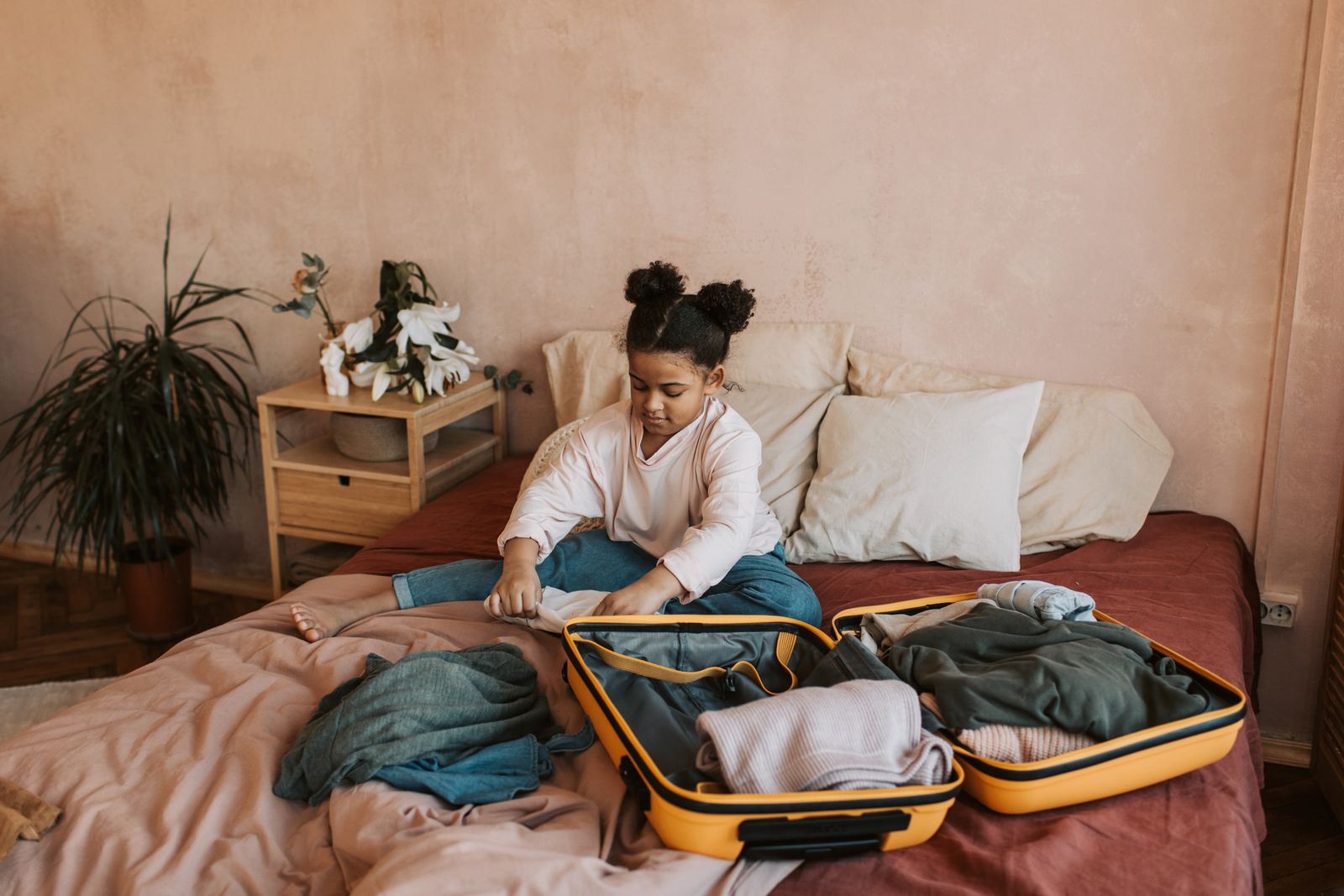
Your entitlement to children luggage on an airline isn’t governed just by the carrier itself, but above all by the age of the child and the type of ticket you buy. The rules differ dramatically depending on whether you have a baby on your lap or you’re flying with an older child in their own seat.
While full-service airlines tend to be generous, an infant on a budget carrier often has no right to any cabin bag at all. Luckily, most carriers let you check in a stroller and a car seat for free as special equipment, over and above the usual limits.
I’ve put together a clear overview of everything you can take for free and what to watch out for when packing. You’ll find out what you’ll have to pay extra for and whether it makes sense to buy little kids their own travel suitcase.
TL;DR
- An infant on your lap under 2 isn’t entitled to a standard cabin bag, but most airlines offer a so-called baby bag (a bag for essentials) and free stroller transport.
- A child over 2 must have their own seat, and therefore gets the same cabin baggage allowance as an adult passenger on that fare.
- Ryanair allows a bag up to 5 kg (45 × 35 × 20 cm) for a baby, and treats Trunki kids’ ride-on cases as free cabin baggage for children aged 2 to 11.
- Wizz Air offers a bag measuring 40 × 30 × 20 cm for infants, but absolutely bans any electric strollers.
- Smartwings requires the stroller to be packed in a bag or wrapped in film before handover, otherwise they won’t accept any damage claim.
- Liquids for children such as purees or milk are exempt from the 100 ml limit, but security may want to see or taste them.
- A spare change of clothes for the parents is an absolute must — pack it in your cabin bag in case of unexpected mishaps during the flight.
10 Things You Need to Know
Now let’s take a look at all the rules you should know as a parent.
1. The Golden Rule of Three Variables: What You’re Entitled To
Before you start buying kids’ suitcases and compression bags, you need to be clear about which category your child actually falls into. Airlines split children luggage into three completely different regimes. The first category is an infant on the lap aged 0 to 2 without their own purchased seat. You only pay a fixed fee for them (or 10% of the adult fare), and the child isn’t entitled to a standard cabin bag. Instead, most carriers allow a so-called baby bag — a changing bag with essentials for the journey. On top of that, you of course have the right to free transport of baby equipment such as a stroller or a car seat.
The second option is an infant under 2 with their own purchased seat. This is a critical point where many parents slip up. If you decide to go for more comfort and buy the baby their own ticket, the rules of the game change. ⚠️ The rules differ from carrier to carrier, but the child often loses the right to a special changing bag and instead gets a standard cabin bag like an adult. It obviously doesn’t lose the right to free stroller transport, but you’re no longer packing a baby bag — you’re packing a normal cabin bag according to the fare you bought. Always double-check this change with your airline.
The third group is children over 2, who are legally required to have their own seat. At that point, exactly the same baggage rules apply to them as to adult passengers. The child is entitled to the same cabin baggage you paid for yourself. Fortunately, baby items such as a stroller or car seat stay free even for older children. Ryanair keeps this perk up to age 11, while Wizz Air goes all the way to 14. On long-haul flights these age limits may differ.
💡 Tip: If you’re planning to buy a separate seat for a child under 2 because of a car seat, check its certification for air travel in advance. Not every car seat is allowed on board — it needs a special label, otherwise they won’t let you into the cabin with it at all.
2. The Baby Bag for a Lap Infant, Airline by Airline
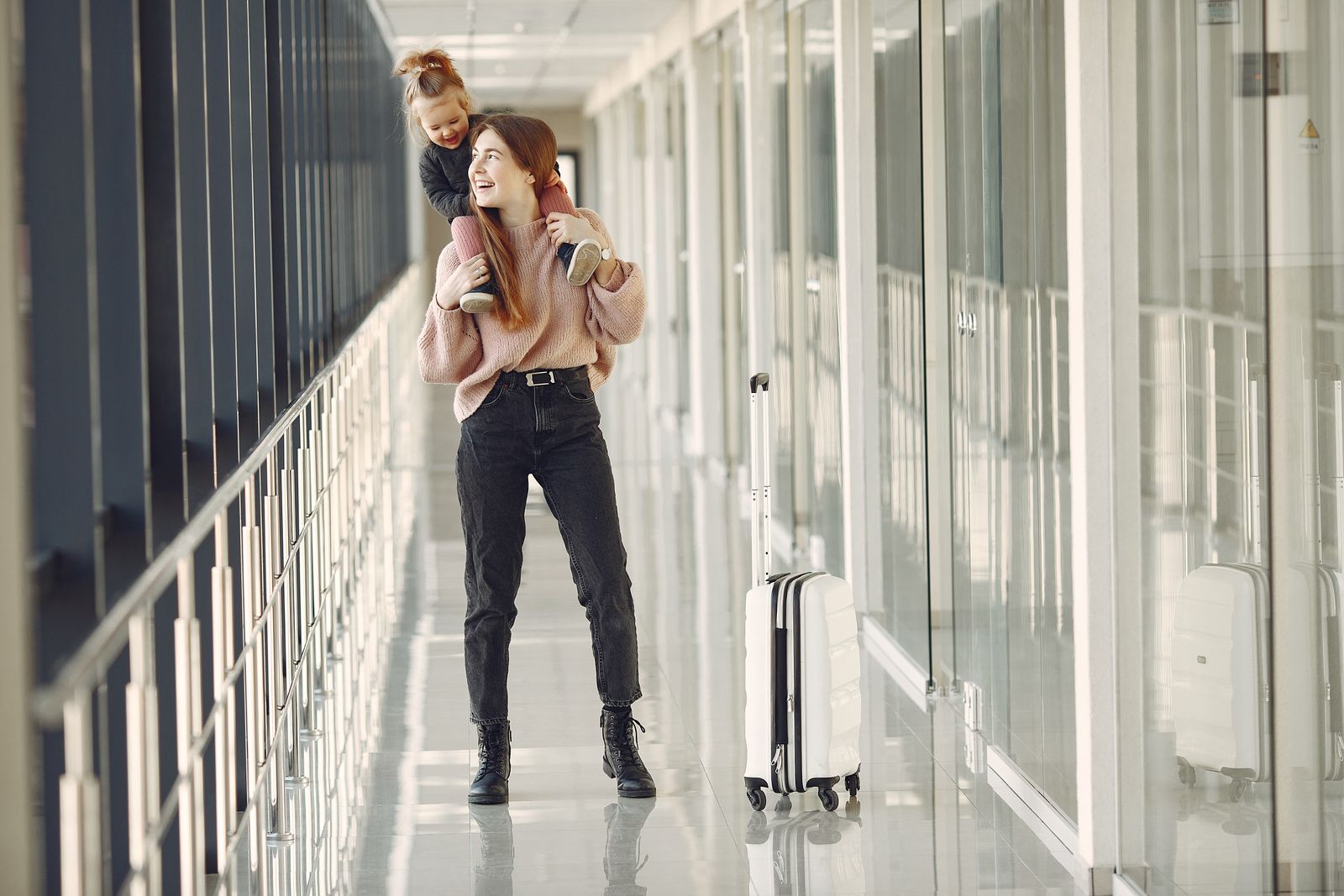
If you’re flying with a baby on your lap, the size of your changing bag will vary drastically depending on who you fly with. Ryanair allows one bag up to 5 kg with maximum dimensions of 45 × 35 × 20 cm. On top of that you get two pieces of baby equipment for free — most often a stroller and a car seat. From our own trips I can confirm that nappies, food and a change of clothes for a regular European flight fit into that size without any problem.
Competitor Wizz Air offers a bag up to 10 kg for infants, which must meet dimensions of 40 × 30 × 20 cm. On top of that you get a folding stroller or a car seat for free. British easyJet has slightly more generous rules and lets you take a changing bag measuring 45 × 36 × 20 cm. What’s more, you can take a carrier backpack as one of your two free pieces of equipment — something that’s often a problem with other carriers.
On charter carrier Smartwings the infant flies with no bag allowance of their own, but they’ll transport a stroller, a travel cot and a car seat for free. Among the full-service airlines, KLM does brilliantly, allowing a baby bag up to 12 kg — the most generous limit of the carriers we compared. Lufthansa even allows the infant to have their own checked bag up to 23 kg. ⚠️ But this Lufthansa rule tends to apply to higher fares — with the cheapest ones you’d better always double-check the current price list.
💡 Tip: Whoever you fly with, always take the changing bag as a soft bag (a backpack, for example). A soft bag can easily be squashed under the seat, whereas with a hard case you could run into an unpleasant problem at the gate with the smaller dimensions.
3. Baggage for Children over 2 with Their Own Seat
As soon as your child celebrates their second birthday, from the airline’s point of view they become a full passenger. That means the end of free special changing bags. From this moment the child is entitled to exactly the baggage that comes with their ticket. If you buy the cheapest fare with a budget carrier, the child is only entitled to a small under-seat backpack. If you buy a priority fare, they can take a cabin bag on board too.
The good news is that the free baby equipment allowance doesn’t end here. Having a three-year-old doesn’t mean you’ll pay for their stroller as if it were sports equipment. Most carriers will still let you take a stroller or car seat to the plane completely free. As I mentioned, with Ryanair this applies up to age 11, so you can even check in a booster seat for an older child free of charge.
Parents often ask about taking the stroller right onto the plane. Most airlines require the stroller to be handed over at the boarding gate (a so-called gate-check). If you want to take an ultra-compact stroller straight into the cabin overhead, with budget carriers you usually need to have bought a large cabin bag that replaces this stroller. Our Joolz Aer does fit in the overhead bin, but on the basic fare they wouldn’t let us take it into the cabin without an extra charge.
💡 Tip: If you’re going to use a car seat on the plane for a child over 2, they must always have their own purchased seat by the window. Airlines don’t allow the car seat in the aisle or in the middle, because in the event of an evacuation it would block the way for others.
4. Trunki Kids’ Suitcases and Balance Bikes on the Plane
Kids’ plastic ride-on suitcases (the best-known being the British Trunki brand) are a huge hit in airport terminals these days. The problem is that their rigid dimensions often exceed the limit for a small under-seat bag. But here’s great news for those flying with the Irish carrier. Ryanair treats these cases as free cabin baggage for children aged 2 to 11, even though their nominal dimensions don’t meet the limit.
There’s one important catch, though. Gate staff often have no idea about this exception. It regularly happens that agents want to charge parents for this case on the spot. So always have the official Ryanair page ready on your phone so you can calmly show them this rule. With other budget carriers like Wizz Air or easyJet, no such blanket exception applies. If the case exceeds the dimensions of the basic bag there, you’ll have to pay extra for a larger cabin bag.
And what about popular balance bikes or scooters? Here I’ll probably disappoint you. Balance bikes aren’t considered baby equipment like a stroller (baby items). Airlines strictly classify them as sports equipment, for which you pay hefty fees. So if you’re heading off on holiday with a balance bike, get your wallet ready for an oversized sports cargo fee.
💡 Tip: Consider whether you really need a kids’ ride-on suitcase. A plastic case is fairly heavy on its own and will eat up precious kilograms from your weight limit that you could otherwise use for more practical things or a spare change of clothes.
5. A Kids’ Backpack as a Second Bag
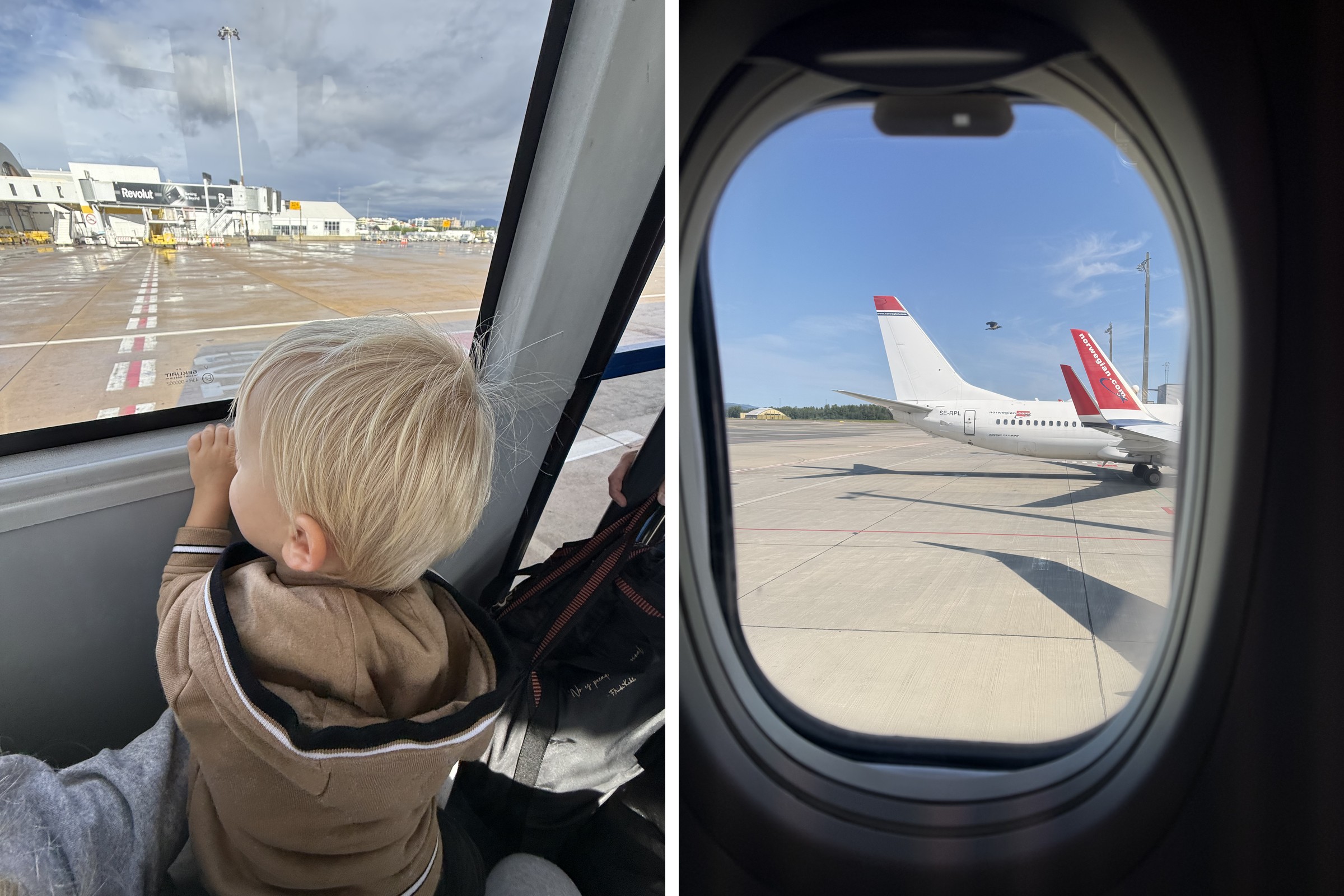
It sounds like a great idea. You buy your three-year-old a lovely little backpack with their favourite cartoon character on it, and they carry their own toys nicely. But the physics of packing and child psychology work a little differently at the airport. Especially if you’re travelling on the cheapest basic fare with a budget carrier, a kids’ backpack can become an unexpected trap.
Picture the situation. By the rules, you have your backpack on your back. The child has their little backpack. On top of that you’re pushing a stroller and holding the passports in your hand. The toddler will carry their cute backpack with enthusiasm for exactly five minutes. Then their arm starts to ache, the backpack starts digging into their back, or they simply throw it on the floor in the middle of the terminal. Guess who ends up carrying it? Exactly — you. Suddenly you’ve got your backpack on your back, the changing bag over one shoulder, the kids’ backpack in one hand, and with the other you’re trying to fold the stroller onto the belt at security.
If you’re flying on the basic fare with only an under-seat backpack, a kids’ backpack simply isn’t enough for a whole holiday. A much better strategy is to buy at least one adult a higher fare that includes a proper wheeled cabin case. You can comfortably pull a wheeled case with one hand, keep your personal backpack on your back, and have your other hand free for the child.
💡 Tip: Only give a child their own backpack if they really want one, but put only a light toy and a snack in it. Heavy things must not go in the kids’ bag, otherwise you’ll be the one buckling under the weight right at check-in.
6. What to Pack for Kids in Your Cabin Bag
You don’t pack a cabin bag for the perfect sunny flight. You pack it for the situation where the plane is delayed for three hours and your checked bag never shows up on the belt at your destination. Everything you absolutely need to survive the first 24 hours has to be with you in the cabin. And that takes a bit of strategic planning.
Only start dishing out the entertainment once boredom kicks in. Boarding, taxiing and take-off itself are visually interesting enough for kids. If you fire off all your trump cards before the plane even leaves the ground, you’ll have nothing left for the rest of the flight. Try wrapping new toys in ordinary wrapping paper, because the unwrapping itself is a good ten-minute activity for a toddler.
Among the tried-and-tested lifesavers are things that take up no space at all. A plain pad of sticky notes (Post-it) and a pen can work wonders. You draw faces on them and the child can stick them all over the tray table or the window. They peel off easily and leave no glue behind. Reusable window stickers or water colouring books are also great. Conversely, nothing that plays sounds, flashes, spills, or is made of a hundred tiny parts belongs on a plane.
💡 Tip: Consider investing in good kids’ headphones with a volume limiter. An aircraft cabin tends to be an extremely noisy environment and standard headphones would force the child to turn cartoons up to an unhealthily high volume. The ideal model works over Bluetooth but also has a standard cable to connect to the in-flight system.
7. Nappies, Pouches and Food in Your Cabin Bag
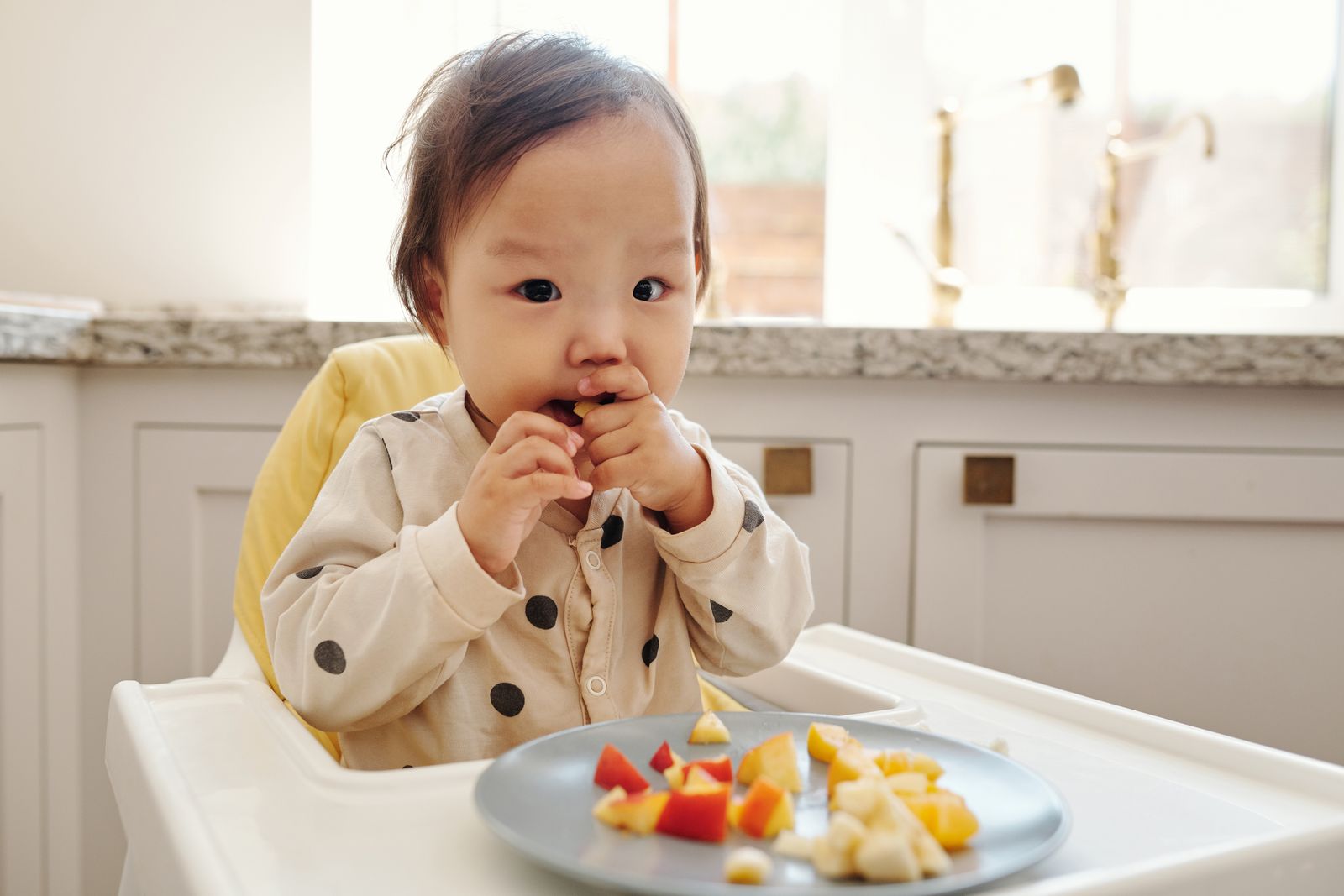
A common mistake parents make is trying to cram a full supply of nappies for the whole holiday into the cabin bag. Nappies are enormously bulky and will eat up all your precious backpack space. The rule is clear: work out how many you’ll use from your front door to the hotel and add a reasonable buffer for a possible delay. Don’t drag any more nappies into the cabin — you can buy them absolutely everywhere in the world.
When it comes to baby food, the rules are lenient towards parents. Baby food and breast or formula milk are exempt from the 100 ml limit. You can take the amount needed for the journey and you don’t have to squeeze them into a transparent one-litre bag. In practice, though, this varies from airport to airport. Security staff may ask you to open the bottle, or they may want a demonstration of the contents.
Be extremely careful about where you fly from, though. Some airports have raised their liquid limits with new scanners, while others still enforce the strict 100 ml rule — and it often differs even between terminals at the same airport. ⚠️ Popular family destinations like Turkey, Egypt or the United Arab Emirates still enforce the strict 100 ml limit, so don’t assume the relaxed rules apply everywhere. Incidentally, sunscreen doesn’t count as a children’s medicine and the limits apply to it in full.
💡 Tip: Feeding during take-off and landing helps children equalise the pressure in their ears. Prepare snacks broken into lots of small pieces that take a long time to eat (crackers or raisins, for example), so they last the child through the whole descent manoeuvre.
8. A Spare Change of Clothes for Parents and Ziploc Bags
Every responsible parent knows to pack a spare change of clothes for the child. Most even pack two full sets. But what the vast majority of parents forget on their first flight with a baby is a spare change of clothes for themselves. And that tends to be a fatal mistake.
Imagine your eight-month-old completely throws up on you shortly after take-off, or there’s a massive nappy accident. Spending the following several-hour flight in an air-conditioned cabin in ruined, smelly clothes is literally purgatory. So always pack one plain cotton T-shirt and maybe some light leggings for yourself in the under-seat backpack. Roll them into a small roll — they take up almost no space, but in a crisis they’ll save your sanity.
And don’t forget to toss at least two empty resealable plastic bags (Ziploc) into the bag. When an accident does happen, you need somewhere to hermetically seal the dirty, wet things so they don’t ruin the rest of your stuff and stink out your surroundings. Also remember one absolutely crucial rule. Used nappies always, without exception, go in the bin. Never throw them into the aircraft toilet. The toilets work on suction, and a nappy full of gel will instantly clog the pipes for the whole cabin.
💡 Tip: Pack the spare clothes for both the child and yourself in compression bags. Not only will you save loads of space by sucking out the air, but above all you’ll keep clean clothes perfectly separated from the rest of the bag.
9. The Pitfalls of Baby Equipment and Carrier Backpacks
Practically every airline will take a stroller for free. Most of the time you can wheel it right up to the boarding gate, simply fold it there, and staff will stow it in the hold. But be very careful with electric and motorised strollers — Wizz Air, for instance, absolutely won’t transport them at all, neither in the cabin nor in the cargo hold.
If you love hiking and prefer a sturdy carrier backpack to a stroller, things get complicated. A soft fabric carrier or a sling always gets through — you’re wearing it. But a carrier backpack with a metal frame depends entirely on the airline. British easyJet explicitly allows a carrier backpack on its list as free equipment. Ryanair, on the other hand, often charges an oversized-baggage fee for it, because it’s not on their official list of free items. Always check in advance.
A specific chapter is flying with the Czech airline Smartwings, which you’ll likely fly with on a summer package holiday. Smartwings has an inconspicuous but critical sentence in its terms. The carrier accepts no liability for damage to unpacked strollers. This means a proper stroller bag or thorough wrapping in film at the airport isn’t just a cosmetic recommendation — it’s an absolute condition for them to reimburse you at all for any damage to the stroller.
💡 Tip: Right before boarding, while still in the terminal, put a double nappy on the child. The changing tables in aircraft toilets are extremely small, and wrestling with a bigger toddler in there feels like a fight in a phone booth. The longer you can put off having to change a nappy in the air, the better.
10. What to Do If Your Baggage Is Lost or Delayed
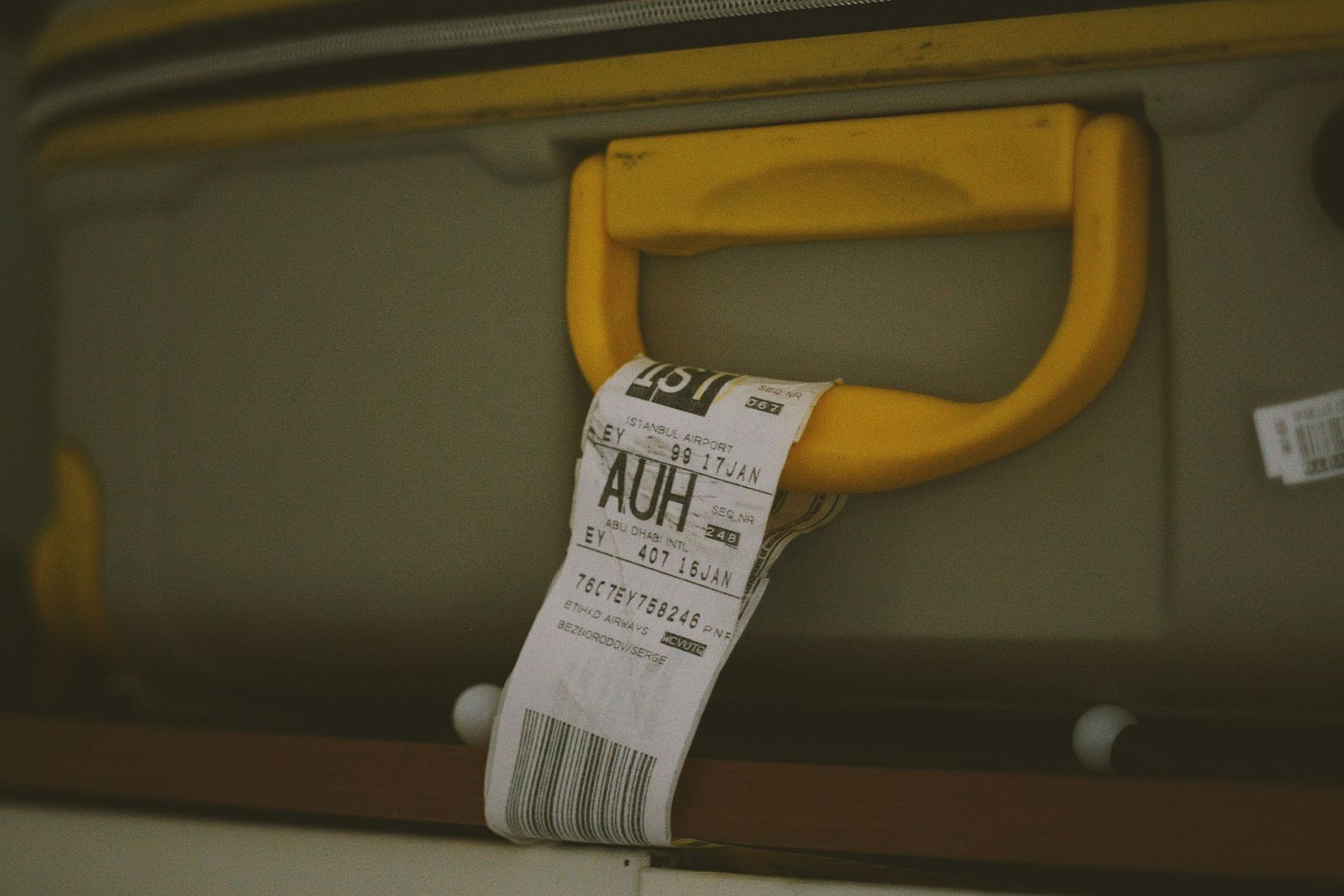
Although it’s fortunately never happened to us, it’s good to know what to do when you’re standing at the belt at your destination and your suitcase (or stroller) is nowhere to be seen. The most important rule is: never leave the airport transit zone without a written report.
You must report delayed or lost baggage straight away at the relevant baggage claim desk (Baggage Claim / Lost and Found), which is always located before you exit the hall. The agent will draw up a so-called PIR report (Property Irregularity Report) with you and give you a reference number. Without this document you have nothing in hand and the airline won’t engage with you any further.
If your baggage or stroller arrives physically damaged, the rules follow the Montreal Convention. You must report the damage to the airline in writing within a maximum of 7 days of collecting the baggage. Again, it’s best to file the report right at the airport. If you only notice the damaged stroller at the hotel, don’t wait — photograph every detail and immediately submit the official form via the carrier’s website.
💡 Tip: Before you hand over your checked suitcase or stroller at the airport, take a photo of it on your phone. Then, when the lost-and-found desk asks exactly what your black suitcase looked like, you just show them a detailed photo — which speeds up the search enormously.
Practical Summary and Indicative Allowances
So you don’t get lost in all these limits, I’ve put together a handy table of what an infant under 2 without their own seat is entitled to with the most common carriers. All data is valid for 2026.
| Airline | Free baby bag | Free baby equipment |
|---|---|---|
| :— | :— | :— |
| Ryanair | 1 bag up to 5 kg (max. 45 × 35 × 20 cm) | 2 items (stroller, seat, cot) |
| Wizz Air | 1 bag up to 10 kg (max. 40 × 30 × 20 cm) | Stroller (not electric) OR car seat |
| easyJet | 1 changing bag (max. 45 × 36 × 20 cm) | 2 items (including a carrier backpack) |
| Smartwings | No bag allowance (check with carrier ⚠️) | Stroller (packed!), cot, car seat |
| KLM | 1 bag up to 12 kg | Stroller (gate-check) |
| Lufthansa | Checked bag up to 23 kg (check fare ⚠️) | Folding stroller and car seat |
Where to Next
If you’re getting ready for a trip with the family, definitely check out our other articles packed with practical information:
- Flying with Kids: the Complete Guide
- Taking a Stroller on a Plane
- Taking a Car Seat on a Plane
- Ryanair Baggage: Dimensions, Weight and Fees
- Wizz Air Baggage
- easyJet Baggage
- Smartwings Baggage
- Cabin Backpack: How to Choose the Right One
- Travel First-Aid Kit: What to Include
Frequently Asked Questions
Does children’s snack food count towards the liquids limit?
Baby food, pouches, and milk needed for the duration of the flight are exempt from the 100 ml limit. You don’t need to put them in the transparent bag, but security may ask you to open or taste them.
Can I take a Trunki children’s suitcase on board for free?
With Ryanair yes, they accept it as free hand luggage for children aged 2 to 11, even if it doesn’t meet the size requirements. With other budget airlines (Wizz Air, easyJet), however, you have to pay for it as larger cabin baggage.
Does a ride-on toy count as a stroller?
No, airlines don’t consider ride-on toys and scooters as free children’s equipment. They treat them as sports equipment, for which you’ll pay a substantial fee according to the carrier’s price list.
What happens if I buy a seat for a child under 2 years old?
Although the child will gain greater comfort and a carry-on baggage allowance like an adult, they often lose the right to a special baby bag. Always check this change with your airline.
Do I need to wrap the stroller before handing it over at the plane?
It depends on the carrier, but for example Smartwings explicitly states in their conditions that they are not responsible for damage to an unwrapped stroller. Using a protective cover or foil is therefore absolutely necessary for any potential claim.
Am I allowed to take a baby carrier with a metal frame into the cabin?
With easyJet, a baby carrier is explicitly permitted as one of the free children’s equipment items. With Ryanair and Wizz Air, however, you’ll likely run into trouble and they may charge you a fee for oversized baggage.
When do I need to report a damaged stroller after a flight?
According to the Montreal Convention, you must report damage to baggage or a stroller to the airline in writing within a maximum of 7 days from receipt. However, it’s ideal to file a report (PIR) directly at the airport at the claims desk.
Tips and Tricks for Your Vacation
Don’t Overpay for Flights
Search for flights on Kayak. It’s our favorite search engine because it scans the websites of all airlines and always finds the cheapest connection.
Book Your Accommodation Smartly
The best experiences we’ve had when looking for accommodation (from Alaska to Morocco) are with Booking.com, where hotels, apartments, and entire houses are usually the cheapest and most widely available.
Don’t Forget Travel Insurance
Good travel insurance will protect you against illness, accidents, theft, or flight cancellations. We’ve had a few hospital visits abroad, so we know how important it is to have proper insurance arranged.
Where we insure ourselves: SafetyWing (simple monthly subscription) and TrueTraveller (for extra-long trips).
Find the Best Experiences
Get Your Guide is a huge online marketplace where you can book guided walks, trips, skip-the-line tickets, tours, and much more. We always find some extra fun there!


