

Picture a perfectly ordinary travel scenario. It’s eleven o’clock at night, you’re sitting in a charming little town somewhere in southern Europe, and after a wonderful dinner your stomach suddenly starts churning in a very alarming way. The local pharmacy has long since closed and won’t open again until Monday morning, so all you can do is hope it passes on its own. This is exactly the kind of moment when a well-stocked travel medicine kit becomes an absolute must — it can genuinely save your entire holiday.
I know all too well that nobody wants to think about things going wrong before they set off, but fortune favours the prepared. A well-organised travel medicine kit gives you enormous peace of mind, whether you’re heading off for a long weekend in a European capital or planning a month-long trek across Southeast Asia. It’s always better to carry a small stash of the basics than to end up feverishly flailing your arms trying to explain what’s wrong in a foreign-language pharmacy.
Before we look together at what actually belongs in your kit, I have to flag one incredibly important point. All the tips and lists in this article are meant purely as general guidance and in no way replace professional medical advice. If you regularly take prescription medication, live with a chronic condition, are pregnant, or you’re packing for small children, always consult your GP or pharmacist before you travel. The medicines I mention are described generally by what they do, not as specific recommended brands, and you should always follow the patient information leaflet for correct dosing.
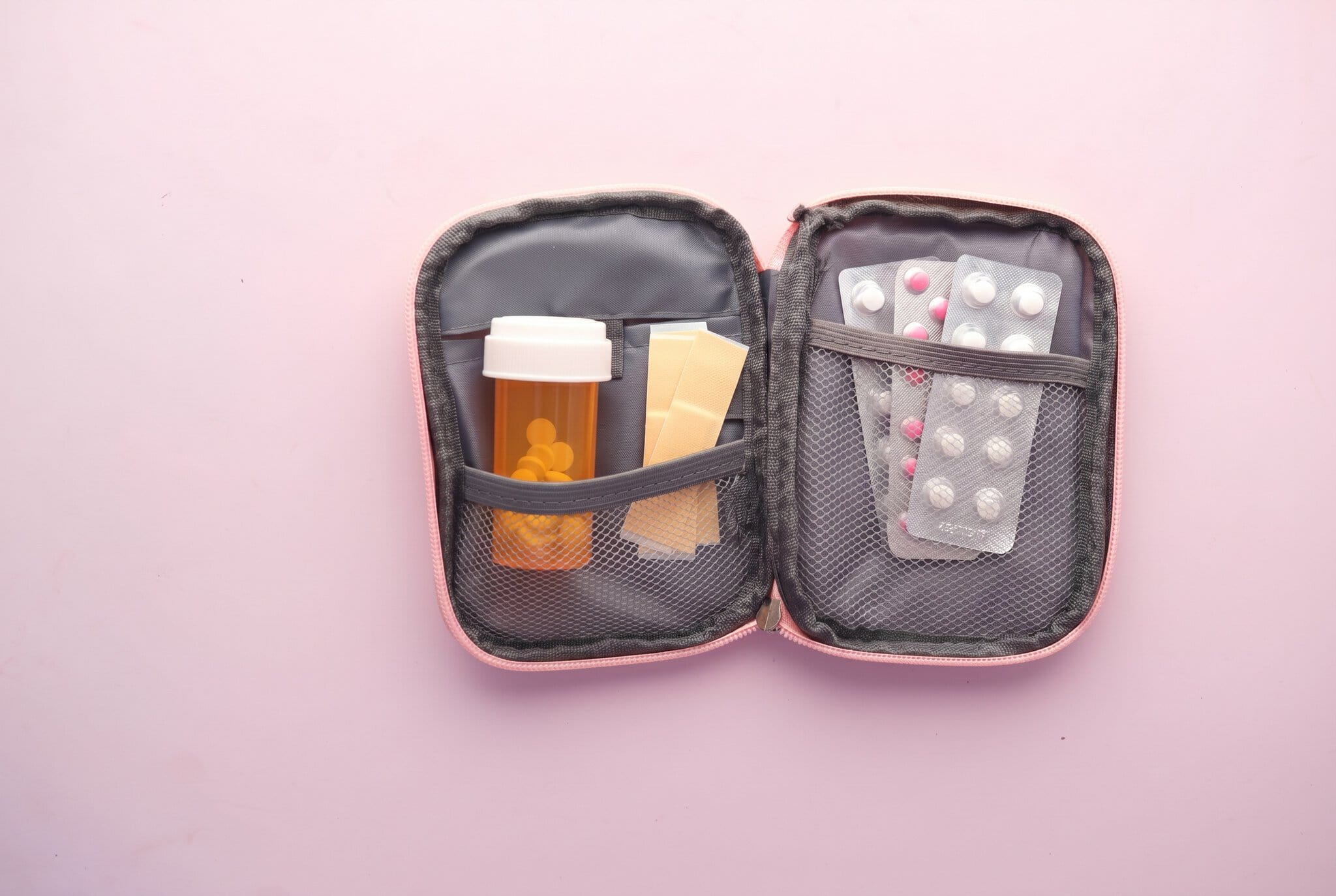
How big should a travel medicine kit be?
When people hear the words travel medicine kit, plenty of them imagine a huge plastic case crammed with boxes that swallows up half their luggage. It really doesn’t have to be that way, and honestly it shouldn’t — you don’t want to lug around unnecessary weight. The ideal size and format depends mainly on how long you’re going for, which destination you’re headed to, and exactly who you’re travelling with.
If you’re only off for a weekend in Paris, a small waterproof pouch with some basic painkillers and plasters will do the trick. On the flip side, a month-long road trip off the beaten track calls for a sturdier case with a broader range of kit. The golden rule is that a travel first aid kit for going abroad should be as light as possible, compact, and ideally stored in a waterproof pouch so moisture can’t get to your medicines and any antiseptic doesn’t leak all over your clothes.
Always think about how you’re getting to your destination, too. If you’re flying with just a small backpack, you’ll have to stick to strict security rules. For the full lowdown on how to pack liquids and gels for the cabin, take a look at our guide on what you can take on a plane. Liquid medicines are exempt from the 100-millilitre limit, but you’ll need the appropriate letter from your doctor at security.
What belongs in a basic travel medicine kit
Now for the crux of it — what to actually pack in your travel medicine kit so you’re ready for the most common health hiccups. This basic list works for pretty much any ordinary trip, whether you’re driving to the Alps or flying off to the seaside. I’ve split it into three clear categories so you can tick items off one by one as you pack.
Medicines for the most common problems
The absolute foundation of any travel medicine kit with pills is something for pain and fever. It’s usually recommended to carry a paracetamol- or ibuprofen-based medicine, which reliably takes care of a headache after a long flight or an unexpectedly high temperature. If you’ve got a long journey ahead by car, ferry or plane and you know you sometimes get queasy, definitely pack something for nausea and motion sickness.
Digestive trouble is probably the most common problem travellers face, so an anti-diarrhoea medicine and activated charcoal tablets should be a permanent fixture in your kit. If you’re battling persistent diarrhoea or vomiting, your body loses minerals fast, which is why it’s incredibly handy to keep rehydration salts on hand to replenish your electrolytes. Anyone with a sensitive stomach will also appreciate something for heartburn or drops to aid digestion after a heavy meal.
Don’t forget about allergic reactions either — they can catch you out even if you don’t normally suffer from allergies. Antihistamine tablets help with an unexpected reaction to exotic food, pollen, or a nasty insect bite. For dusty environments or air-conditioned spaces, add eye drops or artificial tears. Cold remedies, nasal drops and throat lozenges are also worth having, as the air conditioning on planes and in hotels can be treacherous. And the most important thing of all: don’t forget a sufficient supply of your personal prescription medicines and contraception in their original packaging.
Treating wounds and minor injuries
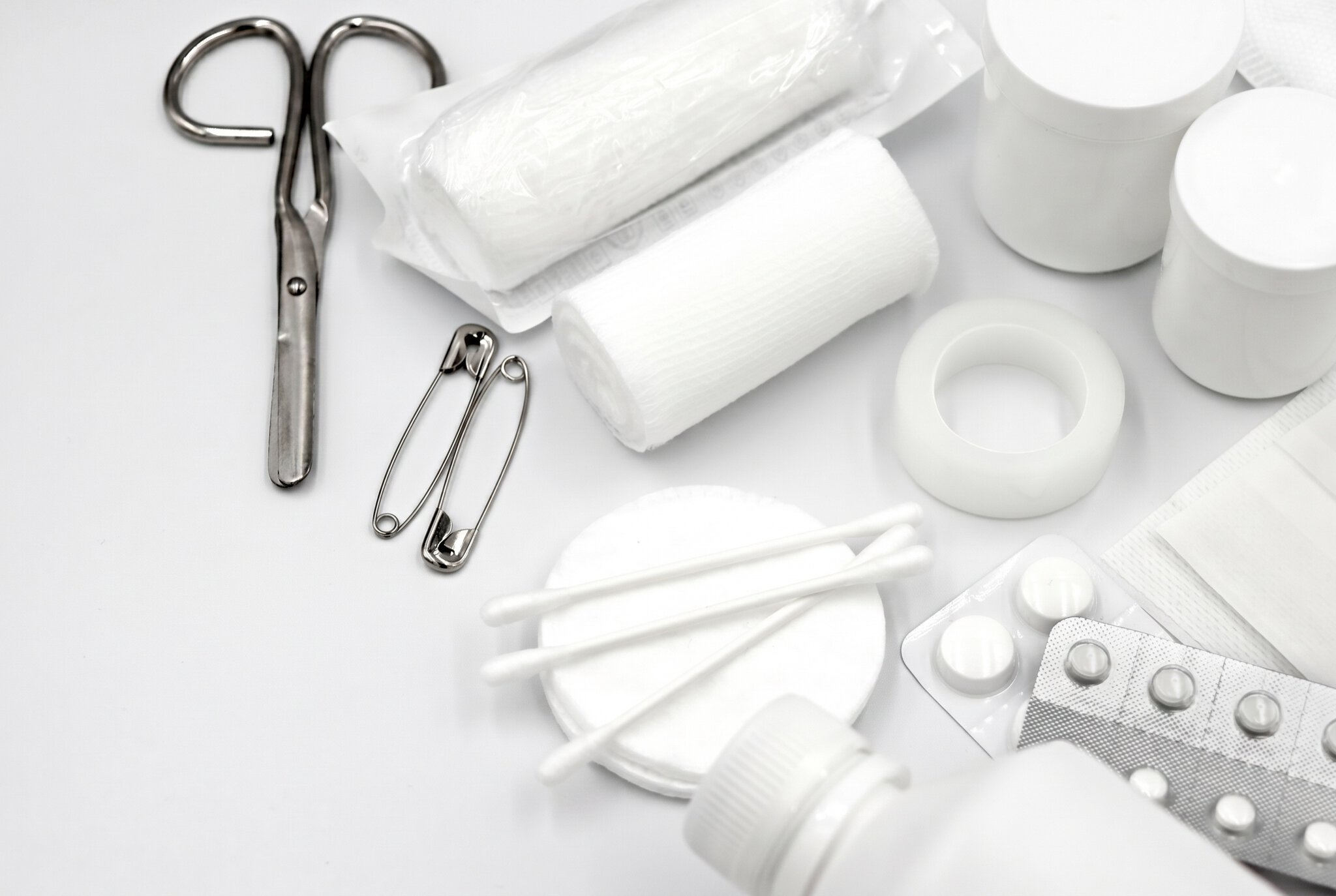
Even if you’re being extremely careful, grazed knees from a scooter trip or a heel sliced open on a sharp rock in the sea happen fairly often. Your travel medicine kit should therefore hold a decent stash of plasters in various sizes. Special hydrocolloid blister plasters are an absolute lifesaver — they’ll literally rescue those days when you have to trudge around the sights in brand-new shoes. Also pack sterile gauze, a classic bandage, and an elastic bandage in case you need to support a sprained ankle.
To treat grazes you’ll definitely need a good wound antiseptic, ideally as a spray or handy pre-soaked wipes that won’t leak. An antiseptic ointment is also great — it speeds up healing and helps prevent infection in a warmer climate. For minor “surgery”, pack tweezers for removing ticks or splinters and disposable gloves for hygienic wound care.
💡 Tip: If you’re planning to add small scissors for cutting plasters and bandages, remember that only scissors with blades up to 6 centimetres from the pivot are allowed in the cabin. Larger scissors absolutely must go in your checked luggage, otherwise security will confiscate them without a second thought.
After a demanding day full of sightseeing or carrying a heavy backpack, your body will definitely appreciate a bit of relief. A cooling gel for bruises and swelling is very handy, or a warming ointment for aching, overworked muscles and joints. It takes up hardly any space and will do you a world of good back in your hotel room in the evening.
Skin, sun and insects
Skin protection is a chapter all of its own, especially if you’re heading somewhere the sun beats down far more intensely than back home. A good sunscreen with a high SPF is an absolute essential, even if you’re off to the mountains. Just as important, though, is a soothing after-sun lotion or a product containing panthenol, in case you catch a bit of sunburn despite your best efforts.
Another big enemy of travellers is pesky insects. An effective repellent against mosquitoes and ticks shouldn’t be missing from your kit, and if you’re heading to riskier areas, it’s worth buying a version with a higher content of the active ingredient DEET. Since the odd mosquito will still manage to get you, don’t forget a cooling, soothing gel for insect bites to ease the annoying itch and swelling.
A lot of people forget this one, but a soothing cream for chafing and irritated skin is also very practical. If you’re planning to walk for miles in heat and humidity, chafed skin on your thighs can really make you miserable, so a small tube of protective cream will spare you a lot of pain.
Extended medicine kit by destination
We’ve got the basics covered, but every trip has its own quirks. You’ll need different things in the rainforest than on a glacier. Your travel first aid kit for going abroad should always adapt to exactly where you’re headed and what activities you have planned there. Here are some tips on how to beef up the basic package depending on the type of trip.
Exotic destinations and the tropics
Trips to developing countries and tropical regions come with specific risks you need to prepare for carefully. The most common bogeyman is so-called traveller’s diarrhoea, which is caused by a change in your gut flora and eating unfamiliar food. Prevention is key here: be cautious with street food and stick very strictly to safe drinking habits. Powdered rehydration solutions should be your best friend in exotic destinations.
If you’re heading to areas where more serious diseases occur, your travel medicine kit will probably grow. But always sort out vaccinations, malaria prevention with antimalarials, and any stronger medicines for gut infections well in advance at a specialist travel medicine clinic. In the UK you can also get travel health advice from your GP surgery or a travel clinic — they’ll tell you exactly what you need for a given country and set you up with the right prescriptions.
Mountains and the sea
High-altitude hiking really puts your body through its paces. A travel medicine kit for the mountains should contain many more good-quality blister plasters and rolls of kinesiology tape, because your feet are your main mode of transport. A strong sunscreen and a good UV-protective lip balm are also crucial, because the sun at higher altitudes burns even through the clouds — and add protection against cold and wind on top of that.
If, on the other hand, you’re heading mainly to the beach, focus more on skin care. Special ear drops are a brilliant seaside companion, helping to prevent the unpleasant ear canal infections that come with frequent swimming and diving. A general soothing gel for irritation can also come in handy in case of an unwelcome encounter with a jellyfish in the water.
Travel medicine kit for children and families
Travelling with small children calls for a whole different level of preparation. A children’s travel first aid kit for going abroad needs to contain medicines in forms your kids will happily accept. Swap classic tablets for syrups, drops or suppositories — but with liquid forms, keep the airline limits in mind if you’re travelling with hand luggage only. A reliable digital thermometer is an absolute must, because children’s temperatures often shoot up very unexpectedly.
Children are always on the move, so your consumption of plasters, sting-free antiseptic and ointments for grazes will probably be enormous. Also pack a dedicated children’s sunscreen with the highest possible factor and a children’s repellent that’s gentler on their sensitive skin.
💡 Tip: Always check with your paediatrician in advance before giving your child any medicine abroad, especially in more exotic destinations. Ask about the exact dosage based on your child’s current weight, so you can be confident in an emergency.
Travel medicine kit packing checklist
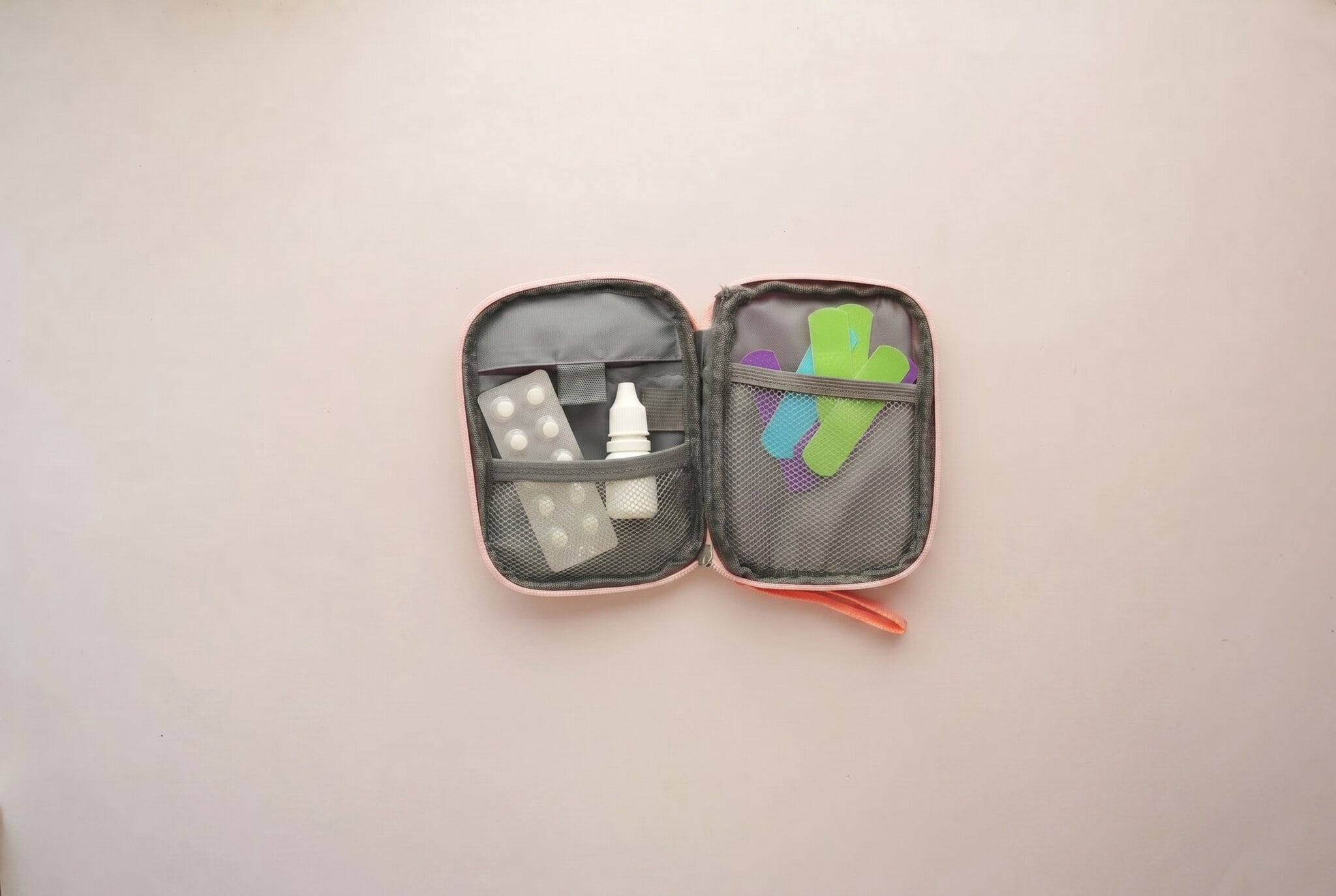
So you don’t forget anything, I’ve put together a clear travel medicine kit list. Feel free to print it out or run through it in your head as you pack, tailoring it to where and with whom you’re travelling.
| What to pack in your travel medicine kit | Done |
| 💊 Medicines for common problems | |
| Pain and fever (paracetamol / ibuprofen) | ☐ |
| Anti-diarrhoea + activated charcoal tablets | ☐ |
| Rehydration salts (electrolytes) | ☐ |
| Nausea and motion sickness | ☐ |
| Antihistamine (allergies, insect bites) | ☐ |
| Your personal prescription medicines (in original packaging) | ☐ |
| 🩹 Wound care and injuries | |
| Plasters in various sizes + blister plasters | ☐ |
| Sterile gauze, bandage, elastic bandage | ☐ |
| Wound antiseptic + antiseptic ointment | ☐ |
| Tweezers, scissors (in checked luggage), disposable gloves | ☐ |
| ☀️ Skin, sun and insects | |
| High-SPF sunscreen | ☐ |
| After-sun lotion / panthenol for sunburn | ☐ |
| Mosquito and tick repellent + after-bite gel | ☐ |
| 🌴 By destination | |
| Tropics: rehydration, antimalarials (after consulting a doctor) | ☐ |
| Sea: ear drops for after swimming | ☐ |
| Mountains: more blister plasters, protection against cold | ☐ |
| 👶 For children | |
| Medicines as syrup or drops + digital thermometer | ☐ |
| Children’s sunscreen and gentle repellent | ☐ |
| 📄 Documents and practicals | |
| Copies of prescriptions + list of medicines taken (in English too) | ☐ |
| GHIC card + travel insurance | ☐ |
| Allergy card (in English) | ☐ |
Practical documents and tips for your kit
Having the right medicines with you is only half the battle. For everything to go smoothly, you also need the right documents and a few practical habits. Here’s a rundown of things you shouldn’t forget before you set off:
- Copies of your medical prescriptions and a clear list of all medicines you take long-term, ideally translated into English.
- A valid GHIC (Global Health Insurance Card), which gives you access to state healthcare in EU countries.
- Good-quality travel insurance arranged and paid for, in case of more serious complications abroad.
- A card listing your medicine or food allergies in English, or in the local language of your destination.
- Always pack life-saving medicines primarily in your hand luggage, in case your checked suitcase goes missing en route.
- A careful check of the expiry date on all medicines before you throw them in your bag.
If you’re not sure what to actually pack your medicines into, take a look at our article on how to choose the best cabin bag. A small, organised pouch of medicines will fit into a quality backpack without any trouble at all.
Common travel medicine kit mistakes
Even seasoned travellers occasionally make mistakes when packing their medicines that come back to bite them abroad. To help you avoid them, I’ve pulled together a list of the most common blunders we see when people pack.
- The kit is needlessly overpacked and pointlessly heavy, because people bring whole packs of medicine in heavy glass bottles instead of taking just the number of blister strips they need.
- Forgotten personal prescription medicines, which are very tricky to get hold of abroad and often only after a visit to a local doctor.
- Liquid medicines over 100 millilitres in hand luggage without a doctor’s letter, which airport security will confiscate without mercy.
- Relying on old supplies from last year’s holiday that expired ages ago.
- Large sharp scissors or metal instruments left in the kit you’re taking into the cabin.
- Naively assuming there’ll be a pharmacy on every corner at your destination and that the local pharmacist will speak English.
💡 Tip: Instead of lugging around huge cardboard medicine boxes, just pack the blister strips themselves held together with an elastic band. You can simply photograph the patient information leaflets on your phone or download them as PDFs, saving loads of precious space.
Where to go next
If you’ve now got a clear idea of what to pack in your travel medicine kit, you might well be sorting out the rest of your luggage. Take a look at our detailed guide on how to choose the right cabin bag and backpack for the plane so you can travel comfortably and light. And if you’re not entirely sure what’s allowed through airport security, definitely read our summary of what you can take on a plane, where we explain all the limits on liquids and electronics.
Frequently asked questions
What should be in a basic travel first aid kit?
Basic equipment should include painkillers and fever reducers, remedies for digestive problems and diarrhea, allergy medication, disinfectant, band-aids, bandages, and a preparation for treating burns or insect bites. Of course, don’t forget your personal medications that you take regularly.
Can I have medication in my carry-on luggage?
Yes, definitely take medication in your carry-on luggage – it’s actually highly recommended in case your suitcase gets lost. If you’re carrying liquid medications in containers larger than 100 millilitres, an exception applies, but you must have a doctor’s certificate with you confirming that you need them during the flight.
How big should a vacation first aid kit be?
The size depends on the length of the trip, destination and number of people. For a weekend city break in Europe, a small palm-sized pouch is sufficient, but for a three-week trek in the mountains of Asia, you’ll need a larger and more comprehensive waterproof case with more extensive equipment.
What to Pack in a First Aid Kit for the Beach and Tropics?
For the beach don’t forget to add quality after-sun cream, ear drops for after swimming and soothing gel for irritated skin. For the tropics it’s essential to pack strong insect repellent, rehydration salts in case of traveller’s diarrhea and consult your doctor beforehand about possible antimalarial medication.
What to pack in a children’s travel first aid kit?
For children, pack medications in a form acceptable to them (syrups, drops), a reliable thermometer, disinfectant that doesn’t sting, and plenty of bandages with cheerful designs. Also add a gentle children’s sunscreen and repellent suitable for their age group.
Can I bring scissors and tweezers on board the plane?
Tweezers usually pass through security control without any problems. For scissors, there is a strict rule that the blade length from the central pivot must not exceed 6 centimeters. Larger scissors must always be packed in your checked luggage, otherwise you will lose them at the airport.
Do I need some kind of certificate for prescription medications when traveling abroad?
For regular prescription medications, it’s recommended to carry a copy of the prescription and ideally also a doctor’s certificate translated into English. Especially for strong medications such as opiates, antidepressants, or strong painkillers, an official medical certificate in English is a must to avoid problems at the border.
Tips and Tricks for Your Vacation
Don’t Overpay for Flights
Search for flights on Kayak. It’s our favorite search engine because it scans the websites of all airlines and always finds the cheapest connection.
Book Your Accommodation Smartly
The best experiences we’ve had when looking for accommodation (from Alaska to Morocco) are with Booking.com, where hotels, apartments, and entire houses are usually the cheapest and most widely available.
Don’t Forget Travel Insurance
Good travel insurance will protect you against illness, accidents, theft, or flight cancellations. We’ve had a few hospital visits abroad, so we know how important it is to have proper insurance arranged.
Where we insure ourselves: SafetyWing (simple monthly subscription) and TrueTraveller (for extra-long trips).
Find the Best Experiences
Get Your Guide is a huge online marketplace where you can book guided walks, trips, skip-the-line tickets, tours, and much more. We always find some extra fun there!


