

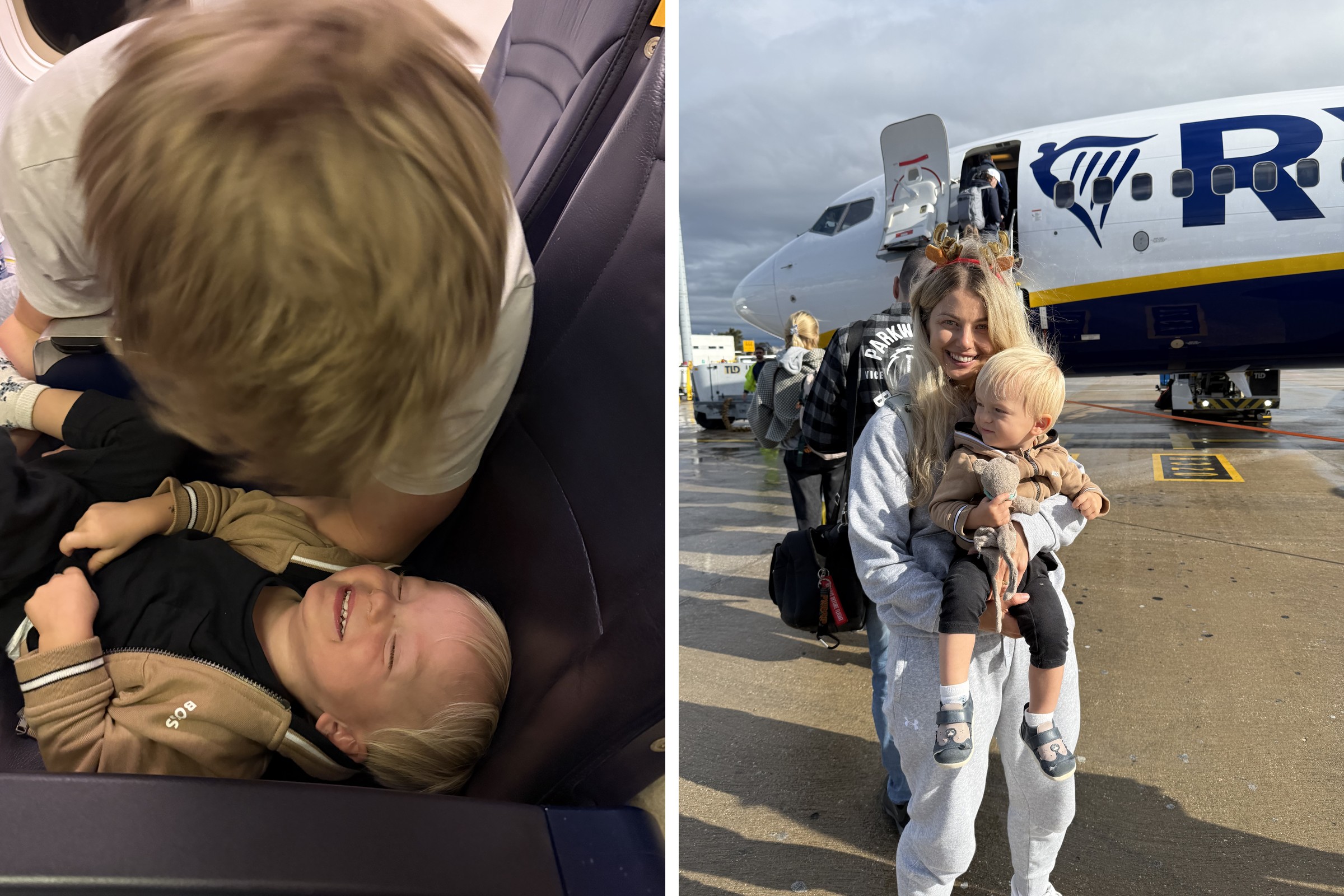
Jonášek and I took our very first flight together when he was just under two years old. I was dreading it, but today I know that flying with a toddler is something he handles far better than a car ride.
From a parent’s point of view, the age of roughly one to three years is objectively the hardest period for travelling. A toddler no longer sleeps through the whole flight like a tiny baby, yet still doesn’t understand the rules and suffers most from the combination of tiredness and not being allowed to move freely.
Below you’ll find ten concrete tips on how to survive a flight with such a small live wire without losing your sanity. I’ll show you how to time sleep correctly, how to keep them busy in their seat, and how to handle food.
TL;DR
- The hardest age is around 1 to 2 years: While babies sleep through most of the flight to the sound of white noise, a toddler has a huge need to move and doesn’t understand why they have to sit strapped in.
- Liquid rules vary by airport and terminal: Some airports now use new CT scanners that let you carry up to 2 litres of liquids, but many terminals (typically for Ryanair/Wizz Air flights) still enforce the strict 100 ml limit, so always check before you fly.
- Infant fees: Up to two years of age a child flies on your lap; with Ryanair you pay a fixed fee of €25 per leg, with Wizz Air roughly €27.
- The pivotal second birthday: Once a child turns two, they must have their own ticket and a full seat for safety reasons, which makes travel dramatically more expensive.
- New EU passenger rights: On 13 July 2026 a revision was approved guaranteeing children under 14 a seat next to their parent free of charge (in practice it will fully kick in from mid-2027).
- Sleep medication is off-limits: Experts strongly warn against giving melatonin to children under two; for older children you must consult your paediatrician first.
10 Things You Need to Know About Flying with a Toddler
Let’s take a look at the most important things now.
1. Why a toddler is harder on a plane than a baby (and how to prepare for it)
When you say “child on a plane”, most people automatically picture a crying newborn, but experienced mums on the forums will tell you that flying with a tiny baby is actually a treat. Infants love white noise, and the constant hum of the jet engines combined with the gentle vibrations of the aircraft often lulls them to sleep before the fasten-seatbelt sign even goes off. Flying with a toddler between one and two years is a whole different discipline, because they’ve reached the age where they’re discovering the world, learning to walk, and simply won’t stay put.
A toddler no longer wants to lie idly in mum’s arms — they need action and quite logically throw a tantrum when you force them to sit. It’s the period when airlines still treat them as a so-called infant, so they have no right to their own seat and will wriggle on your lap the whole way. It’s physically demanding for the parents, who have to act as a human climbing frame, and psychologically demanding for the child, who lacks personal space.
The best strategy is to accept the fact that you simply won’t get any rest during the flight and won’t read a single page of your favourite book. Once you make peace with that and switch into full-time entertainer mode, you’ll find that with a bit of creativity and a mountain of snacks it’s actually quite survivable.
2. How to plan the flight around sleep (and what to do when the plan fails)
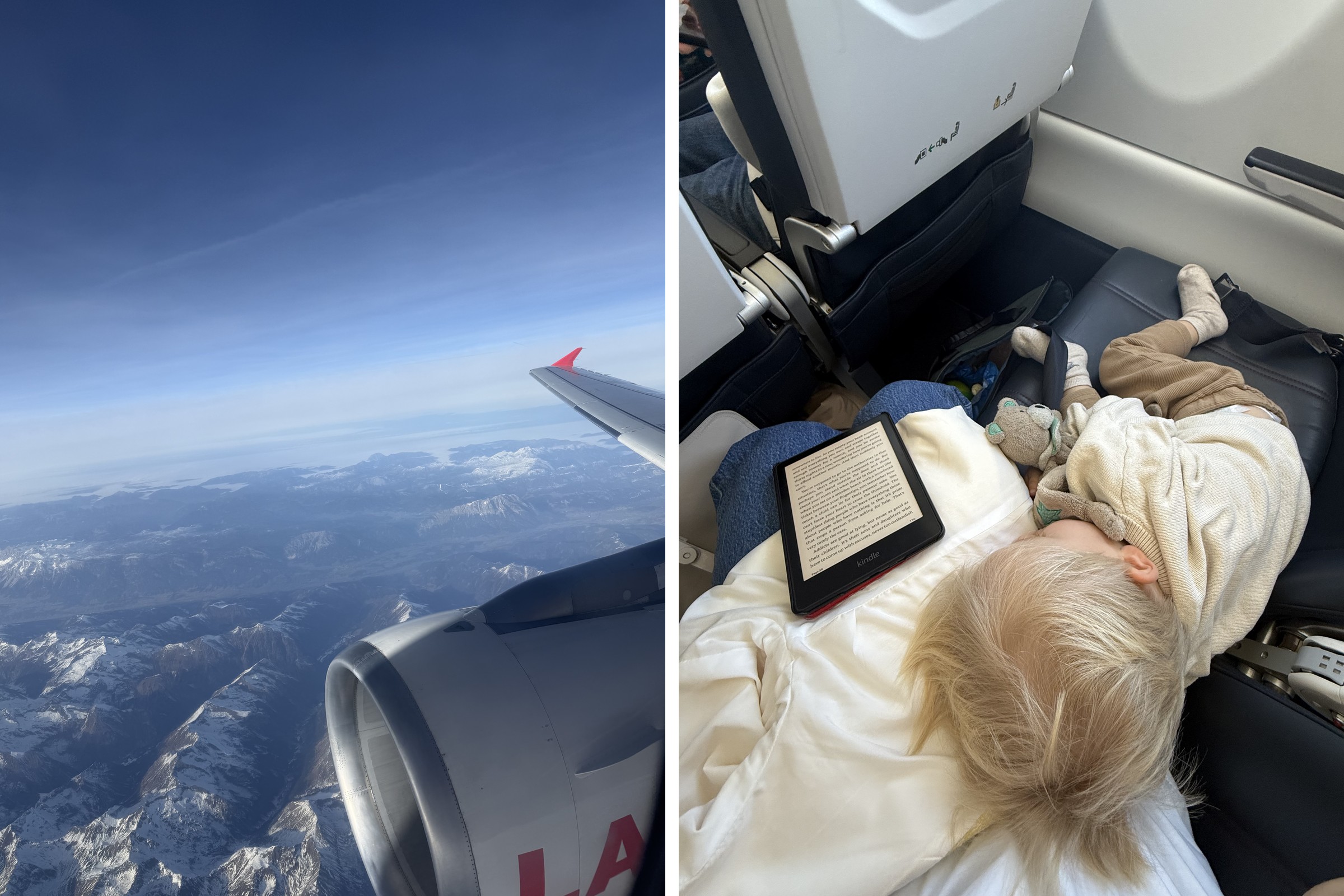
The basic rule for flying with a toddler sounds fairly logical: pick a flight time that overlaps with your child’s natural sleep. That’s exactly what we did on our first flight from Faro to Vienna — Lukáš and I deliberately chose a direct connection with no annoying layovers and timed it for midday. Our strategy paid off with flying colours, because Jonášek fell asleep even before the plane took off and we could catch our breath for a moment. 😅
But aviation is unpredictable and you always have to have a plan B ready in case of delays, as we learned on the return trip. The plane to Faro picked up an unpleasant delay, our carefully devised sleep plan collapsed like a house of cards, and Jonáš ended up awake the entire time. We were quite nervous about it at first, but in the end it was totally fine.
If your child doesn’t fall asleep on the plane, don’t try to force it, because you’ll only stress them out more. Let them look out of the window instead, show them the clouds or the airport staff, because it will be a huge and fascinating experience that will eventually tire them out naturally.
3. Take-off and landing when your child boycotts the belt
Airline rules are crystal clear: a child under two must always be secured during take-off and landing with a special infant belt that loops through yours. But try explaining that to a toddler who’s having a moment and has decided they simply won’t be restricted. This is exactly what happened to us on the flight to Paris, where Jonášek utterly boycotted the seatbelt during take-off and landing, and it cost us a lot of sweat and coaxing.
The important thing is to keep a cool head, divert the child’s attention to something completely different, and above all not to start panicking. On our very last flight it thankfully wasn’t a problem at all — Jonášek understood it was only for a moment, and we realised that children at this age change literally from month to month.
Besides the belt itself, don’t forget the physiology, because the descent tends to be far more painful for little ears than the take-off. The cabin pressure changes, and the only thing that helps small children is swallowing, so save a bottle of water, a favourite pouch, or chewing gum for older kids for the moment the captain announces the descent, so their Eustachian tube can equalise naturally.
4. Moving around the cabin and when the aisle saves the day
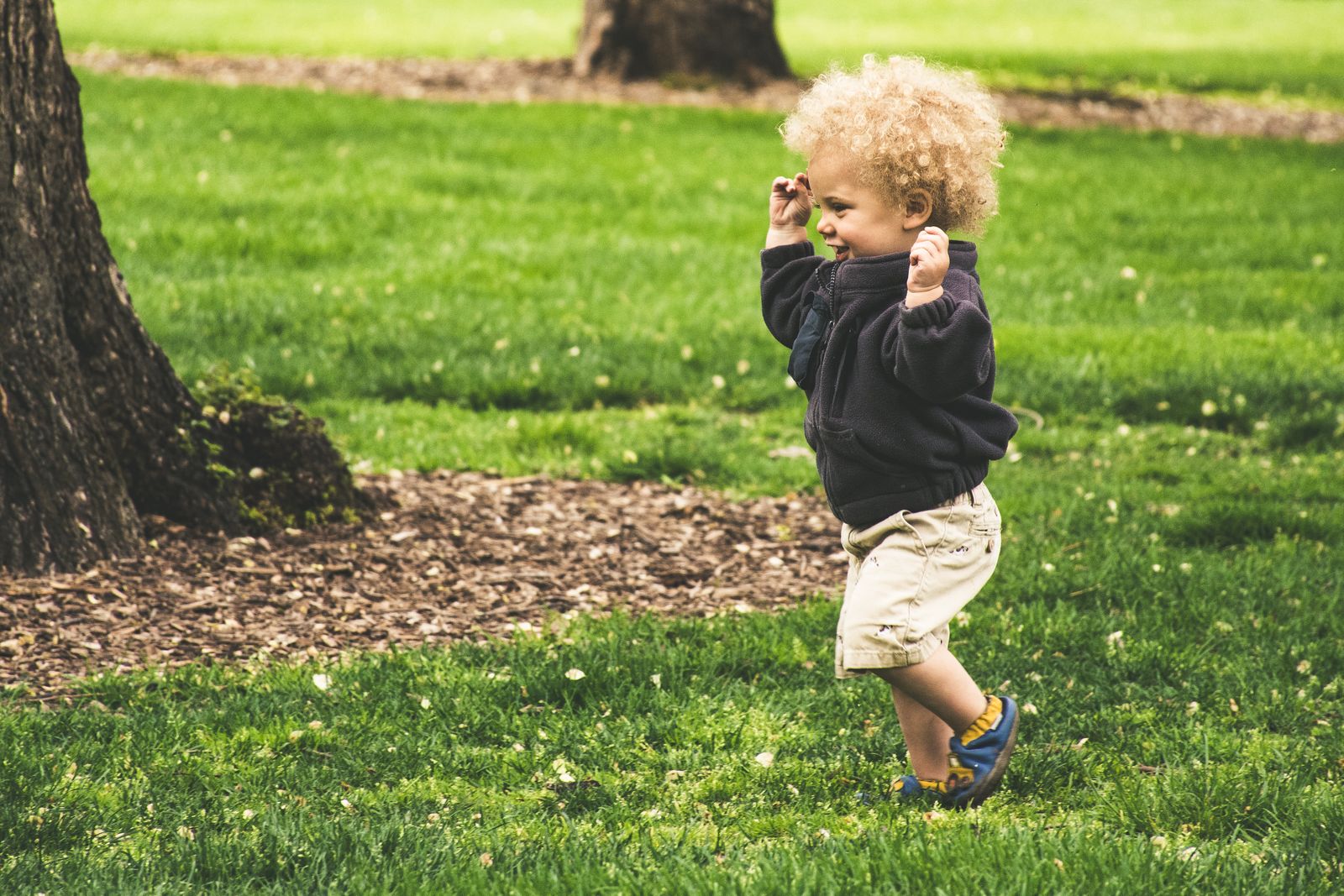
Once the seatbelt sign goes off and the plane reaches cruising altitude, the easier part of the journey begins for you. Your child no longer has to sit strapped to your lap, which is a huge relief for both of you, and you can let them walk down the aisle, as long as the crew isn’t serving refreshments. Moving around the cabin is absolutely key for toddlers, because they need to stretch their legs and explore the new, unfamiliar surroundings.
Many parents swear by babywearing during this phase of the flight, and a baby carrier works as an absolute lifesaver when the child is overtired and can’t settle. Just strap it to your front and slowly stroll up and down the plane, because the gentle swaying and your steps reliably calm most children down.
But remember one absolutely fundamental safety rule that the crew keeps reminding everyone about. During take-off, landing and turbulence the child must always be taken out of the carrier and secured with a standard seatbelt, because the carrier is not certified as a restraint system and in a sudden stop it would protect neither you nor the baby.
5. Food, drink and the tricky rules for liquids
Feeding a toddler on board is a chapter of its own, but when it comes to food and drink there’s one simple rule: bring twice as much as you think your child will realistically eat. On a plane, snacks work not only to fend off hunger but mainly as a reliable activity that can keep a child occupied for dozens of minutes. Serve crackers, sliced fruit or cheese gradually — don’t give it all at once, so you keep an ace up your sleeve for the end of the flight too.
As for liquids, airport rules can really tie parents in knots. Some airports have introduced new CT scanners that let you carry up to 2 litres of liquids, but be very careful about exactly where you’re flying from.
If you’re heading outside the Schengen area, or flying from a terminal used by our favourite low-cost carriers such as Ryanair or Wizz Air, the strict limit of 100 ml per container often still applies. Baby food and milk are exempt from this rule in the quantity needed for the trip, but ⚠️ the check can be very thorough and staff may ask you to taste it, so we recommend having everything neatly prepared.
6. Onboard entertainment (the rotation rule and tablet amnesty)
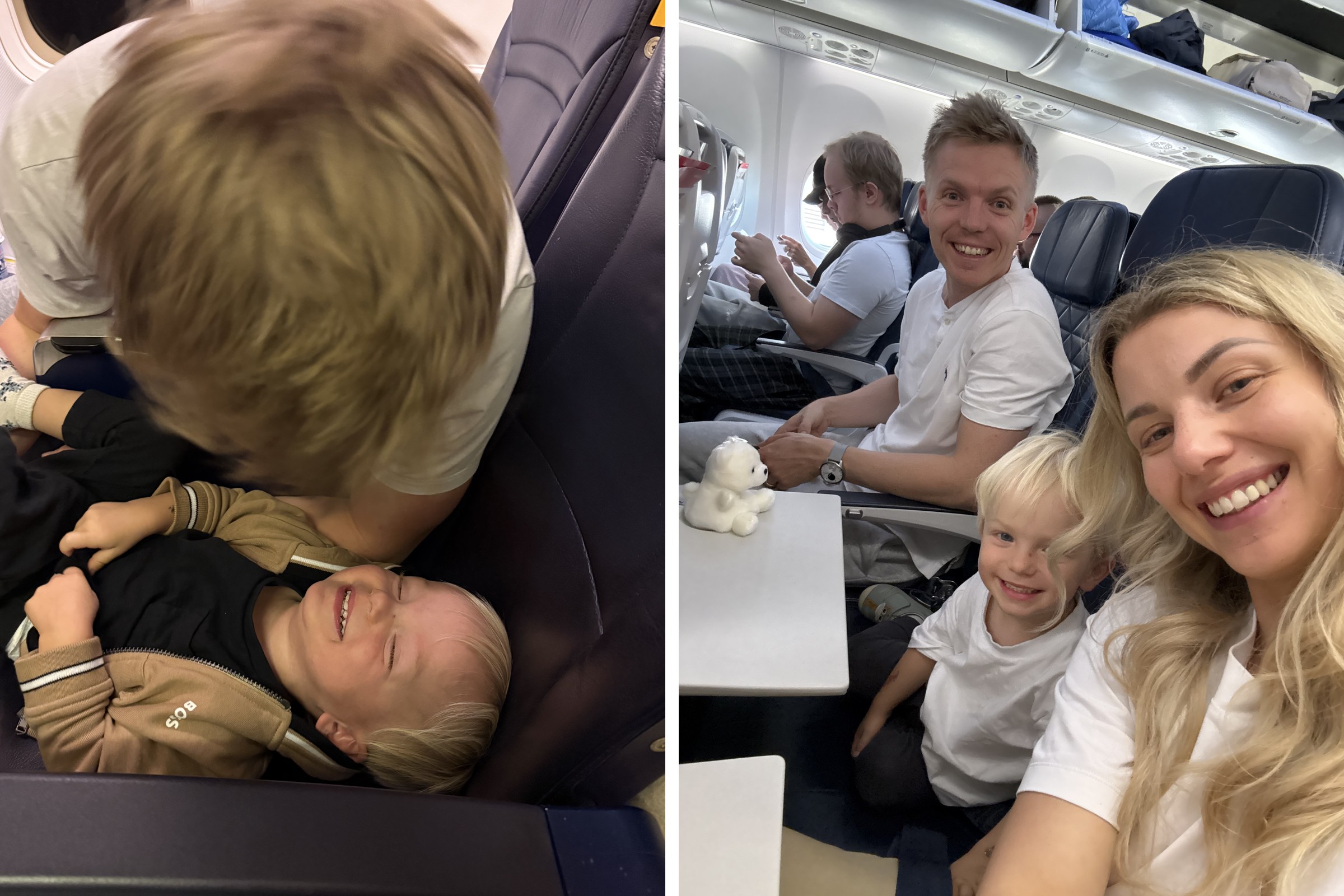
According to flight attendants, the most common mistake new parents make is pulling out all the prepared toys before the plane has even left the runway. Apply an uncompromising rotation rule, dole out individual activities in twenty-minute blocks and start with the simplest one, like flipping through the safety card in the seat pocket. You can also wrap a few small toys in wrapping paper, because the unwrapping alone eats up plenty of time and toddlers find it enormously fun.
And then there’s the big topic of screens, which many parents feel unnecessarily guilty about. On a plane, survival mode applies and tablet amnesty is perfectly fine, as confirmed by the position of the American Academy of Pediatrics, according to which occasional media use on a long journey does children no harm.
But keep the cartoons downloaded on the tablet as a nuclear weapon for the worst possible crisis, typically for the last hour of the flight when the child is genuinely exhausted. Never rely on onboard Wi-Fi, which tends to be expensive and unreliable, and download your favourite shows to your phone in advance so you’re sure they won’t drop out at the worst moment.
7. Fear of embarrassment and how to handle strangers’ stares
When you scroll through online discussions, you quickly discover that the single biggest barrier for families isn’t fear for safety, but sheer panic about how the people around them will react. We’re afraid our child will cry through the whole flight, that other passengers will shoot us angry looks, and that we’ll simply make a terrible spectacle of ourselves. Yet it’s precisely this inner unease and knotted stomach of yours that the child reliably senses and takes on.
Stop and realise one essential thing. You paid exactly the same money for the ticket as the man in the suit two rows ahead, so your toddler has an absolute and unquestionable right to be on that plane. A plane is a form of public transport, not a silent library, and people who demand absolute quiet should invest in noise-cancelling headphones.
If your child really does start screaming uncontrollably and you feel your cheeks turning red, it helps to break the tension with direct communication with the people nearest you. Just turn around with an apologetic smile and say they’re teething or their ears are blocked, and most people will instantly soften, because they’ll see you’re actively trying to deal with the situation.
8. What changes after the second birthday
The second birthday is a magic threshold in the aviation world, after which the era of relatively cheap travel ends and a whole new phase of logistics begins. The moment they turn two, a child may no longer sit on your lap, airlines stop treating them as an infant, and you have to buy them their own ticket with a full seat. The cost of a family holiday jumps sharply, because child discounts with traditional carriers tend to be minimal, and low-cost airlines don’t offer them at all.
It’s important to understand how airlines calculate a child’s age at the time of travel. If your toddler turns two right in the middle of your holiday, you’ll have to buy them a regular ticket with their own seat for the return trip, even though they flew out as an infant on a flat fee. With some airlines this can mean having to pay the current, very expensive fare right before departure, so always buy your tickets correctly in advance from home.
But having their own seat also has enormous advantages, because you suddenly gain a lot more living space for yourself and the toys. A two-year-old can also take in what’s happening around them, you can negotiate with them, explain what’s going on, and watching the clouds from their own window can keep them entertained for a good while.
9. When it makes sense to buy a separate seat earlier
Although children under two can fly on a parent’s lap for a small fee, more and more families are choosing to buy them their own seat much earlier. From a safety point of view it’s by far the best solution, as US aviation authorities have long pointed out, because an adult has no physical chance of holding a child in their arms during severe turbulence. If you have the budget, a dedicated seat with a certified car seat or a CARES harness system gives your child maximum safety.
With low-cost carriers you also occasionally get a paradoxical situation where a separate seat pays off financially too. The lap-infant fee is fixed (€25 with Ryanair, roughly €27 with Wizz Air per direction), so if you catch tickets on sale and the adult fare costs, say, just €15, it’s worth buying a whole seat right away.
Plenty of seasoned travellers use this trick, but ⚠️ watch out for entering the name correctly when booking, where some airlines recommend entering the word INFANT instead of the first name to avoid being automatically charged the infant fee. Lukáš and I also have a great experience with our compact travel pushchair, the Joolz Aer, which many carriers let you take right on board, so after landing we don’t have to hunt for it somewhere in the depths of the airport.
10. Delays, new passenger rights and how to survive it all
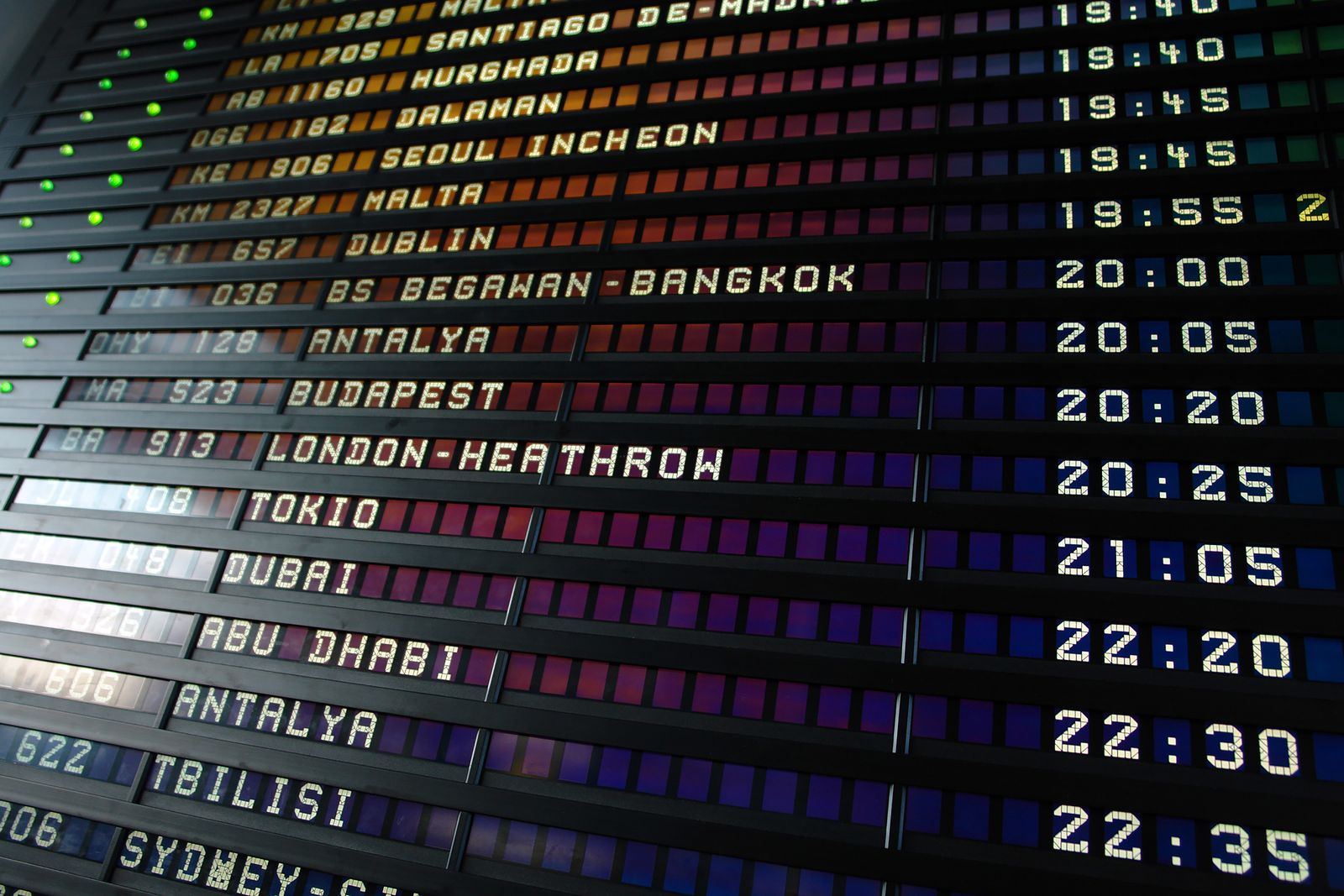
Every parent’s biggest nightmare at the airport is the glowing DELAYED sign, because waiting several hours in a packed terminal with a tired toddler is a real test of nerves. A delay will reliably wreck your whole carefully planned sleep routine, so it’s absolutely crucial to always have enough water, long-life snacks and, above all, a big dose of patience on you. Find a kids’ play area at the airport, let your child run off their energy properly, and don’t try to force them to sleep at any cost before you board.
As for legislation, the European Union has finally heard families’ complaints, and on 13 July 2026 the long-awaited revision of passenger rights was finally approved. It brings a truly fundamental change, under which a child under 14 must be seated next to their accompanying adult completely free of charge, so you’ll no longer have to worry about a low-cost carrier’s booking system scattering you to opposite ends of the plane. These rules should actually and universally start applying from mid-2027.
⚠️ What remains contentious, however, is the entitlement to financial compensation for a delayed flight for children under two who fly without their own seat. Opinions among lawyers and airlines vary — some reject claims outright, others pay compensation if at least some fee was paid for the child — so the golden rule is: always submit a claim for the infant, you lose nothing by it and you might be pleasantly surprised.
Practical summary and indicative prices
To make your planning as easy as possible, Lukáš and I have put together a clear table of the most important limits and fees you’re likely to come across in 2026. Bear in mind that airline rules can change, so always check them before you buy.
| Carrier / Airport | Rule for a child under 2 (Infant) | Indicative price (one way) |
|---|---|---|
| :— | :— | :— |
| Ryanair | Child flies on the lap, not entitled to a cabin bag. | €25 (fixed fee) |
| Wizz Air | Child flies on the lap, option to bring an extra small personal bag. | approx. €27 (fixed fee) |
| Traditional airlines | Child on the lap (Lufthansa, KLM, etc.). | 10% of the adult ticket price |
| Airports with new CT scanners | New CT scanners installed. | Liquids up to 2 litres |
| Standard security checks | Non-Schengen flights, original rules. | Liquids max 100 ml (baby food exempt) |
Besides ticket fees, don’t forget that most airlines will transport a pushchair or car seat in the hold completely free of charge — even the cheapest low-cost carriers.
Where to next
If you’ve already booked your tickets and are more focused on practical gear or health complications, be sure to check out our other detailed guides. We’ve packed in a tonne of tips from our own trips so you don’t have to discover all the mistakes yourself.
- Flying with children: the complete guide
- How to entertain a child on a plane
- Ear pain on a plane in children
- A plane ticket for a child
- Where to sit with a child on a plane
Frequently asked questions
Can I give my toddler sleeping medication or melatonin before a flight?
Experts and pediatricians strongly warn against this step. Melatonin is not recommended for children under two years of age at all, and for older children it should only be given after prior consultation with your doctor. Rely instead on natural tiredness, a favorite toy, and a calm approach—experimenting with medication six miles above the ground is an enormous risk.
What happens if my child turns two during the vacation?
If your toddler flies out as an infant for a fixed fee but turns two during your stay at the destination, they must have a full-fare ticket with their own seat for the return journey. Airlines always go by the child’s age on the day of the specific flight, so keep this in mind when booking to avoid paying astronomical prices for a last-minute ticket.
What about liquids and baby milk at the airport?
It depends on the terminal. At Terminal 2 (Schengen flights) a limit of up to 2 liters applies from 1 October 2025, while at Terminal 1 (non-Schengen) the old 100 ml rule remains. Baby food and milk are usually exempt from the 100 ml rule, but ⚠️ security may require you to taste it or conduct a special check, so have everything ready separately.
Can I have my toddler in a baby carrier during takeoff?
No, for safety reasons this is not permitted. During takeoff, landing, and turbulence, the child must be taken out of the carrier and secured to you with a special infant belt, which the flight attendant will bring you before departure. You can use the carrier to help your child sleep in the aisle only once the seatbelt sign is switched off.
Is the plane really so loud that my child needs headphones?
⚠️ Although scary numbers circulate online, they often come from sellers of children’s ear protectors. Cabin noise is monotonous and not dangerous for healthy ears, but headphones with active noise cancellation can subjectively help your toddler sleep better and block out distracting surroundings. However, they don’t solve ear pressure—only swallowing helps with that.
Do I have to pay for a child under 2, even if they don’t have a seat?
Yes, traveling with an infant on your lap unfortunately isn’t completely free. Low-cost airlines charge a fixed fee (e.g. Ryanair €25 per segment), while traditional carriers usually require approximately 10 percent of the adult ticket price. Taxes and airport fees are usually already included in this amount.
Descent or takeoff: which is worse for the ears?
From a physiological standpoint, the plane’s descent is much more unpleasant and painful for children’s ears than takeoff itself. Outside pressure begins to press on the eardrum and the Eustachian tube needs help equalizing, so save your child’s favorite crunchy snacks, a drink with a straw, or a pacifier for the moment when the captain announces the beginning of descent.
Tips and Tricks for Your Vacation
Don’t Overpay for Flights
Search for flights on Kayak. It’s our favorite search engine because it scans the websites of all airlines and always finds the cheapest connection.
Book Your Accommodation Smartly
The best experiences we’ve had when looking for accommodation (from Alaska to Morocco) are with Booking.com, where hotels, apartments, and entire houses are usually the cheapest and most widely available.
Don’t Forget Travel Insurance
Good travel insurance will protect you against illness, accidents, theft, or flight cancellations. We’ve had a few hospital visits abroad, so we know how important it is to have proper insurance arranged.
Where we insure ourselves: SafetyWing (simple monthly subscription) and TrueTraveller (for extra-long trips).
Find the Best Experiences
Get Your Guide is a huge online marketplace where you can book guided walks, trips, skip-the-line tickets, tours, and much more. We always find some extra fun there!


