

The Dominican Republic probably lives in your head as a dream of white sand, swaying palms and turquoise water – until the practical questions kick in: how much does it all cost, when is it actually worth flying out, and should you book an all-inclusive package or strike out on your own? We were stuck in exactly that same uncertainty before we really started digging into this destination.
On this page you’ll find three things: up-to-date package and flight prices that we refresh every morning, our tips from our own travels and articles, and a concrete plan for when and what to book so you don’t end up overpaying.

What to see and do in Dominican Republic
The Dominican Republic is far more than a beach lounger – it’s an island full of contrasts. You’ll find all our tips gathered in our article Dominican Republic: holidays, 21 tips and when to go, and here’s a quick rundown of what’s worth your time.
- Punta Cana – the best-known resort area with endless beaches, where most package holidays head.
- Saona and Catalina – excursion islands with crystal-clear shallows, perfect for a boat trip and snorkelling.
- Santo Domingo – the colonial centre (Zona Colonial) listed by UNESCO, the oldest European city in the Americas.
- The 27 Charcos de Damajagua waterfalls near Puerto Plata – sliding down natural water chutes.
- The Samaná Peninsula – from January to March humpback whales arrive here to breed.
- The interior around Jarabacoa and Constanza – mountains, coffee plantations and cool air away from the tourist beaches.
When to visit Dominican Republic
The Dominican Republic is a year-round destination – it’s warm all the time, with temperatures holding around 28–31 °C throughout the year. The key is to avoid the wettest period and the hurricane season, which peaks from August to October.
The most pleasant weather comes during the dry season between December and April – less rain, lower humidity and calmer seas. That’s also the high season, so prices climb. Our tours depart in January, February, March, June, July, August, September and October, so you can pick a date outside the peak too.
If you’re after the whales off Samaná, aim for February and March. Anyone keen to save and who doesn’t mind the occasional shower will find the best price-to-weather balance in June, just before the hurricane season peaks.
The Dominican Republic is far more than a poolside lounger – if you venture beyond the resort gates, plenty of experiences await. Here are the ones we recommend the most ourselves:
- A trip to Saona Island – a full-day boat cruise with a swim in a natural pool full of starfish.
- Whale watching off Samaná – only in February and March, an experience for a lifetime.
- Sliding down the 27 Charcos de Damajagua waterfalls near Puerto Plata – adrenaline out in nature.
- A stroll through the Zona Colonial in Santo Domingo – the oldest European city in the Americas, a UNESCO site.
- Buggies or quad bikes through the interior – coffee and cocoa plantations and local villages.
- Snorkelling or diving off Catalina – coral gardens and colourful fish.
We’ve put together more specific tips in our article Dominican Republic: holidays, 21 tips and when to go.
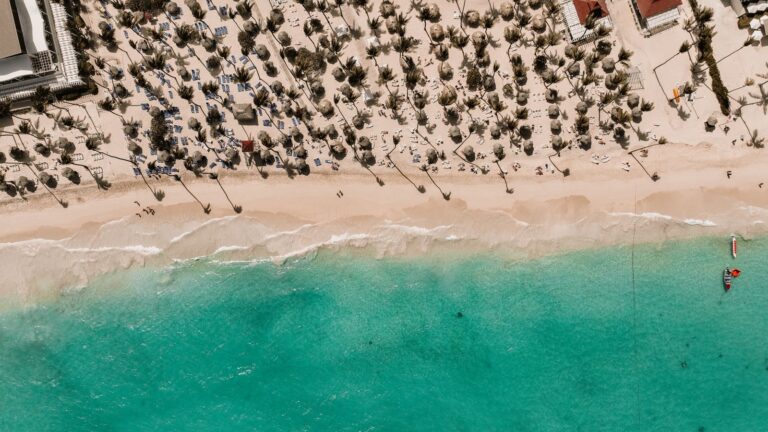
How to get to Dominican Republic
From the Czech Republic, the only way to reach the Dominican Republic is by plane. Direct charter flights are usually tied to packages from Prague; otherwise you travel with one connection via major European hubs such as Frankfurt, Madrid, Paris or Amsterdam. The main gateway for tourists is Punta Cana airport (PUJ), with flights also serving Santo Domingo (SDQ) and Puerto Plata (POP).
Reckon on a total journey time of 11–16 hours depending on the layover – a direct flight takes around 9–10 hours. There’s obviously no ferry or driving option here, as this is an overseas destination in the Caribbean.
Renting a car
If you’re spending your whole holiday in an all-inclusive resort, you won’t need a car – transfers ferry you to excursions and local transport (guaguas, taxis) is cheap. A car really pays off for anyone wanting to explore the island under their own steam – Samaná, the interior, the north coast. There, your own vehicle gives you a freedom that organised excursions simply can’t.
- Book ahead through a comparison site for rentals – on the spot it’s usually pricier with less choice.
- Insurance and deposit: we recommend full cover, as the card hold can be steep.
- Watch out for the local driving style and the state of the roads off the main routes – drive defensively and avoid driving after dark.
- Fill up in good time, as petrol stations are sparser in the interior.
Where to stay in Dominican Republic
Most Czech travellers head for the all-inclusive resorts in Punta Cana and Bávaro – comfort, food and drink included and the beach right around the corner. It’s the easiest choice for a relaxing, worry-free holiday, but beyond the resort gates you won’t experience much of the real DR.
- Punta Cana / Bávaro – the biggest concentration of resorts, ideal for a beach holiday and families.
- Samaná and Las Terrenas – smaller boutique hotels and apartments, quieter and closer to nature.
- Puerto Plata and Cabarete – the north coast, popular with kitesurfers and active travellers.
- Santo Domingo – boutique hotels in the colonial centre for those who want the city and history.
If you’re travelling independently, it pays to mix things up – a few nights by the sea and a few inland or in Santo Domingo. Apartments and guesthouses tend to be significantly cheaper than the big resorts, and they bring you closer to local life.
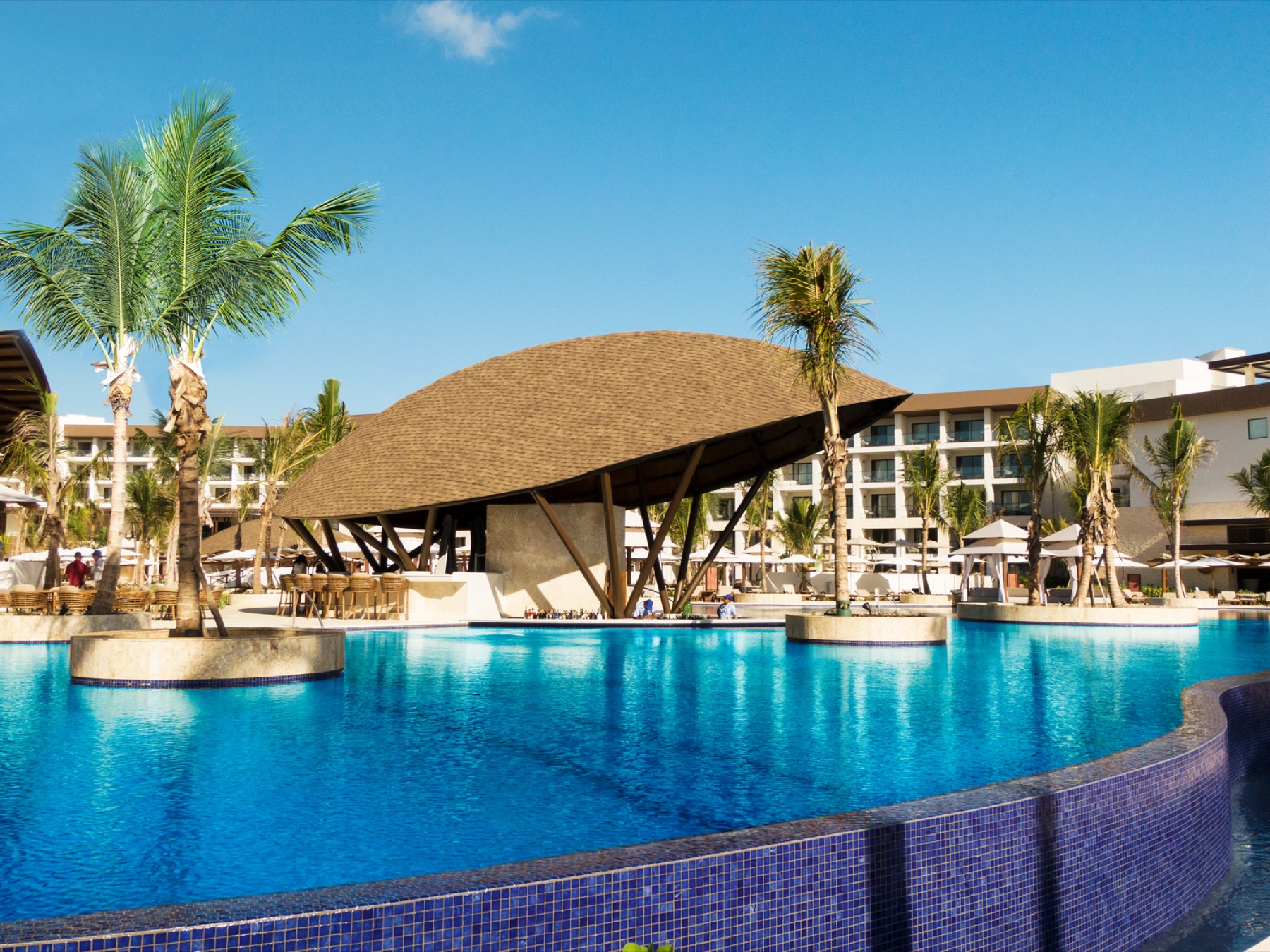
Package tour or independent travel?
A package pays off when:
- you want a carefree beach holiday with food and drink included,
- you’re travelling with children or heading somewhere exotic for the first time,
- you’d rather not deal with transfers, accommodation or logistics,
- you’re chasing the best value for money – all-inclusive usually works out cheaper overall than piecing everything together separately (prices from 102 100 RD$).
Go independent when:
- you want to see more than the beach – Samaná, the interior, Santo Domingo,
- you’re not fazed by Spanish and organising things yourself,
- you prefer apartments and local restaurants to a resort,
- you’re planning to move between several spots on the island.
The way the two of us see it: for a first visit and a relaxing holiday, all-inclusive in Punta Cana is the obvious choice. Anyone who wants to really get to know the DR should add a few nights inland or on Samaná after a few days on the beach – combining a package with independent excursions works brilliantly too.
Budget: daily costs in Dominican Republic
| Level | Accommodation | Food | Transport & activities | Total/day |
|---|---|---|---|---|
| Backpacker | 1 280 RD$–2 300 RD$ (guesthouse, hostel) | 770 RD$–1 280 RD$ (comedores, local food) | 770 RD$–1 540 RD$ (guaguas, public transport) | approx. 3 100 RD$–5 100 RD$ |
| Standard | 3 100 RD$–6 400 RD$ (3* hotel, apartment) | 1 540 RD$–2 600 RD$ (restaurants) | 1 790 RD$–3 800 RD$ (taxis, excursions) | approx. 6 400 RD$–12 800 RD$ |
| Comfort | 7 700 RD$+ (4–5* resort) | 3 100 RD$+ or all-inclusive | 3 800 RD$+ (private transfers, boats) | approx. 15 400 RD$+ |
These prices are a rough guide and assume independent travel — with an all-inclusive package your accommodation and meals are bundled together, so your daily spend goes mainly on excursions and souvenirs.
How to save when planning
- Book your package early (in autumn and winter for the next season) for the best choice of dates, or last-minute a few weeks before departure – our discounts run as high as −51%. Keep an eye on our latest tours section.
- For independent flights, search ideally 2–4 months ahead and stay flexible with your dates. Search for flights in our finder.
- Accommodation outside all-inclusive should be booked well ahead in the high season (December–April), when availability vanishes fast – take a look at our accommodation tips.
- Don’t buy excursions by the pool – hotel rep prices tend to be considerably higher. Sort popular experiences (Saona, whales) in advance, see what to book early.
- Avoid the peak of hurricane season (August–October) only if you want guaranteed weather; otherwise these months are exactly when prices are lowest.
Practical information
- Language: the official language is Spanish, but you’ll get by in English in resorts and tourist areas.
- Currency and payments: the Dominican peso (DOP), though resorts also take USD and cards. Outside the tourist zones it’s handy to carry cash.
- Connectivity: the most convenient option is an eSIM – activate it before you fly and you’re online the moment you land, no hunting for a local SIM.
- Safety: resorts and tourist spots are calm; in the cities (especially at night) take the usual precautions and don’t flash valuables.
- Tipping: restaurants often add 10% to the bill, but a little extra small change is still expected.


