

Albania is probably stuck in your head because of turquoise seas for next to nothing and mountains that look straight out of the Alps – but then come the practical questions: what does it actually cost, when should you go to dodge the crowds, and should you book a package or just wing it on your own? We found ourselves in exactly that same fog of uncertainty before we criss-crossed Albania ourselves.
Right here in one place you’ll find three things: up-to-date package and flight prices that we refresh every morning; our tips from our own travels and articles, where we honestly flag what’s not worth it; and a plan for when and what to book so you don’t end up overpaying for no reason.

What to see and do in Albania
Albania is smaller than it looks, and you can wrap up the sea, the mountains and centuries-old towns in a single trip. Here are the spots we reckon are worth a stop:
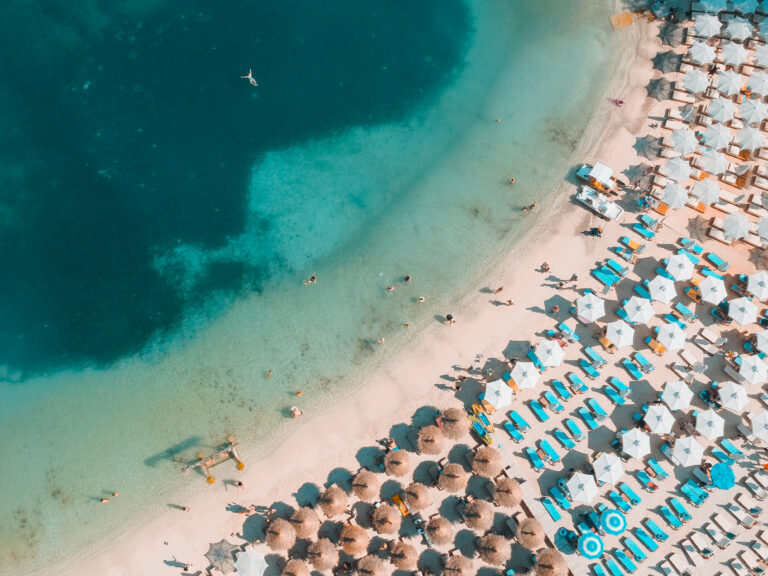
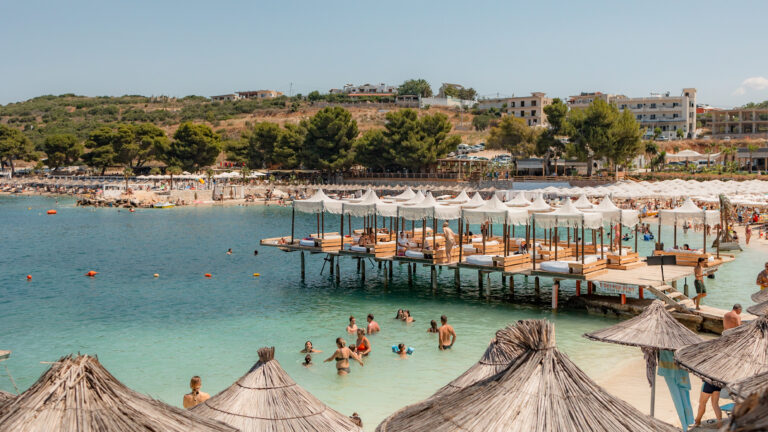
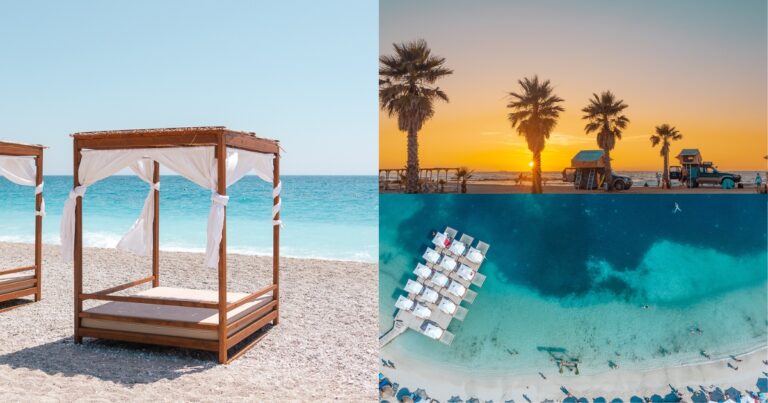
- Ksamil – Albania’s “Maldives” with turquoise water and little islets you can wade out to. The prettiest beaches on the Ionian riviera.
- Saranda – the gateway to the Ionian riviera, a great base for day trips and a quick hop to Greek Corfu.
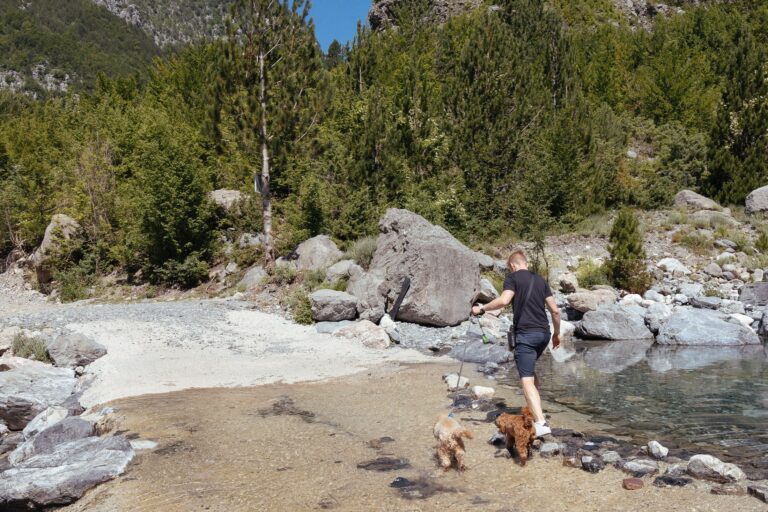
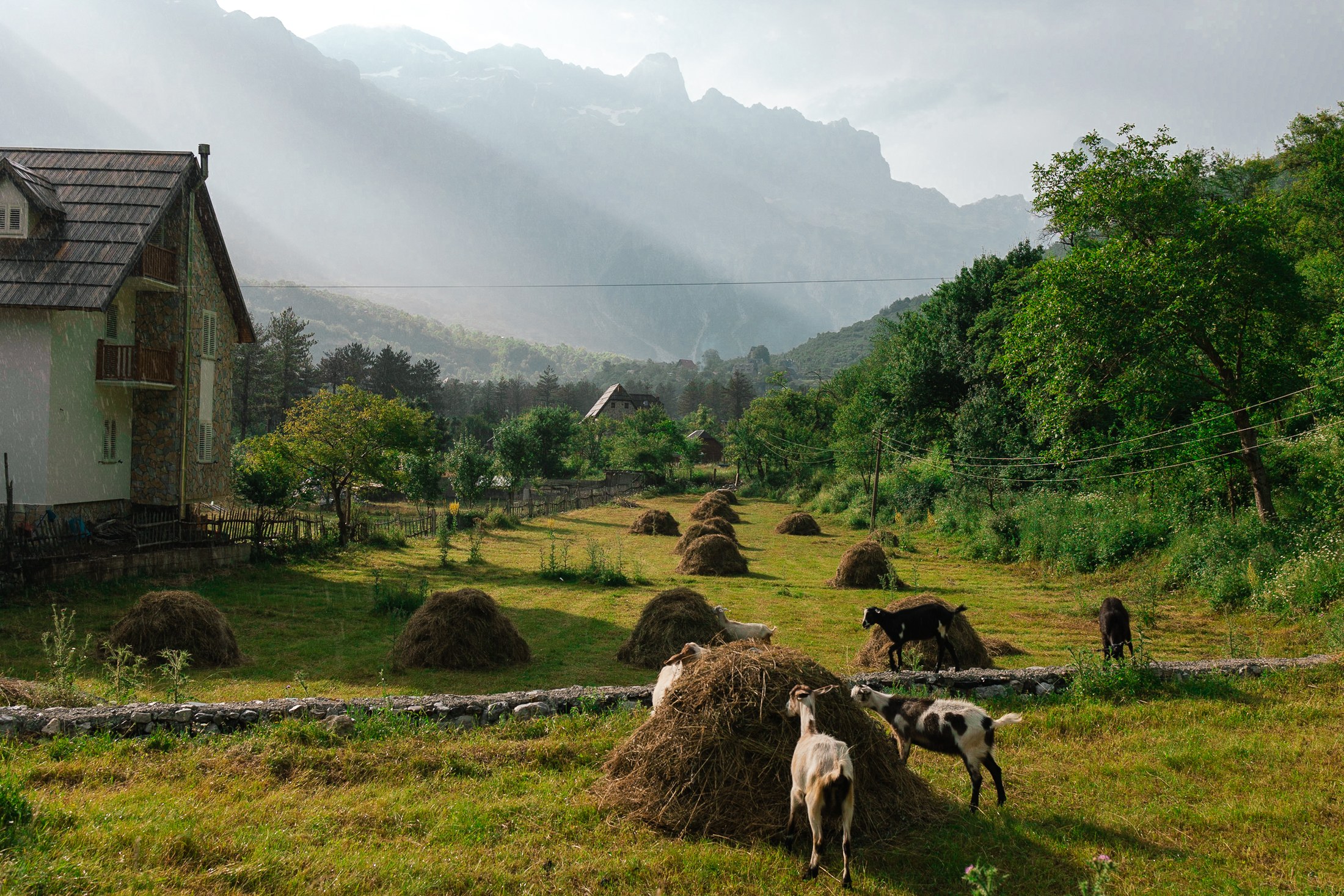
- The Accursed Mountains (Theth and Valbona) – Albania’s wild north, treks between villages and one of the finest trails in the Balkans.
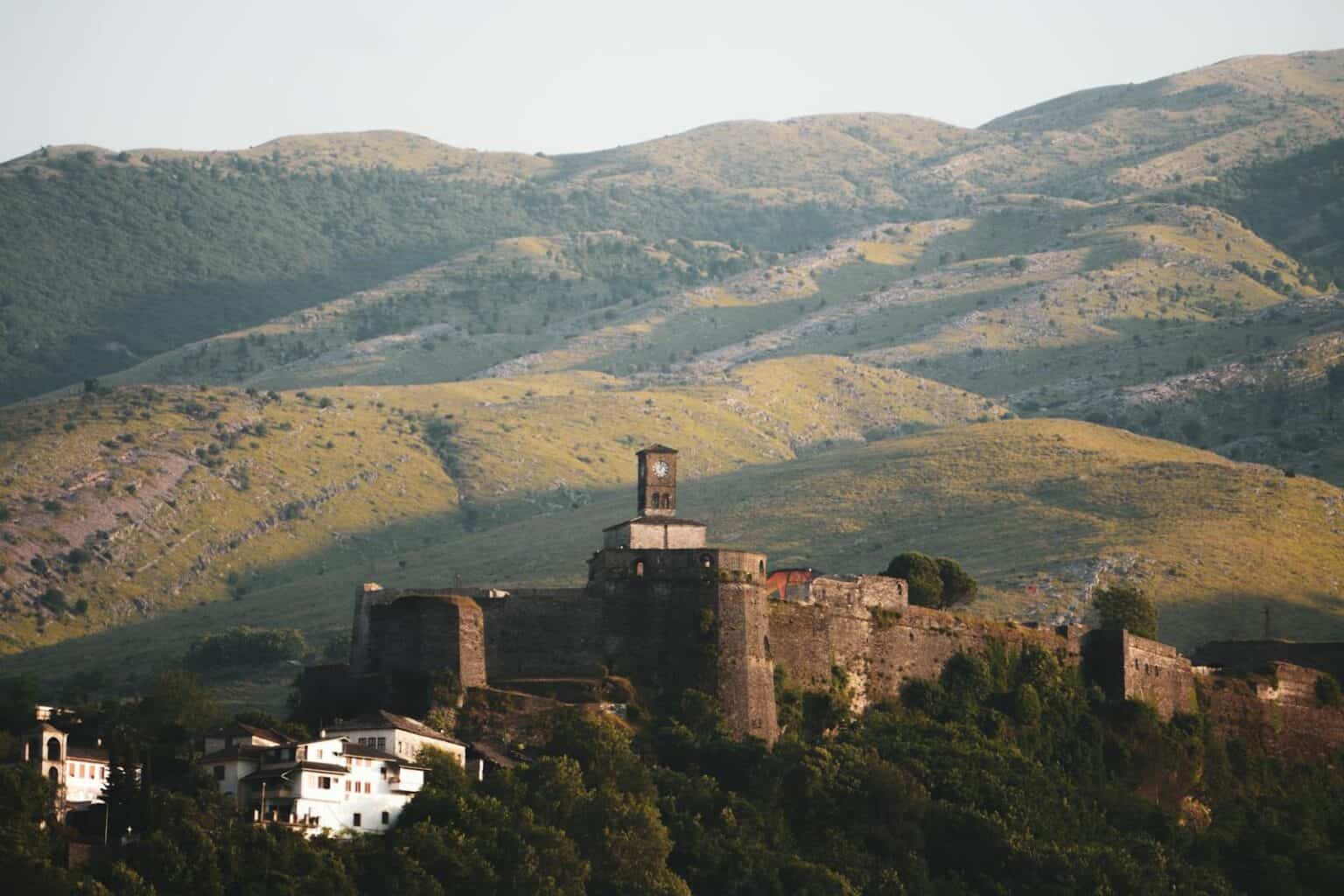
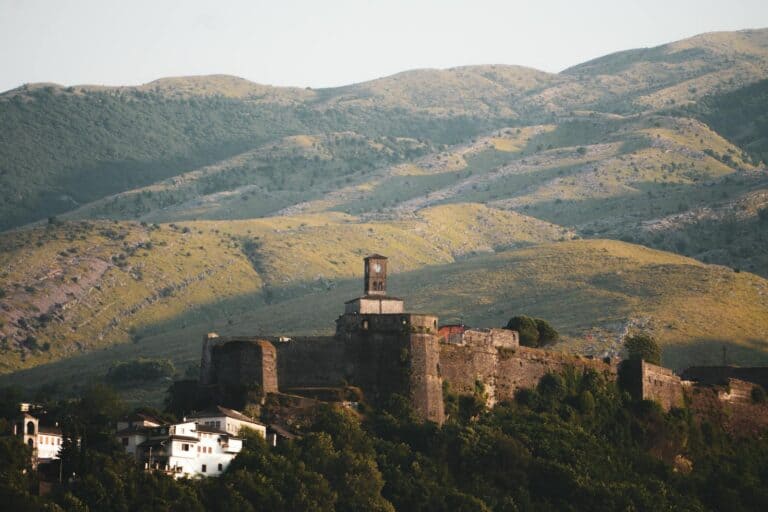
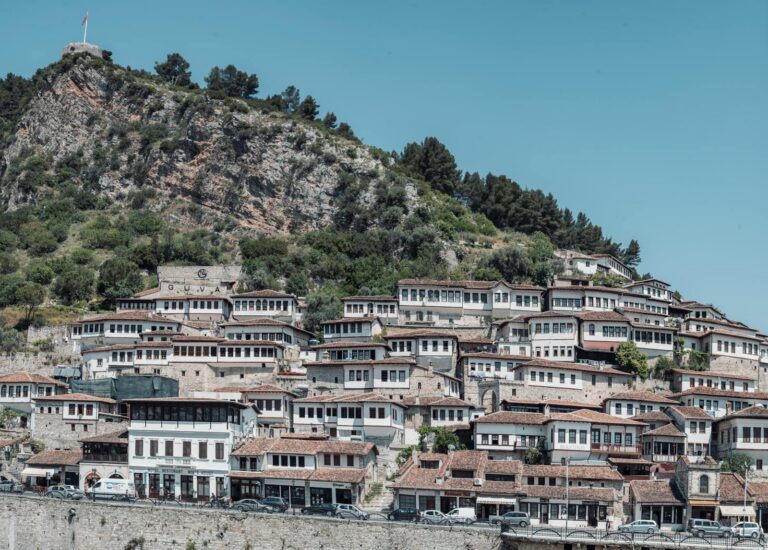
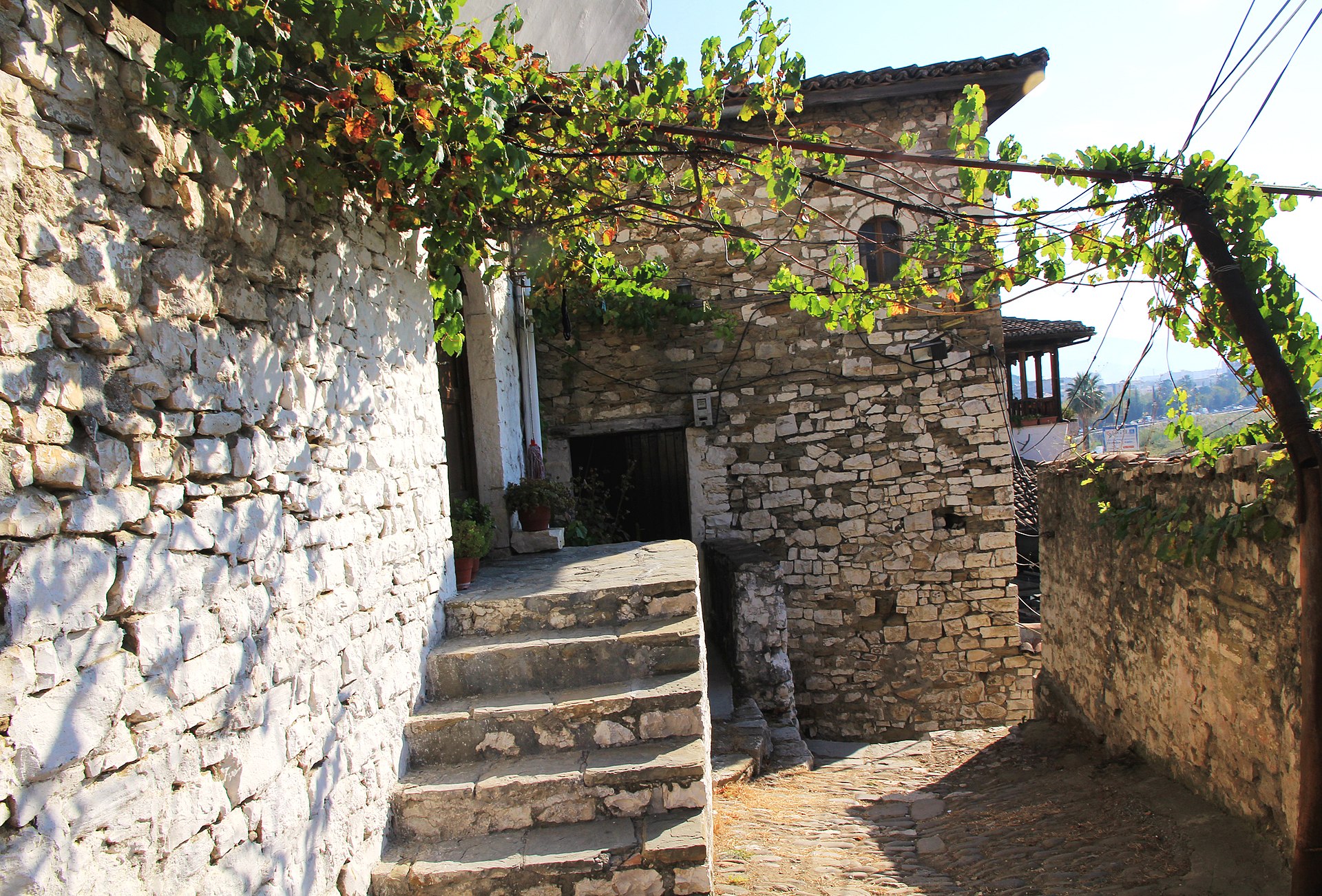
- Berat – the UNESCO “town of a thousand windows”, Ottoman houses clinging to the slope above the river.
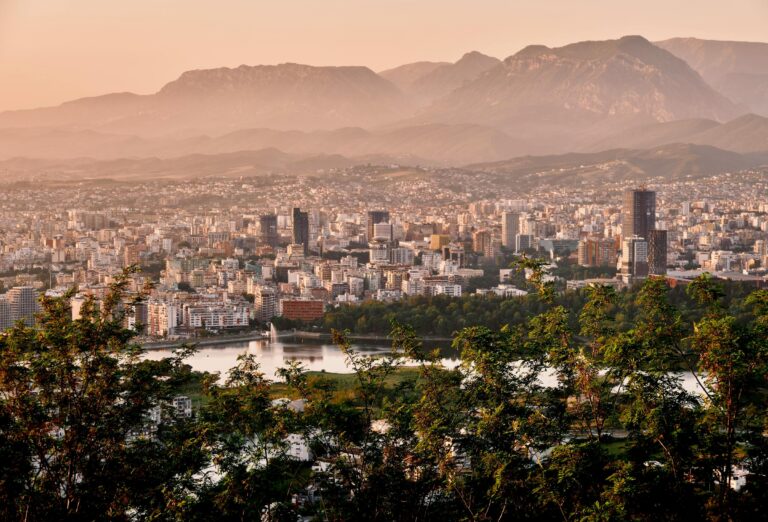
- Tirana – a colourful, gloriously messy capital with bunkers, cafés and communist history within easy reach.
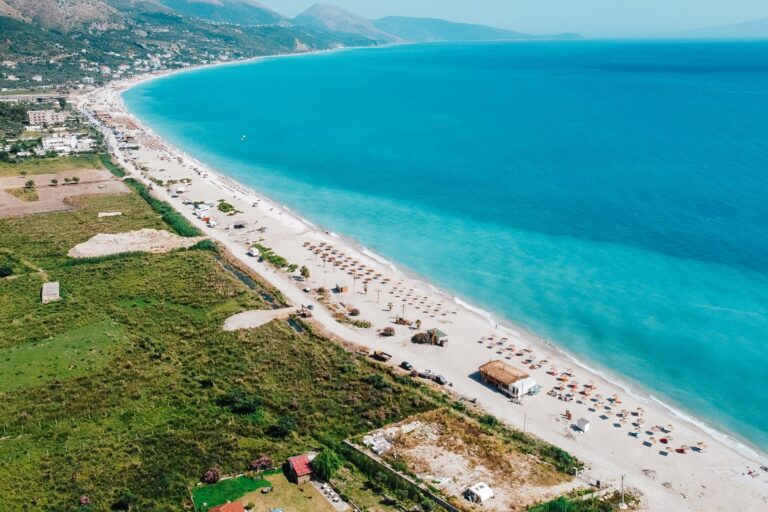
- Vlora and Durrës – the Adriatic coast, longer sandy beaches and a handy entry point for the ferries.
If you’re still mulling over where to actually head, have a look through our rundown of what to see in Albania – it helps you piece together a route from the coast through the towns and up to the mountains.
When to visit Albania
The main beach season runs from June to September, when the water is warmest and everything is open. The peak – and with it the highest prices and biggest crowds – falls in July and August. Ksamil and Saranda get seriously packed then, so if you can handle water that’s a couple of degrees cooler, you’ve got better options.
Our personal favourites are the shoulder months of May, June and September: the sea is still (or already) pleasant for a swim, the beaches are emptier and accommodation is cheaper. September is also ideal for combining the coast with the towns, as the heat eases off.
For treks in the Accursed Mountains you’re looking at a different slot in the calendar – the season runs roughly from June to October, when the passes are snow-free and the mountain guesthouses are open. Outside that window the north can be cut off and the weather unpredictable.
If you’re going to leave Albania with just a handful of memories, make them these. We’ve picked from places we’ve been through ourselves:
- Hopping out to the islets in Ksamil – at low tide you can wade to the nearest ones, the water clear as an aquarium.
- The trek from Theth to Valbona – a full-day crossing over the pass, one of the best experiences in the Balkans.
- A wander through the lanes of Berat – the UNESCO town with its view of the “thousand windows” and a castle above the river.
- Bunkers and cafés in Tirana – a colourful city and its communist past in a single day.
- The views along the Ionian riviera around Saranda – hairpin bends, coves and ancient Butrint just outside town.
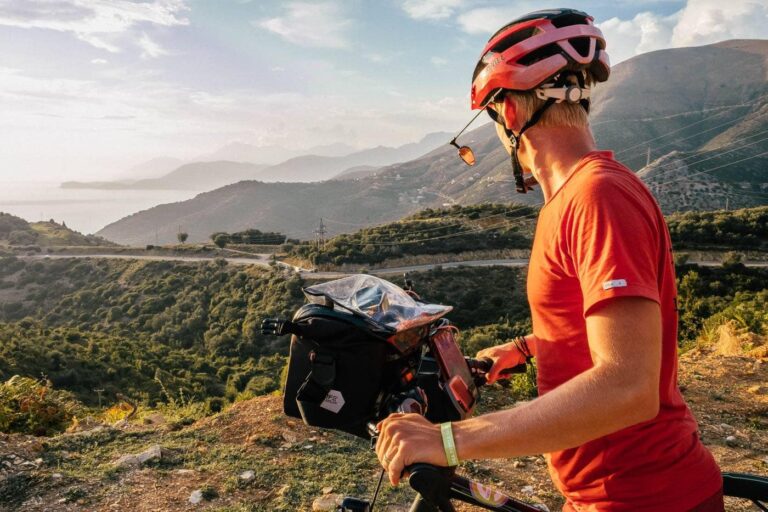
- Albania by bike – if you fancy an experience under your own steam, take a look at what the riding is like here.
How to get to Albania
Flying is the quickest way. The main gateway is Tirana airport, from where it’s roughly 3–4 hours by car to the Ionian coast. From Czechia you can sometimes find a seasonal direct connection; otherwise you’ll change planes. We’ve written up how to bag the best fares in our article on cheap flights to Albania.
The second option is driving across the Balkans – expect a long journey through several countries, but you’ll have your own car the whole time. Combining the trip with a ferry from Italy (e.g. to Durrës or Vlora) is also popular if you’re tying Albania in with an Italian road trip. Getting around Albania independently works comfortably without a car too – buses and shared vans (furgons) run between all the main towns.
Renting a car
A car is worth it in Albania if you want to combine the coast, the mountains and the towns and reach coves off the bus routes. Public transport (buses and furgons) does connect the main towns, but it’s slow and won’t get you to the hidden beaches. On the other hand, for a stay in just one resort – Ksamil, say – you often don’t need a car and just end up wrestling with parking.
- Book ahead through a comparison site – in season the cars go fast and on-the-spot prices are higher.
- Check the insurance and deposit – basic cover tends to have a high excess; add-on insurance works out cheaper than topping up at the rental desk.
- The driving style is wilder – expect unexpected manoeuvres and rougher roads in the north, so drive defensively.
- Ferries and borders – if you’re planning to cross by boat or into a neighbouring country, check whether your contract allows it.
Where to stay in Albania
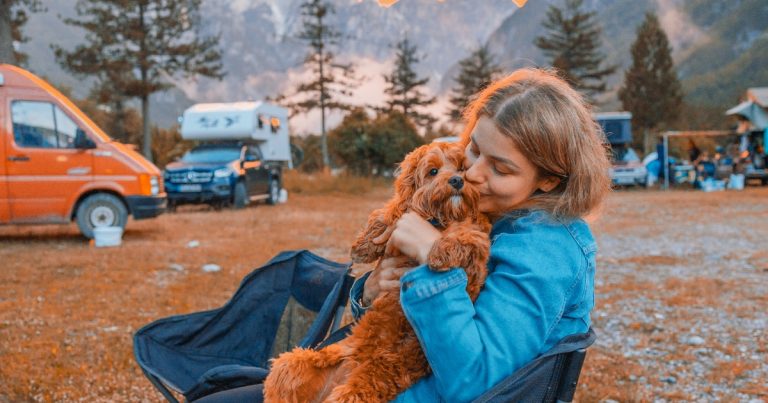
Albania is cheap for accommodation and the choice is wide – from rooms in locals’ homes and apartments through hostels to brand-new coastal hotels. On the coast it pays to base yourself in Saranda (good transport links and plenty of choice), or right in Ksamil if you want the beach round the corner. For the towns, a stop in Berat or Tirana is ideal.
- Apartments and rooms with locals – the best value for money, often with their own little kitchen.
- Hostels – mainly in Tirana, Saranda and Berat; great for solo travellers and backpackers.
- Mountain guesthouses – in Theth and Valbona you stay with families, often with half board.
- Coastal hotels – in high season book well ahead, as places in Ksamil disappear fast.
Package tour or independent travel?
A package is worth it when:
- you mainly want sea and relaxation with no faffing over transfers or accommodation,
- it’s your first time flying out and you don’t fancy arranging flights, transfers and a hotel separately,
- you’re travelling with kids or older relatives and will appreciate the service and a rep on the ground.
Go it alone when:
- you want to combine the coast, the mountains and the towns and stay flexible,
- you enjoy tracking down accommodation and food with the locals at lower prices,
- you’re planning treks in the Accursed Mountains or a trip by car or bike.
The two of us are firmly in the “do it yourself” camp – Albania is cheap, the people are welcoming and going independent really makes sense here. But if you just want to switch off by the sea and not worry about a thing, go ahead and grab a package; you’ll save yourself the logistics, and the price difference won’t be a chasm.
Budget: daily costs in Albania
| Level | Accommodation | Food | Transport & activities | Total/day |
|---|---|---|---|---|
| Backpacker | 1 200 L–2 000 L | 1 000 L–1 400 L | 600 L–1 200 L | approx. 2 800 L–4 600 L |
| Standard | 2 800 L–4 800 L | 1 600 L–2 400 L | 1 200 L–2 400 L | approx. 5 600 L–9 600 L |
| Comfort | 6 000 L–12 000 L | 2 800 L–4 800 L | 2 400 L–4 800 L | approx. 11 200 L–21 600 L |
The prices are a rough guide per person per day outside the priciest weeks of July and August, and exclude flights. Albania is one of the cheapest countries on the Mediterranean — even at the standard level you’ll eat and sleep for a fraction of what you’d pay in Croatia or Italy.
How to save when planning
- Buy flights 2–4 months ahead. Direct seasonal flights to Tirana are cheaper early on and get pricier in the final weeks. “Search for flights in our finder.”
- Book seaside accommodation for July and August a good 2–3 months in advance – in Ksamil the best apartments go first. Outside peak season a few days ahead is plenty. Our accommodation tips.
- Avoid the absolute peak of the season – in May, June and September you can easily pay a third less for the same accommodation.
- Treat a package as a spring early-bird deal; with Albania, last-minute deals tend to pay off only outside peak season. Keep an eye on the current packages on this page.
- Sort boat trips and treks ahead of time in season, as on the spot they tend to be pricier and fully booked. Take a look at what to book early.
- Don’t overpay on currency exchange – decline conversion into your home currency on payments and at ATMs, and withdraw larger amounts.
Practical information
- Language: officially Albanian, but you’ll get by in English in touristy spots, and sometimes Italian too.
- Currency and payments: you pay in the Albanian lek (ALL); hotels and bigger restaurants take cards, but keep cash for the beaches, furgons and small businesses.
- Connectivity: the most convenient option is an eSIM downloaded in advance – you’re online the moment you land, with no hunting for a local SIM.
- Safety: Albania is friendly to tourists and generally safe; the biggest risk is the traffic and driving style – stay alert both behind the wheel and as a pedestrian.
- Tip: ATMs sometimes charge hefty fees – withdraw larger amounts at once and decline conversion into your home currency (DCC).


