

You’ve maybe been dreaming of a trip to Ireland for years – emerald cliffs, pubs with live music and that feeling that time runs a little slower here. But then comes the practical part: how much does it all cost, when is it actually worth going so it doesn’t rain more than usual, and whether to book a comfortable tour or set off on your own by car along the coast. We’ve been stuck in exactly that uncertainty too, so we pulled everything together in one place.
You’ll find three things here: up-to-date tour and flight prices that we refresh every morning, our personal tips from our own travels and articles, and a simple plan for when and what to book so you don’t overpay needlessly.

What to see and do in Ireland
Ireland is smaller than most people imagine – and that’s exactly why you can fit in plenty even in a week. We always start in the capital and then head off into nature on the west coast.
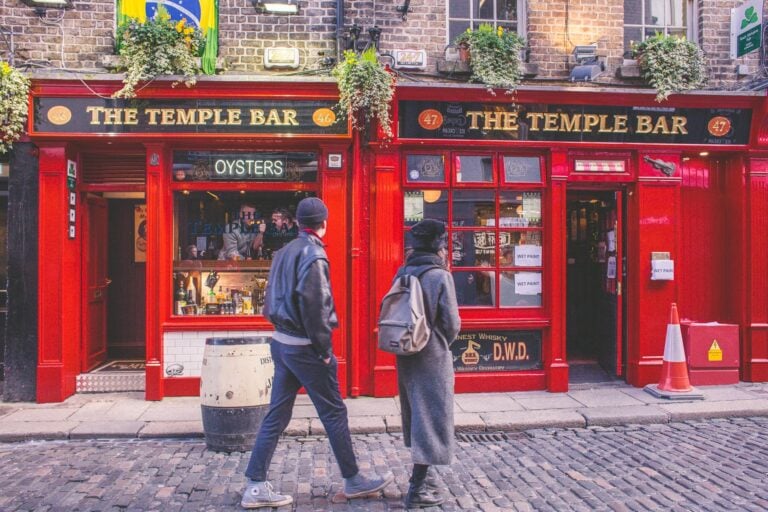
- Dublin – a lively capital and the ideal place to start. Trinity College, Temple Bar, the Guinness brewery and walks along the River Liffey. You’ll find our complete pick in our article on the best things to do in Dublin.
- Cliffs of Moher – Ireland’s most famous cliffs, dropping straight into the ocean from a height of over 200 metres. On a clear day you can see all the way to the Aran Islands.
- Ring of Kerry – a circular route around the Iveragh Peninsula, one of the most beautiful scenic drives in the country.
- Galway – a bohemian harbour town in the west, full of music and pubs, and a great base for trips around the area.
- Connemara and the Burren – the wild, lonely landscapes you picture when you think of Ireland.
When to visit Ireland
Ireland doesn’t really have a bad season – just seasons that are rainy in different ways. The best balance of weather and peace and quiet comes in May, June and September: the days are long, the greenery is lush and there are fewer tourists than during the school holidays. Summer (July and August) is the warmest and liveliest, but also the most expensive and the most crowded at the main sights.
Ireland’s weather is famous for its unpredictability – even in summer, expect to get both rain and sunshine in a single day. Temperatures hold around 15–20 °C through summer, while in winter it’s around 5–10 °C and very windy. The good news: thanks to the Gulf Stream, it almost never freezes here.
According to our data, tours most often depart in January, February, March, April, June, July, August and September – but if you’re after the best weather, bet on late spring and early autumn.
These are the experiences you won’t forget in Ireland – picked from the things we’ve done ourselves and written up in our articles.
- An evening in a pub with live Irish music – best in Dublin in Temple Bar or in Galway. A pint, a fiddle and an atmosphere you won’t find anywhere else.
- A tour of the Guinness brewery in Dublin – rounded off with a fresh pint and a view over the whole city.
- A walk along the Cliffs of Moher – cliffs plunging straight into the Atlantic, one of the most powerful experiences of the whole trip.
- Trinity College and the Book of Kells – a medieval manuscript and a stunning library in the heart of Dublin.
- A drive around the Ring of Kerry – a scenic circular route with lakes, mountains and coastline.
- A trip to Connemara – wild landscapes, deserted beaches and the feeling that you’re at the edge of the world.
How to get to Ireland
The fastest way to reach Ireland is by air. There are direct flights from Prague to Dublin – the flight takes roughly 2.5 hours. Dublin is the country’s main gateway with the best connections; smaller airports such as Cork or Shannon in the west are mostly served by connecting flights.
Travelling by car or ferry from the Czech Republic doesn’t make much sense – Ireland is an island, and you’d have to cross all of Europe and Britain, ferry included. If you want your own car, it’s far better to rent one once you’re there and pair it with a cheap flight. That’s why most travellers from the Czech Republic opt for a flight plus a rental car, or an organised tour.
Renting a car
A car makes sense in Ireland if you want to tour the west coast – the Ring of Kerry, Connemara or the Cliffs of Moher are hard and slow to reach by public transport. For Dublin itself, on the other hand, you don’t need a car: in the city it’s more of a burden (parking, one-way streets) and you can get everywhere on public transport or on foot.
- Book ahead through a rental comparison site – in season, on-the-spot prices shoot up and the choice of cars dries up.
- Keep an eye on the insurance and deposit – the base price can look tempting, but the add-ons for full coverage can double it.
- You drive on the left, and roads in the west are often narrow – expect a slower pace.
- Watch out for the tolls on the motorways around Dublin (often barrier-free, paid online).
Where to stay in Ireland
Where to lay your head depends mainly on your travel style. If you mostly want to explore Dublin and the surrounding area, stay right in the city and rely on public transport. For a loop around the west coast it’s more practical to keep moving and change accommodation every night or two.
- Dublin – city centre: the priciest option, but everything is within walking distance. Ideal for 2–3 nights at the start.
- Galway and the west coast: a great base for trips to the Cliffs of Moher and Connemara.
- B&Bs and guesthouses: an Irish classic – a homemade breakfast included and tips from your hosts. Often the best value for the experience.
- Hostels: for backpackers, with plenty to choose from in Dublin and the larger cities.
Accommodation in Ireland isn’t cheap, especially in season. Our tips: book well in advance, and expect higher prices at weekends than on weekdays.
Package tour or independent travel?
It’s the question we wrestle with before every trip. For Ireland, here’s how we see it:
- A tour is worth it when: you want everything sorted and don’t want to stress about driving on the left; it’s your first visit and you want to see the most important sights; you’re after a good price (tours from 95 €, discounts up to −60%); you don’t want to deal with accommodation or routes.
- Go solo when: you want to travel at your own pace and stop wherever you fancy; you don’t mind driving on the left; you have time to plan and compare prices; you want to discover lesser-known places off the main loop too.
The two of us love a combination: Dublin and the surrounding area on our own (a flight plus a few nights in the city), and for the west coast either a rental car or a sightseeing tour when we don’t want to handle the logistics. For a first trip to Ireland, a tour is a safe and easy-going choice.
Budget: daily costs in Ireland
| Level | Accommodation | Food | Transport & activities | Total/day |
|---|---|---|---|---|
| Backpacker | 30 €–40 € (hostel) | 16 €–25 € | 16 €–25 € | approx. 60 €–85 € |
| Standard | 60 €–100 € (B&B / 3*) | 30 €–45 € | 30 €–45 € | approx. 120 €–190 € |
| Comfort | 140 €+ (4* hotel) | 45 €+ | 60 €+ | approx. 240 €+ |
These prices are indicative and reflect Ireland’s price level, which is among the higher ones in Europe. The biggest line items tend to be accommodation and car rental — food and activities are where you can save the most.
How to save when planning
- Flights are best booked 2–4 months ahead, and even earlier for summer. Avoid the school holiday dates if you can. Search for flights in our finder.
- Tours are worth grabbing either as a first-minute deal (for the season) or, conversely, last minute if you’re flexible – discounts can reach up to −60%. Take a look at our section of current tours.
- Accommodation in Ireland gets pricier as the date approaches and at weekends, so book early. Our accommodation tips will help.
- Activities and trips to the top spots (the Cliffs of Moher) are worth booking in advance so you don’t queue or overpay on site – see what to book early.
- Where you overpay most: food right by the tourist attractions, and taxis. Making your own breakfast at a B&B and eating a little away from the centre can easily save you a third.
Practical information
- Language: English (and Irish/Gaelic officially too). You’ll get by in English absolutely everywhere.
- Currency: the euro (€). In Northern Ireland the British pound is used – keep that in mind when crossing the border.
- Payments: you can pay by card practically everywhere; cash only comes in handy at markets and in smaller pubs.
- Connectivity: sort out an eSIM before you fly and you’ll have data the moment you land – no hunting for a SIM at the airport.
- Driving on the left: in Ireland you drive on the left, so watch out for that especially when renting a car.
- Safety: Ireland is one of the safest countries in Europe, so ordinary city common sense is enough.
One final practical tip: always pack a waterproof jacket and layers. The weather changes from hour to hour, and an umbrella won’t be much help in the wind ☺️.


