

Are you a die-hard low-cost backpacker like me, or just flying somewhere for a few days? Either way, you’ll want the right carry-on luggage for the plane. Did you know that every airline has its own allowed dimensions? It can get confusing, but in this article we’ll sort it all out.
I’ve compared 11 of the best carry-on bags for you (backpacks, holdalls and cabin cases) in a clear table with weight, price and who each one suits best, picked the TOP 3 winners, and added the latest airline dimensions for 2026 plus tricks for staying within the limit so you don’t pay for extra luggage. If you’re mainly wondering about the packing itself, take a look at our detailed guide on how to pack light.
Our TOP 3 — the quick pick
Don’t fancy reading the whole article? Here’s the quick answer. Out of the eleven bags I compared, these are the three winners I’d personally bet on:
| Category | Winner | Why this one |
|---|---|---|
| 🥇 Overall winner (backpack) | Thule Aion Travel Backpack | One backpack for everything: the capacity cleverly grows from 28 to 32 l, it unzips like a suitcase and fits a 16″ laptop. |
| 💰 Best value for money | Deuter UP Sydney | Lightweight (880 g), proven by hundreds of reviews (97% happy customers) and the most affordable quality backpack. |
| 🧳 Best cabin case | Samsonite Proxis Spinner 55 EXP | Premium, extremely light and durable Roxkin™ material, expandable capacity and a USB port. Rated 5.0/5. |
Comparison: 11 best carry-on bags for the plane
Before we get into the details of each one, here’s the complete comparison table. It covers capacity, dimensions, weight, the approximate price and which type of traveller each bag suits best. Click on the name to go straight to the product.
| Bag | Type | Capacity · dimensions (cm) | Weight | From | Ideal for |
|---|---|---|---|---|---|
| 🥇 Thule Aion Travel Backpack | backpack | 28–32 l · 47×28×23 | 1.23 kg | €125 | one-bag travellers and nomads |
| Patagonia Black Hole Mini MLC | 3-in-1 backpack | 30 l · 51×30×18 | 1.29 kg | €104 | minimalists and sustainable material |
| Dakine Verge Backpack | backpack | 32 l · 51×33×23 | ~1.1 kg | €149 | tech travellers with a 16″ laptop |
| Thule Tact Backpack | backpack | 21 l · 46×30×23 | ~1 kg | €180 | city safety (anti-theft) |
| 💰 Deuter UP Sydney | backpack | 22 l · 50×30×16 | 880 g | €70 | best value, for the city and school |
| Husky Moper | backpack | 28 l · 48×30×22 | 960 g | €75 | quality at a reasonable price |
| Zulupack Nomad | waterproof backpack | 35 l · 50×35×20 | 1.38 kg | €127 | paddlers, cyclists, rainy destinations |
| Husky Grape | holdall | 40 l · 55×27×30 | 940 g | €48 | a cheap packable extra and sport |
| Osprey Daylite Duffel 30 | holdall/backpack | 30 l · 50×24×28 | 550 g | €61 | ultralight weekend packing |
| 🧳 Samsonite Proxis Spinner 55 EXP | cabin case | 38–44 l · 55×40×20 | ~2.3 kg | €472 | premium cabin case with charging |
| Thule Aion Carry on Spinner | cabin case | 36 l · 55×35×23 | 3.25 kg | €336 | durable case with a removable backpack |
What counts as carry-on luggage
Carry-on luggage is the bag you take on board with you and have included in the basic ticket price. It does, however, have to meet the set dimensions and weight.
The allowed dimensions and weights vary by airline, but they usually hover around 55 × 40 × 20 cm, with a weight limit of around 8–10 kg. With budget airlines (Ryanair, Wizz Air), the small carry-on also has to fit under the seat in front of you.
There are a few types of carry-on luggage:
- backpacks,
- small wheeled cases,
- holdalls.
How to choose carry-on luggage for the plane
If you’re undecided, read on. Of the options above (backpack, holdall or case) it comes down purely to your preferences, but each has its pros and cons:
- A backpack is, for me, the best choice for frequent moves and walking around the sights — you’ve got your hands free, it fits under the seat, and when it’s your turn to be measured, you can squeeze it into the cage.
- A holdall is something between a backpack and a case. It’s great for short weekends where you don’t move around much with your luggage.
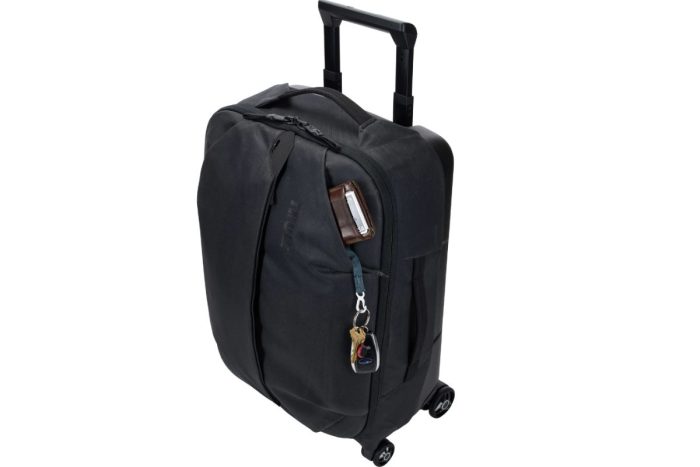
- A small wheeled case holds more in an organised way and spares your back, but it’s harder to take on longer walks and over uneven ground.
When choosing, also focus on these things:
- Ergonomics: comfortable straps, a padded back, lightweight build, wheels that spin in all directions.
- Material: soft and light (nylon, polyester), or a hard shell (heavier but more durable). Some bags are also waterproof.
- Space and pockets: plenty of practical pockets makes organising easier and lets you fit more in.
- Clever features: USB ports, hidden pockets for valuables, a built-in rain cover, locks.
- Brand and reviews: check popularity, ratings and the warranty on offer.
- Price: it often reflects quality — look for the best value for money.
And last but not least, think about what kind of traveller you are. Are you a low-cost backpacker happy to rotate three outfits? Are you a digital nomad hauling a laptop and gadgets everywhere? Or an occasional holidaymaker who needs fourteen outfits for a week away?
💡 Tip: Take a look at our guide on how to choose travel gear too.
Best backpacks for the plane
A backpack is the most versatile carry-on — your hands are free, it’s comfortable to carry and budget airlines don’t measure it as often. Here are seven backpacks I recommend.
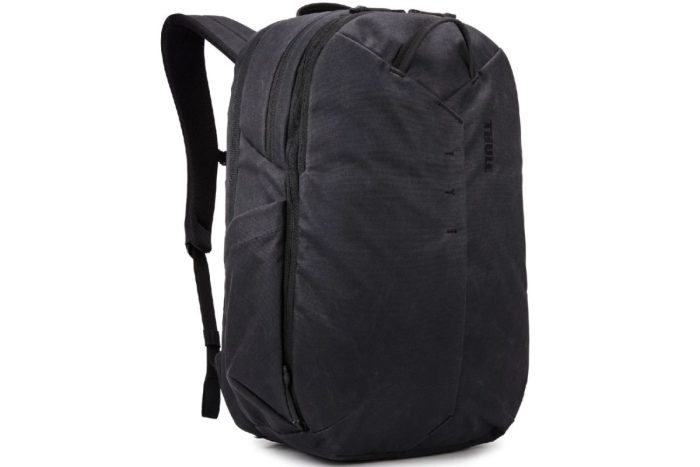
Thule Aion Travel Backpack
📦 28–32 l · 47×28×23 cm · 1.23 kg · from €125
The Thule Aion Travel Backpack is a multifunctional travel backpack with an adjustable capacity of 28–32 l. The back panel unzips completely, so you can open the backpack like a suitcase. Inside there’s a divider with a TPU liner that separates your clean clothes from the active ones (read: sweaty and smelly 😄).
It has padded pockets for electronics — you can safely stow a 15.6″ laptop or 16″ MacBook and a 12.9″ tablet. If the capacity isn’t enough, there’s also a 40 l version, and you can add a matching Thule Aion sling bag to the Thule backpacks.
- ✅ Pro: cleverly expandable capacity, opens like a suitcase, premium waxed material and finish.
- ⚠️ Con: pricier than your average city backpack.
Who it’s for: one-bag travellers and digital nomads who want a single backpack for both a daypack and a weekend away.
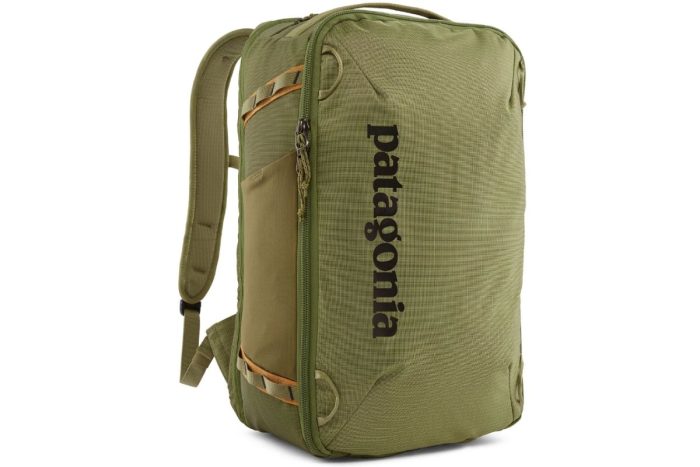
Patagonia Black Hole Mini MLC
📦 30 l · 51×30×18 cm · 1.29 kg · from €104
A really clever piece is the Patagonia Black Hole Mini MLC. Its smart design lets you carry it as a backpack, a shoulder bag or a briefcase (3-in-1). It has expanded storage with 9 pockets and fits a 16″ laptop. It’s made from 100% recycled polyester and comes with a 24-month warranty.
- ✅ Pro: versatile 3-in-1 carrying, sustainable material, excellent user ratings.
- ⚠️ Con: no wheeled version, and pricey outside of a sale.
Who it’s for: minimalists on 2–4 day trips who appreciate sustainability and flexible carrying options.
Dakine Verge Backpack
📦 32 l · 51×33×23 cm · ~1.1 kg · from €149
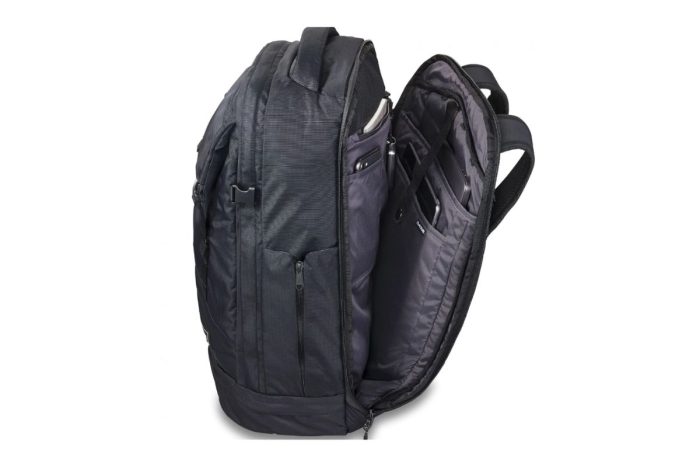
The Dakine Verge Backpack has an ergonomically shaped back and loads of pockets — you can safely store a 16″ laptop too. The main compartment opens wide, with a zipped mesh pocket inside and plenty of room for clothes. There’s a front pocket for small bits, and you can tuck your shoes into a separate bottom compartment.
On top of that it has a hidden pocket on the back, a hidden zipped side pocket, a water-bottle pocket and a fleece-lined pocket for sunglasses. It’s made from recycled nylon.
- ✅ Pro: top-notch organisation, a separate shoe section, a sturdy tech backpack.
- ⚠️ Con: at 23 cm deep it leans towards the larger cabin bag against stricter limits.
Who it’s for: tech travellers and commuters who need proper organisation and a laptop section.
Thule Tact Backpack
📦 21 l · 46×30×23 cm · ~1 kg · from €180
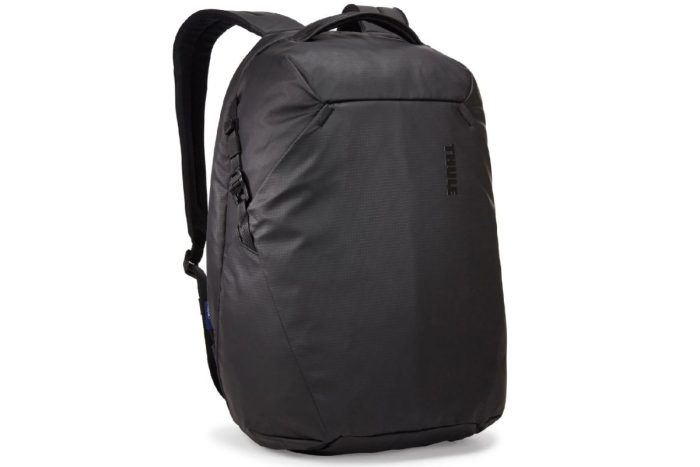
Another great Thule backpack, this time in a smaller size, is the carry-on Thule Tact Backpack with a 21 l capacity. Even so it’s roomy and has plenty of pockets with anti-theft features. You can safely store a 14″ laptop or tablet in the raised padded pocket, and the main compartment is protected by hidden zips and a back-facing opening.
- ✅ Pro: anti-theft features, a compact city format, eco materials (bluesign).
- ⚠️ Con: only 21 l (too little for longer trips) and a higher price for the capacity.
Who it’s for: city travellers worried about pickpockets who want a discreet, secure backpack.
Deuter UP Sydney 💰
📦 22 l · 50×30×16 cm · 880 g · from €70
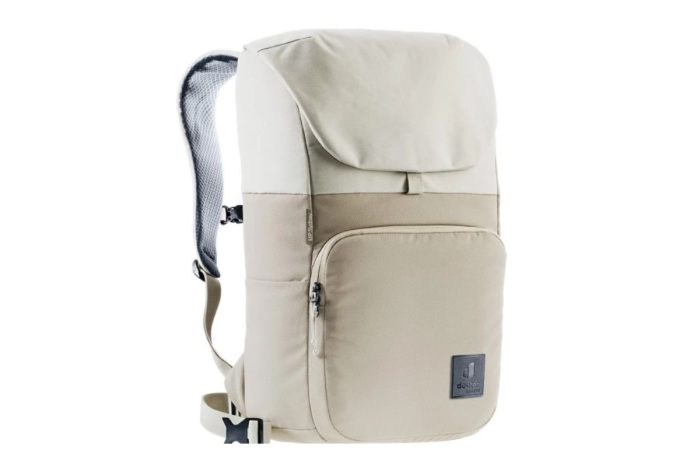
Our value-for-money winner. A backpack that works for school, the office and a long weekend alike is the Deuter UP Sydney. With a padded back, anatomically shaped shoulder straps and an adjustable chest strap plus a removable hip belt, it’s seriously comfortable. It weighs just 880 g, is made from recycled materials and has a 97% recommendation rate from 275 reviews.
- ✅ Pro: great price, low weight, huge social proof and a firm back that holds its shape.
- ⚠️ Con: no A4-sized document pocket.
Who it’s for: students and city travellers on a tighter budget who want a light, well-proven backpack.
Husky Moper
📦 28 l · 48×30×22 cm · 960 g · from €75
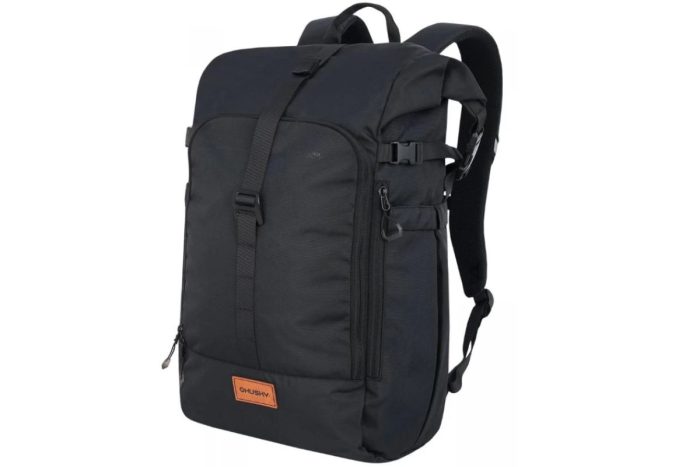
A practical travel backpack is the Husky Moper, which fits on the plane thanks to its 48×30×22 cm dimensions. It’s versatile, water-resistant and comfortable — the back system uses 3D breathable mesh with shape memory. It offers a pocket for a 15″ laptop or tablet, a chest strap, a hidden side pocket and a water-bottle pocket. Rated ★★★★★.
- ✅ Pro: great value for money, light and water-resistant.
- ⚠️ Con: a simpler design without premium extras.
Who it’s for: budget-conscious travellers and students who want a quality everyday city backpack.
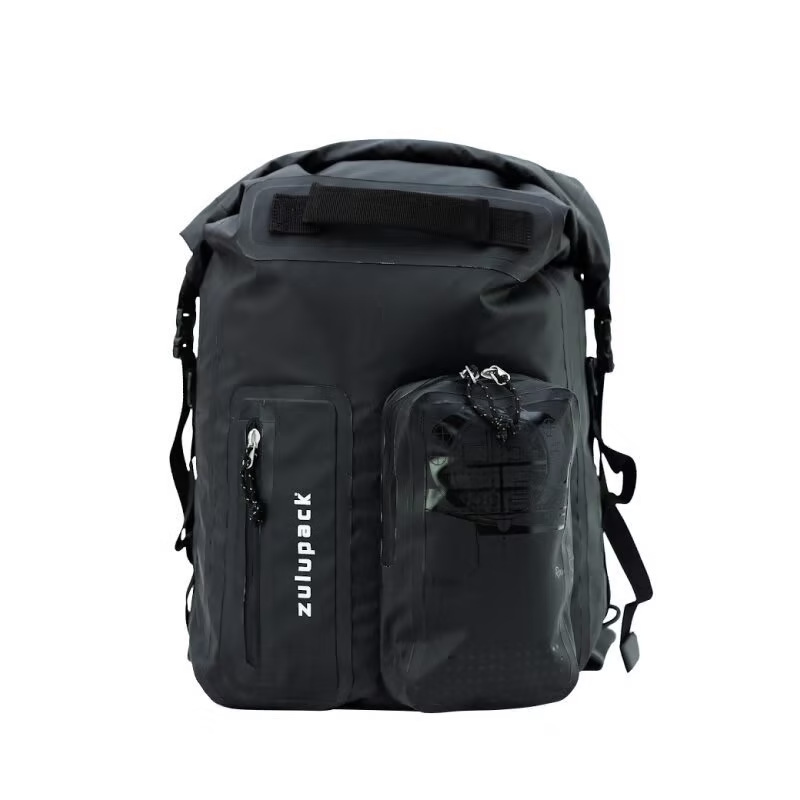
Zulupack Nomad (waterproof)
📦 35 l · 50×35×20 cm · 1.38 kg · from €127
The Zulupack Nomad backpack offers above all full waterproofing (IP67 rating), comfort and space. It has a roll-top closure, welded seams, ergonomically shaped straps and a heat-treated back. It’s made from durable ballistic nylon.
- ✅ Pro: genuinely waterproof (submersible to 1 m), durable, with a good 35 l capacity.
- ⚠️ Con: the roll-top closure and fewer pockets won’t suit organisation lovers.
Who it’s for: paddlers, cyclists and trips to rainy destinations where the contents must stay dry.
Best holdalls for the plane
Not a fan of backpacks? A holdall is a nice compromise — more room, and it can often be carried as a backpack too.
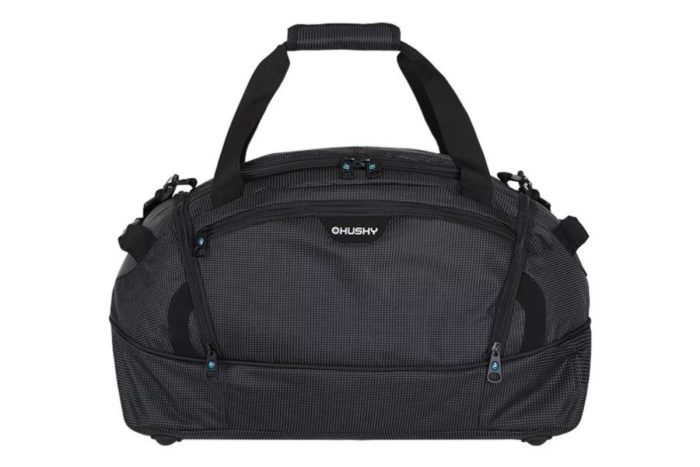
Husky Grape
📦 40 l · 55×27×30 cm · 940 g · from €48
The Husky Grape holdall works for both travel and sport. You carry it by the straps or over your shoulder, and inside it has a main compartment, a shoe section and side pockets. Its big advantages are the water-resistant finish and the low price.
- ✅ Pro: very cheap, light, packable, with a shoe section.
- ⚠️ Con: fewer user reviews, no backpack-style back system.
Who it’s for: easy-going travellers and sporty types who want a cheap, packable extra.
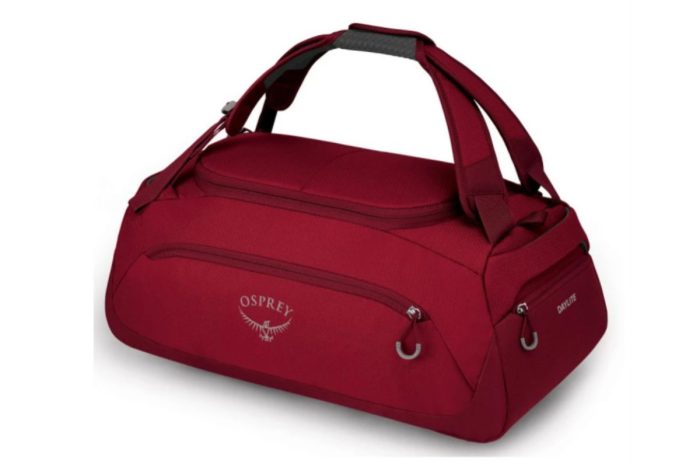
Osprey Daylite Duffel 30
📦 30 l · 50×24×28 cm · 550 g · from €61
Another holdall I recommend is the Osprey Daylite Duffel 30. It’s great for short trips and sport, and its main perk is that you can unclip the handles and carry it as a backpack. It weighs an incredible 550 g and comes in plenty of colours.
- ✅ Pro: the lightest in the whole comparison, a holdall and backpack in one, great price and Osprey quality.
- ⚠️ Con: simple internal organisation, no rigid structure.
Who it’s for: light packers and weekenders who want an ultralight combined holdall-backpack.
Best cabin cases for the plane
When you want to pack in an organised way without straining your back, reach for a small case. Just watch out — with budget airlines a case isn’t included in the ticket price, and the dimensions include the wheels and handle too.
Samsonite Proxis Spinner 55 EXP 🧳
📦 38–44 l · 55×40×20 cm · ~2.3 kg · from €472
Our winner among cabin cases. The Samsonite Proxis Spinner 55 EXP is made from the patented Roxkin™ material — extremely light, durable and shape-recovering. The capacity expands from 38 to 44 l, and it has 4 double wheels, a combination lock, a USB port and a power-bank pocket. Rated 5.0/5.
- ✅ Pro: premium durability and low weight, expandable capacity, charging, made in Europe.
- ⚠️ Con: the highest price in the round-up.
Who it’s for: demanding air travellers who want a premium, light and shockproof cabin case.
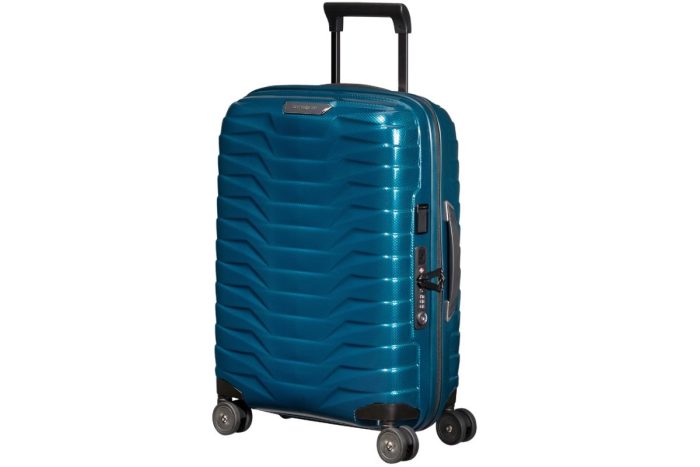
Thule Aion Carry on Spinner
📦 36 l · 55×35×23 cm · 3.25 kg · from €336
Another case tip is the Thule Aion Carry on Spinner with a 36 l capacity. It’s durable and has a removable organiser (packing cube) you can use separately as an extra bag. The oversized rear wheels handle uneven ground well, and there’s a V-shaped telescopic handle.
- ✅ Pro: durable waxed surface, a clever removable packing cube, quality wheels.
- ⚠️ Con: the higher weight (3.25 kg) eats into your allowed kilos.
Who it’s for: adventurous air travellers who want a durable case with an integrated bag.
Carry-on luggage size and airport checks (2026)
The trouble with carry-on luggage is that you can’t have just one bag for everything. Every airline has different conditions and allowed dimensions, so always check them before you travel. And watch out — the rules change: both Ryanair and Wizz Air adjusted their dimensions in 2025.
Especially with budget airlines, there’s a crucial difference between the small carry-on bag (usually a backpack, free of charge, which has to fit under the seat) and the larger cabin bag (a bigger backpack or small case — for a fee, going in the overhead locker).
| Airline | Small bag free (under seat) | Larger cabin bag | Watch out for |
|---|---|---|---|
| Ryanair | 40×30×20 cm | 55×40×20 cm, 10 kg | larger bag only with Priority |
| Wizz Air | 40×30×20 cm, 10 kg | 55×40×23 cm, 10 kg | trolley only with WIZZ Priority |
| easyJet | 45×36×20 cm, 15 kg | 56×45×25 cm, 15 kg | most generous free bag |
| Jet2 | — | 56×45×25 cm, 10 kg | one cabin bag per passenger |
| TUI | 40×20×25 cm | 55×40×20 cm, 10 kg | larger bag with some fares |
| Vueling | 40×30×20 cm | 55×40×20 cm, 10 kg | trolley on higher fares |
| KLM | 40×30×15 cm | 55×35×25 cm, 12 kg | small bag + cabin bag |
| Air France | 40×30×15 cm | 55×35×25 cm, 12 kg | small bag + cabin bag |
| British Airways | 40×30×15 cm | 56×45×25 cm, 23 kg | small bag + cabin bag |
| Emirates | — | 55×38×22 cm, 7 kg | + personal item by class |
| Qatar Airways | — | 50×37×25 cm, 7 kg | economy class |
What the dimensions 40×30×20, 40×20×25 and 55×40×20 mean
40×30×20 cm is now the most common size for the small bag that most budget airlines (Ryanair, Wizz Air, Vueling) let you take free of charge under the seat. It’s worth aiming for this size if you want to fly with no extra fee at all.
40×20×25 cm, which you’ll find in older guides, was an earlier Ryanair size — it’s outdated now, so don’t rely on it. 55×40×20 cm (or 55×40×23) is, by contrast, the larger cabin bag for the overhead locker, usually with an 8–10 kg limit. You’ll hardly get that free anywhere — count on needing Priority or a pricier fare.
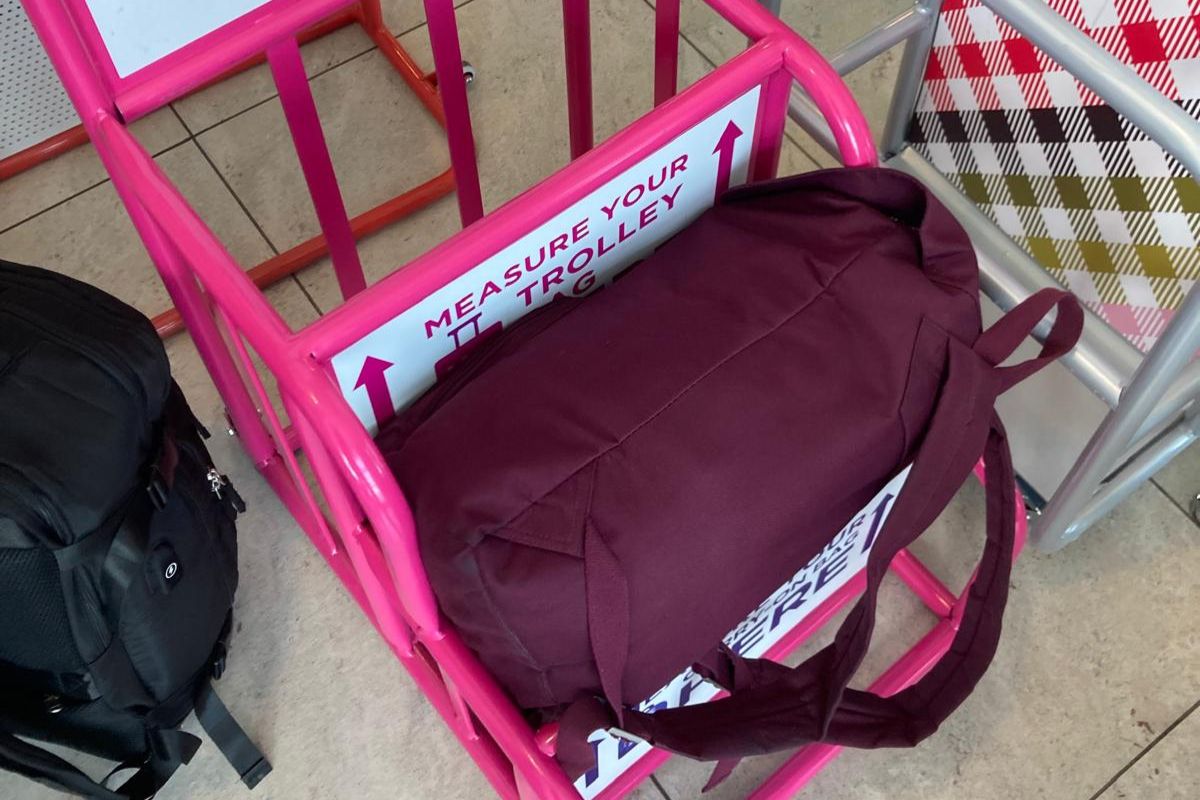
Wondering how they actually check? Checks are usually done at random before you board. The cabin crew pick out someone who looks like they’ve got an oversized bag and have them measure it. Sometimes, though, they start boarding suspiciously early and measure everyone — exactly what happened to me on Skiathos.
The bag is measured in a metal cage at the gate. It has two slots — a smaller one for backpacks and holdalls, a bigger one for cases. If you’ve got a larger backpack that isn’t crammed full, you’ve got a chance to squish it and stuff it in (or layer all your clothes on like Joey from Friends 😄). With cases the squishing is harder, and the dimensions include the wheels and handle.
And what if your bag doesn’t pass? Then you’ll pay extra. The fee varies by airline, but it generally ranges from €20 to €100 — which is why it’s often worth paying for a larger carry-on in advance; it works out cheaper.
Liquids in carry-on luggage: the 100 ml rule and the solid-toiletries trick
The classic rule still applies: liquids only in containers up to 100 ml, all together in one clear resealable bag up to 1 litre, one bag per person. And a “liquid” counts as perfume, spray deodorant, toothpaste, gel, cream and even liquid mascara.
💡 Our best trick: go for solid, water-free toiletries. Solid soap, powder or bar shampoo, toothpaste tablets and solid deodorant don’t count as liquids — they pass security with no bag and no limit. On our travels, Lukáš and I tried out a travel set of water-free toiletries (powder shampoo, toothpaste tablets, soap tablets) and for a carry-on it’s ideal — light, compact and it saves room in your liquids bag.
Good news: the 100 ml limit is gradually easing. Some UK airports — including parts of London City, Birmingham and Edinburgh — have rolled out modern CT scanners that, in places, let you keep liquids and electronics in your bag and even carry containers larger than 100 ml. It isn’t everywhere yet, though, and rules have flip-flopped, so at most airports (including the larger London hubs) still count on the strict 100 ml limit.
What’s not allowed in carry-on luggage (and watch out for power banks)
- Sharp objects: knives and scissors with blades over 6 cm belong in checked luggage, as do loose razor blades. An electric or cartridge razor is fine in your carry-on.
- Liquids over 100 ml (other than medicines, baby food and where CT scanners apply).
- Power banks and spare batteries go only in your carry-on, never in checked luggage. Usually up to 100 Wh (roughly 27,000 mAh), maximum 2 units. From March 2026 stricter ICAO rules also apply — keep your power bank within reach and don’t charge it or charge from it during the flight.
How to pack a carry-on smartly
You can fit a surprising amount even in a small bag if you pack cleverly. A few tried-and-tested rules:
- Heavy items close to your back and low down — the backpack then sits better and doesn’t pull you backwards.
- Roll soft items (t-shirts, underwear, socks), and fold shirts and jackets on top so they don’t crease.
- Packing cubes bring order to your bag, and compression versions shrink the volume — note they save space, not weight.
- Shoes on the bottom, stuffed with socks and in a bag.
- Things for security (the liquids bag, documents, power bank) go in an accessible pocket so you don’t have to dig for them.
- Go for merino and quick-drying fabrics instead of cotton and denim, which are heavy and slow to dry.
💡 Tip: You’ll find a complete step-by-step guide in the article on how to pack light — including a packing list for a week and for a longer trip.
The main benefits of flying with carry-on luggage only
- You don’t have to check in at the desk — on arrival you head straight to security, so you don’t need to get to the airport so far in advance.
- After landing you don’t wait for checked bags and carry straight on.
- You have all your things to hand and there’s no risk of the airline losing your suitcase.
- You save money — carry-on luggage is usually included in the ticket, while checked bags cost extra.
- You’re not lugging a heavy suitcase around a destination full of hills and cobblestones. 😉
Frequently asked questions
How much does carry-on luggage weigh and what’s the limit?
It depends on the airline. With low-cost carriers (Ryanair, Wizz Air) the limit for large cabin baggage is typically 10 kg, with traditional airlines (Lufthansa, Smartwings) around 8 kg, and with British Airways up to 23 kg. The baggage itself counts towards the limit — a suitcase weighing over 3 kg will eat up a significant portion of your allowed kilos, which is why it pays to choose the lightest model possible.
Will a 40×30×20 backpack fit in Ryanair for free?
Yes. The dimension 40×30×20 cm is the current size for a small bag that Ryanair (as well as Wizz Air or Vueling) allows for free under the seat. Larger cabin baggage 55×40×20 cm is only available with Ryanair for an extra fee or with the Priority fare.
Can perfume or deodorant go in carry-on luggage?
Yes, but the liquid rule applies: containers maximum 100 ml and everything in one transparent bag up to 1 litre. Liquids also include perfume, spray deodorant, toothpaste and cream. An elegant solution is solid cosmetics (solid soap, powder shampoo, toothpaste tablets, solid deodorant stick), which are not considered liquids and pass through security without a bag.
Can I have a power bank in my carry-on luggage?
Yes, a power bank belongs exclusively in carry-on luggage, never in checked baggage. Typically, a capacity of up to 100 Wh (approximately 27,000 mAh) is allowed, with a maximum of 2 pieces. From March 2026, stricter rules apply — keep your power bank accessible and don’t use it for charging during the flight.
Can I bring a purse in addition to my carry-on luggage?
Some airlines allow a small personal bag in addition to carry-on luggage, but budget carriers (Ryanair, Wizz Air) usually don’t allow this and you may have to pay extra for a second small bag. Always check the terms and conditions of the specific airline.
What to take out of your carry-on bag at airport security?
Typically, electronics (laptop, tablet) and the bag with liquids need to be placed in a separate bin. At airports with modern CT scanners (for example, Prague T2), you no longer need to remove electronics or liquids — but always follow the instructions of security staff at the particular airport.
What happens if your luggage doesn’t pass the size check?
If your carry-on luggage doesn’t fit in the measuring cage, you’ll pay a fee for checking it in. It varies by airline, usually ranging from 20 to 100 euros. That’s why it’s often cheaper to purchase larger luggage in advance online.
Do you have to check in carry-on luggage at the airport?
You don’t have to. If you don’t have large luggage to check in, you can go straight to airport security with your carry-on luggage. However, you need to do online check-in so you have your boarding pass.
Tips and Tricks for Your Vacation
Don’t Overpay for Flights
Search for flights on Kayak. It’s our favorite search engine because it scans the websites of all airlines and always finds the cheapest connection.
Book Your Accommodation Smartly
The best experiences we’ve had when looking for accommodation (from Alaska to Morocco) are with Booking.com, where hotels, apartments, and entire houses are usually the cheapest and most widely available.
Don’t Forget Travel Insurance
Good travel insurance will protect you against illness, accidents, theft, or flight cancellations. We’ve had a few hospital visits abroad, so we know how important it is to have proper insurance arranged.
Where we insure ourselves: SafetyWing (simple monthly subscription) and TrueTraveller (for extra-long trips).
Find the Best Experiences
Get Your Guide is a huge online marketplace where you can book guided walks, trips, skip-the-line tickets, tours, and much more. We always find some extra fun there!


