

Learning how to keep kids entertained on a plane doesn’t start when you buckle into your seat, it starts the moment you arrive at the airport. A child who walks around the terminal before departure and burns off some excess energy is usually far calmer once you’re on board.
It’s important to have a varied arsenal of entertainment ready, but you shouldn’t unpack it right after takeoff. It works much better to dole out new little items gradually throughout the whole flight, rather than handing your child one big bundle of toys all at once.
Further down you’ll find practical tips for what works with different age groups, from infants all the way to school-age kids. I’ll show you which toys make the least mess and when it’s the right time to reach for the tablet with a clear conscience.
TL;DR
- The thirty-minute rule: Don’t pull out all the toys before takeoff, dole out new activities gradually every half hour.
- The wrapping-paper trick: Wrap even cheap, ordinary little items in paper, because the unwrapping alone eats up plenty of a child’s time.
- Screens without guilt: According to pediatricians, a tablet for a few hours of flying won’t harm your child, but download the content in advance for offline use.
- Liquids and security rules: Rules vary a lot by airport, some now allow up to 2 litres per container while others still enforce the strict 100 ml limit (baby food is exempt, but ⚠️ practice can differ).
- Rights in case of delay: The revision of EU Regulation 261/2004 was approved on 13 July 2026, but it won’t really take effect until mid-2027.
- Wired headphones: Wireless headphones are nice, but to plug into the in-flight system you always need a classic cable and a volume limiter.
- Physics and ears: Descent is usually far more painful for kids’ ears than takeoff itself, so save your best tricks for the end of the flight.
10 Things You Need to Know About Keeping Kids Entertained on a Plane
If your first flight with a little traveller is coming up, your head is probably full of disaster scenarios about a tear-soaked flight and annoyed looks from other passengers. Let’s look at ten concrete tactics and rules that will help you handle the whole trip with a cool head, whether you’re flying with a few-month-old baby or a restless preschooler. We’ll cover everything from the laws of physics in the cabin to how to strategically deploy the tablet so both you and everyone around you can enjoy the flight.
1. Entertainment While Waiting at the Airport and Logistics
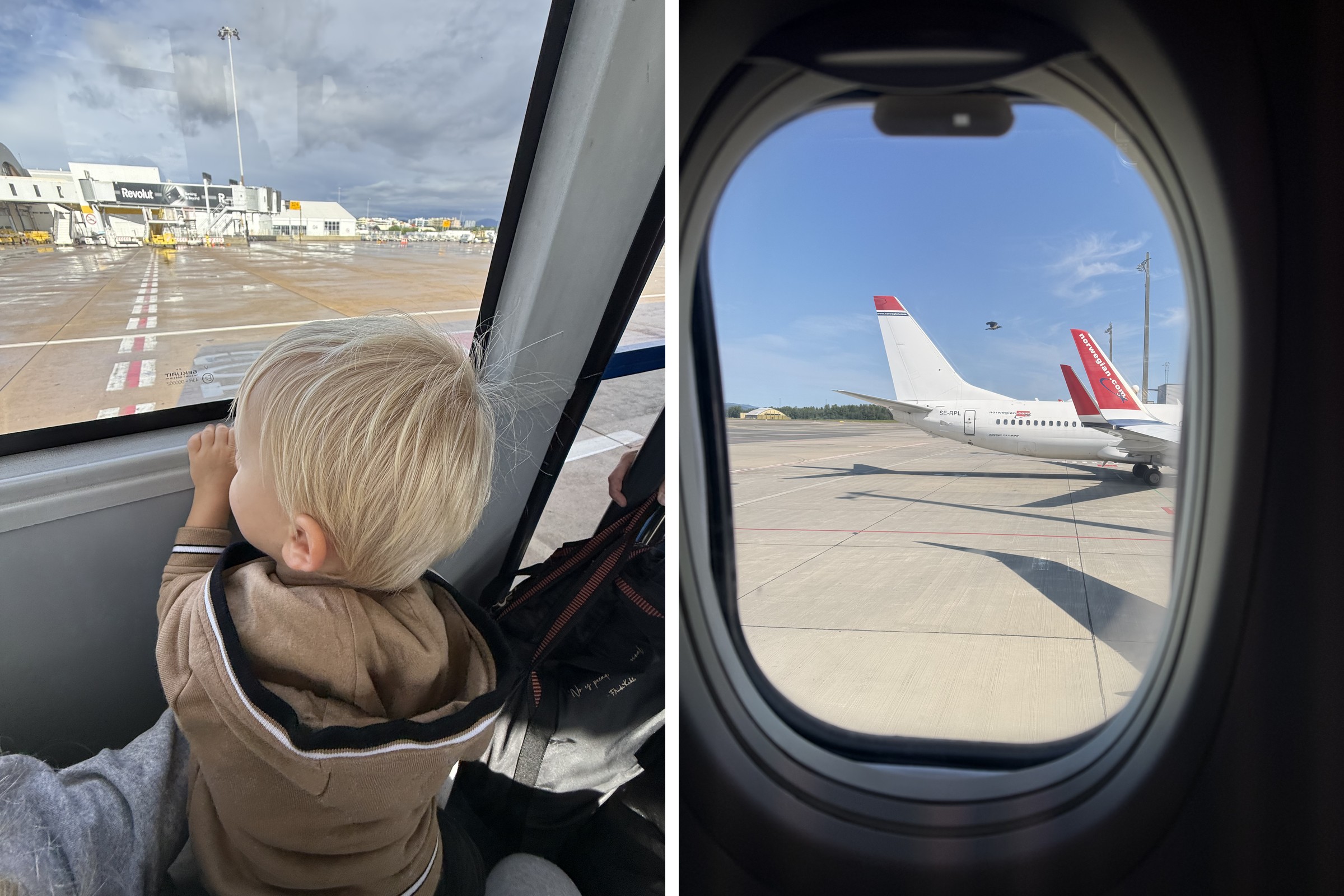
A successful flight doesn’t begin once you board, it begins the moment you clear airport security, which is where it all comes down to the wire. A major mistake is letting your child sit at the gate with a tablet in hand, because all that pent-up energy then inevitably comes out in the narrow aisle of the plane. Instead, let them walk around the terminal, show them the planes taking off through the big windows, or use an airport play area if one is available in your terminal.
For getting around the airport we use the compact Joolz Aer travel stroller, which we absolutely love, because it manoeuvres brilliantly even through crowds of people. Your child should board the plane physically tired, so let them run around and explore as much as the airport’s security rules allow.
💡 Tip: When it comes to liquids and food at the airport, pay close attention to where you’re flying from. Some airports have introduced new rules allowing liquids in containers up to two litres, but many terminals still enforce the strict 100 ml limit (Ryanair, for example, often flies from the older terminals). Baby food and milk are exempt from this rule, but ⚠️ it always comes down to the individual security check, which may want to see the food or even taste it.
2. What Works During Takeoff and Landing
The most common cause of a child crying on board isn’t a fear of flying or the cramped space, it’s plain physics and the change in pressure. The ear pain arises when the cabin pressure fails to equalise through the Eustachian tube, and descent is usually far worse and more unpleasant for kids’ ears than takeoff itself.
What really works is swallowing, because the movement of the jaw and the swallowing reflex help safely release blocked sinuses. If you’re flying with a baby, your best weapon is breastfeeding or a bottle of milk, or you can use a pacifier, which is a great backup for moments when your child isn’t hungry. For older kids, drinking from a bottle with a straw works great, as does sucking on a hard sweet or a plain piece of gum you give them right before the plane starts to descend.
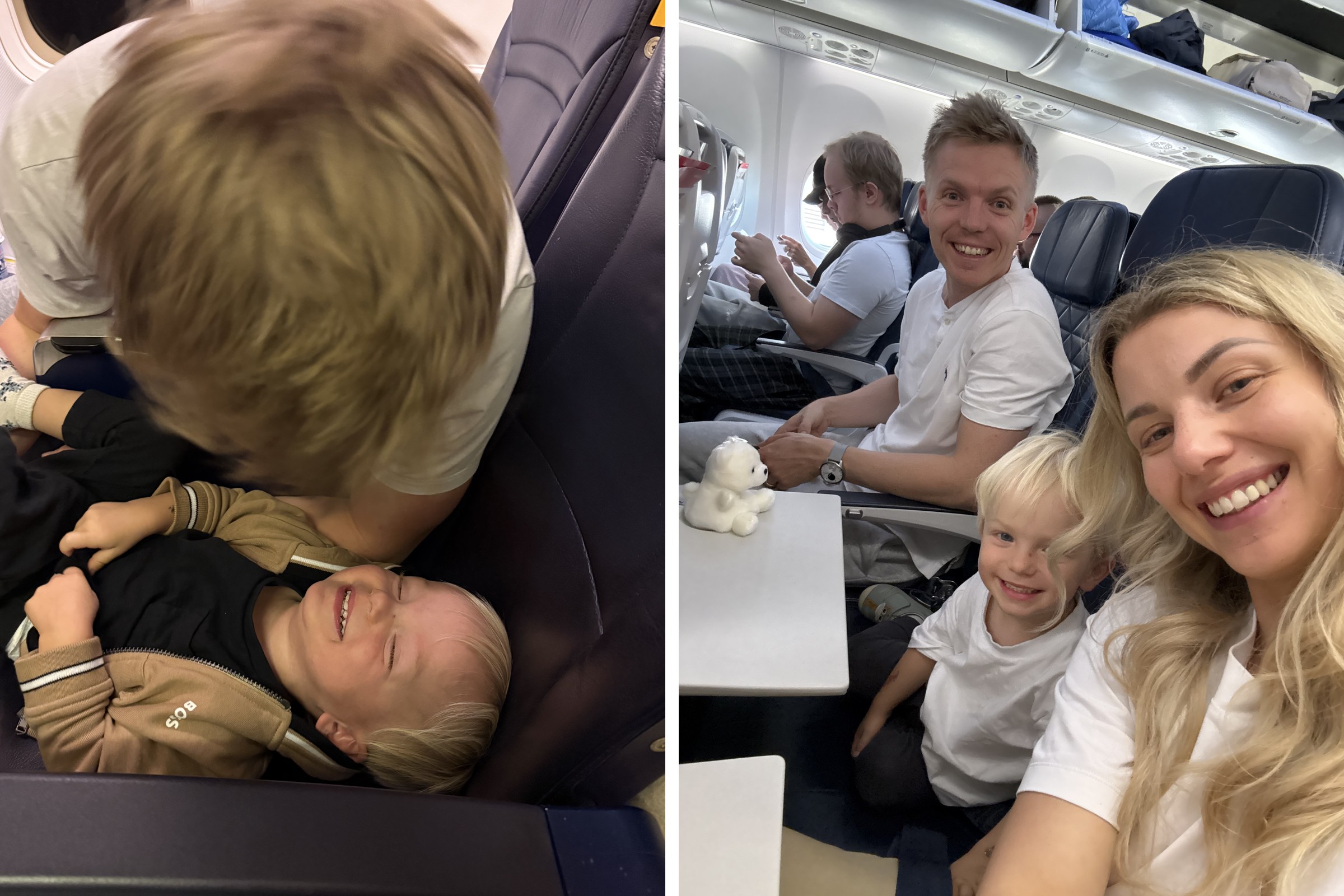
💡 Tip: On our flight to Paris, Jonášek didn’t want to be buckled into the child seatbelt during takeoff and landing, which turned into a bit of a battle, but thankfully on our last flight it wasn’t a problem at all. If your child has a cold the situation is trickier, and ⚠️ before giving any pain medication or nose drops you should always check with your pediatrician first.
3. The Rule of Doling Out Activities Every Half Hour
The most common mistake flight attendants see from new, nervous parents is pulling out all their carefully prepared tricks before the plane has even lifted off the runway. The engines haven’t even started and the child is already eating their third kind of snack, holding a switched-on tablet in one hand and examining a new light-up toy car in the other.
The key to success is an iron tactic and the rule of rotation, where you dole out activities at most every thirty minutes and don’t fire off everything right at the start. First explore the safety card in the seat pocket together, then look out the window for a while, and only when the first wave of boredom hits should you pull out the first book or toy.
💡 Tip: Once you’ve finished the book, take a little snack break, and after another twenty minutes pull out something like a magnetic puzzle or stickers. Kids lose focus very quickly, and if you show them the whole arsenal at once, they won’t know what to play with first, and after an hour of flying you’ll have nothing left in reserve.
4. The Wrapped-Trinkets Trick and Post-it Notes
You don’t need to raid toy shops before every holiday and spend a fortune on special travel sets, because the best tricks cost literally a couple of euros. It works brilliantly to buy a few completely ordinary little items from a stationery shop and carefully wrap each one in wrapping paper.
New trinkets wrapped in paper take up far more of a child’s time, because the unwrapping and tearing of the paper is itself a huge source of fun for toddlers and part of the game. Once your child unwraps the toy, they’ll play with it for a while, and when they get bored you can pull out another mystery package from your backpack after the next half hour.
💡 Tip: A completely cheap and proven option for crisis situations is plain coloured Post-it notes and markers. You can draw faces or animals on them and your child can then stick them on the back of the seat in front of you, on the window, or on the fold-out tray, and they leave no glue residue, so you just throw them away after the flight.
5. What You Definitely Shouldn’t Bring on a Plane
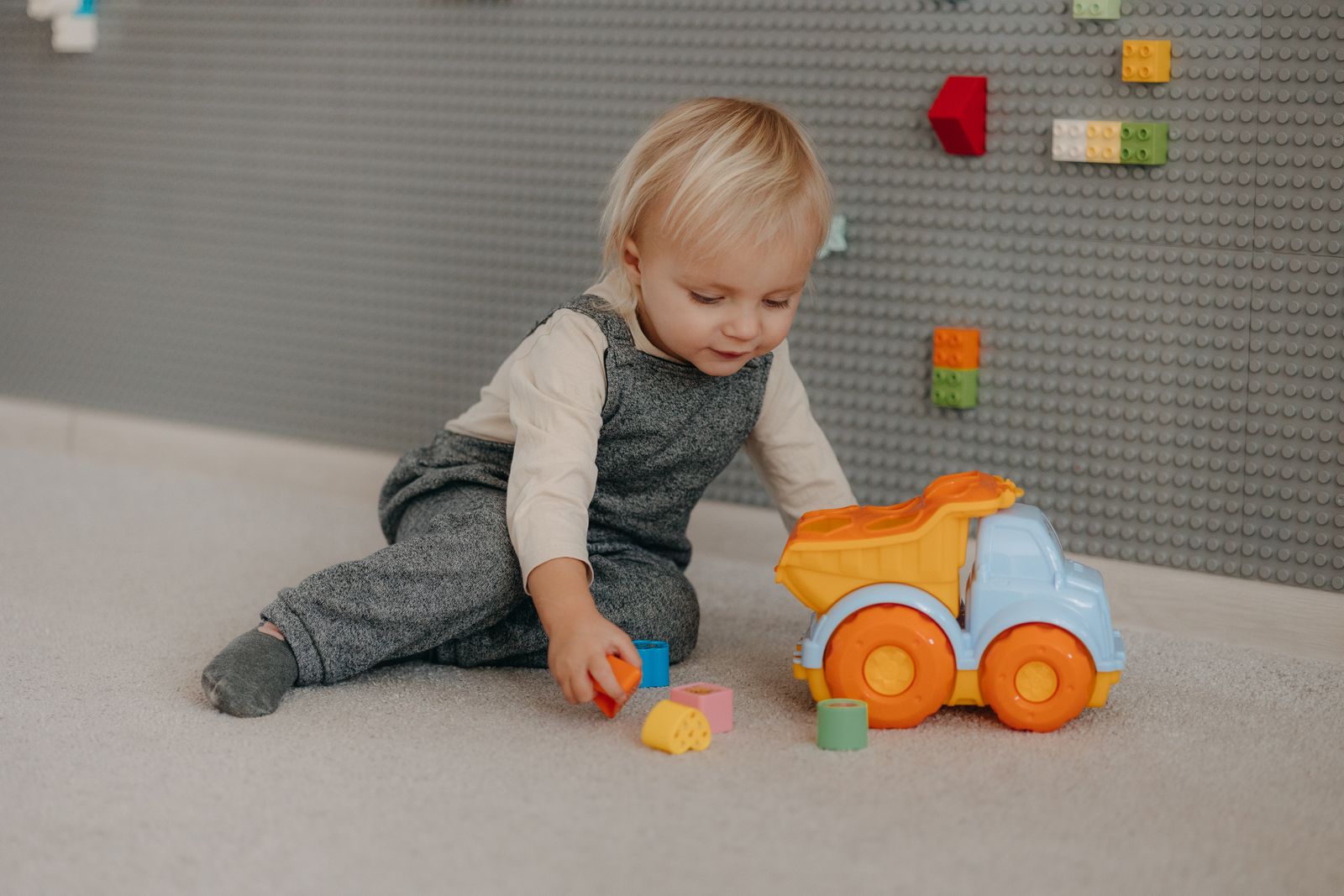
When packing the backpack for under the seat, you have to be a little selfish on behalf of the other passengers too, and eliminate anything that could drive those around you crazy. A plane is definitely no place for toys that play tunes, beep loudly, flash, or make any other uncontrollable noises.
Likewise, steer well clear of anything made up of lots of small pieces, like tiny Lego or beads, because hunting for a lost brick under the seats in a dimly lit cabin is an absolute nightmare. Don’t bring anything spillable, play dough that gets ground into the carpet, or markers that aren’t easily washable with water.
💡 Tip: If you want to bring colouring for your child, get so-called water colouring books, where the special brush is filled only with clean water and the pictures colour themselves once wetted. That way there’s no risk of painted cabin walls, ruined clothes, or lost marker caps, which always roll off to exactly where you can’t reach.
6. Entertaining an Infant Under One Year Old
According to most parents, getting a small baby to sleep or keeping them entertained on board is much easier than travelling with a toddler. Babies love white noise, and that constant monotonous hum of the engines, which mostly annoys us adults, works on infants like a giant and very effective lullaby.
When the baby is awake, you don’t need complex toys, but mainly sensorimotor stimulation and your attention. A plain packet of tissues works great, letting them pull out one tissue after another, or an empty plastic bottle into which you toss a few pieces of dry pasta to create an improvised rattle.
💡 Tip: An absolute lifesaver is a baby carrier, into which you strap the baby and can slowly stroll up and down the aisle, because the movement and the beat of your heart work reliably. But remember safety, you can only use the carrier at cruising altitude, and during takeoff or landing the baby must always be secured with a special seatbelt on your lap.
7. Entertaining a Toddler and a Preschooler
This is objectively the hardest age group, because the child already wants to walk, discover the world, and can’t yet hold their attention on a single feature-length film. The holy grail for this age is reusable stickers for the plane window or a magnetic drawing board, which has no markers but is drawn on with a special pen.
Preschoolers already love stories and focused activity, so it pays to pack books with lots of stickers or a so-called quiet book, which is a fabric book full of zips, buttons, and strings. A tried-and-tested free trick is to grab a printed toy or perfume catalogue at the airport duty-free shops, which kids can flip through, fascinated, for many long minutes.
💡 Tip: A great trick for toddlers is to bring paper tape printed with a road design, which you simply stick onto the fold-out plastic tray. Your child can drive a little toy car along it, keeping busy, and then before landing you peel the tape off in one motion without a trace.
8. The Tablet on a Plane and How to Use It Smartly
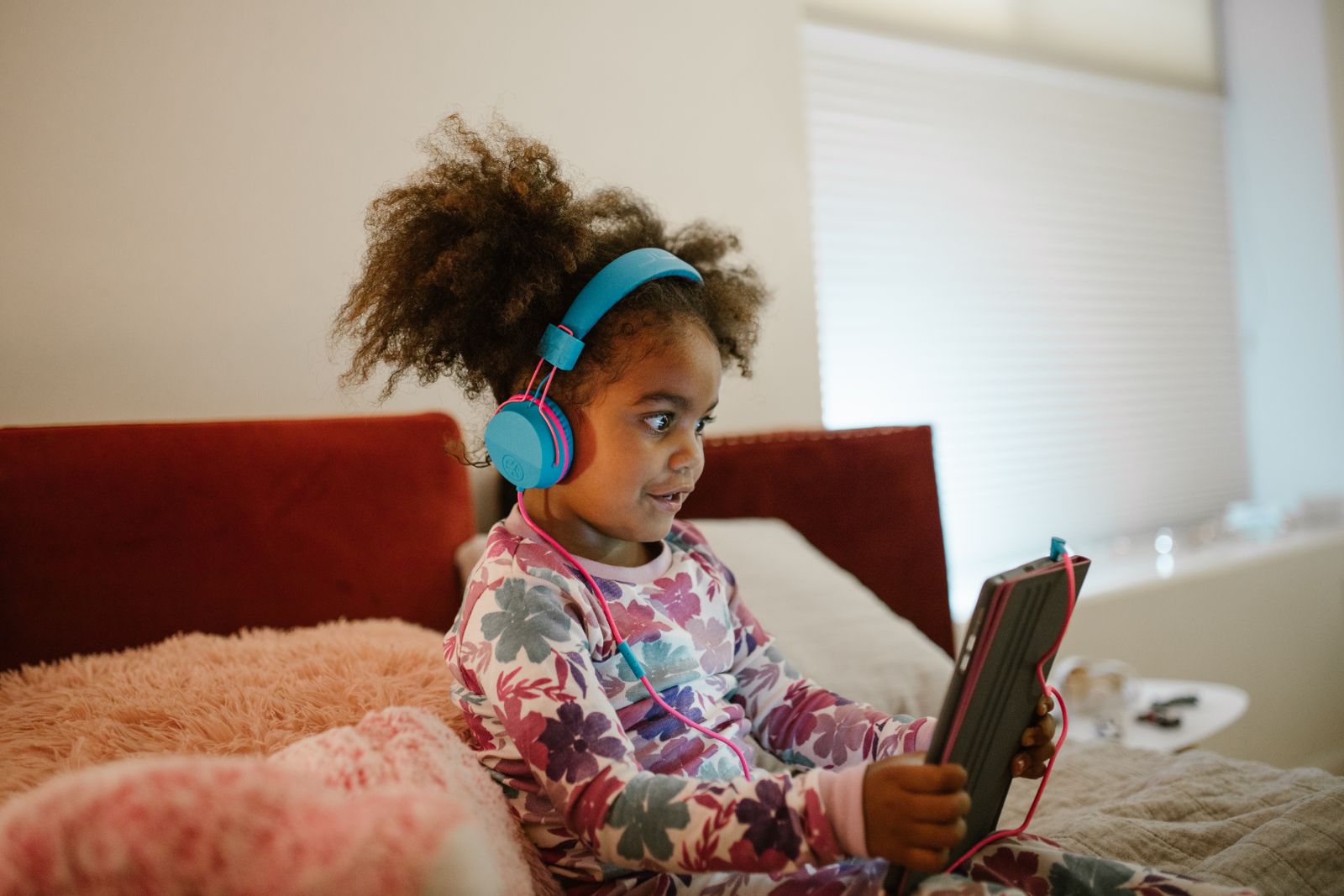
Plenty of parents have fairly strict screen-time rules at home, and on a plane they’re then plagued by enormous guilt when they put on a cartoon for their child. But experts on child development agree that a screen for a few hours of flying won’t ruin anything, and the position of the American Academy of Pediatrics clearly states that using media to keep a child entertained on a long flight causes no harm.
But keep the tablet in reserve as your very last and strongest weapon for moments when your child truly can’t take any more, is tired, or the flight is dragging on unpleasantly. Don’t combine it with other toys right from the start, and always make sure you have all their favourite content downloaded in advance.
💡 Tip: Relying on in-flight Wi-Fi is a huge risk, because it tends to be expensive, extremely slow, or missing entirely on plenty of flights. Download four times more content to the device than you think you’ll actually need, because kids on a plane often switch around, and what they love at home may stop entertaining them in an unfamiliar environment after five minutes.
9. Headphones for Kids on a Plane
A plane cabin is a surprisingly very noisy environment, and the monotonous roar of the engines pushes kids to turn cartoons on the tablet up to the absolute maximum, which isn’t ideal for their hearing. If you want to play a film or an interactive game for them, good headphones are an absolute must, but you have to choose very carefully.
Kids’ headphones with a volume limit dampen the engine noise and guarantee that your child can’t accidentally turn the sound up to a dangerous level (⚠️ even though exact figures on safe decibels on planes often vary). Many parents swear by headphones with active noise cancellation (ANC), which create a calmer bubble for older kids and relieve them of the fatigue from the constant hum.
💡 Tip: Even though wireless Bluetooth headphones are a huge hit today, on a plane they always need a detachable classic cable too. Many older in-seat in-flight entertainment systems won’t pair wirelessly at all, and if you wanted to plug the headphones into some sound toy, it simply won’t work without a cable.
10. Crisis Situations and the Fear of Embarrassment
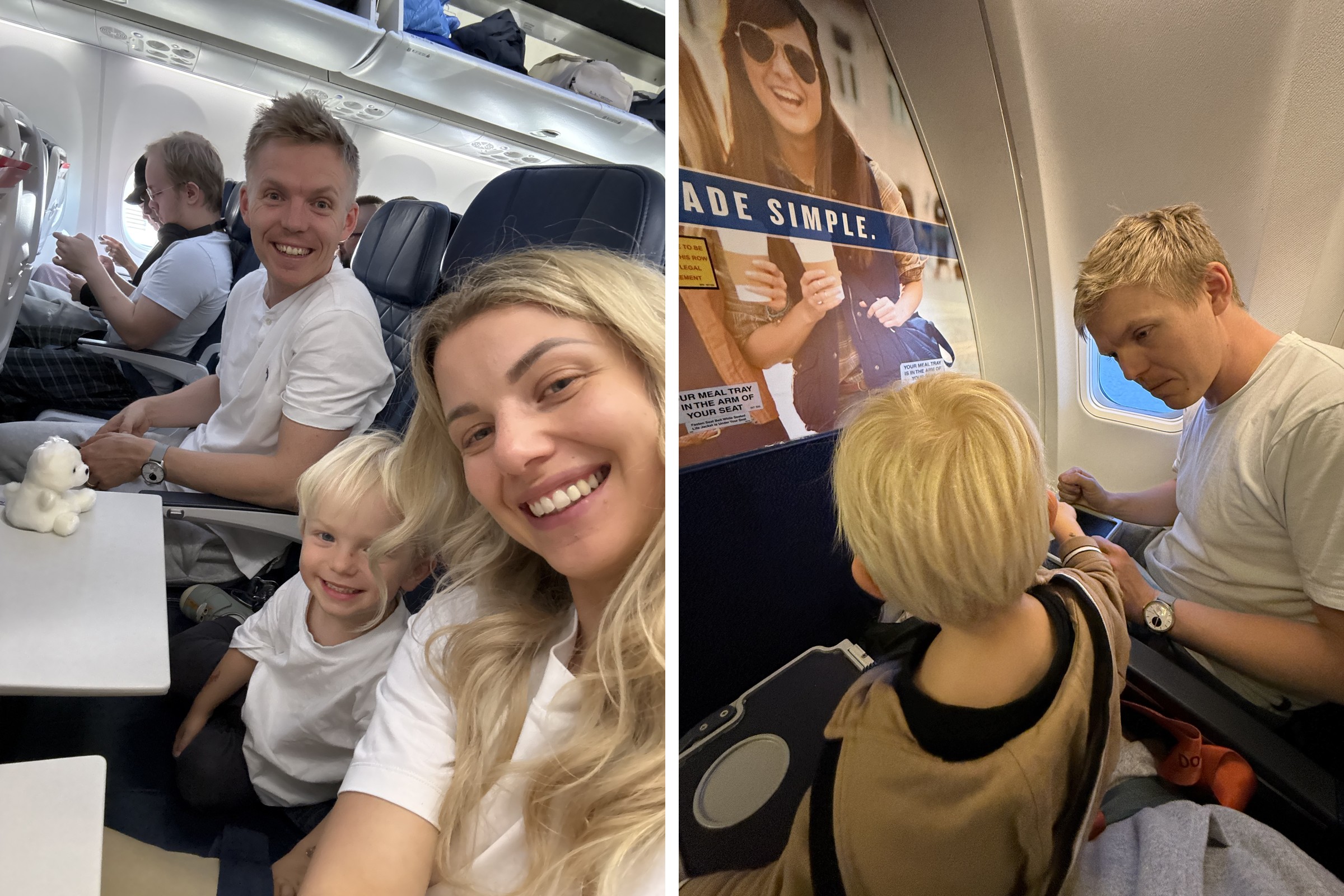
And now for the worst-case scenario we all dread, even when we do everything right and have a bag full of snacks and a charged tablet. The child simply decides they’ve had enough, starts crying, arches into a bow, and you feel half the passengers turning to look at you as your cheeks flush with dread.
In that moment you have to stop and take a breath, because your own nervousness won’t help your child on board in any way, and the stress just transfers onto them. You paid for your ticket exactly like everyone else, and your child has an absolute right to be on that plane, because a plane is simply a means of public transport, not a quiet zone in a library.
💡 Tip: The people who frowned at you while boarding will scatter to the baggage belts after landing and completely forget within ten minutes that there was a crying toddler on their flight. Prepare a few rescue lines in advance, smile, and tell your neighbours that the child is teething or that their ears hurt from the pressure, which instantly reassures the vast majority of people and shows them you’re actively dealing with the situation.
Practical Summary and Rough Prices
When packing and planning a flight with kids, it’s good to have a quick overview of what to bring by age and what the current rules are. Below you’ll find two practical tables to help you get your bearings on the most important points.
What to pack for your child by age (Activity catalogue):
| Child’s age | Best activities for the plane | What to avoid |
|---|---|---|
| :— | :— | :— |
| Infants (0-1 year) | Fabric books, tissues, empty bottle with pasta, baby carrier | Noisy rattles, small parts |
| Toddlers (1-3 years) | Reusable stickers, water colouring books, Post-it notes, magnetic board | Markers, play dough, spillable toys |
| Preschoolers (3-6 years) | Quiet book (fabric book), activity workbooks, airport catalogues, tablet (offline) | Toys with lots of small pieces (small Lego) |
| School-age kids (6+ years) | E-reader, travel board games (Dobble, Uno), tablet, good wired headphones | Relying on in-flight Wi-Fi |
Current rules and limits for 2026:
| Rule / Situation | Current status and validity | What to watch out for |
|---|---|---|
| :— | :— | :— |
| Liquids over 100 ml | Some airports now allow up to 2 litres | Many terminals still enforce the 100 ml limit! |
| Baby food and milk | Exempt from the 100 ml limit (governed by the airport, not the airline) | ⚠️ Security may want to see/taste the food |
| Passenger rights (EU 261) | Revision approved 13 July 2026 | Won’t really take effect until mid-2027 |
| Sleep aids (Melatonin) | Do not give to children under 2 | For older kids ⚠️ only after consulting a doctor |
| Child seatbelt on the plane | Mandatory for children under 2 on your lap during takeoff/landing | You can’t have the child in a carrier during takeoff and descent |
Where to Next
If a family holiday is coming up and you want to be sure you have everything under control, definitely check out our other articles. In them we’ve written up detailed experiences and practical guides that will save you plenty of stress.
- Flying with kids: the complete guide
- Where to sit with a child on a plane
- Luggage for kids on a plane
- Cabin backpack: how to choose the right one
- Lofoten with kids
Frequently Asked Questions
Can I give my child sleeping medication or melatonin before a flight so they sleep through the journey?
We never recommend giving children sleeping medication just for comfort during a flight. Melatonin should not be given to children under 2 years old at all, and for older children it can only be considered ⚠️ exclusively after thorough consultation with your pediatrician. It’s better to focus on timing the flight during your child’s natural sleep time and tire them out properly before boarding.
What should I do if my child has a cold before the flight?
Flying with a cold can be painful for children due to sinus pressure. If your child has a cold, parents often recommend applying nasal spray before takeoff and again before descent, but ⚠️ always consult with a doctor beforehand about using any medications or drops with young children. For infants who can’t blow their nose, a quality nasal aspirator is invaluable.
What are the rules for liquids and baby food at security checkpoints?
From 1 October 2025, more relaxed rules (up to 2 litres per container) apply ONLY at certain airports’ newer terminals. At many airports, including older terminals, the strict 100 ml limit still applies. Baby food and breast milk are exempt from this rule, but ⚠️ security may request to see or taste it.
Is it really okay if my child looks at a tablet for several hours on a plane?
Child development experts, including the American Academy of Pediatrics, agree that screen time for a few hours on a flight won’t harm your child. A plane is an exceptional stressful situation and using media to entertain your child causes no damage. What’s important is to have content downloaded in advance for offline mode and use the tablet as one of your last options.
Why is descent harder on the ears than takeoff itself?
During descent, the surrounding pressure increases and pushes on the eardrum from outside, making it harder to equalize pressure through the Eustachian tube. That’s why children often cry during descent even if they handled takeoff without problems. It’s crucial to time breastfeeding, bottle feeding, or chewing candy for the moment when the captain announces the beginning of descent.
What should I do when my child has a tantrum and can’t be calmed down?
Above all, try to stay calm yourself, because your nervousness will immediately transfer to your child. Don’t let other passengers’ looks upset you – you paid for your ticket just the same as they did and your child has the right to be on the plane. You can politely tell your neighbours that your child’s ears hurt or they’re teething, which usually immediately eases the tension.
Do the rules change at all for flight delays when traveling with children?
The revision of the European regulation EU 261/2004 on passenger rights, which also addresses situations for families with children, was approved on 13 July 2026, but due to a transition period won’t actually come into effect until mid-2027. Until then, you must rely on existing rules, where an infant on your lap without their own seat often has no right to any financial compensation.
Can I keep my child in a baby carrier throughout the flight?
A baby carrier is a huge help that lets you walk in the aisle with a fussy baby, but you may only use it during cruise altitude. During takeoff, descent, landing, and whenever the fasten seatbelt sign is illuminated due to turbulence, your child must always be taken out of the carrier and securely fastened with the infant belt on your lap.
Tips and Tricks for Your Vacation
Don’t Overpay for Flights
Search for flights on Kayak. It’s our favorite search engine because it scans the websites of all airlines and always finds the cheapest connection.
Book Your Accommodation Smartly
The best experiences we’ve had when looking for accommodation (from Alaska to Morocco) are with Booking.com, where hotels, apartments, and entire houses are usually the cheapest and most widely available.
Don’t Forget Travel Insurance
Good travel insurance will protect you against illness, accidents, theft, or flight cancellations. We’ve had a few hospital visits abroad, so we know how important it is to have proper insurance arranged.
Where we insure ourselves: SafetyWing (simple monthly subscription) and TrueTraveller (for extra-long trips).
Find the Best Experiences
Get Your Guide is a huge online marketplace where you can book guided walks, trips, skip-the-line tickets, tours, and much more. We always find some extra fun there!


