

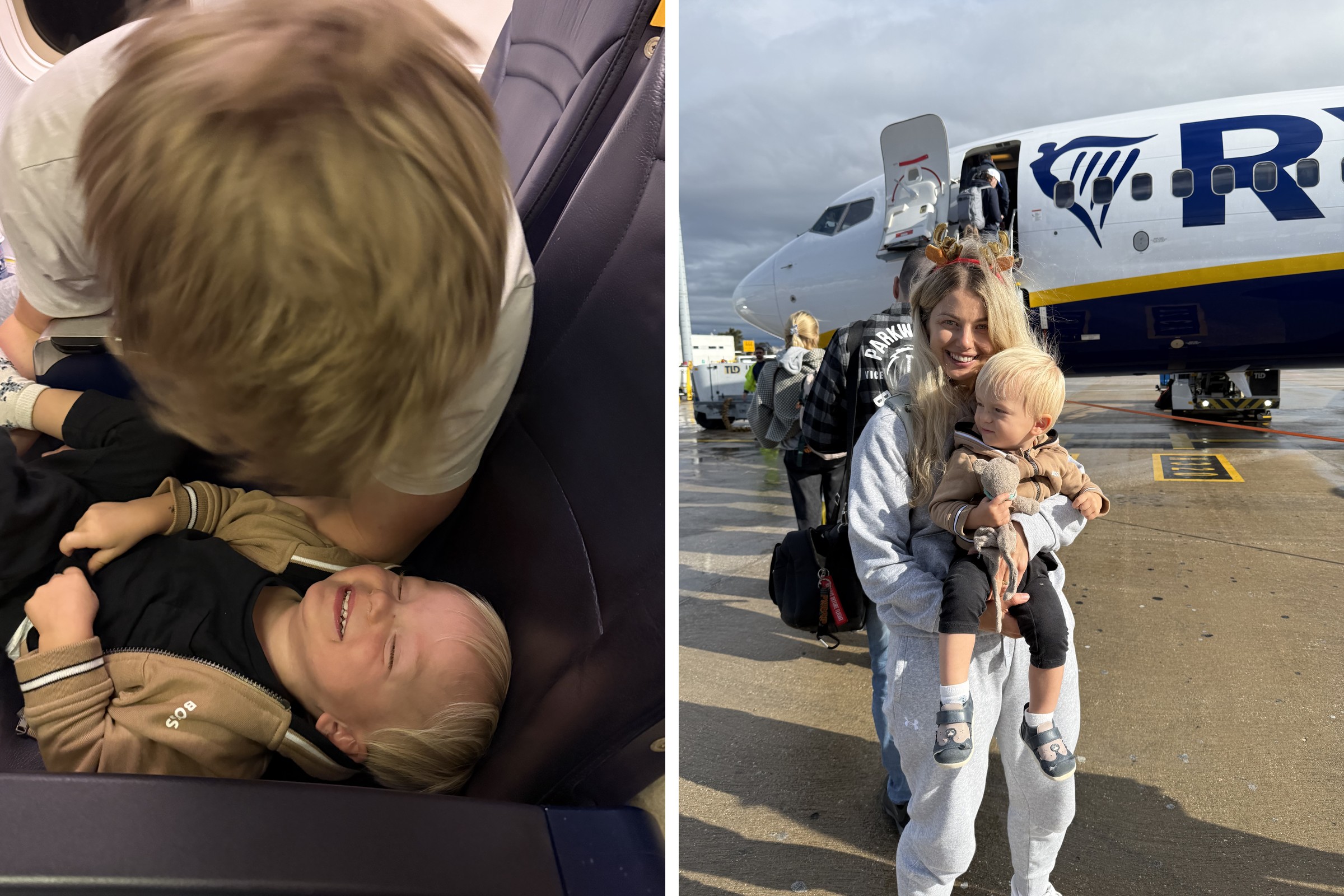
Lukáš and I put off Jonášek’s first flight until he was almost two, but today flying is the easiest way for us to travel. Being nervous about flying with children is completely understandable, but with the right preparation you can handle it without any stress.
The key is knowing the rules, because they differ from one carrier to another. While full-service airlines charge roughly a tenth of the adult fare for an infant ticket, low-cost carriers charge fixed fees — with Ryanair it’s €25 per leg. On top of that, every child needs their own travel document.
Below you’ll find a complete overview of 14 areas you need to sort out before your trip. I’ve put together everything from buying tickets and stroller rules to clearing liquids at security and tips for keeping little ones entertained on board.
TL;DR
- The infant fee is not zero: With low-cost carriers you pay a fixed amount (Ryanair €25 per leg, Wizz Air around €27), while full-service airlines charge 10% of the adult fare.
- Liquids at airports: Since 1 October 2025, some European airports with new CT scanners allow up to 2 litres per person, but many terminals still enforce the old 100 ml rule — always check which terminal you’re departing from.
- New European seating rules: The revision of EU 261/2004 was approved on 13 July 2026, but the guaranteed free seat for a child under 14 next to their parent won’t take effect until mid-2027.
- Oxygen masks dictate your seat: With Ryanair, an adult holding an infant on their lap must sit by the window, because that’s the only place with two oxygen masks.
- Digital boarding passes: Since 12 November 2025, Ryanair issues boarding passes exclusively through its mobile app.
- Every child needs their own passport: Even a week-old newborn must have their own travel document, and the photo must always match the child’s current appearance.
- Safety on board: The most reliable protection against turbulence for a child under two is a certified car seat, not a parent’s lap.
14 Things You Need to Know About Flying with Children
Once you decide to buy your tickets, a whole set of small decisions awaits you. This guide works as the main pillar of the whole topic of flying with children, so for each big area you’ll find the essential core plus the specific rules.
1. From What Age Can a Baby Fly
Airlines have their own rules on how old a baby must be to be allowed on board. While KLM has no minimum age and you could theoretically fly right after birth, some carriers won’t carry a baby at all within 48 hours of delivery. Between 48 hours and seven days, you’ll then need a special medical form. Carriers like Wizz Air or easyJet set the limit strictly at 14 days of age.
Pediatricians, however, see things a little differently and commonly recommend waiting at least two to three months before the first flight. The reason isn’t the flight itself or the cabin pressure, but above all a newborn’s immature immune system. Airport halls are full of people from all over the world, and the enclosed cabin space poses an unnecessary risk of infection that’s best avoided in the first weeks.
If you are flying, a common childhood cold becomes a huge issue. Blocked sinuses mean the child can’t equalise the pressure in the middle ear, which can cause serious pain during descent. Before the flight, always consult your pediatrician about a suitable nasal spray, and for little ones keep a good nasal aspirator ready in your carry-on.
The minimum age at individual airlines, pediatricians’ recommendations, and tips on where to go for your first trip are covered in detail in the article From What Age Can a Baby Fly.
2. Documents, Passports and the New Bureaucracy
Every child must have their own travel document to cross borders, even if they were born just a few weeks ago. For travel within your home region a national ID card may be enough (where accepted), which is cheaper and quicker to obtain. But if you’re heading to Egypt, Turkey or anywhere outside your free-movement zone, you’ll need a full passport for the baby.
The biggest catch lies in how the child looks in the photo. The law is clear that the document holder must resemble the photo, and with toddlers that changes at lightning speed. If your passport photo shows a sleeping one-month-old baby and you’re flying with a two-year-old full of curls, it’s better to replace the document in advance. Officers at the airport can turn you away and refuse boarding over a striking mismatch in appearance.
From spring 2026 the European rules are also changing. The EES (Entry/Exit System) has been fully operational since 10 April 2026 for trips outside the Schengen area, and the good news is that children under 12 are not fingerprinted — only a photo of their face is taken. Late in the year (Q4 2026 is expected) the ETIAS system will come into force, where children under 18 don’t pay the fee but each must have their own approved application. If you’re flying with a child on your own or you have different surnames, always carry a written consent from the other parent for travel, and to be safe a copy of the birth certificate too.
A consent template, signature verification, and the difference between an ID card and a passport can be found in the separate guide Consent for a Child to Travel and Documents for Children.
3. The Infant Ticket and the Tricky Birthday
Plenty of parents are under the illusion that a child under two without their own seat flies completely free. The reality is that the infant fee often catches you off guard. Full-service network airlines usually charge around 10% of the adult fare, which is a great deal on long-haul flights. Low-cost carriers, however, have hard fixed fees for every flight leg.
With Ryanair you pay a fixed €25 per leg for a lap infant, so a return ticket for the baby comes to €50. In practice it commonly happens that the ticket for your child is more expensive than your own discounted seat. Wizz Air charges around €27 per leg, but if the adult fare is cheaper, the fee is fairly reduced to that level.
Watch out especially for a second birthday celebrated during your holiday. Airlines don’t care how old the child is when you buy the ticket, but how old they are on the day of boarding. If your child turns 2 during your trip, they must have their own seat booked for the return flight. Airlines differ in how they handle this, so check with your carrier before booking whether you might have to pay the full adult fare at the airport.
A complete overview of infant fees and a calculation of when it pays off to buy a separate seat can be found in the article Airline Ticket for a Child.
4. The Solo Parent and the One-Infant Rule
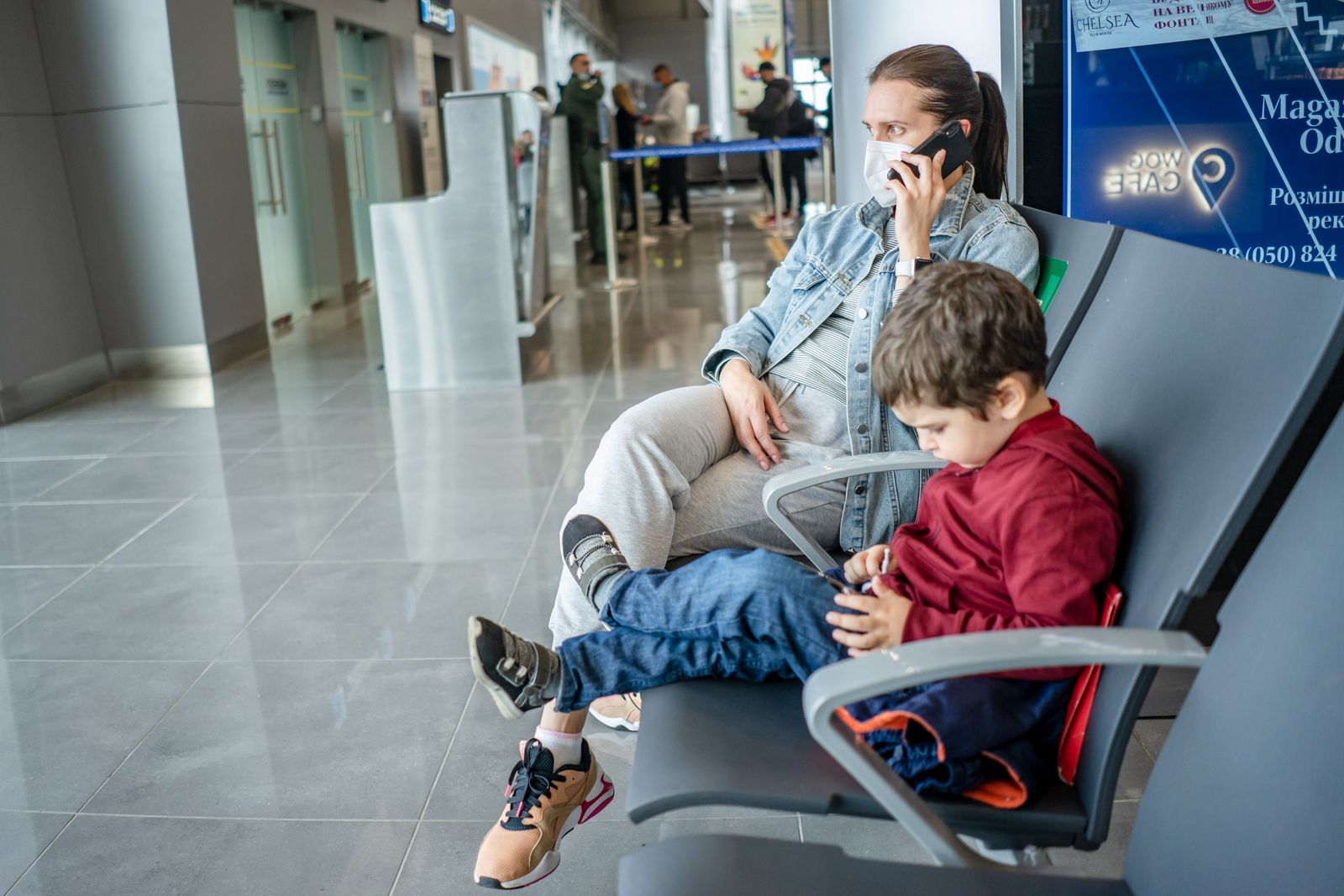
If you’re planning to travel with children on your own without another adult, you need to know one absolutely uncompromising aviation rule. One adult may only be responsible for one infant under two years of age. It’s pure physics and safety in emergencies, when an adult simply can’t safely secure two small children on their lap at once.
This means that if you’re a solo parent with twins under two, forget about lap-only tickets (both children on your lap). You simply won’t be checked in at the desk. In that case either a second adult must fly, or you must buy a full seat for the second child and place them in a certified car seat approved for aviation use.
The age of the accompanying person also varies by carrier. With Ryanair the companion must be at least 18, while with Wizz Air 16 is enough. Special rules also apply to unaccompanied older children. Some carriers offer this service for schoolchildren aged 6 to 11, but low-cost carriers like Ryanair, Wizz Air or easyJet don’t offer an unaccompanied minor service at all — passengers can only fly alone with them from age 16.
How to handle twins, travelling with grandma, and different surnames is covered in the article Solo Parent and Twins on a Plane.
5. Where to Sit and the New European Rules
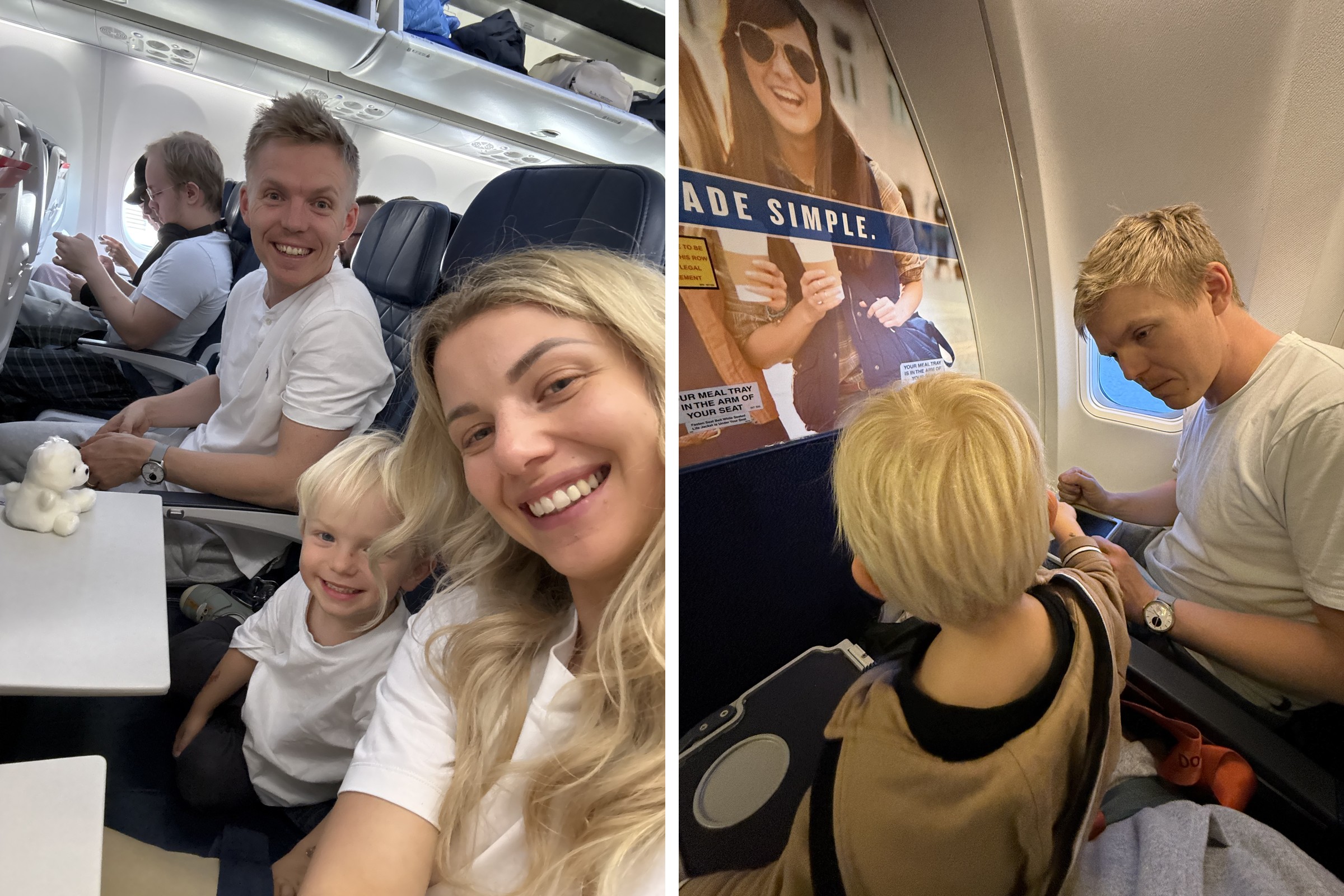
Seating families together on a plane was a nerve-racking game for years, but things are finally changing. The European Parliament and the EU Council approved the final text of the passenger rights revision on 13 July 2026. Under the new law, a child under 14 must be seated next to their accompanying adult free of charge. Because of a transition period, though, we’ll realistically only see this legal certainty from mid-2027, so for now you must pay close attention to individual carriers’ rules.
After pressure from regulators, Ryanair scrapped the mandatory family seating fee on 25 June 2026. If you choose random seat assignment, the system will place children under 12 next to an adult for free. There’s one crucial catch, though, because families relying on random allocation almost always end up in the back of the plane, since the front rows get snapped up by paying passengers.
If you’re flying with a lap infant, never choose an aisle seat. With Ryanair there’s a hard rule that an adult with an infant must sit exclusively by the window, purely for safety reasons. Only above the window seats are there two oxygen masks. This rule shatters the traditional internet advice to never pay for seats at all, because if you want to be sure the whole family flies together, you simply have to buy that window.
How to avoid being split up for free and what to do when it happens anyway is covered in the article Where to Sit with a Child on a Plane.
6. Taking a Stroller on the Plane and Airport Traps
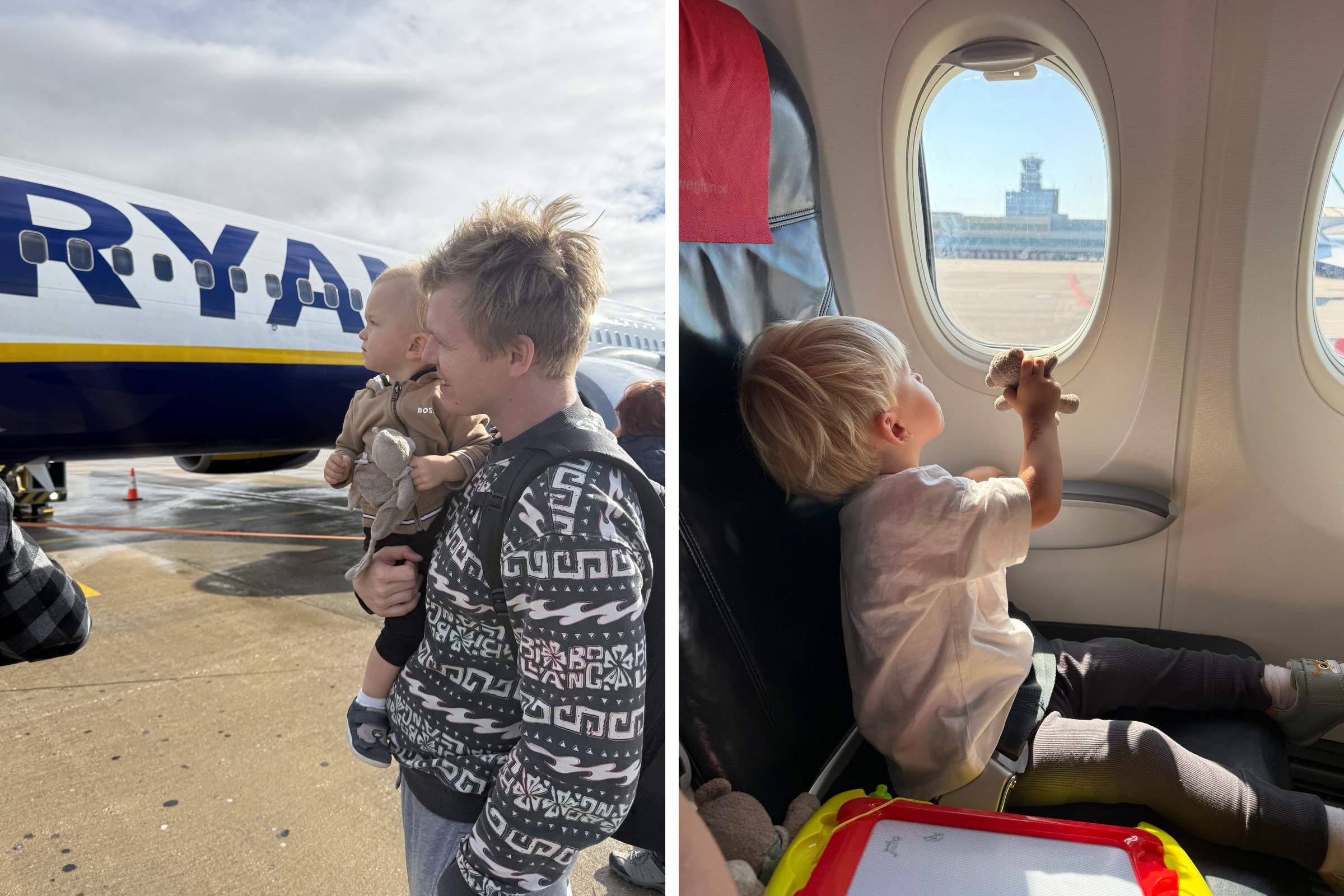
A stroller falls under the category of baby equipment and travels with you free of charge with the vast majority of airlines. At home we have a compact travel stroller, the Joolz Aer, and we’re extremely happy with it for flying because it’s incredibly easy to handle. Always check in advance, though, how many pieces of equipment your carrier will actually let you bring.
The most common practice is the so-called gate-check, where you take the stroller all the way to the boarding gate, fold it there, and staff take it down to the hold. If you’re flying on holiday with certain carriers, watch out for their conditions of carriage. Some explicitly state that they’re not liable for damage to unwrapped strollers. A protective bag for the stroller or wrapping it properly in shrink film is then absolutely essential.
If your stroller comes out on the belt at your destination damaged, never leave the airport hall. All international flights are covered by the Montreal Convention, and you must report the damage immediately at the baggage claims desk, where they’ll issue a PIR report. You then have an obligation to lodge the claim in writing directly with the airline within 7 days, otherwise your right to compensation lapses.
All three check-in scenarios, airline rules, and how to claim for damage can be found in the article Stroller on the Plane.
The full claims process, including deadlines, is in the article Damaged or Lost Stroller.
7. Car Seat and Safety on Board
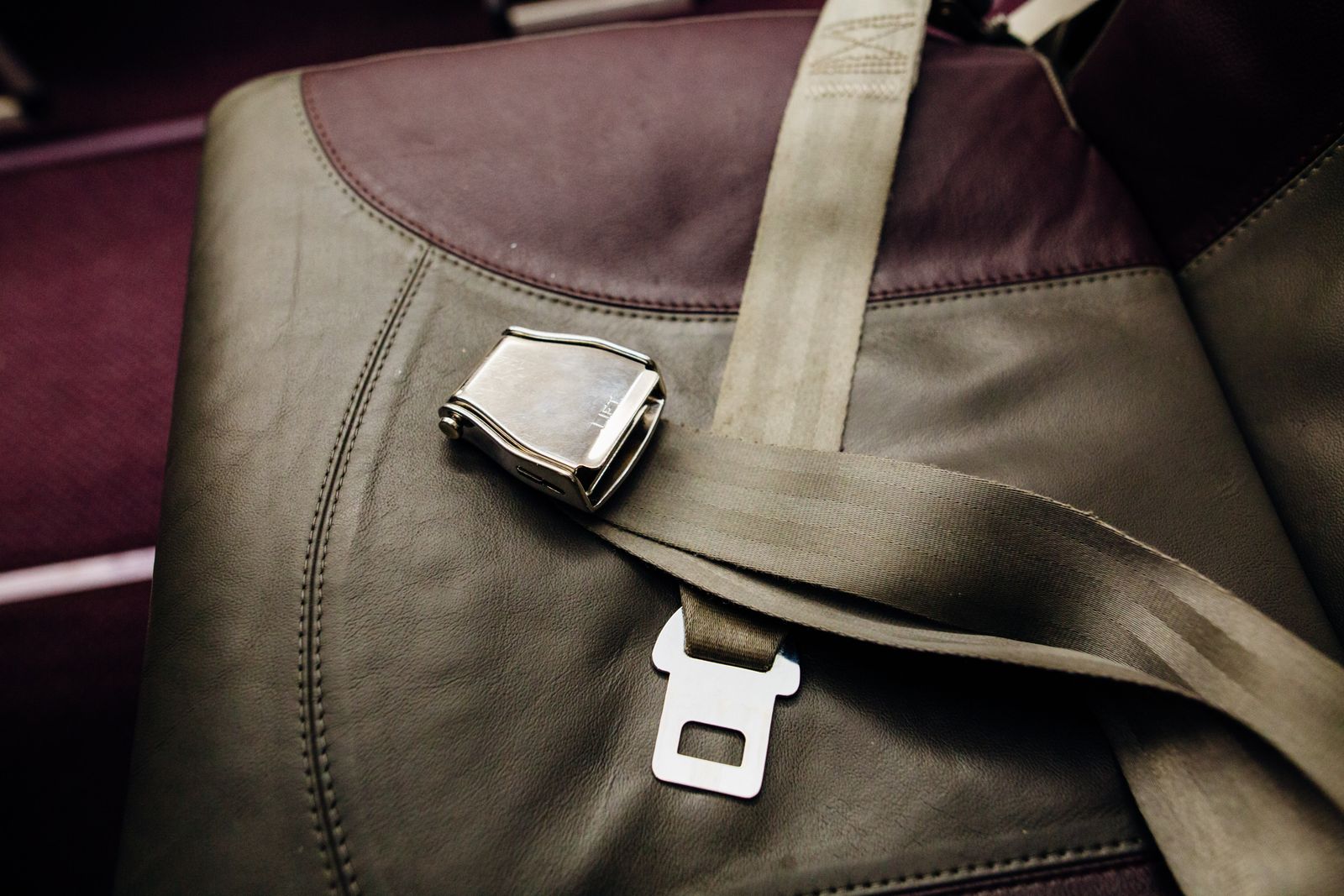
Most parents choose lap travel with a supplementary infant belt for children under two. In terms of saving money that’s completely understandable, but the US FAA strongly warns that the safest place for such a small child is a certified car seat secured on its own seat.
The reason isn’t potential crashes, but strong turbulence, which is by far the most common cause of injury to children on board. During a sudden drop, an adult simply can’t physically hold onto a child on their lap. If you buy the child their own ticket, you can bring a car seat approved for aviation use on board, which is always placed on the window seat so it doesn’t block a potential evacuation.
An alternative for children from one year weighing between 10 and 20 kilograms is the certified CARES harness. This system slips over the aircraft seat back and creates a five-point harness. It’s accepted by Ryanair, Lufthansa and Emirates, for example, but individual carriers’ rules keep changing, so always confirm in writing with your airline whether you can use it.
How to recognise aviation certification, what the CARES harness can do, and how to handle a seat at your destination is in the article Car Seat on the Plane.
8. Free Baggage for Children
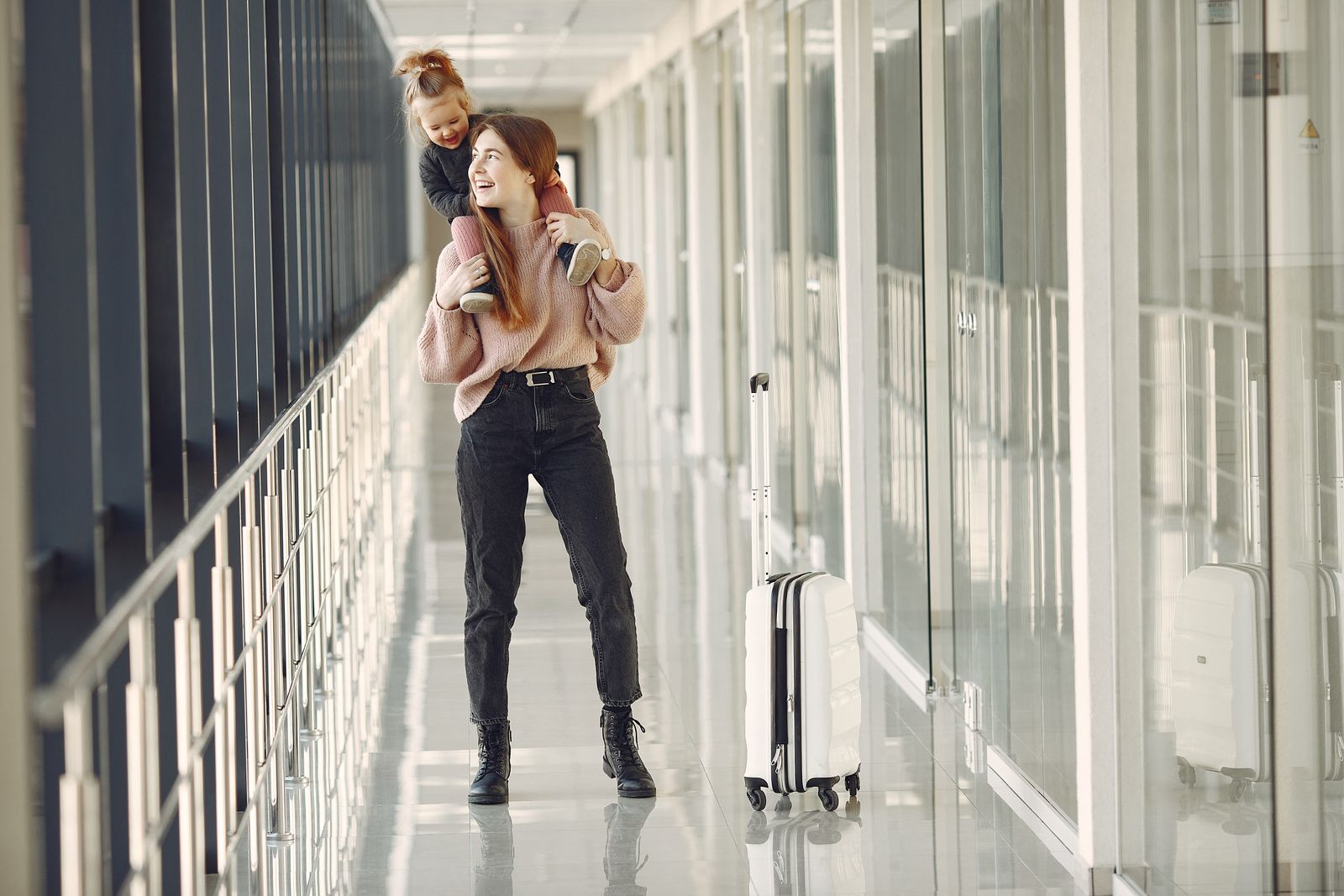
What exactly you get for your money differs dramatically depending on the type of airline. While with Lufthansa a lap infant is often entitled to their own checked bag up to 23 kg (depending on the fare purchased), with low-cost carriers the situation is much stricter.
Ryanair allows only one small bag up to 5 kg for a lap infant, and since 12 November 2025 requires digital boarding passes in the app exclusively, so you should devote the space you save to a reliable power bank. Wizz Air allows one small piece of baggage for the baby, but with a very specific rule for strollers. This Hungarian airline absolutely bans the carriage of any electric and motorised strollers, even in the hold.
The most generous, on the other hand, are the Nordic and Dutch airlines. KLM, for example, gives babies without their own seat a bag with a generous allowance of 12 kg. If you need exact figures, take a look at our other articles Ryanair Baggage: Dimensions, Weight and Fees or Wizz Air Baggage, where we break these limits down to the last centimetre.
A complete table of what a child gets free of charge with each carrier is in the article Baggage for Children on a Plane.
9. What to Pack in Children’s Carry-On
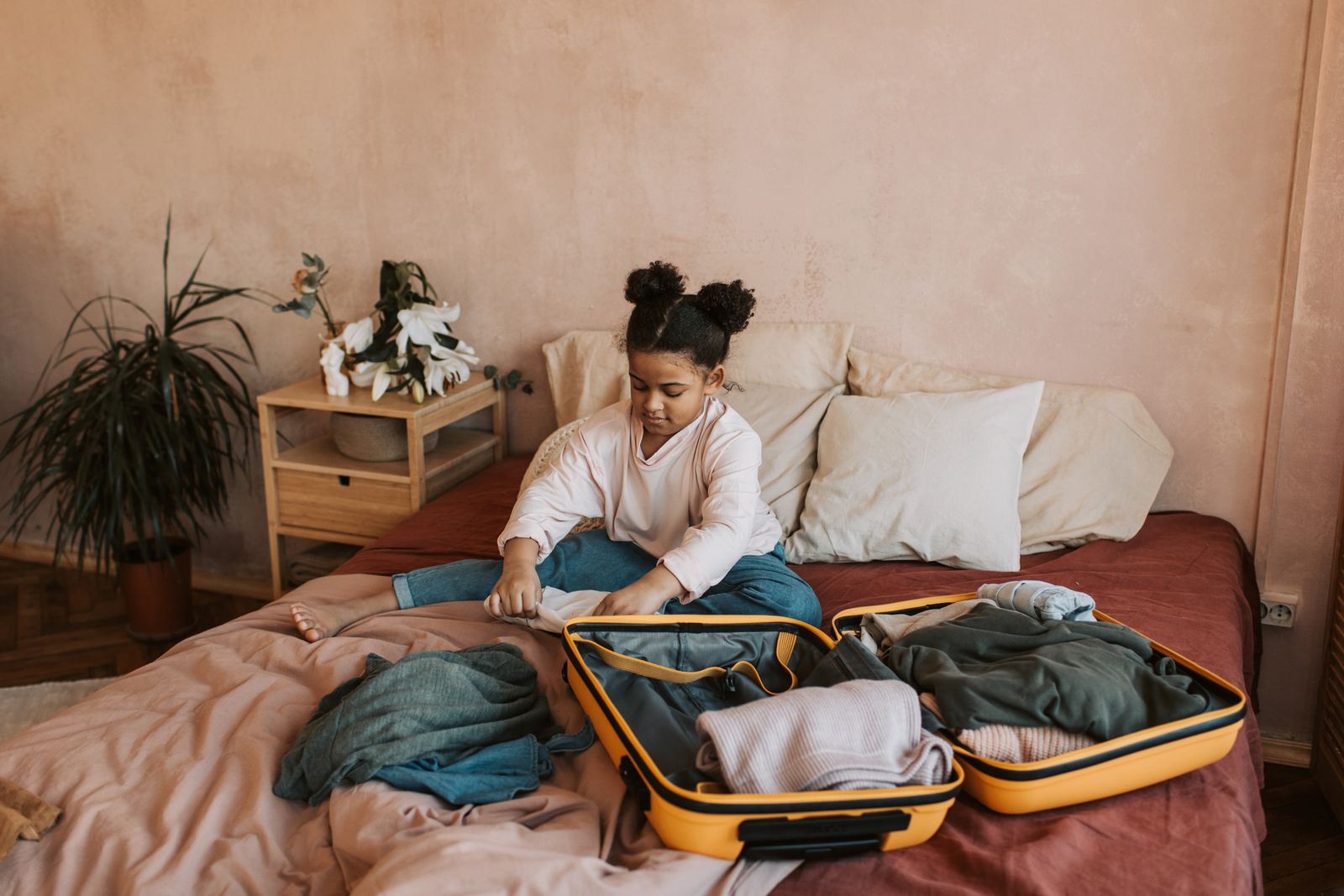
You pack the carry-on backpack for the worst possible flight scenario, when you hit a three-hour delay or your checked suitcase doesn’t arrive at your destination. Most parents dutifully pack two complete sets of spare clothes for the child, but they regularly forget one absolutely critical thing.
Always pack an ordinary spare T-shirt and leggings for yourself in the backpack. On travel forums the same horror scenario comes up again and again, where parents spent a twelve-hour flight in clothes completely covered in vomit from an eight-month-old who got sick right after takeoff. A rolled-up adult T-shirt takes up almost no space and, in a crisis, will literally save your sanity.
Don’t forget to pack at least two empty resealable Ziploc bags, in which you can hermetically seal wet and dirty things. Don’t count nappies by the day — estimate consumption for the journey itself plus a reasonable buffer for delays. You can buy nappies literally everywhere in the world, and in the backpack they just needlessly steal precious space. For details on how to choose the right carry-on backpack, check out our guide Carry-On Backpack: How to Choose the Right One.
A complete list by the child’s age, from baby to schoolchild, is in the article What to Pack for Children on a Plane.
10. Food, Drink and the Liquids Limit at the Airport

This is currently the biggest information trap out there. European airports are gradually rolling out new CT scanners that scrap the annoying 100 ml liquids limit. Since 1 October 2025 this relaxed regime applies at some terminals, where you can bring one container of liquid of up to 2 litres per person — but crucially it only applies at terminals with the new scanners.
Be very careful if you’re flying on holiday to Turkey, Egypt or the UK. Many terminals are not affected by the change at all and still enforce the strict 100 ml limit in a single one-litre bag. It’s usually not the airline that decides which terminal you use, but your destination — so always double-check before you set off.
The good news is the exemption for families. Baby food, purée pouches, formula milk and water in a thermos to prepare it are exempt from the 100 ml limit in the quantity needed for the journey. This exemption is governed by the airport’s own rules, not the airline. Security may ask you to open a bottle, show the contents, or exceptionally even taste it. Be cooperative with them — it’s part of their job. More on what’s allowed on board is in the article What Can and Can’t I Take on a Plane.
Exactly what gets through security and how much liquid they’ll allow is covered in the article Food and Drink on a Plane for Children.
11. The Airport Step by Step
Once you arrive in the departures hall, you head to the check-in desk, where they weigh your suitcases and put a baggage tag on your stroller or car seat. You then take the stroller to security, where you have to empty it completely.
At larger airports, look for a special priority lane for families with small children, the so-called fast track. It saves you a lot of time in the queue, and staff there understand that folding a stroller simply takes time. If you handed your big stroller in right at the check-in desk, many airports let you borrow a free airport buggy in the transit zone and take it all the way to the boarding gate.
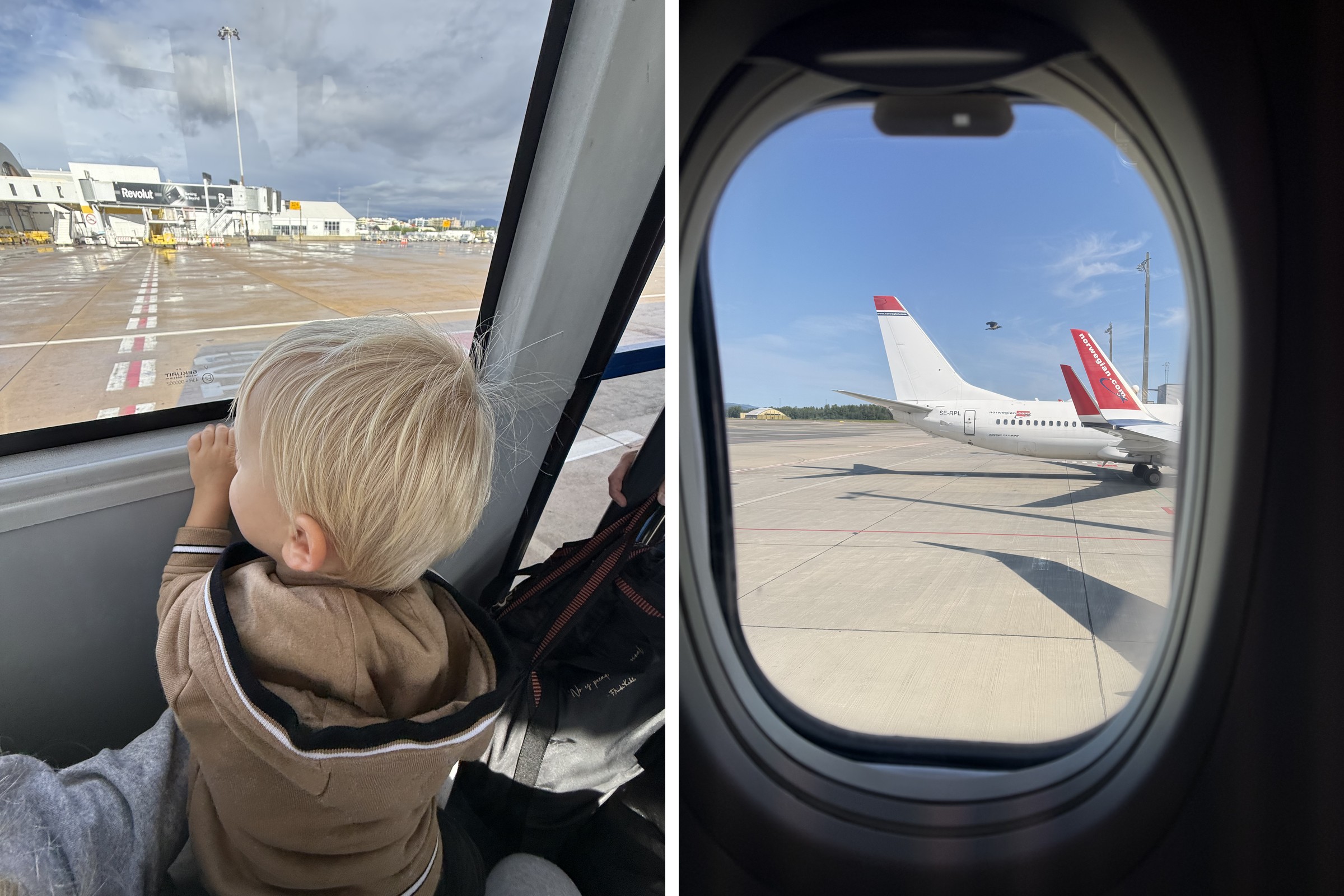
In the transit zone, then, try to tire the child out as much as possible. Many airports offer well-equipped play areas and quiet rooms with a microwave and changing tables. Don’t let the child sit at the gate with a tablet — let them watch the bustle on the apron instead, so they board the plane full of impressions and ready to sleep.
Play areas, quiet rooms, buggies and fast track are covered in the article Prague Airport with Children.
12. Ear Pain During Takeoff and Descent
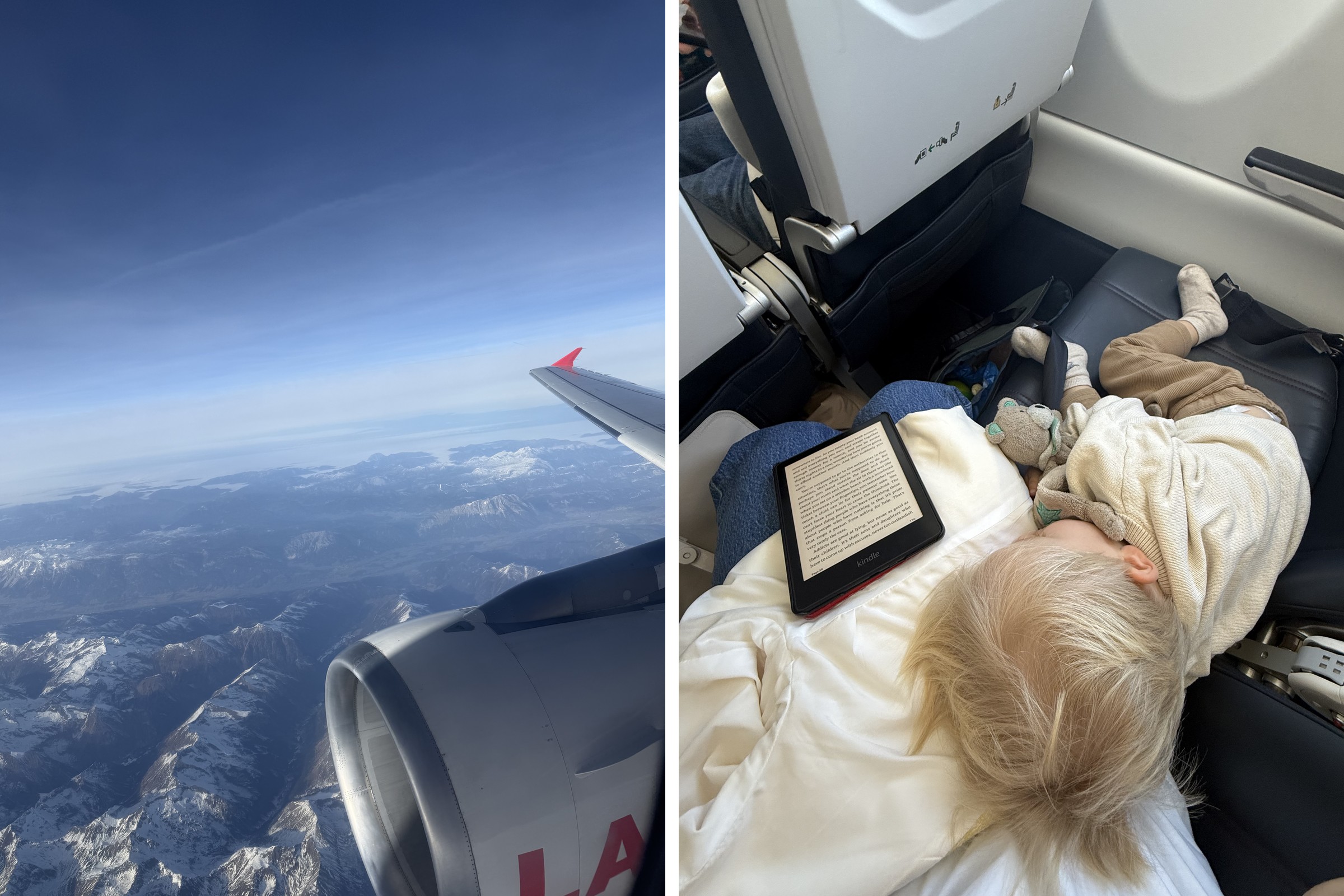
The physics in the cabin can trouble even adults, let alone children’s ears. The pressure in the plane doesn’t equalise automatically, and the higher pressure starts pushing on the eardrum, which causes that sharp pain. It surprises many parents, but the descent tends to be much worse and more unpleasant for the ears than takeoff itself.
The most effective weapon is swallowing, which opens the Eustachian tube. For infants, plain breastfeeding or drinking from a bottle works best. For older toddlers, drinking through a straw or chewing on favourite crackers does the trick. If the child has a cold or blocked sinuses, the pain multiplies, so always consult a pediatrician in advance about using a suitable nasal spray.
Never try to give your child sleeping remedies for a long flight that a friend recommended. The International Paediatric Sleep Association strongly prohibits giving melatonin to children under two and permits it in older children only after consulting the treating physician. Instead, get quality children’s headphones with a volume limiter for the flight, which will dampen the monotonous engine noise. Also don’t forget to pack basic fever medication, which we write about in our guide Travel First-Aid Kit: What Belongs in It.
What works by age and when it’s better to postpone the flight is covered in the article Ear Pain on a Plane in Children.
13. How to Keep a Child Entertained on a Plane

The biggest mistake new parents make is firing off all their entertainment trump cards before the plane even leaves the ground. On board, apply the iron rule of rotation and dole out activities in thirty-minute chunks at most.
First explore the safety card together, then pull out the first small toy. A great trick is to wrap new little items from the stationery shop in plain wrapping paper, because the unwrapping itself takes up plenty of time. Nothing that plays tunes, beeps, or is made of hundreds of tiny loose pieces belongs on a plane.
And now the most important thing: drop all the guilt about the tablet. Even child-development experts agree that screens on a plane won’t do any harm, so the rules from home can go out the window for those few hours. But keep the tablet in reserve as your heaviest weapon, for the moment when the child really can’t take any more, is tired, or when you hit a delay on the apron. Download the content to the device in advance, because airport Wi-Fi tends to be unreliable.
Specific tips by age and the activity-rationing rule are in the article How to Keep a Child Entertained on a Plane.
14. Flight Delays, Cancellations and Family Rights
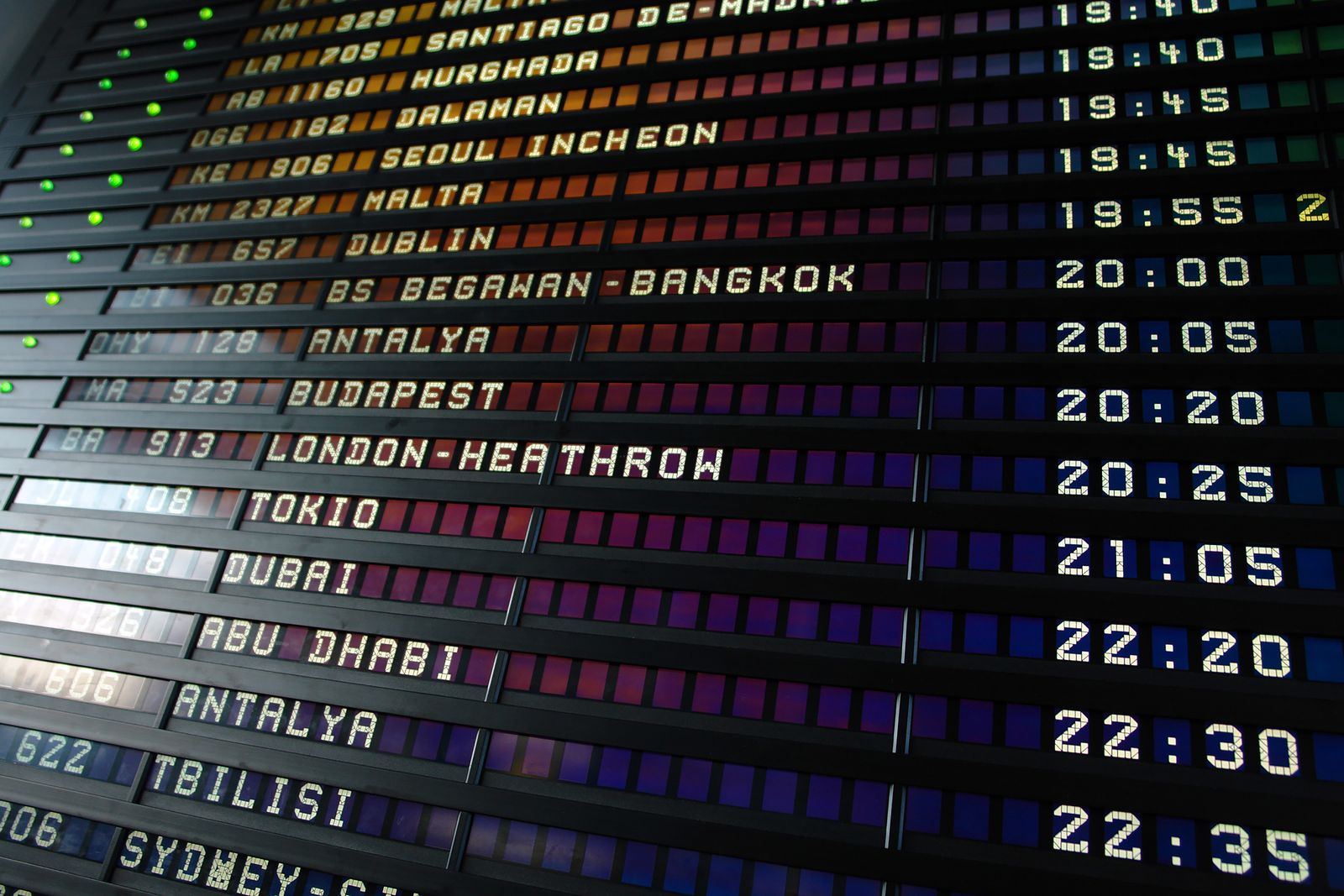
When a plane is delayed by more than three hours, EU Regulation 261/2004 kicks in, guaranteeing financial compensation. For families with children, though, there’s one huge and highly disputed grey area. Some airlines claim that a lap infant without their own seat has no entitlement, while legal interpretations say that if you paid any fee for the child, the entitlement arises. Practice varies, airlines often reject claims, but the advice is clear: always submit a claim for the infant and don’t be brushed off the first time around. More on the claims process is in the article AirHelp Review: Claiming Flight Compensation.
With family travel, the risk that the whole holiday falls apart because of a child’s illness the night before departure is also extremely multiplied. Good cancellation insurance is an absolute must. If your child falls ill at two in the morning and you fly at six, you won’t manage to cancel the tickets in the system in time. In that case you need a no-show confirmation from the airline and a doctor’s report on unfitness to travel, otherwise the insurer won’t reimburse you anything.
💡 Tip: If you’re flying to more distant destinations, you’ll save yourself a lot of hassle by choosing the right car seat at the rental company, because the laws in the destination country can differ dramatically. In Spain, for example, children under 135 cm must be in the back seat, and the fines are uncompromising.
When an entitlement to compensation arises and how to submit a claim is covered in detail in the article Flight Delays with Children.
Practical Summary and Indicative Prices
To give you a better idea of how much a ticket for your youngest child will cost, I’ve put together an overview of fees at the most common carriers. These amounts apply to an infant under two travelling on your lap without their own seat. Always verify the prices at the time of your specific booking, because airlines like to quietly change them.
| Airline | Infant fee (0-2 years) | What’s included free in the ticket |
|---|---|---|
| :— | :— | :— |
| Ryanair | €25 / £25 per leg | 2 pieces of equipment (stroller + car seat) |
| Wizz Air | approx. €27 per leg | 1 piece of equipment (stroller or car seat) |
| Smartwings | Reduced fare (depending on the specific flight) | Stroller, cot and car seat |
| Lufthansa / SWISS | 10% of the adult fare | Checked bag up to 23 kg + 2 pieces of equipment |
| British Airways | 10% of the adult fare | 2 pieces of equipment |
| easyJet | Fixed fee (per current price list) | Up to 2 pieces of equipment (including a baby carrier) |
Where to Next
If you’ve already sorted out your tickets and you’re wondering exactly where to head with the family, get inspired by our itineraries and tips from places we’ve fallen in love with. Travelling with children has a completely different dynamic, so we’ve put together practical guides to popular destinations for you:
- Lofoten with Children
- Croatia with Children
- Rome with Children
- Paris with Children
- New York with Children
- Travel Insurance for Children and Cancellation Due to Illness
- Motion Sickness and Illness in Children on Trips
- Child Alone on a Plane: From What Age
- The Best Airlines for Families: A Comparison
Frequently Asked Questions
What happens if my child turns two during the trip?
This is a common financial trap. Airlines don’t care about the age at purchase, but on the day of the flight. A child who turns two during the trip must have a full seat purchased for the return flight. With most carriers you’ll pay the full fare, so sort this out when making your initial booking.
Can I bring my toddler’s favorite drink?
It depends on the terminal. Liquid allowance rules vary by airport and security zone. Some major European airports allow up to 2 liters of liquids in certain terminals, while stricter zones enforce a 100 ml limit. Baby food and milk are usually exempt, but for regular drinks for older children, security often insists on disposal without compromise.
Where at the airport will we get our stroller back?
It depends on the specific airport and the current situation on the tarmac. Your stroller may be returned to you right at the aircraft door (at the jet bridge), on the regular baggage carousel in the arrivals hall, or at a special oversized baggage counter. Always ask the cabin crew when disembarking.
Why do I have to sit by the window with my baby?
Low-cost carriers like Ryanair have a strict rule that an adult with an infant in lap must sit by the window. The reason is the number of oxygen masks, because only above window seats are two masks installed, which you absolutely need in case of cabin pressure drop.
Can I fly with twins alone?
If both children are under two years old and you plan to hold them in your lap, you cannot fly alone. For safety reasons, the rule is one infant per adult. For the second child you would have to purchase a separate seat and place them in a certified airline car seat.
Is it safe to give my child sleep medication on a plane?
Pediatric sleep associations strictly prohibit giving melatonin to children under two years old, and for older children only allow it on explicit medical recommendation. Don’t casually dose your children with medication on board, instead rely on natural tiredness from the airport and quality children’s headphones.
How does claiming a damaged stroller work?
If your stroller comes out on the carousel damaged, never leave the transit zone. Find the claims desk, have a PIR report issued, and carefully keep your baggage tag. You must then report the damage to the airline in writing within 7 days at the latest, otherwise your claim for compensation will be forfeited.
Tips and Tricks for Your Vacation
Don’t Overpay for Flights
Search for flights on Kayak. It’s our favorite search engine because it scans the websites of all airlines and always finds the cheapest connection.
Book Your Accommodation Smartly
The best experiences we’ve had when looking for accommodation (from Alaska to Morocco) are with Booking.com, where hotels, apartments, and entire houses are usually the cheapest and most widely available.
Don’t Forget Travel Insurance
Good travel insurance will protect you against illness, accidents, theft, or flight cancellations. We’ve had a few hospital visits abroad, so we know how important it is to have proper insurance arranged.
Where we insure ourselves: SafetyWing (simple monthly subscription) and TrueTraveller (for extra-long trips).
Find the Best Experiences
Get Your Guide is a huge online marketplace where you can book guided walks, trips, skip-the-line tickets, tours, and much more. We always find some extra fun there!


