

The rules for taking a stroller on an airplane vary enormously from one airline to the next. Lukáš and I usually travel with a compact Joolz Aer and mostly fly Ryanair, which has more generous conditions. With other carriers, though, you can run into strict size and weight limits.
Most airlines treat a stroller as a free item for your child, but the catch is always in the details. Wizz Air, for example, never lets a stroller into the cabin, and Smartwings requires a hard case if you ever want to file a damage claim. Any damage must always be reported in writing within seven days.
Further down you’ll find out when to check in your stroller and how handing it over right at the aircraft door works. I’ve also added practical packing advice and a tip on borrowing a free airport buggy at Prague Airport.
TL;DR
- Strollers usually fly free: In airline jargon they fall under the label “baby item,” and the vast majority of carriers charge you nothing at all for one.
- They rarely make it into the cabin: Even with the tiniest compact model, staff can force you to hand the stroller over to the hold on a full flight.
- Wizz Air has hard bans: This carrier never allows a stroller into the cabin and completely prohibits all electric-powered models.
- Smartwings requires a hard case: If you hand over an unpacked stroller, you automatically lose any right to a claim if it gets damaged.
- Claims have a strict deadline: A destroyed or damaged stroller must be reported to the airline in writing within 7 days of collecting it from the belt.
- Prague Airport offers free buggies: Right after security you can borrow an airport buggy and check in your own stroller comfortably.
- A baby carrier doesn’t count as luggage: A soft fabric carrier is worn on your body, so it doesn’t eat into your precious cabin-bag space.
10 Things to Know Before Your First Trip With a Stroller on an Airplane
And now let’s take a closer look at it all.
1. Which Way Will the Stroller Actually Travel (Check-In or Gate-Check)?
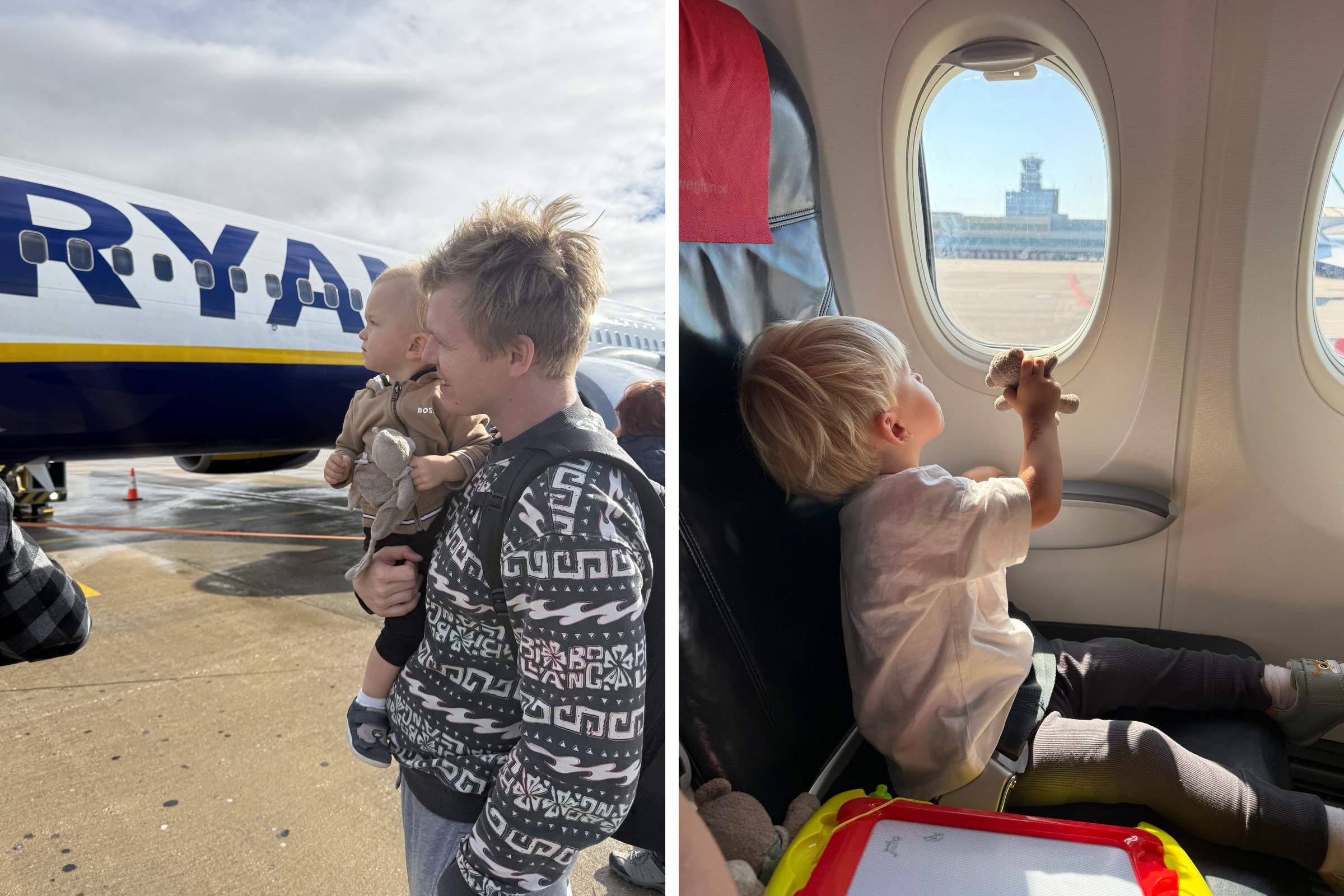
At the airport you basically have two main options for what to do with your stroller. The first is to check it in right at the desk, handing it over with your big suitcases as soon as you arrive in the departures hall. Staff will attach a baggage tag and you take it to a special oversized-luggage counter. You’ll then see it again only at your destination on the belt in the arrivals hall.
This solution makes a lot of sense when you’re travelling with a large two-part off-road pram. It also works well if your child is safely tucked into a carrier and you need your hands free at the airport. You do lose your rolling nap-bed while waiting for departure, but you avoid the awkward folding of the stroller on the belt at security.
The second and by far most common option is the so-called gate-check, where you keep the stroller with you the whole time at the airport. At check-in you simply say you’ll take it all the way to the aircraft, and the agent puts the necessary tag on it. You then go through security with the stroller, your child can sleep peacefully in it, and you only fold it up just before the aircraft door.
💡 Tip: If you go for the gate-check, don’t forget to ask the crew during boarding exactly where they’ll return your stroller after landing. Sometimes it’s waiting right at the aircraft exit, but very often it comes out at the special oversized-luggage counter in the arrivals hall, where you might wait a full hour for it.
2. The Holy Grail: A Cabin Approved Stroller
Keeping the stroller with you the whole time, folding it into the overhead bin and rolling straight off after landing sounds like every parent’s absolute dream. Lately, though, airlines have been drastically cutting back on this option. It doesn’t matter at all whether the manufacturer calls your model a cabin stroller — what always decides is the hard centimetres and the current rules of the specific carrier.
The fundamental problem is the capacity of the overhead storage. Even if your stroller meets the allowed dimensions down to the millimetre, you never have a hundred-percent guarantee that you’ll actually get it into the cabin. If the flight is fully booked and the bins are full, gate staff will take the stroller from you at the boarding gate and send it down to the hold, no exceptions.
Some airlines have exact dimensions for cabin strollers, but these limits can change and you always need to verify them before departure with the specific company. For example, British easyJet requires a maximum size of 56 × 45 × 25 cm plus a purchased large cabin bag, while Air France only allows extremely compact models up to 15 × 30 × 100 cm. Always double-check these figures on the official website.
💡 Tip: Smartwings only allows a stroller on board if it measures up to 55 × 40 × 23 cm and weighs no more than 8 kg, and you should always verify these limits to be safe. The key catch is that such a stroller then replaces your standard cabin bag and must be carefully packed in a case.
3. The Tricky Rules of Budget Airlines and Wizz Air’s Bans
Flying with small children is unusual in that airlines give you several pieces of baby equipment for free. But every carrier has completely different maths and different age limits for these perks. Ryanair, for instance, allows two free items — a stroller plus a car seat or a cot. This generous benefit applies to children up to 11 years old, though you should always verify it in their current conditions.
If you’re flying with Ryanair and want to take the stroller into the cabin, you need to have priority boarding. You then take the stroller instead of your cabin bag, and it must fit into the metal measuring frame at the gate. Hungarian Wizz Air does things differently and offers only one free baby item for children up to 14 years old — and I’d recommend checking this limit too before you book your ticket.
Wizz Air is also known for its very strict bans on baby equipment on board. This carrier never lets a stroller into the cabin — a mandatory gate-check always applies. They also uncompromisingly ban the transport of any modern electric-powered strollers, which are allowed neither in the cabin nor in the hold.
💡 Tip: The Spanish budget airline Vueling has even stricter rules and lets no stroller at all into the cabin, not even the most compact model on the market. If you fly with them, you always have to count on handing over your stroller at the boarding gate.
4. A Stroller Bag Isn’t Just Pointless Cosmetics
Plenty of parents arrive at the aircraft, fold the stroller and quickly toss it to the ground crew. That’s a huge and very expensive mistake. Airport staff handle baby equipment exactly like ordinary suitcases, so it often gets thrown onto carts, falls off belts and scrapes along the dirty floor of the hold.
The Czech airline Smartwings has a very tough clause in its terms of carriage which clearly states that the carrier bears no responsibility for damage to unpacked strollers. A hard travel case, a special bag, or at least a thorough wrap in strong shrink film really isn’t a question of aesthetics — it protects your wallet from a rejected claim.
You can conveniently carry your case or bag folded in a backpack or in the basket under the stroller. You can pick up film for a couple of euros at any hardware store, and you wrap the stroller in it just before handing it over at the aircraft. That saves you a long argument at the claims desk at your destination.
💡 Tip: Some parents use a large opaque stroller bag to hide extra light items inside it, like nappies or winter jackets. These tricks circulate on online forums, but no carrier officially confirms them, and you run the risk of strict staff making you open the bag on the spot.
5. Correct Tagging and the Riddle of Two-Part Prams
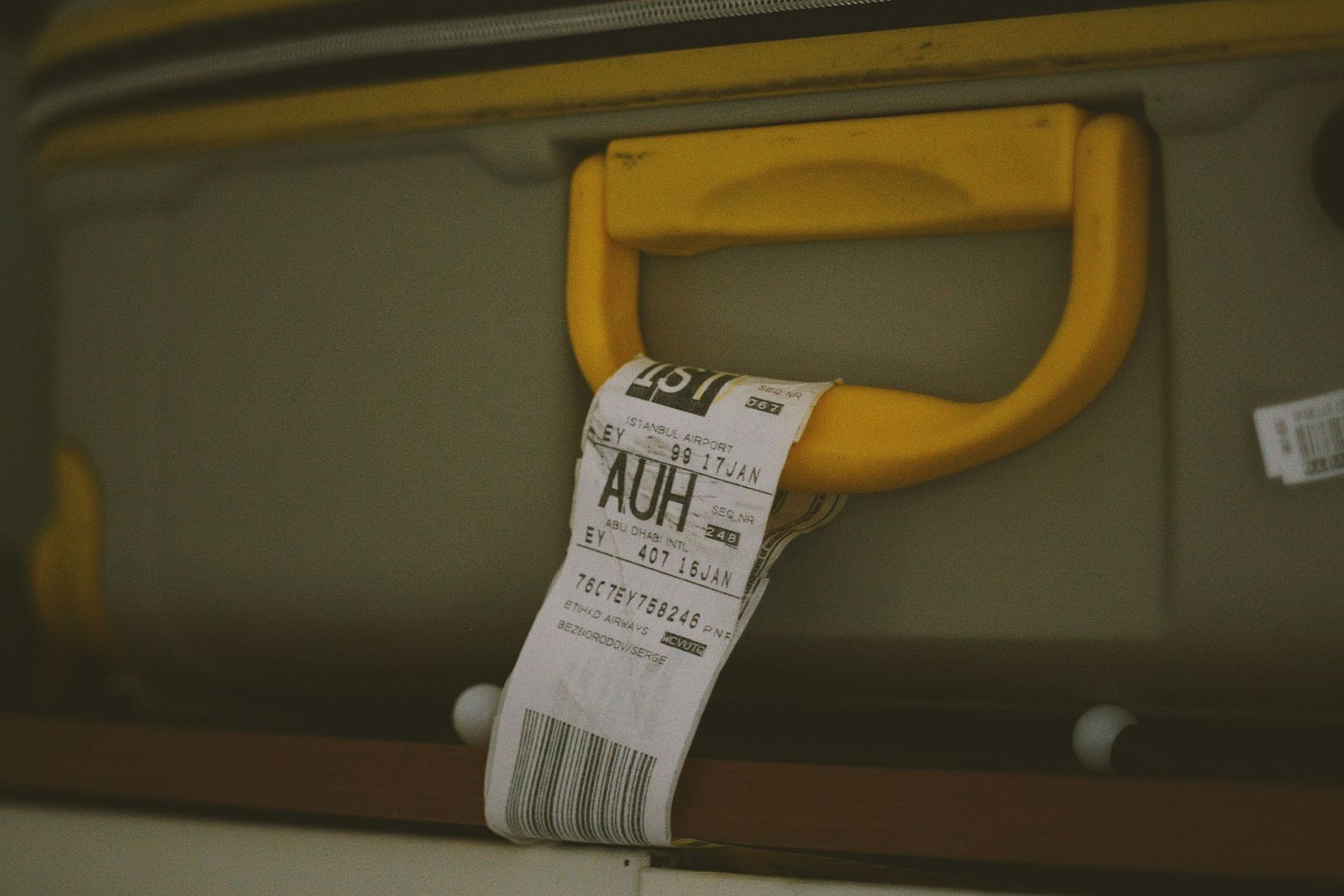
For the airline to even start dealing with a lost or damaged stroller, you have to reliably prove it actually travelled with you. This is where a lot of people go wrong already at check-in. The agent has to stick a barcode on your stroller and then hand you a small stub with a number — the so-called tag. Keep this stub carefully, because it’s your only proof that you handed the item over.
If you pack your stroller into a large transport bag, be extremely careful where staff stick the tag. They often attach it directly to the stroller’s handle, and then you zip the whole thing into the black case. That’s wrong, because the tag has to be visible from the outside so the loaders can easily scan it. Have the stroller tagged first, then pack it, and stick the tag on top of the bag.
Many prams for newborns come in two separable parts, typically the chassis and the carrycot itself. If you’re not packing them into one big shared bag, you must request two tags at check-in so each piece is labelled separately. If you only get one tag for the chassis and the carrycot goes missing en route, you’ll have no way to prove to the airline that you handed over two pieces.
💡 Tip: Just before you hand the stroller over at the gate, photograph it thoroughly from several angles. Today’s smartphones save the exact time and location in the photo, so if it’s destroyed you get bulletproof evidence of the perfect condition it was in when you handed it to the carrier.
6. Security and Free Airport Buggies
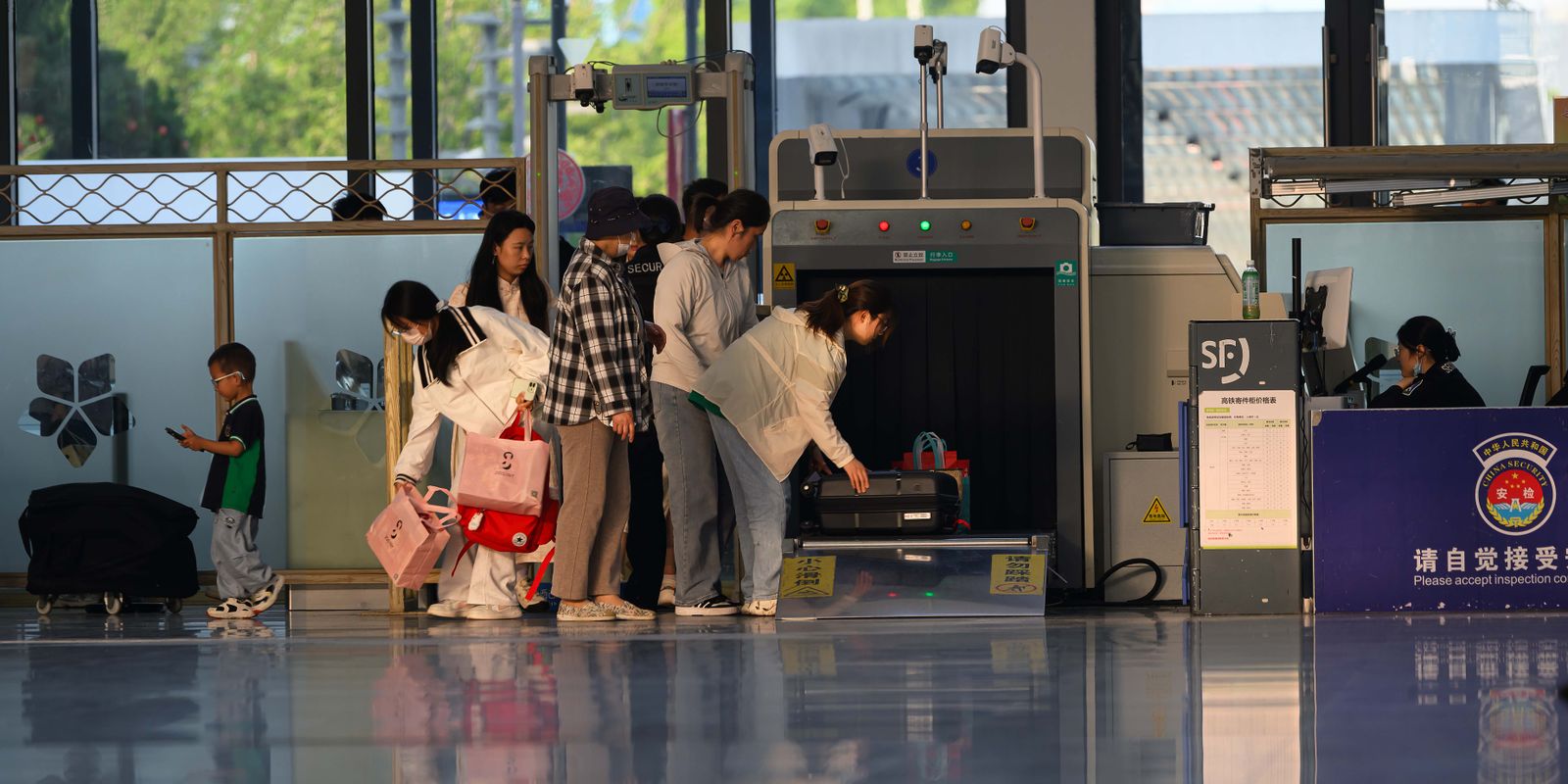
Going through security with a stroller and a small child tends to be the most stressful part of the whole journey. Before you reach the belt, you have to empty the entire basket under the stroller, because no stray toys, rain covers or water bottles can be left in there. Then you have to pick up your child and fold the stroller completely so it can go through the X-ray machine.
It always depends on the limits of the specific airport. In Prague, for example, the frame limit for X-raying a stroller is set at 60 × 40 cm, although this size can change and it’s worth verifying. If your folded stroller is bigger, staff have to inspect it by hand and run it through a special explosives detector, which slows the whole procedure down a bit.
Prague Airport offers families with children one absolutely brilliant service. If you check in your big stroller right at the desk, you can borrow a free airport buggy in both Terminal 1 and Terminal 2. You’ll find them right after security, you can wheel your child around the shops in them, and you leave them right at the boarding gate.
💡 Tip: Baby food and milk are exempt from the usual liquid limit, and you can take the amount you need for the journey. Prague’s Terminal 2 has had looser liquid rules since the end of 2025, but Terminal 1 still keeps the strict 100 ml limit, so always read the current regulations on the airport’s website.
7. The Nightmare of a Destroyed Stroller and Strict Deadlines
When your stroller comes out on the belt at your destination with a bent wheel or a cracked frame, don’t panic — but do act fast. On international flights you’re protected by the so-called Montreal Convention, which sets the airline’s liability limit for a destroyed bag. This limit is around 1,519 SDR, which comes to roughly 2,175 US dollars, though the exact amount depends on current exchange rates and rules, so always double-check any limits.
The key rule is that once you spot the damage, you must not leave the airport’s transit zone. Find the claims desk and have your boarding pass and baggage tag ready. Staff will fill out a so-called PIR (property irregularity report) with you on the spot, and you carefully keep your paper copy with the reference number.
But here we hit a huge bureaucratic trap that plenty of exhausted parents miss. You must report the damage to the airline in writing within 7 days of collecting the bag. Those seven days are a relentless hard deadline, and if you miss it, the carrier will most likely reject your otherwise legitimate claim outright.
💡 Tip: If you have an extremely expensive premium stroller from a limited edition at home, whose value far exceeds the carrier’s limits, seriously consider whether to take it on the plane at all. Experienced travellers often prefer to rent strollers right at their destination through specialised platforms.
8. A Lost Stroller and the Big Car-Seat Problem
You’re standing by an empty belt in the arrivals hall, all the other passengers have already left, but your stroller is nowhere to be seen. Again, the golden rule applies: don’t head out to the taxis, but go straight to the claims desk. There you present your tag and staff enter its number into the system. A courier will then deliver the lost item straight to your accommodation address, which you give in the PIR report.
A much worse situation arises if your child’s car seat goes missing along with the stroller. Across the entire European Union there are very strict rules for transporting children in cars. In Spain, for instance, children under 135 centimetres must always be in a certified seat, and in Italy that threshold is even 150 centimetres — otherwise you risk a huge fine.
Taxis are exempt from this obligation in many European countries, but that doesn’t solve your problem if you’ve booked your own rental car. You simply can’t get away from the airport safely and legally, and your holiday can get very unpleasantly complicated.
💡 Tip: Always actively ask at the claims desk whether they happen to have a spare car seat available to borrow. Many large international airports are well prepared for situations like this and will gladly help — it certainly costs nothing to ask.
9. Carriers, Backpacks and a Secret Trump Card for Kids’ Suitcases

If you know a stroller just won’t work at your destination, baby carriers and hiking backpacks are the rescue. A soft fabric carrier doesn’t count as cabin luggage at all — you simply put it on and walk through security with it. Your child can sleep comfortably in it and you have both hands free to handle passports and boarding passes.
With rigid framed hiking carriers the situation is a bit more complicated and always depends on the specific airline. easyJet and British Airways explicitly allow a carrier backpack on their list of free baby equipment, but with Ryanair it can be a problem. It comes down to the gate staff’s judgement, and you may end up being charged for the carrier as oversized luggage.
Ride-on kids’ suitcases like Trunki are a massive hit among families, but their dimensions often exceed the limits for a small under-seat bag. Ryanair, though, has a great exception and accepts these cases as free hand luggage for children aged 2 to 11, even if they don’t meet the exact size. With other carriers, though, definitely don’t rely on this leniency.
💡 Tip: Ryanair’s gate staff unfortunately often don’t even know about this exception for kids’ suitcases and try to charge for the bag. Look up this rule in advance on the airline’s official website on your phone and be ready to show it to them at the gate as clear proof.
10. How to Choose the Best Travel Stroller for the Airplane
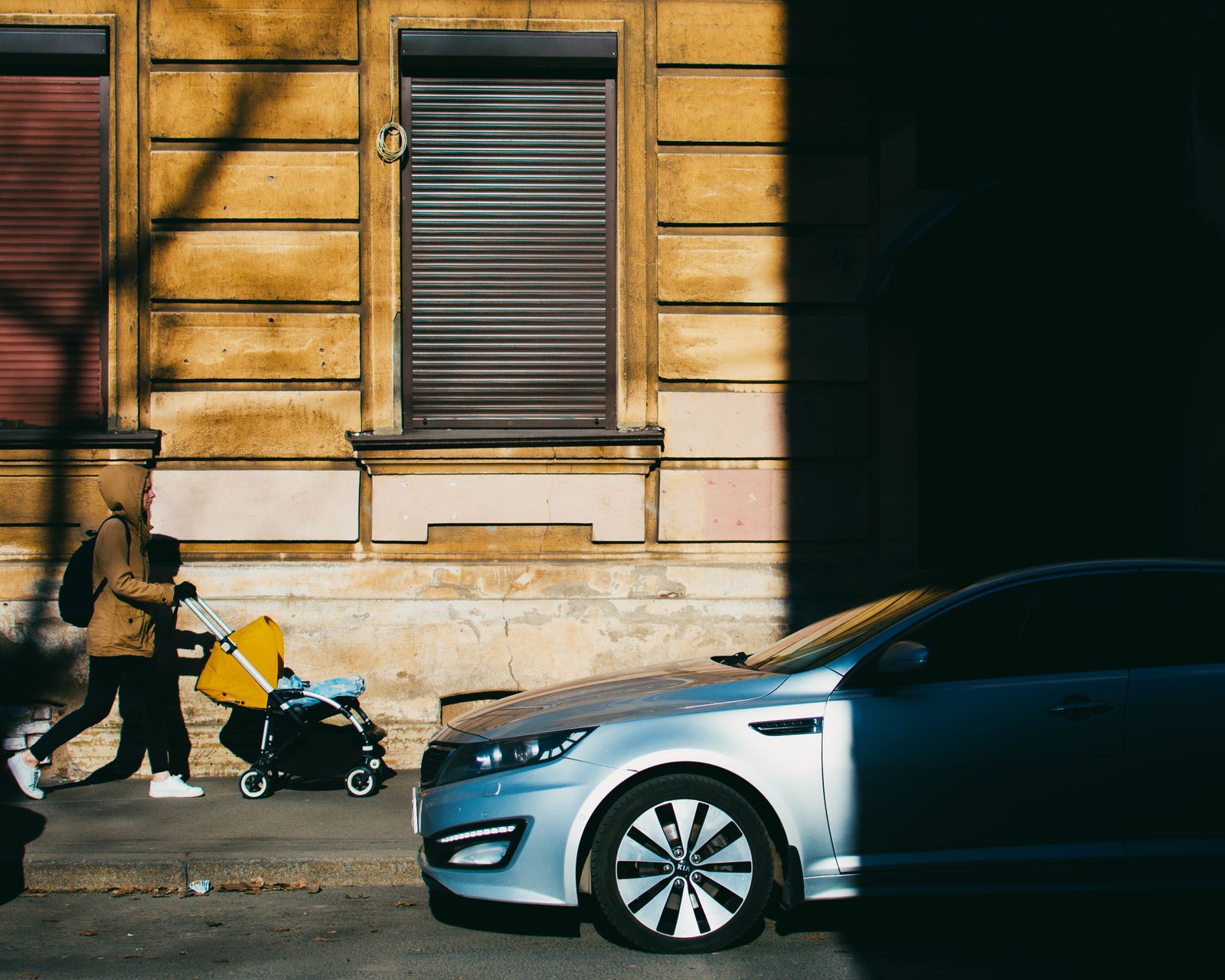
Don’t worry so much about the brand — focus instead on the key practical parameters that will decide how calm you stay at the airport. Folded size is the absolute priority. Take the stated folded dimensions and carefully compare them with the rules of the airlines you fly with most often. Don’t rely on manufacturers’ marketing labels alone, because airline rules keep changing.
The second critical parameter is weight and the ability to fold one-handed. You often hold a tired child on your hip while standing at the airport X-ray with a nervous queue forming behind you. You need a stroller that you can fold in a flash with the press of one button and carry in one hand up the steps into the plane. That’s exactly why Lukáš and I chose our Joolz Aer, and we can’t praise it enough.
Chassis width is very often overlooked when choosing, which is a huge mistake. Old European towns, the narrow lanes of Rome or the historic lifts of Paris don’t forgive a single extra centimetre. If your stroller has too wide a rear wheelbase, you’ll get awkwardly stuck everywhere and travelling turns into a nightmare.
💡 Tip: For small babies under two, a fully reclining backrest that lies completely flat is an absolute must. Your child will spend long hours in the stroller waiting for delayed flights, and having to sit upright the whole time would be extremely exhausting for them.
Practical Summary and Approximate Prices
Airline rules change very fast, so I’ve put together a clear table of how things stand with strollers among the most common carriers in 2026. Always verify these details again on your airline’s official website before departure, because conditions can be adjusted.
| Carrier | Free stroller? | Stroller in cabin? | What to watch out for most |
|---|---|---|---|
| :— | :— | :— | :— |
| Ryanair | Yes (up to 2 items, under 11) | Only occasionally (with Priority) | A child under 2 has no cabin bag of their own, just a bag up to 5 kg. |
| Wizz Air | Yes (1 item, under 14) | Never (always to the hold) | Absolute ban on electric and motorised strollers. |
| Smartwings | Yes (cot, car seat) | Yes (if it meets the size) | An unpacked stroller will never be covered for damage claims. |
| easyJet | Yes (up to 2 items) | Yes (with a large bag) | You can also check a rigid carrier backpack free, a huge advantage. |
When deciding what to do with the stroller at the airport, a quick comparison of the three possible scenarios will help. It’s entirely up to you and what’s most comfortable for your family right now.
| Check-in scenario | When it fits best | Main pros and cons |
|---|---|---|
| :— | :— | :— |
| At check-in | For huge off-road prams and two-part models with a carrycot. | Your hands are free, but you have to carry your child in a carrier. |
| Gate-check | For ordinary folding and sports strollers (the most common choice). | Your child rides to the plane, but you say goodbye to the stroller at the gate. |
| Into the cabin | For ultralight compact strollers meeting the strict dimensions. | No waiting at the belt, but on a full flight it may be taken from you. |
Where to Next
Preparing for a family holiday doesn’t end with the stroller. If you’re wondering what other luggage you can take on board, I’ve written a detailed guide for individual airlines. Here you’ll find everything essential:
If you’re packing your own backpack or still deciding on a destination, take a look at these useful articles too — they’ll make travelling much easier:
- What you can and can’t take on a plane
- Cabin backpack: how to choose the right one
- Croatia with kids
- Lofoten with kids
Frequently Asked Questions
Is a stroller always free on the plane?
At the vast majority of airlines, strollers are transported completely free of charge as part of infant equipment. However, the conditions vary by the child’s age. While Ryanair allows free transport up to 11 years of age, other carriers may set these limits differently, so always check before your trip.
Can I take a stroller into the aircraft cabin?
You can only take compact strollers into the cabin that meet the very strict size limits of the specific airline. But even if you meet the limits, staff may take your stroller at the boarding gate and send it to the hold if the flight is fully booked and there’s no space in the overhead bins.
What if the airline destroys or loses my stroller?
Immediately upon discovering the problem, find the claims desk in the arrivals hall and have a PIR report issued. It’s crucial that you report any damage to the carrier in writing within a maximum of 7 days from receiving the baggage, otherwise you’ll lose your right to any financial compensation.
Do I need a special travel bag for my stroller?
I highly recommend it. Airport staff don’t handle strollers gently and a sturdy bag will protect it. Smartwings even states in their conditions that they bear absolutely no responsibility for damage to an unbagged stroller, so with them a bag or wrap is an absolute necessity.
Does a baby carrier count as luggage?
Soft fabric baby carriers don’t count as cabin baggage at all. You normally just wear it on yourself and go through security with it. However, rigid hiking carriers with a metal frame are already considered luggage by some airlines and must be checked in.
Can I bring the kids their own ride-on toy or scooter?
Airlines usually consider ride-on toys and children’s scooters as sports equipment, for which they charge substantial fees. The only exception is Trunki-type children’s suitcases, which Ryanair accepts as free hand luggage for children aged 2 to 11.
Where do I get my stroller back after landing?
It depends on the airport and crew. Sometimes your stroller is waiting for you right at the aircraft exit on the tarmac, but often it comes out on the special oversized baggage belt in the arrivals hall. Always ask the flight attendants during boarding what the procedure is for that particular flight.
Tips and Tricks for Your Vacation
Don’t Overpay for Flights
Search for flights on Kayak. It’s our favorite search engine because it scans the websites of all airlines and always finds the cheapest connection.
Book Your Accommodation Smartly
The best experiences we’ve had when looking for accommodation (from Alaska to Morocco) are with Booking.com, where hotels, apartments, and entire houses are usually the cheapest and most widely available.
Don’t Forget Travel Insurance
Good travel insurance will protect you against illness, accidents, theft, or flight cancellations. We’ve had a few hospital visits abroad, so we know how important it is to have proper insurance arranged.
Where we insure ourselves: SafetyWing (simple monthly subscription) and TrueTraveller (for extra-long trips).
Find the Best Experiences
Get Your Guide is a huge online marketplace where you can book guided walks, trips, skip-the-line tickets, tours, and much more. We always find some extra fun there!


