

Behind most crying on a plane you’ll usually find blocked and aching ears. Ear pain flying is far worse for the youngest passengers, because their narrower Eustachian tube can’t equalise the changing cabin pressure fast enough, so it bothers them far more than it does adults.
While take-off usually goes smoothly, the descent causes the most pain right before landing. Active swallowing is a guaranteed first aid, so it pays to have a pacifier, a drink with a straw, or the option to breastfeed close at hand.
Below I’ll explain in detail which aids actually work and what to do about a simple runny nose. You’ll also learn why, with an acute middle ear infection, it’s better to postpone the trip entirely after talking to your doctor.
TL;DR
- Descent is worse than take-off: Cabin pressure changes during descent in a way that pushes much harder on a child’s eardrum, so save your best tricks for the end of the flight.
- Swallowing works best: Breastfeeding, a bottle of milk, or a pacifier help open the Eustachian tube, which is by far the most effective way for babies to equalise pressure.
- A cold is a risk: Blocked sinuses prevent natural pressure equalisation, so it always pays to check nasal spray use with your pediatrician before the flight.
- Watch the liquid limits: Rules vary by airport and terminal — some now allow up to 2 litres in one container thanks to new CT scanners, while others still enforce the strict 100 ml limit (baby milk gets an exemption everywhere).
- Don’t give kids sleeping aids: Melatonin is strongly discouraged for children under two, and for older kids it must always be expressly approved by your doctor.
- Noise won’t damage hearing: The widely shared claim that cabin noise destroys hearing in 90 seconds comes from online shops, and kids’ headphones mainly serve comfort and better sleep.
- Passenger rights are changing: The revision of EU Regulation 261/2004 was approved on 13 July 2026, but it won’t fully apply in practice until mid-2027.
10 Things You Must Know About Ear Pain Flying
Let’s look at what you should know before the trip and what will genuinely help your child.
1. The physics of the ears and why descent is much worse than take-off
The most common cause of a child crying on board isn’t fear of the unfamiliar surroundings — it’s plain physics. Ear pain arises the moment cabin pressure isn’t equalised through the so-called Eustachian tube. When this tube stays closed, the higher pressure on one side starts pressing uncomfortably on the eardrum. In small children the tube is also narrower and more horizontal than in adults, which makes the whole equalisation process much harder — a condition known as airplane ear or ear barotrauma.
One crucial rule often surprises even seasoned travellers: the difference between the flight phases. Descent tends to be far worse and more unpleasant for a child’s ears than take-off itself. During climb, the air in the middle ear naturally expands and finds its way out fairly easily. On descent the situation reverses — air has to get back into the middle ear, which requires actively opening the Eustachian tube.
Parents often make the mistake of using up all their energy and aids during the first twenty minutes of the flight. Always time your heaviest weapons for the moment the captain announces the start of descent to the destination airport. During this phase — usually about twenty to thirty minutes before touchdown — your child will need the most help equalising pressure.
💡 Tip: Watch the flight attendants in the aisle closely. As soon as the crew start collecting the last rubbish and checking seatbelts, that’s a clear sign the plane is beginning its descent and you should start acting.
2. Breastfeeding, the bottle and pacifier as a lifesaver for the youngest
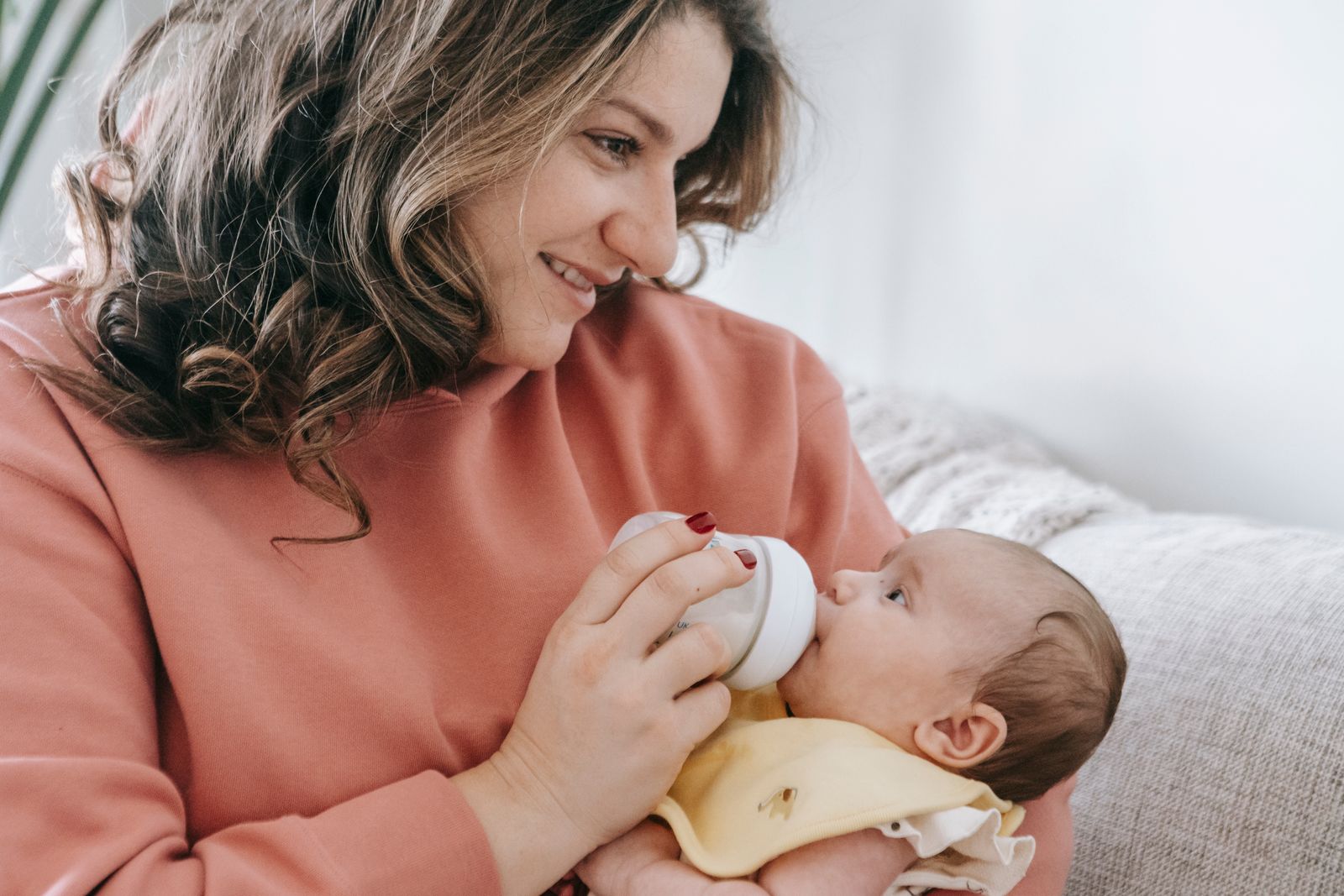
So what actually works on that unpleasant physics in the ears? The answer is surprisingly simple: plain swallowing. The movement of a child’s jaw and the natural swallowing reflex help mechanically open the Eustachian tube. When you’re flying with a small baby for the first time, you essentially have three main options: breastfeeding, a bottle of their favourite milk, or a classic pacifier.
The experience of countless parents on online forums speaks clearly in favour of breast milk. Breastfeeding during take-off and landing is the most reliable method, because the baby is lying on your lap, actively sucking and swallowing, while being hugely calmed by your physical closeness. If for any reason you don’t breastfeed, a bottle of prepared formula or plain baby tea works perfectly well too.
A pacifier works as a great backup in case your child isn’t hungry or refuses a drink. Here we hit a small trade-off you should know as a parent. ⚠️ Studies often link frequent, long-term pacifier use with a higher incidence of middle ear infections — in some observations up to a fifty percent rise in frequency. For a single holiday flight that’s absolutely no argument against a pacifier, but it’s worth keeping this link in mind for children prone to infections.
💡 Tip: Don’t start feeding your child too early. Wait with breastfeeding or the bottle until the moment the engines are at full power and the plane actually leaves the ground, otherwise your child will finish the whole portion while still taxiing on the runway.
3. What reliably works for toddlers and older children
With toddlers and preschoolers, breastfeeding usually no longer plays much of a role and you’ll need slightly different strategies. This is where plain drinking through a straw comes in, along with chewing a favourite gum or sucking a hard sweet. Drinking from a bottle with a straw forces the child into more pronounced jaw movement, which has an almost magical effect on opening a blocked tube.
With older school-age kids and teens the situation is much easier. Usually it’s enough to give them ordinary gum before take-off or teach them to deliberately swallow with an empty mouth and yawn widely. Yawning is a natural defence mechanism that equalises ear pressure almost instantly, and older children can learn to do it on command.
Sometimes you’ll run into an unexpected snag with onboard safety rules. Children under two must be strapped in during take-off and landing with a special child belt attached to your own seatbelt. As I mentioned at the start, our Jonáš absolutely hated this on the flight to Paris and threw quite a fit. At such moments the only things that help are calm, distraction with a new toy, and quickly offering a favourite snack.
💡 Tip: Pack a lollipop in your hand luggage. A lollipop lasts in a child’s mouth much longer than a sweet, keeps them constantly swallowing sweet saliva, and occupies their hands and attention for a really long time.
4. A cold and blocked sinuses: when it becomes a problem
While a healthy child’s clear Eustachian tube usually copes with the pressure, the problem starts the moment your child has a cold. Blocked sinuses significantly raise the risk of unpleasant ear pain after flying with a cold, because the swollen lining blocks the tube and pressure has no way to equalise naturally. Parents’ experiences in travel discussions are quite outspoken here, full of warnings.
Many parents on forums describe flying with a cold as genuine misery, comparing the sinus pain to having your ears cemented shut. The practical approach of experienced travellers therefore includes preparation, which means applying a nasal spray before take-off and again before descent. For small children who can’t yet blow their own nose, parents often swear by a travel nasal aspirator to clear the sinuses.
Against these warnings stand pragmatic counter-views from parents who don’t worry about a mild residual cold at all, or they’d never make it to most holidays. The truth lies somewhere in the middle and depends on the specific child. ⚠️ For children with recurring ear pain, some parents consider giving ibuprofen or paracetamol about half an hour before take-off, but any solution involving medication or nasal spray must always be discussed in advance with your pediatrician.
💡 Tip: The cabin air is extremely dry, which visually makes a cold worse. Don’t forget to give your child plenty of fluids, and some families find a light dab of plain petroleum jelly under the nose helps stop the lining drying out so much.
5. When it’s better to postpone the flight entirely and stay home
The decision whether to still fly with a child who has a cold, or stay home, ultimately always rests with you. But there are specific health conditions where a plane is out of the question and you belong in the doctor’s surgery instead. With an acute middle ear infection, a high fever, or shortly after ear surgery, you must always leave the decision entirely to your treating pediatrician.
If you decide to cancel the flight at the last minute, you’ll hit a very unpleasant practical trap in the cancellation terms. Cancellation insurance does cover a child’s sudden illness, but when the fever strikes at three in the morning before an early departure, you physically won’t manage to click through the airline’s cancellation online in time. Your case is then handled in airline terminology as a so-called unused flight, or no-show.
To later deal with your insurer about a refund, you’ll need two absolutely key things. You must request a confirmation of non-boarding from the carrier and also hold an official medical report from the pediatrician clearly confirming the child was unfit to travel that day. Without these two documents, the insurer will most likely not refund the family’s tickets.
💡 Tip: Most insurers offer comprehensive family packages. These family tariffs work out far better financially than stacking individual policies for each family member separately, and they often have more lenient cancellation terms too.
6. Headphones and earplugs: myths about cabin noise
There’s a huge amount of misunderstanding and needless panic online around cabin noise. ⚠️ Many websites circulate dramatic figures of 85 to 105 decibels that supposedly can damage a small child’s hearing in just 90 seconds. But these figures are spread mainly by online shops selling ear protectors, so definitely don’t cite them as an independently verified medical fact.
What we can say with complete certainty is that there’s a constant, monotonous engine noise in the cabin. This noise is strongest during take-off and steep climb, while at cruising altitude it settles into a bearable hum. For an adult it becomes tiring over time, but for healthy hearing it poses no acute danger you’d need to panic about.
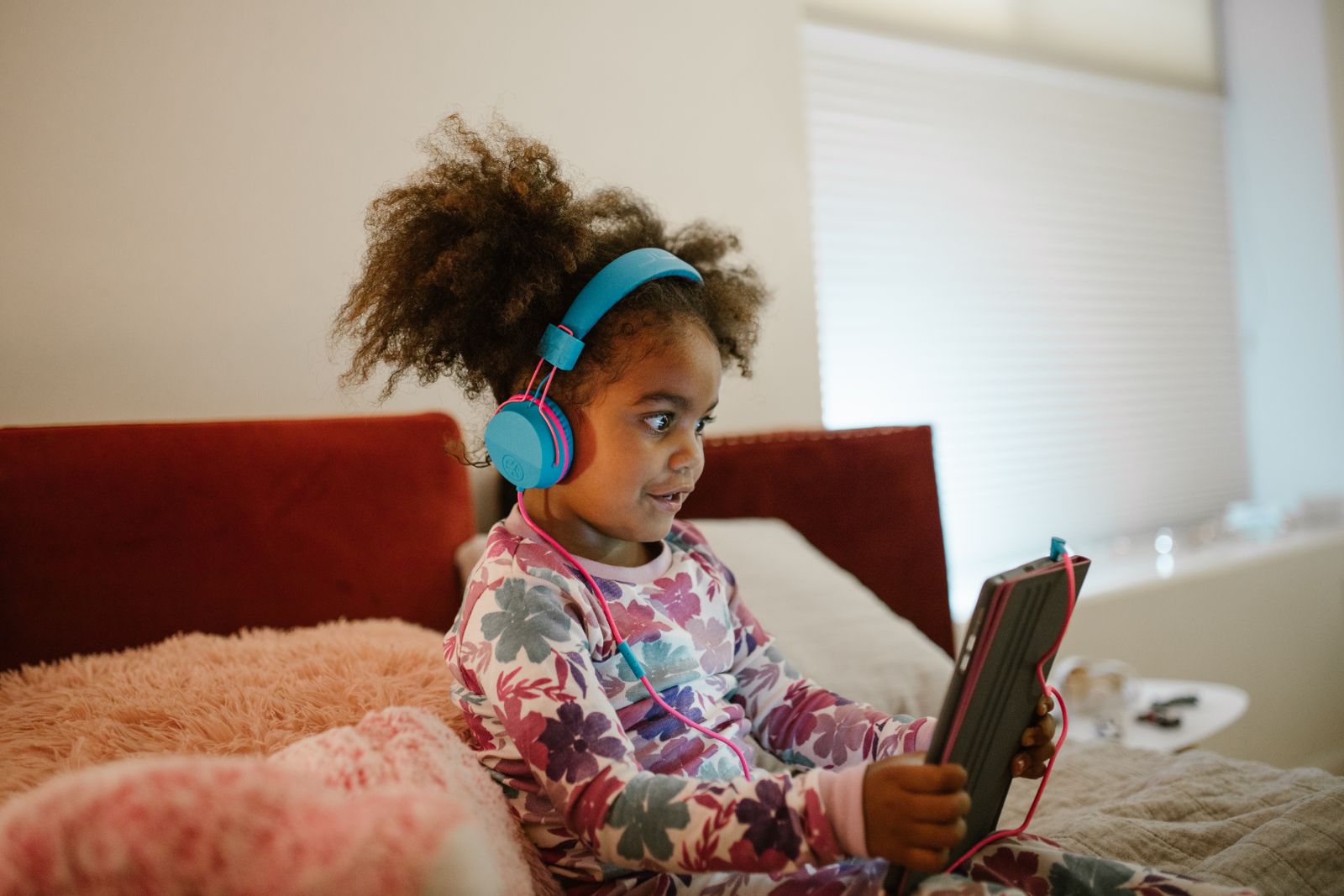
Many parents, however, have a genuinely great experience with kids’ active noise-cancelling headphones. These ANC headphones let older children calmly watch a cartoon without cranking the volume to maximum. For the little ones they create a quieter bubble for sleep, but it certainly isn’t true that a child would go deaf without them.
💡 Tip: Never use earplugs or noise-muffling ear defenders as a solution for pressure. These aids serve solely to dampen ambient sound and won’t equalise middle ear pressure at all, so they can’t relieve your child’s ear pain.
7. Liquids, baby milk and airport security
If you need to bring liquid medicines, baby food or water for formula on board, you must know the current rules. Baby food and breast or formula milk are exempt at airports and are generally excluded from the classic 100 ml per-container limit. You can pack exactly as much as your child will need for the whole journey.
But pay huge attention to which terminal you’re departing from, as rules can differ within the same airport. ⚠️ Some terminals now allow containers of up to 2 litres per person thanks to new CT scanners (a change that rolled out at Prague’s Terminal 2 from 1 October 2025, for example). Others — often the ones serving non-Schengen flights with carriers like Ryanair or Wizz Air — still enforce the strict 100 ml limit and only apply the exemption for baby food to larger volumes.
Experiences shared by many families across various forums show that security practice can differ dramatically abroad. Security staff may ask you to show the contents of baby milk, swab the surface of the bottle with a special strip, or even ask you to taste the liquid in front of them.
💡 Tip: If you want to avoid haggling over water for a toddler, take just an empty child’s bottle with a spout through security and fill it with fresh water from the airport fountains in the transit area past the scanners.
8. Motion sickness and vomiting high in the clouds
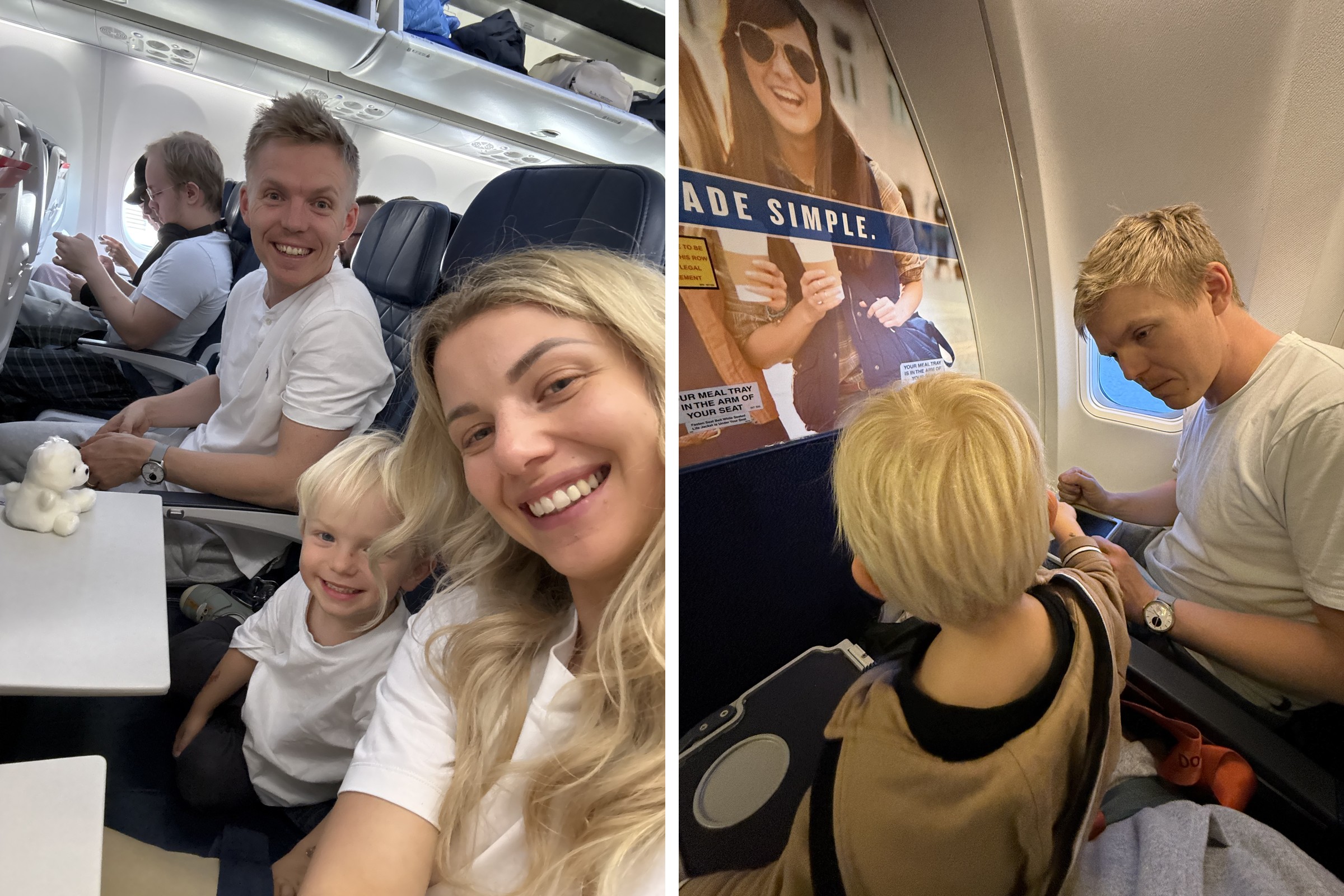
Motion sickness in children rarely gets discussed in connection with flying, but in practice it’s far more common than you’d expect. It’s not just about drops during unexpected turbulence — the movement of the plane, changes in altitude and banking in turns can all reliably upset a child’s stomach. A toddler’s brain, especially one constantly wriggling on your lap, gets confused signals about body position, which leads to nausea.
How best to prepare for motion sickness on a plane? The foundation of success is a strategic seat choice. ⚠️ If your child is prone to nausea in the car, parents on forums traditionally recommend securing a seat over the wing, where the movement of the plane should be felt a little less, and steering well clear of the tail — although there’s no hard scientific data for this. With older children, seating them by the window and letting them fix their eyes on the distant horizon works great.
Before the flight, skip heavy, fatty or overly sweet meals and go for dry crackers instead. Definitely don’t rely on that single paper bag you might find in the seat pocket in front of you. The British forum Mumsnet is full of stories about parents who spent a twelve-hour flight covered in their eight-month-old’s vomit.
💡 Tip: Always pack a spare change of clothes in your hand luggage. Pack a complete spare set not just for the child but for yourself too, because spending several hours of a flight in a vomit-covered T-shirt is a huge test of mental resilience.
9. Medicines on the plane: what to bring and what to skip entirely
The topic of sleep aids and artificially shifting the body clock during long flights is very sensitive among parents. ⚠️ In discussions you’ll often come across tips on giving children melatonin on a long-haul flight so they sleep peacefully the whole way. But children’s sleep experts are absolutely clear: giving melatonin to children under two is strongly and unconditionally discouraged.
For older children its use should be limited to specific cases after consulting a doctor. Never recommend or give classic children’s sleeping medicines, because their effect in a pressurised cabin can be unpredictable. ⚠️ On top of that, some children have a paradoxical reaction to melatonin, meaning instead of calming down they become incredibly wired and their sleep is drastically disrupted — something you definitely don’t want to discover high above the ocean.
Your basic onboard first-aid kit should be much more sober and practical. It should mainly contain the medicines your child takes regularly, with enough of a buffer in case of flight delays. Also pack a thermometer, plasters, disinfectant in a small pack under 100 ml, and possibly medicines containing paracetamol — but always after explicit consultation with your pediatrician.
💡 Tip: Always keep all important medicines with you in your hand luggage. Life-essential medicines don’t belong in the big suitcase in the hold, because a suitcase can be delayed at any transfer or lost completely.
10. Fear of embarrassment and how to handle the inevitable meltdowns
The biggest burden during a flight often isn’t carried by the children, but by nervous parents’ state of mind. The fear of how those around you will react and whether you’ll embarrass yourself is one of the most frequently mentioned worries that needlessly puts families off flying. But if you board with a knotted stomach, darting your eyes over the other passengers, that unease quickly transfers to your child.
And now to the very worst possible scenario. Your child simply decides they’ve had enough, starts crying and screaming and can’t be soothed. Half the plane turns around and you’d love to open the emergency exit. In that moment, stop and take a breath. You paid for your ticket exactly like the grumpy man in the suit two rows ahead, and your child has every right to be on that plane.
A plane is simply a means of mass transport, not a silent library reading room. People who demand absolute silence should pay for a private jet, and you certainly don’t have to apologise for the fact that your child exists and expresses emotions. When someone turns around and starts staring, breaking the tension with a direct, smiling comment helps — for example, explaining that your child is just teething.
💡 Tip: Parents’ experience is clear: you’re more scared than everyone around you. Don’t fret needlessly, it’ll all work out somehow, and even the worst flight always lands in the end and everyone scatters off home.
Practical summary and rough prices
Rules for travelling with small children change very quickly, so I’ve prepared two clear tables with current data for 2026. The first will help you figure out from what age each airline will actually let you board with a baby, and the second summarises the key changes in liquid rules at Prague’s largest airport.
| Airline | Minimum age of child for carriage | Important conditions and restrictions |
|---|---|---|
| :— | :— | :— |
| Smartwings | From 48 hours after birth | Up to 7 days of age a special medical form is required. |
| Ryanair | From 8 days of age | Children up to and including 7 days are strictly not allowed on board. |
| easyJet & Wizz Air | From 14 days of age | Applies as standard for children from two weeks to two years. |
| KLM | No age limit | A newborn can fly practically right from birth. |
If you’re departing from a major hub, pay huge attention to which terminal your flight operates from. ⚠️ The terminal isn’t decided by the airline (Ryanair flies from both) but by the destination. While the rules for baby food are more lenient, hard restrictions apply to your own water or coffee.
| Terminal (Prague Airport example) | Validity of new rules | Liquid limit per person | Exemption for baby milk |
|---|---|---|---|
| :— | :— | :— | :— |
| Terminal 2 (Schengen) | From 1 October 2025 | Up to 2 litres in one container (thanks to CT scanners). | Yes, no restriction. |
| Terminal 1 (non-Schengen) | Unchanged (also in 2026) | Max 100 ml in a clear bag. | Yes, but subject to detailed inspection. |
Where to go next
If your first trip into the clouds is coming up and you want everything under control, we’ve written more detailed guides on the blog. In them you’ll find out exactly what to pack in your first-aid kit, which toys work best, or where to head with the family.
- Flying with kids: the complete guide
- From what age can a child fly on a plane
- Travel first-aid kit: what belongs in it
- How to keep a child entertained on a plane
- Rome with kids
Frequently asked questions
Why do children’s ears hurt more during descent than during takeoff?
During ascent, the air in the middle ear naturally expands and escapes fairly easily. During descent, however, the ambient pressure increases and air must actively get back into the middle ear through the Eustachian tube, which requires swallowing. If the tube doesn’t open, the higher external pressure painfully pushes against the eardrum.
Can I fly with a child who currently has a runny nose?
A common post-nasal drip can be managed, but blocked sinuses significantly increase the risk of ear pain. Parents often apply nasal spray before takeoff and descent, but the use of any medications or sprays should always be consulted with your pediatrician beforehand. Flying is not allowed if there is a fever or ear infection.
Does a pacifier cause middle ear infections on planes?
A pacifier is a great aid during takeoff and landing for opening the Eustachian tube. ⚠️ While studies do link very frequent and long-term pacifier use with higher incidence of middle ear infections, use during a single holiday flight does not dramatically increase this risk.
Is it true that cabin noise can damage a child’s hearing?
⚠️ Claims that aircraft noise reaches 85 to 105 decibels and destroys hearing in 90 seconds come mainly from online shops selling hearing protection. The cabin has monotonous noise that is tiring, but won’t damage a healthy child’s hearing. Headphones primarily serve for better comfort and sleep.
Can I give my child melatonin for sleep on a long flight?
Child sleep experts agree that giving melatonin to children under two years old is strongly discouraged. For older children, it’s only possible after explicit consultation with a pediatrician. ⚠️ Additionally, in some children melatonin can have a paradoxical effect and instead of sleep, it may strongly stimulate them.
What are the rules for liquids and baby milk at the airport?
Baby milk and food have an exemption and you can bring enough for the entire journey. ⚠️ Be careful about terminals, though: regulations vary by airport—some newer terminals allow up to 2 litres per container, while others maintain the strict 100 ml limit, and baby milk may undergo detailed screening.
What to do when a child is prone to motion sickness and vomiting?
The movement and tilting of the aircraft itself can easily upset a child’s stomach. ⚠️ Experienced parents recommend reserving a seat over the wing, avoiding heavy meals before the flight, and most importantly having sturdy bags and a complete change of clothes for both the child and yourself ready in your carry-on luggage.
Do I have to pay for an infant who sits on my lap the entire time?
Yes, most airlines charge a fee for an infant without their own seat; for example, Ryanair typically charges €25 per segment. ⚠️ While the revision of EU Regulation 261/2004 was approved in July 2026 and brings free seating next to a parent for children under 14, it won’t actually come into effect until mid-2027 in practice.
Tips and Tricks for Your Vacation
Don’t Overpay for Flights
Search for flights on Kayak. It’s our favorite search engine because it scans the websites of all airlines and always finds the cheapest connection.
Book Your Accommodation Smartly
The best experiences we’ve had when looking for accommodation (from Alaska to Morocco) are with Booking.com, where hotels, apartments, and entire houses are usually the cheapest and most widely available.
Don’t Forget Travel Insurance
Good travel insurance will protect you against illness, accidents, theft, or flight cancellations. We’ve had a few hospital visits abroad, so we know how important it is to have proper insurance arranged.
Where we insure ourselves: SafetyWing (simple monthly subscription) and TrueTraveller (for extra-long trips).
Find the Best Experiences
Get Your Guide is a huge online marketplace where you can book guided walks, trips, skip-the-line tickets, tours, and much more. We always find some extra fun there!


