

When it comes to kids’ airplane packing, don’t pack the carry-on just for the flight itself — pack it for the worst-case scenario, the one where your checked bag never shows up. It needs to hold everything essential for the first twenty-four hours in your new destination, so you don’t have to go hunting for an open shop the moment you land.
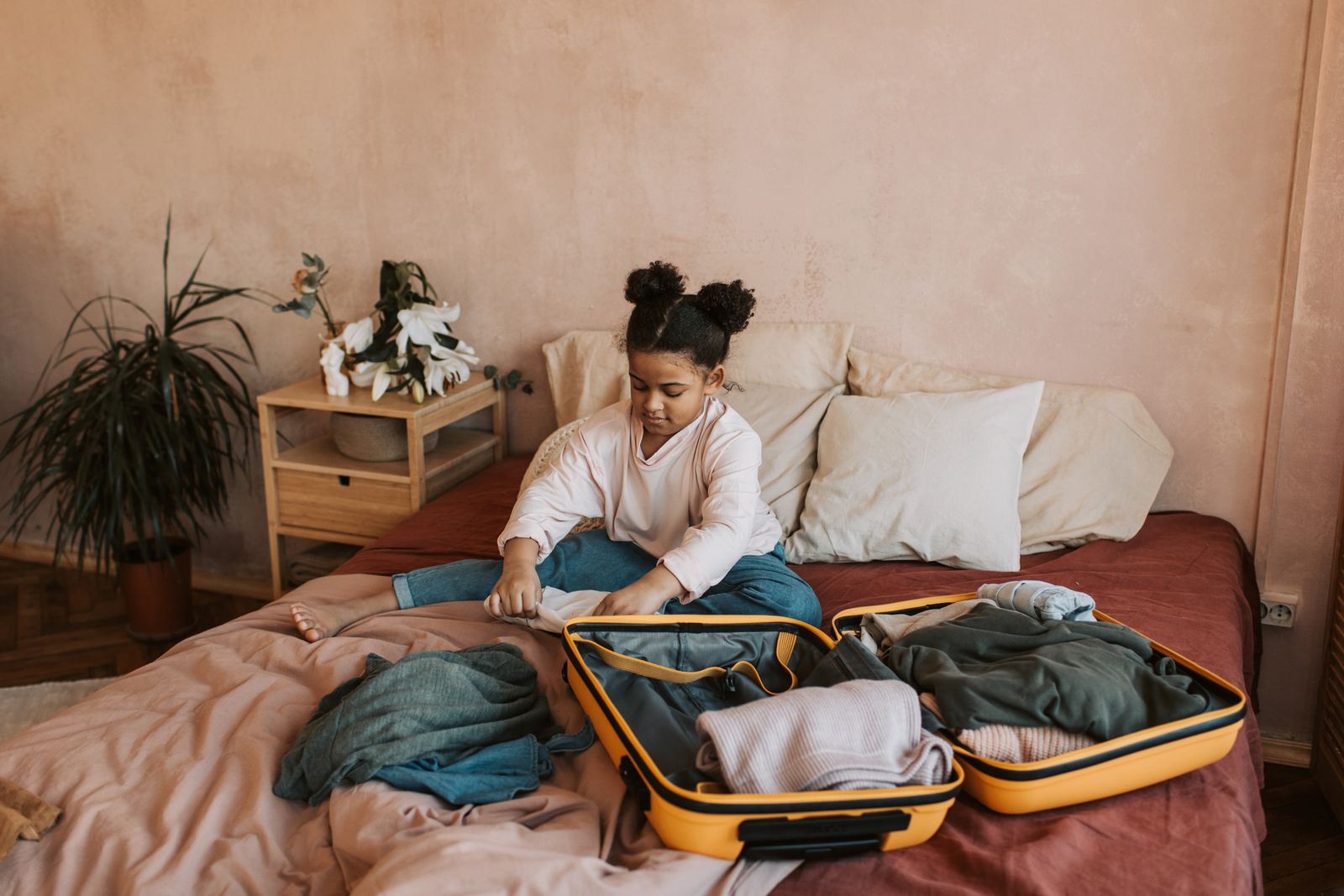
Besides medicine, travel documents and enough food, don’t forget a change of clothes in case of an accident. Most parents remember a clean T-shirt for their child, but they often forget to pack a spare for themselves.
I’ve put together specific packing lists neatly divided by your child’s age. Read through which toys work best and what to watch out for when packing liquid pouches.
TL;DR
- Pack for the worst-case scenario: Always plan for a three-hour delay on the tarmac and a checked bag that doesn’t arrive.
- A change of clothes for you: An adult T-shirt is the most commonly forgotten item — the one that saves your sanity when an accident happens.
- Check the liquid rules at your airport: Rules now vary widely by airport and terminal — some hubs allow containers up to 2 litres thanks to new scanners, while many still enforce the strict 100 ml limit.
- Baby food is exempt: Infant formula and milk aren’t subject to the 100 ml limit, but sunscreen is (don’t count it as medicine).
- Ziploc bags are a must: Airtight resealable bags save the rest of your backpack from wet or dirty items.
- Dole out the entertainment gradually: Don’t pull out toys and the tablet before the plane has even taken off — save them for when real boredom hits.
10 Things Not to Forget
Packing for a trip with a child is a whole new discipline where you learn something new every year. Let’s look at the most important points.
1. What Must Always Be in Your Carry-On
💡 Tip: Pack for the situation where the flight is delayed and your checked bag doesn’t arrive at all. Everything you absolutely need to survive the first 24 hours has to be with you in the cabin.
Picture a perfectly ordinary situation. You board the plane, get settled, the doors close — and then the captain announces that due to a technical issue or the weather you’re facing a delay. You sit on the tarmac for a good three hours and can’t get off. Or, even worse, after a long flight you discover that your suitcase has been lost and all you have is what’s in your hands.
These crisis scenarios are exactly what you pack a child’s carry-on for. Never pack for the ideal flight, because that rarely happens with small children. The cabin backpack should hold a complete survival kit that keeps you calm even when everything goes wrong. The rules on exact bag dimensions and what your child gets for free vary by airline and by the child’s age, so always check them carefully or take a look at our article Luggage for Children on a Plane.
The key is to have everything split into logical groups, so you’re not blindly digging at the bottom of the bag for wet wipes when an accident strikes. Use small fabric pouches or clear cases so you can see at a glance where to reach. It’ll save you an unbelievable amount of stress.
2. A Change of Clothes for Parents and Ziploc Bags
💡 Tip: A plain cotton T-shirt for an adult takes up minimal space in the bag, but in a crisis it literally saves your dignity.
Every parent knows to pack a change of clothes for their child (and most pack two complete sets straight away). But what the vast majority of parents forget on their first flight is a change of clothes for themselves. Seasoned travellers on forums describe it perfectly and bluntly.
One well-known story from the British forum Mumsnet describes a mother who spent a twelve-hour flight covered in vomit from her eight-month-old, who started throwing up shortly after take-off. Spending hours in an air-conditioned cabin in a T-shirt your child has spilled juice on or soiled is absolute purgatory. Roll one spare T-shirt into your bag, and ideally a pair of light leggings too.
Always add at least two empty resealable plastic bags (so-called Ziploc bags) alongside the clothes. When a clothing mishap does happen, you need somewhere to seal the dirty, wet items airtight. That way you stop moisture from ruining the rest of your bag and prevent smells from spreading in the cramped cabin.
3. Nappies, Changing and Hygiene On Board
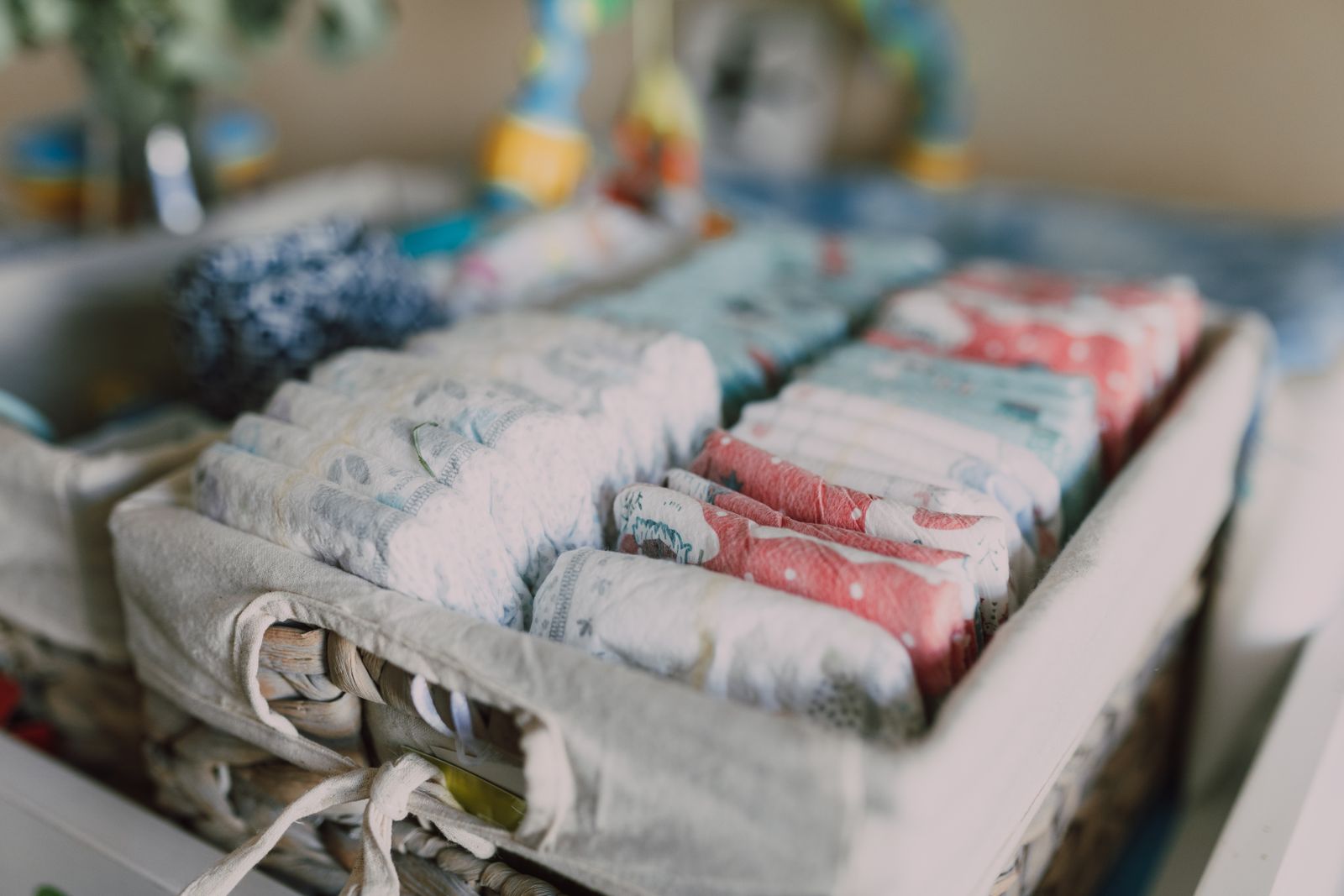
💡 Tip: Work out how many nappies you’ll use for the whole journey, from your front door to the hotel, and add a sensible reserve for delays — but don’t drag any more than that into the cabin.
A common mistake nervous parents make is trying to cram a half-holiday supply of nappies into the carry-on. Nappies are bulky and eat up all your precious space. Remember, you can buy nappies literally anywhere in the world, even in the most out-of-the-way little shops. For the plane you only need enough to cover the journey and a possible delay of a few hours.
As for the changing itself, cabin crew swear by one crucial rule. Do a so-called double-nappy change right before boarding, while you’re still in the terminal. The changing tables in aircraft toilets are extremely small, and wrestling a bigger toddler onto one feels like a wrestling match in a phone booth.
Here comes an absolutely critical warning. Used nappies always go in the bin — never throw them into the aircraft toilet. Aircraft toilets work on a vacuum-suction principle, and a nappy full of absorbent gel will jam the system instantly (putting the toilet out of action for the whole cabin). For children under 5 on long flights, consider using pull-up nappy pants. When the plane hits turbulence and the seatbelt sign comes on, your child might not be allowed to the toilet for an hour, and pull-ups act as a safety net.
4. Medicine and a First-Aid Kit in the Carry-On (the Sunscreen Trap)
💡 Tip: Medicine always belongs in the cabin — never put it in a checked bag that could get lost or freeze in the hold.
The contents of your cabin first-aid kit should cover acute situations (fever, pain), not a month’s worth of chronic treatment. The basics for the cabin include fever medicine and a reliable thermometer. Always discuss specific products with your paediatrician in advance. For larger boxes of prescription medication, carry a doctor’s note in English, though airport practice varies ⚠️ (you must always follow the instructions of security staff).
But watch out for the trap that so many families fall into. Sunscreen does not count as medicine and is subject to the standard liquid limits. Liquid rules now differ from airport to airport — some hubs have introduced new CT scanners that allow containers up to 2 litres, while many others (including terminals used by low-cost carriers like Ryanair and easyJet) still enforce the 100 ml limit in a one-litre bag. Always check the rules for the airport you’re flying from and back to.
If you’re thinking of calming your child before the flight with some kind of medicine, be very careful. Don’t give melatonin to children under 2, and for older children always consult a doctor first. We never recommend giving children sleep medication just for convenience on a plane, because in a pressurised cabin they can react unpredictably.
5. Food and Drink On Board
💡 Tip: Baby food and breast milk are exempt from the 100 ml limit — you can bring the amount you need for the journey.
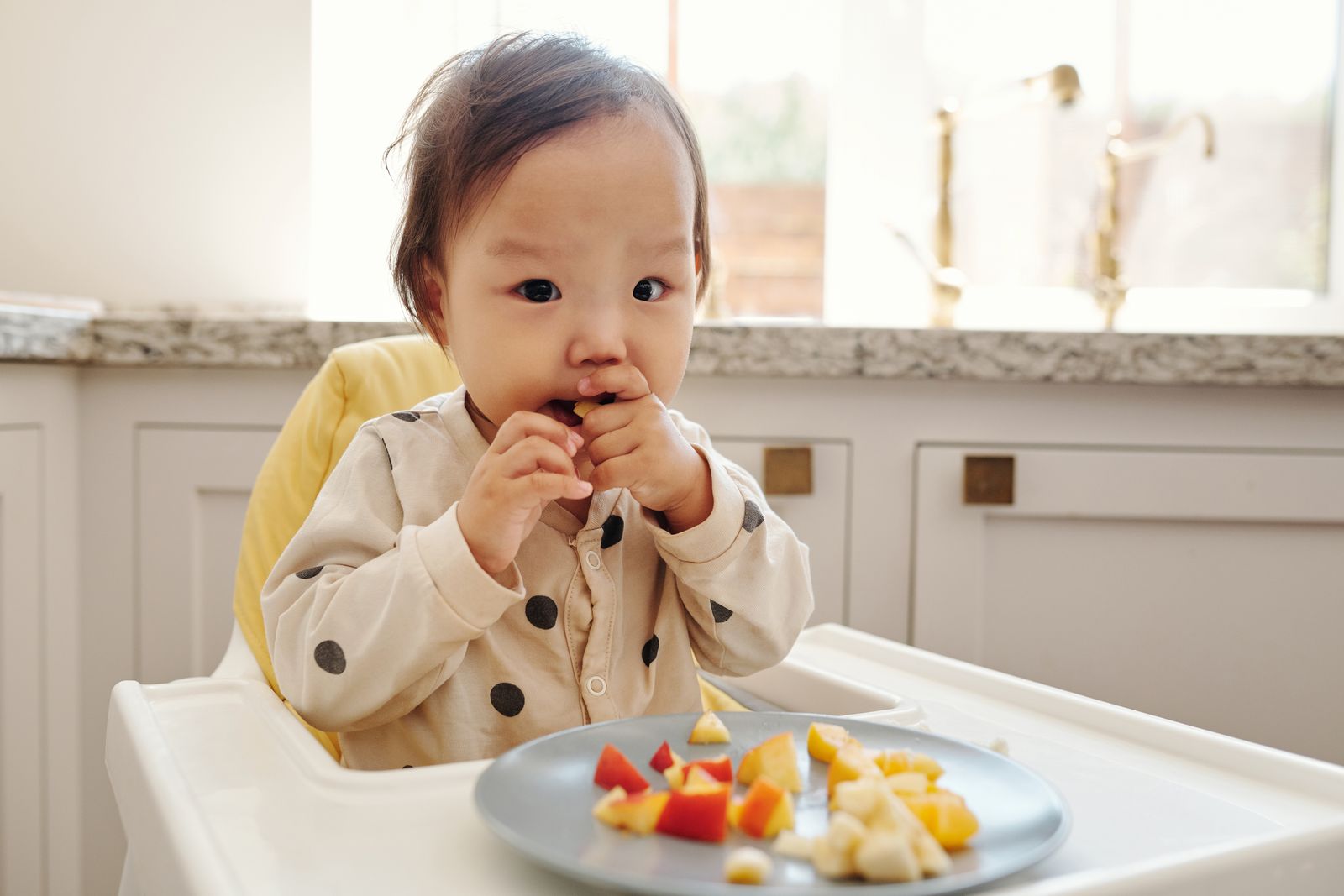
Food and drink are key to a happy child on a plane. While adults have to buy water after security, baby food (snacks, pouches) and milk are exempt from the limit. You don’t have to squeeze them into the clear one-litre bag. Just bear in mind that security may ask you to show the contents or even taste them (practice varies between airports ⚠️).
Don’t rely on the flight attendants — keep an empty resealable water bottle handy. You carry it through security empty and then easily fill it at a drinking fountain at most airports. The air on a plane is very dry and children need to drink far more often, so waiting for the drinks trolley really doesn’t pay off.
When choosing snacks, go for dry, long-lasting items. Crackers, cut-up fruit or snack bars work brilliantly. Avoid anything that melts, crumbles or sticks. Feeding in small pieces also takes plenty of time and naturally keeps your child occupied.
6. How to Organise the Bag So You Can Actually Find Things
💡 Tip: Use compression bags to separate the kids’ things from yours and save precious space in the backpack.
Packing for a family holiday sometimes feels like moving out of a small flat. If you’re flying with a low-cost carrier on the basic fare (just a bag under the seat), a child’s little backpack simply isn’t enough for the whole holiday. Many parents make the mistake of giving the toddler its own backpack, which the child gets bored of after five minutes — leaving the parent to carry it.
Rather than having no free hands, a much better strategy is to buy at least one adult a higher fare (Priority), which includes a proper wheeled cabin case. You can wheel the case with one hand, wear your backpack on your back, and keep your other hand free for your child. Since 12 November 2025, Ryanair also requires boarding passes exclusively in the app, so you’ll constantly need a hand on your phone.
Organise the bag so the most important things are within reach. Wet wipes, pain medicine and a dummy must never be at the bottom. Put the spare clothes in a compression bag, roll the air out of it and stash it right at the bottom (you won’t need it straight away).
7. A List for Babies Under Six Months
💡 Tip: You don’t need complicated toys — at this age a baby mainly needs sensorimotor stimulation and your closeness.
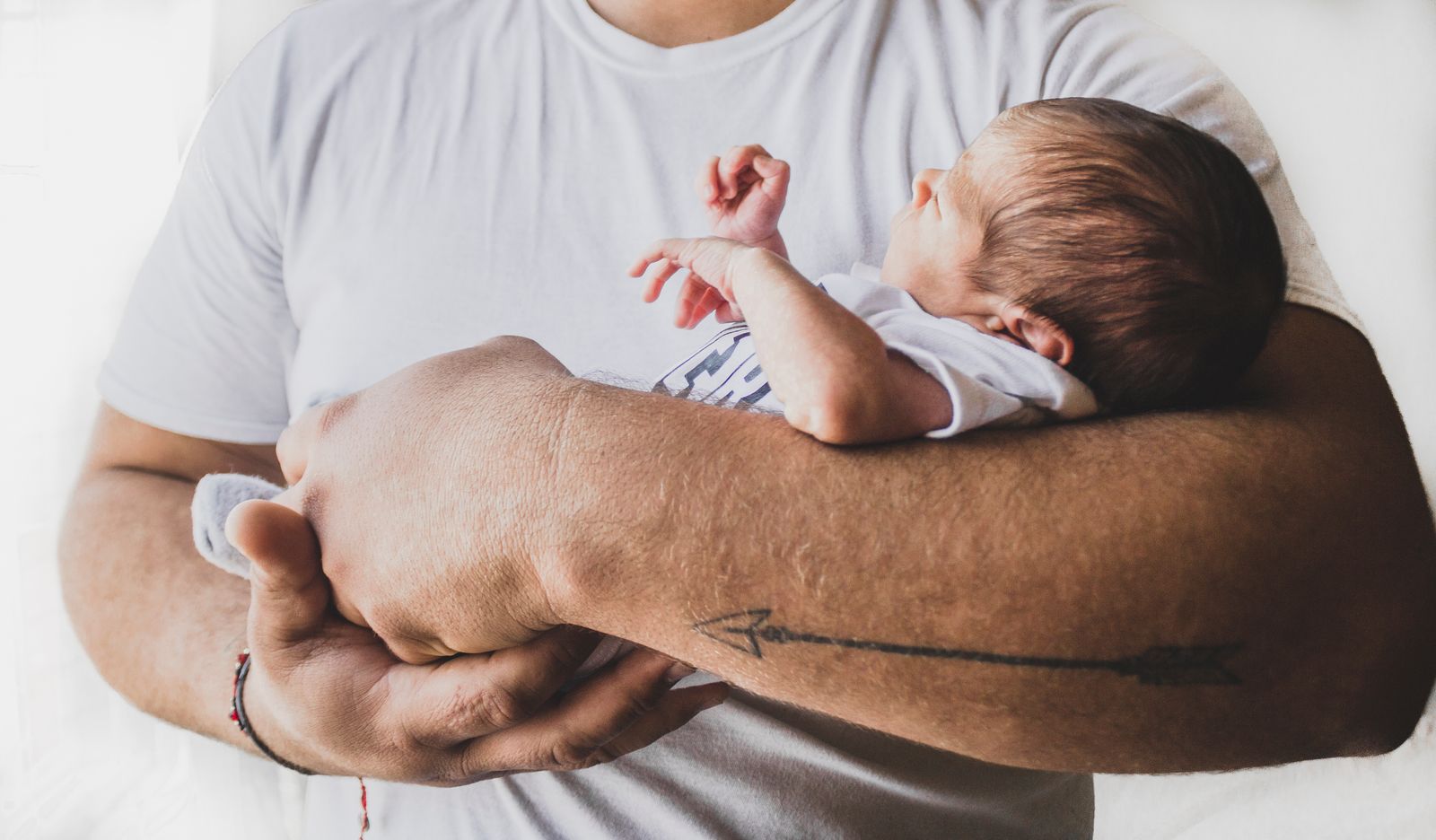
Travelling with babies under six months is, paradoxically, often the easiest, even though it’s what scares parents the most. A baby usually sleeps through most of the flight if you keep them in a carrier or on your lap. The essentials are plenty of milk (whether breast milk or formula) and a dummy, which helps equalise ear pressure during take-off and landing.
Pack a crinkly cloth book or a toy in contrasting colours. You really don’t need much more. It’s more important to think about your baby’s temperature comfort. There’s often a draught from the floor of the plane and the air conditioning can be aggressive, so pack warm socks and a light cotton blanket to cover the baby when they fall asleep.
For yourself, don’t forget to pack enough breast pads (if you’re breastfeeding) and a disposable changing mat. It’s handy not just for the toilet changing table, but also as a clean surface if you have to lay the baby down on airport seats while waiting for a delayed flight.
8. A List for Babies From Six Months to One Year
💡 Tip: A plain packet of paper tissues makes a genius toy — let them pull out one tissue after another.
This is the age when a child takes in their surroundings far more intensely and won’t just sleep. At the same time they don’t yet understand cartoons on a tablet, so all the entertaining falls on your shoulders. The rescuers tend to be utterly ordinary things. Plain stickers work brilliantly — stick them on the back of their hand and let them try to peel them off.
An empty plastic bottle also does the trick — throw in a few pieces of dry pasta as a rattle (just make sure it’s shut tightly). At this age, restricted movement starts to become a problem. The child wants to crawl or stand up, but has to sit on your lap.
The rule is: only start doling out entertainment the moment boredom sets in. Boarding and taxiing on the runway are visually interesting enough on their own. Let your child watch out the window and look at the safety card. Only once they start getting fussy should you pull out your first trump card.
9. A List for Toddlers From One to Three Years
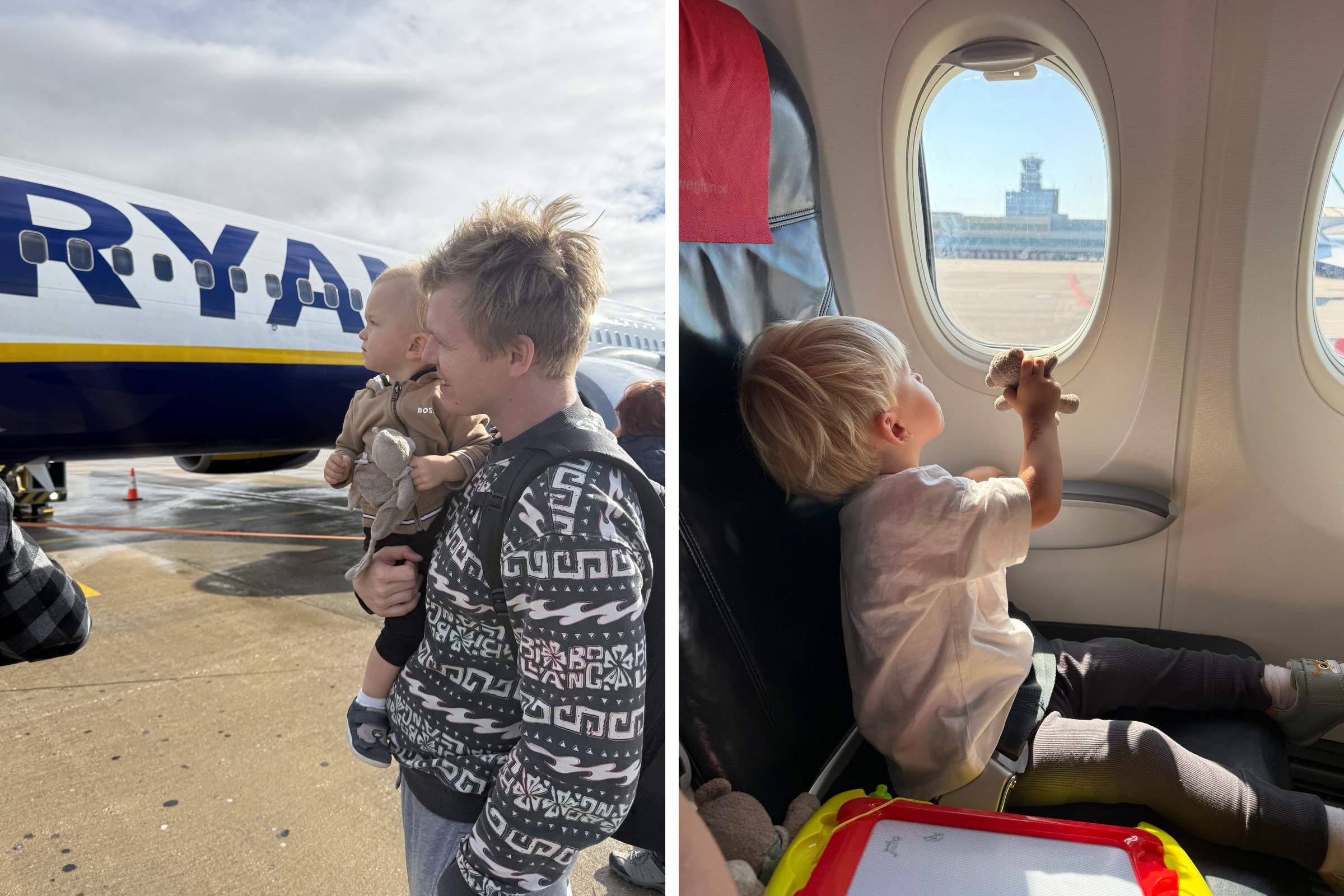
💡 Tip: Paper masking tape printed with a road stuck onto the fold-down tray table will keep a toddler busy more reliably than expensive toys.
Parents agree that the age between one and three is the hardest of all for travel. The child already wants to walk, has a mind of their own, but still can’t hold their attention on a film. Bring a magnetic drawing board (no markers to ruin the seat) or water colouring books, where the brush only fills with clean water.
Another tried-and-tested trick is reusable window stickers or a quiet book (an interactive fabric book). The zero-cost emergency option is a pad of sticky notes (Post-its) and a pen. Draw faces on them and let your child stick them all over the seat in front of you. They peel off easily and leave no glue behind.
An important rule the whole cabin will appreciate: nothing that makes noise belongs on a plane — nothing that plays tunes, flashes or spills easily. Avoid anything you can’t quickly scoop back into a box with one hand when the plane suddenly lurches. For more tips, check out our article How to Entertain a Child on a Plane.
10. A List for Pre-Schoolers and School-Age Kids
💡 Tip: On a plane, a tablet is a capsule outside normal time and space — drop the parental guilt and use it to your advantage.
With pre-schoolers and school-age kids, focused activities and storytelling start to work. Pack sticker books, a travel version of a board game (like Dobble or Uno) or building blocks with bigger pieces. A tried-and-tested free trick is to grab a printed toy or perfume catalogue from the duty-free shops at the airport. Kids can flick through and choose from it for tens of minutes.
But the absolute essential is a well-prepared tablet. In-flight Wi-Fi is expensive or doesn’t work, so don’t rely on streaming. Download at least four times what you plan to play (kids often switch, and what they love at home bores them quickly in the air). Don’t forget a strong power bank.
To stop your child from disturbing the people around you, headphones are an absolute must. Look for a pair with a volume limiter, so your child doesn’t damage their hearing in the noisy cabin. They must also have a wired connection option, because not every in-flight system can be paired wirelessly over Bluetooth.
Practical Summary and Rough Prices
When packing your cabin bag, you constantly have to balance airline limits against airport rules. To keep it all straight, I’ve put together two key tables to help you get your head around the rules for 2026.
Table 1: Airport Liquid Limits (2026) Liquid rules increasingly vary depending on which terminal you’re flying from and whether it has the new CT scanners. Baby food and milk are exempt, but the rest of your cosmetics (and sunscreen) are subject to these limits.
| Terminal type | Limit for ordinary liquids | Take out of the bag? | Who flies from here |
|---|---|---|---|
| :— | :— | :— | :— |
| Older terminals (no new scanners) | Max 100 ml in a one-litre clear bag | YES (everything into a plastic tray) | Many low-cost carriers, e.g. Ryanair, Wizz Air |
| Terminals with CT scanners | Up to 2 litres at some hubs ⚠️ | NO (thanks to the new CT scanners) | Selected upgraded terminals |
Note: Practice at foreign airports on the way back can differ, so we always recommend planning for the stricter 100 ml option if you’re not sure.
Table 2: Baggage Allowance for Babies (under 2, without their own seat) If you don’t buy your child their own seat (they fly on your lap), they’re not entitled to a standard carry-on. Instead, airlines offer a so-called “baby bag”. Here’s an overview of the three most common low-cost carriers.
| Airline | Baby Bag | Free pushchair / car seat |
|---|---|---|
| :— | :— | :— |
| Ryanair | 1 bag up to 5 kg (max. 45 × 35 × 20 cm) | 2 items of equipment free |
| Wizz Air | 1 bag up to 10 kg (max. 40 × 30 × 20 cm) | 1 item of equipment free |
| easyJet | Changing bag (max. 45 × 36 × 20 cm) | 2 items of equipment free |
Where to Next
If your first flight is coming up and you want to be absolutely sure you haven’t forgotten anything, read through our other detailed guides. You’ll find answers to everything, from choosing the right suitcase to your first-aid kit.
- Flying With Kids: The Complete Guide
- Luggage for Children on a Plane
- Airplane Backpack: How to Choose the Right One
- Travel First-Aid Kit: What Belongs in It
- How to Entertain a Child on a Plane
Frequently Asked Questions
When should I start giving toys and a tablet to my child?
The biggest mistake is pulling out entertainment before takeoff. Boarding the plane is visually interesting in itself. Introduce toys gradually (roughly every 20 minutes), only when the initial excitement wears off and real boredom sets in. Save the tablet as your absolute last resort, when your child is already tired.
Can I bring children’s snacks and water on board?
Yes, baby food and breast milk (including formula) are exempt from the 100 ml limit. You can bring the amount needed for the journey. However, security may ask you to open the bottle or taste it. For regular water for older children, bring an empty bottle and fill it after security.
What should I do if my child’s ears get blocked during the flight?
Ear pain is caused by pressure changes, most commonly during descent before landing. For babies, give them a pacifier during takeoff and landing or breastfeed them, as swallowing helps equalize pressure. For older children, offer a drink from a bottle with a straw, crunchy snacks, or let them chew. If your child has a cold, consult your pediatrician about nasal spray.
Can I give my child sleep medication before the flight?
Never give children sleep medication just for your convenience during the flight. Melatonin must not be given to children under 2 years old and for older children it must be explicitly approved by a doctor. In the pressurized cabin, children may react paradoxically to sedatives with hyperactivity, which only makes the situation worse.
Can a toddler carry their own backpack?
The reality is that a child’s excitement about their own backpack will evaporate after five minutes at the airport. If you’re flying on a basic fare with only a backpack, don’t give your child a heavy bag, because you’ll end up carrying it. Better to give them just a light toy and pack the rest in your own luggage.
How do I change my child on a plane when there’s so little space?
Changing tables on airplane toilets are extremely cramped. Change your child right before boarding while still in the terminal. If you must change during the flight, have a disposable changing mat with you. Always throw dirty diapers in the bin, never toss them in the toilet or you’ll clog it.
What headphones are best for children on a plane?
The key feature is a volume limiter, so your child doesn’t damage their hearing by turning up the volume too high in the noisy airplane environment. Choose headphones that have the option of a classic wired connection, as not all in-flight entertainment systems or children’s toys support modern wireless Bluetooth connectivity.
Tips and Tricks for Your Vacation
Don’t Overpay for Flights
Search for flights on Kayak. It’s our favorite search engine because it scans the websites of all airlines and always finds the cheapest connection.
Book Your Accommodation Smartly
The best experiences we’ve had when looking for accommodation (from Alaska to Morocco) are with Booking.com, where hotels, apartments, and entire houses are usually the cheapest and most widely available.
Don’t Forget Travel Insurance
Good travel insurance will protect you against illness, accidents, theft, or flight cancellations. We’ve had a few hospital visits abroad, so we know how important it is to have proper insurance arranged.
Where we insure ourselves: SafetyWing (simple monthly subscription) and TrueTraveller (for extra-long trips).
Find the Best Experiences
Get Your Guide is a huge online marketplace where you can book guided walks, trips, skip-the-line tickets, tours, and much more. We always find some extra fun there!


