

When the city slowly wakes, the scent of melted butter drifts from corner bakeries into the cool morning air, and the streets don’t yet belong to honking scooters — it’s quite possibly the most beautiful city in the world. Sitting in a wicker chair at a tiny round table, sipping strong coffee and watching Paris come to life is pure poetry. But then your toddler decides it’s time to sprint, you’re trying to squeeze a wide pushchair through a gap between tables that’s roughly the width of a shoebox, and the waiter is burning holes through you with his stare. The romance from the films suddenly crashes headfirst into reality. Because the Paris you see on postcards doesn’t know about toddler meltdowns or missing lifts in the Métro.
We discovered that the real, everyday Paris with kids can be tough and unforgiving for parents with little ones. Narrow cobblestone pavements in historic quarters will test your patience, endless staircases underground will test your fitness, and finding a changing table sometimes feels like searching for the Holy Grail.
At the same time, though, this is a city that offers children absolutely incredible experiences. It’s a place where a two-year-old can watch a puppet show that’s nearly a hundred years old with their mouth wide open, feed ducks by an enormous fountain in immaculate parks, and taste their very first truly good buttery madeleine. As a vegetarian with a toddler, I found that there are surprisingly brilliant options here — you just need to know where to go. All it takes is military-grade logistics, zero expectations about flexible dining, and a baby carrier as your ultimate backup plan.
In this article, you’ll find our complete, hard-won guide to a family holiday in Paris. Parks, restaurants, nappy-changing missions, pushchair nightmares, and genuine fairytale spots — everything we experienced first-hand with Lukáš and Jonáš. In short, everything you need so that your Paris with kids trip is more fairytale than purgatory.
TL;DR
- The Métro with a pushchair is a punishment. Only Line 14 is fully step-free. Rely on buses, which have low floors, and steer clear of the transfer nightmare at Châtelet-Les-Halles.
- Changing tables in bistros essentially don’t exist. Carry a foldable wipe-clean changing mat and count on large department stores (Galeries Lafayette) or parks.
- The number-one green oasis for kids is Jardin du Luxembourg. You’ll find the massive fenced Poussin Vert playground, toy boats on the fountain, and the Guignol puppet theatre.
- Mealtimes are sacred. Lunch is served strictly between 12:00 and 14:30. If your child is hungry at five in the afternoon, look for bakeries or brasseries with a “service continu” sign.
- “Bonjour” is the magic word. You must enter any shop or restaurant with a loud greeting — otherwise you’ll be ignored, even if you have a screaming child on your arm.
- Avoid the crowds. Don’t go up the Eiffel Tower — head to a department store rooftop instead. In the Louvre, last no more than two hours with kids. And at Versailles, go straight to the gardens, where you’ll easily spend 6–7 hours anyway.
- Watch out for 2026. The children’s section at Cité des Enfants La Villette (ages 2–7) is closed until 9 June 2026. The gardens at Giverny are closed on 19 and 20 September 2026.
- Disneyland Paris is brilliant for toddlers. Under-3s get in free, and Fantasyland has a huge number of gentle rides with no height restriction.
- Ignore the street scammers. People with petitions near monuments, bracelet sellers on Montmartre, and anyone who “finds” a gold ring in front of you — just walk straight past them.
The full destination guide: Paris — guide and what to see
When to visit Paris with kids: Seasons and weather
Picking the right month for a family trip is half the battle. Paris completely reinvents itself with every season, and what’s a romantic stroll in the rain for a child-free couple becomes a logistical nightmare with a pushchair. Lukáš and I love those sweet-spot moments when you can sit on a terrace in a light jumper and kids can run freely around the parks without risking heatstroke.
Spring and autumn are a safe bet
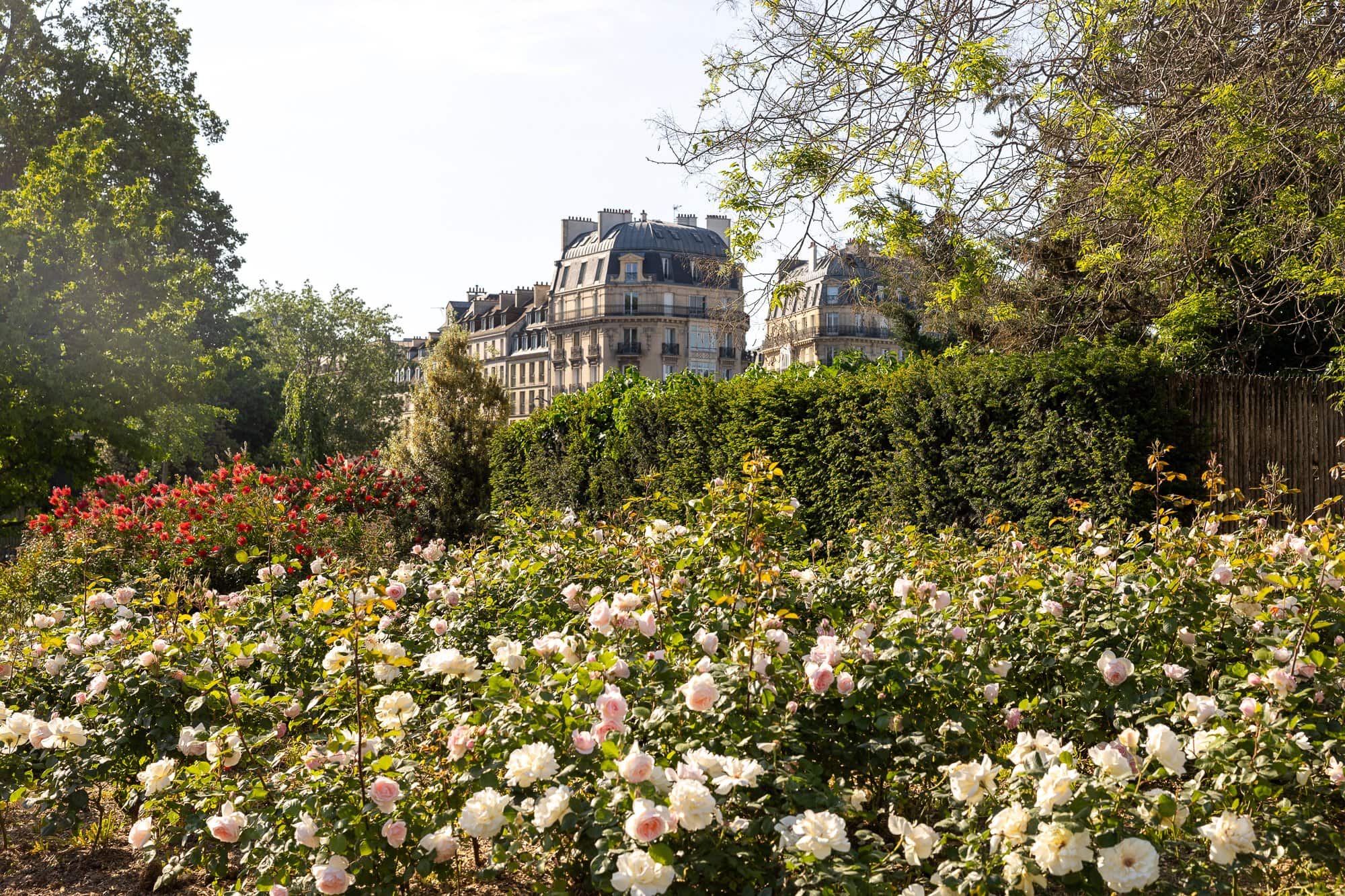
If you can, aim for May, June, September, or October. May is hands-down the most beautiful month. Chestnut trees are in bloom, the days stretch out nicely, and you can easily picnic in the parks.
Equally magical is the period from mid-September to late October. The season known as la rentrée (the return after summer holidays) brings a fresh energy to the streets. The trees in the Luxembourg Gardens turn incredible shades of gold, and the morning mists over the Seine have a charm all their own. The weather tends to be stable, with temperatures hovering around 15–20°C — absolutely ideal for toddlers on the move. That said, always pack a windbreaker and a rain cover for the pushchair.
💡 Insider tip: If you’re visiting in autumn, make the most of the early sunsets. You can show the kids the sparkling Eiffel Tower (it twinkles for five minutes on the hour after dark) without having to push their bedtime too late.
Months to avoid
Give August a wide berth if you’re travelling with family. Parisians flee the city en masse for the coast during this month. While the streets empty of locals, many of the best independent bistros and family-run cafés will have a fermeture annuelle (annual closure) sign on the door. The tarmac melts under scorching heat, and the historic Métro without air conditioning is unbearable.
Winter from January to March tends to be damp, grey, and drizzly. With a toddler who needs outdoor playground time, that means a lot of hours spent drying clothes back at the hotel. Also watch out for 12 April 2026, when the Paris Marathon takes place and traffic across the city essentially grinds to a halt.
💡 Insider tip: If you do end up visiting in summer 2026, pack swimwear for the kids. For the first time in over a century, supervised swimming spots are opening directly in the River Seine during July and August. Water quality has been carefully monitored since the Olympics.
Where to stay in Paris with family: Neighbourhoods and hotels
Your choice of neighbourhood will make or break the entire experience — and your budget. Paris is divided into twenty arrondissements that spiral clockwise from the historic centre near the Louvre. Finding affordable accommodation in the centre is nearly impossible, but if you know where to look, you can find a great compromise between price, safety, and accessibility.
With a pushchair and Jonáš, give a wide berth to the northern part of the 10th arrondissement around Gare du Nord and Pigalle at night in the 18th. We once got lost there with a friend at 2am — not an experience you want to repeat with a two-year-old. 😅
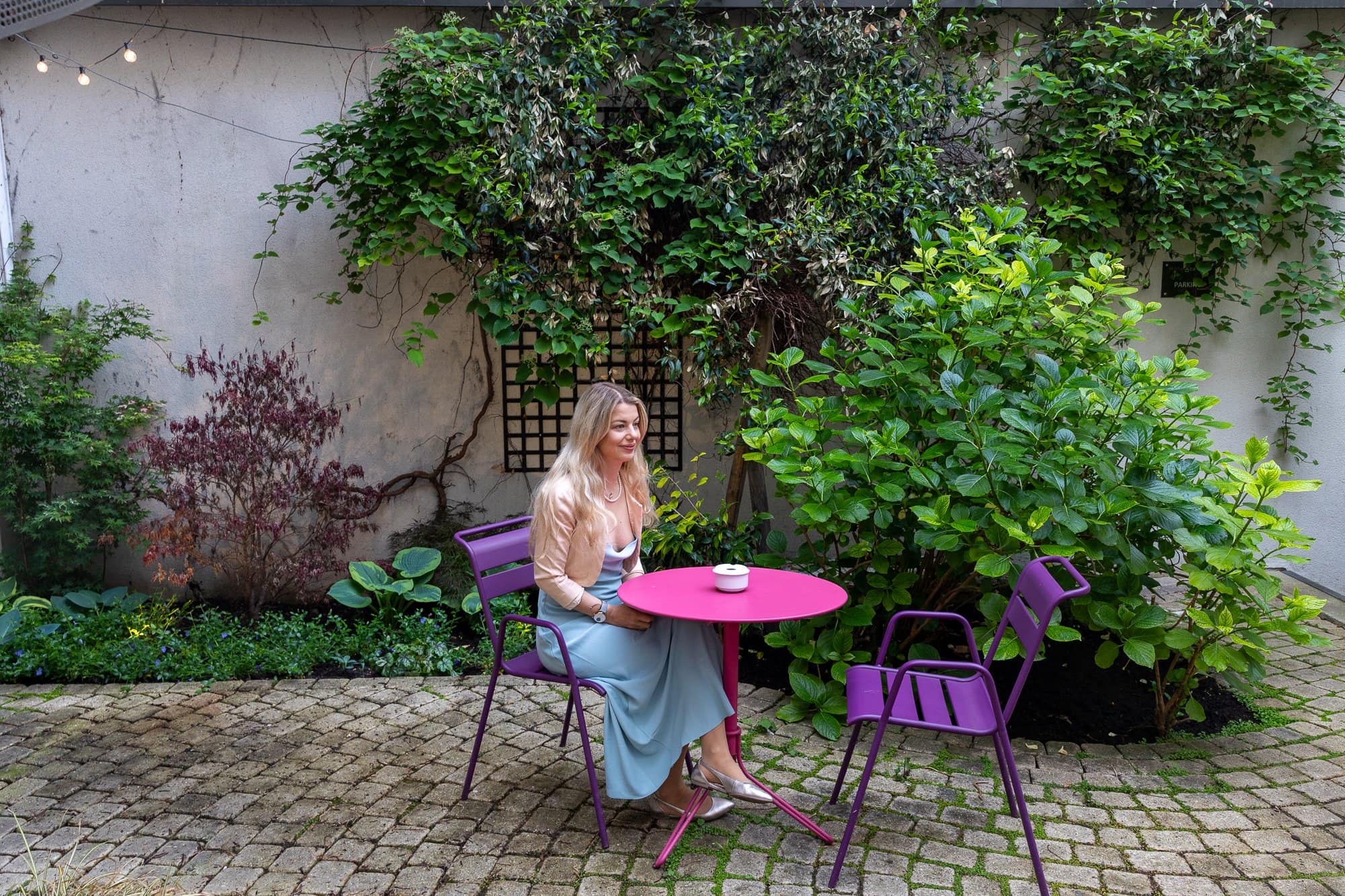
After a long search, we chose Hôbou, an authentic French boutique hotel in Boulogne-Billancourt (you can book it here). It looks almost understated at first glance, but within the first few hours you’ll fall in love with it.
Best family-friendly neighbourhoods
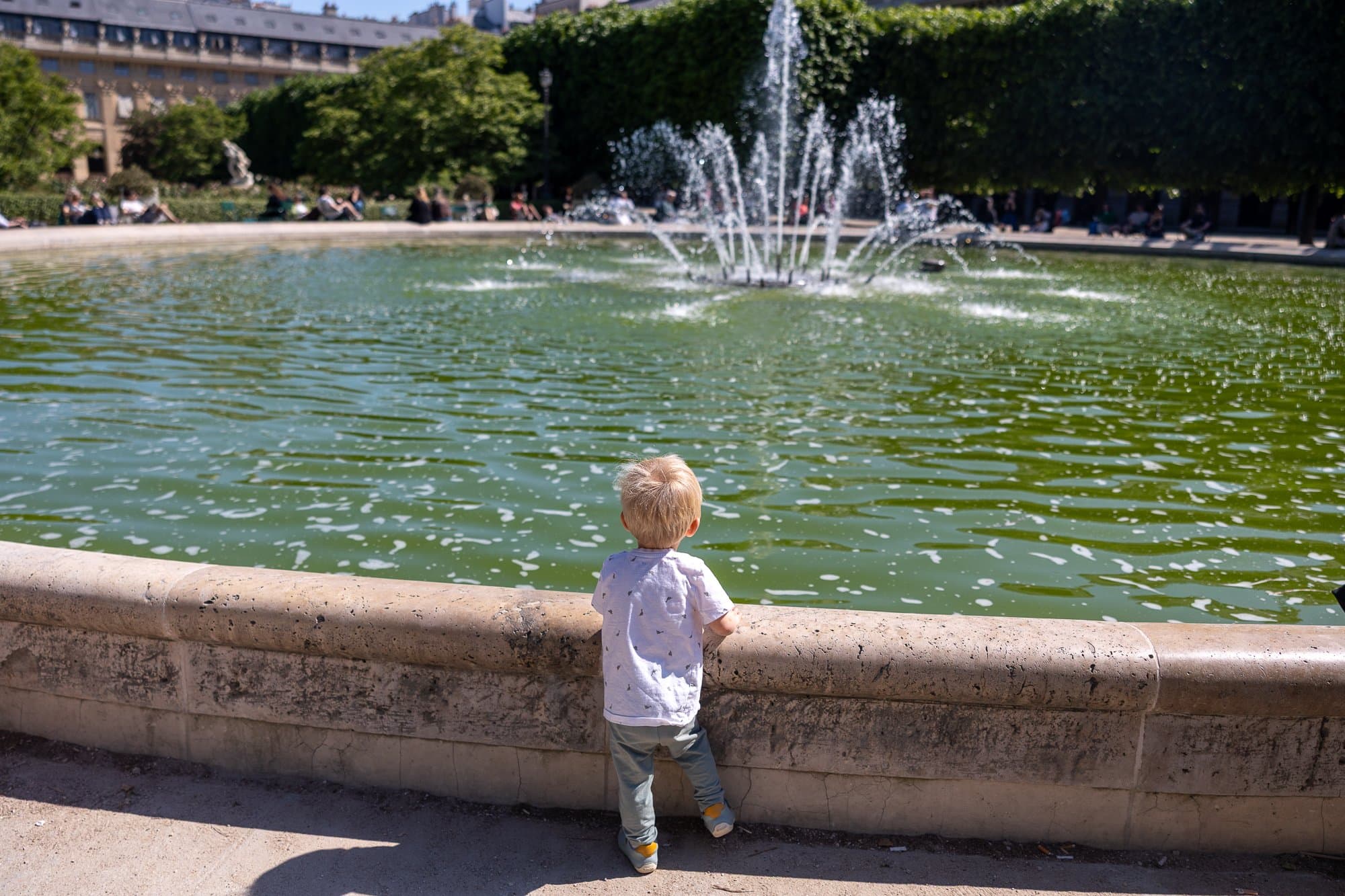
Getting around: How to survive Paris streets with a pushchair
Forget the idea that you’ll glide through the city with a pushchair like a knife through butter. The local transport system is one of the oldest in the world, and its late-nineteenth-century architecture simply wasn’t designed with wheels in mind. Getting from A to B takes a bit of planning and a healthy dose of patience.
The Métro is a baptism of fire with a pushchair
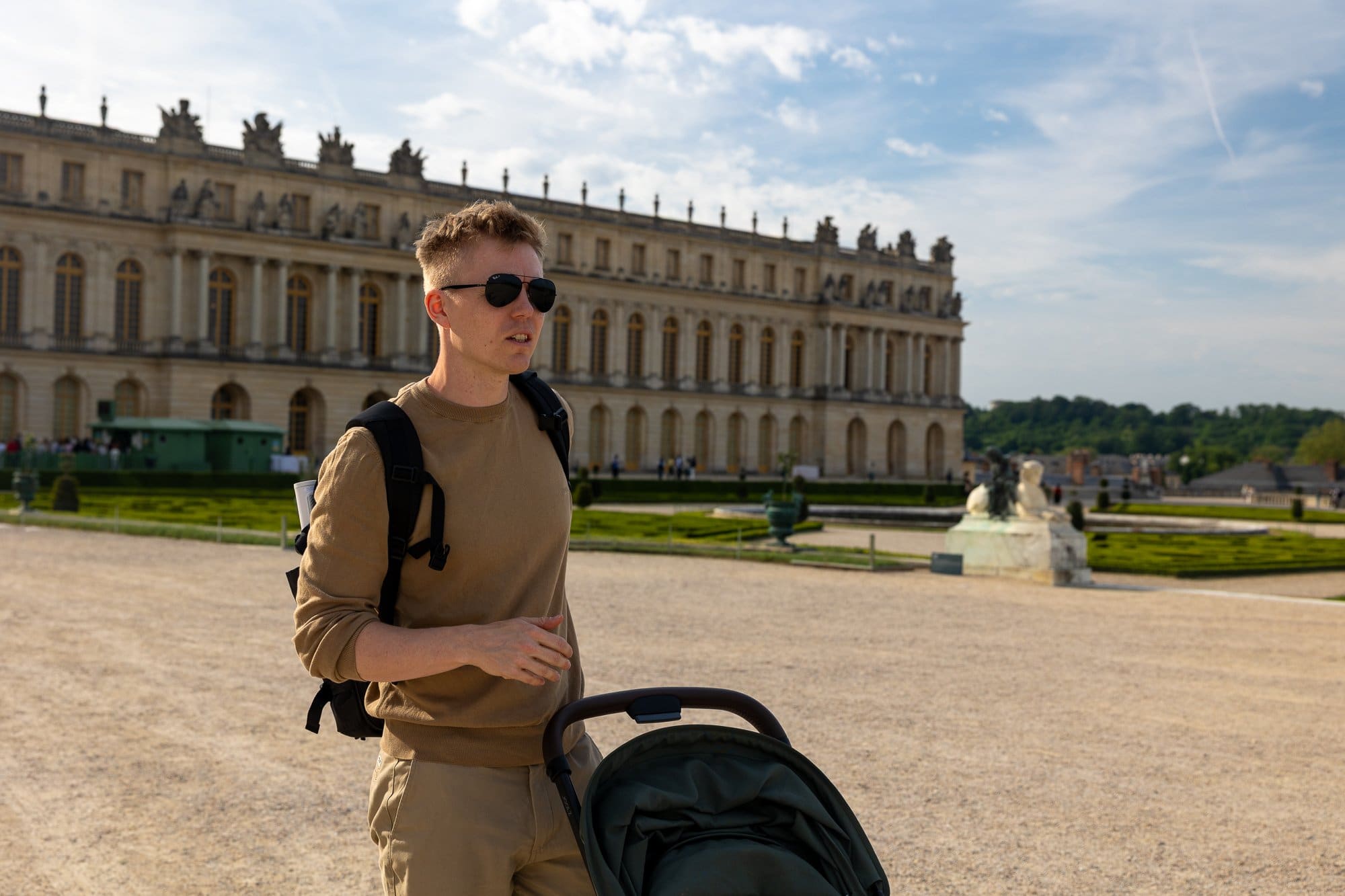
The Paris Métro (official RATP website) is fast, but riddled with endless staircases and narrow turnstiles. Out of the entire massive network, only 62 stations have full step-free access. The one line you can rely on 100% is Line 14 — fully automated, modern, with a spacious working lift at every station. The newly extended sections of Lines 4 and 11 now also have lifts, but in the historic centre you’ll hit a brick wall.
The notoriously hostile interchange is Châtelet-Les-Halles — a giant labyrinth of underground corridors and escalators that have the uncanny ability to break down on the exact day you visit. Avoid this transfer hellhole with a pushchair entirely.
💡 Insider tip: Download the official RATP app and switch on Accessibility Mode. It shows the real-time status of lifts and updates every 90 seconds. It’ll save you a lot of tears at broken escalators.
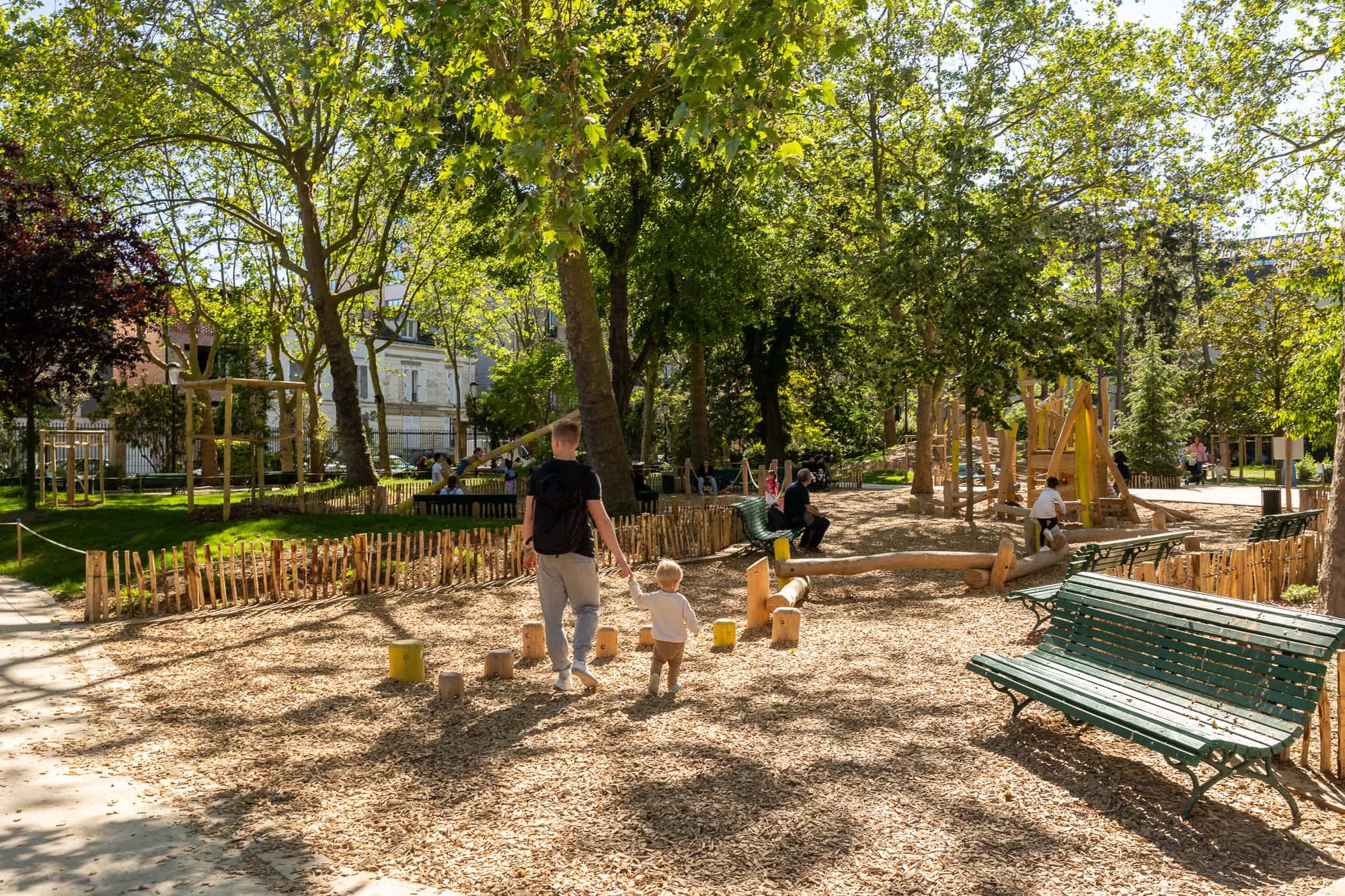
Buses are your lifesaver
While the Métro will give you grief, the city buses are far kinder to families. Most have low floors, a dedicated pushchair space in the middle of the bus, and — bonus — kids can gaze out of the window the entire journey.
For occasional journeys, the Navigo Easy card makes sense (the plastic card itself costs €2). You can load a 10-ride bundle (known as a carnet) for €17.35. If you’re planning to travel from Monday to Sunday, grab a weekly Navigo Découverte pass for €32.40 plus €5 for the card (you’ll need a small passport-style photo).
💡 Insider tip: Always board the bus with a pushchair through the middle doors, where the designated space is — not the front doors by the driver. Just wave at the driver from outside and they’ll open the doors for you.
A baby carrier is an absolute must
Even if you’ve got the best all-terrain pushchair, the absolute Paris must-have is an ergonomic baby carrier. The moment you’re planning a visit to Montmartre — peppered with hundreds of steps — the crowded Louvre, or the inside of the Palace of Versailles (not recommended — stick to the gardens where you can bring the pushchair), leave the pushchair at the hotel with a clear conscience. Jonáš always napped beautifully in the carrier, while we could admire the sights stress-free.
Changing tables and toilet gymnastics
This is where you slam into the hard Parisian reality. If you’re used to British cafés with spacious baby-change facilities and roomy toilets, brace yourself for a culture shock.
The reality of Parisian bistros
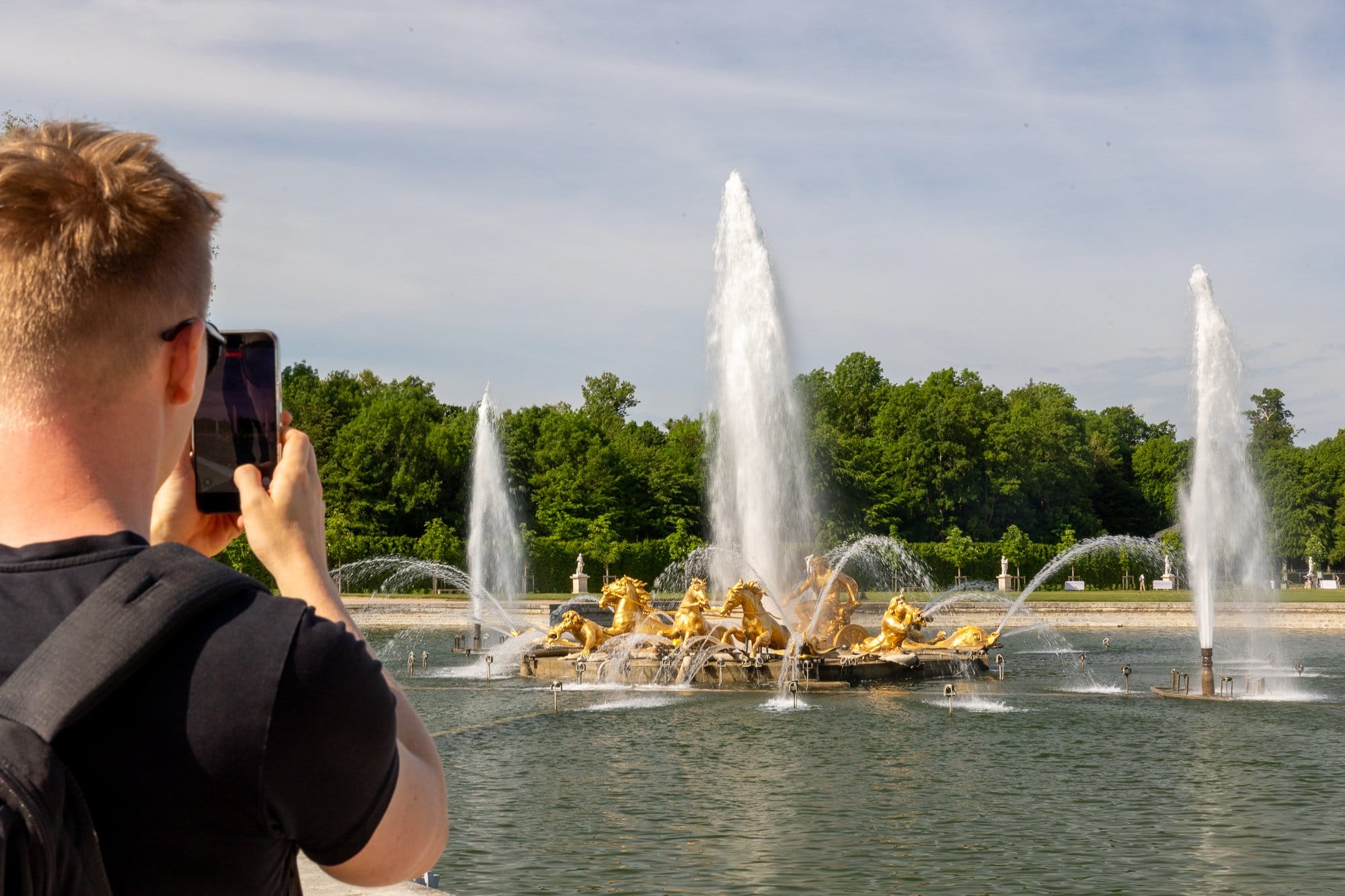
A changing table in a typical independent bistro or restaurant basically doesn’t exist. The toilets are often about the size of a phone box, and fitting in your child, yourself, and a nappy bag requires acrobatic talent.
Always carry a soft, foldable, wipe-clean changing mat. You’ll be changing nappies on park benches, on your own lap, or on the floor in a quiet corner of a café. Locals don’t bat an eyelid — it’s just city survival.
💡 Insider tip: One of the few restaurants that actually has a changing table and plenty of space is Les Belles Plantes in the 5th arrondissement. They also have comfortable booth seating and a great children’s menu.
Safe havens in department stores
Your main safety net will be the large department stores (Grands Magasins). Galeries Lafayette Haussmann in the 9th, Le Bon Marché in the 7th, and BHV Marais in the 4th all have luxurious, clean toilets, spacious changing tables, and often quiet nursing rooms (known as salles d’allaitement).
Green oases: Best Paris parks for kids
Parisian parks are immaculate, geometrically precise, and meticulously maintained. But they come with one quirk: the lawns are often sacred. If you see a sign reading Pelouse interdite (Keep off the grass), they really mean it. Parisians take this deadly seriously, and park wardens with whistles will swiftly shoo you away. So where can kids actually let off steam?
Jardin du Luxembourg (6th arrondissement)
This is the absolute top pick for families with children and our favourite park in Paris. The gardens offer so much to do that you can easily spend half a day here. Kids go wild at Poussin Vert, a massive fenced playground divided into zones by age. There are over 30 different play structures, sandpits, and slides. The playground entrance costs just a few euros. Don’t miss the toy boats on the central fountain, either — you hire a beautiful wooden sailboat with a stick and your child pushes it across the surface of the water.
The real gem, though, is the Théâtre des Marionnettes (Guignol), the biggest puppet theatre in France, founded in 1933. Shows run on Wednesdays, weekends, and bank holidays. Ticket price: €2.70.
💡 Insider tip: The puppet shows are in French, but don’t let that put you off. The slapstick humour, chases, and exaggerated puppet gestures are a universal language every two-year-old understands perfectly.
Jardin d’Acclimatation (16th arrondissement)
Want to give your child a day they’ll never forget? Head to the west of the city, into the Bois de Boulogne. Jardin d’Acclimatation is a historic amusement park spread across 18 hectares, purpose-built for the 2-to-12 age group.
You’ll find small roller coasters, boat rides, a huge paddling pool for summer, a petting farm, and a vintage little train. The atmosphere is far calmer and more local than the sprawling Disneyland. 2026 admission: Basic park entry is €7, an unlimited wristband for all rides costs €46.
💡 Insider tip: If you don’t want to buy the unlimited wristband, you can just get the basic entry and pay for individual rides with tokens (one token costs roughly €3). For younger children who’ll only manage a few rides, this works out better value.
Ménagerie at Jardin des Plantes (5th arrondissement)
Alongside the beautiful botanical gardens and greenhouses, you’ll find the Ménagerie — a small, historic zoo. It’s been here since 1794, giving it a rather impressive pedigree, and for a two-year-old it’s the perfect scale.
You won’t walk yourself to death, and don’t expect elephants or giraffes — the zoo specialises in smaller endangered species. Jonáš saw red pandas here for the first time in his life and nearly lost his mind with excitement. You’ll also spot flamingos and monkeys. Admission: Adults €13, children under 3 free.
💡 Insider tip: Right next to the zoo you’ll find the stunning Grande Galerie de l’Évolution (Great Gallery of Evolution) in the natural history museum. A procession of taxidermied animals from the African savanna marches through a vast hall. It’s visually jaw-dropping even for the tiniest visitors.

Parc Monceau (8th arrondissement)
If you’re after a quieter oasis frequented mainly by local nannies and mums from the elegant 8th arrondissement, this is your spot. The park is surrounded by gorgeous townhouses, has wide tarmac paths ideal for pushchairs, and — wonder of wonders — a large lawn you’re actually allowed to sit on.
We love coming here when we need a break from the noise of the main boulevards. There’s also a charming old-fashioned carousel that kept Jonáš entertained for a solid half-hour.
💡 Insider tip: Before entering the park, pick up fresh pastries and cheeses on nearby Rue de Lévis — one of the best local market streets in Paris — and have a picnic on the grass in Monceau.
Map of points of interest for your phone
Where to eat in Paris with kids (without losing your mind)
The French love children, but they also love their firmly established rules. In Paris, little ones are welcome at the table — nobody will turn you away — but you have to play by their rules. The biggest stumbling block for British parents is mealtimes. Lunch is served strictly between 12:00 and 14:30.
At 14:30 on the dot, kitchens in classic bistros shut down without mercy. Dinner then starts at 19:30 at the earliest, often not until after eight. What do you do when your toddler is starving at five in the afternoon? You’ll be saved by places with continuous service (look for the sign service continu), traditional brasseries, or bakeries (boulangeries), where you can pick up a quiche or a freshly made baguette sandwich at any time.
Another golden rule is the magic word “Bonjour.” Every entrance to a restaurant or shop must begin with this greeting. Even if you’ve got a screaming toddler on your arm, stop in the doorway, make eye contact with the waiter, and say hello. Without this, they simply won’t engage with you. As a vegetarian, I should also mention that the situation in Paris has improved enormously. Even the legendary three-Michelin-star restaurant Arpège switched to an entirely plant-based menu in 2026 — an earthquake for the food scene. Here are our tried-and-tested spots where you can fit a pushchair and eat well:
Treize au Jardin (6th arrondissement)
Right opposite the Luxembourg Gardens, you’ll find this fantastic place. They have a huge terrace and serve a Southern American brunch with a French twist.
The space is generous, the staff are very used to children, and there are brilliant vegetarian options packed with vegetables and cheeses. Meal price: Around €20–25 for a main course.
💡 Insider tip: Order their homemade savoury pancakes or the carrot cake, which is so enormous that two adults sharing with kids will struggle to finish it.
Traditional Bouillons (Chartier, Pigalle, République)
These huge, historic, and affordable canteens from the late nineteenth century are a lifesaver for every parent. Why bring a toddler here? Precisely because of the noise.
The roar of hundreds of diners and clinking cutlery will completely swallow any toddler tantrum. Food arrives lightning-fast, it’s classically French (there’s always an omelette or a leek salad for vegetarians), and the prices are unbeatable by Parisian standards. Meal price: A main course starts at around €12.
💡 Insider tip: Don’t bring a big pushchair — the aisles between tables are narrow and pushchairs have to be folded and left by the entrance. A carrier or a child on your lap is the way to go here.
Marché des Enfants Rouges (3rd arrondissement)
The oldest covered market in Paris, in the heart of the Marais, is a perfect lunch stop. You can have a vegetarian Moroccan tagine, Lebanese salads, or a Japanese bento, while your partner grabs something meaty from the stall next door.
Seating is communal on shared wooden benches, the atmosphere is informal and buzzy, and for a toddler it’s a brilliant sensory show full of aromas. Meal price: Portions at the stalls run to about €15–18.
💡 Insider tip: The market is closed on Mondays. At lunchtime on weekends it gets incredibly packed — go on a weekday instead, or arrive by 11:45 on Saturday or Sunday before the queues build up.
La REcyclerie (18th arrondissement)
This wonderful spot by the former Petite Ceinture railway in the north of the city has the feel of a big community canteen. A family-friendly vibe, homemade sustainable food, plenty of vegetarian and vegan options at very reasonable prices.
Kids have loads of space, and nobody minds if they run around the upcycled furniture. For us, it was a blissful oasis in the middle of the otherwise hectic 18th arrondissement. Meal price: Daily menu around €16.
💡 Insider tip: After eating, you can walk with the kids along the old railway tracks, which are overgrown with greenery and serve as an urban farm complete with community chickens.
Breizh Café (multiple locations, e.g. 3rd arrondissement)
Breton crêperies are an absolute lifesaver for families. Their savoury galettes are made from genuine buckwheat flour, so they’re naturally gluten-free and easy on the stomach.
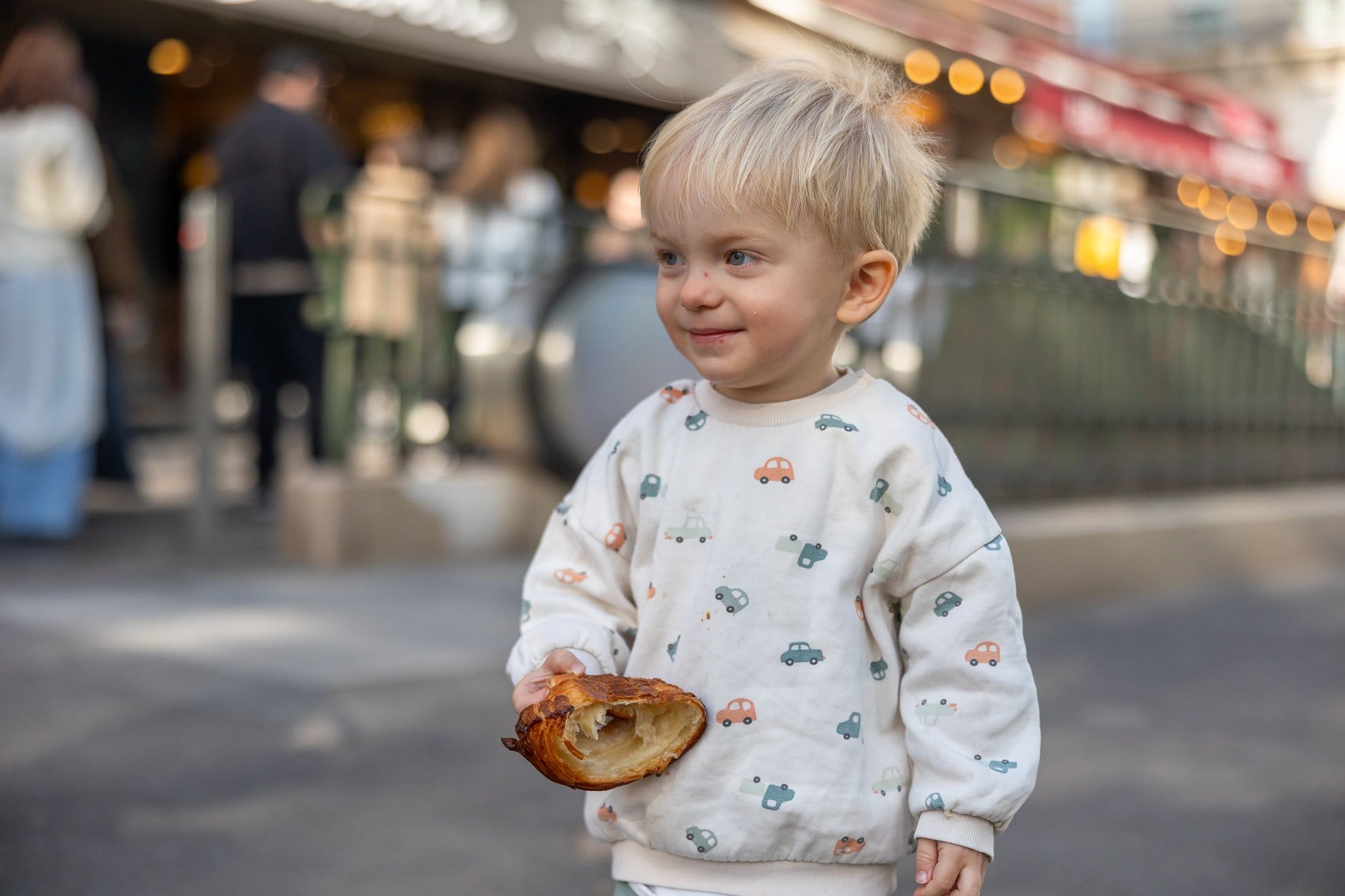
There are plenty of meat-free options, and kids simply adore the sweet crêpes with homemade caramel. This rescued us on our very first day, when Jonáš was tired from travelling and needed something good in his belly fast. Meal price: A savoury galette costs roughly €12–15.
💡 Insider tip: If you order traditional Breton apple cider with your crêpes, they’ll serve it in wide ceramic cups (bolées), just as tradition demands.
Museums and sights: What little legs can handle
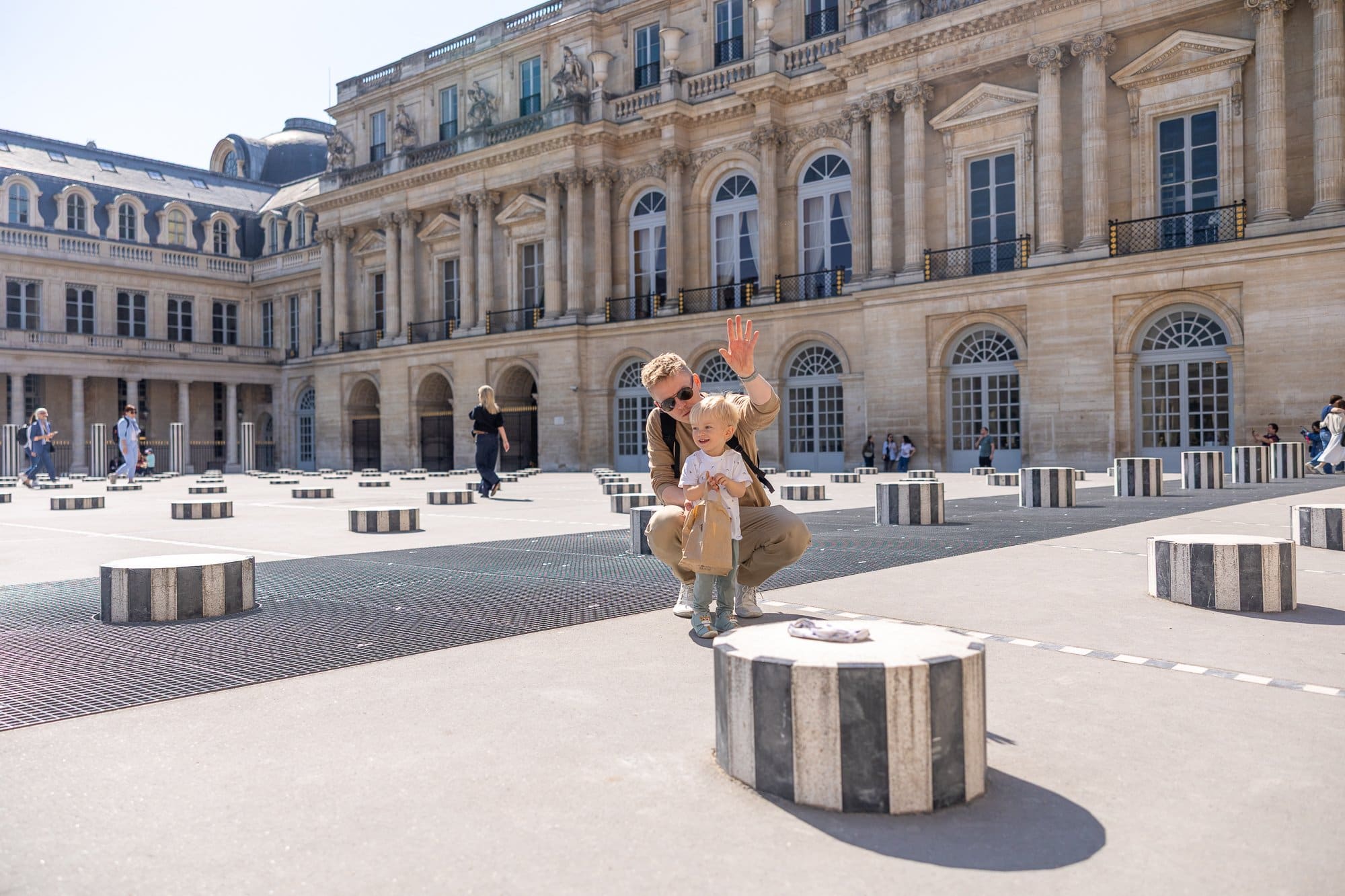
Planning a monument marathon with a toddler is a road to ruin. Jonáš made that crystal clear in the Louvre, where after about fifty metres he sat on the floor and refused to go on because he’d found an interesting crack in the tiles. Your child won’t appreciate the Impressionists and couldn’t care less about Gothic architecture — so choose wisely and always have a backup plan in the shape of the nearest park.
The Eiffel Tower and why not to go up
Seeing the Eiffel Tower is non-negotiable. But queuing for hours at the security scanners, cramming a pushchair into a claustrophobic lift, and battling crowds at the top for a sliver of view — with kids, that’s sheer misery. Lukáš and I have a firm rule: we admire the Eiffel Tower from below or from a distance. Have a picnic on the lawns of the Champ de Mars or stroll down to the river.
Want to see the city from above without the pushchair ordeal? Head to the rooftop of Galeries Lafayette in the 9th arrondissement, where a lift takes you up to a huge roof terrace with views across all of Paris, including the Eiffel Tower in the distance — and entry is completely free.
💡 Insider tip: If you’re looking for the best spot for a family photo with the Eiffel Tower, skip the overcrowded Trocadéro. Head to the Pont de Bir-Hakeim instead. From the lower level beneath the Métro viaduct, you’ll get iconic shots without crowds in the background.
The Louvre in family mode
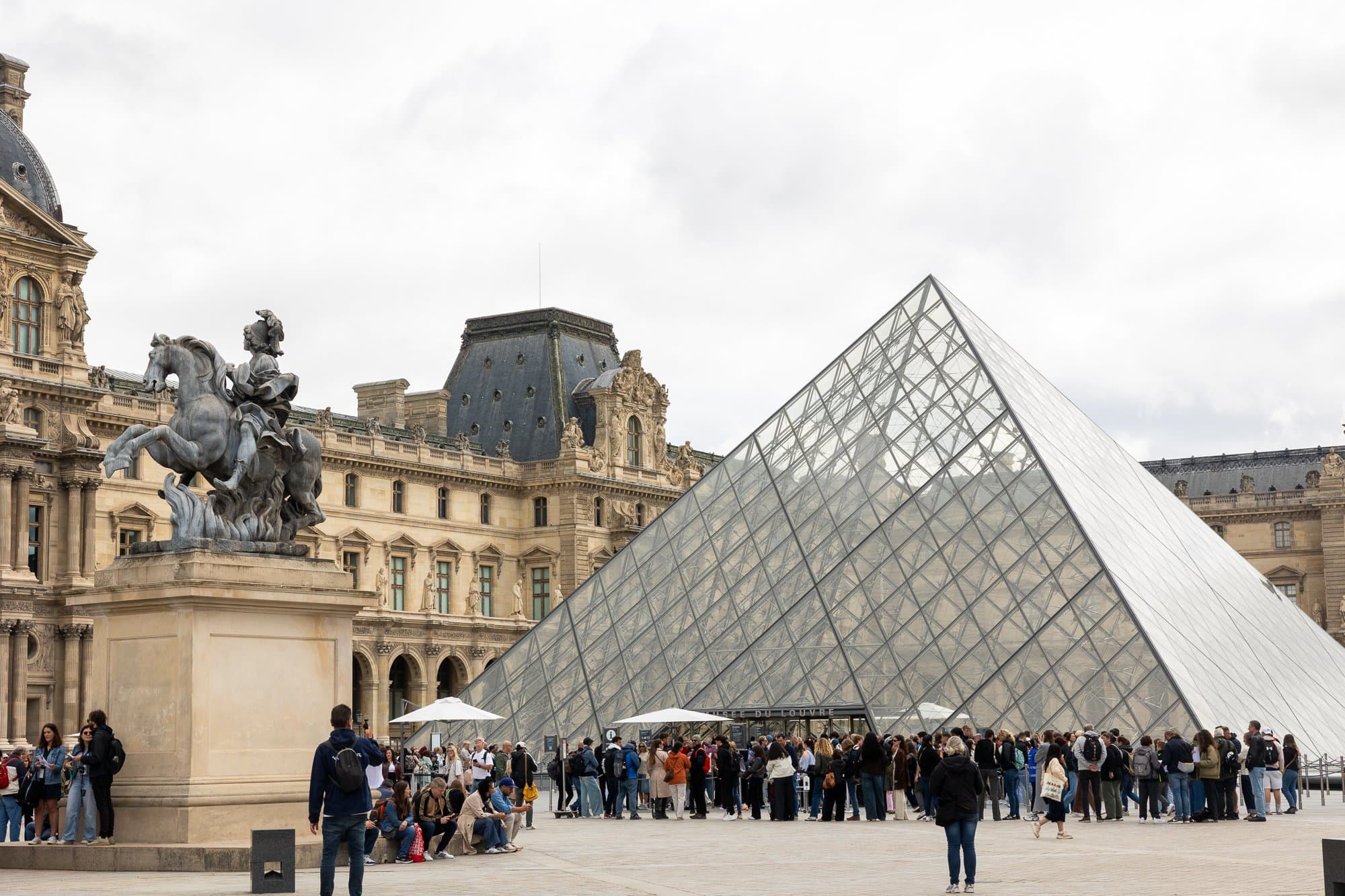
Taking a child to the Louvre? It can be done, but you need a clear plan — otherwise you’ll end up like us on our first attempt, lost somewhere in medieval art with Jonáš raging in the carrier. Forget the idea of seeing everything. Pick just one wing (the Egyptian collection, for example, which fascinates kids thanks to mummies and massive statues).
You can bring a pushchair — the museum (official Louvre website) is surprisingly well equipped with lifts, even if finding them feels like an orienteering challenge. It was tough for us, but with a strict two-hour maximum you can manage it comfortably. Admission: Adults €22, children and under-18s free.
💡 Insider tip: Never use the main entrance through the glass pyramid, where the queues are longest. Use the side entrance Porte des Lions or the entrance from the underground Carrousel du Louvre shopping gallery. And buy tickets in advance online for a specific time slot.
L’Atelier des Lumières (11th arrondissement)
This is an absolute winner for kids. It’s a former foundry converted into a digital art centre. Paintings by famous artists are projected onto enormous walls and floors, accompanied by immersive music.
Children can wander freely, chase the projected colours across the floor, and nobody expects them to be quiet. Jonáš stood there mesmerised, watching the swirling lights, while we could sit for a moment and just soak in the atmosphere. Admission: Adults €17, ages 5–25 €12, under 5s free.
💡 Insider tip: From 19 April 2026, a brand-new immersive exhibition with a dinosaur theme launches here. For little prehistoric-animal fans, it’ll be a visual and audio experience unlike anything else in Paris.
What to skip in 2026 (Important warnings)
In the past, I’d have wholeheartedly recommended the science and discovery museum Cité des Enfants in the La Villette park. ⚠️ But here’s the crucial thing: The section for younger children (ages 2–7) is undergoing a major renovation and is completely CLOSED until 9 June 2026! Don’t plan a visit — you’d be disappointed.
Likewise, forget the iconic modern art museum Centre Pompidou. The building with the colourful pipes on its façade closed completely at the end of 2025 for a five-year renovation. It won’t reopen until 2030. You can photograph it from outside, but you can’t get in.
The good news, however, is that Notre-Dame Cathedral is finally open again after the devastating fire. It gleams with newness on the outside, and entry is free (never buy tickets from touts in front of the cathedral — it’s a scam).
Day trips beyond the city: Parks and fairytales
Paris is all-consuming and noisy, and sometimes you simply need to escape the stone streets, take a deep breath, and let your toddler run free. The countryside around Paris saved us from collective meltdown more than once.
Disneyland Paris: A tactical operation with a two-year-old
Lots of people think there’s no point taking a toddler to Disneyland, and I thought so too — until we went with Jonáš and I saw his face the moment he first spotted Mickey. Disneyland Paris (official website) is surprisingly well set up for small children; you just need to approach it like a military operation. Under-3s (inclusive) get in FREE. Definitely bring your own pushchair (it doubles as a mobile base for snacks and afternoon naps) and your own food. Adult admission: Dynamic pricing applies, starting from roughly €65 for one day/one park when booked well in advance.
Your territory will be Fantasyland, home to rides with no height restriction. Kids love the It’s a Small World boat ride (thousands of singing dolls), the Dumbo flying elephants, and the classic horse carousel.
💡 Insider tip: Check the app for the exact time of the afternoon character parade (Parade). For a two-year-old, seeing Mickey Mouse and the princesses in real life is often a far bigger thrill than the rides themselves. Grab a spot on the pavement at least 30 minutes beforehand.
Palace of Versailles: The reverse strategy
Versailles with a pushchair is a challenge. Thousands of visitors stream towards the gates. Most guides will point you to the RER C line. Do it differently. With a pushchair, the Line N train from Gare Montparnasse to Versailles Chantiers station is far more manageable.
The station is much more pushchair-friendly and you’ll spare yourself the stress of underground transfers. Buy tickets for the Palace of Versailles online for a specific time slot. Admission: The Palace costs €21; the gardens are free on most days (except during Musical Fountain days).
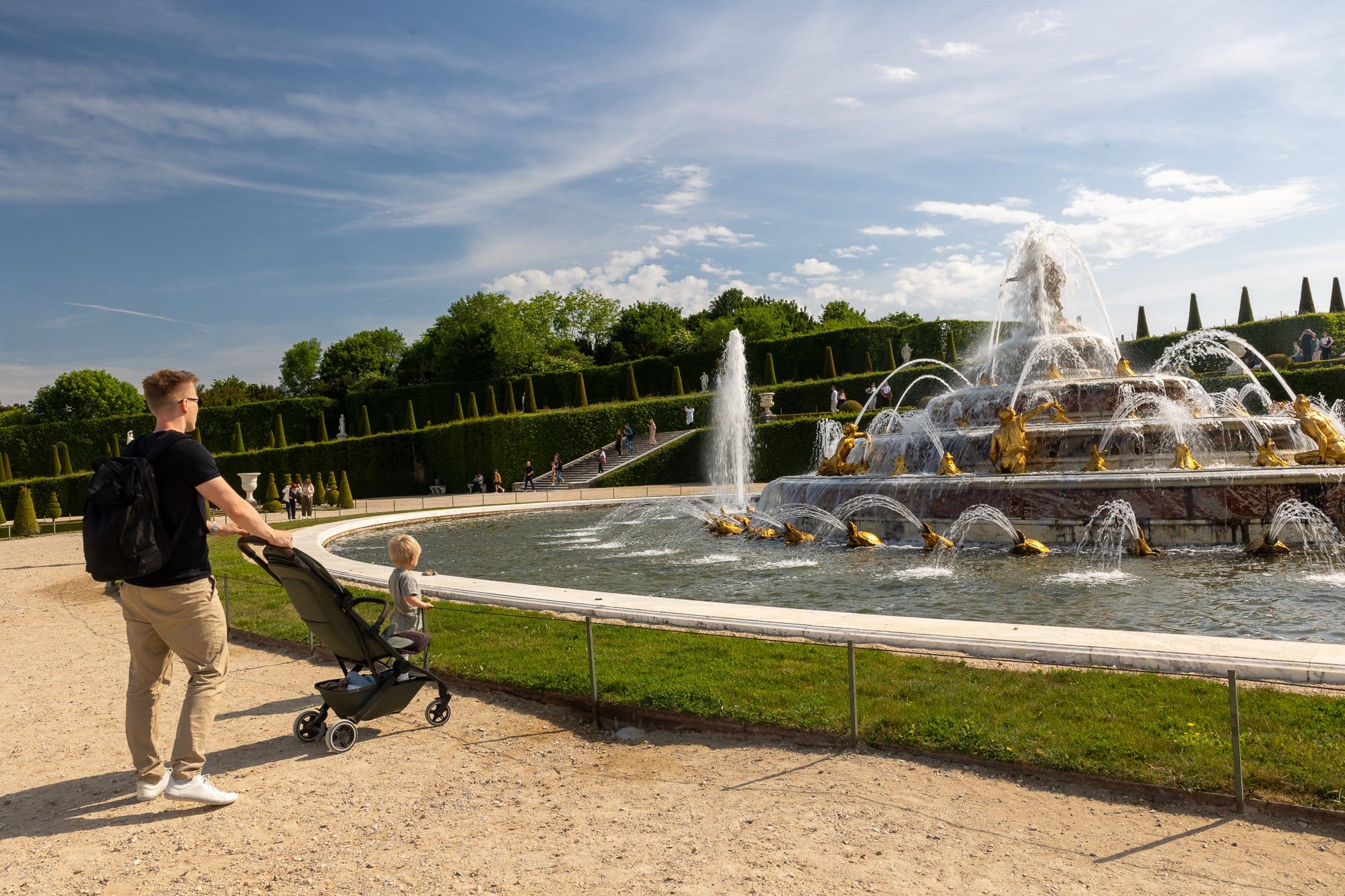
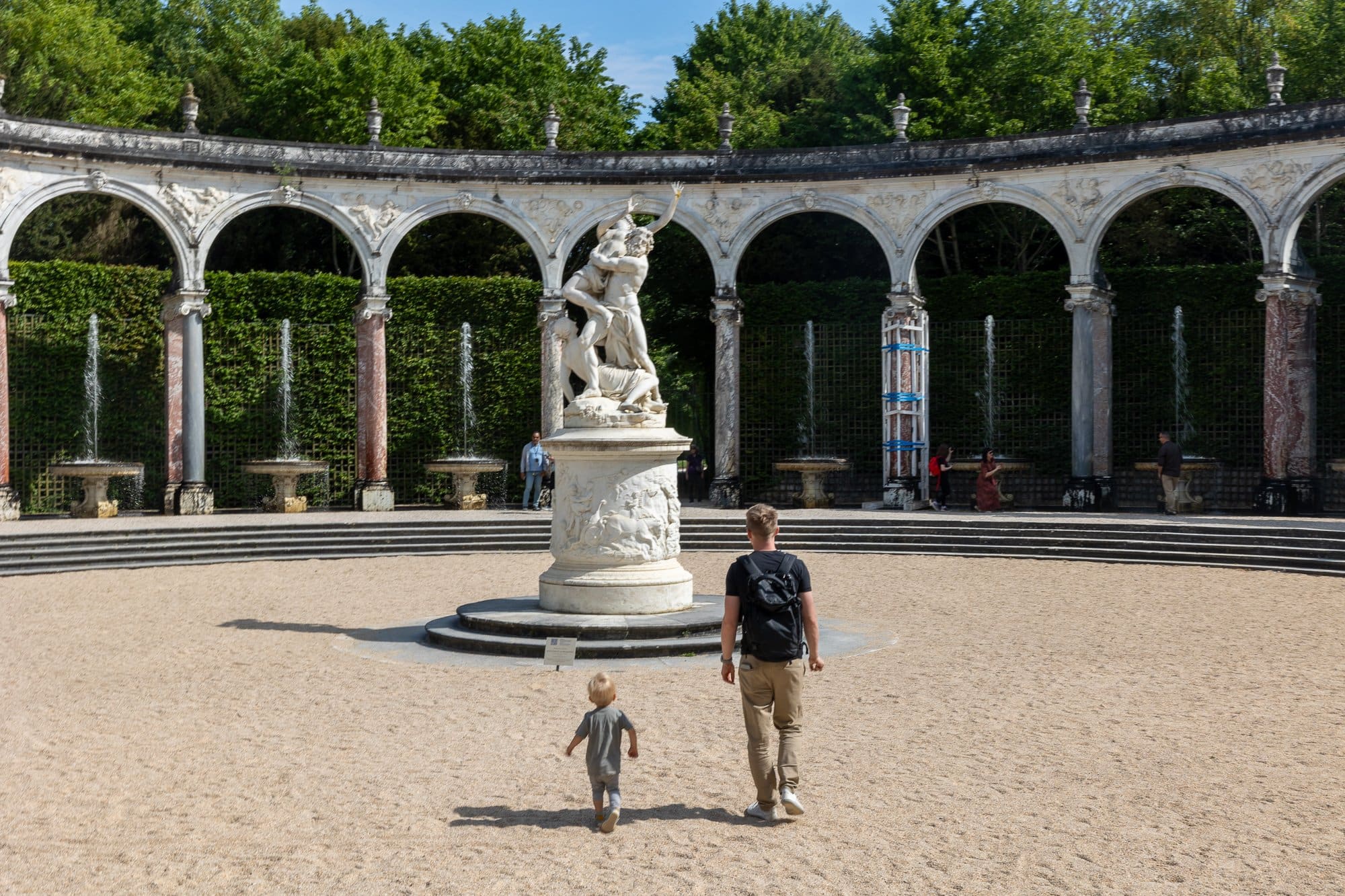
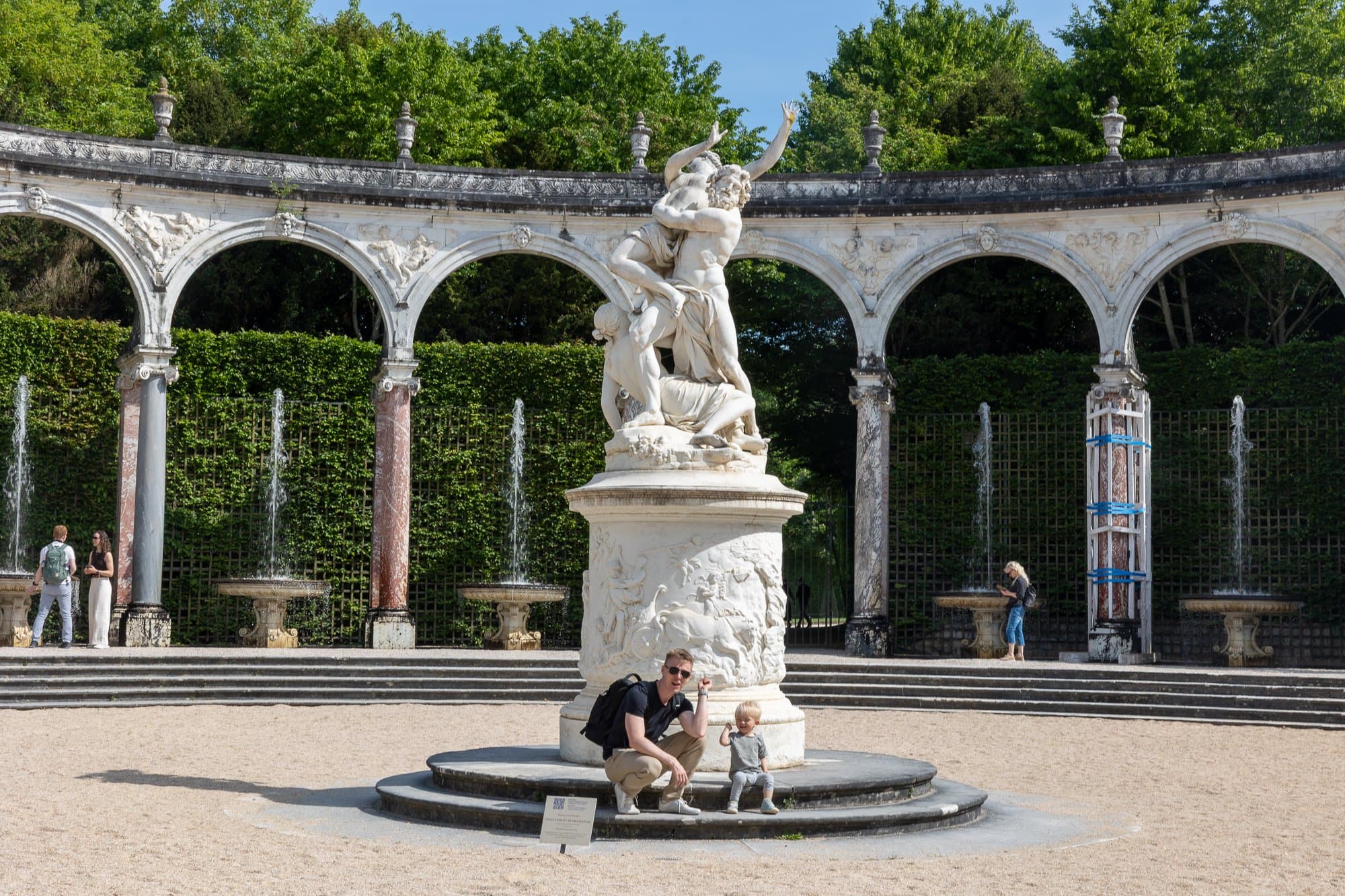
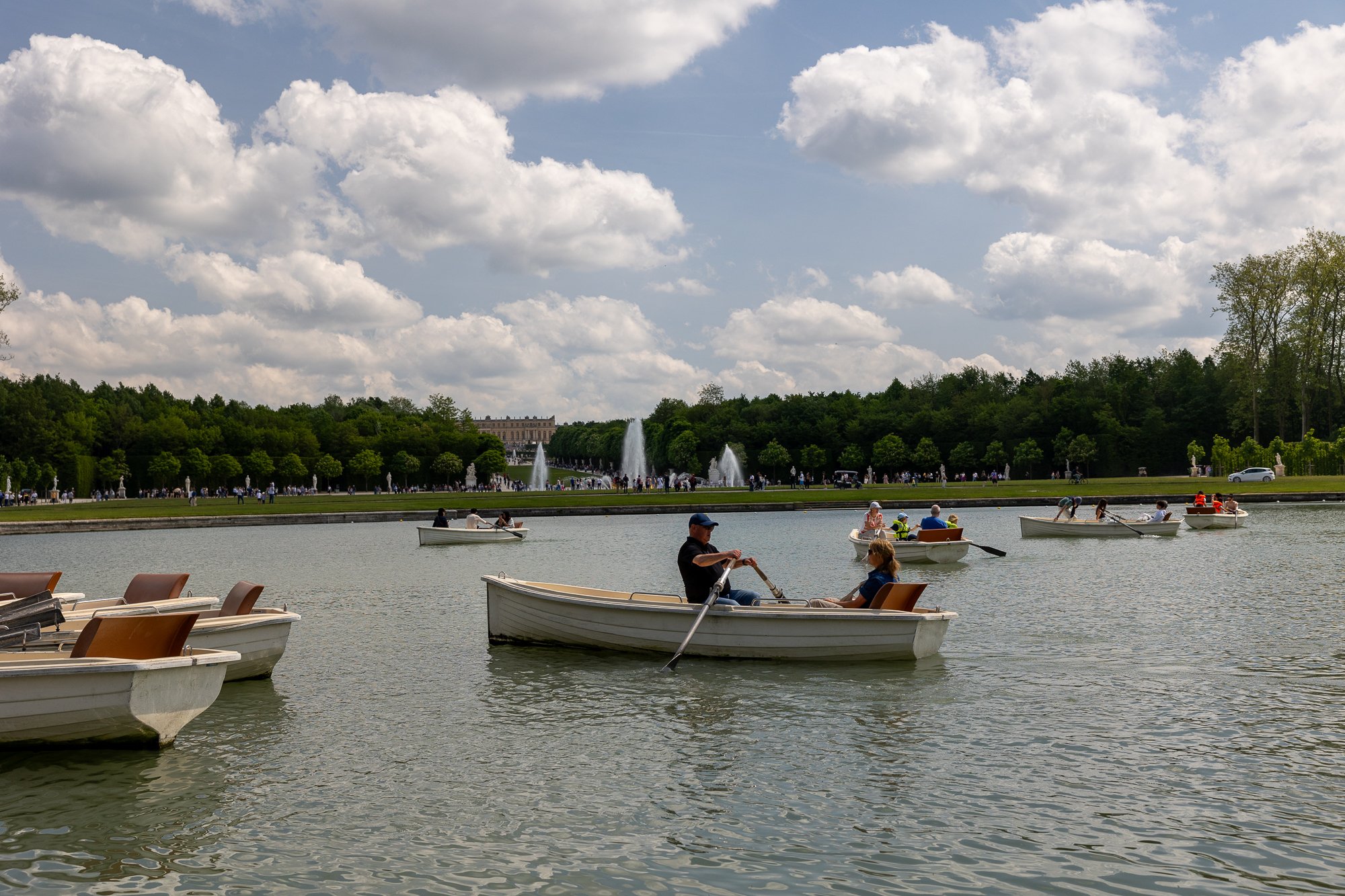
💡 Insider tip: While everyone rushes straight to the Palace, head to the gardens first. Let your child run wild by the Grand Canal and make for Marie Antoinette’s Hamlet (Hameau de la Reine). It’s like a miniature open-air village with real chickens, and Jonáš spent more time there than in the entire Palace combined. Visit the Palace in the afternoon, when your toddler has ideally fallen asleep in the carrier.
Giverny and Monet’s Gardens
If you love Impressionism, take a train into Normandy to the village of Giverny. Claude Monet created his greatest masterpiece here: a garden with the iconic Japanese bridge and a lily pond.
The journey from Gare Saint-Lazare to Vernon, followed by a shuttle bus, is very comfortable. For kids it’s a lovely walk full of colours, and you’ll soak up the real French countryside. Admission: Adults €13, children under 7 free.
💡 Insider tip: ⚠️ Critical warning for 2026: Giverny will be completely closed on the weekend of 19 and 20 September 2026 for European Heritage Days. Plan your itinerary around this date so you don’t make a wasted trip!
Practical info: Safety, health, and packing
Paris is gorgeous, but a naïve tourist pays a price — and with a pushchair and a bag full of baby essentials, you’re a welcome target for pickpockets. A few tricks and you’ll be just fine.
Pickpockets and street scams
Tourist crowds attract organised groups of scammers. Never leave your phone on the table at a café terrace, and keep your bag close to your body — especially on Montmartre and near the Louvre. Here are the specific tricks to watch out for:
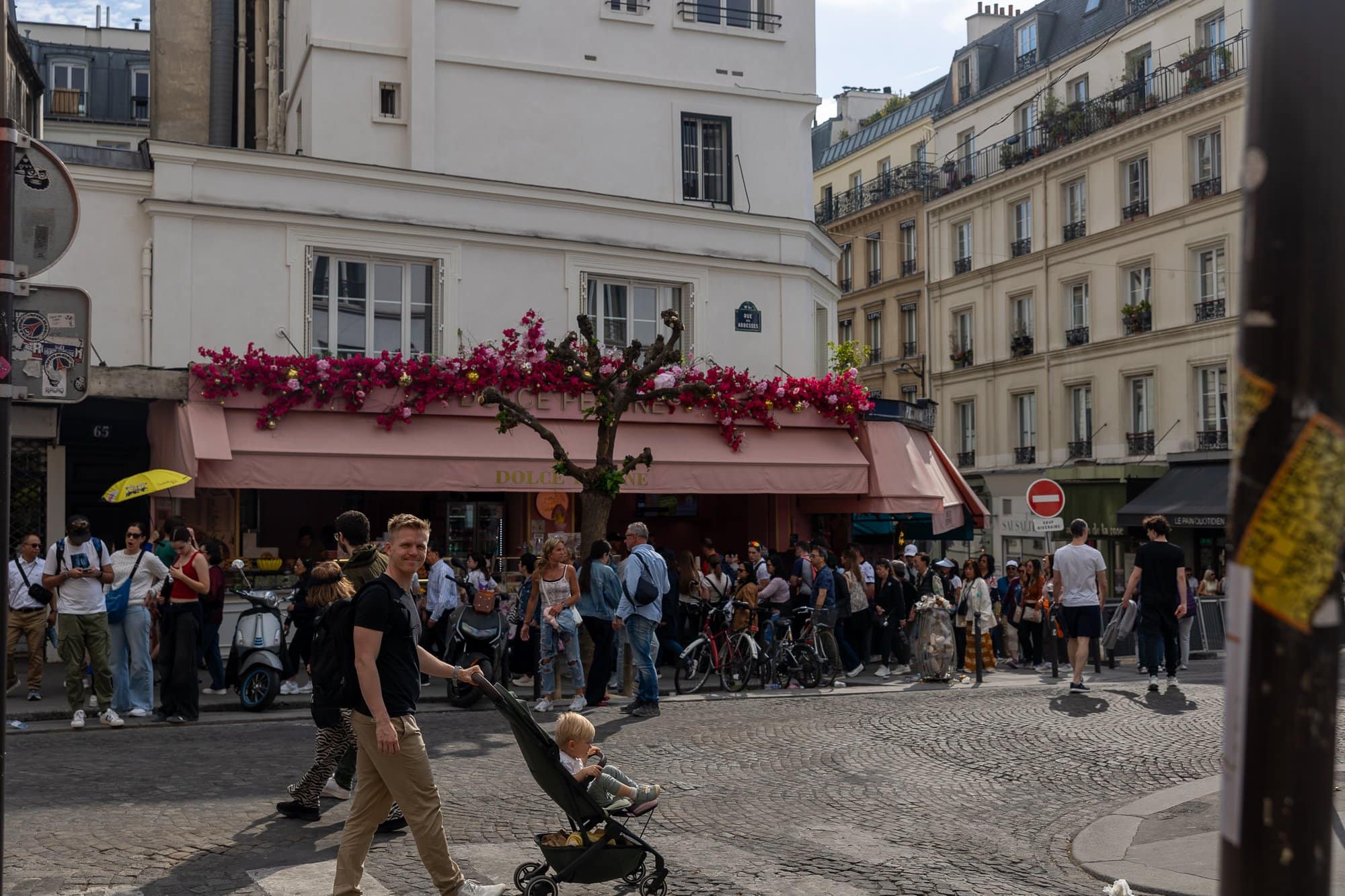
The gold ring: Someone “finds” a chunky gold ring on the pavement in front of you and offers it for a small reward. It’s a worthless brass ring. Ignore them. Friendship bracelets: On the steps below the Sacré-Cœur basilica, men will try to quickly tie a string around your wrist and then aggressively demand money. Don’t let them invade your personal space — keep your hands in your pockets and walk quickly past. Fake petitions: Young women (often pretending to be deaf-mute) approach you with a clipboard and a petition to sign. While you’re reading, their accomplice is going through your bag.
Healthcare (when things go wrong)
When your child spikes a fever in the middle of the night, don’t panic. Paris has an excellent network of pharmacies (look for the glowing green cross), and for minor issues the pharmacist can advise you well. But if you need an actual doctor to come to your hotel, there’s a service called SOS Médecins (phone 3624).
They’re used to dealing with tourists, operate 24/7, and the doctor comes directly to you. You’ll pay a fee in cash or by card (around €70–100), but with a valid UK Global Health Insurance Card (GHIC) and travel insurance, you can claim it back. Make sure you have comprehensive travel insurance before you go — it’s essential for peace of mind when travelling with little ones.
💡 Insider tip: Don’t look for children’s medicines in supermarkets. In France, even basic fever syrup (such as Doliprane) is sold exclusively in pharmacies.
What extra things to pack
Beyond the usual toddler essentials, a few specialist items will prove invaluable in Paris. We gradually learned that dragging unnecessary stuff around really isn’t worth it — but on the flip side, a handful of things will reliably save your life (and sanity).
Here’s our tried-and-tested list of the essentials:
- A lightweight folding pushchair with suspension (big three-wheelers simply won’t fit in the Métro or narrow shops).
- A baby carrier (I’ve mentioned it already, but it really is the single most important item on the entire trip).
- A travel changing mat.
- A water bottle (Paris has loads of free drinking fountains — the famous green cast-iron Wallace fountains).
Where to go next
If you feel like you’ve got Paris with kids nailed and want to plan your next adventure, check out our other articles:
Frequently asked questions
Tips and Tricks for Your Vacation
Don’t Overpay for Flights
Search for flights on Kayak. It’s our favorite search engine because it scans the websites of all airlines and always finds the cheapest connection.
Book Your Accommodation Smartly
The best experiences we’ve had when looking for accommodation (from Alaska to Morocco) are with Booking.com, where hotels, apartments, and entire houses are usually the cheapest and most widely available.
 🚗 Car rental on the roadVerified car rentals in Paris
Search with the DiscoverCars comparison engine — it compares prices from dozens of local and international rental companies, and most bookings come with free cancellation.
Compare car prices in Paris →Don’t Forget Travel Insurance
Good travel insurance will protect you against illness, accidents, theft, or flight cancellations. We’ve had a few hospital visits abroad, so we know how important it is to have proper insurance arranged.
Where we insure ourselves: SafetyWing (simple monthly subscription) and TrueTraveller (for extra-long trips).
Find the Best Experiences
Get Your Guide is a huge online marketplace where you can book guided walks, trips, skip-the-line tickets, tours, and much more. We always find some extra fun there!
More from Paris
Full guide → Where to stay · most readParis Arrondissements: Where to Stay in Paris (and Where Not To)
 ItineraryParis: 40 Best Tips for Your Visit
 Travel storyParis Etiquette: How Not to Be “That Tourist” (Phrasebook, Rules & What NOT to Do)
 What to seeShopping in Paris: Concept Stores, Department Stores & Vintage (A Complete Guide)
 PricesWhat to Eat in Paris: The Complete Foodie Guide 2026 (Bistros, Michelin, Vegetarian Scene)


