

One adult may hold only one infant under the age of two, which is a strict safety rule based on the number of oxygen masks available. If you are a single parent arriving at the airport with infant twins and no other adult, you simply will not be allowed to fly.
The only solution is to buy the second child their own full-price seat. You must then place a certified car seat approved by the airline in it. This will save you a lot of stress when planning the trip in the first place.
You will learn exactly how to manage airport logistics with just your own two hands. I have also put together tips on the documents you need if a grandparent is travelling with you or your children have a different surname from yours.

TL;DR
- The 1:1 rule is non-negotiable: One adult may look after only one infant under two who is travelling on their lap.
- Twins under two: A single parent cannot fly with them without a second adult or a separately purchased seat with a car seat.
- New liquid rules: At Prague Airport, Terminal 2 has allowed containers of up to 2 litres since 1 October 2025, while the old 100 ml limit remains in place at Terminal 1.
- Family seating legislation: A revision of EU regulations in July 2026 guarantees free seating for children under 14 next to a parent, but it will not actually take effect until mid-2027.
- Consent to travel: If you have a different surname from your child, or the child is flying with a grandparent, an officially certified consent form can save you from trouble.
- Delays and compensation: For children under two without their own seat ⚠️, practice is inconsistent and airlines often reject claims.
- Minimum age for a companion varies: With Ryanair, the second child can only be accompanied by someone over 18; Wizz Air accepts someone aged 16 or over.
10 Things a Single Parent Flying with Twins Must Know
Let’s take a look at what you need to watch out for and what you should know before you fly.
1. One infant per adult
💡 Tip: This is the absolute foundation, and it is where many travel plans fall apart. One adult may hold only one infant (a child under two) on their lap. If you are a single parent with twins who are not yet two, you simply cannot fly in the standard arrangement.
The reason is not that airlines want to make life difficult, but straightforward onboard safety. There are exactly two oxygen masks available above each window-side seat. An adult would also be physically unable to safely hold two children against their body during turbulence or an emergency.
That is why low-cost airlines such as Ryanair always seat an adult travelling with an infant by the window. If you try to enter one adult and two lap infants in the booking system, it will block the booking immediately and will not let you proceed to payment.
2. What to do if the second adult cannot fly
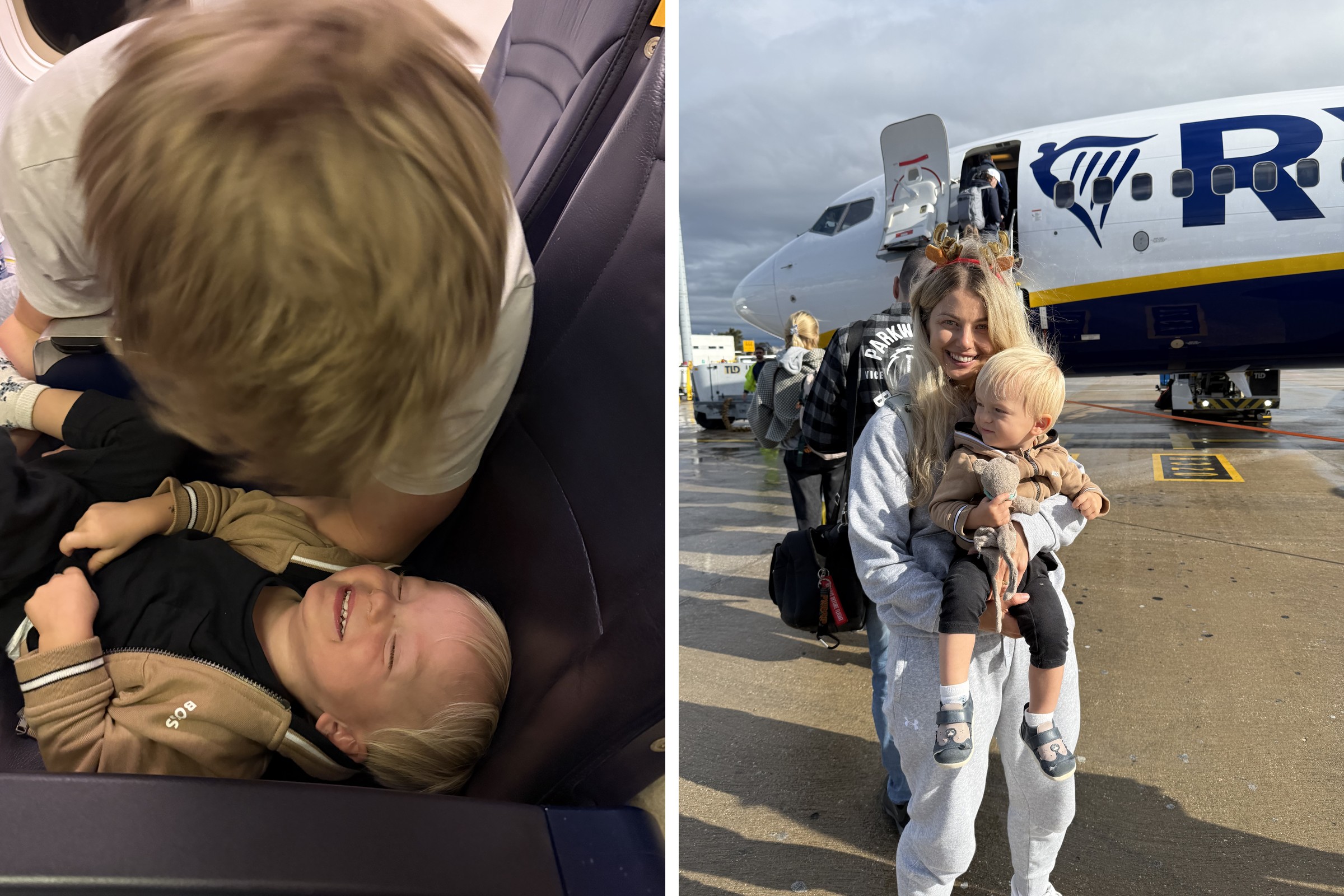
💡 Tip: If you absolutely must fly alone with both children under two, you essentially have one practical option. You must buy the second child their own seat at the full adult fare.
You will also need to bring your own certified car seat approved for use on an aircraft and seat the second child in it. The car seat must have a clearly visible label showing that it is approved for air travel. With Smartwings, you must also purchase this specific seat by phone through the customer helpline; the online system will not allow you to do it.
⚠️ The crucial warning is that some jurisdictions have even stricter rules, and even the car-seat option is not allowed for a single parent travelling with two infants. Before making any booking in this situation, you absolutely must call the individual carrier’s customer service line and have the procedure confirmed.
3. Companion age requirements by airline
💡 Tip: The second option for travelling with twins is to find someone to accompany you. But you cannot just bring anyone, because airlines differ considerably in the minimum age of a companion.
If you are flying with Ryanair and want an older sibling to hold the second child on their lap, the sibling must be at least 18. Wizz Air is more flexible: it accepts a companion aged 16 or over as a fully responsible adult.
Always check these age limits in the terms and conditions before booking. Although low-cost airlines allow people aged 16 and over to travel independently, taking responsibility for an infant on your lap is an entirely different category from a safety perspective.
4. Flying with a grandparent or another relative
💡 Tip: What if neither parent is flying with the child and you are sending them off to the seaside with a grandparent or aunt? The airlines themselves usually have no problem with this. Smartwings, for example, explicitly states that flying with someone else’s child is not restricted.
At the same time, however, they refer you to the destination country’s requirements, and that is where a major problem can arise. The key is to give the grandparent written consent from the child’s legal guardians to travel, ideally in two languages.
⚠️ You must check the exact document requirements directly with the Ministry of Foreign Affairs. In general, it is strongly recommended that the signature on this document be officially certified, especially if the grandparent is flying with the child outside the European Union.
5. Different surnames and consent from the other parent
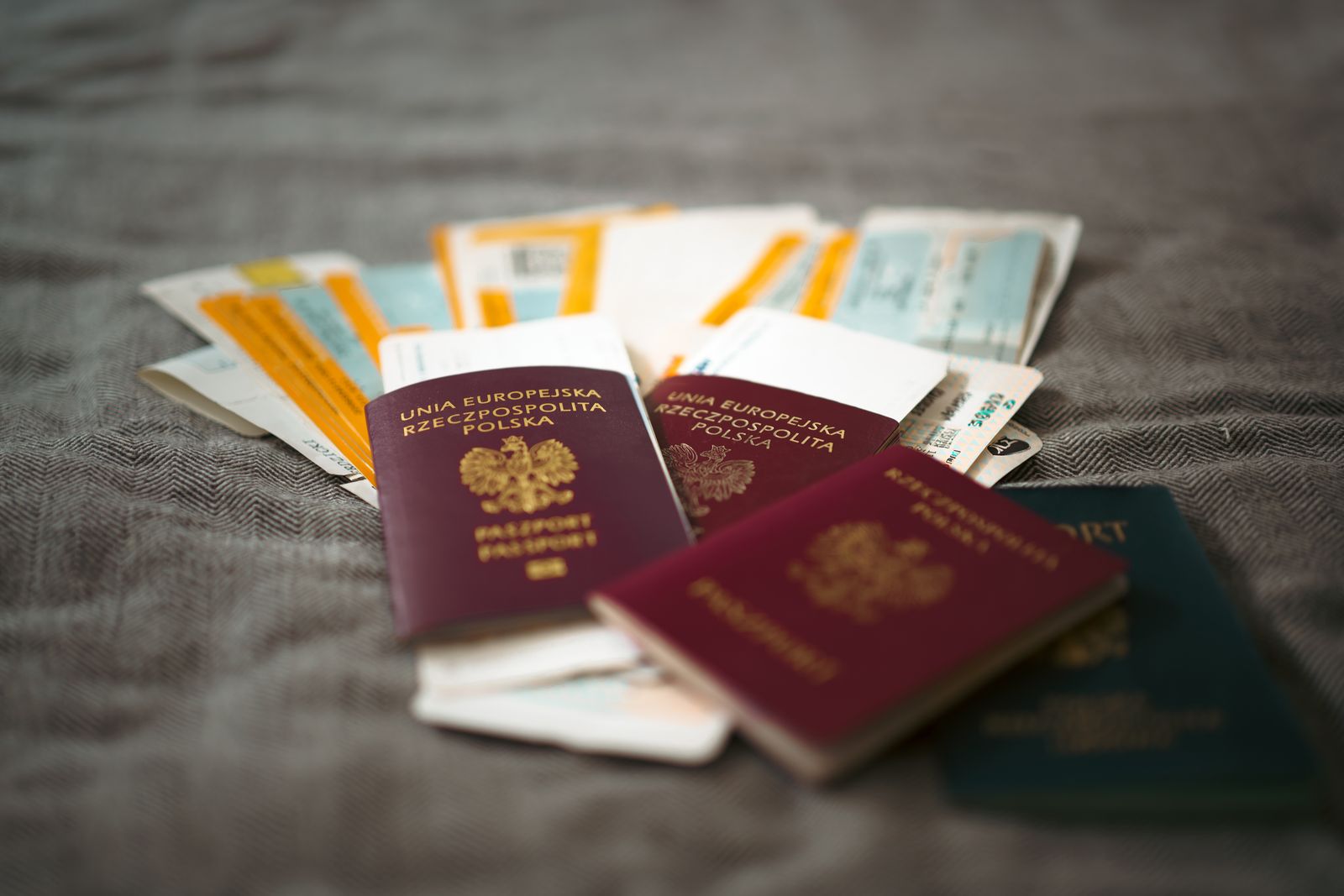
💡 Tip: It is perfectly normal today for a mother to be called Novak and her child to have the father’s surname, Dvorak. But to passport control, this can be a potential red flag and raise suspicions of child abduction.
So always carry a copy of your child’s birth certificate; in practice, it can be an invaluable document at the airport. It can stop unnecessary questioning before it even begins.
The second common complication is the child’s appearance in the document. A child at three months old looks completely different from a three-year-old. A significant change in appearance is a good reason to replace the document with a new one, even if the old one is technically still valid, so do not let the authorities dismiss your concerns.
6. Divorced parents and shared custody while travelling
💡 Tip: This is probably the most sensitive issue in the whole topic, and mothers discuss it constantly in online forums. If you are divorced and flying with your child to the seaside, do you need the other parent’s consent?
In practical terms: ⚠️ whether this consent is a mandatory document within the European Union and the Schengen Area must be checked in advance with a lawyer or the Ministry of Foreign Affairs. Border control may still ask to see it, particularly if you are flying outside Schengen to countries such as Turkey or Egypt.
⚠️ If the trip involved a significantly longer stay or even moving abroad without consent, it could constitute international child abduction. That is very dangerous territory, so for your own peace of mind, always obtain verified consent from the other parent specifying the exact dates and destination.
7. Practical airport logistics for a single parent
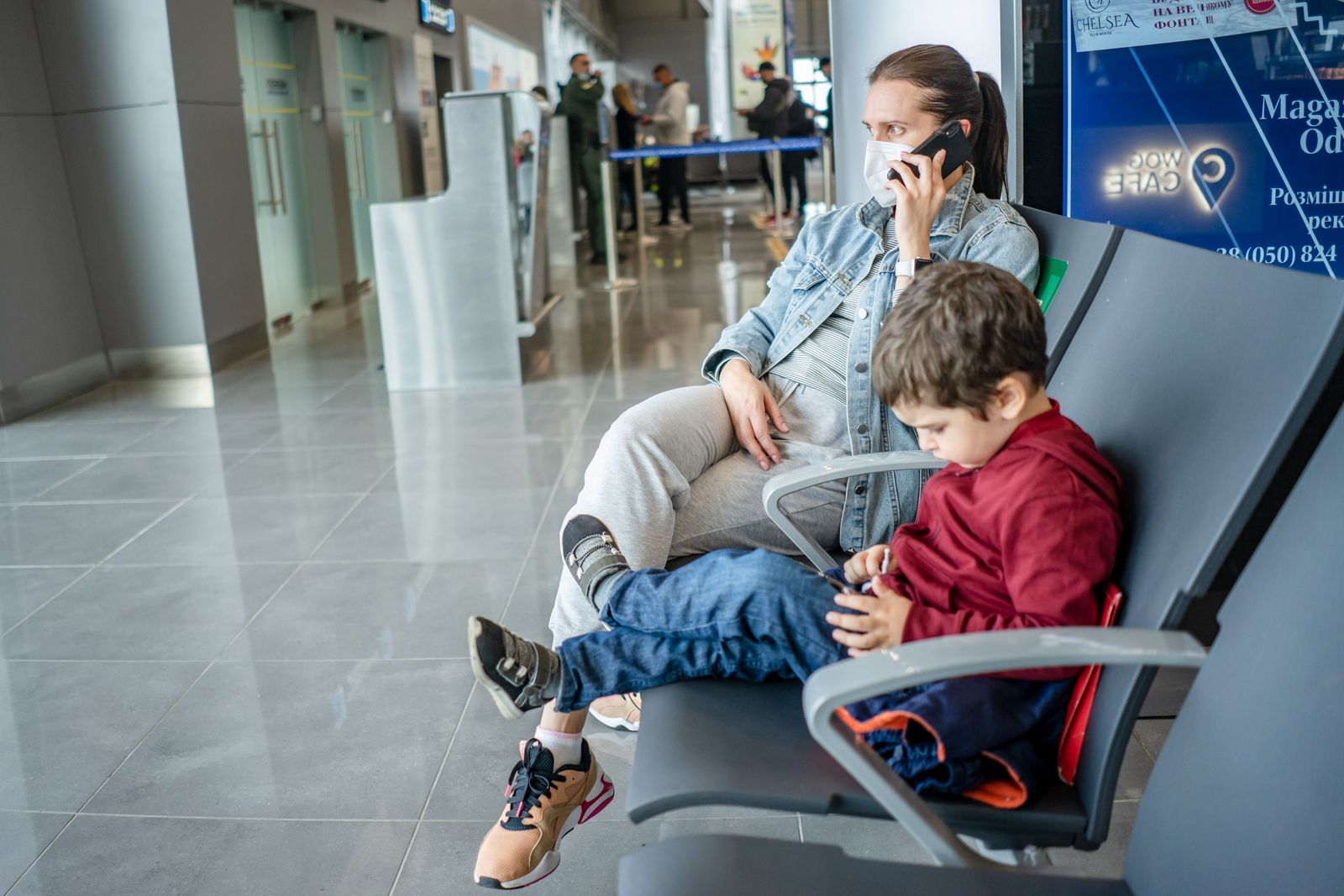
💡 Tip: When you are flying alone with a toddler and also have an older child, you need a proper system. The key to success is having both hands completely free, so a large carry-on backpack worn on your back is ideal.
In our experience, an ergonomic baby carrier works extremely well. It frees your hands, and the great news is that a carrier usually does not count towards your baggage allowance. easyJet even explicitly allows you to take a framed child carrier free of charge as one of two pieces of children’s equipment checked in.
Security screening is where you will feel the pressure most, because you have to fold the pushchair and remove electronics. So always use the priority lane for families with children, which Prague Airport and many airports abroad fortunately offer without any trouble.
8. Tricky liquid and pushchair limits
💡 Tip: Packing liquids for children is a nightmare, but the rules are changing. Since 1 October 2025, new CT scanner rules at Prague Airport’s Terminal 2 mean you can take one additional container of up to 2 litres without removing it from your backpack.
⚠️ Be extremely careful, though, because this change does not apply to Terminal 1 at all, where the old 100 ml limit still applies. Ryanair and Wizz Air flights to non-Schengen destinations depart from Terminal 1. Baby food and milk are fortunately always exempt up to the quantity needed for the journey; this is governed by airport rules, not the airline’s rules.
As for pushchairs, remember Smartwings’ strict rule if you are flying with them. They will not accept a damage claim for an unwrapped pushchair. A bag or sturdy protective film is not just a recommendation; it is a firm requirement.
9. What to pack and what to leave at home
💡 Tip: Cut your packing down to the absolute minimum. The European Union Aviation Safety Agency (EASA) does recommend that children under 12 always sit next to their accompanying adult, but with low-cost airlines you need to check this carefully and pay extra if necessary.
Pack new, unfamiliar toys and plenty of favourite snacks in your backpack; they can help equalise pressure in children’s ears during descent. On the other hand, avoid experimenting with sleeping medication altogether.
Questions about the artificial sleep hormone often come up in online discussions. Remember that melatonin must not be given to children under two, and for older children it should only be considered after very careful consultation with their doctor.
10. Mental preparation and what helps most
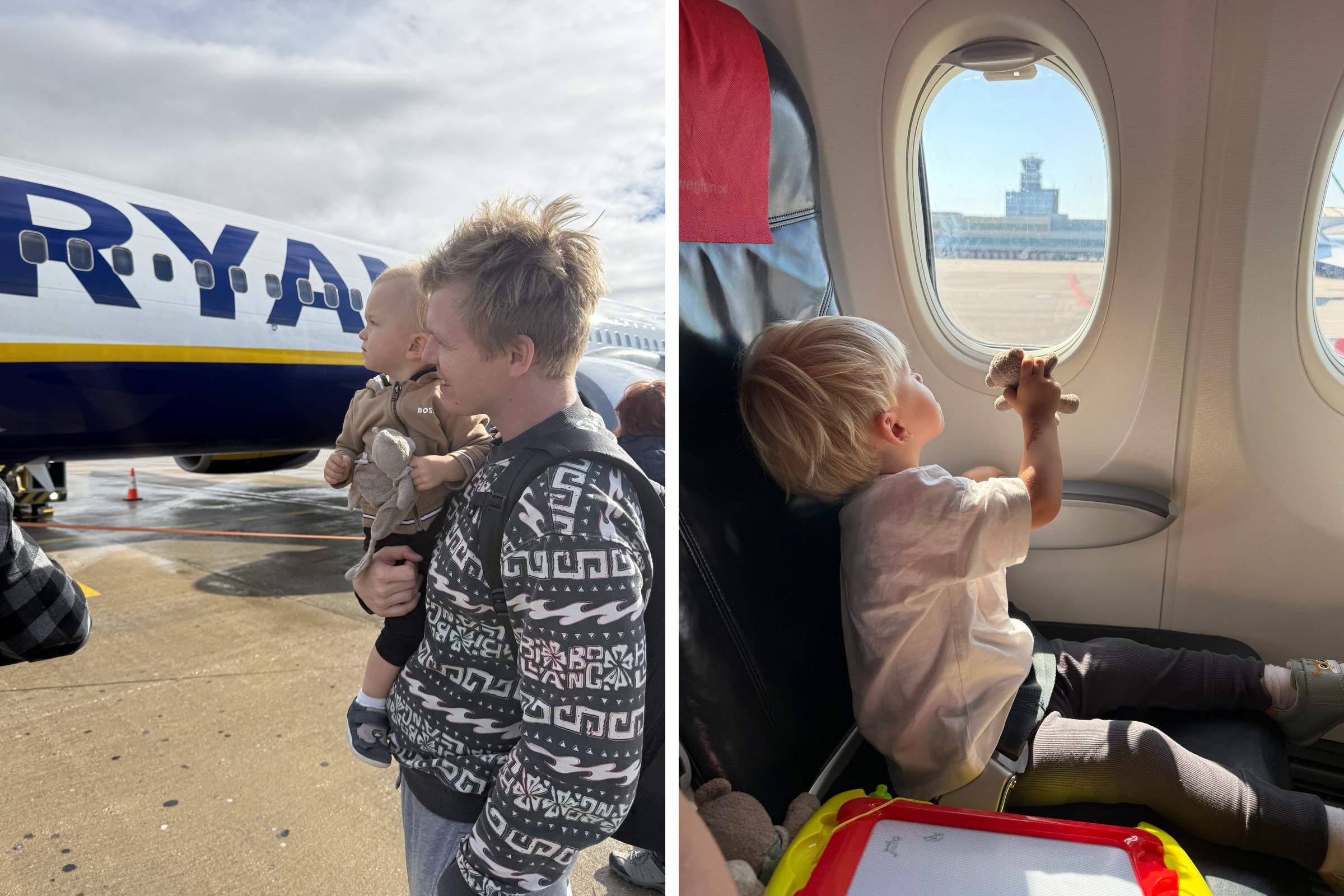
💡 Tip: Be ready for your plans to fall apart. Our return trip to Faro was delayed, our carefully planned sleep schedule completely fell apart, and Jonáš stayed awake the whole time. It was still fine: he enjoyed the flight and happily watched the view through the window.
On another flight to Paris, he again refused to be fastened with the child safety belt during take-off and landing, which required a lot of patience. If your flight is delayed by more than three hours, compensation may apply. ⚠️ For children under two without their own seat, practice is inconsistent and airlines unfortunately often reject these claims.
And what if your pushchair comes off the baggage belt damaged? You must report the damage in writing within seven days under the Montreal Convention, but the best option by far is to complete a so-called PIR report at the airport baggage claims desk straight away.
Practical summary and indicative prices
Working out children’s fees can sometimes feel like quite a maths problem. While traditional airlines charge a percentage of your ticket price, low-cost carriers have fixed fees for every individual flight segment, even when a child does not have their own seat.
| Fee type / Rule | Ryanair (2026) | Wizz Air (2026) | Typical airlines (e.g. Lufthansa) |
|---|---|---|---|
| :— | :— | :— | :— |
| Infant on lap (0–2 years) | €25 / segment | approx. €27 / segment | 10% of adult fare |
| Child with their own seat (2+ years) | Full adult fare | Full adult fare | Often a child fare (approx. 20–30% discount) |
| Minimum age to accompany the second child | 18 | 16 | Usually 16 or 18 (check in advance) |
| Pushchair free of charge | Yes (up to 2 pieces of children’s equipment) | Yes (for children under 14) | Yes (often a pushchair + car seat) |
If your child turns two during your holiday, you must buy them a regular seat for the return journey. This is usually handled by splitting the booking or calling the customer helpline, so keep it in mind when buying your tickets.
Where to go next
If you have an airport trip coming up and want to keep everything under control, take a look at our other guides too. They cover the most pressing problems parents face before flying.
- Flying with children: the complete guide
- Consent for a child to travel and children’s documents
- Where to sit with a child on a plane
- Taking a pushchair on a plane
- Prague Airport with children
Frequently asked questions
Can I fly alone with two children under two years old?
The standard way doesn’t work. One adult may only have one child on their lap. For the second child, you must purchase a full seat and bring a certified car seat, or arrange for a second adult as an escort (age varies by airline).
What should I do if my child and I have different last names?
Definitely bring a copy of your child’s birth certificate. When traveling outside the Schengen Area, it’s also highly advisable to have an officially certified written consent from the other parent for the trip, to avoid suspicion of abduction.
What are the liquid limits when traveling with a child from major European airports?
Since October 2025, relaxed limits of up to 2 liters per container apply at many Schengen terminals. At non-Schengen terminals, however, the strict 100 ml limit still applies. Fortunately, baby food and milk have an exemption at both types of terminals.
Will we sit together with our children on the plane for free?
The European Union approved a rule in 2026 that children under 14 must sit with a parent for free. In practice, however, this won’t be fully enforced until mid-2027. Until then, low-cost carriers will seat you together, but often only in the back rows.
Where must an infant on a lap sit on the plane?
For safety reasons, an adult with an infant on their lap must always sit in a window seat. That’s where two oxygen masks are located. You cannot sit in the aisle or middle seat.
Do you have to pay for a stroller on the plane?
No, the vast majority of airlines transport strollers for free. You can take it all the way to the boarding gate, where staff will fold it and store it in the cargo hold. Smartwings, however, requires the stroller to be wrapped in a protective cover, otherwise they won’t honor any damage claims.
Is an infant entitled to compensation for flight delays?
If you’re flying with a child under 2 who sits on your lap and doesn’t have their own paid seat, the practice unfortunately isn’t uniform. ⚠️ Airlines often reject these claims, but it’s always worth filing a claim for the entire family—you have nothing to lose.
Tips and Tricks for Your Vacation
Don’t Overpay for Flights
Search for flights on Kayak. It’s our favorite search engine because it scans the websites of all airlines and always finds the cheapest connection.
Book Your Accommodation Smartly
The best experiences we’ve had when looking for accommodation (from Alaska to Morocco) are with Booking.com, where hotels, apartments, and entire houses are usually the cheapest and most widely available.
Don’t Forget Travel Insurance
Good travel insurance will protect you against illness, accidents, theft, or flight cancellations. We’ve had a few hospital visits abroad, so we know how important it is to have proper insurance arranged.
Where we insure ourselves: SafetyWing (simple monthly subscription) and TrueTraveller (for extra-long trips).
Find the Best Experiences
Get Your Guide is a huge online marketplace where you can book guided walks, trips, skip-the-line tickets, tours, and much more. We always find some extra fun there!


