
Train to Busan is a zombie horror film, but the real KTX bullet train from Seoul is comfortable and takes about two and a half hours. At the end of the line is Busan, South Korea (spelled Pusan in some older sources, but Busan on Korean signs), a city of open sea, a Buddhist temple perched on coastal cliffs and hillsides covered in pastel-coloured houses.
On top of that, the KTX and SRT rail networks merged on 1 September 2026, so tickets are now cheaper and you can buy them all in a single app, KORAIL+.
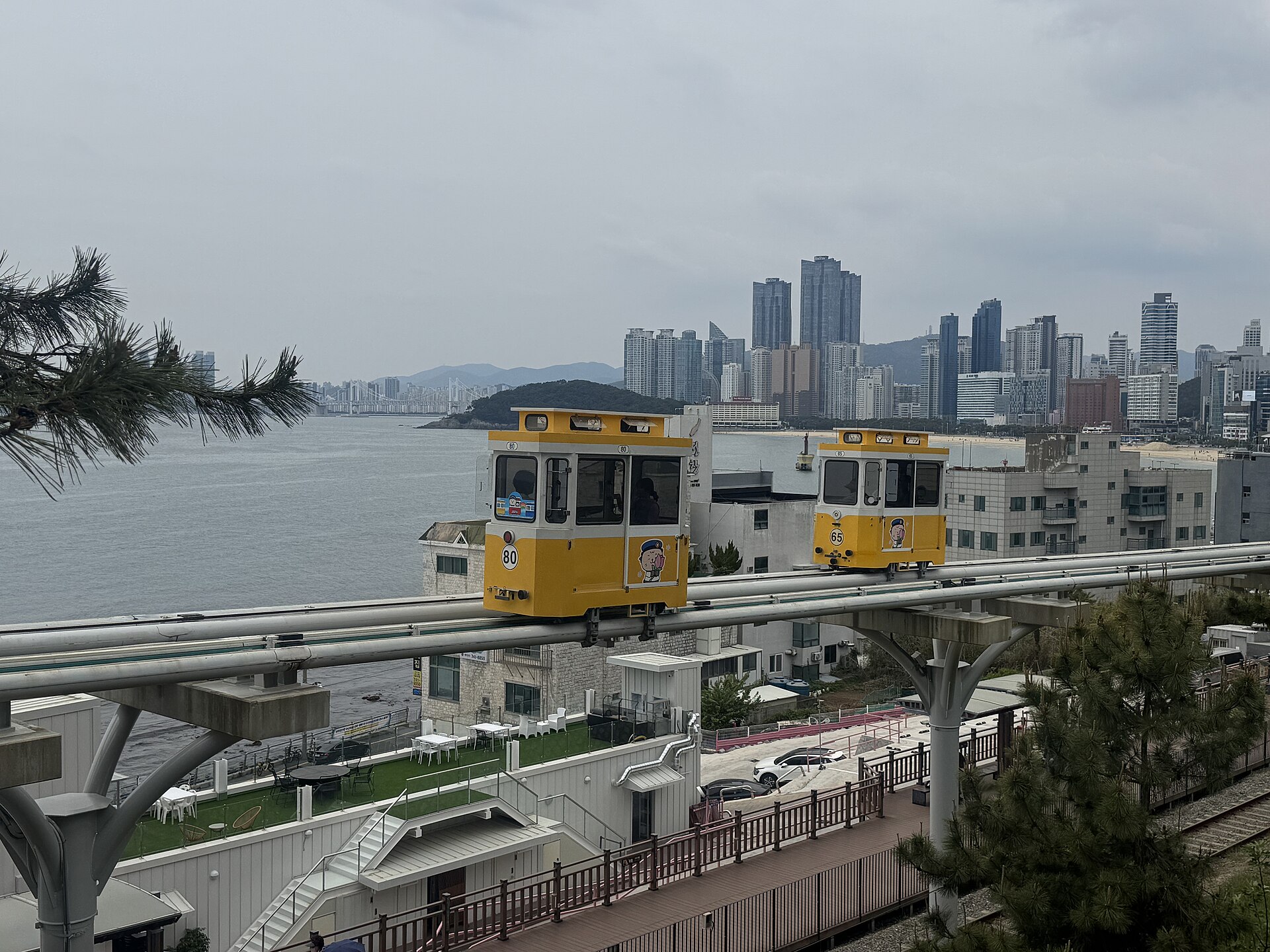
Before you go, keep an eye on two things. Book your ride in a colourful Sky Capsule along the sea (50,000 won, about €35 per capsule for two people one way) online as soon as you know your travel dates, because tickets sell out fast. The evening drone show over Gwangan Bridge takes place every Saturday (from October to February at 7:00 pm and 9:00 pm). It’s often cancelled because of wind or rain, though, so check the organiser’s website on the day.
The full destination guide: Asia — guide and what to see
TL;DR
- How many days: Plan 2 to 3 days for Busan itself, plus one extra day for a trip to Gyeongju; where you base yourself (Haeundae, Seomyeon or Nampo) affects how long you spend getting around, and you’ll find a detailed itinerary below.
- When to go: Head there in April and May or from late September to November, when temperatures are mild and there’s less rain than in summer.
- Getting there: The fastest KTX bullet trains from Seoul take 2 hours 18 minutes, most take around 2 hours 45 minutes. A ticket costs 54,400 won (about €35) and you can buy it in the KORAIL+ app.
- Entry requirements: Many nationalities can stay visa-free for up to 90 days; you’ll find entry conditions and the pre-travel online authorisation in the practical section below.
- Sky Capsule: The scenic ride costs 50,000 won (about €35) per capsule for two people one way; I recommend booking online in advance, as on the day only leftover tickets are sold on site.
- Drone show and fireworks: The free Saturday drone show at Gwangalli Beach gets cancelled in windy weather, so check the organiser’s website on the day; in early November the beach hosts the fireworks festival (in 2026 it took place on 7 November).
- Itinerary: A schedule by area, with separate days by the sea and days in the city, is in the 3-day itinerary section.
- Vegetarians: The port city’s cuisine relies on fish and anchovy broth, but you can eat plant-based at Vegenarang, Soban Vegan and HOME Bistro (check the menu and opening hours for all of them on HappyCow or in the Naver Map app).
When to Visit Busan, South Korea: Weather and Practical Info
Busan sits on the very south-eastern tip of the Korean Peninsula and has a milder climate than Seoul further north. Before you buy flights and train tickets, take a look at the local climate, public holidays and the latest changes to transport and entry requirements.
Climate and the best time to visit: The best conditions are in spring in April and May, and in autumn from late September to November. In October, daytime highs hover around 22.5 °C, night-time lows drop to about 14.5 °C and it rains on average on only about five days a month. Summer tends to be hot and humid, the changma monsoon season runs from late June into the second half of July, and July sees an average of almost 327 mm of rain. The Korean Peninsula is hit by an average of 3.2 typhoons a year, 87% of which come between July and September, and September typhoons can be destructive too (in 2022 Typhoon Hinnamnor made landfall near Busan). Measurements in 2024 put the sea at Haeundae Beach at around 25 °C in August and roughly 28 °C in September. Winter is dry and sunny, with daytime temperatures of around 8 to 10 °C.
- Festivals and Korean holidays: In early November, the Busan Fireworks Festival lights up the sky over Gwangalli Beach; in 2026 it was held on Saturday 7 November from 7:00 to 8:00 pm, and you should check the date of the next edition on the city’s website. Watching the fireworks from the beach is free, but you’ll be in a crowd. Paid seating sections cost 70,000 and 100,000 won (about €45 and €65), and according to one blog you had to arrive by 6:00 pm. The Busan International Film Festival (BIFF) ran from 6 to 15 October in 2026. In winter, Haeundae Beach is lit up by the Light Festival, which for the 2026/2027 season is reportedly planned from 29 November 2026 to 18 January 2027, according to unofficial sources (check the date in advance). If you’re planning a trip in 2027, watch out for the Lunar New Year, Seollal (6–9 February 2027) and the Chuseok harvest festival (14–16 September 2027). KTX tickets are in high demand around these holidays, so buy them as soon as sales open; some shops and markets also close.
Flights from Europe and connections via Seoul: You can’t fly directly from Europe to Busan’s Gimhae Airport (PUS). The easiest option is a direct flight from a major European hub to Seoul’s Incheon Airport (ICN), which takes roughly ten to twelve hours depending on where you start. Long-haul routes are operated by Korean Air and Asiana Airlines, among others, with Asiana merging into Korean Air from 17 December 2026, so check flight days and numbers directly with the airlines. From Seoul, continue on a domestic flight or by bullet train.
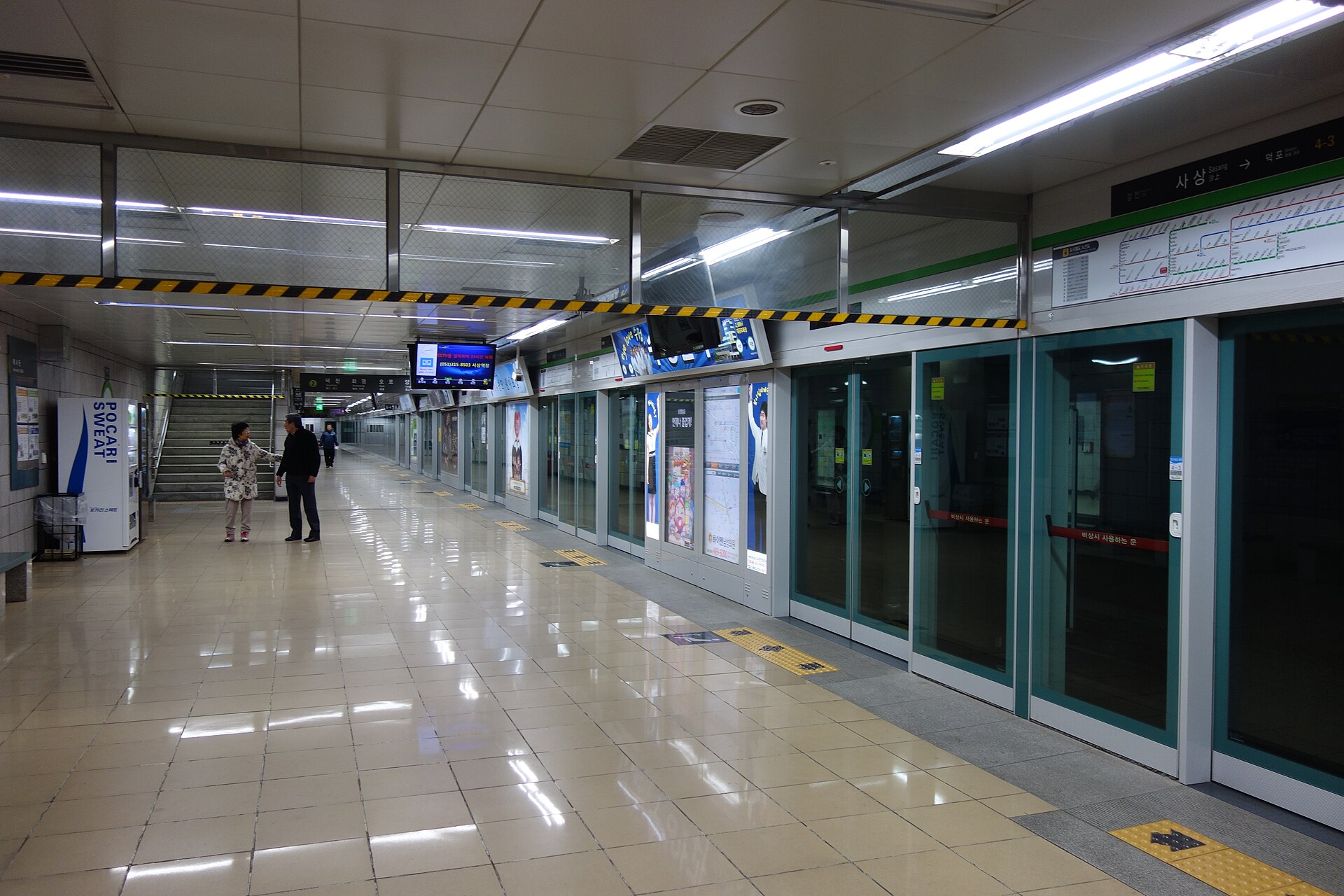
Getting from Gimhae Airport to the city centre: Pick up a T-money or Cashbee transport card at a GS25, CU or 7-Eleven convenience store. It works on the metro, buses and taxis, and you top it up with cash (Seoul’s Climate Card isn’t valid in Busan). From Gimhae Airport, the Busan-Gimhae Light Rail (BGL) takes you to the metro; in the first fare zone you’ll pay 1,600 won (about €1.10) with a transport card or 1,700 won (about €1.15) for a single ticket. You’ll reach Sasang station (Line 2) in 6 minutes and Daejeo (Line 3) in 8 minutes. Since 19 September 2025, transfers within Busan, Gimhae and Yangsan have been free, but only with a transport card. Limousine buses run from the airport to Haeundae and Gijang for 9,500 won (about €6.40) and to Seomyeon for 6,000 won (about €4), and fares on them can only be paid by bank card.
💡 Tip: The airport limousine bus doesn’t stop at the main Busan Station at all, so if you’re catching a train, take the BGL light rail and the metro instead.
- KTX bullet trains from Seoul: On 1 September 2026, the KTX high-speed trains (Korea’s bullet train) and SRT (the second high-speed operator, whose trains ran from Suseo station) merged, bringing fares down by roughly ten percent on average. A one-way standard-class ticket from Seoul to Busan costs 54,400 won (about €35). The fastest trains cover the route in 2 hours 18 minutes, the median journey time is 2 hours 44 minutes and the slowest trains take 3 hours 25 minutes. Trains run from both Seoul Station and Suseo station to Busan Station; since 1 October 2026, sales open two months before departure and you can buy tickets in the KORAIL+ app, while the old SRT app reportedly still works for now and doesn’t require registration to buy tickets. In addition, since 30 December 2025, KTX-Eum trains have run from Cheongnyangni station in Seoul directly to Sinhaeundae and Centum stations without changing, but the journey takes about 3 hours 38 minutes and there are only a few departures a day (around 6 on weekdays), so it’s mainly handy if you’re staying near Haeundae Beach.
- Getting around: metro and discount passes: The city is served by four metro lines, the BGL light rail connecting Gimhae Airport with the metro (Sasang), and the Donghae Line commuter railway running along the east coast towards Songjeong and Gijang. A metro ride of up to 10 kilometres costs 1,600 won (about €1.10) with a transport card (T-money or Cashbee), 1,800 won (about €1.20) in the longer zone, and a one-day metro ticket costs 6,000 won (about €4), though it’s only valid on Lines 1 to 4 (not on the BGL, the Donghae Line or buses). For attraction entry, foreign visitors can get the Visit Busan Pass, which costs roughly 55,000 won (about €35) for 24 hours and 85,000 won (about €55) for 48 hours; you’ll find more details below in the “Is the Visit Busan Pass Worth It?” section, and current prices on the pass’s official website. The Busan City Tour sightseeing bus costs 20,000 won (about €13) per day.
- Entry requirements and K-ETA: Citizens of many countries, including most EU member states, can stay visa-free for up to 90 days with a passport valid for at least 6 months. A number of nationalities also have a temporary exemption from the K-ETA requirement (Korea’s electronic travel authorisation) until 31 December 2026, so check with your own foreign ministry or the official K-ETA website whether you need it (and re-check the current rules if you’re travelling after that date). If you’re exempt, all you fill in before departure is the electronic e-Arrival Card, which since 1 January 2026 can only be submitted online at e-arrivalcard.go.kr; it’s free and can be completed no earlier than 72 hours before arrival. Watch out for unofficial agents that charge a fee on top. The country is safe, but do take out travel insurance, because without it you’ll pay the full cost of any medical treatment.
Money, apps and important numbers: The South Korean won is worth roughly 1,000 won = €0.67. Cards are accepted even in small shops and restaurants, while cash comes in handy at markets and for topping up your T-money card. Tipping isn’t customary in Korea. According to the Czech travel site travelbible.cz (October 2026), a day costs about 60,000 won (around €40) on a budget, 170,000 won (around €115) on a mid-range budget and from 350,000 won (around €230) if you want comfort. Sockets are 220 V and take standard European (Type C/F) plugs. Official travel advice recommends Naver Map and KakaoMap, because Google Maps has limited navigation in Korea. Pair them with the Papago translation app and the KORAIL+ train app. Emergency numbers are 112 (police), 119 (ambulance and fire) and the Tourist Helpline 1330 (in English).
Haeundae, Seomyeon or Nampo: Where to Base Yourself
| From | To | Approx. by metro |
|---|---|---|
| :— | :— | :— |
| Haeundae | Seomyeon | Line 2, about 35 min |
| Seomyeon | Nampo | Line 1, about 15 min |
| Haeundae | Nampo | Line 2, change at Seomyeon, then Line 1, about 50–55 min |
| Seomyeon | Busan Station (KTX) | Line 1, about 10–12 min |
| Busan Station | Nampo | Line 1, about 5 min |
| Haeundae | Gwangalli | Line 2, about 12–15 min |
| Seomyeon | Beomeosa | Line 1, about 25 min plus bus 90 or a walk up to the temple |
| Gimhae Airport | Seomyeon | BGL to Sasang, then Line 2, about 30–35 min |
| Gimhae Airport | Haeundae | BGL and Line 2, about 60–65 min |
If you’re planning three days of city sightseeing, Seomyeon is the best compromise, since metro Lines 1 and 2 cross here. From Seomyeon you’ll reach the old centre of Nampo in about 15 minutes, Haeundae in about 35 minutes, Busan Station in about 10 minutes, Beomeosa Temple in about 25 minutes (by metro, then bus 90) and the airport in roughly 30 to 35 minutes. The only downside? You won’t see the sea from here.
For a summer beach stay with the sea right outside your window, go for Haeundae in the east, which puts you close to the beach, the Blueline, the X the Sky observation deck and the road to Haedong Yonggungsa Temple. Keep in mind, though, that Nampo, Gamcheon and Yeongdo Island are almost an hour away, and KTX high-speed trains terminate at Busan Station, from where it takes about 45 to 50 minutes to get to Haeundae (there is a direct KTX-Eum to Sinhaeundae, but it’s slow and runs only a handful of times a day).
For one or two nights, arriving by train and outside the summer season, Nampo and the area around Busan Station make the most sense. You’re 5 minutes from the KTX and closest to Gamcheon, Jagalchi Market, Yeongdo and Songdo, while Haeundae and Haedong Yonggungsa are about 45 to 50 minutes away. In summer, feel free to split your stay (for example, 2 nights in Seomyeon or Nampo and 1 night in Haeundae) – you’ll find specific hotels in our Where to Stay in Busan guide.
Where to Stay in Busan
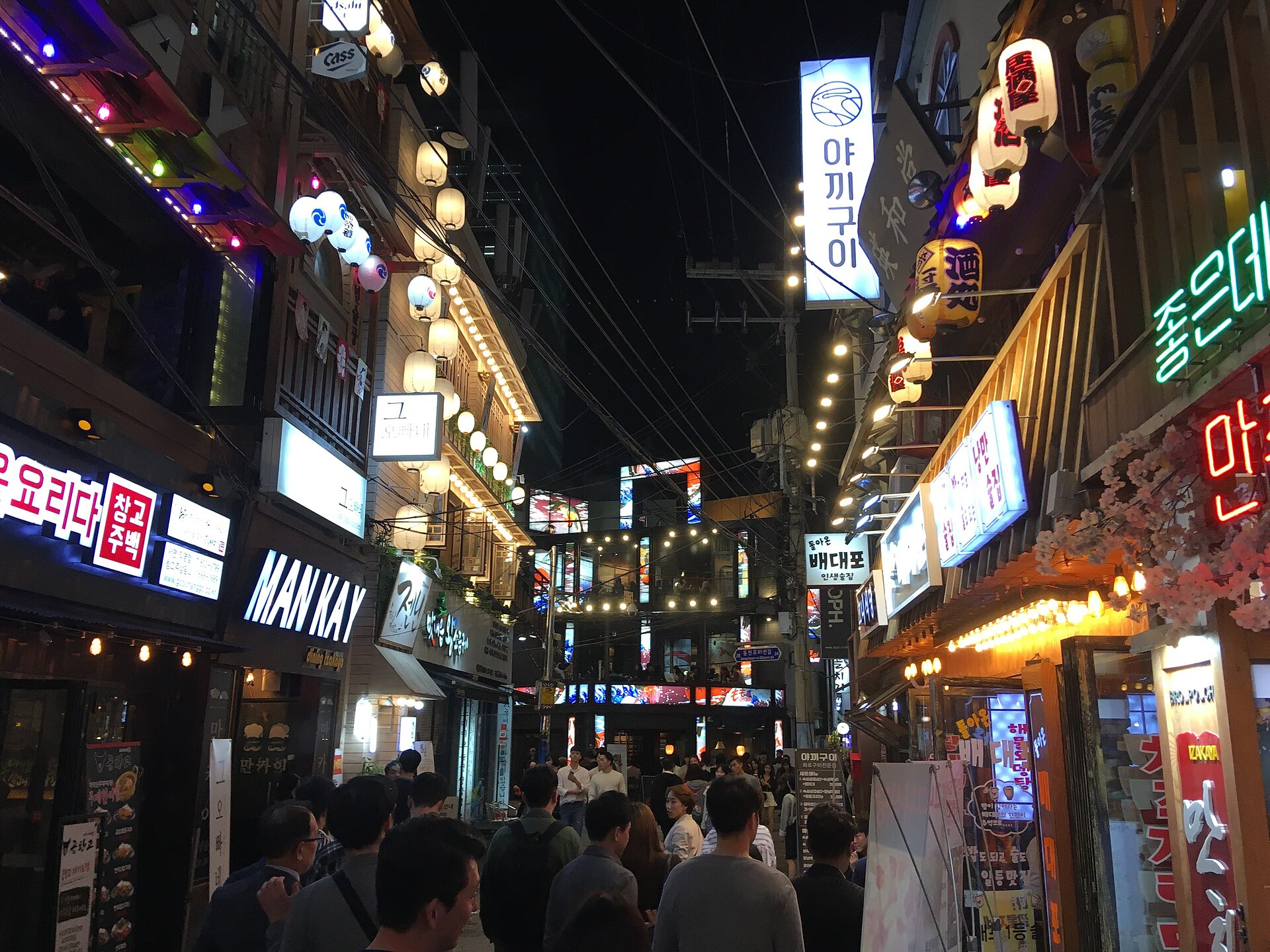
Busan sprawls along the coast, and getting between Haeundae Beach in the east and the old centre of Nampo in the west takes almost an hour on the metro, including a change (about 50 to 55 minutes with a transfer at Seomyeon). So pick your neighbourhood based on whether you want to be by the beach, at the metro hub or near the train station; detailed travel times between districts are in the base overview above.
If you want the sea, the skyscrapers and the scenic little trains on your doorstep, look for a place near Haeundae Beach, the hub of Busan’s more upscale hotels. Right on the beach, at its western end by Dongbaek Island, The Westin Josun Busan offers classic luxury. The “Deluxe Beach” category looks out over Haeundae Beach, while the “Deluxe Park Ondol” room (a Korean-style room where you sleep on mattresses on a heated floor) faces Dongbaek Park. West of Haeundae Beach, in Marine City, you’ll find design-led luxury at Park Hyatt Busan, with views of the Gwangan Bridge. It’s a 20 to 25-minute walk to Haeundae Beach, so it suits those who want design and bridge views rather than the beach right below their window.
The neighbouring seaside district of Gwangalli gives you views of the illuminated Gwangan Bridge and the Saturday drone show. Right on the beachfront promenade stands the mid-range Kent Hotel Gwangalli by Kensington; when booking, it’s worth aiming for a sea-view room (e.g. “Deluxe Double Ocean View”).
If you’d rather stay in the middle of the city and save time on transfers, choose the inland district of Seomyeon, where metro Lines 1 and 2 meet and the Jeonpo café street lies right next door. In Seomyeon itself you’ll find the classic LOTTE HOTEL BUSAN, which is connected to the metro station and the Lotte department store, and whose rooms overlook the city.
For a short stop by KTX high-speed train or before catching the ferry to Japan, the area around the main Busan Station is the practical choice. Opposite the station, the budget Japanese chain Toyoko Inn Busan Station No.1 includes free breakfast. There are four Toyoko Inn hotels in Busan, so make sure you search for exactly “Busan Station No.1”.
If you love traditional markets and street food, you’ll enjoy the old centre of Nampo, close to Jagalchi Fish Market, BIFF Square and the Busan Diamond Tower (formerly Busan Tower). In Nampo, consider Parami On Hotel right on BIFF Square, which also has two-storey duplex rooms – the largest sleep up to six people (check the exact capacity with the hotel).
For a quieter stretch of coast, try Songdo beach in the west with its cable car, or Gijang in the northeast near Haedong Yonggungsa Temple. You’ll find a detailed overview in our article Where to Stay in Busan.
💡 Use this map to compare what’s available right now — you’ll instantly see how much prices change just a few blocks away.
22 Things to See and Do in Busan, South Korea
Busan stretches along the coast and between the hills, so getting from the eastern to the western side takes almost an hour. Two to three days in Busan plus one day in Gyeongju is enough for the main sights, and you’ll find a ready-made day-by-day plan in the 3-day itinerary section below tip 22. So you don’t spend half your holiday on the metro, the tips are grouped by area. They start at Haeundae Beach and the east coast (1 to 6), continue through Gwangalli, Igidae and the UN Cemetery (7 to 9) to Gijang (10 and 11). Then they move on through the old centre of Nampo (12 to 14), Yeongdo Island (15 to 17), Gamcheon and Songdo (18 and 19), Beomeosa Temple and Mount Geumjeongsan (20 and 21), finishing in the Seomyeon district (22).
For each place you’ll find how to get there by metro or bus and the practical pitfalls to watch out for, and for many of them also a tip on where to eat nearby without meat or fish. Prices and opening hours change, so check them on the official website before you go.
1. Haeundae Beach
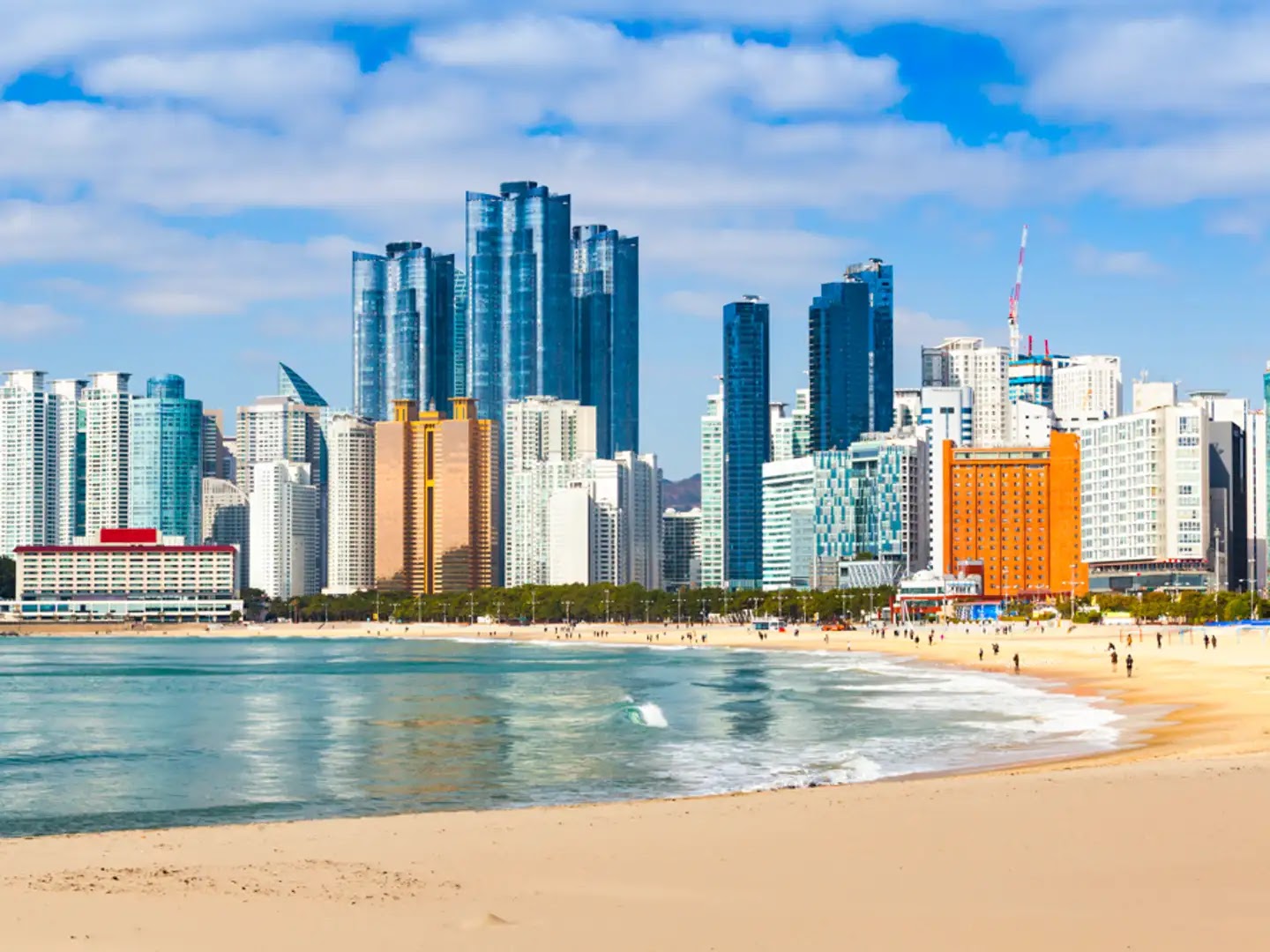
The lively Haeundae Beach is about 1.5 kilometres long and lined with high-rise buildings along the shore. Getting here is easy: take metro Line 2 to Haeundae Station (exits 3 or 5).
The beach stays busy even outside summer thanks to city events. The Haeundae Sand Festival took place here from 15 to 18 May 2026, and in winter the Haeundae Light Festival lights up the promenade (the 2025/26 edition ran from 29 November 2025 to 18 January 2026). A short walk from the beach, Haeundae Traditional Market is open from 9:00 am to 10:00 pm with street food, although the stalls mostly sell fish and meat dishes.
If you avoid meat and fish, head to the vegetarian and vegan spot HOME Bistro on nearby Dalmaji-gil, which also serves vegan wine; double-check the opening hours before you go, as they vary between sources.
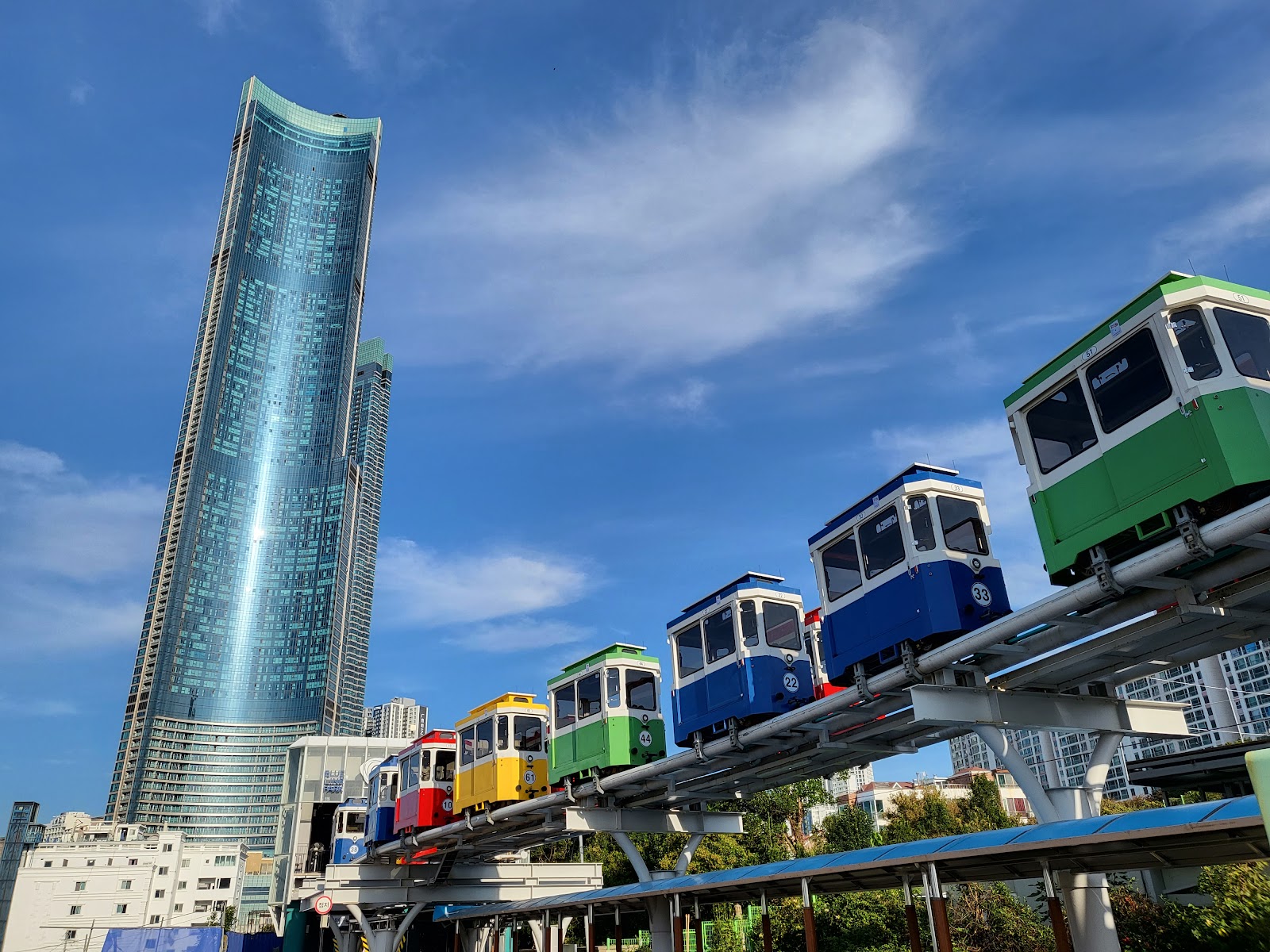
2. Haeundae Blueline Park: Sky Capsule and Beach Train
Along the former Donghae railway line hugging the coast, from Mipo Station via Cheongsapo all the way to Songjeong, run the scenic Beach Train and the colourful Sky Capsule cabins on an elevated track. The capsules only run between Mipo and Cheongsapo stations, and a ticket is valid for one ride, which takes about 30 minutes. There’s no single-person capsule, so solo travellers pay the price for two. You pay for the whole capsule: 50,000 won for 2 people (about €35), 55,000 won for 3 people (about €35) and 60,000 won for 4 people (about €40).
The Beach Train continues all the way to Songjeong Station, home to a beach popular for surfing and surf lessons. A single ride from Mipo or Songjeong costs 10,000 won (about €7), from Cheongsapo 8,000 won (about €5), a return ticket is 14,000 won (about €9) and a ticket covering all stations costs 16,000 won (about €11).
The Sky Capsules run from 8:30 am to 6:00 pm from November to February, 8:30 am to 6:30 pm in March, April and October, 8:30 am to 7:30 pm in May, June and September, and 8:30 am to 8:30 pm in July and August. Service is suspended during heavy rain or typhoons; you’ll find the exact times at bluelinepark.com.
According to travellers on Reddit, Sky Capsule tickets sell out fast, especially at weekends; I recommend booking online in advance, as only leftover tickets are sold on site on the day. Your booked time gives you a 30-minute boarding window, and if you turn up late, you may not be allowed to board and won’t get a refund. Cancellation is free within an hour of payment or three or more days in advance; two days before you lose 20% of the price, one day before 30%, on the day 50%, and after departure you get nothing back. Foreign cards sometimes don’t go through on the official website, so the official resellers Klook, Trip.com and KKday make a good backup.
💡 Tip: In Cheongsapo, take a stroll along the free Cheongsapo Daritdol Skywalk, a U-shaped pier since July 2024 that’s roughly 191 metres long; it’s often closed in rain and strong winds, so check the opening hours in advance.
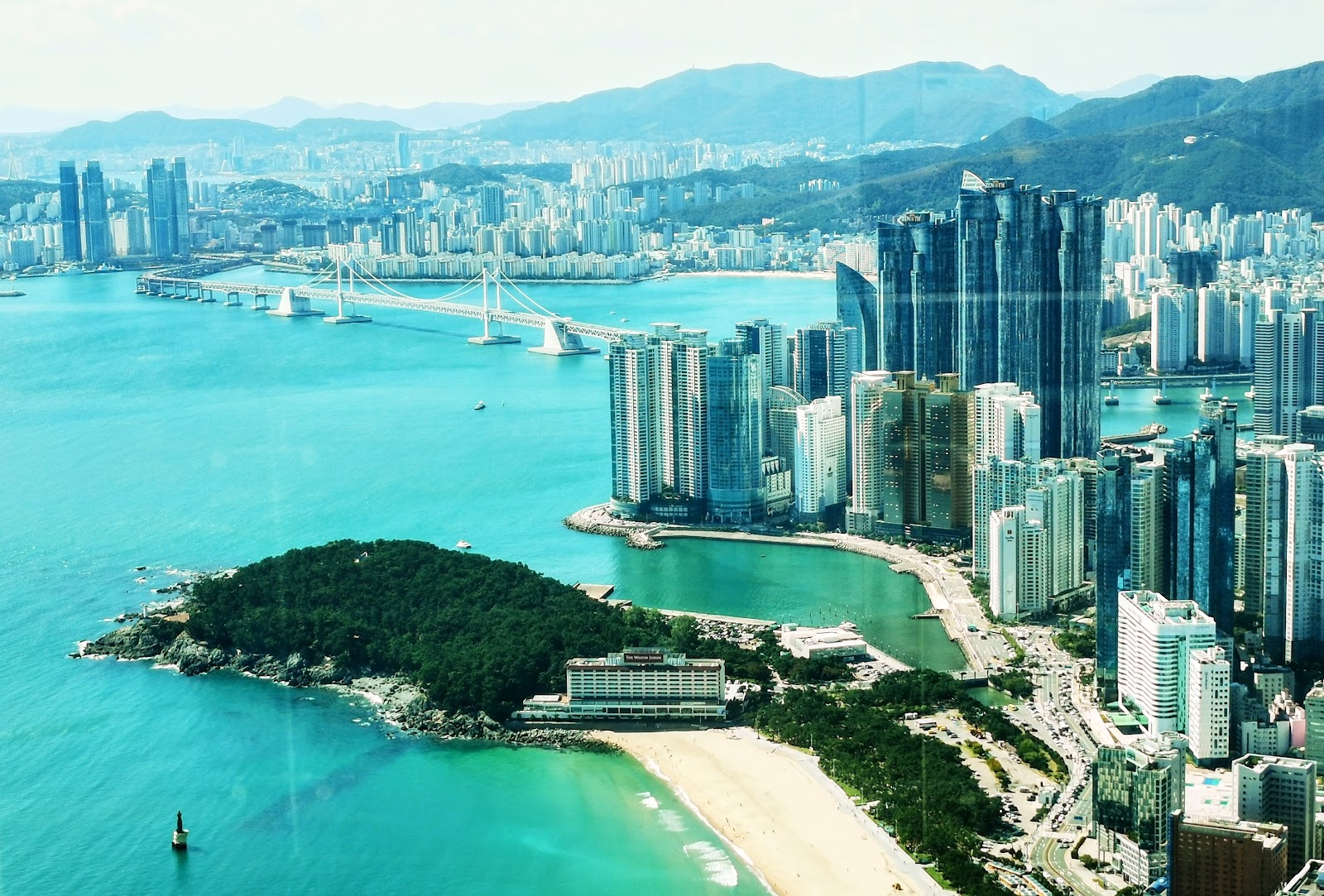
3. BUSAN X the SKY
At 30 Dalmaji-gil stands the Haeundae LCT Landmark Tower. According to the city’s tourism portal, its 411.6 metres make it the second-tallest building in Korea. The BUSAN X the SKY observatory takes up the 98th to 100th floors. It’s open daily from 10:00 am to 9:00 pm, with last entry at 8:30 pm.
VisitKorea lists an adult ticket at 27,000 won (about €18) and a child or senior ticket at 24,000 won (about €16). Prices can change, so check the observatory’s official website for current rates.
Tickets are valid for a specific date and there’s no re-entry, so pick a day with good visibility.
💡 Tip: Travellers say there’s also a Starbucks on the observation floors. Whether you can get into the café without an observatory ticket is something you’ll have to find out on the spot.
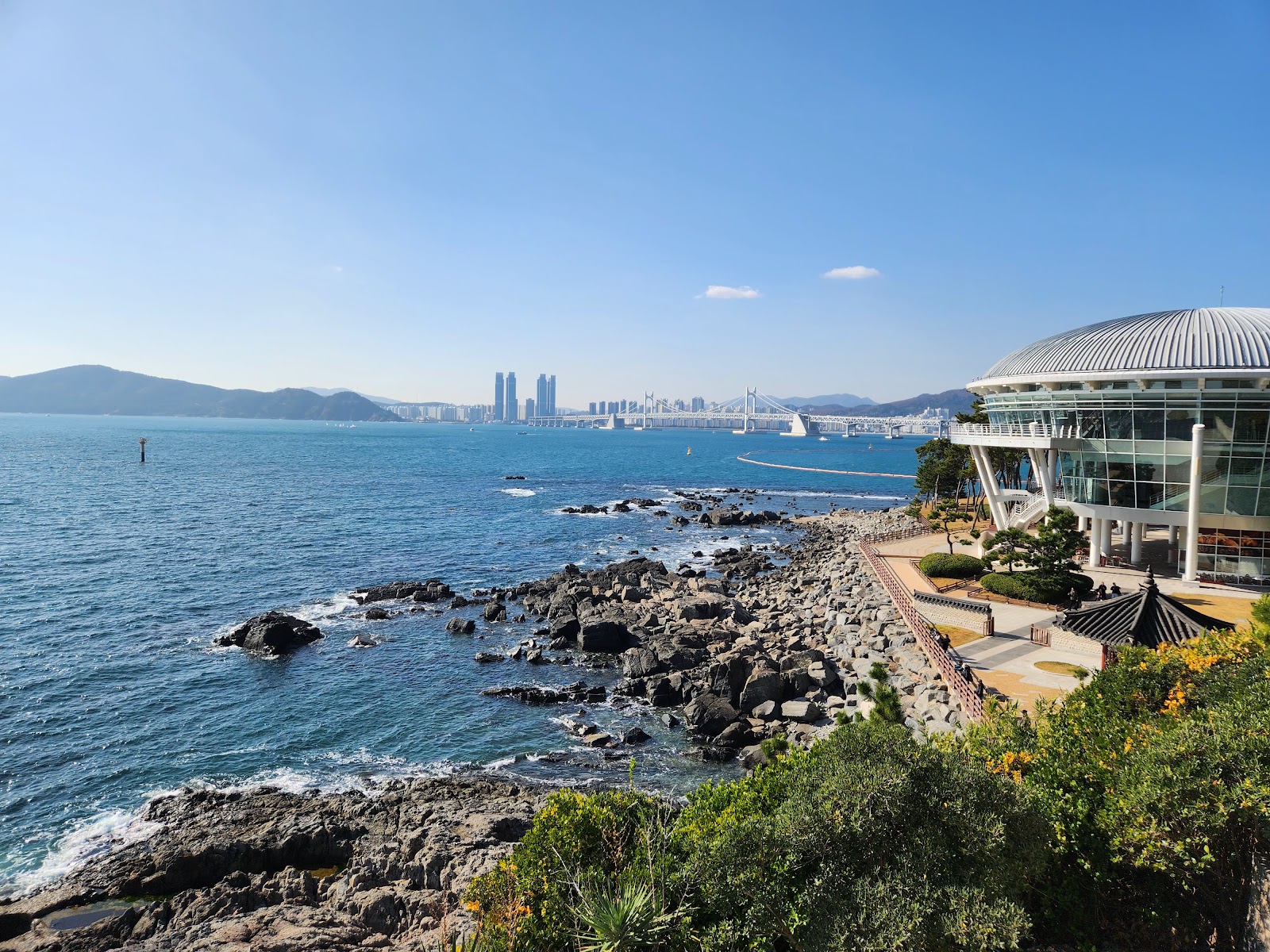
4. Dongbaekseom and APEC Nurimaru
At the far end of Haeundae Beach lies the wooded islet of Dongbaekseom, circled by a coastal promenade. It’s a lovely spot for a morning or evening stroll, with views across the sea to Gwangan Bridge.
The islet is also home to the APEC Nurimaru building. Busan hosted the APEC summit (Asia-Pacific Economic Cooperation forum) in 2005, and Korea’s next summit took place in Gyeongju in 2025.
You can walk the islet and its promenade freely, carrying straight on from Haeundae Beach.
💡 Tip: The limousine bus from Gimhae Airport stops right by Dongbaekseom. It runs roughly once an hour from 7:10 am, and you’ll find the time of the last bus on the airport’s website.
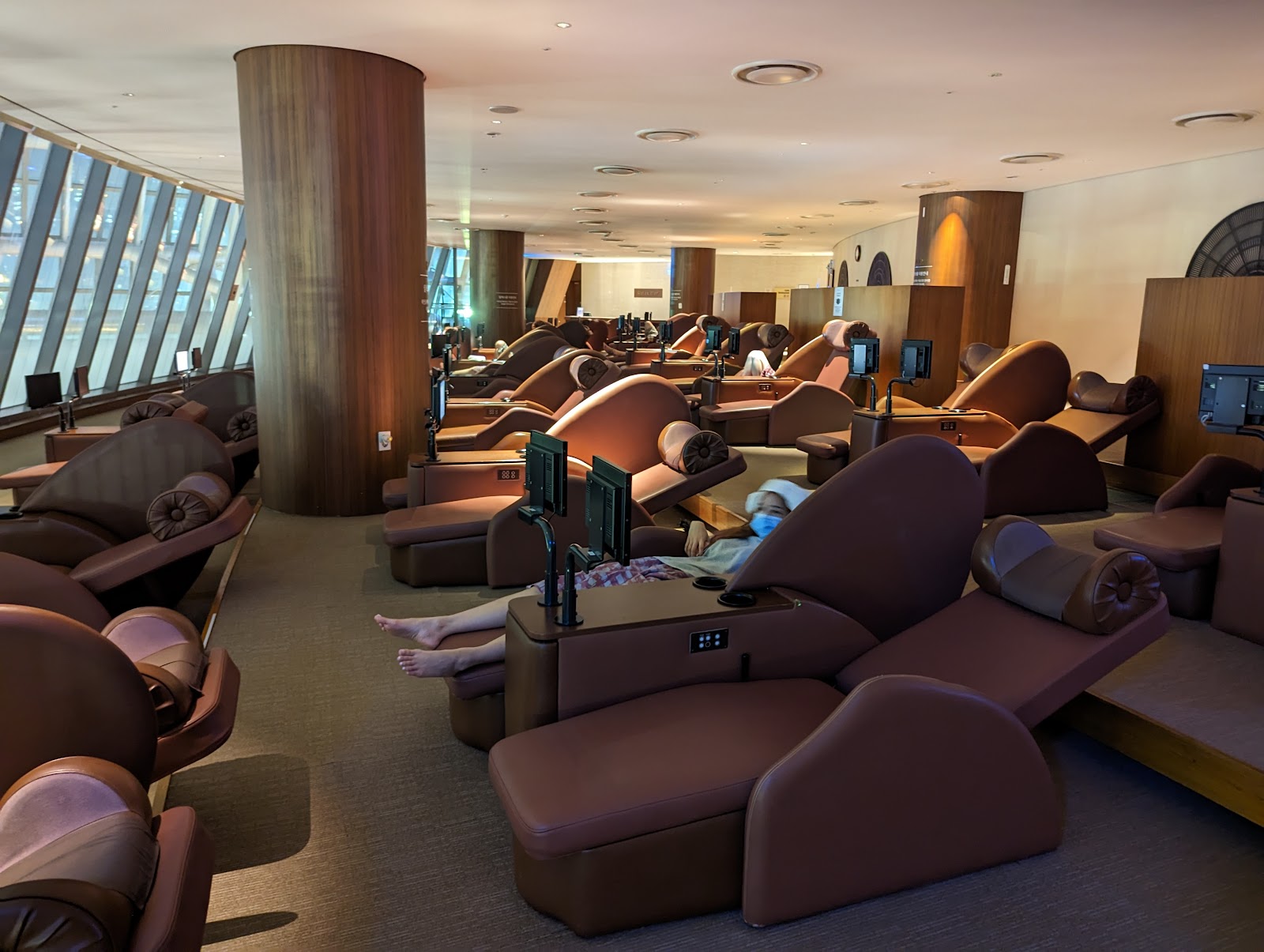
5. Spa Land Centum City
On the 1st floor of the Shinsegae department store (connected to Centum City station on metro line 2) you’ll find the Spa Land Centum City spa. It’s open as usual – according to reports from October 2026, the department store’s renovation only affects its 5th floor. Opening hours are daily from 9:00 am to 10:00 pm, with last entry at 9:00 pm.
Admission is roughly 26,000 won (about €17) for adults and around 21,000 won (about €14) for students, though some sources quote 25,000 and 20,000 won, so double-check current prices and opening hours before you go. The price covers 4 hours, and each extra hour costs about 5,000 won (about €3). This is a traditional jjimjilbang (a Korean bathhouse with separate bathing areas for men and women plus a shared zone). In the single-sex bathing areas you go without clothes, while in the shared zone you wear clothes.
Before your visit, bear in mind that children under 7 (under 8 according to some sources) aren’t allowed in, and older kids up to about 13 can only enter with a companion of the same sex – check the rules before you go. According to travellers on Reddit, the approach to tattoos is inconsistent, and if you have large tattoos, be prepared to be turned away.
💡 Tip: Spa Land sits right inside the Centum City complex, so you can easily pair a relaxing soak with the Shinsegae Centum City shopping mall and a visit to the Busan Cinema Center (tip 6) – a great plan for a rainy day, too.
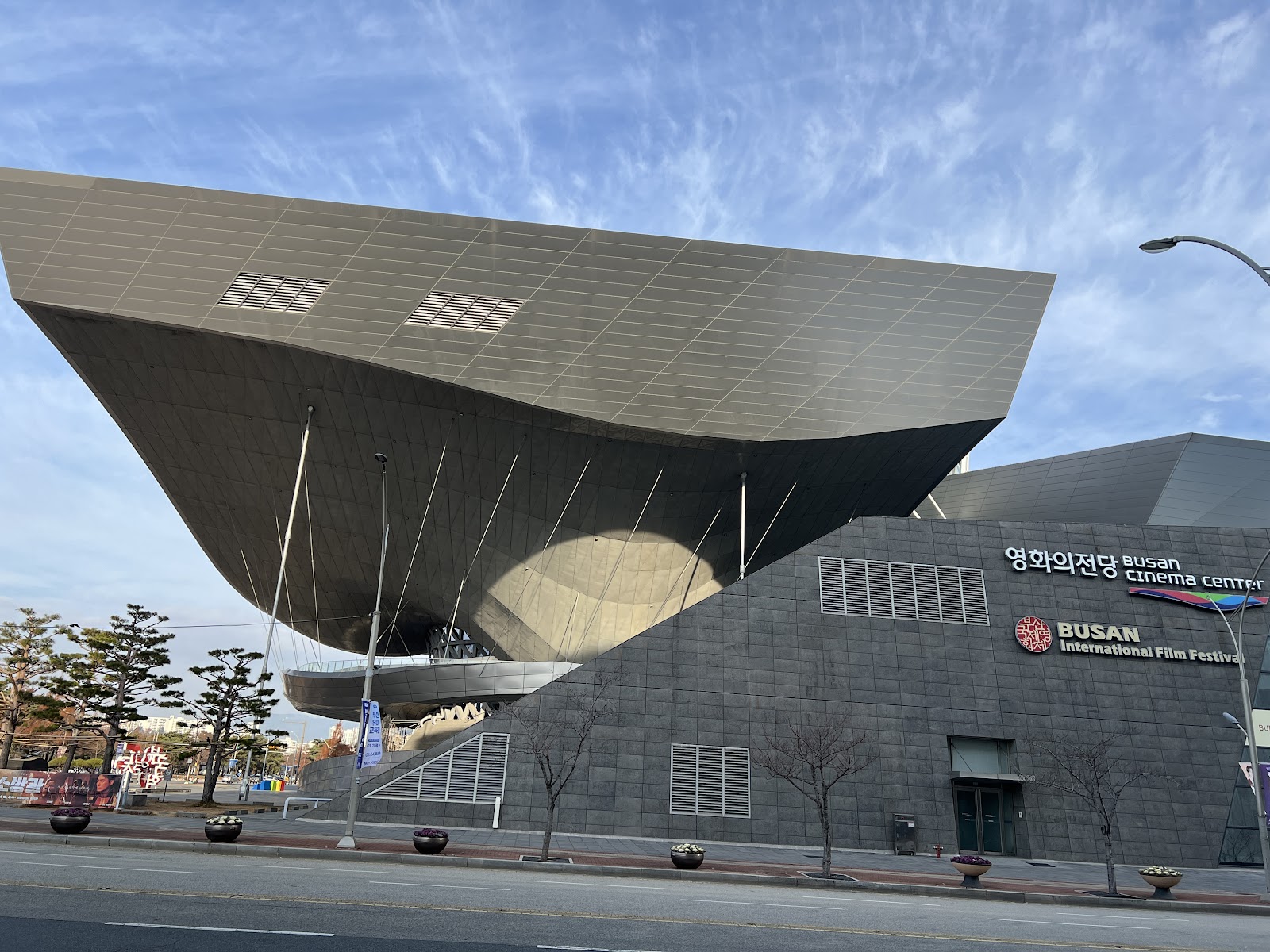
6. Centum City: Busan Cinema Center and Museum One
In the Centum City district (metro line 2, Centum City station, exit 6) stands the Busan Cinema Center, home of the BIFF film festival. The 2026 edition ran from 6 to 15 October. If you love tracking down film locations on your travels, stop by while exploring the eastern part of the city.
Nearby you’ll also find the digital art gallery Museum One (MUSEUM 1). Check its official website for opening hours and ticket prices.
Both places are just a short walk from the Shinsegae department store and Spa Land, so you can easily combine them into a single afternoon on metro line 2.
💡 Tip: In 2025, BIFF took place from 17 to 26 September, so the festival dates shift from year to year. Hotels in Centum City and Haeundae tend to be pricier during the festival.
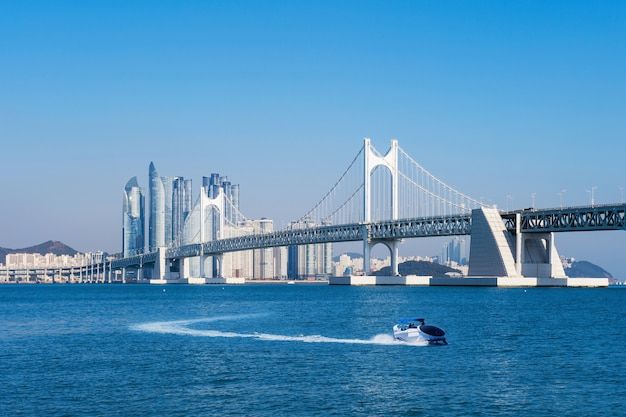
7. Gwangalli Beach, Gwangan Bridge and the Drone Show
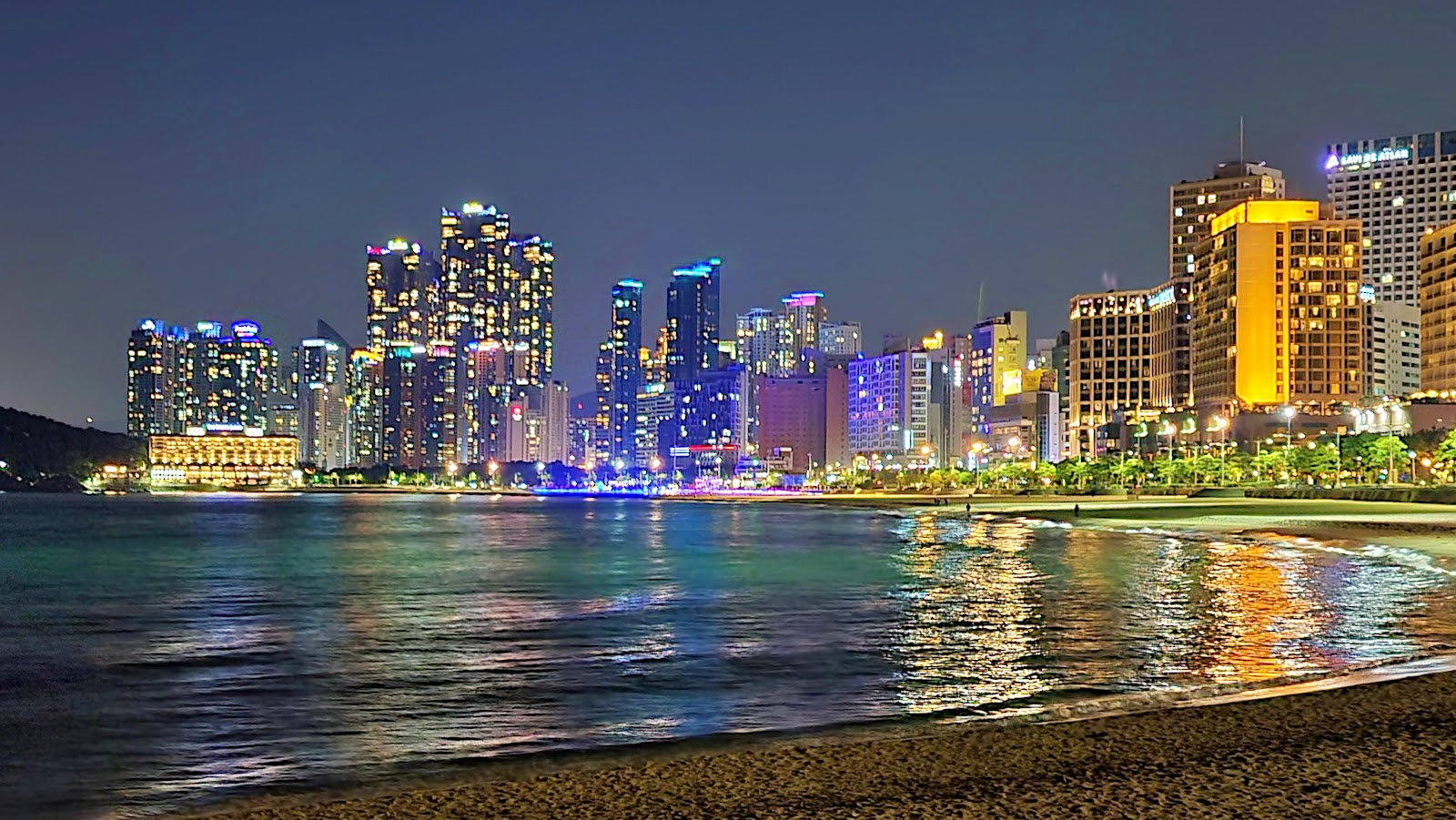
In front of Gwangalli Beach (metro line 2, Gwangan or Geumnyeonsan station, about a 10-minute walk) arches the double-deck Gwangan Bridge suspension bridge, lit up with seasonal light shows. Every Saturday, the Gwangalli M Drone × Laser Show sends around 1,100 drones into the sky (with lasers on the first and third Saturday of the month). The show lasts over 12 minutes, is free with no booking needed, and can be seen from anywhere on the beach. From October to February it starts at 7:00 pm and 9:00 pm, and from March to September at 8:00 pm and 10:00 pm.
That said, the drones often stay grounded because of wind, rain or other events. According to one foreign blog, the show was cancelled at least eight times in 2026. So check the current schedule on gwangallimdrone.co.kr on the day itself.
The Busan Fireworks Festival takes place at Gwangalli in early November – in 2026 it was held on Saturday 7 November from 7:00 pm to 8:00 pm. Watching from the beach is free. Paid seating came in two classes: S for 70,000 won (about €45) and R for 100,000 won (about €65), and according to one blog you had to be in your section by 6:00 pm. Check the dates and prices for the next edition on the city’s website.
For a meat-free meal, head to the vegan restaurant Vegenarang (9th floor of the Noble Sky building, metro line 2, Millak station, exit 1). It serves temple-style cuisine, and the dining room looks out over the sea. It’s open daily from 11:30 am to 3:00 pm and from 5:00 pm to 7:40 pm, and set menus are usually for two or more people.
💡 Tip: From Haeundae Beach, you can reach Gwangalli on metro line 2 in roughly 12 to 15 minutes, so the evening drone show fits easily into a day on the east side of Busan, South Korea.
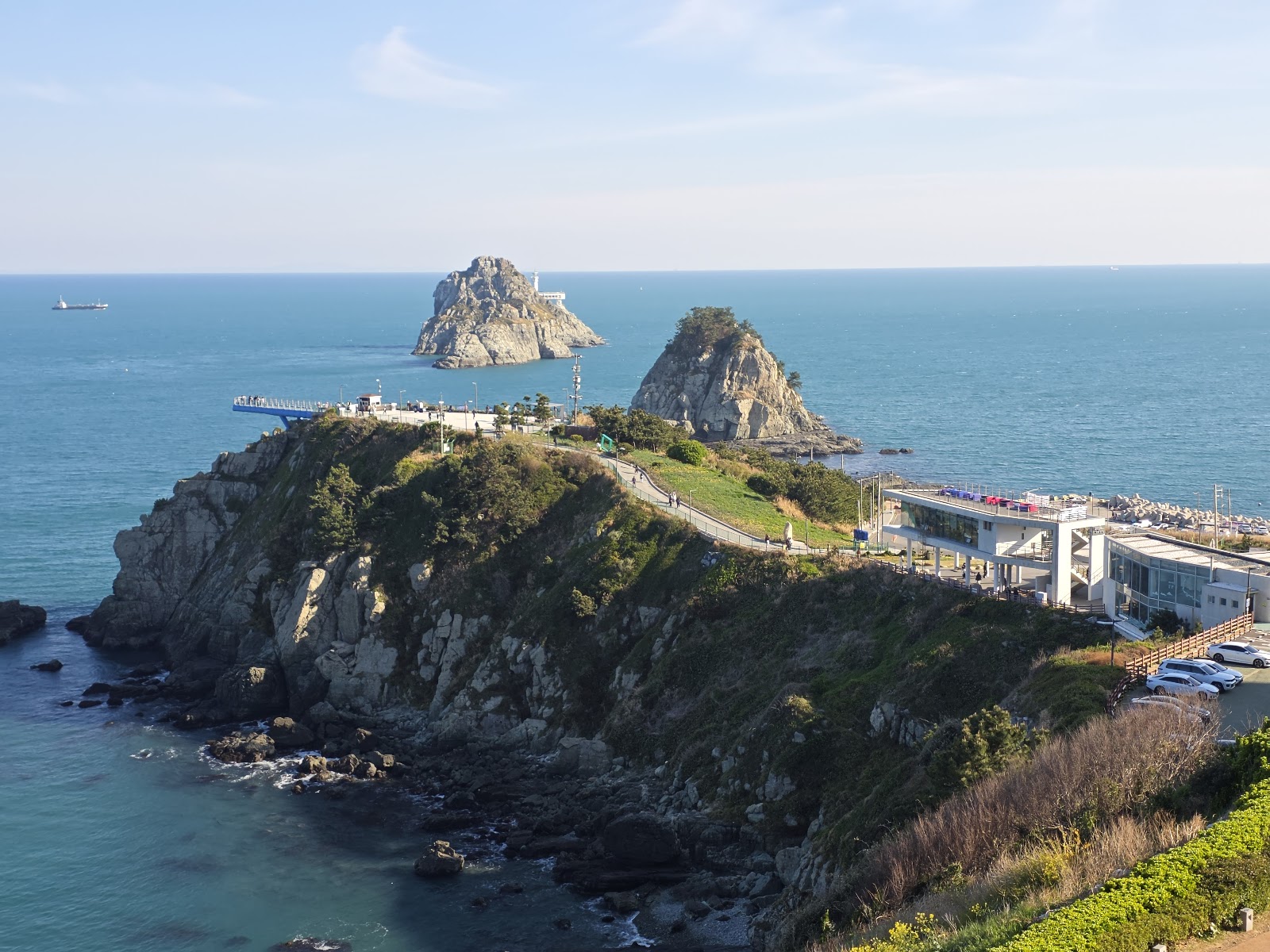
8. Igidae Coastal Trail and Oryukdo Skywalk
Perched above a cliff is the glass-floored Oryukdo Skywalk. Entry is free, and it’s open daily from 9:00 am to 6:00 pm, with last entry at 5:50 pm. The skywalk closes in rain, snow or strong wind.
From Oryukdo, the Igidae Coastal Trail runs along the coast. The trail is free and open at any time. Along the way, you’ll get views of Haeundae Beach and Gwangan Bridge.
To get to the Oryukdo Skywalk, take metro line 2 to Kyungsung Univ. station (exit 5), then continue on bus 131, 24 or 27. It’s easy to tie this trip in with a visit to nearby Gwangalli Beach.
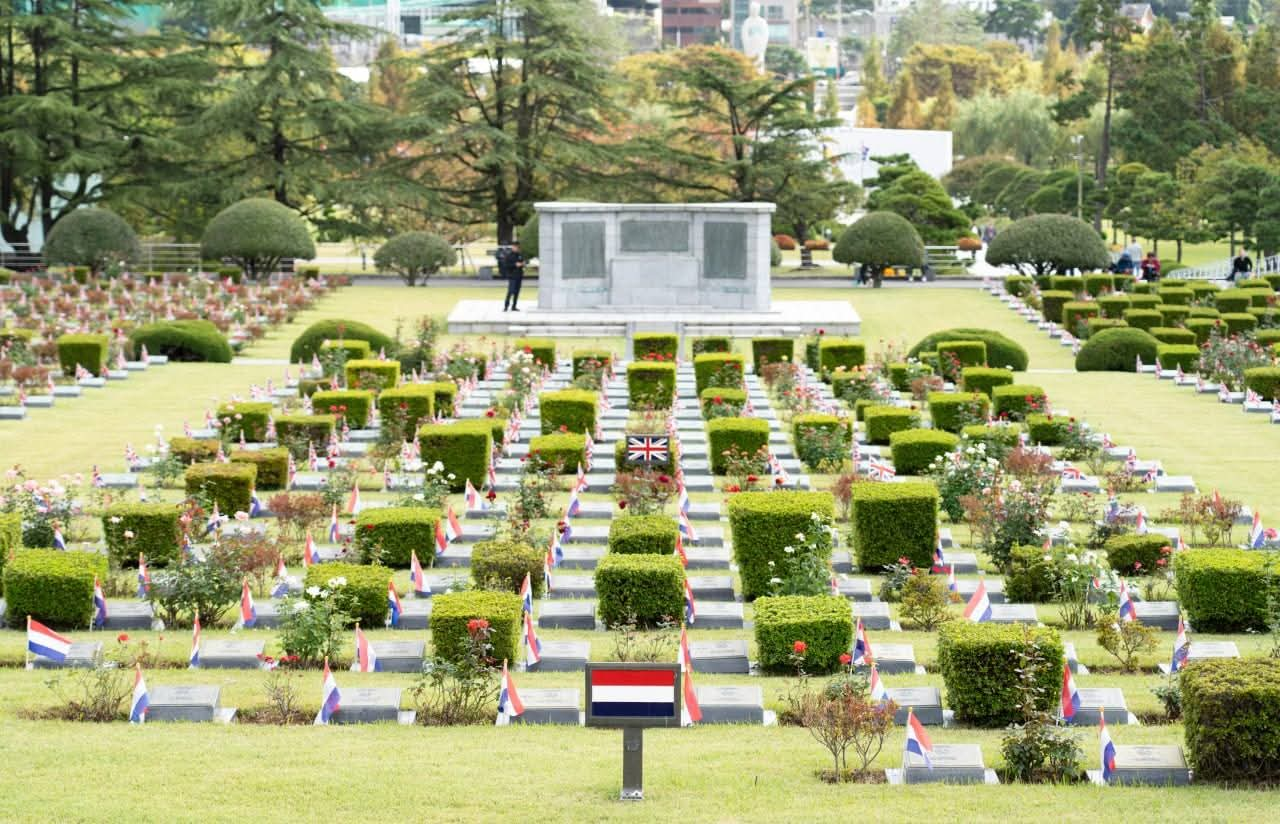
9. UN Memorial Cemetery
The Nam-gu district is home to what is, according to its management, the only UN cemetery in the world (UN Memorial Cemetery in Korea). If you fancy a quieter stop between the busy beaches and markets, this peaceful site is the place to slow down.
Entry to the grounds is free, and opening hours vary by season: from October to April it’s open 9:00 am to 5:00 pm, and from May to September 9:00 am to 6:00 pm. It’s about an eighteen-minute walk from Daeyeon station on metro line 2 (exit 3), and the address for your navigation is 93 UN pyeonghwa-ro.
If you’d also like to visit the neighbouring UN Peace Memorial Hall, keep in mind that it’s usually closed on Mondays. Check the current opening times on the official website.
💡 Tip: Right next to the cemetery stands the Busan Museum, which tells the story of the city’s history. Entry is free, it’s open roughly from 9:00 am to 6:00 pm, and it’s closed on Mondays.
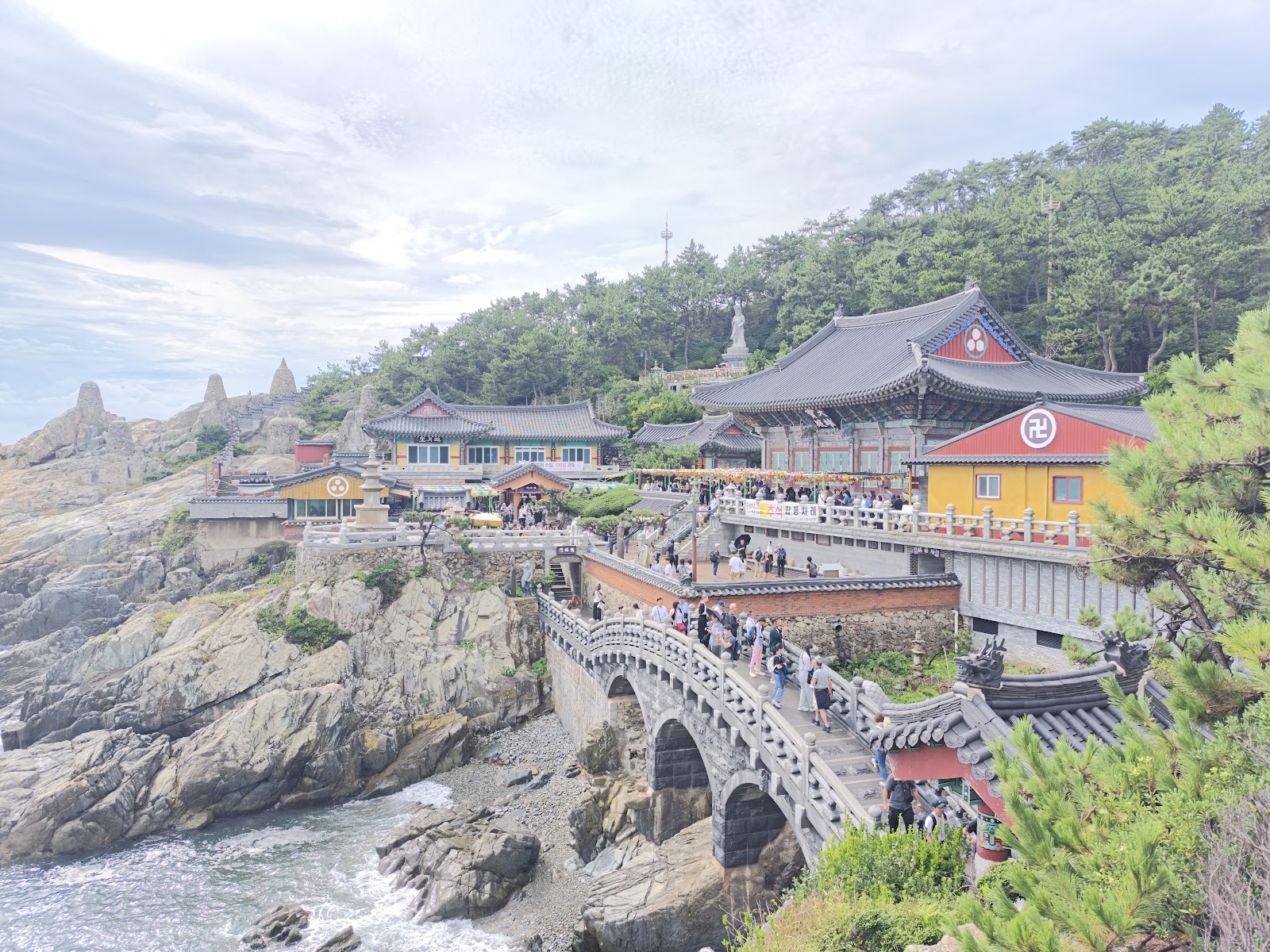
10. Haedong Yonggungsa
Haedong Yonggungsa Temple sits on rocks right by the sea in the Gijang district, in the city’s northeast (address: 86 Yonggung-gil). According to tradition, the temple dates back to the 14th century (1376 is the year usually given). Because it overlooks the sea, it’s worth arriving while it’s still dark.
The grounds open daily as early as 4:30 am and close in the evening – check the current closing time. Entry is free; you only pay for parking. Get here early in the morning for sunrise and you’ll beat the biggest crowds.
To reach the temple, take the Donghae commuter line to Osiria station (exit 1), then bus 139 or 1001 to the Yonggungsa·NIFS stop, followed by a 10 to 15-minute walk. You can also walk from Osiria in about 25 to 30 minutes, or take bus 181 or 1001 from Haeundae (metro line 2, exit 7). The Osiria area of Gijang is also home to the Lotte World Adventure Busan theme park – check its official website for opening hours and prices (times vary by day and season).
💡 Tip: Expect big crowds at the temple on weekend mornings and on Buddha’s Birthday (which falls on 13 May in 2027).
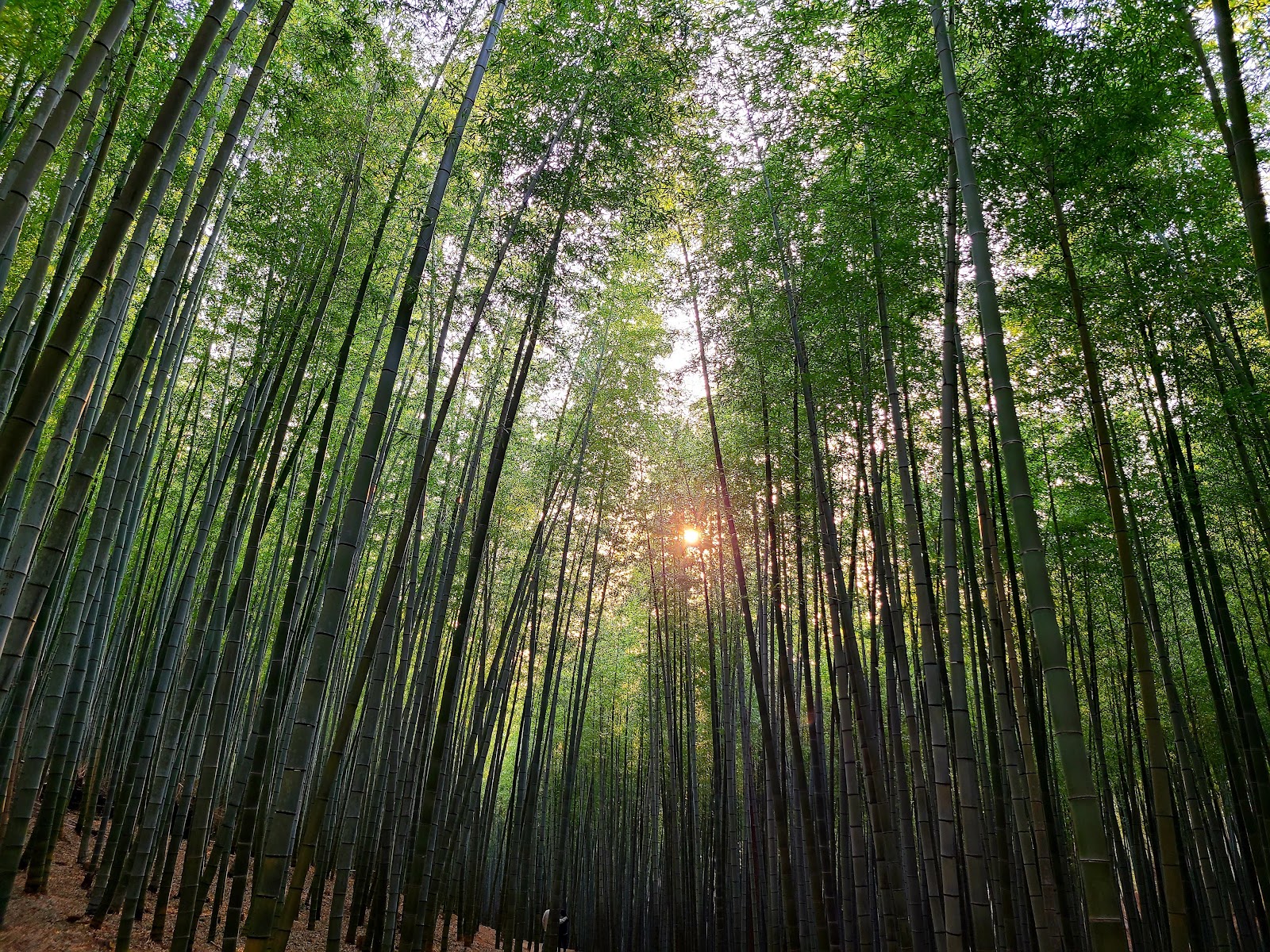
11. Ahopsan Forest (Bamboo Grove)
If you fancy swapping the coast for a walk among the trees, head out to Ahopsan Forest, a privately owned forest with a bamboo grove.
Ahopsan Forest is open all year round, Mondays included, from around 9:00 a.m., with last entry at 5:00 p.m., and you have to book in advance. Adults pay 8,000 won (about €5.40), young people and children 5,000 won (about €3.40), and seniors 7,000 won (about €4.70).
To get here, take metro Line 1 to Nopo Station, where minibus no. 2-3 will take you closer. Give yourself plenty of time for the journey and keep track of your route in the Naver Map or KakaoMap app.
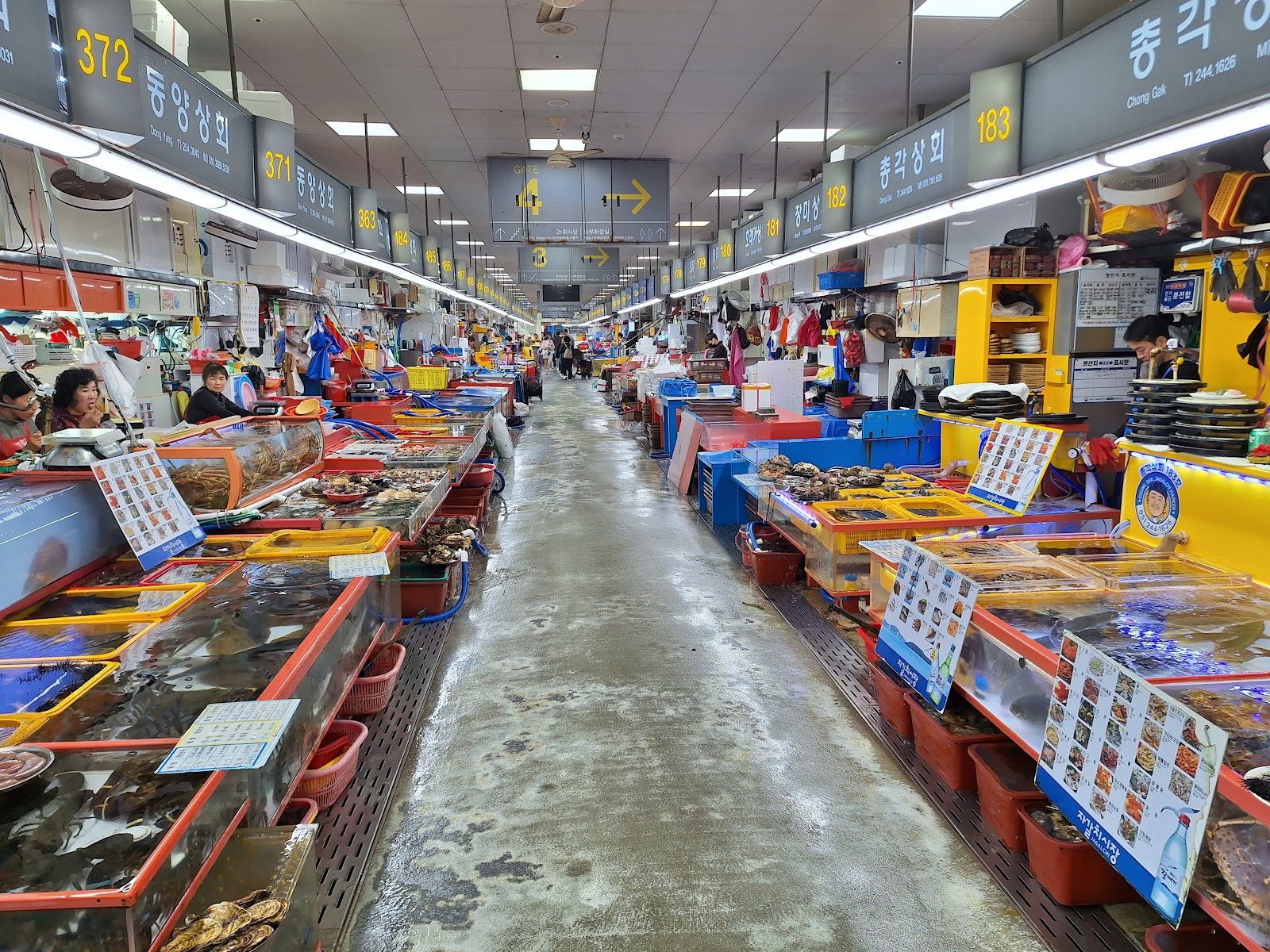
12. Jagalchi Market
Jagalchi Market in the old town is one of the largest fish markets in Korea and gives you a real taste of the bustling atmosphere of this port city. The stalls are run by local women nicknamed “Jagalchi ajumma” (ajumma is Korean for a middle-aged woman), and raw fish is served on the market’s upper floor.
You’ll find the market at 52 Jagalchihaean-ro, a short walk from Jagalchi Station on metro Line 1 (Exit 10), and it’s open from 5:00 a.m. until 10:00 p.m. Just keep an eye on the calendar, because it’s closed on the first, third and fifth Tuesday of every month.
Unfortunately, vegetarians and vegans won’t find anything to buy or taste here. If you do come, treat the market as a quick stop to soak up the harbour atmosphere, then move on a little further for your meal.
💡 Tip: For a plant-based lunch after visiting the market, try Soban Vegan in Seo-gu near Dongdaesin Station (details in tip 18).
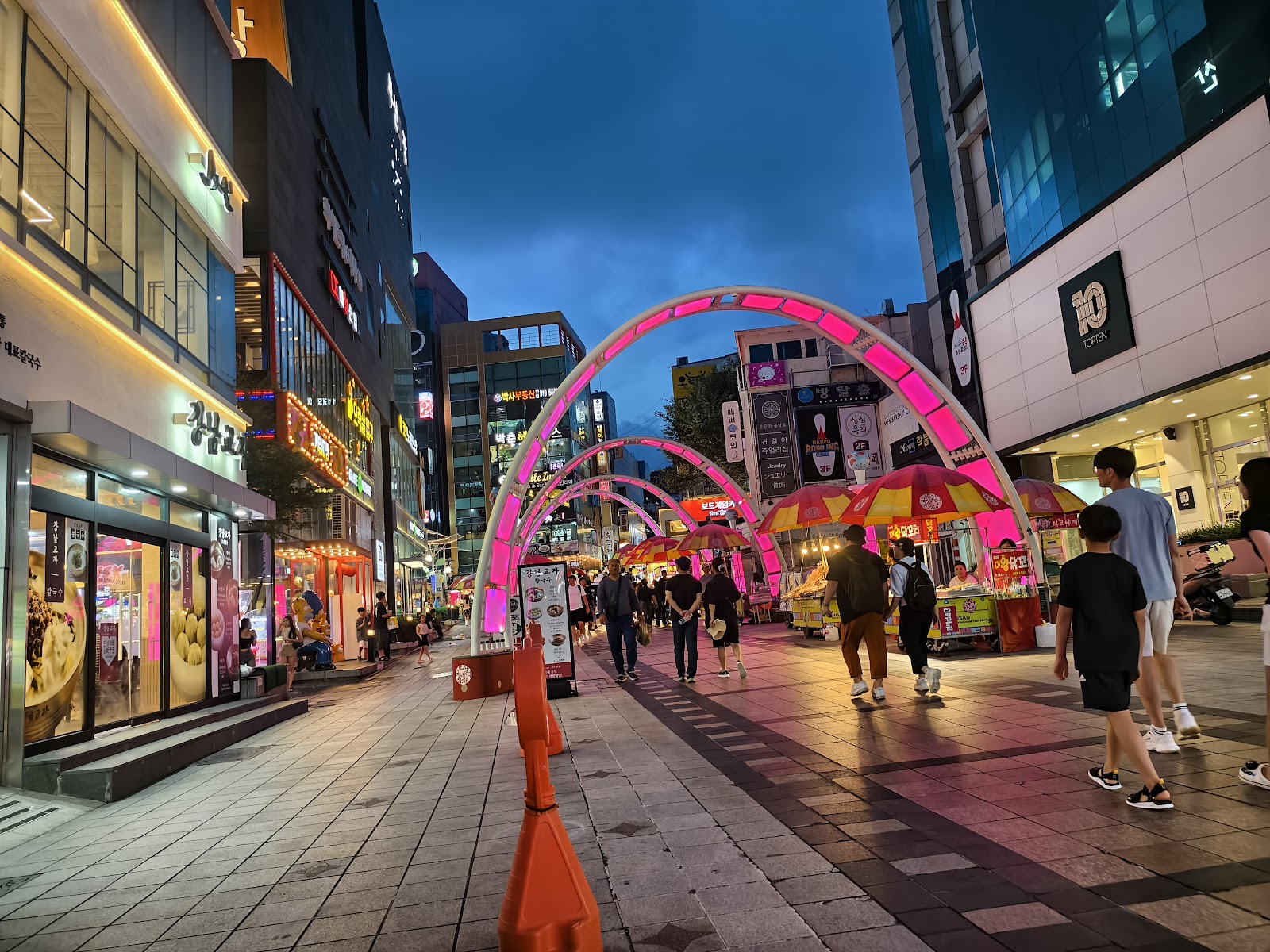
13. BIFF Square, Gukje Market and Bosu-dong Book Street
Right next to the fish market begins the maze of alleys of the Nampo district, where three interesting spots lie within fifteen minutes’ walk of each other, so you can easily combine them into one afternoon. Your first stop is BIFF Square, open around the clock, with film stars’ handprints, cinemas and street food – this is the place to try ssiat hotteok, a fried pancake filled with brown sugar and seeds.
This street snack is meat-free, so vegetarians will be happy, though vegans may run into butter or honey. From the square, walk on to Gukje Market (Jagalchi metro). The market is open roughly from 9:00 a.m. to 8:00 p.m., depending on the individual shop. Some shops are closed on Sundays.
Finish your stroll in the bookshop alley of Bosu-dong Book Street. It’s usually open from about 10:00 a.m. to 8:30 p.m. and tends to be closed on the first and third Tuesday of each month. Cash comes in handy for shopping at the stalls.
💡 Tip: When picking street food in the Nampo alleys, keep in mind that tteokbokki (rice cakes in a spicy sauce) and soups in Korea are often made with anchovy broth. You can ask about it with the phrase “멸치 육수 들어가요?” (myeolchi yuksu deureogayo?, meaning “Is there anchovy broth in it?”).
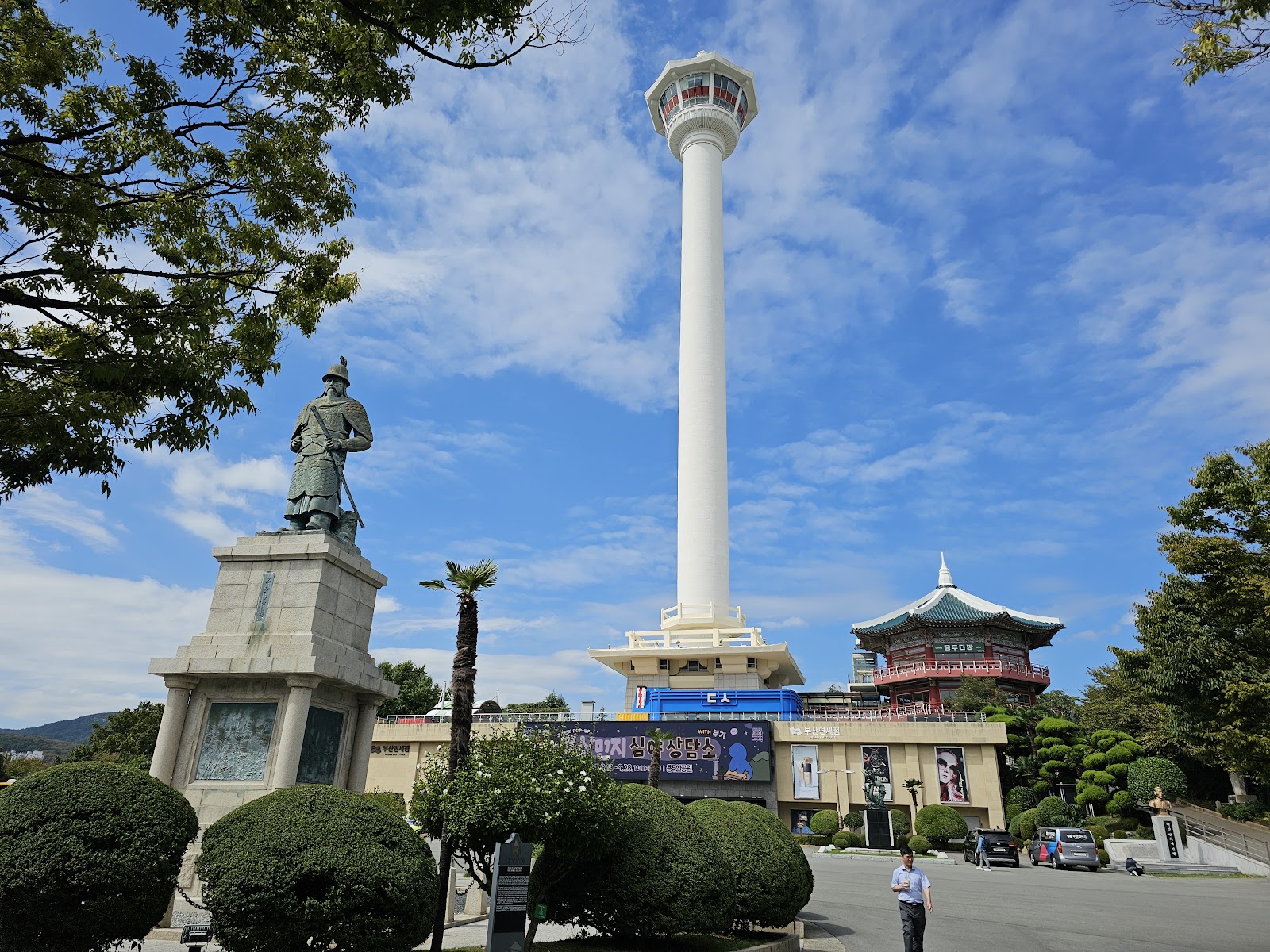
14. Yongdusan Park and Busan Tower
In the heart of the Nampo district lies Yongdusan Park, which you can easily reach straight from the busy shopping streets. From Gwangbok-ro (a short walk from Nampo Station on metro Line 1, Exit 7, or Jungang Station, Exit 1), escalators will carry you right up.
The park itself is free and open 24 hours a day, so you can wander up any time, day or evening. Its main landmark is the Busan Diamond Tower observation tower, which stands right in the park grounds and has carried this name since December 2021 – it used to be called Busan Tower. Admission for adults is 12,000 won (about €8), while children and seniors pay 9,000 won (about €6).
The tower is open daily from 10:00 a.m. to 10:00 p.m., with last entry at 9:30 p.m., so it’s up to you whether you go during the day or in the evening. You’ll find the ticket prices at the tower’s ticket office.
💡 Tip: If you happen to be in Busan at the end of the year, Yongdusan Park is where the traditional New Year’s Eve bell-ringing ceremony takes place on 31 December.
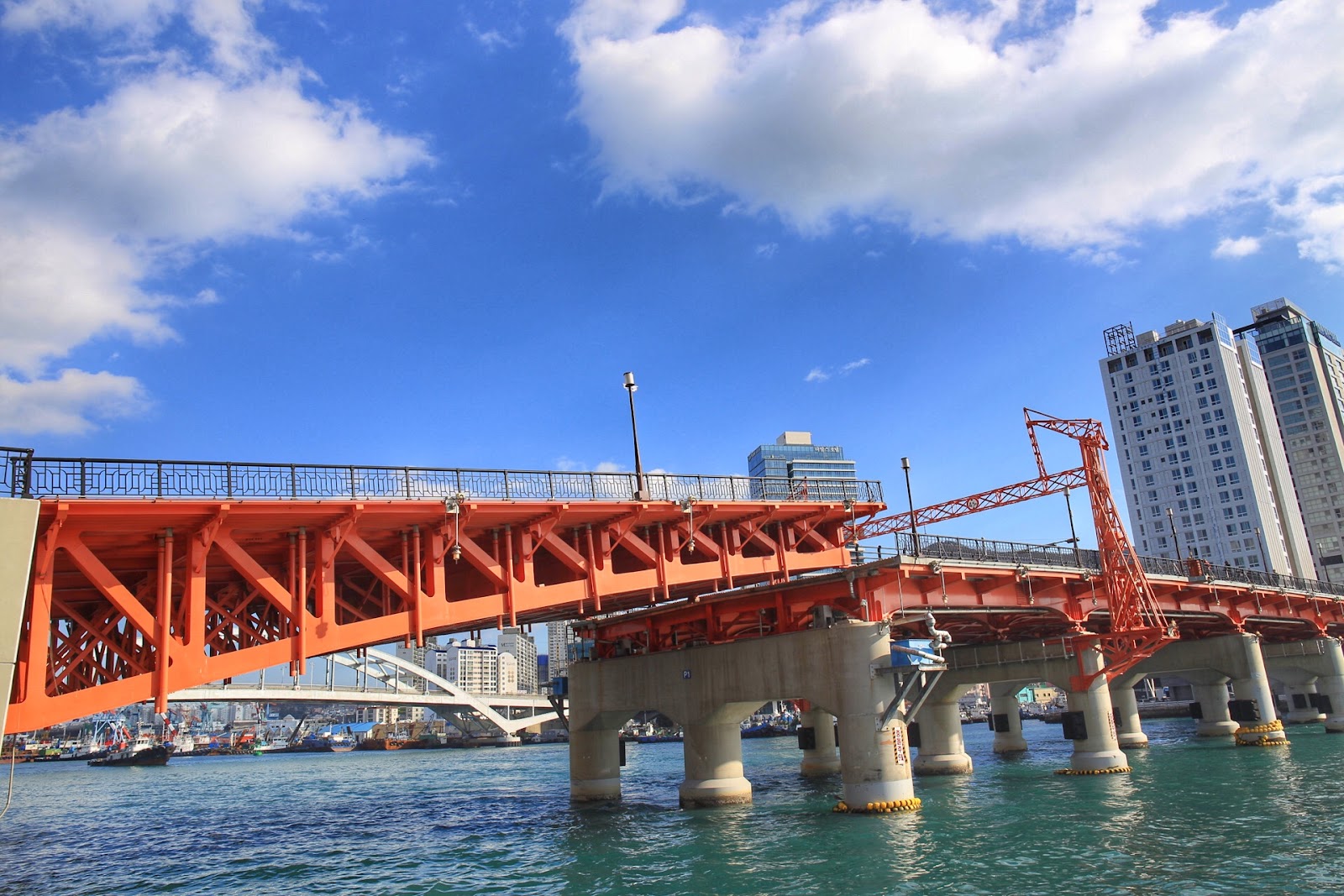
15. Yeongdo Bridge
Yeongdo Bridge, which links the mainland with Yeongdo Island, is just a four-minute walk from Nampo Station on metro Line 1 (Exit 6 or 8). Korea’s first drawbridge opened in 1934 and makes an interesting stop right next to the old town.
The bridge stopped being raised in 1966, and the tradition was revived in 2013. The Saturday 2:00 p.m. lifting has been temporarily suspended since 10 October 2026 due to a fault in the drive mechanism, and no date for its return has been announced yet. Check the current status on the city’s website.
The whole show lasts only fifteen minutes, so time your Saturday walk around Nampo carefully so you don’t miss it. From the bridge, you can hop straight on a bus and continue to Yeongdo Island and the other spots on this list.
💡 Tip: In summer 2026, the bridge was also raised in the evening at 8:00 p.m., first on 25 July and then on Saturdays in August. Check the city’s official website to see whether the lifting returns after the repairs.
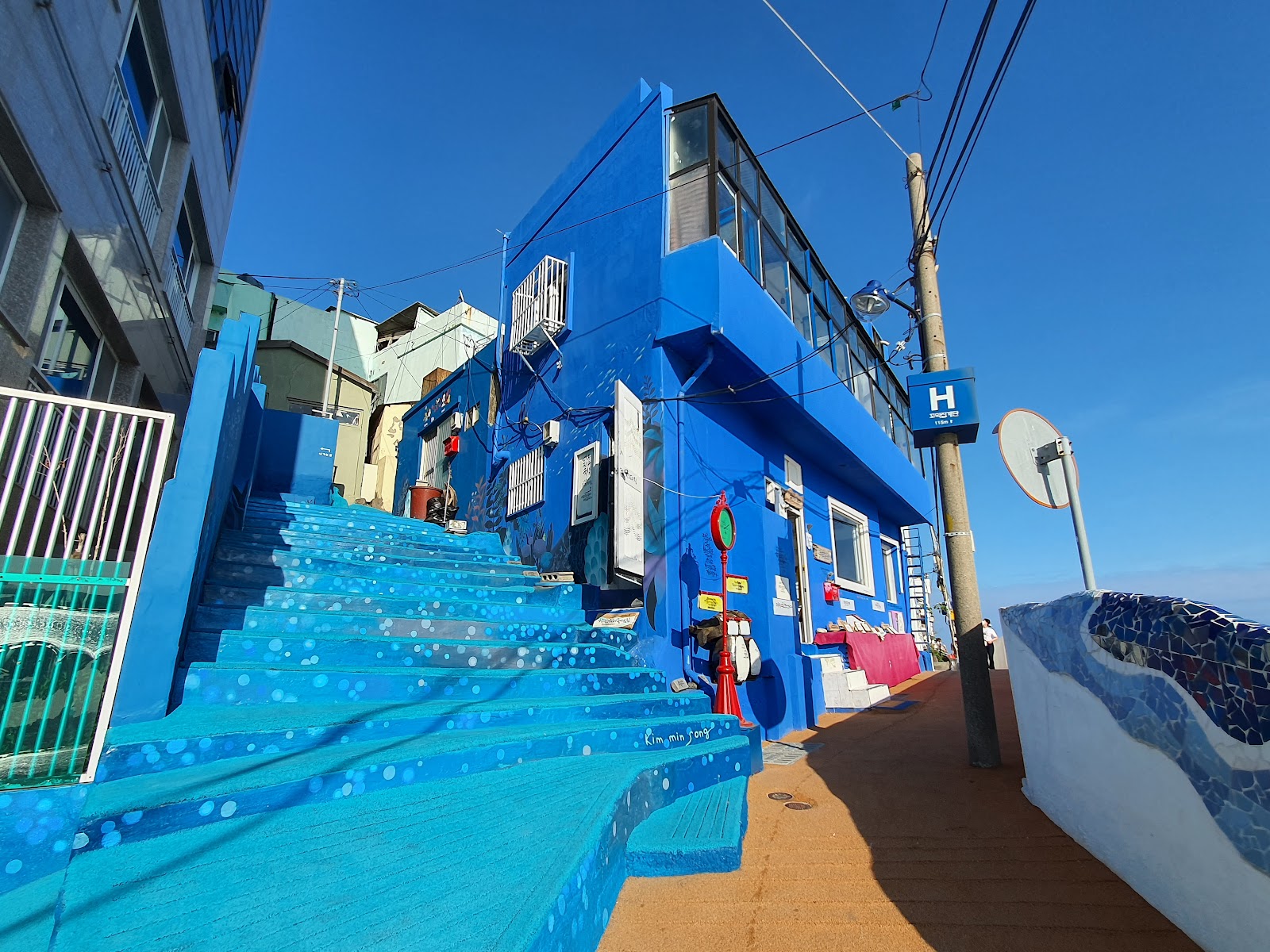
16. Huinnyeoul Culture Village
On Yeongdo Island, perched on a cliff above the sea, you’ll find the white houses and alleys of Huinnyeoul Culture Village, which you can visit any time and for free. It’s easy to combine a wander through its lanes with the Jeoryeong Coastal Walk.
This little village is a quieter alternative to the better-known Gamcheon (tip 18) if you want to avoid the biggest crowds. You can explore the alleys at your own pace, and since entry is free all day, feel free to come early in the morning or towards evening.
It’s only a short ride from the old town. Just hop on bus no. 7, 71 or 508 at Nampo metro station (Exit 6) and get off at the Baengnyeonsa stop.
💡 Tip: From Exit 6 of Nampo Station, buses 7, 71 or 508 go to Huinnyeoul and buses 8, 30, 88 or 186 go to Taejongdae Park (tip 17), so you can combine both into one day on Yeongdo Island.
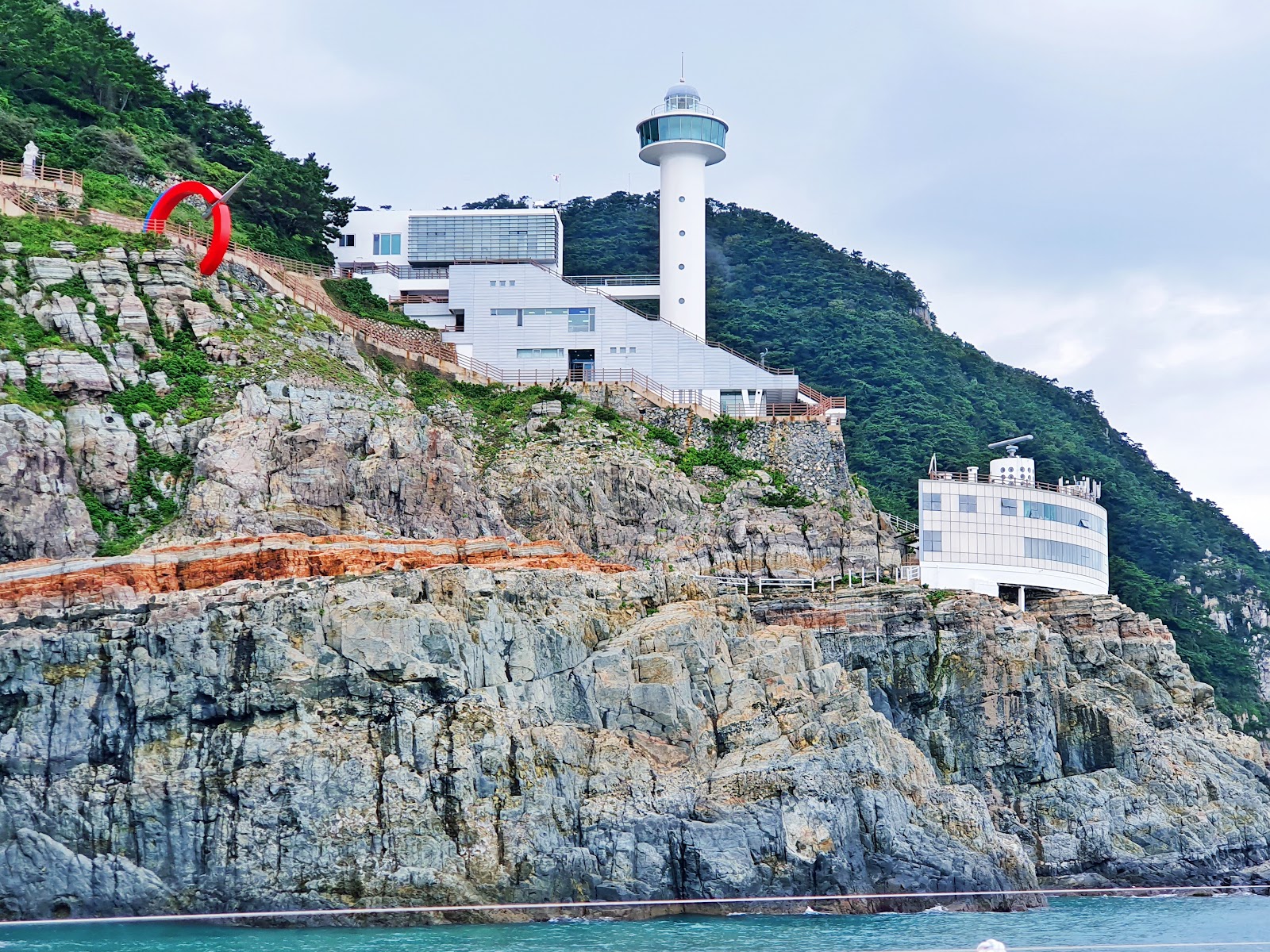
17. Taejongdae and the Danubi Train
Yeongdo Island is also home to Taejongdae park, where you’ll find cliffs, Yeongdo Lighthouse, an observation deck and Taejongsa Temple. Entry to the park is free, and it’s open from March to October from 4:00 a.m. to midnight, and from November to February from 5:00 a.m. to midnight.
In Taejongdae Park, the Danubi train has not been running since 3 July 2026 following the second accident that year, and no date has been announced for its return to service. A free shuttle bus loops around the park roughly every 10 to 20 minutes, but you can also walk the circuit on foot.
From Nampo metro station (Exit 6 or 8), buses no. 8, 30, 88 or 186 will take you to the park.
💡 Tip: If you visit Busan in summer, stop by Taejongsa Temple, where the hydrangeas are in bloom at that time of year.
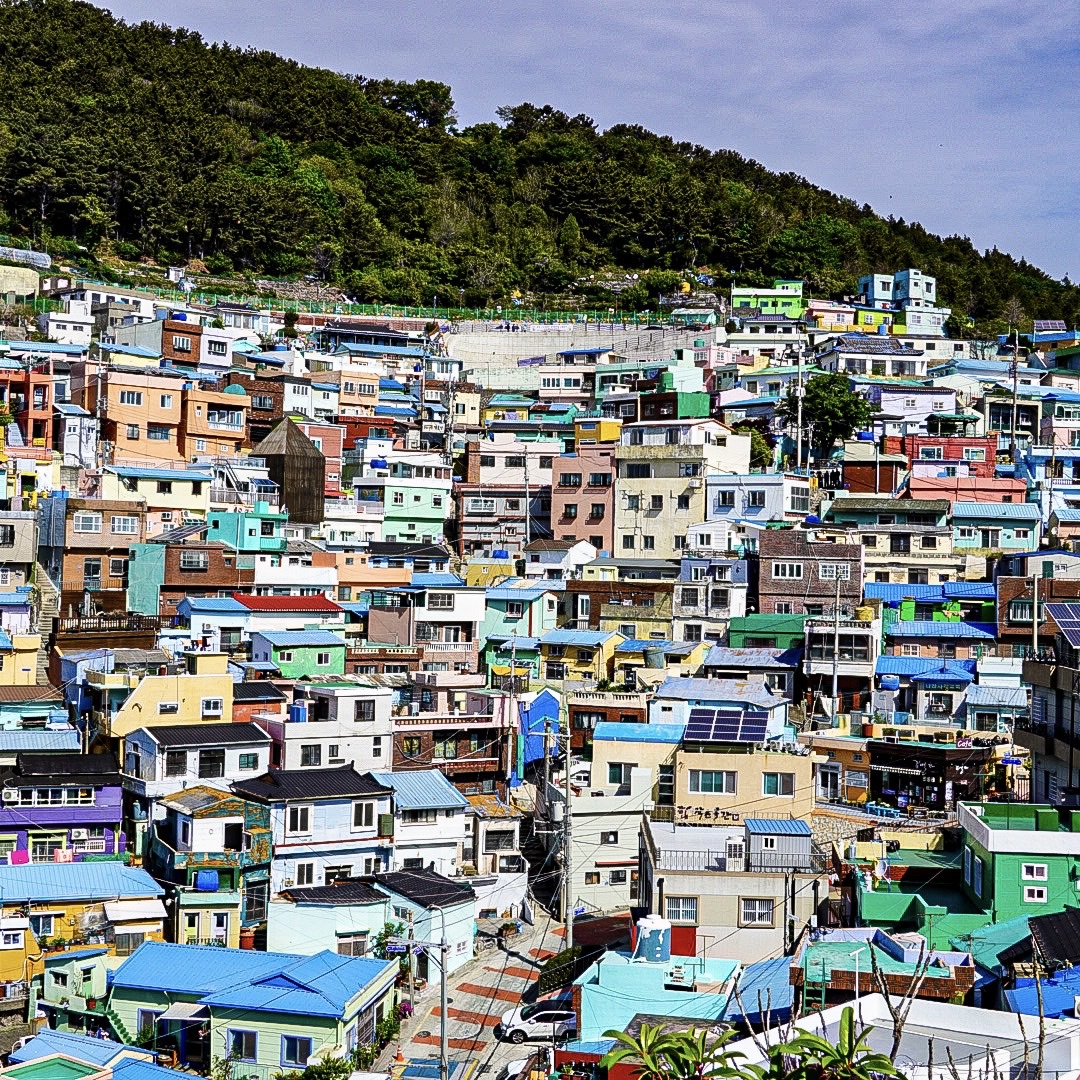
18. Gamcheon Culture Village
Gamcheon Culture Village in the Saha-gu district is hugely popular and often crowded. Since local residents still live here, please be respectful as you walk the alleys. Entry is free, and the recommended visiting hours are from 9:00 a.m. to 6:00 p.m. from March to October, and from 9:00 a.m. to 5:00 p.m. from November to February.
It’s best to come first thing in the morning, or choose Huinnyeoul (tip 16) as a quieter alternative. In the alleys you’ll find the Haneulmaru observation deck and the statue of the Little Prince with the fox. At the information centre you can buy a stamp-collecting map – you’ll find out the price on site.
From Toseong Station on Line 1 (Exit 6), ride up on minibus Saha 1-1, Seo-gu 2 or 2-2 to the Gamjeong Elementary School stop. Then simply walk back down on foot.
💡 Tip: Soban Vegan should be located in Seo-gu near Dongdaesin Station, not far from Gamcheon, and offer vegan Korean set meals; check its location, menu and opening hours on HappyCow or in the Naver Map app before you go.
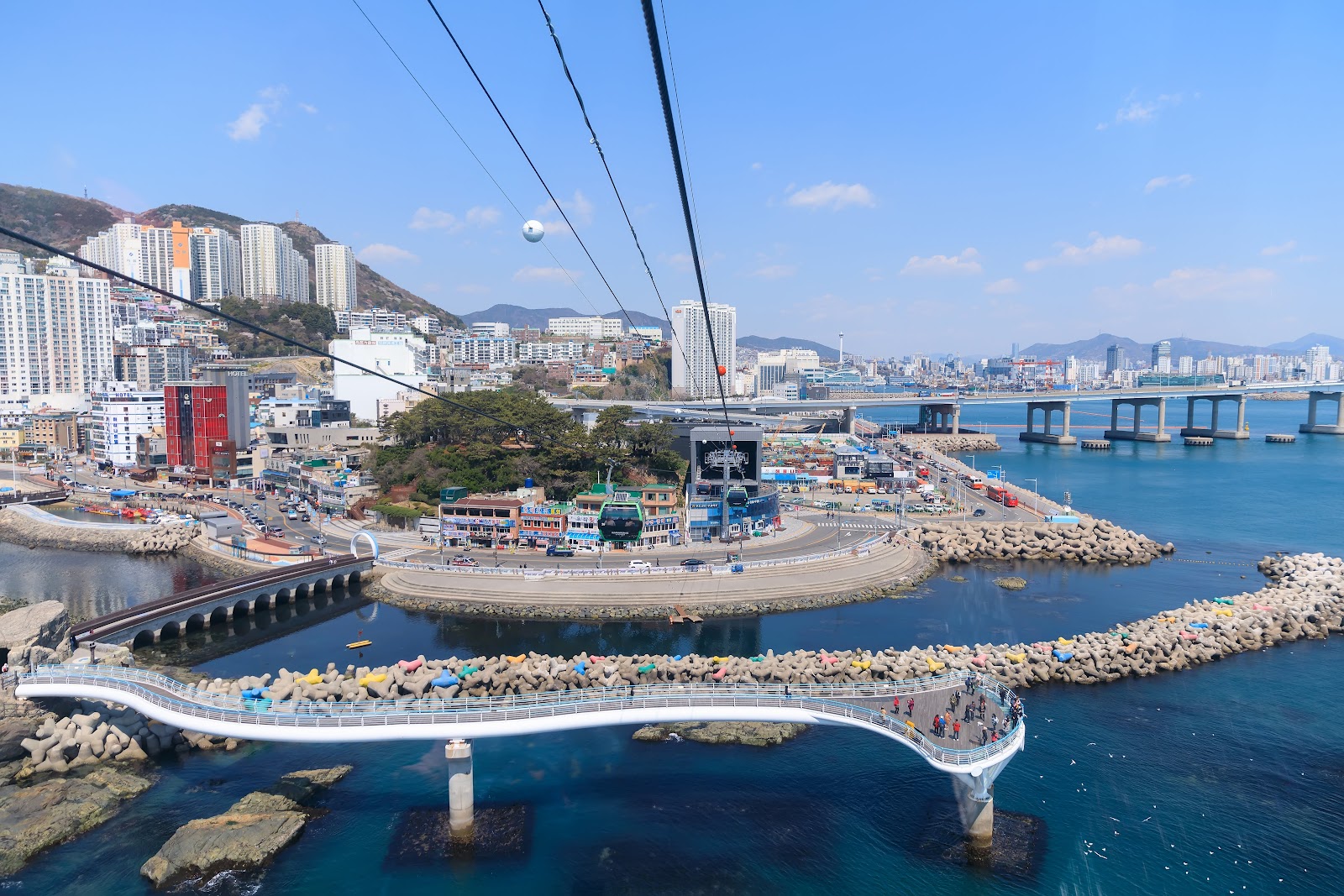
19. Songdo Beach, the Busan Air Cruise Cable Car and Songdo Cloud Trail
Next to Songdo beach you’ll find the Songdo Cloud Trail walkway (구름산책로 in Korean). It’s free and open daily from 6:00 am to 11:00 pm. To get here from the old town, take bus 7, 9, 26 or 30 from Jagalchi or Nampo stations. The ride takes about fifteen minutes.
The Busan Air Cruise cable car runs from about 9:00 am to 9:00 pm between Songdo Bay Station and Songdo Sky Park. Hours can be shorter in winter, closing around 8:00 pm, so check the current times before you go. A standard cabin costs 19,000 won (about €13) return and 15,000 won (about €10) one way. The glass-floored Crystal Cruise cabin costs 24,000 won (about €16) return and 19,000 won (about €13) one way. Children aged 36 months to 12 years get reduced fares, which you’ll find on busanaircruise.co.kr.
The area also has the Songdo Yonggung Suspension Bridge, open from 9:00 am to 5:30 pm.
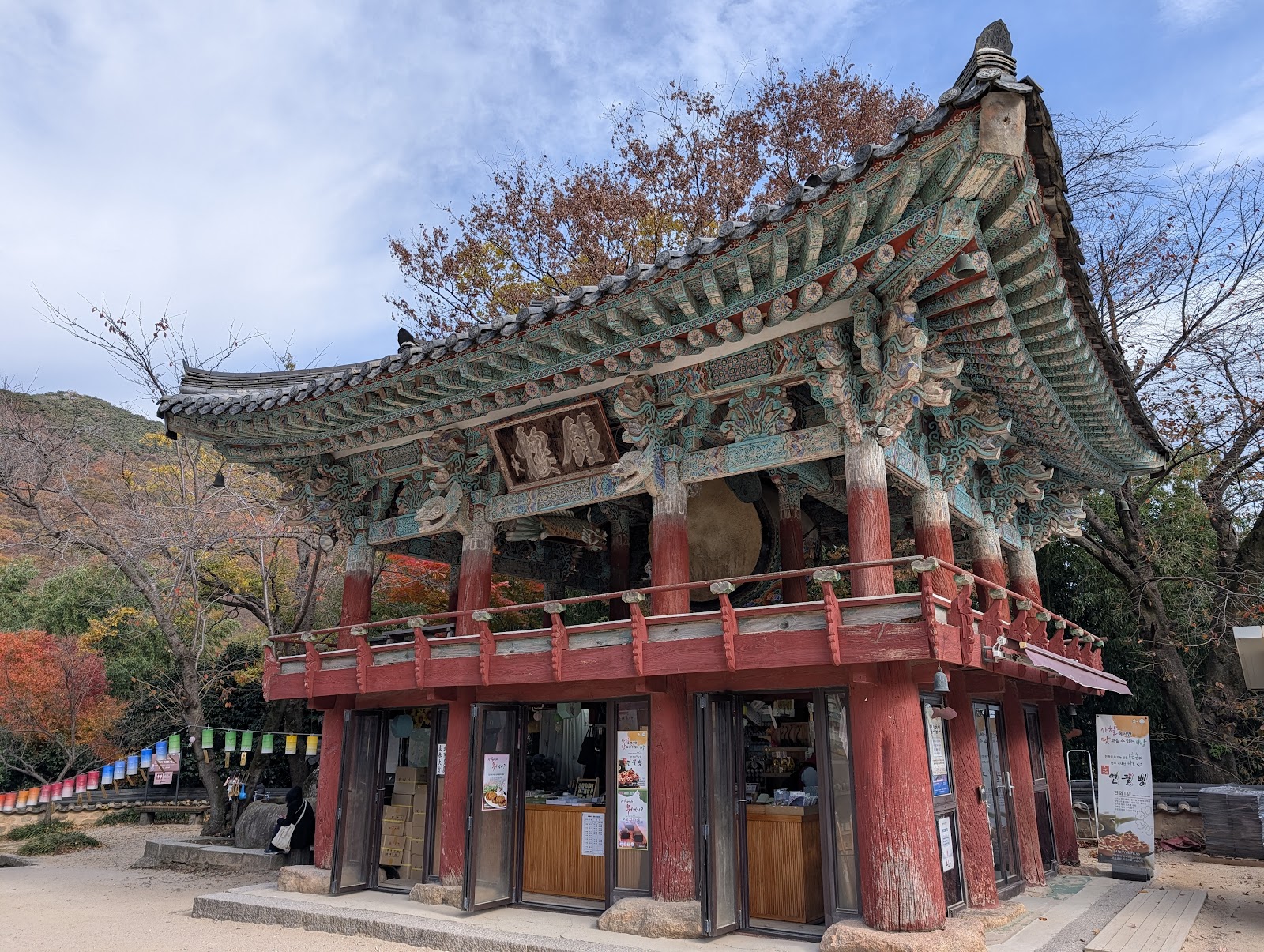
20. Beomeosa and Templestay
Beomeosa Temple sits in the Geumjeong-gu district. Tradition says the monk Uisang founded it in 678, and it’s often counted among the three great temples of southeastern Korea (the Yeongnam region). Entry is free and it’s open daily from roughly 8:00 am to 5:00 pm, but check the temple’s official website for the current hours. To get here, take metro Line 1 to Beomeosa Station (exit 5 or 7), then bus 90.
Beomeosa runs templestay for foreign visitors, meaning you stay at the temple and follow a set programme. There are weekend and one-day options, and you’ll find what each includes and what it costs on templestay.com.
Your stay comes with traditional temple food, which means no meat, fish or eggs, and traditionally no garlic or onion either.
💡 Tip: You can ask about templestay programmes by calling the temple’s main line on +82 51-508-3122.
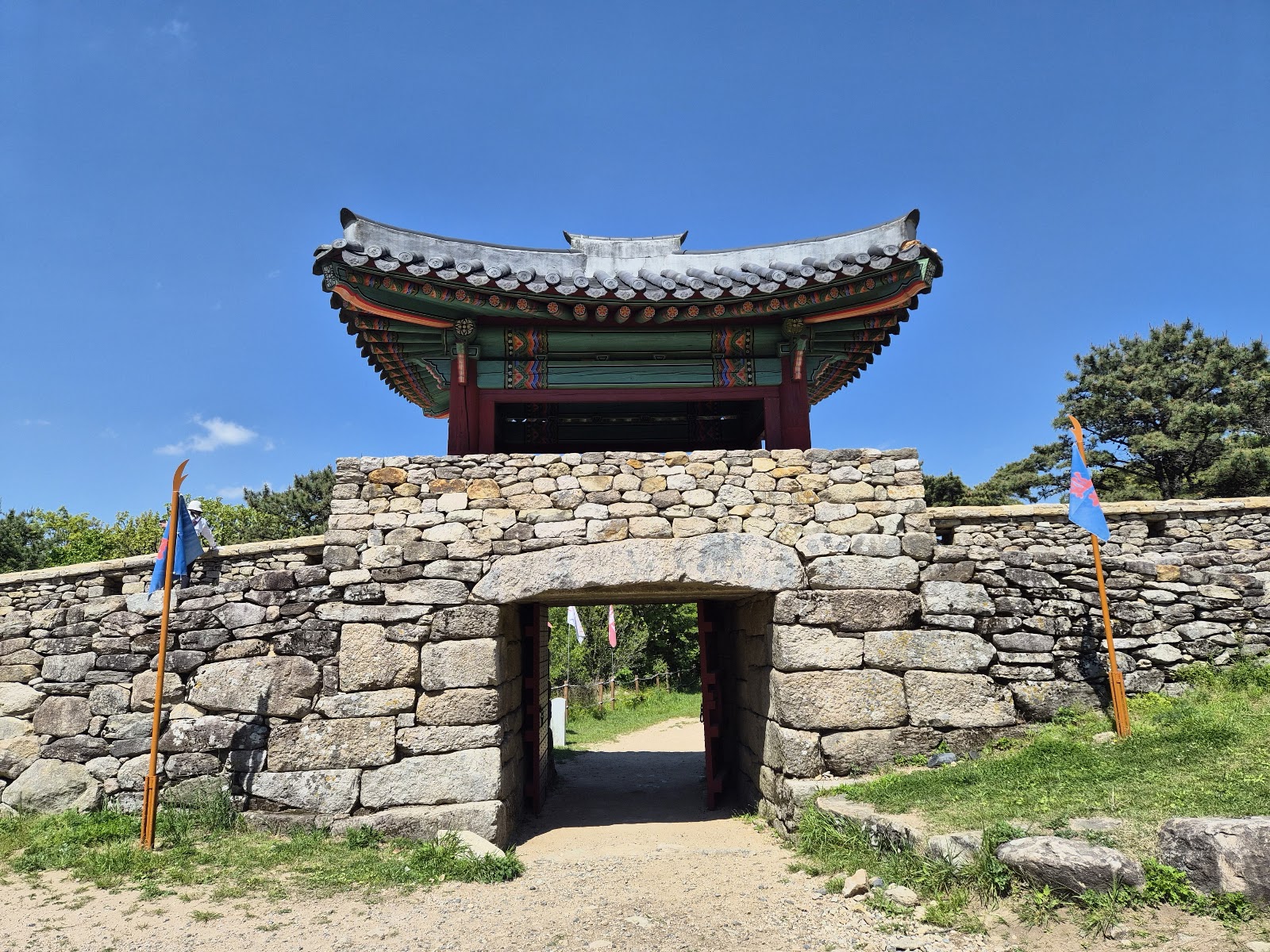
21. Geumjeongsan and Geumjeongsanseong Fortress
Geumjeongsanseong Fortress spreads across Mount Geumjeongsan. It’s one of the largest mountain fortresses in Korea, and you can see sights like the North Gate. Guidebooks say you can combine a ridge hike with a visit to Beomeosa Temple, and the route shows up in map apps.
You can also ride up on the Geumgang Park cable car, which dates from 1966. Check the operator’s official website for 2026 prices and operating hours. The upper station is closed on Mondays.
The cable car and the ridge walks are only really worth it when visibility is good, so check the forecast and whether everything is running before you set off.
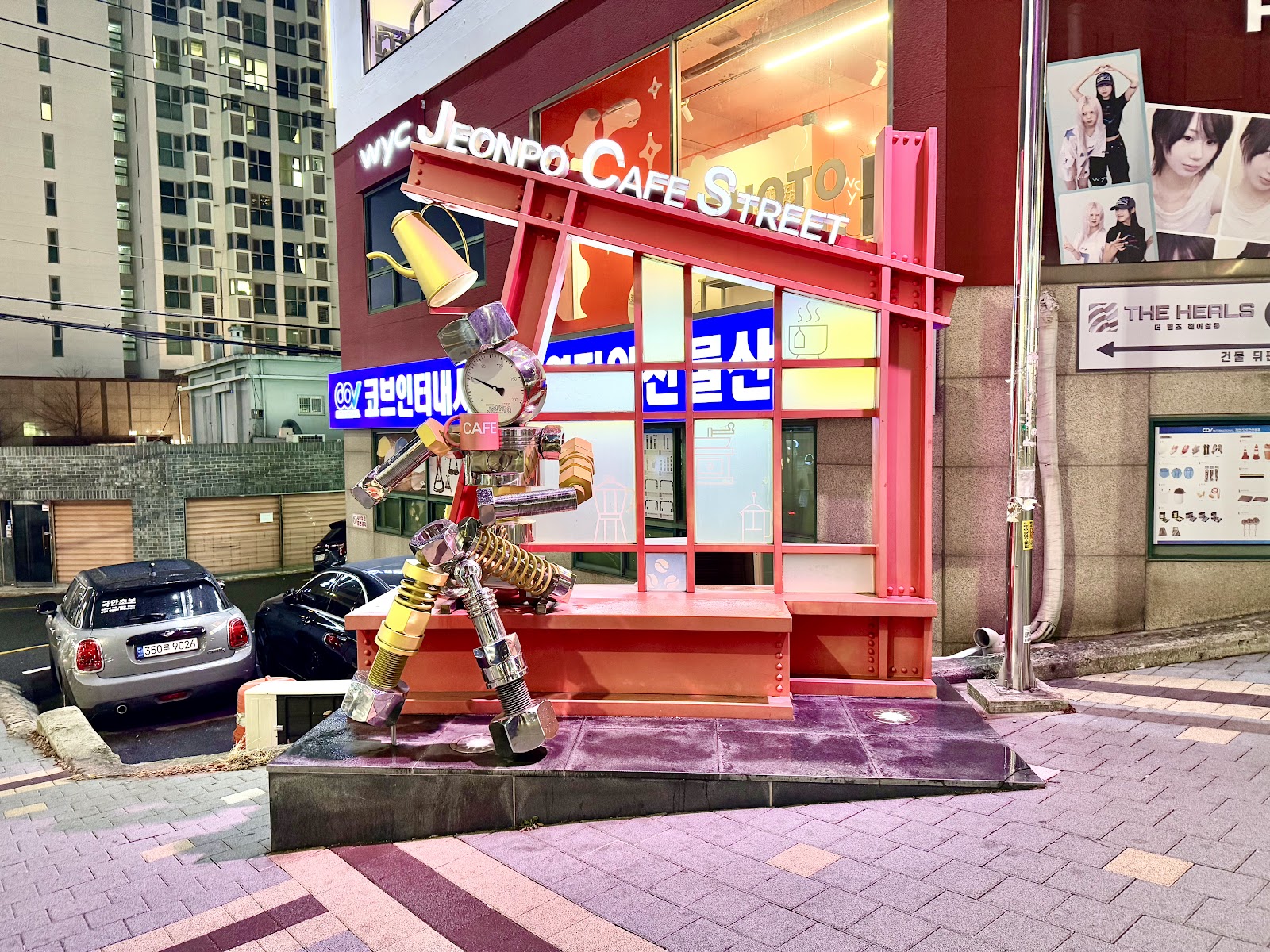
22. Seomyeon and Jeonpo Cafe Street
Seomyeon is the hub where metro Lines 1 and 2 cross, and it’s also a big area for shopping and nightlife. Right next door is Jeonpo Cafe Street, a street packed with cafés and coffee roasters.
On Jeonpo Cafe Street itself there’s a café called Ohh! Good Thing that serves vegan cakes and desserts daily from 12:30 pm to 9:00 pm. Also in Seomyeon, Salad Basket Seomyeon does salads and is open from 8:00 am to 10:00 pm.
According to HappyCow, the pan-Asian and Thai restaurant TAE TAE TAE in Seomyeon has a vegan menu too. For current hours and menus, look on HappyCow (a vegetarian restaurant directory) or in the Naver Map app (a Korean map app).
💡 Tip: If you need to check what’s in your food at a restaurant, show the staff the Korean phrase “비건이에요” (bigeon-ieyo, I’m vegan) or “채식주의자예요” (chaesikjuuijayeyo, I’m vegetarian).
Busan in 3 Days: An Itinerary by Area
When you plan your route, it’s a good idea to split the sea from the city. The eastern side, with the beaches and Blueline, is nearly an hour’s journey from the western old town and its markets.
Day 1: the east and the sea (tips 1, 2, 3, 4, 5, 7 and 10) is easiest from a base in Haeundae or Seomyeon. In the morning, head to Haedong Yonggungsa (tip 10). The temple grounds open as early as 4:30 am, and you can get there from Haeundae on bus 181 or 1001, or take metro Line 2 to BEXCO and then the Donghae Line train to Osiria Station. From Osiria, take the Donghae Line to Songjeong and carry on along the Blueline route (tip 2), where the Beach Train runs between Songjeong and Mipo. The Sky Capsule only runs between Cheongsapo and Mipo in fixed 30-minute slots. I’d book online in advance, because on the day they only sell whatever’s left. In the afternoon, stroll along Haeundae Beach (tip 1) and the promenade by Dongbaekseom (tip 4), then go up to the X the Sky observatory at dusk (tip 3, open until 9:00 pm, last entry 8:30 pm). In the evening, if it’s a Saturday, don’t miss the drone show on Gwangalli Beach (tip 7). It’s about 12 to 15 minutes from Haeundae on Line 2. Alternatively, unwind at Spa Land in Centum City (tip 5).
Day 2: the old town and the west (tips 12, 13, 14, 16, 18 and 19) works best from Seomyeon or Nampo. In the morning, get to Gamcheon Culture Village (tip 18) right at 9:00 am. Take metro Line 1 to Toseong Station (exit 6) and a minibus up the hill, then walk back down. Get to Songdo by taxi or bus, since we couldn’t confirm a direct connection from Gamcheon. There you’ll find the Air Cruise cable car (running from 9:00 am to 8:00 or 9:00 pm) and the Cloud Trail walkway (tip 19). In the afternoon, explore Nampo on foot: Jagalchi Fish Market (tip 12), BIFF Square, Gukje Market and Bosu-dong Book Street (tip 13) are all here. Heads up: Jagalchi and Bosu-dong both close on the first and third Tuesday of the month. In the late afternoon, take bus 7, 71 or 508 from Nampo (exit 6). It’s about 12 minutes to Huinnyeoul Culture Village (tip 16), where you can watch the sunset over the sea. Finish the evening at Busan Diamond Tower in Yongdusan Park (tip 14), which is open until 10:00 pm and costs 12,000 won (about €8). If you’re running short on time, skip Songdo.
Day 3: Yeongdo, or the temple and mountains up north. Pick depending on whether you’d rather have coast or mountains. For coastal option A (tips 17, 8 and 7), head out in the morning to Taejongdae (tip 17). The park opens at 5:00 am in winter (November to February) and at 4:00 am from March to October. Buses 8, 17, 30, 88 and 186 run there from Nampo (exit 8). The Danubi Train isn’t running, but you can do the loop on the free shuttle bus or on foot. In the afternoon, move on to the Oryukdo Skywalk (tip 8, closes at 6:00 pm and often shuts in rain and wind) and the Igidae Coastal Trail. In the evening, go to Gwangalli Beach to see the lit-up Gwangan Bridge (tip 7). It’s also a good backup if the Saturday drone show got cancelled. For mountain option B (tips 20, 21 and 22), set off in the morning for Beomeosa Temple (tip 20, open roughly 8:00 am to 5:00 pm, free entry). From Seomyeon it’s about 25 minutes on metro Line 1 to Beomeosa Station (exit 5 or 7), then bus 90. In the afternoon, ride the Geumgang cable car (tip 21; closed on Mondays) or visit Geumjeongsanseong Fortress (tip 21). In the evening, explore Seomyeon and Jeonpo Cafe Street (tip 22). If you only have two days in Busan, pick Haedong Yonggungsa, Haeundae Beach and X the Sky from Day 1, plus Gamcheon and Nampo’s old town from Day 2.
When It Rains in Busan
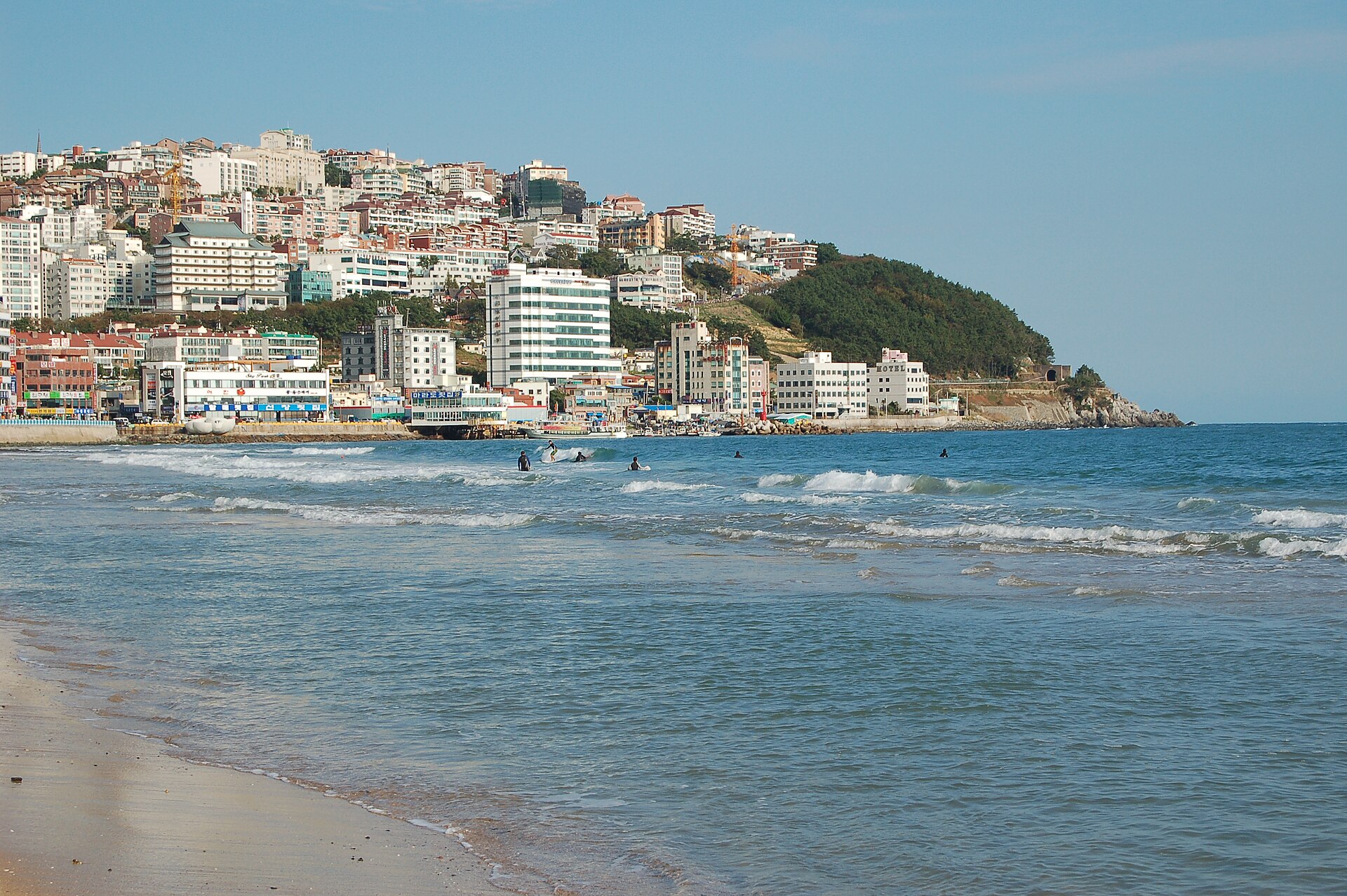
If the weather turns, head for indoor and covered spots. Good options are Spa Land Centum City, the Shinsegae Centum City department store, Busan Museum (free entry, closed on Mondays), Busan Cinema Center, the covered part of Jagalchi Market, or the shops and cafés in Seomyeon. In rain and wind, on the other hand, outdoor attractions get cancelled or close. That includes the Sky Capsule (it stops running), the Oryukdo Skywalk and Daritdol Skywalk viewpoints, and the drone show. There’s no point going up X the Sky either, because you need good visibility to enjoy the view. The rainy season, called changma, arrives in late June and July, and typhoons are a risk from roughly July to September. Swimming season on the beaches runs from about late June to late August (until mid-September at Haeundae), with exact dates announced by the city each year. Outside the season, the beaches are for walking, not swimming.
Is the Visit Busan Pass Worth It?
The Visit Busan Pass costs 55,000 won (about €35) for 24 hours and 85,000 won (about €55) for 48 hours. The clock starts with your first entry, and you can visit each of the roughly 40 participating attractions once. The pass covers, for example, the X the Sky observation deck (27,000 won, about €18), Skyline Luge (a downhill track ride in a little cart), Lotte World Adventure, one ride on the Beach Train, the Songdo Air Cruise cable car (excluding the Crystal Cruise cabins), Spa Land, Museum One and the City Tour sightseeing bus. However, the pass doesn’t include the Sky Capsule or a transport card. You can pick it up with your passport at Busan Station (9:00 am to 6:00 pm) or at Gimhae Airport (10:00 am to 5:00 pm).
Here’s a rough calculation (check the admission prices before you go) for an east-side day: if you combine X the Sky for 27,000 won, Skyline Luge for 27,000 won, the Beach Train for 10,000 won (about €7) and Spa Land for 26,000 won (about €17), you’d pay 90,000 won (about €60) at the door. Compared with the 55,000-won 24-hour pass, that means you save roughly 35,000 won (about €25). This example is only meant to show how the math works and doesn’t copy the itinerary above. In short, the pass pays off from about three paid attractions a day. For just one or two attractions it makes no sense, and for a day focused on temples, villages and markets (which on days two and three are mostly free) it isn’t worth it at all.
Where to Go Next from Busan, South Korea
From Busan, it’s easy to head off in search of Korean history in Gyeongju, or across the border to Japan. A typical plan is two to three days in Busan plus one day in Gyeongju. Gyeongju is home to Bulguksa Temple and the royal tombs of the Silla dynasty.
If you want to combine two countries, the New Camellia overnight ferry to Fukuoka, Japan (Hakata Port) leaves Busan’s port daily. The Queen Beetle high-speed ferry to Fukuoka no longer runs. You’ll find fares in yen on the Camellia Line website (camellia-line.co.jp); note that from 1 October 2026, return and student discounts have been scrapped. When departing from Busan, you pay a fuel surcharge of 14,000 won (about €9) plus port fees of 6,000 won (about €4) and 1,000 won (under €1). From Fukuoka, you can carry on with our practical guide to Japan and travel all the way to Tokyo.
Heading back north, the KTX high-speed train will take you straight to the capital in about 2.5 hours – you’ll find tips for exploring it in our article on what to see in Seoul. Back in Busan itself, there’s one more bonus: a free hike up Jangsan mountain above Haeundae (Metro Line 2, Jangsan station, exit 10). If it was the film Train to Busan that brought you to Korea, you’ll find more inspiration in our pick of film locations. So from Busan, you either continue north in search of history, or across the sea to Japan.
Frequently Asked Questions
Is it Pusan or Busan?
Both versions are correct, and they simply differ in how they’re romanized from Korean. The form Busan comes from the official Revised Romanization introduced in 2000, while Pusan is the older spelling based on the McCune-Reischauer system. Once you get there, though, you’ll find “Busan” on Korean signs and in bookings, including names of attractions like Busan Diamond Tower or the Visit Busan Pass.
How many days in Busan are enough?
For the city itself, 2 to 3 days are ideal, and it’s worth adding one more day for a trip to Gyeongju. Keep in mind that the Haeundae and Nampo districts are about 50 to 55 minutes apart by metro, with a transfer at Seomyeon, so pick your base according to your plans — our 3-day itinerary can help with that.
Do I need a K-ETA for Busan?
If you’re flying to Korea before 31 December 2026, you don’t need one, since many nationalities currently have a K-ETA (Korean Electronic Travel Authorization) exemption until 31 December 2026 (after that date, it’s best to check the current requirements on the relevant government website). You can stay in the country without a visa for up to 90 days, and your passport must be valid for at least 6 months. However, the electronic e-Arrival Card is mandatory, and from 1 January 2026 you can only fill it out online for free at e-arrivalcard.go.kr, starting no earlier than 72 hours before arrival. Watch out for unofficial agents who charge an unnecessary markup for this.
How do you get from Seoul to Busan?
The fastest way from Seoul is by KTX trains, which, after merging with the SRT network from 1 September 2026, you’ll book through the KORAIL+ app; from 1 October 2026 sales open two months before departure, and around the Chuseok and Seollal holidays tickets sell out fast, so buy them as soon as sales open. The fastest trains take 2 hours 18 minutes, with most services taking around 2 hours 45 minutes, and a ticket costs 54,400 won (around €37). Additionally, from 30 December 2025, KTX-Eum trains run from Cheongnyangni station directly to Sinhaeundae and Centum, with the journey taking roughly 3 hours 38 minutes, though only a few services run each day. An alternative is long-distance buses, which take about 4 to 5 hours and cost roughly 23,000 to 50,000 won (around €16 to €34) according to guidebooks, but do check the exact current prices before you travel.
When is the drone show in Busan, and what about cancellations?
The Gwangalli M Drone Show takes place above Gwangalli Beach every Saturday, free of charge and with no booking needed, always twice in the evening. From October to February the drones launch at 19:00 and 21:00, and from March to September at 20:00 and 22:00, with lasers added to the show on the first and third Saturday of each month. According to one foreign blog, in 2026 the show was cancelled at least eight times, for reasons like wind, rain, or other events. In early November there’s usually a fireworks display at Gwangalli, and on that evening the drone show may be rescheduled or cancelled, so always check the current schedule at gwangallimdrone.co.kr.
Can you eat vegetarian in Busan?
Even in this port city, vegetarians can find something to eat — you just need to watch out for hidden fish ingredients. Asking for “no meat” (고기 빼주세요, gogi ppaejuseyo) doesn’t mean “no fish,” since tteokbokki and soups are often made with anchovy broth (멸치 육수, myeolchi yuksu), and kimchi usually contains fish sauce or shrimp. So always ask about fish and seafood separately. You can also use the phrase “I’m vegetarian” (채식주의자예요, chaesikjuuijayeyo), though even that might not rule out anchovy broth. Among the places vegetarians mention are Vegenarang (a vegan spot in the Gwangalli district), Soban Vegan (Korean set meals near Gamcheon), and HOME Bistro (a vegan spot with wine). In Seomyeon, according to HappyCow, the pan-Asian restaurant TAE TAE TAE also has a vegan menu. For all these places, check the current menu and opening hours on HappyCow (app and website) or in the Naver Map app.
How do you book the Sky Capsule in Busan?
The capsules run between the Mipo and Cheongsapo stations, one ride takes about 30 minutes, and you get a 30-minute boarding window. Tickets sell out fast, so I’d recommend booking online in advance — on the day itself, only leftover slots are sold on site. You always pay for the whole capsule, so solo travelers pay the price for two, which is 50,000 won (around €34); for three people the capsule costs 55,000 won (around €38), and for four, 60,000 won (around €41). Cancelling within an hour of payment or three or more days in advance is free; two days ahead you lose 20% of the price, one day ahead 30%, on the day of the ride 50%, and after departure you won’t get any money back. If a foreign card doesn’t go through on the website, use the official resellers Klook, Trip.com, or KKday.
Where should you stay in Busan if you only have three days?
The best compromise is the Seomyeon district, where metro lines 1 and 2 cross, so from there you can reach Nampo in about 15 minutes, Haeundae in about 35 minutes, Busan Station in about 10 minutes, and the airport in about 30 to 35 minutes. Only pick Haeundae if your main priority is the beach in summer, while Nampo or the area around Busan Station make sense for a short stay arriving by KTX. Haeundae and Nampo are about 50 to 55 minutes apart by metro, and Seomyeon sits right between them.
Is the Visit Busan Pass worth it?
The 24-hour card costs 55,000 won (around €38), and the 48-hour version costs 85,000 won (around €58). Keep in mind that the card does not include the Sky Capsule ride or a transit card. It’s worth buying if you’re planning on roughly three or more paid attractions per day, but for a program full of temples, villages, and markets, you won’t get much use out of it.
Tips and Tricks for Your Vacation
Don’t Overpay for Flights
Search for flights on Kayak. It’s our favorite search engine because it scans the websites of all airlines and always finds the cheapest connection.
Book Your Accommodation Smartly
The best experiences we’ve had when looking for accommodation (from Alaska to Morocco) are with Booking.com, where hotels, apartments, and entire houses are usually the cheapest and most widely available.
Don’t Forget Travel Insurance
Good travel insurance will protect you against illness, accidents, theft, or flight cancellations. We’ve had a few hospital visits abroad, so we know how important it is to have proper insurance arranged.
Where we insure ourselves: SafetyWing (simple monthly subscription) and TrueTraveller (for extra-long trips).
Find the Best Experiences
Get Your Guide is a huge online marketplace where you can book guided walks, trips, skip-the-line tickets, tours, and much more. We always find some extra fun there!