

Unlike ordinary cosmetics, airplane food for kids is exempt from the strict liquid limits. Breast milk, formula, baby water and fruit pouches can all come on board in the quantity your child needs for the duration of the flight.
While at Prague’s Terminal 2 you can now pass through with containers holding up to two litres (since October 2025), Terminal 1 still enforces the 100 ml rule. Watch out for Ryanair too, which now requires all your snacks to fit inside the permitted cabin bag.
Further down you’ll find out what actually gets through security, both at more relaxed airports and at the strictest ones abroad. I’ve also put together tips on how to carry hot water in a thermos and what to do if a security officer confiscates your food.
TL;DR
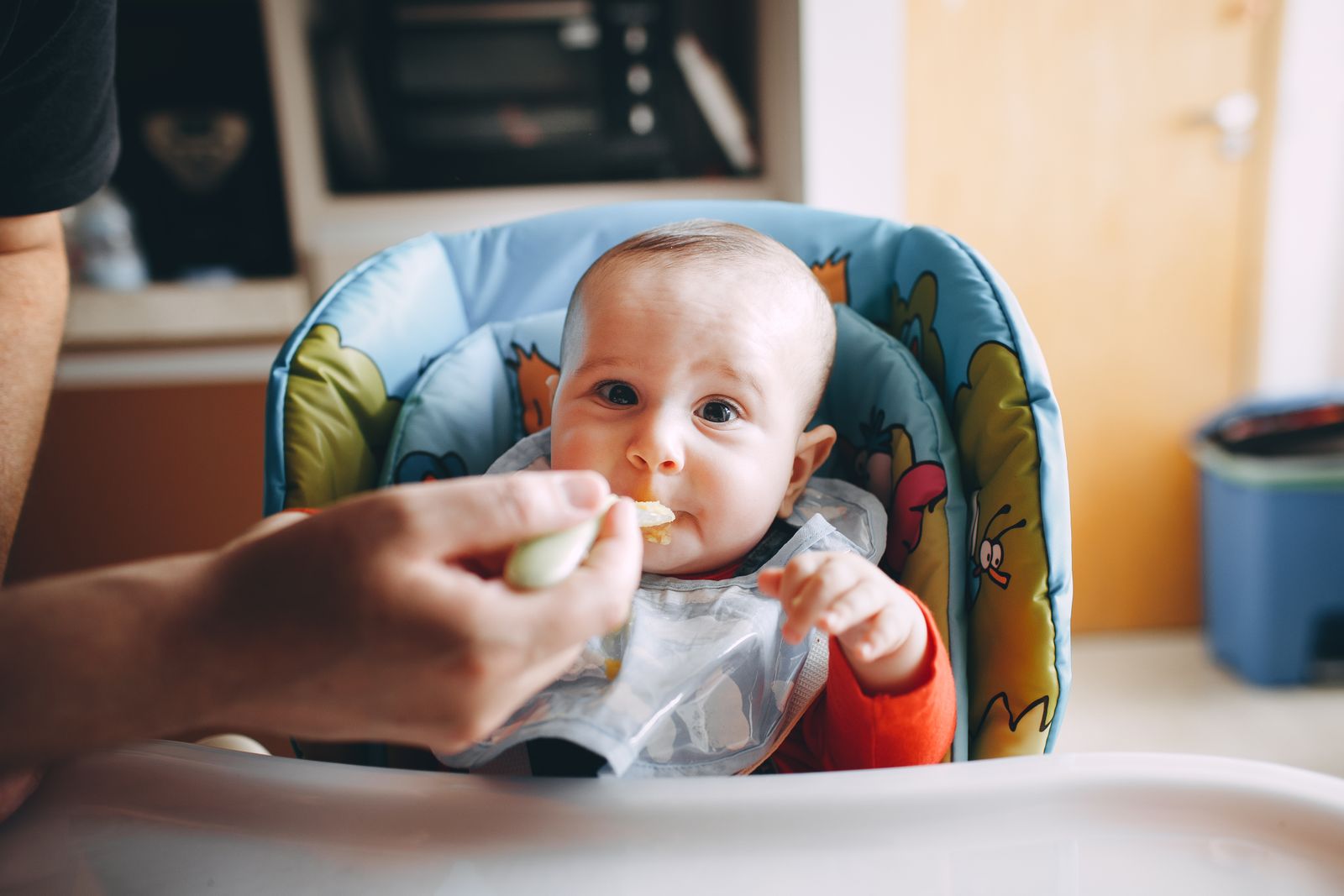
- Baby food is exempt: Breast milk, formula, baby water and fruit purée pouches are not subject to the strict 100 ml limit, as long as they’re intended for a small child on the journey.
- Prague Terminal 2 is more relaxed: Since 1 October 2025 you can take liquids in a single container of up to 2 litres through Prague’s Terminal 2, which makes packing enormously easier for families.
- Watch out for Prague Terminal 1: If you’re flying outside Schengen, the uncompromising 100 ml limit for regular liquids still applies here. The baby food exemption technically holds, but security often checks it in detail.
- Ryanair tolerates no extra bags: Since summer 2025, all your snack boxes must fit inside your under-seat cabin bag with this low-cost carrier. A separate carrier bag in your hand won’t get through anymore.
- A thermos beats the flight attendant: Relying on cabin crew to warm your milk is stressful. It’s far more reliable to bring your own thermos of hot water and mix the milk right at your seat.
- Older kids lose the perks: Once a child moves on to regular solid food and walks around, security usually won’t grant the litre-of-juice exemption anymore and will point you to the water fountains past the checkpoint.
- Order ahead on charter flights: If you’re flying on a package-holiday charter, remember to order hot meals for the kids at least 48 hours before departure — you won’t be able to buy them on board.
- An empty bottle saves the day: The best trick experienced parents use is to bring an empty bottle for every family member and simply fill up with free water once you’re in the transit area.
10 Things You Need to Know About Airplane Food for Kids
Let’s take a look at what you should know.
1. The 100 ml limit and the exemption for baby food
💡 Tip: Baby food isn’t subject to the standard volume limit, but it always comes down to the judgement of the individual security officer.
An ordinary adult passenger has to accept that all their liquids must be in bottles of no more than 100 ml, packed in a single transparent one-litre bag — a rule we’ve all known for years. But if you’re travelling with a small child, you have a huge advantage in the form of the official exemption for baby food, which lets you carry more liquid. Under the heading of baby food, expressed breast milk, formula in bottles, baby water for preparing it, and popular fruit purée pouches or runnier yoghurts all get through perfectly normally.
It sounds idyllic, but it’s crucial to understand that this exemption is governed solely by the rules of the specific airport, not by the more lenient rules of your airline. Airport security has every right to open your bottle at random and test its contents using a special strip or a device to make sure it really is a harmless liquid for a baby. Sometimes they may even politely ask you to taste a little of the liquid in front of them, which is a completely standard security procedure you needn’t worry about at all.
This exemption is also closely tied to the actual purpose of the trip and the age of the child, with the assumption that the food is intended for infants and toddlers, not preschoolers. As soon as your child walks confidently and looks bigger at first glance, security gets much stricter and may not accept larger drink containers, because they don’t consider it essential infant food. In such cases it’s really not worth arguing at the belt — staff always have the final say, so it’s better to plan for it in advance.
2. The difference between Terminal 1 and Terminal 2 in Prague
💡 Tip: Since October 2025 there are two sets of rules at Prague airport, so always double-check in advance which terminal your flight actually departs from.
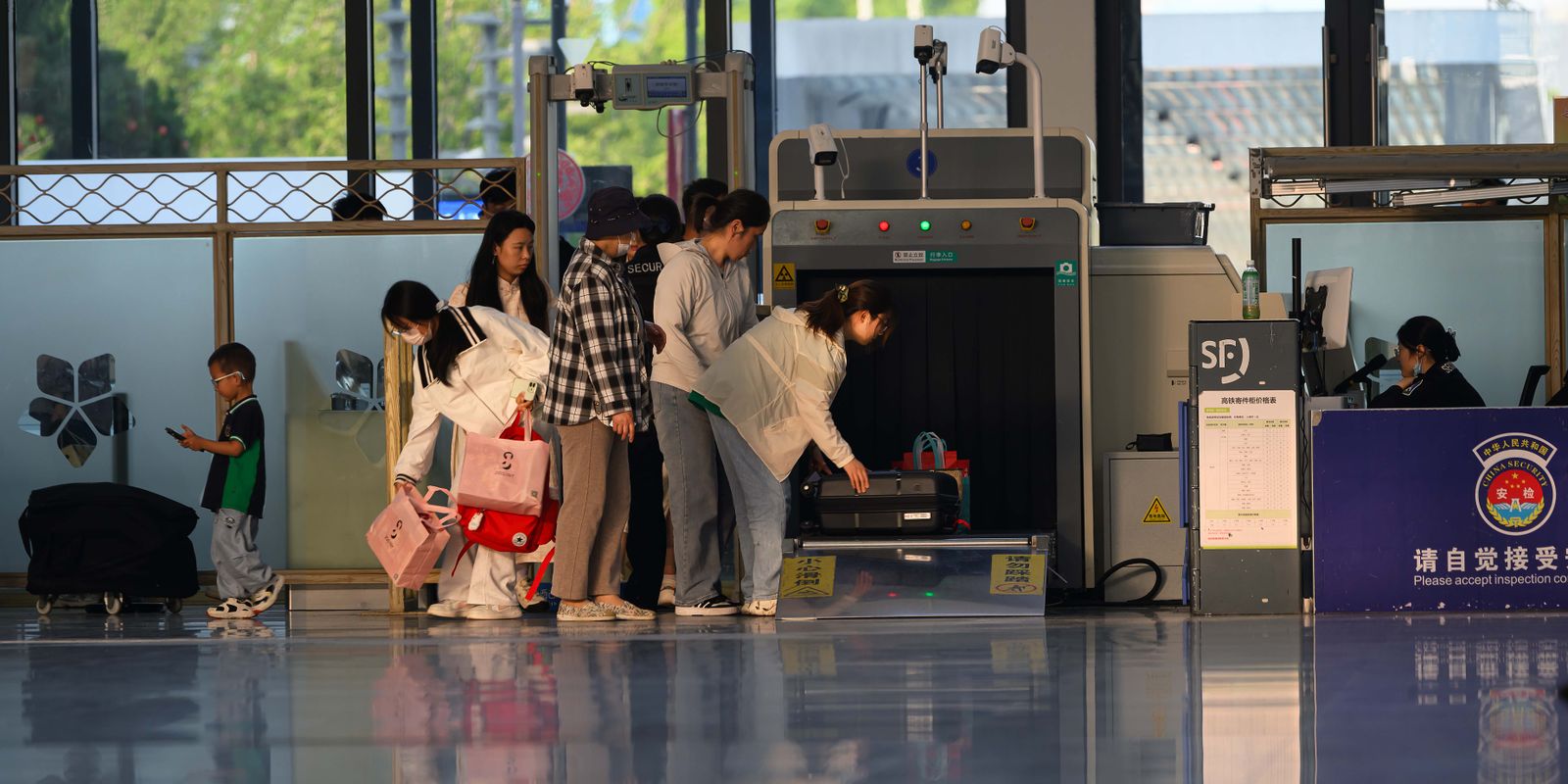
This is currently the single biggest trap that catches an enormous number of families, because they read simplified news online saying the liquid limits in Prague have finally ended. The truth is that the relaxed regime applies only at Terminal 2 since 1 October 2025 — the terminal for flights within the Schengen area, such as Italy, Spain or Greece. That’s where cutting-edge CT scanners have been installed, thanks to which you can take one container of liquid up to 2 litres per person in your cabin bag, and you don’t even have to take it out.
Terminal 1, however — used for flights outside Schengen — hasn’t seen this revolutionary change at all, and the old strict 100 ml regime still applies there, the one we’ve been used to for years. Yet this is exactly where huge numbers of families depart on summer holidays to popular destinations such as Turkey, Egypt, Tunisia or the UK. Many parents don’t realise this, pack a large sunscreen and a two-litre bottle of drink for their child in their cabin bag, and at the checkpoint at Terminal 1 they’re forced to throw it all in the bin.
The confusion is made worse by the fact that low-cost airlines like Ryanair and Wizz Air fly from both Prague terminals, so you can’t rely on the carrier’s name alone. Always check your boarding pass, and if your destination country isn’t in Schengen, pack your liquids in small bags, otherwise your family holiday will start with unnecessary tears and huge stress right at the X-ray.
3. How much liquid you can take for your child
💡 Tip: The amount of baby food you carry must always logically match the total length of your journey — don’t try to smuggle supplies for the whole holiday.
The basic rule for carrying baby food and liquids over 100 ml is that you can take an amount that is reasonable and necessary for the duration of your trip. But what does that mean in practice? You always have to factor in not just the flight time itself, but also the journey to the airport, the mandatory two-hour wait before departure, and the transfer to your hotel at your destination. If you’re flying two hours to London, for example, no sensible officer will accept five litres of bottled baby water at the checkpoint.
At the same time, it’s vital to plan for unpredictable situations and keep a sensible reserve, because flight delays are an everyday reality in the summer months. ⚠️ Although the revision of EU regulation 261/2004 on passenger rights was finally approved in July 2026 and will improve conditions for families, it won’t actually take effect until mid-2027, so in the event of a delay with a baby on your lap you often won’t get any immediate compensation in the form of airport food vouchers. That’s why you should always pack two extra portions of milk or pouches more than you think your child will actually eat.
Airport security is usually very understanding about these reserves if you politely explain that you’re worried about a possible delay on the tarmac. Ideally, keep all your baby snacks and bottles together in one transparent pouch right at the top of your bag, so you can quickly and clearly take them out into a separate plastic tray at the checkpoint, which speeds up the whole process considerably.
4. What actually gets through security
💡 Tip: If your child already walks confidently and eats regular food, security will very likely toss out larger drink bottles.
Getting through security with a stroller and a small, screaming passenger is a discipline in itself, one that mainly requires calm and good organisation of all your things. As soon as you reach the belt, you have to take the baby’s liquids out of your bag and put them in a separate tray, so the X-ray operator can clearly see them and tell them apart from your own cosmetics. Solid food such as toast, sliced fruit, cheese or pasta in a box, on the other hand, needs no attention at all — you can leave it inside your bag, because it passes through the X-ray without the slightest problem.
The sticking points tend to be larger yoghurt packs, fruit pouches, and above all bottles of water or juice, if your child is no longer a complete baby. The baby food exemption is defined in the rules only by purpose, not by the child’s specific age, which in practice means that it comes down purely to the subjective judgement of the airport employee whether they let it through. If they see a three-year-old confidently marching around the airport, they’ll confiscate a litre bottle of their favourite apple juice without mercy.
If you’re carrying liquid medicine for your child, such as a fever syrup over 100 ml, always keep it in its original packaging with the box and the patient information leaflet. ⚠️ For medicines over 100 ml the rules vary by airport, so it’s always safer to bring smaller packs or suppositories to avoid unnecessary delays and complicated explanations.
5. Milk, water for preparing it and the thermos
💡 Tip: Don’t count on the flight attendants happily and quickly heating water for milk — your own thermos will save you a lot of nerves.
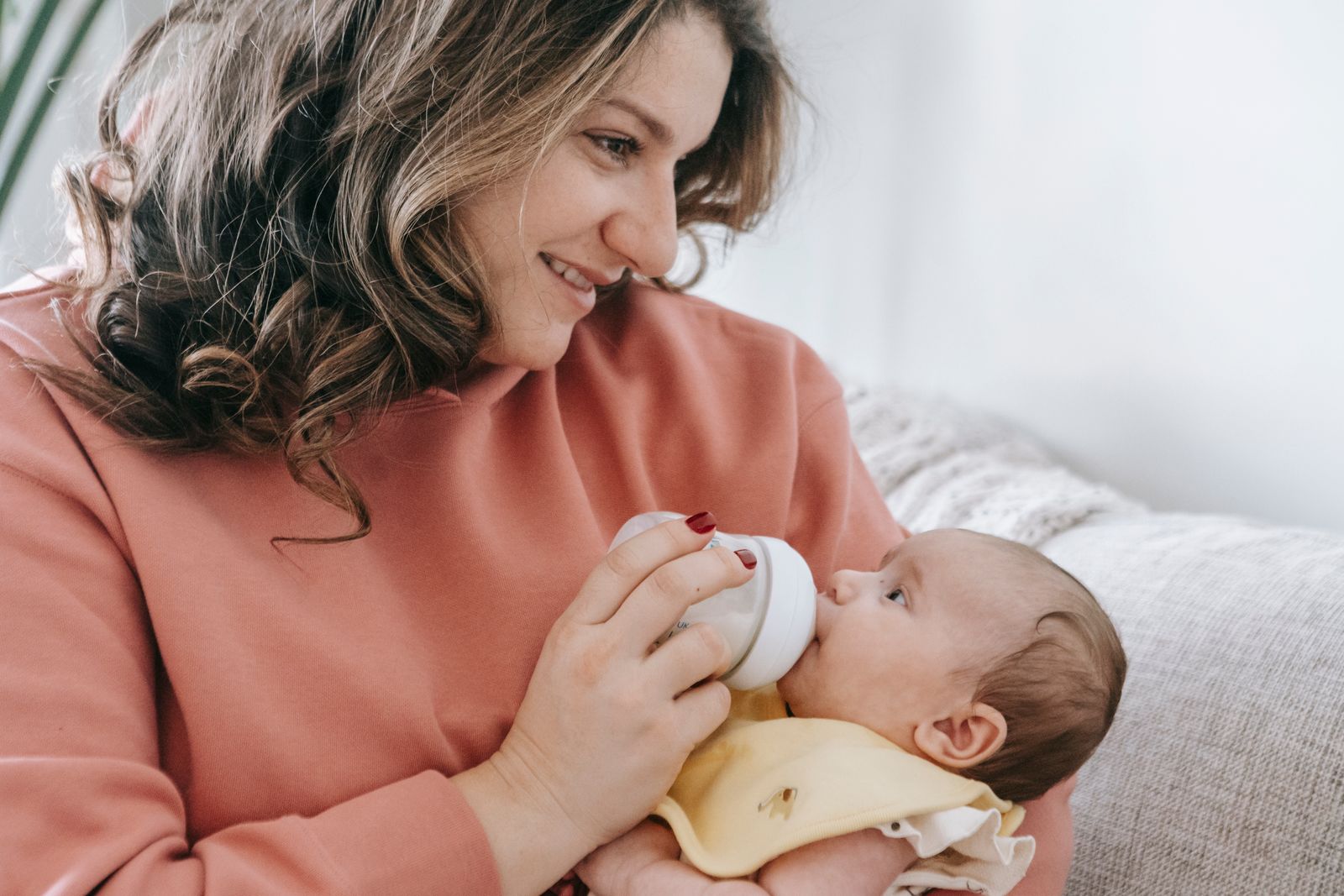
If your baby drinks formula, you face a logistical challenge on the road: how to prepare it at exactly the moment they start crying with hunger. Many parents rely on simply asking the cabin crew for hot water, but in the real running of a flight that’s often a huge problem. Bottles are warmed slowly in a water bath in the galley, and if the trolley service is happening in the aisle, the flight attendants won’t have any time for you at all, which with a screaming infant in your arms feels like an eternity.
A far smarter and more independent solution is to get a good travel thermos and fill it with hot water before departure. A thermos of water intended for a baby falls under the baby food exemption, so you can carry it through security without worry, where at most staff will test it with a special strip. With your own hot water, you can mix formula at your seat in a matter of seconds and your child is happy right away.
If you run into a truly extremely strict security officer who wants to pour out the water in your thermos, don’t give up — switch to plan B. Keep the empty thermos, go into the transit area and ask the staff at any airport café to fill it with hot water from their professional coffee machine, which they’ll usually do with a smile and completely free of charge.
6. Snacks and food from home
💡 Tip: Since August 2025 Ryanair checks under-seat bag sizes very strictly — your food boxes can’t be in an extra bag.
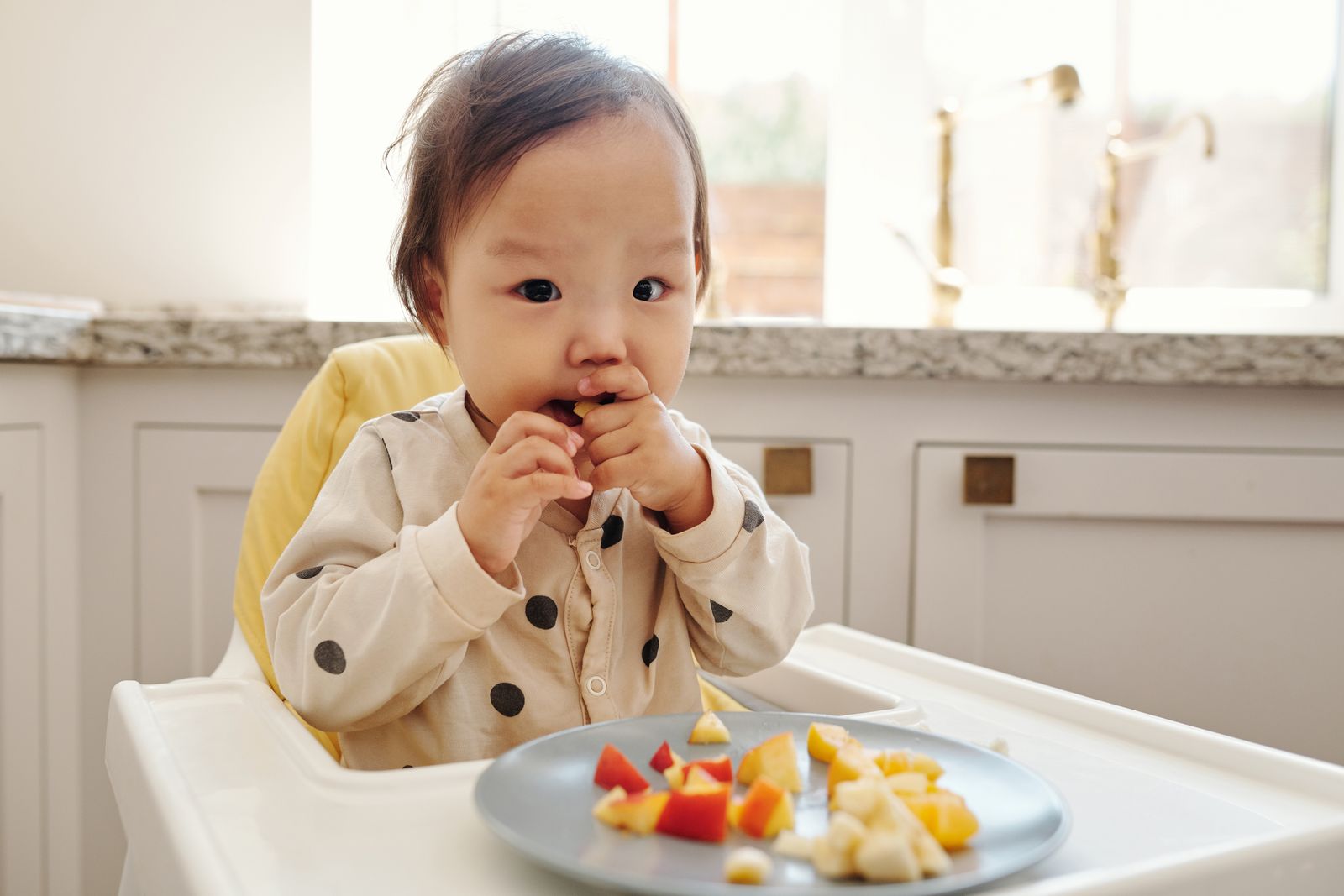
Packing the right food for the plane is an art that balances what your child likes with what won’t wreck the whole cabin. The golden rule of flying is that food for kids must not crumble, get sticky or mess up everything around it, because cleaning trodden-in puff pastry off the seat and seatbelt buckle is a nightmare. Instead of fragile biscuits and chocolate that melts instantly in little hands in a warm plane, pack hard cheese, pasta without a runny sauce, corn puffs, or firm fruit and vegetables cut into pieces.
Until recently there was a popular trick among parents of packing all the family’s food into an ordinary cloth or plastic bag carried by hand, and the gate staff would let it slide. ⚠️ That’s now definitively over, because from 1 August 2025 Ryanair introduced uncompromising checks on small under-seat bags with a limit of 40 × 30 × 20 cm, into which absolutely everything must fit. If you have the cheapest fare, forget the extra snack bag and pack all your food carefully straight into your own cabin bag.
A great tip for long flights are so-called “snack spinners” — round boxes with lots of little compartments that rotate and hide various kinds of tiny nibbles. Small food actually works as an excellent activity that can reliably keep a bored toddler busy for dozens of minutes at a time, when they’ve had enough of looking out the window or reading books.
7. Food and drink during a longer wait at the airport
💡 Tip: Airport restaurants tend to be packed and unbelievably expensive, so the best strategy is to bring an empty water bottle for every family member.
Waiting at the airport with kids can easily drag on, whether because of a flight delay or simply because you arrived too early, and a hungry child means guaranteed trouble. Counting on feeding your child calmly at one of the airport restaurants is a big risk, because these places tend to be desperately overcrowded in season and the food easily costs three times the normal price. On top of that, there’s no guarantee you’ll find exactly what your picky toddler happens to be willing to eat that day.
The absolute smartest strategy, one that saves you money, is the so-called empty bottle method. From home, bring every family member a good empty bottle, sports cup or hydration bladder, which pass through security without any restrictions whatsoever, whether you’re flying from the modern Prague Terminal 2 or the older Terminal 1. Right past the X-rays, at the vast majority of European airports, you’ll find special drinking fountains with tap water, where you can conveniently fill your bottles for the whole journey completely free.
If it happens that your child gets grumpy from the long wait, pull out your emergency stash from home, but dole it out gradually. Don’t let your child eat all the best crackers and cheese while still in the departure hall, because you’ll desperately need them as a distraction during the flight itself — especially the moment the fasten-seatbelt sign lights up and your child has to sit still in their seat.
8. Kids’ food on board and ordering in advance
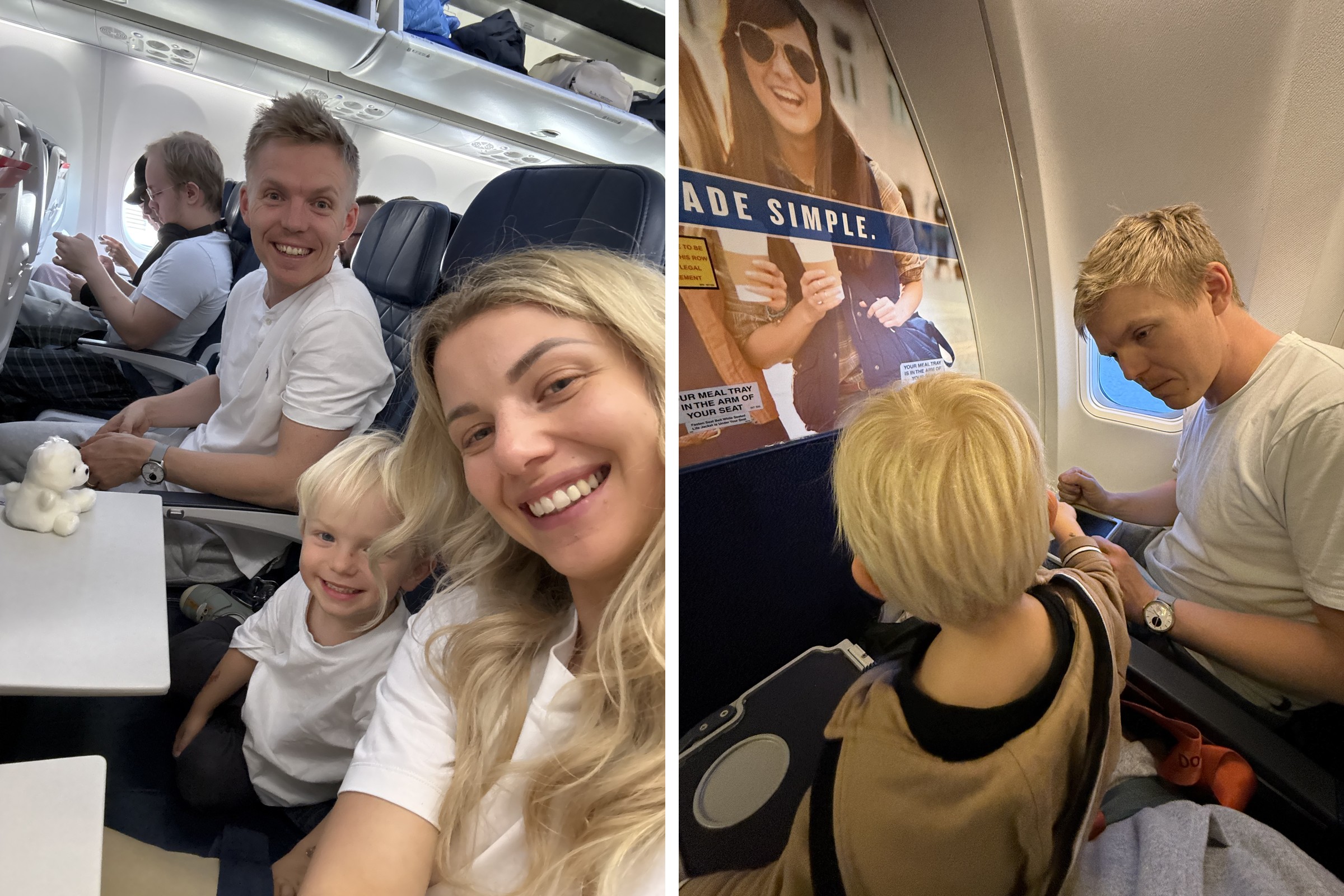
💡 Tip: On low-cost flights you won’t buy anything healthy for kids, and on charter flights you have to sort out any food two days in advance.
The availability of food right on the plane varies drastically depending on which airline you fly with and how far you’re going. If you have a long intercontinental flight ahead with a classic full-service carrier such as Emirates or Lufthansa, kids are entitled to a free meal, but you always have to actively select the special children’s meal at the time of booking. If you don’t order the kids’ meal in advance (often a jar of purée), the flight attendants simply can’t conjure it up mid-air.
Many families head to the seaside in summer with a tour operator and fly on charter flights. These airlines usually allow you to bring baby food on board, but ⚠️ their conditions often state a stricter limit of up to 200 ml, which is worth keeping in mind. If you want a hot meal from their in-flight menu for yourself or an older child, you have to order it online at least 48 hours before your scheduled departure, because on shorter flights hot food isn’t available to spontaneous buyers at all.
It’s a completely different situation with low-cost carriers like Ryanair, Wizz Air or easyJet, where all the service is bought exclusively from the trolley on board. The choice here is very limited, though — usually overpriced chocolate bars, salty crisps and instant soups, which are definitely not suitable food for small children, so your own box from home is an absolute and unavoidable must.
9. Stricter airports abroad
💡 Tip: Don’t expect to be treated as leniently on the way back as at your departure airport — international rules are currently in complete chaos.
European airports are currently in a thoroughly muddled transition period, gradually installing new and expensive CT scanners, but the rollout is extremely slow and uneven. While London Heathrow, for example, lifted the limit to a generous 2 litres across all its terminals from January 2026, huge hubs like Frankfurt or Munich run on a strange hybrid model. They have select lanes with new scanners where you can pass with a large bottle, but if staff randomly divert you to an older queue, the uncompromising 100 ml applies to everyone there.
⚠️ On top of that, parents’ experiences on travel forums warn that some airports are far less family-friendly than others. At Stockholm Arlanda in Sweden, for instance, one account describes security confiscating a child’s juice and water without discussion, saying the family could simply fill up with fresh water past the checkpoint, taking no account whatsoever of the baby food exemption.
Before every trip, always take the time to check the current, exact situation directly on the official website of the specific airport you’ll be flying home from. Never rely on the false sense of security that just because a litre bottle of water sailed through Prague Terminal 2, it’s guaranteed to pass on the way back from Málaga or Paris — older X-rays will force you to throw everything away.
10. What to do if your liquids get confiscated
💡 Tip: Losing a favourite drink at the checkpoint isn’t the end of the world — keep a cool head and solve the problem elegantly by buying in the duty-free zone.
Even if you prepare absolutely perfectly and know all the rules by heart, the human factor at security sometimes kicks in and the officer simply decides to confiscate your child’s drink. If that happens, whatever you do, don’t start arguing or raising your voice at the belt, because that only escalates the situation, stresses out your own kids, and the security officer will never back down on principle. Instead, take a deep breath, pour the liquid into the sink provided, but definitely keep the empty bottle for your child.
Once you’re through the X-ray and have gathered all your things, your first steps should lead to the nearest shop in the so-called duty-free zone. Yes, you’ll have to buy overpriced still water that costs disproportionately more than in a regular supermarket, but you can pour it straight into the favourite sippy bottle your child is used to, and the crisis is defused within five minutes.
If they want to confiscate medicine your child genuinely needs, you can ask for a supervisor to be called, but you must have a solid argument in hand, ideally a doctor’s certificate in English. Remember, though, that you should always thoroughly discuss giving any medicine before a flight with your pediatrician, and never give kids medicine just to make the journey easier for yourself.
Practical summary and rough prices
For a quick overview, we’ve put together a clear table of what you can pack at a standard airport with the 100 ml limit, and how much such an airport rescue actually costs.
What you may take through security (standard 100 ml):
| Item | Allowed? | What to watch for at the checkpoint |
|---|---|---|
| :— | :— | :— |
| Formula (dry powder) | YES | No restrictions at all, since it isn’t a liquid. |
| Breast milk / formula (liquid) | YES | Exemption. Security may want to see the contents or test with a strip. |
| Water in a thermos for infants | YES | Exemption. Ideal for mixing milk right on the plane. |
| Purée pouches (over 100 ml) | YES | Fine for toddlers, but often a problem with older walking kids. |
| Bottled water for an older child | NO | If over 100 ml, they’ll toss it. Bring the bottle empty. |
| Pasta, fruit, crackers | YES | Solid food passes the X-ray without any restrictions. |
Rough price comparison for food and drink (2026 prices):
| What you need | From home | Bought past security / on the plane |
|---|---|---|
| :— | :— | :— |
| Bottle of still water (0.5 l) | €0 (fill up at a fountain) | approx. €3–5 |
| Hot water for milk in a thermos | €0 | €0 (a café usually won’t refuse you) |
| Pasta or a sandwich | approx. €1.50 | approx. €10–16 (airport bistro) |
| Fruit purée pouch | approx. €1.40 | Very hard to find at the airport. |
Where to next
If your first holiday is coming up and you want complete peace of mind in every area, take a look at our other articles:
- Flying with kids: the complete guide
- What you can and can’t take on a plane
- Luggage for kids on a plane
- Prague Airport with kids
- Travel first-aid kit: what to pack
Frequently asked questions
Can I bring baby water for my infant on the plane?
Yes, baby water falls under the official exemption for baby food and is not subject to the strict 100 ml per container limit. However, you must only bring an amount that is reasonable for the total length of your journey including airport waiting time, and security may open the bottle and test it with a special device.
Do I need to declare baby food specially at security screening?
It’s definitely the best and fastest approach that will save you time. Take all pouches, liquid baby food and bottles with water or milk out of your backpack and place them in a separate plastic tray, so the X-ray operator can immediately see that it’s permitted equipment for a small child.
Can I get through with fruit pouches and snacks over 100 ml?
For infants and small toddlers they’ll get through without any problem, because the baby food exemption applies to them. ⚠️ However, once your child is older, walking confidently and eating regular solid food, security staff will start being stricter and may confiscate pouches over 100 ml without replacement.
What if we’re flying with Ryanair and have lots of food in containers?
Since August 2025, Ryanair has introduced very strict checks on small under-seat baggage dimensions (40 × 30 × 20 cm) and makes no compromises. All food containers must fit directly into your cabin backpack; if you arrive at the gate with an extra canvas bag or plastic carrier, you risk a hefty fine.
Is my child entitled to free food on the plane?
It depends on the specific airline and flight duration. With traditional carriers on long-haul flights, children do get food, but you must select the special baby purée in your booking well in advance. Low-cost carriers don’t provide any free food, and with charter airlines like Smartwings you must order meals 48 hours before departure.
What’s the ideal way to heat formula during the flight?
The worst scenario is relying on flight attendants to heat water for you, because it takes a long time due to trolley service in the aisle and your child will be crying in the meantime. A much smarter option is to bring your own quality thermos with hot water, get it through security and mix the formula at your seat at exactly the moment you need it.
Can I give my child sleep medication so they sleep better during the flight?
Sleep medication should never be given to children just for the parents’ convenience during air travel. ⚠️ Popular melatonin should not be given at all to children under two years old, and for older children its use must always be thoroughly consulted in advance with your pediatrician.
What if they confiscate my child’s favorite drink?
Above all, keep a cool head and don’t argue with security staff, because they won’t back down from their rules. Pour out the confiscated liquid, but keep the empty bottle, which you can refill with clean water from a drinking fountain after security, or transfer water you bought at the overpriced duty-free shop.
Does the liquid exemption apply to older children as well?
Unfortunately it doesn’t, and that’s where parents make the most common mistake. The exemption is exclusively for essential food for infants and small toddlers, so if you try to bring a large bottle of juice or water for a preschooler, security will most likely throw it in the bin.
Tips and Tricks for Your Vacation
Don’t Overpay for Flights
Search for flights on Kayak. It’s our favorite search engine because it scans the websites of all airlines and always finds the cheapest connection.
Book Your Accommodation Smartly
The best experiences we’ve had when looking for accommodation (from Alaska to Morocco) are with Booking.com, where hotels, apartments, and entire houses are usually the cheapest and most widely available.
Don’t Forget Travel Insurance
Good travel insurance will protect you against illness, accidents, theft, or flight cancellations. We’ve had a few hospital visits abroad, so we know how important it is to have proper insurance arranged.
Where we insure ourselves: SafetyWing (simple monthly subscription) and TrueTraveller (for extra-long trips).
Find the Best Experiences
Get Your Guide is a huge online marketplace where you can book guided walks, trips, skip-the-line tickets, tours, and much more. We always find some extra fun there!


