

Right now, I’m sitting on the terrace of our little house in Playa del Carmen, Mexico. This morning I did a ten-minute yoga session, followed by a Spanish lesson, and now I’m sipping coffee and going through my emails. Within a few minutes, I’ll wrap up the work that needs doing, then snap my laptop shut and decide that today is a day for relaxing. We’re heading to the beach. Would you like a life like this too? So why aren’t you living it yet? If you’ve ever dreamed of how to become a digital nomad, this article is for you.
We regularly get emails and messages asking how to get started with the digital nomad lifestyle — how to start earning money online. So this article is dedicated to all of you who want to make it happen.
But first, a quick reality check…

Do you genuinely want to escape your office and work from the beach? If so, stop reading right now. All those photos of nomads working from the beach? They’re staged. You simply can’t work in the heat, and the sand would wreck your laptop anyway.
The reality is that most of the time, we’re holed up in an air-conditioned café or a rented apartment. We go to the beach to unwind. Our lifestyle simply allows us to travel on our days off. And no, we don’t have a holiday every day!
Who can become a digital nomad?
Lukáš and I are two completely ordinary people, just like you. There’s nothing special about us and we’re certainly not wealthy. To keep travelling, we need to earn money. There’s just one difference, though: all we need for our work is a laptop and a stable internet connection.
Becoming a digital nomad can be much easier than you think — even if you have zero experience working online.
An important note for everyone
The first thing I need to tell you (and what makes this article a lot harder to write) is that every one of you reading these lines is in a different position. Some of you already work online but just need to learn how to market yourselves better. Others may have no online experience at all and need to develop a new skill from scratch. That’s why there’s no single recipe that fits everyone.
What does it mean to be a digital nomad?

There are many types of digital nomads — so many, in fact, that it’s hard to come up with a simple definition. What do they all have in common, though? Most of them only need a laptop and a reliable internet connection to work, they spend at least a few months each year abroad, and they often move on to a new place every few weeks.
Digital nomad jobs: What skills do you need?
You might think you don’t have any skills that could be sold online. But you’d be wrong. You probably know how to use a computer and how to write. That’s enough to get started, and you could land your first gigs within a few weeks.
Now it’s about identifying the right skills and knowledge you already have and transferring them to the online world. The number of ways to make a living online is absolutely enormous.
Alright, this can happen too
In some cases, your existing knowledge may turn out to be useless in the online world. You might feel like you’ve wasted part of your life studying or working in a field that won’t help you. You need to decide whether you’re willing to “start over.”
Before I walk you through the steps to become a digital nomad, I’d like to share what’s genuinely great about the digital nomad lifestyle — and what’s rubbish.
The perks of the digital nomad lifestyle

There are three main reasons people become digital nomads.
1) Enjoy a more luxurious life for less money
One of the brilliant things about the digital nomad lifestyle is that you don’t need to earn a fortune to live well in the beginning. On less than €700 a month, you can live very comfortably in Southeast Asia. To enjoy the same quality of life in the UK, you’d need to work far harder.
2) Become truly location-independent
Most nomads start out in Chiang Mai, Thailand, or on the Indonesian island of Bali, simply because the cost of living is lower there. But the ultimate goal of a digital nomad is to build an income that lets you live anywhere in the world — even somewhere as expensive as Norway.
3) Travel while you work
Being a digital nomad lets you travel the world. The moment you can stay productive even while on the road — say, during a cycling trip across Europe — you’ve cracked it. You can handle anything. Being a digital nomad means the ability to work from anywhere, even from a campervan.
And now for the downsides…
Even though it sounds amazing — travelling the world while working — you should always keep in mind that this lifestyle isn’t forever, and it doesn’t suit everyone. I’m already seeing many of my friends returning home and giving up the nomad life. Some after six months, others after 10 years. This way of living simply can’t be sustained until the end of your days. Think about that before you decide to invest a huge amount of time and energy.
Travelling and working can be stressful
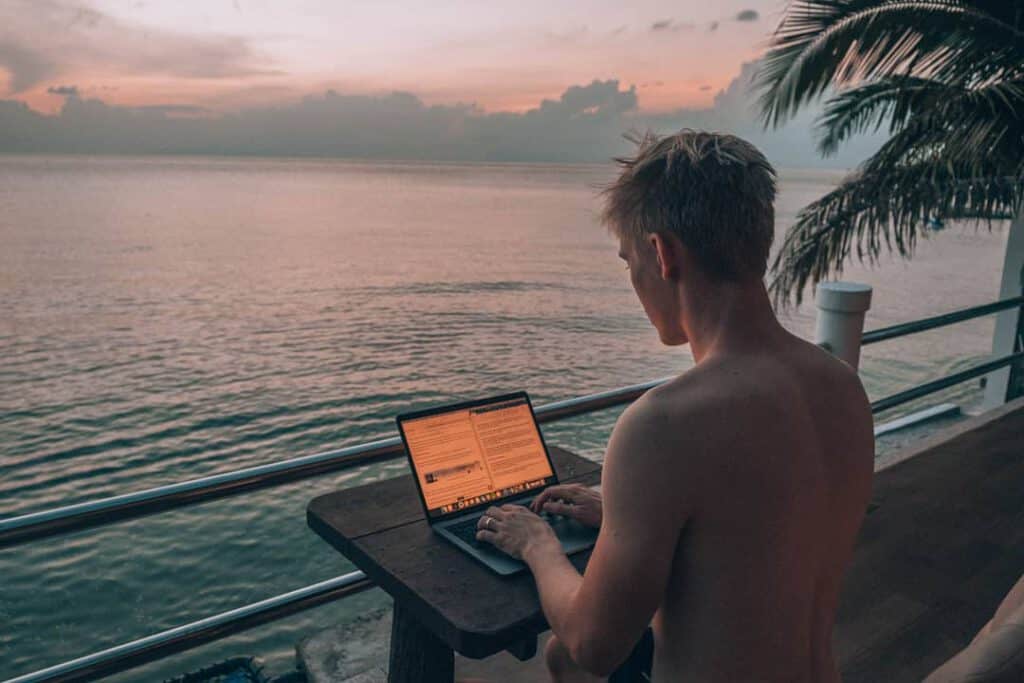
If the only thing driving you towards the digital nomad life is a desire to travel, don’t do it. You might be better off going backpacking for a year or two instead.
Even though social media makes it look otherwise, we work far more than we travel. Besides, spending a year backpacking is far less stressful than trying to travel and work at the same time.
We all want to settle down eventually
At some stage of life, we’ll all want to settle down, or at least establish a home base to return to. That’s why it’s essential for a digital nomad to build an income that covers the cost of living outside Southeast Asia. Because the real goal, the ultimate goal, is to have a base and then the freedom to work from anywhere in the world — not just Bali or Thailand.
If you do decide to settle and work in another country, you’ll also need to think about whether you’ll become a tax resident there. This can be tricky for some people, but it’s a solvable problem. The easiest approach is to consult firms that specialise in international tax advice. In the UK, services like those from HMRC’s guidance pages or specialist expat tax advisors can help you navigate your obligations.
How to become a digital nomad: 10 steps

You might think the best way to become a digital nomad is to launch an online business. It’s true that an online business gives you the most freedom, but it’s also the hardest path to success — especially if you don’t yet have any experience in the online world.
That’s why most nomads start out as freelancers, and some gradually work their way up to running their own online business.
Anyone can do it
There are genuinely many ways to become a digital nomad, and I believe that anyone who truly, deeply wants it can make it happen.
Whether you succeed depends not only on your skills, experience, and starting budget, but also — unfortunately — on whether you’re willing to take risks and whether you’re prepared for the possibility that it might not work out on the first try.
1) Decide what you want to do
The first step is the most important: decide what you want to focus on online. The unfortunate truth is that I can’t make this decision for you, and I can’t help you figure it out remotely either.
You can browse our list below, or pick up a book like Travel Jobs for plenty of inspiration.
Most common digital nomad jobs
A large proportion of digital nomads work in copywriting, online marketing, PR, web development, or programming. But you could also tutor people over Skype — whether it’s a language, guitar lessons, or something else entirely.
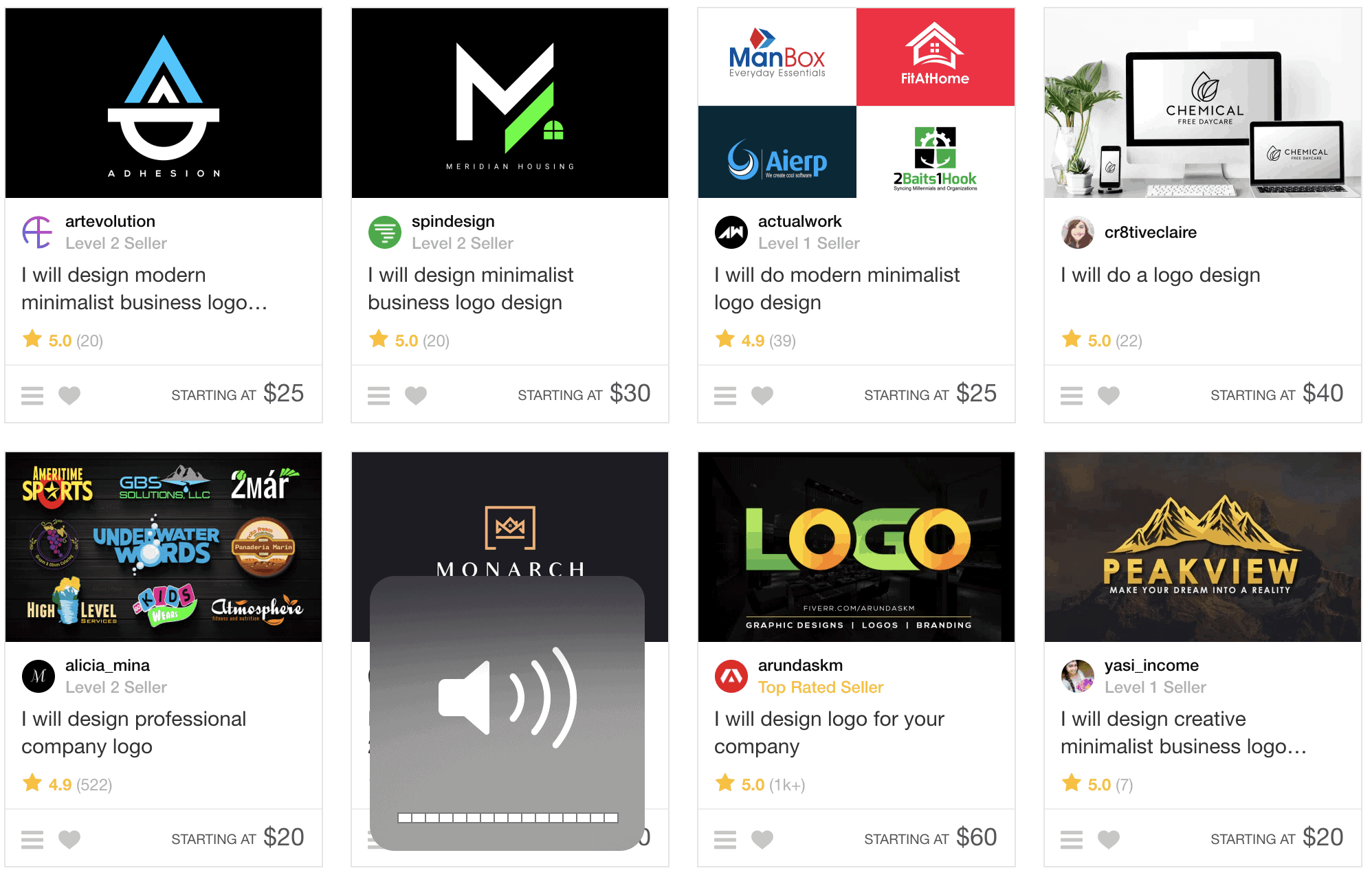
Many nomads start out with so-called online gigs, which are sold on platforms like Fiverr. What’s an online gig? It’s usually a one-off task. You could create simple logos or remove backgrounds from photos in Photoshop. If you speak English (which you clearly do!), head straight over and take a look.
If you’re struggling to figure out what you could do as a digital nomad, consider taking a course or hiring an online coach who can help you uncover your strengths.
2) Join digital nomad communities
There are plenty of groups on Facebook and Reddit that can help you on your journey. Some worth mentioning include r/digitalnomad on Reddit, as well as various Facebook groups like “Digital Nomads Around the World.”
You can ask for advice and tips related to your chosen field, and you’ll also gain the all-important support of people who’ve decided to walk the same path.
3) Level up your language skills
Do you absolutely need a foreign language to work online? Not necessarily. You can work entirely in English, of course, but learning another language can give you a significant advantage. Why? The best blogs, podcasts, books, and courses span many languages. And for travelling, being multilingual is invaluable.
How to improve your language skills quickly and effectively
The most fun and rewarding approach is to go on a Working Holiday visa to Canada, New Zealand, or Australia. I’m guessing you might not have time for that right now, though. So here are some tips that personally helped me when I was learning Spanish.
For two years, I’d been wanting (and trying) to learn Spanish. I tried a course at a language institute, various apps like Duolingo, a private tutor, a self-study book, and eventually ended up with an online course.
The most effective methods were the self-study book and the online course. Everything else was money down the drain. I’d recommend trying free trials before committing your cash elsewhere. Apps like Babbel, Duolingo, or italki are great starting points for English speakers looking to pick up a new language.
How to write without mistakes
Another tool I recommend to absolutely everyone is Grammarly. With this app, you’ll never make a mistake in your written communication — it’s a lifesaver, especially if you’re writing in a second language.
4) Gain experience
You might be buzzing with excitement and ready to pack your bags and dive into the world of digital nomadism. Hold on — take a deep breath, exhale, and remind yourself that patience is often the key to success.
If you currently have no online skills, you need to acquire them somewhere. Sure, some people take the “now or never” approach and jump in headfirst. It might work out. But it might not. Those of us who prefer a more measured approach tackle it systematically.
- Get an internship in your field
If you’re still at university, the easiest thing is to use that time for relevant workshops, courses, and internships. I personally completed several internships during my studies, attended countless workshops, and hoovered up every marketing, media, and journalism lecture I could find. It genuinely paid off.
- Work in the industry
Sometimes the simplest thing is to get a job for a while. I know, I know — you want to work online, not from an office. But if you truly have no experience in the field, you’ll only end up falling flat on your face. PR agencies and marketing agencies can give you exactly the foundation you need.
- Freelance in your spare time
If you already have some experience but aren’t ready to leave your well-paying job, start slowly. Begin working on your online career in your spare time and gradually build up your online portfolio (more on that below).
A useful resource is the article by Hanka Šormová about how to land clients without references.
5) Keep developing your skills
We live in an age where knowledge is literally one click away. Take advantage of it and never stop learning.
- Find relevant, high-quality blogs, podcasts, and books
I personally didn’t study marketing (my degree is in journalism) and my first attempts at online marketing were dreadful — truly dreadful!
But the online world fascinated me, so I started reading blogs and listening to podcasts. I still educate myself to this day; my field is constantly evolving, and blogs and podcasts keep me in the loop.
- Take courses and attend workshops
Courses and quality workshops can accelerate your progress dramatically. If your English is strong, definitely check out Skillshare, where you can find a course on virtually anything.
6) Go freelance full-time
Right, let’s do this. You’ve got the necessary experience, maybe even a few clients, but now you need enough of them so you can travel comfortably. If you’re starting while still at university, you’ve got it easier. If you’re leaving a job, make sure you have enough savings to cover the first few months.
Invest in relevant online platforms
Sign up for relevant freelance platforms like Upwork, Fiverr, Toptal, or PeoplePerHour. Put real effort into your profiles — this is not something you want to half-arse. Join relevant Facebook groups (if you haven’t already) and browse job boards regularly.
Alternative path: Convince your employer to let you work remotely
If your job is 99% computer-based, you can try to convince your employer to let you work from home — or anywhere, really. More and more companies are open to this, and Lukáš and I have had nothing but positive experiences. If your employer is hesitant, offer a trial period to prove it works.
7) Pricing — why it’s more important than you think
There’s hardly a more underrated skill among freelancers than pricing. Yet your price is essentially your first business card — a fair price should reflect the quality of your services and your experience.
For a deep dive into pricing strategies, check out resources from freelance experts in your niche. Getting your pricing right from the start will save you a lot of headaches down the road.
Your price signals your expertise
Your price alone speaks volumes about your professional level and sets client expectations. It’s one of the reasons we included pricing in our course in Sardinia. Pricing is truly an art form — a great book on the subject is The Freelance Way by Robert Vlach.
- Build your online portfolio
A simple portfolio website is essential for most types of online work. It’s your online portfolio that ultimately decides whether a client chooses you or someone else. Your portfolio website should be clean, clear, and compelling. At a minimum, it should include what you do, testimonials, pricing, and contact details.
Don’t forget about LinkedIn. You can read about how to optimise your profile in this article.
9) Master the skills needed for digital nomad life
In reality, one of the hardest things about being freelance is staying productive. Especially in the beginning, you’ll often find that the whole day has slipped away and you’ve accomplished NOTHING — even though you were sitting at your computer the entire time.
And that’s bad. You want the exact opposite: to get the most done in the least amount of time! Your goal is the 4-hour workweek. Well, okay, at least a 4-hour workday! So what can you do about it?
Learn deep focus techniques
Among the most popular are: Pomodoro and GTD (Getting Things Done)
Recommended resources:
- Books: Getting Things Done by David Allen, The 4-Hour Work Week by Tim Ferriss
- Also worth exploring: Deep Work by Cal Newport
Learn to fight resistance
Don’t worry, you’re not the only one who experiences resistance. We all know exactly what it feels like. It’s that aversion to a task that seems difficult or boring, and instead of getting on with it, we procrastinate. You’ll always face this battle, but once you beat it for the first time, it gets easier the next time around.
Create a routine
Even though this is exactly what you were trying to escape, you’ll need to adopt some routines if you want to stay productive.
My morning routine:
I wake up (I never set an alarm), make the bed, exercise for 20-40 minutes, then do a Spanish lesson, have breakfast, and only then start checking emails.
Set realistic goals
Freelancers often set unrealistic daily goals, which only leads to stress. Only assign yourself tasks that you can genuinely complete in a day.
10) Choose your first destination
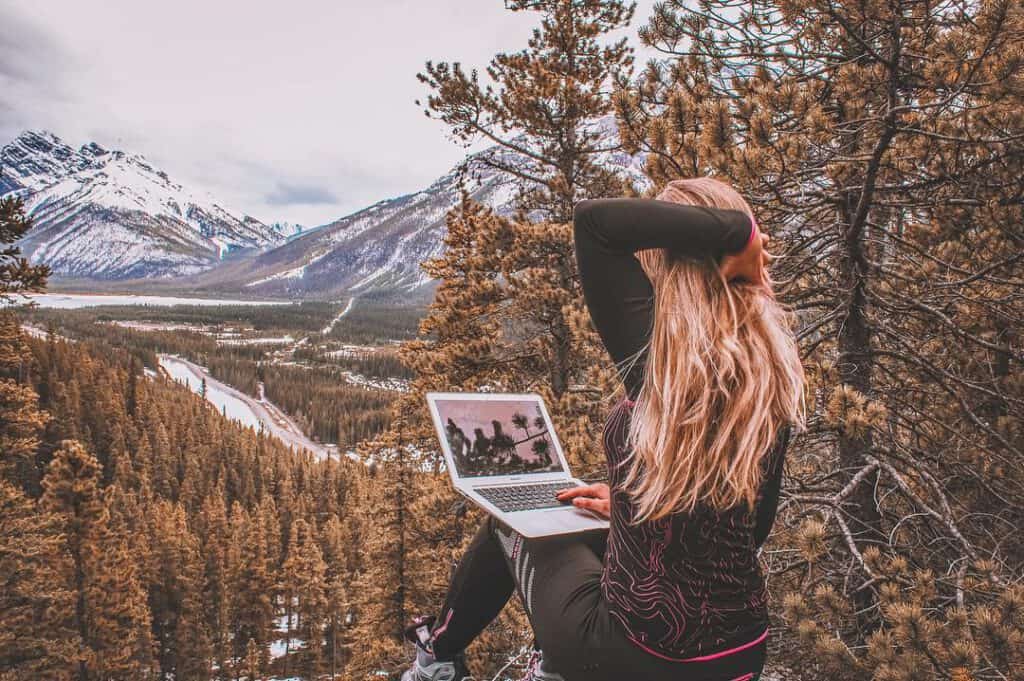
And now for the best bit: choosing your first destination! Most people head to Southeast Asia, and it makes sense — as we mentioned, you can live quite comfortably there on less than €700 a month.
When choosing a destination, we recommend visiting Nomadlist, where you can find out which places are best suited for digital nomads. Read as many blogs as you can and ask other digital nomads for advice. It’s also worth checking whether your chosen destination offers a digital nomad visa — countries like Portugal, Spain, and Thailand now have dedicated visas for remote workers.
Flights to these destinations from London typically start at around £250-350 return, which is why most nomads stay in Asia for at least 2-4 months — so the cost of the flights gets absorbed into their monthly expenses.
A few final words
If you want to become a digital nomad, start working on it straight away. It’s not impossible to turn this dream into reality within just a few weeks. But don’t underestimate the preparation. On top of the steps above, study up on tips for cheap and safe travel.
Learn how to get better exchange rates when withdrawing cash from ATMs, research where to find affordable accommodation — or even free stays — and most importantly, don’t be afraid to ask those who have more experience. You can find great deals on accommodation through platforms like Booking.com, and for staying connected on the road, an eSIM from Holafly or Yesim is a lifesaver.
Tips and Tricks for Your Vacation
Don’t Overpay for Flights
Search for flights on Kayak. It’s our favorite search engine because it scans the websites of all airlines and always finds the cheapest connection.
Book Your Accommodation Smartly
The best experiences we’ve had when looking for accommodation (from Alaska to Morocco) are with Booking.com, where hotels, apartments, and entire houses are usually the cheapest and most widely available.
Don’t Forget Travel Insurance
Good travel insurance will protect you against illness, accidents, theft, or flight cancellations. We’ve had a few hospital visits abroad, so we know how important it is to have proper insurance arranged.
Where we insure ourselves: SafetyWing (simple monthly subscription) and TrueTraveller (for extra-long trips).
Find the Best Experiences
Get Your Guide is a huge online marketplace where you can book guided walks, trips, skip-the-line tickets, tours, and much more. We always find some extra fun there!


