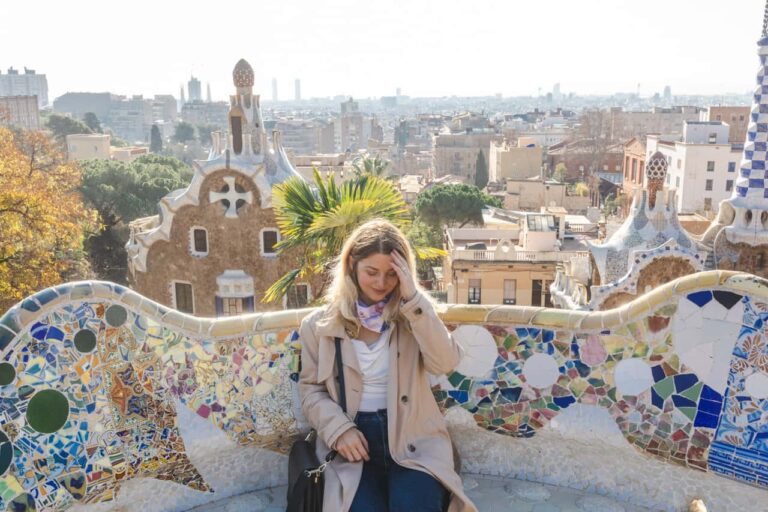
When Lukáš and I set off for Barcelona at the beginning of March, one of our very first stops was the famous Barceloneta. We were only there for a long walk, because it definitely wasn’t swimming weather at the time, but honestly, even in the height of summer we probably wouldn’t have gone in the water there. If you’re wondering about the best beaches in Barcelona, local blogger Diana recently summed it up perfectly when she wrote that locals today skip Barceloneta entirely and head north instead, or straight out of the city.
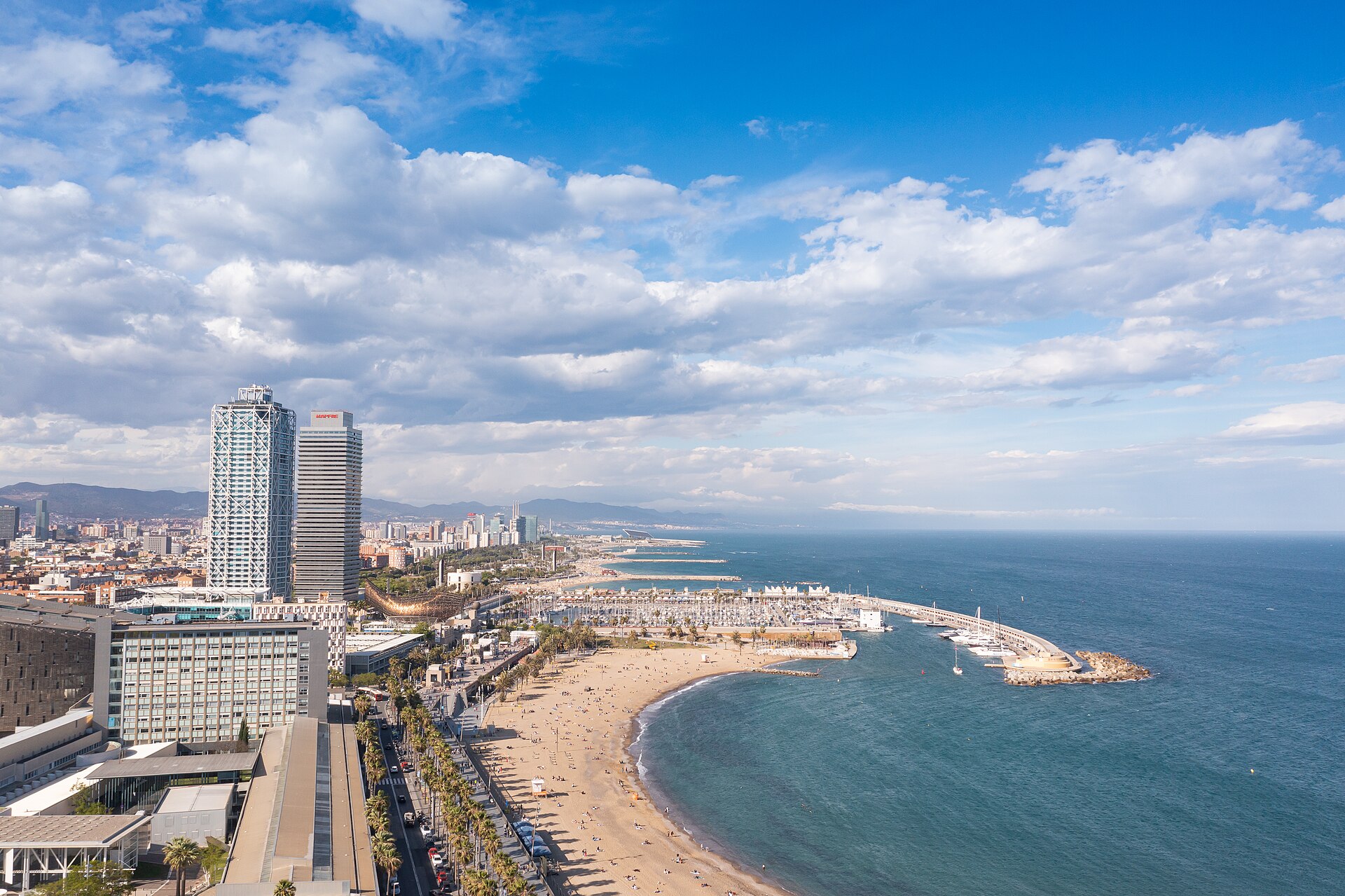
It’s the most famous beach in Barcelona and looks absolutely stunning in photos, but in reality it’s probably the worst spot in the city to lay down your towel. All the city beaches are artificial, created during the enormous redevelopment of the coastline before the 1992 Olympic Games. The swimming experience, though, changes dramatically with every metro stop you travel away from the historic centre.
That’s why I’ve put together 12 tips for beaches in Barcelona and the surrounding area, so you know where to find clean sand and where, on the other hand, to keep a close eye on your wallet. We’ll look at when the sea is at its ideal temperature, what strict rules apply along the coast, and why it sometimes pays off to hop on a commuter train and travel a few stops further south or north.
TL;DR
- Better to avoid Barceloneta. It’s the closest to the centre, but it’s full of pickpockets and street vendors, and the sand isn’t exactly the cleanest.
- Locals love Bogatell beach. It lies just a little further north, boasts a Blue Flag for cleanliness, and offers much more space to relax.
- The best swimming is in August and September. The sea warms up very slowly, so in June the water is only around 20 °C, while in autumn you’ll enjoy a pleasant 23 °C.
- Take the R1 train to Ocata. In just 20 minutes from the centre you’ll discover an unfairly overlooked, gloriously wide beach without the tourist crowds.
- Castelldefels is a paradise in the south. This beach lies just 200 metres from the train station and offers an incredible five kilometres of golden sand.
- Beware of strict fines. Barcelona’s beaches have an absolute smoking ban, you can’t drink alcohol, and you’re not allowed to walk around the city in just your swimwear.
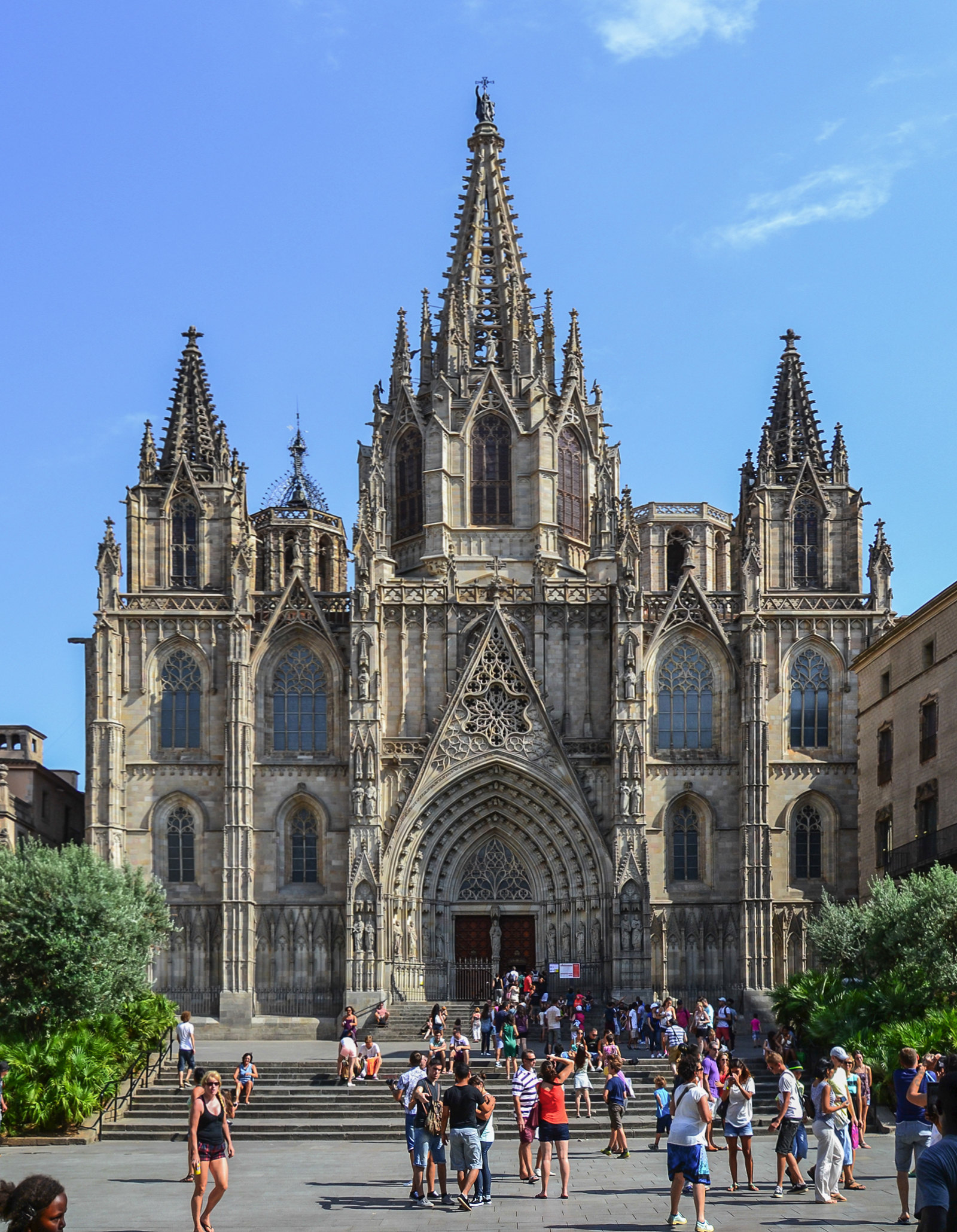
The full destination guide: Catalonia — guide and what to see
When to Head to the Sea in Barcelona
This is an absolutely crucial detail that can save your entire summer holiday. Barcelona’s sea warms up very slowly and cools down even more slowly, so when planning your trip, definitely don’t go by air temperature alone. In June the city is already baking at 26 °C, but the water is only 20 °C, which for most of us is pretty borderline for a longer swim. If you set off as early as May, be prepared for the fact that the water is an icy 17 °C and only true cold-water enthusiasts will brave the waves.
The best swimming conditions are found in August and September, when the sea finally warms up properly. In August the water averages a lovely 25 °C, but you have to reckon with the fact that the city is overcrowded and the beaches are literally bursting at the seams. In September, on the other hand, the water temperature drops only slightly to a very pleasant 23 °C, but the tourist crowds noticeably thin out and the sun doesn’t burn as aggressively. Autumn swimming in Barcelona is therefore paradoxically a much better choice than spring. Even in October, when it occasionally rains and the air is around 22 °C, the water stays just as warm as in early June, so you can dip in without any problem.
If you’re interested in detailed monthly averages, take a look at our article Weather in Barcelona: temperatures by month and when to go. We were here in early March, and although we mostly walked around the city in light jackets, it was nowhere near swimming weather. In March the beaches serve more for strolls with a coffee in hand than for catching a tan, even though the sun can already be quite pleasant during the day.
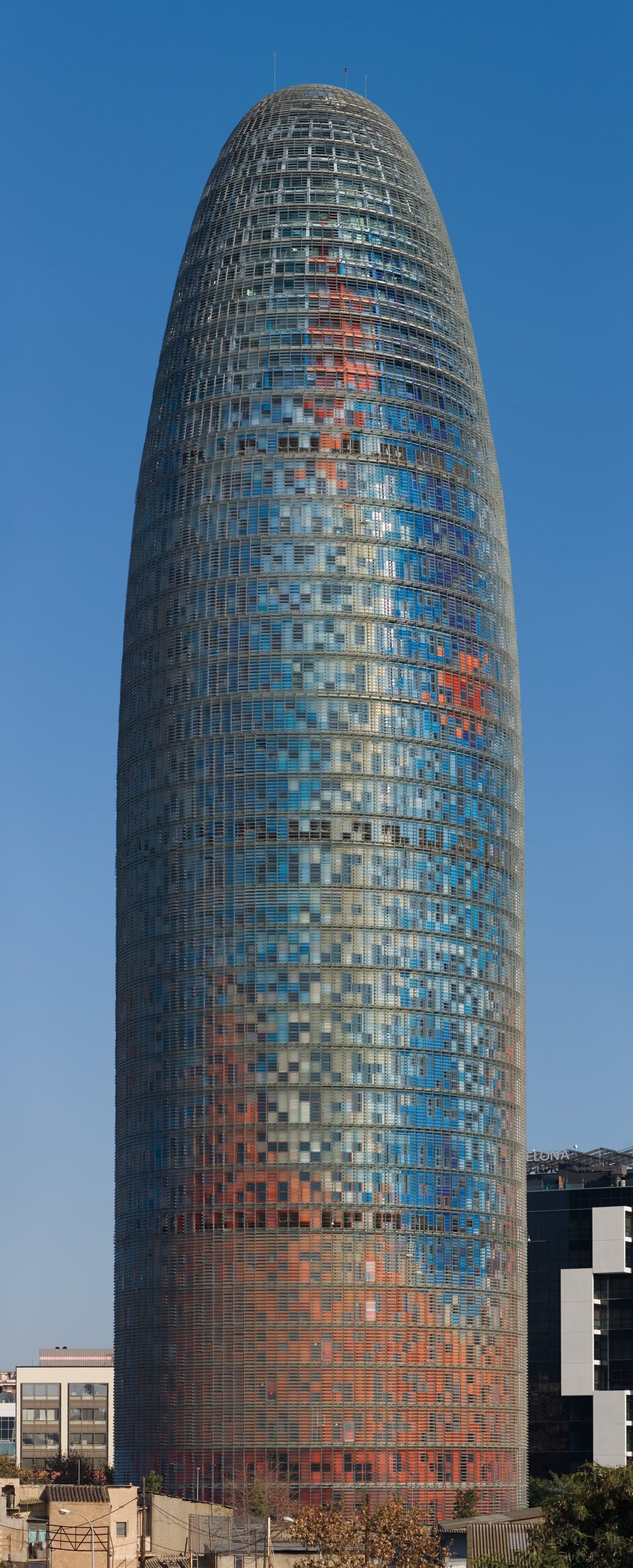
Where to Stay in Barcelona Near the Beach
💡 Tip for accommodation and experiences: We prefer to look for accommodation on Booking.com, which usually has the best cancellation terms. Tickets, tours and activities are then worth comparing and booking through GetYourGuide.
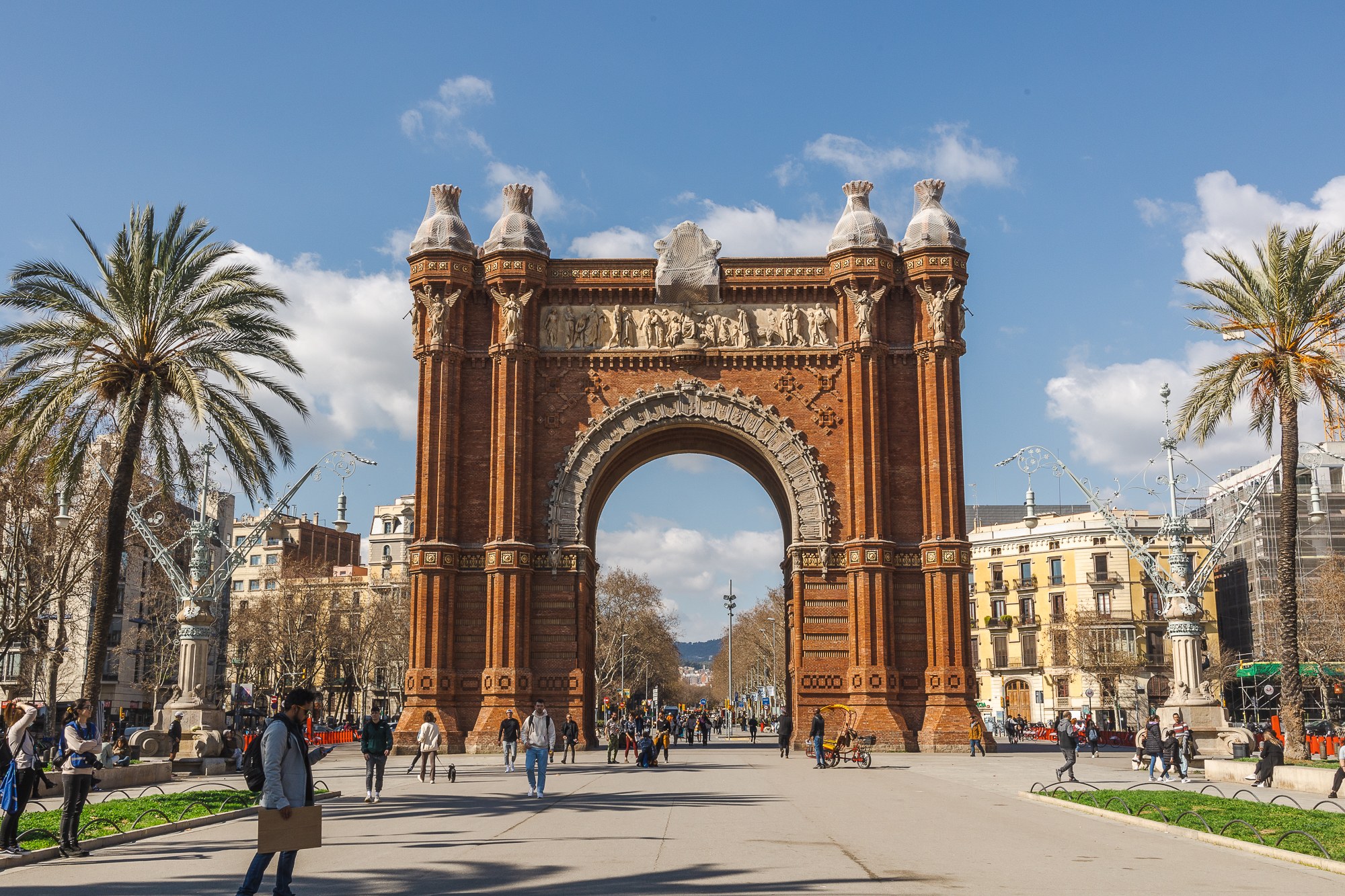
When Lukáš and I were exploring Barcelona, we chose the beautiful Hotel Gaudí, which has a fantastic rooftop terrace and sits right next to the famous Palau Güell palace. From here we could walk to the sea, to the Arc de Triomf, and to the La Boqueria market, but if you’re going purely for beach relaxation, it pays off to stay in the Poblenou or Barceloneta districts instead. Bear in mind, though, that as of April 2026 the tourist tax in Barcelona has risen significantly. For a five-star hotel you now pay €12 in taxes per person per night, while for tourist apartments the fee has gone up to €9.50 per person. Fortunately, this tax is charged for a maximum of seven consecutive nights.
If you’re looking for accommodation that combines proximity to the beach and quality service, I definitely recommend booking hotels well in advance via Booking.com. On top of that, Barcelona is gradually revoking all licences for short-term apartment rentals with the aim of eliminating them completely by the end of 2028. This means that classic hotels tend to sell out very quickly and average room prices keep rising, especially in the summer season. You can read more about the individual districts in our guide Where to stay in Barcelona: 10 districts.
Of the specific hotels that have great reviews and are strategically located near the sea, definitely check out these three popular options, with something for every budget:
- Hotel Gaudí – This is where we stayed and we can’t recommend it enough. It’s a short walk from the sea near La Rambla, but thanks to the amazing rooftop terrace with a pool, you have a perfect view straight onto the colourful chimneys of the nearby Palau Güell.
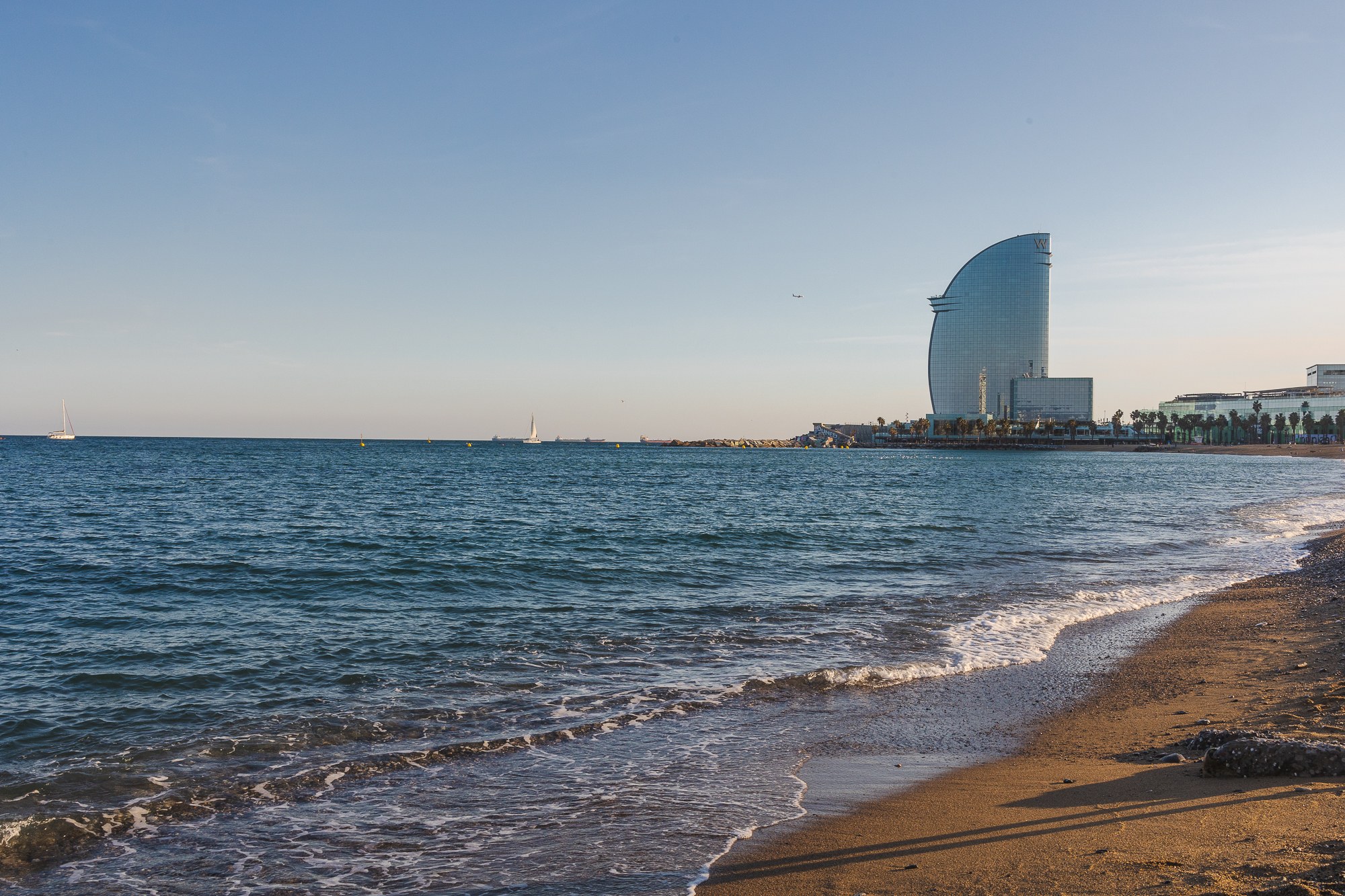
- W Barcelona – An iconic luxury hotel shaped like a giant glass sail, standing right on Sant Sebastià beach. If you’re after absolute luxury with a view over the endless sea and don’t mind the higher price, this is quite simply the best choice in the whole city.
- Ilunion Barcelona – A great, more affordable hotel in the Poblenou district, from where it’s just a pleasant ten-minute walk to the best city beach, Bogatell. It also offers a lovely rooftop pool where you can unwind after a full day of sightseeing.
12 Tips for Beaches in Barcelona and Nearby
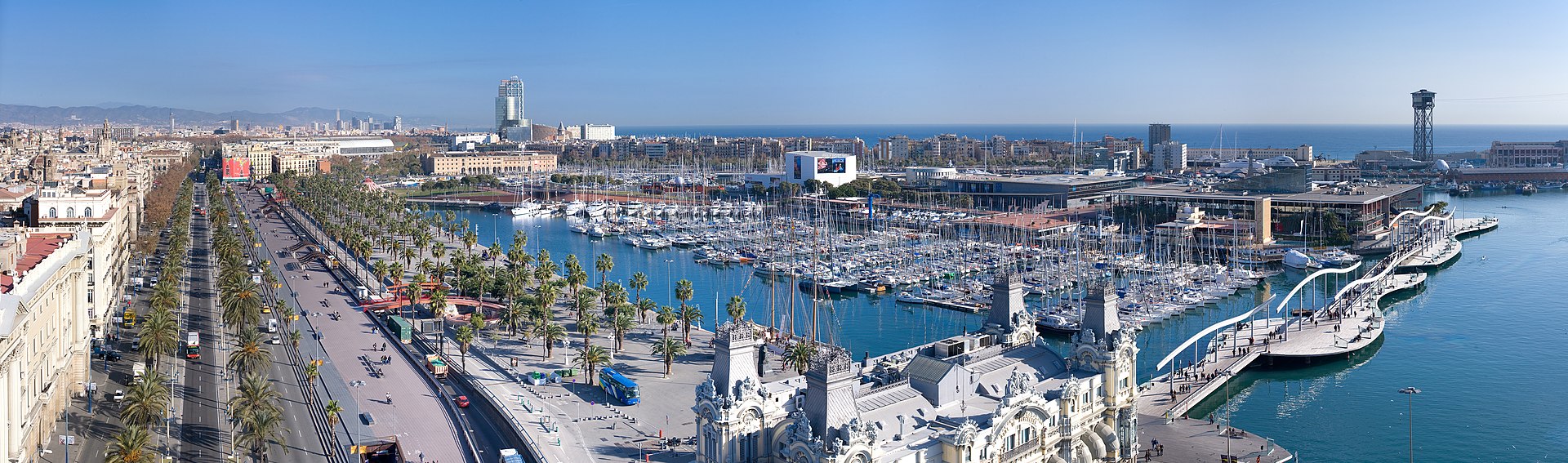
The coastline is divided into several main stretches, and the differences between them are enormous, whether it’s the crowds, the noise, or the cleanliness of the sand. Let’s take a look at the most famous beaches right in the city as well as the hidden gems that a commuter train will comfortably take you to.
1. Barceloneta Beach: The Famous Spot Locals Skip
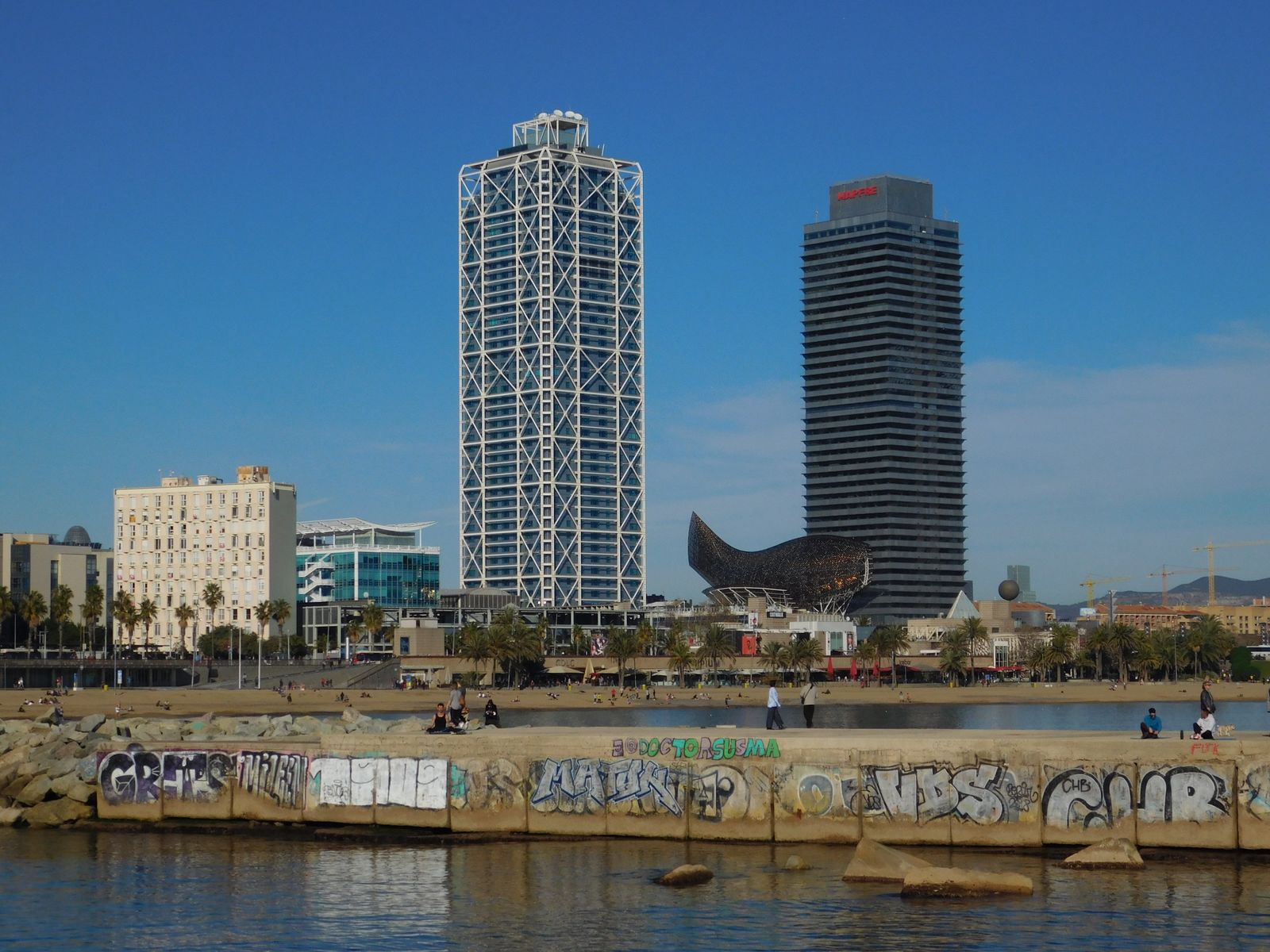
This is the absolute epicentre of the tourist industry and the first place most visitors head from the centre. If you do come here, take the locals’ advice: take a look at the incredible buzz, but pick a different spot to actually lay down. In July and August it’s packed shoulder to shoulder, music blares from dozens of portable speakers, and street vendors constantly weave between the blankets. These so-called manteros will offer you a massage every five minutes or cups of mojito. But they mix the drinks on the sly without any refrigeration and often store them right in the drains by the road, so this purchase is entirely at your own risk.
The Barceloneta metro station on the yellow L4 line is also one of the five most critical spots in the city when it comes to pickpockets. Thieves know exactly that huge crowds in flip-flops with phones in their back pockets flow through here, so be extremely vigilant and never leave your belongings on the blanket unattended.
So why come here at all? Clearly for the great food. Don’t head onto the sand itself, but slip into the grid of narrow streets of the old fishing quarter. You’ll find the historic 7 Portes here, or the excellent Can Majó restaurant, which offers great vegetarian versions of tapas and rice dishes coloured with squid ink.
💡 Tip: If you do come here, don’t forget that once you cross the road back into the city you must put on a T-shirt or shirt. Barcelona’s bylaw is uncompromising, and walking around in just your swimwear away from the beach can cost you a fine of up to €300.
2. Sant Sebastià and Sant Miquel: Under the Iconic Sail
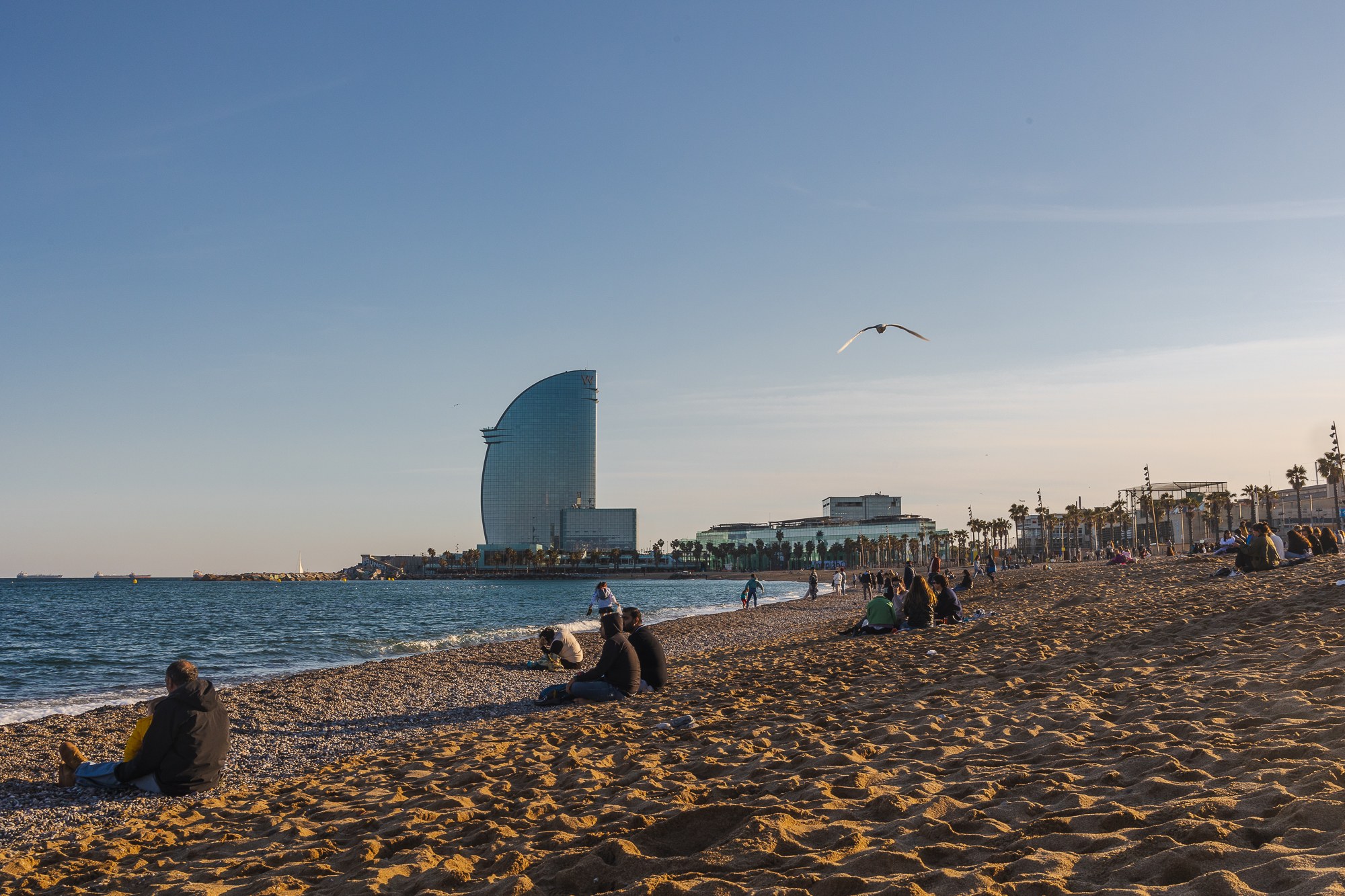
If you walk along Barceloneta beach heading south, you’ll reach the Sant Sebastià and Sant Miquel stretches, dominated by the enormous glass building of the renowned W Barcelona hotel. Sant Sebastià is one of the oldest beaches in the city and historically even had a section reserved for nudists, though today you’ll mostly find crowds of tourists with cameras who’ve come to photograph the famous hotel sail.
The atmosphere here is very similar to neighbouring Barceloneta, so you can only dream of a peaceful rest. The upside, though, is that here you’ll find several more upscale beach clubs and bars where you can rent a comfortable sun lounger with a parasol for a fee. Just bear in mind that prices for a full-day rental can climb quite high in peak summer season, and the spots disappear really fast.
Interestingly, the historic red Teleférico del Puerto cable car departs right from here, carrying you high above the busy harbour up to Montjuïc hill. It’s a great experience and the views over the entire sun-drenched coastline are definitely worth it, just be aware that longer queues often form at the ticket booths by the beach, especially around midday.
3. Somorrostro: Buzzing Day and Night
Right beyond Barceloneta heading north lies Somorrostro beach, which is firmly tied to Barcelona’s nightlife. It sits right next to the Port Olímpic marina, home to the biggest and most famous nightclubs like Opium or Pacha. During the day, you’ll often see people sunbathing here who danced all night and are now sleeping it off on the hot sand, while lively beach volleyball tournaments go on around them.
Despite its party reputation, this beach is very well maintained and you’ll find all the facilities you need, including spacious showers and clean toilets. Overall, there’s a very youthful and energetic atmosphere here, so you certainly won’t be bored. But if you’re after silence, the murmur of the sea, and peace to read a book, head a bit further north, where the buzz noticeably fades.
💡 Tip: On all of Barcelona’s city beaches there’s a strict ban on drinking alcohol bought from a shop, the so-called botellón. If you throw a party here with a case of beer from the corner shop, you risk an unpleasant fine of €100 to €600. And if minors are with you, the rate rockets up to €1,500.
4. Nova Icària: The Ideal Choice for Families
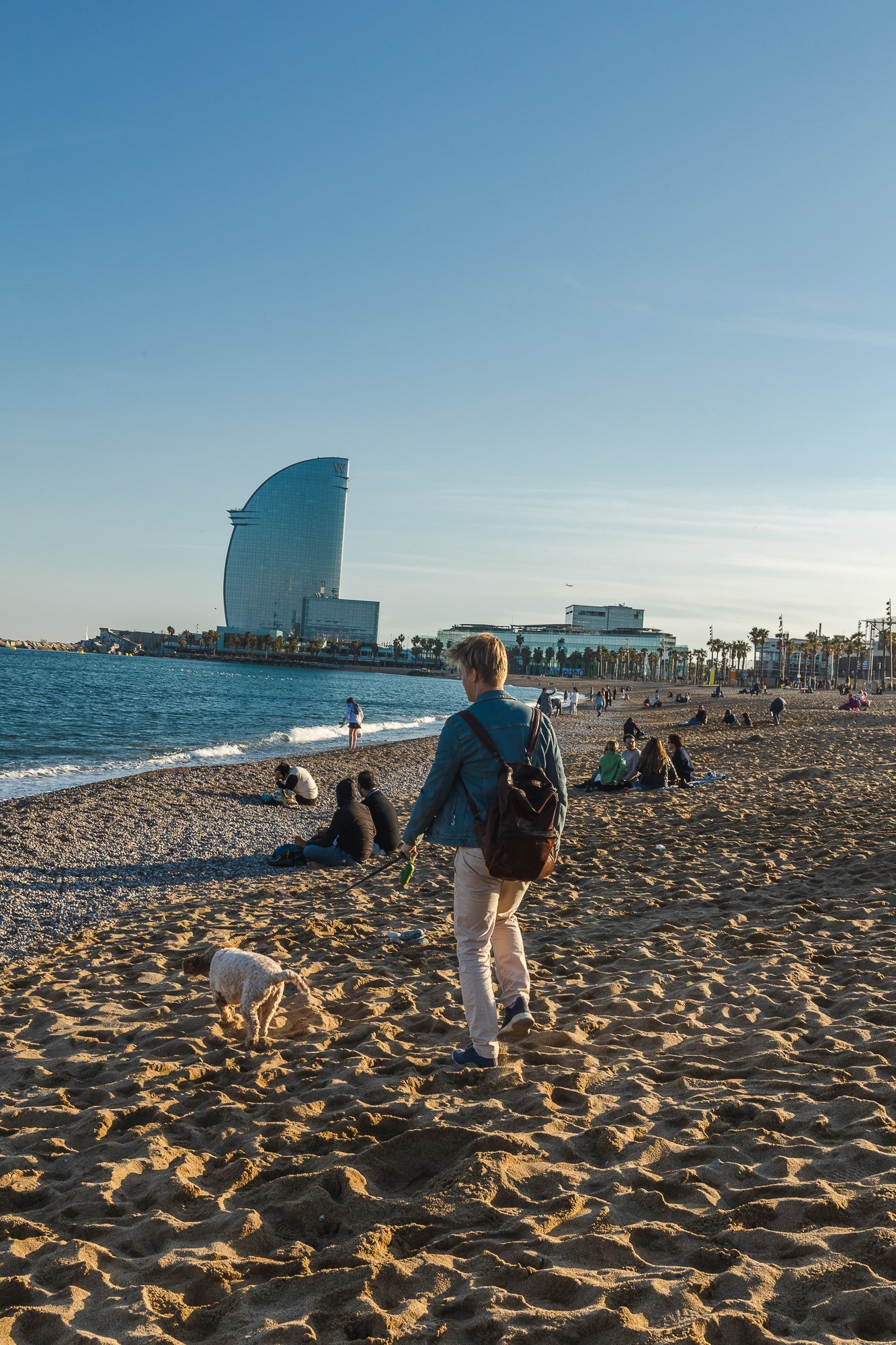
Once you pass the busy Port Olímpic and head further north, the atmosphere finally starts to noticeably calm down. Nova Icària is an immensely popular family beach that you can reach from the historic centre in roughly fifteen minutes at a brisk pace. It offers very calm water ideal for swimming and excellent facilities for all kinds of water sports.
Compared with the previous beaches, you’ll find much more space here and the sand tends to be considerably cleaner. Right by the beach there are also several quality restaurants and so-called chiringuitos, the typical beach bars. They usually open from spring to autumn and offer great refreshment right by the water, so you can have a coffee or a lemonade with a view of the waves.
This beach is also wonderfully accessible for wheelchair users, and in the summer season there’s even an assistance service for people with limited mobility. They have special amphibious chairs available that allow safe and comfortable entry right into the sea, which makes Nova Icària one of the friendliest spots on the coast.
5. Bogatell: The Real Local Favourite
If you ask locals where they go to the sea after work, most of them will send you right here. Bogatell works as a completely calm alternative to the busy city beaches. From the Poblenou metro station on the yellow L4 line, you can reach it on a leisurely twenty-minute walk, and along the way you can take in the modern architecture of this up-and-coming district.
The sand here is visibly cleaner, the crowds have noticeably thinned, and you have plenty of room to comfortably spread out a blanket and enjoy the space. The beach also boasts the prestigious Blue Flag, which guarantees high water quality and good beach facilities. This is exactly the place where you’ll finally enjoy that longed-for relaxation without constant interruptions from street vendors.
Right on the beach you’ll also find El Xiringuito Escribà, which is one of the best establishments in the city, where people come for its famous paella and excellent vegetable tapas. Definitely make a reservation well in advance, though, because this bar is hugely popular even with locals and is often hopelessly full.
💡 Tip: All of Barcelona’s beaches have a strict smoking ban. The police actively enforce it to protect non-smokers and prevent cigarette butts piling up in the sand, which are a huge environmental burden. With a cigarette in hand you’ll at the very least be shamefully ordered off the beach.

6. Mar Bella: Sport and Nudism in One
If you keep going even further north, you’ll come across Mar Bella beach, which has a very distinctive, free-spirited character. Since the 1990s, its left section has been reserved as a nudist beach, and historically it’s also the very favourite summer haven for Barcelona’s LGBTQ+ community.
Don’t be misled, though, Mar Bella offers great activities even if you’re travelling with small children or teenagers. Right behind the beach there’s an excellent concrete skatepark, plenty of modern climbing frames, and even a giant slide that can keep kids entertained for hours, while you can read a book on your blanket in peace.
Thanks to its considerably greater distance from the main harbour, the water here tends to be beautifully clear and the horizon isn’t spoiled by as many cruise and cargo ships. It’s a great compromise between good city accessibility by bike or on foot and a pleasantly relaxed beach atmosphere.

7. Nova Mar Bella: Calm Beneath Modern Skyscrapers
Nova Mar Bella lies surrounded by the glass skyscrapers of the modern Diagonal Mar district. You’ll definitely find peace here, but you have to accept that it completely lacks the typical historic backdrop of the old town that you know from colourful postcards and guidebooks. The buildings here are much newer and feel more like a modern residential neighbourhood somewhere in Miami.
This beach is sought out mainly by locals who live in the adjacent new developments, and only an absolute minimum of ordinary tourists stray here. The sand is beautifully fine and the entry into the water fairly gentle, which you’ll appreciate especially during autumn swimming, when the waves are a little calmer and the water temperature is still very pleasant.
Interestingly, thanks to the much more open space, the wind here is often a bit stronger, which makes Nova Mar Bella an ideal spot for flying kites in spring and autumn, and you’ll occasionally come across enthusiasts of various windy beach sports.
8. Llevant and the Fòrum Zone: The Far North of the City
These are the very northernmost points of Barcelona’s coastline. Llevant is a relatively new beach that only officially opened to the public in 2006, and it offers a complete escape from the city madness. It’s usually beautifully calm here, and on part of the beach there’s even a special fenced-off area during the summer season where you can bring your dogs for a swim without worry.
Right next to it is the enormous concrete Fòrum zone. Here you actually won’t find any classic sand, but rather paved concrete surfaces with an artificially created sea pool that’s protected from big waves. You descend into the water on metal steps, much like at a classic public lido.
The Fòrum zone is known above all for the fact that huge music festivals are held here, such as the world-famous Primavera Sound. If you just want a quick swim in clean water at the weekend without having to laboriously brush sand off your legs and belongings, it’s quite an interesting and unconventional alternative.
9. Ocata and El Masnou: A Northern Gem Without Tourists
If you want truly wide beaches and crystal-clear sea, do what the Catalans do at the weekend and hop on a commuter train. At Plaça Catalunya, Sants, or Arc de Triomf, board the R1 line towards Maresme and in twenty to thirty minutes you’ll get off at Ocata station. Trains run every half hour and a one-way ticket costs you roughly €4 to €5.
Local bloggers call this beach utterly underrated, because tourists usually travel much further south by train and here you’ll mostly meet only local residents. Awaiting you is an exceptionally wide beach, clean sand, and perfect peace. It’s the ideal choice for those who just want to lie in silence, read a book, and swim in the gorgeous turquoise water.
Right next to it lies El Masnou beach, which seamlessly follows on from Ocata. Here you’ll find a lovely harbour full of small cafés and excellent restaurants, where after a full day of sunbathing you can enjoy great vegetable tapas with a view of the moored sailboats. And if you’d like to go a bit further, in forty-five minutes you’ll reach Caldes d’Estrac, where the beach is lined with old, colourful modernist villas.
10. Castelldefels: Five Kilometres of Golden Sand in the South
If instead you take the commuter train south, your first big destination should definitely be Castelldefels. The journey from the centre takes roughly twenty-five minutes and has one absolutely unbeatable advantage. The train station lies just 200 metres from the sand, so as soon as you step off with your towel, in two minutes you can already take off your shoes and run straight to the water.
The beach offers an incredible five kilometres of golden sand and is considerably emptier than the overcrowded city beaches in Barcelona. It’s beautifully wide, flat, and thanks to the distinctive gentle wind that blows here regularly, it’s also a very popular spot for kitesurfing and other adrenaline-fuelled wind sports.
On the well-kept promenade along the beach you’ll find a huge number of chiringuitos that stay open late into the warm evening. Here you can comfortably rent sun loungers and parasols, whose price usually hovers around €15 to €20 a day, and enjoy the murmur of the sea in peace.
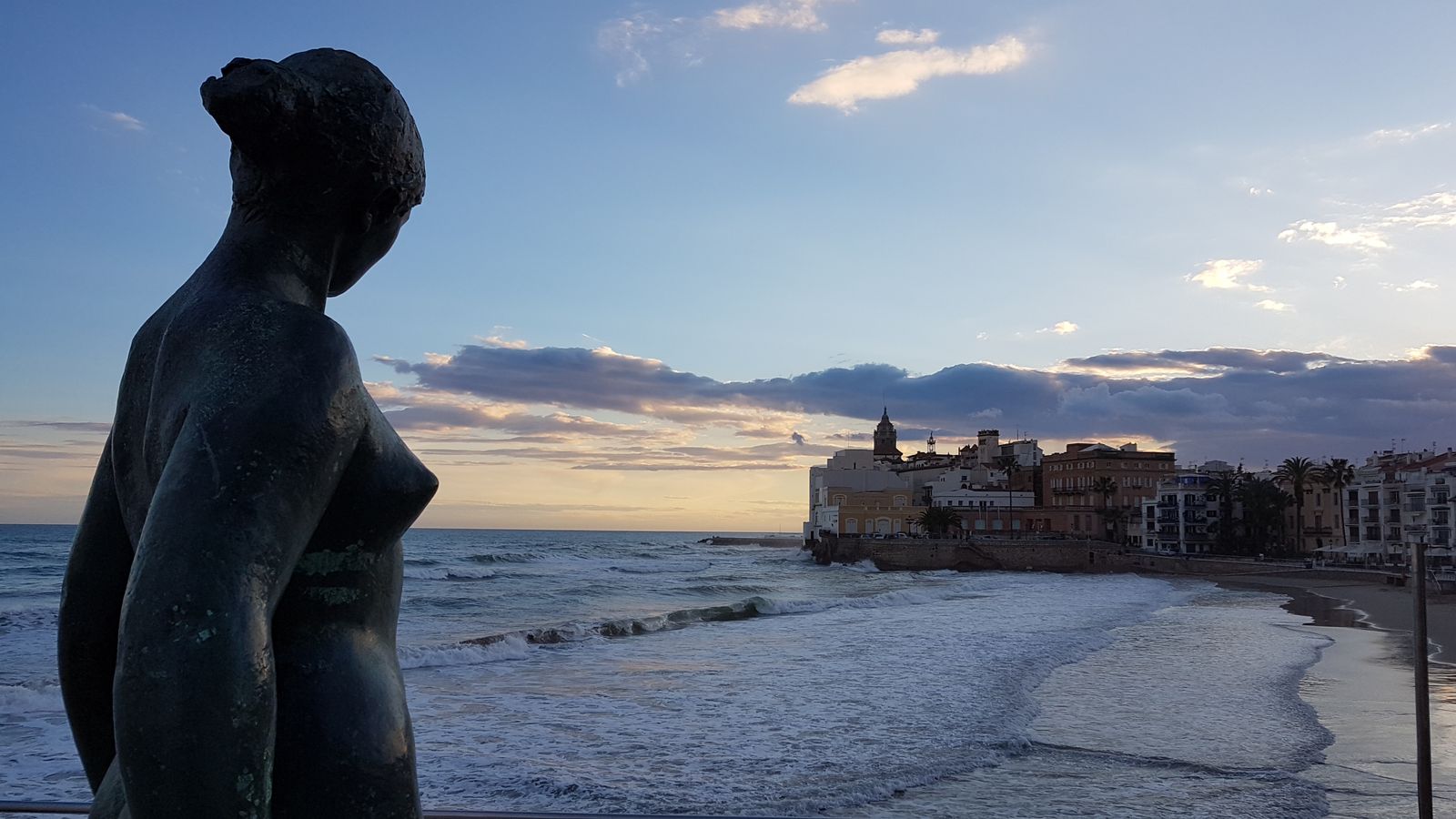
11. Sitges: Blue Flags and Historic Streets
A little further south lies the beautiful and immensely photogenic little town of Sitges. On the R2 Sud line train from Sants or Passeig de Gràcia, you’ll get there in a pleasant thirty-five minutes. Sitges isn’t just about ordinary swimming; it’s a full-fledged all-day trip with stunning architecture that’s definitely worth adding to your itinerary.
The town offers a choice of an incredible 17 different beaches, has old white streets, a beautiful church rising on a cliff right above the sea, and a famous nightlife. It also boasts as many as nine Blue Flags for cleanliness, which is the most in all of Catalonia. On the way by train you’ll also pass the village of Garraf, famous for its iconic green-and-white beach huts set in a small, romantic cove.
⚠️ Important notice for 2026: Extensive construction work is taking place this year on the railway line in the Garraf–Sitges section, and an alternative transport plan is in place. Before your trip, always check the current status at rodalies.gencat.cat so you don’t get stranded on a service disruption and have your plans thrown off.
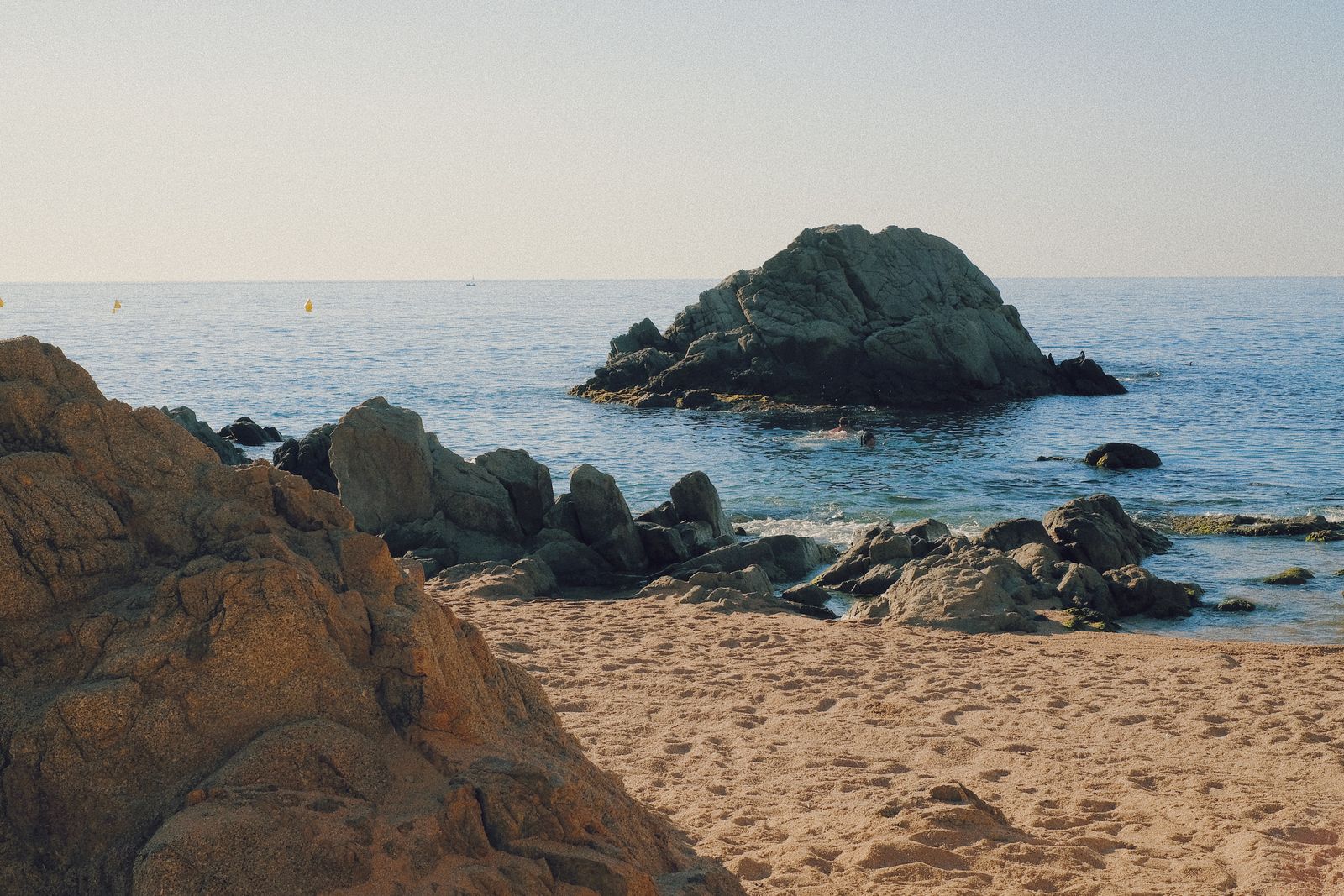
12. Costa Brava: Cliffs and Pines Further North
If you don’t mind travelling a little longer, the romantic cliffs and fragrant pine groves of the famous Costa Brava coast are definitely worth the journey of over an hour. From the Estació del Nord bus station, which lies a short walk from the Arc de Triomf metro stop, direct and comfortable buses run by the Moventis company.
The journey to the picturesque resort of Tossa de Mar takes roughly an hour and twenty minutes and a one-way ticket costs €15 to €27. Tossa is absolutely breathtaking, because a beautiful and superbly preserved medieval castle rises right above its main beach, beneath which you can swim in crystal-clear turquoise water.
A cheaper and slightly more adventurous option is to buy a combined Tren + Bus ticket at the commuter train station. By train you comfortably travel along the coast as far as the town of Blanes, and there you seamlessly transfer to a connecting Autocars Pujol bus that will take you to further seaside resorts along the cliffs.

Where to Go Next from Barcelona
We also have these detailed guides to Barcelona for you:
Once you’ve had enough of the salty air and beaches, you can set off to discover the city itself or head out on more trips. As I mentioned, during our March visit we mostly walked everywhere, explored the awe-inspiring Sagrada Família inside and out, and sat on that famous mosaic bench in Park Güell. Back then we skipped Tibidabo because of the bad weather and worrying reviews about cars being broken into.
If you’d like help planning your whole stay, take a look at our other articles:
- What to see in Barcelona: 25+ tips – A complete guide to the sights and architecture.
- Barcelona in 3 days: itinerary – A precise plan for catching the essentials stress-free.
- Sitges: 14 tips on what to see near Barcelona – A detailed guide to this picturesque little town.
- Costa Brava: the most beautiful beaches and towns – Tips for the best trips out of the city.
- Getting around Barcelona: metro, tickets and the airport – How the tickets work and why T-casual no longer covers two people.
- Spain holiday: 17 tips on where to go – Inspiration for more journeys across the Iberian Peninsula.
Frequently Asked Questions
Are there jellyfish on Barcelona’s beaches?
Yes, they occasionally appear, especially when warm winds drive them towards the shore. Always watch the flag system by the lifeguards, who monitor safety during the summer season. Green means safe swimming, while yellow urges caution, very often due to increased jellyfish presence or strong currents. Red means an absolute ban on entering the water.
Can I leave my things on a towel when I go in the water?
This is an absolute basic rule you must remember. Never leave your belongings unattended. Theft from towels is a massive phenomenon on Barcelona’s beaches. Pickpockets work in teams and as soon as you turn to face the waves, your bag instantly disappears. One of you should always stay on the blanket, or don’t bring anything valuable to the water at all, just a few coins for water.
Is drinking alcohol on the beach allowed?
Absolutely not, drinking alcohol in public, the so-called botellón, is strictly prohibited. Fines range from €100 to €600 and if there are minors with you, the amount can climb to an incredible €1,500. The ban applies both on beaches and in the streets throughout the city.
Is smoking allowed on the beaches?
No, Barcelona has an absolute smoking ban on all city beaches. The city is trying to combat the huge environmental burden of cigarette butts in the sand and protect non-smokers. Police patrol and will at the very least shame you off the beach with a cigarette.
What are chiringuitos and when are they open?
Chiringuitos are typical beach bars that stand right on the sand. They offer refreshing drinks, coffee and simple tapas. Their season usually starts in spring and they close in autumn. Right at these bars you can legally have a drink and they often rent out comfortable beach loungers with umbrellas.
Can I walk from the beach into the city in a swimsuit?
Definitely don’t try it. Barcelona’s civic ordinance from 2025 strictly prohibits moving through the streets without a shirt or just in swimwear. As soon as you cross the road from the sea into the city, you must get dressed, otherwise you risk a fine of up to €300 and they won’t let you into any establishment or church anyway.
Are there showers available on the beaches?
Yes, all main city beaches are equipped with public showers and toilets. In past years they were occasionally turned off due to extreme drought, but in 2026 the water reservoirs in Catalonia are full again, so there are currently no restrictions for tourists in this regard.
Tips and Tricks for Your Vacation
Don’t Overpay for Flights
Search for flights on Kayak. It’s our favorite search engine because it scans the websites of all airlines and always finds the cheapest connection.
Book Your Accommodation Smartly
The best experiences we’ve had when looking for accommodation (from Alaska to Morocco) are with Booking.com, where hotels, apartments, and entire houses are usually the cheapest and most widely available.
 🚗 Car rental on the roadVerified rental cars in Catalonia
Search with the DiscoverCars comparison engine — it compares prices from dozens of local and international rental companies, and most bookings come with free cancellation.
Compare car prices in Catalonia →Don’t Forget Travel Insurance
Good travel insurance will protect you against illness, accidents, theft, or flight cancellations. We’ve had a few hospital visits abroad, so we know how important it is to have proper insurance arranged.
Where we insure ourselves: SafetyWing (simple monthly subscription) and TrueTraveller (for extra-long trips).
Find the Best Experiences
Get Your Guide is a huge online marketplace where you can book guided walks, trips, skip-the-line tickets, tours, and much more. We always find some extra fun there!