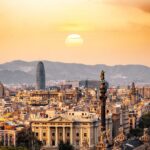
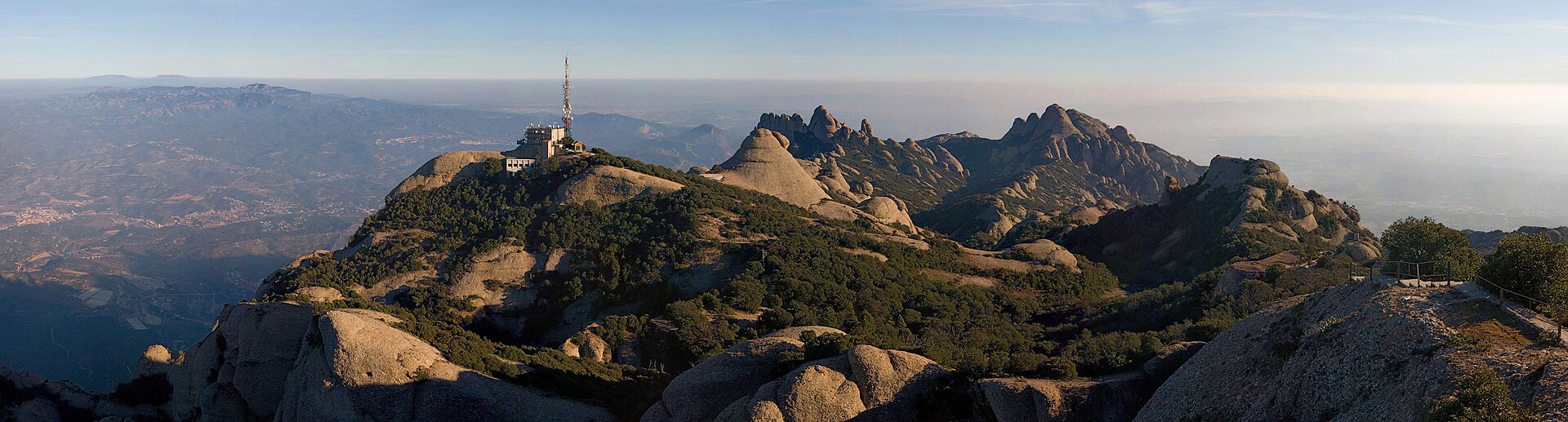
Once you leave behind the crowds flocking to the Sagrada Família and escape the edges of Barcelona’s suburbs, you’ll discover a region of absolutely stunning contrasts. Roughly an hour from the bustling metropolis, the bizarre limestone massif of Montserrat Spain rises abruptly from the flat landscape, looking for all the world like giant stone fingers reaching towards the sky. Nestled safely among the rounded mountain peaks lies a legendary Benedictine monastery — the most important spiritual centre in all of Catalonia.
This full-day trip from Barcelona will truly take your breath away, combining spectacular nature with deep history and jaw-dropping views. You can look forward to the mysterious Black Madonna statue, the angelic singing of one of Europe’s oldest boys’ choirs, and dozens of kilometres of gorgeous mountain trails. In this guide, I’ll walk you through exactly how to get to Montserrat from Barcelona, which tickets to choose, and everything you absolutely cannot miss on this magical mountain.
TL;DR
- Getting there from Barcelona: A direct R5 train runs from Plaça Espanya station. The journey to the foot of the mountain takes about an hour.
- Getting up the mountain: You can ride either the historic rack railway (Cremallera) or the aerial cable car (Aeri) to the monastery. I recommend buying a combined ticket in Barcelona.
- Black Madonna: Queues to see the patron saint of Catalonia are extremely long, so book a timed entry ticket online well in advance.
- Boys’ choir: The Escolania de Montserrat typically sings in the basilica at 13:00 (except weekends and school holidays) — arrive at least half an hour early.
- Best viewpoint: The most iconic photos can be taken after a 20-minute walk to the Cross of Saint Michael (Creu de Sant Miquel).
- Hikes: If you love mountain hiking, make sure to set aside time for the trek to the highest point, Sant Jeroni, where on a clear day you can see all the way to Mallorca.
- Food: There’s a farmers’ market right by the monastery where you absolutely must try fresh Mató cheese drizzled with honey.
The full destination guide: Catalonia — guide and what to see
When to Visit Montserrat Spain
Catalonia has been battling extreme heatwaves and historic droughts in recent years, which inevitably affects mountain hiking. During the peak of summer, temperatures often soar to unbearable levels and the sun-baked limestone rocks on Montserrat act like a giant radiator. The ideal time to visit is definitely spring, from April to mid-June, or the autumn months of September and October. During these periods, you’ll enjoy pleasant temperatures around 20°C — absolutely perfect for hiking uphill.
The winter months can also be surprisingly beautiful, but up in the mountains it can get quite cold and windy, so a decent layered jacket is essential. If you have no choice but to travel in July or August, catch the very first morning train from Barcelona to reach the mountain before nine o’clock. Not only will you avoid the worst of the afternoon heat, but you’ll also briefly outpace the enormous crowds of tourists and pilgrims that start flooding in around ten in the morning.
For the monastery itself and the nearby area, half a day will suffice, but it would be a real shame to rush straight back to the city. If you want to fit in one of the longer mountain hikes, listen to the boys’ choir, and soak up the atmosphere at a relaxed pace, set aside the entire day for Montserrat. It’s an incredibly intense experience — you’ll collapse into bed that evening with wonderfully tired legs 😅.
Where to Stay for Your Montserrat Trip
💡 Accommodation & experiences tip: We love searching for places to stay on Booking.com, which usually has the best cancellation policies. For tickets, tours, and activities, it’s worth comparing on GetYourGuide.
The vast majority of visitors choose to stay in Barcelona, which serves as the perfect base for exploring the entire region. If you want to be literally around the corner from the Plaça Espanya train station, book accommodation in the Eixample or Sants-Montjuïc neighbourhoods. An excellent choice is the Hotel Gran Vía, which offers modern rooms and is just a few minutes’ walk from the R5 train platform, saving you precious time in the morning.
For those of you craving a truly profound spiritual experience — or who love astrophotography at night — there’s another magical option. You can stay right on top of the mountain, steps from the monastery. Once the last cable car and rack railway depart in the evening, the entire complex empties out and an incredible stillness descends. The iconic Hotel Abat Cisneros occupies a 16th-century building right on the main square. Rooms are easy to book via Booking, but during high season they sell out months in advance, so don’t delay your reservation.
If you’re travelling on a tighter budget or in a larger group, you can also make use of the nearby Cel·les Abat Marcet apartments, which feature fully equipped kitchenettes. This is a huge advantage, by the way, because dining options at the summit are pretty limited in the evenings. Whatever option you go for, a night on Montserrat under the starry sky is an experience that will stay with you forever ☺️.
14 Things to See and Do at Montserrat Monastery in Spain
I’ve put together a detailed list of the most amazing places and activities this magical mountain has to offer — from practical transport tips to hidden mountain trails.
1. The Journey: Cremallera Rack Railway & R5 Train
The journey from Barcelona to Montserrat is a fantastic experience in itself. From Barcelona’s Plaça Espanya station, take the R5 line train (towards Manresa), which will deliver you to the foot of the massif in about an hour. From here, you have two ways to conquer the steep ascent to the monastery, and one of them is the historic rack railway known as the Cremallera. For this option, get off the R5 train at Monistrol de Montserrat station.
The green rack railway then slowly and majestically climbs the steep mountainside, treating passengers to absolutely breathtaking views into the deep valley. The ride up takes roughly 15 minutes, and the carriages have huge panoramic windows that make you feel like you’re floating above the landscape. 💡 Local tip: On the way up, grab a seat on the left side of the carriage — that’s where you’ll get the most photogenic views of the Llobregat river valley.
If you’d rather not fuss with individual tickets, pick up a combined Trans Montserrat ticket in Barcelona. This covers the return metro journey in Barcelona, the R5 train, the rack railway up and down, and even unlimited rides on the mountain funiculars within the monastery grounds. It works out significantly cheaper and saves you a lot of hassle at the ticket counters.
2. Riding the Aeri de Montserrat Cable Car
If you’re after a bit of adrenaline and the rack railway sounds too tame, choose the second route up: the yellow aerial cable car, the Aeri de Montserrat. In this case, you need to get off the R5 train one stop earlier, at the aptly named Montserrat-Aeri station. A cabin carrying around 35 people whisks you high above sheer cliffs to the monastery complex in just five minutes.
This historic cable car has been running reliably since 1930 and tackles an incredible gradient of up to 45 degrees. The ride may be short, but it’s absolutely exhilarating — the mountain walls whizz past just metres from your face. Walking the whole thing on foot would be quite the ordeal, so you’ll definitely appreciate this engineering marvel 😅.
When buying combined tickets in Barcelona, you must choose in advance whether you want to go up by rack railway or by the Aeri cable car. Unfortunately, tickets aren’t transferable between the two, so you have to decide at Plaça Espanya station. Personally, I’d recommend taking the cable car up for that initial wow factor and then riding the comfortable rack railway back down.
3. Santa Maria de Montserrat Monastery
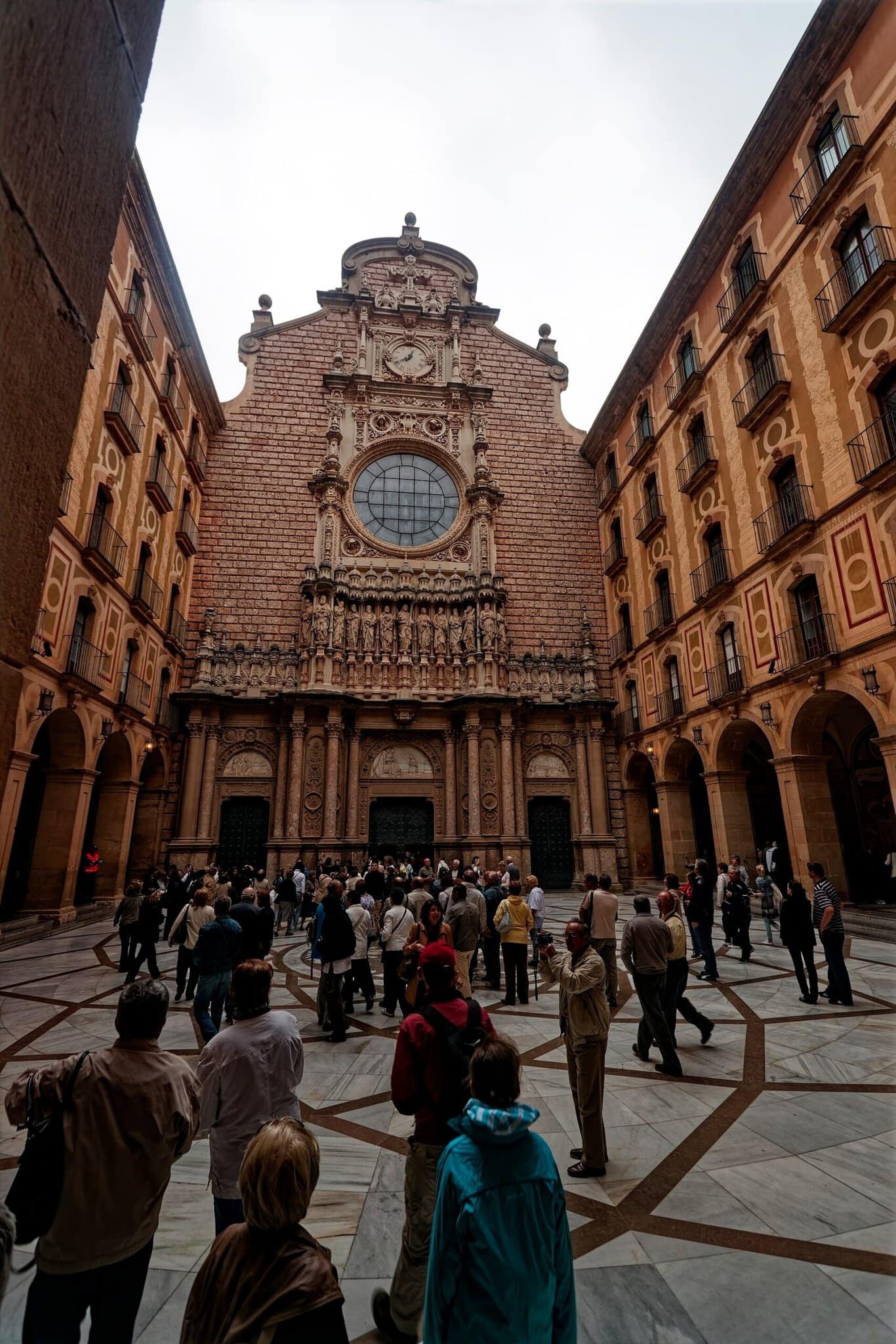
The beating heart of the entire mountain is, of course, the Benedictine monastery of Santa Maria de Montserrat, whose history stretches all the way back to the 11th century. The grounds consist of a huge complex of buildings clinging to the rock face, encompassing not only the basilica but also living quarters for around seventy monks who still reside here permanently. The square in front of the basilica, known as Plaça de Santa Maria, is a stunning space lined with arcades and statues of saints.
The 16th-century basilica itself is an architectural gem. As you pass through the courtyard with its beautiful black-and-white floor tiles and enter the main nave, you’ll be immediately struck by the lavish decoration and mystical half-light. Entry to the main part of the basilica is free, but you must observe fairly strict dress code rules. Forget sleeveless tops or overly short shorts — the monks take this seriously and may turn you away at the door.
The monastery isn’t just a tourist attraction — it’s first and foremost a living spiritual centre. Regular services take place throughout the day, and the air is filled with the scent of incense mingled with the cool mountain breeze. I recommend finding a quiet spot in one of the side chapels and simply sitting for a while, absorbing the incredibly powerful energy this place has radiated for centuries.
4. The Black Madonna (La Moreneta)
The main draw that brings thousands of pilgrims from around the world every day is a small wooden statue of the Virgin Mary and baby Jesus, known as La Moreneta. This patron saint of Catalonia sits in an elevated alcove directly above the main altar inside the basilica. Her face and hands are a deep black colour — historians believe this wasn’t intentional but rather the result of centuries of candle smoke and chemical reactions in the varnish.
A narrow staircase on the right side of the basilica leads up to the statue, and it’s customary to touch the wooden orb she holds in her right hand. Due to the enormous demand, it’s absolutely essential to book a timed entry slot online several days in advance. Without this reservation, the guards won’t let you through to the staircase, and you’d miss the single most important highlight of the entire trip.
If you can’t get up close to the statue, don’t despair. You can still see her from a distance in the main nave, and you can also walk the Path of Light (Camí de la Llum). This is a corridor filled with thousands of burning candles that pilgrims bring along with their prayers and wishes. It’s an incredibly photogenic and emotionally moving place, where the warm candlelight reflects off the colourful stained-glass windows.
5. The Escolania de Montserrat Boys’ Choir
Another truly unique experience is listening to the Escolania de Montserrat, one of the oldest boys’ choirs in all of Europe. It comprises around fifty boys aged 9 to 14 who live, study, and devote themselves intensively to music right here in the monastery. Their angelic voices soaring majestically beneath the vaulted ceiling of the basilica are guaranteed to give you goosebumps.
The choir typically sings the Salve Regina prayer and the Virolai hymn every weekday at precisely 13:00. On Sundays and feast days, they perform at 12:00. ⚠️ Be very careful when planning your visit — the boys don’t sing during the summer holidays or over the Christmas break when they go home to their families. Always check the current schedule on the monastery’s official website.
To secure a decent spot where you can actually see and hear properly, I recommend arriving at the basilica at least 30 to 45 minutes early. The space fills up incredibly fast, and if you arrive at the last minute you’ll be crammed somewhere near the entrance behind a forest of mobile phones. Settle into a pew, go quiet, and let the sublime acoustics — the very reason music lovers travel here from across the globe — wash over you.
6. The Sant Joan Funicular
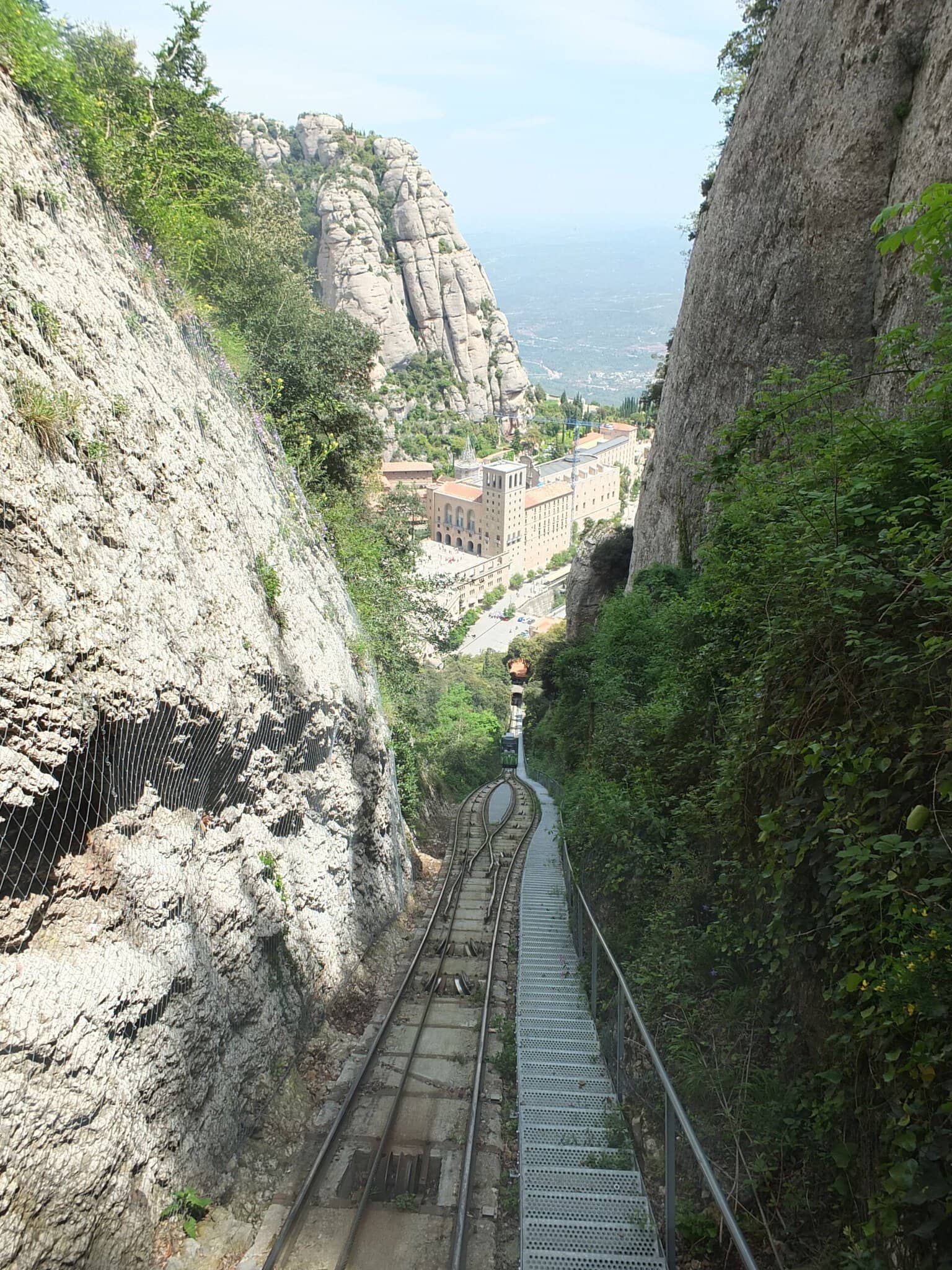
If you want to escape the biggest crowds around the monastery and head out on a proper mountain hike, the Funicular de Sant Joan is your best friend. You’ll find its lower station just above the basilica, and it carries you another 250 metres higher right into the heart of the sandstone towers. The ride in a glass-walled carriage at a staggering 65% gradient is quite an experience in itself.
The upper station serves as the starting point for the most beautiful hikes on Montserrat. The air up here is noticeably cooler, the panoramic views over the Llobregat river valley are spectacular, and all you can hear is birdsong and the whisper of the wind. If you’ve purchased a Trans Montserrat ticket, the ride on this funicular is already included in the price.
Right by the funicular exit, there’s a small Geopark visitor centre where you can learn all about the geological origins of these peculiar mountains. You can also refill your water bottle here, which I’d strongly recommend — further along the trails, there are no springs or refreshment stalls to be found.

7. Hiking to the Highest Peak: Sant Jeroni
This is, without question, the best hike you can do on the mountain. The ascent to the highest point of the entire massif — the summit of Sant Jeroni at 1,236 metres above sea level — is fairly challenging, but the reward is worth every drop of sweat. The trail begins at the upper station of the Sant Joan funicular, and it takes roughly an hour and a half of brisk walking along a well-marked path to reach the top.
Along the way, you’ll pass fascinating rock formations whose shapes resemble animals or human faces. The final stretch below the summit consists of steep concrete steps that will truly test your fitness 😅. The path is safe, but in summer the sun is absolutely relentless, so a hat, sun cream, and a generous supply of water are absolute essentials.
Once you stand on the very summit by the orientation marker, a full 360-degree panorama unfolds before you. On a clear day, you can spot the snow-capped peaks of the Pyrenees on the horizon, while in the opposite direction the Mediterranean Sea shimmers in the distance. Locals even claim that on exceptionally clear winter days, you can make out the outline of the island of Mallorca on the horizon. This is precisely the kind of place where you realise just how vast and beautiful the world truly is.
8. The Cross of Saint Michael Viewpoint (Creu de Sant Miquel)
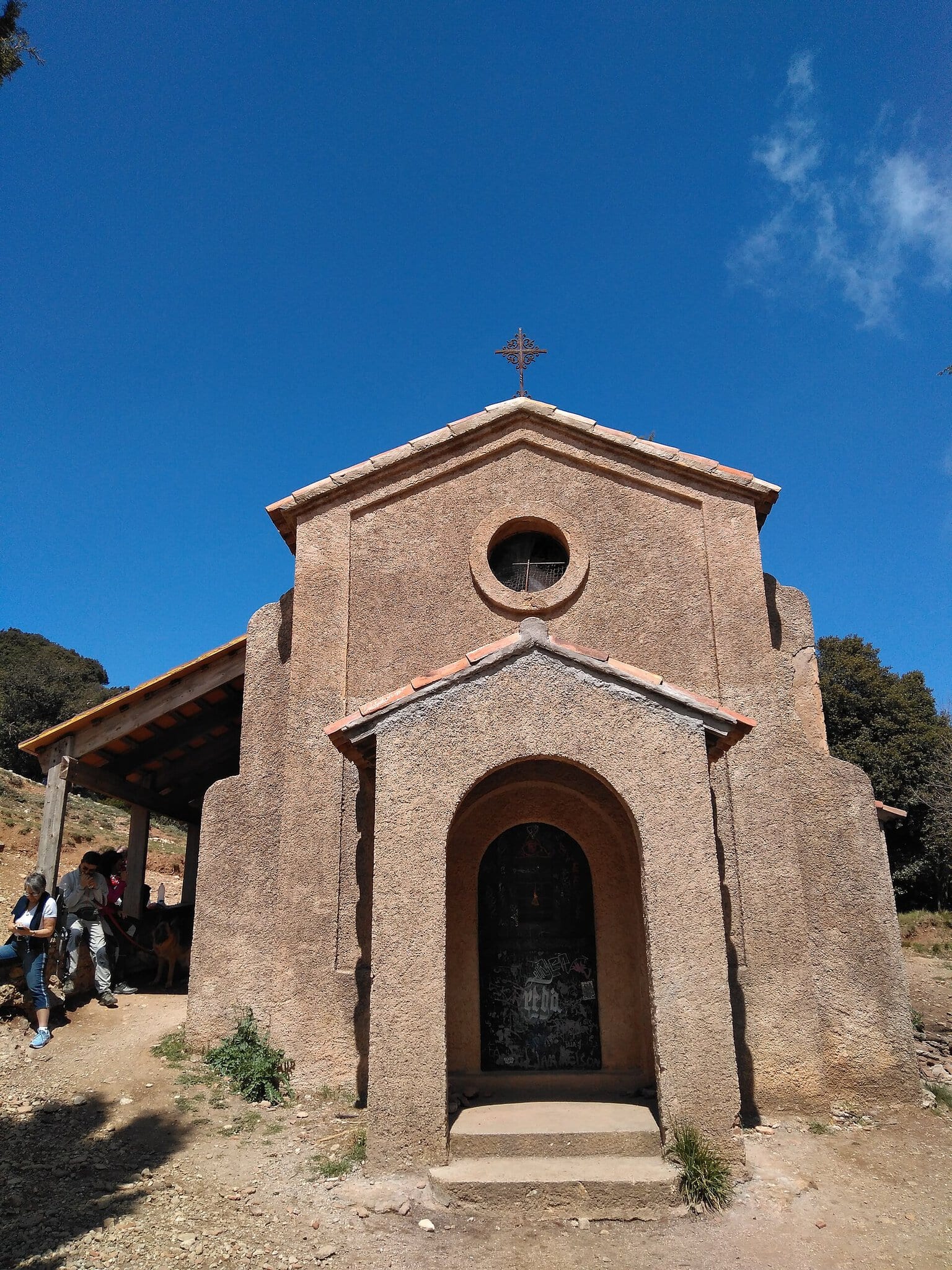
If you don’t fancy a strenuous high-altitude trek but still want to capture the most iconic photo of the entire monastery, head to the Creu de Sant Miquel viewpoint. It’s an easy, roughly twenty-minute stroll along a wide path that starts just beyond the funicular station heading south. You can manage it perfectly well in ordinary trainers or even with a pushchair.
At the end of the path, a large iron cross stands on the edge of a cliff. From here, you get that classic postcard view of the entire monastery complex nestled under the protection of the mighty sandstone fingers. Morning light is fantastic for photography here, while in the evening the rocks catch a gorgeous golden and pinkish glow.
💡 Local tip: Most tourists walk to the cross and turn straight back. But if you continue along the trail for another ten minutes to the small Sant Miquel chapel, the crowds magically disappear and you’ll have the views practically to yourself. It’s the perfect spot to sit on a low wall and enjoy a quiet snack.
9. The Holy Cave — Santa Cova
Another hugely important pilgrimage site is the Holy Cave, or Santa Cova. According to an ancient legend from 880 AD, this is where local shepherds discovered the Black Madonna statue after seeing dazzling lights and hearing angelic singing descending from the heavens. Today, the cave has been transformed into a tiny chapel, half-carved into the rock face, with an incredibly magical atmosphere.
The path to the cave begins below the monastery, with a carved trail winding closely along steep cliff faces. The return walk takes approximately an hour and a half, and the way back involves a fairly punishing climb. Your reward, however, will be the fantastic views over the Llobregat valley spread out below you like a map.
Inside the chapel itself, absolute silence reigns, broken only by the crackling of candles. You’ll find an exact replica of the La Moreneta statue and a small courtyard where you can rest for a while in the shade of overhanging rocks. Compared to the busy main basilica, this is a beautifully intimate spot, perfect for a moment of quiet reflection.
10. The Stations of the Cross with Works by Gaudí
The path leading to the Santa Cova Holy Cave isn’t just any mountain trail. It’s lined with the so-called Monumental Rosary (Rosari Monumental), a series of fifteen large sculptural stations depicting the mysteries of the rosary. These works were created at the turn of the 19th and 20th centuries by some of the finest Catalan artists of the era.
And the highlight? One of the stations — specifically the First Sorrowful Mystery — was created by none other than the genius architect Antoni Gaudí. His trademark style of organic forms and intertwined stone is completely unmistakable here. It’s fascinating to see Gaudí’s work set within the wild mountain landscape, far from the bustle of Barcelona’s streets.
Each station is an architectural gem in its own right, blending elements of Catalan Modernism with the rugged beauty of the sandstone cliffs. Walking through this open-air gallery is completely free, and I recommend pausing at each monument to study the incredible details of the bronze and stone sculptures.
11. The Santa Cova Funicular
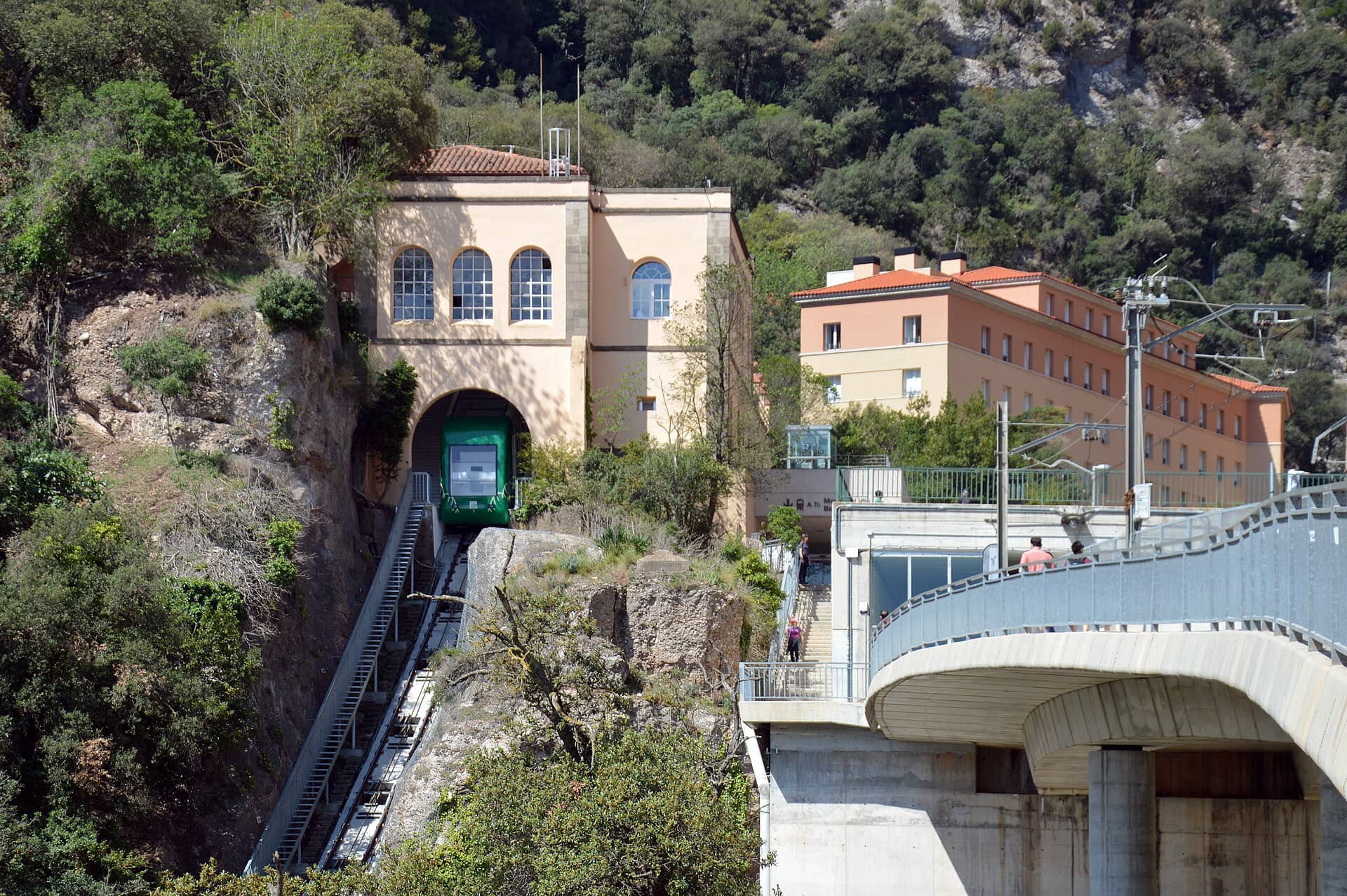
If you’d rather not tackle the steep descent to the start of the Stations of the Cross and the gruelling climb back up to the monastery, there’s an elegant solution. Just like the funicular heading up to Sant Joan, there’s one going down into the valley called the Funicular de la Santa Cova. It comfortably carries you 120 metres lower, saving you a lot of energy and time.
This funicular is a historic piece of engineering, and its lower station drops you right at the start of the path with Gaudí’s sculptures. Once again, if you have a Trans Montserrat combined ticket, you can ride this funicular for free and as many times as you like. In the summer heat, every bit of saved energy is priceless 😉.
Bear in mind, though, that from the lower funicular station you still need to walk about 20 minutes along the clifftop path to reach the Santa Cova cave itself. The trail is relatively flat at this point, but comfortable shoes are an absolute must — leave the flip-flops and heels safely in your hotel suitcase.
12. The Art Museum — Museu de Montserrat
Most visitors head straight off on a hike after touring the basilica, which is a huge mistake. Hidden directly beneath the main square is the Museu de Montserrat, home to one of the most surprising and valuable art collections in all of Catalonia. You might expect nothing but old religious relics, but you’d be completely wrong.
The museum is divided into several exhibitions featuring works by genuine masters. Hanging on the walls are original paintings by Caravaggio, El Greco, and modern greats including Picasso, Dalí, and Monet. Finding Impressionist canvases inside a mountaintop monastery is quite extraordinary. The collections are the result of generous donations from wealthy Catalan families and private collectors who supported the monastery over centuries.
Beyond painting, the museum also boasts a remarkable archaeological collection with artefacts from Mesopotamia, Egypt, and the Holy Land. Admission is often included in the expanded Tot Montserrat ticket, or you can buy it on site. Allow about an hour for the visit — it’s also the perfect hideaway from the midday heat.
13. The Espai Audiovisual Interactive Exhibition
Want to understand how monks actually live in such an isolated environment and learn the history of this extraordinary mountain? Right next to the tourist information centre, you’ll find the Espai Audiovisual, a modern interactive exhibition called “Montserrat portes endins” (Montserrat Behind Closed Doors). It’s a brilliantly produced multimedia space that draws you right into the daily routine of the brotherhood.
Through modern video projections and interactive panels, you’ll peek into the closed-off parts of the monastery that ordinary visitors never get to see. You’ll see the monastic library, the spaces where the boys’ choir rehearses, and discover fascinating details about how the monastery stood up to the dictatorship of General Franco, protecting the Catalan language and culture.
The exhibition isn’t particularly long — about 30 minutes — but it adds enormous depth and context to your visit. Suddenly, it’s not just pretty buildings and rocks; you’ll understand why locals guard their identity so fiercely and why Montserrat is the very heart of an entire nation.
14. Mató Cheese Tasting & the Local Market
After all those walks and spiritual experiences, you’ll definitely have worked up an appetite. Every day, stalls run by local farmers and producers from the surrounding valleys line the path between the rack railway station and the monastery. This is exactly the place where you need to try the traditional Catalan delicacy known as Mel i Mató.
It’s a fresh, delicate cheese made from sheep’s or goat’s milk with a texture similar to ricotta. The vendors generously drizzle it with thick local honey and often top it with walnuts. It’s a perfect, sweet, and completely vegetarian treat that will give you an instant energy boost. You can buy it in small plastic pots and eat it right there on the spot, gazing out over the valley.
At the market, you’ll also find excellent local figs, almonds, herbal liqueurs called Aromes de Montserrat (still produced by the monks themselves), and enormous loaves of traditional bread. I recommend stocking up and having a picnic at one of the viewpoints, because while the on-site restaurants serve decent food, they tend to be overpriced and packed with tourists.
Map of points of interest for your phone
Where to Go Next in Spain
If Catalonia has won you over and you’re planning to explore more of Spain, there’s no shortage of options from Barcelona. High-speed AVE trains or cheap domestic flights will whisk you to entirely different worlds in no time.
- Barcelona: This goes without saying. If you managed Montserrat as a day trip, head back into the lanes of the Gothic Quarter and marvel at Gaudí’s immortal masterpieces.
- Valencia: A train ride along the coast takes you to the city that gave the world paella. The stunning futuristic City of Arts and Sciences and wide sandy beaches await.
- Granada: Tempted by the south? A flight to Andalusia and a visit to the fairy-tale Alhambra with views of the snow-capped Sierra Nevada is a once-in-a-lifetime experience.
- San Sebastián: If you love gastronomy and want to escape the summer heat, head north to the Bay of Biscay coast. The Basque Country is a culinary paradise on earth.
- Bilbao: Stay up north and visit the industrial city that reinvented itself as a world centre of modern art thanks to the iconic Guggenheim Museum.
- Traditional Spanish Food: If you loved the Mató cheese and want to know what else to confidently order in Spain, check out our detailed guide to local gastronomy.
Frequently Asked Questions
How long does it take to get from Barcelona to Montserrat?
From boarding the R5 train at Plaça Espanya station to getting off the rack railway or cable car at the monastery, expect around an hour and a half. But you’ll also need to factor in time for navigating the Barcelona metro and waiting for connections.
What’s the difference between the Trans Montserrat and Tot Montserrat tickets?
The basic Trans Montserrat includes transport from Barcelona, both ways up the mountain (by rack railway or cable car), and unlimited rides on the Sant Joan and Santa Cova funiculars. Tot Montserrat is the premium version, which also includes museum entry and lunch at the on-site cafeteria.
Do I need to buy tickets in advance?
Yes, absolutely! Especially if you want to see the Black Madonna statue up close – without an online reservation for a specific time slot, you won’t be able to get near it at all. I also recommend buying the combined transport ticket online the day before.
Where can I eat up on the mountain?
Right next to the monastery there are several snack bars and one large restaurant, but the prices match a high-mountain tourist hotspot. An excellent vegetarian choice in the restaurants is the traditional Pa amb tomàquet (toasted bread rubbed with tomato) or grilled escalivada vegetables. The locals do love a hearty fish stew called Suquet de peix, but you’ll definitely be perfectly happy with fresh Mató cheese from the local farmers.
Can I drive to Montserrat?
Yes, there’s a paid parking lot with limited capacity just below the monastery. However, during summer season it’s usually completely full by 9am. A much better option is to leave your car for free at the huge park-and-ride lot at Monistrol-Vila train station and take the rack railway up.
Is the trek to Sant Jeroni summit very difficult?
It’s a moderately challenging hike. The path is perfectly maintained and you don’t need to do any rock scrambling, but the elevation gain and endless stairs will give your legs a workout. It’s definitely not a walk in the park – proper trainers or hiking boots are essential.
When does the Escolania boys’ choir sing?
They usually perform in the basilica Monday through Friday at 1:00 PM and on Sundays at noon. They never sing on Saturdays. The choir takes vacation during July and August, and also over the Christmas holidays.
Tips and Tricks for Your Vacation
Don’t Overpay for Flights
Search for flights on Kayak. It’s our favorite search engine because it scans the websites of all airlines and always finds the cheapest connection.
Book Your Accommodation Smartly
The best experiences we’ve had when looking for accommodation (from Alaska to Morocco) are with Booking.com, where hotels, apartments, and entire houses are usually the cheapest and most widely available.
 🚗 Car rental on the roadVerified rental cars in Catalonia
Search with the DiscoverCars comparison engine — it compares prices from dozens of local and international rental companies, and most bookings come with free cancellation.
Compare car prices in Catalonia →Don’t Forget Travel Insurance
Good travel insurance will protect you against illness, accidents, theft, or flight cancellations. We’ve had a few hospital visits abroad, so we know how important it is to have proper insurance arranged.
Where we insure ourselves: SafetyWing (simple monthly subscription) and TrueTraveller (for extra-long trips).
Find the Best Experiences
Get Your Guide is a huge online marketplace where you can book guided walks, trips, skip-the-line tickets, tours, and much more. We always find some extra fun there!