Barcelona sits in a huge natural bowl, hemmed in on one side by the sparkling Mediterranean and surrounded on the other three by hills. I’ve always been fascinated by how the city climbs upward, so when Lukáš and I set off for this Catalan metropolis in early March, I couldn’t wait for the endless panoramas. Back then we stayed a short walk from the famous La Rambla, and right after arriving we set out on foot to explore the winding little streets. If you’re hunting for the best viewpoints in Barcelona, you’re in exactly the right place.
The urge to see all those architectural gems from above is clearly enormous, because viewpoints are the second most popular goal of every traveller. That’s why I’ve picked twelve spots where the view over the city is truly at its most beautiful. The two of us walked and saw plenty of places, but the famous Tibidabo, for example, we ended up having to skip.
We’d planned to drive up there on our way into the centre, but the weather just didn’t cooperate and, more importantly, we’d read about car break-ins in the reviews. The last two reviews even had photos of smashed windows, so we decided not to risk it. 😅 You won’t miss out on anything, though, because I’ve dug up all the important details on how to get there and to the other amazing spots safely.
TL;DR
- Bunkers del Carmel close early: In summer the site shuts at 19:30, so you definitely won’t catch the sunset from here between spring and autumn.
- Plan Montjuïc from the top down: Ride the cable car all the way up to the castle and then simply stroll comfortably downhill.
- The Magic Fountain is running again: After a long drought the Montjuïc fountain is back in operation, but the show days change very often.
- The tourist tax went up: From April 2026 you’ll pay a fairly steep €12 per person per night in a five-star hotel.
- Tibidabo offers nostalgia: The oldest amusement park in Europe will delight families with kids, but without them you can happily skip it.
- Uber and Bolt don’t work: Don’t rely on these ride-hailing apps and stick to classic taxis instead.
- The Tower of Jesus Christ is finished: Sagrada Família has reached a height of 172.5 metres, making it the tallest structure in the entire city.
The full destination guide: Catalonia — guide and what to see
When to visit Barcelona
The Catalan capital is gorgeous all year round, but if you want to enjoy pleasant walks among the sights, spring and autumn are ideal. Lukáš and I set off in early March, when the weather sometimes played up, but we also dodged the worst of the crowds. In summer the streets heat up to sweltering temperatures and the city gets absolutely packed with tourists.
Great news for locals and visitors alike: the years-long extreme drought has finally ended. In early 2026 the reservoirs filled to more than 86 percent, so there are no longer any strict water-use restrictions. It also means working fountains have returned to the streets and the huge city parks are far greener than in previous years.
If you’ll be getting around town by public transport, brace yourself for a few important changes to the tickets. The popular T-casual ticket is now non-transferable, so if you’re travelling as a pair, the shared T-familiar option is the better bet. Watch out on the trip from the airport too, because ordinary tickets no longer work on the airport metro and you have to buy a special Bitllet Aeroport for €5.90. The fast Aerobús now costs €7.45.
Services like Uber and Bolt essentially don’t work in Barcelona as classic ride-hailing apps, so you’ll have to rely on the traditional black-and-silver taxis. If you’re planning to drive your own car, don’t forget that you can only enter the city with prior registration for the ZBE low-emission zone. Otherwise you risk an instant €200 fine, which would make your holiday rather unpleasantly more expensive.
Before you travel, always check the latest news about any local strikes. In spring 2026, for example, striking teachers blocked access to the best-known landmarks, so tourists couldn’t get into Sagrada Família or Casa Batlló at all. We got around the city exclusively on foot, and it was the best decision we could have made.
Where to stay in Barcelona
💡 Accommodation and experiences tip: We prefer to look for accommodation on Booking.com, where the cancellation terms tend to be the best. Tickets, tours and activities are then worth comparing and booking through GetYourGuide.
Choosing where to stay can be a real puzzle, especially as the city is gradually revoking all licences for tourist apartments. They should disappear from the market entirely by November 2028, which has already noticeably pushed up classic hotel prices in 2026. The average price per night is climbing fairly high, and landing a good deal in the centre really does require booking early — even half a year in advance.
On top of that, from April 2026 the tourist tax rose significantly, and you’ll need to factor it firmly into your budget. In a five-star hotel you’ll pay €12 per person per night, in a regular tourist apartment €9.50, and in a four-star hotel €8.40. If you’re after a cheaper hostel option, set aside €6 per person for each night, with the tax charged for a maximum of seven consecutive nights.
Staying right in the historic centre has a huge advantage, because you can easily walk to most of the interesting spots. We chose Hotel Gaudí, just a few steps from the famous Palau Güell, and we were absolutely thrilled. It had a gorgeous rooftop terrace where we could soak up the view over the city the moment we woke up. ☺️
If you’re after something truly special and don’t mind paying a bit extra, check out Hotel El Palace, set in the upscale Eixample district. This hotel has one of the best rooftop bars in town and reviews rave about the absolutely incredible view. For a quieter stay near the sea, the modern Ilunion Barcelona is a great fit — it’s in the former industrial district of Poblenou, nowadays nicknamed the Mediterranean Manchester.
12 best viewpoints in Barcelona you must visit
Let’s take a look together at twelve spots where you’ll have the whole city laid out at your feet. I’ll tell you how to reach each of the hills, how much the cable cars cost and what to watch out for so you don’t leave disappointed. Barcelona is pushing back against the flood of tourists, so some places have very strict rules.
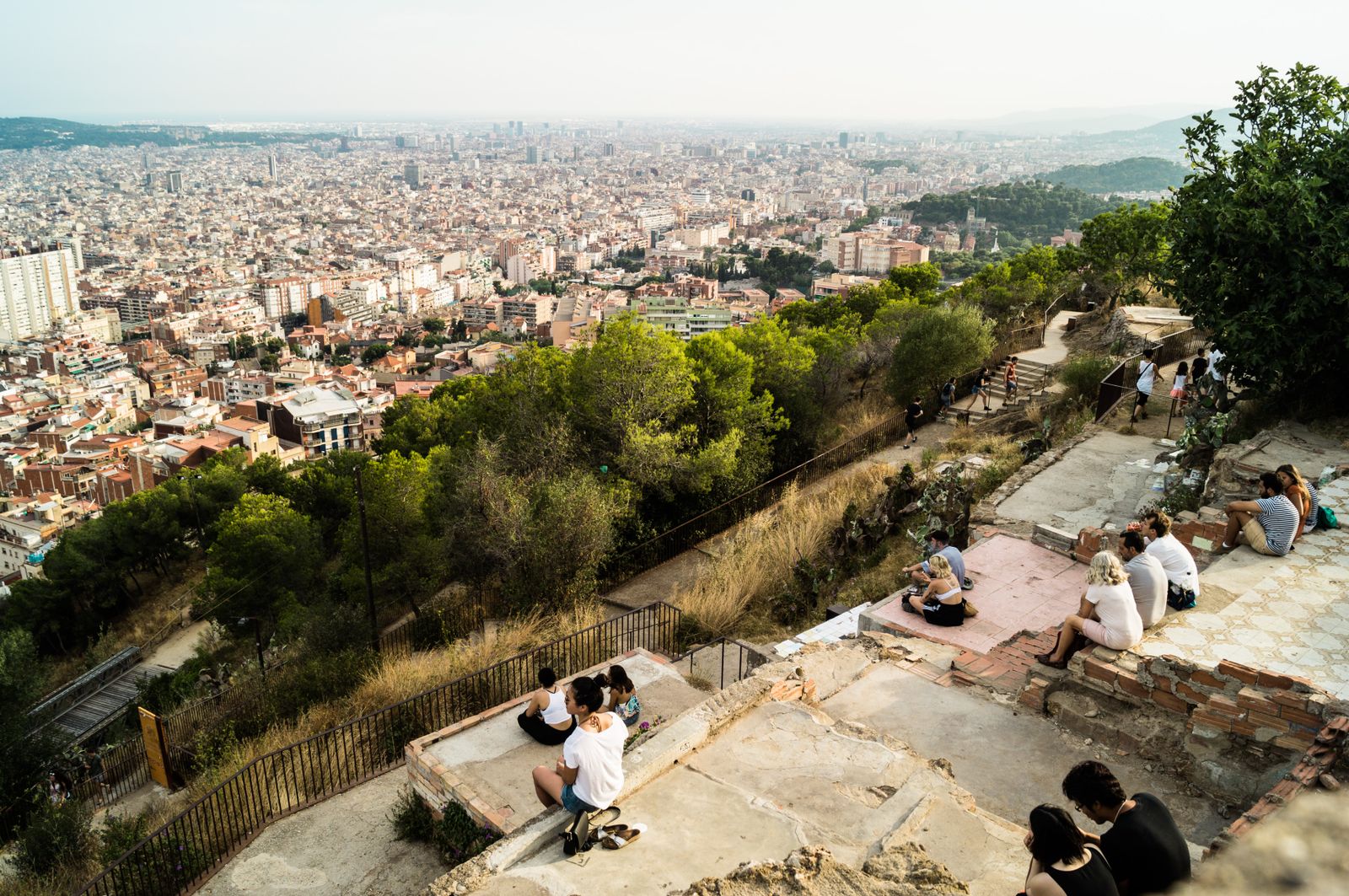
1. Bunkers del Carmel and its sunset
This former anti-aircraft battery from the Civil War era, atop the Turó de la Rovira hill, was long considered a secret tip, but today it’s probably the most talked-about spot in the whole city. It offers an incredible panoramic view of all the famous landmarks, including Sagrada Família and the shimmering sea in the distance. Entry is completely free and you don’t need any reservation at all, which sounds absolutely idyllic at first.
Unfortunately, locals ran out of patience with the constant noise and night-time parties, so the council fenced off the whole site with a two-metre fence. There’s a strict ban on alcohol and the opening hours are heavily restricted: in summer it closes at 19:30 and in winter as early as 17:30. Most older guides will tell you to head here for sunset, but from spring to autumn that’s an absolute trap.
In summer the sun sets long after closing time, and the guards clear the site out uncompromisingly while it’s still light. If you try to stay behind the fence after closing, you risk an instant fine from the city police. Around the site you’ll also commonly run into illegal beer sellers, who don’t help the situation, and even in winter the best seating spots are usually taken an hour before sunset.
The best strategy is to get up early for sunrise, when you’ll have total peace and the city bathed in morning light all to yourself. You can get up there either on bus number 24 to the El Carmel stop, from where a roughly fifteen-minute uphill walk awaits. The other option is to take metro line L4 to the Guinardó or Alfons X stop, but from there prepare for a fairly steep thirty-minute hike — a torch will definitely come in handy.
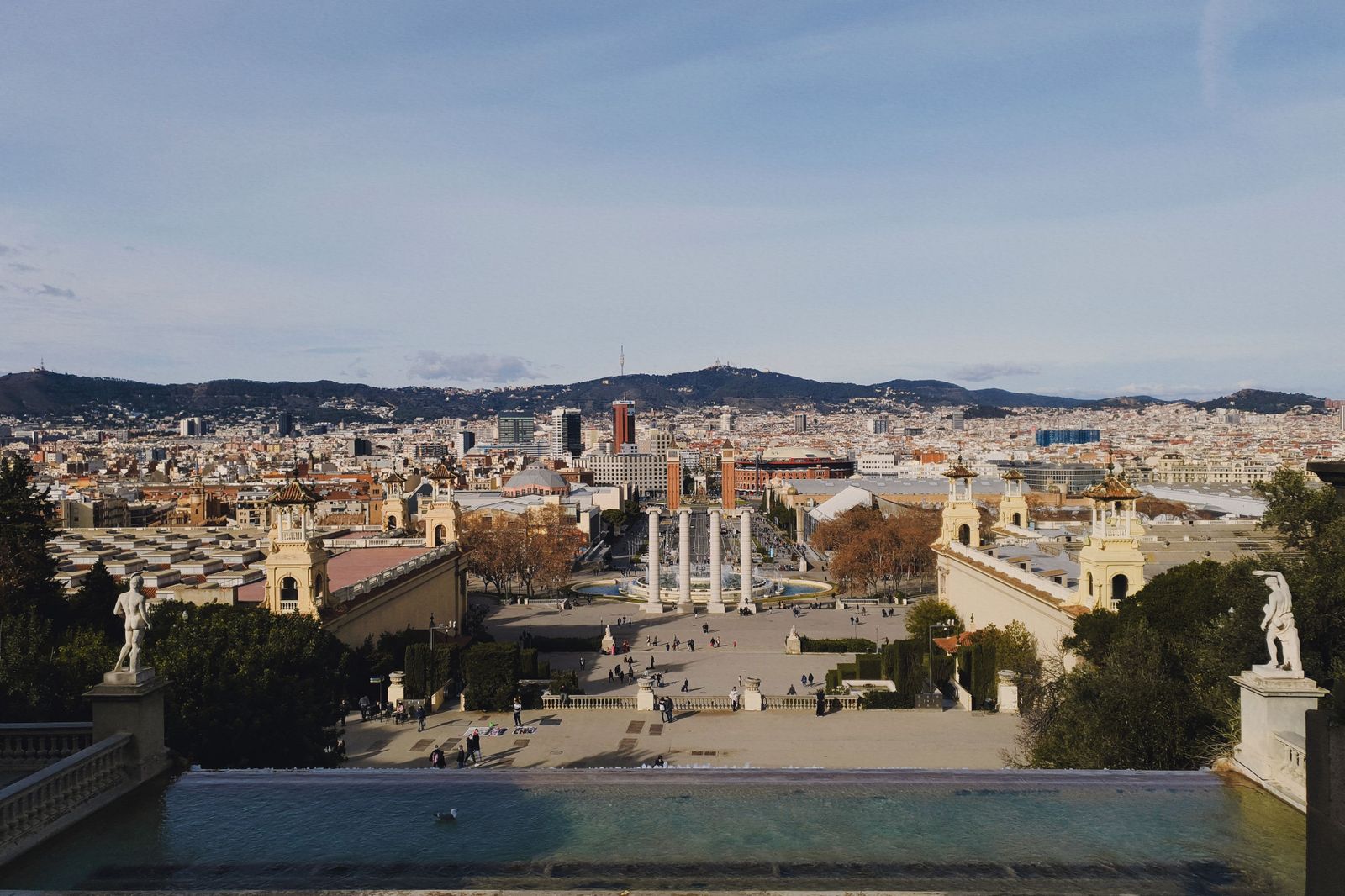
2. Montjuïc and Castell de Montjuïc
The Montjuïc hill isn’t just one ordinary viewpoint — it’s actually a huge complex of gardens, museums and Olympic sports venues. If you tried to conquer it on foot straight from the bottom at Plaça Espanya, you’d probably wreck yourself completely on the very first day of your holiday. The key to success is to ride the cable car all the way up and then simply stroll comfortably downhill.
Tourists very often get muddled by the transport here, because various cable cars lead up and each one is paid for completely differently. The best move is to hop on the Funicular de Montjuïc from the Paral·lel metro station, on which your regular public transport ticket is valid. The funicular takes you halfway up the hill, where you can switch to the classic cabin cable car.
This connecting Telefèric de Montjuïc cable car takes you, for €19, all the way to the very top to the old military fortress of Castell de Montjuïc. From the fortress ramparts there’s a beautiful view over the entire commercial port and the open sea. Entry to the castle combined with a tour costs just under €50, but from there you can simply descend comfortably to the other amazing sights.
On the way down you certainly won’t miss the famous Anella Olímpica Olympic area with its huge stadium and unmistakable telecommunications tower. You can also stop at the lovely botanical garden or at the vast MNAC museum building, home to the best collection of Romanesque art in the world — the MNAC viewpoint on the museum’s front terrace is a photo stop in its own right. Modern art lovers will then appreciate the world-famous Fundació Joan Miró, where basic admission costs €15.
3. The Magic Fountain on Montjuïc
As you head down from Montjuïc towards the square, an absolutely spectacular finale awaits in the form of the famous Font Màgica. It puts on gorgeous cascades of water paired with a music and light show that’s genuinely breathtaking. It’s one of the best evening experiences in the whole city, and a huge bonus is that the spectacle is completely free for every passer-by.
Unfortunately, the fountain hides one big catch that a lot of older articles online stubbornly stay quiet about. Because of the extreme drought that plagued all of Catalonia and limited water use to a mere 200 litres a day, the fountain was completely drained for three years. It only ceremonially reopened in autumn 2025 during the grand celebrations of the beloved La Mercè festival.
During the forced break, the whole attraction underwent an enormous renovation costing a respectable €3 million. The old bulbs were completely swapped for 680 modern, energy-efficient LED fixtures, so the light show is even more impressive. 💡 Tip: Never rely on old blogs, and always check the current schedule on the city’s official website before you go, because the operating days change very often — it would be a shame to wait in the dark by an empty pool.
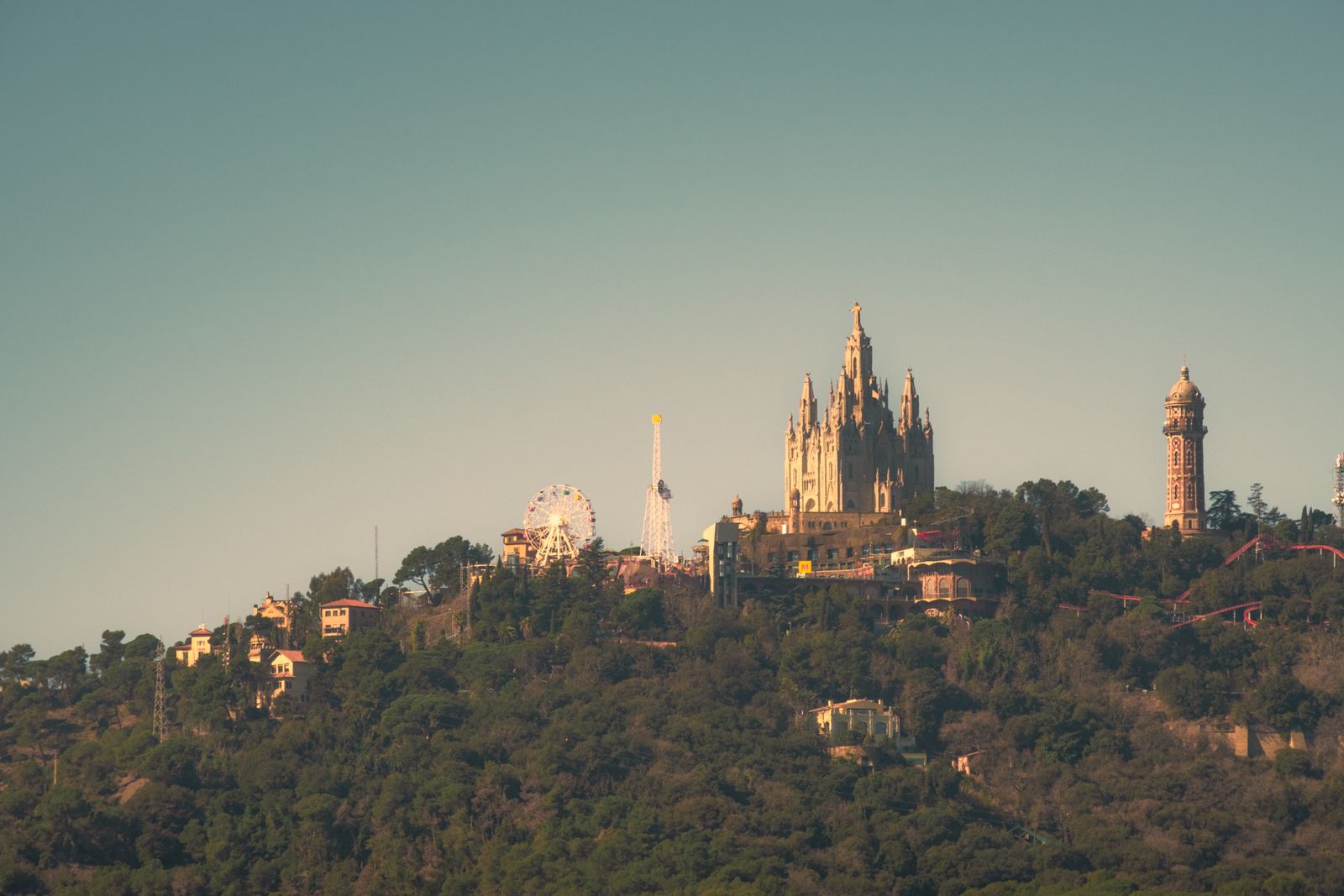
4. Tibidabo and the Sagrat Cor church
At more than five hundred metres, Tibidabo is the very highest peak of the entire Collserola range and offers an absolutely unbeatable view. Here in Tibidabo, Barcelona has the oldest working amusement park in Europe, which opened way back in 1905 and breathes lovely nostalgia over you. Don’t expect any crazy roller coasters — look forward instead to historic carousels, a mirror maze and the famous little red aeroplane circling over the abyss.
Right next to the amusement park rises the snow-white Sagrat Cor church, beautifully lit at night and visible from just about every corner of the city. By lift and up the stairs you can climb all the way to the cross beneath the statue of Christ, from where you’ll have the Mediterranean laid out at your feet — a Tibidabo viewpoint that’s hard to top. The way up is an experience in itself, but it takes a bit of planning.
First you have to take the FGC L7 line train to Avinguda Tibidabo station. From there you can continue either on the historic blue Tramvia Blau tram or on an ordinary bus up to Plaça del Doctor Andreu. You’ll then tackle the final stretch to the top on a historic funicular, on which, unfortunately, no ordinary public transport tickets are valid.
As I mentioned at the start, though, Lukáš and I ultimately gave up on this trip, put off by the miserable weather and the warnings about car thieves. Booking data also clearly shows it isn’t as much of a must-do as other famous landmarks. If you’re travelling without kids and only have a long weekend in the city, you can skip this attraction-packed hill with a clear conscience and give the extra time to the centre.
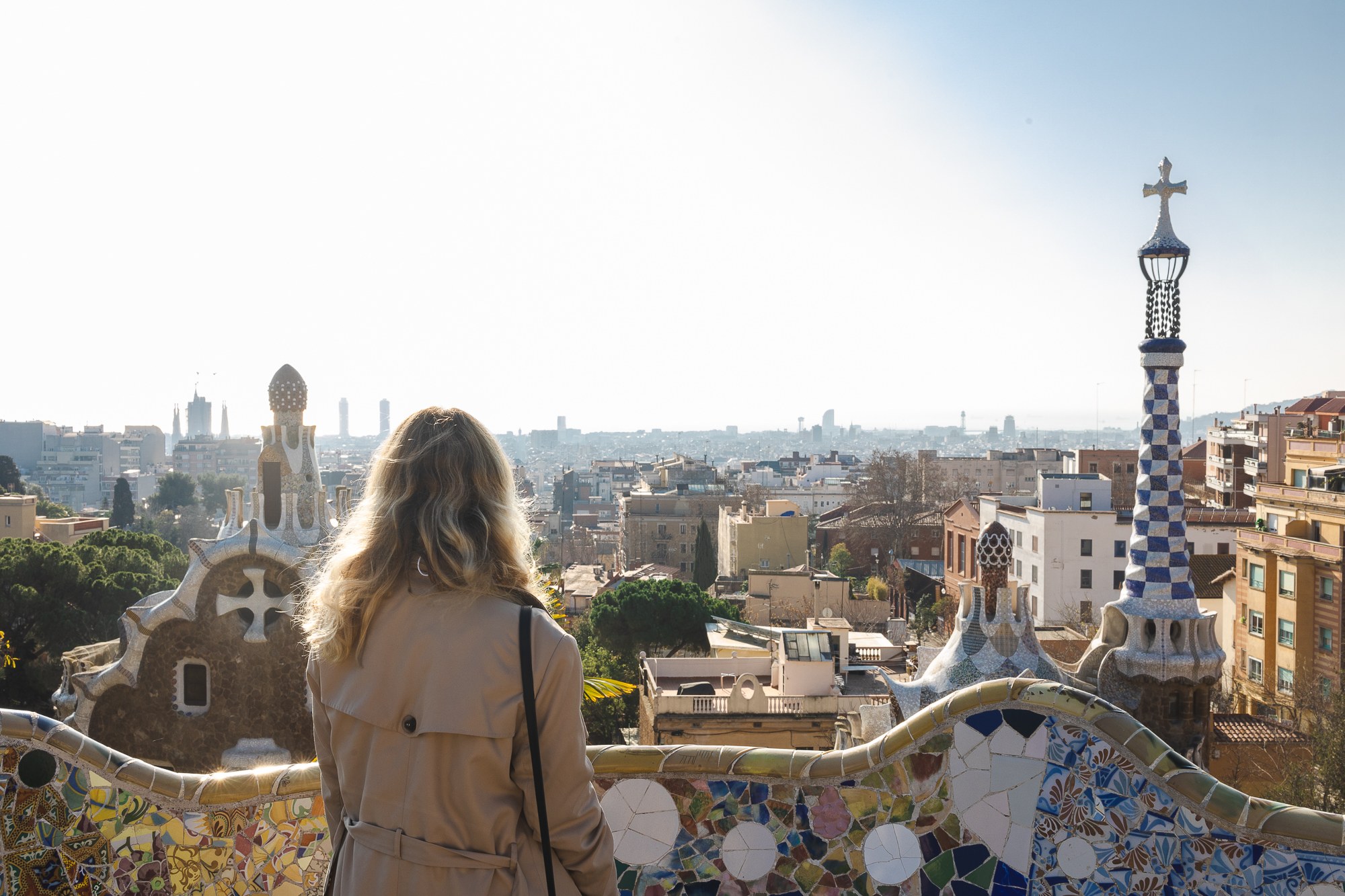
5. Turó de les Tres Creus in Park Güell
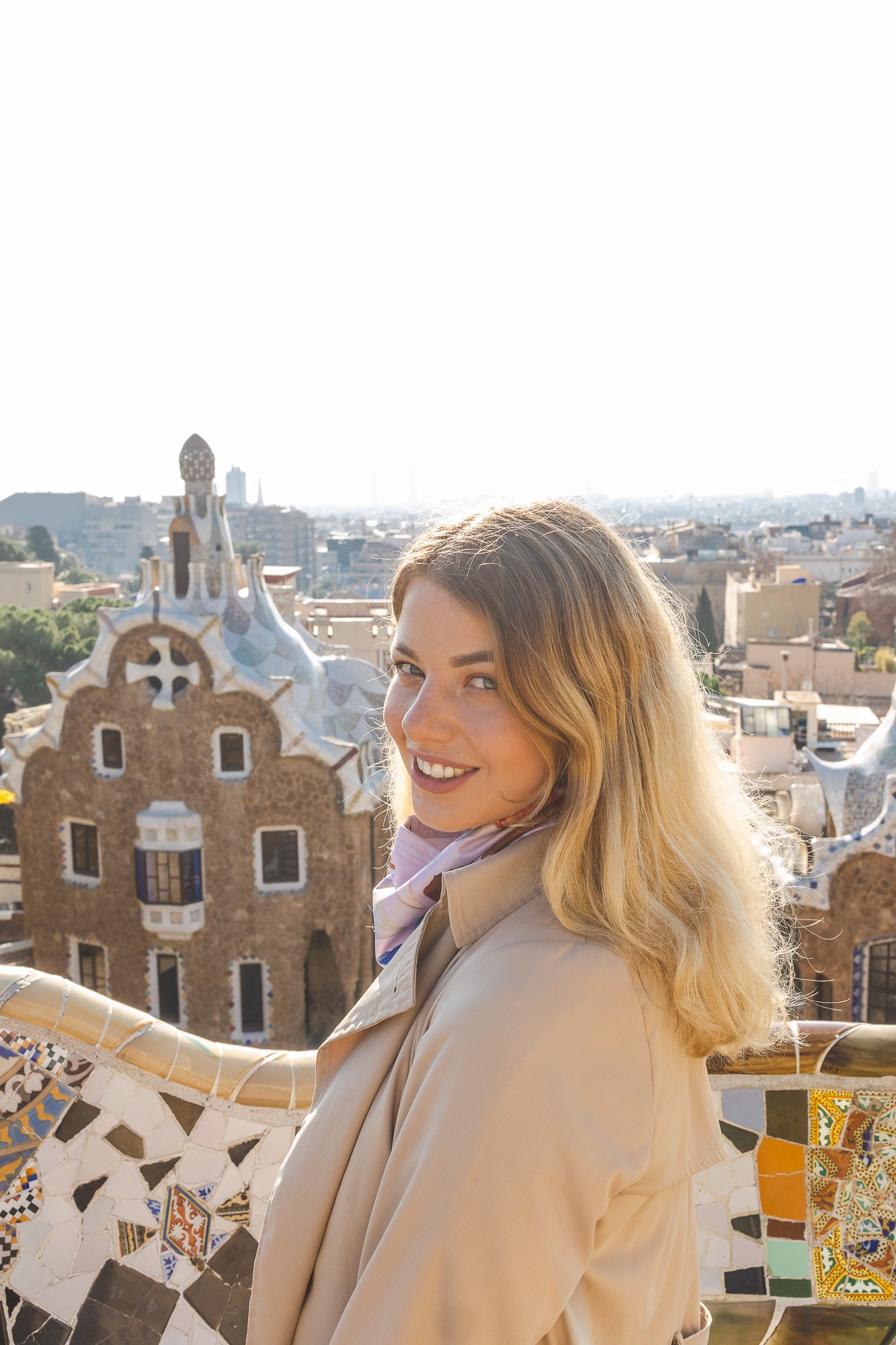
Park Güell is Gaudí’s masterpiece and one of the most beautiful places we’ve ever seen in Spain. In the paid zone we sat down with huge excitement on that famous mosaic bench and watched the gingerbread houses below us. Few people know, though, that the park is split into a paid monumental zone covering 12 hectares and a freely accessible natural section that takes up another 8 hectares.
It’s precisely in that free section that you’ll find the Turó de les Tres Creus hill, which translates as the Hill of the Three Crosses. It’s essentially a kind of stone viewpoint resembling a prehistoric structure, from which you get a breathtaking view over all of Barcelona — one of the best free views in Barcelona, in fact. It’s a brilliant spot for anyone who wants to save on tickets but still experience the genuine, unspoiled atmosphere of the magical park.
If you’d like to visit the paid part too, remember that tickets are sold exclusively online in advance — you simply can’t buy them at the ticket office on the spot. A basic ticket costs €18, while seniors and children under twelve pay a discounted €13.50. ⚠️ But watch out for information about the iconic Casa-Museu Gaudí, because although the website still offers combined tickets, some sources report that the museum is temporarily closed.
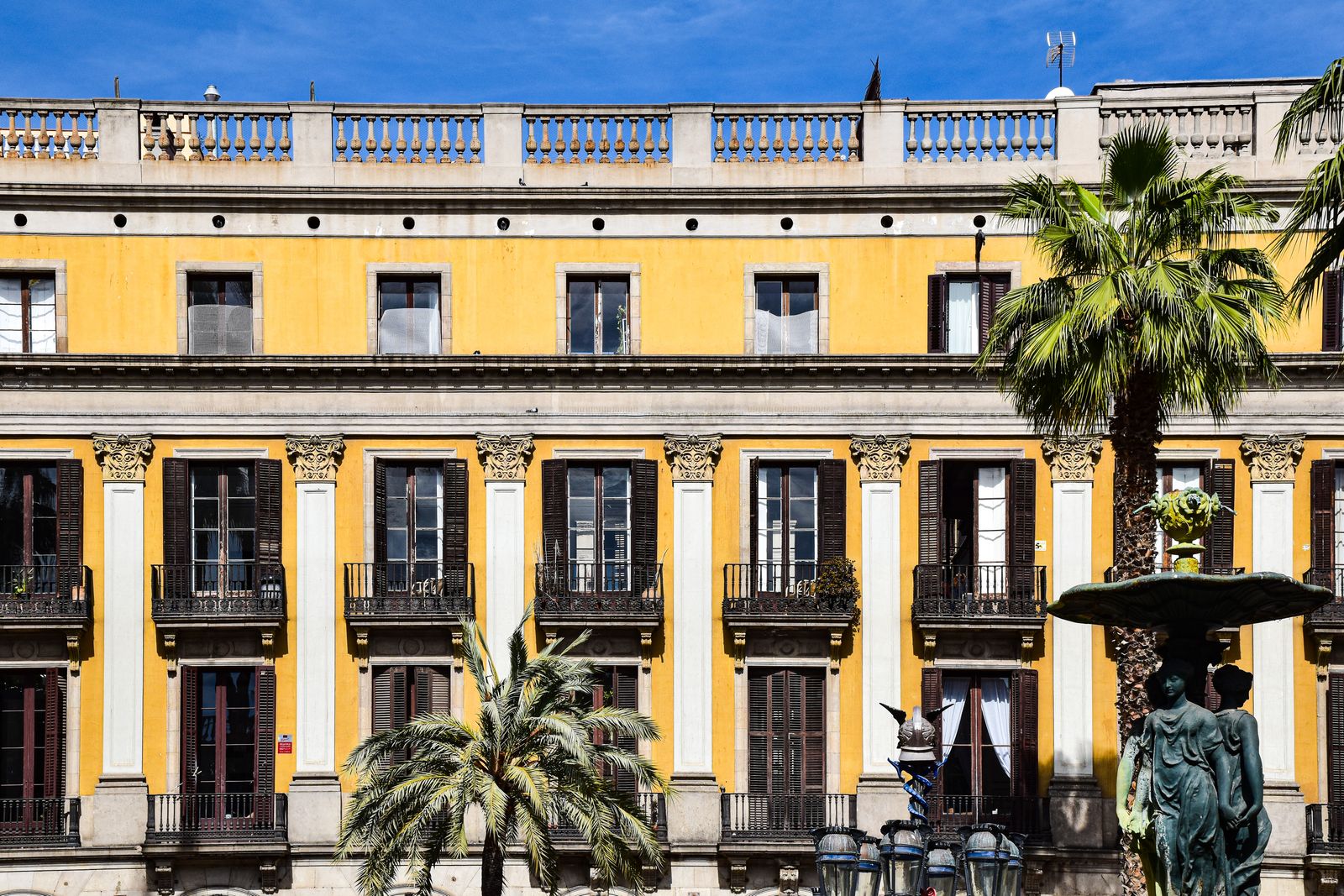

6. The roof of Barcelona Cathedral (Catedral de Barcelona)
Right in the heart of the Gothic quarter of Barri Gòtic stands the majestic cathedral, which we obviously couldn’t miss on our wanderings through the city. From the outside it looks enormous and we happily circled around it, but the biggest surprise is hidden on the roof. A lift can take you straight up to the historic gargoyles for a completely different view of the city.
Walking around the roof of such an old building is an unbelievable experience, because you see the winding streets of the old town from a fascinating perspective. A tour with a professional guide starts at around €32 here — pricey, sure, but the photos from up here are absolutely unique. The view isn’t from the very highest spots, but that magical historic atmosphere more than makes up for it.
If you decide to visit the roof, I recommend going first thing in the morning, when the sun isn’t yet blazing and long queues haven’t formed for the small lift. Don’t forget to bring really comfortable shoes, because the roof surface is quite uneven and it wouldn’t be entirely comfortable — or safe — in sandals. After the tour, definitely lose yourself in the streets of the Gothic quarter, which have incredible charm and are dotted with plenty of little cafés.
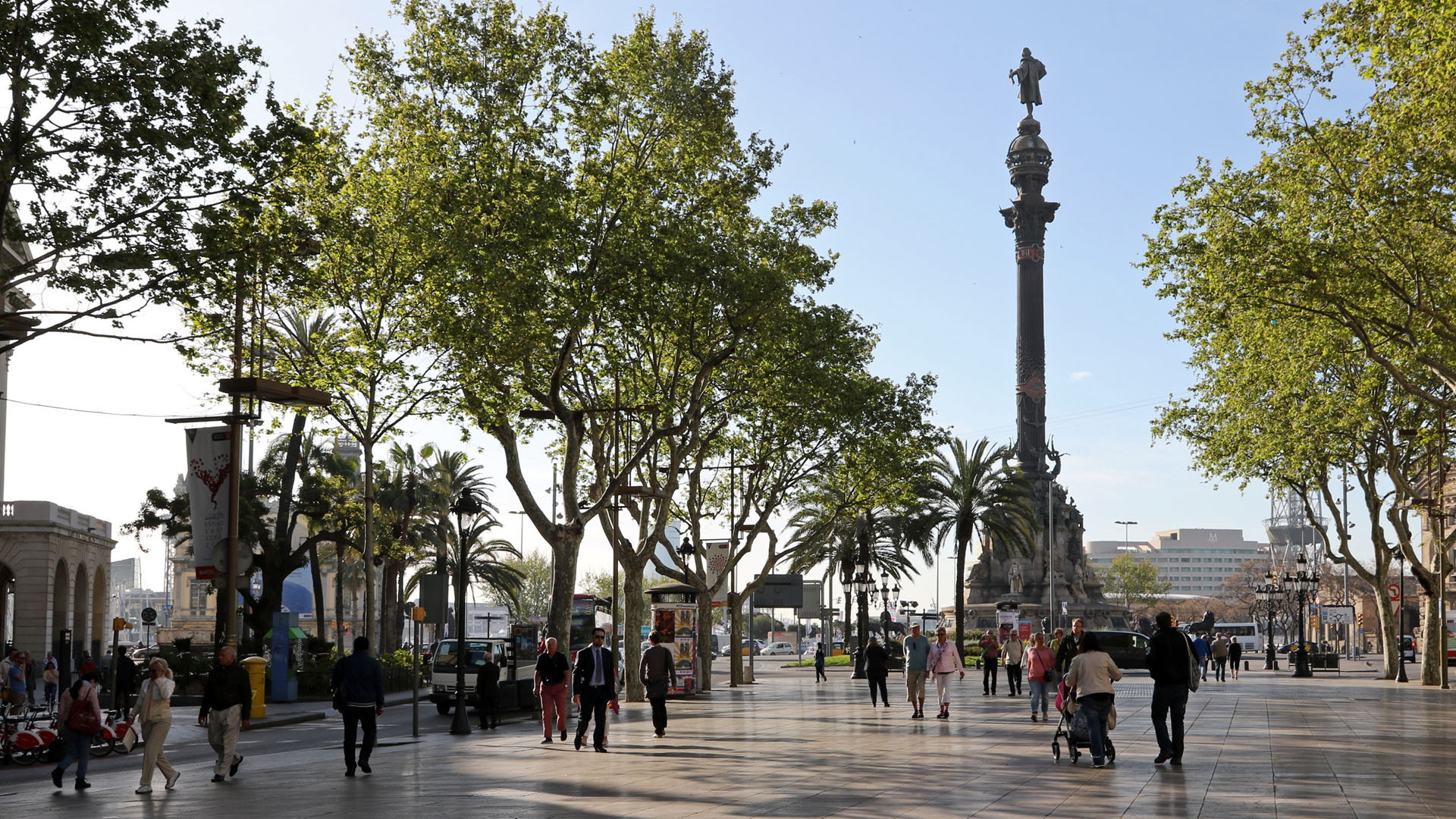
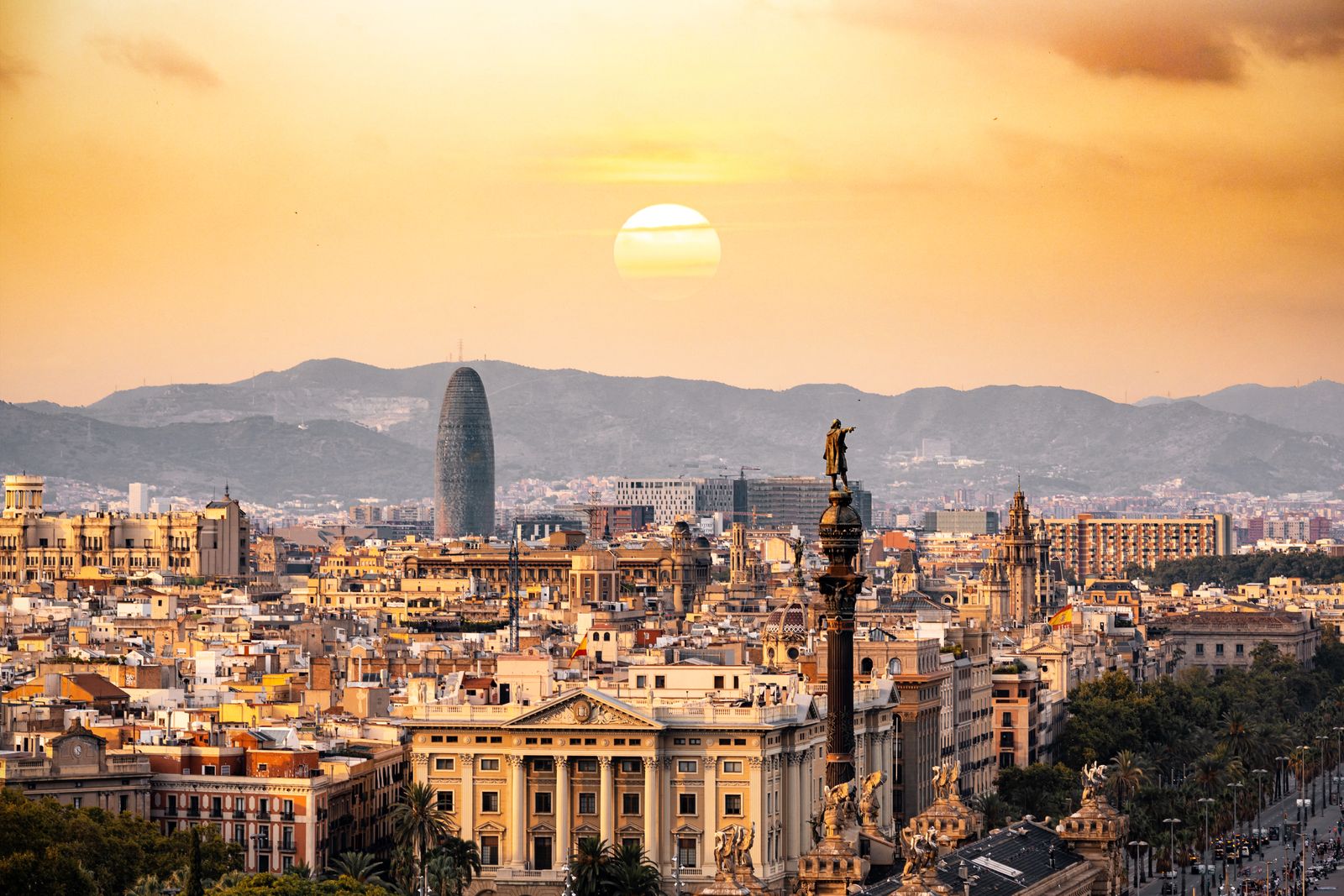
7. Mirador de Colom (Columbus Monument)
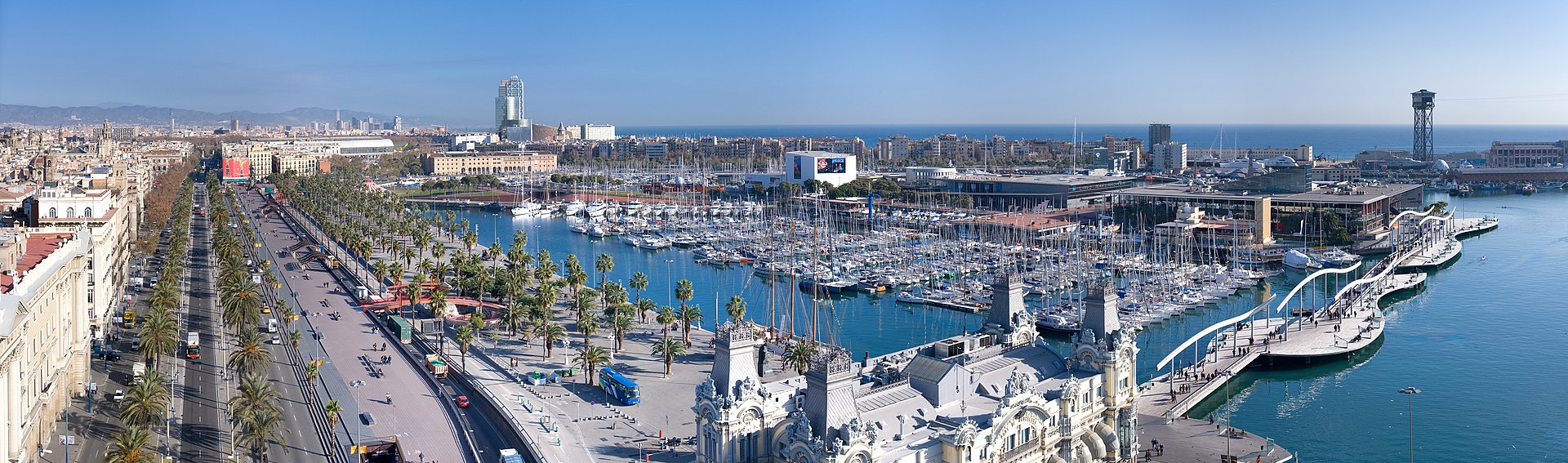
At the very end of the famous La Rambla promenade stands a tall column with a statue of Christopher Columbus pointing towards the sea. Most tourists just snap a photo of it from below and carry on into the modern port, which is a huge shame. Inside this narrow column hides an inconspicuous little lift that whisks you up to a circular viewing platform right beneath Columbus’s feet.
The space up top is really tiny, so it’s not exactly ideal for people who suffer from severe claustrophobia or dislike cramped spaces. But the view from a respectable sixty metres over the Port Vell harbour and the whole of La Rambla is definitely worth a little discomfort. From here you can watch the life of the city and the moored historic sailing ships right next to the giant modern yachts of millionaires.
The ticket costs just a few euros and it’s a great quick stop if you happen to be around the port and don’t want to spend hours in queues. From here we set off on foot along the waterfront towards the popular Barceloneta beach, which is a very pleasant flat stroll. The viewpoint also gives you a lovely sense of just how vast and sprawling the whole seaside part of the city really is.
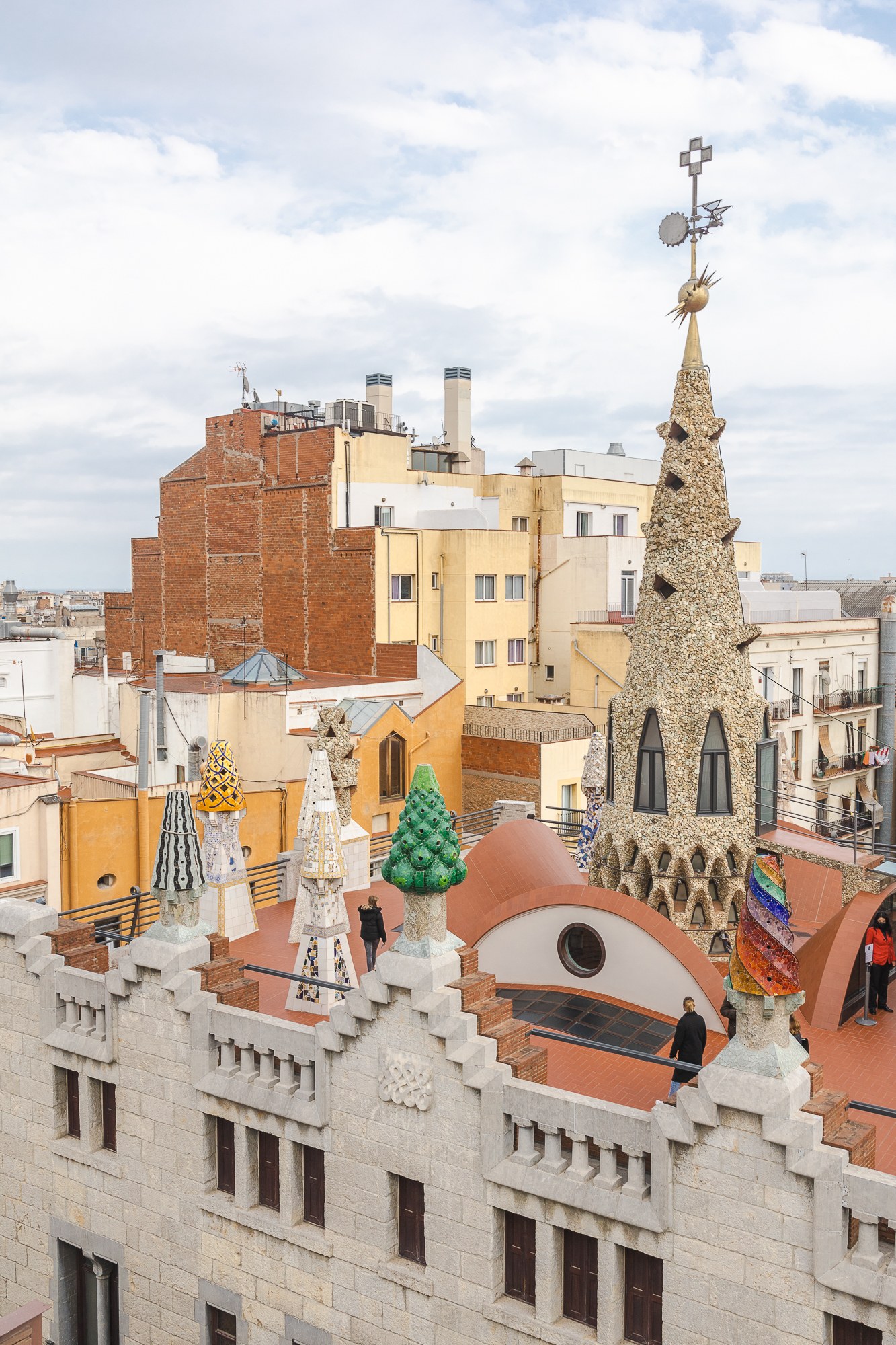
8. Rooftop bars and hotel terraces
If you don’t want to pay pricey admission just for the view itself, there’s a much more elegant and pleasant solution. Instead of a ticket to a viewpoint, pay for a good drink at one of the many rooftop bars, known here as rooftops. Practically every upmarket hotel in the city centre now has a rooftop terrace, which is commonly accessible to outside guests too — some of them are also among the best-view restaurants in Barcelona.
As I mentioned, we stayed at Hotel Gaudí and their roof gave us an amazing view of the chimneys of the neighbouring palace. But if you’re after a truly exclusive experience, head to the rooftop bar at the luxurious Hotel El Palace, recommended even by local guides and by Time Out magazine. A view of the setting sun with a glass of good traditional vermouth in hand is simply priceless.
These elevated terraces come alive mainly in the early evening, when the city starts to wrap itself in golden light and the temperature is far more pleasant after a hot day. 💡 Tip: For the best-known bars, it’s wise to dress nicely and book a table in advance, otherwise it can easily happen that security won’t let you in at all because of full capacity or unsuitable clothing. 😉
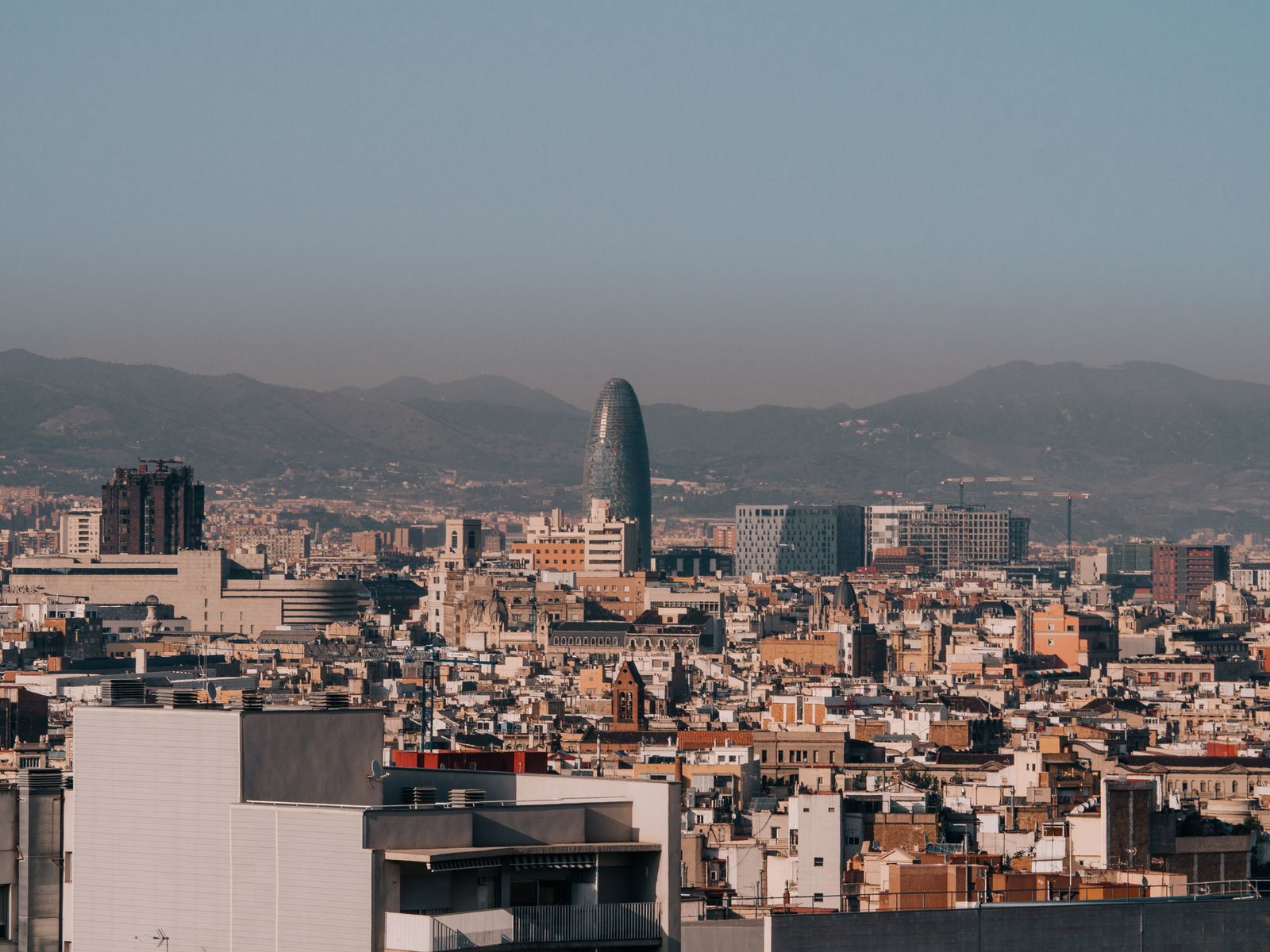
9. Torre Glòries and its viewpoint
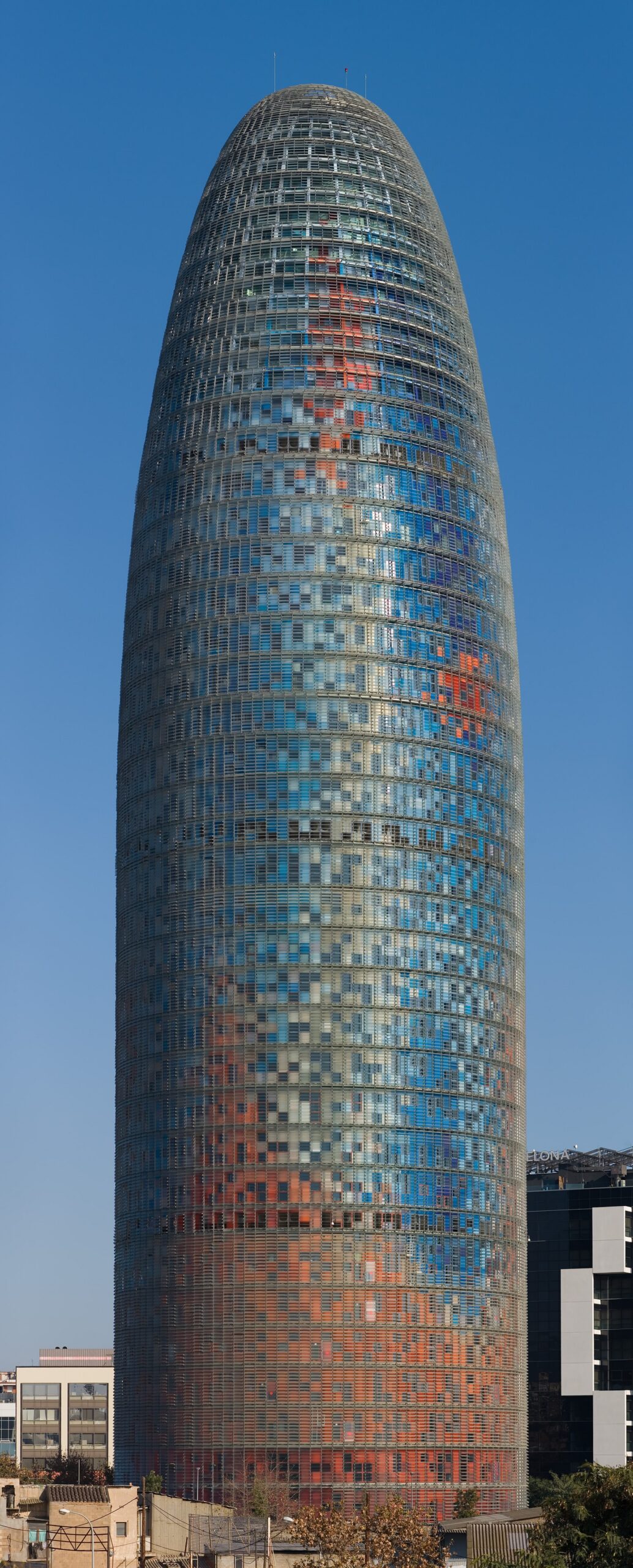
This iconic modern building, affectionately nicknamed the cucumber by locals and tourists alike, has become an unmissable part of Barcelona’s skyline. It was designed by the famous French architect Jean Nouvel and recently finally opened a viewpoint on its top floor. Admission starts at around €18 and promises a full 360-degree panorama of the whole Catalan capital.
There’s one fairly substantial problem, though, that disappoints a lot of eager visitors soon after they reach the top. The view really is in every direction, but you’re looking through thick glass and, on top of that, through the special mesh of the façade, which rather spoils photos. That may be partly why far fewer people buy a ticket than for other attractions, and the popularity of this spot is nowhere near what you might expect at first glance.
If you’re not a total fanatic for modern architecture or don’t have a real soft spot for glass skyscrapers, save this money for a good dinner instead. A far lovelier experience is watching the tower from outside in the evening, when the whole building is fantastically lit in colour and forms a beautiful visual contrast with the surrounding historic buildings.
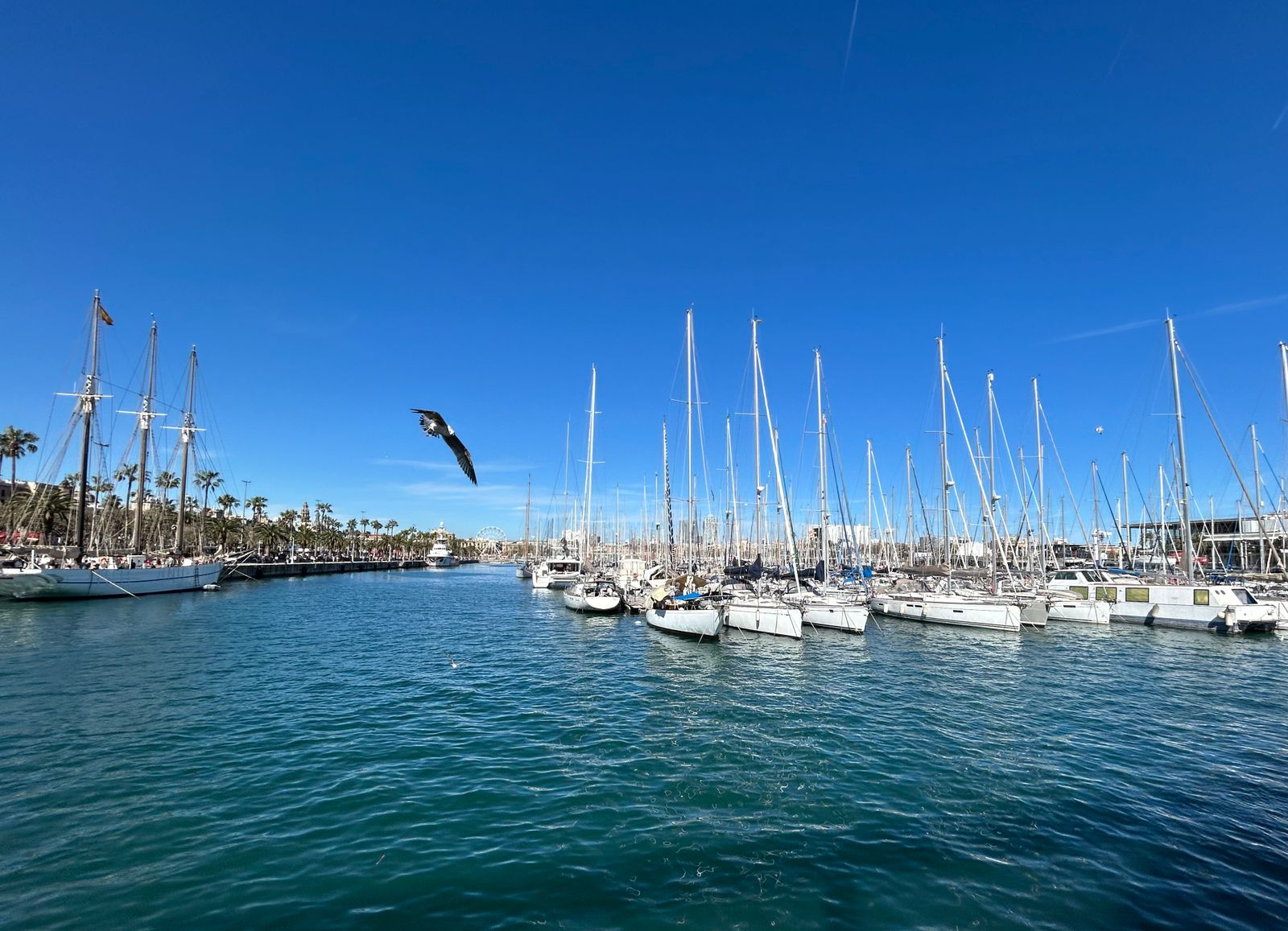
10. Port Vell cable car (Transbordador Aeri)
If you like a bit of adrenaline and don’t suffer from a fear of heights, this historic cable car will absolutely thrill you. Its unmistakable red cabins connect Barceloneta beach directly with the Montjuïc hill and run a full seventy metres above the surface of the sea. The editors of the prestigious Time Out magazine even rank it among the elite top ten best experiences in the whole city.
The ride takes just under ten minutes and offers an absolutely unique view of the entire old port, the moored boats and the skyscrapers in the distance. Because it’s a completely private attraction, no ordinary city tickets are valid on it, nor are the discounted tourist cards. You have to buy tickets separately, and in the summer season prepare to stand in line at the ticket office for quite a while.
The cabins are fairly large and have no seats, so all passengers stand and take photos through the windows during the ride. In stronger wind the cable car can sway rather unpleasantly, which heightens the overall experience a little more. But it’s a perfectly safe and very popular route that not only offers you great photos, but also saves you a lot of trudging up a steep hill.
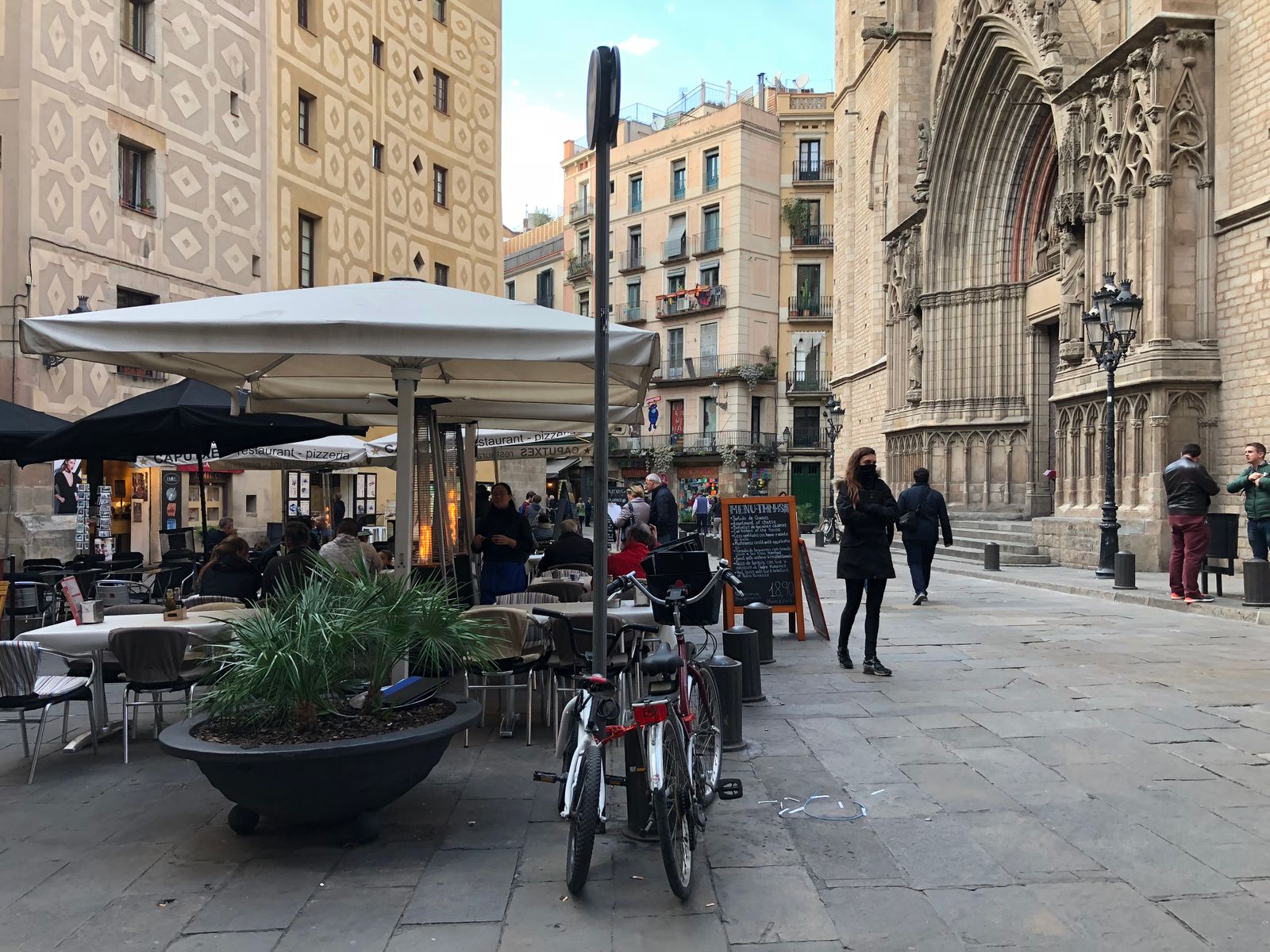
11. Santa Maria del Mar basilica and its terraces
This stunning Gothic building lies in the El Born district and is known chiefly thanks to the popular novel Cathedral of the Sea. While Lukáš and I know the giant Sagrada Família inside and out, a lot of tourists sadly walk right past this more discreet Gothic gem. That’s a huge shame, though, because this is exactly where you’ll find some of the best elevated terraces, which offer an absolutely authentic experience without the giant crowds.
Local guides take you right onto the basilica’s roof, from where an incredible view opens up over the entire historic El Born district and the narrow streets of the old town. The roof tour usually lasts just under an hour and gives you a much more intimate view of the city than the best-known viewpoints, where you constantly have to push through crowds of people with cameras.
During the tour the guide also shares plenty of fascinating facts about how the local inhabitants built this basilica themselves in the fourteenth century. You’ll marvel at the stories of ordinary people who carried the enormous stones on their own backs from a nearby quarry on the Montjuïc hill. It’s a genuinely powerful story that lends the whole visit an amazing historical depth.
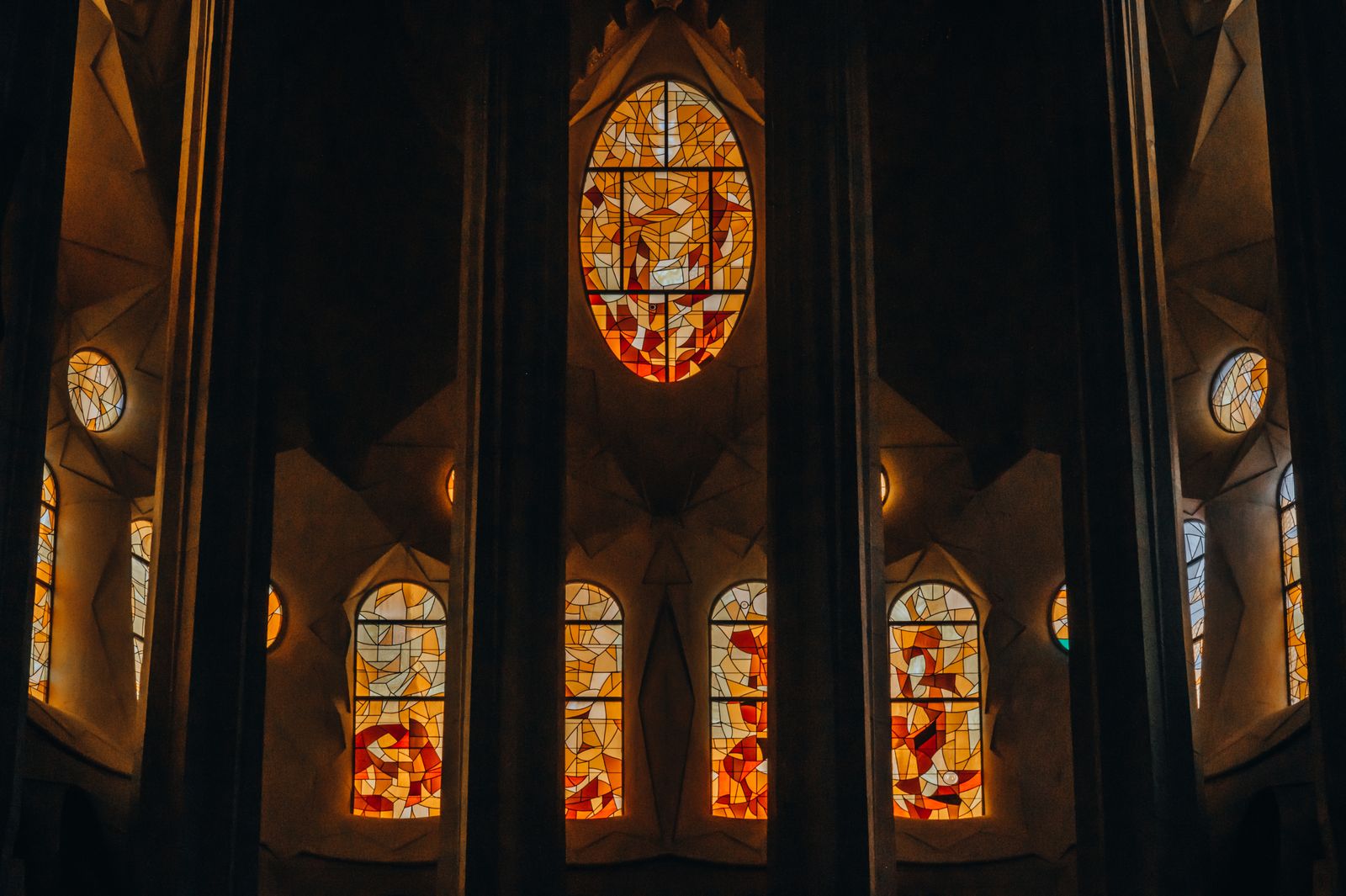
12. Sagrada Família and the new Tower of Jesus Christ
This is an absolute new arrival for 2026 and, at the same time, the biggest architectural event of the whole decade. The famous basilica has finally reached its final height of 172.5 metres, after a massive cross was fitted to the new Tower of Jesus Christ in February. It has thus become not only the tallest structure in all of Barcelona, but also the tallest church in the entire world — a simply breathtaking milestone.
Tickets are sold exclusively online and a basic ticket will set you back €26, with access to the towers themselves costing a little extra. A complete tour including going up costs around €40, but that incredible view of the geometric perfection of Gaudí’s work is definitely worth it. We walked around the basilica with our mouths open, and that vast space completely blew us away.
💡 Tip: Before your visit, always check the current situation on the official website. Occasionally access to the landmark is complicated by local teacher strikes or other protests, so it’s better to be one hundred percent sure you’ll really get in without a hitch and that your dearly paid ticket won’t go to waste.
Where to go next from Barcelona
We’ve got these detailed guides to Barcelona too:
- Gaudí in Barcelona: the buildings worth visiting
- Weather in Barcelona: temperatures by month and when to go
If you have more time in the city and want to make the most of it, I’ve put together plenty of other useful tips. Definitely take a look at our detailed article What to see in Barcelona: 25+ tips, where you’ll find a complete overview of all the interesting places and landmarks that Lukáš and I would recommend visiting. Among other things, you’ll read there about the modern Park del Fòrum area on the coast, which makes a great contrast to the historic centre.
If Gaudí’s one-of-a-kind architecture appeals to you, our detailed guide Park Güell: tickets, prices and tips will come in handy. For easy navigation of the city’s transport, don’t forget to read the article Transport in Barcelona: metro, tickets and airport, because the ticket system has changed quite a bit recently. From the airport, for example, your ordinary card is no longer valid on the metro.
For those of you heading over just for a long weekend, I’ve written a practical itinerary, Barcelona in 3 days: an itinerary. If you’re still looking for the right base, our article Where to stay in Barcelona: 10 districts will point you in the right direction. And if you’re wondering where to go next, feel free to draw inspiration from our big selection, Spain holidays: 17 tips on where to go.
Frequently asked questions
When is the best time to visit Bunkers del Carmel?
Definitely get up early and head there at sunrise. During the summer season, the area closes as early as 7:30 PM, so you won’t see the famous sunset from here at all. By arriving early, you’ll also avoid unpleasant tourist crowds and potential fines from the city police for being there after closing time.
How much is the tourist tax in Barcelona?
As of April 2026, the rates have increased quite significantly. For a night in a five-star hotel, you’ll pay €12 per person, tourist apartments cost €9.50, and a standard four-star hotel costs €8.40. This fee is charged for a maximum of seven consecutive nights.
Can I rely on Uber or Bolt in the city?
Unfortunately not—these modern ride-hailing apps practically don’t work in Barcelona at all. Instead, you’ll need to rely on the traditional black-and-silver taxis, or use the very dense and reliable network of metro and buses, which will take you absolutely everywhere.
Is the Magic Fountain at Montjuïc working yet?
Yes, after a long three-year pause caused by extreme drought, the fountain finally reopened in September 2025. It underwent a major renovation and received new energy-efficient lighting. However, operating hours change quite frequently, so it’s best to check the official city website beforehand.
Is it possible to visit Park Güell for free?
The entire park is divided into two separate sections. The natural zone covering 8 hectares is freely accessible, but you can only enter the paid monumental zone with a ticket. Tickets cost around €18 and must be purchased exclusively online well in advance.
Have they finally finished the Sagrada Família basilica?
In February 2026, the monumental Tower of Jesus Christ was completely finished, with workers installing the enormous cross. The basilica thus reached its final height of 172.5 meters and became the tallest building in the city, although minor construction work and work on additional facades is still ongoing.
What’s the best way to get up Montjuïc hill?
The easiest and least strenuous route is by funicular from the Paral·lel metro station. From there, you can transfer directly to the cable car for €19, which takes you all the way to the top near the old castle. On the way down, you can then comfortably walk past the beautiful gardens and museums.
Tips and Tricks for Your Vacation
Don’t Overpay for Flights
Search for flights on Kayak. It’s our favorite search engine because it scans the websites of all airlines and always finds the cheapest connection.
Book Your Accommodation Smartly
The best experiences we’ve had when looking for accommodation (from Alaska to Morocco) are with Booking.com, where hotels, apartments, and entire houses are usually the cheapest and most widely available.
 🚗 Car rental on the roadVerified rental cars in Catalonia
Search with the DiscoverCars comparison engine — it compares prices from dozens of local and international rental companies, and most bookings come with free cancellation.
Compare car prices in Catalonia →Don’t Forget Travel Insurance
Good travel insurance will protect you against illness, accidents, theft, or flight cancellations. We’ve had a few hospital visits abroad, so we know how important it is to have proper insurance arranged.
Where we insure ourselves: SafetyWing (simple monthly subscription) and TrueTraveller (for extra-long trips).
Find the Best Experiences
Get Your Guide is a huge online marketplace where you can book guided walks, trips, skip-the-line tickets, tours, and much more. We always find some extra fun there!