

Want your LinkedIn profile to look truly professional? Want to use LinkedIn to attract more people to your projects — completely for free? Here are simple, actionable steps to create a standout LinkedIn profile that gets results.
People tend to make snap judgements based on appearances — and that applies just as much to HR managers screening candidates for open positions as it does to potential clients or customers. Having a professionally optimised LinkedIn profile is essential not only for job seekers, but for anyone looking to build a strong reputation in their field.
Few people realise that LinkedIn can drive dozens or even hundreds of visits to your projects every month. Have you noticed how many people view your profile each month? Take a look — every single one of them is a potential customer, reader, or employer.
1) A Proper Profile Picture
Your LinkedIn profile picture is the very first thing people see — it’s the most important visual element of your professional presence. Put some real thought into choosing your photo and pick one that makes a positive impression.
You should have a broad, genuine smile, and the background should be clean and non-distracting. Studies have shown that people respond more favourably when you’re dressed smartly in your photo.
Go for solid-colour clothing that suits your profession. If you work in the corporate world, a suit or blazer is a great choice. For everyone else, I’d recommend a simple white or grey t-shirt, blouse, or button-down shirt. For men, a plain jumper works well too.
How to Take the Photo
If you don’t have access to a professional photographer, grab the best camera you can find — even a smartphone will do. Whether you’re taking the shot yourself or asking a friend or partner, here are a few tips:
- Find a clean background — there shouldn’t be too many distracting elements behind you.
- The best light always comes from a window (don’t shoot facing the window!).
- Never take photos in direct sunlight. If you’re shooting outdoors on a sunny day, find some shade instead.
- Photos generally look better when taken from a slightly higher angle — but don’t overdo it, or you’ll end up looking like a teenager in the early days of the selfie craze.
- Smile!
- Take 20–30 shots from different angles so you have plenty to choose from.
2) A Professional Cover Photo
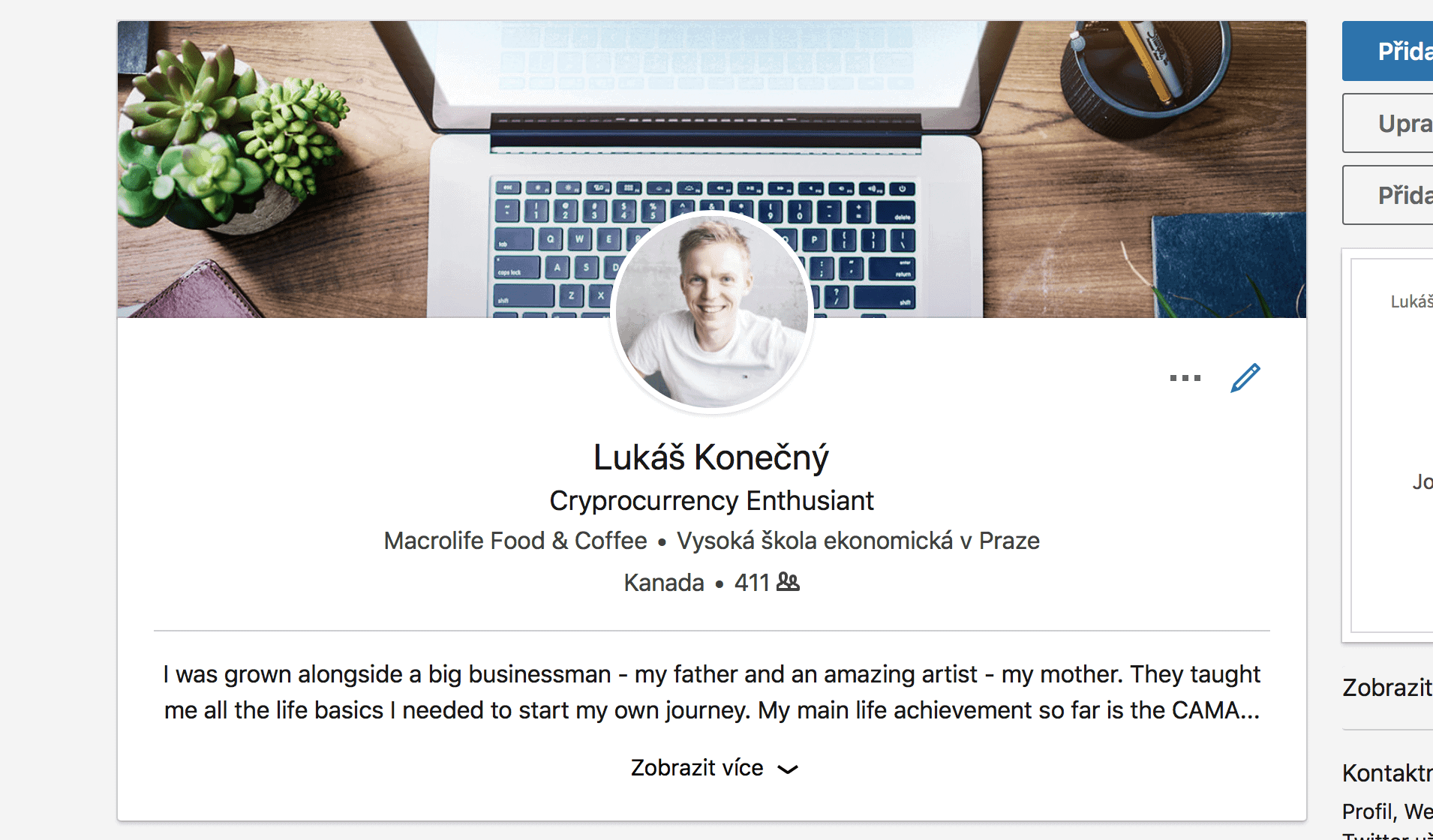
Choose a cover photo that reflects what you do. If you’re in marketing, anything from a laptop-and-coffee setup to a shot of you speaking at an event works great. Many people go for abstract images. Whatever you choose, it should always tie back to who you are as a professional.
Here are a few ideas:
- Accountant: An image featuring numbers or charts
- Architect: A building sketch or blueprint
- Writer: A photo of books, magazines, or newspapers
- Digital nomad: A panoramic landscape shot with a laptop in hand
- Graphic designer: A showcase of your own work
- Nanotechnologist: Molecules or nanofibres
- Scientist: Test tubes or a lab setup
For creating simple graphics, I highly recommend Canva.
3) Multiple Language Versions of Your Profile
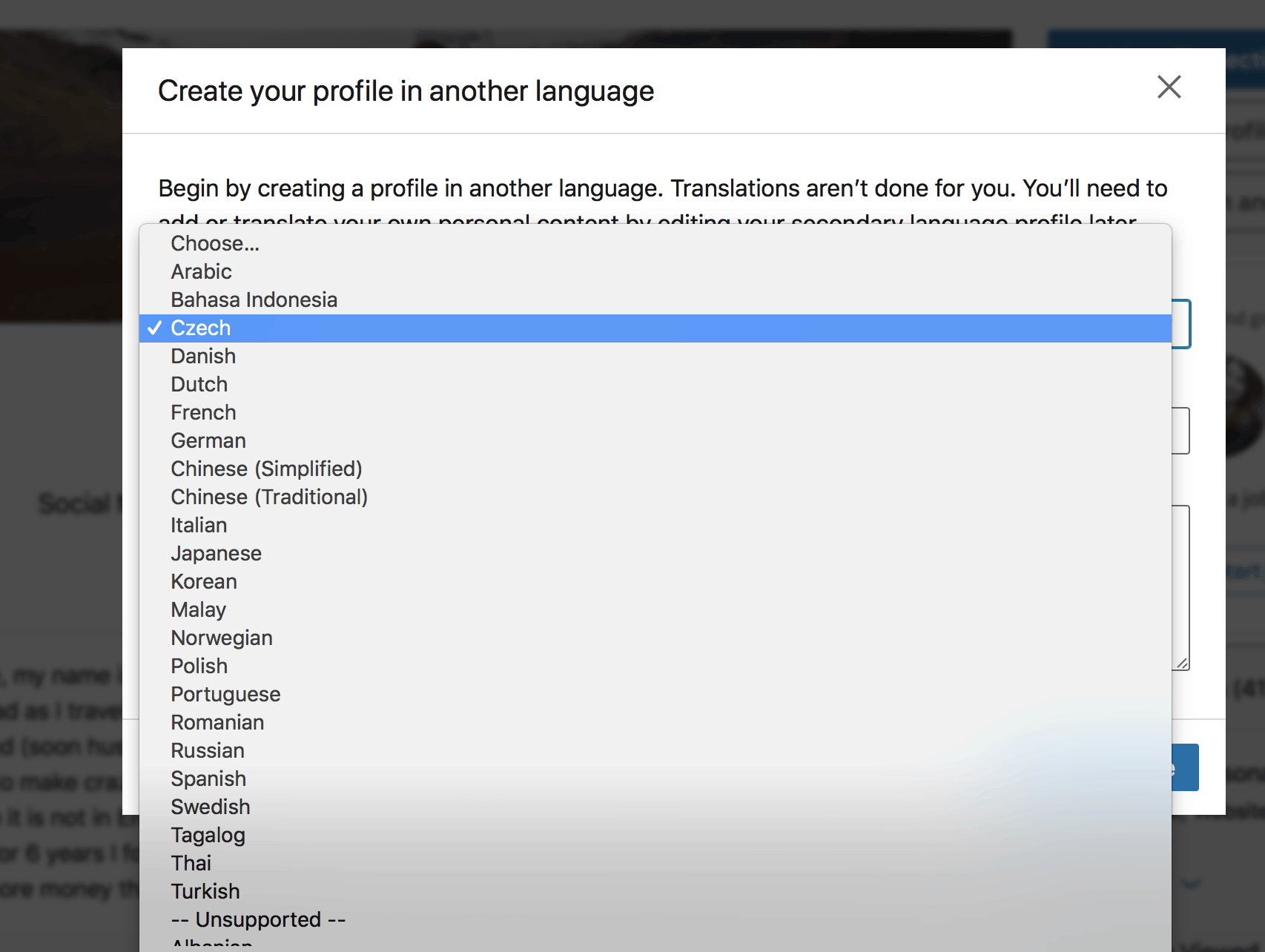
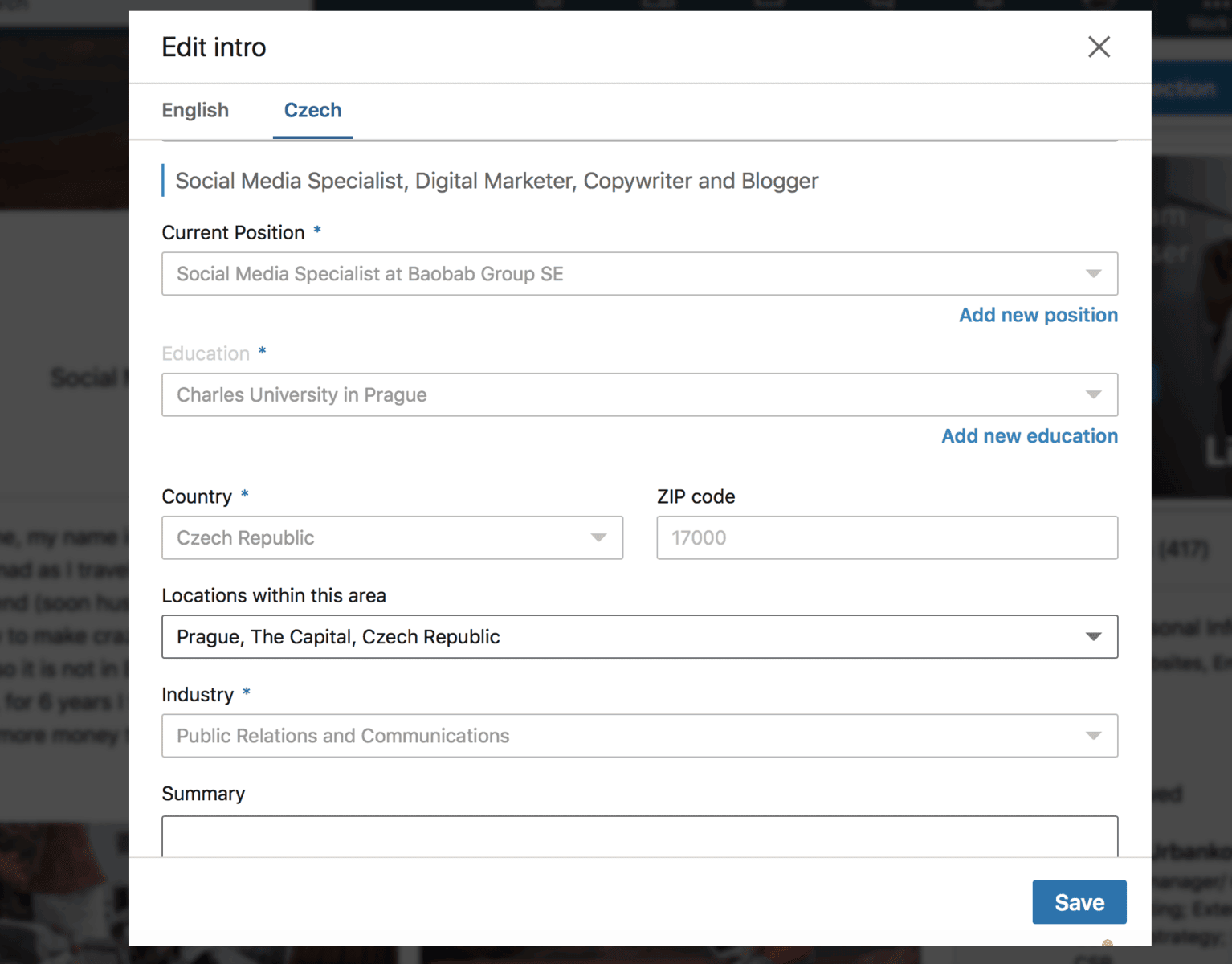
If you work in one country but your LinkedIn is written in another language, consider adding a profile version in your local language. It’s a mistake to assume that everyone in your market speaks English fluently. You don’t want to put people off just because your profile isn’t in a language they’re comfortable with.
On the flip side, if you only operate domestically and don’t aspire to work internationally or build an international presence, you may not need to worry about this.
4) A Catchy Headline and Summary
What to Write in Your Headline
Your headline is the first thing people see when they land on your profile. This is the moment you need to hook visitors so they stick around. That’s why it was the very first thing we changed on Lukáš’s profile. We went from “Cryptocurrency Enthusiast” to “Author of Cryptocurrency Trading for Complete Beginners course, blogger and digital nomad.”
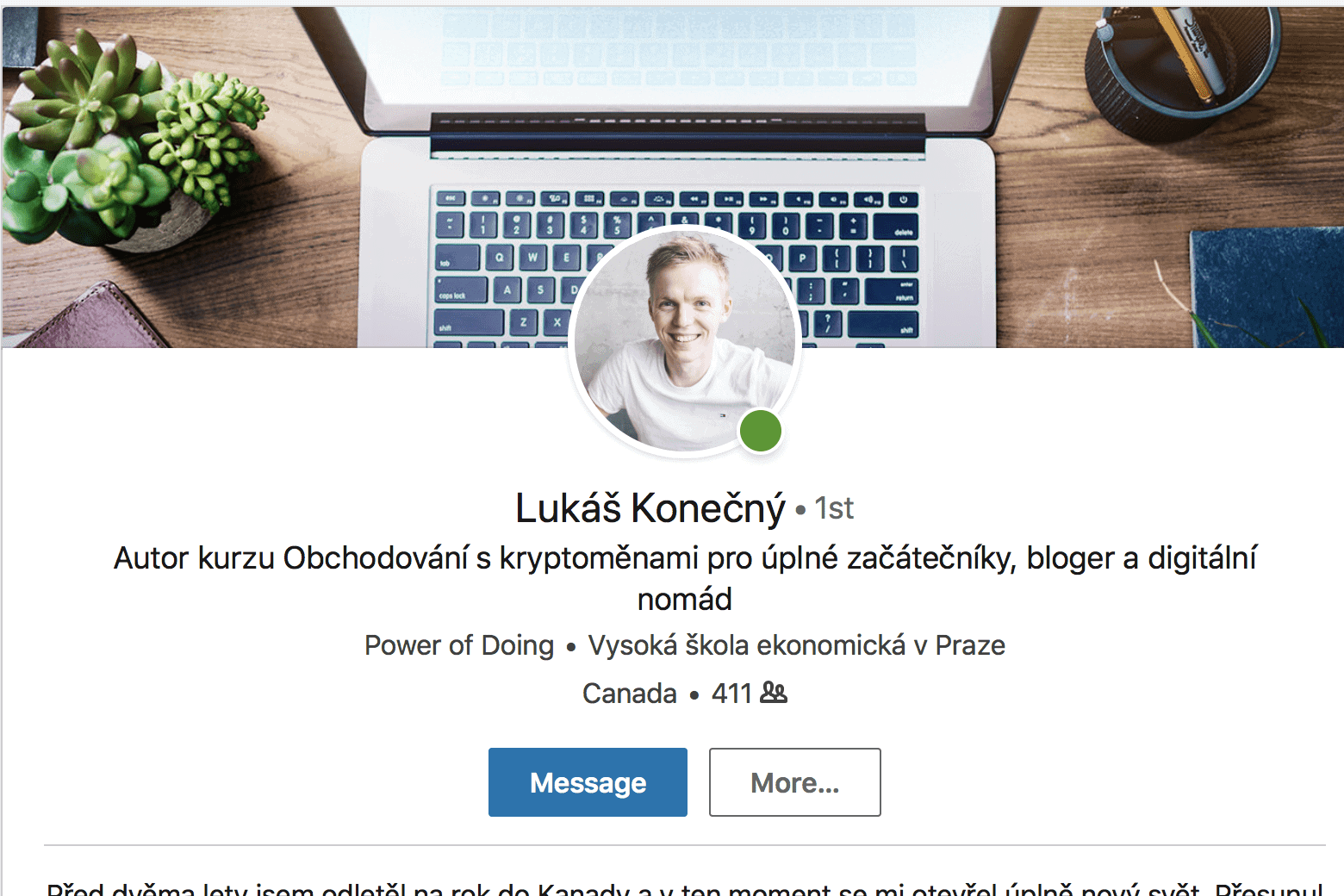
We reinforced his status as a successful blogger by adding “digital nomad,” signalling to people that he makes a living online through crypto and blogging. At the same time, it draws attention to his cryptocurrency course.
Writing a Catchy Summary
If your headline does its job and hooks a visitor, the next thing they’ll read is your Summary. Here, too, the goal is to highlight the most interesting things you do and entice people to check out your projects.
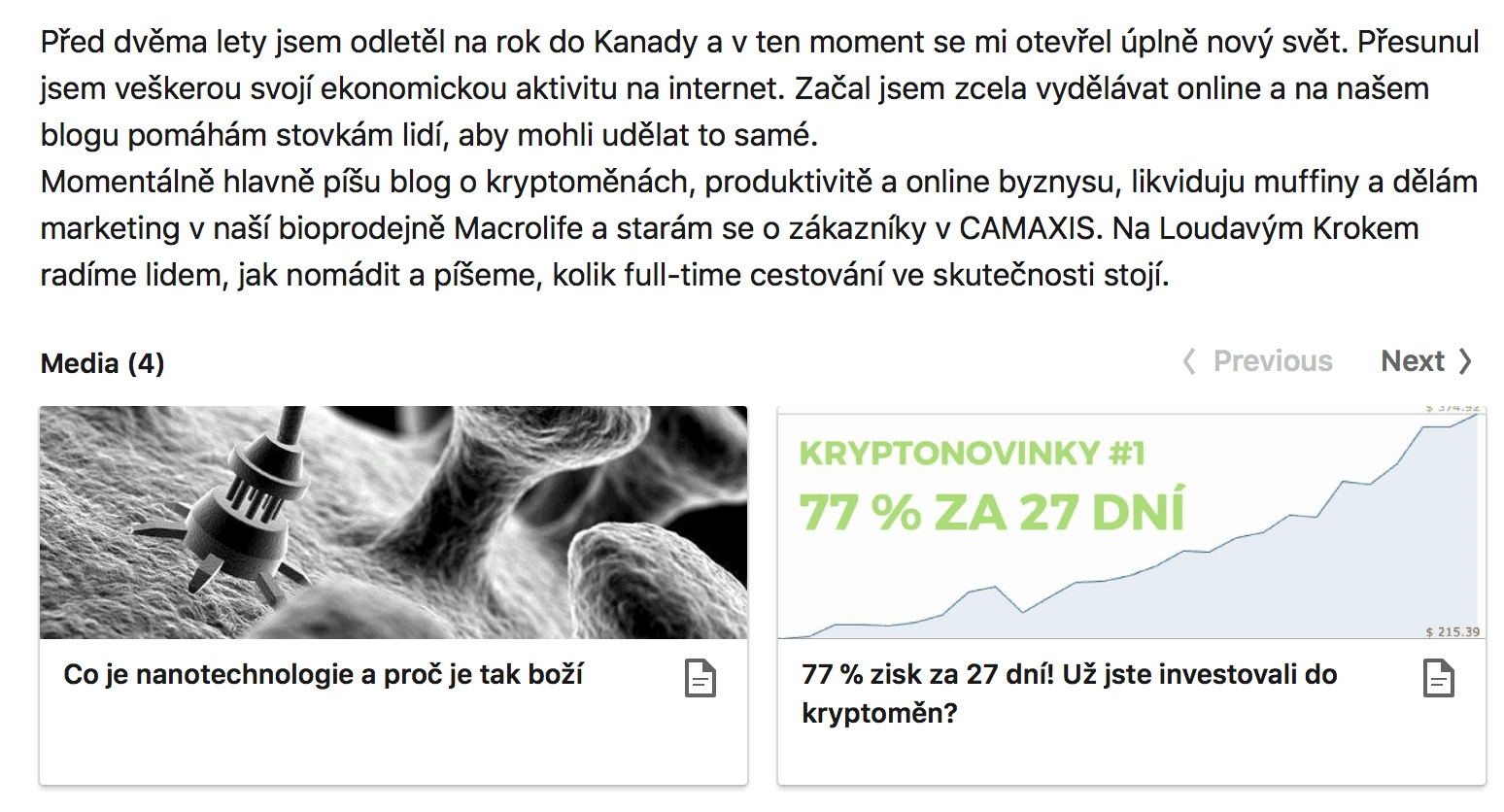
That’s why we emphasise that he helps hundreds of people start earning online, mention the crypto blog again, and briefly explain what makes his travel blog unique — we publish the real costs of travelling full-time.
Summary Example
Two years ago, I flew to Canada for a year and it opened up an entirely new world for me. I moved all my work online, started earning remotely, and now I help hundreds of people do the same through our blog.
Right now, I mainly write about cryptocurrency, productivity, and online business. I also handle marketing for our organic food shop Macrolife and manage customer relations at CAMAXIS. On our travel blog, we share tips on the digital nomad lifestyle and publish what full-time travel actually costs.
Why It’s Important to Add Media
One crucial element that many people overlook is adding media to their profile. Whether it’s a link to your website or a photo from a conference with a caption, these media items look fantastic on LinkedIn and can drive visitors straight to your projects. Plus, they reinforce your credibility as a professional in your field.
What Kind of Media Should You Add?
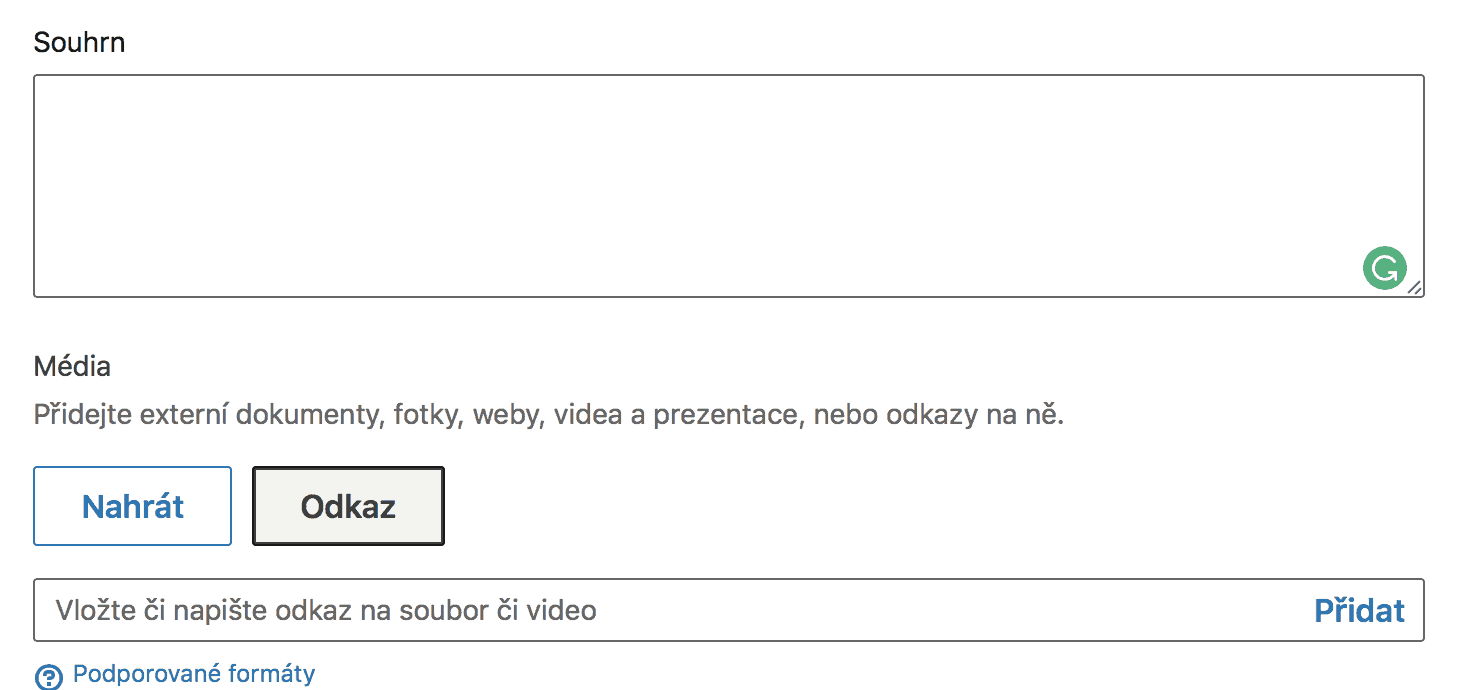
You can add links or files. These should be relevant to your work and help position you as an expert in your field. You’ll add a title to each piece of media. You don’t have to write a detailed description — it’s not that critical — but I always make the effort anyway.
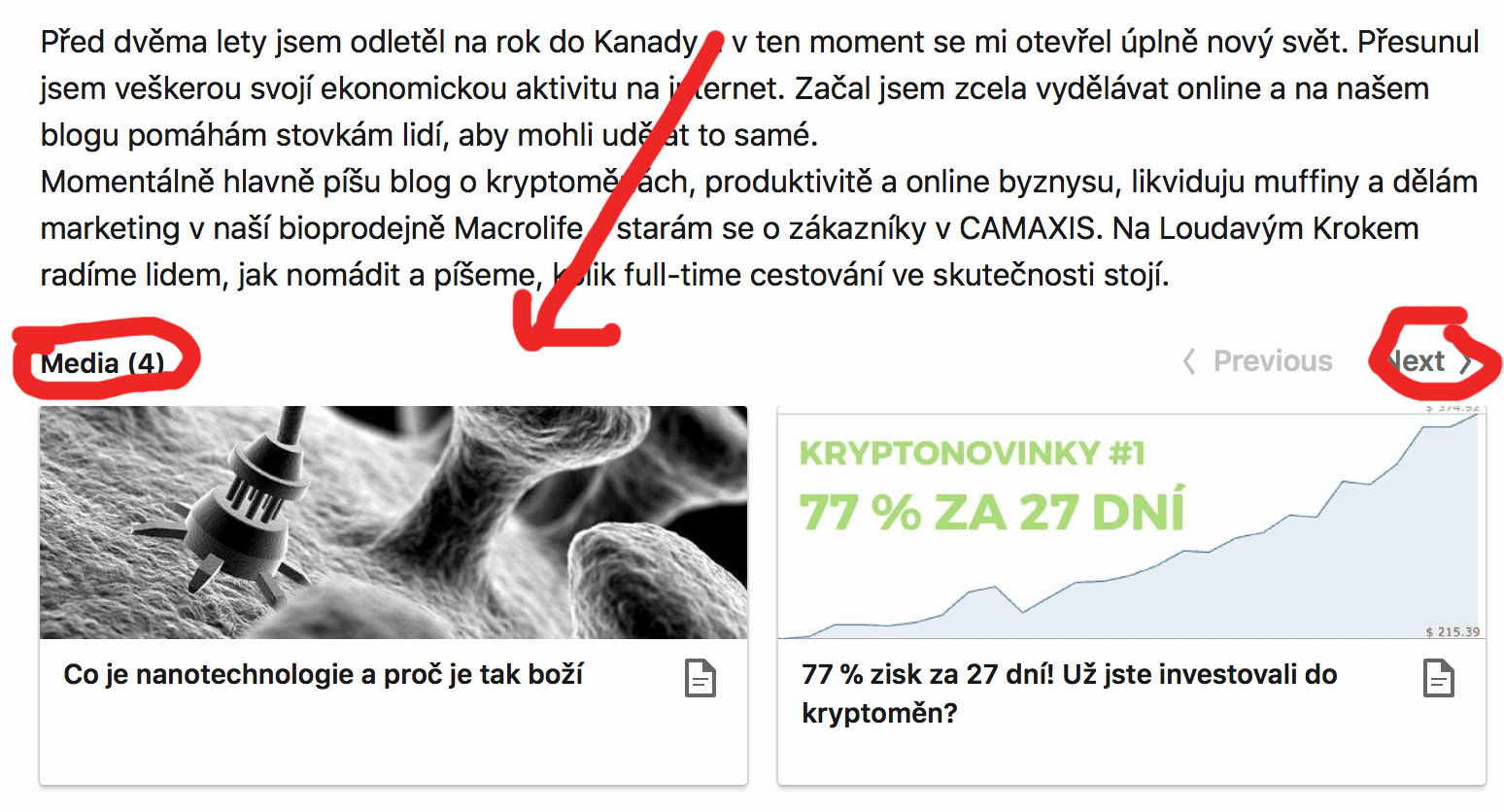
You can also upload your CV. Ideally, add at least two media items. Keep in mind that only the last two will be visible on your profile — visitors will need to click through to see the rest. So always save the most important ones for last.
Real-Life Example
If you want to establish yourself as an expert in investing, add a link under your Summary to an article or YouTube video where you talk about investing. If you don’t have anything like that, no worries — you can share an interesting article or course by someone else. It still signals to people that you’re well-versed in the topic.
5) Only Show Relevant Work Experience
It’s tempting to cram as much as possible into your CV and LinkedIn profile, but sometimes less is more.
- Don’t add positions where you didn’t stay long — it can make you look unreliable. This doesn’t apply to internships or working holiday experiences, but you should clearly mention in the description that it was a working holiday or short-term placement.
- Don’t list roles that are completely irrelevant to your current career. (Working a supermarket till eight years ago isn’t relevant if you’re now in IT. However, if you currently work in the food industry, it’s worth mentioning.)
Don’t Forget to Add Media Here Too
Remember to add relevant media to each work experience entry as well. You could include a recommendation letter from a former employer, an “employee of the month” award, or an interesting article about the company. If you did anything at a job that you’re proud of and can showcase, add it.
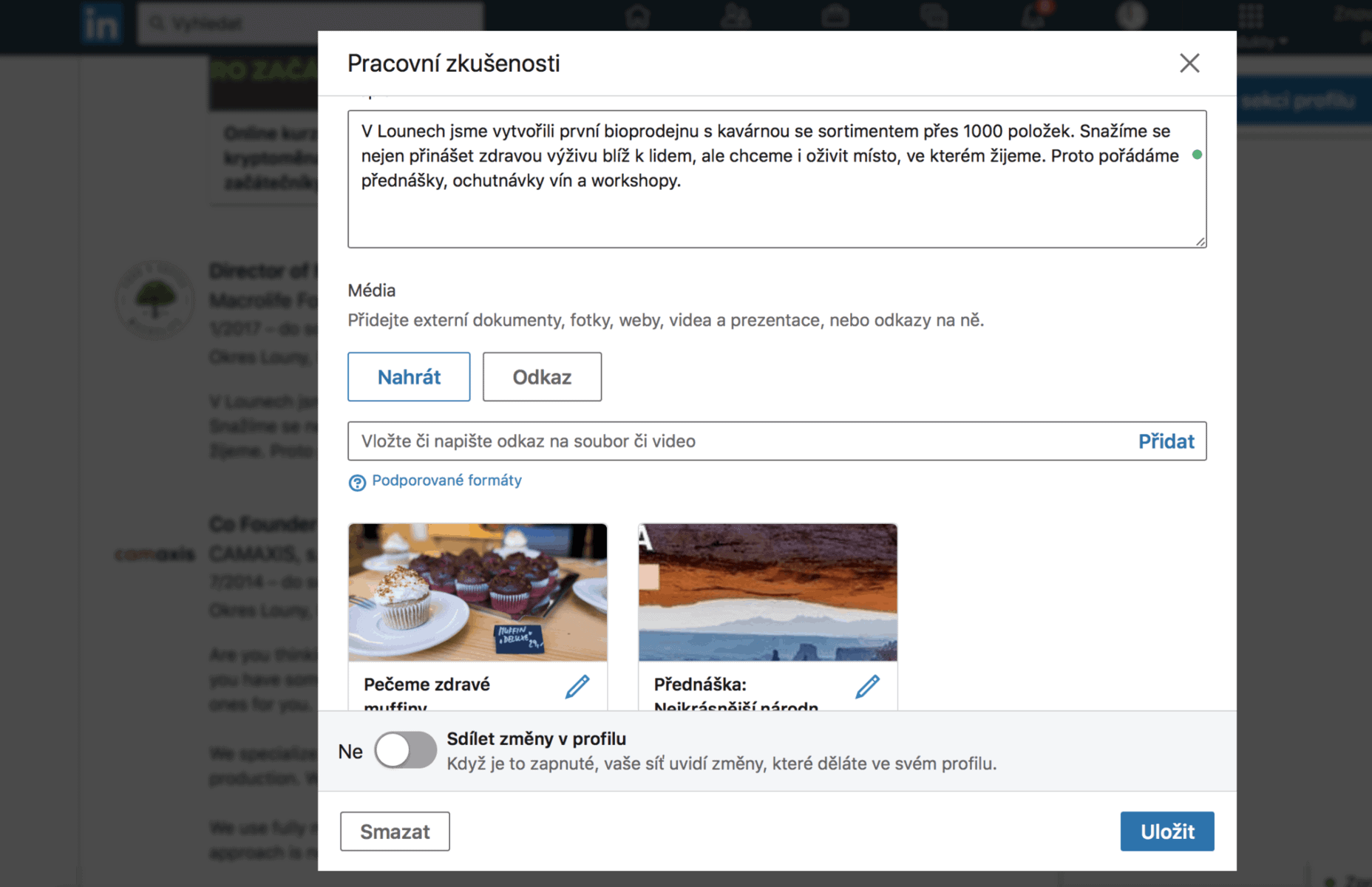
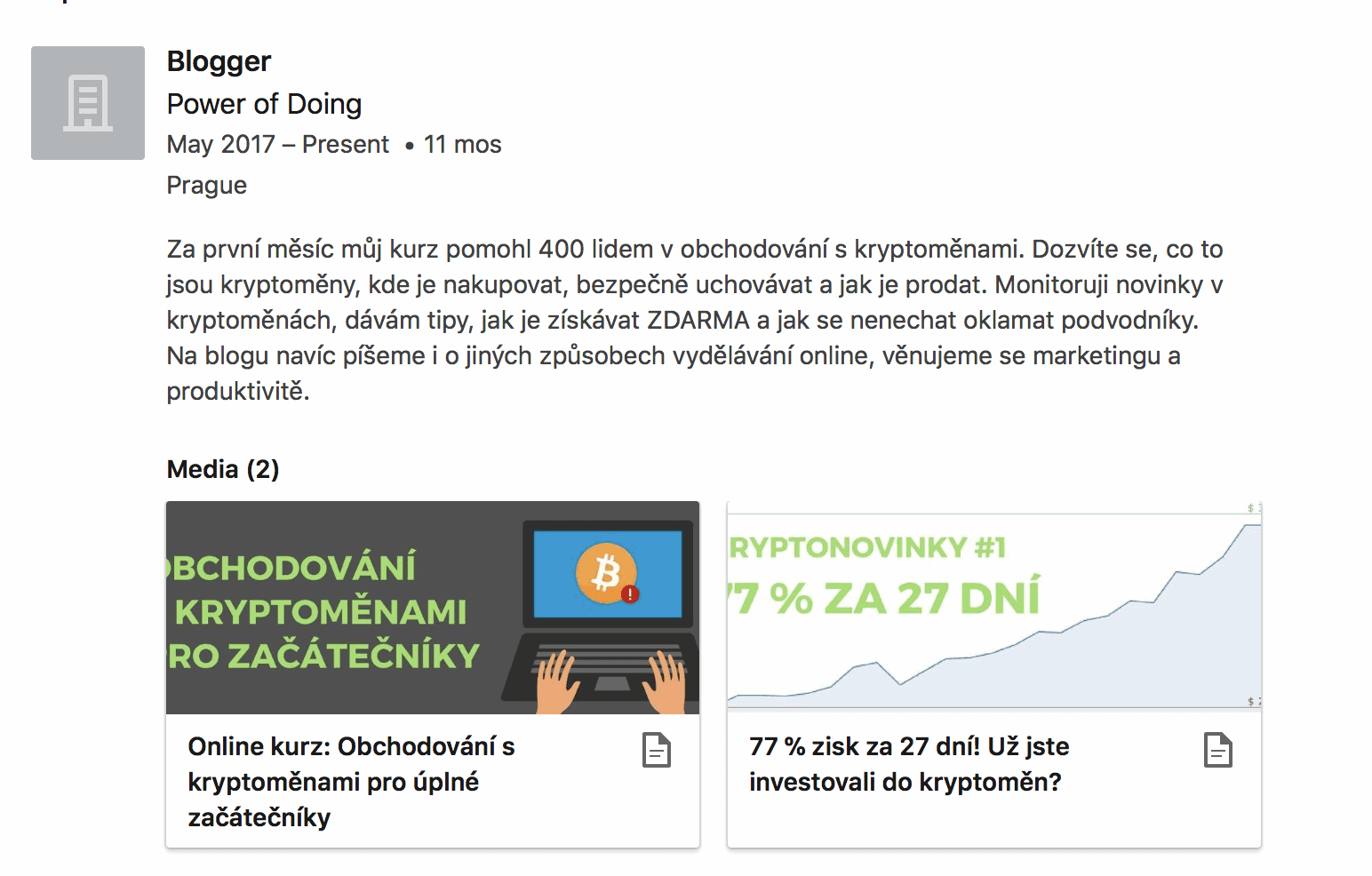
Example 1) Lukáš co-owns an organic food shop and café called Macrolife. He also handles the marketing for the business. Since he owns the café, promoting the business itself matters more to him than showcasing his own marketing work. That’s why he shows people what the café is all about — he added a link to an upcoming talk being held there and highlighted the healthy muffins they make in-house.
Example 2) Lukáš also presents himself as a blogger. Here, he adds the same media we saw in his Summary — his free course and one of his most-read articles.
6) A School Name Alone Isn’t Enough
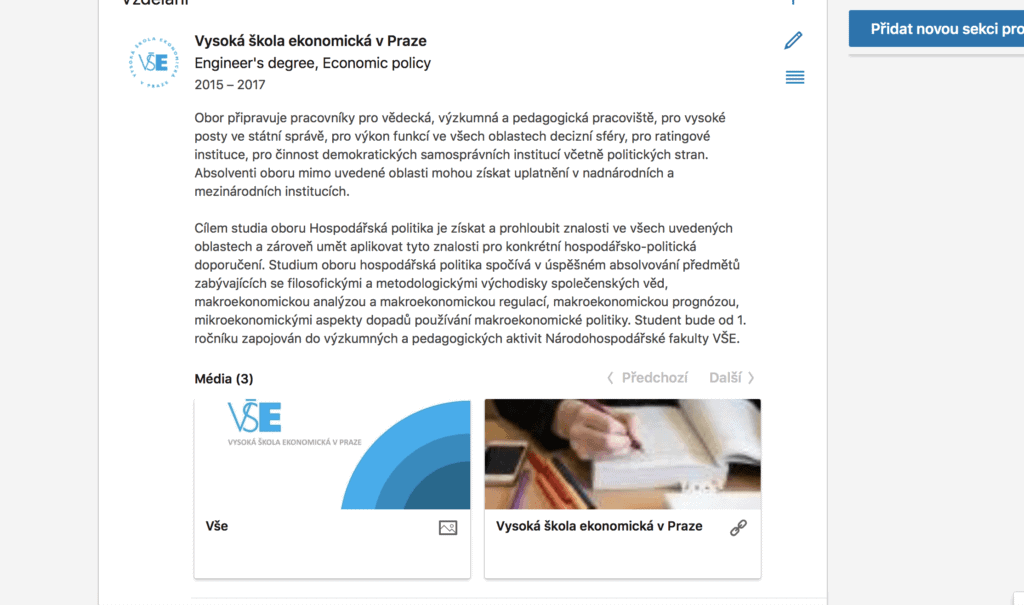
When it comes to education, the same principles apply as with every other section. You don’t need to list your secondary school, but you should definitely include your undergraduate and postgraduate studies.
In the description, you can outline your degree subject, what it focused on, and which courses you completed. For media, you can add a project you presented during your studies, academic achievements, or simply links to interesting lectures. If you’re running out of ideas, even uploading the university’s logo works. 😊 Never skip uploading media! It adds professionalism and visual interest to your profile.
7) The Details Matter
Don’t skip the remaining sections!
- Volunteer Experience – If you’ve done any volunteering, absolutely include it. It’s a great way to round out your profile and show you care about more than just your career.
- Skills & Endorsements – List skills that are genuinely relevant to your current work. Ask colleagues to endorse you for the most important ones.
- Recommendations – If a former colleague or employer is on LinkedIn, ask them for a recommendation. And take the time to write thoughtful recommendations for others — it often comes back around.
And there you have it — the essentials for setting up a standout LinkedIn profile! 😊 If you’d like professional LinkedIn optimisation from us, check out our LK Media website.
Tips and Tricks for Your Vacation
Don’t Overpay for Flights
Search for flights on Kayak. It’s our favorite search engine because it scans the websites of all airlines and always finds the cheapest connection.
Book Your Accommodation Smartly
The best experiences we’ve had when looking for accommodation (from Alaska to Morocco) are with Booking.com, where hotels, apartments, and entire houses are usually the cheapest and most widely available.
Don’t Forget Travel Insurance
Good travel insurance will protect you against illness, accidents, theft, or flight cancellations. We’ve had a few hospital visits abroad, so we know how important it is to have proper insurance arranged.
Where we insure ourselves: SafetyWing (simple monthly subscription) and TrueTraveller (for extra-long trips).
Find the Best Experiences
Get Your Guide is a huge online marketplace where you can book guided walks, trips, skip-the-line tickets, tours, and much more. We always find some extra fun there!


