Rome gets us every single time, and I have to admit that the Eternal City is probably our favourite European destination. Every year when Lukáš and I head there to celebrate his birthday in June, that unbelievable mix of chaos, romance and ever-present history surprises me all over again. You weave through narrow alleys, dodge honking scooters, the sun squeezes the last drop of energy out of you, and then suddenly a square opens up in front of you with an enormous amphitheatre. The Rome Colosseum will simply amaze you far more than you might expect from the photos, and that’s despite the constant crowds of tourists and the ever-present street vendors.
The Colosseum is one of those places where your breath catches for a second and you just wonder how on earth anyone managed to build something so gigantic two thousand years ago. In this guide I’ve pulled together the most up-to-date information for 2026 so you can enjoy your visit calmly and without unnecessary stress. I’ll help you with buying tickets, because the official system can be pretty sneaky, we’ll look at the best routes, and I’ll throw in our personal tips for dodging the worst queues. Get your comfortable shoes ready, because this is going to be a proper walk through the ancient world.
Summary
- Buy tickets online and well in advance: Official tickets are released exactly 30 days ahead at 9:00 in the morning, and the best time slots literally vanish within a few minutes.
- Only one official seller: Always buy through the coopculture.it portal, which redirects you to the official booking system, so you avoid the huge markups charged by resellers.
- Basic admission costs €20: For 2026 this price includes €18 for the ticket itself and €2 as a mandatory booking fee for buying online.
- Your ticket covers other sites too: Every Colosseum ticket automatically includes a visit to the nearby Roman Forum and Palatine Hill.
- Watch out for crowds and heat: If you can, go right at opening at 8:30 in the morning; by the afternoon the stones get scorchingly hot and there’s almost no shade inside.
- Water is free everywhere: Don’t buy overpriced plastic bottles from vendors; all around Rome and inside the site you’ll find public drinking fountains called nasoni with icy, clean water.
- Ignore the fake gladiators: The men in plastic armour outside the entrance will demand up to €20 for a single photo together, so it’s best to give them a wide berth.
The full destination guide: Rome — guide and what to see
Colosseum tickets in Rome, prices and opening hours
This is probably the single most important part of the whole planning process, because turning up at the Colosseum without a ticket means you simply won’t get inside. On our very first visit years ago we tried our luck blind, and it ended with us standing pointlessly in the sun, the machines not working, and finally having to leave empty-handed. These days the system is fully digitised, thankfully, but it demands lightning speed and precise timing from you. The basic adult ticket costs exactly €20 in 2026, made up of €18 for entry and a €2 booking fee.
If you’re travelling with children, I’ve got great news, because children under 18 get in free and pay only that small €2 online booking fee. Young adults from the European Union aged 18 to 25 also have it great, as they pay just a symbolic €4. All of these basic tickets are valid for 24 hours from the moment you first tap in at the turnstile, and they let you into the first and second tiers of the Colosseum, the Roman Forum and Palatine Hill.
The real gem, though, is the special ticket called Full Experience, which costs €22 and is the one that pays off the most. Not only does it get you straight onto the reconstructed arena floor and into the mysterious underground, but it’s also valid for two whole days. That way you can split your visit nicely, exploring the amphitheatre one day and wandering the ruins of the Roman Forum at your own pace the next, without wearing yourself out. Tickets are released on the official website exactly 30 days in advance at 9:00 in the morning Central European Time. You need to be sitting at your computer with your payment card ready and click really fast, because resellers with automated programmes can snap them up within minutes.
If you’re planning to explore the whole city, it might be worth getting the Roma Pass city card, which costs €38 for 48 hours or €62.90 for 72 hours. We bought it on one of our spring trips and saved loads of time, because full city public transport is included in the price. You can choose the Colosseum as your first free landmark, but watch out for one tricky catch. Even with a valid Roma Pass, you still have to book a specific time slot online in advance for €2, otherwise security simply won’t let you through the turnstiles.
How to get there
Finding your way around Rome isn’t all that complicated, because the biggest landmarks literally pop out from around the corner when you least expect it. The Colosseum dominates the huge Piazza del Colosseo, and the easiest way to reach it is by metro. Blue line B has a Colosseo stop right opposite the amphitheatre, so as soon as you come up the escalators, that enormous travertine structure hits you right in the eyes. Since the end of 2025 there’s also a new interchange to the green line C at Fori Imperiali station, making the journey even smoother.
But be extremely careful with your valuables, because it’s precisely in these crushes at the metro exit that very skilful groups of pickpockets operate. I always swing my backpack round to my front and hold my phone and wallet firmly in my hand, because thieves can exploit even the tiniest second of your inattention while you’re standing there gawping at the monument. If you’re staying somewhere near the main Termini station, I really recommend walking to the Colosseum, as it takes only about twenty minutes at an easy pace.
Lukáš and I most love walking that route through the beautiful, peaceful Parco del Colle Oppio park, which slopes right down towards the amphitheatre. Along the way you’ll hardly meet any tourists, the trees give you pleasant shade, and at the end an absolutely breathtaking view of the Colosseum from above opens up in front of you. If you’d rather take the bus, lines 75, 81 and 175 stop here, but honestly, Rome’s surface transport is pretty unreliable and you often get stuck in endless traffic jams. A single public transport ticket costs €1.50 and is valid for a full 100 minutes, but be prepared for the fact that a price rise to €2 is planned from summer 2026.
12 things you have to see in and around the Colosseum
Visiting this enormous complex isn’t just about ticking one building off your list and moving on to pizza. It’s a vast complex full of history, where the atmosphere of antiquity breathes at you from every scratched stone. I’ve put together a list of twelve specific spots and experiences you definitely shouldn’t miss while exploring the Colosseum and the adjacent Roman Forum. Each one has its own magic and helps you grasp just how astonishing this part of Rome really is.
1. The facade and the Arch of Constantine
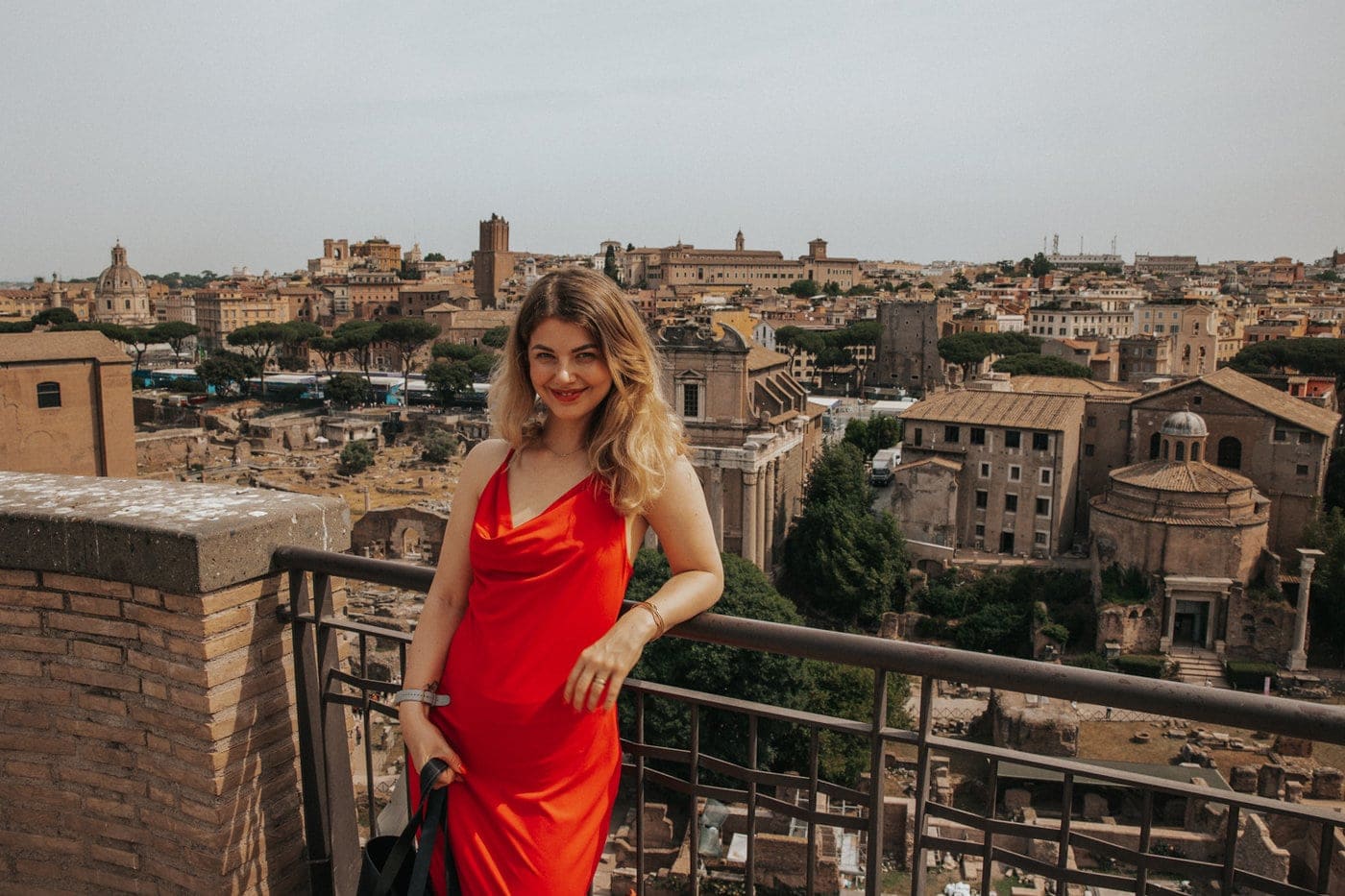
Before you even go inside, spend a few minutes just walking around the Colosseum from the outside and taking a proper look at its majestic facade. The building was originally called the Flavian Amphitheatre and was clad in gleaming white travertine, part of which survives to this day on its northern side. Notice the thousands of little holes in the stones, which didn’t appear by chance but were chiselled out by medieval thieves to rip the precious iron clamps out of the structure.
Right next to the amphitheatre stands the magnificent Arch of Constantine from the year 315, built by Emperor Constantine the Great to celebrate his military victory. It’s one of the best-preserved triumphal arches in all of Rome and is incredibly detailed with statues and reliefs. Interestingly, many of these decorations were actually taken from older monuments and simply recycled, which was a common practice back then to save money and time. We’ve always taken our best photos here, because it frames the view of the Colosseum itself perfectly.
2. The first and second tiers of seating
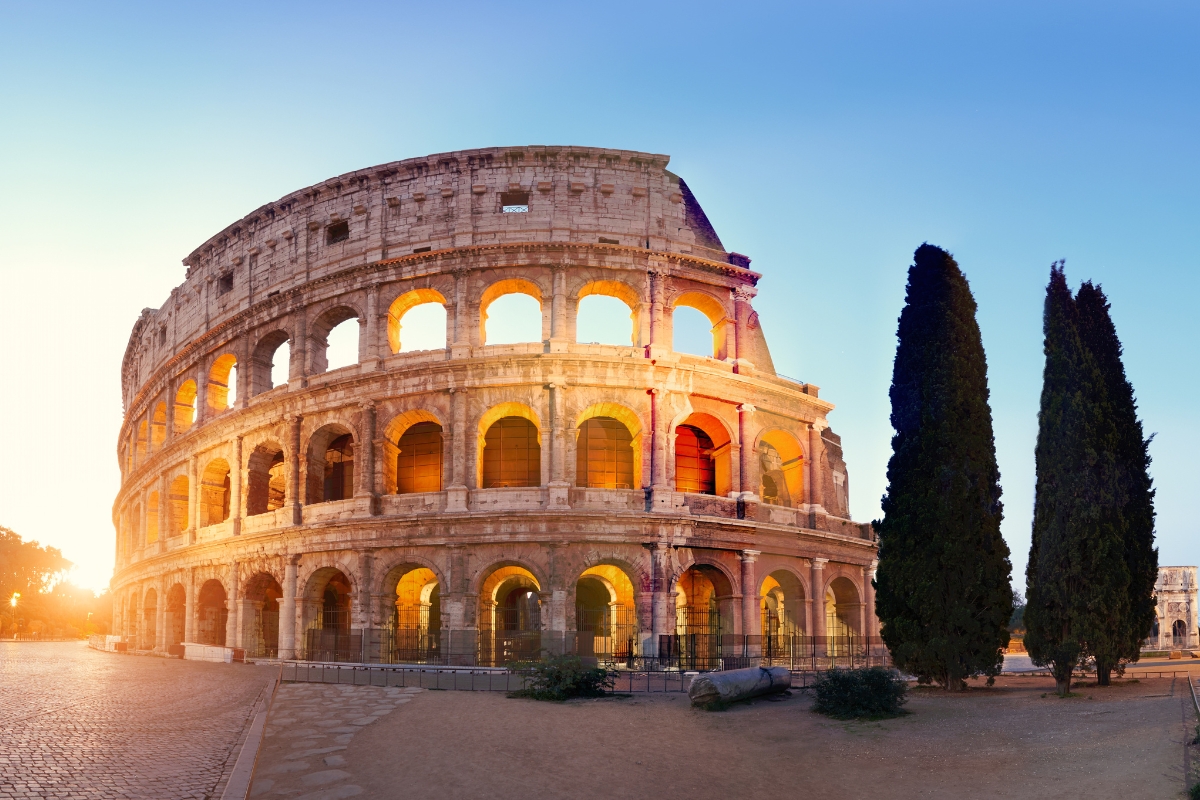
Once you’ve passed through the security frames and tapped your ticket, your first steps will probably lead up steep stairs to the first and second tiers of seating. Here you’ll fully realise for the first time just how gigantic this amphitheatre actually is, as a view over the entire elliptical arena opens up in front of you. This is where ordinary Roman citizens once sat, while the very best seats right at the bottom were strictly reserved for senators and the emperor himself.
The capacity was an incredible eighty thousand spectators, a number that beats even most of today’s huge football stadiums. To protect people from the harsh summer sun, there were enormous awnings called the velarium, which a special unit of thousands of sailors pulled across using a complex system of ropes. Nowadays there’s no awning to protect you here, but the view from the terraces down into the exposed underground is simply fascinating, and you could easily spend an hour just observing the details.
3. The arena floor
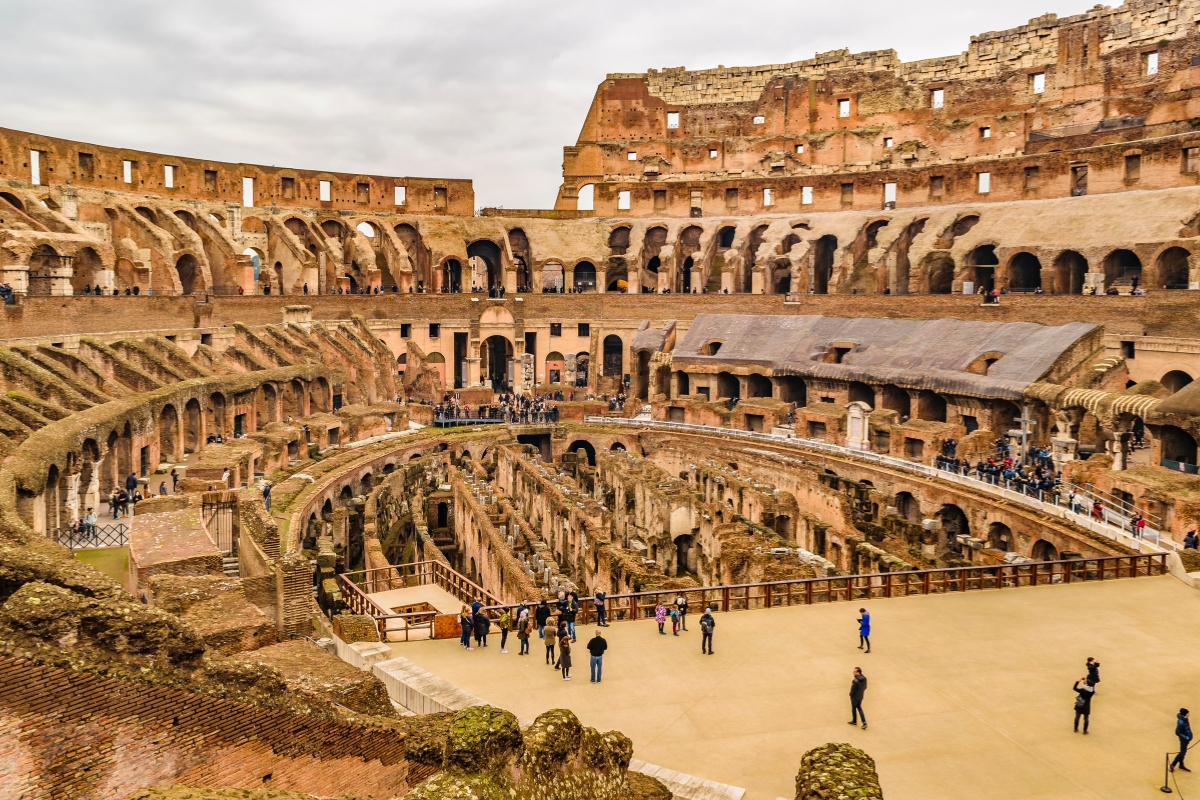
The basic ticket won’t let you onto this level, but if you manage to snag the rarer Full Experience ticket, you’ll get straight onto the wooden arena floor. It’s a completely different experience, because suddenly you’re not standing in the crowd of spectators up above, but looking at that enormous mass of stone from the perspective of a gladiator. When you tilt your head up to the sky and try to imagine tens of thousands of people screaming down at you in that moment, it takes your breath away.
On one visit we stood here in complete awe, with Lukáš just shaking his head in disbelief at how terrifying the space must have felt to the fighters. It’s precisely from this angle that you fully appreciate the brilliant, timeless architecture of the ancient Romans, which worked like a perfect entertainment machine. The sun beats down on you at full strength here, because there’s absolutely no shade, but the feeling of standing at the very heart of the ancient world is well worth those few drops of sweat.
4. The hypogeum, or the mysterious underground
Beneath the arena hides the most fascinating spot in the entire Colosseum: a labyrinth of underground passages called the hypogeum. Here, in total darkness and stifling air, gladiators waited for their fate, and exotic animals brought in from every corner of the empire were kept in small cages. There are remains of an incredibly complex system of lifts here, which hundreds of slaves used to hoist beasts and scenery up onto the stage.
Just imagine the shock for the spectators when the floor suddenly parted and a lion or tiger leapt into the arena out of nowhere. Today this underground is partly reconstructed and you can walk through those very same narrow passages where blood and sweat once flowed. It’s an absolutely brilliant experience for history lovers and for families with children, because dry historical facts suddenly come alive in real, tangible shapes, and there’s also a pleasant coolness down here.
h3 class=”wp-block-heading”>5. Palatine Hill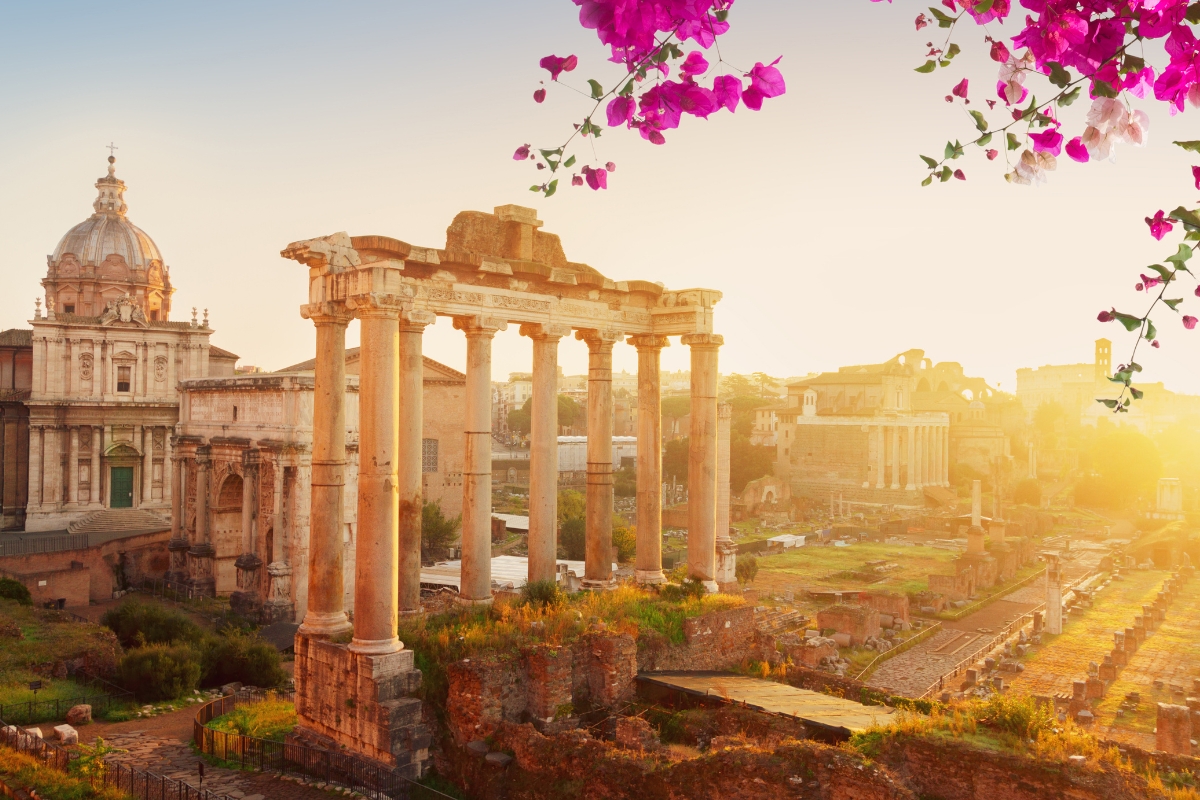
Your ticket also gives you access to Palatine Hill, the legendary hill where, according to ancient legend, a she-wolf suckled Romulus and Remus and where Rome itself was subsequently founded. Later this place became the most exclusive address in the entire empire, a kind of ancient Beverly Hills where emperors and wealthy patricians built their enormous marble palaces. To this day you can admire the sprawling ruins of Emperor Domitian’s palace or the remains of a private stadium.
Compared to the noisy, overcrowded Colosseum, it’s completely peaceful here, the scent of pines is everywhere and you can take shelter in the shade of tall trees. Lukáš and I always look forward to coming here enormously, because you don’t meet as many organised groups and the atmosphere is far more relaxed and romantic. Definitely set aside at least an hour and a half for Palatine Hill, because those sprawling gardens and ancient walls have an incredible charm.
6. The viewing terraces on Palatine Hill
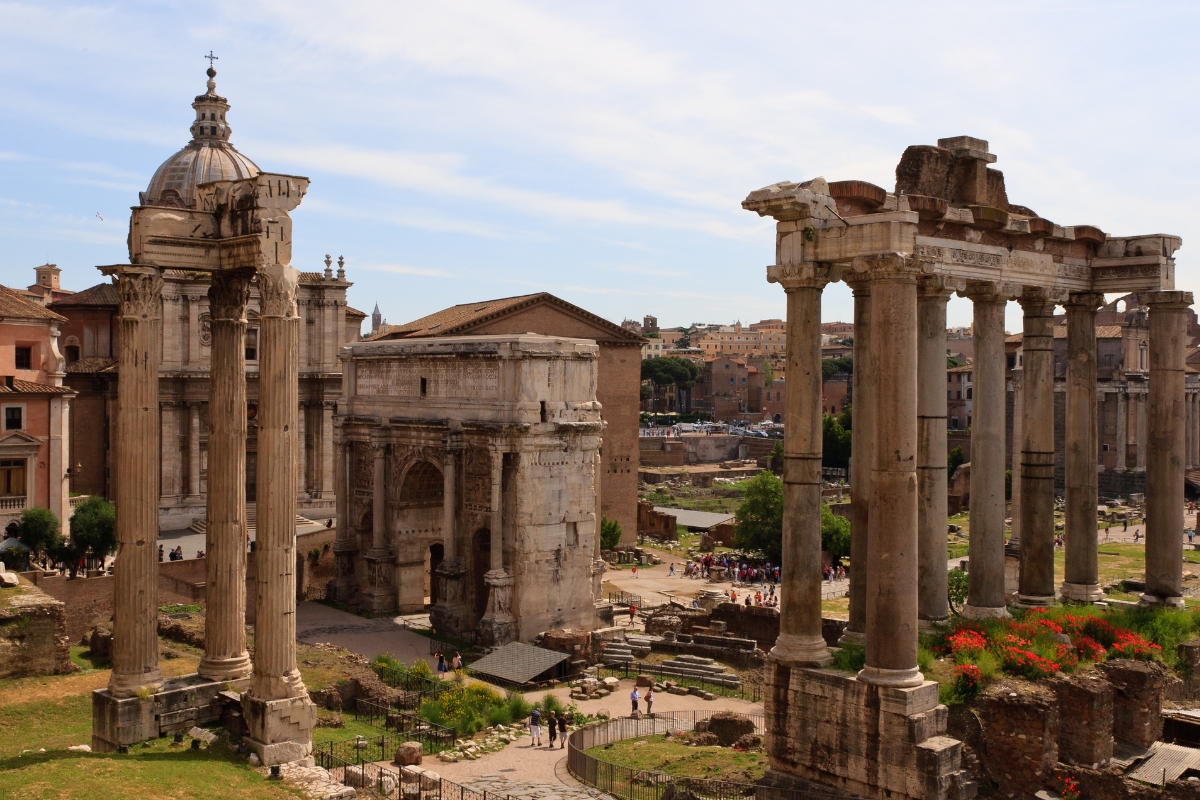
While you’re walking through the gardens on Palatine Hill, don’t miss the best viewpoints, which sit on the north-eastern edge of the hill. From the terraces of the Renaissance Farnese Gardens in particular, the most beautiful panoramic view over the whole Roman Forum opens up before you. You’ll have the entire ancient city laid out below you, and from this bird’s-eye perspective you’ll finally understand how the individual temples and streets logically connected to one another.
It’s precisely from this balcony that the most perfect photos are taken, the ones you then see in travel magazines and on postcards. From here you can see the Arch of Titus, the mighty columns of the Temple of Saturn and the white monument to Victor Emmanuel II in the background. We always sit down for a while on the stone wall here, drink water from our bottle and just silently watch that enormous slice of history below us, because it’s a view you could never grow tired of.
7. The Roman Forum and the Via Sacra
While the Colosseum served primarily for entertainment, the Roman Forum was the true political, religious and commercial heart of the entire ancient world. You enter it along the original paved road called the Via Sacra, along which victorious Roman legions once marched and emperors rode in their chariots. Around you rise the ruins of once-magnificent temples, huge basilicas where disputes were judged, and the remains of old shops.
It’s an enormous archaeological site where, unfortunately, there’s almost no shade and the stones radiate hellish heat in summer, so definitely go first thing in the morning while the air is still bearable. Don’t forget to bring comfortable, sturdy shoes, because that ancient paving is terribly bumpy and in thin sandals you’d suffer like an animal. We love it here, but after two hours in that harsh sun we’re usually completely wiped out and have to find the nearest drinking fountain.
8. The Temple of Julius Caesar and the senate
Right in the middle of the Roman Forum you’ll find a spot that gives you goosebumps if you have even the slightest love of history. It’s the unassuming remains of the Temple of Julius Caesar, which stand exactly on the spot where his body was cremated after his assassination in the year 44 BC. People still bring fresh flowers here and lay them on the altar, which, after two thousand years, is an utterly fascinating show of reverence for a single historical figure.
A short walk from here stands a large brick building called the Curia Julia, which was the original building of the Roman senate, where the fate of the entire world of the time was decided. It’s one of the best-preserved buildings in the Forum, and inside you can still see the original marble floors today. When you stand there and picture Cicero delivering his fiery speeches, the events from your history textbooks suddenly feel completely alive and tangible.

9. The Basilica of San Clemente
This is one of our little secret tips that most ordinary tourists sadly miss, even though it lies just a five-minute walk from the Colosseum. From the street, the Basilica of San Clemente looks like a perfectly normal, if very pretty, medieval church, but the real magic hides deep beneath it. When you buy a ticket and go down the stairs, you’ll discover an older church from the fourth century, full of wonderful faded frescoes.
But it doesn’t end there, because you can descend even deeper into the darkness, where Roman houses from the first century and a mysterious temple of the god Mithras await you. Right at the bottom you can even hear an underground stream rushing along, one that has flowed here since ancient times. It’s a truly captivating journey through time into the depths of history, and it’s beautifully cool down here too, making it an ideal escape when you’ve had it up to here with the Roman heat and crowds.
10. Trajan’s Market and the Imperial Fora
When you leave the Roman Forum and cross the busy Via dei Fori Imperiali, you’ll find yourself at another complex of excavations, the Imperial Fora. Here you absolutely must see Trajan’s Market, an enormous brick structure set into the slope that functioned as the very first shopping centre in the world. There were an incredible one hundred and fifty shops across six floors, and to this day it feels remarkably modern.
Right next to it towers the famous Trajan’s Column from the year 113, covered from top to bottom in detailed reliefs celebrating the victory over the Dacians. The whole area is beautifully lit, so if you come here for an evening stroll, you’ll have a completely different experience of these monumental structures than during the day. We love wandering here after dinner, when the air is pleasantly balmy and the city finally slows its crazy pace a little.
11. The viewpoint from Parco del Colle Oppio
I already mentioned this park in the transport section, but it really deserves its own entry. Parco del Colle Oppio spreads across a hill right above the Colosseum and hides within it the remains of the enormous Golden House (Domus Aurea), once built here by the mad Emperor Nero. It’s a beautiful green oasis full of pines and benches, where locals come to read the newspaper and walk their dogs while thousands of tourists stream by below them.
The main draw, though, is the view. From the upper part of the park you have the Colosseum laid out before you from a completely different angle than most people know it. We always buy a fresh focaccia or a vegetarian slice of pizza to go from some tucked-away bakery here, sit down on the wall and just gaze at that enormous structure below us. It’s probably the most laid-back way to enjoy this landmark without someone constantly jabbing you with their elbow.
12. The Capitoline Museums and the view over the Forum
We’ll end our tour on Capitoline Hill, home to an elegant square designed by Michelangelo himself. Here you’ll find the Capitoline Museums, one of the finest art collections in all of Rome, full of gorgeous ancient statues and paintings. If you love art, definitely head here, because it’s not as crowded as the Vatican and the collections are genuinely world-class.
Even if you don’t go into the museum, you have to climb up here for one thing. When you walk around the back of the town hall to an unassuming viewing terrace, the very best view over the whole Roman Forum from the other side opens up in front of you. I recommend coming here just before sunset, when those ancient columns and bricks turn an incredibly rich gold and orange. It’s exactly the moment when you fall utterly and unconditionally in love with Rome.
Map of points of interest for your phone
Practical tips and how to avoid the queues
Rome really doesn’t forgive a lack of preparation, and if you turn up here on a whim with a romantic notion, the crowds and chaos will bring you to your knees very quickly. Besides buying tickets on time, be extremely careful of the fake gladiators and centurions who loiter right in front of the Colosseum. They’re officially banned, but there are still dozens of them operating there. They use a very slick and aggressive tactic where they unexpectedly shove a plastic sword into your hand, take a photo with you and then happily demand up to €20 for it. If you don’t pay them, they can get very unpleasant, so your best defence is zero eye contact and a quick step away.
Another great tip is to use the local public drinking fountains, which Romans lovingly call nasoni (big noses). They’re scattered all over the city and even right inside the Roman Forum, and they pour out icy, absolutely clean water completely free. Never buy those overpriced, half-warm plastic bottles from street vendors; just bring your own reusable bottle and top it up as you go. Locals even use a clever trick where they plug the lower outlet with a finger, and the water then elegantly spurts out of a little hole at the top straight into your mouth, so you don’t even need a cup.
When to visit Rome and the Colosseum
Hunting for perfect weather and empty streets at the same time is probably the hardest discipline in Rome, because finding that magical sweet spot is practically impossible. If I had to recommend the absolute best time to visit, it’s definitely October or mid-spring. Temperatures drop to a very bearable 22 degrees, the air clears up beautifully, and while the evenings call for a light jumper, during the day you can easily walk fifteen kilometres without feeling like you’ll faint on the spot. The price for this great weather is huge, though, because in these so-called shoulder seasons the city is literally bursting at the seams and hotels report full capacity.
On the other hand, I really wouldn’t recommend summer in Rome, especially August, unless you have no other choice. Temperatures regularly climb above 35 degrees, the humidity is dreadful, and those ancient stones in the Colosseum soak up the heat during the day and act like a giant radiator well into the night. On top of that, August brings the Ferragosto holiday, when many locals lock up their flats and flee en masse to the sea, so lots of great local restaurants are simply closed.
If you absolutely have to visit the Eternal City in summer, your strategy has to be utterly uncompromising. Get up at six in the morning, tackle the main landmarks by ten o’clock, and retreat somewhere for a long lunch in an air-conditioned restaurant or take a siesta at your hotel through the worst of the midday sun. Then head out again only in the early evening, when the shadows lengthen and the city starts to breathe once more. One important piece of news for 2026 is that the Holy Year, or Jubilee 2025, during which further millions of pilgrims poured into the city, has now definitively ended, so the overall pressure on the infrastructure should be at least a tiny bit more bearable.
Where to stay in Rome
Choosing the right neighbourhood to stay in can either wonderfully enhance your whole trip or ruin it completely. Rome is enormous, after a full day of walking your feet will ache terribly from those bumpy cobblestones, and the last thing you want is to commute for an hour on a packed bus with no air conditioning. On one of our trips we stayed at Residenza Cavallini, a smaller and very pleasant hotel a short walk from the Vatican, where a typical Italian breakfast at a nearby café was included in the price, and the location was absolutely perfect. We prefer to look for accommodation on Booking.com.
The most common dilemma for travellers, though, revolves around two neighbourhoods: Monti versus Trastevere. Monti is strategically located right behind the Colosseum, has a metro stop, plenty of great vintage shops, and in the evening it comes alive at a pleasant, unexaggerated pace. We were thrilled by the small tucked-away spots where we had excellent vegetarian cacio e pepe or an amazing pizza margherita. Trastevere, on the other hand, is the embodiment of true cinematic romance, with narrow alleys and washing hanging on lines, but it’s already very touristy, pretty noisy at night, and above all there’s no metro at all, which complicates the logistics quite a bit.
If you like peace and quiet and you’re travelling with children, for example, I really recommend the elegant Prati neighbourhood north of the Vatican, where the streets are wide and flat without those crazy crowds. For travellers on a tighter budget, on the other hand, the area around the main Termini station is still the best choice. It may not be the most visually beautiful spot and you have to be more careful of pickpockets in the evening, but you’ll find the cheapest hotels there, and above all both main metro lines cross there, so you can get anywhere in a matter of minutes.
Where to go next
If you’ve successfully got the Colosseum under your belt, Rome and its surroundings still have an enormous amount to offer. Here are some more guides we’ve put together on the blog to help you plan the rest of your Italian holiday.
Definitely check out our main, exhaustive article What to See in Rome, where you’ll find dozens more tips for places you shouldn’t miss. It covers everything from the Trevi Fountain and the Pantheon to the best spots for proper pizza or ice cream, and it’ll help you put together a sensible itinerary for a whole weekend.
A chapter of its own is the smallest state in the world, about which we’ve written a detailed guide to the Vatican. There you’ll learn how to handle the crazy queue for the security check into St Peter’s Basilica, why it’s so important to follow the strict dress code with covered shoulders and knees, and what time is best to head up to the dome for the finest view.
If you’re planning to admire some art, don’t miss our special article focused on the Vatican Museums. The Sistine Chapel with Michelangelo’s frescoes is gorgeous, but the route to it leads through endless kilometres of corridors packed with tourists. In the article we’ll advise you on which tickets to buy and what time to go, so you can genuinely enjoy the art without going mad from the crowds.
And if you have more time for Italy and you’re planning to head south by high-speed train, definitely read our guide to Pompeii. This ancient city destroyed by the eruption of Vesuvius is an utterly fascinating window into the everyday life of the ancient Romans, and a walk through its preserved streets is an experience Lukáš and I still love to look back on.
Frequently asked questions
How much does Colosseum admission cost in 2026?
Standard admission to the Colosseum, which also includes the nearby Roman Forum and Palatine Hill, costs exactly €20 (€18 for the ticket and €2 reservation fee). The popular expanded Full Experience ticket, which grants you access to the underground and arena floor, costs €22. Children under 18 pay only the €2 reservation fee.
Where can I buy Colosseum tickets online?
Purchase tickets exclusively and only through the official portal coopculture.it, which will then redirect you to the ecm-coopculture.inera.it system. All other websites are just resellers who charge enormous and completely unnecessary markups on top of the base price.
Is the Roma Pass worth it for the Colosseum?
Yes, the Roma Pass can be a great value if you plan to make intensive use of public transportation and visit multiple museums. Even with this card, however, you must book your exact time slot online in advance for Colosseum entry for €2, otherwise they won’t let you in at all.
What should I do when Colosseum tickets are sold out?
Standard tickets are released exactly 30 days in advance at 9:00 AM and disappear quickly. If there’s no spot left for you, try monitoring the system 7 days in advance or the evening before your visit, when cancelled tickets sometimes become available. Alternatively, pay for a tour with an official guide (for example through GetYourGuide), who have their own allocations.
Can I bring a backpack and water into the site?
A small city backpack or purse is absolutely fine, but large hiking packs or suitcases won’t make it through the security X-rays. Definitely bring an empty reusable water bottle, which you can then refill for free from the drinking fountains (nasoni) located throughout the entire archaeological site.
Is there a strict dress code at the Colosseum?
Unlike the Pantheon or the Vatican, the Colosseum is not a consecrated religious space, so there’s no strict dress code requiring covered shoulders and knees. You can absolutely head here in shorts and a tank top, which you’ll definitely appreciate in the summer heat.
How long does a visit to the Colosseum and Forum take?
For the Colosseum itself (standard circuit), set aside roughly an hour and a half to two hours. If you’re also going to the underground, count on closer to two and a half hours. For the sprawling Roman Forum and Palatine Hill, you’ll then need at least another two to three hours of leisurely walking.
Is it worth going to the Colosseum on the first Sunday of the month for free?
Unless you have an extremely tight budget, avoid free Sundays by a wide margin. The crowds on these days are absolutely indescribable—you’ll easily spend several hours just in the security line alone, and the entire experience of the monument gets lost in chaos and crowding.
Tips and Tricks for Your Vacation
Don’t Overpay for Flights
Search for flights on Kayak. It’s our favorite search engine because it scans the websites of all airlines and always finds the cheapest connection.
Book Your Accommodation Smartly
The best experiences we’ve had when looking for accommodation (from Alaska to Morocco) are with Booking.com, where hotels, apartments, and entire houses are usually the cheapest and most widely available.
 🚗 Car rental on the roadVerified rental cars in Rome
Search with the DiscoverCars comparison engine — it compares prices from dozens of local and international rental companies, and most bookings come with free cancellation.
Compare car prices in Rome →Don’t Forget Travel Insurance
Good travel insurance will protect you against illness, accidents, theft, or flight cancellations. We’ve had a few hospital visits abroad, so we know how important it is to have proper insurance arranged.
Where we insure ourselves: SafetyWing (simple monthly subscription) and TrueTraveller (for extra-long trips).
Find the Best Experiences
Get Your Guide is a huge online marketplace where you can book guided walks, trips, skip-the-line tickets, tours, and much more. We always find some extra fun there!