Rome, Italy is one of the most beautiful cities in the world, and I don’t think any of us would argue with that. Every time I go there, I’m surprised all over again by the sheer energy this Eternal City radiates. Lukáš and I went to celebrate his birthday in June, and I have to admit honestly that the Italian sun gave us a real run for our money.
Temperatures were already climbing towards thirty-five degrees, unbelievable heat radiated off the ancient stones, and each day we dutifully clocked up between twenty and thirty-five thousand steps. In the end we only survived thanks to the ubiquitous drinking fountains with cold water and enormous portions of perfect Italian gelato, which we treated ourselves to about twice a day. 😅
When the evenings came and we truly couldn’t go on, our feet worn out by those wretched Roman cobblestones, we rented electric scooters and cruised along the River Tiber. It was absolutely gorgeous, and that gentle evening breeze quite literally saved us. This two-and-a-half-thousand-year-old city simply amazes me on every single visit, even though I already know it pretty well.
Antiquity meets the morning traffic jam completely naturally here, baroque fountains decorate every other square, and you constantly feel like you’re strolling through one giant living museum. I’ve put together the ultimate guide for you, with twenty-seven tips on what to see and do in Rome. I’ll help you fall in love with it the way we did, and above all, show you how not to get crushed by those endless crowds of tourists.
Summary
- Book tickets a month ahead. Without an online reservation you simply won’t get into the Colosseum, the Vatican or the Borghese Gallery, and you’ll only waste time.
- New fees in 2026. From February 2026 there’s a €2 charge to reach the pool of the Trevi Fountain, and from July 2026 the Pantheon went up to €7.
- The Jubilee is behind us. The crazy Holy Year of 2025 is over, the city has taken down the scaffolding and the streets are finally a bit more breathable.
- Don’t buy bottled water. There are thousands of cast-iron drinking fountains across the city with ice-cold, excellent free drinking water — you just need your own bottle.
- Comfortable shoes are essential. Rome’s basalt cobbles are merciless, and heels or thin sandals will reliably ruin your whole trip.
- Respect the strict dress code. You won’t get into the Vatican Museums, St Peter’s Basilica or the Pantheon with bare shoulders or knees.
- Watch out for pickpockets and scammers. Keep an eye on your things in the crowded metro and on bus number 64, and ignore the fake gladiators at the Colosseum.
The full destination guide: Rome — guide and what to see
All 40 places in Rome at a glance
This table is the whole article in a nutshell. It lists all forty places from this guide sorted by district, so you can easily map out a route without needlessly crisscrossing the entire city. Prices apply to an adult visitor in 2026.
| Place | District | Admission 2026 | Time needed | How to get there |
|---|---|---|---|---|
| Colosseum | Colosseo | €18 + €2 booking | 2 h | metro Colosseo (B, C) |
| Roman Forum & Palatine | Colosseo | included in Colosseum ticket | 2 h | metro Colosseo (B) |
| Domus Aurea | Colle Oppio | paid, guided only | 1.5 h | metro Colosseo (B, C) |
| Basilica of San Clemente | Monti | underground paid | 1 h | metro Colosseo (B, C) |
| Basilica of Santa Maria Maggiore | Esquilino | free | 45 min | metro Termini or Cavour (B) |
| Capitoline Museums | Campitelli | paid | 2–3 h | walk from Piazza Venezia |
| Piazza del Campidoglio | Campitelli | free | 20 min | walk from Piazza Venezia |
| Pantheon | Pigna | €7 | 45 min | walk from Piazza Venezia |
| Piazza Navona | Parione | free | 30 min | walk from the Pantheon |
| Campo de’ Fiori | Parione | free | 30 min | walk from Piazza Navona |
| Jewish Ghetto | Sant’Angelo | free | 1 h | walk from Piazza Venezia |
| Trevi Fountain | Trevi | €2 to the pool, free from above | 30 min | metro Barberini (A) |
| Vicus Caprarius | Trevi | paid | 30 min | metro Barberini (A) |
| Galleria Sciarra | Trevi | free | 10 min | metro Barberini (A) |
| Spanish Steps | Campo Marzio | free (sitting banned) | 20 min | metro Spagna (A) |
| Via Condotti | Campo Marzio | free | 30 min | metro Spagna (A) |
| Piazza del Popolo | Campo Marzio | free | 30 min | metro Flaminio (A) |
| Pincio | Campo Marzio | free | 20 min | metro Flaminio (A) |
| Villa Borghese | Pinciano | free | 1–2 h | metro Spagna or Flaminio (A) |
| Borghese Gallery | Pinciano | €16 + €2, booking required | 2 h (fixed slot) | metro Spagna (A) |
| National Gallery GNAM | Pinciano | paid | 1.5 h | tram 3 or 19 |
| Coppedè district | Trieste | free | 30 min | tram 3 or 19 |
| Vatican Museums & Sistine Chapel | Vatican | €20 on site, €25 online | 3–4 h | metro Ottaviano (A) |
| St Peter’s Basilica | Vatican | free | 1 h | metro Ottaviano (A) |
| Dome of St Peter’s Basilica | Vatican | €8 on foot, €10 by lift | 1 h | metro Ottaviano (A) |
| St Peter’s Square | Vatican | free | 30 min | metro Ottaviano (A) |
| Castel Sant’Angelo | Borgo | paid | 1.5 h | metro Lepanto (A) |
| Ponte Sant’Angelo | Ponte | free | 15 min | metro Lepanto (A) |
| Trastevere | Trastevere | free | 2–3 h | tram 8 from Largo Argentina |
| Gianicolo | Trastevere | free | 1 h | walk up from Trastevere |
| Mouth of Truth | Ripa | symbolic donation | 20 min | metro Circo Massimo (B) |
| Circus Maximus | Ripa | free | 20 min | metro Circo Massimo (B) |
| Aventine Keyhole | Aventino | free | 30 min with garden | metro Circo Massimo (B) |
| Orange Garden | Aventino | free | 30 min | metro Circo Massimo (B) |
| Baths of Caracalla | Aventino | paid | 1.5 h | metro Circo Massimo (B) |
| Testaccio district | Testaccio | free | 2 h | metro Piramide (B) |
| Centrale Montemartini | Ostiense | paid | 1.5 h | metro Garbatella (B) |
| Basilica of St Paul Outside the Walls | Ostiense | free | 45 min | metro Basilica San Paolo (B) |
| Via Appia Antica & catacombs | Appio | catacombs paid | half a day | bus 118, car-free at weekends |
| EUR district | EUR | free | 1–2 h | metro EUR Magliana or EUR Fermi (B) |
💡 Tip: Book the priciest items first — the Colosseum releases tickets exactly thirty days ahead, and the Borghese Gallery runs on fixed two-hour slots that sell out the fastest of any Roman attraction. Only then build the rest of your programme around them.
When to visit Rome, Italy
Chasing perfect weather without endless crowds is a bit of an alchemy in Rome that doesn’t always work out. The best months to visit are May, June, September and October. In autumn especially, temperatures hover around a very pleasant twenty-two degrees, the air clears beautifully after summer, and the city takes on gorgeous soft light that’s absolutely ideal for photography.
The evenings may occasionally call for a light sweater, but during the day you can walk fifteen kilometres without feeling like you’re about to faint. The price for this luxurious comfort is fairly high, though, because the autumn and spring months are absolute high season. Hotels report full capacity and the alleys in the centre resemble one big anthill, so you’ll have to arm yourself with patience.
Summer in Rome is a real test of physical and mental endurance, which Lukáš and I experienced first-hand. July and August bring temperatures reliably above thirty degrees, and the humidity turns the most beautiful narrow lanes into a stuffy greenhouse without the slightest breeze. If you go in summer, you’ll have to radically rethink your daily routine and forget about all-day running around.
Set your alarm for six in the morning, see the main sights by ten o’clock, and as noon approaches, retreat to an air-conditioned restaurant for a long lunch. An afternoon siesta at the hotel isn’t laziness in Italy — it’s a bare necessity for survival. August has one more quirk in the form of the Ferragosto holiday, when many locals lock up their flats and flee en masse to the sea.
Fortunately, 2026 brings enormous relief after the crazy Holy Year of 2025, when the city practically collapsed under the onslaught of millions of pilgrims from around the world. The Holy Doors were ceremonially sealed in January, the city fixed up its infrastructure, and the streets are finally a bit more breathable. Even so, ideally set aside four full days for Rome to really enjoy it. In a long weekend you’ll only manage the absolute basics, and you’ll come home incredibly exhausted with blisters on your feet.
Where to stay in Rome
Choosing the right district defines your entire Rome experience, because the city is huge and a daily commute on crammed buses with no air conditioning will wear you out before you even see your first ancient column. The best move is to stay strategically close to the metro lines, or within walking distance of the historic centre — it’ll save you a lot of frustration.
On our last trip we chose the Residenza Cavallini, a wonderful place just a five-minute walk from the airport express bus stop. It’s a short walk from both the Vatican and the Trevi Fountain, so everything really was close by. The rooms were tiny but spotlessly clean, and the price included a typical Italian breakfast at a nearby café, where we got a fresh croissant and a perfect cappuccino every morning. ☺️
If you’re after cinematic romance and don’t mind a bit of night-time noise, the Trastevere district will completely charm you. There are narrow cobbled lanes, ivy-clad ochre façades, and in the evening it comes alive in the most incredible way. It’s a paradise for anyone who loves great food — you just have to bear in mind that the metro doesn’t run here, and in the morning you’ll need to reach the sights a bit awkwardly by tram or on foot.
A great alternative is the Monti district, strategically located right behind the Colosseum, with a lovely bohemian atmosphere. You’ll find beautiful vintage shops, independent cafés and, crucially, a station on metro line B, which makes getting around immensely easier. Staying right in the historic centre near the Pantheon is breathtaking because you can walk everywhere, but you’ll pay a huge premium and you won’t escape constantly weaving through crowds of tourists with umbrellas.
For families with children or travellers who value peace and quiet, the elegant Prati district north of the Vatican is a fantastic choice. You won’t find winding medieval alleys here, but wide boulevards and flat terrain that’s ideal for prams. A huge advantage is the immediate proximity to St Peter’s Basilica, where you can head early in the morning before the endless queues form. Whichever district you choose, I always recommend booking hotels through Booking.com well in advance, because the best spots in Rome vanish at lightning speed.
27 most famous places you can’t miss in Rome, Italy
They say all roads lead to Rome, and in ancient times every road really did fan out from this magnificent capital. Cultural monuments from different eras are fascinatingly woven into one enormous whole. A pagan mausoleum serves as a papal fortress, and ancient temples turned into baroque churches over the centuries. Let’s take a look together at the very best things you definitely shouldn’t miss on your visit.
1. The Colosseum and its arena
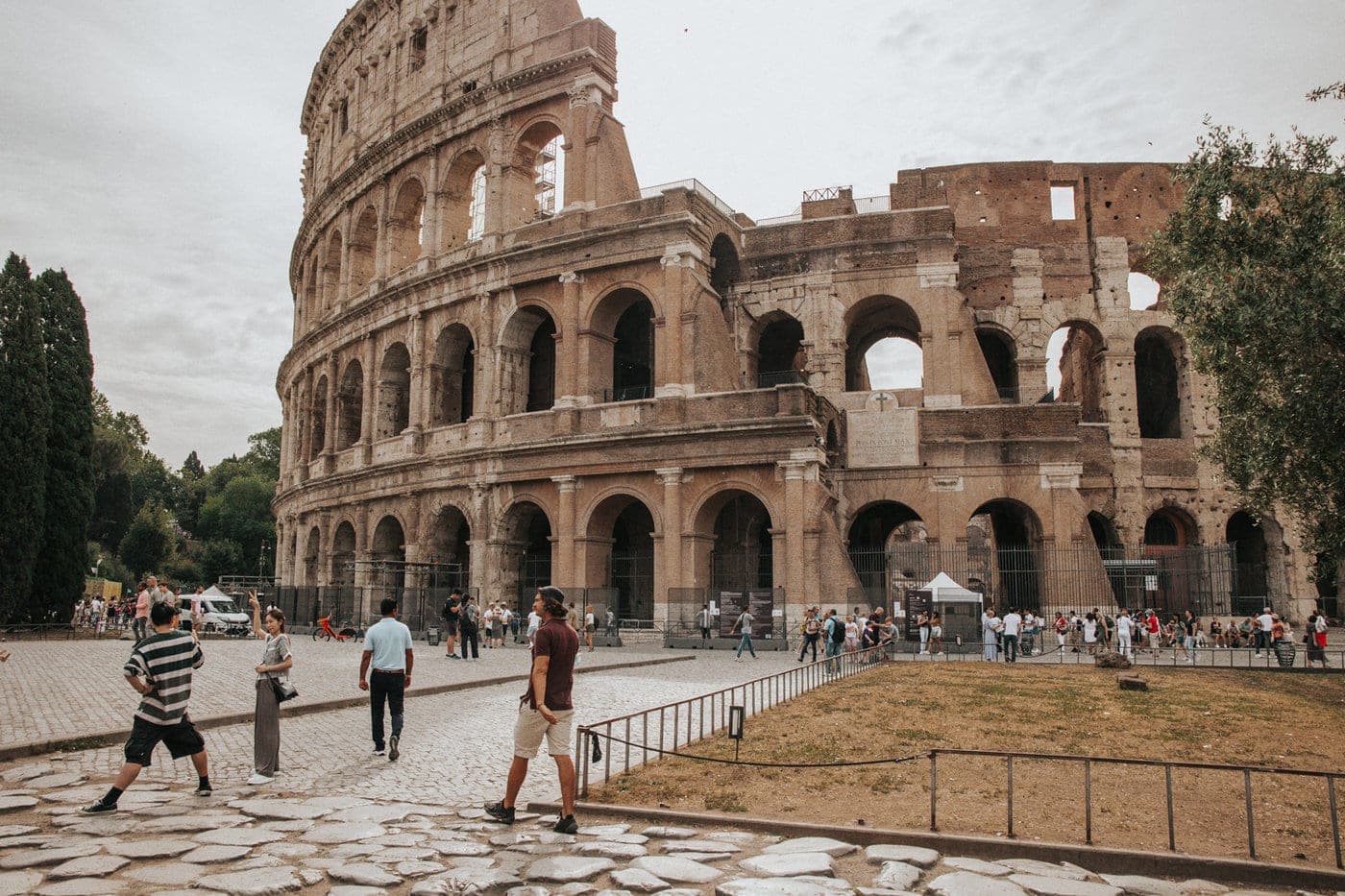
The Colosseum in Rome, Italy is probably the most iconic structure in the whole city, and you honestly can’t miss it, because it rises majestically right at the end of Via dei Fori Imperiali. This elliptical four-storey amphitheatre was built between AD 72 and 80 and could hold an incredible fifty thousand spectators in its day. I have to say that, personally, I don’t find it all that extraordinarily interesting, but that overwhelming scale simply brings you to your knees.
The basic rule for visiting is completely uncompromising: you must buy tickets online well in advance via the official site ticketing.colosseo.it (€18 plus a €2 booking fee). If you rely on buying on the spot, all you’ll get is disappointment, a “sold out” sign and endless waiting in the scorching sun. Tickets are released exactly thirty days ahead at nine in the morning and vanish before your eyes.
The basic route takes you to the first and second tiers, from where you get a lovely view into the exposed interior of the structure. Crowds on these main paths can be rather frustrating in season, though, as people constantly stop for selfies and in the summer months the air quite literally stands still. Even so, it’s an experience that’s an inseparable part of visiting Rome and one you shouldn’t leave without.
💡 Tip: Groups of men dressed as ancient gladiators operate right in front of the Colosseum. They try to press a plastic sword into your hands and pose for photos, and they’re very persistent. Ignore them completely and don’t make eye contact, because the moment you take a photo they’ll very aggressively demand up to €20 per shot.
2. The Colosseum’s underground (Hypogeum)
If you want to squeeze the most out of the Colosseum and avoid the worst crowds, I recommend paying extra for the special Full Experience ticket (it costs €24 plus a €2 booking fee and is valid for two consecutive days). It gives you not only exclusive access to the reconstructed arena floor, but also the descent into the dark underground, the so-called hypogeum. This is exactly where gladiators and wild animals waited in stifling heat for their fateful entrance before the roaring crowd.
This ticket also has the huge advantage of being valid for two whole days, so you can nicely spread out your exploration of antiquity. You don’t have to completely wear yourself out in a single afternoon rushing through the Colosseum and Roman Forum at once. You can calmly explore the amphitheatre one day and set off with fresh energy the next morning to explore the surrounding ruins.
The underground experience is far more intimate, the crowds thin out noticeably and you can calmly study the ingenious system of ancient lifts and trapdoors. Only when you walk through those narrow corridors and feel the dampness of the old stones do you fully grasp the technological genius of the ancient Romans, which worked like perfect clockwork two thousand years ago.
3. The Roman Forum (Forum Romanum)
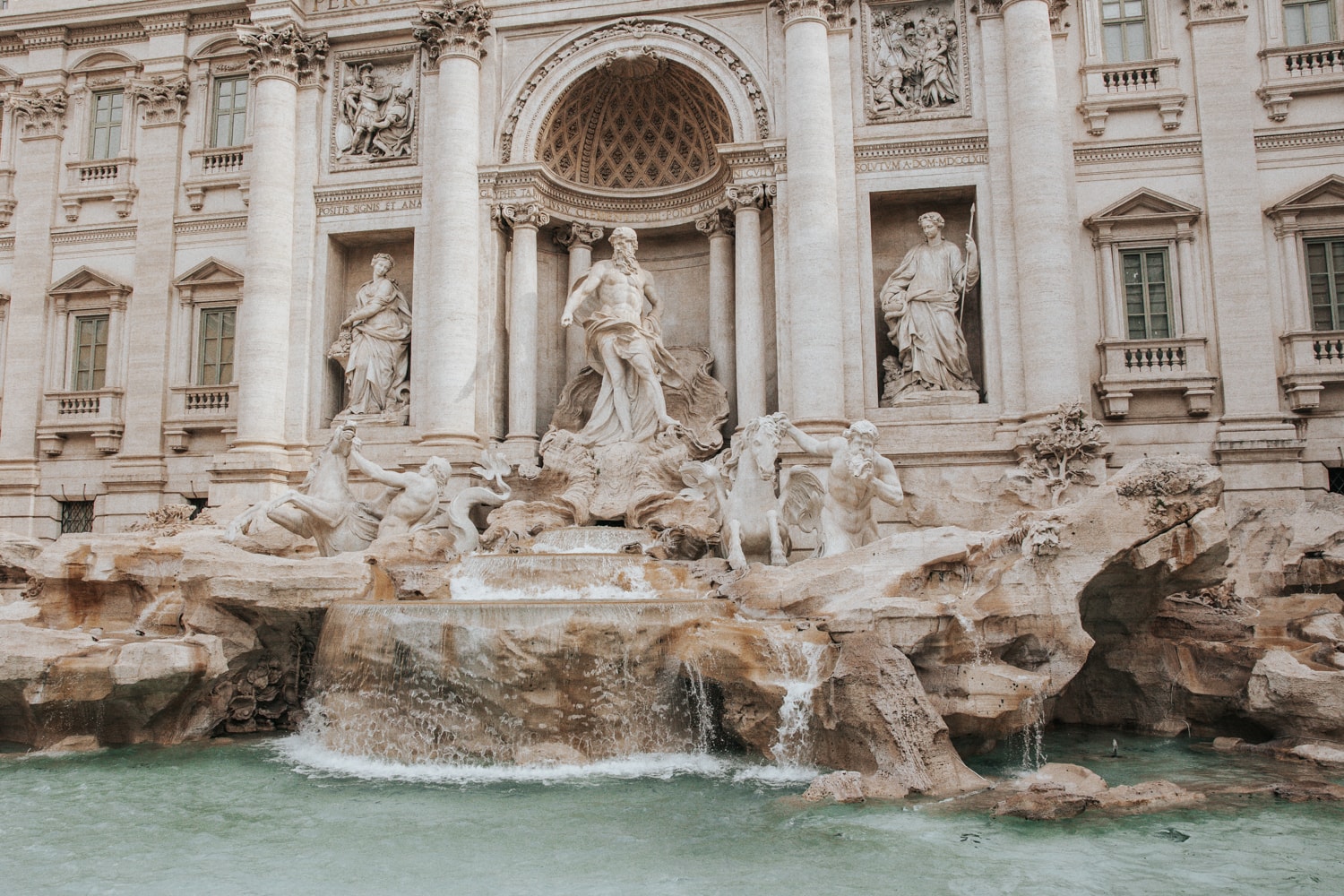
While the Colosseum was a place of bloody entertainment and games, the Roman Forum was the real political, religious and commercial centre of the entire vast empire. Grand triumphal marches took place here, the famous Cicero gave speeches here, and it was on this very spot that the body of the assassinated Julius Caesar was cremated. The marshy area, surrounded by the Palatine and Capitoline hills, was once the pride of the metropolis, with temples of white marble.
I recommend coming here first thing in the morning around nine o’clock to avoid the midday sun, which can make the visit really unpleasant. There’s almost no shade anywhere in the huge archaeological site, and the enormous blocks of marble heat up like giant radiators during the day. Sturdy footwear is an absolute must, because the surface is extremely uneven and walking on the ancient paving of the Via Sacra will really put your ankles to the test.
Don’t forget to bring an empty water bottle, which will quite literally save you here. Inside the grounds you’ll find several public drinking fountains from which ice-cold, refreshing water flows constantly and completely free, protecting you from dehydration. Tickets are part of the combined ticket with the Colosseum, but remember that you can enter the Forum at any time during your ticket’s validity — you’re not tied to a specific slot.
4. The Palatine Hill and the Farnese Gardens
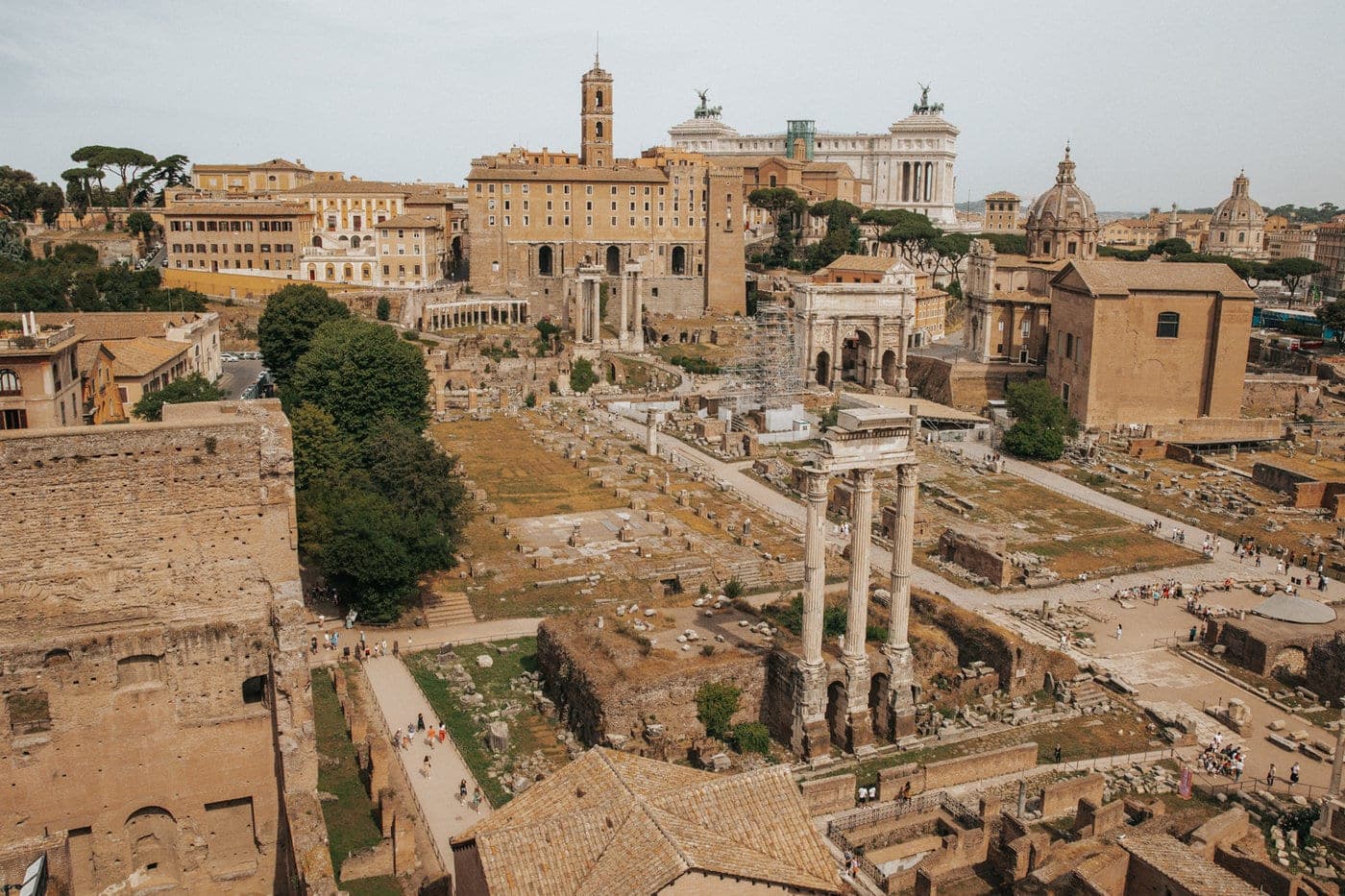
The Palatine is often listed as a separate tip in guidebooks, which can be quite confusing, because it’s physically connected to the Roman Forum and the exact same ticket applies. It’s the most significant of Rome’s seven hills, where, according to ancient legend, the city’s original settlement began and from where Rome gradually grew to its imperial scale.
In its heyday it was an exclusive spot, a kind of ancient Beverly Hills, where emperors and the wealthiest elite built their opulent marble palaces. The top of the Palatine is considered a true archaeological gem thanks to the large number of preserved remains of ancient buildings. Compared with the busy Forum down in the valley, there’s noticeably more peace here, and you’ll find fragrant pine groves that provide much-craved shade.
Definitely don’t miss the beautiful Farnese Gardens (Orti Farnesiani), built in the sixteenth century right on top of the ancient ruins. They offer one of the absolute most beautiful bird’s-eye views of the entire Roman Forum and the Colosseum. It’s an ideal spot to sit for a while, rest your aching feet and imagine the ancient bustle.
5. The Trevi Fountain under new rules
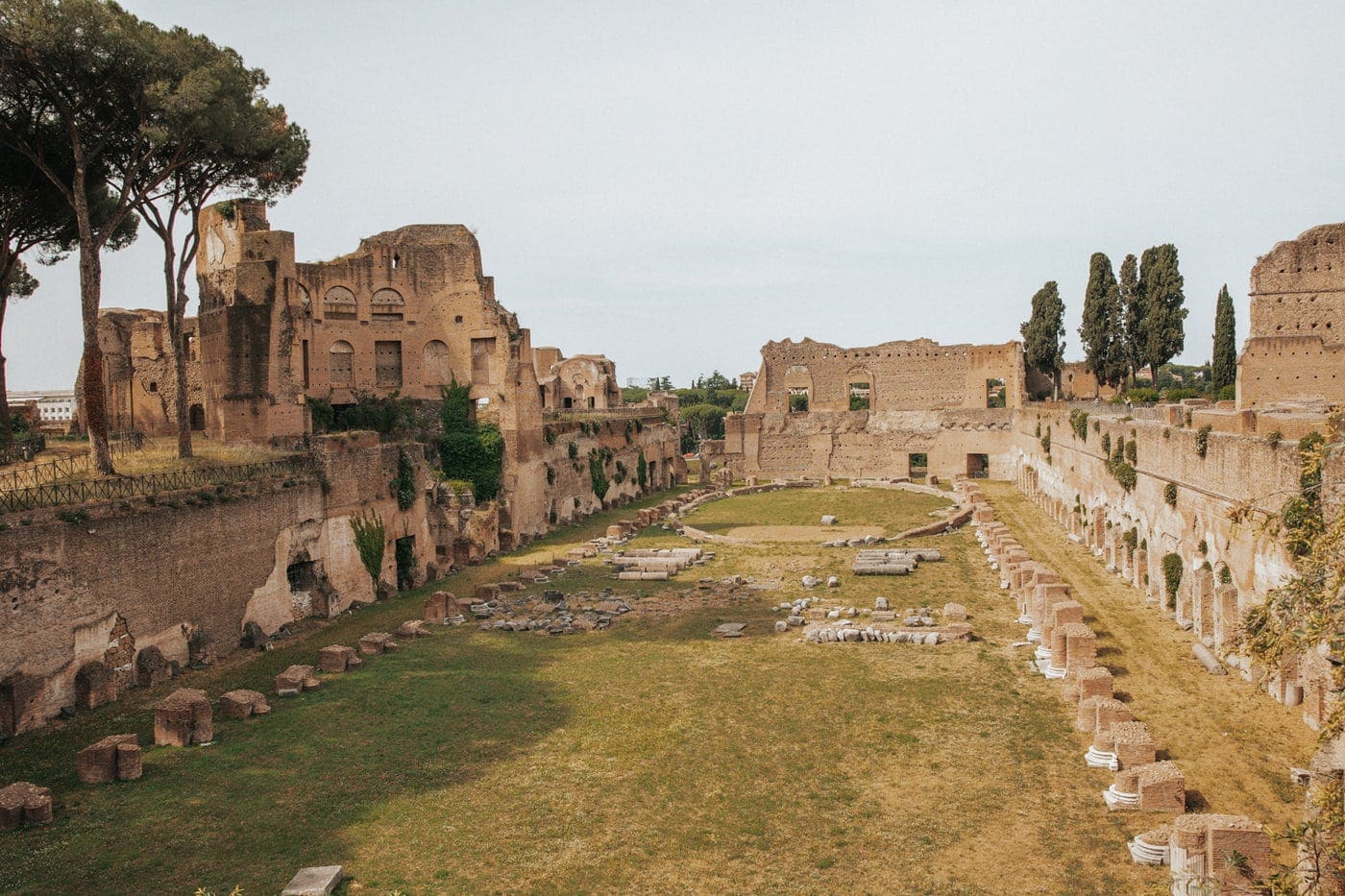
The Trevi Fountain should be one of your first stops, because it fills up incredibly fast with tourists from all over the world. The grandeur of this fountain, which spans the entire façade of the Palazzo Poli, takes your breath away, and its overwhelming majesty surprises me every time. Although I’m not the biggest fan of baroque, this masterpiece by the architect Nicola Salvi must captivate just about everyone.
But 2026 brought a truly fundamental change in how you visit this monument. Due to the extreme crush of tourists, the city introduced a €2 fee for all non-residents who want to walk down the steps right to the fountain’s pool. The area is now cordoned off and guarded by turnstiles that let in a maximum of four hundred people at a time, so that people don’t get squashed together.
If you don’t want to pay or queue, you can admire the fountain for free from the upper level of the square, but police with whistles won’t let you stand in one spot for long. The traditional ritual of tossing a coin over your left shoulder remains, of course. Try getting up early and arriving around seven in the morning, when you’ll hear the mighty roar of the water in total peace, before the first organised tours arrive.
6. The hidden underground of Vicus Caprarius
Most people head straight for the Pantheon after photographing the Trevi Fountain, with no idea that just a few steps away lies an absolute gem. In the inconspicuous Vicolo del Puttignani you’ll find the entrance to the Vicus Caprarius archaeological site, quite rightly nicknamed the City of Water.
It’s a fascinating labyrinth of underground corridors and ancient cisterns, through which crystal-clear water still flows from the two-thousand-year-old Aqua Virgo aqueduct. It’s this incredible aqueduct that to this day feeds the famous Trevi Fountain right above your heads. Descending into this underground works as a perfect escape from the crazy crowd up in the square.
A very pleasant coolness reigns here, there’s absolute silence, and all you’ll hear is gentle drops falling on the ancient bricks. Tickets cost just a few euros, and I recommend booking them in advance on their website, because the capacity of the underground spaces is fairly limited for safety reasons and it’s often sold out on site.
7. The Pantheon and its open dome
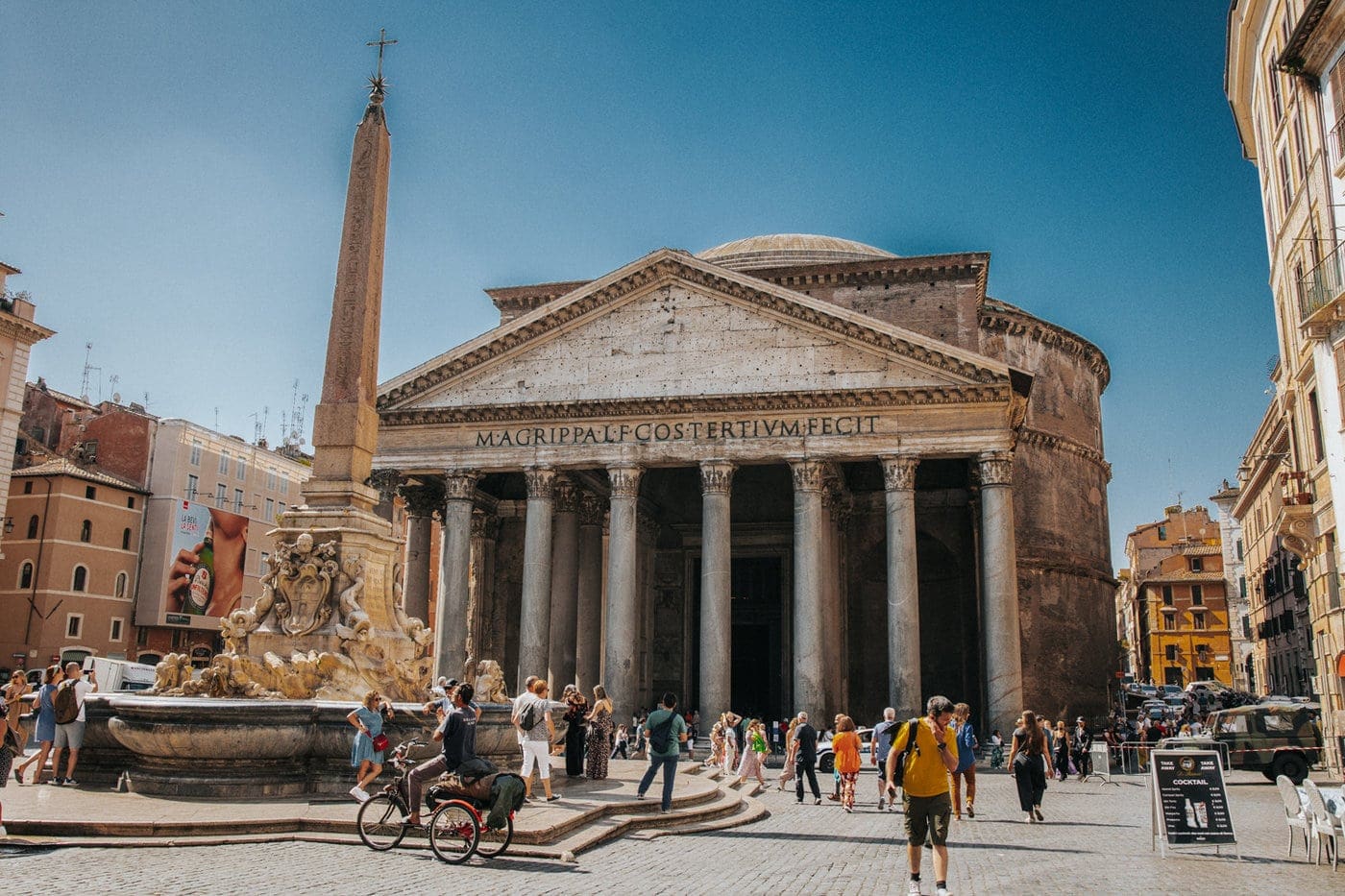
One of my very strongest childhood memories of Rome is tied to the Pantheon. I remember how we walked through the narrow lanes and then suddenly, out of nowhere, an enormous building with mighty granite columns rose before us — columns the Romans brought all the way from distant Egypt. The Pantheon is the best-preserved ancient building in the world and its huge concrete dome remains a fascinating architectural wonder to this day.
In the middle of the dome gapes a nine-metre circular opening called the oculus, the only source of natural light in the building. When it rains in Rome, water falls through the oculus straight onto the marble floor, from where an ingenious ancient system of discreet channels immediately drains it away. Inside you’ll also find the tomb of the Renaissance genius Raphael, where people come to pay their respects.
The days when you could simply walk into the Pantheon straight off the street are sadly gone for good. As of 1 July 2026, entry costs €7 (up from the original €5) and you must secure tickets through the official Ministry of Culture portal. EU citizens aged 18 to 25 pay €2, children under 18 and the first Sunday of the month are free. Trying to book a slot for the morning opening is the best option, because the air inside is still beautifully cool and the light from the oculus is magical.
8. Piazza Navona and the Fountain of the Four Rivers
From the Pantheon you can head straight to Piazza Navona, which to this day retains the unmistakable elongated shape of the ancient Stadium of Domitian, on whose ruins it was built. In the Middle Ages, jousting tournaments took place here, and during the seventeenth century the square was the setting for grand water festivals, when the surface was deliberately flooded and the nobility took rides in little boats.
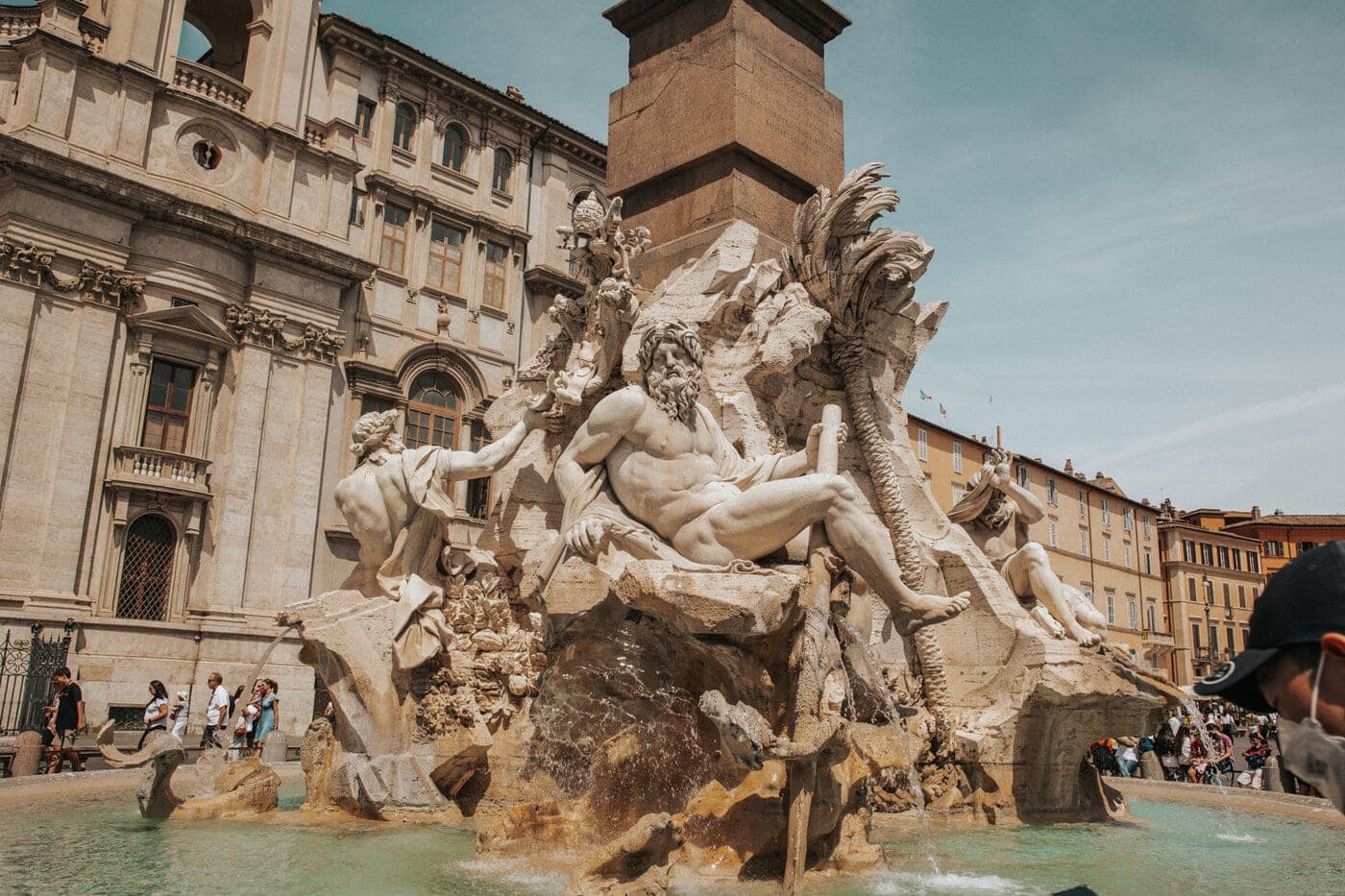
The space is dominated by Bernini’s stunning Fountain of the Four Rivers (Fontana dei Quattro Fiumi), which symbolises the great rivers of the four then-known continents. According to a mischievous urban legend, the statue representing the Río de la Plata covers its face in horror so it doesn’t have to look at the church of Sant’Agnese in Agone, designed by Bernini’s arch-rival Borromini. Romans love this funny story and enjoy telling it to tourists.
The square is full of street artists, caricaturists and musicians, so there’s a wonderfully lively atmosphere here, especially towards evening. From a food point of view, though, it’s an absolute minefield, so give the restaurants with views of the square a very wide berth. They represent the worst of Rome’s tourist traps, and an ordinary cappuccino sipped at a little table here can cost you a ridiculous €7.
9. The Vatican Museums
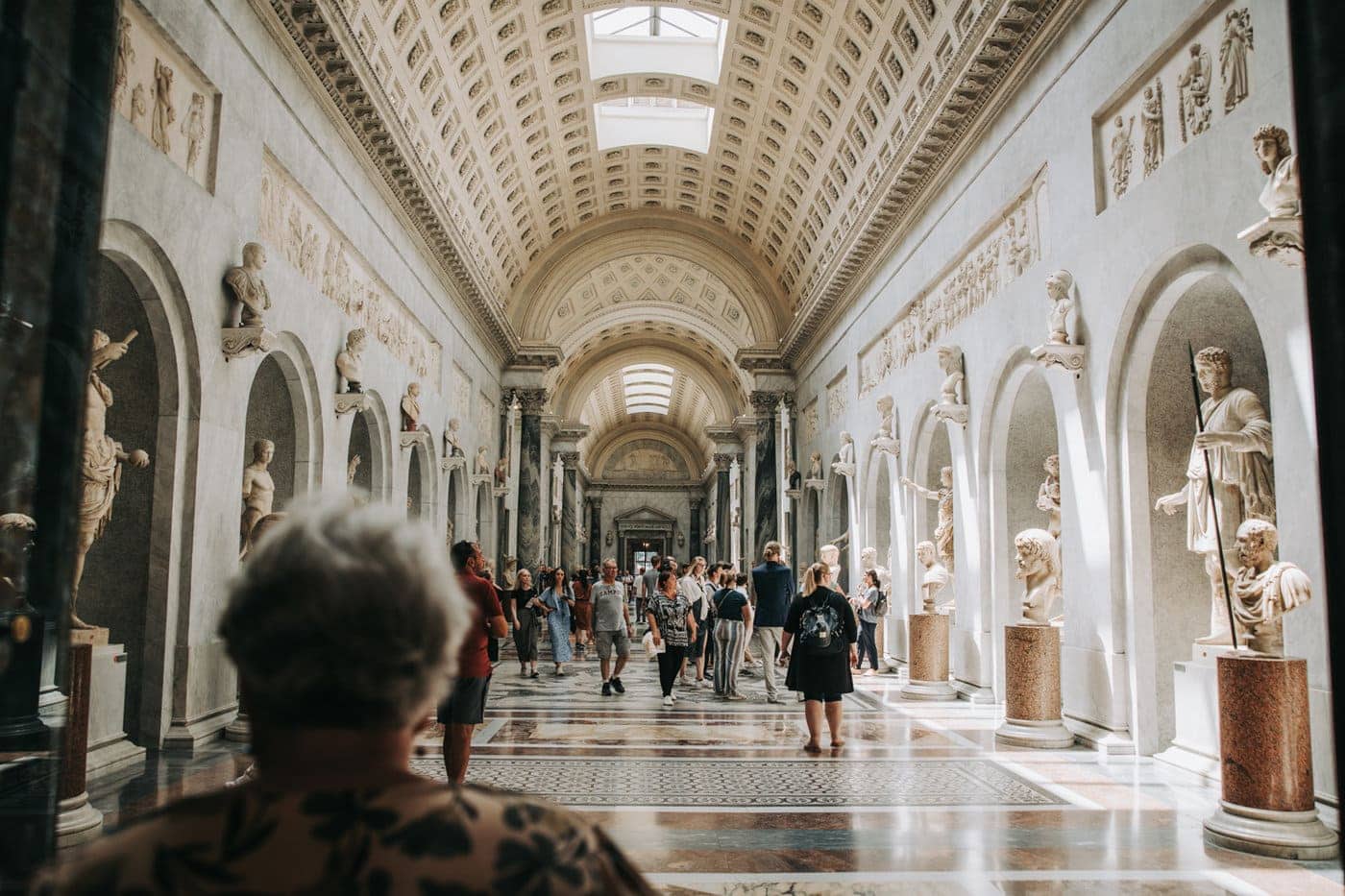
Set aside ideally one whole day for the Vatican and you won’t regret a single minute. The Vatican Museums are visited by millions of people a year and form a huge labyrinth of corridors, connected palaces and galleries, whose total tour route is just under ten kilometres long. You’ll find collections of incalculable value, from the ancient sculptural group of Laocoön and His Sons to the stunning Gallery of Maps with its beautiful gilded coffered ceiling.
With this in mind, you absolutely must buy your ticket in advance through the official Vatican website (it comes to around €25 including the fee), even sixty days ahead. We chose the afternoon hours to escape the worst of the heat, but the air conditioning in the museums couldn’t quite keep up. Experienced travellers therefore advise going right at the morning opening around eight o’clock, when the floors are freshly mopped and the air is far more breathable.
We opted for a tour with an audio guide, and although we were determined at first to listen to absolutely everything, we very soon realised it simply wasn’t within our powers. We’d have had to spend about ten hours there, and our feet were already slowly giving up. So pick only the exhibitions that genuinely interest you, so you don’t needlessly exhaust yourself in the first third of the enormous complex.
10. The Sistine Chapel
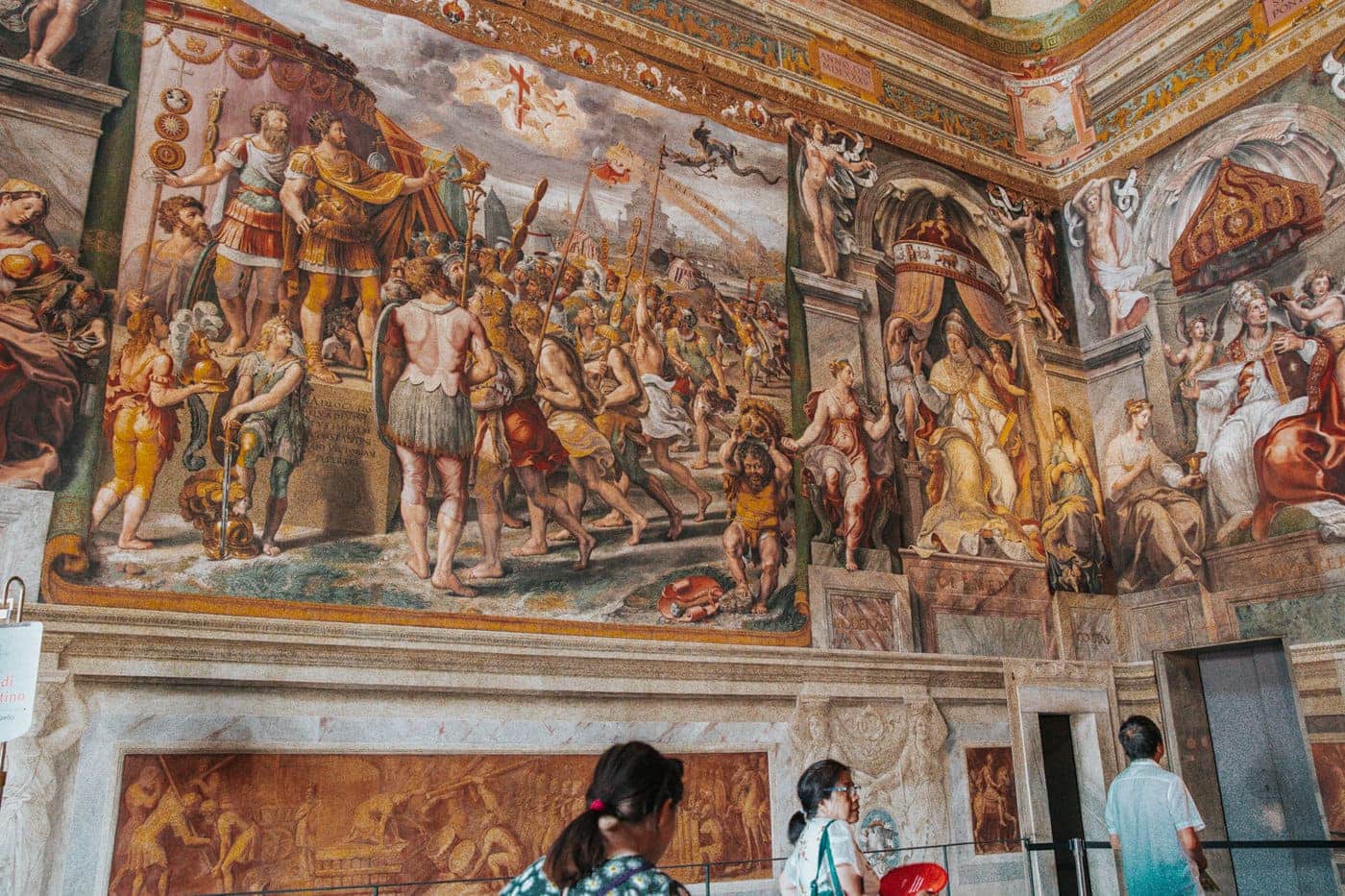
The Sistine Chapel is located at the very end of the Vatican Museums’ tour route, and there’s no official shortcut to reach it directly. We all know those famous ceiling frescoes by Michelangelo, who spent four years of hard work here on wooden scaffolding. But if you love art, you’ll definitely notice the beautiful side frescoes by Botticelli, Perugino and Ghirlandaio too.
This is a consecrated space whose main function is to gather the college of cardinals, who meet here for the secret election of a new pope, the so-called conclave. For this very reason, very strict rules apply and the ban on photography and filming applies absolutely to everyone. Guards constantly walk through the chapel, loudly reminding tourists to stay quiet, and if they catch you with a phone they’ll make you shamefully delete the photo in front of them.
💡 Tip: In the rear right corner of the chapel there’s an inconspicuous door that leads straight to the staircase to St Peter’s Basilica. Officially it’s reserved only for organised groups with a guide, but individual tourists occasionally manage to slip through with a large group. That way you save twenty minutes of walking and another exhausting wait in the security queue outside in the square.
11. St Peter’s Basilica
The poet Goethe once reportedly said that to step into St Peter’s Basilica is like stepping straight into eternity, and I completely agree with him. It’s the largest and most lavish Catholic building in the world, and its dimensions simply overwhelm you. Right at the entrance you’re greeted by Michelangelo’s marble Pietà, protected by bulletproof glass, and in the middle of the enormous nave rises Bernini’s monumental bronze baldachin.
Entry to the basilica itself is completely free, which logically attracts huge masses of people from all over the world. The main obstacle is the security check with airport-style metal detectors set up outside in St Peter’s Square. In season the snake of people commonly winds around the Egyptian obelisk and the wait can stretch to two hours, so if you want to avoid it, you’ll need to arrive around seven in the morning.
Don’t forget the relentless dress code, which the Swiss Guard and staff enforce without a shred of mercy. Shoulders and knees must be covered for both men and women. No tank tops, short shorts or summer dresses above the knee will get you through, even if you’ve stood for an hour in thirty-degree sun outside. Always pack a light, wide scarf in your backpack to elegantly cover yourself before entering.
12. Climbing the basilica dome
When visiting the Vatican, definitely don’t miss the fairly strenuous climb up to the dome of St Peter’s Basilica, which offers one of the absolute best views of the symmetrical St Peter’s Square and the meticulously kept Vatican Gardens. Entry to the dome is ticketed, and you’ll find the inconspicuous entrance on the right side of the basilica’s portico, just before the entrance to the main church.
You have two ways to get to the top. Either you can walk the whole way up the 551 steps for €8, or you can pay €10 to make things a little easier and take the lift up to the level of the basilica’s roof. But you always have to tackle the final 320 steps on foot, whatever you pay, because the lift simply doesn’t go any higher.
This final section leads through the shell of the dome itself, the walls noticeably lean inwards and the staircase narrows into a tight spiral, where you have to hold on to a thick rope. The space is quite claustrophobic and in the summer months there’s no air circulation, so you’ll work up a real sweat. Your reward, though, will be an unforgettable view from the upper gallery, where you’ll have all of Rome and the River Tiber laid out at your feet.
13. St Peter’s Square and the papal audience
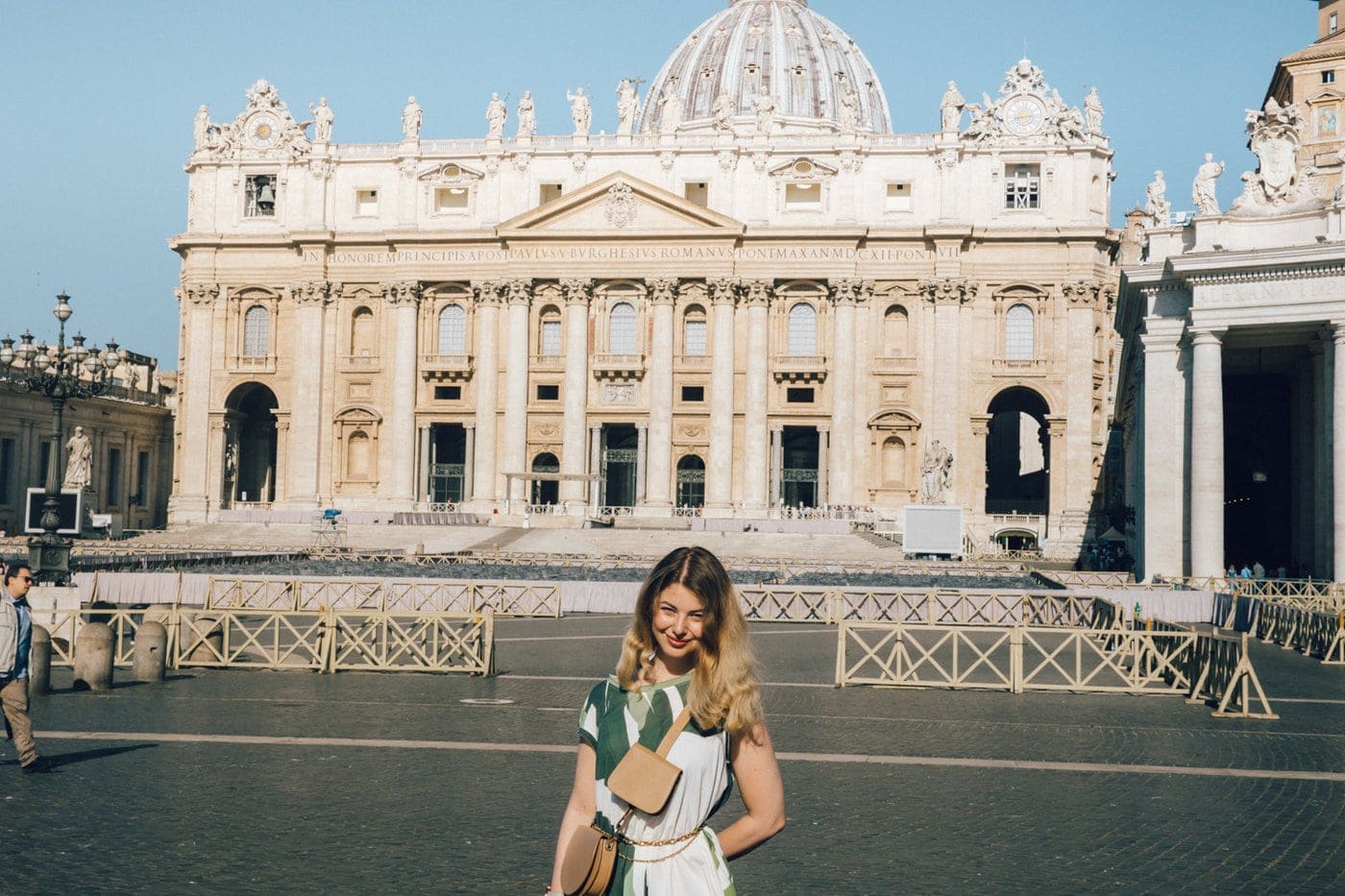
If you head to the Vatican, you definitely won’t miss the enormous St Peter’s Square (Piazza San Pietro). It’s a unique architectural work by Gian Lorenzo Bernini from the mid-seventeenth century, and its dimensions are simply fascinating, because it can hold up to four hundred thousand faithful. The square is bounded by a huge elliptical colonnade with hundreds of columns, meant to symbolise the open arms of the Church.
The centre of the square is dominated by a three-hundred-and-thirty-one-tonne, twenty-five-metre-tall Egyptian obelisk, which the Emperor Caligula had brought to Rome, and two beautiful symmetrical fountains. If you stand on the specially marked marble discs on the pavement between the obelisk and the fountains, an optical miracle occurs and the four rows of columns in the colonnade merge in perfect alignment into a single row.
Every Wednesday morning there’s a regular papal audience here, which has an unrepeatable atmosphere. Tickets are completely free and you can pick them up from the Swiss Guard the day before, or request them online. Even with a ticket, though, you’ll need to get up early and grab a spot at the wooden barriers by around half past seven in the morning to see the Holy Father in the popemobile up close.
14. Castel Sant’Angelo
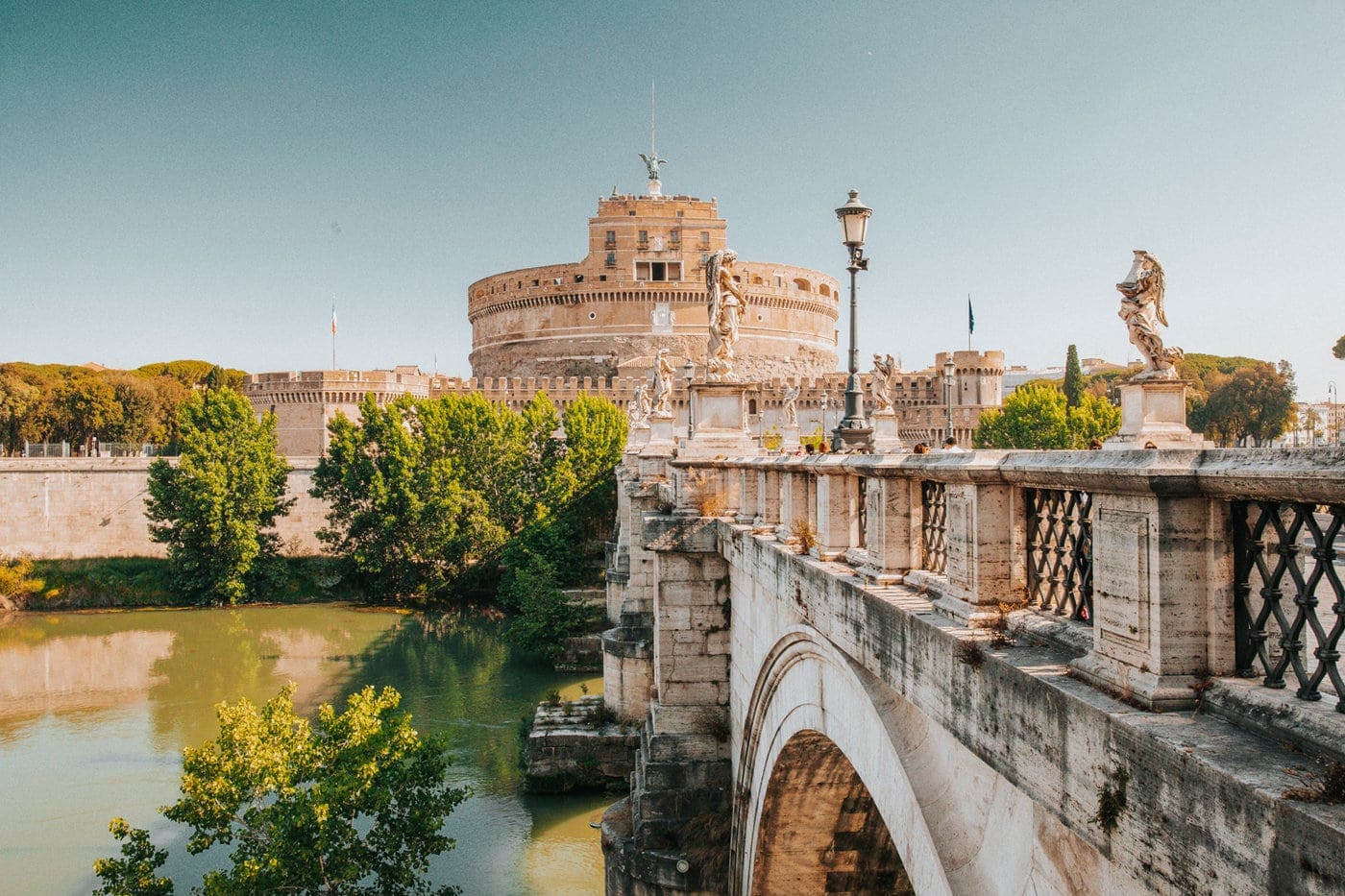
Castel Sant’Angelo is a monumental round structure that sits on the bank of the Tiber, just a short walk from the Vatican. It was originally built in ancient times as the mausoleum of the Emperor Hadrian, but over the turbulent centuries it was rebuilt into an impregnable fortress, a dark prison (where even the philosopher Giordano Bruno suffered) and, finally, a luxurious papal residence with beautiful frescoes.
It’s still connected to the Vatican by a secret elevated passage in the walls called the Passetto di Borgo, through which popes fled to safety in the past during the sacking of Rome. A visit to the castle is a fascinating journey through time, walking along the original ancient spiral ramp, peering into the dungeons and viewing the Renaissance chambers where history was written.
But the best part awaits you right at the top on the roof. From the upper terrace, right beneath the huge bronze statue of the Archangel Michael sheathing his sword, a fantastic 360-degree view of the whole city opens up. It’s an absolutely ideal stop after touring the Vatican, especially magical at sunset, when St Peter’s dome turns golden.
15. Ponte Sant’Angelo
Castel Sant’Angelo is reached directly by one of the most beautiful and iconic bridges in all of Rome. Ponte Sant’Angelo was originally built back in the second century AD to connect Hadrian’s mausoleum with the city centre on the other bank of the Tiber, and to this day it serves pedestrians only, which makes it a great place for a stroll.
What makes this bridge so exceptional is the ten dramatic marble statues of angels that line it on both sides. These statues were designed by the brilliant baroque sculptor Gian Lorenzo Bernini, and each of them holds one of the instruments of Christ’s Passion, such as the crown of thorns, the whip or the cross. Bernini himself carved two of them, but they were ultimately moved to a church to protect them from the weather, and copies stand on the bridge.
It’s one of the most photogenic spots in the city, where everyone wants to take a memorable photo with the castle in the background. If you want to enjoy the bridge without the hundreds of other tourists who crowd it all day, come either early in the morning with a coffee in hand, or late at night, when the angels are beautifully lit and reflected in the dark surface of the river.

16. The Spanish Steps
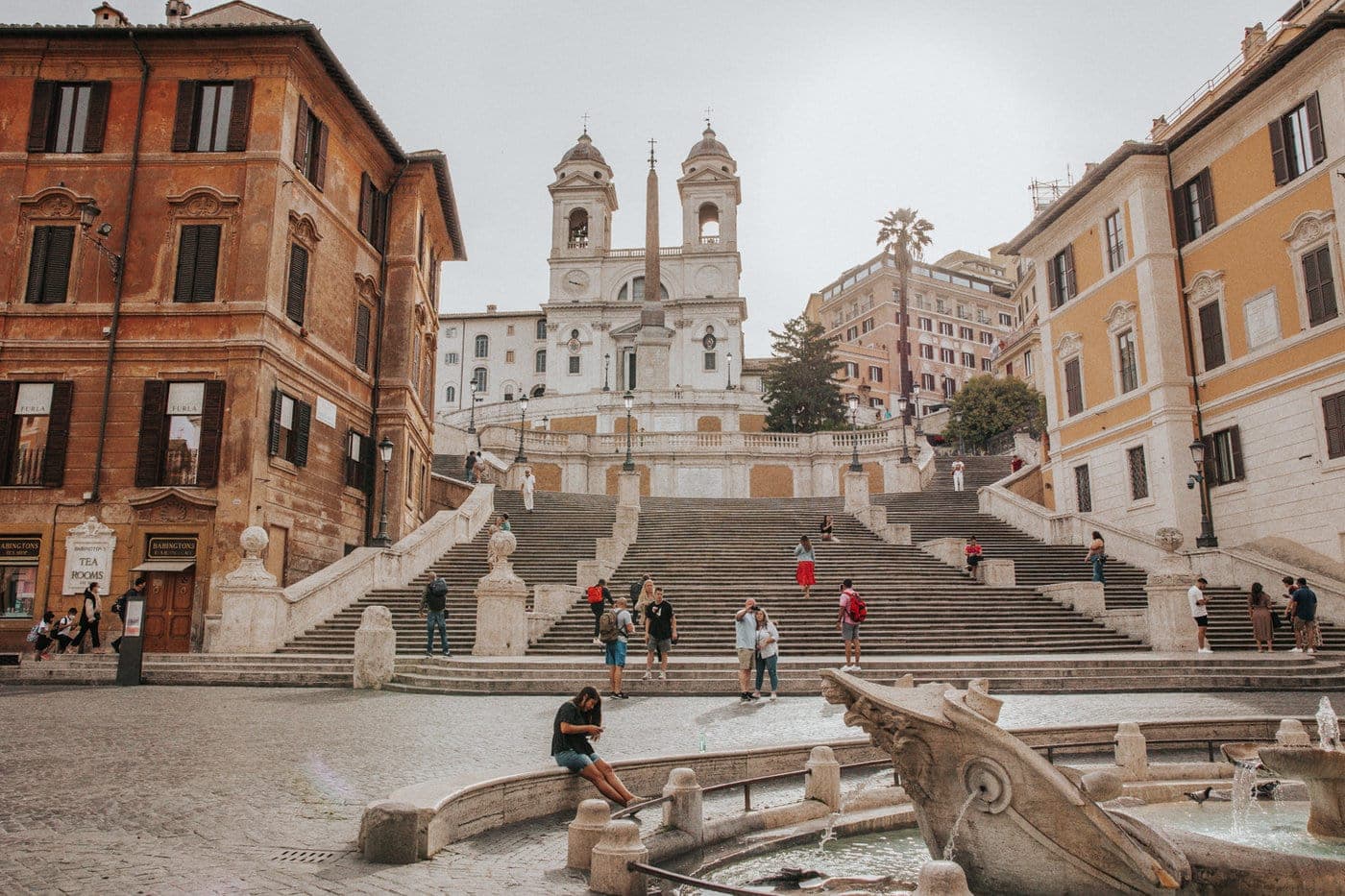
If you love the cult film Roman Holiday with Audrey Hepburn, you’ll definitely want to grab the perfect photo on the Spanish Steps. These elegant steps climb from Bernini’s Barcaccia (boat) fountain up to the French church of Trinità dei Monti, and in spring they’re beautifully decorated with hundreds of brightly coloured blooming azaleas, which looks absolutely stunning.
From a distance the steps look immensely tempting for a rest after a long walk, but definitely don’t do it. Since 2019 there’s been a strict ban on sitting on the marble steps and the police in hi-vis vests actively enforce it. If you so much as crouch down, you’ll immediately hear a whistle, and if you don’t comply, you face a fine of €250 to €400, which would make your trip pretty expensive.
In the little square below the steps, also watch out very carefully for pushy scammers. They often approach with a wide smile and within seconds try to press a rose into a woman’s hand or tie a bracelet on your wrist, claiming it’s a gift. As soon as you take it, they very persistently — and sometimes aggressively — demand money, so the only defence is absolute ignoring and zero eye contact.
17. The shopping district around Via Condotti
A short walk from the Spanish Steps, around the Piazza di Spagna, stretches the most prestigious shopping district in all of Rome. Today in streets like Via Condotti or Via Borgognona you’ll find the most luxurious fashion brands from Prada to Gucci, but this area was renowned long ago in history, and wealthy aristocratic travellers stopped here as part of their traditional Grand Tour of Europe.
In the Romantic era, famous artists and poets headed here. Greats such as John Keats, Lord Byron, Balzac and the composer Richard Wagner left their marks here. The house in which the young English poet Keats died sits right by the Spanish Steps and today serves as a very lovely, quiet museum dedicated to the English Romantics, where you can hide from the bustle of the street.
Even if you’re not planning to spend thousands of euros on a new Italian handbag, a walk through these streets is definitely worth it. The shop windows are beautifully arranged, people stroll around dressed to perfection, and you can soak up that true Italian elegance known as bella figura. Just watch the prices in the local historic cafés, because a coffee sipped at a little table with a view of the boutiques can set you back €5.
18. Romantic Trastevere
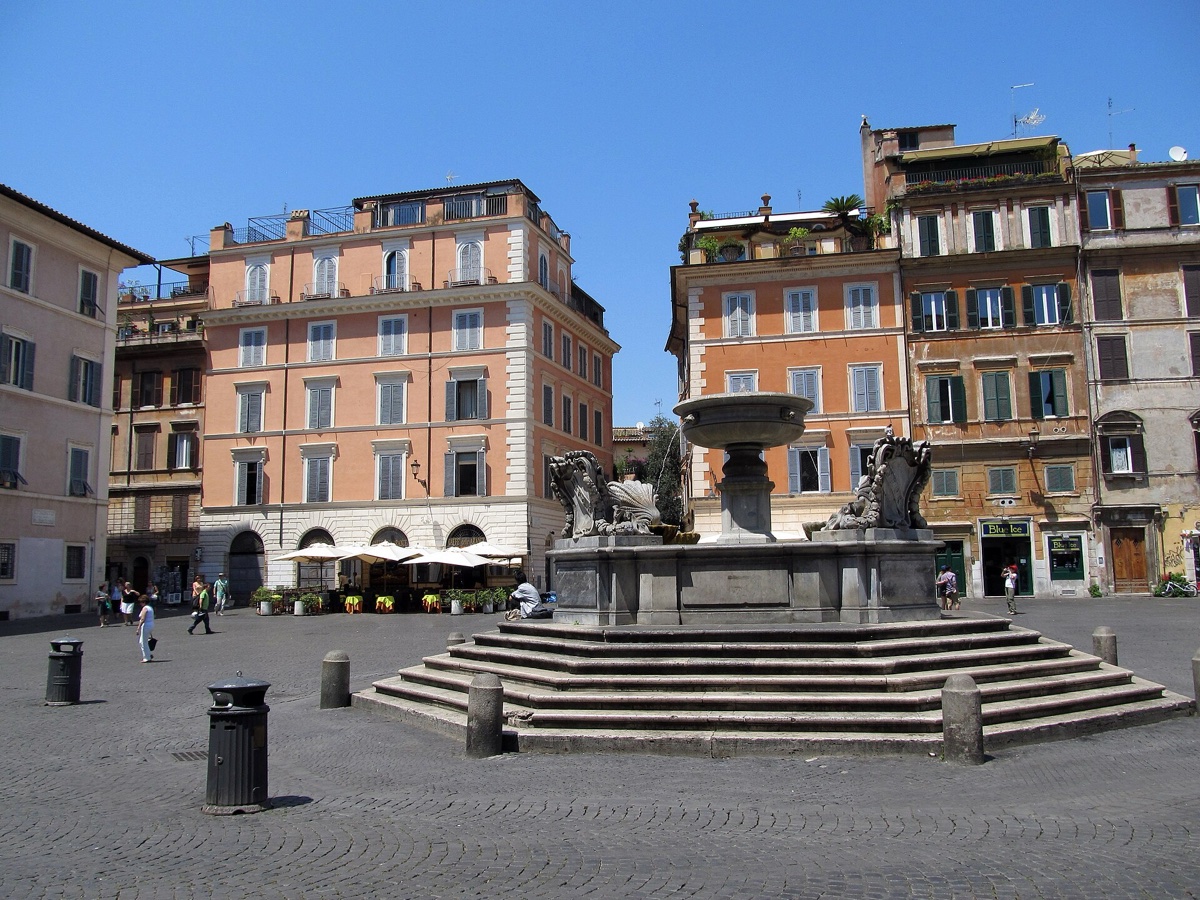
Trastevere is the absolute embodiment of the true, cinematic idea of Italy. You’ll find winding medieval lanes, laundry drying on lines between windows and old ochre houses covered in climbing ivy. During the day it’s relatively calm here, but as soon as darkness falls the district comes alive in the most incredible way, and around Piazza Trilussa you can barely get through.
It’s a renowned paradise for anyone who loves great food. In a tucked-away trattoria, Lukáš and I had absolutely perfect cheesy cacio e pepe and crispy fried supplì (rice balls with mozzarella), which is sheer heaven for vegetarians. Meat lovers, meanwhile, come from all over the world for the traditional Roman carbonara or amatriciana, which they make here probably better than anywhere else in the city.
Local restaurants tend to be packed after eight in the evening, so if you have a particular place in mind, it’s better to book in advance. If you want to soak up the atmosphere without the worst crowds of tourists with beers in hand, head to the southern part of the district towards the beautiful Basilica of Santa Cecilia, where there’s noticeably more peace and an authentic atmosphere.
19. The market at Campo de’ Fiori
Campo de’ Fiori is the only significant Roman square in the centre that isn’t dominated by a grand church, but by a dark, slightly ominous statue of the burned philosopher Giordano Bruno, who paid here in the seventeenth century with his life for his heretical ideas. Today this square is known mainly for its daily markets selling fresh fruit, vegetables, fragrant spices and flowers.
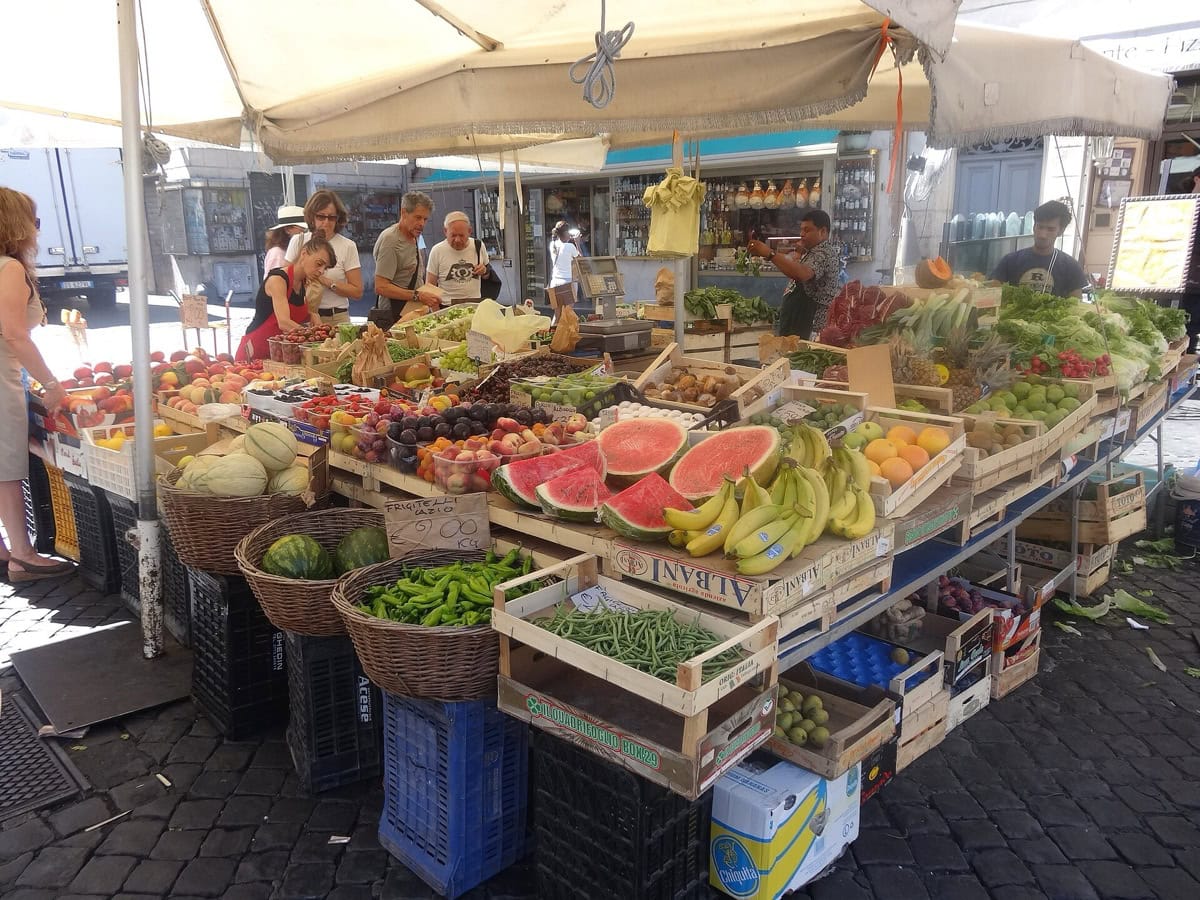
It’s supposedly one of the most authentic spots in central Rome, though in recent years you’ll also find plenty of stalls selling overpriced tourist packages of colourful pasta and limoncello. We arrived just in the nick of time, when we needed to cool off after a long walk, and we bought a wonderfully sweet slice of watermelon, though at €3 there was a bit too little of it for our taste. 😅
Definitely stop here at the traditional bakery Forno Campo de’ Fiori, which has been running since the nineteenth century, and buy a fresh pizza bianca. It’s an absolutely simple thin dough brushed only with quality olive oil and sprinkled with coarse salt. It sounds ordinary, but it’s an incredible treat you can grab and nibble on while strolling the surrounding lanes.
20. The Jewish Ghetto and artichokes
Just a short walk southeast of Campo de’ Fiori lies the former Jewish quarter, one of the very oldest in Europe. It’s an incredibly calm and charismatic area with a very troubled history, but today it’s one of the best culinary corners of the whole of Rome. The architecture here is different, the lanes are even narrower and the imposing building of the Great Synagogue towers over it all.
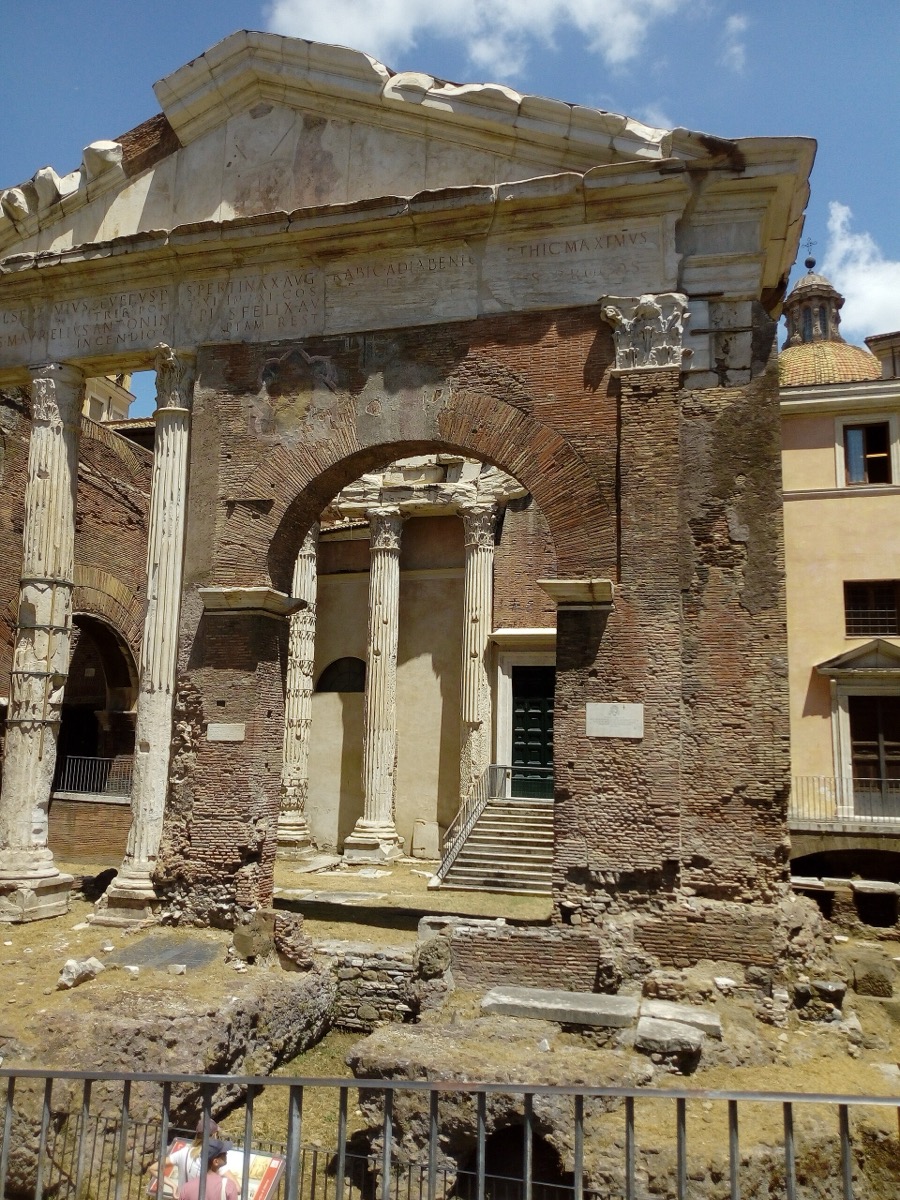
If you come here, you absolutely must try the local speciality — Carciofi alla Giudia, or Jewish-style artichokes. Lukáš and I tried them and it’s an absolute vegetarian delicacy. The whole artichoke is flash-fried twice in hot olive oil, so its leaves open up like a golden flower and become incredibly crispy, while the centre stays beautifully soft.
While walking through the ghetto, don’t forget to reach the little Piazza Mattei, where the beautiful Turtle Fountain (Fontana delle Tartarughe) from the sixteenth century hides. It depicts four young men raising their arms up and gently nudging little bronze turtles into the water. It’s one of the most adorable fountains in the city, and unlike the Trevi you won’t be crammed in with thousands of people.
21. Piazza del Popolo
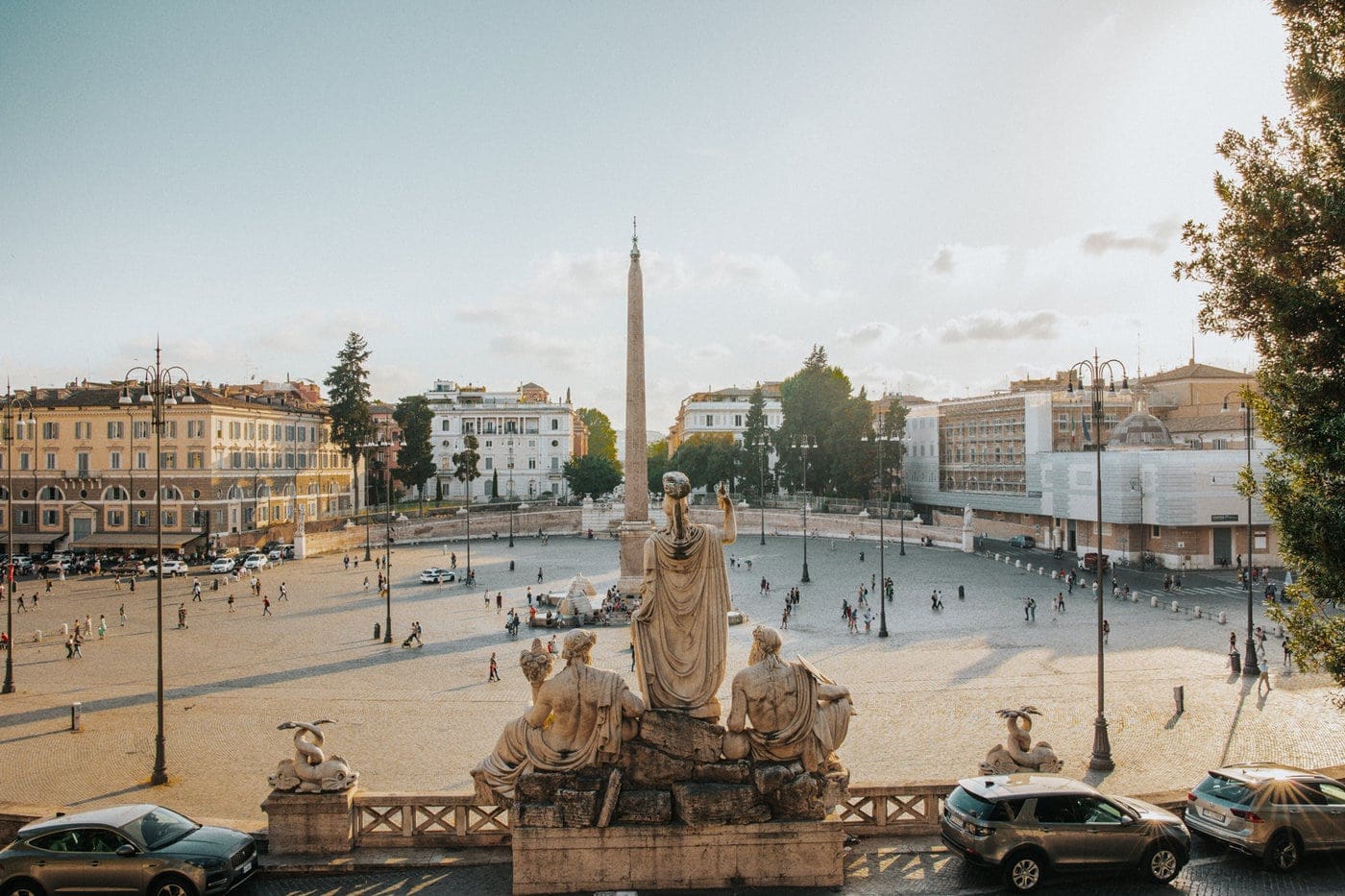
Piazza del Popolo, translated as the People’s Square, is one of the most spacious and impressive squares in all of Rome. It served as the main northern entrance to the city for all the pilgrims and visitors who came here for centuries along the old Roman road Via Flaminia. Today it’s a perfect starting point for exploring the centre, because three main arteries — the so-called trident — fan out from here.
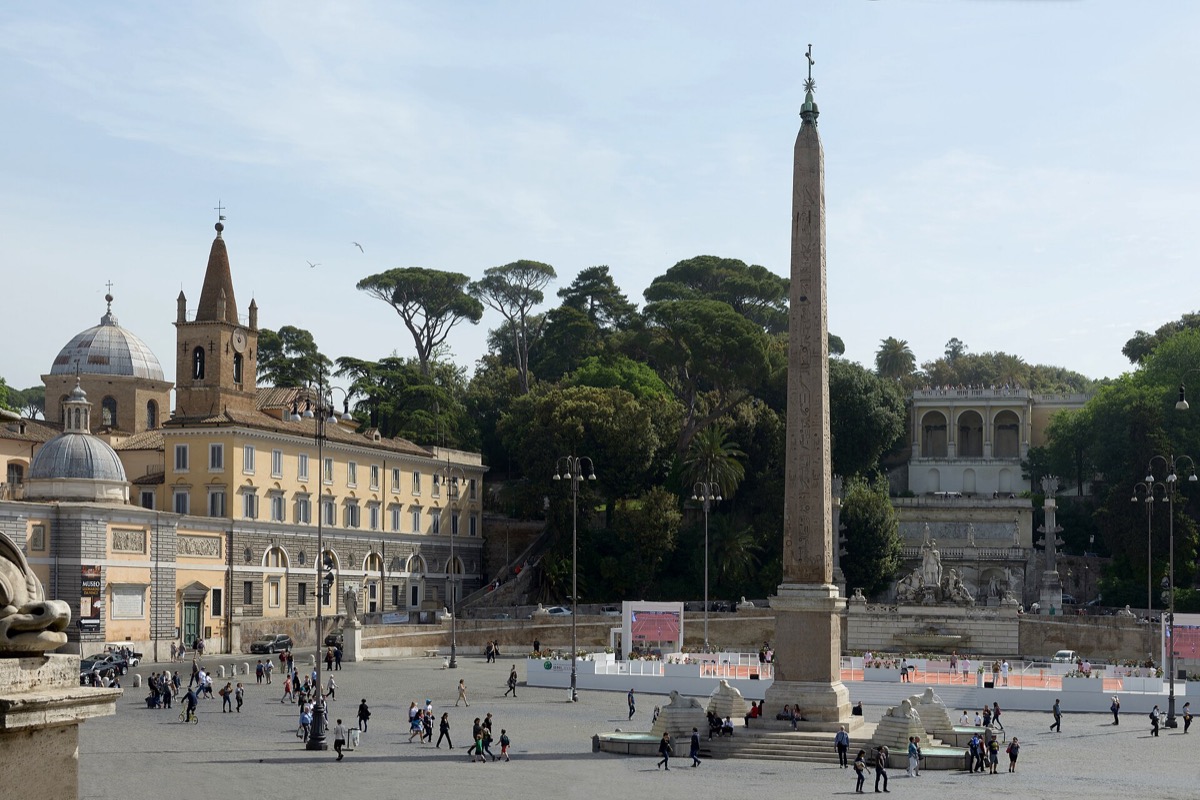
The centre of the square is dominated by a huge Egyptian obelisk, which dates from the thirteenth century BC and originally stood in the ancient Circus Maximus before being moved here. The square is surrounded on all sides by cafés, it’s always very lively, and on its southern side stand two almost identical baroque churches that create a beautiful symmetry.
Inside the inconspicuous church of Santa Maria del Popolo, standing right by the old city gate, a real artistic treasure is hidden. In a side chapel hang two absolutely stunning canvases by the master of chiaroscuro, Caravaggio (the Crucifixion of St Peter and the Conversion of St Paul). Entry to the church is free — just bring a few coins to drop into the machine so these brilliant paintings light up for a moment.
22. The Pincio gardens (Pincio)
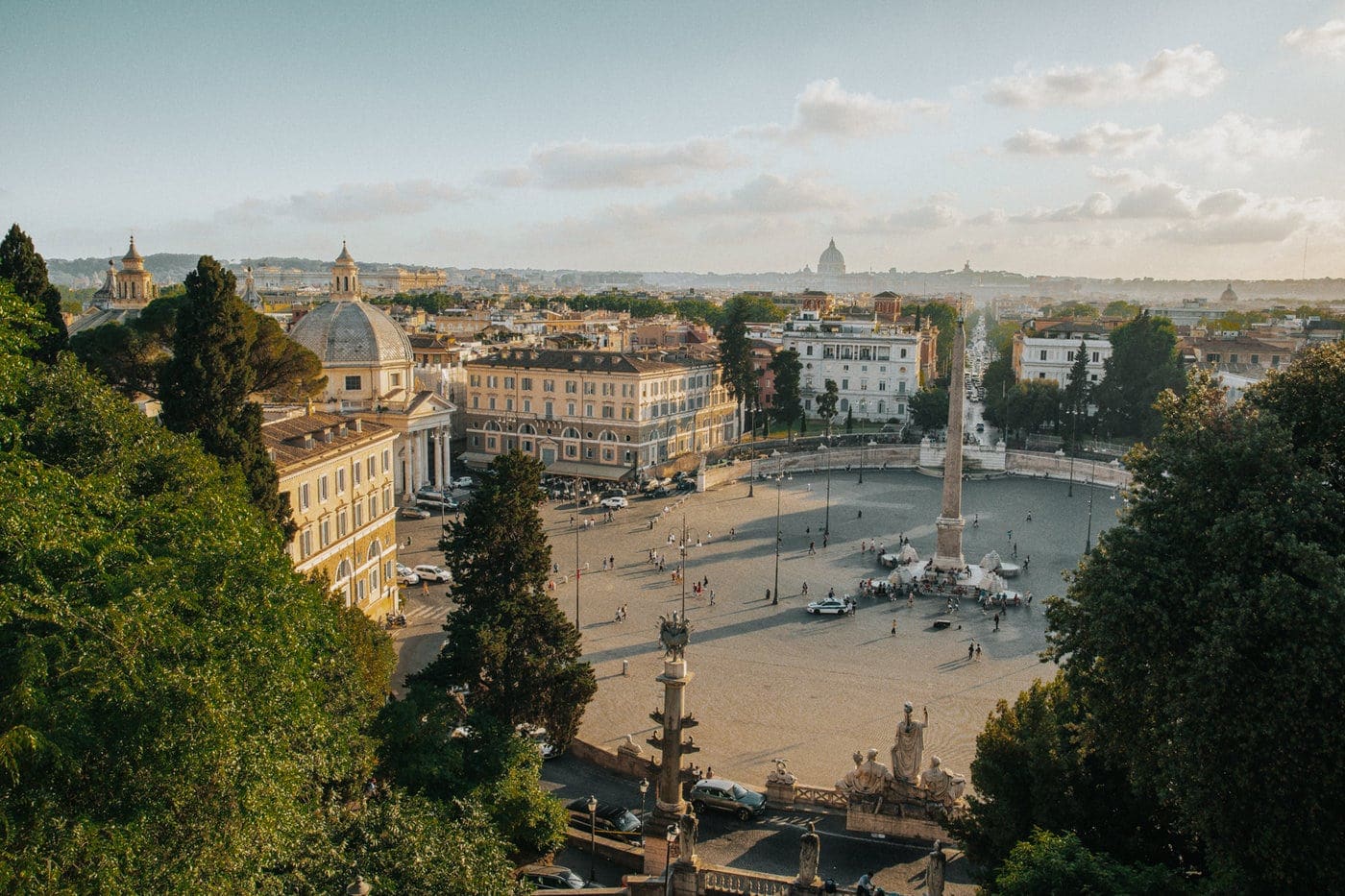
When you stand in Piazza del Popolo and look east, you’ll see monumental rows of green terraces rising high above the city. These are the Pincio gardens, one of the most beautiful and romantic parks in Rome. The climb up the steps is a bit of a slog in the summer heat, but the reward at the top is worth every drop of sweat.
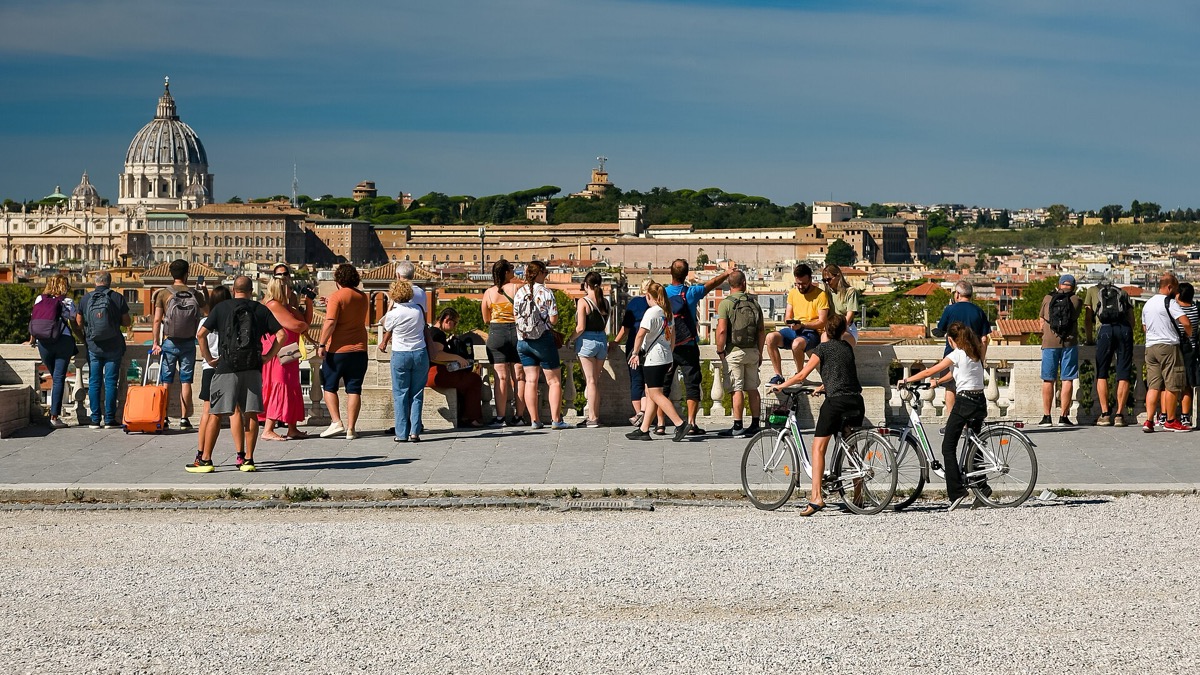
From the spacious viewing terrace, the Terrazza del Pincio, a wide view opens over the whole square lying right below you, over a sea of terracotta roofs and the majestic dome of St Peter’s Basilica towering on the horizon. Ask any local Roman where to take a partner on a date and this terrace will surely rank very high on their list.
The best time to come here is undoubtedly late afternoon just before sunset. The sky turns orange and purple, street musicians start playing their guitars and the city begins to prepare for the evening. There are plenty of benches, the shade of tall trees, and you can rest here for a while from the crazy, busy traffic down in the streets.
23. Villa Borghese and its park
The Pincio gardens flow seamlessly into the vast Villa Borghese park, which works as the green lungs of all of Rome and offers a perfect escape from the noise of the big city. It’s an absolutely perfect refuge for families with children who’ve run out of patience with ancient ruins and need a bit of a run around in nature.
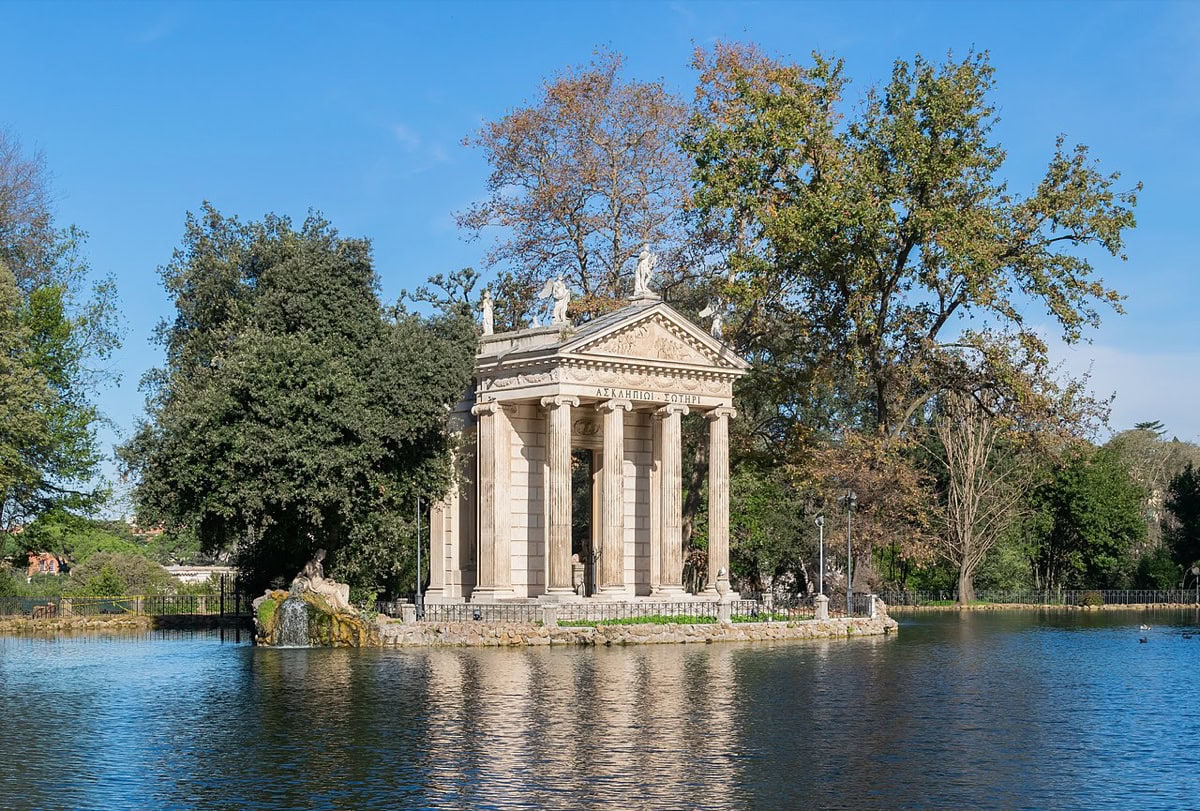
Here you can shelter your head from the scorching sun under the wide crowns of pines, rent pedal quad bikes for the whole family or take a ride in a little wooden boat on the artificial lake by the temple dedicated to the god Aesculapius. A walk through these shady avenues is a real balm for the soul and tired feet in summer.
Wandering the park, you’ll also come across interesting technical curiosities, such as the old water clock from the nineteenth century, which still works on the principle of flowing water. On the edge of the whole green complex you’ll also find the Bioparco zoo, another great tip if you’re travelling with younger children and want to spice up the historic programme.
24. The Borghese Gallery
Right in the middle of the park hides the beautiful, eponymous Borghese Gallery (Galleria Borghese), which holds one of the absolute best collections of Renaissance and baroque art in the entire world. In the seventeenth century, Cardinal Scipione Borghese gathered stunning works here that art lovers from every corner of the planet now come to see.
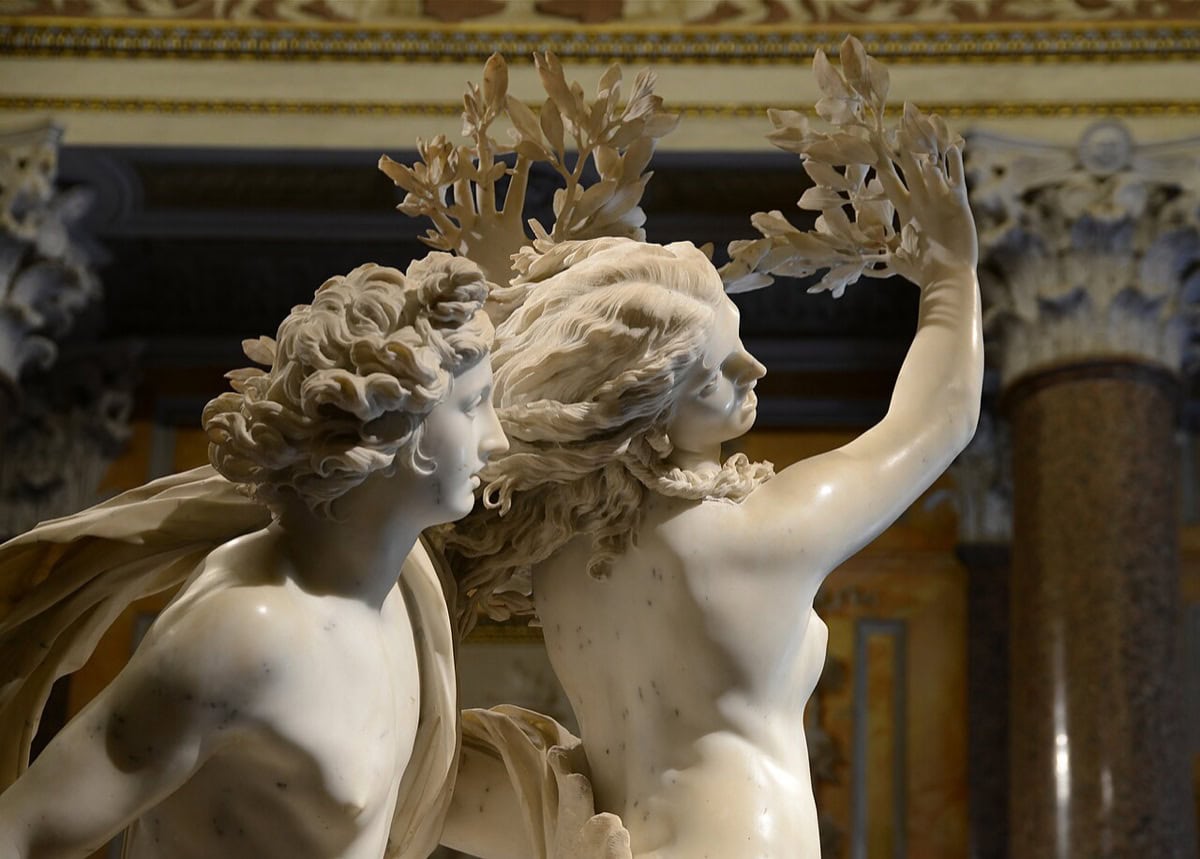
Here you’ll see breathtaking Bernini marble sculptures, such as Apollo and Daphne or the Rape of Proserpina, where the stone beneath the hand of the god of the underworld looks like soft human flesh, as well as dark, brilliant canvases by Caravaggio. But there’s no last-minute decision here, because the gallery strictly does not admit walk-in visitors and booking tickets in advance is absolutely mandatory (a ticket costs around €18).
Tours run in strict two-hour slots and capacity is limited to just 360 people, so you’re never crammed inside and you get real peace to enjoy the finest art. After two hours pass, though, the gallery staff uncompromisingly usher you out to make room for the next group, and tickets vanish from the official website several weeks ahead, so you mustn’t dawdle with your purchase.
25. The National Gallery (GNAM)
A short walk from Villa Borghese, on the northern edge of the park, you’ll find the huge white building of the National Gallery of Modern Art (Galleria Nazionale d’Arte Moderna, GNAM for short). Most tourists come to Rome solely for antiquity and baroque, so they often overlook this modern museum, which is a huge shame if you have even a little interest in newer artistic movements.

Here you’ll find the largest collection of modern Italian and foreign art in Italy from the nineteenth and twentieth centuries. On the tour you’ll see fantastic works by greats such as Vincent van Gogh, Gustav Klimt, Paul Cézanne, Claude Monet and Jackson Pollock, all beautifully arranged in spacious halls.
A huge advantage of this gallery is the total peace and space. Unlike the packed Vatican Museums, you won’t be jostling with crowds of people holding umbrellas over their heads. You can stroll quietly through the bright halls, enjoy the reliably working air conditioning and admire the art entirely at your own pace, without feeling like someone is constantly pushing you forward.
26. The Mouth of Truth (Bocca della Verità)
Another spot hugely popularised by the romantic film Roman Holiday sits in the portico of the inconspicuous church of Santa Maria in Cosmedin, near the Tiber. It’s a marble mask of a face weighing over a tonne, which probably depicts a pagan god of the seas or, in ancient times, served as a decorated cover for an ancient drain.
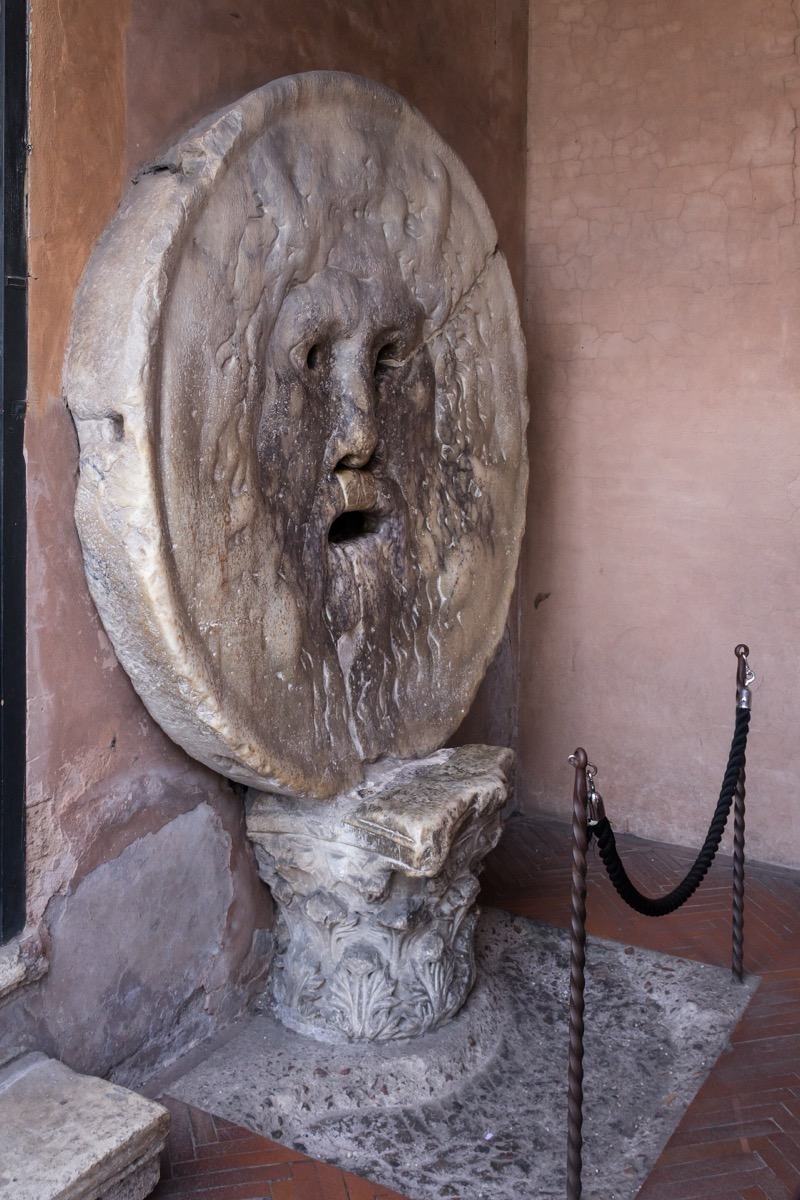
Today this mask has become a huge tourist attraction, mainly thanks to a medieval legend that turned it into the world’s first lie detector. According to the tale, the Mouth of Truth bites off the hand of any liar who places it into the half-open stone mouth, which the film heroes Audrey Hepburn and Gregory Peck famously tried with a smile years ago.
If you want to try this fun ritual for yourself and take the famous photo, be prepared for a fairly long queue, which forms in front of the church essentially all day. Placing your hand in is free, but a small donation is expected in the collection box at the church entrance — which, by the way, hides beautiful medieval mosaics and is definitely worth a short visit.
27. The Testaccio district and traditional cuisine
If you’ve had enough of ancient ruins and long to experience the real, unvarnished local life, head beyond the Aventine Hill to the old working-class district of Testaccio. You won’t find many classic monuments here, and you’ll have to reach it from the centre by metro, but for anyone who loves Italian cuisine it’s an absolute must.
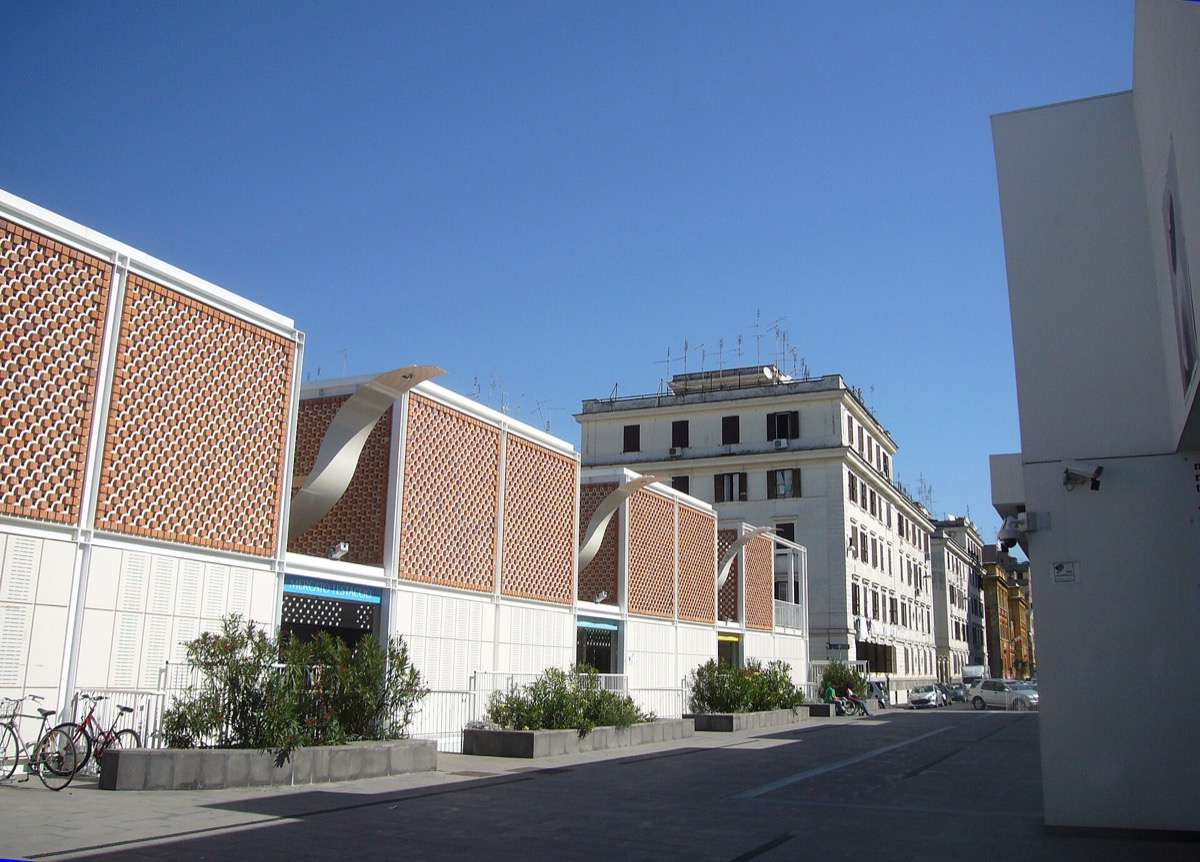
The heart of the whole area is the modern glass-fronted market Mercato di Testaccio, which comes incredibly alive every day. Locals buy fresh vegetables here, chat across the counters, and you can grab great food to go at the stalls and wash it down with wine poured into plastic cups for a few euros.
Lukáš and I treated ourselves here to perfect cheesy cacio e pepe and sweet maritozzo (a traditional Roman bun filled with a huge amount of whipped cream), while for lovers of the classics it’s the centre of offal dishes. Traditional Roman cuisine actually originated right here by the old slaughterhouses, and tourists from all over the world come to try specialities like tripe trippa alla romana or oxtail — though we happily resist these meaty ones with a smile. ☺️
In the evening, duck into some noisy local pizzeria where no one will speak English to you and the menu won’t have colourful pictures. Right here, far from the overpriced tourist traps near the Vatican, you’ll experience the real Rome you’ll want to keep coming back to.
Map of points of interest for your phone
Rome beyond the crowds: 13 places tourists don’t go
Once you’ve ticked off the compulsory classics, the more fun part begins. This is the Rome that locals know better than tourists — and yet most of these places are within walking distance of the stops where the crowds pile up. A few of them are even completely free.
28. Basilica of San Clemente and its three layers of history
If you love history and want to experience first-hand how Rome literally layered itself over the centuries, this place will absolutely thrill you. The Basilica of San Clemente doesn’t look striking from the outside, but inside it hides an incredible time machine. First you enter a beautiful twelfth-century church full of stunning medieval mosaics and lovely marble decoration.
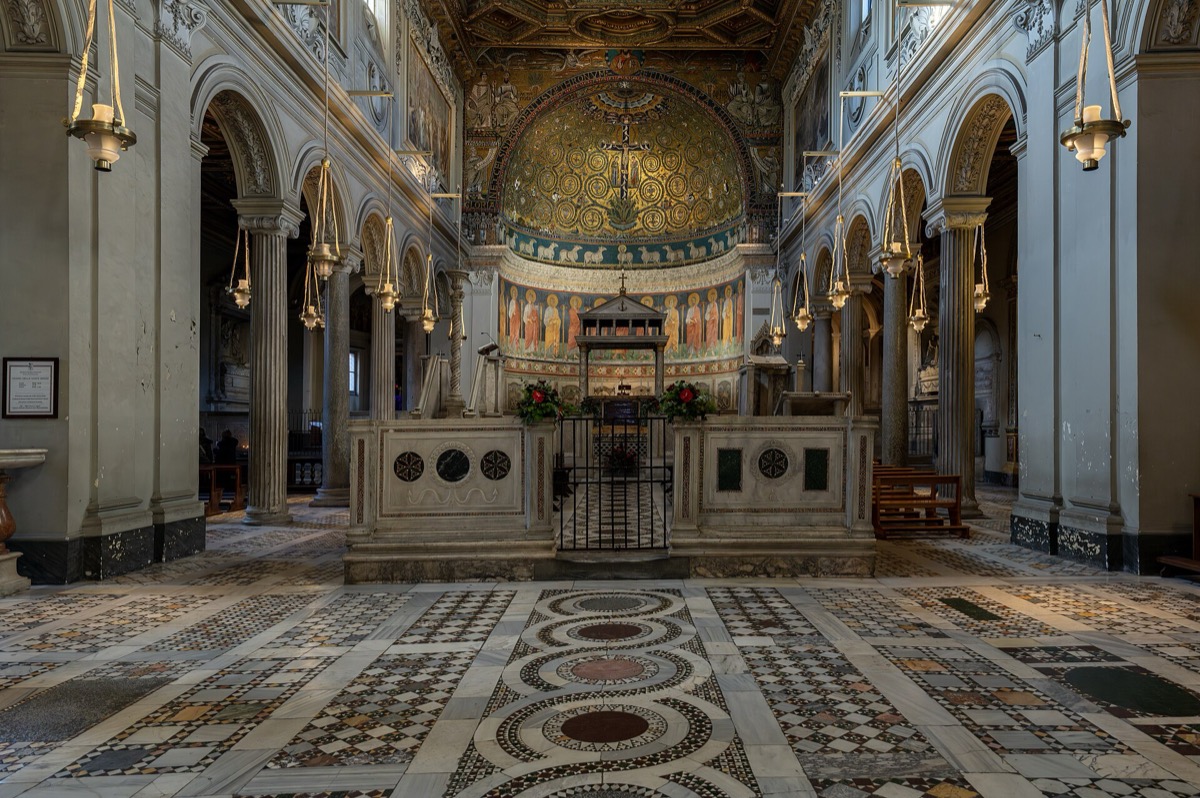
But that’s just the beginning, because the main attraction is hidden underground. As soon as you descend the stairs, you find yourself in an older, fourth-century basilica that was buried for long ages. And if you dare to go even deeper, you’ll reach the first century AD, where you can explore an ancient Roman house and a mysterious pagan temple of the god Mithras. It’s absolutely fascinating to hear an underground spring flowing, darkly murmuring here for thousands of years.
Set aside about an hour to explore all three levels. 💡 Tip: Entry to the underground is ticketed and I recommend buying tickets online in advance on the official website to avoid the wait. The church is only a short walk from the Colosseum, so you can easily reach it after your visit there.
29. The Aventine Keyhole and the Orange Garden
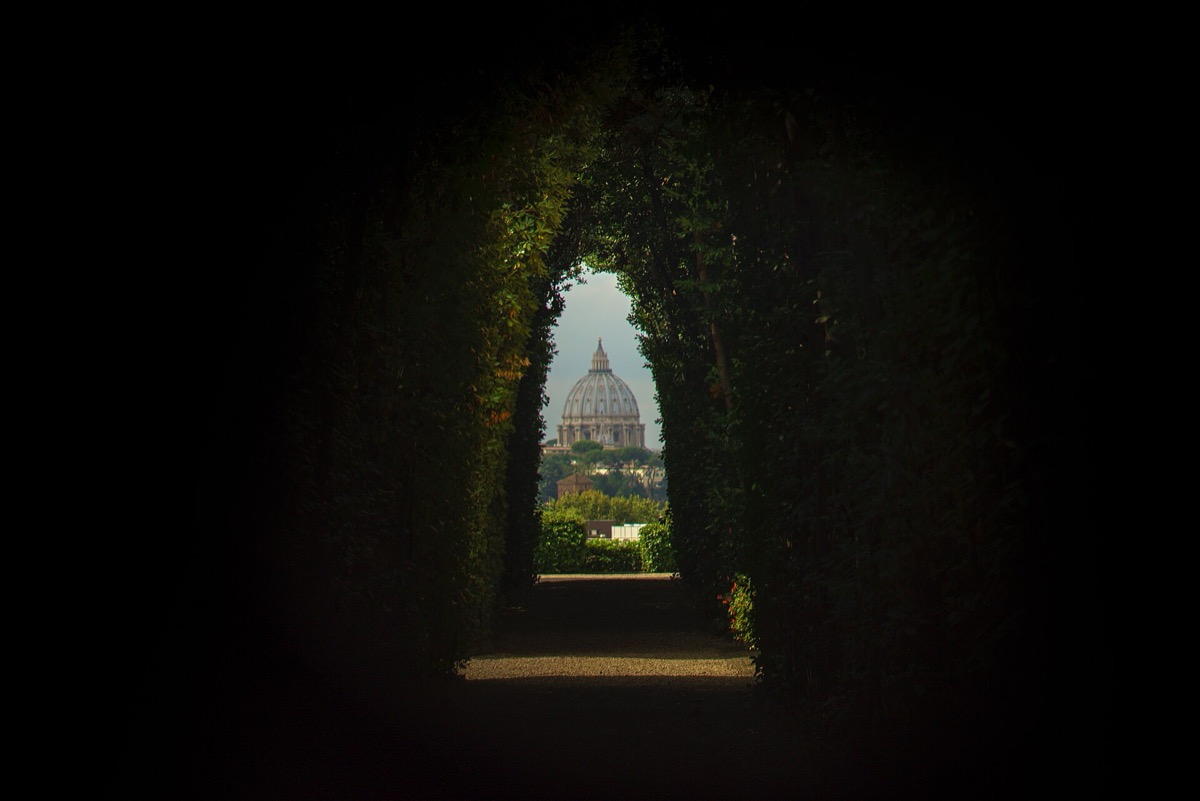
Who wouldn’t want to see Italy’s most famous dome from a completely different perspective? At the top of the Aventine Hill you’ll find an inconspicuous green gate at the seat of the Knights of Malta, where a little crowd of curious onlookers often gathers. When you peek through the keyhole here, a perfect view of St Peter’s Basilica opens up, precisely framed by a hedge. It’s just a quick trick, but it has enormous charm.
Right next door is the Orange Garden (Giardino degli Aranci), which without exaggeration is one of the most romantic spots in the whole city. In the sweltering summer, even Romans themselves come here to seek refuge, because the tall trees provide much-craved shade and sitting on the benches is a pure balm for the soul. In spring especially, when the trees blossom and smell wonderful, it’s like a fairy tale here.
💡 Tip: Ideally come here in the late afternoon. From the garden’s viewing terrace, one of the most beautiful views of Rome at sunset opens up. You can reach it on a pleasant uphill walk from the Circo Massimo metro station, and it’ll take you about an hour, photos included.
30. The Coppedè district
Forget the ancient ruins and famous Renaissance palaces for a moment. A short walk from the centre hides the architecturally unique Coppedè district, which looks as if it fell out of some darker fantasy book. At the start of the twentieth century, the architect Gino Coppedè let his imagination run wild here and mixed Art Nouveau, Gothic, baroque and medieval elements into one fascinating and at times almost bizarre whole.
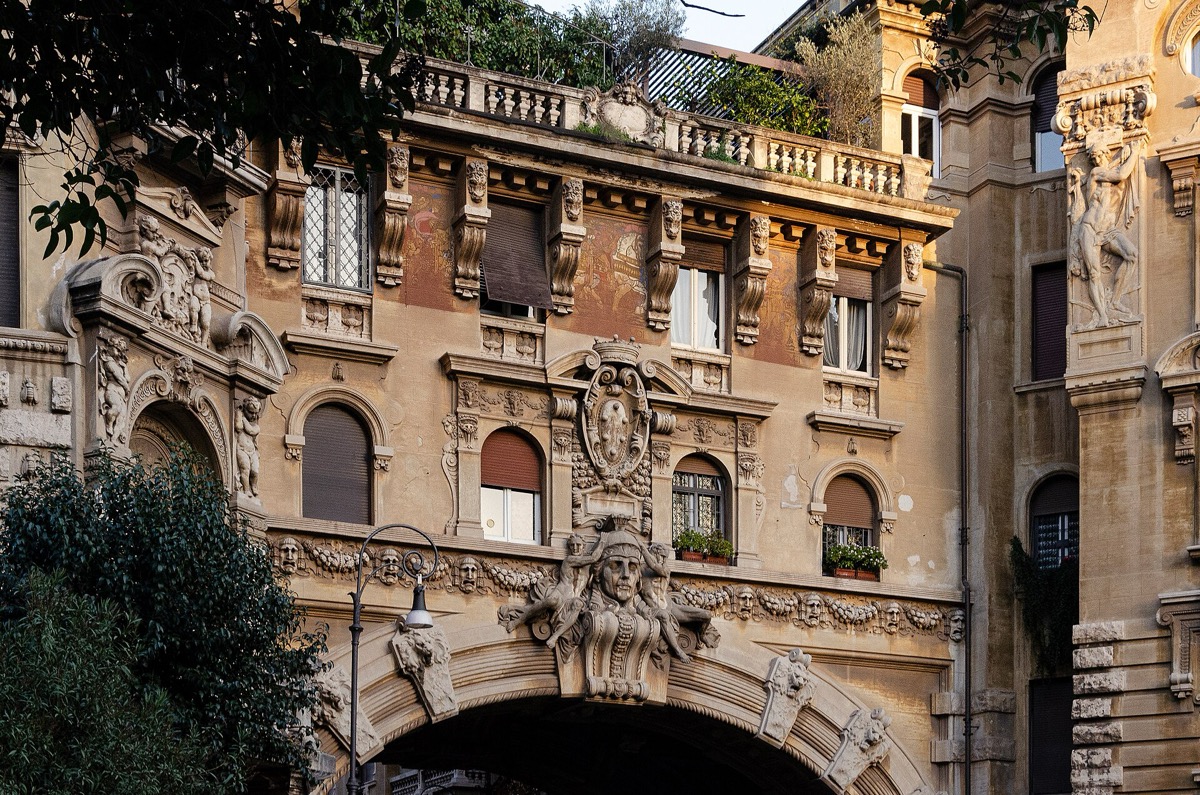
Even the entrance to the district beneath a richly decorated arch with a giant wrought-iron chandelier takes your breath away. Right behind it you’ll discover the Frog Fountain (Fontana delle Rane), where the Beatles themselves supposedly once bathed after a concert. The surrounding villas are decorated with colourful mosaics, frescoes, little turrets and even spider webs of wrought iron.
This area is fantastic for a quiet stroll, because ordinary tourists hardly ever come here and you can calmly examine every crazy detail on the façades. 💡 Tip: About half an hour is plenty to explore. It’s best to combine the district with a visit to the nearby Borghese Gallery, which is only about a quarter of an hour’s walk away.
31. Centrale Montemartini — ancient statues among turbines
Combining ancient art and industrial architecture may sound a bit strange, but trust me that the result is quite literally breathtaking. Centrale Montemartini used to be the first public power station in Rome, supplying the city with energy. Today, in its huge sunlit halls, you’ll find a branch of the Capitoline Museums, where ancient statues are displayed right beside massive black diesel engines and steam turbines.
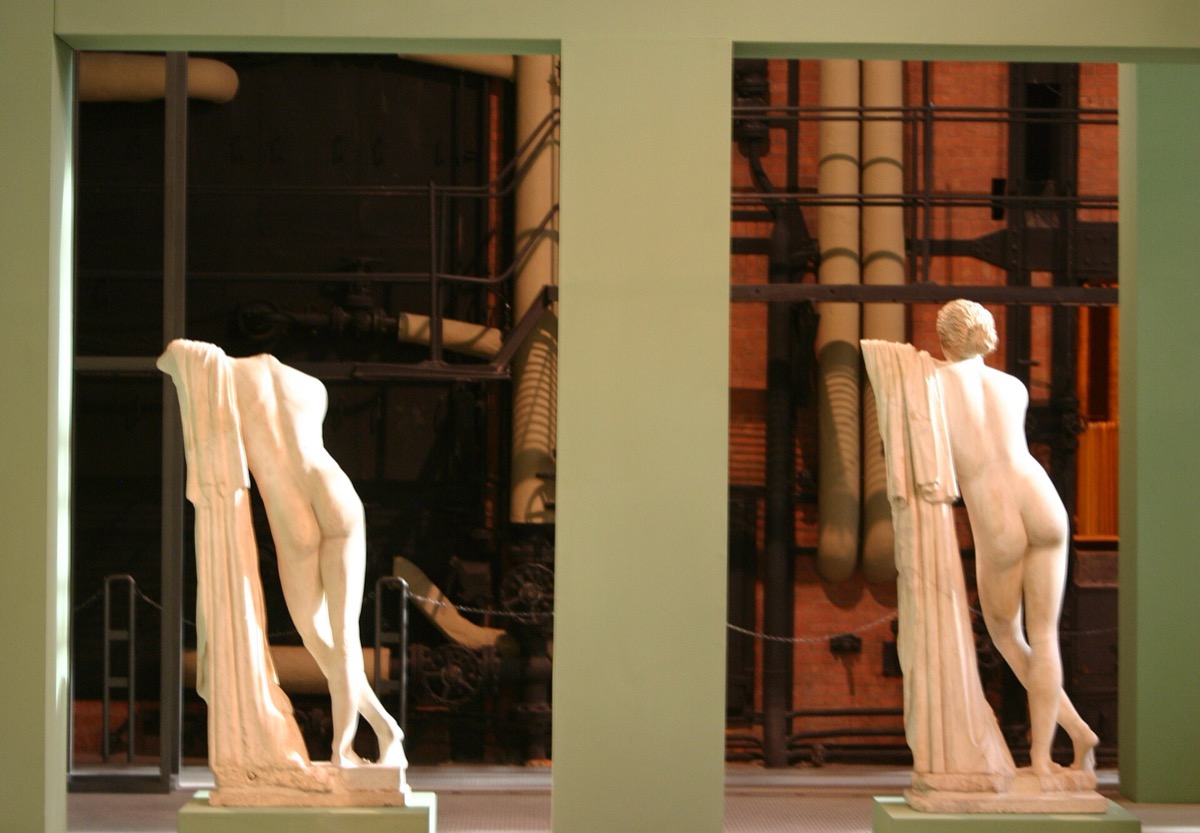
This sharp contrast between fragile white marble and heavy engineering creates a completely unique atmosphere. You’ll feel as if you’ve landed in some modern sci-fi film. A big advantage, too, is that unlike the Vatican Museums you’ll meet only a handful of people here, so you can view everything calmly without the crush.
💡 Tip: The museum is in the Ostiense district, which you can conveniently reach on metro line B (get off at Garbatella station). If you like unusual photos and want to escape the crowds in the centre for a while, this place is definitely worth it. Set aside about an hour and a half and feel free to come with older children — the machinery is guaranteed to thrill them.
32. Galleria Sciarra
When you’re fighting your way through the crowds at the Trevi Fountain and desperately need a moment of calm, you just have to walk a few narrow lanes further. Hidden there is Galleria Sciarra, a beautiful nineteenth-century covered courtyard, glazed and richly painted with stunning Art Nouveau frescoes. Most people walk past without noticing, because from the street this beauty is completely invisible.
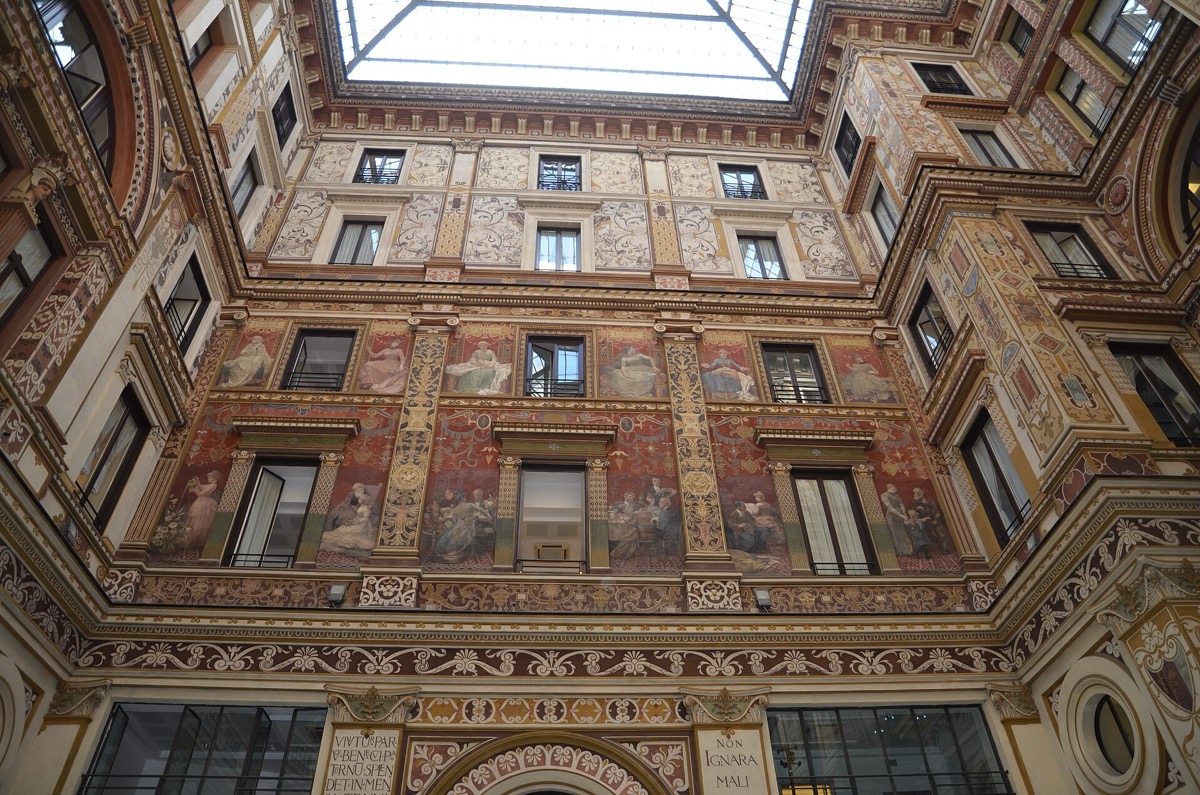
The whole space celebrates the beauty, strength and role of women in society. On the walls you’ll see figures symbolising virtues such as patience, justice and faithfulness, all in gorgeously vivid colours. Thanks to the glazed roof, the light here is wonderful, giving the frescoes even greater depth. It’s simply a perfect example of how Rome can surprise you at literally every step.
The courtyard serves as an ordinary passage between buildings, so entry is completely free. 💡 Tip: It’s usually only open on weekdays during office hours; at weekends the gates are sadly closed. The stop takes only ten minutes, but it’ll definitely enrich your day with a beautiful, queue-free experience.
33. Via Appia Antica and the catacombs
All roads lead to Rome, but this one was the very first and most important of them all. Via Appia Antica is an ancient highway that instantly transports you two thousand years back in time. Today it’s a calm road lined with tall pines and its original enormous stone paving, along which stand the remains of ancient tombs, mausoleums and statues. It’s a wonderful escape from the noisy big city into greenery.
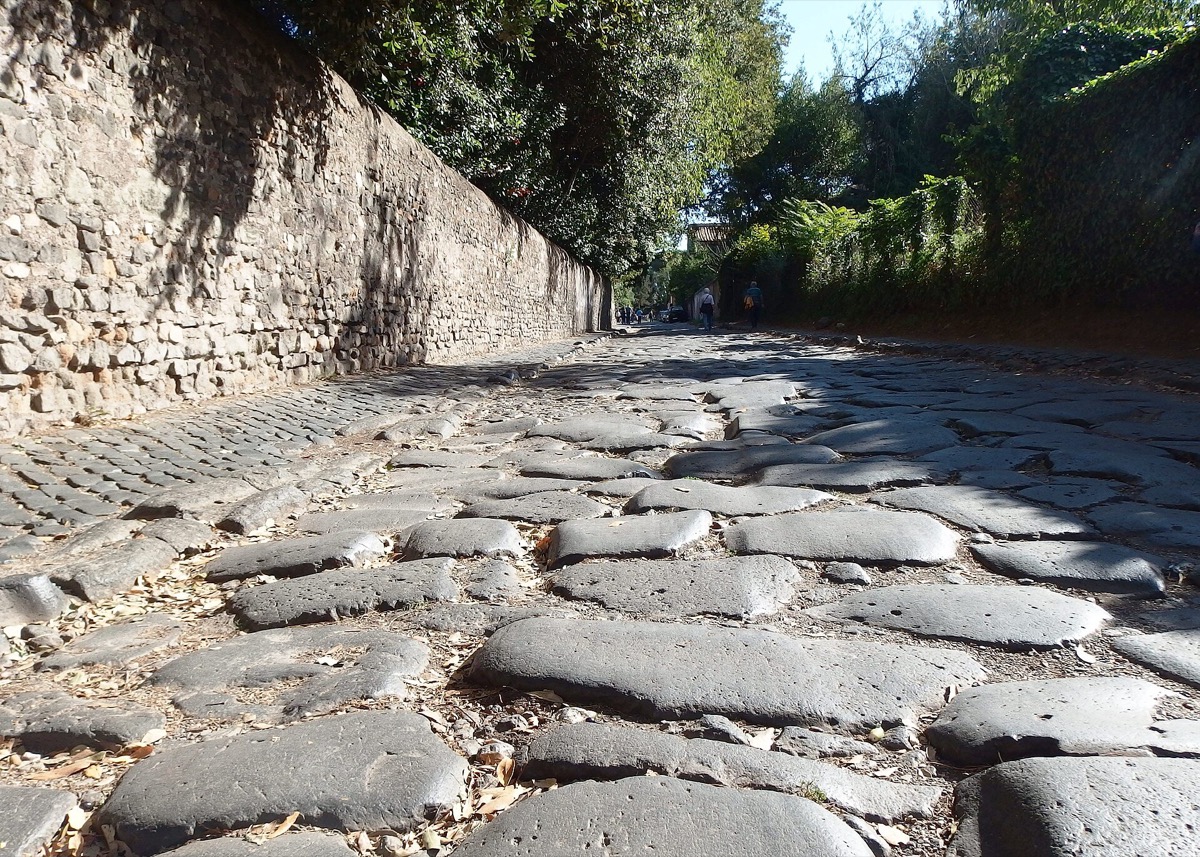
Along the way there are also extensive underground catacombs, for example San Callisto or San Sebastiano, where the first Christians were buried. A tour of the dark, narrow corridors hidden deep underground is a little chilling but immensely captivating, showing you a completely different face of Rome.
💡 Tip: The best way to explore this area is to rent a bike right at the start of the route. At weekends the road is completely closed to car traffic, so cycling and walking here is perfectly safe. Set aside half a day for this trip and pack something nice for a little picnic.
34. Domus Aurea — Nero’s Golden House
The Emperor Nero was known for his extravagance, and his palace was certainly no exception. The Domus Aurea, or Golden House, was a huge luxury complex he had built after the great fire of Rome. But after his death, later emperors tried to erase his legacy, so they deliberately buried the palace with soil and built new structures on top, including the nearby Colosseum.
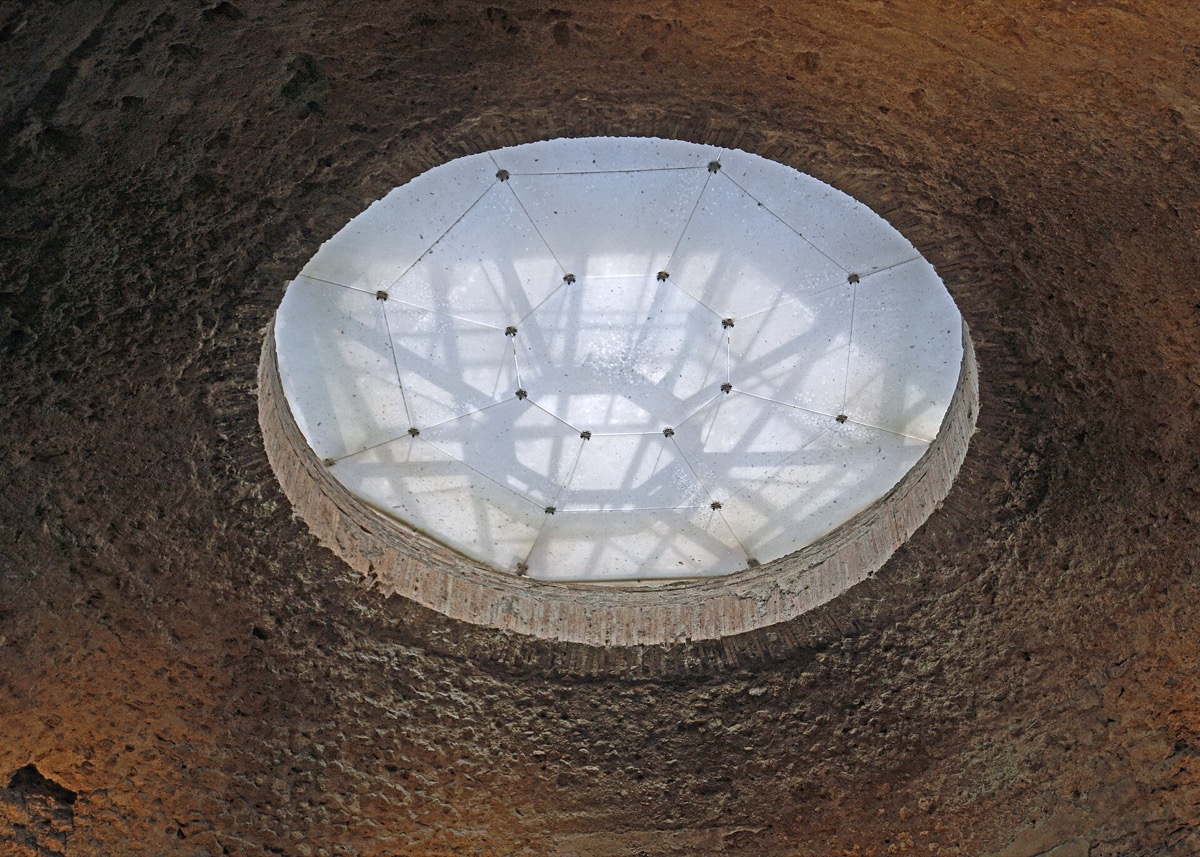
Today you can go deep underground and walk through huge, dark halls that once shone with gold and precious stones. The best part of the whole tour is the use of virtual reality, which shows you, right in the middle of the excavations, exactly how incredibly colourful and lavish the palace looked two thousand years ago. It’s an experience that gives you goosebumps.
Tours run exclusively with a guide and it’s absolutely necessary to book them online, because capacity is very limited due to ongoing archaeological work. 💡 Tip: A constant temperature of around 15 degrees prevails inside, so even in the hottest summer don’t forget to pack a hoodie or a light sweater.
35. Basilica of Santa Maria Maggiore
This gorgeous church is one of the four major papal basilicas in Rome, and although it may not be as famous as the one in the Vatican, its interior will take your breath away. The Basilica of Santa Maria Maggiore boasts preserved ancient mosaics from the fifth century and a stunning coffered ceiling. That ceiling is supposedly gilded with the very first gold that Christopher Columbus brought to Europe from America.
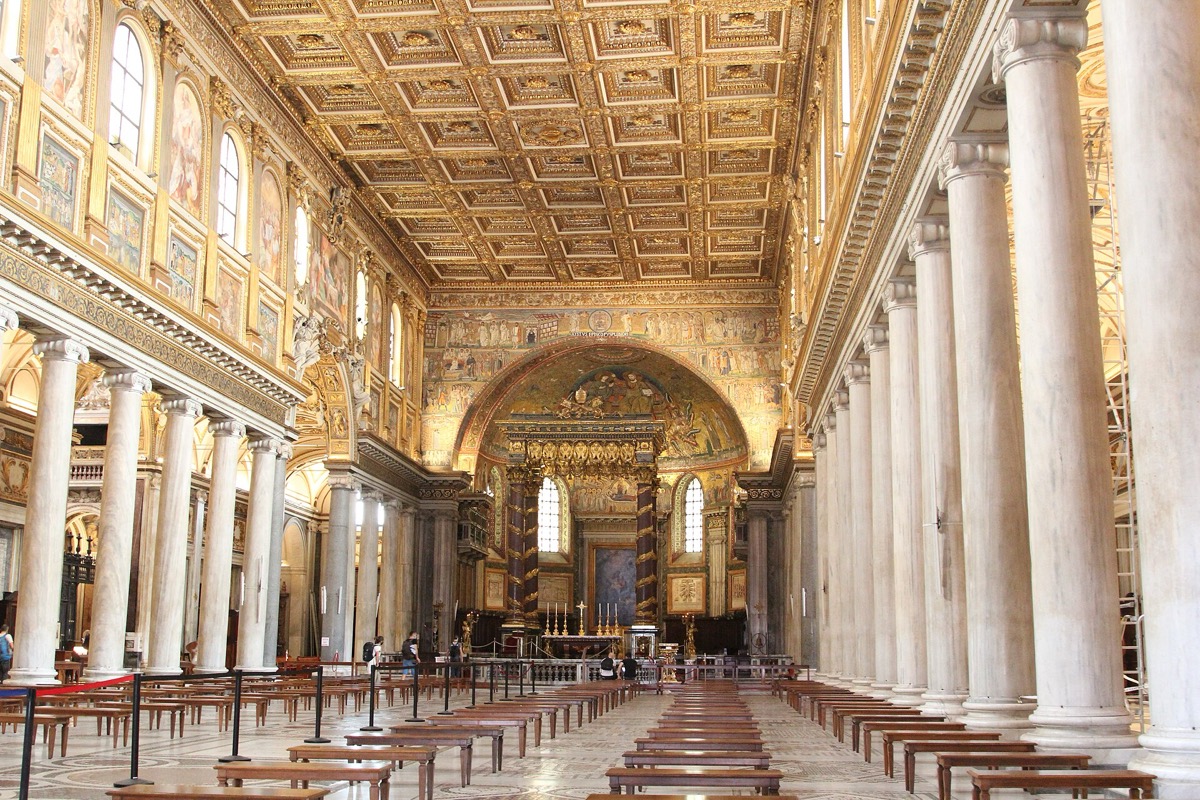
There’s also a lovely legend attached to it. It was supposedly built on the exact spot where snow fell out of the blue in the sweltering August. This miraculous event is still commemorated here every year on 5 August by releasing thousands of white rose petals from the ceiling, which is an incredibly romantic and moving sight.
💡 Tip: Entry to the basilica is free and there’s usually only a minimal queue for the security check in front. But don’t forget about suitable clothing that covers shoulders and knees. The local guards are uncompromising and won’t let you in wearing a tank top or shorts, even after a long spell of pleading.
36. The Capitoline Museums and Piazza del Campidoglio
Right above the famous Roman Forum lies the wonderful Piazza del Campidoglio, designed by none other than Michelangelo himself. Just the climb up the elegant wide steps is a huge experience in itself. The square is lined with historic palaces housing the Capitoline Museums, considered the very oldest public museums in the world.
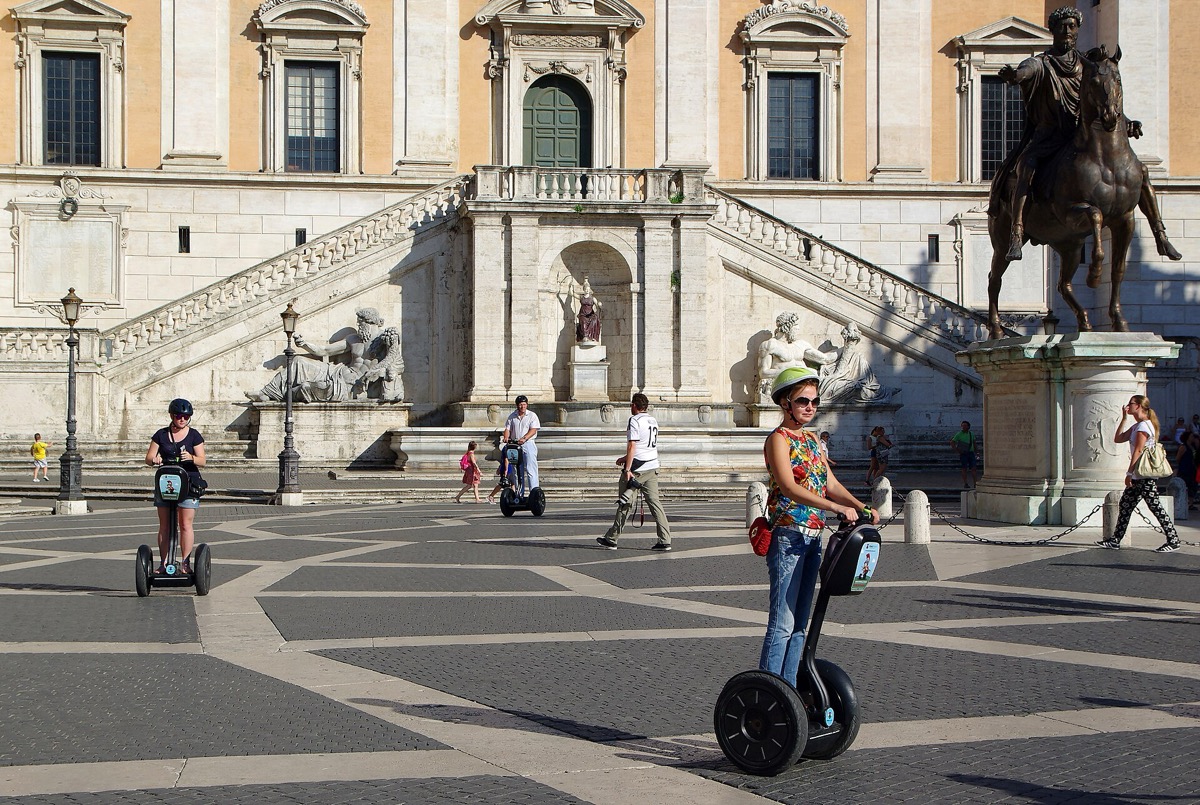
Inside you’ll find absolute gems of Roman ancient art. There’s the famous bronze statue of the Capitoline Wolf suckling Romulus and Remus, as well as the huge equestrian statue of the Emperor Marcus Aurelius, whose exact copy also stands outside in the square. The whole collection is far more intimate and calmer than the one in the Vatican, so you can enjoy the art without stress and crushing crowds.
The underground corridor connecting the two museum buildings also hides a fantastic view over the whole Roman Forum. 💡 Tip: The museums are truly huge, so set aside at least two or three hours for your visit. It’s definitely better to buy tickets online in advance so you don’t needlessly linger in the queue at the box office.
37. The Baths of Caracalla
If you really want to understand how monumentally and grandly the Romans built, you mustn’t skip this enormous brick complex. In their day, the Baths of Caracalla held up to 1,600 people, and it wasn’t just a place for hygiene, but also for socialising, sport and reading in the extensive local libraries.
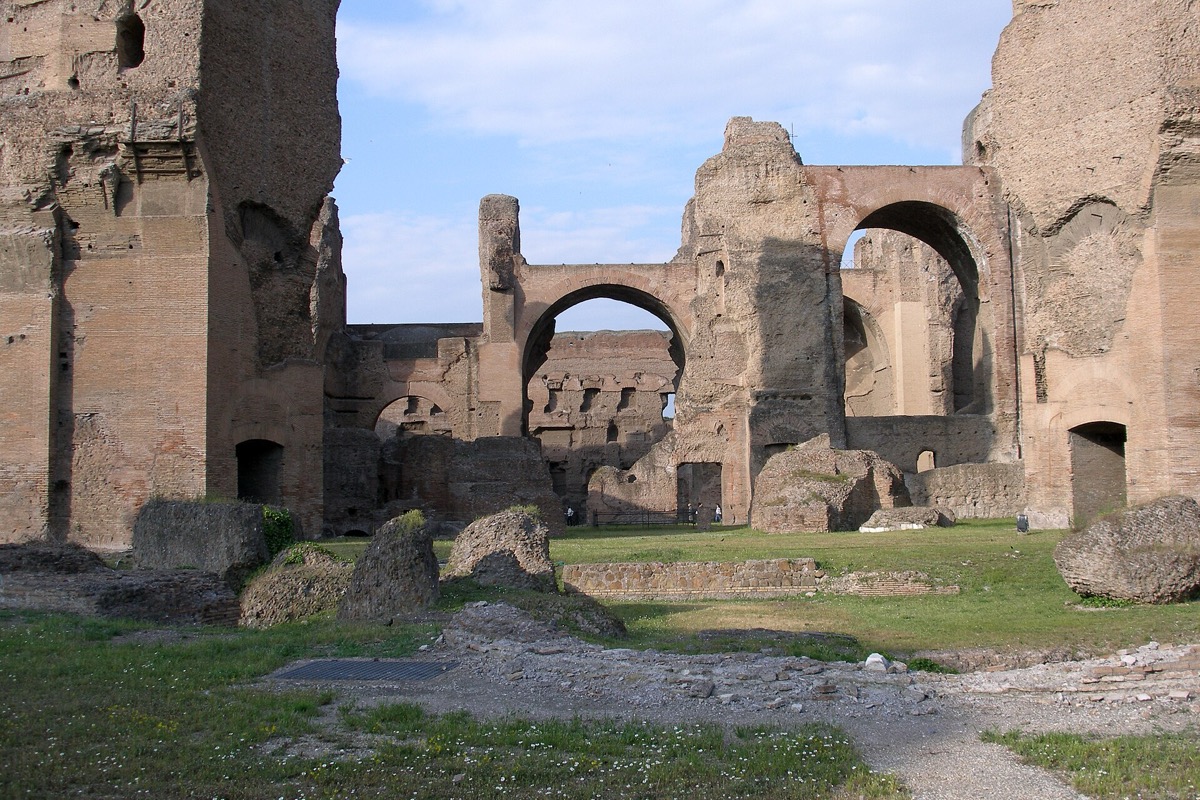
Even though today only bare walls remain, rising to an enormous height, the scale of the whole site is absolutely overwhelming. You’ll walk among the remains of pools, gymnasiums and beautiful floor mosaics, which are excellently preserved in many places. It’s a far calmer spot than the city centre, full of greenery and pleasant shade from the pine trees.
💡 Tip: To better imagine the original beauty with marble cladding and statues, I recommend paying extra at the entrance for the audio guide with virtual reality. The complex is sprawling and it can get really hot here in summer, so a water bottle is essential. Fortunately, the classic Roman drinking fountains — the so-called nasoni — work here; there are about two and a half thousand of them scattered across the city.
38. Gianicolo — the viewpoint and the noon cannon
This hill isn’t among Rome’s famous seven original hills, but it offers quite possibly the very best panoramic view of the entire city. The Gianicolo hill rises above the Trastevere district and is an ideal spot for a quiet stroll with a view of all those iconic domes, towers and historic monuments. In summer, though, time your climb well, because in thirty-five-degree heat the way up is a proper slog even for seasoned walkers.
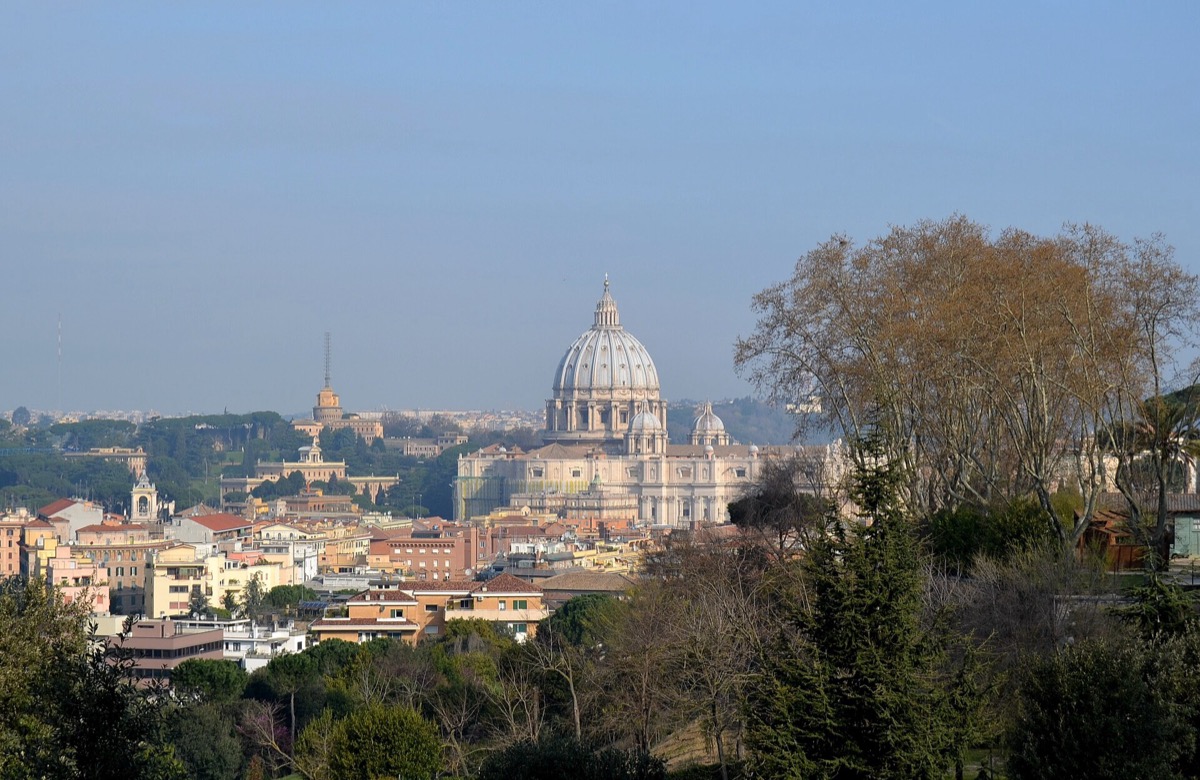
If you come here in the morning, try to time your arrival at the Piazza Garibaldi viewpoint square for exactly twelve o’clock. Every day at noon a historic cannon is traditionally fired here — an interesting ritual introduced by the pope back in the nineteenth century to synchronise the bells of all the Roman churches.
💡 Tip: The walk up is quite a slog in the summer months. You can easily spare yourself the climb by taking the local bus, which carries you all the way to the top, and then walk comfortably and effortlessly back down into the picturesque lanes of Trastevere.
39. Basilica of St Paul Outside the Walls
Most tourists head off to admire only the Vatican and criminally miss this architectural gem because of its location a bit further from the centre. Yet the Basilica of St Paul Outside the Walls is the second-largest basilica in Rome, and its huge interior with an enormous forest of columns and beautiful golden mosaics feels absolutely majestic and dignified.
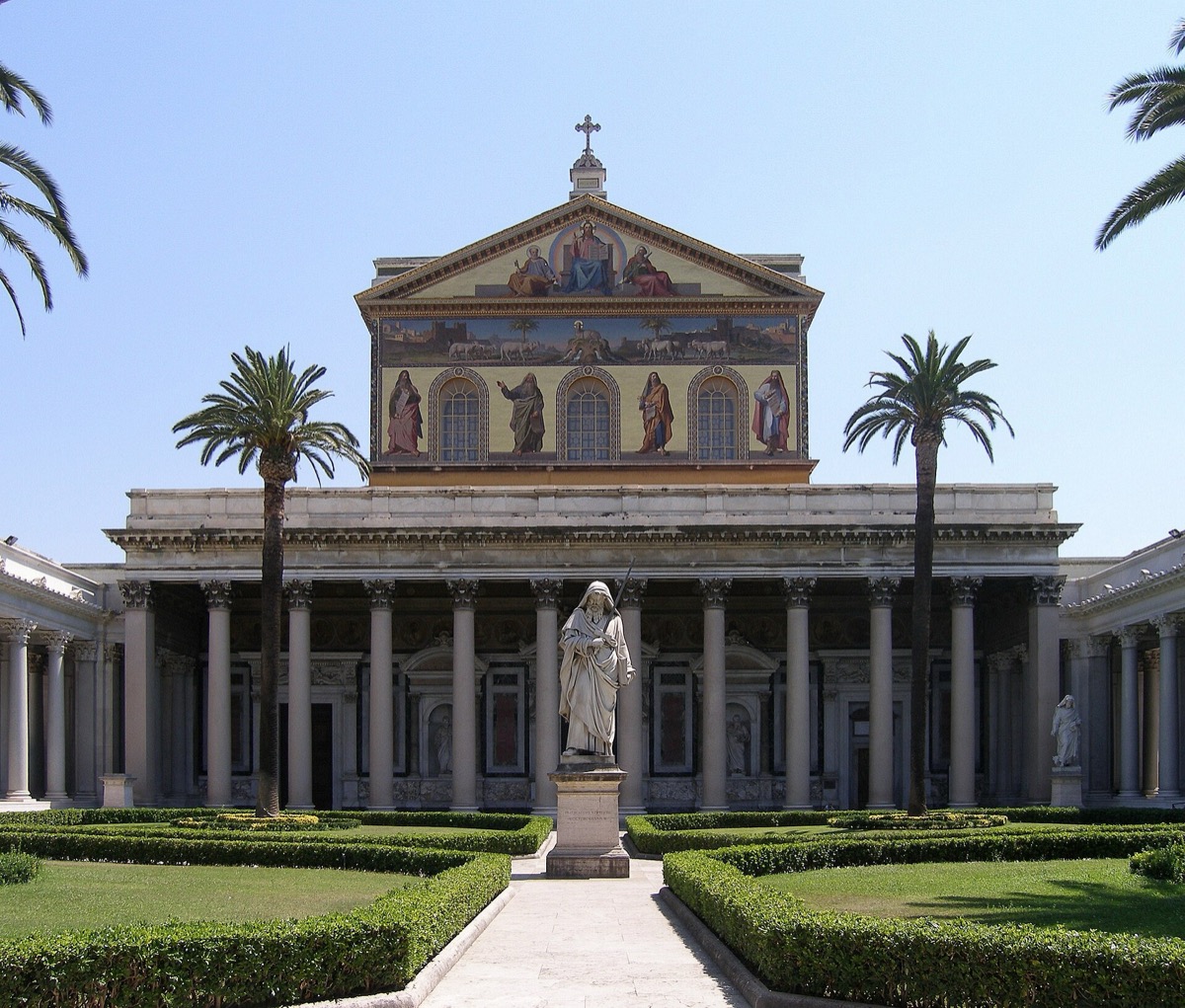
By far the most interesting detail is the frieze of medallions with portraits of every pope so far, which runs high beneath the ceiling along the entire perimeter of the nave. According to old legend, the end of the world will come once there’s no room left in the row for the next pope’s portrait (though the Church always finds some new empty spot, of course).
💡 Tip: The basilica sits right by a metro line B station, so getting here from the centre is very quick and intuitive. Entry to the basilica is free, and thanks to its location off the main routes you’ll enjoy pleasant peace with no crowds or long queues, which in Rome is priceless.
40. The EUR district and Quadrato della Concordia
To finish, here’s something for lovers of modern — if slightly controversial — architecture. The EUR district was built by Mussolini for a planned world’s fair, which of course never happened because of the war. The whole area is full of wide boulevards, precise geometric shapes and monumental buildings of white marble.
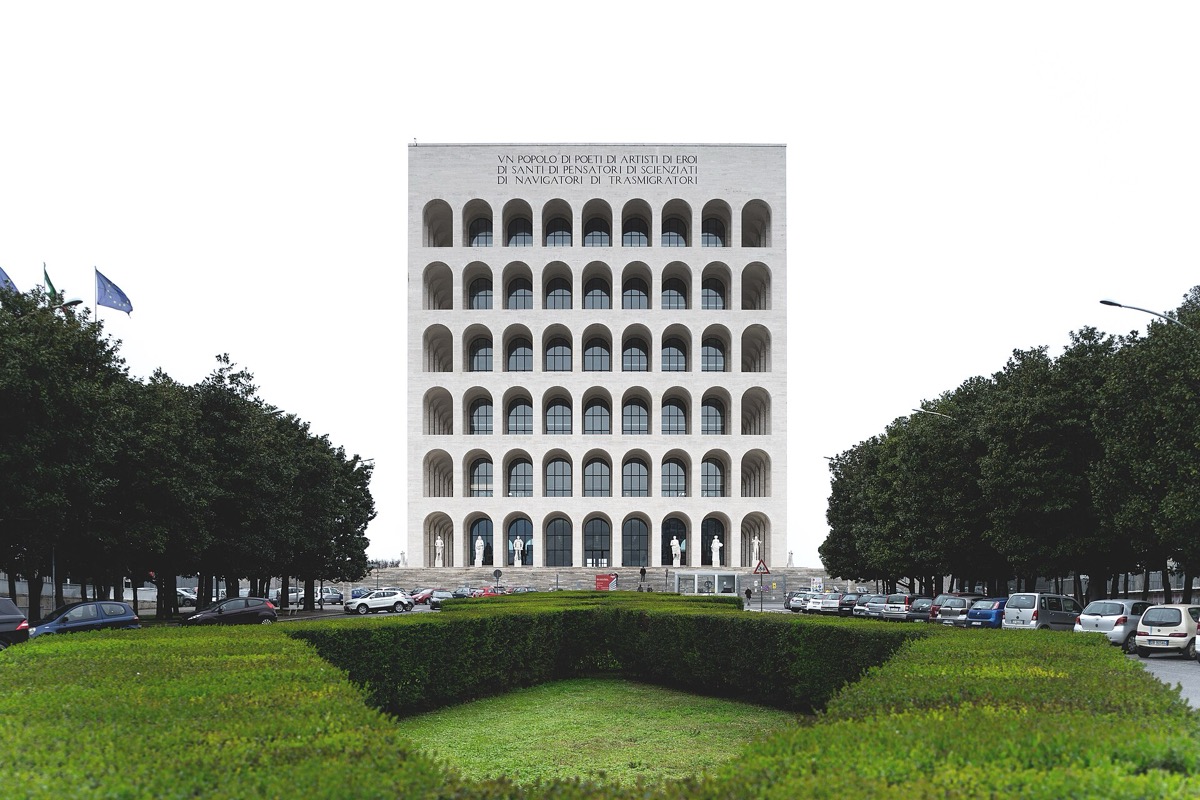
The best-known structure is clearly the Palazzo della Civiltà Italiana, nicknamed the Square Colosseum (Quadrato della Concordia) for its distinctive shape. Today this iconic building houses the fashion house Fendi, and the whole district feels completely different from the rest of Rome — you almost feel like you’ve landed in some utopian future from the silver screen.
💡 Tip: You can easily reach the EUR district by metro line B. It’s a great spot for an evening stroll, when the Square Colosseum is beautifully lit, and you’ll also find a lovely park with an artificial lake here, where locals mainly come to relax after work.
What you can see in Rome completely free
You often ask me what’s free in Rome, because the Italian capital can give your wallet a good airing. The truth is, though, that the very best in the whole city doesn’t cost a cent, because the streets themselves work as an enormous open-air museum. To enjoy that true Italian atmosphere to the fullest, all you need is comfortable shoes and a desire to explore. Here’s a list of my favourite spots you don’t have to pay a thing for:
- The Pantheon from outside and Piazza della Rotonda: Although entry to the temple costs €7 from July 2026, the majestic view of the ancient columns from the busy square and soaking up the evening atmosphere are completely free.
- St Peter’s Basilica and St Peter’s Square: Entry to the largest Christian church in the world is subject to no fee — you just have to arm yourself with patience and wait in the long security queue.
- The Trevi Fountain from the street: From February 2026 there’s a €2 fee to walk down to the iconic pool, but that breathtaking view from above from the street across the marble statues fortunately remains free.
- The Spanish Steps: A beautiful spot for photos and watching the city’s hustle and bustle — just be very careful that you can’t sit on the steps under threat of a hefty fine.
- Piazza Navona and Campo de’ Fiori: Two absolutely iconic Roman squares full of street artists, fountains and historic palaces, which you’ll appreciate best on a slow stroll.
- The Trastevere district: The most charming romantic ivy-clad lanes with the best evening atmosphere, where Lukáš and I can wander for hours on end.
- The Gianicolo hill: If you’re looking for the absolute most beautiful panoramic view of the whole city, you have to climb up here.
- The Orange Garden and the keyhole: From the Giardino degli Aranci park there’s a perfect view of the Vatican, and right next door you’ll find the famous hole in the gate of the Knights of Malta, which magically frames the dome of St Peter’s.
- The Roman Forum from Via dei Fori Imperiali and the Capitol: Even though you have to pay to walk among the excavations, from these elevated spots you’ll have the whole ancient centre laid out at your feet completely free.
- Villa Borghese park and the Pincio viewpoint: These green lungs of Rome are an ideal refuge from the summer heat, and the Pincio viewpoint is probably the best spot for watching the sunset.
- Ponte Sant’Angelo: A walk among Bernini’s statues of angels, for which other cities would easily charge hefty admission.
- Churches with Caravaggio paintings: In San Luigi dei Francesi and Santa Maria del Popolo hang originals by famous masters, for which you’d pay a fortune in ordinary galleries.
- The Mouth of Truth (Bocca della Verità): Placing your hand in the legendary marble face and taking a funny keepsake photo won’t cost you a thing.
- The Nasoni fountains: I have to mention these ubiquitous cast-iron miracles with drinking water, which quite literally saved us from cooking during Lukáš’s birthday celebration in thirty-five-degree heat.
If you want to save even more, plan your trip for the first Sunday of the month, when entry to all Italian state museums and monuments, including the Colosseum, is completely free. But I have to honestly warn you, because absolutely crazy, endless queues form on that day, so it pays to get up really early in the morning, or simply come to terms with spending a lot of time waiting in the crowd. In my experience, it’s sometimes just better to sacrifice a few euros than lose half a day of your dream holiday.
Rome in 1, 2 or 3 days: a quick plan
You often ask us how many days you should realistically set aside for the Italian capital. In our experience, at least four days are ideal so you have time to really enjoy the city calmly, soak up that true southern atmosphere and not spend all your time just dashing between monuments. The absolute minimum for a visit is, in my view, two days. In a single day you can manage the most important core, but be prepared for a proper marathon. When we celebrated Lukáš’s birthday in Rome in June, it was a relentless 35 °C outside and we easily walked over twenty thousand steps a day. In weather like that, only the ubiquitous cast-iron drinking fountains called nasoni and honest Italian gelato will save you, so I really recommend spreading your programme across more days.
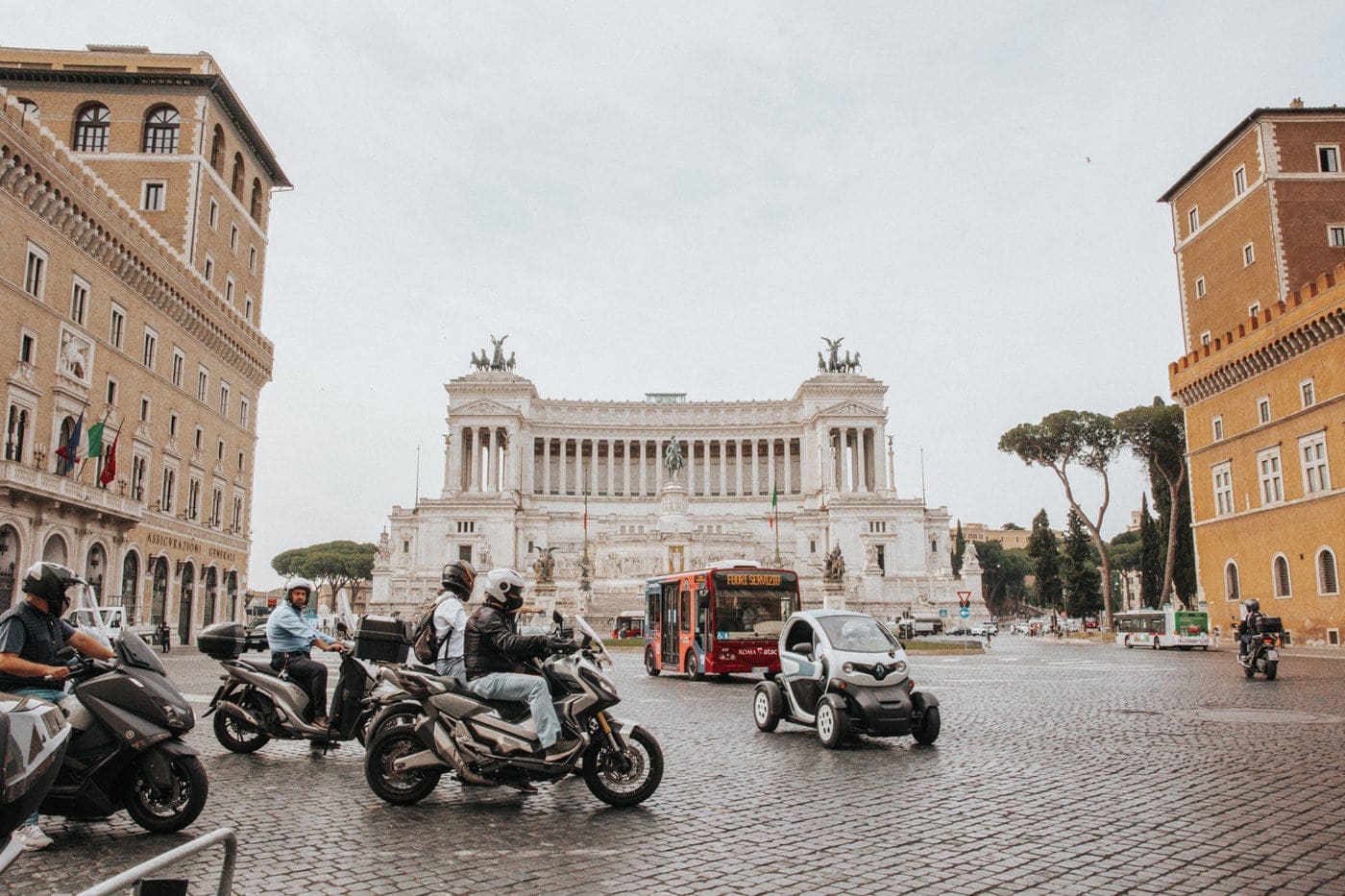
If you truly have only one day in Rome, you have to be strategic and choose a logical walking route so you don’t needlessly crisscross the city. In the morning start straight at the Colosseum, where the very biggest queues form, so don’t even set off there without tickets bought online well ahead. From there head along the ruins of the Roman Forum and the Palatine Hill to the majestic monument on Piazza Venezia. Then plunge into the maze of narrow lanes in the historic centre, which will lead you to the breathtaking Pantheon and the oval Piazza Navona. Along the way, definitely grab a slice of traditional vegetarian pizza margherita and a scoop of ice cream, because there won’t be time to sit for long in restaurants. End your quick tour in the early evening at the famous Trevi Fountain and on the busy Spanish Steps.
When you have two days in Rome, you can nicely divide your programme into an ancient part and a baroque part. Devote the first day to antiquity and, after touring the Colosseum, Roman Forum and Palatine, continue seamlessly on foot to the Mouth of Truth relief. From there it’s just a short walk to the picturesque Jewish Ghetto, where it pays to stop for lunch and try the excellent fried artichokes. It’s an absolutely brilliant local, meat-free delicacy that you’ll surely fall in love with here. On the second day, get up early and head straight for the opening of the Vatican Museums and the Sistine Chapel. The crowds here are absolutely brutal, so an early morning arrival is key. Then view the stunning St Peter’s Basilica and cross the bridge past Castel Sant’Angelo back to the centre, where baroque splendour awaits in the form of Piazza Navona, the Pantheon and the Trevi Fountain.
For three days in Rome the same basics apply as in the previous option, but you gain precious time to discover spots a little more off the main tourist trail. On the third morning I recommend starting in the beautiful Borghese Gallery, which you can seamlessly follow with a calm stroll through the vast Villa Borghese park. In the afternoon, head to the Testaccio district, where you’ll experience the true, genuine Roman atmosphere without throngs of tourists. It’s right here that you can calmly sit down to an honest portion of cacio e pepe pasta with excellent pecorino cheese. As the sun sets, move to the lanes of the Trastevere district, which comes incredibly alive after dark and offers the best bars for an evening over a glass of Aperol.
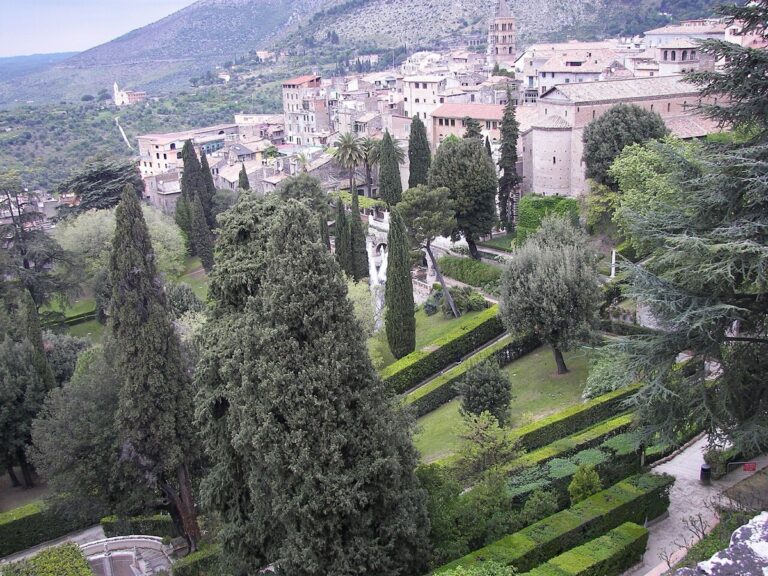
If you stay in the city for a fourth day and more, I definitely recommend considering an interesting trip beyond the metropolis. We always enjoy escaping the scorching streets somewhere into nature or off to history. A great option is a short train ride to the picturesque little town of Tivoli, where you’ll find beautiful Renaissance gardens full of fountains. Another popular choice is to explore the incredibly well-preserved ancient ruins of the former port of Ostia Antica. For those of you who don’t mind spending a little more time on the train, there’s also the option of a wonderful full-day trip south to famous Pompeii.
If you already have your flights booked and want to plan everything down to the last detail, we’ve also prepared a detailed itinerary for Rome in 3 days in a separate article. In it you’ll find plenty of other practical advice and, above all, exact times for recommended transfers.
We have a separate guide for each of these plans on the blog. You’ll find a detailed hour-by-hour breakdown in the article Rome in 3 days, we discuss the choice of accommodation by district in where to stay in Rome, and families with little travellers will appreciate the tips in the article Rome with kids.
Getting around Rome: from the airport, by metro and on foot
Getting around Rome may at first glance seem like utter chaos, where the law of the strongest and quickest applies. Even so, you can find your feet in the Eternal City fairly easily if you know which tickets to buy and what to watch out for especially. Let’s look at how to get smoothly from the airport, how the local metro works and why you’ll spend most of your time on your feet anyway.
From Fiumicino airport (FCO) to the centre: The fastest option is definitely the Leonardo Express train, which takes you straight to the main Termini station in 32 minutes for €14. If you want to save money, cheaper regional trains or buses also run from here, though expect a longer journey time. A comfortable option is an official taxi, which has a fixed rate of €48 to €50 into the centre. But watch out very carefully for scam unlicensed taxis, which can demand €75 to €140 at the end of the trip, so always look only for white cars with a taximeter and the sign “Comune di Roma”.
Travel from Ciampino airport (CIA): This smaller airport is used mainly by low-cost carriers such as Ryanair and easyJet, and the connection to the centre from here is fairly easy. We usually recommend using the Terravision company buses, where a one-way ticket costs around €6 and reliably takes you all the way to Termini station. If you’re travelling in a group or have heavy luggage, it’s worth taking an official taxi. Here too there’s a fixed rate into the centre, which is a flat €40, so you don’t have to fear any nasty surprises from an inflated price.
Public transport (ATAC): Rome’s public transport includes buses, trams and the metro, and fortunately the same tickets are valid for everything. A basic BIT ticket costs €1.50 and is valid for a full 100 minutes, during which you can change lines freely, but you can enter the metro with it only once. If you plan to travel more, you can buy multi-day tickets: 24 hours for €8.50, 48 hours for €15, 72 hours for €22, or a weekly CIS for €29. Watch out very carefully for the mandatory validation of your ticket right after boarding, otherwise you risk an uncompromising and hefty fine on the spot.
The Rome metro and the treacherous bus 64: The city currently has three metro lines, A, B and C. You may be surprised that the network of stations is fairly sparse, but that’s simply because every time workers dig into the ground they hit some valuable ancient excavation. The great news, though, is that since December 2025 the extended line C now takes you from the suburbs straight to the Colosseum. On the metro and on the crowded buses, especially the popular line 64 towards the Vatican, keep a careful eye on your things, because the local pickpockets are incredibly quick and the line is not for nothing nicknamed the “Pickpocket Express”.
Is the Roma Pass tourist card worth it? It depends on how much you plan to hop between paid monuments and use public transport. The 48-hour card costs €38 and gives you one free museum entry, while the 72-hour version comes to €62.90 and includes two free entries. On top of that you get unlimited city transport and small discounts on other attractions. But there’s one catch a lot of people forget, because the card doesn’t include the Vatican Museums, the Sistine Chapel or St Peter’s Basilica.
The historic centre is best explored on foot: Rome is, in my view, one of the best cities in the world for exploring on foot, because the main historic core can be walked comfortably in a single day. Just start at the Spanish Steps, toss a coin into the Trevi Fountain, walk to the Pantheon and end the afternoon in the beautiful Piazza Navona. The key thing is to have really comfortable shoes, because a large part of the centre is paved with the typical Roman cobbles called sanpietrini. Trust me, after a full day of walking in stiff shoes or, heaven forbid, heels, you’d soon curse the city’s picturesque lanes.
On an electric scooter along the river: When our feet ached from all that all-day walking, Lukáš and I found an absolutely brilliant way to move around the city. In the evening we rented shared electric scooters and just cruised along the River Tiber. It’s a wonderfully romantic experience — you avoid the crowds of tourists, save time and, on top of that, see the beautifully lit bridges. During the day the centre is often too chaotic for scooters, but for those evening rides it’s an absolute winner.
Better not to drive into the centre: Renting a car in Rome is, in my view, complete nonsense unless you’re continuing on a longer road trip around Italy. The traffic here is incredibly chaotic, scooters weave in from all sides and parking is a small miracle. A huge part of the historic centre is also designated as a ZTL, or limited traffic zone, which only residents with a permit may enter. Cameras are everywhere and every unauthorised drive-through risks a fine of €84 to €335, which will reliably track you down even back home abroad.
Where in Rome to avoid and what to watch out for
You often ask me whether there are places in Rome you should give a wide berth. In reality, Rome is a very safe European city, where you don’t have to fear for your life at all. Like any other world metropolis, though, the Italian capital has its typical tourist traps. Mostly they’ll just cost you a spoiled mood and a euro or two extra.
Let’s take a look together at the most common tricks you can encounter in the streets. If you know about them in advance, you’ll sail safely through them and enjoy your holiday without needless stress.
Watch out for scam restaurants and hidden charges. You can lose the most money in restaurants right by the main monuments, such as the enchanting Piazza Navona. You’ll spot a tourist trap very easily by the menu in four languages with faded photos of the dishes. Another clear warning sign is a tout lurking by the door trying to get you inside at all costs. A good Italian restaurant simply needs no such thing and tends to be full of locals.
When paying, you may then be unpleasantly surprised by a nonsensically inflated coperto, a mandatory charge for setting the table and bread. In normal places it’s around two to three euros per person, but in traps it’s several times higher. An absolute disaster are restaurants that list some dishes per etto, meaning per hundred grams of weight. Before you know it, they bring you a huge portion and at the end a bill lands on the table for as much as €430 or even €600.
How do you get out of this? Just walk two lanes away from the main bustle and look for inconspicuous places full of Italians. If you’re looking for vegetarian-safe bets, Rome is an absolute paradise for you. Lukáš and I swear by traditional cacio e pepe pasta, made of just pecorino cheese and black pepper. A great quick snack is Roman pizza al taglio to go, a fried rice croquette supplì or the famous fried artichoke alla giudia. And to finish, of course, real Italian gelato from an honest artisan gelateria.
Fake gladiators and unsolicited “gifts”. Right by the Colosseum you’ll probably meet men dressed as Roman centurions and gladiators. They’ll wave cheerfully at you and lure you into a joint keepsake photo. But they certainly don’t do it out of kindness and they routinely charge twenty euros per single shot. There are even documented cases where they aggressively extorted up to €500 from frightened tourists. The best defence is absolute ignoring and zero eye contact.
A similar principle works with the hawkers in the historic centre and around the Spanish Steps. Out of nowhere a smiling person approaches you and starts pushing a rose on you or tying a bracelet on your wrist, claiming it’s a free gift. But as soon as you take the item, they immediately demand money fairly rudely. 💡 Tip: If it happens to you, don’t let them tie the bracelet on, don’t take anything, and just keep walking with a clear no.
Pickpockets and treacherous transport. Rome’s public transport is a chapter in itself. The well-known bus number 64, which runs from Termini station to the Vatican, has earned the apt nickname Pickpocket Express among locals. Pickpockets operate in it with complete ease, just as on the crowded metro line A. So always keep your wallet and phone in inner pockets or in a securely zipped bag across your front. On public transport, also don’t forget to validate your ticket, because an unvalidated ticket means an immediate fine from the inspector.
When travelling from the airport, watch out very carefully for scam unlicensed taxis, which will be waiting for you right in the arrivals hall. They’ll happily charge you €75 to €140 for a trip into the centre, so always look instead for official white cars marked “taxi”, which have a fixed rate of €48 to €50 from Fiumicino airport. If you’re driving a rental car, watch out very carefully for the limited traffic zones called ZTL. Entering the centre without a permit will cost you a hefty fine of €84 to €335 for each individual drive-through under a camera.
Rules of behaviour that can cost you money. Rome takes the protection of its unique monuments very seriously. A great example is the famous Spanish Steps, where sitting is strictly forbidden. If you make yourself comfortable there with an ice-cream cone, the local police will quickly move you on and may also slap you with a fine of around €250.
Pay special attention to your clothing, too, if you plan to visit religious sites. The Vatican, the Pantheon and smaller churches have a strict dress code requiring covered shoulders and knees. The guards at the entrance are uncompromising and will throw you out of the queue without mercy, even after an hour of waiting in the scorching summer sun. So always keep at least a light scarf on you to quickly cover up before entering.
All these warnings may sound a bit scary, but trust me that it’s just completely ordinary tourist common sense. The same safety rules apply in Paris, Barcelona and any other big city. If you use common sense and don’t let yourself be drawn into suspicious situations, you’ll take home from Rome only the most beautiful memories and amazing culinary experiences.
Where to go from Rome
If you have more than just a long weekend for the Eternal City and want to escape the scorching cobbled streets, there are several great trips into the surrounding area on offer. In under an hour, a suburban train takes you to the ancient port of Ostia Antica, often compared to Pompeii, but unlike Pompeii there’s total peace and quiet here.
Another gorgeous stop just outside the city is the little town of Tivoli, where beautiful Renaissance gardens of the Villa d’Este stretch out with hundreds of murmuring fountains. It’s an ideal spot for a summer afternoon when you need a bit of shade and fresh air, which is so desperately lacking in the centre of the Italian capital in July.
If you want to read more detailed information about the biggest Roman icons and save yourself some frustration, we’ve prepared detailed guides for you. Read our article The Colosseum in Rome: tickets and tips, where we explain in detail how to grab the best tickets to the underground. For a visit to the papal state, you’ll definitely use our text The Vatican: essential information and entry and a detailed breakdown of what the famous Vatican Museums hide.
Rome is also an absolutely perfect starting point for a trip to southern Italy. From the main Termini station, a high-speed train takes you to chaotic, passionate Naples in just over an hour. From there it’s only a short hop to the most famous ancient catastrophe, about which we wrote a practical article Pompeii: admission and what to see.
Frequently asked questions
How many days do I need to visit Rome?
Three days is the absolute minimum, during which you’ll only manage the very basics in a huge rush. Ideally, set aside four full days for Rome so you can leisurely explore the Vatican, the ancient monuments, and still have time left to wander through the streets of the historic center with a coffee in hand.
Is tap water drinkable in Rome?
Yes, the water is completely safe and excellent. Don’t buy overpriced plastic bottles from street vendors, but bring your own reusable bottle. Throughout the city there are thousands of cast-iron drinking fountains (called nasoni) from which ice-cold and very refreshing water flows constantly, completely free of charge.
Is there a dress code at the monuments?
Yes, and it is very strictly enforced, so pay close attention. At the Vatican Museums, St. Peter’s Basilica, and the Pantheon you must have your shoulders and knees covered. If you arrive in a tank top or short shorts, security won’t let you in even with a valid ticket, so always pack a light scarf in your backpack in summer.
What’s the best way to get from Fiumicino Airport to the city center?
The fastest and most convenient option is the direct Leonardo Express train, which takes you non-stop to Termini central station in exactly 32 minutes. The ticket costs €14 and trains run very frequently, which saves you the stress of unpredictable Roman traffic jams in which the cheaper airport buses often get stuck.
Can I bring a backpack into the Colosseum or Vatican?
A small city backpack or handbag is no problem at all, but with a large hiking backpack or suitcase you won’t be allowed inside. All luggage must pass through X-ray similar to the airport, and it is strictly forbidden to bring in any glass bottles, alcohol, or pocket knives, which security will confiscate without compromise during the check.
How does Rome’s public transport work and how much does a ticket cost?
A basic transfer ticket currently costs €1.50, although there is talk of a price increase. The easiest option is to use the modern Tap&Go system, where you simply tap your regular payment card at the yellow turnstile in the metro or bus. The system keeps track of everything automatically and caps your daily spending at €8.50, so you don’t have to worry about anything.
Is it safe to take bus number 64 to the Vatican?
This line, which connects Termini station with the Vatican, is notoriously known for operating groups of pickpockets. It is extremely crowded and thieves masterfully exploit the chaos during boarding. If you must take it, always keep your backpack on your stomach and your wallet in a deep zippered pocket, or better yet, use the safer metro line A to Ottaviano station.
Where can I find public toilets in the city center?
Classic public toilets in Rome are an absolute minimum and are usually paid. The best strategy is to go into any bar on the street corner, buy an espresso at the counter from the cashier for about one euro, and politely ask the staff for the restroom. By law, bars must allow paying customers to use their toilet.
Tips and Tricks for Your Vacation
Don’t Overpay for Flights
Search for flights on Kayak. It’s our favorite search engine because it scans the websites of all airlines and always finds the cheapest connection.
Book Your Accommodation Smartly
The best experiences we’ve had when looking for accommodation (from Alaska to Morocco) are with Booking.com, where hotels, apartments, and entire houses are usually the cheapest and most widely available.
 🚗 Car rental on the roadVerified rental cars in Rome
Search with the DiscoverCars comparison engine — it compares prices from dozens of local and international rental companies, and most bookings come with free cancellation.
Compare car prices in Rome →Don’t Forget Travel Insurance
Good travel insurance will protect you against illness, accidents, theft, or flight cancellations. We’ve had a few hospital visits abroad, so we know how important it is to have proper insurance arranged.
Where we insure ourselves: SafetyWing (simple monthly subscription) and TrueTraveller (for extra-long trips).
Find the Best Experiences
Get Your Guide is a huge online marketplace where you can book guided walks, trips, skip-the-line tickets, tours, and much more. We always find some extra fun there!