Rome doesn’t forgive the unprepared, and right off the bat I need to tell you something crucial. Most of us arrive with a romantic vision of carefree wandering among ancient columns, a cone of perfectly crafted gelato in hand, and a yearning to soak up that authentic Italian atmosphere. But reality often hits you hard on day one, when you realise just how exhausting the Eternal City can be. Scorching cobblestones, relentless crowds squeezing through narrow lanes, and sheer physical exhaustion from chaotically dashing from one end of the city to the other take their toll. The secret to a successful Roman campaign isn’t about how many sights you tick off a list — it’s about how cleverly you divide the city up. And there’s no better place to start than Trastevere, Rome’s most enchanting neighbourhood across the Tiber.
If you’re looking for a place that perfectly matches that cinematic postcard image, you simply have to head across the River Tiber. The Trastevere district of Rome — the name literally means “beyond the Tiber” — is the ultimate embodiment of Italian romance, though it too has its pitfalls and unwritten rules. My partner Lukáš and I love this part of the city for its incredible evening energy and fantastic vegetarian food wafting from every little trattoria. At the same time, we know all too well that staying right in its pulsating heart requires pretty strong nerves and a high tolerance for noise. In this article, I’ll show you how to enjoy this iconic neighbourhood to the fullest without falling into unnecessary tourist traps.
TL;DR
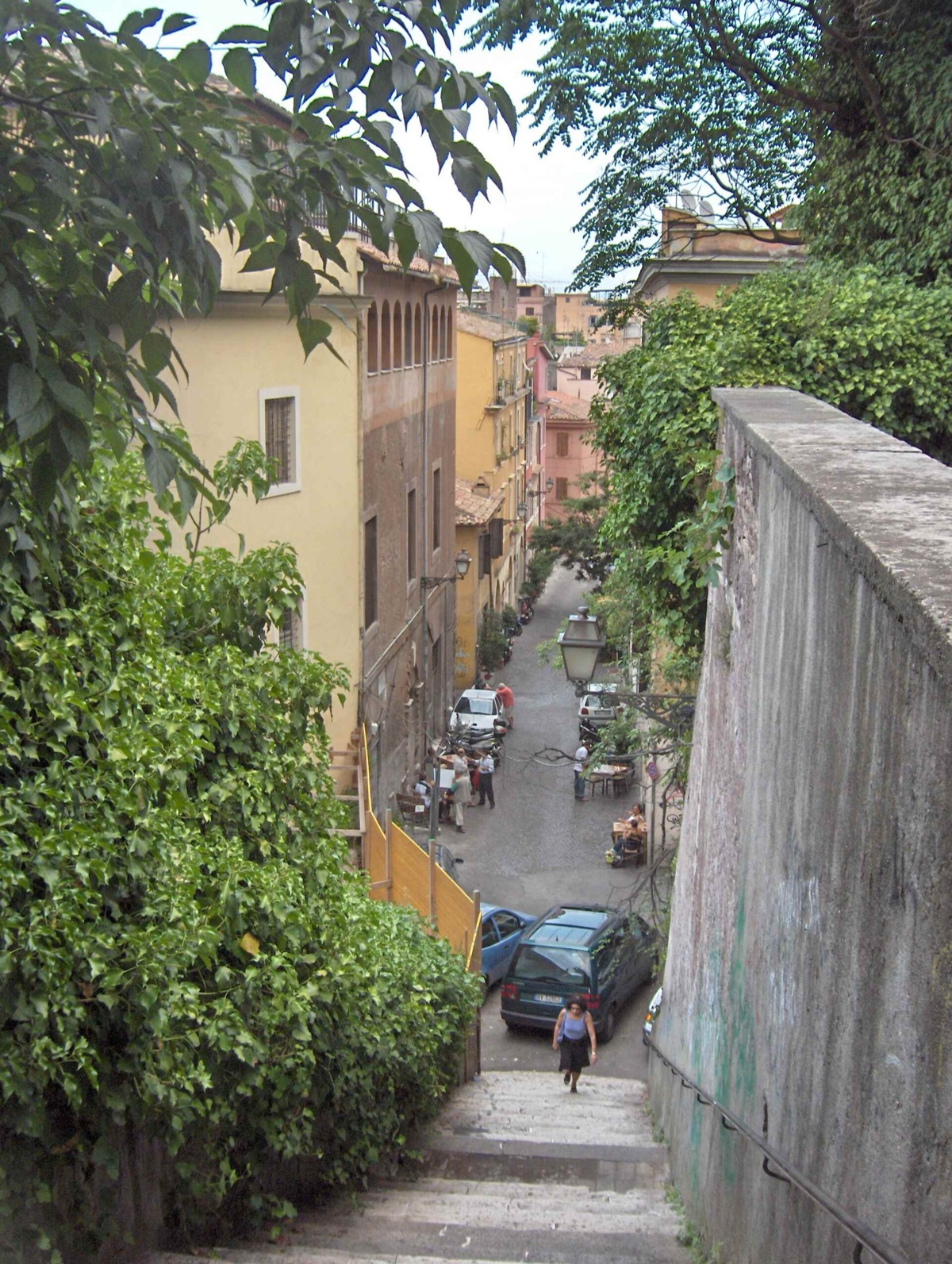
- Authentic Italian atmosphere: Trastevere is a maze of narrow lanes where ivy cascades from old ochre facades and freshly laundered clothes flutter overhead.
- Best time to visit: Aim for October or May — the summer months are unbearable and the neighbourhood literally bursts at the seams.
- Vegetarian paradise: You’ll taste some of the best traditional food here, from cacio e pepe pasta to fried rice balls called supplì that you’ll fall in love with.
- No metro: There’s no underground line serving the neighbourhood, so you’ll have to walk or take the perpetually packed tram number eight.
- Watch out for crowds: Piazza Trilussa and the area around the Basilica of Santa Maria in Trastevere are extremely noisy in the evening and packed with tourists and local youth.
- Hidden tranquillity: If you’re after quiet corners, head to the southern part of the neighbourhood around the beautiful Basilica of Santa Cecilia — most tourists never make it there.
- Priceless views: Don’t forget to hike up the Janiculum Hill (Gianicolo), where the entire Eternal City unfolds before you.
The full destination guide: Rome — guide and what to see
When to Visit Trastevere and How to Survive the Heat
Every traveller’s fundamental wish is always the same, and it’s perfectly understandable. We all want to see Rome bathed in glorious sunshine, we want to sit outside with an Aperol in hand, but we also don’t want to be crushed by ten thousand other people while doing it. Finding that magic sweet spot is incredibly difficult and requires genuinely careful planning. The best months to visit are May, June, September, and above all October, which offers the most pleasant conditions for long walks. Temperatures drop to a very comfortable twenty-two degrees, the air finally clears, and the city is bathed in gorgeous autumn light that’s absolutely perfect for photography.
The price you pay for this spring and autumn comfort is, however, pretty steep. These months function as peak season, so hotels fill up fast and the narrow lanes of Trastevere can sometimes feel like one giant ant colony. Summer in Rome — specifically July and August — is a massive test of your physical and mental resilience. Temperatures routinely soar above thirty-five degrees and humidity turns the streets into a stifling greenhouse where not a leaf stirs. If you absolutely must visit Rome in summer, your daily routine needs a radical overhaul to embrace the so-called riposo — the Italian afternoon siesta.
August has one more harsh and often overlooked quirk: the Ferragosto holiday. Around the fifteenth of August, huge numbers of locals lock up their flats, pull down the shutters, and flee en masse to the coast or mountains to escape the infernal heat. Many of the best family-run businesses and authentic restaurants in Trastevere simply shut for two to three weeks and hang a “closed for holidays” sign on the door. The good news, though, is that the Holy Year — the Jubilee that brought tens of millions of pilgrims to Rome in 2025 and caused absolute chaos — officially ended at the start of 2026. The city never sleeps and crowds will always be part of the deal, but the worst of the apocalyptic crush has thankfully eased and the streets are a touch more breathable again.
Where to Stay in Rome and Why Consider Trastevere
💡 Accommodation & experience tip: We love searching for places to stay on Booking.com, which usually has the best cancellation policies. For tickets, tours, and activities, it’s worth comparing options on GetYourGuide.

Your choice of neighbourhood defines your entire Rome experience and determines whether you collapse onto the bed in exhaustion each evening or casually stroll down to a local trattoria on the corner. Trastevere is the embodiment of that romantic Italian dream — it offers narrow pedestrian zones and absolutely fantastic nightlife. But the neighbourhood also has some notable downsides, as it attracts enormous, sometimes overwhelming crowds. Its biggest weakness is transport: there’s no metro stop serving the area, and the main sights aren’t exactly a stone’s throw away. In the morning, you’ll have to rely on the overcrowded tram, or simply walk everywhere on your own two feet — which on old cobblestones can really take a toll.
If you’re still set on staying here, I have one very important piece of advice. Look for accommodation in the southern part of the neighbourhood towards the Basilica of Santa Cecilia, where it’s considerably quieter and you’ll avoid the noisiest late-night crowds. A beautiful and tried-and-tested choice is Hotel Santa Maria, tucked away in a former sixteenth-century convent with a stunning courtyard full of orange trees. Another excellent option for a slightly more luxurious stay is Hotel Donna Camilla Savelli, whose rooftop terrace offers a jaw-dropping view over the entire Eternal City. You can easily book both of these through Booking, which we personally use on all our trips.
As an alternative to bustling Trastevere, you could opt for the calmer Prati neighbourhood right next to the Vatican — it’s flat and ideal for families with children. Another popular choice is the Monti district, which sits strategically right behind the Colosseum and offers excellent metro and train station access. Just always make sure to check whether your accommodation falls within a so-called ZTL restricted traffic zone. If you were to drive a hire car into one of these zones, the ever-present cameras will catch you and a hefty fine will definitely follow.
14 Things to See and Do in Trastevere
Let’s take a look at the best this photogenic neighbourhood has to offer, from ancient basilicas to the finest culinary experiences. I’ll tell you where to go early in the morning to dodge the crowds, and where to soak up the true Italian atmosphere with a glass of wine in the evening.
1. Basilica of Santa Maria in Trastevere

This is the absolute heart of the entire neighbourhood and probably the first place your feet will carry you after crossing the river. The Basilica of Santa Maria in Trastevere is considered one of the very oldest Christian churches in all of Rome, with its history stretching back to the third century. Although it looks relatively unassuming from the outside — you might easily walk past it among the sea of other Roman landmarks — its real treasure lies within. The moment you step through the door, you’ll be struck by its grandeur and the incredible stillness that stands in sharp contrast to the noise on the piazza outside.
The main reason you absolutely must visit are the breathtaking twelfth-century golden mosaics adorning the main apse. These mosaics depict the Virgin Mary with Jesus, and when the light hits them just right, they literally glow as if studded with thousands of tiny suns. The golden shimmer reflects throughout the interior, creating a deeply mystical atmosphere. Be sure to notice the massive granite columns separating the central nave from the side aisles as well.
💡 Insider tip: The church is especially stunning in the evening, when the facade is softly illuminated and the camera-toting tourist crowds have long since dispersed. Entry is completely free, but don’t forget the strict dress code — attendants simply won’t let you in with bare shoulders or in short shorts.
2. Piazza di Santa Maria
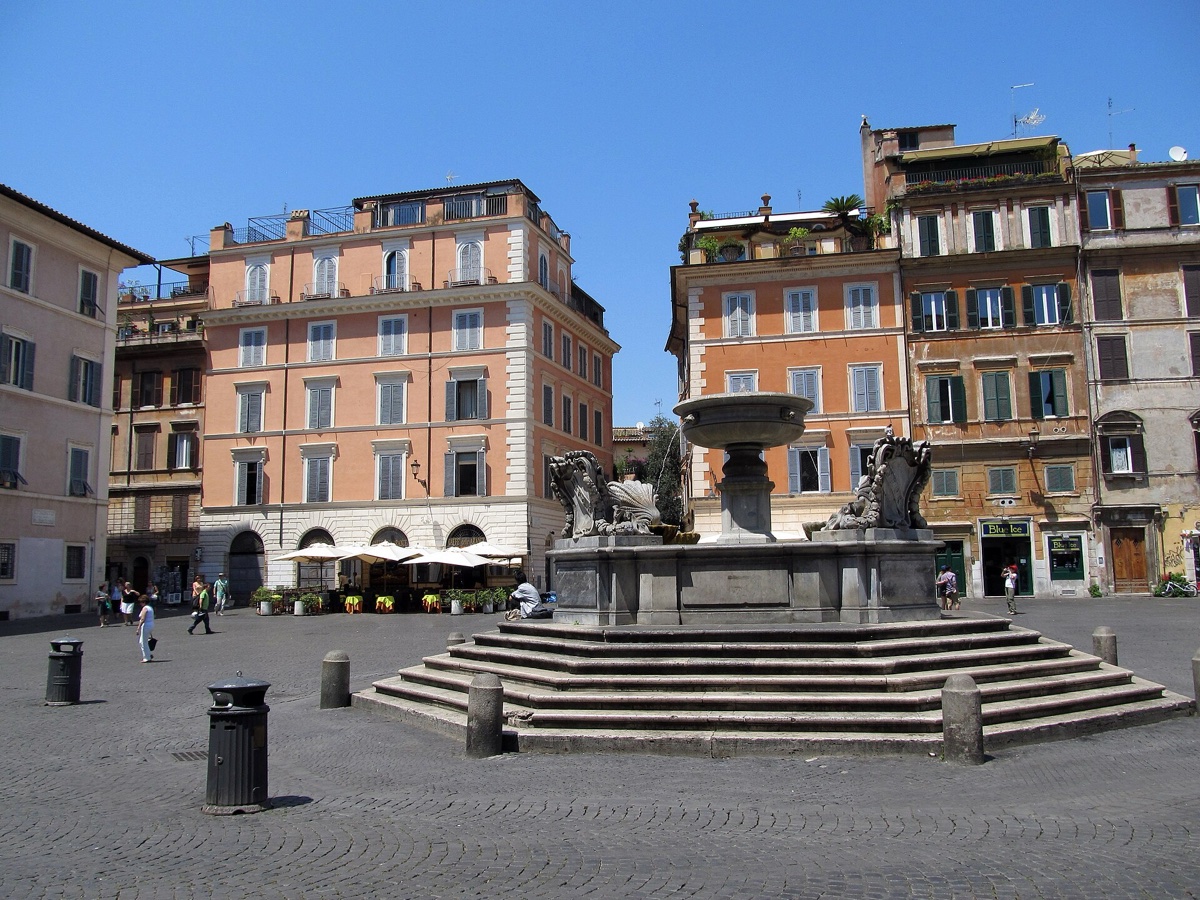
Directly in front of the aforementioned basilica spreads a piazza that functions as the main crossroads and the most important meeting point of the entire neighbourhood. During the day, Piazza di Santa Maria in Trastevere is a fairly peaceful spot where you’ll see older Italians reading newspapers on the steps and tourists studying their maps. But once darkness falls, the piazza transforms into a huge pulsating stage that lives and breathes until the small hours of the morning. It’s a place where true Roman youth meets travellers from every corner of the globe.
At the centre of the square stands a beautiful octagonal fountain whose original foundations date back to the eighth century, making it one of the oldest fountains in the city. Its steps serve as an impromptu auditorium for anyone wanting to enjoy free evening entertainment. Street musicians, fire-eaters, and all manner of performers regularly take turns around the fountain, creating that quintessentially bohemian Trastevere atmosphere.
Lukáš and I have managed to sit here for hours on end with just a slice of pizza, watching the incredible buzz unfold around us. It’s exactly the kind of place where you don’t need a specific plan or expensive tickets to absorb the city’s energy. Do keep a close eye on your belongings, though — in the relaxed and often tipsy crowd, skilled pickpockets are very much at work.
3. Wandering the Cobblestone Lanes and Photography
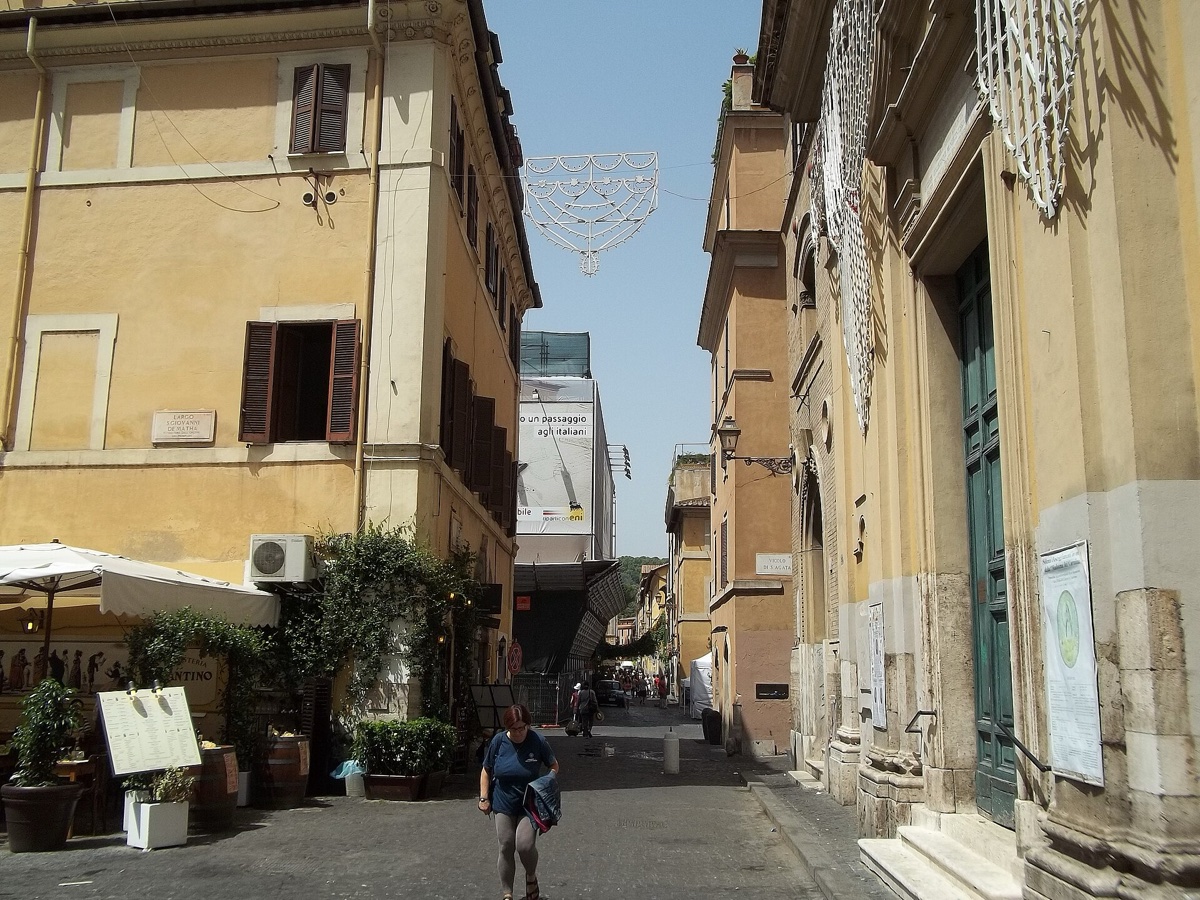
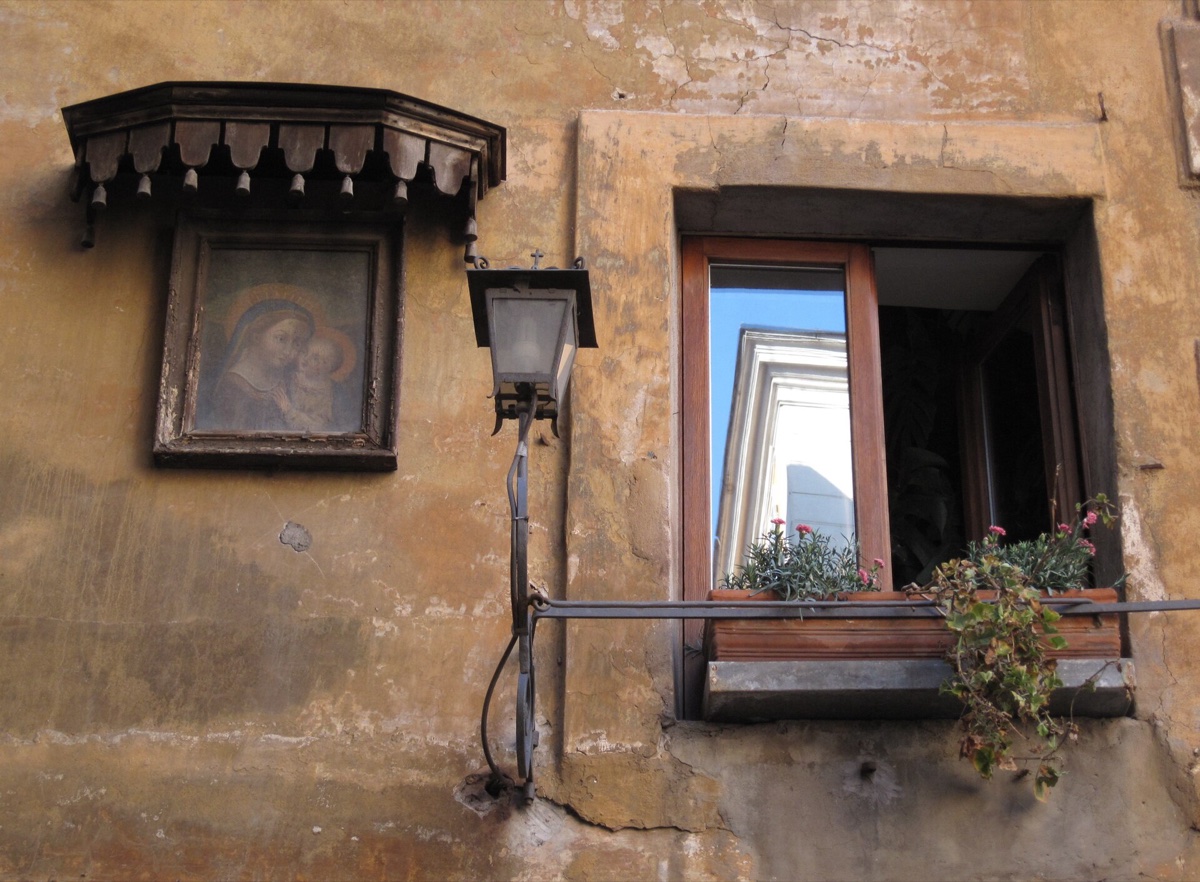
Trastevere’s biggest attraction isn’t actually any single landmark but the lanes themselves, which form a perfectly chaotic labyrinth. This is where you’ll find that iconic scenery of ochre and terracotta facades draped in thick cascades of green ivy. Above your head, freshly laundered clothes flutter on lines strung between windows, and through half-open doors you’ll catch the aroma of garlic and frying tomatoes. It’s a feast for all the senses, and every corner is practically begging to be photographed.
The surface of these lanes is made up of traditional basalt cobbles known in Rome as sampietrini. While they’re incredibly photogenic and give the neighbourhood that perfect historical character, they’re an absolute nightmare for your feet. They’re uneven, full of gaps, and treacherously slippery after a summer downpour — so forget about any heels or strappy sandals with thin soles. If you don’t want to wreck your feet on day one, sturdy trainers are an absolute must here.
The best strategy for exploring is simply to ditch the map and let your intuition guide you. Early in the morning, around eight o’clock, these lanes are still completely empty and bathed in soft golden light. You’ll see only café owners hosing down the pavements and bakers unloading fresh bread. It’s during these morning hours that you’ll capture the most beautiful photos without distracting elements in the background.
4. Climbing Janiculum Hill (Gianicolo) for the Views

If you need a break from the cramped lanes and crave a bit of open space, you need to head uphill. Janiculum Hill — Gianicolo in Italian — rises directly above the Trastevere neighbourhood and offers one of the very best panoramic views of the entire Eternal City. Although it doesn’t rank among the famous original seven hills of Rome, its strategic position makes it an absolutely essential stop for every view lover. The climb will give your legs a workout, but the reward at the top is worth every drop of sweat.
At the summit you’ll find a huge equestrian statue of Italian national hero Giuseppe Garibaldi, who fiercely defended the city against French troops here in the nineteenth century. From the spacious terrace beneath the statue, a breathtaking panorama unfolds — you’ll spot all those famous ancient domes, church bell towers, and in the distance even the outlines of faraway mountains. It’s a brilliant spot to try identifying individual landmarks from above without having to jostle through a crowd.
💡 Insider tip: If you head up here just before noon, you’ll witness one very loud tradition. At precisely twelve o’clock every day, soldiers fire a blank cannon shot — a custom introduced by Pope Pius IX to synchronise the ringing of all Rome’s church bells. The view is equally magical at sunset, though, when the entire city below you is painted in deep orange and pink hues.
5. Villa Farnesina and Raphael’s Frescoes
While thousands of tourists cram into the Vatican Museums and fight for every square inch of space, Trastevere hides a Renaissance gem where you can admire art in blissful peace. Villa Farnesina is a magnificent residence commissioned in the early sixteenth century by the fabulously wealthy papal banker Agostino Chigi. This man had such resources that he could afford to hire the finest artists of his age to create a summer retreat that would dazzle the entire upper crust of the era.
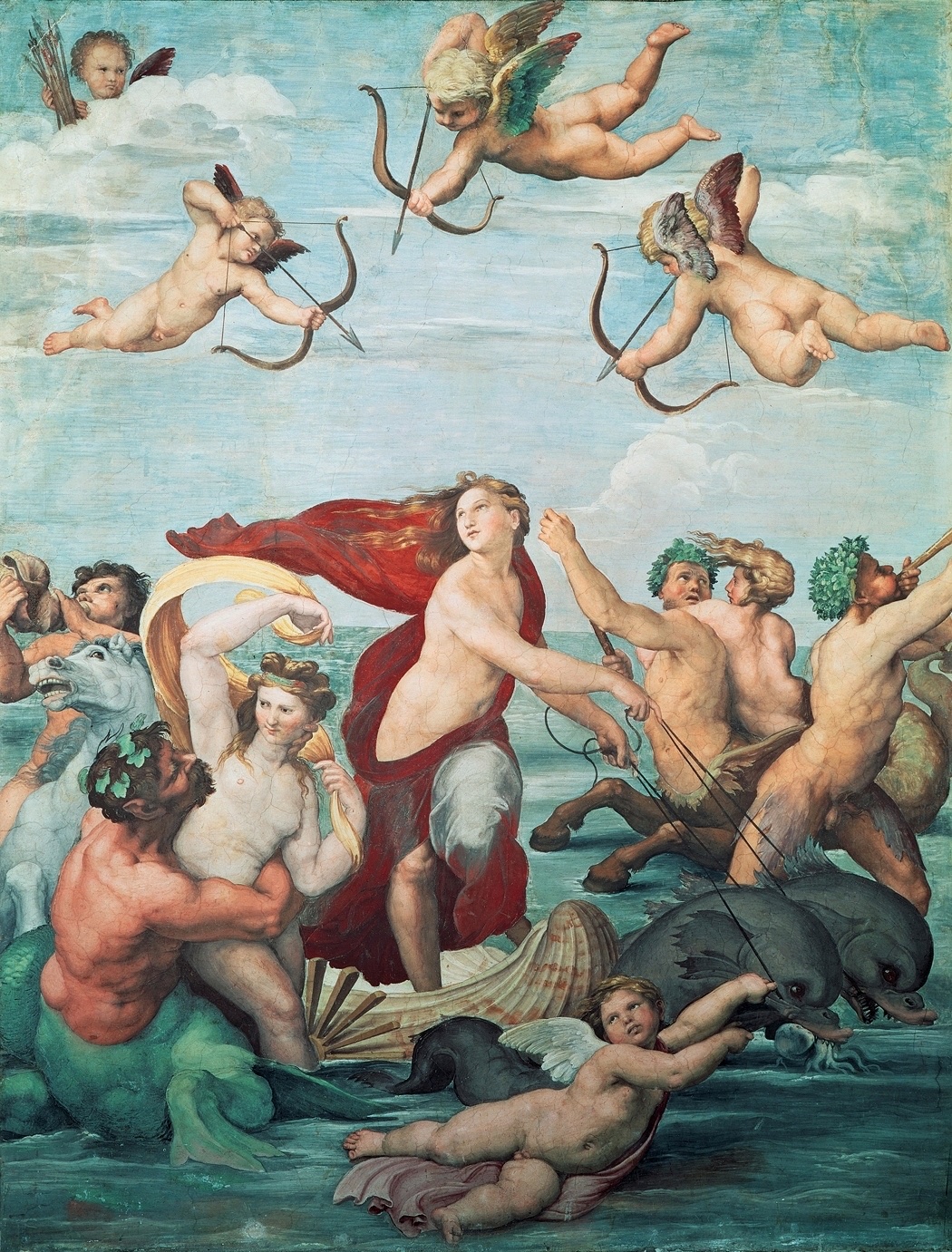
The villa’s main draw is the frescoes by none other than the genius Raphael himself. His depiction of the story of Cupid and Psyche in the main loggia is so strikingly vivid and colourful that you’ll scarcely believe it dates from the Renaissance. Unlike the religious motifs in the Vatican, the paintings here are full of ancient mythology, celebrations of love, and the joys of life — perfectly reflecting the character of the villa’s owner. Raphael even painted the famous fresco of the nymph Galatea here, said to embody his ideal of perfect feminine beauty.
A visit to the villa takes roughly one to two hours and makes a wonderful escape from the summer heat, as the interior stays pleasantly cool. The gardens around the villa may no longer be as expansive as in its heyday, but they still offer a lovely spot to rest. Admission is very reasonable, and the huge advantage is that you can admire these masterpieces without anyone shoving you through the crowd towards the exit.
6. Porta Portese Sunday Market
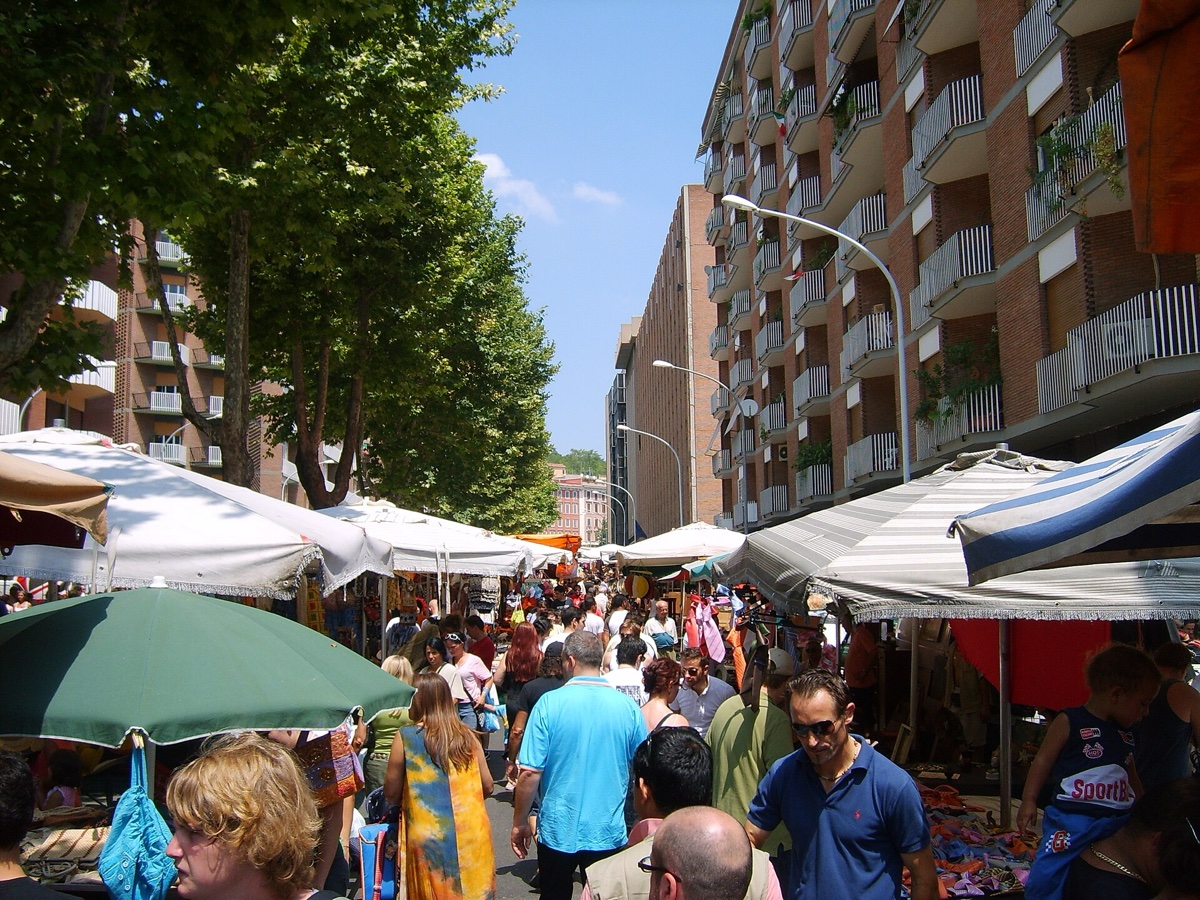
If you happen to be in Rome on a Sunday morning and love rummaging through old things, your itinerary is sorted. Porta Portese is probably the biggest and most famous flea market in all of Europe, stretching for several kilometres along the old city walls on the very edge of Trastevere. It kicks off early in the morning, around seven o’clock, and wraps up in the early afternoon when sellers start packing up their unsold goods. It’s an incredible, colourful, and very noisy spectacle that you need to experience first-hand.
You’ll find absolutely everything you can think of here. From rare antiques, old Italian books, vinyl records, and vintage clothing, through to cheap electronics and utter junk that defies all logic. Haggling isn’t just permitted — it’s practically a required part of the shopping ritual. If you spot something you like, never accept the first price and don’t be shy about suggesting a much lower figure with a smile.
Walking through the market is a brilliant sociological study, even if you end up not buying a thing. A word of serious warning, though, regarding safety: in the enormous crush around the most interesting stalls, highly organised groups of pickpockets operate with practised ease. Always take your backpack off your back and carry it on your front, keep your wallet in a deep inside pocket, and ideally don’t carry large amounts of cash on you.
7. Basilica of Santa Cecilia in Trastevere
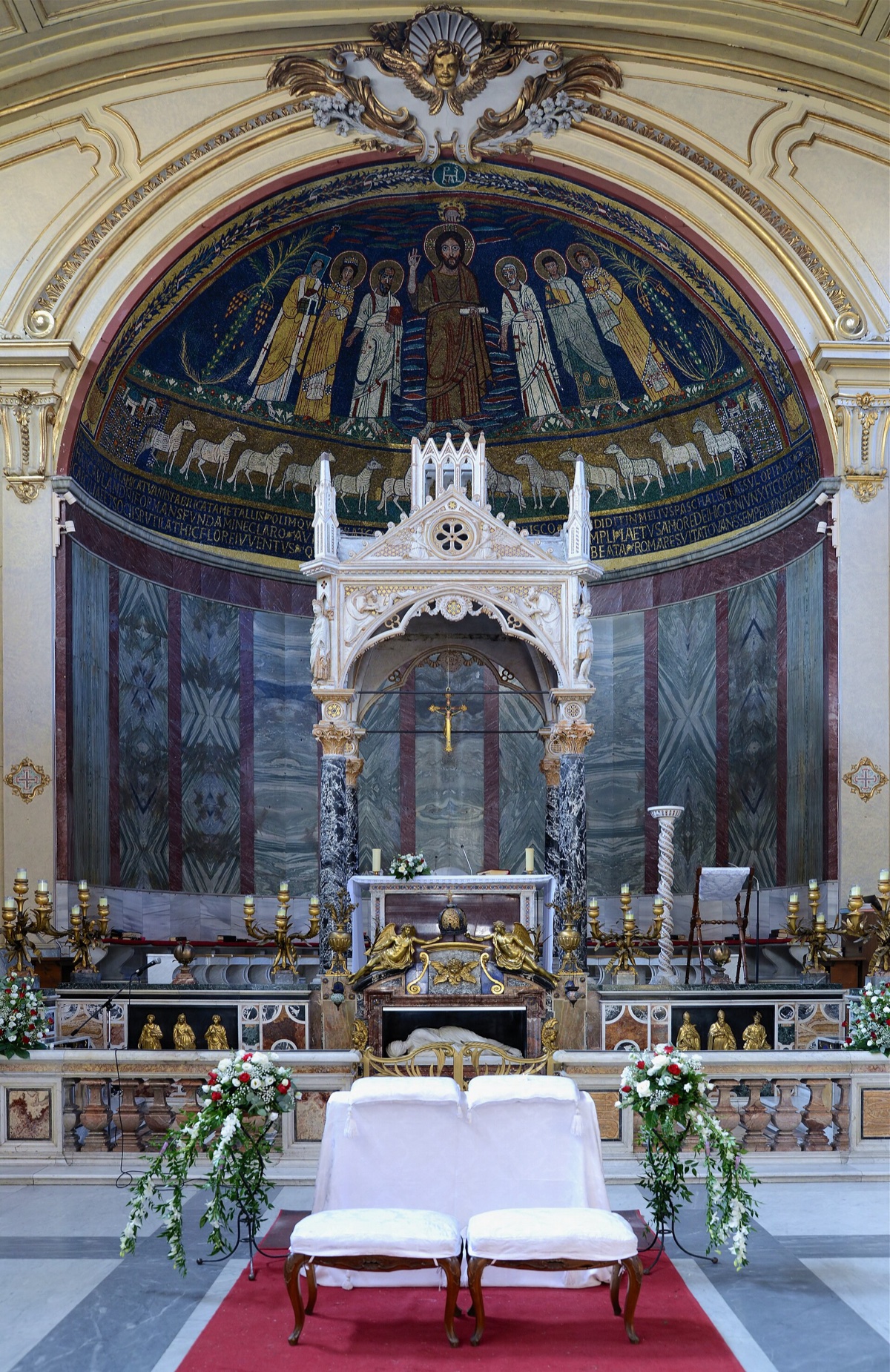
As I mentioned in the accommodation section, Trastevere also has a very calm and quiet face. You’ll find it in the southern part of the neighbourhood, where most hurried tourists from the historic centre never venture. At the heart of this area stands the Basilica of Santa Cecilia, dedicated to the patron saint of musicians. The place is steeped in a rather dark but powerful legend about a young Christian martyr who survived an attempted suffocation in a bath and then three blows of an executioner’s sword to the neck.
Right in front of the altar you can admire an incredibly detailed marble statue by Stefano Maderno, depicting the saint’s body in the exact position in which it was reportedly found in the catacombs centuries later. The statue is so realistic and emotive that it quite literally sends shivers down your spine. The church itself has a beautiful courtyard with a large ancient vase at its centre, creating an oasis of absolute stillness in the middle of the noisy city.
Definitely pay the few euros for entry to the underground crypt beneath the basilica. You’ll descend into the depths of history and find yourself among the foundations of ancient Roman houses, where you’ll see remains of antique baths and old mosaics. It’s a fascinating journey through time and brilliant proof of how modern Rome constantly layers itself upon its ancient foundations.

8. Botanical Garden (Orto Botanico)

When you start feeling like the old stone buildings and noisy lanes are closing in on you, it takes just a few steps to find yourself in a completely different world. Orto Botanico, Rome’s botanical garden, spreads across the slopes of Janiculum Hill just behind the Palazzo Corsini. It falls under the local Sapienza University and is one of the best-kept secret escapes from the crowds. For a modest entrance fee, you gain access to a twelve-hectare site brimming with greenery where you often won’t encounter a single soul.
The garden is divided into several themed sections. You’ll stroll through an awe-inspiring bamboo forest that rustles in the wind and provides perfect shade. The Japanese garden with its traditional water features and meticulously trimmed shrubs is wonderfully calming too. In spring, the blooming rose garden is a massive draw, its fragrance drifting far and wide, while in summer you’ll appreciate the palm grove with tree species from around the globe.
Lukáš and I pop in here whenever we’ve had our fill of Rome’s frenzy and just need to sit on a bench listening to birdsong. It’s an ideal spot for families with small children, who can run about freely without you worrying about passing scooters or cars. Plus, from the upper terraces of the garden, you’ll get yet another highly unusual view of the historic centre from a completely different perspective.
9. Tasting Traditional Supplì
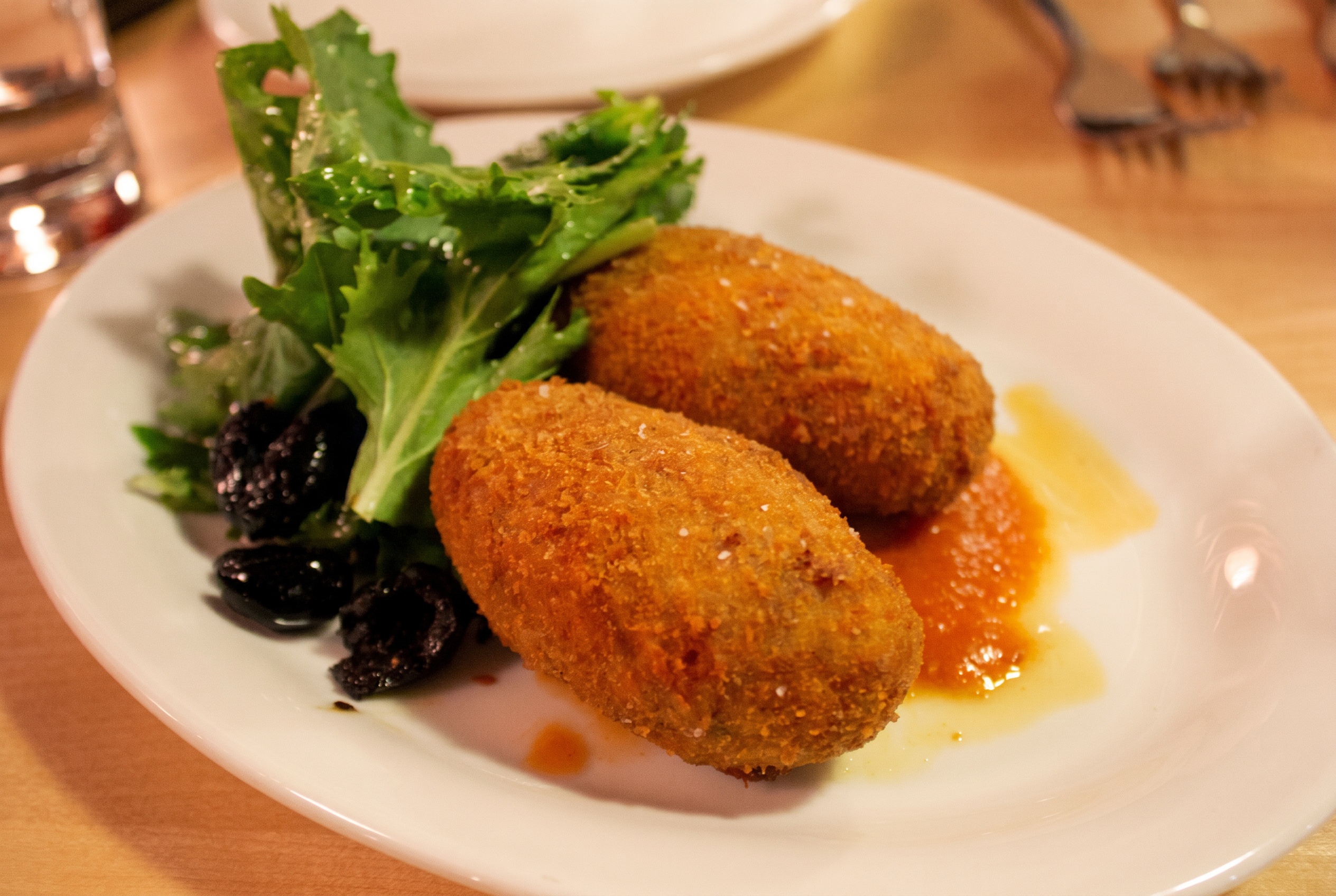
Italy isn’t just about pasta and pizza in a restaurant — it’s also about absolutely brilliant street food you can eat on the go. In Rome, the undisputed king of street food is supplì. It’s an oblong fried rice croquette, traditionally cooked in a hearty tomato sauce, hiding a big surprise inside — a chunk of quality mozzarella. When you snap a supplì in half, the cheese should stretch in a long, gooey string that resembles a telephone cord — which is exactly why they’re often called supplì al telefono.
For us vegetarians, it’s an absolute lifesaver and the ultimate snack during a long day of sightseeing. The original recipe sometimes included chicken giblets or minced meat, but nowadays the vast majority of classic tomato supplì are meat-free — just always double-check with the staff to be sure. The croquettes are coated in breadcrumbs and fried to absolute perfection: beautifully crispy on the outside, soft and creamy within.
The best supplì in Trastevere can be found at small, unassuming bistros and shops known as friggitoria, which specialise exclusively in fried food. Try, for example, the famous Supplì Roma on Via di San Francesco a Ripa. You can pick one up for about two euros, eat it right there on the pavement, and instantly get the energy boost you need for the next few miles of walking. It’s cheap, fast, and wonderfully authentic.
10. Dinner at an Authentic Trattoria
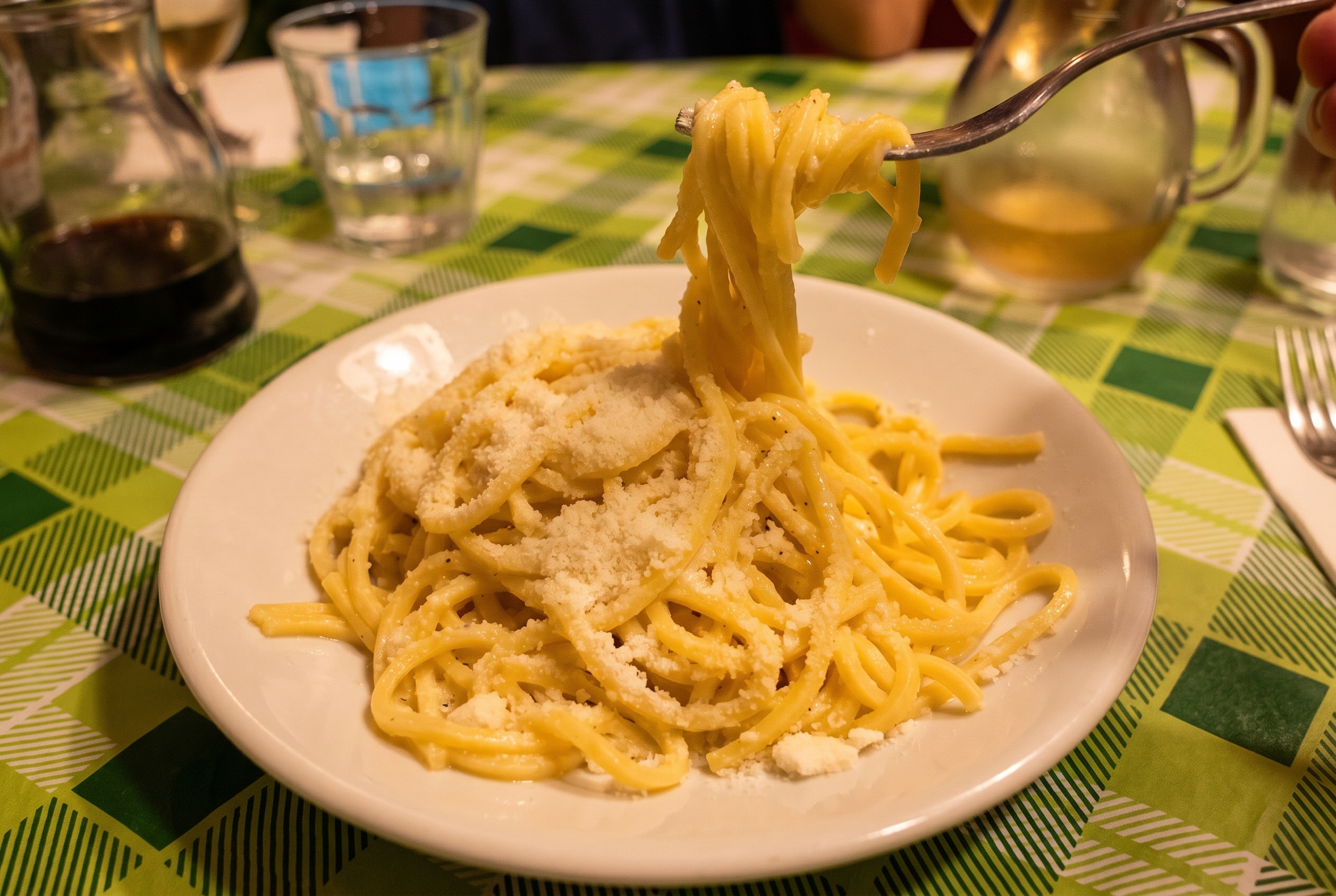
Going out for dinner in Trastevere is a ritual you absolutely shouldn’t miss. The neighbourhood is renowned for its family-run trattorias where recipes have been passed down through generations. Give a wide berth to any place with a tout standing outside waving a menu in five languages and trying to lure you in. The truly great Trastevere Rome restaurants need no advertising, and in the evening you’ll often see long queues of locals patiently waiting for a free table.
While local Romans adore their traditional quinto quarto cuisine and relish offal dishes like tripe alla romana or braised oxtail coda alla vaccinara, Lukáš and I naturally gravitate towards the meat-free treasures. The undisputed king of Roman pasta for us is cacio e pepe — a deceptively simple dish made from just Pecorino Romano cheese and freshly cracked black pepper. The result is an incredibly creamy and rich sauce that wraps itself perfectly around long strands of tonnarelli pasta.
💡 Insider tip: You absolutely must also try fried artichokes — carciofi alla giudia — a dish of Jewish-Roman origin that has become an inseparable part of the city’s cuisine. The artichoke is deep-fried whole, its leaves opening up like a golden flower that’s as crunchy as the best crisps you’ve ever had. When the bill comes, don’t be caught off guard by the line item called coperto — it’s a perfectly legal and standard cover charge for the table setting and bread basket, usually around two to four euros per person.
11. Nightlife and Bars around Piazza Trilussa
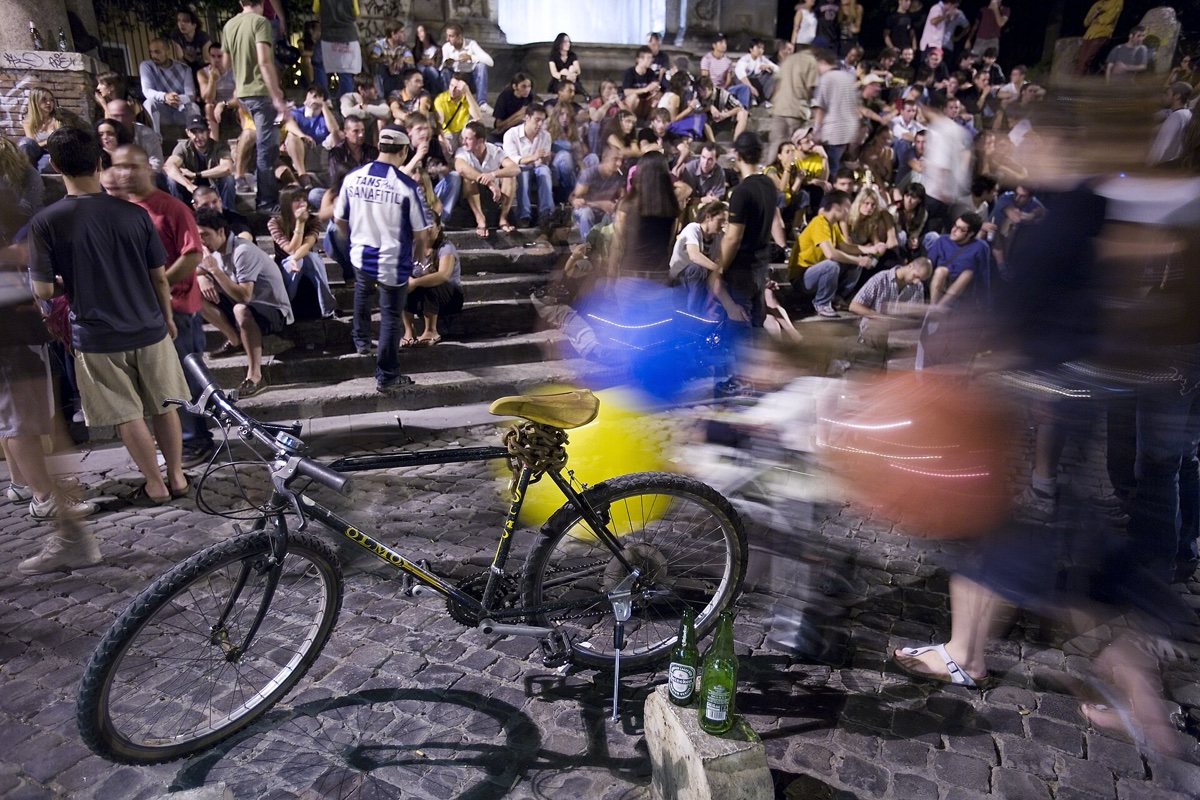
When the sun goes down, Trastevere reveals its second, far wilder face. While the historic centre around the Pantheon quietly winds down by around ten in the evening, here the party is only just getting started. The epicentre of the action is Piazza Trilussa, which sits right by the river near the Ponte Sisto bridge. The wide steps leading to the local fountain fill up every night with students, young Romans, and tourists who debate, laugh, and soak up the warm Italian nights with a beer in hand.
From this square you can venture into the surrounding lanes like Via del Politeama or Vicolo del Cinque, which are literally packed with small bars and pubs. The Italian evening ritual often begins with the aperitivo. You buy a single cocktail — most commonly a classic bittersweet Aperol Spritz or Campari — and with it you get free access to a small buffet of olives, pizza slices, cheese, and crisps. It’s a brilliant way to ease into the evening cheaply and pleasantly before a late dinner.
The atmosphere is infectiously laid-back. People stand around with glasses right on the pavement, music spills from open bar doors, and everyone chats at full volume. If you’re into craft beer, you’ll find several excellent spots here specialising in Italian microbreweries. Be prepared, though, for the fact that the noise in these streets doesn’t let up well past midnight — which is precisely why I always advise thinking carefully about where in this neighbourhood you book your hotel.
12. Gelato from Local Masters
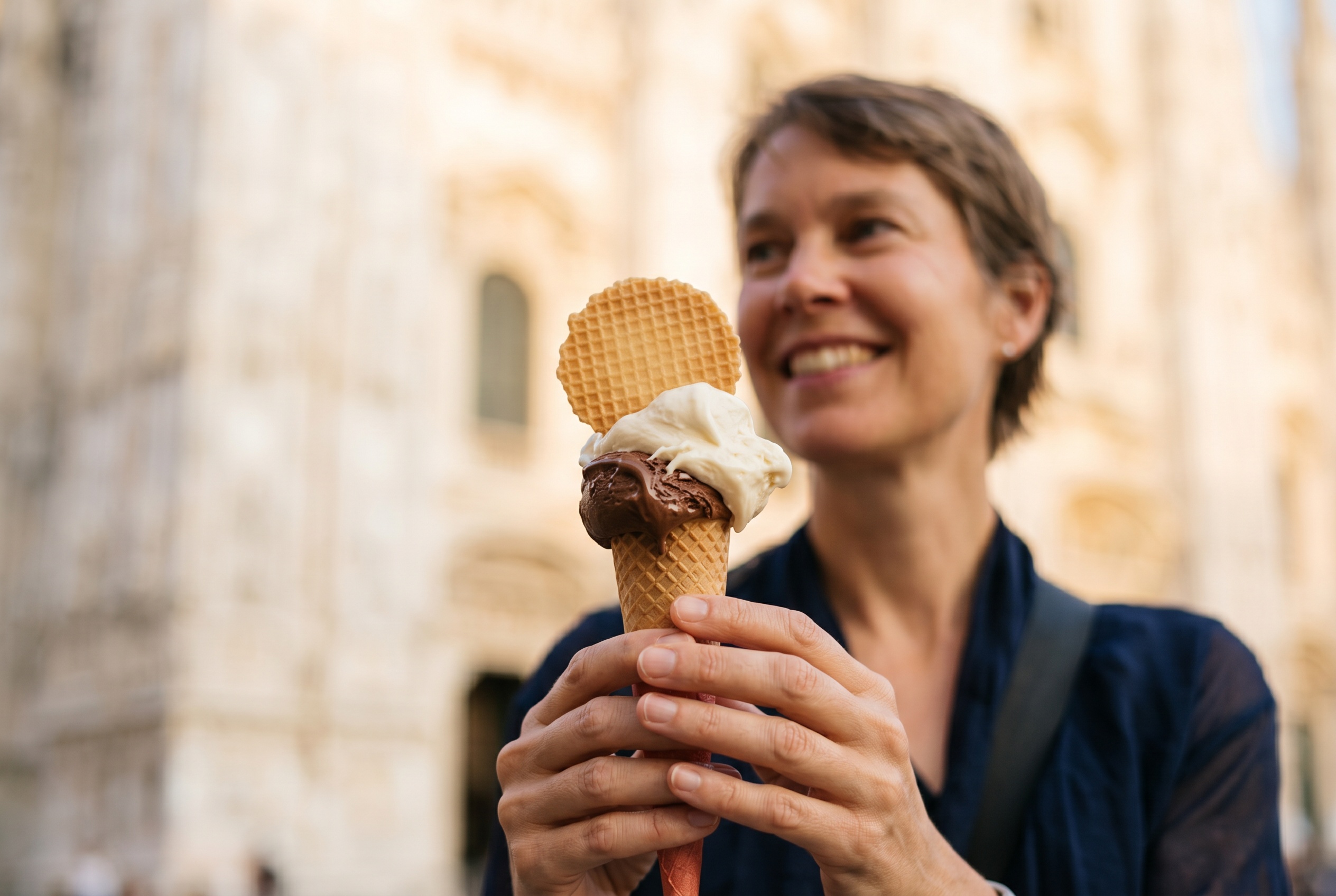
A visit to Rome without a proper serving of ice cream simply doesn’t count. Trastevere has several absolutely fantastic gelaterias, but you need to know how to spot genuine artisan quality versus artificially coloured tourist bait. The basic rule is simple: steer clear of gelato that’s whipped up into enormous fluffy peaks and glows in unnaturally neon colours. Pistachio gelato should never be bright green — it should be an earthy brownish-green — and banana should be a greyish hue, not vivid yellow.
Real Italian gelato is stored in metal containers, often even under lids, to maintain the proper temperature and texture. Fortunately, you’ll find branches of the very best masters here, such as the acclaimed Fatamorgana. Their gelato artisans experiment with highly unconventional flavours using exclusively seasonal and one-hundred-percent natural ingredients. You can try incredible combinations like chocolate with tobacco, basil with walnuts, or goat’s cheese with honey.
If you prefer the classics, try the legendary Fior di Luna. Their chocolate gelato is so rich and dense it feels like eating a slab of the finest chocolate, and their fruit sorbets taste exactly like freshly crushed fruit. A serving starts at around three euros, and we love to grab ours in a cone and wander down to a bench by the river to enjoy it.
13. Rome’s Drinking Fountains (Nasoni) and Saving on Water
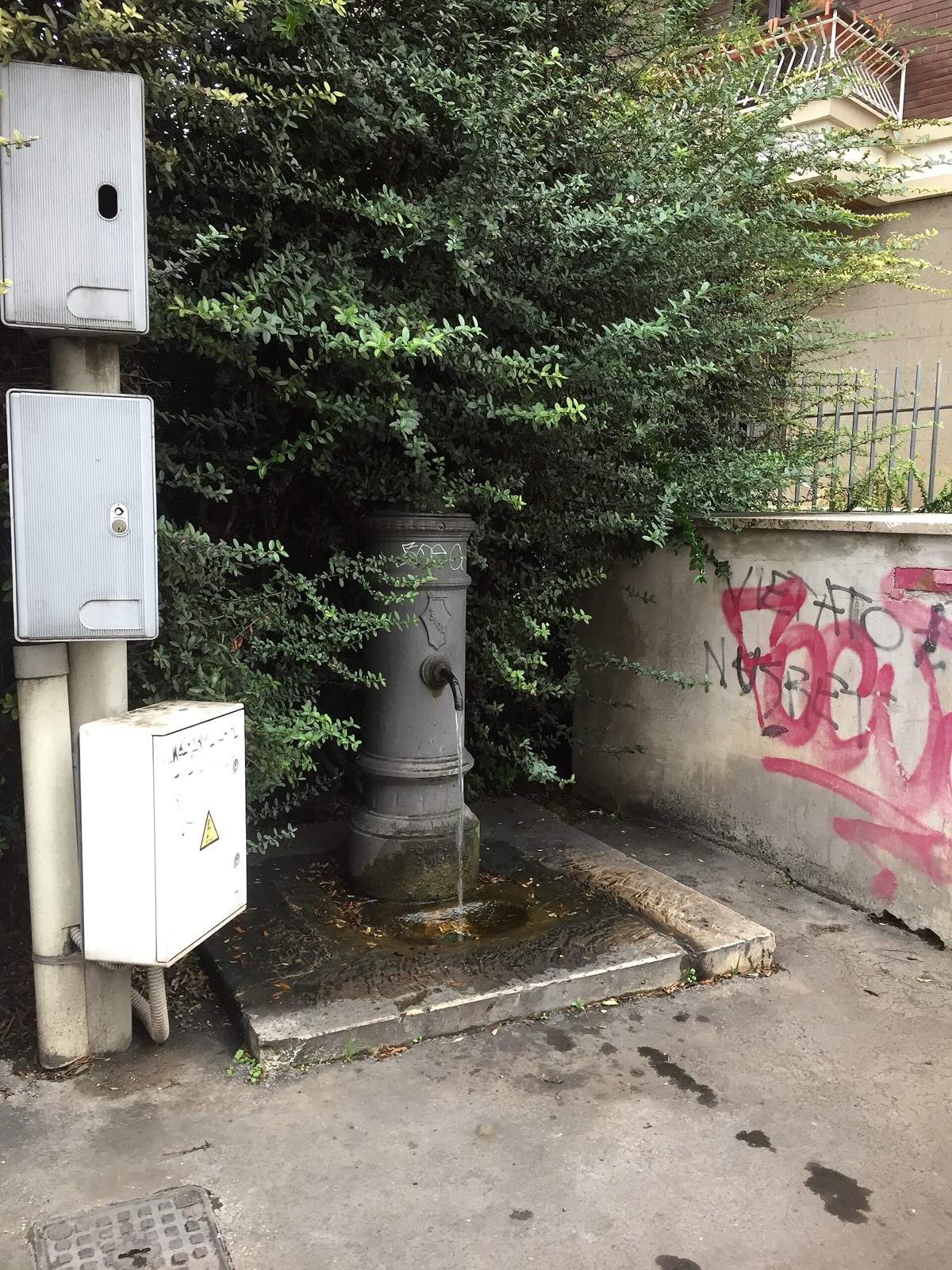
This isn’t a classic tourist sight, but it’s a practical tip that will save you a lot of money and hassle while exploring Trastevere. Rome is dotted with thousands of small cast-iron drinking fountains that locals affectionately call nasoni — meaning “big noses.” Ice-cold, perfectly clean water flows constantly from these spouts, fed by the same historic aqueducts that served the ancient empire. You’ll find quite a few scattered through the narrow lanes of Trastevere, and the water is completely free for everyone.
The biggest mistake you can make is buying overpriced bottled water from street vendors or small kiosks. Simply carry a reusable bottle with you and top it up at every big nose you pass. The water is incredibly refreshing with a great taste. Experienced Romans also know one very elegant trick for drinking from a nasone when you don’t have a bottle handy and don’t fancy contorting yourself under the spout.
Simply block the main downward spout with your finger. The pressure inside the pipe immediately rises and water shoots up through a small hole on the top of the tap, creating a lovely arc you can drink from comfortably while standing upright. It’s a tiny detail, but it’s precisely these little bits of local know-how that turn an ordinary trip into a genuinely memorable experience.
14. Views of the River Tiber and Isola Tiberina

Your exploration of Trastevere wouldn’t be complete without a walk along the river itself, which separates the neighbourhood from the historic centre. The Tiber borders Trastevere on its eastern side and offers beautiful views of old stone bridges. The most fascinating point is undoubtedly Isola Tiberina — the only island on the River Tiber in all of Rome. Shaped like a ship, the island is connected to both banks by two ancient bridges, one of which — Ponte Fabricio — is actually the oldest surviving bridge in the city, built in the first century BC.
Since ancient times the island has housed a temple to the god of medicine Aesculapius, and to this day a large and highly respected hospital operates here. The atmosphere is surprisingly peaceful, and from the island’s banks you can watch the wild currents of the river. Crossing via the island also works brilliantly as a quick pedestrian shortcut from Trastevere directly into the old Jewish Ghetto on the opposite bank, where they make the absolute best fried artichokes in the city.
During the summer months, the Tiber embankment around the island undergoes a dramatic transformation. As part of the Lungo il Tevere festival, dozens of white tents, pop-up restaurants, bars, and little shops spring up. There are open-air film screenings, concerts, and the riverbanks come alive with incredible energy. It’s a wonderful spot for an evening stroll, with the light of historic lamps reflecting off the water as you wander, drink in hand, just metres from the gently flowing river.
Map of points of interest for your phone
Where to Go Next from Trastevere

Once you’ve explored every lane in Trastevere, Rome has endless possibilities waiting for you. Right across the river you’ll reach the historic centre, where the famous Pantheon with its enormous dome and the breathtaking Trevi Fountain await. If you love Baroque architecture, don’t miss Piazza Navona with its wonderful cafés and the elegant Spanish Steps.
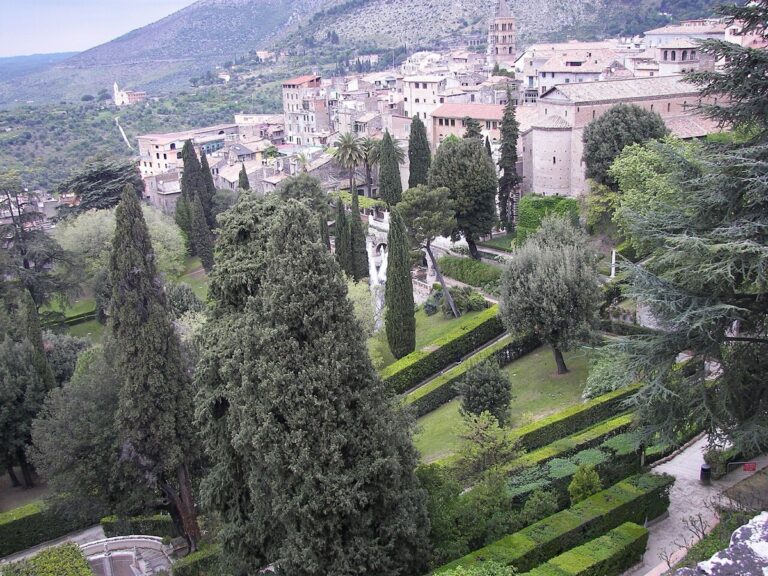
History lovers will naturally want to head further east to the majestic Colosseum. For a comprehensive overview of the must-sees, check out our big guide on what to see in Rome. North of Trastevere along the river, you’ll reach the massive fortress of Castel Sant’Angelo, and just beyond it lies the Vatican and the renowned Vatican Museums. If you’d like a break from the city bustle to see world-class art in a parkland setting, book tickets to the Galleria Borghese. And if you have time for day trips beyond the city, we recommend the ancient port of Ostia Antica, the beautiful villas and gardens of Tivoli, or the slightly further but utterly fascinating Pompeii.
Frequently Asked Questions
How much time should I set aside for visiting Trastevere?
Ideally, you should dedicate at least one full late afternoon combined with evening to Trastevere. During the day, you can leisurely explore the basilicas and villas, wander the narrow streets without large crowds, and around 7 PM find a spot for aperitivo. A subsequent dinner at a local trattoria and nighttime stroll will take up the rest of your evening. In total, you’ll spend roughly four to five hours full of experiences here.
Is the neighborhood safe at night?
Yes, Trastevere is generally very safe, even late at night. The streets are full of people, restaurants stay open late into the night, and there’s plenty of lighting everywhere. The only real danger you need to watch out for is pickpockets operating in the crowds around Piazza Trilussa and on the bridges. Always keep your valuables under control and wear your backpack in front of you on your stomach.
What’s the best way to get to Trastevere?
There’s no metro line that goes directly into the heart of the neighborhood. The best and fastest way to get there is tram number 8, which departs from the large Piazza Venezia in the city center and runs across all of Trastevere. You can also use bus line H, which will take you there directly from Termini, the main train station. If you’re staying in the center around Campo de’ Fiori, the easiest option is simply to walk across the river via Ponte Sisto.
Is there a strict dress code in the local churches?
Yes, all Roman churches, including the basilicas of Santa Maria in Trastevere and Santa Cecilia, have very strict dress code rules. Both men and women must have their shoulders and knees covered. During the hot summer months, the best trick is to bring a light, wide scarf in your backpack that you can simply drape over your shoulders just before entering the church, otherwise the guards at the entrance will turn you away without compromise.
Can I pay by card everywhere in restaurants?
Italy has made huge strides in cashless payments and by law every merchant must accept payment cards. In the vast majority of restaurants, bars, and gelaterias, you can pay by card without any problem. Nevertheless, I highly recommend always carrying at least a few coins worth ten or twenty euros, which will come in handy for tips, buying small items at markets, or a quick espresso at the bar.
How much did the Holy Year (Jubilee 2025) affect the situation in Rome?
The Holy Year 2025 meant an enormous influx for Rome, with over thirty million pilgrims arriving in the city and infrastructure literally collapsing in places. The good news is that the Holy Doors were ceremonially closed in January 2026 and the biggest pressure has finally subsided. The city is now significantly more breathable, monument repairs have been completed and the unsightly scaffolding has been removed, so you can enjoy Trastevere at a much more relaxed pace.
Can you walk around Trastevere in heels or dress shoes?
This is absolute suicide for your feet. The entire neighborhood, like most of historic Rome, is paved with traditional basalt cobblestones called sampietrini. They’re extremely uneven, hard, have wide gaps between them, and are slippery as hell after rain. Any heels, wedges, or shoes with thin soles will reliably ruin your walk, so always choose quality, closed sneakers with a firm and thicker sole.
Tips and Tricks for Your Vacation
Don’t Overpay for Flights
Search for flights on Kayak. It’s our favorite search engine because it scans the websites of all airlines and always finds the cheapest connection.
Book Your Accommodation Smartly
The best experiences we’ve had when looking for accommodation (from Alaska to Morocco) are with Booking.com, where hotels, apartments, and entire houses are usually the cheapest and most widely available.
 🚗 Car rental on the roadVerified rental cars in Rome
Search with the DiscoverCars comparison engine — it compares prices from dozens of local and international rental companies, and most bookings come with free cancellation.
Compare car prices in Rome →Don’t Forget Travel Insurance
Good travel insurance will protect you against illness, accidents, theft, or flight cancellations. We’ve had a few hospital visits abroad, so we know how important it is to have proper insurance arranged.
Where we insure ourselves: SafetyWing (simple monthly subscription) and TrueTraveller (for extra-long trips).
Find the Best Experiences
Get Your Guide is a huge online marketplace where you can book guided walks, trips, skip-the-line tickets, tours, and much more. We always find some extra fun there!