For many international travellers, the German Baltic coast is still something of an undiscovered secret, yet Rügen Island in Germany offers one of Europe’s most accessible seasides, complete with fascinating chalk cliffs that rise dramatically above the water. Here you get rugged cliffs, hundred-year-old spa villas and sandy beaches — all in a single day, with no changes and (almost) no queues. And they’re lined with those iconic wicker beach baskets. While southern Europe swelters through extreme summer heatwaves, here you’ll be welcomed by a refreshingly cool climate and fragrant air full of salt and pine.
For Germans, though, this coastline means something much bigger, because every year thousands of fans flock here to follow the trail of their favourite TV crime dramas and medical series. Shows like Praxis mit Meerblick, SOKO Wismar and Nord bei Nordwest have turned these local harbours and little towns into cult destinations, even if the TV magic bends reality a little. You might be surprised to learn that the famous fictional town of Schwanitz doesn’t exist at all — filmmakers pieced it together from several different harbours hundreds of kilometres apart.
Whether you come specifically for the film locations or you’re simply looking for a beautiful and affordable alternative to the Mediterranean, Rügen and the neighbouring Hanseatic towns will win your heart for sure. I’ve put together a detailed guide that walks you through the most beautiful corners of Germany’s north, shows you the exact filming spots and tells you how to make the most of the trip.
TL;DR
- Getting there: Rügen sits within easy reach of major European hubs — from Berlin you can drive there in roughly three hours along smooth motorways, or hop on a direct train.
- Three main series: Visitors are drawn here mainly by the hits Praxis mit Meerblick (Rügen), SOKO Wismar (Wismar) and Nord bei Nordwest (Fehmarn and around).
- The surgery with a sea view: The most famous TV clinic from Praxis mit Meerblick stands right in the harbour town of Sassnitz on Rügen Island.
- The fake police station: The base of the SOKO Wismar investigators is a passageway by the historic Church of the Holy Spirit in Wismar — the sign only goes up for the cameras.
- The non-existent Schwanitz: The setting of Nord bei Nordwest is fiction, filmed in Orth harbour on the island of Fehmarn, in Travemünde, on the Priwall peninsula and in Geesthacht.
- Historic heritage: The Hanseatic towns of Wismar and Stralsund are UNESCO-listed thanks to their unique brick Gothic architecture and beautifully preserved old towns.
- When to go: May and September offer the best mix of pleasant weather and fewer crowds; summer is gorgeous but expect throngs of German tourists.
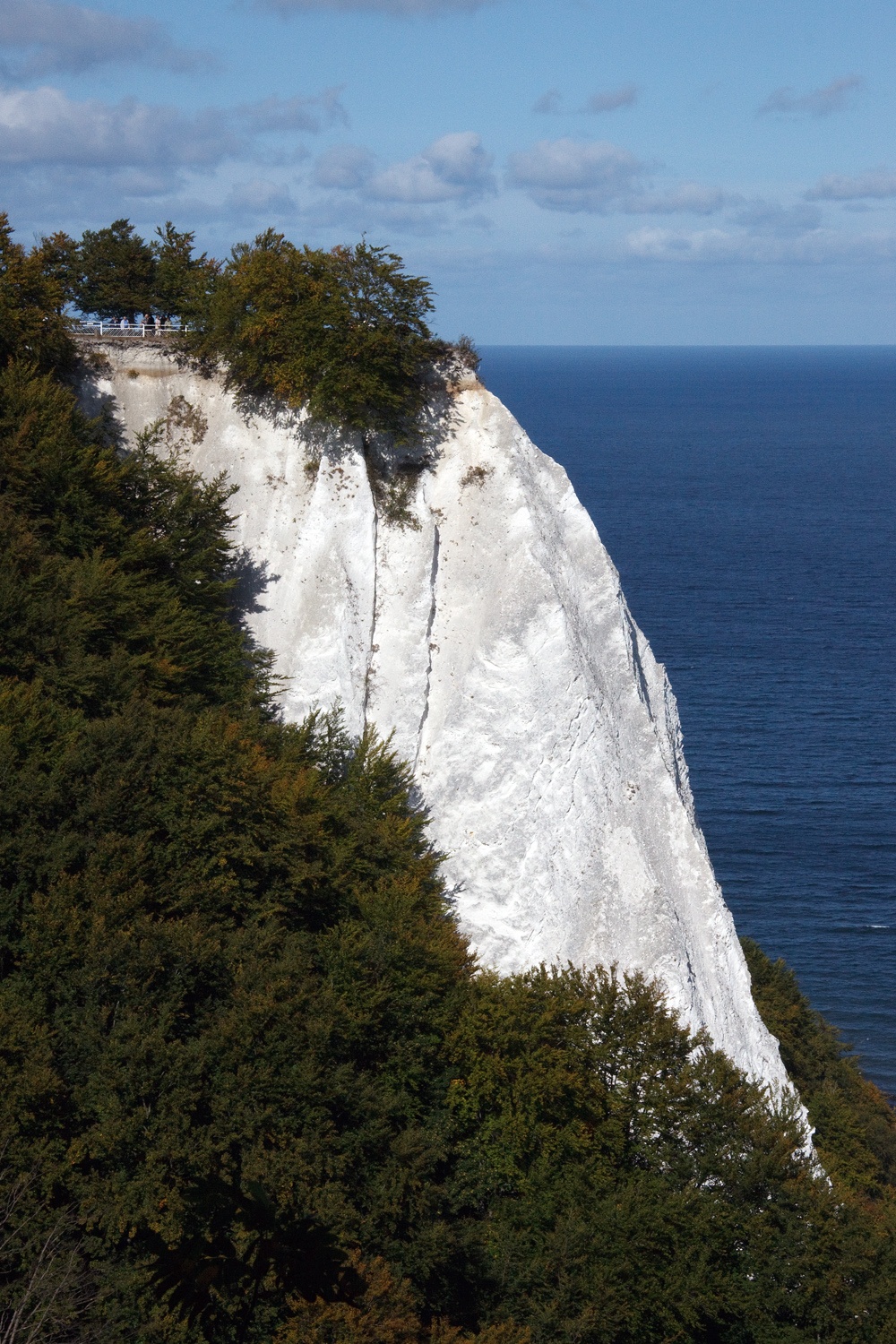
- The biggest draw: The chalk cliffs in Jasmund National Park, which rise more than a hundred metres above the sea and form the most iconic panorama of the entire German Baltic.
The full destination guide: Germany — guide and what to see
Where it lies and how to get there
Reaching the German Baltic coast is surprisingly quick and easy, which makes it an ideal target for a longer road trip or a week’s holiday. If you’re driving from Berlin, you’re looking at roughly 250 kilometres north, a route you’ll cover in about three hours with decent traffic. The way runs almost entirely along good German motorways heading north, so the kilometres tick by fast and there’s no risk of getting lost on tangled back roads.
A huge advantage of driving in Germany is the fact that there’s still no motorway vignette (toll sticker, like the ones you need in Austria or Switzerland) for passenger cars, so you save on transit fees. As you approach Rügen itself, you’ll pass through historic Stralsund and then cross the Strelasund strait, spanned by two magnificent bridges. The good news is that both bridges linking Stralsund with Rügen are completely toll-free, so you reach the island at no extra cost.
If you’d rather not drive or you simply want to enjoy the journey more, there are very comfortable train connections with a change in Berlin, from where direct services run all the way to Stralsund or straight to the resorts on Rügen. Once on the island, I recommend hopping aboard a local gem: the historic narrow-gauge steam train known as Rasender Roland (Racing Roland), which romantically links the main coastal resorts and is a fantastic experience in itself. One thing not to forget when budgeting is the so-called Kurtaxe, or spa tax, charged in almost every seaside town and usually collected directly by your accommodation, running about €2 to €3 per day.
When to visit the German Baltic
Picking the right time is absolutely key for a visit to Germany’s north, because the Baltic Sea has its own clear quirks and the weather here can be pretty unpredictable. If your main goal is swimming and topping up your tan on the beach, you’ll logically want to aim for June to September — but even in the hottest summer, expect the sea temperature to stay fairly brisk and rarely climb above a refreshing 20 degrees Celsius. Summer also coincides with the German school holidays, which in practice means the resorts are bursting at the seams, beach baskets sell out well in advance and accommodation prices shoot up sharply.
From a travel-comfort point of view, May and September are the best months, when it’s already lovely for walks but the crowds are still bearable. This is the perfect time to savour long strolls along the cliffs, cycling trips along the flat coastline and exploring the Hanseatic towns at a calmer pace. Spring also tempts with a flood of blooming greenery, while early autumn paints the beech forests in the national parks in unbelievable colours.
If you don’t mind a bit of cold and wind, the Baltic off-season has an entirely different charm: the wind slaps your face, the cliffs look dramatic and you have the beach almost to yourself. The photos come out better than in summer, and the melancholy just comes with the territory. It’s precisely in autumn and winter, when strong winds batter the coast and the sea rages, that the chalk cliffs look their most dramatic and the whole landscape takes on that true Nordic melancholy. Just bear in mind that many smaller cafés and tourist attractions may have limited opening hours, and warm functional clothing becomes your best friend.
12 places worth stopping for on Rügen Island in Germany
Twelve places you really don’t want to miss — whether you’re here for the white cliffs, for the TV detectives, or simply for the sea. We’ll show you the exact filming spots of the cult series, wander along the white cliffs and peek into the lanes that remember the glory days of the Hanseatic merchants.
1. Sassnitz and the surgery from Praxis mit Meerblick
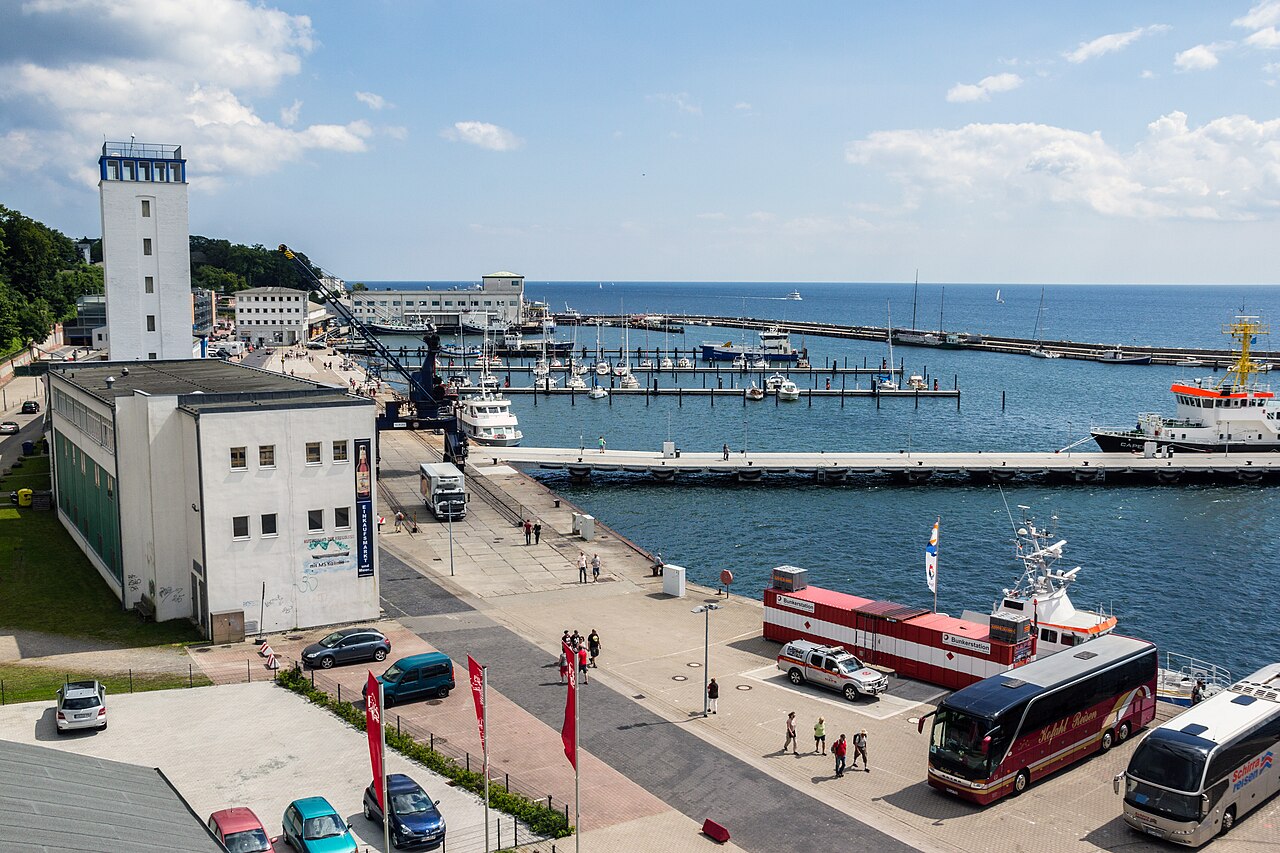
Sassnitz is a beautiful harbour town in the east of Rügen that serves as the main gateway to the cliffs and is also a total mecca for fans of the medical series Praxis mit Meerblick. The local architecture, with its white façades and wooden balconies, radiates incredible calm, and the winding lanes hide plenty of picturesque corners. It’s here, in one of the historic buildings with a direct view of the waves, that the central TV surgery stands, which viewers have been seeing on screen since 2016.
When you make your way to the building, you’ll instantly recognise the familiar staircase and façade, though the interiors are of course shot in studios. The harbour in Sassnitz offers real maritime experiences too — a decommissioned British submarine is moored here as a museum, and you can walk out along the long breakwater to the lighthouse. Prices in the local cafés are slightly higher than inland; expect to pay around €7 to €10 for coffee and cake. 💡 Tip: Parking in the centre of Sassnitz can be nerve-racking in high season, so use the big park-and-ride lots on the edge of town and walk to the harbour instead.
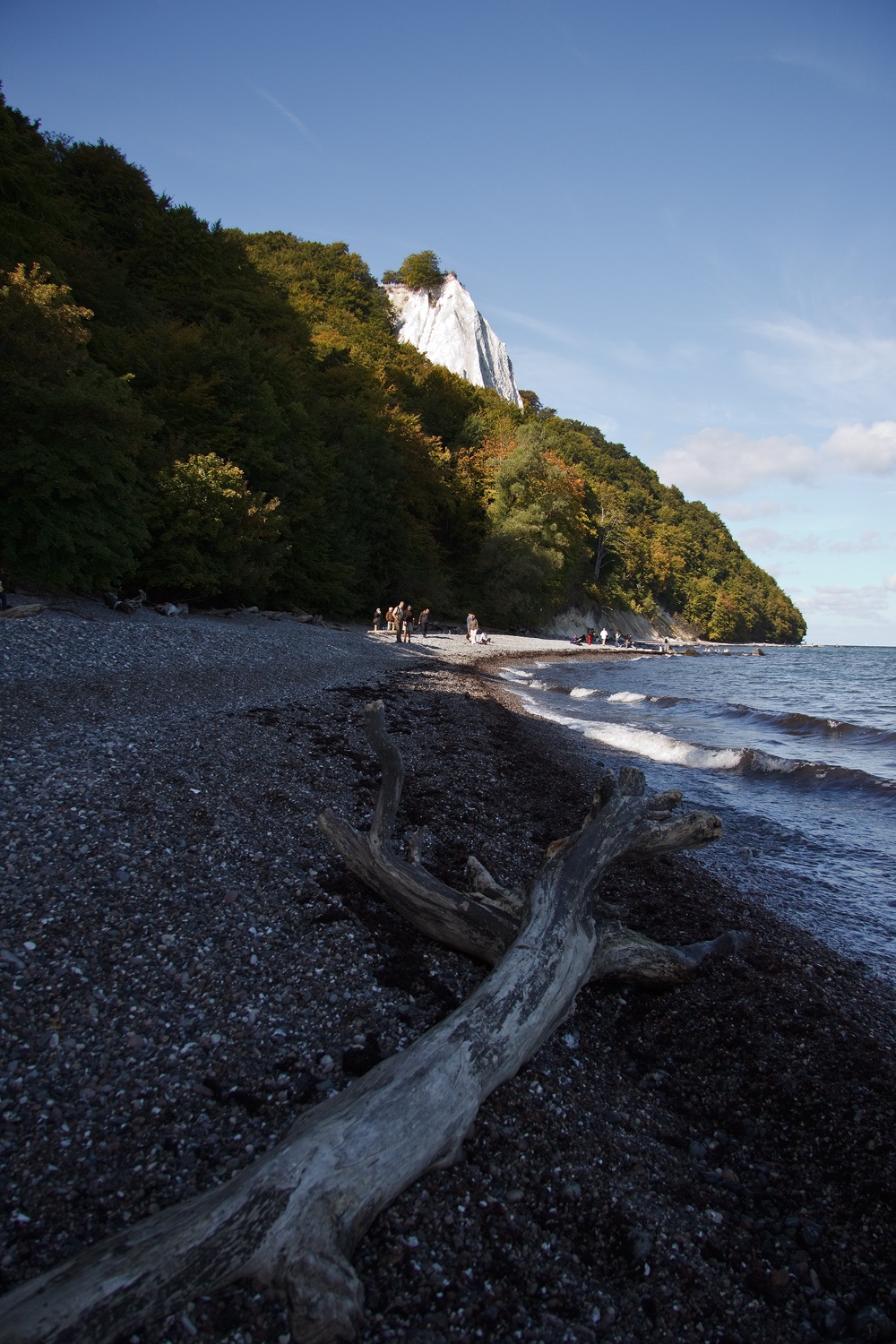
2. Königsstuhl and the chalk cliffs in Jasmund National Park
This spot is without doubt the greatest natural jewel of the whole of Rügen Island and quite possibly of the entire German coast. Königsstuhl, meaning King’s Chair, is a majestic chalk cliff in Jasmund National Park that towers more than a hundred metres above the sea and gleams a dazzling white into the distance. The famous German painter Caspar David Friedrich captured this place on his romantic canvases, and it will give you exactly the same goosebump-inducing feeling.
A new visitor centre with a modern cantilevered Skywalk platform opened here recently, floating right above the abyss and offering a safe but utterly dizzying view into the depths. Entry to the visitor centre complex is paid, with a ticket costing around €12, and you should set aside at least two hours for the modern interactive exhibitions. The TV crews come here for the most epic drone shots, which later underscore the dramatic scenes on screen. 💡 Tip: If you want to skip the Skywalk entrance fee, you can walk to the cliffs through the forest to the neighbouring Victoria-Sicht viewpoint, from where the view of Königsstuhl itself is arguably even lovelier.
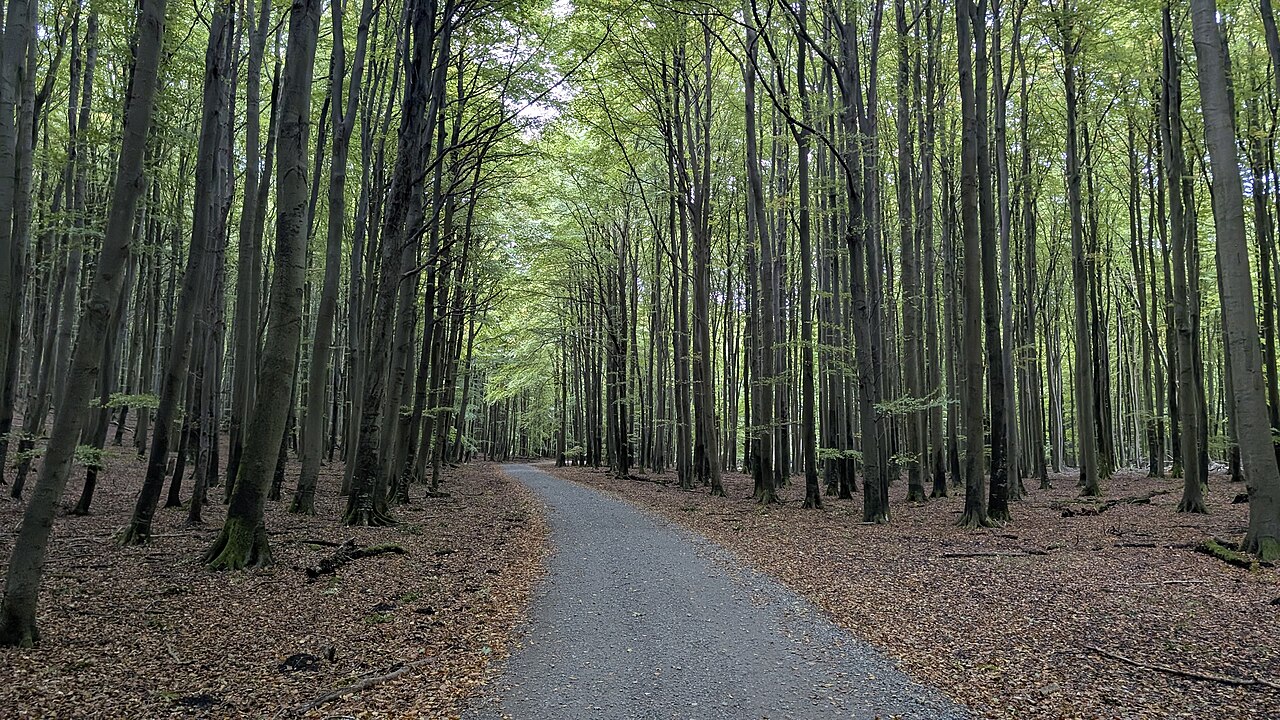
3. The coastal trail from Sassnitz
If you want to experience the chalk cliffs really up close and don’t mind a bit of exercise, you have to set off on the famous coastal trail (Hochuferweg), which connects Sassnitz with Königsstuhl. The route is about 10 kilometres long and winds through ancient beech forests that are UNESCO-listed as natural heritage thanks to their untouched state. Along the way you’ll pass ever-changing glimpses of the blue sea and white rocks — a real feast for the eyes.
Don’t expect a flat walk, though; the trail occasionally drops into deep gullies and climbs back up to the cliff edge, so sturdy footwear is an absolute must. About halfway along you’ll come to wooden staircases that let you descend safely to the pebble beach and admire the majestic chalk walls from below, where they look even more massive. Pack plenty of water and a snack for this hike, because you won’t find any refreshment stands along the way. 💡 Tip: The route is one-way only, but from the visitor centre at Königsstuhl you can comfortably return to Sassnitz on the local bus, which runs fairly often.
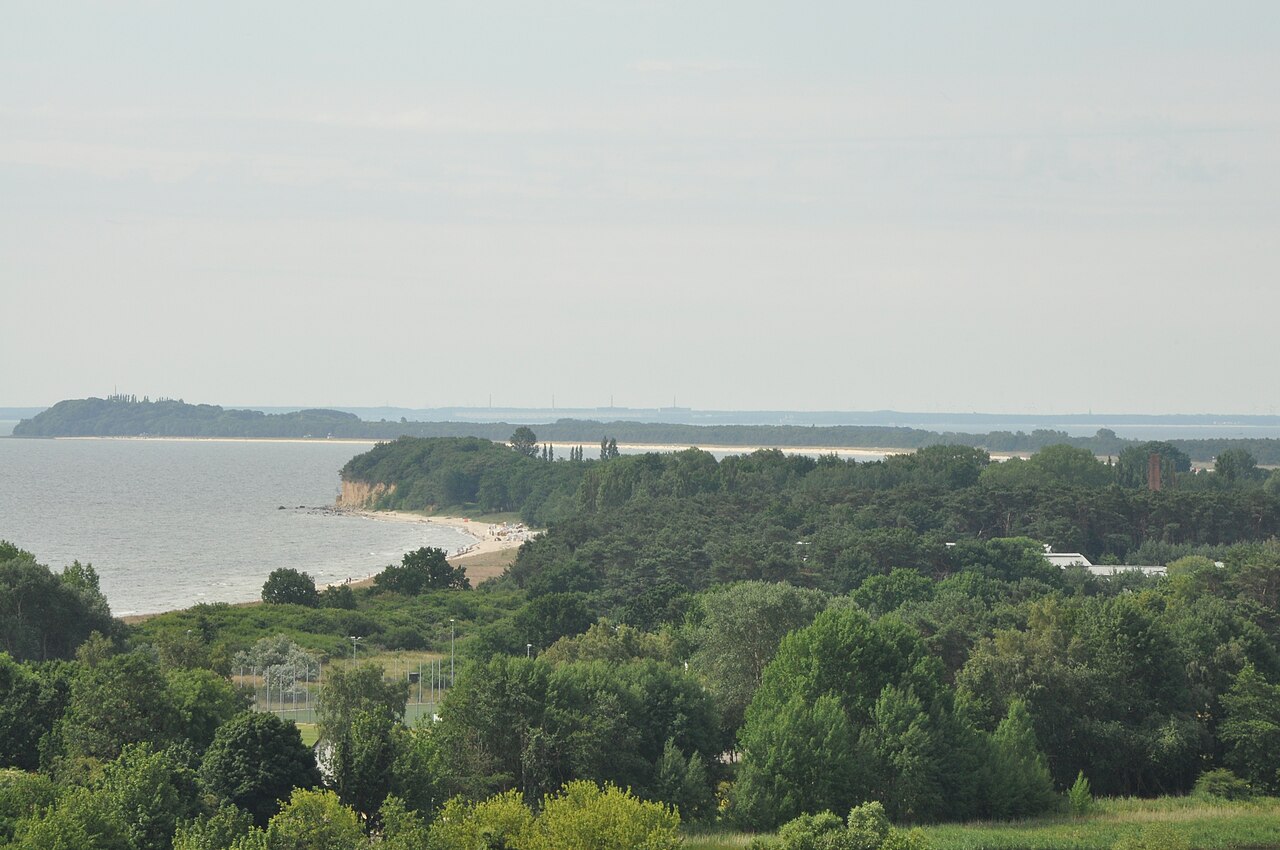
4. Göhren and Südstrand
The little town of Göhren sits on the southeastern tip of Rügen and for years was a quieter resort, but in 2016 it experienced a huge film boom. The crew of Praxis mit Meerblick moved here and turned the local rehabilitation clinic, sitting right on the gorgeous Südstrand (South Beach), into the centrepiece of three new episodes. The locals are duly proud of this attention, and a stroll along the long wooden pier instantly transports you into the TV atmosphere.
Göhren is notable for the fact that it sits on a hill and has two beautiful beaches: the northern one, which is busier and full of attractions, and the southern one, where you’ll find the peace you’re after and precisely those new film locations. The town has kept plenty of lovely white villas in the typical spa style, nestled among green pines. You can wander here for hours and soak up that true holiday ease you know so well from the screen. 💡 Tip: Because the town is on a hill, the way to the sea always means going down and the way back means climbing up — but luckily there’s a historic lift that will spare your legs for a few coins.
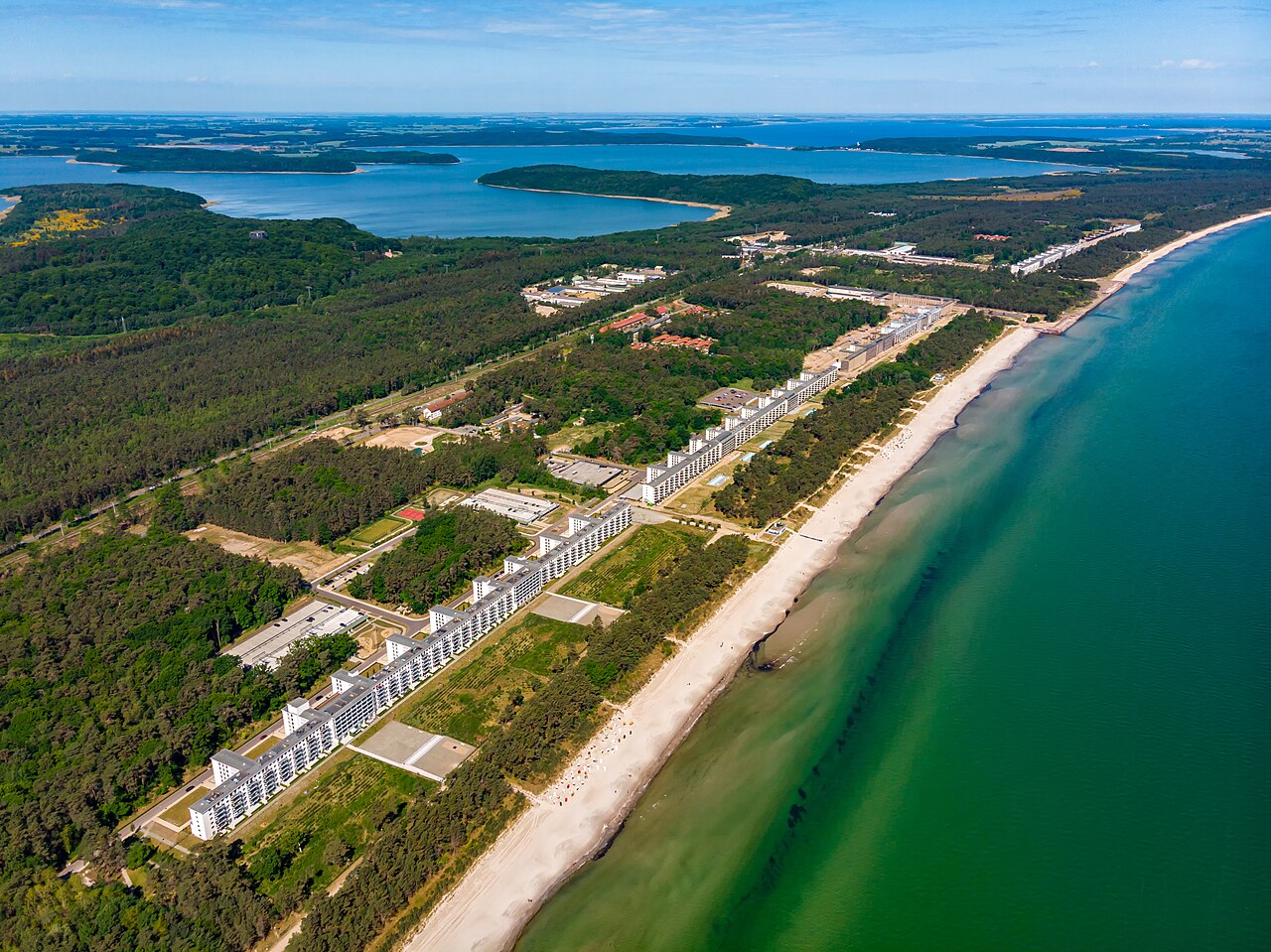
5. Prora
Roughly in the middle of Rügen’s eastern coast lies a place that still sends a slight shiver down your spine and represents one of the most controversial buildings in all of Germany. Prora is a colossal Nazi holiday complex built in the 1930s by the Kraft durch Freude organisation, and it stretches an unbelievable 4.5 kilometres along one of the island’s most beautiful sandy beaches. In Praxis mit Meerblick it stands in as a luxury apartment, and today’s reality actually matches that, because the huge concrete blocks are gradually undergoing a massive redevelopment.
Where it once was a crumbling reminder of dark history, today you’ll find luxury hotels, expensive flats and modern cafés, which stirs up plenty of debate among locals and historians alike. The history of this place can’t simply be brushed aside, so if you’re there, definitely visit the local documentation centre (it’s worth it, and you’ll understand what those kilometres of concrete really mean), where you’ll learn all about the original megalomaniac plans. Walking along those endless identical façades is an experience that etches itself into your memory and shows you a completely different face of the Baltic. 💡 Tip: The adjoining beach at Prora is lovely with fine sand, but in the summer months there’s a huge parking problem here, so it pays to arrive early in the morning or use public transport from nearby Binz.
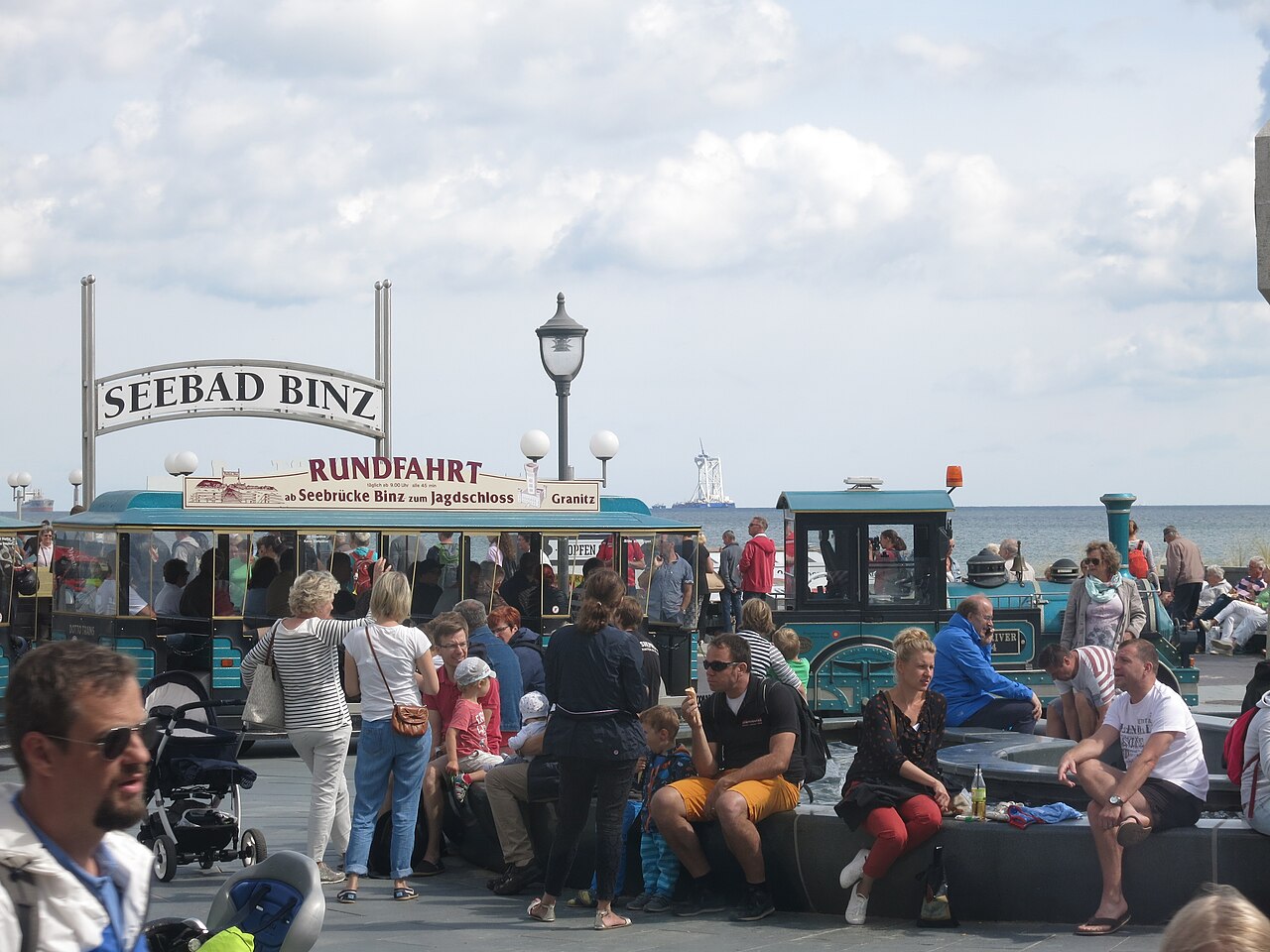
6. Binz
If you’re after the embodiment of holiday elegance and luxury, Binz is probably the most elegant thing you’ll find on Rügen — and the price tags make that very clear. The local promenade is a showcase of so-called Bäderarchitektur (spa architecture), full of gorgeous white villas with carved wooden balconies, turrets and conservatories. It’s precisely into these settings that filmmakers place the most romantic scenes, where the main characters stroll beside the murmuring sea at sunset.
The heart of Binz is a long pier running hundreds of metres out to sea and a beautiful Kurhaus, in front of which promenade concerts are held in summer. It’s a place where people come to see and be seen, to pop into pricey boutiques and dine in excellent restaurants, so bear in mind that the prices here are the highest on the whole island. A main course in a better restaurant will regularly set you back over €25, but that nostalgic atmosphere of the good old days is absolutely worth it. 💡 Tip: In Binz, watch out for the strict rules for cyclists — riding a bike on the main pedestrian promenade is banned in high season, and the local police fine it very uncompromisingly.
7. Ralswiek and the Wittow peninsula
The northern part of Rügen offers a completely different, much wilder and windier landscape than the spa-town south. The small village of Ralswiek is famous across Germany for its spectacular summer Störtebeker festival, a huge open-air theatrical performance about a legendary pirate that draws hundreds of thousands of spectators every year. Praxis mit Meerblick often uses these romantic settings of the Jasmunder Bodden bay for melancholic shots of the reflecting water surface.
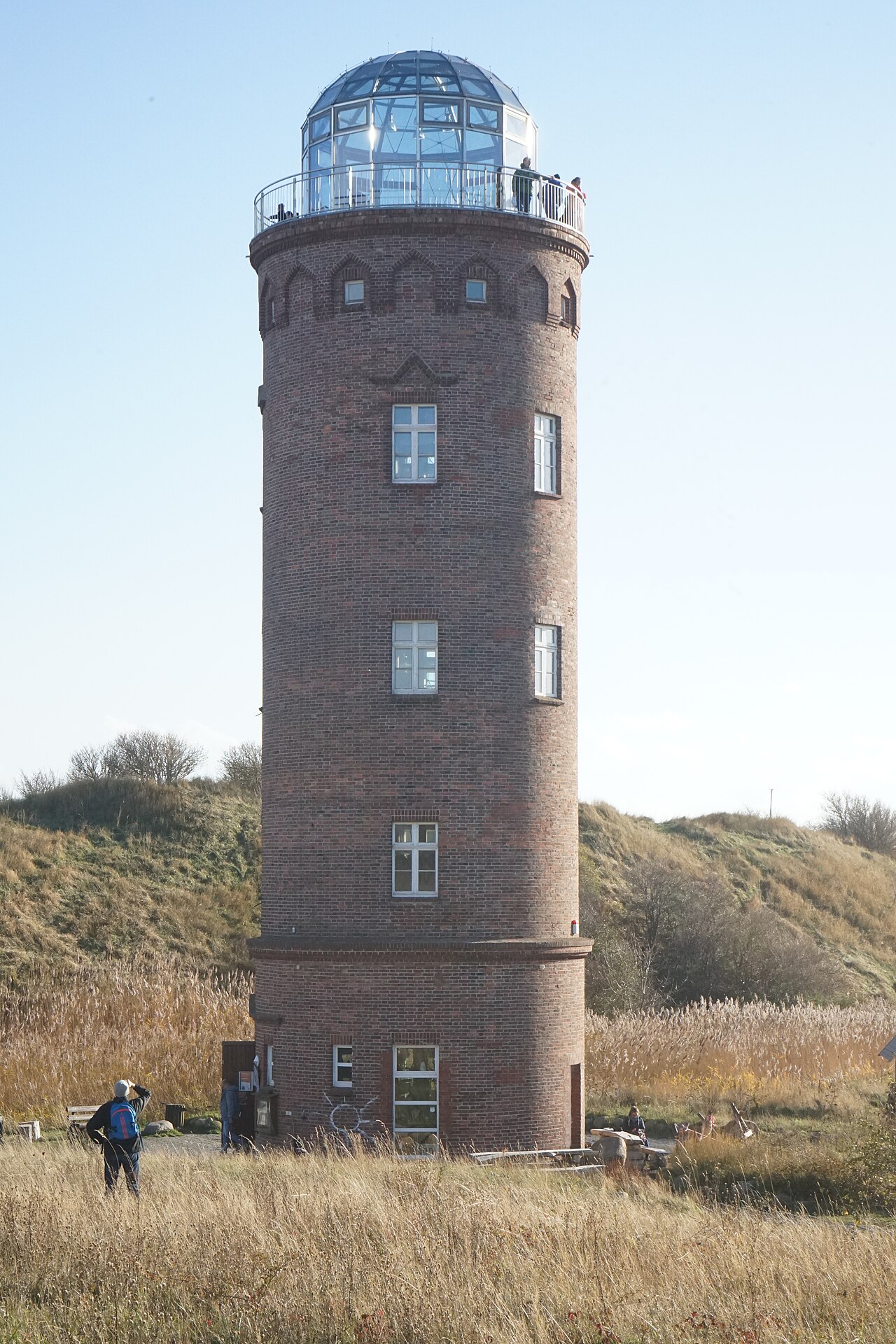
Head even further north onto the Wittow peninsula and you’ll reach the very end of the island at Cape Arkona, where old lighthouses and the remains of a Slavic hillfort stand. There are rugged cliffs battered by the waves, and the wind blows so hard that the trees grow bent to the ground — an absolutely perfect scenery for filmmakers and photographers alike. Access to the cape itself is closed to cars, so you have to park in the village of Putgarten and walk the rest of the way or ride the tourist train. 💡 Tip: Bear in mind that the north of the island is usually a few degrees cooler and considerably windier than the resorts in the south, so always bring a windbreaker, even when the sun is shining in Binz.
8. The ferry to Hiddensee
West of Rügen lies the small, narrow island of Hiddensee, which is an absolute balm for the soul of anyone seeking quiet and calm. No cars with combustion engines are allowed on this island, so the moment you step off the ferry, which runs here from the harbour of Schaprode, you’re surrounded only by the murmur of the sea, the tinkle of bicycle bells and the clatter of horse-drawn carts. The island is so picturesque that filmmakers often choose it as the setting for scenes where the heroes need to escape the world and clear their heads.
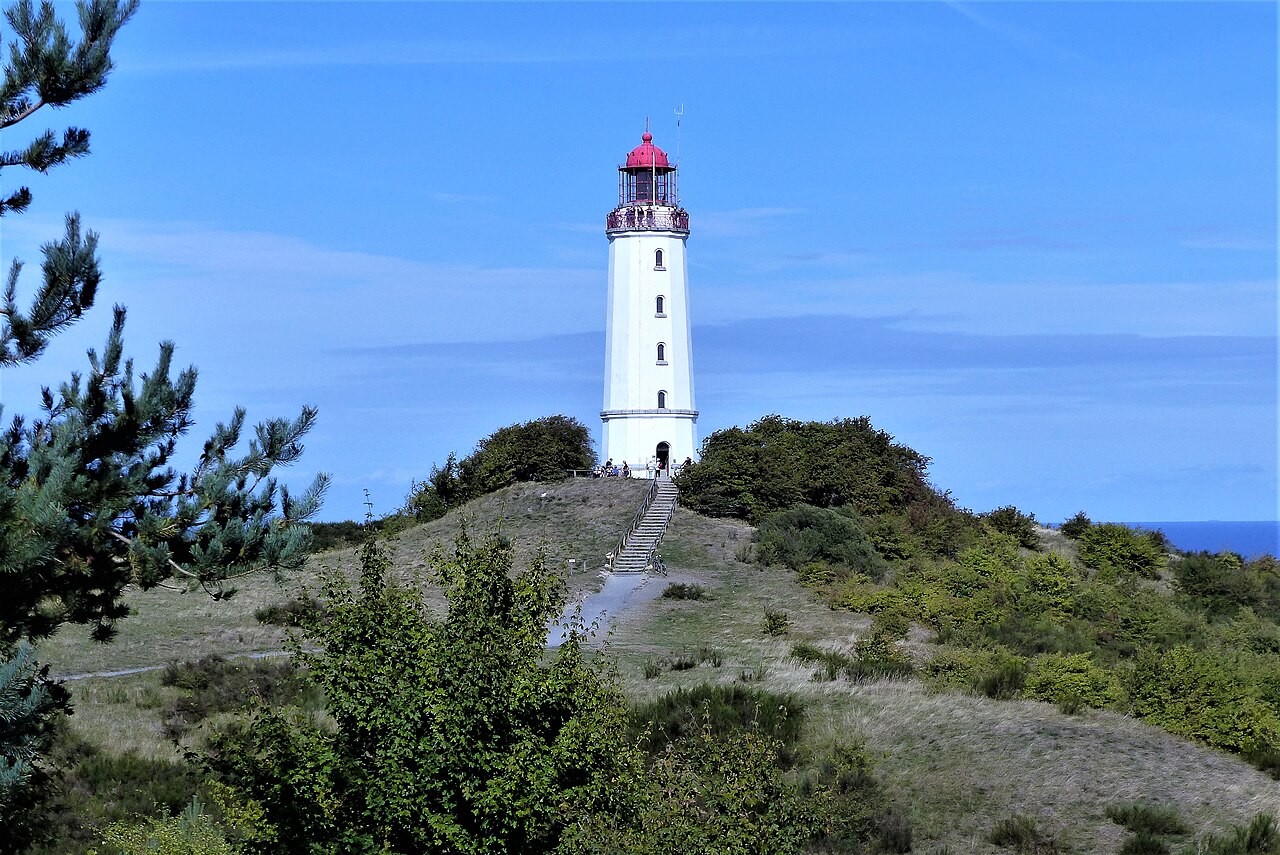
The symbol of the whole island is the Dornbusch lighthouse on the northern hill — the view from it takes in all of Hiddensee and the Rügen coast, and the walk up through the heathland is half the experience in itself. Rent a bike right at the harbour, since no other means of transport really makes sense here, and explore the island at your own pace. A return ferry ticket from Schaprode costs around €23 and the crossing takes just under an hour. 💡 Tip: The last ferries back to the mainland often leave as early as the evening, so keep a close eye on the time so you don’t get stranded on the island without any accommodation.
9. Stralsund
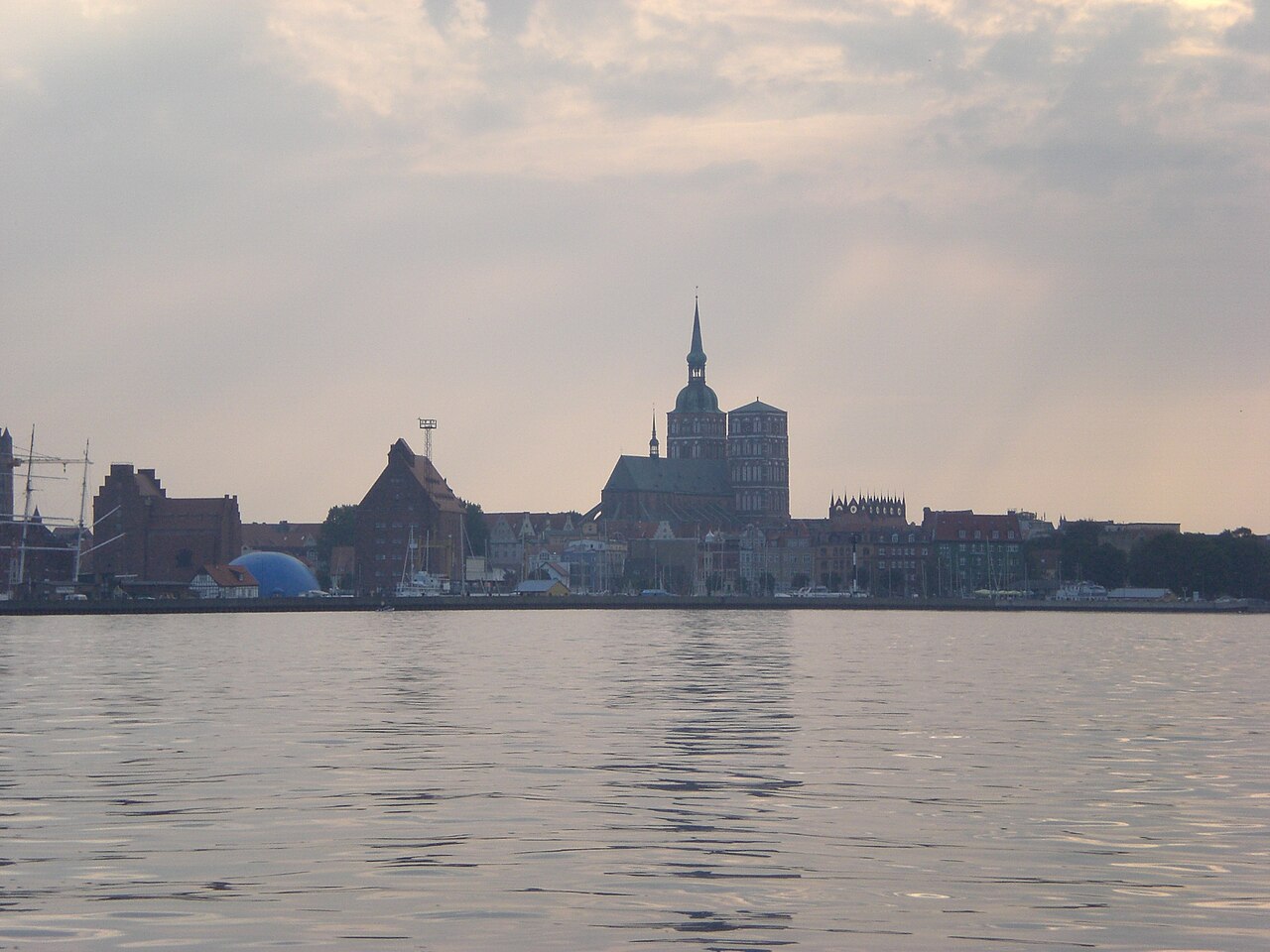
The historic town of Stralsund is the gateway to Rügen, but it’s so stunning in its own right that it would be a sin just to drive through it. For fans of Praxis mit Meerblick it’s also a key stop, because although the TV surgery stands in Sassnitz, a large part of the town scenes and hospital shots are filmed right here. Stralsund boasts UNESCO World Heritage status thanks to its incredibly well-preserved historic centre full of red brick Gothic, old merchant houses and majestic churches.
The town’s landmark is the Alter Markt square with its magnificent town hall, whose openwork façade is an architectural masterpiece that filmmakers adore. Don’t miss the modern Ozeaneum aquarium in the harbour either, where you can watch a fascinating underwater world up close along with life-size models of giant whales. Prices in Stralsund are a touch friendlier than on Rügen itself, and it offers great infrastructure and plenty to do even when it’s raining. 💡 Tip: Stralsund harbour is an ideal spot for an evening stroll — you can admire the historic sailing ship Gorch Fock and sample local specialities from one of the many stands with a view of the bridges to Rügen.

10. Wismar and its old town
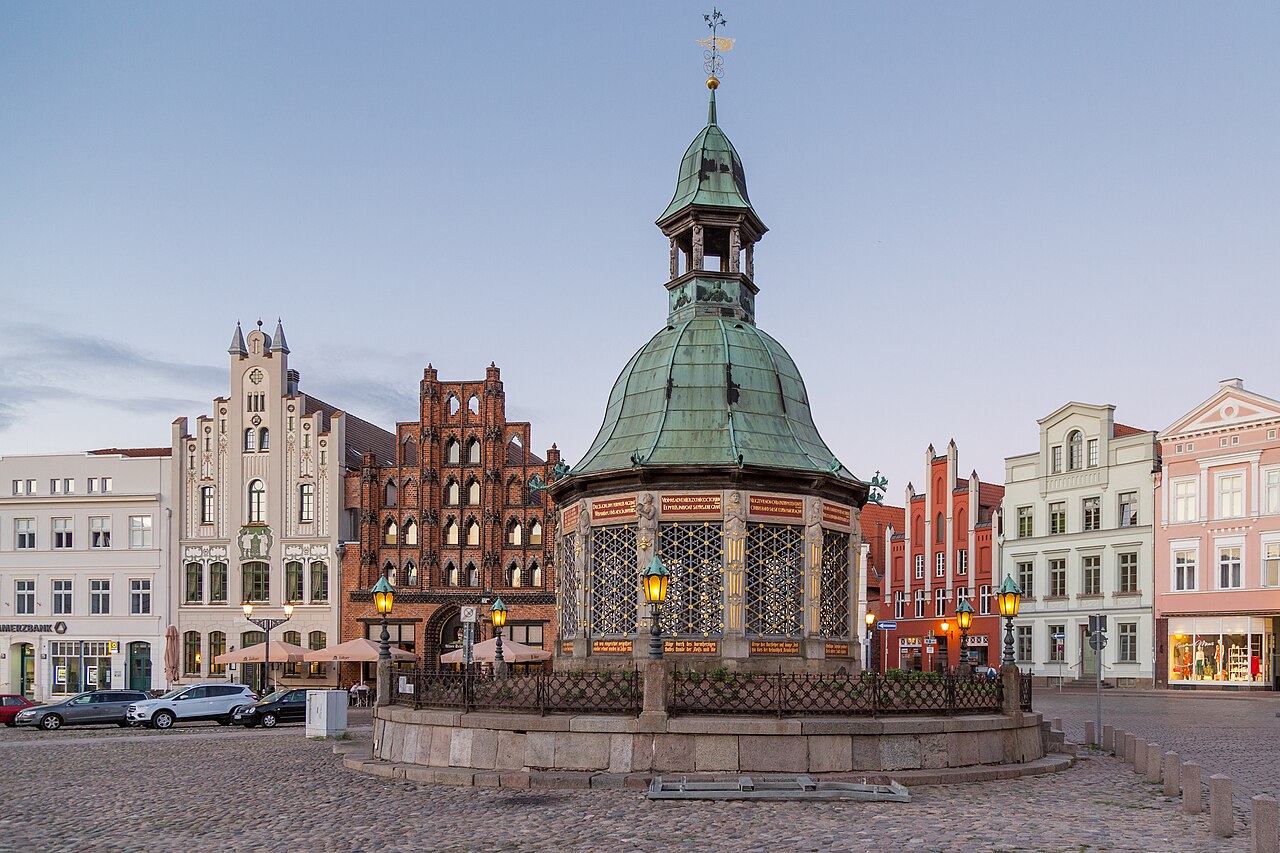
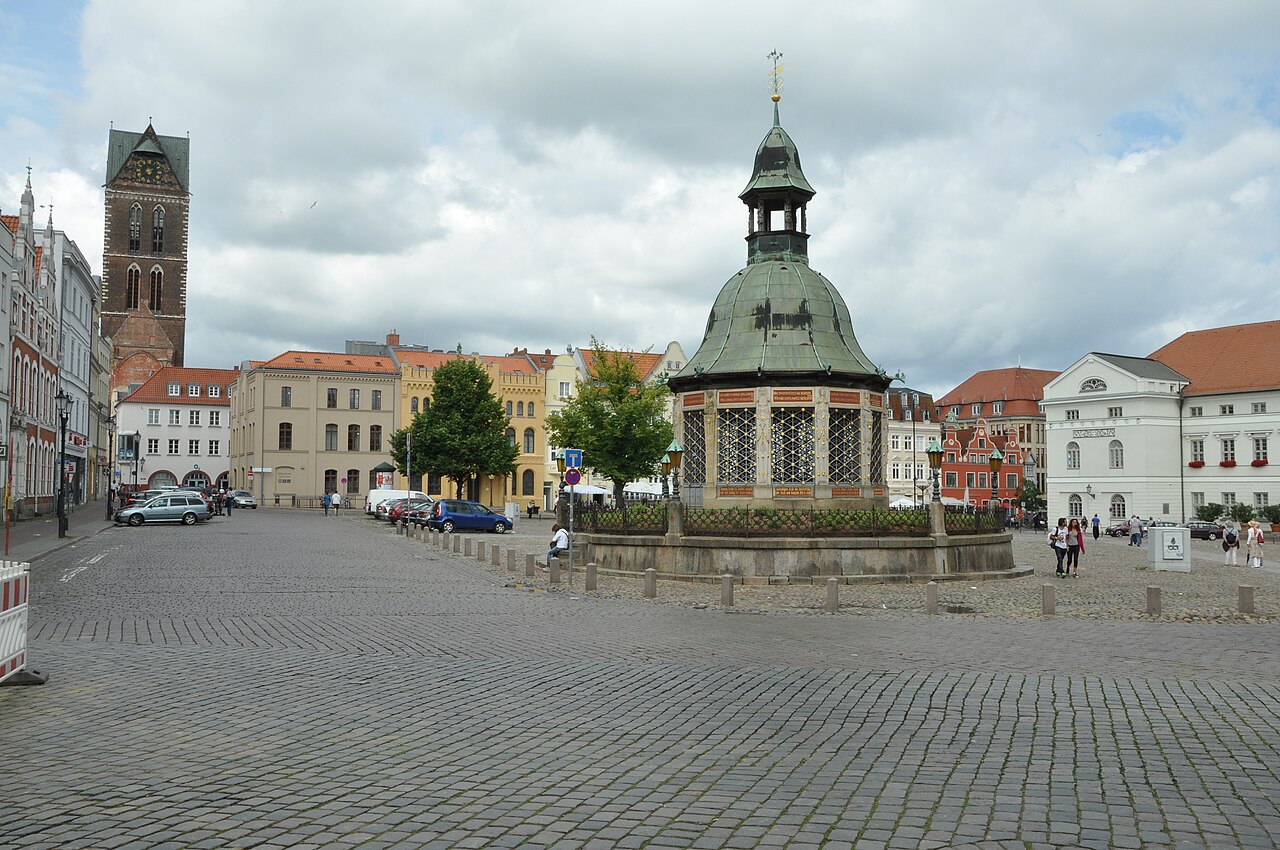
While Rügen belongs to the doctors from Praxis mit Meerblick, ancient Wismar is the sovereign territory of the investigators from SOKO Wismar. This gorgeous Hanseatic town, also proudly UNESCO-listed, dazzles with one of the largest market squares in northern Germany, across which the TV detectives seem to move in nearly every episode. Here you’ll find the beautiful Wasserkunst water feature, which forms the heart of the square and around which the life of locals and tourists revolves.
Over twenty years on air, the TV camera has passed through nearly every lane of the old town, from the picturesque Frische Grube canal, where the best chases are filmed, to the old harbour (Alter Hafen). The historic ships, vendor stalls, the Zägenkrog restaurant and the historic Ohlerich Speicher granary create that true Nordic atmosphere viewers love so much. The town lives its history, and even on the waterfront you’ll come across the so-called Schwedenköpfe (Swedish heads), which recall the era when Wismar belonged to the Swedish crown. 💡 Tip: The town’s official tourism website offers detailed information about the film locations, and you can even join guided tours, which are very easy to book through GetYourGuide or directly at the info centre.
11. The SOKO Wismar police station by the Church of the Holy Spirit
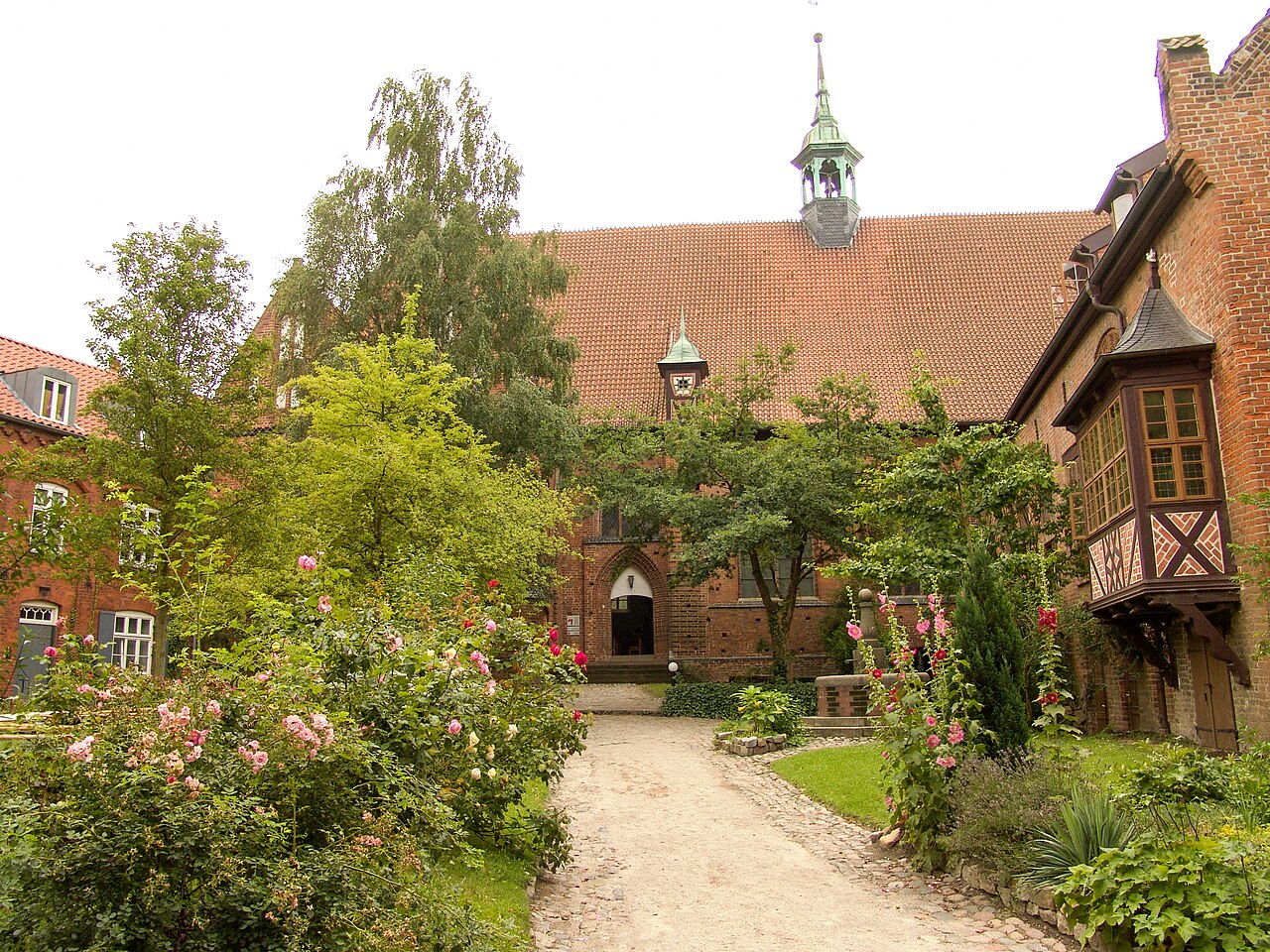
This is the spot every SOKO Wismar fan looks for first, but the reality might surprise you a little, as tends to happen with film. The police station the detectives are forever dashing out of to solve cases is in fact no police station at all. It’s an inconspicuous passageway right by the beautiful Gothic Church of the Holy Spirit (Heilig-Geist-Kirche), where filmmakers simply screw on a prominent police sign for the shoot and take it away again once the scene is done.
A walk through this church’s courtyard is a huge experience in itself, though, because it’s home to small, wood-panelled little houses with colourful doors, where seniors once lived, and the whole place breathes tremendous calm. Tourists photograph themselves at the famous passageway constantly, even when there’s no sign hanging there, and the locals just smile indulgently at it by now. I recommend taking a peek inside the Church of the Holy Spirit itself — it has a beautiful painted ceiling that is a real rarity in the north of Germany. 💡 Tip: If you want to experience the true film illusion, come here early in the morning before the streets fill with tourists — that’s when the passageway looks exactly as deserted and mysterious as in the evening shots of the series.
12. Orth on Fehmarn and Travemünde (Schwanitz)
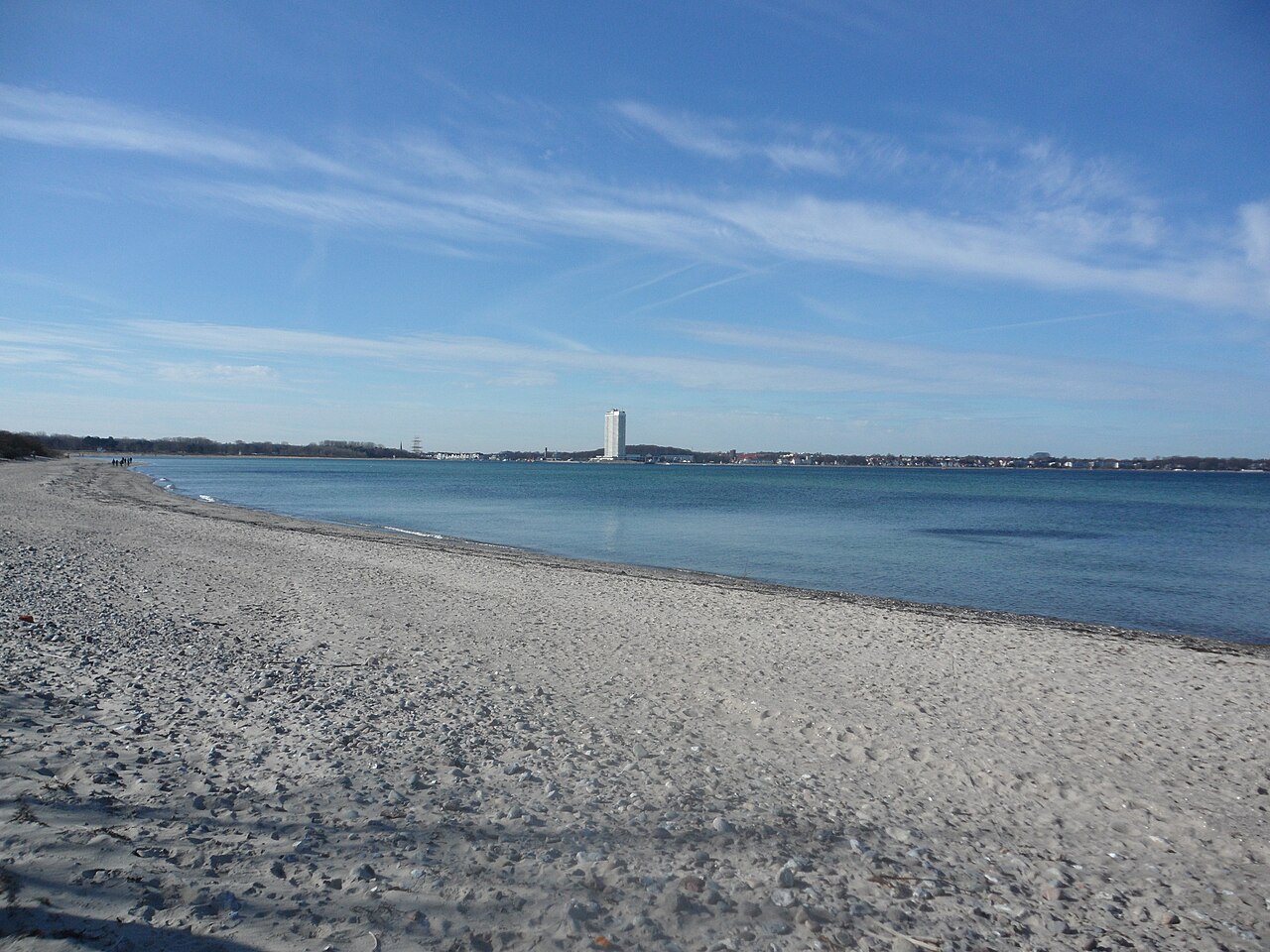
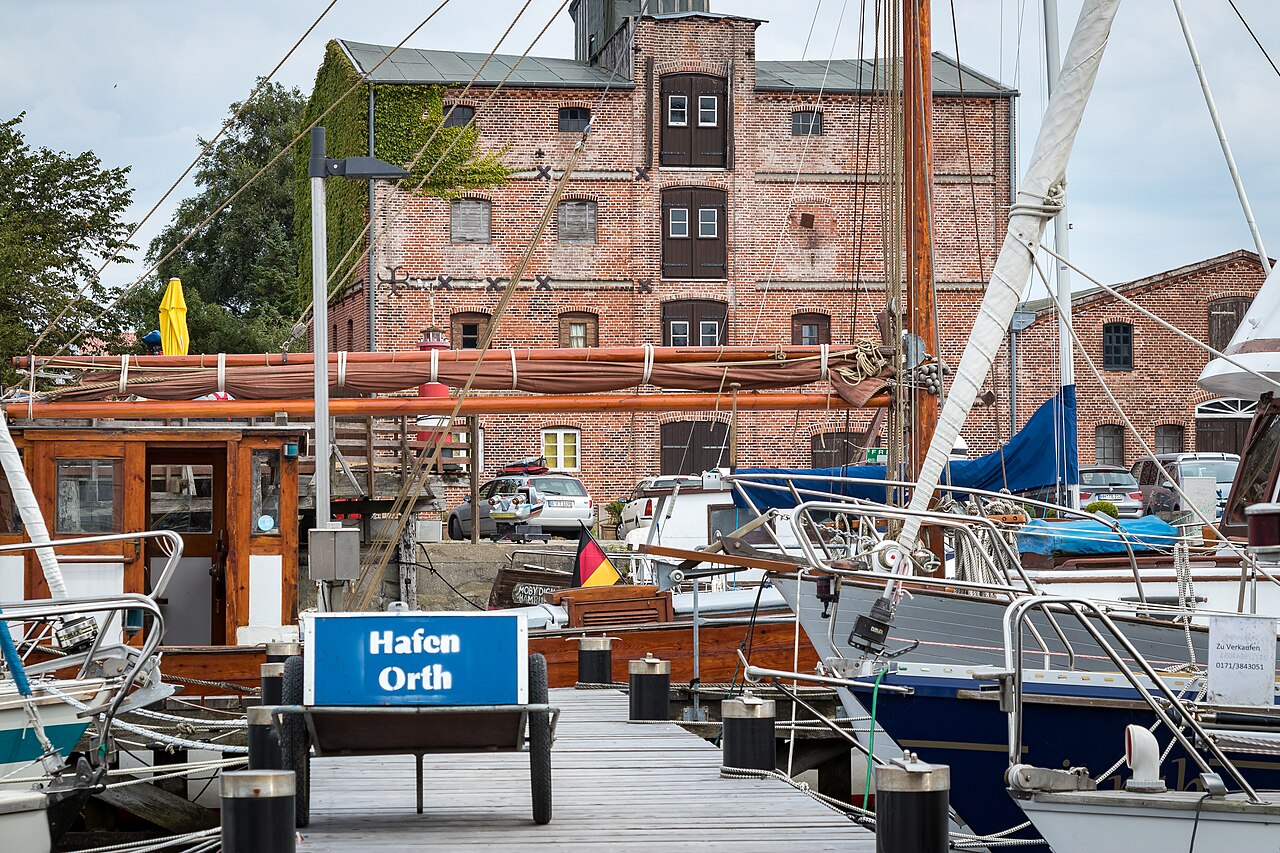
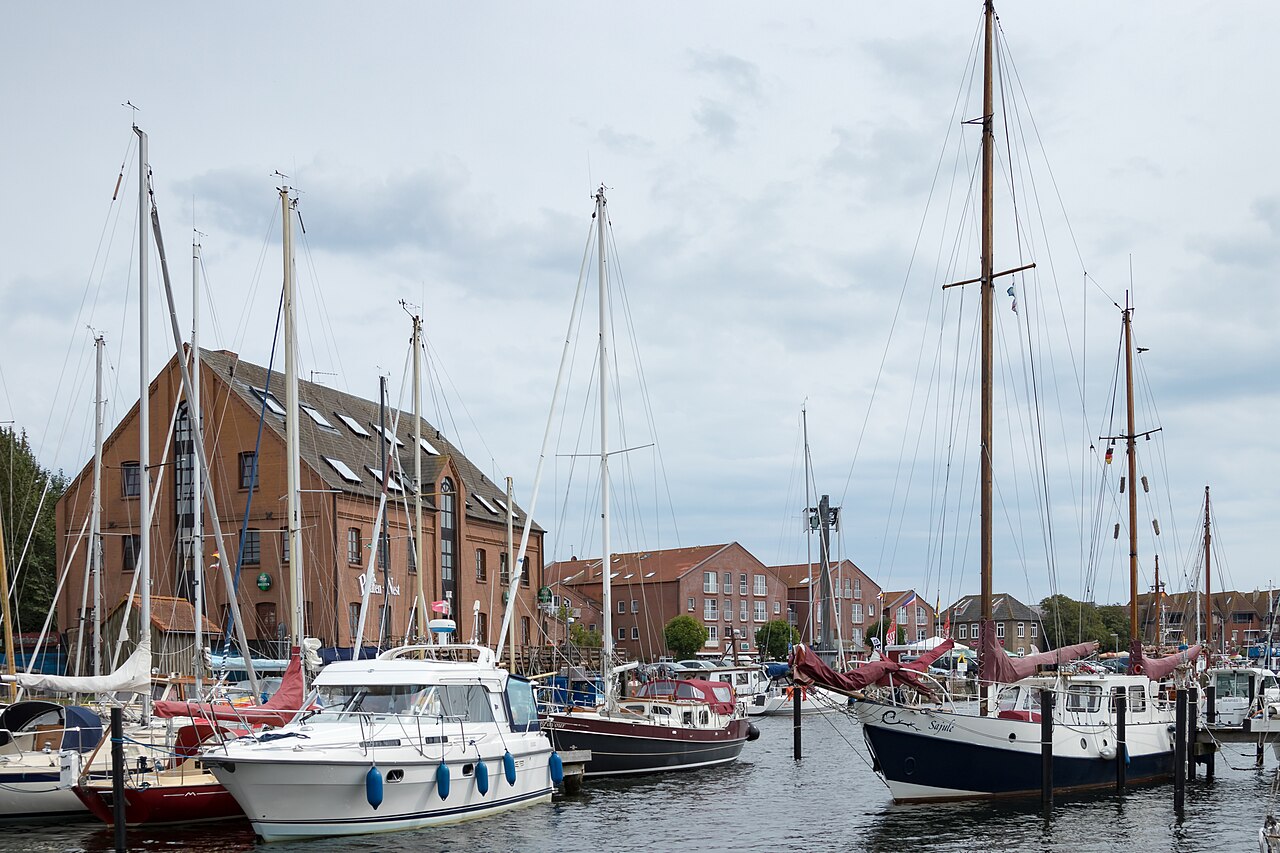
Our final stop takes us to a completely different part of Germany, to the Bay of Lübeck and the island of Fehmarn, where the cult crime drama Nord bei Nordwest is set. The fictional town of Schwanitz is essentially one big jigsaw, but its most important piece and visual heart is the harbour of Orth in the southwest of Fehmarn. It’s an incredibly sleepy hamlet of about sixty inhabitants where time has stood still, with a few sailing boats moored and an atmosphere so thick you could cut it.
Fehmarn is connected to the mainland by the photogenic Fehmarnsund bridge (nicknamed the coat hanger) and boasts being one of the sunniest corners of all Germany. You’ll have to hunt for the other pieces of the Schwanitz puzzle in the nearby resort of Travemünde with its wide beaches, on the tranquil Priwall peninsula and in the town of Geesthacht. It’s a fascinating showcase of the filmmaker’s craft, how they manage to create the feeling of one picturesque whole on screen out of so many different places. 💡 Tip: If you go hunting on Fehmarn for the famous Schwanitz police station, you’ll be disappointed: it’s actually located in the Altengamme district of Hamburg, which is a fair way from the sea.
Three series that bring Germans here
If you’re wondering why there are clusters of tourists with cameras at some fairly ordinary spots, it’s precisely because of these three phenomena. Germans absolutely adore their TV heroes, and travelling to filming locations (so-called Drehorte) is a huge trend that brings tens of thousands of visitors to the region and gives tourism a whole new dimension. Here are the three that kicked it all off — briefly, so you know who to look for at those locations.
Praxis mit Meerblick (Rügen)
This ARD-produced series has been running to huge success since 2016 and follows the story of doctor Nora Kaminski, who practises without a medical diploma on Rügen Island. Although the main visual draws are of course the surgery in Sassnitz and the beautiful cliffs of Jasmund National Park, Praxis mit Meerblick is not actually filmed only on Rügen. To save time and money, the creators shoot plenty of scenes in studios and exteriors around Berlin, Potsdam, Werder and Michendorf, which the average viewer has no chance of spotting. The new season promises more drama and beautiful locations.
What viewers love most about this series is the gorgeous scenery, which works as perfect advertising for Rügen itself. Although the heroine is often overwhelmed by personal and professional problems, the calm surrounding sea and historic architecture lend each episode a distinctive, soothing atmosphere. It’s no wonder the filming locations are besieged by fans from all over Germany throughout the summer season.
SOKO Wismar
This is an absolute fixture of German screens, a crime drama with a big dose of humour and local colour that has been filmed in Wismar for over twenty years. The investigators here solve everything from fish thefts in the harbour to complex murders in the historic UNESCO setting. Interestingly, the town offers special guided tours of the SOKO Wismar locations, where guides let you in on the secrets of filming, show you where the camera stood during iconic scenes and take you to the exact crime spots, so you can feel like part of the investigation team.
The show’s success lies not only in its gripping plots but also in how faithfully it depicts everyday life in a Hanseatic town. The crew regularly films right in the narrow lanes between the Gothic brick houses and along the coast, which lends the town enormous media attention. When you come here, you might even stumble upon cameras being set up, because new episodes are produced practically non-stop.
Nord bei Nordwest
This is a series that won viewers’ hearts with its Nordic rawness and dry humour, but it’s also the biggest filmmaking trick played on the audience. As we’ve mentioned, the town of Schwanitz simply doesn’t exist — it’s a complete illusion pieced together mainly from the island of Fehmarn and the area around Lübeck. The main character, former policeman and now vet Hauke Jacobs, operates in a landscape that in reality is scattered across dozens of kilometres, and the police station itself, as we now know, lies as far away as Hamburg.
Thanks to this clever approach, the filmmakers created an idyllic image of the north that has real foundations but which you’ll never find all in one place. The show’s popularity has even prompted some local businesses on Fehmarn and in the surrounding area to add special packages and souvenirs inspired by the fictional Schwanitz. The small, sleepy village of Orth has thus become a sought-after point on the map of TV tourism.
Where to stay
Germany’s Baltic coast offers accommodation for every budget, from luxurious spa hotels to simple family guesthouses, but bear in mind that prices soar in the summer months and on public holidays and capacity vanishes fast. As a rule, Rügen — and especially the resort of Binz — is the priciest, while historic towns like Wismar or Stralsund offer better value for money. If you want to soak up the true atmosphere of old times and don’t mind paying a little extra, definitely look for accommodation in traditional villas with the typical Bäderarchitektur. You can easily check availability and book places on Booking.com, which works absolutely perfectly in this area.
Where to rest your head and enjoy the atmosphere:
- Cerês am Meer (Binz): An extremely stylish, luxurious hotel right on the promenade with a darkly elegant design that you’ll love for its fantastic sea view straight from breakfast.
- Kurhotel Sassnitz (Sassnitz): A beautiful historic building with incredible charm, with the advantage of sitting just a few steps from the sea — you’ll feel like you’re right in the series.
- Romantik Hotel Scheelehof (Stralsund): Unique accommodation right in the UNESCO-listed heart, where you’ll sleep in carefully restored Hanseatic houses with their typical gables.
- Townhouse Wismar (Wismar): A very modern, clean hotel tucked right on the main square, so you’re just a few dozen metres from both the TV and historic locations.
- Nixe Boutiquehotel & Spa (Binz): A calmer boutique alternative in bustling Binz, where guests in reviews most highlight the wonderfully peaceful, luxurious wellness centre after full days of sightseeing.
Where to eat
Cuisine in the north of Germany is very distinctive, and frankly, vegetarians don’t have the easiest time here, because Baltic cooking has historically been built around fishing. If you head to the local harbours, you’ll see stands on every corner selling the typical Fischbrötchen (fish sandwiches), and smoked eel or the ubiquitous matjes herring are local classics too. Fortunately, though, German gastronomy has come a long way and you’ll now find excellent meat-free alternatives almost everywhere — you just need to know where to go and what to order.
I’d recommend focusing on traditional German soups, typically a hearty Kartoffelsuppe (potato soup), which will set you back on your feet in dreary weather — just always check it’s cooked without meat and sausage. The local potato pancakes served with apple purée are also excellent; it sounds unusual, but it works brilliantly. For breakfast or with coffee, you have to try the divine Franzbrötchen (a sweet cinnamon pastry), and for dessert the clear choice is Rote Grütze, a thick stewed forest-fruit pudding served with proper vanilla sauce. In Wismar, Café Glücklich is worth a stop, because their homemade cakes are a seriously good affair. And in Stralsund, don’t hesitate to drop into Fritz Braugasthaus — they do rustic but meat-free dishes from local ingredients perfectly.
Quick cheat sheet: what’s filmed where
If you want to plan your trip really efficiently and you know exactly which detective or doctor’s trail you want to follow, I’ve put together a handy table for you. In it you’ll easily find what the location is called on TV and where you have to look for it on the map in real life.
| Series | Location in the series | Real place | Access |
|---|---|---|---|
| Praxis mit Meerblick | Nora Kaminski’s surgery | Sassnitz (Rügen) | Easily reached on foot in the centre |
| Praxis mit Meerblick | Rehabilitation clinic | Göhren, Südstrand (Rügen) | Right on the beach, easy access |
| Praxis mit Meerblick | Surroundings and town | Stralsund and around Berlin | Various spots, Stralsund centre free |
| SOKO Wismar | Police station | Wismar (Heilig-Geist-Kirche passageway) | Freely accessible from the street |
| SOKO Wismar | Harbour restaurant | Wismar (Zägenkrog, Alter Hafen) | Harbour promenade |
| SOKO Wismar | Chases and markets | Wismar (Frische Grube, Marktplatz) | Town centre, pedestrian zone |
| Nord bei Nordwest | Town of Schwanitz | Orth (island of Fehmarn) | Reach by car via the Fehmarnsund bridge |
| Nord bei Nordwest | Beaches and around Schwanitz | Travemünde and Priwall | By ferry or car to the coast |
| Nord bei Nordwest | Police station | Altengamme (Hamburg) | Off the main route, far to the south |
Where to next
If you enjoy travelling around Europe and are looking for more inspiration for interesting trips, whether by car or public transport, we have several great tips from our blog. A trip to the German Baltic can also be beautifully combined with a visit to the Polish coast.
- If travelling by rail appeals to you and you don’t want to spend hours behind the wheel, read our article By train to the sea, full of practical advice.
- Fancy trying the neighbouring country too? Check out our tips for Międzyzdroje and Wolin Island, just across the German border.
- For families looking for more accessible destinations, our article Poland with kids is a great guide.
- And if you love discovering places you know from the screen, be sure to get inspired by our selection of Hotels from films and series.
Frequently asked questions
If you’re heading off on your first trip to the German Baltic, plenty of practical questions will naturally pop into your head. From tolls and motorway fees through paid nature reserves to the exact addresses of the TV locations. So I’ve put together a brief overview of the most important things travellers most often ask about.
Where is the town of Schwanitz from the series Nord bei Nordwest actually located?
This town is pure fiction. The filmmakers pieced it together from several real locations in northern Germany, primarily the small harbor of Orth on the island of Fehmarn, the resort town of Travemünde, and the Priwall peninsula. The police station, meanwhile, is actually in Hamburg in the Altengamme district.
Is the motorway to Rügen subject to tolls?
No, which is a huge advantage of traveling to Germany. There is still no motorway vignette requirement for passenger cars, and no toll is charged for crossing the bridges over the Strelasund strait connecting Rügen with Stralsund.
Where can I find the doctor’s office from the series Praxis mit Meerblick?
The iconic unlicensed medical practice is located right in the port town of Sassnitz on the eastern side of Rügen island. The building has typical spa architecture with a sea view and you’ll find it very easily, but remember that the interiors are filmed in studios.
Can I visit the SOKO Wismar police station?
You can’t, because no such station exists. The investigators’ headquarters is actually just a passageway at the historic Church of the Holy Spirit (Heilig-Geist-Kirche) in Wismar, where the filmmakers simply hang a sign reading “police.”
Is there an entrance fee for the Königsstuhl chalk cliffs?
Entrance to Jasmund National Park itself and to the hiking trails along the coast is free. The only fee is for the modern visitor center with its new suspended viewing platform, the Skywalk, which costs around €12.
What is the history of the Prora complex?
Prora was built in the 1930s by the Kraft durch Freude organization as a Nazi recreational resort. This monumental concrete complex is 4.5 kilometers long and is now gradually being converted into luxury hotels and apartments, though it also has a documentation center.
What is Kurtaxe and where is it charged?
Kurtaxe is a spa or tourist tax collected by the vast majority of seaside resorts in Germany for beach and infrastructure maintenance. It ranges around €2 to €3 per day and you usually pay it directly to your accommodation provider upon arrival.
When will the new series of Praxis mit Meerblick air?
Fans can look forward to more episodes; a new series of this popular show aired on German ARD screens from April 10, 2016 and also featured brand-new locations from Göhren.
Can you drive a car to Hiddensee island?
No, Hiddensee island is completely free of combustion-engine vehicles. You must park at the Schaprode harbor on Rügen and take the ferry across. On the island itself, you’ll get around either on foot, by bicycle, or by horse-drawn carriage.
Tips and Tricks for Your Vacation
Don’t Overpay for Flights
Search for flights on Kayak. It’s our favorite search engine because it scans the websites of all airlines and always finds the cheapest connection.
Book Your Accommodation Smartly
The best experiences we’ve had when looking for accommodation (from Alaska to Morocco) are with Booking.com, where hotels, apartments, and entire houses are usually the cheapest and most widely available.
 🚗 Car rental on the roadVerified rental cars in Germany
Search with the DiscoverCars comparison engine — it compares prices from dozens of local and international rental companies, and most bookings come with free cancellation.
Compare car prices in Germany →Don’t Forget Travel Insurance
Good travel insurance will protect you against illness, accidents, theft, or flight cancellations. We’ve had a few hospital visits abroad, so we know how important it is to have proper insurance arranged.
Where we insure ourselves: SafetyWing (simple monthly subscription) and TrueTraveller (for extra-long trips).
Find the Best Experiences
Get Your Guide is a huge online marketplace where you can book guided walks, trips, skip-the-line tickets, tours, and much more. We always find some extra fun there!