
Dresden holds a special place in our hearts, and that’s doubly true when Advent rolls around. If you’ve already explored Vienna or Nuremberg and are looking for something different, the Saxon capital certainly won’t disappoint. In late November, the city transforms into a fairytale world full of twinkling lights, the smell of roasted chestnuts, and traditional stollen — making the Christmas markets in Dresden, Germany, well worth the trip.
This year’s edition is worth it for two reasons. Striezelmarkt on Altmarkt is taking place for the 592nd time in 2026, making it the oldest Christmas market in Germany, with documented history dating back to 1434.

Quick summary if you don’t have time to read the whole article
- Striezelmarkt on Altmarkt runs from November 25 to December 24, 2026, marking its 592nd edition this year.
- Opening hours: daily 10:00 to 21:00, the first day from 16:00, and on Christmas Eve only until 14:00.
- Admission is free to most of Dresden’s markets, with the exception of the medieval market at Stallhof.
- Stollenfest falls on Saturday, December 5, 2026, when a giant stollen is paraded to Altmarkt.
- There’s more than one market in Dresden, and you can walk between all of them in a single day.
- The longest opening period belongs to Augustusmarkt in Neustadt, which stays open until January 3, 2027.
- Getting there from major European hubs takes just a couple of hours by car, and there are also direct trains and buses.
- Don’t drive into the city center — park at a park-and-ride (P+R) lot on the outskirts and take the tram in instead.
- Vegetarians can enjoy stollen, gingerbread, roasted chestnuts, and potato pancakes.
- Ore Mountains (Erzgebirge) craftsmanship — nutcrackers, incense smokers, and light arches — makes the best souvenir to bring home.
The full destination guide: Germany — guide and what to see
All 2026 Christmas markets: a calendar of dates and tips on markets across Europe
Christmas Markets in Dresden Germany: History and Tradition
The Christmas markets in Dresden, most commonly known as Striezelmarkt, have incredibly deep roots in the city. The moment you arrive, you’ll feel that genuine traditional atmosphere locals are rightfully proud of.
The history of the main market stretches far back into the Middle Ages. It was the Saxon Elector Frederick II and his brother Duke Sigismund who authorized the first market all the way back in 1434. Since then, Altmarkt square has transformed into a hub of Advent festivities every year.
Germans take great care to keep their Christmas markets true to original traditions. You won’t find any cheap kitsch here, just honest handcraft and plenty of customs connected to the nearby Ore Mountains.
💡 Tip: If you’d rather skip driving or dealing with parking, plenty of organized bus trips to German Christmas markets run regularly. Check out current tour offers on Invia.
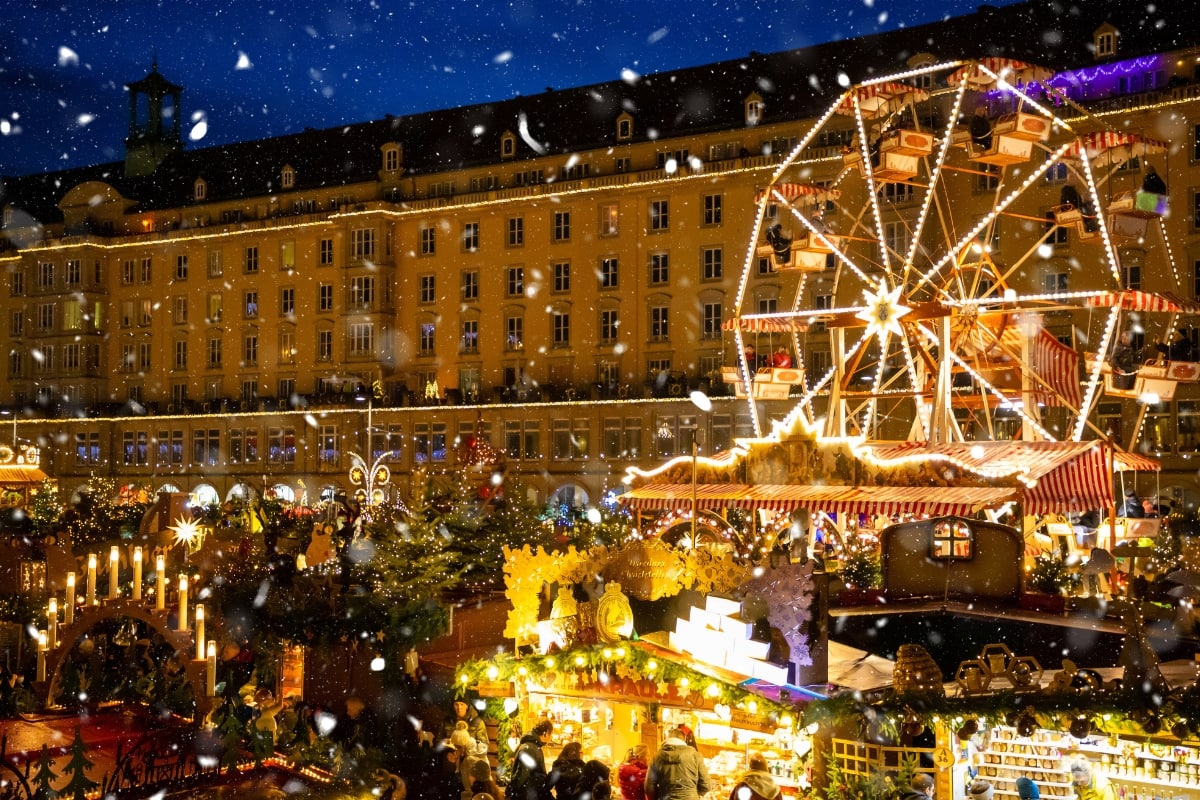
When the Christmas Markets in Dresden Germany Take Place
Wondering exactly when you can head to the Saxon capital? This year’s season starts in late November and ends right on Christmas Eve.
Christmas market dates for 2026:
- The official opening takes place on Wednesday, November 25, and the stalls stay open until Thursday, December 24.
- Some of the smaller markets in the city tweak their dates slightly and organizers only announce them in the fall, but the main Striezelmarkt sticks firmly to this date.
Opening hours of the main market (Striezelmarkt):
- On the first day (Nov 25), the official opening begins at 16:00, with stalls open from 16:30 to 21:00.
- On regular days (Nov 26 to Dec 23), stalls are open daily from 10:00 to 21:00.
- On Christmas Eve (Dec 24), you can only shop in the morning, as it’s open from 10:00 to 14:00.
Where to Find the Best Christmas Markets in Dresden Germany
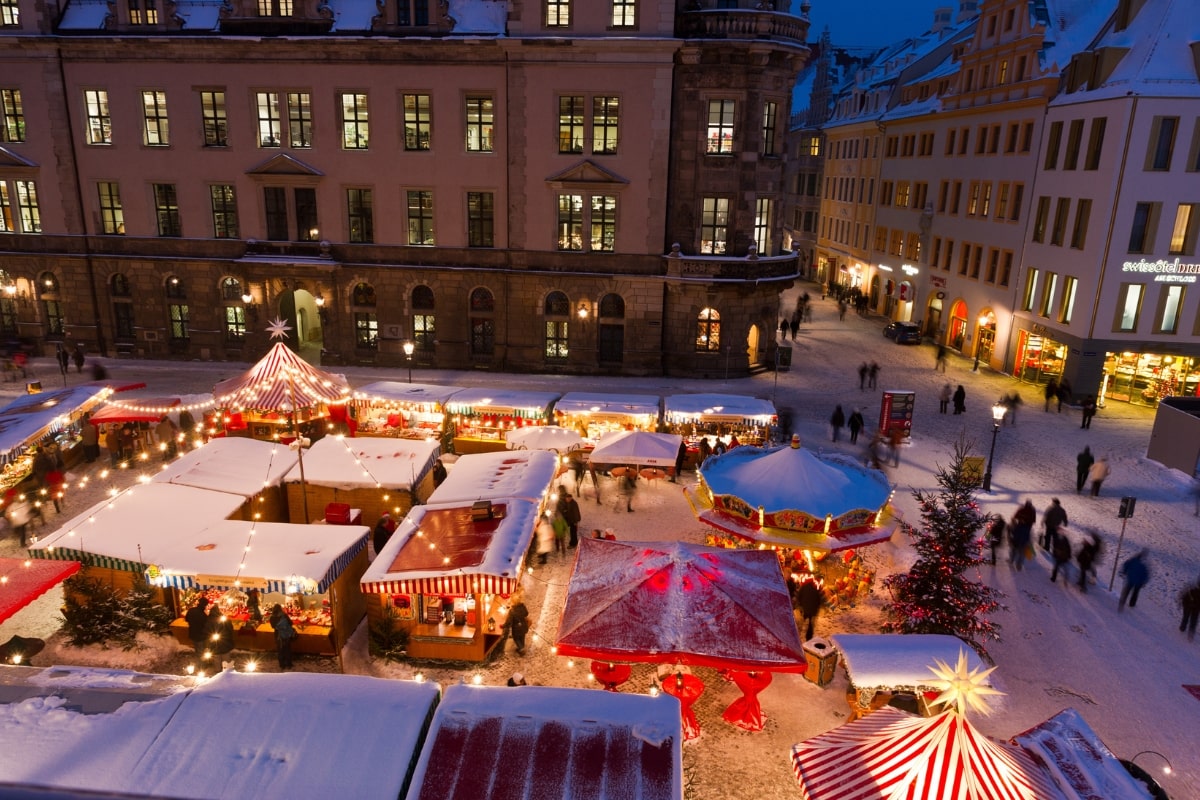
Advent festivities in Dresden are definitely not limited to the famous Altmarkt. You’ll find decorated stalls scattered across pretty much the whole city center. Each market also has its own distinct atmosphere.
While some are busy and packed with tourists, others feel more intimate, more modern, or lean into a purely medieval theme. Dresden simply has something for every Advent lover.
If you’d like to combine your visit with a trip to the mountains, you might also enjoy the nearby Christmas markets in Annaberg, which carry on the Ore Mountains tradition.
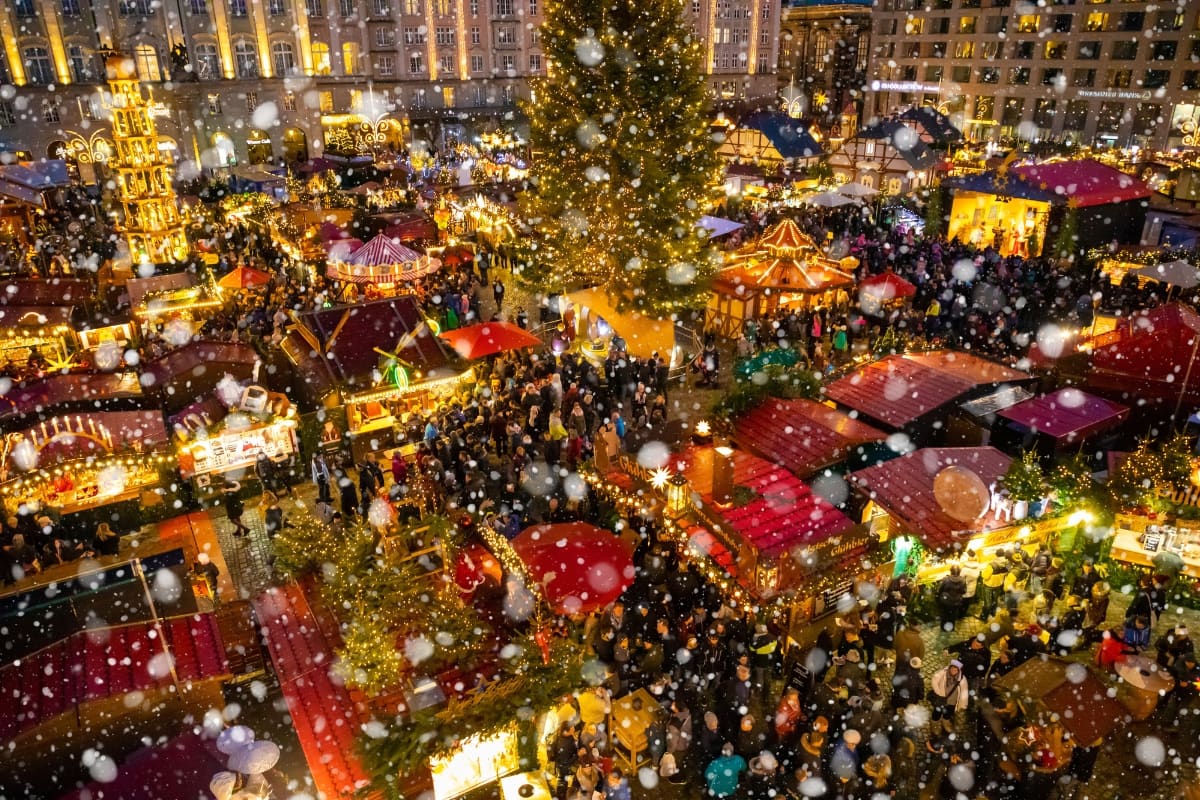
How Long Should You Spend Soaking Up the Advent Atmosphere?
While you can hit the main highlights in one intense day, we’d strongly recommend setting aside a whole weekend for Dresden. Once evening falls and all those lights switch on, the city takes on a completely different vibe.
You’ll have plenty of time to explore the smaller markets too, catch an Advent concert, or head out for an evening cruise along the Elbe River. There’s no risk of getting bored.
Besides soaking up the atmosphere, many visitors also use the trip for practical purposes. Picking up Christmas presents and good German groceries pairs nicely with a relaxed stroll through the city.
💡 Tip: Even for short trips across the border, we always arrange travel insurance. Before you set off, check out our travel insurance comparison (you’ll also find a 50% discount on AXA there).
Where to Stay in Dresden
Try to stay as close to the historic center as possible, so you don’t have to figure out a complicated public transport trip home after an evening of mulled wine. Hotels tend to fill up fast during Advent, so don’t put off booking.
Among the more luxurious options, the absolute top choice is Hotel Suitess, located right next to the Frauenkirche and offering fantastic service. If you’re after something stylish but a touch more modern, a great choice is Townhouse Dresden, just a few steps from the main markets. For families with kids or travelers on a smaller budget, we can recommend the stylish Bilderberg Bellevue Hotel, which offers a gorgeous view of the old town across the Elbe River.
Altmarkt: Striezelmarkt Celebrates 592 Years
As mentioned above, Altmarkt square hosts the most famous Christmas market in Dresden, known to everyone as Striezelmarkt. Its history stretches back almost six centuries, and this year marks an incredible 592nd edition.
Expect it to be fairly busy. It’s the largest and most well-known market in the city, drawing millions of visitors every year. You’ll find over 200 beautifully decorated stalls here.
You can buy practically everything here, from classic wooden nutcrackers from the Ore Mountains to blown-glass ornaments. There’s also a packed cultural program, and of course the festive Stollenfest, which falls on Saturday, December 5, in 2026. A giant stollen weighing several tons is paraded through the city before being ceremonially sliced.
- Dates: Nov 25 – Dec 24, 2026
- Open: daily 10:00 to 21:00 (first day from 16:00, Christmas Eve until 14:00)
- Location: Altmarkt square
- Getting there: tram 8 or 11 to Prager Str., or tram 3 or 7 to Pirnaischer Pl.
- Admission: free
- Website: Striezelmarkt
- Dates: Nov 25 – Dec 24, 2026
- Open: 10:00–21:00, first day from 16:00, Dec 24 until 14:00
- Location: Altmarkt
- Getting there: tram 8 or 11 to Prager Str., or tram 3 or 7 to Pirnaischer Pl.
- Admission: free
- Website: Striezelmarkt
Neumarkt: Romance by the Frauenkirche
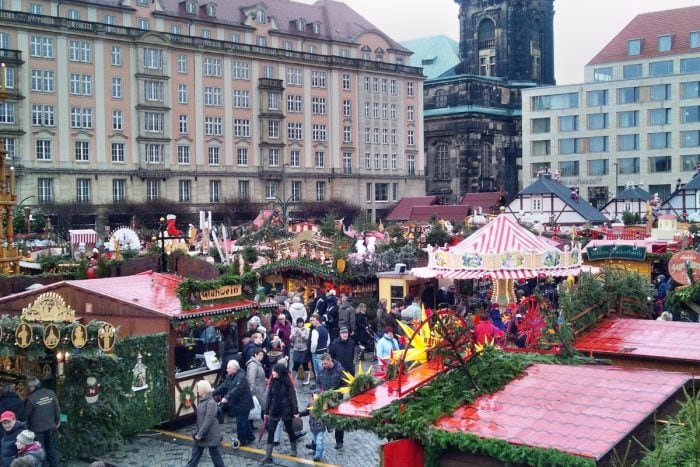
Right next to the magnificent Frauenkirche on Neumarkt square, you’ll find a somewhat cozier Christmas market. It aims to create an authentic, less commercial atmosphere of historic Saxony.
It’s ideal for anyone looking for a bit of calm and an appreciation for honest craftsmanship. The stalls here don’t look like modern booths either — they resemble historic guild workshops.
- Dates: November 25, 2026 to January 3, 2027 (closed Dec 24–26 and Jan 1)
- Open: first day 17:00–22:00, Nov 26–Dec 23 daily 11:00–22:00, shorter hours over the holidays (Jan 3 until 16:00)
- Location: Neumarkt square
- Getting there: tram 3 or 7 to Pirnaischer Pl.
- Admission: free
- Website: Advent auf dem Neumarkt
- Dates: Nov 25 – Dec 24, 2026
- Open: 11:00–22:00
- Location: Neumarkt square
- Getting there: tram 3 or 7 to Pirnaischer Pl.
- Admission: free
- Website: Advent auf dem Neumarkt
Stallhof: Medieval Celebrations for the Whole Family
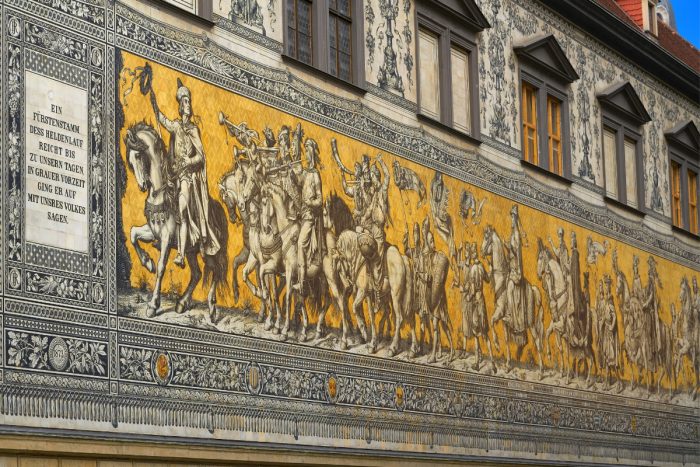
The Stallhof courtyard, once part of the ducal court, turns into a truly magical place during Advent. People don’t just come here to shop — they come for the unique atmosphere of the medieval market.
You’ll run into knights, craftsmen in period costumes, and you can warm up at a fire show. Kids especially tend to be completely swept away, since it’s such a different experience from the classic ornament stalls.
- Dates: Nov 25 – Dec 23, 2026, then Dresdner Rauhnächte Dec 27–30, 2026 and Jan 2–6, 2027
- Open: daily 11:00–21:30 (Jan 2–5 until 20:00, Jan 6 until 18:00)
- Location: Stallhof
- Getting there: tram 8 or 11 to Theaterplatz
- Admission: €5 for adults, €3 for children (preschoolers free); charged only on Advent weekends from Friday afternoon through Sunday and Dec 27–30; free admission on weekdays
- Website: Stallhof Medieval Market
The Market on Münzgasse (Near the Frauenkirche)
If you want to enjoy the most romantic atmosphere filled with the smell of roasted apples and sweet punch, take a stroll down Münzgasse, the lane that runs from the Frauenkirche toward the Elbe.
This smaller market offers a wonderful experience of traditional treats and artisan crafts. There’s also a rich selection of hot drinks to reliably get you back on your feet on freezing evenings.
- Dates: Nov 25 – Dec 24, 2026
- Open: 10:00–21:00, Fridays and Saturdays until 22:00
- Location: Münzgasse
- Getting there: tram 8 or 11 to Theaterplatz
- Admission: free
- Website: Christmas Magic by the Frauenkirche
The Romantic Christmas Market at the Castle
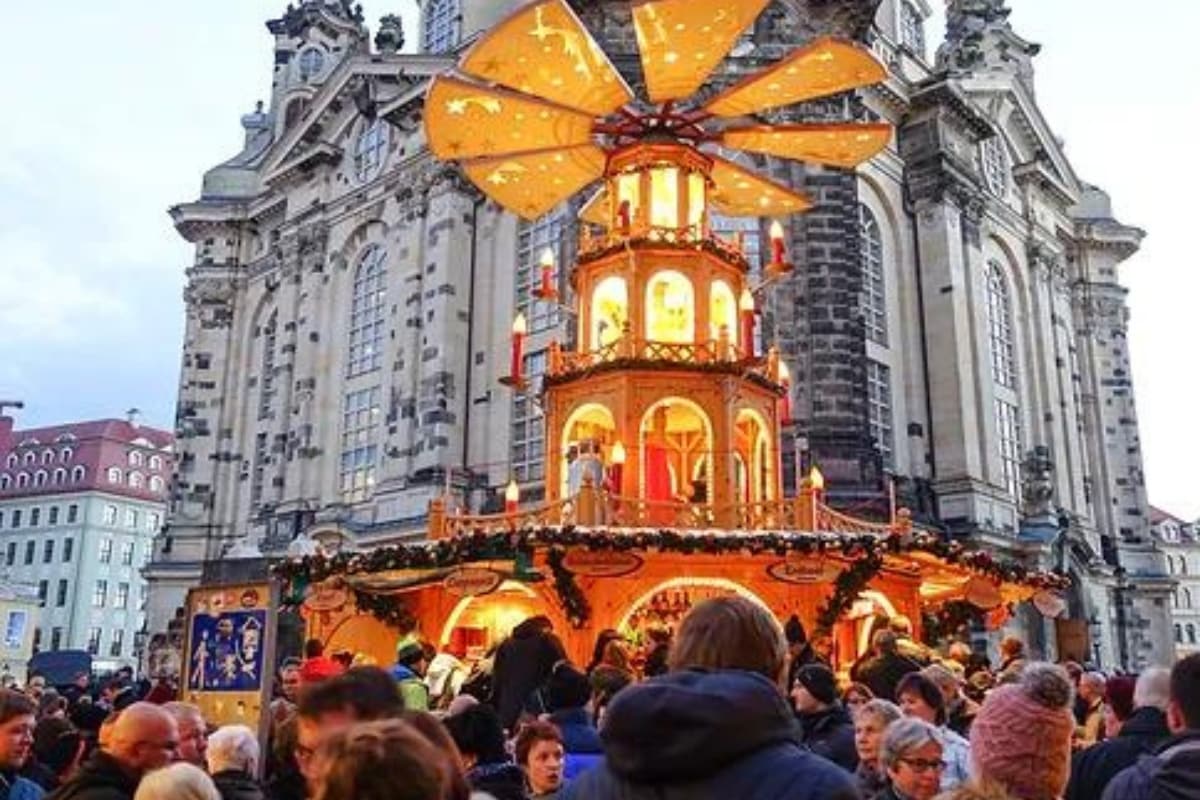
Even the smallest of Dresden’s markets, held on the square by the Residenzschloss, carries a huge dose of Christmas magic. A big draw here is the local ice rink, where you can skate against a gorgeous historic backdrop.
- Dates: Nov 27 – Dec 24, 2026
- Open: 10:00–20:00, weekends until 21:00
- Location: piazza on the south side of the Residenzschloss
- Getting there: tram 8 or 11 to Postplatz
- Admission: free
- Website: Romantic Market at the Castle
The Modern Augustusmarkt
The Augustusmarkt is the second-largest market in the city, but its atmosphere is quite different from the traditional ones. It approaches Advent with a much more modern spirit.
You can look forward to fresh design and a very international approach to food. This place is a true paradise for anyone who loves good food and diverse street food from around the world.
The market’s standout feature is the unmissable Blue Tree, a glowing Christmas fir on Gomondai-Platz, plus a huge Ferris wheel near the Goldener Reiter statue. From there, you’ll get a fantastic view over the whole historic center of Dresden.
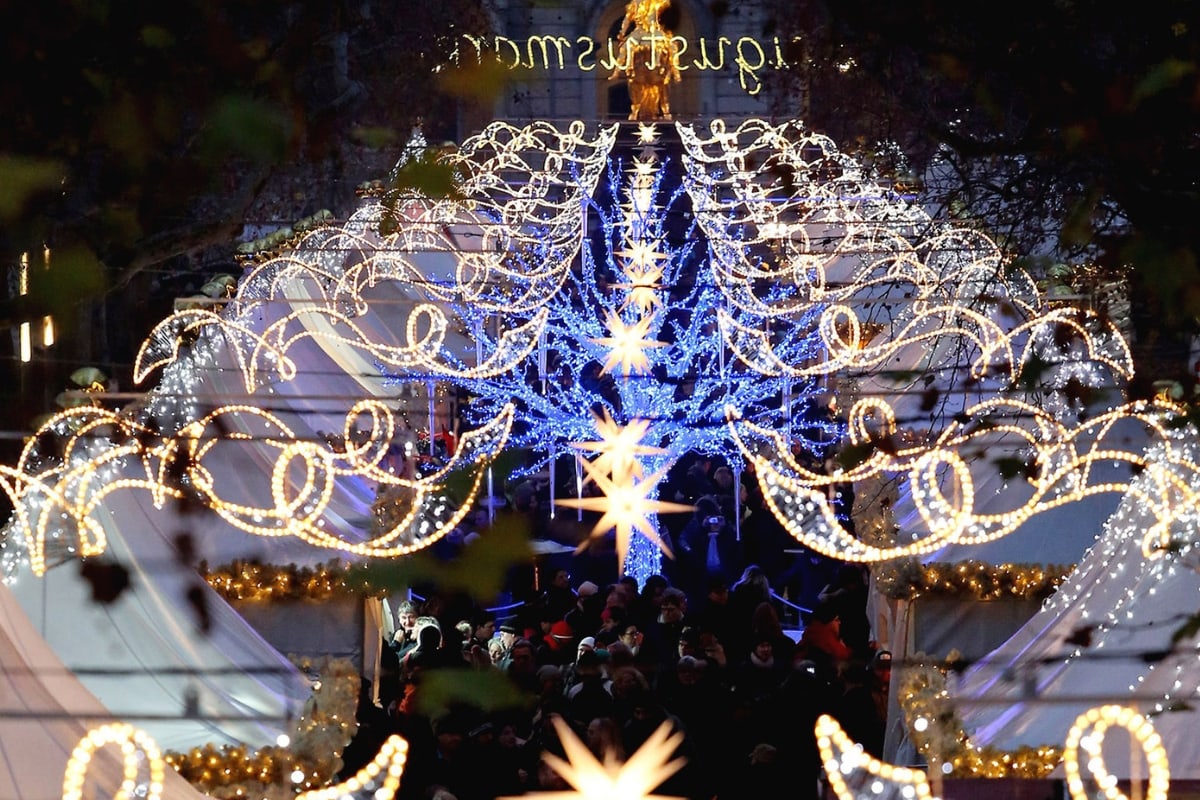
In 2026, the market runs from November 25, 2026, to January 3, 2027, and it’s also open on New Year’s Eve; it’s closed only December 24–26 and January 1.
- Dates: Nov 25, 2026 – Jan 3, 2027 (closed Dec 24–26 and Jan 1).
- Open: Typically Monday to Thursday 11:00 to 21:00, Friday until 22:00, Saturday 10:00 to 22:00, and Sunday 10:00 to 21:00.
- Location: Inneren Neustadt in Dresden.
- Getting there: Tram 8 or 11 to Postplatz.
- Admission: Free.
- Website: Augustusmarkt

What to Taste at the Christmas Markets in Dresden Germany: From Stollen to Mulled Wine
At the Christmas markets in Dresden Germany, you’ll find plenty of treats you already know from markets back home, just dressed up a little differently. On top of that, there are typical Saxon specialties that would be a shame to pass up. So what’s worth hunting down at the stalls?
- Mulled wine (Glühwein) and punch: The backbone of every Christmas market. In Germany, mulled wine is traditionally served in beautiful ceramic mugs. You pay a deposit for them (usually €3 to €5), and you’re welcome to keep yours as a collector’s souvenir, since every year has its own design. You might also come across the fiery variant called Feuerzangenbowle, where a rum-soaked sugar cone is set alight over the hot wine.
- Dresdner Stollen (Dresden Stollen): The true symbol of the city, with a protected designation of origin. Only certified bakers are allowed to bake the genuine article. If you show up on December 5, 2026, you’ll witness the famous Stollenfest. A giant stollen weighing around three tons is paraded through the streets to the Altmarkt, where the so-called Stollenmädchen cut it with a twelve-kilogram knife.
- Lebkuchen and Pfeffernüsse: Traditional German gingerbread. The Nuremberg variety (Elisenlebkuchen) must contain at least 25 percent nuts, which makes them wonderfully soft. Pfeffernüsse are smaller, heavily spiced, and coated in sugar icing.
- Käsespätzle: Traditional spätzle noodles loaded with cheese and fried onions — the ultimate comfort food for cold winter weather.
- Reibekuchen: Fried potato pancakes that, somewhat unusually, are served with apple sauce in Germany. I’d definitely recommend trying it — the sweet-and-savory combination is surprisingly great.
- Heiße Maronen: Hot roasted chestnuts that warm your hands up nicely and fill the whole square with their aroma.
- Bratwurst and Schweinshaxe: For meat eaters, the stalls grill up plenty of traditional German sausages (often served in a bun with mustard) and roast hefty pork knuckles.
What to Bring Home as a Keepsake
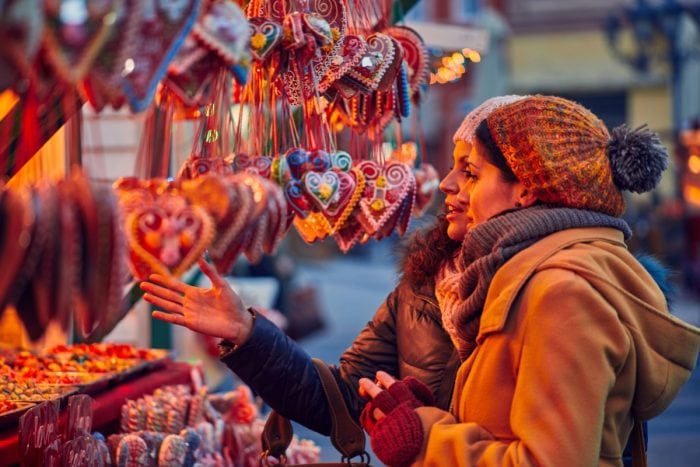
Besides food and mulled-wine mugs, the Dresden markets also sell gorgeous handcrafted goods. Many of them come from the nearby Ore Mountains (Erzgebirge) and carry a huge tradition.
- Wooden toys and decorations: Ore Mountains wood carving is legendary. You can pick up intricate Christmas pyramids, adorable smoker figurines (Räuchermännchen), or classic nutcrackers.
- Ceramics: Hand-painted mugs, plates, and ornaments that bring the real Christmas atmosphere home with you.
- Glass ornaments: Beautiful blown-glass baubles and bells, often decorated with fine, intricate detail.
- Herrnhuter Stern (Moravian Star): A traditional geometric star with many points that lights up practically every window in Saxony.
Map of points of interest for your phone
Christmas Traditions in Saxony and the Ore Mountains
Dresden is the gateway to the Ore Mountains (Erzgebirge), which are, quite literally, the cradle of many German Christmas traditions. Most of them are closely tied to mining history. Because miners spent entire winter days underground and barely saw the sun, light took on huge significance for them.
That’s how the Schwibbogen came about — a beautiful wooden light arch that symbolizes the entrance to a mine shaft. During Advent, you’ll see one glowing in nearly every Saxon window. Just as typical are Weihnachtspyramiden (Christmas pyramids), which spin thanks to the rising heat of candles, along with wooden nutcrackers (Nussknacker) and smoking figurines called Räuchermännchen, into whose bellies you place a scented incense cone. The mining tradition also gave rise to the grand Bergparaden (miners’ parades), where hundreds of people march through towns in historical mining uniforms.
Germany also gave the world two customs we can no longer imagine the holidays without. Did you know that the Advent wreath was invented back in 1839 by Johann Hinrich Wichern for the children at a Hamburg orphanage? It originally had 24 candles. Likewise, the Advent calendar is a German invention.
Gifts here are handed out on the evening of December 24th (an event called Bescherung). While in the south and in Catholic regions the Christkind (Christ Child) delivers them, in the north and east — including Dresden — it’s more often the Weihnachtsmann (Santa/Father Christmas) who brings the presents. The Christmas Eve dinner itself is surprisingly modest in many families, most often simple sausages with potato salad. The big festive roast isn’t served until Christmas Day or Boxing Day.
💡 Tip: You may have heard of the so-called Weihnachtsgurke, a glass Christmas ornament shaped like a pickle, which Germans supposedly hide on the tree. Don’t be fooled — it’s purely an American invention from the late 19th century. According to surveys, only about 7 percent of people in Germany itself have even heard of this alleged national tradition.
More Things to Do in Dresden During Advent
Stay the night in Dresden and treat yourself to a truly romantic Advent evening. A great experience is an evening boat cruise along the Elbe paired with dinner, from where you’ll see the illuminated city from a completely different perspective. You can easily book tours and tickets through the popular platform GetYourGuide.
How to Get to Dresden for the Christmas Markets
Have I talked you into a trip to Saxony yet? ☺️ All that’s left is figuring out the most comfortable way to get there. The simplest and fastest option is driving your own car or taking a direct bus from major European hubs. There’s also a huge range of organized Advent package trips from travel agencies like Invia, if you’d rather not arrange anything yourself.
Bus, Train, or Car?
If you’re coming from nearby regions, the trip can be really quick. Direct connections are run by companies like Flixbus, or you can hop on a comfortable train (the journey from Prague, for example, takes just over two hours). Driving your own car is flexible, but during Advent you should expect that parking in the city center can be a real headache.
Christmas Markets in Dresden Germany: Where to Park
If you’re planning to drive, parking is probably the most important question. Dresden is divided into three parking zones, and street parking is always paid, even in the outskirts and on weekends. You can pay at machines (cash or card) or through mobile apps like Easypay or PayByPhone.
Right in the center (Zone I), you’ll pay around €1 per 20 minutes with no daily cap, so it can get pretty pricey. In Zones II and III, prices are lower (around €0.50 per 15 minutes) and there’s a daily maximum. The catch is that during Advent the city center is completely jammed, and finding a free spot on the street is genuinely tough.
If you want to save both your nerves and your money, the most elegant solution is the P+R park-and-ride lots on the outskirts of the city. From there, you can comfortably reach the center by tram or suburban train. You’ll find an up-to-date map on the VVO public transport authority’s website.
A huge bonus is that during the Christmas markets, the city opens a giant P+R Messe parking lot right next to the exhibition center. It holds 800 cars, and special tram services run from there straight to the main markets.
Recommended P+R Park-and-Ride Lots:
- P+R Messe: A large lot for 800 cars that runs specifically during the Christmas markets.
- P+R Kaditz: Capacity of nearly 200 spots; you’ll reach the center in 15 minutes on trams 9 and 13.
- P+R Gompitz and Pennrich: Each holds just under 50 cars; the ride to the center on tram 7 takes about 25 minutes.
- P+R Prohlis: Capacity of just under 70 spots; trams 1, 9, and 13 get you to the center in 25 minutes.
- P+R Reick: A smaller lot, but the S2 train gets you to the main train station in just 5 minutes.
Safe Parking in Garages
If you prefer comfort and don’t mind paying extra to have your car close to the center, you can park in one of the covered garages. Prices vary depending on the distance from the Altmarkt, but expect to pay roughly €1.50 to €2 per hour, or €15 to €20 for the whole day.
- Altmarkt-Galerie: Right next to the main market, €1.50 per hour (€2 from the third hour onward), €20 daily maximum.
- Centrum Galerie: Very close to the Altmarkt, €2 per hour, €12 per day.
- Wiener Platz / Hauptbahnhof: Right by the main train station, €2 per hour, €16 per day.
- WÖRHL/Florentinum and Galeria: Around €1.50 per hour or €15 per day, a short walk from the center.
- Parkplatz Ostra-Ufer: A cheaper option near Dresden-Mitte station (€5 daily maximum).
You’ll find the complete, always up-to-date list of garages, including availability, on the official city website www.dresden.de.
Cultural Program in Dresden During Advent
In December, Christmas music seems to ring out from every corner of Dresden, from the grand cathedrals to the smaller, romantic chapels. If you’re staying overnight, be sure to check out the program at the local Kulturpalast. Renowned artists and world-class orchestras perform there during Advent, an experience that will take your festive mood to a whole new level.
Christmas Markets in Dresden Germany: Prices at the Markets
I won’t lie to you, prices at Christmas markets keep rising every year, and that’s true back home and in Germany alike. A trip to Dresden will cost you a bit more these days, but in my opinion the amazing atmosphere, quality ingredients, and gorgeous handmade goods are absolutely worth it.
These days, you can pay by card without any trouble at most of the bigger stalls, but I’d still recommend bringing some cash in euros. Some smaller craftspeople still don’t take cards, and paying with bills is often faster when the crowds get big.
Prices naturally vary a bit between the different squares, but for reference, expect roughly these amounts:
- Mulled wine (Glühwein) or punch: €4.50 to €5 (plus a €3 to €5 mug deposit)
- Hot chocolate: €3.50 to €4
- Soft drinks: €3 to €4
- Bratwurst sausage: €5 to €8
- Fried flatbread (langos) and potato pancakes: €5 to €7
- Fries: €5 to €6
- Roasted almonds (100 g): €4
- A slice of original stollen: from €4
Where to Go Next: More Advent Tips
If the Christmas markets have caught your interest, check out these articles too:
- Christmas Markets in Nuremberg and the Famous Christkindlesmarkt
- Christmas Markets in Seiffen, the Toy Village in the Ore Mountains
- Christmas Markets in Annaberg and the Miners’ Parades
- Christmas Markets in Germany: 20 Tips on Where to Go
- The Best Christmas Markets in Europe: 25 Tips
Frequently Asked Questions
When do the Christmas markets in Dresden start in 2026?
The main Striezelmarkt starts with its festive opening on Wednesday, November 25, 2026 at 4:00 PM, with stalls open from 4:30 PM. Other smaller markets throughout the city usually start the same week, and most end on Christmas Eve, though some continue until early January.
Where can I find the largest Christmas market in the city?
The most famous and largest is Striezelmarkt, which you’ll find right on Altmarkt square in the historic center. It’s also one of the oldest markets in all of Germany—this year marks its 592nd edition.
Can I pay by card at the markets?
Most food and drink stalls now accept payment cards. Still, I recommend having some cash in euros with you—you’ll need it at smaller craft vendors or when getting refunds on mug deposits.
How do the mulled wine mugs work?
You’ll get your mulled wine or punch in a beautiful ceramic mug, for which you pay a deposit (Pfand) of about €3 to €5. When you return the mug, you get your money back. But you can also keep it as a souvenir—the mugs have a unique design and year printed on them each year.
Is it better to go by car or train?
If you don’t want to deal with the stress of congested city center and hunting for expensive parking, the train is a great choice. Dresden is well connected by rail from major European cities, and from the main train station you can walk to the markets in about ten minutes.
What is the Stollenfest?
It’s the traditional Dresden stollen festival, which in 2026 falls on Saturday, December 5. You’ll see a parade featuring a giant stollen weighing about three tons, which bakers cut with a special giant knife and then sell to visitors.
Do the stalls have vegetarian food too?
Absolutely. Besides the ubiquitous sweets like gingerbread, stollen, or roasted almonds, you’ll also find great cheese spätzle (Käsespätzle), fried potato pancakes with applesauce (Reibekuchen), roasted chestnuts, or lángos.
Is it worth visiting the markets with kids?
Absolutely. Kids will be thrilled by the giant wooden nutcrackers, spinning Christmas pyramids, ice skating at the palace, or the big Ferris wheel at Augustusmarkt. Most stalls also sell delicious children’s punch.
Tips and Tricks for Your Vacation
Don’t Overpay for Flights
Search for flights on Kayak. It’s our favorite search engine because it scans the websites of all airlines and always finds the cheapest connection.
Book Your Accommodation Smartly
The best experiences we’ve had when looking for accommodation (from Alaska to Morocco) are with Booking.com, where hotels, apartments, and entire houses are usually the cheapest and most widely available.
 🚗 Car rental on the roadVerified rental cars in Germany
Search with the DiscoverCars comparison engine — it compares prices from dozens of local and international rental companies, and most bookings come with free cancellation.
Compare car prices in Germany →Don’t Forget Travel Insurance
Good travel insurance will protect you against illness, accidents, theft, or flight cancellations. We’ve had a few hospital visits abroad, so we know how important it is to have proper insurance arranged.
Where we insure ourselves: SafetyWing (simple monthly subscription) and TrueTraveller (for extra-long trips).
Find the Best Experiences
Get Your Guide is a huge online marketplace where you can book guided walks, trips, skip-the-line tickets, tours, and much more. We always find some extra fun there!