
Nuremberg in December is simply magical. Every time I walk past the illuminated Frauenkirche church and breathe in that distinctive scent of gingerbread and pine, I feel like I’ve stepped into a fairy tale. If you’re considering a pre-Christmas trip abroad, I need to warn you: this Nuremberg Christmas market sets the bar incredibly high.
Every year, thousands of visitors flock to the city, and it’s no wonder. This German Christmas market is one of the oldest and most renowned in Europe. Let’s take a look at when it takes place, what to taste, where to park, and what local customs you should know before you go.

Summary for those who don’t have time to read the whole article
- 2026 dates: The market runs from November 27 to December 24, 2026.
- Opening hours: Stalls are open daily from 10:00 AM to 9:00 PM (until 10:00 PM on opening day, November 27), and closing early at 2:00 PM on Christmas Eve.
- Main location: The heart of all the action is Hauptmarkt square in the historic center.
- Ceremonial opening: Takes place on November 27, 2026, at 5:30 PM, when the Nuremberg Christkind delivers the prologue from the balcony of Frauenkirche church.
- Other markets: During the same period, there’s also the children’s market Kinderweihnacht on Hans-Sachs-Platz and the Markt der Partnerstädte (Partner Cities Market).
- Traditional treats: Be sure to try authentic Nuremberg gingerbread (Elisenlebkuchen) and hot Glühwein in a returnable collectible mug.
- Transportation: You can easily get here by direct FlixBus from major European cities.
- Parking: Parking in the center is limited and expensive; you can park for free at locations like Kessler Platz or Wöhrder Talübergang.
The full destination guide: Germany — guide and what to see
All 2026 Christmas markets: a calendar of dates and tips on markets across Europe
Nuremberg Christmas Market: How Long Should You Stay?
If you want to fully enjoy the Christmas atmosphere and explore the city at a leisurely pace, the ideal plan is to spend a whole weekend. This way you can visit not only the main market on Hauptmarkt square but also the smaller side markets, shop for gifts, and still have time for sightseeing. Of course, you can also do the markets in one intensive day if needed.
💡 Tip: Also check out our guide on what to see in Nuremberg.
Where to stay in Nuremberg
During Advent, hotels tend to sell out quickly, so don’t delay your reservation. The ideal location is as close to the historic center as possible, so you can head straight to bed after an evening mulled wine.
One of the best-rated accommodations near the center is Hotel Pomander Nürnberg, which offers beautiful rooms and an excellent breakfast. If you’re looking for a more budget-friendly option with a friendly atmosphere, try Five Reasons Hostel & Hotel, which is about a ten-minute walk from the main action.
What Can You Expect at the Nuremberg Christmas Market?
Thanks to its long history and enormous significance, the Christmas market is a key part of local culture and the Advent season. So what awaits you here?
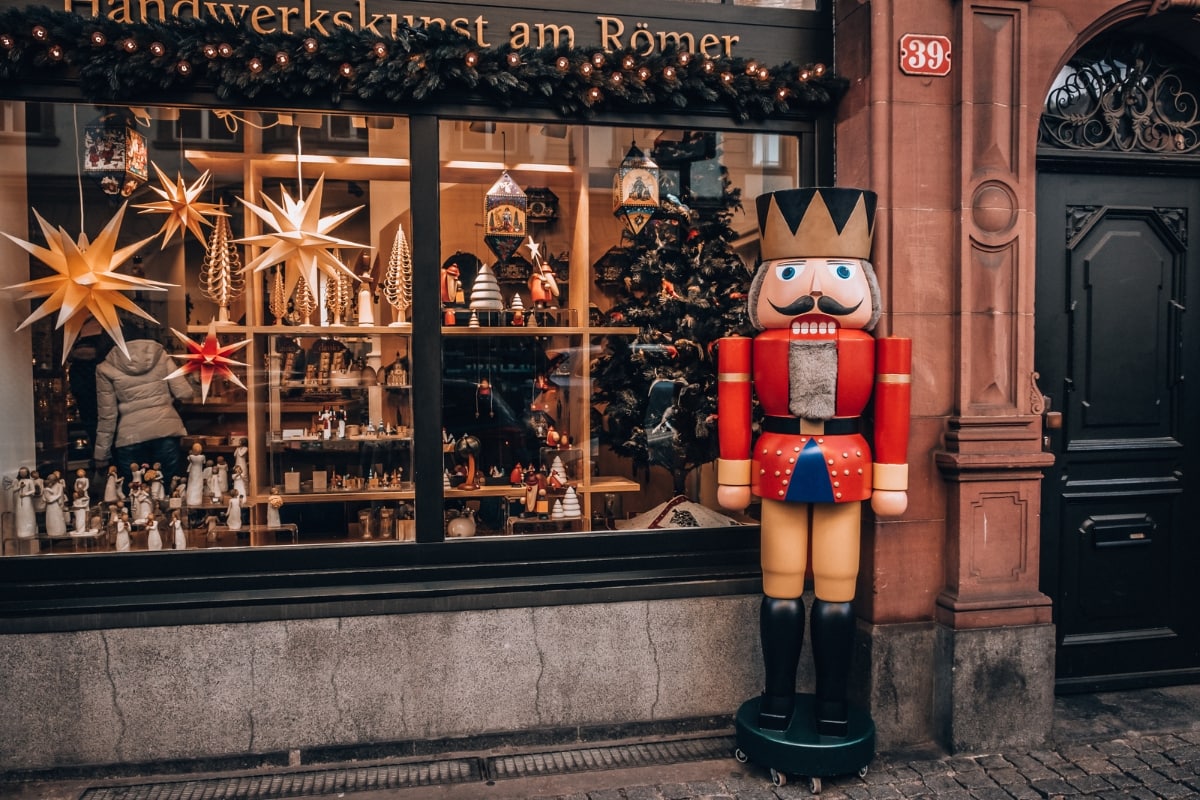
- Beautiful handmade ornaments and authentic handcrafted gifts made from glass, wood, and ceramics.
- Traditional German delicacies, especially the famous Nuremberg gingerbread (Elisenlebkuchen), which has protected geographical indication status. Meat lovers will also find Nürnberger Rostbratwürste at the stalls – small spiced sausages grilled over beechwood.
- Magical atmosphere enhanced by hundreds of twinkling lights, the scent of cinnamon, and the stunning historic backdrop of the city.
- Children’s market Kinderweihnacht on Hans-Sachs-Platz square, where the youngest visitors can enjoy vintage carousels and creative workshops.
History and Traditions of the Nuremberg Christmas Market

The Nuremberg market, commonly known as Christkindlesmarkt, dates back to the 17th century and officially ranks among the oldest in all of Europe. The first written mention of the market dates back to 1628.
Locals are rightfully proud of their tradition, and the central figure of the entire Advent season is the so-called Christkind (Christ Child). This isn’t an invisible baby, but rather a young woman aged 16 to 19, chosen by the city every two years. She wears a golden-white dress, dons a crown, and on November 27 delivers the ceremonial prologue from the balcony of Frauenkirche church, officially opening the entire market.
Nuremberg Christmas Market: Location and Opening Hours

Let’s look at the most important practical information so you know exactly when it starts this year, where all this splendor takes place, and what opening hours to expect.
Where does the Nuremberg Christmas market take place?
The main venue for the Nuremberg market is Hauptmarkt square right in the city center. During Advent, this generous open space transforms into a tent village full of red-and-white roofs wafting spiced aromas. Besides the main market, don’t miss the children’s Kinderweihnacht on Hans-Sachs-Platz and the Markt der Partnerstädte, where you can find treasures from all corners of the world.

Nuremberg Christmas Market: Dates and Opening Hours 2026
- Event dates: In 2026, the market runs from November 27 to December 24.
- Ceremonial opening: The market kicks off on November 27, 2026, at 5:30 PM with the traditional prologue from the church balcony.
- Opening hours: Stalls are open daily from 10:00 AM to 9:00 PM (until 10:00 PM on opening day, November 27).
- Christmas Eve: If you visit on December 24, note that closing time is earlier, with reduced hours from 10:00 AM to 2:00 PM only.
How to Get to Nuremberg: Bus, Tour Package, or Car?
Nuremberg is very accessible from across Europe. If you want to avoid the stress of driving, the easiest option is to hop on a direct bus. We often use FlixBus routes from major European cities – the journey passes quickly and you’ll disembark close to the center. Another popular option is organized tour packages, which you can easily book through travel agencies.
Those who prefer to drive will need to prepare for the fact that Advent weekends are really challenging here and parking spaces are scarce.

Nuremberg Christmas Market: Where to Park
When driving, it’s essential to know that in the historic core itself and adjacent residential zones, you can park for a maximum of two hours, at a fee of approximately €2.50 per hour. A map of zones reserved for residents is available on the official website www.nuernberg.de.
By far the best strategy is to leave your car in the outskirts of the city, where parking is free, and then move into the center on foot or by public transport. Just watch out for signs about regular street cleaning schedules.
Tips for free unguarded parking lots closer to the center:
- Kessler Platz is located about 180 meters from Wöhrder Wiese metro station, and you can comfortably walk to the historic center.
- Wöhrder Talübergang is a parking lot from which you can take buses 36 and 94 to the center from the Bauvereinstr. stop.
What to Buy at the Nuremberg Christmas Market?
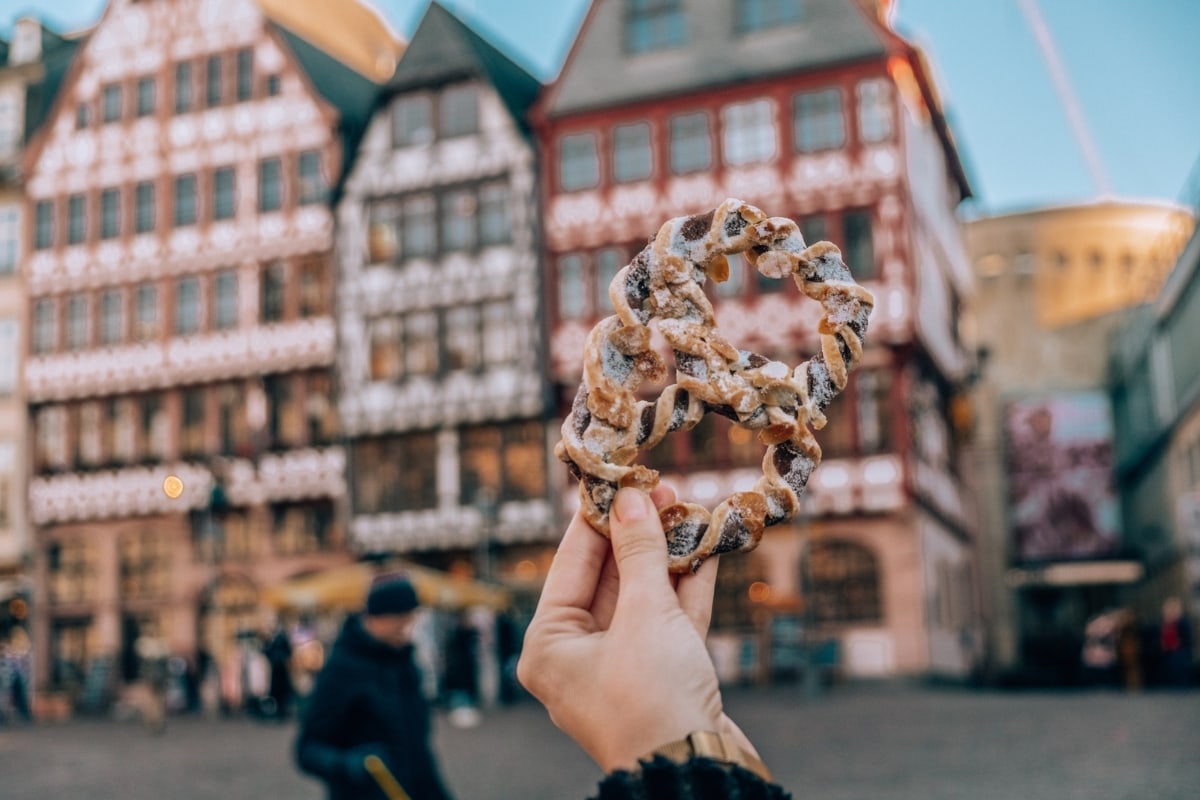
The selection is enormous, and compared to smaller towns, you’ll find truly high-quality craftsmanship and traditional products that exude authenticity.
Traditional Products and Souvenirs
Nuremberg is particularly famous for its handmade ornaments and beautiful wooden decorations. At the stalls, you’ll find:
- Original Nuremberg gingerbread, which you simply must bring home as an edible souvenir. The highest quality ones bear the designation Elisenlebkuchen, have a protected recipe, and must contain at least 25% nuts and a maximum of 10% flour.
- Wooden figurines and nutcrackers, which originate from the nearby Ore Mountains, but in Nuremberg you’ll find them in amazing quality.
- Christmas ornaments blown from glass or hand-painted on ceramic, often featuring the local golden angel (Christkind).
- Bishop’s bread and stollen, other popular winter treats that taste simply wonderful with tea.

Food and Drink: What to Taste at the Nuremberg Christmas Market
Besides soaking up the atmosphere, people also come here for the amazing treats that warm you right up. What are the biggest local specialties?
- Glühwein and punches: German Christmas markets wouldn’t be the same without hot mulled wine. Every stall has its secret recipe, and you get your drink in a beautiful ceramic mug. The mug usually has a deposit of €3 to €5, and many visitors take it home as a souvenir, since each year a new collectible edition is produced with the current year on it.
- Feuerzangenbowle: A real winter showstopper. It’s a mixture of red wine, spices, and rum, over which a sugar cone soaked in strong rum is placed in special tongs and set on fire. The caramelized sugar then slowly drips into the wine. It’s absolutely delicious and also goes to your head pretty quickly! 😅
- Roasted nuts and Elisenlebkuchen: The sweet aroma of roasted almonds hits your nose on every corner. Add some local gingerbread to your paper bag and you’ve got a sweet evening sorted.
- Nuremberg bratwursts: For meat eaters, the local world-famous little sausages are a major draw, grilled by stallholders over an open beechwood fire. They’re usually sold three at a time in a crusty roll, which locals call “Weggla.” Thanks to protected geographical indication, these sausages may only be produced in Nuremberg according to a precisely defined recipe.

Programme for Children and Adults at the Nuremberg Christmas Market
Nuremberg prides itself on offering something for absolutely everyone. While the main square is dedicated to shopping and meeting over mulled wine, just around the corner on Hans-Sachs-Platz there’s a special children’s market called Kinderweihnacht. You’ll find beautiful historic carousels, a miniature Ferris wheel, and plenty of workshops where children can decorate their own gingerbread or make candles.
However, if you’re looking for a slightly deeper experience than just wandering between stalls and sipping Glühwein, I recommend checking out GetYourGuide, where you can find some really interesting activities.
You can, for example, book a guided city tour with a local guide. You’ll learn loads of fascinating details about Nuremberg’s history, discover hidden corners, and get a completely different perspective on the markets than the average visitor.
What German Christmas Traditions Will You Experience?
Advent time in Germany is full of interesting customs. Some are very similar to those in other countries, while others might surprise you.
Advent Wreath and Calendar
Did you know that the Advent wreath (Adventskranz) is originally a German invention? It was created in 1839 in Hamburg by theologian Johann Hinrich Wichern for children in a local orphanage. The original actually had 24 candles, including four large ones for Sundays and twenty small ones for weekdays, so the children could see Christmas approaching. The famous paper Advent calendar also comes from Germany.
St. Nicholas and Shoes Outside the Door
On Nikolaustag, which falls on 6 December, children don’t put stockings in the window. On the evening of 5 December, they carefully clean their shoes and place them outside the door. In the morning, they find nuts, mandarins, and sweets inside. Anyone who’s been naughty can usually expect a broom from the scary Knecht Ruprecht.
Who Brings the Presents?
While different traditions exist across Europe, in Germany it’s a bit complicated. In the south and Catholic areas (which includes Bavaria and Nuremberg), presents are brought by the Christkind. In the north and Protestant regions, the gift-bringer is Weihnachtsmann, who more closely resembles the American Santa Claus. However, presents are opened on the evening of 24 December, just like in many other countries, in what’s called Bescherung.
Christmas Eve Sausages with Potato Salad
If you’re imagining a huge festive feast, you might be surprised. Christmas Eve dinner in many German families is unexpectedly simple. Traditionally, they serve ordinary sausages with potato salad! The festive roast, often goose or duck, comes on 25 and 26 December.
Do You Know About the Pickle on the Tree?
You might occasionally read online about a strange German tradition of hiding a pickle-shaped ornament in the branches of the Christmas tree, the so-called Weihnachtsgurke. Don’t be fooled – it’s a myth. Most Germans have never heard of it. It’s probably an American invention from the late nineteenth century, and the word only made its way into German essentially because American tourists kept asking about it.
Where Next: More Advent Tips
If Christmas markets have captured your imagination, check out these articles too:
- Christmas markets in Dresden and Striezelmarkt
- Christmas markets in Regensburg at Thurn und Taxis Castle
- Christmas markets in Berlin
- Christmas markets in Germany: 20 tips
- Best Christmas markets in Europe: 25 tips
 🚗 Car rental on the roadVerified rental cars in Germany
Search with the DiscoverCars comparison engine — it compares prices from dozens of local and international rental companies, and most bookings come with free cancellation.
Compare car prices in Germany →FAQ – Frequently Asked Questions
Where are the biggest markets held in Nuremberg?
The main market, called Christkindlesmarkt, takes place at Hauptmarkt square in the historic center. A short walk away at Hans-Sachs-Platz you’ll also find a special children’s market.
When do the Christmas markets in Nuremberg start?
In 2026, the markets officially start on Friday, November 27th at 5:30 PM with the traditional prologue from the balcony of Frauenkirche church.
What are the opening hours of the stalls?
The stalls are open daily from 10:00 AM to 9:00 PM (on opening day November 27th until 10:00 PM). If you arrive on Christmas Eve, expect earlier closing – they’re only open from 10:00 AM to 2:00 PM.
Where is the best place to park in Nuremberg?
It’s best to avoid the center, where resident zones apply and parking costs €2.50 per hour. You can park for free on the outskirts – I recommend Kessler Platz parking lot, for example, which is a short walk to the metro.
What should I definitely try at the markets?
Don’t miss the local Elisenlebkuchen, which are Nuremberg gingerbread cookies with a high nut content. For warming up, hot Glühwein in a returnable mug or the stronger Feuerzangenbowle are excellent. If you eat meat, you can try the small Nuremberg sausages in a roll.
Do you need cash at the markets?
Yes, although the situation is gradually improving, many stall holders at the Christmas markets still prefer or even require cash payment. It’s good to have euros in smaller bills with you.
Who is the Nuremberg Christkind?
The Christkind is the central figure of the Nuremberg markets. Every two years, the city elects a girl aged 16 to 19 who wears gold and white robes and a crown. She ceremonially opens the markets and you can meet her there.
How long should you spend at the markets?
If you want to enjoy the markets at a relaxed pace and explore the city itself, I recommend setting aside a whole weekend. That way you can cover both the main and secondary markets and still have time for sightseeing. But the markets can also be done as an intensive day trip.
Tips and Tricks for Your Vacation
Don’t Overpay for Flights
Search for flights on Kayak. It’s our favorite search engine because it scans the websites of all airlines and always finds the cheapest connection.
Book Your Accommodation Smartly
The best experiences we’ve had when looking for accommodation (from Alaska to Morocco) are with Booking.com, where hotels, apartments, and entire houses are usually the cheapest and most widely available.
Don’t Forget Travel Insurance
Good travel insurance will protect you against illness, accidents, theft, or flight cancellations. We’ve had a few hospital visits abroad, so we know how important it is to have proper insurance arranged.
Where we insure ourselves: SafetyWing (simple monthly subscription) and TrueTraveller (for extra-long trips).
Find the Best Experiences
Get Your Guide is a huge online marketplace where you can book guided walks, trips, skip-the-line tickets, tours, and much more. We always find some extra fun there!