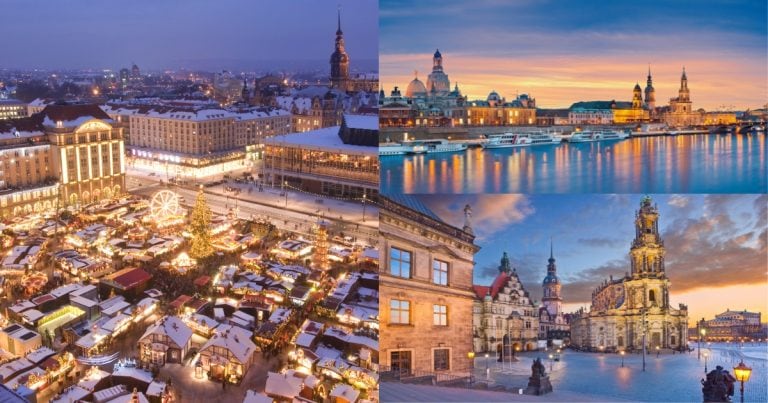

Christmas time is approaching and I honestly can’t imagine a better place to soak up the true festive atmosphere than in Germany. Christmas markets in Germany have an incredible charm, whether you head to a big city or a small Ore Mountain village. I’ve prepared 20 tips for the most beautiful places to visit this year for the scent of mulled wine and roasted almonds.
Summary for those who don’t have time to read the full article
- Market dates: Most German Christmas markets open their gates at the end of November and run until Christmas Eve.
- Dresden Striezelmarkt: This year’s 592nd edition starts on November 25, 2026 and you absolutely must taste the famous Dresden stollen here.
- Nuremberg and the Christkind: The famous Christkindlesmarkt starts on November 27, 2026 and is traditionally opened by the Christkind angel from the church balcony.
- Mining traditions in the Ore Mountains: In smaller towns like Seiffen or Annaberg you’ll see beautiful wooden toys and experience spectacular miners’ parades.
- Fairytale Regensburg: The castle markets at Thurn-Taxis Palace offer a breathtaking setting with burning fires, but expect a paid admission here.
- What to taste: To warm up I recommend trying mulled wine or the spectacular Feuerzangenbowle, and for food sweet gingerbread and roasted chestnuts.
- Souvenir mugs: Mulled wine comes in beautiful ceramic mugs with a deposit of 3 to 5 euros, which you can keep as a great souvenir.
- Cash payments: Although times are gradually changing, at many smaller stalls you still can’t pay by card, so definitely bring plenty of euros with you.
- Transport and parking: During Advent avoid driving into congested city centers and use park-and-ride facilities or take the train instead.
- Confirmed dates for other cities: Aachen has its market from November 20 to December 23, Zittau from December 5 to 13, 2026. Meissen hasn’t officially announced its dates yet (last year the market ran from November 24 to Christmas Eve).
The full destination guide: Germany — guide and what to see
All 2026 Christmas markets: a calendar of dates and tips on markets across Europe
Christmas markets in Germany
German Christmas markets are among the absolutely most beautiful and traditional in all of Europe. They attract visitors from around the world with their unique atmosphere, beautiful decorations and unmistakable scent of Christmas spices.
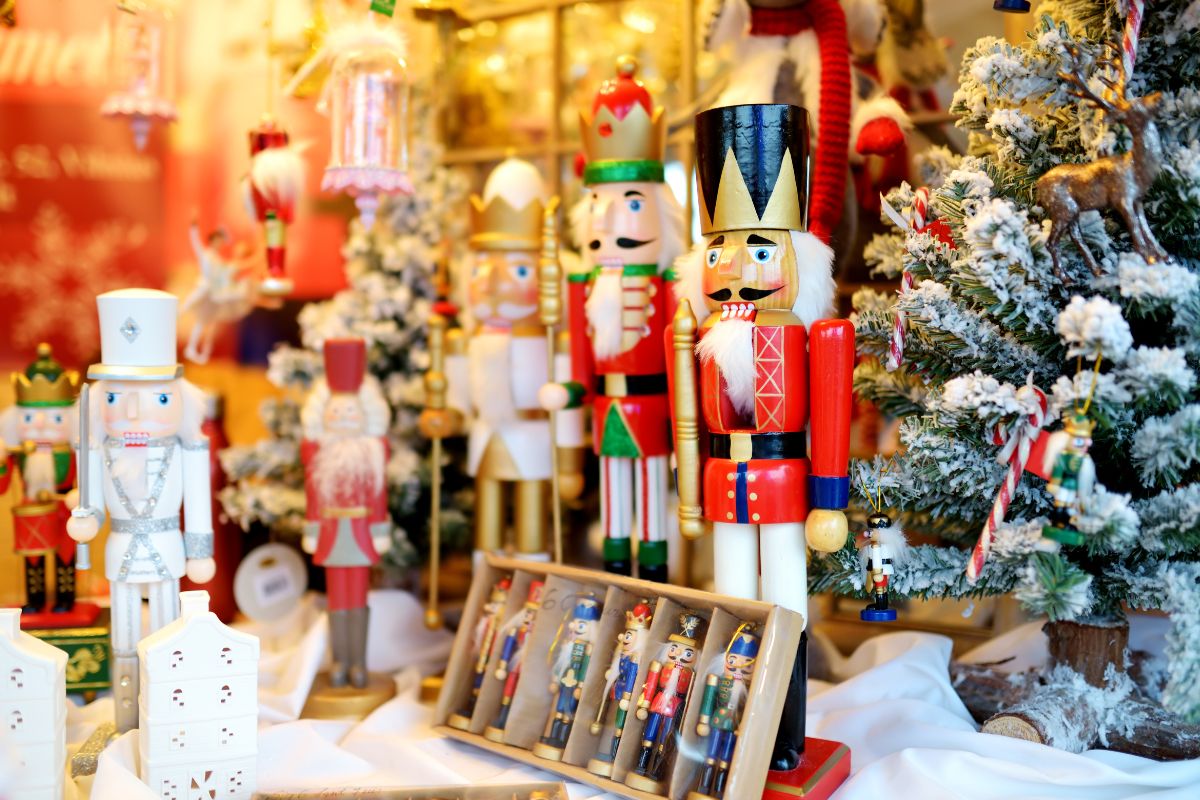
Each city offers a slightly different charm. You can admire majestic markets in Dresden and Nuremberg, or choose a more intimate and authentic experience in smaller Ore Mountain towns like Seiffen. Germany is famous not only for the huge selection of traditional handicrafts, among which wooden Christmas ornaments, pyramids and nutcrackers particularly stand out. You can also look forward to a rich cultural program, festive parades and lovely children’s workshops.
💡You might also like: Best Christmas markets in Europe
Christmas markets Germany: 20 tips for the best markets to visit
If you’re planning an Advent trip to Germany this year and are hesitating with your choice, I’ve compiled 20 specific tips on where it’s definitely worth going. Just choose according to whether you’re looking for romance, history, or fun for the whole family.
💡 Tip: If you don’t want to deal with transport and parking, plenty of bus tours also go to Germany for Christmas markets. Check out the current offer on the Invia portal.
1. Dresden
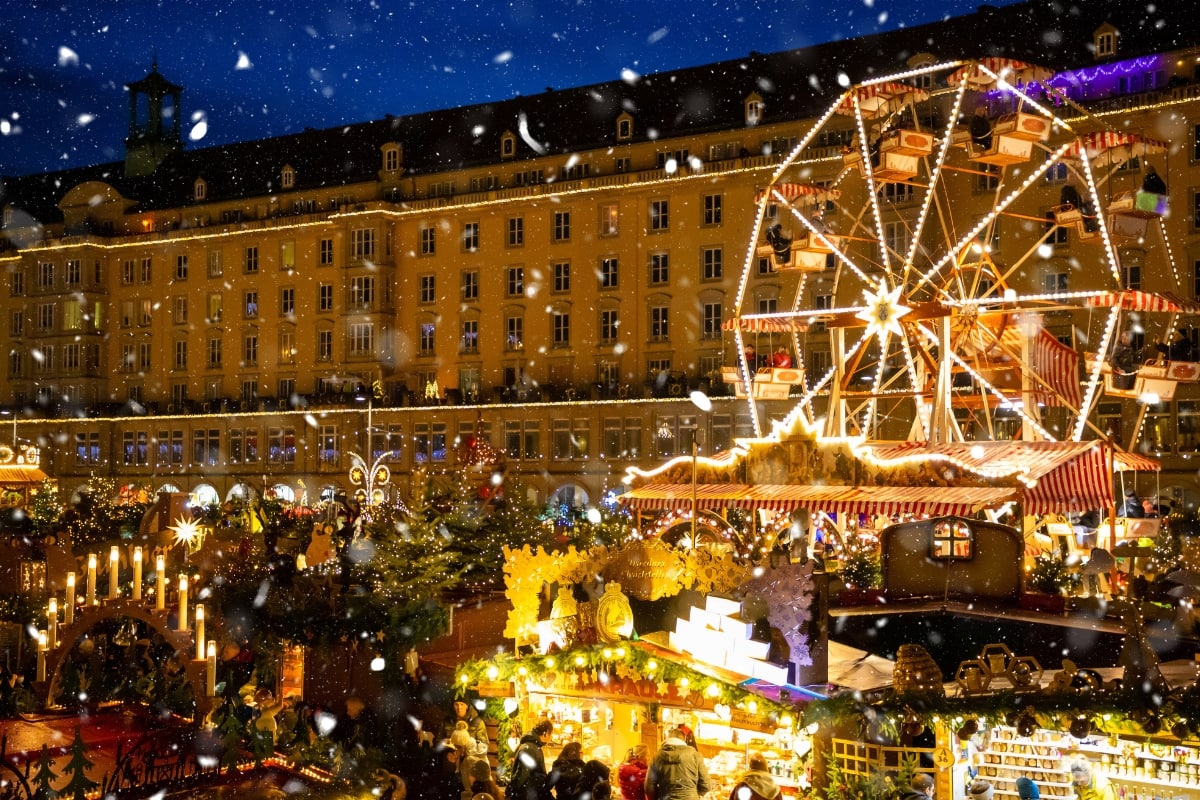
Christmas markets in Dresden, traditionally called Striezelmarkt, are among the oldest and most famous in Europe. This year marks the 592nd edition and the market gates will open from November 25 to December 24, 2026. The dominant feature of the entire square is a giant Christmas pyramid and a large wooden arch with candles, which are typical symbols of Saxon craftsmanship.
The market is packed with over 200 picturesque stalls selling handcrafted goods, including exquisite wooden toys from the Ore Mountains. The stalls naturally also sell the famous Dresden stollen and plenty of other traditional treats. If you visit, definitely don’t miss Stollenfest, the Dresden stollen festival, which this year falls on December 5, 2026.
Besides the main Striezelmarkt, smaller markets worth a short walk can be found in the historic Altmarkt district or right by the monumental Frauenkirche church.
2. Nuremberg
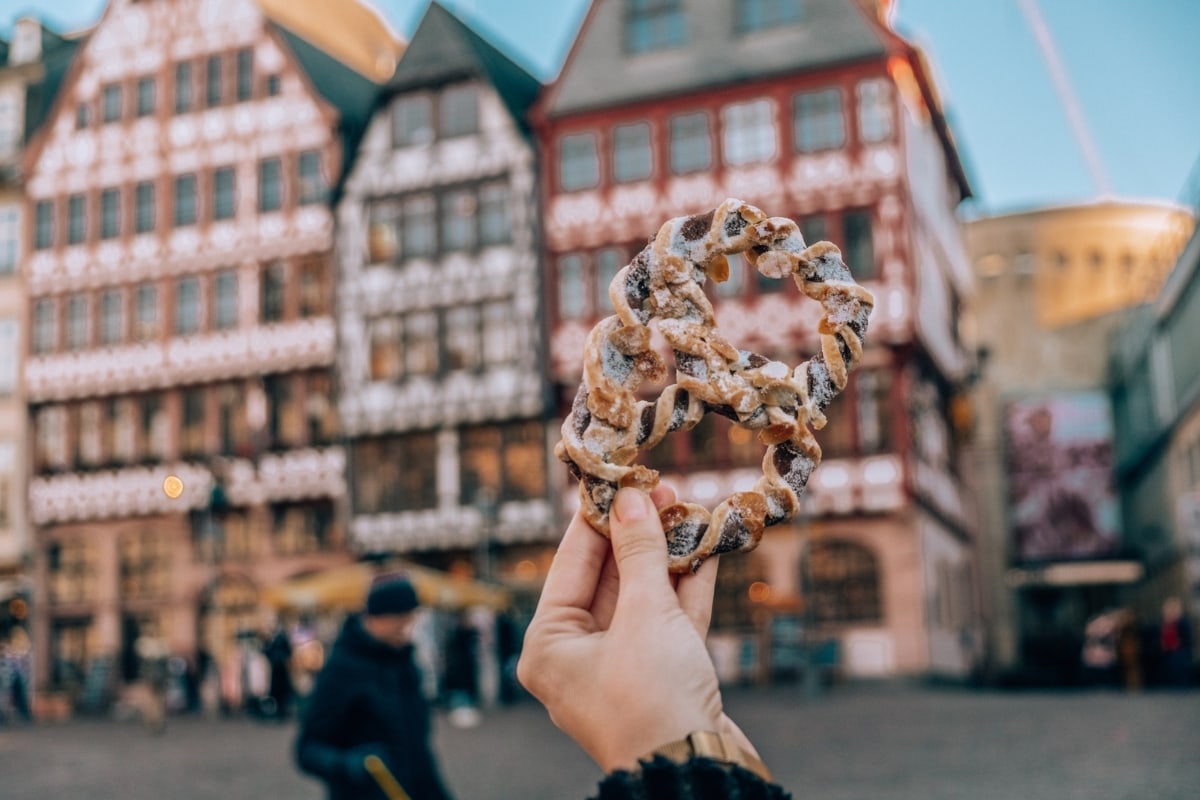
Nuremberg’s Christkindlesmarkt is without exaggeration one of the largest and most beautiful Christmas markets in Germany. It spreads across the historic main square (Hauptmarkt) and has become famous for its rich selection of handicrafts and Christmas decorations. The market will run from November 27 to December 24, 2026 and the stalls here are fragrant with famous Nuremberg gingerbread and traditional local sausages for those who eat meat.
An absolutely unforgettable experience is the ceremonial opening of the market, which is performed by the Christkind angel. This year the prologue will be recited from the church balcony on November 27 at 5:30 PM. For children there’s a special section of the market where they’ll find fairytale carousels, creative workshops and small Christmas trains.
3. Regensburg
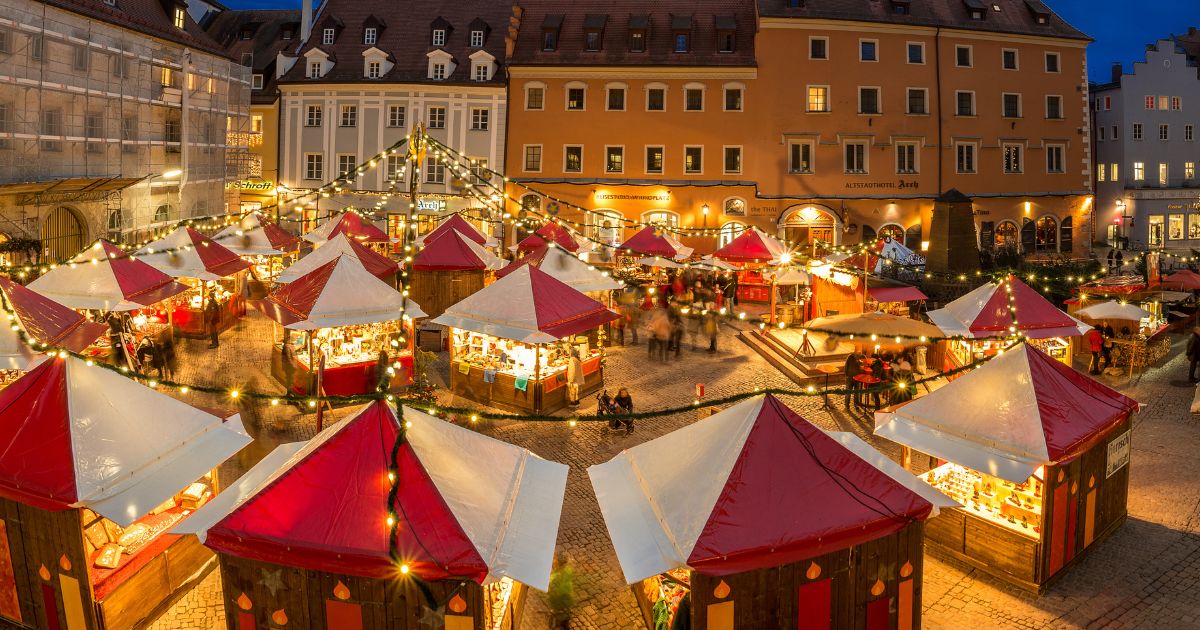
Regensburg offers Advent markets set in a beautiful historic environment. Absolutely breathtaking is the market at Thurn-Taxis Palace, where you’ll feel like you’re in a real winter fairytale. The palace is beautifully illuminated, fires are burning and you’ll find mainly traditional craftsmen here, but expect to pay admission. This year this castle market runs from November 20 to December 23, 2026 (except November 22 when it’s closed).
Smaller free markets in the historic city center are also worth a visit. This is where you can taste local Bavarian specialties, buy small gifts and simply soak up the peaceful Christmas atmosphere.
4. Seiffen
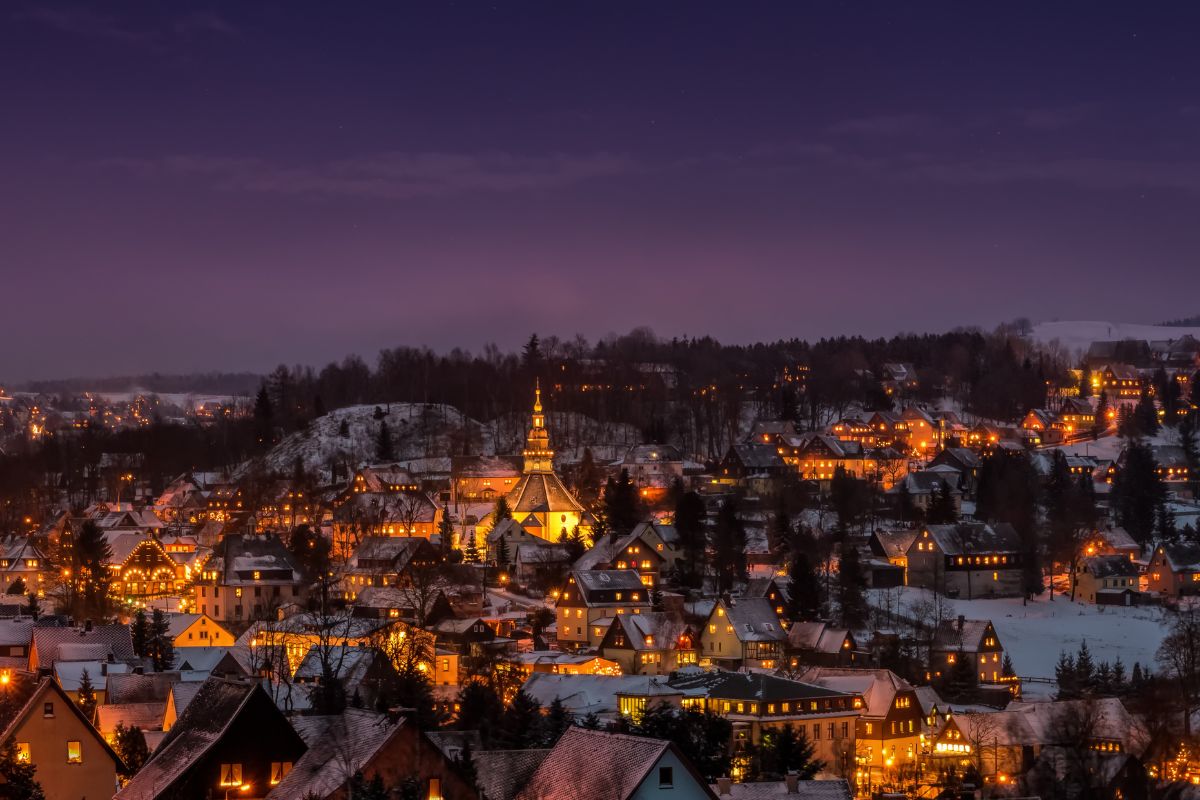
Seiffen, a tiny Ore Mountain town, is the true heart of traditional Saxon craftsmanship. The Christmas markets here have an absolutely magical atmosphere because the entire town comes alive with the production of wooden toys and typical decorations. This year’s 34th edition runs from November 27 to December 20, 2026 and at every turn you’ll see carved nutcrackers, glowing pyramids and traditional candle arches for windows.
The local Advent season celebrates family traditions and incredible craftsmanship. Local workshops often open their doors to the public, so you can see how these wooden treasures are created right under the carvers’ hands. Definitely don’t miss the large miners’ parade (Bergparade), which will march through the town on December 12, 2026.
5. Berlin
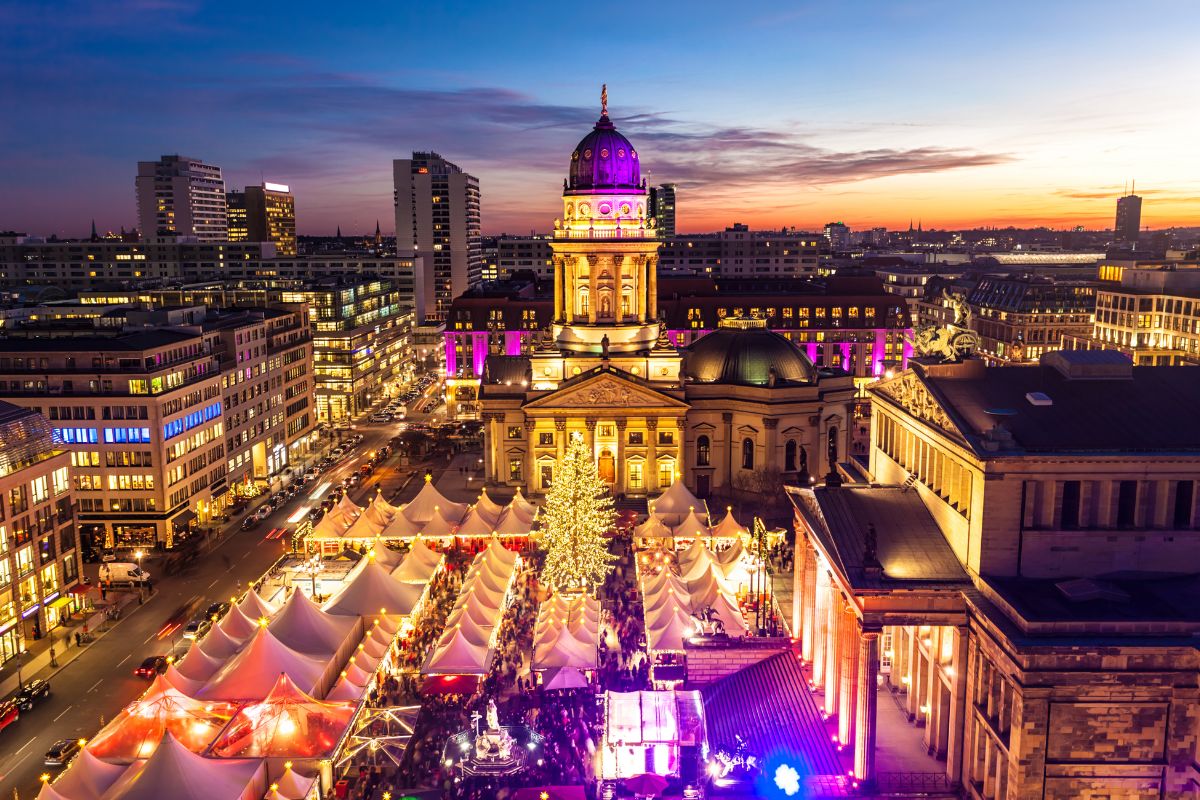
Berlin offers dozens of Christmas markets that perfectly reflect the diversity and energy of this vibrant metropolis. Among the absolutely most popular is WeihnachtsZauber at Gendarmenmarkt, which this year runs from November 23 to December 31, 2026. Admission costs 2 euros, but children under 12 enter free and the atmosphere among the historic buildings is truly amazing. Another highly sought-after location is the market at Charlottenburg Palace, which attracts visitors with an incredibly romantic setting and a rich supporting program.
💡TIP: What to do in Berlin
6. Cologne
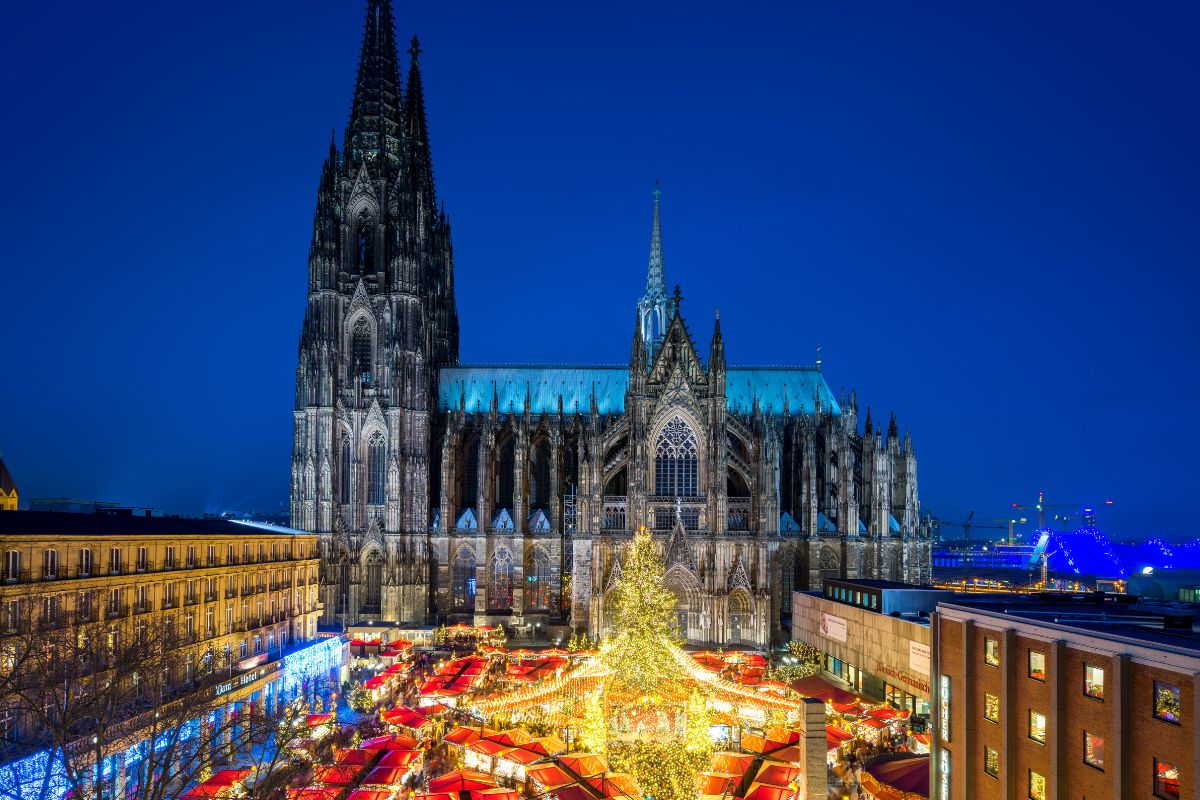
Cologne delights with several markets, the most famous of which spreads out right beneath the majestic Cologne Cathedral. This main market at the cathedral can be visited this year from 16 November to 23 December 2026. It is dominated by beautifully decorated stalls and a massive Christmas tree with thousands of lights. The fairy-tale market Heinzels Wintermärchen is also worth seeing, running from 23 November 2026 until 10 January 2027. If you’re looking for something unconventional, you can also stroll through smaller markets on boats moored right on the Rhine River.
7. Munich
Christmas markets in Munich are a huge treat for all lovers of Bavarian traditions. The main market (Christkindlmarkt) on Marienplatz square runs this year from 20 November to 24 December 2026 and is typically open from 10:00 to 21:00. Its greatest pride is the enormous Christmas tree that towers right in front of the historic town hall.
💡 Detailed guide: Munich Christmas markets: dates, markets and park-and-ride
You’ll find around 130 stalls with carefully selected handcrafted goods and Christmas decorations. The stalls naturally also sell classic Bavarian specialities such as cheese pretzels, fragrant mulled wine, or local sausages for those who eat meat.
But Munich also offers the popular medieval Christmas market on Wittelsbacherplatz, where you’ll breathe in an atmosphere from times long past. If you’re travelling with children, definitely stop by Karlsplatz, where there’s a wonderful ice rink and plenty of creative workshops.

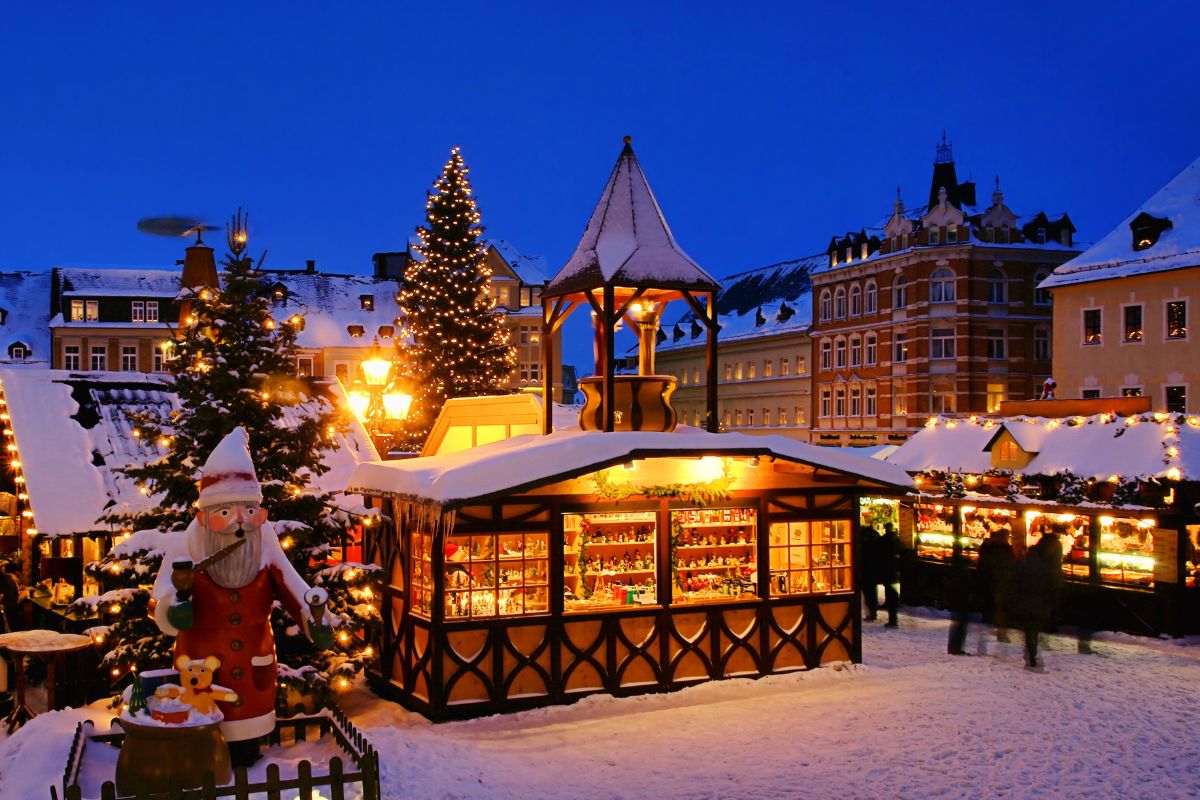
8. Annaberg
Annaberg-Buchholz, a charming little town perched high in the Ore Mountains, is famous for its traditional markets celebrating the region’s rich mining history. This year’s markets run from 27 November to 23 December 2026 on the picturesque sloping square, and their atmosphere is beautifully completed by the sounds of traditional mining music.
💡 Tip: The absolute highlight of the local Advent season is the magnificent miners’ parade (Bergparade), which takes place on 20 December 2026 at 13:30. Hundreds of miners in historic uniforms march through the town, and I guarantee you’ll get goosebumps.
9. Aachen
Christmas markets in Aachen are famous for their fairy-tale setting right by the renowned cathedral and historic town hall. The main attraction here is the traditional treats, among which the famous Aachen gingerbread (Printen) stands out. You’ll find a wonderful atmosphere and plenty of stalls with handcrafted goods that make ideal small gifts. This year the market runs from 20 November to 23 December 2026, open daily from 11:00 to 21:00 (with the exception of 22 November, when the market only opens at 18:00).
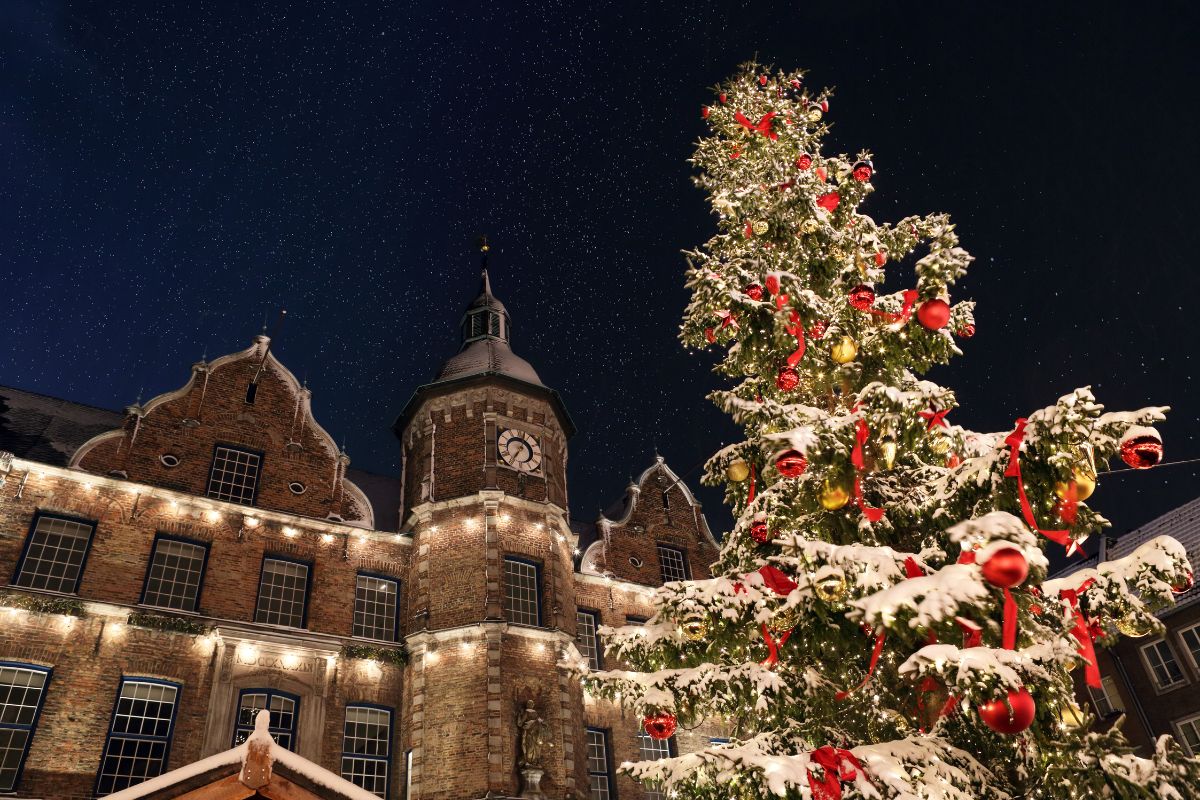
10. Düsseldorf
Düsseldorf transforms into a city full of lights and illuminated streets at Christmas. The Christmas markets spread throughout the city centre, but the most famous one by far is the market on Marktplatz. It charms you with its historic atmosphere and rich accompanying programme.
The enormous ice rink at Königsallee is quite an experience, surrounded by stalls with mulled wine and sweet treats. This year the markets run from 19 November to 30 December 2026 (closed 22 November and 25 December).
11. Erfurt
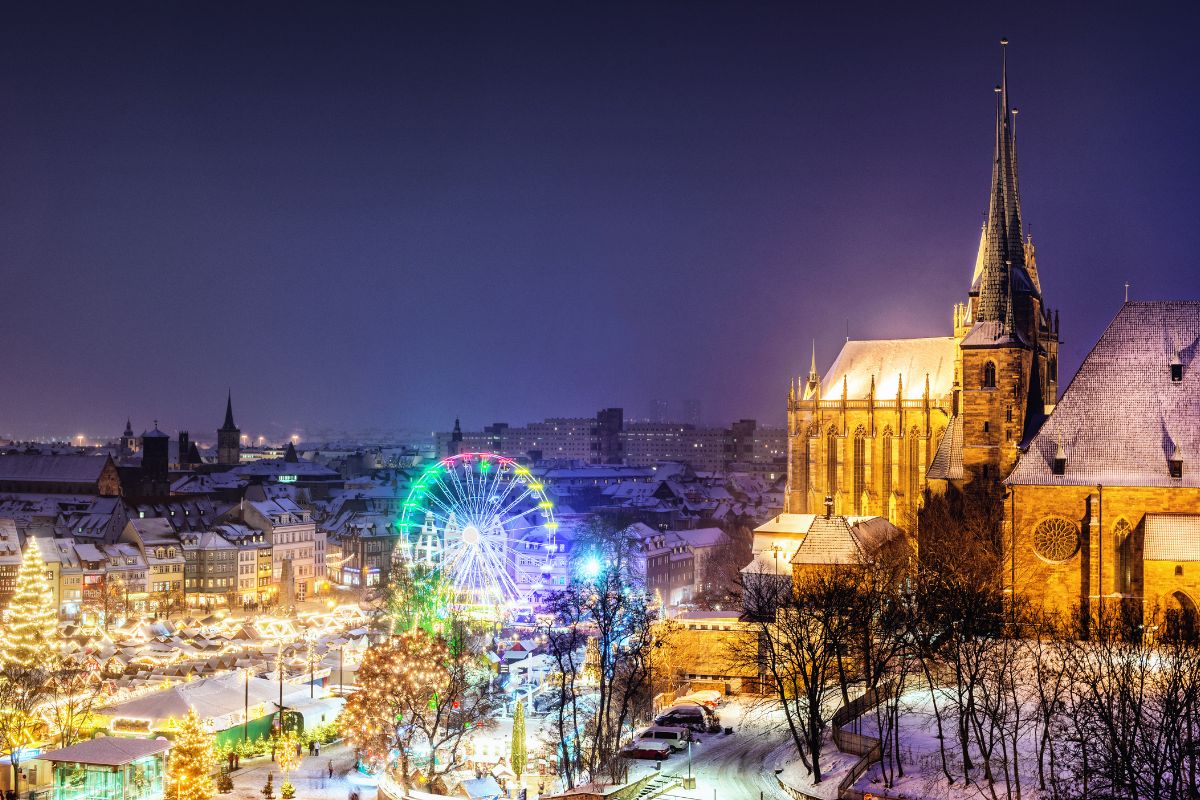
The main Christmas market in Erfurt traditionally takes place on Domplatz square, where an absolutely breathtaking backdrop of the cathedral and festively lit square awaits you. The market is known for its rich selection of classic handcrafted goods, handmade Christmas decorations, and local specialities. The stalls commonly sell traditional Thuringian bratwursts and sweet gingerbread.
One of the main attractions is the giant Christmas pyramid and a magnificent hand-carved nativity scene, where virtually every visitor stops.

12. Baden-Baden
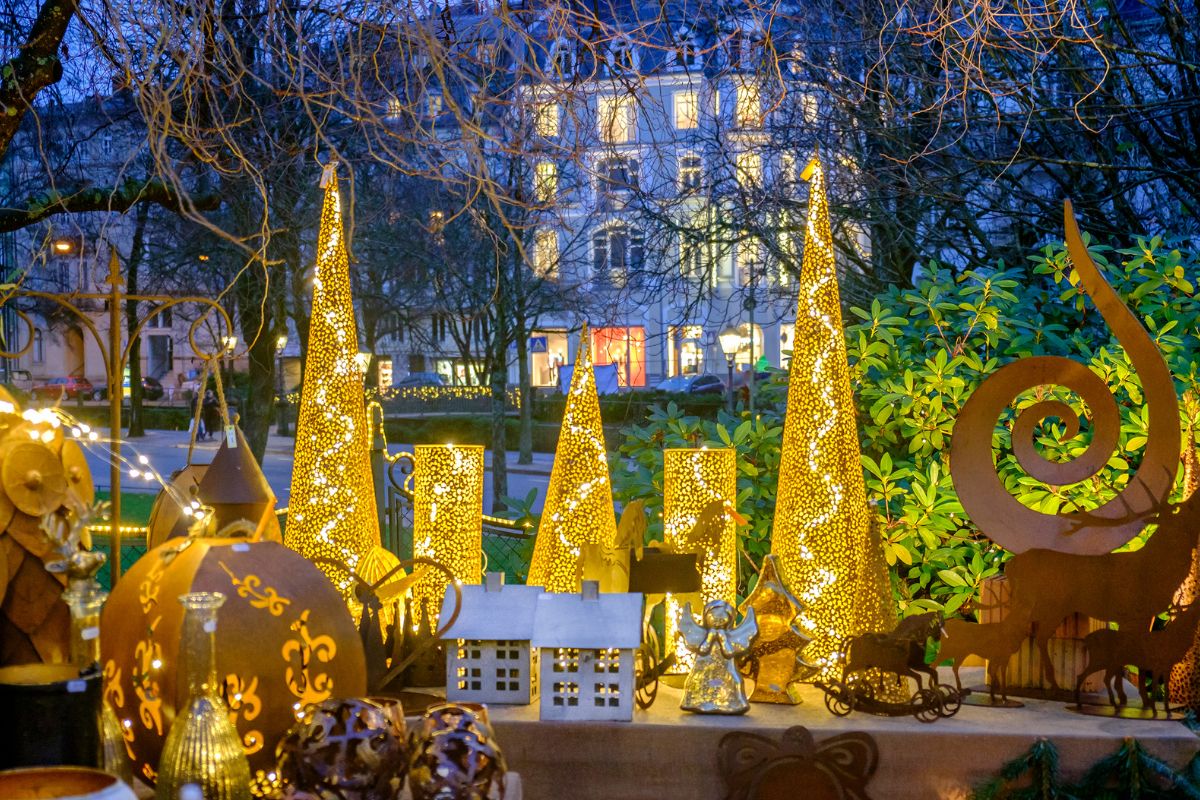
Baden-Baden offers incredibly elegant Christmas markets in the heart of the famous spa town. The markets at Kurhaus Kolonnaden have an unmistakable atmosphere. At the stalls you can enjoy hot mulled wine, excellent marzipan sweets, and other delicacies. The whole pre-Christmas mood here is perfectly complemented by a musical programme, concerts, and open-air performances.
13. Meissen
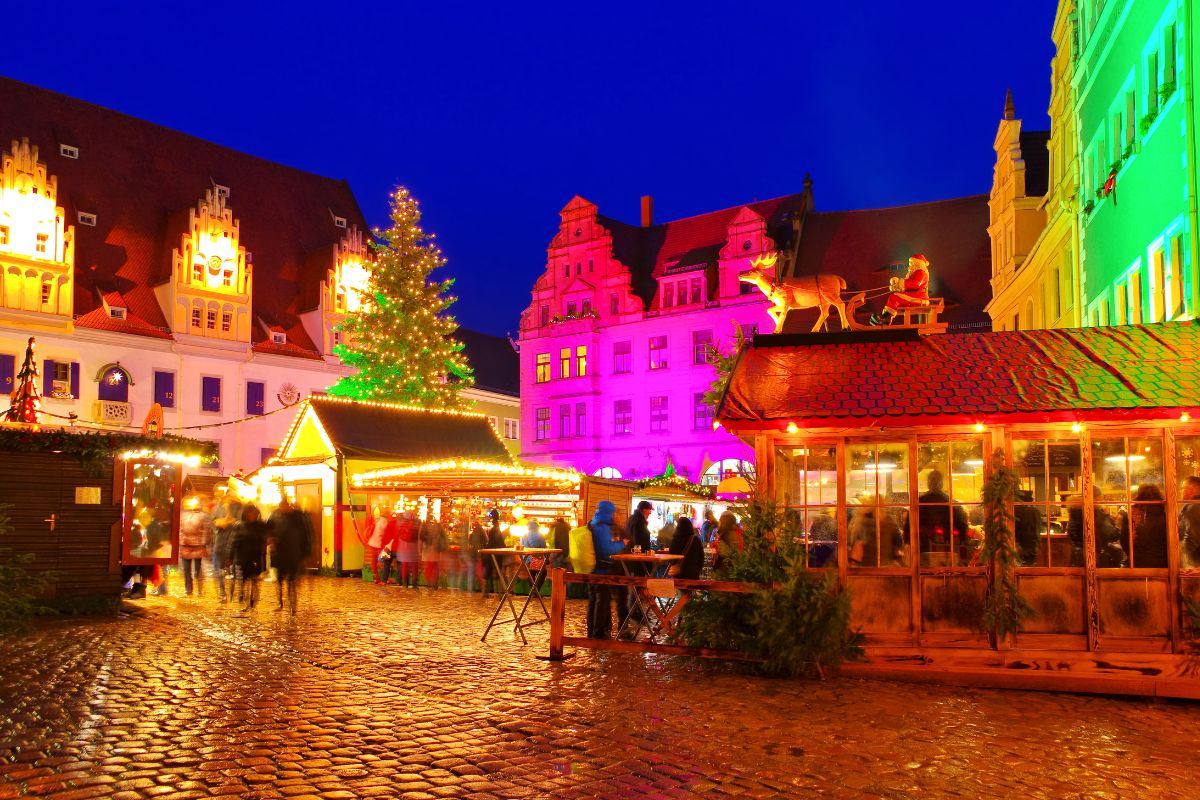
Christmas markets in Meissen, known as Meißner Weihnacht, take place on the picturesque historic square overlooking the town and the famous porcelain manufactory. At the markets you’ll find plenty of local specialities, handmade decorations, and of course genuine Meissen porcelain. If you’re looking for a truly valuable gift for your loved ones, you’ll definitely find it here. The organiser hasn’t yet published the official dates; last year the market ran from 24 November to Christmas Eve, and according to preliminary information, this year’s period is expected to be from 23 November to 24 December 2026.
14. Saxon Elbe Valley
The Saxon Elbe Valley offers several smaller but incredibly charming Christmas markets. In little towns like Pirna or Radebeul you’ll find markets with a very authentic and more intimate atmosphere. The stalls overflow with traditional handcrafted goods, including typical Ore Mountain decorations and hand-cast candles.
💡 Detailed guide: German Christmas markets near the Czech border: Pirna to Passau
15. Zwickau
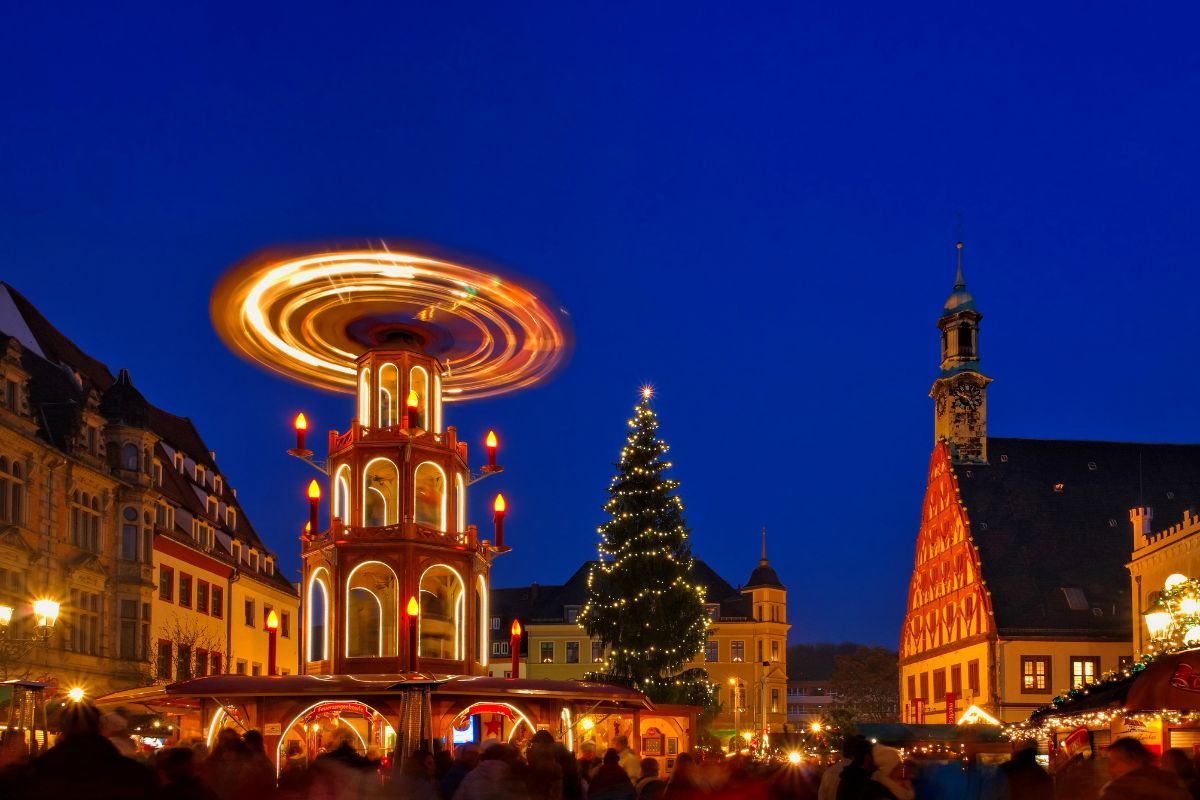
Christmas markets in Zwickau take place every year on Hauptmarkt square. The market offers a truly rich display of handcrafted goods, from traditional Ore Mountain wooden decorations to toys and candles.
The market atmosphere is enhanced by a rich cultural programme that includes concerts, festive processions, and plenty of fun activities for children.
16. Leipzig
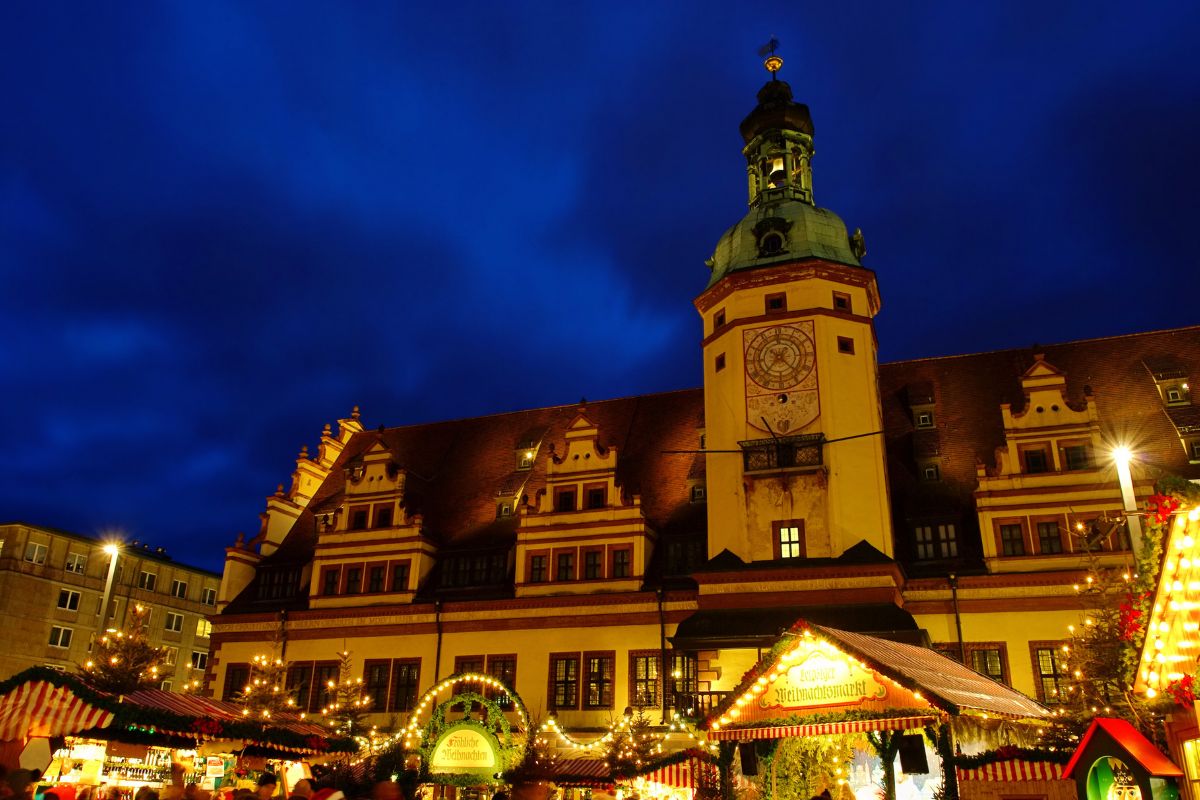
Leipzig offers one of the largest Christmas markets in all of Germany, spreading across Marktplatz and the surrounding streets of the historic centre. This market is famous for its enormous selection, which includes absolutely everything from traditional Saxon products to international specialities.
An exceptional experience is visiting the Finnish Christmas market on Augustusplatz square. Meat eaters can try traditional elk sausages here, but the hot Finnish liqueur Glögi is definitely worth tasting.
17. Chemnitz
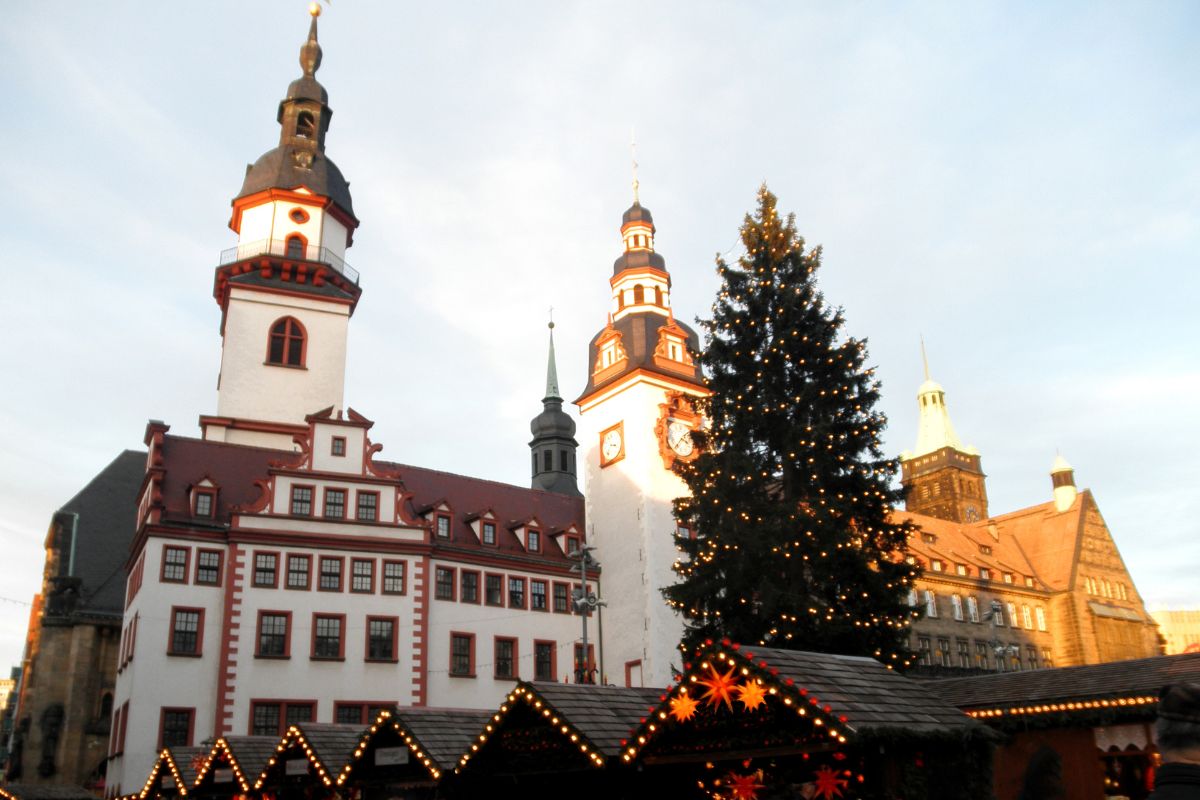
In Chemnitz, the so-called Ore Mountain Christmas market takes place every year, which is among the largest and most beautiful in the entire region. On Marktplatz square more than 200 stalls are set up with traditional decorations, handcrafted goods, and local delicacies. The market is accompanied throughout by a splendid cultural programme that includes traditional miners’ processions.
💡 Detailed guide: Chemnitz Christmas markets and miners’ parade
18. Passau
Passau, a beautiful city at the confluence of three rivers, offers wonderful Christmas markets right on Domplatz square by the imposing St. Stephen’s Cathedral. The market is renowned for its wide selection of Bavarian specialities. The stalls sell sausages, sweet gingerbread, and to warm you up there’s excellent regional beer and of course classic mulled wine.
19. Marienberg
Marienberg, a picturesque town in the Ore Mountains, is known for its traditional Christmas market, which perfectly reflects the rich mining history of the entire region. At the market you’ll find honest local handcrafted goods, from small wooden ornaments to beautifully crafted hand-carved nativity scenes. The main highlight of the programme is usually the traditional miners’ procession, an experience that simply belongs to Advent in the Ore Mountains.
💡 Detailed guide: Marienberg Christmas market and grand miners’ parade
20. Zittau
Christmas markets in Zittau take place right on the historic square. The market offers a great combination of Advent specialities, demonstrations of local crafts, and musical performances. You can leisurely browse Ore Mountain wooden decorations, have a mug of hot mulled wine, and taste excellent local festive pastries. This year the market with Lichterfest runs from 5 to 13 December 2026, open until 20:00 on Friday and Saturday, other days until 19:00.
💡 Detailed guide: Zittau Christmas market: dates, trains and parking
German Christmas customs and traditions: Do you know them all?
Germans simply love Christmas, and a lot of the traditions we now take for granted actually come from our neighbors. Did you know, for example, that the Advent wreath (Adventskranz) was invented in Hamburg in 1839 by Johann Hinrich Wichern for children at an orphanage? The original version even had 24 candles — four large ones for the Sundays and twenty small ones for the weekdays. The beloved Advent calendar also has its roots in Germany.
So who actually brings the presents?
In Germany, presents are handed out on the evening of December 24th, in what’s called Bescherung. Interestingly, the country is split in two on this one. In the south and in Catholic regions, it’s the Christkind (Christ Child) who brings the gifts, while in the north and in Protestant regions, it’s the Weihnachtsmann (literally “Christmas Man”) who takes care of the presents.
Even earlier, on December 6th, which is Nikolaustag, kids leave their freshly cleaned shoes outside the door in the evening. In the morning they find them filled with nuts, tangerines and sweets. But if you’ve been naughty, Knecht Ruprecht shows up with a switch instead.
What’s on the table
If you’re picturing a huge Christmas Eve feast, you might be surprised to learn that the classic German dish for Christmas Eve is simply sausages with potato salad. The festive roast doesn’t show up until the 25th and 26th. And what about that legendary Christmas pickle (Weihnachtsgurke) hidden on the tree? It’s actually an American invention from the late 19th century, and surveys show only about 7% of Germans in Europe have even heard of it. During the so-called Rauhnächte (the twelve nights between December 25th and January 6th), old superstition also says you shouldn’t do laundry.
On the markets, though, you simply can’t skip the Glühwein (mulled wine), which is always served in lovely reusable mugs with a deposit of around €3 to €5. Every city has its own design and vintage, so it makes for a great souvenir. If you’re after something stronger, try Feuerzangenbowle — mulled wine with a sugar cone soaked in rum that’s dramatically set on fire right above the drink.
The magical Ore Mountains
The Ore Mountains region (Erzgebirge) deserves a chapter of its own. Here you’ll find traditions tied to a rich mining history. Windows glow with Schwibbogen (light arches symbolizing a mine entrance), stalls smell of Räuchermännchen (wooden smoking figures), and everywhere you look there are the famous nutcrackers and rotating Christmas pyramids. The absolute highlight is the Bergparade, spectacular mining parades in historical uniforms.
Where to stay for the Christmas markets in Germany
If you want to experience the markets in the evening when the lights shine brightest, it’s worth staying right in the city center. After a mulled wine, you won’t have to worry about driving or catching the last train, and in the morning you’ll be on the square before the crowds. Here are the neighborhoods we recommend:
- Dresden: the most convenient area is Altstadt around Altmarkt; Neustadt, across the river, is cheaper. 👉 Accommodation in Dresden’s Altstadt · More details in our article Christmas Markets in Dresden.
- Nuremberg: stay inside the walls of the Old Town, or more cheaply near the main train station, which is about a 10-minute walk from Hauptmarkt. 👉 Accommodation in Nuremberg’s Old Town · More details in our article Christmas Markets in Nuremberg.
- Regensburg: the whole Old Town is small, so a hotel anywhere in it puts you within walking distance of all the markets. 👉 Accommodation in Regensburg · More details in our article Christmas Markets in Regensburg.
- Berlin: the best value is Mitte around Alexanderplatz, from where the subway gets you quickly to all the big markets. 👉 Accommodation in Berlin’s Mitte · More details in our article Christmas Markets in Berlin.
- Cologne: look for accommodation in the Old Town around the cathedral, where most of the markets are located too. 👉 Accommodation in Cologne’s Old Town · More details in our article Christmas Markets in Cologne.
- Munich: stay in Altstadt near Marienplatz, or more cheaply around the main train station. 👉 Accommodation in Munich
- Seiffen and Annaberg: the Ore Mountains have limited capacity, so book well in advance for Advent weekends. 👉 Accommodation in Seiffen and surroundings · More details in our article Christmas Markets in Seiffen.
Tip: Hotels near the big markets sell out first for Advent weekends (especially November 27–29 and December 4–6, 2026). Book as early as you can, and look for offers with free cancellation so you can still change your dates later.
Practical tips before you go
Heading to the German markets is a great idea, but to really enjoy it, it’s worth keeping a few small things in mind.
- When to arrive: If you can at all help it, avoid weekends. From Friday to Sunday, markets in big cities get absolutely packed. You’ll get the best atmosphere without the crowds on weekdays right after dark.
- Cash is king: Even though things are slowly changing, many smaller stalls in Germany still don’t take cards. Make sure you bring plenty of euros in cash.
- Warm clothing: It sounds obvious, but standing around a mulled wine stall can get you properly chilled after a few hours. Layer up, and don’t forget really warm shoes.
- Getting there and parking: It’s worth taking the train into bigger cities. If you’re driving, look for P+R (Park and Ride) lots on the outskirts, from which you can comfortably reach the city center by public transport. That will save you a lot of stress trying to find a spot in a jammed city center. ☺️
Where to next: more Advent tips
If the Christmas markets have caught your interest, check out these articles too:
- Christmas Markets in Dresden
- Christmas Markets in Nuremberg
- Christmas Markets in Berlin
- Christmas Markets in Seiffen
- Best Christmas Markets in Europe: 25 Tips
Frequently Asked Questions
When do the Christmas markets in Germany start in 2026?
Most markets open in the last week of November. Munich kicks off as early as November 20, Berlin follows on November 23, and the famous Striezelmarkt in Dresden starts on November 25, 2026. Most of them run until Christmas Eve.
Which German Christmas markets are the biggest and most famous?
The absolute classics and most-visited markets are Nuremberg (Christkindlesmarkt) and Dresden (Striezelmarkt). Also hugely popular are the markets in Cologne, Berlin, and Munich.
What traditional food and drinks should you try at the German markets?
The essentials start with mulled wine (Glühwein) or the spectacular Feuerzangenbowle. On the food side, don’t miss authentic Dresden stollen (Dresdner Stollen), Nuremberg gingerbread (Lebkuchen), and roasted chestnuts — and of course the stalls are packed with all kinds of traditional sausages.
How do the deposit mugs for mulled wine work?
At every market, your hot drink comes in a ceramic mug that requires a deposit (Pfand), usually €3 to €5. You can return the mug at any stall serving the same drink to get your deposit back, or simply keep it as a great little souvenir.
Which markets are best for families with kids?
If you’re travelling with kids, Nuremberg is a must — it has a dedicated children’s market. The smaller Ore Mountains markets are also wonderful, especially Seiffen or Annaberg, where you’ll find a truly fairy-tale atmosphere and plenty of carved wooden toys.
Do you need to bring cash?
Definitely. Although card payments are becoming more common, many smaller food and craft stalls still accept cash only.
What’s the best way to handle parking?
Don’t even try to park right in the city centre — during Advent it’s hopelessly full. Use the P+R (park-and-ride) car parks on the outskirts and take public transport into the centre.
What does Christkind mean?
Christkind (the Christ Child) is a traditional figure who brings gifts on December 24 in southern Germany and Catholic regions. In Nuremberg, the Christkind — played by a chosen local girl — ceremonially opens the markets from the balcony of the church.
Tips and Tricks for Your Vacation
Don’t Overpay for Flights
Search for flights on Kayak. It’s our favorite search engine because it scans the websites of all airlines and always finds the cheapest connection.
Book Your Accommodation Smartly
The best experiences we’ve had when looking for accommodation (from Alaska to Morocco) are with Booking.com, where hotels, apartments, and entire houses are usually the cheapest and most widely available.
 🚗 Car rental on the roadVerified rental cars in Germany
Search with the DiscoverCars comparison engine — it compares prices from dozens of local and international rental companies, and most bookings come with free cancellation.
Compare car prices in Germany →Don’t Forget Travel Insurance
Good travel insurance will protect you against illness, accidents, theft, or flight cancellations. We’ve had a few hospital visits abroad, so we know how important it is to have proper insurance arranged.
Where we insure ourselves: SafetyWing (simple monthly subscription) and TrueTraveller (for extra-long trips).
Find the Best Experiences
Get Your Guide is a huge online marketplace where you can book guided walks, trips, skip-the-line tickets, tours, and much more. We always find some extra fun there!