After a few days of weaving through the crowds at the Trevi Fountain and dodging oversized selfie sticks at the Colosseum, a perfectly natural urge to escape kicks in. Especially if you’re visiting the Italian capital during summer, when temperatures climb towards 35°C and all those gorgeous ancient stones radiate relentless heat into the streets. We felt exactly the same and desperately needed at least one day to swap the scorching concrete for the shade of trees and the sound of flowing water — which is exactly why Tivoli Italy became our favourite escape from the Eternal City.
The secret to a successful day trip lies in not picking a destination that’s too far away and not trying to cram everything in. So many people make the mistake of planning an unrealistic itinerary that leaves them completely drained — physically and mentally — by evening. Your holiday turns into a military exercise, and nobody wants that 😅.
When Roman nobility, cardinals, and even the popes themselves wanted to escape the summer heat and the ever-present threat of malaria, they fled the swampy lowlands of Rome for the cooler hills to the east of the city. And that’s exactly where the little town of Tivoli sits, home to extraordinary architectural treasures inscribed on the UNESCO World Heritage List. It’s our absolute favourite getaway from the big city — one that will truly take your breath away.
TL;DR
- Getting there from Rome: The best option is a regional train from Roma Tiburtina station — the journey takes just under an hour and a ticket costs only a few euros. From the UK, you can fly into Rome Fiumicino or Ciampino with carriers like Ryanair, easyJet, or British Airways.
- Villa d’Este: A breathtaking Renaissance palace with gardens home to hundreds of fountains that still operate purely by gravity, without a single pump.
- Villa Adriana (Hadrian’s Villa): A vast complex of ancient ruins built by Emperor Hadrian as his private city (be prepared for a lot of walking in the sun).
- Villa Gregoriana: A gorgeous romantic park filled with wild nature, caves, and massive waterfalls — perfect for shade lovers.
- Getting around: Hadrian’s Villa lies down in the valley outside the centre; to reach the other sights in central Tivoli, you’ll need to take a local bus (CAT line).
- Tickets: Especially in summer, buy your tickets for both main villas well in advance online to avoid unnecessary queues.
- Time needed: Set aside a full day for a proper visit of the town and its sights — you won’t regret it.
The full destination guide: Rome — guide and what to see
When to Visit Tivoli Italy
Tivoli is absolutely charming year-round, but its greatest advantage really shines from late spring to early autumn. If you visit Rome in July or August, when the city is bursting at the seams with tourists and the air literally shimmers with heat, a trip to the hills is nothing short of a lifesaver. Temperatures here are always a few degrees lower, and the constant spray from the fountains cools the air beautifully.
That said, the autumn and spring months bring the most stunning palette of colours to the gardens. In spring, everything blooms wildly and fills the air with fragrance, while in autumn the trees turn golden and the whole atmosphere is much more tranquil. We prefer to visit just outside the peak summer season so we can enjoy the sights without the crowds of organised tour groups.
Winter has its own charm too, but bear in mind that some water features may be switched off for maintenance and the days are very short. If you end up with a rainy day, definitely postpone the trip — most of the beauty is outdoors, and trudging through ruins in a rain jacket isn’t exactly the quintessential Italian experience ☺️.
Where to Stay in Tivoli
For specific accommodation tips, we’ve had great experiences with Hotel Artemide in the central Monti district, the boutique Condotti Boutique Hotel just steps from the Spanish Steps, and the quieter Residenza Cavallini in the Prati neighbourhood near the Vatican. Booking well in advance will get you the best deals.
💡 Tip for accommodation and activities: We always search for accommodation on Booking.com, which tends to have the best cancellation policies. For tickets, tours, and activities, it’s worth comparing options on GetYourGuide.
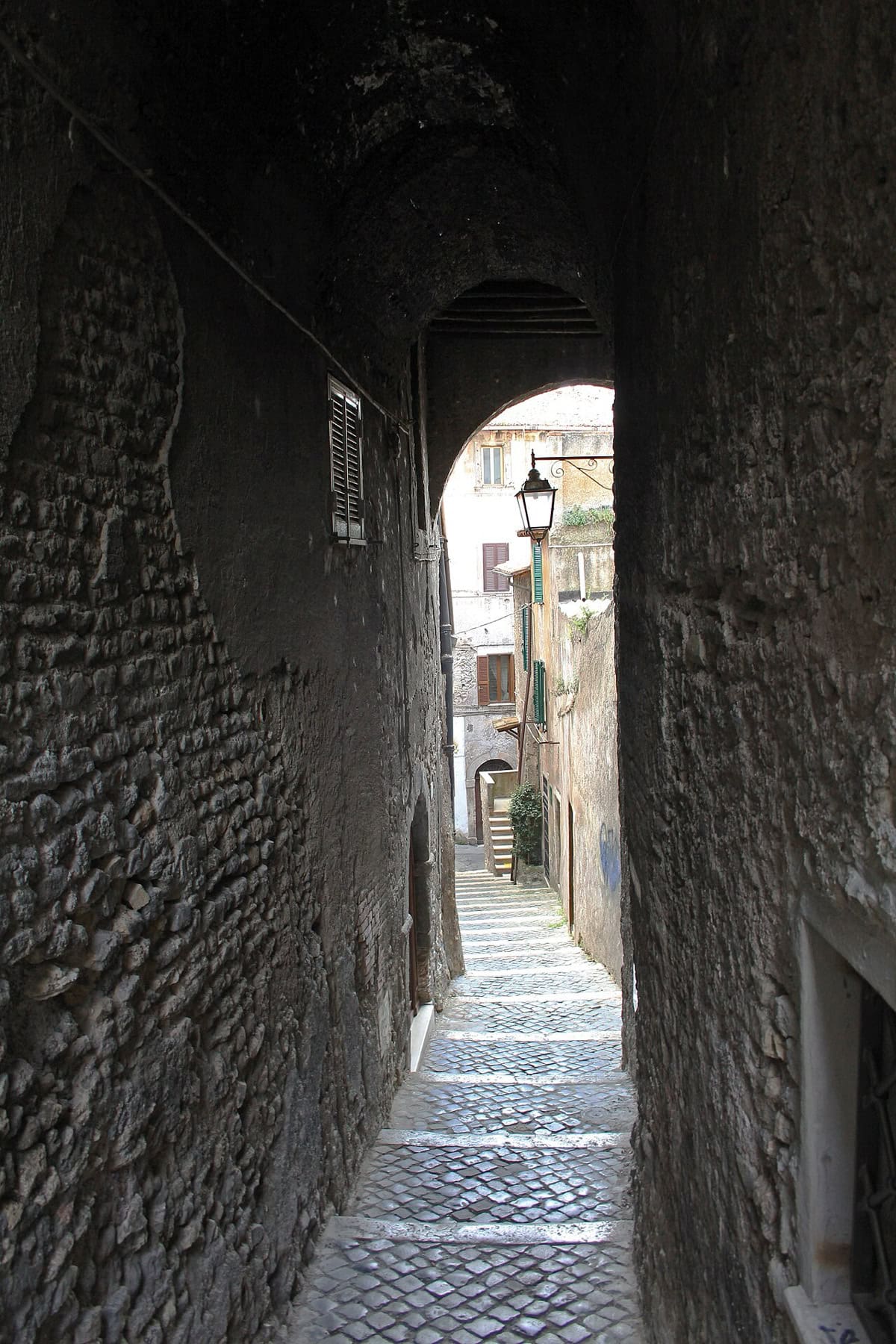
Although most travellers treat Tivoli as just a day trip from Rome, staying overnight is a brilliant idea in my opinion. In the evening, all the tour buses head back to the capital, and you’ll have those winding medieval lanes with their glowing lanterns practically all to yourself. You can simply sit on a piazza with a glass of wine and soak up the genuine, undisturbed local atmosphere.
If you’re looking for something truly special right in the historic centre, check out accommodation near Piazza Garibaldi. We always use our favourite portal, Booking, when planning trips — it’s great for finding charming smaller guesthouses. The boutique hotel Residenze Gregoriane comes highly rated, offering incredibly romantic rooms and its own little courtyard where an excellent breakfast is served.
For those of you travelling by car who want easier parking, I’d suggest looking for accommodation on the outskirts of town towards Hadrian’s Villa. A great choice is B&B Il Giardino, where birdsong wakes you in the morning and the owners are happy to share their best secret tips on nearby restaurants. Prices per night here are also much more wallet-friendly than in central Rome.
12 Things to See and Do in Tivoli Italy
Let’s dive into the best that this historic little town has to offer. I’ve deliberately put together a mix of famous UNESCO-listed landmarks and smaller hidden gems that most tourists tend to miss.
1. Villa d’Este and Its Renaissance Magic
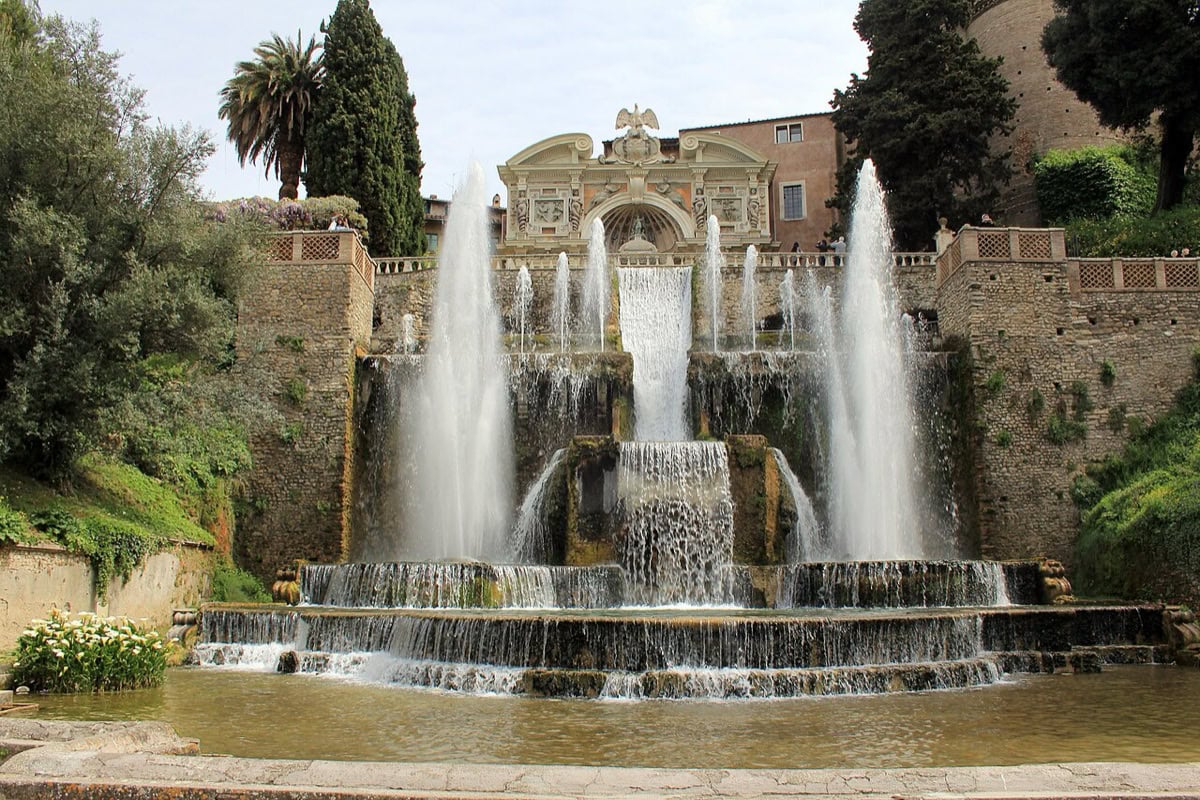
This sixteenth-century villa, commissioned by Cardinal Ippolito II d’Este, is a perfect showcase of Renaissance luxury and engineering genius. When we first stepped onto the main terrace and looked down into the Tivoli Italy gardens, our jaws literally dropped. The entire complex is built into a steep hillside and threaded with such a web of pathways, staircases, and terraces that you won’t know where to look first.
The Cardinal was a great patron of the arts and wanted to create a place that would compensate for his bitter disappointment at not being elected Pope. The villa’s interiors are adorned with stunning frescoes, but the real show awaits you outside. I’d recommend setting aside at least two hours for your visit so you can calmly explore all the hidden corners and soak up the atmosphere of a time when Italy’s elite strolled through these very gardens.
2. A Fascinating Hydraulic System Without Electricity
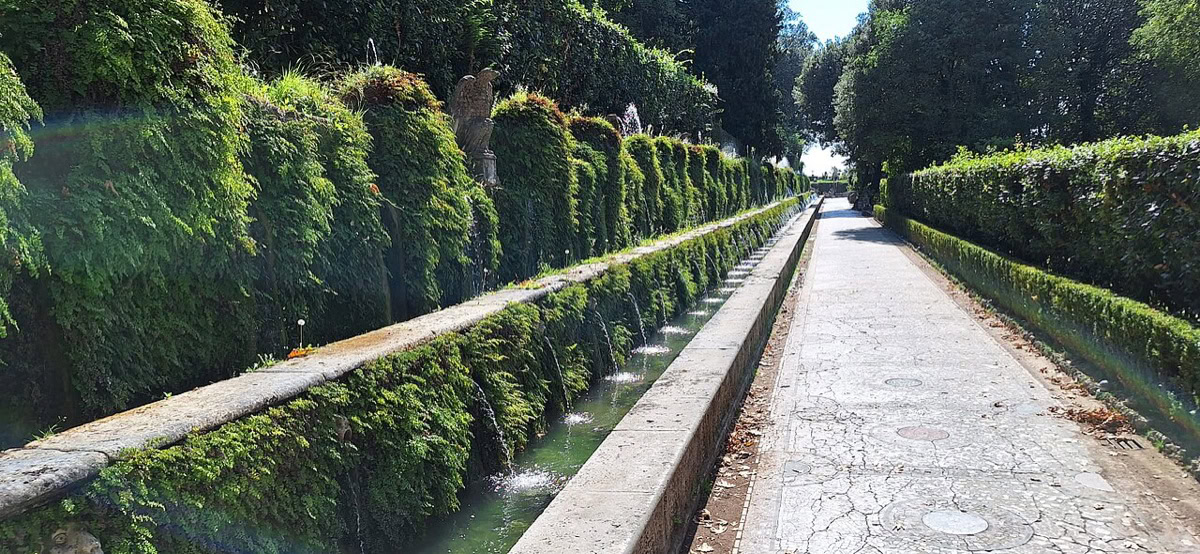
What makes the gardens of Villa d’Este so unique isn’t just their beauty — it’s the way they work. The entire enormous water park, all those cascades, gushing jets, and tranquil pools, has operated for centuries without a single electric pump. Sixteenth-century engineers ingeniously harnessed gravity and water pressure from the nearby River Aniene.
Walking through here and realising that people figured all this out hundreds of years ago using nothing but physics and mathematics is a humbling experience. Water is fed through a complex system of underground channels, and the pressure is calculated precisely so that each fountain shoots to exactly the right height. It’s a perfect symphony of flowing water, green moss, and deep shade that completely draws you in.
3. The Hundred Fountains (Cento Fontane) — Like a Fairytale
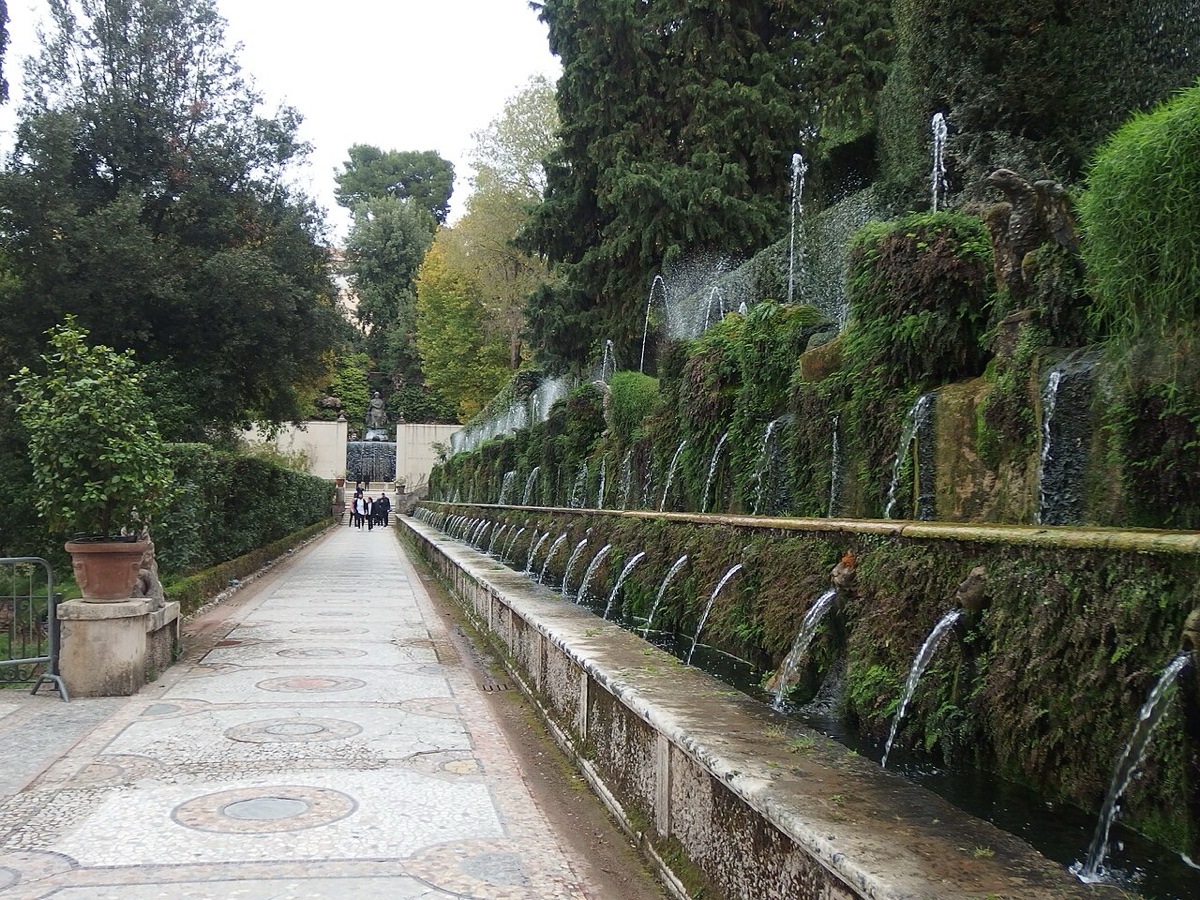
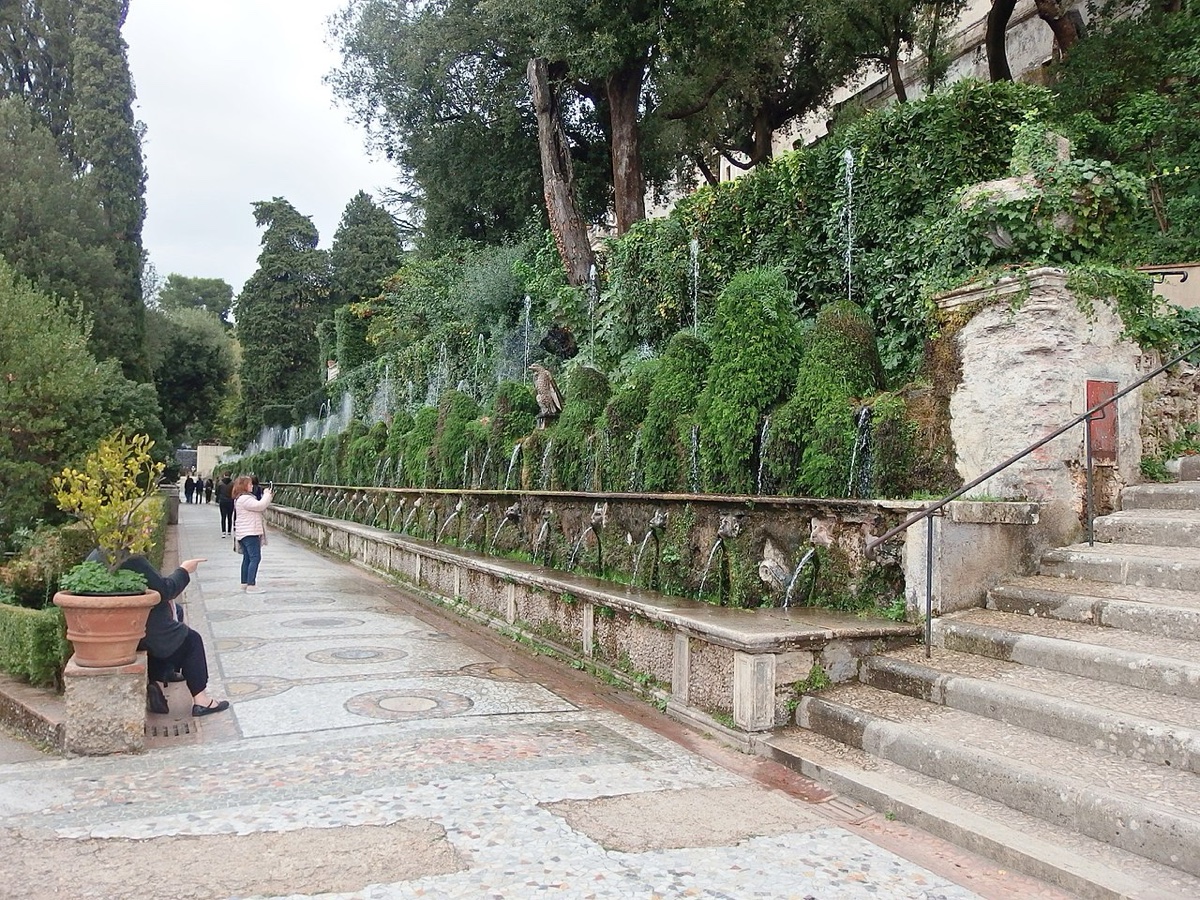
When you mention Villa d’Este, most people immediately picture this iconic section of the gardens. It’s a long promenade lined with an elongated basin featuring a hundred small water spouts. Water jets from all manner of gargoyles shaped like animal heads, mythical creatures, and lilies — the symbol of the d’Este family.
Lukáš and I got stuck here for quite a while because it’s an incredibly photogenic spot. The green moss covering the ancient stone, combined with the constant sound of falling water, has an incredibly soothing effect. 💡 Insider tip: You’ll get the most beautiful photos here in the late afternoon, when the sun starts to dip and its rays illuminate the tiny water droplets hanging in the air.
4. A Musical Performance at the Organ Fountain
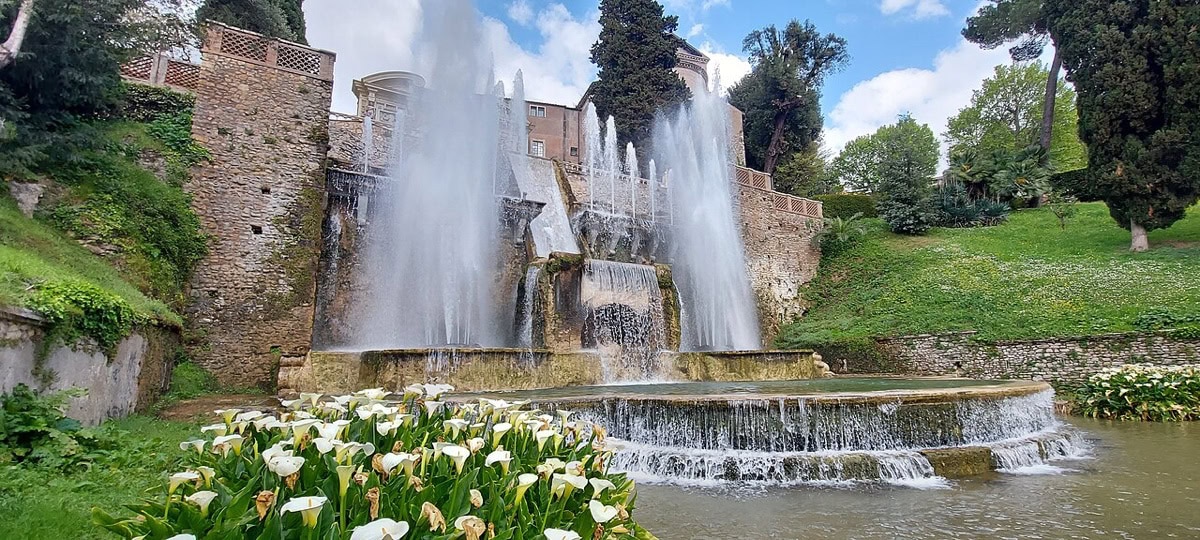
The Organ Fountain (Fontana dell’Organo) is arguably the greatest technical marvel of the entire complex. It’s not just an ordinary water feature — it’s a genuine musical instrument. The water mechanism can still compress air into pipes and play musical melodies, which at the time of its creation must have seemed like pure magic to guests.
Regular demonstrations of the mechanism still take place, usually every two hours from 10 AM. Make sure you time your visit to be at the fountain when it plays, because hearing water perform Renaissance melodies is an experience you’ll never forget. A crowd always gathers, so I’d recommend arriving at least ten minutes early to secure a good viewing spot.
5. The Monumental Oval Fountain
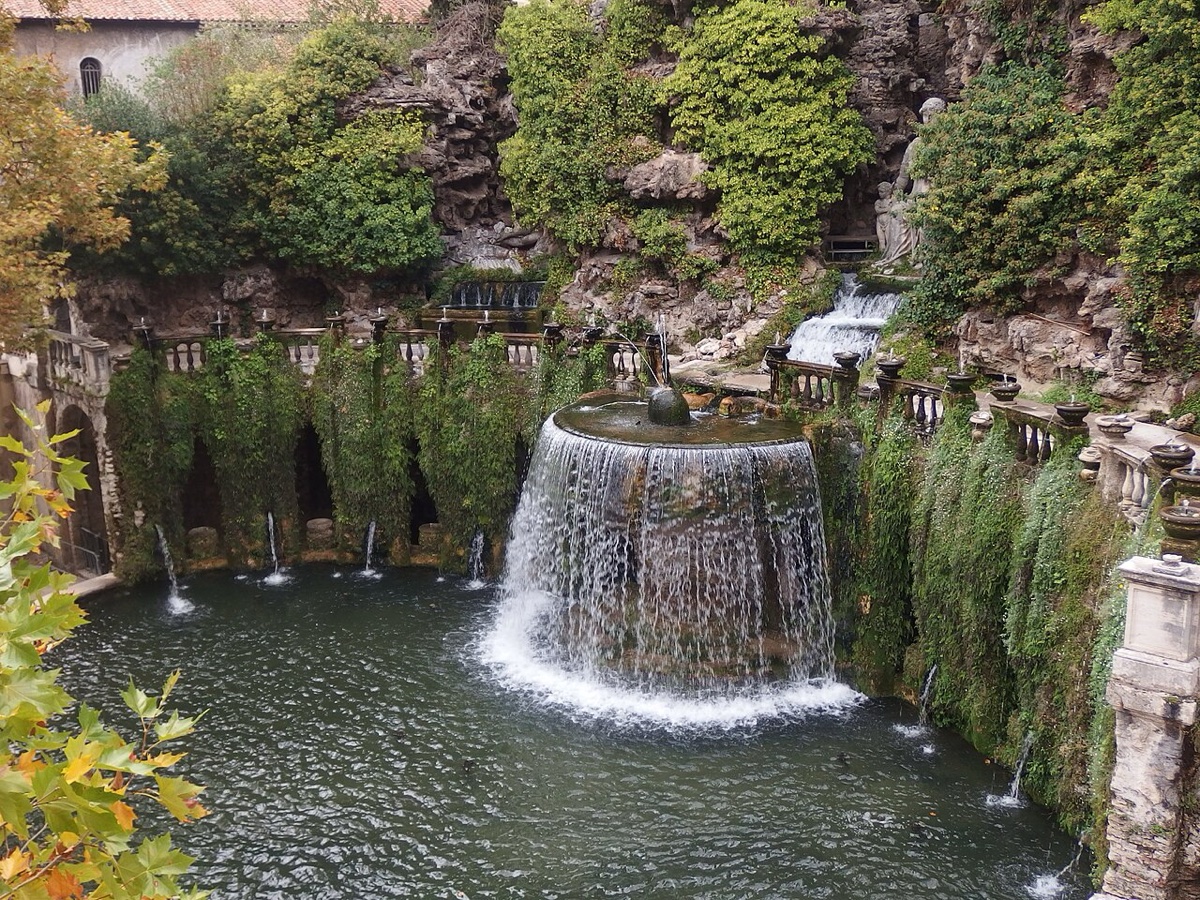
Right after the musical experience, make sure to head over to the Oval Fountain (Fontana dell’Ovato), probably the most photographed spot in the entire park. It’s an enormous pool surrounded by a semicircular arcade that you can actually walk through. Water cascades down in powerful torrents, creating a pleasant cooling mist — something you’ll truly appreciate in summer.
This section of the garden is meant to represent the Tiburtini Mountains and the rivers flowing from them. It’s a spot made for romantic moments away from the bustle of the big city. If you fancy a rest, you’ll find plenty of stone benches in the shade of towering cypresses where you can sit and simply listen to the endless water concert.

6. Getting to Hadrian’s Villa (Villa Adriana)
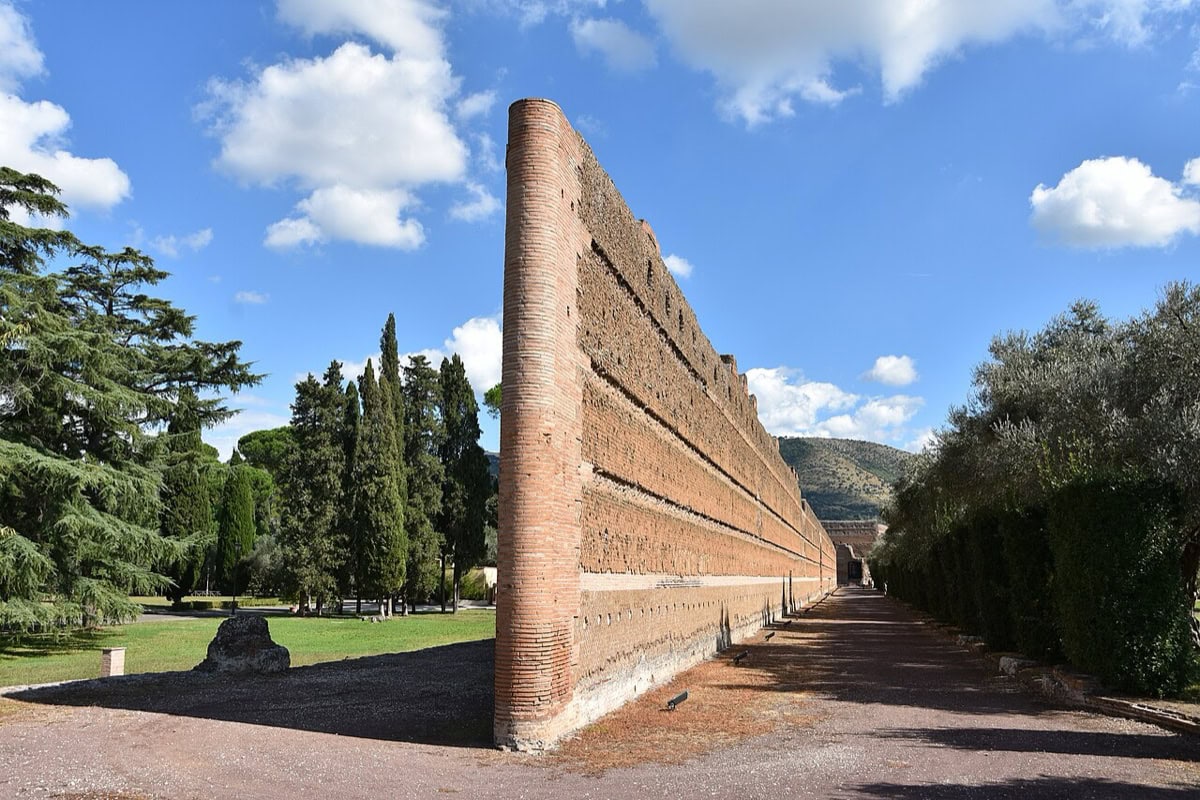
While Villa d’Este sits right in the historic centre on the hilltop, the second UNESCO gem lies several kilometres away down in the valley. Emperor Hadrian had a complex built in the second century AD that wasn’t merely a summer residence but more of a private city. Walking along the busy road to get there is genuinely unpleasant and exhausting, so I definitely wouldn’t recommend trying it on foot.
To get from the centre of Tivoli to the ruins, you’ll need to take the local CAT bus number four. Stops are well signposted and you can buy a ticket at any tobacco shop for small change. Trying to fit both villas into a single day is technically doable, but expect aching feet and the need to keep a close eye on local bus timetables, which in Italy sometimes seem to have a life of their own 😅.
7. Exploring the Ancient Canopus
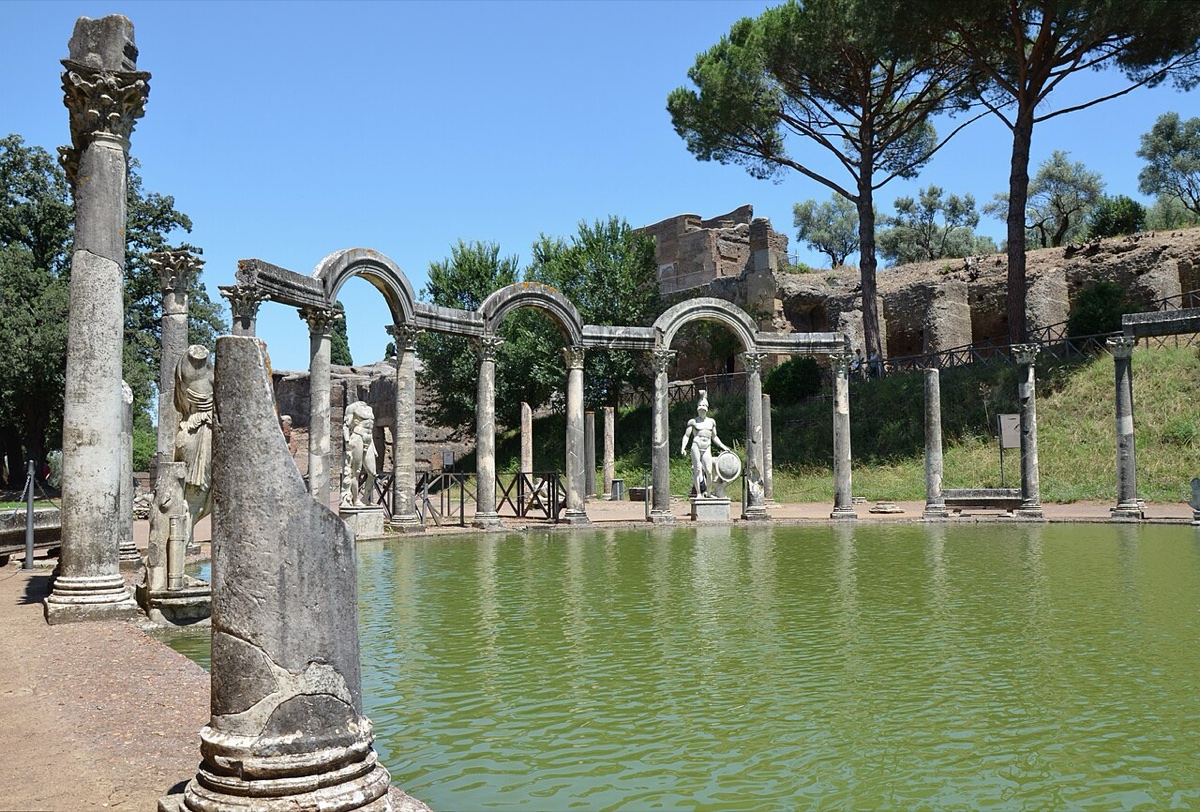
Once you step inside Hadrian’s Villa, you quickly grasp just how enormous the site really is. The emperor was an avid traveller, and he designed the entire complex as a kind of architectural diary. The most famous and best-preserved section is the Canopus — an elegant elongated pool lined with beautiful statues meant to evoke a branch of the River Nile in Egypt.
Stand at the end of the pool and gaze across the water towards the colonnade, and you can almost feel the weight of history. The spot was used for hosting lavish summer banquets under the open sky. The site is vast, scattered across open countryside, and requires a lot of walking in direct sunlight, so make sure to bring a hat and plenty of drinking water.
8. The Private Island of Teatro Marittimo
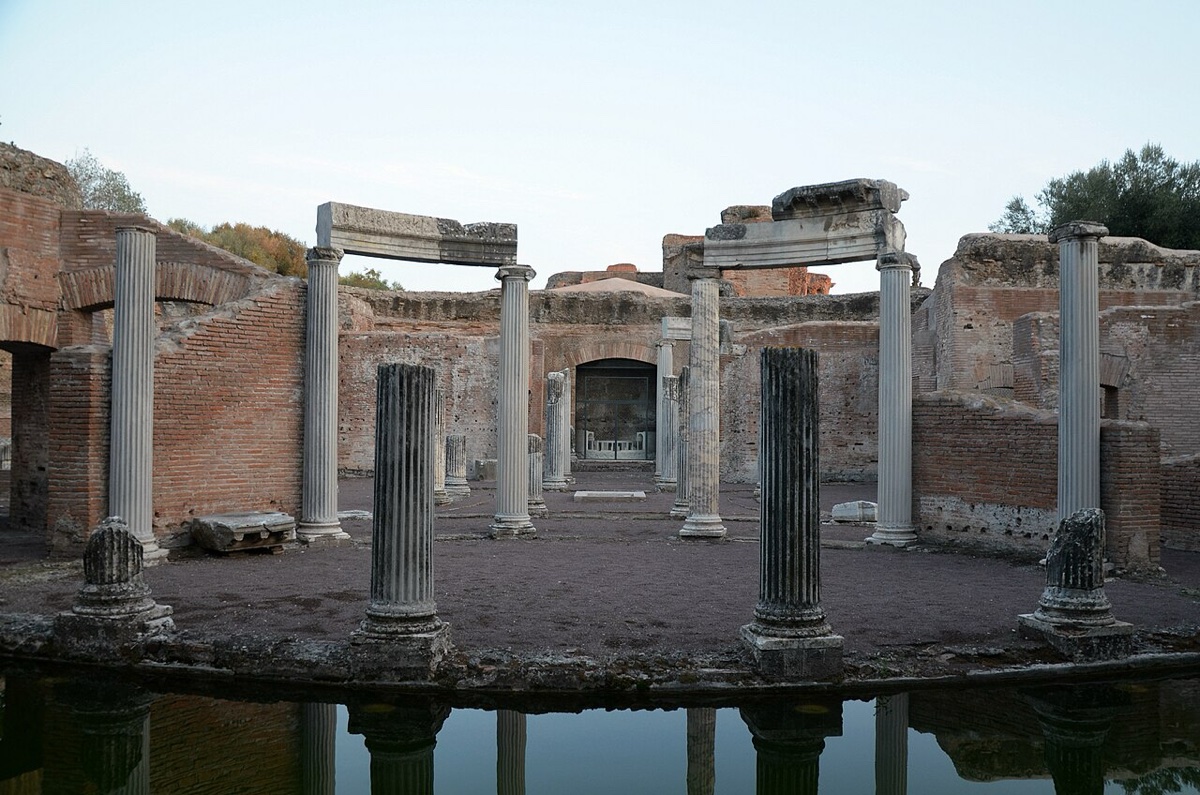
This was the spot that fascinated us the most at Hadrian’s Villa. The so-called Maritime Theatre (Teatro Marittimo) wasn’t actually a theatre at all. It was the emperor’s utterly private circular island surrounded by a water-filled moat and high walls, where he retreated for meditation, painting, and a break from the demands of running an empire.
The island was originally accessible only via wooden drawbridges that Hadrian could raise at any time, cutting himself off from the rest of the world. It’s a wonderful testament to how much powerful people valued their privacy even back then. The remains of marble columns reflected in the water make for one of the most iconic views you’ll take away from here, so have your cameras at the ready.
9. Ancient Baths and Underground Tunnels
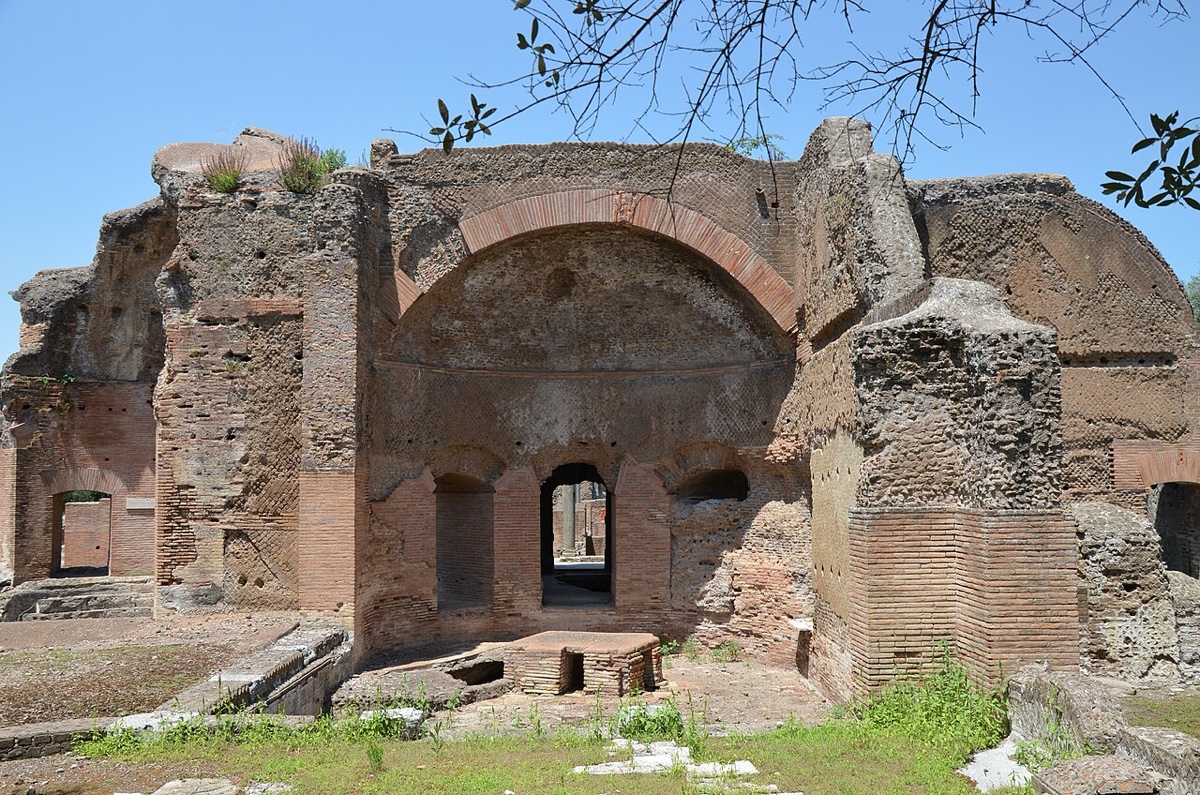
The Romans loved their baths, and Hadrian’s Villa had several. The Grandi Terme (Great Baths) and Piccole Terme (Small Baths) still reveal just how sophisticated their heating system was. You can see the remains of raised floors and hollow bricks through which hot air from furnaces circulated to warm the pools and the rooms themselves.
What most visitors miss is the invisible network of underground tunnels that threaded through the entire complex. These passages were used by thousands of slaves and servants who kept this enormous estate running, without ever disturbing the emperor and his distinguished guests on the surface. Some sections of this fascinating underground city are now open to the public and are absolutely worth exploring.
10. Wild Nature at Villa Gregoriana
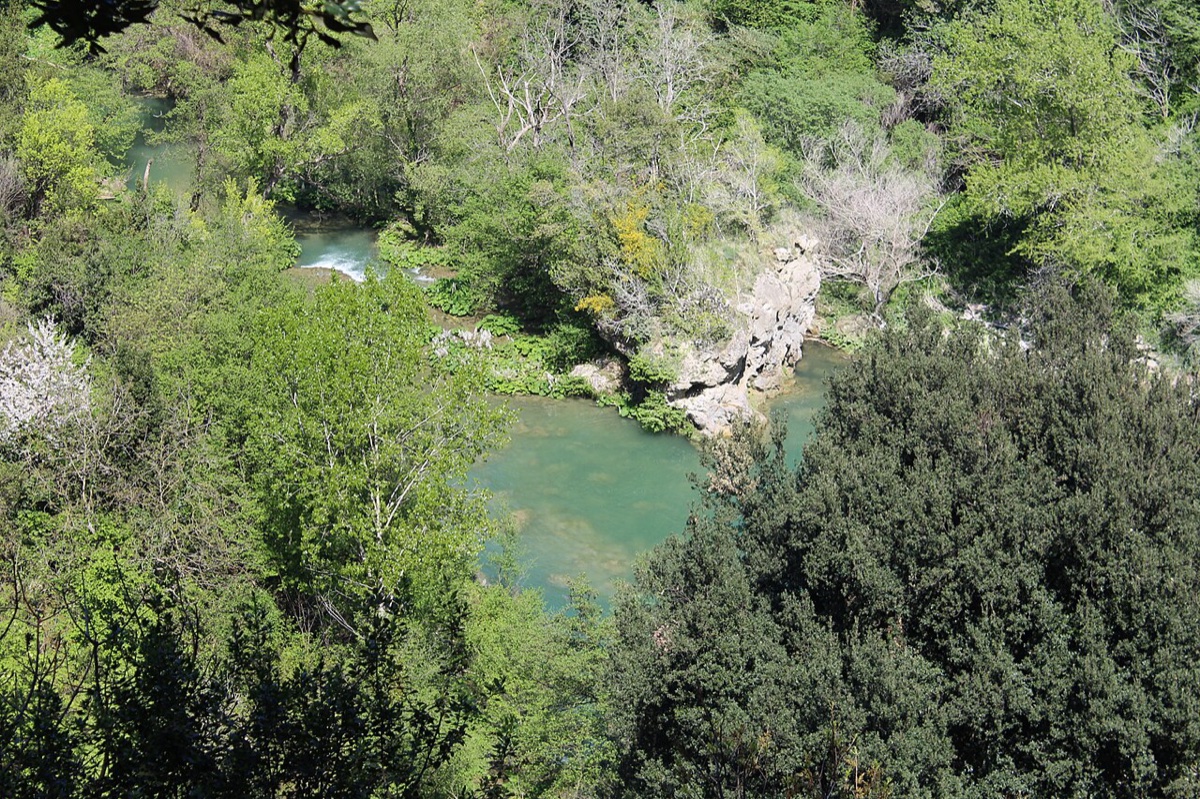
If you’ve had your fill of antiquity and the Renaissance, Tivoli offers a third, completely different villa. Villa Gregoriana isn’t a palace at all — it’s a gorgeous romantic park brimming with wild nature, deep ravines, and caves. It was created by Pope Gregory XVI in the nineteenth century to tame the flooding River Aniene, which frequently threatened the town.
The result is an absolutely breathtaking walk that takes you deep into a wooded valley. The highlight of the trail is the Great Waterfall (Cascata Grande), where water thunders down into a chasm over 100 metres deep. It’s wonderfully cool here, the air smells of ferns, and for nature lovers it’s a blissful balm for the soul after the hot streets of Rome ☺️.
11. Getting Lost in the Alleyways and Rocca Pia Castle
Beyond the famous villas, make sure you set aside time for Tivoli’s town centre itself. The medieval alleyways are incredibly photogenic, full of little shops, flower pots on balconies, and cats basking in the sun. The best approach is to ditch the map and simply wander — you’ll stumble upon beautiful little piazzas and ancient churches that the average tourist never finds.
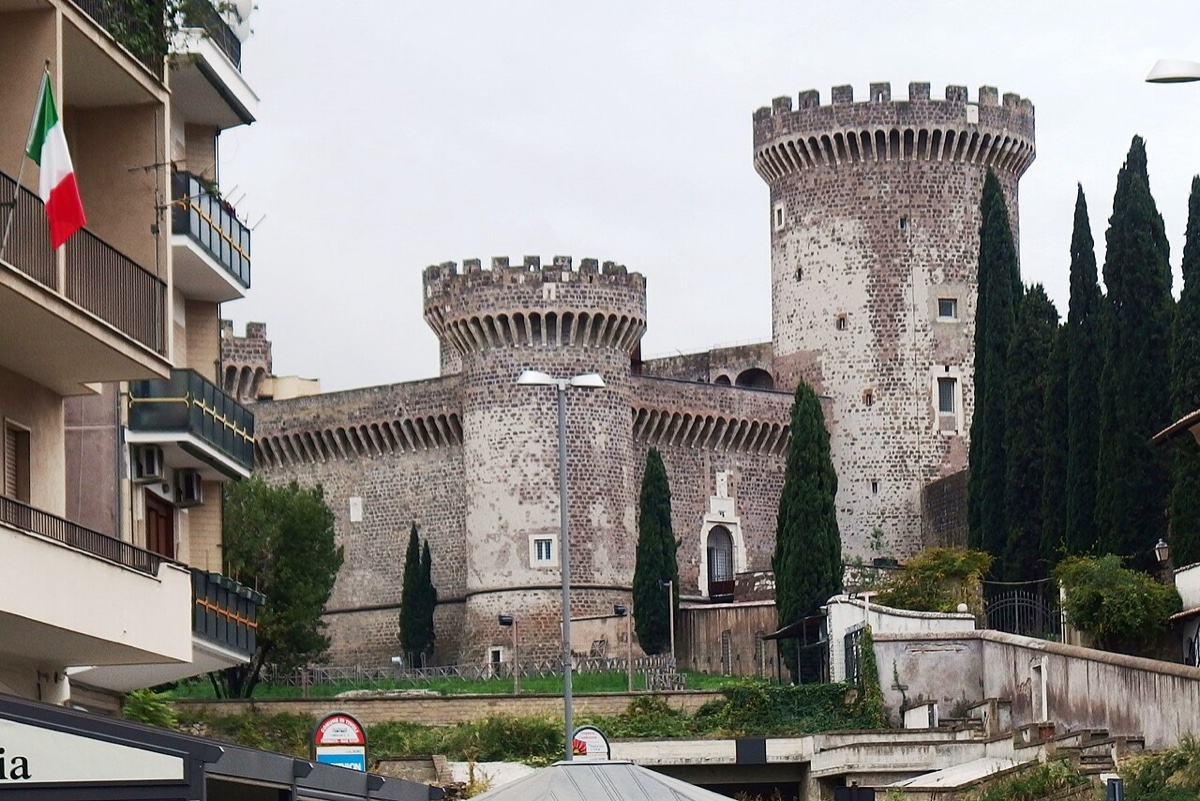
On your way from the train station towards the centre, you can’t miss the majestic Rocca Pia castle. This massive fortress with four round towers was built by Pope Pius II in the fifteenth century. From the outside it looks genuinely impregnable and adds beautifully to the town’s historic skyline, even though the interior is often closed to the public.
12. Where to Find the Best Vegetarian Dinner
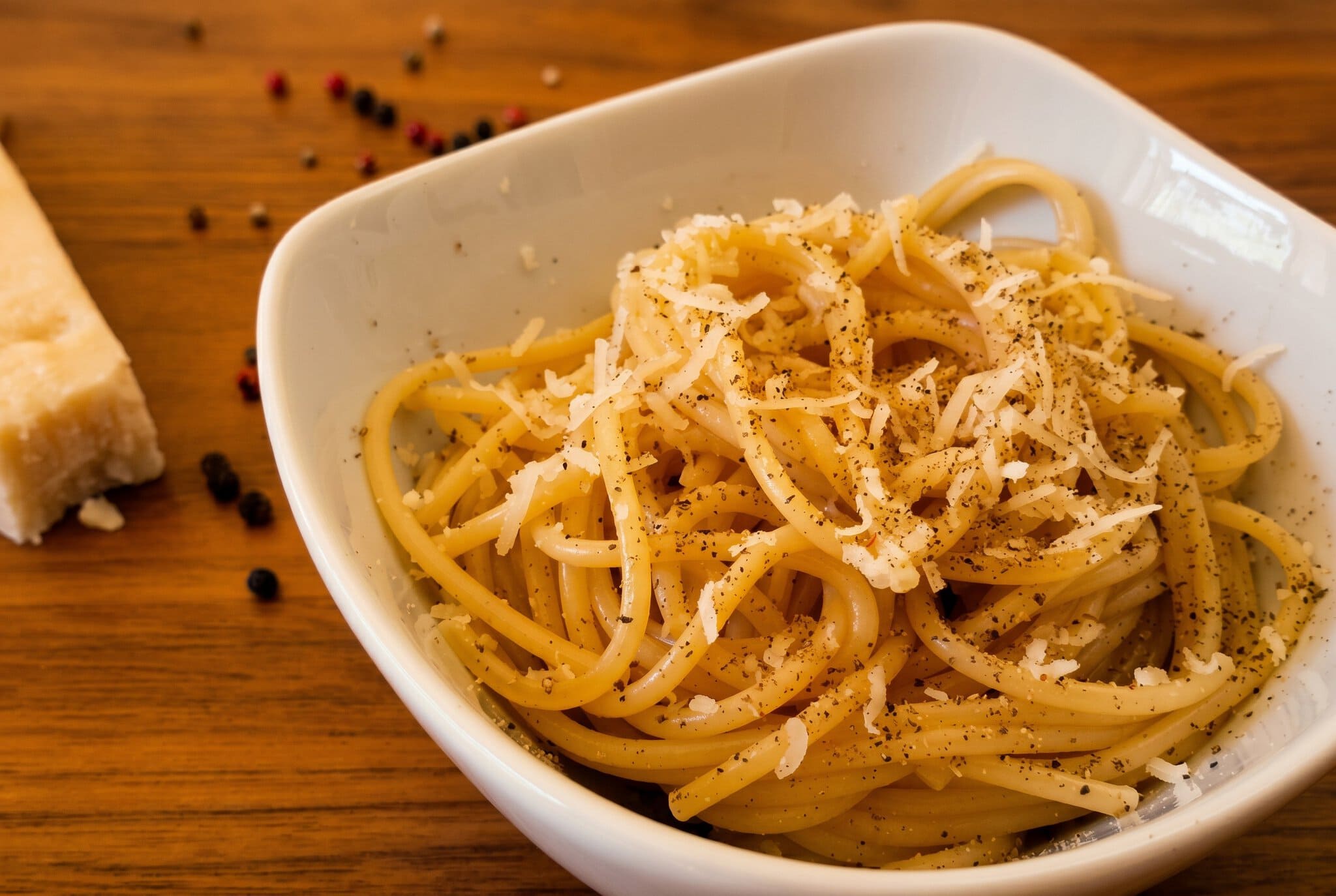
As you probably already know, Lukáš and I are vegetarians, so on our travels we always carefully seek out places that serve honest meat-free classics. Tivoli absolutely delighted us in this regard. Compared to the overpriced centre of Rome, you’ll find plenty of authentic family-run trattorias here serving pasta you’ll be dreaming about for a week.
We recommend ducking into the alleyways around Piazza delle Erbe. We’ve had excellent experiences at smaller pizzerias with wood-fired ovens, where the Pizza Margherita tastes exactly as divine as it should in Italy. Another great tip for a quick vegetarian lunch is fresh focaccia stuffed with grilled vegetables and mozzarella, which you can pick up at local bakeries for a fraction of the price you’d pay in the capital.
Map of points of interest for your phone
Where to Go Next from Tivoli

If you’re heading back to the Italian capital for the night, make sure to check out our comprehensive guide What to See in Rome, packed with the best tips for the rest of your stay. If ancient history is your thing and Hadrian’s Villa sparked your imagination, you definitely shouldn’t miss the iconic Colosseum in Rome during your holiday.
For art lovers and fans of awe-inspiring architecture, a visit to the Vatican is an absolute must. And if you don’t mind a slightly longer journey and want to witness a real ancient apocalypse with your own eyes, we have a detailed guide on how to tackle a day trip to the legendary city of Pompeii without any unnecessary stress.
Frequently Asked Questions
Can I use the Roma Pass tourist card for a trip to Tivoli?
Unfortunately not. The Roma Pass won’t help you outside the boundaries of Rome itself. It’s not valid for trains to Tivoli or admission to local attractions. You’ll need to purchase all tickets and passes separately, as the town is located in a different fare zone.
Is it better to go to Tivoli by train or bus?
We definitely recommend the train, specifically from Rome’s Tiburtina station. The journey takes less than an hour, you’ll avoid morning and afternoon traffic jams, and the ride is much more comfortable. The regional Cotral buses are often overcrowded and the journey can drag on unpleasantly due to traffic.
What’s the best way to get between the different villas?
Villa d’Este and Villa Gregoriana are close to each other and within easy walking distance in the town center. To reach Hadrian’s Villa (Villa Adriana), which is several kilometers downhill in the valley, you’ll need to take the local city bus (line CAT) – it’s really not safe to walk along the road.
Should I buy villa tickets online in advance?
During peak summer season (June through September), it’s absolutely essential, especially for Villa d’Este. The lines at the ticket offices can be really long and exhausting. Buying online for a specific time slot will save you tons of energy that you can then spend actually exploring the gardens.
Is Hadrian’s Villa suitable for young children?
The site is huge and essentially one big historical playground, which kids usually enjoy. The problem is the lack of shade and the ever-present heat during summer months. If you’re going with children, definitely head there right when it opens at 9 AM, bring an all-terrain stroller, and pack plenty of snacks.
Which villa should I choose if I only have time for one?
If it’s hot summer weather and you mainly want to relax, definitely go for the shady Villa d’Este with its cooling fountains. However, if you’re a die-hard Roman history buff and don’t mind walking a few kilometers in the sun, Hadrian’s Villa will absolutely captivate you with its ancient ruins.
What can you do in Tivoli when it rains?
If it’s going to rain all day, it’s better to cancel the trip. The beauty of all three villas lies in their outdoor gardens, parks, and water features. Walking in the rain and mud among ancient ruins really isn’t pleasant at all, and you won’t enjoy the trip one bit.
Tips and Tricks for Your Vacation
Don’t Overpay for Flights
Search for flights on Kayak. It’s our favorite search engine because it scans the websites of all airlines and always finds the cheapest connection.
Book Your Accommodation Smartly
The best experiences we’ve had when looking for accommodation (from Alaska to Morocco) are with Booking.com, where hotels, apartments, and entire houses are usually the cheapest and most widely available.
 🚗 Car rental on the roadVerified rental cars in Rome
Search with the DiscoverCars comparison engine — it compares prices from dozens of local and international rental companies, and most bookings come with free cancellation.
Compare car prices in Rome →Don’t Forget Travel Insurance
Good travel insurance will protect you against illness, accidents, theft, or flight cancellations. We’ve had a few hospital visits abroad, so we know how important it is to have proper insurance arranged.
Where we insure ourselves: SafetyWing (simple monthly subscription) and TrueTraveller (for extra-long trips).
Find the Best Experiences
Get Your Guide is a huge online marketplace where you can book guided walks, trips, skip-the-line tickets, tours, and much more. We always find some extra fun there!