Rome doesn’t forgive the unprepared — Lukáš and I learned that lesson the hard way, more than once. The Eternal City can absolutely grind you down before you even get a chance to toss a coin into a fountain, but once it gets under your skin, it never lets go. The Spanish Steps in Rome are exactly the kind of place that looks like a perfect romantic postcard from afar. But when you show up at high noon in the middle of summer, you’ll find yourself battling through thousands of sweaty tourists while fending off vendors pushing overpriced roses.
The secret to conquering Rome isn’t about how many landmarks you can tick off your list at a sprint. It’s about precise timing, strategic planning, and accepting the fact that Rome isn’t just a museum — it’s a pulsating metropolis of three million people. Let’s dive into 10 tips for what to see and do around the Spanish Steps so your visit is truly worth it. I’ll tell you when to go to save your nerves, and I’ll even reveal how much you’ll pay in fines if you get carried away and sit down on the famous marble. 😅

TL;DR
- Sitting is strictly forbidden: Resting on the Spanish Steps can land you a fine of €250 to €400, enforced by relentless police officers.
- Trevi Fountain now has an entry fee: From 2026, you’ll pay €2 to access the basin area, and entry is limited to 400 people at a time.
- The Jubilee is over: The Holy Year 2025 is behind us — the city has removed the scaffolding from monuments and the streets are a bit more breathable.
- Watch out for scammers: Around the Steps and the luxury Via dei Condotti, vendors aggressively push bracelets and roses on tourists.
- Drink from the fountains: Don’t buy bottled water — free, ice-cold drinking water flows from cast-iron public fountains (nasoni) all across the city centre.
- Shoes make or break your day: Rome’s classic cobblestones will destroy unsuitable footwear — quality trainers are an absolute must.
The full destination guide: Rome — guide and what to see
When to Visit Rome, Italy
Every traveller’s dream is simple — we all want to see Rome bathed in sunshine, sit outside with a glass of Aperol, and not be crammed in with ten thousand other people while doing it. Finding that sweet spot, however, is incredibly tricky. News about the Holy Year (Jubilee 2025) probably scared off more than a few would-be visitors, as over 33 million pilgrims flooded the city and the streets were at breaking point. But the Holy Doors were ceremonially closed in January 2026, and 2026 brings a noticeable sense of relief.
The best months to visit are definitely May, June, September, and October. In our experience, October offers the most pleasant conditions for long walks. Temperatures drop to a comfortable 22°C, the air clears up, and the city takes on a beautiful, soft autumn light that’s absolutely perfect for photography. Evenings call for a light jumper, but during the day you can easily clock up fifteen kilometres without feeling like you’ll pass out on the scorching pavement.
Summer in Rome — July and August in particular — is a test of both physical and mental endurance. Temperatures regularly climb above 30°C and the humidity turns narrow alleyways into a stifling greenhouse without a hint of breeze. The ancient stones soak up the heat during the day and radiate it back like a giant oven long after dark. If you absolutely must go in summer, your daily routine needs a radical overhaul: get up at six in the morning and retreat to an air-conditioned restaurant or your hotel around midday.
Winter, from late November through February, is the best-kept secret for budget-conscious travellers. Temperatures hover between 5 and 13°C, there’s the occasional rain shower, and mornings can feel damp and chilly. But you gain something priceless: accommodation prices drop to their annual lows and queues at landmarks shrink to virtually nothing. Winter Rome reveals its melancholic, quiet, and deeply poetic side.
Where to Stay in Rome
For specific accommodation recommendations, we’ve had great experiences with Hotel Artemide in the central Monti neighbourhood, the boutique Condotti Boutique Hotel just a stone’s throw from the Spanish Steps, and the quieter Residenza Cavallini in the Prati district near the Vatican. Booking well in advance gets you the best deals.
💡 Accommodation & experience tip: We love searching for places to stay on Booking.com, which tends to have the best cancellation policies. For tickets, tours, and activities, it’s worth comparing options on GetYourGuide.

Your choice of neighbourhood defines your entire Rome experience and determines whether you’ll collapse on the bed in exhaustion each evening or stroll down to a local trattoria in peace. The biggest rookie mistake is booking accommodation purely based on price, with zero thought given to logistics and commuting. The city is sprawling, and spending an hour every day in a packed bus with no air conditioning will drain you fast.
If you’re after the perfect balance, the Monti neighbourhood just behind the Colosseum is probably our favourite. It offers a fantastic atmosphere, loads of independent cafés, and excellent metro access. Trastevere, on the other hand, is the embodiment of the romantic Italian dream with its winding lanes and brilliant nightlife, but there’s no metro station and it can get incredibly noisy in the evenings. For families with children or travellers seeking tranquillity, we recommend the Prati district north of the Vatican, where you’ll find wide boulevards and flat terrain.
Lukáš and I always book our accommodation through Booking.com, where you can find great apartments and smaller family-run hotels. If you’re on a tight budget, look around the main Termini station — but keep a close eye on your belongings, as pickpockets are rife. Staying right in the historic centre (Centro Storico) near the Spanish Steps is gorgeous, of course, but you’ll pay a sky-high premium and be constantly surrounded by hordes of tourists.
10 Tips for What to See and Do Near the Spanish Steps
Let’s get into the specifics of how to make the most of the Spanish Steps area. I’ll point you towards the best viewpoint, tell you where to escape the afternoon heat, and share how to avoid getting ripped off at local restaurants.
1. 135 Steps and the Church of Trinità dei Monti
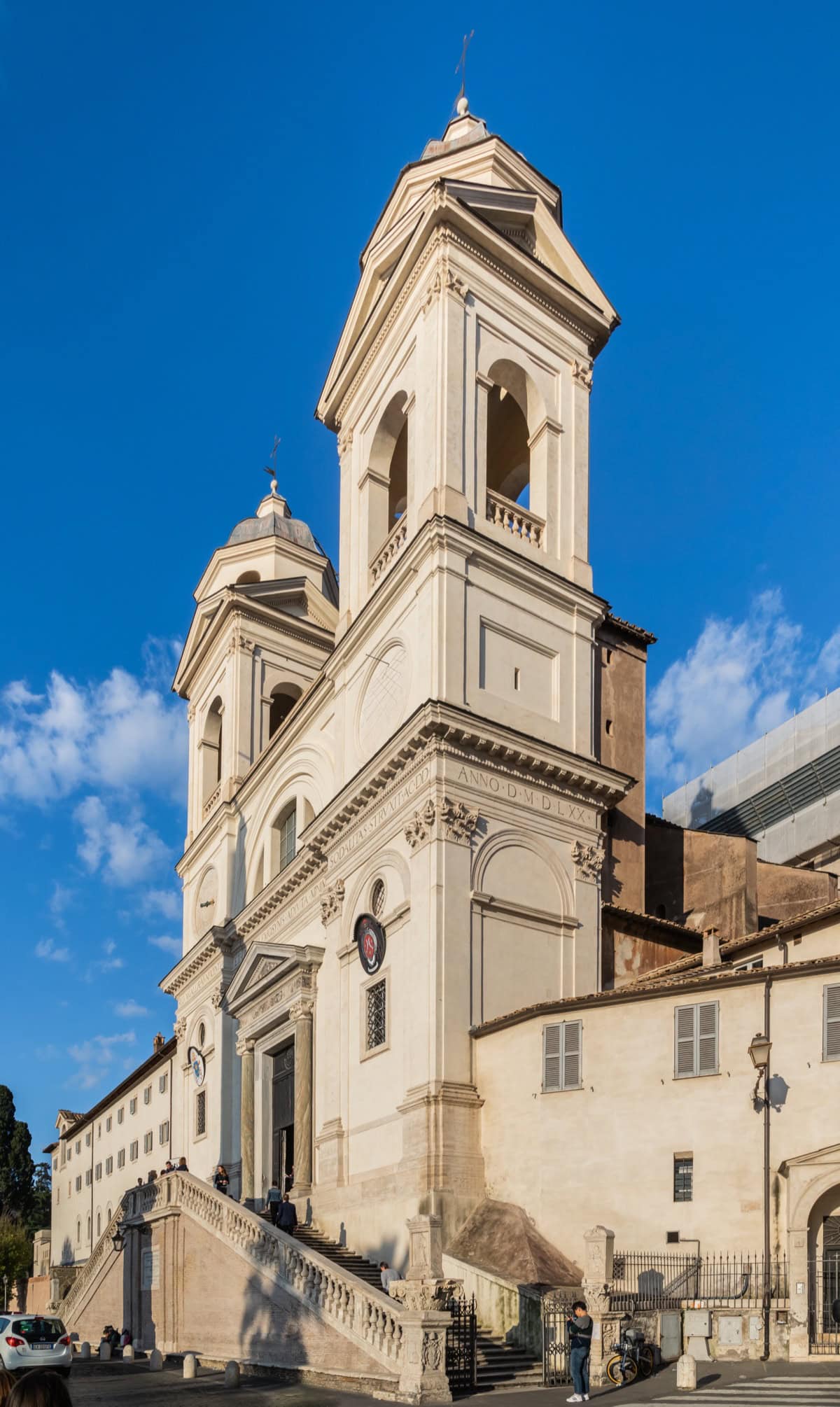
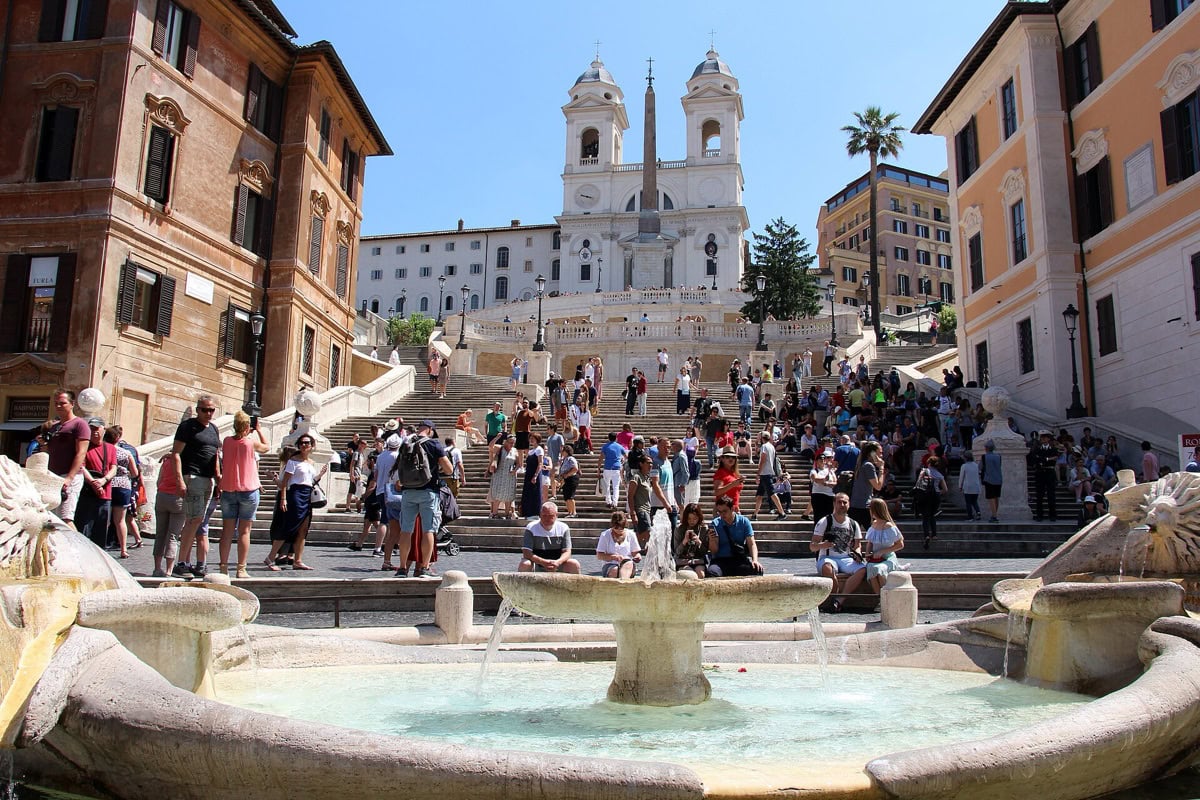
When people think of Rome, the image that springs to mind right after the Colosseum is often this elegant cascade. The Spanish Steps (Scalinata di Trinità dei Monti) consist of exactly 135 travertine steps rising from the piazza up to the French church at the top. Their unique butterfly-wing design has drawn visitors since the 18th century, and the spot radiates an incredible visual charm.
Perched at the very top of the staircase is the church of Trinità dei Monti with its twin bell towers, which offers a fantastic view down over the piazza. In front of the church stands one of Rome’s many obelisks, relocated here in the late 18th century. Most tourists stay down by the fountain, so climbing to the top gives you a bit more breathing room.
💡 Tip: Don’t come here in the middle of the day. If you want to experience the true magic of this place without feeling like sardines in a tin, set your alarm early. Around eight in the morning you’ll find only a handful of photographers, and the morning light paints the whole scene in gorgeous pastel tones.
2. The Barcaccia Fountain and Free Drinking Water
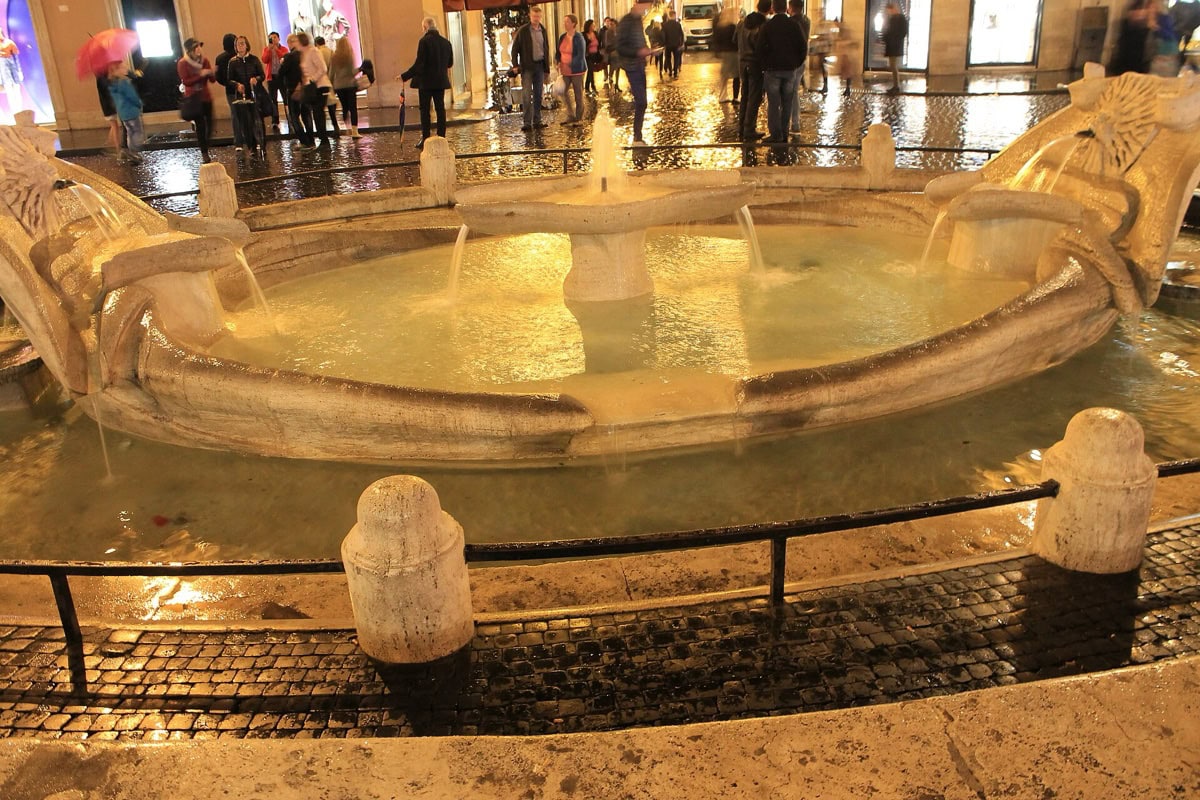
Right at the foot of the steps on Piazza di Spagna lies one of the masterpieces of early Baroque art. The Fontana della Barcaccia — which translates to “Fountain of the Ugly Boat” — is the work of the celebrated sculptor Pietro Bernini and his even more famous son, Gian Lorenzo. The fountain is shaped like a half-sunken boat, with water flowing in from all sides.
According to local legend, Bernini was inspired by an actual fishing boat that was washed up here by a massive flood of the River Tiber in the late 16th century. The architect also had to contend with very low water pressure from the local aqueduct, which is why the fountain sits slightly below street level. The result, however, is nothing short of genius and forms the natural centrepiece of the entire piazza.
Along the edges of the fountain, you’ll notice small spouts of drinking water. Rome has around 2,500 cast-iron public drinking fountains scattered across the city, known as nasoni (big noses), which dispense ice-cold, perfectly safe drinking water completely free of charge. Locals know a brilliant trick: simply block the main spout at the bottom with your finger and the water shoots up through a small hole on top of the tap, right into your mouth.
3. The Strict No-Sitting Rule and Fines
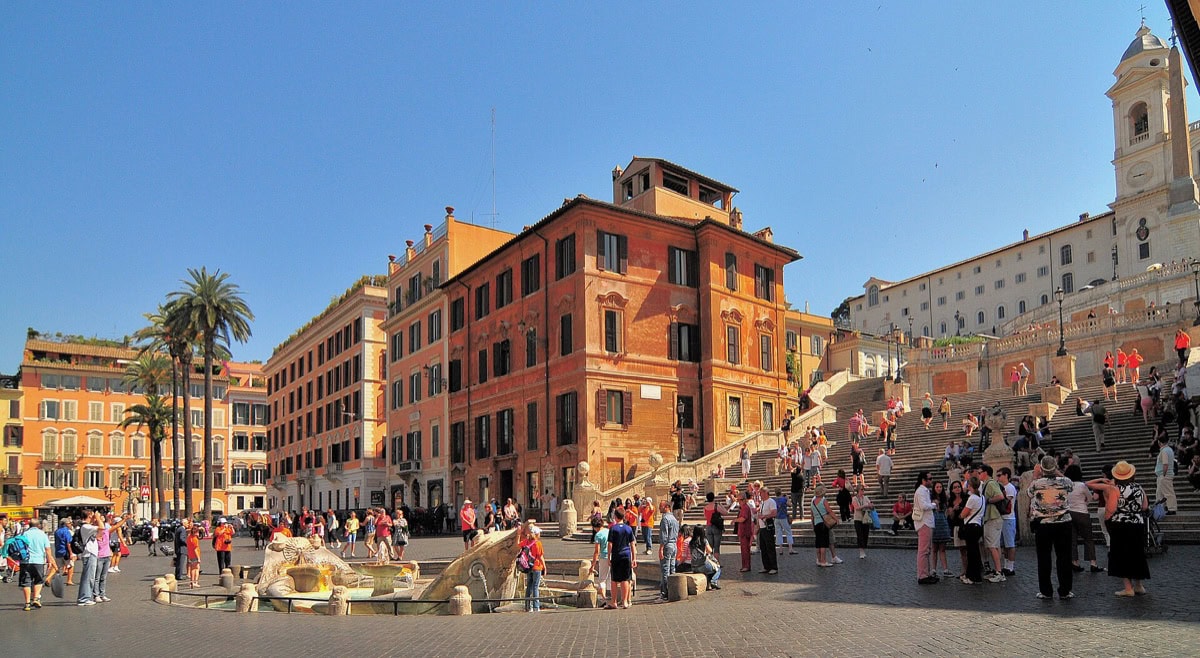
From a distance, those wide marble steps look incredibly inviting — especially when you’ve already walked ten kilometres and desperately need a rest. But I have to give you a firm warning: sitting on the Spanish Steps is strictly forbidden. The city introduced this ban to protect the historic marble, which was suffering under the onslaught of millions of tourists, spilled coffees, and discarded chewing gum.
Police officers in yellow hi-vis vests enforce this rule actively and without an ounce of mercy. The moment you so much as crouch down, you’ll instantly hear a sharp blast from a whistle. Officers patrol constantly up and down the steps, and they show no sympathy — not even for tired children or elderly visitors. You simply have to keep standing or keep moving.
If you ignore the warning or start arguing with the officers, you face a fine of around €250. If you’re also caught eating ice cream on the steps or otherwise soiling the monument, the penalty can quickly shoot up to €400. Save that money for a brilliant dinner instead, and head to the nearby park for a well-deserved rest.
4. The Spring Azalea Explosion
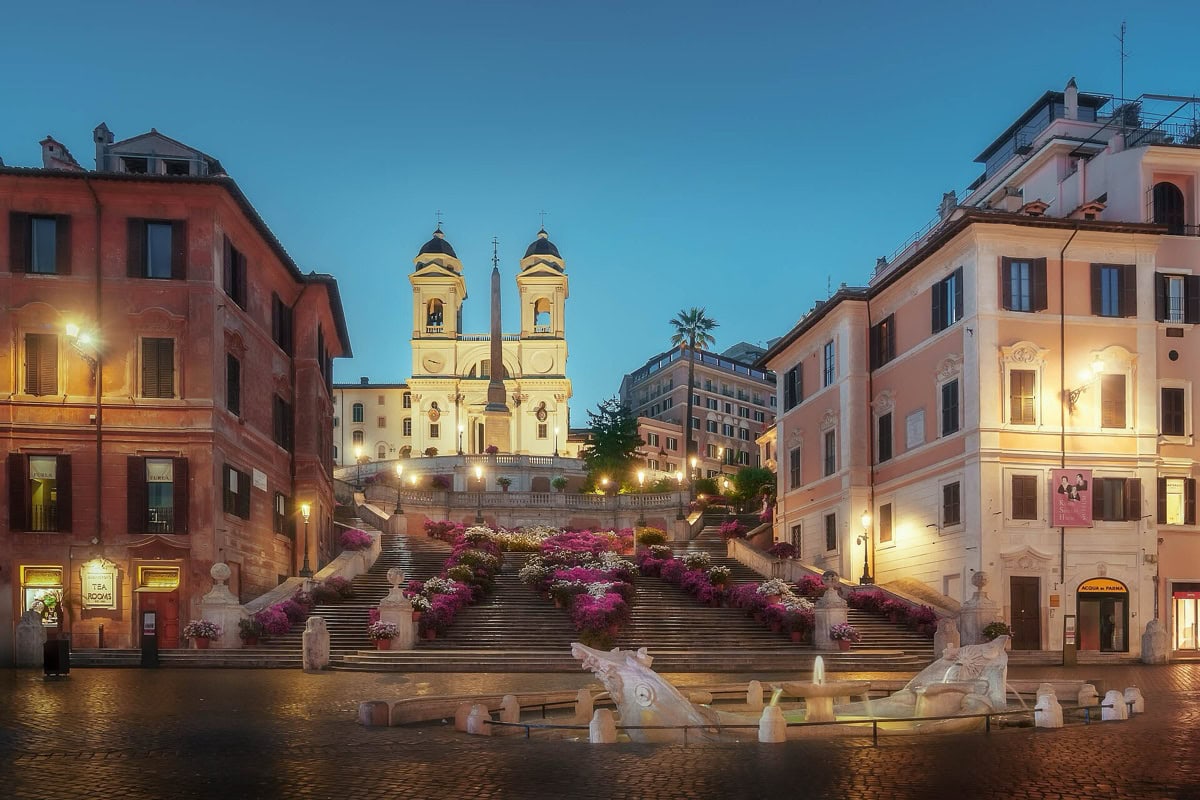
If you manage to time your visit to Rome around late April or early May, you’re in for a visual treat you won’t forget in a hurry. During this period, the Spanish Steps transform into a vast blooming garden. Gardeners place hundreds of pots filled with white and pink azaleas across the staircase every year.
This tradition gives the whole place an incredibly romantic feel, making the steps look even more monumental than usual. Naturally, it also brings a surge of Instagram hunters chasing the perfect shot. The floral display typically lasts only around three to four weeks, depending on how sunny and warm the spring days are.
If you love photography, I’d recommend heading about halfway up the staircase and shooting downwards through the blooming flowers towards the Barcaccia Fountain below. Even with the massive crowds, there’s something truly special about this place in spring — the flood of colour contrasting against the pale travertine stone is simply stunning.

5. Escape into the Keats-Shelley House
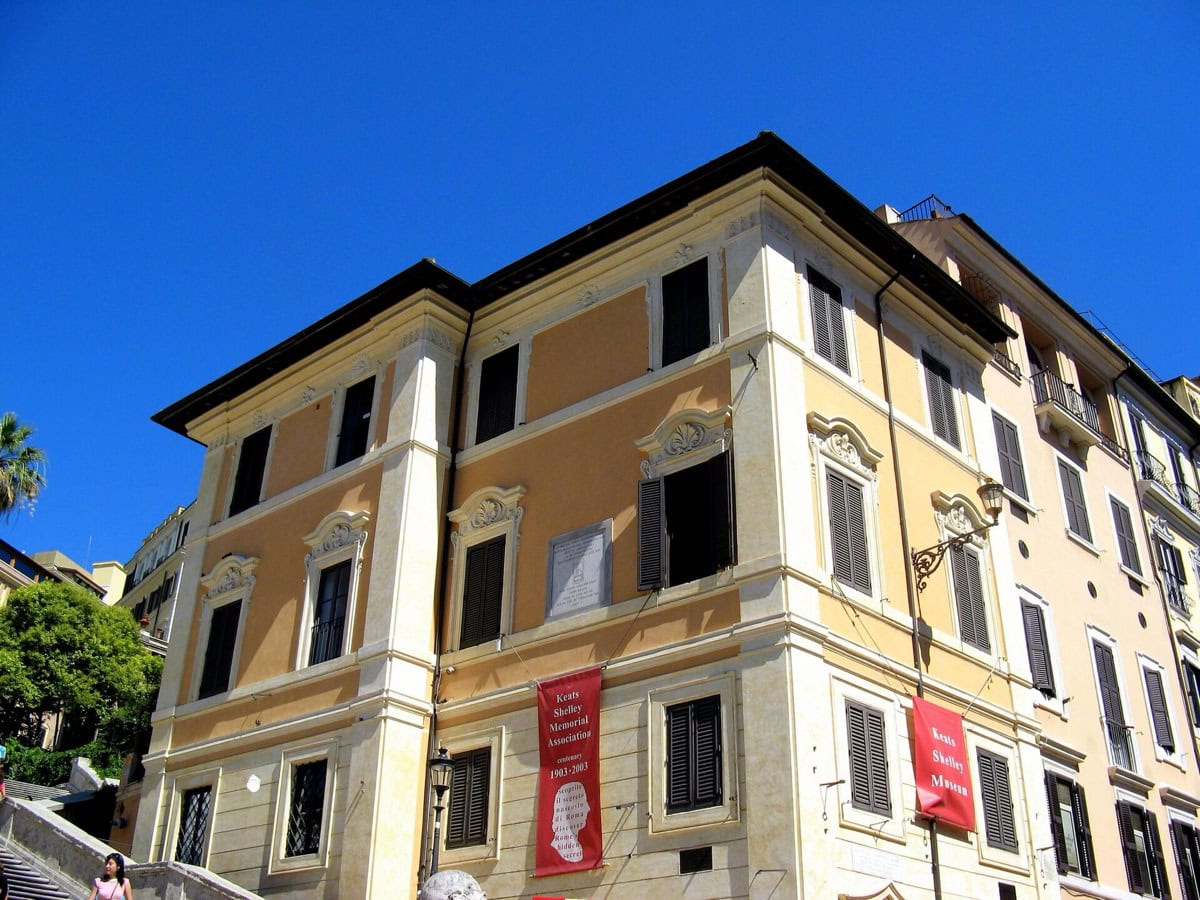
Right at the bottom-right corner of the Spanish Steps (when facing them) stands an unassuming red-brick building that most tourists walk straight past without a second glance. This is the Keats-Shelley House, a museum dedicated to the English Romantic poets who fled to Italy in search of inspiration and a kinder climate.
It was in this very house that the celebrated poet John Keats spent his final months before succumbing to tuberculosis at the age of just twenty-five. Today, inside you’ll find a fascinating collection of manuscripts, paintings, and personal belongings. It’s a little literary shrine tucked away in the midst of Rome’s greatest chaos.
The greatest perk of this museum, though, is its atmosphere. While absolute madness reigns on the piazza outside, inside you’ll find cool air, incredible quiet, and blissful calm. The wooden floorboards creak underfoot and from the first-floor windows you get an exclusive view straight down onto the crowds streaming up and down the steps below. Admission is around €6, and for the respite alone it’s well worth it.
6. Via dei Condotti and Luxury Shopping
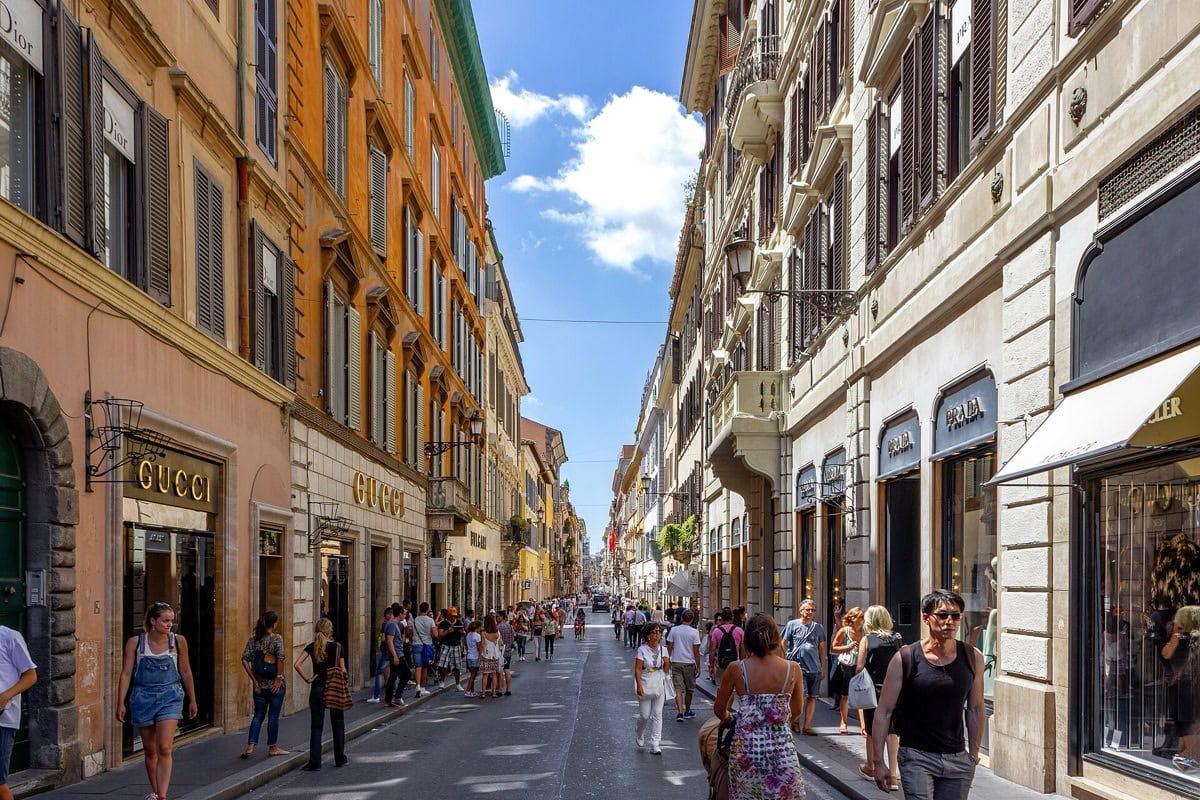
Directly opposite the Spanish Steps begins one of the most famous — and most expensive — streets in all of Italy. Via dei Condotti is the ultimate showcase of global luxury, where boutiques from Prada, Gucci, Bulgari, and Dior sit side by side. Even though Lukáš and I aren’t about to buy a handbag worth thousands, the window shopping alone and watching impeccably dressed Italians strut by is an experience in itself.
The street has a gorgeous historic atmosphere and is also home to Antico Caffè Greco, the second-oldest café in Italy, founded in 1760. Casanova, Goethe, and Lord Byron all sipped coffee here. But if you take a seat at a table, be prepared to pay as much as €9 for a cappuccino. The golden Italian rule is this: if you drink your coffee standing at the bar (al banco), it costs a pittance, but the moment you sit down, you’re paying a steep premium for the table and service.
💡 Tip: Keep a sharp eye out for scammers. This is exactly the area — around the luxury street and the piazza — where organised groups operate. They’ll approach you with a big smile, ask where you’re from, and before you know it they’ve tied a woven bracelet around your wrist or pushed a rose into your companion’s hand as a “gift.” Don’t be fooled — moments later, they’ll aggressively demand €10 to €20. The only effective defence is total blanking, a brisk pace, and a firm “No, grazie.”
7. The Best Sunset in Rome at Pincio
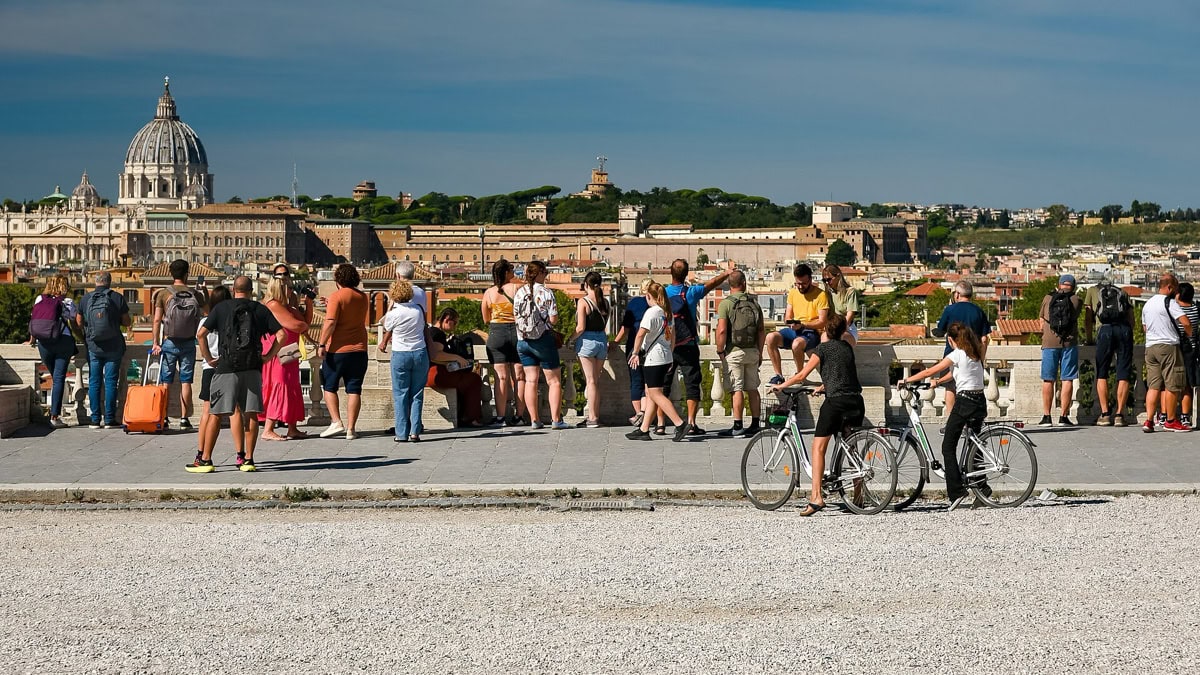
Once you’ve taken in the steps from below, head up them to the obelisk and turn left at the church of Trinità dei Monti. You’ll walk along a beautiful, shady promenade called Viale della Trinità dei Monti, pass the majestic Villa Medici, and after about ten minutes of easy strolling you’ll reach the Pincio Terrace (Terrazza del Pincio).
This spacious viewing terrace sits on the edge of the vast Villa Borghese park and offers what we believe to be the most breathtaking sunset in all of Rome. Below you, the enormous Piazza del Popolo spreads out, and on the horizon you’ll see the unmistakable silhouette of St Peter’s Basilica dome in the Vatican.
It’s an incredibly romantic spot, popular even with Romans on date nights. Street musicians often play here and the vibe is far more relaxed than down in the city centre. Stay until the sun paints every Roman rooftop a deep, rich gold, and only then set off to find a spot for dinner. Trust me — the short climb is worth every drop of sweat.
8. Trevi Fountain Under New Rules (2026)

From the Spanish Steps, it’s a mere ten-minute brisk walk through a maze of narrow lanes to the Trevi Fountain. Turning a corner and suddenly standing before that roaring, dazzlingly white wall of travertine is an unforgettable experience. Unfortunately, in the past this magical moment was reduced to a battle for every square centimetre and a sea of elbows, which finally pushed the city council into drastic action.
Since February 2026, completely new and strict rules apply at the fountain. If you want to walk down the steps directly to the basin for the perfect photo and toss a coin over your shoulder, non-residents now pay a €2 fee. This area is newly enclosed with glass panels and access is regulated by turnstiles, capped at a maximum of 400 people at any one time.
If you’d rather not pay or queue for access to the lower zone, you can still admire the fountain for free from the upper level of the piazza. Up there, however, police officers with whistles will constantly move you along so you don’t block the passage. If you do buy a ticket and toss a coin over your left shoulder, know that all the collected money (around €3,000 a day) goes to the local Caritas charity.
9. Piazza del Popolo

From the Pincio viewpoint, you can descend the wide, winding steps straight down to one of Rome’s largest and most impressive squares. Piazza del Popolo — the People’s Square — was for centuries the main entry point into Rome for travellers arriving from the north along the ancient Via Flaminia road.
The space is dominated by a massive Egyptian obelisk over three thousand years old, brought to Rome by Emperor Augustus. On the south side of the square stand two almost identical Baroque churches, between which three main streets fan out to form Rome’s famous trident (Tridente). Architecturally, it’s an incredibly clean and masterfully designed space.
Unlike the cramped surroundings of the Spanish Steps or the Trevi Fountain, here you actually feel like you can take a deep breath. The piazza is huge, open, and frequently hosts concerts or public gatherings. On the edge of the square, you’ll also find the church of Santa Maria del Popolo, which hides two absolutely jaw-dropping (and free-to-view) canvases by the master of chiaroscuro, Caravaggio.
10. Where to Eat Without Getting Ripped Off
The area around the Spanish Steps and the nearby Pantheon is an absolute minefield when it comes to dining. Restaurants with a view of a landmark are classic tourist traps. Reliable red flags include waiters loitering on the pavement, picture menus in five languages, and a menu cover plastered with a giant Italian flag. A genuine Italian trattoria will never actively tout for your custom from the street.
We’re vegetarians, so we tend to seek out places with excellent pizza or pasta, but I must warn you about one particularly sneaky trick. Many restaurants in the centre price fish and seafood “per etto” (per 100 grams). You see an appealing price of €8, but the waiter brings you an enormous fish and the bill suddenly skyrockets into the stratosphere. We’ve heard of cases where tourists paid over €600 for a single lunch because they didn’t check the final weight of the dish.
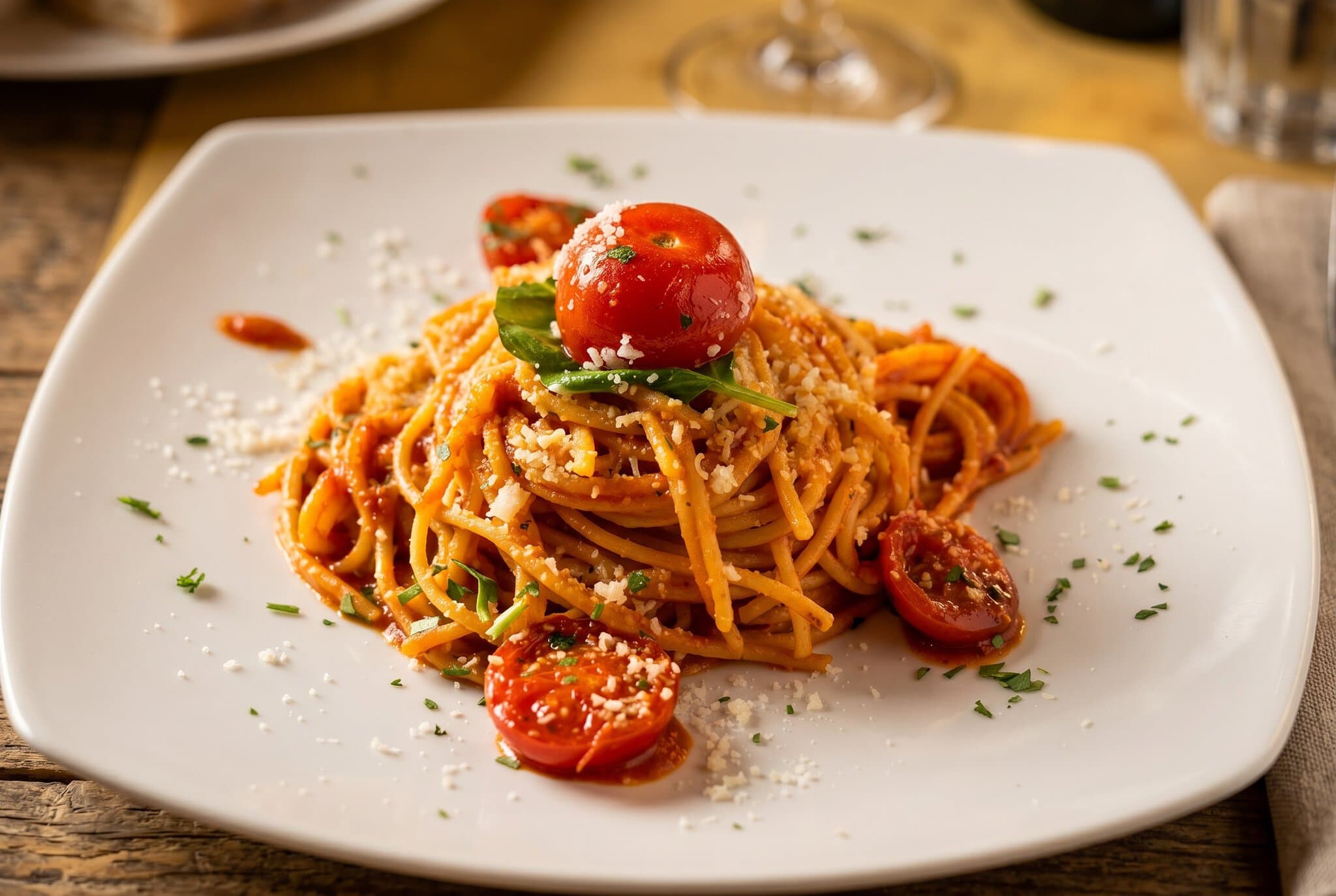
Lukáš and I prefer grabbing honest pizza al taglio (pizza sold by weight, cut and served by the slice) from small bakeries off the main drag. Try the classic pizza bianca — just olive oil and coarse salt. If you want to sit down, look for tucked-away places where they speak to you in Italian. Order the traditional Roman cacio e pepe pasta (just pecorino cheese and black pepper) and you’ll discover that the greatest beauty lies in simplicity.
Map of points of interest for your phone
Where to Go From Rome

Rome is enormous, and the historic centre around the Spanish Steps is just the beginning. If your itinerary allows for a few more days, make sure to explore other ancient and Renaissance treasures as well. We’ve put together detailed guides to the most fascinating spots:
- What to See in Rome — A complete city guide with a suggested itinerary.
- The Colosseum in Rome — How to get inside without queues and score tickets to the underground level.
- The Vatican and Vatican Museums — Everything about visiting the world’s smallest country and Michelangelo’s frescoes.
- Trevi Fountain and The Pantheon — Practical details on new entry rules and fees in the city centre.
- Piazza Navona and Trastevere — Where to soak up the best evening atmosphere and find the finest food.
- Castel Sant’Angelo and Galleria Borghese — Tips on breathtaking views and art you’ll need to book months ahead.
- Ostia Antica, Tivoli, and Pompeii — Great ideas for day trips by train beyond the Eternal City.
Frequently Asked Questions
Is there a charge to access the Spanish Steps?
Access to the staircase itself is completely free and open 24 hours a day. You only pay if you break the strict rules, because sitting on the steps carries a fine of 250 euros. If you eat food there on top of that, the amount can climb as high as 400 euros.
How do I get to the Spanish Steps?
Right below the steps is the metro station on line A called Spagna. It’s just three stops from the main Termini station, which takes about five minutes. Most of the historic centre (the Pantheon, Trevi, Navona) is then easily reachable on foot from there.
Can you pay by card everywhere in Rome?
Italy has made a huge leap forward in cashless payments, and these days you can pay by card in restaurants, museums and even for a scoop of ice cream. Even so, we recommend always carrying a few coins, which come in handy for tipping the barista, paying for a public toilet or tossing a coin into a fountain.
Can I fill up water from the street fountains?
Yes, definitely do it! Rome has thousands of cast-iron drinking fountains (nasoni) from which ice-cold, clean and 100% drinkable water flows non-stop. Don’t waste money on overpriced plastic bottles from street vendors, you’ll save both money and the environment.
What to do when it rains in the centre?
Roman storms can be fierce, but they usually pass quickly. The basalt cobblestones (sampietrini) and the travertine Spanish Steps, however, instantly turn into a dangerous skating rink in the rain. Take shelter in the nearby Pantheon and watch the rain fall straight in through the open oculus in the roof.
Is the Holy Year (Jubilee 2025) already over?
Yes, the Holy Year ran from Christmas 2024 and officially ended on 6 January 2026 with the ceremonial sealing of the Holy Doors. The city has finally been freed from the apocalyptic crowds of pilgrims, and the restored monuments are at last free of scaffolding after lengthy renovations.
What is the coperto in restaurants?
The coperto is a fixed charge for setting the table and the basket of bread, which you’ll encounter in the vast majority of traditional restaurants. It’s usually 2 to 4 euros per person. It isn’t a tip for the waiter, it’s simply a legal charge for sitting at the table, and it must always be listed on the menu.
Can I visit the monuments in shorts and a tank top?
It depends on where you’re going. At the ancient ruins (the Colosseum, the Forum), summer clothing is fine. But if you’re heading to any church, including the Pantheon or the Vatican, a strict dress code applies. You have to have your shoulders and knees covered, otherwise security will mercilessly turn you away, even with a valid ticket.
Tips and Tricks for Your Vacation
Don’t Overpay for Flights
Search for flights on Kayak. It’s our favorite search engine because it scans the websites of all airlines and always finds the cheapest connection.
Book Your Accommodation Smartly
The best experiences we’ve had when looking for accommodation (from Alaska to Morocco) are with Booking.com, where hotels, apartments, and entire houses are usually the cheapest and most widely available.
 🚗 Car rental on the roadVerified rental cars in Rome
Search with the DiscoverCars comparison engine — it compares prices from dozens of local and international rental companies, and most bookings come with free cancellation.
Compare car prices in Rome →Don’t Forget Travel Insurance
Good travel insurance will protect you against illness, accidents, theft, or flight cancellations. We’ve had a few hospital visits abroad, so we know how important it is to have proper insurance arranged.
Where we insure ourselves: SafetyWing (simple monthly subscription) and TrueTraveller (for extra-long trips).
Find the Best Experiences
Get Your Guide is a huge online marketplace where you can book guided walks, trips, skip-the-line tickets, tours, and much more. We always find some extra fun there!