

There’s always something magical about travelling to the very end of a continent, especially when that end is a sheer cliff plunging more than three hundred metres into the restless waters of the Barents Sea. Nordkapp in Norway, also known as the North Cape, has drawn travellers for centuries, because this is the spot where you feel like you simply can’t go any further, and all that lies ahead of you is the endless ocean and the North Pole.
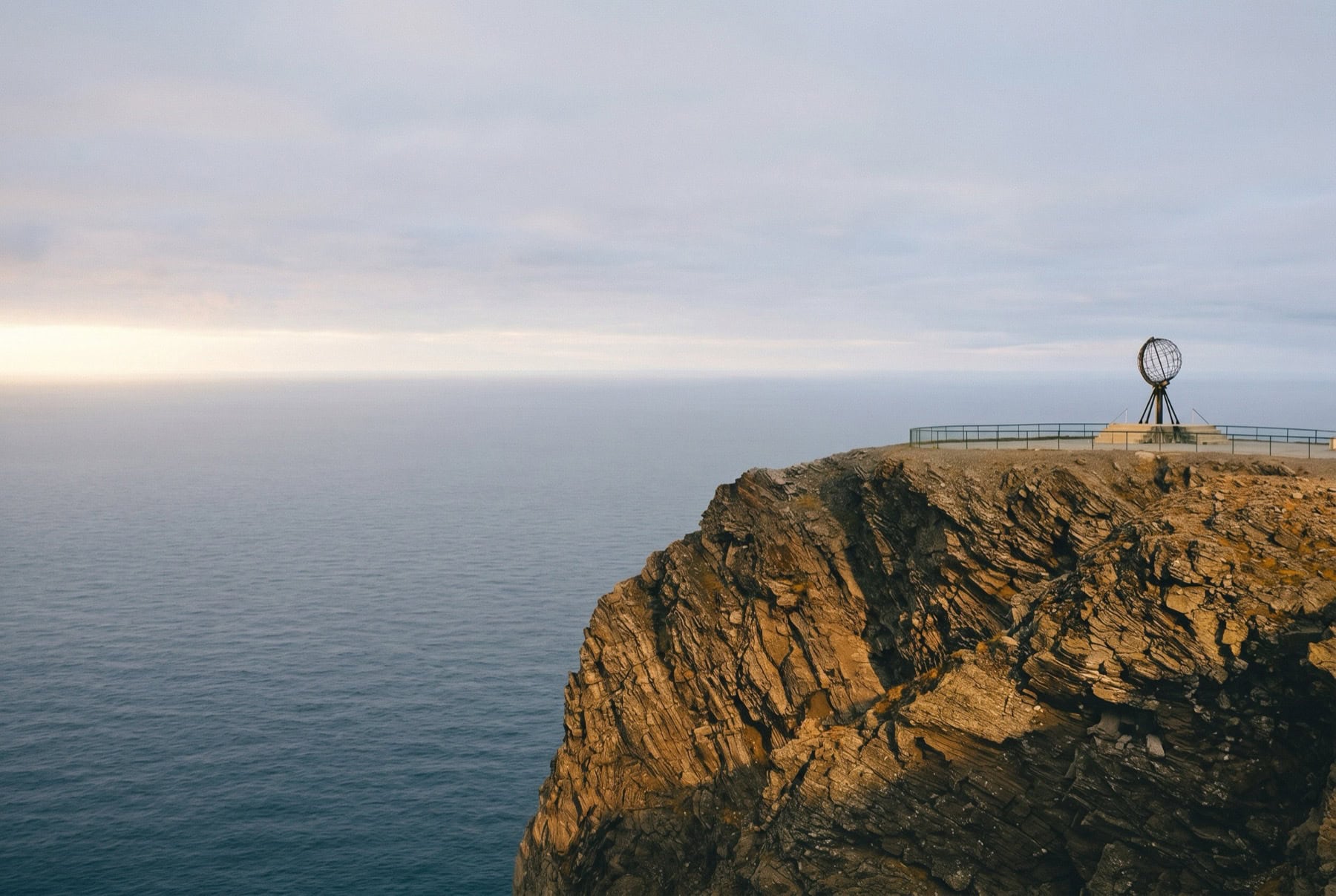
The island of Magerøya, home to this famous point on the 71st parallel, offers a breathtaking Arctic landscape full of bare hills, herds of grazing reindeer and dramatic cliffs. Although it’s a hugely popular and often windy destination where the weather changes from one minute to the next, the moment you stand beside the iconic steel globe is one you’ll remember forever.
I’ve put together a detailed guide with eight tips on what to see at Nordkapp and in the surrounding area, so you won’t miss anything important. Together we’ll look at how best to get here, where to rest your head, and why you might just want to lace up your hiking boots and head out to a far more deserted, but all the more authentic, headland next door.
TL;DR
- Most photographed spot: The steel globe on the Nordkapp cliff is an absolute must, ideally with the midnight sun in the background.
- Hidden geographical catch: If you want to stand on the truly northernmost point of Europe, you’ll need to hike out to the neighbouring headland of Knivskjellodden.
- Visitor centre: Nordkapphallen has a cinema and a restaurant, but expect a fairly steep entrance fee of around 300 to 350 NOK (roughly €26 to €30).
- Ideal base: The little town of Honningsvåg offers the best facilities, hotels and shops, and the famous Hurtigruten ship stops here too.
- Nature nearby: Don’t miss the boat trip to the Gjesvær bird cliffs and reindeer spotting on the plateaus of Magerøya island.
- Undersea journey: Simply arriving by car along the E69 road through the deep subsea tunnel is a huge experience in itself.
The full destination guide: Norway — guide and what to see
When to visit the Nordkapp area
Your choice of season completely changes what you’ll experience in the north of Norway, and the main season here runs from mid-May to the end of July. During this period the sun never dips below the horizon at all, which means you can enjoy the magical midnight sun and all the roads and tourist attractions are fully accessible. But the weather in Nordkapp, Norway can be unpredictable even in summer — thick fog often rolls in out of nowhere, so I’d recommend building a little extra time into your itinerary so you get to see the cliff without the grey curtain.
If you’re drawn to the harsh Arctic winter and want to chase the northern lights, head here between September and March, when the nights are long and dark. You do need to be prepared for the fact that the journey to Nordkapp itself is far more demanding in winter — roads are often blocked by snow, and the last few kilometres to the cliff can frequently only be driven in organised convoys behind a snowplough. A winter visit calls for good clothing, flexibility and ideally a car with quality studded winter tyres.
Where to stay near Nordkapp
💡 Tip for accommodation and experiences: We love searching for places to stay on Booking.com, where the cancellation terms are usually the best. Tickets, tours and activities are then worth comparing and booking through GetYourGuide.
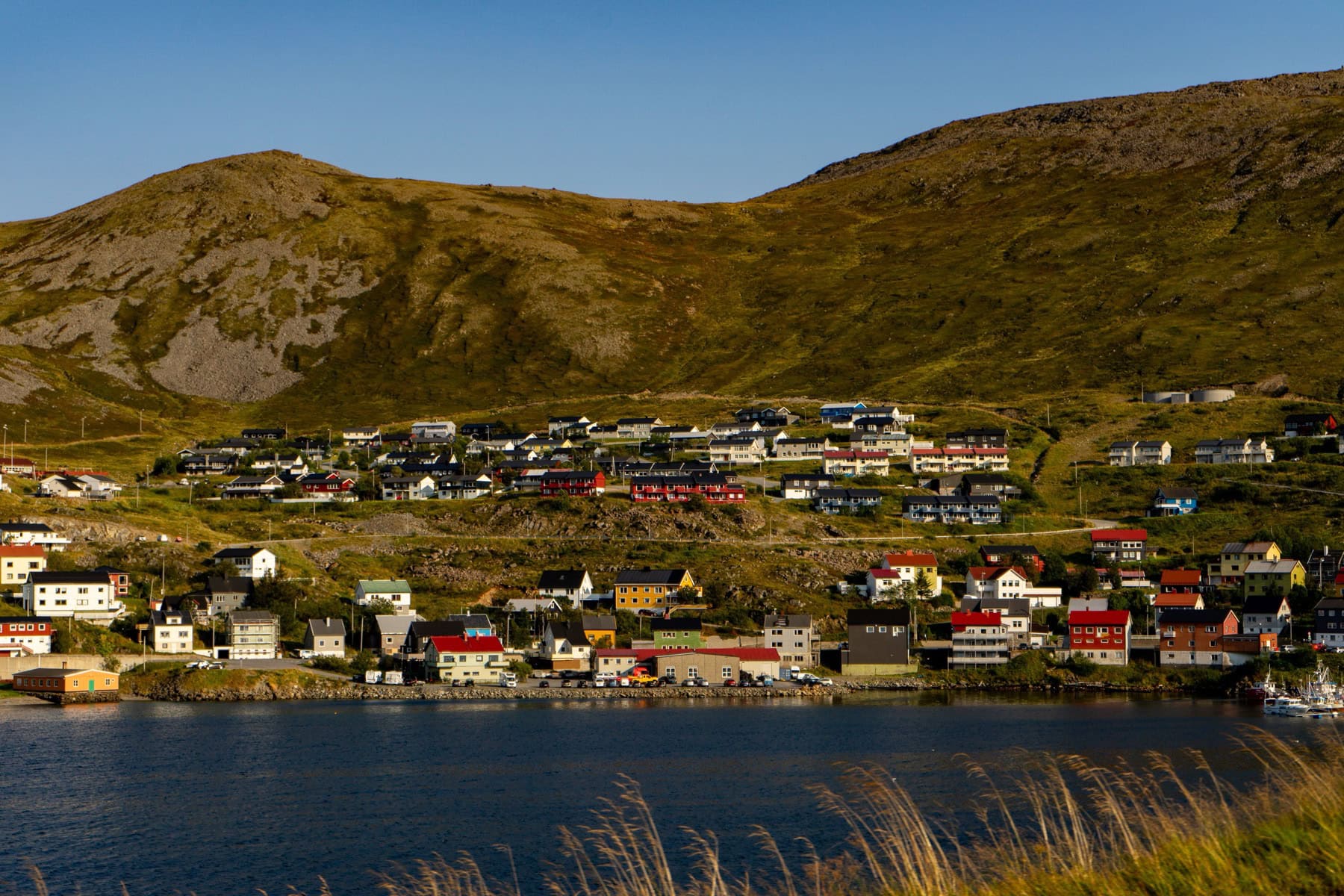
The best strategic choice for accommodation is undoubtedly the harbour town of Honningsvåg, which lies about half an hour’s drive from the cliff itself. Here you’ll find not only grocery shops and petrol stations, but above all a solid selection of hotels offering a welcome refuge after a windy day on the coast. Prices for a night for two people usually range between 1,400 and 2,400 NOK, which works out at roughly €120 to €210, so it pays to book your stay well in advance through Booking.
If you’re after comfort right by the water, Scandic Bryggen is an excellent option right by the harbour, where you can watch the ships sailing past and you’re just a short walk from the centre. For those who prefer a cosier atmosphere and stylish design, I’d recommend the smaller The Duke Boutique Hotel, which travellers rave about for its great breakfasts and personal service. And if you’d rather be closer to nature and are travelling on a smaller budget or with your own tent, take a look at Nordkapp Camping, which sits closer to the cape itself and also rents out classic Norwegian cabins.
On the roof of Europe: 8 things to see and do
The island of Magerøya isn’t just about one single cliff — it offers a whole host of fascinating spots that would be a shame to skip on a quick visit. Let’s take a look at the eight most interesting places and activities you should slot into your plans to get the absolute most out of your trip to the far north.
I’ll show you how to dodge the crowds at the main attractions, where to find the best views over the wild ocean, and why it’s worth exploring the more remote corners of the island too.
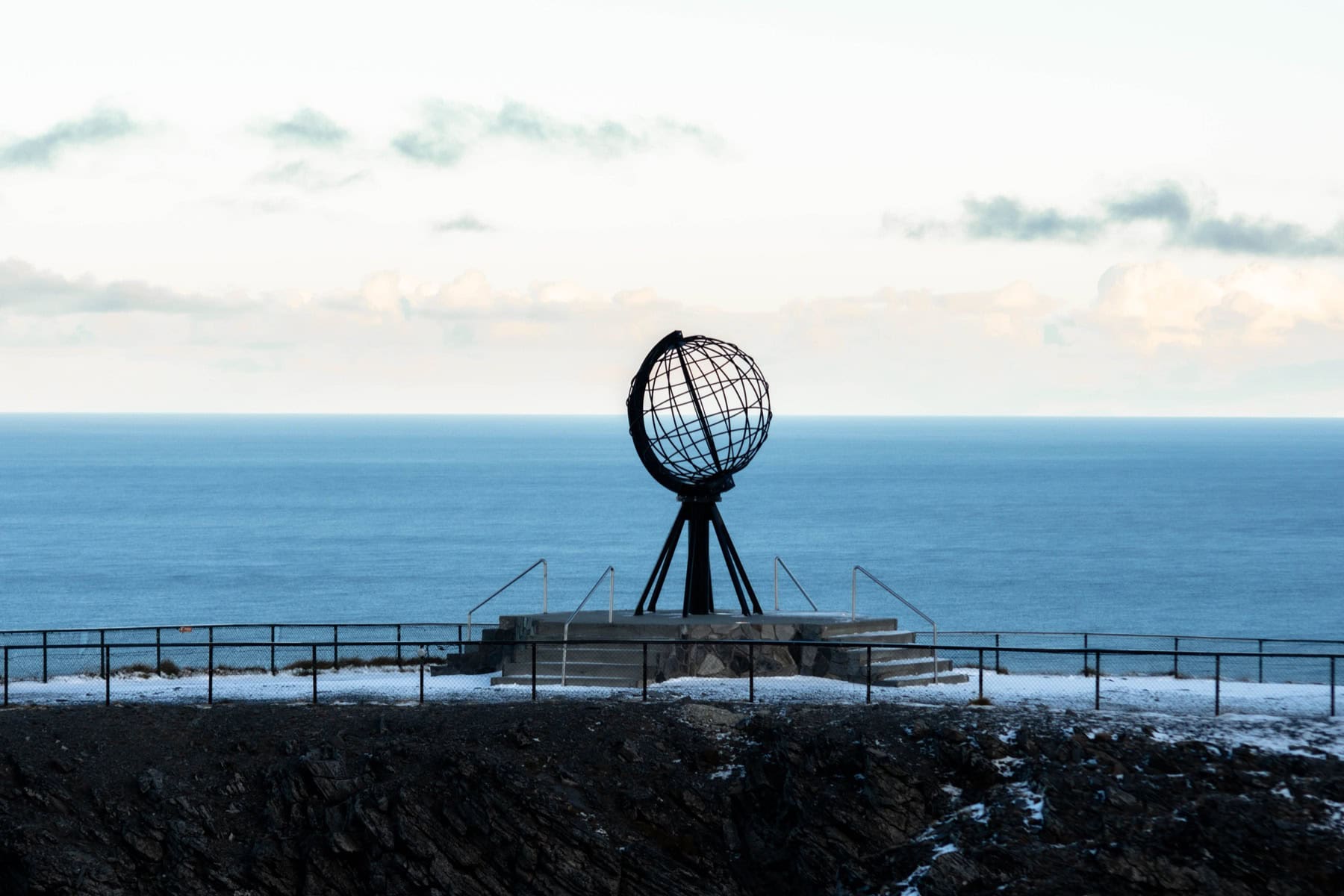
1. The Nordkapp cliff and the famous globe
The Nordkapp headland itself is where the steps of absolutely every visitor lead, and it’s no wonder — standing on the edge of a cliff that drops 307 metres straight down into the sea is an incredible feeling. The main point of interest here is the large steel globe dating from 1978, which everyone longs to get a photo beside, so in high season fairly decent queues form. The views over the endless Arctic Ocean are phenomenal, and on a clear day you feel as though you could see all the way to Svalbard.
Just a short walk from the globe you definitely won’t miss the Children of the Earth monument, created in the late 1980s and made up of seven large circular reliefs designed by children from different corners of the world. 💡 Tip: If you want to avoid the biggest crowds from the cruise ships, come here early in the morning or, conversely, very late in the evening, when the car park thins out a little and you can soak up the roar of the wind and the crashing waves in relative peace.
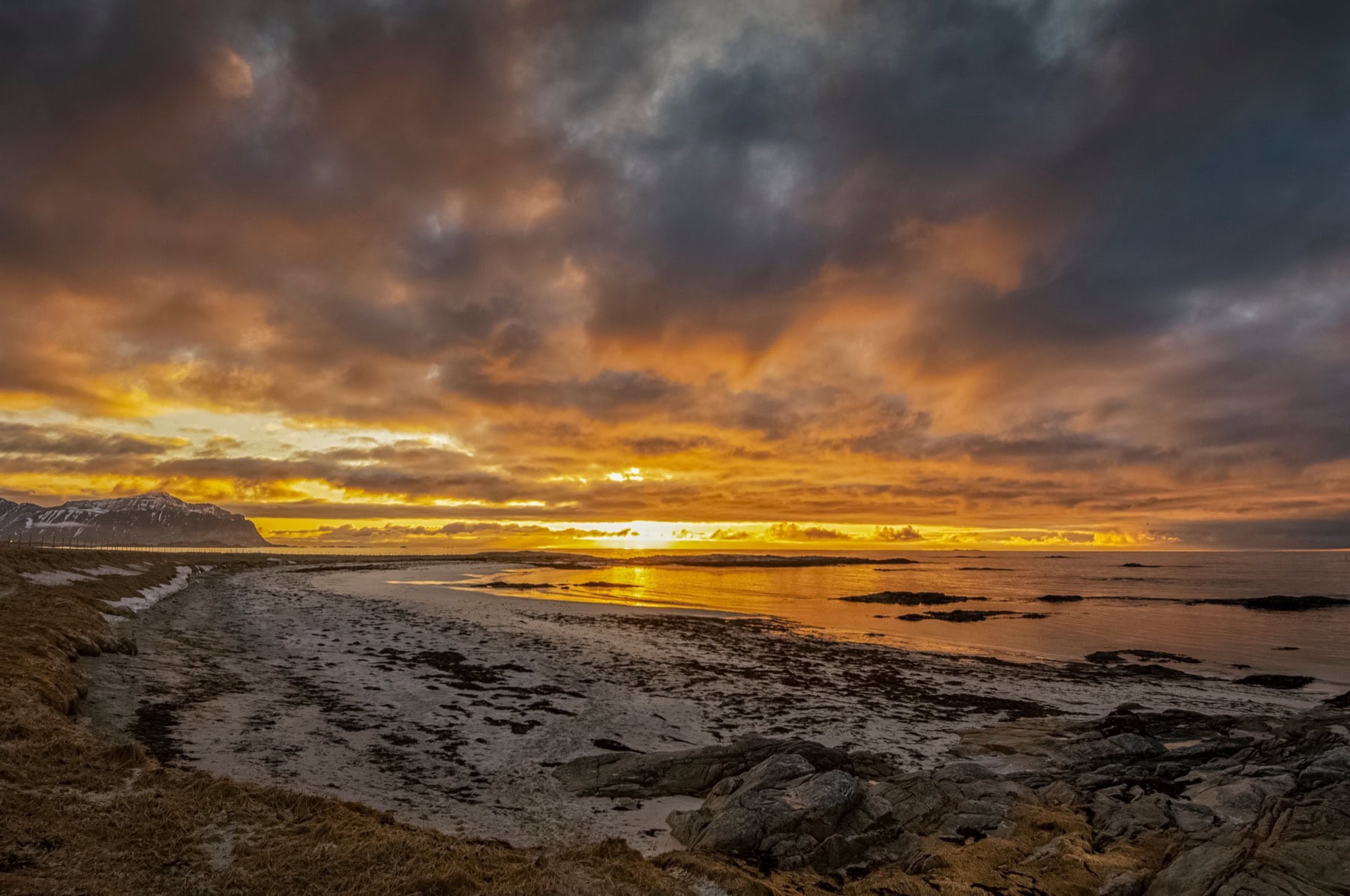
2. The midnight sun over the Arctic Ocean
Seeing the sun sink right down to the horizon at midnight, painting the sky in unbelievable shades of gold and red, and then start to climb again, is probably the single biggest reason people come here in summer. You can watch this natural phenomenon roughly from mid-May to the end of July, and believe me, it will completely throw off your body clock. People wander along the cliffs at midnight, sipping coffee from flasks, and the atmosphere is full of a strange, quiet euphoria.
The catch is that Nordkapp is notorious for its highly changeable weather, so you never have a hundred percent guarantee that you’ll see the sun through the fog and clouds at all. Travellers often recommend setting aside at least two or three nights for the area to boost your chances of a clear sky — because when the clouds part and golden light floods the ocean, it’s a sight you’ll never forget for the rest of your life.
3. The Nordkapphallen visitor centre
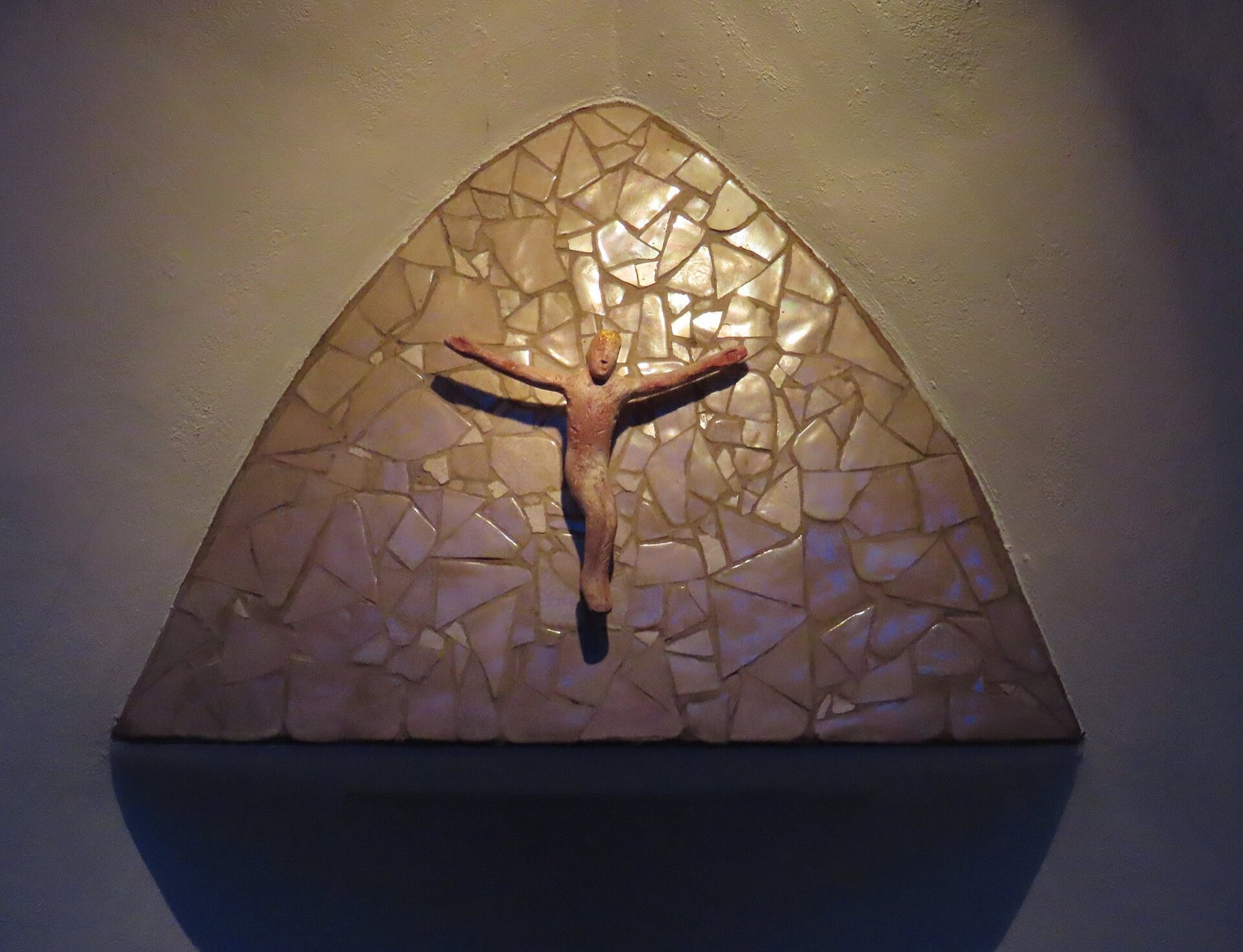
Right on the cliff sits the large Nordkapphallen visitor centre building, partly built into the rock, which serves as a shelter from the harsh Arctic weather. Inside you’ll find a panoramic cinema showing a beautiful film about the changing of the four seasons on the island, an extensive souvenir shop, a café with huge windows, and even a small ecumenical chapel of St John, the northernmost in the world. It’s the perfect place to warm up if a gale is raging outside or freezing rain is falling.
The sticking point, however, is the entrance fee, which runs at around 300 to 350 NOK per person (roughly €26 to €30) and officially includes entry to the building and parking. Under Norway’s freedom-to-roam laws, access to the cliff and globe themselves should be free if you arrive on foot or by bike, but the operators of the site collect this fee at the entrance gate for all vehicles, which occasionally sparks heated discussions among travellers.
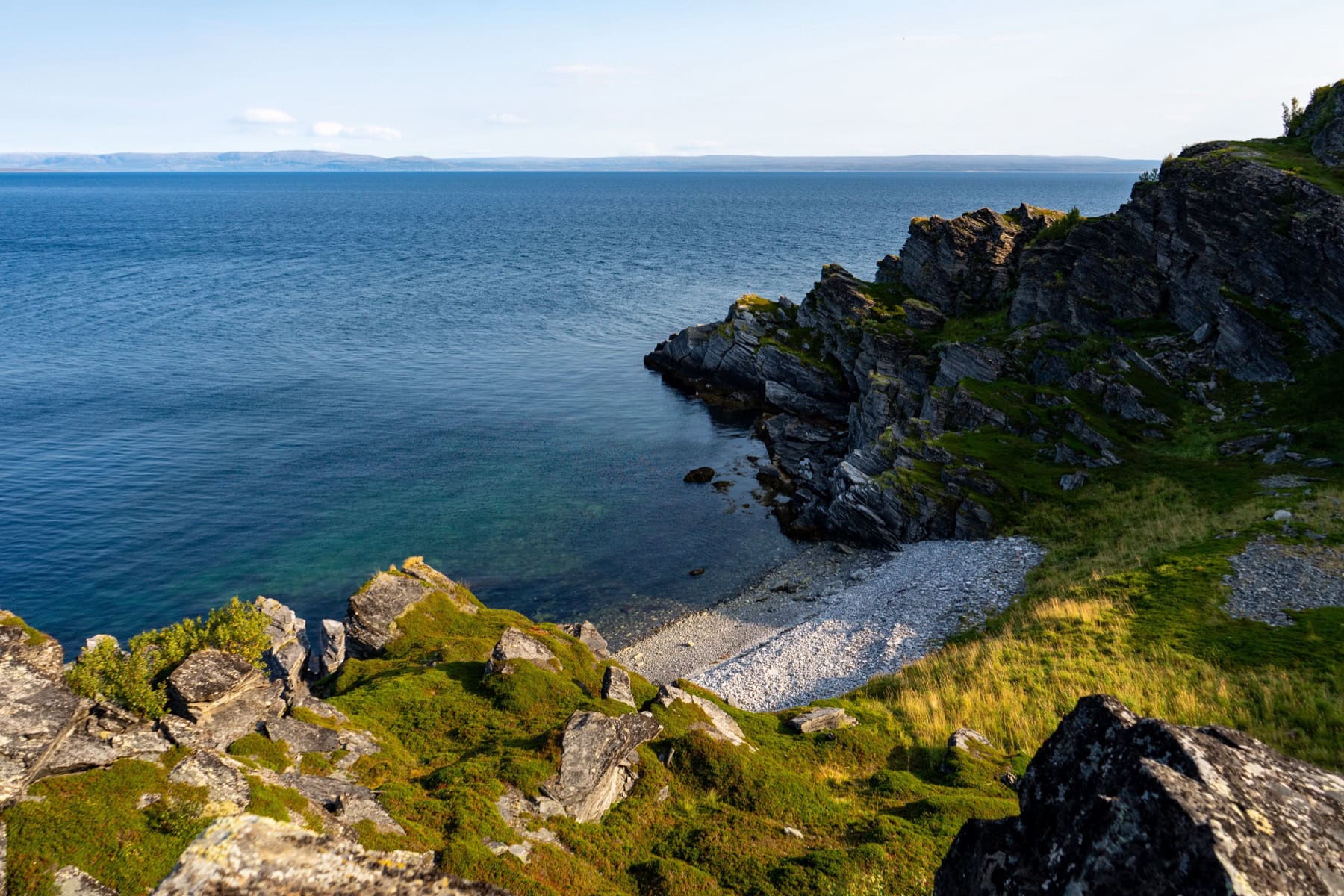

4. The hike to Knivskjellodden (the truly northernmost point)
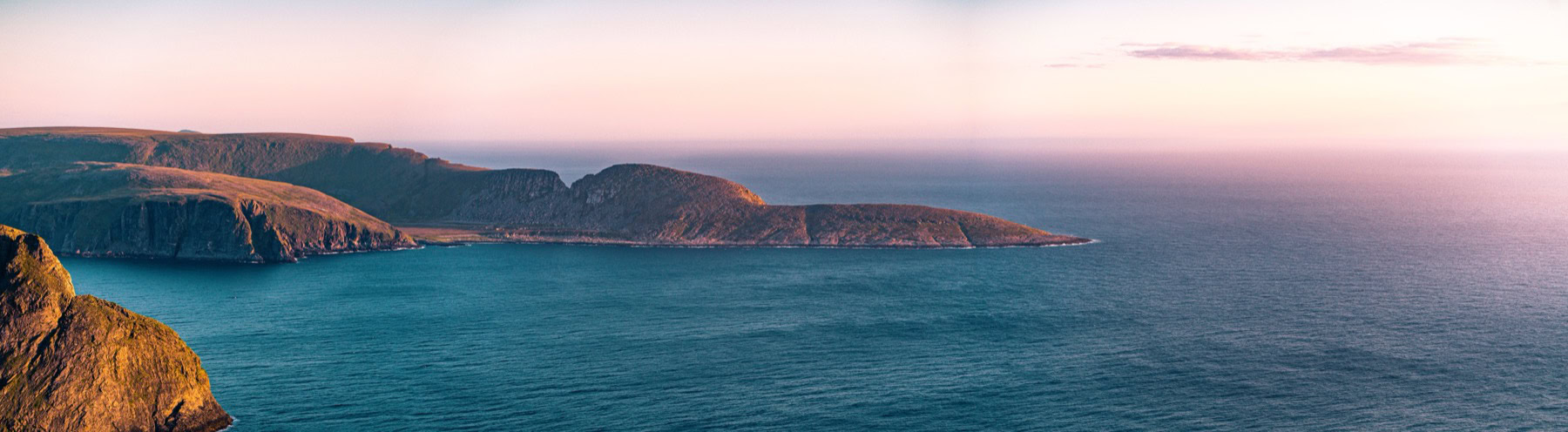
Here comes the big geographical catch of the whole area, because famous Nordkapp isn’t actually the very northernmost point of Europe. That title belongs to the neighbouring, much flatter headland of Knivskjellodden, which reaches into the sea about a kilometre and a half further north — but there’s no road leading to it and you can only get there on your own two feet. If you love hiking and want to stand on the truly last scrap of mainland, this is the trek for you.
The route starts at a small car park by the road about seven kilometres before Nordkapp, and you’re looking at roughly 18 kilometres of walking there and back, which will take you five to seven hours of actual walking time. The path leads across stony Arctic terrain, marked by stone cairns, and at the very end you’ll find a small monument where you can sign your name — plus you’ll have an amazing view of the majestic Nordkapp cliff from a completely different perspective, entirely free of charge and without the crowds.
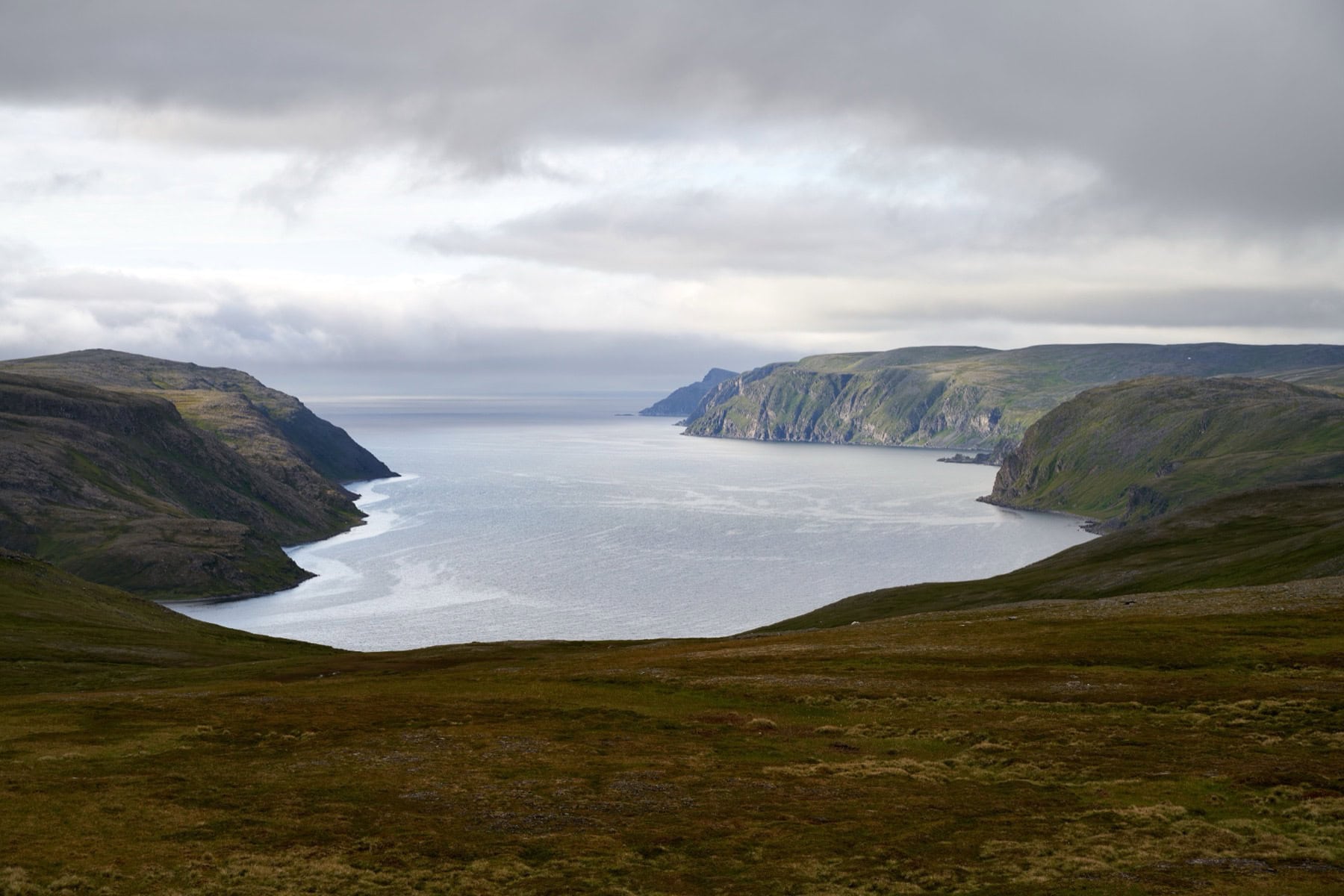
5. Magerøya island and the subsea tunnel
The journey to Nordkapp is itself a huge adventure, because the island of Magerøya is connected to the mainland by an impressive feat of engineering. From the mainland town of Olderfjord, the E69 road takes you all the way to the Nordkapptunnelen tunnel, which descends an incredible 212 metres below sea level and measures almost seven kilometres. Driving through the tunnel is a little eerie, your ears will pop from the steep descent and climb, but it gives you that genuine sense of travelling to the end of the world.
As soon as you emerge from the tunnel onto the island, you’re greeted by a harsh, almost lunar landscape without a single tree, because you’re high above the tree line. The road winds across barren plains, passes dark lakes and cuts into the cliffs above the sea, so driving around the island demands your full attention — but it also offers views that will make you want to stop at every layby.
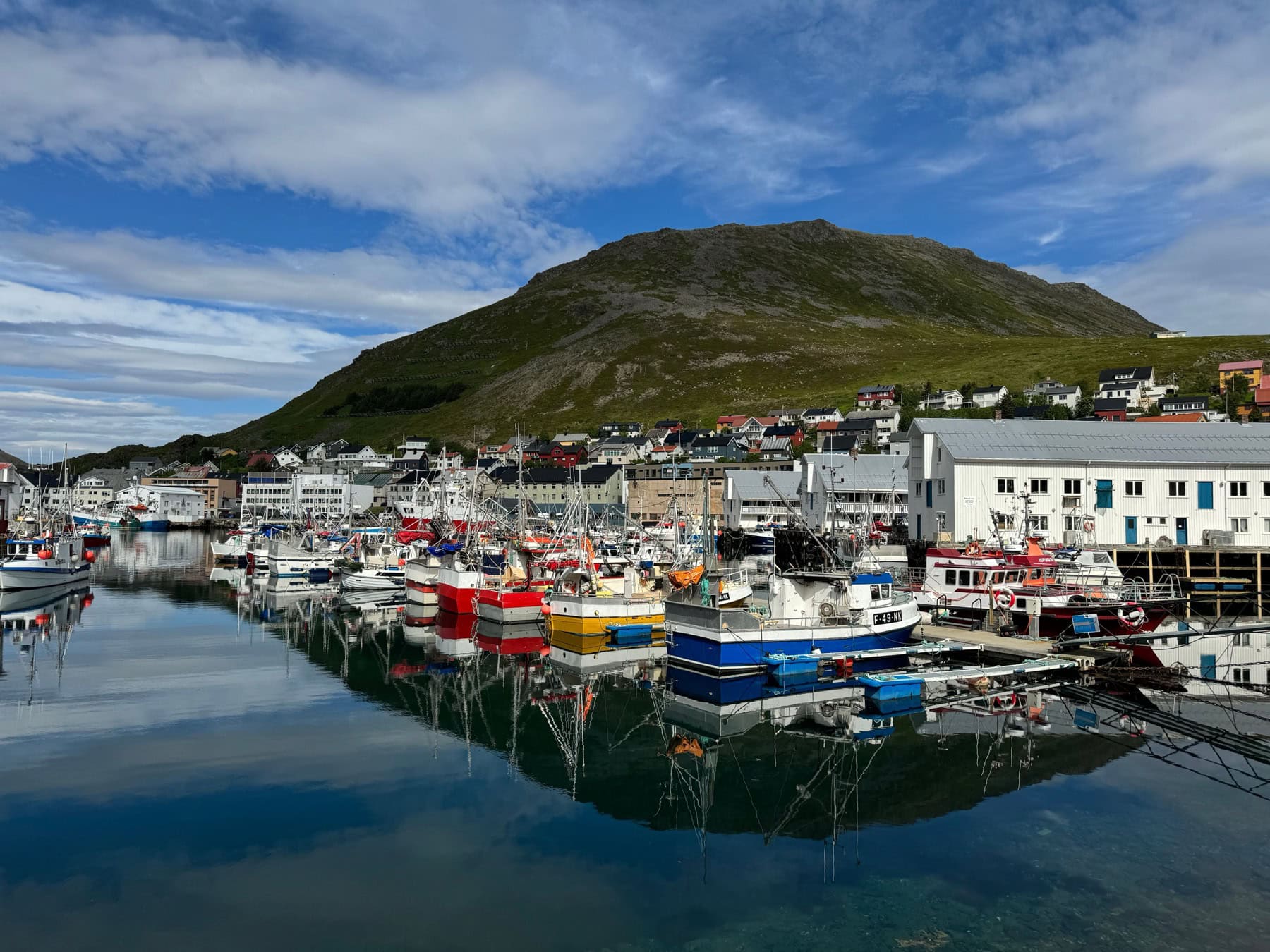
6. Honningsvåg as the ideal base
Honningsvåg proudly boasts the title of Norway’s northernmost town, and although it’s more of a large fishing village with just under three thousand inhabitants, it works as the perfect starting point for exploring the island. The town lies in a sheltered bay, its colourful wooden houses reflected in the surface of the harbour, and you’ll find all the infrastructure you need here, from supermarkets to pleasant cafés where you can hide from the bad weather.
What’s more, the ships of the famous Hurtigruten coastal route call in here every day, which always briefly brings the streets to life with dozens of tourists boarding buses bound for Nordkapp. The local Nordkappmuseet museum is well worth a visit too, beautifully documenting the hard life of fishermen in the far north, the history of coastal shipping, and the harsh events of the Second World War, when the area was almost razed to the ground.
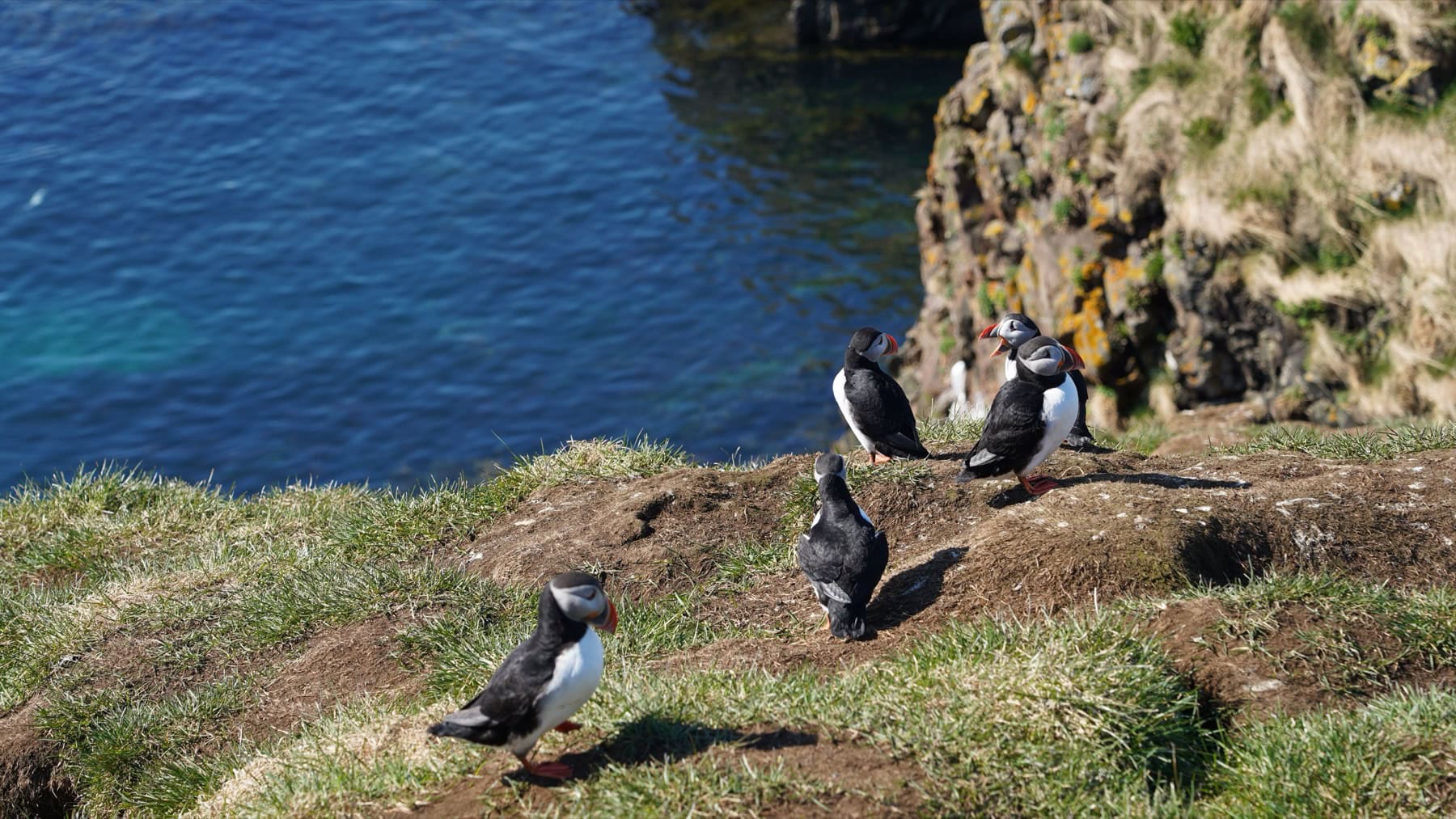
7. The Gjesvær bird cliffs and Sámi reindeer herds
If you love wild nature, you mustn’t skip the detour to the picturesque fishing village of Gjesvær on the western side of the island, from where small boats set sail to the Gjesværstappan nature reserve. This cluster of little islets is home to enormous colonies of seabirds — in season, hundreds of thousands of adorable puffins with their colourful beaks nest here, along with majestic gannets, white-tailed eagles and various species of auk. These boat trips can be easily booked, for example through GetYourGuide, and they’re probably the best wildlife experience in the area.
But animals will keep you company even during ordinary driving around the island, because Magerøya serves as a summer pasture for thousands of reindeer, which local Sámi people bring over from the mainland every spring. The reindeer roam completely freely across the bare plains, very often wander right onto the road, and aren’t the least bit fazed by passing cars — so drive really carefully and always keep your camera close to hand.
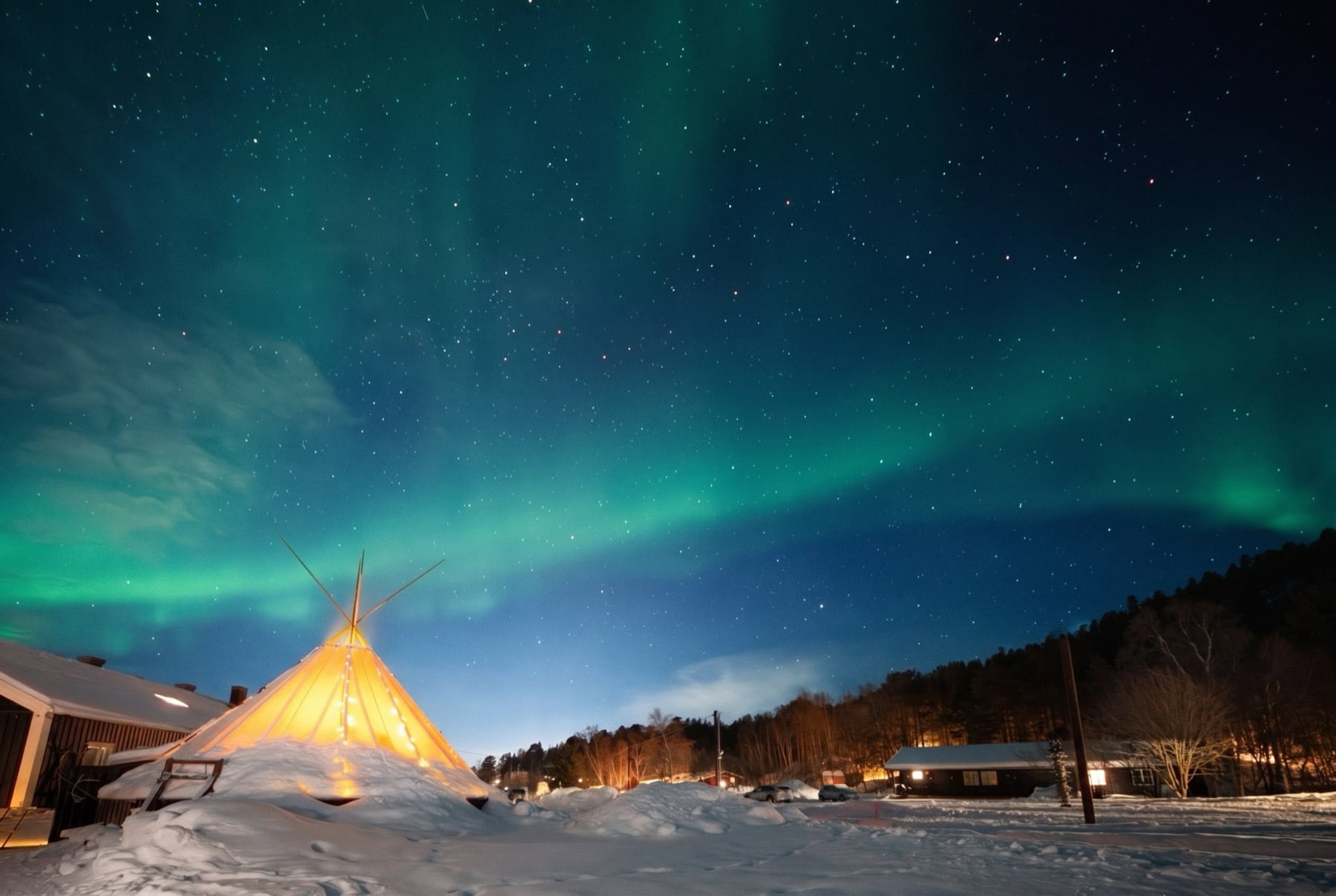
8. The northern lights and harsh winter beauty
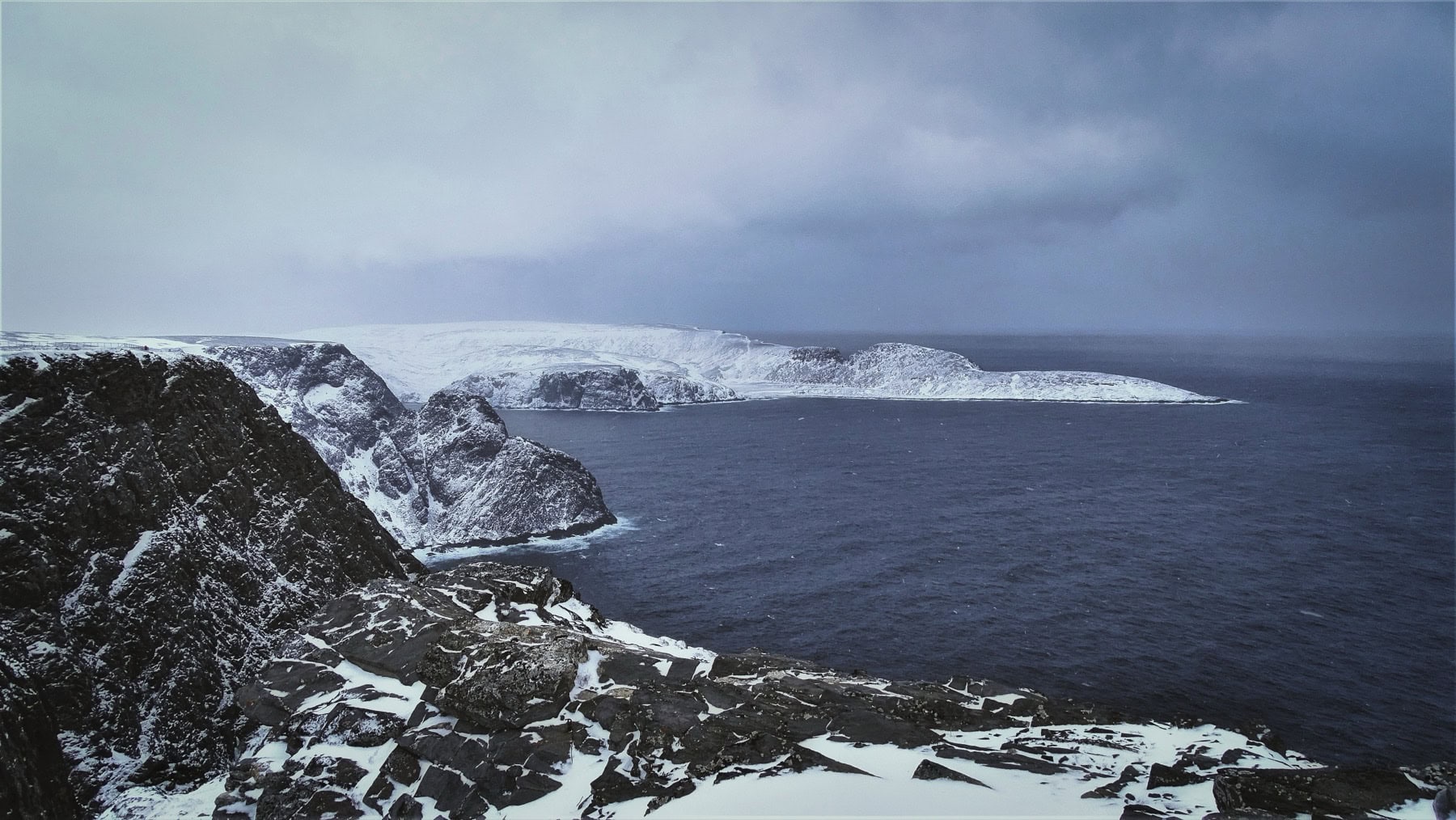
While summer belongs to the midnight sun, the winter months from September to March dress Nordkapp in a completely different, darker and no less fascinating coat. Because you’re deep within the Arctic Circle, it’s an absolutely fantastic place for watching the northern lights, which dance across the sky here in green and purple ribbons of incredible intensity. The Arctic winter has its own unmistakable charm — snow-covered cliffs contrast with the dark ocean and the sky is full of stars.
A winter trip does require far more planning, though, because access to the cape itself is often very limited due to snowstorms. The final stretch of road from the junction at Skarsvåg is frequently closed and can only be driven at set times in a special convoy, when your car has to follow a large snowplough. It’s a huge adrenaline rush and an experience in its own right, but don’t forget to check the current road conditions on the Norwegian Public Roads Administration websites.
Where to go next from Nordkapp
The north of Norway is enormous and the distances between individual sights might surprise you, but once you’ve come all this way, it’s worth exploring the other gems beyond the Arctic Circle too. If you’re planning a longer road trip, be sure to get inspired by our big article Norway: 50 things to see, where you’ll find plenty of practical advice for the whole country.
From Honningsvåg there’s a wonderful option to continue south by sea, because the ships we describe in detail in our guide Hurtigruten — cruising the coast stop here. By boat or a longer drive you can then reach the lively Arctic metropolis you can read about in our article Tromsø — the gateway to the northern lights. And if you’re craving the most photogenic mountains rising straight from the sea, head even further south and explore our piece What to see in Lofoten (the big guide).
Frequently asked questions
How much does entry to Nordkapp cost?
The visitor center Nordkapphallen entrance costs approximately 300 to 350 NOK, which includes the cinema, exhibitions, and parking fee. According to Norwegian law, access to the cliff itself should be free for pedestrians, but the fee is collected at the entrance gate for all arriving cars.
Is Nordkapp really the northernmost point of Europe?
Geographically speaking, it’s not. Nordkapp is the most famous and northernmost point accessible by car, but the actual northernmost mainland promontory of the continent is the nearby cape Knivskjellodden. It lies even further north, but you can only reach it via a fairly long hike through the Arctic tundra.
How to get to Nordkapp?
Most travelers come here by car along the E69 highway, which runs through an impressive undersea tunnel connecting Magerøya island to the mainland. Another very popular option is to arrive on board the Hurtigruten ships to Honningsvåg and from there take a bus, or alternatively you can use the local airport.
When is the best time to visit?
If you want to see the famous midnight sun and experience open roads, head out in summer between mid-May and the end of July. For Northern Lights hunters, winter is ideal, but you need to be prepared that the journey to the cape can be challenging due to snow and takes place in convoys.
Will I see the midnight sun here?
Yes, if you arrive here roughly between May 14th and July 29th, the sun doesn’t set below the horizon at all during this time. However, you need to be a bit lucky with the weather, because Nordkapp is notorious for frequent fog and low cloud cover, which can obscure the view of the sun.
Where is the best place to stay overnight?
The most practical base is the small town of Honningsvåg, where you’ll find excellent hotels like Scandic Bryggen or The Duke Boutique Hotel, as well as plenty of restaurants. If you want to be closer to the cliff itself and don’t mind simpler conditions, you can use the cabins or tent sites at Nordkapp Camping.
What else to do in the area?
Besides the cliff itself, I definitely recommend taking a boat trip from the village of Gjesvær to the bird cliffs, where hundreds of thousands of puffins and guillemots nest. You can also head out on a trek to the truly northernmost point, Knivskjellodden, or simply watch herds of reindeer grazing freely along the roads throughout the island.
Tips and Tricks for Your Vacation
Don’t Overpay for Flights
Search for flights on Kayak. It’s our favorite search engine because it scans the websites of all airlines and always finds the cheapest connection.
Book Your Accommodation Smartly
The best experiences we’ve had when looking for accommodation (from Alaska to Morocco) are with Booking.com, where hotels, apartments, and entire houses are usually the cheapest and most widely available.
 🚗 Car rental on the roadVerified rental cars in Norway
Search with the DiscoverCars comparison engine — it compares prices from dozens of local and international rental companies, and most bookings come with free cancellation.
Compare car prices in Norway →Don’t Forget Travel Insurance
Good travel insurance will protect you against illness, accidents, theft, or flight cancellations. We’ve had a few hospital visits abroad, so we know how important it is to have proper insurance arranged.
Where we insure ourselves: SafetyWing (simple monthly subscription) and TrueTraveller (for extra-long trips).
Find the Best Experiences
Get Your Guide is a huge online marketplace where you can book guided walks, trips, skip-the-line tickets, tours, and much more. We always find some extra fun there!
More from Norway
Full guide → PricesHow Much Does a Trip to Norway Cost: Prices and 8 Tips to Save in 2026
 What to seeLongyearbyen, Svalbard: 12 Things to See in the World’s Northernmost Town
 ItineraryNorway in a Nutshell DIY: Route, Prices & Booking 2026
 When to goHow to Get to Svalbard, Norway: Flights, Documents & When to Go in 2026
 What to seeSognefjord and Nærøyfjord: What to See at Norway’s Longest Fjord in 2026


