Norway might not be kind to your wallet, but one thing is certain: every penny spent on this natural wonder is worth it. If you’re hunting for the best places in Norway, get ready for deep fjords carved between sheer cliffs, mountains plunging straight into the sea and raw Nordic scenery that will completely swallow you up. Be prepared to pull the car over every few kilometres with your jaw on the floor, because the views are simply unbelievable.
Whether you dream of standing on the famous Pulpit Rock with a view down into the abyss, or you’re drawn to the magical northern lights dancing over snow-capped peaks, Norway has something amazing and fresh for everyone. Travelling across this vast country takes a bit of planning, mainly because of the distances and changeable weather, but the result is more than worth the effort.
A serious dose of inspiration awaits. We’ll cover not only the most famous draws but also the more hidden gems, iconic hikes and charming little towns so you can put together an itinerary exactly to your taste. We won’t forget practical advice on budgeting either, because saving a few quid always comes in handy in pricey Norway.
TL;DR
- Fjords are the foundation: Geirangerfjord and Nærøyfjord can’t be missing from any summer itinerary — they’re absolute natural one-offs.
- Hikes for everyone: Preikestolen can be done in half a day, while Trolltunga demands a full day of effort and excellent fitness.
- Expensive, but worth it: Brace yourself for high prices for food and alcohol; you’ll save the most by shopping at Kiwi or Rema 1000 supermarkets.
- The weather is unpredictable: Layering is key even in the middle of July, because sunshine can turn into a cold downpour in five minutes.
- Travelling by car is ideal: Renting a car gives you the freedom to stop at viewpoints — just budget for tolls and the many ferries.
- The north calls in both winter and summer: Hunt the northern lights from September to March, while you’ll experience the midnight sun in the north around late June and early July.
The full destination guide: Norway — guide and what to see
When to visit Norway
If you’re drawn to green fjords, hiking and boat trips, the best time to visit is undoubtedly the Norwegian summer from June to August. During this period all the mountain passes are open, including the famous Trollstigen, and in the north you can experience the fascinating midnight sun. Just bear in mind this is peak season, so accommodation prices soar and you’ll meet the most tourists at the well-known spots.
For lovers of winter pursuits and northern lights hunters, on the other hand, it’s ideal to head out from late September to March, when the nights grow longer and the sky puts on its most beautiful light show. Shoulder months like May or September are a great compromise, when you avoid the biggest crowds; in spring you’ll also see the gorgeous blossoming orchards around Hardangerfjord.
Where to stay in Norway
💡 Accommodation and experience tip: We like to look for accommodation on Booking.com, which usually has the best cancellation conditions. Tickets, tours and activities are then best compared and booked through GetYourGuide.
Finding a bed in Norway can be quite a puzzle, because capacity in the summer season disappears unbelievably fast and prices climb to astronomical heights. A very popular and more affordable option is campsites, where you can rent a small wooden cabin called a hytte, which usually costs around €18 to €45 a night. For mountain lovers it pays to become a member of the Norwegian Trekking Association (DNT), which gives you access and discounts at the network of mountain cabins scattered across the country.
If you prefer the comfort of hotels and apartments, definitely book your accommodation through Booking several months in advance, especially if you’re heading to the fjord region or the north. In the big cities, prepare for amounts from €130 to €220 for a double room, while on the coast you’ll happily pay even more for the romantic fishermen’s cabins called rorbu.
Here are a few specific tips on where to lay your head so you really enjoy your holiday:
- Oslo: The beautiful and modern Clarion Hotel The Hub sits right in the centre near the station and offers a fantastic breakfast and a rooftop bar.
- Bergen: A great location near the historic centre is offered by Thon Hotel Orion, just a few steps from the old Hanseatic houses.
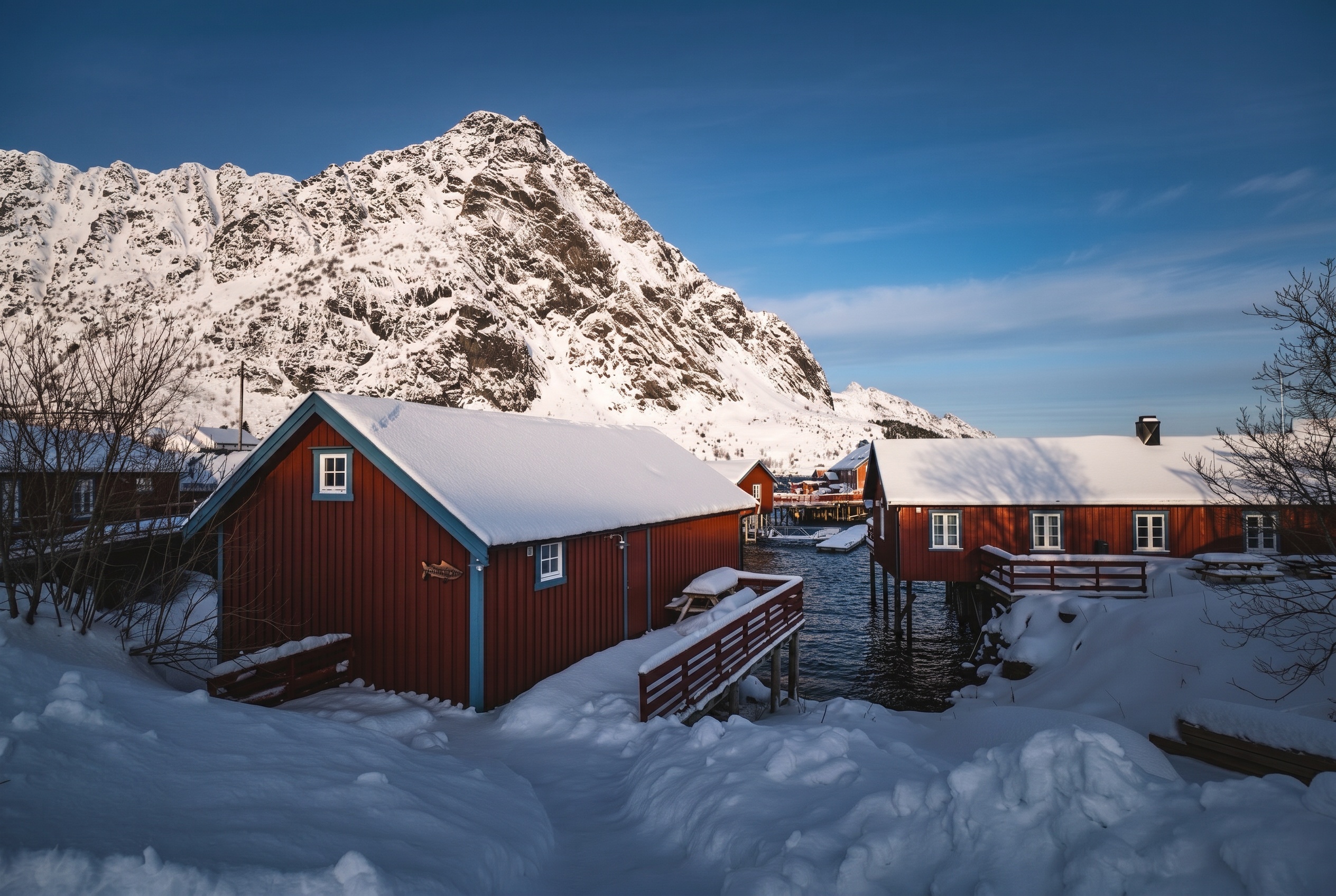
- Lofoten: For a truly authentic experience, try the famous red cabins of Eliassen Rorbuer in the village of Hamnøy, where you’ll find the most beautiful views.
- Tromsø: An excellent base for northern lights hunting is the Radisson Blu Hotel, which sits by the harbour where most organised tours depart from.
- Geiranger area: If you want to treat yourself to a little luxury with a fjord view, head to the iconic Hotel Union Geiranger, which also has a gorgeous spa.
Norwegian fjords
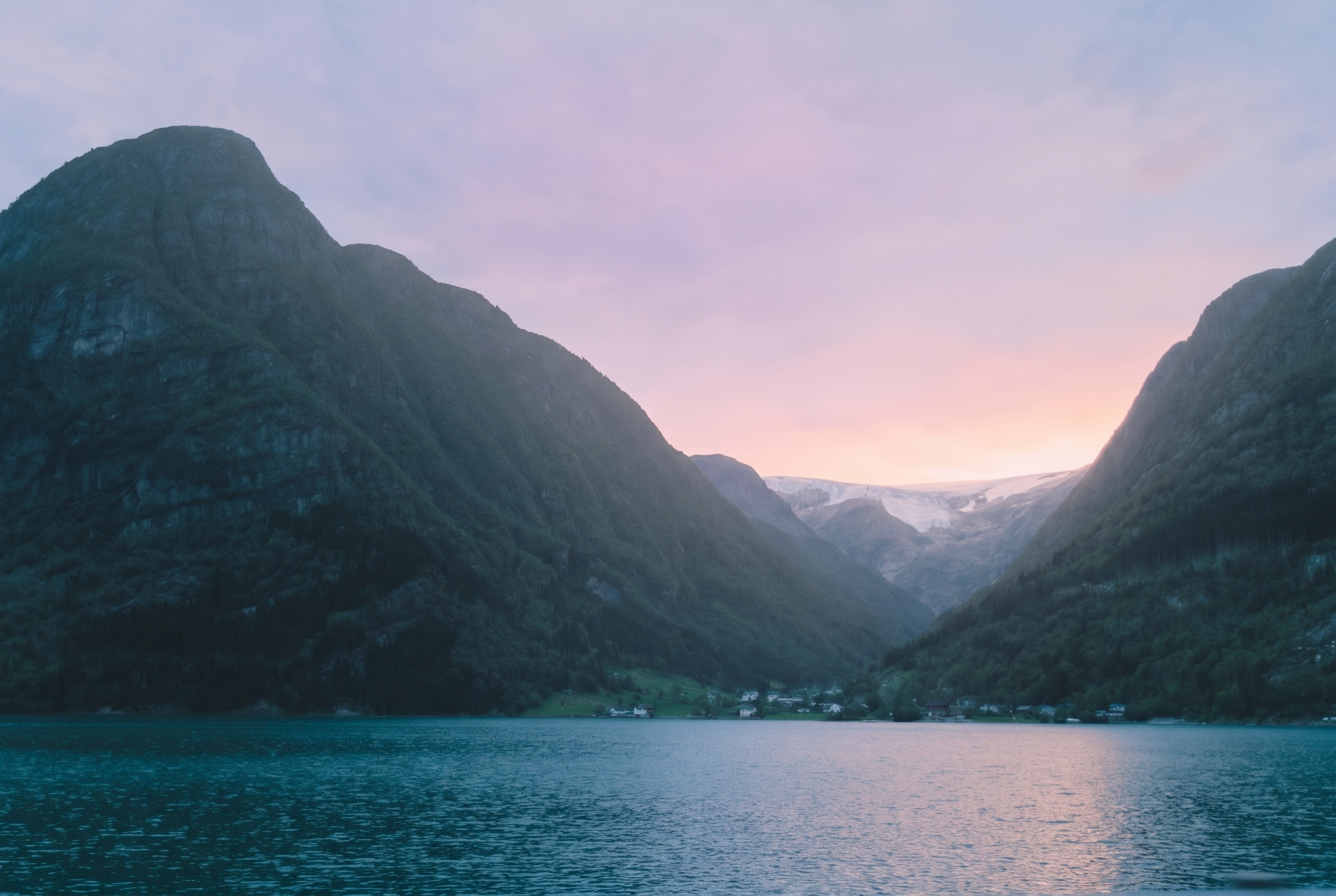
The Norwegian fjords are the main reason most people come here, and it’s no wonder. These deep arms of the sea, carved between thousand-metre sheer walls, rank among the most dramatic scenery in the world. Norway has over a thousand of them, and we’ve picked out the very most beautiful that you definitely shouldn’t miss.
1. Geirangerfjord
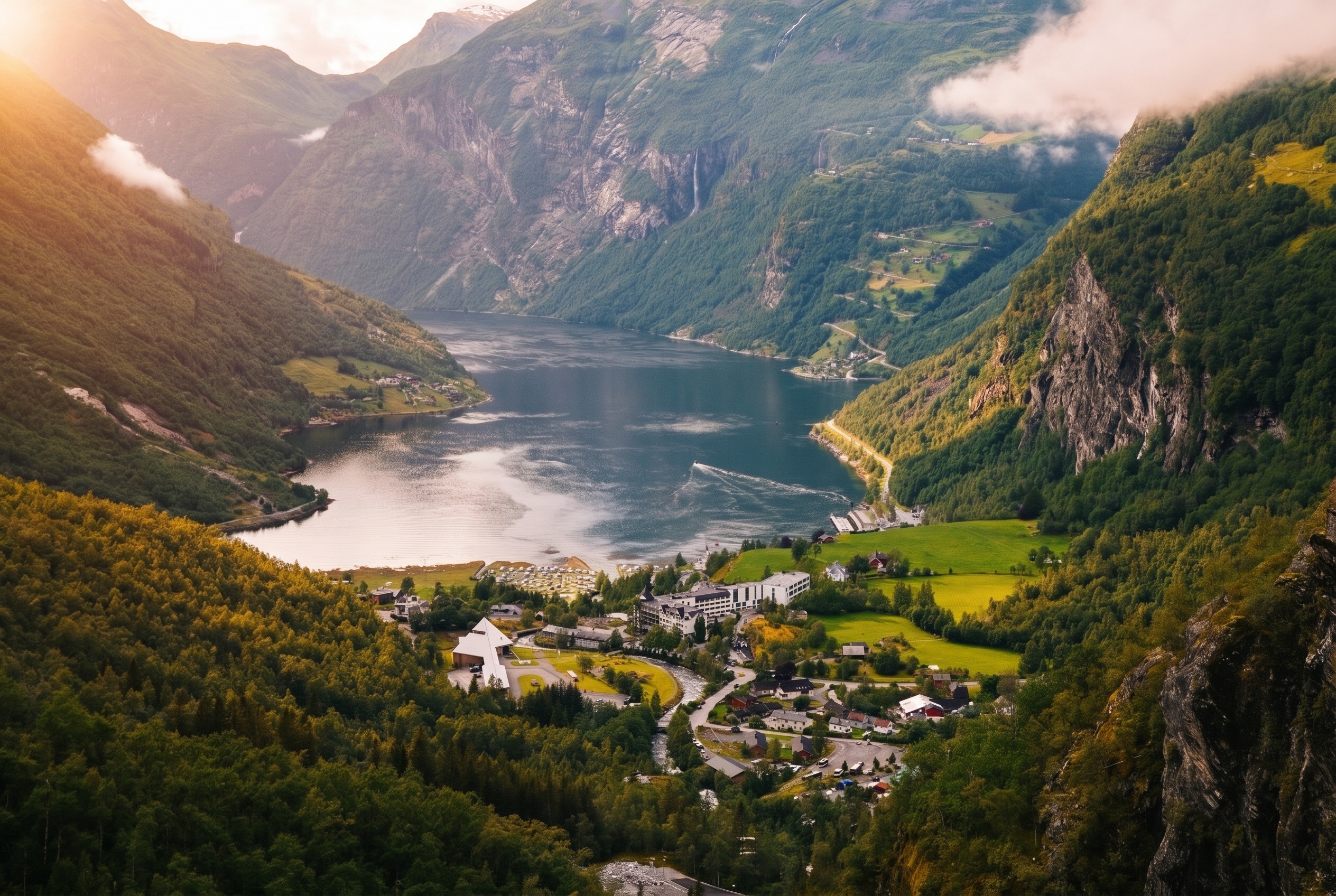
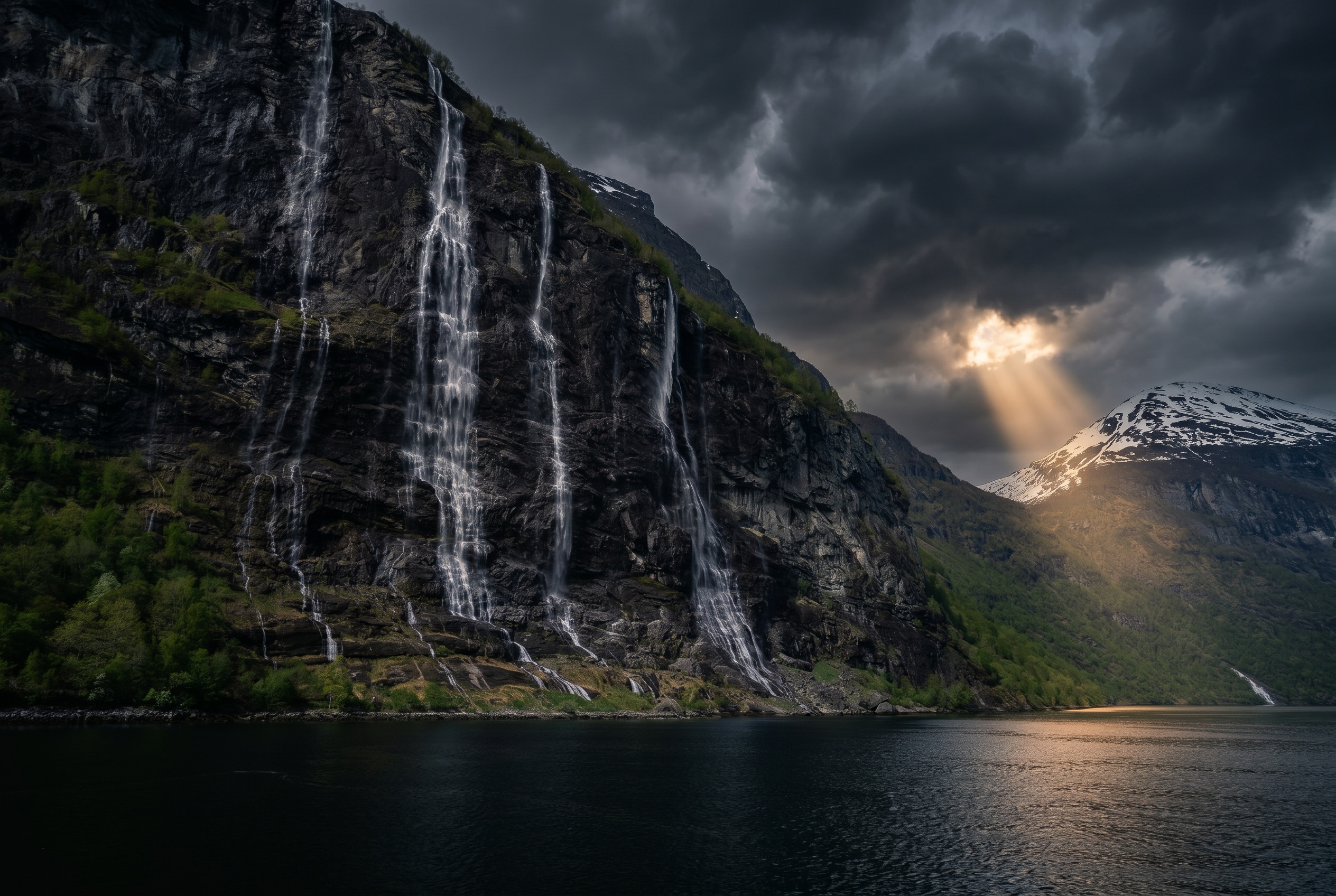
Geirangerfjord is one of those places you simply have to see with your own eyes, and its UNESCO listing doesn’t even capture half of it. The fjord cuts deep inland and huge masses of water tumble from its steep walls, among which the famous Seven Sisters waterfall and the Suitor opposite it stand out. The best view of all this beauty opens up from the Dalsnibba viewpoint, which sits at 1,500 metres and is reached via the toll road Nibbevegen.
As you drive down towards the water, don’t forget to stop at the famous Ørnesvingen hairpins, also known as the Eagle’s Road, where the most famous photos are taken. In summer it does get really crowded, so it pays to set out early in the morning before the crowds arrive from the giant cruise ships, but that view is absolutely worth it. 💡 Tip: You’ll find more detail and practical advice in our article on Geirangerfjord.
2. Nærøyfjord
If you’re looking for something even more dramatic, Nærøyfjord will win you over: it boasts the title of the narrowest fjord in Europe. In some spots it’s just 250 metres wide and the surrounding mountains tower so high above it that you’ll feel utterly tiny in your little boat. It too is rightly on the UNESCO list and offers an unforgettable spectacle of snow-capped peaks and wild waterfalls.
In Gudvangen, which sits at the very end of the fjord, you can visit the fascinating Viking village of Njardarheimr, where you’ll learn plenty about the history and life of the old Norsemen. The best way to explore the fjord is to hop on the ferry to Flåm, which is, by the way, a very popular part of the Norway in a Nutshell package. 💡 Tip: You’ll find more inspiration for exploring this area in our guide to the Norwegian fjords.
3. Sognefjord
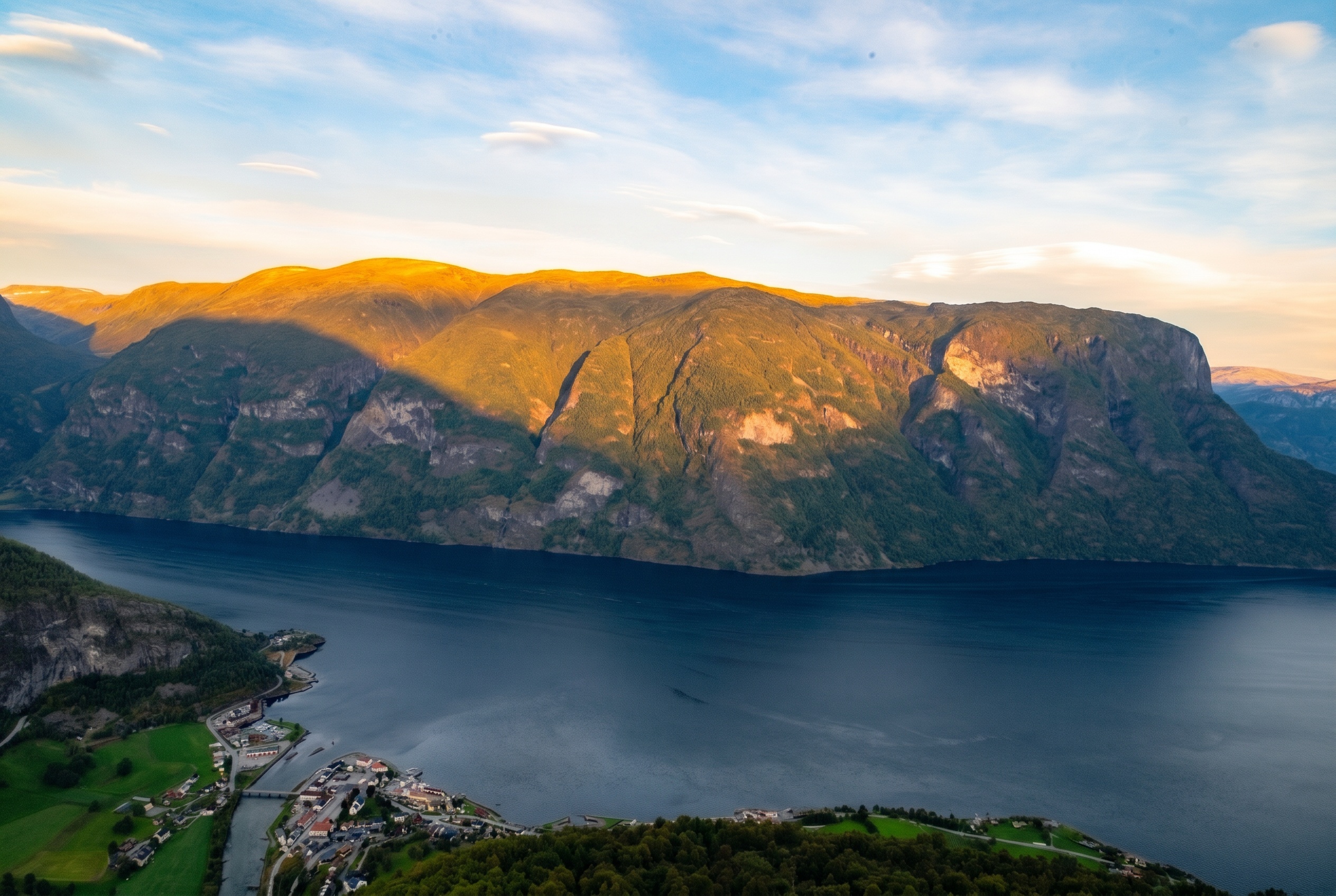
This giant is respectfully nicknamed the King of the Fjords, and no wonder, because it’s the longest and deepest fjord in all of Norway, stretching an incredible 204 kilometres inland. Its depth reaches up to 1,308 metres and it serves as the main artery from which other smaller but all the more picturesque branches split off, such as Nærøyfjord or Aurlandsfjord. Its banks are lined with picturesque villages full of colourful wooden houses, old orchards and historic monuments.
The area around Sognefjord is an absolutely ideal base for exploring old stave churches, the glacier tongues of Jostedalsbreen National Park, or for riding the famous Flåm Railway. Most tourists head here in summer, when the days are long and the nature around the water glows a rich green. 💡 Tip: Be sure to plan a stop in the town of Lærdal, known for its well-preserved historic centre with traditional wooden architecture.
4. Aurlandsfjord and the Stegastein viewpoint
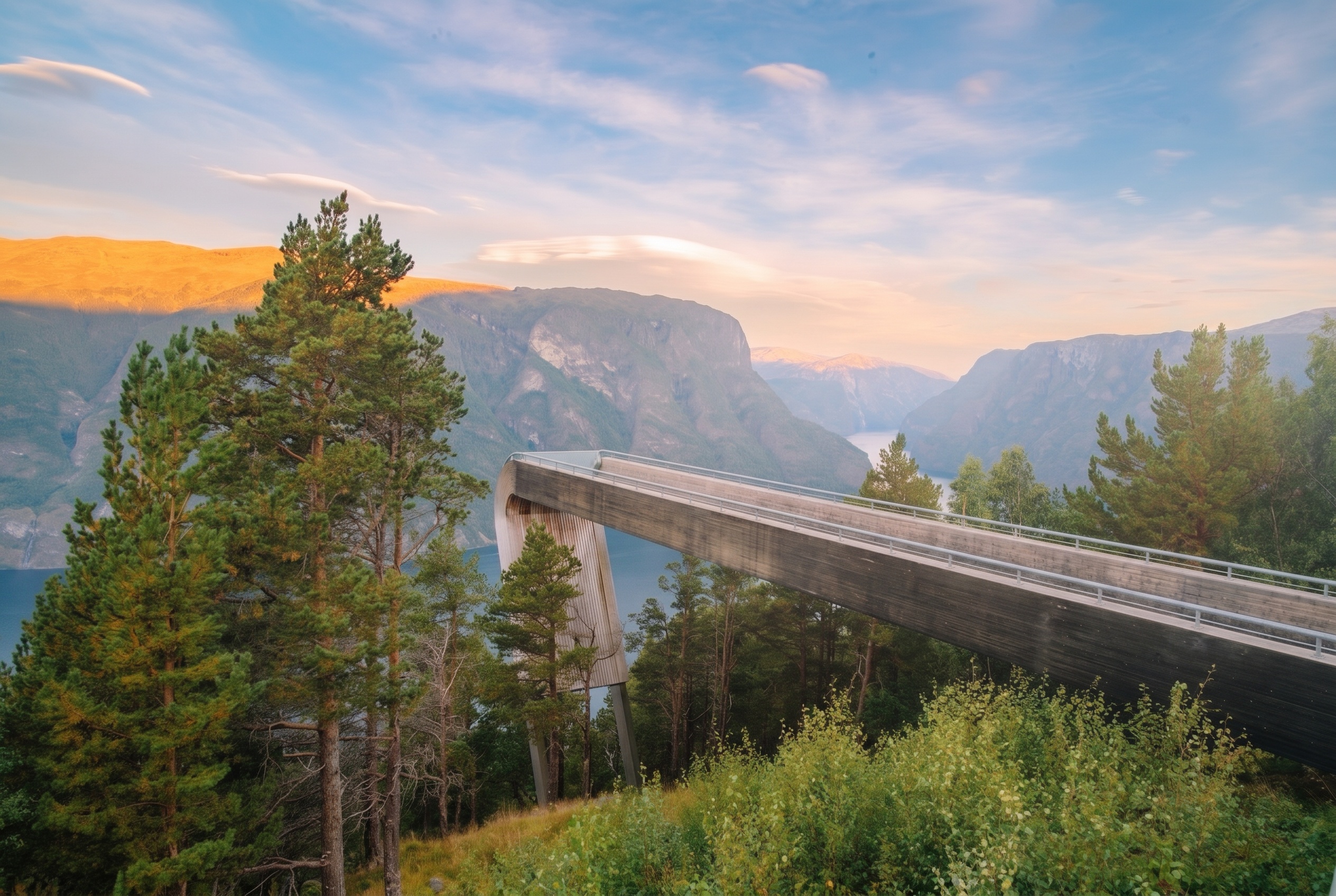
Aurlandsfjord is one of the most picturesque arms of Sognefjord, and its calm surface surrounded by majestic mountains looks like a perfect picture postcard. The biggest draw of this area is undoubtedly the architectural gem of the Stegastein viewing platform. This elegant wooden structure juts 30 metres out into the void at a height of 650 metres above the fjord and ends in nothing but transparent glass, guaranteeing a real adrenaline experience and views you’ll never forget.
You reach the viewpoint along a narrow, winding road from the town of Aurland, which flows seamlessly into the famous mountain route Aurlandsvegen, also known as the Snow Road. As the name suggests, even in midsummer high snow barriers often line the road, creating a completely surreal contrast with the blooming valleys down by the water. 💡 Tip: If you’re driving a larger campervan, take great care on the way to the viewpoint — the road is genuinely very narrow and passing oncoming vehicles takes patience.
5. Hardangerfjord
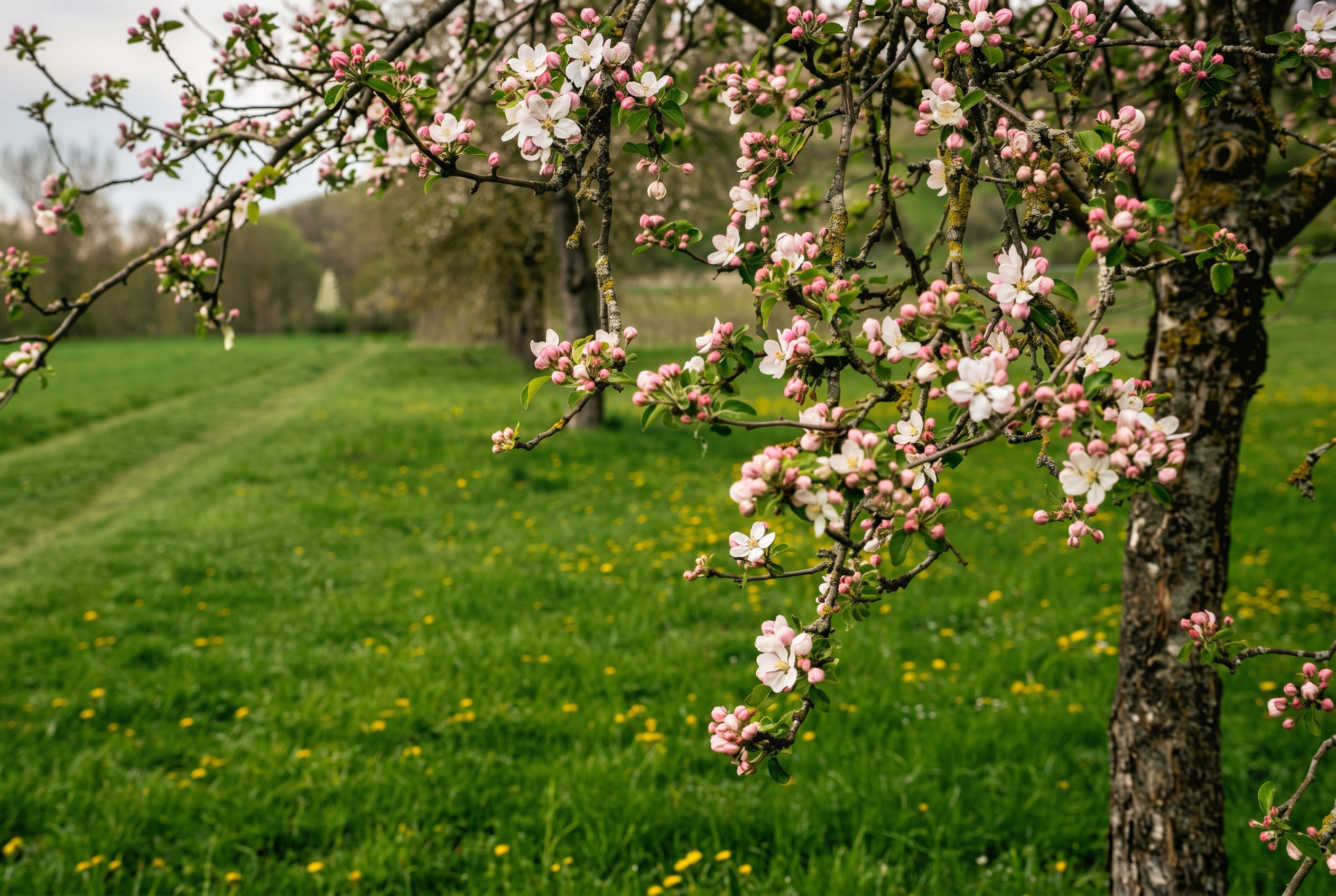
Hardangerfjord is the country’s second longest fjord and is often affectionately called the orchard of Norway, because its milder climate favours growing apples, plums and cherries. If you head here around late April and early May, you’ll witness an incredible spectacle as millions of fruit trees burst into white and pink against a backdrop of snow-capped peaks. Local farmers make excellent juices and traditional cider from the apples, which you simply must taste.
Besides the orchards, this area also offers gorgeous hiking trails, including the panoramic Dronningstien trek or trips to the Folgefonna glacier, which towers majestically above the fjord. There are roaring waterfalls too, the most famous being Vøringsfossen, which is easily accessible and offers a view of the immense power of falling water. 💡 Tip: At many farms along the road you’ll come across small self-service fruit stands, where you grab a basket of cherries and simply drop the money into a tin.
6. Lysefjord
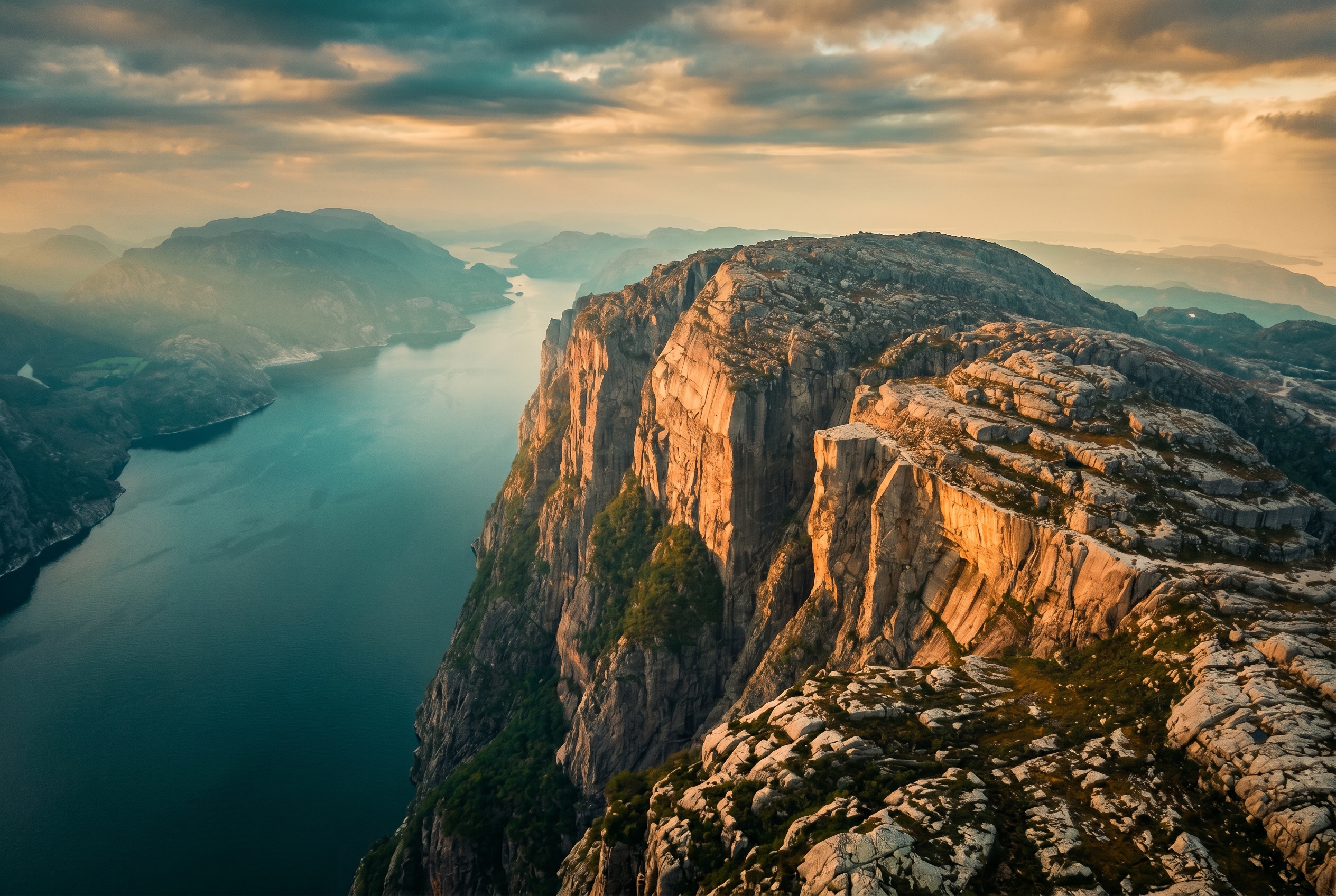
If you love raw, rugged nature, Lysefjord will completely win you over, because above its waters tower Norway’s most famous rock formations, led by Pulpit Rock and the boulder Kjeragbolten. Just the boat cruise from Stavanger or the town of Forsand is a huge experience, because from below you get the feeling those steep granite walls are about to collapse on you any second. The fjord is 42 kilometres long and its water often has a deep blue to emerald colour.
Besides the famous climbs, you’ll also find one great curiosity here: a wooden staircase in the little village of Flørli with an incredible 4,444 steps that rise alongside an old water pipe. The climb up is a proper thigh-burner, but the bird’s-eye view of the fjord more than makes up for the effort. 💡 Tip: In summer it’s best to book your fjord cruise tickets in advance, as they tend to sell out very quickly.
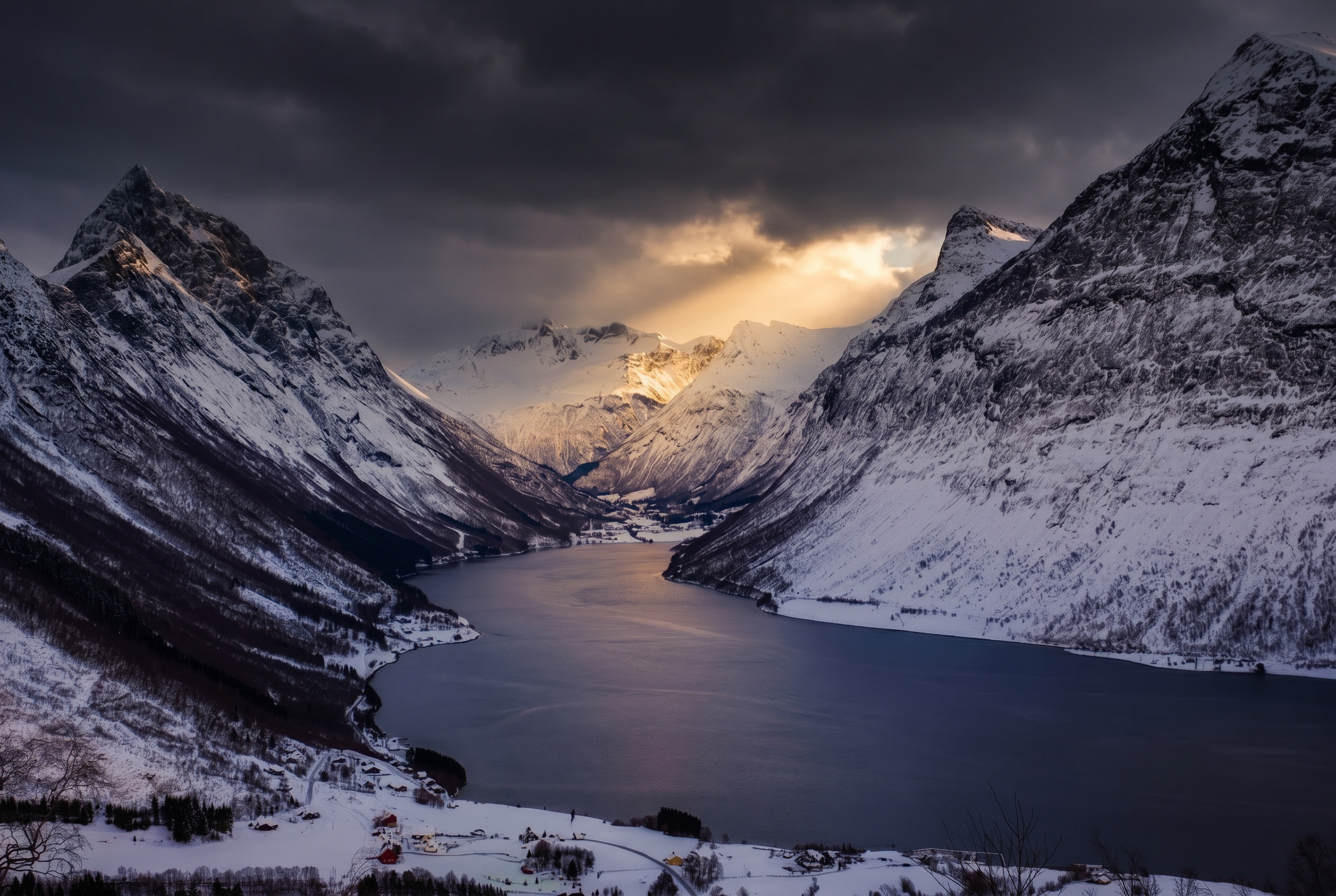
7. Hjørundfjord
While crowds of tourists head to Geiranger, nearby Hjørundfjord still retains a wonderful atmosphere of calm and solitude, even though its scenery is in no way inferior to its more famous rivals. It cuts deep into the so-called Sunnmøre Alps near the town of Ålesund and is surrounded by dramatic, sharply cut mountain peaks, the best known of which is the summit of Slogen. The water here is crystal clear and only a few sleepy villages lie along the shores, often reachable only by boat.
This area is an absolute paradise for high-mountain hikers seeking more challenging routes without the crowds of camera-wielding visitors, and in winter ski tourers from all over Europe gather here. If you want to escape busy roads and experience true Norwegian wilderness, this is the right place. 💡 Tip: Make a stop at the historic Hotel Union Øye, which looks like something from a fairy tale and breathes the atmosphere of the late 19th century.
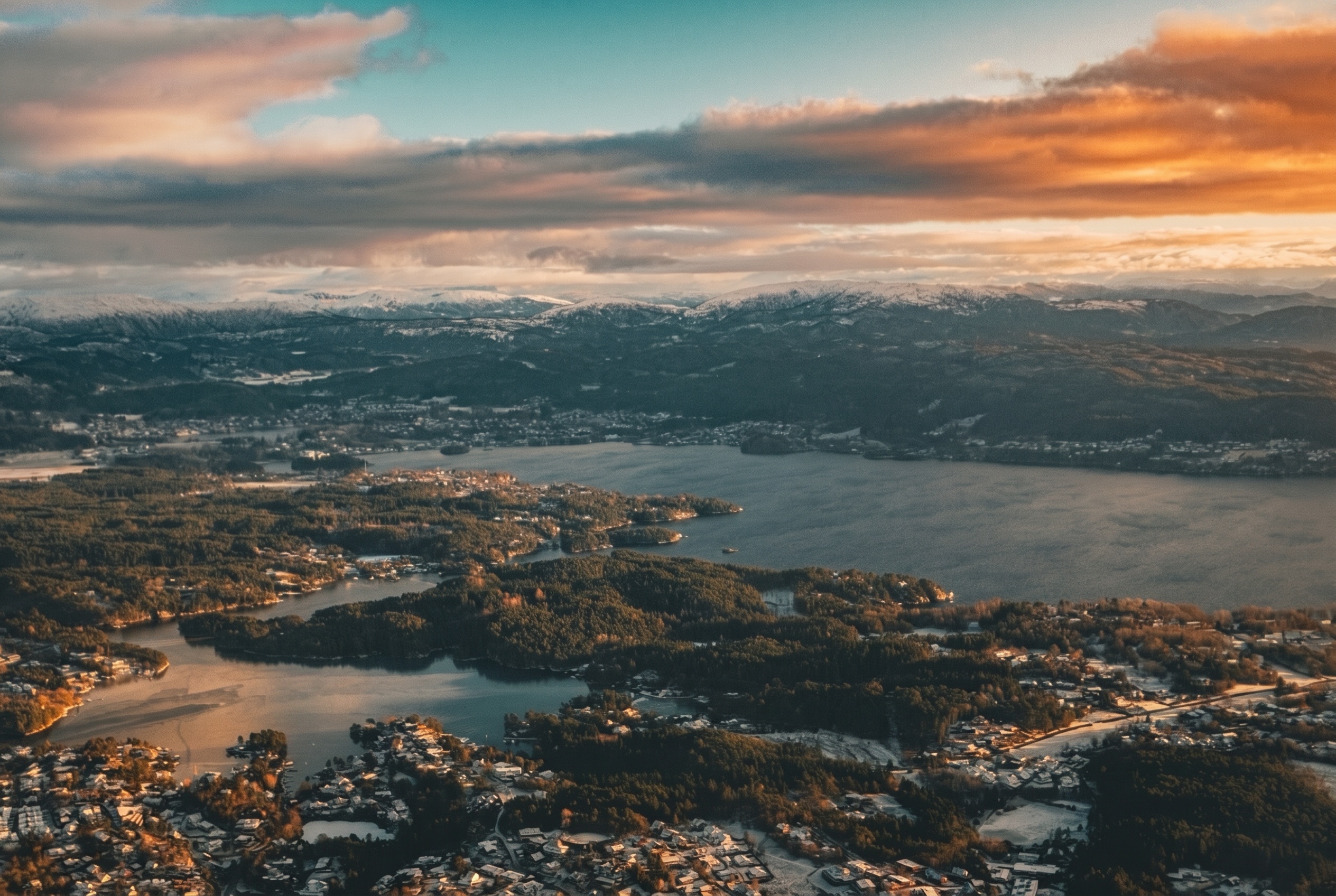
8. Geirangerfjord and Nærøyfjord as World Heritage
You might wonder why these two fjords in particular are on the UNESCO list, when there are over a thousand in Norway. The answer lies in their pristine nature, geological uniqueness and the fact that they represent classic western Norwegian fjord scenery in its purest form. They aren’t disturbed by any heavy infrastructure or large bridges, which makes them a kind of living museum of the Ice Age, when these vast valleys were formed.
When planning your trip, don’t worry that you’d miss out by choosing just one of them, because both offer absolutely phenomenal experiences and breathtaking views. While Geirangerfjord dazzles with its number of waterfalls plunging from steep cliffs, Nærøyfjord fascinates with its incredible narrowness and its gloomy, almost mystical atmosphere. 💡 Tip: If you have time, definitely try to do both. They’re about half a day’s drive apart along beautiful mountain roads.
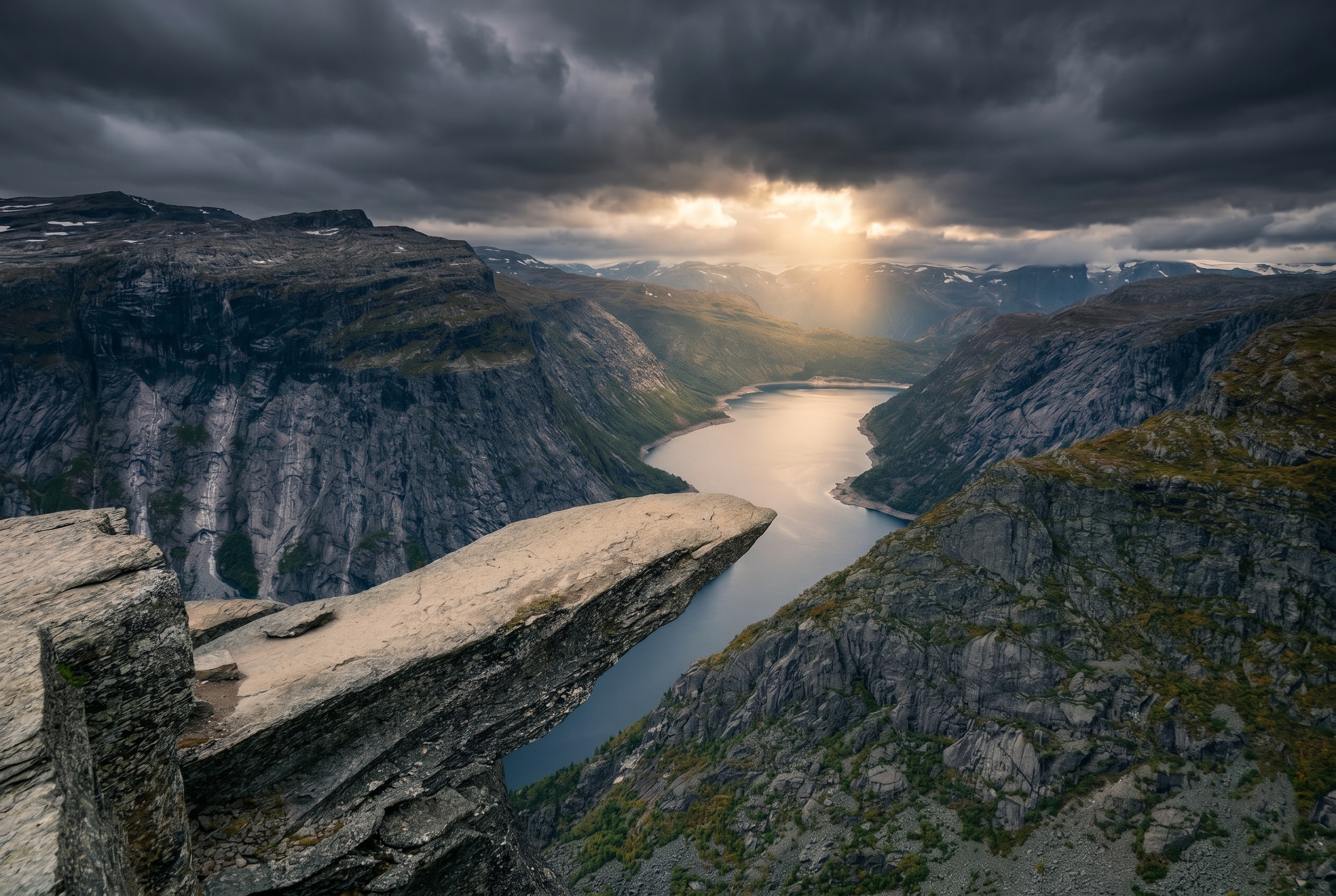
Iconic climbs and hikes
Norway is a hiking paradise and some of its views have become genuine social media icons. From easy half-day outings to demanding full-day grinds, here are the most famous rocks and ridges worth lacing up your boots for. For each one you’ll also find a rough difficulty rating, so you know what you’re getting into.
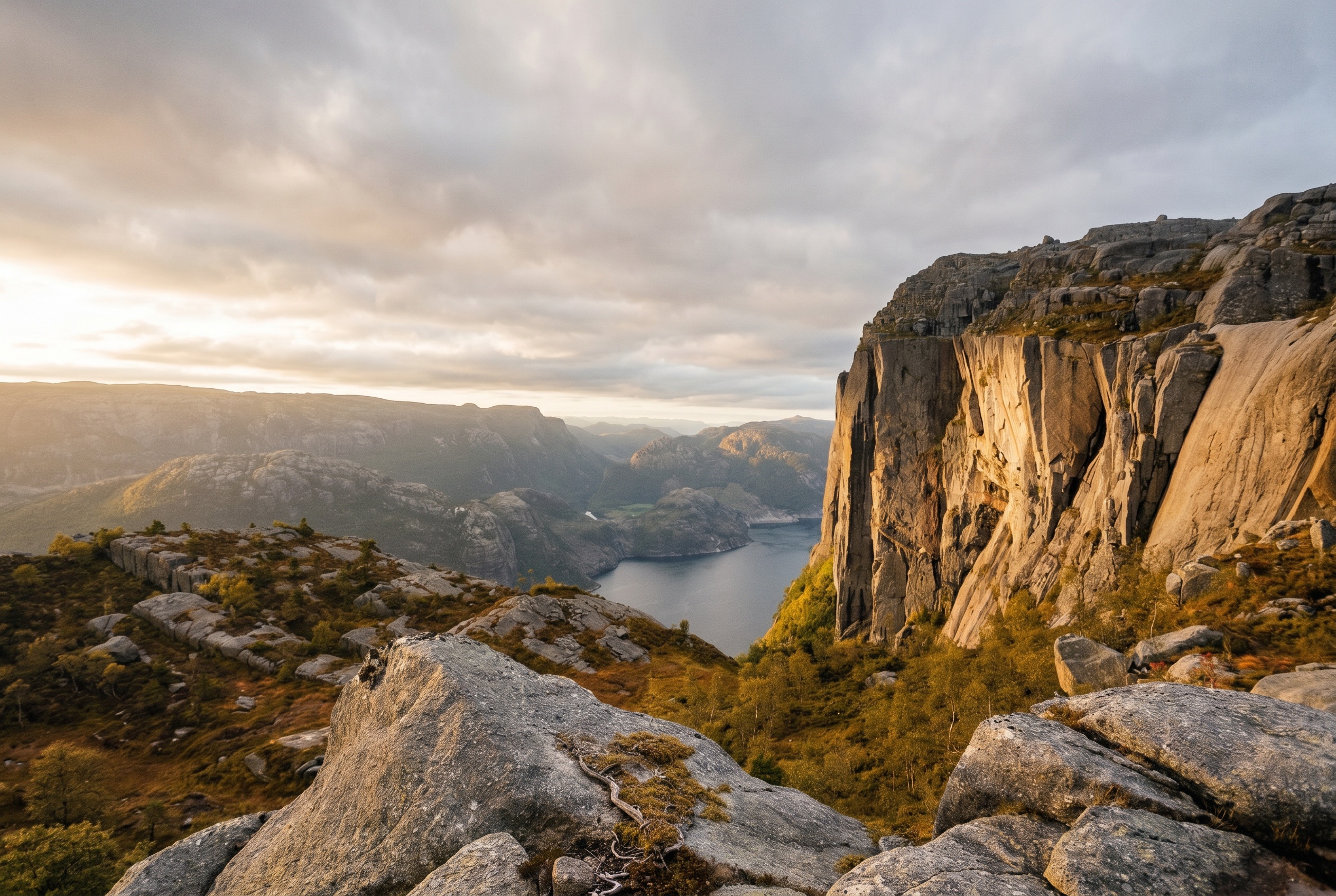
9. Preikestolen (Pulpit Rock)
The climb to Pulpit Rock is an absolute classic that no one with at least basic fitness should miss. This huge flat rock rises an impressive 604 metres straight above the waters of Lysefjord and offers a view that takes your breath away. The route is about 8 kilometres there and back, you’ll gain around 500 metres of elevation and at a relaxed pace the trip takes roughly 4 hours. The path is very well maintained, and while in places you’ll walk up stone steps, there’s no actual climbing involved.
As this is the most visited trek in the country, be prepared not to be alone in summer, and if you want a bit of peace for photos without the crowds, you’ll need to set out really early in the morning or later in the afternoon. The car park below the trek is paid and fills up fairly quickly in peak season, so an early arrival will save you a lot of stress. 💡 Tip: Want to know exactly how to prepare for the trek and where to park? Check out our detailed guide Preikestolen — the climb step by step.
10. Trolltunga
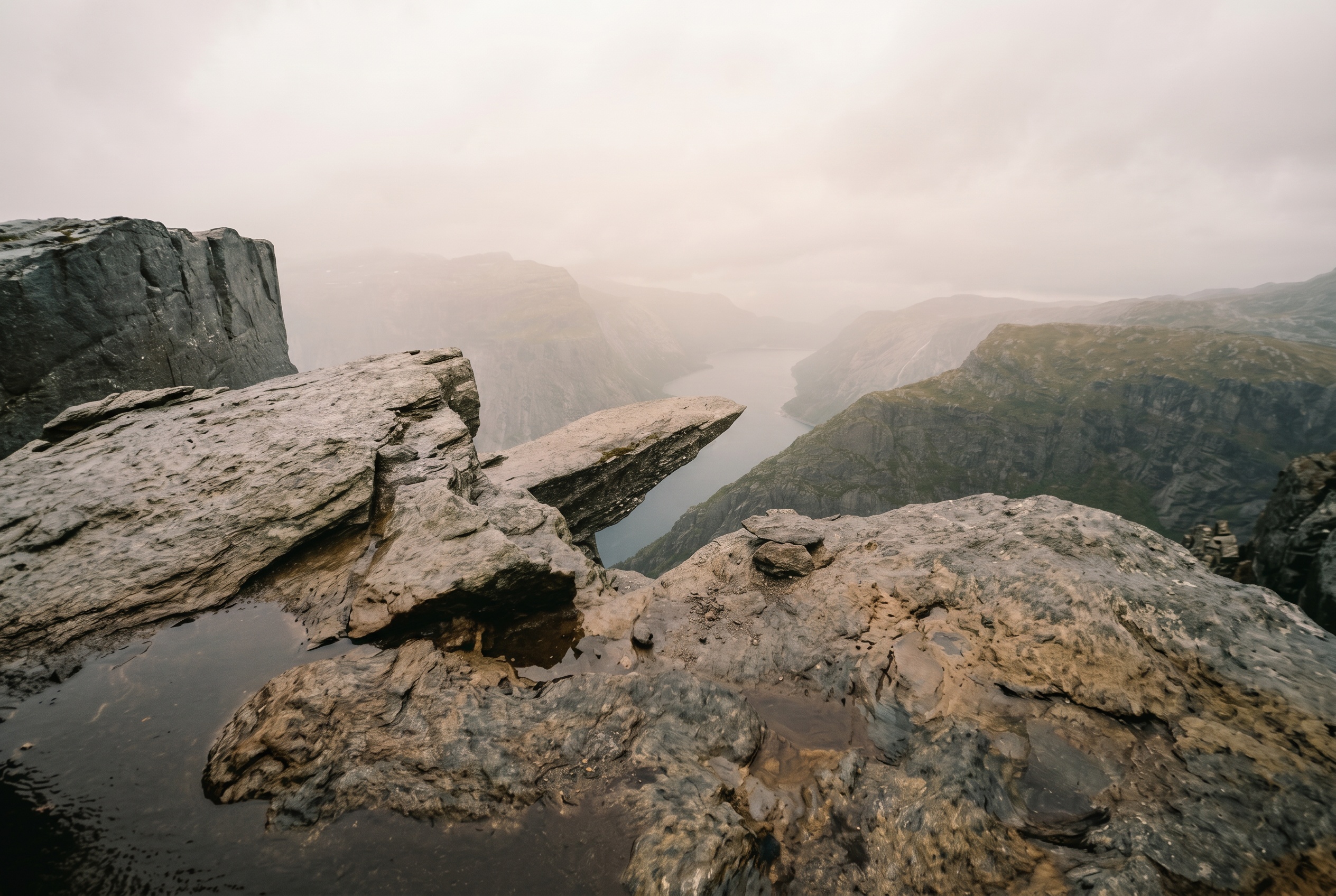
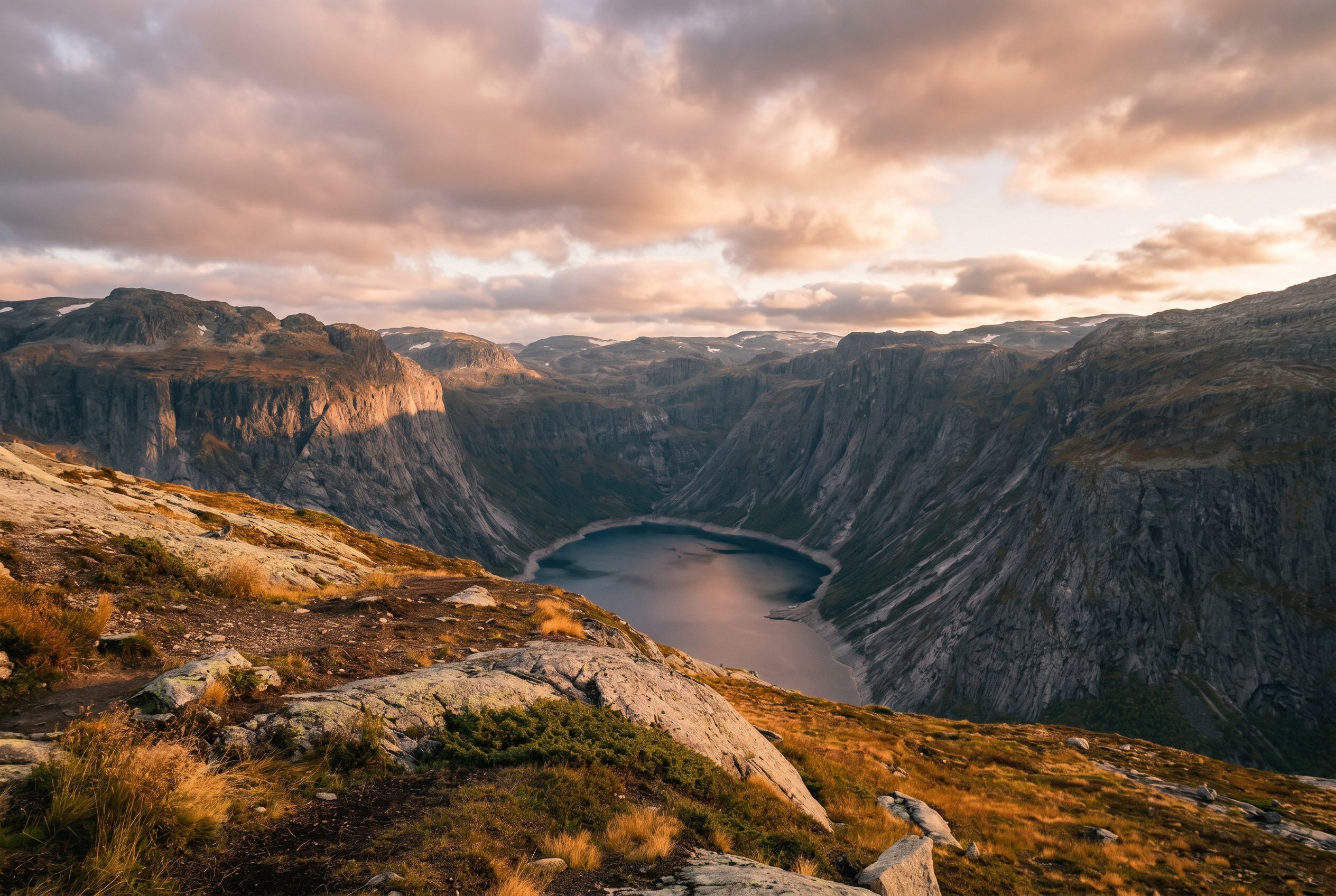
While Pulpit Rock is a pleasant half-day walk, the trip to the famous troll’s tongue is a proper full-day grind that will test your stamina and demands excellent physical preparation. The route measures a gruelling 28 kilometres, takes 10 to 12 hours of walking and you’ll gain around 800 metres of elevation across rugged mountain terrain. Your reward, though, is a photo on a thin rock ledge that juts into the void 700 metres above the mirror-like surface of Lake Ringedalsvatnet near the town of Odda.
If you want to spare yourself the worst of the initial climb on tarmac, you can use the local shuttle service that takes you up to the higher Mågelitopp car park, shaving a few kilometres off the route. The trek is safely accessible only in the summer months, and even then the weather up top can close in unexpectedly, so quality clothing and plenty of food and water are an absolute must. 💡 Tip: Don’t underestimate the preparation and read all the practical advice in our article Trolltunga — the climb to the troll’s tongue.
11. Kjeragbolten
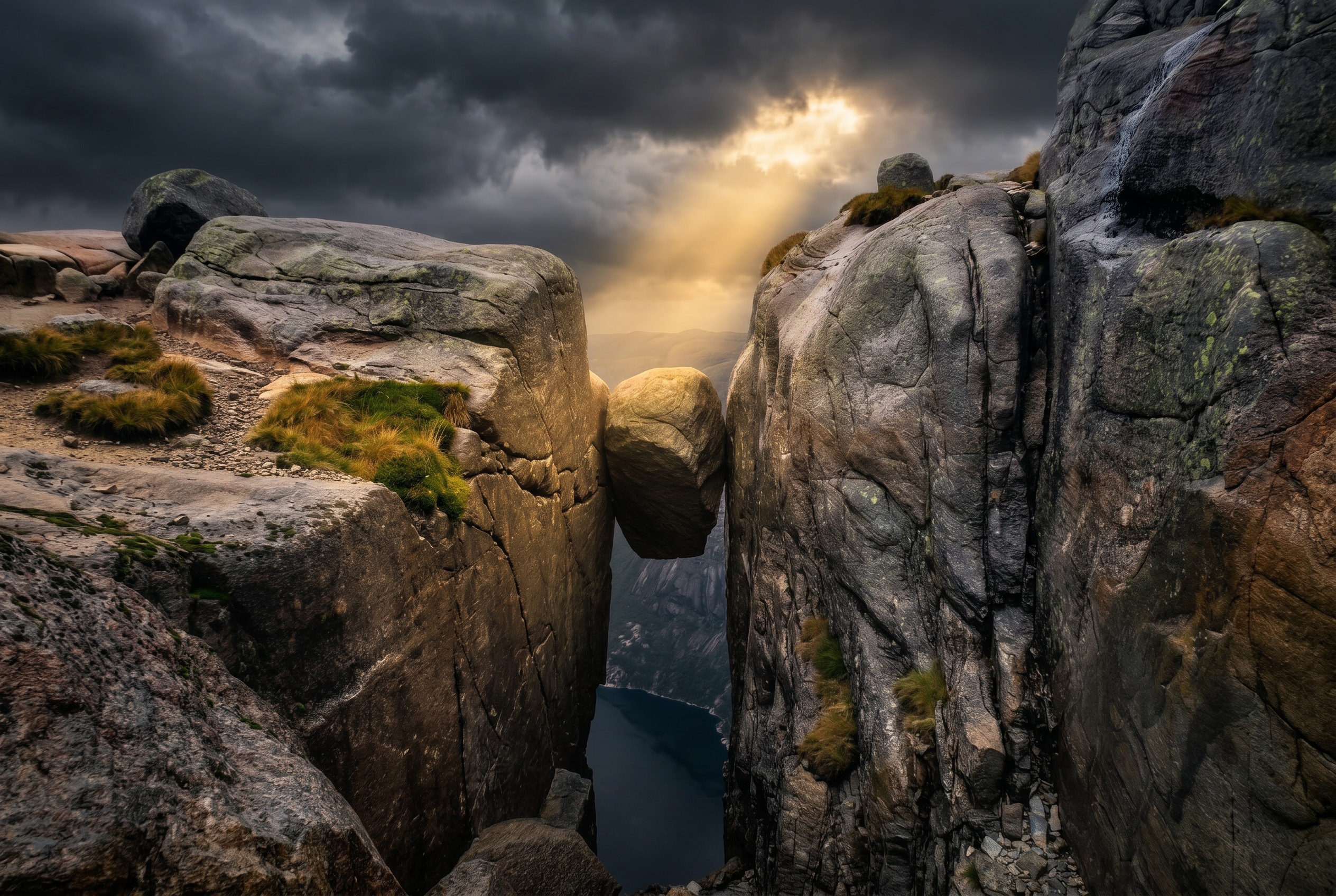
Another huge challenge above Lysefjord mainly tempts adrenaline lovers, because standing on a boulder wedged firmly between two sheer cliffs at 984 metres above the abyss takes some seriously steady nerves. The trek itself starts at the Øygardstøl restaurant above the town of Lysebotn and is about 12 kilometres there and back, which takes around 6 to 7 hours. The route is quite demanding, with three steep climbs across smooth granite slabs where you have to hold onto stretched steel chains.
When you finally reach the boulder, a queue for the photo often forms, so you’ll wait a while for your turn to take that step into the unknown. If it’s raining or the rock is wet, climbing onto the stone itself is strongly discouraged, because the slightest slip would have fatal consequences. 💡 Tip: The drive to the starting point along the Lysevegen road is an experience in itself — 27 sharp hairpins tumble down to the fjord.
12. Besseggen
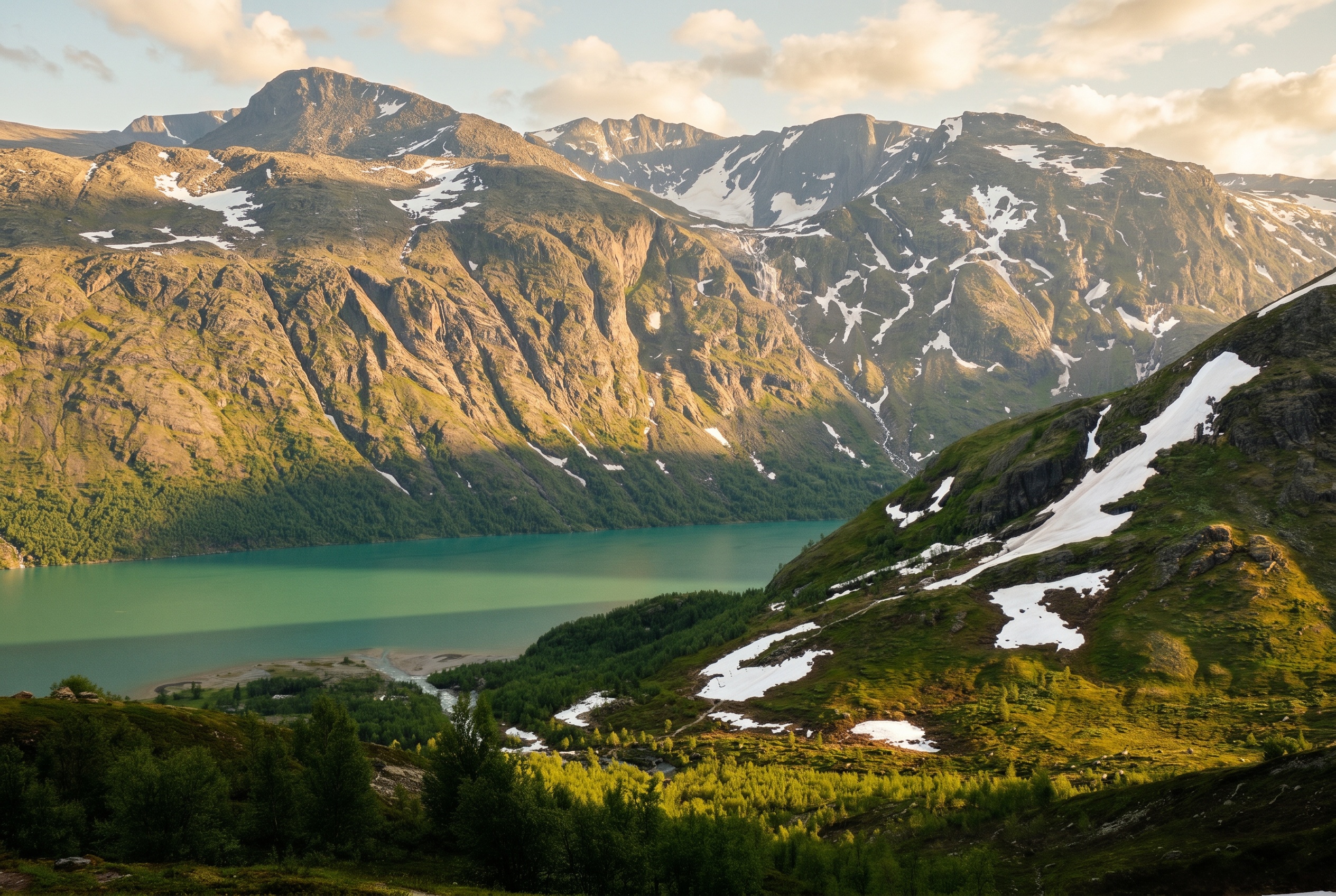
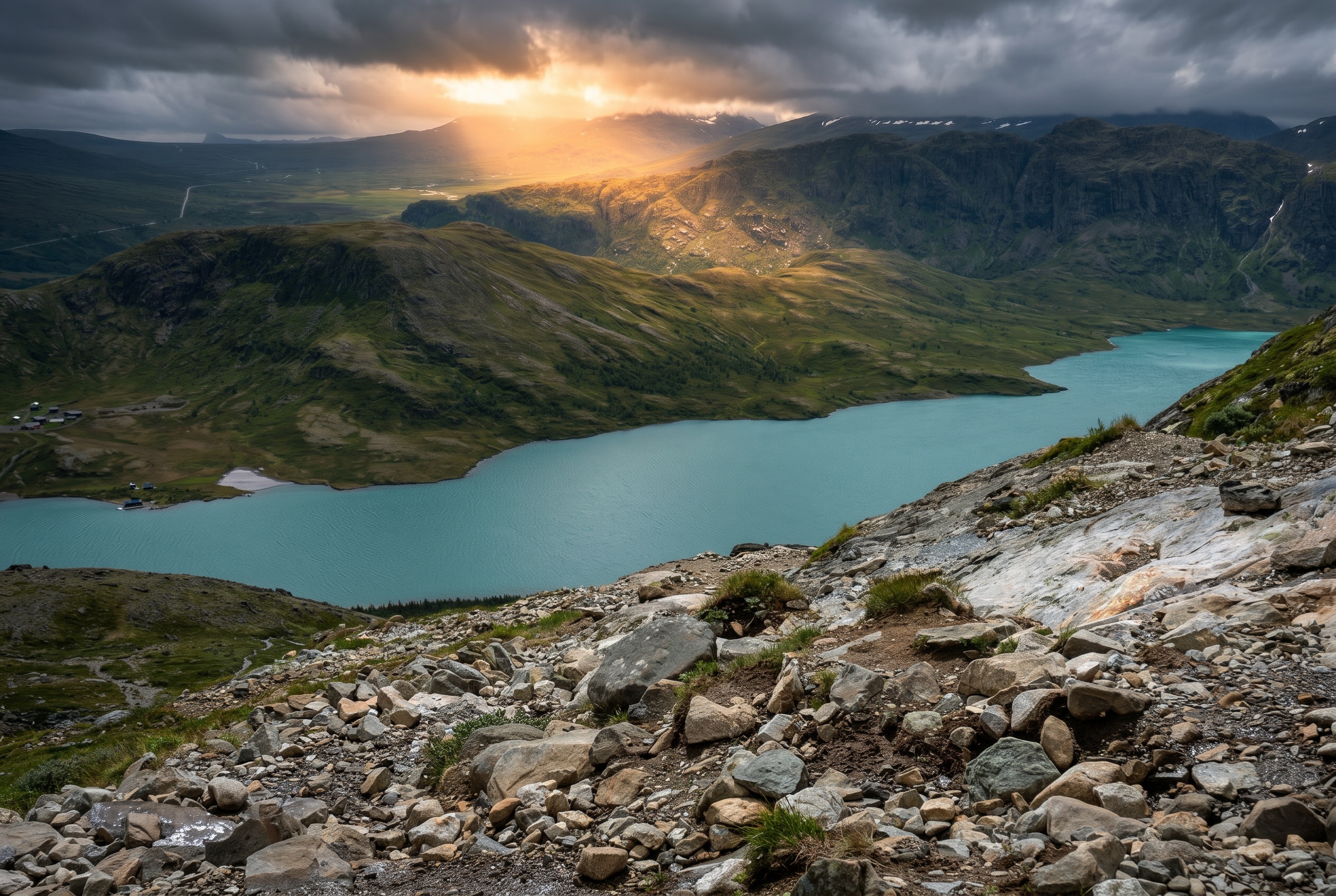
This legendary ridge is an absolute classic of Norwegian hiking and every year tens of thousands of enthusiastic walkers cross it, eager to see the stunning contrast of two differently coloured lakes. On one side, the dark blue Lake Bessvatnet spreads out below you, while on the other the emerald turquoise surface of the huge Lake Gjende glows. The route lies in Jotunheimen National Park, measures roughly 14 kilometres and takes 6 to 8 hours of fairly demanding walking with around 550 metres of elevation gain.
Most people opt for the tactic of taking the morning boat from Gjendesheim to Memurubu, then walking back along the ridge to the car, which is strategic also for the better views during the toughest climb. On the steepest section you’ll occasionally have to use your hands, but if you don’t suffer from severe vertigo, you’ll manage the trek without major problems. 💡 Tip: Buy your tickets for the morning boat across Lake Gjende online a few days in advance during the season, as they’re often sold out on the spot.
13. Galdhøpiggen
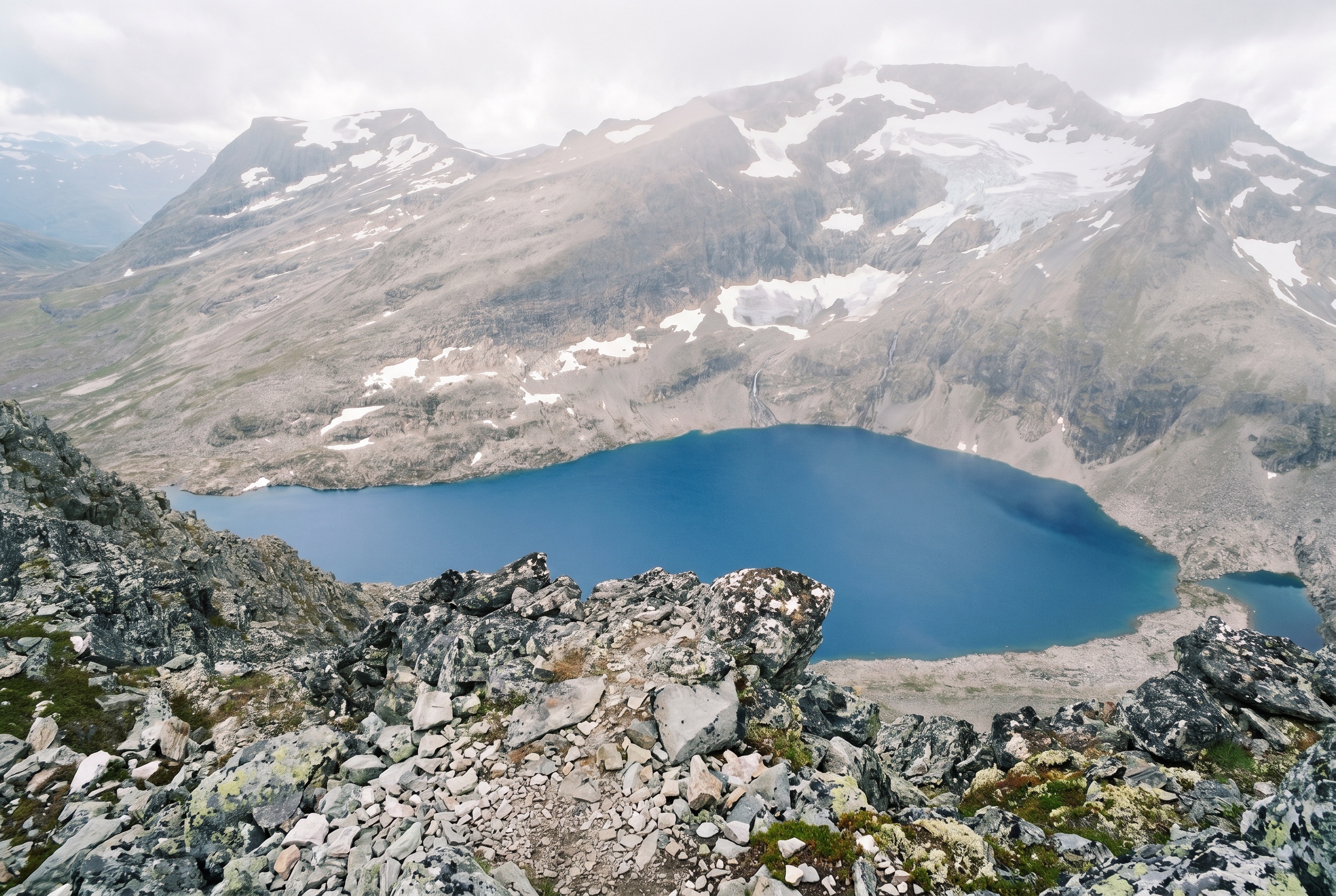
Fancy bragging that you stood on the roof of all of Scandinavia? Norway’s highest mountain measures 2,469 metres, and considering what a giant it is, conquering it is surprisingly accessible even for ordinary hikers. The most popular route starts at the Juvasshytta mountain lodge, which sits at over 1,800 metres, so the elevation gain isn’t so drastic. There’s one big catch, though — the route crosses the Styggebreen glacier full of hidden crevasses.
For that reason, the glacier crossing is permitted only with a guide, to whom you’re tied on a shared rope for safety, so the trip must be booked in advance. At the summit itself you’ll find a small cabin with refreshments, and on a clear day you’ll see an endless sea of mountain peaks in Jotunheimen National Park. 💡 Tip: If you want to avoid the paid guide and the glacier, you can set out on the longer, more demanding route from the Spiterstulen lodge, which is free but considerably steeper.
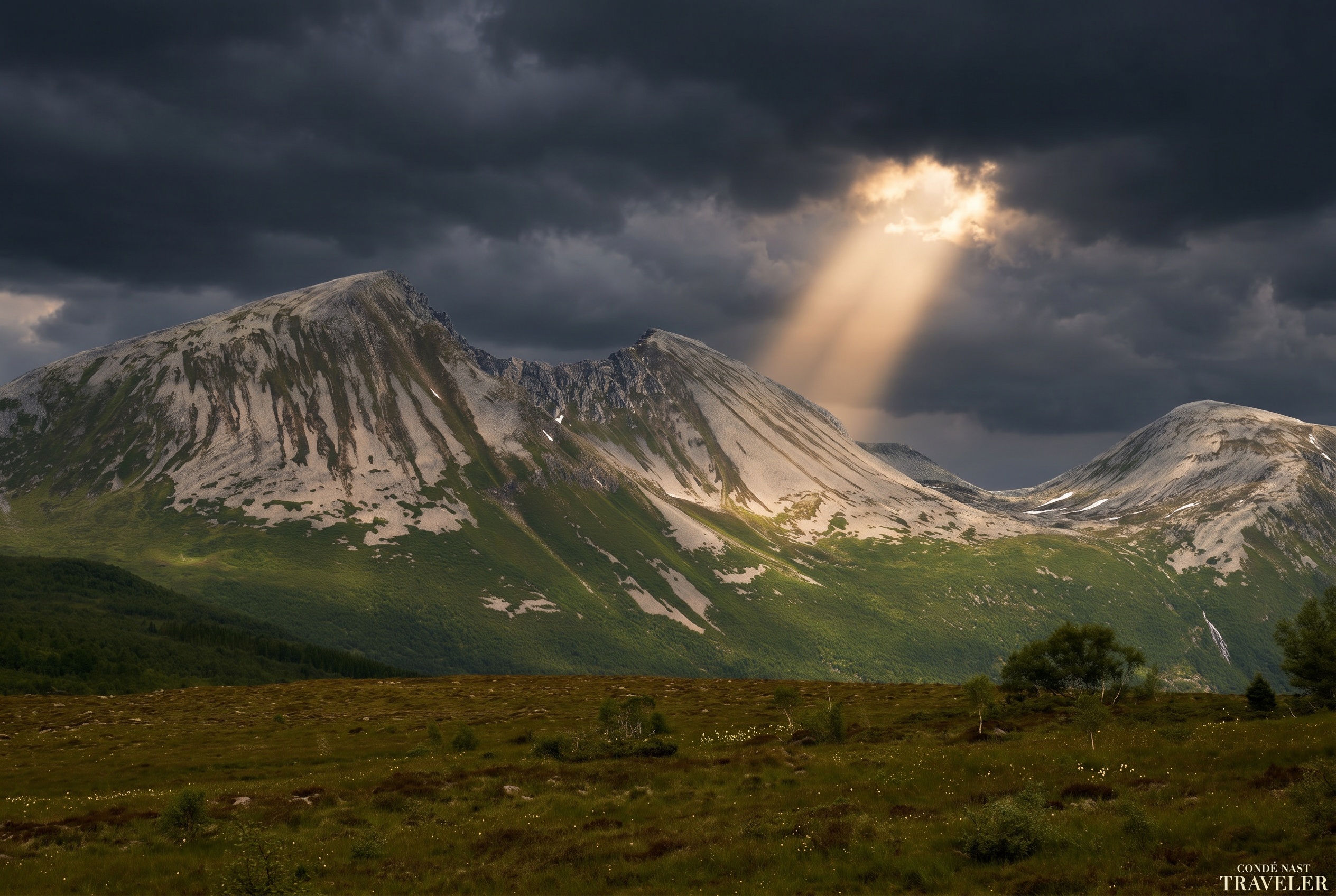
14. Romsdalseggen and Rampestreken
If you love ridge walks and aren’t afraid of heights, Romsdalseggen offers some of the most dramatic views in all of Norway, where you’ll have the famous Trollveggen, the highest vertical rock face in Europe, right in front of you. The full-day trek measures a little over 10 kilometres, but it’s very demanding, exposed and requires a sure foot, because in some sections you really walk along a narrow edge between two precipices. The logistics are easy — a bus takes you from the town of Åndalsnes to the start and you then walk back down.
On the descent you definitely won’t miss the famous Rampestreken viewing platform, which juts out into the air like a steel pier and offers an iconic view of the town and the river winding through the valley. You can also reach this platform via a shorter, very steep climb directly from town, which takes about two hours and is doable even for those who don’t fancy the whole ridge walk. 💡 Tip: Be prepared for the descent from the viewpoint down to Åndalsnes to follow endless stone steps that really give your knees a workout.
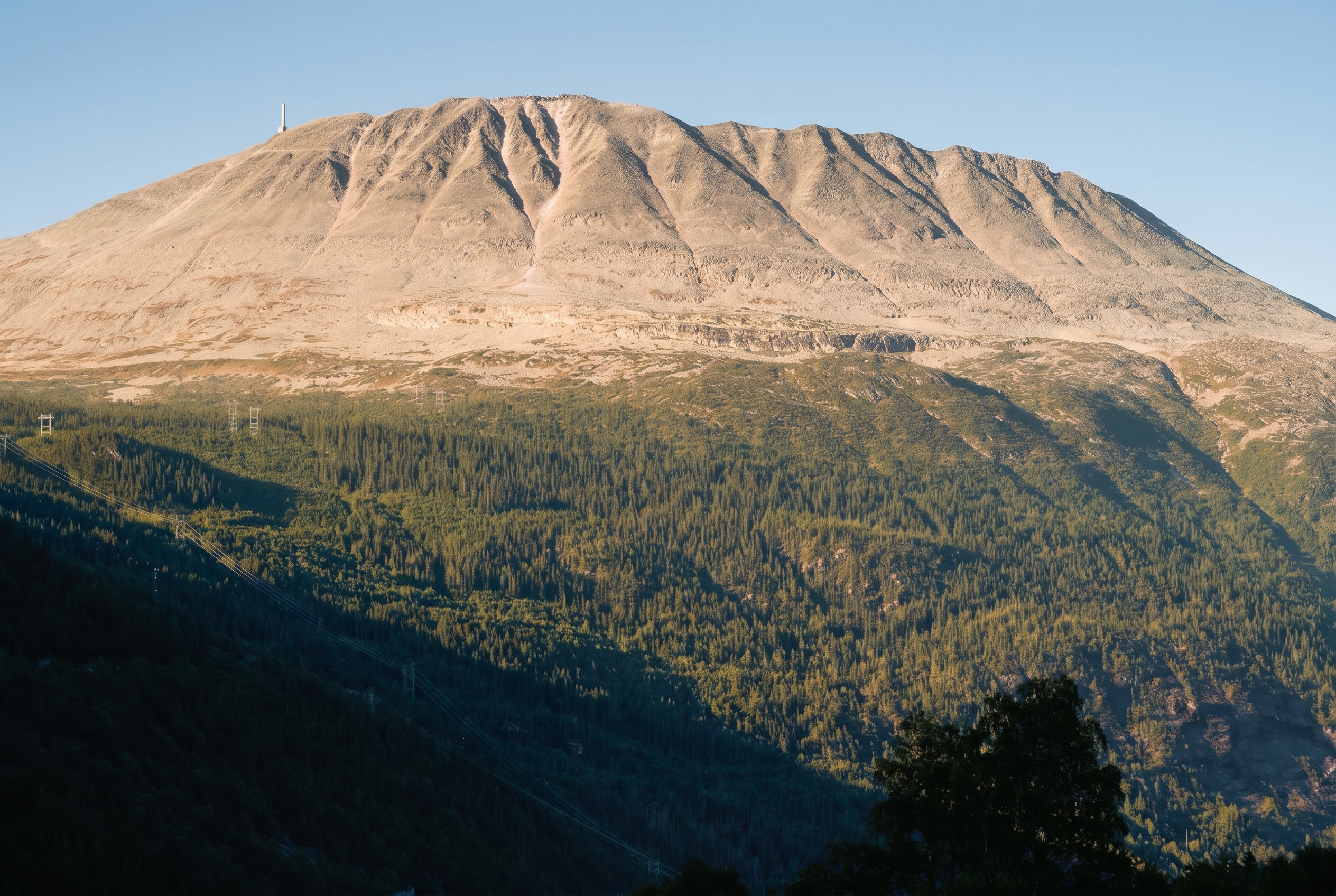
15. Gaustatoppen
This mountain in the Telemark region is a real phenomenon, because although it measures 1,883 metres, in perfectly clear weather you can reportedly see as much as one sixth of all of Norway from its summit. The climb itself from the car park at Stavsro isn’t extremely long, taking around two to three hours up over stony terrain, so it’s a great family outing. At the top a mountain cabin awaits, where as a reward you can buy coffee and warm waffles.
If you don’t fancy hiking up on foot, the mountain hides a huge Cold War secret in the form of the unique Gaustabanen funicular, which runs through a tunnel carved right inside the rock massif. Originally a military project, it now comfortably takes you almost to the summit, and the ride through the heart of the mountain in old carriages is an experience that not only kids will appreciate. 💡 Tip: It often blows very hard at the summit, so even if the summer sun is shining below, you won’t last long up top without a warm jacket and a hat.
Cities you must see
Norway draws you mainly with its nature, but its cities are definitely not just transit stops on the way to the fjords. From cosmopolitan Oslo through rainy Bergen to art nouveau Ålesund and Arctic Tromsø, each has its own character and is worth at least a day’s stop.
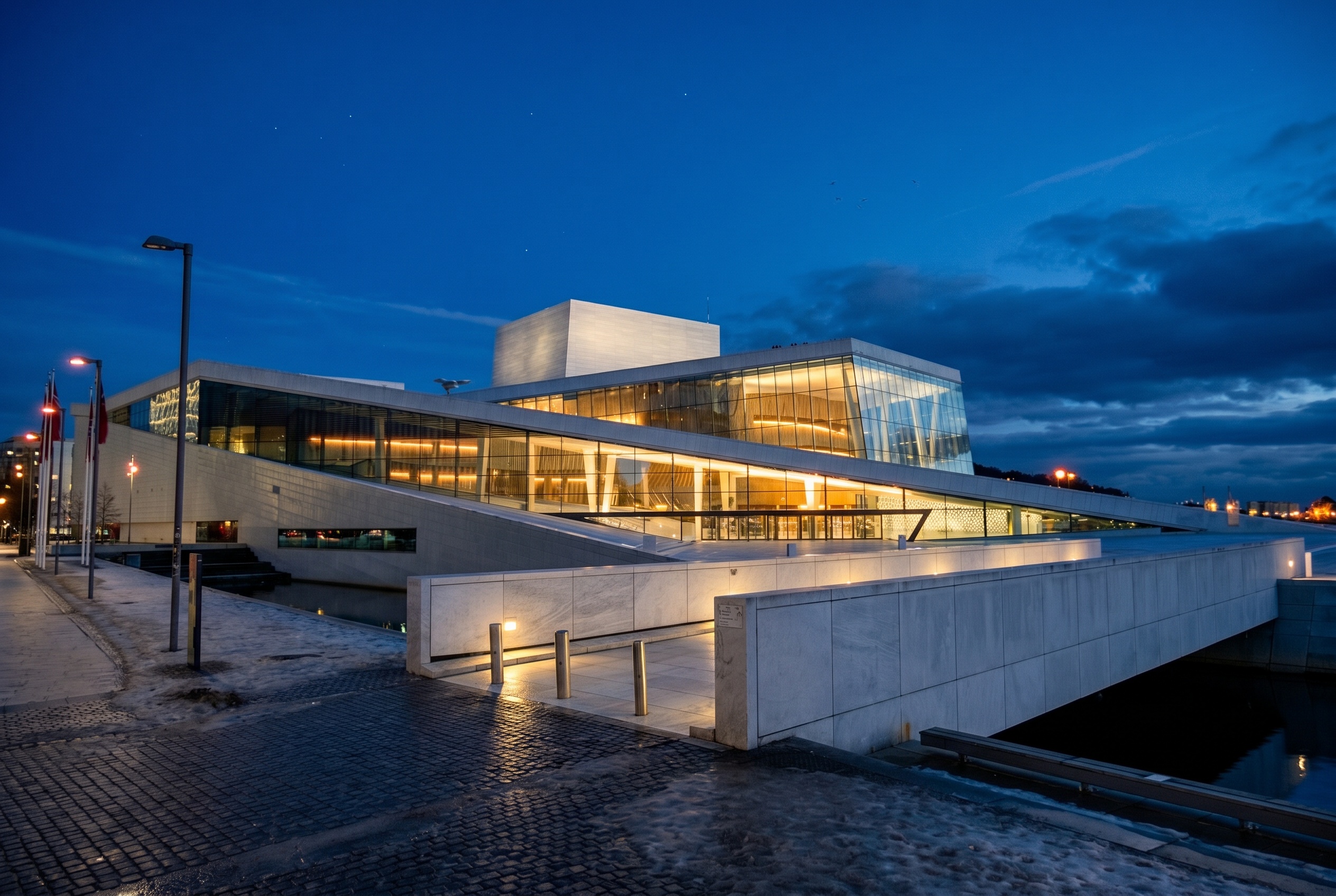
16. Oslo
Norway’s capital has undergone an incredible transformation in recent years and has changed from a slightly dull metropolis into a buzzing hub of modern architecture, great art and top-class gastronomy. Definitely take a walk up the sloping marble roof of the iconic Opera House, from where you get a beautiful view over the whole bay, and right next door check out the new, architecturally very bold building of the museum dedicated to the painter Edvard Munch. In good weather, a stroll through the vast Vigeland Park is an absolute must, where more than 200 fascinating sculptures depicting the cycle of human life await you.
For lovers of history and explorers, the Bygdøy peninsula is reserved, easily reached by boat from the centre, where you’ll find the famous museum of the polar ship Fram and the Kon-Tiki raft museum of Thor Heyerdahl. In the evening, move on to the hipster district of Grünerløkka, full of cosy cafés, small boutiques and great vegetarian bistros that serve fantastic hummus and falafel. 💡 Tip: If you want to fit in more museums, consider buying the Oslo Pass, which gives you free entry and also serves as a ticket for all public transport. We have more detailed advice in our guide Oslo: what to see.
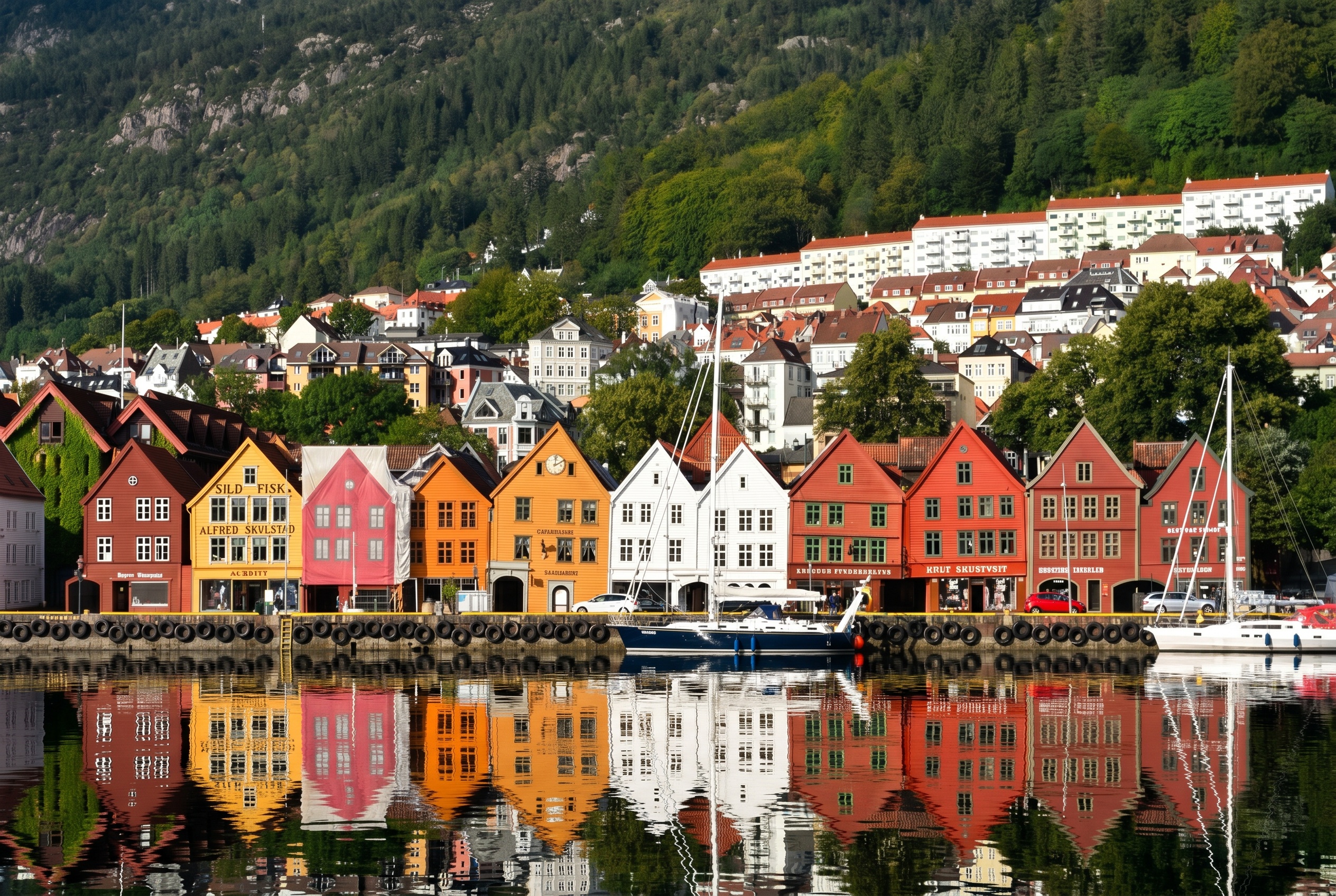
17. Bergen
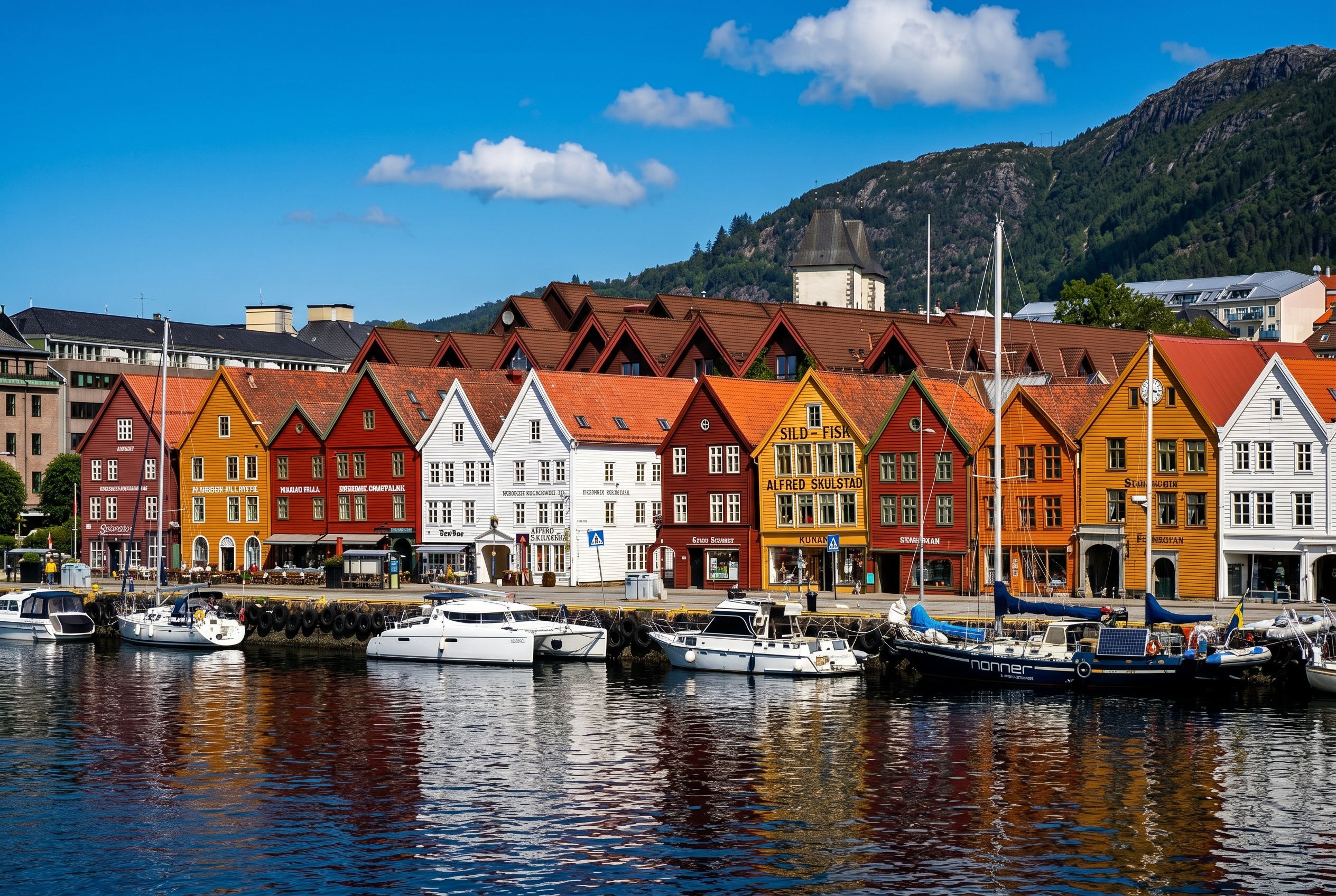
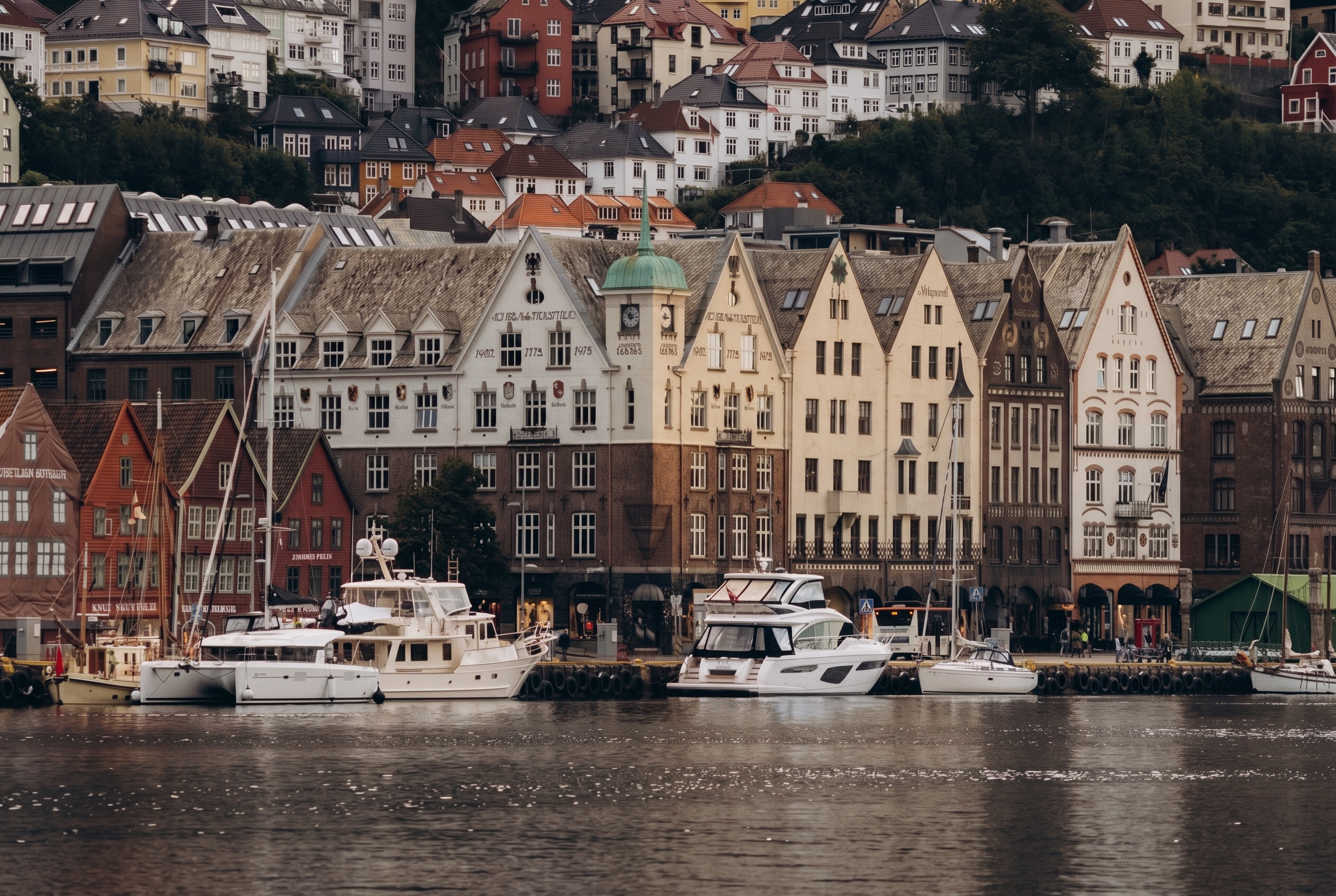
Bergen is nicknamed the gateway to the fjords and ranks among the most beautiful Norwegian cities, even though it carries a curse in the form of rain on average more than 200 days a year. The centre is dominated by the famous quayside district of Bryggen, on the UNESCO list, where the crooked wooden houses of old Hanseatic merchants crowd together, now hiding craft workshops and galleries. Right next door you’ll find the famous fish market, where traders offer fresh prawns, oysters and other local specialities, though the prices are pushed very high here.
When the weather calms down for a moment and the sun comes out, definitely hop on the Fløibanen funicular, which whisks you up Mount Fløyen in a few minutes, where you’ll have the whole city and surrounding islands at your feet. Plenty of beautiful hiking trails lead from the hill into the surrounding forests, and if you have more time, you can head up the higher mountain of Ulriken, served by a classic cable car. 💡 Tip: Don’t be put off by bad weather — buy decent rain jackets and dive into the alleyways. You’ll find more tips in the article Bergen: what to see.
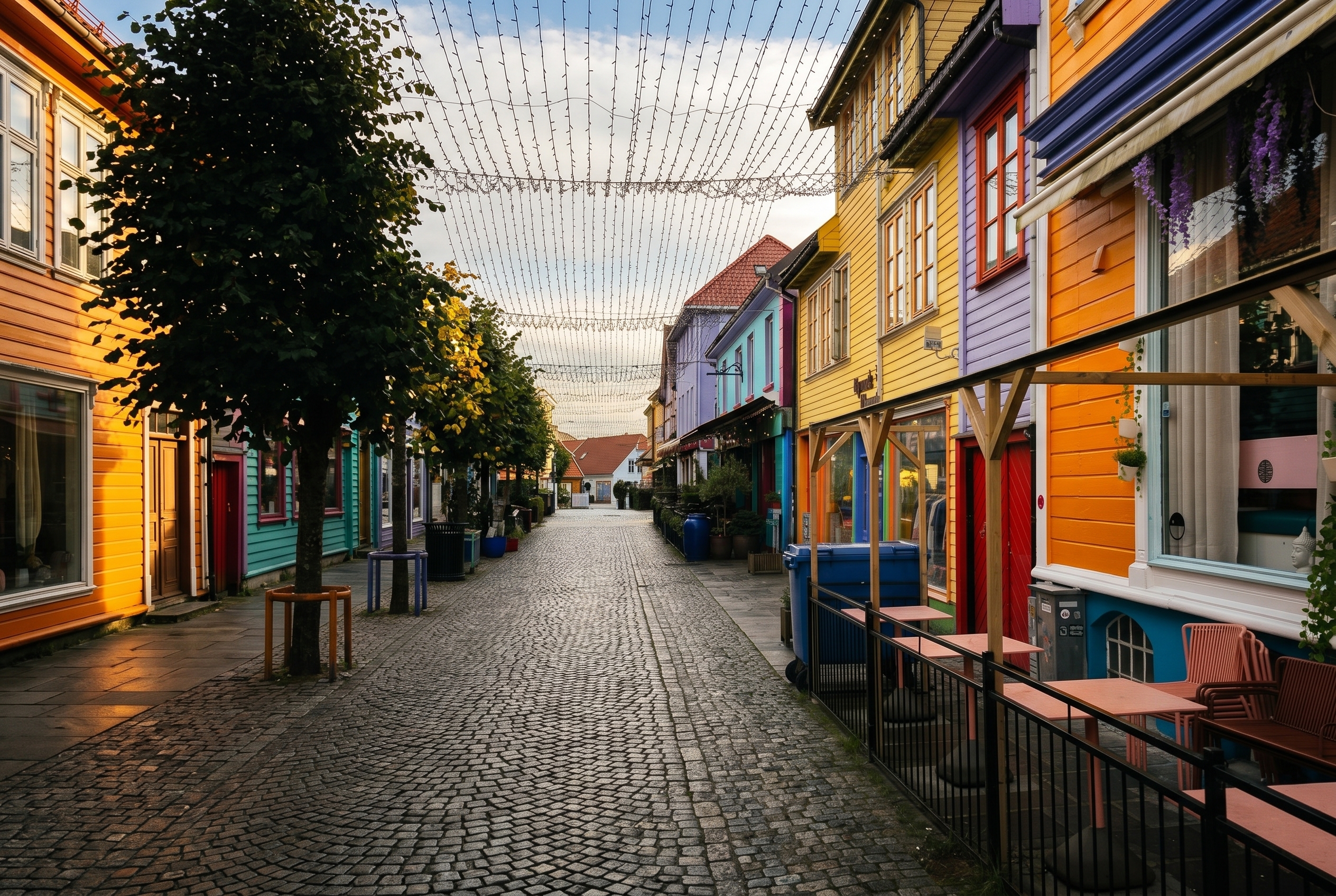
18. Stavanger
For most tourists Stavanger serves as the main starting point for the climb to Pulpit Rock, but the city itself hides an incredibly picturesque historic centre that it would be a big mistake to rush through. The Gamle Stavanger district boasts a collection of 174 beautifully renovated wooden houses from the 18th and 19th centuries, painted brilliant white, their residents carefully decorating the windows with flowers and little lanterns. In complete contrast to this calm part is Øvre Holmegate street, known as Fargegata, where all the houses are painted in wild neon colours and home to the best cafés in the whole city.
Because Stavanger is the capital of the Norwegian oil industry, a big draw is the modern Norwegian Petroleum Museum, which explains in a playful, interactive way how Norway became one of the richest countries in the world. Just outside the city you’ll come across surprisingly long sandy beaches in the Jæren area, which aren’t for swimming but are made for romantic walks among the dunes. 💡 Tip: In Fargegata, definitely pop into one of the cafés and have a coffee with a traditional Norwegian cinnamon roll, skillingsboller.
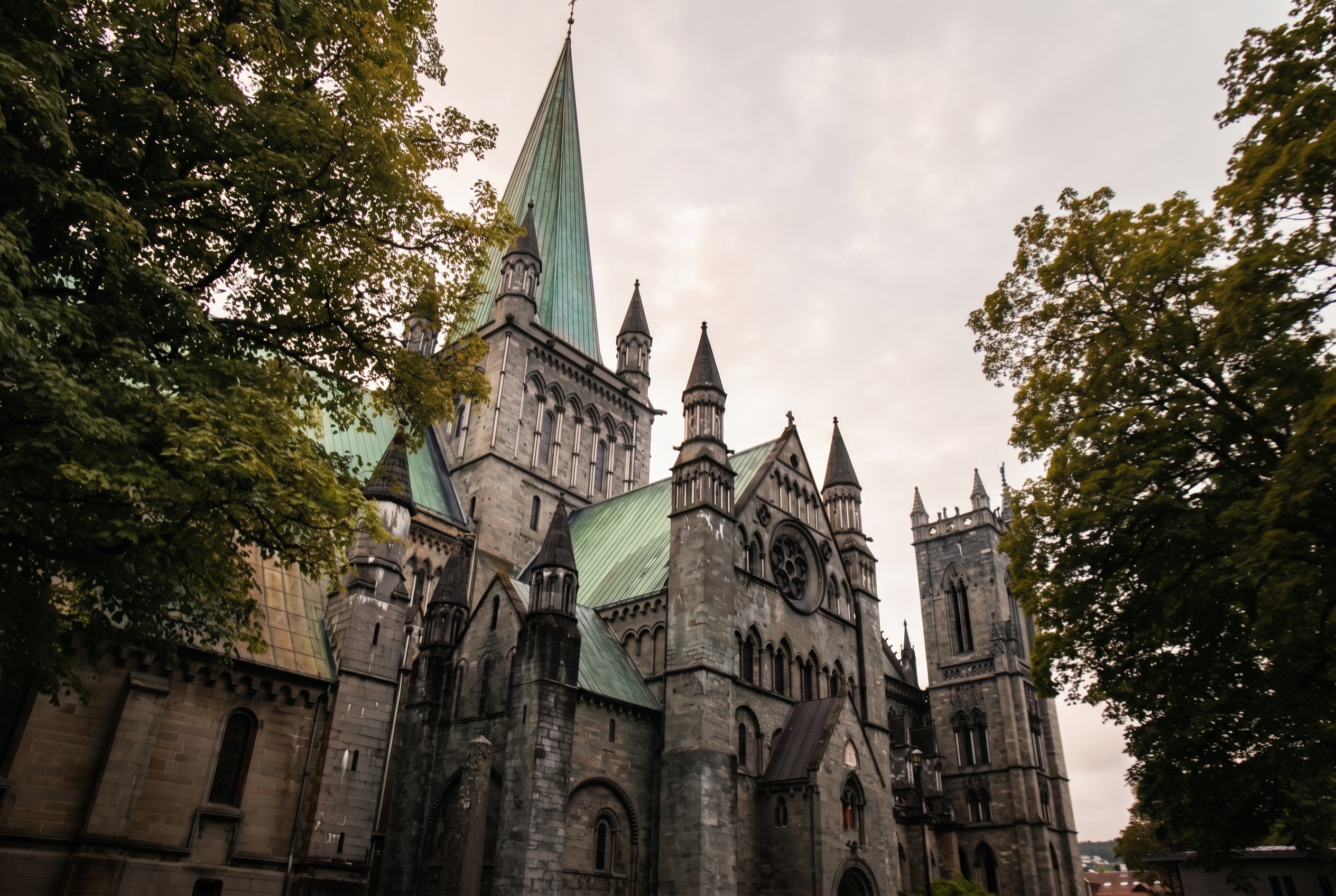
19. Trondheim
Norway’s third largest city is the historic heart of the country and its absolute landmark is the majestic gothic Nidaros Cathedral, the largest medieval building in all of Scandinavia. It was built over the grave of King Olaf the Holy and still serves as an important pilgrimage destination and the place where Norwegian monarchs are crowned. Just nearby, the old wooden bridge Gamle Bybro arches over the river with its carved red portals, romantically nicknamed the Gate of Happiness by locals.
As you stroll, you’ll come across the gorgeous Bakklandet district lying along the Nidelva river, where a row of colourful warehouses stand on old wooden stilts above the water, now turned into stylish restaurants and shops. A technical curiosity you won’t see anywhere else in the world is the local bicycle lift Trampe, which pushes tired cyclists up the steep hill right to the Kristiansten fortress. 💡 Tip: If you want to learn more about the history of popular music, visit the huge modern Rockheim museum, which guides you through the Norwegian music scene from the 1950s to the present day.
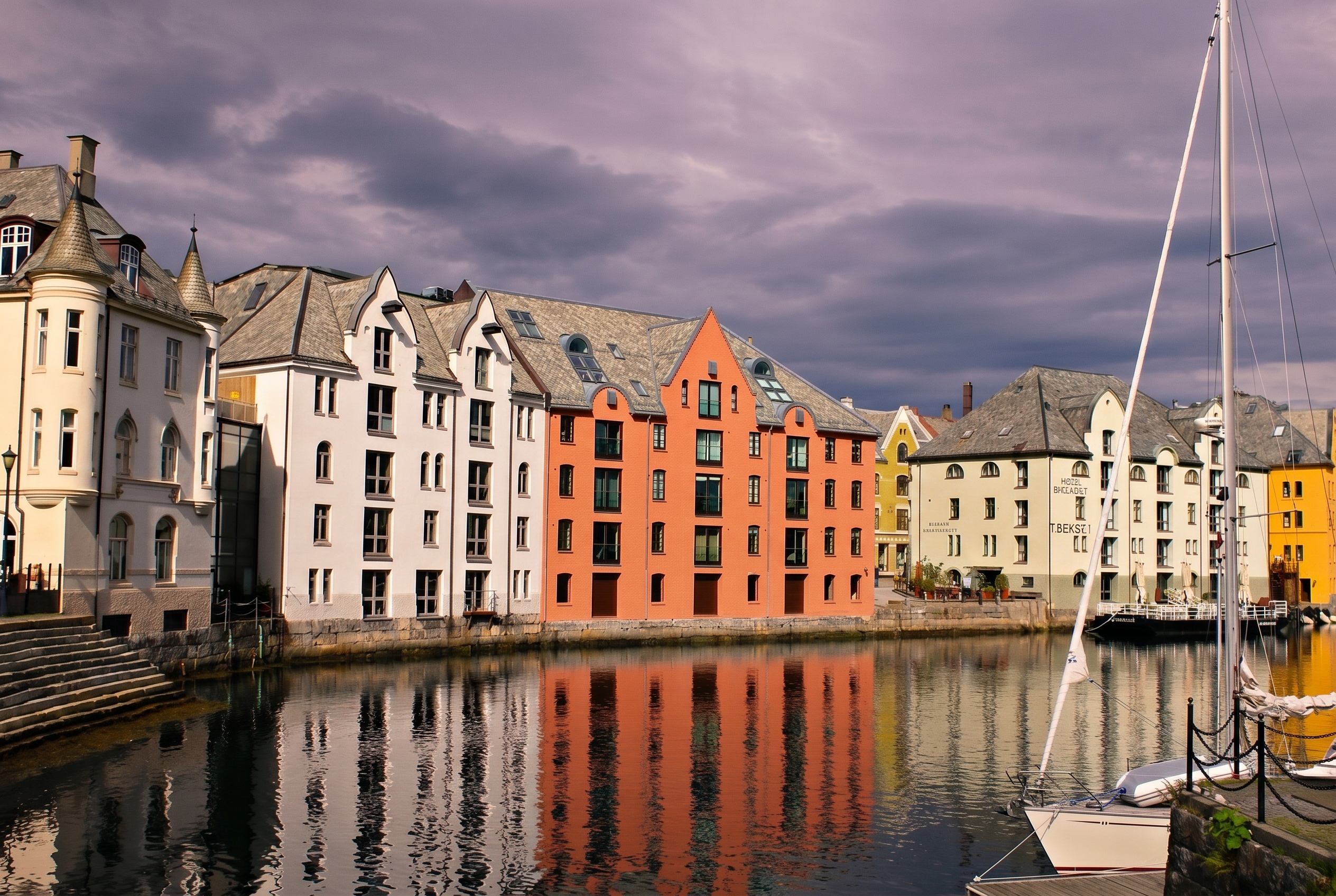
20. Ålesund
Ålesund is utterly unique by Norwegian standards, because after the devastating fire of 1904, the entire town was rebuilt from the ground up in an elegant art nouveau (Jugendstil) style full of turrets, arches and ornate facades. It sprawls across several islands right on the ocean coast and forms the gateway to the beautiful Hjørundfjord. If you want the best view of the town’s fairy-tale roofs, you have to climb exactly 418 steps up Mount Aksla to the Fjellstua viewpoint.
The climb up will get your blood pumping a little, but the view of the town surrounded by the blue ocean with the snow-capped peaks of the Sunnmøre Alps rising in the background is simply priceless. Families with children often head to the large Atlanterhavsparken sea aquarium, set right into the coastal cliffs and one of the best in northern Europe. 💡 Tip: In the town centre you’ll find plenty of excellent bakeries, so after your morning climb to the viewpoint pop in for a sweet reward in the form of a vanilla swirl bun.
21. Tromsø
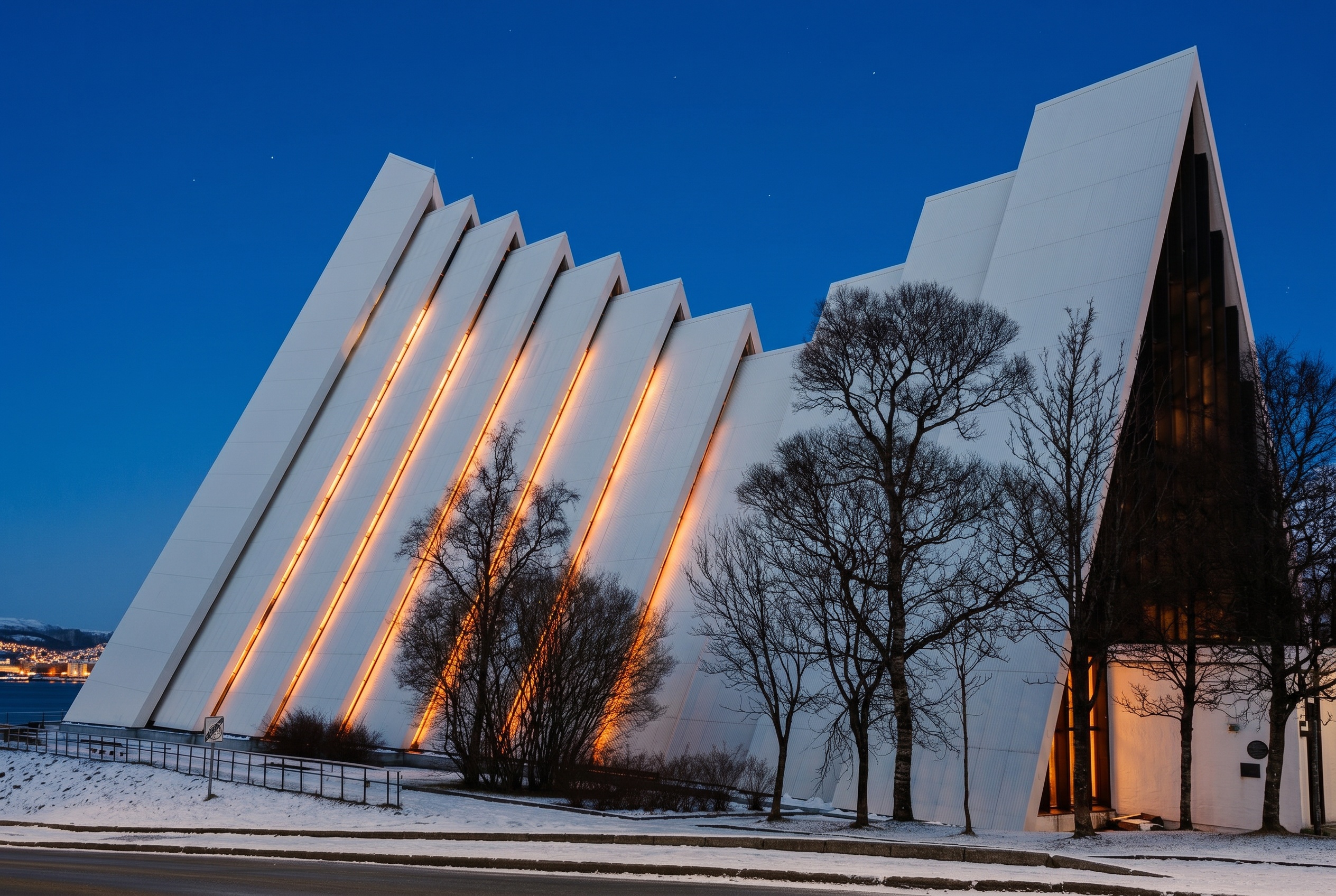
Tromsø proudly calls itself the gateway to the Arctic and it’s by far the liveliest and most interesting city in the far north, where people from all over the world gather in winter to hunt the northern lights. A prominent landmark visible from afar is the Arctic Cathedral with its triangular shape resembling ice floes, glowing into the Arctic night. I definitely recommend taking the Fjellheisen cable car up Mount Storsteinen, from where you’ll see the whole city surrounded by dark fjords.
In the winter months, a huge number of boats set out from here on popular whale safaris, and you can spend the evenings sipping local beer at the world’s northernmost brewery, Mack. The city has a very young, energetic atmosphere thanks to its university, so despite the bitter winter you’ll come across plenty of cosy pubs and cafés full of life. 💡 Tip: You’ll find a detailed guide on how to plan a winter adventure and exactly where to watch for the green lights in the sky in our article Tromsø — the gateway to the northern lights.
22. Røros
If you’re looking for something completely different from the classic fjords, head inland towards the Swedish border, where the old mining town of Røros lies, so fantastically well preserved that UNESCO added it without hesitation to its World Heritage list. It’s made up of dark brown wooden houses with grass-covered roofs, above which a massive stone church towers, and all around you’ll see old slag heaps from the days of intensive copper mining. The atmosphere here is utterly unique and you’ll feel as though you’ve stepped back three hundred years in a time machine.
The town is famous mainly in winter, when it hosts huge Christmas markets full of crafts and horse-drawn sleighs with jingling bells drive through the snowy streets. Because of its location high in the mountains it gets properly cold here, and temperatures dropping to minus thirty are nothing unusual in January. 💡 Tip: Be sure to visit the Smelthytta mining museum, which has absolutely perfect scale models showing the brutal conditions in which the miners once worked.
23. Kristiansand
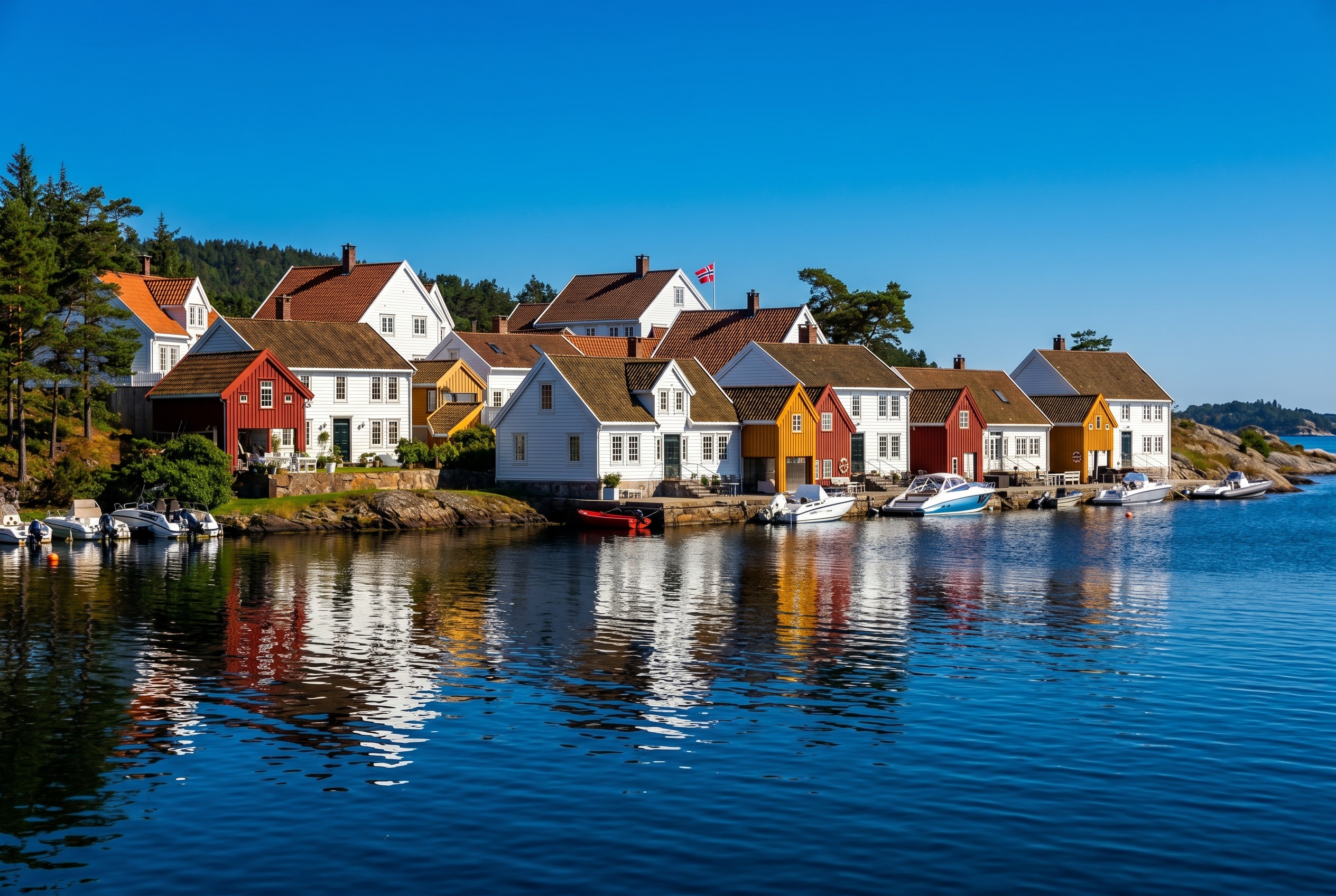
The southern Norwegian city of Kristiansand is the very first place many tourists see in Norway, because huge ferries arrive here from the Danish port of Hirtshals and the city serves as the main entry point for road trips along the west coast. It has a beautiful old town called Posebyen, where the regular blocks of white wooden houses have been preserved and a very relaxed, almost summery seaside mood prevails. Norwegian families come here to spend their holidays in summer, because the local beaches are among the best and sunniest in the country.
By far the biggest magnet of the whole region, though, is the vast Dyreparken complex, which brilliantly combines a sprawling zoo full of Nordic and exotic animals with a large amusement park featuring a pirate village. If you’re travelling with children, be prepared to easily spend two whole days here. 💡 Tip: The port is full of nice cafés, so if you arrive on the morning ferry, have a leisurely breakfast here before you set off clocking up the kilometres towards Stavanger.
The north and the Arctic
The further north you head, the wilder, emptier and more magical Norway becomes. Here beyond the Arctic Circle, the jagged peaks of Lofoten, whales, the midnight sun in summer and the dancing northern lights in winter await you. Count on long distances, but also on the fact that this is exactly where you’ll want to keep coming back.
24. Lofoten
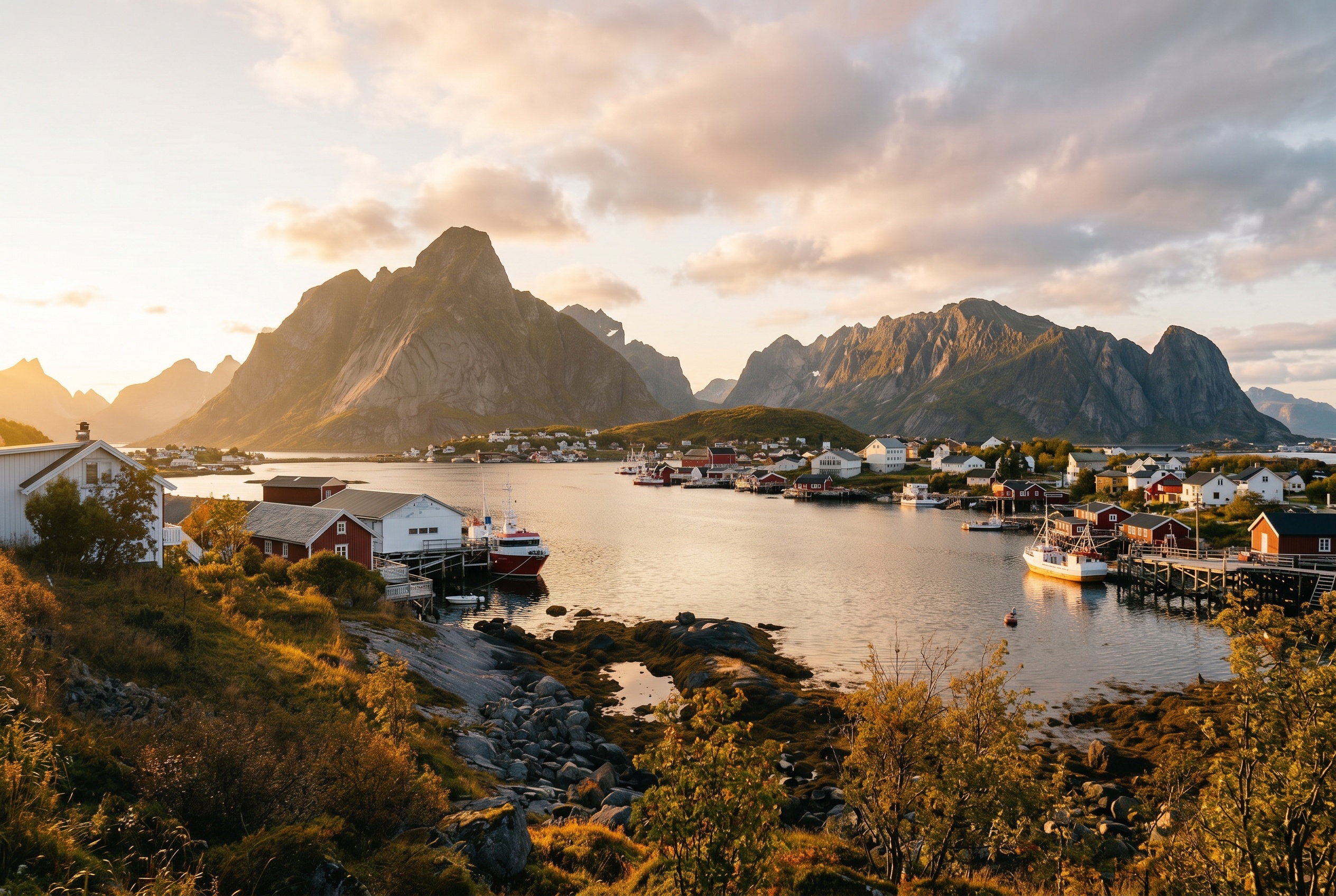
This archipelago beyond the Arctic Circle is probably the most photogenic corner of Europe, and its jagged, snow-covered peaks rising sheer from the ocean are guaranteed to take your breath away. You’ll find famous fishing villages here like Reine, Henningsvær and Nusfjord, where red cabins crowd above turquoise water and thousands of cod dry in the wind. Just bear in mind that the beauty of Lofoten is no longer a secret, and in the summer season the roads and car parks get really busy.
Among the biggest draws are the short but extremely steep climb up the steps to the Reinebringen viewpoint and the gorgeous white-sand beaches like Haukland or Kvalvika, where you’ll feel more like you’re in the Caribbean — until you try the water temperature. 💡 Tip: So as not to drag this out unnecessarily, we’ve put together a huge standalone guide What to see in Lofoten (the big guide), where you’ll find absolutely everything.
25. Vesterålen
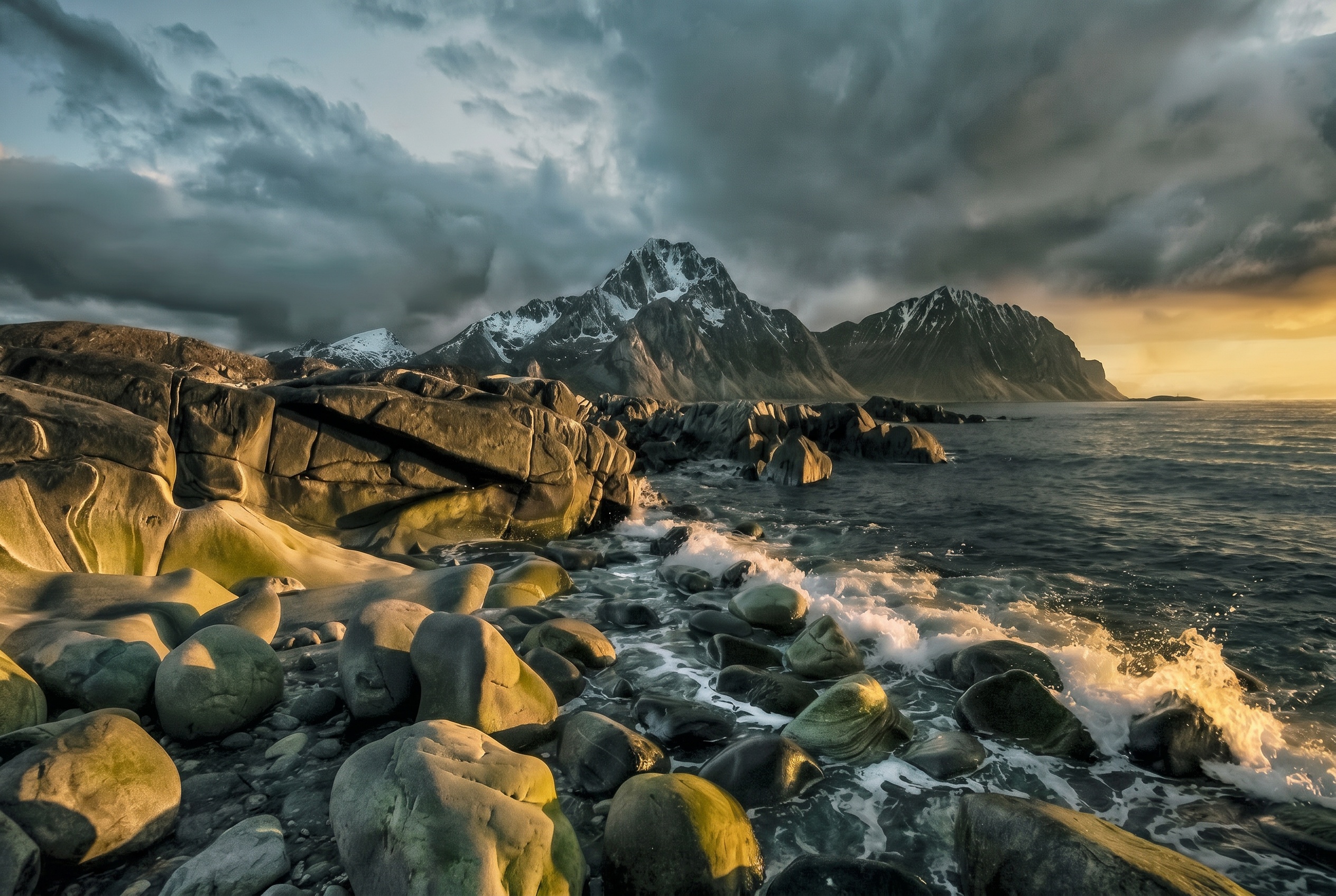
Just north of Lofoten lies the Vesterålen archipelago, which is somewhat in the shadow of its more famous neighbour, but offers a far calmer atmosphere, gentler hills and absolutely fantastic conditions for wildlife watching. By far the biggest draw is the town of Andenes on the northern tip, from where boats set out year-round on whale safaris and the chance of seeing giant sperm whales is huge. Compared to Lofoten, you’ll meet a fraction of the tourists and the roads are much emptier.
If you’re keen to see the beloved little birds with colourful beaks, head to the village of Bleik, from where boat trips run to the islet of Bleiksøya, where tens of thousands of adorable puffins nest in summer. The long sandy beach of Bleikstranda is also a perfect spot for watching the setting midnight sun in the evening. 💡 Tip: In summer a direct ferry runs from Andenes in Vesterålen to Gryllefjord on the island of Senja, an ideal link for continuing your journey north.
26. Senja
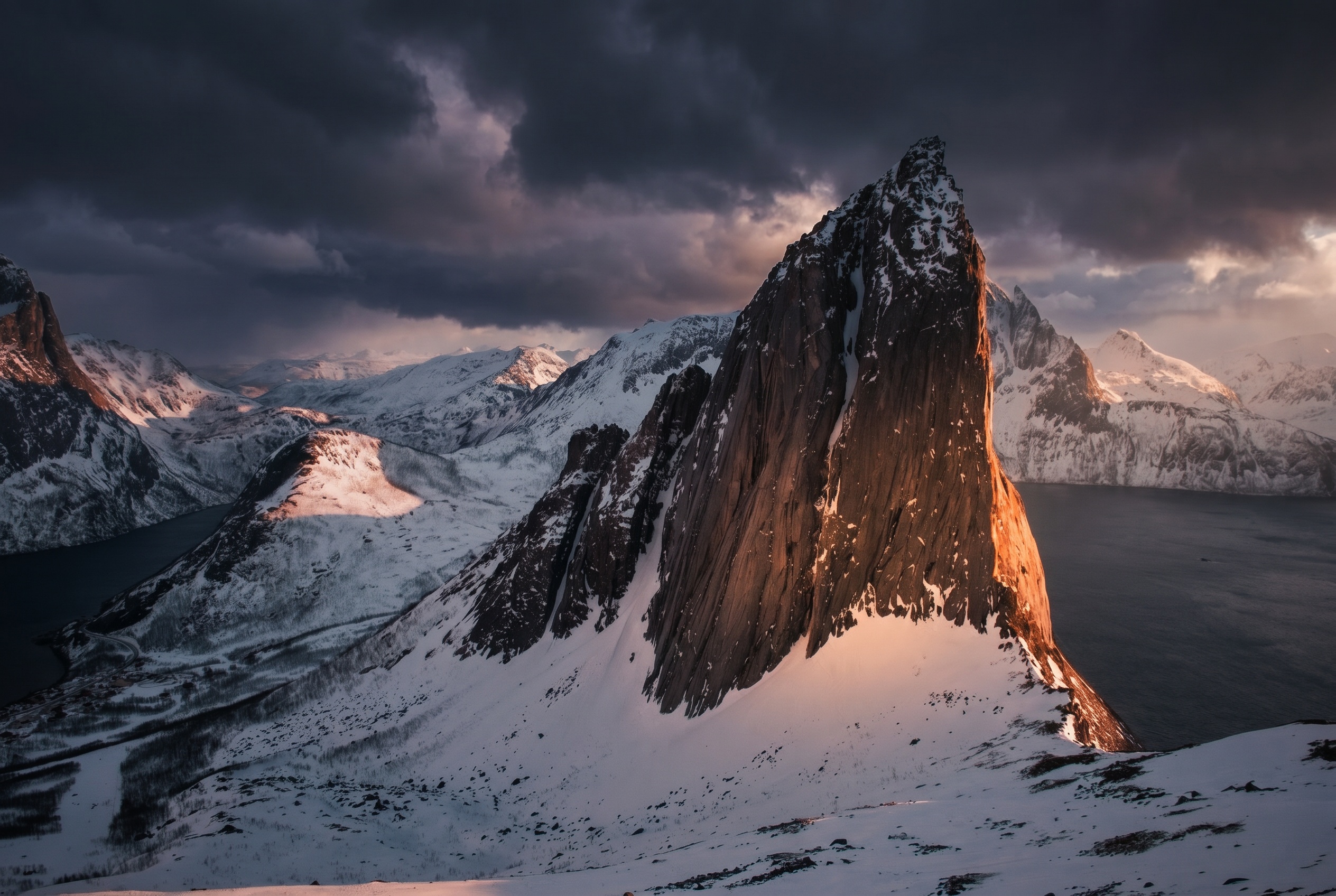
Norway’s second largest island boasts the title of Norway in miniature and is often spoken of as Lofoten without the crowds, because equally dramatic mountain peaks plunge into the ocean here, but you’ll meet far fewer campervans. Most of the most beautiful views lie along the national tourist route on the west coast, where you mustn’t miss the modern wooden viewing platform of Tungeneset, with its view of the jagged Okshornan rocks, nicknamed the Devil’s Teeth.
The island’s most famous and most photographed spot is the imposing Mount Segla, whose sheer wall drops over 600 metres straight into the sea, and the climb up the neighbouring Mount Hesten guarantees you the best view of its massif. The nature here is wild and raw, which makes the island an absolute paradise for hikers seeking true Arctic peace. 💡 Tip: As you drive around the island, don’t forget to stop at the Bergsbotn viewpoint, which hangs high above the valley and offers a wonderful panorama of the surrounding fjords.
27. Nordkapp (North Cape)
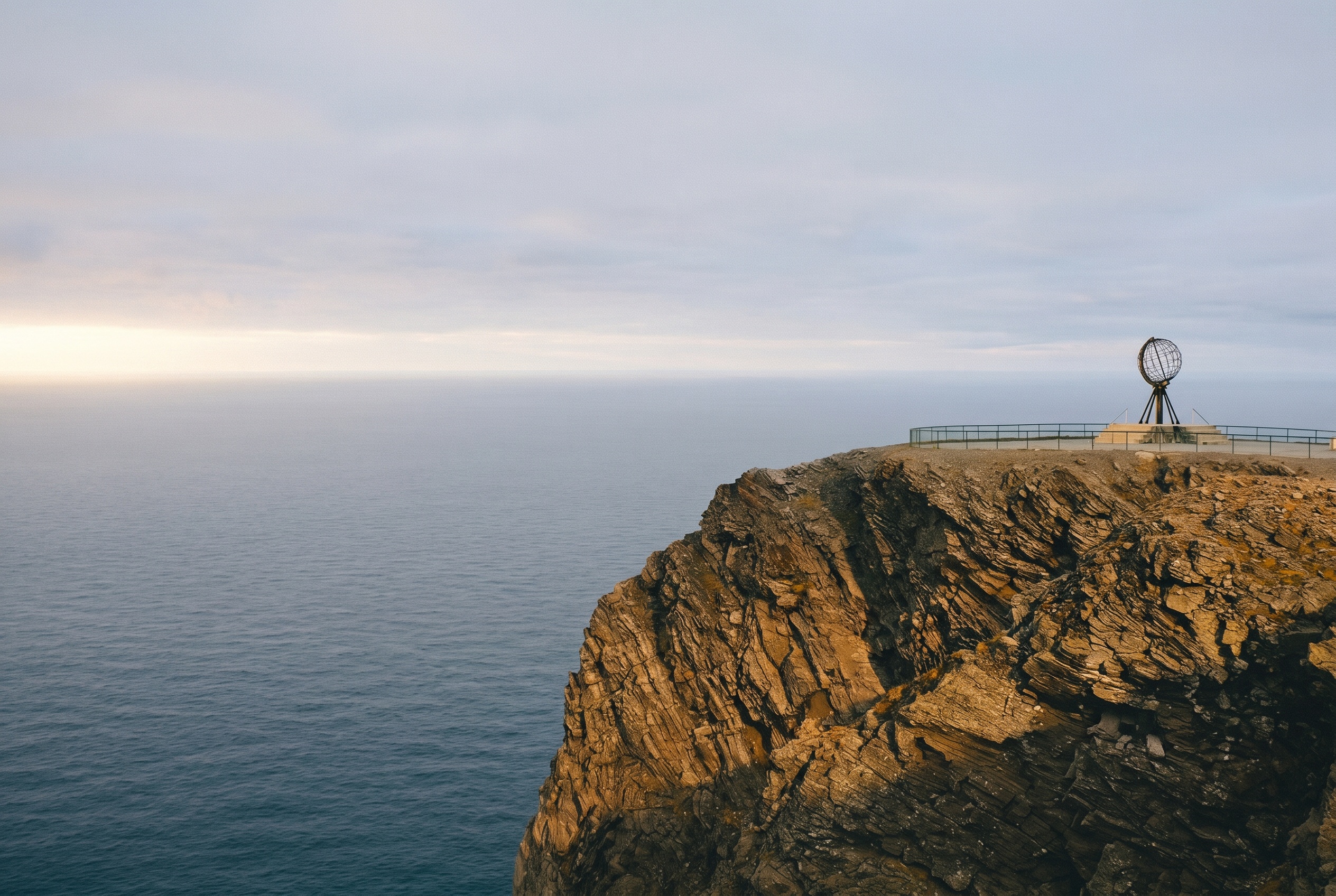
Everyone who travels to Norway somehow subconsciously dreams of driving all the way to the end of Europe, to the symbolic globe on the steep cliff of the North Cape, which rises 307 metres above the wild Barents Sea. It lies on the island of Magerøya, comfortably reached via a deep undersea tunnel, and in summer crowds head here mainly to watch the sun at midnight just touch the horizon before climbing straight back up. On the huge plateau around the cliff, herds of reindeer belonging to the local Sámi commonly graze.
A small geographical catch is that Nordkapp isn’t actually the northernmost point — that’s the neighbouring, lower-lying Knivskjellodden cape, which you have to reach via a hike of about nine kilometres. Entry to the visitor centre at Nordkapp is fairly expensive, but parking and access to the cliff itself should, under Norwegian law, be free. 💡 Tip: The weather on the cliff is extremely changeable and a fog so thick that you can’t see five metres often rolls in, so it definitely pays to have at least a small time buffer.
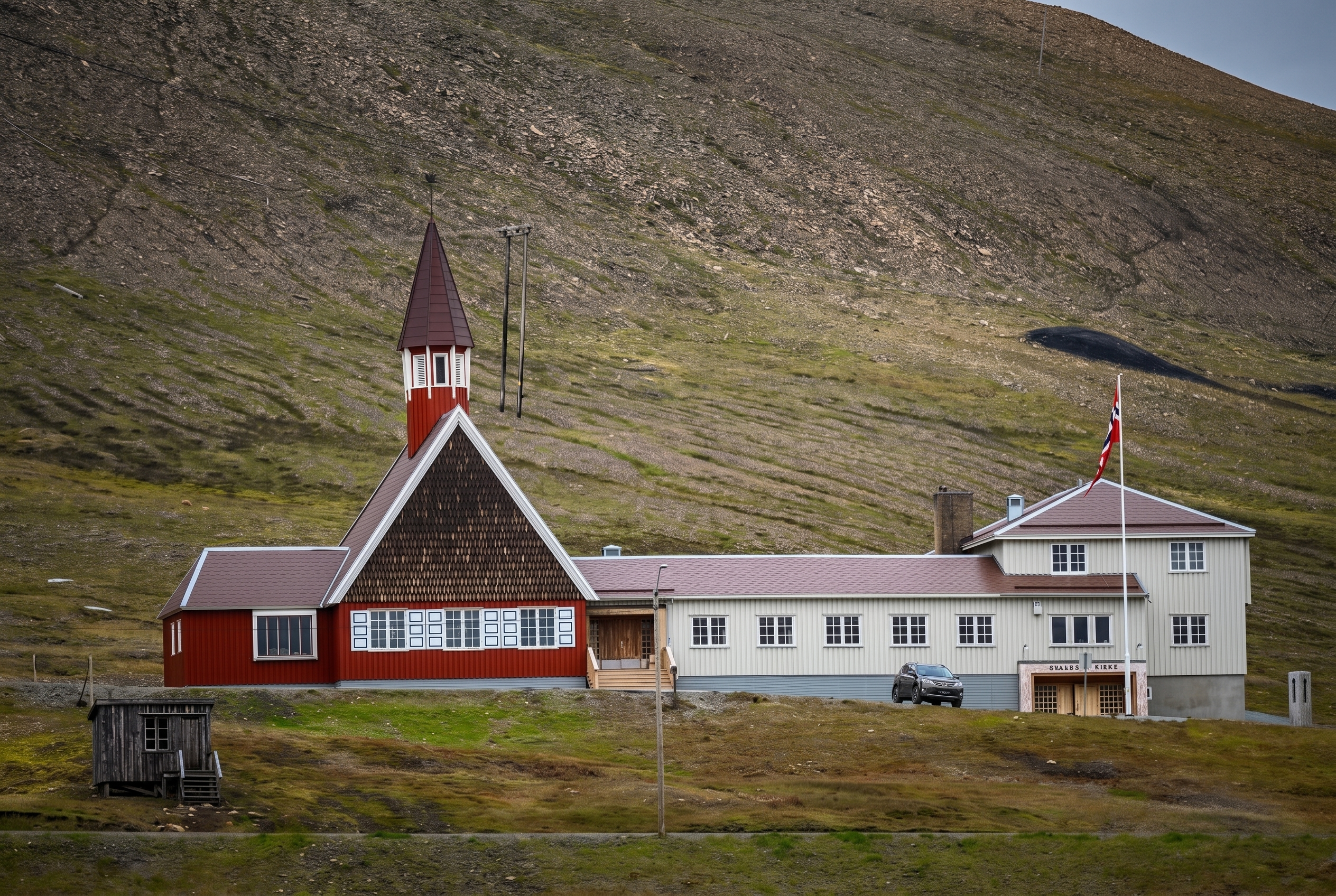

28. Svalbard (Spitsbergen)
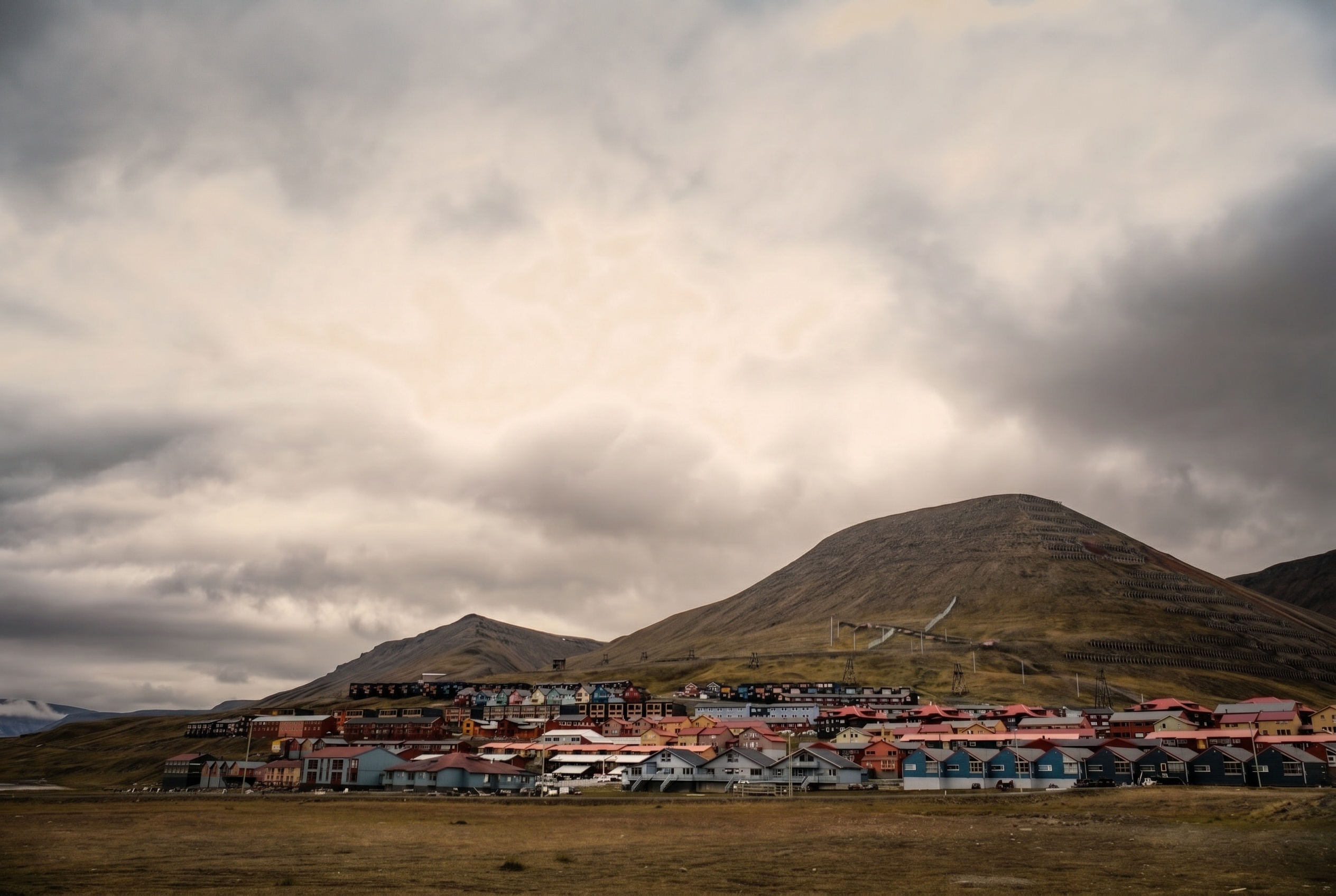
If mainland Norway isn’t enough for you and you want to experience the true High Arctic, you’ll need to board a plane in Oslo or Tromsø and head out to the remote Svalbard archipelago, where there are more polar bears than people. The main hub is the small town of Longyearbyen, from where in winter you set out on long expeditions by snowmobile or dog sled across endless glaciers and frozen fjords. The nature here is incredibly harsh, no trees grow and in winter the absolute darkness of the polar night reigns.
For safety reasons, you can’t leave the boundaries of the town without a rifle and special training, so for all trips into the wilderness you have to rely on experienced local guides. Although a trip here is very expensive, coming face to face with the Arctic wilderness, walruses or blue glacier caves is an experience from a completely different dimension. 💡 Tip: Longyearbyen lies so far north that from mid-April to the end of August the sun never sets and shines 24 hours a day.
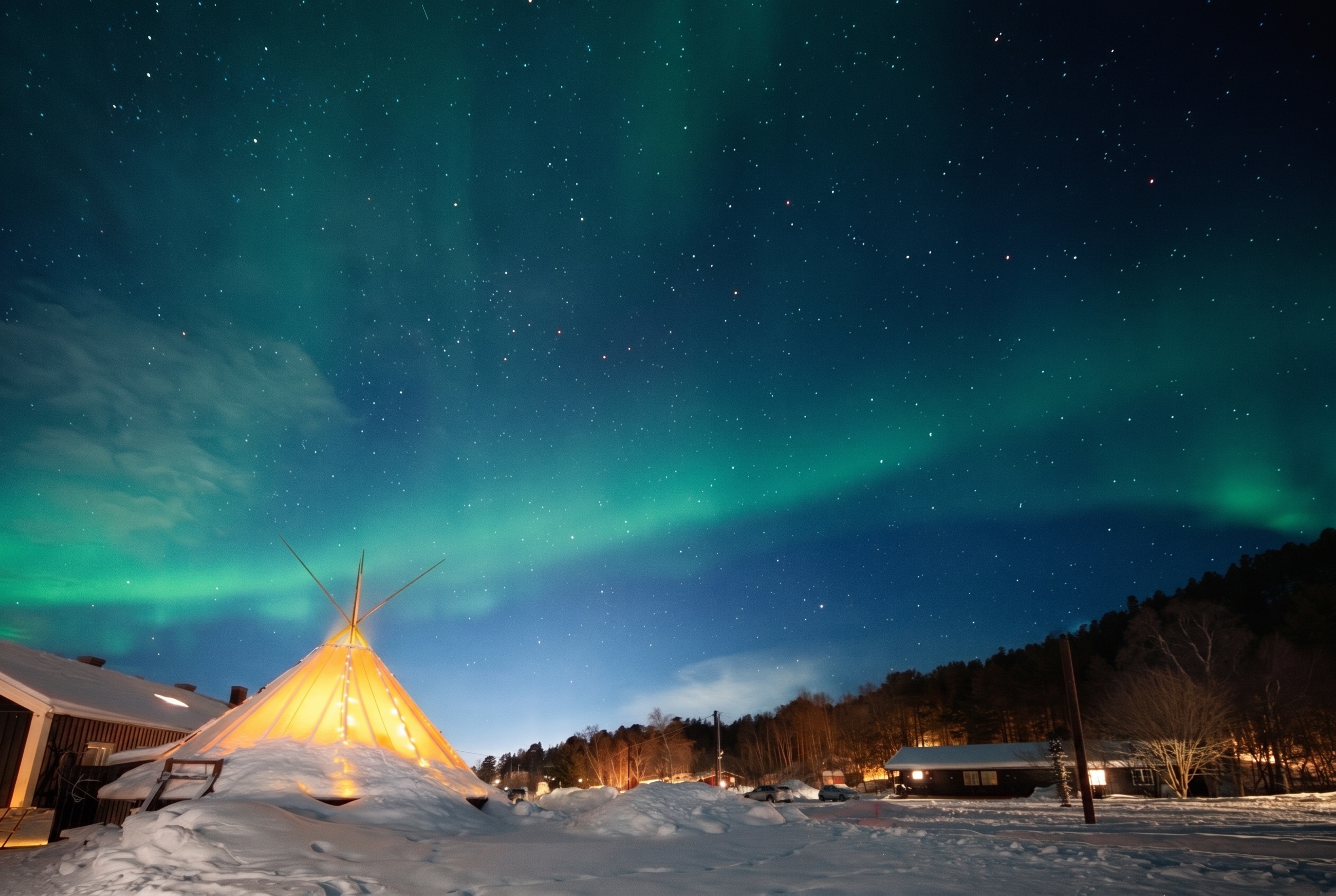
29. Alta
The town of Alta lies in a deep fjord in the north of the country and attracts tourists mainly thanks to its huge fields of Stone Age rock carvings, which are over 6,000 years old and rightly belong on the UNESCO list. In the summer months you can walk the outdoor trails, along which you’ll see thousands of reddish images of hunters, reindeer, bears and salmon, giving an incredible insight into how people once survived here.
Alta is also famous as a city of the northern lights, because it has excellent, stable climatic conditions with minimal cloud cover, so the chance of seeing the green spectacle is genuinely huge. What’s more, just outside the city the amazing Sorrisniva ice hotel is built each winter from huge blocks of ice, where you can have a drink from ice glasses or even spend a properly freezing night on reindeer skins. 💡 Tip: Don’t miss the stunning Northern Lights Cathedral right in the city centre, whose titanium facade reflects the Arctic light in all directions.
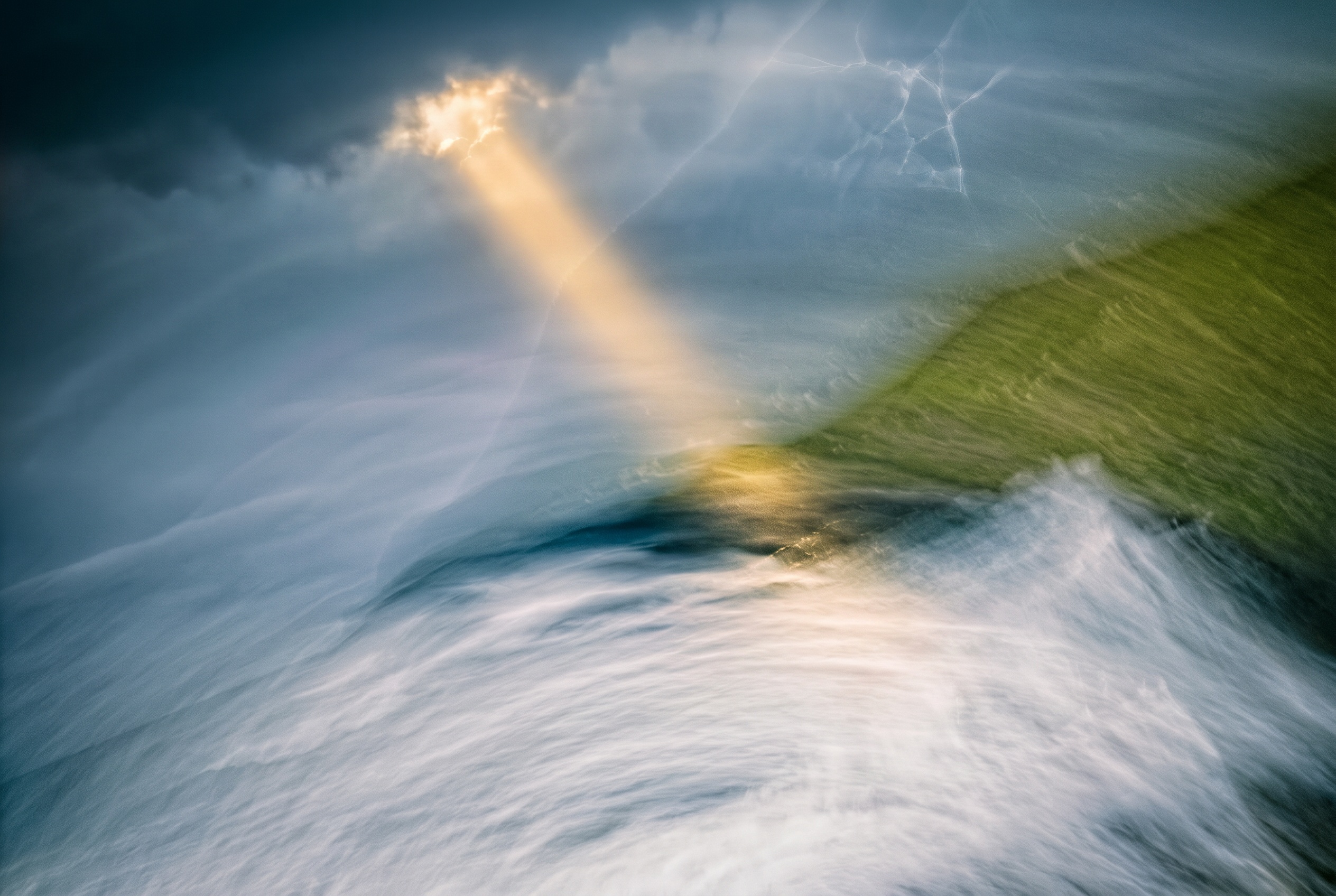
30. Saltstraumen
Just outside the town of Bodø an incredible spectacle unfolds, because this is where you’ll find the most powerful tidal current in the world, created when hundreds of millions of cubic metres of water force their way through a narrow strait from the ocean into the fjord and back again. During the incoming and outgoing tide, which usually happens four times a day, the water reaches speeds of up to 40 kilometres per hour and huge whirlpools up to ten metres across form on the surface. The best view of all that roaring mass is right from the road bridge, which arches high above the strait.
The area is an absolute paradise for anglers, because the strong currents bring huge amounts of food here and catches of giant cod or halibut are no rarity. You can also pay for an adrenaline trip on a fast inflatable boat, which takes you right to the edge of the biggest whirlpools. 💡 Tip: Before your visit always check the exact tide times online, because outside these times the water in the strait is completely calm and you won’t see anything interesting.
Dream roads and scenic trains
In Norway, the journey itself is the destination. The country’s engineers managed to thread roads and railways through the most inaccessible places, so the journeys themselves rank among the greatest experiences. Here are the most beautiful scenic roads, hairpins and trains that deserve a place in any itinerary.
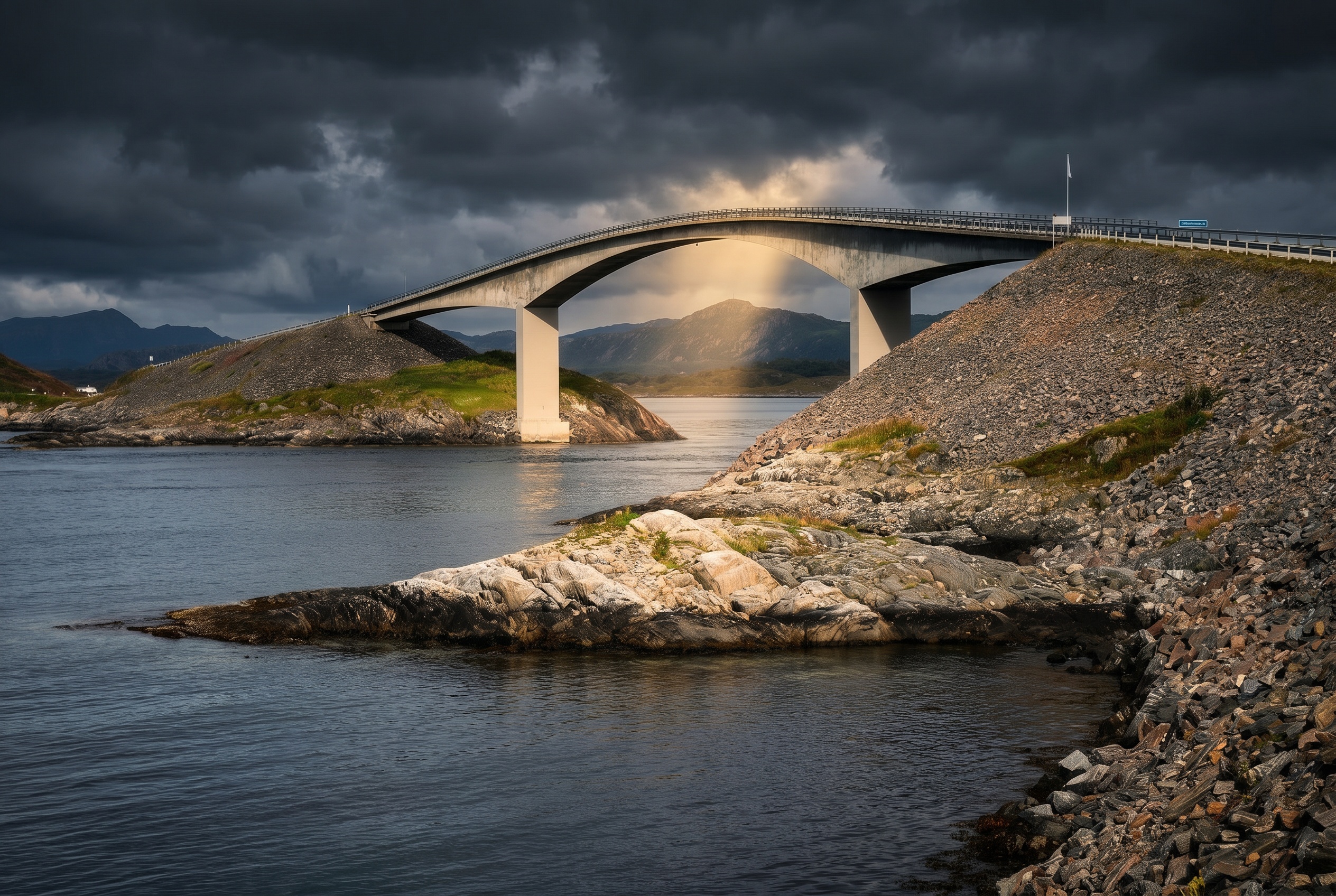
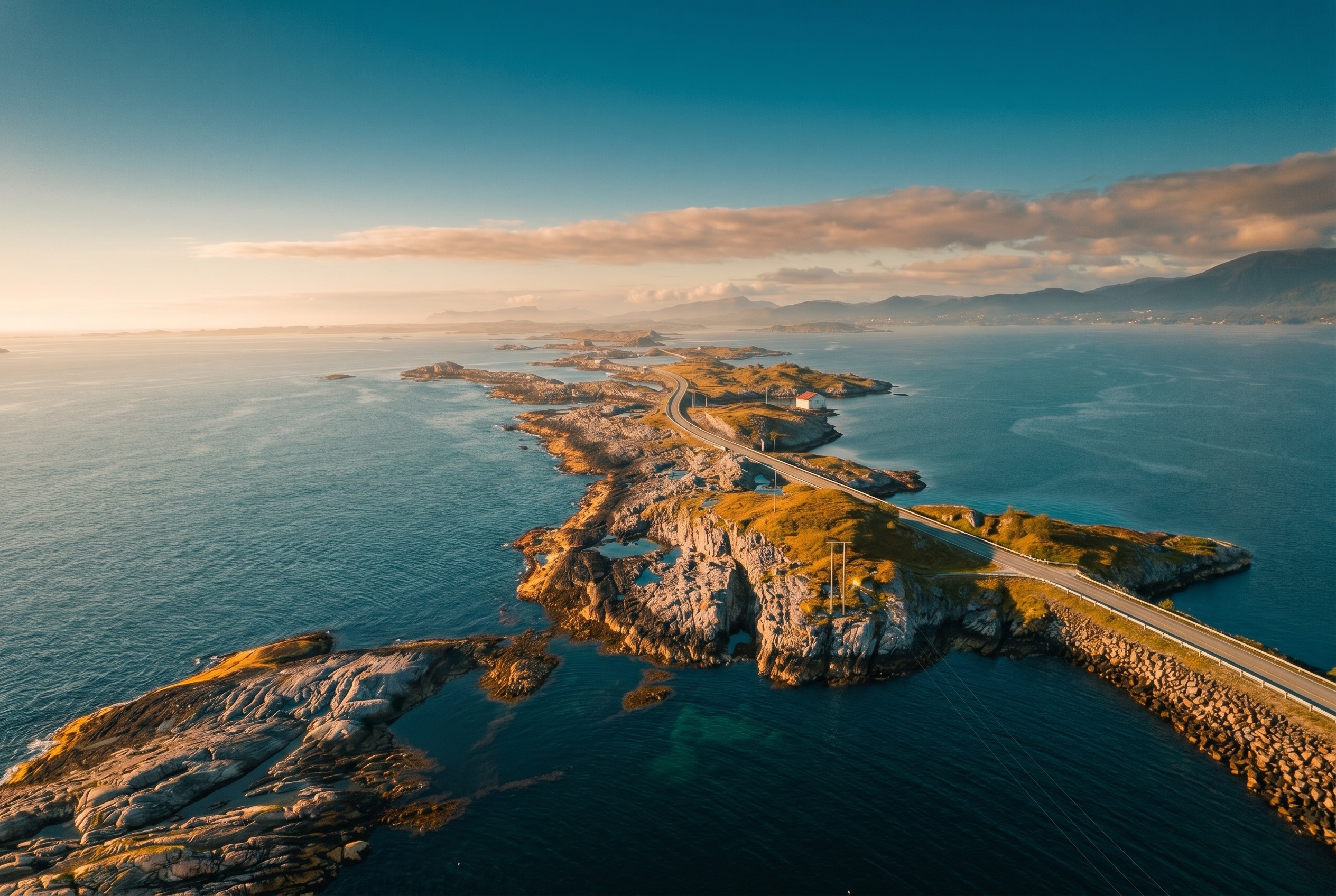
31. The Atlantic Road (Atlanterhavsveien)
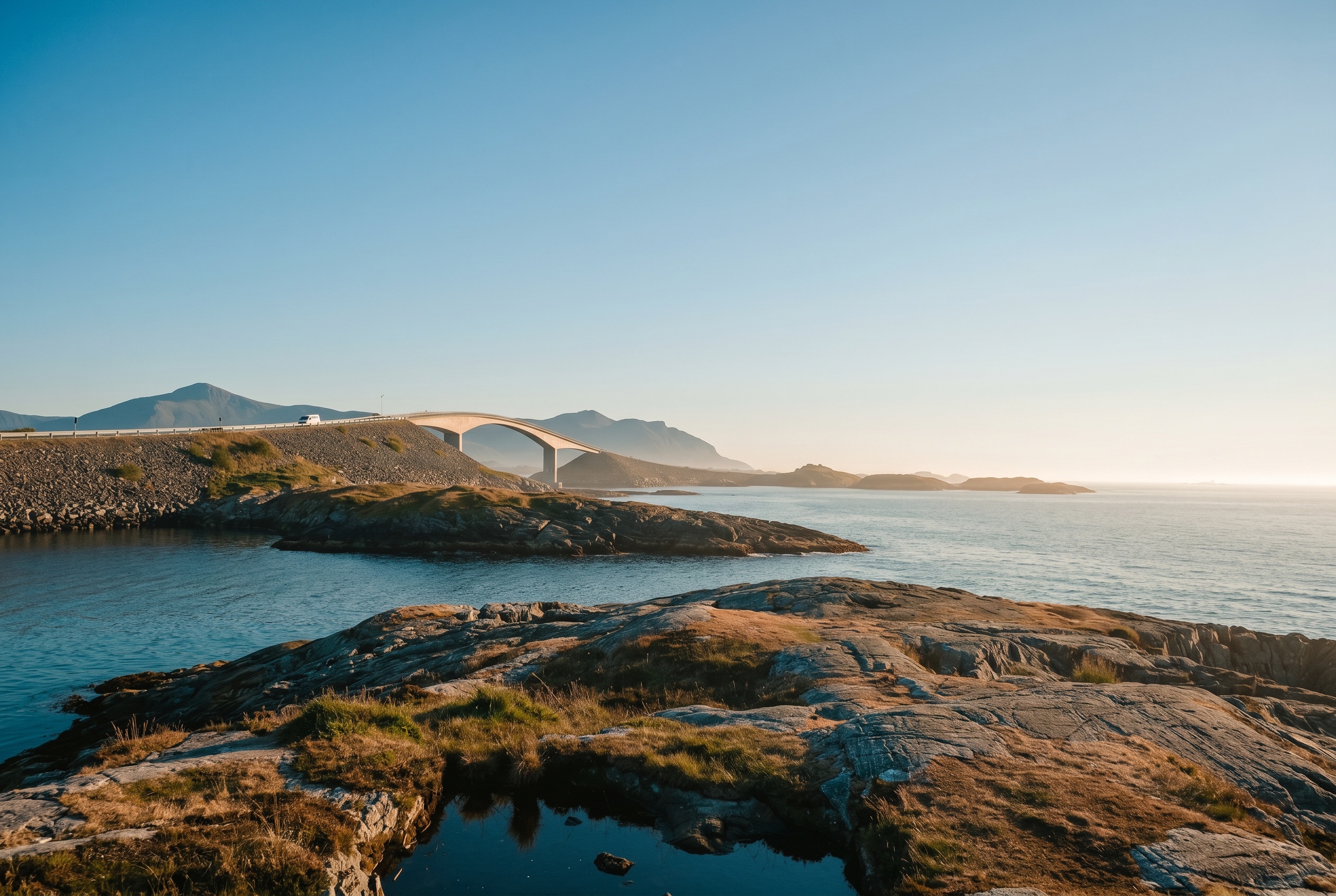
This eight-kilometre road is often called the most beautiful road in the world, and its uniqueness lies in the way it hops across small islets and reefs via eight elegant bridges. By far the most photographed spot is the huge arched Storseisundet bridge, which from a certain angle looks as though it ends straight in mid-air with cars tumbling into the sea. The route is one of the prestigious national tourist roads and offers several beautiful rest stops with viewing walkways around the coastal rocks.
The driving experience differs wildly depending on the weather — on a calm summer day you can admire the views over the water and watch for whales, while during autumn storms huge waves from the raging ocean crash across the road. You’ll drive the whole stretch in a few minutes, but you’ll definitely turn around at the end and do it at least once more. 💡 Tip: On one of the islets, stop at the café in Eldhusøya, from where a very nice modern walkway leads around the whole islet with beautiful views of the bridges.
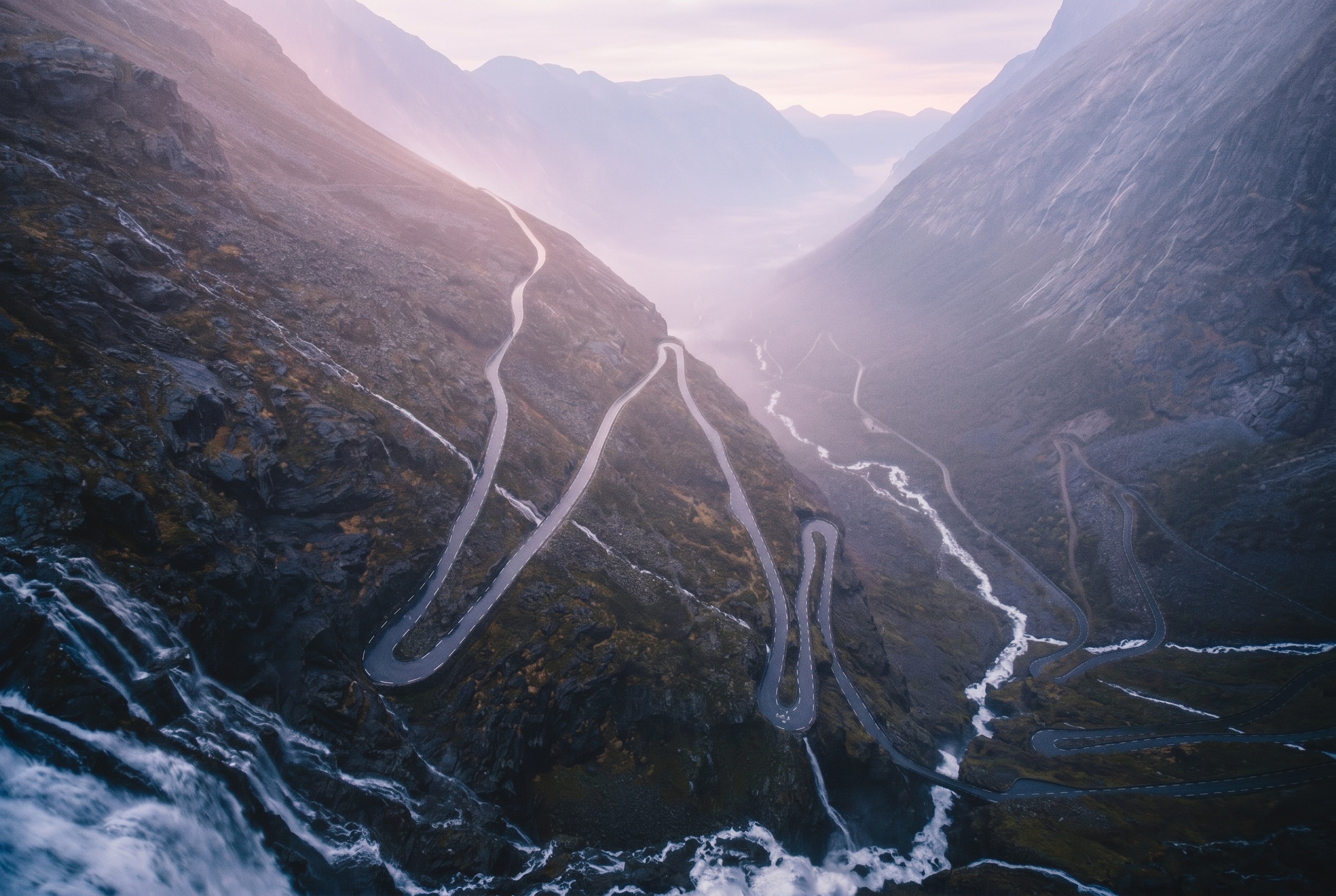
32. Trollstigen (the Troll Road)
The famous Troll Road is an engineering miracle from the 1930s, and driving its 11 extremely sharp and steep hairpins, which bite into the sheer rock face, is a must for any proper road trip. As you climb you’ll pass the roaring Stigfossen waterfall, which plunges over 300 metres into the valley, and on the sharpest bends you’ll be hoping a huge tour bus doesn’t appear coming the other way. When you finally reach the top, a modern visitor centre awaits.
From the centre, concrete walkways lead to steel viewing platforms that hang high above the valley and offer an incredible view of the cars winding below like little ants. Because of the snow, the road is open from roughly mid-May to October, but lately there have been problems with rockfalls, so before your trip you must check whether it’s passable. 💡 Tip: If you’re driving a long campervan, take great care — passing on the bends requires experience and maximum precision.
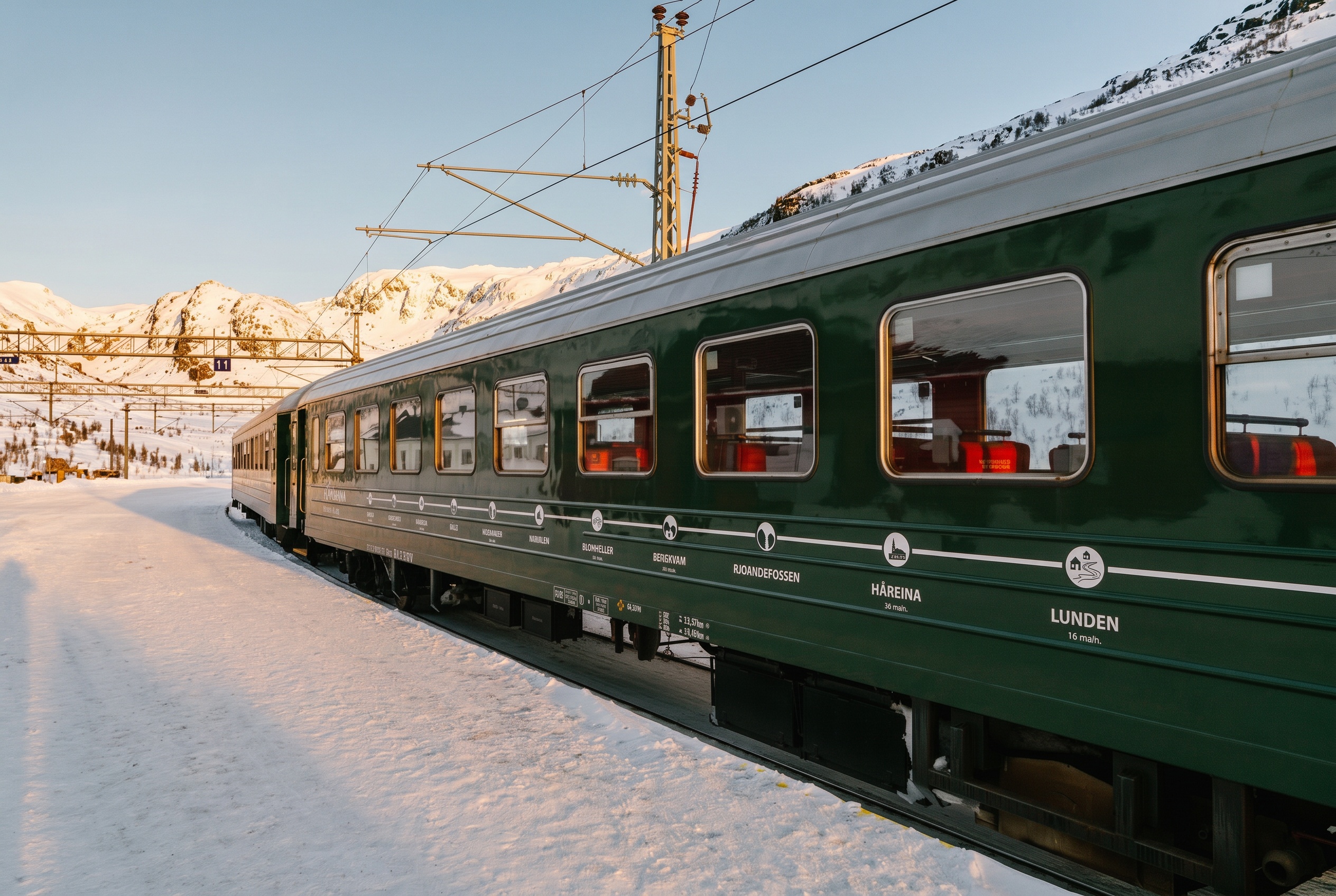
33. The Flåm Railway (Flåmsbana)
Even if you arrive in Norway by car, make an exception and buy a ticket for this historic train, which climbs 860 metres of elevation in just twenty kilometres, making it one of the steepest standard-gauge railways in the world. The train starts at the high-mountain station of Myrdal and slowly descends a deep green valley full of waterfalls and steep cliffs down to the fjord at the town of Flåm. The ride takes about an hour and through the window you’ll watch scenery you otherwise couldn’t reach at all.
The highlight of the journey is a brief stop at the enormous Kjosfossen waterfall, where the train halts, you can step out onto a platform and immerse yourself in Norwegian mythology in the form of the dancing fairy Huldra, who lures travellers. Tickets disappear at incredible speed in the summer season, because the line is the main star of the all-day Norway in a Nutshell tour. 💡 Tip: On the way down from Myrdal to Flåm, sit on the right side of the carriage if you can, where the view into the deep valley is much better.
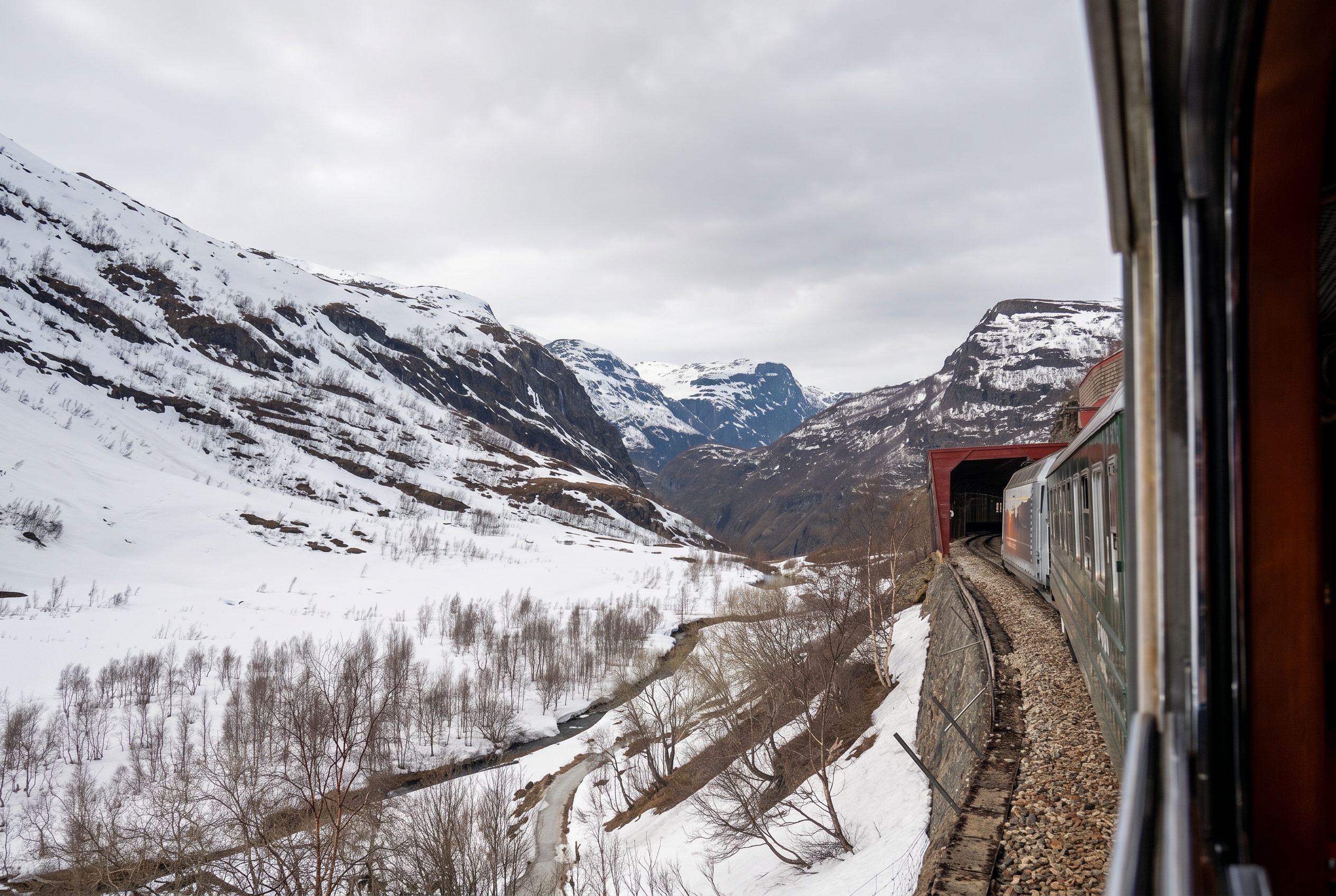
34. Bergensbanen (Oslo–Bergen)
The train journey between the capital and Bergen takes about seven hours and ranks among the most beautiful railway routes in the world, because it crosses the wild Hardangervidda plateau. It’s the highest mountain railway in northern Europe, its highest point at Finse station sitting at 1,222 metres above sea level. Even in midsummer you’ll often see snow and frozen lakes outside the window, creating an absolutely amazing contrast with the blooming valleys at the start of the journey.
If you like cycling, definitely plan a trip along the famous Rallarvegen route, which runs right alongside the railway and offers absolutely phenomenal views of glaciers and mountains. You can easily rent bikes at one station and return them at the next, with most of the route running downhill towards the fjord, so even occasional cyclists can manage it. 💡 Tip: Buy train tickets online from the Vy company well in advance — the cheaper fares are long sold out at the station.
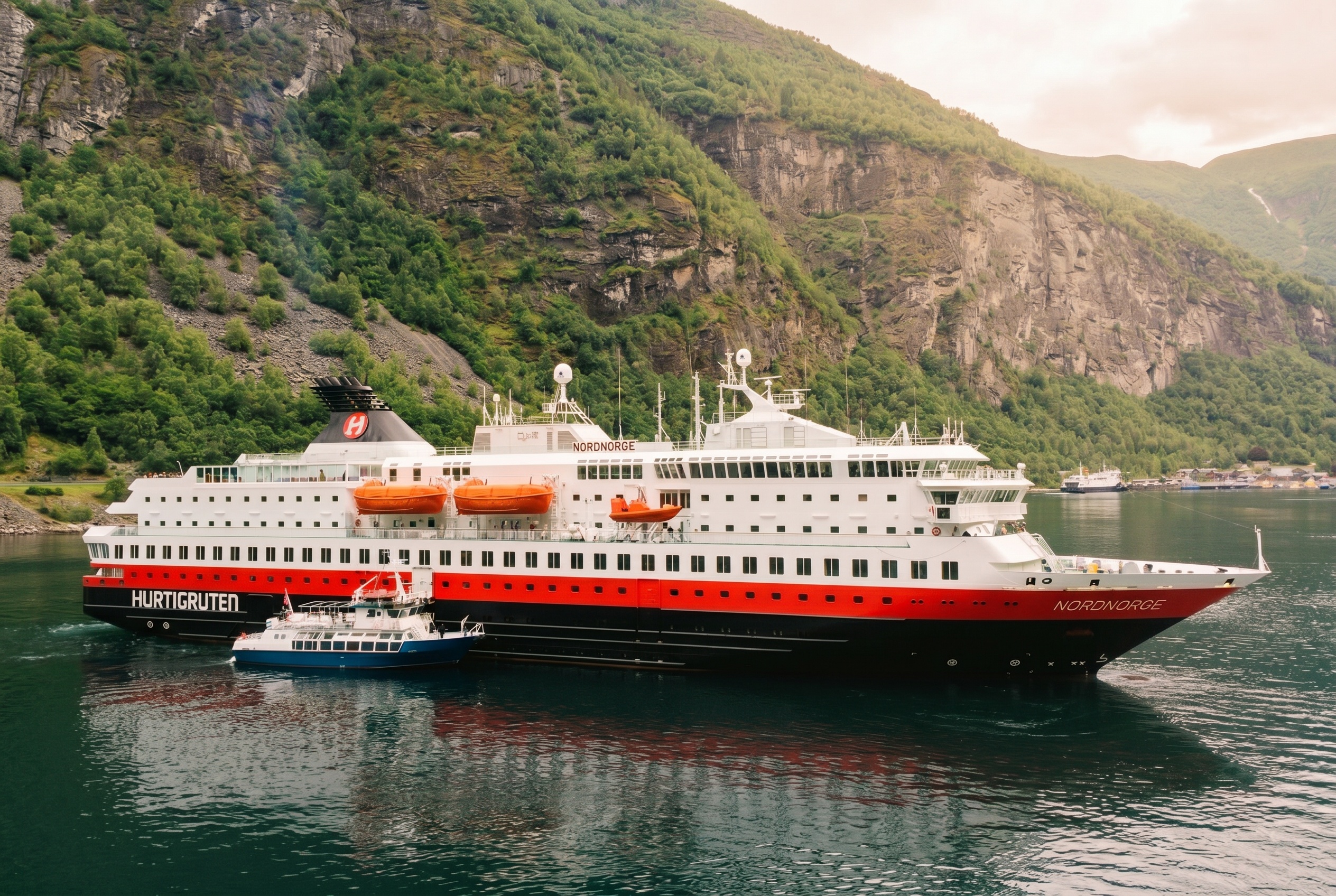
35. Hurtigruten
This legendary coastal voyage was originally created to deliver post to remote communities, but today it’s one of the most iconic ways to discover the Norwegian coast in all its rugged beauty. The journey from Bergen all the way to the far north at Kirkenes takes a full seven days one way, and the ship stops at 34 different ports along the route. On the way you’ll sail through the narrow Trollfjord, pass the majestic peaks of Lofoten and even see the famous Nordkapp cliff.
You don’t have to buy a ticket for the whole week-long voyage, though — the ships also work as regular ferries, so you can hop on for just a single night between two interesting ports. It’s a more expensive experience, but the view of snow-capped mountains right from the deck of a heated ship is simply priceless. 💡 Tip: You’ll find more detailed information about this famous voyage in our article on the Norwegian fjords.
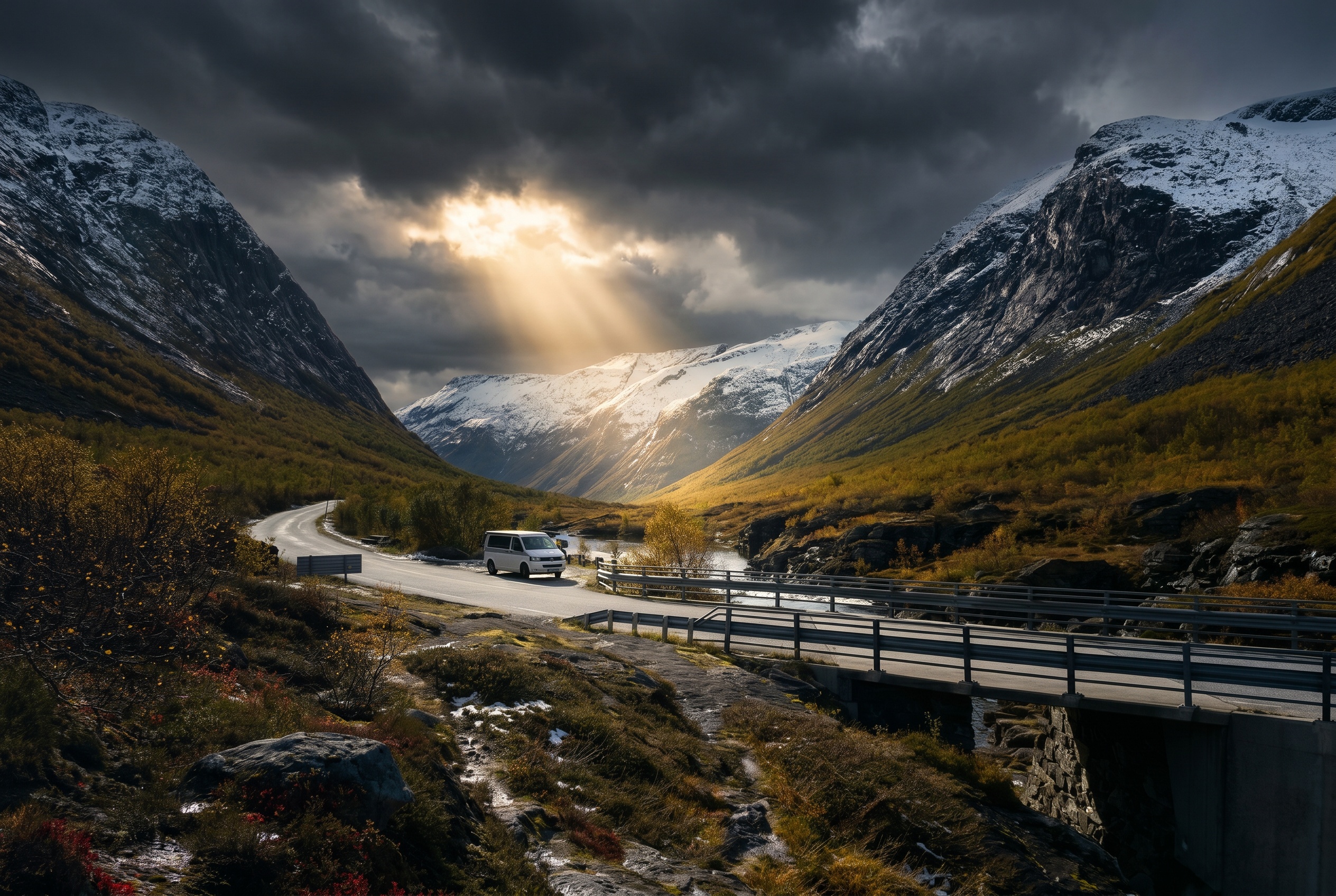
36. Sognefjellet and Gamle Strynefjellsvegen
Driving enthusiasts will be in their element in Norway, especially on the mountain passes, the very highest in all of northern Europe being the scenic Sognefjellet road, which climbs to 1,434 metres. The route takes you through the harsh landscape of Jotunheimen National Park, where you’ll pass huge glacial fields, frozen turquoise lakes and mighty stone cairns. At the highest point definitely make a stop, because the view of the surrounding 2,000-metre peaks is absolutely stunning.
Another gorgeous, well-preserved road is the historic Gamle Strynefjellsvegen route, which connects deep fjords with old glaciers and in many places still has its original gravel surface from the nineteenth century. Along the road you’ll find old stone markers and bridges that make you feel as though you’ve travelled back in time to the days of the first explorers. 💡 Tip: Because of the masses of snow, these high-mountain roads usually open only around late May or early June, so always check whether they’re passable before a spring trip.
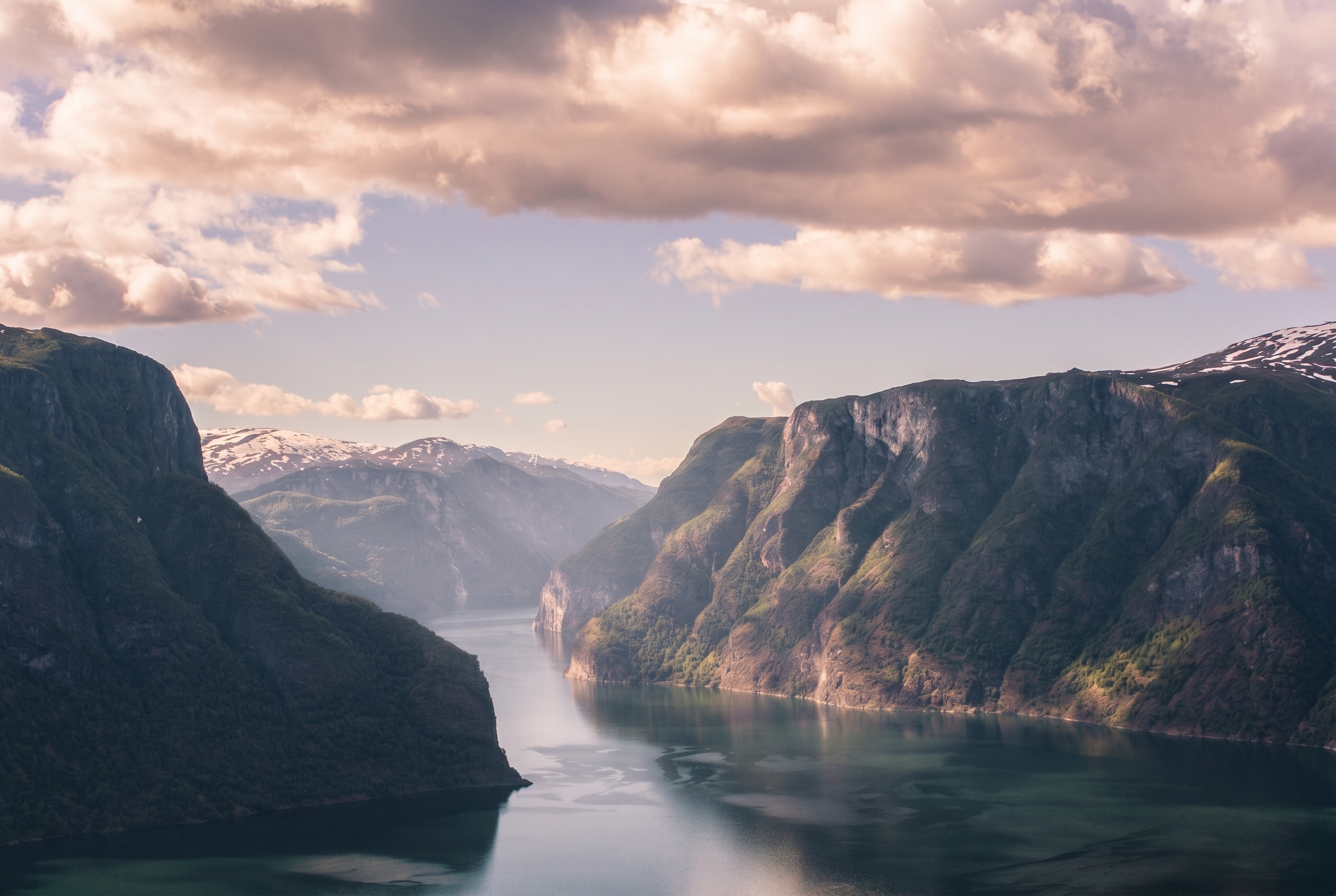
37. Norway in a Nutshell
If you don’t have a car or you’re pressed for time, this brilliantly devised tour serves up the biggest natural hits of western Norway in a single, albeit very packed, day. It’s essentially a clever combination of tickets connecting the scenic Bergensbanen train ride, the steep descent of the Flåm Railway and a gorgeous cruise along the narrow Nærøyfjord to Gudvangen. From there a bus then takes you up the adrenaline hairpins of Stalheimskleiva back to the train, which returns you to base.
You can do the whole package from either Oslo or Bergen, and although it sounds like a very touristy affair, logistically it works absolutely perfectly and without stress. The advantage is that you don’t have to fiddle with the timetables of the individual operators — everything flows seamlessly and you just enjoy the views with your camera in hand. 💡 Tip: You can buy the tickets as a single package online or put them together yourself section by section, which sometimes works out a little cheaper.
Waterfalls, glaciers and nature
Wherever you look in Norway, water is falling or ice is sliding. Melting glaciers and high rainfall gave rise to hundreds of waterfalls and huge ice fields well worth a detour. We’ve picked out the mightiest waterfalls and the most accessible glaciers that will leave your jaw on the floor.
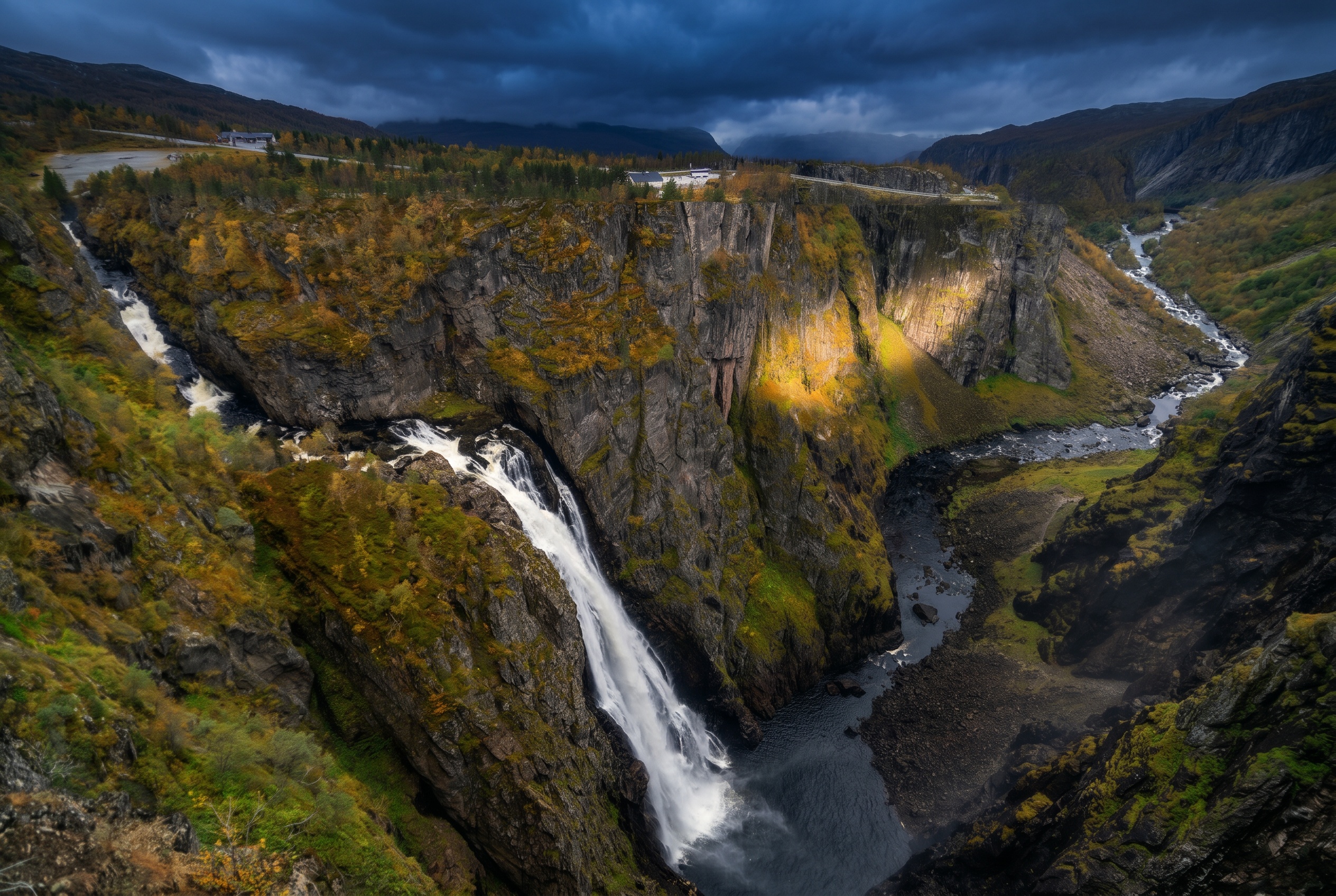
38. Vøringsfossen
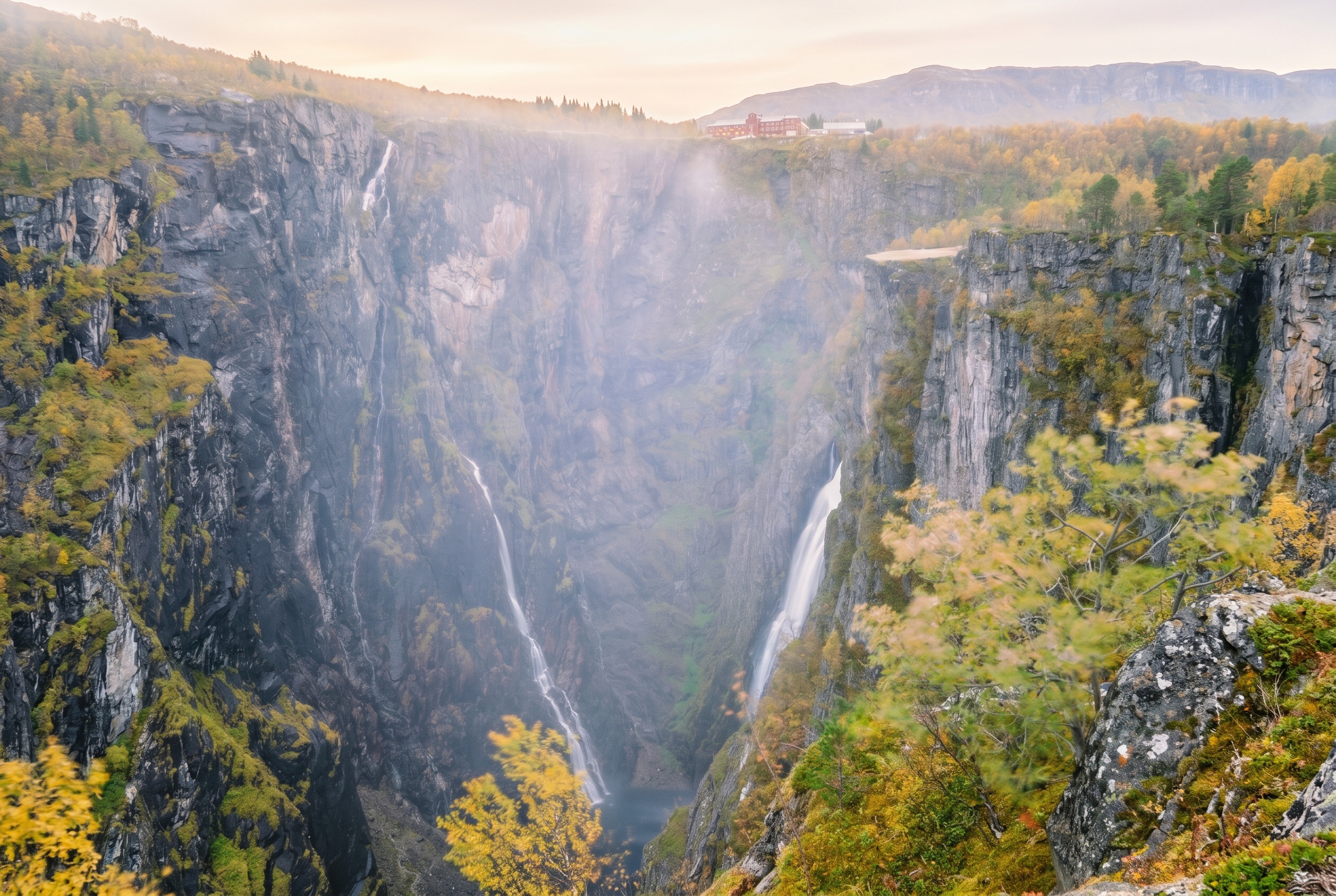
You’ll see so many waterfalls in Norway that you’ll soon stop counting, but Vøringsfossen in the Måbødalen valley near Hardangerfjord is among the very mightiest and most famous in the whole country. The water plunges into a deep gorge with a tremendous roar over a total height of 182 metres, and a thick spray constantly forms around it, in which beautiful rainbows glow on sunny days. Just by the waterfall’s edge stands the old historic Hotel Fossli, where the famous Edvard Grieg reportedly once composed music.
Recently an architecturally stunning viewing bridge was opened here, which arches right over the deep gorge and offers absolutely fantastic angles for photos. Walking across the bridge is completely safe, but a look down into the roaring depths is guaranteed to set weaker stomachs trembling. 💡 Tip: You reach the waterfall very easily right off main road number 7, so it makes an ideal short stop during a longer drive.
39. Låtefossen
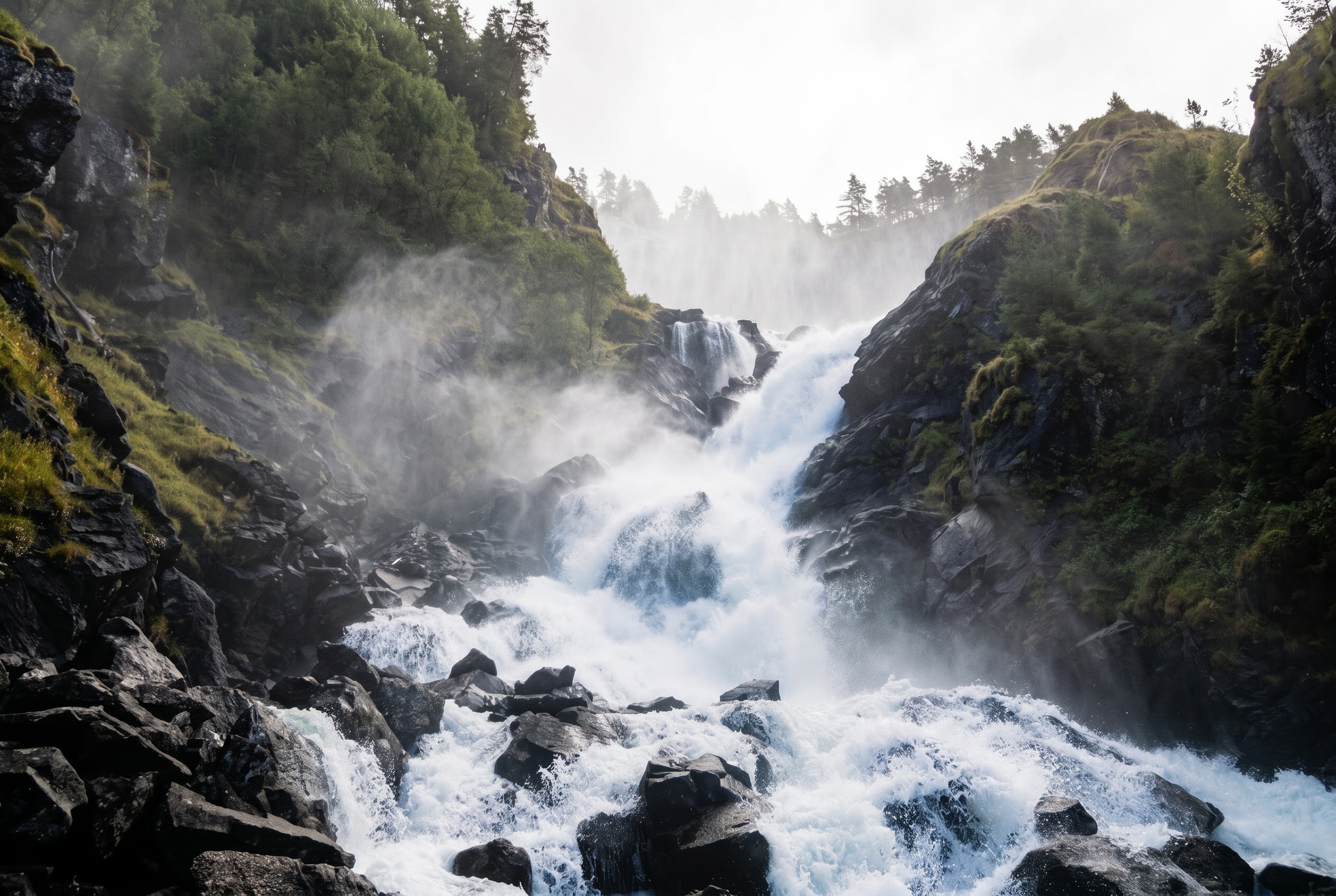
Just outside the town of Odda you’ll find a real natural one-off, because Låtefossen is not one but two huge streams of water that fall side by side and merge into a single roaring river just above the road. The water flows with such force that the old six-arched stone bridge over which cars drive is constantly shrouded in thick mist, so you pass straight through a free car wash. It’s one of the most photographed spots in the region and the romantic scenery has been drawing tourists since the nineteenth century.
The best time to visit is early summer, when a huge amount of snow melts in the mountains and the waterfall reaches its maximum power, so you’ll hear its roar from a great distance. There’s a small car park and a souvenir kiosk right by the bridge, but in peak season finding a free spot to stop can be a huge problem. 💡 Tip: Keep a dry cloth ready for your camera lens, because the spray flies everywhere and keeping the lens dry is an almost superhuman task here.
40. Jostedalsbreen
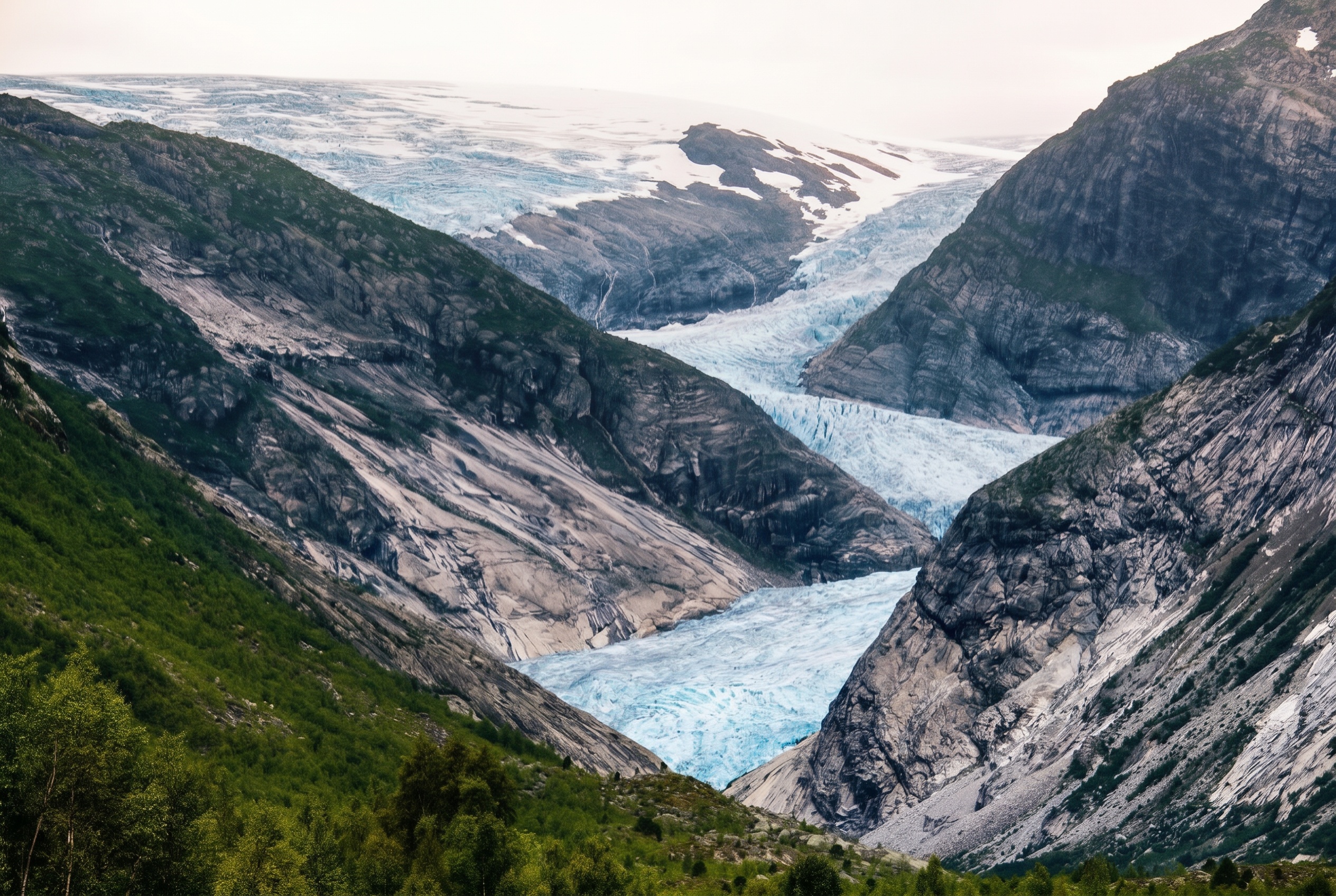
This enormous icy giant is the largest mainland glacier in all of Europe, and its massive tongues slowly slide into the deep valleys north of Sognefjord. By far the most visited arm is Briksdalsbreen, reached by a comfortable walk around a turquoise lake, though the glacier itself is sadly retreating quite quickly each year due to warming. You can even be driven up to it in small open vehicles that the locals call troll cars.
If you want a real adventure, head to the Nigardsbreen arm, where you can pay for a tour with a professional guide and, in crampons with an ice axe in hand, walk right across the blue ice full of deep crevasses. It’s a safe but physically more demanding experience that shows you the immense power of nature from a completely different perspective. 💡 Tip: Never venture onto the glacier on your own or without the necessary equipment — hidden crevasses beneath a thin layer of snow are extremely dangerous.
41. Folgefonna
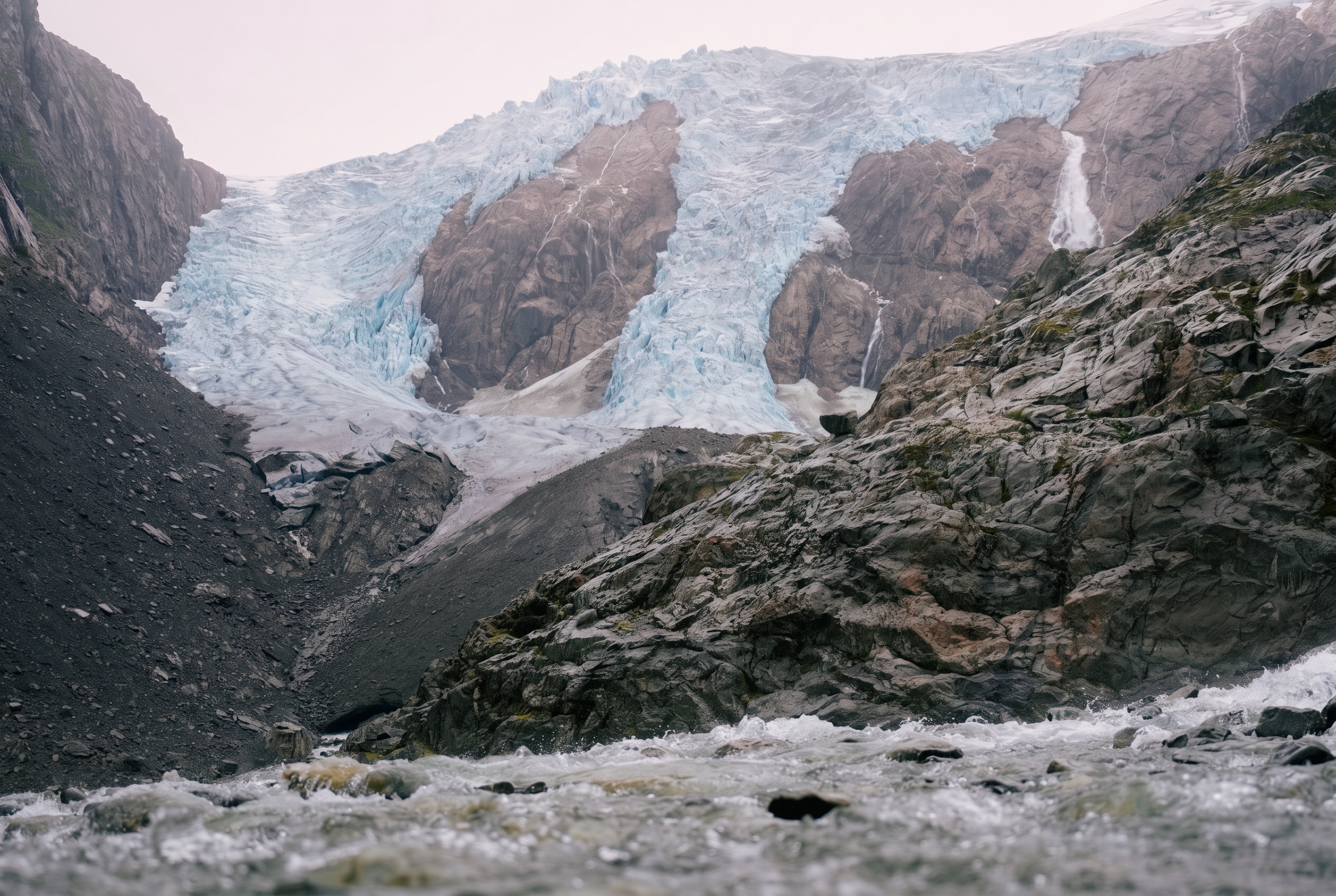
Above the orchards of Hardangerfjord, the Folgefonna glacier rises majestically, which mainly tempts keen skiers and snowboarders, because the local summer ski resort offers the best conditions for hitting the snow in the middle of summer. The road takes you high up into the mountains right to the glacier’s edge, where you can admire an incredible view of the blue fjord far below while standing knee-deep in snow.
Besides skiing, popular roped glacier hikes are also held here, on which you’ll explore amazing bluish ice caves and deep crevasses. Even if you opt for just a short walk around the car park, bring warm clothing, because the wind blowing off the glacier is icy even on the warmest August days. 💡 Tip: The road to the summer ski resort runs along a very narrow, winding road from the town of Jondal, so allow plenty of time and steady nerves for the drive.
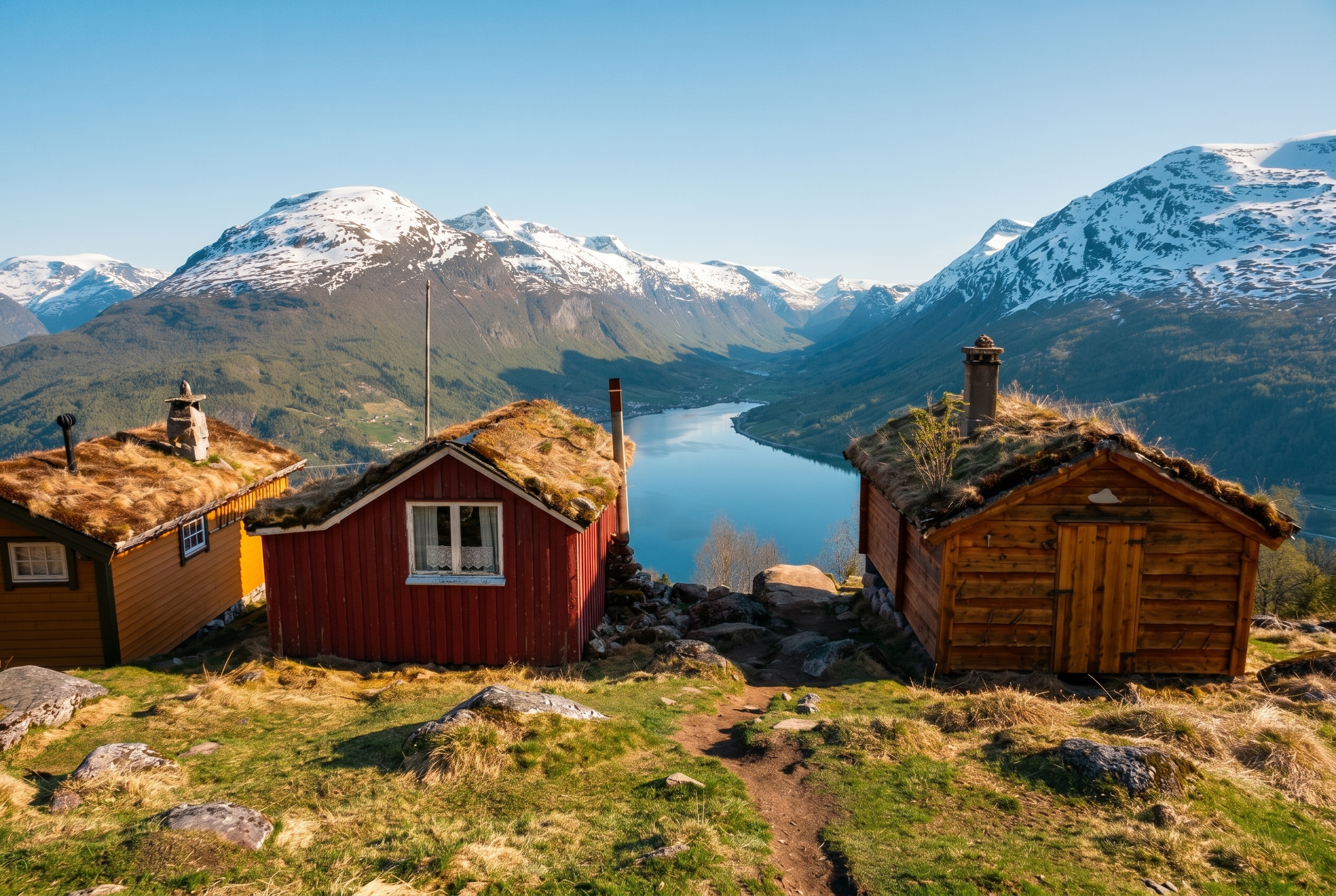
42. Lovatnet and the Loen Skylift
Lake Lovatnet, tucked away near the town of Loen, has such an incredibly rich emerald-turquoise colour that you’ll be suspected of going overboard with filters in your photos, but the colour is actually caused by fine sand from melting glaciers. The valley is gorgeous, but it also carries the dark history of two huge landslides that triggered a deadly tsunami wave at the start of the twentieth century and wiped out the local villages. Today you can rent a rowing boat or a kayak here and enjoy absolute peace on the water.
If you want to see the whole valley from a bird’s-eye view, hop on the super-modern Loen Skylift cable car, which in an incredible five minutes takes you from fjord level right to the top of Mount Hoven at 1,011 metres. From the summit further hiking trails lead off, and for adrenaline lovers there’s a great via ferrata that includes crossing a long suspension bridge. 💡 Tip: At the top by the cable car station there’s a great panoramic restaurant where you can have excellent coffee and warm waffles with a view of the glaciers.
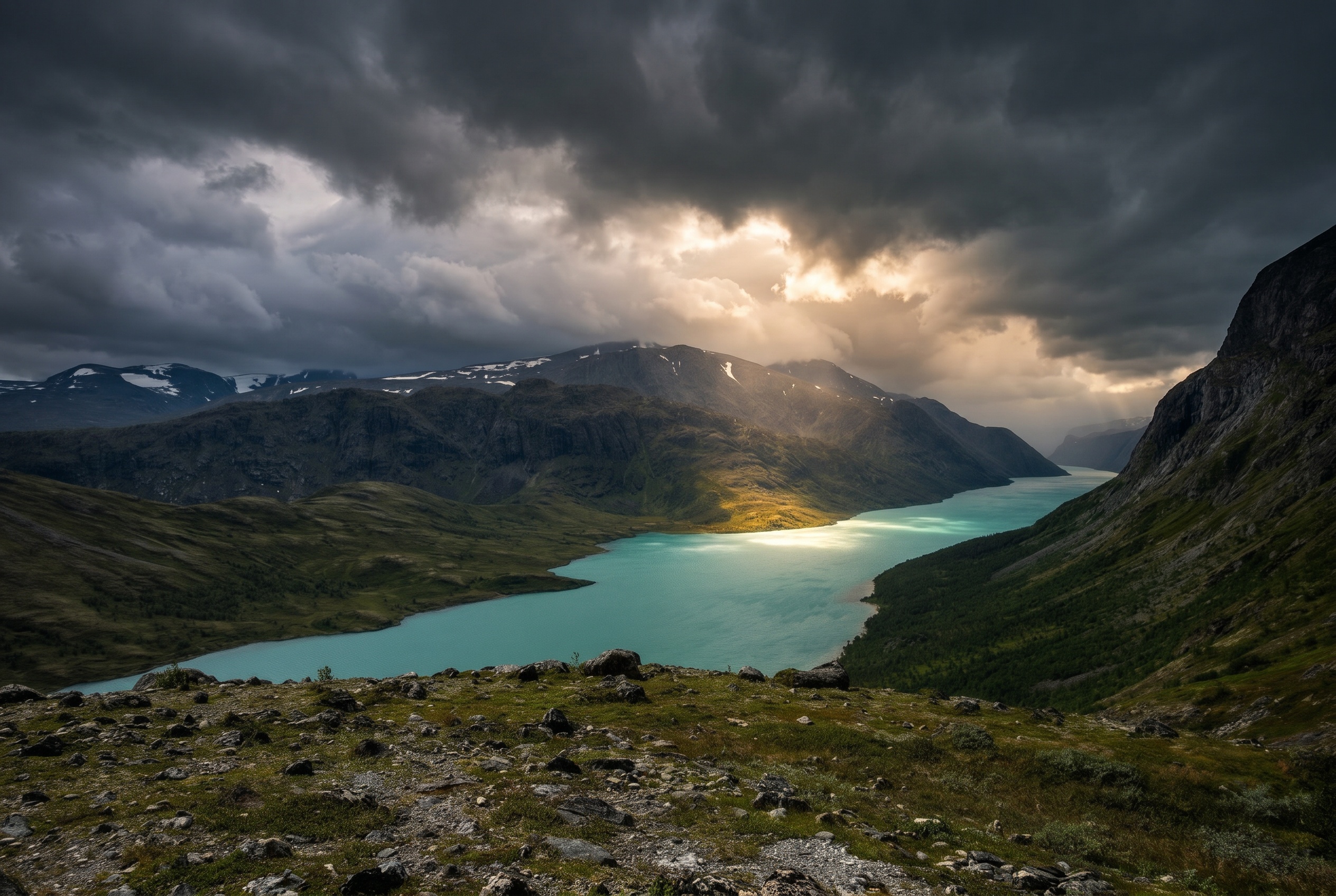
43. Jotunheimen NP
The name Jotunheimen translates as Home of the Giants, and this vast mountain wilderness is, without exaggeration, the most beautiful and most rugged national park in all of southern Norway. You’ll find more than two hundred peaks exceeding 2,000 metres here, among which wild glacial rivers and deep turquoise lakes weave. This is exactly where the legendary Besseggen ridge and the highest mountain Galdhøpiggen lie, which we mentioned above in the section on iconic hikes.
The park is an absolute paradise for passionate hikers who want to trek from one red cabin to the next with a backpack on their shoulders and enjoy complete isolation from civilisation. The weather here can change from minute to minute, though, so even for a short walk you must always have a waterproof layer and a warm hat ready in your pack. 💡 Tip: A great starting point for exploring the park is the village of Lom, where besides a beautiful stave church you’ll also find an excellent traditional bakery.
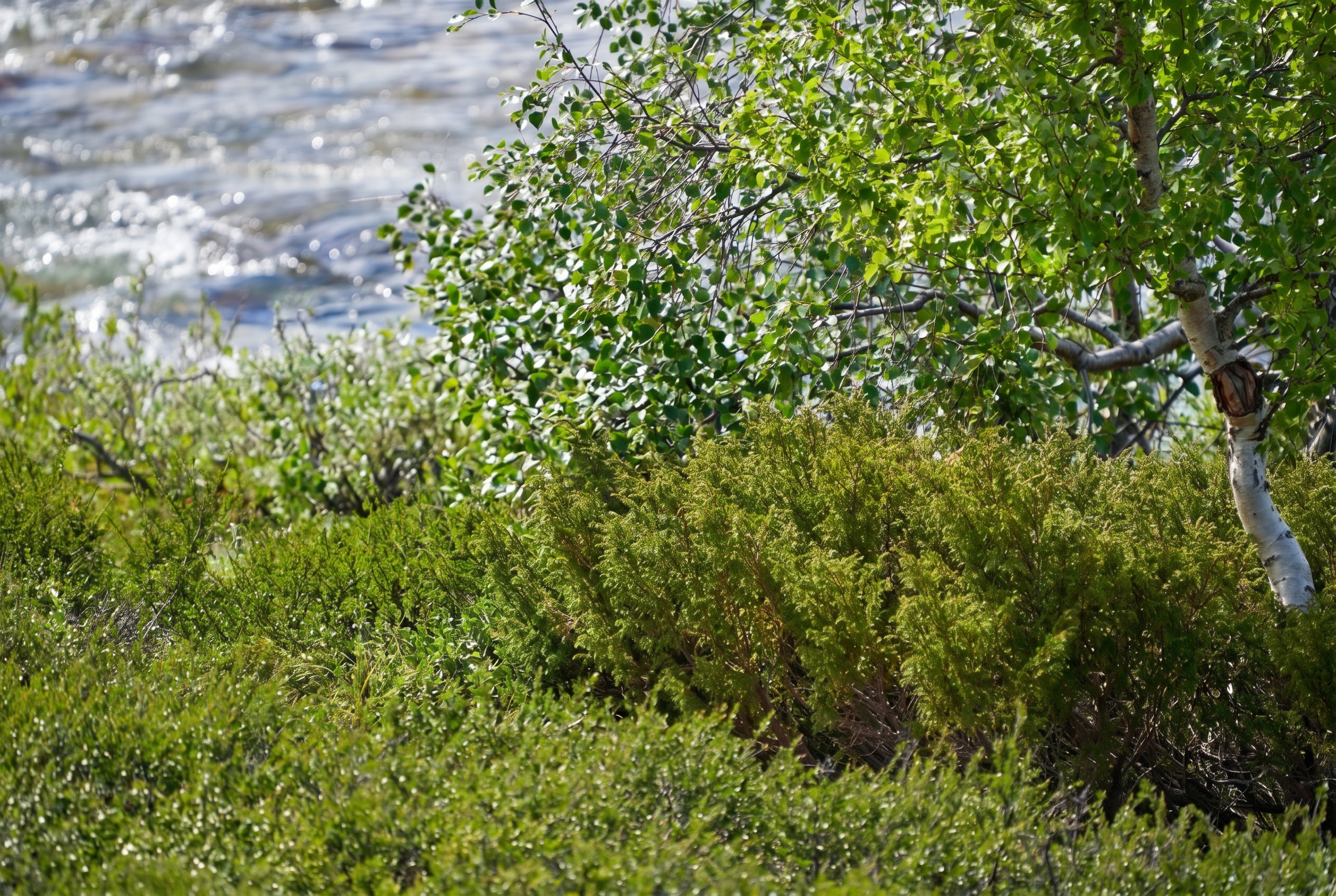
44. Dovrefjell
While Jotunheimen fascinates with sharp peaks, the neighbouring Dovrefjell National Park is a landscape of endless bare plains and rounded hills, home to one absolute animal one-off in the form of the huge musk ox. These shaggy Ice Age giants roam freely across the tundra here, and setting out on an organised hiking safari with a guide to see them from a safe distance ranks among the top experiences in all of Norway. You shouldn’t approach the animals on your own to within less than 200 metres — they can attack unexpectedly fast.
The main symbol of the whole park is the imposing Mount Snøhetta, at whose foot the architecturally amazing viewing cabin of the Norwegian Wild Reindeer Centre was recently built. From it you can sit warm by the fire and watch through binoculars the herds of wild reindeer and Arctic foxes wandering across the vast plateaus. 💡 Tip: The scenic railway from Oslo to Trondheim also passes through Dovrefjell park, so you’ll see the beauty of the wilderness from the comfort of the carriage too.
Culture, stave churches and gems off the beaten track
Norway isn’t just nature. A thousand years of history have left behind mysterious wooden churches, mining towns and star-shaped fortresses that most tourists pass by. If you want to escape the crowds and glimpse the soul of the country, head exactly here.
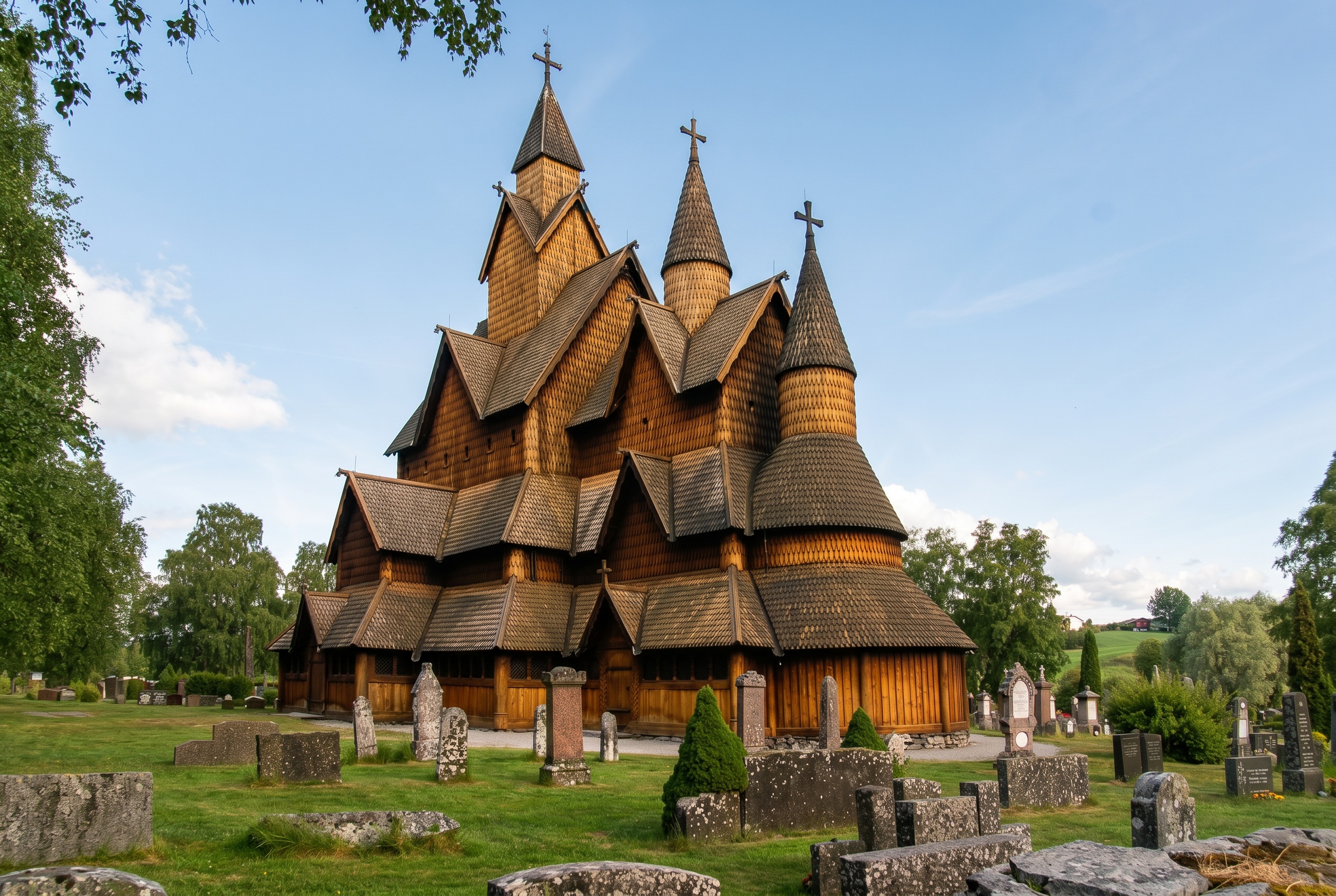
45. Wooden stave churches (stavkirke)
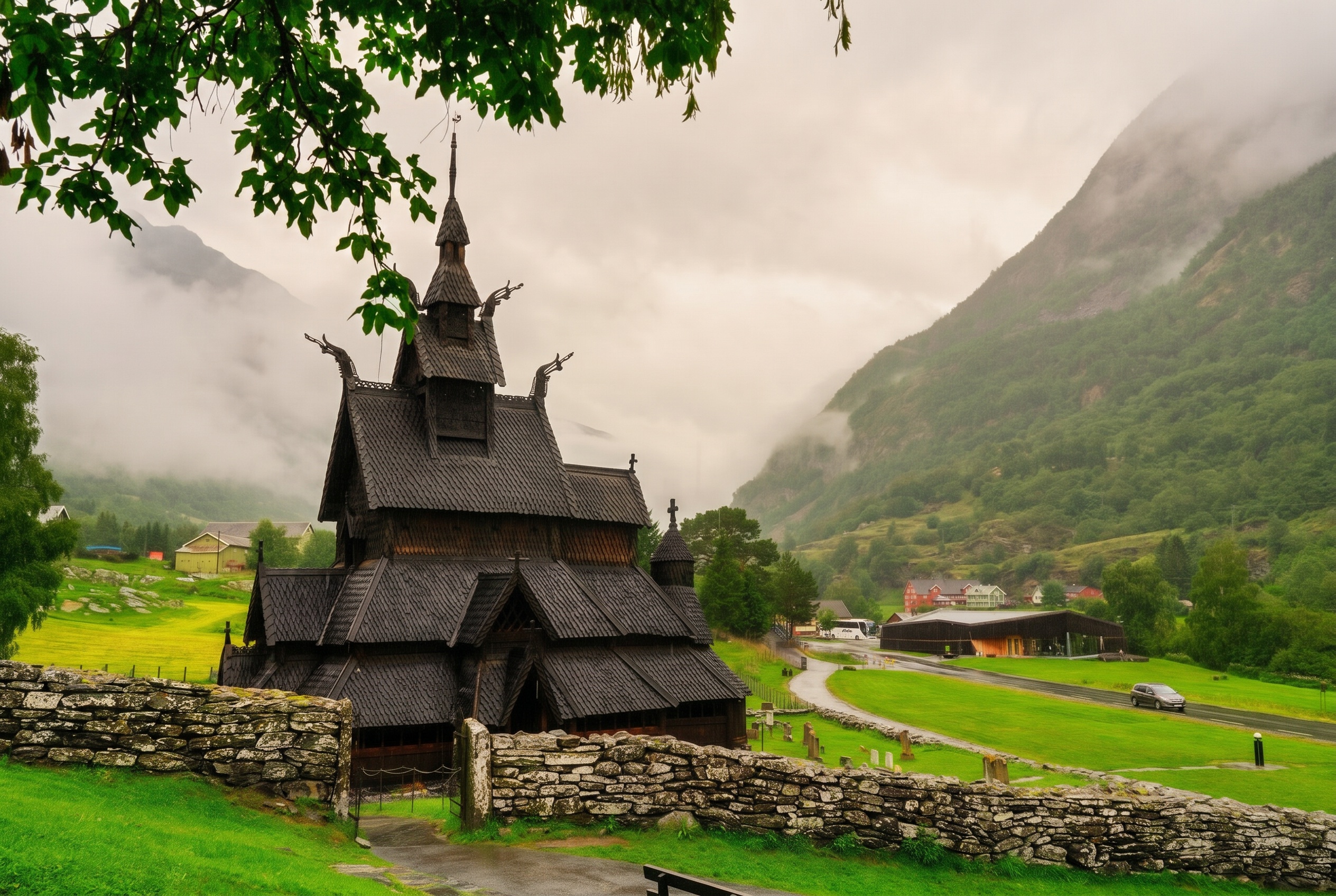
These dark structures, fragrant with wood and tar, are probably the most famous and oldest architectural heritage in all of Norway, at first glance resembling Viking ships with dragon heads more than classic Christian places of worship. Most of them were built in the Middle Ages more than eight hundred years ago, and thanks to clever construction from vertical posts and regular tarring, they’ve survived to the present day. The very oldest and most precious is the church at Urnes, on the UNESCO list, which lies inconspicuously hidden by Sognefjord.
If you want to see the best preserved of them, go and visit the Borgund church, whose cascading shingle roofs adorned with dragons look absolutely magical and fairy-tale-like. The largest church in Heddal is also worth mentioning, often nicknamed the wooden cathedral for its imposing dimensions. 💡 Tip: Entry to the church interiors tends to be quite expensive, but even a look at that wonderful carpentry work from the outside is worth a little detour off the main route.
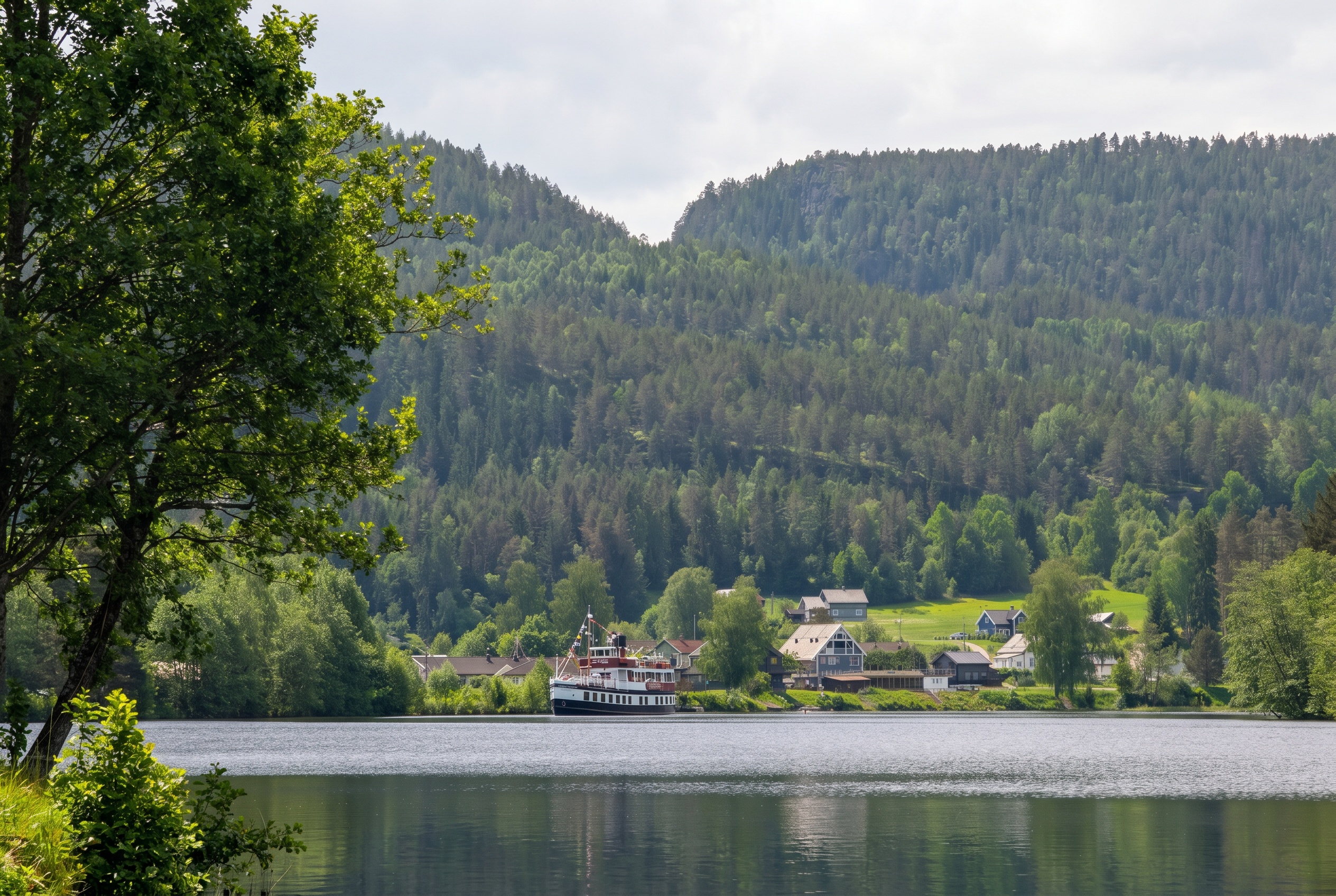
46. The Telemark Canal
Say Norway and everyone pictures sea fjords, but this historic inland canal from the 19th century, connecting the town of Skien with inland Dalen, is a fascinating example of how local engineers managed to cope with the harsh terrain. The route is over 100 kilometres long and boats on it must overcome 72 metres of elevation using an amazing system of eighteen old stone locks. To this day all the locks are still operated honestly by hand, exactly as they were a hundred and fifty years ago.
In the summer season, beautiful historic paddle steamers run here, from which you can watch the green landscape of the Telemark region and observe the skilled work of the lock operators. An excellent cycle path also runs along the whole canal, so you can cycle part of the route and comfortably ride back by boat. 💡 Tip: At the end of the canal in the town of Dalen, be sure to look at the historic hotel of the same name, built in a magnificent dragon style — it’s a real gem.
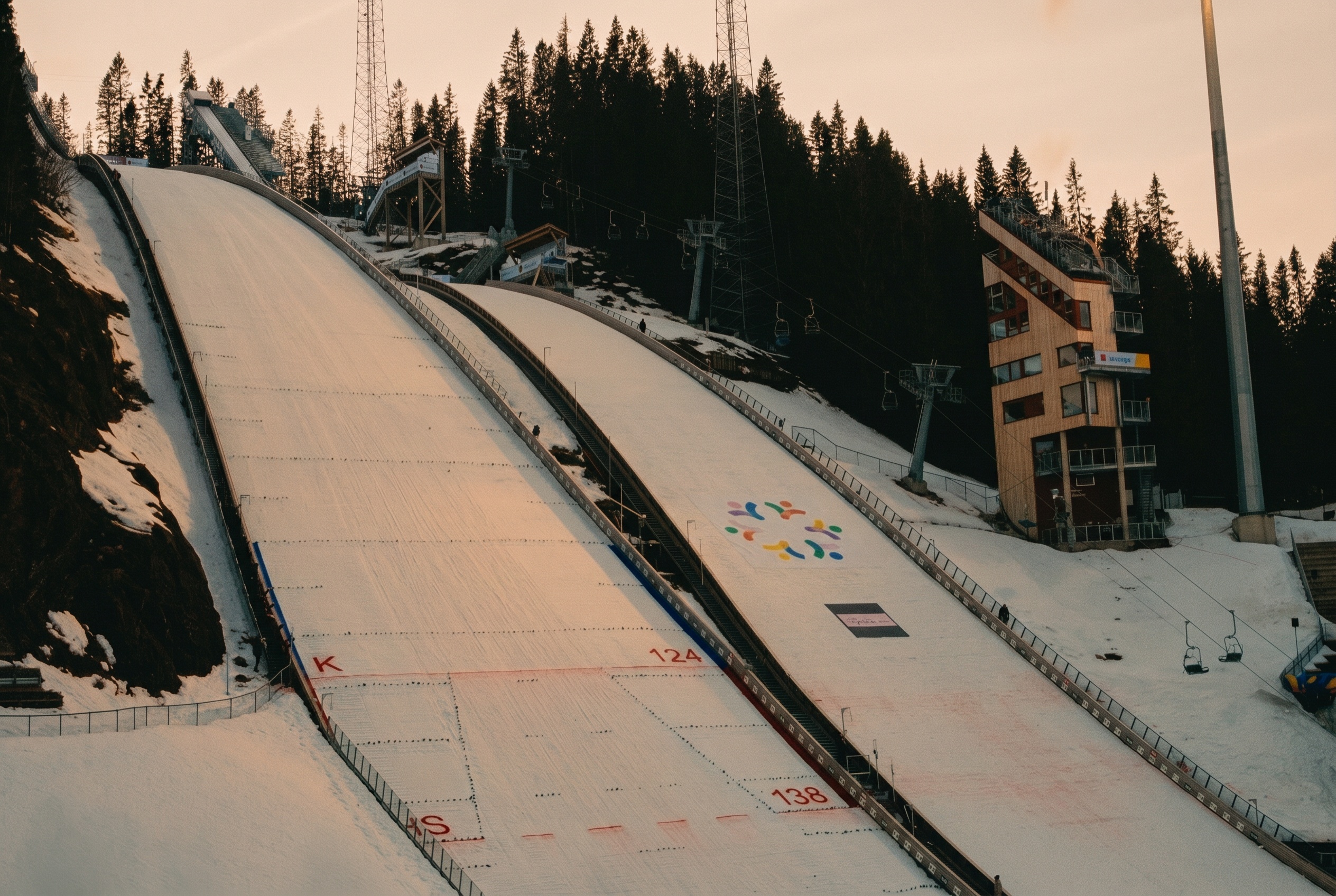
47. Lillehammer
The 1994 Winter Olympics turned this small town by Lake Mjøsa into a global legend, and the sporting atmosphere is still strongly felt at every step here, especially when you stand beneath the huge Lysgårdsbakkene ski jumps. You can take a lift right up to the tower and try to imagine the terror the ski jumpers feel just before take-off. The town has a beautiful pedestrian zone with colourful wooden houses, where you’ll find plenty of excellent cafés.
Just outside the centre lies the sprawling Maihaugen open-air museum, one of the largest in the country, perfectly showing how Norwegian life changed from the harsh Middle Ages to the present day. Families with children then regularly head to the nearby fairy-tale park of Hunderfossen, dominated by a gigantic statue of a Norwegian troll. 💡 Tip: In winter Lillehammer becomes an absolute paradise for cross-country skiers, with hundreds of kilometres of perfectly groomed tracks in the surrounding hills.
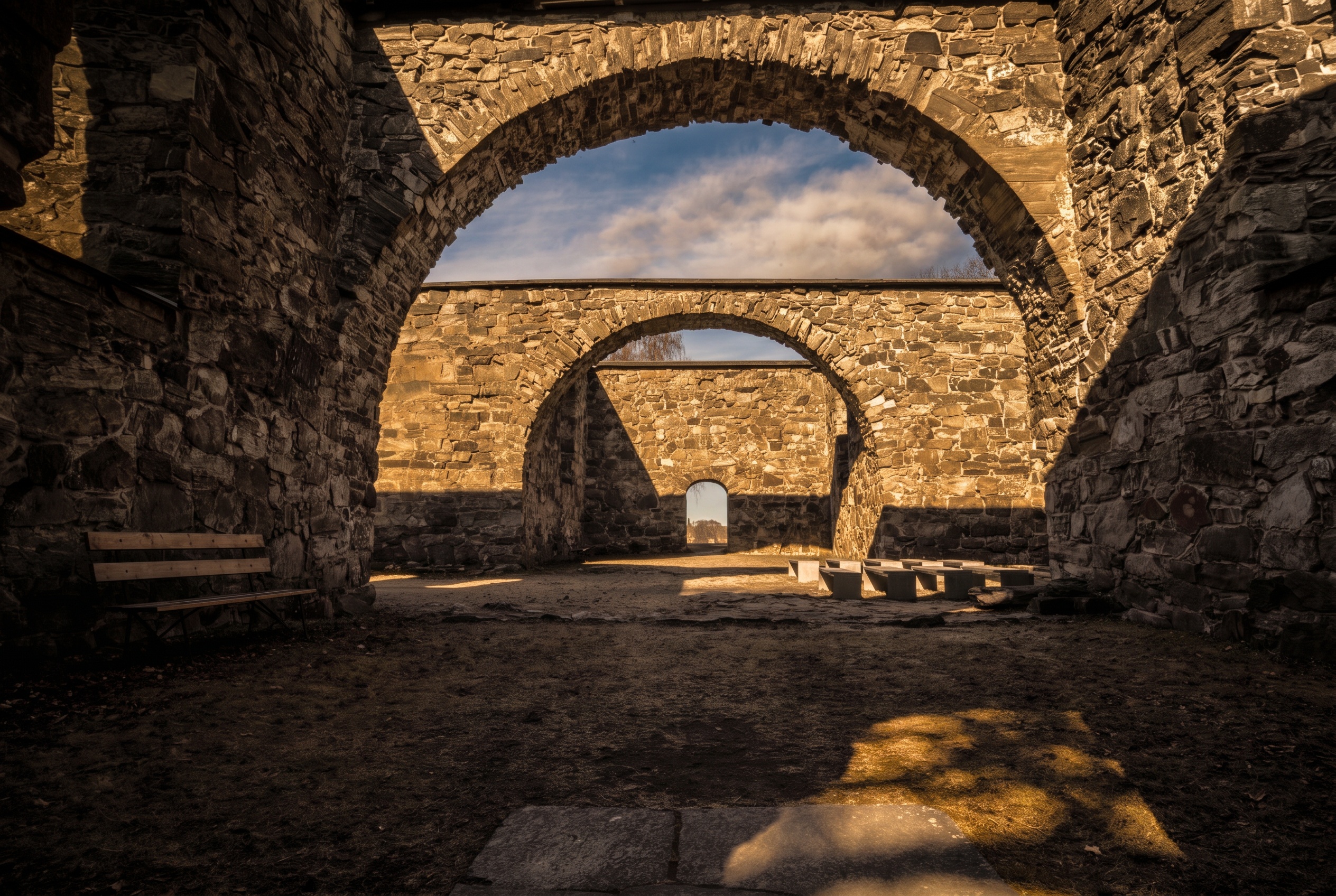
48. Fredrikstad
If you want to see how Scandinavian towns once defended themselves, head a little south of Oslo to Fredrikstad, which boasts the very best preserved fortified old town in all of northern Europe. The Gamlebyen district lies protected behind huge earthen ramparts in the shape of a perfect star, surrounded by a deep moat. Inside you’ll find picturesque cobbled alleys lined with historic brick and wooden houses, where people still live today and small art galleries are based.
The best way to reach the old town is by a small free ferry straight from the modern centre across the Glomma river, which makes the whole trip a very pleasant and peaceful, car-free experience. On the ramparts you can look at the old cannons and in summer sit on the terrace of one of the local pubs. 💡 Tip: Every Saturday traditional markets are held in the square in the old town, where you can buy local cheeses, baked goods and beautiful handmade products from local artists.
49. The northern lights and the midnight sun
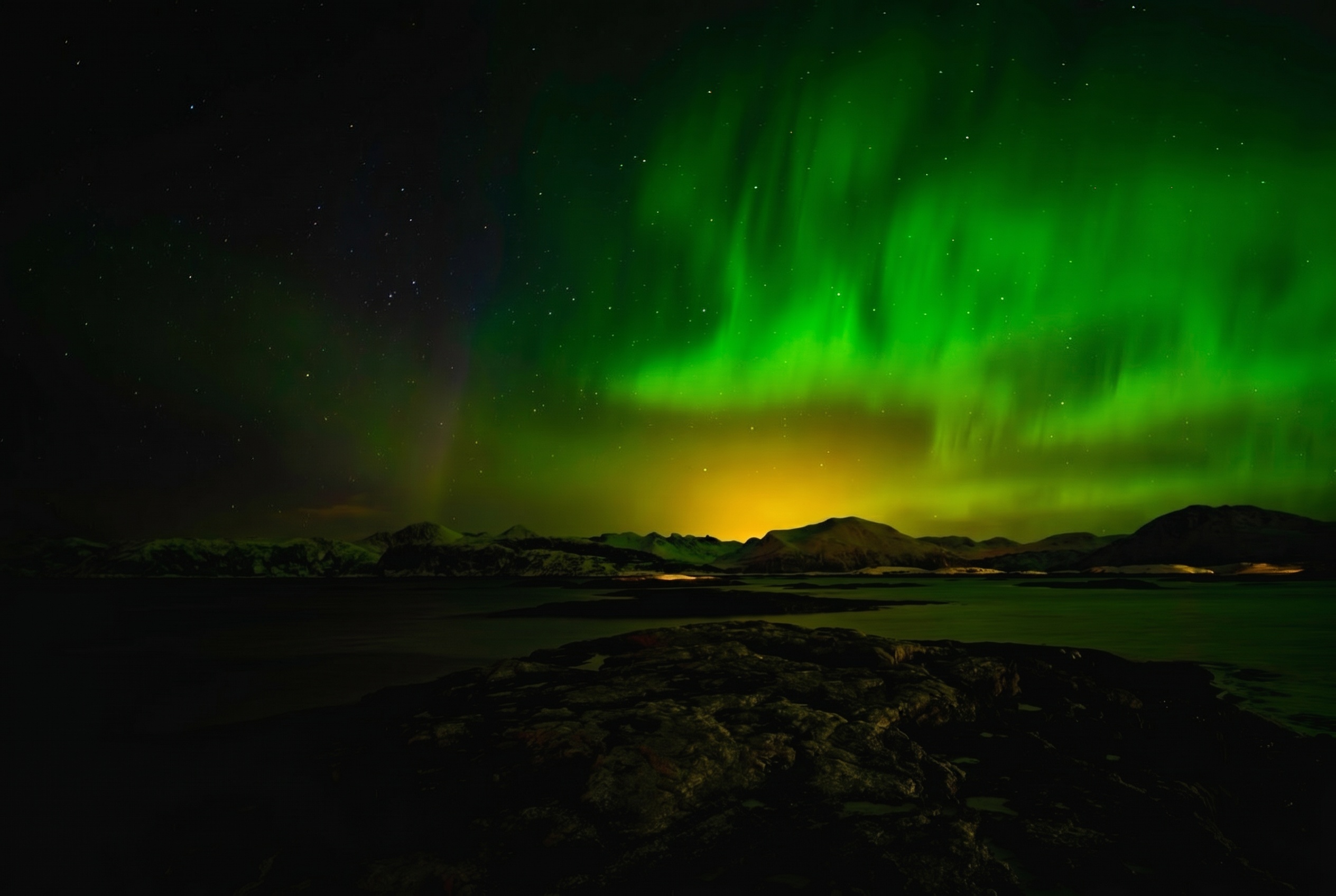
We’ve already touched on these two phenomena a little, but they deserve a separate mention, because it’s exactly these light displays that make Norway a country you want to see both in the middle of summer and in the depths of winter. You’ll experience the midnight sun in the northern regions above the Arctic Circle from roughly late May to mid-July, when the sun simply doesn’t set and you can happily set out at midnight on a long mountain trek in full daylight. It’s a huge drain on your energy, so don’t forget to pack a sleep mask for the hotel.
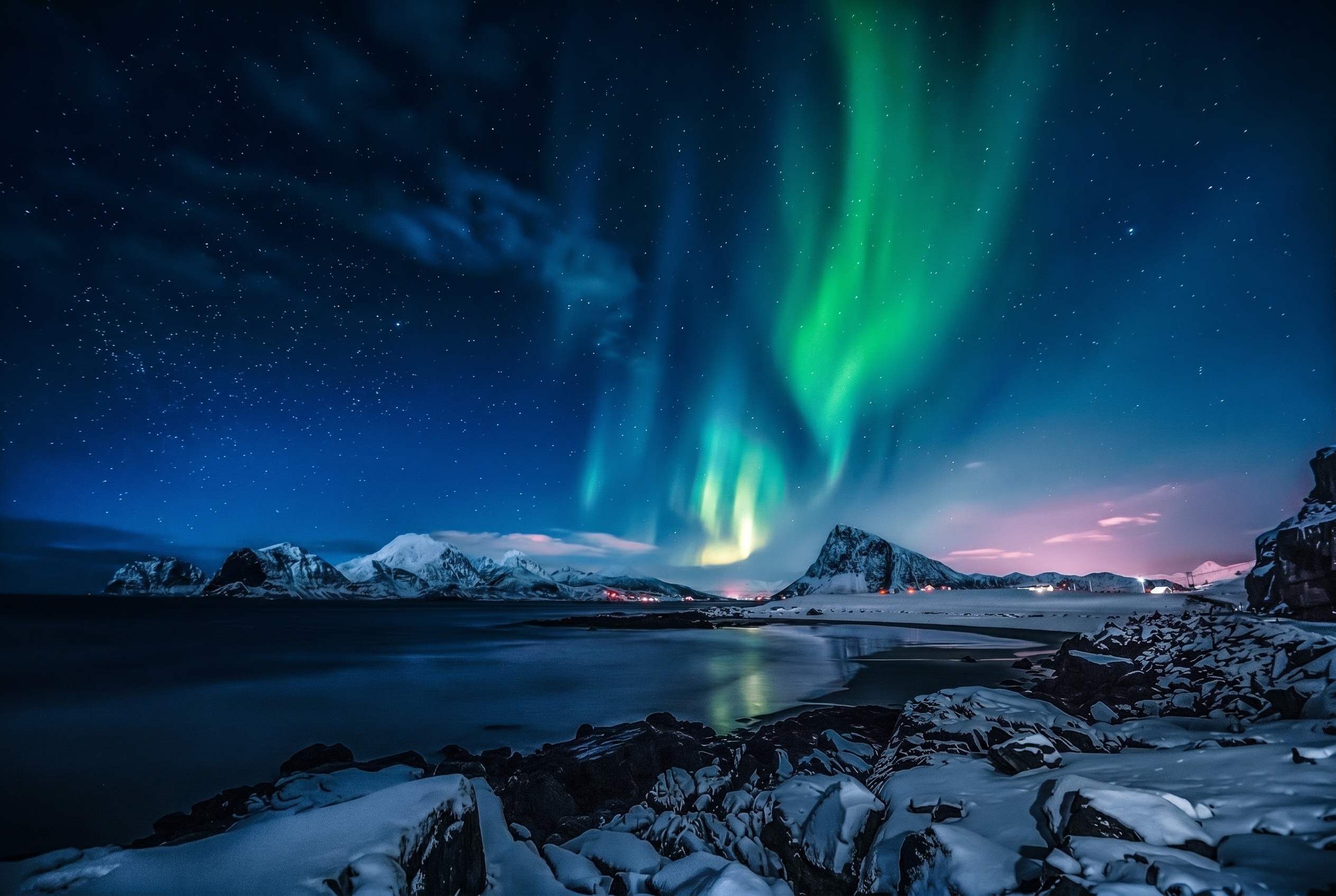
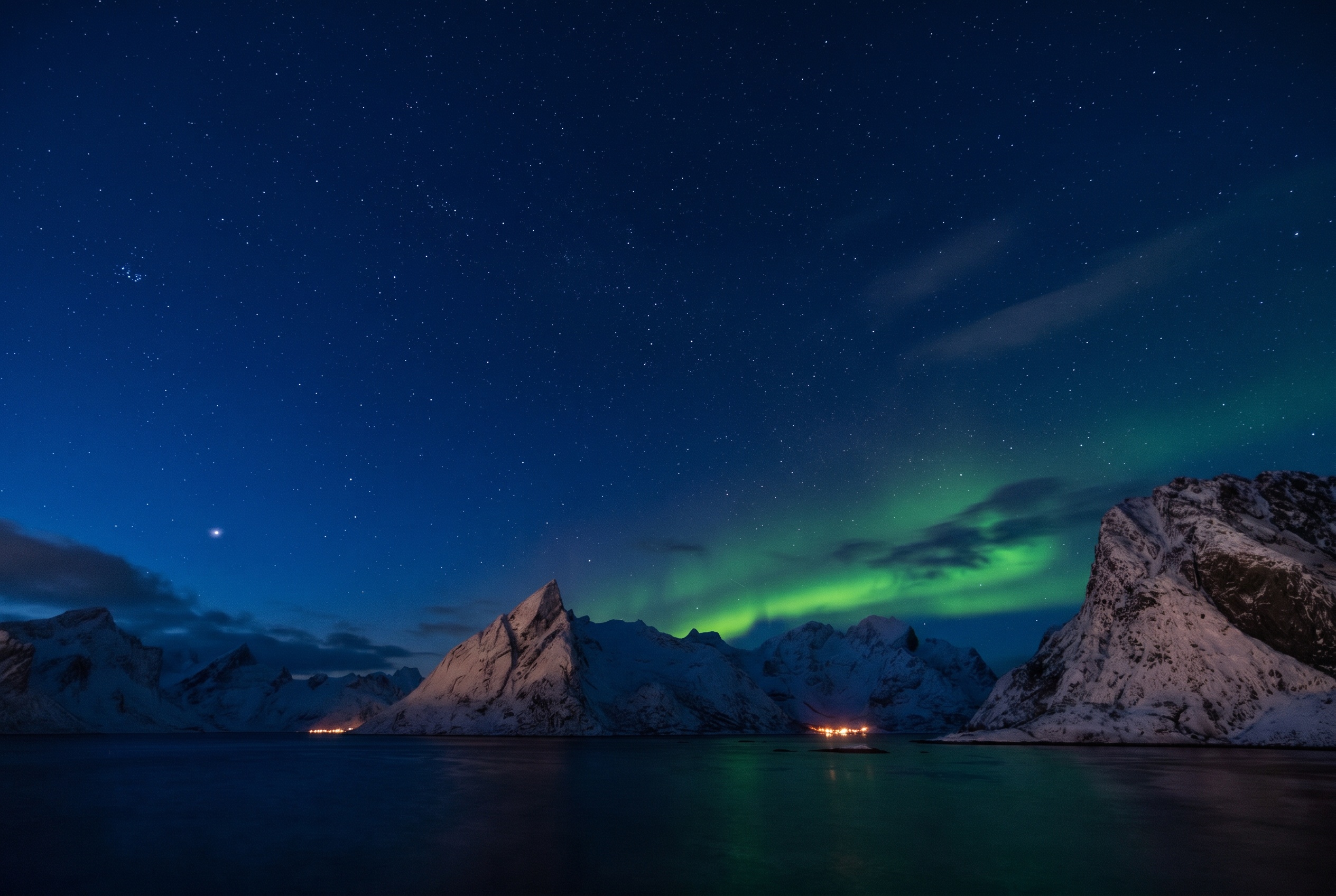
Hunting the northern lights, or aurora borealis, on the other hand requires darkness, clear skies and a dose of luck, with the best chance of the green spectacle from September to March in the far north, ideally around Tromsø or Alta. The peak of the season tends to be the cold months from November to February, when the nights last longest. 💡 Tip: Download a reliable northern lights forecast app to your phone (e.g. My Aurora Forecast), which will alert you in time that something is starting to happen in the sky.
50. Norwegian beaches
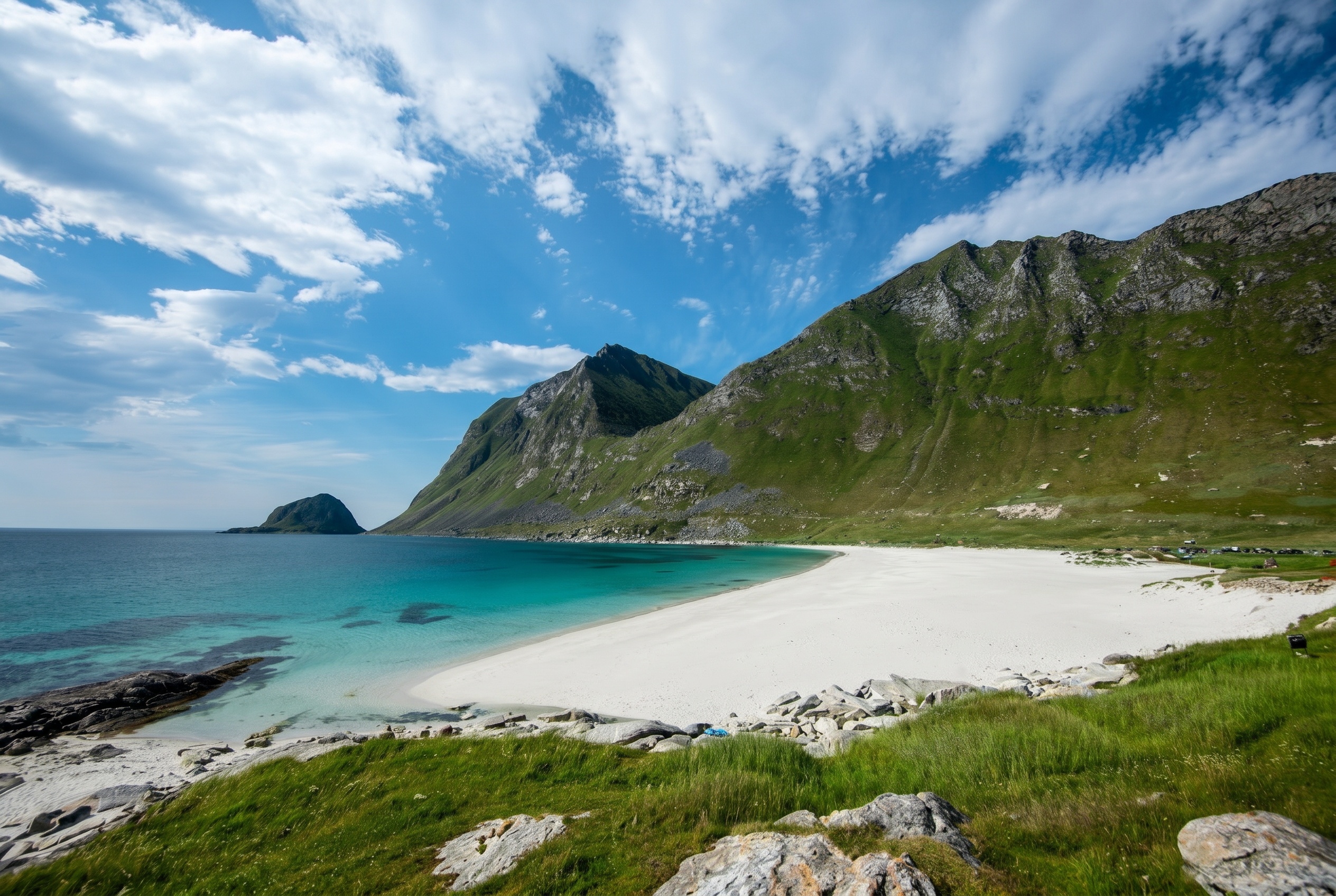
Say a beach with white sand and turquoise water and most people picture the Caribbean, but Norway has hundreds of them, and paradoxically you’ll find the very most beautiful high beyond the Arctic Circle in the Lofoten archipelago. Beaches like Haukland, Uttakleiv or the surfers’ paradise of Unstad look absolutely idyllic — until you dip your toe in the water and discover it’s barely twelve degrees even in August. Swimming here really is only for the hardiest souls.
In the south of the country, just outside the city of Stavanger, you’ll come across surprisingly long sandy dunes in the Jæren area, where whole Norwegian families come with their children to relax at weekends. On the beaches of Sola or Borestranden you won’t experience tropical heat, but for kite-flying, romantic evening walks and watching the waves they have no rival in Europe. 💡 Tip: Pack a thick wool jumper — a strong, very cold wind often blows off the ocean on Norwegian beaches.
Practical information: when to go, transport and how much it costs
Norway is geographically huge, but for easier orientation you can divide it into three main regions that differ wildly from one another. The southwest is home to the most iconic deep fjords around Bergen and Stavanger, the east and south centred on Oslo offer gentler mountains and culture, and the north with the Arctic (from Trondheim to Lofoten and Nordkapp) is wild, empty and ideal for hunting the northern lights.
How to travel to Norway and around it
The most comfortable and quickest route from the UK is to use direct flights from London or other major airports to Oslo or Bergen, from where you can easily hop on connecting services or pick up a rental car right at the airport. If you’re planning a bigger road trip in your own vehicle and don’t mind long drives, the ideal route is to cross through Germany to Denmark and at the port of Hirtshals load your car onto a ferry that takes you straight to Kristiansand or Stavanger.
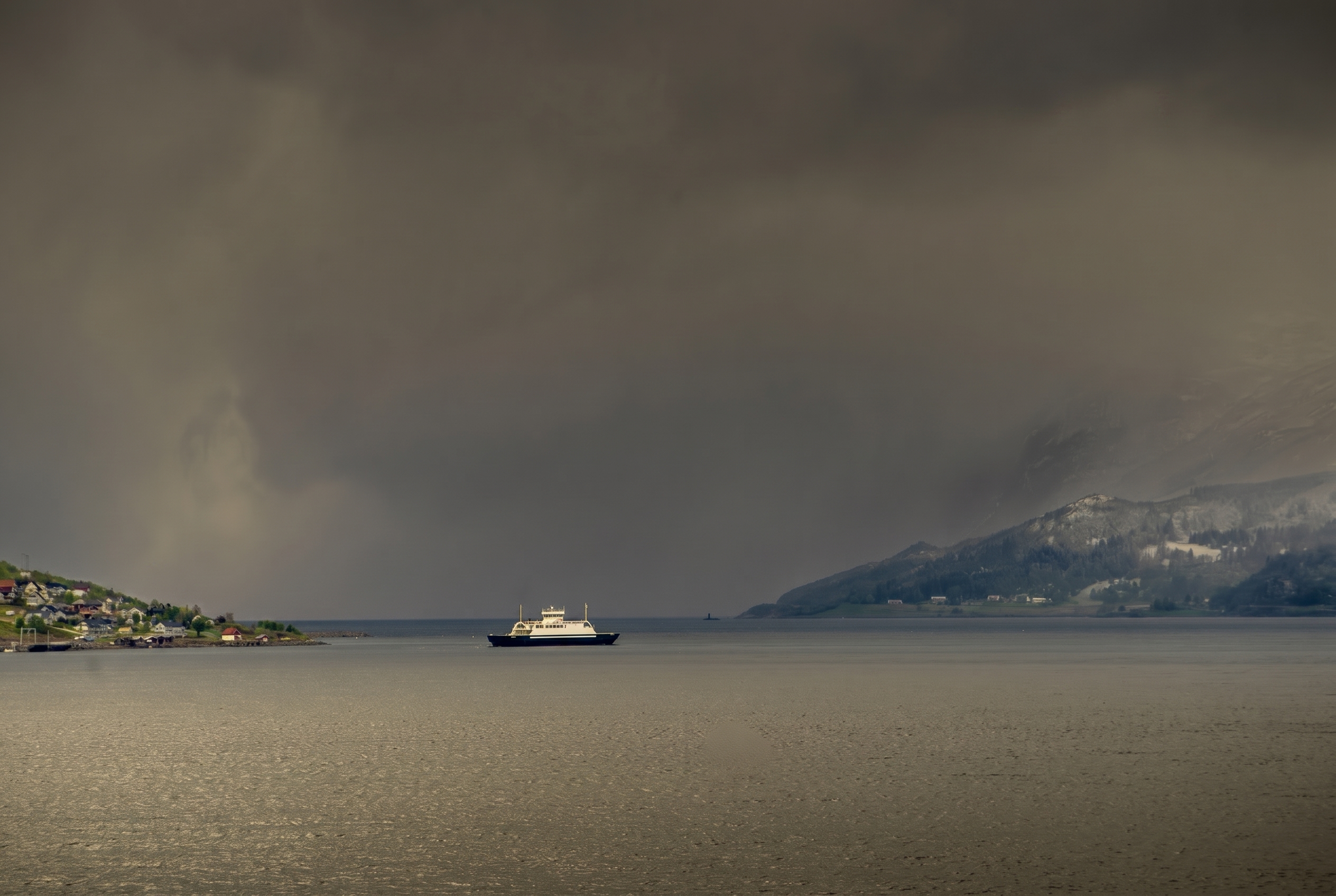
For really exploring the fjords and remote national parks, renting a car is clearly the best choice, because it gives you absolute freedom to stop at every waterfall or viewpoint. When driving, count on paying tolls (bompenger), which are handled fully automatically here via toll gates reading your number plate (AutoPASS), so you’ll get a car with a tag from the rental company and settle the bill at the end. Travel is also spiced up by hundreds of small ferries that shuttle across the fjords and basically work as a seamless continuation of the road.
How much a holiday costs and how to save
Let’s be straight: Norway is one of the very most expensive countries in Europe, and if you head here, you have to be prepared for your wallet to take a proper shock, especially when visiting restaurants and pubs. As a rough guide, count on paying around 250 to 350 NOK (roughly €22–31) for a main course in an average restaurant, a beer will easily set you back 100 to 130 NOK (about €9–12) and a quick hot dog at a petrol station costs around 60 NOK (€5). Alcohol is generally very heavily taxed here, and you can only buy spirits or wine at the specialised state-run Vinmonopolet shops; in supermarkets you’ll only find light beer up to 4.7% alcohol, and even that only until eight in the evening.
By far the best way to keep your budget in check is to buy groceries at cheaper chains like Kiwi, Rema 1000 or Coop Extra and cook for yourself at campsites or in well-equipped apartments. To give you an idea, the daily budget of a very frugal traveller with their own tent and stove sits around 800 to 1,200 NOK (€70–105) per person, the golden middle road with sleeping in cabins works out at 1,500 to 2,500 NOK (€130–220), and if you want comfortable hotels and dinners, set aside 3,500 NOK (around €310) and more. (Note: Prices are approximate for 2026; 1 NOK is roughly €0.087.)
💡 A local speciality you should definitely try at breakfast is the sweetish brown cheese brunost, which Norwegians spread on warm waffles. Dishes like salmon, cod (skrei) or the controversial whale meat are on the menu of every better coastal restaurant as a local speciality, but even as a vegetarian you’ll eat very well here thanks to the great cheeses and sweet pastries.
A handy table of the most famous treks
For quick orientation, we’ve put together a table of the most sought-after hikes so you immediately know what you’re getting into with a backpack on your shoulders:
| Trek | Length (return) | Time | Elevation gain | Difficulty |
|---|---|---|---|---|
| Preikestolen | ~8 km | ~4 h | ~500 m | moderate |
| Trolltunga | ~28 km | 10–12 h | ~800 m | very demanding |
| Kjeragbolten | ~12 km | 6–7 h | ~570 m | demanding (chains) |
| Besseggen | ~14 km | 6–8 h | ~550 m | demanding |
| Reinebringen (Lofoten) | ~3 km | 1.5–2 h | ~450 m (steps) | moderately demanding |
Itinerary inspiration by length of trip
If you’re not sure exactly how to plan your days in this vast country, here’s a quick sketch of what can be fitted in:
- 7 days (The best of the fjords): Bergen → Hardanger waterfalls → Flåm and Nærøyfjord → majestic Sognefjord → Geiranger with its viewpoints.
- 10 days (Fjords and famous treks): Stavanger (climb to Preikestolen) → Odda (Trolltunga) → Bergen → Flåm → Geiranger → Ålesund and the Atlantic Road.
- 14 days and more (The classic south-north): Oslo → Telemark region → Stavanger → western fjords → Trondheim → flight to Lofoten or Tromsø.
Where to go next from Norway
If Nordic nature has stolen your heart and you’re planning to explore more breathtaking corners of this huge country, we’ve put together more detailed guides to other great places. These articles go deeper and will help you with detailed planning:
- Heading beyond the Arctic Circle? Read our huge guide What to see in Lofoten (the big guide).
- Interested in hunting the lights up north? Check out the tips for Tromsø — the gateway to the northern lights.
- Drawn to deep waters and waterfalls? Open up Norwegian fjords — a guide.
- Planning a climb to the famous rock? Preikestolen — the climb step by step will help you.
- Want to ride the steepest railway? Check out the Flåm Railway.
- Tempted by coastal voyages? Everything about Hurtigruten.
- Heading for the northern lights? It’s all summed up in Northern Norway: what to see beyond the Arctic Circle.
- Sorting out your budget? How much a holiday in Norway costs will help.
Frequently asked questions
How much does a vacation in Norway cost and is it really that expensive?
Yes, Norway is without a doubt one of the most expensive countries in Europe. The biggest part of your budget will go to accommodation and eating out at restaurants, so if you really want to save money, sleep at campsites and buy your groceries at budget supermarkets like Kiwi or Rema 1000.
When is the best time to visit Norway?
For mountain hiking and fjord cruises, the summer period from June to August is absolutely ideal, when it’s warm and the midnight sun shines. If, on the other hand, you’re drawn to the magic of the northern lights, you need to head north from September to March.
How to get to Norway from Czechia?
The fastest way is by direct flights from Prague to Oslo, Bergen or Stavanger. For a road trip with your own car, the best option is to drive through Germany and then take a ferry from the Danish port of Hirtshals.
How many days is enough for Norway?
To explore the most important fjords in the southwest, set aside at least 7 days, but ten is ideal. If you want to travel the country from south to north or add the remote Lofoten Islands, count on at least fourteen days to three weeks.
Where and when is the best time to see the Northern Lights and the Midnight Sun?
You can see the Northern Lights best in the north (Tromsø, Lofoten, Alta) from September to March, with the absolute peak season occurring from November to February. The Midnight Sun shines above the Arctic Circle roughly from the end of May to mid-July.
What currency is used in Norway and will I be able to get by with English?
The currency used here is the Norwegian krone (NOK), but you basically don’t need any cash at all, as you can pay everywhere without problems by card or via Apple Pay. English will get you by absolutely everywhere here, the locals speak it at an excellent level.
Which trek is the best and most challenging: Preikestolen, Trolltunga, or Kjerag?
Preikestolen is the most accessible and you can manage it in a comfortable 4 hours. Kjeragbolten is more challenging and full of adrenaline thanks to climbing chains to reach the boulder above the abyss, while Trolltunga is an extremely demanding all-day slog covering 28 kilometers.
Do I need a car in Norway?
For exploring remote fjords and hiking trails, a car is an absolute necessity as it gives you the desired freedom. However, if you only want to travel between cities, a combination of trains, ferries, and packages like Norway in a Nutshell will serve you perfectly.
How to best get to the Lofoten Islands?
The fastest option is to fly from the mainland to Bodø or Evenes airport and then continue by car or ferry. For connoisseurs, there’s also the long scenic drive in your own car along the famous E10 highway.
Tips and Tricks for Your Vacation
Don’t Overpay for Flights
Search for flights on Kayak. It’s our favorite search engine because it scans the websites of all airlines and always finds the cheapest connection.
Book Your Accommodation Smartly
The best experiences we’ve had when looking for accommodation (from Alaska to Morocco) are with Booking.com, where hotels, apartments, and entire houses are usually the cheapest and most widely available.
 🚗 Car rental on the roadVerified rental cars in Norway
Search with the DiscoverCars comparison engine — it compares prices from dozens of local and international rental companies, and most bookings come with free cancellation.
Compare car prices in Norway →Don’t Forget Travel Insurance
Good travel insurance will protect you against illness, accidents, theft, or flight cancellations. We’ve had a few hospital visits abroad, so we know how important it is to have proper insurance arranged.
Where we insure ourselves: SafetyWing (simple monthly subscription) and TrueTraveller (for extra-long trips).
Find the Best Experiences
Get Your Guide is a huge online marketplace where you can book guided walks, trips, skip-the-line tickets, tours, and much more. We always find some extra fun there!