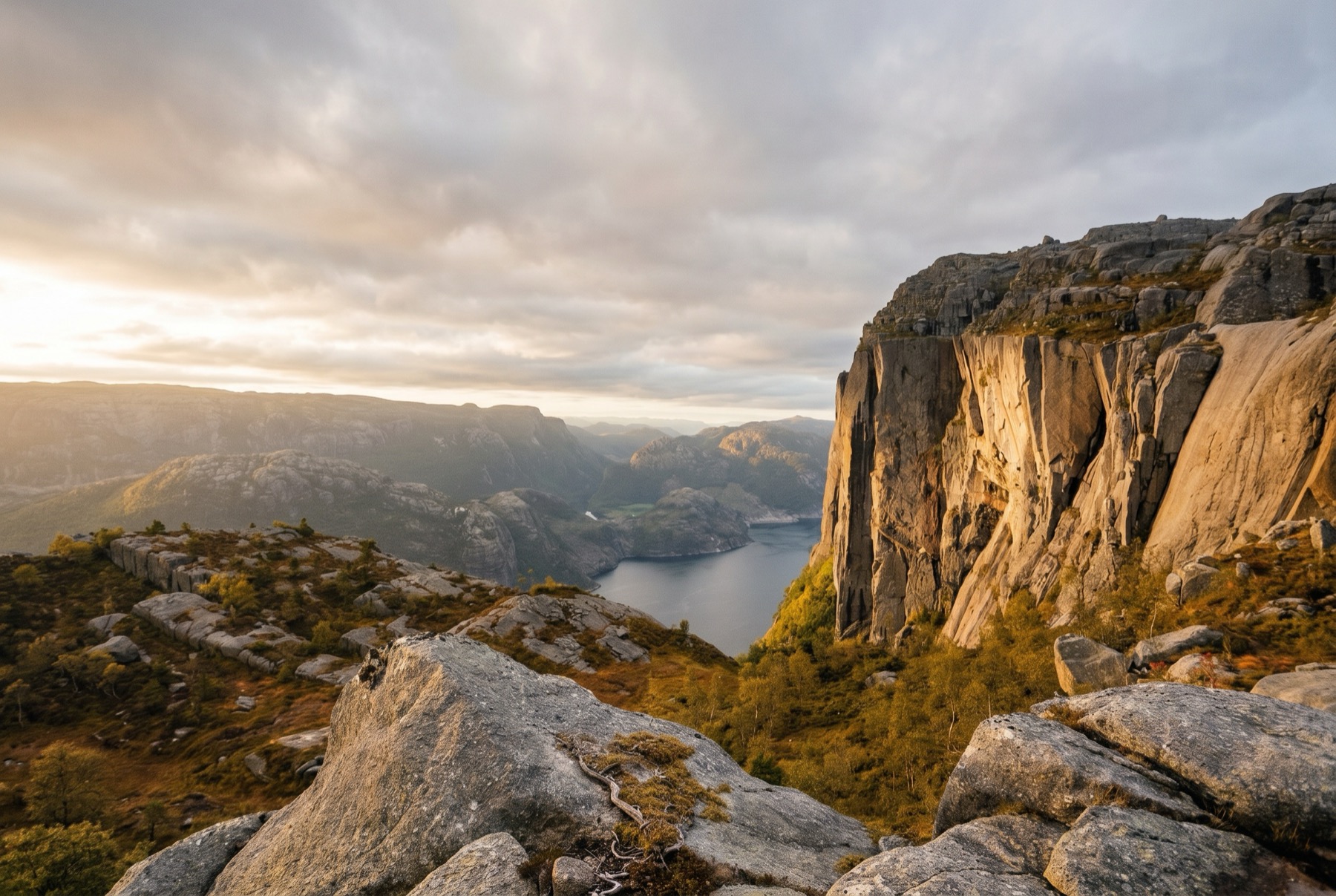
Norway hides countless natural treasures, but few can rival the iconic plateau towering high above deep fjord waters. Preikestolen in Norway, known in English as the Pulpit Rock, is one of the most famous cliffs on the planet and draws travellers from every corner of the world. The view from its sheer vertical wall down to the surface of the fjord leaves a deep impression — and gives you some of the best photos of your entire trip.
This flat slab of rock, roughly 25 by 25 metres, was carved thousands of years ago by enormous masses of ice, and today it is Norway’s most visited trek. More than three hundred thousand people head here every year to see with their own eyes the incredible contrast between the sharp grey stone and the deep blue water far below.
In this guide we’ll look at how to tackle the hike step by step so you arrive perfectly prepared. I’ll tell you where to leave the car, what time to set off to dodge the crowds, and which accommodation nearby makes the most sense.
TL;DR
- Length and time: The route is roughly 8 kilometres there and back and takes around 4 hours at a relaxed pace.
- Elevation and difficulty: You’ll climb about 500 metres of elevation; the terrain is moderately demanding and manageable for the average hiker.
- Parking: The official car park costs 250 to 300 NOK (roughly £18–22) and fills up very quickly in summer.
- When to go: The best season runs from May to September, ideally early in the morning or, alternatively, in the late afternoon.
- Base for the trip: Most travellers choose nearby Stavanger, with direct buses connecting to the ferries.
- Safety: There’s no railing at the very edge of the cliff, so caution comes first.
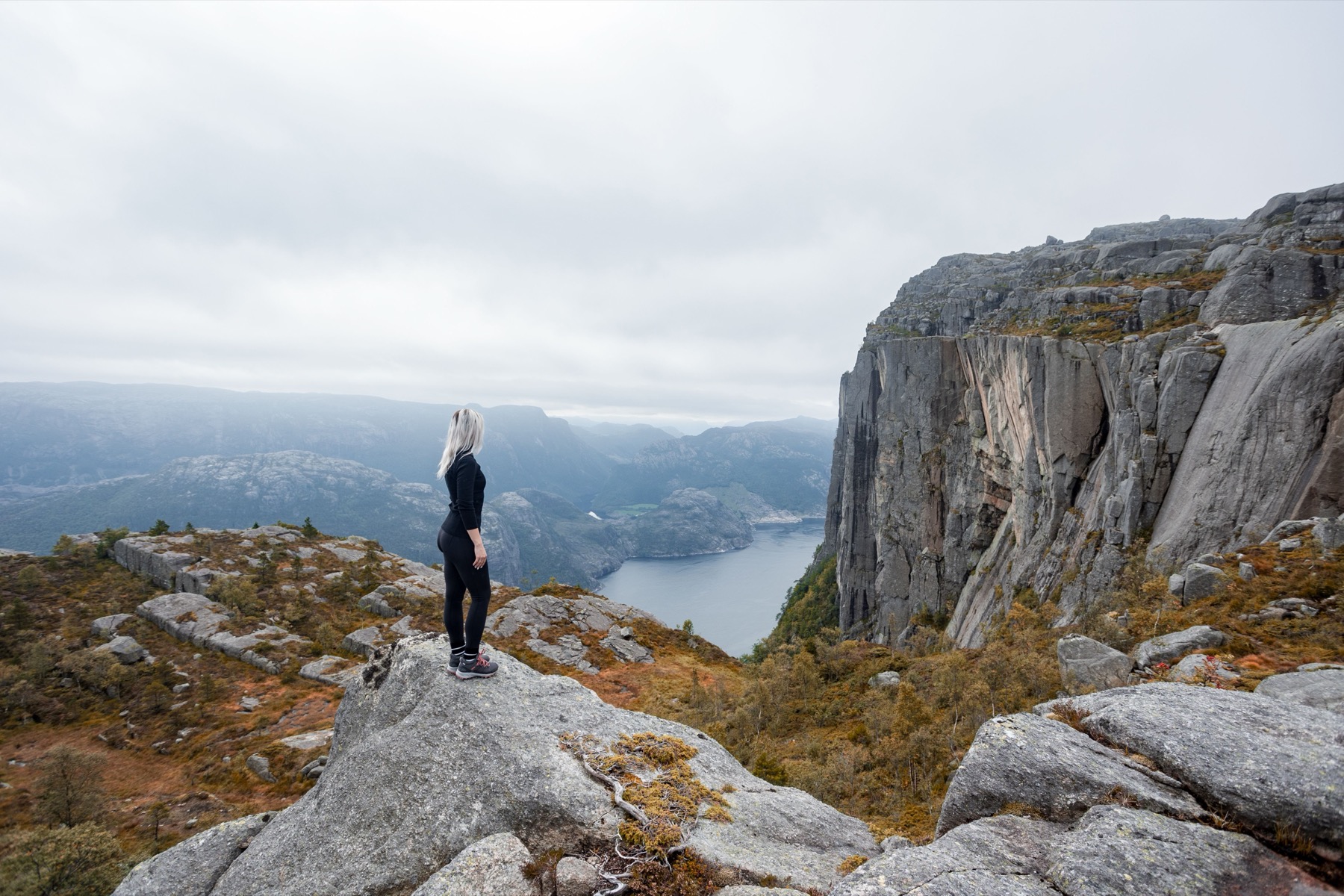
The full destination guide: Norway — guide and what to see
When to visit Preikestolen in Norway
Getting the timing right in the Norwegian mountains is absolutely crucial, because the weather can be unpredictable. The main tourist season runs from May to September, when the days are longest, temperatures most pleasant and the trail is completely free of snow. During these months you have the best chance of clear skies — though a rain shower can catch you out absolutely any time in Norway.
If you’re considering a visit outside the summer months, things change dramatically and require better preparation. In winter and early spring the path is covered in snow and ice, so you should only set off with an experienced mountain guide and crampons on your boots. The rock itself can be treacherous under a layer of snow, and the short days mean you risk hiking back in total darkness.
In summer you’ll need to accept that you won’t have the trail to yourself, because the Pulpit Rock draws huge numbers of people. The best strategy is to set off very early in the morning, ideally aiming to be at the car park by around eight o’clock, or to save the hike for the late afternoon. You’ll get a far more peaceful experience and avoid the worst of the heat climbing the stone steps.
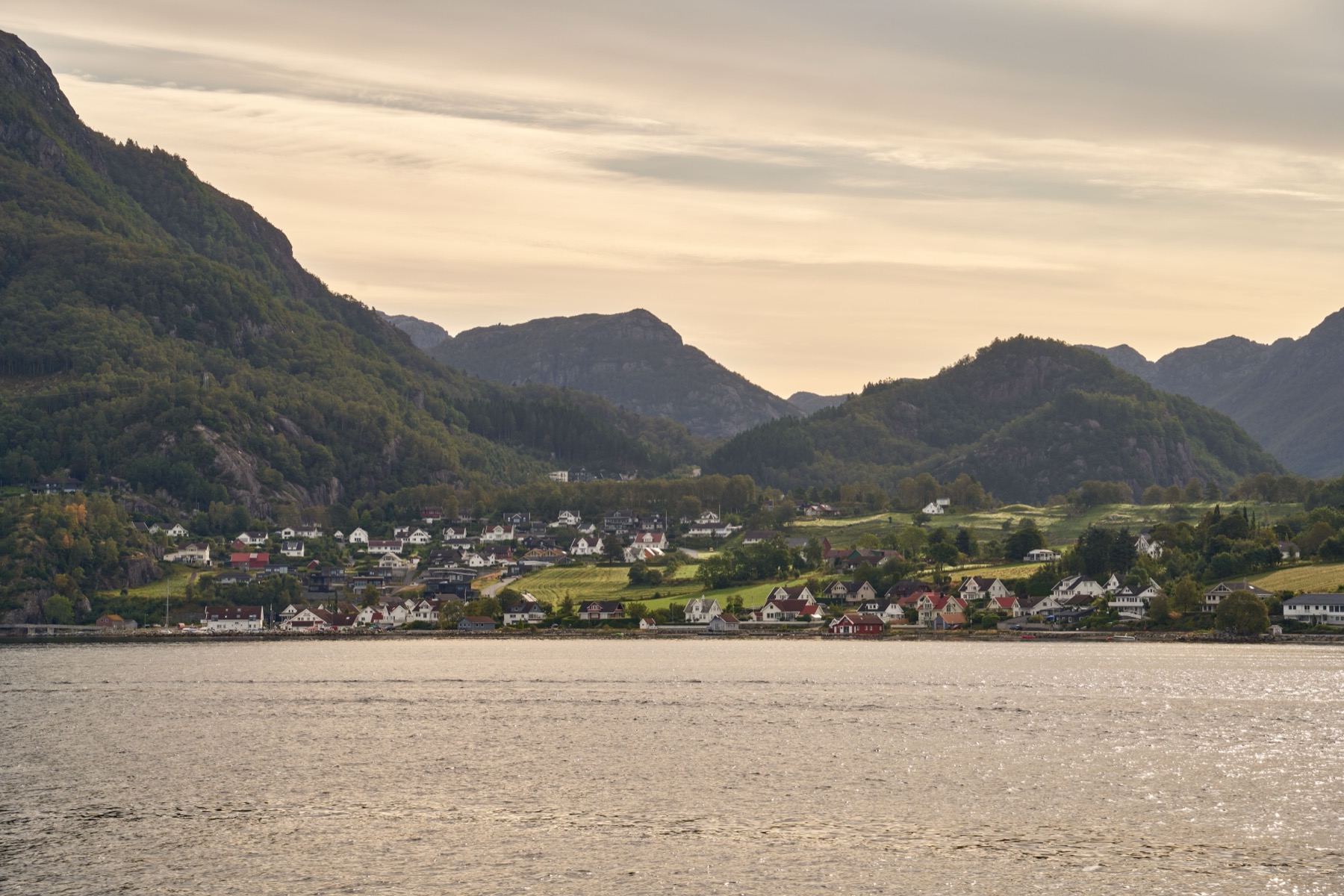
Where to stay nearby and how to get there from Stavanger
💡 Tip for accommodation and experiences: We like to look for places to stay on Booking.com, which usually has the best cancellation terms. Tickets, tours and activities are worth comparing and booking through GetYourGuide.
The most practical base for exploring the Lysefjord area is the port city of Stavanger, which offers all the amenities and excellent connections. The city sits roughly 40 kilometres from the start of the trek and you’ll find a huge choice of cafés, restaurants and accommodation for every budget. The drive from Stavanger to the car park takes about an hour and runs through the modern Ryfylke undersea tunnel, which carries a toll. From the UK, the easiest route is a flight into Stavanger (Norwegian and KLM via Amsterdam both serve it), then a hire car or bus to the trailhead.
If you want to stay right in the city with full comfort, a great choice is the Clarion Hotel Stavanger, which travellers praise for its fantastic breakfasts and superb central location. Another excellent option is the Thon Hotel Stavanger, with modern rooms a short walk from the harbour, where the sightseeing boats set off. Both are easy to book through Booking and make an ideal refuge after a demanding day in the mountains.
For those who want to be as close to nature as possible and save time on the morning transfer, there are great options right by the trailhead. Preikestolen BaseCamp offers lovely mountain accommodation right by the car park, while the nearby Preikestolen Camping is ideal for travellers with a tent or campervan. If you don’t have a car, regular tourist buses combined with a ferry run from Stavanger to the Pulpit Rock, and I’d recommend buying tickets in advance through GetYourGuide.
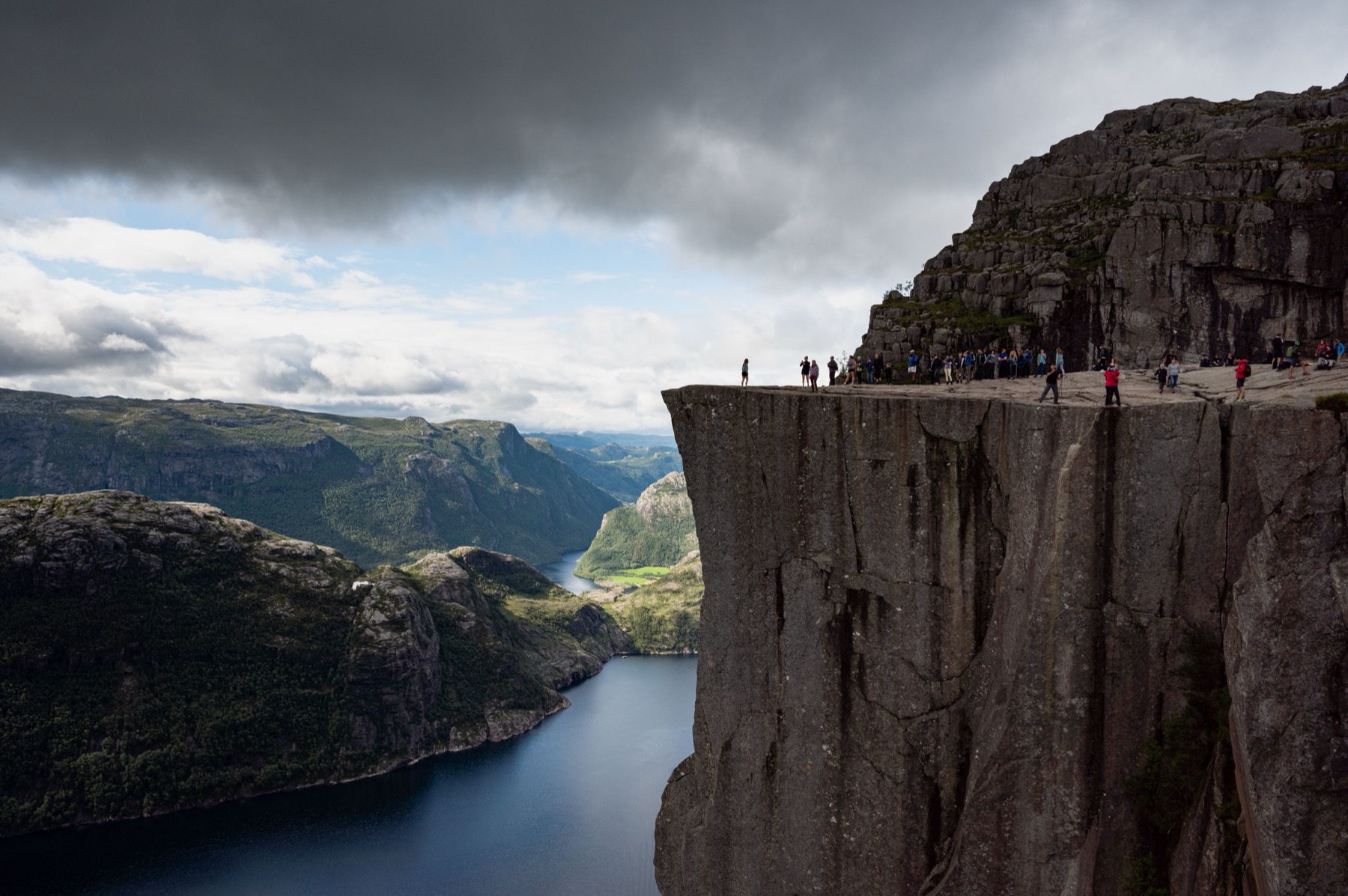
The Preikestolen Norway hike: 7 tips on what to see and do
Let’s take a look together at a complete guide to the trek itself, so you know exactly what you’re in for. You’ll find out how demanding the route is, what to watch out for near the cliff edge, and which other activities around the Lysefjord deserve your attention.
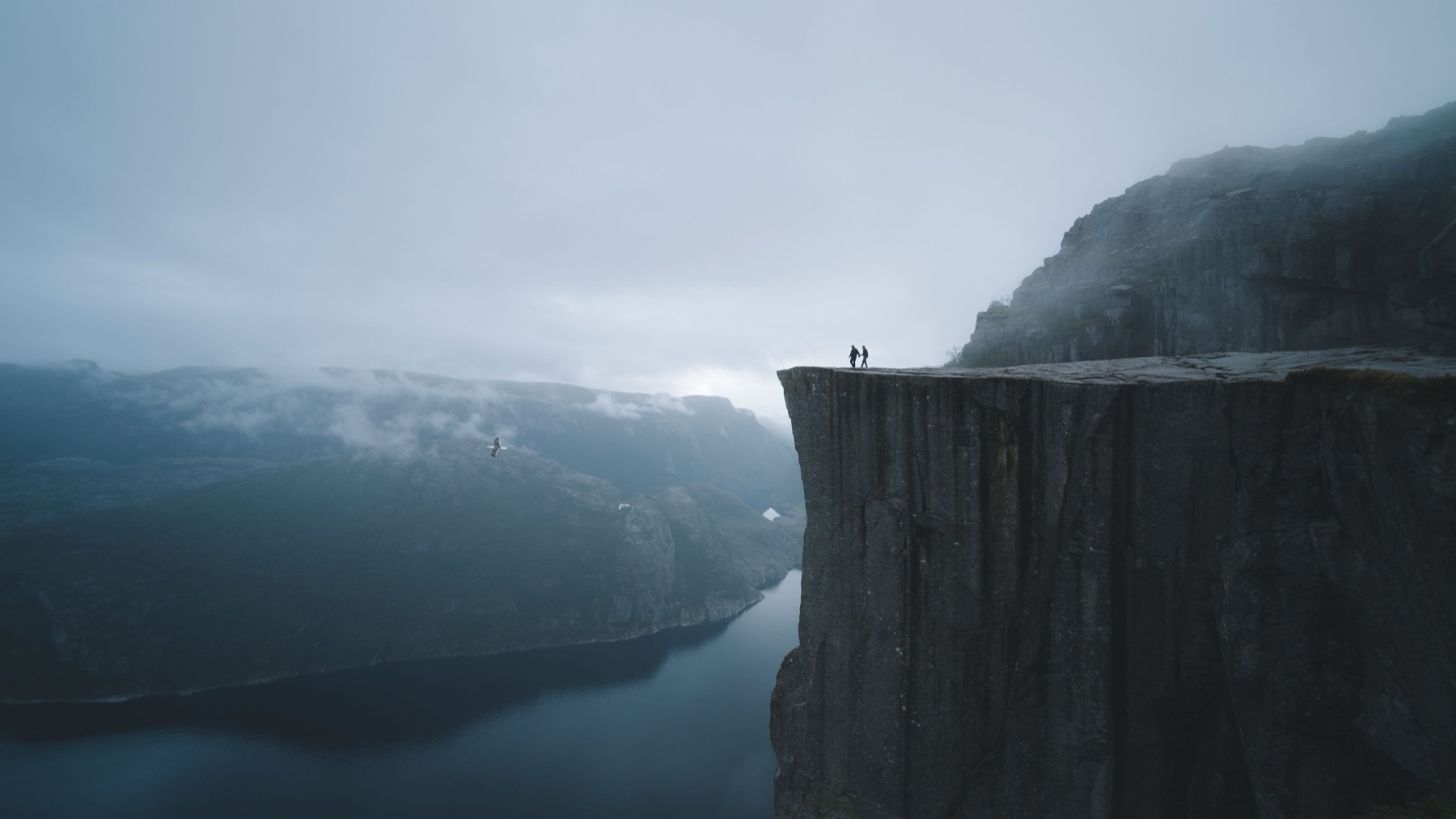
1. What is Preikestolen and why go there
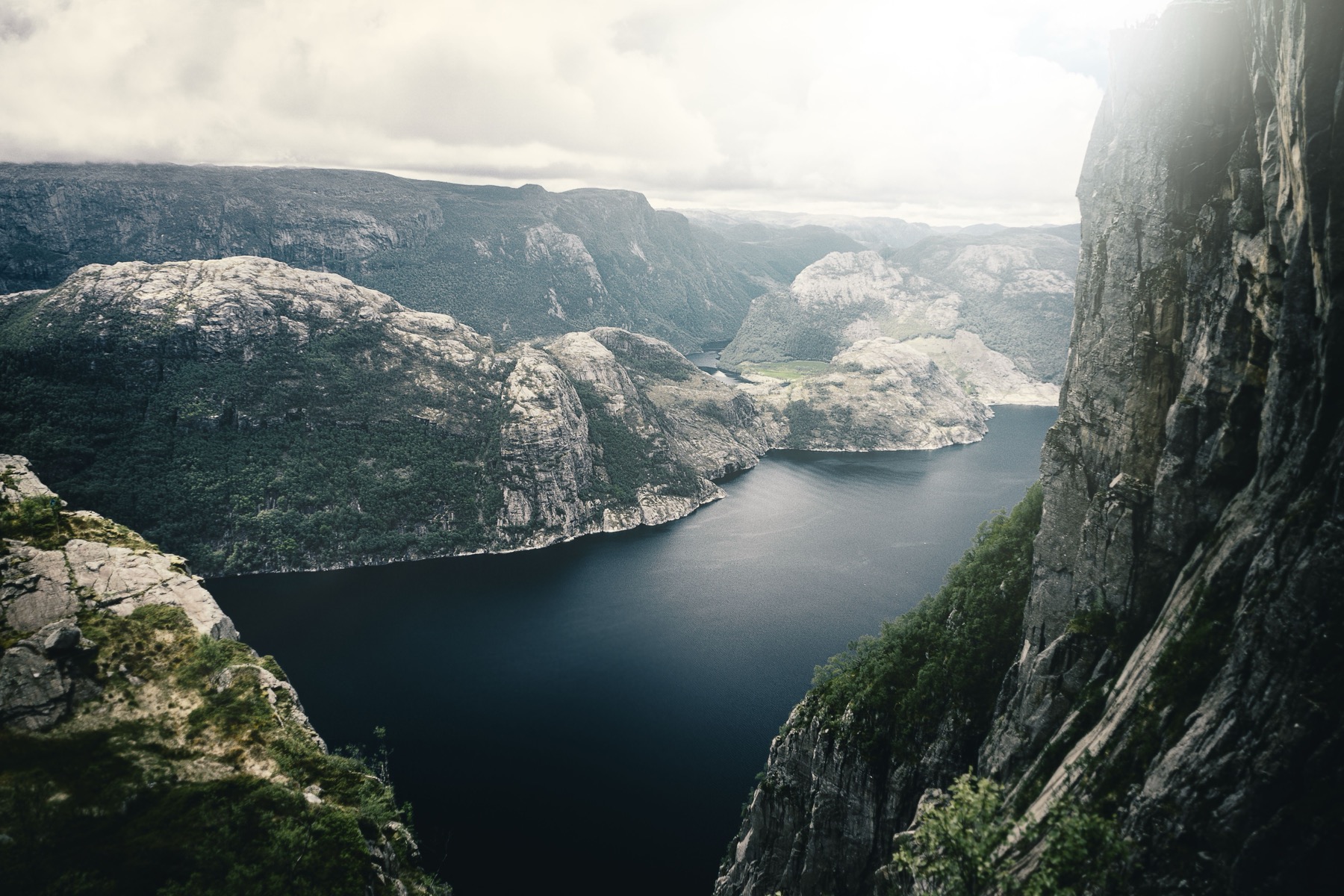
The Pulpit Rock is a massive granite block, shaped by a retreating glacier more than ten thousand years ago. The plateau rises a staggering 604 metres straight up above the water, and its surface is surprisingly flat, as if someone had sliced it off with a giant knife. It’s precisely this unique shape that makes it one of the most photographed natural wonders in all of Scandinavia.
The view from the edge down onto the Lysefjord, which winds through the landscape like a blue ribbon framed by steep green slopes, is utterly mesmerising. Travellers have fallen so deeply in love with this view that the Pulpit Rock regularly appears on lists of the world’s most beautiful viewpoints. Even though crowds head here, the sheer scale of the surrounding scenery means you’ll still find your own quiet corner to soak it all in.
2. The route step by step and the hike time table
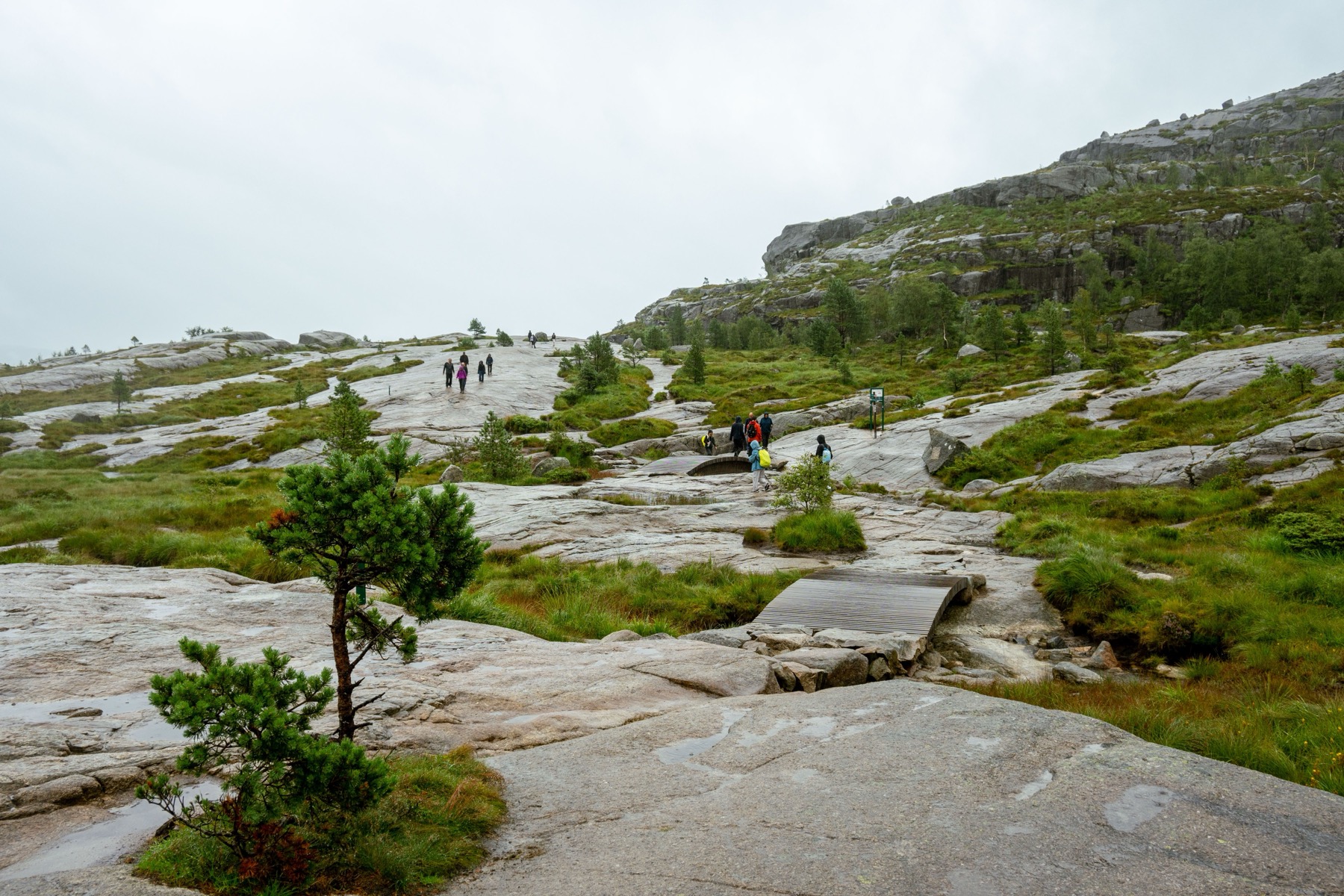
The trek itself starts at a mountain lodge and leads through varied terrain — forests, bogs and bare stone slabs. The route is roughly 8 kilometres there and back and is very well marked along its entire length with a red letter T, so it’s practically impossible to get lost. The path isn’t technically tricky and there’s no climbing involved, but it does require solid fitness.
The toughest sections are the steep climbs up the enormous stone steps, built here by skilled Sherpas from Nepal to protect the local landscape from erosion. Over the course of the climb you’ll gain around 500 metres of elevation, so don’t rush and take regular breaks to catch your breath. After cresting the final ridge, the magical scenery you came all this way for finally opens up in front of you.
| Length (return) | ~8 km |
|---|---|
| Time | ~4 hours |
| Elevation gain | ~500 m |
| Difficulty | moderate (manageable for the average hiker) |
| Height of rock above fjord | 604 m |
3. Parking and access to the Pulpit Rock
One big advantage of Norway’s natural attractions is that access to the mountain trails and national parks themselves is completely free. You only pay to use the official infrastructure, which in this case means the main car parks, P1 and P2, at the trailhead. The system reads your number plate on entry and you pay conveniently by card at the machine before you leave.
The all-day rate for a car sits at around 250 to 300 NOK (roughly £18–22), which is fairly standard in Norway. In the summer months, bear in mind that despite their size, both car parks can fill up by mid-morning. 💡 Tip: Arrive either very early in the morning or use organised bus transport to save yourself the stress of hunting for a free space.

4. What time of day to go to avoid the crowds
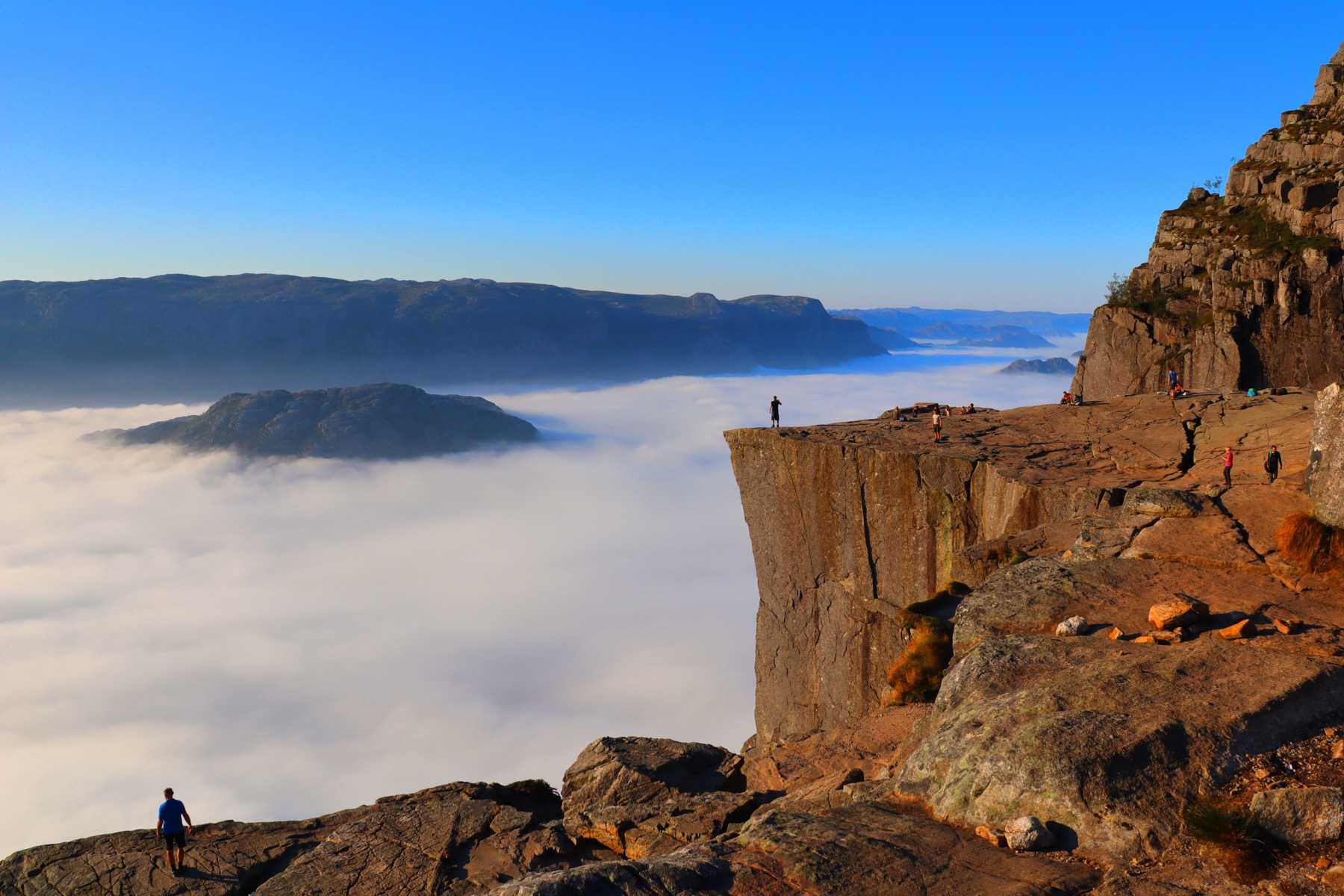
As I mentioned earlier, timing plays a huge role in your overall experience when visiting a place this popular. If you set off on the trail before eight in the morning, you’ll climb in pleasant cool air and enjoy beautiful morning light at the top with only a handful of other hikers. Around midday the plateau starts filling up with people who’ve come from further afield or by tourist bus.
The second very appealing alternative is an afternoon hike, when most day visitors are already heading back to their cars. If you start up around three or four in the afternoon, you’ll meet the crowds coming the other way, and beautiful golden evening light awaits you at the top. Just always check carefully what time the sun sets, and pack a head torch to be safe.
5. The view from the edge and safety on the cliff
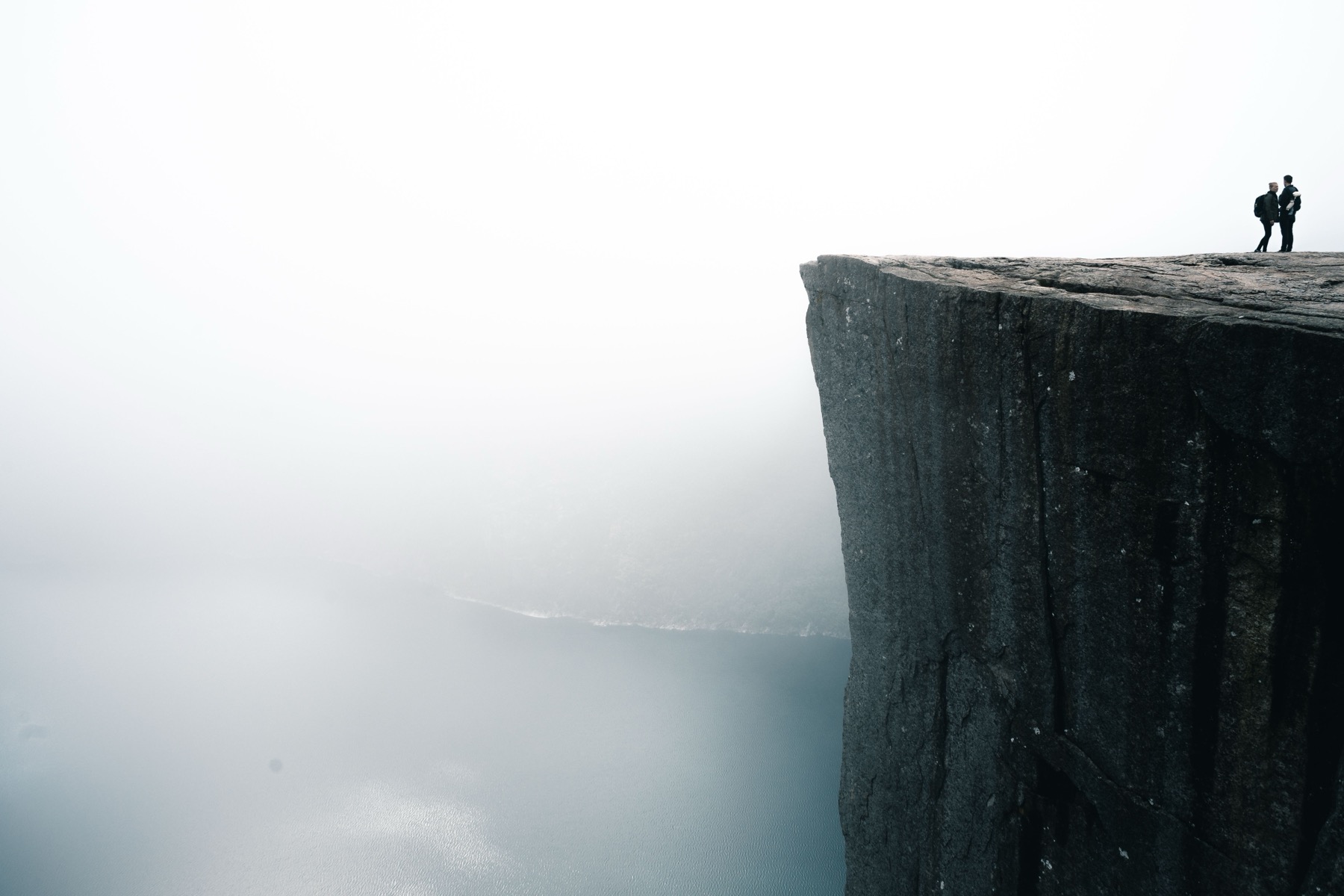
When you first step out from behind the last rock and see that enormous drop, your breath catches for a moment. There is deliberately not a single railing anywhere on the Pulpit Rock, because Norwegians believe people should approach nature with respect and common sense. So move towards the edge with the utmost care — ideally sit down a little way back or lie on your stomach to peer over. It’s worth noting that there are occasional accidents and deaths at the Pulpit Rock each year, almost always involving carelessness near the edge, so treat the cliff with the seriousness it deserves.
The weather up here can change within minutes, and a strong gust of wind on the open plateau can catch you unpleasantly off guard. Take particular care if you’re travelling with children or if it’s rained in the previous days and the bare rock is slippery. Sometimes thick fog rolls in over the fjord too — in that case it’s worth waiting a while, as the clouds often part quickly.
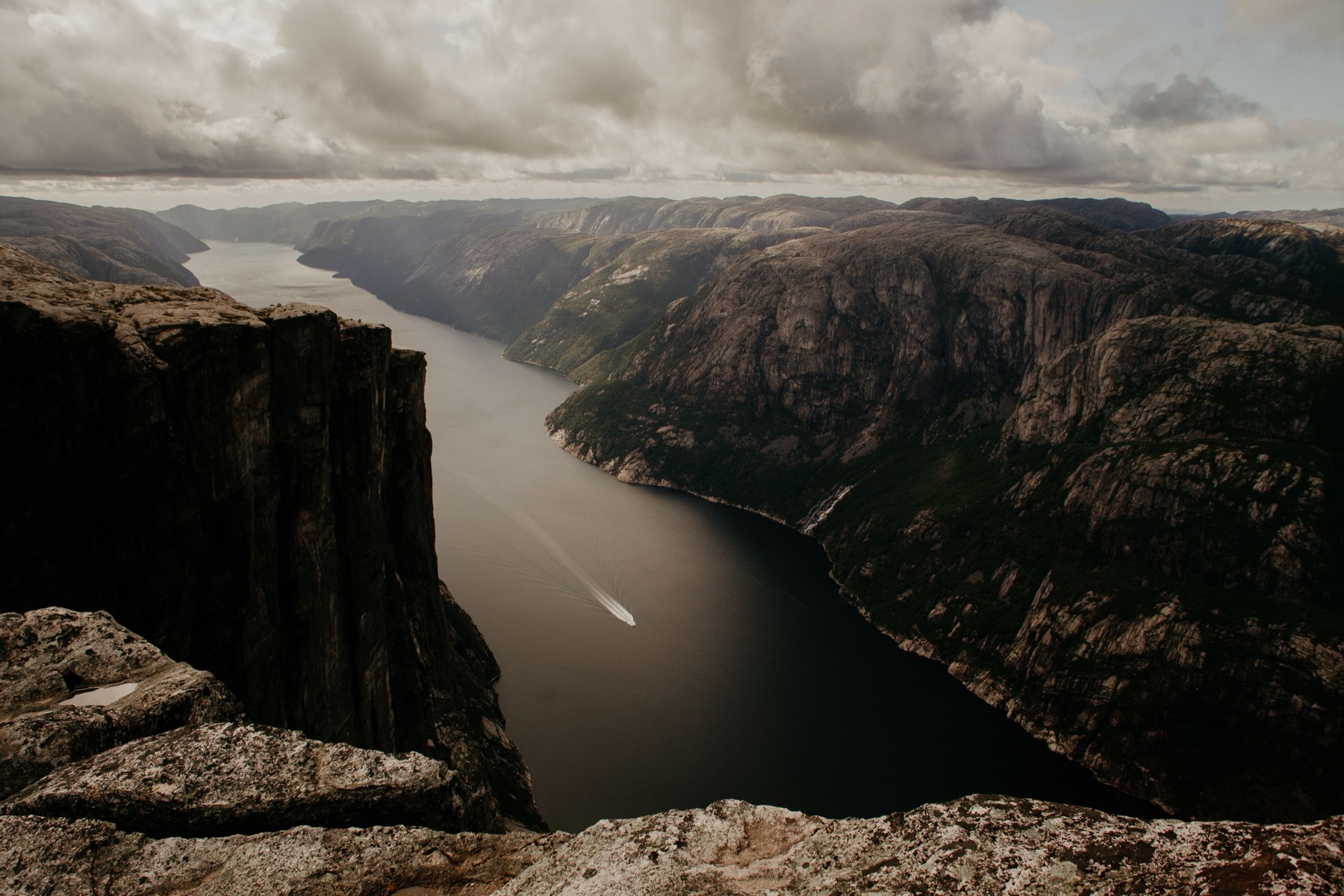
6. A boat trip along the Lysefjord beneath the Pulpit Rock
The Pulpit Rock experience doesn’t have to end with the view from above — a very popular activity is exploring the fjord from the water. Sightseeing cruises most often depart from Stavanger or nearby Forsand and sail right beneath that enormous rock wall. Only from the deck of the boat, when you tilt your head all the way back, do you truly grasp the insane scale and majesty of the 604-metre massif.
A two- to three-hour cruise costs around 500 NOK (roughly £37) per person, and tickets are easy to arrange in advance through GetYourGuide. Along the way you’ll also see waterfalls tumbling straight into the fjord, seals basking on the rocks and the famous wooden staircase at Flørli. 💡 Tip: If you have more time, you can combine a morning boat trip with an afternoon hike up the rock.
7. What to pack for the mountain trek
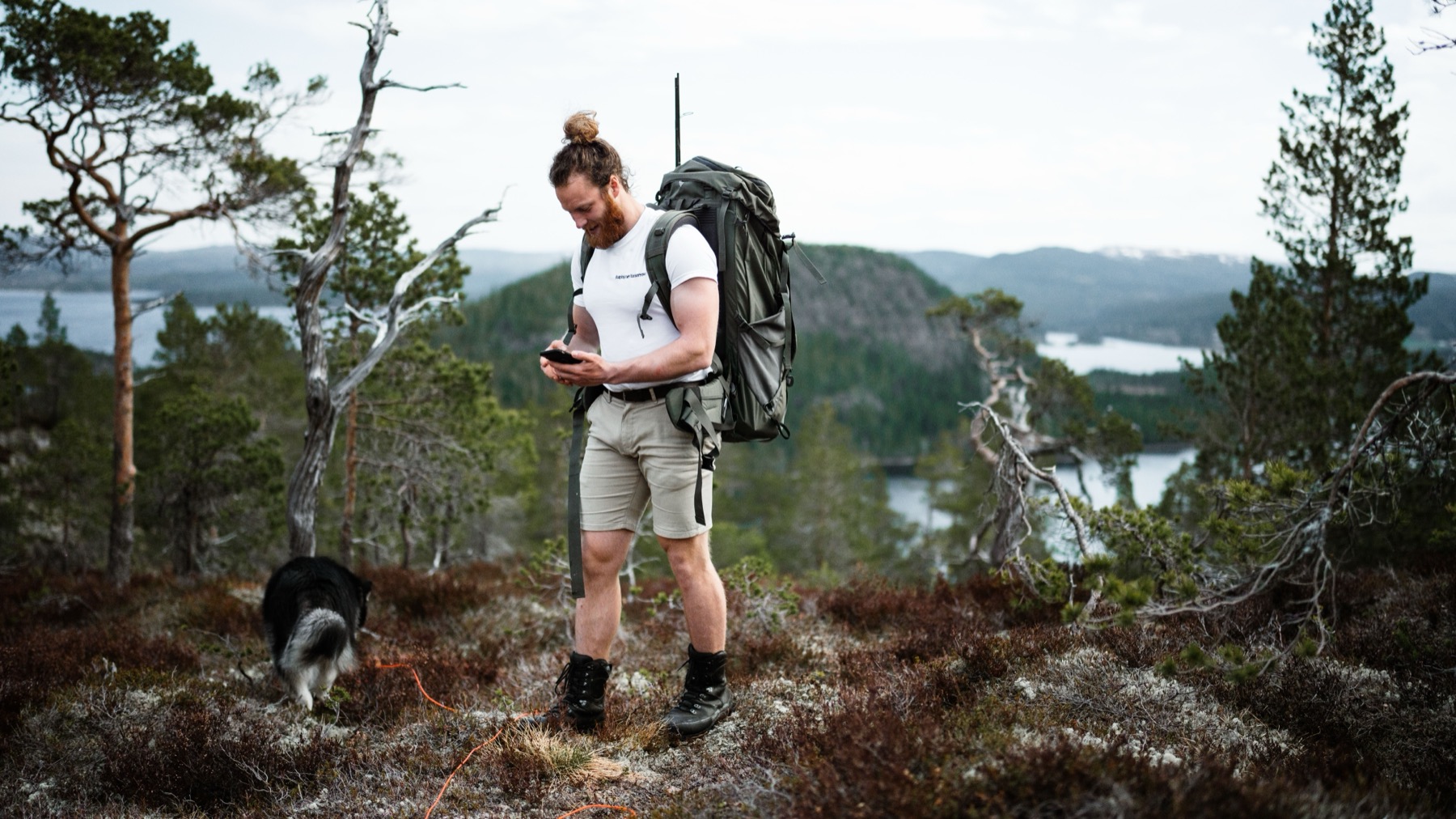
Even though this isn’t extreme mountaineering, the right gear will save you a lot of grief and plenty of blisters. The essentials are quality hiking boots with a sturdy sole, because the terrain is full of sharp rocks and you’ll occasionally have to hop over little streams or muddy patches. Leave your city trainers in the hotel room — otherwise you risk a nasty twisted ankle.
Just as important is layering your clothing, as a strong, cold wind usually blows up on the plateau even on the warmest summer days. Always pack a waterproof jacket and a warm mid-layer in your rucksack, even if the sun is shining and it’s warm at the car park. Don’t forget plenty of drinking water, a hearty snack to refuel, and outside the main summer season always bring a working head torch too.
Map of points of interest for your phone
Where to go next from the Preikestolen area
If you’re planning to explore more of this Nordic country’s beauty, the Lysefjord is a great starting point for more amazing road trips. Take a look at our other articles packed with tips on making the most of a holiday in the north.
- Norway: 50 things to see
- Stavanger — the gateway to Preikestolen
- Trolltunga — the hike to the Troll’s Tongue
- Norwegian fjords — a guide
Frequently asked questions
How difficult is the hike to Preikestolen?
The trek is classified as a moderately challenging mountain hike and can be managed even by people with average fitness levels. The route there and back measures a total of 8 kilometers and you’ll gain approximately 500 meters of elevation. There are no technical or climbing sections awaiting you, but the path along stone steps can be tough on the knees.
How long does the climb take?
For most hikers, the entire route takes approximately 4 hours of leisurely walking there and back, not counting the time spent taking photos at the summit itself. More experienced hikers can manage the ascent in an hour and a half, but I definitely recommend not rushing and leaving yourself plenty of time for breaks and enjoying the scenery.
Where to park and how much does it cost?
The official parking areas P1 and P2 are located right at the beginning of the hiking trail and the system works based on license plate recognition. All-day parking will cost you approximately €22 to €27, and you can conveniently pay by card at the machine before departure. In summer, it’s essential to arrive really early in the morning to secure a free spot.
When is the best time to visit Preikestolen?
The ideal conditions are offered during the main season from May to the end of September, when there’s no snow on the route and the days are very long. During the summer months, it’s best to set off early in the morning or late in the afternoon to avoid the biggest crowds. In winter, you can only access the rock with a certified guide.
Can you hike Preikestolen with kids?
Yes, families with children regularly complete this route, provided the little hikers are used to longer walks and climbing in terrain. However, the greatest caution is necessary up on the plateau itself, because there is absolutely no protective railing here and the edge drops vertically down. Keep children under strict supervision at all times and don’t let them go near the edge.
Is Preikestolen or Trolltunga better?
Preikestolen is a much more accessible option, the ascent takes only around 4 hours and offers a fantastic reward for relatively little effort. In contrast, the hike to Trolltunga is an extremely demanding full-day trek of 28 kilometers that requires excellent fitness and much better preparation. If you only have time for one shorter trip, Pulpit Rock is the clear choice.
How to get from Stavanger to the start of the trek?
The fastest option is by rental car, which takes less than an hour and goes through the undersea Ryfylke tunnel. If you don’t have a car, you can use special tourist packages that combine bus and ferry rides with direct connection to the parking lot at the trailhead.
Tips and Tricks for Your Vacation
Don’t Overpay for Flights
Search for flights on Kayak. It’s our favorite search engine because it scans the websites of all airlines and always finds the cheapest connection.
Book Your Accommodation Smartly
The best experiences we’ve had when looking for accommodation (from Alaska to Morocco) are with Booking.com, where hotels, apartments, and entire houses are usually the cheapest and most widely available.
 🚗 Car rental on the roadVerified rental cars in Norway
Search with the DiscoverCars comparison engine — it compares prices from dozens of local and international rental companies, and most bookings come with free cancellation.
Compare car prices in Norway →Don’t Forget Travel Insurance
Good travel insurance will protect you against illness, accidents, theft, or flight cancellations. We’ve had a few hospital visits abroad, so we know how important it is to have proper insurance arranged.
Where we insure ourselves: SafetyWing (simple monthly subscription) and TrueTraveller (for extra-long trips).
Find the Best Experiences
Get Your Guide is a huge online marketplace where you can book guided walks, trips, skip-the-line tickets, tours, and much more. We always find some extra fun there!