

If you’re planning a trip to northern Scandinavia and the thought of jostling for space at every viewpoint fills you with dread, Senja Island Norway definitely belongs on your radar. While the more famous archipelago to the south bursts at the seams during summer, this corner above the Arctic Circle still keeps its raw and peaceful character intact.
It’s often rightly nicknamed “Norway in miniature”, because in a relatively compact area it offers everything that makes this country so magical. You’ll find dramatic fjords cutting deep into the land, sharp mountain peaks rising straight from the ocean, and picturesque fishing villages with red cabins that look like they’ve stepped straight off a postcard.
In this guide we’ll look at what you absolutely shouldn’t miss when visiting Norway’s second largest island. I’ll show you where to stay strategically, which spots to add to your itinerary, and how to cleverly combine the trip with other Nordic gems ☺️.
TL;DR
- Senja is the ideal alternative to Lofoten, offering equally breathtaking scenery but with far fewer tourists.
- The backbone of the whole island is the Senja National Tourist Route, which is 86 kilometers long and takes you along the most beautiful fjords on the western coast.
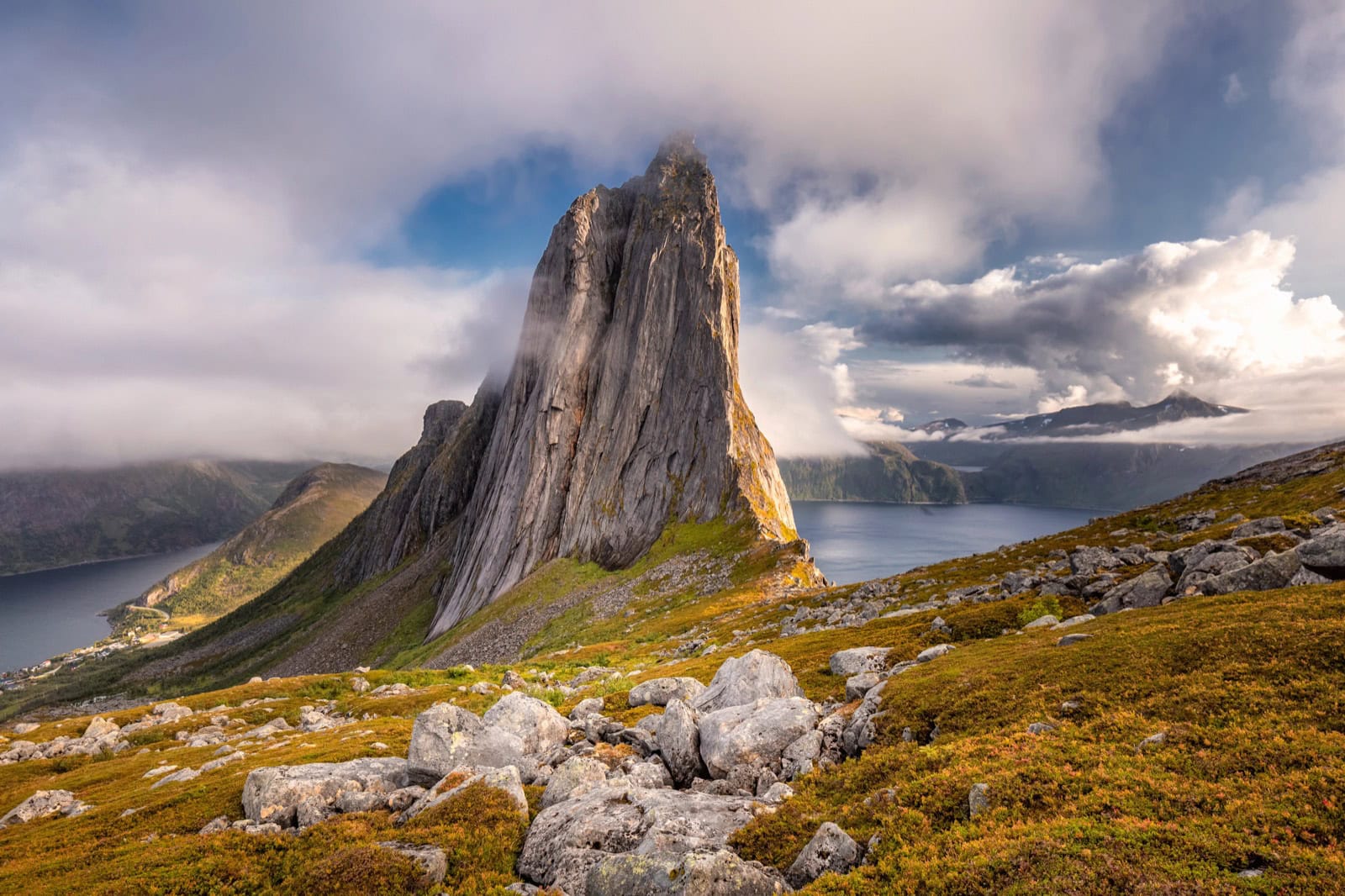
- Its most famous icon is the sharp mountain peak Segla, reached by a steep but rewarding hiking trail.
- Among the main stops are the Tungeneset wooden boardwalk with a view of the Devil’s Teeth and the Bergsbotn viewing platform.
- The best way to reach the island is by car from Tromsø airport, and in the summer season there is also a direct ferry from the nearby Vesterålen.
The full destination guide: Norway — guide and what to see
When to Visit Senja Island
The most popular time for a road trip around northern Norway is undoubtedly the summer months from June to August, when the weather is at its friendliest and all the mountain roads are safely passable. A huge draw at this time is the midnight sun phenomenon, which you can experience on Senja from roughly late May to late July. Thanks to the endless daylight, you can happily set off on mountain hikes even at midnight — an utterly unforgettable experience — and on top of that you’ll neatly avoid the biggest crowds at popular viewpoints. Senja Norway weather in summer usually hovers around a pleasant 12 to 15 degrees, though in the sun you can easily sunbathe in a T-shirt after a hike. In summer all the ferries connecting Senja with the surrounding islands run reliably, too.
If you’re more drawn to genuine winter romance, head north between late September and March, when you have an excellent chance of seeing the dancing northern lights across the night sky. Keep in mind, though, that the Nordic winter can be brutal, the days are extremely short, and from late November to mid-January the sun doesn’t rise above the horizon at all. For winter driving you’ll absolutely need quality studded winter tyres, known as piggdekk, because the narrow island roads are often buried under a thick layer of packed snow and ice. Some exposed mountain passes can even be completely closed for several days due to heavy blizzards.
The ideal compromise for calmer travel can be the month of September, when the island turns gorgeous autumn shades and accommodation prices ease off a little. You’ll dodge the last of the summer tourists, the days are still long enough for full-day excursions, and after dark you can happily start scanning the sky for the aurora borealis. The shoulder months like May or October, on the other hand, can be quite treacherous, since there’s still plenty of melting snow on the mountains and the trails turn into impassable bogs. Always check the opening hours of local services in advance, because outside the main summer season the infrastructure in Norway’s more remote areas is fairly limited and lots of restaurants close completely 😅.
Where to Stay on Senja
💡 Tip for accommodation and experiences: We love searching for places to stay on Booking.com, which tends to have the best cancellation terms. For tickets, tours and activities, it pays to compare and book through GetYourGuide.
When planning where to sleep, I recommend looking for accommodation on the more dramatic west or north coast, which puts you closest to all the main viewpoints and hiking trails. Capacity on the island is fairly limited, so especially in summer book hotels well in advance — even six months ahead — otherwise you’ll be left with only the priciest options. It’s also worth looking for apartments with their own kitchen, because there are very few places to eat on the island and prices in Nordic restaurants will give your budget a proper airing. 💡 Tip: Before you cross the bridge onto the island itself, do a big grocery shop in the town of Finnsnes on the mainland, where you’ll find large supermarkets like Rema 1000 with a far better selection and more reasonable prices than the island shops.
One of the most beautiful places to stay is the iconic Hamn i Senja resort, set right on the ocean’s edge with luxury apartments and glass-walled water views. In 2026, rates here start at roughly 2,500 NOK per night for a double room, which works out to around 215 €, but for the incredible comfort, the chance to rent kayaks, and the breathtaking scenery, it’s well worth it.
If you’re after a slightly more authentic experience in a traditional fishing village, a great choice is the Mefjord Brygge holiday complex in picturesque Mefjordvær. You’ll find traditional red Nordic cabins as well as modern hotel rooms, and it’s an ideal base for hiking, since you’re right in the heart of the highest mountain massifs and the marked trails begin just behind the village.
For mountain hiking lovers who want to set off early in the morning for the famous Segla peak or neighbouring Hesten, it’s a smart move to choose accommodation right in the little village of Fjordgård. You could try, for example, the cosy family-run guesthouse Segla Bed & Breakfast, which not only gives you a great base with a very generous breakfast, but also valuable advice from local hosts about the current weather and the condition of the mountain trails.
7 Things to See and Do on Senja Island
Let’s take a look together at the very best this wild island has to offer. Whether you’re craving steep mountain climbs or you’d rather soak up the views from the comfort of a warm car, Senja will amaze you at every kilometre.
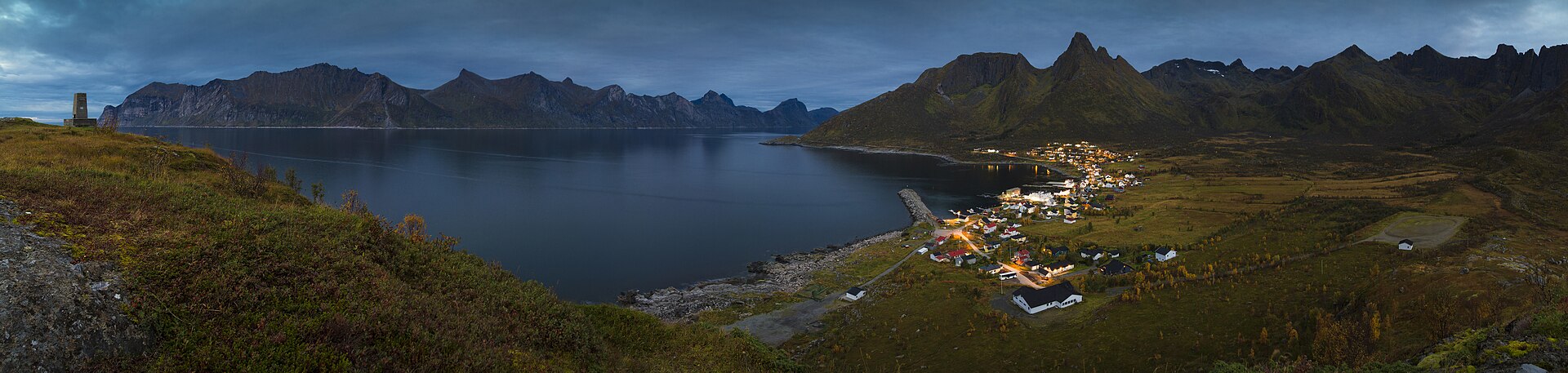
1. The Senja National Tourist Route
The main artery that takes you through the absolute best of the island is the renowned Senja National Tourist Route, stretching roughly 86 kilometres between the towns of Gryllefjord and Botnhamn. The road, signposted Fv86 and Fv862, winds right along steep cliffs and serves up breathtaking views around every bend, the kind that make you want to stop and take photos constantly. It’s one of eighteen official scenic routes in all of Norway and rightly ranks among the most beautiful, because it perfectly combines ocean, mountains and deep fjords.
Driving here takes a bit of patience and experience, because in places the road is very narrow and full of blind corners, so you’ll quite often need to use the widened pull-outs marked with the letter M (møteplass) to safely pass oncoming vehicles. Definitely set aside a whole day for this 80-kilometre stretch, even though the navigation shows barely two hours of pure driving time. Those spectacular scenes simply won’t let you keep driving on. Also keep a sharp eye out for free-roaming sheep, which love to rest, very unexpectedly, right in the middle of the warm tarmac.
Along the entire route you’ll come across architecturally interesting rest stops, which the Norwegians build with an incredible feel for the harsh surrounding landscape, so they blend in naturally. 💡 Tip: Before joining the route, don’t forget to fill up the tank and stock up on food, because petrol stations and supermarkets are extremely rare in this remote part of the island and often have very limited opening hours.
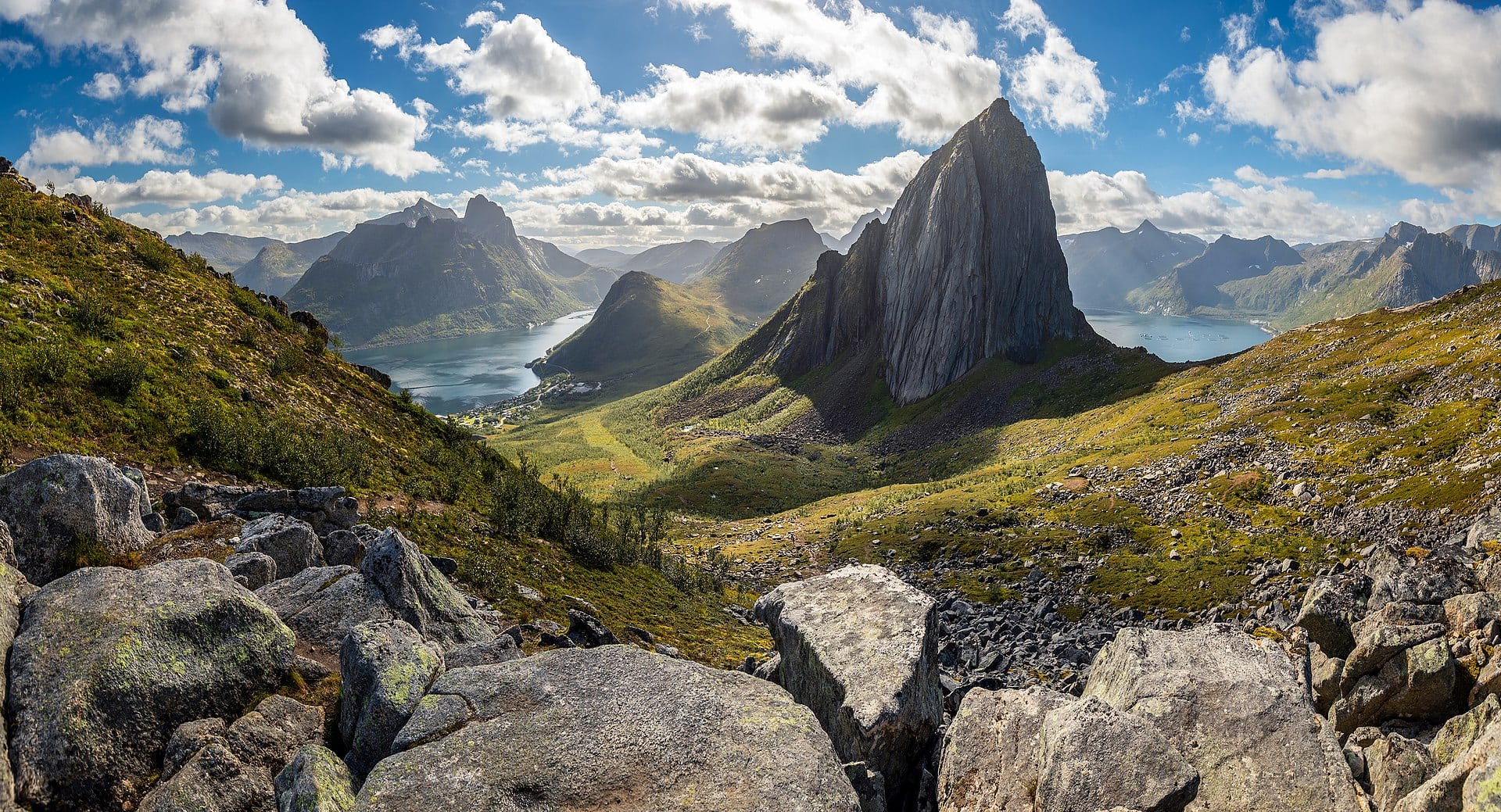
2. Mount Segla and Neighbouring Hesten
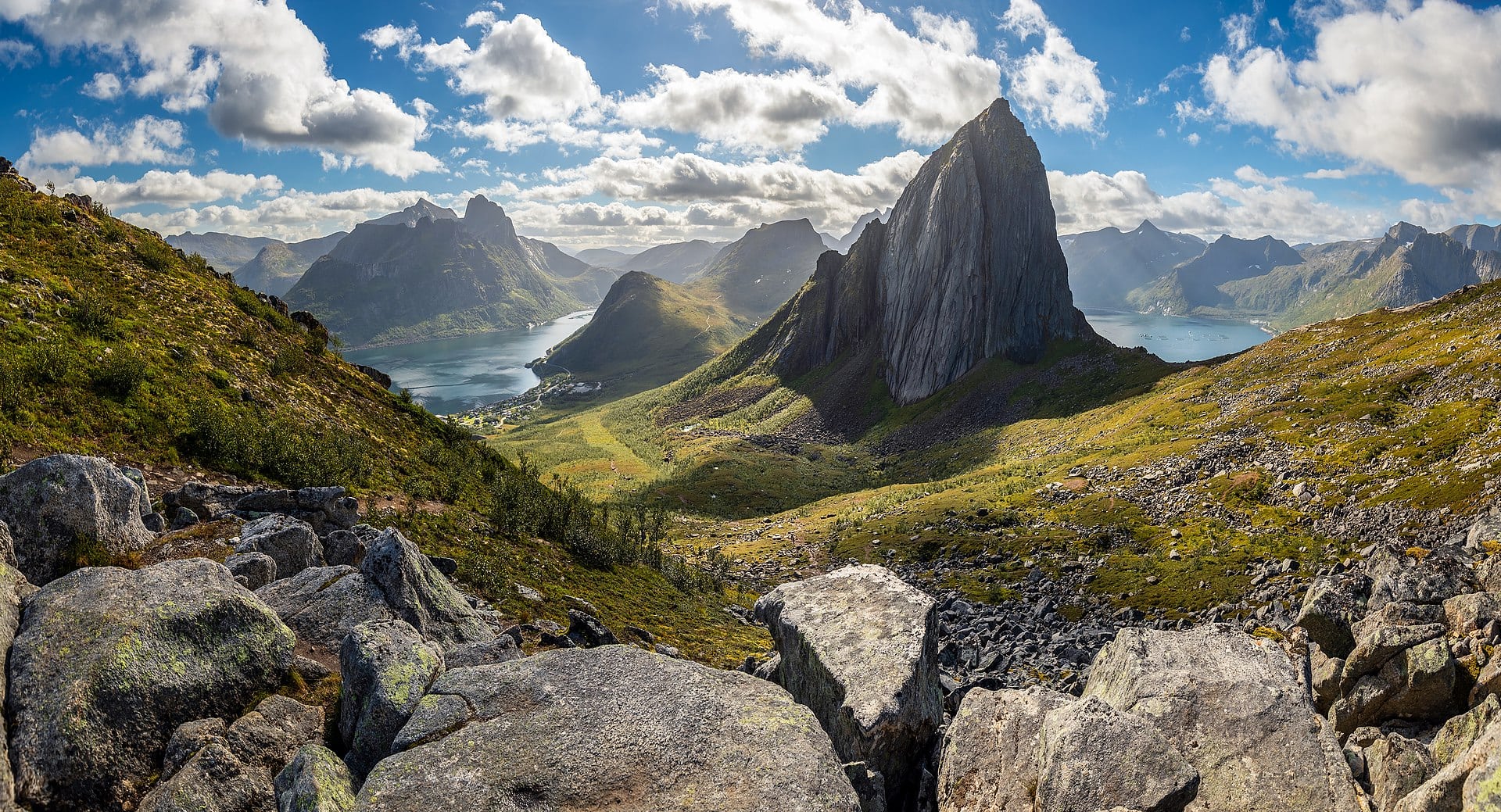
Probably the most photographed spot on the whole island is the iconic sharp peak of Segla, which rises to an impressive 639 metres straight out of the dark fjord waters. The starting point for this hugely popular hike is the small fishing village of Fjordgård, where you’ll find a designated paid car park with machines and clear wooden signposts marking the start of the trail. The parking fee is usually around 150 NOK per day (roughly 13 €), and the money collected goes directly towards the essential upkeep of the local trails and toilets.
The climb up Segla itself takes about three to four hours and is extremely steep and physically demanding, especially in the final rocky section just below the summit, where the terrain is often full of scree. Your reward, though, is a breathtaking panoramic view that will likely make your head spin a little when you look straight down into the depths below ☺️. The trail can be dangerously slippery after rain and is not at all suitable for small children or anyone who suffers from severe vertigo.
If, however, you want to capture that famous photo showing Mount Segla in all its glory from the side, you’ll need to head up neighbouring Mount Hesten. This hike to 556 metres is a touch less demanding and offers the absolute best view straight onto Segla’s sharp ridge, which from here looks like a giant petrified sail of a Viking ship. In summer I warmly recommend setting off early in the morning or, conversely, late in the evening under the midnight sun, to avoid the throngs of other hikers on the narrow path.
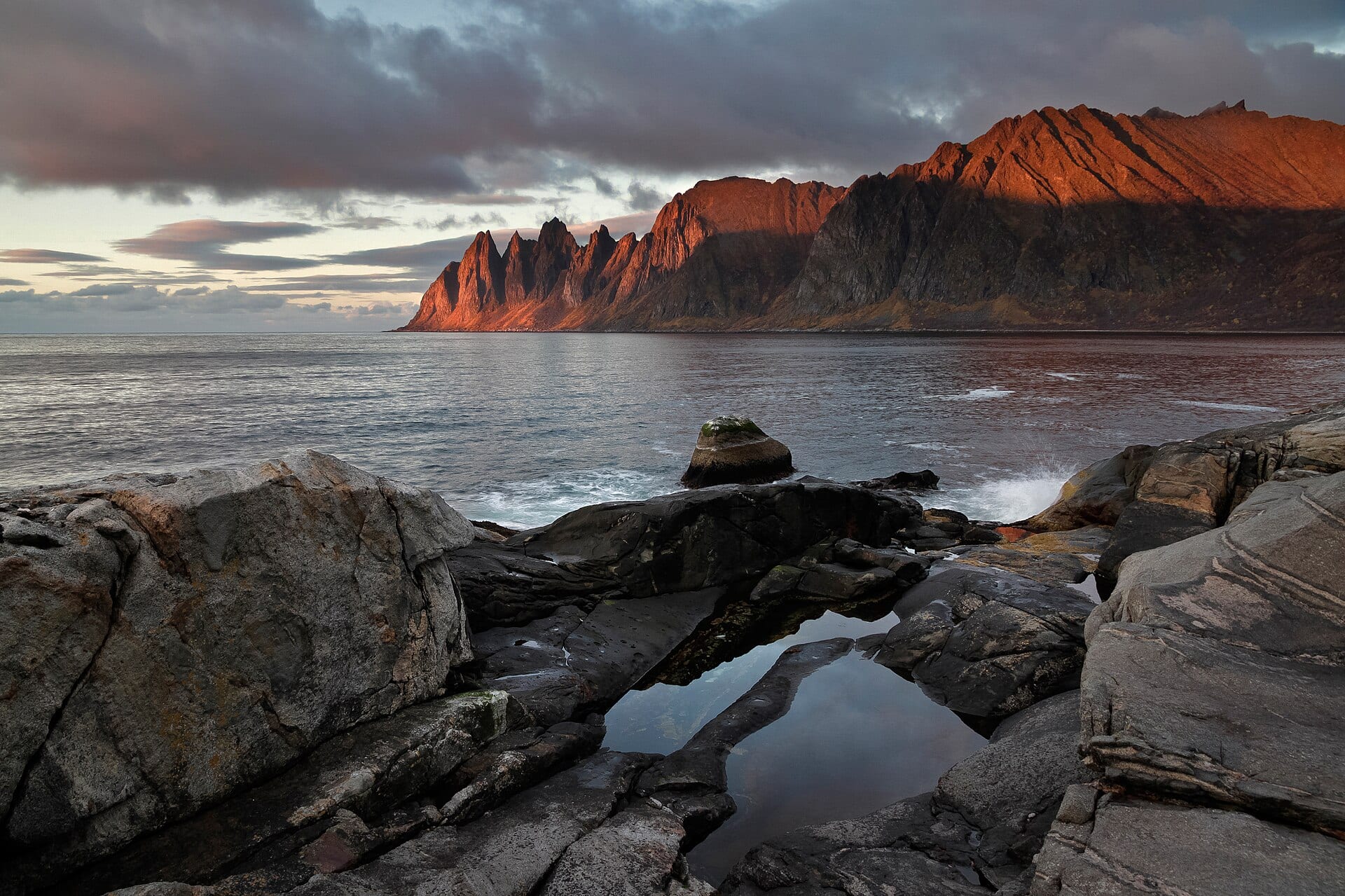
3. The Tungeneset Viewpoint and the Devil’s Teeth
Right on the main scenic route sits an architectural gem in the form of the wooden boardwalk at Tungeneset, which safely guides you across the rough coastal rocks all the way to the ocean itself. This spot is built with incredible elegance from Siberian larch, so over time it has gained a beautiful silvery-grey patina and blends perfectly into the harsh Nordic surroundings. There’s also comfortable barrier-free access right up to the start of the walkway, so you can easily reach it with a pushchair or wheelchair.
From the very end of the boardwalk you get the unrivalled best view of the jagged Okshornan rock formations, very often nicknamed the Devil’s Teeth for their menacing, pointed shape. These dark, majestic peaks rise straight out of the churning sea and look their finest at sunset, when their sharp edges glow deep orange and purple. A stop here can be done in half an hour, but if you enjoy photography you’ll probably linger far longer.
When moving off the safely marked walkway, be very careful, as the wet cliffs can be treacherously slippery, especially if it has just rained or the tide is rising. You’ll even find very photogenic concrete toilets here, which are a small work of art in themselves and perfectly illustrate the Norwegian approach to public space. 💡 Tip: Definitely try a long exposure on your camera — the blurred water crashing against the rocks contrasting with the sharp mountain teeth looks absolutely fantastic in the final shots.
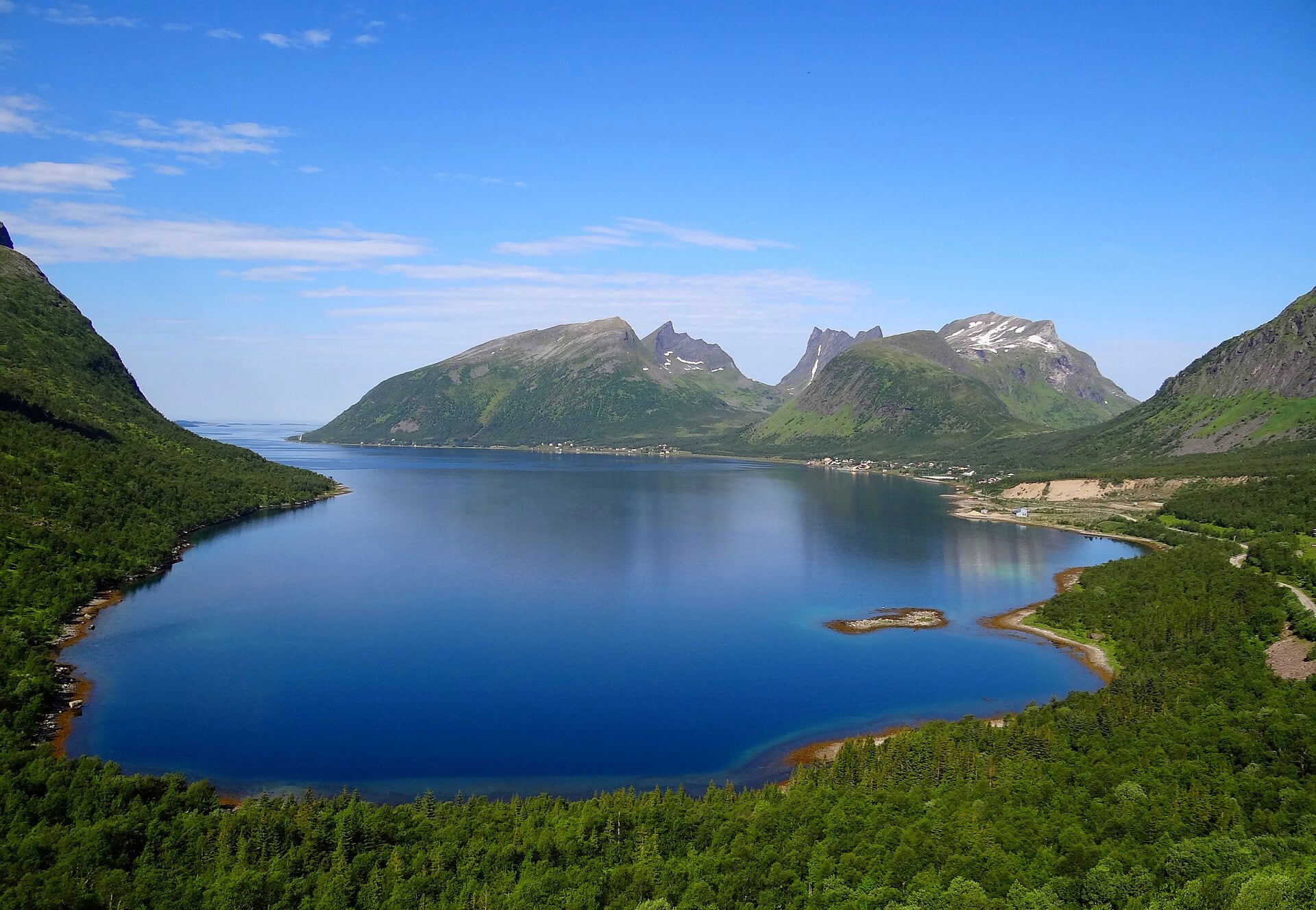

4. The Bergsbotn Viewing Platform
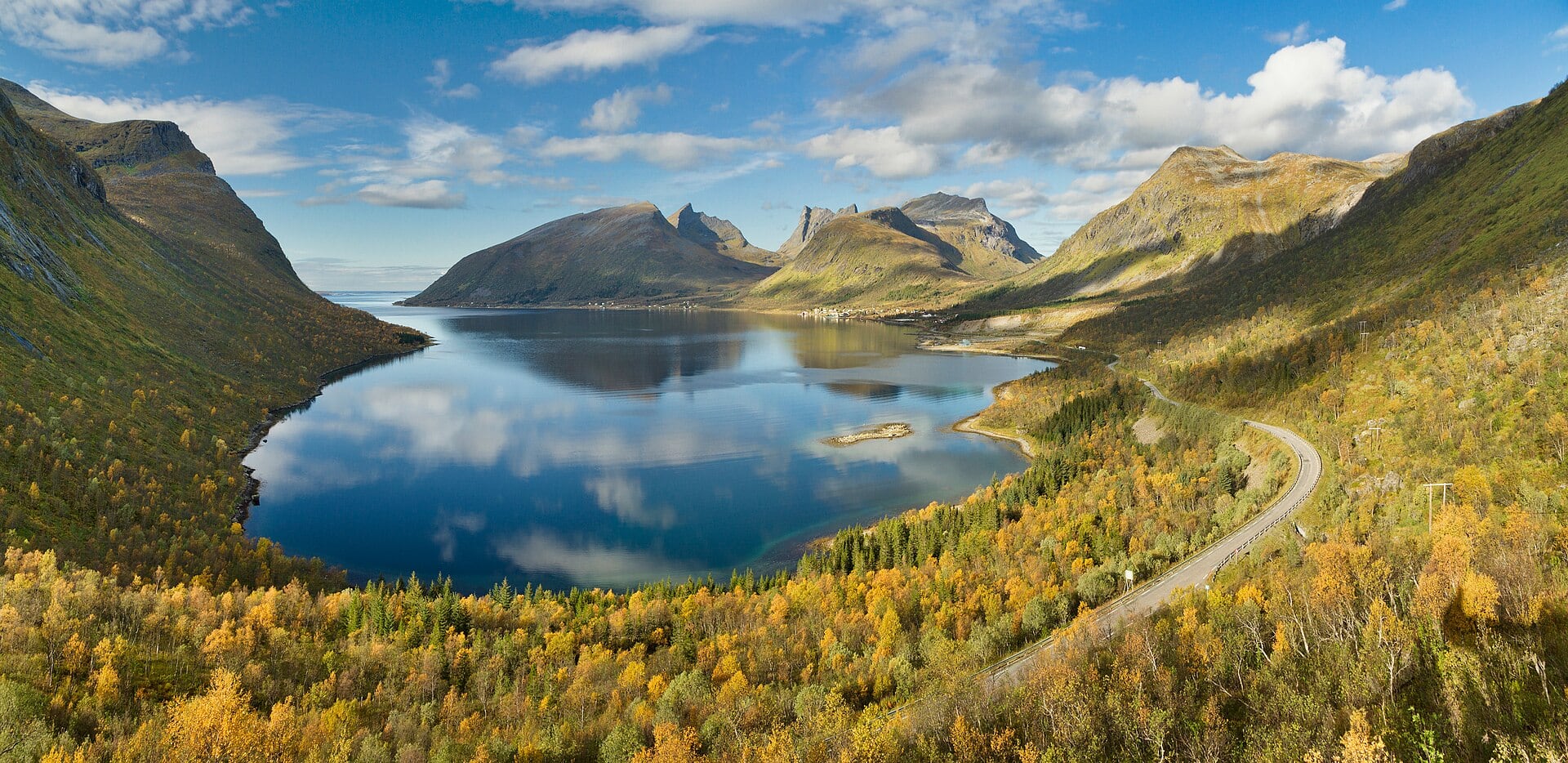
Another modern architectural marvel on the route is the Bergsbotn viewing platform, literally and daringly suspended over the abyss at an impressive 277 metres above sea level. This 44-metre-long wood-and-steel structure lets you safely step out right over the deep valley and savour that stomach-fluttering feeling of floating in mid-air. It’s one of those magical places where you fully grasp just how small and insignificant human creations are in the face of the majestic Nordic landscape.
From here you get a stunning panoramic view over the deep Bergsfjord, surrounded on all sides by dark mountains and dotted with tiny green islets. Far below on the valley floor you can watch the little village of Bergsbotn, whose colourful houses look from this enormous height like scattered children’s toys on a carpet. In summer, it’s also an absolutely perfect and easily accessible spot for watching the midnight sun in all its nocturnal glory.
A stop here won’t take you more than twenty minutes, but you definitely shouldn’t skip it on your itinerary, because it’s one of the best places to grasp the overall scale of the Norwegian landscape. The car park at the viewpoint is unfortunately very small and fits only about five cars, so in summer you may have to wait patiently for a free space for a while, but the incredible views from the platform more than make up for that minor delay.
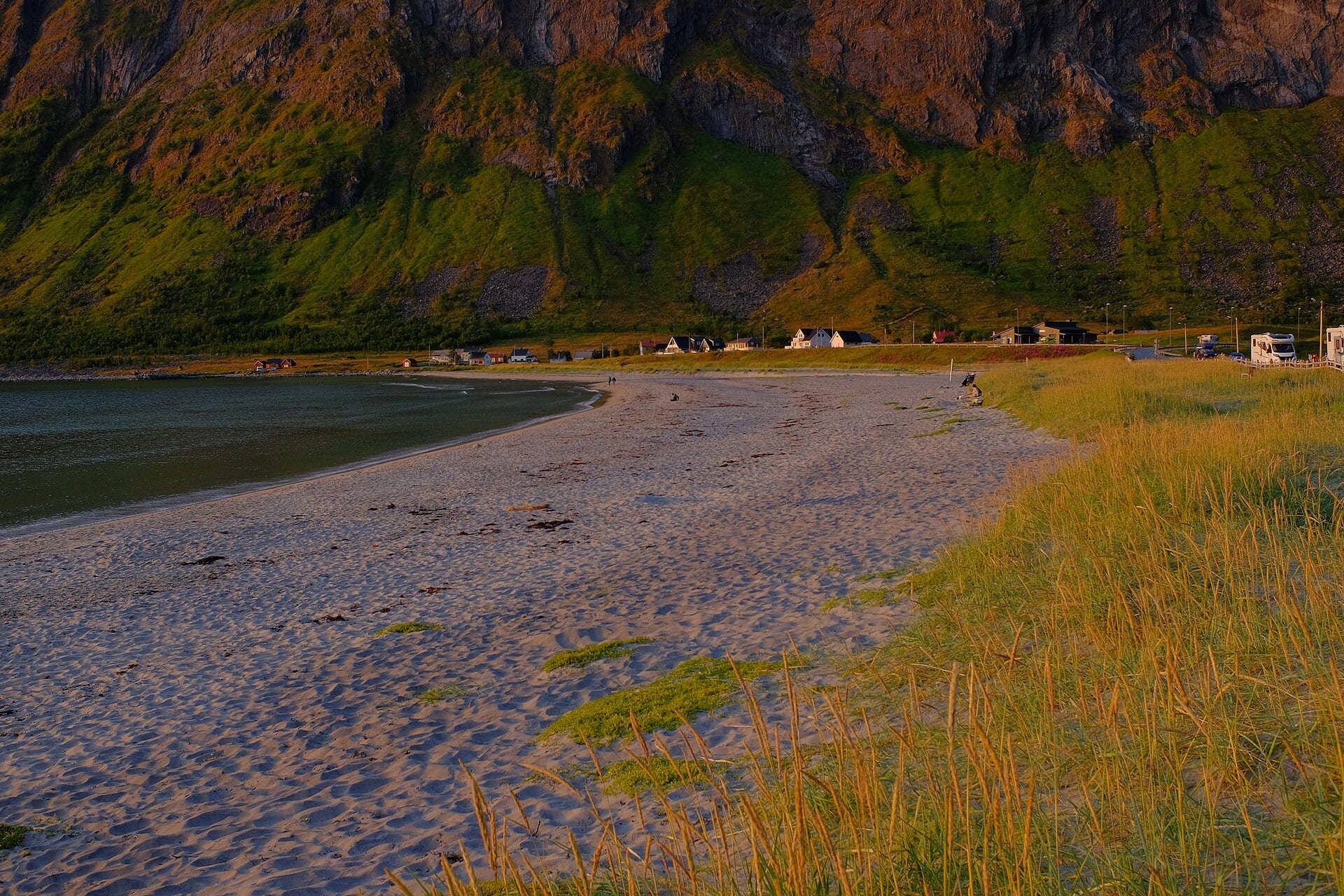
5. The Golden Sand of Ersfjord Beach
Most people probably don’t naturally associate Norway with a classic summer beach holiday, but the gorgeous Ersfjord beach, also known as Ersfjordstranda, will set you straight at first glance. You’ll find incredibly fine, almost golden-white sand framed by tall jagged mountains, creating a fascinating visual contrast you’d expect somewhere in Hawaii rather than high above the Arctic Circle. Right above the beach the sharp peaks of the Ersfjordgeite massif rise majestically, lending the whole place a unique, dramatic atmosphere.
The water in the bay is beautifully crystal clear and turquoise, though even on the hottest summer days its temperature rarely tops a refreshing 10 to 12 degrees Celsius. 💡 Tip: If you’re even slightly hardy, don’t be afraid to dash into the icy water at least for a moment — it’s an incredibly refreshing experience and a guaranteed way to snap back to life after a long stint of driving. Camping right on the beach is strictly forbidden to protect nature, but designated grassy tent pitches sit just next door.
A big and rather bizarre curiosity of this beach is also the local facility widely known among travellers as the famous golden toilet, because its asymmetric triangular roof is entirely covered in shiny gold sheeting. This extravagant architectural folly cost the Norwegian government roughly three million Norwegian kroner and today serves as a fairly amusing landmark for all passing tourists and a popular photo stop.
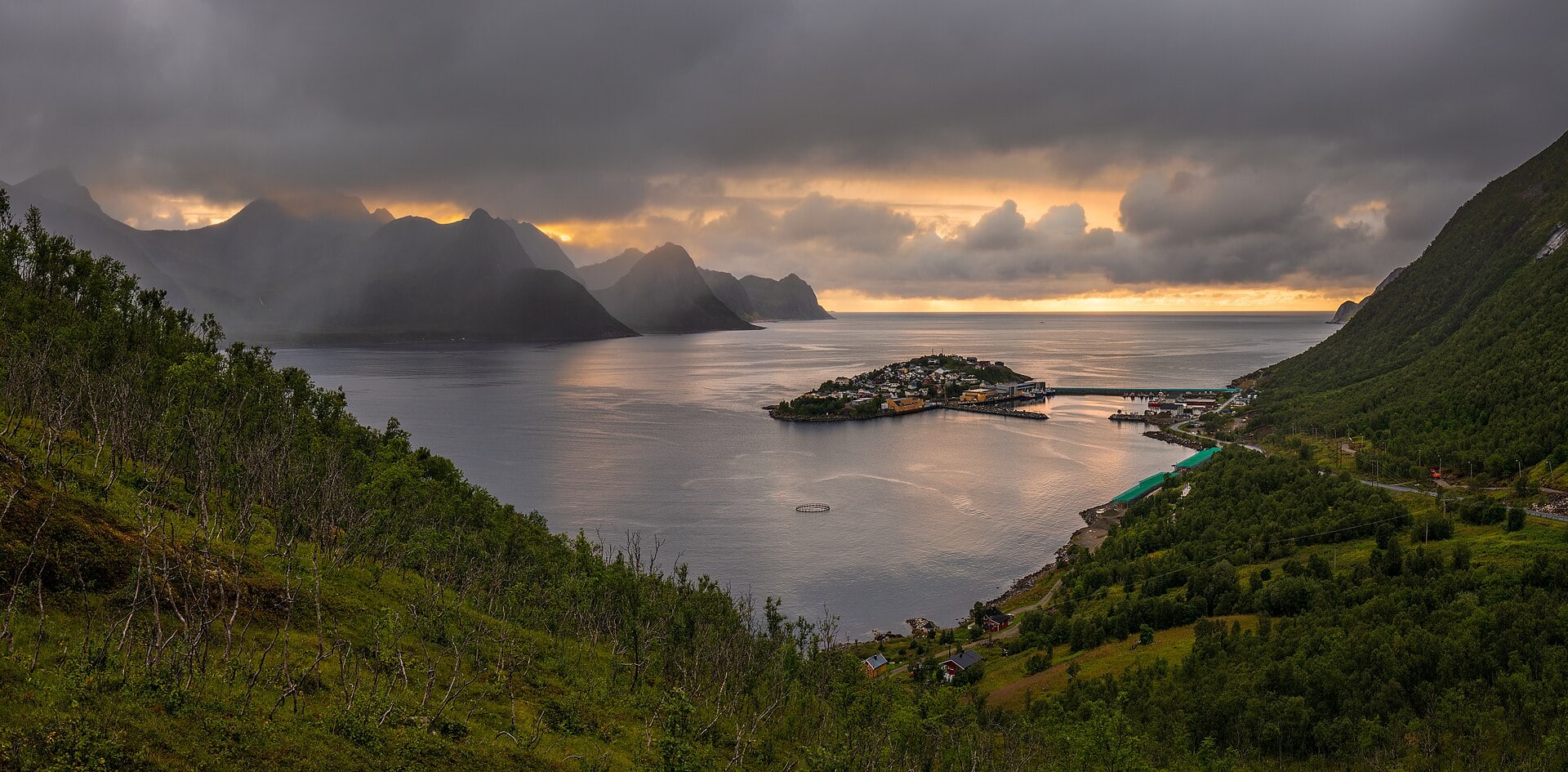
6. The Fishing Village of Husøy
If you want to see with your own eyes what life looks like in a truly remote place exposed to the elements, you must turn off the main road towards the island village of Husøy, which lies in the middle of the dark Øyfjord. You reach the little island via a very narrow and photogenic man-made causeway that connects it to the mainland and gives the place an incredibly dramatic, isolated feel. The winding road down into the valley is an experience in itself, dropping in sharp hairpin bends and offering fantastic bird’s-eye views over the whole village.
The village is literally squeezed onto a tiny patch of solid ground, and the older houses here are often tied down to the earth with thick steel cables for safety, so they can withstand the extremely powerful winter gales blowing in off the ocean. The close-knit local community still firmly holds onto its traditional way of life, so up close you can watch the bustling activity of the local cod-processing industry, which has formed the absolute bedrock of the economy here for centuries.
It’s utterly fascinating to simply stroll slowly between the old wooden houses and soak up the peaceful Nordic atmosphere, where all of time is dictated mainly by the unpredictable weather and the arrival of the fishing boats. Despite its huge remoteness, you’ll find a small but handy Joker supermarket here, where you can buy a hot coffee and a fresh cinnamon bun (a so-called kanelbolle), which after a windy, frosty walk around the island we, as vegetarians, certainly appreciate.
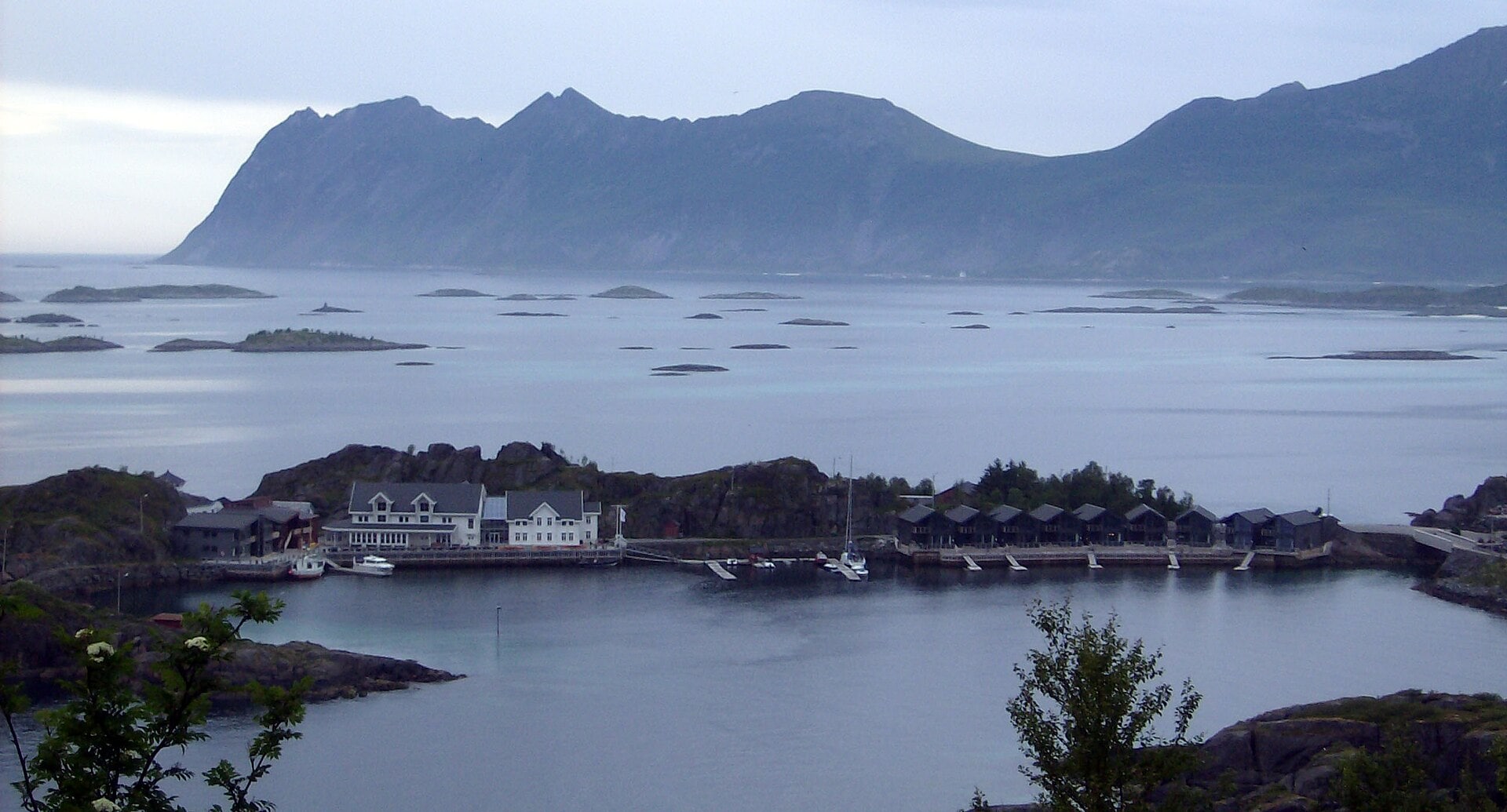
7. The Resort and Village of Hamn i Senja
On the island’s west coast you’ll come across the former historic village of Hamn, which has slowly transformed from a rugged mining settlement into one of the most beautiful and luxurious holiday resorts on all of Senja. In the 1880s, nickel was mined here on a large scale, and there was even one of the world’s very first hydroelectric power plants, something still recalled today by the very interesting information boards scattered across the sprawling site.
Today this picturesque and protected place is a major hub for outdoor activities, where through various local agencies you can arrange all sorts of adventurous trips. Renting sea kayaks is very popular, on which, accompanied by an experienced guide, you can explore the calm waters of the fjord, paddle past the nearby Kråkeslottet cultural centre, and watch the surrounding dozens of tiny islets with dazzling white sand. I warmly recommend booking these water activities early through platforms like GetYourGuide, as capacity tends to fill up fast in summer.
Even if you’re not planning to sleep here, a stop in Hamn is well worth it for the beautiful views and the chance to stroll along the landscaped wooden piers lining the turquoise bays. In the cosy local restaurant you can also stop for a hearty lunch, and since the choice of food on the island is rather limited, be sure to try the excellent vegetarian pasta or local cheeses with fresh bread, which will give you valuable energy before the next demanding leg of the journey around the island.
Map of points of interest for your phone
Where to Go Next from Senja
Senja is a great springboard for discovering more Nordic beauty, and it would be a shame to stay here alone. In summer (roughly from May to early September) there’s a ferry from the port of Gryllefjord to Andenes, which whisks you in under two hours straight to the Vesterålen. The crossing is an experience in itself, and with a bit of luck you can spot whales along the way.
If you have more time and want to experience the best Norwegian road trip, continue smoothly south from the Vesterålen. A few hours’ drive will bring you to the more famous Lofoten Islands, which serve up another helping of stunning mountains and beaches. To plan this part of the trip in detail, I recommend checking out our article with the big guide to Lofoten.
Frequently Asked Questions
How to best get to Senja island?
The fastest option is to fly to Tromsø International Airport, where you can rent a car right after arrival. From here, you’ll have roughly a three-hour drive through the picturesque Nordic landscape to the island, which is connected to the mainland year-round by the free Gisundbrua bridge near the town of Finnsnes, so you don’t need to worry about any ferries. An alternative is to fly into Evenes or Bodø airport, from where the journey is a bit longer, but you can easily combine it with a visit to Vesterålen and the famous Lofoten.
How many days do I need to explore the island?
For driving through the National Tourist Route and the basic viewpoints along the road, you’ll need two full days, during which you can cover the most important sights without unnecessary rush and stress. However, if you’re planning to tackle more challenging mountain treks like Segla or Hesten, I definitely recommend setting aside three to four days, so you have enough time buffer in case of bad weather, which here sometimes changes literally from hour to hour.
Is Senja a better destination than Lofoten?
It cannot be definitively said that it would be better or worse, it is simply significantly quieter and considerably wilder. While on the more famous Lofoten Islands you’ll encounter traffic jams and overcrowded car parks in summer, Senja still firmly maintains its authentic Nordic atmosphere without mass tourism, even though the natural scenery with jagged peaks, dark fjords and white beaches is very similar in both areas.
Can I visit Senju even in the winter months?
Definitely yes, the Nordic winter here offers absolutely phenomenal conditions for observing the Northern Lights and the snow-covered dramatic landscape feels truly magical. However, you must be a very experienced and cautious driver, because the island’s roads are often icy and in case of heavy snowstorms some mountain passes or coastal roads may be temporarily closed, so you need to have fairly flexible plans and account for very short days.
Do the ferries to neighboring islands run year-round?
The key summer ferry from the port of Gryllefjord to the neighbouring Vesterålen islands (to the port of Andenes) is a purely seasonal affair and typically operates only from late May to early September, when the sea is calmer. If you’re travelling outside this summer period, you’ll need to reach Vesterålen and subsequently Lofoten by taking a large detour via the mainland, which will add several extra hours of driving to your journey, so always carefully check the current timetables.
Is the hike up Mount Segla suitable for beginners too?
The hike is relatively short at around three to four hours, but the route profile is very steep and in the upper section you’ll be moving across loose, unsecured rocks where there’s a risk of slipping. People suffering from vertigo may have serious problems here, and in rain or wet conditions the route is dangerously slippery, so if you’re not one hundred percent confident in your abilities, it’s better to choose the somewhat gentler and safer neighboring trek to Mount Hesten.
How much does a vacation and accommodation in Senja cost?
Norway has long been one of the absolute most expensive countries in Europe, and the remoteness of the island only uncompromisingly confirms this. For 2026, expect accommodation prices around 1,500 to 2,500 NOK per night for two people in a standard room. You’ll save significantly if you rent an apartment with your own kitchenette and cook for yourself with groceries bought in supermarkets on the mainland, because even an ordinary meal in a restaurant will be extremely expensive.
Tips and Tricks for Your Vacation
Don’t Overpay for Flights
Search for flights on Kayak. It’s our favorite search engine because it scans the websites of all airlines and always finds the cheapest connection.
Book Your Accommodation Smartly
The best experiences we’ve had when looking for accommodation (from Alaska to Morocco) are with Booking.com, where hotels, apartments, and entire houses are usually the cheapest and most widely available.
 🚗 Car rental on the roadVerified rental cars in Norway
Search with the DiscoverCars comparison engine — it compares prices from dozens of local and international rental companies, and most bookings come with free cancellation.
Compare car prices in Norway →Don’t Forget Travel Insurance
Good travel insurance will protect you against illness, accidents, theft, or flight cancellations. We’ve had a few hospital visits abroad, so we know how important it is to have proper insurance arranged.
Where we insure ourselves: SafetyWing (simple monthly subscription) and TrueTraveller (for extra-long trips).
Find the Best Experiences
Get Your Guide is a huge online marketplace where you can book guided walks, trips, skip-the-line tickets, tours, and much more. We always find some extra fun there!
More from Norway
Full guide →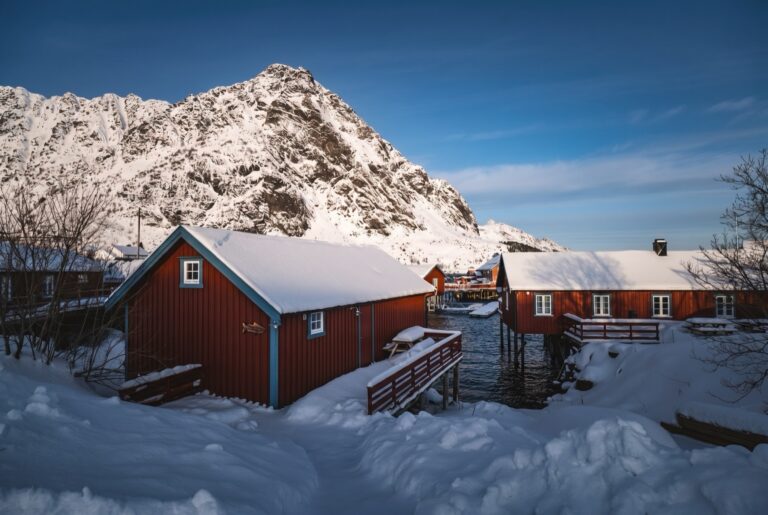 PricesHow Much Does a Trip to Norway Cost: Prices and 8 Tips to Save in 2026
 What to seeTrondheim, Norway: 12 Things to See in the City of Nidaros Cathedral
 What to seeStavanger, Norway: 12 Things to See in the Gateway to Preikestolen 2026
 PricesAlcohol in Norway: 10 Things to Know – Prices, Vinmonopolet and How Much You Can Import in 2026
 What to seeBergen, Norway: 14 Things to See in the Gateway to the Fjords


