TL;DRAiralo is an app from a Singaporean platform that lets you buy a digital eSIM for more than 200 countries and regions worldwide, activate it via QR code before you even take off, and have internet the moment you land — no hunting for a physical SIM at the airport in Bangkok or New York. Prices start at around €3.50 for the basic package, with local, regional and global eSIMs on offer, some covering up to 120 countries at once. It’s data-only, with no calls or texts — you’ll rely on WhatsApp, Messenger or Viber instead — and you’ll need an eSIM-compatible phone, like an iPhone XR or later, a newer Samsung Galaxy, or a Google Pixel. It’s best suited to short trips, multi-country transfers or late-night arrivals, whereas a local SIM often works out cheaper if you’re staying put somewhere for a month.
You’ve just landed late at night at the airport in Bangkok. The local SIM card stands are closed, the airport Wi-Fi barely works, and you need to call an Uber, find your hotel, and figure out how to get into the city centre. Moments like these remind you just how much you rely on mobile internet, and how frustrating it is to be without it. That’s exactly where an eSIM for travel comes to the rescue.
There’s a solution, and it’s called Airalo. This Singapore-based app has changed the way millions of travellers handle internet access abroad. No more queuing at an operator’s stand, no more pricey roaming, no more endlessly hunting for free café Wi-Fi. A few taps on your phone and you’ll have data ready for more than 200 countries before you even take off.
TL;DR
Airalo is an app for buying digital eSIM cards for more than 200 countries worldwide.
You can buy data online in just a few minutes, with no shop visits and no swapping out physical SIMs.
Prices start from around €3.50 per 1 GB and are significantly lower than standard roaming.
It’s data-only – calls and texts go through WhatsApp, Messenger or Viber.
Your phone must support eSIM (most newer iPhone, Samsung Galaxy or Google Pixel models do).
The best choice for short trips, multi-country itineraries, or whenever you don’t want to waste time tracking down a local SIM.
What exactly is Airalo and why is everyone talking about it?
Travelling without internet is practically unthinkable these days. You need maps so you don’t get lost. You want to buy a ticket on the go, find an open restaurant, or check your email. And above all, you want to feel connected to the world, even when you’re thousands of miles from home.
But the moment you step outside the EU, roaming with your UK provider can get expensive fast. Sure, you can pick up a local SIM at the airport or in town, but that assumes you land at a reasonable hour, are happy to queue, and that the seller understands what you’re after.
That’s exactly why Airalo exists. This Singapore-based platform lets you buy and install a virtual eSIM card straight from your phone, before you fly, with no physical card and without setting foot in a single shop.
Airalo review
How does it all work?
The concept is surprisingly simple. Airalo doesn’t run its own mobile network – instead, it partners with local operators around the world, and you pick the right data package through its app.
In practice it goes like this: you download the app, sign up, choose a country or region, pay (by card, Apple Pay or Google Pay), and install the eSIM via a QR code or directly from the app. The package activates the moment your phone picks up a network in your destination. So at the airport back home in the UK, the card “doesn’t work” on purpose – but the instant you land in Bangkok or New York, your internet kicks in automatically.
The whole first-purchase process takes about ten minutes. Every purchase after that is just a matter of seconds.
One thing you need to watch out for: you have to switch on data roaming for the eSIM. Without it, nothing works. Plenty of people only discover this little detail when they’re scratching their heads wondering why the data won’t connect.
What packages does Airalo offer?
Airalo covers more than 200 countries and regions. You can choose from three types of eSIM. A local eSIM is for a specific country – ideal for a longer stay in one place. A regional eSIM covers an entire continent or area, so it’s handy when you’re travelling across, say, Southeast Asia. A global eSIM works in more than 120 countries at once and is perfect for those who hop through several different destinations on a single trip.
When it comes to data allowances, the offering varies by destination. For the USA, for example, you’ll find packages from 1 GB (for 7 days) all the way up to 20 GB (for 30 days). Prices start at around €3.50 for the basic package, and the more data you buy, the lower the cost per gigabyte.
Comparison with rivals showed that, for instance, the Revolut eSIM is often a little cheaper, but Airalo covers far more countries. Destinations like the Maldives, Mauritius or Cuba aren’t available with Revolut, while you can grab them with Airalo no problem. On top of that, Airalo occasionally runs limited-time discounts, so it’s worth checking the prices before every trip.
Airalo review
Airalo vs. the competition: a quick comparison
Airalo isn’t the only player in the game. Here’s a rough comparison with the most common rivals, so you know when to reach for what. Prices change with destination and promotions, so treat this as a guide rather than an exact price list. This is also a great starting point for a quick travel eSIM comparison.
Service
Coverage
Data type
From (approx.)
Hotspot
UK-based support
Airalo
200+ countries
Data packages (unlimited only in select countries)
Rough comparison of eSIM providers. Always check current prices in the relevant app.
In short: Airalo has the widest coverage and the lowest entry price, making it the most versatile choice. If you want unlimited data and don’t want to keep an eye on your usage, people tend to go for Holafly. Nomad is often praised for steady speeds and Saily for its security features. The only one with truly dedicated, multilingual support is lk-sim.com.
Who is Airalo ideal for?
Airalo really shines in specific situations. If you’re off on a short trip to a single country and don’t want to waste time hunting for a local SIM, it’s the perfect solution. The same goes if you land late at night when the airport stands are shut, or if you’re crossing from one country to another and don’t want to be offline even for an hour.
Pros and cons of the Airalo eSIM service
Airalo has clear upsides: fast activation, no queues, availability in more than 200 countries, 5G support where the local infrastructure allows it, and the option to share data via hotspot with other devices. The app is clean and easy enough for anyone who’s ever bought anything online.
The downsides are real too. Airalo is a data-only eSIM – it doesn’t support traditional texts or calls as standard. You handle communication over the internet, which most travellers don’t mind these days, but it’s worth knowing upfront. Not every phone supports eSIM, and older models simply aren’t built for it. And in more remote areas, away from big cities, the signal can be weaker or less stable.
Customer support runs through in-app chat and email – there’s no phone line to call. For simple queries the response is usually quick, but trickier technical problems can call for a bit of patience.
We went through hundreds of reviews on Trustpilot, the App Store, Google Play and travel forums (Reddit, nomad groups). The overall impression is mixed, leaning slightly positive – the mass user base in the app stores is happy, while a louder minority complains mainly about support and inconsistent speeds. Here are the patterns that kept cropping up across the sources.
What people praise most often:
Simplicity and speed – you set up the eSIM at home and the internet kicks in by itself after landing, no scrambling for a SIM at the airport.
Wide coverage and regional packages – especially appreciated on multi-country trips.
Reliable backup – the reassurance of being online the moment you arrive.
Hotspot sharing at no extra cost.
Low entry price for short, spontaneous trips.
What they complain about most:
Customer support – no phone line, communication via a chatbot, and replies that can take a day. There’s no dedicated UK support line.
Data runs out fast with no warning – the app doesn’t flag a dwindling package; the connection just goes quiet.
Throttling on global and unlimited packages – after a few gigabytes the speed can drop to barely usable.
Inconsistent stability in countries where Airalo lacks a strong local partner.
Refunds tend to come as credit rather than money back to your account.
💡 Tip: Seasoned travellers recommend buying a local (country) package instead of a global one for longer stays in a single country – it’s more stable and throttles less. And always buy a slightly bigger data buffer, because you won’t get a warning when your package is running low.
How to save data while travelling
We’ve got a few tried-and-tested tricks for you: before you fly, download offline maps (Google Maps can do this), turn off automatic photo backups over mobile data, and disable automatic app updates. Photos and videos are the biggest data hogs – if you’re not streaming, 250 MB a day is plenty for everyday use.
It’s better to buy a bigger data package right away – topping up is possible within the app, but the basic plan works out pricier per gigabyte. And one more thing: each eSIM can only be installed on your phone once. If you delete it, you lose any remaining data, so don’t set it up until you actually need it.
The Airmoney loyalty programme
Airalo also has its own loyalty programme. With every purchase you get part of the price back as Airmoney credits, which you can put towards your next purchase. The base cashback is 5%, rising to 10% once you’ve spent over a certain threshold. Some regular travellers have even racked up enough to get a whole eSIM for free.
Airalo eSIM
Verdict: Is Airalo worth it?
After everything we’ve learned about Airalo, the answer is simple – yes, in most cases it’s worth it. Not because it’s always the cheapest option on the market, but because the blend of convenience, speed and reliability it offers has genuine value for travellers.
Airalo isn’t for everyone or every situation. If you’re spending a month in one place and want unlimited data at the lowest possible price, a local SIM card will probably work out cheaper. But if you’re crossing multiple countries, landing late at night, on a short stay, or simply don’t want to waste time and energy hunting down a local operator – Airalo is an obvious choice.
What we appreciate most about Airalo is that it solves one specific problem brilliantly. Want internet the instant you land, with no hassle and no nasty surprises on your roaming bill? Airalo delivers. And that’s exactly what every traveller needs from a service like this.
If you haven’t tried Airalo yet, download the app before your next trip. Activating your first package takes a few minutes, and once you reach your destination your mind is free for what really matters. The actual travelling.
Prices, coverage and conditions for eSIM services change frequently. The figures in this article are approximate and verified in June 2026 – before buying, always check the current offer directly in the provider’s app.
Frequently asked questions
Do I need to have an eSIM from a Czech carrier to use Airalo?
No, not at all. Airalo works completely independently of your home plan. You don’t need a Czech eSIM or any other – just a phone with eSIM technology support.
How do I know if my phone supports eSIM?
“`html
Dial the code *#06# on your phone. If the EID item appears in the displayed information, your phone supports eSIM. It’s also supported by most newer iPhones (from models XR and XS onwards), higher-end Samsung Galaxy models, or Google Pixel.
“`
Can I make calls or send SMS through Airalo?
“`html
Standard data packages do not support calls or SMS. Use WhatsApp, Messenger, Viber or FaceTime for communication – everything works over data connection. In some countries, packages with voice minutes are available, but these are exceptions.
“`
Can I share data as a hotspot?
“`html
Yes, Airalo fully supports data sharing via hotspot. You can connect a laptop, tablet, or a friend’s phone. Just keep in mind that with multiple connected devices, data disappears faster.
“`
What happens if I run out of data before the end of my trip?
Simply purchase another package directly in the app. You don’t have to delete or reinstall your existing eSIM.
IMPORTANT: the previous attempt left part in CZECH. Translate ABSOLUTELY EVERYTHING, NOT A SINGLE Czech word may remain.
Can I transfer an eSIM to another phone?
“`html
No. Each eSIM is tied to a specific device and cannot be transferred to another phone after installation. Therefore, think carefully about which device you install it on.
“`
How long does activation take?
“`html
For most countries, it’s a matter of minutes. The exception is destinations where the law requires identity verification – for example, Sri Lanka. In such cases, you upload a photo of your passport and a selfie to the app, and verification can take up to 24 hours. So don’t leave your purchase until the last minute.
“`
Tips and Tricks for Your Vacation
Don’t Overpay for Flights
Search for flights on Kayak. It’s our favorite search engine because it scans the websites of all airlines and always finds the cheapest connection.
Book Your Accommodation Smartly
The best experiences we’ve had when looking for accommodation (from Alaska to Morocco) are with Booking.com, where hotels, apartments, and entire houses are usually the cheapest and most widely available.
Don’t Forget Travel Insurance
Good travel insurance will protect you against illness, accidents, theft, or flight cancellations. We’ve had a few hospital visits abroad, so we know how important it is to have proper insurance arranged.
Where we insure ourselves: SafetyWing (best for everyone) and TrueTraveller (for extra-long trips).
Why don’t we recommend any Czech insurance company? Because they have too many restrictions. They set limits on the number of days abroad, travel insurance via a credit card often requires you to pay medical expenses only with that card, and they frequently limit the number of returns to the Czech Republic.
Find the Best Experiences
Get Your Guide is a huge online marketplace where you can book guided walks, trips, skip-the-line tickets, tours, and much more. We always find some extra fun there!
TL;DRJune to August brings Iceland’s best weather: temperatures of 9 to 13 degrees Celsius, the least rainfall, and the F-road mountain routes into Landmannalaugar open for the season. January to March is a different story, with a bitter -2 to +2 degrees and just five hours of daylight a day. If you’re chasing the Northern Lights, you need proper darkness, which runs from late August to early April, peaking November to February. April and May are your best bet for puffins and whale-watching off Húsavík, with a 98–99% success rate. The shoulder months of September and May strike a nice balance too — fewer crowds, still decent daylight hours. And travelling off-season, November to March, cuts accommodation and flight prices by 30 to 50%.
When Lukáš and I set off on our big island roadtrip at the turn of September and October, we had a pretty clear idea of how cold it would get. After all, the thermometer showed a merciful minus one degree. But then we stepped out of the car and the Icelandic wind gave us a proper slap in the face. If you’re wondering when to visit Iceland, this is exactly the kind of detail that makes all the difference.
Thanks to those icy gusts, the wind-chill felt more like minus thirty, and we quickly piled on every single layer we had stuffed in our suitcase. 😅
At the same time, it was an absolutely magical season. We fell head over heels for the autumn colours, the endless mossy lava fields, and that divine sense of calm now that the crowds had thinned out dramatically. The greatest reward of all was the Northern Lights, which we eagerly chased in the remote Westfjords.
It did have its downside, though. From the 1st of October, signs reading “closed for winter, reopening in April” started popping up at many of the less touristy spots, and we sometimes searched in vain for an open restaurant. In this article you’ll find detailed tips on the best time to visit Iceland, what the weather is really like, and exactly what to expect from each month, so you can make the most of your trip and avoid any nasty surprises.
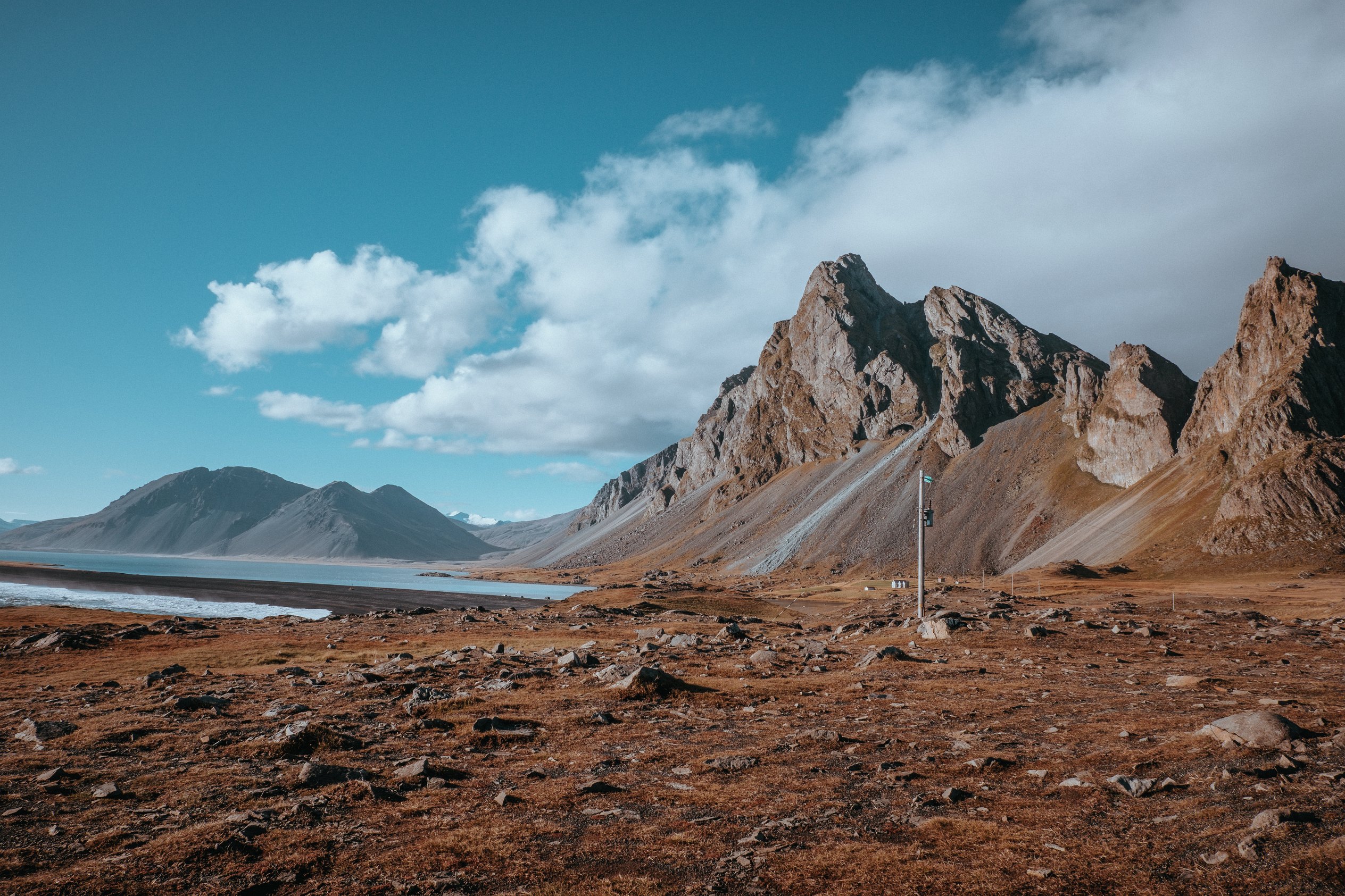
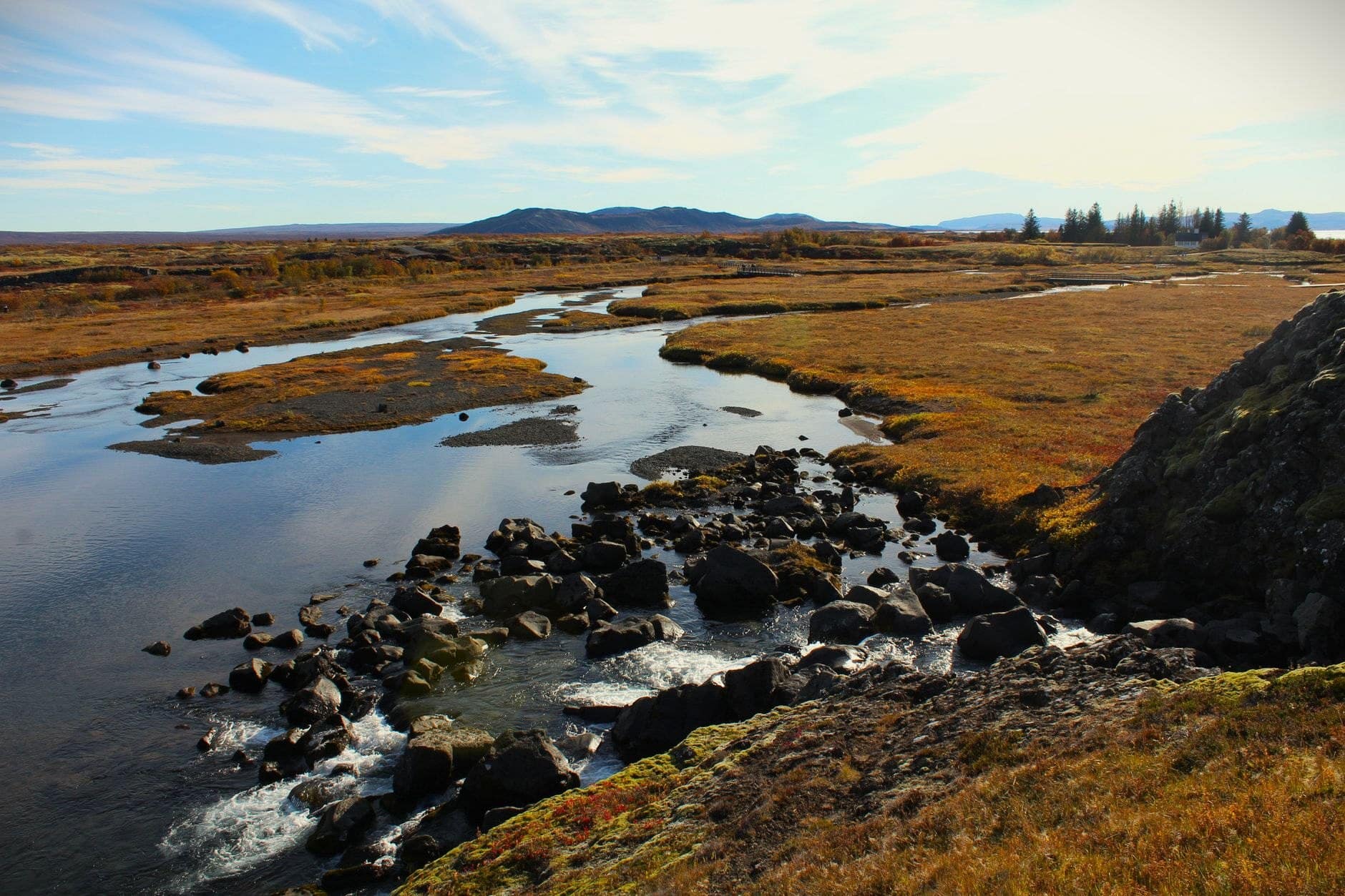
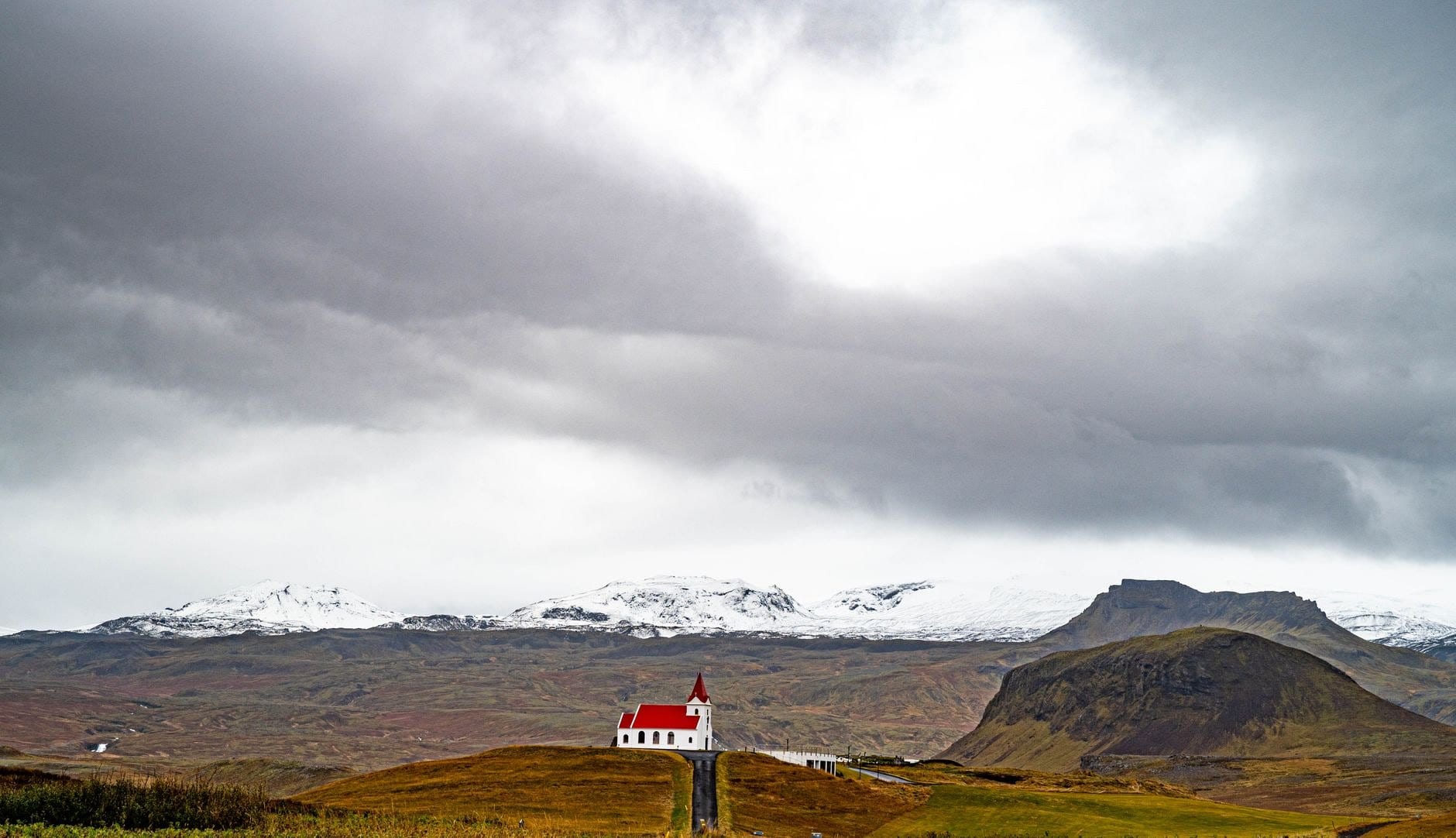
The dramatic Eystrahorn mountain rising above the autumn tundra in southeast Iceland
TL;DR
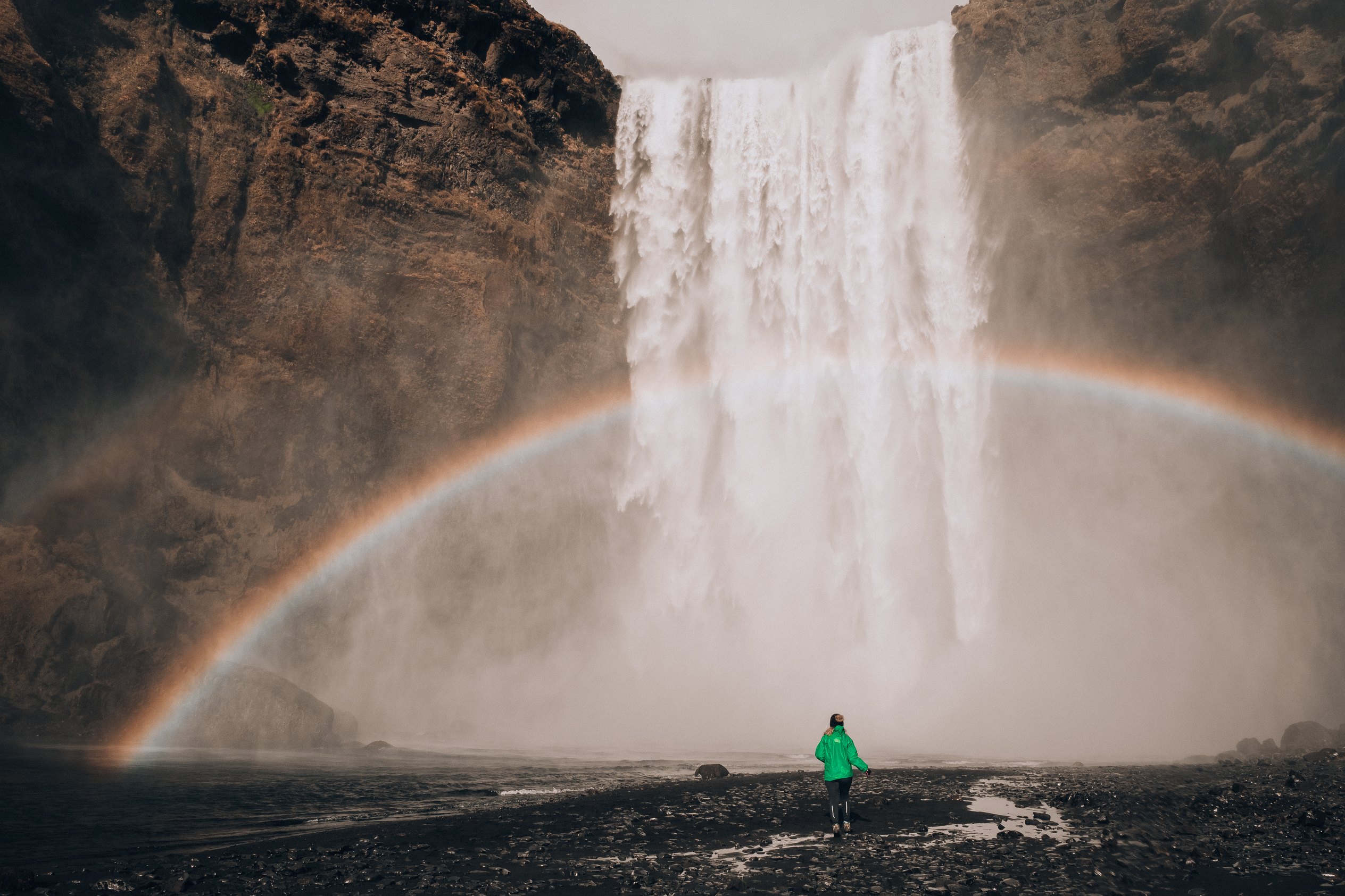
Skógafoss waterfall with a rainbow on a sunny day
Best time for waterfalls and treks: June to August offers the most pleasant climate, endless midnight sun, and the only window to reach the raw interior (the Highlands) with a 4×4.
When to go for wildlife: If you want to see the adorable puffins, the ideal window runs from late April to early August. For whales, head north to Húsavík, best in the summer months.
When to chase the Northern Lights: If you’re dreaming of the aurora, the season runs from late August to early April. Your very best chances are from November to February, when the darkness lasts longest.
Ice caves: The fascinating natural blue caves beneath the Vatnajökull glacier are only safely accessible during the freezing months, from mid-October to March.
Special event of summer 2026: On Wednesday 12 August 2026, western Iceland will experience a total solar eclipse. Accommodation in this area is already extremely expensive and sold out.
How to save money: From November to March (outside the holidays), accommodation and flight prices drop by 30 to 50%. A good compromise is the shoulder months of May and September, when there are fewer people but the days are still fairly long.
Getting to this northern island from the UK is very convenient, though your mode of transport will depend on which season you ultimately choose for your trip. The summer months are the absolute peak of the season, with direct flights from several UK airports getting you to the land of fire and ice in just over two hours.
Once the summer holidays are over, however, you’ll most likely have to settle for a flight with a connection, which is exactly what happened to us in autumn.
The most common options are Icelandair, easyJet and British Airways, with plenty of direct routes from London, Manchester and Edinburgh in season, and connecting flights through London or Copenhagen the rest of the year. Don’t worry about connections, they tend to be quick, and Keflavík International Airport is fairly small and incredibly easy to navigate.
People sometimes ask us whether flights are threatened by the volcanic activity on the Reykjanes Peninsula, which awoke in 2021. Rest assured, the current eruptions are what’s known as effusive, meaning lava flows out of the fissures but they don’t produce clouds of choking volcanic ash that would ground air traffic, as happened with the famous Eyjafjallajökull volcano back in 2010.
We regularly search for flights on Skyscanner and Kiwi, our favourite portals for easily comparing all the options. Price-wise, in the off-season you can land a return flight for roughly £90 to £180, while in summer you should budget around £270 to £500 for direct flights.
If you don’t fancy renting a car and facing the harsh weather, or you’re not keen on fording rivers in the interior, you can leave it to the professionals. There are plenty of well-organised guided tours from the UK that take you on summer treks in Landmannalaugar or winter aurora hunts, so you won’t have to worry about a single thing.
Where to stay and how much it all costs
The local currency is the Icelandic króna (ISK), and for quick reference, just remember that 1,000 ISK is roughly £5.80 (the rate hovers around 1 ISK = £0.0058). You can forget about exchanging wads of banknotes at a counter.
This is probably the most cashless country in the world, and even to use a public toilet in the middle of nowhere you simply pay by card or phone via Apple Pay and Google Pay. Just make sure you don’t forget your physical card and your PIN, because self-service N1 petrol stations and parking machines will strictly require them, and without those four digits they simply won’t let you proceed.
When planning your budget, bear in mind this isn’t exactly a cheap destination and prices vary dramatically by season. For a stay in an ordinary guesthouse for two with a private bathroom, you’ll commonly pay around £120 to £170 per night in the high summer season, even more in Reykjavík, while from November to March prices easily drop by 30 to 50 percent.
Accommodation in more remote areas tends to be limited, so if you’re planning a summer roadtrip around the whole island along Route 1, you’ll need to book your rooms many months in advance. Booking.com is our favourite hotel search engine, and we warmly recommend booking options with free cancellation.
On top of that, from 1 January 2026 a new per-kilometre tax has been introduced for all rental cars and SUVs up to 3.5 tonnes. The fee is 6.95 ISK per kilometre driven (roughly £0.04), so a week-long roadtrip will set you back an extra £100 to £150 in state charges alone.
Most rental companies handle this either by charging a daily flat rate of around 1,390 to 1,550 ISK, or by settling up exactly when you hand back the keys. The good news is that fuel has become a little cheaper in return, since the state simultaneously scrapped the original fuel tax.
💡 Specific accommodation tips (check prices and availability via Booking, and book early — in season and around the 2026 eclipse, rooms vanish months ahead):
Spring and summer: 5 reasons to chase the sun and greenery
If you’re weighing up the ideal date for your very first visit to Iceland, the spring and summer months from late May to early August are the safest and most comfortable choice. Nature wakes up after the long winter, the mossy fields turn a beautiful green, and you won’t have to deal with frozen roads or unexpected snowstorms that could overturn your painstakingly planned itinerary overnight.
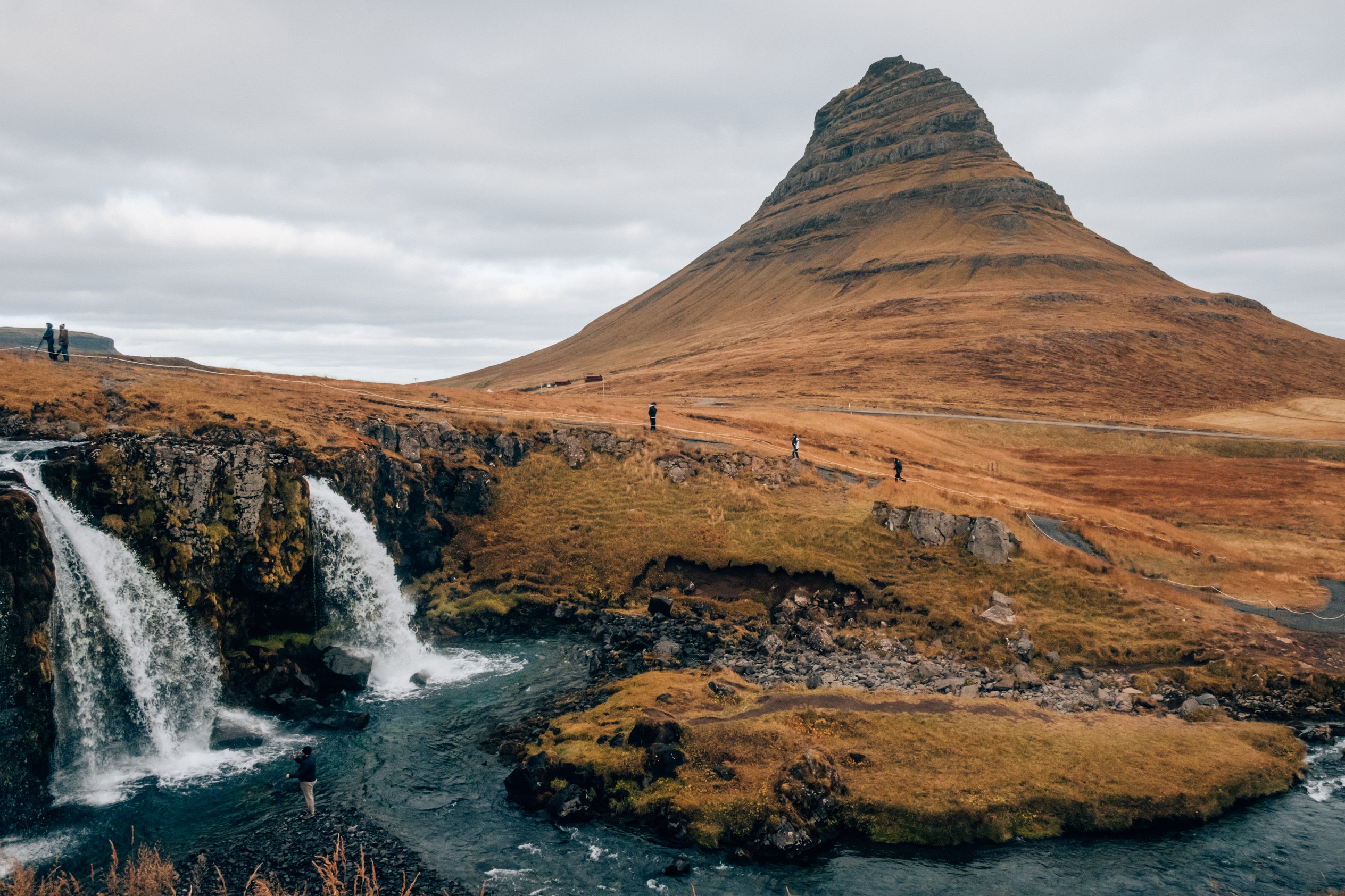
Kirkjufell mountain and Kirkjufellsfoss waterfall in autumn colours
Let’s take a look at what you can experience during this fragrant season.
1. The midnight sun and endless days
The biggest phenomenon of summer is undoubtedly the midnight sun, which peaks around the summer solstice on 21 June. At that time, the sun in Reykjavík doesn’t set until four minutes past midnight and rises again less than three hours later. In practice, it never really gets dark at all.
The midnight sun and endless days
The sky takes on gorgeous orange and pink hues, it just dims slightly, and you have an incredible 21 hours of daylight to explore all the natural wonders. In the north of the island, around Akureyri, this phenomenon is even more extreme.
This gives you a huge tactical advantage when building your itinerary and lets you experience some truly magical moments. You can calmly head to the most famous spots, like the mighty Skógafoss waterfall, at midnight if you like. That way you completely dodge the enormous crowds and capture absolutely breathtaking photos without a single stranger in the frame.
We’d love to enjoy that kind of freedom ourselves, because honestly we hate the crush at viewpoints, and summer afternoons in the south of the island really are packed with tour buses.
There’s one small but very practical catch you mustn’t underestimate, though. Don’t forget to pack a really good sleep mask. Plenty of small family guesthouses and farmhouses simply don’t have perfect blackout curtains, and if you’re not used to sleeping in full daylight, your body clock will take a serious hit on the very first night.
2. Watching adorable puffins and giant whales
Animal lovers are in for an absolute feast during the summer months, and we were utterly enchanted by the local fauna. From late April to mid-August the island becomes a temporary home to millions of puffins that fly in from the ocean to nest.
Watching adorable puffins and giant whales
You’ll find these adorable black-and-white birds with their brightly coloured beaks, affectionately nicknamed sea parrots, mainly on the towering Látrabjarg cliffs in the wild Westfjords, where they tend to be very tame and easy to photograph up close. For huge colonies you can also head to Borgarfjörður eystri in the east or the Vestmannaeyjar islands, where up to a million pairs reportedly nest.
The ideal time to spot them is the absolute height of summer, namely June and July. From our own experience, though, we know that access can sometimes be restricted at sites where these little birds nest, due to strict protection. Especially around the popular sea arch and Dyrhólaey cliff in the south, the trail may be completely closed in May and June so as not to disturb the nesting pairs, so always respect the marked ropes and barriers.
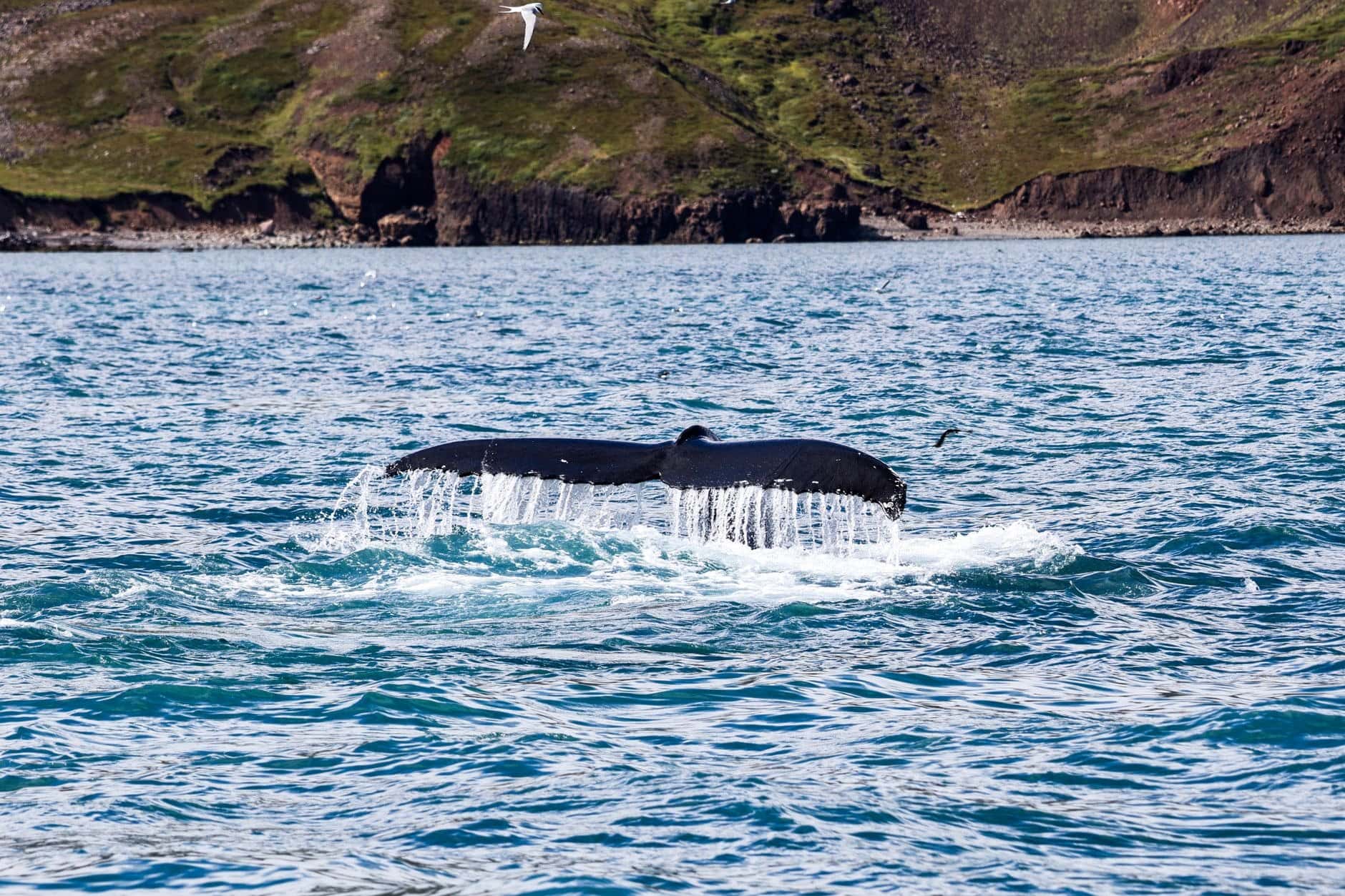
Summer is also the very best season for whale watching. Although tour boats leave the harbour in Reykjavík all year round, your best chance of success is from April to early October. If you want near-total certainty (boats here officially report success rates of a stellar 98 to 99 percent), head north to the charming little town of Húsavík.
This is known as the whale-watching capital of Europe, and in June and July even magnificent blue whales appear in these waters, which must be a once-in-a-lifetime experience.
3. The open interior and the rainbow mountains of Landmannalaugar
While the famous Route 1 (known as the Ring Road) that circles the entire island is fairly reliably passable year-round, the wild Icelandic interior, or Highlands, is sealed off in winter beneath many metres of heavy snow. Only depending on the speed of the spring thaw, usually between mid and late June, do the so-called mountain F-roads finally open.
The open interior and the rainbow mountains of Landmannalaugar
These rough, dusty roads legally require a 4×4 vehicle, and we warmly recommend reading up in advance on the rules for fording rivers.
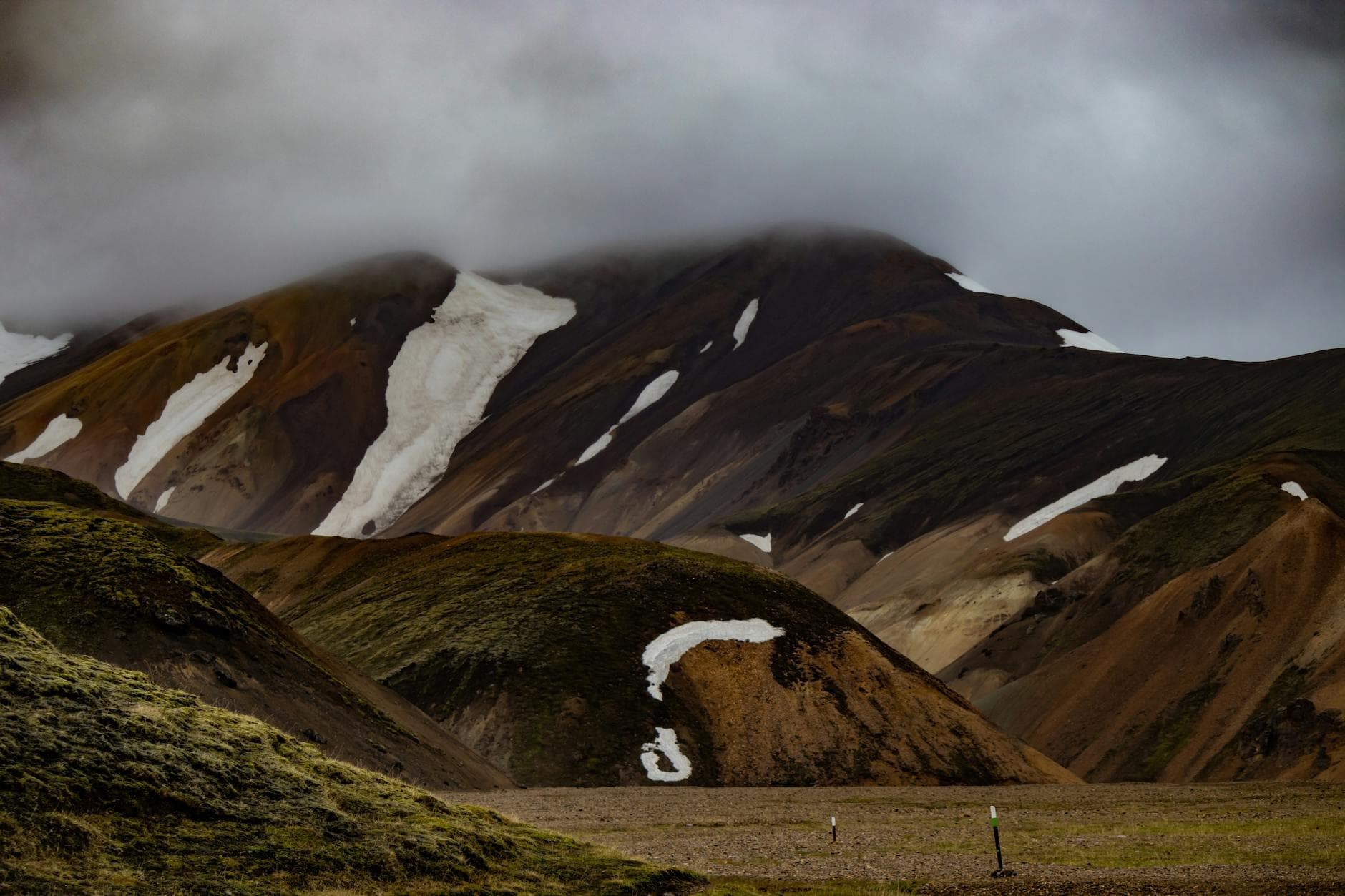
Venturing here is absolutely worth every extra pound, though. It opens up a world of raw, deserted wilderness that looks like another planet. Probably the most famous destination is the rainbow mountains of Landmannalaugar, which dazzle with seemingly every imaginable colour, from bright yellow through green to deep red, thanks to the high rhyolite content in the rock.
The roads into the Askja volcanic wilderness usually don’t open until the first or second week of July.
If you love hiking and have decent fitness, the famous Laugavegur trek also opens here in the summer months. It stretches an impressive 55 kilometres, leading from Landmannalaugar to the green valley of Þórsmörk, and is generally walked only in the short window from late June to early September.
Bear in mind, though, that beds in the mountain huts managed by the Ferðafélag Íslands association tend to be hopelessly sold out many months in advance. When we toured the island in autumn, we were gutted that the roads into the interior were already slowly filling with snow and we had to skip this other world entirely.
4. Descending right into the throat of the Þríhnúkagígur volcano
If you’re after an absolute world-first, summer offers an experience you won’t find just anywhere. In Iceland you have the unique chance to descend in a special open lift, reminiscent of a skyscraper window-cleaner’s platform, a full 198 metres down into the magma chamber of the dormant Þríhnúkagígur volcano.
Descending right into the throat of the Þríhnúkagígur volcano
This exclusive experience, called Inside the Volcano, runs only within a set window from 5 May to 30 October, when safety and weather conditions allow. Down below, an enormous underground dome awaits, glowing with every colour from purple through yellow to deep red, all thanks to minerals baked by extreme heat thousands of years ago.
We have to honestly warn you, though, that this is a very pricey bit of fun that will give your travel budget a serious airing. Prices for this roughly half-day trip start at around 300 US dollars per person.
Even so, slots in the high summer season fill up extremely quickly, so if you dream of this unique descent, definitely don’t leave your booking until the last minute.
5. The extreme solar eclipse of August 2026
If you’re planning a trip for summer 2026, you absolutely need to know about one huge event that will affect the entire island. On Wednesday 12 August 2026, western Iceland will be struck by a total solar eclipse.
The extreme solar eclipse of August 2026
This is the first such astronomical event in the country since 1954, and the next one won’t come until 2196. The path of totality will pass directly across the remote Westfjords, the magical Snæfellsnes Peninsula, Reykjavík itself, and the Reykjanes Peninsula.
This unique event has caused absolute logistical chaos on the island. People flocking in from all over the world snapped up the accommodation in the path of totality often as early as the start of 2025.
Prices for the last remaining rooms are hitting unbelievable extremes, and it’s no exception at all to come across an ordinary older guesthouse in the town of Ísafjörður charging up to 700 US dollars a night. Snæfellsnes Peninsula is even preparing a huge festival.
The experience will certainly be incredible. In the fjord by the Látrabjarg cliffs, complete darkness will last more than two minutes, and in Reykjavík the sun will disappear around 17:48 for roughly a minute. Historical data shows, however, that August in Iceland is 70 to 80 percent overcast, so it’s a rather expensive lottery with the clouds.
For precise details on the best locations, check out the official website eclipse2026.is. If the eclipse isn’t your primary goal, we honestly recommend giving the western part of the island a very wide berth in mid-August 2026 and heading east instead, where the price situation will be a touch more bearable.
Autumn and winter: 5 experiences that will keep you up at night
A winter holiday near the Arctic Circle might sound a little crazy, but trust us, it has its own utterly indescribable charm. The winter and autumn months from late September to April will force you to slow right down.
Whereas in a summer itinerary you can race the car around and tick off five waterfalls in a day, winter shows its harsh face and you have to choose much more carefully what you can actually cover in those few precious hours of daylight.
1. Hunting the magical Northern Lights
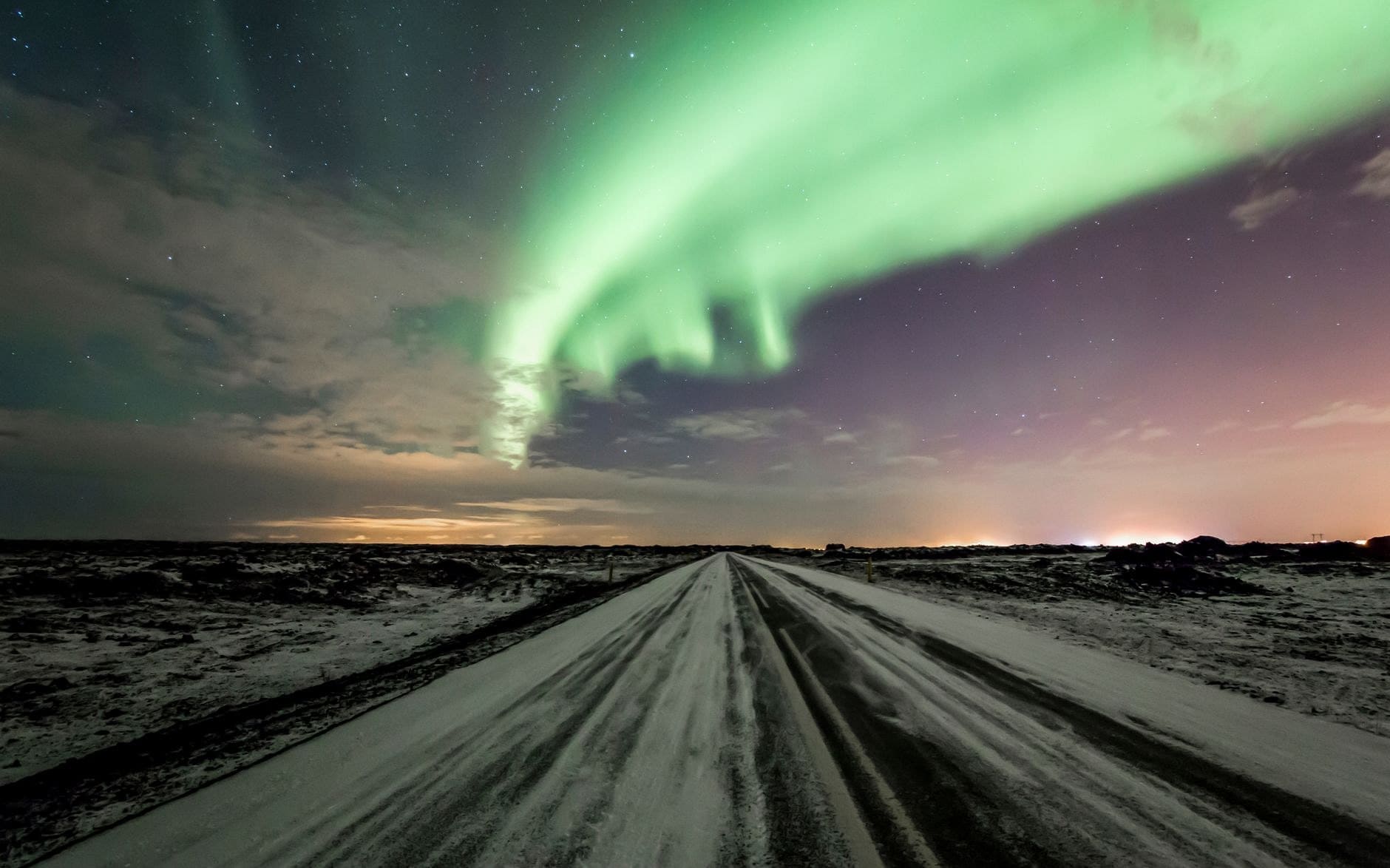
People often ask us on Instagram which month they should go in to capture the best photos of the Northern Lights, or Aurora Borealis. The answer is surprisingly simple: what you need is as much darkness as possible. The season officially begins in late August and lasts roughly until early April.
Northern Lights over the silhouette of hills in the Westfjords of IcelandHunting the magical Northern Lights
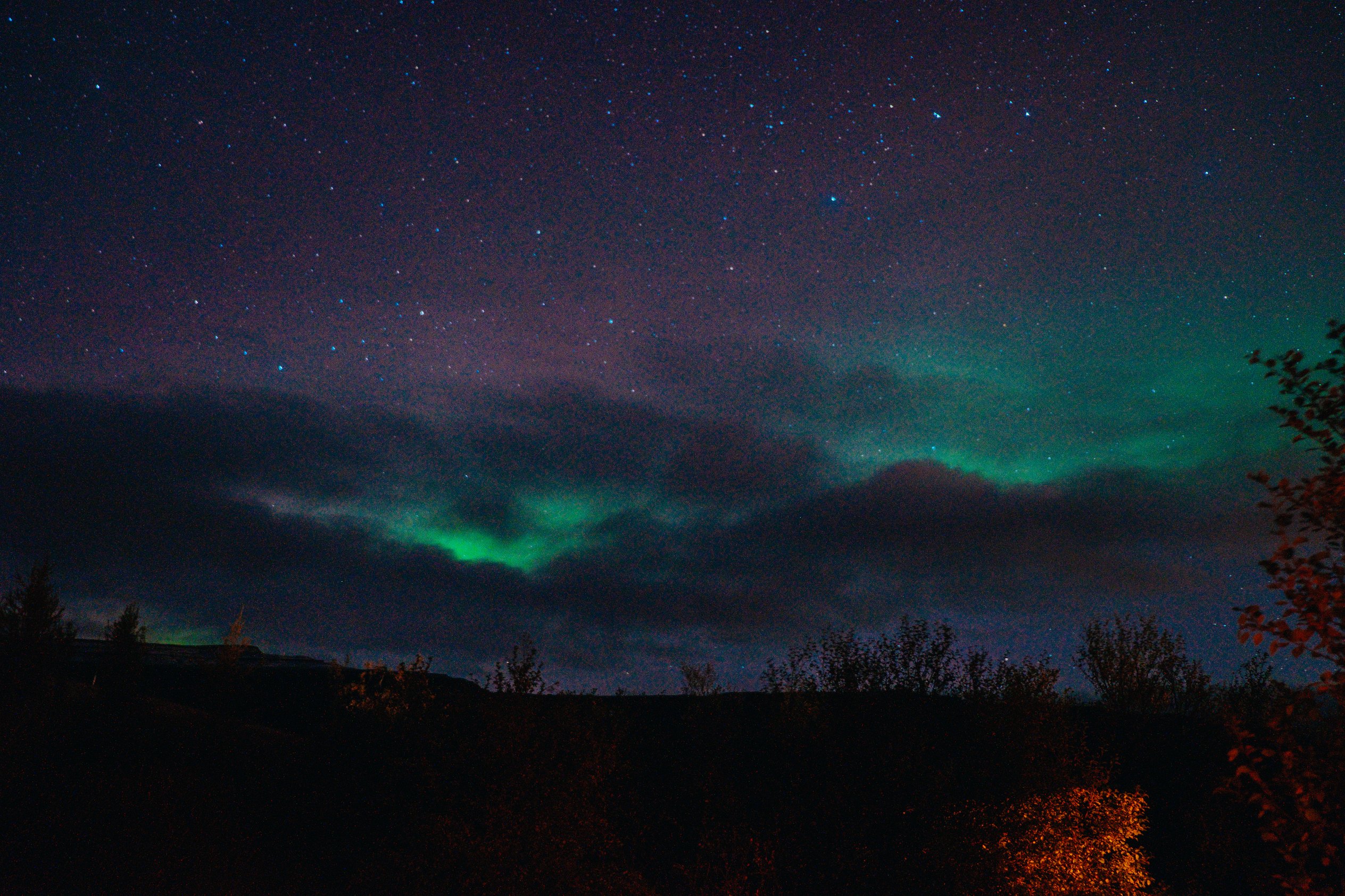
The best conditions are from November to February, when the sun is above the horizon for only a very short time and darkness rules the landscape. We saw the aurora ourselves in the Westfjords, and that feeling, when green ribbons start dancing overhead and you’re standing in the freezing cold in the middle of the wilderness, simply can’t be compared to anything.
For a successful hunt you need three basic things: complete darkness, clear skies, and the sun’s geomagnetic activity (the so-called KP index, measured on a scale from zero to nine). 2026 is especially favourable for hunters, as we’re at the peak of the so-called Solar Cycle 25, which brings the strongest auroras in over a decade.
It’s the cloud cover that tends to be the biggest stumbling block of all, though. So always check the official weather website en.vedur.is in the Aurora tab, where on the cloud map white means clear skies and green shows those pesky clouds.
Don’t be put off at all when the KP index shows only a 2 or 3. Even at these relatively lower values the show in the sky can be absolutely fantastic, provided you’re far enough from the light pollution of the big cities.
If you want to photograph the aurora, holding your phone in your hand usually won’t cut it. You definitely need a tripod, set the ISO to 1600–3200, open the aperture all the way (for example f/2.8), and stretch the shutter speed to 5–15 seconds with manual focus set to infinity.
💡 Tip: Tickets and organised excursions (in Iceland and around) are worth booking ahead online with GetYourGuide, as they fill up fast in season.
2. Exploring the stunning ice caves
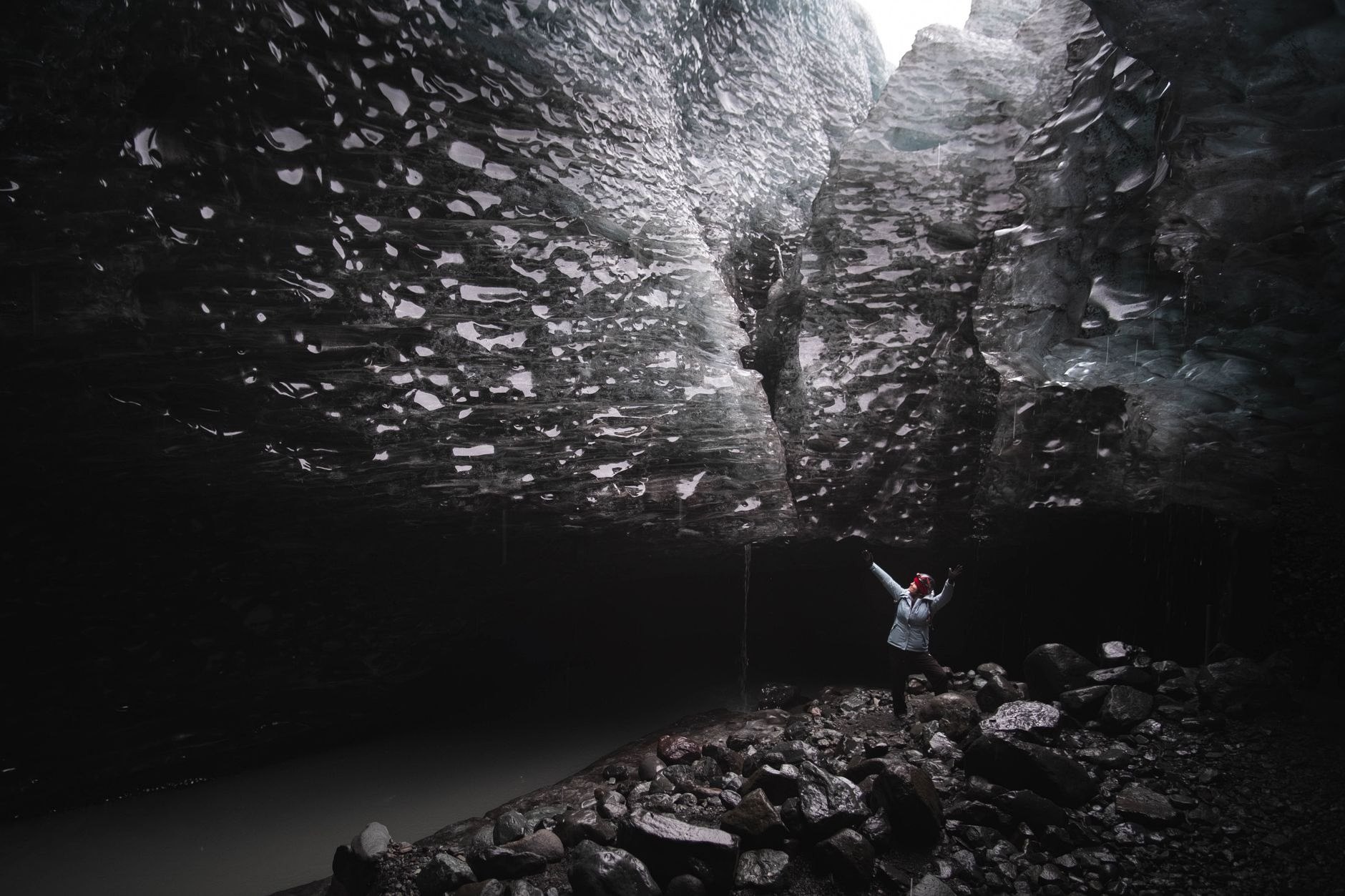
The second biggest magnet of the harsh Icelandic winter is the amazing natural ice caves, known worldwide as Ice Caves. They form entirely naturally through summer melting followed by the refreezing of water beneath the massive Vatnajökull glacier in the southeast of the island. Those enormous, translucent, crystal-blue tunnels near the Jökulsárlón lagoon or in Skaftafell National Park are only safely accessible during the genuinely freezing months, specifically from mid-October to March.
Exploring the stunning ice caves
For safety reasons, you can only enter them with a certified guide, who carries the necessary equipment, hands out crampons and helmets, and crucially knows the current state of the glacier inside out. These mighty ice structures are constantly changing, shifting, and occasionally even collapsing.
The one exception to this winter rule is the slightly darker cave beneath the Katla glacier near the town of Vík, which is accessible more or less year-round, but the biggest translucent beauties simply require a proper, bone-chilling winter frost.
3. The treacherous winter beaches and waves at Reynisfjara
Iceland’s winter coastline is wild and incredibly photogenic, but it can also be deadly dangerous. This applies above all to the famous Reynisfjara beach near Vík, with its iconic black sand and basalt columns, lashed by icy winds in winter.
Black basalt boulders on the pale sandy Reynisfjara beach
This is exactly where the so-called sneaker waves, or treacherous waves, regularly occur. At first the sea seems fairly calm and you happily snap photos, but out of nowhere comes a huge wave that surges tens of metres further up the beach than the previous ones.
These waves have enormous power, easily sweep your feet out from under you, and a strong undertow drags you mercilessly into the icy ocean, from which there’s practically no return thanks to heavy winter clothing. Over the past twenty years, several inattentive tourists have lost their lives here this way.
There’s now a large warning traffic light on the beach, and we sincerely beg you to respect it. If it shows yellow or red, keep a respectful distance of at least 30 metres from the water, and remember the locals’ golden rule: never turn your back on the wild ocean, not even for the most beautiful Instagram shot.
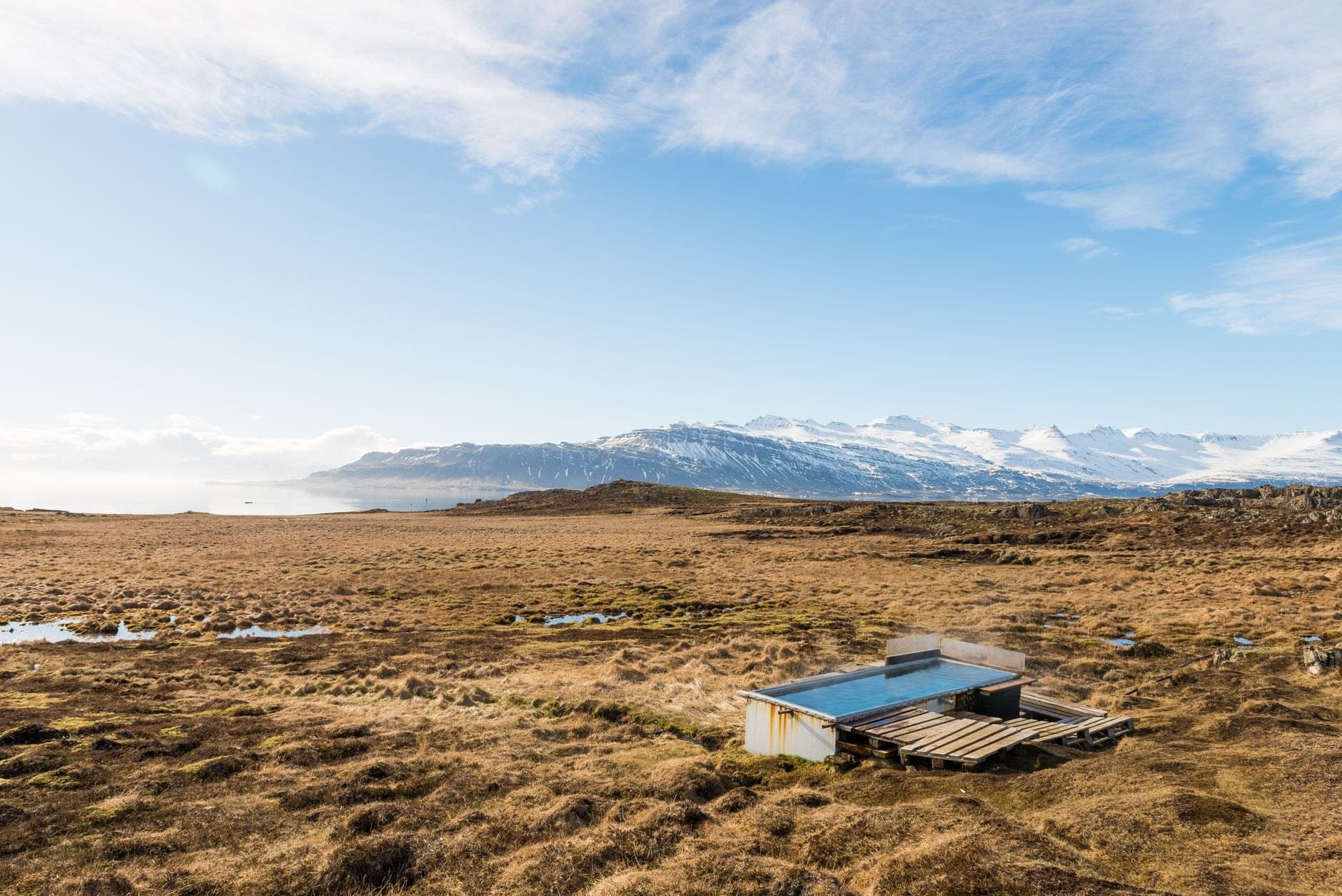
Warming up in hot geothermal water while snowflakes settle on your hat is one of our absolute favourite winter experiences. Open-air bathing is done here all year round, but only in winter does it have that truly magical contrast.
Hot springs with a view of the snow
You can of course head to the famous Blue Lagoon near the airport (which, incidentally, has an excellently managed evacuation plan in case of a volcanic eruption on the nearby Reykjanes Peninsula), or try the architecturally gorgeous, modern Sky Lagoon right in Reykjavík with its luxurious seven-step cleansing ritual.
If you’re heading north in 2026 towards the volcanic lake Mývatn, however, you need to know about one major change. The old and beloved Mývatn Nature Baths closed completely on 1 January 2026 for a huge renovation. Reopening under a new modern name, Earth Lagoon, is planned for roughly the turn of June and July 2026.
Until then, there’s no need to despair, because in the north you can warm up beautifully in the excellent Forest Lagoon near the town of Akureyri, or in the breathtaking GeoSea pools in Húsavík with a view straight out over the open ocean.
5. Autumn colours and the shoulder season
The transitional period, the so-called shoulder season at the turn of September and October, is exactly when Lukáš and I were here. From a nature point of view it was incredibly photogenic. The endless lava fields covered in that typical coarse moss turned gorgeous deep yellow shades, contrasting perfectly with the grey sky and the dark blue ocean in the background.
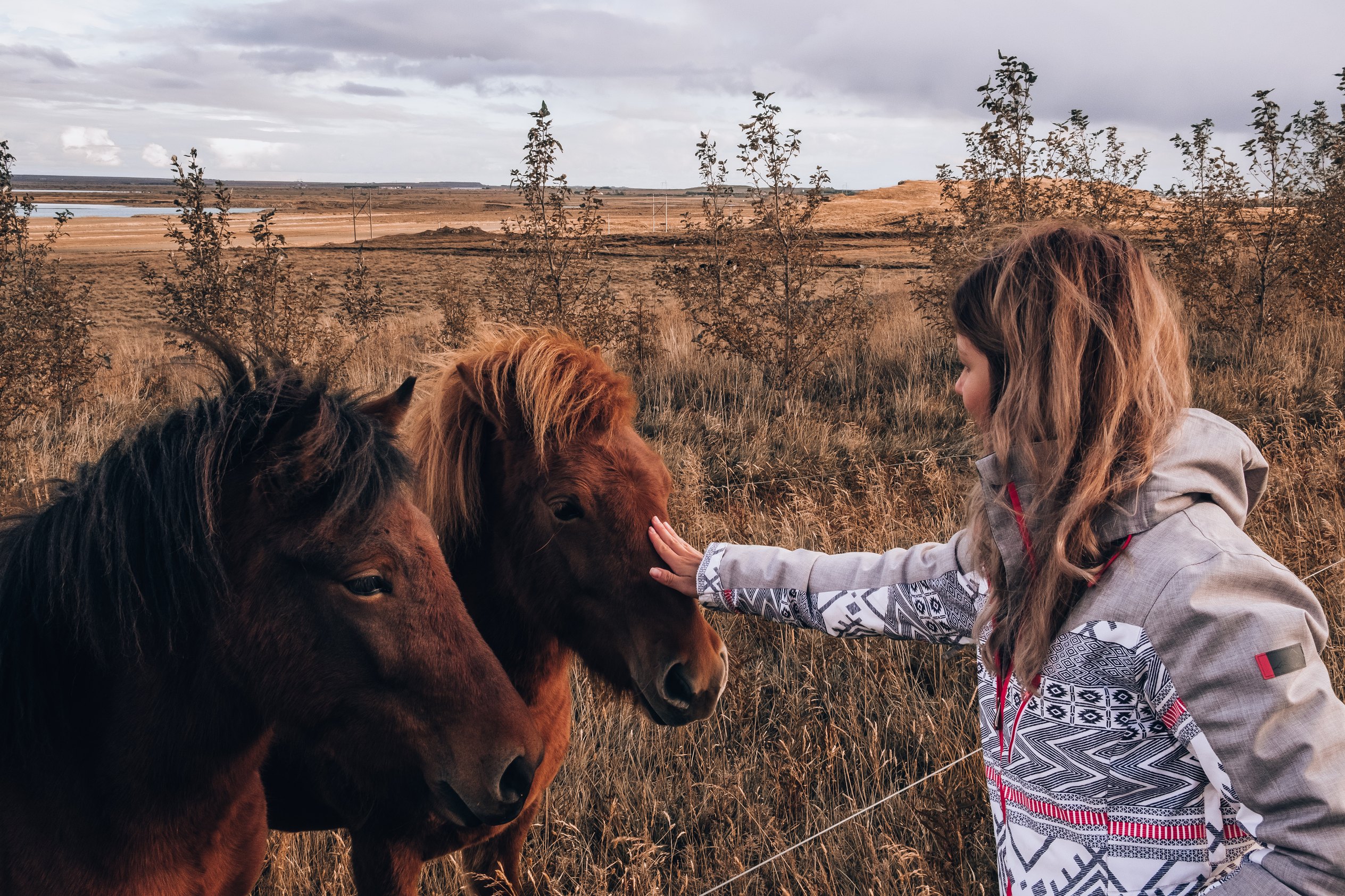
Icelandic horses on an autumn plainAutumn colours and the shoulder season
What’s more, we hugely appreciated that the crowds had thinned out dramatically. We weren’t jostling on the narrow viewing paths, guesthouse prices were noticeably friendlier than in jam-packed July, and at the famous waterfalls you could park completely stress-free.
September is also the month when, usually in the first half, you can still make a last-minute dash into the interior before the roads are sealed off by snow for many long months.
On the other hand, you need to know that October already brings sharp autumn winds and very heavy rain. From around the 1st of October, many smaller services outside the big towns, the little toilets near more remote sights, and the charming countryside bistros shut up shop without mercy, with a sign saying they’ll see you again in April, come spring.
You simply have to factor this in ahead of time and, to be safe, always carry a decent stash of snacks bought in town.
Weather month by month: what to expect
Although scary tales of Arctic frost do the rounds, thanks to the strong influence of the warm Gulf Stream, Icelandic winters are surprisingly mild and summers, by contrast, cooler. In the capital Reykjavík, the average temperature rarely drops far below freezing.
The real and unpredictable enemy here isn’t the mercury in the thermometer, but the constantly changing conditions and the extremely strong wind, which works absolute wonders on the wind-chill. Let’s break the year down in detail, step by step.
1. January to March (winter in full force)
The start of the year is marked by cold, long dark nights, and wild, unpredictable weather. In January, average temperatures in the capital hover just around zero, usually between -2 and +2 degrees Celsius.
January to March (winter in full force)
The sun peeks out for just a sad five hours or so a day, and statistically this is the windiest month of the entire year. Roads are commonly and dangerously covered in ice and drifting snow, so a 4×4 vehicle is an absolute necessity for your safety.
February (with temperatures of -2 to +3 degrees) and March slowly start adding precious daylight. By March the sun shines for a fantastic 11 hours or so, giving you far more room to manoeuvre when exploring the waterfalls in the south of the island.
These are absolutely ideal months for exploring the blue ice caves by day and hunting the Northern Lights in the evenings. A big bonus is the cost, because aside from the holidays, the winter months are generally the cheapest time of all, when you can easily save 30 to 50 percent on flights and accommodation compared with the high summer season.
2. April and May (the awakening and the puffins)
April and May mark the great spring awakening. The days suddenly grow rapidly longer, and in May you’ll enjoy a luxurious 18 hours of daylight.
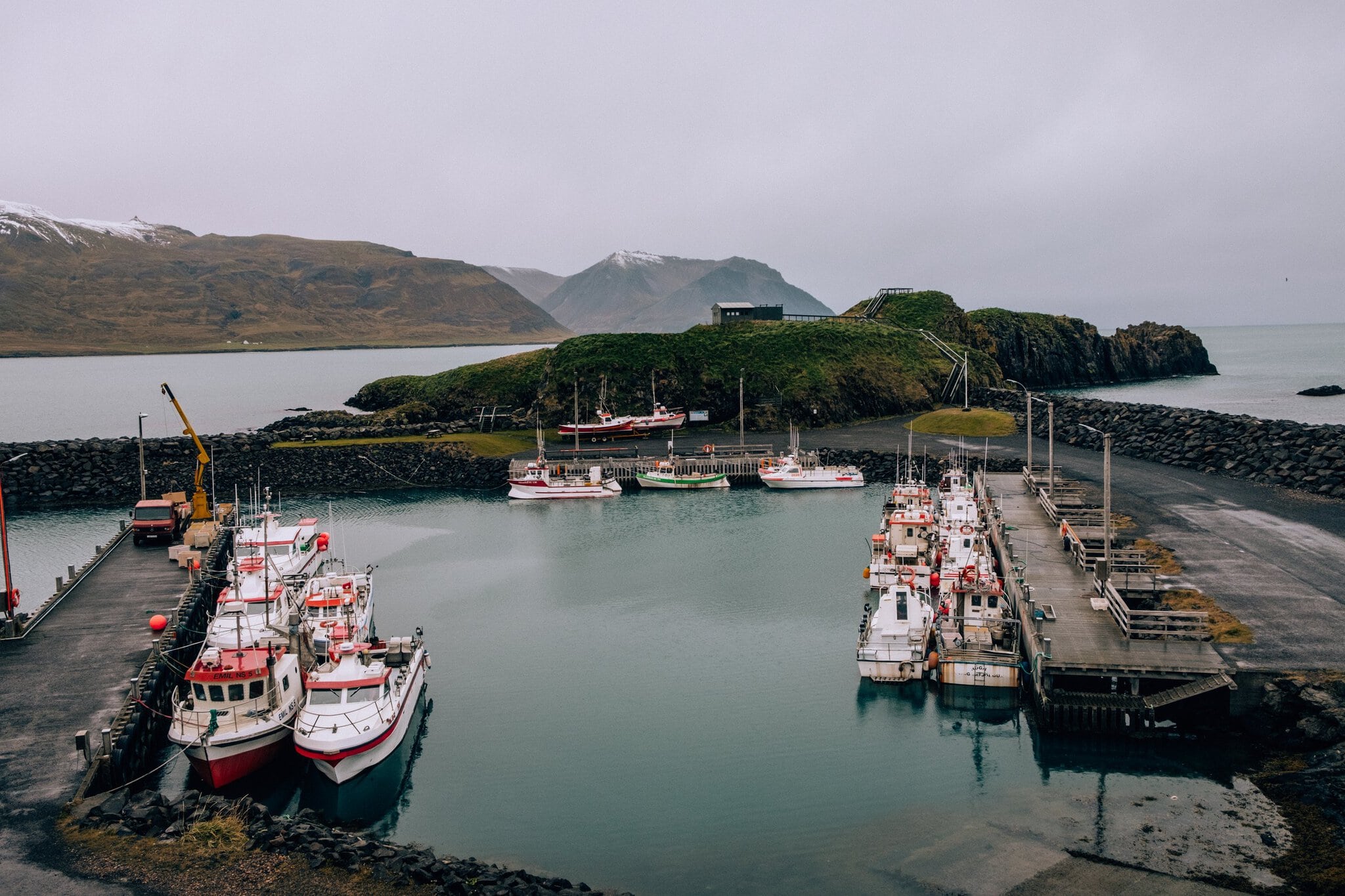
Borgarfjörður eystri harbour with fishing boats and a rocky island
Temperatures slowly climb to more pleasant values, usually measuring between 4 and 9 degrees Celsius. May is also statistically one of the driest months in Iceland, which in such a rainy place we count as a huge plus, with no small relief.
In these months nature finally returns to life and the beloved flocks of puffins start arriving on the island en masse. The roads along the southern and northern coasts tend to be clear and easily passable without much stress, but the interior is still firmly gripped by snow and the mountain F-roads remain firmly closed.
It’s simply a great spring compromise, when you can enjoy beautiful awakening nature and whales in the bays, all completely without the jostling crowds of the summer holidays.
3. June to August (the high season)
These are by far the most popular months of the whole year. In June, rainfall drops to its annual minimum, and in July the wind is finally at its calmest of the year.
June to August (the high season)
Temperatures during the day climb to a spring-like 9 to 13 degrees Celsius, and even though that doesn’t sound like much, in direct sunshine somewhere sheltered behind a rock you can quite happily sunbathe in a short-sleeved T-shirt. The magical midnight sun draws tens of thousands of visitors, and at the end of June the longed-for dusty roads to the Askja volcano and to colourful Landmannalaugar finally open.
In July the island is at the absolute peak of the summer tourist rush. Well-known sites in the south, like the beautiful Skógafoss waterfall or the Jökulsárlón glacier lagoon, are literally bursting at the seams under the onslaught of tour buses.
August is then marked by the departure of the puffins back out to the ocean (usually around mid-month) and the gradual shortening of the long days, while rainfall slowly starts to increase. So always book your rental car and all your hotel rooms many months in advance for the summer months, especially around the 2026 eclipse.
4. September to December (from colourful autumn to darkness)
September is immensely beautiful, but a little treacherous. Nature takes on gorgeous golden colours, the crowds thin out, and the green aurora returns to the sky with the longer nights, but according to the statistics it’s the single rainiest month of all.
September to December (from colourful autumn to darkness)
October (when temperatures range from 2 to 7 degrees) is a genuine lottery. Strong autumn storms often blow in from the ocean, along with wind so powerful it can literally rip the door off your rental car if you’re not careful. Most services outside the big towns also close their gates.
November and December are months mainly for the hardier adventurers. In December, around the winter solstice, it doesn’t get light until just before noon and the sun stays above the horizon for a meagre 4 hours, while temperatures constantly teeter around freezing.
In return, though, you can experience the incredibly magical pre-Christmas atmosphere in the streets of Reykjavík, warm up for hours on end in the hot springs without a shred of guilt, and every single evening, mug of tea in hand, watch the green aurora dancing over the snow-capped mountain peaks.
What to pack for the Icelandic wind and cold
There’s a lovely and one hundred percent true local saying that here, you can experience all four seasons during lunch. In the morning we set off from the guesthouse bathed in sunshine in just a light hoodie, at noon a strong horizontal rain caught us on a cliff, in the afternoon huge hailstones began to fall, and in the evening the aurora lit up a starry sky.
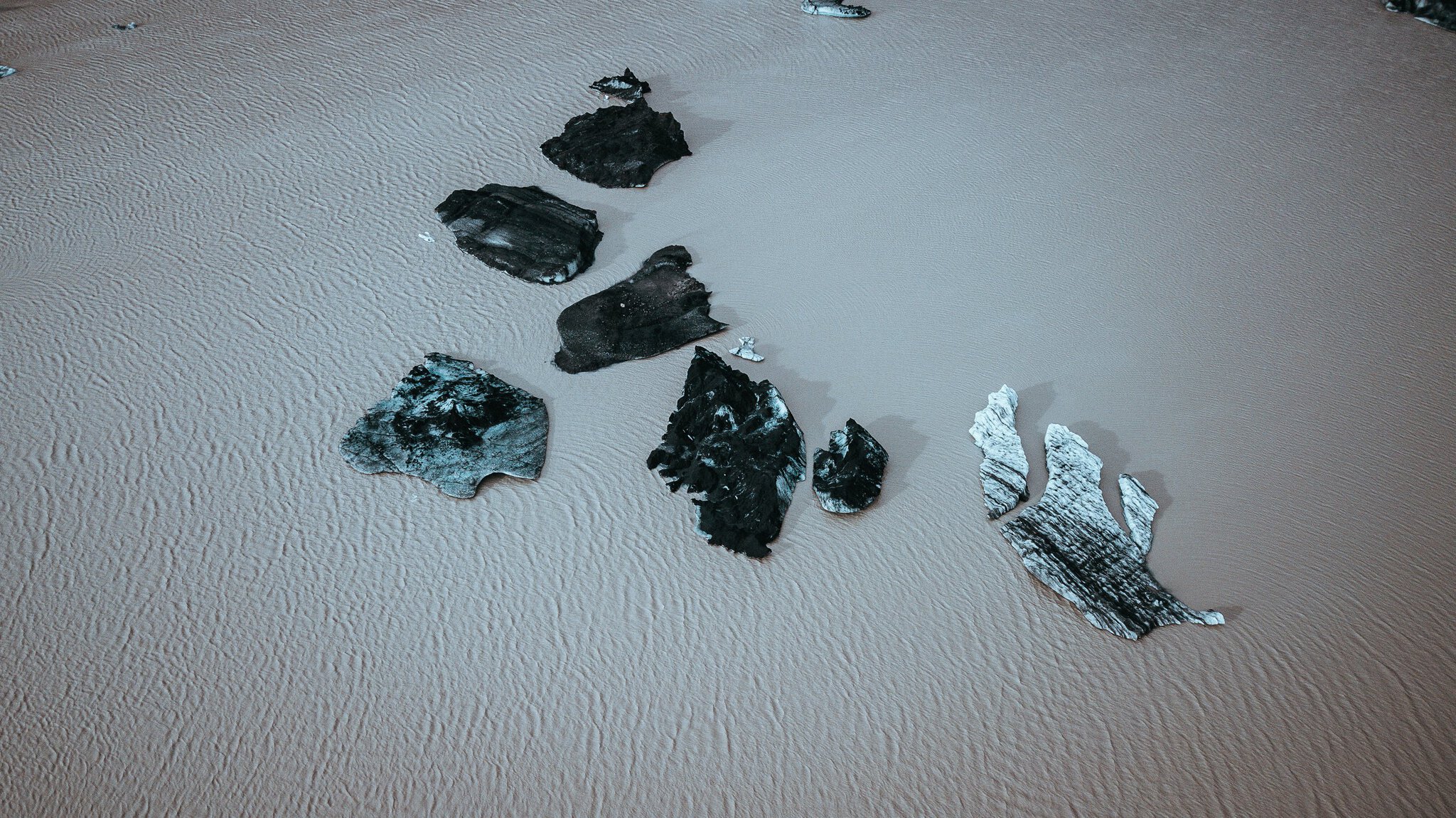
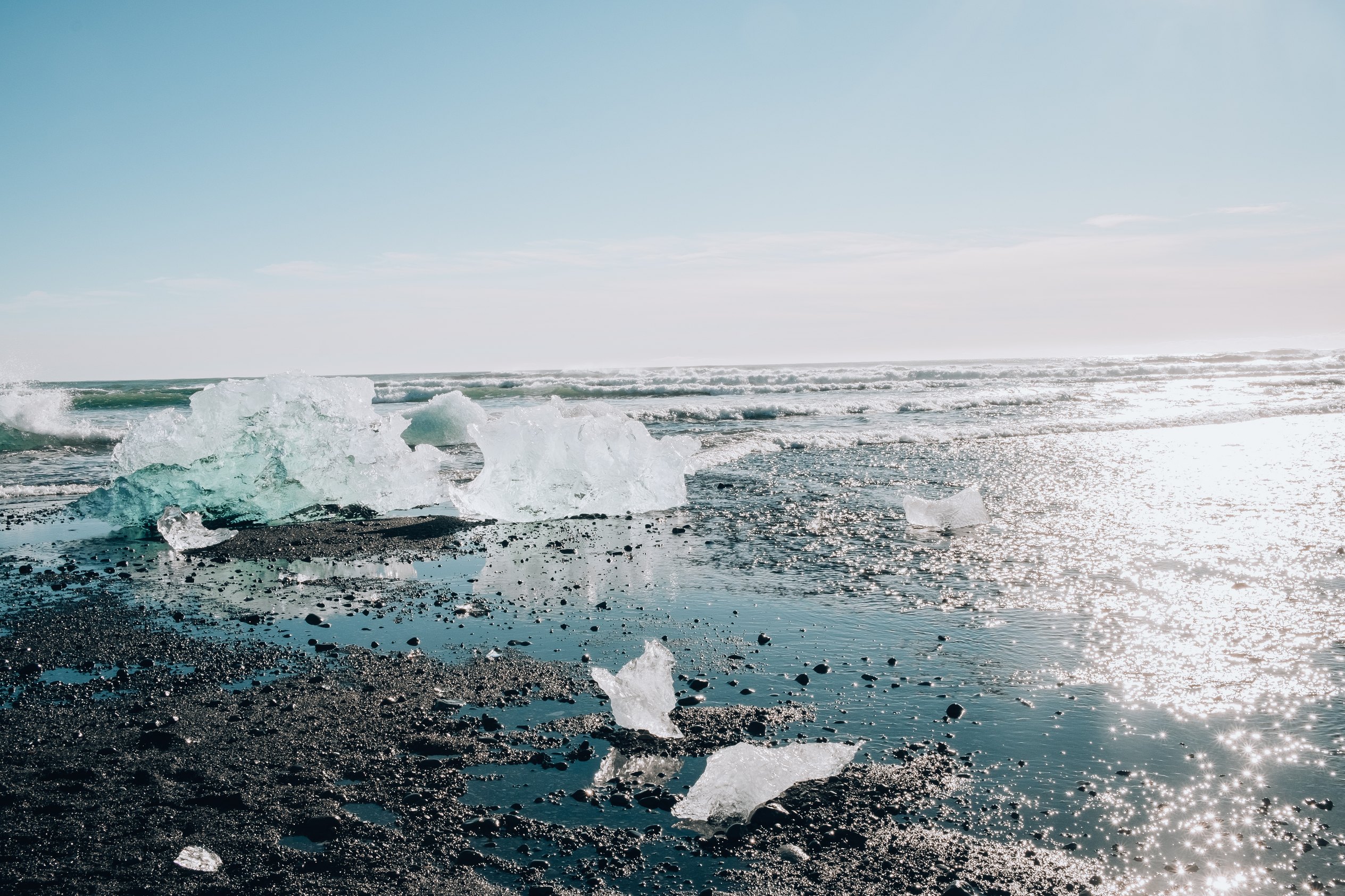
Chunks of ice on the black Diamond Beach in winter
The key to survival and good spirits is quite simply smart, sensible packing.
1. Layering is absolutely essential
The number one basic rule is dressing in multiple layers. You can leave your classic jeans at home in the wardrobe with a clear conscience, because once they get soaked in the Icelandic wind, they probably won’t dry out until you’ve landed back home.
Layering is absolutely essential
For your first base layer, always go for quality merino wool thermals, which wick away sweat brilliantly and keep you wonderfully warm even when slightly damp from the effort of a trek. On top of that comes a good insulating mid-layer, ideally a warm fleece or a thin, easily packable down jacket.
By far the most important item in your bag, though, is the outer layer. You absolutely need a completely waterproof and one hundred percent windproof jacket and quality trousers (this is where it pays to invest in a good Gore-Tex membrane). The Icelandic wind can very quickly lower the temperature you feel on your skin, and chills you far more than whatever the thermometer in the car shows.
A warm hat that covers your ears, waterproof gloves, and sturdy ankle-high hiking boots (which you mustn’t forget to treat properly with waterproofing before you fly) are a given in any weather. If you’re going in the winter months, definitely also pack good ice grips for the icy paths near the waterfalls and a powerful head torch.
Closely tied to this harsh and unpredictable weather is our strong recommendation about the rental car. The fierce wind here regularly lifts fine volcanic sand and sharp pebbles off the long plains, which within a few hours can literally strip the paint off the car down to bare metal and destroy the windscreen. We’ve had a long-standing good experience with the DiscoverCars search engine, which we use all over the world.
Definitely take out the special add-on insurances in Iceland: Gravel Protection (against flying gravel) and SAAP (against destructive ash and sand, where damage can otherwise climb to 500,000–1.5 million ISK, which is over £8,000). And remember, no insurance covers wrenched-off doors, so when it’s blowing on the car park, always hold them firmly with both hands as you get out.
2. Why to leave the umbrella at home and bring your swimsuit
It might seem obvious, but seriously, really don’t bring an umbrella in your suitcase. It’ll be utterly useless here, because the notorious Icelandic wind would turn it inside out and ruin it beyond repair within roughly five seconds of its ceremonial opening.
Why to leave the umbrella at home and bring your swimsuit
Instead of an umbrella, reach straight for a good rain jacket or a large poncho, which can be neatly thrown over a backpack full of camera gear too. In the summer months definitely pack the sleep mask mentioned earlier, and if you’re heading for Lake Mývatn, insect repellent against the annoying tiny midges comes in handy.
The thing you mustn’t forget at home under any circumstances whatsoever (and that holds even if you’re going in the middle of a dark January blizzard) is your swimsuit. Thermal baths are the absolute alpha and omega of the local culture, and warming up in hot water with a view of snow-white hills is the best relaxing feeling in the world after a demanding day in the car.
Bear in mind one crucial thing, though, namely the strict etiquette of the local pools (sundlaug). Before entering the hot water, you must always thoroughly wash with soap completely naked in the separate showers (and yes, that means a proper wash of your armpits, legs, and intimate areas). Icelanders deliberately don’t use as much chemical chlorine in the water and they take this strict hygiene incredibly seriously.
A quick shower with your swimsuit already on is considered a huge, rude faux pas here, often loudly criticised by the locals. Before each morning’s drive out of the hotel, don’t forget to check the current road conditions at umferdin.is and the safety wind warnings on the official rescue services websitesafetravel.is.
Where to eat in Iceland: a guide not just for vegetarians
The food in the island’s small cafés and restaurants is absolutely delicious, though you should be prepared in advance for it to reliably give your travel wallet an airing a touch more than similar places in the rest of Europe. Lukáš and I are both vegetarians, so a lot of the classic, celebrated fish restaurants on the coast passed us by completely on our roadtrip.
The locals love to offer traditional meaty specialities in the guidebooks, like fermented shark Hákarl (which these days is more of a pricey adrenaline-fuelled tourist attraction) or the warming lamb soup Kjötsúpa, which meat eaters rave about for its heartiness after a demanding, frosty day, but we always found something great and hot without meat here without any trouble.
Our absolute favourite during our travels around the south was the amazing tomato farm Friðheimar, cleverly located on the route of the popular Golden Circle, and we recommend booking a table. You sit right inside a warm, glowing greenhouse among hundreds of tall plants laden with ripe tomatoes, and they serve the best creamy tomato soup there with fresh homemade bread.
On top of that, it works on a brilliant “all you can eat” system, so for one fixed price you can keep ladling more until you’re about to burst, which after a cold, windswept morning at the geysers we appreciated enormously, polishing off about three bowls.
If hunger strikes in the afternoon in the small town of Selfoss while travelling along the south coast, we warmly recommend stopping at the wonderfully cosy family-run Kaffi Krús. You step into a little yellow house with a lovely atmosphere, where they make absolutely fantastic vegetarian pizzas in the oven with generous toppings and hearty pasta.
And if you wander the colourful streets of the capital Reykjavík, definitely stop for lunch at the lovely Kaffi Vínyl bistro or treat yourself to a luxurious veggie burger with a hefty portion of chips at the renowned hipster spot Block Burger. Surprisingly, the vegan scene works very well and naturally for us here, and at almost every larger petrol station (even the famous self-service N1 pumps) you can grab a decent hot vegan wrap or a fresh sandwich for the road without much searching. 😉
Where to go next
If you’re busy enthusiastically putting together plans for your island roadtrip, definitely check out our other articles full of detailed tips and specific routes that we’ve prepared for you on the blog.
Search with the DiscoverCars comparison engine — it compares prices from dozens of local and international rental companies, and most bookings come with free cancellation.
✓ DiscoverCars comparison✓ free cancellation on most bookings✓ no hidden fees
Frequently asked questions
When is the ideal time to go to Iceland?
It purely depends on what you actually want to experience from the trip. If you’re interested in pleasant warm months, dusty treks in the interior and endless days with the magical midnight sun, go from June to August. If you’d rather explore translucent ice caves in crampons and watch the green northern lights in the sky without crowds of tourists, choose the winter months from November to March instead.
When is the main tourist season in Iceland?
The absolute peak season on the island is in warm July and August. The weather during these months is typically the most pleasant and all roads, including the challenging mountain F-roads to Landmannalaugar and Askja, are fully open at this time. Logically, this is when the island attracts the most international tourists and prices for car rentals and guesthouses are at their absolute summer highs.
When can you see the Northern Lights in Iceland?
The northern lights season lasts, thanks to sufficient darkness, from late August until roughly the very beginning of April. However, the absolute best months for observing them are November through February, because the days are shortest and you have really long nighttime hours of dark sky to calmly see the aurora above you, endure the cold, and photograph it from a tripod.
What to watch out for in Iceland?
The biggest hidden danger for tourists is without a doubt the weather and extremely strong winds, which can tear off open car doors in the blink of an eye on your rental car. Be extra careful also at the famous Reynisfjara black sand beach near the town of Vík. There are so-called sneaker waves or very treacherous waves that look inconspicuous from a distance, but have enormous power and can easily pull you into the icy ocean if you don’t respect the warning signs and maintain at least 30 meters distance from the water.
Is a 4×4 vehicle necessary in winter?
Absolutely 100% yes and don’t compromise on this. From chilly November through March, roads off the main routes are very often icy and full of drifted, packed snow. Even for your own peace of mind behind the wheel, it’s incomparably better to have a stronger and higher vehicle. In the warm summer months, you can comfortably manage driving the paved Ring Road number one with a classic smaller car, but remember that for entering the interior on F-roads you need a 4×4 by law in any season.
What changes were introduced regarding fees in 2026?
From January 1, 2026, the Icelandic government introduced a so-called kilometer tax for all passenger vehicles and smaller SUVs. The fee is approximately 6.95 ISK per kilometer driven, which will be added on top of the regular daily rental price when you pay at the rental company. This amount is then handled by car rental companies either through a daily flat rate of around fifteen hundred ISK, or exact billing when you return the keys upon your return to the airport.
When can you see the adorable puffins?
Puffins, or colorful sea parrots, aren’t visible on Icelandic cliffs year-round, as they spend winter on the open ocean. They only come here for essential nesting roughly from late April to mid-August, with the absolute peak for photographing them being the months of June and July, when you have a chance to spot millions of these little beauties with fish in their beaks on the Látrabjarg cliffs and Vestmannaeyjar islands.
Tips and Tricks for Your Vacation
Don’t Overpay for Flights
Search for flights on Kayak. It’s our favorite search engine because it scans the websites of all airlines and always finds the cheapest connection.
Book Your Accommodation Smartly
The best experiences we’ve had when looking for accommodation (from Alaska to Morocco) are with Booking.com, where hotels, apartments, and entire houses are usually the cheapest and most widely available.
Don’t Forget Travel Insurance
Good travel insurance will protect you against illness, accidents, theft, or flight cancellations. We’ve had a few hospital visits abroad, so we know how important it is to have proper insurance arranged.
Where we insure ourselves: SafetyWing (best for everyone) and TrueTraveller (for extra-long trips).
Why don’t we recommend any Czech insurance company? Because they have too many restrictions. They set limits on the number of days abroad, travel insurance via a credit card often requires you to pay medical expenses only with that card, and they frequently limit the number of returns to the Czech Republic.
Find the Best Experiences
Get Your Guide is a huge online marketplace where you can book guided walks, trips, skip-the-line tickets, tours, and much more. We always find some extra fun there!
TL;DRWhen picking an all-inclusive resort in Cancún and along the Riviera Maya, choose your location by vibe and sargassum risk first, then narrow down to a specific hotel. Cancún‘s 22-kilometre Zona Hotelera is where the nightlife is, Playa Mujeres is a calmer alternative with hotels like Excellence Playa Mujeres, families do well at Hotel Xcaret Mexico or Hyatt Ziva Cancun, and Tulum is the pricier, boutique-style option. Sargassum seaweed is worst in Tulum, Akumal and Playa del Carmen, while Isla Mujeres and Playa Mujeres tend to stay clear — December to April is the best window. A decent all-inclusive runs $300–$500 for two nights, with luxury resorts going up to $800 a night.
You wake up to the gentle murmur of the Caribbean Sea, step barefoot onto your terrace where fresh coffee is already brewing, and before you stretches an endless white-sand beach as fine as flour.
You don’t have to worry about where to get breakfast, how to reach the beach, or how much that fabulous afternoon cocktail by the pool will set you back. If you’re craving total relaxation and a chance to switch off completely, all-inclusive Mexico resorts are exactly the kind of experience you’ll fall in love with. The Caribbean coast of the Yucatán Peninsula is, after all, home to some of the most luxurious and refined resorts on the planet.
But finding your way through the enormous selection of hotels from Cancún all the way down to Tulum can be quite the puzzle. Some resorts are made for romantic honeymoons with no children running around, while others boast water parks your little ones won’t want to leave. And then there’s the dreaded sargassum – the seaweed that can turn a gorgeous turquoise sea into a brown soup if you don’t pick the right spot.
In this guide you’ll find all the essential tips for choosing among all-inclusive Mexico resorts. We’ll look at the best Mexico resorts and I’ll help you figure out what to look for so your holiday turns out exactly as you’ve dreamed. You’ll also discover ballpark prices, which tourist traps to watch out for at the airport, and where to head on a day trip when lounging by the pool finally starts to lose its charm.
Photo: Willian Justen de Vasconcellos / Pexels
TL;DR
Location first, hotel second: Cancún offers nightlife and gorgeous beaches, Playa Mujeres is quieter, Riviera Maya is tucked into the jungle, and Tulum is more boutique and pricey.
Watch out for sargassum: This seaweed plagues the Caribbean mainly in the summer months. The safest bets for clean swimming tend to be the bay at Punta Cancún, Isla Mujeres or Playa Mujeres.
Adults-only vs. family: Check carefully who the resort is aimed at. Adults-only resorts offer perfect peace and quiet, while family ones deliver endless fun for the kids.
Price range: A quality all-inclusive starts at roughly £230 to £390 (about $300–$500) per night for two. Truly premium resorts run upwards of £630 ($800).
Tourist traps: At Cancún airport, never stop for the “great offers” vendors (the so-called Shark Tank) – they’re trying to sell you a dodgy timeshare.
Restaurant reservations: Most better resorts have à la carte restaurants you need to book through the hotel app first thing in the morning, otherwise you’ll be stuck with the buffet.
You might be wondering whether it’s a shame to fly halfway across the world only to spend a week or two locked behind the gates of a hotel complex. The answer depends entirely on what kind of traveller you are and what you expect from a holiday. Mexico offers an incredibly rich culture, but if you’ve had a gruelling year and your only goal is to lie under a palm tree with a book, sip a chilled margarita and be pampered, an all-inclusive is your best possible choice.
These resorts are essentially a huge, safe bubble, where you have several pools, a private beach with sun loungers, an unlimited supply of food and drink, and often evening entertainment or sunrise yoga sessions too. On the other hand, if you’re an adventurer who loves exploring hidden side streets, wants to eat at a different street stall every day, or plans to spend your days diving and surfing, a classic resort would probably bore you fast and you’d overpay for services you’d never use.
Mexican cuisine is also absolutely fantastic, and even as a vegetarian you’ll be spoiled for choice. Instead of the traditional meat dishes, be sure to try the wonderfully creamy guacamole, fresh cheese quesadillas, tacos stuffed with beans and grilled mushrooms, or the street-food classic elote – grilled corn with mayo, cheese and chilli. Resorts often have dedicated vegetarian corners too.
💡 Tip: If you can’t make up your mind, go for a compromise and split your stay into two parts. Spend the first few days in the centre of Playa del Carmen or in Cancún (so-called Downtown), where you can take day trips to the sights, then move to a luxury resort for the second half of the holiday, where you simply switch off and relax.
Where the best Mexico resorts are hiding
Photo: Tellez Erik / Pexels
Choosing the right location is arguably even more important than choosing the hotel itself. The Caribbean coast stretches for dozens of kilometres and each section has a completely different vibe. The golden rule is to pick your beach and the stretch of coast that makes sense for you first, and only then start looking for specific accommodation.
The best known is the so-called Zona Hotelera in Cancún, a roughly 22-kilometre strip packed with enormous hotels, shopping centres and famous nightclubs like Coco Bongo or La Vaquita. It’s the pulsing heart of tourism, buzzing day and night. If you’re after quieter luxury and beautiful beaches sheltered from waves and seaweed, look a little to the north to the Playa Mujeres area. Here you’ll find top-tier adults-only hotels such as Excellence Playa Mujeres. Another great adults-only option right in Cancún is the gorgeous Secrets The Vine Cancun or the popular Hyatt Zilara Cancun.
To the south sprawls the Riviera Maya and the town of Playa del Carmen. Here the resorts often hide in dense green jungle, which gives them a wonderful tropical atmosphere. For families with children, an absolute hit is Hotel Xcaret Mexico, which runs on an “All-Fun Inclusive” concept, so your room rate includes entry to the famous local eco-parks. If you’re after family luxury with calm swimming right in Cancún, travellers swear by Hyatt Ziva Cancun, perched right on the tip of the peninsula where the sea is beautifully calm.
And then there’s Tulum. Not so long ago it was a sleepy hippie village, today it’s an extremely popular but rather pricey destination. You’ll often see prices quoted directly in dollars, and at beach clubs you should expect a minimum spend of around £40 ($50). Tulum is more about smaller boutique hotels with boho design than huge all-inclusive complexes. For completeness, I’ll also mention the Pacific coast on Mexico’s west side, where the sea doesn’t suffer from seaweed but the waves can be strong. There you’ll find gems like the Hilton Vallarta Riviera or the absolute top end, Grand Velas Los Cabos.
💡 Tip: Booking.com is great for comparing reviews, but for Mexican resorts always read the most recent comments from the past month carefully, especially regarding the state of the beach and the quality of the food, because hotel management changes fairly often and service levels change with it.
How to choose a resort: what to look for when booking
Photo: S L V / Pexels
Once you know which area you like, it’s time to pick the right hotel. And here come a few absolutely crucial things you should check before clicking that book button, so your dream holiday doesn’t end in disappointment. The Caribbean has its quirks, and what looks perfect in the brochure photos can come with a catch in reality.
The biggest bogeyman of recent years is sargassum. This brown seaweed appears mainly in the warmer months and can swamp beaches to the point where you can’t get into the water at all, and it gives off an unpleasant smell on the shore too. The situation changes daily depending on currents and wind, but as a rule, areas like Tulum, Akumal and Playa del Carmen suffer the most. Conversely, Isla Mujeres or the north-facing beaches in Cancún tend to be spared. Before you travel, it’s worth checking the current situation, for example via the official monitoring networks.
Next, get clear on the dining concept. The usual standard is a huge buffet, but the best Mexico resorts also offer several themed à la carte restaurants (Italian, Japanese, traditional Mexican) with table service. Travellers, however, often point out one important detail: you need to make a reservation at these better restaurants. It often works through the hotel app, where slots open at, say, 7:00 a.m., and if you sleep in, the tables get snapped up and you’ll end up at the buffet again.
Also consider the overall atmosphere. Adults-only resorts are a sanctuary of calm, with chill-out music by the pool and elegant evening entertainment. Family resorts, on the other hand, are full of laughter, with brilliant activity programmes and water slides – but you won’t find much poolside romance there.
💡 Tip: Carefully study the beach at your chosen hotel using satellite maps and guest photos. Some luxury hotels on the Riviera Maya have lovely pools, but the entry into the sea is over sharp coral, and you won’t be able to swim without water shoes.
Ballpark prices and the best time to book
Photo: Scott Webb / Pexels
Mexico has long stopped being the super-cheap destination for backpackers that it was fifteen years ago, and the Caribbean coast in particular has crept up close to American price levels. It’s good to have realistic expectations so you’re not unpleasantly surprised when it comes to paying. The official currency is the Mexican peso (MXN), with the rate sitting at roughly 22 pesos to the pound, but in tourist areas like Cancún and Tulum you can usually pay in US dollars too.
For a quality four-star all-inclusive resort in Cancún or on the Riviera Maya, in the 2025/2026 season you’ll pay roughly £230 to £390 per night for two people (about $300–$500). That price already includes unlimited food, alcoholic and non-alcoholic drinks, beach loungers and basic activities. If you’re craving absolute luxury at a five-star adults-only resort, prices start at around £315 ($400) and can climb to £630 ($800) per night.
You’ll usually bag the best prices when you book well in advance – even half a year before departure. The high season on the Yucatán runs roughly from December to April, when the weather is most stable and Americans and Canadians flee here to escape the winter. Prices are naturally at their highest during this period. If you want to save, you can travel in the so-called shoulder season in late autumn or late spring, but you’ll have to factor in the odd shower and a higher risk of sargassum.
💡 Tip: When paying by card in Mexico, be very careful about the so-called DCC service (Dynamic Currency Conversion). The terminal will offer to convert the amount into pounds at its own, extremely unfavourable rate. Always decline this offer on the screen and choose payment in the local currency, i.e. Mexican pesos.
Lukáš and Lucie recommend
Where to Stay in Cancun and Riviera Maya
6 accommodations — hotels, resorts and other lodging options
Although a resort holiday is mostly carefree, there are a few things that can spoil your mood a little if you don’t know about them in advance. Mexico is a beautiful country, but tourism here has its rather rough edges.
The first test awaits the moment you land at Cancún airport. As soon as you clear customs, you’ll find yourself in a corridor full of smiling people in uniforms offering you a ride, free maps or guaranteed cheapest tours. This zone is nicknamed the “Shark Tank”. These people aren’t representatives of your hotel – they’re timeshare salespeople. They’ll promise you discounts or free trips in exchange for sitting through a “short ninety-minute” presentation over breakfast. That often drags out into a gruelling five hours and ruins your whole day. Simply smile, say “no, gracias” and keep walking without stopping until you reach your arranged transfer outside the airport building.
Another quirk is transport. There’s a long-standing tension between traditional taxi drivers and Uber drivers in the Quintana Roo region. Uber usually isn’t allowed at the airport at all, so you’ll have no choice but to use a pre-arranged private transfer (often offered by the resort itself), or take an official airport taxi, which runs to 800–1,200 pesos (about £35–£55). If you want to save, the red ADO buses work brilliantly – they’re comfortable, air-conditioned and will safely take you into the centre of Cancún or Playa del Carmen for a fraction of the price.
Last but not least, watch out for adulterated alcohol. As alarming as it sounds, even the UK Foreign Office warns about this problem in Mexico. Sometimes bars with unlimited consumption serve low-quality or watered-down alcohol. If your cocktail tastes strange or you feel tipsy after just one drink, it’s better to order a sealed bottled beer or a soft drink.
💡 Tip: Pack plenty of one-dollar bills or 20-peso coins. In theory you don’t have to pay for anything at an all-inclusive, but a small tip for the barman or the housekeeper can work wonders – your drink will suddenly taste noticeably better and you’ll find towel swans waiting in your room.
What to do outside the resort when you tire of the pool
Photo: Pexels
As fantastic as lounging with a cocktail beside an infinity pool is, it would be a huge shame to see nothing else of Mexico. The Yucatán Peninsula offers unique natural and historical wonders that are well worth a day trip, and most better resorts will happily arrange transport or an organised tour for you.
An absolute must is visiting the cenotes – natural limestone caves and sinkholes flooded with crystal-clear fresh water. In the past the Maya considered them gateways to the underworld; today they’re some of the most magical places for a swim. Among the best known are the Gran Cenote near Tulum and Dos Ojos. Admission to these premium cenotes in 2025 is around 350 pesos (roughly £16). I recommend setting off first thing in the morning, right at opening time, so you can experience that magical atmosphere without the crowds.
If you love snorkelling, definitely take a trip to the town of Akumal. Its name in the Mayan language means “place of turtles”, and you really can swim in the sea right next to these magnificent creatures. For conservation reasons, entry into the water is now possible only with a certified guide and a life vest, so you don’t disturb the turtles. Another unique spot is the underwater museum MUSA (Museo Subacuático de Arte) off Isla Mujeres, where more than 500 life-sized statues stand beneath the surface, gradually being colonised by coral.
And if you’re travelling with kids – or want to reawaken your own inner child – consider visiting the famous eco-parks like Xcaret, Xel-Há or Xplor. These are huge adventure parks set right in the rainforest, where you can float down underground rivers, fly along ziplines over the treetops, or watch a spectacular evening show about Mexico’s history.
💡 Tip: It’s better not to book tours with random vendors on the beach, as they’re often uncertified guides or they’ll cram you into an overcrowded van. The safer option is to use trusted platforms like GetYourGuide or arrange things directly at your hotel reception.
Where to next
If Mexico is calling and you want to plan the perfect trip, be sure to check out our other guides we’ve put together for you:
Search with the DiscoverCars comparison engine — it compares prices from dozens of local and international rental companies, and most bookings come with free cancellation.
✓ DiscoverCars comparison✓ free cancellation on most bookings✓ no hidden fees
Frequently asked questions
Is all-inclusive worth it in Mexico even if I want to travel?
If you’re planning to go on excursions every day and only return to the hotel to sleep, all-inclusive won’t be worth it financially. A better option is to split your stay into a few days of exploring in a regular hotel and then a few days of pure relaxation in an all-inclusive resort on the coast.
How is safety around resorts in Mexico?
The resorts themselves, especially in zones like Cancún Hotel Zone or Playa Mujeres, are very safe and guarded. If you venture out to tourist centers during the day, the worst you might encounter is pickpockets, but after dark it’s better to stick to well-lit main streets and avoid deserted areas.
When is the best time to visit Yucatán because of sargassum?
Sea algae most commonly appear during the warm summer months from May to October. The most reliable time for clear sea is winter and early spring, specifically the months from December to April, which coincidentally overlaps with the peak and most expensive tourist season.
Can I pay with US dollars at the resort?
Yes, US dollars are commonly accepted as payment in tourist resorts in Cancún and the Riviera Maya. However, the exchange rate that merchants or hotels use to convert dollars is usually less favorable, so it’s always better to have some local Mexican pesos with you as well.
Do I need a visa to enter Mexico?
“`html
For tourist trips up to 180 days, Czech citizens don’t need a visa, you just need to have a passport valid for at least 6 months after your planned return. During the flight or after arrival, however, you’ll fill out an immigration form and the immigration officer will write in your passport how many days you can spend in the country.
“`
Is the water in hotels in Mexico drinkable?
“`html
Tap water in Mexico is not drinkable, not even in the most luxurious five-star resorts. Always drink only bottled water, which the hotel will refill in your room daily, and use the same water to brush your teeth to avoid digestive problems.
“`
How do à la carte restaurants work in all-inclusive hotels?
“`html
Most of the better resorts offer, in addition to a huge buffet, smaller themed restaurants where more formal attire is required in the evening (often long trousers for gentlemen). The key thing is that you need to make a reservation in advance, ideally first thing in the morning through the hotel app, otherwise they fill up quickly.
“`
Tips and Tricks for Your Vacation
Don’t Overpay for Flights
Search for flights on Kayak. It’s our favorite search engine because it scans the websites of all airlines and always finds the cheapest connection.
Book Your Accommodation Smartly
The best experiences we’ve had when looking for accommodation (from Alaska to Morocco) are with Booking.com, where hotels, apartments, and entire houses are usually the cheapest and most widely available.
Don’t Forget Travel Insurance
Good travel insurance will protect you against illness, accidents, theft, or flight cancellations. We’ve had a few hospital visits abroad, so we know how important it is to have proper insurance arranged.
Where we insure ourselves: SafetyWing (best for everyone) and TrueTraveller (for extra-long trips).
Why don’t we recommend any Czech insurance company? Because they have too many restrictions. They set limits on the number of days abroad, travel insurance via a credit card often requires you to pay medical expenses only with that card, and they frequently limit the number of returns to the Czech Republic.
Find the Best Experiences
Get Your Guide is a huge online marketplace where you can book guided walks, trips, skip-the-line tickets, tours, and much more. We always find some extra fun there!
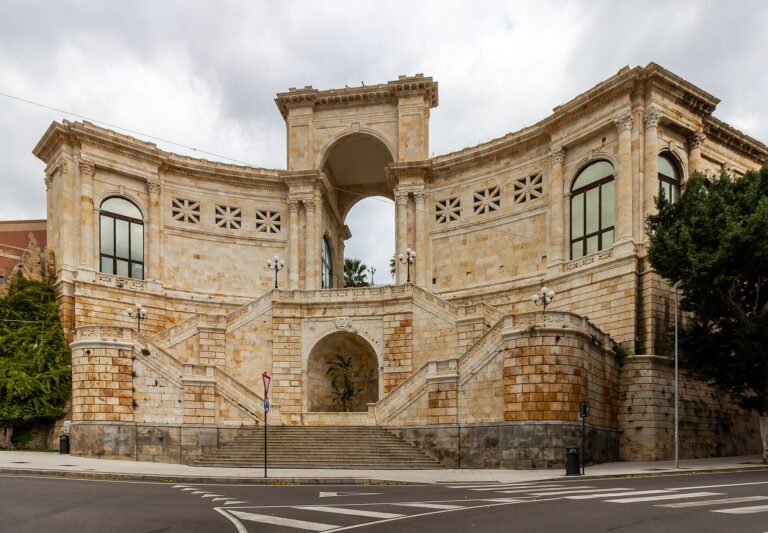
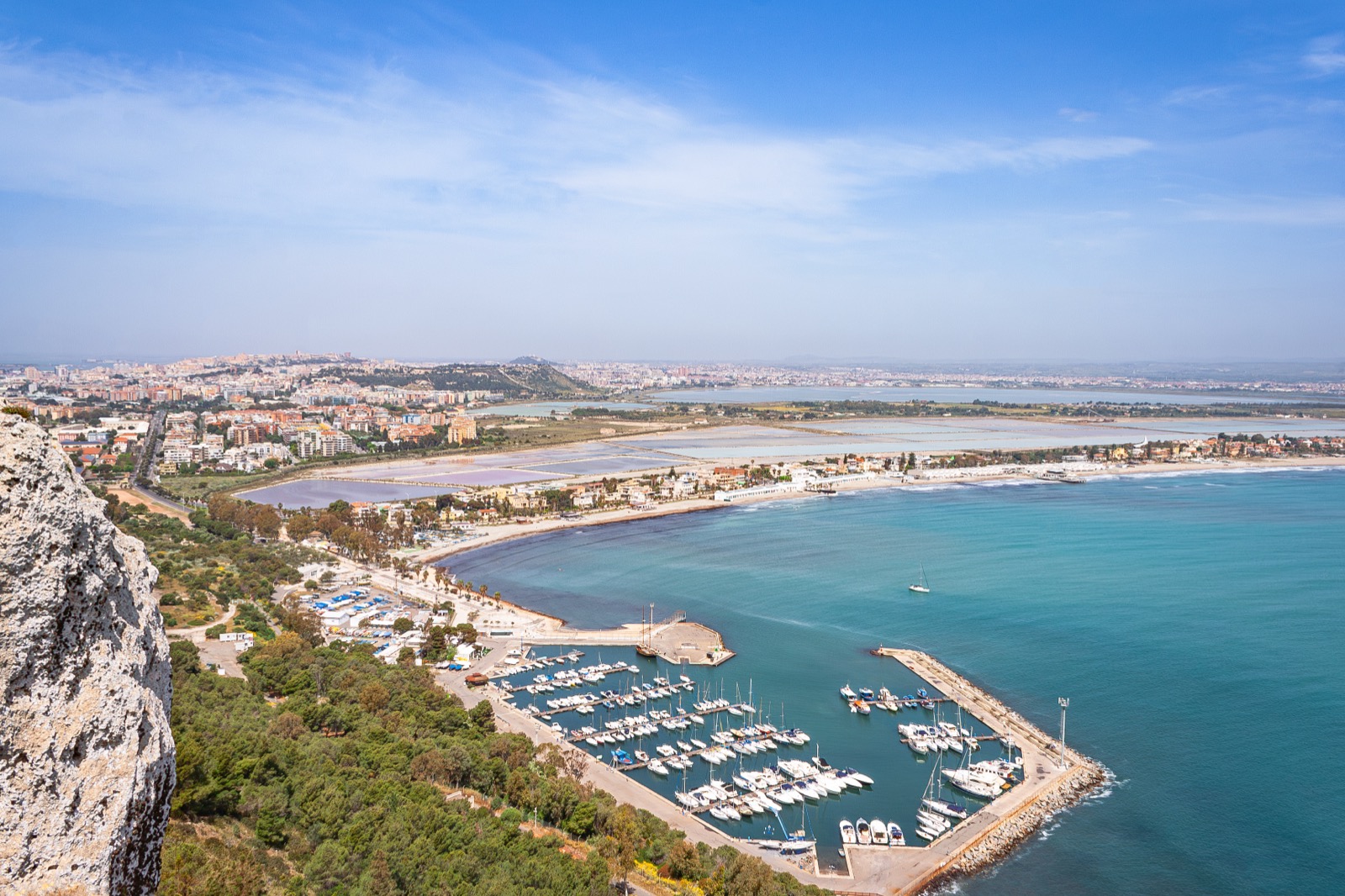
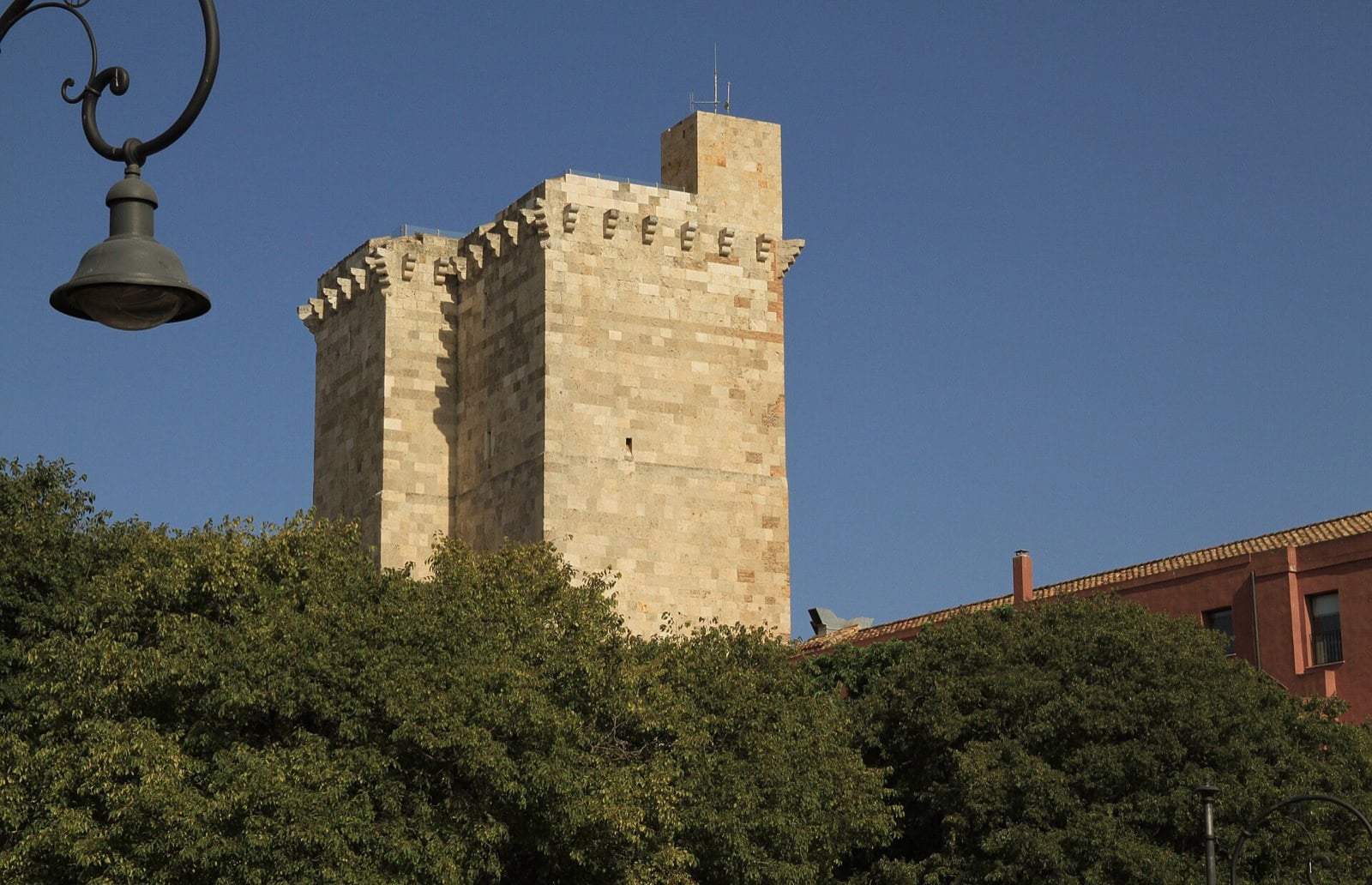
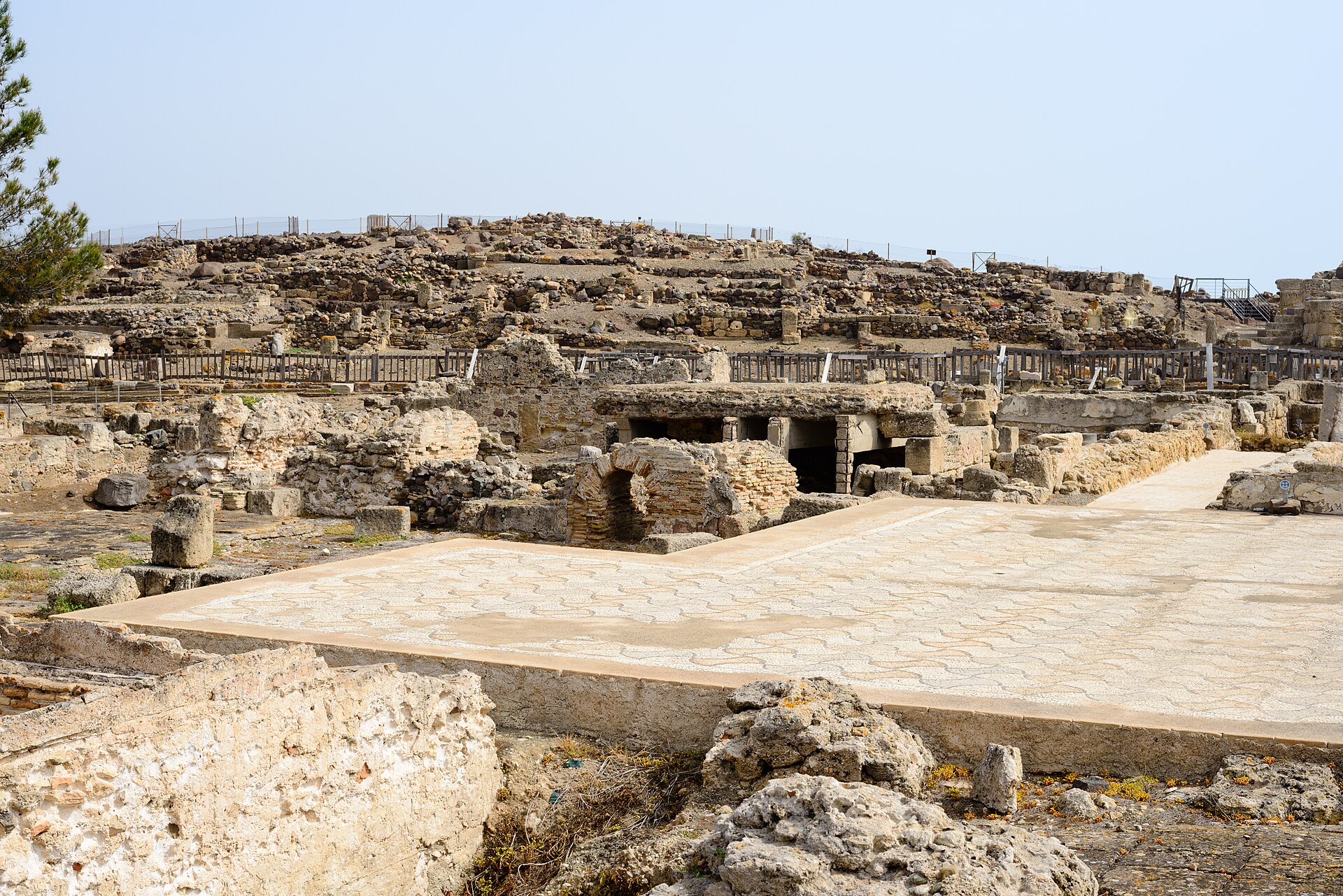
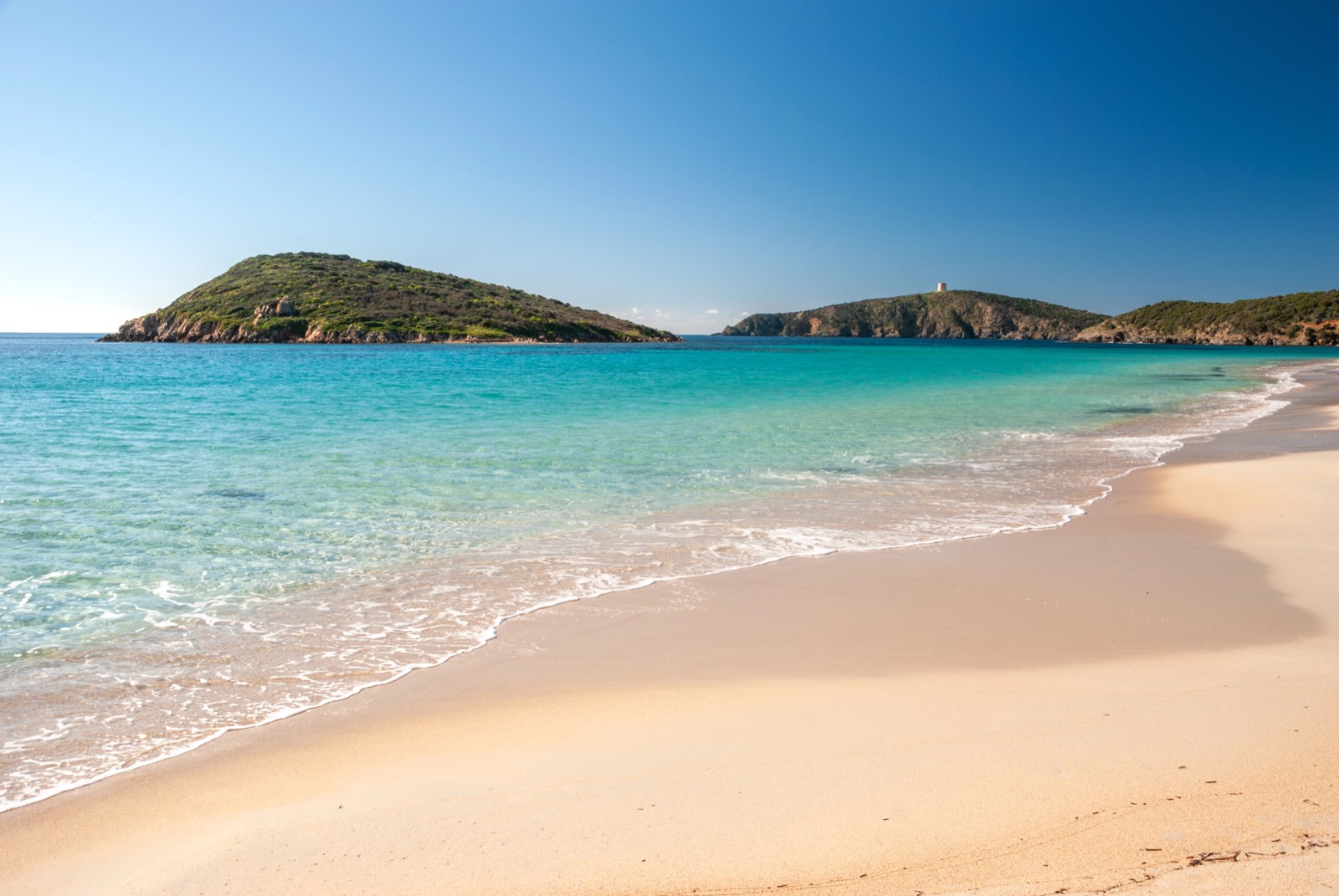
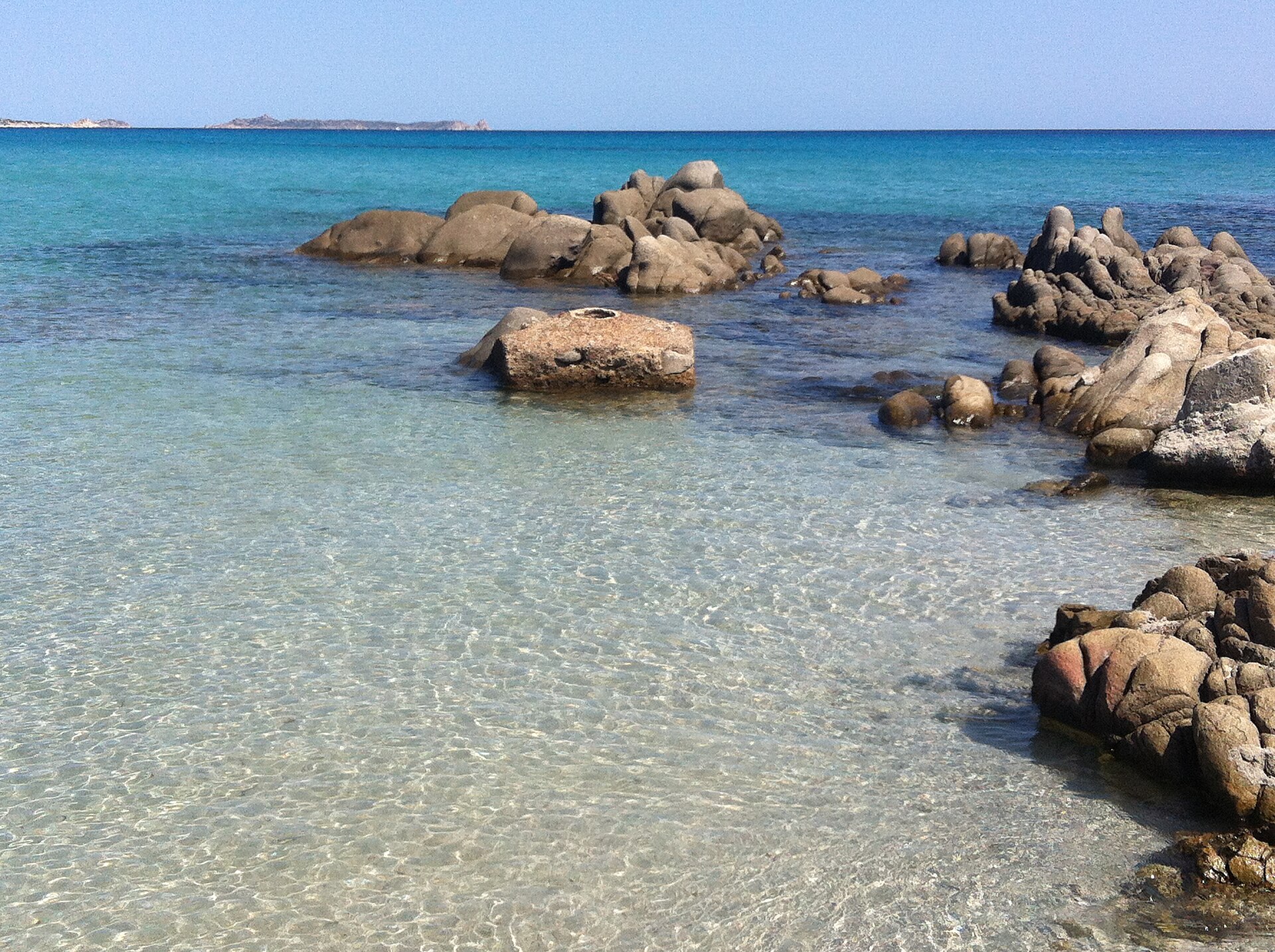
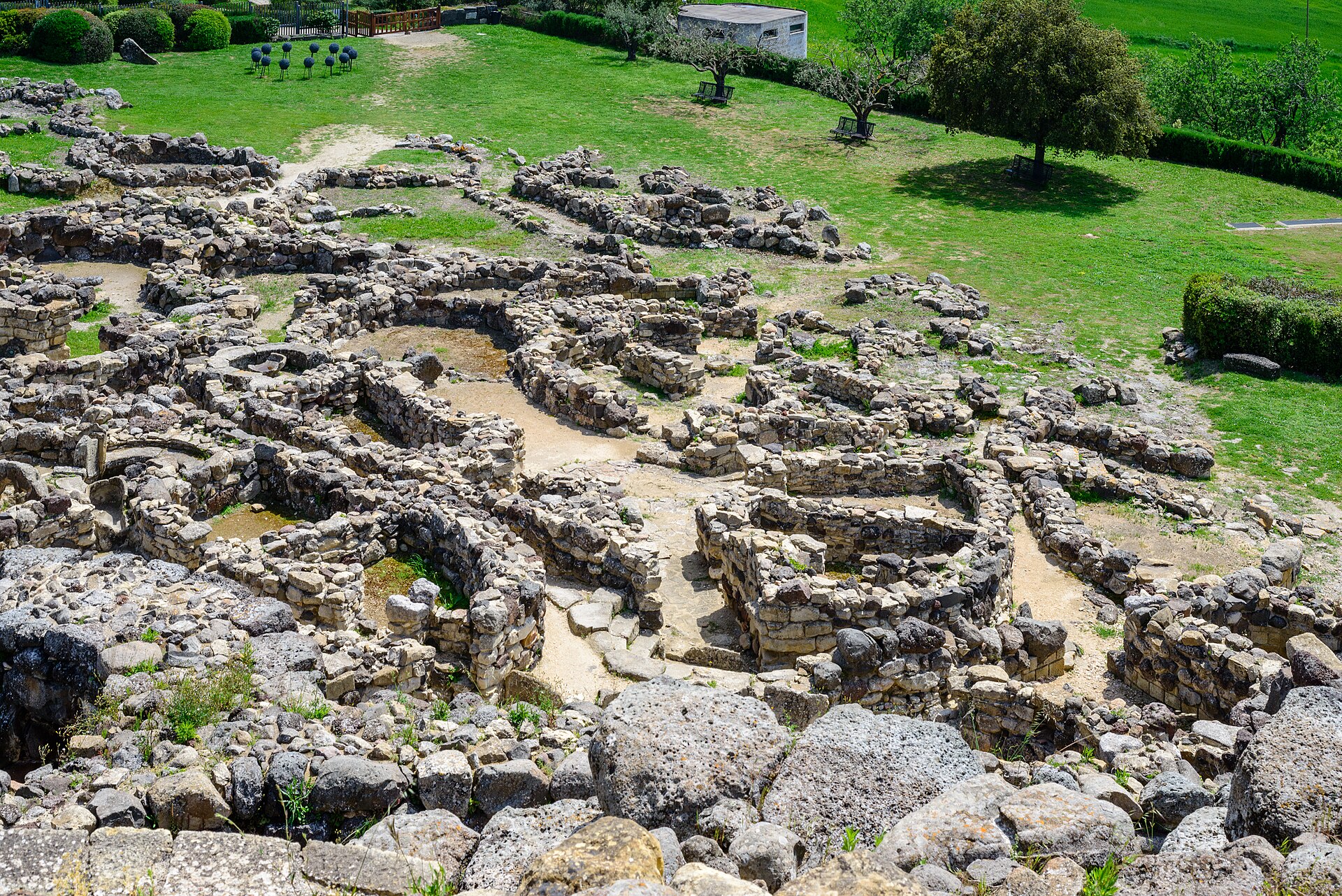
TL;DRCagliari, on Sardinia’s southern coast, comes with 13 ideas for what to see and do — from the historic Castello district with its Torre dell’Elefante and Torre di San Pancrazio towers, to the Bastione di Saint Remy viewing terrace, the 8-kilometre Poetto beach, and the Molentargius wetlands with their pink flamingos. Two days is enough for the city itself, but ideally set aside 4 to 5 days to explore further afield too — think the Caribbean-style beaches around Chia, the resort town of Villasimius, or the ancient ruins at Nora. From Elmas airport, the train gets you into the centre in 7 minutes and a ticket costs around €1.30. The best months to visit are June and September, when you’ll dodge the brutal summer heat of around 35°C. Don’t skip Su Nuraxi di Barumini either — it’s the best-preserved nuragic complex and a UNESCO World Heritage Site.
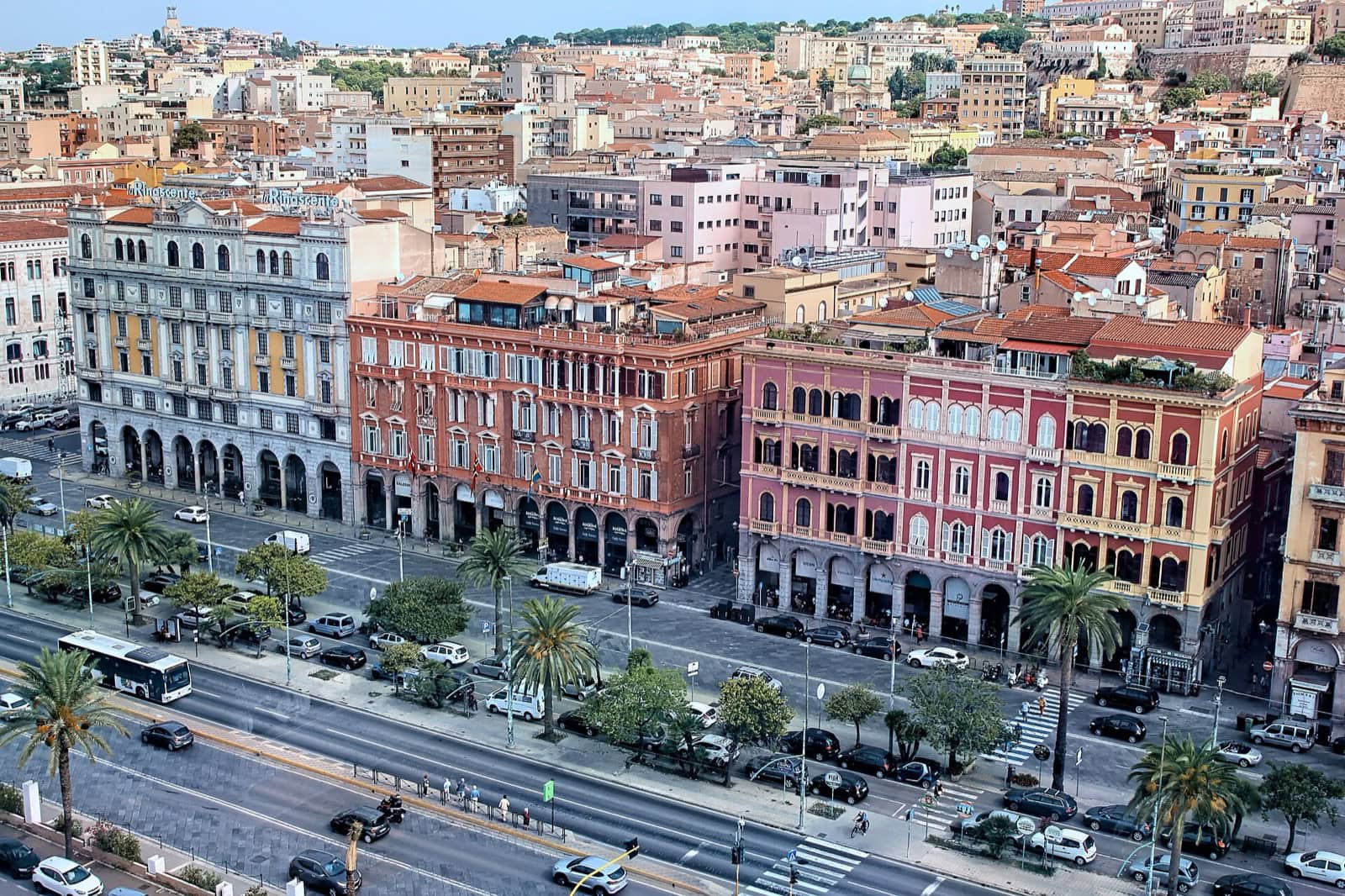
You know that feeling when you’re hunting for a destination that hides Caribbean-worthy beaches but also serves up a proper slice of history and incredible food? That’s exactly what you’ll find in Cagliari, Sardinia, the island’s capital that far too many travellers simply zip through on their way from the airport. And that would be a real shame, because the southern part of the island has an absolutely fantastic atmosphere, it’s noticeably cheaper than the glitzy north, and it positively radiates genuine Italian spirit.
If you’re wondering where to head this year for a bit of warmth, Cagliari is bound to win you over with its ancient lanes, pink flamingos and unbelievably blue sea. The south of the island holds on to that authentic feel, where life moves at a relaxed pace and the locals really know how to make the most of every moment. On top of that, the city makes an ideal strategic base for exploring the entire southern coast, so you certainly won’t be twiddling your thumbs.
In this guide you’ll find 13 things to see and do in Cagliari so you can squeeze every last drop out of your holiday. We’ll wander past the most beautiful historic landmarks, I’ll help you find your way through the winding lanes, and we won’t skip the tips for fantastic day trips nearby either. You’ll also discover the best time to visit, where to base yourself, and what you absolutely have to taste.
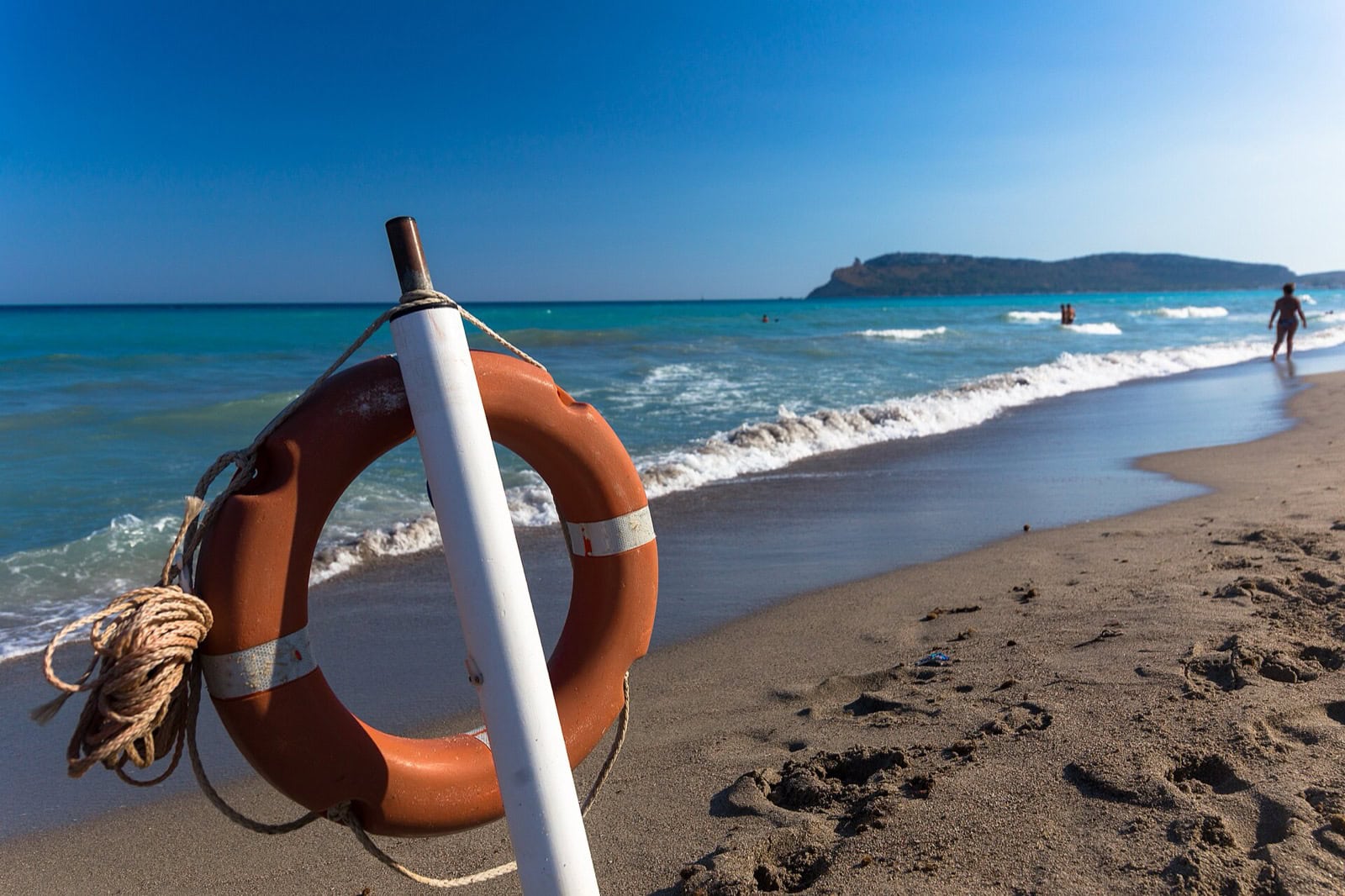
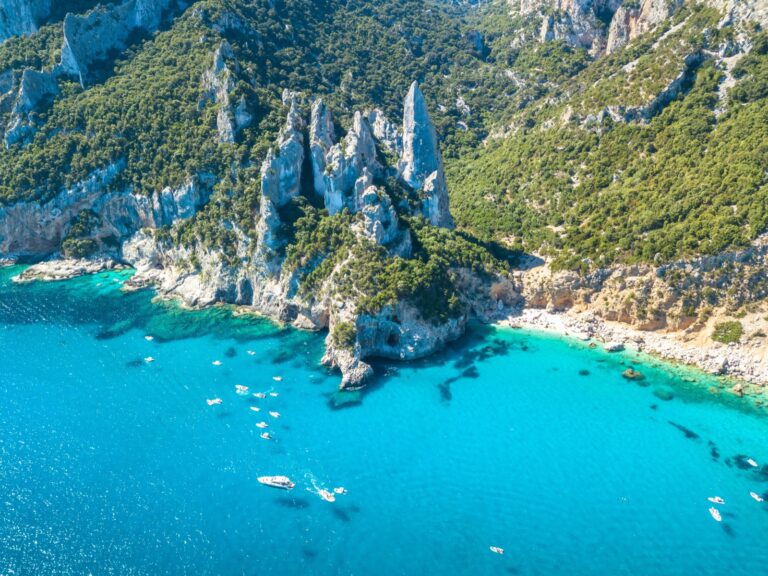
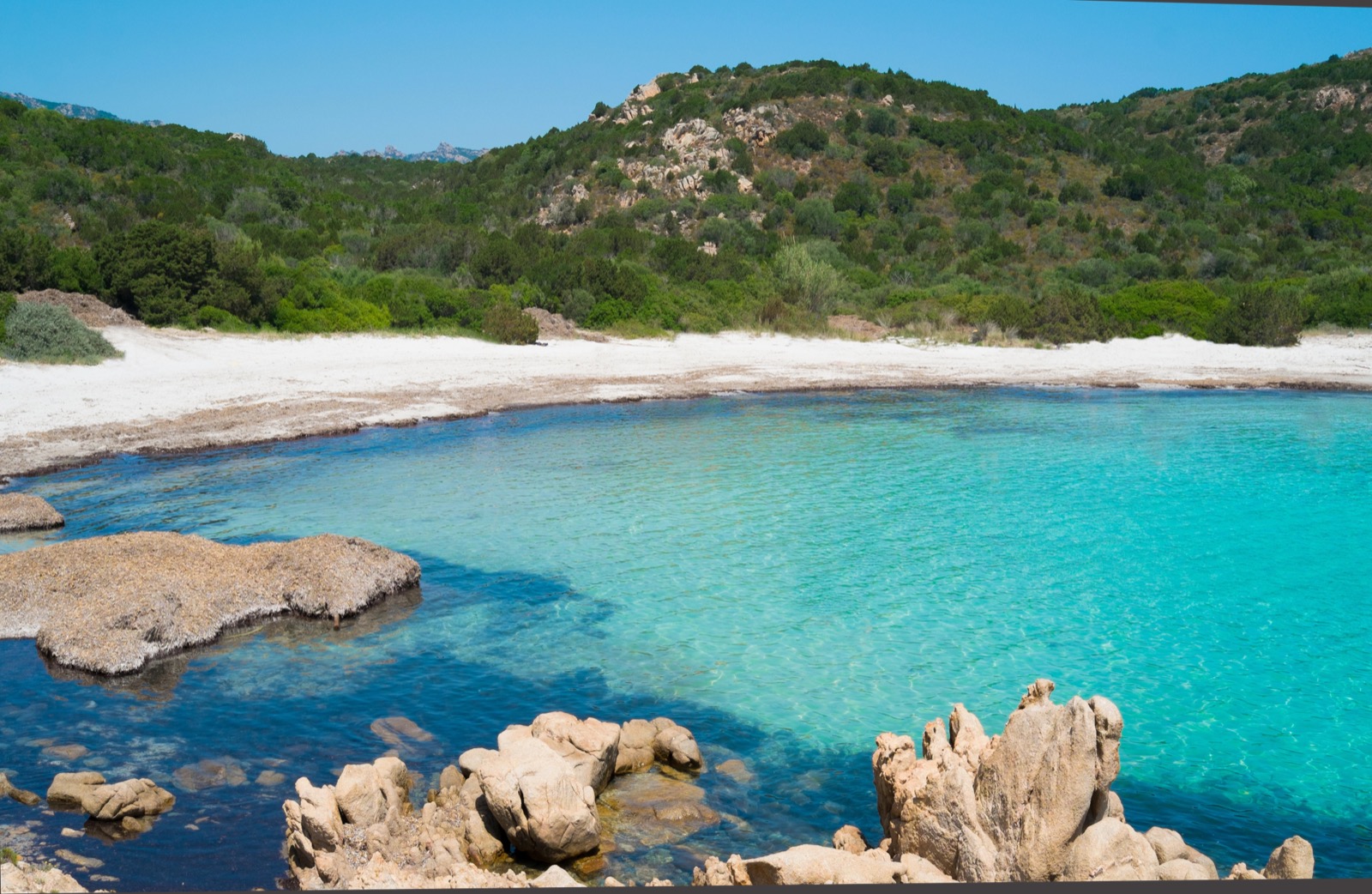
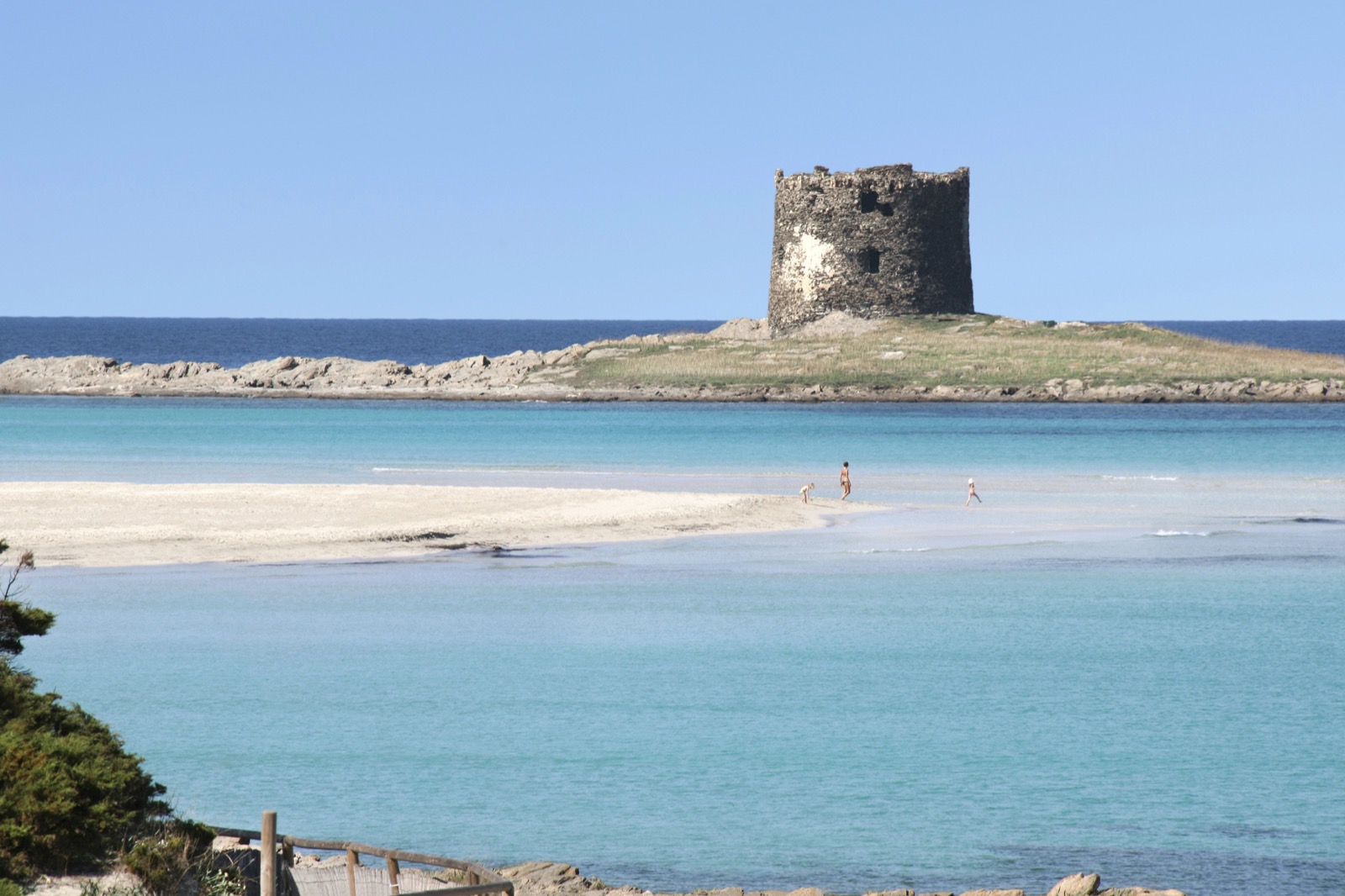
Beach in Sardinia
TL;DR
Main historic landmarks: Don’t miss the historic Castello district with its gorgeous views, and the monumental Bastione di Saint Remy terrace.
Best beach in the city: Right in Cagliari you’ll find the 8-kilometre Poetto beach with its fine sand, easily reached by city bus.
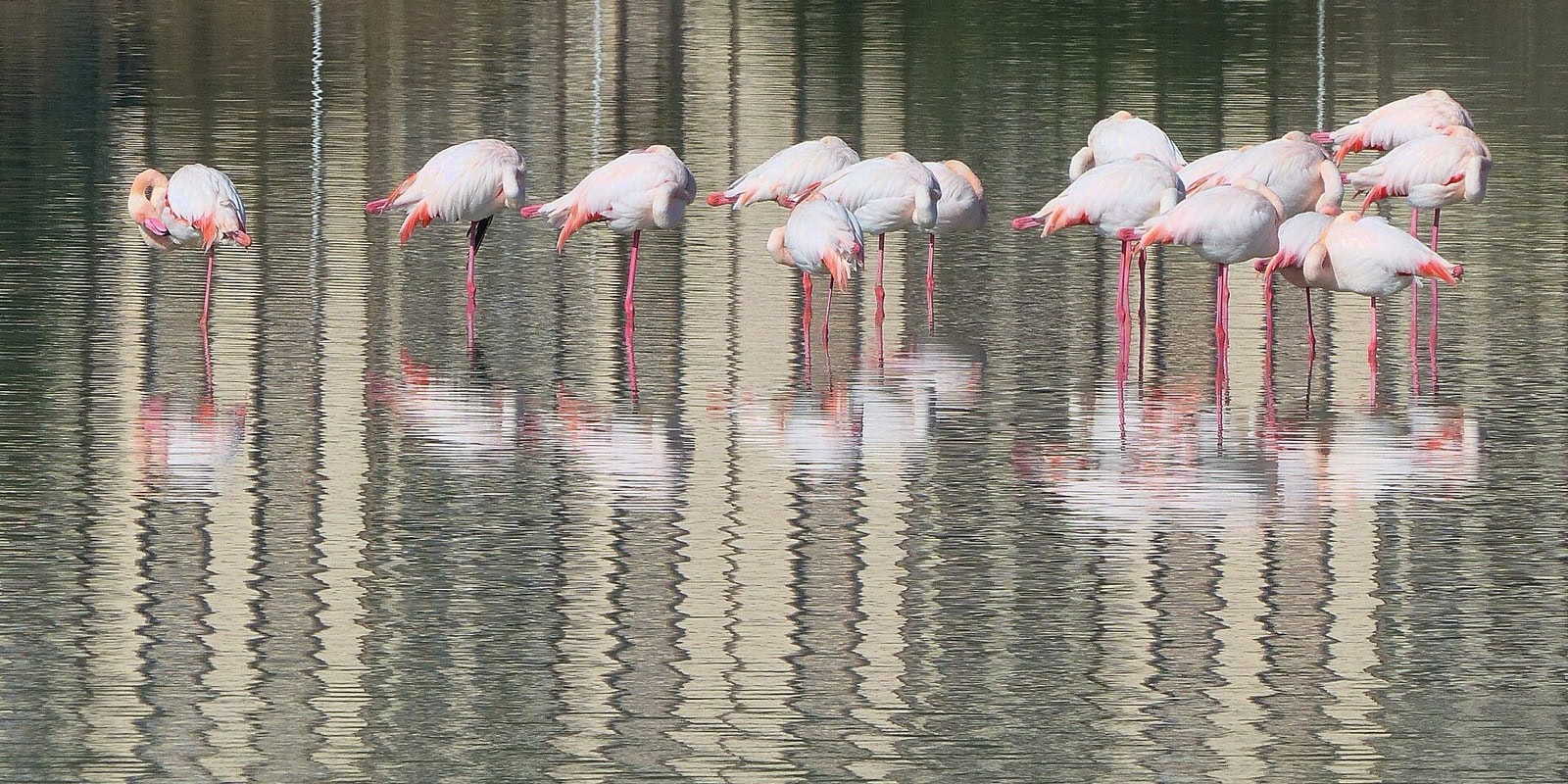
Natural gem: Just beyond the city lie the Molentargius wetlands, where you can spot wild flocks of pink flamingos all year round.
Top day trips: Rent a car and head to the Caribbean-style beaches around Chia, the charming resort of Villasimius, or the ancient ruins of Nora.
Getting from the airport: From Elmas airport you’ll reach the centre by train in just 7 minutes, and the ticket costs barely more than a euro.
Watch out for: The historic centre has strict no-entry zones (ZTL), so keep an eye on the signs to avoid a hefty fine.
The wonderful thing about Cagliari is that it’s alive all year round — it isn’t some artificial resort that goes into hibernation for the winter. That said, travellers agree that if you want to enjoy a swim without the maddening crowds, June and September are the best months. In July and August temperatures regularly climb to 35 °C, the city bakes, and accommodation prices shoot up at rocket speed. September, on the other hand, offers the warmest sea of the whole year (around 24 °C) and far pleasanter air for strolling around the sights. In short, the Cagliari, Sardinia weather is mild for most of the year, which is part of its charm.
If you fly into Cagliari-Elmas airport, you’ll be pleasantly surprised by how brilliantly simple the journey into the centre is. A train runs straight from the terminal and gets you to the main station on Piazza Matteotti in an incredible 7 minutes. The ticket costs a wallet-friendly €1.30, so you’ll save yourself all the hassle of hunting for a taxi. Trains run very frequently and you can check the current timetable on the official Trenitalia website.
The city centre itself is easy enough to explore on foot if you’ve a bit of stamina, though you should be prepared for the historic quarter to sit on a fairly steep hill. Luckily, there’s a system of public lifts to spare you the worst of the climbs 😅. If you fancy renting a car for day trips, be extremely wary of the so-called ZTL zones (Zona a Traffico Limitato). Cars without a permit are banned from the Castello, Marina and Villanova districts, and the ever-present cameras dish out automatic fines ranging from €80 to €200.
What to see right in Cagliari
Let’s take a look together at the most interesting things to see in the streets of Cagliari itself. The city is split into several historic districts, each with a completely different atmosphere, and you’ll find a little bit of everything here — from breathtaking viewpoints and mysterious underground crypts to endless beaches and nature reserves teeming with life.
1. The Castello district and its historic lanes
The heart of the whole city is the medieval fortified district of Castello, which towers majestically on a hill high above the harbour. This is exactly where you’ll find Cagliari’s most iconic landmarks and narrow cobbled lanes where time seems to have stood still. It was once home to the aristocracy, and to this day the crumbling palaces give off that wonderfully weathered yet incredibly noble Italian romance.
The medieval Torre di San Pancrazio tower in the Castello district of Cagliari
On your walk you simply mustn’t miss the two main defensive towers from the Pisan era. The first is the Torre dell’Elefante (Elephant Tower), which got its name from the small elephant statue mounted on its façade. The second is the equally striking Torre di San Pancrazio. Both towers once served as prisons, and the severed heads of criminals are said to have been thrown down from them as a warning — a touch grisly, perhaps, but all the more fascinating for it 😅.
2. Bastione di Saint Remy and the sunsets
If you love a good view as much as I do, this spot will absolutely blow you away. The Bastione di Saint Remy is a huge neoclassical terrace built from white and yellow limestone, linking the upper Castello district with the lower parts of the city. Its monumental staircase looks incredibly grand and the whole thing feels like the set of some historical film.
Bastione di Saint Remy and the sunsets
But the real magic comes the moment you climb up to the Umberto I terrace. From here a breathtaking panoramic view of the entire city opens up, taking in the harbour and the distant sea. Travellers all agree it’s the very best spot in Cagliari for watching the sunset. In the evenings the locals gather here, music plays, and with a slice of pizza in hand it’s an experience that’s hard to beat.
3. Santa Maria Cathedral and its crypt
Right in the heart of the Castello district you’ll come across the city’s main cathedral, dedicated to the Virgin Mary. From the outside its Pisan-Romanesque façade from the early 20th century might surprise you with its rather austere look, but don’t be fooled. The moment you step inside, you’ll be dazzled by the lavish Baroque décor full of marble, frescoes and golden details — a sharp contrast to its exterior.
Santa Maria Cathedral in Cagliari
The most intriguing part, though, according to many visitors, lies underground. The Sanctuary of the Martyrs (Santuario dei Martiri) is a unique crypt carved into the rock, where nearly two hundred relics of alleged Christian martyrs are kept. The crypt’s ceiling is covered with hundreds of beautiful rosettes chiselled into the stone, and the atmosphere here is highly distinctive — almost mystical.
4. The Roman amphitheatre carved into the rock
When someone says amphitheatre, most of us picture the Colosseum, but Cagliari has its own ancient treasure that’s unique in many ways. The local Roman amphitheatre, dating from the 1st to 2nd century AD, is largely carved straight into the natural limestone rock, which makes it an absolute architectural one-off.
The Roman amphitheatre in Cagliari carved into the rock
In its heyday it could squeeze in up to 8,000 enthusiastic spectators, who watched brutal gladiator fights and battles with wild animals. Although today only ruins remain, imagining what it must have looked like and how it must have roared two thousand years ago is utterly fascinating. The opening hours change throughout the year, so I’d recommend checking the latest details before your visit.
5. The National Archaeological Museum and the mysterious giants
Whether you’re a history buff or not, you really shouldn’t skip this museum, because Sardinia has a past you won’t find anywhere else in Europe. The Cittadella dei Musei complex houses the National Archaeological Museum, which holds the world’s most significant collection of the Nuragic culture. This mysterious Bronze Age civilisation left behind thousands of stone towers and curious artefacts.
The National Archaeological Museum and the mysterious giants
The museum’s biggest draw is without doubt the stone giants of Mont’e Prama. These are enormous statues of warriors and archers, over two metres tall, with utterly hypnotic, geometrically precise eyes. They look almost alien. A combined ticket to the complex costs around €15, but for the current season do check the prices and opening hours on the museum’s website.
6. The Marina district and the San Benedetto market
If you want to soak up the real, noisy and wonderfully fragrant atmosphere of southern Italy, you’ve got to head to the Marina district. Once a quarter of fishermen and dock workers, today it’s a buzzing hub of nightlife and great food. The narrow lanes here are literally packed with little family-run trattorias, cafés and bars where the locals come to enjoy themselves late into the night.
The Marina district and the Via Roma waterfront in Cagliari
In the morning it would be a sin not to visit the famous covered Mercato di San Benedetto. It’s one of the largest markets in all of Italy, and the real theatre plays out on the ground floor, where fishmongers loudly hawk their fresh catch. Upstairs you’ll find an incredible selection of cheeses, fresh fruit and local specialities. It’s said to be the best place to pick up some aromatic souvenirs to bring home.
7. Poetto beach and the Sella del Diavolo hill
Cagliari has one enormous advantage over many other cities. Just a stone’s throw from the centre stretches the 8-kilometre-long Poetto beach with its fine white sand, so you can wander the sights in the morning and lounge by the sea in the afternoon. The water here is shallow and beautifully clear, and a promenade lined with little kiosks runs the whole length of the beach, where you can grab an iced drink or a coffee. It’s one of the loveliest Cagliari, Sardinia beaches you can reach without a car.
The Poetto city beach in Cagliari
At the end of the beach rises an unmissable rocky hill known as the Sella del Diavolo, or the Devil’s Saddle. According to legend, this shape was formed when the devil fell from his horse during a battle with the angels and his saddle turned to stone. A lovely hiking trail loops around the hill, takes about an hour and a half, and rewards you with the best views over the entire bay.
8. The Molentargius wetlands and pink flamingos
This is an experience you probably wouldn’t expect in a big city. Just behind Poetto beach lies the sprawling Molentargius nature park, which used to be a salt-extraction site. Today it’s a protected reserve famous for the fact that huge flocks of pink flamingos nest here all year round. The locals affectionately call them “sa genti arrubia”, which translates as the red people.
Pink flamingos in the Molentargius lagoon near Cagliari
The best way to explore the park is to rent a bike and ride the dedicated trails, since covering the vast distances on foot would be pretty tiring. You’ll really see the flamingos up close and in the wild, which is an absolutely stunning sight. Entry to the park is free, and you’ll find more information and bike-hire options on the Parco Molentargius website.
9. The Orto Botanico botanical garden
After a full day of dashing around the sun-baked city, there’s nothing better than ducking into some cool shade. The botanical garden, run by the University of Cagliari, is a green oasis of calm right in the middle of the city. It spreads across the Palabanda valley and you’ll find an incredible collection of Mediterranean and exotic plants from all over the world.
The Orto Botanico botanical garden in Cagliari
Alongside rare succulents and towering palms, you’ll also come across the remains of ancient cisterns and wells, sensitively woven into the greenery. It’s the perfect place to rest for a while with a book or simply sit on a bench and listen to the birdsong. Admission is just a few euros, and that bit of peace and quiet is well worth it.
The best day trips from Cagliari
As I mentioned, Cagliari’s sights and the city itself will keep you busy for about two days, but it would be a huge mistake not to venture further afield. The surroundings of the capital offer the most beautiful beaches and fascinating archaeological sites. Renting a car for a few days is ideal, but bear in mind that driving on Sardinian roads is slower going, and 60 kilometres can easily take an hour and a half. Here are the best tips for day trips from Cagliari.
Lukáš and Lucie recommend
Where to stay in Cagliari
6 accommodations — hotels and other lodging options
About 40 minutes’ drive to the west lies one of the most important archaeological sites on the island. Nora is an ancient Phoenician-Roman city built on a small peninsula lapped by the sea. The ruins sit in an utterly stunning setting, and you can wander among the remains of old baths, admire well-preserved mosaics, or take a seat in the stone theatre.
The ancient city of Nora near Pula
A large part of the original city now lies beneath the surface of the sea, which lends the place an even more mysterious air. After exploring the ruins, you can take a dip on the adjacent beach. Admission costs around €8, and before you go I’d recommend a quick look at the official archaeological park website to check the opening hours for the current season.
11. Caribbean-style beaches and sand dunes in Chia
If you’re after beaches that have you rubbing your eyes wondering whether you’ve somehow ended up in the Caribbean, head to the Chia area. It’s about an hour from Cagliari, and the whole bay is famous for its dazzling white sand and turquoise water. The entire coastline is fringed with tall golden dunes covered in old juniper trees, creating an utterly dreamlike landscape.
Caribbean-style beaches and sand dunes in Chia
The most famous beach in this area is Spiaggia di Su Giudeu, which ranks among the very loveliest on the whole island. The water here is incredibly clear and stays shallow for a good while, so it’s said to be ideal for families with children. Watching over the whole bay is the old watchtower Torre di Chia, to which you can take a short walk and snap a photo of the bay from above.
12. The Villasimius resort and Capo Carbonara
Another incredible spot for a swim is the resort of Villasimius, which lies just under an hour’s drive east of Cagliari. The whole area falls under the Capo Carbonara protected marine reserve, which means you’ll find fantastic conditions for snorkelling and the underwater life here is positively thriving.
The Villasimius resort and Capo Carbonara
The absolute star is the local Porto Giunco beach, which has one big quirk. On one side it’s lapped by crystal-clear sea, while on the other lies a large shallow lagoon where pink flamingos very often wade. Just be aware that some of the beaches here (Punta Molentis, for example) have limited capacity and charge fairly hefty parking fees of around €10 per car, so it pays to arrive as early in the morning as possible.
13. The stone fortress of Su Nuraxi di Barumini
This is a place everyone who visits Sardinia ought to see, because you won’t find anything like it anywhere else in the world. About an hour’s drive inland lies Su Nuraxi di Barumini, the best-preserved and most famous Nuragic complex on the island. It’s been a UNESCO World Heritage Site since 1997, and its age is estimated at up to 1500 BC.
The stone fortress of Su Nuraxi di Barumini
It’s a gigantic conical fortress assembled from enormous basalt boulders without any binding mortar whatsoever. You can only see inside the tower itself, which once stood over 18 metres tall, as part of a guided tour — but that’s no bad thing at all, as the guides will explain plenty of fascinating details about this civilisation, which to this day isn’t fully understood. You’ll find details about admission on the Barumini Foundation website.
Where to stay in Cagliari
Choosing the right area in Cagliari is absolutely key to enjoying your stay without any needless stress. The city isn’t huge, but with its hills and car restrictions it’s worth thinking carefully about what you want from your holiday. Seasoned travellers tend to avoid hotels right by the harbour and instead opt for the quieter historic centre or hotels closer to the sea. If you’re coming mainly for sightseeing, set aside a budget of roughly €80 to €130 per night for two.
For lovers of history and romance (Castello): The most beautiful views and the magical atmosphere of the old town are found in the Castello district. The downside is that you can’t drive in (ZTL zone) and you’ll have to trudge uphill, but that morning coffee in a narrow lane is said to be worth it.
For foodies and nightlife (Marina): If you want everything close by — to simply step out of your hotel in the evening and sit down in an excellent trattoria — look for accommodation in the Marina district. It’s livelier here, but you can be sure you’ll never be short of entertainment.
For beach enthusiasts (Poetto): If you want to spend most of your time by the sea and only pop into the city now and then, look for guesthouses along Poetto beach. Buses run here from the centre, and the sea is literally across the street.
💡 Specific accommodation tips across the regions (check prices and availability via Booking.com, and book early in high season):
Sardinian cuisine is completely different from mainland Italian fare. It’s very rustic, built on bold flavours, quality cheeses and herbs. The good news is that even though the island is surrounded by sea, the cornerstones of the local gastronomy grew up inland among the shepherds, so the menu is absolutely brilliant for vegetarians too. Local food is simply an experience that’s an inseparable part of travelling.
An absolute must-try is culurgiones. These are beautifully hand-pleated pasta parcels resembling an ear of wheat, hiding a heavenly filling of potato, sharp pecorino sardo cheese and fresh mint. They’re usually served with a simple tomato sauce, and it’s quite simply heaven on a plate. In restaurants you’ll also almost always be brought pane carasau, an extremely thin, crispy shepherd’s bread that used to keep for months on end, which the locals often drizzle with olive oil and sprinkle with salt (then it’s called pane guttiau).
And for something sweet? Be sure not to miss the dessert called seadas (or sebadas). These are large fried pastry pockets stuffed with young sheep’s cheese, drenched while warm in a generous helping of local honey and lemon zest. The combination of sweet and savoury is incredibly addictive. If you’d like to explore the local meat and fish specialities too, travellers often mention the famous slow-roasted suckling pig (porceddu) or pasta dusted with bottarga — dried, grated fish roe nicknamed Sardinian caviar.
Where to go next
Sardinia is enormous and offers countless other places to explore. If you’re wondering where your travels might take you next, I’ve put together some more inspiration. You can check out the comprehensive article Sardinia Holiday: What to See and Do, where you’ll find tips for the entire island.
If you’re drawn to the most beautiful swimming spots, definitely take a look at the rundown of the Most Beautiful Beaches in Sardinia. And if you enjoy road trips and ferry hops, you might be tempted by the neighbouring French island, which you can read about in our guide to Corsica.
Search with the DiscoverCars comparison engine — it compares prices from dozens of local and international rental companies, and most bookings come with free cancellation.
🔗 These are affiliate links — they don't change your price and help us create content. · All experiences →
Frequently asked questions
What to see in Cagliari?
The core is the historic Castello quarter with towers and the panoramic terrace of Bastione di Saint Remy. Don’t miss the cathedral, Roman amphitheatre, archaeological museum, the vibrant Marina district, and the amazing Molentargius wetlands with flamingos.
Is Cagliari worth visiting?
Definitely yes! The city has a very authentic Italian atmosphere, is considerably cheaper than the north of the island, and offers a great mix of history, culture, excellent food, and long beaches right in the city.
How to get from Cagliari airport to the city center?
“`html
The fastest and cheapest option is the train, which departs directly from Elmas airport terminal. The journey to the main station in the center takes only 7 minutes and a ticket costs approximately 1.30 €.
“`
Where can you swim in Cagliari?
“`html
Right in the city, you’ll find the popular Poetto Beach, which boasts fine sand and stretches for 8 kilometres. It’s easily accessible by public transport and offers all amenities including beach bars.
“`
How many days do you need for Cagliari?
Here’s the translated HTML:
Two days will be more than enough for exploring the historic center and monuments themselves. However, I recommend setting aside at least 4 to 5 days so you can also take trips to the beautiful surrounding area.
What day trips to take from Cagliari?
To the most popular ones belongs a trip to the Caribbean beaches in the area of Chia or Villasimius. History lovers shouldn’t miss the ancient city of Nora on the coast or the famous stone nuragic complex Su Nuraxi di Barumini.
What good things to taste in Cagliari?
Local specialities include culurgiones stuffed pasta (with potato and mint), crispy pane carasau bread and the fantastic fried seadas dessert filled with cheese and drizzled with honey. For meat and seafood lovers, typical dishes are porceddu spit-roasted suckling pig or bottarga (dried fish roe).
Tips and Tricks for Your Vacation
Don’t Overpay for Flights
Search for flights on Kayak. It’s our favorite search engine because it scans the websites of all airlines and always finds the cheapest connection.
Book Your Accommodation Smartly
The best experiences we’ve had when looking for accommodation (from Alaska to Morocco) are with Booking.com, where hotels, apartments, and entire houses are usually the cheapest and most widely available.
Don’t Forget Travel Insurance
Good travel insurance will protect you against illness, accidents, theft, or flight cancellations. We’ve had a few hospital visits abroad, so we know how important it is to have proper insurance arranged.
Where we insure ourselves: SafetyWing (best for everyone) and TrueTraveller (for extra-long trips).
Why don’t we recommend any Czech insurance company? Because they have too many restrictions. They set limits on the number of days abroad, travel insurance via a credit card often requires you to pay medical expenses only with that card, and they frequently limit the number of returns to the Czech Republic.
Find the Best Experiences
Get Your Guide is a huge online marketplace where you can book guided walks, trips, skip-the-line tickets, tours, and much more. We always find some extra fun there!
TL;DRNew York at Christmas and in winter brings 12 concrete ideas: the tree-lighting at Rockefeller Center (2 December 2026), skating at Wollman Rink in Central Park (entry around $20) or for free at Bryant Park, a stroll down Fifth Avenue to see the festive window displays, and the light spectacle in Dyker Heights, Brooklyn. New Year’s Eve on Times Square means arriving 8–10 hours early and braving temperatures of around minus 5 to minus 10 degrees — the fireworks in Central Park make a calmer alternative. January and February are the cheapest months, with hotel and flight prices down 30–50%, and it’s also when NYC Restaurant Week runs, with menus from $30 to $45.
You know that feeling when you want to see the famous city from Home Alone 2 with your own eyes? Winter transforms the concrete jungle into one enormous, glowing film set. Experiencing New York in winter means weaving through the crowds on Fifth Avenue, but also sipping hot chocolate right beneath the skyscrapers. The first frost brings a special kind of magic to the streets.
The tourist brochures promise a flawless fairy tale. Reality, however, delivers an icy wind off the ocean, pricey tickets and thousands of people surrounding you at every turn. I’ll tell you the exact times to head to Rockefeller Center so you’re not stepping on fellow tourists’ toes. Good planning saves you hours of waiting in queues — and a fair bit of money too.
You’ll get exact rink prices, tips on spots the locals love, and a realistic look at what tourists get wrong. We’ll cover the best holiday markets across the different neighbourhoods worth visiting. We’ll break down New Year’s Eve on Times Square in full detail, no rose-tinted glasses. And I’ll show you why January and February can be a smarter choice than a jam-packed December. Grab your warmest coat and let’s start planning.
Festive New York by Radio City Music Hall (photo: Sasha Zilov, Pexels)
TL;DR
Bryant Park has the only free ice rink in the city.
Rockefeller Center lights its tree in early December.
Dyker Heights in Brooklyn hides the most lavish home light displays.
Times Square on New Year’s Eve requires arriving eight to ten hours early.
Wollman Rink in Central Park offers the most beautiful skyscraper views.
Radio City Music Hall hosts the legendary Rockettes dance show.
NYC Restaurant Week in January slashes lunch prices at luxury venues.
The ceremonial lighting of the tree at Rockefeller Center kicks off the entire winter season. This grand moment takes place in 2026 around the second of December. The NBC network broadcasts the whole event live into millions of homes. Finding a good spot to stand means arriving in the early afternoon.
The spruce itself usually stands over twenty metres tall and weighs several tonnes. Gardeners select it a year in advance from the surrounding states. More than fifty thousand coloured lights shine across its branches. The tree stays lit daily from six in the morning until midnight, right through to early January.
Directly beneath the tree lies the famous The Rink. Beside it towers the gilded statue of Prometheus, dominating the entire plaza. The Channel Gardens promenade leads you here straight from Fifth Avenue. The path is lined with glowing wire angels holding trumpets.
You’ll find the whole complex at 30 Rockefeller Plaza in the heart of Midtown Manhattan. The nearest subway stations are served by the B, D, F and M lines. Getting your bearings here can be tricky in the evening thanks to the enormous crowds. Police often funnel the crowd into one-way corridors.
💡 Tip: Head to the tree early in the morning around seven, or late in the evening after ten. That way you’ll dodge the worst crowds and snap photos without strangers’ elbows in the frame.
The Channel Gardens will point you towards the main tree. This two-hundred-metre avenue of eight gardens connects Fifth Avenue directly with Rockefeller Center. The path is lined with eighteen wire angels holding trumpets, with nine four-and-a-half-metre statues guarding each side of the promenade. The whole installation plays festive music and forms the most photographed spot in December Manhattan.
You can walk the promenade free of charge any time, day or night. 💡 Tip: You’ll get the most beautiful view from the Fifth Avenue end — you’ll see the whole row of glowing angels with the twinkling tree behind them.
The tree and ice rink at Rockefeller Center (photo: Gabriel Rodríguez, Wikimedia Commons, CC BY-SA 2.0)
Where to Skate Under the Open Sky
Ice skating is one of the city’s headline winter activities. Wollman Rink sits in the south-eastern corner of famous Central Park. It offers an incredible panorama of Lower Manhattan’s skyscrapers rising above the bare trees. It’s the single largest outdoor rink in all of New York.
Admission to Wollman Rink costs roughly twenty dollars. Skate hire will set you back another ten to twelve dollars. The rink stays open from late October all the way to April. To warm up, you can grab a hot apple cider at the stand next door.
The rink is easy to reach: enter from the southern part of Central Park at 63rd Street, or from Midpark. In December and January it’s usually open seven days a week from ten in the morning. Book tickets online in advance for weekend afternoons, otherwise you risk a long queue at the box office. Skating after dark in the evening offers a completely different experience to daytime.
The Rink at Rockefeller Center is the most famous, but also the priciest option. Admission ranges from 33 to 55 dollars depending on the exact date in the season. Skate hire costs a fixed fourteen dollars extra. Your time slot on the ice lasts exactly ninety minutes.
The experience beneath the golden Prometheus is hugely iconic. The Rockefeller rink is, however, surprisingly small and often crowded. You’ll need to book tickets online well ahead — you’ll almost never get them on the day. While you skate, hundreds of tourists snap photos from the upper terrace.
The best value for money goes to Bryant Park with its rink. You’ll find it in Midtown right on Sixth Avenue behind the public library. Getting onto the ice is completely free — you pay nothing. You only pay for skate hire, around twenty dollars.
💡 Tip: If you have your own skates, Bryant Park is entirely free. The surrounding Winter Village stalls also create a far cosier atmosphere than the commercial Rockefeller Center.
Wollman Rink (Central Park): admission ~$20 + skates $10–12, largest rink in NY, skyscraper views, October–April.
Bryant Park Rink: free admission + skates ~$20, cosy Winter Village atmosphere, October–March.
Rockefeller Rink: admission $33–55 + skates $14, most famous, smallest and priciest, online booking essential.
Holiday Window Displays and Lights
The famous Christmas displays in Dyker Heights (photo: Rhododendrites, Wikimedia Commons, CC BY-SA 4.0)
Department stores compete for the most beautiful winter display in the city. Saks Fifth Avenue at the corner of Fifth Avenue and 50th Street puts on a stunning light show. The building’s facade turns into a giant canvas full of flashing LEDs. The show lasts five minutes and repeats every twenty minutes after dark.
Watching this music-and-light show costs nothing. People gather right on the pavement across from the store. Macy’s Herald Square on 34th Street is billed as the world’s largest department store. Its windows traditionally tell a complete story using moving mechanical figures.
If you’re after something more artistic, head to Bergdorf Goodman. This luxury house sits on the corner of 58th Street and Fifth Avenue. Their windows feel more like museum exhibits, full of antiques and haute couture fashion. It’s a completely different style to the playful approach at Macy’s.
Another lovely stop is Bloomingdale’s on 59th Street and Lexington Avenue. This store on the edge of the Upper East Side often goes for interactive displays. Sometimes you can control the lights through the glass or play music using special buttons from outside. The crowds here tend to be smaller than on Fifth Avenue.
The whole of Fifth Avenue turns into a giant Christmas wonderland in December. From 34th Street with Macy’s all the way to 59th Street by Bloomingdale’s, every window glows and thousands of light strings hang above the heads of passers-by. By the Plaza hotel on 59th Street and Grand Army Plaza, vintage horse-drawn carriages park up too. Walk the whole of Fifth Avenue on foot from south to north.
This two-and-a-half-kilometre route takes about an hour at a slow stroll. You’ll skip the crush of the subway and soak up New York’s true festive atmosphere.
⚠️ The neighbourhood of Dyker Heights in Brooklyn is a chapter all of its own. It lies between 83rd and 86th Streets and 11th to 13th Avenue. Local residents decorate their homes with absurdly over-the-top displays. You’ll see three-metre inflatable Santas and tens of thousands of lights on a single house.
You can reach this Brooklyn neighbourhood on the D or N subway lines. Get off at the Dyker Heights or Bay Ridge stations. The best time to visit is around half past five in the evening, just after dark. At weekends the streets jam up with cars, so head over on a weekday and walk instead.
The Saks Fifth Avenue light show (photo: DanielPenfield, Wikimedia Commons, CC BY-SA 4.0)
Holiday Markets and Radio City Christmas Spectacular
The markets bring the scent of roasted nuts and hot cider to the cold streets. Bryant Park Winter Village lies on Sixth Avenue between 40th and 42nd Streets in Midtown. Entry to the area is free. You’ll find over a hundred and seventy wooden stalls surrounding a central ice rink.
This market opens as early as Thanksgiving and runs until the end of January. You can pick up handmade crafts, winter clothing and great vegan waffles. Union Square Holiday Market on 14th Street in Greenwich Village has a slightly different feel. It tends to be smaller, more authentic and the locals prefer it.
The Union Square market runs from November to Christmas Eve. Columbus Circle Holiday Market is found on 59th Street, right by the south-western entrance to Central Park. It focuses heavily on original gifts and local New York products. It usually wraps up in the final days of December.
If it’s freezing outside, the Grand Central Holiday Fair will save you. This market takes place inside the famous Grand Central Terminal in Midtown. It’s one of the smaller ones, but its gorgeous historic architecture gives it a wonderful atmosphere. It’s only open until Christmas Eve.
The Radio City Christmas Spectacular is an inseparable part of the winter city. The show runs at Radio City Music Hall on the corner of Sixth Avenue and 50th Street. The night’s main stars are the Rockettes, a legendary female dance troupe famous for their flawless synchronisation. The show runs from November to early January.
Ticket prices for the Rockettes start at 65 dollars and climb past 200 dollars for better seats. Tickets disappear at lightning speed. I’d recommend buying them in advance through platforms like GetYourGuide or directly on the theatre’s official website. At the box office you’ll only find overpriced leftovers.
At the markets you can easily bag original Christmas gifts and local souvenirs. Stallholders sell handmade jewellery, boxed New York photographs, scented candles and indie clothing. You can also buy hand-painted Christmas ornaments or bottles of local craft cider. The stalls in Bryant Park tend to be a touch pricier than those at Union Square.
You can fend off hunger without meat just fine. The markets offer great vegetarian food: fresh falafel, vegan waffles and pancakes. Grab a cup of hot apple cider and warm yourself up a little.
💡 Tip: When visiting the markets, keep an eye on your belongings. Pickpockets work the dense crowds around the food stalls. Best to swing your backpack round to your front. Bank cards survive far better in the front pocket of your jeans than in a shoulder bag.
Lukáš and Lucie recommend
Where to Stay in New York
2 accommodations — hotels and other lodging options
The end-of-year celebrations on Times Square are known the world over from TV. The famous crystal ball begins its descent exactly thirty seconds before midnight. This tradition started way back in 1907. Watching this moment live, though, demands a huge amount of physical stamina.
⚠️ The real experience of the Times Square Ball Drop is plain to see. You have to arrive eight to ten hours early. Police close the surrounding streets as early as three in the afternoon. Once they let you into the security zone, you can’t leave it, or you’ll lose your spot.
There are no portable toilets in these closed sections. Temperatures often drop to minus five or even minus ten degrees Celsius. Thousands of people stand crammed together with no room to move. If you know what you’re getting into, you’ll come away with an unforgettable experience for life.
If you don’t fancy standing out in the cold all night, opt for a New Year’s Eve bar crawl. Plenty of venues in Brooklyn, Greenwich Village or Hell’s Kitchen sell tickets for an all-night bar tour for $50–80. You’ll get priority entry to multiple bars and meet people from all over the world. No queues, no frost.
A much calmer alternative is the midnight fireworks in Central Park. Entry costs nothing and the crowds here are far more bearable. Another great display takes place in Prospect Park in Brooklyn, frequented mainly by local families. That way you skip the stress in the middle of the skyscrapers.
New York’s New Year’s Eve has another side too: the cultural programme. Carnegie Hall, Lincoln Center and the Brooklyn Academy of Music host special New Year concerts. Tickets cost $40–150 and guarantee you a warm, elegant way to celebrate. The individual venues’ programmes are published on their websites each October.
You could also book a festive dinner with a view at one of the high-rise restaurants. You’ll need to reserve your table many months ahead, though, and prices tend to be astronomical. Many New Yorkers spend midnight in their favourite bar in neighbourhoods like Greenwich Village or Williamsburg. The mood there is relaxed and friendly.
New York in Winter Beyond the Holidays: January and February
Once the Christmas tourists leave, the city quietens down noticeably. January and February rank as the cheapest and emptiest months of the year. Flight and hotel prices tumble steeply. If you want to save a small fortune, plan your trip for exactly this period.
January brings the famous NYC Restaurant Week. This event lets you visit top-tier restaurants for a fraction of the usual price. Three-course lunch or dinner menus cost from 30 to 45 dollars. Dozens of luxury venues across the city take part — places that would otherwise wreck your budget.
The winter months offer ideal conditions for visiting New York’s museums. Famous spots like MoMA, the Metropolitan Museum of Art and the Guggenheim are practically empty. You won’t have to stand in hour-long queues for tickets. You’ll browse the artworks in peace, without other people’s heads in your view.
The observation decks behind glass are a great experience too. Observatories like One World Observatory, Top of the Rock and Edge have perfect visibility. The crisp air clears the sky and the views are at their best. Plus you stay warm inside the buildings.
Black Friday discounts are often overrated. The real, massive sales only kick off in January after the main season ends. The shops need to clear out their winter collections. So you’ll find fantastic pieces at half price right on Manhattan.
January brings the sprawling Winter Jazz Fest to the city. Hundreds of bands fill the clubs across Manhattan and Brooklyn, and you can grab tickets to individual concerts for $15–30. If you arrive at the turn of January and February, you’ll catch the Chinese New Year celebrations in Manhattan’s Chinatown on Canal Street — with street parades, dancing dragons and fireworks, the largest of their kind in the USA.
What should you wear for New York in winter? Temperatures range from minus five to plus five degrees, but the icy wind drives the feels-like temperature down. The basics are good thermal underwear, a warm fleece and a waterproof jacket. Waterproof boots with chunky soles are a must, and a hat and gloves will save your fingers.
Tips and Visitor Experiences
Seasoned travellers agree on a few basic rules for a winter visit. They share their insights on how to enjoy the city without losing your mind in the crowds. Here are the ones that come up most often and genuinely work.
Visit the tree and the Fifth Avenue windows early in the morning before nine, or late in the evening after nine.
Skate at Bryant Park or Wollman Rink rather than the pricey Rockefeller rink.
New Year’s Eve on Times Square is a once-in-a-lifetime experience. Anyone who doesn’t fancy freezing for ten hours picks another option.
January and February work out cheapest. Flights and hotels cost considerably less than in December.
Travellers also recommend planning your window-display visit in two rounds. By day you’ll see the details, by night the lit-up atmosphere. Both are worth it and each takes just an hour. Hit Fifth Avenue on a Monday or Tuesday — at weekends the pavements are almost impassable.
For family outings, off-Broadway Christmas theatre shows work very well. The Theater District around 42nd Street offers over fifty different productions in December. Tickets to the smaller theatres go for $20–40. You’ll warm up and experience New York from a different angle than the street.
Before you travel, it’s worth checking current opening hours and any transport changes. A great source of information is the official NYC tourism website. You’ll find precise maps of closures and a calendar of local events there.
Where to Stay for Christmas in New York
Staying in Midtown Manhattan gives you the best access to Rockefeller Center and Fifth Avenue. You’ll save time on subway commutes. I’d recommend the Upper West Side or Midtown West as a great compromise between accessibility and price. In December, hotel prices hit their yearly peak, so book your room many months ahead.
Anyone keen to save opts for Long Island City in Queens or Williamsburg in Brooklyn. Both spots are one subway stop from Midtown. Hotel prices here are considerably lower and yet you still have a direct connection to all the main attractions. Williamsburg also offers a great evening scene of independent bars and restaurants.
Search with the DiscoverCars comparison engine — it compares prices from dozens of local and international rental companies, and most bookings come with free cancellation.
🔗 These are affiliate links — they don't change your price and help us create content. · All experiences →
Frequently Asked Questions
When does the Christmas tree light up in New York?
The ceremonial lighting of the tree at Rockefeller Center will take place this year around December 2, 2026. NBC announces the exact date every year in October. The tree then lights up daily until early January.
Where to go ice skating in New York?
You’ve got three main options. Bryant Park offers free ice rink admission, you only pay for skate rental (around 20 USD). Wollman Rink in Central Park has a beautiful skyline panorama (admission around 20 USD). The ice rink at Rockefeller Center is the most famous, but also the most expensive (33 to 55 USD) and the smallest.
Where are the most beautiful Christmas window displays and lights in New York?
You can’t miss the light show on the facade of Saks Fifth Avenue (every 20 minutes after dark), the window displays at Macy’s on Herald Square, and Bergdorf Goodman on 58th Street. For an extravagant experience, head to the Dyker Heights neighborhood in Brooklyn, where residents decorate their homes with thousands of lights.
Is New Year’s Eve at Times Square Worth It?
“`html
It depends on your priorities. Expect to arrive eight to ten hours early, freezing cold, overcrowded sections with no possibility to leave, and practically no toilets. It’s an unforgettable experience, but physically demanding. A calmer alternative is the fireworks in Central Park or a festive dinner with a view.
“`
What’s the weather like in New York in winter?
In December, temperatures range between minus two and plus eight degrees, and snowfall is not uncommon. January and February are the coldest: averaging minus three to plus four degrees, but the Atlantic wind makes it feel significantly colder. Bring thermal underwear, waterproof boots, and a hat.
Is New York cheap in January?
January and February are the cheapest months for New York. After the holidays end, hotel and flight prices drop by 30 to 50 percent compared to the December peak. Plus, NYC Restaurant Week is running with special prix-fixe menus and museums are less crowded. The only downside is the colder weather.
Tips and Tricks for Your Vacation
Don’t Overpay for Flights
Search for flights on Kayak. It’s our favorite search engine because it scans the websites of all airlines and always finds the cheapest connection.
Book Your Accommodation Smartly
The best experiences we’ve had when looking for accommodation (from Alaska to Morocco) are with Booking.com, where hotels, apartments, and entire houses are usually the cheapest and most widely available.
Don’t Forget Travel Insurance
Good travel insurance will protect you against illness, accidents, theft, or flight cancellations. We’ve had a few hospital visits abroad, so we know how important it is to have proper insurance arranged.
Where we insure ourselves: SafetyWing (best for everyone) and TrueTraveller (for extra-long trips).
Why don’t we recommend any Czech insurance company? Because they have too many restrictions. They set limits on the number of days abroad, travel insurance via a credit card often requires you to pay medical expenses only with that card, and they frequently limit the number of returns to the Czech Republic.
Find the Best Experiences
Get Your Guide is a huge online marketplace where you can book guided walks, trips, skip-the-line tickets, tours, and much more. We always find some extra fun there!
TL;DRThe best time for Sardinia is June and September, with air temperatures of 25–28°C and the sea at 21–25°C, while crowds and prices stay well below August levels. The warmest sea, 24 to 26°C, comes in late August and September, whereas the highest air temperatures (30–35°C) and prices hit around Ferragosto on 15 August. It’s worth dodging the north-westerly mistral wind too, which cools the sea and whips up choppy waters mainly from October to April — the fix is to head for the more sheltered east coast around Ogliastra. May and the second half of October are ideal for sightseeing and cycling, when car hire can drop to as little as 9 euros a day instead of over 40 euros in summer.
You know that feeling when you’re craving Caribbean-white beaches and turquoise water, but the thought of a twelve-hour flight puts you off entirely? That’s exactly why Italy’s Sardinia is such a massive hit — it offers genuinely incredible, exotic scenery just a few hours’ flight from home. If you’re planning a holiday on this magical island, you’re probably wondering about the Sardinia weather and which particular month to choose for the smoothest, most enjoyable trip.
In this article we’ll take a look together at when to go to Sardinia so you can enjoy the wonderfully warm sea while neatly sidestepping the biggest crowds. We’ll go through the temperatures month by month in detail, explain what the dreaded mistral wind is all about, and I’ll show you how to plan your itinerary cleverly so that accommodation and car hire don’t cost you a small fortune.
Beach in Sardinia
TL;DR
Best months: According to many seasoned travellers, September and June are absolute perfection — it’s already lovely and warm, but you safely avoid the August madness.
Warmest sea: If you love bath-warm water, head over in late August or September, when the sea reaches an incredible 24 to 26 °C.
What to avoid: Think very carefully before travelling around the Ferragosto holiday (15 August), because prices soar to astronomical heights and the Italian beaches are simply bursting at the seams.
Watch out for the mistral: This very strong northwesterly wind can cool both the sea and the air, so it’s well worth having a plan B and moving over to the more sheltered east coast.
This beautiful island boasts a classic Mediterranean climate, which in practice means very long, hot and dry summers followed by mild but noticeably wetter winters. Locals reportedly enjoy up to 300 sunny days a year, which sounds like an absolute dream for anyone who loves warmth and sunshine. So it’s no surprise that the main season here lasts considerably longer than back home, and you can swim from late spring right through to deep into autumn.
When people think of the weather in Sardinia, Italy, many automatically picture only the scorching July sun, but the island has something to offer in absolutely every season. While peak summer draws beach-lounging fans, spring and autumn are ideal for discovering the mysterious ancient nuraghi or for more demanding hiking in the wild mountains. Just bear in mind that the island is fairly large and very varied, so while you’ll happily sunbathe down south around Cagliari even in October, high up in the Gennargentu mountains it can already be noticeably cooler. You’ll find current tips and updates on each region on the official Sardinia tourism portal.
Sardinia weather by month: temperatures and sea
Let’s take a look at the actual numbers so you get a clear picture of how the Sardinia weather by month really changes. The table below clearly shows the average daytime air temperatures alongside the average water temperature, since that’s probably the most important factor for a perfect beach holiday.
Month
Air (°C)
Sea (°C)
What to expect
April
18–20
15–16
Spring blooms and lush greenery, ideal for treks; not yet swimming weather.
May
20–23
17–19
Pleasantly warm, great for exploring sights, sea only for the hardy.
June
25–28
21–23
Start of summer, long days, excellent swimming conditions without extreme heat.
July
28–32
24–25
Serious heat, packed beaches, peak of the season and highest accommodation prices.
August
30–35
25–26
Scorching sun, the national Ferragosto holiday, extremely warm sea.
September
26–28
24–25
The highlight of the year, summer warmth lingers but the crowds gradually fade.
October
22–24
21–22
Autumn calm, the south of the island is still great for the beach and swimming.
November–March
14–16
14–16
Off-season, much more frequent rain, suitable mainly for sightseeing.
Spring in Sardinia
The spring months on the island are said to be utterly magical, because the whole landscape blooms beautifully and turns fresh green before the summer sun mercilessly scorches it yellow. In April and May the air temperatures sit very pleasantly around twenty degrees, creating perfect conditions for an active holiday without sweat-soaked shirts. If you’re planning to explore the incredibly deep Gola Su Gorropu canyon or simply wander the lanes of historic Alghero, a spring trip is a sure bet.
Spring in Sardinia
That said, I have to be honest and point out that the sea temperature in Sardinia is no chart-topper this early in the year. The water hovers around just 15 to 19 °C in spring, so unless you’re a genuine Wim-Hof-style cold-water enthusiast, you’ll probably only dip your ankles during a romantic stroll along the shore. By May the first charming little beach cafés are up and running, but proper all-day splashing still calls for a fair bit of courage and resilience.
Summer in Sardinia
The summer months mark the island’s main season, and the coast transforms into a truly buzzing holiday destination drawing eager travellers from all over the world. Sardinia in June is probably the best possible compromise if you want guaranteed hot weather with temperatures around 28 °C, but you don’t yet fancy being jostled by thousands of other people on the most famous beaches, like the Caribbean-style La Pelosa.
Summer in Sardinia
July and especially August lean more towards scorching heat and massive crowds, when the mercury often climbs to 35 °C and Italian families soak up their holidays to the full. The crucial date for planning is 15 August, the Ferragosto holiday, when practically all of Italy takes time off and the price of flights and car hire can easily double. On the upside, it’s precisely in hot August that you get the warmest sea water of all — it feels like a luxurious natural spa, and you won’t want to climb out.
Autumn in Sardinia (September & October)
If you ask seasoned travellers for their secret tip, the overwhelming majority will tell you without hesitation that Sardinia in September is sheer perfection. During the day you still get a glorious summery 27 °C, and after the whole summer the sea is beautifully warmed to 24 °C, yet you can easily find space to lay out your towel on the white sand now that the school year has relentlessly begun. By mid-September the water is at its most pleasant for long swims of the entire calendar year.
Autumn in Sardinia
October certainly doesn’t lag behind either, reliably offering a luxurious extension of summer, especially in the south of the island around Cagliari, where you can happily spend your holiday in a swimsuit with an ice cream in hand. Car hire prices fall to a fraction of the summer rates at this time, so you can leisurely tour the remote interior, where the traditional and very authentic Autunno in Barbagia festivals take place in autumn. In short, it’s the time when the island starts to breathe again at a calm, slow pace.
Winter in Sardinia (November to December)
Winter on the Italian island is very calm, with temperatures averaging between 14 and 16 degrees Celsius — still a fairly pleasant escape from the British winter chill and damp. During these months you should expect much more frequent rain showers, plus the fact that in the smaller coastal resorts the vast majority of restaurants and hotels stay firmly shut until spring.
Winter in Sardinia
Winter is therefore best suited to travellers who want to experience the authentic island without the tourist gloss and deliberately focus on the larger, livelier towns. You can stroll in complete peace around stunning archaeological sites like the ancient Phoenician-Roman city of Tharros, or admire the unique cone-shaped nuraghi without queuing. The coast can get very windy, though, so a warm windproof jacket will be your best friend on day trips.
When is the best time to visit Sardinia
Pinpointing the absolute best date to visit isn’t entirely straightforward, because we all picture our ideal holiday a little differently. But if we look at long-term data and traveller forums, the best time to visit Sardinia for classic beach relaxation and soaking up the atmosphere is undoubtedly the second half of June and the whole of September. You get the best of all worlds — stable summer weather, warm water and a much more bearable accommodation bill.
For families with children, who are sadly tied to the summer holidays, I’d strongly suggest aiming for July rather than the highly problematic August. Italians tend to take their company-wide holidays mostly in August, and it’s during this month that long traffic jams form at popular spots while beach parking prices climb to ridiculous heights. What’s more, if you’re heading for famous spots with limited capacity like Cala Goloritzé or La Pelosa, you have to book entry days in advance through dedicated apps (for example Heart of Sardinia for Cala Goloritzé or the official La Pelosa site for Stintino), otherwise they simply won’t let you in.
For keen hikers and cyclists, on the other hand, May or the second half of October is an absolute winner, when the local nature is very gentle and the sun won’t wear you out on demanding climbs. The budget difference between high and low season is enormous: while a small hire car in August can easily cost more than 40 euros a day, in November you might pay as little as nine euros. Plan it cleverly and late autumn will save you a heap of money while offering huge freedom to travel.
The mistral wind: what to watch out for
When planning a dream holiday, most people focus solely on sun and clouds, but on islands the wind also plays a huge role and simply has to be factored in. The locals often talk about the so-called maestrale — the dreaded mistral wind — which blows towards the Italian shores from the northwest, from the direction of nearby France. This air current is strongest mainly from October to April, but it can occasionally give the beaches a good blasting even unexpectedly in the middle of summer.
The mistral wind: what to watch out for
The fundamental problem with the mistral is that within just a few hours it can cool the sea water and whip up big waves, which for safety reasons leads to the cancellation of popular boat trips to the La Maddalena islands or into the Gulf of Orosei. Fortunately there’s one brilliant travel trick: always have a plan B ready. The east coast of the island and the Ogliastra region are naturally sheltered from this northwesterly wind by high mountains, so it’s often perfectly calm there even when towels are flying through the air in the west. It always pays to check the Windfinder app in the morning and decide flexibly which side to head to that day.
What to pack for each season
Packing your suitcase is sometimes the most stressful part of any trip, but once you know exactly what to expect, it’s actually a fairly quick job. Whatever month you choose, be sure to pack a good, sturdy pair of shoes, because the most beautiful remote coves often require a short scramble down rocky paths, where ordinary flip-flops leave you genuinely suffering and risking injury.
Here are a few quick tips on what not to forget when packing, depending on the season:
Spring and autumn: Expect fairly big temperature swings between a sunny day and a cooler night. Pack a light windbreaker and a warmer jumper for an evening over a glass of the excellent local Cannonau wine.
Peak summer season: The absolute essentials are good sunscreen, a practical hat and light linen clothing that won’t leave you sweating in the sun. For the famous beaches in the northwest (like La Pelosa) you’ll also need to get a proper straw mat to put under your towel, or you risk a hefty fine.
Winter months: Here you’ll make full use of a classic insulated jacket and closed shoes, plus a good waterproof layer, since rainfall is simply much more frequent in this off-season period.
Lukáš and Lucie recommend
Where to stay in Sardinia
6 accommodations — hotels and other lodging options
Choosing the right base can lift the whole holiday experience to a completely different level, because the distances here are deceptive and the narrow lanes are driven very slowly. The basic rule is that if you’re travelling in July or August, you need to sort out your accommodation a good six months ahead, otherwise you’ll be left with only the most expensive options and mediocre ratings. For shorter visits it’s strongly recommended to pick just one part of the island, either the north or the south, so you don’t spend half your holiday cooped up in a hire car and actually get to relax.
💡 Specific accommodation tips across the regions (check prices and availability via Booking.com, and book early in high season):
In the northwest, in historic Alghero, you’ll find a brilliant compromise between accessible beaches and buzzing city life. The Hotel Catalunya has excellent reviews and offers a stunning view from the top floor straight over the bay and the old town, plus it’s strategically just a short walk from the harbour. If you’re after something quieter with a lovely pool and a family feel, take a look at the Hotel Sa Cheya Relais & Spa, set in beautiful countryside just outside town.
If you’re drawn to the northeast and the iconic Costa Smeralda, where it’s a touch pricier but the beaches look straight out of a luxury catalogue, the little town of San Teodoro makes a great base. For lovers of boutique experiences there’s the lovely Hotel Costa Kadis, which travellers praise highly for its cleanliness and excellent breakfast. Anyone wanting to stay right by the turquoise sea with full luxury service won’t go wrong with the Paradise Resort & Spa, just a few lazy steps from the snow-white beach.
And let’s definitely not forget the south around the capital, Cagliari, which tends to be noticeably cheaper and much more authentic than the north. For wonderfully romantic moments, head to the Palazzo Tirso Cagliari MGallery, a beautifully restored historic palace right in the city. For a truly laid-back beach holiday in the south, it’s worth checking out the famous Forte Village Resort near the ancient city of Nora — an absolute paradise for families with children, though you’ll naturally pay a little extra in high summer.
Where to next
This is where our detailed weather overview ends, but planning your holiday is only just beginning. Be sure not to miss the other articles on the blog, where we go into real detail and show off the most beautiful Italian gems that would be a huge shame to miss. Trust me — once you fall for this island, you’ll want to come back again and again.
Search with the DiscoverCars comparison engine — it compares prices from dozens of local and international rental companies, and most bookings come with free cancellation.
🔗 These are affiliate links — they don't change your price and help us create content. · All experiences →
Frequently asked questions
When is the best time to go to Sardinia?
The best time to visit is definitely June and September. During these months, the sea is already beautifully warm and the sun pleasantly hot, but you’ll avoid the August extremes when beaches are incredibly crowded and prices disproportionately high. For hiking, spring or late autumn is absolutely ideal.
What’s the weather like in Sardinia in September?
September is, according to many opinions, absolutely the best month of the entire year. Air temperatures comfortably remain at summery 27 °C and the sea has accumulated heat after the hot August, offering a fantastic 24 °C. Moreover, tourist crowds significantly thin out with the approaching autumn.
How warm is the sea in Sardinia?
The water is warmest at the end of August and in September, when it regularly reaches 24 to 26 °C. In June it’s usually around a pleasant 22 °C, while in spring (April and May) the sea is still quite cold, with temperatures mostly between just 15 and 19 °C.
When is it warmest in Sardinia?
The warmest months are July and August during summer, when the mercury regularly climbs to 30-35 °C. During this period, scorching heat prevails and the sun is incredibly strong, so you definitely won’t manage on trips without reliable sunscreen with a high SPF factor.
Can you swim in Sardinia in June?
Definitely yes, and it’s apparently absolutely fantastic. In June, daytime temperatures cheerfully reach 28 °C and the sea water is usually around 21 to 23 °C. For the vast majority of people, this is a perfectly comfortable temperature for swimming, and at the same time it’s not yet as uncomfortably stuffy as it gets two months later.
What is the mistral wind and when does it blow?
Mistral (called maestrale in Italian) is a very strong northwestern wind that can make the air feel much cooler and brings large waves primarily to the western coast. It blows mostly from October to April, but can unexpectedly surprise you even in summer. In such cases, it’s good to head to the more sheltered eastern side of the island, protected by mountains.
What’s the weather like in Sardinia in winter?
Winter along the coast is very mild with average daytime temperatures between 14 and 16 °C. This is the period when it tends to rain more and cold winds blow quite often. The winter months are thus suitable for cheaper car rentals and exploring archaeological sites without the crowds, but obviously not at all for swimming.
Tips and Tricks for Your Vacation
Don’t Overpay for Flights
Search for flights on Kayak. It’s our favorite search engine because it scans the websites of all airlines and always finds the cheapest connection.
Book Your Accommodation Smartly
The best experiences we’ve had when looking for accommodation (from Alaska to Morocco) are with Booking.com, where hotels, apartments, and entire houses are usually the cheapest and most widely available.
Don’t Forget Travel Insurance
Good travel insurance will protect you against illness, accidents, theft, or flight cancellations. We’ve had a few hospital visits abroad, so we know how important it is to have proper insurance arranged.
Where we insure ourselves: SafetyWing (best for everyone) and TrueTraveller (for extra-long trips).
Why don’t we recommend any Czech insurance company? Because they have too many restrictions. They set limits on the number of days abroad, travel insurance via a credit card often requires you to pay medical expenses only with that card, and they frequently limit the number of returns to the Czech Republic.
Find the Best Experiences
Get Your Guide is a huge online marketplace where you can book guided walks, trips, skip-the-line tickets, tours, and much more. We always find some extra fun there!
TL;DRThere are three main ways to snag cheap Broadway tickets: digital lotteries through apps like TodayTix, Telecharge or Broadway Direct ($30–$60, or just $10 for Hamilton), morning rush tickets at the theatre box office ($30–$50), or discounted seats at the TKTS booth in Times Square, with savings of 20–50%. The five hottest shows right now are Hamilton (from $240), Lion King (from $120), Wicked (from $100), Aladdin (from $120) and Harry Potter and the Cursed Child (from $216). The Theatre District runs between 41st and 54th Streets and 6th to 9th Avenue — get there 30 to 45 minutes early, as you’ll need to clear security.
A ticket to the world-famous Hamilton can easily set you back more than $400, but if you know exactly where to click, you might pay as little as ten bucks. For many travellers, a visit to New York’s theatre district is the absolute highlight of the whole American adventure. The glowing neon lights around Times Square, the crowds of excited theatregoers, the smell of roasted nuts from street stalls and that unmistakable buzz before the curtain rises all work like a magnet. The legendary Broadway musicals draw millions of people every year and require a little strategic planning. The official Theater District sits in a fairly compact area between 41st and 54th Street and 6th to 9th Avenue, yet this small slice of Manhattan stages the best theatre business on the planet.
Show up in the city unprepared and you can easily blow a huge chunk of your travel budget at the box office. Ticket prices keep climbing and the best seats vanish from booking systems at lightning speed. On top of that, theatres make heavy use of dynamic pricing, so weekend evenings cost far more than a Tuesday matinee. The summer of 2026 in particular will bring an extreme surge of tourists. The United States will celebrate 250 years since its founding, and on top of that comes a huge wave of fans for the football World Cup. Anyone who leaves their booking to the last minute and relies on luck at the regular box office will probably walk away with an empty wallet, or simply won’t get into the sold-out theatres at all.
There are, however, proven ways to see the best productions in the world for a fraction of the price. You just need to know the right apps, understand the system of morning queues, or know when to head for the right set of steps. In this guide we’ll break down the specific steps that let you enjoy an unforgettable cultural evening, and the hundreds of dollars you save can go towards other New York experiences, whether that’s a skyscraper viewing platform or dinner at a famous restaurant.
Times Square in the heart of the theatre district
TL;DR
The cheapest tickets come from digital lotteries (typically $30 to $60).
A physical queue at the theatre (so-called rush tickets) offers a sure-fire cheap seat for early birds.
The famous TKTS booth on Times Square sells discounted same-day tickets at 20 to 50% off.
Regular prices for hits like Lion King or Hamilton start at $120 to $240.
Dynamic pricing pushes up the cost on weekends and during the summer months.
Smaller theatres with under 500 seats (off-Broadway) tend to be significantly cheaper and more intimate.
Arrive 30 to 45 minutes early because of the mandatory security screening.
A standard evening ticket to a popular show starts at $100, and for the biggest hits it climbs towards $400 and beyond. A price tag like that can quickly put a lot of tourists off. Luckily, theatres need to fill every last seat and offer three official ways to get into the auditorium on the cheap. All it takes is a bit of flexibility and a willingness to adapt your daily plans to the rhythm of New York theatre.
Digital Lotteries
This is by far the cheapest route to tickets and it requires no physical queuing at all. Download the TodayTix app to your phone or check out web platforms like Telecharge, Broadway Direct and Lucky Seat. Lotteries usually open the day before a specific performance, sometimes right on the stroke of midnight. The process is simple. You choose your preferred date, the system asks whether you want one or two tickets, and then you confirm your entry. After that you just wait for an email or notification.
In the TodayTix app, don’t forget to enable push notifications in the settings. The moment a winning message pops up on your screen, a strict time limit kicks in. You usually have just one hour to pay by card online. Miss that window and the ticket is gone for good, with the system automatically passing it to the next person in line. Winning tickets typically cost between $30 and $60. The Hamilton lottery is a phenomenon all of its own, where winners pay a mere $10. Lottery seats vary. Sometimes you sit in the front row right under the stage, looking the actors in the eye; other times you end up on the highest balcony. 💡 Tip: Enter lotteries for several different shows at once to dramatically boost your chances of winning on the day.
Rush Tickets
If luck isn’t on your side in the lottery apps, it’s time for some physical action. Rush tickets mean joining a queue right at the box office of a specific theatre on the morning of the performance. Standing on a New York pavement has its own charm. While you wait you’ll often get chatting with local fans who’ll tip you off about other shows worth seeing. Box offices usually open at 10am. On Sundays the opening time shifts and sales don’t start until noon. People begin lining up much earlier, though.
For the most popular titles, I’d recommend arriving at the theatre at least an hour or two before opening time. Pack a bottle of water, a hot coffee from a nearby café and a good book in your bag, because standing on the street can drag on. Once the window opens, the theatre sells off the remaining seats at a flat rate of $30 to $50. This method costs you part of your morning, but it gives you the best certainty for a specific show. Some productions also offer a special student rush. If you show a valid student card, you’ll get a ticket at a reduced price. Ask about this option the moment you reach the box office.
The TKTS Booth on Times Square
The iconic red steps on Duffy Square, right on 47th Street, are familiar from photos to just about every New York visitor. Tucked directly beneath them sits the booth run by the Theatre Development Fund. Every day they sell tickets to matinee and evening performances at a discount of 20 to 50%. It’s the perfect choice for those who want to go to the theatre that very same day, love spontaneous decisions and don’t insist on one particular title.
Before you join the long, snaking queue, download the official TKTS app to your phone. It shows you in real time which shows are currently available at the booth and at what discount. Be aware that you’ll very rarely find the world’s biggest megahits here. Those reliably sell out at full price in advance, and the theatre has no reason whatsoever to offer them at a discount on the square. Even so, you’ll find dozens of excellent titles and often long-running favourites of the Broadway scene.
The TKTS booth on Times Square (photo: Jim Henderson, Wikimedia Commons)
What to See on Broadway: The Best Musicals in 2026
The famous Theater District pulses with life between 41st and 54th Street, bordered by 6th and 9th Avenue. For a venue to carry the official, prestigious Broadway label, it must have a capacity of at least 500 seats and sit within this specific area. Smaller spaces are known as off-Broadway or off-off-Broadway. These more intimate venues often deliver an equally stunning acting experience, just at far friendlier prices and in closer contact with the performers. The table below shows the most sought-after staples of the current repertoire and their rough starting prices at the regular box office.
Musical
What it’s about
Rough price
Lion King
A visually breathtaking adaptation of the lion story with giant puppets and African rhythms.
from $120 (peak $299)
Hamilton
A hip-hop musical about the Founding Fathers of the USA that rewrote theatre history.
from $240 (peak $425)
Wicked
The story of the witches of Oz before Dorothy arrived. Amazing music and sets.
from $100
Aladdin
A fairy tale full of magic, dazzling costumes and a flying carpet right above the stage.
from $120
Harry Potter and the Cursed Child
A sequel to the wizarding saga packed with incredible theatrical illusions and magic.
from $216
Every season brings brand-new productions that the whole city is talking about and that you read about in the morning papers. If you want to find out what’s currently the biggest hit, follow theatre websites, listen to recommendations from locals, or simply check which theatre has the longest morning queue for rush tickets. In New York, a queue is always a reliable indicator of quality.
A Broadway theatre at night (photo: Jim Henderson, Wikimedia Commons, CC BY-SA 4.0)
Practical Tips Before and During the Show
We recommend arriving at the theatre itself 30 to 45 minutes before the official start. Every building requires you to pass through a security screening and a random bag check. Have your ticket ready in your phone in advance and turn up the screen brightness to speed up scanning at the entrance. It’s best to leave large rucksacks, backpacks or shopping bags back at your hotel room. The aisles between seats in these historic buildings are very narrow, and the cloakroom often means a long, tiring queue. Right at the entrance you’ll be handed the free, iconic yellow programme called Playbill. It contains profiles of the actors and makes a brilliant, free souvenir of New York.
Dressing for the theatre doesn’t require an evening gown or a suit and tie. Most theatregoers go for smart casual, meaning decent jeans and a shirt or a simple, comfortable dress. Do bring a jumper or a light jacket, though. New York theatres are famous for their arctic air conditioning, and during the hot summer months the temperature difference between the baking street and the auditorium can be a good fifteen degrees. In a short-sleeved t-shirt you’d be shivering before the first half is over.
During the interval you can head to the theatre bar. Brace yourself for classic New York prices. A standard cocktail or a glass of wine costs $20 to $30, but the drink often comes in a special plastic cup with the musical’s logo that you’re allowed to take home. If you want to soak up the atmosphere beyond the auditorium too, browse the options on GetYourGuide, where you’ll find specialised walking tours of the theatre district led by guides from the industry. You’ll hear backstage stories and discover the spots where the famous stars walk.
Some visitors worry about understanding the show, since virtually every performance is, of course, in English. A handful of titles do offer small captioning devices (supertitles), but this isn’t the norm. That said, the music, dance and spectacular visuals are so universal that you’ll enjoy the experience even without following every line. The best strategy is to read a detailed synopsis and plot of the show online beforehand. Take the phenomenal Hamilton, for example, which is built on rapid-fire rap. Even native speakers occasionally struggle to catch every verse, but once you know the plot and feel the enormous energy on stage, you’ll follow the story without any trouble.
After the show, don’t forget to make your way to the so-called stage door. You’ll usually find these back doors just around the corner from the main entrance. This is where the actors leave for home after the performance. Have a marker pen ready, as the performers happily sign your Playbill, exchange a few words and gladly pose for photos with fans. It’s a wonderful tradition that’s an inseparable part of a theatre visit.
💡 Tip: For enthusiasts, we recommend a visit to the Museum of Broadway on 45th Street. The exhibition maps the history of the whole phenomenon beautifully and interactively. Don’t overlook the monumental Radio City Music Hall either, where the famous Rockettes perform, especially during their legendary Christmas Spectacular show.
Lukáš and Lucie recommend
Where to Stay in New York
3 accommodations — hotels and other lodging options
When planning a night at the theatre, it really helps to watch how seasoned theatregoers behave. People who visit the theatre district regularly and know its rhythm agree on a few basic rules. Adopt them and your chances of a cheap, outstanding experience shoot up.
Digital lotteries are by far the cheapest route to tickets (often around $30 to $60). Locals advise entering lotteries for several shows at once, because flexible theatregoers can get a seat for under $50.
The morning rush queue at the box office from opening time is the most reliable option for a specific show. Stand there with a coffee in hand early enough and you’ll bag a cheap ticket.
The TodayTix app has become hugely popular because it gathers lotteries and rush offers very clearly in one place and saves time.
The red TKTS booth is great for last-minute purchases. Experienced theatregoers, however, never expect discounts there on the very biggest and newest world hits, and head there more for tried-and-tested classics.
These tried-and-tested principles are shared by experienced visitors and respected cultural magazines alike. For more useful information, theatre-world news and current reviews, check out portals like Time Out New York or the official Broadway.com website.
Where to Stay Near the Theatres
If the theatre is the main focus of your New York trip, it makes huge sense to look for accommodation right in the Theater District or in neighbouring Midtown. Staying within walking distance is a massive advantage. After an evening performance, which often ends around half past ten at night, you’ll avoid the crush of a packed subway and can stroll calmly straight back to your hotel. The glowing streets around Times Square are also full of life late into the night, with plenty of bistros for a late snack or coffee.
The neighbourhoods of Midtown West and Hell’s Kitchen are a particularly great choice. Hell’s Kitchen starts just beyond 8th Avenue and offers dozens of fantastic, affordable restaurants where both actors and audiences head for dinner. Prices for accommodation right in the heart of the Theater District are, understandably, above average. That initial outlay is easily offset, though, by what you save on public transport and, above all, the time you save, which you can spend exploring other corners of Manhattan.
Search with the DiscoverCars comparison engine — it compares prices from dozens of local and international rental companies, and most bookings come with free cancellation.
🔗 These are affiliate links — they don't change your price and help us create content. · All experiences →
Frequently Asked Questions
How to Get Cheap Broadway Tickets?
“`html
The best way is through digital lotteries (TodayTix app, Telecharge or Broadway Direct platforms), where tickets cost 30 to 60 USD. Another option is the morning queue at the theater box office (rush tickets) or buying discounted tickets at the TKTS booth in Times Square.
“`
How much does a Broadway ticket cost?
“`html
Regular prices for popular musicals start at 100 to 120 dollars. The biggest hits like Hamilton or The Lion King cost a full 240 to 425 dollars. Through lotteries, however, you can get tickets for as little as 10 to 60 dollars.
“`
What is TKTS?
“`html
TKTS is an iconic ticket booth under the red stairs at Duffy Square (47th Street), operated by the Theatre Development Fund. They sell same-day show tickets at 20 to 50% off.
“`
Which Broadway Musical to Choose?
For lovers of spectacular visuals, we recommend Lion King or Aladdin. If you’re looking for a modern phenomenon, try Hamilton. For fans of magic, Harry Potter and the Cursed Child is a great choice, while for a classic fairy-tale story with amazing music, there’s Wicked.
Do I need to know English on Broadway?
Most performances are in English, but you don’t need perfect language skills. The music, dance, expressive emotions, and spectacular production work universally, so you’ll fully enjoy both the visual and auditory experience even with average English.
How to dress for a Broadway theater show?
The ideal style is smart casual, meaning nice jeans and a shirt or regular dress. Most important is to bring a sweater or light jacket, because New York theaters use very strong air conditioning and it can get quite cold in the auditoriums.
Tips and Tricks for Your Vacation
Don’t Overpay for Flights
Search for flights on Kayak. It’s our favorite search engine because it scans the websites of all airlines and always finds the cheapest connection.
Book Your Accommodation Smartly
The best experiences we’ve had when looking for accommodation (from Alaska to Morocco) are with Booking.com, where hotels, apartments, and entire houses are usually the cheapest and most widely available.
Don’t Forget Travel Insurance
Good travel insurance will protect you against illness, accidents, theft, or flight cancellations. We’ve had a few hospital visits abroad, so we know how important it is to have proper insurance arranged.
Where we insure ourselves: SafetyWing (best for everyone) and TrueTraveller (for extra-long trips).
Why don’t we recommend any Czech insurance company? Because they have too many restrictions. They set limits on the number of days abroad, travel insurance via a credit card often requires you to pay medical expenses only with that card, and they frequently limit the number of returns to the Czech Republic.
Find the Best Experiences
Get Your Guide is a huge online marketplace where you can book guided walks, trips, skip-the-line tickets, tours, and much more. We always find some extra fun there!
TL;DRSharm el-Sheikh, at the southern tip of the Sinai Peninsula, is one of the world’s best diving destinations, with coral reefs often starting just a few metres from shore. There are 13 tips here on what to see and do, including Ras Mohammed National Park, the reefs off Tiran Island, the SS Thistlegorm wreck, Naama Bay’s promenade, St Catherine’s Monastery with Mount Sinai, and a trip to Dahab. The best months to visit are March, April, May, October and November, with temperatures of 25–32°C. Trips beyond the free Sinai-only zone (Ras Mohammed, the Thistlegorm, Cairo) require a full Egyptian visa costing $25, while staying within Sinai itself only needs a free Sinai entry stamp.
Trust me, if what tempts you most on holiday is exploring the fascinating world beneath the surface, then Sharm el-Sheikh in Egypt is probably exactly the destination you’re looking for. Picture a resort on the very southern tip of the Sinai Peninsula that ranks among the absolute best diving spots in the world — and entirely deservedly so, because the most beautiful coral reefs here often begin just a few metres from the shore, while the dramatic, arid mountains of Sinai rise up right behind your back.
Sharm el-Sheikh is a slightly different Egypt from the one I remember seeing in classic holiday brochures as a child, because instead of endless shallow beaches with soft sand perfect for toddlers, here it’s all about steep reefs, wooden pontoons and an underwater world bursting with incredible colour. In short, it’s best suited to keen divers and snorkellers, romantic couples, and also families who cleverly pick a resort with a sheltered lagoon.
In this extensive guide you’ll find 13 specific tips on what to see and do in Sharm el-Sheikh so you can squeeze the absolute most out of your holiday. We’ll explore the famous Ras Mohammed National Park, I’ll help you choose the best house reefs, and I’ll throw in a very honest warning about the local touts — so settle in comfortably, we’re flying to Sinai! ✈️
TL;DR
A diver’s paradise: Sharm el-Sheikh is a world-class diving destination with coral reefs accessible straight from the hotel beaches via piers.
The visa is a science: If you stay only on Sinai, you’ll get a free Sinai-only stamp, but for trips to Cairo or Ras Mohammed National Park you’ll definitely need the full visa for USD 25 (around £20).
Best dives: Ras Mohammed National Park and the reefs off Tiran Island are among the very best underwater sites on the planet.
A wreck for the advanced: The WWII wreck of the SS Thistlegorm is an absolute dream for all experienced divers.
Mind the beaches: Entry to the water is mostly via pontoons to protect the coral, so non-swimmers and small children should look for hotels with an artificial lagoon.
Nightlife: Naama Bay is the throbbing — and honestly slightly worn — heart full of touts, while Soho Square offers modern entertainment without the hassle.
Mountain trips: The night-time climb up Mount Moses and a visit to St Catherine’s Monastery is an amazing experience, but it gets seriously cold up at the top.
Sharm el-Sheikh is a classic year-round destination where you have sunshine and dry weather essentially guaranteed, but if you want to enjoy the most pleasant possible time by the sea, it’s best to head here in spring or autumn. Months like March, April, May and then October and November offer absolutely ideal temperatures, holding between 25 and 32 degrees during the day, the sea is just right, and underwater visibility tends to be top-notch for both snorkelling and diving.
Summer on Sinai is really only for the biggest heat lovers, because from June to August temperatures regularly climb past 35 degrees, and even though the sea is incredibly warm, spending time in direct sun can be quite exhausting. If you head out on desert trips or to St Catherine’s Monastery in summer, expect tremendous heat and pack litres of bottled water — on the upside, the summer evenings at the resort are wonderfully warm and long.
Winter in Sharm is a hugely popular escape from the British cold, because during the day temperatures usually hover around a pleasant 25 degrees, so you’ll warm up beautifully, and a huge advantage of Sharm el-Sheikh over Marsa Alam is its position in a sheltered bay, which means there’s far less of a cold wind in winter. The water in the Red Sea does drop to around 21 degrees in January and February, which may call for a wetsuit on long hour-long snorkelling sessions, but for ordinary swimming it’s plenty for most people. You’ll find detailed information about temperatures in individual months in our article on when to go to Egypt.
💡 Flight tip: If you decide not to travel with a tour operator but to go it alone, definitely keep an eye on flight prices to Egypt. Our system updates them every 20 minutes across all airlines, so you have a chance to snag the best charter or scheduled connections at a great price.
Where to Stay in Sharm el-Sheikh
Choosing the right location is absolutely crucial in Sharm el-Sheikh, because every bay offers a completely different atmosphere and, above all, quite different access to the sea — the city stretches along the coast for tens of kilometres and getting around by taxi can be rather annoying. If you’re after bustle, little shops and don’t mind the occasional tout, choose accommodation around Naama Bay, one of the few areas offering a sandy entry into the water.
For passionate snorkellers, though, the clear choice is probably the Sharks Bay or Ras Um Sid (Hadaba) area, where you’ll find the most beautiful house reefs, reachable incredibly conveniently straight off the hotel pier. If, on the other hand, you long for absolute luxury and don’t mind being a little isolated, take a look at the Nabq Bay area in the north, which is close to the airport and home to the largest premium resorts.
Here are four specific hotels across the categories that have excellent ratings and a great location:
Reef Oasis Beach Resort is a wonderful spot in the El Fanar area with a reputation for having the absolute best house reef in all of Sharm, and the cove is also superbly sheltered from the wind, so even in winter you’ll enjoy fantastic snorkelling straight from the shore.
Grand Rotana Resort & Spa is a beautiful, sprawling and very calm resort in the Sharks Bay area, where a palm-filled garden descends in terraces to the sea and rich coral gardens await beneath the surface, absolutely ideal for morning explorations.
Novotel Sharm El Sheikh will win you over the moment you need a sandy beach suitable for children while still being within walking distance of the Naama Bay promenade, because this hotel has a lovely beach section as well as a quieter zone behind the road.
Rixos Sharm El Sheikh works as the absolute premium choice in the Nabq Bay area with luxurious ultra all-inclusive service, enormous pools and top-notch facilities, so even though it’s a slightly more isolated resort, trust me, you won’t be missing a single thing here.
💡 Tip: Before you start booking accommodation directly, check out our comparison of holidays to Egypt. Our smart AI compares offers from different tour operators every day on exactly the same hotels and dates, so it clearly shows you where you can get the same stay for hundreds of pounds less.
13 Things to See and Do in Sharm el-Sheikh
Whether you’re coming for the incredible riches beneath the surface of the Red Sea, or whether you’re more drawn to the rugged mountains and desert life of Sinai, you certainly won’t be bored here. So let’s take a look at the 13 biggest attractions you definitely shouldn’t miss.
1. Ras Mohammed National Park
Ras Mohammed National Park sits on the very southern tip of the Sinai Peninsula and is the undisputed flagship of Egyptian diving, because the whole area resembles one enormous, endlessly alive aquarium, where coral walls plunge to depths of hundreds of metres. The two most famous reefs, Shark Reef and Yolanda Reef, rank among the absolute best dives in the world, and at Yolanda Reef the rather curious cargo of a sunken Cypriot ship still lies to this day — including hundreds of toilet bowls scattered across the seabed.
There are two ways to visit: the boat option offers access to the best reefs out on the open sea, where you’ll see the most marine life, but you’ll need to reckon with very strong sea currents that are better suited to more experienced swimmers. The overland option in jeeps, on the other hand, is great for families and keen photographers, because along the way you’ll also see mangrove groves, salt lagoons and the magical Magic Lake, from which you can snorkel absolutely brilliantly straight off the shore.
⚠️ Important warning: Ras Mohammed formally lies outside the free Sinai zone, so to visit it you absolutely need the so-called full Egyptian visa for USD 25 (around £20), because the standard free “Sinai Only” stamp from the airport won’t be enough, and the soldiers at the checkpoint would turn you back without mercy.
2. The Reefs of Tiran Island
In the narrow strait between the Sinai Peninsula and the coast of Saudi Arabia lie four legendary reefs: Jackson, Woodhouse, Thomas and Gordon Reef. The strong sea currents that race through this strait bring in an immense amount of nutrients, which means just one thing — you’ll see incredibly rich soft corals and, above all, huge schools of pelagic fish, so the reefs off Tiran Island are an absolute must for anyone who takes diving even a little seriously.
Unlike Ras Mohammed, you don’t need the full visa here — the basic Sinai stamp is enough — and the trips are organised exclusively on boats that depart from the ports in Sharm, with a full-day cruise costing you roughly USD 20 to 22 (around £16 to £18). For very experienced divers, the drift dive along the outer side of Jackson Reef is one of the most dramatic experiences going, because in the summer months majestic schools of hammerhead sharks regularly appear here.
If you’re only planning to snorkel here, trust me, it’s hugely worth it anyway, because the boats anchor in the more sheltered parts of the reefs above shallower coral gardens where the water is calmer, and you’ll often encounter enormous rays, moray eels, and with a bit of luck a playful pod of dolphins will even accompany you along the way. ☺️
3. The Wreck of the SS Thistlegorm
Picture this: for advanced divers, the wreck of the British cargo ship SS Thistlegorm is about as exciting as a visit to the Louvre in Paris is for art lovers. This 125-metre-long ship was sunk by German bombers in the autumn of 1941 and today lies on the sandy bed of the Red Sea like a literal sunken military museum, because in its enormous cargo holds the BSA and Norton military motorbikes, Bedford lorries, jeeps, rifles and old railway wagons still rest, neatly lined up to this day.
Honestly, this dive is definitely not for beginners, because the main deck lies at a depth of around thirty metres and visibility is often hampered by strong currents, so to visit you really need the Advanced Open Water Diver certification. Two dives are usually done here, one of which is an orientation dive from the outside, where you swim around the enormous propeller and the anti-aircraft guns, and the other is a penetration dive, where you swim through the dark cargo holds among the rusting vehicles — a positively chilling and deeply emotional experience.
The trip to the Thistlegorm is quite time-consuming; the boat usually departs very early in the morning, or it’s done as part of multi-day liveaboard safaris, and because the wreck lies in the Gulf of Suez west of Sinai, you’re once again outside the free zone and you’ll definitely need the full Egyptian visa.
4. House Reefs in the Bays
While in Hurghada you often have to travel quite a long way by boat to reach pretty corals, Sharm el-Sheikh has the huge advantage that its coral reefs accessible straight from the beach are among the very best in all of Egypt. That way you save a fortune on organised boat trips, because you can enjoy the most beautiful underwater world even three times a day — all you have to do is put on your fins and walk down the steps from the wooden hotel pier.
The absolute top-rated house reef is found in the El Fanar area by the Reef Oasis hotel, which is also beautifully sheltered from the unpleasant wind, so big waves don’t form and swimming here is a real treat. More fantastic snorkelling is offered by the reefs in the Sharks Bay area or by the lighthouse at Ras Um Sid, where the moment you dip your head below the surface, an incredibly colourful world opens up full of butterflyfish, surgeonfish and the occasional sea turtle.
💡 Tip for snorkellers: Experienced travellers agree that the best time to snorkel is early in the morning (around 7:00 to 8:00), when the sea is calmest, visibility is absolutely crystal clear thanks to the sun being at the right angle, and above all the fish are most active first thing — so you won’t be crammed onto the pier with dozens of other tourists. And please, remember the golden rule: you never step on coral and you never touch anything underwater!
5. Beaches and Sheltered Bays
When choosing accommodation in Sharm el-Sheikh you have to understand one fairly fundamental thing that unpleasantly surprises a lot of unprepared tourists, namely the fact that most of the beaches here aren’t sandy with a gentle slope into the sea. Because the coral reefs begin literally a few inches from the shore, the resorts build long wooden piers and floating pontoons, along which you cross the shallows and only enter deep water beyond the edge of the reef, so as not to destroy those gorgeous corals.
For divers and capable swimmers this is an absolute jackpot, but if you’re travelling with small children, toddlers or you’re non-swimmers, entering via a pier straight into several metres of water can be very unpleasant. In that case my advice is to choose very carefully a resort that has built a sheltered sandy lagoon, or to look for accommodation right in Naama Bay.
💡 Gear tip: Wherever you stay, bring a quality pair of water shoes, because in the shallows close to shore people sometimes wander about despite the ban on entry, and there’s a real danger of stepping on sea urchins, venomous fire coral, or the masterfully camouflaged and very dangerous stonefish.
6. The Naama Bay Promenade
Naama Bay is historically the oldest and still probably the busiest, throbbing heart of the entire resort, where a pedestrian promenade crammed with little cafés, restaurants, shisha bars and souvenir shops stretches around a long bay with a classic sandy beach. After dark it comes fully to life, neon lights blaze and music plays from every venue, so if you’re after nightlife and the true big-city buzz by the sea, you’ll be in the right place.
But I have to be completely honest with you, because the experiences of many travellers in recent years clearly show that Naama Bay’s glory has faded a little and the place feels rather worn in places, while by far the biggest problem is the local touts outside the restaurants and shops, who can be very persistent. This simply isn’t a place for the faint-hearted.
If you do head out for an evening stroll, be prepared that prices in the restaurants along the promenade are inflated and often have a hidden service charge added on, plus extra money for the bread and salad brought to your table without asking. So always check the price in advance, and remember that a smiling but very firm “La, shukran” (No, thank you) will probably be your very best weapon against all the street vendors.
7. The Old Market and Al Sahaba Mosque
If you want to experience at least a glimpse of the truly authentic Egypt on Sinai, head one evening to the Sharm El Maya district, home to the so-called Old Market, in whose winding alleys you’ll find a traditional oriental bazaar that smells wonderfully of spices, hibiscus tea and freshly mixed shisha tobaccos. You can buy absolutely everything here, from alabaster figurines and leather bags to spices and teas — just please watch out for fakes, because a lot of so-called papyrus is actually just ordinary pressed banana leaf.
Haggling here is an absolute must and a firm part of the local culture, so if a seller gives you a price, feel free to start with a counter-offer at half or a third of the amount, and slowly work your way towards a compromise with a smile — but never haggle over things you don’t actually want to buy. If you don’t like the price, simply say thank you and walk away with a smile, because very often the seller will call out a better offer to you from the very door of their shop. 😉
The absolute centrepiece of the whole market is the beautiful Al Sahaba Mosque, which was only recently completed and whose stunning Ottoman architecture and two 76-metre-high minarets make it probably the most photogenic building in the city. Entry inside is free, but only possible outside the main prayer times and it strictly requires suitable, conservative clothing (covered knees and shoulders for everyone, and hair for women), while even the evening view of the illuminated mosque from outside is hugely worth the trip.
8. Soho Square
Photo: Marc Ryckaert (MJJR) / Wikimedia Commons (CC BY 3.0)
While Naama Bay represents the older, freewheeling and, honestly, sometimes very annoying Egypt, Soho Square is its absolute opposite, because it’s a modern, gleaming and meticulously maintained entertainment centre that resembles a more upmarket European shopping mall. You’ll find top restaurants, stylish cafés, designer boutiques, and for the children even a huge covered ice rink with real ice and a freezing Ice Bar, where you get your drink in a glass made of ice — a rather bizarre experience in the middle of the desert.
The square’s main draw is the beautiful dancing fountain, which comes alive after 7pm with a regular light and music show, so it’s an absolutely ideal outing for families with children when, after a few days, the hotel evening entertainment has started to bore you and you want to stroll in a pleasant, clean environment.
The single biggest reason why many people prefer Soho Square over the older centre, though, is the total absence of street touts, because the rules here are very strict and the traders let you stroll and peer into shop windows in peace, without anyone tugging at your sleeve and pushing trinkets on you. There’s a genuinely very safe and relaxed atmosphere here, although you do have to be prepared for slightly higher European prices.
Lukáš and Lucie recommend
Where to Stay in Sharm el-Sheikh
5 accommodations — hotels, resorts and other lodging options
Your holiday on Sinai probably wouldn’t be quite complete if you didn’t head out to explore those rugged, arid mountains in the interior, because a desert safari is a fantastic contrast to days spent lazing by the sea. Most trips start in the late afternoon, when you climb aboard quad bikes or into off-road jeeps and set off along dusty tracks among monumental rock massifs that the setting sun paints a wonderfully rich red.
The programme traditionally includes a visit to a Bedouin village, a short camel ride and then dinner cooked right over a fire in the sand, but by far the biggest experience is stargazing under the night sky. There’s practically no light pollution in the desert, so the stars shine with incredible intensity and the local guides will often even lend you large telescopes for observing the craters on the Moon, with the price for such a trip ranging from EUR 30 to 60 (around £25 to £50).
💡 A heads-up from the forums: Watch out carefully for minor scams when arranging trips, because it often happens that at the camels they’ll demand more money from you, claiming the previous payment was only a deposit, and at the quad-bike rentals make sure to photograph the machine carefully before riding, so they can’t pin old scratches on you. My advice is to buy trips from established agencies in town, where they’re often as much as half the price compared with the hotel sellers, but always clarify in advance exactly what’s actually included in the price.
10. St Catherine’s Monastery and Mount Moses
A trip to St Catherine’s Monastery and the subsequent night-time climb up Mount Sinai (Mount Moses) is for many the single most powerful experience in all of Egypt, and that’s no wonder, because the monastery, sitting at an altitude of over 1,500 metres, is one of the oldest continuously functioning Christian monasteries in the world. You usually set off very late in the evening (around 8:30pm), because the coach journey from Sharm takes nearly four hours and is full of endless bends across the utterly dark desert.
The climb itself up the 2,285-metre mountain begins deep in the night under starlight, and I won’t lie to you: the route is long, rocky, and the final 750 steps carved into the rock are genuinely physically demanding. But the reward for all that sweat and effort is an absolutely breathtaking sunrise over the sharply cut peaks of the Sinai mountains, followed by a descent to the monastery and a tour of the place where, according to tradition, God spoke to Moses from the burning bush. The good news is that this area falls within the free zone, so the ordinary Sinai visa will do.
💡 Essential insider tip: Tour operators often forget to warn tourists that at the mountain’s summit it’s seriously cold with a strong, icy wind even in the middle of summer, so be sure to bring sturdy footwear, warm layers (a hat and gloves wouldn’t hurt), a good head torch and plenty of cash. On the way up you’ll come across small Bedouin stalls where for a few coins you can buy hot tea and water, or rent a coarse blanket at the top to warm yourself during the endless wait for dawn.
11. The Coloured Canyon
Far from the crowded beaches, roughly an hour and a half to two hours’ drive north towards the little town of Nuweiba, hides a wonderful geological marvel called the Coloured Canyon, which is an almost kilometre-long, extremely narrow gorge whose walls tower up to forty metres high. Over millions of years, water and wind have carved fantastic shapes into the sandstone here, which, thanks to their content of various minerals, play in every shade of red, vivid orange, yellow and purple.
Walking through the canyon you’ll feel as if you’re in a completely different world, because in some places the gorge is so narrow that you touch the walls with both hands, while elsewhere you have to clamber over boulders and duck under rock overhangs. This full-day trip is often wonderfully combined with a visit to Dahab and a traditional lunch in a Bedouin tent right on the coast, so in a single day you can fit in both the sea and the mountains. ☺️
⚠️ Warning: Walking through the canyon requires fairly good mobility and sturdy footwear, because in some places you scramble over rocks without any solid safety equipment, which can be needlessly dangerous for older people or small children, so before the trip it’s best to check that your travel insurance is valid for injuries off paved paths.
12. A Trip to Dahab
A little to the north of bustling Sharm lies the town of Dahab, which is the embodiment of a completely different, far more laid-back Egypt, because the original Bedouin fishing village has gradually transformed into a calm, bohemian hub beloved by backpackers, freedivers and independent travellers from all over the world. The atmosphere here is utterly relaxed and informal, and instead of huge resorts you’ll find small guesthouses and lots of those wonderful chill-out cafés right by the water, with cushions strewn on the ground.
Dahab’s main magnet is, of course, the world-famous diving spot Blue Hole, an abyss plunging vertically down right by the shore that lures freedivers to push their own limits, but around its edges there’s also gorgeous shallow snorkelling. Dahab is an absolutely ideal destination for you if you want to escape the pushy hotel entertainers, buy cheaper souvenirs, or simply ride a camel along the beach where the dusty desert meets the turquoise sea.
13. Cairo and the Pyramids by Air
For a lot of people, visiting Egypt without seeing the pyramids is probably unthinkable, and even though Cairo is incredibly far from Sinai by land — the coach journey takes over eight hours — from Sharm el-Sheikh you can manage to visit the pyramids of Giza in a single day thanks to a flight connection. The domestic flight takes just a little over an hour and a quarter, so you have breakfast at the hotel in the morning, by midday you’re standing in utter awe before the Great Sphinx, and in the evening you’re back by the sea.
This trip is certainly far more expensive and incredibly packed in terms of time, but it’s simply an unforgettable cultural experience, where, besides the pyramids themselves (a UNESCO World Heritage Site), you usually also visit the new Grand Egyptian Museum (GEM) with the fascinating treasure of Pharaoh Tutankhamun, and you’ll ride through the busy streets of this African megacity.
But remember one absolutely fundamental formal thing, because from Sharm airport you fly across to the African continent to Cairo, thereby leaving the Sinai zone, and for this trip you absolutely need the full Egyptian visa, which you must buy right after arriving in Egypt. If you only have the free stamp in your passport, they simply won’t let you on the plane to Cairo — and that would be a tremendous shame.
Where to Eat in Sharm el-Sheikh
While most tourists in Egypt rely solely on hotel all-inclusive buffets, it would be a huge shame, in my view, not to taste the local cuisine if you head into town in the evening. Traditional Egyptian food is incredibly rich in fantastic vegetarian dishes that smell wonderfully of cumin and coriander, so diners really don’t miss the meat at all here.
An absolute classic that I myself love to order is koshary, Egypt’s national dish — a brilliant, if incredibly filling, mix of rice, brown lentils, macaroni and chickpeas, generously topped with a spiced tomato sauce and sprinkled with crispy fried onions. You’ll get a great, quick lunch at the popular local chain Gad, where they make absolutely superb ta’meya (the Egyptian version of falafel made from dried fava beans) or the traditional warm ful medames. If you fancy a more upmarket dinner, the highly acclaimed Indian restaurant Rangoli serves fantastic vegetable curries and also offers a gorgeous sea view.
In both the Naama Bay and Soho Square areas you’ll find dozens of other international restaurants, but bear in mind that prices here are set for European tourists and are noticeably higher.
⚠️ Essential warning about water and ice: Wherever you eat outside your five-star hotel, please follow strict rules and never drink tap water in Egypt, not even for brushing your teeth — always use only bottled water from sealed bottles. Avoid drinks with ice in street stalls and smaller establishments entirely, because the ice there is often made from unfiltered tap water and could very easily cause the unpleasant stomach trouble Egypt is notoriously known for — and you really don’t want that on holiday.
Where to Go Next from Sharm el-Sheikh
If Egypt has won you over and you’re considering further trips, or you’re still mulling over whether Sinai is the right fit for you, take a look at the other articles here on our blog, because comparing different destinations will definitely help you choose the best holiday tailored exactly to your expectations.
For a comprehensive overview of all the options this beautiful land of the pharaohs has to offer, be sure to check out our extensive article Where to Go on Holiday in Egypt: 20 Tips. If you’re after long sandy beaches ideal for small children and don’t mind the absence of corals right by the shore, read our guide Hurghada: 13 Tips.
If, on the other hand, your main goal is snorkelling and diving but you’re looking for a calmer, more isolated destination with a huge presence of sea turtles and dugongs, you mustn’t miss the article Marsa Alam: 13 Tips. And if the thought of packing your suitcase is already daunting you before you fly, our practical checklist of what to pack for a holiday in Egypt will come in handy, so you don’t forget anything important at home — and don’t forget to read up in good time on the formalities in our guide Egypt Visa.
Search with the DiscoverCars comparison engine — it compares prices from dozens of local and international rental companies, and most bookings come with free cancellation.
🔗 These are affiliate links — they don't change your price and help us create content. · All experiences →
Frequently Asked Questions
Who is a vacation in Sharm el-Sheikh suitable for?
Sharm is an absolutely ideal destination for passionate divers, snorkelers, active couples and people looking for a livelier nightlife and modern entertainment, because the coral reefs start right at the pier, making it an amazing paradise for underwater world lovers. However, if you have small children and are looking for endless shallow beaches with fine sand for building castles, Hurghada will probably be a better choice for you.
Can you fly to Sharm el-Sheikh directly from Prague?
Yes, the situation has fortunately improved significantly in recent years! For a long time, it was necessary to fly with inconvenient layovers, but currently direct charter flights (for example with SkyUp airline) from Prague to SSH airport are commonly offered by Czech travel agencies and the direct flight takes approximately 4.5 hours.
What exactly does the Sinai entry stamp mean?
Egypt has a unique exception for Sinai, so if you spend your entire holiday exclusively in the South Sinai area (that is, in the resorts of Sharm el-Sheikh, Dahab, Nuweiba, Taba, or at St. Catherine’s Monastery) and don’t exceed 15 days, you’ll receive a free entry stamp at the airport.
When do I need to buy a full Egyptian visa?
You’ll definitely need a full tourist visa for a fee of approximately 25 USD (about €23), which you can purchase at the bank counter at the airport before passport control, when you want to travel outside the free zone, which from the resort of Sharm el-Sheikh applies mainly to boat and land trips to Ras Mohammed National Park, diving at the Thistlegorm wreck, and flight excursions to Cairo to see the pyramids.
Are there sharks in the Red Sea and is it safe to swim?
The Red Sea is a natural home to many species of sharks, but attacks on humans in the Sharm el-Sheikh area are statistically extremely rare, as a much greater and more real danger here is carelessly stepping on poisonous sea urchins, lionfish, or scraping against sharp coral in the shallows. That’s precisely why it’s so terribly important to wear proper water shoes and not to touch the bottom.
Is Saint Catherine’s Monastery normally accessible?
The monastery is normally open to tourists, but its opening hours are quite limited, usually only in the morning hours (approximately 9:00 to 11:30) and additionally it’s completely closed on Fridays and during some Orthodox holidays. Since the security situation and national park management rules can occasionally change, always check the current availability in advance with your delegate or local travel agency.
How is it with tipping (baksheesh) in Egypt?
Tipping, the so-called baksheesh, is an absolutely integral part of Egyptian economy and culture, so porters or room attendants are commonly given 1 to 2 EUR or USD (approximately 25 to 50 CZK), while tour guides receive around 3 to 5 EUR per day. In restaurants outside the hotel, you leave roughly 10% of the total bill, if a service charge hasn’t already been automatically added to the bill, which is why I recommend exchanging money for small bills right after arrival.
Tips and Tricks for Your Vacation
Don’t Overpay for Flights
Search for flights on Kayak. It’s our favorite search engine because it scans the websites of all airlines and always finds the cheapest connection.
Book Your Accommodation Smartly
The best experiences we’ve had when looking for accommodation (from Alaska to Morocco) are with Booking.com, where hotels, apartments, and entire houses are usually the cheapest and most widely available.
Don’t Forget Travel Insurance
Good travel insurance will protect you against illness, accidents, theft, or flight cancellations. We’ve had a few hospital visits abroad, so we know how important it is to have proper insurance arranged.
Where we insure ourselves: SafetyWing (best for everyone) and TrueTraveller (for extra-long trips).
Why don’t we recommend any Czech insurance company? Because they have too many restrictions. They set limits on the number of days abroad, travel insurance via a credit card often requires you to pay medical expenses only with that card, and they frequently limit the number of returns to the Czech Republic.
Find the Best Experiences
Get Your Guide is a huge online marketplace where you can book guided walks, trips, skip-the-line tickets, tours, and much more. We always find some extra fun there!
TL;DRThis roundup picks out twelve of Canada’s most beautiful spots, running west to east: the Rocky Mountains with Lake Louise, Moraine Lake and Emerald Lake, then Vancouver, Victoria with Butchart Gardens, Niagara Falls, Bruce Peninsula, Montreal, Quebec City, the Bay of Fundy with Hopewell Rocks, the Cabot Trail on Cape Breton, Shelburne, and the fishing village of Quidi Vidi in Newfoundland. Summer (June–September) is best for the west coast, while the east really comes alive in autumn with the changing leaves. Reckon on at least 10–14 days per region, or a good three weeks if you’re crossing from ocean to ocean. All you need is the electronic eTA, costing around 7 Canadian dollars and valid for five years — no need for a full tourist visa.
Canada is the country where I first saw a mountain so vast you couldn’t take it all in. I’ve travelled through eight provinces, experienced all four seasons there, went skiing in June on the so-called “summer snow,” and somewhere between the Rocky Mountains and the Atlantic coast I fell hopelessly in love. With this country, and with life in it. If you’re hunting for the most beautiful places in Canada, you’re in exactly the right spot.
Lukáš and I even lived and worked here for a few years. In Banff, Lake Louise and Calgary I worked as a housekeeper, a receptionist, a mountain guide and a barista, so I know Canada not just from the window of a rental car, but also from the other side of the counter, from minus twenty on the morning shift and from weekends when we’d head into the mountains with local friends. And that’s exactly why I can tell you honestly which places are worth it and which you can happily skip.
This isn’t yet another generic top-ten you’ll find in every guidebook. Some of my favourites are famous (Niagara, the Rockies), but you’d search for plenty of the others in vain on any top list, simply because nobody put them there. And yet they might just be the ones that charmed me the most.
In this article I’ll show you the 12 most beautiful places in Canada, from the turquoise lakes of the Rockies through Niagara Falls all the way to sleepy fishing villages at the edge of the world in Newfoundland. I’ll tell you when to go to Canada, where to stay and what to watch out for, so you get the most out of this enormous country.
The Rockies on the border of Alberta and British Columbia. This is exactly the scenery most people picture when you say Canada.
TL;DR
The Canadian Rockies are the heart of Canada’s wilderness: Banff, Lake Louise, Moraine Lake and Emerald Lake all in one place.
Vancouver is a city with a soul, where the ocean, mountains and beaches all meet. If you’re choosing between it and Toronto, come here.
Victoria and Butchart Gardens offer the mildest climate in all of Canada and gardens straight out of a fairy tale.
Niagara Falls from the Canadian side is a force of nature you have to experience at least once in your life.
The Bay of Fundy in New Brunswick has the largest tides in the world, so you can literally walk on the ocean floor.
Cape Breton and the Cabot Trail rank among the most beautiful mountain roads in North America.
Quebec City and Montreal feel like a slice of francophone Europe in the middle of North America.
Quidi Vidi in Newfoundland is a fishing village at the end of the world, where at the right time you’ll spot icebergs and puffins.
The best time for the west is summer (June–September), while the east is king in autumn with its colourful foliage (“Indian summer”).
Most international visitors need an eTA (an electronic travel authorization, around CAD 7), not a full visa.
Canada is huge: plan at least 10–14 days for a single region, and a good three weeks for a coast-to-coast crossing.
Canada is by a wide margin the second-largest country in the world and stretches across six time zones, so “going to Canada” can mean a thousand different things. Before you dive into planning, sort out two things: when to go and how much you can realistically cover.
Good news for most travellers: for a tourist holiday in Canada you don’t need a full visa, an electronic eTA registration is enough. You can arrange it online on the official government website in a few minutes, it costs about 7 Canadian dollars (around €5) and is valid for five years. Without it, though, they won’t let you board the plane, so don’t leave it until the last minute, and watch out for scam sites that charge many times the price.
Timing is easy once you know where you’re headed. For the west and the Rockies, go in summer (roughly June to September), when all the trails and cable cars are open and the lakes glow turquoise. The east, meaning Quebec, Ontario and the Atlantic provinces, is at its most beautiful in autumn, when the forests turn red and gold and the whole country enjoys its so-called “Indian summer.” Save winter for skiing in Whistler or chasing the northern lights in Alberta.
💡 Tip: Distances in Canada are truly enormous. From Toronto to Vancouver it’s over five hours by plane. Don’t try to see the whole country in one go. Pick one region, give it at least 10 to 14 days and drive through it, because the road trip is practically a national sport here. For a longer coast-to-coast crossing, count on a good three weeks.
Where to Stay in Canada
Wherever you go, accommodation in Canada isn’t among the cheapest, especially at the peak of the season in the Rockies. It pays to book early, often even half a year ahead, and to choose based on the kind of traveller you are: whether you crave a legendary address with all the trimmings, a practical base in the city, or peace and quiet by a lake.
Across the country I’ve picked six iconic addresses that the whole Canadian romance revolves around. Most of them are run by the historic Fairmont brand and several are a tourist destination in their own right, whether it’s the fairy-tale Château Frontenac in Quebec City, the “castle” Banff Springs in the Rockies or the ivy-clad Empress in Victoria. Not all of them come cheap, but at least one night in one of them is something I warmly recommend. That’s an experience no one can take away from you.
Lukáš and Lucie recommend
Where to Stay in Canada
6 iconic addresses across the country — from the Rockies to the Atlantic
💡 Tip: If you’re travelling on a tight budget, look for accommodation in smaller towns a short drive from the main attractions. In Canmore instead of right in Banff, for example, a night comes out noticeably cheaper and it’s still just a short hop into the mountains. You can compare prices and availability across Booking, hotels and apartments all in one place via Stay22.
12 Most Beautiful Places in Canada That Will Charm You
Let’s finally take a look at the places themselves. I’ve ordered them roughly the way Canada flows from west to east, from the turquoise lakes of the Rockies through big cities and waterfalls to the very edge of the world on the Atlantic coast. For each one you’ll also find a link to a more detailed article, in case it steals your heart the way it did mine.
1. The Canadian Rockies, Alberta and British Columbia
Emerald Lake in Yoho National Park. The turquoise colour of the Rockies’ lakes is no filter, they really do glow like this.
When you say Canada, most people picture exactly this: turquoise lakes mirroring snow-capped peaks, and dense coniferous forest a bear could come charging out of at any moment. The Rockies are the heart of the country and also the place where Lukáš and I lived for a while, so I probably have the strongest bond with them of all.
You’ll find the very best of it gathered here: famous Lake Louise and Moraine Lake (the one that used to be on the twenty-dollar bill), Emerald Lake in Yoho National Park in the photo above, the glacier fields along the Icefields Parkway, which many people consider the most beautiful road in the world, and a bit further north wild Jasper.
💡 Tip: The main lakes are taken over by crowds right after sunrise, and these days the only way to reach the car park at Moraine Lake is by shuttle bus. Get up early, or come in the evening instead, when the buses empty out and the colours are at their loveliest anyway.
Vancouver, the only big city where in a single day you can fit in a beach, the mountains and dinner by the ocean.
Vancouver has a soul. It’s one of the few big cities where you can hit the beach in the morning, hike into the mountains in the afternoon and have dinner by the ocean in the evening, all without rushing anywhere. In summer it’s pleasantly warm, the seawall promenade around Stanley Park is one of the loveliest city walks in the world, and the whole place radiates an easy-going vibe.
If you ever find yourself choosing between Toronto and Vancouver, don’t hesitate for a second and fly here. ☺️ From Vancouver you can also easily head further afield: by ferry to Vancouver Island, up to the ski resort of Whistler or off for wine in the Okanagan.
All 27 of my tips on what to see in Vancouver and where to take day trips are in the standalone city guide.
3. Victoria and Butchart Gardens, British Columbia
Victoria, the capital of British Columbia at the tip of Vancouver Island.
The capital of British Columbia sits at the tip of Vancouver Island and is the warmest and mildest corner of all of Canada. No wonder so many Canadians move here to retire. While the rest of the country freezes, the roses are blooming in Victoria.
If you make it here in spring, there’s absolutely nothing to think about, head straight to Butchart Gardens. A former limestone quarry has been turned into one of the most beautiful gardens in the world, and in season over a million flowers burst into bloom here. Victoria itself will charm you with its Inner Harbour, the ivy-clad Empress hotel and the tradition of afternoon tea.
Butchart Gardens, one of the most beautiful gardens in the world, created in a former limestone quarry.
4. Cache Creek and Savona, the Interior of British Columbia
A period ranch near Cache Creek, where time stood still in the era of stagecoaches.
And now for something you won’t find on any list. When you drop down from the Rockies toward the Pacific, the mountains suddenly vanish and strange, scrubby semi-deserts start appearing along the road. You’re driving through the interior of British Columbia past Kamloops (honestly one of the ugliest towns I’ve ever seen 😅), and the landscape looks more like the Wild West than postcard Canada.
And that’s exactly why I love it. In Cache Creek, stop at the period Hat Creek Ranch, where time froze in the age of stagecoaches. Spend a few dollars, take a carriage ride and support the local tourism, it’s charming and completely different from the rest of the drive. A little further along, by Kamloops Lake, lies sleepy Savona, an ideal spot to stop, stretch and grab a photo where there’s no one around.
Savona on Kamloops Lake, the perfect stop on the way from the mountains to the ocean.
💡 Tip: This part of the journey is a reward for anyone driving across Canada. In a single day it serves up mountains, semi-desert and lakes. I’ve got the complete route from the mountains to the ocean in the western Canada itinerary.
5. Niagara Falls, Ontario
Niagara Falls from the Canadian side, with a view of the horseshoe-shaped Horseshoe Falls.
If I didn’t mention them, who would forgive me? 😅 Niagara Falls may be a tourist classic, but they’re a classic entirely deservedly. When you stand at the railing and feel the ground trembling beneath you from the force of hundreds of thousands of litres of water crashing down every second, you understand why millions of people head here every year.
The best view is from the Canadian side, looking straight at the horseshoe-shaped Horseshoe Falls. Take a boat as close to the rapids as you can (expect to get soaked) and come back after dark too, when the falls are lit up in colour and, in summer, fireworks explode above them. From Toronto it’s a stone’s throw away, so you can even come here on a day trip.
Nineteen tips on what to see and do at Niagara and what to watch out for are in the standalone article on Niagara. And since the falls fall under Ontario, take a look at the big Ontario guide too.
6. Bruce Peninsula, Ontario
Bruce Peninsula with the crystal-clear turquoise water of Lake Huron, Canada’s own “Navagio.”
Canada’s answer to Navagio Beach. 🙂 Bruce Peninsula in Ontario juts out into Lake Huron and hides the Grotto, a sea cave with turquoise water so crystal-clear you can hardly believe it. People swim in it, but be warned, it’s a bracing dip, the water is freezing even in summer.
I absolutely love the drive itself from Bruce Peninsula to Niagara. You pass typical American small towns full of cute little shops, churches, community events and, above all, incredibly kind people. It’s one of those drives where the journey is the destination.
💡 Tip: The car park at the Grotto uses timed slots in summer and fills up fast, so book your spot in advance on the national park website and set off early in the morning.
7. Montreal, Quebec
Montreal, the second-largest francophone city in the world.
Montreal is Canada’s second-largest city, the second-largest francophone city in the world and the biggest metropolis in the province of Quebec. And it’s a fascinating mix: in the morning you feel like you’re in North America, in the afternoon in the lanes of Old Montreal you could be somewhere in France.
It sits well to the south, roughly on a level with Milan, but don’t dream of a mild climate. In summer temperatures can easily hit a tropical thirty degrees, while in winter they plunge to a freezing minus thirty, so choose the time of your visit carefully. The best time to come is late spring or early autumn.
Fifteen tips on what to experience in Montreal are in my city guide, and if you want to understand the whole francophone province, read the big Quebec guide.
8. Quebec City, Capital of the Province of Quebec
Old Quebec City, a UNESCO site dominated by the Château Frontenac hotel.
The very first thing I ever saw of Canada was Quebec City, and to this day it’s one of my favourite cities in the world. Its historic core, wrapped in walls and full of French cafés and restaurants, is dominated by the fairy-tale Château Frontenac hotel, reputedly the most photographed hotel in the world.
Old Quebec City is now on the UNESCO list, and you’ll find some of the oldest buildings in North America here, along with a fortress that stood here even before the city itself. By the way, the town wasn’t founded by Jacques Cartier, as is often written. He sailed up the St. Lawrence River as early as 1535, but the real founder was Samuel de Champlain in 1608.
Fifteen tips on what to see in Quebec City and where to eat best are in the standalone guide.
9. The Bay of Fundy and Hopewell Rocks, New Brunswick
Hopewell Rocks, the so-called Flowerpot Rocks, in the Bay of Fundy in New Brunswick.
Have you ever walked on the ocean floor? In New Brunswick you can. The Bay of Fundy has the largest tides on the entire planet, with the water level dropping and rising by as much as sixteen metres. At low tide you can walk among the so-called Flowerpot Rocks (Hopewell Rocks), bizarre rock pillars with a tuft of trees on top that look exactly like giant flowerpots.
At low tide you can walk on the ocean floor among the Flowerpot Rocks. You just have to leave in time.
Just don’t forget to leave in time so the tide doesn’t sweep you along with it, because it comes back faster than you’d expect. Within a few hours there can be several metres of water right where you were standing.
And one more thing: in my opinion, the kindest people on the entire planet live in New Brunswick. They have a perfect sense of what’s warm and welcoming and what’s already intrusive, and maybe that’s partly why I ended up liking the Atlantic provinces even more than the famous West. (And there are loads of beavers. 😁) You’ll find more about the area in the guide to Fundy National Park.
10. Cape Breton and the Cabot Trail, Nova Scotia
The view from the Franey lookout on Cape Breton. It was two hours up, but it was worth it.
Cape Breton is an island in the north of Nova Scotia and takes up nearly a fifth of the whole province. Running across it is the Cabot Trail, one of the most beautiful mountain roads in North America, winding along cliffs high above the ocean through Cape Breton Highlands National Park.
You’ll find dozens of trails here, from a few minutes to full-day hikes, and along the way you might spot moose, coyotes and bears. Lukáš and I hiked up to the Franey lookout (about two hours to the top, but the view over the canyon and the ocean was worth it without question) and along the famous Skyline Trail, which we set out for mainly because of the moose. This time they gave us the slip, but the sunset over the Atlantic more than made up for it.
The Skyline Trail, the most famous trail on the Cabot Trail. People come here mainly for the moose and the sunsets.
By the way, this is exactly where the navigator John Cabot (born Giovanni Caboto), one of the first Europeans to reach the shores of present-day Canada, landed in 1497. In the Atlantic provinces you can’t escape that name. I lay out the whole loop day by day in the Cabot Trail guide.
11. Shelburne, Nova Scotia
The sleepy town of Shelburne in Nova Scotia, where few tourists ever wander.
Most tourists in Nova Scotia head to the photogenic village of Peggy’s Cove with its lighthouse, but I completely fell for the sleepy town of Shelburne, where hardly anyone strays. I was lucky enough to arrive right as a whirligig festival was on, and the whole place breathed the atmosphere of an old port, as if time had stopped somewhere in the nineteenth century.
It’s exactly these small, unexpected places that make travelling around Atlantic Canada such an experience. No crowds, just wooden cottages by the water, gentle people and a sea that stretches as far as you can see. If you love colourful fishing towns, pop over to nearby Lunenburg, which is entirely inscribed on the UNESCO list.
12. Quidi Vidi, Newfoundland
Quidi Vidi, a tiny fishing village in a cove a short distance from St. John’s in Newfoundland.
And to finish, the most far-flung of all. Quidi Vidi is a tiny fishing village tucked into a cove a short drive from St. John’s in Newfoundland, roughly where Canada (and really all of North America) ends and the Atlantic begins. A few brightly coloured sheds on the water, a rocky cove, a local brewery and a stillness you won’t find anywhere else.
If you arrive at the right time, usually in late spring and early summer, you’ll see icebergs drifting in from Greenland off the coast and colonies of puffins. Sadly we came off-season, so neither (on the plus side, we had the coast almost to ourselves). Take it as a tip on how to time it better than we did. 😉
The rugged Atlantic near Quidi Vidi. In the right season, icebergs drift in here from Greenland.
What else not to miss in Newfoundland you’ll find in the St. John’s guide.
Where to Next: More Articles About Canada
Canada is enormous, and on the blog you’ll find a whole library about it. Here are the articles that will help you most when planning:
Frequently Asked Questions About Travelling in Canada
Before you set off, run through the most common questions people deal with before a trip to Canada. From visas through the best time of year to how much money to set aside.
Do I need a visa to visit Canada?
No, for tourist travel you only need an electronic eTA registration. You can apply for it online in just a few minutes, it costs around 7 Canadian dollars (approx. €5) and is valid for five years or until your passport expires. You only need a traditional visa for longer stays, work, or study.
When is the best time to visit Canada?
It depends on the region. The west and the Rocky Mountains are ideal in summer (roughly June to September), when trails and gondolas are operating and the lakes glow turquoise. Eastern Canada—Quebec, Ontario, and the Atlantic provinces—is most beautiful in autumn with its colorful foliage. Winter is perfect for skiing and northern lights hunting.
Is western or eastern Canada more beautiful?
Each is completely different. The west (Rocky Mountains, Vancouver, Vancouver Island) is all about spectacular nature, mountains, and ocean. The east (Quebec, Montreal, Atlantic provinces, Newfoundland) offers history, Francophone culture, and charming fishing villages. If you only have time for one, choose based on whether you want wilderness or cities and coastline.
How long do I need for Canada?
For one region (like the Rockies and Vancouver) plan at least 10 to 14 days. If you want to travel across the country from the Pacific to the Atlantic, set aside three weeks or more. Distances are huge—from Toronto to Vancouver you’ll fly over five hours.
How much does a holiday in Canada cost?
Canada isn’t a cheap destination. A return flight from Europe costs roughly €600 to €1,200 depending on the season, plus you’ll need to budget for more expensive accommodation (especially in the mountains in summer) and food. You can save money by traveling outside peak season, staying in smaller towns near the attractions, and cooking or grilling your own meals.
What are the Rocky Mountains (Canadian Rockies)?
It’s Canada’s most famous mountain range on the border of Alberta and British Columbia provinces. It includes the national parks Banff, Jasper, Yoho, and Kootenay, with icons like Lake Louise, Moraine Lake, Emerald Lake, and the Icefields Parkway mountain highway. For most travelers, they’re the main attraction of the entire country.
Can you road trip across Canada by car?
Yes, and it’s absolutely the best way to explore it. Road tripping is practically a national sport here, the roads are excellent, and renting a car or RV is completely common. Just be prepared for large distances and plan your route so you’re not spending half the day behind the wheel.
What are Canada’s most beautiful natural places?
Among the most beautiful are the Rocky Mountain lakes (Lake Louise, Moraine Lake, Emerald Lake), Niagara Falls, the Bay of Fundy with the world’s highest tides, the Cabot Trail scenic highway on Cape Breton, and the wild coast of Newfoundland. In this article you’ll find twelve of my favorites from across the entire country.
Tips and Tricks for Your Vacation
Don’t Overpay for Flights
Search for flights on Kayak. It’s our favorite search engine because it scans the websites of all airlines and always finds the cheapest connection.
Book Your Accommodation Smartly
The best experiences we’ve had when looking for accommodation (from Alaska to Morocco) are with Booking.com, where hotels, apartments, and entire houses are usually the cheapest and most widely available.
Don’t Forget Travel Insurance
Good travel insurance will protect you against illness, accidents, theft, or flight cancellations. We’ve had a few hospital visits abroad, so we know how important it is to have proper insurance arranged.
Where we insure ourselves: SafetyWing (best for everyone) and TrueTraveller (for extra-long trips).
Why don’t we recommend any Czech insurance company? Because they have too many restrictions. They set limits on the number of days abroad, travel insurance via a credit card often requires you to pay medical expenses only with that card, and they frequently limit the number of returns to the Czech Republic.
Find the Best Experiences
Get Your Guide is a huge online marketplace where you can book guided walks, trips, skip-the-line tickets, tours, and much more. We always find some extra fun there!
TL;DRAbu Dhabi makes a calmer, greener alternative to Dubai, and this roundup has 21 tips for exploring it. From April 2026, Etihad Airways will fly there direct in just 5 hours and 20 minutes. The best months to visit are November and March to April, when the sea sits at 27 degrees and daytime temperatures hover between 24 and 32 degrees. Highlights include the Sheikh Zayed Grand Mosque, the Louvre Abu Dhabi, the beaches on Saadiyat Island, and the theme parks on Yas Island like Ferrari World and Warner Bros. World. Two days are enough for the main sights, but four to five days let you fit in desert trips and time by the sea.
The question I hear most often about the United Arab Emirates is crystal clear: should you fly to Dubai, or give Abu Dhabi a try instead? The answer depends entirely on what you want from your trip, because Abu Dhabi is noticeably calmer, greener and more cultural than its more famous neighbour. You’ll find the country’s most beautiful beaches here, promenades lined with mangroves, and luxury hotels that are surprisingly much cheaper than those in Dubai.
If you’re after endless parties and towering skyscrapers, you might be drawn elsewhere, but for a laid-back holiday full of art, clear water and amazing food, this city is absolutely ideal. There’s also a huge bonus: from April 2026, Etihad Airways flies a daily direct route from Prague. The journey takes just over five hours, dropping you into a completely different world without any tedious layovers.
And if you’re flying with Etihad somewhere further into Asia or Australia, you can take advantage of their fantastic Etihad Stopover programme, which gives you up to two nights in a luxury hotel completely free during your layover. On top of that, according to the Numbeo index, Abu Dhabi has been the safest city in the world for nine years running, so you’ll feel completely relaxed and carefree here.
TL;DR
Direct flights from Prague: From April 2026 Etihad Airways flies daily, with a journey time of just an amazing 5 hours and 20 minutes.
No visa needed: On arrival you get a free stamp in your passport valid for 90 days.
When to go: The best weather, with warm seas and pleasant air, awaits in November and then again from March to April.
Abu Dhabi vs. Dubai: Abu Dhabi is overall a little cheaper (food roughly 11% less, transport up to 33% less) and offers far more peace and greenery.
Where to stay: Families will love Yas Island for its free theme-park entries, while for luxury and gorgeous beaches head to Saadiyat Island.
Mind the medicines and rules: Medications containing codeine are illegal here, as are public displays of affection (kissing).
Museum boom: Several world-class museums are opening over the turn of 2025–2026, making the city the number one cultural destination.
When to go is a genuinely crucial question in Abu Dhabi, because the difference between winter and summer isn’t a few degrees — it’s the difference between paradise and a sauna. The main tourist season runs from October to April, when daytime temperatures sit between a very pleasant 24 and 32 degrees. If you travel in December or January, definitely pack a light jumper for the evenings, because after sunset the temperature can drop to around 15 degrees.
If you love swimming in a warm sea, the most ideal months are clearly November, March and April. In November the water in the Persian Gulf is a luxurious 27 degrees, while in January and February it cools to roughly 20–21 degrees, which is a touch refreshing for some. By contrast, in the summer months from June to September the sea feels like hot soup at around 34 degrees, and the air routinely climbs past 45 degrees.
Summer in the Emirates is simply for the bravest among us, but on the flip side, this is when prices at five-star hotels drop to absolute rock bottom. If you don’t mind spending your days in air-conditioned museums or the giant indoor Warner Bros. park, you can treat yourself in July to luxury that would cost three times as much in winter. Also keep an eye on the calendar for the Abu Dhabi Grand Prix in early December, when hotels are hopelessly sold out and wildly overpriced.
Another thing to factor in is the sacred month of Ramadan, which in 2027 falls roughly between 8 February and 9 March. During Ramadan, eating and drinking in public is prohibited during daylight hours, although the rules for tourists in hotel resorts are very lenient. The evening feasts known as iftar are absolutely worth experiencing, though, because the city comes incredibly alive after sunset.
Where to stay in Abu Dhabi
Photo: Emirates Palace Mandarin Oriental
Abu Dhabi is enormous, and choosing the wrong neighbourhood can mean spending half your holiday in a taxi. That’s why it pays to know in advance which area suits whom. If you’re craving pure luxury and iconic views, I’d recommend the area around the Corniche promenade. Here you’ll find the legendary Emirates Palace Mandarin Oriental, a genuine palace with its own kilometre-long beach, where in-season prices run very high — but the experience is truly fit for a king.
A great alternative with superb value for money is the neighbouring Conrad Abu Dhabi Etihad Towers, which offers stunning views over the whole city and the sea. If you prefer peace, white sand and turquoise water, head to Saadiyat Island, home to the finest beaches in the entire Emirates. A wonderful option here is the Park Hyatt Abu Dhabi Hotel and Villas with its very low-rise buildings, or the gorgeous Jumeirah Saadiyat Island Abu Dhabi, where in spring you can watch sea turtles hatch.
For families with kids, Yas Island is an absolute must, as it’s home to the biggest theme parks. The local Miral-group hotels offer a fantastic Stay & Play programme, thanks to which you get one entry to a selected theme park per person, per night, completely free (valid until the end of 2026). An excellent choice here is the Hilton Abu Dhabi Yas Island with its great kids’ club, or The WB Abu Dhabi, the world’s first hotel inspired by Warner Bros. characters.
If you’re looking for something more affordable right in the city, take a look at Khalidiya Palace Rayhaan by Rotana, which has a huge pool and its own beach for the price of an ordinary city hotel. Just bear in mind that it’s a so-called dry hotel (no alcohol is served at all). The ultimate budget hit, then, is Pearl Rotana Capital Centre, where you can often grab a lovely room for under 80 € a night, even if you’ll need a taxi to reach the sea.
If you want to experience a real Arabian Nights fairy tale, head out to the desert for a day or two. Around two hours’ drive from the city, hidden among endless dunes, is the breathtaking Anantara Qasr Al Sarab Desert Resort, which looks like an ancient fortress. And for those of you simply transiting through Abu Dhabi with Etihad, I’d suggest the Staybridge Suites Yas Island, which sits a stone’s throw from the airport and offers comfortable apartments with a kitchenette.
21 things to see and do in Abu Dhabi
Abu Dhabi has transformed beyond recognition over the past decade — and honestly, the pace at which museums and parks are springing up here amazes even me. Here are 21 places and experiences worth your time.
1. Sheikh Zayed Grand Mosque
This building is probably the main reason most tourists come here in the first place, and believe me, it’s even more spectacular in person than in photos. It’s one of the largest mosques in the world, adorned with 82 white marble domes, chandeliers inlaid with Swarovski crystals, and home to the largest hand-knotted carpet on the planet.
Entry to the mosque is completely free, but you must book a time slot online in advance on the official site szgmc.gov.ae, otherwise you won’t be let in at all during high season. The best time to visit is roughly an hour before sunset, when you can see the building by daylight, witness the magical sunset, and then catch the beautiful evening illumination too.
💡 Tip: The dress code here is absolutely uncompromising, and the check at the entrance tends to be the strictest in all the Emirates. Women must have their shoulders, arms and legs covered to the ankle, with hair tucked under a headscarf; men must wear long trousers. Abayas are sometimes loaned on site, but the queues for them are huge, so it’s far more comfortable to arrive already dressed appropriately from your hotel.
2. Louvre Abu Dhabi
You don’t have to fly to Paris to experience artistic ecstasy, because the famous Louvre’s branch on Saadiyat Island is an architectural masterpiece. Architect Jean Nouvel designed the building so that an enormous silver dome seems to levitate above it, woven from nearly eight thousand metal stars through which the sun’s rays filter.
This effect is called the “rain of light”, and it’s at its most beautiful in the late afternoon, as the sun slowly sinks toward the horizon. Inside the museum, don’t expect only European art — the collection is arranged chronologically and shows the connections between different world cultures across the centuries.
A standard ticket costs a pleasant 63 dirhams, while children and young people under 18 get in completely free. Just remember that the museum is closed on Mondays, so plan your itinerary accordingly. If you don’t fancy going in to the exhibitions, you can at least stroll for free across the plaza beneath the dome.
3. Qasr Al Watan Presidential Palace
If you want to see what the true wealth of the Arab world looks like, this working presidential palace is guaranteed to take your breath away. It only opened to the public recently, and its interiors are full of white marble, intricate golden mosaics and vast crystal chandeliers.
A ticket comes to 65 dirhams for an adult and 30 dirhams for children, which is a very fair price for a spectacle like this. The tour also includes a stunning library with thousands of volumes on Arab history and science, which looks wonderfully photogenic.
💡 Tip: Plan your palace visit for the late afternoon so you can catch the evening light-and-sound show Palace in Motion. It’s projected straight onto the palace façade after dark and tells the story of how the United Arab Emirates came to be.
4. Emirates Palace and the golden cappuccino
This hotel is a legend that was long regarded as the most expensive accommodation ever built. Even if you’re not staying here, you can pop into the main lobby and explore the public areas — just dress respectably and keep your voice down.
Plenty of guides will tell you to order the famous cappuccino sprinkled with 24-carat gold flakes at the on-site Le Café. Bear in mind, though, that this experience will set you back around 90 dirhams, making it more of a pricey tourist gimmick than a gastronomic miracle.
Gold has no flavour at all, so you’re essentially just buying a ticket to a nice photo for your socials. The real value lies more in the fact that a café reservation guarantees you access to the palace interior, even when state visits are taking place and ordinary tourists have to stay outside.
5. Qasr Al Hosn Fort
Photo: Aeroid / Wikimedia Commons, CC BY-SA 4.0
Abu Dhabi isn’t just modern skyscrapers, and this snow-white coral-stone fort is the best proof of that. It’s the oldest stone building in the city, with a history reaching back to around 1760, when it served as a watchtower guarding a freshwater spring.
Today the fort houses a beautifully designed museum that tells the fascinating story of a city that went from a poor fishing village to a modern metropolis in just sixty years. The contrast between the ancient little fort and the surrounding glass skyscrapers is a favourite subject for every photographer.
Admission is just 30 dirhams, and visitors under 18 pay nothing at all. The exhibition inside is highly interactive, and you’ll often meet local artisans demonstrating traditional palm-leaf weaving or brewing strong Arabic coffee — definitely give the latter a try, even if you’re not usually a coffee person.
6. Zayed National Museum (open from late 2025)
A huge museum boom is reaching its peak on Saadiyat Island, turning the city into a world-class cultural destination — and this is its crown jewel. Designed by the famous Foster + Partners studio, the building resembles five enormous steel falcon wings soaring skyward, which double as natural air conditioning.
The museum, scheduled to open in December 2025, is dedicated to the life and legacy of Sheikh Zayed, founder of the United Arab Emirates. The exhibition walks you through the region’s history long before oil was discovered, showing how the local tribes managed to cope with the harsh conditions of the desert.
Admission should be around 70 dirhams, with the customary free entry for visitors under eighteen. For most travellers this place is still a big unknown, so if you head here shortly after it opens, you’ll be among the very first to discover it.
7. Natural History Museum and Stan the T-rex
Right next to the national museum, another architectural wonder is taking shape, with its grand opening set for November 2025. This natural history museum takes you on a journey through nearly 14 billion years of time, from the Big Bang itself all the way to the present day.
The star of the whole exhibition will be the complete skeleton of a Tyrannosaurus Rex named Stan, a dinosaur that fetched a record auction price, measures nearly twelve metres and will leave kids (and adults) staring open-mouthed.
Besides dinosaurs, you’ll also find an exceptional collection of meteorites and rare minerals documenting the formation of our planet. The building itself is designed to echo natural geological formations and fits perfectly into the whole museum district on Saadiyat Island.
8. Immersive art at teamLab Phenomena
The Japanese art collective teamLab has already caused a sensation in Tokyo and other world capitals, and in spring 2025 it’s opening its futuristic pavilion in Abu Dhabi too. Don’t expect classic paintings on walls here — this is a space of a staggering 17,000 square metres where art and technology intertwine.
The whole concept is based on light projections that respond to visitors’ movements and touch, so every visit you make will look a little different. Rooms filled with digital flowers, falling waterfalls and floating lights are an utterly dreamlike experience that both adults and children will enjoy.
Basic tickets should start at around 65 dirhams, but it’s best to book well in advance, as installations like these tend to draw huge crowds the world over. It’s also one of the most photogenic spots you’ll visit on your entire holiday.
9. Ferrari World for speed lovers
Photo: Alberto-g-rovi / Wikimedia Commons, CC BY-SA 3.0
If you love adrenaline, you can’t miss this red park on Yas Island. Most people come here for the Formula Rossa roller coaster, which fires the carts from zero to 240 kilometres per hour in under five seconds.
💡 Tip: It’s worth setting the record straight, because many guides are stuck in the past. As of 31 December 2025, Formula Rossa is NO longer the fastest roller coaster in the world, having been narrowly beaten by the new Falcon’s Flight in neighbouring Saudi Arabia. It’s still an incredible experience, though, and a long-standing world record holder.
Tickets start at around 295 dirhams, but watch out for the height restrictions. If you’re travelling with small children, be aware that they’ll only enjoy the main attractions once they top 130 to 140 centimetres; until then, the park is more of a giant car exhibition for them.
10. The indoor paradise of Warner Bros. World
Photo: Dasomm / Wikimedia Commons, CC0
While Ferrari World mainly delights older kids and adults, this theme park is absolutely ideal for younger children and families. The biggest advantage of the whole complex is that it’s the largest fully indoor theme park in the region, so it stays a pleasant 24 degrees all day long, even when August heat is raging outside.
You’ll meet all the familiar characters here, from Batman and Superman to Tom and Jerry and the Flintstones. Most attractions are designed so that even children under 110 centimetres can ride them, making it a very welcoming place for preschoolers too.
A full-day ticket costs around 295 to 330 dirhams. But here comes the key trick. If you plan to visit more than one park on Yas Island, definitely buy a multi-park pass — a ticket to two parks will run you roughly 360 to 399 dirhams, so the second park essentially costs you next to nothing.
11. Cooling off at Yas Waterworld
When you tire of trudging round the sights, there’s nothing better than heading to this giant water park. In spring 2026 the park underwent a massive expansion and now offers over 70 different slides, flumes and water attractions inspired by a local legend about a lost pearl.
Among the biggest draws are the giant six-person Dawwama funnel and the adrenaline-pumping Liwa Loop flume, where the floor simply drops out from under you at the start. For younger children there’s an enormous interactive zone with shallow water and slides.
Tickets cost around 295 dirhams for adults and 250 dirhams for children, but again it pays most to combine them with the other parks. What’s more, the free Yas Express bus runs between all the parks and hotels on Yas Island, so you needn’t worry about pricey taxi fares.
Lukáš and Lucie recommend
Where to stay in Abu Dhabi
6 accommodation options — hotels, resorts and other lodging
On Yas Island you’ll also find the vast and visually stunning SeaWorld marine park, home to an incredible 68,000 to 100,000 animals. It’s a huge complex divided into several climate zones: from the Arctic with its penguins to tropical oceans full of colourful fish.
I have to mention, though, that visiting this park is highly questionable from an ethical standpoint, because among the animals kept in captivity here are more than two dozen dolphins imported all the way from Florida. The whole project has long faced criticism from organisations like PETA and World Animal Protection over keeping large cetaceans in artificial tanks.
If you long to see the beauty of marine life, a far more responsible and authentic alternative is to head to the beaches of Saadiyat Island or kayak through the mangroves, where you can watch turtles and fish in their natural habitat without supporting the business of keeping animals in captivity.
13. Wild turtles on Saadiyat’s beaches
Speaking of natural beauty, the beaches of Saadiyat Island rank, according to many lists, among the fifty most beautiful in the world. The sand is brilliant white, the sea is the colour of somewhere in the Maldives, and unlike in Dubai, you won’t find any artificial islands here to spoil the view of the open ocean.
This area is part of a marine national park, and every year from March to July the rare hawksbill sea turtles nest here. During this period some stretches of beach are closed, for understandable reasons, to give the turtles peace, but with a little luck you can watch them swimming just off the shore.
You can use the Saadiyat Public Beach, where there’s only a small entry fee, or pay for a luxury day pass at the local Beach Club, which runs roughly 250 to 350 dirhams and includes serviced sun loungers.
14. Relaxing on the Corniche promenade
This is the beating heart of the whole city and the place where locals come to spend their evenings. The eight-kilometre-long promenade stretches along the coast, offering perfect views of the blue sea on one side and the towering skyscrapers on the other.
Along the promenade you’ll find a public beach awarded the Blue Flag for cleanliness, divided into several sectors. For travellers with children, the so-called Family Beach is absolutely fantastic — it’s safe, there are lifeguards, and admission is a symbolic 10 dirhams for adults and 5 dirhams for children.
It’s an ideal spot where you can hire a bike, ride along the well-kept cycle paths, or simply sit on a bench and watch the sunset. What’s more, prices at the local snack kiosks here are far friendlier than in the resorts.
15. Kayaking through the mangroves
Did you know there’s an enormous green forest growing right in the centre of this desert metropolis? Jubail Mangrove Park is the city’s green lung, something Dubai simply can’t offer, and it’s an incredibly soothing escape from the concrete jungle full of traffic.
You can stroll here along wooden boardwalks that run right over the water’s surface. Admission to the boardwalk is just 15 dirhams, but a far better experience is to hire a kayak in the Eastern Mangroves area and set off on a two-hour paddle, which will run you roughly 130 to 160 dirhams.
💡 Tip: Always plan your kayak trip or walk for high tide, because at low tide the water drains from the mangroves and you’ll be left staring at exposed muddy roots. The most magical atmosphere here is traditionally early in the morning or, conversely, just before sunset.
16. Above the clouds at Observation Deck at 300
If you long to see the city from up high, head to the Conrad hotel, where on the seventy-fourth floor (300 metres above sea level) you’ll find the highest observation deck in the city, with an unbeatable panorama of Emirates Palace, the blue sea and the surrounding islets. It’s exactly the view you know from all the travel magazines, and on top of that there usually aren’t the insane queues you’d face at Dubai’s Burj Khalifa.
Admission costs around 95 dirhams, but you usually get a large chunk of that back as credit, which you can spend right there on coffee or a delicious cake at the café with a view.
17. The Al Ain oasis (the only UNESCO site in the Emirates)
Photo: Slywire / Wikimedia Commons, CC BY-SA 4.0
If you have a bit more time on your trip, definitely set aside a day for an excursion to the city of Al Ain, about 90 minutes’ drive inland. Many tourists skip this place entirely, which is a huge mistake, because in my opinion it’s the most underrated city in all the Emirates.
Here you’ll find the only landmark in the country inscribed on the UNESCO World Heritage list. The local oasis is an utterly fascinating place with 147,000 date palms irrigated by a unique, four-thousand-year-old canal system called falaj, and entry to it is completely free.
Also worth seeing here are the beautifully restored Al Jahili Fort made of mud bricks, and the traditional camel market, where you can watch local breeders in traditional dress haggling away — a wonderfully authentic experience you won’t get in the gleaming city centre.
18. Desert safari in the Rub’ al Khali
Most people picture the desert as a few sand dunes outside the city, but what you’ll find a few hours’ drive to the south is another league entirely. The Rub’ al Khali, or Empty Quarter, is the largest continuous sand desert in the world, and its dunes reach an incredible three hundred metres in height.
You can head here either on a pricey overnight trip at the aforementioned Qasr Al Sarab resort, which hosts stunning falconry shows for around 310 dirhams, or opt for the cheaper option with a local agency.
A standard afternoon desert safari in the closer Al Khatim area will run you roughly 150 to 250 dirhams and includes a 4×4 ride over the dunes, sandboarding and an evening barbecue at a Bedouin camp under the stars. It’s a classic tourist package, but if it’s your first time in the desert, it’s absolutely worth it.
19. Camel races at Al Wathba
This is an experience the usual guidebooks rarely cover, yet it’s a fantastic and authentic spectacle. During the winter season, traditional camel races take place early in the morning on weekends at the Al Wathba track, drawing owners from far and wide across the surrounding region.
The races are completely free for all spectators, and the atmosphere in the stands is incredibly tense and noisy. One bizarre detail is sure to catch your eye: there are no living riders on the camels’ backs anymore, because child jockeys were thankfully banned in 2005 on ethical grounds.
Today they’ve been replaced by small remote-controlled robot jockeys (the camel owners steer them from their big white SUVs as they race along the parallel road right beside the track). It’s an incredible clash of ancient Bedouin traditions and modern technology.
20. A day trip to Dubai by cheap bus
Even if you’ve opted for a calmer holiday in Abu Dhabi, neighbouring Dubai is only about 140 kilometres away, so a full-day excursion there practically begs to be done. People who don’t make the trip often regret it on the flight home.
Forget the expensive taxis that would cost you over 300 dirhams one way. The E100 and E101 lines run from the main bus station to Dubai roughly every 20 minutes, and a ticket costs an incredible 25 dirhams, around 6 euros for a comfortable ride in an air-conditioned coach.
💡 Tip: You can’t pay cash on this bus — you need to top up a Dubai Nol transport card in advance, which you can easily get right at the bus station counter. The journey takes about an hour and a half to two hours, depending on Dubai’s traffic jams.
21. Where to eat: vegetarian feasts for a few pennies
Arab cuisine is fantastic in its own right, but thanks to the enormous Indian and Pakistani community living in the Emirates, this city is a truly hidden paradise for all lovers of vegetarian food. The food here isn’t just packed with amazing flavours — it’s also very cheap, if you know where to go.
If you love Indian cuisine, I’d recommend trying the Sangeetha Vegetarian Restaurant chain, where they make the very best South Indian specialities. A huge rice-flour dosa or steamed idli cakes will cost you a few dirhams, and you’ll eat until you burst for a fraction of the price of hotel buffets.
Another safe bet are the classic Lebanese bistros serving traditional mezze — little bowls full of hummus, smoky baba ganoush and fresh fattoush salad. Also worth trying is the popular Egyptian street food koshary, a wonderfully filling mix of rice, pasta, lentils and spicy tomato sauce that you can pick up for around 25 dirhams.
Watch out for the strict rules and laws
Although the city is incredibly safe, very strict laws apply here, and breaking them can really complicate your holiday. The biggest trap for travellers is medications containing codeine or tramadol, which are sometimes available on prescription back home for pain relief but are considered illegal drugs in the Emirates, with detention a real risk. If you genuinely need such medicines, you must carry a doctor’s certificate translated into English and approved by the Ministry of Health.
Another important rule is the ban on public displays of affection (PDA). Holding hands between married couples is tolerated, but any passionate kissing or embracing in public can result in a hefty fine. Also take great care when taking photos — never photograph local people (especially women) without their explicit consent, and definitely don’t point your lens at government or military buildings.
As for e-cigarettes and vaping, vapes have been legal here since 2019 (even though many old blogs still claim otherwise) — you can bring in roughly two devices and 120 ml of liquid. The same rules apply to them as to smoking, though, so they’re strictly prohibited in shopping centres, on public transport and on most public beaches. Alcohol can only be bought and consumed by people over 21, and exclusively in licensed venues (bars and restaurants attached to hotels); public drunkenness is not tolerated.
Where to go next from Abu Dhabi
If you’re wondering where to head next or how to piece together your trip around the Emirates or the Indian Ocean, we’ve put together more detailed guides for you. If you end up choosing the more famous neighbour after all, or save it for an extended trip, be sure to read our article Dubai holiday: 43 great things to see. And don’t forget the practical advice on what to pack for a holiday in Dubai, which will come in handy for the rest of the Emirates too.
Search with the DiscoverCars comparison engine — it compares prices from dozens of local and international rental companies, and most bookings come with free cancellation.
✓ DiscoverCars comparison✓ free cancellation on most bookings✓ no hidden fees
Frequently asked questions
Planning a trip to the Emirates always comes with a heap of questions, especially when you’re deciding between more than one city. To make it easier, I’ve put together answers to the most common questions I regularly get from you. You’ll find everything here, from visas to the ideal length of stay to dress code rules, so nothing catches you off guard once you’re there.
🔗 These are affiliate links — they don't change your price and help us create content. · All experiences →
Should we fly to Abu Dhabi or to Dubai?
It depends on your priorities. Abu Dhabi is calmer, more cultural and overall somewhat cheaper than Dubai. It offers more beautiful natural beaches and giant museums, while Dubai is more about skyscrapers, endless shopping and vibrant nightlife. The ideal is to stay in Abu Dhabi and take a day trip to Dubai by cheap bus.
Do we need a visa to enter?
If you have a Czech or Slovak passport valid for at least six months after your return, you don’t need to arrange any visa in advance. Upon arrival, you’ll receive a completely free stamp in your passport that allows you to stay for up to 90 days. An Israeli stamp in your passport is no longer a problem these days.
When is the best time to visit and when is the sea warm?
The high season runs from October to April, when temperatures hover around 24 to 32 degrees. The sea is warmest in November (around 27 degrees) and in spring, while in January and February it cools down to about 20 to 21 degrees. It’s best to avoid summer, as outdoor temperatures exceed an extreme 45 degrees and the sea feels like hot soup.
How many days will we need for vacation?
If you only want to see the main sights like the mosque and the Louvre, two full days in the city itself are enough. However, if you’re traveling with children and want to visit the theme parks on Yas Island, add some beach time on Saadiyat, or take a desert trip, the ideal stay is around four to five days.
What should we wear to the Grand Mosque?
The rules here are absolutely strict. Women must have their hair covered with a headscarf, long sleeves down to the wrists, and trousers or skirts down to the ankles, plus clothing must not be tight or see-through. Men must wear long trousers covering the knees. Even though they sometimes lend out traditional clothing on site, unnecessary queues form for them, so it’s better to come prepared right from the start.
Can you drink alcohol in Abu Dhabi?
Yes, but with clear rules. Alcohol is served to persons over 21 years old only in licensed establishments, which are typically bars and restaurants affiliated with large international hotels. Drinking alcohol or visible intoxication in public (on the street, on the beach) is strictly prohibited and may result in a hefty fine.
Is it safe for tourists here?
“`html
According to the Numbeo database, the city has been rated as the world’s safest city for nine consecutive years. Petty thefts that might trouble you in southern Europe simply don’t happen here, not even late at night.
“`
What exactly does the Stay & Play program on Yas Island mean?
This is a fantastic benefit for guests staying at selected Miral hotels on Yas Island (such as Hilton or The WB Abu Dhabi). It means that for each night at the hotel, every guest receives one free entry to any theme park on the island. For a family, this represents savings of hundreds of euros per day.
Tips and Tricks for Your Vacation
Don’t Overpay for Flights
Search for flights on Kayak. It’s our favorite search engine because it scans the websites of all airlines and always finds the cheapest connection.
Book Your Accommodation Smartly
The best experiences we’ve had when looking for accommodation (from Alaska to Morocco) are with Booking.com, where hotels, apartments, and entire houses are usually the cheapest and most widely available.
Don’t Forget Travel Insurance
Good travel insurance will protect you against illness, accidents, theft, or flight cancellations. We’ve had a few hospital visits abroad, so we know how important it is to have proper insurance arranged.
Where we insure ourselves: SafetyWing (best for everyone) and TrueTraveller (for extra-long trips).
Why don’t we recommend any Czech insurance company? Because they have too many restrictions. They set limits on the number of days abroad, travel insurance via a credit card often requires you to pay medical expenses only with that card, and they frequently limit the number of returns to the Czech Republic.
Find the Best Experiences
Get Your Guide is a huge online marketplace where you can book guided walks, trips, skip-the-line tickets, tours, and much more. We always find some extra fun there!