You know that feeling when you stumble across the perfect flight deal, picture white-sand beaches, Mayan pyramids and an endless supply of guacamole, and then one nagging thought stops you in your tracks? You ask yourself: is Mexico safe? And the moment you say that question out loud in front of family or friends, you’re usually met with horrified looks and warnings about the drug cartels they know from the Netflix series Narcos.
But the truth is that the media image and the everyday reality of tourist destinations are worlds apart. Mexico is an enormous country — roughly eight times the size of the UK — and lumping the entire place into one basket makes about as much sense as claiming that unrest somewhere in Eastern Europe means it’s unsafe to take a holiday in Portugal.
In this guide you’ll find a realistic, data-backed look at Mexico safety in 2026. We’ll look at which states are best given a wide berth, why tourist zones are guarded like the crown jewels, what real scams to watch out for, and how to enjoy this incredibly diverse country in total peace of mind.
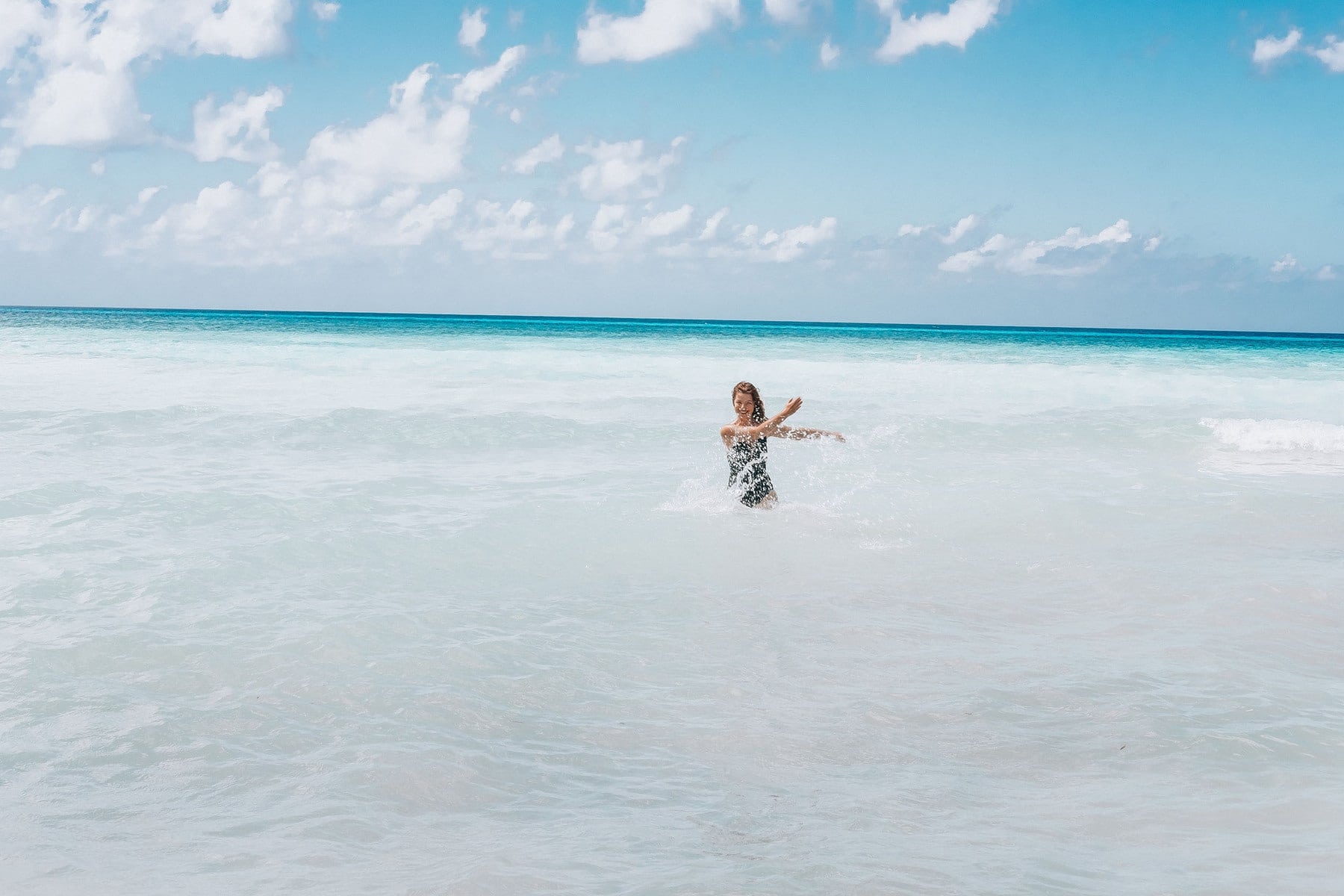
The full destination guide: Mexico — guide and what to see
TL;DR
- Tourist areas are safe: States like Yucatán or Campeche are among the safest places on the entire American continent. Cartel-related murders and violence happen in specific regions where tourists simply never go.
- Cartels don’t target tourists: Foreign visitors are a huge source of income for Mexico. Violence against tourists draws the attention of the army and police, which is the last thing organised crime wants for its business.
- The biggest risk is scams, not kidnappings: You’re far more likely to run into an overpriced taxi, change-counting tricks, or an ATM that charges you a terrible exchange rate (so-called DCC) than any actual violence.
- Water and food: Never drink tap water in Mexico, anywhere. Always buy bottled water. Ice in drinks at good restaurants is safe because it’s made from filtered water in factories (you can recognise it by the hole in the middle).
- Transport: Avoid hitchhiking and flagging down taxis in the street. Always take an official prepaid taxi from the airport, use Uber in cities (where it works), or the reliable and comfortable ADO coaches.
The short answer: is tourist Mexico safe?
If you’re heading to popular destinations like the Yucatán Peninsula, the capital or Oaxaca, and you use common sense, the answer is a clear yes. Statistically, as an ordinary tourist the chance of becoming the victim of a serious crime is absolutely minimal.
Just look at the cold, hard numbers. Tens of millions of tourists arrive in Mexico every year, a huge proportion of them Americans. In 2021, for example, out of nearly five million American visitors, exactly four people died as a result of murder. That puts the probability well below one in a million. Seasoned Cancún visitors often stress the gulf between the media image and the reality of the tourist zone. One traveller who had been to Cancún eighteen times noted aptly on a forum that he felt far less safe during a recent night-time walk through London than anywhere in the Riviera Maya, because the hotel zone is perfectly fine with normal caution source.
Experienced travellers agree that danger in Mexico mainly affects those doing things they shouldn’t be doing. If you’re not out looking for drugs in dark alleys at three in the morning, getting into fights in dodgy bars, or wandering around the city outskirts with the most expensive iPhone in your hand, you’re perfectly safe. One traveller who has been visiting Cancún every year for twenty-five years and even raised her children there gives one simple piece of advice: stick to the tourist zones, go where the crowds are, and stay aware of your surroundings — exactly as you would in Barcelona or Paris source.
What the official travel advisories say
For a really detailed and unsentimental view of safety, the best source is the US State Department. They have the most thorough data, and they rate Mexico not as a whole but state by state. The UK Foreign Office (gov.uk – link opens in a new window) also provides a solid general summary, but the American breakdown into four levels is absolutely invaluable for planning your trip.
As of spring 2026, the US government currently ranks all of Mexico as a Level 2 country (Exercise Increased Caution) — which, incidentally, is exactly the same level as France, Italy or Spain. But let’s take a look at the individual states.
| Warning level (US State Dept) | What it means | Mexican states in this category |
|---|---|---|
| Level 1 | Exercise normal caution (Safest) | Yucatán, Campeche |
| Level 2 | Exercise increased caution (Tourist standard) | Quintana Roo (Cancún, Tulum), Mexico City, Oaxaca, Baja California Sur (Los Cabos) |
| Level 3 | Reconsider travel (Higher risk) | Jalisco, Chiapas, Chihuahua, Guanajuato, Sonora, Baja California |
| Level 4 | Do not travel (High danger) | Sinaloa, Guerrero, Michoacán, Colima, Tamaulipas, Zacatecas |
💡 Tip: Before you go, always sign up for the UK Foreign Office’s travel advice email alerts for Mexico. It takes two minutes, and in the event of any problem (from a hurricane to transport disruption) you’ll get updates with instructions straight to your inbox.
Where it’s dangerous and where it really isn’t
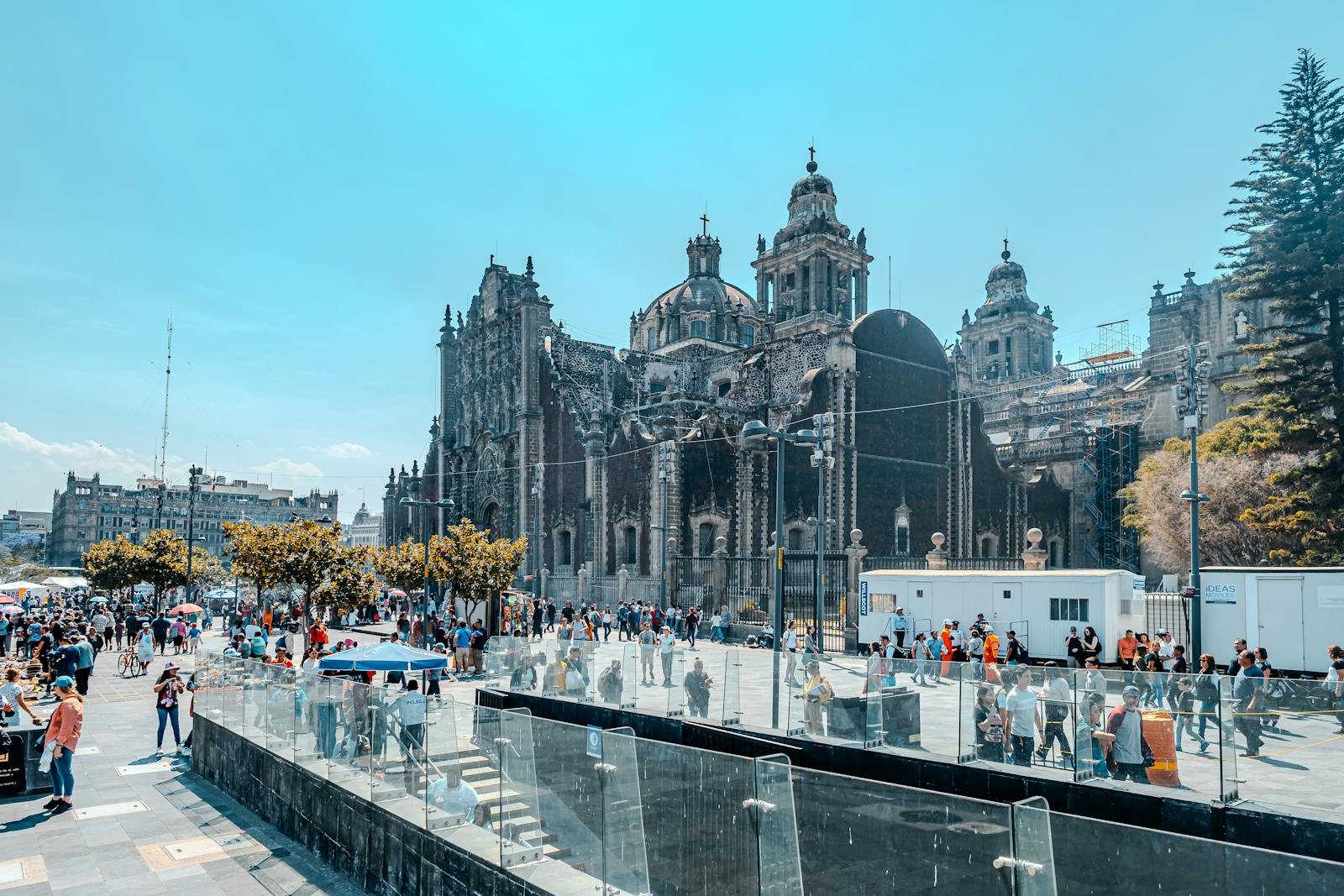
Look at the map and the statistics and you’ll quickly discover one crucial thing. The places where cartel wars are fought and the places people go on holiday barely overlap at all. They’re two completely different worlds.
Level 4 states like Sinaloa or Colima suffer from extreme rates of violence. Colima, for instance, has a horrifying statistic of roughly 101 victims per 100,000 inhabitants. But these are industrial or agricultural areas and transit hubs — there is absolutely nothing there to draw you in as a tourist. You won’t find Mayan ruins, beach resorts or famous little cafés.
At the opposite end of the spectrum lies the state of Yucatán (home to towns like Valladolid and Mérida). This state is statistically safer than most large European or American cities. In the first nine months of 2025 it recorded just 23 murders among more than two million inhabitants. The local police here are exceptionally efficient and well paid, and the state guards its reputation as a peaceful haven very closely.
Tourist zones realistically: Cancún, Riviera Maya, Tulum
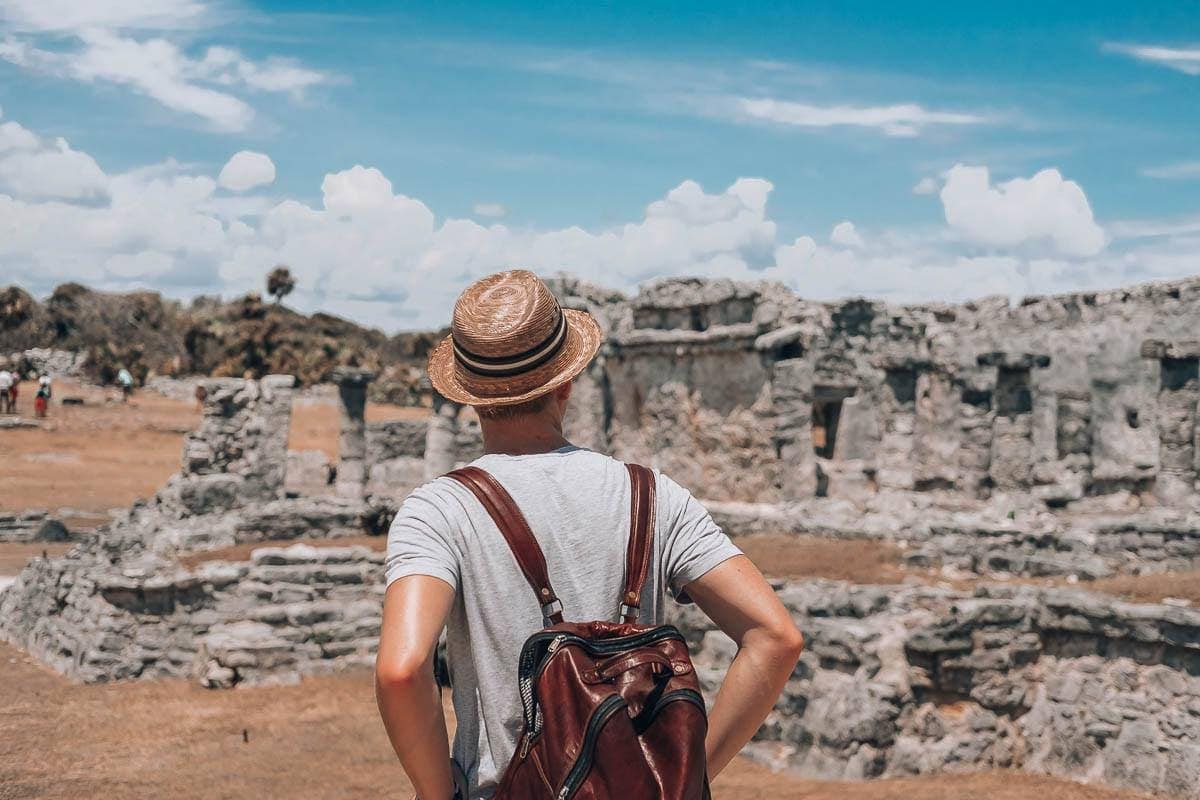
Let’s look at the places you’ll most likely head to if you’re flying to Mexico for the first time. The state of Quintana Roo, which these destinations belong to, sits at Level 2 in the eyes of the US government. What does that mean in practice?
Cancún splits into two parts. The so-called Hotel Zone (Zona Hotelera) is a fifteen-mile strip of luxury resorts, beaches and restaurants, guarded from both ends. It’s essentially a safe bubble where you can stroll around even after dark without worry. Downtown (Centro) is an ordinary Mexican city where people go for cheaper food and markets. During the day it’s perfectly fine; at night, stick to the main lit-up streets and take an Uber back to your hotel.
Riviera Maya and Playa del Carmen offer a more laid-back atmosphere. The Quinta Avenida pedestrian zone in Playa is packed with tourists, police patrol constantly, and the only thing likely to threaten you here is the pushy sombrero sellers and the people offering tequila.
Tulum has undergone an enormous transformation in recent years, from a sleepy hippy town into a luxury party destination. With the rapid growth came problems, and the town has seen a slight dip in tourism — but if you stay in modern, guarded neighbourhoods like Aldea Zama or La Veleta, you’ll feel very comfortable. You can reach the beach zone (Zona Hotelera) by bike or taxi; just avoid walking back at night along the unlit road.
The real risks you’ll actually encounter
This is the most important part. Forget the kidnappings from the movies. The real threats to your wallet and your health are far more mundane — and very easy to prepare for.
Card and ATM scams
Mexico is largely a cash economy, but you can use cards in better restaurants, supermarkets and hotels. The biggest trap for tourists is ATMs. Never, and I mean never, withdraw money from standalone ATMs in the street or in tucked-away corner shops. Skimming gangs (who install card readers) are sophisticated, and by some estimates they’ve already stolen over $1.2 billion this way.
Always withdraw cash only inside official branches of major banks (Santander, HSBC, BBVA, Banorte), ideally during opening hours. These ATMs are guarded and safe. Expect a withdrawal fee charged by the Mexican bank (e.g. Santander takes around 36 MXN, HSBC roughly 81 MXN).
💡 Tip: When the ATM offers you a currency conversion at the end of the transaction (Dynamic Currency Conversion – DCC), ALWAYS press “Decline” or “Rechazar”. If you accept, the ATM charges you a hidden surcharge of 8 to 9%. You’ll get your money either way, but the rate will be calculated by your own UK bank, which is far better value.
Also watch out for the classic counterfeit-money trick at markets. The seller takes your genuine 500-peso note, turns away, discreetly swaps it for a fake, and hands it back claiming it’s counterfeit and asking for another one. It helps to pay the exact amount, use smaller notes (20s and 50s are worth their weight in gold), and say the value of the note out loud as you hand it over source.
Airport taxis and express kidnapping
Transport from the airport (especially in Cancún and Mexico City) is where tourists most often lose money. The most common airport scam is when the meter shows an amount, but at the end the driver claims it’s in US dollars, not pesos. One unlucky passenger was charged over $3,000 for a short transfer between terminals instead of the usual few coins. The solution is simple: never take an unofficial taxi source.
Book a transfer through your hotel in advance, or buy a ticket for an official airport taxi at the airport desk. It’ll cost around 800 to 1,200 pesos (roughly €40–60), but you’ve got peace of mind. An even better option for travelling between cities is the modern, air-conditioned ADO coaches.
In cities, never flag down a taxi in the street. That’s how you avoid the so-called “secuestro exprés” (express kidnapping), where a fake taxi driver takes you to an ATM and forces you to withdraw your daily limit. Use Uber, Didi, or have a radio taxi called from a restaurant. Occasionally you might also encounter a fictitious fine from corrupt police while driving. Travellers describe situations where police threaten to impound the car and offer to “resolve” things on the spot for $100 in cash. Remember that genuine police never demand payment of a fine in cash directly on the street without any kind of receipt source.
Adulterated alcohol
This is a topic that doesn’t get talked about much, but it matters. In the past (around 2017), the Mexican government released a report stating that up to 36% of the alcohol on the market may be of illegal origin, often cut with methanol. This mainly affects cheap all-inclusive resorts, nightclubs and “three cocktails for the price of one” deals.
It sounds scary, but prevention is easy. Drink beer that’s opened in front of you, buy wine, or only have drinks in better, trusted venues where you can see which bottle the bartender is pouring from. Definitely steer clear of bottomless 50-peso margarita cups on the beach.
Water, food and mosquitoes
Montezuma’s revenge (traveller’s diarrhoea) is fairly common in Mexico, but it’s avoidable. Tap water isn’t drinkable anywhere. Always drink “agua purificada” (bottled water) and use it for brushing your teeth too.
When it comes to ice in drinks, there’s no need to panic. All decent restaurants and cafés use safe factory-made ice from filtered water. You can spot it easily — it’s cylinder-shaped with a hole in the middle.
And the food? This is where paradise awaits. Vegetable fajitas, quesadillas stuffed with cheese and mushrooms, fresh guacamole to dip your crunchy nachos into, or street elote (corn with mayonnaise, cheese and chilli). Always choose stalls and restaurants packed with locals — that’s the best guarantee of freshness.
As for mosquitoes and the risk of Zika virus or dengue fever, protect yourself with good-quality repellent in coastal and tropical areas (buy it locally at pharmacies like Farmacia del Ahorro — the ones you bring from home often don’t work). But if you’re travelling to Mexico City (CDMX), which sits at an altitude of over 2,200 metres, you don’t need to worry about mosquitoes at all. They don’t live at that altitude.
Safety for solo female travellers
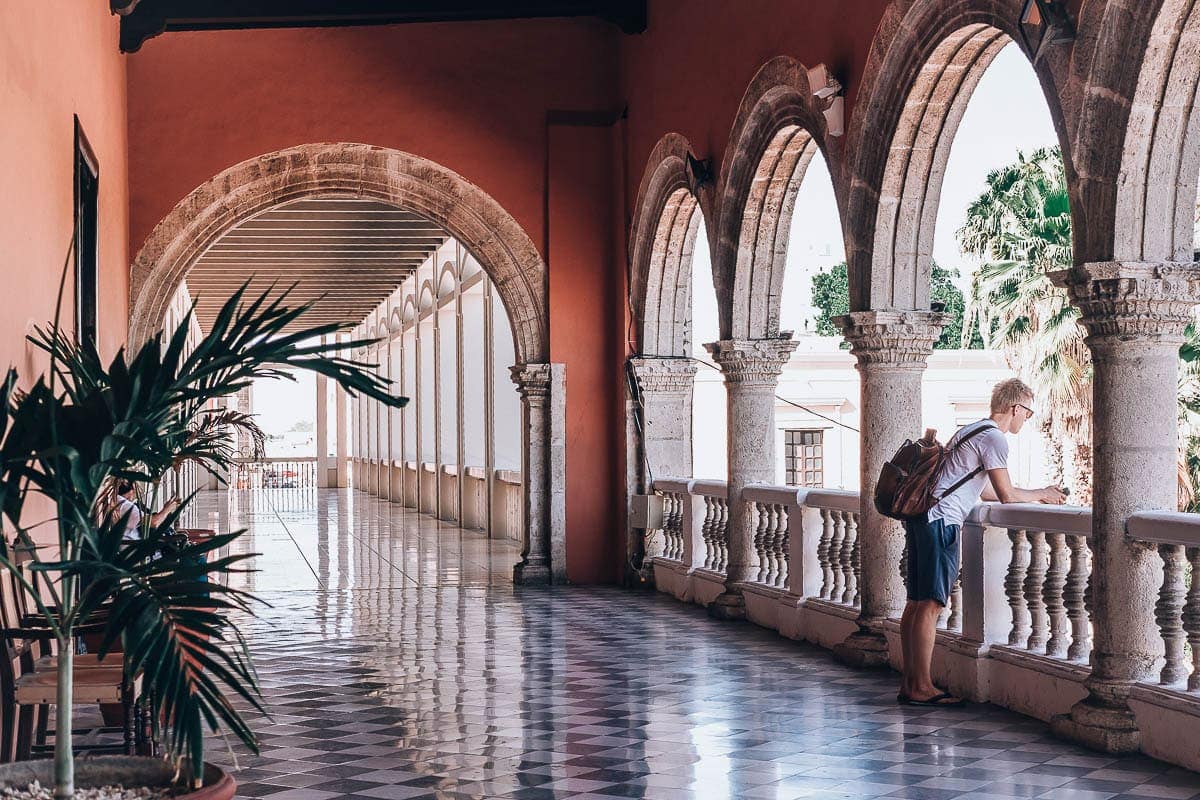
Mexico is a surprisingly excellent destination for women travelling on their own, as long as they choose the right location. Traditionally the safest and most welcoming cities for solo female travellers are Mérida and Oaxaca. Both have fantastic culture, beautiful architecture and a very friendly atmosphere, where you can wander around the centre without worry even in the evening.
If you’re drawn to the enormous Mexico City, the secret to success lies in choosing your neighbourhood. Solo female travellers often agree that the historic centre (Centro Histórico) can be a bit wild and unpleasant after dark. By contrast, neighbourhoods like La Condesa or Roma Norte are full of greenery, lovely cafés and people walking their dogs, and feel incredibly safe. One traveller advises relying exclusively on Uber in CDMX, ignoring the pink street taxis, and always getting a lift back to your accommodation after evening drinks, even if it’s just a few blocks source.
In Tulum, as a solo female traveller, avoid cheap accommodation on the outskirts and instead choose the aforementioned Aldea Zama or La Veleta, where there’s a good community of nomads and expats.
2026 update: roadblocks after a cartel crackdown and the football World Cup
Before you travel, it’s always good to know the current context. In February 2026 a fairly major event took place in Mexico when security forces in the mountains moved against one of the most wanted bosses (El Mencho). This triggered an immediate reaction in the form of so-called “narcobloqueos” (roads blocked with burning vehicles) in roughly twenty states. Sounds like a dispatch from a war zone, right?
But here we come back to the tourist’s reality. During these blockades, which briefly affected even the main routes in Quintana Roo, tourists were not a direct target. Hotels and beaches carried on operating normally. No tourists were injured. The biggest practical risk was that you might get stuck in traffic on the way to the airport. Local media monitored the situation, and it turned out that all you needed was a flexible itinerary and, on the day of the unrest, to simply stay by the pool with a book source. The situation calmed down very quickly.
On top of that, Mexico is currently preparing intensively to co-host the FIFA World Cup in summer 2026. The government is pouring vast sums into security, infrastructure and deploying the National Guard in key cities (particularly CDMX, Monterrey and Guadalajara) to show the country in the best possible light. For the ordinary tourist this means that the police presence on the streets is, and will be, higher this year than ever before.
The practical essentials before you go
To make your trip run completely smoothly, we’ve put together a list of practical things to sort out before you fly or as soon as you land.
Insurance and emergency contacts
Never travel to Mexico without quality travel insurance that also covers potential repatriation home. Healthcare in private Mexican hospitals is at top American standards — but they also charge American prices for it.
Save the British Embassy’s emergency number in your phone — you can find the current contact details for the British Embassy in Mexico City on the gov.uk website. If you’re driving and run into trouble on the road, Mexico has a brilliant service called the Green Angels (Ángeles Verdes) on the number 078. They’re government mechanics who patrol the toll motorways free of charge and will help you with a flat tyre or an empty tank.
💡 Tip: If you’re hiring a car, you’ll run into a quirk of Mexican insurance. The law requires Mexican third-party liability insurance (TPL). Your credit-card insurance doesn’t cover it. You’ll often see rental offers for $5 a day, but at the desk they’ll make you pay an extra $20 to $30 a day for this compulsory cover. Factor that into your budget in advance.
Money and budget
- The basic rate is around €0.05 per 1 Mexican peso (or roughly 18 MXN to 1 USD). How much money will you need?
- Backpacker: $40–60 a day (approx. €37–55) – street food, colectivos, hostels.
- The happy medium: $80–120 a day (approx. €74–110) – a nice Airbnb, dinner out, ADO coaches.
- More luxurious holiday: from $200 a day (€185+) – resorts, domestic flights, car hire.
In restaurants you leave a tip (propina) of 10 to 15%. Leave the housekeeper 25–50 pesos a day, and the petrol-station attendant around 10 pesos for cleaning the windscreen and filling up.
Transport and internet
For longer distances, use the ADO coaches (a ticket from Playa del Carmen to Cancún costs around $10). For shorter trips, try the local vans called “colectivos” — just hop on, and when you want to get off, call out “Baja!”.
Watch out for a recent change in Mexico City. Since March 2026 there’s been a strict ban on picking up passengers via apps like Uber at CDMX airport. The area is guarded by the National Guard, so you’ll have to take an official taxi from the airport and only use Uber for trips around town. In Tulum, Uber doesn’t work at all because of the powerful taxi-driver union.
To have constant access to maps and be able to call an Uber, get yourself internet the moment you land. Either buy a physical Telcel SIM card in any Oxxo convenience store (they have the best coverage), or install an eSIM before you even leave home through a provider like Holafly or Yesim.
Mexico is a beautiful, colourful and incredibly warm-hearted country. Once you’ve spent your first few days there, you’ll discover that the locals are immensely kind and ready to help. Just stick to the basic rules, don’t fall for pointless scams, and your holiday will be exactly what you dreamed of when you booked those flights.
Where to next
If Mexico is calling you and you want to start planning a concrete itinerary, we’ve written detailed guides to its most beautiful places. Have a read of our other articles:
- Cancún: The complete guide and what to see
- Tulum: A guide to the town and its best beaches
- Playa del Carmen: What not to miss on the Riviera Maya
- Mérida: The safest city and the heart of the Yucatán
- Mexico City: The pulsing metropolis that will win you over
- Itinerary: A road trip around the Yucatán Peninsula
What to see in Mexico: the complete guide and 20 best places
Frequently asked questions
Is it safe to go out in the evening in Mexico?
In tourist zones, such as Zona Hotelera in Cancún, the pedestrian zone in Playa del Carmen, or safe neighborhoods in CDMX (Condesa, Roma), an evening stroll is completely problem-free. However, always stick to well-lit streets where there are plenty of people, and if you’re heading back to your hotel late at night from a bar, it’s better to call an Uber or an official taxi.
Can I drink tap water in Mexico?
No, tap water is not drinkable in Mexico, not even for locals. Always use bottled water (agua purificada), even for brushing your teeth, to avoid digestive issues.
Does Uber work in Mexico?
Yes, Uber works great in most big cities like Mexico City or Mérida and it’s the safest way to get around. But be aware that in Cancún and at the CDMX airport there are issues with Uber due to conflicts with taxi drivers, and in Tulum it doesn’t work at all.
Do I need to know Spanish to communicate there?
In the main tourist resorts in Yucatán, you’ll get by with English without any problems, but outside of them only a small percentage of Mexicans (about 4%) speak English fluently. However, just learn a few basic phrases, smile, download Google Translate offline and you’ll always manage to communicate with the locals.
Are night buses in Mexico safe?
First-class buses from companies like ADO are very safe, comfortable and run on toll highways. Nevertheless, it is generally recommended to plan longer journeys during daylight hours, especially in less touristy states due to the risk of road obstacles.
What vaccinations do I need before traveling to Mexico?
No vaccinations are mandatory, but it’s strongly recommended to have valid vaccinations against hepatitis A and typhoid fever, as both diseases are transmitted through contaminated water and food. A valid tetanus vaccination should also go without saying.
What should I do if I get stopped by corrupt police?
Stay calm, smile, and pretend you don’t understand a word of Spanish and only very little English. Never pay a fine in cash on the spot without a receipt—insist they write you an official ticket (multa) that you’ll pay at the station, which usually discourages them quickly.
Tips and Tricks for Your Vacation
Don’t Overpay for Flights
Search for flights on Kayak. It’s our favorite search engine because it scans the websites of all airlines and always finds the cheapest connection.
Book Your Accommodation Smartly
The best experiences we’ve had when looking for accommodation (from Alaska to Morocco) are with Booking.com, where hotels, apartments, and entire houses are usually the cheapest and most widely available.
 🚗 Car rental on the roadVerified rental cars in Mexico
Search with the DiscoverCars comparison engine — it compares prices from dozens of local and international rental companies, and most bookings come with free cancellation.
Compare car prices in Mexico →Don’t Forget Travel Insurance
Good travel insurance will protect you against illness, accidents, theft, or flight cancellations. We’ve had a few hospital visits abroad, so we know how important it is to have proper insurance arranged.
Where we insure ourselves: SafetyWing (simple monthly subscription) and TrueTraveller (for extra-long trips).
Find the Best Experiences
Get Your Guide is a huge online marketplace where you can book guided walks, trips, skip-the-line tickets, tours, and much more. We always find some extra fun there!