

I remember it like it was yesterday — the first time I saw Moraine Lake. I was with my mum and it was snowing. You could barely see a thing, and she was pretty disappointed. It never crossed my mind that one day I’d end up living just a short drive away. And if someone had told me that in a few years the road would be permanently closed to private cars and people would be joining a virtual queue of tens of thousands just to get a shuttle seat, I wouldn’t have believed it. But that’s exactly the reality of visiting Moraine Lake Canada today.
Although the logistics around Canada’s national parks have become a bit of a nightmare, Banff National Park — and Moraine Lake in Alberta in particular — is absolutely worth the effort. Every time I come back, I’m blown away all over again by how real and unfiltered that water colour is. If you’re thinking about heading to the Canadian Rockies, brace yourself for a planning marathon, but I promise you — the moment you lay eyes on the Valley of the Ten Peaks in person, every ounce of stress will melt away. ☺️
I’m going to give you 12 concrete tips, from the famous viewpoint that once graced a twenty-dollar bill to early-morning photo magic to an honest look at whether those outrageously priced canoes are actually worth it. And of course, I’ll walk you through the full guide to surviving the reservation system for 2026. ☺️
The full destination guide: Rocky Mountains — guide and what to see
TL;DR
- Don’t drive here: The road to the lake has been permanently closed to private vehicles since 2023.
- Shuttle reservations are essential: The official Parks Canada shuttle for the 2026 season opens on 15 April at 8:00 AM MDT — tickets sell out within minutes.
- When the lake thaws: Don’t plan a trip for May. The lake usually doesn’t thaw until late June, and before then the surface is either frozen or lacks that iconic turquoise colour.
- Larch Madness: The most stunning autumn scenery (golden larches) appears in Larch Valley between roughly 22–30 September, but expect enormous crowds.
- Canoes cost a fortune: Renting the iconic red canoe will set you back 160 CAD (about 110 €) per hour.
- A lifeline for photographers: If you want to catch sunrise without the crowds and can’t snag an official ticket, private services like Alpine Start Shuttle depart as early as 4:00 AM.
When to Go and How to Get There (Brace Yourself for Logistical Chaos)
Not long ago, you could simply hop in a car and drive up. Since 2023, however, Moraine Lake Road has been completely closed to private vehicles year-round. The reason is straightforward — the car park at the top was bursting at the seams, creating hours-long traffic jams that even blocked emergency services. Today you have to use public transport, which requires seriously meticulous planning, especially during the summer peak when visitors flock here from all over the world. The route from Lake Louise to Moraine Lake is extremely busy, and without a reservation you simply won’t make it to the water.
The lake sits about 14 kilometres from the village of Lake Louise in Alberta, which is where most travellers set off from. The season here is very short — the road typically opens in early June and closes after Canadian Thanksgiving in mid-October. Bear in mind that if you arrive in early June, the lake will most likely still be frozen and you won’t get that turquoise spectacle. The ideal window to visit is from mid-July through to the end of September.
Parks Canada Shuttle (and a Queue of 75,000 People)
This is the official — and by far the cheapest — way to reach the lake. Parks Canada operates a bus service from a large Park and Ride lot on the outskirts of Lake Louise village. The catch is that tickets for the official Parks Canada shuttle are released months in advance and the demand is absolutely staggering. For 2026, mark your calendar: 15 April at 8:00 AM Mountain Time (MDT).
The system works like this: you buy a ticket for a specific departure time, and then you can also use the free Lake Connector shuttle that runs between Lake Louise and Moraine Lake. I’d recommend having browsers open on multiple devices and clicking the very second the clock hits 8:00. Tickets only cost a few dollars, so it’s worth grabbing one even if you’re not 100% sure about your exact day yet.
Alternatives for Photographers and Those Happy to Pay More
If you don’t get lucky in the official sale, the world won’t end — though your wallet might shed a tear. Commercial operators like Moraine Lake Bus Company or Fairview Tours offer their own transfers. These tickets can sometimes be snagged even a few weeks beforehand, but while the government shuttle costs pocket change, you’ll pay anywhere from 50 to 100 CAD (roughly 35–70 €) per person with a private company. At the extreme end, luxury private tours can run up to 550 CAD (around 380 €) for the day.
If you’re a keen photographer wanting to catch that magical morning light when the sun hits the peaks of the Valley of the Ten Peaks, the official buses won’t help — they don’t start running until around 6 AM. Your saving grace is the Alpine Start Shuttle, which whisks you up from the village as early as 4:00 AM. It’s a brutal wake-up call, especially when it’s freezing outside (which in the mountains it practically always is at that hour), but the photos and the silence at the lake are worth every shivering minute.
Where to Stay Near Moraine Lake and How Much It Costs
Accommodation in Banff National Park isn’t exactly budget-friendly, and the Lake Louise area is arguably the priciest part of the entire park. When you add the 15% tax on top, plus the tipping culture that’s customary in Canada for pretty much every service, your holiday budget can balloon quickly. Still, I genuinely believe everyone should visit this area at least once and stay as close as possible — commuting from distant Calgary (where hotels are half the price) will drain you completely and eat into your precious time.
For accommodation in the immediate area, expect to pay at least 150–300 € per night for two, and during the peak summer season prices routinely double. A big advantage of the pricier hotels right in the village is that they often include free parking and some even offer their own shuttle service to the lakes. We’ve found that the best strategy is to book your room at least six months ahead.
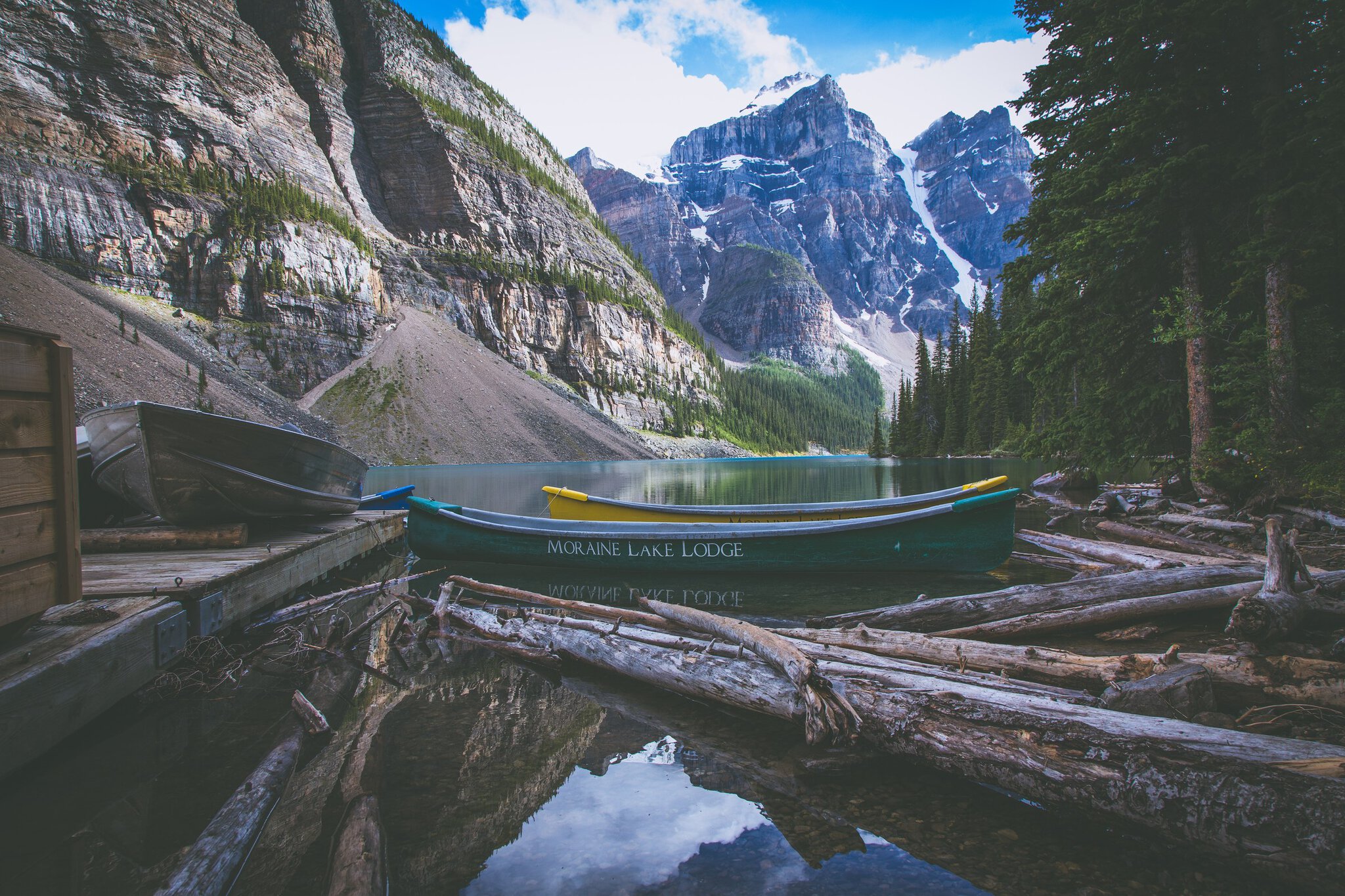
If you asked me what the ultimate cheat code for this entire area is, I’d say: Moraine Lake Lodge. It’s the only hotel right on the lakeshore. A night here will cost you roughly the same as a decent second-hand car, but guests enjoy one enormous, incredible perk — they can drive to the lake in their own vehicle. Yes, the road closure doesn’t apply to hotel guests. So if you want to experience the Canadian wilderness in absolute luxury, wake up to lake views from your bed, and skip the bus stress entirely, this is the ultimate bonus in the national park.
If Moraine Lake Lodge is out of your budget, you’ll find comfortable and more affordable options in Lake Louise on Booking.com (about 15 minutes’ drive from the lake) or directly in Banff (40 minutes’ drive, a much wider selection and slightly lower prices).
Moraine Lake: 12 Things to See and Do
Now we’re getting to the good stuff. Moraine Lake isn’t just about that one viewpoint near the car park — even though that alone will blow your mind. Around the lake there’s a network of incredibly beautiful hiking trails, from easy flat walks to gruelling climbs where you’ll be grateful for a proper pair of hiking boots.
I’d suggest splitting the area into sections. If you only have a few hours, focus on the immediate lakeside. If you have a full day, definitely head up to the higher elevations where you’ll leave 90% of the tourists behind and discover the true mountain wilderness.
1. Rockpile Trail and the Famous Twenty Dollar View
If you’ve ever seen a photo of Moraine Lake, there’s a 99% chance it was taken from right here. Rockpile Trail is quite possibly the shortest and easiest “hike” in the world. As the name suggests, it’s a massive pile of boulders that forms a natural dam at one end of the lake. You’ll reach it in about five minutes from the bus stop and the path is genuinely effortless.
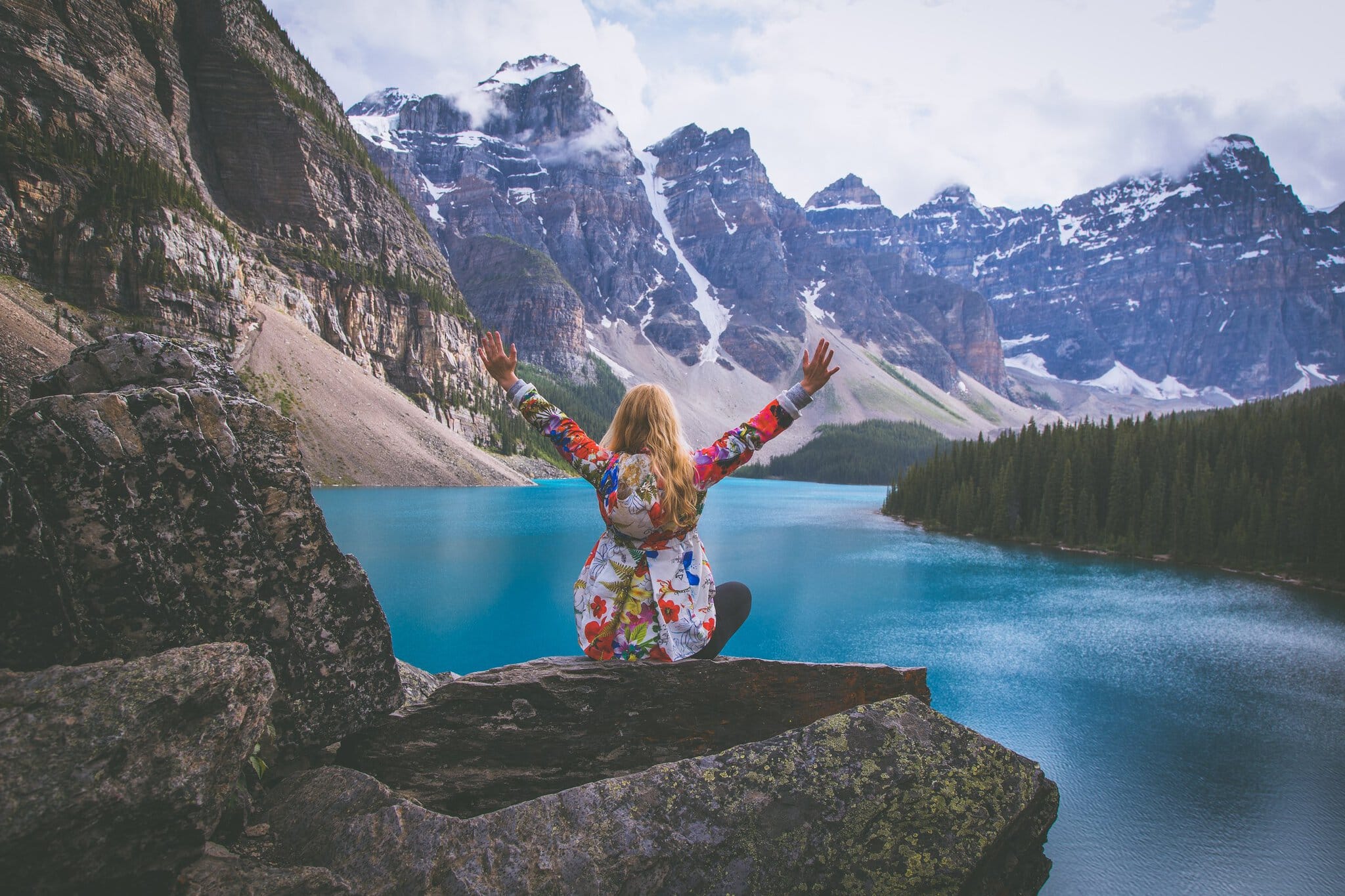
This viewpoint is commonly nicknamed the “Twenty Dollar View,” and there’s a good reason for that. This exact vista — turquoise water backed by ten snow-capped peaks — once graced the Canadian twenty-dollar banknote, issued in the 1970s. Just be prepared for company — you definitely won’t have it to yourself. Even so, the scent of pine needles and fresh mountain air in the morning gives the whole place an atmosphere that’s hard to beat, no matter how many other visitors are around.
2. Valley of the Ten Peaks
The Valley of the Ten Peaks isn’t so much a specific destination as it is the jaw-dropping scenery that dominates the entire lake. Standing on the Rockpile, you’re looking directly at ten massive rocky summits rising above 3,000 metres. Each mountain has its own name, with the tallest being Mount Hungabee at over 3,400 metres above sea level.
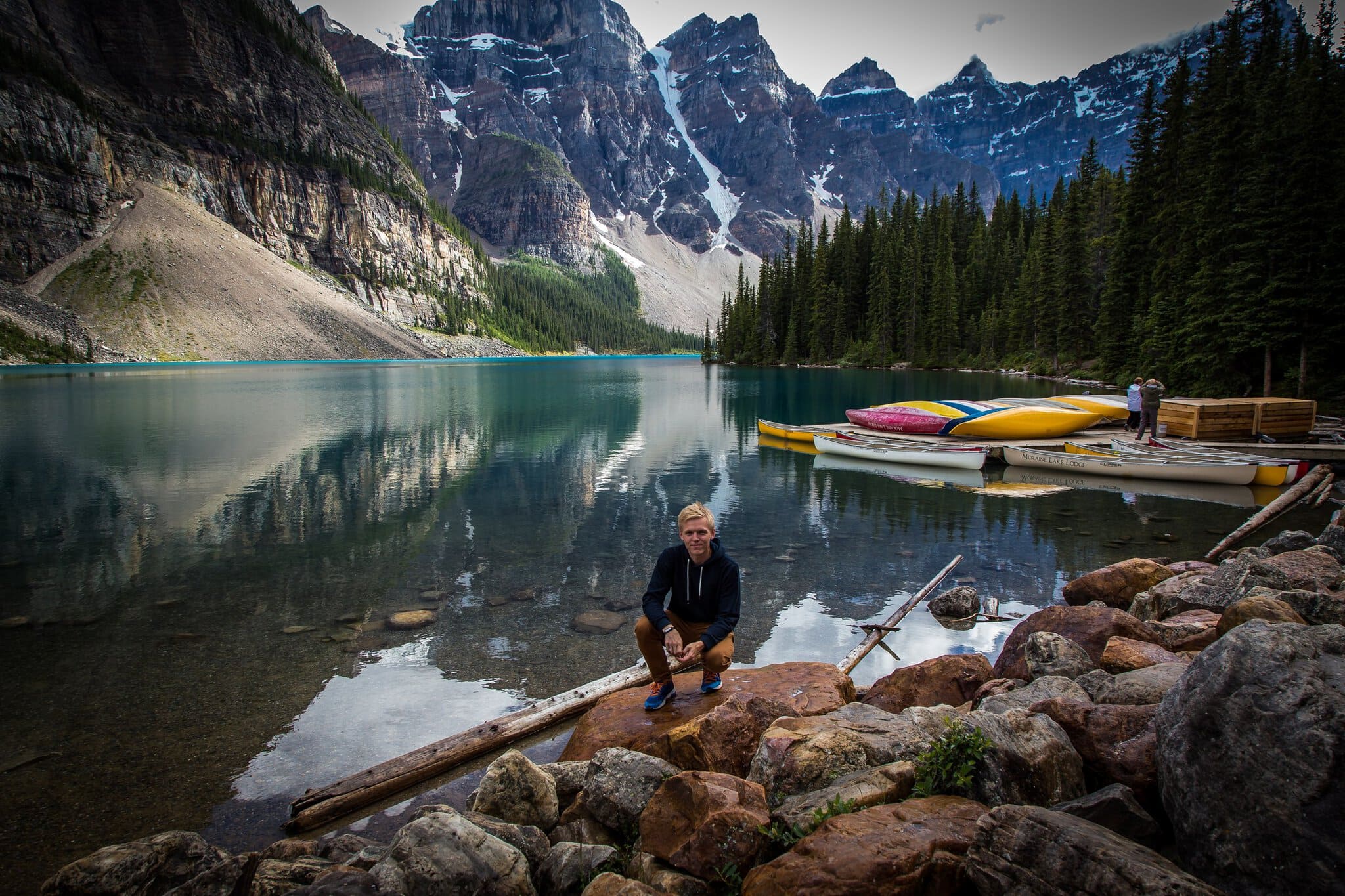
The peaks were originally named after numerals in the Stoney Nakoda language, before cartographers renamed them after explorers and railway magnates. A typically Canadian story. Those mountains also act as a protective wall, which is why the lake surface is often as still as glass — perfect for photography. If you’re lucky enough to hit a completely windless moment, you’ll see every single peak reflected in the water.
3. Larch Valley (and the Frenzy Known as Larch Madness)
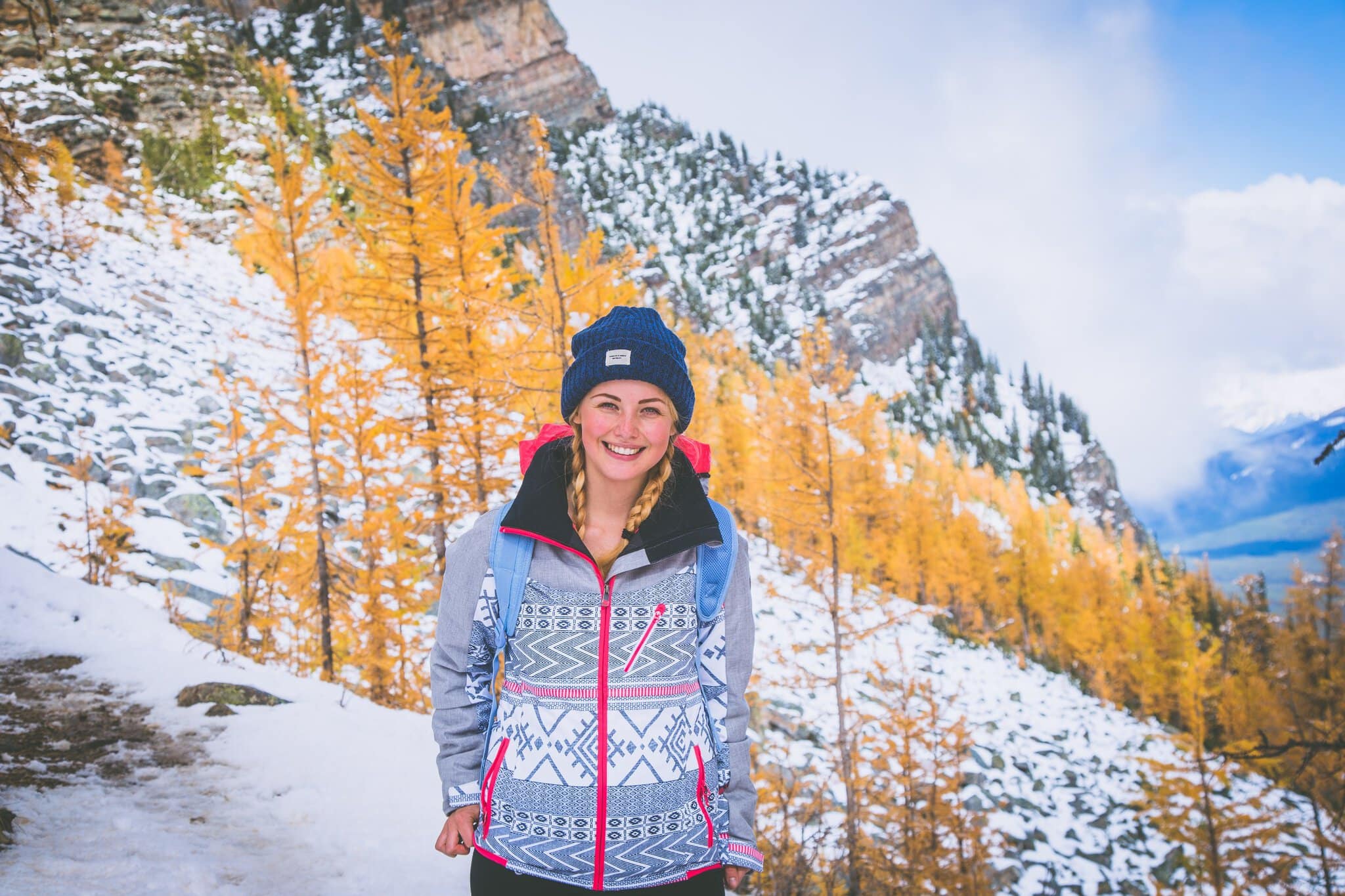
If you love autumn colours, this place needs to be on your bucket list. The hike into Larch Valley is fairly steep, kicking off with a seemingly endless series of switchbacks through the forest that’ll have you properly sweating. But once you climb above the treeline, a vast alpine valley filled with larch trees opens up before you. Unlike most conifers, larches turn golden in autumn and then shed their needles.
The best time to visit is a very specific window, usually between 22 and 30 September, when the larches turn an electrifyingly bright gold. Canadians even have a special term for this period — “Larch Madness” — and it’s not the slightest bit of an exaggeration. People from across the country descend on Banff purely for this valley. You’ll see dozens of photographers, families, and dog walkers. The views of autumn trees with glaciers behind them are so spectacular you’ll forget all about being out of breath from those awful switchbacks. 😁 Make sure to pack plenty of snacks and — most importantly — water, because there are no drinking fountains up top.
4. Hiking to Sentinel Pass
Sentinel Pass is the natural extension of the Larch Valley hike, and if you’ve still got energy in the tank, I’d absolutely recommend pushing on. While plenty of people make it to the larch-filled valley, only the more determined carry on to the pass. From the valley floor you can already see the pass above you — a sharp notch between two peaks. The trail crosses open scree fields full of rocks big and small, so once again, good boots are non-negotiable.
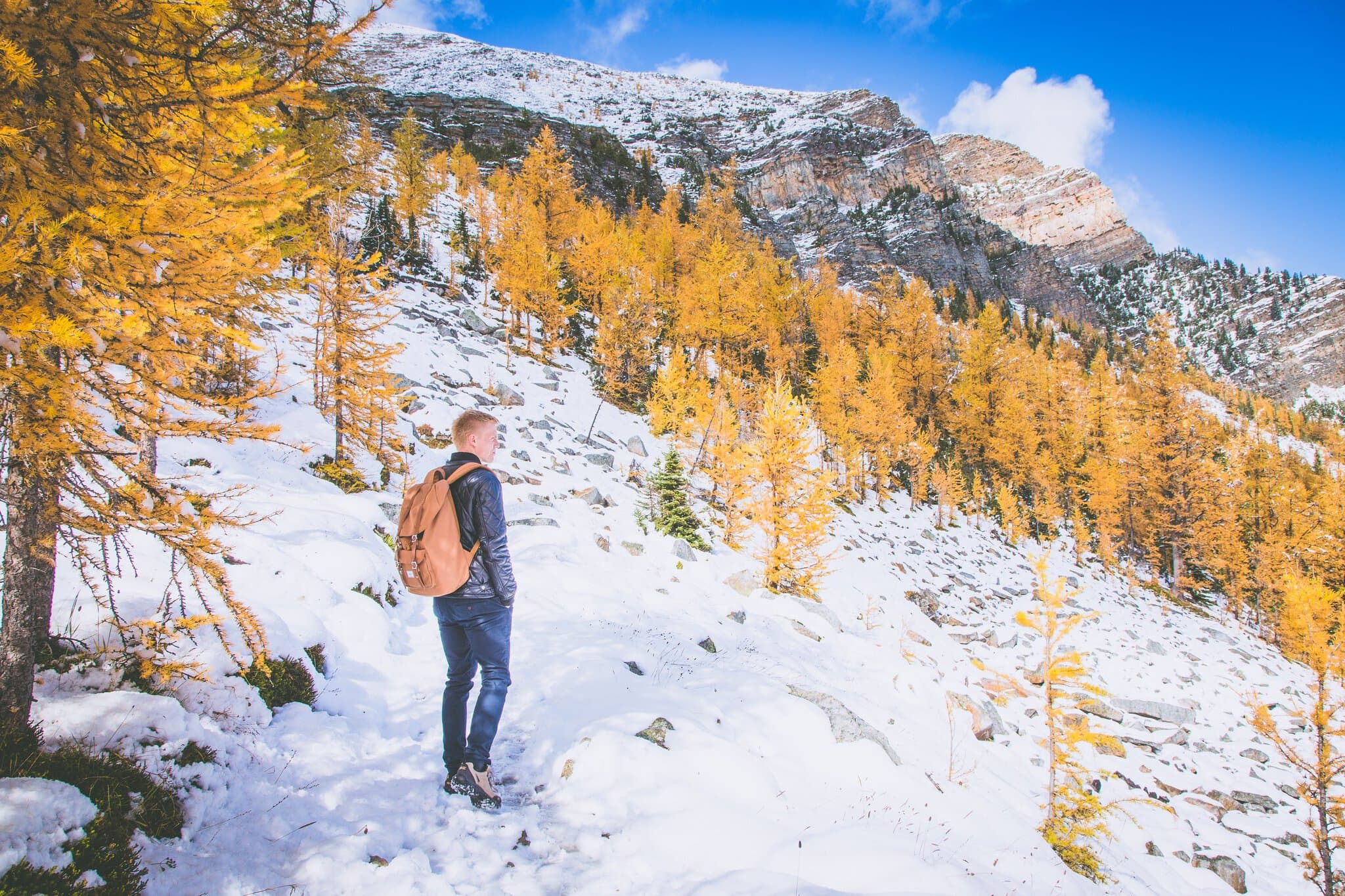
When you finally scramble up to the 2,611-metre summit, your reward is an unbelievable panoramic view in both directions. On one side, the entire Larch Valley spreads out below you with the Valley of the Ten Peaks behind it, and on the other you’ll see the steep and deserted Paradise Valley. It’s frequently very windy up here, and even if it’s warm down in the valley, a windproof jacket is absolutely essential — we once got caught in a light snowstorm up here at the end of August, no joke.
5. Consolation Lakes (Escape the Crowds)
Looking for a break from the hundreds of people crammed onto the Rockpile? Head to Consolation Lakes. This trail starts from essentially the same spot as the viewpoint path, but branches off into the forest and follows a creek. It’s a relatively flat and very pleasant walk, taking roughly an hour and a half one way.
You’ll reach two smaller glacial lakes surrounded by massive mountain walls — primarily Mount Babel and Mount Quadra. Don’t expect the same turquoise colour as Moraine Lake; the water here has more of a deep blue hue. But the atmosphere is wonderfully peaceful. To reach the water’s edge, you’ll need to hop across some giant boulders left behind by a retreating glacier. We usually bring a good flask of coffee and soak in the silence that you simply can’t get at the main viewpoint — and occasionally you’ll spot marmots sunbathing on the rocks.
6. Canoeing on the Lake (at the Price of a Decent Hotel)
This is probably the most photogenic activity you can do here, but I’ll be honest — it requires closing your eyes when you pay. Renting one of the iconic red canoes from Moraine Lake Lodge is outrageously expensive, currently running at about 160 CAD (around 110 €) per hour. When I worked in Lake Louise, it cost about a third of that and even then we thought it was steep.
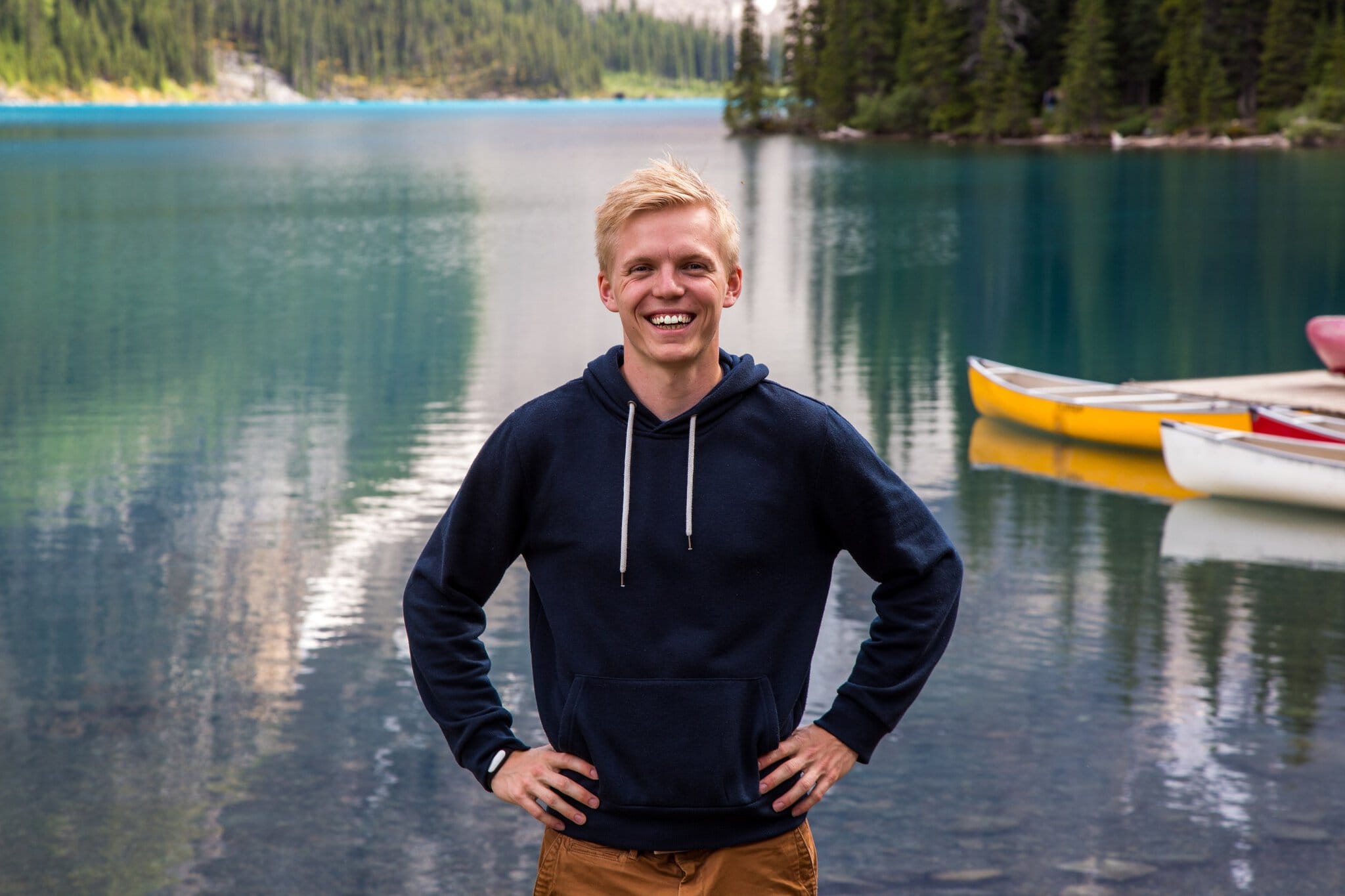
That said, if your budget allows it, this is a moment you’ll never forget. Once you paddle a few dozen metres from shore, all the noise fades away and you find yourself alone in the middle of that unreal turquoise splendour. The water is full of so-called rock flour — fine stone dust that reflects sunlight and gives the lake its colour. The feeling of your paddle slicing through the perfectly opaque surface is pure magic. The rental operates on a first-come, first-served basis, so I’d suggest making this your very first activity of the morning.
7. Moraine Lake Lakeshore Trail
For those who don’t fancy tackling any elevation gain but still want to soak in the views from different angles, the trail along the lakeshore is ideal. It starts near the canoe rental and winds along the right-hand shore for just under three kilometres. The path leads through a beautiful old-growth coniferous forest, and the lake is within arm’s reach the entire way.
At the end of the trail, you’ll reach the point where glacial meltwater feeds into the lake. Here you’ll find small wooden boardwalks and a wild stream. It’s fascinating to see how milky and opaque the glacial water is before it settles into the larger lake. This route is completely flat, making it easily manageable even with small children.
8. Eiffel Lake (Panoramas Without the Crowds)
Eiffel Lake is a somewhat overlooked gem. Most people who start the Larch Valley trail blindly follow the crowds up towards the pass and completely miss the Eiffel Lake turnoff. And that’s a real shame. Once the trail splits after the first steep switchbacks and you head left, the crowds vanish instantly and you find yourself on a wonderfully scenic path traversing the mountainside.
You’ll reach a much smaller lake with a gorgeous deep colour, but the real bonus is that throughout the entire hike you have the Valley of the Ten Peaks laid out in front of you — and from this perspective the mountains look even more imposing than from down at Moraine Lake. The trail is less steep than Sentinel Pass, so it’s an excellent alternative if you want stunning alpine views without quite as much effort. Plus, there’s a good chance you’ll encounter whistling marmots hiding among the rocks along the path.
9. Watching the Sunrise (Alpine Start)
I touched on this briefly in the transport section, but sunrise at Moraine Lake is, for me, probably the most powerful visual experience in all of Canada. It’s not just about fewer people (though you’ll still be jostling for position with other photographers at the viewpoint) — it’s all about the light. The sun rises behind you and first illuminates only the very highest tips of the Ten Peaks, which glow in an incredibly vivid orange and pink.
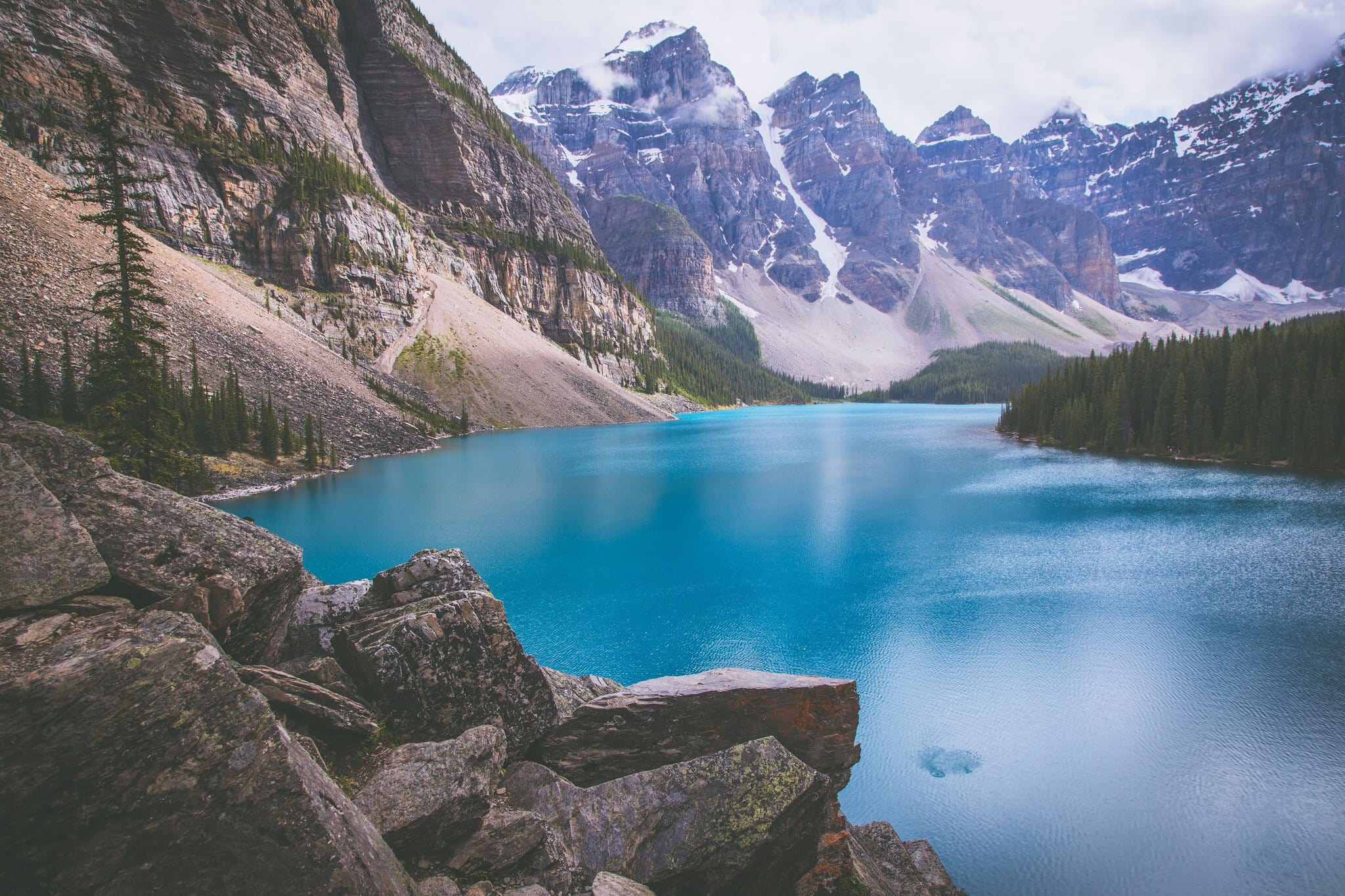
As the sun gradually climbs, that fiery line creeps down the rock faces towards the lake. And if there’s no wind, the entire colour show is reflected back to you on the water’s surface. To see this, you’ll need to book an early shuttle or be a guest at the expensive hotel right on the shore. Don’t forget to bring seriously warm clothing — even in the middle of summer, it can be below zero up here in the early hours.

10. Swimming in the Lake? Only for the Brave
I often get asked whether you can actually swim in Moraine Lake. The answer is: technically yes, but in practice you’ll change your mind very quickly. The lake is fed by melting glaciers from nearby mountains, which means the water temperature — even in the height of the hottest August — rarely exceeds 4 to 5°C. It’s genuinely like jumping into a barrel of ice.
Plenty of tourists dip their ankles in for a funny Instagram shot, but very few last more than ten seconds because the cold is instantly painful. If you’re a cold-water enthusiast and the Wim Hof method is part of your daily routine, you might enjoy it — but don’t expect anything resembling a recreational swim at the beach.
11. Connecting with Lake Louise (Roam Transit)
If you’ve made the journey all the way out here, you’ll definitely want to combine Moraine Lake with the nearby famous Lake Louise. The good news is that the national park system has thought of this — a free shuttle called the Lake Connector runs from the upper car park.
To use the Connector, you’ll need a valid reservation for one of the Parks Canada buses, or a special Super Pass from local operator Roam Transit, which runs from the town of Banff. Buses between the two lakes run roughly every 15 minutes and the journey takes just over twenty minutes. If you were driving, you’d have to head back down to the highway and queue again at the other car park, so this shuttle is a massive time-saver and much kinder on the nerves.
12. Picnic by the Lake
It might sound simple, but one of the best tips I can give you is to bring your own food. Scattered around Moraine Lake are several sturdy wooden benches and picnic tables. The café at the lodge is nice enough, but the prices are aimed squarely at international tourists — and honestly, a humble sandwich with a jaw-dropping view tastes far better than an overpriced meal in a packed dining room.
Stop off in Lake Louise village at the grocery store or at Laggan’s bakery, pick up some fresh bread, coffee and a few treats, and have yourself a feast in the wild. Just one request, please — never leave food unattended. Despite the idyllic setting, you’re deep in bear country, and on top of that there are incredibly bold squirrels and Clark’s nutcrackers that will steal a roll right out of your hand the second you look away. 😉
Map of points of interest for your phone
Where to Eat and Refuel
Dining options right at the lake are very limited, which is understandable given the remote location. If hunger strikes, you can try one of the following — just be prepared for alpine-level prices.
- Snowbird Cafe: A small café that’s part of Moraine Lake Lodge. You can grab a decent specialty coffee, hot chocolate, sandwiches and excellent muffins here. They also do a great ice cream, which you’ll truly appreciate on a hot summer day after descending from Sentinel Pass. Prices are on the high side, but that’s to be expected.
- Moraine Lake Lodge Dining Room: We haven’t actually dined here ourselves (the price tag always put us off 😅), but the reviews rave about the local game and fish dishes, and the view from the window is a perfect match. I’d recommend making a reservation well in advance, especially if you’re not a hotel guest.
Tips and Tricks for Travelling to Canada
Planning a transatlantic trip takes some serious effort, so I want to share the services we swear by — they’ve saved us loads of time and money on all our flights from Europe.
Finding Flights to Canada
When we fly to Calgary or Vancouver, we always search for flights through Kiwi — it’s our favourite booking platform. It can combine airlines that don’t normally partner with each other, which has saved us a fortune, especially when connecting through London or Frankfurt. From the UK, you’ll find direct flights to Calgary with airlines like WestJet and Air Canada, or good-value connections through Icelandair or Air Transat. The savings mean more money for things like renting that outrageously priced canoe on the lake.
Renting a Car for a Road Trip
Honestly, I can’t imagine doing Canada without a car (unless you’re staying at just one lake). Lukáš and I have had consistently good experiences with DiscoverCars, which we use all over the world. It’s a comparison site, so you’ll always see the best deals from all the major rental companies in one place. In Canada, it’s definitely worth going for a car with a bit more power under the bonnet — the mountain passes can be seriously steep.
Don’t Forget Insurance and Connectivity
Whatever you do, don’t set foot in Canada without proper travel insurance — healthcare for visitors is horrendously expensive. We’ve been using and recommending SafetyWing insurance for years. You can buy it online from anywhere in the world and it covers the vast majority of tourist activities.
And if you want to be connected the moment you land (say, to frantically check those tricky Moraine Lake shuttle reservations), definitely look into digital SIM cards. We use Holafly — you can download it to your phone in under a minute and skip the hassle of hunting for a plastic SIM at the airport.
Where to Go Next
Moraine Lake is just one of many iconic lakes in the Canadian Rockies. If you’re planning a longer road trip, have a look at our other articles:
- Tips from the neighbouring lake can be found in our guide to what to see around Lake Louise.
- A complete guide to Banff National Park, of which Moraine Lake is a part.
- From Moraine Lake, the legendary Icefields Parkway stretches all the way to Jasper — 232 km of the most beautiful road on Earth.
- If you’re looking for a calmer base than overcrowded Banff, check out our comparison of Canmore vs. Banff.
 🚗 Car rental on the roadVerified car rentals in the Rocky Mountains
Search with the DiscoverCars comparison engine — it compares prices from dozens of local and international rental companies, and most bookings come with free cancellation.
Compare car prices in the Rocky Mountains →FAQ — Frequently Asked Questions About Moraine Lake
I’ve gathered the most common questions readers ask me when planning a trip to Moraine Lake. If anything’s missing, feel free to drop me a message.
Can I drive my own car to Moraine Lake?
Not since 2023. Access to Moraine Lake is only possible via Parks Canada shuttle bus or commercial transportation—Parks Canada closed the parking lot due to overcrowding. The only exceptions are guests of Moraine Lake Lodge and organized tours. Book your shuttle tickets in advance online through Parks Canada.
Why is the water at Moraine Lake so intensely turquoise?
The unusual turquoise color comes from so-called ‘rock flour’—fine glacial sediment carried into the lake by melting glaciers. These microscopic particles reflect the blue and green spectrum of sunlight. The color is most intense from late June through September, when glaciers are melting most actively and the water is at its most saturated.
When is the best time to visit Moraine Lake?
For the turquoise color and all attractions open: late June through mid-September. For golden larches and fewer crowds: late September through early October. Before the second half of June, the road is usually closed due to snow and avalanches. In winter, the lake is frozen and inaccessible.
What time of day has the fewest crowds at Moraine Lake?
Your best bet is to catch the very first morning shuttle (around 5:30–6:00 AM). Not only will you get the most beautiful morning light and peace and quiet, but you’ll also avoid the crowds that arrive between 9 AM and 4 PM. A second wave of calm comes after 6 PM, when people head back to their hotels.
Is visiting Moraine Lake worth the shuttle bus hassle?
Absolutely, 100%. Most travelers find Moraine Lake more beautiful than neighboring Lake Louise—it has a more dramatic mountain backdrop (the famous Ten Peaks) and even more intensely turquoise water. Even after multiple visits, the view from Rockpile Trail will take your breath away every single time.
Can I swim in Moraine Lake?
Technically yes, but practically only for polar bear swimmers. The water comes directly from melting glaciers, so even in the middle of a hot summer, the temperature stays between 4–5°C (39–41°F). Most visitors just dip their feet in and immediately run away. Instead of swimming, try renting a canoe—it’s an experience you won’t find anywhere else in Canada.
How many days do I need in the Moraine Lake area?
You can see Moraine Lake itself in half a day. For the entire area (Moraine Lake + Lake Louise + Lake Agnes Tea House + Johnston Canyon), set aside at least 2–3 days. If you want to combine it with Icefields Parkway and Jasper, plan for a week to ten days.
Tips and Tricks for Your Vacation
Don’t Overpay for Flights
Search for flights on Kayak. It’s our favorite search engine because it scans the websites of all airlines and always finds the cheapest connection.
Book Your Accommodation Smartly
The best experiences we’ve had when looking for accommodation (from Alaska to Morocco) are with Booking.com, where hotels, apartments, and entire houses are usually the cheapest and most widely available.
Don’t Forget Travel Insurance
Good travel insurance will protect you against illness, accidents, theft, or flight cancellations. We’ve had a few hospital visits abroad, so we know how important it is to have proper insurance arranged.
Where we insure ourselves: SafetyWing (simple monthly subscription) and TrueTraveller (for extra-long trips).
Find the Best Experiences
Get Your Guide is a huge online marketplace where you can book guided walks, trips, skip-the-line tickets, tours, and much more. We always find some extra fun there!
More from Rocky Mountains
Full guide →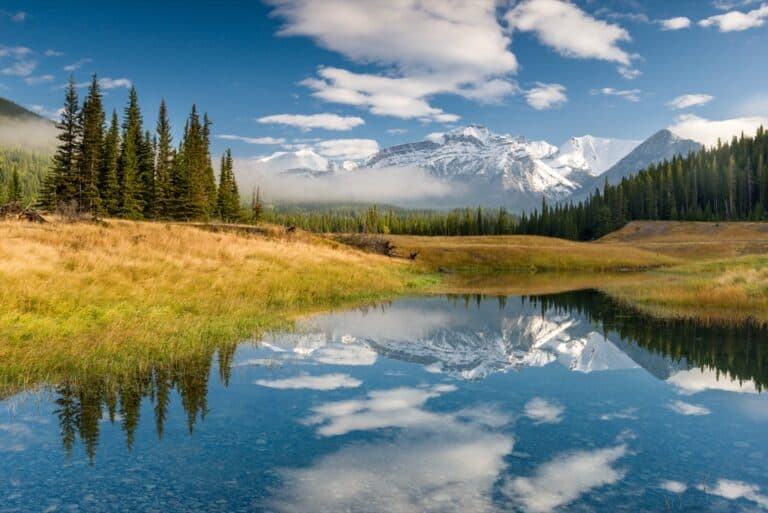 Travel story · most readWhat to Pack for the Canadian Rockies: Summer & Winter Packing List 2026
 ItineraryWestern Canada Road Trip: 14–21 Day Itinerary from the Rockies to the Pacific
 Where to stayCalgary, Canada: 23 Best Things to Do and See
 ActivitiesKananaskis, Canada: 10 Best Hikes Away from the Crowds
 With kidsHow Much Does a Trip to Alberta & BC Cost in 2026: Budget for Couples, Families and Backpackers


