

You know when someone tells you “you absolutely have to see this” and you secretly think “yeah, yeah, just another overhyped destination”? That’s exactly how I felt about Lake Louise Canada. The internet is flooded with those perfect shots of a turquoise lake framed by snow-capped mountains, and I was convinced it was all about the right filter and a clever angle. But then I saw it for the first time with my mum — it was late summer and it was actually snowing at Lake Louise (yes, that can happen), and it was absolutely perfect. 😅
Lake Louise in Canada is simply a place where nature showed off everything it’s got — and then added a little more. The colour of the water is so unreal that your brain refuses to believe it’s genuine. It’s not a filter, it’s not Photoshop — it’s glacial dust that turns an ordinary mountain lake into something that looks like spilled turquoise ink.
We first visited Lake Louise during our road trip across western Canada, and later Lukáš and I actually lived here while working as mountain guides. There are very few corners of this area we haven’t explored… That’s why I sat down and put together this — a complete guide with 11 best things to see and do at Lake Louise, where to stay, how much it all costs, and what to watch out for so you can enjoy it stress-free.

TL;DR
- Lake Louise sits in Banff National Park, Alberta — about 2 hours’ drive from Calgary and 40 minutes from the town of Banff. A car is essential.
- Best time to visit is June to September — the turquoise colour is most intense from late June. September and October offer gorgeous golden larches and fewer crowds.
- The car park at the lake fills up before dawn in summer — plan on using the Parks Canada shuttle bus.
- Moraine Lake has been accessible only by shuttle since 2023 (no private vehicles!) — book your tickets well in advance.
- You need a Parks Canada Discovery Pass to enter the park — a day pass costs 10.50 CAD (~€7), an annual pass 72.25 CAD (~€48).
- Accommodation in Lake Louise is expensive — expect at least 450–530 CAD/night (~€300–€350). The Fairmont Chateau starts from 1,000 CAD/night (~€660).
- Best hikes: Lake Agnes Tea House (cash only!), Plain of Six Glaciers, Johnston Canyon.
- Don’t forget bear spray — you’re in bear country.
- Icefields Parkway from Lake Louise to Jasper is quite possibly the most beautiful road you’ll ever drive.
- In winter: skiing, ice skating on the frozen lake, and the Johnston Canyon Ice Walk.
The full destination guide: Rocky Mountains — guide and what to see
When to Visit Lake Louise and How to Get Your Bearings
Lake Louise sits at an elevation of 1,600 metres in the heart of Banff National Park, Alberta. And because we’re in the Canadian Rockies, the weather does whatever it pleases and the seasons couldn’t be more different from one another — quite literally.
Summer (June–September): Peak Season and Turquoise Splendour
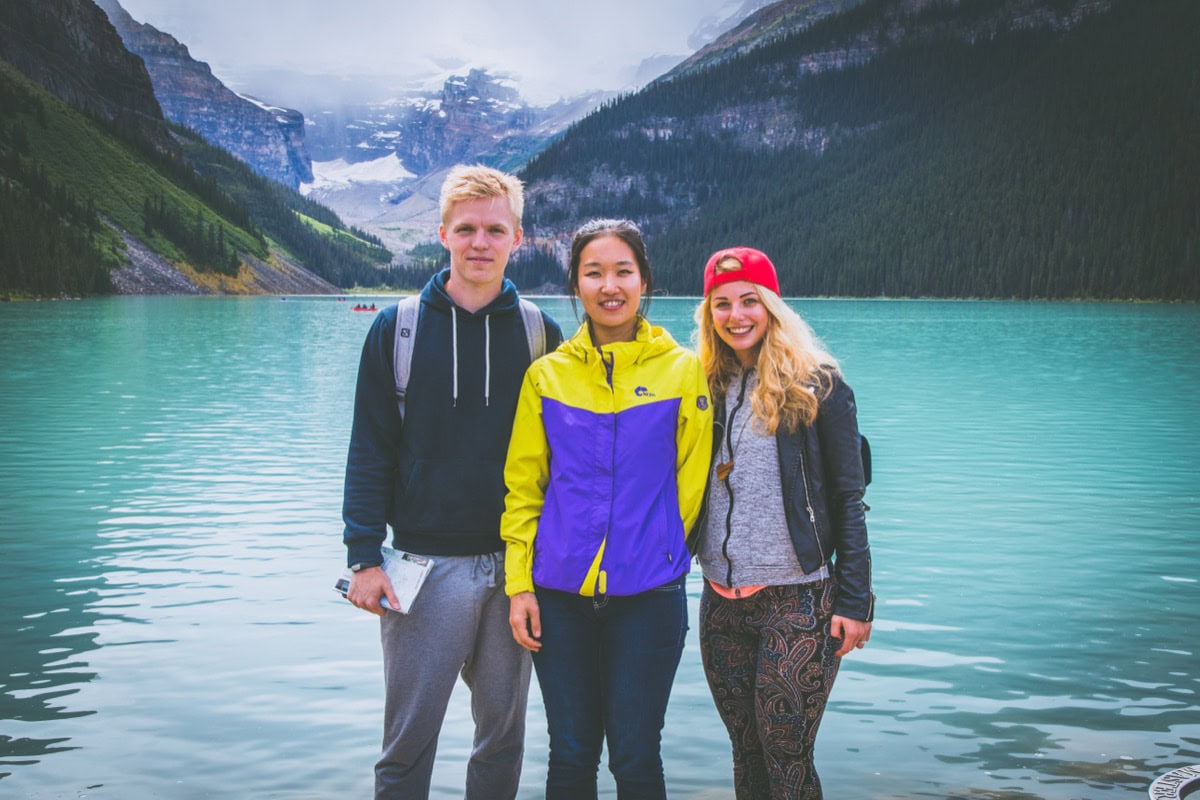
Peak season runs from June to September, and it’s the only time you’ll see that famous turquoise colour in its full glory. The colour comes from so-called glacial flour — fine rock dust released by melting glaciers that reflects light and makes the water look like liquid turquoise. The colour reaches its greatest intensity from late June through early September, when the glaciers are melting fastest.
The downside? People. Lots of people. In July and August, Lake Louise is absolutely packed, and the car park at the lake fills up before six in the morning. That’s no exaggeration — we arrived at half past six and it was already full. 😅
If you can swing it, September is the golden sweet spot — the lake is still beautifully turquoise, there are far fewer tourists, and the larch trees start turning golden yellow. The contrast of golden trees against turquoise water is something you’ll never forget.
Autumn (October): Larches and Tranquillity
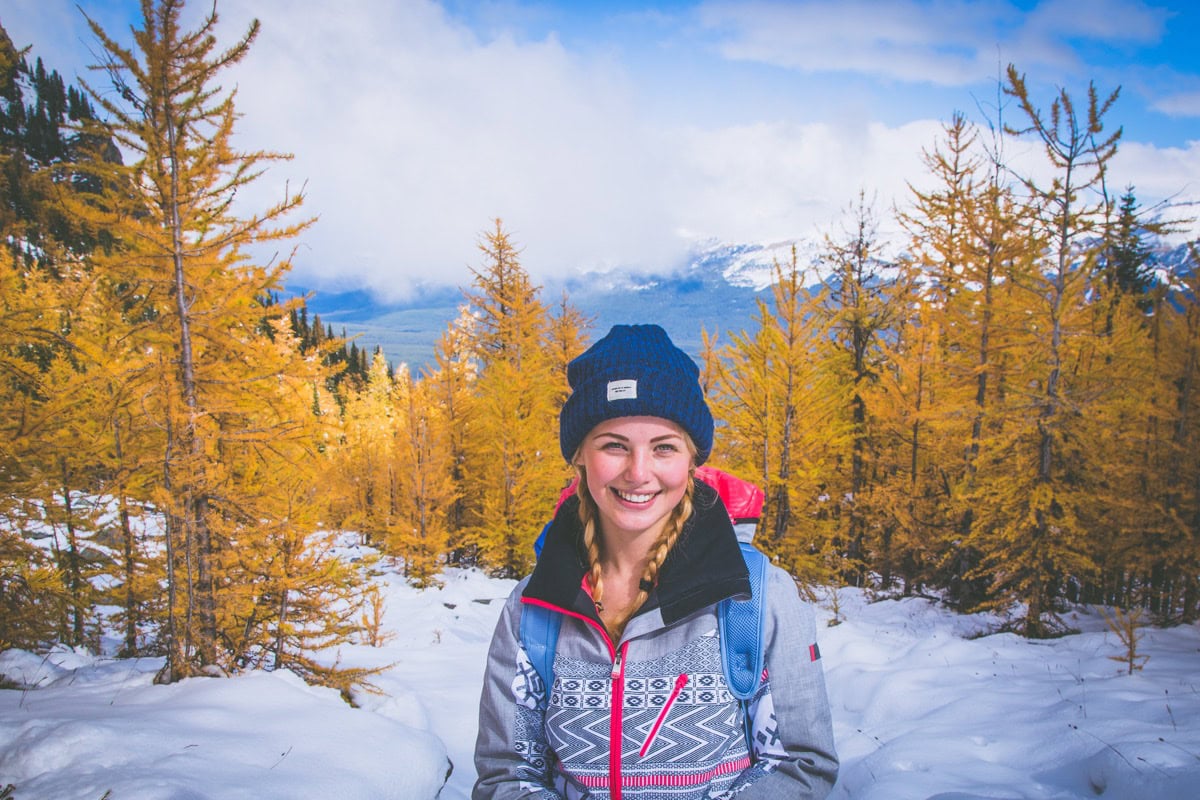
October is stunning for autumn colours, but bear in mind that many services and the tea houses (Lake Agnes, Plain of Six Glaciers) will have closed for the season. It’s also cooler and the first snow can fall. Moraine Lake Road typically closes around mid-October.
Winter (November–March): Skiing and a Fairy Tale
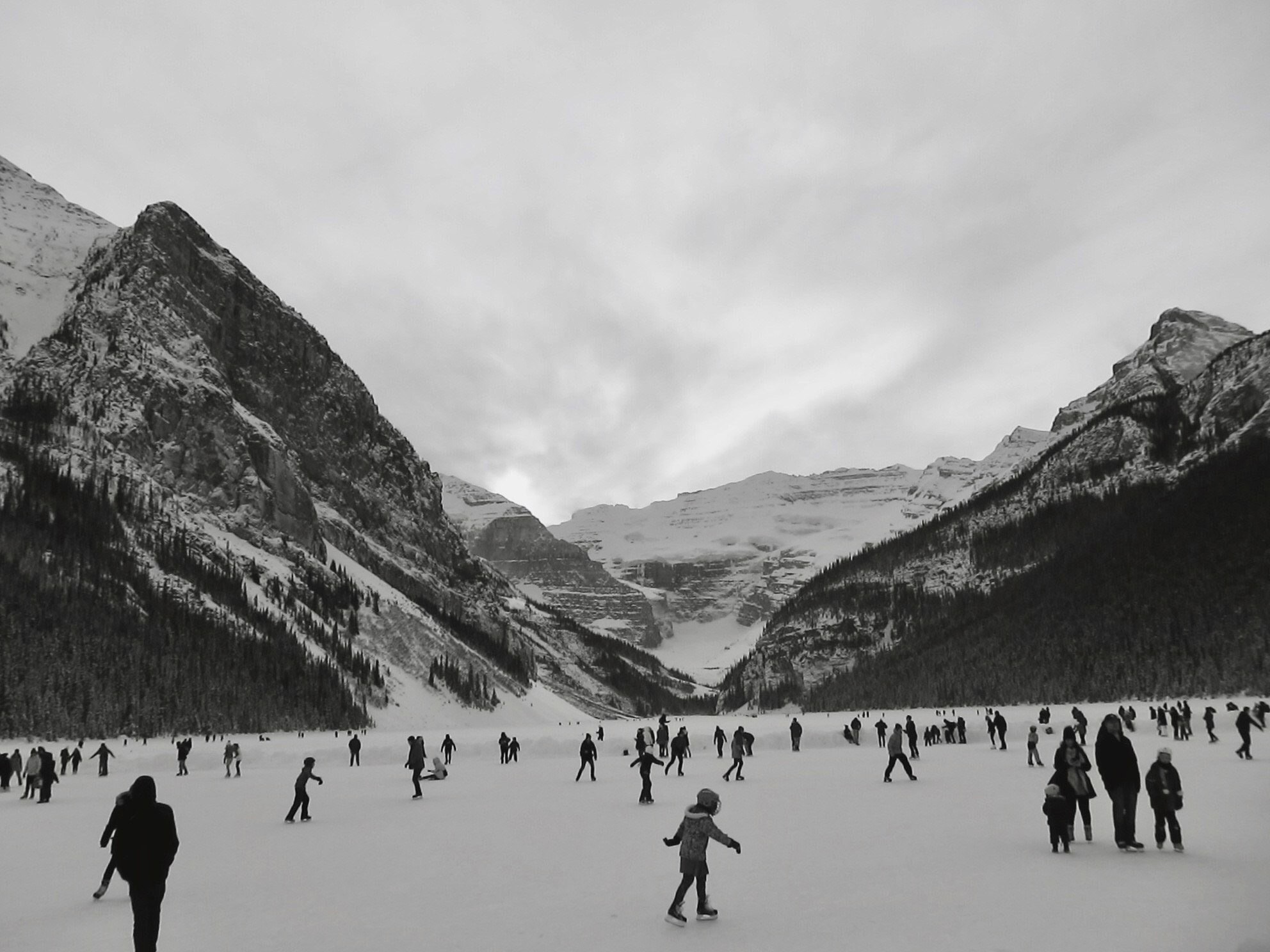
In winter, Lake Louise transforms into a completely different world — the lake freezes over, gets blanketed in snow, and looks like something straight out of a fairy tale. You can ice skate right on the frozen lake (the Fairmont hires out skates), take on the Ice Walk in Johnston Canyon (frozen waterfalls!) or hit the slopes at Lake Louise Ski Resort, one of the best in Canada.
Winter tyres are mandatory in Alberta from 1 November to 1 April on most mountain roads — and trust me, you’ll need them.
Getting Your Bearings
Lake Louise itself is a tiny village (Village of Lake Louise) on the Trans-Canada Highway (Highway 1), where you’ll find a handful of hotels, a petrol station, a small shop and a few restaurants. The actual lake lies about 5 km up Lake Louise Drive from the village. Moraine Lake is another roughly 14 km along a separate road.
The town of Banff is 57 km to the south (about 40 minutes’ drive) and offers far more restaurants, shops and nightlife. Plenty of people base themselves in Banff and drive up to Lake Louise for the day — a perfectly valid strategy, especially if you’re trying to keep costs down. You can find current information about the whole area on the official Banff & Lake Louise Tourism website.
How to Get to Lake Louise: Flights, Car Hire and the Parks Canada Pass
You can’t really get to Lake Louise without a car — well, in theory you can, but in practice, not really. The nearest major airport is Calgary International Airport (YYC), which is about 185 km away (just under 2 hours’ drive) along the well-maintained Trans-Canada Highway.
⚠️ 2026 Update: What’s Changed at Lake Louise
- Canada Strong Pass — FREE entry: From 19 June to 7 September 2026, entry to Banff National Park (and therefore Lake Louise) is completely free for everyone. Camping during this window gets a 25% discount. If you already have an annual Discovery Pass, it’s automatically extended by 3 months.
- New prices: Outside the free window, a daily adult park pass costs 12.25 CAD (~€8). Annual Family Discovery Pass: 167.50 CAD (~€110).
- Moraine Lake — reservation drama: The road to Moraine Lake has been permanently closed to private vehicles since 2023. The only option is the Parks Canada shuttle (12.75 CAD adult, 4 CAD child). Reservations for summer 2026 opened on 15 April at 8:00 AM MDT and instantly saw over 75,000 people in the queue. 40% of capacity was snapped up that day; the remaining 60% is released on a rolling basis 48 hours before each departure. If you miss out, private operators charge up to 550 CAD per trip.
- Alpine Start Shuttle: For sunrise photographers, there’s a special Parks Canada shuttle departing at 4:00 AM (regular shuttles don’t start until 6:30). It’s absolutely worth it if you want to capture that classic golden hour over the Valley of the Ten Peaks.
- Lake Louise parking: 36.75 CAD/day, and the car park fills up before 6:00 AM. RVs longer than 6 m or taller than 1.8 m are completely banned from the main Lakeshore car park — they must use the Fairview overflow lot 1.5 km from the lake.
- Safety — fatal bear attack 2023: In autumn 2023, experienced couple Doug Inglis and Jenny Gusse were killed in the park despite carrying bear spray. Wear your spray in a chest holster (not buried in your rucksack), travel in groups of 3+ people, and make plenty of noise. Bear spray can’t go on a plane — buy it in Canmore or Calgary after you land.
- BASIN Glacial Waters (new attraction): Fairmont Chateau Lake Louise opened a new thermal spa complex right by the lake in 2025. Access for non-guests is limited; hotel guests enter for free. If you’re considering a luxury night, this new addition makes it even more worthwhile.
- Larch Madness — golden larches: If you’re aiming for the most photogenic week of the year, it’s 22–30 September 2026, when the larch needles (Larix lyallii) turn gold above Moraine Lake. The Larch Valley + Sentinel Pass trail is absolutely rammed during this week — book your shuttle a month in advance.
- Lake Louise canoe prices 2026: Fairmont Boathouse rental is 170 CAD + GST/hour (110 CAD for hotel guests). Moraine Lake Lodge canoe is 160 CAD/hour, max 3 people per boat, no dogs.
Flights to Calgary
From the UK, you can fly to Calgary with a single connection — usually via Toronto, Vancouver, or sometimes Amsterdam. Return flights typically range from £400 to £700 depending on the season and how far in advance you book. We like searching on Kiwi.com — it’s our go-to flight search engine and genuinely good deals pop up there from time to time. Airlines like Air Canada, WestJet, and British Airways all serve the London–Calgary route (with connections).
Hiring a Car — a Necessity, Not a Luxury
A car is an absolute must in the Canadian Rockies. Public transport is virtually non-existent (apart from the shuttle buses to the lakes in peak season) and the distances are huge. Automatic transmission is standard in Canada and the roads are in excellent condition.
We always use Booking.com or DiscoverCars.com to compare prices from all the hire companies in one place. Car hire in Calgary starts from about 60–100 CAD/day (~€40–€65) depending on the season and vehicle type. In summer, book as early as possible — prices shoot up fast.
Important: If you’re visiting in winter, make sure your hire car has winter tyres. Most rental companies fit them automatically during winter, but double-check when you book. And fill up whenever you can — petrol stations in the mountains are few and far between, and pricey.
Parks Canada Discovery Pass
To enter Banff National Park (where Lake Louise is located), you need a Parks Canada Discovery Pass. You can buy one online from the Parks Canada website or at the park entrance gate.
- Day pass: 10.50 CAD/person (~€7)
- Annual pass: 72.25 CAD/person (~€48) — valid for all national parks in Canada
If you’re planning to spend more than 7 days in the parks (which you almost certainly will on a western Canada road trip), the annual pass is a no-brainer.
Where to Stay in Lake Louise + How Much It Costs
Accommodation in Lake Louise is, how to put this diplomatically… expensive. We’re in one of Canada’s most popular tourist destinations, deep inside a national park, so prices reflect that. But there are ways to soften the blow.
Fairmont Chateau Lake Louise — For the Ultimate Experience
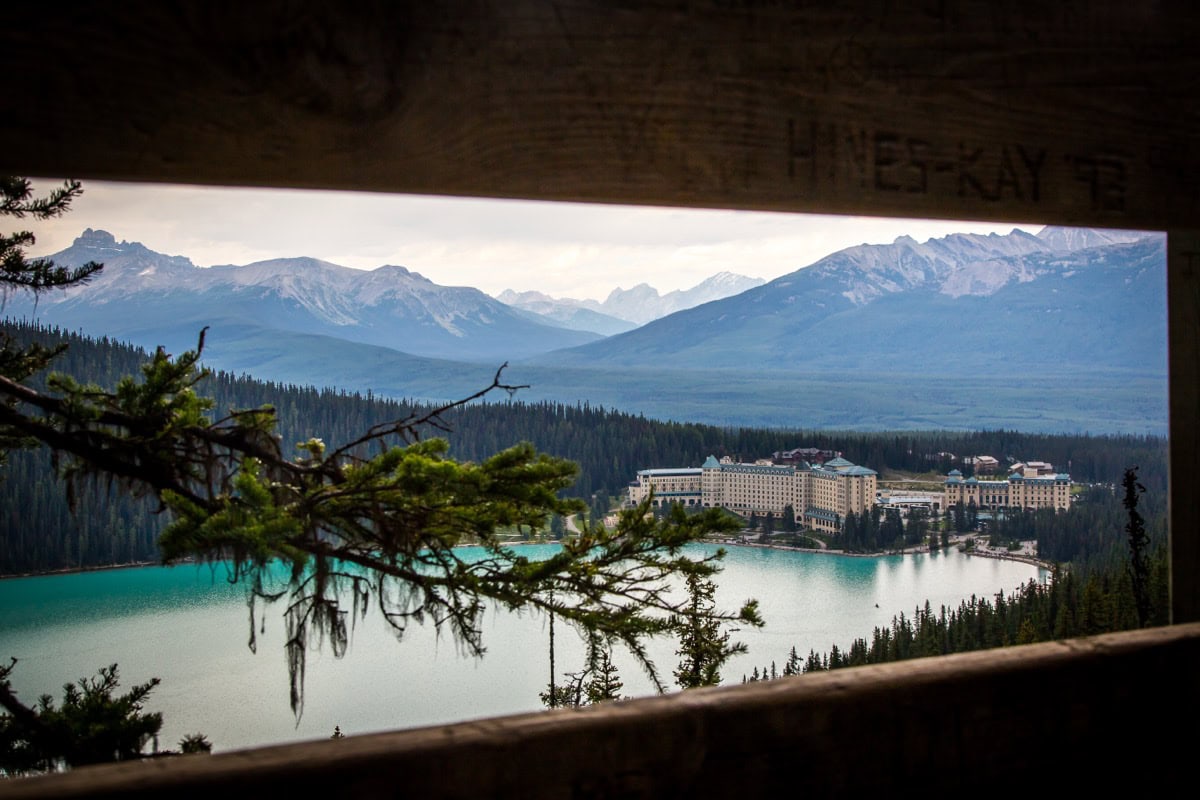
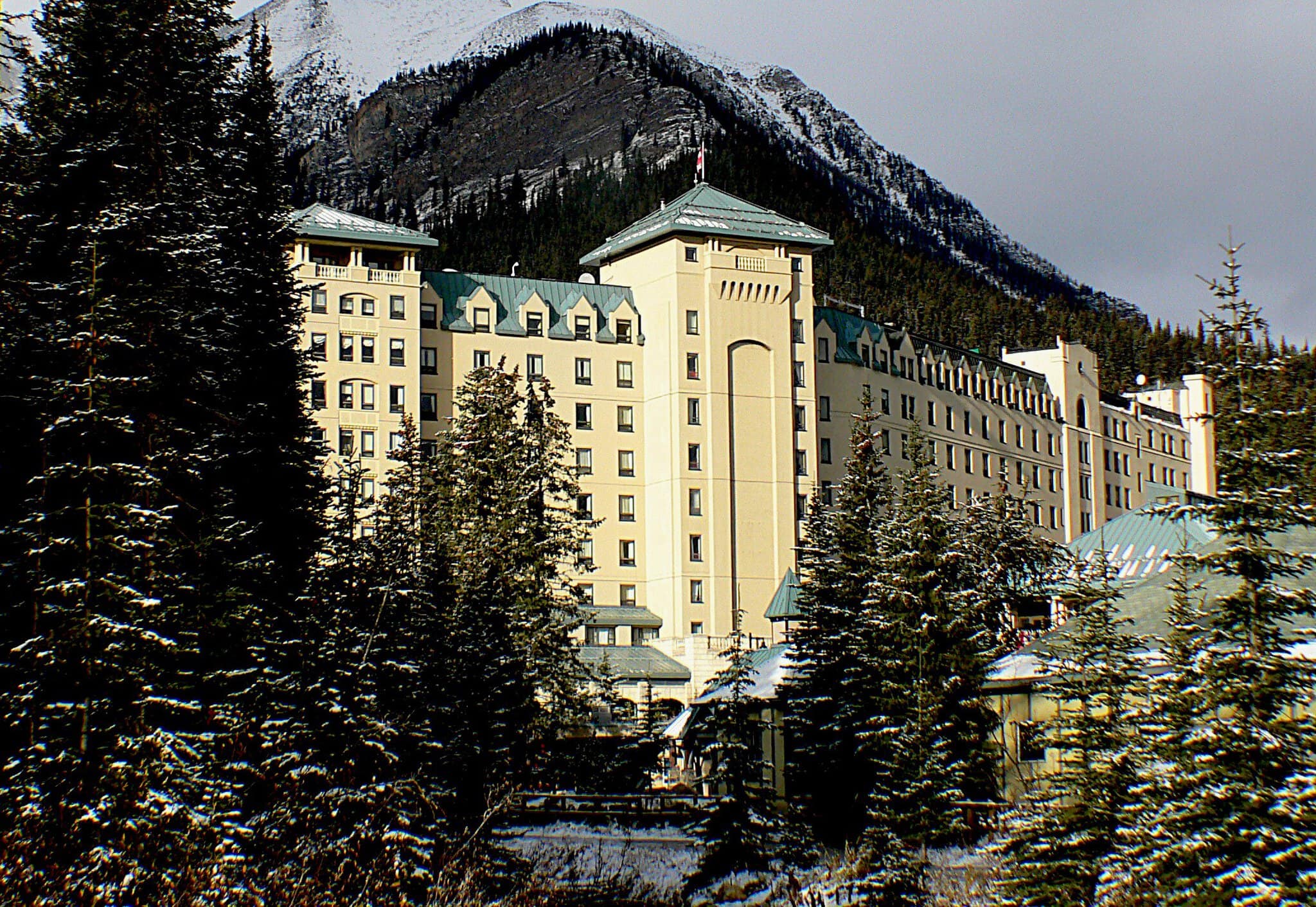
The iconic hotel right on the shore of the lake — the one you’ve seen in every photo. The view from your window is literally the turquoise lake with a glacier behind it. Prices? From 1,000 CAD/night (~€660) in peak season, a bit less in winter. It’s a splurge, but if you want to tick off a bucket-list experience, it’s one you’ll remember for the rest of your life. Even if you don’t stay here, definitely pop in for a coffee or a drink at the lobby bar — the view is the same and a coffee only costs 7 CAD. 😉
Book here: Fairmont Chateau Lake Louise
Mountaineer Lodge — Our Pick
A cosy lodge right in the village of Lake Louise, with a pool, hot tub and breakfast included. The rooms are clean and comfortable — nothing fancy, but everything you need after a day in the mountains. Around 465 CAD/night (~€310) including breakfast. By Lake Louise standards, that’s a reasonable choice.
Find it on Booking.com — always compare prices with the hotel’s official website.
Lake Louise Inn — A Solid Base
The largest hotel in the village, with room types ranging from standard to apartments with a kitchenette. Having a kitchenette is a real bonus if you want to save on food (restaurants in Lake Louise are pricey). Around 530 CAD/night (~€350).
Alternative: Stay in Banff
If you want to save money and don’t mind a 40-minute drive, Banff offers a much wider range of accommodation at better prices — from hotels and hostels to Airbnb. In Banff, you’ll find rooms starting from around 200–300 CAD/night (~€130–€200). Plus, Banff has an incomparably better selection of restaurants and evening entertainment.
How Much Lake Louise Costs — Budget for 3 Nights for Two
| Item | Price in CAD | Price in EUR |
| Accommodation (3 nights, mid-range) | 1,400 | ~€930 |
| Car hire (3 days incl. fuel) | 350 | ~€230 |
| Parks Canada Pass (2 people, 3 days) | 63 | ~€42 |
| Food (3 days, restaurants + some self-catering) | 300 | ~€200 |
| Activities (gondola, shuttle, canoe) | 200 | ~€130 |
| Total | 2,313 | ~€1,530 |
Yes, it’s not cheap. But it’s one of the most stunning natural landscapes on the planet, so… worth every penny. ☺️
11 Best Things to See and Do in Lake Louise, Canada
Now for the main event — let’s dive into 11 places and experiences you absolutely shouldn’t miss around Lake Louise. From the lake itself to stunning hikes and the most beautiful road in the world. Some of these are full-day affairs, others take just an hour. Mix and match based on the weather, your mood, and how much time you’ve got.
1. Lake Louise — The Turquoise Stunner That Draws Everyone Here

This is the one. The main star. The reason over 4 million people visit each year. And they’re absolutely right to.
Lake Louise sits at 1,600 metres, surrounded by steep mountains and the Victoria Glacier towering above like a film set. The colour of the water shifts throughout the day and across the seasons — from pale blue through turquoise to an almost emerald green. It’s all down to rock flour, a fine sediment released by melting glaciers that reflects sunlight in the most extraordinary way.
A lovely promenade runs along the lakeshore, perfect for strolling and snapping photos from every angle. At one end stands the majestic Fairmont Chateau Lake Louise, and at the other the trails head up into the mountains. For the quintessential experience, hire a canoe — it costs an eye-watering 155 CAD/hour (~€100), but paddling across that turquoise mirror with a glacier looming ahead of you is pure magic. We told ourselves it was a once-in-a-lifetime thing, and we don’t regret a penny.
Practical tip: In summer, arrive either very early in the morning (before 6:00 AM!) or use the Parks Canada shuttle bus from the park-and-ride. The lakeside car park has limited capacity and fills up incredibly fast. Alternatively, come after 4:00 PM when people start heading back.
2. Moraine Lake and the Valley of Ten Peaks — Possibly Even More Beautiful Than Lake Louise

I’ll be straight with you: Moraine Lake might actually be even more beautiful than Lake Louise. I know that sounds mad, but the combination of turquoise water backed by ten mountain peaks (the Valley of Ten Peaks) is absolutely jaw-dropping. This view used to feature on the old Canadian twenty-dollar bill — and rightly so.
Important change since 2023: You can no longer drive to Moraine Lake. Parks Canada introduced a mandatory shuttle system to combat overcrowding. Shuttles run from the Lake Louise Park & Ride every 20 minutes and cost 8 CAD/adult (~€5).
Tickets are booked via the Parks Canada website — 40% of places are released in the spring (Parks Canada announces the exact date each year) and the remaining 60% are released on a rolling basis 2 days in advance at 8:00 AM (Mountain Time). Be at your computer at that exact moment — tickets sell out in minutes. It’s genuinely a scramble. 😅
Once you’re there, head straight for the short Rockpile Trail (300 metres, 5 minutes) — this is the famous viewpoint where all those perfect photos are taken. You’ll find it right by the car park and the view is absolutely breathtaking.
Moraine Lake Road is open from roughly June to mid-October — the exact dates depend on snow conditions.
3. Lake Agnes Tea House — A Hike With the Best Reward
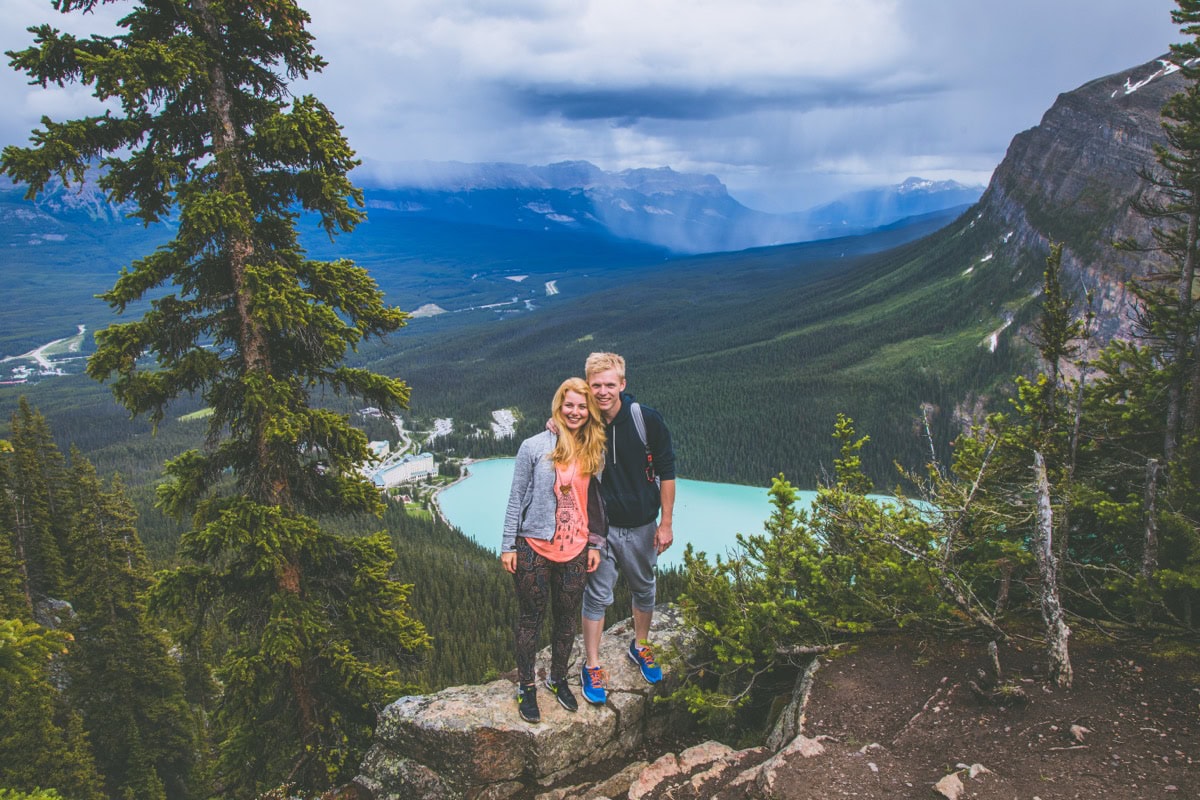
This is probably our favourite hike in the entire Lake Louise area, and honestly one of the best hiking experiences we’ve had in Canada. A gorgeous trail, a mountain lake, and a historic tea house at the end — what more could you want?
The trail starts right at the Fairmont Chateau Lake Louise and runs 3.5 km (one way) with about 400 metres of elevation gain. The path winds through dense forest, past waterfalls, with gradually opening views of Lake Louise below you. After about an hour and a half, you’ll arrive at Lake Agnes — another beautiful turquoise lake — with the Lake Agnes Tea House perched on its shore.
The tea house has been operating since 1901 (!), has no electricity or running water, and all supplies are carried up on people’s backs. They serve teas from around the world, homemade cakes and sandwiches. And here’s the crucial bit — it’s cash only! No cards, no Apple Pay. Make sure you’ve got enough Canadian dollars on you. We nearly didn’t, and Lukáš had to empty every pocket he had. 😅
The tea house is open roughly from June to October (weather dependent), and there’s usually a queue, but it moves fairly quickly. That cup of tea with views of a mountain lake and surrounding peaks is worth every minute of waiting.
4. Plain of Six Glaciers Trail — For Those Who Want More

If Lake Agnes leaves you wanting more (or you’ve got an extra day), the Plain of Six Glaciers Trail is a longer and more challenging alternative that takes you even closer to the glaciers. The trail follows the Lake Louise shoreline and then climbs to a viewpoint overlooking six glaciers at once.
The route is about 5.5 km one way with 365 metres of elevation gain, taking roughly 2 hours. Along the way you’ll come across another historic tea house — the Plain of Six Glaciers Tea House — where you can refuel (again, cash only!). It’s smaller and more intimate than Lake Agnes, and the glacier views from here are absolutely phenomenal.
Both hikes (Lake Agnes and Plain of Six Glaciers) can be combined into one big loop via the Big Beehive saddle — but expect 6–8 hours of walking and you’ll need decent fitness. We did it, and I’ll admit we were in bed earlier than usual that evening. But it was absolutely worth it. ☺️
5. Johnston Canyon — Breathtaking Waterfalls (That Freeze in Winter!)
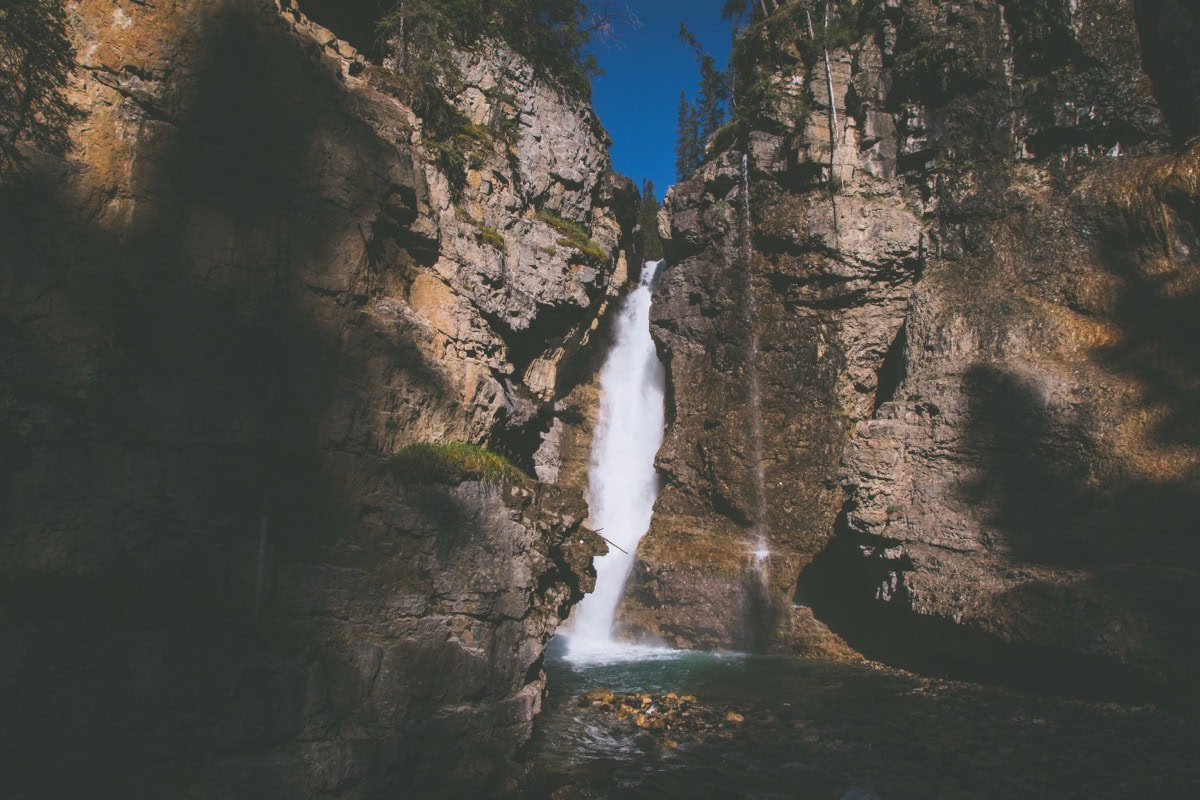
Johnston Canyon is probably the most popular and most accessible hike in all of Banff National Park. And for good reason — the trail is paved, with walkways bolted to the canyon walls in places, running alongside a beautiful canyon with waterfalls.
From the car park, it’s about 1.1 km to the Lower Falls — an easy stroll that anyone can manage. To the Upper Falls, it’s another 1.6 km and a bit steeper, but still perfectly doable for anyone with reasonable fitness.
The Lower Falls are gorgeous — the water plunges into a narrow gorge and you can walk out along a catwalk close enough to catch a bit of spray. The Upper Falls are even more powerful, and the view from the top is stunning.
In winter, Johnston Canyon becomes a completely different but equally magical experience — the waterfalls freeze solid and create enormous ice walls. You can do a guided Ice Walk (with crampons and headlamps) through the canyon in its winter beauty. It’s one of the most unique winter experiences in Canada.
Tip: Arrive early in the morning or late in the afternoon. Between 10:00 and 15:00, it’s absolutely heaving in summer. The car park is large, but even it fills up.
6. Lake Louise Gondola — Views and (Maybe) Bears
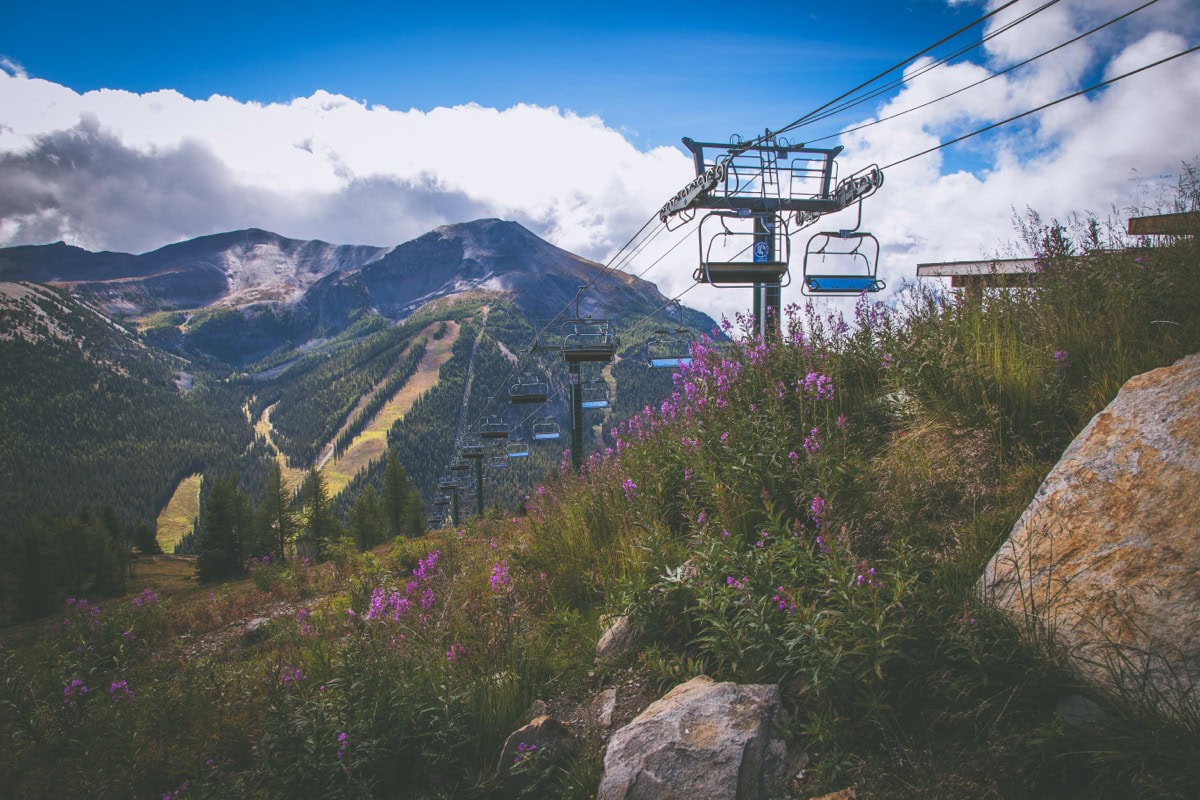
The Lake Louise Gondola (operated by Lake Louise Ski Resort) whisks you up to the ridge of Whitehorn Mountain, where you’ll get panoramic views of Lake Louise, the Valley of Ten Peaks, Bow Valley, and row upon row of Rocky Mountain peaks.
The ride up takes about 14 minutes, and at the top you’ll find a viewing platform, a restaurant and several short trails. And here’s the best bit — the area around the gondola is known as one of the best spots in the park for grizzly bear watching from a safe distance. The bears graze on berries on the slopes below the gondola in summer. We didn’t spot any (typical 😅), but plenty of visitors have better luck.
Tickets cost around 65 CAD/adult (~€43) — not cheap, but the views are phenomenal, and if you’re not keen on strenuous hikes, it’s the most comfortable way to gain some altitude.
More info on the Lake Louise Ski Resort website.
7. Bow Lake — A Hidden Gem on the Way to Icefields Parkway
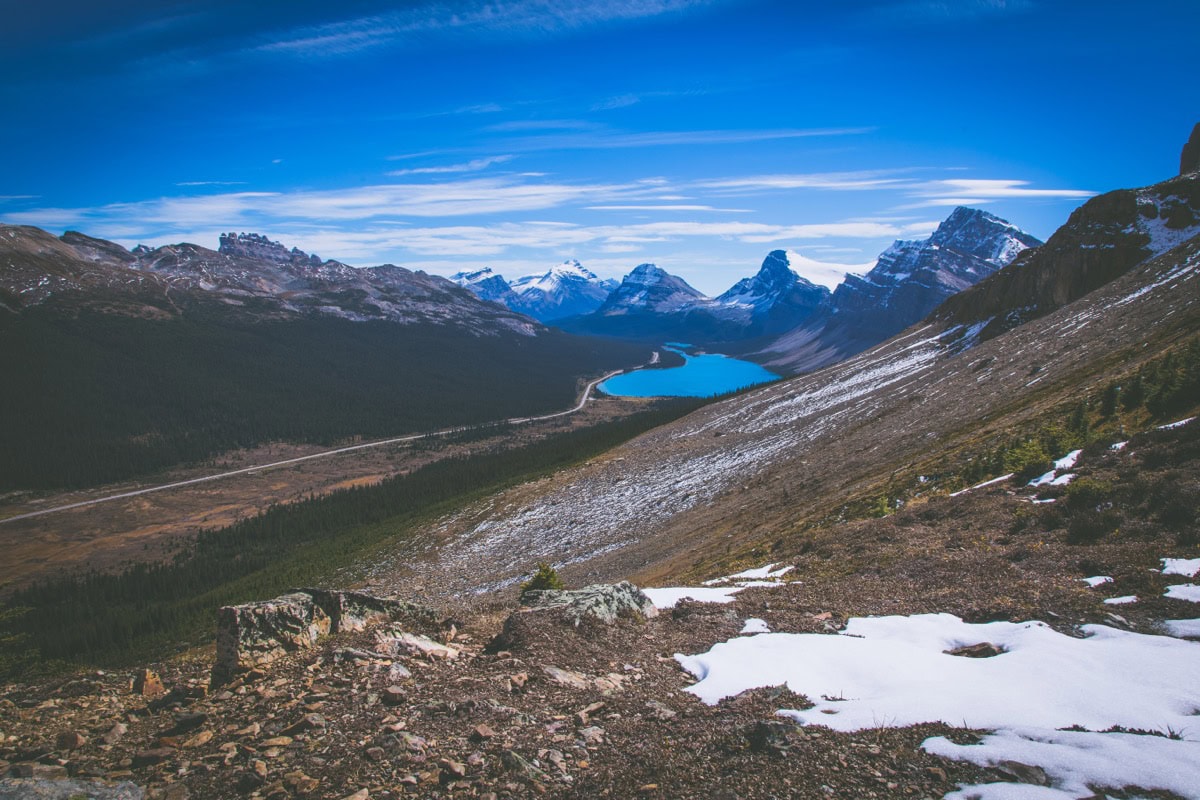
Bow Lake lies about 40 km north of Lake Louise at the start of the famous Icefields Parkway, and it’s one of those places most people drive right past because they’re in a rush to reach Peyto Lake. Big mistake.
The lake is stunning, backed by mountains and the Bow Glacier, and crucially — there are far fewer people here than at Lake Louise or Moraine Lake. You can wander along the shore, sit on the rocks and simply soak it all in. On the lakeshore you’ll find the historic Num-Ti-Jah Lodge (the one with the iconic red roof you’ve seen in photos), where you can grab a coffee.
For more active travellers, a trail leads from the lake to Bow Glacier Falls — a beautiful waterfall about 4.5 km from the car park (one way). The elevation gain is gentle and the scenery is gorgeous.
8. Peyto Lake — The Fox-Shaped Lake (Or Wolf, Depending on Your Imagination)
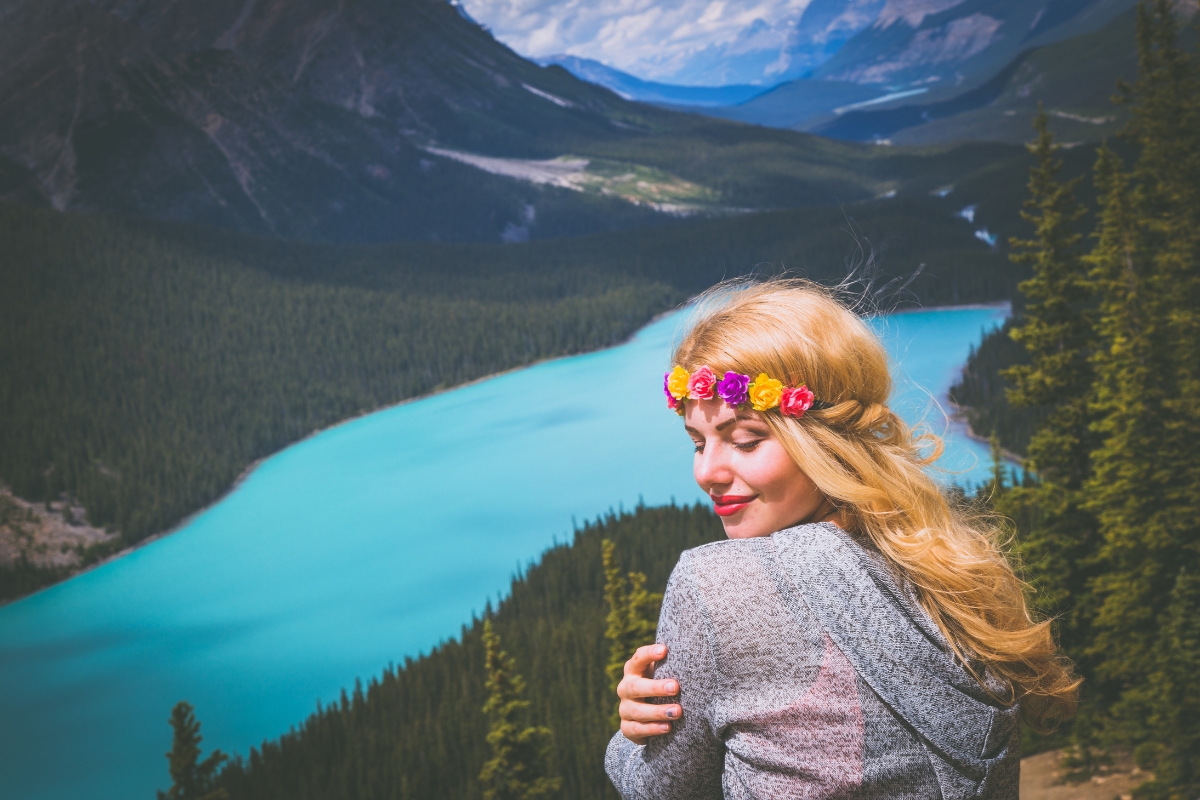
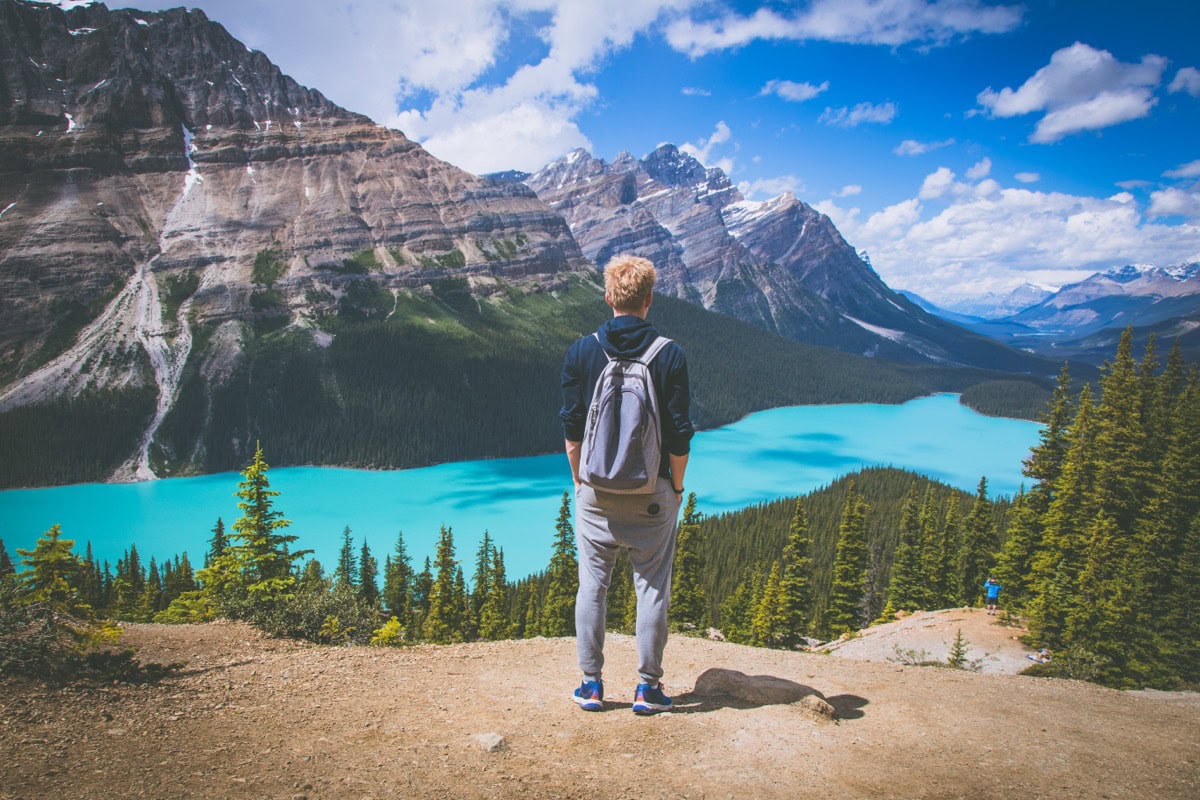
Peyto Lake is arguably the most photogenic lake in the Canadian Rockies — and that’s really saying something. The lake has an incredibly intense turquoise colour, and from the Bow Summit viewpoint (the highest point on the Icefields Parkway at 2,088 m), it looks like a lake shaped like a fox. Or a wolf. Depends who you ask — Lukáš and I argued about it the entire drive back. 😁
From the car park, it’s only about a 10-minute walk along a paved path to the viewpoint — so even if you’re not into hiking, you can manage this one. The view is absolutely spectacular, and it’s one of those places where you truly understand why the Rockies are called Canada’s treasure.
Tip: Peyto Lake is about 40 km north of Lake Louise and fits perfectly as a stop along the Icefields Parkway. Head to Bow Lake in the morning, then Peyto Lake, and carry on northward.
9. Icefields Parkway — The Most Beautiful Road in the World (No Exaggeration)

The Icefields Parkway (Highway 93 North) is a 232 km road connecting Lake Louise to the town of Jasper, and I’m not afraid to say it’s the most beautiful road we’ve ever driven. And we’ve driven a fair few.
The road cuts through the heart of the Rockies, past glaciers, turquoise lakes, waterfalls and towering peaks. At every turn you’ll want to pull over and take photos. Without stops, the drive takes about 3 hours, but realistically plan for a full day because you’ll be stopping every few kilometres.
Key stops along the way (heading north from Lake Louise):
- Bow Lake (km 36)
- Peyto Lake / Bow Summit (km 41)
- Mistaya Canyon (km 72) — a stunning narrow gorge, 15 minutes from the car park
- Saskatchewan River Crossing (km 77) — the only petrol station on the entire route! Fill up!
- Columbia Icefield (km 127) — a massive glacier with Ice Explorer tours onto the ice
- Athabasca Falls (km 200) — powerful waterfalls
- Jasper (km 232)
Important warning: Saskatchewan River Crossing is the only petrol station on the entire 232 km route and it closes in winter. Fill up your tank in Lake Louise. Seriously.
If you’re planning a full road trip including the Icefields Parkway, check out our detailed western Canada road trip itinerary, where we’ve mapped out the route day by day.
10. Lake Louise Ski Resort — A Winter Paradise for Skiers
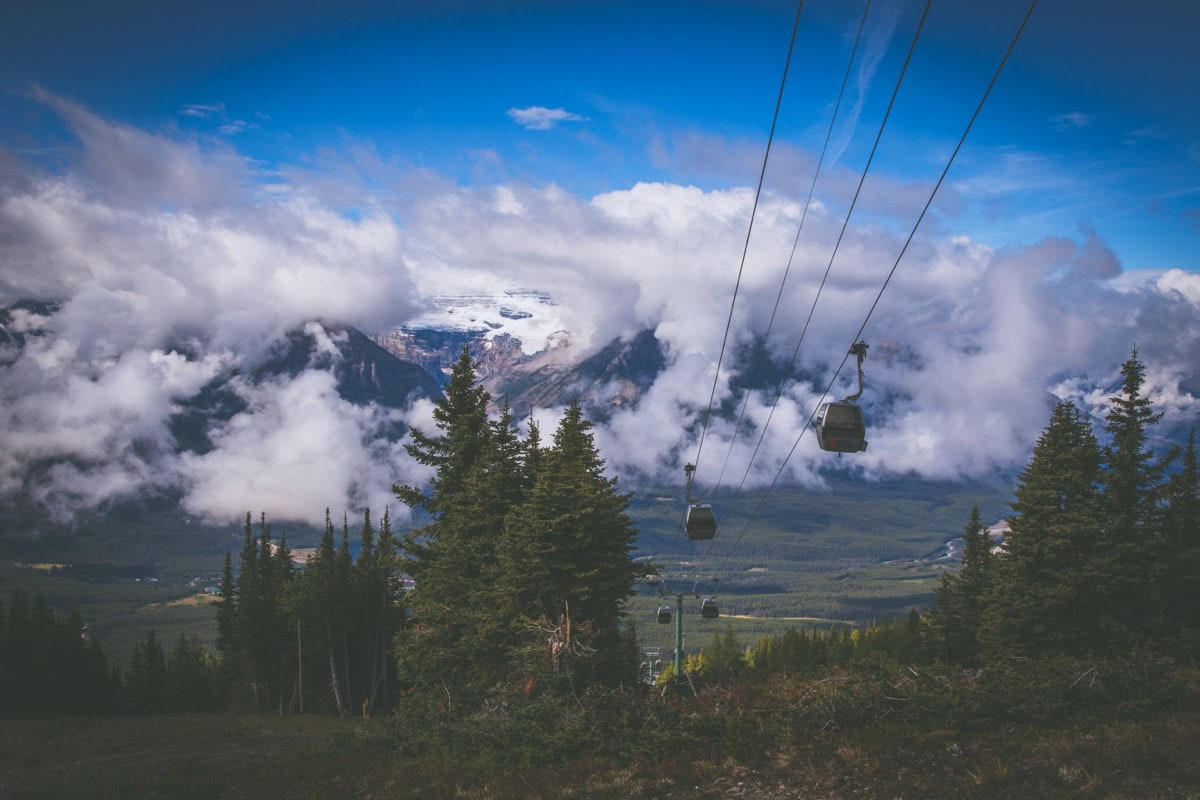
If you’re visiting in winter, Lake Louise Ski Resort is one of the largest and most scenic ski areas in North America. With 4,200 acres of skiable terrain, 145 runs and an average of 360 cm of snow per year, it’s a paradise for skiers and snowboarders alike.
What makes Lake Louise Ski Resort truly special isn’t just its size — it’s the views. You’re skiing with a panorama of the Valley of Ten Peaks, Bow Valley and dozens of snow-covered summits. It’s a completely different league to your average Alpine resort.
A day lift pass starts from 135 CAD (~€90) and the season runs roughly from November to May. More info at skilouise.com.
And even if you don’t ski — in winter you can ice skate on the frozen Lake Louise (the Fairmont hires out skates), go snowshoeing, or simply enjoy the peace and quiet of the snow-covered mountains.
11. The Town of Banff — Everything Lake Louise Is Missing
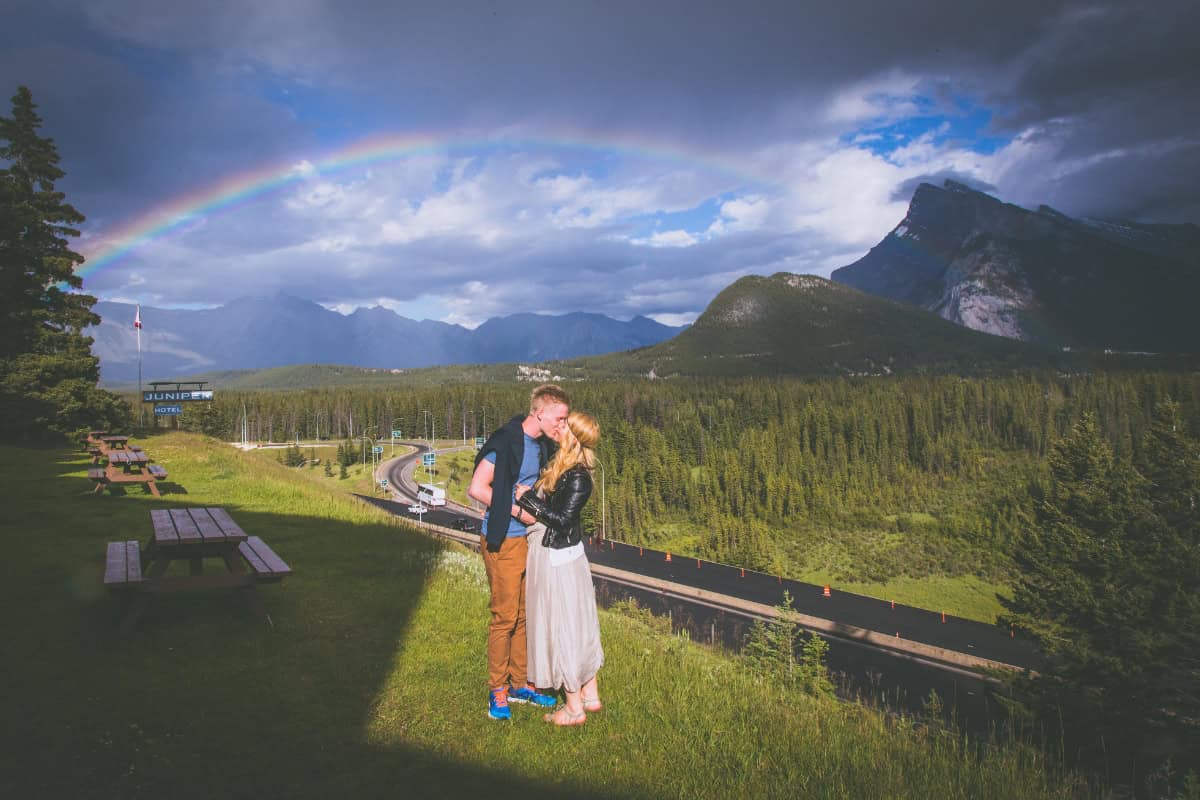
Banff sits just 57 km (40 minutes’ drive) from Lake Louise and makes a perfect base or complement to your visit. Where Lake Louise is a tiny village with a handful of services, Banff is a lively mountain town packed with restaurants, bars, shops and galleries.
Things definitely worth checking out in Banff:
- Banff Gondola on Sulphur Mountain — panoramic views over the entire area
- Banff Upper Hot Springs — hot springs with mountain views (perfect after a day in the hills!)
- Bow Falls — small but photogenic waterfalls right in town
- Bear Street and Banff Avenue — the main strips with restaurants, shops and galleries
Banff is also a brilliant spot for dinner — the restaurant selection is incomparably better than Lake Louise and the prices are a touch more reasonable.
If you’re planning to visit other Canadian destinations too, such as Niagara Falls, Banff makes an excellent starting point for planning a bigger trip.
Map of points of interest for your phone
Where to Eat in Lake Louise: A Guide for Hungry Travellers
I’ll be honest — Lake Louise isn’t exactly a food lover’s paradise. The restaurant selection is limited, prices are high, and quality is… variable. But there are a few gems to be found, and you can always head to Banff for more options.
Laggan’s Mountain Bakery & Delicatessen
This is probably the most popular spot for breakfast and lunch in all of Lake Louise, and for good reason. A small bakery right in the village serving freshly baked bagels, sandwiches, cakes and excellent coffee. The portions are generous, prices are reasonable by Lake Louise standards (a sandwich runs about 15 CAD / ~€10), and the vibe is pleasantly laid-back.
Expect a queue — Laggan’s is popular and the space is small. We waited about 15 minutes, but the sandwich was absolutely worth it.
Lake Louise Station Restaurant
A restaurant housed in a historic railway station from 1910 — gorgeous interior with original wooden beams and views of the tracks. They serve steaks, fish, burgers and a solid selection of Canadian wines. Prices are on the higher side (mains 30–50 CAD / ~€20–€33), but the atmosphere and quality match.
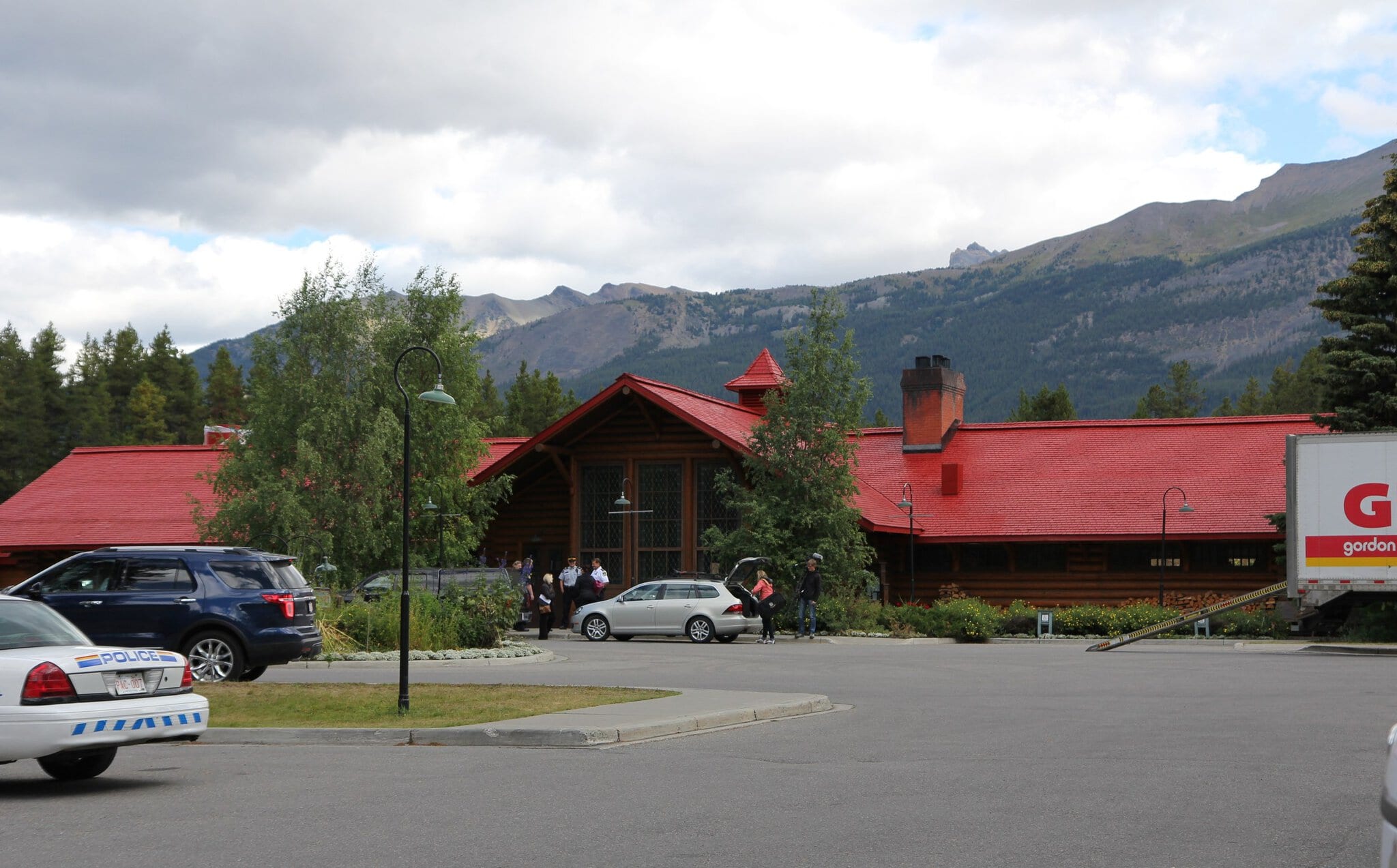
Bill Peyto’s Café (HI Lake Louise)
The cheapest option in Lake Louise — a café inside the HI Lake Louise hostel. They serve simple dishes (soups, sandwiches, pizza) at reasonable prices. If you’re on a budget and don’t need fine dining, it’s a solid choice.
Restaurants at the Fairmont Chateau
The Fairmont Chateau has several restaurants ranging from formal (Fairview Bar & Restaurant with a tasting menu) to casual (Alpine Social with pizza and burgers). Prices match the five-star hotel surroundings (mains from 40 CAD / ~€26 upwards), but I’d recommend at least one dinner here — eating with a view of the turquoise lake at sunset is simply an experience you won’t forget.
Money-saving tip: If your accommodation has a kitchenette (Lake Louise Inn offers apartments), stock up at the Village Market in the village. The selection is limited and prices are higher than in town, but you’ll save compared to eating out. Do a bigger shop in Calgary or Banff before you head up.
Practical Tips Before You Head to Lake Louise
A few things we learned the hard way that’ll save you time, money and frustration.
Parking and the Shuttle System
In summer, parking at Lake Louise is an absolute nightmare. The lakeside car park fills up before 6:00 AM and no more cars are allowed in. Parks Canada runs a shuttle bus from the park-and-ride in the village of Lake Louise, which runs regularly and is by far the most hassle-free way to reach the lake.
Moraine Lake has been accessible by shuttle only since 2023 — no private vehicles at all. Book your tickets on the Parks Canada website as early as possible.
Bear Spray
You’re in bear country — Banff National Park is home to both black bears and grizzlies. You can buy bear spray (pepper spray for bears) at any outdoor shop in Banff or Lake Louise for around 50 CAD (~€33). On some trails, Parks Canada recommends hiking in groups of at least 4.
Bears are magnificent creatures, but respect them. Make noise on the trail (talk, clap, carry a bell), don’t store food in your car (bears can open doors), and never approach a bear. Remember that bear spray can’t be taken on a plane — buy it after you arrive in Canmore or Calgary.
What to Pack
- Hiking boots — an absolute must. The trails are rocky and sometimes slippery. If you need a pair, check out our hiking boot recommendations.
- Layers — even in summer, the mountains can be chilly (5°C in the morning, 25°C in the afternoon).
- Waterproof jacket — afternoon thunderstorms are common in the mountains.
- Suncream and sunglasses — UV radiation is significantly stronger at 1,600 m.
- Cash in CAD — for the trail tea houses (Lake Agnes, Plain of Six Glaciers).
- Bear spray (see above).
More packing tips in our article on how to pack everything into carry-on luggage.
Fuel and Driving
- Lake Louise has one petrol station — fill up whenever you can.
- The Icefields Parkway has one petrol station (Saskatchewan River Crossing) — closed in winter!
- Winter tyres are mandatory 1 Nov – 1 Apr on mountain roads.
- Book your car via DiscoverCars.com as early as possible — summer prices are significantly higher.
Mobile Data and Internet
In Lake Louise and Banff, mobile signal is decent, but on the trails and along the Icefields Parkway, signal is virtually non-existent. Download offline maps (Google Maps, Maps.me) before you set off. For mobile data in Canada, we recommend an eSIM from Holafly — it works brilliantly and you won’t need to fuss with a local SIM card.
 🚗 Car rental on the roadVerified car rentals in the Rocky Mountains
Search with the DiscoverCars comparison engine — it compares prices from dozens of local and international rental companies, and most bookings come with free cancellation.
Compare car prices in the Rocky Mountains →Travel Insurance
Do not go to Canada without travel insurance. Healthcare for foreigners in Canada is extremely expensive — a broken leg on a hike could cost you tens of thousands of dollars. We use SafetyWing, which covers outdoor activities including hiking.
FAQ — Frequently Asked Questions About Lake Louise
Here are answers to the most common questions I get from readers planning a trip to Lake Louise.
How do you pronounce Lake Louise?
It’s pronounced “layk loo-EEZ” (Lake Louise). The lake was named after Princess Louise Caroline Alberta, Duchess of Argyll and daughter of Queen Victoria. The entire province of Alberta is also named after her.
Why is the water in Lake Louise turquoise?
The turquoise color comes from what’s called rock flour or glacial flour — fine particles of rock that glaciers grind up as they move. These microscopic particles get into the water and reflect the blue and green wavelengths of sunlight. The color is most intense from late June through September, when the glaciers are melting the most.
When is the best time to visit Lake Louise?
For the turquoise color and best hiking conditions: late June through September. For golden larches and fewer crowds: September to early October. For skiing and winter experiences: December through March. I’d avoid May and the first half of June — the snow is melting, trails tend to be muddy, and the lake doesn’t have that famous color yet.
Do I need a car to visit Lake Louise?
Practically speaking, yes. There’s a shuttle bus from Calgary to Lake Louise (Brewster Express), but once you arrive you’re dependent on the Parks Canada shuttle system, which only runs during peak season and only goes to the lakes. To visit Johnston Canyon, Icefields Parkway, and other nearby spots, a car is essential.
Can I drive my own car to Moraine Lake?
As of 2023, no. Access to Moraine Lake is only possible via Parks Canada shuttle bus. Tickets cost 8 CAD per adult and must be reserved in advance on the Parks Canada website. The shuttle runs from the park-and-ride lot in Lake Louise village every 20 minutes.
Is Lake Louise safe? What about bears?
Lake Louise is safe, but we’re in the wilderness. Both black bears and grizzly bears live in Banff National Park. Carry bear spray, hike in groups, make noise on the trail, and follow Parks Canada guidelines. Bears usually avoid people, but it’s good to be prepared.
How many days do I need for Lake Louise?
At least 2–3 days — one day for Lake Louise itself plus Lake Agnes Tea House, one day for Moraine Lake plus Johnston Canyon, and possibly one day for Icefields Parkway. If you want more hikes and a slower pace, 4–5 days is ideal. Combine it with a stay in Banff for the complete experience.
I hope this guide helps you plan an unforgettable trip to Lake Louise! If you’re planning a longer Canadian adventure, don’t forget to check out our complete western Canada road trip itinerary, with a day-by-day route including all our accommodation, restaurant and activity recommendations.
Got a question or a tip of your own? Drop me a comment below — I’m always happy to help! ☺️
Tips and Tricks for Your Vacation
Don’t Overpay for Flights
Search for flights on Kayak. It’s our favorite search engine because it scans the websites of all airlines and always finds the cheapest connection.
Book Your Accommodation Smartly
The best experiences we’ve had when looking for accommodation (from Alaska to Morocco) are with Booking.com, where hotels, apartments, and entire houses are usually the cheapest and most widely available.
Don’t Forget Travel Insurance
Good travel insurance will protect you against illness, accidents, theft, or flight cancellations. We’ve had a few hospital visits abroad, so we know how important it is to have proper insurance arranged.
Where we insure ourselves: SafetyWing (simple monthly subscription) and TrueTraveller (for extra-long trips).
Find the Best Experiences
Get Your Guide is a huge online marketplace where you can book guided walks, trips, skip-the-line tickets, tours, and much more. We always find some extra fun there!
More from Rocky Mountains
Full guide → Travel story · most readWhat to Pack for the Canadian Rockies: Summer & Winter Packing List 2026
 ItineraryWestern Canada Road Trip: 14–21 Day Itinerary from the Rockies to the Pacific
 Where to stayCalgary, Canada: 23 Best Things to Do and See
 ActivitiesKananaskis, Canada: 10 Best Hikes Away from the Crowds
 With kidsHow Much Does a Trip to Alberta & BC Cost in 2026: Budget for Couples, Families and Backpackers


