

Planning a road trip from Vancouver to Banff? Let me warn you about one thing right at the start. When you glance at the map, it’s easy to fall for a brutal optical illusion and assume that getting from Vancouver to Banff National Park is basically just a hop down the road. The reality is that you’re facing roughly 850 kilometres and at least nine hours of pure driving without a single stop for a toilet break or to photograph the bears loitering by the roadside. This is an absolutely iconic route that pulls you through temperate rainforests, the dry semi-desert of interior British Columbia, all the way to the dramatic limestone walls of the Rocky Mountains that will leave you gasping for breath. So let’s map out the itinerary properly so you arrive prepared and leave with a full memory card.
TL;DR
- Car rental and one-way fee: If you pick the car up in Vancouver and drop it off in Calgary, rental companies will charge you a so-called drop fee of 300 to 500 CAD (roughly £170 to £290).
- Canadian distances are deceptive: The ideal pace for this route is 7 to 10 days, and anything shorter means you’ll spend most of your holiday just staring at the tail lights of the RVs in front of you.
- Park entry in 2026: The Canadian government has introduced the so-called Canada Strong Pass, which gives you free entry to all national parks from 19 June to 7 September 2026.
- Moraine Lake without cars: You can no longer reach Canada’s most beautiful lake by private car at all — you have to book a spot on the Parks Canada shuttle bus well in advance.
- Watch for smoke and wildlife: August and September are wildfire season in British Columbia, while in autumn you need to watch out for aggressive elk during the rutting season in Banff.
When to set off on your Vancouver to Banff road trip
Western Canada plays by its own rules, and the weather in the Rockies cheerfully ignores the calendar. It’s perfectly normal for one in five days to be rained out — or even snowed on — in the middle of summer, so you genuinely have to pack for every kind of weather. Locals fondly nickname June “Monsoon June” thanks to the frequent rain, but this is also when you’ll find the greenest meadows and the waterfalls at full power.
The biggest tourist crush hits the region in July and August, when the roads are snow-free and the lakes have thawed beautifully, but the risk of wildfires also rises. August is traditionally the smoke month in British Columbia, when visibility can drop to almost nothing and the sun looks like nothing more than an ominous red dot in the sky. If you’re coming primarily for perfect photos of those turquoise lakes, a far safer bet is late June or the turn of August and September, when the air usually clears. Winter is a chapter all of its own — temperatures routinely plunge to -30 °C, and your summer sleeping bag definitely won’t cut it up here.
An absolutely magical time is the second half of September, when the so-called Larch Madness kicks off. The needles of the mountain larches turn brilliant gold, and crowds of hikers head out to Larch Valley to see this beauty with their own eyes. In autumn, though, you really must be extremely careful around the wildlife, because the elk rut is in full swing and the males can be extremely aggressive — they’ll even charge at cars. For a family holiday or a first visit I’d definitely recommend taking advantage of the generous government scheme, the Canada Strong Pass, which will save you a tidy sum on entry fees between 19 June and 7 September 2026, since it makes all national parks completely free. The regular annual Discovery Pass would otherwise set you back 83.50 CAD per adult.
Where to stay on the way from Vancouver to the Rockies
💡 Tip for accommodation and experiences: We like to search for places to stay on Booking.com, where the cancellation terms tend to be the best. For tickets, tours and activities it pays to compare and book through GetYourGuide.
Planning your overnight stops along this route takes strategic thinking, because prices in the very heart of the national parks reach astronomical heights. As you make your way from Vancouver, several transit towns present themselves with brilliant infrastructure that cost nowhere near as much as the mountain resorts. During the season you simply won’t find a room without booking at least a few months ahead, so forget the beloved “we’ll just turn up and see” approach right now.
For the first stage of the trip, the town of Kamloops is an absolutely ideal place to spend the night, with dozens of classic motels and nicer hotels where the average price hovers around a reasonable 150 to 250 CAD (about £85 to £145) per night. Over the following days you’ll head into the mountains, and the charming little town of Revelstoke makes a perfect base in British Columbia. Mercifully it lacks the slightly snobbish arrogance of its more famous cousin Banff, yet its scenery is no less breathtaking. A more luxurious stay here might be the Sutton Place Revelstoke at around 300 CAD, while backpackers will appreciate the clean HI Revelstoke hostel, where a bed costs about 80 CAD.
The real dilemma, however, awaits once you cross into Alberta, where prices shoot through the roof. Banff itself is a gorgeous hub of action with pretty little streets, but accommodation here commonly starts at 600 CAD (over £340) for a single night in season — not to mention the famous Fairmont Chateau Lake Louise at over 800 CAD a night. A much smarter strategy is to drive about twenty minutes further and stay in the neighbouring town of Canmore. It sits just beyond the national park boundary and feels more like an authentic mountaineering base camp. Beautiful apartments with a kitchenette, like the Blackstone Mountain Lodge, can be found here through the popular portal Booking for 350 to 450 CAD. For a multi-day stay that adds up to enormous savings, and you also get to cook from your own supplies.
Where to eat well along the way
Finding good food around the national parks can sometimes be a bit of a challenge, especially if you don’t want to splash out a fortune every day on overpriced tourist traps. On the journey from Vancouver to Alberta, though, there’s no shortage of brilliant spots where you can eat not only deliciously but for a reasonable price too. The golden rule usually applies: the further you are from the main highways and the iconic lakes, the more authentic and cheaper the food gets.
On top of that, don’t forget to stock up on plenty of snacks for the car. Hunger on the long mountain drives can sour your mood faster than overcast skies, so I recommend filling the boot with water and energy bars at the very first decent town stop.
Tried and tested food stops
In Kamloops, a safe bet is The Noble Pig Brewhouse, where they brew fantastic beer and make excellent pulled-meat sandwiches. It’s an ideal spot to relax in the evening after the first long drive out of Vancouver. The portions here are huge, so you can happily share one dish and still have plenty left over.
Once you reach Banff and fancy something properly Canadian, hunt down a classic poutine in one of the local bistros. Chips topped with cheese curds and smothered in hot gravy will get you back on your feet after a full day of hiking more reliably than a litre of coffee. They do it brilliantly at Banff Poutine right in the centre of town, where queues sometimes form, but it’s definitely worth a try.
10 stretches and stops to see on the Vancouver to Banff road trip
It doesn’t look like much on the map, but the whole route from the Pacific coast to the foot of the Rocky Mountains makes for a proper, full itinerary. For each stretch you’ll learn how long you’ll be driving, exactly where to stop, and which mistakes to strategically avoid, so you can enjoy the journey without any needless stress.
1. From Vancouver through Fraser Canyon to Kamloops
Distance: 350 km, Driving time: 4 hours
For this first stretch, ideally set off from Vancouver right around eight in the morning to avoid the worst of the rush hour. Highway 1 will get you out of the city fairly quickly, and after roughly two hours of driving you’ll arrive in the picturesque little town of Hope, where you absolutely must stretch your legs. Here you’ll find the fascinating Othello Tunnels, an easy 3.5-kilometre walk leading through old railway tunnels carved straight into the solid granite. It’s a great start to the whole road trip and the perfect spot for your first morning coffee.
As soon as you leave Hope, the landscape begins to change dramatically before your very eyes. The rainforests and ever-present greenery of the coast give way, and you’ll drive through the deep valley of Fraser Canyon, where the character of nature shifts to almost dry semi-desert. If you’re passing through here in the autumn of 2026, be sure to make a little detour to Roderick Haig-Brown Provincial Park near the Adams River. A so-called “big year” will be taking place there, when more than two million sockeye salmon spawn in the river — an utterly astonishing spectacle, and entry is completely free, too. In the afternoon you’ll roll calmly into Kamloops, which makes a perfect logistical point for your first overnight stop on the route.
💡 Tip: Don’t stock up on food in Vancouver, where everything is needlessly expensive. Wait and stop at the supermarkets in Kamloops instead, where you can grab big barrels of water and snacks for the coming days in the mountains at far friendlier prices.
2. Entering the mountains and the cedar forests of Revelstoke
Distance: 210 km, Driving time: 2.5 hours
On the second morning, the mountains you’ve been longing for are finally waiting — specifically the Columbia Mountains in British Columbia. The drive to Revelstoke passes beautifully, and on arrival you definitely shouldn’t skip Mount Revelstoke National Park. It’s the only national park in all of Canada where you can comfortably drive your car up the stunning 26-kilometre Meadows in the Sky Parkway almost to the very summit. If you visit during August, you’ll be greeted at the top by gorgeously blooming alpine meadows bursting with colour and offering fantastic views down into the valley.
On the way to town, don’t forget to stop for a short stroll along the wooden boardwalks known as the Giant Cedars Boardwalk. You’ll walk through an ancient cedar forest — known technically as an inland temperate rainforest — where an incredible sense of calm and silence washes over you. The trees themselves are hundreds of years old and the walk takes barely half an hour, so it suits smaller children too.
For the evening I recommend spending time in the centre of Revelstoke, which offers plenty of brilliant independent cafés and a very relaxed, authentic mountain atmosphere. The town hasn’t yet succumbed to mass tourism the way the Alberta resorts have, so you can still soak up that genuine, unpretentious Canadian mountaineering vibe.
💡 Tip: Unlike Alberta, British Columbia charges a 12% tax on goods and services, so if you’re planning bigger souvenir purchases, it pays to hold off until you’re across the provincial border.
3. Over the glacial pass to Golden
Distance: 150 km, Driving time: 2 hours
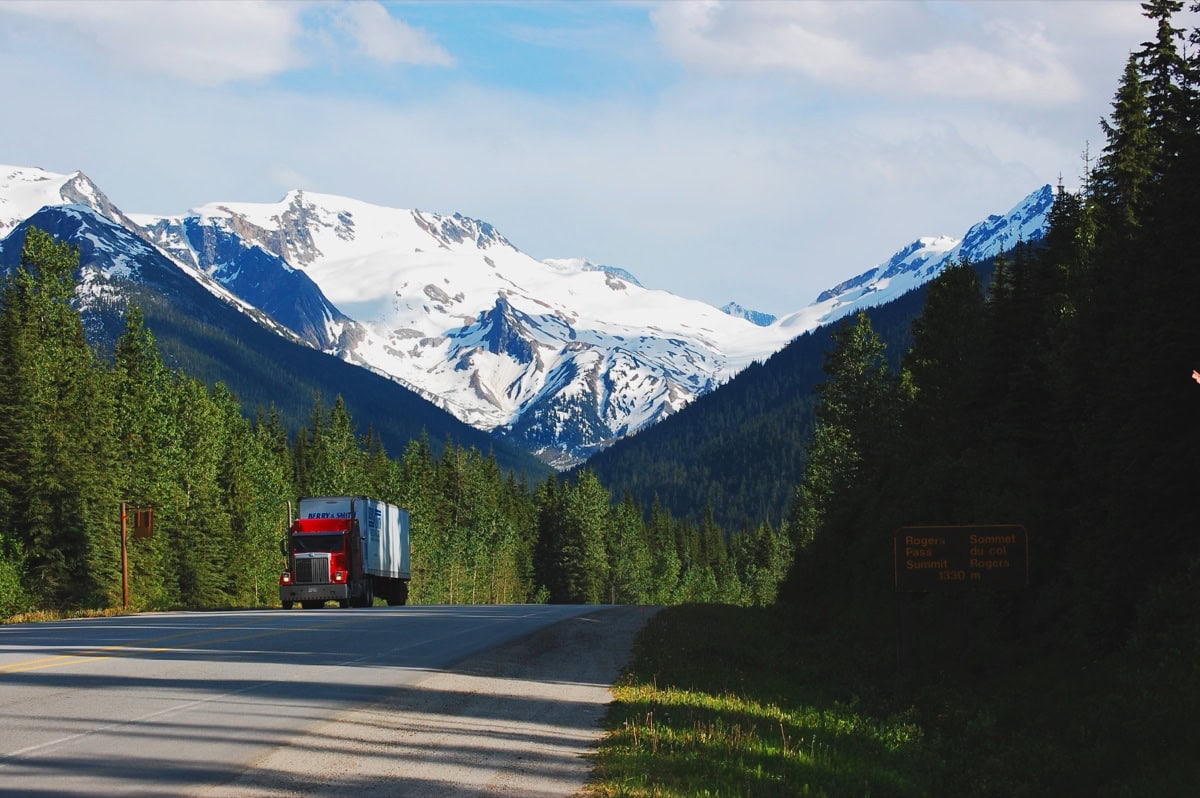
This stretch may be shorter in kilometres, but you’ll spend far more time on it thanks to the breathtaking views. You’ll be crossing the famous Rogers Pass right in the heart of Glacier National Park. Be sure to stop at the local Discovery Centre, where you’ll learn utterly fascinating stories about how nineteenth-century railway workers waged a futile and often tragic battle against the enormous avalanches. The scenery here is gloriously rugged, and the road twists beneath steep peaks and glaciers that look almost within arm’s reach from the car window.
Do watch the weather carefully here, though, because the pass is known for its rapid changes and even in summer a snow shower can catch you out. Your destination for the lunch break will be the town of Golden, sitting at the strategic confluence of two glacial rivers and offering plenty of pleasant bistros. You can have lunch and gather your strength before entering the most famous national parks waiting for you just around the next bend in the highway.
💡 Tip: If you’re travelling as a family and love animals, just beyond Golden lies the Northern Lights Wildlife Wolf Centre. You’ll learn a huge amount about protecting Canada’s wolves, and it’s a great change of pace on a long day of driving, especially if you need a break from the demanding mountain treks.
4. The hidden gem of Yoho National Park
Distance: 80 km, Driving time: 1 hour (plus long stops)
Sadly, most travellers just blast mindlessly through Yoho in British Columbia, eager to get to Banff as fast as possible. You, however, should hit the brakes and stop right at the Natural Bridge, a stunning natural stone bridge beneath which the turquoise Kicking Horse River roars wildly. It’s a captivating sight, seeing how the water carved its way through the solid rock over thousands of years.
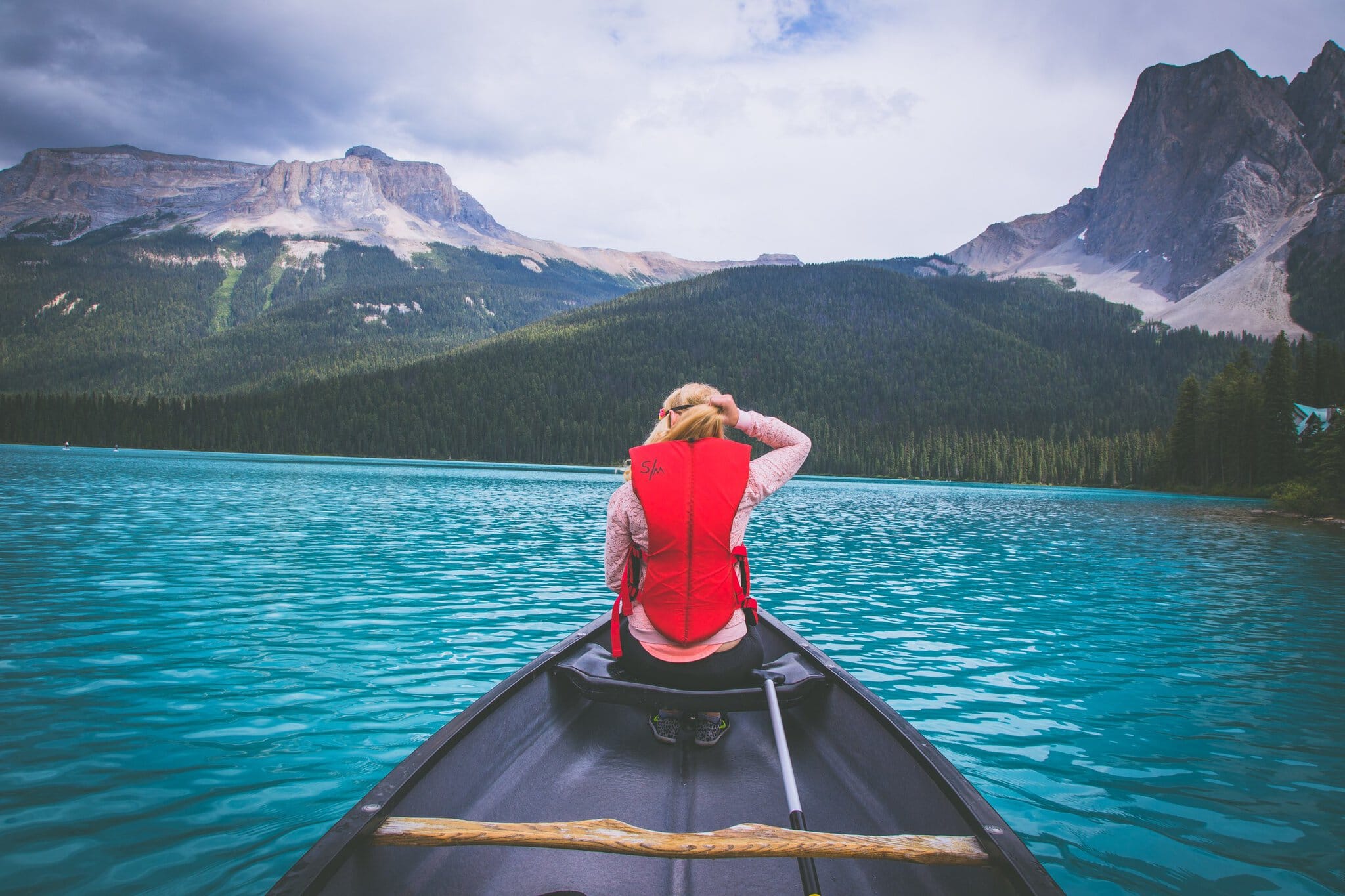
A little further on you must turn off to the absolutely fairy-tale Emerald Lake, which boasts a green so rich you won’t believe your own eyes. There’s nowhere near the crush of people you’ll find at the better-known lakes in Alberta, and a stroll around the shore is pure balm for the soul. You can also rent a canoe here, though the rental prices climb fairly high in season. Only towards evening will you cross the provincial border at the Continental Divide, set your watches forward by an hour, and ceremonially enter Banff National Park, where Alberta waives the provincial tax and everything is suddenly 7% cheaper.
💡 Tip: If you love exclusivity and a bit of planning adrenaline, try entering the Yoho lottery for access to the strictly protected Lake O’Hara, where private cars are banned. For the 2026 season, applications run from 2 to 23 March. Sadly the chance of winning is only around 10 to 20 percent, but if you succeed you’ll experience the most beautiful turquoise lakes completely free of crowds.

5. Morning magic at the legendary Lake Louise
Distance from Banff/Canmore: 60 km, Driving time: 45 minutes
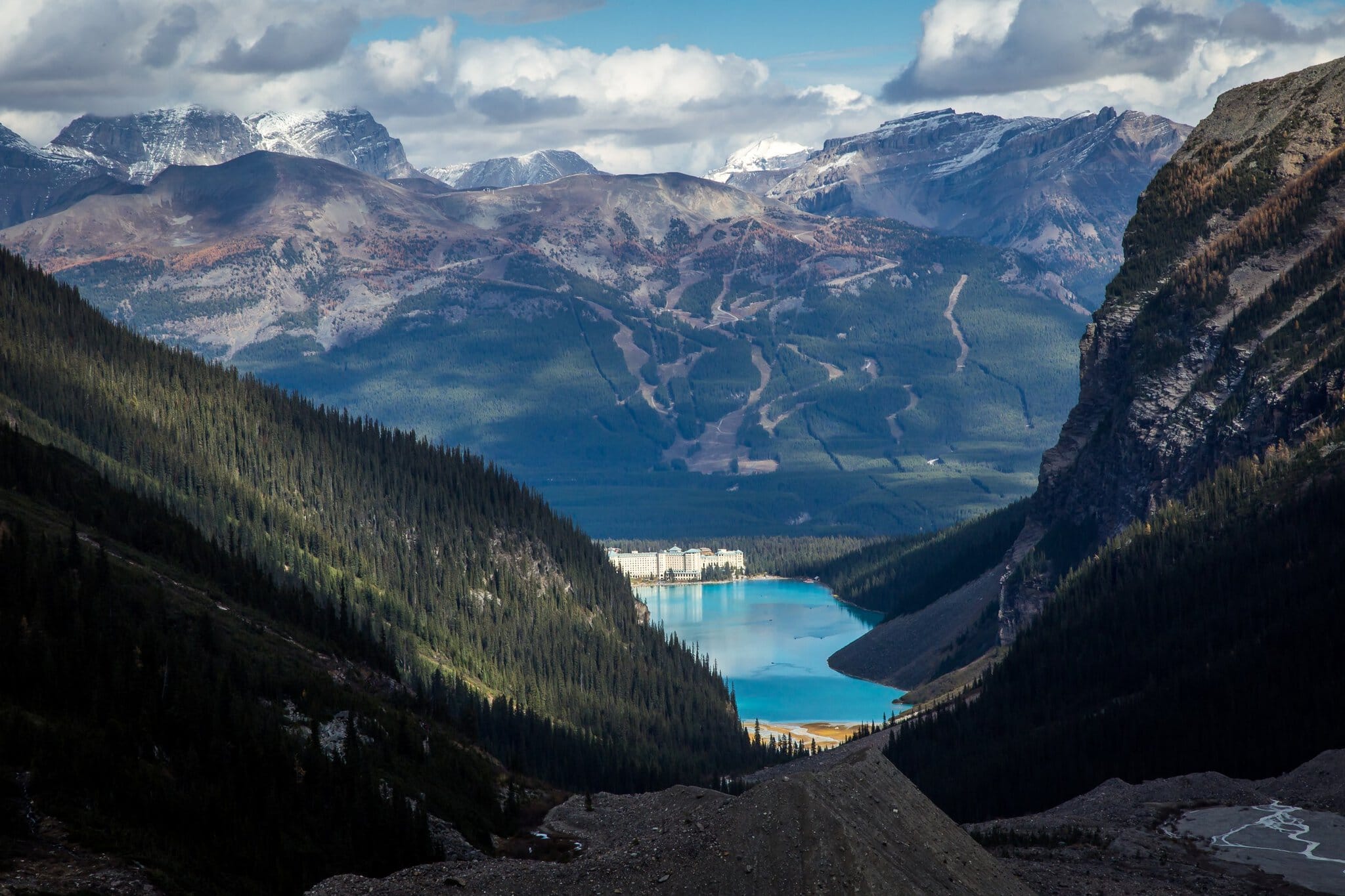
Visiting Lake Louise demands logistics on the level of a military operation, because parking at the lake costs 36.75 CAD per day (about £21), the enormous car park is hopelessly full before six in the morning, and the wardens then turn most cars away without mercy. It’s far more convenient to use the park-and-ride lots and arrive on the official Parks Canada shuttle bus. The sunrise over the lake is absolutely worth the early start, though, especially when the first rays catch the Victoria Glacier in the background.
Once you’ve had your fill of the views from below, set off on the hike up to the historic Lake Agnes Tea House. This trail is 3.4 kilometres long with a 400-metre elevation gain, and at the top you’ll find a charming tea house from 1901 that has no electricity at all — all its supplies are carried up on the staff’s backs. Your reward will be a beautifully brewed cup of tea and fresh pastries, but don’t forget to bring plenty of cash, because they really don’t take cards up here.
💡 Tip: If you want to fulfil the dream of paddling out onto the lake in a canoe from the iconic Fairmont Boathouse, prepare a hefty wad of cash. For non-resident guests, an hour’s boat rental costs an astronomical 170 CAD, so it pays to fill the boat with up to three people to split the cost.
6. Moraine Lake and the new rules for 2026
Distance from Lake Louise: 14 km (by bus only)
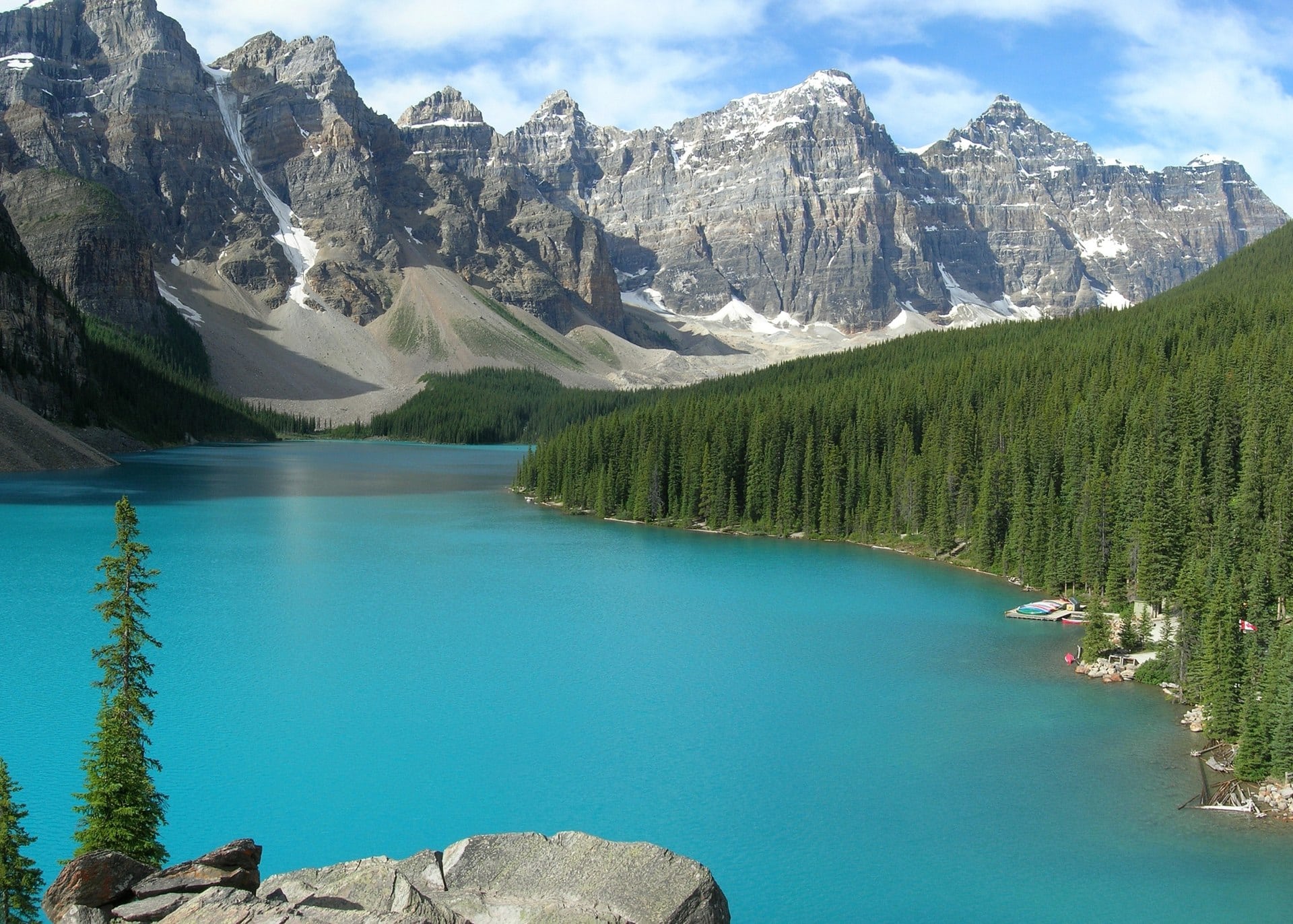
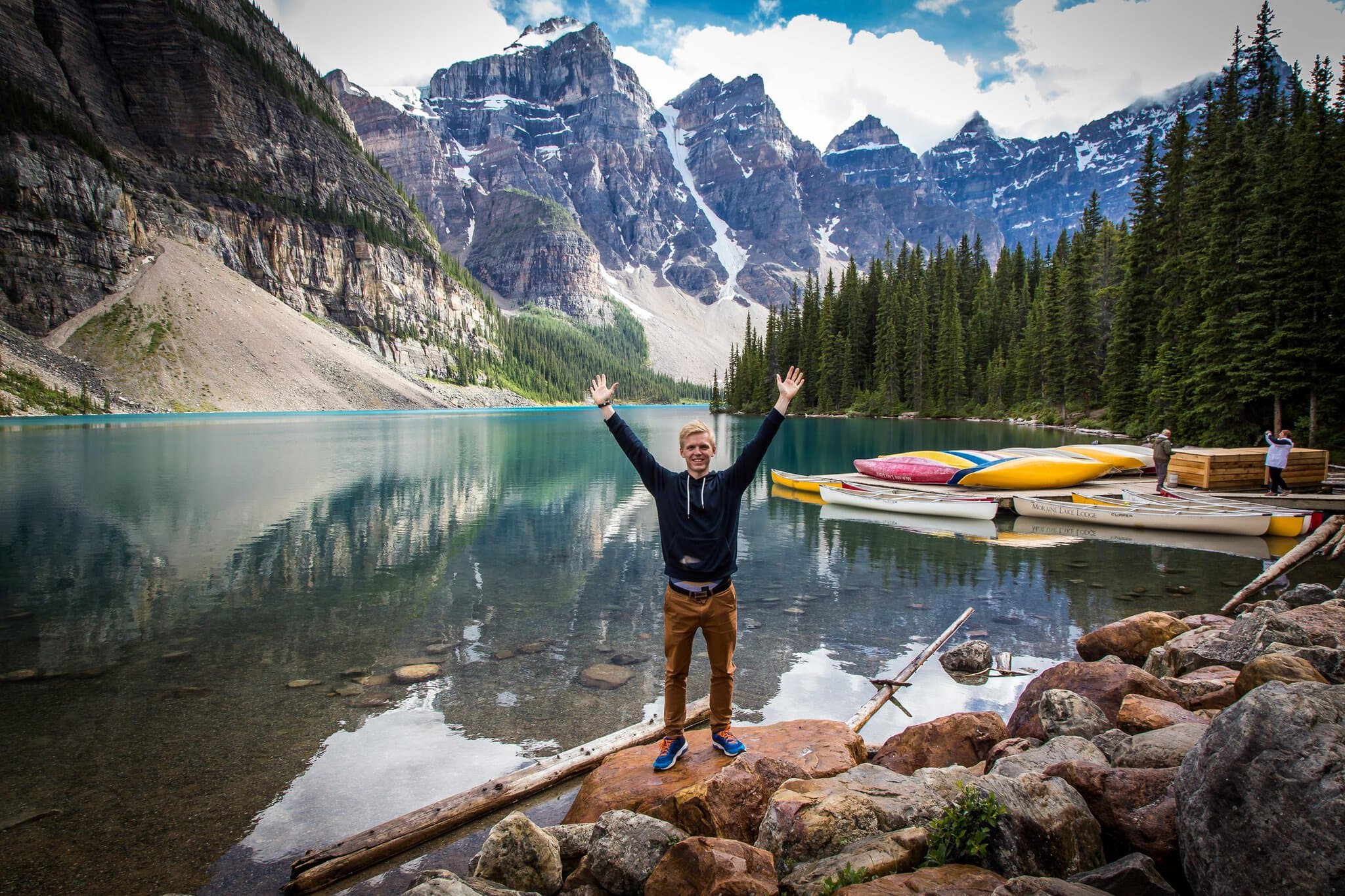
Moraine Lake, with its famous Valley of the Ten Peaks, is probably the single most photographed landscape in all of Canada. It’s precisely because of this extreme interest that a strict ban on private cars has been in force here since 2023 — a new reality you need to prepare for. Your only chance is to book a Parks Canada shuttle bus, whose system opens for the 2026 season at exactly 8:00 Mountain Time on 15 April. Expect a queue of a comfortable 75,000 people in the online line, and the booking fee is 3.50 CAD.
If you manage to grab a ticket for the very earliest morning service, you’ll experience something unreal. You’ll climb to the iconic rocky viewpoint known as the Rockpile, often nicknamed the “Twenty Dollar View” because this scene once adorned the Canadian twenty-dollar note. You’ll watch open-mouthed as the sun slowly tints the sharp mountain peaks pink while they reflect in the utterly still, deeply turquoise water. This is exactly why you get up at four in the morning, and suddenly the queue for the bus makes perfect sense. 😁
💡 Tip: If you miss the April bus booking window, don’t despair. Roughly 60% of capacity is released via a so-called rolling release system, always exactly two days before the planned departure at 8:00 in the morning. You’ll have to be glued to your computer clicking lightning-fast, though, because the tickets vanish within seconds.
7. Downtown Banff, hot springs and the gondola
Distance: getting around within town
The town of Banff itself is enchanting, even though it bursts at the seams in the summer season under the onslaught of tourists from all over the world. Take a walk along the main street, Banff Avenue, with its iconic view of Cascade Mountain, and then turn your attention to the historic Cave & Basin site. It was right here in 1883 that railway workers discovered the hot springs, giving rise to Canada’s very first national park. Swimming is strictly forbidden here to protect an endangered species of snail, but the historical exhibition is absolutely fascinating.
Before sunset I warmly recommend riding the Banff Gondola up to the summit of Sulphur Mountain. Tickets are dynamically priced and cost around 60 to 80 CAD, on top of which in 2026 you’ll need to add a further 17.50 CAD for parking at the lower station. But the views from the wooden boardwalks on the roof of the world are worth every cent. In the evening you can soak your hike-weary muscles in the outdoor pools at Banff Upper Hot Springs, where the entry fee is surprisingly very reasonable, hovering around 19.75 CAD.
💡 Tip: If you’re planning a more upmarket dinner in town, I recommend the renowned The Bison Restaurant. They focus on local Alberta ingredients and the menu changes with the season. It’s definitely worth a try, especially if a full day of hiking leaves you craving something more than a petrol-station sandwich.
8. Bow Valley Parkway and safe wildlife watching
Distance: 50 km of scenic driving
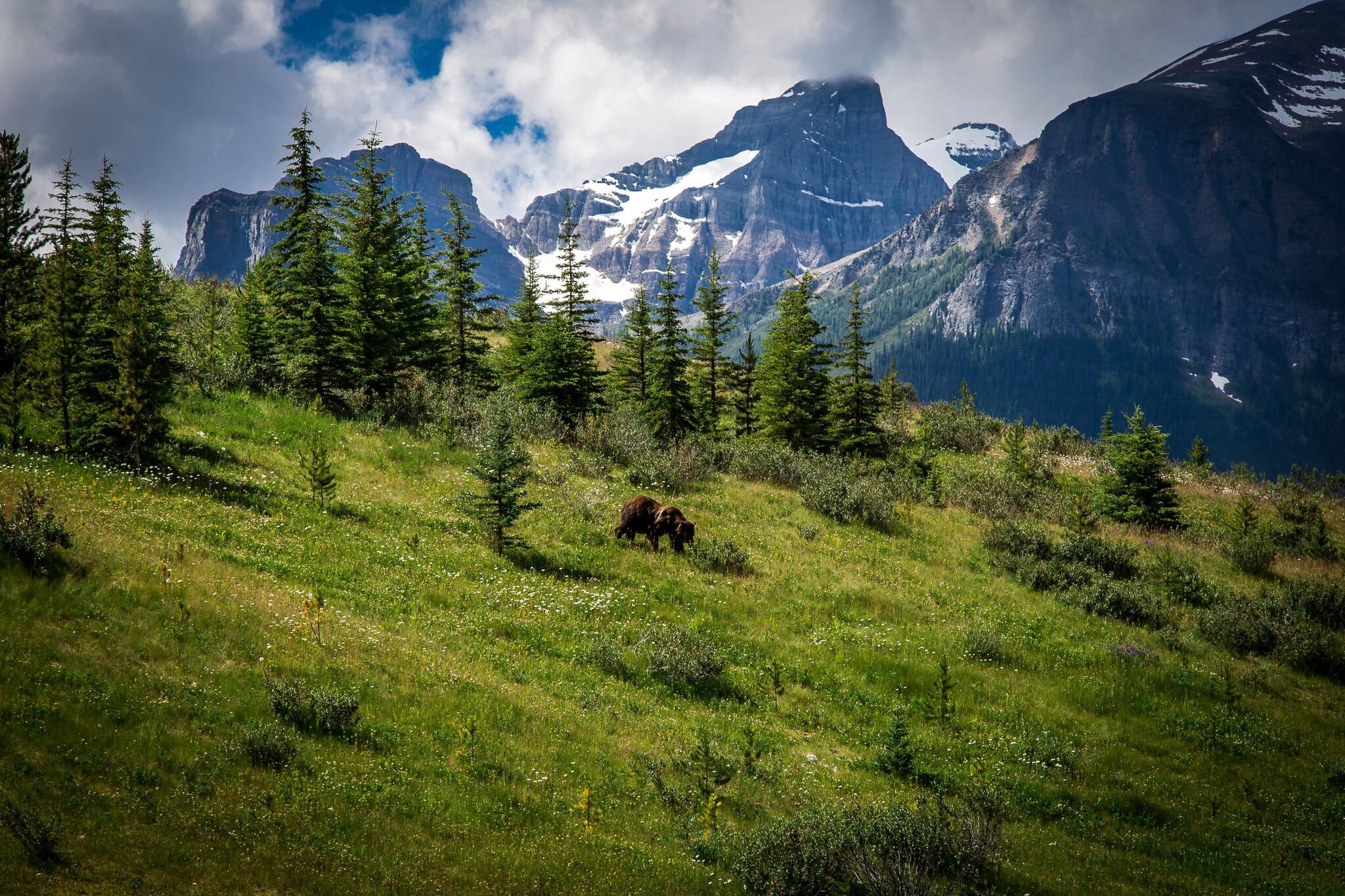
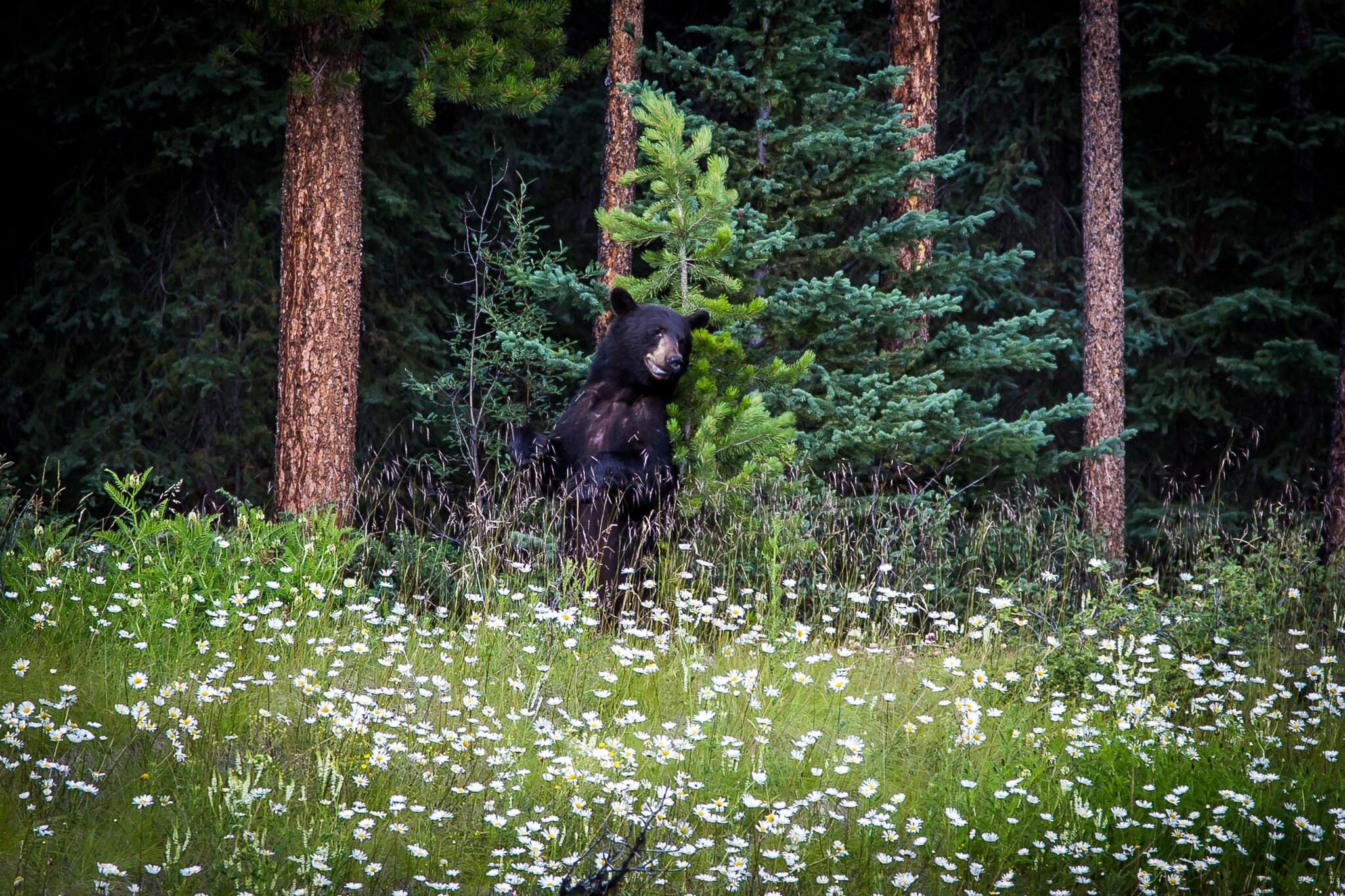
Instead of moving between Banff and Lake Louise on the dull, fast highway, drop down onto the parallel scenic road, the Bow Valley Parkway (signposted as Highway 1A). The speed limit here is strictly capped at just 30 km/h to protect the wildlife and cyclists, which makes it an absolutely ideal alternative for slow travel. It’s right on this route that you have a huge chance of spotting, from the safety of your own car, a black bear gorging itself on fresh berries just off the road.
About halfway along, be sure to stop and head off to explore the popular Johnston Canyon. It’s a very accessible, easy walk where concrete pathways and iron catwalks suspended right against the rock face reliably lead you to the beautiful Lower and Upper Falls. It’s only 1.2 kilometres to the lower waterfall, so even smaller children or older travellers can manage the trail without any trouble. In summer, a pleasant refreshing mist forms around the falling water, providing wonderful relief from the heat.
💡 Tip: For photographing the morning reflections of the mountains on the water’s surface, head to the nearby Vermilion Lakes. They’re shallow lakes just outside the town of Banff, and on a windless day you’ll capture the most beautiful mirror photographs of the iconic Mount Rundle without having to elbow your way through crowds of other tourists.
9. The epic drive along the glacial Icefields Parkway
Distance: 230 km towards Jasper
The Icefields Parkway (Highway 93) is simply one of those roads you want to drive slowly with the window rolled down, where every other bend along all 232 kilometres is worth framing on a wall. First thing in the morning, make a stop at Bow Lake, where the legendary red roof of the historic Num-Ti-Jah Lodge, reflected against the glacier, makes for a perfect composition.
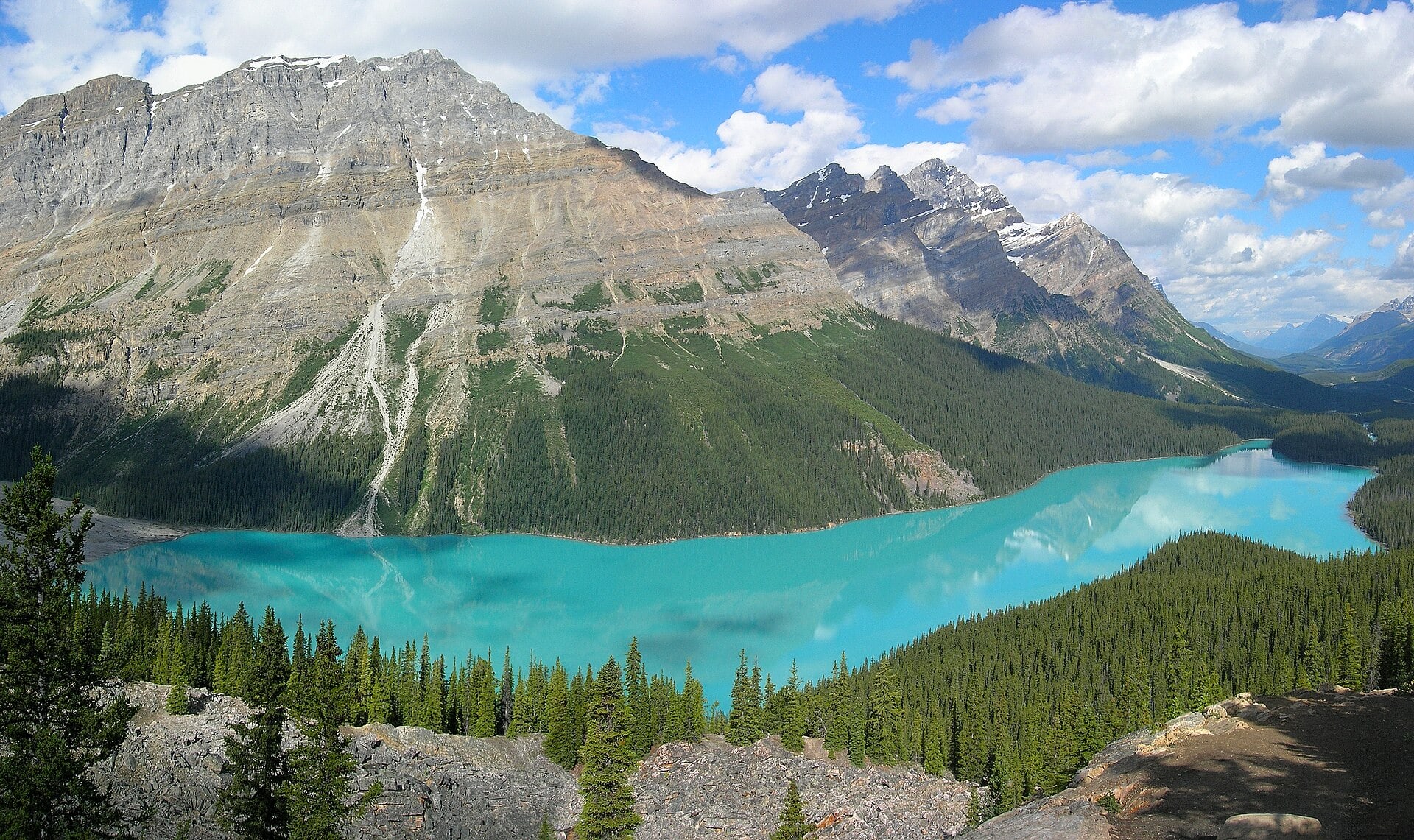
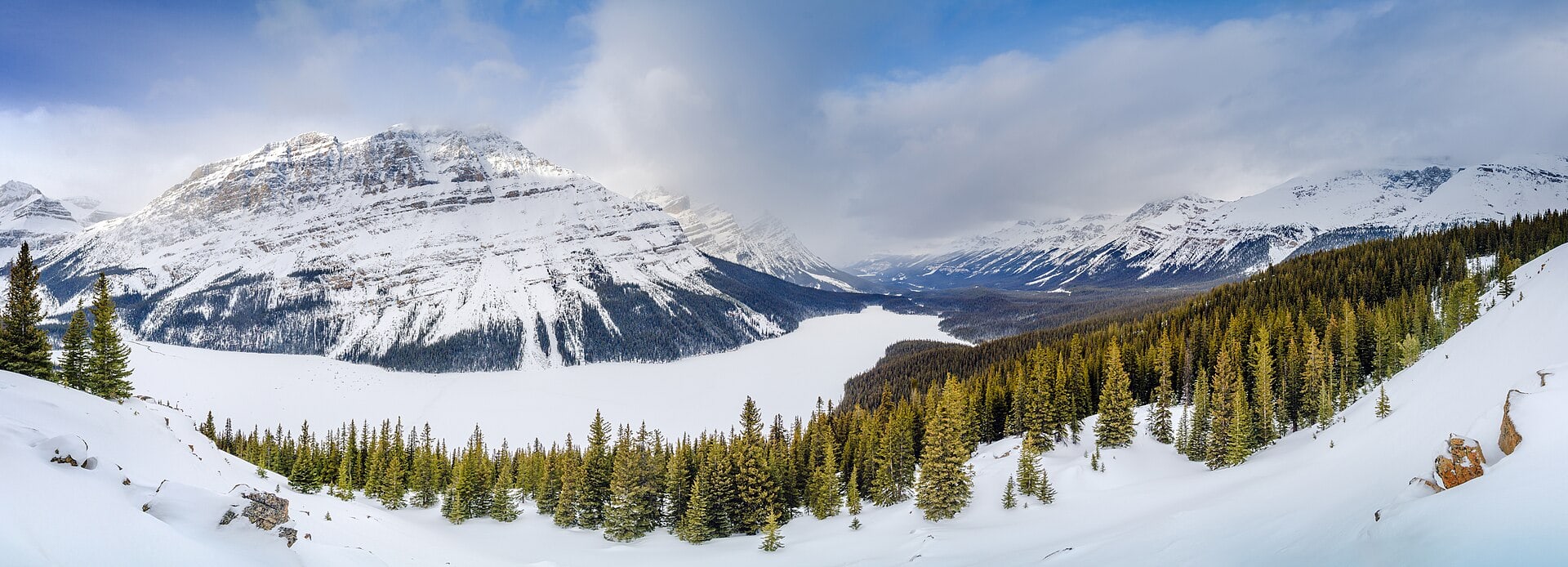
A little further on, a climb to the renowned Peyto Lake awaits, sitting at the highest point of the pass at over two thousand metres above sea level. The colour of this lake is so unbelievably blue that it looks almost like it’s from another planet, and from a bird’s-eye view its shape resembles a giant wolf’s head. If you drive all the way to the Athabasca Glacier, you can try a ride on the special Ice Explorer bus straight onto the ice mass, which costs around 116 CAD.
💡 Tip: There’s absolutely no mobile signal on this entire highway, and there are no wildlife fences either, so you really need to drive carefully and have your offline maps downloaded. The only place to fill up along the way is Saskatchewan Crossing, but the petrol prices there are utterly astronomical, so fill up your tank in the morning back in Banff or Lake Louise.

10. Alternatives and extending the itinerary with islands and dinosaurs
Distance: depending on the route chosen
If you have more than a week (and why not?), it pays to stretch the route out and add two detours that would be a shame to miss. Right at the start of the trip you can add a detour to wild Vancouver Island, reached by ferry with BC Ferries. The crossing costs around 117 CAD per car plus 18.50 CAD per passenger. You’ll need to book your tickets at least three weeks ahead, though, otherwise you risk spending up to six hours waiting at the port. On the island you’ll find the gorgeous capital, Victoria, or whale watching out on the open ocean.
Before flying out of Alberta, a brilliant option is to take a day trip from Calgary to the parched Badlands region around the town of Drumheller. The landscape here changes dramatically from high mountains to deep canyons, and you’ll find the world-class palaeontology museum, the Royal Tyrrell Museum, where entry costs 25 CAD.
💡 Tip: If you’re thinking of heading north along the Icefields Parkway all the way to Jasper, don’t forget to very carefully check accommodation availability in advance. The national park is still recovering from the devastating wildfire of July 2024, and the rebuilding of the town and some hiking trails, such as the popular Maligne Canyon, will take a while yet.
Map of points of interest for your phone
Where to go next in Canada
If you enjoyed this itinerary and are looking for more inspiration for your trip to the land of maple syrup, I’ve prepared some other detailed articles for you. They’re packed with practical tips for each individual region:
- What to see in Vancouver
- Yoho National Park
- Lake Louise
- Moraine Lake
- Icefields Parkway
- Jasper
- When to visit Banff
Frequently asked questions
When planning a road trip this big, plenty of practical questions always crop up. Looking at the map, it’s easy to get your head in a spin with all the options and rules.
That’s why I’ve put together answers to the most common questions you send me. You’ll find everything here from the paperwork to sorting out mobile data, so you don’t forget anything important before you fly out.
Do I need a visa to enter Canada?
As Czech citizens, you don’t need a traditional visa, but you must obtain an electronic eTA registration. It costs just 7 CAD, you can apply for it online, and it’s valid for a full five years or until your passport expires. Be very careful and apply exclusively through the official Canadian government website (canada.ca/eTA), because the internet is full of fraudulent agencies that will happily charge you up to 100 dollars for the same form. Warning: without an approved eTA, you won’t be allowed to board the plane.
What to do when you encounter a bear on the trail?
The basic rule is to always carry so-called bear spray with you (spray against bears), which costs approximately 40 to 60 CAD and has a range of up to 9 meters. Always keep it clipped to your chest or belt, never hide it at the bottom of your backpack. If you see a bear, don’t approach it, don’t run away, and slowly back away while talking to the animal in a calm voice.
Can I bring bear spray on a plane?
No, absolutely not. You are not allowed to take it on the plane either in your carry-on or checked baggage, as this is strictly prohibited by airline regulations (IATA). You must purchase the spray only after arrival at outdoor stores in Canada and dispose of it in special disposal bins at the airport before your flight back home.
How does health insurance work for Canada?
Healthcare in Canada is astronomically expensive and a day in a hospital bed can easily cost 5,000 CAD, so don’t even get on the plane without quality insurance. You’ll need insurance with a limit of at least €200,000 to €400,000 and don’t forget to check that it explicitly covers high-altitude hiking above 2,000 meters above sea level. I highly recommend checking out our SafetyWing review, for example.
How to Sort Out Mobile Data in Canada?
Data from a Czech SIM card will reliably ruin you in roaming. The ideal and very affordable solution is to get an electronic SIM card (eSIM) before departure, through which you’ll get enough data for navigation for a few dozen euros. Read our Holafly eSIM review, which we’ve tested in many countries and which offers unlimited data, or you can use cheaper packages from Airalo. Keep in mind though that once you drive onto the Icefields Parkway, the signal will drop to zero and don’t expect much of it in the mountains, so download offline maps in advance, ideally Google Maps for driving and AllTrails for hikes.
Is Jasper National Park already operational after the major wildfire?
The majority of natural landmarks in Jasper National Park are opening to tourists in the 2026 season, but the town itself is still recovering from the aftermath of a massive wildfire from summer 2024, which destroyed roughly 30% of all buildings. If you’re planning to visit and stay overnight, you must verify well in advance with your specific hotel whether their building is operational and whether they’re actually accepting guests. Also be aware that some popular trails, such as Maligne Canyon or the Edith Cavell Road access road, remain closed in 2026 due to ongoing repairs.
How does the one-way fee (drop fee) work for cars?
If you rent a car at the airport in Vancouver and want to return it at the airport in Calgary, rental companies will charge you a so-called drop fee (one-way fee). This fee typically ranges between €185 to €310. It’s quite a steep price, but if you only have about a week for the entire trip, it makes sense to pay it. You’ll save a huge amount of precious time and won’t have to drive the entire 850 kilometers back to the coast the same way. EXCERPT: Planning a road trip from Vancouver to Banff National Park? We’ve prepared a detailed 7 to 10-day itinerary for you with the most beautiful stops in the mountains.
Tips and Tricks for Your Vacation
Don’t Overpay for Flights
Search for flights on Kayak. It’s our favorite search engine because it scans the websites of all airlines and always finds the cheapest connection.
Book Your Accommodation Smartly
The best experiences we’ve had when looking for accommodation (from Alaska to Morocco) are with Booking.com, where hotels, apartments, and entire houses are usually the cheapest and most widely available.
 🚗 Car rental on the roadVerified rental cars in British Columbia
Search with the DiscoverCars comparison engine — it compares prices from dozens of local and international rental companies, and most bookings come with free cancellation.
Compare car prices in British Columbia →Don’t Forget Travel Insurance
Good travel insurance will protect you against illness, accidents, theft, or flight cancellations. We’ve had a few hospital visits abroad, so we know how important it is to have proper insurance arranged.
Where we insure ourselves: SafetyWing (simple monthly subscription) and TrueTraveller (for extra-long trips).
Find the Best Experiences
Get Your Guide is a huge online marketplace where you can book guided walks, trips, skip-the-line tickets, tours, and much more. We always find some extra fun there!


