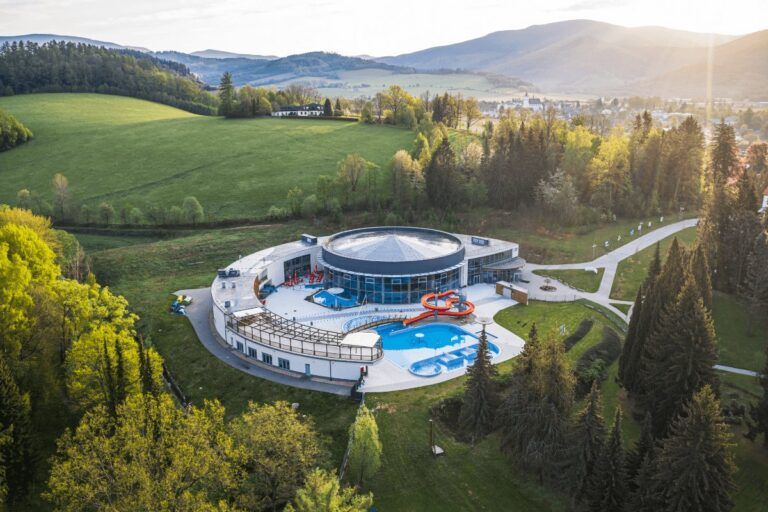
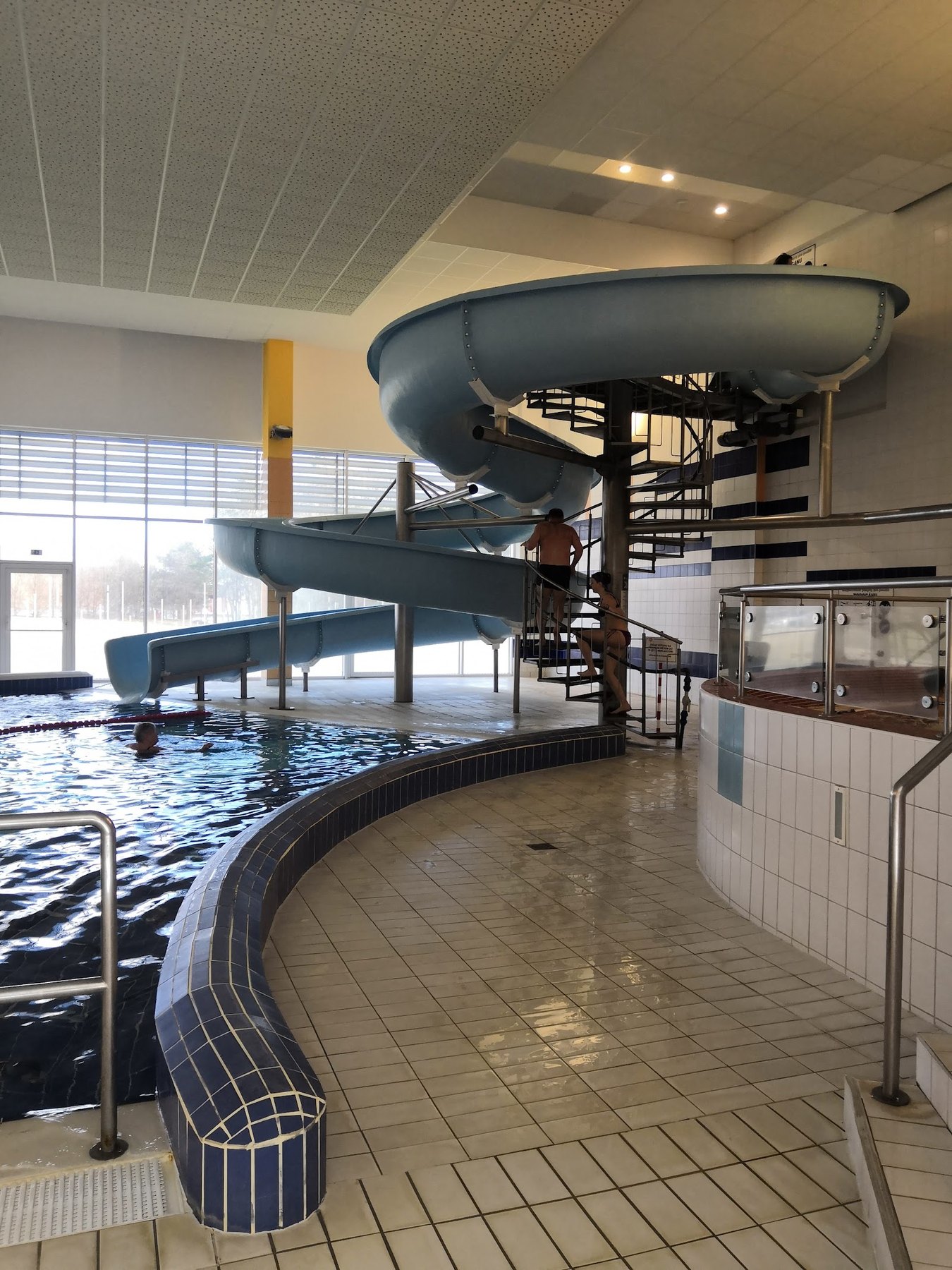
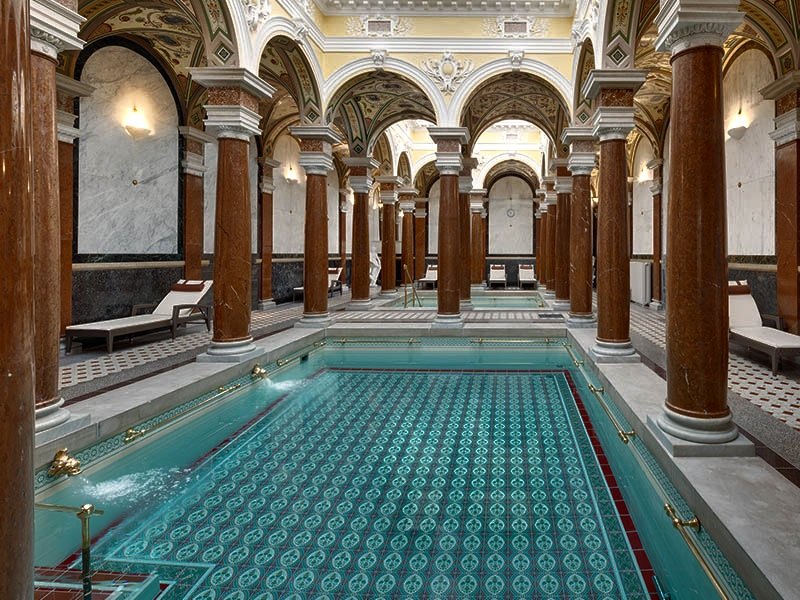
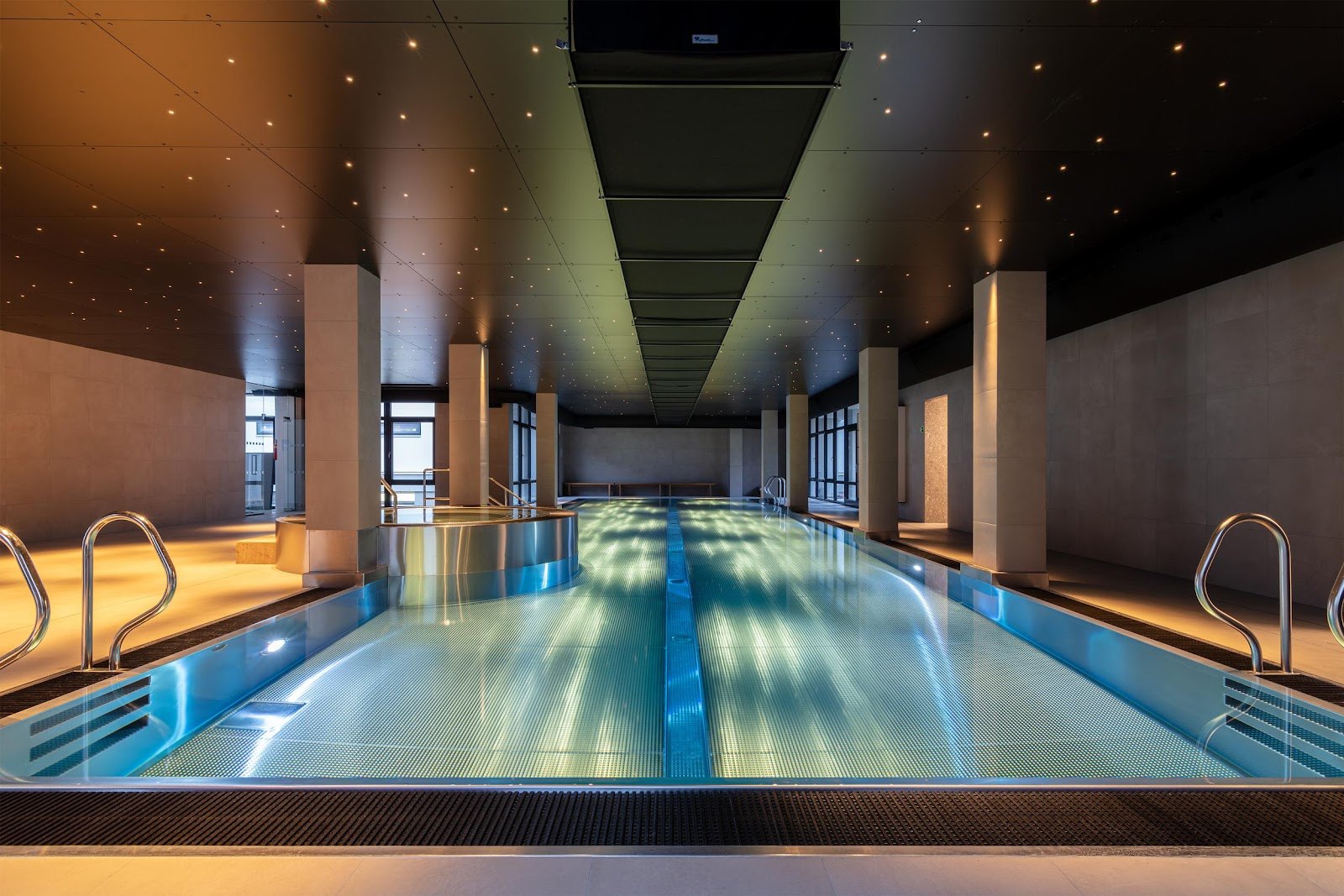
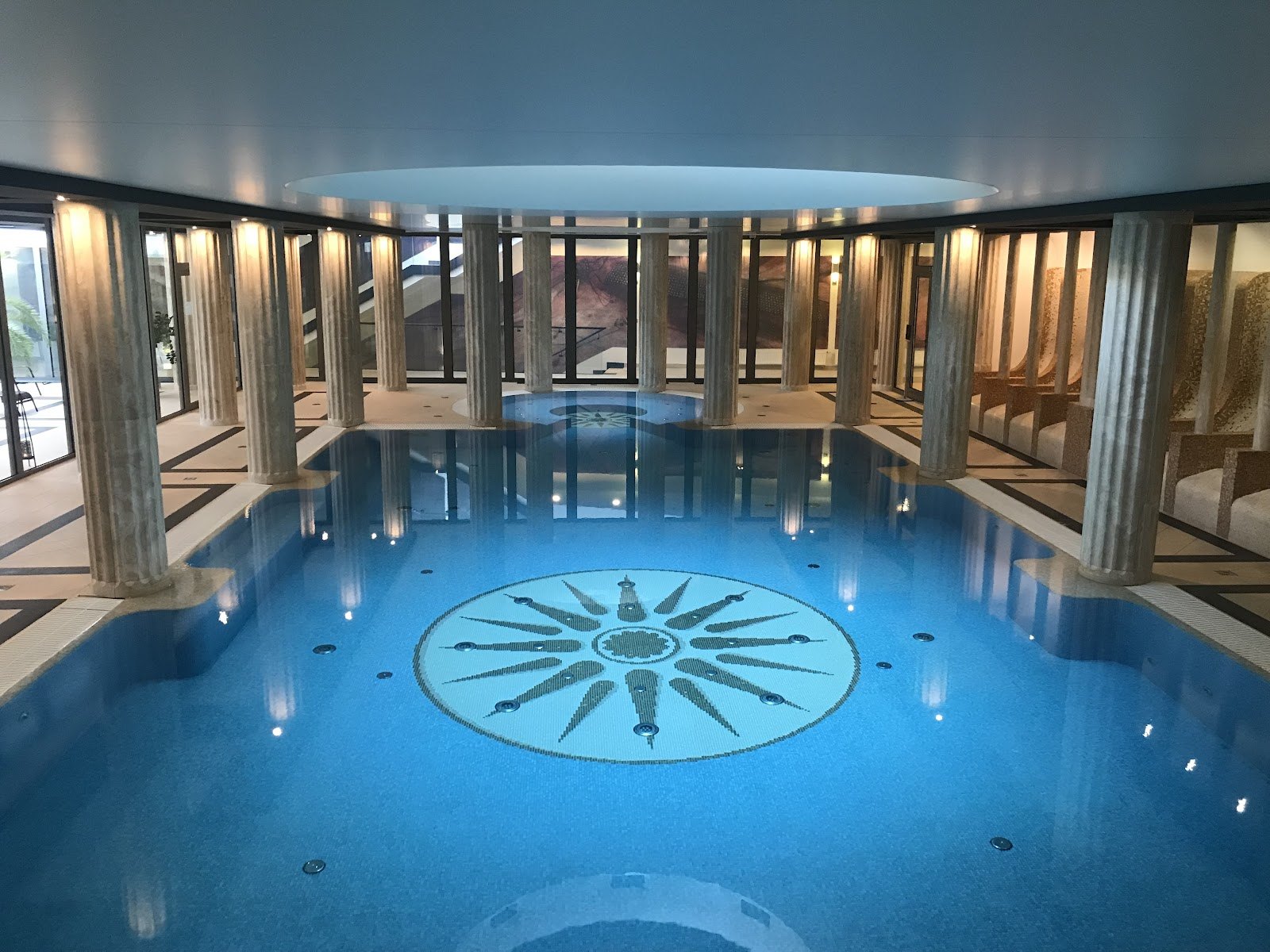
TL;DRThe best waterparks in Slovakia for families come down to eight picks. Tatralandia, near Liptovský Mikuláš, is the biggest complex in Central Europe, with fourteen pools and nearly thirty slides. AquaCity Poprad, right below the Tatras, has 350 water attractions and an evening laser show. Thermal Gino Paradise Bešeňová has water reaching 39 degrees, while Aquathermal Senec sits just 25km from Bratislava. Rounding out the list are Turčianske Teplice, AQUApark Lipany in eastern Slovakia, Mestský aquapark Trnava and AquaRelax Dolný Kubín. They’re all open year-round, entry runs from 26 to 43 euros, and you’re best off going outside the summer rush — spring or autumn are ideal.
Slovakia is an absolutely brilliant choice for a family holiday, and its water parks rank among the very best in Central Europe. If you’re looking for the best aquaparks in Slovakia where the kids can let loose on the slides while you relax in warm water, you’ve come to exactly the right place. The journey to Slovakia doesn’t take long, and the language barrier is practically non-existent.
Most Slovak water resorts cleverly combine adrenaline-pumping attractions with thermal springs. That means while your little ones are racing down giant funnels and wild rivers, you can soak in an outdoor pool filled with hot healing water and take in the view of the snow-capped mountain peaks. This combination is simply unbeatable and makes Slovakia a year-round hit.
I’ve put together a detailed guide where we’ll explore the eight best spots for water-based fun. I’ll help you choose accommodation right inside the resorts, give you a rough idea of ticket prices, and throw in some practical tips on how to save by buying online. Let’s dive together into a world of endless water-park fun.
TL;DR
Tatralandia: The largest resort in Central Europe, with a huge number of slides and a tropical pavilion with salt water.
AquaCity Poprad: A luxurious eco-friendly resort beneath the Tatras, with amazing evening laser shows and excellent family facilities.
Gino Paradise Bešeňová: A paradise for lovers of hot thermal water, with an enormous slide tower.
Aquathermal Senec: A great summer destination near Bratislava with a famously long slide.
Spa & Aquapark Turčianske Teplice: A unique blend of healing spa water and fun attractions for kids.
AQUApark Lipany: A modern resort in eastern Slovakia with thirteen slides and plenty to do in summer.
Mestský aquapark Trnava: A pleasant city water park without thermal water, ideal for a half-day stop.
AquaRelax Dolný Kubín: A cosier centre in the Orava region with a great sauna world and a fun park.
A huge advantage of Slovak water resorts is that they’re open all year round, so you can visit absolutely whenever you like. Most of the big complexes have spacious indoor halls with a pleasant tropical climate even in the depths of winter. What’s more, the outdoor thermal pools are heated to around 38 degrees, which creates a truly magical atmosphere as the snow falls around you.
But if you want to try out every single slide and outdoor attraction, I’d definitely recommend planning your visit for the peak summer season. During July and August, the sprawling outdoor areas open up with dozens more pools and slides. Just bear in mind that the resorts are at their busiest in summer and ticket prices peak too.
The happy medium is the spring and autumn months, when you’ll dodge the biggest crowds of tourists. Many families also love to combine winter skiing in the Tatras with an evening swim — according to traveller reviews, it’s an absolutely perfect way to ease tired muscles after a full day on the slopes.
Where to stay near Slovakia’s aquaparks
If you want the water fun literally a few steps from your bed, hotels right inside the resorts are your best bet. You’ll save yourself the daily commute, the hunt for a parking space and lugging heavy bags of towels around. On top of that, most of these resorts offer free entry tickets with your stay, or at a heavily discounted rate, which ends up saving you a fair bit of money.
In the Liptov region, a huge hit is the Holiday Village Tatralandia, where you stay in adorable themed bungalows right next to the pools. For lovers of luxury and mountain views, I warmly recommend the AquaCity Mountain View complex in Poprad, which offers top-notch service. And if you prefer thermal Bešeňová, do take a look at the Hotel Akvamarin Gino Paradise Bešeňová, which even has its own private pool for guests.
Beyond the main resorts you’ll naturally find hundreds of lovely guesthouses and apartments that are easier on the wallet. When choosing private accommodation, always check the distance to the water, because a comfortable walking distance with small children is priceless. Many local hosts also offer guests discount cards for entry to the surrounding attractions.
Aquapark or thermal baths?
While planning your trip, you might be wondering what the actual difference is between an aquapark and a thermal bath. In Slovakia, these two worlds very often overlap, but the main difference lies in the resort’s overall focus. Aquaparks are all about adrenaline and unbridled fun, so the stars of the show are the kilometres of slides, wave machines and children’s entertainment programmes.
The classic thermal baths in southern Slovakia are more about relaxing and healing in hot mineral water. The most famous spots include places like Thermal Corvinus Veľký Meder, Thermalpark Dunajská Streda and the popular Vadaš in Štúrovo. If you’re after a calmer atmosphere and a chance to warm your bones, be sure to read our separate article on the best thermal baths in Slovakia.
8 of the best aquaparks in Slovakia
Now let’s take a detailed look at the eight best water paradises Slovakia has to offer. Each one has its own unique charm and caters to a slightly different type of visitor. We’ve ranked them based on popularity and the number of attractions on offer.
1. Tatralandia
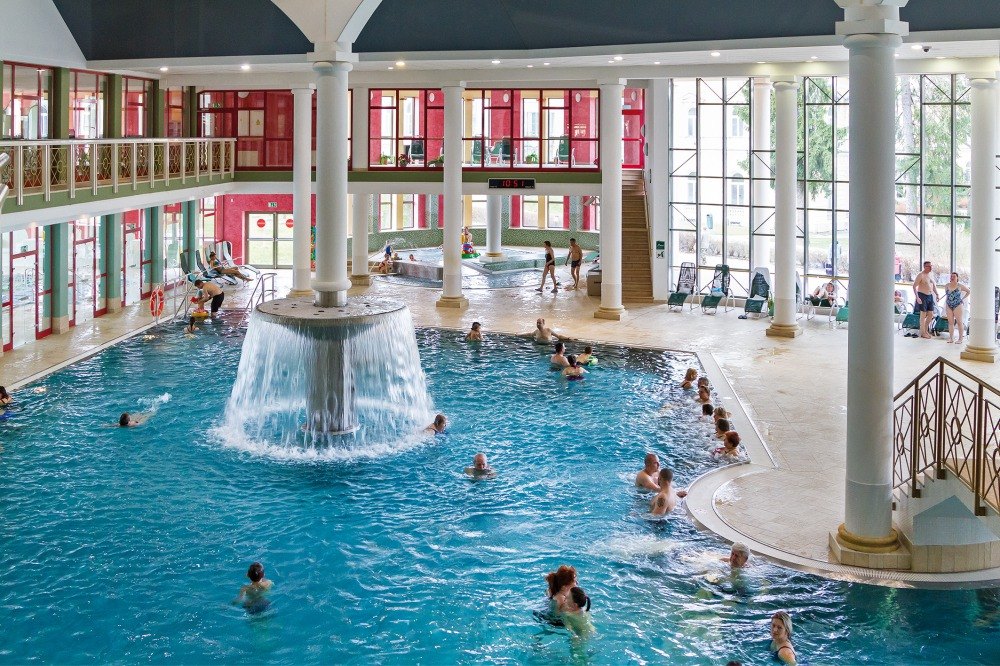
This gigantic complex in Liptovský Mikuláš is the absolute flagship of Slovak water fun and proudly holds the title of the largest resort in Central Europe. You’ll find an incredible fourteen pools here, and in the summer season you can try out nearly thirty different slides. Among the biggest draws are the giant Flamingo and Duo Racer slides, where you can safely race the kids.
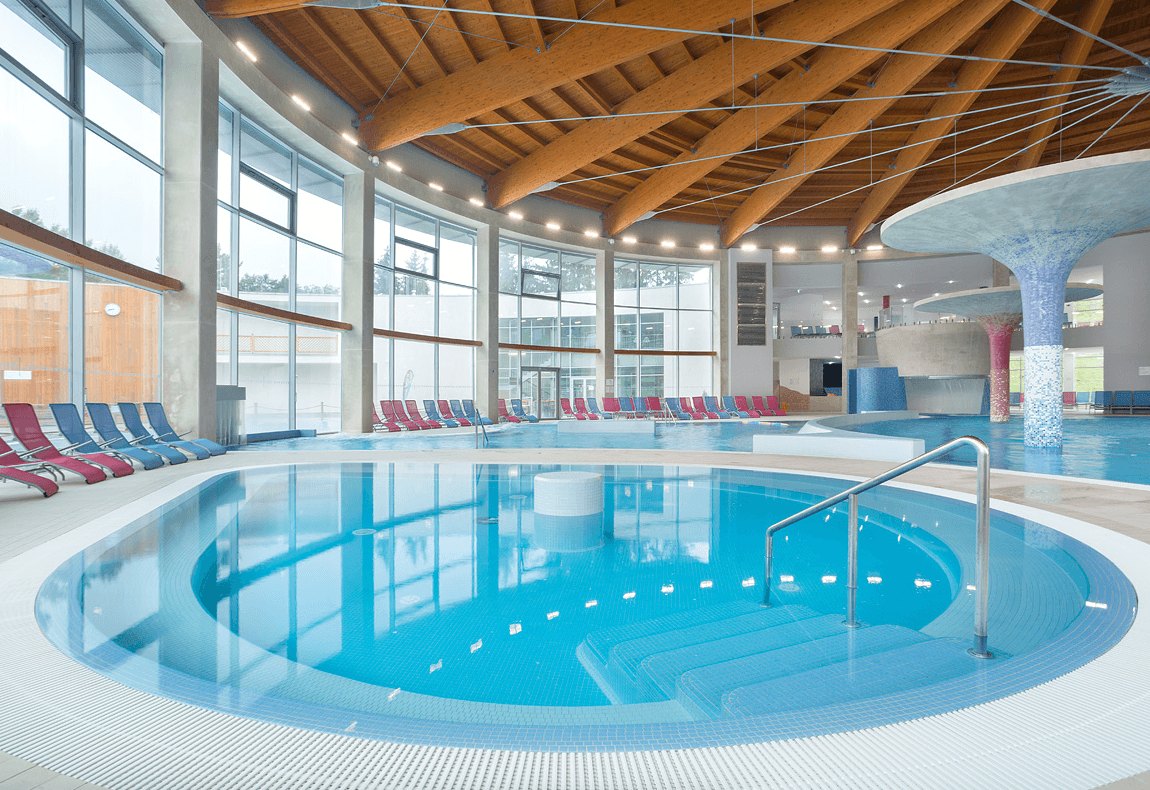
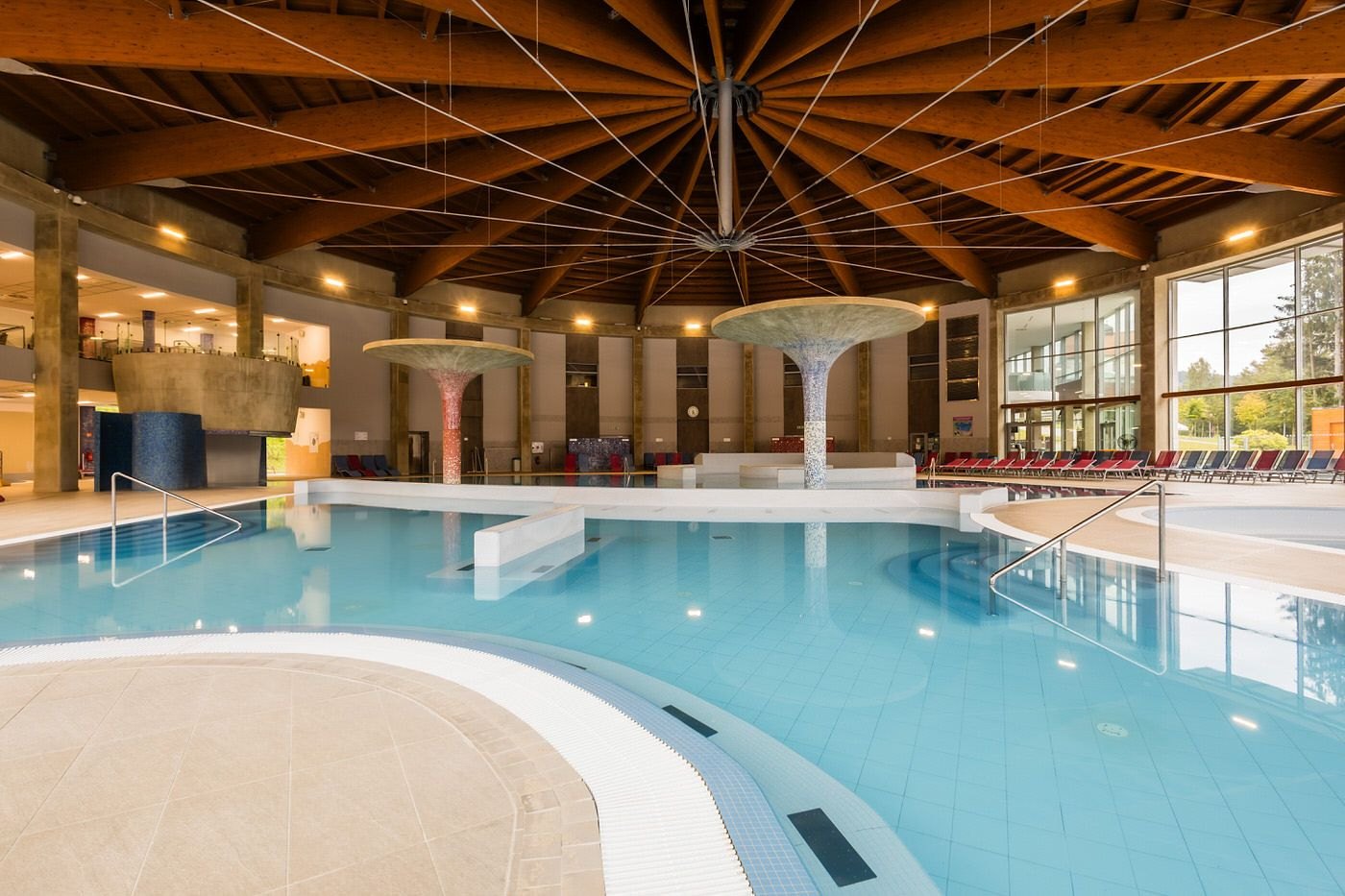
The pride of the whole resort is the enormous hall called Tropical Paradise, where a steady thirty degrees is kept up all year. Inside you’ll find pools with both salt and clear water, and real tropical plants grow here too. For the youngest visitors there’s a fantastic Kids Island, while teenagers love giving the surf simulator and the modern 5D cinema a go.
If you want to make the most of your visit, I’d absolutely recommend staying right inside the resort. Book a cute little house at Holiday Village Tatralandia, from where you can walk to the pools in your robe in just a few minutes. Adult admission starts at roughly 30 euros, but prices are dynamic and you’ll save significantly by buying through the Gopass online system well in advance.
Right at the foot of the majestic peaks of the High Tatras lies this luxurious eco-friendly resort, which uses geothermal energy to heat the entire complex. The water in the pools stays at a pleasant 28 to 38 degrees, so you’ll never feel a chill here. In total you’ll find thirteen pools and an incredible 350 water attractions for all ages.
Kids are guaranteed to love the huge Treasure Island zone styled as a pirate island, complete with a shipwreck. For adrenaline fans, there’s the popular 71-metre-long Black Hole slide and the slightly shorter Twister. In the evening, the whole resort transforms thanks to the unique laser show in the Blue Sapphire pools — an experience you definitely shouldn’t miss.
The whole complex is absolutely ideal for a family holiday combined with trips into the mountains. I warmly recommend staying at the luxurious AquaCity Mountain View hotel, or in the slightly more affordable Seasons and Riverside hotels. An adult ticket costs around 28 euros online, but I’d urge you to check current operations before your trip, as a gradual refurbishment of the slides is reported for spring 2026.
If you love really hot water and proper relaxation, Bešeňová in the Liptov region is guaranteed to win you over. This resort is famous for its highly mineralised thermal springs, which have a distinctive rusty-red colour. You’ll find an impressive twenty-three pools here, and the outdoor ones reach temperatures of up to 39 degrees — an absolute dream even in the deepest frost.
While you relax in the hot water, the kids can let loose on the enormous slide tower. It offers six different slides with a combined length of more than a kilometre and is open all year round. There’s also a big pool with an artificial wave machine and a unique diving centre where you can try a dive with breathing apparatus in a special cave.
Bešeňová is one of the more luxurious and slightly pricier resorts in Slovakia, with adult admission starting at 31 euros. To have all the comfort within arm’s reach, I’d recommend staying at the beautiful Hotel Akvamarin Gino Paradise Bešeňová, or in the adjacent Gino Apartments. Once again, the golden rule applies: buying tickets online through the e-shop saves you a lot compared to the prices at the box office.
Just under twenty-five kilometres from Bratislava sits this hugely popular complex, which thanks to its location is easy to reach. The resort offers a perfect blend of fun and relaxation in thermal water sitting at a comfortable 28 to 38 degrees. It’s at its liveliest in summer, when all the outdoor zones are open and there are plenty of entertainment programmes for kids.
The main draw for the brave is the giant 104-metre slide with a timer, where you can compete with the kids for the fastest run. Also very popular is the adrenaline attraction known as the “funnel”, which spins you around like in a giant whirlpool. Parents, meanwhile, will surely appreciate the lovely, peaceful spa zone, where they can nip off for a massage or a sauna.
Basic admission to the water world and spa zone costs around 43 euros online, with children under six getting in completely free. If you’re looking for the perfect place to stay over, look around for accommodation near Slnečné jazerá (the Sunny Lakes), which lie right next door. It’s a genuinely beautiful spot where you can easily switch between swimming in the pools and a natural dip in the lake.
This resort in the Turiec region is a unique blend of classic healing spa tradition and modern water fun. It’s the only aquapark in Slovakia that can boast certified healing thermal water, which is wonderful for the joints and overall recovery. The indoor spa section offers water up to 38 degrees, while the fun zone is a touch cooler at a pleasant 33 degrees.
For the children there’s a brilliant wild river and two main slides that are guaranteed to keep boredom at bay. You can try the 47-metre-long Kamikaze or the longer Atrakčný movie, which measures nearly a hundred metres. The whole resort has a slightly calmer, cosier atmosphere than the giant resorts in Liptov, which many parents with smaller children really appreciate.
A big hit here is the discounted evening swimming, which always starts at half past five and has a wonderfully magical atmosphere. For total relaxation, I’d recommend booking a stay right in the Zlaté Kúpele Turčianske Teplice hotel, which is directly connected to the water world. That way you’ll be sure your holiday is packed with maximum comfort.
Lukáš and Lucie recommend
Where to Stay in Slovakia
6 accommodations — hotels, resorts and other lodging options
If you’re heading to eastern Slovakia, this modern resort in the Šariš region certainly won’t disappoint. The complex draws on local geothermal springs and offers water at temperatures of 28 to 38 degrees. The whole place is open year-round, but its true strength shows in the summer months, when it expands across a vast two-and-a-half hectares.
Your kids will be wide-eyed with excitement, because there are an incredible thirteen slides waiting for them here. Ten of them run outdoors in summer and three are available indoors all year round. Add to that eight large pools, a beach volleyball court and separate relaxation zones with whirlpools, where you can unwind in peace.
Price-wise, Lipany is one of the more affordable spots in Slovakia — an adult ticket costs around 26 euros and children under three pay nothing at all. If you’re planning to linger in the region, I’d recommend exploring the local guesthouses in the Šariš region, which offer a wonderfully authentic and friendly atmosphere. It’s a great base for further trips around eastern Slovakia.
This pleasant city complex lies just forty-five kilometres from Bratislava and is a great choice for a shorter half-day stop. Unlike the previous tips, you won’t find healing thermal water here — but that doesn’t bother the kids one bit when it comes to water fun. The resort offers five stainless-steel pools with crystal-clear water and excellent facilities for the whole family.
The fun is provided by two large indoor slides, one of which features a popular fun funnel. For smaller explorers there’s a wild river, floating lily pads and even an interesting climbing wall right above the water. In the summer months the adjacent outdoor pool opens up too, with plenty of grassy areas for sunbathing.
It’s a very modern and clean resort, where an adult pays roughly 26 euros for a full-day ticket. But I’ve got a 💡 tip for you: buying tickets through the official e-shop can save you up to thirty percent off the original price. For an overnight stay there’s a whole range of lovely hotels and apartments right in Trnava’s historic centre, which is well worth a wander in the evening.
Our final stop takes us to the beautiful Orava region, home to this very cosy and intimate water world. It’s an absolutely ideal place to relax if you’re heading towards the Tatras and fancy a pleasant break. The whole complex is neatly divided into the main Water World and the calmer Sauna World.
For the kids there’s a fun Fun Park and two main slides measuring 40 and 71 metres. You’ll also find a wide double slide and a multi-purpose pool where the whole family can let loose. From the experience of many travellers, I know that the resort tends to be less crowded than the big centres in Liptov, which means a far more relaxed vibe and shorter queues for the attractions.
Since it’s a smaller complex, I’d recommend checking the current opening hours and ticket prices before your trip directly on their official website, aquakubin.eu. If you decide to stay in this picturesque area, you’ll certainly find lovely accommodation in hotels and guesthouses right in Dolný Kubín, from where it’s just a short hop to the famous Orava Castle.
To enjoy your time at Slovakia’s aquaparks one hundred percent, always buy your tickets online well in advance. Big resorts like Tatralandia or Bešeňová use dynamic pricing in euros, which means the earlier you buy the tickets, the cheaper they’ll be. What’s more, buying online lets you elegantly skip the long queues at the box office, which can be genuinely exhausting in peak season.
If you like peace and quiet and emptier pools, plan your visit for weekdays outside the school holidays. You’ll get the best atmosphere first thing after opening, or conversely during the evening swim, when most families are heading off to dinner. And if you’re going in winter, don’t forget to look out for great-value packages that combine accommodation, ski passes for the Tatras and aquapark entry.
Don’t forget to pack plenty of towels and your own flip-flops for the pool, since hiring items from the resort usually comes at a charge. Many travellers also recommend bringing a small euro coin to lock the locker, and in summer definitely don’t skimp on a good sun cream. For the smallest children, special swim nappies are strictly required at all resorts, so don’t leave them out when packing.
Where to next
If you’re more tempted by relaxing in healing hot water without crowds of children and the shrieks from the slides, be sure to read our detailed guide mapping out the best thermal baths in Slovakia. You’ll find tips on places like Podhájska or the popular Veľký Meder.
Don’t fancy crossing the border? No problem — we’ve also put together a big roundup of tips on the best aquaparks in the Czech Republic, where you’ll discover where to head for water fun closer to home.
And if you’re near the northern border, you might be interested in our article on Polish aquaparks near the border, which are a huge hit and often offer unbeatable value for money.
Search with the DiscoverCars comparison engine — it compares prices from dozens of local and international rental companies, and most bookings come with free cancellation.
🔗 These are affiliate links — they don't change your price and help us create content. · All experiences →
Frequently asked questions
Which is the largest aquapark in Slovakia?
“`html
The absolutely largest complex not only in Slovakia, but in all of Central Europe, is Tatralandia near Liptovský Mikuláš. It offers an incredible fourteen pools, over thirty summer water slides, and a huge tropical hall.
“`
Which water parks are best for families with small children?
Travelers praise Tatralandia the most thanks to the huge Kids Island and AquaCity Poprad with their pirate zone Treasure Island. For a more peaceful stay with toddlers, parents often recommend the more intimate Turčianske Teplice or Dolný Kubín, where it’s not as noisy.
Which resorts have hot thermal water?
You’ll find healing thermal water at temperatures between 28 and 39 degrees in Tatralandia, AquaCity Poprad, Bešeňová, Senec, Turčianske Teplice, and also in Lipany. On the other hand, the Trnava City Aquapark has no thermal water.
How far is Tatralandia from the Czech Republic?
Tatralandia is located in Liptovský Mikuláš, which has excellent motorway D1 connections. From Brno it’s roughly 330 kilometres, which you’ll cover in approximately three and a half hours. From Prague expect a distance of around 530 kilometres and a journey of five and a half to six hours.
Are Slovak aquaparks open in winter too?
“`html
Yes, most large resorts operate year-round. Indoor tropical halls and outdoor thermal pools are open continuously. However, you need to keep in mind that in winter most of the large outdoor water slides are out of operation – they only open during the summer season.
“`
Is it worth buying tickets in advance online?
Definitely yes. Most large resorts from the TMR group use dynamic pricing, so by purchasing in advance through the e-shop (Gopass) you’ll save plenty of euros. A huge advantage is also that you’ll avoid long queues at the ticket offices on site.
Which aquapark is the best in eastern Slovakia?
“`html
In eastern Slovakia, the clear favorite is AQUApark Lipany near Prešov. It offers warm thermal water, up to thirteen slides in summer, and eight pools. The prices here are also very reasonable and the facility is beautifully modern.
“`
Tips and Tricks for Your Vacation
Don’t Overpay for Flights
Search for flights on Kayak. It’s our favorite search engine because it scans the websites of all airlines and always finds the cheapest connection.
Book Your Accommodation Smartly
The best experiences we’ve had when looking for accommodation (from Alaska to Morocco) are with Booking.com, where hotels, apartments, and entire houses are usually the cheapest and most widely available.
Don’t Forget Travel Insurance
Good travel insurance will protect you against illness, accidents, theft, or flight cancellations. We’ve had a few hospital visits abroad, so we know how important it is to have proper insurance arranged.
Where we insure ourselves: SafetyWing (best for everyone) and TrueTraveller (for extra-long trips).
Why don’t we recommend any Czech insurance company? Because they have too many restrictions. They set limits on the number of days abroad, travel insurance via a credit card often requires you to pay medical expenses only with that card, and they frequently limit the number of returns to the Czech Republic.
Find the Best Experiences
Get Your Guide is a huge online marketplace where you can book guided walks, trips, skip-the-line tickets, tours, and much more. We always find some extra fun there!
TL;DRThe best thermal spas in the Czech Republic span 12 chosen spots, though genuine geothermal springs are only found at Termály Velké Losiny, with water at 36°C, Thermalium – Lázně Teplice, whose Pravřídlo spring runs at 35°C, plus Termální koupaliště Brná and Aqualand Moravia, fed by the Mušov-3G borehole at 46°C. Other popular spots — Alžbětiny lázně Karlovy Vary, Lázně Aurora Třeboň, Mariánské Lázně, Lázně Poděbrady, Luhačovice, Aquaforum Františkovy Lázně and Vápenka Benešov nad Ploučnicí — rely on reheated or mineral water instead. Outdoor bathing only runs from May to September, entry costs between 50 CZK and roughly 400 CZK for 60 to 150 minutes, and Lázně Poděbrady is the closest to Prague, just under fifty kilometres away.
When the temperature drops outside and the damp, raw weather creeps under your fingernails, few of us can resist the thought of sinking into hot, bubbling water. But let me let you in on one important secret right away, so you’re not disappointed: there are only a handful of genuine geothermal springs in the Czech Republic. Most of the places people casually call “thermal baths” are actually gorgeous spa and wellness pools filled with mineral or artificially heated water. Still, the country is home to some wonderful thermal spas in the Czech Republic where you can warm up beautifully and escape everyday stress.
If you dream of sitting outdoors in a hot pool during a hard frost, with snowflakes falling on your head, you’ll need to head beyond the country’s borders. Here, outdoor thermal bathing is almost entirely a summer affair, and in winter you’ll mostly enjoy indoor covered relaxation zones.
Even so, you’ll find truly amazing spots where you can warm your body and unwind from the daily grind. Let’s take a look together at 12 tips for the best thermal spas and baths in the Czech Republic, where you can fully relax — whether you’re after absolute silence or fun for the whole family.
TL;DR: the best thermal spas in the Czech Republic at a glance
For those of you who are in a hurry and just want a quick overview, I’ve put together a list of all 12 great spots I cover in more detail in this article:
Velké Losiny Thermal Park (the largest genuine thermal park in the country)
Thermalium – Teplice Spa (healing water and complete calm)
Brná Thermal Lido (cheap retro summer swimming near Ústí nad Labem)
Aqualand Moravia (hot thermal water paired with wild waterslides)
AquaCentrum Janské Lázně (ideal mountain relaxation after a hike in the Krkonoše)
Elizabeth Spa, Karlovy Vary (affordable wellness in the heart of the colonnade)
Aurora Spa, Třeboň (slightly salty water and the famous South Bohemian peat)
Mariánské Lázně – Roman Baths (historic atmosphere from the late 19th century)
Poděbrady Spa – Chariclea (the loveliest wellness pool closest to Prague)
Luhačovice Spa (stunning architecture and the healing Vincentka spring)
Aquaforum Františkovy Lázně (a pleasant spa aquapark for families)
Benešov nad Ploučnicí – Vápenka (seasonal summer lido with iron-rich water)
When to visit the thermal spas in the Czech Republic
Planning a visit to Czech spas and thermal lidos varies enormously depending on the season. While indoor wellness centres and spa houses operate year-round and make the most sense in autumn and winter, outdoor complexes have their own quirks.
If you want to experience real outdoor bathing in hot water with views over the landscape, you’ll need to go between May and September. Even the most famous complex in Velké Losiny only opens its outdoor pools during the warm months, so in December you’ll only warm up under cover.
During winter weekends and public holidays, the best indoor complexes sell out fast and get packed with people. That’s why I’d recommend planning your trip for a weekday instead, when admission is often cheaper and you’ll enjoy a far calmer atmosphere without queuing for a free hot tub.
Where to stay near the spas
Combining a visit to the warm pools with a long weekend is probably the best way to truly recharge. Most spa towns offer a wide range of accommodation, from cosy guesthouses to luxury hotels that often have pools right inside the building.
If you crave maximum comfort — walking from your room to the pool in nothing but a bathrobe — book directly at one of the spa houses. A great choice is, for example, the Termály Losiny Spa Resort, right next to the famous thermal park. In western Bohemia, you’ll be wowed by the historic Ensana Nové Lázně in Mariánské Lázně, where you’ll soak up the elegant atmosphere of a bygone era.
For those looking for a break just a short hop from the capital, I can recommend Hotel Chariclea in Poděbrady. You can easily book all these places in advance through Booking, which saves you a lot of hassle searching for a last-minute room.
12 tips for where to find warm water in the Czech Republic
Let’s take a closer look at each spot. You’ll find an honest mix of genuine geothermal springs and beautiful spa wellness centres, so you can pick exactly what suits you best.
1. Velké Losiny Thermal Park
If you’re after the most iconic thermal experience in the country, your steps should lead to the Olomouc Region, at the foot of the Jeseníky Mountains. This complex is the only genuine thermal park of its kind in the Czech Republic, using natural geothermal sulphur water from the Žerotín spring. The water is drawn from a depth of over a thousand metres and has a natural temperature of around a lovely 36 °C.
Inside, five pools are open year-round, the best of which is probably the mysterious cave with a waterfall and the wild-water section that delights adults and children alike. The other four outdoor pools only open during the summer season from May to September, so sadly there’s no open-air bathing in winter.
Admission varies by season and day of the week; on weekdays outside the main season you’ll pay roughly 16 € for two and a half hours. 💡 Tip: If you arrive in the evening after 6 pm, you’ll get a 20% discount on admission. I warmly recommend staying right at the adjacent Termály Losiny Spa Resort, so the water really is just a few steps away.
In the north of Bohemia, in the Ústí Region, hides an absolute treasure for lovers of calm and healing water. This complex draws on the famous Pravřídlo spring and offers a main healing pool at 35 °C, fitted with an impressive hundred different massage and bubble features.
Unlike noisy aquaparks, this place is devoted to quiet relaxation and recharging your batteries. Besides the main hot pool, you’ll find a slightly cooler recreational pool at 29 °C, the popular Kneipp walk to boost circulation in your legs, and an excellent sauna world.
Basic admission to the pools comes in at a very pleasant 12 € for 90 minutes, while a complete ticket including the saunas costs around 16 € for two and a half hours. To make the most of your stay in Teplice, book a room in one of the historic spa houses, such as the famous Beethoven Spa House.
Right in neighbouring Ústí nad Labem you’ll find a genuine one-off that will especially please those of you looking to relax on a budget. This site draws water from a thermal borehole dating back to 1930, from a depth of over three hundred metres, and offers a pleasant water temperature between 26.5 and 30 °C.
It’s an outdoor retro lido sitting right on the banks of the River Elbe, where you’ll find a recreational pool with a slide, a swimming pool and plenty of grassy areas to relax on. It’s one of the cheapest spots in the country, with basic admission hovering at just 2 to 3 € for the whole day.
⚠️ Just be very careful with the opening hours, as this is primarily a summer venue. Information about winter operation often changes and contradicts itself, so always check the current situation on their official website before you travel. For a long weekend, you can stay in one of the many pleasant hotels right in the centre of Ústí nad Labem.
You might know this huge complex in Pasohlávky in South Moravia mainly for its wild waterslides, but few people realise it also hides a real natural treasure. Its pools are fed by geothermal water from the deep Mušov-3G borehole, which reaches a remarkable 46 °C at the surface and cools slightly to an ideal 37 °C in the pools.
From the outdoor thermal pools, you’ll get an absolutely breathtaking view of the silhouette of the Pálava Hills, which is especially romantic at sunset. Bear in mind, though, that this is primarily a busy aquapark with sixteen pools and plenty of water attractions, so you won’t find absolute silence here.
If you’re curious about other similar places with slides, be sure to check out our article on the best aquaparks in the Czech Republic. For the perfect weekend, I’d recommend staying at the Aqualand Inn, right beside the complex, which often includes pool admission in the price of your stay.
5. AquaCentrum Janské Lázně
Once you’ve finished a full day of hiking along the ridges of the Krkonoše Mountains, there’s nothing better than letting your aching muscles rest in warm water. This rehabilitation centre offers pleasantly warm mineral water at 27 °C, which springs straight from the mountain depths.
Don’t expect a noisy aquapark full of children and slides here; the atmosphere is quiet and focused on calm regeneration. You’ll have a spacious pool, bubbling hot tubs and excellently equipped saunas at your disposal, which will surely get you back on your feet after a freezing day in the mountains.
Admission to the pool combined with the sauna world costs roughly 16 € for two hours, while the pool alone for an hour comes to about 7 €. 💡 Tip: If you’re staying nearby and hold the Krkonoše Guest Card, you’ll get a handy 20% discount on admission. You can stay in one of the many lovely mountain guesthouses scattered throughout Janské Lázně.
When you visit the country’s most famous spa town, Karlovy Vary, don’t miss the building known as Spa V (Lázně V), right in the heart of town. Although this isn’t water straight from the hot Vřídlo geyser but rather quality heated water, the wellness experience here is absolutely first class.
In the historic interiors, you’ll find a large 25-metre indoor pool, a cosy relaxation pool with massage features, a paddling pool for the little ones and, of course, a hot tub. There’s no shortage of the popular steam room and sauna complex either, where you can work up a lovely sweat.
The big advantage of this place is its very reasonable prices, ranging roughly between 6 and 10 €, which is a great deal for central Karlovy Vary. Just watch out when planning your trip, as the complex is regularly closed on the first Monday of every month for maintenance. Hotels in Karlovy Vary offer accommodation for every budget — all you have to do is choose.
South Bohemia isn’t only about fishponds and cycling — it’s also home to excellent spa care that draws on local natural resources. The Aqua Viva Wellness Centre here offers a true one-off: slightly salty water with wonderful effects on the skin, plus, of course, the famous healing peat.
The space is generously designed and includes a classic swimming pool, a popular wild river, plenty of hydromassage jets and even a 40-metre waterslide for braver visitors. The whole complex is rounded off with a modern sauna world for the perfect warm-up.
Admission here is more than reasonable — an hour’s swimming costs roughly 6.50 €. If you want to treat yourself to a full spa experience including treatments and excellent vegetarian food at the local restaurants, book a room right in the complex at the Aurora Spa House or at the sister Bertiny Lázně.
8. Mariánské Lázně – Roman Baths
If you want to feel like aristocracy at the turn of the 19th and 20th centuries, this place will absolutely amaze you. These historic pools were built back in 1896 and have kept their original imperial atmosphere to this day, with marble columns and period tiles.
Alongside the original historic pools, you’ll now also find modern wellness facilities, including a bubbling whirlpool, a sanarium, a steam bath and the popular Kneipp walk. Although this is heated water rather than a direct thermal spring, the visual and relaxation experience here is unbeatable.
The site is open to the general public too, but given its popularity and limited capacity, it’s absolutely essential to book tickets well in advance. For the perfect illusion of travelling back in time, I’d recommend staying right at the luxurious Ensana Nové Lázně hotel, of which these historic pools are part.
If you’re looking for somewhere for a quick escape from the capital, this is your best bet. Poděbrady lies about fifty kilometres from Prague, which makes it an ideal destination for a day trip or a shorter weekend break, combined with strolls along the beautiful colonnade and tasting the local spa wafers.
The town is renowned for its healing Poděbradka mineral water, and they recently opened a beautifully renovated wellness pool called Chariclea. It’s open to the general public with a ticket and offers a lovely setting for calm relaxation, with a range of massage features.
For an hour of relaxation in this pleasant setting, you’ll pay roughly 7 €. So you don’t have to drive anywhere and can enjoy your stay in the Elbe region to the full, I’d recommend staying right at the elegant Hotel Chariclea, which blends modern design with spa tradition.
Moravian Luhačovice ranks among the most beautiful spa towns in the country, largely thanks to the fairytale architecture of Dušan Jurkovič. The town is mainly famous for sipping the healing Vincentka spring water, but you’ll also find great ways to warm your body in pleasant wellness pools.
These aren’t natural hot springs but rather quality heated pools within individual hotel complexes, which often allow entry to non-resident guests too. The bathing experience here is always complemented by the incredibly tranquil atmosphere of the whole valley and the scent of the surrounding forests.
💡 Tip: Pop into the Roman baths, which are part of one of the local complexes, and treat yourself to a coffee in one of the cosy local cafés after your swim. A great base for exploring the town is a stay at the prestigious Hotel Alexandria, which boasts its own top-class wellness centre inspired by antiquity.
11. Aquaforum Františkovy Lázně
We’re heading back to western Bohemia for another spot that balances on the line between spa relaxation and water fun. This venue isn’t a pure-bred thermal bath but rather a very pleasant spa aquapark, which will delight families with children for whom the classic quiet spas would be far too boring.
You’ll find three indoor and two outdoor pools here, where the water temperature ranges between a very pleasant 28 and 32 °C. The interior is beautifully styled to look ancient, and besides swimming you can also enjoy a ride on the slide or a warm-up in the sauna.
The venue is open daily from nine in the morning to nine in the evening, so you have plenty of time for water fun. If you’re only interested in places focused on fun and slides, definitely take a look at our list of the best aquaparks in the Czech Republic, where you’ll find plenty more inspiration. Look for accommodation right in the lovely streets of Františkovy Lázně.
Our final tip takes us back to the Ústí Region, to a very specific and interesting venue. This lido draws water from a borehole about two hundred metres deep, which has a natural temperature of around 26 °C and is notable for its higher iron content, giving it a distinctive composition.
This is a purely summer outdoor venue, so definitely don’t plan a trip here in winter. You’ll find a large pool measuring 20 by 40 metres, separate children’s pools and plenty of space for sporting activities in the fresh air.
It’s an ideal spot for a low-key summer outing, and what’s more, it has very friendly admission of around 2 € for an adult and 1 € for children. You can stay right in the simple cabins on site, or find a more comfortable guesthouse in nearby Děčín, from where you can set off on trips to Bohemian Switzerland.
If you’ve discovered that Czech heated wellness pools and summer venues aren’t enough for you and you long for a real hot spring under the snow, don’t despair. Just look to our neighbours, where the situation is considerably better and geothermal sources are plentiful.
I’d definitely recommend exploring the excellent thermal spas in Slovakia, where you’ll find gigantic complexes like Bešeňová or Veľký Meder, offering hot water outdoors even in the deepest frosts. And if you’d like to combine relaxation with a trip to the seaside, take a look at the beautiful wellness hotels in Slovenia and Croatia.
Practical tips before your visit
Before you set off in search of warmth, I have a few important practical pieces of advice for you, so you can avoid any unnecessary disappointment:
Book your spot in advance: Capacity at the best places (such as the Roman Baths or Thermalium) tends to fill up fast in winter. Don’t count on buying tickets on the spot.
Keep an eye on the time: Spa admission is usually sold not for the whole day but in time slots (60 to 150 minutes). You often get about 15 extra minutes to change, but you pay extra for every additional minute in the water.
Be clear about what you want: Looking for calm and saunas? Head to Teplice or Janské Lázně. Do your kids have energy to burn? Go for Aqualand Moravia instead, where they can let loose on the slides.
Don’t expect miracles outdoors in winter: I’ll say it again — outdoor bathing in the snow practically doesn’t exist here; the nearest you’ll find it is in Slovakia or Hungary.
🔗 These are affiliate links — they don't change your price and help us create content. · All experiences →
Frequently asked questions
Are there real thermal baths in the Czech Republic like in Hungary?
There are very few true geothermal pools with warm water coming directly from the earth here. These include mainly Velké Losiny (up to 36 °C), Teplice (35 °C), Brná and the boreholes beneath Aqualand Moravia (46 °C). The rest of the places here function as spa and wellness pools with artificially heated water.
Where can I find thermal water outside even in winter?
Unfortunately, that’s a major weakness of the Czech Republic. Even in the renowned Velké Losiny, the outdoor pools only operate during summer. If you want to bathe outdoors in freezing temperatures, you’ll find the nearest great options in Slovakia, for example in Bešeňová or Veľký Meder.
What exactly will I find at the Velké Losiny Spa?
This is the largest thermal park in the country. You’ll find a total of 9 pools with temperatures ranging from 30 to 36 °C, of which five are indoor and four are outdoor (open only in summer). There’s also a wild river, a mysterious cave, and for an additional fee you can visit the extensive sauna world. Admission starts at around €16.
Where are the cheapest thermal baths in Czechia?
Among the cheapest options are the thermal pools Brná in Ústí nad Labem and the Vápenka complex in Benešov nad Ploučnicí, where you’ll pay only around €2 to €3.20 for admission. However, you should keep in mind that these are seasonal outdoor summer pools with lukewarm water around 26 to 30 °C, not luxury wellness facilities.
What’s actually the difference between a thermal bath and a water park?
Thermal spas focus primarily on peace, relaxation and the use of healing water for health purposes, often in combination with saunas. Water parks, on the other hand, are built for fun, adrenaline and noise, featuring plenty of slides and attractions. An exception is Aqualand Moravia, which bridges these two worlds.
Where to go for thermal baths near Prague?
You won’t find natural thermal springs directly in Prague. The closest option is the spa town of Poděbrady, specifically the Chariclea wellness pool, which is just under fifty kilometres away. For other quality spas, you’ll need to travel a bit further to Teplice or Karlovy Vary, while the largest thermal park, Velké Losiny, is located in Moravia.
Tips and Tricks for Your Vacation
Don’t Overpay for Flights
Search for flights on Kayak. It’s our favorite search engine because it scans the websites of all airlines and always finds the cheapest connection.
Book Your Accommodation Smartly
The best experiences we’ve had when looking for accommodation (from Alaska to Morocco) are with Booking.com, where hotels, apartments, and entire houses are usually the cheapest and most widely available.
Don’t Forget Travel Insurance
Good travel insurance will protect you against illness, accidents, theft, or flight cancellations. We’ve had a few hospital visits abroad, so we know how important it is to have proper insurance arranged.
Where we insure ourselves: SafetyWing (best for everyone) and TrueTraveller (for extra-long trips).
Why don’t we recommend any Czech insurance company? Because they have too many restrictions. They set limits on the number of days abroad, travel insurance via a credit card often requires you to pay medical expenses only with that card, and they frequently limit the number of returns to the Czech Republic.
Find the Best Experiences
Get Your Guide is a huge online marketplace where you can book guided walks, trips, skip-the-line tickets, tours, and much more. We always find some extra fun there!
TL;DRThere are 11 solid tips here, from wandering Cassis harbour to boat trips round the coves, walking from Port-Miou via Port-Pin to Calanque d’En-Vau, the Cap Canaille viewpoint (394 metres), tasting Cassis AOC wine, the beaches at Grande Mer and Bestouan, booking ahead for Sugiton cove, and day trips to Marseille. The best months to visit are May, June and September, when the weather’s pleasant and the crowds thin out, while July and August bring temperatures of 35 to 43°C. The water in coves like En-Vau stays cold even in summer, around 18 degrees. From 2026 you’ll need a free online booking for Sugiton cove, with slots opening on 11 June at 9:00.
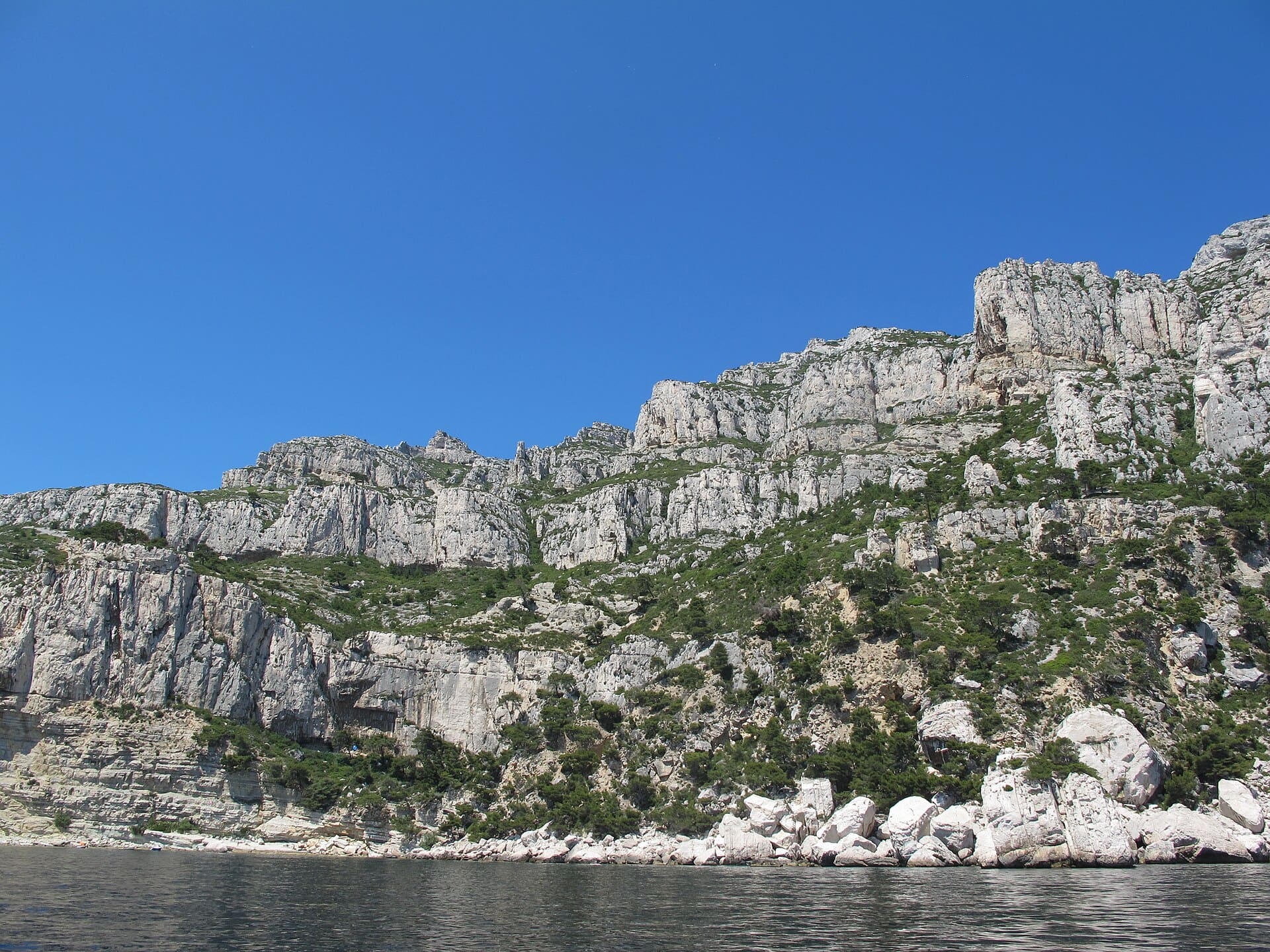
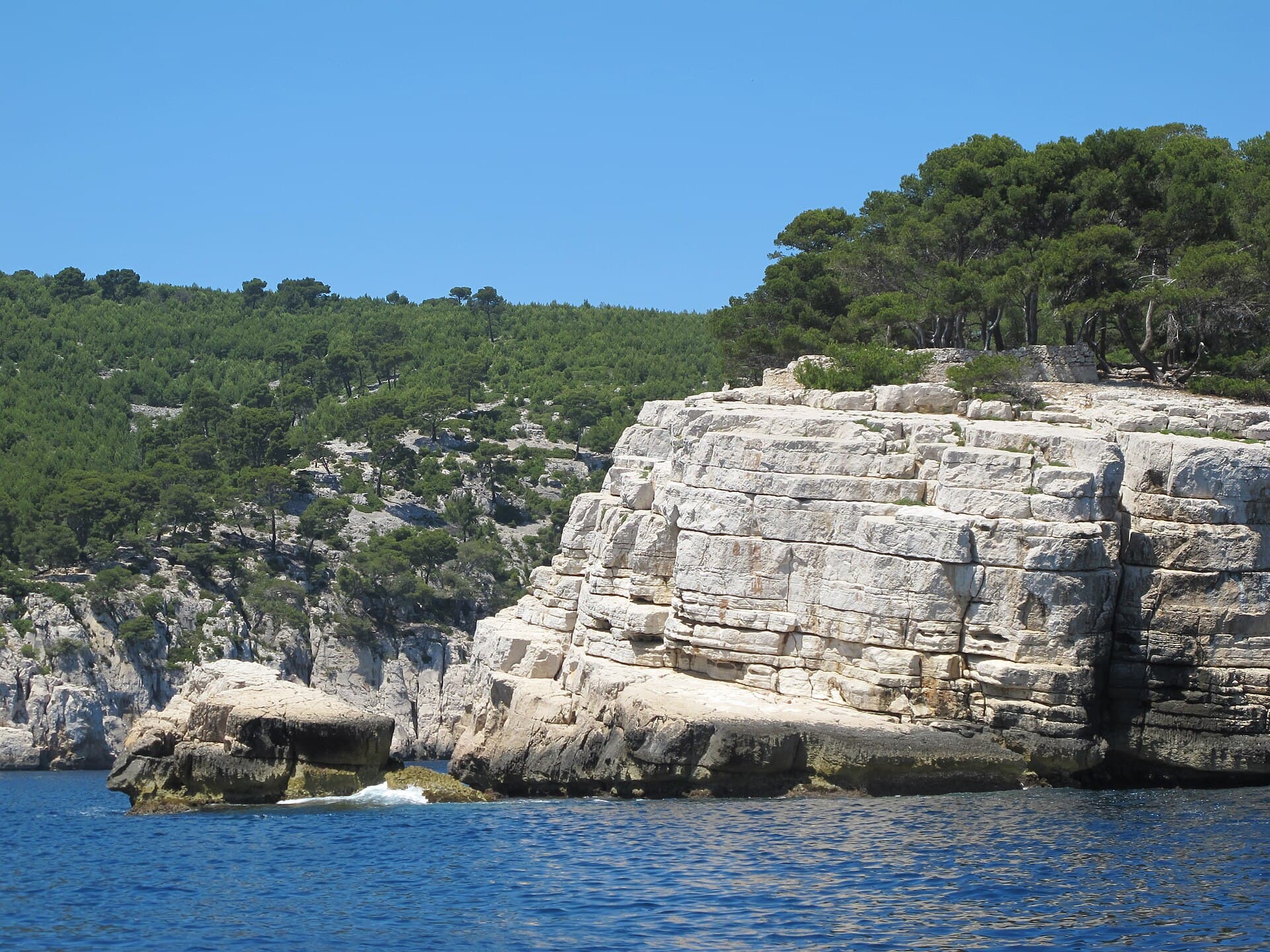
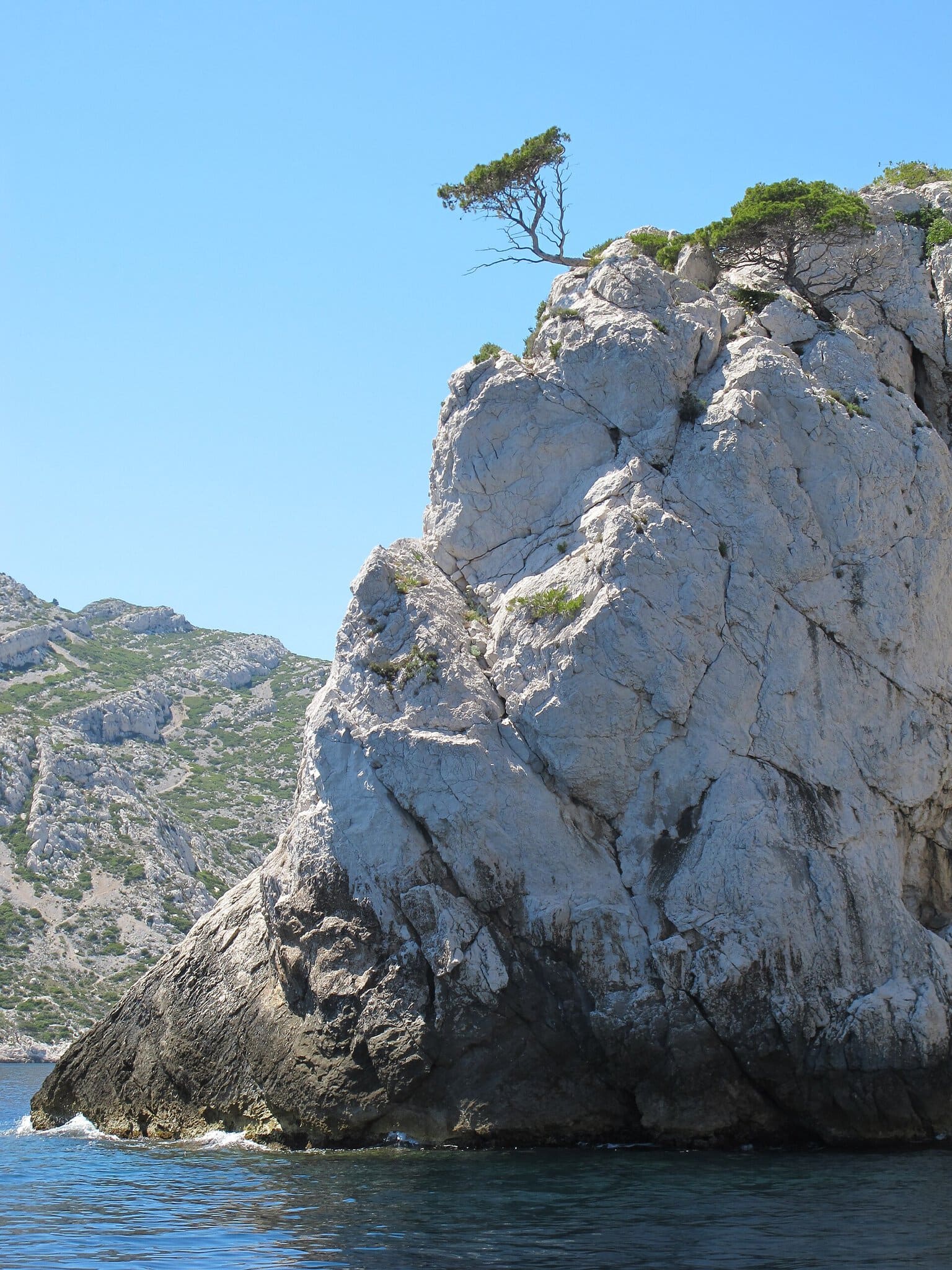
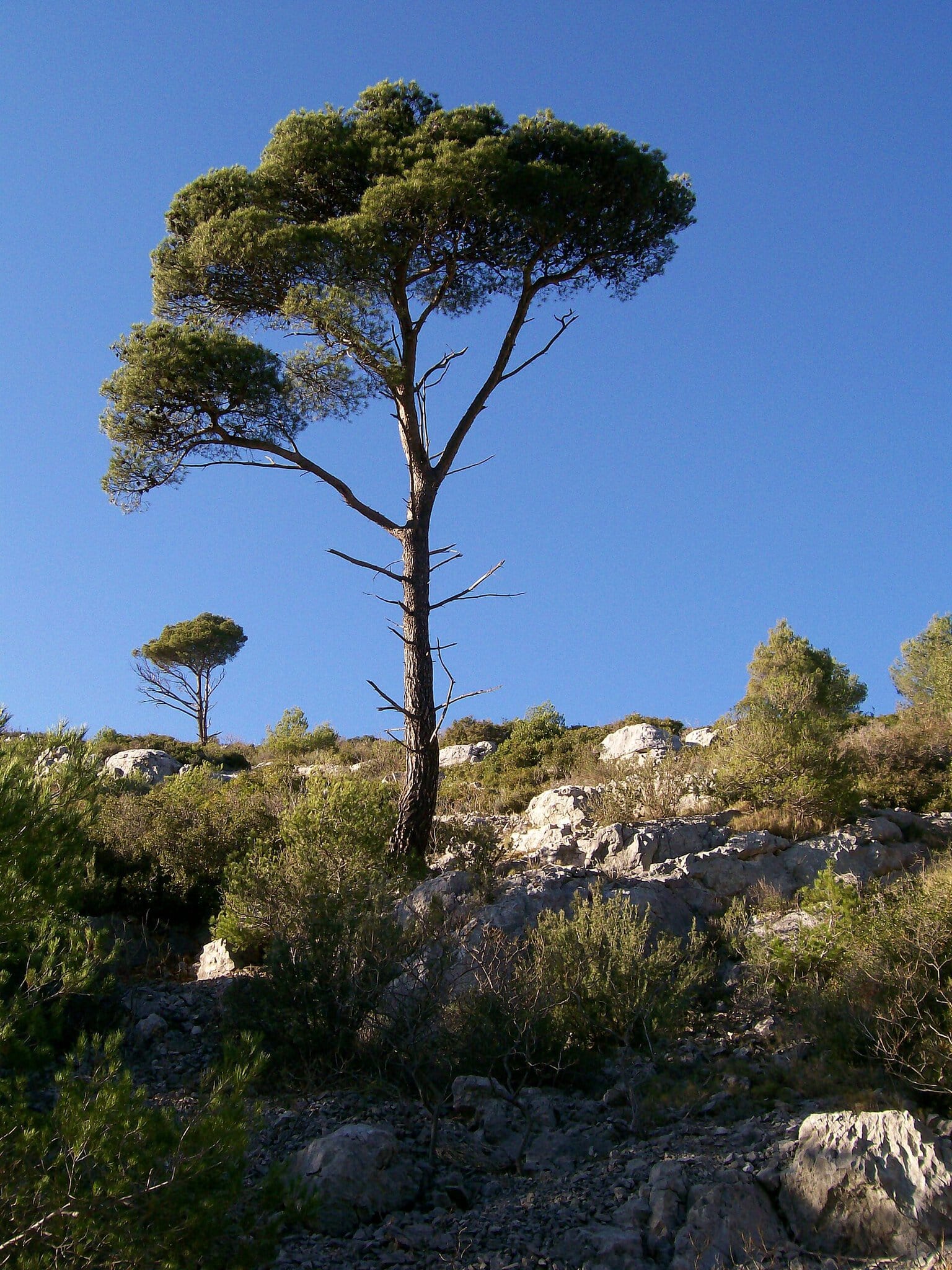
The sun here burns with such intensity that by midday the colours lose their edges and fade to white. The air smells of pine resin, salt water and thyme, while the soundtrack is provided by the relentless rattle of cicadas. The Calanques National Park and the neighbouring town of Cassis in France are no ordinary stop on the French Riviera. This is a physical experience, a rugged corner of limestone cliffs and turquoise coves that you simply have to feel for yourself.
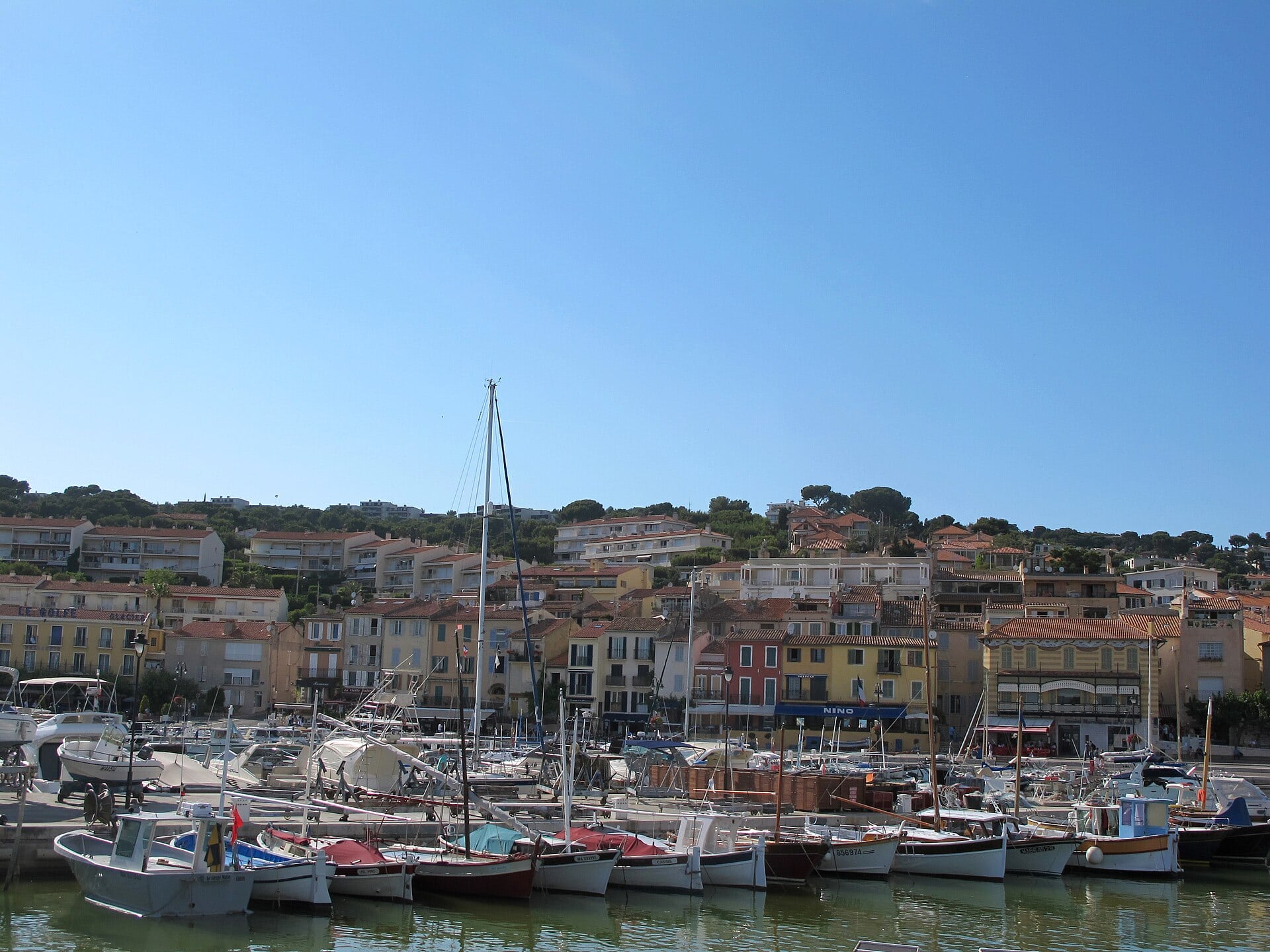
Picture the Norwegian fjords, but bathed in scorching Mediterranean sun and fringed with vineyards. Cassis is an elegant, pastel-coloured harbour that stands in complete contrast to wild, raw and nearby Marseille. In this article I bring you a complete guide on how to enjoy this gem of southern France without any unnecessary stress. I’ll tell you where to head for the most beautiful views, where to swim, and how to gracefully dodge the biggest summer crowds.
Foto: Benoît Prieur / Wikimedia Commons, CC0
TL;DR
Sturdy shoes are essential: You won’t reach the coves (calanques) in flip-flops — the terrain is full of sharp rocks and slippery roots.
The water is freezing: Even in August, coves like En-Vau often sit at just around 18 degrees, because the sun only reaches them for a few hours a day.
New rules for 2026: The Sugiton cove is only accessible in summer with a free online reservation, which you must arrange in advance.
Boat trips as an alternative: If you don’t fancy hiking in the heat, or the trails are closed due to fire risk, buy a ticket for a sightseeing boat from the harbour.
Wine you must taste: Cassis has its own AOC appellation and its dry white wine is world famous.
Marseille and the car: From 2026 a strict low-emission zone applies in Marseille — without a Crit’Air sticker you risk a hefty fine.
The ideal months to visit this corner of France are definitely May, June and September. The weather in Cassis is very pleasant at this time, the days are long, and the crowds of tourists in the narrow streets are easy to handle. The sea is usually warm enough for swimming, though in the national park’s coves themselves you should always expect a far icier refreshment. By September the sea has had the whole summer to warm up, and the morning mists give the coast a wonderful atmosphere.
July and August, on the other hand, are an absolute extreme that I’d recommend avoiding. Temperatures in the south regularly hit 35 to 43 °C, which turns any hike across the scorched white rocks into a little purgatory 😅. On top of that, the French summer holidays run for roughly eight weeks from the start of July, and the whole country migrates south. Giant traffic jams form on the motorways — locals call them “black days”. The A6 and A7 main routes are especially clogged at the turn of July and August.
A truly crucial factor for a summer visit is also the risk of wildfires and the strong mistral wind. The authorities often close the entire Calanques National Park to hikers from one day to the next, with no exceptions. So always check the latest information in the park’s official app. If you’re also heading to Provence for the blooming lavender, you’ll need to time your trip carefully. The endless fields on the Valensole plateau are at their most vivid purple at the turn of June and July, while by August you’ll only see mown brown bushes. A later bloom is only on offer in the higher Sault area, where the lavender lasts until mid-August.
If you decide to make the trip from the UK, the most comfortable option by far is to fly. Budget airlines such as easyJet and Ryanair fly directly from London to Marseille, while British Airways and easyJet serve nearby Nice — and you can simply pick up a rental car at the airport. If you’re driving down through France, be aware that French motorways are excellent but charge tolls at toll gates rather than via a vignette. Budget around €9.50 per hundred kilometres.
Foto: Wilfredor / Wikimedia Commons, CC0
Where to stay in Cassis
💡 Accommodation and experiences tip: We like to search for accommodation on Booking.com, which usually has the best cancellation conditions. For tickets, tours and activities, it pays to compare and book through GetYourGuide.
Cassis is a small, exclusive and frankly very expensive destination. If you want to stay right in town so you can stroll down to the harbour for an evening glass of wine, prepare a fairly generous budget. I’d recommend booking your accommodation a long way in advance — half a year is not overkill — because capacity in this tiny town vanishes at lightning speed and prices rocket as summer approaches. Parking in town is also a huge problem, so always check beforehand whether your hotel offers a dedicated parking space.
If you’re after absolute luxury with a truly breathtaking view, take a look at the historic Hôtel Les Roches Blanches. This five-star hotel from the 1920s sits just outside the centre, towards the coves, and offers perfect elegance plus private access to the sea. Price-wise it’s a serious splurge, but for a special occasion or a romantic weekend it’s an absolute dream you won’t forget.
Right in the heart of the action by the harbour you’ll find the more affordable Hôtel Le Cassitel. All the restaurants and markets are within arm’s reach, the rooms are clean and modern, you just have to accept that the evening buzz from the streets sometimes drifts in. A great alternative for a smaller budget is to stay in Marseille itself and commute to Cassis on the local TER train. The journey takes just twenty minutes, and the money you save is better spent on excellent Provençal food and local wine. But if you choose to stay in Marseille and have your own or a rental car, watch out for the new ZFE-m low-emission zone. It bans vehicles without a Crit’Air environmental sticker, which you must arrange online in advance, or you risk a fine of up to €375.
Foto: Acediscovery / Wikimedia Commons, CC BY 4.0
11 things to see and do in Cassis and the Calanques
Let’s take a look at the best this sun-drenched area has to offer. Expect challenging climbs, perfect views from steep cliffs and wanders through picturesque streets. The national park and its surroundings hide so much raw beauty that you can easily spend a long weekend or a whole week here.
Foto: Acediscovery / Wikimedia Commons, CC BY 4.0
1. The harbour and town of Cassis
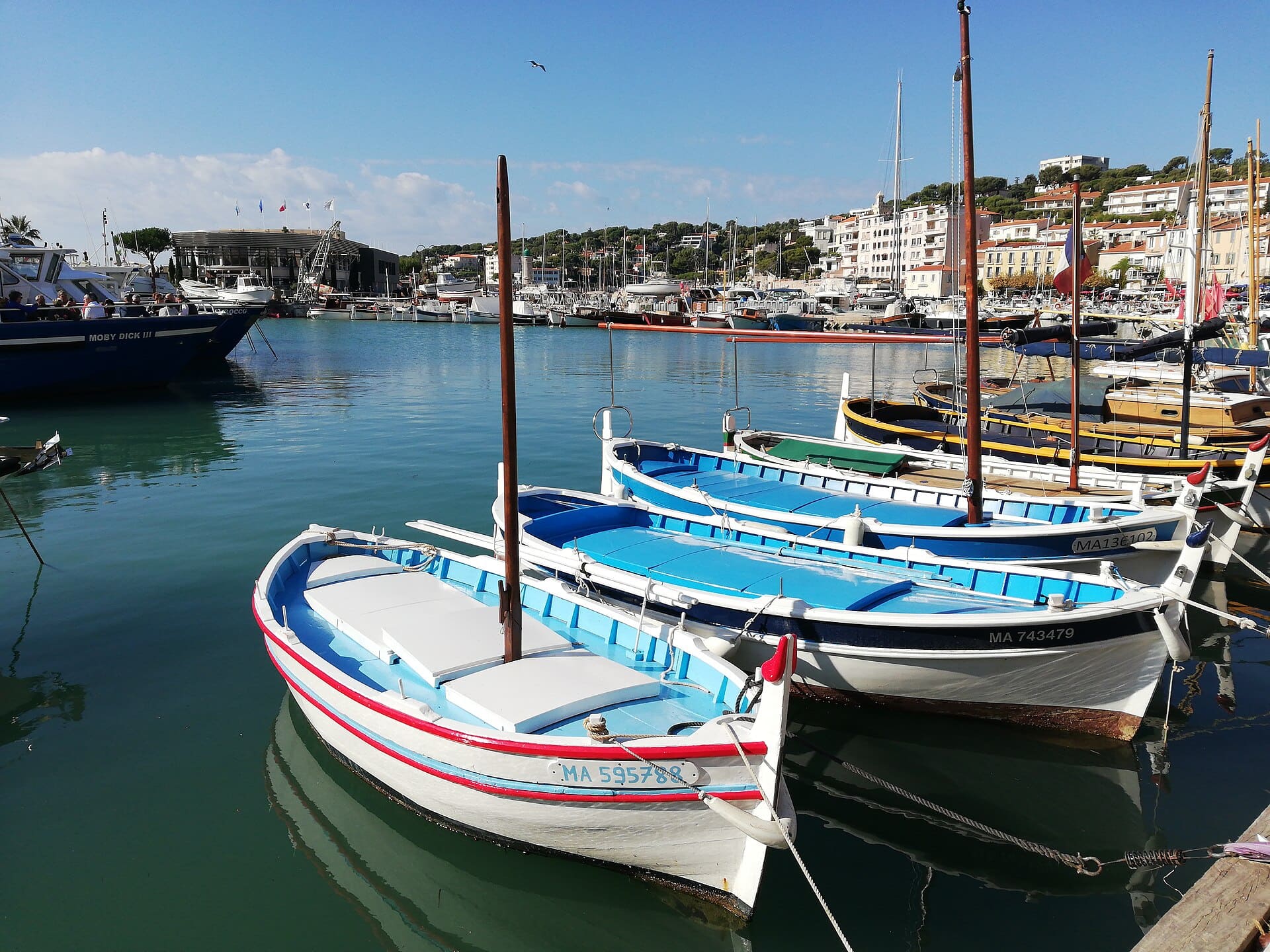
The heart of everything is the picturesque harbour. You’ll find dozens of traditional fishing boats called pointus, bobbing gently on the waves right beside luxury yachts. A promenade lined with pastel houses stretches along the water, hiding cafés, boutiques and restaurants serving excellent Provençal specialities. The atmosphere here is relaxed, elegant and incredibly photogenic.
Lose yourself in the narrow streets of the old town, which climb gently uphill from the sea. In the morning you’ll stumble upon traditional markets full of olives, cheeses, fresh fruit and lavender soaps. If you fancy a meal here, remember the strict French rules. Lunch is served precisely between noon and two in the afternoon. Turn up at three and the kitchen will be closed, leaving you with a coffee and nuts at best. A classic three-course lunch menu costs roughly €15 to €25, while dinner will run you between €20 and €35. In France a 15% service charge is automatically included in the price, but for good service it’s customary to leave a euro or two in cash on the table.
💡 Tip: Grab a fresh baguette in the morning, sit on a bench right by the water and watch the town wake up. And don’t forget the local etiquette. Always start a conversation with a smile and a clear “Bonjour”, and only then ask about English. This small show of respect for the language turns scowling waiters into willing hosts.
Foto: Acediscovery / Wikimedia Commons, CC BY 4.0
2. The Calanques National Park by boat
If you’re not fit enough for demanding hikes across the rocks, you certainly won’t miss out on the best of it. Dozens of sightseeing boats set off from the harbour in Cassis every single day, taking you on a tour of the most famous coves from the water. It’s the perfect solution for families with small children, or for days when the park is closed to hikers because of fire risk. I’d recommend checking the closure information every morning in the park’s official app.
You can choose from several set routes, with the usual options covering three, five or eight coves. From the deck you’ll see enormous limestone walls dropping vertically into the sea from a completely unique perspective you simply can’t get on land. Most of these mass cruises sadly don’t allow swimming — they’re purely a sightseeing ride — but even so the visual show is worth every euro you spend.
💡 Tip: In the peak summer season, secure your tickets well in advance. Booking through platforms like GetYourGuide works brilliantly, and you’ll often find smaller catamarans for a more intimate experience. That way you avoid being squeezed onto big decks with dozens of other tourists and enjoy the cruise in far greater peace and privacy.
Foto: kallerna / Wikimedia Commons, CC BY-SA 4.0
3. Hike from Port-Miou to Port-Pin
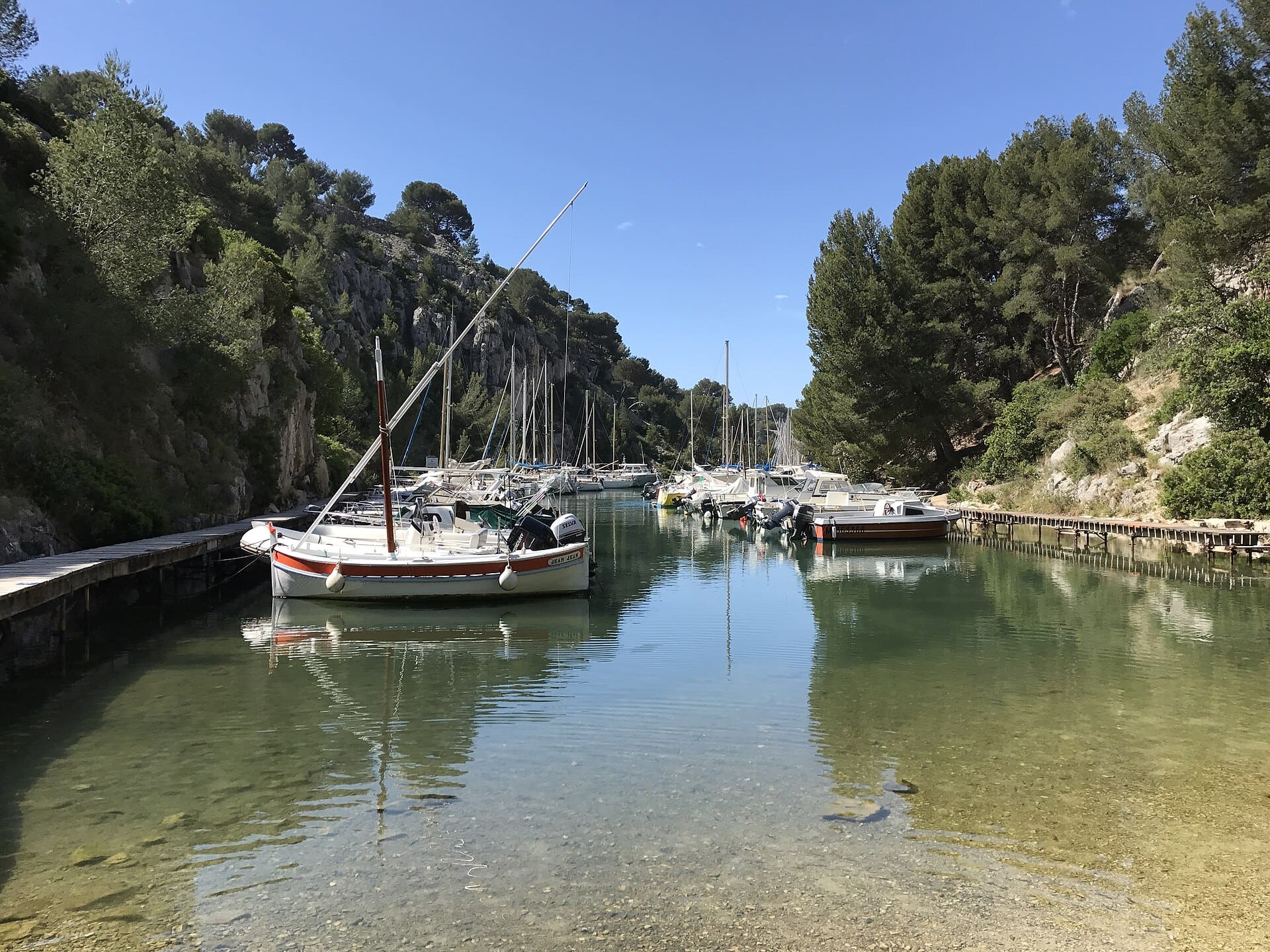
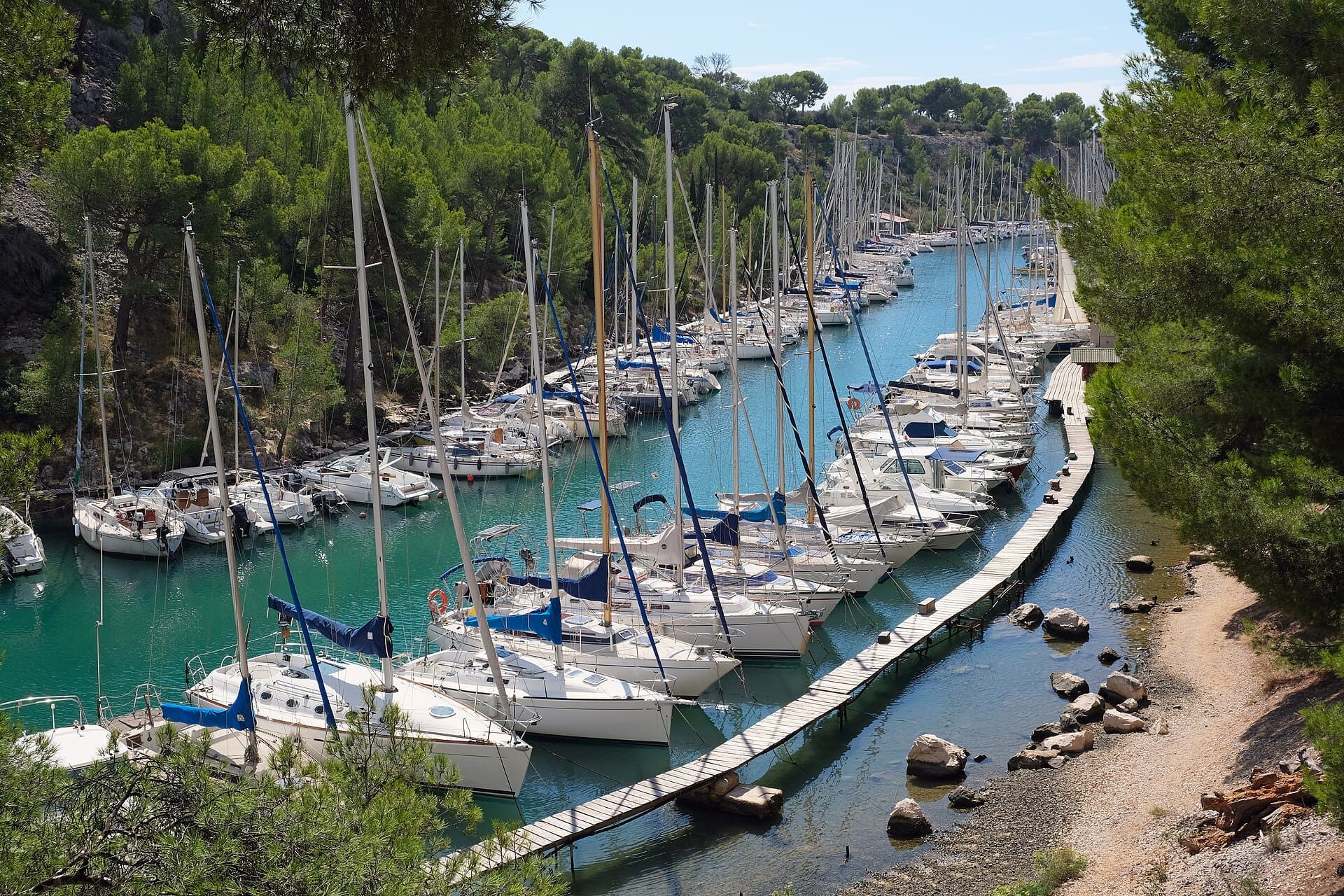
The most famous walking route starts just outside town at the Port-Miou calanque. This cove is very long and narrow and serves as a giant natural harbour for hundreds of gleaming-white sailing boats and yachts. From here you set off along a marked trail across the limestone massif, which after about forty minutes of brisk walking brings you to the first truly natural cove. The path runs over sharp rocks and slippery roots, so forget about flip-flops or sandals right away.
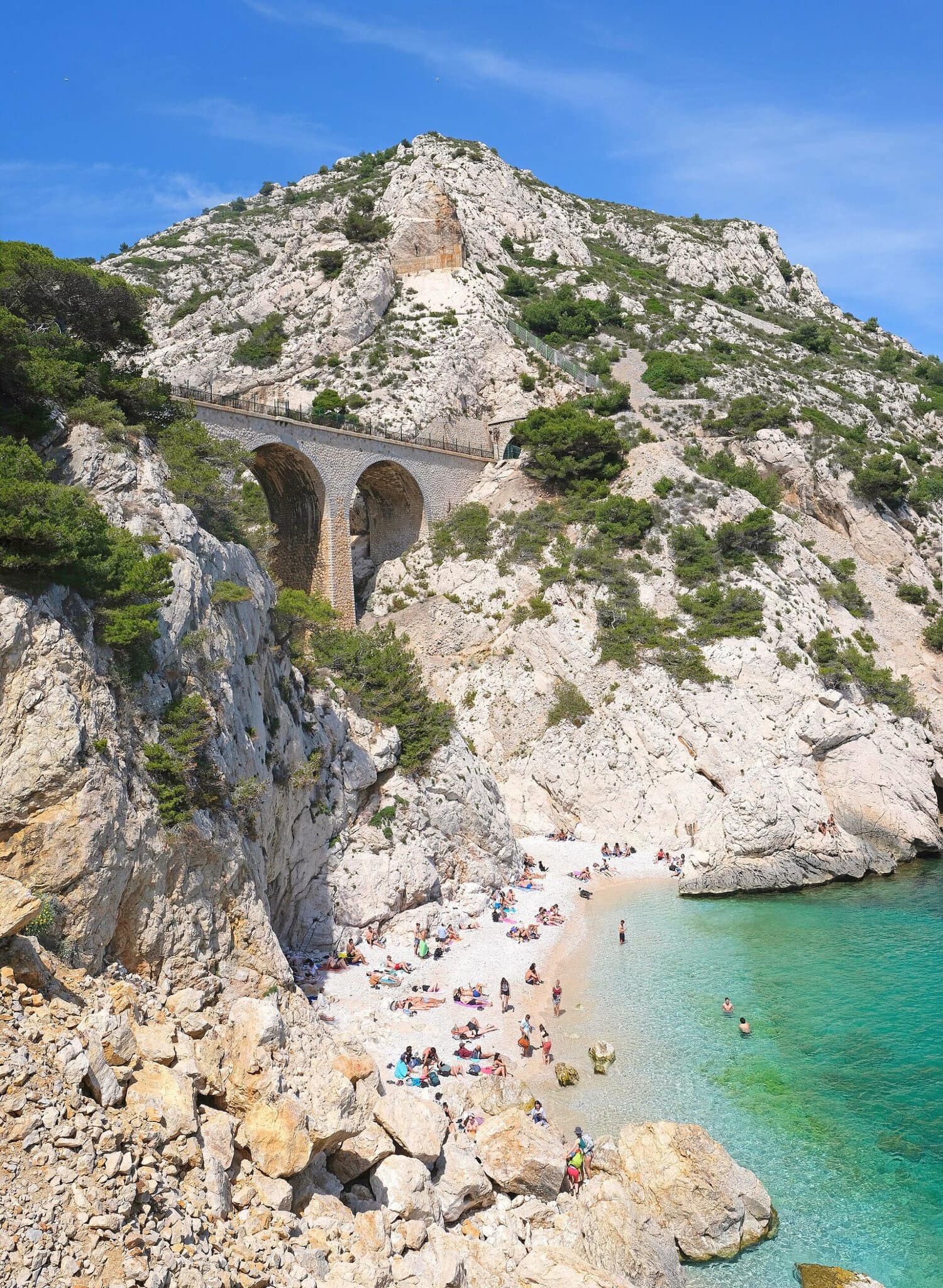
The first stop is Port-Pin, a gorgeous cove lined with fragrant pines that ultimately gave it its name. The route here is stony and steep in places, but with good shoes even an average hiker can manage it. You’ll find a small pebble beach and the water has an absolutely incredible turquoise colour that, in the summer heat, practically begs for an instant dip.
💡 Tip: Set off on the hike really early, ideally around eight in the morning. Not only will you avoid the scorching midday heat, but you’ll have a chance of finding a comfortable spot for your towel on the rather small Port-Pin beach. By around ten it’s already shoulder to shoulder here. If you’re driving, park at the free Les Gorguettes park-and-ride above the town and take the shuttle bus down.
Foto: kallerna / Wikimedia Commons, CC BY-SA 4.0
4. The stunning Calanque d’En-Vau
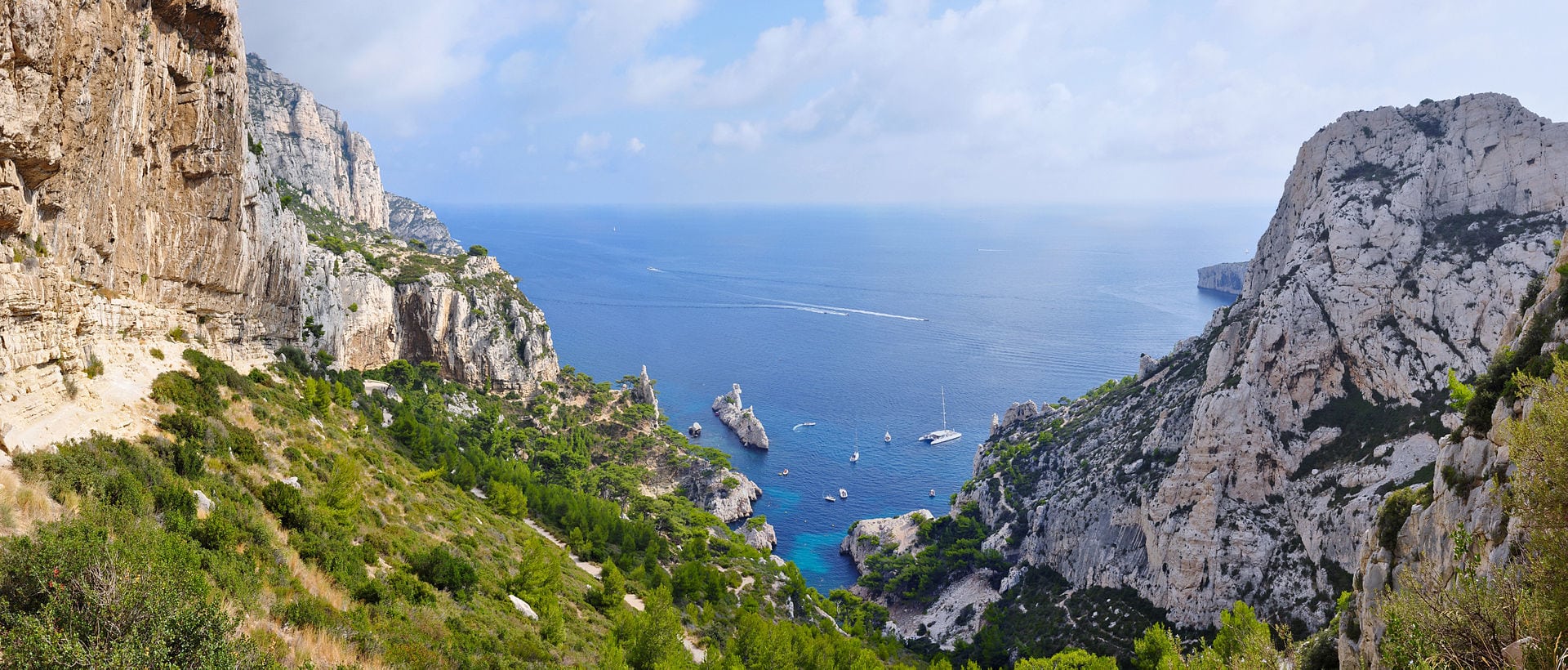
This is the absolute jewel of the whole national park and probably the most photographed cove in all of France. From Port-Pin you have to continue further inland and then steeply downhill. The route from Port-Pin takes another hour and a quarter or so and is already physically very demanding. In places you’ll need to use your hands, and the descent into the cove itself will really put your knees through it on the slippery rocks.
The reward for your sweat-soaked shirt is magnificent, though. En-Vau is a deep gash in the rocks, where enormous vertical cliffs popular with climbers tower above a pebble beach. The water is so incredible that even from a height of twenty metres you can see every pebble on the bottom. But brace yourself for a real shock, because the water here is truly freezing. The cove is so narrow and deep that the sun only reaches it for a few short hours a day.
💡 Tip: Throughout the national park there is absolutely no way to refill drinking water or buy any kind of snack. There are no toilets or bins either. You have to carry in huge supplies of liquids and carry all your rubbish back out to civilisation on your back.
Foto: Jiří Sedláček / Wikimedia Commons, CC BY-SA 4.0
5. The Cap Canaille viewpoint
When you look east from the harbour in Cassis, you’ll see an enormous reddish cliff rising majestically above the sea. This is Cap Canaille, one of the highest sea cliffs in Europe, reaching a respectable 394 metres. The colour of the rugged rock shifts with the sun from golden to deep ochre, creating a beautiful visual contrast with the dark blue surface of the sea.
You don’t have to climb it on foot and sweat blood. The panoramic Route des Crêtes road runs across it, connecting Cassis with the neighbouring port town of La Ciotat. It’s a wonderful little road trip full of tight hairpins with plenty of safe lay-bys. There you can pull over, get out of the car and soak up a view that will literally make your head spin.
💡 Tip: Come here at sunset if you can. In the evening light the stone walls take on an unbelievably rich shade of orange and red. The view of the jagged white coastline of the Calanques National Park in the distance is a magical moment you’ll carry away from Provence deep in your memory.
Foto: Nicole Baumann / Wikimedia Commons, Public domain
6. Swimming and snorkelling in the coves
If you’re looking forward to long lounging in warm water like somewhere in Greece or Croatia, I have to disappoint you a little. The sea in the deep Calanques coves is very cold even in the middle of August, which makes it more of a place for a quick, shock refreshment after a tough hike than for an hour of floating on an inflatable mattress. The water temperature here often stays at just around eighteen degrees.
For lovers of underwater life, though, it’s an absolute paradise. Definitely bring a snorkel and mask, because thanks to the rocky bottom and the absence of stirred-up sand, visibility underwater is utterly phenomenal. You’ll see shoals of colourful fish, sea urchins, and with a bit of luck even octopuses hiding in rocky crevices just below the surface.
💡 Tip: None of these wild coves in the national park has the slightest facilities for tourists. There are no toilets, showers, changing rooms, coffee stalls or sun lounger rentals. You’re entirely on your own and reliant on whatever you can carry in the backpack on your shoulders.
Foto: Wisi eu / Wikimedia Commons, CC0
Lukáš and Lucie recommend
Where to stay in Cassis and Calanques
3 accommodations — wellness hotels, hotels and other accommodation options
Cassis is far from just white rocks and sea — it’s also a very specific wine region. The small Cassis AOC appellation was created back in 1936 and is an absolute rarity within France. The vineyards stretch across steep slopes right above the cliffs, which gives the grapes a unique saltiness and subtle minerality you won’t find anywhere else in France.
The local winemakers specialise overwhelmingly in top-quality dry white wines, which pair perfectly with warm summer evenings, Provençal cheeses and light vegetable salads. Around the town you’ll find twelve traditional wineries, or domaines. Many of them offer tours and guided tastings where you’ll learn all about the area’s unique terroir and the history of growing the vine.
💡 Tip: Make a reservation for a tasting at the prestigious Clos Sainte Magdeleine winery. Their green vineyards end literally at the very edge of the cliff above the sea, and a tasting with a view of the majestic Cap Canaille is one of the best and most beautiful experiences you can treat yourself to after a demanding day.
Foto: M.Strīķis / Wikimedia Commons, CC BY-SA 3.0
8. Relaxing on the beaches in Cassis, France
When you’re not in the mood for mountain hiking and packing full backpacks, you can stay right in town. Cassis has two main town beaches, which are admittedly pretty packed with tourists and locals in summer, but unlike the wild countryside they offer every conceivable comfort you’ll miss out on in the national park’s coves.
The main beach, Plage de la Grande Mer, lies right in the centre by the buzzing harbour. It’s sandy with small pebbles, and you’ll find handy showers, cafés right by the water and rentals of small boats or popular pedalos. A little further towards the national park sits the smaller and quieter Plage du Bestouan, which is pebbly but offers an absolutely iconic, uninterrupted view of the red Cap Canaille massif from your towel.
💡 Tip: When the strong and unpredictable mistral wind is blowing, the town beaches are often the only safe place to swim. They’re protected by artificial breakwaters and there’s none of the danger of strong currents you’d face on the open sea by the wild cliffs.
Foto: Tobi 87 / Wikimedia Commons, CC BY-SA 3.0
9. How to avoid the crowds and the Sugiton reservation 2026
Overtourism has hit this whole area hard and the park authority has had to take a drastic step. One of the most beautiful coves, the Calanque de Sugiton, which is more accessible from the edge of Marseille, has introduced a strict reservation system for the summer months. In 2026 a free online reservation is mandatory from roughly mid-June to mid-September.
The system opens precisely on 11 June 2026 at 9:00 in the morning, and the free slots disappear at an incredible pace. After a successful reservation you receive a special QR code that the park rangers will let you through with. The reservation is limited to a maximum of five people per code, and without it you simply won’t get to Sugiton — the checks on the access paths are completely uncompromising and won’t let anyone through without a code.
💡 Tip: Even for the other, freely accessible coves like En-Vau or Port-Pin, a simple rule applies: first come, first swims. If you arrive at the car park after nine in the morning in July, you probably won’t park and will spend an hour just inching along in a traffic jam.
Foto: Benh LIEU SONG / Wikimedia Commons, CC BY-SA 3.0
10. Wandering the streets of Le Panier in Marseille
Since Marseille is the logical gateway to the whole region, it would be a huge mistake to just blow past it on the motorway. Forget the needless prejudices about a dangerous city. Head straight to the Vieux-Port harbour in the morning, where fishermen sell their overnight catch directly from their boats, and check out the ultra-modern MuCEM museum with its stunning concrete lacework. From there flow smoothly into Le Panier, the oldest historic quarter with an absolutely wonderful atmosphere.
Once a feared den of sailors, today it’s the city’s vibrant artistic heart and a very safe zone for tourists. It’s a labyrinth of narrow, steep streets full of colourful street art, small independent galleries and cosy bistros where you can grab an excellent vegetarian lunch. Stop at a local café, order an espresso and just soak up that slightly weathered but all the more authentic southern charm. In the afternoon, take a stroll along the five-kilometre La Corniche promenade right by the sea.
💡 Tip: In central Marseille, watch out for pickpockets, just like in Rome or Barcelona. Avoid the northern suburbs, where you as a tourist have no reason to go, and after dark be cautious in the Noailles and Belsunce districts and around the main Saint-Charles station.
Foto: Uoaei1 / Wikimedia Commons, CC BY-SA 4.0
11. Sunset at the Notre-Dame de la Garde basilica
The best way to grasp the enormous scale and energy of Marseille is to look at it from above. The imposing Notre-Dame de la Garde basilica sits on a steep limestone hill a hundred and fifty metres above the sea, and its iconic golden statue of the Virgin Mary on the bell tower acts as a symbolic beacon for the whole city and the ships arriving below.
The climb up from the harbour will give you a bit of a workout in the summer heat, but you can also use the tourist train or a comfortable city bus. That 360-degree panoramic view of the sea, the surrounding islands and the endless city beneath you is simply breathtaking, especially as the sun starts to dip towards the horizon and paint the whole city a deep gold.
💡 Tip: If you’re driving into Marseille, remember the strict rules. The city has an established ZFE-m low-emission zone, which was significantly tightened in 2026. Cars with a Crit’Air 4 or 5 sticker are banned twenty-four hours a day, including foreign vehicles. You must buy the sticker online in advance for around five euros, or you risk a fine of €68 to €375.
Where to go next from Cassis
Once you’ve explored all the coves and tasted all the wine, the region offers an endless array of further destinations. I’d recommend diving deeper inland and discovering the magic of the whole Provence region. There you’ll find gorgeous stone hilltop villages like Gordes or Roussillon, and in the summer months of course the iconic purple fields full of blooming lavender, which people travel to see on the Valensole plateau.
If you crave more urban buzz, history and culture, set aside at least a day or two for a proper exploration of Marseille. From the modern MuCEM museum to the stunning old Vieux-Port harbour, this city will win you over with its raw energy. Elegant Aix-en-Provence, full of tree-lined avenues and ochre façades, is another lovely stop.
Search with the DiscoverCars comparison engine — it compares prices from dozens of local and international rental companies, and most bookings come with free cancellation.
🔗 These are affiliate links — they don't change your price and help us create content. · All experiences →
Frequently asked questions
How to get from Marseille to Cassis?
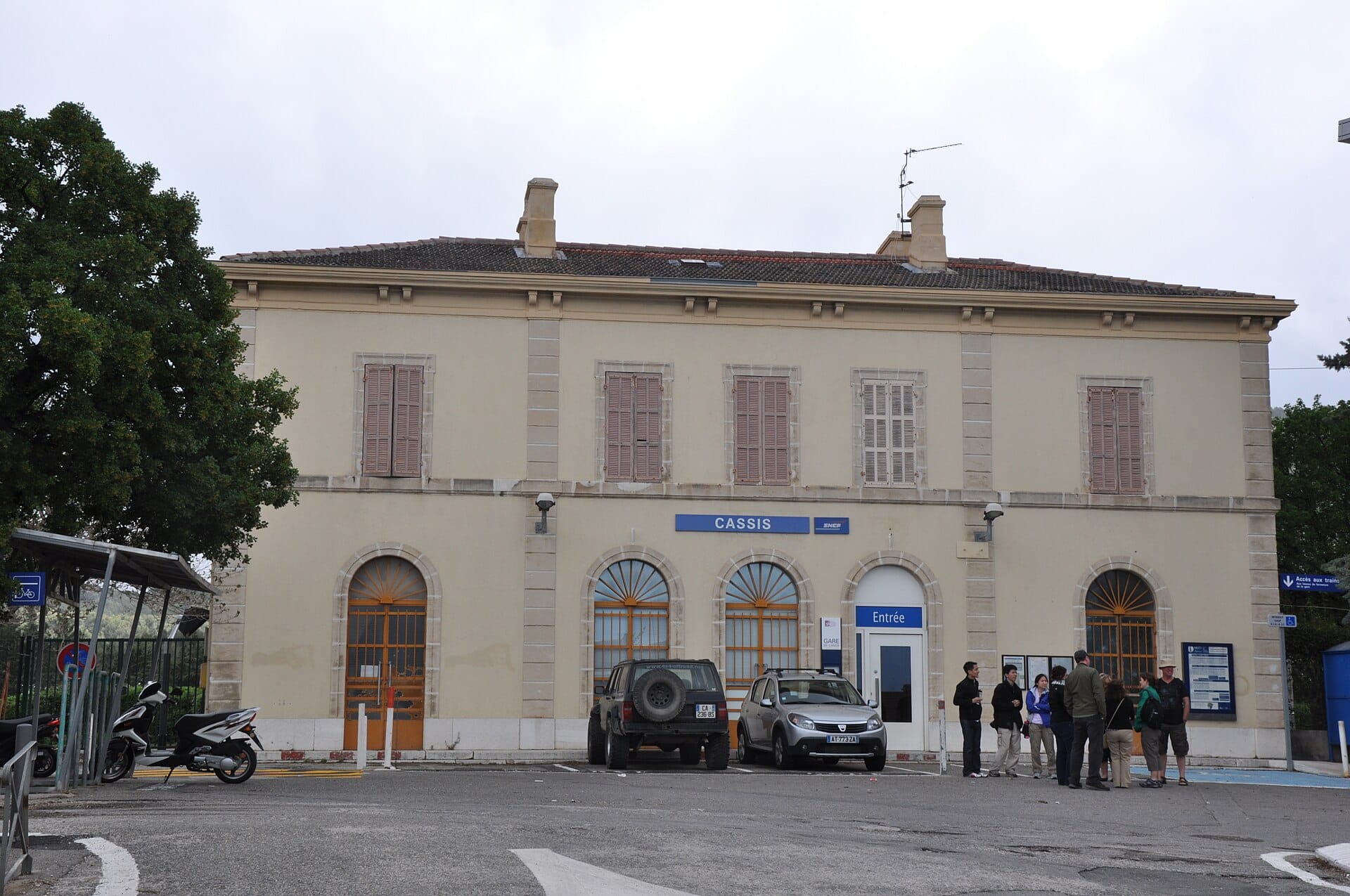
The easiest and fastest way is by train (TER). The journey from the main Saint-Charles station in Marseille to Cassis station takes only about 20 minutes and trains run very frequently and reliably. However, the station in Cassis is about 3 kilometers from the center and the port, so you’ll need to walk or use the local bus line (shuttle). If you’re driving, use the Park & Ride Les Gorguettes.
Do I need a car for Cassis?
Directly in Cassis, a car is more of a hindrance; the town is tiny and you can easily walk everywhere. If you’re planning trips to the inland areas, you’ll appreciate having a car. Just keep in mind that if you drive from the Czech Republic, you’ll pay about €9.50 in tolls for every 100 kilometers. A cheaper option might be flying with Ryanair to Marseille and renting a car on site.
What is the ZFE-m zone in Marseille?
It’s a low-emission zone that was significantly tightened in 2026. It applies to the entire wider center of Marseille and prohibits entry to all vehicles with Crit’Air 4 and 5 environmental stickers. The ban is in effect 24 hours a day, including for foreign cars. You must obtain the sticker in advance online, it costs around €5. Without it, you risk a very hefty fine ranging from €68 to €375.
Can I manage the hike to Calanques with kids?
The hike to the first cove, Port-Pin, is relatively easy and older, experienced children will manage it without problems if they have good footwear. However, the route to En-Vau is already a challenging trek with significant elevation gain and slippery rocks, which I definitely wouldn’t recommend for small children. As a family alternative, always consider an organized boat trip from the harbour instead, which is completely effortless and you’ll see the best sights from it.
Can I bring a dog to the national park?
Yes, dogs are allowed in Calanques National Park, but they must be kept strictly on a leash at all times. However, keep in mind that for animals, moving across hot, sharp limestone rocks without any shade during the summer months is extremely exhausting and dangerous. Don’t forget to bring plenty of drinking water for them as well, since you won’t find any water sources along the way.
Where to park when visiting the coves?
The nearest parking lot for a trip to Port-Pin and En-Vau is on the Presqu’île peninsula right above Port-Miou bay. It’s paid and during the peak summer season it’s usually full before nine o’clock in the morning. A great and much quieter alternative is to leave your car at the free park-and-ride lot Les Gorguettes above the town and take a special shuttle bus to the port or to the trailhead.
When exactly does lavender bloom in Provence?
Lavender doesn’t wait for your August holiday. The main season on the Valensole plateau lasts roughly from mid-June to mid-July. Be careful with lavender festivals, which often celebrate the harvest itself. If you’re heading to Provence in August, your only chance for purple fields is the higher-altitude plateau around the village of Sault, where lavender blooms a bit longer.
Tips and Tricks for Your Vacation
Don’t Overpay for Flights
Search for flights on Kayak. It’s our favorite search engine because it scans the websites of all airlines and always finds the cheapest connection.
Book Your Accommodation Smartly
The best experiences we’ve had when looking for accommodation (from Alaska to Morocco) are with Booking.com, where hotels, apartments, and entire houses are usually the cheapest and most widely available.
Don’t Forget Travel Insurance
Good travel insurance will protect you against illness, accidents, theft, or flight cancellations. We’ve had a few hospital visits abroad, so we know how important it is to have proper insurance arranged.
Where we insure ourselves: SafetyWing (best for everyone) and TrueTraveller (for extra-long trips).
Why don’t we recommend any Czech insurance company? Because they have too many restrictions. They set limits on the number of days abroad, travel insurance via a credit card often requires you to pay medical expenses only with that card, and they frequently limit the number of returns to the Czech Republic.
Find the Best Experiences
Get Your Guide is a huge online marketplace where you can book guided walks, trips, skip-the-line tickets, tours, and much more. We always find some extra fun there!
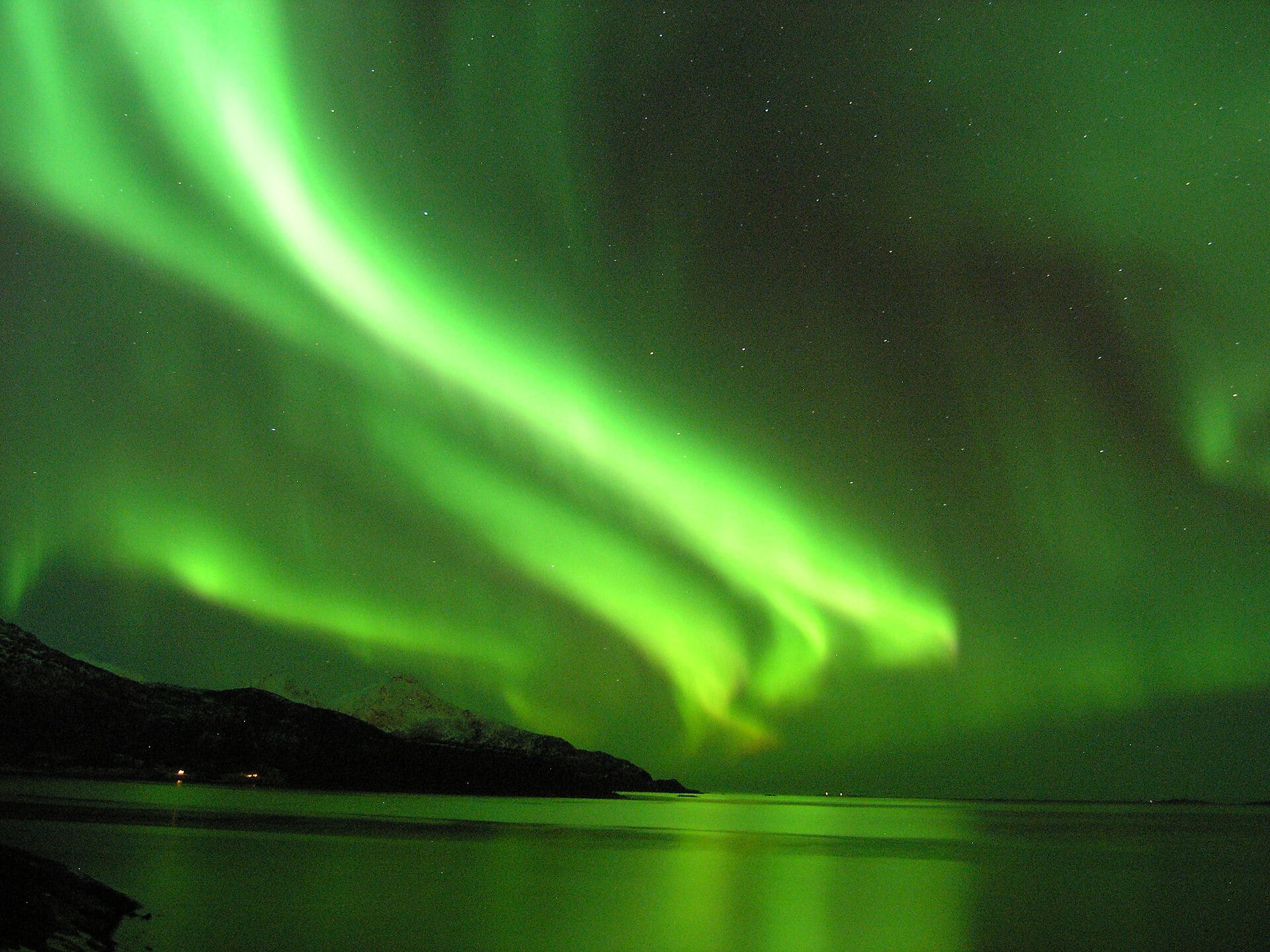
TL;DRNorway’s Tromsø, dubbed the gateway to the Arctic, packs in eight essential experiences: riding the Fjellheisen cable car up Storsteinen for the view, visiting the Arctic Cathedral, hunting the northern lights (the season runs from late September to late March), whale safaris, dog-sledding, the Polaria Arctic centre, wandering the city centre around Storgata, and the summer midnight sun from 20 May to 22 July. Set aside three to four full days for a visit — the easiest way in is by air via Oslo to TOS airport, which sits just a short hop from the centre. Tromsø also makes a great base for heading on to the Lofoten Islands.
Picture a place where snow-capped mountain peaks rise straight out of deep blue fjords and incredible green lights dance overhead all winter long. That’s exactly what you’ll find in Tromsø, Norway — a fascinating city perched high above the Arctic Circle that will completely win you over with its rugged Arctic beauty.
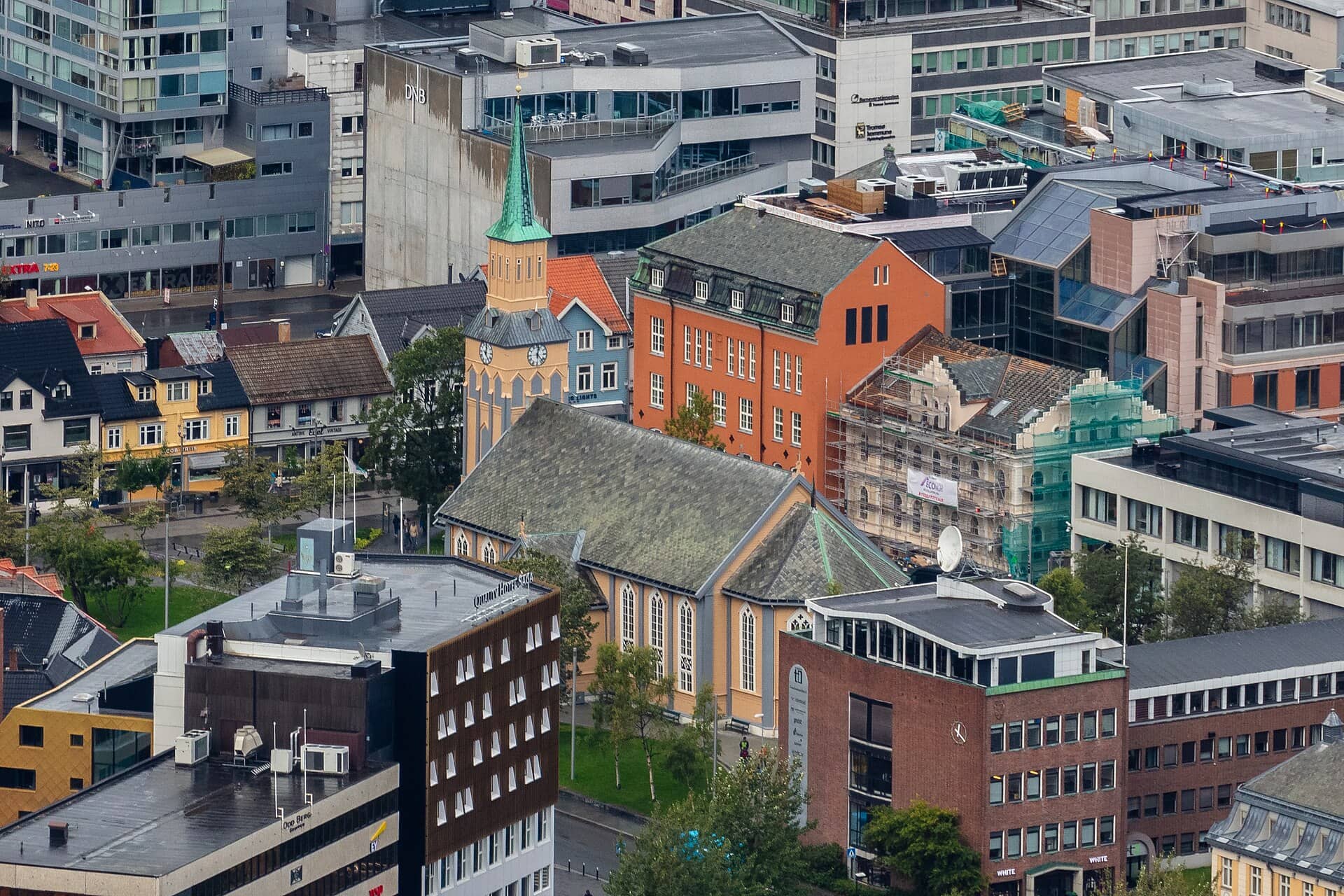
Tromsø has rightly earned nicknames like the Paris of the North and the gateway to the Arctic. Here you’ll discover the perfect balance between wild Norwegian nature and a surprisingly lively city, packed with cosy cafés, modern architecture and fascinating museums.
In this guide we’ll take a look together at 8 things to see and do in this magical corner of the world. You’ll find out when the best time is to go chasing the northern lights, where to base yourself strategically, and how to plan your trip to get the absolute most out of your Arctic adventure.
Photo: Ddgfoto / Wikimedia Commons, CC BY-SA 4.0
TL;DR
Best experience: Riding the Fjellheisen cable car up Mount Storsteinen, which offers the most beautiful view over the whole city and the surrounding fjords.
Northern lights: The main season runs from late September to late March; for the best chance I recommend heading out with local guides away from the lit-up center.
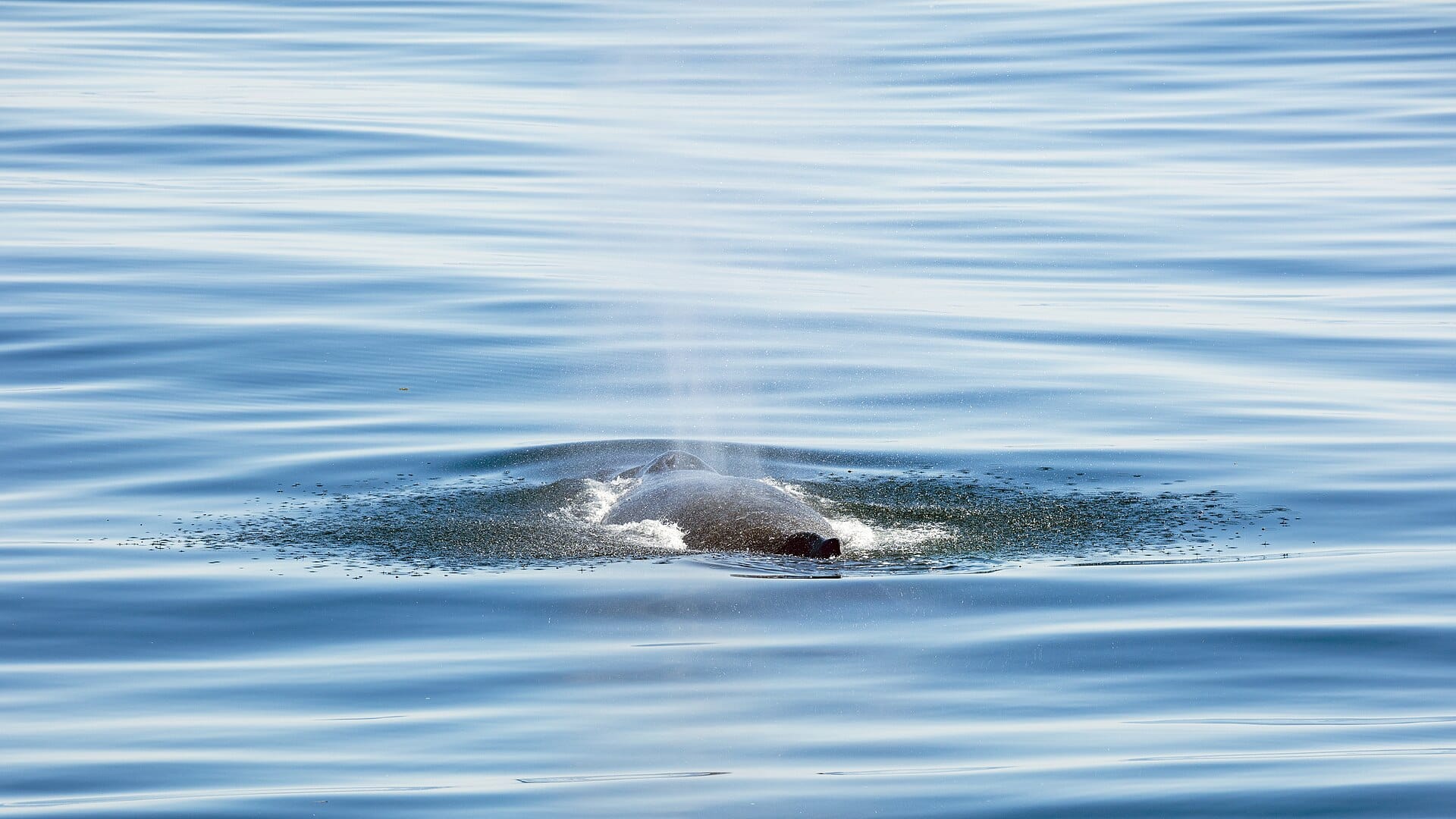
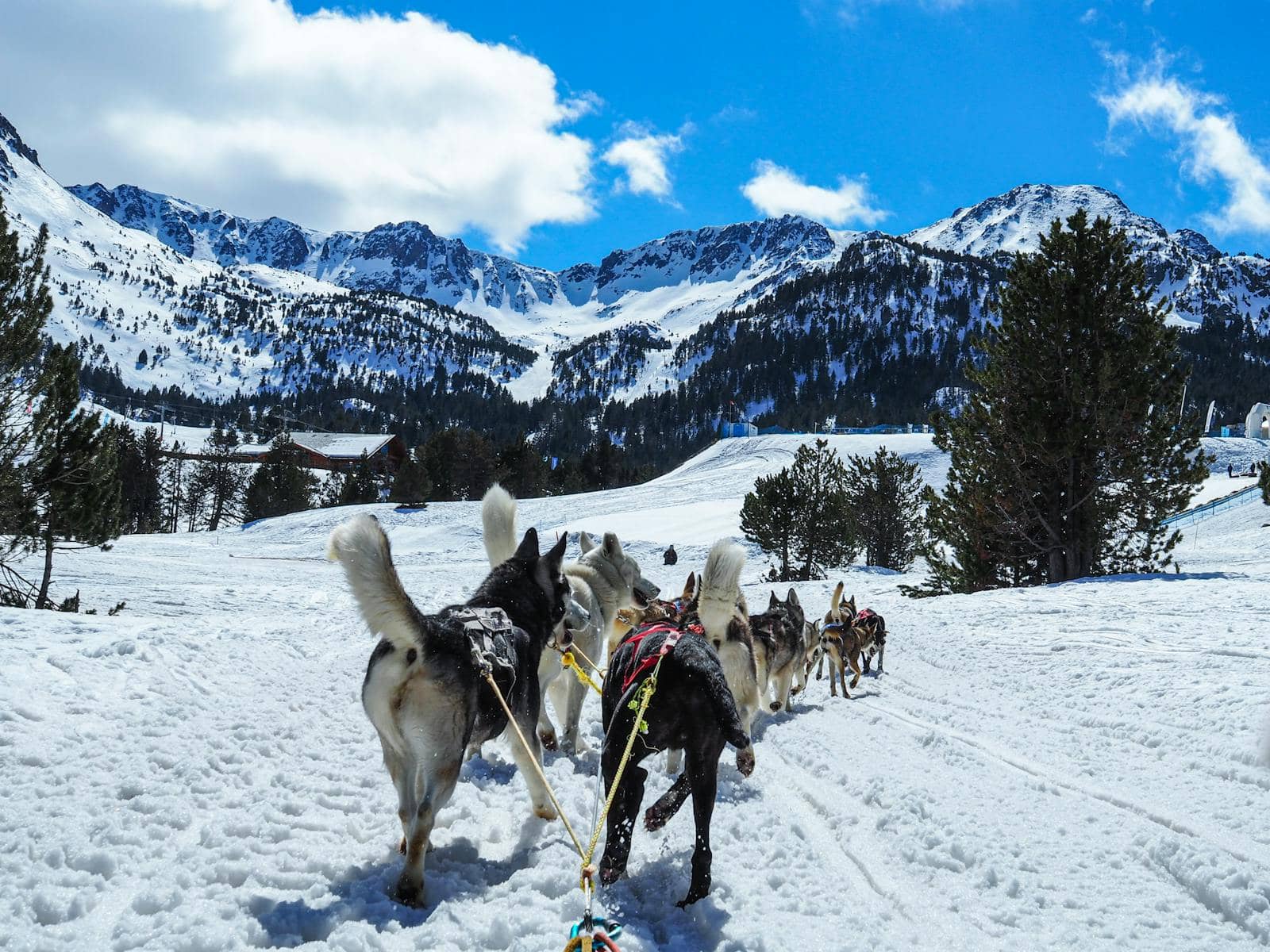
Winter activities: Don’t forget to book a whale safari or a dog sledding ride well in advance — in season these activities tend to sell out fast.
Summer highlight: From late May to late July the sun never sets here, so you can experience the fascinating midnight sun and go hiking in the middle of the night.
Getting there: The easiest way to reach Tromsø is by air via Oslo; the airport (TOS) lies just a short distance from the city center.
Connecting with other places: Tromsø is an ideal starting point for further travels — combining it with a visit to the breathtaking Lofoten Islands is especially popular.
Photo: Diego Delso / Wikimedia Commons, CC BY-SA 4.0
It all comes down to what exactly you want to experience in northern Norway, because winter and summer offer two completely different worlds here. If your main goal is the northern lights, plan your trip somewhere between late September and late March. The best odds of clear skies, somewhat paradoxically, tend to come in autumn and early spring, while December and January are often cloudier — but on the flip side, they deliver the real snowy fairy tale with heaps of fresh powder.
During the winter months you can experience the so-called polar night, which lasts roughly from 27 November to 15 January, when the sun never rises above the horizon. But don’t expect total darkness round the clock — around midday the landscape is bathed for a few hours in a gorgeous blue and purple twilight that creates an incredibly magical atmosphere for photography and strolls through the calm city. The winter months are also ideal for visiting the traditional saunas, the most famous being the floating Pust sauna right in the harbour, where you can cool off with a plunge into the icy fjord.
Summer, on the other hand, lures visitors with the phenomenon of the midnight sun, which reigns here from roughly 20 May to 22 July. During this period there’s daylight non-stop, which gives you endless time to explore the surrounding mountains and fjords without ever worrying about being caught out by unexpected darkness in the wild. The hiking trails are in full swing, and you can set off on a breathtaking trek at midnight if you fancy — an experience that completely throws your body clock, but is absolutely worth it.
Thanks to the Gulf Stream, the weather in Tromsø is surprisingly mild for somewhere almost 350 kilometres above the Arctic Circle. In winter temperatures most often hover around minus five to zero, while in summer you can expect a pleasant ten to fifteen degrees Celsius, although the sharp sea wind can knock the feels-like temperature down a notch. So it’s always wise to pack one extra warm layer and not forget a quality waterproof jacket — even if you’re heading out in the middle of July.
Photo: Diego Delso / Wikimedia Commons, CC BY-SA 4.0
Hotels in Tromsø, Norway: where to stay
💡 Tip for accommodation and experiences: We love to look for places to stay on Booking.com, which usually has the best cancellation terms. For tickets, tours and activities, it pays to compare and book through GetYourGuide.
The best and most practical choice is to stay right in the city centre itself (the Sentrum district), because you’ll be close to all the main sights and restaurants, and on top of that, most organised tours for the northern lights or whale watching depart from here. If you stay further out of town, you’d be needlessly reliant on local buses, which don’t run very often at night, and forking out high fares for taxis.
One of the most popular and most beautiful hotels is the Clarion Hotel The Edge, which sits right on the waterfront and offers modern rooms with absolutely fabulous breakfasts full of fresh pastries and local cheeses. From the rooftop bar you’ll also get a perfect view of the harbour and the iconic Arctic Cathedral on the opposite shore, with a night for two costing roughly £160 to £215 depending on the season. It’s an ideal base for those who want to treat themselves to a little Nordic luxury after a whole day out in the cold.
If you’re after a slightly more budget-friendly option, a great choice is the Smarthotel Tromsø. The rooms are smaller and very minimalist, but the hotel is incredibly clean, stylish, and sits just a few steps from the main shopping street Storgata, so you’ll save loads of time getting around town each day. A night here usually costs around £90 to £125, which is a very decent price by Norwegian standards.
Another excellent alternative with breathtaking views is the Scandic Ishavshotel, which literally juts out into the fjord waters like a big cruise ship. As a rule, I’d recommend booking accommodation in Norway several months ahead through Booking.com, because in peak winter season the best hotels sell out very fast and last-minute prices skyrocket. If you prefer a quieter setting, you could try staying in the Tromsdalen district across the bridge — it’s a bit further from the centre, but only a stone’s throw from the Fjellheisen cable car.
Photo: Diego Delso / Wikimedia Commons, CC BY-SA 4.0
8 things to see and do in Tromsø, Norway
Let’s take a look together at the top attractions and activities you definitely shouldn’t miss when visiting this Arctic city of seventy thousand inhabitants. I’ll point you to the best viewpoints and show you how to plan a winter adventure you’ll remember for the rest of your life.
Photo: Leonora (Ellie) Enking from East Preston, United Kingdom / Wikimedia Commons, CC BY-SA 2.0
1. The Fjellheisen cable car and Mount Storsteinen
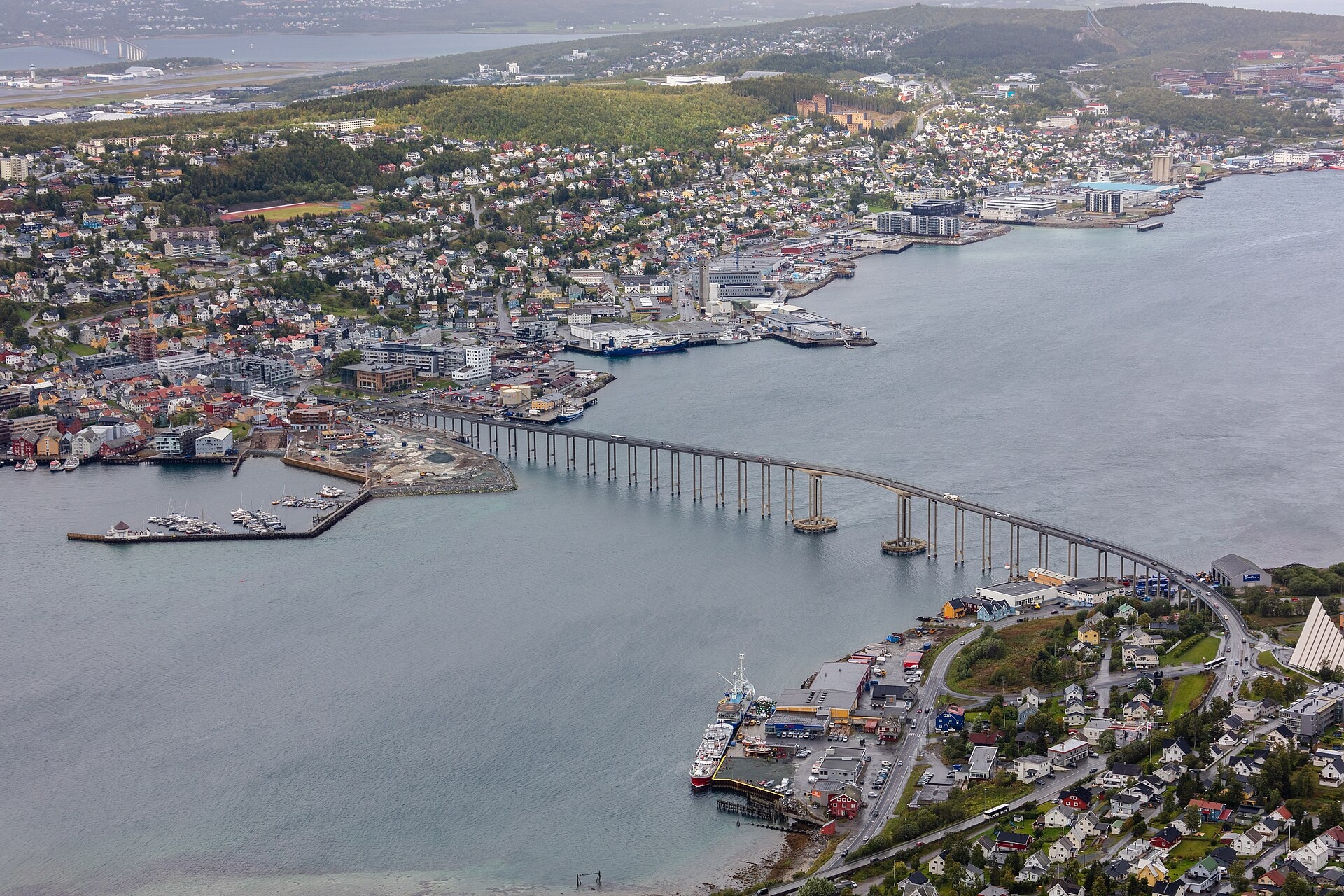
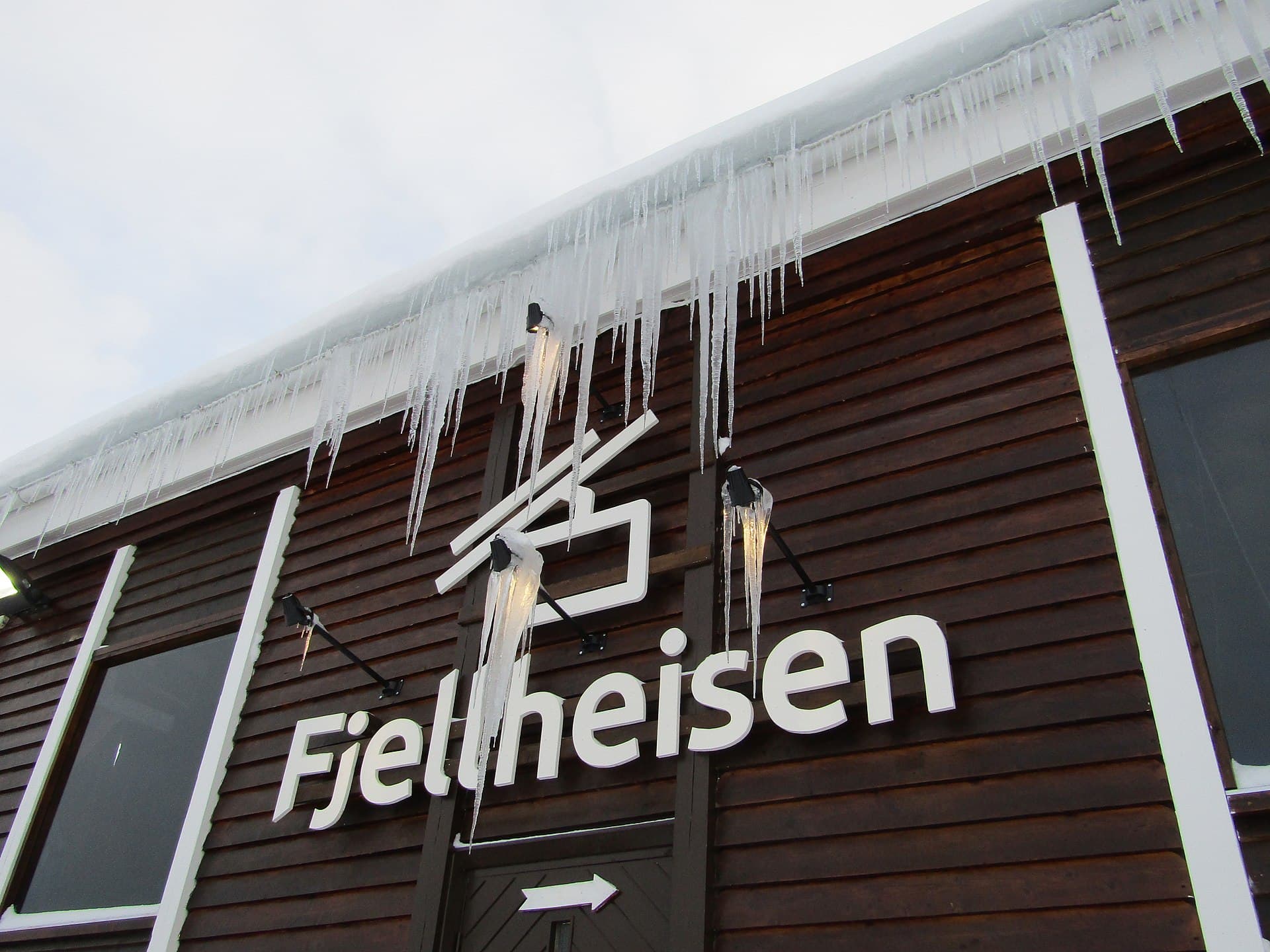
If you only do one thing in Tromsø, make it a trip up Mount Storsteinen, which towers majestically over the city. The iconic Fjellheisen cable car whisks you to the top in just four minutes, with its lower station located on the mainland part of the city in the Tromsdalen district. You can easily get there on foot via the main bridge (the walk from the centre takes about 40 minutes), or hop on local bus number 26, which stops just by the entrance.
From the upper viewing terrace, 421 metres above sea level, you’ll be treated to the most iconic view of all of Tromsø. You’ll see the island with the city centre, surrounded by the dark waters of the fjord and framed by snow-capped mountain peaks in the distance — a view that simply never gets old. The cable car usually runs every half hour, and in peak winter season it operates right up until midnight, so you can watch the northern lights undisturbed from the summit, far from the harsh city lights.
A return ticket costs roughly 400 to 450 NOK depending on the season, and tickets can be conveniently bought in advance online or right at the counter. At the top you can warm up in the cosy panoramic Fjellstua restaurant, which serves excellent coffee and fresh waffles with hot berries — something you’ll definitely appreciate after a long stretch of photographing in the freezing wind.
💡 Tip: If you’re in good shape and visit Tromsø in summer or autumn, you can hike up on foot. The route is the so-called Sherpatrappa, a hugely popular trail made up of more than twelve hundred stone steps, hand-built years ago by skilled Sherpas from Nepal, with ever more beautiful views opening up as you climb.
Photo: Godot13 / Wikimedia Commons, CC BY-SA 4.0
2. The Arctic Cathedral (Ishavskatedralen)
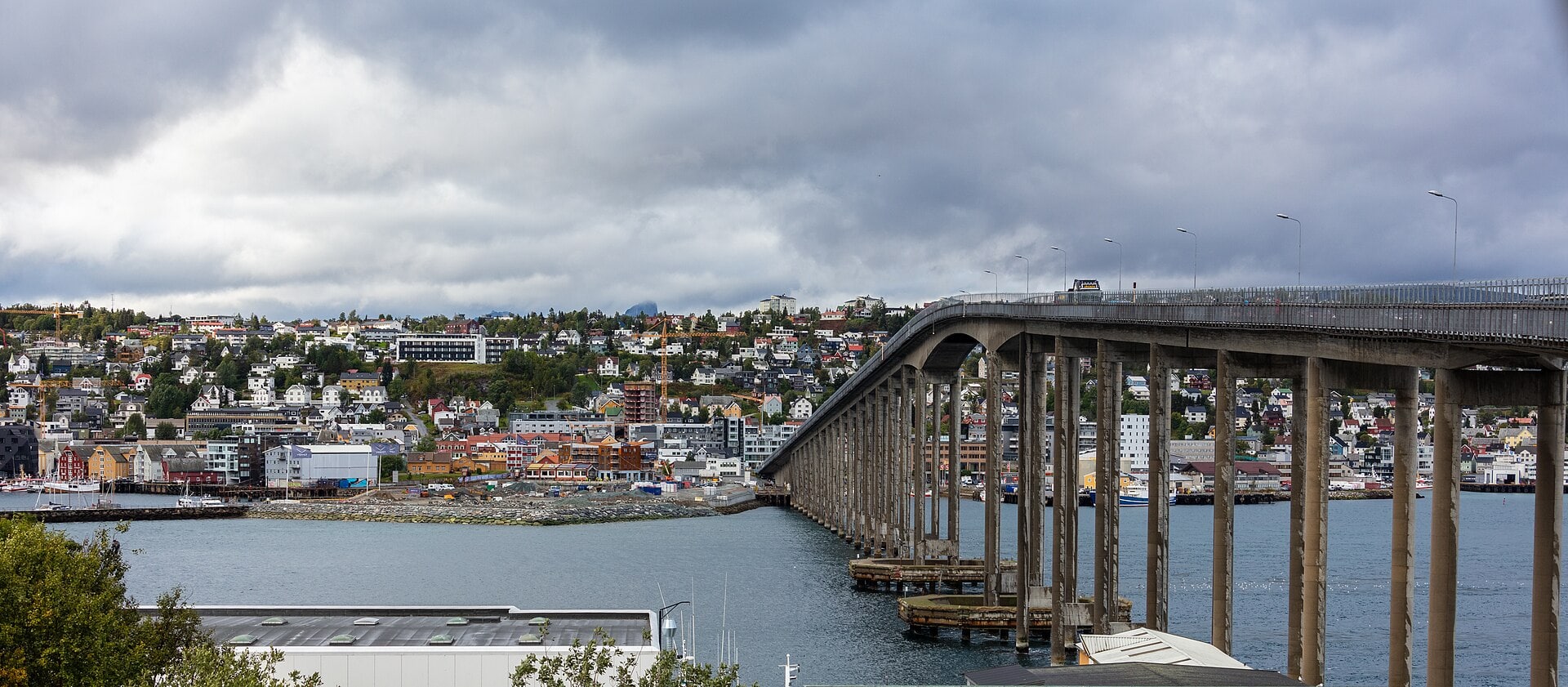
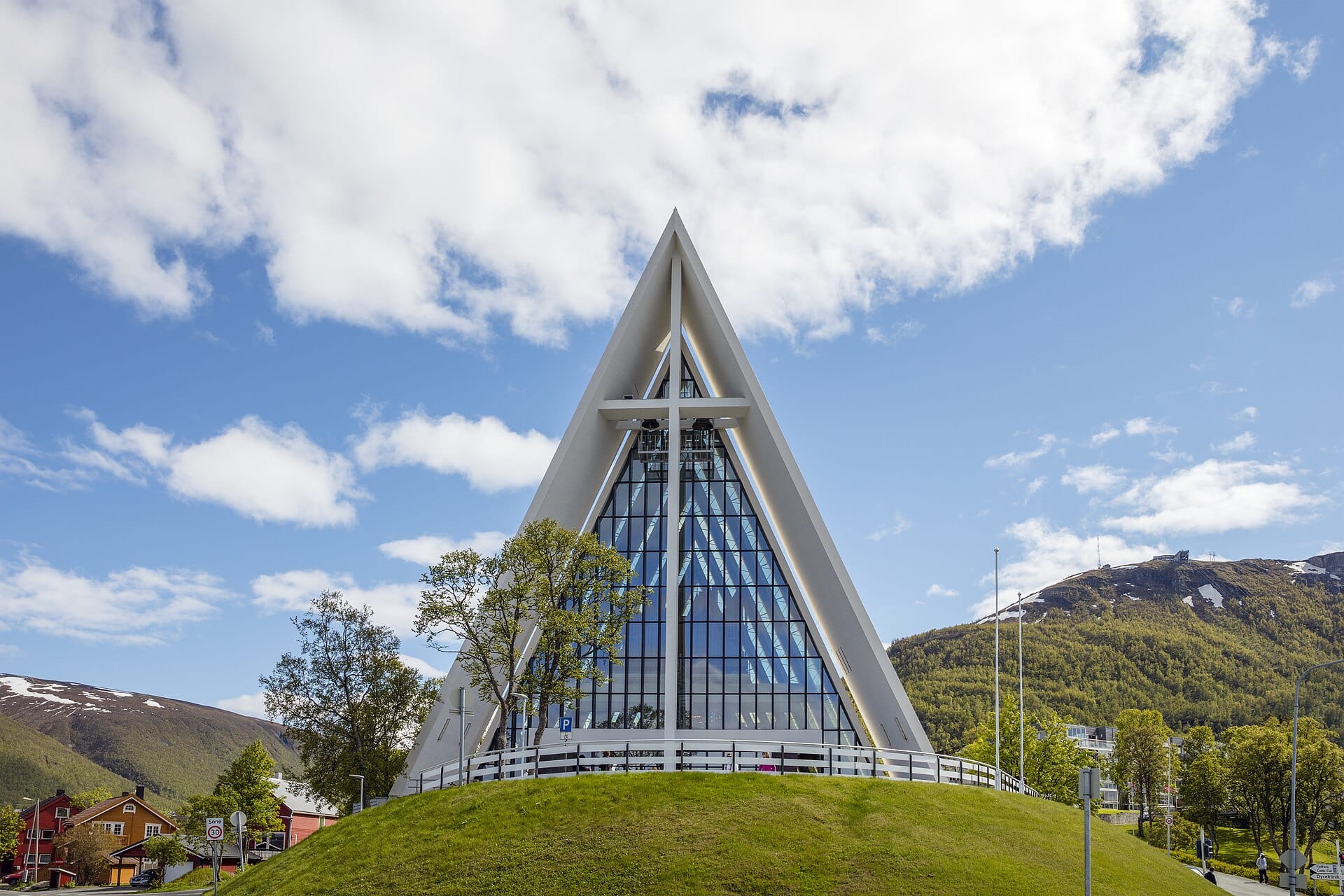
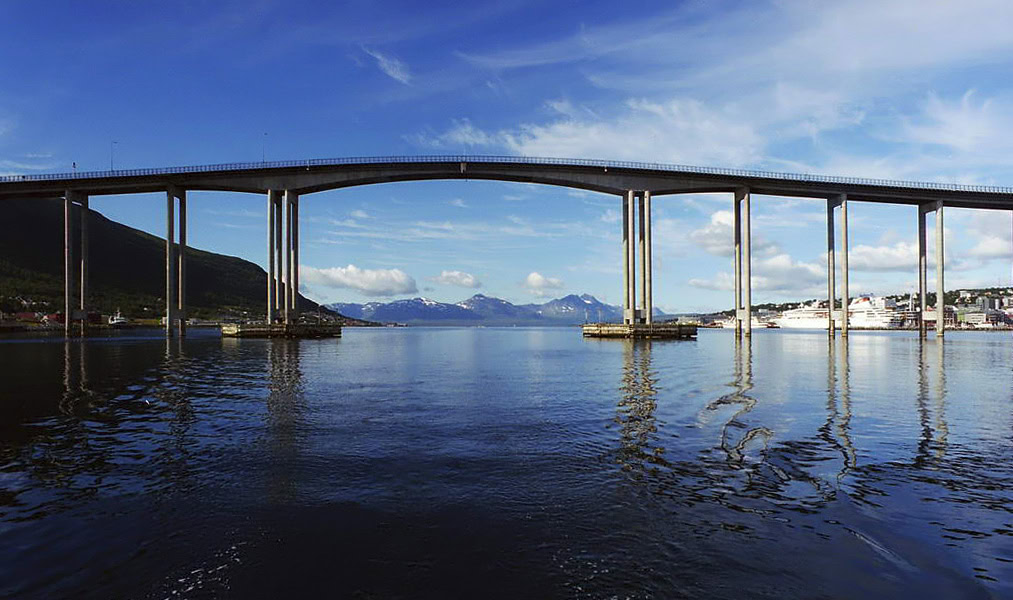
Just beyond the enormous Tromsøbrua bridge, which safely connects the island with the mainland, stands the most famous structure in the entire region and perhaps the most photographed church in northern Norway. With its unmistakable shape, the Arctic Cathedral resembles an iceberg or a traditional Sami tent and is beautifully visible from many viewpoints across the city.
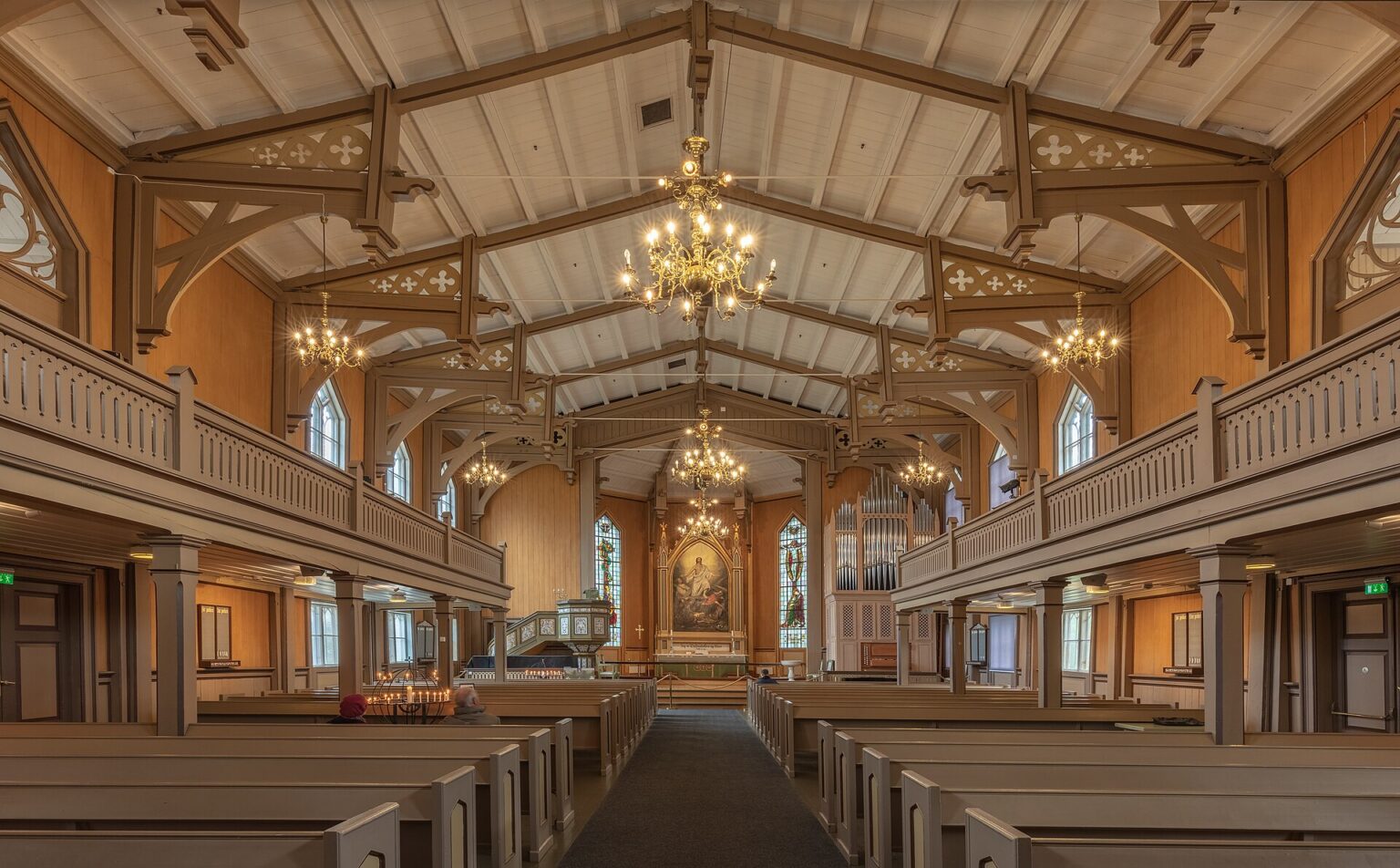
This stunning modernist building from 1965, designed by the renowned Norwegian architect Jan Inge Hovig, is made up of eleven concrete panels clad in gleaming aluminium. The cathedral is beautiful from the outside, but it’s well worth taking the time to step inside as well. Admission for an adult is around 80 NOK, and at first glance the interior will surprise you with its elegant Nordic airiness and an enormous glass mosaic by artist Victor Sparre.
The mosaic on the eastern side of the cathedral is one of the largest in Europe, and when light passes through it on sunny days, it literally plays with every colour of the rainbow, symbolising the return of Christ. The cathedral also boasts fantastic acoustics, so musical performances are held here very often, and choirs from all over the world come to record their albums.
💡 Tip: During the winter months and in the midnight sun period, the famous midnight concerts are held here regularly. The experience of sitting in this magical building accompanied by traditional Norwegian folk songs and the tones of majestic organs is absolutely unforgettable, and I’d recommend booking tickets well in advance online on the cathedral’s official website.
Photo: Flickr user: Gunnar Hildonen https://www.flickr.com/people/ / Wikimedia Commons, CC BY-SA 2.0
3. Chasing the northern lights (Aurora borealis)
Tromsø lies right in the centre of the so-called aurora oval, which makes it hands-down one of the best places in the world to watch this breathtaking phenomenon. The golden rule for a successful hunt is to get as far as possible from the light pollution of the city itself, because only in complete darkness do the colours in the sky come into their own — and you’ll capture the best photos full of bright green.
Although you can see the green dancing even right over the lit-up harbour when solar activity is really strong (the so-called KP index), you’ll have the best chance on an organised tour. Experienced guides keep a close eye on the weather forecast and won’t hesitate to drive you hundreds of kilometres — deep inland or even to the Finnish border — just to find a patch of clear, cloudless sky. A night tour like this can easily take seven to eight hours, and prices typically range from 1,200 to 2,000 NOK per person.
You can book these night-time aurora expeditions super easily, for example through the GetYourGuide platform, where you’ll find dozens of highly rated operators. You’ll often head out in a small, cosy minibus, and the guides will lend you warm Arctic thermal suits and tripods for photography. While you wait for the magic to appear, they’ll light a fire in the snowy landscape, toast marshmallows and brew up some delicious hot chocolate.
💡 Tip: Want to know more about how to prepare properly for aurora watching? Read our detailed article Iceland, Finland and Norway: northern lights, where you’ll find plenty of practical advice and mobile apps that are guaranteed to help with the hunt. Above all, don’t forget to pack spare camera batteries — they drain incredibly fast in the Arctic cold.
Photo: Godot13 / Wikimedia Commons, CC BY-SA 4.0
4. Whale safari in the winter fjords
From November to late January, the northern Norwegian fjords turn into an enormous underwater feasting hall for orcas and humpback whales. These amazing marine mammals migrate here every year in pursuit of vast shoals of herring, which makes for an absolutely unique opportunity to see them in their natural habitat, surrounded by majestic snow-capped mountain peaks and crystal-clear water.
These days most tours don’t set off straight from Tromsø harbour, because in recent years the whales have moved further north in search of food. Boats or buses therefore most often head towards the nearby island of Skjervøy or the Kvaløya area, which means a full-day trip can take anywhere from eight to twelve hours, with the sailing to the whales alone lasting several hours. The price ranges roughly from 1,500 to 1,800 NOK, but that breathtaking experience is worth every penny.
When choosing, I’d strongly recommend going with an operator that runs modern hybrid or fully electric catamarans. These advanced vessels can switch to silent running just before reaching a pod and approach the whales completely soundlessly, without disturbing the animals with engine noise and unpleasant exhaust fumes — which is far gentler on the local environment, and you’ll enjoy undisturbed peace.
💡 Tip: Up on the boat’s top deck it gets genuinely freezing thanks to the icy Arctic wind off the open sea. Even though the crew often lends you bulky insulated overalls, don’t underestimate your own layering — quality wool socks and windproof mittens are an absolute must for this full-day trip. If you suffer from seasickness, take tablets as a precaution before you set sail.
Photo: Antonio Miralles Andorra / Pexels
Lukáš and Lucie recommend
Where to stay in Tromsø
4 accommodations — hotels and other lodging options
Another essential winter activity in Arctic Norway is the traditional dog sled ride, which instantly pulls you into the harsh but beautiful life of the north. In the surrounding snowy valleys you’ll find several well-established husky farms, where you’ll be greeted with joyful cheering by dozens of enthusiastic Alaskan huskies who are literally itching to dash out into the frosty landscape and show off their strength.
The trips, which usually last around four to five hours including transport from the city centre, are most often organised so that after a thorough safety briefing you can drive the sled entirely yourself. You’ll ride in pairs, with one person sitting comfortably wrapped in blankets and the other standing at the back as the musher, who has to balance through the bends and brake regularly. Halfway along the route you swap, of course. The experience of gliding through the silent snowy landscape, watching the surrounding forests and hearing only the panting of the dogs and the crunch of snow, is immensely calming and cleansing.
The trip usually also includes a hot drink and a traditional lunch served in a so-called lavvu (a traditional Sami tent with a fire pit in the middle). While reindeer stew is commonly served, the farms are very modern and will happily prepare an excellent vegetarian alternative in advance — a warming root vegetable soup with fresh homemade bread.
💡 Tip: Pay close attention to choosing your operator and check reviews beforehand about how the animals are treated. Fortunately, most of the large farms around Tromsø take great care over the top-notch living conditions of their dogs, placing huge emphasis on their well-deserved rest, regular veterinary care and plenty of love from their handlers.
Photo: Bjoertvedt / Wikimedia Commons, CC BY-SA 3.0
6. Polaria and Arctic nature
Just a few minutes’ pleasant walk from the main city centre you’ll find a fascinating building whose unique architectural shape resembles falling sheets of ice that have dramatically slid onto the land one after another. This is Polaria, an Arctic experience centre that’s an absolutely ideal place to understand the fragile ecosystem of the far north and life deep beneath the surface of the sea.
Admission for an adult costs around 250 NOK, and the main attraction of the whole modern complex is the spacious glass-walled pools, home to contented bearded seals and harbour seals. Every day you can watch their narrated feeding and training, which takes place in a very playful way, naturally stimulating the intelligence of these animals while educating all visitors about their conservation in the wild and the threats associated with ocean pollution.
The centre also includes a modern panoramic cinema with five screens, where a beautiful documentary film about the rugged nature of Svalbard and the formation of the magical northern lights is regularly shown. The educational exhibition then focuses intensely on melting glaciers and global climate change, which will no doubt give you broader context on just how threatened the Arctic environment really is these days, and why it must be protected.
💡 Tip: Right next to Polaria there’s a huge glass hall housing the historic ship MS Polstjerna from 1949. This wonderfully preserved vessel was used for decades to hunt seals in Arctic waters, and today you can safely walk through its cramped interior, peer into the hold, and get a real sense of the incredibly harsh life of the brave sailors of that era.
Photo: L.M. Johannes / Wikimedia Commons, CC BY-SA 4.0
7. Exploring the centre and Arctic gastronomy
The historic centre of Tromsø itself is fairly compact, and you’ll best take in all its charms on foot over one relaxed afternoon. The main artery is the lively pedestrian zone Storgata, lined with beautiful old wooden houses in the Nordic style and countless little shops selling souvenirs, local design and, above all, extremely high-quality woollen clothing that will reliably keep you warm in these conditions and last you for years.
On your walk, be sure to stop at the world’s northernmost Protestant cathedral, Tromsø Domkirke, which is built entirely of wood, dates from 1861 and is surrounded by a pleasant city park. You also have to stop by the iconic Raketten kiosk, the smallest bar in Tromsø and quite possibly in all of Norway, which looks like a tiny wooden rocket and serves great hot drinks.
When it comes to Arctic gastronomy, in traditional restaurants you’ll very often see local specialities like reindeer meat or the famous Arctic cod, skrei. But if you prefer to eat meat-free, there’s nothing to worry about, because Tromsø is a very progressive, modern city. The vast majority of better establishments — including the Raketten kiosk mentioned above — offer proper plant-based alternatives, including excellent vegetarian hot dogs.
💡 Tip: Head to one of the popular local bakeries for a traditional cinnamon bun (kanelbolle), which you can smell from miles off, or warm up with a hearty creamy soup or a delicious vegetarian pizza with fresh cheeses at Casa Inferno. Besides great food, this acclaimed Italian spot has an absolutely amazing steampunk interior full of industrial details.
Photo: stein egil liland / Pexels
8. The midnight sun and summer hiking
If you visit Tromsø between late May and July, you’ll experience this pulsing city in a completely different light — quite literally. The total absence of darkness gives the entire northern region a huge dose of positive energy, and after the long dark winter the locals try to squeeze the absolute most out of every sunny day, so the cafés, parks and waterfront are bursting at the seams even late in the evening, and life here is in full swing.
This unique period is absolutely ideal for hiring a car and going hiking combined with discovering wild Nordic nature. You could head, for example, to the nearby mountainous island of Kvaløya, which is full of beautiful, brilliantly marked hiking trails. Try the popular and easy Brosmetinden trek, which takes about two hours and really anyone can manage it. The trails often lead you to remote beaches with surprisingly white sand, the most beautiful of which are found on the nearby island of Sommarøy (about an hour’s drive from the centre), where you’ll feel more like you’re in the Caribbean than above the Arctic Circle.
Thanks to the midnight sun phenomenon, you don’t have to stick to any strict schedule at all. You can quite happily set off on a more demanding mountain trek when the clock strikes ten in the evening and enjoy total silence and the gorgeous golden light that floods the whole landscape so photogenically and gives it incredible depth.
💡 Tip: The summer months are also absolutely ideal for hiring a sea kayak or paddleboard. Paddling on the calm surface of a dark fjord at two in the morning in full daylight is one of the most magical experiences you can take home from summer in northern Norway, and you’ll very often come across curious seals who swim up to check out the situation.
Photo: Diego Delso / Wikimedia Commons, CC BY-SA 4.0
Where to go next from Tromsø
Tromsø is a perfect starting point for discovering more of the beauty of northern Norway. A very common and popular option is to combine a visit to Tromsø with a trip to the stunning Lofoten Islands, which lie further south.
You can get there either by car, which is a fairly long but incredibly scenic drive, or by taking a local flight, for example to the town of Bodø. Our big guide to Lofoten covers travelling around this region in detail.
If sailing appeals to you, you can hop aboard one of the legendary coastal express ships, Hurtigruten or Havila. These ships sail through Tromsø daily and you can buy a ticket for just part of the journey — which, by the way, is a great way to watch the northern lights in Lofoten right from the open sea.
Photo: JojoSlight corrections by Blueshade / Wikimedia Commons, Public domain
Search with the DiscoverCars comparison engine — it compares prices from dozens of local and international rental companies, and most bookings come with free cancellation.
🔗 These are affiliate links — they don't change your price and help us create content. · All experiences →
Frequently asked questions
How many days should I set aside for Tromsø?
For visiting the city itself and completing the main Arctic excursions, I recommend three to four full days. This will give you enough time buffer in case the whale watching trip or evening northern lights hunt gets cancelled due to bad weather, which happens quite regularly in the far north and plans often need to be flexibly moved to the next day.
How cold does it get there in winter?
Thanks to the strong influence of the warm Gulf Stream, Tromsø is surprisingly much warmer than you’d expect from a city located high above the Arctic Circle. Winter temperatures usually range around minus five to plus five degrees Celsius, but the perceived temperature can be significantly worsened by strong freezing winds from the sea, so quality clothing is an absolute necessity in any case.
How should I dress for Tromsø?
The absolute foundation for survival in the Arctic is the rule of proper layering. Start with quality thermal underwear made from merino wool, which wicks away sweat and keeps you warm, add a warm middle layer, such as a thick fleece or traditional wool sweater, and finish everything off with a quality waterproof and especially windproof jacket and pants. Don’t forget a warm hat, neck warmer, and proper gloves.
Can you see the northern lights right in the city?
Yes, if the solar activity is really very strong and the sky is completely cloudless, you can spot the fainter green glow even right above the city centre or from hotel windows. However, for the real, breathtaking experience full of dancing colours, it’s always better to head far outside the city, where you’re not disturbed by any street lighting and the sky is perfectly dark.
How do I get to Tromsø?
The easiest and by far the fastest way from the Czech Republic is by air. Most regular flights from Europe connect in the Norwegian capital Oslo, from where the onward flight to Tromsø takes about another two hours. The airport itself is located incredibly close, just ten minutes by bus or taxi from the city centre itself.
Is staying in northern Norway expensive?
Yes, Norway in general has long been one of the most expensive countries in all of Europe and Tromsø, as a popular tourist destination, is no exception whatsoever. Be prepared to pay relatively high amounts not only for accommodation and restaurant meals, but especially for organized tours and activities, which will undoubtedly take the biggest bite out of your budget.
What is polar night and is it completely dark during it?
The polar night lasts in Tromsø roughly from the end of November to mid-January, which means in practice that the sun doesn’t rise above the horizon at all. However, it’s not some spooky pitch-black darkness all day long – around midday you’ll experience several hours of beautiful blue and purple twilight, which has its own unique romantic charm and is absolutely ideal for photography.
Tips and Tricks for Your Vacation
Don’t Overpay for Flights
Search for flights on Kayak. It’s our favorite search engine because it scans the websites of all airlines and always finds the cheapest connection.
Book Your Accommodation Smartly
The best experiences we’ve had when looking for accommodation (from Alaska to Morocco) are with Booking.com, where hotels, apartments, and entire houses are usually the cheapest and most widely available.
Don’t Forget Travel Insurance
Good travel insurance will protect you against illness, accidents, theft, or flight cancellations. We’ve had a few hospital visits abroad, so we know how important it is to have proper insurance arranged.
Where we insure ourselves: SafetyWing (best for everyone) and TrueTraveller (for extra-long trips).
Why don’t we recommend any Czech insurance company? Because they have too many restrictions. They set limits on the number of days abroad, travel insurance via a credit card often requires you to pay medical expenses only with that card, and they frequently limit the number of returns to the Czech Republic.
Find the Best Experiences
Get Your Guide is a huge online marketplace where you can book guided walks, trips, skip-the-line tickets, tours, and much more. We always find some extra fun there!
TL;DRCroatia works brilliantly with kids, especially the Istria and Kvarner regions (roughly 1,750 km from London, about 17–18 hours’ drive) or the area around Zadar, with the Borik resort and its national parks. The piece rounds up 9 recommendations, including sandy beaches such as Rajska Beach on Rab, Sakarun on Dugi Otok, and Queen’s Beach in Nin, plus campsites like Camping Lanterna and water parks Istralandia and Aquacolors Poreč. There are also trips to Krka National Park (pushchair-friendly) and Plitvice Lakes (you’ll need a baby carrier), along with tips on packing a first-aid kit and water shoes for sea urchins. June and September are the best months to go — the sea’s warm, but you’ll dodge the August crowds and temperatures above 30°C.
Croatia with kids is an absolute classic that no family ever seems to tire of. This land of a thousand islands offers the ideal combination of clean, safe seas, a welcoming culture, and easy access by car from across central Europe. Since 2023 it has also become a full member of the Schengen Area and switched to the euro, which has made the whole family holiday incredibly simpler and quicker. If you’re looking for a destination where both you and your little ones can truly unwind, you’re in the right place.
In this guide we’ll explore the best regions for families with children, reveal the rare sandy beaches, and point you towards the best water-based fun. You’ll also pick up essential practical info on getting there, healthcare, and what to pack in your first-aid kit. The goal is for you to enjoy your holiday without unnecessary stress and come home with nothing but the loveliest shared memories of the sun-drenched Adriatic.
Many parents worry about pebble beaches or long drives, but with a little planning all of these pitfalls are easy to avoid. You’ll discover that Croatian campsites are among the very best in Europe and offer a level of comfort you might never have dreamed of. So let’s dive into planning your dream family holiday and share all the insider tips on making the trip as easy as possible.
Photo: Brendan Chen / Pexels
TL;DR
Best regions: Istria and Kvarner are the easiest to reach overland, while Zadar offers great resorts and trips to national parks.
Sandy beaches: They’re a rarity in Croatia, but they do exist. Among the best are Paradise Beach on Rab, the Nin lagoon, and Sakarun on the island of Dugi Otok.
Health and safety: Always pack water shoes because of sea urchins and sharp rocks. The European Health Insurance Card (EHIC/GHIC) is valid here, but commercial travel insurance is a must.
Trips with kids: Krka National Park is manageable even with a pushchair; for Plitvice Lakes it’s better to bring a carrier because of the narrow boardwalks and steps.
When to go: June or September are ideal, helping you avoid the August crowds and the worst heat, which can be dangerous for small children.
Accommodation: Mobile homes in campsites are the family ideal, offering air conditioning, a private kitchen, and entertainment programmes just steps from the sea.
10 Things You Need to Know About Croatia With Children
Photo: Helena Jankovičová Kováčová / Pexels
1. Why Croatia Is the Ideal Choice for Families
For families with smaller children, the option of driving is often the deciding factor when choosing a holiday. Many travellers reach Istria in a single day’s drive, with regular stops to stretch little legs, while Dalmatia is a longer haul. If you’re flying, low-cost carriers such as Jet2, easyJet and Ryanair serve Croatian airports like Pula, Zadar, Split and Dubrovnik from across the UK. The big advantage of driving, of course, is that you can pack everything your kids need into the boot, including favourite toys or specific baby formula.
The switch to the euro and entry into the Schengen Area in 2023 were a huge relief for travellers. The lengthy border checks between Slovenia and Croatia, where endless queues used to form, are gone, and you no longer have to deal with confusing kuna conversions or hunting for a good exchange office. What’s more, the Adriatic has long been one of the cleanest seas in all of Europe, boasting hundreds of Blue Flag beaches, and its crystal-clear water lets children safely see all the way to the bottom.
The country has a very well-developed tourist infrastructure and a dense network of pharmacies and clinics, which will give you the peace of mind you need. If you’re heading to the islands, you’ll be pleased to know that the ferries are very modern and spacious, and the crossing to most of the closer islands takes just over an hour. In local taverns you’ll also easily find meat-free dishes, from excellent pasta to pizza, which little ones simply love.
💡 Tip: Buy your tickets for the state ferry company Jadrolinija well in advance online so you can skip the ticket-office queues at the port and secure your spot on board at your chosen time.
Photo: Vladimir Srajber / Pexels
2. The Most Beautiful Sandy and Shallow Beaches
Croatia is famous for its pebbly and rocky coves, so to find genuine sand you have to seek it out deliberately. An absolute gem is Paradise Beach in the resort of Lopar, which stretches an impressive 1.5 kilometres and offers an incredibly gentle slope into the water. The sea here is so shallow that even 400 metres from shore you can comfortably touch the bottom, making it a perfect, safe sandpit even for toddlers.
Another magical spot is Sakarun Beach on the island of Dugi Otok, which boasts around 800 metres of dazzling white sand and turquoise water reminiscent of the Caribbean. If you prefer to stay on the mainland, Queen’s Beach in Nin, near Zadar, is the longest sandy beach in the country at nearly three kilometres. Its great advantages are the very warm water and the healing peloid mud, which children will gleefully wallow in.
Even on the mostly pebbly Istrian coast you can find a sandy treasure, namely Bijeca Beach in Medulin, which is a kilometre long and offers great facilities including shade under the pines, showers, and toilets. Further south you can explore Vela Pržina or Bilin Žal beaches in Lumbarda on the island of Korčula, picturesquely scattered among local vineyards. Always check what kind of surface to expect in advance so you aren’t caught out on arrival.
💡 Tip: Even when you’re heading to a properly sandy beach, pack water shoes for the kids. Sometimes the transition from sand to sea is lined with a strip of small stones or debris that could uncomfortably press into delicate little feet. If you’d like more detail, check out our article focused specifically on the island of Rab (sandy beaches).
Photo: Vladimir Srajber / Pexels
3. Which Regions to Choose and Which to Avoid
When picking the right destination, it’s not just about distance but also the overall atmosphere and the shape of the coastline. Istria is the easiest region to reach overland and offers a fantastic network of premium campsites, sheltered shallow coves, and beautiful nature around Cape Kamenjak. Kvarner, with the island of Krk, is excellent thanks to the bridge that spares you the ferry wait, and it offers very calm resorts with plenty of shade and family comfort.
The Zadar area and northern Dalmatia are the proverbial golden middle for those who want to combine swimming with sightseeing. Zadar itself has great family resorts in the Borik district and lies strategically close to the lovely historic town of Nin and the national parks. The local coastline is very indented and offers plenty of small, sheltered coves where there’s no open sea and no risk of big waves.
With small children, on the other hand, I’d think carefully about a trip to Dubrovnik. Although it’s a stunning city, it suffers from enormous crowds in season, relentless heat, and ubiquitous steep steps that turn manoeuvring a pushchair into a nightmare. It’s also best to avoid the town of Hvar in peak season, or Zrće beach on the island of Pag, as these spots are famous for raucous, noisy parties well into the night.
💡 Tip: If you’re still unsure about a specific spot for your family, browse our comprehensive overview and tips on where to go on holiday in Croatia, where we break down each region in far greater detail.
Photo: DeLuca G / Pexels
4. When to Head to the Sea and How Long to Stay
The timing of your holiday is absolutely crucial to its success, especially if you’re travelling with small children who cope less well with extreme temperatures. The best months to visit are June or September, when the Adriatic is already (or still) pleasantly warm, but the air isn’t reaching scorching highs. In these months the resorts are also much calmer, the beaches half-empty, and accommodation prices noticeably kinder to the family budget.
August tends to be the busiest and hottest period of the entire year in Croatia. Temperatures often and persistently climb above 30 degrees Celsius in the shade, the beaches burst at the seams under a surge of Italian and German tourists, and prices hit their absolute peak. If you’re tied to the school holidays, try to go right at the start of July or, conversely, at the very end of August, when the main wave of demand is slowly easing.
As for the ideal length of stay, I’d recommend planning at least seven to ten days including travel. With smaller children it’s far wiser to pick one stable base and take shorter half-day trips from it than to attempt a demanding road trip with frequent moves and constant packing. Children need a certain amount of time to acclimatise and to settle into a safe routine in a new environment.
💡 Tip: If you’re planning to visit the popular national parks such as Plitvice Lakes or the Krka waterfalls, try to avoid summer weekends, when the biggest crowds gather, and instead plan your trip for early morning on a weekday.
Photo: Gutjahr Aleksandr / Pexels
5. Campsites and Glamping as a Family Paradise
Croatian campsites have absolutely nothing in common with the image of spartan camping from the nineties; in reality they’re among the very best in Europe. Modern mobile homes offer every imaginable comfort, including powerful air conditioning, a fully equipped kitchen, a private bathroom, and a spacious wooden terrace. They give you all the comfort of an apartment, but with the huge advantage of staying right in a pine grove, often just metres from the water’s edge.
What’s more, most premium campsites work like enormous holiday villages that are absolutely perfect for families. The grounds usually include sprawling pool complexes and water zones, modern playgrounds, separate paddling pools, and professional entertainment programmes. Among the best rated are the huge Camping Lanterna near Poreč, the lovely Bi Village in Fažana, and the luxurious Amarin Resort in Rovinj, all with superb facilities.
If you’re after complete peace of mind and a higher budget is no obstacle, you can opt for specialised family resorts. A great example is the Falkensteiner Club Funimation Borik in Zadar, which runs on an all-inclusive basis and boasts its own water park, the Falky Land kids’ club, and a special children’s menu. It’s a place where you don’t have to worry about activities or food at all and can simply relax.
💡 Tip: Mobile homes in popular campsites are often sold out months in advance. So ideally book your accommodation in Croatia during the winter months to secure a home in the best possible spot, ideally in the shade and close to the beach.
Photo: Ramon Karolan / Pexels
6. Water Parks and Endless Water Fun
When the kids finally tire of building sandcastles or hunting for shells, it’s time to bring out the big guns in the form of modern water parks. Istralandia near the town of Brtonigla is the largest water park in the country, covering over 80,000 square metres and offering more than twenty different slides and flumes. The complex is set in beautiful surroundings and, alongside its adrenaline attractions, has vast shallow-water zones for the youngest visitors.
Its rival is the nearby Aquacolors Poreč, which is perhaps even more geared towards families with very young children. You’ll find special baby-friendly zones, safe mini slides suitable for children from around one year old, and excellent facilities including plenty of clean changing tables. The staff enforce strict safety rules, and the whole site is designed so you can move around comfortably even with a larger sports pushchair.
If you’re spending your holiday in Dalmatia instead, be sure to visit Aquapark Dalmatia near Šibenik, part of the sprawling Amadria Park Solaris complex. It’s the first themed water park in Croatia and captivates children with its pirate decor, water castles, and lazy river. Many family campsites on the islands, such as the Čikat zone on Lošinj, also have their own smaller water parks included right in the price of your stay.
💡 Tip: Buy tickets for the big water parks through the official websites a day or two in advance if you can. You’ll often save a chunk of the family budget and, above all, avoid long queues in the sun at the entrance ticket desks.
Photo: Ramon Karolan / Pexels
7. Nature Trips With a Pushchair or Carrier
It’s great to break up beach time with a trip to one of the stunning national parks, but with children you have to choose your route carefully. Krka National Park is very family-friendly, as the main two-kilometre loop around the Skradinski Buk waterfalls is largely manageable even with an all-terrain pushchair. The wooden walkways here are relatively wide and the elevation isn’t dramatic, though you will hit a few steps here and there.
The legendary Plitvice Lakes, by contrast, are practically impassable with a pushchair and highly unsuitable. The wooden boardwalks across the lakes are very narrow, often lack any railings, and in season are packed with crowds, making it impossible to manoeuvre a pushchair. For visiting Plitvice with small children, a good ergonomic carrier or sling is absolutely essential, and we recommend choosing the shorter scenic loops marked A or E, which won’t wear out little legs as much.
It’s very important to know that nature-protection rules have tightened significantly in recent years. Whereas you used to be able to cool off beneath the waterfalls in Krka, swimming has been strictly banned there since 2021 to protect the fragile ecosystem. At Plitvice Lakes this swimming ban has been in place for decades, so you don’t need to pack swimwear at all for these particular trips.
💡 Tip: Plan your trips to both parks for days that are overcast or slightly cooler. The open space around the waterfalls can be exhausting in the midday summer sun, and you won’t find much shade on the wooden boardwalks.
Photo: Silverije / Wikimedia Commons, CC0
Lukáš and Lucie recommend
Where to stay in Croatia
6 accommodations — resorts, campsites and other accommodation options
Children love animals, and the Croatian coast offers wonderful ways to watch them safely in their natural habitat. The island of Lošinj is famous for its year-round and fairly sizeable population of bottlenose dolphins, which stay out in the open sea. You can visit an education centre dedicated to their protection or set off on a respectful boat safari, where you have a very good chance of spotting these magnificent creatures playfully leaping out of the waves.
Another fantastic family destination is Brijuni National Park near the resort of Fažana in Istria. This string of islands offers a unique combination of historic monuments and an open safari park, where zebras, llamas, and elephants left behind by former president Tito roam freely. You can explore the whole island on foot, on hired bikes, or in an electric golf cart, which is an adventure in itself. Sharp-eyed children can even find well-preserved dinosaur footprints in the rocks along the shore.
For slightly older and braver children, a huge thrill awaits at the adrenaline-pumping Biokovo Skywalk high above the Makarska Riviera. It’s a glass walkway jutting out over a deep chasm that will test your nerve but reward you with phenomenal views over the entire coast and islands. Entry to the national park is around eight euros for children over seven, and the drive up the narrow mountain road is an experience in its own right.
💡 Tip: Even the simplest and shortest trip on a small boat or ferry is a huge adventure for preschoolers. You don’t have to splash out on expensive all-day excursions; often a short hop between the mainland port and the nearest islet is plenty. You can easily browse tickets and short local trips on platforms like GetYourGuide.
Photo: Milan Stefanovic / Pexels
9. Health, Safety and the Hazards of the Sea
Although the Adriatic is very safe, it does hide one rather unpleasant hazard, and that’s sea urchins. These spiny little balls like to lurk among the rocks right at the water’s edge, and stepping on one can ruin a whole holiday. Sturdy water shoes are an absolute must for every member of the family without exception. If an accident does happen, don’t try to pull the spines out by force; instead pack a tube of ichthammol ointment in your first-aid kit, which overnight helps to “draw” the spine out of the skin on its own.
As for healthcare, in all state facilities and hospitals your European Health Insurance Card (EHIC/GHIC) is valid, securing you emergency care on the same terms as local residents. However, Croatia operates a system of financial co-payment (so-called participation) for treatment and medicines, so it’s absolutely essential to also arrange good commercial travel insurance for the whole family to reliably cover these extra charges.
The pharmacy network (look for the sign “ljekarna” with a green cross) is very dense in the larger resorts, and pharmacists commonly speak English or at least basic German. You can buy most common medicines for fever or upset stomachs here without any trouble. Baby formula and specific toddler milks, however, are better brought in sufficient quantities from home, as local supermarkets may not stock the exact brand your baby is used to and tolerates.
💡 Tip: Protect children from heatstroke and sunburn. In July and August the sun beats down with enormous force from early morning, so always bring a pop-up beach tent or a good parasol to the beach, use the highest-factor sun cream, and make sure the kids always have a hat on and drink plenty of clean water.
Photo: Vladimir Srajber / Pexels
10. What to Pack and How to Manage the Journey
Packing for a family often resembles a complex logistical operation, but the key is not to underestimate your beach gear. Besides the water shoes and parasol already mentioned, don’t forget plenty of light, breathable clothing, good sunglasses with a UV filter, and of course toys for the sand or pebbles, which will keep the kids busy for hours. If you’re driving, prepare a cool bag with fresh fruit and plenty of drinks for the long journey.
If a ferry crossing to the islands awaits, it’s good to prepare for possible seasickness, even though Jadrolinija’s big hull ferries are very stable. If your child has a more sensitive stomach, stay on the middle or lower deck towards the rear of the vessel, where the boat rocks the least. It’s important to encourage children to look out at the fixed horizon, and to give them only light, dry food before the crossing.
Pay close attention to your travel first-aid kit too. Alongside fever reducers, nose and ear drops, and plasters, pack probiotics to settle the stomach and a reliable mosquito repellent, since the bugs can be quite persistent in the evenings by the water. If you don’t want to forget anything important, be sure to run through our detailed list of what to pack for Croatia before you set off, which walks you through the process step by step.
💡 Tip: Get some seat-back organisers for the car and download your kids’ favourite cartoons or audiobooks to a tablet in case you get stuck in a queue on the motorway or at a toll gate, which happens fairly often in peak summer season.
Photo: Kemal Christian Catovic #Cato / Pexels
Practical Summary and Guide Prices
Distance and driving time: Central Europe to Istria (Rovinj) is roughly 830 km and around 8.5 hours of actual driving. Onward to Zadar adds significant distance. From the UK, most families fly: Pula, Zadar, Split, and Dubrovnik all have direct flights from various airports.
Currency and prices (rough guide for 2025/2026): Everything is paid in euros. A scoop of ice cream runs between €2 and €3, a lunchtime restaurant pizza around €10–15, and a large coffee €2.50–4.
Tolls: In Austria and Slovenia you need an electronic motorway vignette. Croatian motorways themselves work on a toll-gate system (you pay for the stretch driven by card or cash at the exit).
Ferries: For a car on shorter routes (e.g. to the island of Cres or Rab) you’ll pay around €15–25 per vehicle and roughly €4–6 per adult; children often get a discount or travel free depending on age.
Park entry: Both Krka National Park and Plitvice Lakes use dynamic pricing. In peak summer an adult ticket costs around €40, while out of season the price can drop to less than half.
💡 Tip for accommodation and experiences: We like to look for accommodation on Booking.com, which usually has the best cancellation policies. For tickets, tours, and activities, it pays to compare and book through GetYourGuide.
Photo: Peter Fazekas / Pexels
Where to Next
Looking for the best base for your family? Read our detailed article on accommodation in Croatia.
Search with the DiscoverCars comparison engine — it compares prices from dozens of local and international rental companies, and most bookings come with free cancellation.
🔗 These are affiliate links — they don't change your price and help us create content. · All experiences →
Frequently Asked Questions
Where are the sandy beaches in Croatia?
Sandy beaches are quite rare in Croatia, but they can be found. Among the most famous and popular family beaches are the long Paradise Beach in the resort of Lopar on the island of Rab, Queen’s Beach in Nin near Zadar with healing mud, or the beautiful Sakarun Beach on the island of Dugi otok.
Can I go to Krka National Park with a stroller?
“`html
Yes, the main visitor route around Skradinski Buk waterfalls measures approximately two kilometers and you can manage it without major problems with an all-terrain or jogging stroller. The wooden walkways here are sufficiently wide, although in several places you need to navigate a small number of steps.
“`
Can you swim at Plitvice or in Krka National Park?
“`html
Swimming at Plitvice Lakes has been strictly forbidden for several decades now. In Krka National Park, swimming beneath the main waterfalls used to be very popular, but since 2021 the park management has introduced a strict swimming ban here as well, in order to protect the local fragile ecosystem.
“`
When is the best time to go to Croatia with small children?
Absolutely ideal months for a holiday with small children are June or the first half of September. The sea is already warm enough for swimming, but you’ll avoid the extreme August heat, which can exceed thirty degrees, as well as the exhausting crowds of tourists on the beaches and highways.
Are water shoes really necessary in Croatia?
“`html
Yes, quality water shoes are an absolute must for both children and adults. The Adriatic coast is largely rocky and sea urchins often hide in the water near the shore, whose spines can cause very painful injuries and ruin the rest of your entire vacation.
“`
Does the Czech health insurance card work in Croatia?
Yes, your blue European Health Insurance Card (EHIC) is valid in all public healthcare facilities. However, it’s absolutely essential to also arrange commercial travel insurance, as Croatia has a system of patient co-payments for treatment and medication.
Where to go in Croatia by car as close as possible?
“`html
If you want to minimize travel time, focus on the Istria peninsula or the Kvarner region. You can reach resorts like Umag, Poreč, or Rovinj from Prague in about eight to nine hours of driving, which is very comfortably manageable in one day with kids in the car.
“`
What to do on a ferry for seasickness?
If your kids don’t handle rocking well, choose a spot in the middle or rear section of the ship on one of the lower decks, where the hull’s movements are minimal. Children should have light food in their stomachs, should look out at the fixed horizon, and in case of emergency, keep motion sickness medication on hand.
Tips and Tricks for Your Vacation
Don’t Overpay for Flights
Search for flights on Kayak. It’s our favorite search engine because it scans the websites of all airlines and always finds the cheapest connection.
Book Your Accommodation Smartly
The best experiences we’ve had when looking for accommodation (from Alaska to Morocco) are with Booking.com, where hotels, apartments, and entire houses are usually the cheapest and most widely available.
Don’t Forget Travel Insurance
Good travel insurance will protect you against illness, accidents, theft, or flight cancellations. We’ve had a few hospital visits abroad, so we know how important it is to have proper insurance arranged.
Where we insure ourselves: SafetyWing (best for everyone) and TrueTraveller (for extra-long trips).
Why don’t we recommend any Czech insurance company? Because they have too many restrictions. They set limits on the number of days abroad, travel insurance via a credit card often requires you to pay medical expenses only with that card, and they frequently limit the number of returns to the Czech Republic.
Find the Best Experiences
Get Your Guide is a huge online marketplace where you can book guided walks, trips, skip-the-line tickets, tours, and much more. We always find some extra fun there!
TL;DRThe best way to see the Normandy landings is through 12 key sites across five sectors – American Omaha Beach with its Les Braves sculpture and Utah Beach, the British Gold and Sword beaches with Pegasus Bridge, Canadian Juno Beach, the American cemetery at Colleville-sur-Mer with its 9,387 graves, the cliffs at Pointe du Hoc, the town of Sainte-Mère-Église, the Mulberry harbour remains at Arromanches, the Mémorial de Caen museum and historic Bayeux. May, June or September are the best months to come, and you’ll want at least two to three full days to cover every sector – you’ll need a car to get between them, as it’s about 80 km from Utah to Sword. Bayeux makes the best base, with rooms in 2026 running roughly €120–€180 a night for two. Steer clear of 5–7 June 2026, when the 82nd anniversary of D-Day brings crowds and road closures, and note that the famous Bayeux tapestry heads off on loan to London from September 2026.
Normandy, France will not leave you indifferent. Don’t expect the carefree sunbathing under a parasol you’d find somewhere on the Riviera — people come here for raw beauty and history that literally redrew the map of the world. The air smells of salt, seaweed and fermenting apple cider from the local orchards. In the morning you’ll be woken by the cry of gulls, and at night you’ll fall asleep with the feeling that you’ve experienced something incredibly powerful and real. The Calvados coast, with its long sandy beaches and limestone cliffs, is today a vast memorial landscape that deserves your time and respect.
If you’re thinking of heading here, this article gives you 12 tips on what to see and do along the D-Day landing beaches. I’ll take you from the bloody Omaha Beach, past the American cemetery, all the way to the fascinating artificial harbour at Arromanches. I’ll advise you on where to base yourself strategically, how to get around between the different sectors, and how much the whole trip will cost you in 2026.
Photo: Edouard CHASSAIGNE / Pexels
TL;DR
Base yourself in Bayeux: The best place to stay is the historic town of Bayeux. It has a fantastic location, escaped the bombing and offers excellent restaurants.
A car is a must: Public transport along the beaches is very poor. To move around freely, definitely rent a car, or join an organised tour.
Omaha and the American cemetery: This is the absolute essential you mustn’t miss. The solemn atmosphere of nearly ten thousand white crosses will stay etched in your memory.
2026 anniversary: The 82nd anniversary of the landings is being prepared. Between 5 and 7 June 2026, expect extreme crowds, road closures and fully booked hotels.
Divided into sectors: The beaches are split into American (Omaha, Utah), British (Gold, Sword) and Canadian (Juno). Each has its own dedicated museums.
The Bayeux Tapestry is gone: If you’re visiting in 2026, you won’t see the famous tapestry. The museum is being renovated and the work is moving to London from September 2026.
Food and drink: Taste the local apple cider, the ripened cheeses headed by Camembert, and explore the traditional Norman bakeries.
The weather in Normandy, France is famously unpredictable, and it’s no coincidence that people say you can experience all four seasons in a single day. The ideal time to visit is late spring and early autumn — specifically May, June or September. Temperatures hover around a pleasant 18 to 22 degrees, the days are long and there are slightly fewer tourists than during the summer holidays. Even in summer, though, definitely pack a windbreaker and a waterproof jacket, because the wind off the ocean can be bitterly cold and relentless.
The year 2026 is exceptionally important for the whole region, because the 82nd anniversary of D-Day is approaching. While it isn’t a perfectly round milestone, the celebrations and memorial events here are huge every single year. The D-Day Festival will run from 30 May to 14 June 2026. The main international ceremony on 6 June will take place in Langrune-sur-Mer, in the British Sword sector. The commemoration at the American cemetery will be held precisely at 11:00 on 6 June, and the elite units will be honoured at Pointe du Hoc a day earlier, at 14:00.
However, if you have no desire to sit in endless traffic jams, avoid the dates between 5 and 7 June 2026. The entire coastline will be extremely crowded, accommodation is booked up a year in advance, and you’ll have to reckon with massive road closures due to the presence of politicians from around the world. If you’d rather explore the history in peace, come a week earlier, or instead wait until mid-June.
Set aside at least two to three full days for visiting the beaches and museums themselves. It’s simply not humanly possible to see all the sectors in one afternoon. The distances between Utah beach in the west and Sword in the east are roughly 80 kilometres. You really need to get around by car here, because the local NOMAD network buses run very rarely and don’t connect well with each other. An alternative for the more sporty traveller is to hire a bike and use the excellent coastal Vélomaritime cycle route.
Photo: bernard damato / Pexels
Where to stay in Normandy when visiting the beaches
💡 Accommodation and experiences tip: We like to look for accommodation on Booking.com, which usually has the best cancellation terms. It then pays to compare and book tickets, tours and activities through GetYourGuide.
As I touched on in the introduction, Bayeux makes an absolutely perfect base for exploring all the landing sectors. It was the first major town liberated by the Allies in 1944 and, miraculously, it escaped the devastating bombing. It has remained beautifully preserved, with cobbled lanes and a stunning Gothic cathedral. In the evening it comes alive, and logistically you’re right in the middle of everything, so you’re relatively close to it all.
Accommodation in Normandy isn’t the cheapest, especially if you’re after something lovely right in the historic centre. Prices per night for two in 2026 average around 120 to 180 euros in the mid-range. Definitely don’t leave your booking until the last minute — the best places on platforms like Booking.com vanish as early as the winter months.
If you’re after specific tips, an excellent choice is the Hotel Churchill, which sits right in the centre of Bayeux and offers stylish rooms with a historic atmosphere. For those who prefer more space and quiet, I’d recommend renting one of the smaller apartments on the edge of town, where it’s easier to park your car. If you like a touch of luxury, take a look at the boutique Villa Lara, which offers first-class service with views of the cathedral.
If you want to escape the bustle of town and the rural atmosphere appeals to you more, look for accommodation in traditional Norman farmhouses (the so-called chambres d’hôtes). You’ll often find these family-run guesthouses scattered around the villages of Colleville-sur-Mer or Arromanches. In the morning a fantastic homemade breakfast awaits, and in the evening you can taste the local protected-origin cheeses. Definitely try the distinctive square Pont-l’Évêque or the heart-shaped Neufchâtel.
When it comes to eating, though, watch out carefully for restaurant opening hours. In France, lunch is served strictly between 12:00 and 14:00. If you turn up at a bistro at three in the afternoon, hungry after touring the bunkers, the kitchen will already be closed, and the best you can hope for is a cold cheese baguette from the local bakery.
Photo: Hub JACQU / Pexels
12 tips on what to see and do along the D-Day landing beaches
The coastline is divided into five main sectors, each bearing its own historic code name. I’d recommend working through them systematically, either from west to east or vice versa, so you don’t waste time doubling back. Here are 12 places that definitely shouldn’t be missing from your itinerary.
Photo: SlimMars 13 / Pexels
1. Omaha Beach and the Les Braves memorial
For American history, Omaha Beach is a byword for immense heroism and unimaginable losses. Today, at first glance, it’s a calm, very wide sandy beach where families stroll and fly kites in summer. But when you lift your eyes to the cliffs rising steeply above it, you immediately grasp the deadly trap the landing soldiers found themselves in. The German defence had a perfect field of fire over every metre of sand, and the soldiers had absolutely no cover.
The best-known monument right on the beach is the Les Braves (The Brave) sculpture, embedded in the sand in the village of Saint-Laurent-sur-Mer. It’s a beautiful modern memorial of stainless steel, whose sharp spikes symbolise the wings of hope, freedom and brotherhood. You can park comfortably right by the promenade, where you’ll find several smaller memorials and detailed information boards with maps of the original defensive positions.
💡 Tip: Come here at strong low tide. Only when the sea retreats hundreds of metres into the distance do you realise the enormous, completely exposed distance the soldiers had to cover in heavy gear. Wading through icy water and then running across the endless wet sand towards the cliffs was a task that seemed all but impossible.
Photo: Pexels
2. The American cemetery at Colleville-sur-Mer
Directly above the eastern part of Omaha Beach lies a place that is guaranteed to strike you deep in the heart. The Normandy American Cemetery and Memorial is the resting place of 9,387 fallen American soldiers. On the immaculately trimmed green lawn, which contrasts beautifully with the blue horizon of the ocean, brilliant white marble crosses and Stars of David stand in perfect rows. It’s an incredibly quiet and powerful place that compels reflection.
All the graves are symbolically oriented towards the west — that is, home to the United States. The cemetery is technically American territory administered by the US government, and strict security measures apply here. Entry is completely free, but you have to pass through a metal detector, much like at an airport. Set aside at least two hours for visiting the whole site. If you head here in 2026, the main commemoration will take place precisely at 11:00 on 6 June.
The site also includes a beautiful modern visitor centre, which I’d recommend walking through before you step out among the crosses. The exhibition tells the personal stories of several individual soldiers from different corners of America, whose graves you can then find outside using a map. The experience of walking among the crosses to the gentle sound of the surf below the cliff is truly unforgettable.
Photo: Pexels
3. Pointe du Hoc and the lunar landscape of craters
A little further west, precisely between Omaha and Utah beaches, lies the mighty limestone headland of Pointe du Hoc. Here you’ll see ground that to this day is literally torn apart by huge craters from the massive Allied naval bombardment. The task of the elite American Rangers was to scale these thirty-metre, almost vertical cliffs using ropes and to knock out the heavy German guns that threatened both neighbouring landing beaches.
Today this dramatic site is fantastically preserved and entry is free. You can safely walk among the deep craters and explore the broken concrete bunkers, which lie exactly as they were left in June 1944. From the top of the cliff there’s also an absolutely phenomenal view across the entire English Channel. In 2026 a special ceremony dedicated to the Rangers will be held here, on 5 June at 14:00.
A visit to Pointe du Hoc takes around an hour and a half. Paved paths guide you through the whole complex right up to the main granite memorial, shaped like a dagger, at the very tip of the headland. But take great care and stick only to the marked trails. The edges of the chalk cliffs can be very treacherous after rain — they often crumble, and there are no protective railings here.
Photo: Dagmar Senger / Pexels
4. Utah Beach and the endless sand dunes
The Utah sector was assigned to the US Army, and the landing here took place with relatively the lightest losses of the entire Operation Overlord. The beach itself is endlessly long, lined with sand dunes and wild grass. The atmosphere here is far calmer and more deserted than on Omaha, which gives the place a peculiar, slightly melancholy feel. You can stroll here in peace, listening only to the murmur of wind and waves.
Right at the entrance to the beach there are several interesting memorials, including an imposing monument dedicated to the US Navy and a realistic statue of an American sailor. You can wander freely over the remains of the original German defensive ramparts and take a close look at several smaller reconstructed bunkers that once guarded the approach from the sea.
💡 Tip: Stop by the memorial to the Danish sailors, which sits just a short way from the main promenade. It’s often forgotten that smaller nations also took part in the operation, providing their ships and crews for risky supply missions. This modest stone is a very moving reminder of their quiet sacrifice.
Photo: Brent Carr / Pexels
5. Musée du Débarquement Utah Beach
On the very spot where the first American units broke through the defences and got off the beach now stands the outstanding Utah Beach museum. It’s unique above all because it’s literally built into the remains of an original German bunker. The museum recently underwent a huge renovation, which has put it among the very best — not just here, but in all of Normandy.
The biggest draw of the exhibition is the original American B-26 Marauder bomber, displayed in a huge, specially built glass pavilion. It’s one of only six surviving examples of this aircraft in the world. The museum places great emphasis on the visual side and on interactive elements, so the history of preparing the invasion will literally absorb you and refuse to let go.
Admission to the museum in 2026 is around 8 euros for an adult, which is a very friendly price given the enormous quality of the exhibition and the wealth of artefacts on display. You’ll walk chronologically through the whole of D-Day, from the morning landing right up to the successful link-up of the American beach units with the paratroopers who’d dropped inland.
Photo: Pexels
6. Sainte-Mère-Église and the story of the paratrooper
This small and, at first glance, unremarkable town inland, just a few kilometres beyond Utah Beach, played a key role in the very first hours of the invasion. It was one of the first towns liberated by American paratroopers of the famous 82nd Airborne Division. The main square still lives and breathes this history, and on every corner you’ll come across flags, memorial plaques and parachute symbols.
The town was made famous above all by Private John Steele, whose parachute snagged on the tower of the local church. Steele played dead and hung from the tower for several hours while a bloody firefight raged directly below him, before he was finally captured and later managed to escape. To commemorate this event, a figure of a paratrooper complete with a white parachute still hangs from the church tower to this day, photographed by virtually every visitor.
Directly opposite the church, I’d recommend visiting the Airborne Museum, dedicated to the heroism of the American paratroopers. The exhibition is cleverly housed in several parachute-shaped buildings, and among other things you can walk through a genuine C-47 Dakota transport plane. Admission costs around 10 euros, and thanks to the great interactive elements the site will keep even older children entertained for the full visit.
Photo: Dave osm / Wikimedia Commons, CC BY-SA 4.0
Lukáš and Lucie recommend
Where to Stay in Normandy (D-Day Landing Beaches)
3 accommodations — hotels, wellness hotels and other lodging options
7. Gold Beach and the British memorial at Ver-sur-Mer
We’re moving on to the central part of the landing beaches, which was the responsibility of the British and Canadian contingents. Gold Beach is a long stretch of coast lined with steep cliffs and picturesque seaside resorts. The British met unexpectedly stiff resistance here, but by evening they had managed to push deep inland and link up safely with the Canadian forces.
One of the most significant and newest stops in this sector is the British Normandy Memorial in the village of Ver-sur-Mer. This imposing memorial was opened only recently, and on its smooth stone columns are engraved the names of more than 22,000 soldiers under British command who fell during the Battle of Normandy. The architecture of the site is wonderfully clean and dignified.
The view from the memorial out towards the ocean and the remains of the artificial harbour in the distance is absolutely breathtaking and deeply peaceful. Unlike the American cemetery, you won’t find rows of classic graves cross beside cross here, but rather a vast open space made for contemplation and quiet remembrance. Entry to the entire memorial site is completely free.
Photo: Travis / Pexels
8. Arromanches and the Mulberry artificial harbour
Right in the heart of the Gold sector lies the very pleasant little town of Arromanches-les-Bains. When you arrive and look out to sea from the promenade, you’ll immediately notice the huge concrete blocks that still jut out of the waves. These are the remains of the artificial harbour code-named Mulberry, which the Allies assembled here within just a few days of the successful landing.
This harbour was an absolute engineering marvel and a logistical triumph. Because the Allies had no large deep-water port available in the first weeks, they brought their own across the English Channel in the form of giant concrete caissons. Through this artificial harbour they then unloaded thousands of tonnes of supplies and equipment and hundreds of thousands of soldiers, which was utterly crucial to the overall success of the operation.
Right on the promenade you’ll find the Musée du Débarquement, which deals in detail with the construction of this very harbour. For around 9 euros you’ll see superb working models and finally understand just how incredibly complex the logistics of the whole invasion were. Up above the town, on the cliff, sits the Arromanches 360 circular cinema, where they screen a very moving documentary film made up of period footage.
Photo: remiforall / Wikimedia Commons, CC BY-SA 4.0
9. Juno Beach and the Canadian centre
The Juno sector was entrusted to the Canadian army. As they approached the beach, the Canadians had to face heavy fire and strong coastal waves that destroyed many landing craft. Yet despite enormous initial losses, they ultimately managed to push furthest inland on the first day of all the Allied forces. The beach itself is today beautifully lined with sand dunes and pleasant promenades.
The main point of interest here is without doubt the Juno Beach Centre in the town of Courseulles-sur-Mer. This museum, funded mainly by Canadian veterans and private donors, focuses not only on D-Day itself but on Canada’s overall and enormous contribution to the war effort. The building’s architecture is very modern, evoking a maple leaf and making heavy use of natural wood.
💡 Tip: Take a look at the remains of the German bunkers right in front of the museum. They’re partly buried in the sand, and during the summer months guided tours are run here. The guides take you straight underground and show you just how cramped and claustrophobic conditions were inside the concrete walls.
10. Sword Beach and Pegasus Bridge
Sword Beach formed the easternmost flank of the entire amphibious invasion, and the British forces’ main task was to push quickly towards the city of Caen and secure strategic bridges. It was in this very sector that special units equipped with strangely modified tanks — nicknamed “Hobart’s Funnies” and designed to clear mines and destroy obstacles — also landed. What’s more, on 6 June 2026, Langrune-sur-Mer in this sector will host the main international ceremony marking the anniversary of the landings.
A very interesting stop near Sword Beach is the famous Pegasus Bridge in the village of Bénouville. This lifting bridge over the canal was secured by British glider troops in the first minutes of 6 June, long before the beach landings had even begun. The original bridge is now kept safely in a small local museum, while a faithful modern replica spans the canal.
Of all the landing beaches, the Sword sector is the most built-up and lies closest to the larger towns. You’ll find plenty of pleasant cafés and restaurants here where you can stop for lunch. Although the cuisine here is renowned for its seafood, if you prefer a meat-free meal I’d recommend trying the traditional savoury buckwheat pancakes (galettes) filled with local ripened cheeses and roasted vegetables.
11. Mémorial de Caen and the bigger picture
If you really want to grasp the broad and deep context of the Second World War, from its complex causes in the 1920s all the way to the start of the Cold War, you absolutely must visit the Mémorial de Caen. This isn’t a classic military museum full of gleaming tanks and weapons, but rather a museum of history and peace that prompts powerful reflection on human nature.
It is by far the largest and most comprehensive museum in all of Normandy, and indeed in France. The exhibitions are vast, very modern and utterly exhaustive. I’d recommend setting aside at least half a day for your visit, if not more. Here you’ll read personal letters, watch period footage and walk through themed halls that will completely overwhelm you emotionally.
Admission is fairly high — around 20 euros for an adult in 2026 — but the investment is absolutely worth it, because the experience is incredible. Surprisingly, the museum also includes the original German command bunker of General Wilhelm Richter, which you can descend into directly from the museum’s well-kept gardens.
12. The historic town of Bayeux and its secrets
Although we introduced Bayeux mainly as the ideal place to stay, the town itself is a full-fledged tourist destination. As you stroll through its cobbled lanes, you’ll admire the beautiful half-timbered houses and the tranquil atmosphere, gently completed by the River Aure flowing right through the historic centre of town.
The dominant landmark is the stunning Gothic cathedral of Notre-Dame de Bayeux, which was consecrated as far back as 1077 in the presence of William the Conqueror himself. Its majestic towers can be seen from miles around, and the interior offers a wonderful example of Norman Romanesque and Gothic architecture. Entry to the cathedral is completely free, and in the evening its exterior is beautifully and romantically lit.
⚠️ Important warning for 2026: Bayeux is world-famous for its 70-metre-long embroidered tapestry from the 11th century. If you’re coming here in 2026, however, definitely don’t go looking for the tapestry. The local museum closed completely in autumn 2025 for extensive renovation, and the precious cloth itself is on loan to the British Museum in London from September 2026 until July 2027. So don’t promise yourself this particular historic experience in Bayeux — instead, simply enjoy the town itself in peace, with its excellent cheese shops and bakeries.
Photo: PHILIPPE SERRAND / Pexels
Where to go next from Normandy
If you have more time and want to discover other faces of this amazing region after the historic D-Day sites, Normandy offers plenty of absolutely phenomenal places. It’s a landscape that inspired the Impressionists and hides breathtaking architectural treasures.
I’d definitely recommend heading west to visit Mont-Saint-Michel. This famous Gothic abbey on a granite island, surrounded by a treacherous bay, is the most visited place in France after Paris. Just watch out for the crowds and check the tide times in advance — they’re the highest in Europe here.
If art and nature appeal to you, you mustn’t miss Claude Monet’s garden in the little village of Giverny. This is where you’ll find the famous Japanese bridge and the water-lily pond you know from his celebrated paintings. The year 2026 is especially significant, as it marks exactly 100 years since Monet’s death, so special celebrations and exhibitions will be held across the whole area under the banner of the Normandie Impressionniste festival. Don’t forget to buy tickets for these events well in advance — they often sell out. To make planning easier, you can use various offers and tours through GetYourGuide, which will save you a lot of hassle with tickets.
Search with the DiscoverCars comparison engine — it compares prices from dozens of local and international rental companies, and most bookings come with free cancellation.
🔗 These are affiliate links — they don't change your price and help us create content. · All experiences →
Frequently asked questions
Do I need a car to visit the D-Day beaches?
Yes, a car is an absolute necessity in this area. The NOMAD public transport network along the coast is very limited, buses don’t connect well, and individual memorial sites are dozens of kilometres apart. If you don’t have a car, the only reasonable alternative is to rent a bike and use the Vélomaritime cycle route, or pay for an organized tour.
How many days should I set aside for Normandy?
At least two to three full days are needed for the D-Day beaches themselves and the main museums. If you want to add Mont-Saint-Michel, the cliffs at Étretat, and Monet’s Gardens in Giverny to your itinerary, plan at least a solid week-long holiday for all of Normandy.
Are there places suitable for smaller children too?
It depends on the specific location. Kids love long sandy beaches like Omaha and Utah, where they can run around and play in the sand. However, large museums like Caen can be too long and emotionally heavy for them. An excellent interactive exhibition that entertains even older children is offered by the Airborne Museum in Sainte-Mère-Église.
Where can I get a good meal around here without meat?
Although Normandy is famous for seafood, vegetarians won’t suffer here. Focus on the fantastic local cheeses (Camembert, Neufchâtel, Pont-l’Évêque), savoury pancakes (galettes) filled with cheese and vegetables, and excellent traditional bakeries. Just don’t forget that lunch in restaurants is strictly served between 12:00 and 14:00.
When do the D-Day celebrations take place?
Every year at the beginning of June, the D-Day Festival takes place. In 2026, it will be the 82nd anniversary and the main events will take place between May 30th and June 14th. Expect the biggest crowds, international ceremonies, and road closures precisely between June 5th and 7th.
Do you pay entrance fees for beaches and monuments?
The beaches themselves, the American cemetery in Colleville-sur-Mer, the British memorial in Ver-sur-Mer, and the bombed cliff site of Pointe du Hoc are completely free and open to the public. You only pay for admission to the individual indoor museums, where prices typically range from €8 to €20.
Can I swim at the D-Day beaches?
Yes, swimming is common and permitted here during the summer months. However, the water in the English Channel is quite refreshing even in August, and temperatures rarely exceed 19 degrees. Also be very careful of strong currents and huge differences between high and low tide – the sea can be unpredictable here.
Tips and Tricks for Your Vacation
Don’t Overpay for Flights
Search for flights on Kayak. It’s our favorite search engine because it scans the websites of all airlines and always finds the cheapest connection.
Book Your Accommodation Smartly
The best experiences we’ve had when looking for accommodation (from Alaska to Morocco) are with Booking.com, where hotels, apartments, and entire houses are usually the cheapest and most widely available.
Don’t Forget Travel Insurance
Good travel insurance will protect you against illness, accidents, theft, or flight cancellations. We’ve had a few hospital visits abroad, so we know how important it is to have proper insurance arranged.
Where we insure ourselves: SafetyWing (best for everyone) and TrueTraveller (for extra-long trips).
Why don’t we recommend any Czech insurance company? Because they have too many restrictions. They set limits on the number of days abroad, travel insurance via a credit card often requires you to pay medical expenses only with that card, and they frequently limit the number of returns to the Czech Republic.
Find the Best Experiences
Get Your Guide is a huge online marketplace where you can book guided walks, trips, skip-the-line tickets, tours, and much more. We always find some extra fun there!
TL;DRUlcinj, on Montenegro’s southern coast, comes with 11 key tips for exploring the country’s most southerly shoreline. There’s the old pirate stronghold of Stari Grad, with walls dating back over 2,500 years, the thirteen-kilometre sandy sweep of Velika Plaža, and the river island of Ada Bojana, a kitesurfing haven that’s had a naturist settlement since 1973. Add to that the Solana Ulcinj bird reserve, home to 2,500 flamingos, the olive groves of Valdanos, and the freshwater Lake Šas. The best time to visit is June and the first half of September, when air temperatures sit around 27–29°C and the sea is a warm 22–25°C. Prices here are noticeably lower than in Budva or Kotor — entry to the history museum costs just €2, and a sunbed on the beach starts at €4.
If you’re thinking about a holiday in Montenegro and looking for a place that completely breaks the usual Balkan mould, the southernmost town of Ulcinj in Montenegro is guaranteed to surprise you. The moment you arrive, an entirely different world washes over you — one full of oriental atmosphere, where the call to prayer drifts through narrow alleyways and the smell of freshly baked byrek fills the air.
It’s a fascinating crossroads of cultures, where roughly seventy percent of locals identify as ethnic Albanian. You can see it not only in the language, but also in the wonderful food and noticeably lower prices compared to the northern coast. Instead of crowded concrete resorts, you’ll find wild nature and unique historical landmarks here.
In this article I’ll show you 11 tips on what to see and do in the Ulcinj area so you can make the most of it. We’ll explore the mysterious pirate Stari Grad, head out to the incredible 13-kilometre sandy stretch of Velika Plaža, and we won’t miss the famous river island of Ada Bojana — an absolute paradise for kitesurfing lovers.
Foto: Cosmin Gavris / Pexels
TL;DR
Pirate history: Ulcinj’s Stari Grad boasts walls more than 2,500 years old, Ottoman minarets and the fascinating Slave Square.
Endless sand: At 13 kilometres, Velika Plaža is the longest sandy beach on the entire eastern Adriatic and an ideal spot for families and sporty types alike.
Kitesurfing paradise: Thanks to the steady thermal wind, the area around Velika Plaža and the mouth of the Bojana River is a renowned kitesurfing mecca.
Pink flamingos: The former Solana Ulcinj salt pans are now home to more than 2,500 resident flamingos and other rare birds.
Unique beaches: You’ll even find special beaches here like Ladies Beach, with its healing springs, open exclusively to women.
Wallet-friendly prices: Ulcinj and neighbouring Bar have long been the most affordable and cheapest seaside resorts in all of Montenegro.
Ulcinj sits at the very south of Montenegro, close to the Albanian border, which makes it the warmest corner of the whole country. As a result, the tourist season here lasts about two to three weeks longer than in popular Kotor or Budva, and you can visit from early spring right through to late autumn.
The best balance of pleasant weather and peace and quiet comes in June and the first half of September, when air temperatures hover around an ideal 27 to 29 degrees. The sea is already beautifully warm for swimming, yet you’ll dodge the biggest summer crowds and accommodation prices are far more friendly.
If you’re tied to the school holidays and travel in July or August, brace yourself for genuinely hot days with temperatures topping 30 degrees. This is also when the area is busiest, so I’d recommend heading to the popular spots early in the morning.
Spring and autumn, on the other hand, are absolutely ideal for nature lovers, because March, April and October bring the main bird migration to the local Solana. Kitesurfers tend to arrive mostly between May and September, when the most reliable thermal wind blows.
Foto: I would appreciate being notified if you use my work outside Wikimedia.
More of / Wikimedia Commons, CC BY 3.0
Where to Stay in Ulcinj and Around: Hotels in Montenegro
💡 Tip for accommodation and experiences: We love searching for places to stay on Booking.com, which usually has the best cancellation terms. For tickets, day trips and activities, it pays to compare and book through GetYourGuide.
Choosing where to stay depends mainly on what exactly brings you to Ulcinj. You can stay amid the romantic backdrop of the old town, or opt for modern hotels closer to the endless beaches and sporting action.
If you love history and want all the landmarks and restaurants within arm’s reach, the historic centre is the obvious choice. For families with children and kitesurfing fans, it’s far more strategic to stay to the south-east towards Velika Plaža, so you don’t have to commute every day.
The best hotels in Ulcinj, Montenegro:
Hotel Palata Venezia: A stunning four-star hotel set right within the old town walls, where you’ll feel like you’ve stepped into a fairy tale. The terraces offer breathtaking sea views, and according to traveller reviews it’s one of the best places to stay in the whole area, with prices from €138 per night in season.
Hotel Kulla e Balshajve: A beloved boutique hotel right in the heart of the historic centre’s pedestrian zone. It offers lovely views over the Adriatic and a very intimate atmosphere — just check its current availability on Booking.com before booking, as it recently underwent extensive renovations.
Hotel Platinum Lux: A highly rated modern hotel with free parking, from which you can walk to Velika Plaža in under twenty minutes. It’s an ideal, affordable base for anyone who’s come mainly for swimming and relaxing.
Hotel Umma: A very pleasant four-star complex located on the way to the long beaches. It offers its own restaurant, bar and terrace, and travellers particularly praise the modern facilities and excellent value for money.
Azul Beach Resort Montenegro by Karisma: For fans of all-inclusive holidays, this huge beachfront resort is the best choice. It boasts the largest pool complexes in Montenegro and is perfectly equipped for families with young children looking for maximum comfort.
Foto: Edmond Elshani / Pexels
11 Things to Do in Ulcinj, Montenegro
Let’s take a look together at the very best this sunny region has to offer. From the mysterious alleyways of the old town to salt pans full of flamingos and the most beautiful beaches and natural scenery, these are the spots you definitely shouldn’t miss on your visit.
Foto: August Dominus / Wikimedia Commons, CC BY-SA 4.0
1. Stari Grad and Its Pirate History
Ulcinj’s historic centre is one of the oldest settlements on the Adriatic coast, and its walls have witnessed more than two and a half thousand years of history. Wandering the labyrinth of stone alleyways, you’ll see a fascinating blend of Venetian and Ottoman architecture that gives the town its utterly unique character.
From the seventeenth century, Ulcinj was a notorious base for dangerous corsairs and pirates who launched raids on merchant ships from here. The focal point of this dark history is the so-called Slave Square (Trg Robova), where captives brought over from Italy were gathered and waited until their wealthy families paid the ransom.
I’d definitely also recommend visiting the local history museum, housed in an incredible building that combines Gothic arches, Venetian elements and an Ottoman dome. Admission costs just €2, and you’ll find interesting artefacts from shipwrecks as well as a room dedicated to the legendary pirate named Lika.
Foto: Jorge Campos / Wikimedia Commons, CC BY-SA 2.0
2. Mala Plaža Right Below the Walls
Mala Plaža is the main town beach, stretching 360 metres directly beneath the imposing old town walls. It offers pleasant fine sand and a shallow entry into the sea, making it a very convenient spot for a quick dip without having to travel anywhere complicated.
You’ll find every conceivable amenity here, from loungers and parasols for hire to dozens of cafés and restaurants lining the promenade. It’s the ideal choice for days when you can’t be bothered to start the car and want all the services within walking distance of your hotel.
Its huge advantage is also its drawback, though, because during peak summer season it gets genuinely extremely crowded. If you want to enjoy a peaceful swim here in July or August, I’d recommend coming early in the morning, before the beach is swamped by tourists and locals alike.
Foto: Daciana Cristina Visan / Pexels
3. The Liman I and Liman II Coves
If you’re after a quieter alternative to the bustling town beach, head a little north of the old town to the small Liman coves. These pebble-and-sand beaches are the secret tip of many locals, who come here for cleaner water and more privacy.
The larger Liman II cove is easily reachable by car and has its own car park, so you can get here without trouble even with all your beach kit. It offers lounger and parasol hire and even beach massages, while keeping a much cosier atmosphere than the beaches right in town.
💡 Tip: An early-morning swim at the Liman beaches is, according to traveller reviews, absolutely magical, because the sun beautifully lights up the crystal-clear water and the whole cove is practically empty until around eight o’clock.
Foto: Boris Hamer / Pexels
4. Ladies Beach for Women Only
One of the area’s biggest quirks is a small beach hidden in a pine forest between the centre and Velika Plaža, aptly named Ladies Beach. From May to October, all men are strictly forbidden from entering and the spot serves exclusively for women to relax.
It’s no ordinary beach, though — strong springs of natural sulphur water bubble up right here in the sea. Locals and visitors from all over the world come here for the healing effects of this mineral water, which is said to help with all sorts of skin and inflammatory problems.
The atmosphere here is incredibly relaxed, and even CNN ranked this spot among the most beautiful nudist beaches in the world. So if you’re looking for complete privacy surrounded by healing nature, definitely set aside at least one afternoon for this special place.
Foto: krysi@ / Wikimedia Commons, CC BY 3.0
5. Velika Plaža and Its 13 Kilometres of Sand
Velika Plaža is the unofficial symbol of the whole region, and at twelve to thirteen kilometres long it’s a true rarity on the entire eastern Adriatic coast. It’s made up of fine, dark volcanic sand that runs from the town of Ulcinj all the way to the Albanian border.
Thanks to the very gentle slope into the sea, the water stays beautifully shallow even tens of metres from the shore — something families with young children will especially appreciate. Along the beach you’ll find plenty of modern beach bars where you can hire comfortable loungers with a parasol from around €4 a day.
Given the sheer size of the beach, it’s best to hire a car or use the local taxis, since it takes around ten minutes to drive from the town centre to the finest stretches. The further south-east you go, the wilder and more spacious the atmosphere becomes.
Foto: Boris Hamer / Pexels
6. The River Island of Ada Bojana
At the very south of Montenegro, exactly where the Bojana River flows into the Adriatic Sea, lies the fascinating triangular island of Ada Bojana. It came about through a curious twist of nature in the nineteenth century, when the wreck of a sunken ship altered the river’s flow and gradually built up deposits of sand around it.
The island is famous for its long naturist history, as it was here in 1973 that the largest naturist settlement in the country was founded. Today the atmosphere is very tolerant, and naturists coexist without any issues alongside regular visitors who’ve come to enjoy the wild nature and beautiful sand dunes.
Another big draw is the iconic wooden restaurants built on stilts right above the river’s surface. The local speciality that draws foodies from far and wide is fresh catches straight from the river and sea, prepared for you with that unmistakable Balkan hospitality.
Foto: Milica Buha / Wikimedia Commons, CC BY-SA 4.0
Lukáš and Lucie recommend
Where to stay in Ulcinj
6 accommodations — hotels, resorts and other lodging options
Few people realise that just a short distance from the beaches lies one of the most important bird reserves in all of Europe. The former salt pans, where salt was harvested from 1926, have gradually transformed into a protected nature park that is home to more than two hundred and fifty different bird species.
The undisputed star of the Solana is the greater flamingo, for which this is the only place on the eastern Adriatic where it permanently lives and nests. It’s estimated that an impressive 2,500 resident flamingos live here, and besides them you can also spot critically endangered Dalmatian pelicans and herons.
The reserve is open to the public every day from seven in the morning and admission costs a very symbolic €2.50. I’d recommend heading out as early as possible with a good pair of binoculars — you’ll avoid the worst of the heat and stand the best chance of observing these majestic birds.
Foto: Earth Science and Remote Sensing Unit, Lyndon B. Johnson Spa / Wikimedia Commons, Public domain
8. Valdanos and the Thousand-Year-Old Olive Groves
About five kilometres north-west of Ulcinj lies the bay of Valdanos, tucked away within the country’s largest living monument to olive cultivation. This legally protected natural monument is made up of an incredible eighteen thousand olive trees with an average age of eight hundred years, while the oldest go back as far as two thousand years.
The beach in the bay itself is made of smooth pebbles, and thanks to its shape it’s sheltered from waves and strong winds. The water shifts from a gorgeous pale green to a deep emerald, and unlike at Velika Plaža you won’t find any noisy water sports here, making it a perfect spot for a quiet picnic in the shade of the trees.
From the other side of the bay, an inconspicuous walking trail leads to the historic Mendra lighthouse. It’s the oldest lighthouse in Montenegro, still tended by a live keeper, and the view over the open sea from those cliffs is among the most dramatic on the whole coast.
Foto: Boris Hamer / Pexels
9. Kitesurfing for Beginners and Pros
The area around Ulcinj, and especially Velika Plaža with the island of Ada Bojana, is considered one of the best kitesurfing destinations in Europe. The reason is the utterly reliable thermal wind that blows here from May to September, regularly every afternoon at fifteen to twenty-five knots.
The shallow water and sandy seabed free of dangerous reefs make this place an absolutely safe spot for complete beginners. Right on the beach there are more than seven certified kite schools, such as Kiteriders or Kitebuddies, where you can hire all the gear or pay for an instructor.
Prices here are still very friendly compared to Western Europe — an introductory lesson costs roughly from €70, and a complete three-day beginner course will set you back around €250. Advanced riders tend to head further south to the mouth of the Bojana River, where the sea and river winds mix to create fantastic conditions for jumps.
Foto: Igor Meghega / Pexels
10. Šas Lake and the Lost City of Svač
Just fifteen minutes’ drive from the coast you’ll come across the beautiful freshwater Šas Lake, which offers a welcome escape from the beach bustle. This calm body of water is an important birdwatching site and, together with the Solana and Ada Bojana, forms the golden triangle of local nature tourism.
Rising above the lake is a steep rocky outcrop, on which you’ll find the fascinating ruins of the abandoned medieval city of Svač. This former bishopric was destroyed by the Ottomans in the fifteenth century, but a walk among the remains of the old walls, with birds drifting lazily over the lake, has enormous charm.
Access to the lake and the historic ruins is completely free, and in the summer months you can happily take a dip in the fresh water. It’s a perfect tip for an afternoon trip if you’ve had your fill of salt water and want to discover authentic Montenegrin countryside without the crowds.
Foto: Mücahit Çıbık / Pexels
11. Authentic Atmosphere and Albanian Cuisine
What makes Ulcinj truly special is its unmistakable atmosphere on the border between Europe and the Orient. The town lives to its own relaxed rhythm, on the streets you’ll mostly hear Albanian, and the skyline is adorned with the slender minarets of local mosques, creating a beautiful contrast with the typical Balkan architecture.
This cultural mix leaves a fantastic mark on the local cuisine. Ulcinj is a paradise for lovers of good food, with the absolute classic being traditional byrek filled with fresh cheese or spinach. It’s baked fresh in local bakeries every morning and makes for an utterly perfect — and entirely vegetarian — breakfast for just a few coins.
Overall, prices in the restaurants and shops here are noticeably lower than in tourist-saturated Budva or Kotor. In tucked-away traditional taverns, known here as konobas, you’ll get huge portions of delicious salads, grilled vegetables and local cheeses for a fraction of what you’d pay in the north of the country.
Foto: aelbasan007 / Wikimedia Commons, CC BY-SA 3.0
Where to Go Next from Ulcinj
If you have a hire car at your disposal and want to explore other parts of this gorgeous Balkan country, you really have plenty of options. The south is a great starting point for discovering not only the coast, but the nearby mountains too.
For a complete overview of the most interesting spots, practical advice and more trip ideas in this diverse country, be sure to check out our detailed article Holiday in Montenegro: 15 Tips for the Sea and the Mountains. You’ll find plenty of inspiration there for planning your next adventure.
Search with the DiscoverCars comparison engine — it compares prices from dozens of local and international rental companies, and most bookings come with free cancellation.
🔗 These are affiliate links — they don't change your price and help us create content. · All experiences →
Frequently Asked Questions
How do I get to Velika Plaza from Ulcinj city center?
Velika Plaža is located roughly three to five kilometers southeast of the historic center. It’s quite far on foot, so travelers most often use local taxis, which cost around 3 to 5 €, or they rent a car or bike. During high season, local bus lines also operate on this route.
Is Ada Bojana a nudist beach?
Part of this island is indeed reserved for naturists and the FKK settlement has been operating here since 1973. However, the island is not exclusively nudist; regular visitors in swimwear are warmly welcomed in most areas of the island, and both groups coexist here without any problems at all.
Are there really flamingos in Ulcinj?
Yes, the Solana Ulcinj bird reserve is home to a permanent population of approximately 2,500 pink flamingos. It’s an absolute unique sight and the only place along the entire eastern Adriatic coast where these birds nest. You’ll have the best chance of spotting them early in the morning during the spring or autumn months.
Is Ulcinj a safe city for tourists?
Definitely yes, Ulcinj is a very calm and friendly destination. The locals are renowned for their immense hospitality, and concerns often stem only from a lack of familiarity with the local culture. Of course, the usual caution against pickpockets in crowded markets applies, just as anywhere else in Europe.
Do I need a car for a vacation in Ulcinj?
If you’re planning to stay just in the center and swim at the city beach, you don’t necessarily need a car. However, for visiting the long beach of Velika Plaža, the flamingo reserve, the Valdanos olive groves, or Ada Bojana island, having your own transport is highly recommended, as distances range from five to fifteen kilometers.
Can I get by with English in Ulcinj?
In hotels, tourist restaurants and kite schools you will get by with English without any problems. At markets and in smaller streets you will mainly hear Albanian and Serbian, so if you learn at least a basic greeting in Albanian, the locals will really appreciate it and will reward you with a big smile.
When is the best time to visit Ulcinj?
Ideally, June and the first half of September are the perfect compromise, when the sea is a lovely 22 to 25 degrees and the air temperatures aren’t as sweltering as in August. The advantage of this southernmost destination is the fact that you can swim here much longer into autumn than in the rest of Montenegro.
Tips and Tricks for Your Vacation
Don’t Overpay for Flights
Search for flights on Kayak. It’s our favorite search engine because it scans the websites of all airlines and always finds the cheapest connection.
Book Your Accommodation Smartly
The best experiences we’ve had when looking for accommodation (from Alaska to Morocco) are with Booking.com, where hotels, apartments, and entire houses are usually the cheapest and most widely available.
Don’t Forget Travel Insurance
Good travel insurance will protect you against illness, accidents, theft, or flight cancellations. We’ve had a few hospital visits abroad, so we know how important it is to have proper insurance arranged.
Where we insure ourselves: SafetyWing (best for everyone) and TrueTraveller (for extra-long trips).
Why don’t we recommend any Czech insurance company? Because they have too many restrictions. They set limits on the number of days abroad, travel insurance via a credit card often requires you to pay medical expenses only with that card, and they frequently limit the number of returns to the Czech Republic.
Find the Best Experiences
Get Your Guide is a huge online marketplace where you can book guided walks, trips, skip-the-line tickets, tours, and much more. We always find some extra fun there!
TL;DRDijon serves up 12 essential tips for 2026 — from the Palace of the Dukes of Burgundy and the Museum of Fine Arts, with free entry to its permanent collection, to the owl trail with 22 stops (roughly ninety minutes on foot), and climbing the 316 steps of the 46-metre Philip the Good Tower. The historic centre is UNESCO-listed, and you can cover all the sights on foot in two full days; allow three to four days if you want to explore further afield. Don’t skip the Maille and Fallot boutiques for genuine Dijon mustard, or a TER train trip to Beaune (20 minutes, around €8) along the Route des Grands Crus wine trail. Spring (May, June) or September, when the grape harvest kicks off, are the best times to go.
If you love the French countryside, history that seems to breathe out of every stone, and top-class gastronomy, then Dijon in France will absolutely win you over. This city was once the seat of the powerful Dukes of Burgundy, who, with their wealth and influence, easily outshone even the kings of France themselves. Today it’s an incredibly elegant, compact and laid-back destination that offers the perfect mix of medieval lanes, modern museums and the aroma of world-famous mustard. You’ll quickly discover that Burgundy is far from being just about endless vineyards — it’s also about stunning architecture.
A stroll through the centre of Dijon feels like a journey back in time, because the historic core is a UNESCO World Heritage Site and ranks among the best preserved in France. It’s easy to find your way around, you can reach everything on foot, and on every corner a gorgeous little café or bakery peeks out at you. I’ve put together a detailed guide to help you plan your trip. You’ll find tips on the most interesting places, practical information about transport, and advice on where to rest your head.
Photo: Eusebius / Wikimedia Commons, CC BY 3.0
TL;DR
Main landmark to follow: Keep an eye on the brass owl arrows set into the pavement, which guide you through the entire historic centre without ever needing to look at a map.
Biggest sight: The Palace of the Dukes of Burgundy, which today houses one of the finest art museums in the country.
What you absolutely must do: Stroke the little stone owl on the Notre-Dame church with your left hand to bring yourself good luck.
Foodie tip: Pop into the traditional Maille or Fallot boutiques and taste real Dijon mustard in unusual flavours.
Ideal day trip: Hop on a local train and head to the nearby town of Beaune along the famous Route des Grands Crus wine trail.
Driving in 2026: If you’re travelling by car, don’t forget to sort out the Crit’Air environmental sticker — without it you can’t enter the city.
Photo: Antoine Coysevox / Wikimedia Commons, CC BY 3.0
The best time to visit Dijon and the wider Burgundy region is without a doubt spring or early autumn. May and June bring pleasant temperatures that are ideal for full days of wandering around the city, and the surrounding countryside is beautifully green. September is downright magical, because the whole region kicks off the grape harvest and announces the so-called Ban des vendanges, the official start date of the picking season. The days are still warmed by the sun, the scent of fermenting must fills the air, and the city hums with a very relaxed atmosphere. On top of that, the autumn vineyards turn gorgeous shades of gold and red.
If you can, avoid travelling in August, when the French take their mass summer holidays and the motorways heading south experience the so-called “black days” packed with traffic jams. You’ll also quickly find that plenty of small family businesses, bakeries and little shops in Dijon are simply closed because the owners have headed off to the coast. July is a touch better, but be prepared for inland temperatures climbing fairly high and streets full of tourists from all over the world. If you fly in, there are good connections from London to nearby hubs such as Paris (Charles de Gaulle) or Lyon, from where Dijon is just a short, scenic train ride away. Should you decide to drive over from the UK, factor in the Channel crossing plus the French motorway tolls, where you’ll pay roughly €9.50 per hundred kilometres, and keep a close eye on the new Free-Flow system on some stretches, where the barriers are gone and you have to pay the toll online within 72 hours.
The winter months have their own charm too, even if the weather tends to be raw and chilly. November and December draw visitors mainly for the Christmas markets and the festive lights, which suit the historic buildings beautifully. Do watch out for mid-November, though, because nearby Beaune hosts the famous charity wine auction in the historic Hospices de Beaune. In 2026, for example, this event falls on 15 November as part of the weekend known as Les Trois Glorieuses. The whole region bursts at the seams at that time, buyers descend on the area from around the globe, and accommodation prices shoot up sharply even in Dijon itself. Whenever you come, always remember that the traditional lunch menu is served in French restaurants strictly between noon and 2 p.m., so if you turn up later you’ll be lucky to get a dry baguette.
Photo: Antoine Coysevox / Wikimedia Commons, CC BY 3.0
Where to Stay in Dijon
💡 Tip for accommodation and experiences: We like to look for places to stay on Booking.com, where the cancellation terms tend to be the best. For tickets, tours and activities, it pays to compare and book through GetYourGuide.
When choosing where to stay, I recommend looking for hotels right in the historic centre or very close to the train station. Dijon isn’t huge, and if you base yourself inside the imaginary ring formed by the main boulevards, you won’t have to deal with public transport at all. All the main sights, restaurants and the market hall will be within walking distance, which is a massive plus after an evening glass of Burgundy wine. If you’re travelling without a car, you’ll appreciate being near the station, where the TGV high-speed train from Paris Gare de Lyon gets you there in just an hour and a half.
If you’re driving, pick a hotel with its own parking, because street parking is very expensive and complicated. Don’t forget either that Dijon falls within a strict low-emission zone (ZFE), so to drive in you’ll absolutely need the French Crit’Air environmental sticker. This requirement applies to UK-registered cars too, and you have to order the sticker online several weeks in advance for around €5 — otherwise you risk an unpleasant fine of up to €375.
The easiest way to find great accommodation is to use Booking.com, where you’ll discover hundreds of options from luxury palaces to cosy apartments. If you’re after something truly special, take a look at the Grand Hotel La Cloche Dijon. This five-star hotel sits in a beautiful historic building right by Darcy Park and offers complete comfort, a gorgeous wellness area and flawless service that you’ll appreciate after a long day spent exploring the city.
For a happy middle ground that won’t cost the earth and still delivers great quality, go for the popular Hôtel des Ducs. It’s just a few steps from the Palace of the Dukes of Burgundy, the rooms are modernly furnished, and the staff will happily help you book tables at local spots. If you prefer self-catering and a bit more space, you’ll definitely appreciate the Aparthotel Adagio Access Dijon République. It lies just a short walk from the historic centre, offers excellent value for money, and there’s a tram stop nearby, making it an ideal base for further trips around the city.
Lukáš and Lucie recommend
Where to stay in Dijon
4 accommodations — hotels, wellness hotels and other lodging options
Photo: Anonyme, école de Fontainebleau / Wikimedia Commons, Public domain
12 Things to See and Do in Dijon, France
Let’s take a look together at the most interesting things this ducal city has to offer. From majestic palaces and tucked-away medieval lanes to the culinary experiences that draw gourmets from all over the world.
Photo: Pierre André Leclercq / Wikimedia Commons, CC BY-SA 4.0
1. Palace of the Dukes of Burgundy
The heart of all Dijon is the stunning Palais des Ducs et des États de Bourgogne, which captivates you at first glance with its sheer size. This sprawling complex of buildings was once the power base of the Dukes of Burgundy, who in the fourteenth and fifteenth centuries ruled over a vast territory stretching all the way to present-day Netherlands. Dukes such as Philip the Bold or Charles the Bold were often richer and more influential than the French monarch himself, something that’s absolutely obvious from the grandeur of this building and the whole adjoining square. They managed to build an empire that set the tone for European politics and art of the time.
As you stand on the square in front of the palace, notice how the building seamlessly blends different architectural styles from completely different eras. The oldest Gothic parts, such as the tall tower and the old kitchens hidden in the back wings, date right back to those most famous dukes, while the rest of the enormous façade was rebuilt in an elegant Neoclassical style several centuries later. Today the palace houses Dijon’s town hall and, above all, a wonderful art museum that ranks among the most important in France and is something you absolutely shouldn’t miss during your visit. The interiors are genuinely vast and exude an incredible sense of history that shaped the entire country.
💡 Tip: Walk through the palace courtyard in the evening too, after a good dinner. The building is beautifully and very thoughtfully lit, the whole area feels incredibly romantic and peaceful, and you can soak up the atmosphere of old Burgundy without the disruptive crowds of tourists.
Photo: Pierre André Leclercq / Wikimedia Commons, CC BY-SA 4.0
2. Museum of Fine Arts (Musée des Beaux-Arts)
The museum tucked away inside the breathtaking halls of the ducal palace recently underwent a major and very costly renovation. Today it ranks among the best institutions of its kind in all of France and easily holds its own against the great Paris galleries. Even if you’re not exactly a passionate art lover, this space will completely absorb you with its majestic architecture alone. What’s more, admission to the permanent collections is entirely free all year round, which is a very pleasant and utterly unexpected bonus for collections this significant and extensive.
The biggest draw of the whole museum is the vast Guard Room with the monumental tombs of the Dukes of Burgundy, which represent the absolute pinnacle of medieval sculpture. The tombs of Philip the Bold and John the Fearless are masterpieces with no equal in Europe. Around the sarcophagi themselves you’ll see dozens of small, incredibly detailed alabaster figurines of mourners. Each of these figures has a completely different facial expression and a different fold in its heavy cloak — a truly fascinating sight that will keep you standing for tens of minutes as you keep spotting new details.
💡 Tip: Set aside at least two to three hours for the museum, because the exhibitions take you chronologically from ancient Egypt through medieval art all the way to twentieth-century painting.
Photo: Pierre André Leclercq / Wikimedia Commons, CC BY-SA 4.0
3. Place de la Libération
Right in front of the ducal palace stretches the vast semicircular Place de la Libération, the social hub of the entire city. In the seventeenth century it was designed by the famous architect Jules Hardouin-Mansart, the same man who designed the magnificent Palace of Versailles for the Sun King. The square is laid out precisely to let the majesty of the palace shine and to underline the absolute power of the rulers of the time. Today it serves as the main meeting point for locals and tourists from all over the world who come here to relax.
This whole broad, light-filled space is pedestrian-only and in the summer months it turns into one enormous, buzzing terrace. Dozens of neighbouring cafés and restaurants set out their tables here, and you can enjoy an excellent coffee or an afternoon glass of chilled Burgundy wine with a view of the gushing fountains. With your wine, be sure to order a board with a selection of local cheeses from the nearby Jura mountains, which is an absolute gastronomic paradise for vegetarians. Just remember that if you want a hot lunch, you’ll need to make it within the strict window between noon and 2 p.m., because after that French chefs won’t cook you anything.
💡 Tip: If you’re travelling to Dijon with kids, the water jets built straight into the pale paving of the square will keep them happily entertained for ages on hot summer days, while you relax at your table.
Photo: Eusebius / Wikimedia Commons, CC BY 3.0
4. The Owl’s Trail (Parcours de la Chouette)
Dijon came up with an absolutely brilliant way to guide tourists through the city so they don’t miss any important sight and don’t get lost in the maze of old streets. There’s no need to keep staring at maps on your phone or puzzle over a thick paper guidebook — you just carefully follow the brass triangles bearing the owl symbol, set right into the historic paving. This cleverly marked trail safely leads you through all the winding lanes and hidden little squares you’d otherwise probably walk straight past.
The basic route is logically divided into 22 main stops and takes you about an hour and a half at a leisurely pace. At each important historic site, whether it’s an old church or a notable palace, you’ll find a larger brass square with a number where you can stop and learn more. It’s an enormously fun and easy-going way to get to know the city — a bit like a children’s treasure hunt that entertains adults just as much as the youngest travellers 😅. The owl has been the city’s official symbol for centuries and has become its unofficial mascot.
💡 Tip: At the tourist information centre you can buy a little booklet in English for a few euros, which reveals very interesting historical details for each stop. Alternatively, download the official audio app to your phone and listen to an engaging commentary as you walk.
Photo: Uoaei1 / Wikimedia Commons, CC BY-SA 4.0
5. Notre-Dame Church and the Lucky Owl
One of the most important stops on this trail is the majestic Notre-Dame church, rightly regarded by experts as an absolute masterpiece of thirteenth-century Burgundian Gothic. Its main façade is utterly unique, decorated with three rows of mysterious false gargoyles that gaze down on you from above, lending the building a slightly eerie, mystical air. On the church roof stands the famous Jacquemart clock with its mechanical figures, which Duke Philip the Bold gave to the city in 1382 as valuable war booty from the conquered Flanders.
For many visitors, though, the most important thing is hidden outside on the church’s north wall, right in the narrow cobbled Rue de la Chouette. Here you’ll find a small owl carved into the stone, with crowds of people streaming towards it. Over the centuries it has been completely smoothed by the hands of passers-by, losing its original bird-like features until it resembles little more than a smooth stone. Legend has it that if you stroke it with your left hand — the one nearer your heart — and make a sincere wish, your secret wish is guaranteed to come true.
💡 Tip: Be very careful not to have a phone, camera or heavy bag in your right hand while stroking the owl. According to local superstition, you’d be passing your luck on to those lifeless objects instead of yourself!
Photo: Rauenstein / Wikimedia Commons, CC BY-SA 3.0
🔗 These are affiliate links — they don't change your price and help us create content. · All experiences →
6. The Half-Timbered House District and Rue des Forges
Just behind the apse of the Notre-Dame church lies the most picturesque and photogenic part of Dijon, where the authentic atmosphere of the late Middle Ages hits you immediately. Narrow lanes such as Rue Verrerie or Rue des Forges are lined with old half-timbered houses with crooked wooden beams that often date back to the turbulent fifteenth century. These buildings look as if they’ve stepped out of a historical film, and their colourful façades make the perfect backdrop for evening strolls.
In these cobbled lanes you’ll find the best little boutiques, antique shops and traditional craft stores, where you can pick up original local souvenirs. As you walk, be sure to look up and study the careful details on the houses’ gables. Many of them have beautifully carved wooden portals full of floral motifs, or small hidden inner courtyards you can sometimes discreetly glimpse through half-open, massive oak gates.
💡 Tip: On Rue des Forges you’ll find the Hôtel Chambellan, a stunning old town palace that once belonged to a wealthy merchant family. Its inner courtyard hides a beautiful spiral stone staircase with a vault resembling a blossoming palm. Entry to the courtyard is free to the public.
Photo: VVVCFFrance / Wikimedia Commons, CC BY-SA 4.0
7. Les Halles Market
If you want to experience the everyday life of the French and soak up the aromas of the finest local produce, you have to head to the central Les Halles market first thing in the morning. This huge, airy building of glass and cast iron might well remind you of typical late-nineteenth-century Parisian architecture — and that’s a perfectly justified impression. Its design involved the company of the famous engineer Gustave Eiffel, who, as it happens, was born right here in Dijon and left his unmistakable mark on the city.
The market is an absolute paradise for all lovers of good food and honest ingredients. You’ll find dozens of carefully arranged stalls with local vegetables, freshly baked crusty baguettes and, above all, an endless array of cheeses that leave you spoilt for choice. As a vegetarian, I can guarantee you that the local cheese production is absolutely top-tier. Be sure to buy some matured hard Comté cheese, which comes from the nearby Jura mountains, or the famous creamy Époisses with its unmistakable aroma. Add some traditional gougères — cheese puffs made from choux pastry — and you’ve got the perfect picnic for the park.
💡 Tip: The market is in full swing only on Tuesday, Thursday, Friday and Saturday mornings. Ideally head there around nine in the morning, when the counters are still full, the traders are in great spirits and the overall atmosphere is at its liveliest.
Photo: Tux-Man / Wikimedia Commons, CC BY-SA 3.0
8. Mustard and the Maille and Fallot Boutiques
Being in Dijon and not trying the local mustard would be a huge culinary sin the French would never forgive you for. What surprises many people is that the term “Dijon mustard” today doesn’t denote a protected designation of origin, but rather a traditional recipe in which the juice of unripe grapes — known as verjus — or quality white wine is used instead of ordinary vinegar. Even so, Dijon remains the undisputed capital of this tangy delicacy, which has conquered the world.
Right in the centre, on Rue de la Liberté, you’ll find the historic boutique of the famous Maille brand, which has stood here continuously since 1747. You can have fresh mustard poured from elegant ceramic taps straight into beautiful stoneware pots. An even more authentic experience, though, is offered by the Moutarderie Fallot boutique behind the Notre-Dame church. It’s one of the last traditional producers in all of Burgundy, where they still use old stone mills to process the mustard seeds. Their mustards with tarragon, walnuts or local blackcurrant will completely change the way you think about what you can add to your summer salad dressing.
💡 Tip: At the Fallot boutique you can also arrange a special tasting at the so-called mustard bar, where experienced staff guide you through the different varieties and unusual flavours. Book this experience online a few days in advance — it’s very popular.
9. Tower of Philip the Good (Tour Philippe le Bon)
If you’re not afraid of heights, don’t suffer from vertigo and can handle a bit of physical effort, definitely add the climb up the Tower of Philip the Good to your itinerary. This magnificent 46-metre-tall medieval tower rises right above the ducal palace and embodies the power of the Burgundian rulers of the time. Today it offers the absolute best panoramic view over the entire historic city centre, its winding lanes and the wider green surroundings.
There’s no convenient lift to the top, so a solid 316 spiral stone steps await you, but that initial effort is absolutely worth it. From the viewing terrace at the very top you’ll see not only a stunning sea of multicoloured Burgundian rooftops and all the city’s Gothic churches, but on clear days you can spot the green slopes of the nearby vineyards. In the distance, in good visibility, you can even make out the dark outlines of the forested Jura mountains and the snow-capped peaks of the distant Alps — a view you won’t forget in a hurry.
💡 Tip: For safety reasons, the climb up the tower is only possible with a guide as part of organised small groups, and the number of places is fairly strictly limited. So buy your tickets first thing in the morning at the tourist centre, or conveniently secure them online through platforms such as GetYourGuide.
Photo: Hélène Rival / Wikimedia Commons, CC BY-SA 3.0
10. The Botanical Garden and Parc de l’Arquebuse
When you want to take a break after a demanding day away from the baking cobbled streets and tours of historic buildings, head to the western edge of the centre towards the train station. There you’ll find the beautiful and expansive Parc de l’Arquebuse complex, which hides a meticulously maintained botanical garden, a wonderfully rich arboretum and also a very interesting natural history museum that delights more than just the kids.
This park is a true green oasis of calm and an absolutely ideal spot for afternoon relaxation. You can simply stroll slowly among hundreds of species of blooming flowers, sit on a bench with a good book, or admire the towering centuries-old trees. A little stream runs through the garden, and you’ll find several strategically placed benches cleverly tucked away in deep shade. You’ll appreciate this enormously during the hot summer months, when temperatures in the city centre often climb very high and you’ll be looking for a cool refuge.
💡 Tip: Take a walk through the smaller nearby Darcy Park, near the square of the same name. Right at the entrance you’ll be greeted by an iconic life-sized statue of a polar bear, created by the famous sculptor François Pompon, which has become one of the city’s modern and much-loved symbols.
Photo: Guilhem Vellut from Paris, France / Wikimedia Commons, CC BY 2.0
11. Cité Internationale de la Gastronomie et du Vin
In 2022, Dijon gained a huge new attraction that celebrates, on a grand scale, the very best of the French art of living and savouring food to the full. The Cité Internationale de la Gastronomie et du Vin is an enormous modern complex built in the sensitively restored premises of a former historic hospital, which gives it a wonderful genius loci. This whole ambitious project is fully dedicated to the French gastronomic meal, which incidentally is inscribed on the UNESCO list of intangible world heritage, and of course to the famous Burgundy wines.
Here you’ll find beautiful interactive exhibitions about the history of food, a professional culinary school, top-class restaurants and a fantastic modern wine cellar. In the spacious cellars you can buy a special tasting card, load any amount of credit onto it, and then simply wander between clever dispensers with your own glass, which pour you sample portions of the finest Burgundy wines. It’s an incredibly fun and educational experience even for those who don’t yet quite know their way around the complex world of wine and are only just starting to explore it.
💡 Tip: The complex also includes the so-called Gastro Village, a row of luxury shops focused narrowly on top-quality local ingredients. You’ll find the finest French cheeses from the region, excellent artisan bread, fragrant spices and amazing chocolate shops where you can buy great edible gifts to take home.
Photo: Benh LIEU SONG (Flickr) / Wikimedia Commons, CC BY-SA 3.0
12. Day Trips on the Route des Grands Crus
Dijon is the figurative northern gateway to one of the most famous wine routes in the entire world: the Route des Grands Crus. This prestigious trail runs for roughly 60 kilometres, stretching southwards and crossing a total of 37 picturesque wine villages that form the heart of the whole region. It’s right here, on a narrow strip of limestone slopes, that the most expensive and rarest wines on the planet are born, primarily from two main grape varieties: the red Pinot Noir and white Chardonnay.
Even if you don’t arrive in France in your own car, a trip along this famous route is very easy and surprisingly cheap to pull off. Regular and comfortable regional TER trains run from Dijon station and take you to the very heart of Burgundian winemaking — the nearby town of Beaune — in just twenty minutes, with a ticket costing only around eight euros. In Beaune you can then admire the famous fifteenth-century medieval Hospices de Beaune, with its iconic multicoloured glazed roof, beds with red canopies, and the masterful polyptych of the Last Judgement by Rogier van der Weyden.
💡 Tip: If you want to experience the endless vineyards really up close, rent a bike in Beaune or Dijon and set off along the Voie des Vignes cycle path. It winds for over 23 kilometres directly between the rows of vines and old stone walls, and it’s an absolutely unforgettable experience.
Where to Go Next from Dijon
If you have more time in the region, definitely don’t stay just in the city. Burgundy has so much more to offer, and it would be a real shame not to explore its surroundings.
Read our comprehensive Burgundy guide, where we describe in detail other beautiful towns such as Vézelay with its stunning Romanesque basilica listed by UNESCO, or the remains of the famous Cluny Abbey.
More interested in wine and keen to drive through the whole area? Take a look at our wine country road trip, where you’ll learn how to plan the best route through the vineyards and where it’s worth stopping for a tasting.
Head a little further east into the wilder Jura mountains, which tourists haven’t really discovered yet. There you’ll taste the utterly unique yellow wine known as vin jaune, and in the charming little town of Arbois you’ll pair it with the finest Comté cheese.
Search with the DiscoverCars comparison engine — it compares prices from dozens of local and international rental companies, and most bookings come with free cancellation.
✓ DiscoverCars comparison✓ free cancellation on most bookings✓ no hidden fees
Frequently Asked Questions
How to best get to Dijon?
If you’re not driving your own car, the best option is the TGV high-speed train from Paris. The journey from Paris’s Gare de Lyon station takes just an hour and a half. Book your tickets well in advance, even two months ahead, because they work similarly to plane tickets and can be extremely expensive close to departure. From Dijon, you can then easily get to surrounding towns using TER regional trains – for example, you’ll reach Beaune in twenty minutes.
Do I need an eco sticker to drive into the city in 2026?
Yes, absolutely! France is fully implementing low-emission zones (ZFE) and Dijon falls under this strict system. You need a so-called Crit’Air sticker, which also applies to Czech cars. It costs around €5.11 and you must order it online well in advance, several weeks ahead. Without it, you risk a pretty hefty fine that can climb up to €375.
How many days do I need to explore the city?
“`html
For the historic center of Dijon itself, walking the owl trail and visiting museums, two full days will comfortably suffice. However, if you’re planning trips to the surrounding area, cycling along the wine route Route des Grands Crus or heading by train to historic Beaune, I recommend setting aside three to four days for the entire region.
“`
Where’s the best place to park in the center?
Parking directly on the streets of the old town is tricky, most spots are reserved for residents or parking is very expensive. I recommend using underground car parks, for example Parking Darcy or Parking Trémouille, which are located on the edge of the pedestrian zone. They’re completely safe and from there it’s a comfortable five-minute walk to the centre.
What will vegetarians fall in love with in Dijon?
Burgundy is indeed famous for its beef, but you definitely won’t suffer without meat here. An amazing local specialty is the so-called gougères, which are small, incredibly airy puffs made from choux pastry filled with Gruyère or Comté cheese. Have them with a crispy fresh baguette, local aged cheeses like Époisses, and of course anything with real Dijon mustard.
Is the owl trail paid?
The brass arrows themselves embedded in the street pavement are of course free and you can follow them completely freely without any fees. However, if you want to know exactly what you’re looking at and what the history of the place is, you’ll pay a few euros for a nice paper brochure at the tourist information center or for downloading the official audio app to your smartphone.
Is it worth buying mustard directly in Dijon?
Definitely yes! Even though you can buy regular Dijon mustard in any supermarket back home, in the traditional Dijon boutiques Fallot or Maille you’ll find flavors that aren’t exported anywhere, for example with tarragon, walnuts or blackcurrant. Moreover, freshly tapped mustard from old stone mills has a much more intense and complex flavor than the industrially produced one.
Tips and Tricks for Your Vacation
Don’t Overpay for Flights
Search for flights on Kayak. It’s our favorite search engine because it scans the websites of all airlines and always finds the cheapest connection.
Book Your Accommodation Smartly
The best experiences we’ve had when looking for accommodation (from Alaska to Morocco) are with Booking.com, where hotels, apartments, and entire houses are usually the cheapest and most widely available.
Don’t Forget Travel Insurance
Good travel insurance will protect you against illness, accidents, theft, or flight cancellations. We’ve had a few hospital visits abroad, so we know how important it is to have proper insurance arranged.
Where we insure ourselves: SafetyWing (best for everyone) and TrueTraveller (for extra-long trips).
Why don’t we recommend any Czech insurance company? Because they have too many restrictions. They set limits on the number of days abroad, travel insurance via a credit card often requires you to pay medical expenses only with that card, and they frequently limit the number of returns to the Czech Republic.
Find the Best Experiences
Get Your Guide is a huge online marketplace where you can book guided walks, trips, skip-the-line tickets, tours, and much more. We always find some extra fun there!
TL;DRRenting a car in Iceland is simple for summer driving on the Ring Road and Golden Circle — a standard 2WD car will do. Head into the Highlands, Landmannalaugar or the Askja volcano, though, and the law requires a 4×4.
It’s worth adding Gravel Protection and Sand & Ash cover, since paintwork damage can run into the thousands of pounds. Always hold the car door with both hands when getting out — Icelandic wind is strong enough to rip doors clean off their hinges.
From 2026 a new mileage tax kicks in at 6.95 ISK per kilometre, while petrol has actually dropped to 210–225 ISK a litre. A week-long road trip for two, mid-range standard, comes to somewhere between £2,600 and £4,200 excluding flights. Give yourself 8 to 10 days for a full loop around the island. The most dangerous spot is Reynisfjara beach, thanks to its treacherous sneaker waves.
When Lukáš and I first stepped off the plane at Keflavík Airport at the turn of September and October 2018, the local oceanic weather gave us an instant slap in the face. The wind was blowing with such intensity that I felt like it would carry off not just my winter hat, but possibly my entire head. The air smelled of salt, sulphur and absolutely raw wilderness.
Right there in the car park we learned the single most important rule of any Icelandic road trip — one that can save you thousands. Whenever you get out of the car, you must always hold the door firmly with both hands.
Renting a car in Iceland is genuinely a bit of a specialist discipline, because the local landscape can torment drivers in all sorts of unexpected ways. In the end, we put our reliable four-wheel-drive Suzuki Grand Vitara through 3,500 kilometres of stunning and downright scary roads.
Iceland simply isn’t the kind of destination where you flop onto a sun lounger to relax. It’s more of an expedition into places where the Earth’s crust splits in two, magma seethes beneath the glaciers, and a glimpse of the endless emptiness forces you to rethink your own size. At the same time, according to the prestigious Global Peace Index, it’s the safest country in the world.
Homes here go unlocked, crime is almost non-existent, and your only real enemy is the unpredictable Mother Nature. In this article you’ll find a detailed guide on how to handle driving in the land of fire and ice without a single furrow of worry. We’ll look at the new mileage tax for 2026, break down the tricky insurance, and tell you where to eat well and cheaply on the road.
A road cutting through the Icelandic landscape on a road trip
TL;DR
Choosing a car: For a summer loop of the main Ring Road, an ordinary two-wheel-drive car (2WD) will do just fine. But if you’re travelling off-season or want to explore the rougher interior (F-roads), you’re legally required to rent a four-wheel drive (4×4).
Insurance is a must: Standard cover isn’t enough, so always pay extra for protection against flying gravel (Gravel Protection) and possibly against sand and ash (Sand & Ash) too, because the Icelandic wind can strip the paint clean off your car and the damages run into thousands of euros.
What’s new for 2026: The government has introduced a new mileage tax of 6.95 ISK per kilometre driven, which feeds through into your rental bill. On the upside, petrol prices have dropped significantly, to around 210–225 ISK per litre.
Treacherous doors: No insurance on earth covers doors ripped off by the wind. Keep that in mind every time you get out, because strong gusts of wind are an everyday occurrence in Iceland.
Payment cards: Iceland is fully cashless. But you’ll need a physical card and its PIN, because without it you can’t refuel at the self-service petrol stations.
The Icelandic season splits into an expensive, overcrowded summer and an unpredictable rest of the year. The Gulf Stream keeps temperatures surprisingly high — Reykjavík rarely sees prolonged frost in winter — but the real dictator here is the wind.
It can knock the feels-like temperature down by a good ten degrees. A waterproof and windproof jacket is an absolute necessity even in July.
If you want to see the Northern Lights, you’ll need to come during the dark season, from September to April. We chose the turn of September and October and it was simply magical — the tourist crowds had thinned out and the autumn colours contrasted beautifully with the snow-capped mountain peaks.
If you’re planning to hunt the aurora borealis, there’s one crucial thing I have to point out. In the summer months from May to August you have no chance of seeing anything at all, because the island experiences the so-called midnight sun and it never properly gets dark.
For a successful hunt you need pitch-black darkness, a clear, cloudless sky and high solar activity (KP index). In any case, experts at NOAA are forecasting that the autumn of 2026 will be absolutely exceptional for this celestial show. Just don’t forget to bring a sturdy tripod, because you simply won’t capture the Northern Lights on automatic mode handheld.
Air connections are very convenient these days, even though the market has seen some fairly major changes recently. If you’re used to flying with the low-cost airline PLAY in their bright red planes, I’m afraid I have bad news. The company went bust at the end of September 2025, leaving thousands of passengers stranded at airports.
From the UK, though, you can still reach Iceland very easily. Both London and Manchester have frequent direct flights to Keflavík with Icelandair and easyJet, with the hop from London taking around three hours. If you’re heading on further to North America, you can take advantage of the popular Icelandair Stopover programme. It lets you stop off on the island for up to seven days at no extra charge on top of your airfare.
A huge draw for 2026 is the total solar eclipse taking place on Wednesday 12 August. It’s a massive astronomical event — the last comparable eclipse seen from Iceland was in 1954, and the next chance won’t come for nearly two hundred years. The band of deepest darkness will cross the Westfjords and the Snæfellsnes peninsula, and will be best visible from the western part of the island.
The darkness will last longest at the Látrabjarg cliffs, where the eclipse will run for over two minutes. Just bear in mind that for August, much of the accommodation is already hopelessly sold out. Prices for even an ordinary guesthouse in the west have shot up to extreme heights, and the whole month the island will be bursting at the seams. The Snæfellsnes peninsula is even hosting a massive festival, so don’t go looking for peace and quiet there in summer.
Where to stay + how much it costs
Although many travellers opt for camping or sleeping in vans, Lukáš and I prefer a bit more comfort and chose to sleep under a solid roof. Over our two-week road trip we stayed in a whole string of friendly guesthouses, smaller B&Bs and the occasional cosy apartment where we could cook ourselves dinner in the evening. Iceland is simply one of the most expensive countries in the world, and you have to be ready for accommodation to take a serious bite out of your budget.
A week-long road trip for two people at a mid-range standard (guesthouses, a solid rental car and self-catering with local ingredients) will set you back roughly £2,700 to £4,400 in 2026, excluding flights. A night in an ordinary guesthouse with a private or shared bathroom works out to around £70 to £130 per night.
If you’d rather stay in classic, larger hotels, budget anywhere from £160 to £320 per night. A great and popular alternative is the farmstays offered through the Hey Iceland network, where you often have a large shared kitchen and can get a glimpse into the lives of local farmers. The lowest price bracket for sleeping under a roof is hostels, where a bed in a shared dorm costs around £32 to £50.
Back then we paid around £530 to rent our 4×4 for two weeks, but these days prices can easily double in peak summer season. I’d recommend booking accommodation as early as possible, because capacity outside the capital is genuinely very limited and the best spots vanish in the blink of an eye. If you decide to slash your budget radically, you can squeeze it down to around £1,700 to £2,400 for two people for a week, but that means extreme frugality and sleeping exclusively in tents or basic cars.
💡 Specific accommodation tips (check prices and availability via Booking.com, and book early — in season and around the 2026 eclipse they sell out months ahead):
Browse any travel forum and you’ll find that the topic of renting a car in Iceland dominates almost every discussion, with people endlessly arguing about which vehicle you actually need. The truth is that both options have their place, and it all comes down to exactly where you’re heading and what time of year you’re flying out. So let’s break it down in detail, so you don’t needlessly overpay for something you’ll never even use.
1. When a standard car (2WD) is enough
If you’re flying to Iceland purely in the summer months and plan to drive only the famous Ring Road (Route 1) or the popular Golden Circle, a smaller two-wheel-drive car will be more than enough. Most of these main routes are beautifully tarmacked and well maintained these days.
When a standard car (2WD) is enough
You do need to bear in mind, though, that even on the Ring Road itself, roughly thirty percent of the stretches are still unpaved surface. The smaller gravel tracks you’ll occasionally hit on detours to waterfalls and accommodation can be driven with care and at slow speed.
A smaller car is, of course, significantly cheaper to rent and will reward you with considerably lower fuel consumption. Especially at the current prices in 2026 and with the introduction of the new mileage tax, that’s a saving that could buy you entry to one of the pricier hot springs.
But remember one absolutely crucial thing. With a standard 2WD car you are strictly forbidden from driving on mountain roads, which are marked on all maps with the letter F (F-roads). If you break this rule, all your insurance is void and if you get stuck, you’ll be paying for the rescue operation out of your own pocket.
2. Why we chose a powerful 4×4
Lukáš and I picked a Suzuki Grand Vitara with all-wheel drive through the RentalCars search engine, because we were travelling in autumn and simply wanted peace of mind. In Iceland the weather can change in just five minutes, and we didn’t want to dread every little hill coated in morning frost. We’ve long had a good experience with RentalCars, which we use all over the world, and this time too everything went off perfectly, from pick-up to drop-off.
Why we chose a powerful 4×4
Some of the more remote roads, especially if you want to reach the less touristy spots off the main loop, were quite similar in quality to what we experienced on the dusty tracks of far-off Uganda.
A 4×4 is also an outright necessity and a legal requirement if you plan to explore the wild interior (the Highlands). Places like the rainbow mountains of Landmannalaugar or the lunar landscape of the Askja volcanic area are completely inaccessible without a proper off-road vehicle. Without a 4×4 you risk not only wrecking the car, but also an astronomical fine.
3. Renting a campervan as an alternative
An increasingly popular option for the more adventurous is to book a campervan or even a large motorhome on the island. Renting a campervan in Iceland gives you enormous freedom, because you don’t have to deal with a daily hotel check-in, you don’t have to stress about precise schedules, and you can sleep just a few steps from the most beautiful waterfalls and cliffs.
Renting a campervan as an alternative
On top of that, you can comfortably cook your own breakfast and dinner inside, which will dramatically cut your overall spend on expensive restaurants.
You do need to bear in mind, though, that wild camping is now banned in Iceland to protect the fragile environment. So with a van you have to head to one of the official campsites every evening. It’s well worth getting the so-called Camping Card, which in 2026 costs around 26,000 ISK (about £150).
It’s valid for a full 28 nights, covers two adults and up to four children, and gets you into more than forty different campsites across the island. On site, you’ll then only top it up with a small overnight tax of around 400 ISK per night. Be very careful when driving, though, because large campervans are extremely susceptible to the ever-present strong crosswinds.
Insurance, or what you definitely shouldn’t skimp on
I’ll admit that when renting cars somewhere in southern Europe I don’t usually bother with premium zero-excess insurance, but Iceland is a huge exception. The landscape here is so brutally harsh and the roads hide so many small pitfalls that scrimping a few quid a day on insurance can backfire spectacularly. Travel forums online are full of horror stories — and even more horrifying bills from rental companies that unlucky travellers had to cover out of their own pockets.
1. Basic insurance and Gravel Protection
Every rental car comes with basic CDW (Collision Damage Waiver) insurance included in the price, but it carries a very high excess and, crucially, doesn’t cover a lot of Iceland-specific risks. To give you an idea, this basic cover costs roughly 3,190 ISK per day for a small car and around 4,090 ISK for a 4×4. The absolute minimum you should always add on is special protection against flying stones, known as Gravel Protection (GP).
Basic insurance and Gravel Protection
In Iceland, even the famous tarmacked Ring Road occasionally turns into a gravel stretch out of nowhere, sometimes for several dozen kilometres. When a heavy lorry or another robust off-roader then passes you at high speed, a shower of sharp stones from their wheels is almost inevitable. Smashed windscreens and nastily scratched bonnets are by far the most common claim that rental companies deal with practically every single day.
2. Sand, ash and why to consider SAAP
If you plan to drive the windy south and south-east coast, the rental desk will probably also offer you a very specific insurance against sand and volcanic ash (Sand & Ash Protection, or SAAP for short). It might sound at first like a pointless luxury or a trick to fleece tourists, but trust me — sandstorms are a very real and enormous threat in Iceland.
Sand, ash and why to consider SAAP
When a strong wind picks up on the black volcanic beaches or in open areas near active volcanoes, the fine volcanic dust acts like a giant industrial sandblaster. Within just a few kilometres of driving it can strip the paint right down to bare matte metal and totally destroy every window. The bills for a full respray and repair of a car wrecked like this then run into utterly astronomical figures, from 500,000 to 1,500,000 Icelandic krónur.
3. What no insurance covers
Even if you buy the most expensive premium zero-excess insurance and feel like you’re covered for everything, there are situations in Iceland that simply nothing covers. The most famous and most expensive mistake is wind damage to the car doors (door-ripping). When you stop somewhere at a viewpoint and carelessly open the door, the Icelandic gale immediately catches it and literally tears it off its hinges with brutal force. Always open them incredibly slowly and hold them firmly with both hands the whole time.
Another big exception is any damage to the undercarriage and damage caused by water when fording wild rivers. Even if you have a big, powerful 4×4 from the rental company and can legally drive the rough F-roads under the contract, you enter every river crossing entirely and solely at your own risk. If you suck water into the engine or drown the car in an unexpectedly strong current, all the costs of recovery and repair are entirely down to you, and the figures easily climb into the tens of thousands of pounds.
Hidden fees and the new mileage tax for 2026
Iceland’s economy and complex tax system are constantly evolving, something you’ll feel very keenly as a tourist right at the rental company’s counter. As of 1 January 2026, a fairly fundamental legislative change came into effect that alters how you’ll pay for your summer or winter travels. It’s not necessarily about making the whole trip more expensive, but rather a complete shift of costs from the petrol stations themselves straight to the rental companies and their contracts.
1. How the mileage tax works in practice
The government decided to overhaul transport taxation and introduced the so-called mileage tax (Kilometer Fee), which applies to all passenger cars, hulking SUVs and modern EVs alike. The current rate is exactly 6.95 ISK (roughly £0.04) for every kilometre driven. Rental companies naturally aren’t happy about this new government charge and pass it straight on to you as the end customer.
How the mileage tax works in practice
Some companies will charge you a fixed flat rate when you collect the vehicle, somewhere around 1,390 to 1,550 ISK per rental day, while other rental firms carefully note down the starting odometer reading and, once you return the car, deduct the exact distance driven from your credit card.
If you decide to drive around the whole island — which is roughly 1,330 kilometres on the main road plus detours — it’ll add just under nine to ten thousand Icelandic krónur to your bill. I’d recommend always reading the contract terms carefully, so you’re not needlessly surprised at the end of your holiday when an unexpected sum leaves your account.
2. Petrol prices and paying by card
The new mileage tax has one very positive side for all travellers. As a form of compensation, the state scrapped part of the fuel excise duty directly at the pumps, so petrol prices in 2026 have fortunately dropped significantly. While as recently as the autumn of the previous year a litre was dangerously approaching a frightening 305 ISK, you can now fill up for a very pleasant 210 to 225 ISK per litre (around £1.20 to £1.30). Decent prices tend to be found at the big chains like N1 and Olís, and it’s especially cheap at the Costco hypermarket.
Refuelling itself is an experience for many first-timers, because almost all the petrol stations here are completely self-service. You insert a physical card into the pump, enter your PIN, select an exact amount or simply a full tank, and start filling up.
I want to stress that without a physical plastic card with a chip and knowledge of your PIN, you simply won’t get any fuel into your car here. With the popular option of paying via your phone using Apple Pay or Google Pay, you’ll usually get nowhere at the deserted rural petrol stations, because the machines require you to insert the card.
💡 Tip: Tickets and organised tours (in Iceland and beyond) are well worth booking in advance online via GetYourGuide — they fill up fast in season.
Driving in Iceland: What to watch out for
Icelandic roads are visually absolutely stunning, with cinematic scenery changing around every sharp bend, but the driving itself demands your constant concentration. There are no complicated motorway junctions or tedious traffic jams (except in central Reykjavík), but instead plenty of pitfalls await in the form of ever-present inattentive animals and incredibly treacherous weather conditions. Lukáš and I diligently took turns at the wheel of our Vitara, and some evenings, once we’d reached our accommodation, we were genuinely fed up.
1. Single-lane bridges and inattentive sheep
One of the most iconic and occasionally slightly stressful features of Icelandic roads are the so-called single-lane bridges. You’ll spot them safely in advance, because they’re always clearly marked with a yellow reflective sign reading “Einbreið brú”. The rule for crossing them safely is dead simple: the driver who reaches the narrow bridge first and drives onto it simply has priority. From both directions, though, it requires maximum courtesy, common sense and slowing down in good time, because these bridges often appear sneakily just after a blind bend.
Single-lane bridges and inattentive sheep
Besides bridges, you’ll be accompanied the whole way by Icelandic sheep, of which there are more on this inhospitable island than there are human inhabitants. In summer they graze freely across the landscape and, unfortunately, have a habit of dashing across the road for no apparent reason right in front of fast-moving cars. Take particular care with little lambs, which easily panic and bolt straight under your wheels, even when their mother stands perfectly calm and safe on the verge.
2. Treacherous weather and useful apps
The locals are fond of saying that if you don’t like the current island weather, you simply have to wait five minutes. It might sound like a worn-out cliché, but it perfectly captures the reality here. A sunny, calm autumn day can change within a few brief moments into impenetrable thick fog or driving horizontal rain that your wipers simply can’t keep up with.
Treacherous weather and useful apps
So before every morning departure from our warm accommodation, Lukáš and I made it a ritual to check the so-called holy trinity of Icelandic websites. First we looked at vedur.is, which posts detailed weather forecasts including wind maps.
Then we carefully checked all the safety alerts on the safetravel.is portal, and we always verified the passability of specific road sections on the state website road.is. I guarantee you’ll have these three essential tabs open in your phone browser constantly.
3. Parking and speed limits
Fines for exceeding the speed limit in Iceland are downright draconian and can effortlessly wreck the carefully calculated budget for your entire holiday. The maximum speed on tarmacked roads outside towns is just 90 km/h, on gravel and unpaved stretches you must slow down to 80 km/h, and in all towns it’s 50 km/h. The police have relatively few physical patrols, but the entire enchanting landscape is literally studded with discreet hidden radars and modern cameras.
Parking and speed limits
Another big change over the past few years is the massive introduction of paid parking. Most of the gorgeous natural wonders and enormous waterfalls are, fortunately, still free to see, but parking your rental car next to them now comes at a steep cost.
At famous spots like Skógafoss waterfall or the iconic Þingvellir National Park, there are smart cameras mounted on poles that carefully scan your number plate. You can quickly and easily pay for parking (usually around 1,000 ISK) via mobile apps such as Parka.is, EasyPark or Checkit.is. If you decide to sneak off without paying, the rental company will mercilessly deduct the outstanding fee from your card and add a very hefty administrative surcharge on top.
Lukáš and Lucie recommend
Where to Stay in Iceland
3 accommodations — hotels and other lodging options
The most beautiful places and regions: What to see and do
The famous tarmacked Ring Road runs around the entire island and is over 1,300 kilometres long. If you want to comfortably drive the whole thing without spending eight hours a day cramped behind the wheel, you’ll need at least eight to ten days. During our trip we met plenty of people trying to fit absolutely everything into five days, and the result was just tired faces and blurry photos shot through a grubby passenger window. Better to pick just a few regions and get to know them properly.
1. Reykjavík and the Reykjanes peninsula
The capital, Reykjavík, is endearingly tiny and a single day is plenty for a relaxed look around. Don’t miss a glimpse of the iconic concrete Hallgrímskirkja church, where entry to the tall viewing tower will cost you around 1,400 ISK. Stroll past the modern glass Harpa opera house all the way to the gleaming steel Sun Voyager sculpture, and in the evening head into the streets for the so-called rúntur — the famous and rather wild bar crawl among the locals.
A volcanic hill and road on the Reykjanes peninsula in Iceland
Just outside the city lies the volcanic Reykjanes peninsula, which has been undergoing a genuinely wild geological awakening since 2021. You’ll find the interesting Bridge Between Continents, where the tectonic plates pull apart, but the main story here is the Svartsengi area and the volcanoes of the Sundhnúkur system.
The eruptions are local and safe for aviation, but the famous thermal Blue Lagoon spa has to operate on a dynamic safety footing because of them, and the town of Grindavík has been completely evacuated. So before travelling to this area, always check the latest updates on the government websites.
2. The Golden Circle and its classics
The Golden Circle is the absolute Icelandic classic and the most visited area on the entire island. It’s an ideal day trip from the capital, covering roughly 250 kilometres of pure beauty. Your first stop will be Þingvellir National Park, the place where the very first Icelandic parliament was established way back in the year 930. It’s also home to the magical Silfra tectonic fissure, where the brave can dive in water a chilly 2 degrees Celsius.
The Golden Circle and its classics
The next point on the route is the renowned Geysir geothermal area, which gave its name to all the geysers in the world. The original great geyser is now mostly dormant, but its smaller brother Strokkur reliably shoots boiling water up to thirty metres high roughly every five to ten minutes. The circuit is then grandly rounded off by the massive two-tiered Gullfoss waterfall, where in cold weather you’ll definitely want your hood up, because it constantly throws up an enormous spray of water.
3. The south coast: Waterfalls and treacherous waves
As soon as you head out of Reykjavík along the south coast on the main road, one photogenic icon after another awaits you. You’ll walk a narrow path right behind the falling wall of Seljalandsfoss waterfall, climb dozens of long wooden steps alongside the incredibly mighty Skógafoss, and if you have a taste for gloomy atmospheres, you’ll reach the abandoned rusty DC-3 plane wreck lying on the endless black sands of Sólheimasandur.
The Westfjords of Iceland with sheep on a green meadow
A little further on lies the picturesque little town of Vík and, next to it, the gorgeous black Reynisfjara beach with its basalt columns. But take huge care here. Reynisfjara is one of the most dangerous spots on the island because of the so-called sneaker waves.
These ocean waves arrive completely unexpectedly, reaching tens of metres further up the land than the previous waves, and they have deadly force. Sadly, six tourists have died here over the past twenty years, so always strictly respect the warning beach traffic light and never turn your back on the roaring ocean.
4. The south-east: The glacier lagoon and the Eastfjords
Once you leave Vík behind, the tourist crowds begin to thin out pleasantly and the landscape opens up even more. The south-eastern part of the island is utterly dominated by Vatnajökull National Park, home to the glacier of the same name — the largest in all of Europe, covering an impressive eight percent of Iceland’s surface. The absolute visual highlight here is the Jökulsárlón glacier lagoon, where huge blue ice floes crack and break off. The ocean currents then wash them up onto the black sand of the beach opposite, aptly nicknamed Diamond Beach.
The south-east of Iceland
From here the road flows smoothly on into the tranquil Eastfjords. It’s a beautiful, remote landscape full of sharp cliffs, winding roads and the occasional wild reindeer, which were introduced here in the past.
Definitely make a detour to the charming little town of Seyðisfjörður, tucked away at the very end of a long fjord and famous for its lovely blue church, reached by a painted rainbow street. But don’t forget to check your fuel tank more often in the east, because the distances between petrol stations grow dramatically out here.
5. North Iceland: The Diamond Circle and whales
The role of unofficial capital of the cold north is played by the easygoing little town of Akureyri. The whole area is breathtaking and, from a tourist’s point of view, forms the so-called Diamond Circle. Along it you’ll admire the divine Goðafoss waterfall, the wonderfully smelly geothermal area of Lake Mývatn with its bubbling mud and mysterious lava formations, and finally stand face to face with the majestic Dettifoss, the single most powerful and most intimidating waterfall in all of Europe.
Two Icelandic sheep on a grassy slope at golden hour
The north is also a worldwide mecca for watching wild whales in their natural habitat. The boats setting out from the picturesque port of Húsavík have an incredible success rate (over 98 percent, it’s said), and in the summer months, with a bit of luck, you might even spot a gigantic blue whale.
After a long day in the cold wind, you’ll definitely appreciate sinking into hot thermal water. The local spa has undergone a huge renovation and, in spring 2026, reopens under the new name Earth Lagoon; alternatively, you can visit the luxurious Forest Lagoon right by Akureyri or the magical GeoSea in Húsavík.
6. The Snæfellsnes peninsula and the Westfjords
The Snæfellsnes peninsula, which lies west of the capital, is fondly and very aptly nicknamed “Iceland in miniature”. In a single day you’ll find here everything the country is known for. There’s a gorgeous volcano with a white glacier, dramatic cliffs near the village of Arnarstapi that will amaze you, the solitary black wooden church of Búðir, and of course the most photographed mountain in all of Iceland, the pointed Kirkjufell (made famous by the legendary Game of Thrones saga).
A road through the brown autumn landscape of the Westfjords in Iceland
Further out in the remote north-west lie the wild Westfjords, which for most tourists are a completely uncharted world. Only a fraction of travellers head here, because the roads cling precariously to incredibly deep fjords and the tarmac often unexpectedly turns into treacherous gravel. The reward for slow, careful driving, though, is absolute silence and isolation. The highlights of the area are the cascading Dynjandi waterfall and the steep Látrabjarg cliffs, home to thousands of pairs of adorable puffins.
7. The Highlands: Untamed wilderness for 4×4s
The harsh and utterly remote heart of Iceland is a chapter all of its own. No comfortable tarmacked roads lead here, and you’ll find no safe petrol stations or cosy warm hotels. There are only rocky, bumpy mountain tracks (F-roads), deep crossings through wild rivers full of glacial water, and endless wastelands. Yet it’s right here that the breathtaking, colourful rhyolite mountains of the Landmannalaugar area lie, along with the utterly fascinating lunar landscape around the restless Askja volcano.
The Highlands of Iceland
Because of heavy snowfall, the interior is only accessible to the public for a very limited window, roughly from mid-June to mid-September. To drive here you need exclusively a quality vehicle with 4×4 drive. I want to stress firmly that entering any F-road with an ordinary 2WD vehicle is completely illegal under the law.
What’s more, doing so voids absolutely all your agreed insurance, and if you get stuck somewhere in the mud or wreck your car on the rocks, you face downright ruinous fines in the hundreds of thousands of krónur and bills for paid recovery by special heavy machinery.
8. Bathing like a local: Strict etiquette in the thermal pools
While most ordinary tourists rush straight to the well-known and extremely pricey luxury spas after arriving (where you can easily pay twelve thousand or more Icelandic krónur for a single ritual), the locals flock en masse to relax in the classic municipal heated pools (Sundlaug). You’ll find them in pretty much every larger village, the entry fee is a tiny fraction of the cost, and sinking into the hot water under the open sky is a wonderful experience. They do have their strict rules, though, which you need to know.
Bathing like a local
Icelandic pools use only an absolute minimum of chlorine in the water, so cleanliness is mainly down to the visitors themselves before they enter the water. Before you head into the pool, you must wash thoroughly, completely naked. Not just a quick rinse in your swimsuit. Completely naked.
For a bashful Brit this can be a huge culture shock, but for Icelanders, public hygiene is absolutely sacred. In the changing rooms you’ll even often encounter strict shower attendants who’ll send you straight back without mercy if they see you trying to wash hidden under your swimsuit. Don’t be embarrassed — honestly, no stranger is looking at you while you shower.
Where to eat (for vegetarians and the curious alike)
Icelandic cuisine is very particular, raw and traditionally revolves mostly around lamb and the gifts of the sea. Probably the most famous local speciality, which daring tourists occasionally try to sample for a laugh with a face full of disgust, is the notorious hákarl (fermented and fairly pungent shark) or the ubiquitous harðfiskur (hard, chewy dried fish). Since Lukáš and I are both lifelong vegetarians, though, we gave all these meaty island traditions a very wide berth without a shred of regret and focused on other things instead.
Eating out in an ordinary restaurant here costs a fair bit of money. A main course can easily run to around two to three thousand Icelandic krónur, which is comfortably £12 to £18, so for most of the trip we relied heavily on self-catering. We mainly shopped at the Bónus supermarkets, which you’ll easily recognise by the unmissable bright pink piggy in their logo and which are reliably the cheapest on the whole island.
A slightly pricier alternative for groceries is the Krónan or Nettó chain, while the most expensive of all are the premium Hagkaup stores, which we mostly just went into to gawk. For dinner back at our accommodation, we happily knocked up enormous bowls of pasta, warm vegetable bowls or salads.
We got through an enormous amount of fantastic Icelandic skyr. This delicious, thick dairy treat, which packs roughly 16 grams of pure protein per portion and is completely vegetarian, saved us at pretty much every breakfast ☺️.
When we did fancy heading out among people and eating out, we had a surprisingly great experience right in the centre of rainy Reykjavík at a small, cosy spot called Mandi, where they made us excellent crispy falafel with a bowl of fresh creamy hummus. And if you love good Italian dough as much as we do, I can warmly recommend the popular Flatey pizzeria, where they bake a perfect vegetarian pizza in authentic Neapolitan style with gorgeous charred edges.
As for staying hydrated, don’t waste a single penny buying water. The local tap water is superb, ice-cold, crystal clear and full of healthy minerals, so all you need for life is to carry your own reusable bottle everywhere. And if you fancy opening a bottle of wine with your pasta in the evening, bear in mind that you won’t find any alcohol in Bónus — you’ll have to head to the specialised state-run Vínbúðin shops.
Where to go next
If the idea of a wild car rental in Iceland, treacherous weather and steep Nordic prices no longer scares you at all and you’re sure you’ll be heading there soon, we’ve put together plenty of other articles on the blog for you. We firmly believe they’ll make that stressful planning a little easier.
And if you’re hunting the Northern Lights and don’t want to freeze for nothing, we’ve put together our most practical tips on how and where to catch them for sure.
Search with the DiscoverCars comparison engine — it compares prices from dozens of local and international rental companies, and most bookings come with free cancellation.
🔗 These are affiliate links — they don't change your price and help us create content. · All experiences →
Frequently asked questions
How many days do I really need for Iceland?
If you want to drive the entire main Ring Road relatively comfortably and without unnecessary rushing, it’s ideal to set aside a good 8 to 10 days. For a shorter trip (4 to 5 days), we definitely recommend driving just the area around the busy capital, the classic Golden Circle, and the wild south coast to the town of Vík. However, if you’re longing to discover even the most remote corners like the Westfjords or the rugged interior, you’ll necessarily need about 12 to 14 days of vacation.
Should I really rent a 2WD car or go straight for a 4×4?
In purely summer months and for traveling almost exclusively on the maintained asphalt Ring Road and the popular Golden Circle, you’ll be absolutely fine with a regular and cheaper small 2WD car. However, if you’re planning to venture into the rugged interior on gravel mountain roads (F-roads) or you’re flying to Iceland during the unpredictable winter and autumn periods, four-wheel drive (4×4) is an absolute necessity, both for safety reasons and primarily due to strict legal requirements (two-wheel drive vehicles are prohibited from entering the interior).
Do I need a visa or ETIAS authorization to travel to Iceland?
As a citizen of the Czech Republic, you don’t need any visa whatsoever to travel to this stunning island, as the entire country is a full and integral part of the European Schengen Area. Your valid ID card will be more than sufficient for your journey there and back without any issues. Moreover, the newly prepared and frequently mentioned ETIAS authorization system doesn’t apply to European Union citizens at all.
Is it safe to go there right now because of the active volcanic activity?
Yes, Iceland remains completely and fully safe for all tourists, in fact it tops the safety rankings. The current volcanic activity on the Reykjanes peninsula from the Sundhnúkur volcanic system is very localized and has a so-called effusive character, so it doesn’t spew dangerous ash clouds high into the atmosphere that would in any way block or threaten air traffic over Europe. The main Ring Road and Keflavík International Airport itself are operating without problems, and you just need to preventively monitor current official warnings on the state website safetravel.is before your trip.
How much does a week-long stay in Iceland cost for two adults?
When maintaining a comfortable mid-range standard, where you sleep comfortably the whole time in the warmth of regular guesthouses, rent an insured and reliable car, and cook the vast majority of your daily meals yourself from supplies cleverly bought at the Bónus discount supermarket, realistically count on an amount of around €3,200 to €5,200 (and that’s without including flights). Only extremely frugal and hardy travelers with a purchased Camping Card and accommodation in a cold tent can squeeze down to a minimum spend of €2,000 to €2,800.
How exactly does the new mileage tax and gas price work in 2026?
From the very beginning of 2026, the Icelandic government uncompromisingly introduced a brand new kilometer fee (Kilometer Fee), which for smaller and medium-sized vehicles is exactly 6.95 ISK (approx. €0.05) per every single verifiably driven kilometer. Car rental companies will most likely simply charge you this considerable amount after returning the car at the end of your rental period or introduce a fixed flat rate. At the same time as this measure, however, the local excise tax on fuel has dropped quite noticeably, so the average price of petrol at the pumps now moves quite favourably between 210 to 225 ISK per litre (that’s roughly €1.45 to €1.55), whereas recently it was a third higher.
Why does everyone say that the black beach Reynisfjara is so dangerous and deadly?
This incredibly beautiful and photogenic black volcanic beach Reynisfjara on the windy south of the island is infamously and warningly known mainly for the so-called sneaker waves. These giant waves sneak up to the shore completely and utterly unexpectedly with incredible pulling force and without warning easily reach huge tens of metres further onto the solid beach than all the previous waves. When walking, therefore never, but really never turn your back to the treacherous ocean, don’t unnecessarily get close to the water’s edge for photos and always strictly and obediently respect the coloured warning zone traffic light right at the entrance to the beach.
Tips and Tricks for Your Vacation
Don’t Overpay for Flights
Search for flights on Kayak. It’s our favorite search engine because it scans the websites of all airlines and always finds the cheapest connection.
Book Your Accommodation Smartly
The best experiences we’ve had when looking for accommodation (from Alaska to Morocco) are with Booking.com, where hotels, apartments, and entire houses are usually the cheapest and most widely available.
Don’t Forget Travel Insurance
Good travel insurance will protect you against illness, accidents, theft, or flight cancellations. We’ve had a few hospital visits abroad, so we know how important it is to have proper insurance arranged.
Where we insure ourselves: SafetyWing (best for everyone) and TrueTraveller (for extra-long trips).
Why don’t we recommend any Czech insurance company? Because they have too many restrictions. They set limits on the number of days abroad, travel insurance via a credit card often requires you to pay medical expenses only with that card, and they frequently limit the number of returns to the Czech Republic.
Find the Best Experiences
Get Your Guide is a huge online marketplace where you can book guided walks, trips, skip-the-line tickets, tours, and much more. We always find some extra fun there!
TL;DRFinnish Lapland, centred on Rovaniemi (home to Santa Claus Village, right on the Arctic Circle), is best visited for the northern lights between late August and early April, with February and March offering the best balance of daylight, prices and clear-sky odds. Among 20 key tips, standouts include the resorts of Levi, Ylläs and the quieter Saariselkä and Inari, husky safaris, reindeer sleigh rides, a night in a glass igloo, and a cruise on the Sampo icebreaker in Kemi. For the northern lights, plan on at least three nights, ideally five to seven, since it’s a lottery that depends on clear skies. A package holiday of 4–5 days with a tour operator runs €1,450–€2,450 per person, husky safaris start from around €95, and a guided aurora hunt costs €120–€160.
There are a handful of places on Earth where even the most hard-bitten grown-up suddenly feels like they’ve stepped inside a fairy tale that someone actually built. Finnish Lapland is exactly that kind of place. Snow-laden forests where spruce branches sag under a hundredweight of snow, a sky that lights up green on a clear night, reindeer crossing the road the way deer do back home, and somewhere beyond the Arctic Circle the real village of Santa Claus, where children from all over the world arrive year-round. ☺️
In this guide you’ll find 20 things to see and do in Finnish Lapland, from chasing the Northern Lights and dog-sledding to Santa Claus Village in Rovaniemi, sleeping in a glass igloo and visiting frozen waterfalls. I’ll tell you when’s the best time to go (and how it really works with that elusive aurora), how to get to Lapland from the UK, where to stay and roughly how much this whole winter fairy tale will cost.
But let me be straight with you right away: Lapland isn’t a cheap holiday and the Northern Lights can’t be ordered like a pizza. Approach it with realistic expectations and warm clothing, though, and it’s one of the most powerful experiences you can have anywhere in Europe.
TL;DR
Where: Finnish Lapland, with its heart at Rovaniemi on the Arctic Circle (and its Santa Claus Village). Further north lie the quieter Saariselkä and Inari, plus the resorts of Levi and Ylläs.
When: for the Northern Lights and the winter fairy tale, late August to early April. The best trade-off of daylight, price and aurora odds is February and March, while the most “Christmassy” (and priciest) month is December.
Northern Lights: never guaranteed — it’s a weather lottery. Give yourself at least 3 nights, ideally more, and expect to drive out of town in search of clear skies.
Don’t miss: Santa Claus Village and crossing the Arctic Circle, a husky safari, reindeer sleigh rides, an aurora hunt, a night in a glass igloo and the Sampo icebreaker in Kemi.
How much: a 4–5 day package tour runs roughly £1,300–£2,200 per person; going independently can save on transport, but the activities are expensive either way (husky safari from ~£85, aurora hunt ~£105–135).
What to wear: layers and quality thermal base layers. Good news: for huskies and snowmobiles, a warm Arctic overall is usually lent to you on site.
When to visit Lapland (and how it really works with the Northern Lights)
Lapland has two completely different faces, and which one you’re after decides when to go. In winter it’s the snowy realm of Santa, the aurora, huskies and reindeer. In summer it’s green wilderness under a midnight sun that never sets. Most people head for that winter fairy tale, so let’s start there — but we’ll look at summer too, because it’s unexpectedly beautiful and far cheaper.
Month by month: when’s the best time
You can catch the Northern Lights in Finnish Lapland roughly from late August to early April, the season when nights are dark enough. Here’s a quick rundown of how the months differ:
December is the most “Christmassy” but also the priciest and darkest. Around the winter solstice the sun barely rises in Rovaniemi and you get just 3–4 hours of bluish twilight. Snow isn’t fully guaranteed yet, and Santa Claus Village is bursting at the seams.
January is the coldest (typically −10 to −25 °C, occasionally below −30 °C), but prices drop after the Christmas peak and snow is a sure thing. The best value-for-money for proper winter.
February and March are, in my view, the best compromise: daylight is increasing, skies are clearer (and so the aurora odds are better), there’s the most snow, and the frosts are milder. March also kicks off the popular “spring skiing”.
Summer (June–July) brings the midnight sun, trekking and canoeing, but no aurora (too much light) and plenty of mosquitoes. September is the season of “ruska”, the fiery autumn colours, when the Northern Lights also return.
💡 Tip: If you’re going mainly for the Northern Lights and aren’t too fussed about Christmas atmosphere, opt for late February or March. It’s cheaper than December, the days are longer, and statistically the aurora is more active around the equinox. Visit Finland’s official site recommends much the same.
Northern Lights: realistic expectations so you’re not let down
This is the most important paragraph in the whole article, so please don’t skip it. The Northern Lights are never guaranteed, and nobody can promise them to you — not even a tour operator. They depend mainly on the weather, specifically whether the sky is clear, and on solar activity, which no one can control. Travellers who spent an entire December in Rovaniemi report seeing a strong display perhaps only three times all month because it was constantly overcast.
So what do you do? Give the aurora as many nights as you can, ideally five to seven. With three nights, your chance of seeing it at least once is around 75 percent — but it’s still a gamble. A guided aurora tour helps enormously, because guides track the cloud forecast and will happily drive hours out of town, sometimes all the way to the Norwegian or Swedish border, to get you under clear skies. And there’s one simple rule: the further from city lights and the further north, the better. Saariselkä, Inari and Utsjoki have statistically far better conditions than central Rovaniemi.
Temperatures of −20 to −30 °C sound terrifying, but here’s the good news: dry Arctic cold is far easier to handle than a damp British winter. The key is layering: quality thermal base layers (merino or technical synthetics) as the foundation, fleece or wool for insulation, and a waterproof insulated jacket and trousers on top. Pack a spare set of thermals, a warm hat that covers your ears, a neck gaiter, mittens (warmer than gloves with fingers) and sturdy winter boots a size bigger so thick socks fit.
And now the bit that pleasantly surprises a lot of people: on safaris (huskies, reindeer, snowmobiles) you’re usually lent a warm Arctic overall, boots and gloves on site. So you don’t need to stuff a full polar expedition into your suitcase. The main thing is good thermal underwear and layers for walking around town and the attractions.
How to get to Lapland from the UK and what it all costs
Lapland is one of Europe’s pricier destinations, no point pretending otherwise. But there are two ways to approach it, and each suits a different kind of traveller. Let’s run through how to get there, roughly what it costs and whether a package tour or a do-it-yourself trip makes more sense.
Transport: direct flights, via Helsinki, or by night train
From the UK you’ve got several good options. The easiest is a direct seasonal flight to Rovaniemi — over the winter months airlines such as Tui and British Airways run direct charters from London and other UK airports, dropping you right into the action in around three and a half hours. The most flexible route is via Helsinki: fly with Finnair or British Airways to Helsinki and from there either continue on a domestic flight to Rovaniemi (about an hour and a half) or treat yourself to something extra.
That “something extra” is the Santa Claus Express night train. The double-decker sleeper leaves Helsinki in the evening and drops you in Rovaniemi the next morning, with the journey taking just under twelve hours. A two-berth cabin starts at around €49 (roughly £42) and you can even have your car carried on the train. Tickets are available on the Finnish railways VR website. For airports, it’s handy to know that besides Rovaniemi (RVN), Finnair also flies to Kittilä (for Levi and Ylläs) and Ivalo (for Saariselkä and Inari).
💡 Tip: If you want to explore Lapland by car, hire cars automatically come with studded winter tyres, and bear in mind you’ll need to pre-heat the engine before driving and keep the tank full, since petrol stations are far apart. And at dusk, watch out for reindeer on the road — they behave unpredictably. ☺️
Package tour or go it alone? And how much to budget
A package tour makes sense if you want everything arranged and you’re after a short, intense break. The price typically includes flights, transfers, accommodation, a rep and activities bundled in, so you don’t have to worry about a thing. A typical long weekend (4–5 days) from UK operators runs roughly £1,300 to £2,200 per person depending on the dates and the programme. The most expensive, of course, is the Christmas peak.
Going independently gives you more freedom and time, and often saves money on transport and accommodation. But you’ll have to book the activities yourself, and crucially well in advance, because in season they sell out months ahead. Either way, almost everything on the ground is expensive. As a rough guide for the main activities (prices per person):
Husky safari: a shorter ride from ~€95 (about £85), a longer self-drive trip ~€110–200 (£95–175).
Snowmobiles: around €100–150 (£90–135) for a few hours.
Reindeer farm and sleigh ride: farm entry from ~€15, the ride extra.
A night in a glass or ice igloo: from ~€400 (£350) upwards, double that at peak.
All in, for a sensible winter trip for two (accommodation in town plus two or three activities, 4–5 days), budget from around £1,600 upwards — with a glass igloo and the Christmas peak, easily double that. You can save by going in January, picking accommodation with a kitchenette and shopping at the supermarket (Lidl, K-Market, S-Market) instead of eating out. And don’t forget what’s free: entry to Santa Claus Village, crossing the Arctic Circle and walks out of town under the stars.
Where to stay in Lapland
Accommodation in Lapland is half the experience, and it varies a lot depending on what you want from your trip. Some people want a practical base in Rovaniemi to set out from, others want to live the dream and fall asleep under a glass roof with a view of the Northern Lights. I’ve picked specific, well-rated options across the categories so there’s something for everyone. One warning: the best and most sought-after places are sold out months in advance, so don’t dawdle over booking.
Rovaniemi: practical hotels for exploring
If you want to be in the centre, have everything within walking distance and head out to activities from there, Rovaniemi is the ideal base. A reliable mid-range choice is Santa’s Hotel Santa Claus, which guests praise especially for its generous breakfast and helpful staff; it has a sauna and everything’s a few steps away. Equally good value is Original Sokos Hotel Vaakuna with a perfect location and spacious rooms, or Arctic City Hotel with its own restaurant. If you want to save, you’ll appreciate Hostel Café Koti in the centre.
Experience stays: sleep under the Northern Lights
This is the reason a lot of people come to Lapland. Glass igloos have a heated glass roof right above the bed, so you wait for the aurora warm and tucked under the covers. Near Rovaniemi there’s the excellent Arctic SnowHotel & Glass Igloos, where alongside the igloo you also get a tour of the ice hotel and ice bar plus an outdoor hot tub with an aurora alarm. Also popular is the Arctic TreeHouse Hotel with private suites up in the treetops and floor-to-ceiling glass walls, or the quieter Apukka Resort by a lake.
Further north, where the sky is darker and the aurora odds are higher, the legendary Kakslauttanen Arctic Resort near Saariselkä reigns supreme — the inventor of the whole glass igloo concept. It’s a bucket-list name, but at current prices (easily £700 or more a night) read the reviews so you know what you’re getting into. Another with great ratings and a panorama free of light pollution is Northern Lights Village Saariselkä with its aurora cabins, and up on the hill above Saariselkä is Star Arctic Hotel with a gorgeous view.
💡 Tip: A glass igloo isn’t a magic shortcut to the aurora — even from there you’ll only see it under clear skies. Treat it as a luxury experience and a touch of romance, not a guarantee of seeing the lights.
Lukáš and Lucie recommend
Where to Stay in Lapland
6 accommodations — hotels, wellness hotels and other lodging options
Rovaniemi and Santa Claus Village: 5 places you have to see
Rovaniemi is the capital of Lapland, the gateway across the Arctic Circle and, for most visitors, the first stop. It’s home to the best-known sights: Santa Claus Village, the Arktikum science museum and the Arctic zoo. Let’s look at five places you shouldn’t miss here, whether you’re travelling with kids or without.
1. Santa Claus Village and crossing the Arctic Circle
Photo: Timo Newton-Syms from Helsinki, Finland and Chalfont St Gile / Wikimedia Commons, CC BY-SA 2.0
Eight kilometres north of Rovaniemi lies Santa Claus Village, a themed complex built right on the Arctic Circle, which is marked here by a line on the ground that you can ceremonially step across. It’s the most-visited attraction in all of Lapland and Finland’s biggest Christmas icon. And here’s the best bit: entry to the village and meeting Santa are free.
You only pay for the official photo with Santa, and it’s pricey at that (packages start around €40–55, so roughly £35–48), which comes as an unwelcome surprise to many. The village is open year-round, but in December and around Christmas the crowds and queues border on madness. 💡 Tip: arrive first thing after opening and treat the Santa photo as an optional luxury, not a must. More on the village’s official website.
2. Santa’s main post office and a postcard with the Arctic Circle stamp
Photo: Ulla / Wikimedia Commons, Public domain
Right in the village sits Santa’s official main post office, run by the Finnish postal service, where two million postcards from all over the world arrive each year. Send a card home from here with the special Arctic Circle postmark you can’t get anywhere else, served by “postal elves” while you’re at it. It’s an adorable and, importantly, cheap experience.
You can also have a card written “from Santa” that arrives right at Christmas, which kids absolutely love. And even if you turn up outside opening hours, the yellow postbox by the entrance gets that magic stamp too.
3. SantaPark, Santa Claus’s underground cavern
A short way from the village, SantaPark burrows into the rock — a Christmas theme park carved out underground. You’ll find an elf school, a gingerbread bakery, an ice gallery and a little train, and the whole place breathes Christmas whether you come in December or March. Unlike the village, there’s an entry fee here (from ~€49, around £43 per adult), but it’s indoor fun whatever the weather, which you’ll appreciate especially with kids when it’s blowing a gale outside.
The winter season usually runs from late October to mid-January, so check the current opening hours before you go on the SantaPark website.
4. Arktikum: the museum where you’ll understand why the sky glows
Photo: Clemensfranz / Wikimedia Commons, CC BY 3.0
The iconic glass building reaching towards the river houses Arktikum, a museum and science centre about the Arctic. You’ll learn about life in Lapland, about Sámi culture and about what actually causes the Northern Lights. It’s the best “any weather” tip and an ideal complement to aurora hunting. When it’s overcast outside and you don’t see the lights, at least here you’ll understand how the miracle happens.
Admission is around €30 (£26) per adult, with family tickets working out cheaper. A little further on you’ll also find the interactive Pilke science centre about the forest (great for kids, everything’s hands-on) and the Korundi culture house with a gallery. Details on the Arktikum website.
5. Ranua Arctic zoo and meeting a polar bear
Photo: Crimson Cherry Blossom / Wikimedia Commons, Public domain
An hour’s drive from Rovaniemi (about 80 km) lies the northernmost zoo in the world, Ranua Wildlife Park. It focuses on Arctic animals in their natural winter habitat, so here you’ll meet Finland’s only polar bear, along with wolves, lynx, wolverines, Arctic foxes, owls and, of course, reindeer. You view the animals from snowy wooden boardwalks, which is an experience in itself.
It’s a safe bet with kids and an ideal back-up for a day when you don’t have a big activity booked. Admission is around €24.50 (roughly £21) per adult, and it’s open year-round. Current prices are on the Ranua Resort website.
The Arctic experiences you come to Lapland for
Here’s the heart of the whole trip. Lapland isn’t so much about sights as about experiences you’ll never forget: silence broken only by the panting of a dog team, a reindeer pulling a sleigh through a snowy forest, a sky glowing green. I’ve picked eight experiences that simply belong in Lapland, from the most famous to a few less obvious ones.
6. Chasing the Northern Lights (aurora borealis)
I’ll start with what most people come for. The Northern Lights, revontulet in Finnish, are Lapland’s main winter draw, and seeing them in the flesh is something else entirely compared to photos. It’s not a static green smudge but curtains of light that ripple and dance across the sky. You can hunt them yourself out of town, or on a guided tour that takes you far from the lights in search of clear skies.
As I wrote above, they’re not guaranteed and it takes patience, but when it works out it’s a once-in-a-lifetime experience. Many hotels and igloos have an “aurora alarm” that wakes you in the night when the sky lights up. A guided tour costs roughly €120–150 (£105–135) per person and your odds are noticeably higher than going it alone. You can book specific tours in advance through GetYourGuide.
🔗 These are affiliate links — they don't change your price and help us create content. · All experiences →
7. Husky safari, dog-sledding through the snow
If Lapland has one unmistakable sound, it’s the panting and barking of huskies right before the start, replaced by utter silence the moment the team takes off. Visiting a husky farm and riding a sled pulled by a pack is one of the most authentic Arctic experiences there is. You can ride as a passenger or drive your own team, and along the way you can cuddle the dogs, who are, by the way, surprisingly friendly.
A short ride near Santa Claus Village costs just a few pounds, while a full self-drive safari runs £85 to £175 depending on length. 💡 Tip: some farms offer a reindeer combo in one day, which is a great way to tick off two experiences at once. Just bear in mind the ride itself tends to be shorter than you’d expect, but intense in the cold.
Search with the DiscoverCars comparison engine — it compares prices from dozens of local and international rental companies, and most bookings come with free cancellation.
✓ DiscoverCars comparison✓ free cancellation on most bookings✓ no hidden fees
8. Reindeer sleigh rides and meeting the Sámi
If a husky safari is fast and wild, a reindeer sleigh ride is its calm, fairy-tale counterpart. The reindeer walks at a gentle pace, the scene is hushed, just the crunch of snow and a snowy forest stretching all around. Visiting a traditional reindeer farm, often run by herding families for generations, is also the most authentic way into Sámi culture, the only Indigenous people in the European Union.
After completing the loop you’re given a jokey “reindeer driving licence” that delights kids and grown-ups alike. By the fire, the herders will tell you about life with the herds and what reindeer mean to the Sámi. It’s an experience that warms your heart even in the deepest cold. ☺️
9. Snowmobiling across the wilderness
For adrenaline lovers there’s the snowmobile safari. On a guided tour you’ll zip across snowy country you couldn’t reach on foot or by sled, and it’s often combined with ice fishing or a Northern Lights hunt. There are versions from gentle hour-long loops to full-day and night rides.
One important detail people often forget: anyone who wants to drive a snowmobile must hold a physical category B driving licence and be over 18. Without one, you can only ride along as a passenger in an attached sled. Prices range around €100–150 (£90–135) for a few hours.
10. A night in an ice hotel and a drink at the ice bar
Sleeping on a bed of ice and snow sounds mad, but it’s one of Lapland’s most powerful experiences. The Arctic SnowHotel near Rovaniemi is carved anew from fresh snow every winter, so it never looks the same. You’ll find ice rooms, an ice restaurant, an ice chapel and an ice bar, where your drink is served in a glass cut from ice.
You sleep in a thermal sleeping bag on furs and, surprisingly, it isn’t cold, because snow insulates brilliantly. And even if you don’t fancy spending the night, you can just come for a tour or a drink (entry around €29, roughly £25). It’s like walking inside a giant ice sculpture.
11. Glass igloos: the Northern Lights straight from your bed
I mentioned glass igloos under accommodation, but they deserve a place here too, because it’s an experience in its own right. You lie warm under the covers, a heated glass dome above your head (snow slides off it, so the view stays clear), and wait to see if the sky will light up. When the aurora appears, you watch it without having to poke your nose out from under the duvet.
It’s romance of the highest order and a fulfilled Instagram dream, but be ready for higher prices (from ~£350 a night) and, above all, for the fact that even glass won’t guarantee you’ll see the lights. Treat it as a luxury cherry on top, not a certainty.
12. The Sampo icebreaker and the snow castle in Kemi
Photo: Henri from Tornio, Finland / Wikimedia Commons, CC BY-SA 2.0
This is my tip for those who want something you really won’t experience anywhere else. In the port town of Kemi in southern Lapland, the retired Sampo icebreaker is moored, taking tourists on a cruise across the frozen Gulf of Bothnia and breaking metre-thick ice ahead of them. The highlight is floating among the ice floes in a special thermal dry suit, in which you bob in the water like a cork and don’t feel cold at all. Unforgettable.
In the same town, the SnowCastle, the largest snow fort in the world, is rebuilt every winter, complete with a snow hotel, an ice restaurant and a chapel where weddings are even held. The icebreaker cruise is a pricier experience (budget hundreds of pounds and a full day), but it’s definitely worth considering. Details on Visit Rovaniemi.
13. Sauna, ice bathing and other winter classics
Finland is the birthplace of the sauna, and in Lapland you’ll take it to an art form. The classic goes like this: heat up in the sauna and then plunge into a hole cut in a frozen lake (the so-called avanto). It sounds insane, but it’s incredibly invigorating and the locals swear by it. If you don’t dare take the ice plunge, just a sauna with a view over the snowy landscape is a balm in itself.
Other more relaxed winter classics include ice fishing (drill a hole and wait with a flask of hot drink), a snowshoe walk through the silent forest, or a spin on a fat bike along the packed trails. Perfect for a day when you want to slow down and just soak up the Arctic stillness.
Lapland’s nature and the Sámi north: 6 places beyond Rovaniemi
Rovaniemi is a great start, but Lapland’s real magic spreads far beyond it. If you have more days for your trip (ideally a week) and the urge to discover a quieter, wilder and more authentic Lapland, head into the national parks and the Sámi north. Here are six places worth driving further for.
14. Downhill and cross-country skiing: Levi, Ylläs, Pyhä and Saariselkä
Lapland is a Nordic skiing paradise, and the resorts here have a long, reliable season (roughly November to April, in places longer). Levi is the liveliest, full of après-ski, snow parks and children’s areas. Ylläs has the largest range of runs and the longest descents in the country, but it’s quieter. Pyhä-Luosto and Saariselkä are more low-key, with Saariselkä, thanks to its far-north location, offering the best Northern Lights conditions.
Even if you don’t ski downhill, it’s worth coming for the cross-country trails, since there are hundreds of kilometres of groomed tracks here, and gliding through the snowy fell landscape is an experience in itself.
15. Riisitunturi and its eerily beautiful snow-laden trees
Riisitunturi National Park near Posio is one of the most photographed winter landscapes in all of Finland, and once you see the pictures you’ll understand why instantly. The spruces here get coated in such a heavy layer of snow (known locally as “tykky”) that they turn into ghostly white sculptures resembling petrified giants. A single tree can bear three to four tonnes of snow.
These “snow sculptures” are at their best from January to March. Entry to the park is free, and a snowshoe walk among them is utterly magical and, surprisingly, peaceful, far from the crowds. More on the official Finnish national parks website.
16. Pyhä-Luosto and the amethyst mine where you dig your own gemstone
Photo: Timo_w2s / Wikimedia Commons, CC BY-SA 2.0
Pyhä-Luosto National Park protects some of Finland’s oldest rocks, around two billion years old, and on Lampivaara hill it hides a rarity: the only active amethyst mine in Europe that’s also open to the public. You ride up, hear the story of the deposit and then dig out your own amethyst with your bare hands, which you get to keep if it fits in your palm.
It’s a playful experience for the whole family, set in a beautiful fell landscape, and in winter you go up by snow train or on snowshoes. Keep an eye on bookings and opening hours on the mine’s website.
17. Korouoma: frozen waterfalls from another planet
Photo: Ninara / Wikimedia Commons, CC BY 2.0
About 110 km from Rovaniemi, the Korouoma canyon cuts into the land — a 30-kilometre-long gorge over a hundred metres deep in places, home to Finland’s most striking frozen waterfalls. In winter the flowing water turns into blue-and-white ice walls up to 60 metres high, drawing in tourists and ice climbers with their axes.
Most people come here on a full-day trip from Rovaniemi, which usually includes a trek among the ice falls and a barbecue by the fire. The ice falls are at their finest from December to March. It’s one of those experiences after which you feel you’ve been on an entirely different planet.
18. Inari, the lake and the Siida museum: the heart of Sámi culture
Photo: Ximonic (Simo Räsänen) / Wikimedia Commons, CC BY-SA 4.0
Far to the north, about 330 km from Rovaniemi, lies Inari, the heart of Sámi culture in Finland. Don’t expect factory-line tourism here — this is real, lived Lapland. You’ll find the excellent Siida museum, which connects Sámi history with the nature of northern Lapland, and Lake Inari, the third largest in Finland, dotted with more than three thousand islands, including the sacred island of Ukonkivi.
The journey here is long, but the reward is the most authentic insight into the life of the EU’s only Indigenous people, plus top-notch Northern Lights conditions, because darker, more northerly skies simply don’t exist. More about the museum on the Siida website.
19. Tankavaara and panning for gold
Between Saariselkä and Inari lies the Tankavaara Gold Village, where the history of Lapland’s gold rush blends with a hefty dose of fun. There’s a Gold Museum charting gold mining around the world and, best of all, you can try panning for gold yourself in a pan under an instructor’s guidance. And whatever you find, you keep.
The kit, including wellies, is lent on site, and it’s an ideal stop for families on the way north. In summer you pan outdoors in the stream, in winter indoors. A little adventure that makes you lose all track of time.
Lapland in summer: the midnight sun and the colours of “ruska”
If you think Lapland is only about snow, I’ve got a surprise for you. In summer it transforms into a completely different, green and unexpectedly colourful landscape, and it’s also far cheaper and crowd-free.
20. The midnight sun, trekking and the autumn “ruska”
In summer you’ll experience the midnight sun, when from roughly early June to early July the sun never sets and the night never fully darkens. You can head out trekking or paddle a canoe at midnight in full daylight, which is a surreal experience. Just watch out for the mosquitoes, which peak in June and July.
But my favourite is September and “ruska”, the short window when the forests and tundra turn fiery orange and red and the first Northern Lights return to the darkening sky. No mosquitoes, mild temperatures, fantastic trekking in national parks like Urho Kekkonen or Pallas-Yllästunturi, where, according to scientists, visitors breathe the cleanest air in the world. A different Lapland, but just as magical.
What to eat in Lapland (even as a vegetarian)
Lapland’s cuisine is hearty and warming, built on what the harsh local nature provides. The regional speciality is poronkäristys, sautéed reindeer with mashed potato and lingonberries, plus the ever-present salmon and smoked whitefish. I mention this mainly so you know what you’ll come across here. My partner and I are vegetarians, so if you’re in the same boat, I’ve got good news: vegetarians can enjoy plenty of treats here too.
Among the vegetarian classics, try Karelian pies (karjalanpiirakka), a thin rye crust filled with rice porridge and served with egg butter, or leipäjuusto, a mild “squeaky cheese” served warm with cloudberry jam. With your coffee, have a cinnamon bun korvapuusti, and in winter warm up with mulled wine glögi. In Rovaniemi, the bistro Roka Street Bistro and the café WOODSS have great vegetarian and vegan options, while Gustav Kitchen & Bar offers modern Finnish cuisine with local ingredients.
Where next: tips for more Nordic trips
If Lapland has cast its spell on you, I’ve got a few more tips for the north that pair beautifully with it. Here are some articles to dive into:
When is the best time to go to Lapland to see the Northern Lights?
The northern lights can be seen in Finnish Lapland roughly from the end of August to the beginning of April. The best compromise of light, price and chance of catching the aurora is February and March, when the sky is clearer and the days are longer. December may be the most Christmassy, but it’s also the darkest, most expensive and often overcast.
Is the Northern Lights in Lapland guaranteed?
There isn’t. The Northern Lights depend mainly on the weather (clear skies) and solar activity, so nobody can guarantee them, not even a travel agency. Give yourself at least 3 nights for it, ideally 5 to 7, and take advantage of guided tours that drive far out of town to find clear skies. The further north and away from city lights, the better your chances.
How much does a vacation in Lapland cost?
Lapland is among the pricier destinations. A package tour with a travel agency for 4 to 5 days costs roughly €1,500 to €2,500 per person. Going independently saves you on transport and accommodation, but activities are expensive either way: husky safari from ~€95, northern lights hunting around €120 to €160, a night in a glass igloo from ~€400.
How do I get to Lapland from the Czech Republic?
There’s no regular direct connection from Czechia. The most convenient option is a winter charter Prague–Rovaniemi through a travel agency. The second option is a flight via Helsinki and from there a domestic flight to Rovaniemi (1.5 h) or the overnight Santa Claus Express train (just under 12 hours, compartment from ~49 €). No visa needed, you pay in euros and roaming works like at home.
Is Lapland suitable for children?
“`html
Yes, it’s one of the best family winter destinations. Entry to Santa Claus Village and meeting Santa are free, kids love the huskies, reindeer, Ranua Arctic Zoo, and the indoor SantaPark. Children handle the dry cold well, just dress them in layers and keep in mind the short days.
“`
How to dress for an arctic winter in Lapland?
The key is layering like an onion: quality thermal underwear, fleece or wool, and a waterproof insulated outer layer. Don’t forget a warm hat that covers your ears, mittens, and sturdy winter boots with thick socks. For safaris (husky, reindeer, snowmobiles), you’ll usually be provided with a warm Arctic overall and boots directly on-site.
Is it worth it to go on a package tour with a travel agency, or to travel on your own?
It depends on you. A package tour is ideal for a short intensive stay when you want everything arranged (flight, transfers, accommodation, activities, Czech representative). On your own you’ll gain more freedom and time and often save on transportation, but you’ll need to book activities yourself and well in advance, as they tend to sell out during the season.
Tips and Tricks for Your Vacation
Don’t Overpay for Flights
Search for flights on Kayak. It’s our favorite search engine because it scans the websites of all airlines and always finds the cheapest connection.
Book Your Accommodation Smartly
The best experiences we’ve had when looking for accommodation (from Alaska to Morocco) are with Booking.com, where hotels, apartments, and entire houses are usually the cheapest and most widely available.
Don’t Forget Travel Insurance
Good travel insurance will protect you against illness, accidents, theft, or flight cancellations. We’ve had a few hospital visits abroad, so we know how important it is to have proper insurance arranged.
Where we insure ourselves: SafetyWing (best for everyone) and TrueTraveller (for extra-long trips).
Why don’t we recommend any Czech insurance company? Because they have too many restrictions. They set limits on the number of days abroad, travel insurance via a credit card often requires you to pay medical expenses only with that card, and they frequently limit the number of returns to the Czech Republic.
Find the Best Experiences
Get Your Guide is a huge online marketplace where you can book guided walks, trips, skip-the-line tickets, tours, and much more. We always find some extra fun there!


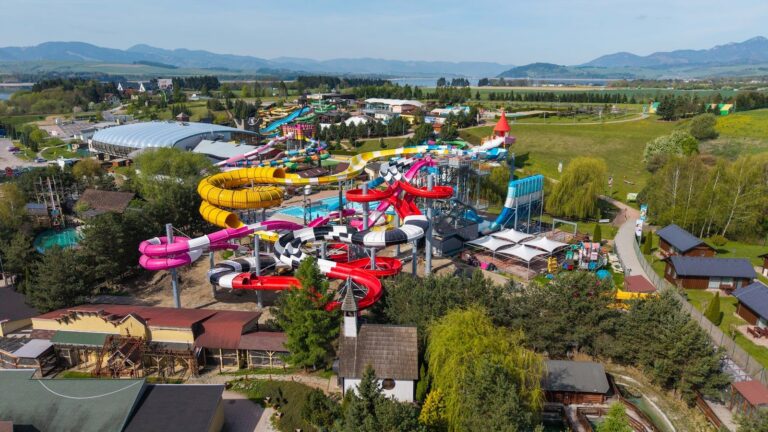
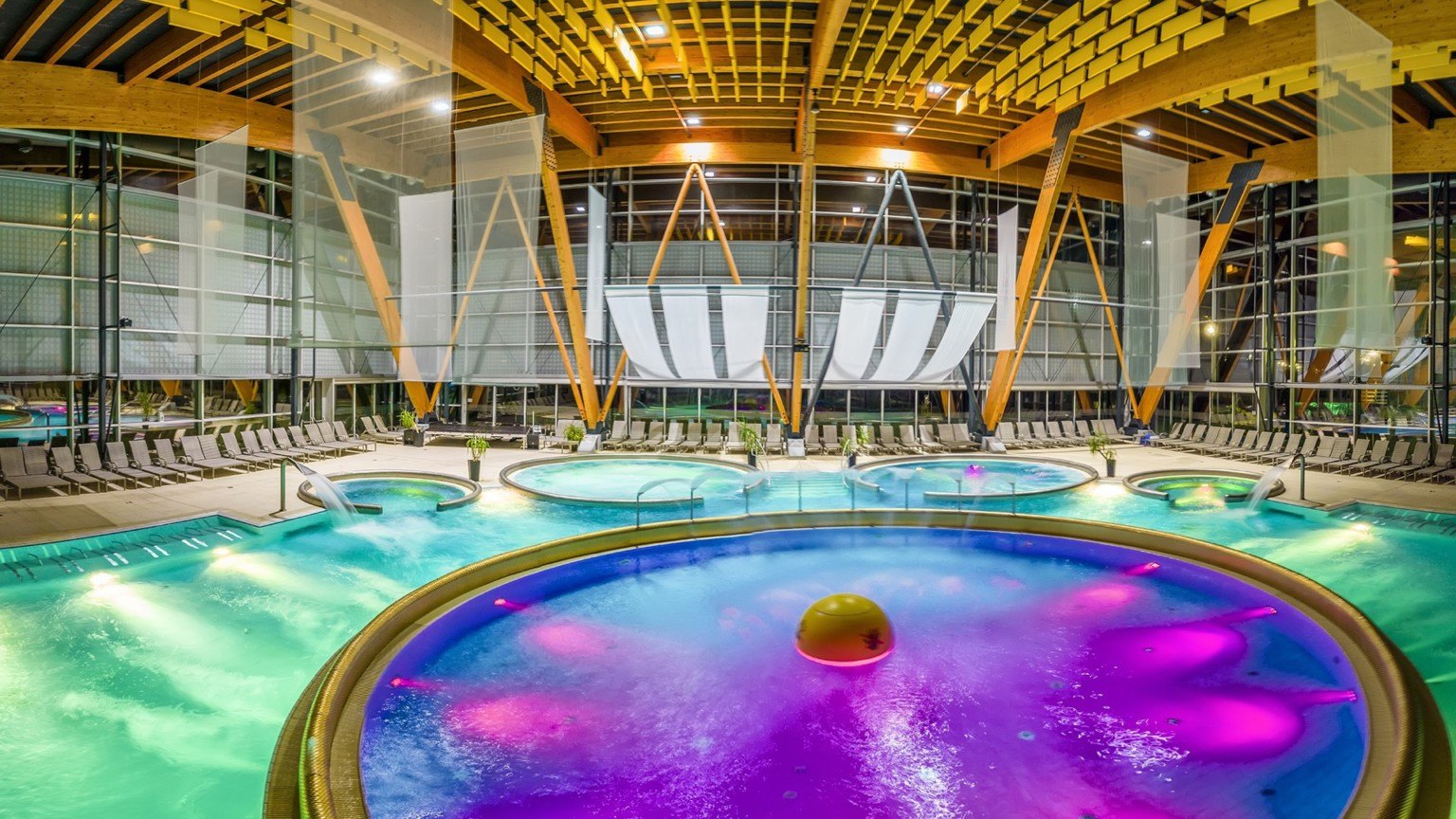
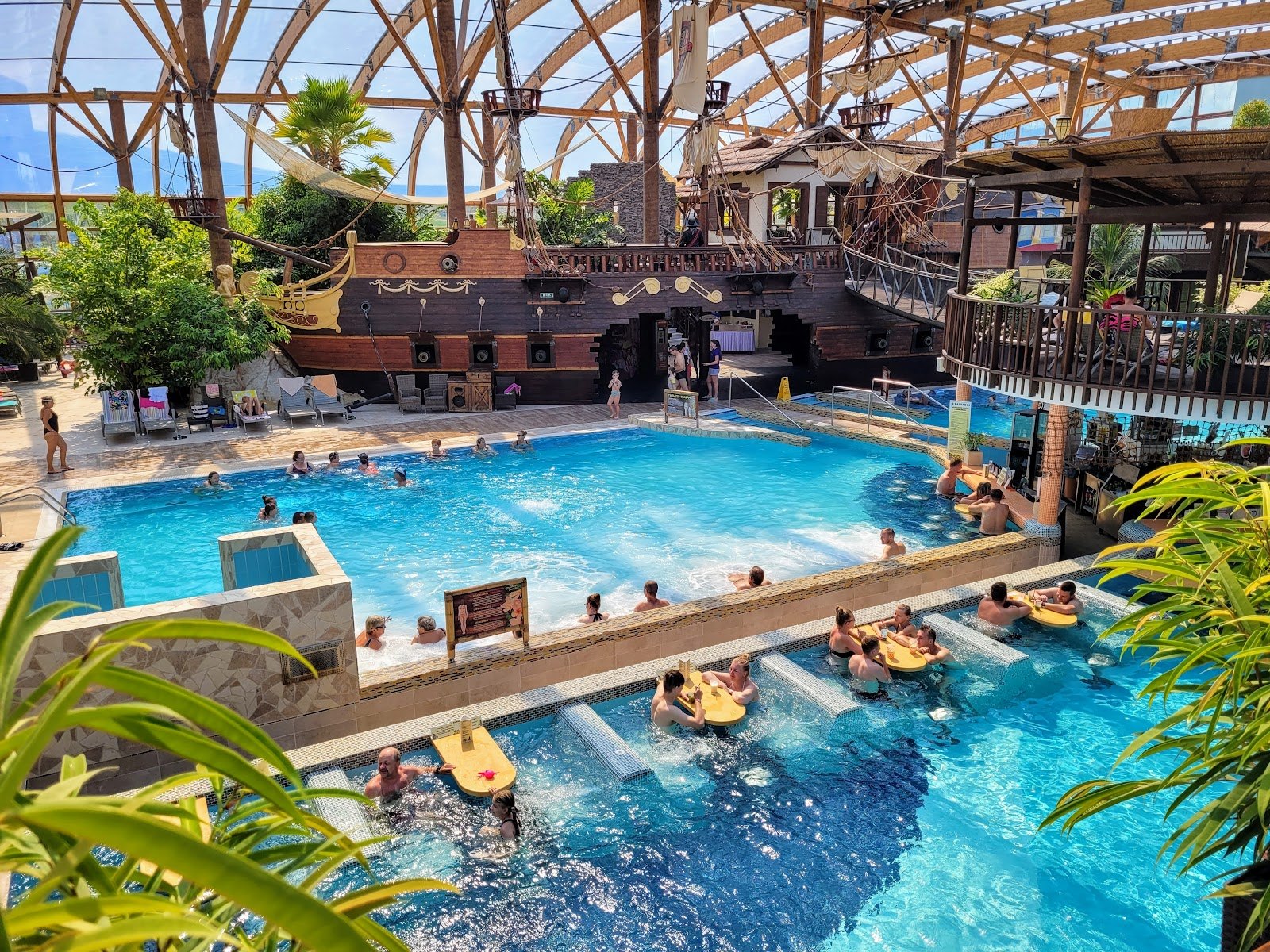
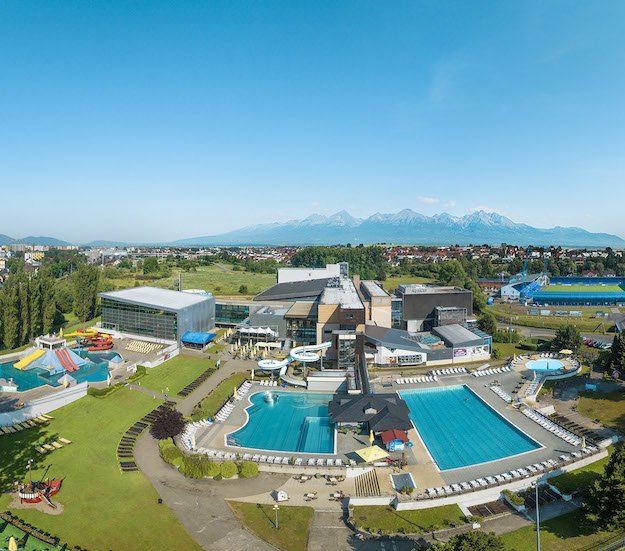
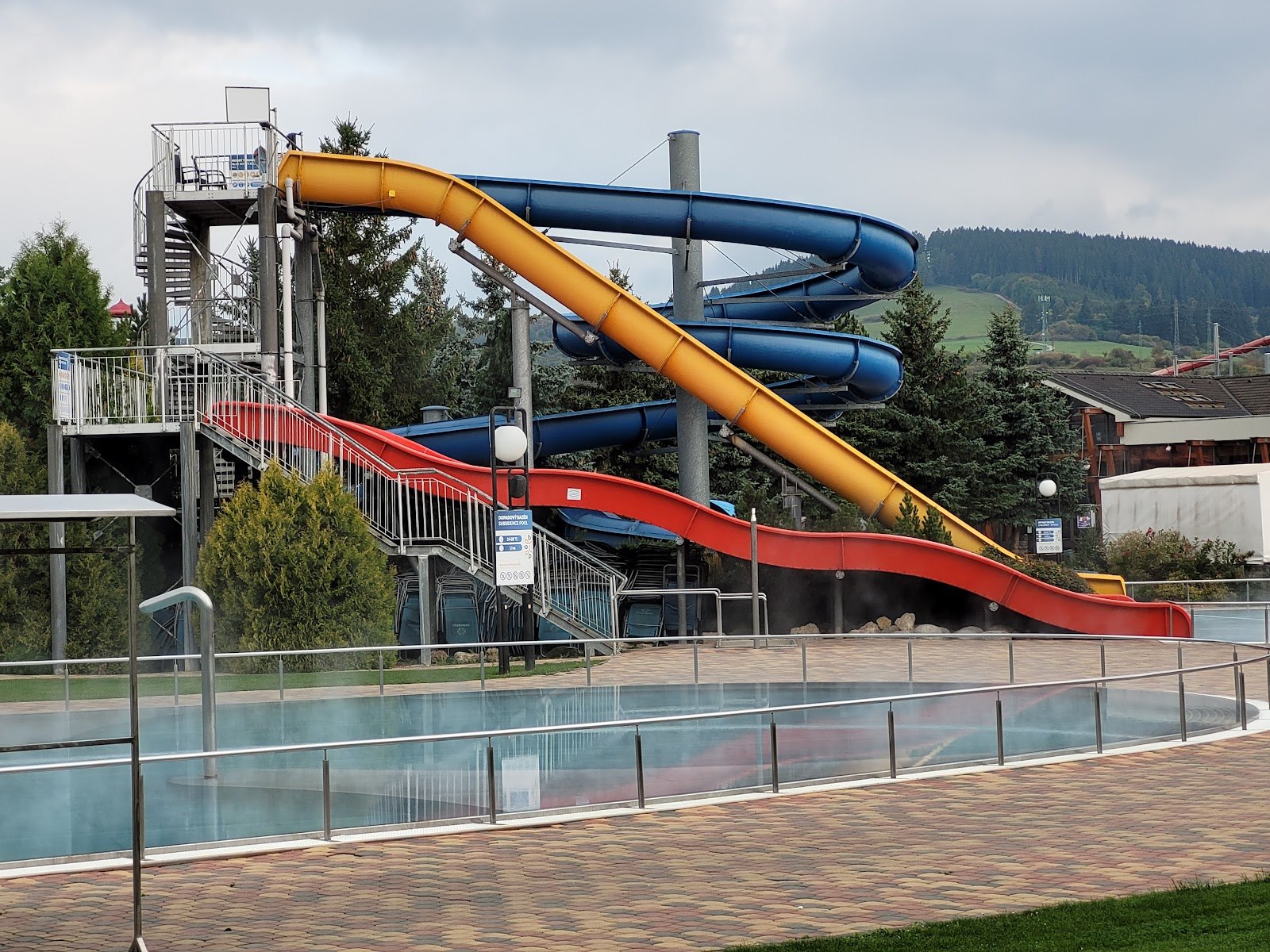
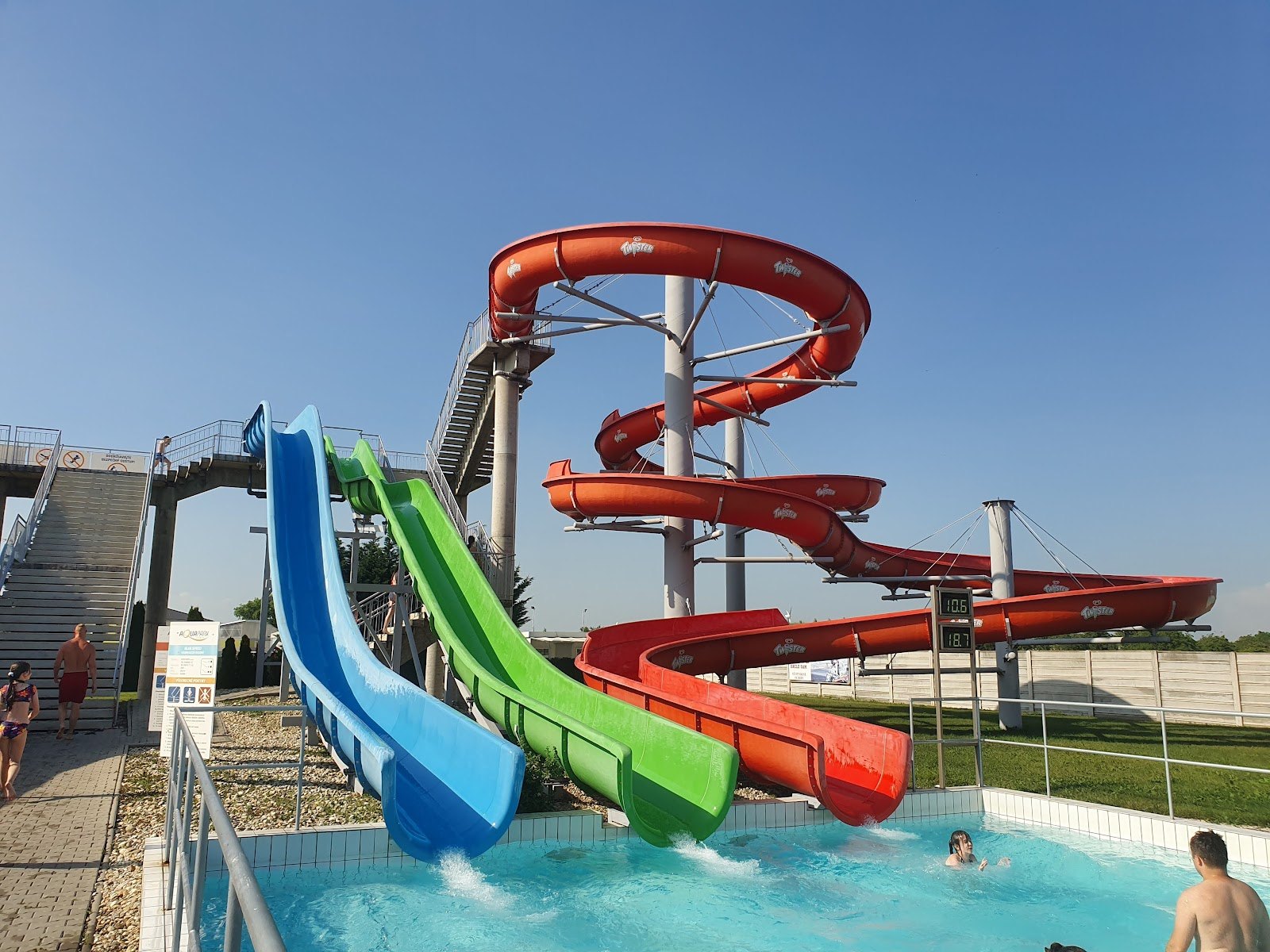
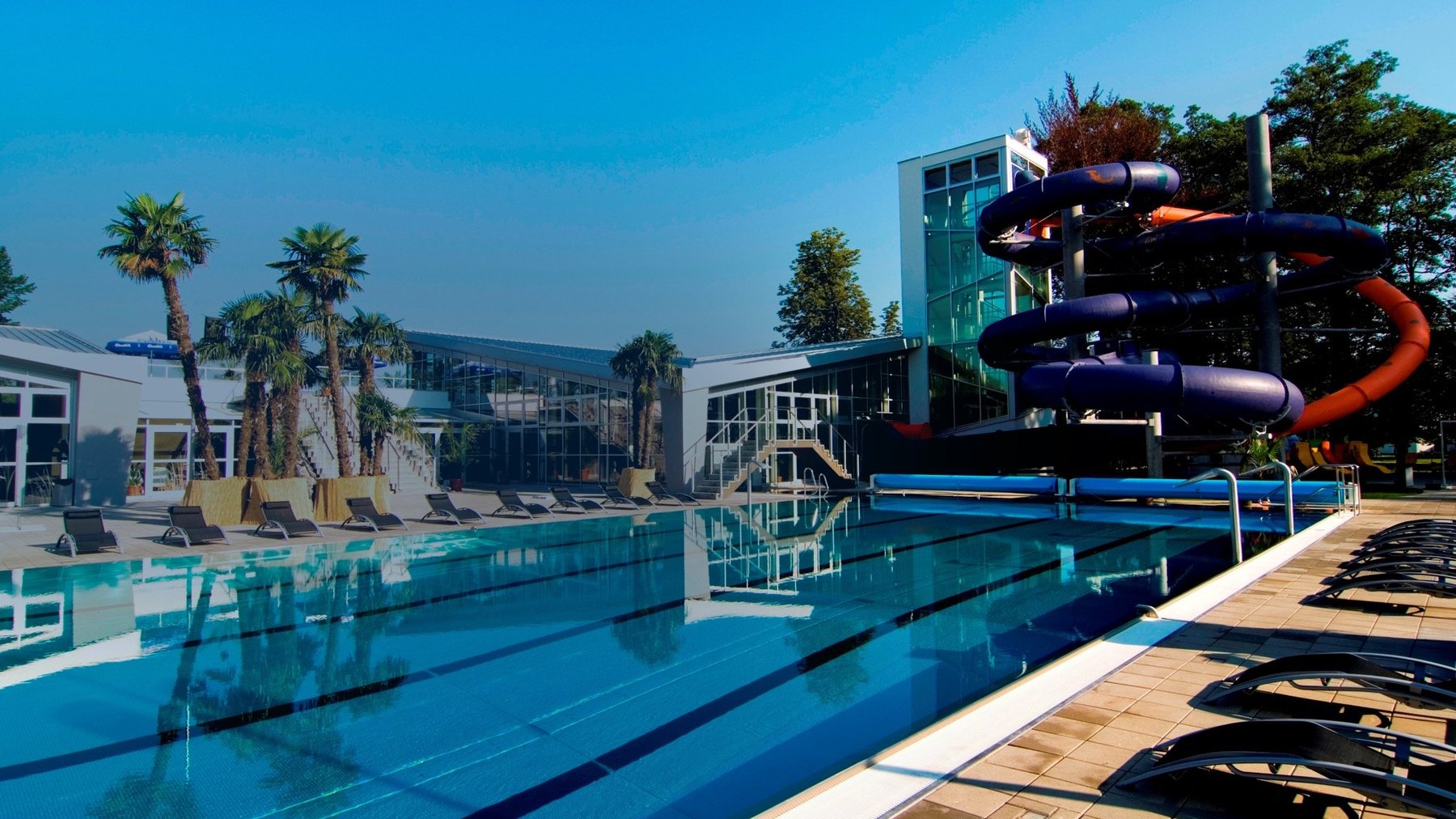

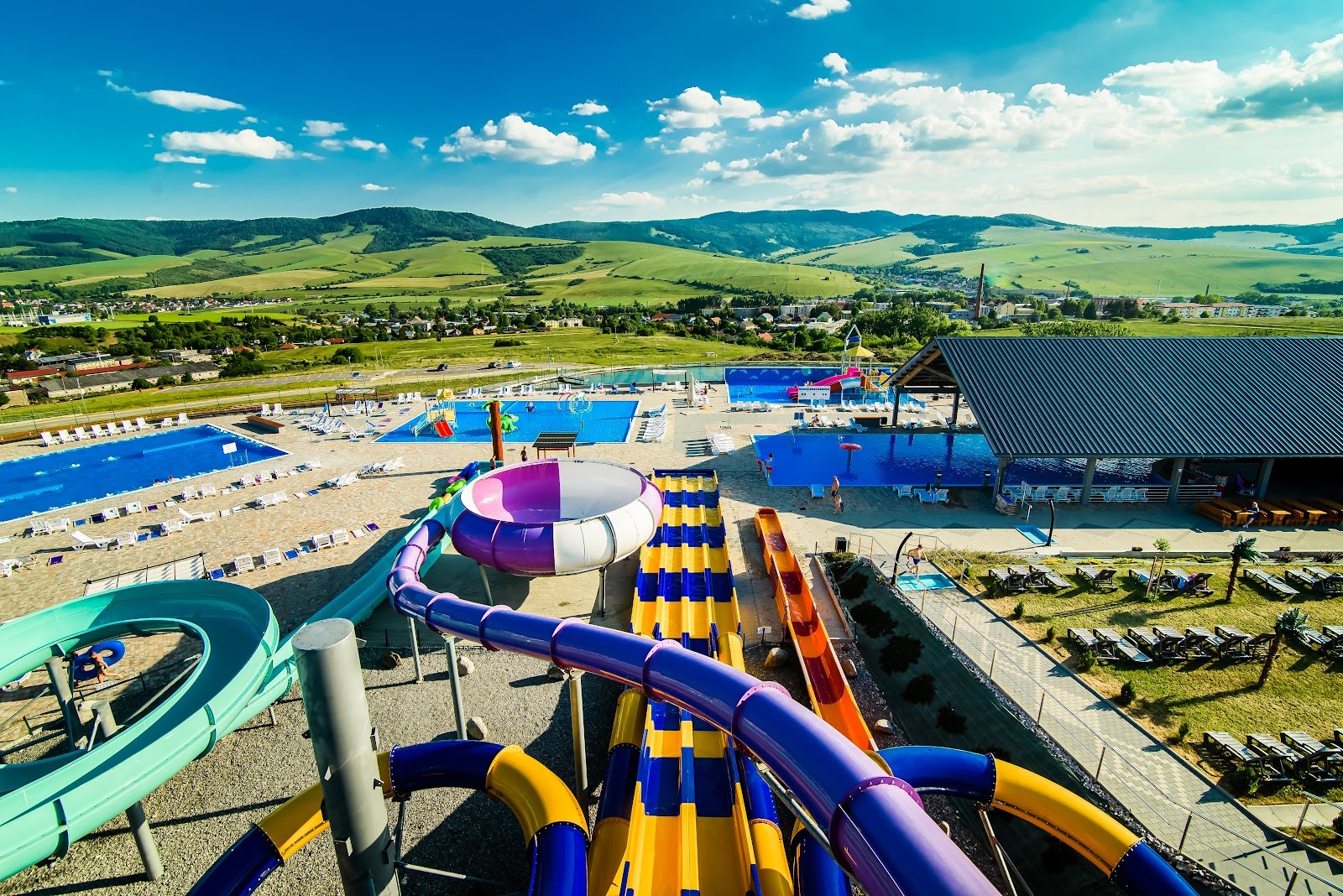
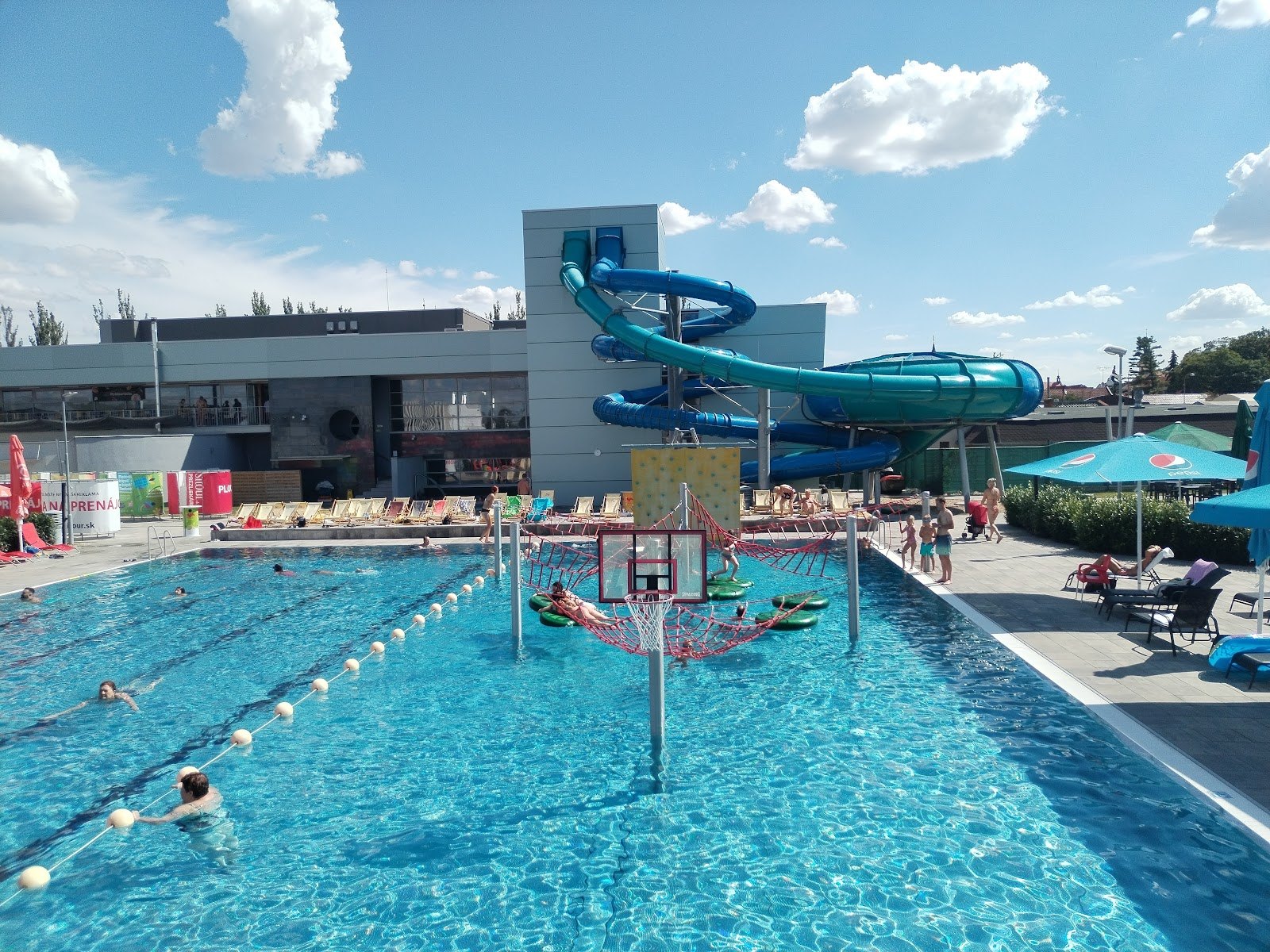
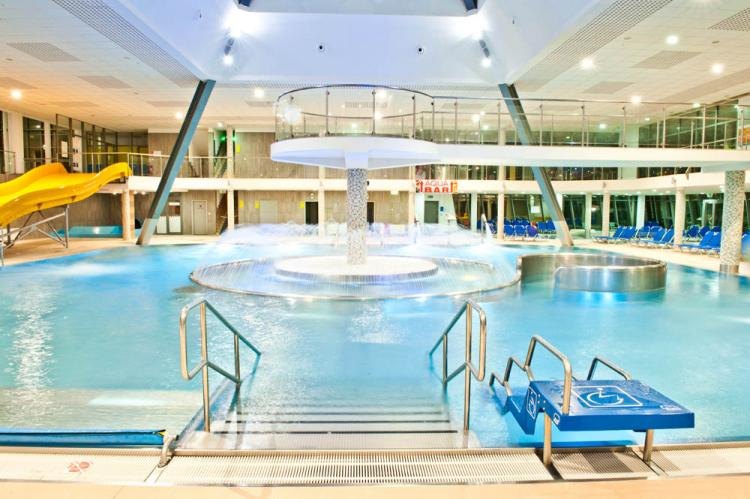
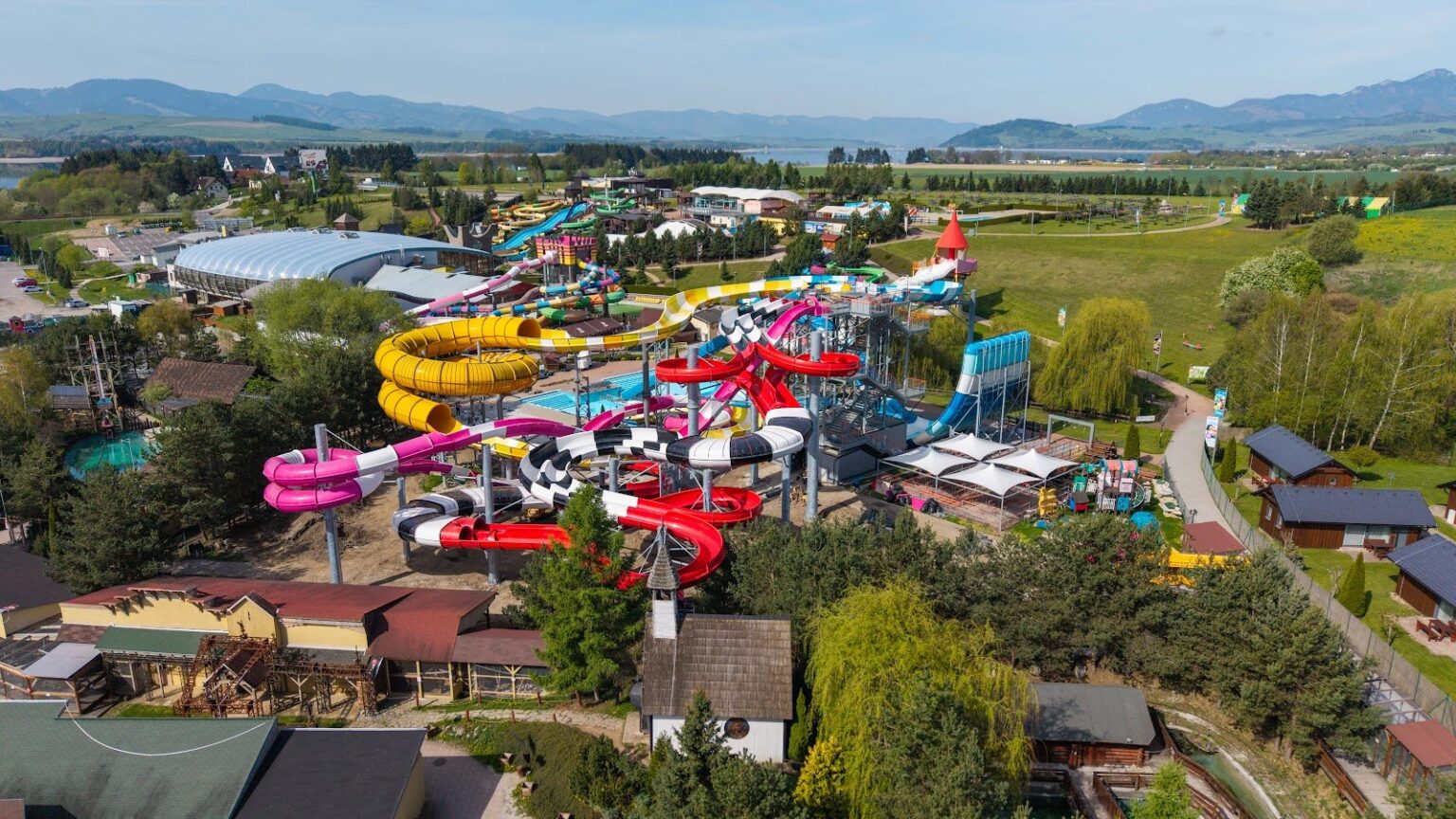 🚗 Car rental on the road
Verified rental cars in Slovakia
🚗 Car rental on the road
Verified rental cars in Slovakia