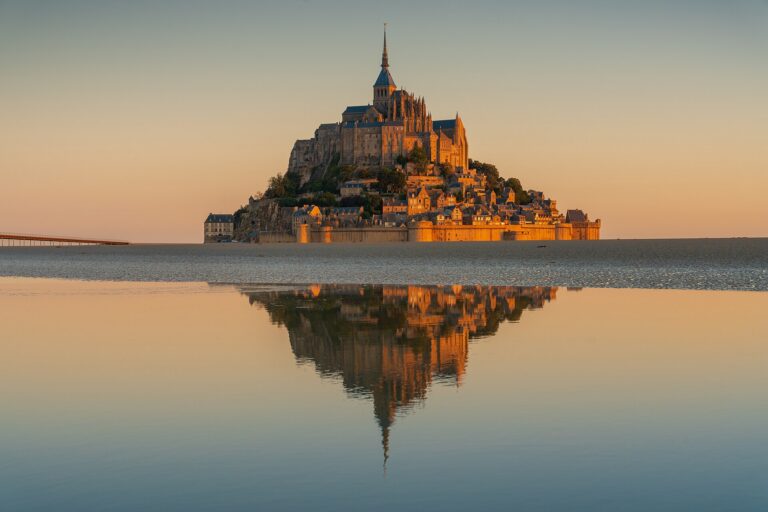
Normandy, France will not leave you indifferent. Don’t expect the carefree sunbathing under a parasol you’d find somewhere on the Riviera — people come here for raw beauty and history that literally redrew the map of the world. The air smells of salt, seaweed and fermenting apple cider from the local orchards. In the morning you’ll be woken by the cry of gulls, and at night you’ll fall asleep with the feeling that you’ve experienced something incredibly powerful and real. The Calvados coast, with its long sandy beaches and limestone cliffs, is today a vast memorial landscape that deserves your time and respect.
If you’re thinking of heading here, this article gives you 12 tips on what to see and do along the D-Day landing beaches. I’ll take you from the bloody Omaha Beach, past the American cemetery, all the way to the fascinating artificial harbour at Arromanches. I’ll advise you on where to base yourself strategically, how to get around between the different sectors, and how much the whole trip will cost you in 2026.
TL;DR
- Base yourself in Bayeux: The best place to stay is the historic town of Bayeux. It has a fantastic location, escaped the bombing and offers excellent restaurants.
- A car is a must: Public transport along the beaches is very poor. To move around freely, definitely rent a car, or join an organised tour.
- Omaha and the American cemetery: This is the absolute essential you mustn’t miss. The solemn atmosphere of nearly ten thousand white crosses will stay etched in your memory.
- 2026 anniversary: The 82nd anniversary of the landings is being prepared. Between 5 and 7 June 2026, expect extreme crowds, road closures and fully booked hotels.
- Divided into sectors: The beaches are split into American (Omaha, Utah), British (Gold, Sword) and Canadian (Juno). Each has its own dedicated museums.
- The Bayeux Tapestry is gone: If you’re visiting in 2026, you won’t see the famous tapestry. The museum is being renovated and the work is moving to London from September 2026.
- Food and drink: Taste the local apple cider, the ripened cheeses headed by Camembert, and explore the traditional Norman bakeries.
The full destination guide: Normandy — guide and what to see
When to visit Normandy and how to plan your time
The weather in Normandy, France is famously unpredictable, and it’s no coincidence that people say you can experience all four seasons in a single day. The ideal time to visit is late spring and early autumn — specifically May, June or September. Temperatures hover around a pleasant 18 to 22 degrees, the days are long and there are slightly fewer tourists than during the summer holidays. Even in summer, though, definitely pack a windbreaker and a waterproof jacket, because the wind off the ocean can be bitterly cold and relentless.
The year 2026 is exceptionally important for the whole region, because the 82nd anniversary of D-Day is approaching. While it isn’t a perfectly round milestone, the celebrations and memorial events here are huge every single year. The D-Day Festival will run from 30 May to 14 June 2026. The main international ceremony on 6 June will take place in Langrune-sur-Mer, in the British Sword sector. The commemoration at the American cemetery will be held precisely at 11:00 on 6 June, and the elite units will be honoured at Pointe du Hoc a day earlier, at 14:00.
However, if you have no desire to sit in endless traffic jams, avoid the dates between 5 and 7 June 2026. The entire coastline will be extremely crowded, accommodation is booked up a year in advance, and you’ll have to reckon with massive road closures due to the presence of politicians from around the world. If you’d rather explore the history in peace, come a week earlier, or instead wait until mid-June.
Set aside at least two to three full days for visiting the beaches and museums themselves. It’s simply not humanly possible to see all the sectors in one afternoon. The distances between Utah beach in the west and Sword in the east are roughly 80 kilometres. You really need to get around by car here, because the local NOMAD network buses run very rarely and don’t connect well with each other. An alternative for the more sporty traveller is to hire a bike and use the excellent coastal Vélomaritime cycle route.
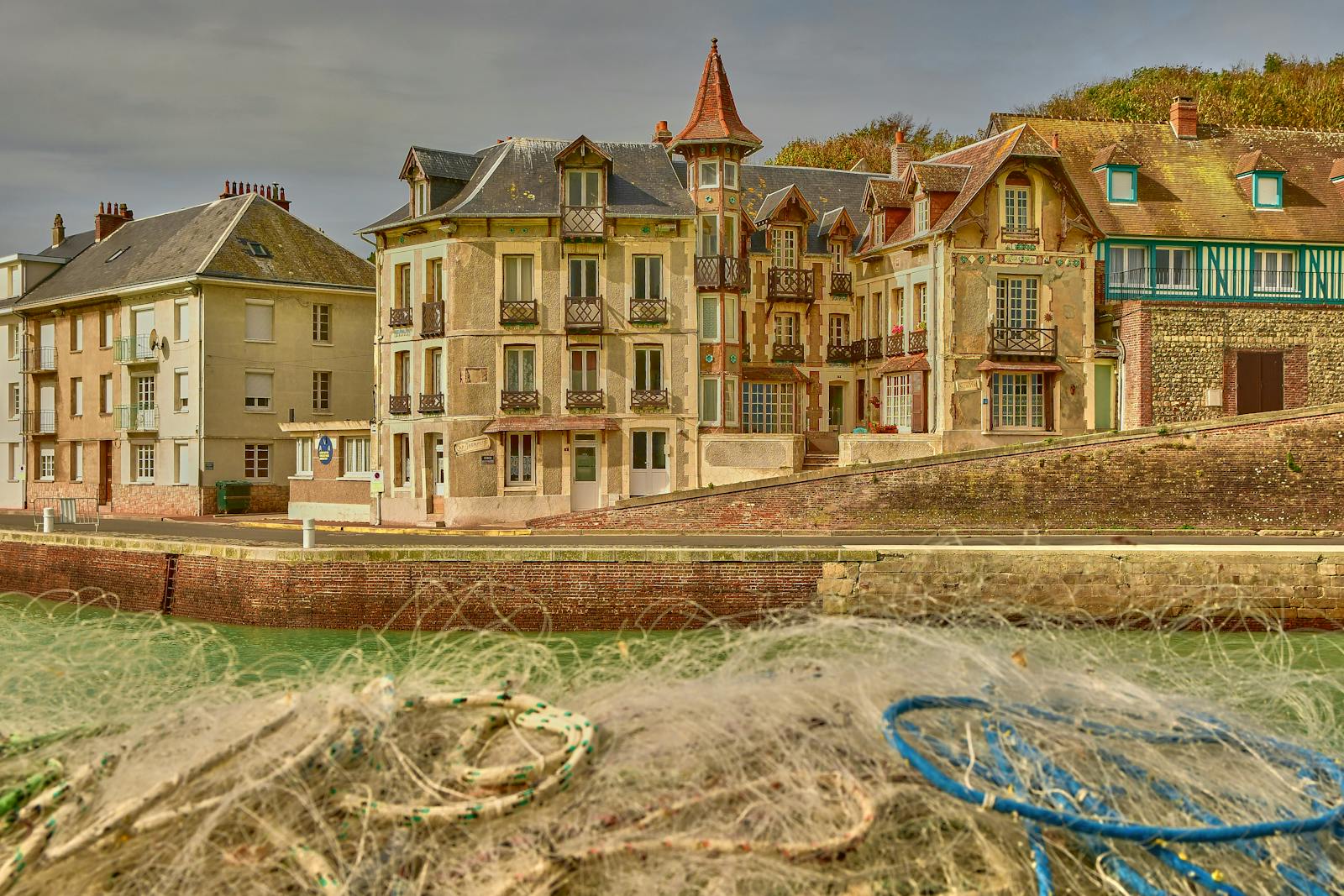
Where to stay in Normandy when visiting the beaches
💡 Accommodation and experiences tip: We like to look for accommodation on Booking.com, which usually has the best cancellation terms. It then pays to compare and book tickets, tours and activities through GetYourGuide.
As I touched on in the introduction, Bayeux makes an absolutely perfect base for exploring all the landing sectors. It was the first major town liberated by the Allies in 1944 and, miraculously, it escaped the devastating bombing. It has remained beautifully preserved, with cobbled lanes and a stunning Gothic cathedral. In the evening it comes alive, and logistically you’re right in the middle of everything, so you’re relatively close to it all.
Accommodation in Normandy isn’t the cheapest, especially if you’re after something lovely right in the historic centre. Prices per night for two in 2026 average around 120 to 180 euros in the mid-range. Definitely don’t leave your booking until the last minute — the best places on platforms like Booking.com vanish as early as the winter months.
If you’re after specific tips, an excellent choice is the Hotel Churchill, which sits right in the centre of Bayeux and offers stylish rooms with a historic atmosphere. For those who prefer more space and quiet, I’d recommend renting one of the smaller apartments on the edge of town, where it’s easier to park your car. If you like a touch of luxury, take a look at the boutique Villa Lara, which offers first-class service with views of the cathedral.
If you want to escape the bustle of town and the rural atmosphere appeals to you more, look for accommodation in traditional Norman farmhouses (the so-called chambres d’hôtes). You’ll often find these family-run guesthouses scattered around the villages of Colleville-sur-Mer or Arromanches. In the morning a fantastic homemade breakfast awaits, and in the evening you can taste the local protected-origin cheeses. Definitely try the distinctive square Pont-l’Évêque or the heart-shaped Neufchâtel.
When it comes to eating, though, watch out carefully for restaurant opening hours. In France, lunch is served strictly between 12:00 and 14:00. If you turn up at a bistro at three in the afternoon, hungry after touring the bunkers, the kitchen will already be closed, and the best you can hope for is a cold cheese baguette from the local bakery.
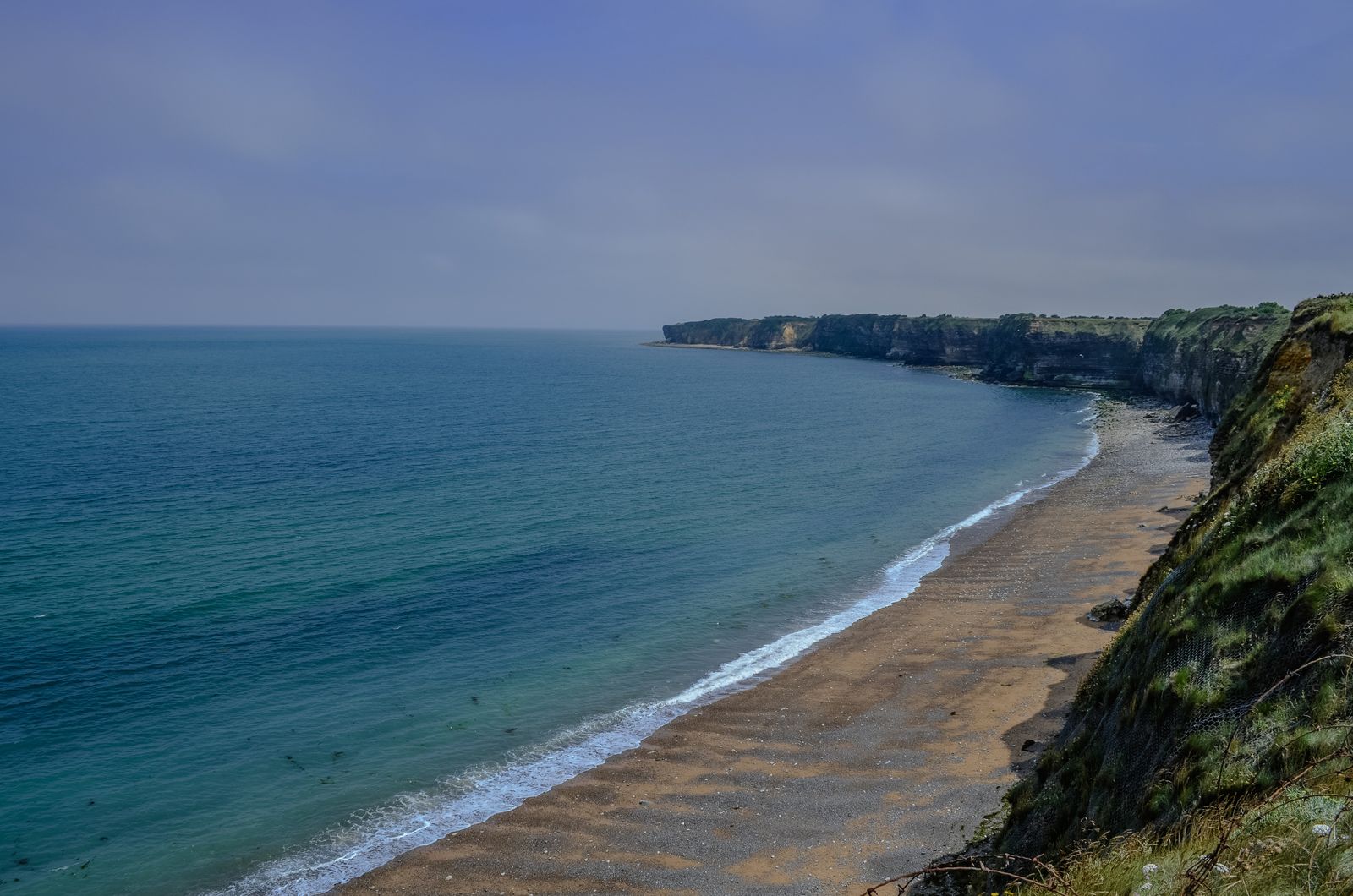
12 tips on what to see and do along the D-Day landing beaches
The coastline is divided into five main sectors, each bearing its own historic code name. I’d recommend working through them systematically, either from west to east or vice versa, so you don’t waste time doubling back. Here are 12 places that definitely shouldn’t be missing from your itinerary.
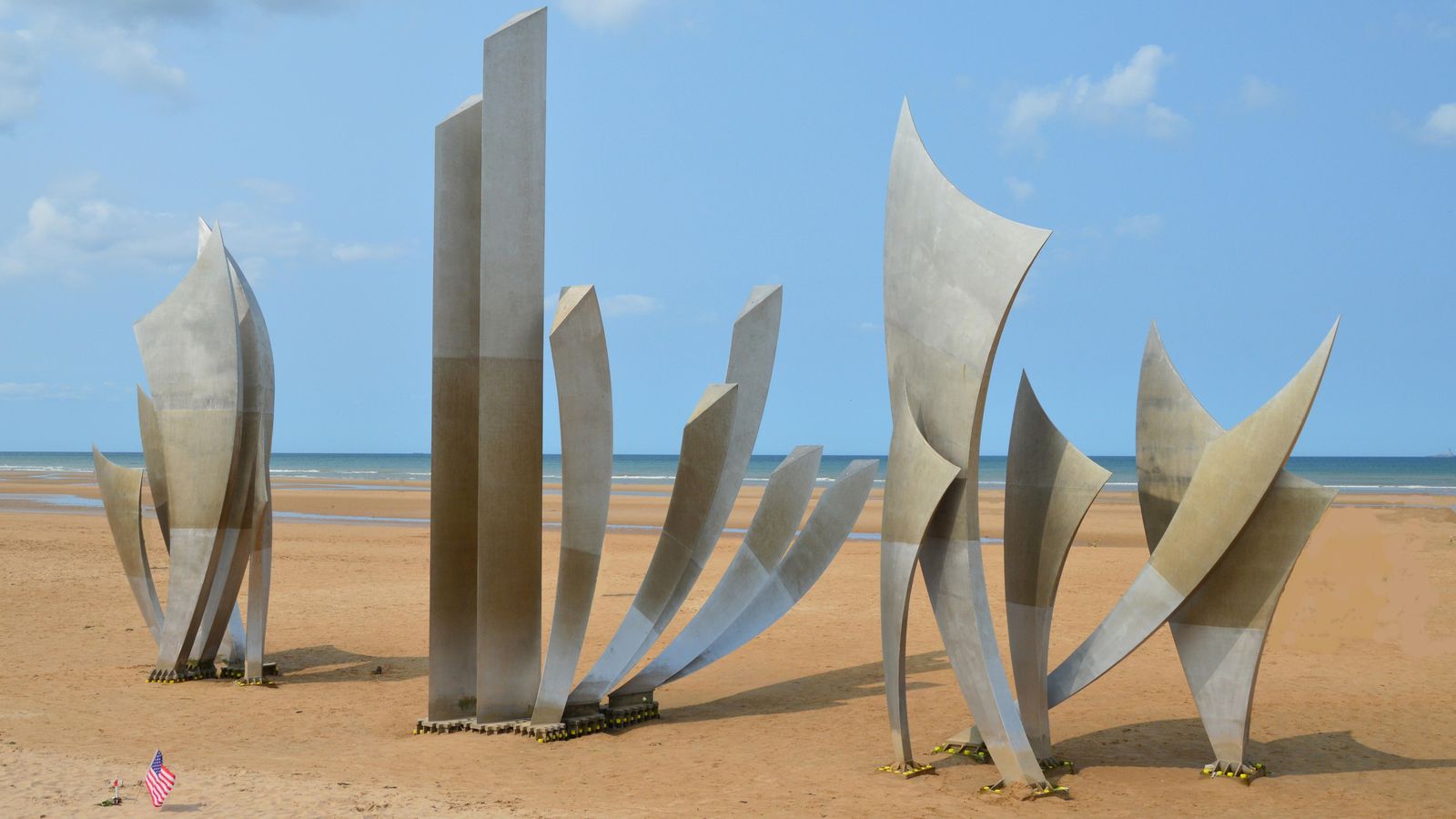
1. Omaha Beach and the Les Braves memorial
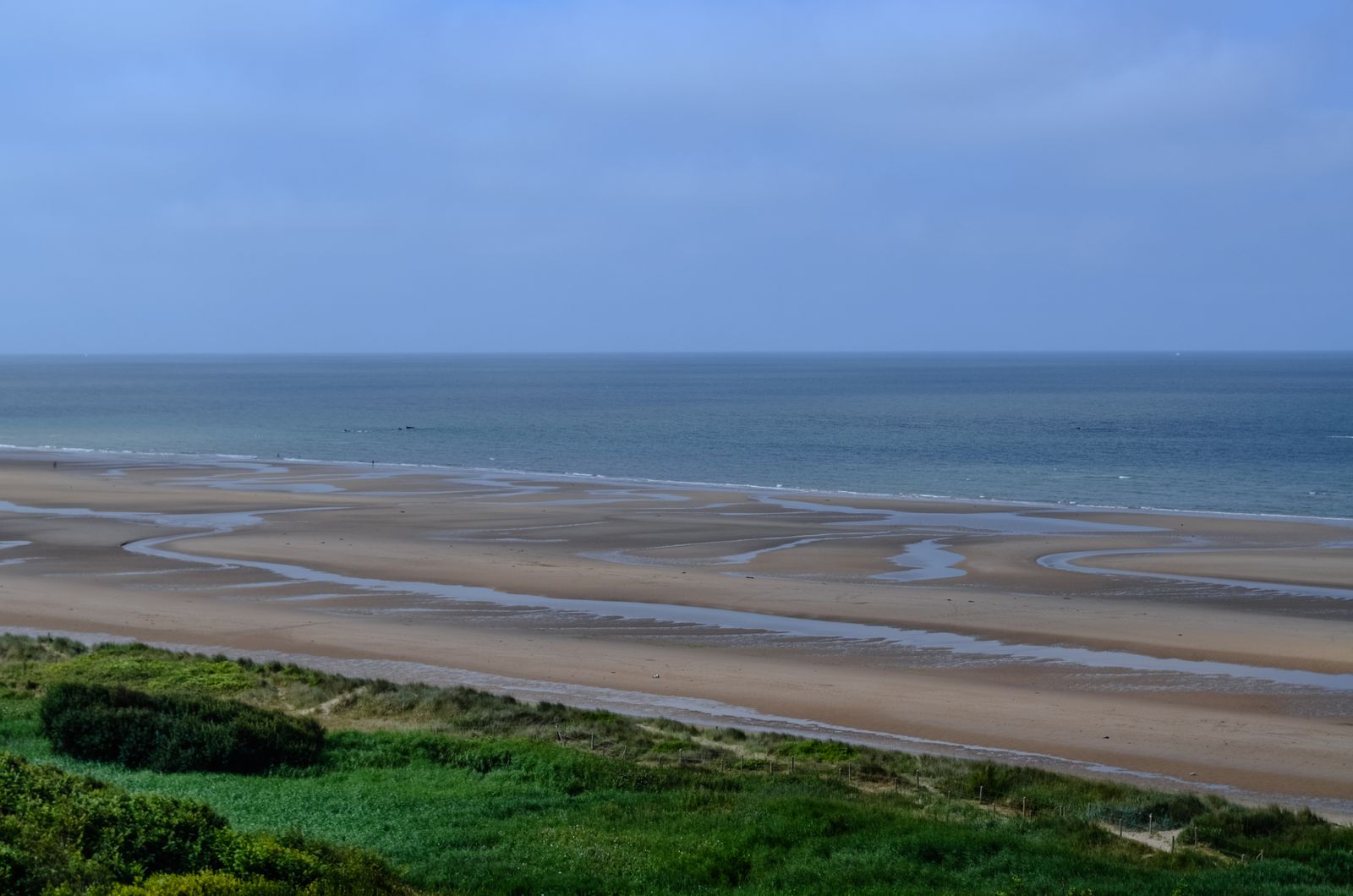
For American history, Omaha Beach is a byword for immense heroism and unimaginable losses. Today, at first glance, it’s a calm, very wide sandy beach where families stroll and fly kites in summer. But when you lift your eyes to the cliffs rising steeply above it, you immediately grasp the deadly trap the landing soldiers found themselves in. The German defence had a perfect field of fire over every metre of sand, and the soldiers had absolutely no cover.
The best-known monument right on the beach is the Les Braves (The Brave) sculpture, embedded in the sand in the village of Saint-Laurent-sur-Mer. It’s a beautiful modern memorial of stainless steel, whose sharp spikes symbolise the wings of hope, freedom and brotherhood. You can park comfortably right by the promenade, where you’ll find several smaller memorials and detailed information boards with maps of the original defensive positions.
💡 Tip: Come here at strong low tide. Only when the sea retreats hundreds of metres into the distance do you realise the enormous, completely exposed distance the soldiers had to cover in heavy gear. Wading through icy water and then running across the endless wet sand towards the cliffs was a task that seemed all but impossible.
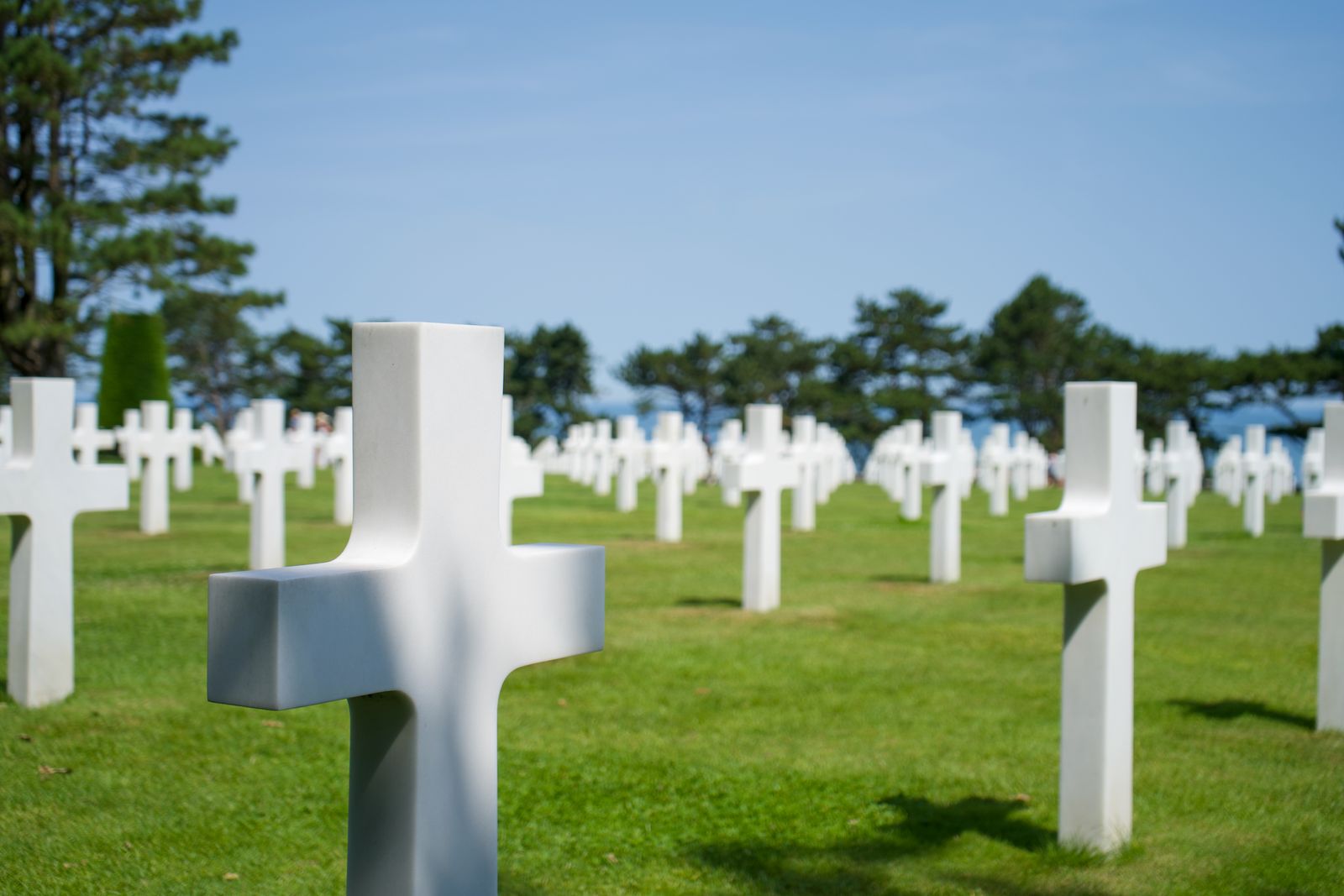
2. The American cemetery at Colleville-sur-Mer
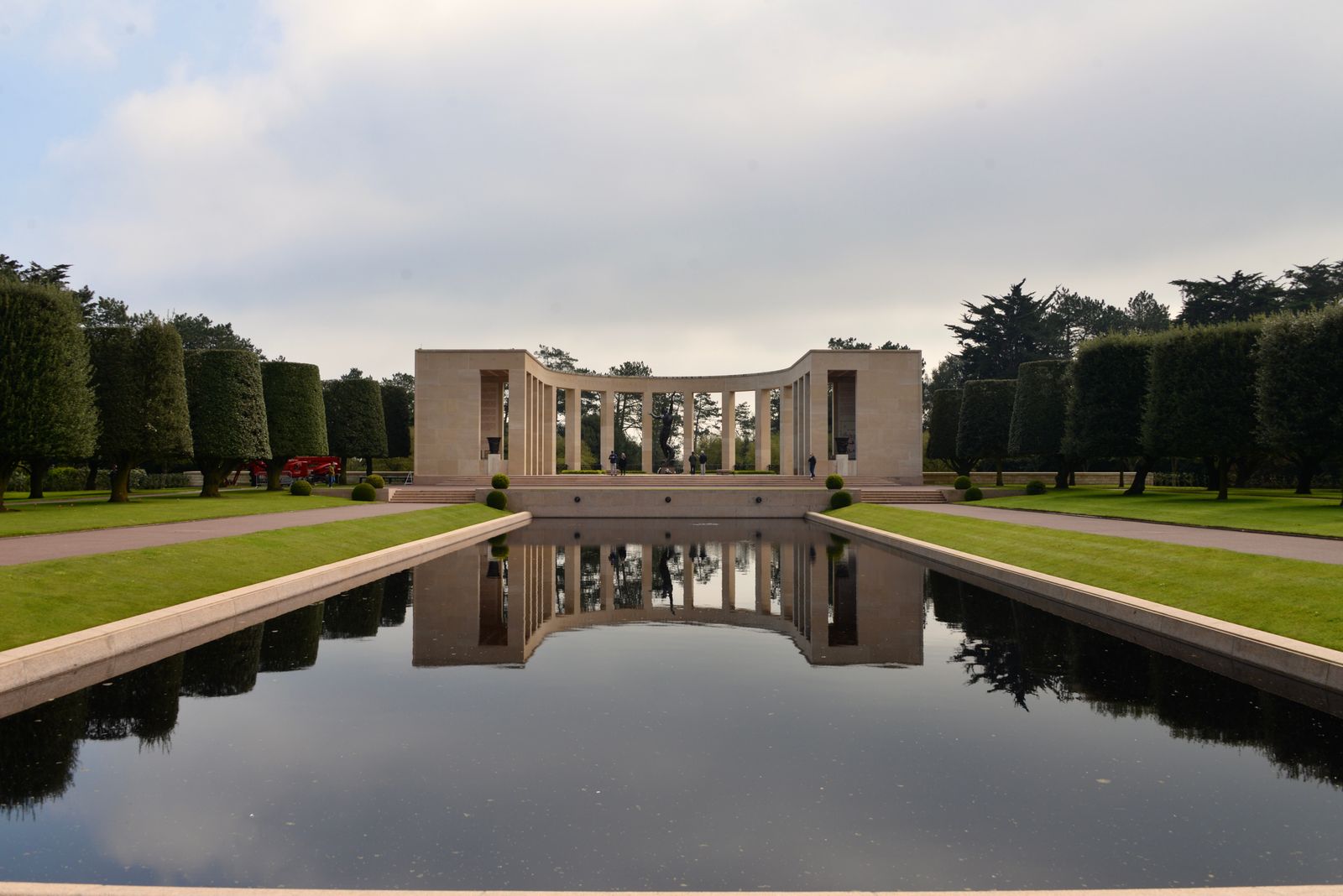
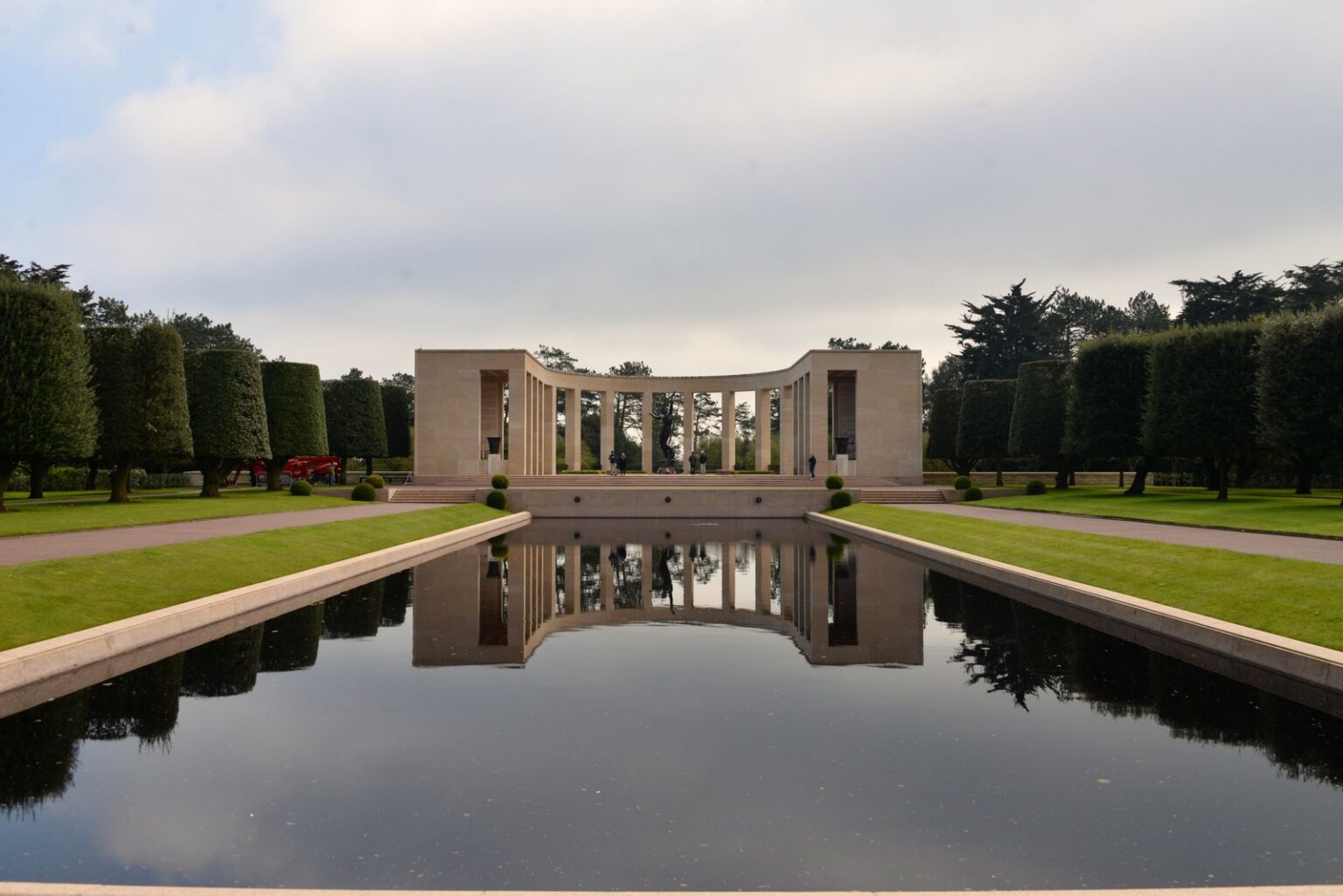
Directly above the eastern part of Omaha Beach lies a place that is guaranteed to strike you deep in the heart. The Normandy American Cemetery and Memorial is the resting place of 9,387 fallen American soldiers. On the immaculately trimmed green lawn, which contrasts beautifully with the blue horizon of the ocean, brilliant white marble crosses and Stars of David stand in perfect rows. It’s an incredibly quiet and powerful place that compels reflection.
All the graves are symbolically oriented towards the west — that is, home to the United States. The cemetery is technically American territory administered by the US government, and strict security measures apply here. Entry is completely free, but you have to pass through a metal detector, much like at an airport. Set aside at least two hours for visiting the whole site. If you head here in 2026, the main commemoration will take place precisely at 11:00 on 6 June.
The site also includes a beautiful modern visitor centre, which I’d recommend walking through before you step out among the crosses. The exhibition tells the personal stories of several individual soldiers from different corners of America, whose graves you can then find outside using a map. The experience of walking among the crosses to the gentle sound of the surf below the cliff is truly unforgettable.
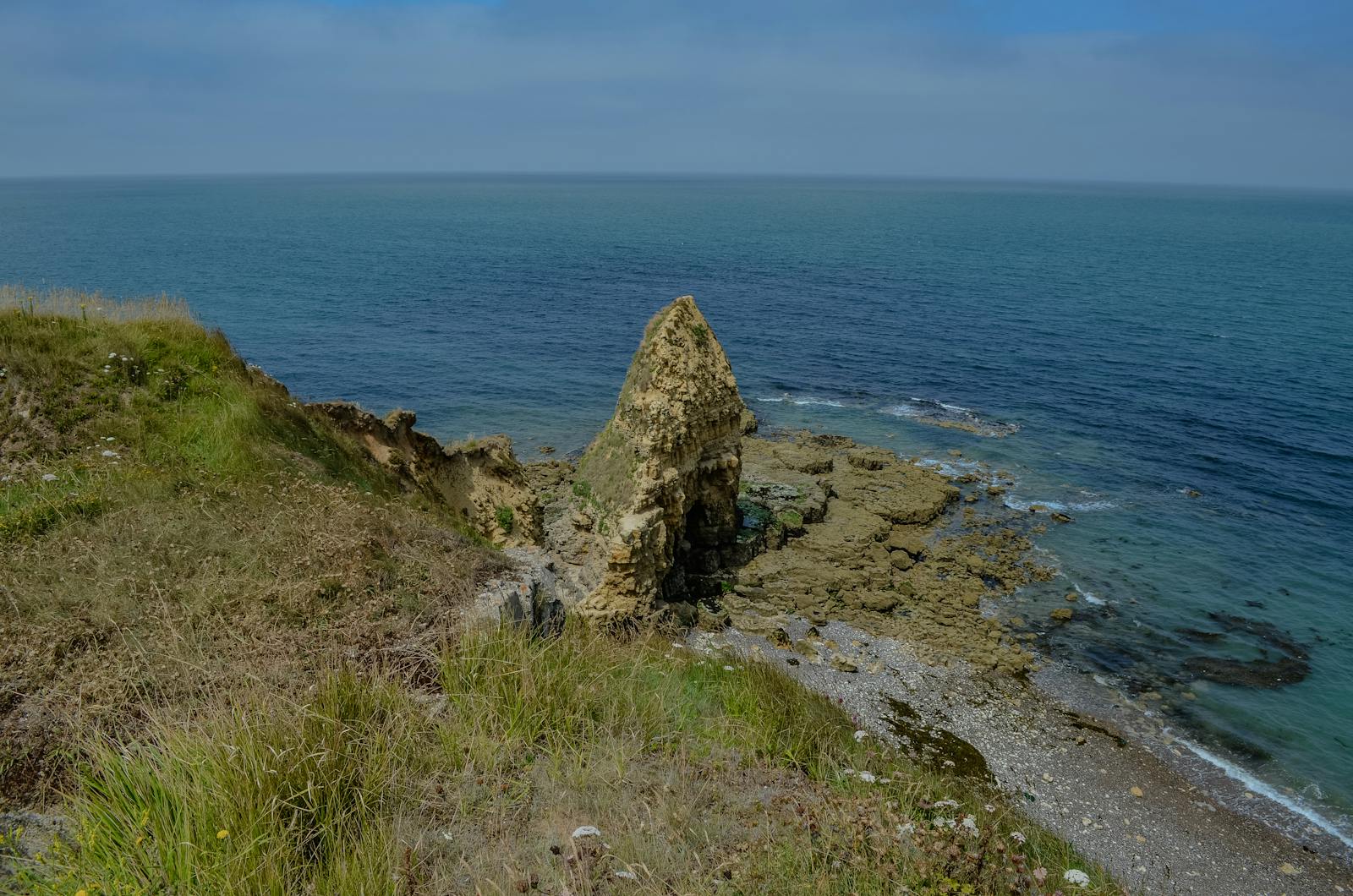
3. Pointe du Hoc and the lunar landscape of craters
A little further west, precisely between Omaha and Utah beaches, lies the mighty limestone headland of Pointe du Hoc. Here you’ll see ground that to this day is literally torn apart by huge craters from the massive Allied naval bombardment. The task of the elite American Rangers was to scale these thirty-metre, almost vertical cliffs using ropes and to knock out the heavy German guns that threatened both neighbouring landing beaches.
Today this dramatic site is fantastically preserved and entry is free. You can safely walk among the deep craters and explore the broken concrete bunkers, which lie exactly as they were left in June 1944. From the top of the cliff there’s also an absolutely phenomenal view across the entire English Channel. In 2026 a special ceremony dedicated to the Rangers will be held here, on 5 June at 14:00.
A visit to Pointe du Hoc takes around an hour and a half. Paved paths guide you through the whole complex right up to the main granite memorial, shaped like a dagger, at the very tip of the headland. But take great care and stick only to the marked trails. The edges of the chalk cliffs can be very treacherous after rain — they often crumble, and there are no protective railings here.
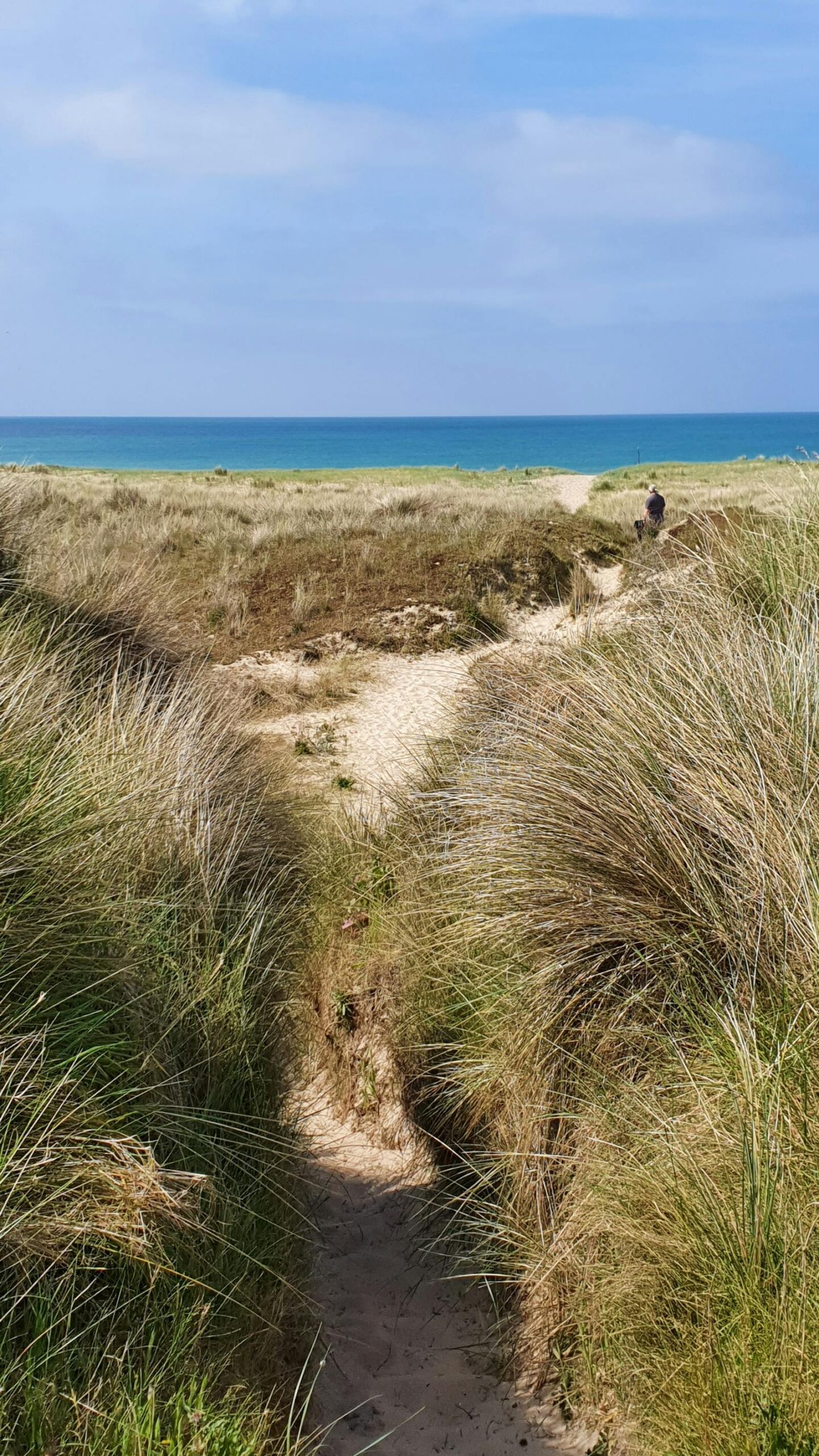
4. Utah Beach and the endless sand dunes
The Utah sector was assigned to the US Army, and the landing here took place with relatively the lightest losses of the entire Operation Overlord. The beach itself is endlessly long, lined with sand dunes and wild grass. The atmosphere here is far calmer and more deserted than on Omaha, which gives the place a peculiar, slightly melancholy feel. You can stroll here in peace, listening only to the murmur of wind and waves.
Right at the entrance to the beach there are several interesting memorials, including an imposing monument dedicated to the US Navy and a realistic statue of an American sailor. You can wander freely over the remains of the original German defensive ramparts and take a close look at several smaller reconstructed bunkers that once guarded the approach from the sea.
💡 Tip: Stop by the memorial to the Danish sailors, which sits just a short way from the main promenade. It’s often forgotten that smaller nations also took part in the operation, providing their ships and crews for risky supply missions. This modest stone is a very moving reminder of their quiet sacrifice.
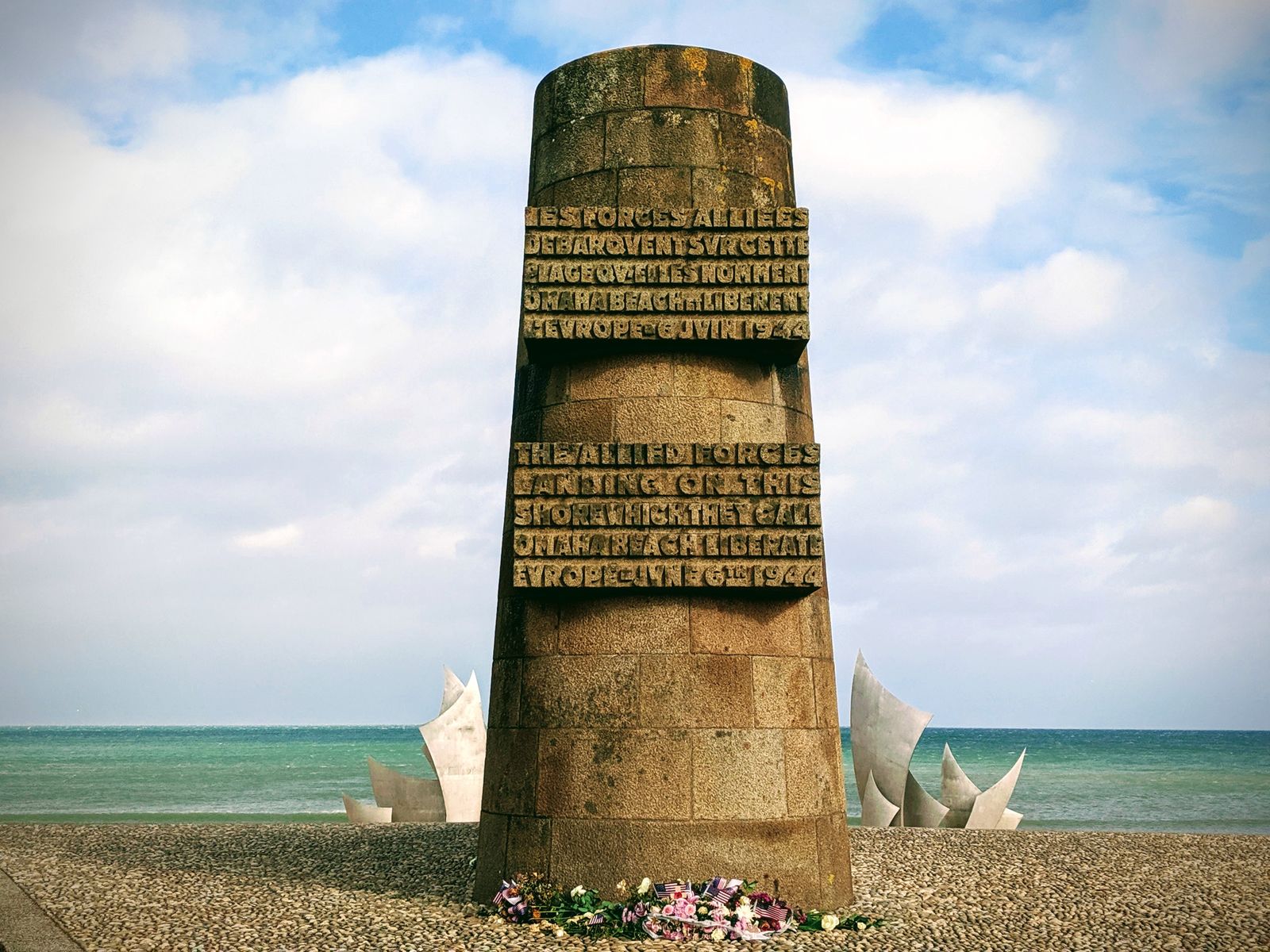
5. Musée du Débarquement Utah Beach
On the very spot where the first American units broke through the defences and got off the beach now stands the outstanding Utah Beach museum. It’s unique above all because it’s literally built into the remains of an original German bunker. The museum recently underwent a huge renovation, which has put it among the very best — not just here, but in all of Normandy.
The biggest draw of the exhibition is the original American B-26 Marauder bomber, displayed in a huge, specially built glass pavilion. It’s one of only six surviving examples of this aircraft in the world. The museum places great emphasis on the visual side and on interactive elements, so the history of preparing the invasion will literally absorb you and refuse to let go.
Admission to the museum in 2026 is around 8 euros for an adult, which is a very friendly price given the enormous quality of the exhibition and the wealth of artefacts on display. You’ll walk chronologically through the whole of D-Day, from the morning landing right up to the successful link-up of the American beach units with the paratroopers who’d dropped inland.
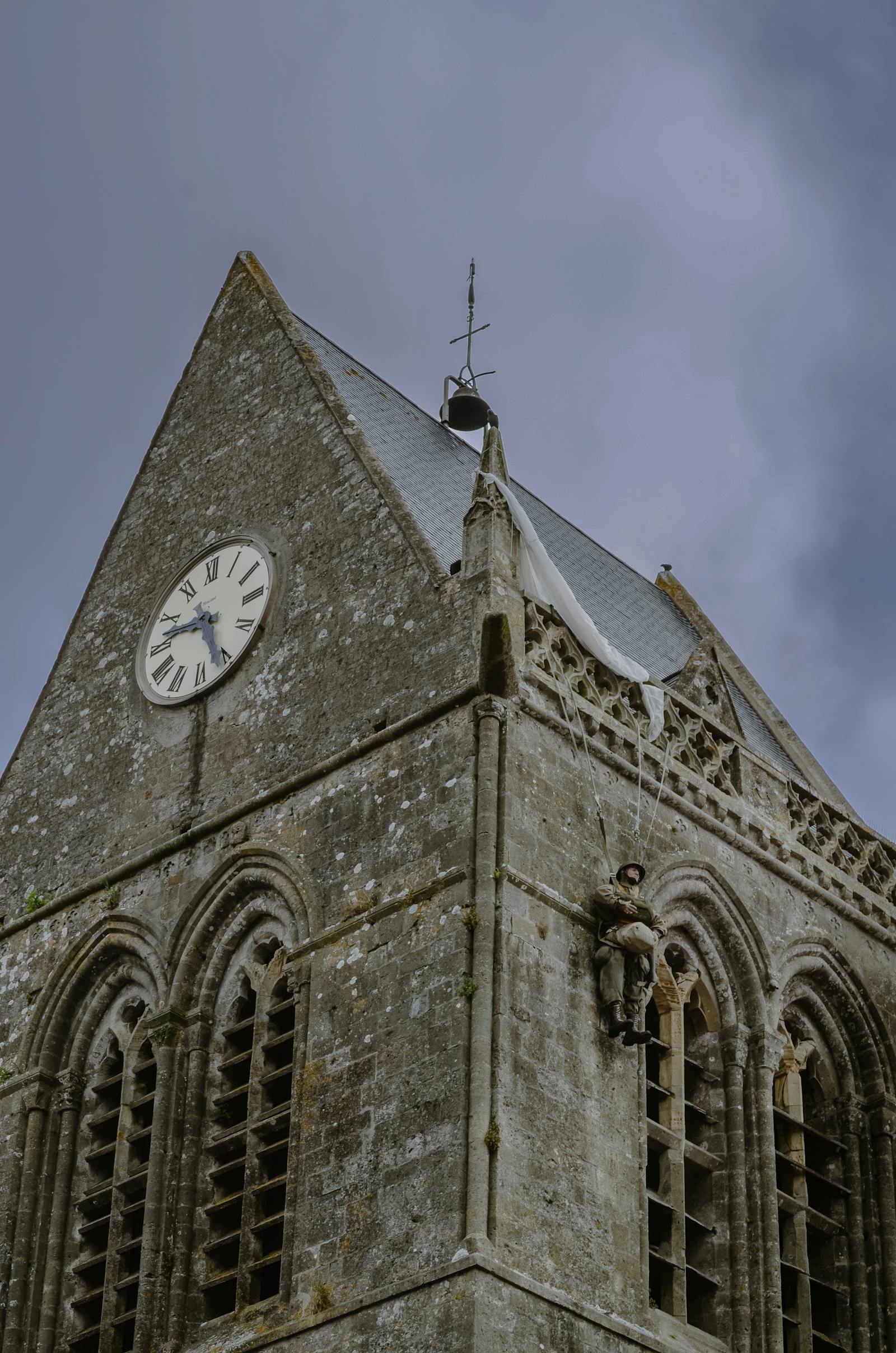
6. Sainte-Mère-Église and the story of the paratrooper
This small and, at first glance, unremarkable town inland, just a few kilometres beyond Utah Beach, played a key role in the very first hours of the invasion. It was one of the first towns liberated by American paratroopers of the famous 82nd Airborne Division. The main square still lives and breathes this history, and on every corner you’ll come across flags, memorial plaques and parachute symbols.
The town was made famous above all by Private John Steele, whose parachute snagged on the tower of the local church. Steele played dead and hung from the tower for several hours while a bloody firefight raged directly below him, before he was finally captured and later managed to escape. To commemorate this event, a figure of a paratrooper complete with a white parachute still hangs from the church tower to this day, photographed by virtually every visitor.
Directly opposite the church, I’d recommend visiting the Airborne Museum, dedicated to the heroism of the American paratroopers. The exhibition is cleverly housed in several parachute-shaped buildings, and among other things you can walk through a genuine C-47 Dakota transport plane. Admission costs around 10 euros, and thanks to the great interactive elements the site will keep even older children entertained for the full visit.
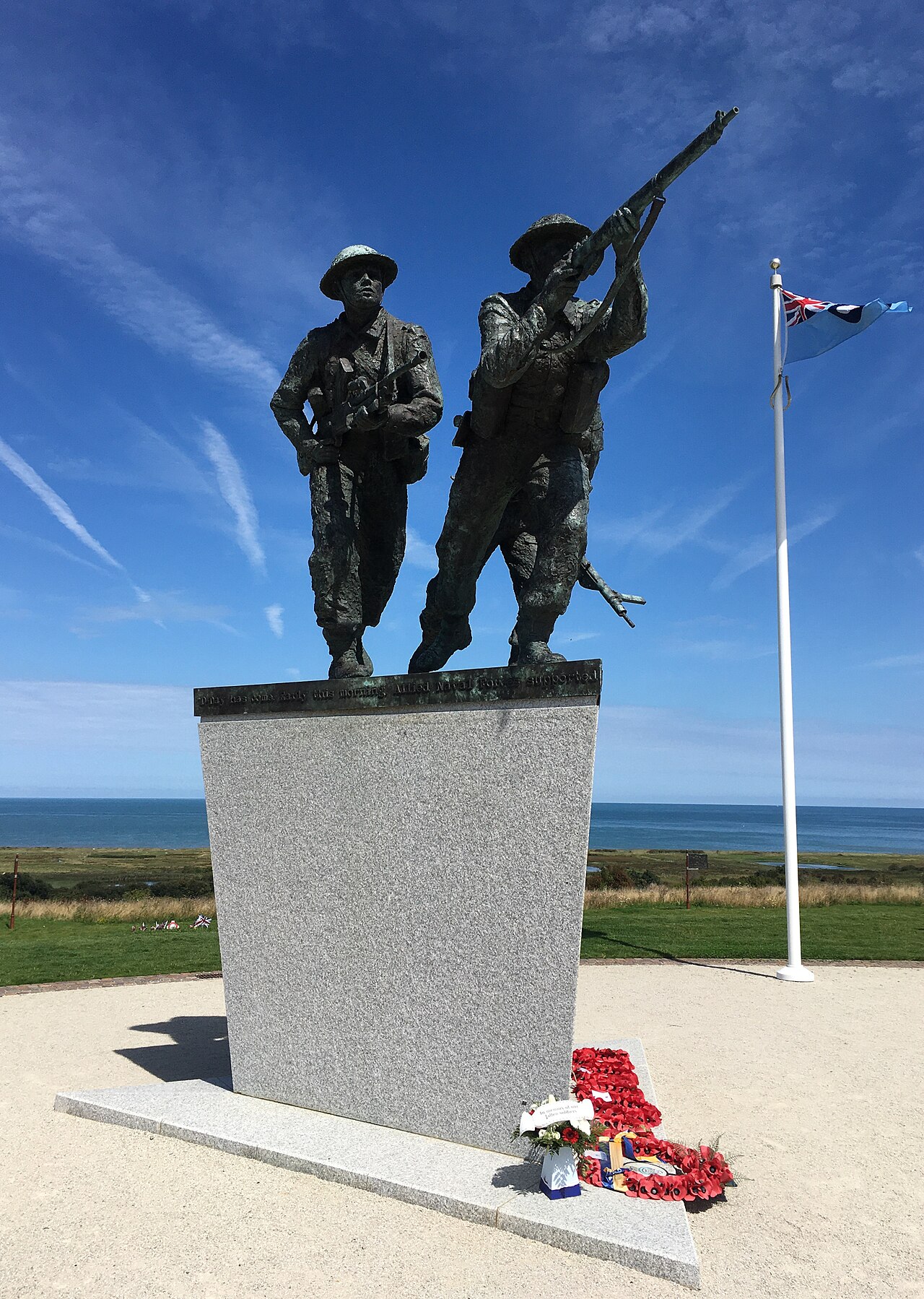

7. Gold Beach and the British memorial at Ver-sur-Mer
We’re moving on to the central part of the landing beaches, which was the responsibility of the British and Canadian contingents. Gold Beach is a long stretch of coast lined with steep cliffs and picturesque seaside resorts. The British met unexpectedly stiff resistance here, but by evening they had managed to push deep inland and link up safely with the Canadian forces.
One of the most significant and newest stops in this sector is the British Normandy Memorial in the village of Ver-sur-Mer. This imposing memorial was opened only recently, and on its smooth stone columns are engraved the names of more than 22,000 soldiers under British command who fell during the Battle of Normandy. The architecture of the site is wonderfully clean and dignified.
The view from the memorial out towards the ocean and the remains of the artificial harbour in the distance is absolutely breathtaking and deeply peaceful. Unlike the American cemetery, you won’t find rows of classic graves cross beside cross here, but rather a vast open space made for contemplation and quiet remembrance. Entry to the entire memorial site is completely free.
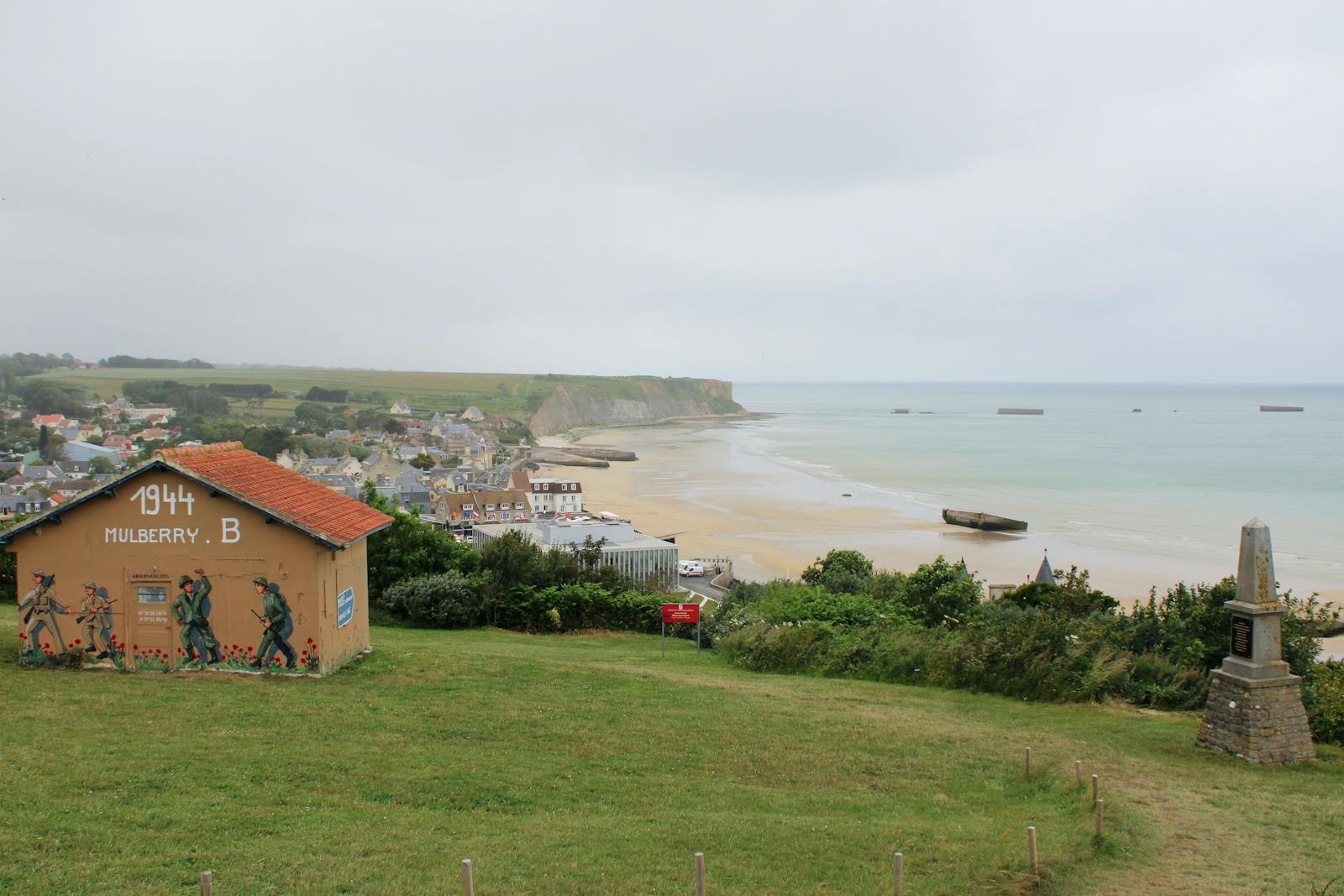
8. Arromanches and the Mulberry artificial harbour
Right in the heart of the Gold sector lies the very pleasant little town of Arromanches-les-Bains. When you arrive and look out to sea from the promenade, you’ll immediately notice the huge concrete blocks that still jut out of the waves. These are the remains of the artificial harbour code-named Mulberry, which the Allies assembled here within just a few days of the successful landing.
This harbour was an absolute engineering marvel and a logistical triumph. Because the Allies had no large deep-water port available in the first weeks, they brought their own across the English Channel in the form of giant concrete caissons. Through this artificial harbour they then unloaded thousands of tonnes of supplies and equipment and hundreds of thousands of soldiers, which was utterly crucial to the overall success of the operation.
Right on the promenade you’ll find the Musée du Débarquement, which deals in detail with the construction of this very harbour. For around 9 euros you’ll see superb working models and finally understand just how incredibly complex the logistics of the whole invasion were. Up above the town, on the cliff, sits the Arromanches 360 circular cinema, where they screen a very moving documentary film made up of period footage.
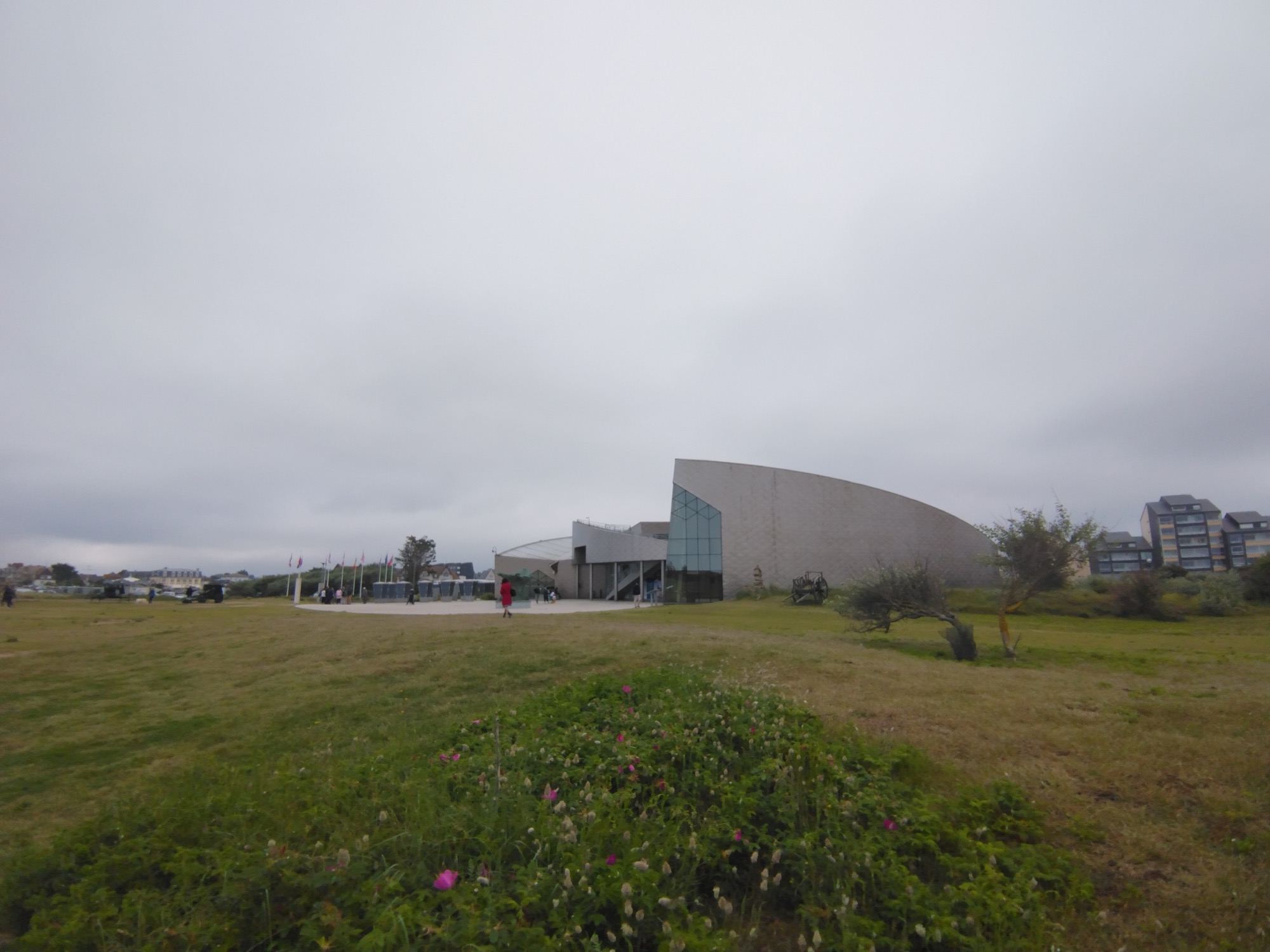
9. Juno Beach and the Canadian centre
The Juno sector was entrusted to the Canadian army. As they approached the beach, the Canadians had to face heavy fire and strong coastal waves that destroyed many landing craft. Yet despite enormous initial losses, they ultimately managed to push furthest inland on the first day of all the Allied forces. The beach itself is today beautifully lined with sand dunes and pleasant promenades.
The main point of interest here is without doubt the Juno Beach Centre in the town of Courseulles-sur-Mer. This museum, funded mainly by Canadian veterans and private donors, focuses not only on D-Day itself but on Canada’s overall and enormous contribution to the war effort. The building’s architecture is very modern, evoking a maple leaf and making heavy use of natural wood.
💡 Tip: Take a look at the remains of the German bunkers right in front of the museum. They’re partly buried in the sand, and during the summer months guided tours are run here. The guides take you straight underground and show you just how cramped and claustrophobic conditions were inside the concrete walls.
10. Sword Beach and Pegasus Bridge
Sword Beach formed the easternmost flank of the entire amphibious invasion, and the British forces’ main task was to push quickly towards the city of Caen and secure strategic bridges. It was in this very sector that special units equipped with strangely modified tanks — nicknamed “Hobart’s Funnies” and designed to clear mines and destroy obstacles — also landed. What’s more, on 6 June 2026, Langrune-sur-Mer in this sector will host the main international ceremony marking the anniversary of the landings.
A very interesting stop near Sword Beach is the famous Pegasus Bridge in the village of Bénouville. This lifting bridge over the canal was secured by British glider troops in the first minutes of 6 June, long before the beach landings had even begun. The original bridge is now kept safely in a small local museum, while a faithful modern replica spans the canal.
Of all the landing beaches, the Sword sector is the most built-up and lies closest to the larger towns. You’ll find plenty of pleasant cafés and restaurants here where you can stop for lunch. Although the cuisine here is renowned for its seafood, if you prefer a meat-free meal I’d recommend trying the traditional savoury buckwheat pancakes (galettes) filled with local ripened cheeses and roasted vegetables.
11. Mémorial de Caen and the bigger picture
If you really want to grasp the broad and deep context of the Second World War, from its complex causes in the 1920s all the way to the start of the Cold War, you absolutely must visit the Mémorial de Caen. This isn’t a classic military museum full of gleaming tanks and weapons, but rather a museum of history and peace that prompts powerful reflection on human nature.
It is by far the largest and most comprehensive museum in all of Normandy, and indeed in France. The exhibitions are vast, very modern and utterly exhaustive. I’d recommend setting aside at least half a day for your visit, if not more. Here you’ll read personal letters, watch period footage and walk through themed halls that will completely overwhelm you emotionally.
Admission is fairly high — around 20 euros for an adult in 2026 — but the investment is absolutely worth it, because the experience is incredible. Surprisingly, the museum also includes the original German command bunker of General Wilhelm Richter, which you can descend into directly from the museum’s well-kept gardens.
12. The historic town of Bayeux and its secrets
Although we introduced Bayeux mainly as the ideal place to stay, the town itself is a full-fledged tourist destination. As you stroll through its cobbled lanes, you’ll admire the beautiful half-timbered houses and the tranquil atmosphere, gently completed by the River Aure flowing right through the historic centre of town.
The dominant landmark is the stunning Gothic cathedral of Notre-Dame de Bayeux, which was consecrated as far back as 1077 in the presence of William the Conqueror himself. Its majestic towers can be seen from miles around, and the interior offers a wonderful example of Norman Romanesque and Gothic architecture. Entry to the cathedral is completely free, and in the evening its exterior is beautifully and romantically lit.
⚠️ Important warning for 2026: Bayeux is world-famous for its 70-metre-long embroidered tapestry from the 11th century. If you’re coming here in 2026, however, definitely don’t go looking for the tapestry. The local museum closed completely in autumn 2025 for extensive renovation, and the precious cloth itself is on loan to the British Museum in London from September 2026 until July 2027. So don’t promise yourself this particular historic experience in Bayeux — instead, simply enjoy the town itself in peace, with its excellent cheese shops and bakeries.
Map of points of interest for your phone
Where to go next from Normandy
If you have more time and want to discover other faces of this amazing region after the historic D-Day sites, Normandy offers plenty of absolutely phenomenal places. It’s a landscape that inspired the Impressionists and hides breathtaking architectural treasures.
I’d definitely recommend heading west to visit Mont-Saint-Michel. This famous Gothic abbey on a granite island, surrounded by a treacherous bay, is the most visited place in France after Paris. Just watch out for the crowds and check the tide times in advance — they’re the highest in Europe here.
If art and nature appeal to you, you mustn’t miss Claude Monet’s garden in the little village of Giverny. This is where you’ll find the famous Japanese bridge and the water-lily pond you know from his celebrated paintings. The year 2026 is especially significant, as it marks exactly 100 years since Monet’s death, so special celebrations and exhibitions will be held across the whole area under the banner of the Normandie Impressionniste festival. Don’t forget to buy tickets for these events well in advance — they often sell out. To make planning easier, you can use various offers and tours through GetYourGuide, which will save you a lot of hassle with tickets.
 🚗 Car rental on the road
Verified rental cars in Normandy
🚗 Car rental on the road
Verified rental cars in Normandy
Search with the DiscoverCars comparison engine — it compares prices from dozens of local and international rental companies, and most bookings come with free cancellation.
Compare car prices in Normandy →Frequently asked questions
Do I need a car to visit the D-Day beaches?
Yes, a car is an absolute necessity in this area. The NOMAD public transport network along the coast is very limited, buses don’t connect well, and individual memorial sites are dozens of kilometres apart. If you don’t have a car, the only reasonable alternative is to rent a bike and use the Vélomaritime cycle route, or pay for an organized tour.
How many days should I set aside for Normandy?
At least two to three full days are needed for the D-Day beaches themselves and the main museums. If you want to add Mont-Saint-Michel, the cliffs at Étretat, and Monet’s Gardens in Giverny to your itinerary, plan at least a solid week-long holiday for all of Normandy.
Are there places suitable for smaller children too?
It depends on the specific location. Kids love long sandy beaches like Omaha and Utah, where they can run around and play in the sand. However, large museums like Caen can be too long and emotionally heavy for them. An excellent interactive exhibition that entertains even older children is offered by the Airborne Museum in Sainte-Mère-Église.
Where can I get a good meal around here without meat?
Although Normandy is famous for seafood, vegetarians won’t suffer here. Focus on the fantastic local cheeses (Camembert, Neufchâtel, Pont-l’Évêque), savoury pancakes (galettes) filled with cheese and vegetables, and excellent traditional bakeries. Just don’t forget that lunch in restaurants is strictly served between 12:00 and 14:00.
When do the D-Day celebrations take place?
Every year at the beginning of June, the D-Day Festival takes place. In 2026, it will be the 82nd anniversary and the main events will take place between May 30th and June 14th. Expect the biggest crowds, international ceremonies, and road closures precisely between June 5th and 7th.
Do you pay entrance fees for beaches and monuments?
The beaches themselves, the American cemetery in Colleville-sur-Mer, the British memorial in Ver-sur-Mer, and the bombed cliff site of Pointe du Hoc are completely free and open to the public. You only pay for admission to the individual indoor museums, where prices typically range from €8 to €20.
Can I swim at the D-Day beaches?
Yes, swimming is common and permitted here during the summer months. However, the water in the English Channel is quite refreshing even in August, and temperatures rarely exceed 19 degrees. Also be very careful of strong currents and huge differences between high and low tide – the sea can be unpredictable here.
Tips and Tricks for Your Vacation
Don’t Overpay for Flights
Search for flights on Kayak. It’s our favorite search engine because it scans the websites of all airlines and always finds the cheapest connection.
Book Your Accommodation Smartly
The best experiences we’ve had when looking for accommodation (from Alaska to Morocco) are with Booking.com, where hotels, apartments, and entire houses are usually the cheapest and most widely available.
Don’t Forget Travel Insurance
Good travel insurance will protect you against illness, accidents, theft, or flight cancellations. We’ve had a few hospital visits abroad, so we know how important it is to have proper insurance arranged.
Where we insure ourselves: SafetyWing (simple monthly subscription) and TrueTraveller (for extra-long trips).
Find the Best Experiences
Get Your Guide is a huge online marketplace where you can book guided walks, trips, skip-the-line tickets, tours, and much more. We always find some extra fun there!