

I remember the moment as if it were yesterday. I was standing on the bank of the St. Lawrence River, surrounded by a landscape so majestic that I forgot to breathe. The sun was glinting off the water, forested hills stretched into the distance, and I thought — this can’t be North America. This feels like a piece of Europe, only a thousand times bigger and wilder. ☺️
The province of Quebec Canada completely enchanted me. And we’re not alone — National Geographic named it among the “Best of the World 2026” destinations. And you know what? It absolutely deserves it. This is a place where people speak French, where poutine replaces burgers, where baroque churches stand alongside industrial street art, and where you can drive in a single day from cosmopolitan Montreal through historic Quebec City all the way to fjords where whales breach the surface.
Canada had been calling to me for years, and Quebec was where I fell head over heels. I have to say, this corner of the country surprised me more than anything else. We expected nature — and we got nature, culture, gastronomy, history, and a serious dose of adventure. One moment we were sitting in a tiny café in Petit Champlain feeling like we’d been transported to Lyon. The next day we were watching humpback whales surface from the deck of a boat in Tadoussac, hardly believing our own eyes.
In this article, you’ll find over 30 tips on what to see, taste, and experience in Quebec Canada. From big-city Montreal through fairytale Quebec City to the wild Gaspésie peninsula. Settle in for a long read — because Quebec simply deserves more than a few paragraphs. 😁
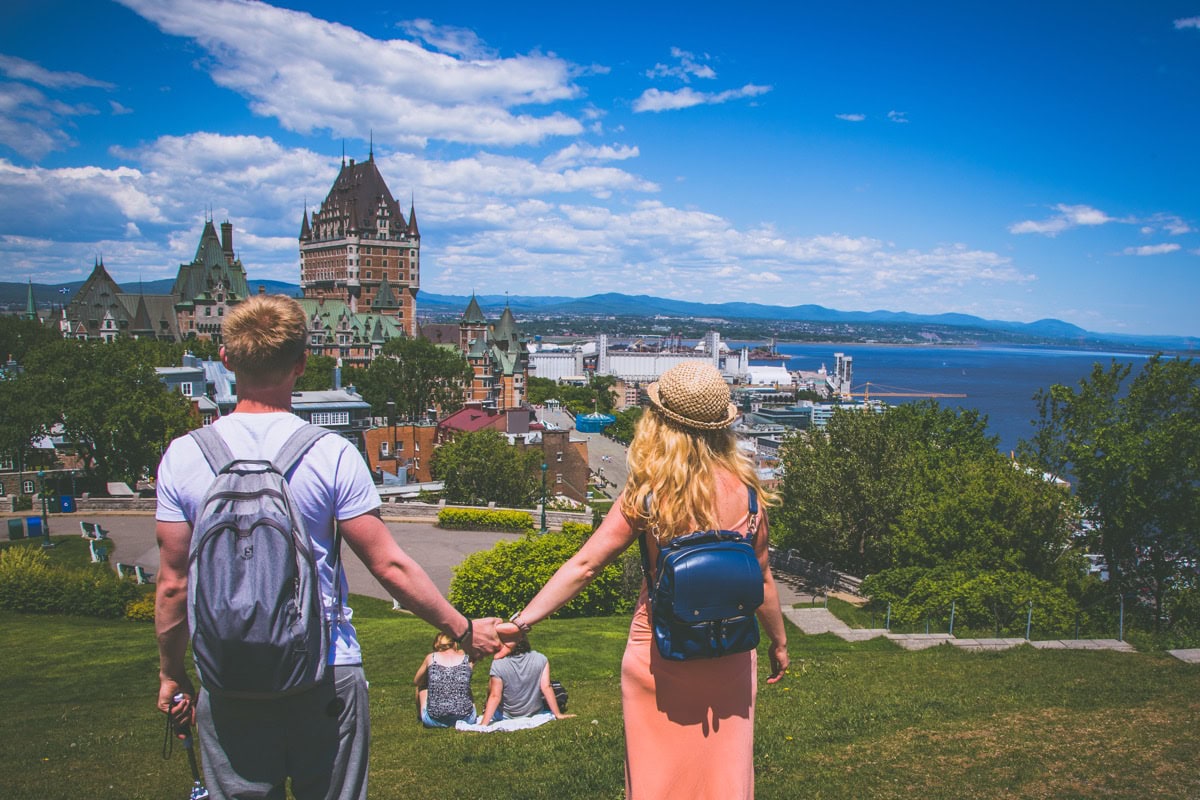
TL;DR
- Canada’s largest province — Quebec is roughly 3× the size of France. And it’s stunning.
- French is the language here — it’s the sole official language. You’ll get by in English in Montreal, but out in the countryside it gets trickier.
- Direct flights from London to Montreal — Air Canada and British Airways operate year-round, with seasonal options on Air Transat. Return flights from around £400 if you book early. Use Kiwi to compare prices.
- No visa needed — UK citizens just need an eTA (electronic travel authorisation) costing 7 CAD (about £4), applied for online in minutes.
- Quebec is roughly 2–3× pricier than the UK — budget around £60–80 per person per day (backpacker) up to £200+ (comfort).
- Must-see regions: Montreal, Quebec City, Charlevoix, Tadoussac, Gaspésie, Laurentians.
- Must-eat: poutine, smoked meat, Montreal bagels, maple syrup, tourtière.
- Ideal trip length: 10–14 days for a road trip, minimum 7 days for Montreal + Quebec City + surrounds.
- Best time to visit: summer (June–September) and autumn (September–October, Indian summer). Winter is for the brave, but magical.
The full destination guide: Canada — guide and what to see
When to visit Quebec and how to get around
Before we dive into specific tips, let’s clear up a few basics. Quebec is Canada’s largest province — roughly 3× the size of France, so there’s absolutely no shortage of space to explore. 😅 French is the sole official language here, the climate is extreme — summers are surprisingly hot and humid, while winters are arctic-cold. And distances? They’ll catch you off guard every time. It’s a good 10-hour drive from Montreal to Gaspésie, so plan wisely.
Another important thing to know: prices in shops and restaurants are always listed WITHOUT tax. Federal and provincial sales taxes are added at the till, totalling roughly 15%. So when you see a price of 20 CAD, you’ll actually pay 23 CAD. It takes some getting used to — Lukáš and I kept getting surprised at the checkout. 😅
Best time to visit Quebec
Summer (June–September) is hands-down the most popular and comfortable time to visit. Temperatures hover around 20–30 °C, everything is open, festivals are in full swing, and the days are beautifully long. The downside? Mosquitoes. Especially in the nature parks, they’ll eat you alive, so insect repellent is an absolute must. And naturally, accommodation prices go up.
Autumn (September–October) is probably our favourite time. Indian summer in Quebec is pure magic — the entire landscape wraps itself in shades of gold, orange, and crimson. The Laurentians and Charlevoix during this period look like something from a storybook. Fewer tourists, pleasant temperatures around 10–18 °C, and nature literally ablaze with colour.
Winter (December–March) is for the brave. Temperatures regularly plunge to -20 °C and below, but if you kit yourself out properly, an unforgettable experience awaits. The Winter Carnival in Quebec City is the world’s largest winter festival, and the snow-covered lanes of Vieux-Québec look like a Christmas postcard. Skiing, cross-country skiing, snowshoeing — there’s no shortage of winter sports.
Spring (April–May) is sugar shack season — maple syrup is being boiled down and you can visit a traditional cabane à sucre. But honestly, spring in Quebec tends to be a rather muddy and chilly transition from winter to summer. It’s not the best time for a first visit, though it does have its charm.
How to get to Quebec from the UK
The most convenient option is a direct flight from London to Montreal, operated year-round by Air Canada and British Airways from Heathrow. The flight takes around 7–8 hours and return tickets can be found from about £400 if you book early. In summer, Air Transat also offers direct seasonal services. We always compare prices on Kiwi — it’s our go-to tool for finding the best deals.
If you’re looking for cheaper options, you can also fly with a connection via Paris, Amsterdam, or Frankfurt with airlines like Air France, KLM, or Lufthansa. It often works out to a similar price, but you’ll need to factor in a longer travel time.
As for entry requirements — UK citizens don’t need a visa for Canada. You just need an electronic travel authorisation (eTA), which you can apply for online in minutes and costs just 7 CAD (about £4). It’s valid for 5 years or until your passport expires. Sort it out at least a few days before departure, though approval usually comes through within hours.
Getting around the province – car, train, or bus?
Let me be completely honest here: you really can’t do Quebec without a car. Well, unless you only want to stay in Montreal and Quebec City (where public transport works brilliantly). But the moment you want to see Charlevoix, Tadoussac, Gaspésie, or the Laurentians — you need a car.
Lukáš and I have had consistently great experiences with DiscoverCars, which we use all over the world. You can pick the car up right at Montreal airport and you’re instantly flexible. Prices in peak season run roughly €50–100/day depending on the category. Book well in advance, because cars get snapped up fast in summer.
A few important notes on driving: in winter, winter tyres are mandatory (1 December to 15 March), petrol is cheaper than in the UK, and motorways are only partially tolled. And watch out for moose on the roads — especially in Gaspésie and further north, this is a real danger, particularly at dusk and at night. Those moose warning signs aren’t decoration — take them seriously.
There’s also the VIA Rail train on the Montreal–Quebec City route (about 3 hours, from around €25), which is comfortable and fairly reliable. Buses (Orléans Express) cover the main routes, but frequency outside major cities is limited. For truly exploring Quebec, though, a car is simply irreplaceable.
Where to stay in Quebec and how much a holiday costs
Before we jump into specific tips, let’s be upfront: Quebec isn’t cheap. Canada is generally 2–3× pricier than the UK on many things, and Quebec is no exception. Daily budget per person works out roughly like this: budget traveller from £60–80 (hostels, self-catering, fewer activities), mid-range £100–160 (mid-range hotels, restaurants, activities), comfortable travel £200+.
Accommodation types are varied — from classic hotels and Airbnb through charming auberges (Quebec’s version of guesthouses) to cabins in provincial parks run by SEPAQ. SEPAQ (Société des établissements de plein air du Québec) is a fantastic organisation managing the provincial parks, offering beautiful cabins, campsites, and even glamping right in nature. Book well ahead, though, especially in summer — spots sell out fast.
Accommodation in Montreal
In Montreal, I’d recommend staying either in central Vieux-Montréal (beautiful but pricier, from around €150/night for a double room) or in Plateau Mont-Royal (the hipster quarter, slightly cheaper, livelier nightlife, packed with cafés and restaurants).
If you’re after a more budget-friendly option, try Airbnb or a hostel. HI Montreal is one of the best hostels we’ve come across in Canada.
Our accommodation picks in Montreal:
- Hotel Bonaparte (Vieux-Montréal) — boutique hotel a stone’s throw from the Notre-Dame Basilica, breakfast included, rated 8.9/10. From about €140/night.
- Auberge de La Fontaine (Plateau Mont-Royal) — cosy inn right by LaFontaine Park, superb staff, best value for money on the Plateau. From about €105/night.
- Sonder Le Guerin (Mile End) — loft apartments in a converted printing house with kitchenette and washer, ideal for longer stays. From about €105/night.
Accommodation in Quebec City
In Quebec City, you ideally want to be right in Vieux-Québec (the Old Town), though that obviously comes at a cost — expect €135–200 per night. The atmosphere, however, is priceless. If you fancy a splurge, the legendary Fairmont Le Château Frontenac is one of the most iconic hotels in the world (but prices match, from €300/night and up).
A more affordable alternative is staying in Saint-Roch — a modern neighbourhood just outside the centre, packed with restaurants and cafés. It’s about a 15-minute walk to the Old Town.
Our accommodation picks in Quebec City:
- Hôtel du Vieux-Québec (inside the walls) — 12 consecutive years as the top-rated hotel in the city on TripAdvisor, boutique hotel on Rue Saint-Jean, rated 9.3/10. From about €140/night.
- Hôtel Manoir Victoria (inside the walls) — 4-star hotel with pool and restaurant, more space, rated 8.6/10. From about €120/night.
- Comfort Inn Lévis (across the river — budget tip!) — ferry to the centre in 12 minutes with a stunning view of the city skyline, breakfast and parking included. From about €80/night. Spend the savings in the restaurants instead. 😉
Accommodation outside the cities – SEPAQ, auberges, and motels
Once you leave the big cities, you’ve got several fantastic options. SEPAQ cabins in the provincial parks are our absolute favourite — wooden chalets tucked away in nature, basic facilities, but total peace and tranquillity. Prices range from €100 to €200 per night depending on the season and park.
In Charlevoix and along the St. Lawrence, you’ll find lovely auberges — quintessentially Québécois guesthouses with bags of character, often with an excellent restaurant on site. In Gaspésie, motels along Route 132 come to the rescue — they’re no five-star affairs, but they’re clean, reasonably priced (from about €80/night), and most have a gorgeous sea view.
Our accommodation picks in Charlevoix and beyond:
- Auberge La Muse (Baie-Saint-Paul) — intimate auberge with 11 rooms and its own bistro, right in the centre of this artistic little town. From about €110/night.
- Auberge des Falaises (La Malbaie) — rooms with fireplace and views over the St. Lawrence, Nordic spa, rated 8.9/10. From about €105/night.
- SEPAQ EXP Chalet (Parc des Grands-Jardins) — designer cabins for two with panoramic windows and fireplace, deep in the wilderness. From about €110/night + park admission.
Montreal: 8 places and experiences you can’t miss
Montreal is the gateway to Quebec for most travellers — and what a gateway it is! This city completely swept us off our feet with its energy. It’s the second-largest French-speaking city in the world (after Paris) and beautifully bilingual — French and English weave together in every conversation. It’s creative, gastronomically rich, blessed with incredible street art, and has an atmosphere that’s part European, part North American, and entirely its own.
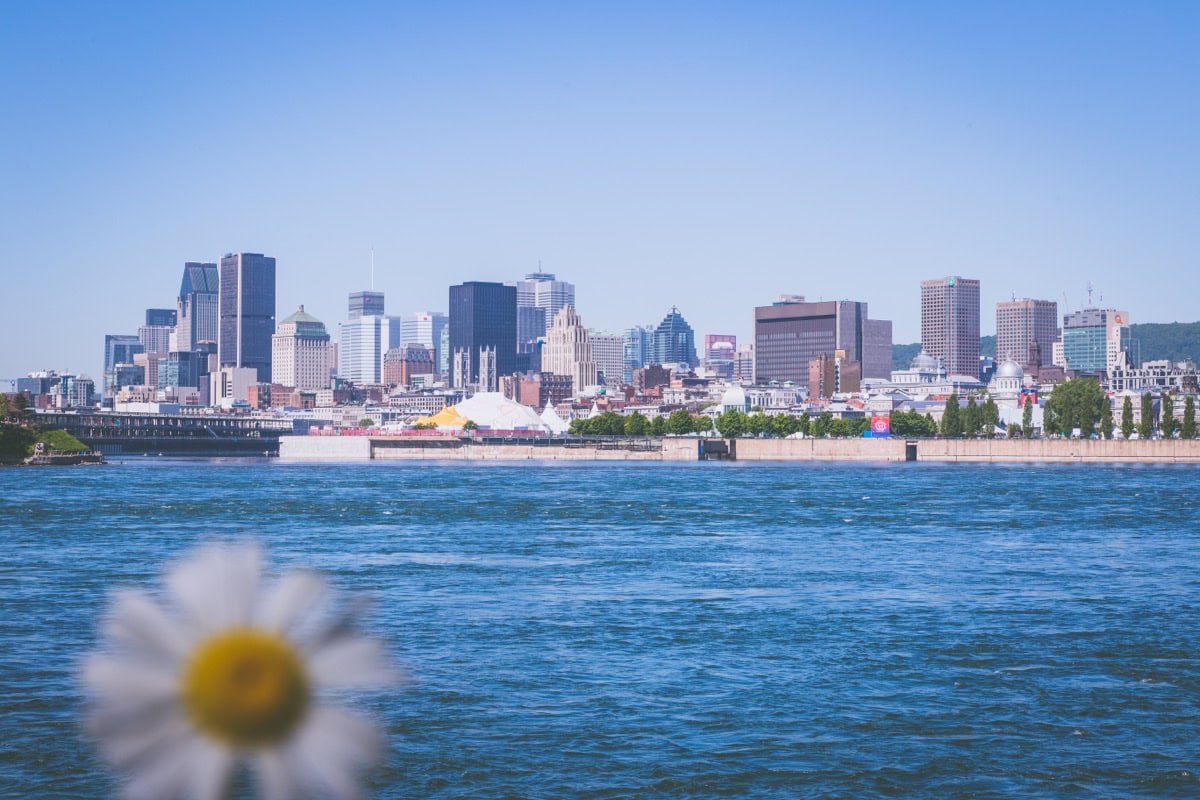
Lukáš and I spent four days in Montreal and still didn’t manage to see everything. I’d recommend at least three full days, ideally four. Now let’s get into the specifics.
1. Vieux-Montréal – the historic heart of the city
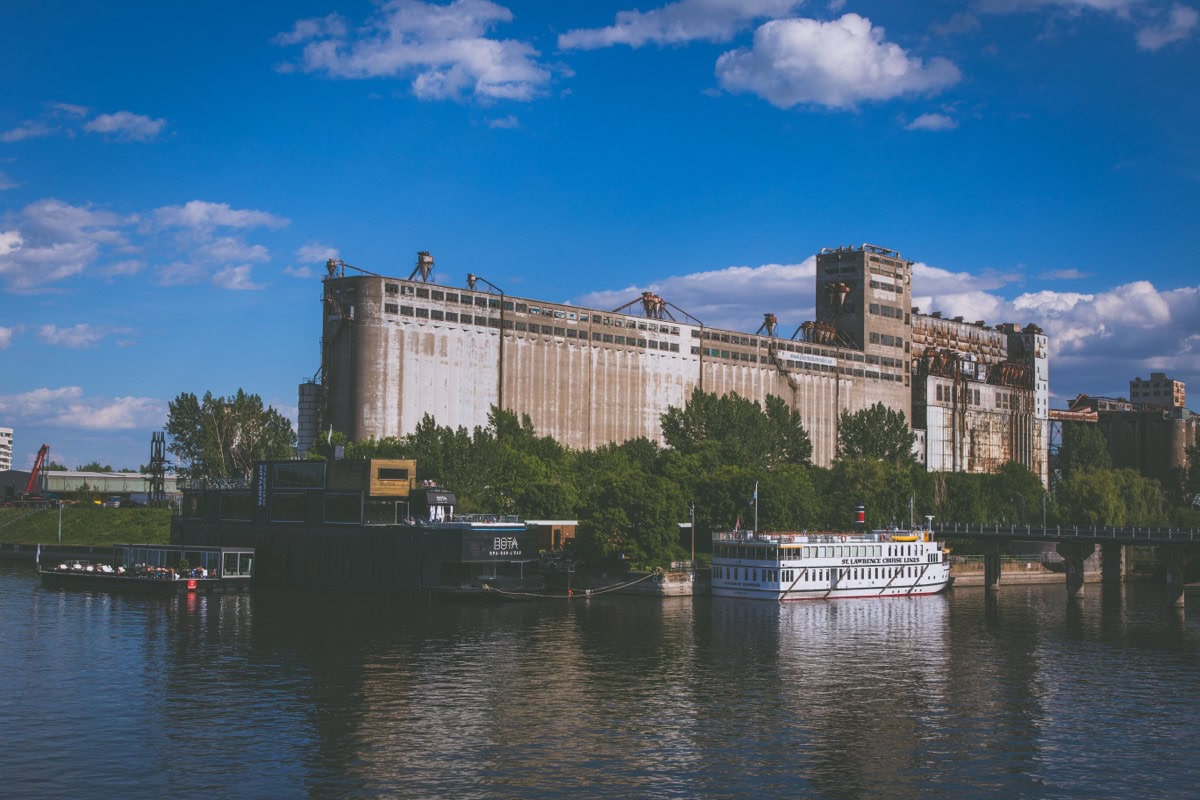
Old Montreal is where it all began. Cobblestone lanes, stone buildings from the 17th–19th centuries, horse-drawn carriages, and harbour views — you feel more like you’re in Bordeaux than North America. Place Jacques-Cartier is the main square and the perfect starting point for a wander.
Stroll along the Old Port (Vieux-Port), where in summer you’ll find carousels, street performers, and lovely river views. Don’t miss Pointe-à-Callière either, a fascinating archaeology and history museum built on the very spot where Montreal was founded. Admission is around 25 CAD (about €17).
2. Mont Royal – the best view of the city
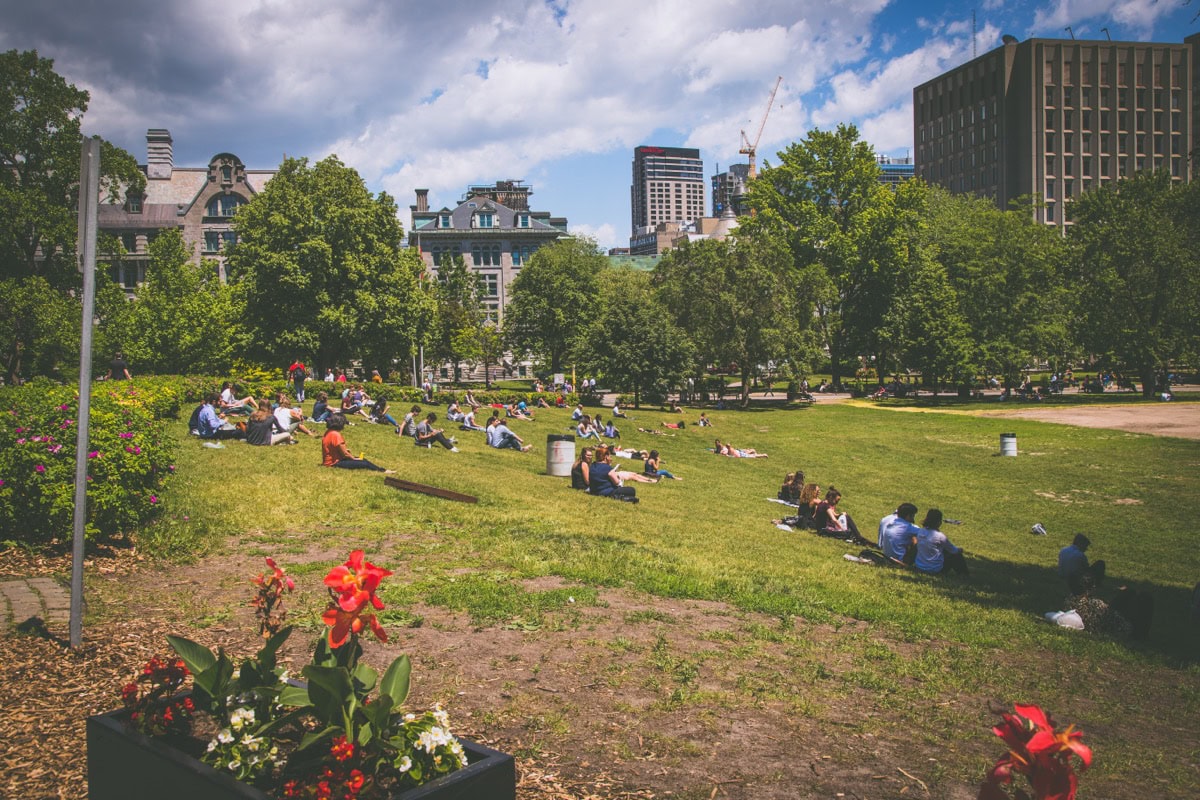
The hill that gave Montreal its name is an essential stop. We hiked up from the Plateau (about 30 minutes on an easy path) and the view from Belvédère Kondiaronk was worth every drop of sweat. The whole of Montreal spread out before you — on a clear day you can see all the way to the Laurentians.
The park was designed by Frederick Law Olmsted — yes, the same man behind New York’s Central Park. In winter, people skate on Beaver Lake; in summer, they picnic. And since you’re in Quebec, there’s a decent snack bar at the top. Entry to the park is free.
3. Plateau Mont-Royal and Mile End – hipster paradise
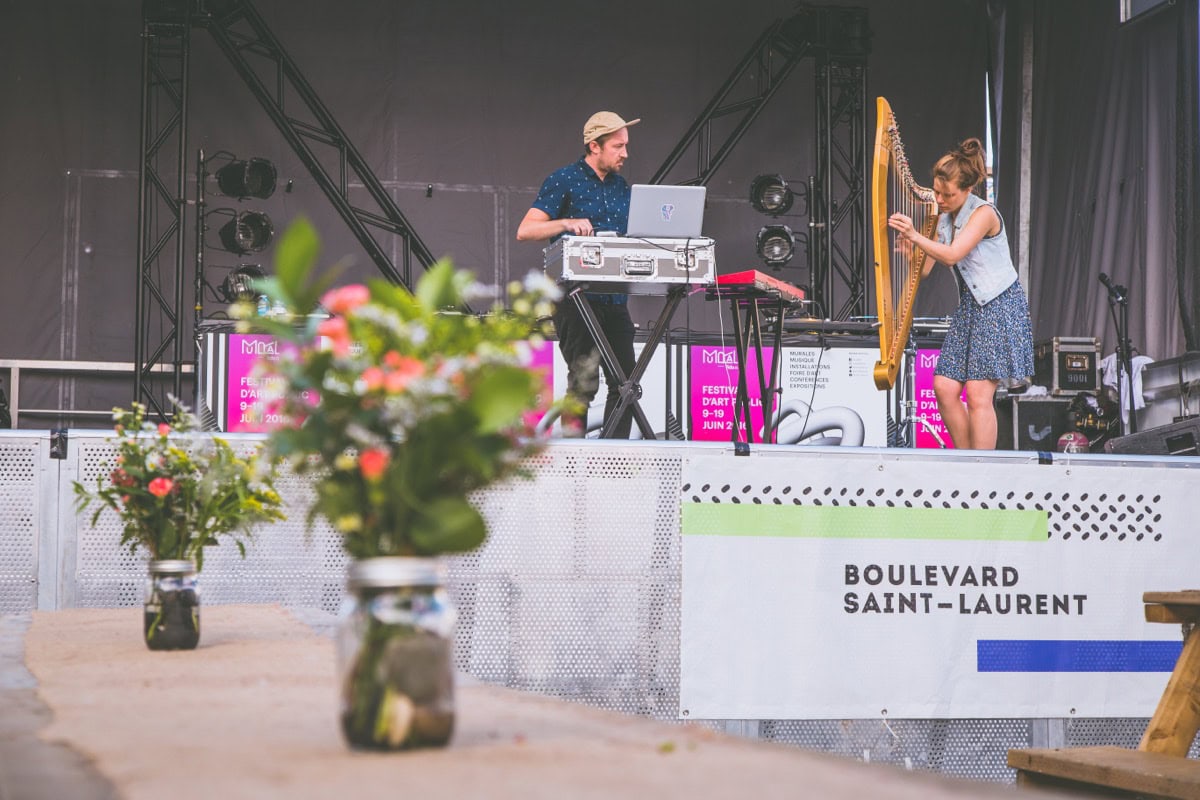
This is probably our favourite neighbourhood in all of Montreal. Colourful terraced houses with their distinctive outdoor staircases, enormous murals on every corner, independent bookshops, vintage boutiques, and cafés where the barista crafts latte art like fine art.
Mile End is the epicentre of Montreal’s creative scene — and home to the legendary bagel shops St-Viateur and Fairmount (more on those in the food section). Wander along Boulevard Saint-Laurent and Rue Saint-Denis, pop into Drawn & Quarterly (a brilliant independent bookshop), and in the evening grab a seat at one of the local bars. The atmosphere here is simply indescribable.
4. Marché Jean-Talon – an open-air food paradise
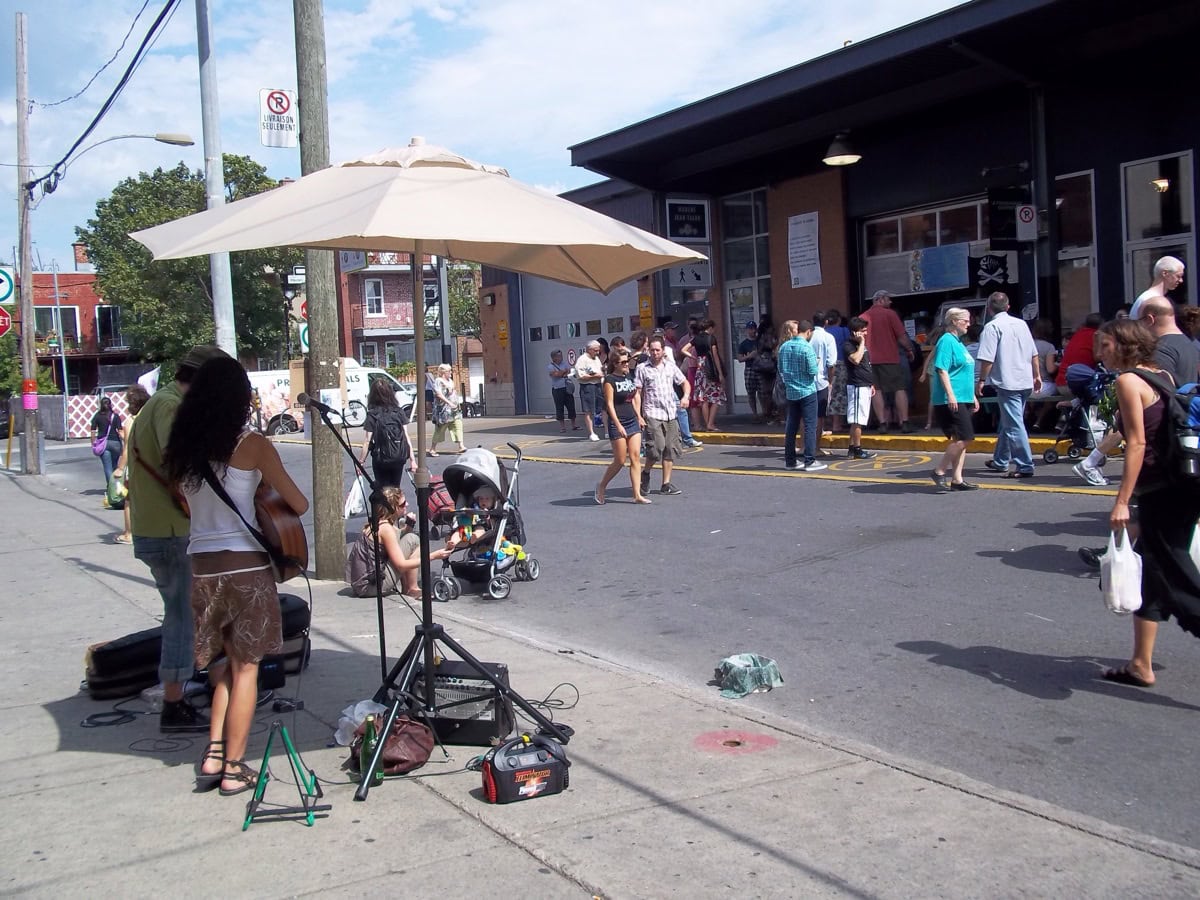
This market blew us away. It’s one of the largest farmers’ markets in North America, and from spring to autumn you’ll find everything here — fresh fruit from Québécois farms, artisanal cheeses, maple syrup in every form imaginable, local beer, fresh herbs, and endless free samples.
Even if you don’t buy anything (which is nearly impossible), the atmosphere alone is worth the visit. There are also excellent restaurants and cafés surrounding the market. Entry is free, of course. I’d recommend arriving in the morning when it’s liveliest and the produce is freshest.
5. Biodôme and Jardin botanique
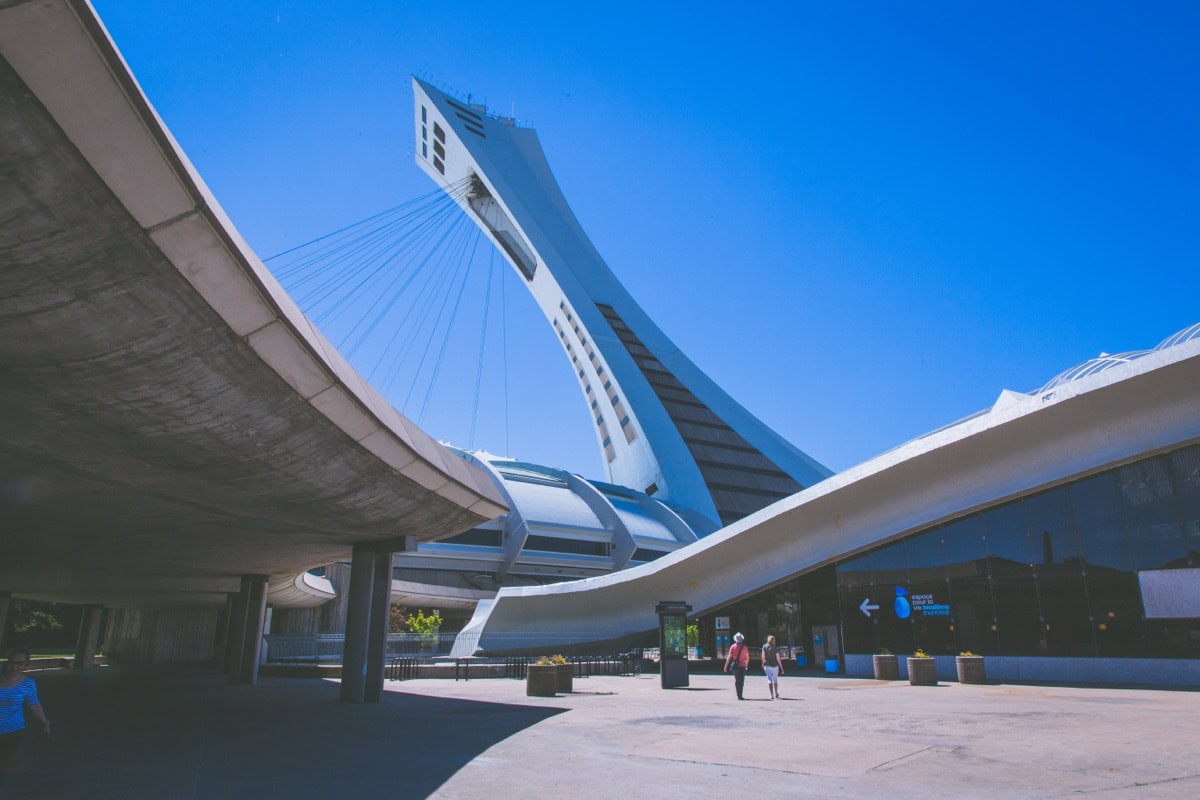
If you’re into nature and science, this is your paradise. The Biodôme is truly unique — a 1976 Olympic velodrome converted into five ecosystems under one roof. Walk through a tropical rainforest, look penguins in the eye, and find yourself in a Canadian forest. Admission is around 25 CAD (about €17).
Right next door is the Jardin botanique — one of the world’s largest botanical gardens, with stunning Chinese and Japanese gardens. In September and October, the Jardins de lumière festival illuminates the entire garden with thousands of lanterns. It’s truly magical. A combined ticket for the Biodôme + garden costs about 40 CAD (around €27).
6. Notre-Dame Basilica of Montréal
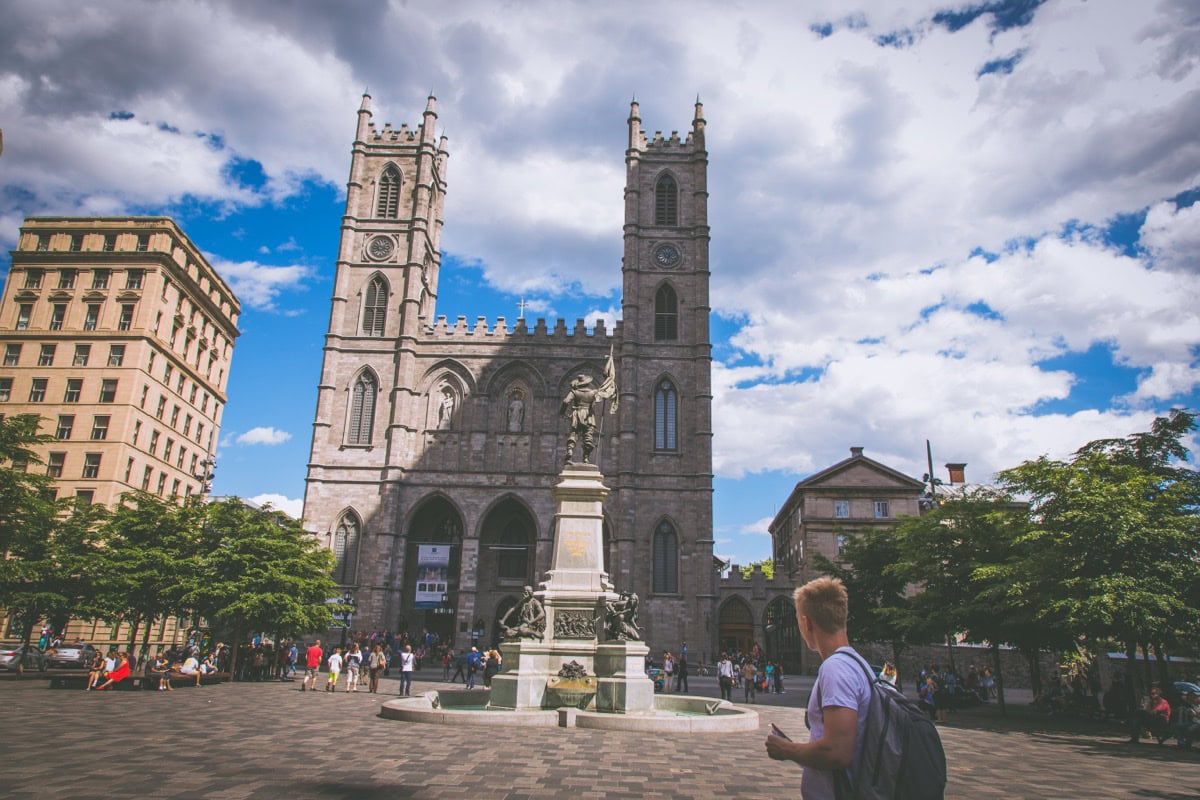
This basilica left us jaw-on-the-floor gobsmacked. From the outside it looks like a typical Gothic church, but the interior? Utterly breathtaking — a blue ceiling dusted with golden stars, enormous stained glass windows telling the story of Montreal, intricate wood carvings. It’s another world entirely.
Admission is 9 CAD (about €6) and honestly — it’s worth every penny. In the evenings, the AURA light show takes place here, which is an experience in itself (around 30 CAD / €20). The basilica sits on Place d’Armes, so you can easily combine it with a stroll through Vieux-Montréal.
7. Underground City (RÉSO)
Did you know Montreal has an entire city underground? RÉSO is a network of subterranean passageways stretching over 33 km, connecting metro stations, shopping centres, hotels, cinemas, and even universities. It was built for practical reasons — when it’s -25 °C outside, why not walk underground? 😅
It’s not a tourist attraction in the classic sense — more a functional space — but walking through it is a fascinating experience. You really grasp just how massive and sophisticated this underground infrastructure is. Entry is free — just step into any metro station and start walking.
8. Lachine Canal – cycling along the water
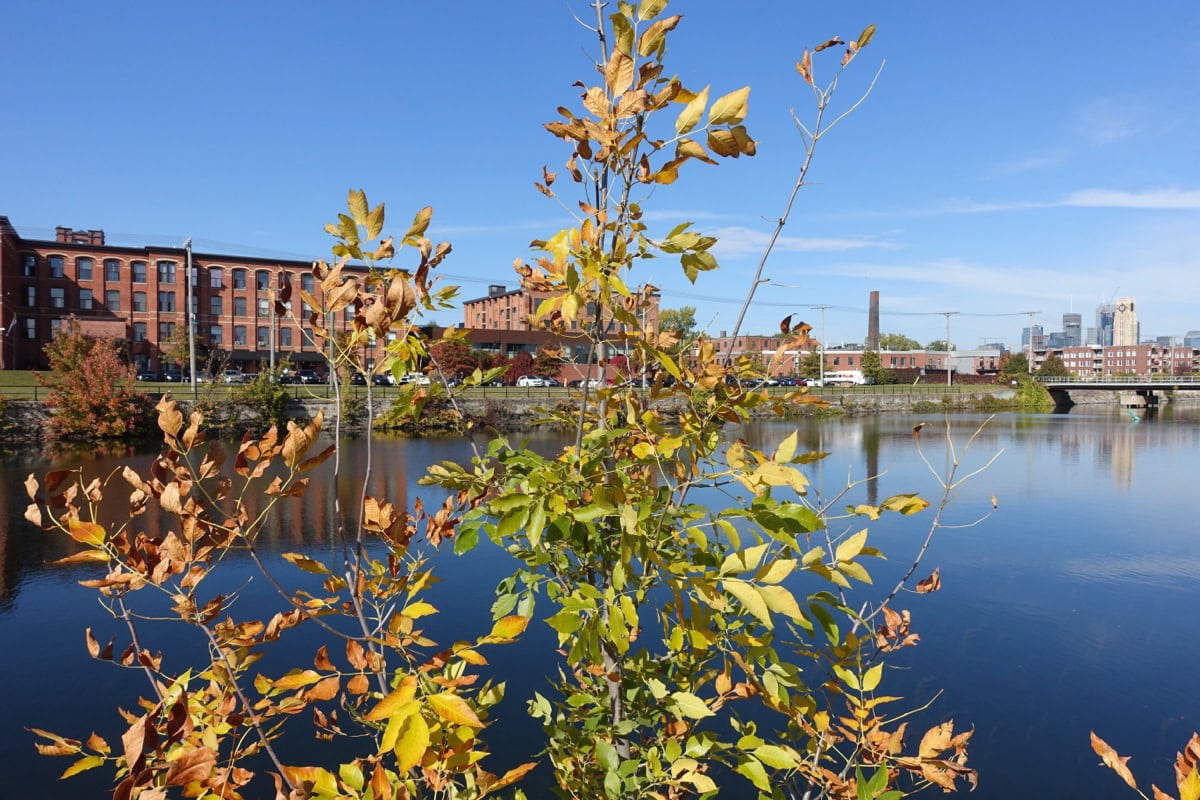
If you’re into cycling (or even just waterside walks), Lachine Canal is a brilliant choice. This former industrial artery has been transformed into a beautiful cycle path and promenade running from Vieux-Port to the west of the city. You can hire a bike through the BIXI bike-share system for just a few dollars.
We cycled the entire route there and back (about 28 km), stopping at cafés, galleries, and small parks along the way. In summer, you can even go paddleboarding here. It’s the perfect afternoon activity when you want to escape the buzz of the centre.
Quebec City: 7 reasons it’s Canada’s most beautiful city
If you asked me to pick one city in Canada that charmed me the most, I’d say Quebec City without a moment’s hesitation. It’s the only walled city in North America north of Mexico, its Old Town is a UNESCO World Heritage Site, and when you wander its streets, you genuinely feel like you’ve been transported somewhere in France. Except with the bonus that around the corner there’s a river as wide as the sea and wild Canadian nature beyond it.
Lukáš and I spent three days here and could have stayed a week. The city is compact, easily walkable, and every corner hides something new. And the atmosphere! Street musicians, the scent of fresh croissants, hills and viewpoints at every turn.
1. Vieux-Québec and Château Frontenac
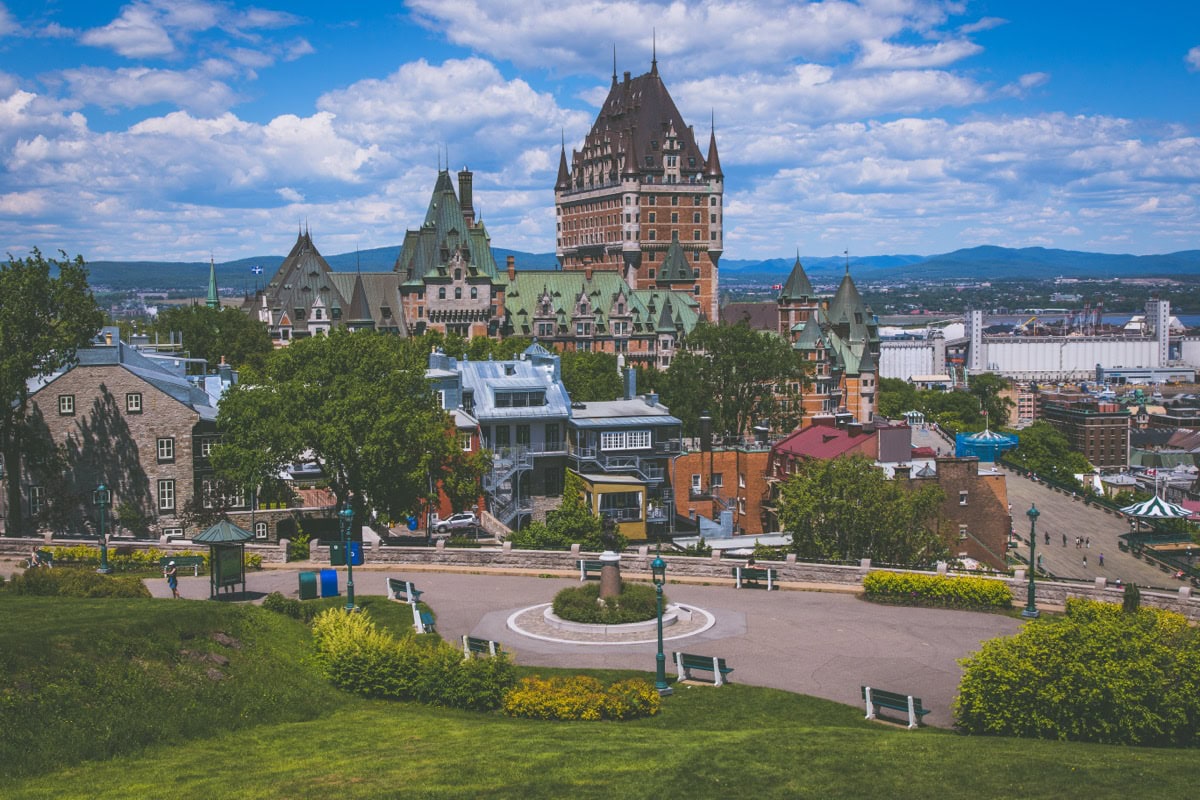
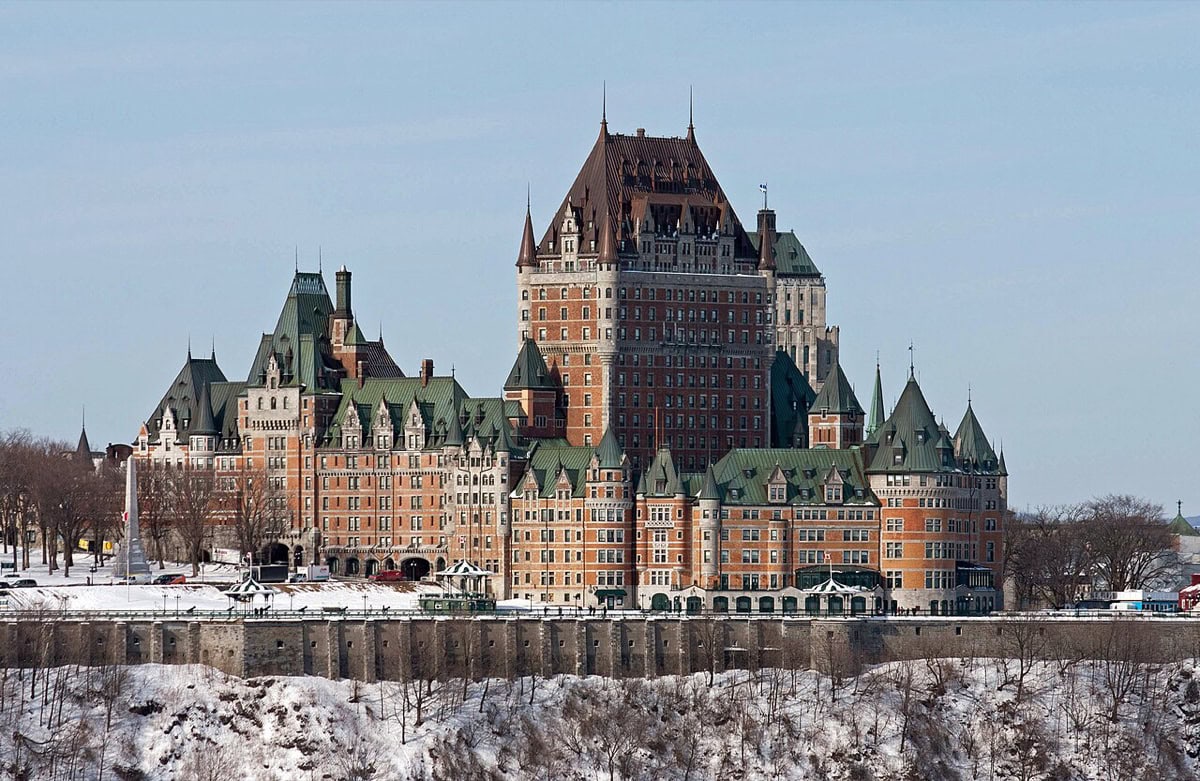
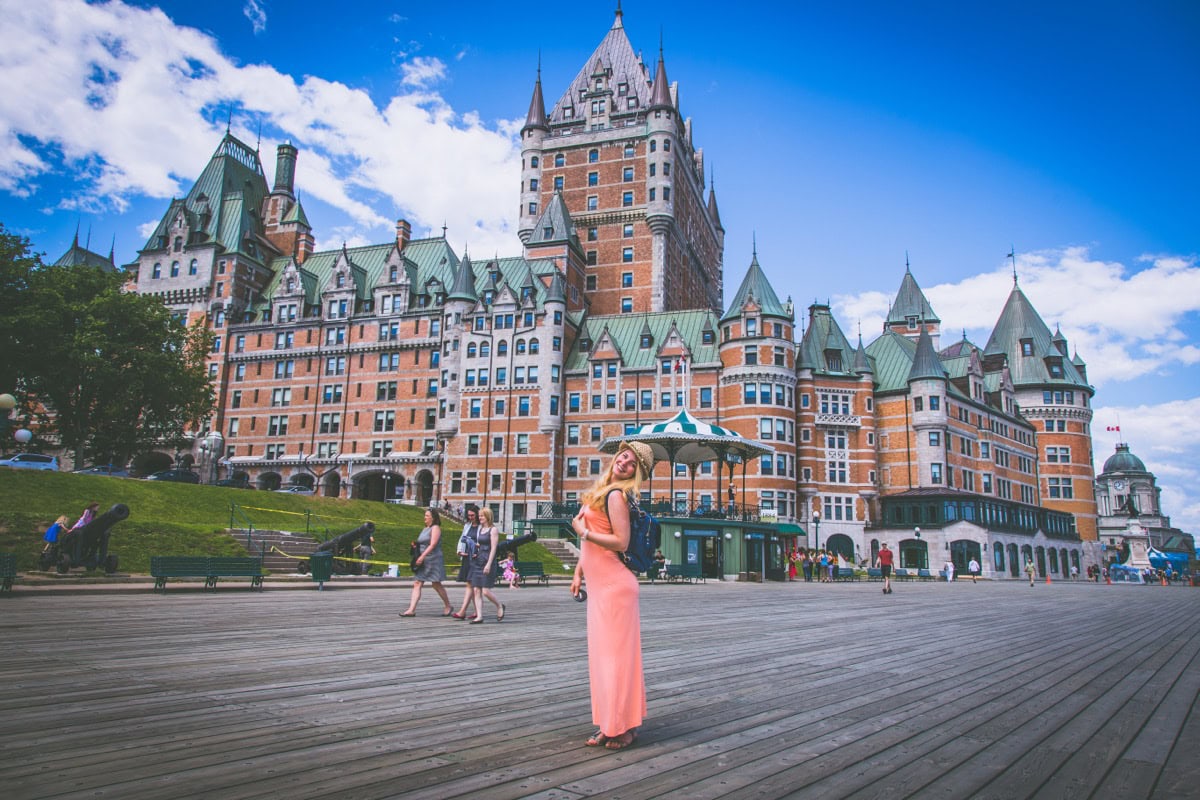
The Old Town is split into Haute-Ville (Upper Town) and Basse-Ville (Lower Town), and both are utterly enchanting. The undisputed centrepiece is the Fairmont Le Château Frontenac — that iconic castle-like hotel you see in every photograph of Quebec City. Even if you’re not staying there (prices start from €300/night and up), at least walk through its lobby.
The Dufferin Terrace in front of the hotel offers a breathtaking view of the St. Lawrence River and Lower Town. Walk along the ramparts (Fortifications of Québec), peek inside the Citadel, and simply let yourself be swept away by the feeling of being transported to the 17th century. Walking the ramparts is free.
2. Quartier Petit Champlain – Canada’s prettiest street
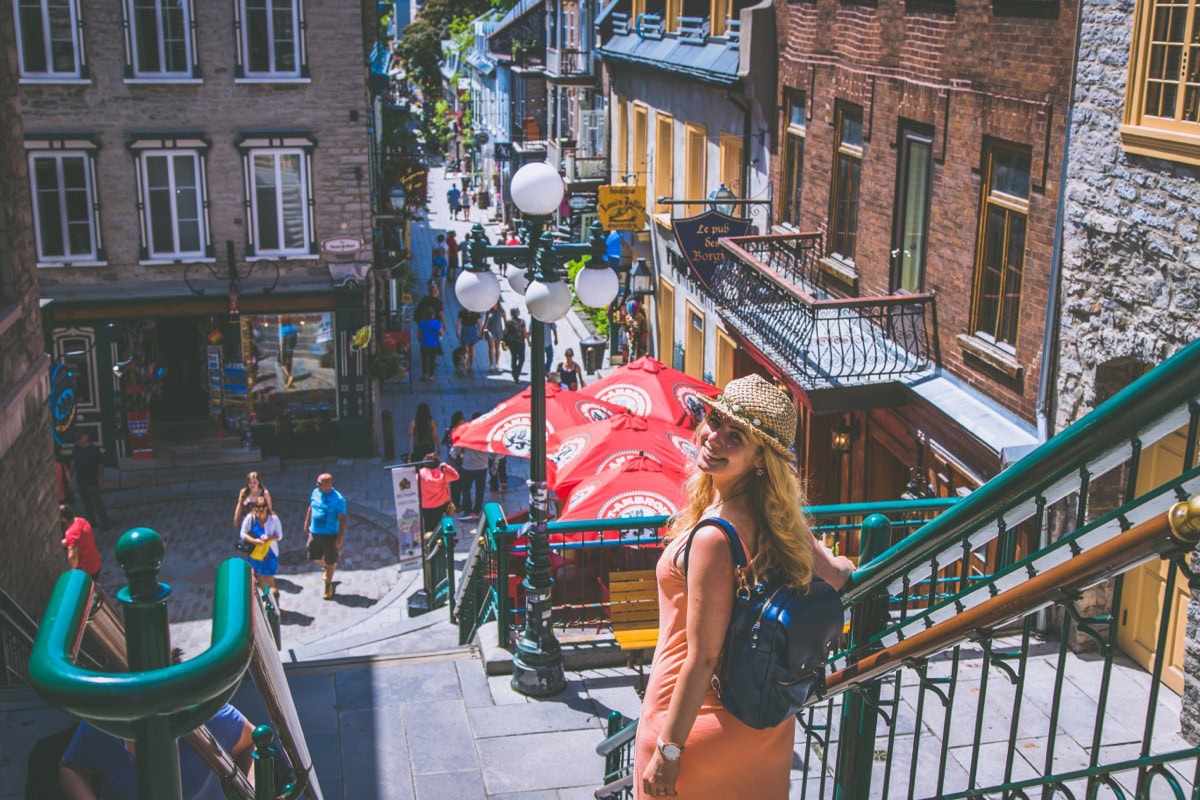
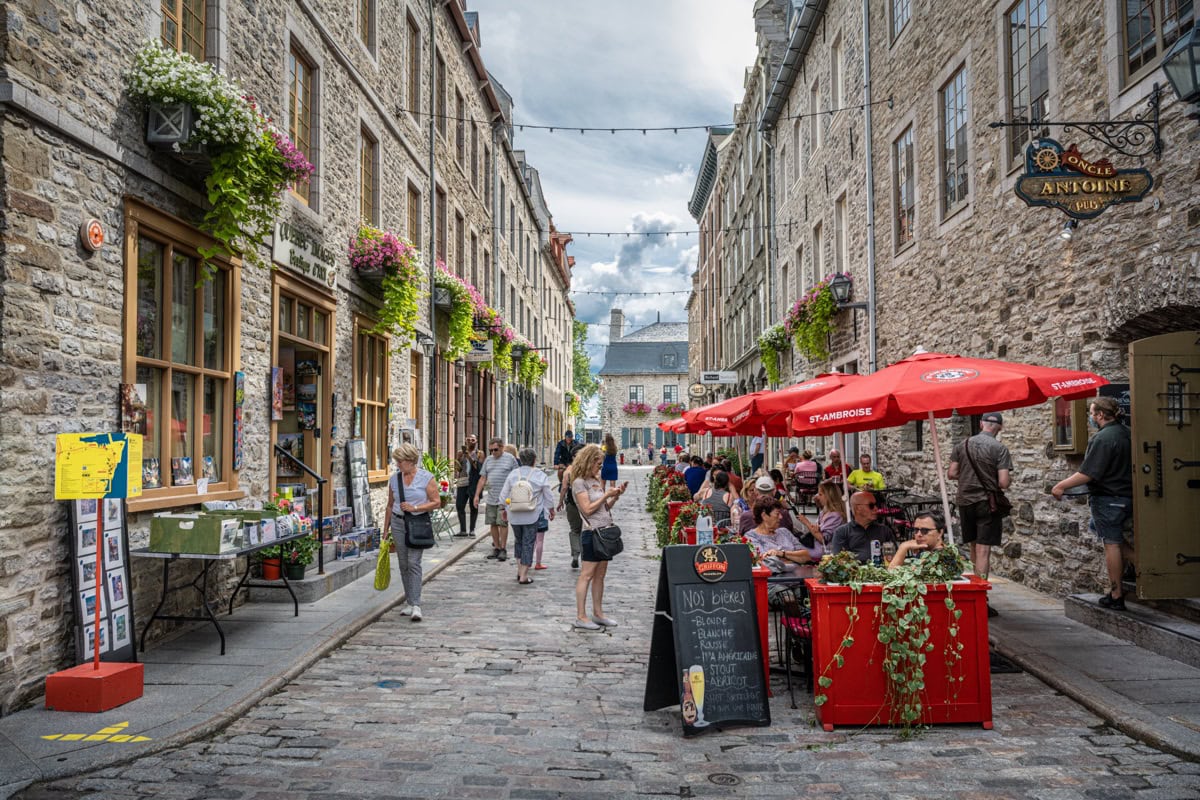
From Upper Town, you can reach Petit Champlain either via the Escalier Casse-Cou (literally “breakneck stairs” 😅) or by funicular. And down below awaits the most charming neighbourhood you can imagine. Narrow cobblestone lanes, stone houses, independent shops selling local art, and cafés with river views.
Petit Champlain is said to be the oldest commercial district in North America. Today it’s full of small galleries, boutiques, and restaurants. It’s a hugely popular tourist spot, yet it still retains an authentic charm. I’d recommend arriving early in the morning or in the evening, when the crowds have thinned and you can soak up the atmosphere in peace.
3. Montmorency Falls – a waterfall taller than Niagara!
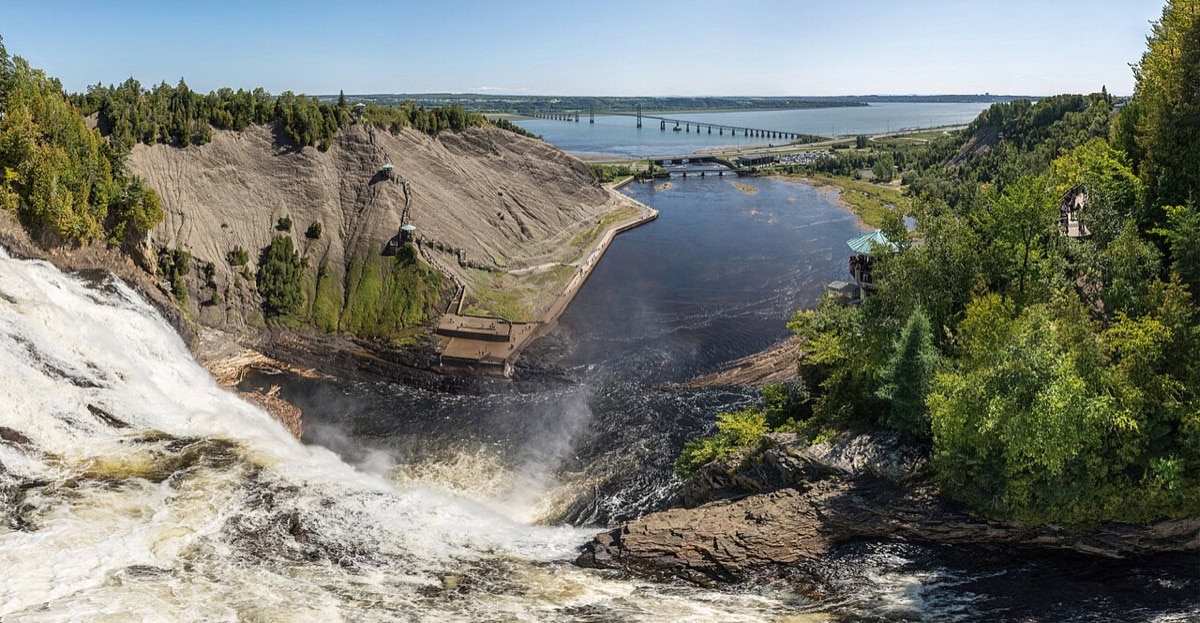
Here’s a fact that’ll impress anyone: Montmorency Falls stands 83 metres tall — a full 30 metres higher than the famous Niagara Falls! Yet so many people don’t even know about it. It’s just a 15-minute drive from downtown Quebec City and it’s absolutely spectacular.
You can admire it from below, or venture out onto the suspension bridge directly above the brink of the falls (if you don’t mind heights). There’s also a cable car. In winter, an enormous ice cone forms at the base that you can actually climb. Parking is around 6.50 CAD (about €4.50); access to the falls themselves is free. The cable car costs about 17 CAD (around €12) return.
4. Île d’Orléans – an agritourism haven just around the corner
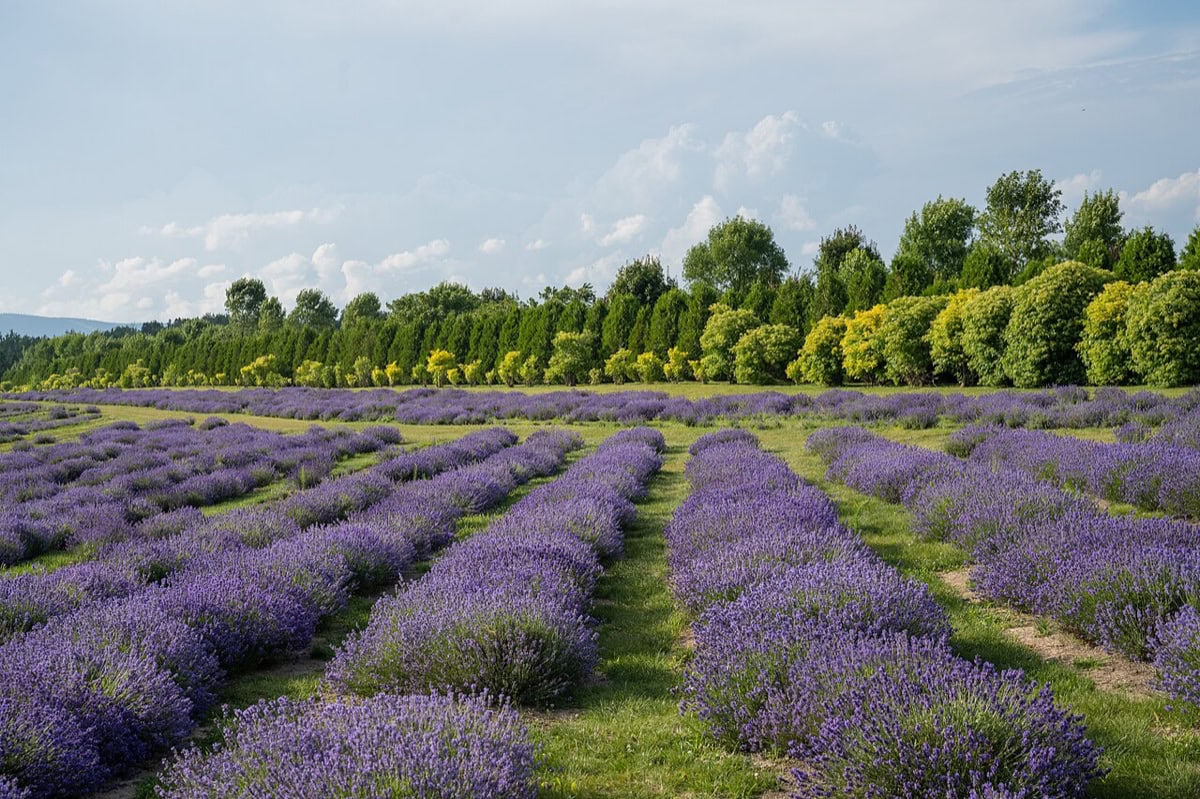
Just 30 minutes from Quebec City lies Île d’Orléans — an island that feels like stepping back in time. Six picturesque villages, strawberry and apple farms, vineyards, fromageries, and cider houses. It’s a paradise for lovers of local food and slow travel.
We spent a gorgeous afternoon here — driving the loop around the island (about 67 km), stopping at farm stands, sampling homemade ice cream, and buying fresh strawberries straight from the farmer. In autumn, people come for pick-your-own apples and pumpkins. If you love maple syrup, the island has plenty of cabanes à sucre. Getting onto the island is free — you only pay for tastings and purchases.
5. Plains of Abraham – a park with history
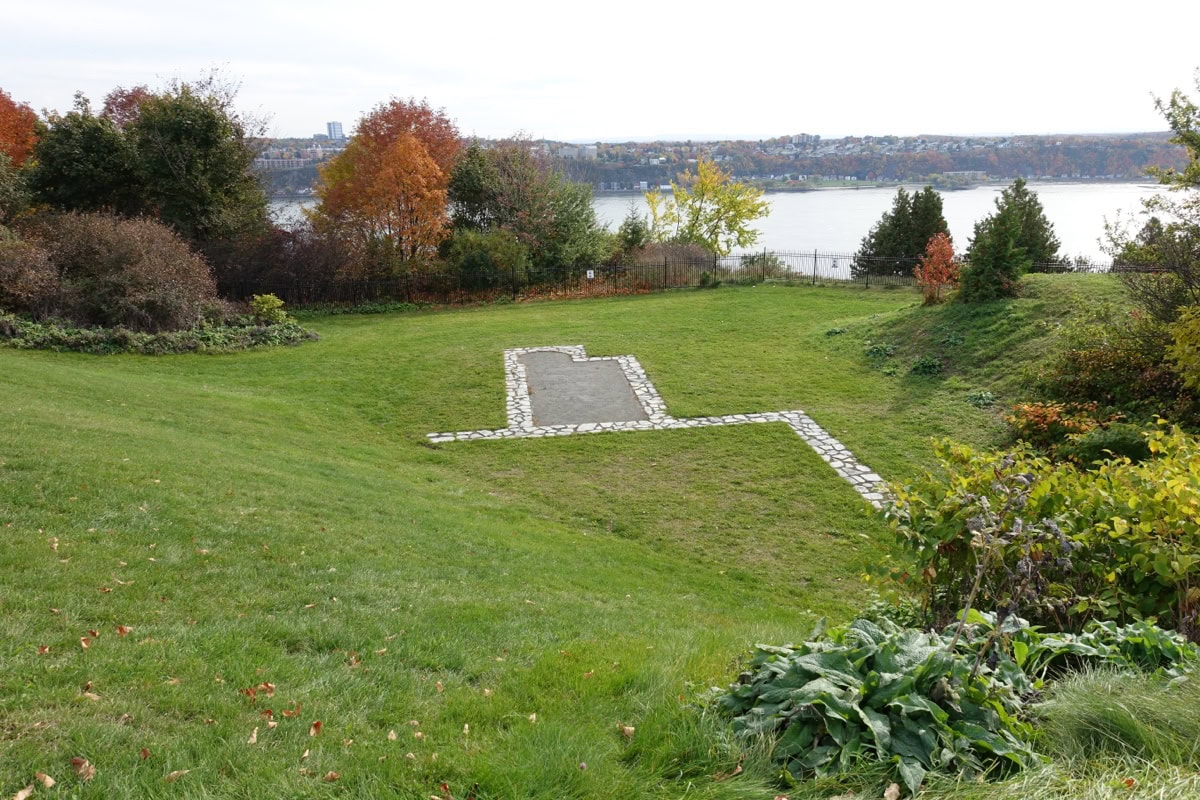
The Plains of Abraham (Plaines d’Abraham) is a vast urban park where the pivotal 1759 battle between the British and French took place — the battle that decided Canada’s fate. Today it’s a lovely spot for a picnic, a stroll, or simply lying in the grass gazing at the river.
In summer it hosts festivals and open-air concerts; in winter, cross-country skiing and snowshoeing. The Plains of Abraham Museum is well worth it for history buffs — admission is about 18 CAD (around €12). But even just wandering through the park is an experience in itself.
6. Winter Carnival – the world’s largest winter festival
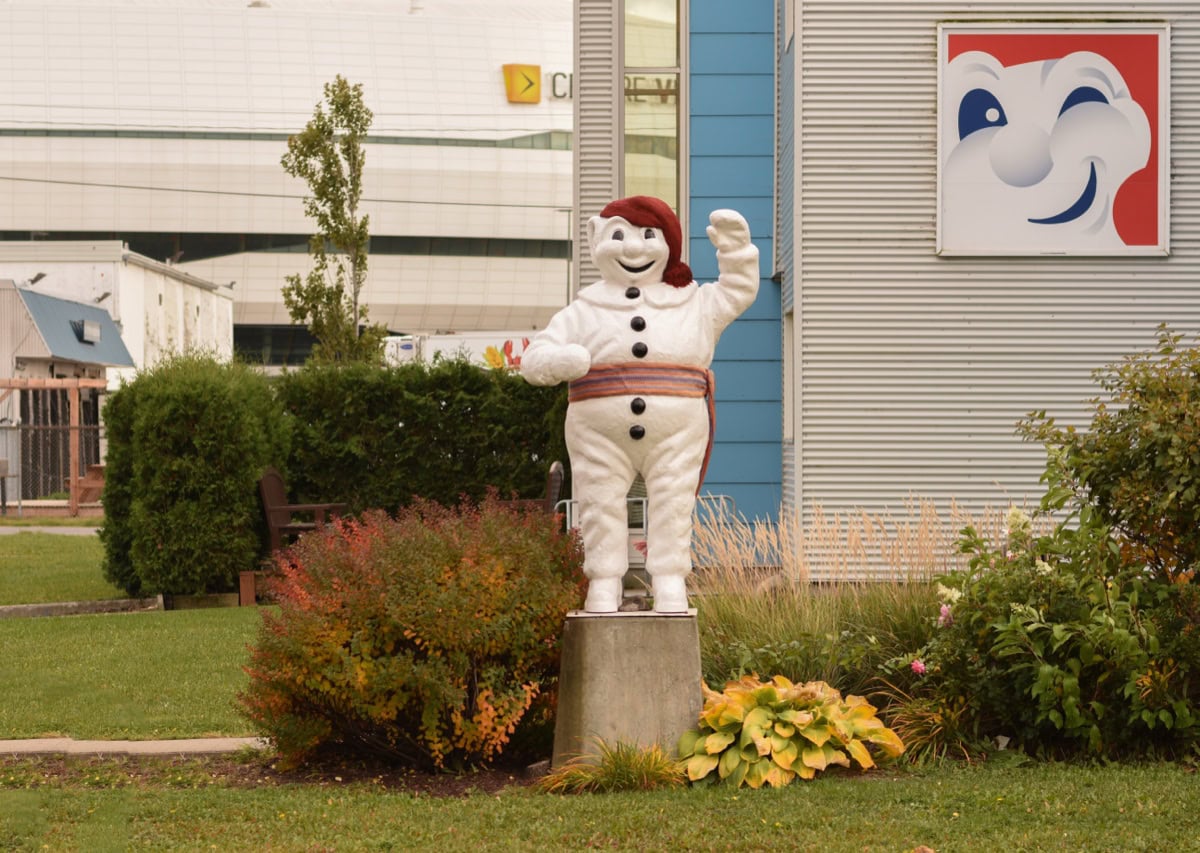
If you’re brave enough to visit Quebec City in winter (January–February), you’ll be treated to the Carnaval de Québec — the world’s largest winter festival. Ice and snow sculpting competitions, night parades, an ice palace, canoe races on the frozen river, and the mascot Bonhomme — a giant snowman who is a bona fide celebrity in Quebec.
We actually visited in summer, but everyone told us that winter in Quebec City is absolutely magical. The city blanketed in snow, temperatures hovering around -20 °C, but an atmosphere so warm you barely feel the cold. Admission to most carnival events is included in the price of an effigy (badge), which costs around 20 CAD (about €14).
7. Ferry to Lévis – the cheapest river cruise
This tip falls into the “local secret” category. For just 4 CAD (about £2.50), you can ride the ferry across the St. Lawrence River to the town of Lévis — and along the way you’ll get absolutely the best view of Quebec City and Château Frontenac. You won’t find a better panorama anywhere.
The ferry runs regularly all day and all night, and the crossing takes about 12 minutes. In Lévis you can stroll along the promenade, grab a coffee with a view, and head back. It’s a brilliant tip for late afternoon, when the sun bathes the Old Town in golden light. Lukáš and I reckon it’s probably the best value-for-views in all of Canada. 😁

Charlevoix: 4 tips for the region where mountains meet the river
Charlevoix is a place that absolutely captivated us. This region, about an hour and a half’s drive northeast of Quebec City, is a UNESCO Biosphere Reserve, and the landscape here is so dramatic I couldn’t tear myself away from the car window. Mountains plunging straight into the St. Lawrence River, picturesque villages, art galleries, outstanding restaurants. And Route 362, which winds through this region, is considered one of the most beautiful scenic drives in all of North America.
1. Baie-Saint-Paul – an artistic town in the valley
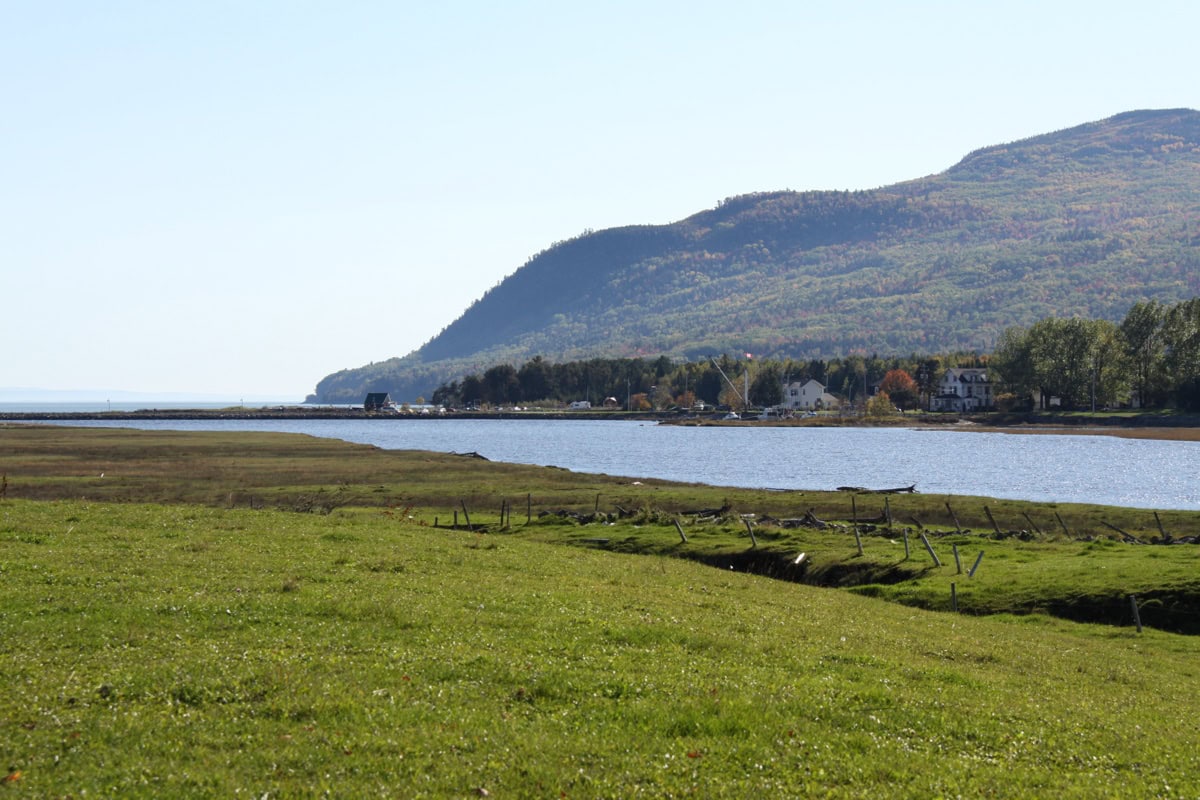
Baie-Saint-Paul is probably the most charming little town in all of Charlevoix. Nestled in a valley surrounded by mountains, it has attracted artists since the 19th century who came to paint its landscape. Today you’ll find dozens of galleries, studios, cafés, and small shops selling local creations.
The main street, Rue Saint-Jean-Baptiste, is like something from a storybook — colourful houses, flowers in windows, the scent of fresh bread wafting through the air. Don’t miss the local cheeses and beer from the Charlevoix microbrewery. And if you have time, drive down to the river — the view back at the town nestled between mountains is something you’ll remember forever.
2. Parc national des Grands-Jardins
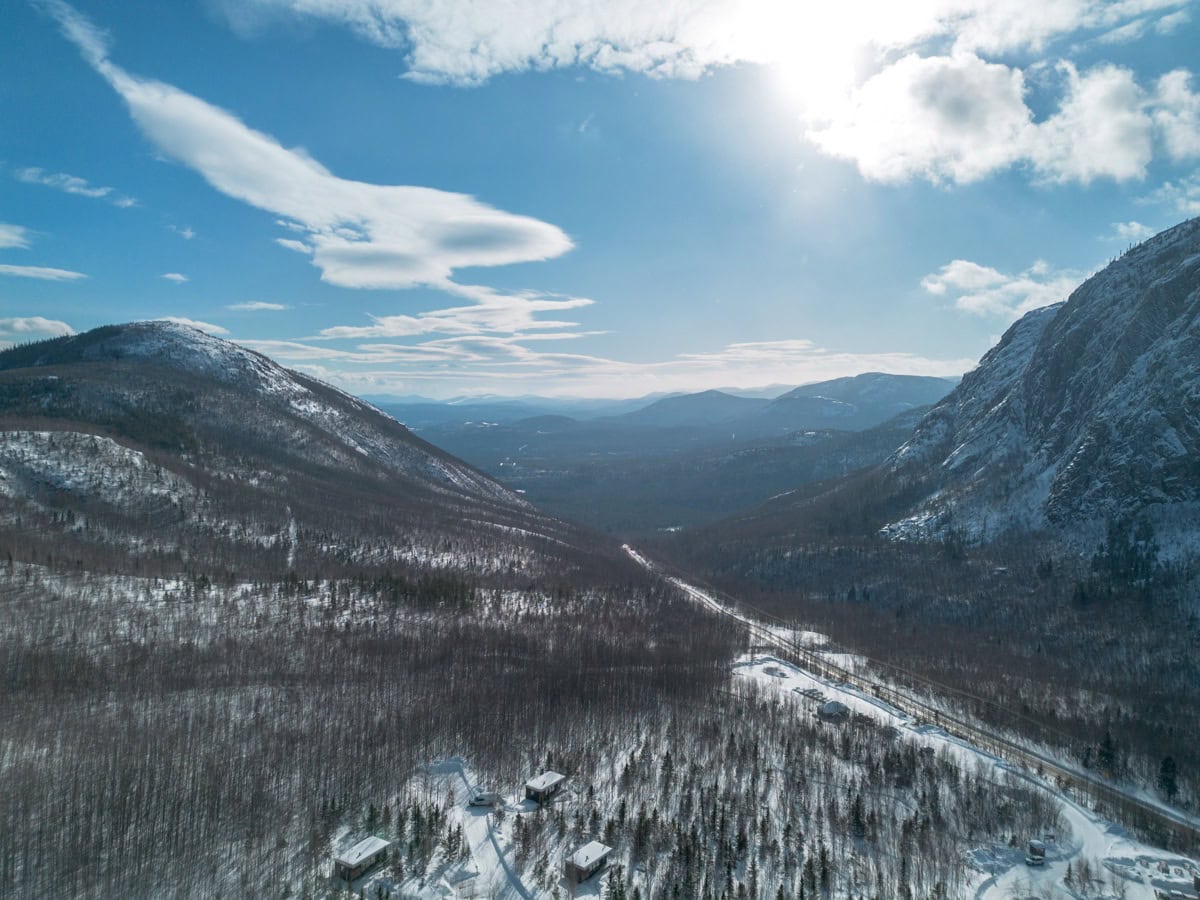
This provincial park managed by SEPAQ is a hiker’s paradise. The landscape here resembles taiga — boreal forest, peat bogs, rocky peaks, and with a bit of luck, a herd of caribou. Yes, caribou! It’s one of the few places in southern Quebec where you can still spot them.
We recommend the trek to Mont du Lac des Cygnes (about 8.4 km return, moderate difficulty), which offers a fantastic panoramic view over all of Charlevoix. Park admission is about 9 CAD (around €6) per person. If you want to overnight, SEPAQ offers cabins and campsites here — but book ahead.
3. La Malbaie and Fairmont Le Manoir Richelieu
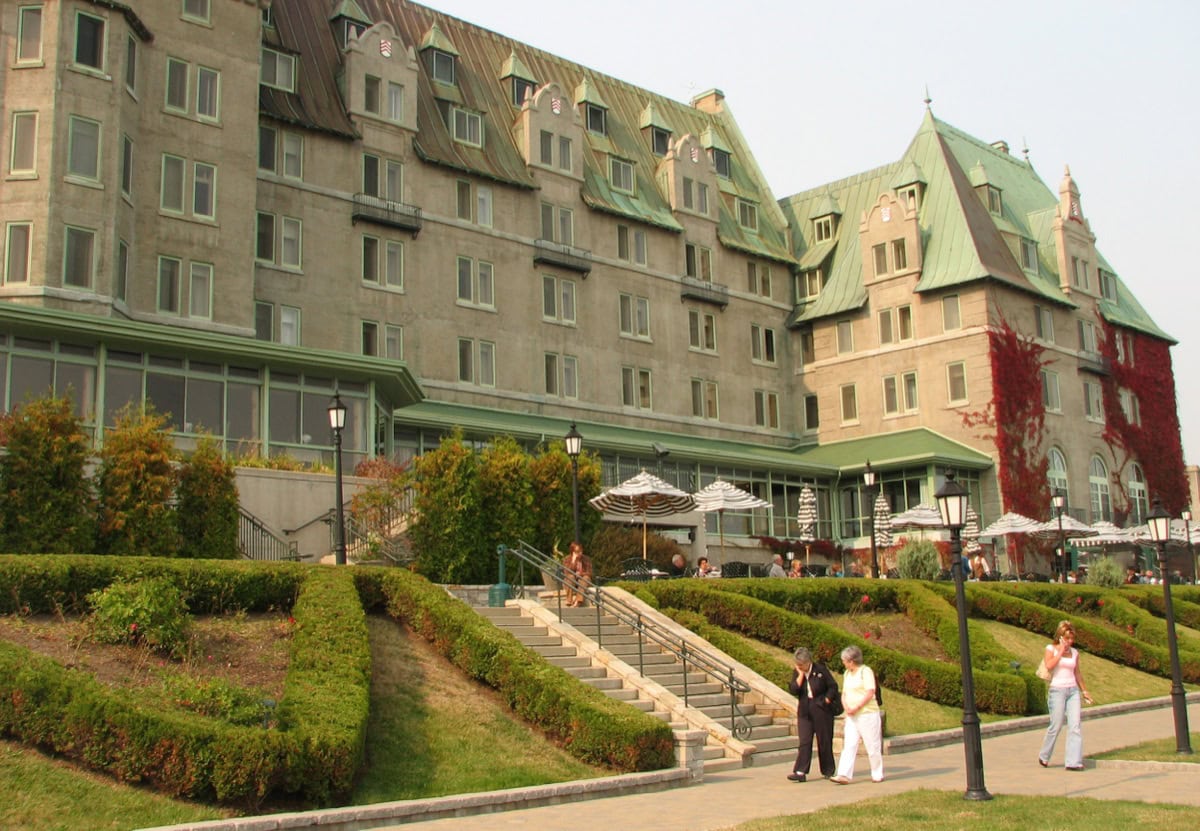
La Malbaie is another delightful little town in Charlevoix, best known for the monumental Fairmont Le Manoir Richelieu hotel perched on a cliff above the river. Even if you’re not staying there (prices start from around €200/night), it’s worth walking through the gardens and terrace for the view.
Around La Malbaie you’ll also find a casino, a golf course, and a harbour from which excursion boats head into the Saguenay Fjord. La Malbaie also makes an excellent base for day trips to Tadoussac.
4. Le Massif de Charlevoix – skiing with a river view
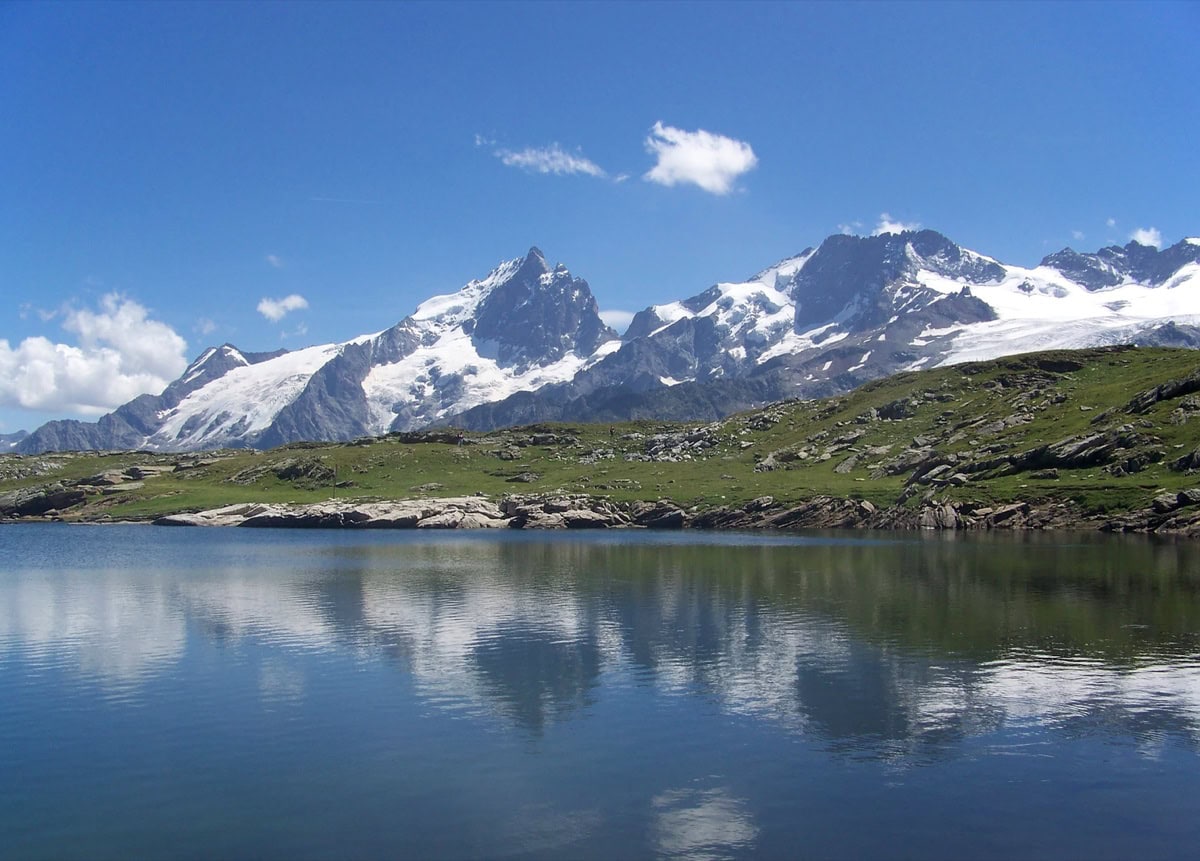
In winter, Le Massif is one of the most unique ski resorts in North America — you quite literally ski straight down towards the St. Lawrence River. The 770-metre vertical drop is the largest in eastern Canada, and the views on the way down are nothing short of unreal.
In summer, Le Massif transforms into an activity centre with mountain biking, a toboggan run, and hiking trails. A winter lift pass costs around 100 CAD (about €68) per day.
Map of points of interest for your phone
Tadoussac and Côte-Nord: 3 tips for whale watching
Tadoussac. Just saying the name gives me goosebumps. It’s the spot where the Saguenay River flows into the St. Lawrence, and thanks to specific currents and water temperatures, an incredible concentration of plankton gathers here. And where there’s plankton, there are whales. Tadoussac is one of the best places on earth for whale watching — and I say that without a shred of exaggeration. Up to 13 different species of cetaceans can be found here, including humpback whales, fin whales, belugas, and occasionally blue whales — the largest animal ever to have lived on Earth.
The whale-watching season runs roughly from May to October, peaking in August and September. We were here at the end of August and the experience was absolutely unforgettable.
1. Whale-watching in Tadoussac
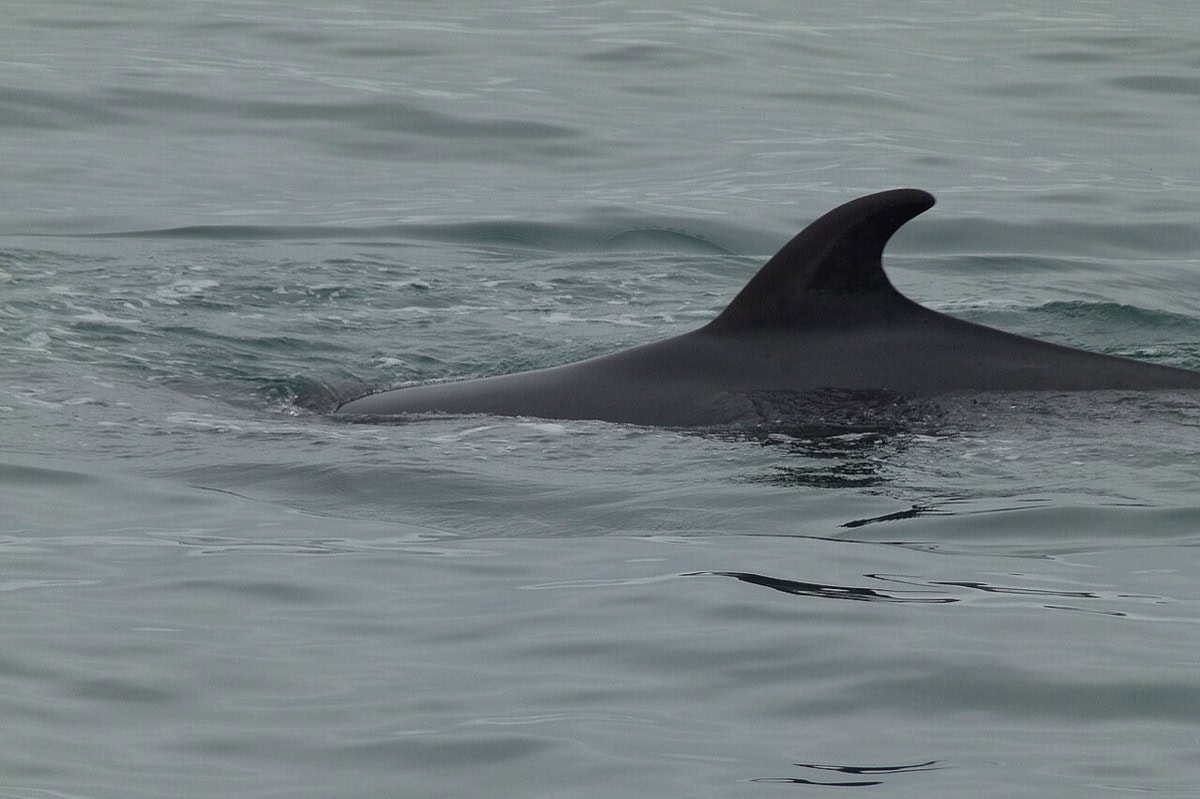
You’ve got several options for watching whales. The most popular is an excursion boat — large, stable, with a guide who explains what you’re seeing. It costs around 80–100 CAD (about €55–68) per person for a 2–3 hour cruise. The second option is a zodiac — an inflatable boat that gets you closer to the water (and to the whales), but it’s wilder and colder. The price is similar, but the experience is far more intense.
We chose the zodiac and had zero regrets. When a humpback whale surfaces a mere metre away from you and you hear that powerful exhale — that’s a moment you’ll never forget. Highly recommended. Just bring warm clothes — even in summer it’s chilly on the water.
And if a boat trip isn’t your thing? You can spot whales from shore near Tadoussac too — particularly from Pointe de l’Islet, where belugas are spotted fairly regularly. Completely free and equally lovely.
2. Fjord du Saguenay
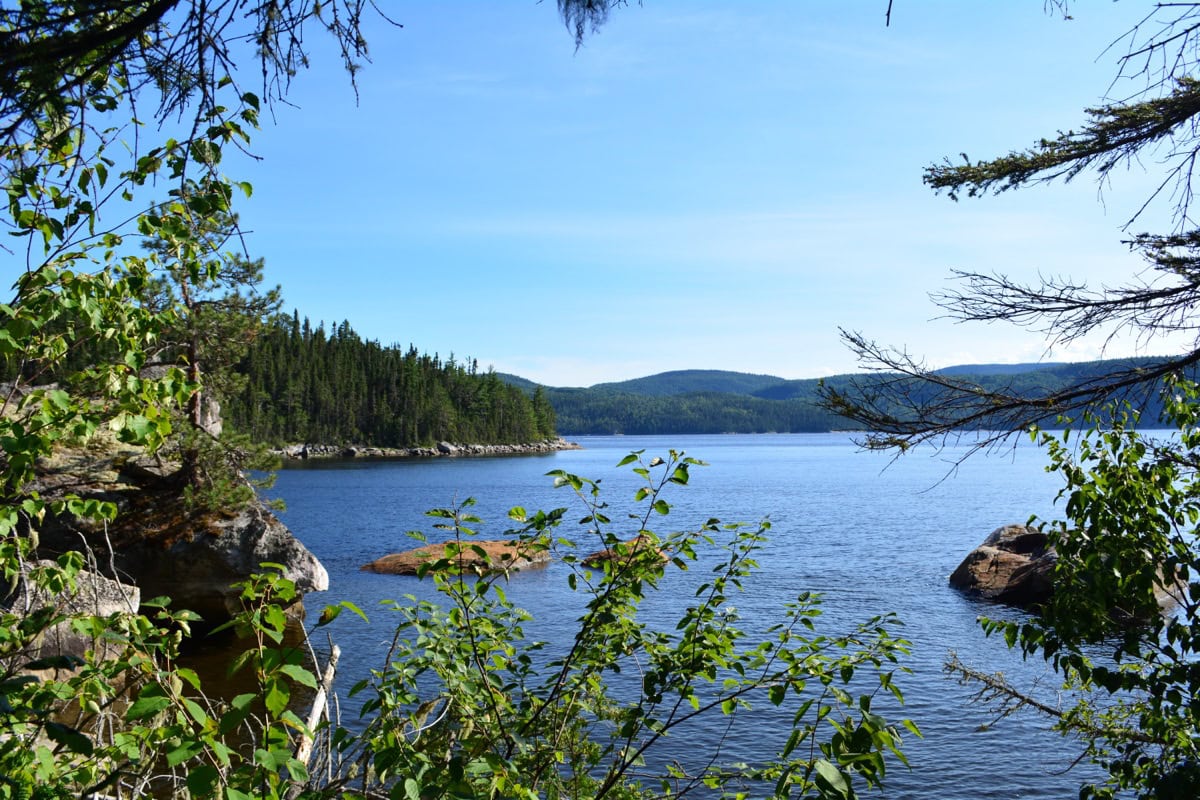
The Saguenay Fjord is one of the southernmost fjords in the world, and its dramatic walls rising up to 350 metres create absolutely breathtaking scenery. You can explore it by kayak (an incredible experience, from about 70 CAD / €48), by excursion boat, or on foot along the trails in Parc national du Fjord-du-Saguenay.
We recommend the trek to the Statue de Notre-Dame-du-Saguenay, which rewards you with a panoramic fjord view that’ll make your head spin. Park admission is the standard 9 CAD (about €6) via SEPAQ.
3. Bergeronnes and Les Escoumins – fewer tourists, same whales
If you want to escape the crowds in Tadoussac (it can get quite busy in peak season), head about 20–30 km further northeast to the villages of Bergeronnes or Les Escoumins. The whales are just as close, but there are far fewer tourists.
In Bergeronnes, you’ll find the fantastic Centre d’interprétation et d’observation de Cap-de-Bon-Désir — an observation point right on the rocks where whales often appear literally just a few dozen metres from shore. Entry is only about 8 CAD (around €5.50) and we spent an entire afternoon here with binoculars, completely mesmerised. In Les Escoumins, you can take an amazing scuba diving trip into the cold waters of the St. Lawrence.
Gaspésie: 4 tips for a peninsula that will take your breath away
Gaspésie is probably the wildest part of Quebec we visited — and also the one that demands the most time and planning. This peninsula in the east of the province is famous for Route 132, a road hugging the entire coastline, which National Geographic named among its 50 destinations of a lifetime. And it’s easy to see why. Dramatic cliffs plunging into the sea, fishing villages, endless horizons, and the feeling of being at the edge of the world.
For Gaspésie you absolutely need a car and time — a minimum of 3–4 days, ideally a week. Lukáš and I drove the whole loop and it was probably the most beautiful road trip of our lives. We booked the car through DiscoverCars back home and in this case it was absolutely essential — without a car there’s simply no getting here (public transport is minimal). And a word of warning — watch out for moose on the roads, especially at dusk and night. They’re not rare — we personally spotted them twice.
1. Percé Rock and Île Bonaventure
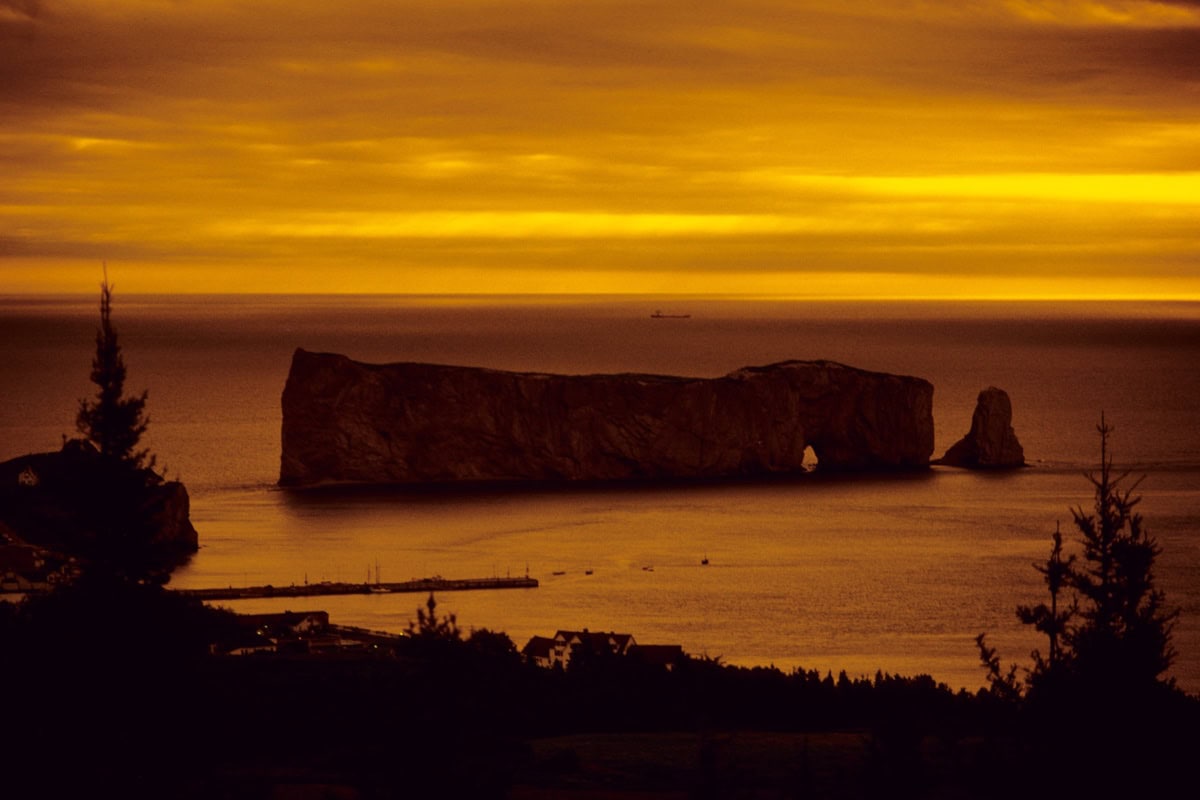
Rocher Percé — a massive limestone rock with a natural arch — is arguably the most iconic natural formation in all of Quebec. It rises from the sea in front of the town of Percé and is utterly mesmerising. At low tide, you can walk out to it (but be careful and keep an eye on the tide times!).
Right beside it lies Île Bonaventure, an island that’s home to one of the world’s largest northern gannet colonies — around 110,000 birds! A boat to the island costs about 40 CAD (around €27) return, and the walk across the island to the bird colony is unforgettable. The sound, the smell, the spectacle — it’s so intense that words can’t do it justice. 😁
2. Parc national de la Gaspésie
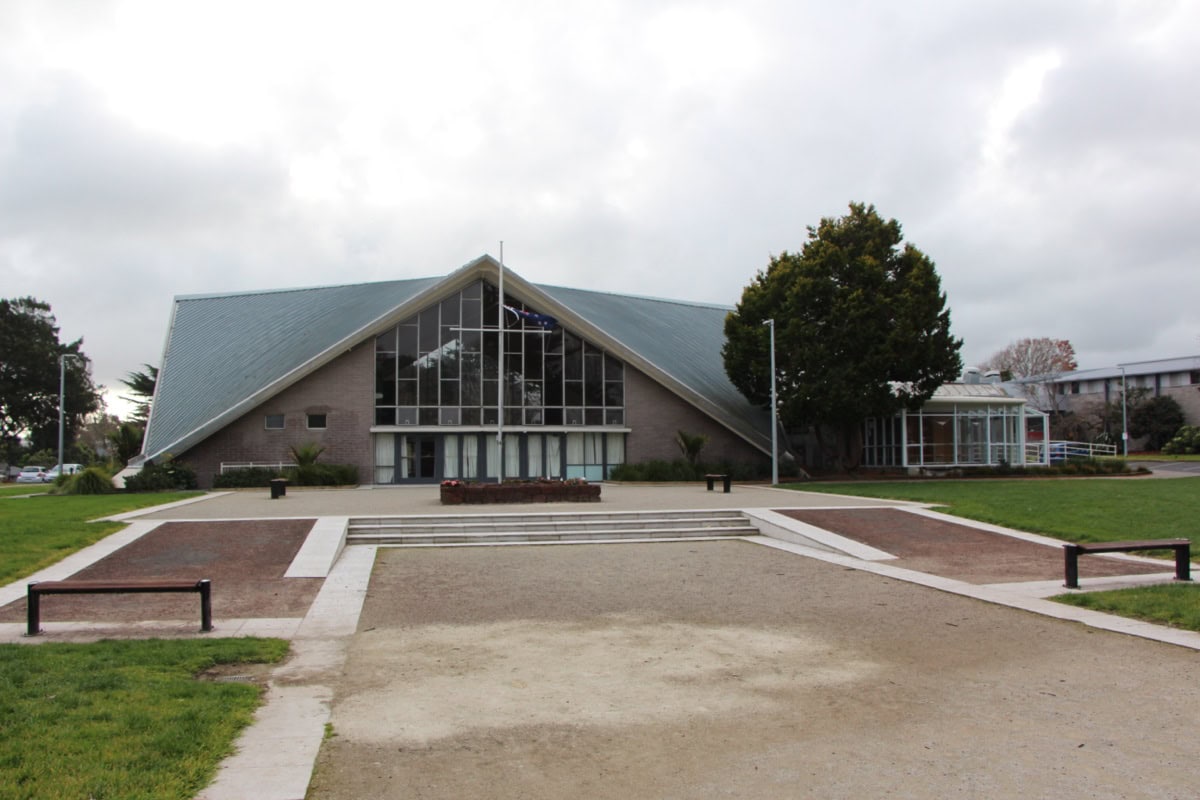
In the heart of the peninsula rise the Chic-Choc Mountains, and within them lies the gorgeous Parc national de la Gaspésie. It’s one of the few places in Quebec where caribou, moose, and deer all coexist. The main trek leads to Mont Jacques-Cartier (1,268 m) — the highest accessible peak in southern Quebec.
The ascent is moderately challenging (about 8 km return), but the views from the alpine tundra at the summit are worth every step. SEPAQ operates beautiful cabins and campsites here. Park admission is the standard 9 CAD (about €6).
3. Forillon National Park
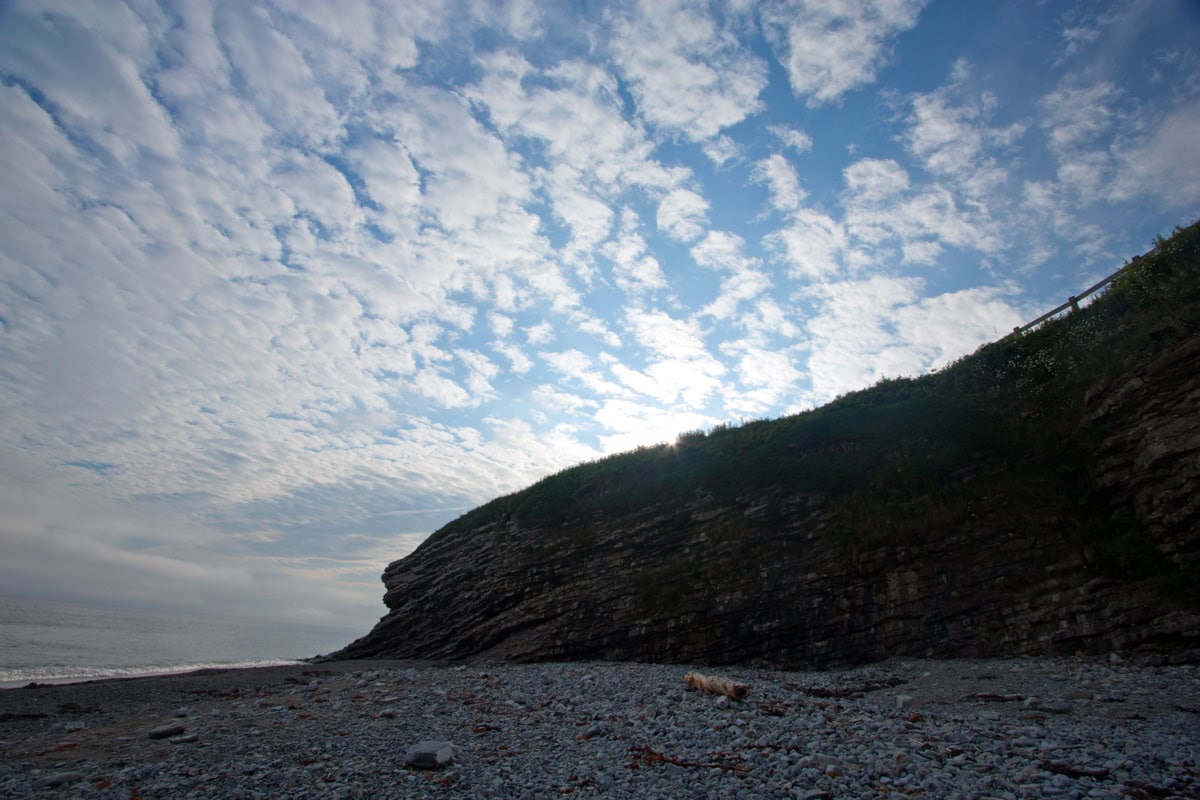
At the very tip of Gaspésie, where the land ends and the ocean begins, lies Forillon — a national park managed by Parks Canada. Cliffs, forests, beaches, and profound tranquillity. The trek to Cap-Bon-Ami is one of the most beautiful in all of Quebec — you stand atop a cliff overlooking the sea with seals swimming below.
Park admission is 8.50 CAD (about €6) per person per day. Camping is available inside the park. It’s a place where you truly feel far from civilisation — and that’s precisely what makes it so beautiful.
4. Route 132 roadtrip – the journey is the destination
The full Route 132 loop around Gaspésie covers about 885 km and it’s a road trip you’ll remember for the rest of your life. The road runs along the coast, through fishing villages like Sainte-Anne-des-Monts, Grande-Vallée, and Chandler. Stop wherever takes your fancy — at lighthouses, at smokehouses serving freshly caught fish, at viewpoints where the St. Lawrence becomes the ocean.
We set aside five days for this loop and it was just right — enough to savour the stops, but not so much that we got road-weary. Fill up whenever you can — petrol stations are sparser than you’d expect. And revel in the silence. This is where Canada reveals itself at its most raw and magnificent.
Laurentians: 3 tips for the mountains on Montreal’s doorstep
The Laurentians are essentially Montreal’s playground — a mountain range full of lakes, forests, and charming mountain resorts where Montrealers escape the city at weekends. It’s about an hour’s drive north of Montreal and the landscape changes dramatically — skyscrapers give way to rolling hills, blueberry forests, and crystal-clear lakes.
In summer people flock here for hiking, cycling, canoeing, and paddleboarding; in autumn for the Indian summer (the fall colours here are absolutely spectacular); and in winter for skiing and cross-country skiing. It’s the perfect complement to a Montreal stay — just a day or two and you get a completely different experience.
1. Parc national du Mont-Tremblant
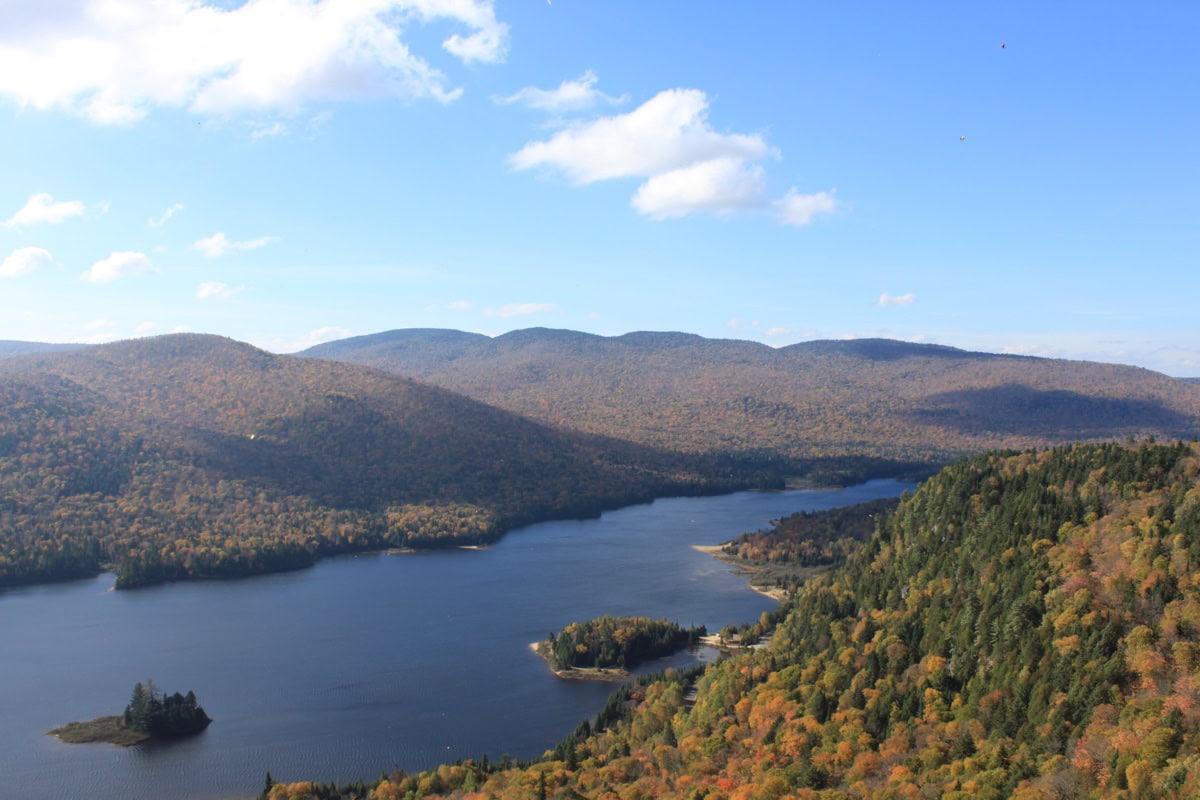
The largest and oldest provincial park in Quebec (established in 1895) is an absolute jewel of the Laurentians. It’s roughly 6× the size of the Lake District and offers hundreds of kilometres of hiking trails, dozens of lakes, and magnificent wilderness.
We recommend the trek to Sommet de la Roche or the Boucle de la Chute-aux-Rats — both offer gorgeous views and aren’t overly demanding. You can camp in the park or rent a SEPAQ cabin. Admission is 9 CAD (about €6). And if you’re lucky, you’ll hear wolves howling. We were, and it’s a memory that’ll stay with us forever. ☺️
2. Village Mont-Tremblant – an Alpine village in Canada
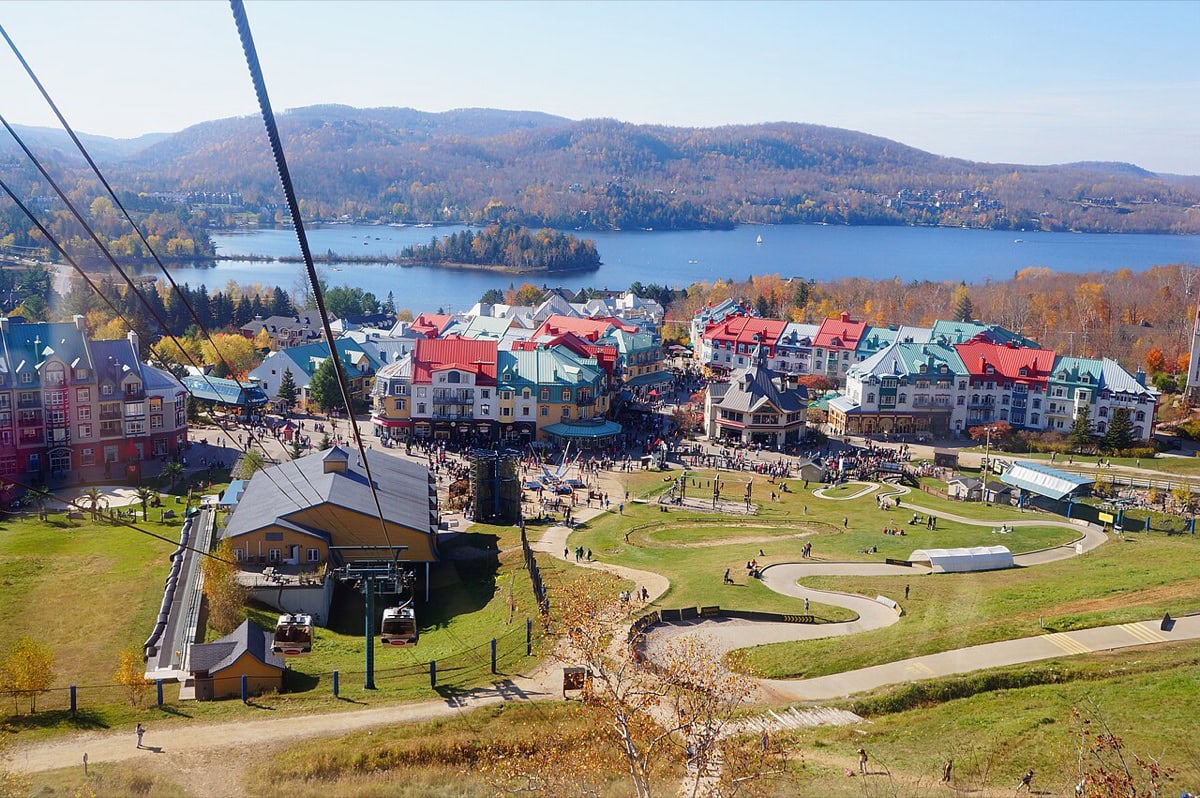
At the foot of the namesake ski resort sits the pedestrianised Village Mont-Tremblant — a colourful village built in Alpine style, brimming with restaurants, shops, galleries, and cafés. In winter it’s a skiing paradise (one of the best resorts in eastern Canada); in summer it’s a hub for outdoor activities.
Honestly, it’s a touch “theme-park-ish” (the whole village is essentially a resort), but it’s charming all the same. Children love it, and while restaurant prices are on the higher side, you can easily spend a lovely afternoon here. The gondola to the summit of Mont-Tremblant costs around 30 CAD (about €20) and the view is absolutely worth it.
3. P’tit Train du Nord – 234 km cycling an old railway
This is every cyclist’s dream. P’tit Train du Nord is a cycle trail following the route of a disused railway line, stretching an incredible 234 km — from Saint-Jérôme all the way to Mont-Laurier. The trail passes through forests, along lakes, over bridges, and through old station buildings converted into cafés and rest stops.
You don’t have to ride the whole thing — you can cycle just a section and turn back. Bike hire is available at multiple points along the trail. The surface is gravel, making it ideal for a trek or gravel bike. In autumn, when the leaves are turning, it’s arguably one of the most beautiful cycle routes in the world. And the best bit? Access to the trail is free.
What to eat and drink in Quebec: 7 specialities you must try
Québécois cuisine is something Lukáš and I were completely unprepared for. We expected North America — burgers and steaks. Instead we got a fascinating blend of French gastronomy and North American comfort food that absolutely won us over. Montreal is rightly considered Canada’s gastronomic capital — the restaurant scene here is world-class.
But Quebec isn’t just fine dining. Some of the best food is eaten on the street, at markets, or in small family-run establishments that look like they belong to another era. Here are our picks for the absolute best.
1. Poutine – Quebec’s national dish
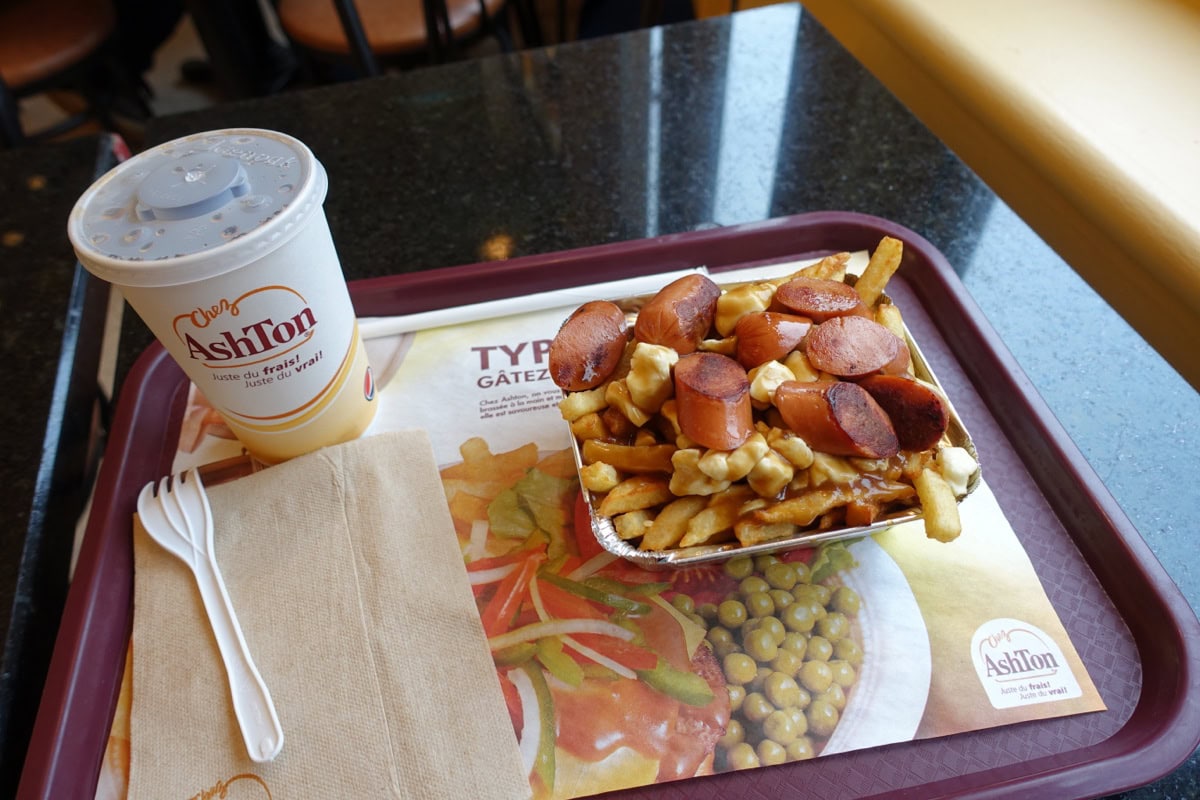
If you try just one dish in Quebec, make it poutine. Chips, cheese curds, and brown gravy. Sounds simple, looks unassuming, but the taste — let me get poetic here — is like a warm hug for your stomach. 😁 It comes in dozens of variations — with pulled pork, with foie gras, with smoked meat.
A classic poutine goes for about 8 CAD (around €5.50) at a fast-food spot, while gourmet versions in restaurants run 18–25 CAD (€12–17). La Banquise in Montreal is a legendary spot, open 24/7, with dozens of varieties. Expect a queue though. ☺️
2. Montreal smoked meat – a legendary sandwich
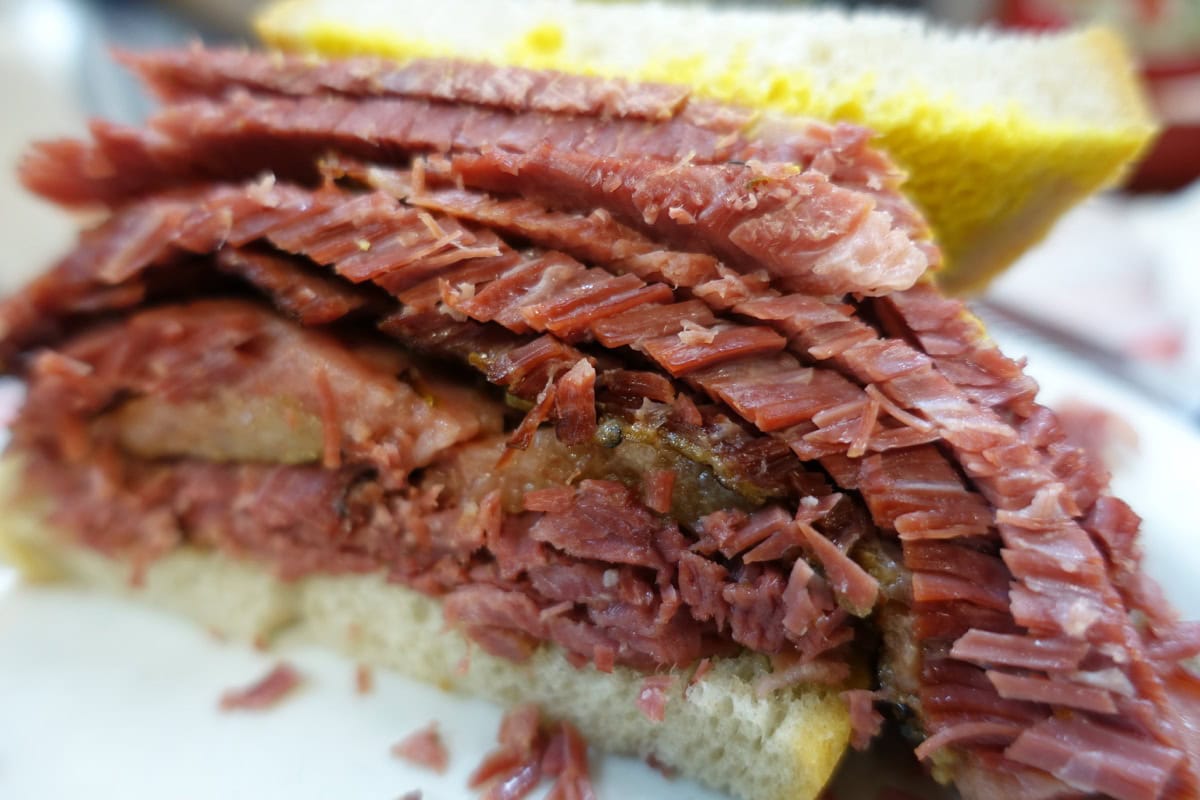
Schwartz’s Deli has been going since 1928 and serves what is arguably the most famous sandwich in all of Canada — smoked meat on rye bread with mustard. The meat is brined, spiced, and smoked for weeks, and the result is absolutely phenomenal. A portion costs about 12–15 CAD (€8–10).
The queue outside Schwartz’s can be long (we waited about 30 minutes), but it moves quickly. Alternative? Main Deli a few doors down is nearly as good and queue-free. But the experience of waiting outside Schwartz’s is simply part of the Montreal ritual.
3. Montreal bagel – better than New York’s?
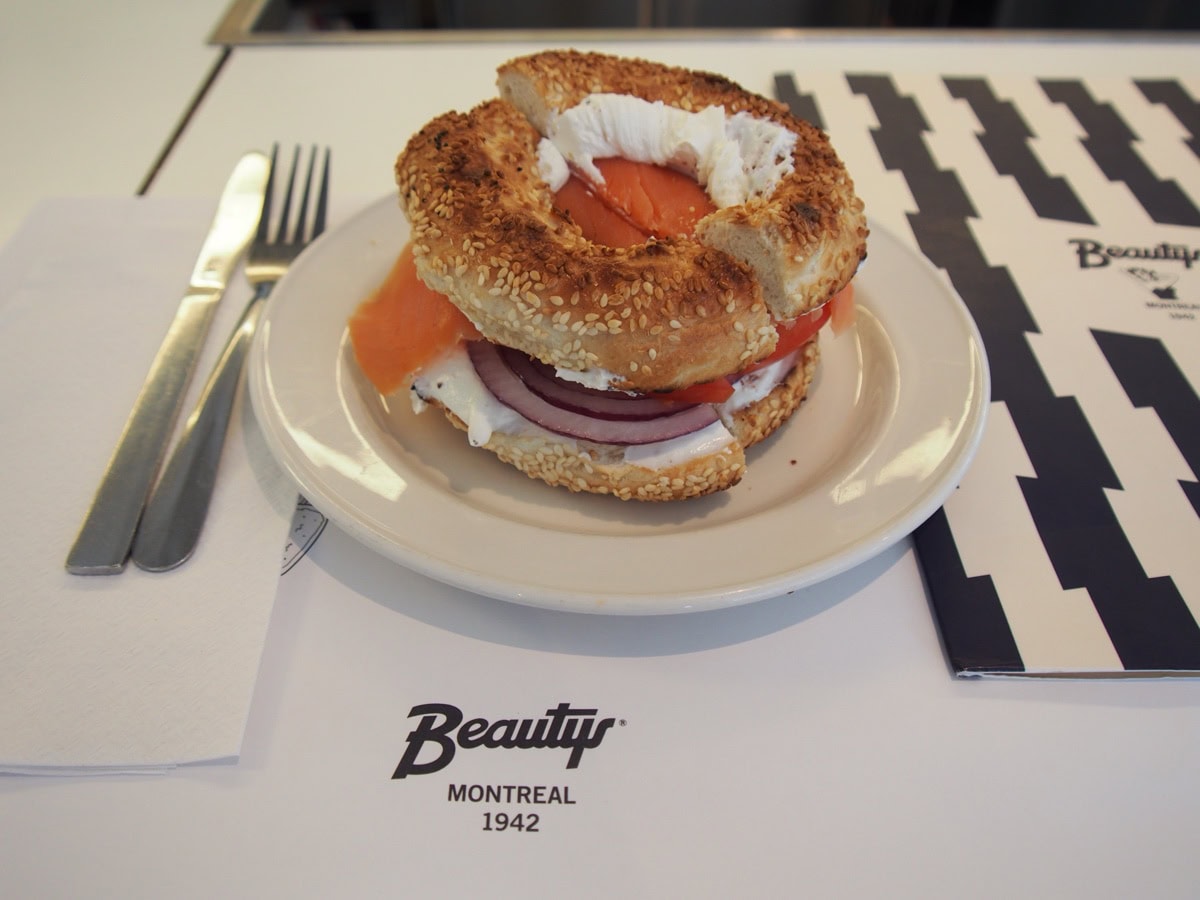
This is a bold claim, but I’ll say it: the Montreal bagel is better than the New York bagel. There, I said it. It’s smaller, sweeter (boiled in honey water), denser, and baked in a wood-fired oven. And in Montreal, there’s a never-ending rivalry between two legendary bakeries: St-Viateur Bagel and Fairmount Bagel. Both are open 24/7, both are the stuff of legend.
Lukáš and I dutifully tried both — and honestly, they’re both superb. St-Viateur has perhaps a slightly better sesame, Fairmount edges it on poppy seed. A single bagel costs about 1 CAD (around 60p). Buy a dozen — you won’t regret it. They’ll vanish before you know it.
4. Tourtière – Quebec meat pie
Tourtière is a traditional Québécois meat pie — crisp pastry filled with minced meat (pork, veal, or game), spiced with cinnamon and clove. It’s a classic winter comfort food that families prepare at Christmas. In restaurants you’ll find it year-round, at about 15–20 CAD (€10–14) per serving.
The most authentic tourtière we had was at a small family restaurant on Île d’Orléans — the grandmother made it following a recipe passed down through generations, and it was absolutely divine.
5. Maple syrup and cabane à sucre
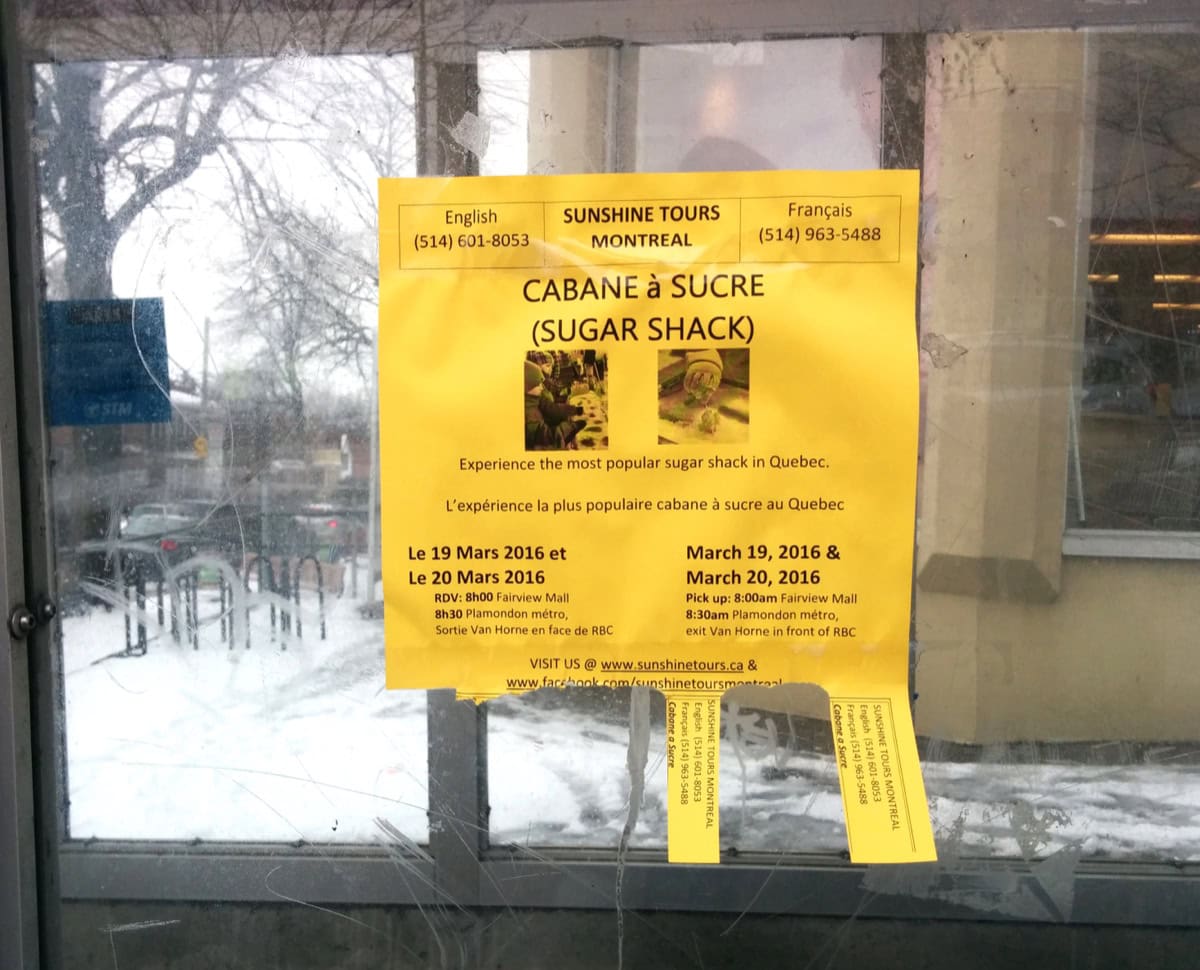
Quebec produces roughly 70% of the world’s maple syrup — and here it’s not just a condiment, it’s a way of life. In spring (March–April), the cabanes à sucre (sugar shacks) open up — traditional maple houses where syrup is boiled and enormous breakfasts are served: pancakes drenched in syrup, bacon, beans, eggs, ham. All washed down with maple wine.
One of the most traditional is Érablière au Sous-Bois near Quebec City. A meal costs about 30–40 CAD (€20–27) per person, and you’ll eat so much you won’t be able to stand up. And don’t miss tire sur la neige — hot maple syrup poured onto snow that hardens into a chewy taffy. Kids (and adults) absolutely love it. ☺️
6. Quebec cheeses and microbreweries
Quebec has a surprisingly rich cheesemaking tradition — and some of its cheeses could easily hold their own in France. Try Oka (a semi-hard cheese from a Trappist monastery), Le Migneron from Charlevoix, or Pied-De-Vent from the Magdalen Islands. You’ll find cheeses at markets, specialist fromageries, and farms across the province.
And microbreweries? Quebec is in the midst of a craft beer revolution. Unibroue, Dieu du Ciel! (Montreal), Le Trou du diable (Shawinigan) — those are just some of the best. A pint of craft beer in a pub costs around 8–10 CAD (€5.50–7).
7. BeaverTails and other sweet treats
BeaverTails (Queues de castor) are flat, fried dough pastries shaped like a beaver’s tail, dusted with cinnamon and sugar or slathered with Nutella and fruit. They’re classic Canadian street food, and in Quebec City you’ll find them on every corner. They cost about 7–9 CAD (€5–6) and are absolutely irresistible.
Also worth a mention is pouding chômeur — a Québécois dessert from the Great Depression, where sponge cake batter is baked in maple syrup. Sounds simple, tastes heavenly.
Practical tips for travelling to Quebec
Quebec works differently from the rest of North America in many ways — and certainly differently from the UK. Here are a few practical pointers that’ll save you hassle and money.
Language – will you get by in English?
French is the sole official language of the province of Quebec. In Montreal, the situation is bilingual — most people speak both English and French fluently and will happily switch. In Quebec City, English is common in tourist areas too. But once you venture into the countryside — to Gaspésie, Charlevoix, or smaller towns — be prepared for English not to be a given.
Québécois French also differs quite a bit from European French — the accent, slang, and certain expressions are different. But don’t worry — even a simple “bonjour”, “merci”, and “parlez-vous anglais?” will open doors. Quebecers genuinely appreciate any effort to speak French. And Google Translate will handle the rest. 😉 As an English speaker, you’ll actually find you can read quite a lot of French signs and menus, given how many English words have French roots.
Currency, payments, and tipping
The currency is Canadian dollars (CAD), and card payments are accepted practically everywhere (even at farmers’ market stalls). Important warning: prices in shops and restaurants are always listed WITHOUT tax! Federal tax TPS (5%) and provincial tax TVQ (9.975%) get added at the till, totalling roughly 15%. So when you see 50 CAD on the price tag, you’ll actually pay about 57.50 CAD.
Tipping is essentially mandatory in Canada (an unwritten rule) — 15–20% of the pre-tax amount in restaurants. Waiters earn a low base wage and rely on tips. Not tipping is considered extremely rude.
Safety and health
Quebec is generally a very safe destination. Violent crime is low, though nature does pose several risks. Bears (black bears) inhabit forested areas — follow proper food storage rules at campsites. Mosquitoes and ticks are active in summer, especially in the forests. Repellent and tick checks are essential.
Travel insurance is absolutely essential! Healthcare in Canada is extremely expensive for foreign visitors — an A&E visit can cost thousands of dollars, and hospitalisation can run into tens of thousands. Don’t underestimate this — take out comprehensive travel insurance before you fly.
Internet and SIM card
WiFi is widely available in cafés, hotels, and public spaces. However, mobile data in Canada is notoriously expensive — a local SIM with data costs 40–60 CAD (€27–41) per month.
Top tip: get an eSIM through Airalo before you fly. It’s significantly cheaper than a local SIM, you activate it online, and you have data the moment you land. We used Airalo and it worked brilliantly.
How many days to spend in Quebec
- 7 days: Montreal (2–3 days) + Quebec City (2–3 days) + one day trip (Montmorency Falls, Île d’Orléans, Laurentians). Enough for a taster.
- 10–14 days: Ideal for a road trip — Montreal – Quebec City – Charlevoix – Tadoussac + either Gaspésie or the Laurentians. This is our recommended format.
- 3 weeks: Pure luxury — you can fit everything in including Gaspésie, the Laurentians, and leisurely days in one spot. If you have the time, don’t hesitate.
Frequently asked questions about Quebec – FAQ
Here we answer the most common questions we get about travelling to Quebec.
Tips and Tricks for Your Vacation
Don’t Overpay for Flights
Search for flights on Kayak. It’s our favorite search engine because it scans the websites of all airlines and always finds the cheapest connection.
Book Your Accommodation Smartly
The best experiences we’ve had when looking for accommodation (from Alaska to Morocco) are with Booking.com, where hotels, apartments, and entire houses are usually the cheapest and most widely available.
 🚗 Car rental on the roadVerified rental cars in Canada
Search with the DiscoverCars comparison engine — it compares prices from dozens of local and international rental companies, and most bookings come with free cancellation.
Compare car prices in Canada →Don’t Forget Travel Insurance
Good travel insurance will protect you against illness, accidents, theft, or flight cancellations. We’ve had a few hospital visits abroad, so we know how important it is to have proper insurance arranged.
Where we insure ourselves: SafetyWing (simple monthly subscription) and TrueTraveller (for extra-long trips).
Find the Best Experiences
Get Your Guide is a huge online marketplace where you can book guided walks, trips, skip-the-line tickets, tours, and much more. We always find some extra fun there!
More from Canada
Full guide → Travel storyWhy We Moved to Canada and Why We Came Back
 What to seeCharlottetown, Prince Edward Island: 15 Things to See and Do in Canada’s Smallest Province
 Travel story“Sometimes It Gets on My Nerves How Friendly They Are! What’s Wrong With You, People!”
 What to seeMontreal, Canada: 22 Things to See and Do in 2026
 What to seeSt. John’s, Newfoundland, Canada: 12 Best Things to See and Do


