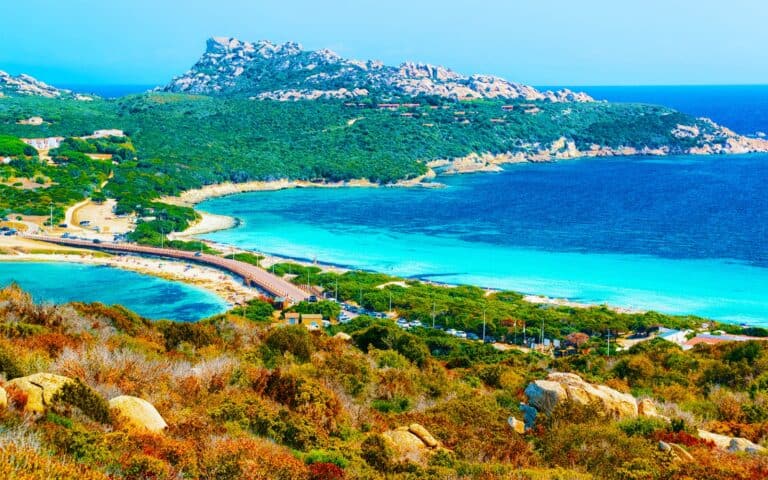
You know that feeling when you’re craving Caribbean-style exotica but can’t face twelve hours on a plane? If there’s one place in the Mediterranean that can genuinely rival the Caribbean’s beaches, it’s Sardinia, Italy. This vast Italian island serves up an absolutely incredible mosaic of experiences, from beaches with soft white sand and turquoise water to a wild interior carved through with deep canyons.
A holiday in Sardinia can take on almost endless forms. Some come for the glamour of the famous Emerald Coast, others hunt out remote coves reachable only via a tough trek, and plenty of people just want to wander the romantic lanes of historic towns. The island is also renowned for its longevity and authentic cuisine, which is rather different from what you’ll find on mainland Italy.
In this guide I’ll give you a complete rundown of the very best that Italy’s second-largest island has to offer. Together we’ll work through 25 tips on fascinating places, I’ll help you with the logistics, ferries and car hire, and I’ll flag up the strict rules that apply on the most beautiful beaches.
TL;DR
- The most beautiful beaches have limits: You won’t get into the most famous coves like La Pelosa or Cala Goloritzé without booking in advance. The authorities manage them through an app, charge fees and enforce strict rules (such as compulsory mats under your towel to stop the sand being damaged).
- A car is a must: Public transport on the island is fairly limited. If you want to discover hidden spots, you’ll struggle without a hire car, but be extremely careful of fines for driving into historic centres (ZTL zones).
- Diverse regions: The northeast tempts you with the luxurious Costa Smeralda and the La Maddalena islands, the northwest offers historic Alghero, the east will stun you with the cliffs of the Golfo di Orosei, and the south delights with a calmer vibe around Cagliari.
- Rich history: Over 7,000 so-called nuraghi are scattered across the island. These are mysterious Bronze Age stone structures you genuinely won’t find anywhere else in the world.
- When to go: The best weather in Sardinia is said to come in June and September. The sea is pleasantly warm by then, but you’ll dodge the August crowd chaos and the extreme prices.
The full destination guide: Sardinia — guide and what to see
When to Visit Sardinia
Getting the timing right is absolutely key to a successful trip, because the island changes quite dramatically over the course of the year. Let’s look at when to go to Sardinia so you get the most out of your stay and avoid any nasty surprises.
Spring months like April and May bring very pleasant air temperatures of around 18 to 23 degrees, which makes for absolutely ideal conditions for hiking and exploring the sights. The sea, however, is still quite cool at this time, usually sitting between 15 and 19 degrees, so swimming is really only for the hardiest souls. On the upside, the landscape is beautifully green and full of wildflowers in this period.
The real beach season kicks off in June, when temperatures climb towards 28 degrees and the sea warms up to a lovely 22 degrees. Travellers generally rate June as one of the best months to visit, since the island isn’t yet bursting at the seams but the summer mood is already in full swing. July and August, by contrast, are the absolute peak of the season, with temperatures routinely topping 30 degrees and water as warm as a bath. Just be prepared for an enormous influx of tourists, packed beaches and accommodation that can easily cost a hundred percent more.
An absolutely critical date is 15 August, the Italian holiday of Ferragosto. Pretty much all of Italy is on holiday then, and it becomes practically impossible to park or find a free table in a restaurant. September, on the other hand, is many travellers’ secret tip. After the hot summer, the sea stays a fantastic 24 degrees, the crowds gradually thin out and air temperatures settle at a far more bearable 27 degrees.
How to Get to Sardinia
Getting to the island takes a little planning, but thanks to growing competition between carriers it’s now fairly easy and affordable. It just comes down to whether you’d rather fly in quickly or make a road trip of it and bring your own car.
By air
The fastest way to travel is, of course, by plane. The island is served by three main international airports: Cagliari in the south, Olbia in the northeast and pretty Alghero in the northwest. If you’re hunting for flights to Sardinia from the UK, there are plenty of options in summer. Carriers such as easyJet, Ryanair and British Airways run seasonal routes from London airports to Cagliari and Olbia, while Alghero is a brilliant gateway for exploring the northwest coast. Booking a few months ahead usually nets you the best fares.
By ferry
For anyone who wants to crisscross the island in their own car or campervan, the ferry to Sardinia is the ideal choice. Boats sail from several Italian ports, with the busiest routes running from Livorno, Genoa or Civitavecchia. The crossing from Livorno to Olbia is usually the cheapest and takes roughly 7 to 10 hours, so plenty of people cleverly opt for overnight crossings with the option of booking a cabin. If you fancy combining a visit to more than one island, there’s also a fantastic and fast connection from neighbouring Corsica. The hop from the French town of Bonifacio to Santa Teresa Gallura in Sardinia takes just 50 minutes.
Car hire and the tricky ZTL zones
A holiday in Sardinia is practically impossible without a car, because while buses reliably connect the larger towns, sadly they won’t get you to the most beautiful hidden beaches. You can easily hire a car right at the airports, but it pays to watch out for a few pitfalls. Forums have long warned about certain budget rental companies that put fairly aggressive pressure on you to buy expensive insurance add-ons if you don’t happen to own a classic credit card. Local companies tend to be noticeably more relaxed about debit cards, and always photograph the car in detail when you pick it up.
Pay close attention to traffic restrictions in towns. The abbreviation ZTL (Zona a Traffico Limitato) marks zones with restricted access into historic centres. These areas are ruthlessly monitored by cameras, and unauthorised entry — even for just a few seconds while innocently turning around — means an automatic fine of between 80 and 200 euros. If you see an illuminated sign reading “Varco Attivo”, it means the zone is active and entry is forbidden. Trust me, the best strategy is always to park nicely on the outskirts and walk into the centre instead.
Where to Stay in Sardinia
Choosing the right base is absolutely fundamental to a happy trip, because the island is far bigger than it looks on a map. Driving from one end to the other can easily eat up hours, so for a shorter stay it’s always best to pick one region and really enjoy it properly.
The northeast, around the Costa Smeralda and Gallura, is considered the most luxurious — and, honestly, the most expensive — part of the island. You’ll find the most exclusive resorts here, along with a superb launch point for boat trips to the La Maddalena archipelago, but you’ll have to dig deeper into your pocket. The northwest, with Alghero’s airport, offers absolutely excellent value for money alongside gorgeous historic towns. The east coast around the resort of Cala Gonone, meanwhile, is a paradise for lovers of untouched nature, dramatic cliffs and more demanding treks.
The south of the island, around the capital Cagliari, is often unfairly overlooked by tourists, even though it’s said to hide the very best beaches in the Chia and Villasimius areas. Anyone seeking absolute peace and an authentic taste of Sardinian culture should head for the mountainous interior. There you’ll come across traditional stone villages and so-called agriturismi — romantic farms offering accommodation and fantastic home cooking at very reasonable prices.
💡 Specific accommodation tips across the regions (check prices and availability on Booking.com, and book early in high season):
- Hotel Villa Las Tronas (Alghero)
- Su Gologone Experience Hotel (Oliena)
- Hotel Nuraghe Arvu (Cala Gonone)
- Cala Cuncheddi (Olbia)
- Hotel Nautilus (Villasimius)
Southern Sardinia: 5 Things to See in and Around Cagliari
The southern part of the island offers a fascinating mix of ancient history, lively city life and sprawling beaches that, judging by the photos, more than hold their own against the most celebrated bays in the north. Let’s take a look at the highlights.
1. Cagliari and the historic Castello quarter
The island’s capital is romantically set across several hills, and its historic heart is the majestic Castello quarter. This old fortified district is surrounded by massive walls and made up of a tangle of narrow lanes, above which rise the 14th-century Pisan towers of Torre dell’Elefante and Torre di San Pancrazio. A stroll along these steep streets offers constant views over the blue Golfo degli Angeli.
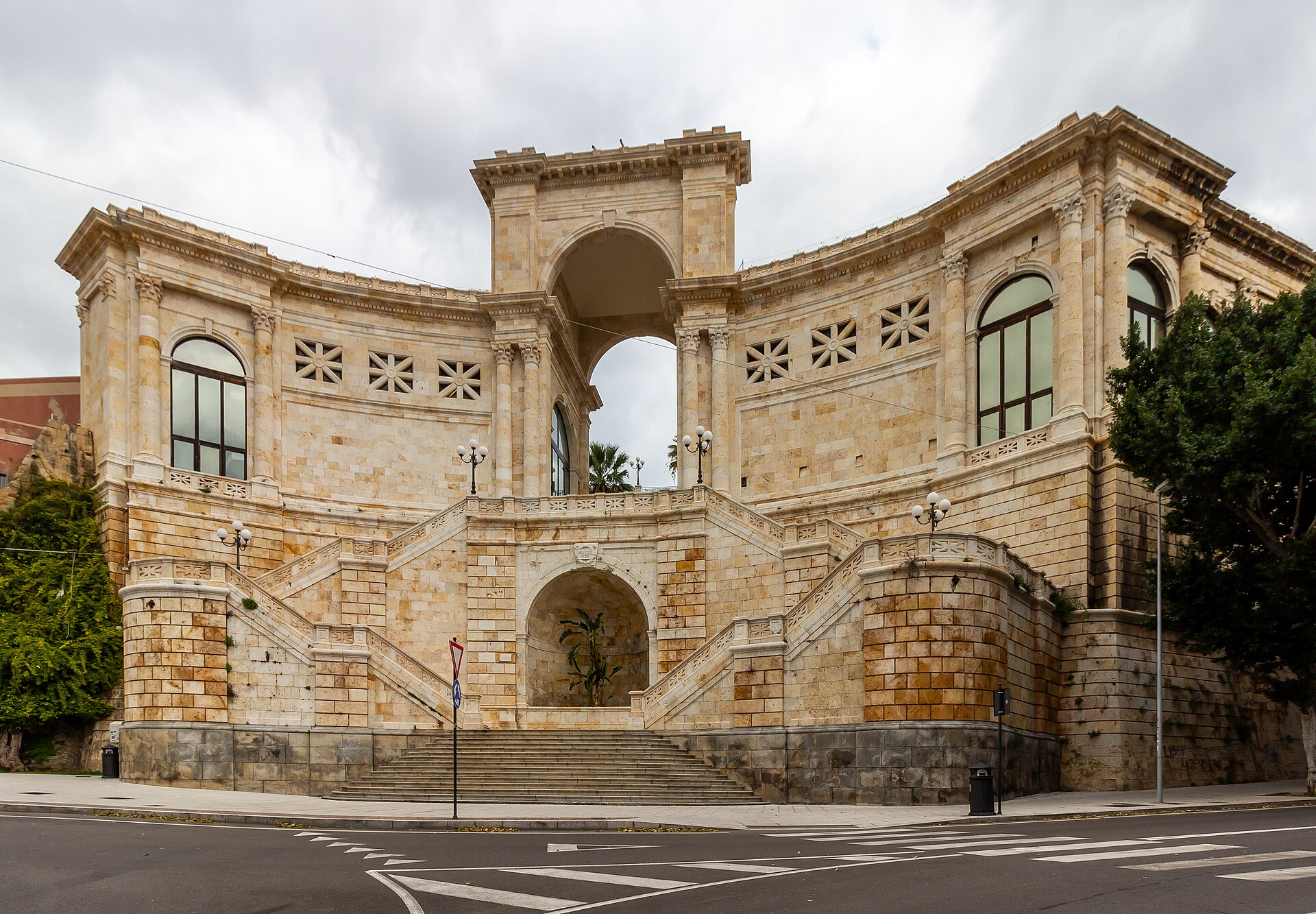
An utterly unmissable landmark is the Bastione di Saint Remy, an enormous neoclassical viewing terrace of white limestone. It’s said to offer the best view in the whole city, especially the moment the sun dips below the horizon. You’ll also be wowed by the Roman amphitheatre carved straight into the rock and the National Archaeological Museum, home to a rare collection of mysterious nuraghic figurines.
2. Poetto beach and the pink flamingos
The city flows straight onto the eight-kilometre-long Poetto beach, the main summer relaxation hub for locals. It’s covered in beautifully fine sand, lined with hundreds of cafés and bars, and at its far end the iconic rock formation of Sella del Diavolo (the Devil’s Saddle) rises majestically.
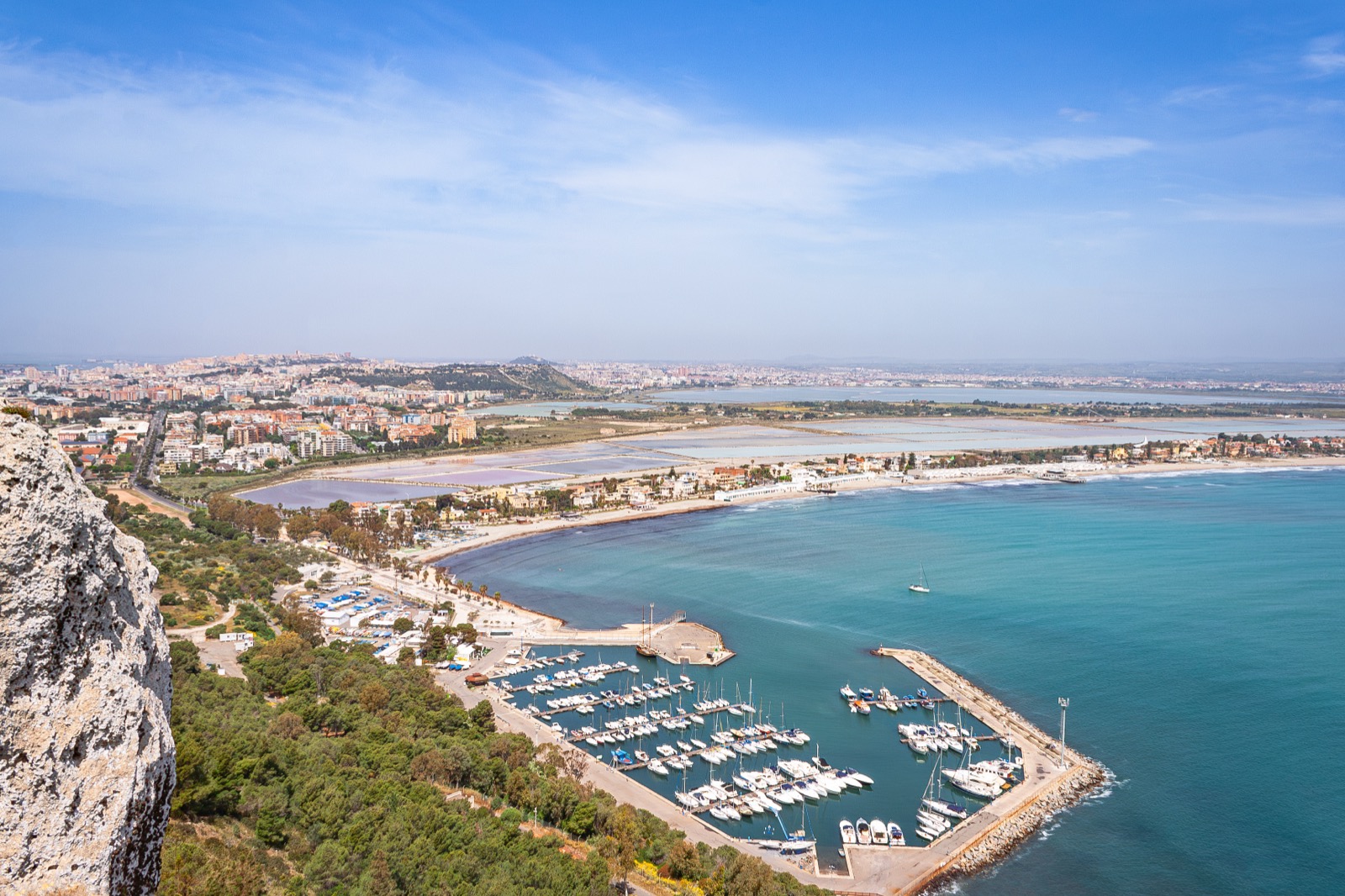
Just behind the beach stretches a vast system of shallow lagoons and salt pans in Molentargius Park, home to huge colonies of wild flamingos. Picture this: these gorgeous pink birds live here all year round and can be watched beautifully right from the cycle paths that run through the park.
💡 Tip: Tickets, boat trips and organised tours fill up fast in season, so it pays to buy them online in advance on GetYourGuide.
3. The ancient city of Nora
A short distance from the resort of Pula, one of the island’s most important archaeological sites spreads across a narrow peninsula. Nora was originally founded by the Phoenicians, later taken over by the Carthaginians and finally by the Romans, each of these cultures leaving its indelible mark.
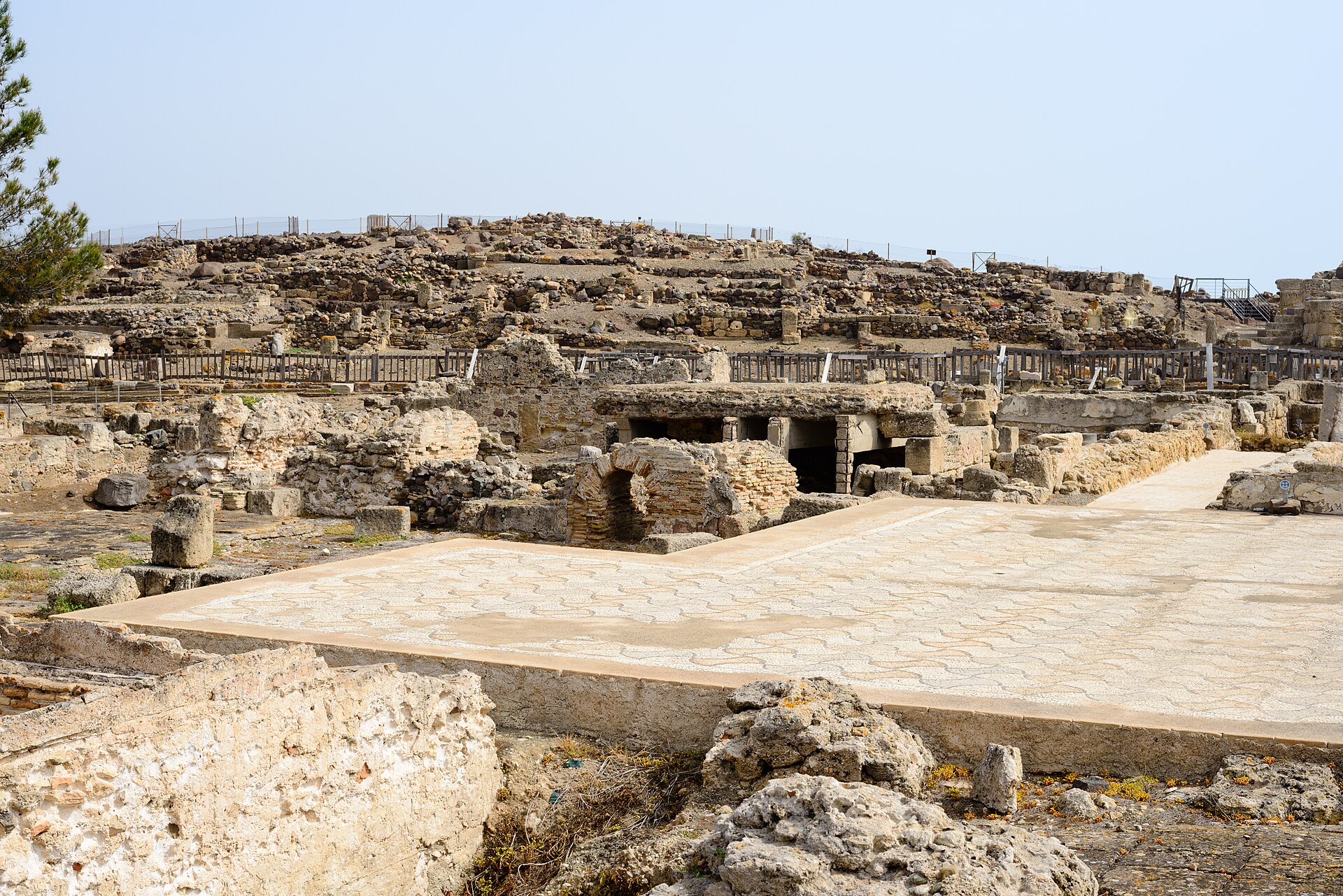
Today you can stroll along ancient paved streets, admire well-preserved mosaics in the ruins of old houses and explore the remains of Roman baths. In the partly preserved theatre, the murmuring sea itself forms the backdrop to the stage. Part of the ancient city has also sunk below the surface over the centuries, so divers are in for a treat and can explore the ruins underwater too.
4. The beaches around Chia and Tuerredda
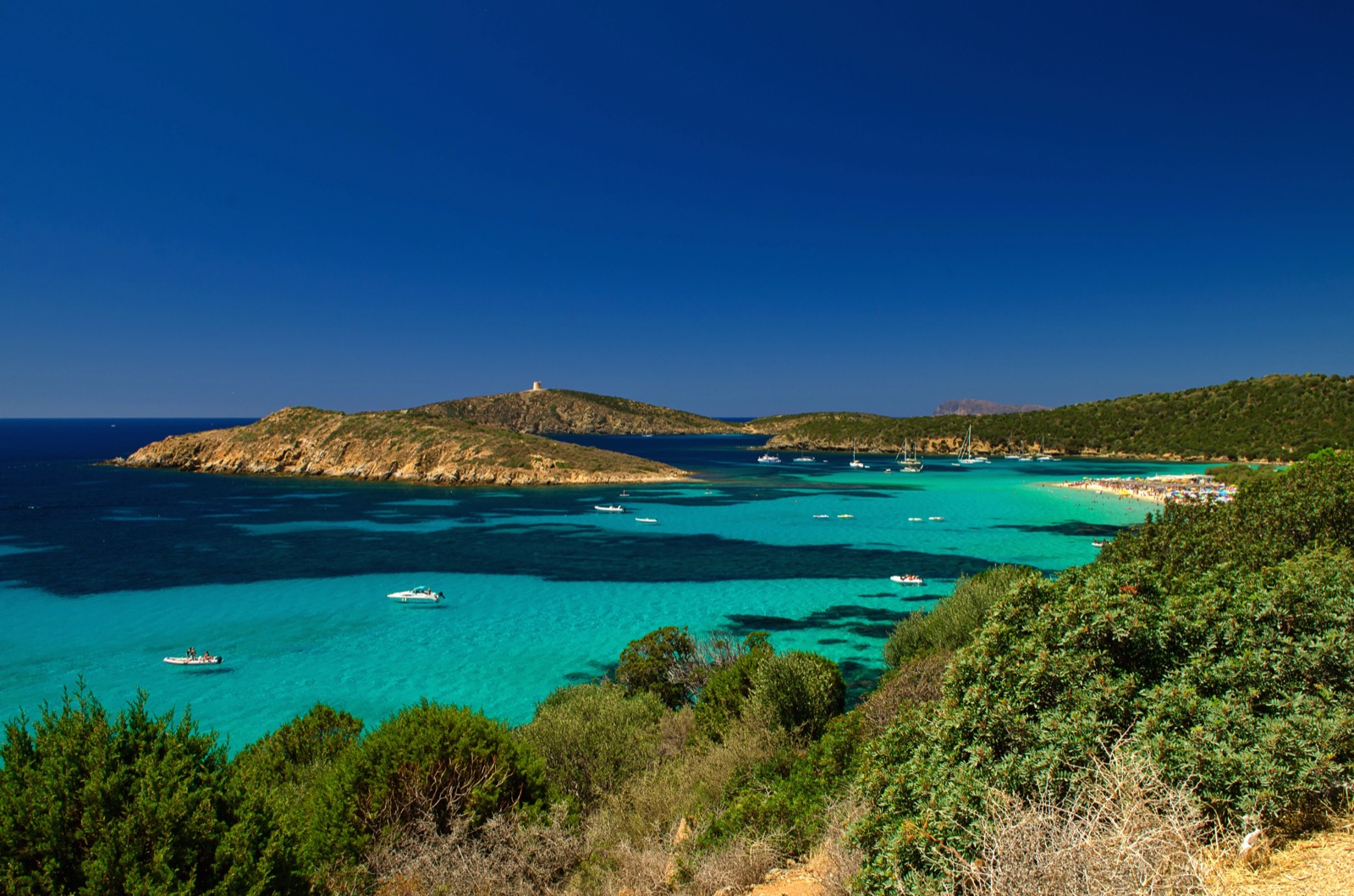
About an hour’s drive west of Cagliari lies a coastline that, by all accounts, is graced with the best beaches in Sardinia. The Chia area is utterly characterised by its enormous sand dunes, covered in ancient junipers and thankfully protected from development. The water here shimmers in unbelievably vivid shades of blue and green.
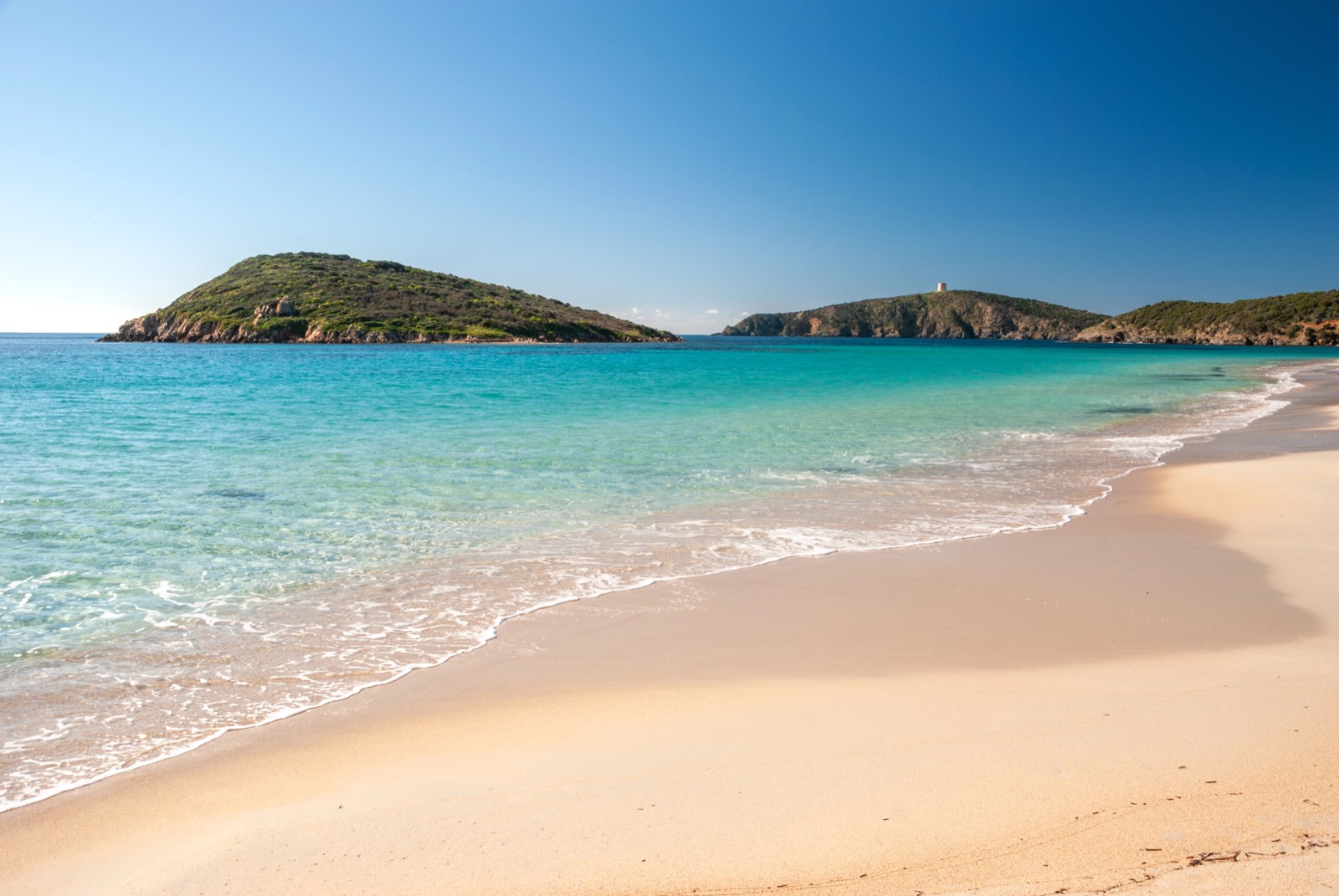
The crown jewel of the area is Tuerredda beach, with a view of the small islet of the same name, which you can reportedly swim to easily. Because its beauty drew unsustainable numbers of people, a strict daily limit of a maximum 1,100 visitors was introduced here. Be sure to check the official information for the current season, as an electronic booking system via a mobile app should be running from summer 2025.
5. The Villasimius nature reserve
On the opposite side from Cagliari lies the little town of Villasimius and the gorgeous protected Capo Carbonara peninsula. If you’re after perfectly sheltered lagoons and beaches reminiscent of exotic destinations, you’ll be thrilled here.
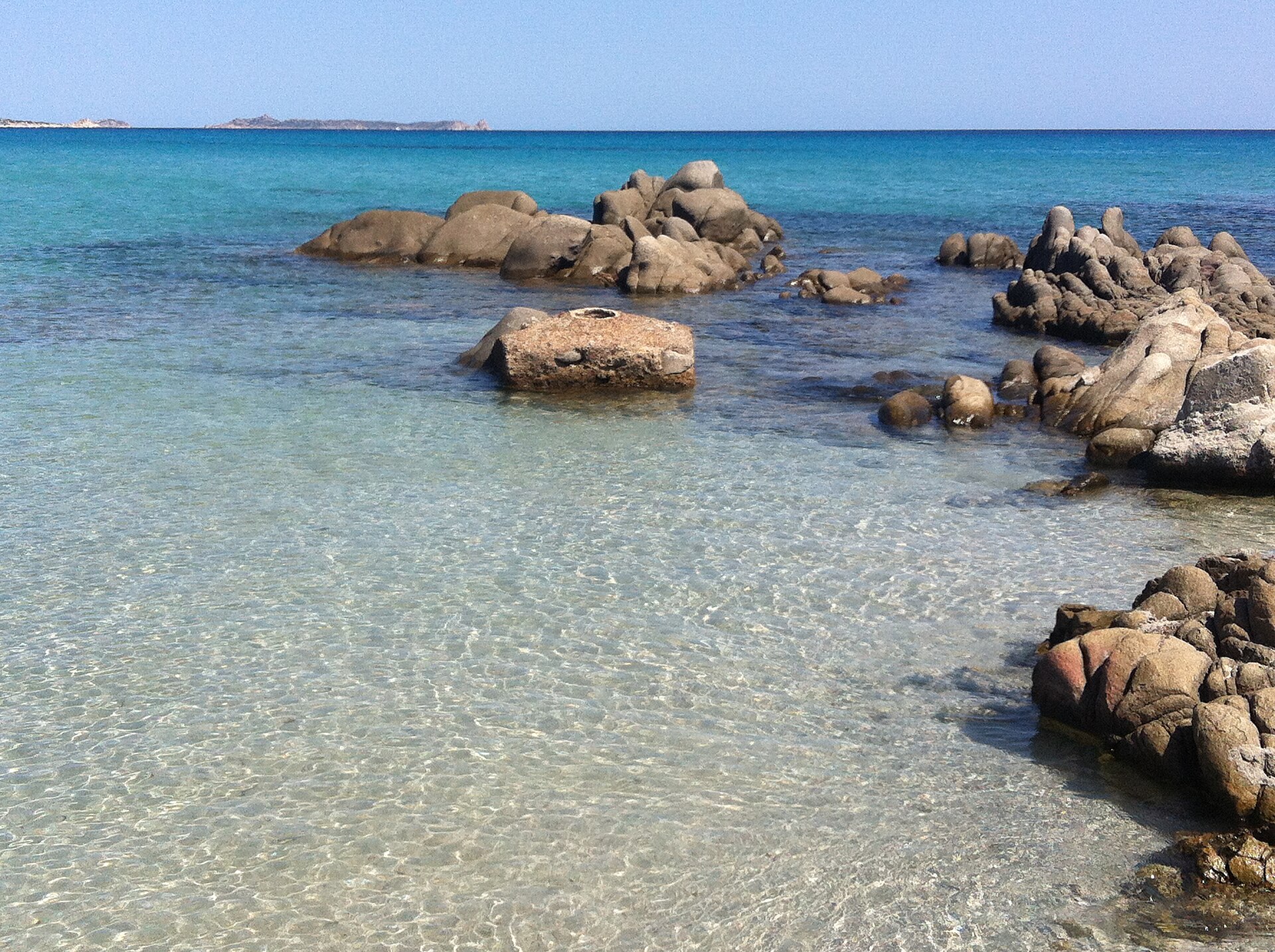
An absolute phenomenon is Porto Giunco beach, lapped by the sea on one side and bordered on the other by the Notteri lagoon, where flocks of flamingos wade once again. No less famous is the Punta Molentis cove with its fine white sand and granite boulders. I just have to warn you that driving in to Punta Molentis comes with a fairly hefty charge, and in summer the car park fills up terribly early in the morning, so do set your alarm.
The East Coast: 4 Tips for Breathtaking Cliffs and Mountains
The east of the island, around the Ogliastra region and the Golfo di Orosei, shows perhaps Sardinia’s most dramatic face. Here limestone mountains plunge in steep cliffs straight into the sea, creating perfectly hidden coves that only the fittest can reach by land.
6. The unreachable beauty of Cala Goloritzé
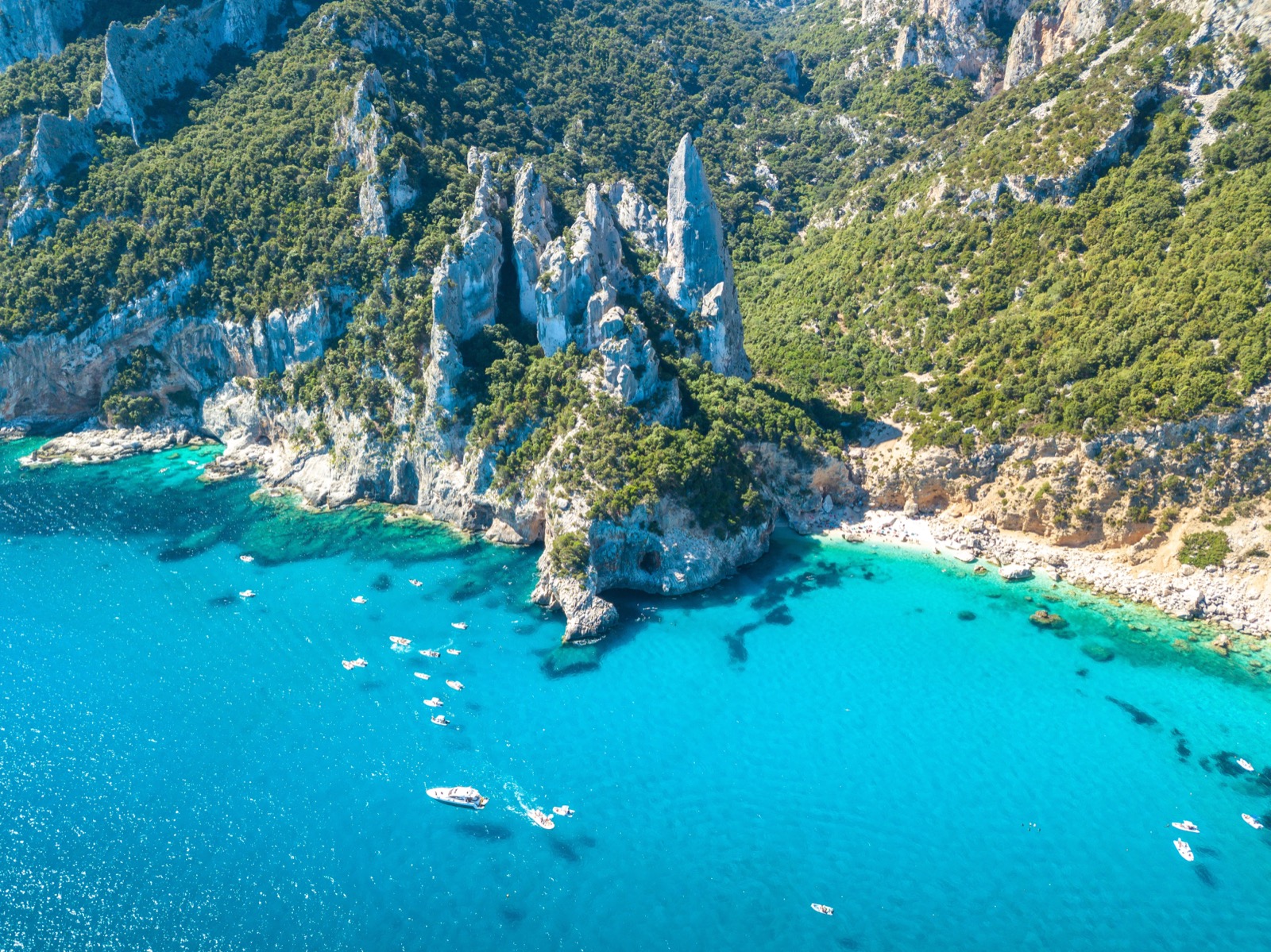
This beach regularly wins polls for the most beautiful beach in the world. Its landmark is the over-100-metre-high limestone spire of Punta Caroddi, which rises majestically above the tiny white pebbles. Swimming beneath the natural stone arch in the crystal-clear water is said to leave you with a memory for life.
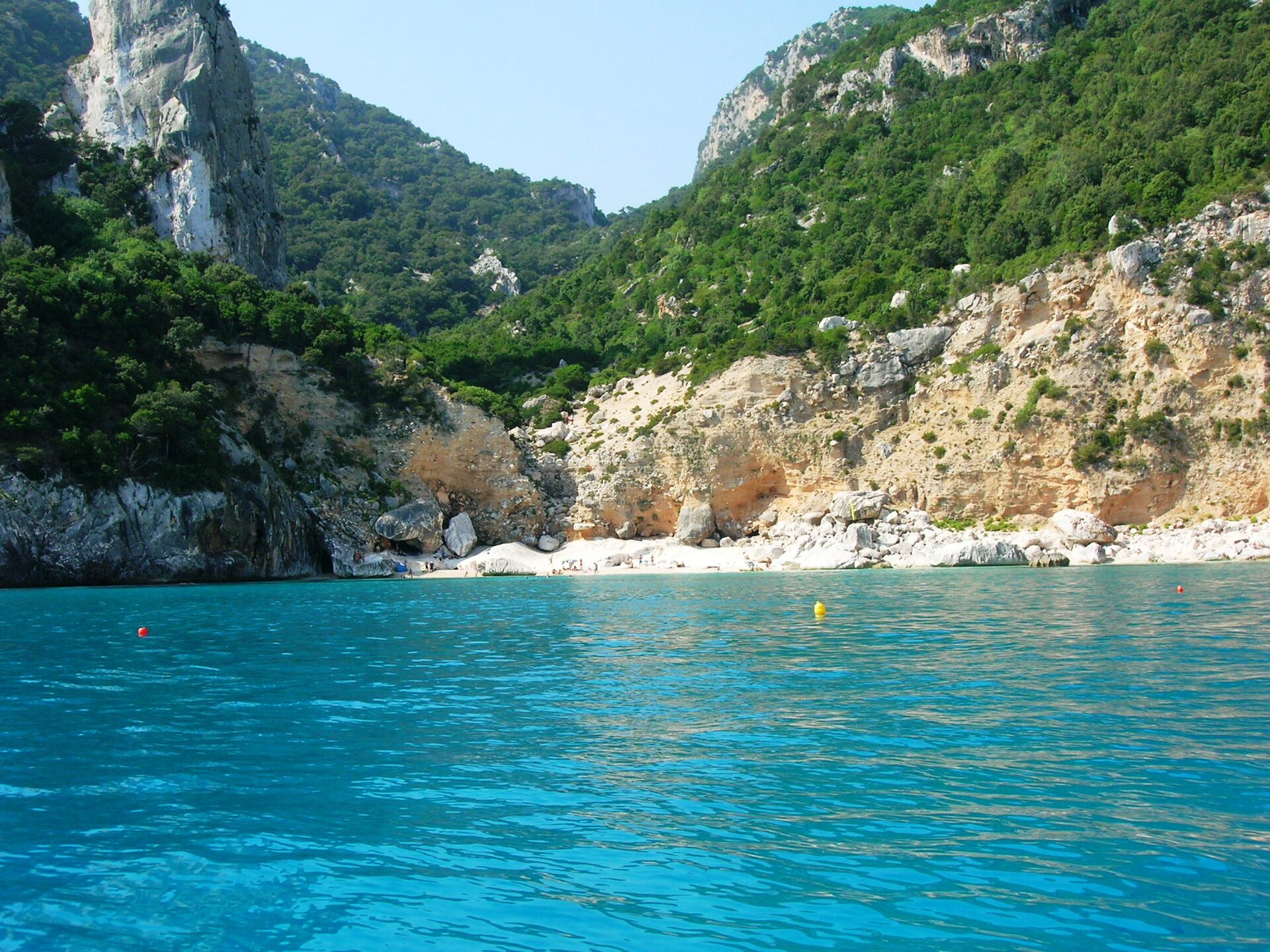
Getting to the beach, though, is a bit of a purgatory. For ecological reasons, boats aren’t allowed near the shore and anchor far out at sea. By land you can only reach it via a hike from the Golgo plateau, which takes roughly an hour and a half on the way down and considerably longer on the climb back up. Entry to the trail also comes with a fee of around 7 euros, and a strict limit of 250 people at any one time applies. You have to book in advance through the “Heart of Sardinia” app, and the gate to the trail closes uncompromisingly in the afternoon. Always check the rules on the official website of the Baunei area.
7. A boat trip from Cala Gonone and the Cala Mariolu cove
Given how inaccessible most of the east coast is, it’s an absolute must to hire a dinghy — locally known as a gommone — or pay for an organised boat trip. Most boats set off from the picturesque harbour of Cala Gonone or, a little further south, from Arbatax.
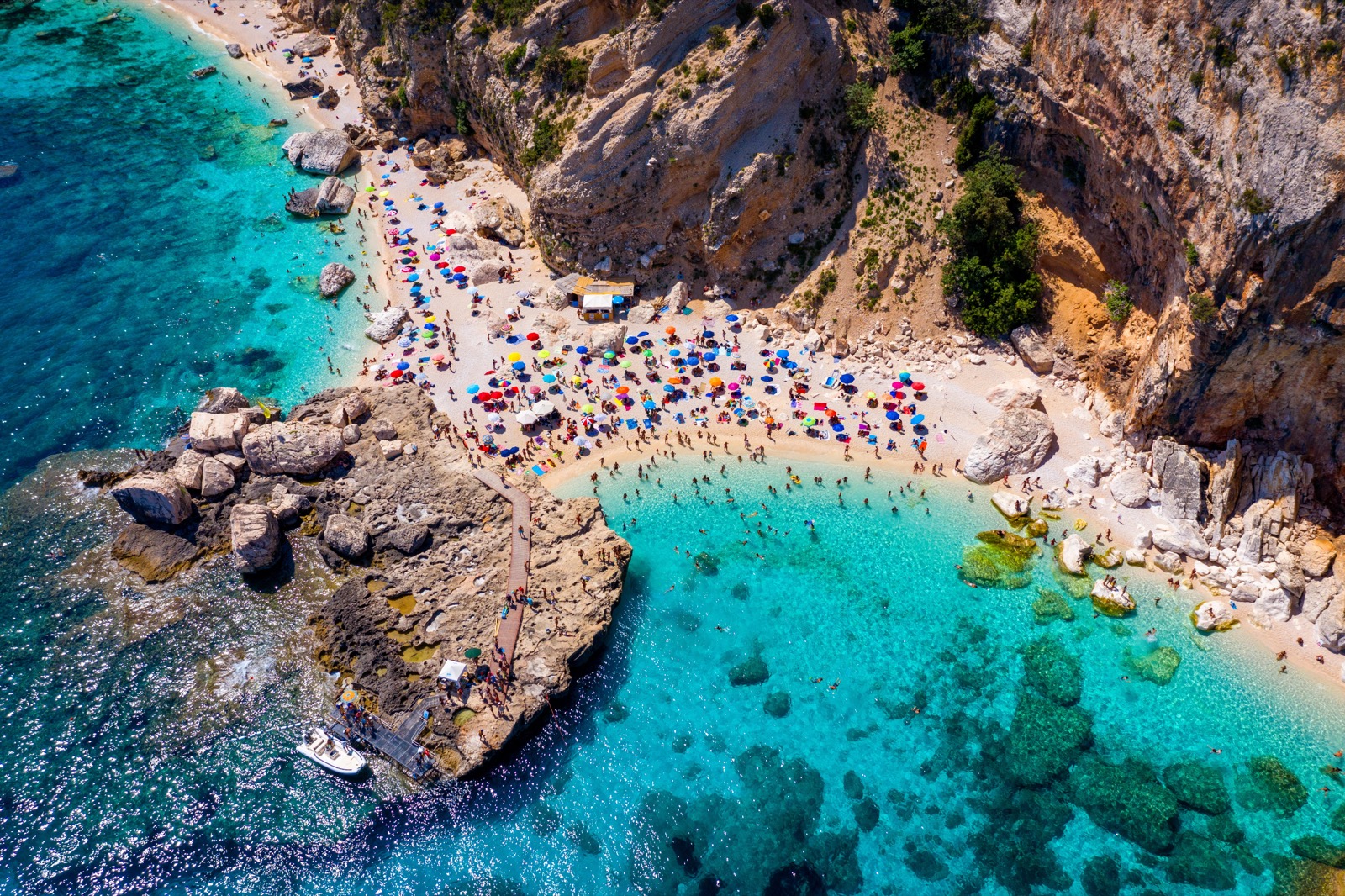
The greatest gem of these cruises is the Cala Mariolu cove, famous for its pinkish-white pebbles and water so clear that boats look as though they’re floating in mid-air. Here too the authorities have cracked down on overcrowding and introduced a limit of 700 visitors per day. Every visitor simply has to have a generated QR code and pay a small ecological fee, even if you arrive in your own hired boat.
💡 Tip: Tickets, boat trips and organised tours fill up fast in season, so it pays to buy them online in advance on GetYourGuide.
8. Europe’s toughest trek and the Gorropu canyon
The Supramonte mountains, rising right above the gulf, hide a trail called Selvaggio Blu. Travellers commonly rate this multi-day trek as one of the very hardest routes in all of Europe. It demands a perfect sense of direction, abseiling and often the company of a professional mountain guide.
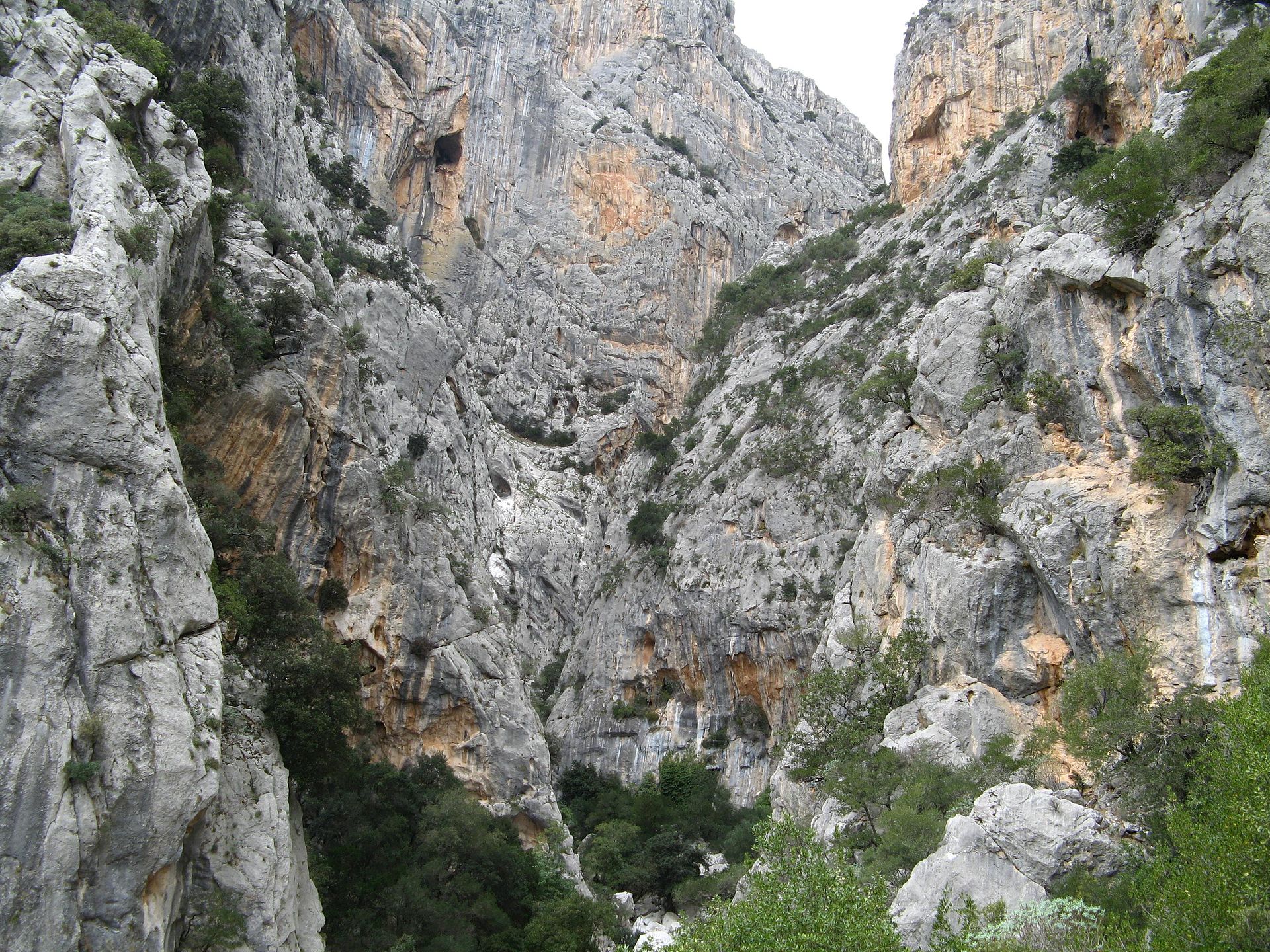
For us ordinary mortals, though, a far more accessible outing is the trip into the Gola Su Gorropu canyon, which, with sheer walls up to 500 metres high, ranks among the deepest gorges in Europe. The walk to the canyon floor and scrambling between the giant limestone boulders makes for a lovely half-day adventure.
9. The Cala Luna cove and the Bue Marino cave
Cala Luna is a hugely iconic crescent-shaped beach, lined at the back by deep caves and a freshwater lagoon full of pink oleanders. Unlike other coves, you can reportedly reach it via a fairly manageable two-hour walking trail straight from the resort of Cala Gonone.
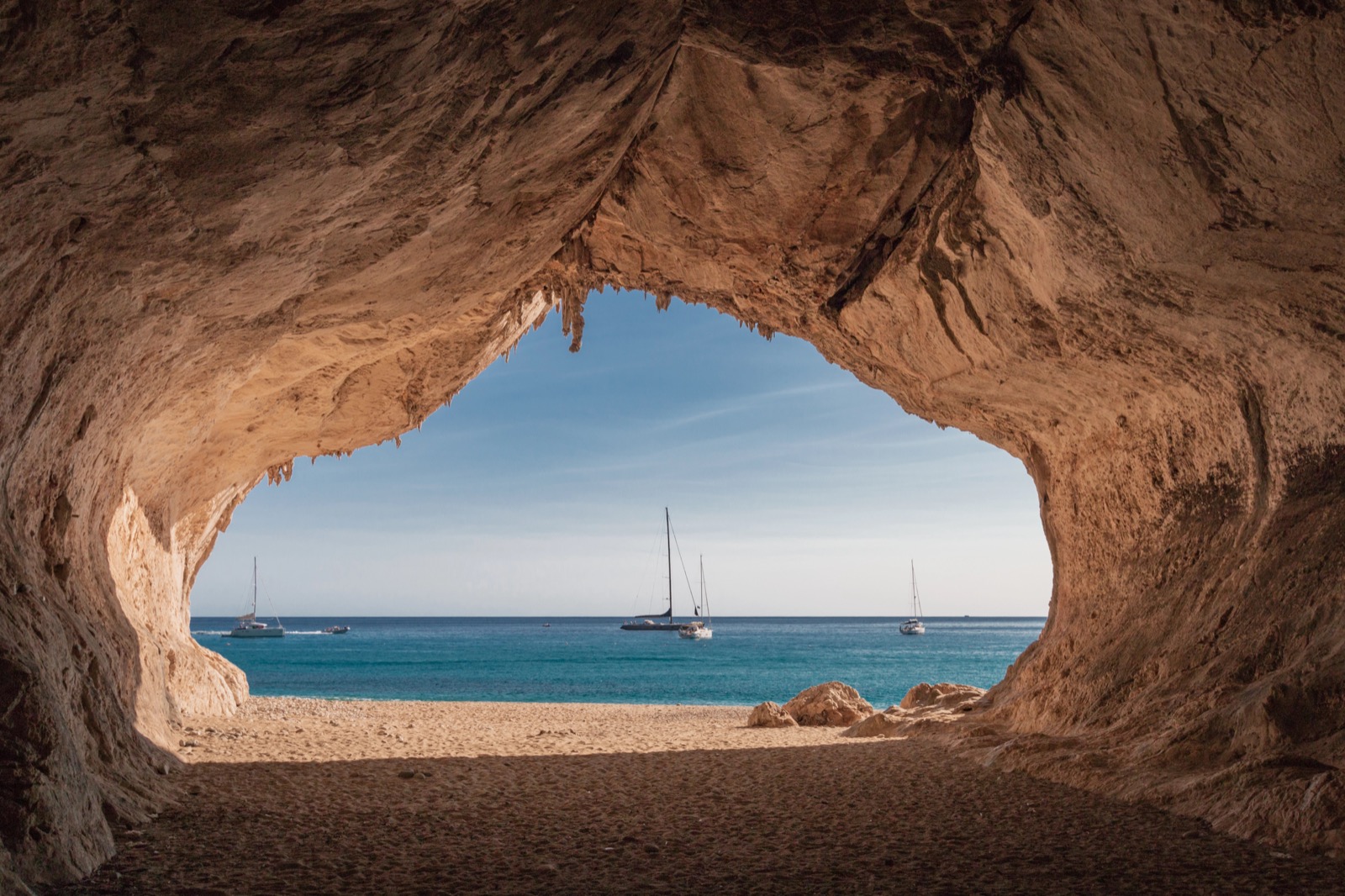
Near the beach, too, is the sea cave Grotta del Bue Marino, which can only be entered by boat. It got its name from the rare monk seal that once basked here. A tour of the enormous underground chambers full of illuminated stalactites makes a great escape from the midday summer sun.
The Northeast: 5 Spots Full of Luxury and Natural Beauty
This area combines untouched national-park nature with an enormous wealth of the international jet set, who took a shine to the northeast coast as far back as the 1960s.
10. La Maddalena National Park and archipelago
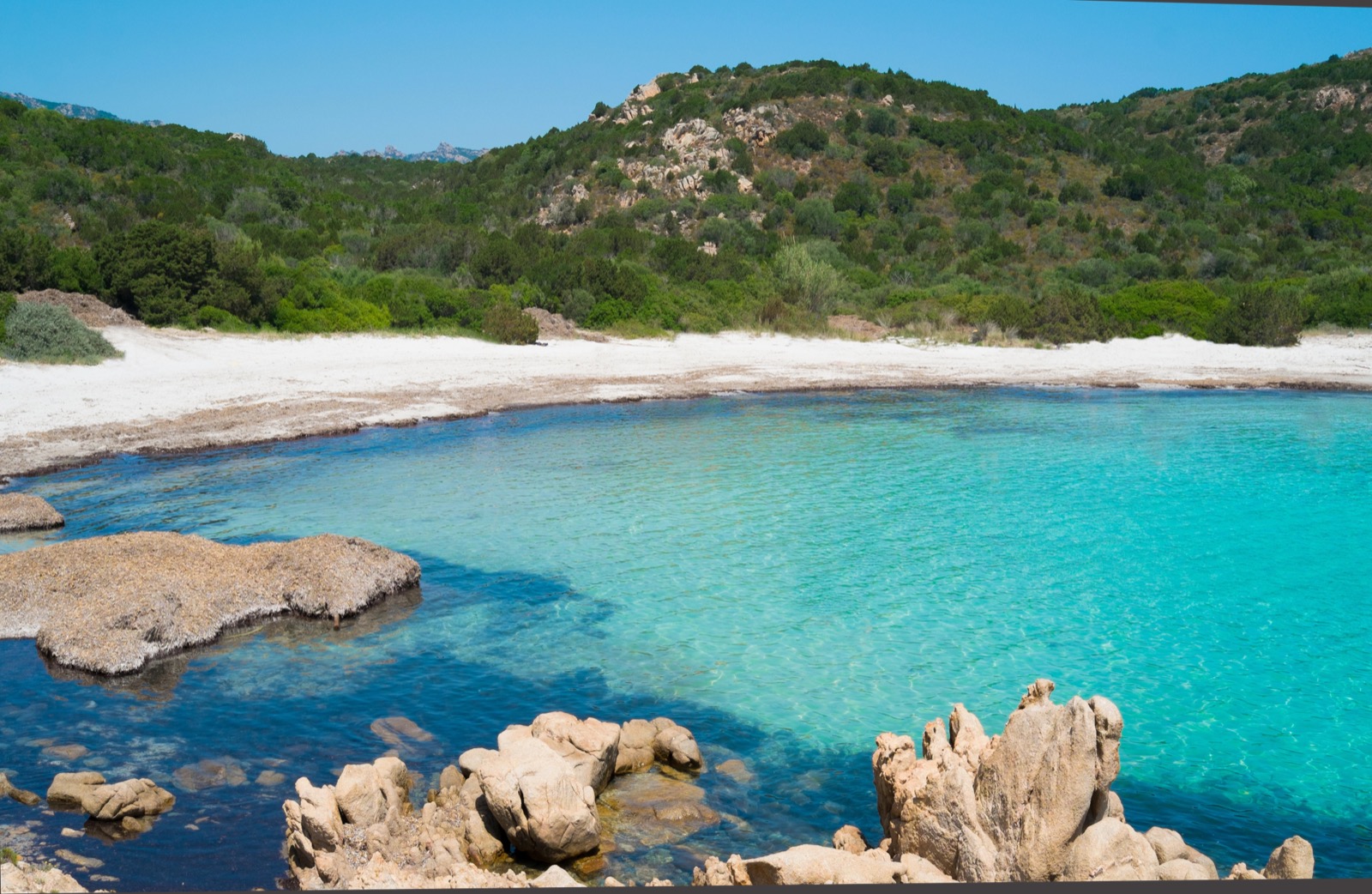
The archipelago, made up of seven main islands and dozens of smaller ones, is one of the absolute highlights of what to see in Sardinia. The whole area is a protected national park, boasting a beautifully jagged coastline and dozens of hidden coves with crystal-clear water.
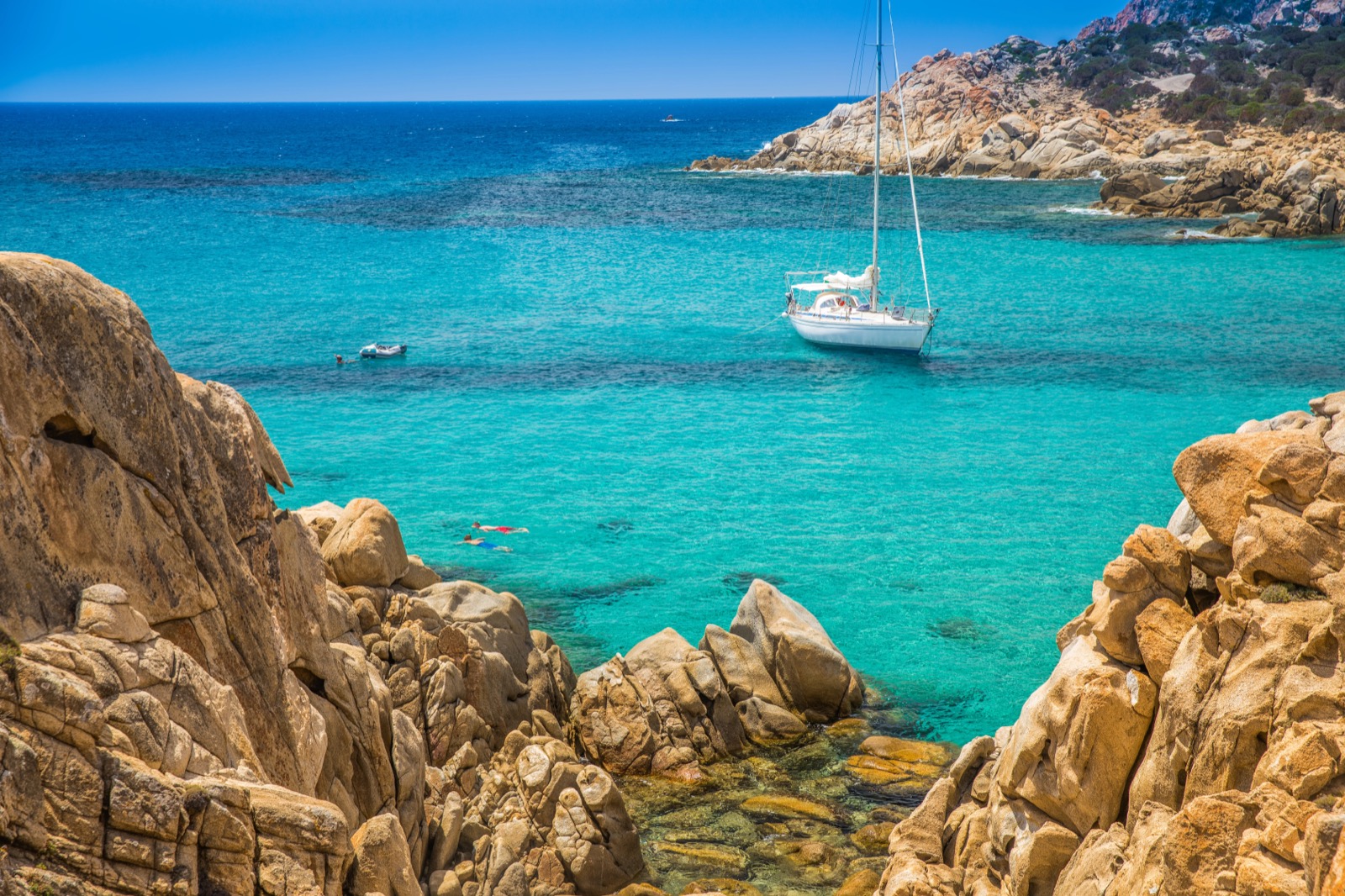
Experience says that the best way to explore the archipelago is on a full-day boat trip, which usually sets off from the port of Palau. Anyone who prefers their own pace can use the regular ferry, which carries cars from Palau to the main island in under twenty minutes. From there you can drive on across to the neighbouring island of Caprera, linked to the main one by just a narrow bridge.
💡 Tip: Tickets, boat trips and organised tours fill up fast in season, so it pays to buy them online in advance on GetYourGuide.
11. The Emerald Coast and Porto Cervo
The famous Costa Smeralda, or Emerald Coast, was created in the 1960s as the vision of Prince Aga Khan. From an inhospitable, scrubby coastline he created an absolute playground for the world’s billionaires and celebrities. The whole area is architecturally unified into a beautiful Mediterranean style that blends perfectly with the surrounding landscape.
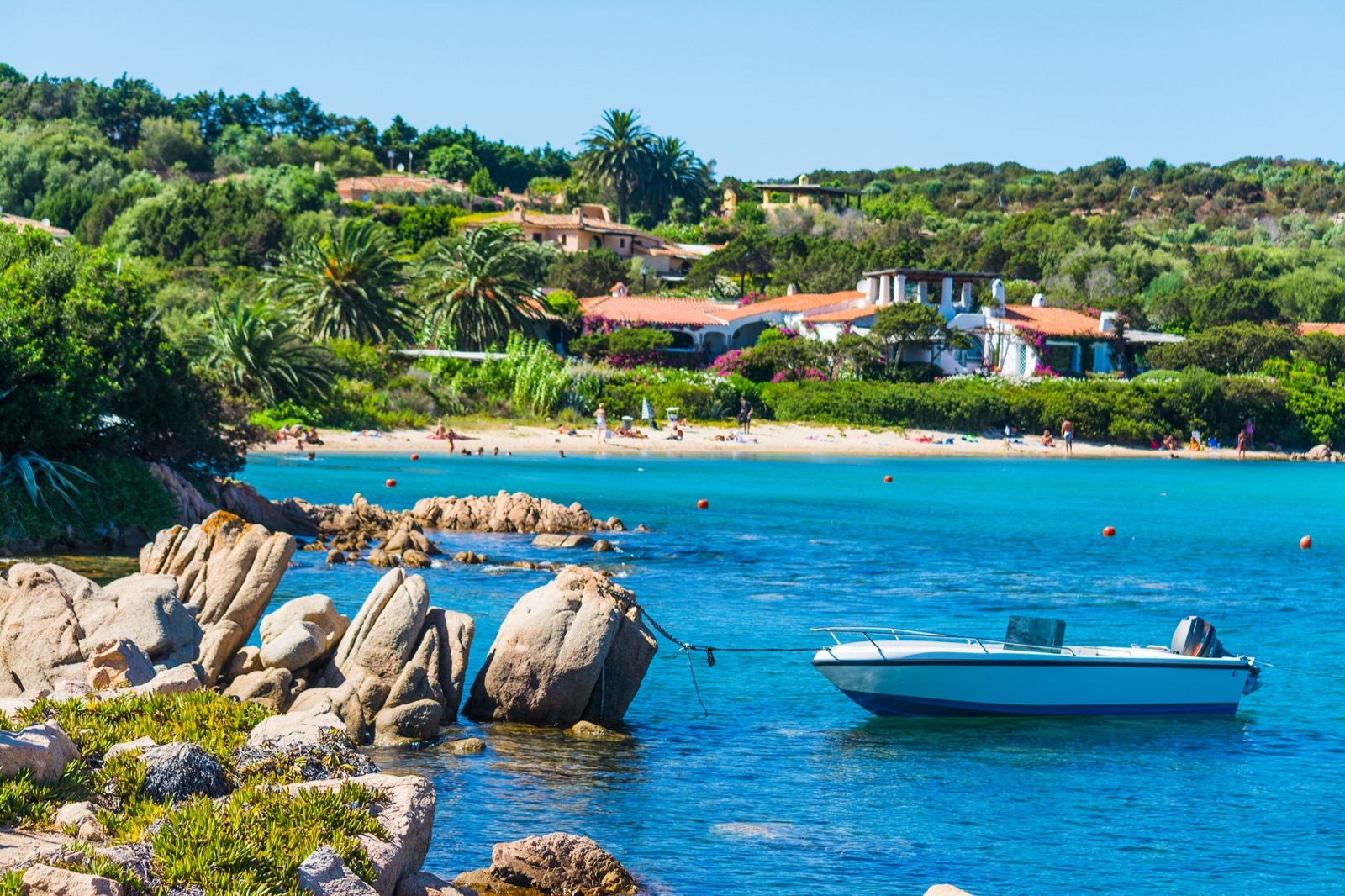
The centre of all this luxury is the town of Porto Cervo, with its huge marina where some of the world’s largest megayachts usually moor. Even the average traveller can wander the promenades lined with boutiques of the priciest fashion brands, though. The local beaches, such as Spiaggia del Principe or Liscia Ruja, are publicly accessible, but I won’t lie to you — parking nearby will give your wallet a serious airing.
12. The island of Caprera and the memorial to a hero
The island of Caprera is loved not only for its untouched beaches and fragrant pine forests, but also thanks to an Italian national hero. Giuseppe Garibaldi chose this very island to spend the final years of his life, and his house has now been turned into a fascinating museum.
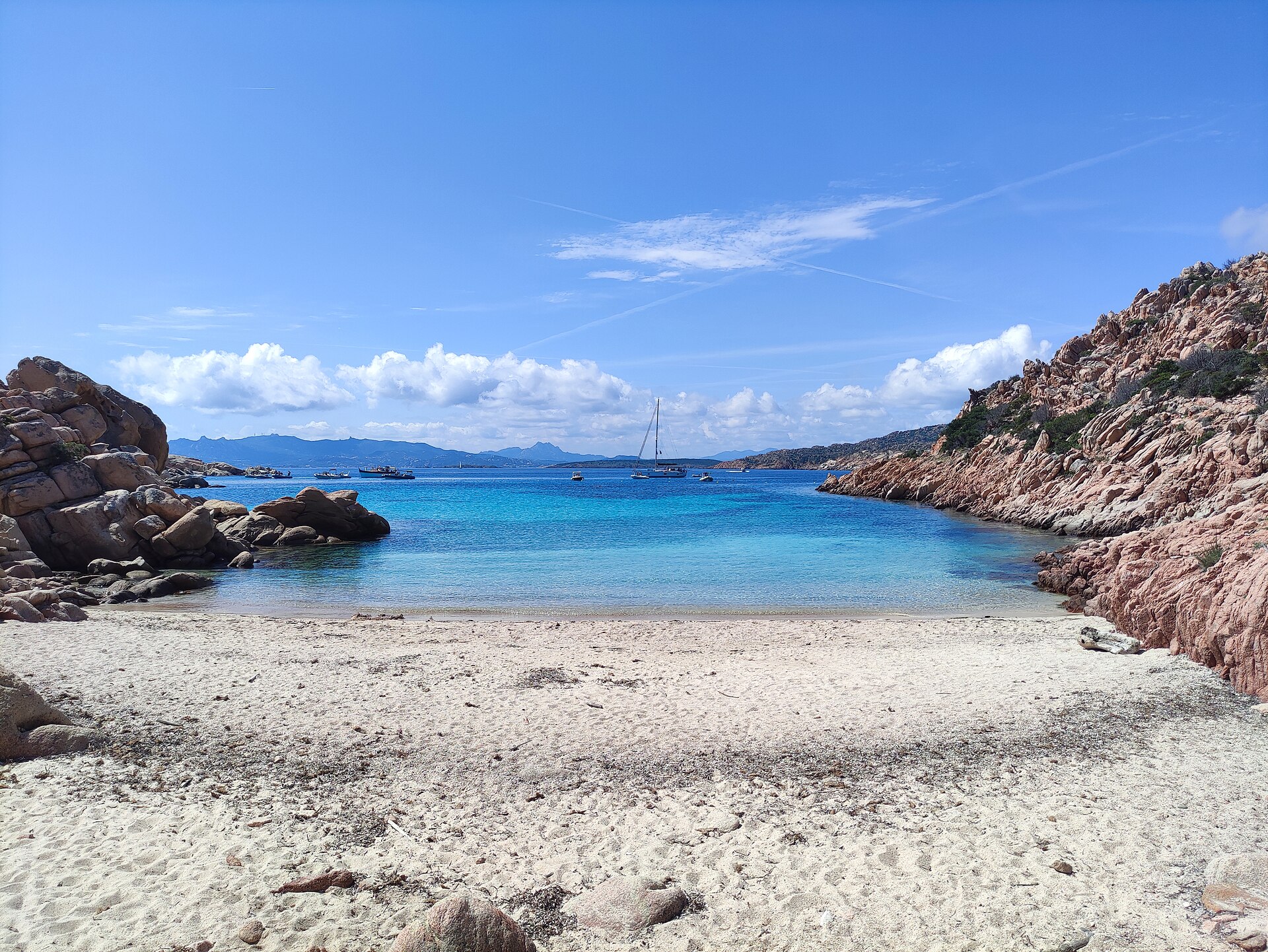
From a nature point of view, Caprera’s biggest draw is the so-called Sardinian Tahiti, Cala Coticcio beach. Given its huge popularity and small size, the authorities have imposed a strict limit of just 60 people per day. On top of that, entry is only possible accompanied by a certified guide and after booking and paying a fee in advance, so you’ll need to plan your visit well.
13. The lunar landscape of Capo Testa
At the very northern tip of the island, a short distance from the town of Santa Teresa Gallura, the headland of Capo Testa juts into the sea. This place is a true geological wonder, because the constant action of the strong wind and sea waves has carved utterly fantastical shapes into enormous granite boulders.
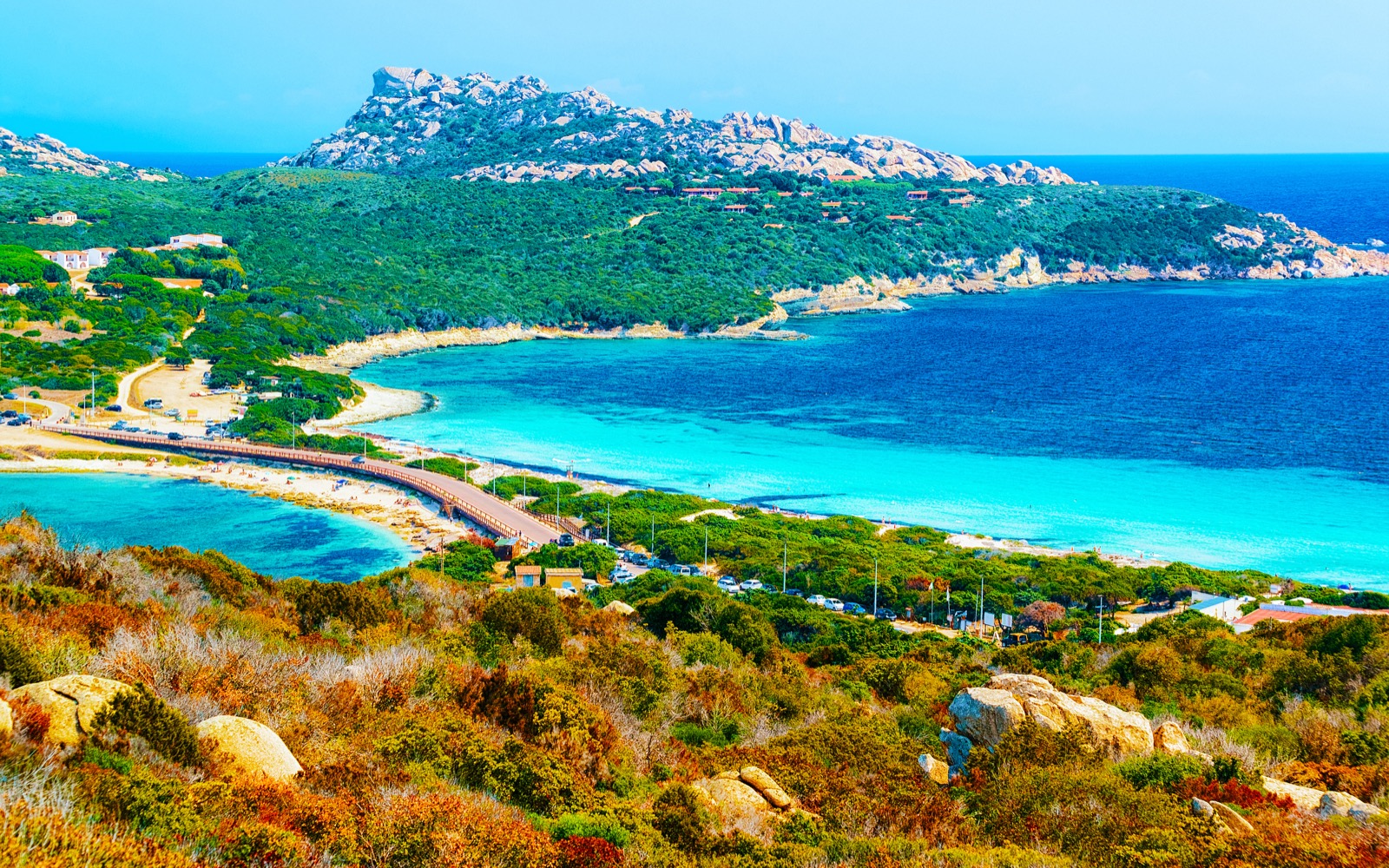
A walk among these smoothly polished rocks is said to feel like travelling across the surface of another planet. Small coves with crystalline water hide between the boulders, and the whole area is absolutely magical at sunset, when the granite takes on a rich golden colour and the white cliffs of neighbouring Corsica outline the horizon.
14. The forbidden Pink Beach on Budelli island
Spiaggia Rosa, or the Pink Beach, is a phenomenon that sadly fell victim to its own popularity. The sand here took on a unique pink hue thanks to the microscopic shells of marine organisms. In the past, tourists carried this pink sand away by the kilo in bottles, which led to irreversible damage to the entire ecosystem.
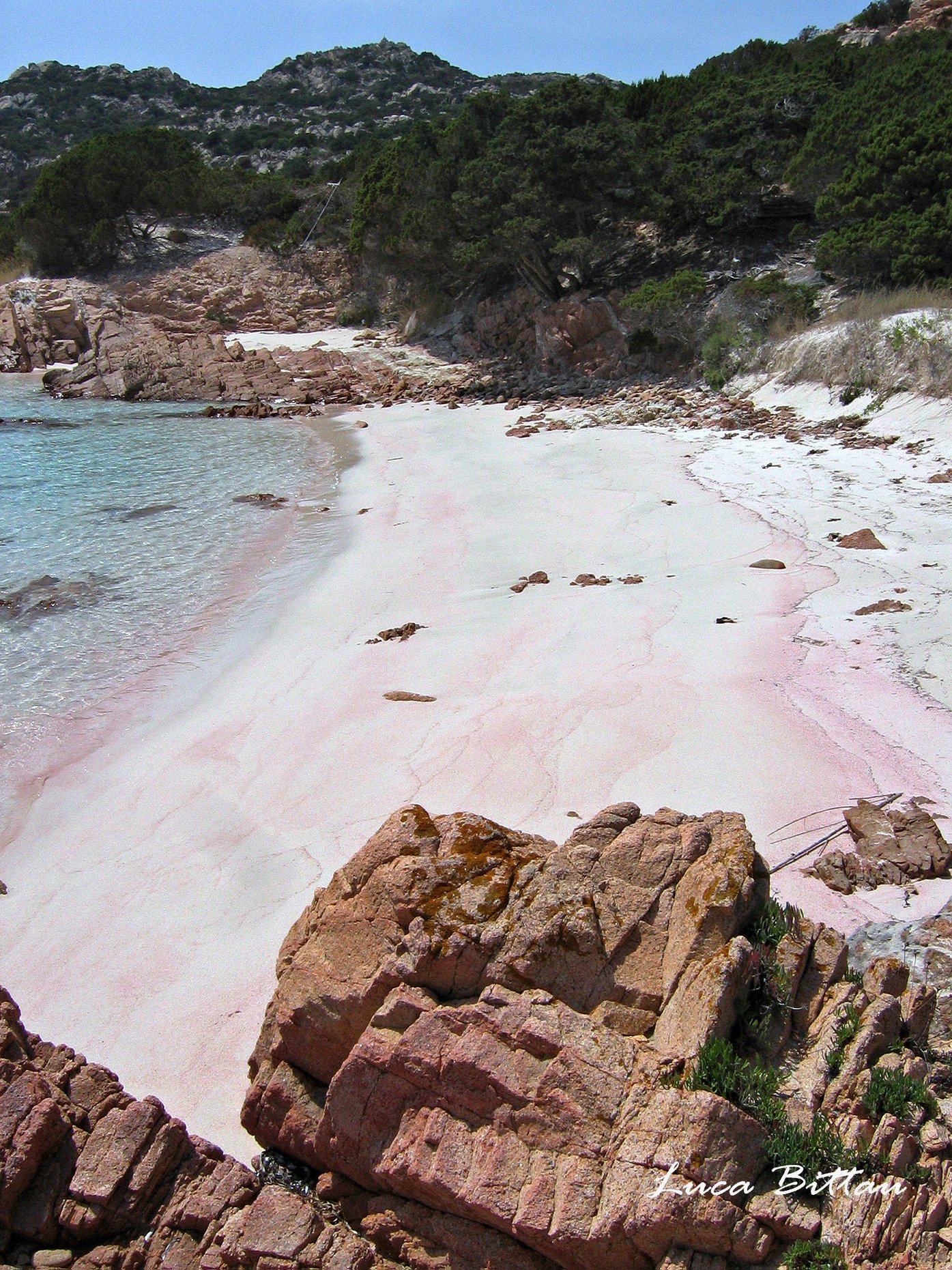
That’s why, since 1998, access to the beach has been strictly forbidden, with an absolute ban on swimming or anchoring boats within 70 metres of the shore. If you were to break the ban or try to take a little sand away, you’d risk a draconian fine of between 500 and an incredible 3,500 euros. These days you can only admire the beach from the deck of a boat and from a safe distance.
Map of points of interest for your phone
The Northwest: 5 Tips for Historic Towns and Caribbean Beaches
The northwest coast has yet another completely different atmosphere. It owes this to centuries of Spanish rule and slightly harsher weather conditions, which have shaped the majestic local cliffs over the ages.
15. The Catalan town of Alghero
Alghero is often called little Barcelona, because to this day it retains an incredibly strong Catalan character — right down to the local dialect and bilingual street names. The historic centre is neatly encircled by mighty defensive walls, along which runs a gorgeous promenade lined with old cannons and restaurants with sea views.
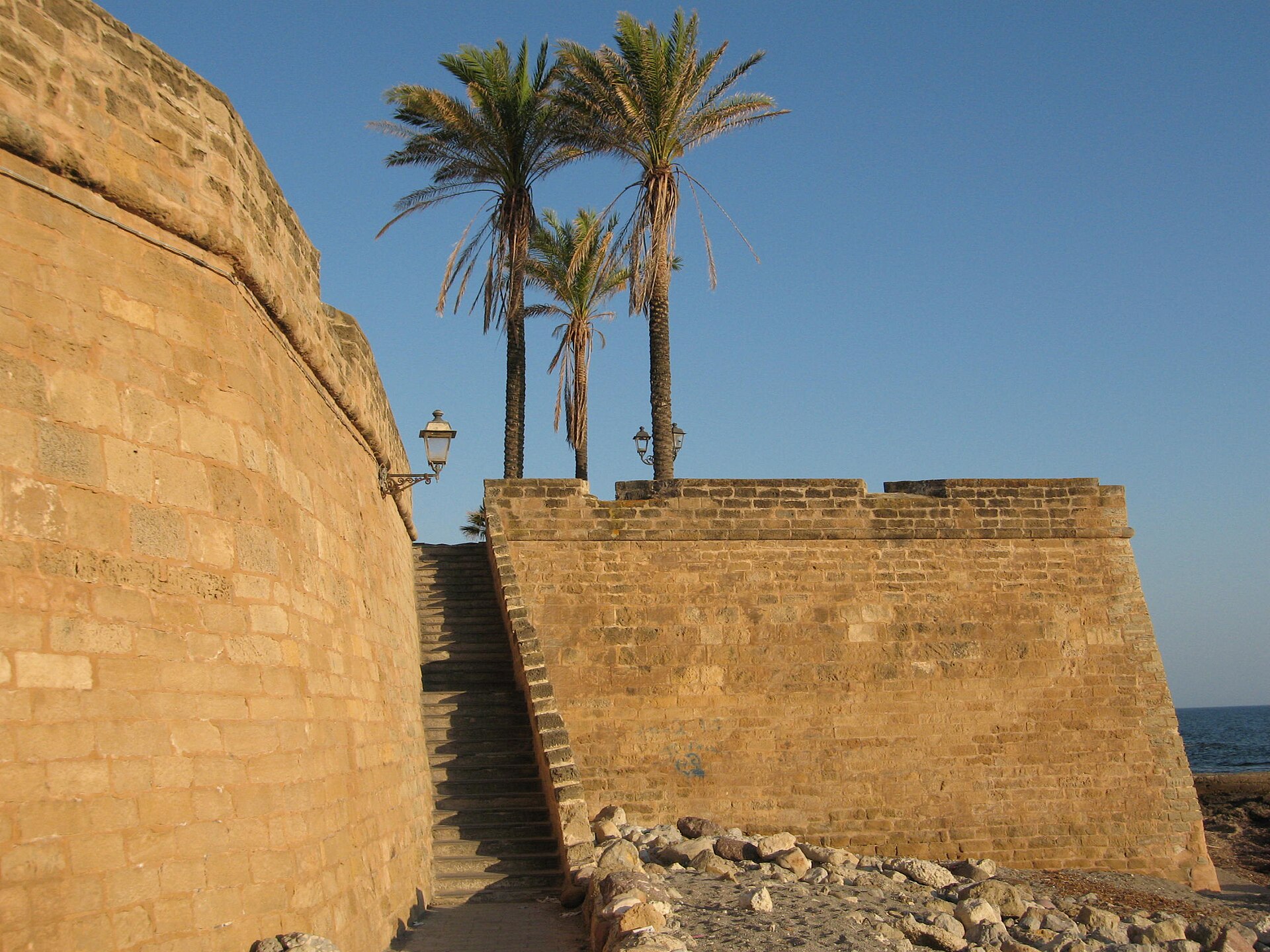
Inside the walls awaits a tangle of narrow paved lanes full of shops selling the typical Sardinian red coral. The entire old town is a strict ZTL zone, so it’s essential to leave your car in the large overflow car parks along the harbour and head into the centre on foot.
16. The stalactite realm of Grotta di Nettuno
Not far from Alghero, the steep limestone cliffs of Capo Caccia rise from the sea, and within them you’ll find the stunning Neptune’s Grotto. This enormous underground system, full of mighty stalactites and stalagmites, stretches almost two and a half kilometres and even hides a large underground salt lake.
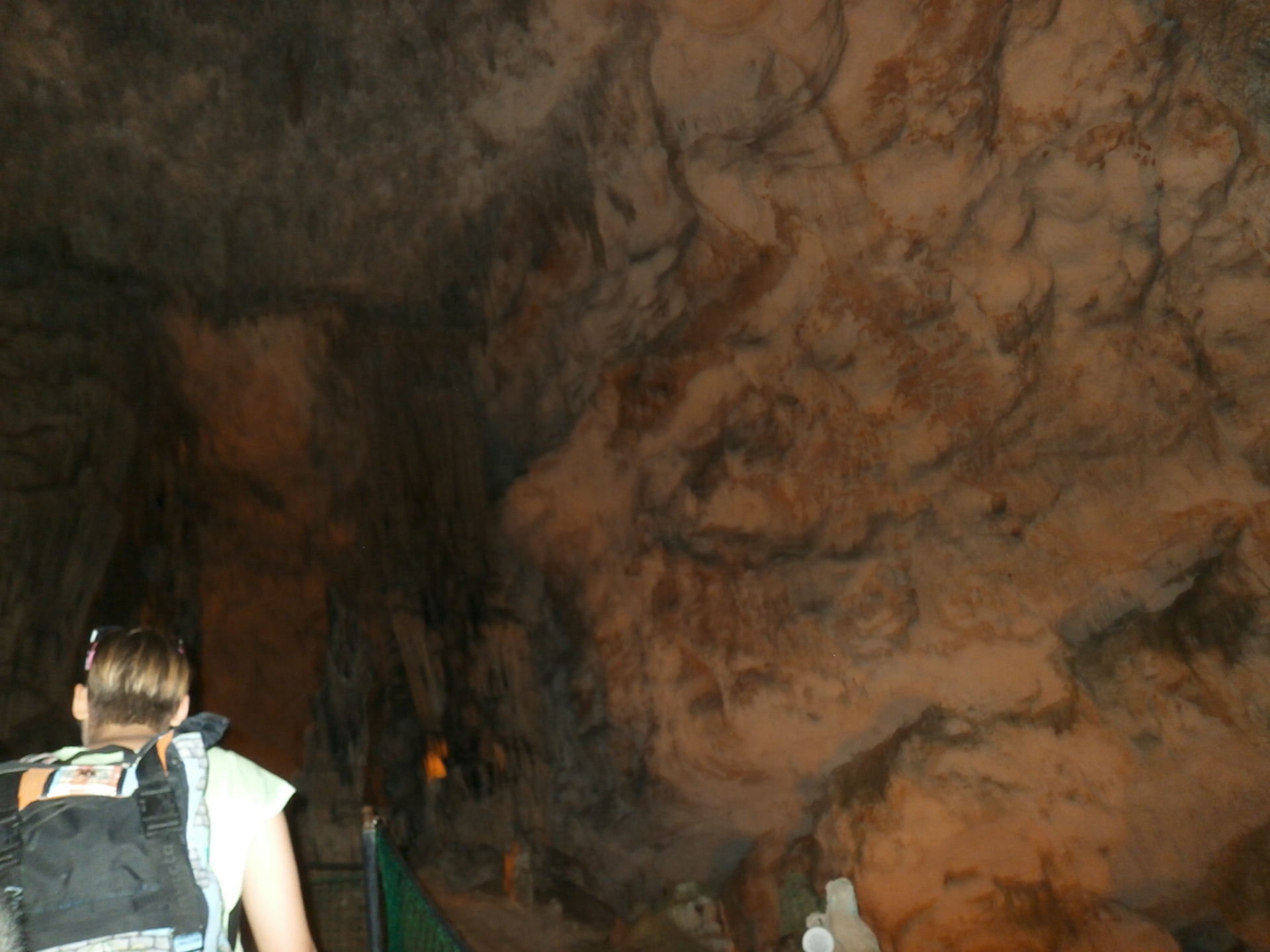
There are two ways to reach the cave. The most comfortable is an excursion boat straight from the harbour in Alghero. The second, far more adventurous route goes by land and involves descending the so-called Goat Steps, of which exactly 654 are carved into the sheer rock face. You do need to keep an eye on the forecast, though, as the cave naturally closes in strong winds and rough seas. You’ll find the opening hours on the official Alghero information portal.
17. The Caribbean beach of La Pelosa in Stintino
At the very northwestern tip of the island lies a beach often said to be perhaps the most beautiful in all of Europe. The shallow water here shimmers in every imaginable shade of turquoise, and the fine white sand contrasts beautifully with an old watchtower on a tiny islet.
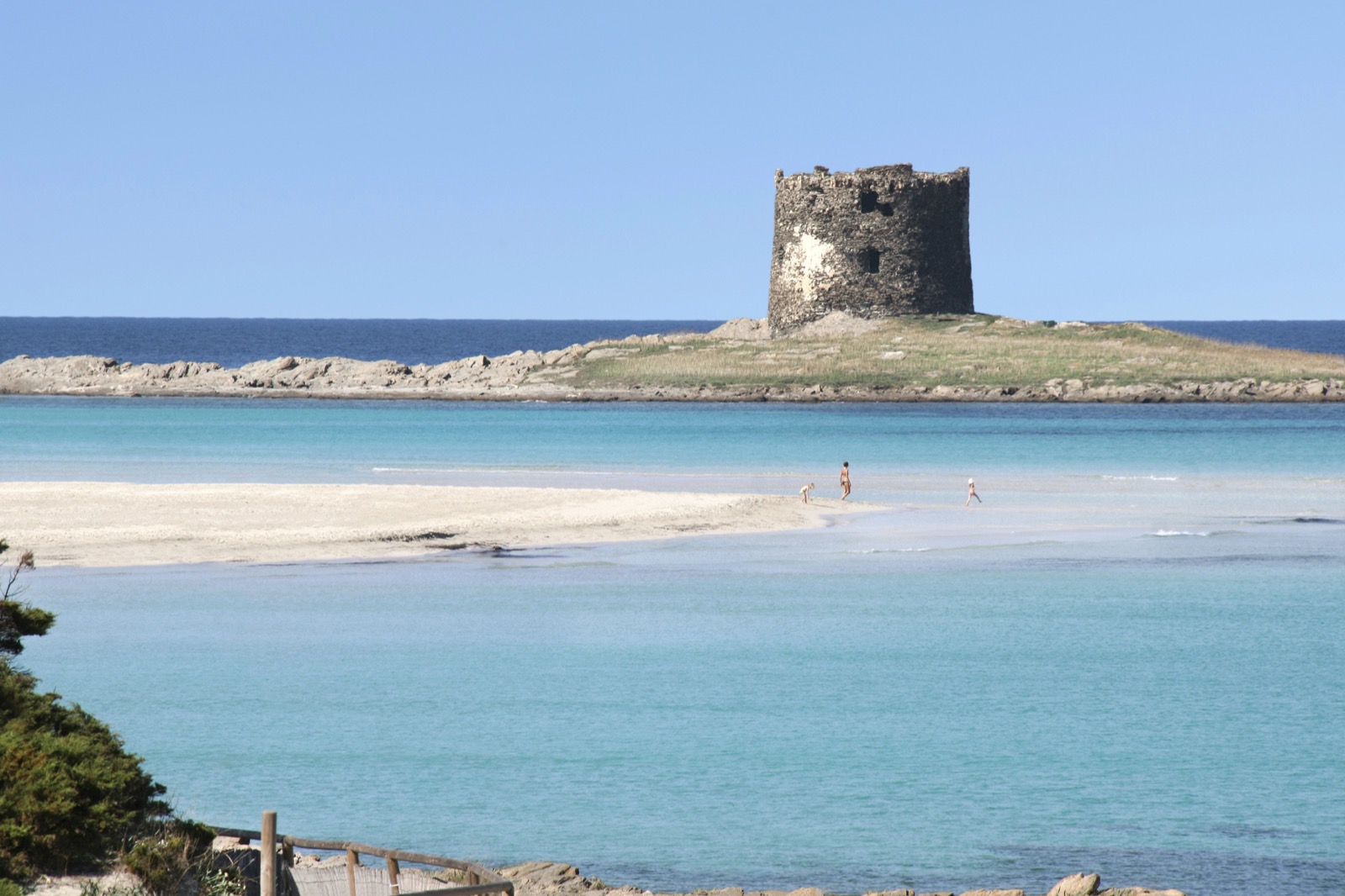
But as you already know, a holiday in Sardinia wouldn’t be complete without a mention of strict rules. To protect the vanishing sand, the authorities have made it compulsory to place a special firm mat under your towel, which you can readily buy nearby. Anyone laying a towel directly on the sand is asking for a fine of up to 100 euros. You’ll also pay an entry fee of around 3.50 euros and are required to rinse your feet before leaving the beach. A strict daily limit of 1,500 visitors applies here, so you’d best book your slot well in advance through the official Spiaggia La Pelosa booking system.
18. Asinara National Park and the white donkeys
Directly opposite La Pelosa beach, the elongated island of Asinara appears in the sea. Until the late 1990s, this island served as a kind of Italian Alcatraz. It was home to a maximum-security prison for feared mafia bosses.
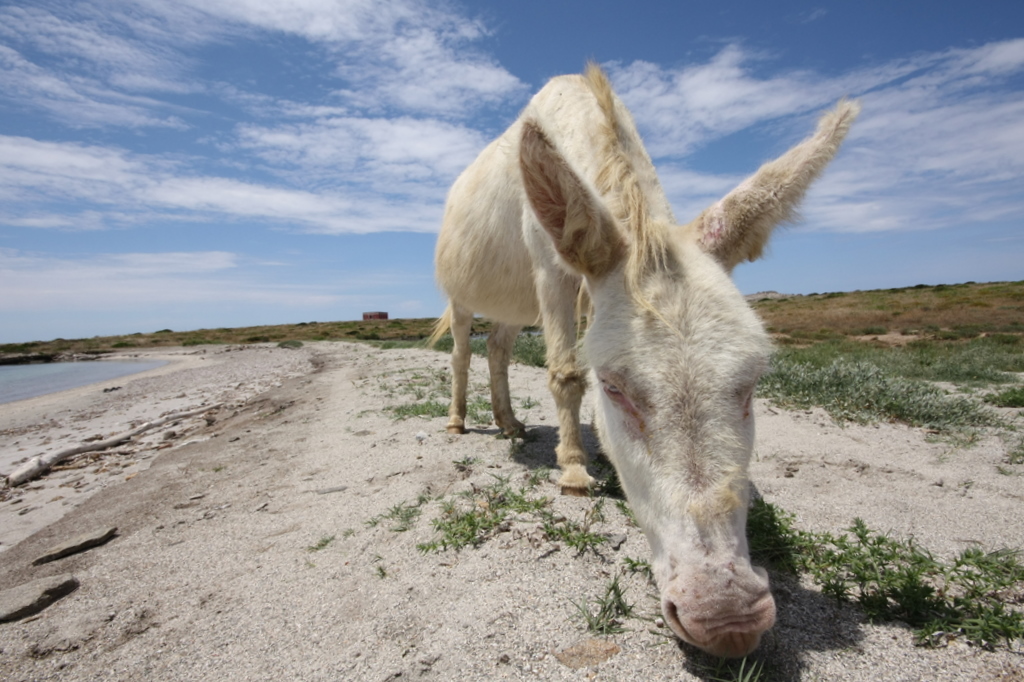
Thanks to this total isolation, however, the local nature remained incredibly untouched and the island was declared a national park. Today organised excursions come here, during which visitors admire the wild nature and, above all, the symbol of the whole island: a unique breed of small albino donkeys with enchanting blue eyes.
19. The pastel town of Bosa
The drive south from Alghero along the coastal SP105 road is said to be one of the very most beautiful scenic routes on the island. The destination of this trip is usually the charming town of Bosa, which spreads along the Temo, the only navigable river in Sardinia.
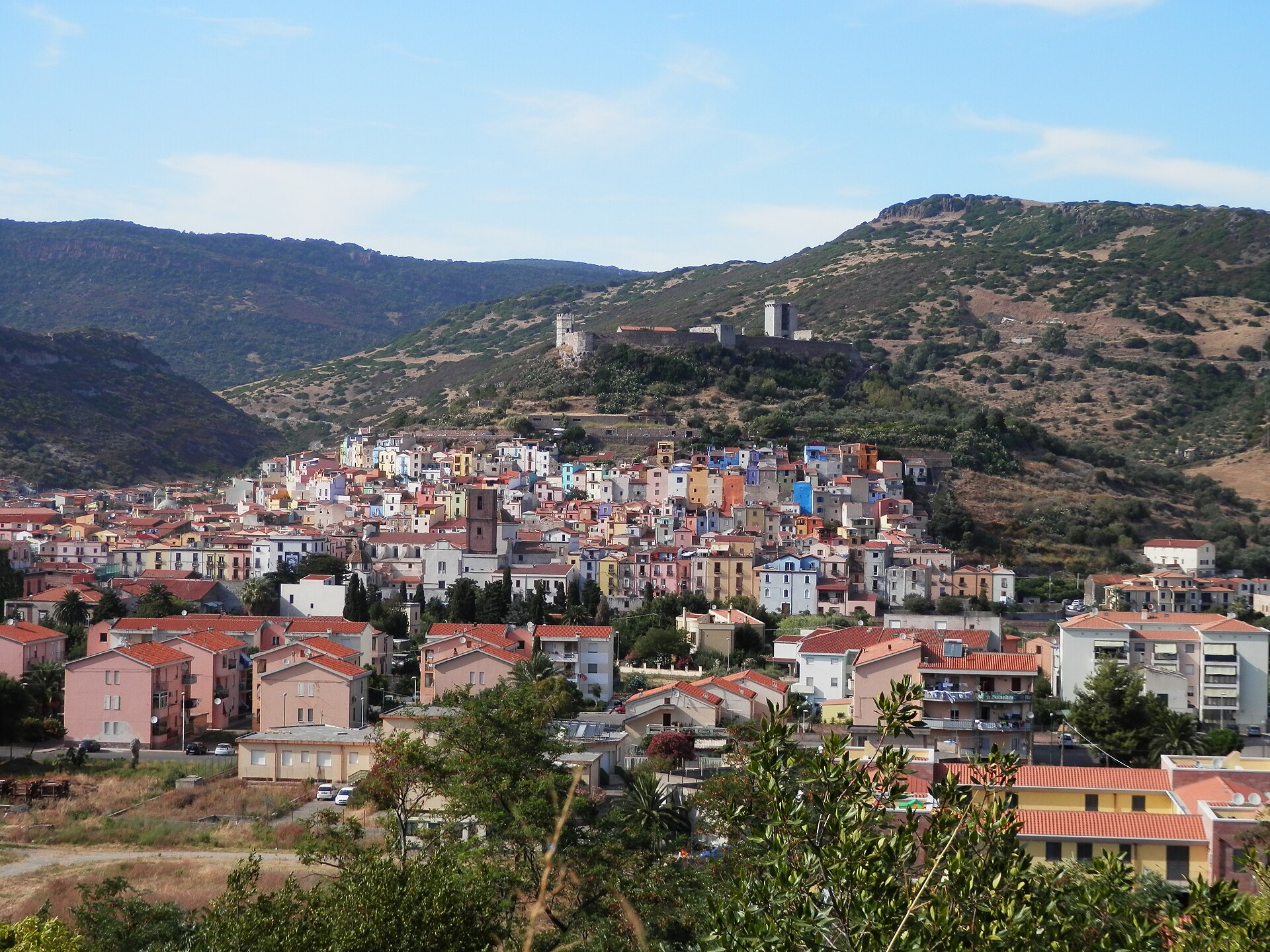
Bosa will charm you with its brightly coloured houses, which rise in terraces up the slope and are crowned by the medieval Castello Malaspina. The town became famous for its traditional leatherwork, lace-making and the production of an excellent Malvasia dessert wine, which it would be a shame not to taste.
The Interior and West: 6 Experiences of Authentic Sardinia
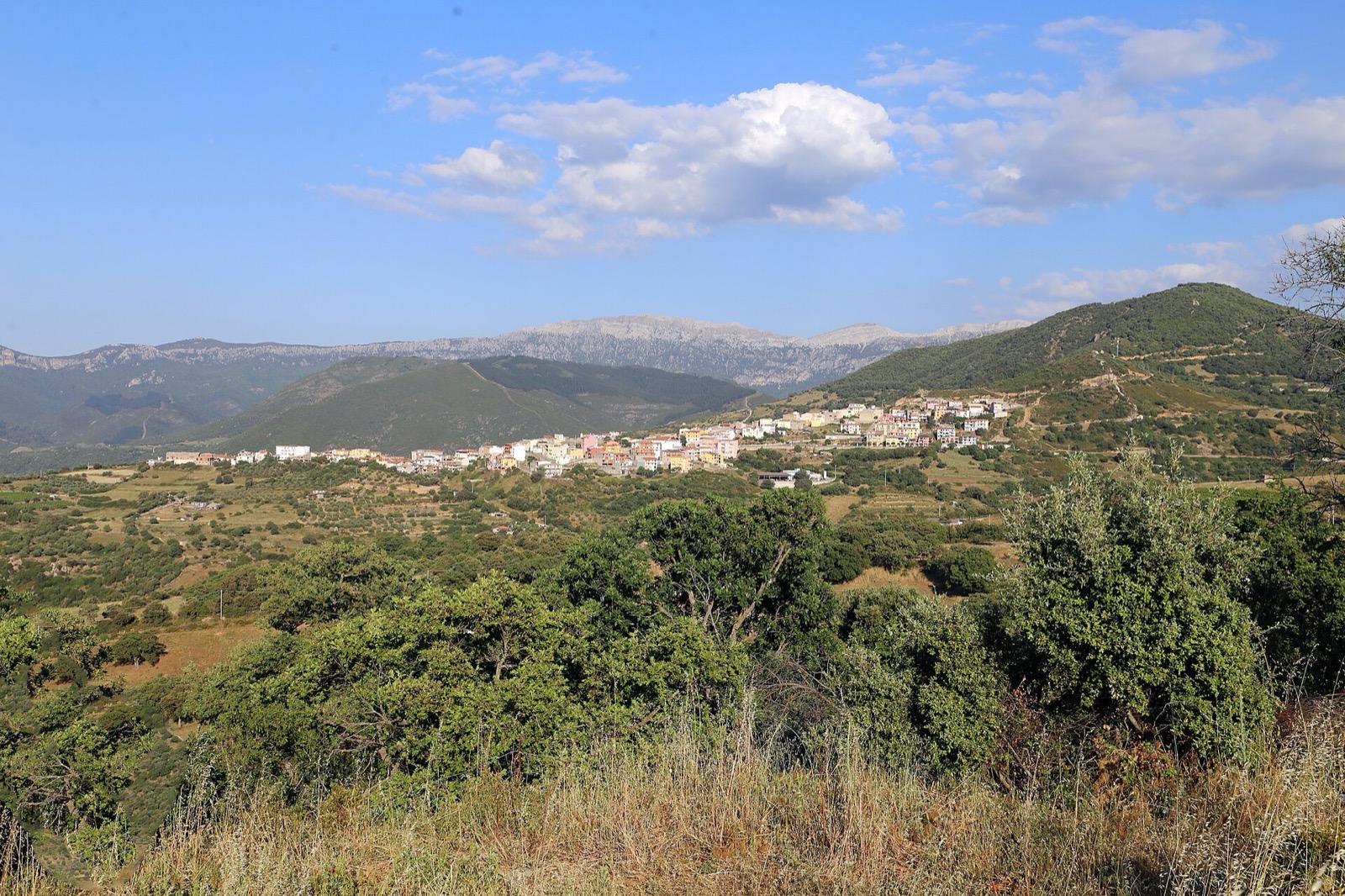
Anyone who sticks to the coast only really gets to know half the island. The interior and the western edge offer amazing archaeological mysteries, rugged mountains and traditions that have survived here for thousands of years.
20. The megalithic Nuraghe structures and the Su Nuraxi complex
As you travel around the island, you’re bound to notice strange stone towers shaped like a truncated cone, which the locals call nuraghi. These gigantic structures of huge boulders stacked on top of each other without a drop of mortar date back to the Bronze Age, and an incredible 7,000 of them survive on the island. Historians still argue to this day over whether they served as fortresses, temples or the dwellings of ancient chieftains.
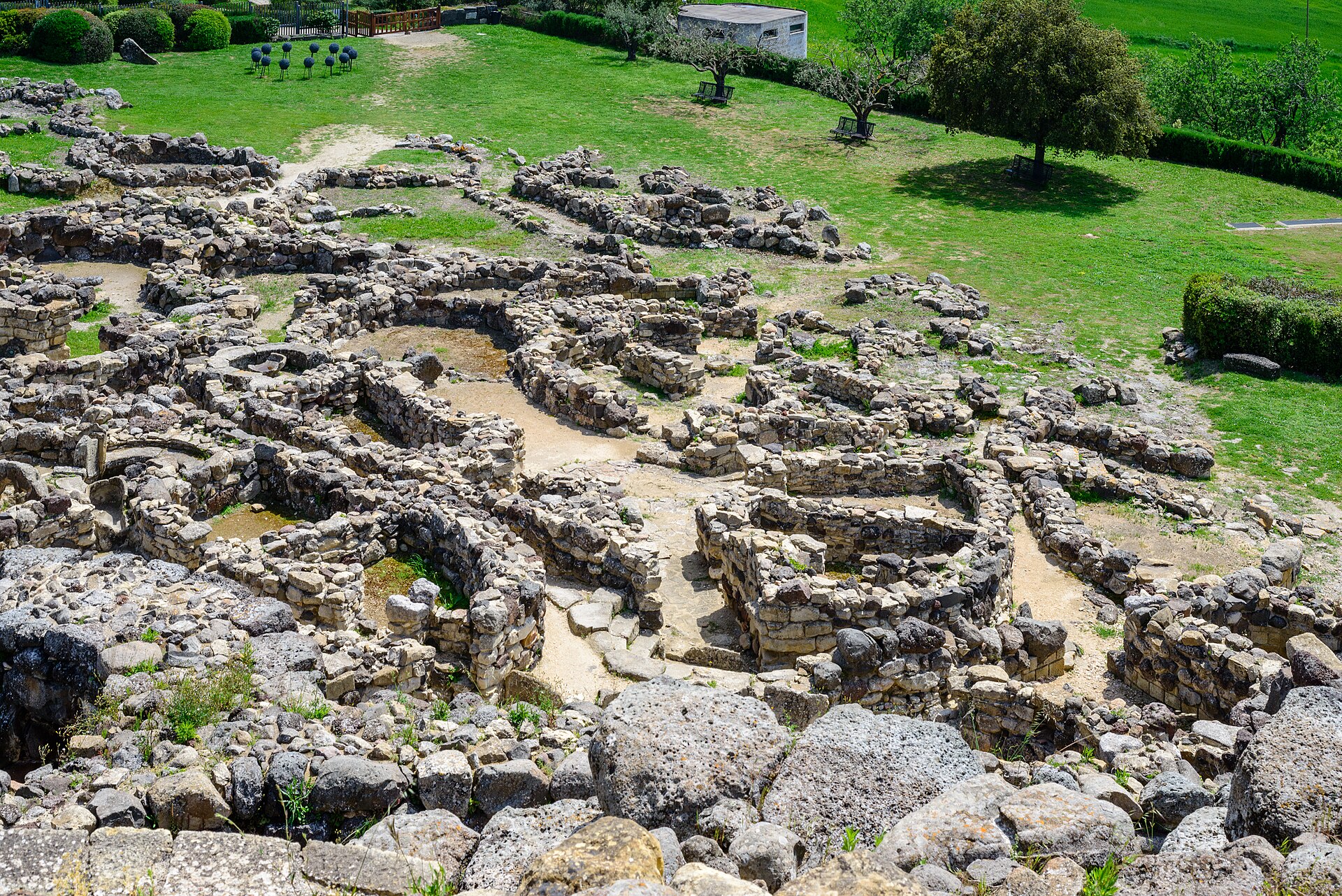
The best-preserved and most spectacular complex is Su Nuraxi, near the village of Barumini. Its central tower reaches an impressive height of over eighteen metres and is surrounded by a whole village of smaller stone dwellings. The exceptional nature of this place is confirmed by its inscription on the UNESCO World Heritage list. You can only visit with a guide here, who will explain the structure’s complex defensive system in detail.
21. Street art in the village of Orgosolo
Deep in the rugged mountains of the Barbagia region lies the village of Orgosolo, which in the past was known above all as a refuge for bandits and outlaws. Today, though, it’s famous around the world for something entirely different: its wall paintings, or murals.
The walls of the local houses are decorated with over 150 large-scale paintings, the first of which began to appear in the late 1960s. These paintings often carry powerful political and social messages, criticising wars or simply illustrating the hard life of the local shepherds. A walk through the lanes of Orgosolo is like visiting a lovely open-air gallery.
22. The rice beach of Is Arutas on the Sinis peninsula
The west coast in the province of Oristano hides one truly unique geological wonder. Is Arutas beach is not made of ordinary sand but of tiny, perfectly polished grains of coloured quartz, which in size and shape really do resemble grains of rice.
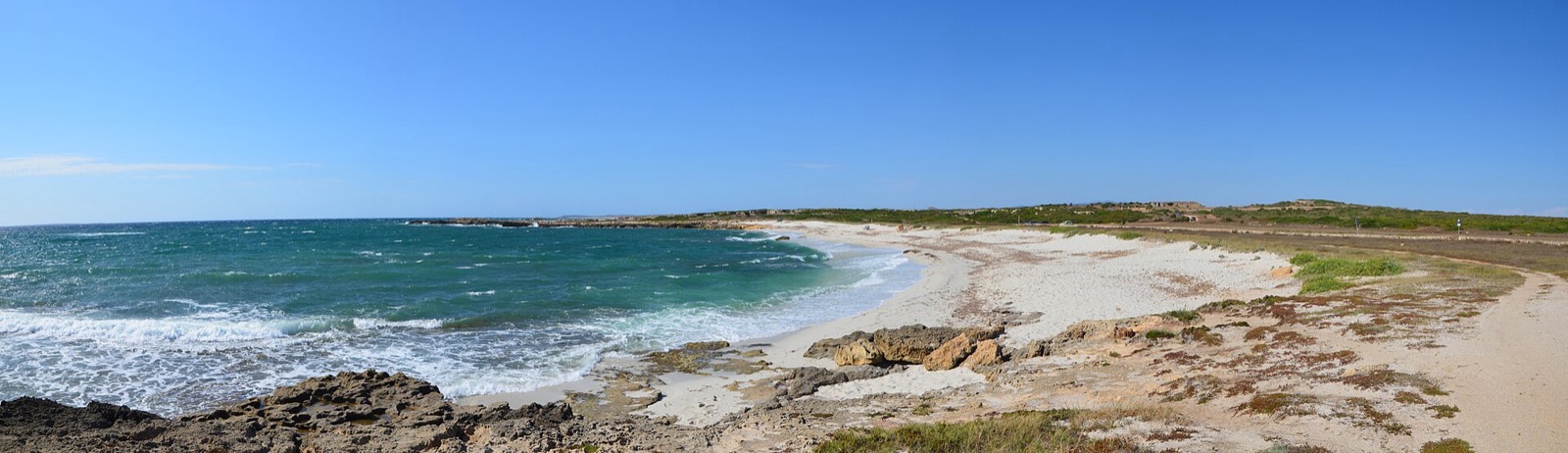
These grains shimmer in white, pink and greenish tones, creating an incredible spectacle. Unfortunately, here too the sand was once massively stolen, which is why any collecting of the quartz pebbles is absolutely forbidden and is heavily fined under the watch of wardens and cameras. The water at this beach gets deep very quickly and it’s popular among surfers, as the strong mistral wind quite often blows here.
23. The ancient city of Tharros
At the very end of the Sinis peninsula, with a view over the endless sea, sprawl the extensive ruins of the ancient city of Tharros. Like Nora in the south, this remarkable city too experienced Phoenician, Punic and then, of course, Roman rule.
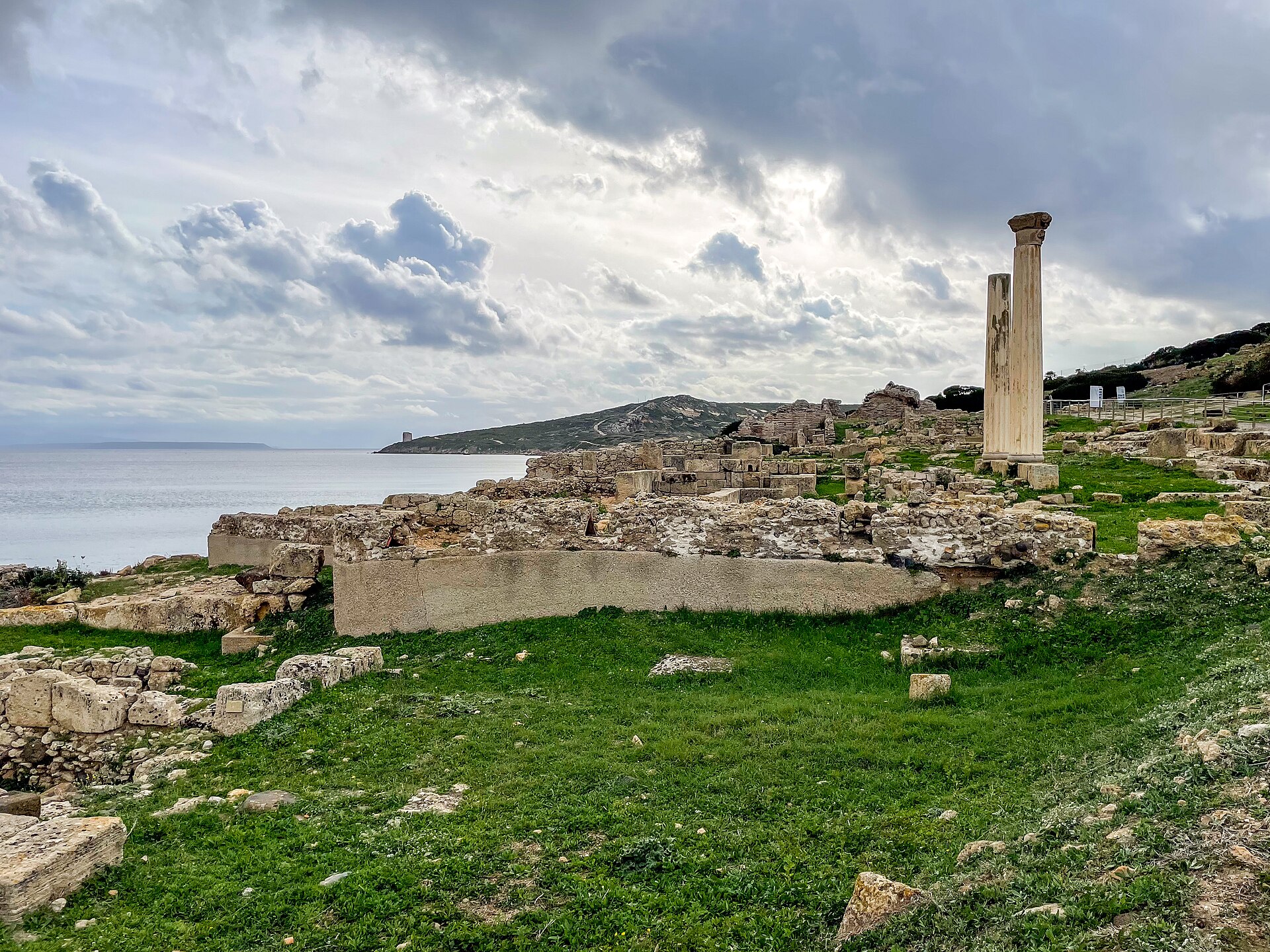
Here you can admire the remains of old Roman streets, temple foundations and majestic columns that rise right above the sea’s surface. Touring the ancient city is fascinating, but in the summer months you’ll have to reckon with an absolute lack of shade. That’s why it’s warmly recommended to plan your visit for early morning or late afternoon.
24. The stone giants of Mont’e Prama
Just a short distance from Tharros and the town of Cabras, one of the most important archaeological discoveries in the Mediterranean took place in the 1970s. During ordinary field ploughing, farmers found thousands of fragments here, from which archaeologists gradually assembled gigantic stone statues up to two and a half metres tall.
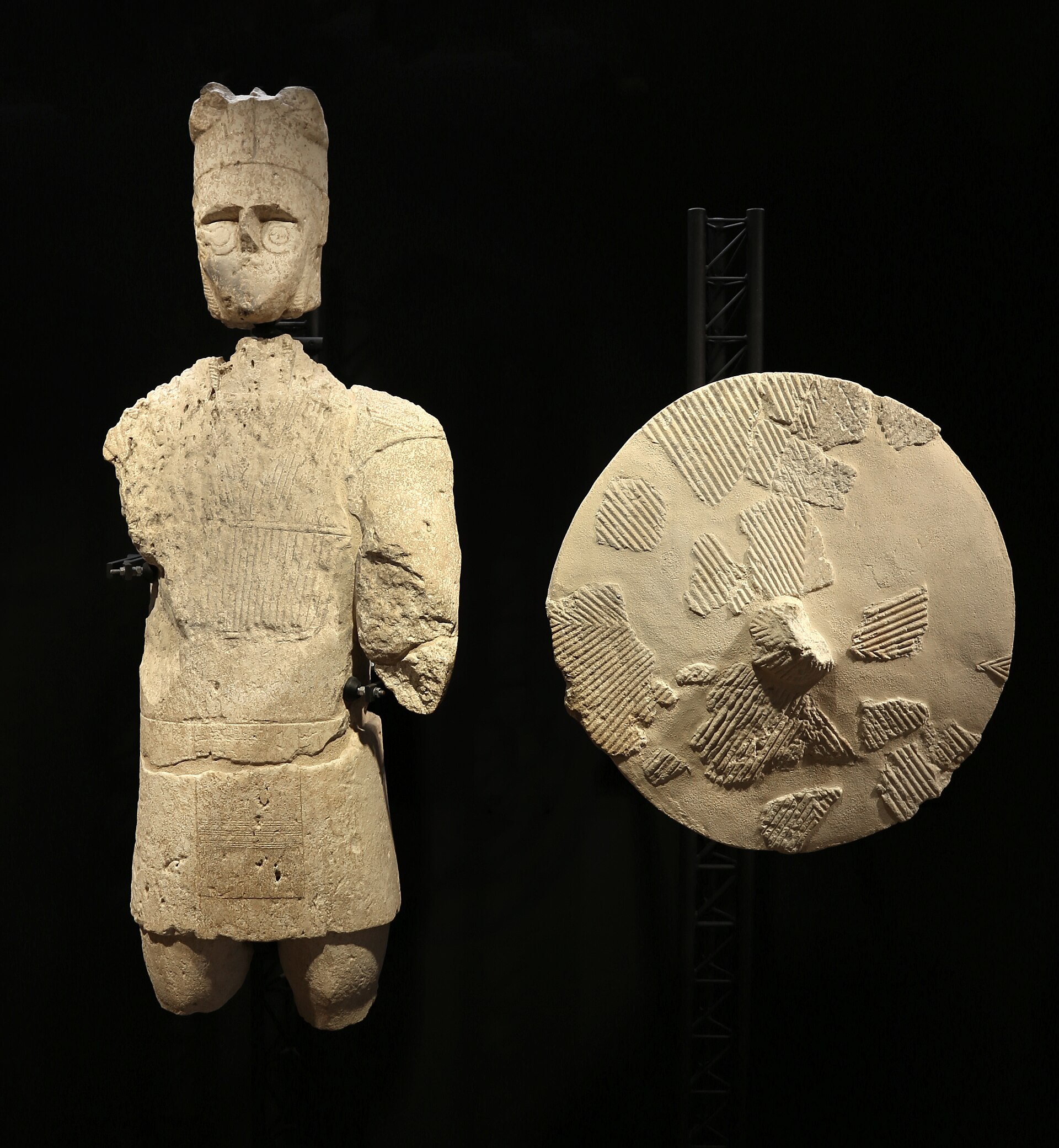
These stone giants, depicting various warriors or archers with typical round eyes, are among the oldest monumental statues in Europe and date from the nuraghic period. You can comfortably view most of these unique giants today in a lovely modern museum right in the town of Cabras.
25. The mountain region of Barbagia and agriturismo
The Barbagia region is the very soul of the island. Its name was reportedly given by the ancient Romans, who never managed to fully subdue this area of dense forests and steep mountains and therefore branded the locals barbarians. The landscape is dominated by the Gennargentu massif, with Sardinia’s highest peak, Punta La Marmora.
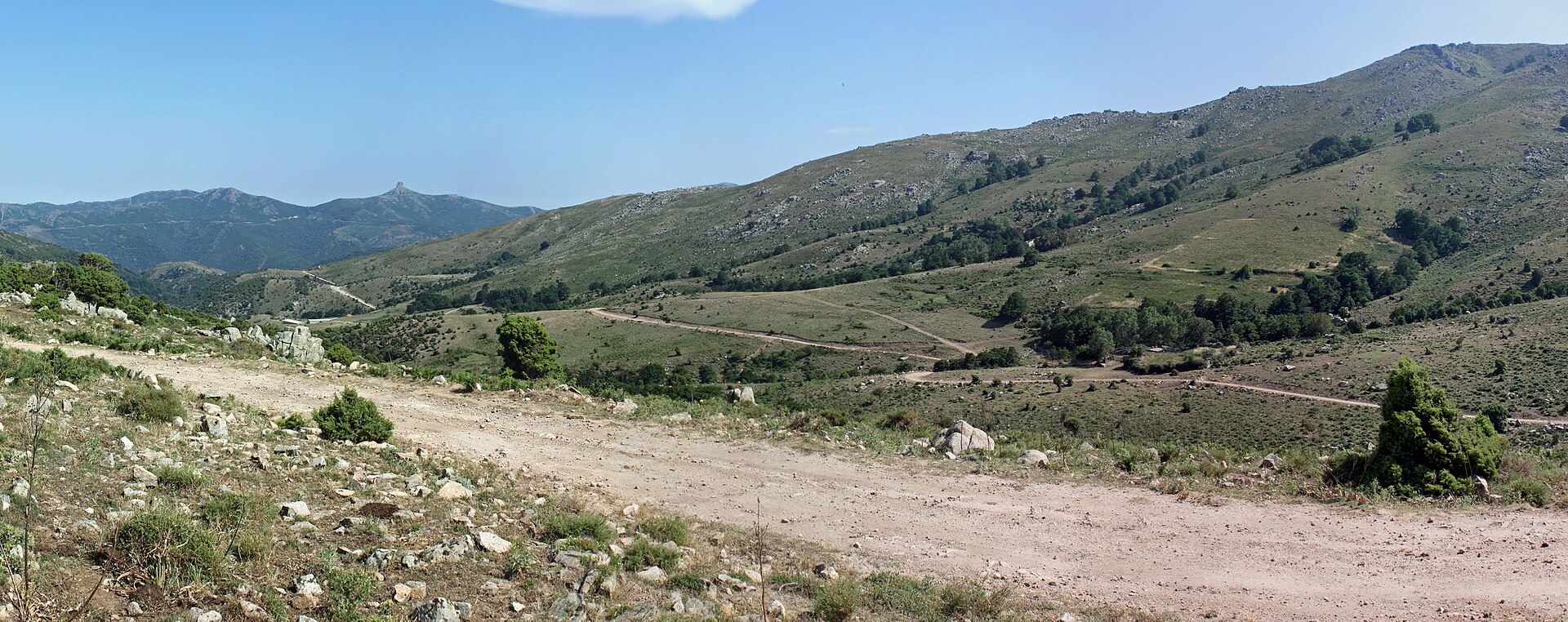
Travellers rave that the best way to get to know this area is to stay at a traditional agriturismo. These family farms offer not only peaceful accommodation in nature but, above all, unforgettable evening feasts full of local ingredients. Just be prepared for the fact that dinners here are served as a fixed multi-course menu and usually don’t start until around half past eight in the evening.
What to Taste in Sardinia
Sardinian cuisine differs quite a lot from classic Italian fare, because it stems from the pastoral traditions of the rugged interior, rather than just from fishing as you might expect from an island. The food here is very hearty, built on quality local ingredients and herbs.
Vegetarian specialities
If, like us, you tend to seek out meat-free dishes, you’ll be delighted on the island. The absolute highlight is the local pasta called culurgiones. These are beautifully braided parcels filled with a mixture of potato, fresh mint and pecorino cheese, most often served with a simple tomato sauce. An utterly typical accompaniment to every meal is the thin, crispy bread pane carasau, affectionately nicknamed “music paper”. Shepherds used to take it into the mountains because it kept for long months, and it can be soaked in sauce to make the excellent dish pane frattau.
For dessert, it would be a sin to skip seadas. These are large fried pastry parcels filled with young stretchy cheese, generously drizzled while still warm with bittersweet Sardinian honey, often from the flowers of the wild strawberry tree. A great side to many dishes is a refreshing salad of thinly sliced raw artichokes, called insalata di carciofi.
Traditional meat and fish dishes
To round out the overall picture of Sardinian gastronomy, it’s only fair to mention that a great symbol of the island’s cuisine is porceddu, a suckling pig spit-roasted for several hours over a fire of fragrant myrtle and juniper wood. Among seafood, bottarga is renowned — dried and grated mullet roe, known as Sardinian caviar. Locals love to add it to a couscous-like pasta called fregola.
Sardinian wines and liqueurs
The local wines tend to be quite robust and strong. The king of the reds is the Cannonau grape, which reportedly contains an unusually high amount of antioxidants and is often credited with a share in that famous Sardinian longevity. Among the white wines, the wonderfully fresh Vermentino dominates, especially the one from the Gallura area. To finish off every dinner, a chilled shot of mirto automatically lands on the table — a very strong herbal liqueur made from the berries of the ever-present myrtle.
Practical Tips to Finish
So that nothing catches you off guard during your dream stay, it pays to know a few basic practical pointers, whether they concern your wallet, your safety or the mistakes we tourists so often repeat.
Budget and prices — is Sardinia expensive?
I won’t lie to you, Sardinia isn’t exactly among the cheapest destinations, but with a bit of planning it can be done for reasonable money. A daily budget usually sits somewhere between 100 and 250 euros per person, depending on your travel style. By far the priciest is a stay in the northeast around the Costa Smeralda, in July and August, when accommodation prices can easily shoot up by 100 percent. You’ll save significantly by travelling in June or September, staying inland and eating at local family-run pizzerias. Don’t forget to add parking fees at the beaches to your budget — these can easily be 2 euros an hour.
Safety and health
The island is reportedly considered a genuinely very safe destination with minimal crime, and the standard European emergency number 112 works here. You need to be more careful of the natural elements. The summer sun is extremely strong here, so quality sunscreen and shelter from the midday heat are an absolute must. Unpleasant jellyfish can sometimes appear in the sea, and if you get stung, it’s recommended not to rinse the spot with fresh water but to wash it thoroughly with salty seawater and scrape off any tentacle remains with a stiff card. Have great respect, too, for the strong mistral wind, which can whip up dangerously large waves, so always keep an eye on the warning flags on the beaches.
The most common visitor mistakes
One of the very biggest blunders is underestimating distances. The island doesn’t exactly have model motorways — plenty of roads are full of bends, and covering sixty kilometres can easily take an hour and a half in the mountains. Another mistake is trying to circle this enormous island in a single week, since it’s far better to pick one base and properly explore its surroundings. In summer it’s also foolish to arrive at popular beaches around midday, because the car parks are bursting at the seams before twelve. And of course, always check whether your dream beach requires that online booking, so you don’t make the journey for nothing.
Where to Next
If island life in the Mediterranean appeals to you and you’re wondering where to head for your next adventure, we’ve got several more pieces of inspiration for you:
- The island just across the strait offers a completely different atmosphere — read our detailed guide to Corsica.
- For lovers of extreme mountain hiking, we’ve written up our experiences and advice for the famous Corsican GR20 trek.
- If you prefer a cooler climate and dramatic history, take a look at our itinerary for a road trip through Normandy and Brittany.
Frequently Asked Questions
When is the best time for a vacation in Sardinia?
The best combination of warm sea, bearable air temperatures and especially smaller crowds is offered by the months of June and September. In July and August, the sea is as warm as bathwater, but the island faces a huge influx of visitors and pretty outrageous prices.
How to get to Sardinia from Czechia?
By far the fastest way is by direct flights, for example with Smartwings from Prague to Olbia or Cagliari, or with Ryanair to the beautiful Alghero. Those who want to go by their own car must drive to Italian ports (such as Livorno or Genoa) and take night or day ferries.
Is Sardinia expensive?
Honestly, it’s actually one of the pricier European destinations, especially in August and in the northeastern regions like Costa Smeralda. But you can definitely visit on a smaller budget if you choose accommodation a bit more inland, travel outside the peak season, and shop at supermarkets.
Do I need a car in Sardinia?
Definitely yes, a car is almost essential for fully experiencing the island. Public transport works well only between major cities, but unfortunately you simply won’t reach the most beautiful beaches and national parks by bus.
Which are the most beautiful beaches in Sardinia?
Among the absolute top spots are the famous La Pelosa in the northwest, Cala Goloritzé and Cala Mariolu on the eastern cliff coast, or the stunning sand dunes at Chia beach in the south. It just depends on whether you prefer sand or cliffs.
Do I need to book beach access in advance?
For the most famous beaches, it’s really a necessity these days. For example, at La Pelosa, Cala Goloritzé or Cala Brandinchi bays, there’s a very strict visitor limit in place and reservations must be made through official apps several days in advance to be sure.
What is a nuraghe and where to see it?
Nuraghe is an incredibly mysterious megalithic tower from the Bronze Age that seriously doesn’t exist anywhere else in the world. On the island you’ll find over 7,000 of them, and the absolute largest complex is Su Nuraxi near the village of Barumini, which is also listed on the UNESCO World Heritage List.
Tips and Tricks for Your Vacation
Don’t Overpay for Flights
Search for flights on Kayak. It’s our favorite search engine because it scans the websites of all airlines and always finds the cheapest connection.
Book Your Accommodation Smartly
The best experiences we’ve had when looking for accommodation (from Alaska to Morocco) are with Booking.com, where hotels, apartments, and entire houses are usually the cheapest and most widely available.
 🚗 Car rental on the roadVerified rental cars in Sardinia
Search with the DiscoverCars comparison engine — it compares prices from dozens of local and international rental companies, and most bookings come with free cancellation.
Compare car prices in Sardinia →Don’t Forget Travel Insurance
Good travel insurance will protect you against illness, accidents, theft, or flight cancellations. We’ve had a few hospital visits abroad, so we know how important it is to have proper insurance arranged.
Where we insure ourselves: SafetyWing (simple monthly subscription) and TrueTraveller (for extra-long trips).
Find the Best Experiences
Get Your Guide is a huge online marketplace where you can book guided walks, trips, skip-the-line tickets, tours, and much more. We always find some extra fun there!