A ticket to the world-famous Hamilton can easily set you back more than $400, but if you know exactly where to click, you might pay as little as ten bucks. For many travellers, a visit to New York’s theatre district is the absolute highlight of the whole American adventure. The glowing neon lights around Times Square, the crowds of excited theatregoers, the smell of roasted nuts from street stalls and that unmistakable buzz before the curtain rises all work like a magnet. The legendary Broadway musicals draw millions of people every year and require a little strategic planning. The official Theater District sits in a fairly compact area between 41st and 54th Street and 6th to 9th Avenue, yet this small slice of Manhattan stages the best theatre business on the planet.
Show up in the city unprepared and you can easily blow a huge chunk of your travel budget at the box office. Ticket prices keep climbing and the best seats vanish from booking systems at lightning speed. On top of that, theatres make heavy use of dynamic pricing, so weekend evenings cost far more than a Tuesday matinee. The summer of 2026 in particular will bring an extreme surge of tourists. The United States will celebrate 250 years since its founding, and on top of that comes a huge wave of fans for the football World Cup. Anyone who leaves their booking to the last minute and relies on luck at the regular box office will probably walk away with an empty wallet, or simply won’t get into the sold-out theatres at all.
There are, however, proven ways to see the best productions in the world for a fraction of the price. You just need to know the right apps, understand the system of morning queues, or know when to head for the right set of steps. In this guide we’ll break down the specific steps that let you enjoy an unforgettable cultural evening, and the hundreds of dollars you save can go towards other New York experiences, whether that’s a skyscraper viewing platform or dinner at a famous restaurant.

TL;DR
- The cheapest tickets come from digital lotteries (typically $30 to $60).
- A physical queue at the theatre (so-called rush tickets) offers a sure-fire cheap seat for early birds.
- The famous TKTS booth on Times Square sells discounted same-day tickets at 20 to 50% off.
- Regular prices for hits like Lion King or Hamilton start at $120 to $240.
- Dynamic pricing pushes up the cost on weekends and during the summer months.
- Smaller theatres with under 500 seats (off-Broadway) tend to be significantly cheaper and more intimate.
- Arrive 30 to 45 minutes early because of the mandatory security screening.
The full destination guide: New York — guide and what to see
How to Get Cheap Broadway Tickets
A standard evening ticket to a popular show starts at $100, and for the biggest hits it climbs towards $400 and beyond. A price tag like that can quickly put a lot of tourists off. Luckily, theatres need to fill every last seat and offer three official ways to get into the auditorium on the cheap. All it takes is a bit of flexibility and a willingness to adapt your daily plans to the rhythm of New York theatre.
Digital Lotteries
This is by far the cheapest route to tickets and it requires no physical queuing at all. Download the TodayTix app to your phone or check out web platforms like Telecharge, Broadway Direct and Lucky Seat. Lotteries usually open the day before a specific performance, sometimes right on the stroke of midnight. The process is simple. You choose your preferred date, the system asks whether you want one or two tickets, and then you confirm your entry. After that you just wait for an email or notification.
In the TodayTix app, don’t forget to enable push notifications in the settings. The moment a winning message pops up on your screen, a strict time limit kicks in. You usually have just one hour to pay by card online. Miss that window and the ticket is gone for good, with the system automatically passing it to the next person in line. Winning tickets typically cost between $30 and $60. The Hamilton lottery is a phenomenon all of its own, where winners pay a mere $10. Lottery seats vary. Sometimes you sit in the front row right under the stage, looking the actors in the eye; other times you end up on the highest balcony. 💡 Tip: Enter lotteries for several different shows at once to dramatically boost your chances of winning on the day.
Rush Tickets
If luck isn’t on your side in the lottery apps, it’s time for some physical action. Rush tickets mean joining a queue right at the box office of a specific theatre on the morning of the performance. Standing on a New York pavement has its own charm. While you wait you’ll often get chatting with local fans who’ll tip you off about other shows worth seeing. Box offices usually open at 10am. On Sundays the opening time shifts and sales don’t start until noon. People begin lining up much earlier, though.
For the most popular titles, I’d recommend arriving at the theatre at least an hour or two before opening time. Pack a bottle of water, a hot coffee from a nearby café and a good book in your bag, because standing on the street can drag on. Once the window opens, the theatre sells off the remaining seats at a flat rate of $30 to $50. This method costs you part of your morning, but it gives you the best certainty for a specific show. Some productions also offer a special student rush. If you show a valid student card, you’ll get a ticket at a reduced price. Ask about this option the moment you reach the box office.
The TKTS Booth on Times Square
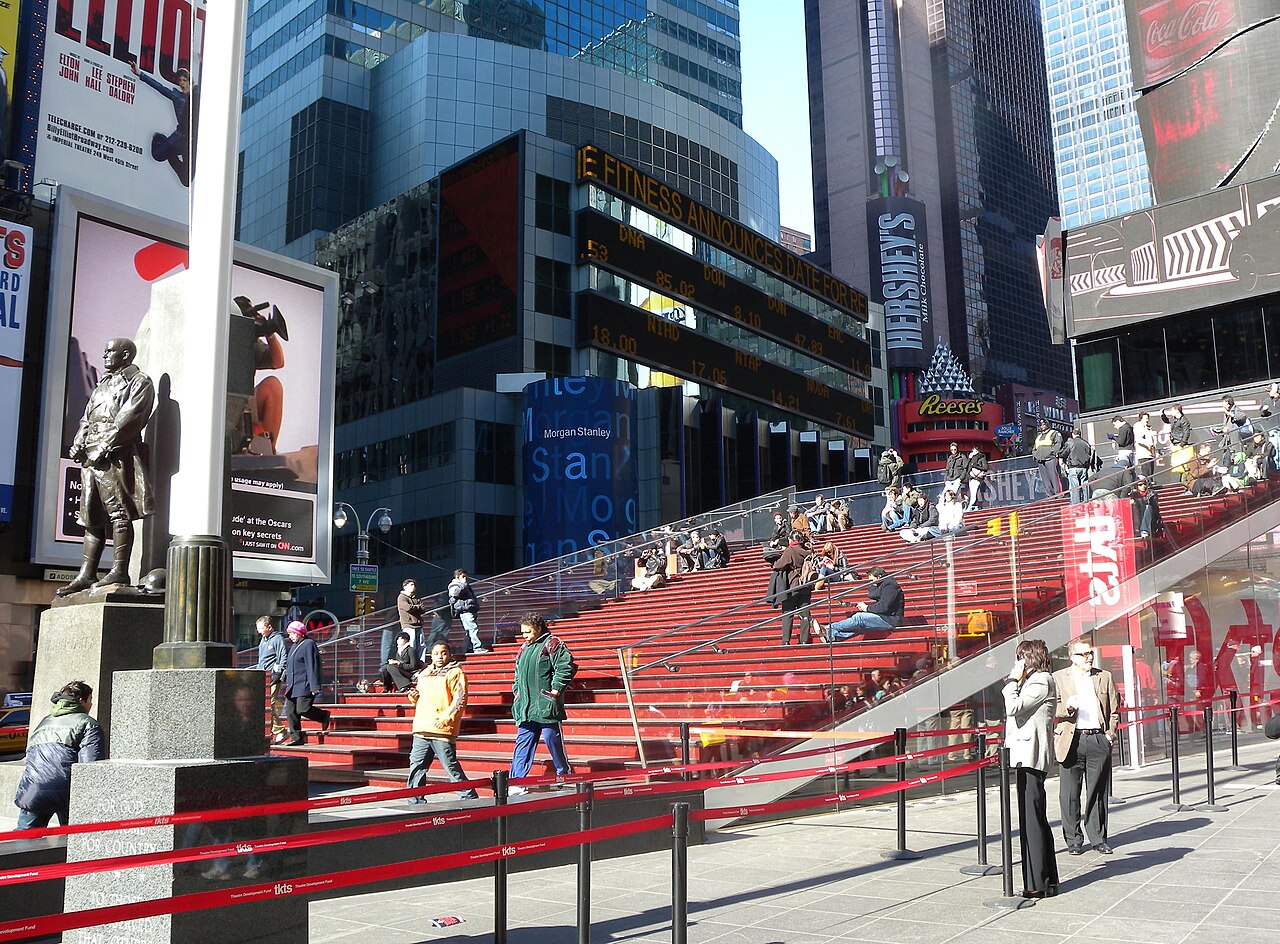
The iconic red steps on Duffy Square, right on 47th Street, are familiar from photos to just about every New York visitor. Tucked directly beneath them sits the booth run by the Theatre Development Fund. Every day they sell tickets to matinee and evening performances at a discount of 20 to 50%. It’s the perfect choice for those who want to go to the theatre that very same day, love spontaneous decisions and don’t insist on one particular title.
Before you join the long, snaking queue, download the official TKTS app to your phone. It shows you in real time which shows are currently available at the booth and at what discount. Be aware that you’ll very rarely find the world’s biggest megahits here. Those reliably sell out at full price in advance, and the theatre has no reason whatsoever to offer them at a discount on the square. Even so, you’ll find dozens of excellent titles and often long-running favourites of the Broadway scene.
What to See on Broadway: The Best Musicals in 2026
The famous Theater District pulses with life between 41st and 54th Street, bordered by 6th and 9th Avenue. For a venue to carry the official, prestigious Broadway label, it must have a capacity of at least 500 seats and sit within this specific area. Smaller spaces are known as off-Broadway or off-off-Broadway. These more intimate venues often deliver an equally stunning acting experience, just at far friendlier prices and in closer contact with the performers. The table below shows the most sought-after staples of the current repertoire and their rough starting prices at the regular box office.
| Musical | What it’s about | Rough price |
|---|---|---|
| Lion King | A visually breathtaking adaptation of the lion story with giant puppets and African rhythms. | from $120 (peak $299) |
| Hamilton | A hip-hop musical about the Founding Fathers of the USA that rewrote theatre history. | from $240 (peak $425) |
| Wicked | The story of the witches of Oz before Dorothy arrived. Amazing music and sets. | from $100 |
| Aladdin | A fairy tale full of magic, dazzling costumes and a flying carpet right above the stage. | from $120 |
| Harry Potter and the Cursed Child | A sequel to the wizarding saga packed with incredible theatrical illusions and magic. | from $216 |
Every season brings brand-new productions that the whole city is talking about and that you read about in the morning papers. If you want to find out what’s currently the biggest hit, follow theatre websites, listen to recommendations from locals, or simply check which theatre has the longest morning queue for rush tickets. In New York, a queue is always a reliable indicator of quality.
Practical Tips Before and During the Show
We recommend arriving at the theatre itself 30 to 45 minutes before the official start. Every building requires you to pass through a security screening and a random bag check. Have your ticket ready in your phone in advance and turn up the screen brightness to speed up scanning at the entrance. It’s best to leave large rucksacks, backpacks or shopping bags back at your hotel room. The aisles between seats in these historic buildings are very narrow, and the cloakroom often means a long, tiring queue. Right at the entrance you’ll be handed the free, iconic yellow programme called Playbill. It contains profiles of the actors and makes a brilliant, free souvenir of New York.
Dressing for the theatre doesn’t require an evening gown or a suit and tie. Most theatregoers go for smart casual, meaning decent jeans and a shirt or a simple, comfortable dress. Do bring a jumper or a light jacket, though. New York theatres are famous for their arctic air conditioning, and during the hot summer months the temperature difference between the baking street and the auditorium can be a good fifteen degrees. In a short-sleeved t-shirt you’d be shivering before the first half is over.
During the interval you can head to the theatre bar. Brace yourself for classic New York prices. A standard cocktail or a glass of wine costs $20 to $30, but the drink often comes in a special plastic cup with the musical’s logo that you’re allowed to take home. If you want to soak up the atmosphere beyond the auditorium too, browse the options on GetYourGuide, where you’ll find specialised walking tours of the theatre district led by guides from the industry. You’ll hear backstage stories and discover the spots where the famous stars walk.
Some visitors worry about understanding the show, since virtually every performance is, of course, in English. A handful of titles do offer small captioning devices (supertitles), but this isn’t the norm. That said, the music, dance and spectacular visuals are so universal that you’ll enjoy the experience even without following every line. The best strategy is to read a detailed synopsis and plot of the show online beforehand. Take the phenomenal Hamilton, for example, which is built on rapid-fire rap. Even native speakers occasionally struggle to catch every verse, but once you know the plot and feel the enormous energy on stage, you’ll follow the story without any trouble.
After the show, don’t forget to make your way to the so-called stage door. You’ll usually find these back doors just around the corner from the main entrance. This is where the actors leave for home after the performance. Have a marker pen ready, as the performers happily sign your Playbill, exchange a few words and gladly pose for photos with fans. It’s a wonderful tradition that’s an inseparable part of a theatre visit.
💡 Tip: For enthusiasts, we recommend a visit to the Museum of Broadway on 45th Street. The exhibition maps the history of the whole phenomenon beautifully and interactively. Don’t overlook the monumental Radio City Music Hall either, where the famous Rockettes perform, especially during their legendary Christmas Spectacular show.

Tips and Theatregoers’ Experiences
When planning a night at the theatre, it really helps to watch how seasoned theatregoers behave. People who visit the theatre district regularly and know its rhythm agree on a few basic rules. Adopt them and your chances of a cheap, outstanding experience shoot up.
- Digital lotteries are by far the cheapest route to tickets (often around $30 to $60). Locals advise entering lotteries for several shows at once, because flexible theatregoers can get a seat for under $50.
- The morning rush queue at the box office from opening time is the most reliable option for a specific show. Stand there with a coffee in hand early enough and you’ll bag a cheap ticket.
- The TodayTix app has become hugely popular because it gathers lotteries and rush offers very clearly in one place and saves time.
- The red TKTS booth is great for last-minute purchases. Experienced theatregoers, however, never expect discounts there on the very biggest and newest world hits, and head there more for tried-and-tested classics.
These tried-and-tested principles are shared by experienced visitors and respected cultural magazines alike. For more useful information, theatre-world news and current reviews, check out portals like Time Out New York or the official Broadway.com website.
Where to Stay Near the Theatres
If the theatre is the main focus of your New York trip, it makes huge sense to look for accommodation right in the Theater District or in neighbouring Midtown. Staying within walking distance is a massive advantage. After an evening performance, which often ends around half past ten at night, you’ll avoid the crush of a packed subway and can stroll calmly straight back to your hotel. The glowing streets around Times Square are also full of life late into the night, with plenty of bistros for a late snack or coffee.
The neighbourhoods of Midtown West and Hell’s Kitchen are a particularly great choice. Hell’s Kitchen starts just beyond 8th Avenue and offers dozens of fantastic, affordable restaurants where both actors and audiences head for dinner. Prices for accommodation right in the heart of the Theater District are, understandably, above average. That initial outlay is easily offset, though, by what you save on public transport and, above all, the time you save, which you can spend exploring other corners of Manhattan.
Take a look specifically at accommodation in the Theater District or in neighbouring Hell’s Kitchen, or compare all accommodation in New York.
Where to Go Next in New York
 🚗 Car rental on the road
Verified rental cars in New York
🚗 Car rental on the road
Verified rental cars in New York
Search with the DiscoverCars comparison engine — it compares prices from dozens of local and international rental companies, and most bookings come with free cancellation.
Compare car prices in New York →Frequently Asked Questions
How to Get Cheap Broadway Tickets?
The best way is through digital lotteries (TodayTix app, Telecharge or Broadway Direct platforms), where tickets cost 30 to 60 USD. Another option is the morning queue at the theater box office (rush tickets) or buying discounted tickets at the TKTS booth in Times Square.
How much does a Broadway ticket cost?
Regular prices for popular musicals start at 100 to 120 dollars. The biggest hits like Hamilton or The Lion King cost a full 240 to 425 dollars. Through lotteries, however, you can get tickets for as little as 10 to 60 dollars.
What is TKTS?
TKTS is an iconic ticket booth under the red stairs at Duffy Square (47th Street), operated by the Theatre Development Fund. They sell same-day show tickets at 20 to 50% off.
Which Broadway Musical to Choose?
For lovers of spectacular visuals, we recommend Lion King or Aladdin. If you’re looking for a modern phenomenon, try Hamilton. For fans of magic, Harry Potter and the Cursed Child is a great choice, while for a classic fairy-tale story with amazing music, there’s Wicked.
Do I need to know English on Broadway?
Most performances are in English, but you don’t need perfect language skills. The music, dance, expressive emotions, and spectacular production work universally, so you’ll fully enjoy both the visual and auditory experience even with average English.
How to dress for a Broadway theater show?
The ideal style is smart casual, meaning nice jeans and a shirt or regular dress. Most important is to bring a sweater or light jacket, because New York theaters use very strong air conditioning and it can get quite cold in the auditoriums.
Tips and Tricks for Your Vacation
Don’t Overpay for Flights
Search for flights on Kayak. It’s our favorite search engine because it scans the websites of all airlines and always finds the cheapest connection.
Book Your Accommodation Smartly
The best experiences we’ve had when looking for accommodation (from Alaska to Morocco) are with Booking.com, where hotels, apartments, and entire houses are usually the cheapest and most widely available.
Don’t Forget Travel Insurance
Good travel insurance will protect you against illness, accidents, theft, or flight cancellations. We’ve had a few hospital visits abroad, so we know how important it is to have proper insurance arranged.
Where we insure ourselves: SafetyWing (simple monthly subscription) and TrueTraveller (for extra-long trips).
Find the Best Experiences
Get Your Guide is a huge online marketplace where you can book guided walks, trips, skip-the-line tickets, tours, and much more. We always find some extra fun there!