Canada is the country where I first saw a mountain so vast you couldn’t take it all in. I’ve travelled through eight provinces, experienced all four seasons there, went skiing in June on the so-called “summer snow,” and somewhere between the Rocky Mountains and the Atlantic coast I fell hopelessly in love. With this country, and with life in it. If you’re hunting for the most beautiful places in Canada, you’re in exactly the right spot.
Lukáš and I even lived and worked here for a few years. In Banff, Lake Louise and Calgary I worked as a housekeeper, a receptionist, a mountain guide and a barista, so I know Canada not just from the window of a rental car, but also from the other side of the counter, from minus twenty on the morning shift and from weekends when we’d head into the mountains with local friends. And that’s exactly why I can tell you honestly which places are worth it and which you can happily skip.
This isn’t yet another generic top-ten you’ll find in every guidebook. Some of my favourites are famous (Niagara, the Rockies), but you’d search for plenty of the others in vain on any top list, simply because nobody put them there. And yet they might just be the ones that charmed me the most.
In this article I’ll show you the 12 most beautiful places in Canada, from the turquoise lakes of the Rockies through Niagara Falls all the way to sleepy fishing villages at the edge of the world in Newfoundland. I’ll tell you when to go to Canada, where to stay and what to watch out for, so you get the most out of this enormous country.

TL;DR
- The Canadian Rockies are the heart of Canada’s wilderness: Banff, Lake Louise, Moraine Lake and Emerald Lake all in one place.
- Vancouver is a city with a soul, where the ocean, mountains and beaches all meet. If you’re choosing between it and Toronto, come here.
- Victoria and Butchart Gardens offer the mildest climate in all of Canada and gardens straight out of a fairy tale.
- Niagara Falls from the Canadian side is a force of nature you have to experience at least once in your life.
- The Bay of Fundy in New Brunswick has the largest tides in the world, so you can literally walk on the ocean floor.
- Cape Breton and the Cabot Trail rank among the most beautiful mountain roads in North America.
- Quebec City and Montreal feel like a slice of francophone Europe in the middle of North America.
- Quidi Vidi in Newfoundland is a fishing village at the end of the world, where at the right time you’ll spot icebergs and puffins.
- The best time for the west is summer (June–September), while the east is king in autumn with its colourful foliage (“Indian summer”).
- Most international visitors need an eTA (an electronic travel authorization, around CAD 7), not a full visa.
- Canada is huge: plan at least 10–14 days for a single region, and a good three weeks for a coast-to-coast crossing.
The full destination guide: Canada — guide and what to see
When to Visit Canada and How to Even Approach It
Canada is by a wide margin the second-largest country in the world and stretches across six time zones, so “going to Canada” can mean a thousand different things. Before you dive into planning, sort out two things: when to go and how much you can realistically cover.
Good news for most travellers: for a tourist holiday in Canada you don’t need a full visa, an electronic eTA registration is enough. You can arrange it online on the official government website in a few minutes, it costs about 7 Canadian dollars (around €5) and is valid for five years. Without it, though, they won’t let you board the plane, so don’t leave it until the last minute, and watch out for scam sites that charge many times the price.
Timing is easy once you know where you’re headed. For the west and the Rockies, go in summer (roughly June to September), when all the trails and cable cars are open and the lakes glow turquoise. The east, meaning Quebec, Ontario and the Atlantic provinces, is at its most beautiful in autumn, when the forests turn red and gold and the whole country enjoys its so-called “Indian summer.” Save winter for skiing in Whistler or chasing the northern lights in Alberta.
💡 Tip: Distances in Canada are truly enormous. From Toronto to Vancouver it’s over five hours by plane. Don’t try to see the whole country in one go. Pick one region, give it at least 10 to 14 days and drive through it, because the road trip is practically a national sport here. For a longer coast-to-coast crossing, count on a good three weeks.
Where to Stay in Canada
Wherever you go, accommodation in Canada isn’t among the cheapest, especially at the peak of the season in the Rockies. It pays to book early, often even half a year ahead, and to choose based on the kind of traveller you are: whether you crave a legendary address with all the trimmings, a practical base in the city, or peace and quiet by a lake.
Across the country I’ve picked six iconic addresses that the whole Canadian romance revolves around. Most of them are run by the historic Fairmont brand and several are a tourist destination in their own right, whether it’s the fairy-tale Château Frontenac in Quebec City, the “castle” Banff Springs in the Rockies or the ivy-clad Empress in Victoria. Not all of them come cheap, but at least one night in one of them is something I warmly recommend. That’s an experience no one can take away from you.

💡 Tip: If you’re travelling on a tight budget, look for accommodation in smaller towns a short drive from the main attractions. In Canmore instead of right in Banff, for example, a night comes out noticeably cheaper and it’s still just a short hop into the mountains. You can compare prices and availability across Booking, hotels and apartments all in one place via Stay22.
12 Most Beautiful Places in Canada That Will Charm You
Let’s finally take a look at the places themselves. I’ve ordered them roughly the way Canada flows from west to east, from the turquoise lakes of the Rockies through big cities and waterfalls to the very edge of the world on the Atlantic coast. For each one you’ll also find a link to a more detailed article, in case it steals your heart the way it did mine.
1. The Canadian Rockies, Alberta and British Columbia
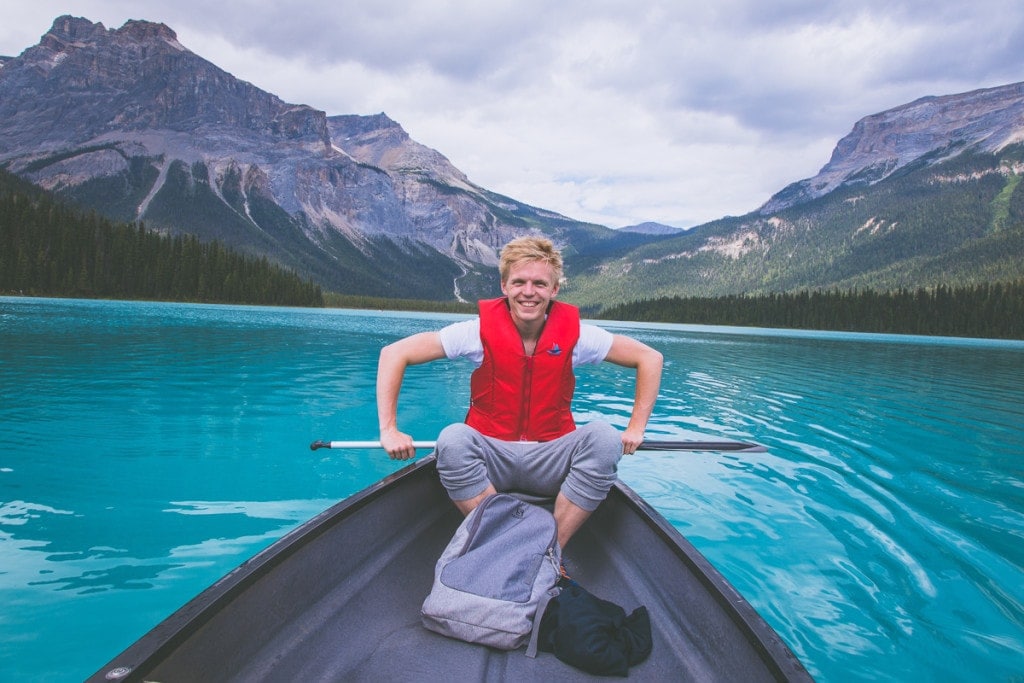
When you say Canada, most people picture exactly this: turquoise lakes mirroring snow-capped peaks, and dense coniferous forest a bear could come charging out of at any moment. The Rockies are the heart of the country and also the place where Lukáš and I lived for a while, so I probably have the strongest bond with them of all.
You’ll find the very best of it gathered here: famous Lake Louise and Moraine Lake (the one that used to be on the twenty-dollar bill), Emerald Lake in Yoho National Park in the photo above, the glacier fields along the Icefields Parkway, which many people consider the most beautiful road in the world, and a bit further north wild Jasper.
💡 Tip: The main lakes are taken over by crowds right after sunrise, and these days the only way to reach the car park at Moraine Lake is by shuttle bus. Get up early, or come in the evening instead, when the buses empty out and the colours are at their loveliest anyway.
For a proper road trip through the Rockies, check out our itinerary from Vancouver to Banff or go straight for the big western Canada loop in 14–21 days. And since grizzlies and black bears live here, take a look at our guide to staying safe in bear country.
2. Vancouver, British Columbia
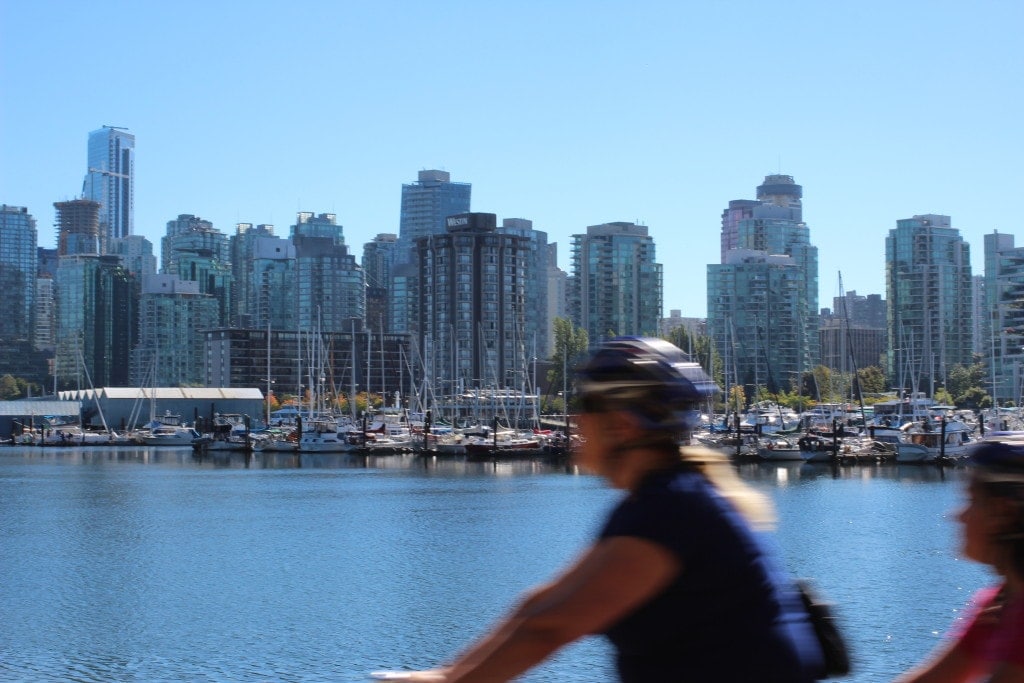
Vancouver has a soul. It’s one of the few big cities where you can hit the beach in the morning, hike into the mountains in the afternoon and have dinner by the ocean in the evening, all without rushing anywhere. In summer it’s pleasantly warm, the seawall promenade around Stanley Park is one of the loveliest city walks in the world, and the whole place radiates an easy-going vibe.
If you ever find yourself choosing between Toronto and Vancouver, don’t hesitate for a second and fly here. ☺️ From Vancouver you can also easily head further afield: by ferry to Vancouver Island, up to the ski resort of Whistler or off for wine in the Okanagan.
All 27 of my tips on what to see in Vancouver and where to take day trips are in the standalone city guide.
3. Victoria and Butchart Gardens, British Columbia

The capital of British Columbia sits at the tip of Vancouver Island and is the warmest and mildest corner of all of Canada. No wonder so many Canadians move here to retire. While the rest of the country freezes, the roses are blooming in Victoria.
If you make it here in spring, there’s absolutely nothing to think about, head straight to Butchart Gardens. A former limestone quarry has been turned into one of the most beautiful gardens in the world, and in season over a million flowers burst into bloom here. Victoria itself will charm you with its Inner Harbour, the ivy-clad Empress hotel and the tradition of afternoon tea.

What to fit in around Victoria and the rest of the island I lay out in the Victoria guide and in the seven-day Vancouver Island loop.
4. Cache Creek and Savona, the Interior of British Columbia

And now for something you won’t find on any list. When you drop down from the Rockies toward the Pacific, the mountains suddenly vanish and strange, scrubby semi-deserts start appearing along the road. You’re driving through the interior of British Columbia past Kamloops (honestly one of the ugliest towns I’ve ever seen 😅), and the landscape looks more like the Wild West than postcard Canada.
And that’s exactly why I love it. In Cache Creek, stop at the period Hat Creek Ranch, where time froze in the age of stagecoaches. Spend a few dollars, take a carriage ride and support the local tourism, it’s charming and completely different from the rest of the drive. A little further along, by Kamloops Lake, lies sleepy Savona, an ideal spot to stop, stretch and grab a photo where there’s no one around.

💡 Tip: This part of the journey is a reward for anyone driving across Canada. In a single day it serves up mountains, semi-desert and lakes. I’ve got the complete route from the mountains to the ocean in the western Canada itinerary.
5. Niagara Falls, Ontario

If I didn’t mention them, who would forgive me? 😅 Niagara Falls may be a tourist classic, but they’re a classic entirely deservedly. When you stand at the railing and feel the ground trembling beneath you from the force of hundreds of thousands of litres of water crashing down every second, you understand why millions of people head here every year.
The best view is from the Canadian side, looking straight at the horseshoe-shaped Horseshoe Falls. Take a boat as close to the rapids as you can (expect to get soaked) and come back after dark too, when the falls are lit up in colour and, in summer, fireworks explode above them. From Toronto it’s a stone’s throw away, so you can even come here on a day trip.
Nineteen tips on what to see and do at Niagara and what to watch out for are in the standalone article on Niagara. And since the falls fall under Ontario, take a look at the big Ontario guide too.
6. Bruce Peninsula, Ontario

Canada’s answer to Navagio Beach. 🙂 Bruce Peninsula in Ontario juts out into Lake Huron and hides the Grotto, a sea cave with turquoise water so crystal-clear you can hardly believe it. People swim in it, but be warned, it’s a bracing dip, the water is freezing even in summer.
I absolutely love the drive itself from Bruce Peninsula to Niagara. You pass typical American small towns full of cute little shops, churches, community events and, above all, incredibly kind people. It’s one of those drives where the journey is the destination.
💡 Tip: The car park at the Grotto uses timed slots in summer and fills up fast, so book your spot in advance on the national park website and set off early in the morning.
7. Montreal, Quebec

Montreal is Canada’s second-largest city, the second-largest francophone city in the world and the biggest metropolis in the province of Quebec. And it’s a fascinating mix: in the morning you feel like you’re in North America, in the afternoon in the lanes of Old Montreal you could be somewhere in France.
It sits well to the south, roughly on a level with Milan, but don’t dream of a mild climate. In summer temperatures can easily hit a tropical thirty degrees, while in winter they plunge to a freezing minus thirty, so choose the time of your visit carefully. The best time to come is late spring or early autumn.
Fifteen tips on what to experience in Montreal are in my city guide, and if you want to understand the whole francophone province, read the big Quebec guide.
8. Quebec City, Capital of the Province of Quebec

The very first thing I ever saw of Canada was Quebec City, and to this day it’s one of my favourite cities in the world. Its historic core, wrapped in walls and full of French cafés and restaurants, is dominated by the fairy-tale Château Frontenac hotel, reputedly the most photographed hotel in the world.
Old Quebec City is now on the UNESCO list, and you’ll find some of the oldest buildings in North America here, along with a fortress that stood here even before the city itself. By the way, the town wasn’t founded by Jacques Cartier, as is often written. He sailed up the St. Lawrence River as early as 1535, but the real founder was Samuel de Champlain in 1608.
Fifteen tips on what to see in Quebec City and where to eat best are in the standalone guide.
9. The Bay of Fundy and Hopewell Rocks, New Brunswick

Have you ever walked on the ocean floor? In New Brunswick you can. The Bay of Fundy has the largest tides on the entire planet, with the water level dropping and rising by as much as sixteen metres. At low tide you can walk among the so-called Flowerpot Rocks (Hopewell Rocks), bizarre rock pillars with a tuft of trees on top that look exactly like giant flowerpots.

Just don’t forget to leave in time so the tide doesn’t sweep you along with it, because it comes back faster than you’d expect. Within a few hours there can be several metres of water right where you were standing.
And one more thing: in my opinion, the kindest people on the entire planet live in New Brunswick. They have a perfect sense of what’s warm and welcoming and what’s already intrusive, and maybe that’s partly why I ended up liking the Atlantic provinces even more than the famous West. (And there are loads of beavers. 😁) You’ll find more about the area in the guide to Fundy National Park.
10. Cape Breton and the Cabot Trail, Nova Scotia

Cape Breton is an island in the north of Nova Scotia and takes up nearly a fifth of the whole province. Running across it is the Cabot Trail, one of the most beautiful mountain roads in North America, winding along cliffs high above the ocean through Cape Breton Highlands National Park.
You’ll find dozens of trails here, from a few minutes to full-day hikes, and along the way you might spot moose, coyotes and bears. Lukáš and I hiked up to the Franey lookout (about two hours to the top, but the view over the canyon and the ocean was worth it without question) and along the famous Skyline Trail, which we set out for mainly because of the moose. This time they gave us the slip, but the sunset over the Atlantic more than made up for it.

By the way, this is exactly where the navigator John Cabot (born Giovanni Caboto), one of the first Europeans to reach the shores of present-day Canada, landed in 1497. In the Atlantic provinces you can’t escape that name. I lay out the whole loop day by day in the Cabot Trail guide.
11. Shelburne, Nova Scotia

Most tourists in Nova Scotia head to the photogenic village of Peggy’s Cove with its lighthouse, but I completely fell for the sleepy town of Shelburne, where hardly anyone strays. I was lucky enough to arrive right as a whirligig festival was on, and the whole place breathed the atmosphere of an old port, as if time had stopped somewhere in the nineteenth century.
It’s exactly these small, unexpected places that make travelling around Atlantic Canada such an experience. No crowds, just wooden cottages by the water, gentle people and a sea that stretches as far as you can see. If you love colourful fishing towns, pop over to nearby Lunenburg, which is entirely inscribed on the UNESCO list.
12. Quidi Vidi, Newfoundland

And to finish, the most far-flung of all. Quidi Vidi is a tiny fishing village tucked into a cove a short drive from St. John’s in Newfoundland, roughly where Canada (and really all of North America) ends and the Atlantic begins. A few brightly coloured sheds on the water, a rocky cove, a local brewery and a stillness you won’t find anywhere else.
If you arrive at the right time, usually in late spring and early summer, you’ll see icebergs drifting in from Greenland off the coast and colonies of puffins. Sadly we came off-season, so neither (on the plus side, we had the coast almost to ourselves). Take it as a tip on how to time it better than we did. 😉

What else not to miss in Newfoundland you’ll find in the St. John’s guide.
Map of points of interest for your phone
Where to Next: More Articles About Canada
Canada is enormous, and on the blog you’ll find a whole library about it. Here are the articles that will help you most when planning:
- Western Canada Road Trip: a 14–21 day itinerary
- Road Trip Vancouver → Banff Through the Rockies
- Vancouver: 27 Tips on What to See and Where to Go
- Ontario: 35 Tips on What to See and Do
- Province of Quebec: Complete Guide and 30+ Tips
- The Cabot Trail in Nova Scotia: 15 Tips on What to See
- Bears in Canada: How to Behave and Survive an Encounter
Frequently Asked Questions About Travelling in Canada
Before you set off, run through the most common questions people deal with before a trip to Canada. From visas through the best time of year to how much money to set aside.
Do I need a visa to visit Canada?
No, for tourist travel you only need an electronic eTA registration. You can apply for it online in just a few minutes, it costs around 7 Canadian dollars (approx. €5) and is valid for five years or until your passport expires. You only need a traditional visa for longer stays, work, or study.
When is the best time to visit Canada?
It depends on the region. The west and the Rocky Mountains are ideal in summer (roughly June to September), when trails and gondolas are operating and the lakes glow turquoise. Eastern Canada—Quebec, Ontario, and the Atlantic provinces—is most beautiful in autumn with its colorful foliage. Winter is perfect for skiing and northern lights hunting.
Is western or eastern Canada more beautiful?
Each is completely different. The west (Rocky Mountains, Vancouver, Vancouver Island) is all about spectacular nature, mountains, and ocean. The east (Quebec, Montreal, Atlantic provinces, Newfoundland) offers history, Francophone culture, and charming fishing villages. If you only have time for one, choose based on whether you want wilderness or cities and coastline.
How long do I need for Canada?
For one region (like the Rockies and Vancouver) plan at least 10 to 14 days. If you want to travel across the country from the Pacific to the Atlantic, set aside three weeks or more. Distances are huge—from Toronto to Vancouver you’ll fly over five hours.
How much does a holiday in Canada cost?
Canada isn’t a cheap destination. A return flight from Europe costs roughly €600 to €1,200 depending on the season, plus you’ll need to budget for more expensive accommodation (especially in the mountains in summer) and food. You can save money by traveling outside peak season, staying in smaller towns near the attractions, and cooking or grilling your own meals.
What are the Rocky Mountains (Canadian Rockies)?
It’s Canada’s most famous mountain range on the border of Alberta and British Columbia provinces. It includes the national parks Banff, Jasper, Yoho, and Kootenay, with icons like Lake Louise, Moraine Lake, Emerald Lake, and the Icefields Parkway mountain highway. For most travelers, they’re the main attraction of the entire country.
Can you road trip across Canada by car?
Yes, and it’s absolutely the best way to explore it. Road tripping is practically a national sport here, the roads are excellent, and renting a car or RV is completely common. Just be prepared for large distances and plan your route so you’re not spending half the day behind the wheel.
What are Canada’s most beautiful natural places?
Among the most beautiful are the Rocky Mountain lakes (Lake Louise, Moraine Lake, Emerald Lake), Niagara Falls, the Bay of Fundy with the world’s highest tides, the Cabot Trail scenic highway on Cape Breton, and the wild coast of Newfoundland. In this article you’ll find twelve of my favorites from across the entire country.
Tips and Tricks for Your Vacation
Don’t Overpay for Flights
Search for flights on Kayak. It’s our favorite search engine because it scans the websites of all airlines and always finds the cheapest connection.
Book Your Accommodation Smartly
The best experiences we’ve had when looking for accommodation (from Alaska to Morocco) are with Booking.com, where hotels, apartments, and entire houses are usually the cheapest and most widely available.
 🚗 Car rental on the roadVerified rental cars in Canada
Search with the DiscoverCars comparison engine — it compares prices from dozens of local and international rental companies, and most bookings come with free cancellation.
Compare car prices in Canada →Don’t Forget Travel Insurance
Good travel insurance will protect you against illness, accidents, theft, or flight cancellations. We’ve had a few hospital visits abroad, so we know how important it is to have proper insurance arranged.
Where we insure ourselves: SafetyWing (simple monthly subscription) and TrueTraveller (for extra-long trips).
Find the Best Experiences
Get Your Guide is a huge online marketplace where you can book guided walks, trips, skip-the-line tickets, tours, and much more. We always find some extra fun there!