

Since we spent some time working as mountain guides and one of our tours included a talk on what to do during a bear encounter, I probably know more about bears in Canada than I ever wanted to.
We’ve watched countless tourists try to get within a few metres of a grizzly just for an Instagram photo, and trust me, the local park wardens were tearing their hair out. This guide is the result of actually living inside the park, spending endless hours on the trails, and a few very close encounters that I’ll tell you all about.
I’ll walk you through how to stay safe on the trail, explain the crucial difference between defending yourself against a grizzly and a black bear, show you how to properly use bear spray, and point you towards where to stay and eat in this stunning but wild landscape. Let’s get into it!
TL;DR
Here’s our little survival cheat sheet — perfect if you’re already on the trail and just need a quick refresher on the essentials:
- Golden rule: Never, ever surprise a bear. On the trail you need to make noise — talk loudly, clap, or sing (bear bells often aren’t enough).
- Grizzly vs. black bear: If a grizzly attacks, play dead. If a black bear attacks, fight for your life with everything you’ve got.
- Bear spray is a must: In national parks like Banff or Jasper, carrying bear spray is absolutely essential. It costs around 40 € to buy or roughly 3.50 € per day to rent.
- Distance: Keep at least 100 metres from any bear. If you break this rule or get out of your car at a roadside sighting, you risk a fine of around 135 €, and for serious wildlife disturbance up to an eye-watering 17,000 €.
- The statistics speak for themselves: Over the past 100 years, bears have killed roughly 80 people in Canada. The vast majority of these incidents happened because people ignored basic rules — walking silently alone in the woods or ignoring trail closures.
Three species of bears in Canada you might encounter
Canada has one of the highest bear populations in the world, and encountering one is a very real possibility that you need to factor into your trip planning. In the popular provinces of Alberta and British Columbia, you’ll primarily come across two species (grizzly and black bear), while the polar bear rules the far north.
We learned to tell them apart fairly quickly, because how you react depends entirely on which bear is standing in front of you.
1. Grizzly bear (Ursus arctos horribilis)
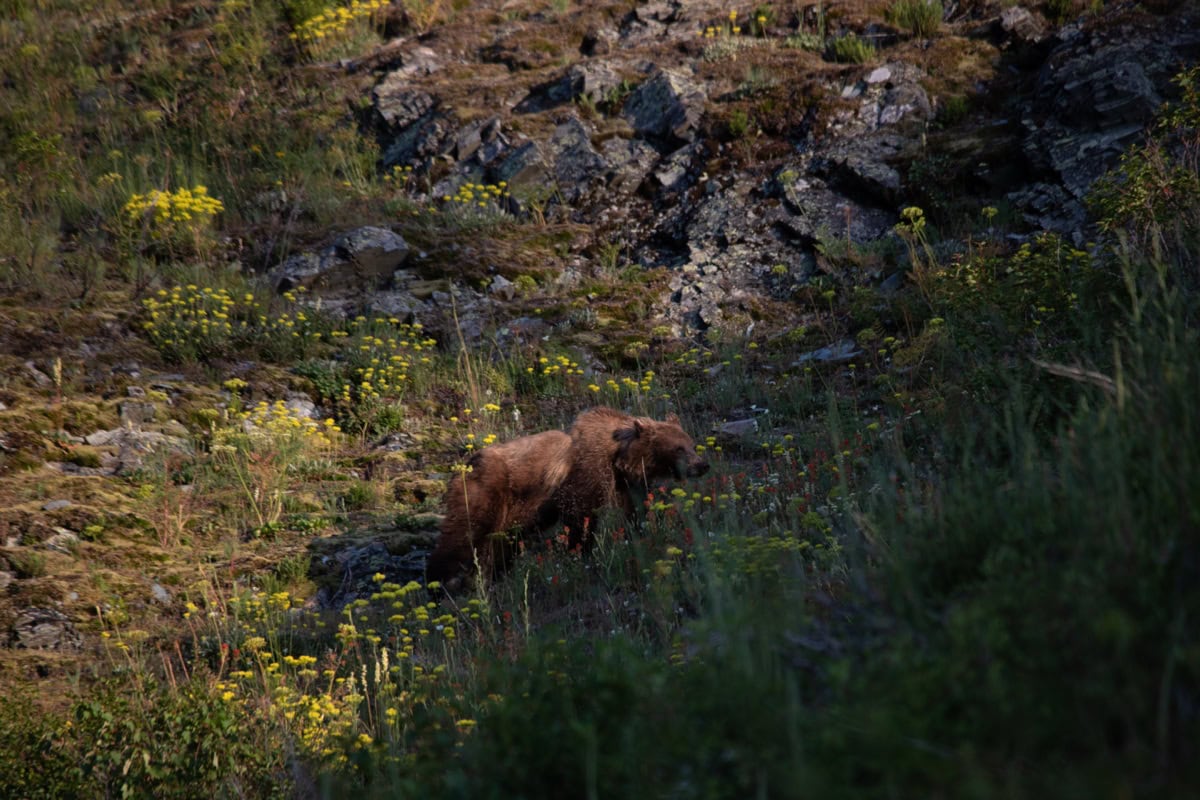
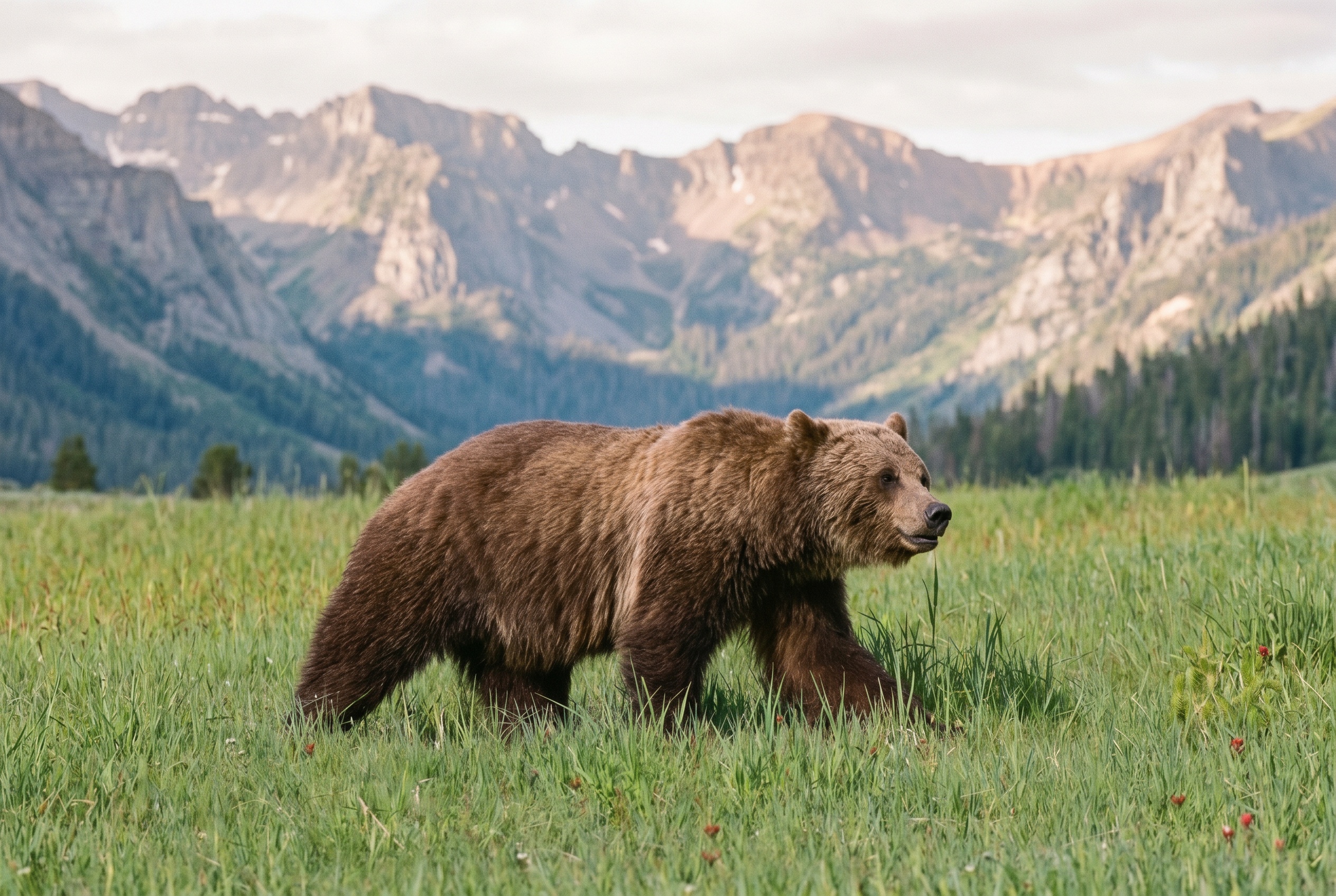
The grizzly is the undisputed king of these mountains and commands enormous respect. Alberta alone is home to around 1,500 of them, and British Columbia has roughly 15,000. You can spot one fairly easily by the distinctive muscular hump between its shoulder blades, which gives it incredible digging power. Grizzlies also have a concave (dish-shaped) facial profile and small, rounded ears.
Don’t be fooled by the name — grizzlies can range in colour from light blonde through brown to nearly black. They’re enormous, and if you encounter one, you must stay absolutely calm, as they’re highly territorial and usually attack out of feeling threatened. If you’d like more details on their habits, check out the official Parks Canada website — we used to read it almost every evening before the season started.
2. Black bear (American black bear)
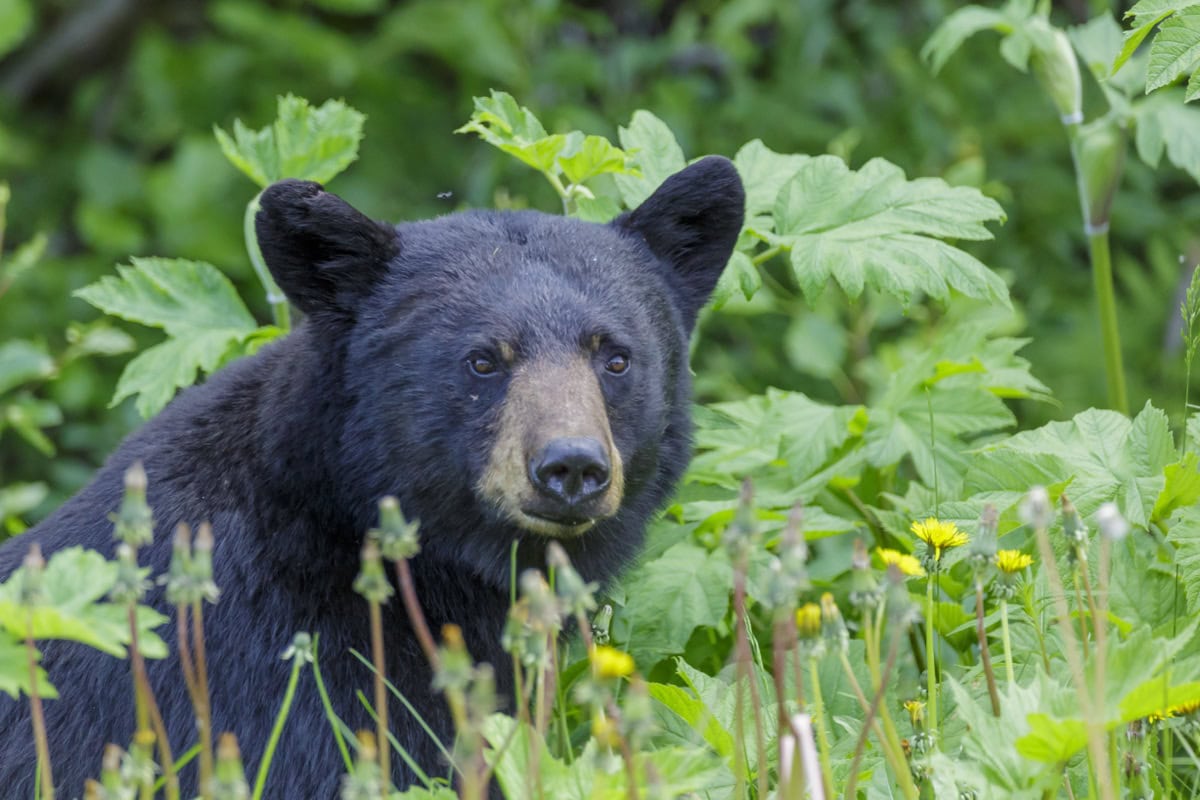
The black bear is far more common — Alberta’s population alone is estimated at an impressive 40,000. You’ll often spot them right in campsites or near roads. Unlike the grizzly, they lack that characteristic shoulder hump, their facial profile is straighter (more like a dog’s snout), and their ears are longer and more pointed.
Once again, colour isn’t a reliable indicator — a black bear can actually be brown, cinnamon, or even white (the so-called spirit bear in BC). Black bears are generally shyer and would rather climb a tree, but if they do attack, it’s often a predatory attack, which is why aggressive defence is recommended. You’ll find loads of preventive tips on the WildSafeBC website as well.
3. Polar bears and Kodiak bears
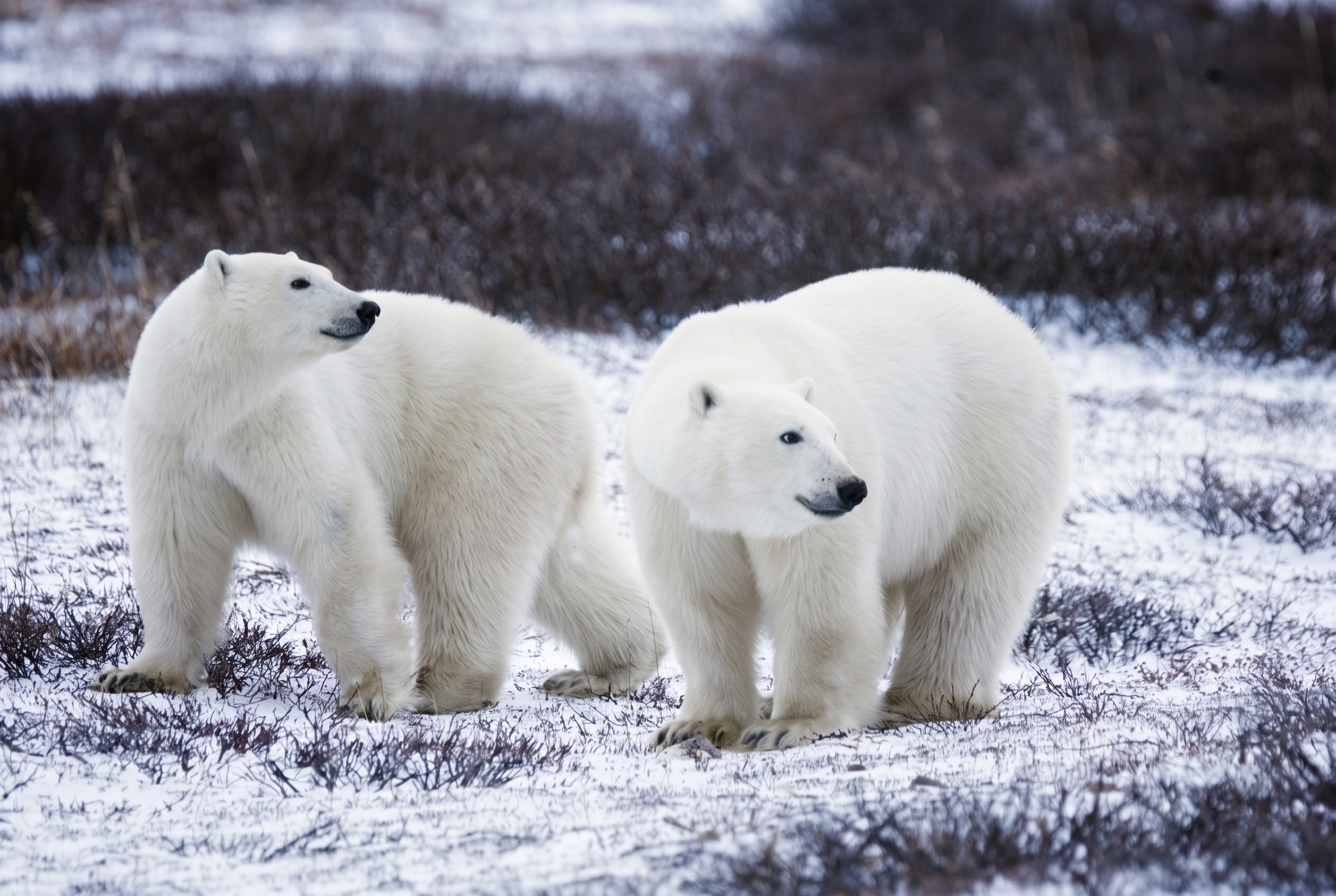
You won’t encounter these giants in typical tourist destinations like Banff or Jasper. Polar bears in Canada live in the far north — for example, in the town of Churchill, Manitoba, which is famous for special polar bear expeditions — and along the Arctic coastline.
The Kodiak bear is a specific subspecies of brown bear found on the island of the same name in Alaska and a few other Pacific island areas. For a standard Canadian road trip, you only really need to know about grizzlies and black bears, so you can put your mind at ease on that front.
When are bears most active
Honestly, this was one of the first things we learned the hard way in Banff: bears aren’t everywhere all the time. Their activity is driven by food and the season, which dramatically affects how grumpy they happen to be. Understanding their annual calendar will help you plan better hikes and avoid dangerous situations.
Lukáš and I always spotted the most bears in early summer, when they come down into the valleys looking for food.
1. Spring and early summer: Post-hibernation hunger
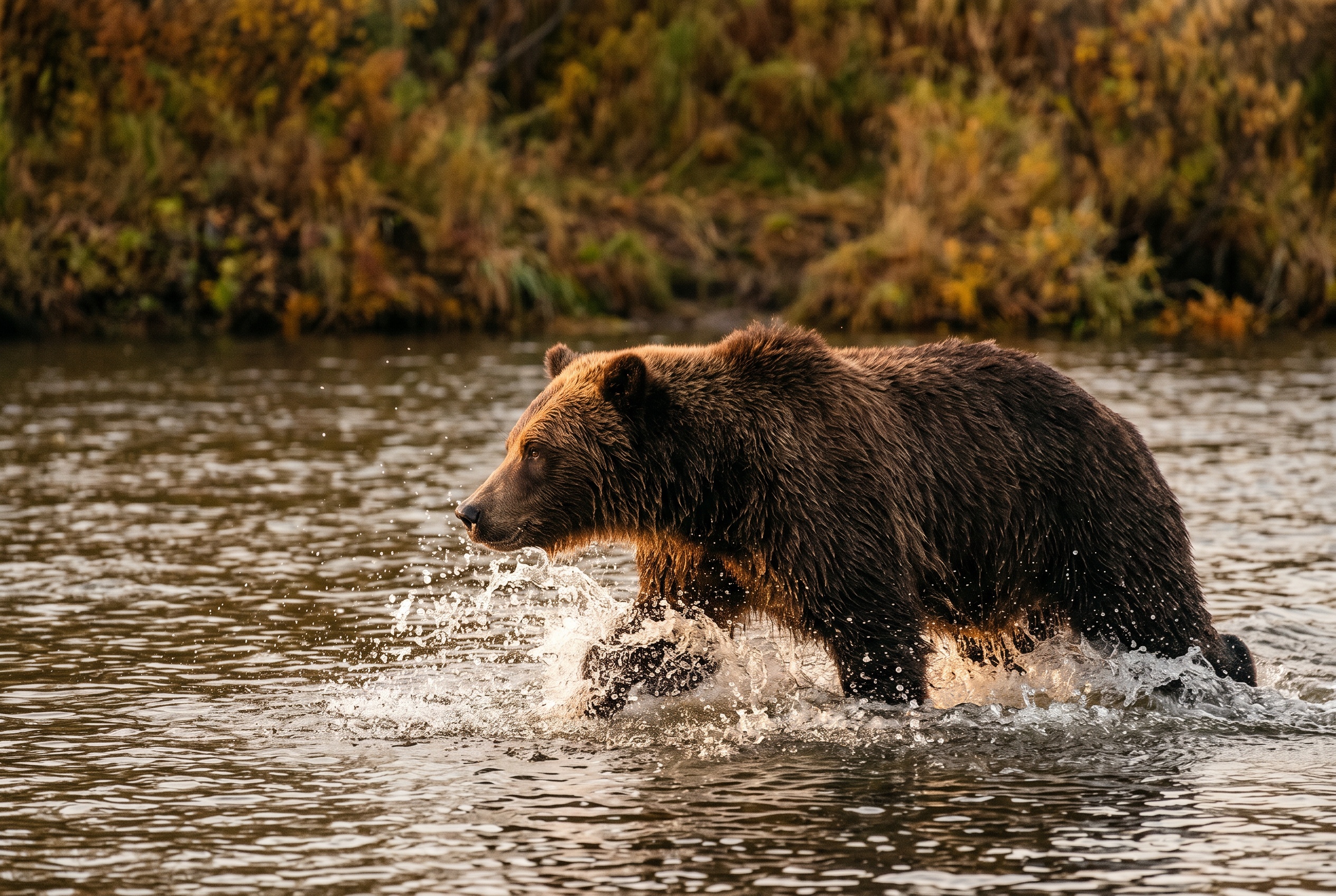
When bears wake from their winter sleep in spring (usually April to May), they’re absolutely ravenous and have lost a huge portion of their body weight. They tend to stay at lower elevations and near roads, because that’s where the snow melts first and the first green grass and dandelions appear.
During this period, they’re intensely focused on food, and you need to be extra vigilant in valleys where hikers typically walk. Seriously — keep your eyes peeled even on the outskirts of smaller towns during these months.
2. Late summer: Cubs in action
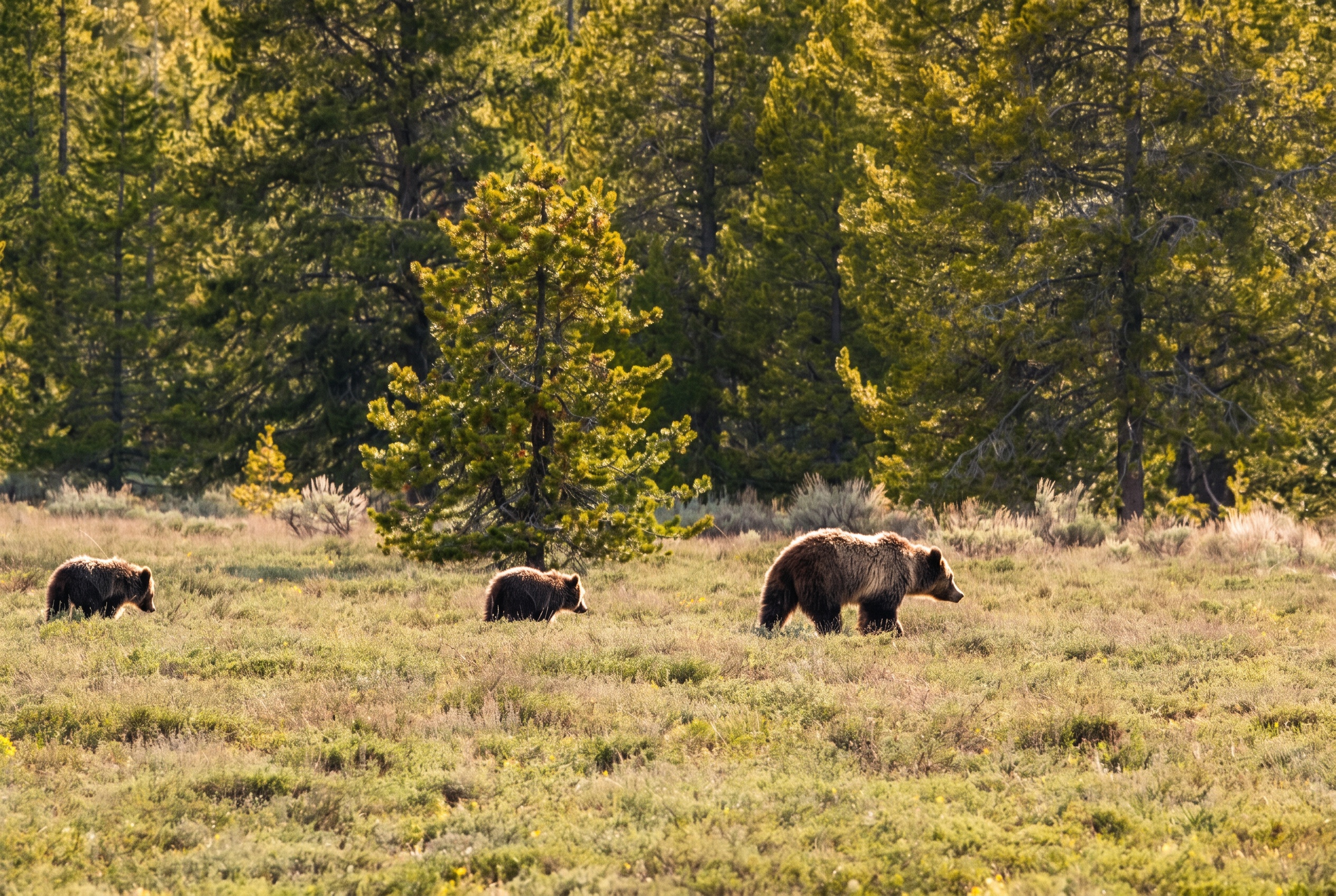
By July and August, the snow has melted even at higher elevations and bears move uphill in search of berries and wild fruit. During summer, mothers also bring out their cubs and teach them to forage in the wild.
For hikers, this is a tricky period because you can run into them on popular alpine trails — and a mother with cubs is hands down the most dangerous combination you can encounter.
3. Autumn: The hyperphagia phase
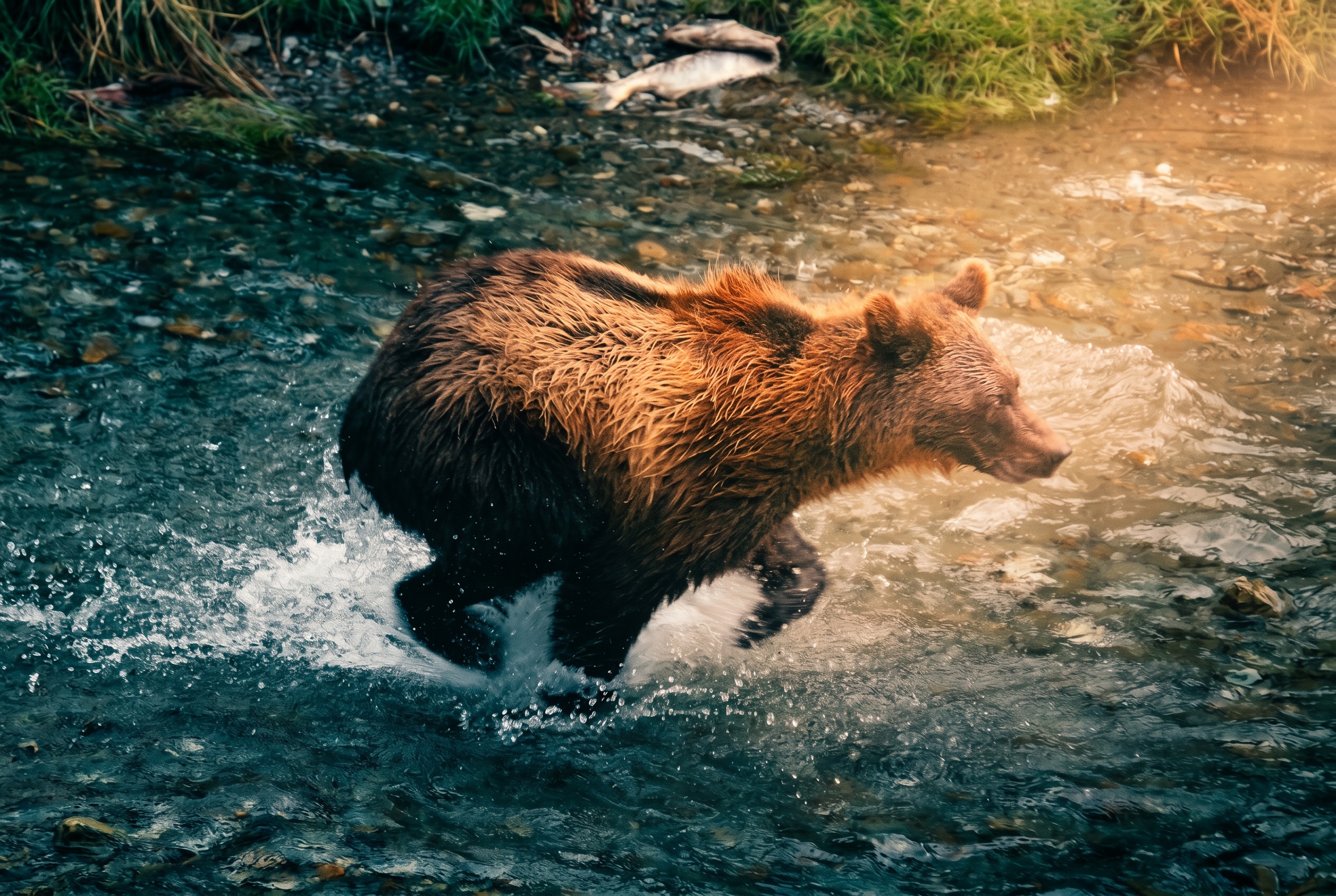
Autumn is a particularly sensitive time from a safety standpoint. Bears enter a state called hyperphagia — a period of frenzied eating where they desperately try to pack on as much fat as possible before the approaching winter.
During this phase, they can consume tens of thousands of calories a day and don’t want to be disturbed. They’re extremely territorial about their food sources, and if you stumble upon them at a carcass or a bush full of berries, they may react very aggressively.
4. Winter: Hibernation time
From November through to March (sometimes into April), bears are usually asleep in their dens and the risk of an encounter is virtually zero. Cubs are born during winter, and bears survive entirely on their fat reserves.
Occasionally, an older or sick bear that didn’t put on enough fat will skip hibernation and roam the landscape, but these are very rare exceptions. So if you’re visiting Canada in winter, you really don’t need to worry about bears and can enjoy skiing or snowshoeing in peace.
Bear encounter rules (or how to survive)
This is the single most important section of the entire article. Knowing bear safety protocols is absolutely crucial if you’re planning any walk or hike in Canada’s national parks. When we worked in Banff, we had to go through safety training, and believe me — once you learn to respect these rules, fear transforms into healthy respect.
Let’s take a detailed look at what you need to do, step by step, if that moment actually comes.
1. Prevention is everything
The best bear encounter is no encounter at all. Most attacks happen because hikers surprise a bear at close range — around a bend or over a ridge, for example. On the trail, you need to make noise constantly. Lukáš and I talk loudly, and when we’re passing through areas with limited visibility or near a roaring river, we clap and occasionally shout our favourite “Hey bear!”.
Bear bells are sold everywhere, but local rangers will tell you they’re next to useless — the sound doesn’t carry well through the forest and sounds like a bird. Always use your human voice, avoid hitting the trail at dawn or dusk when wildlife is most active, and — I really mean this one — never go into the woods completely alone.
2. What to do during a grizzly encounter
If you come face to face with a bear and it knows you’re there, the key is absolute calm. You must not run — bears can sprint at up to 50 km/h, and running triggers their chase instinct. If it’s a grizzly, stand your ground, speak in a deep, calm voice (so it recognises you as a human, not prey), and slowly back away.
If the grizzly charges (which is usually a defensive attack because you’ve startled it or it’s protecting its territory), use your bear spray. If it makes physical contact despite the spray, drop to the ground face down, protect the back of your neck with your hands, spread your legs wide (so it can’t easily flip you onto your back), and play dead. Once the grizzly decides you’re no longer a threat, it will almost always lose interest and walk away.
3. What to do during a black bear encounter
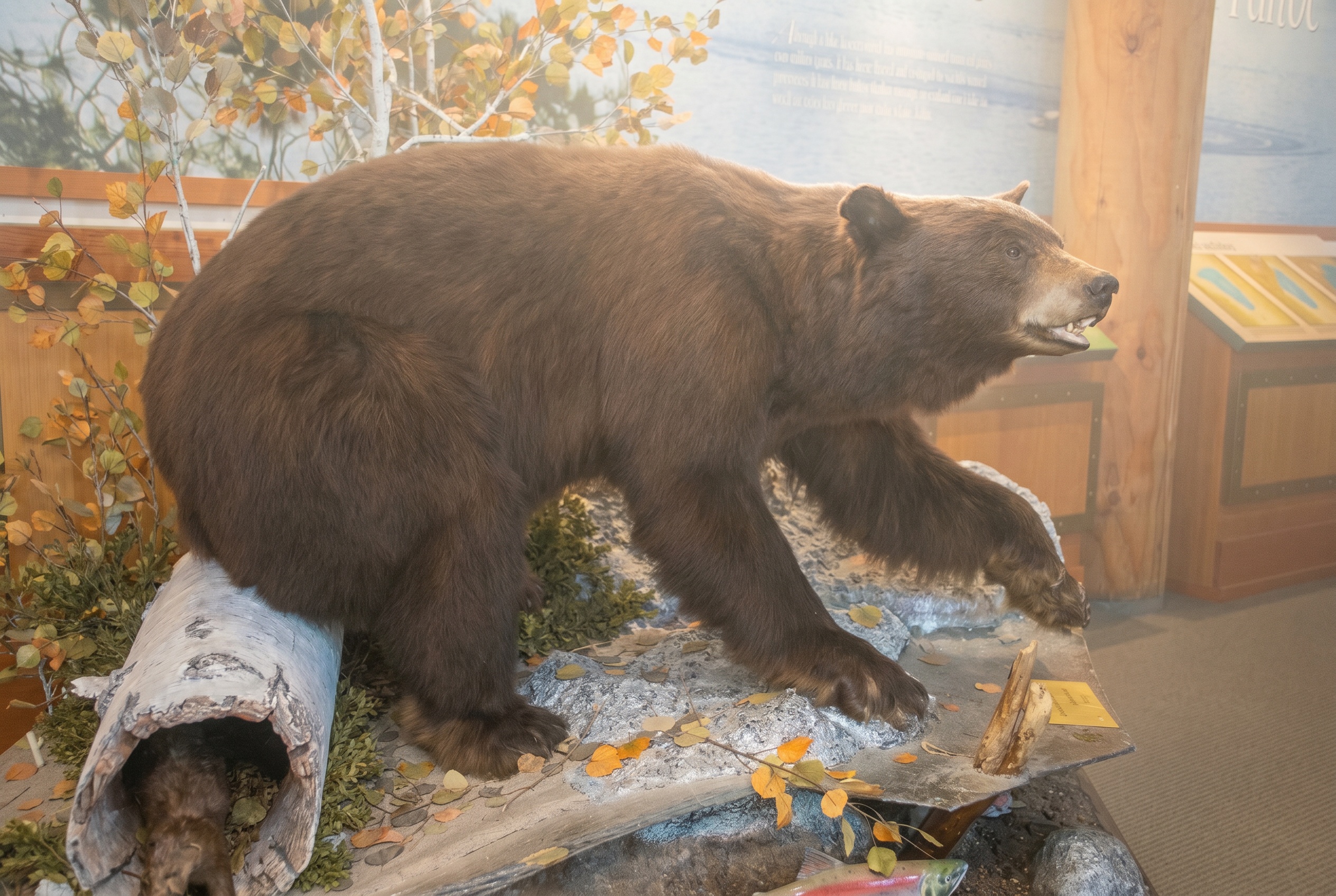
An encounter with a black bear starts the same way — stay calm and talk to it. Black bears are generally more timid. Try to make yourself look bigger: raise your arms, open your jacket wide. The critical difference, however, comes if the black bear actually attacks.
Unlike a grizzly, a black bear often attacks for predatory reasons — it sees you as food. If a black bear charges at you, never play dead. Fight for your life. Use sticks, rocks, your fists — kick, scream, aim for its eyes and snout. You need to convince it that you’re far too dangerous and not worth the effort.
4. Bear spray and how to use it properly
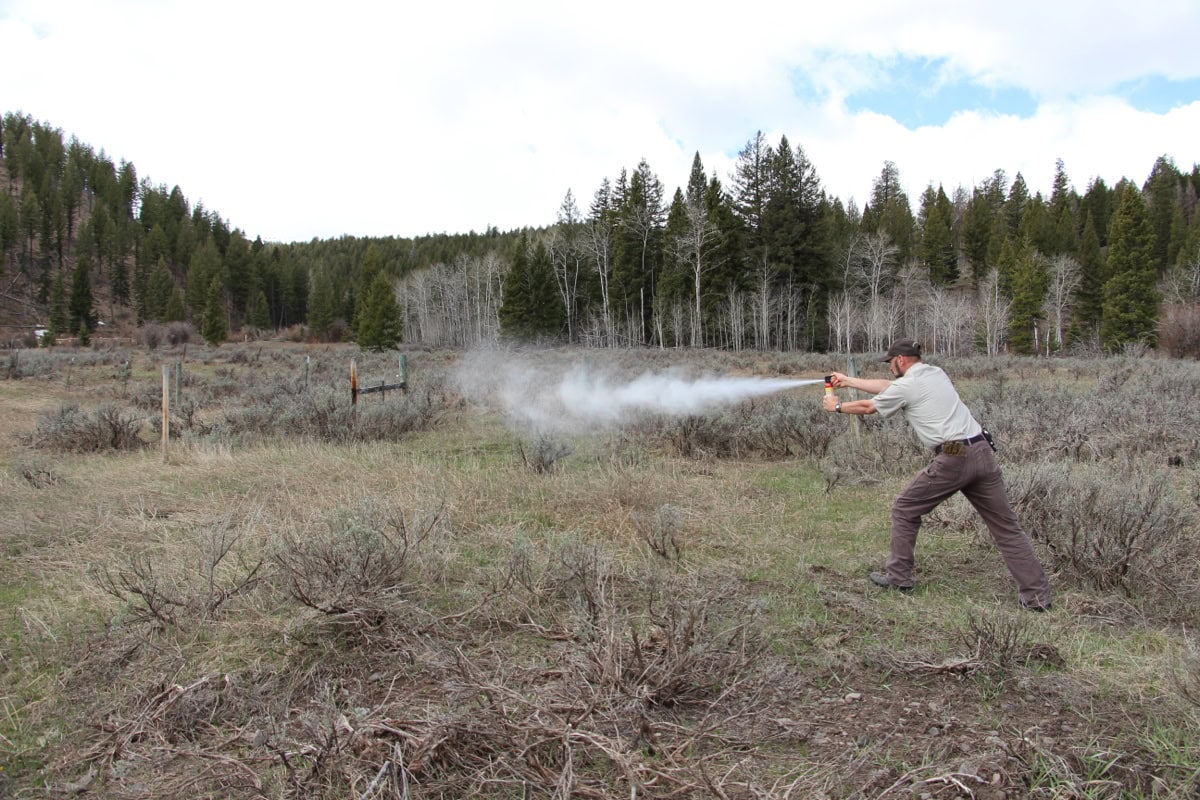
Bear spray (a capsaicin-based pepper spray designed for bears) is your primary and most effective weapon — in Banff and Jasper, it’s an absolute must for every hiker. Always carry it on your belt or chest harness (never buried in your backpack, because you only have seconds to react). The spray has an effective range of roughly 4 to 5 metres and shoots a wide cloud.
If a bear charges towards you, flip off the safety, press the trigger for 2 to 3 seconds (the whole canister only lasts about 7 to 8 seconds), and aim slightly towards the ground so the pepper cloud creates a wall between you and the animal. Watch the wind direction so you don’t spray yourself in the eyes. Remember that the canister is single-use and is not a repellent — never spray it on your tent or clothing!
5. What to do if you encounter cubs
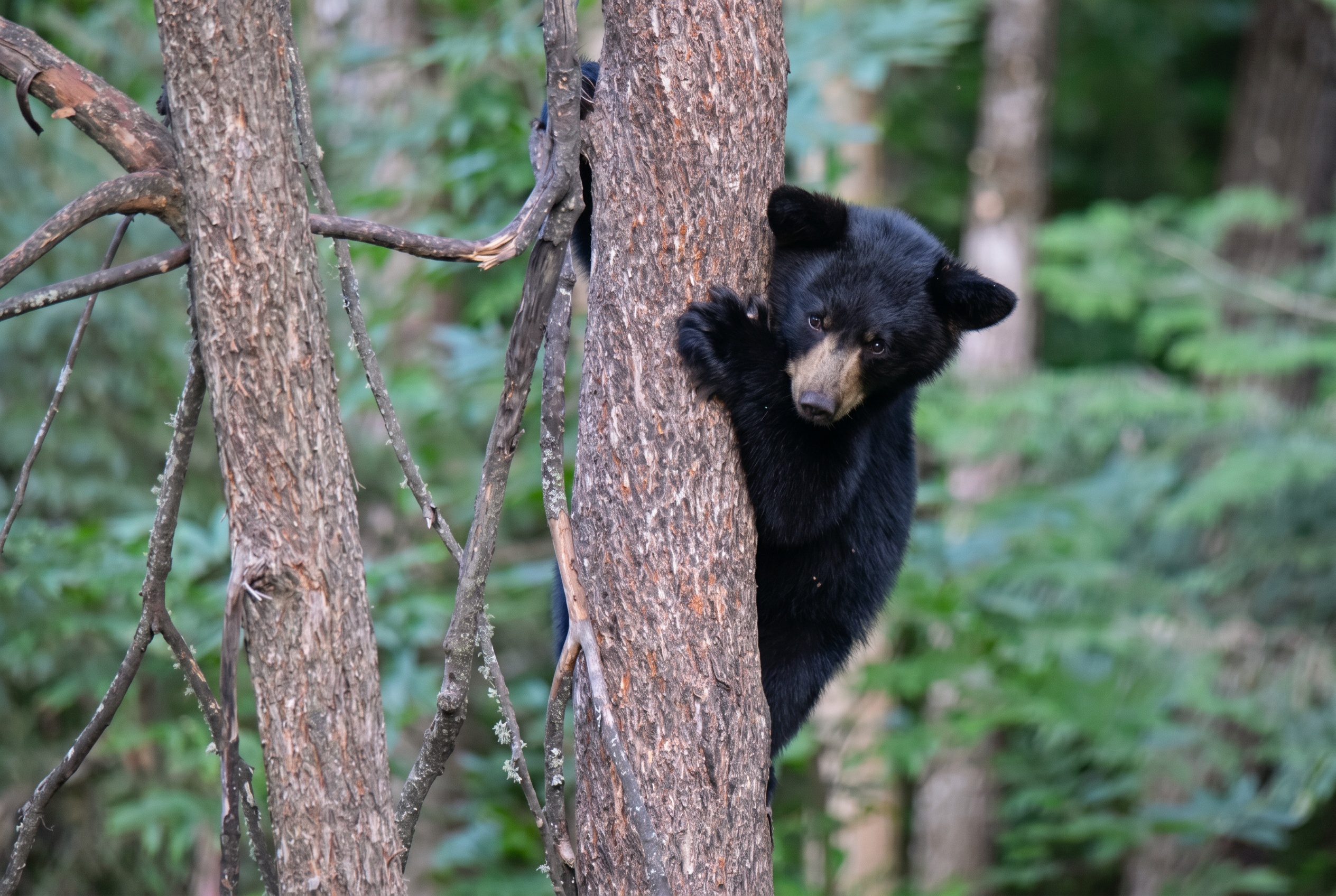
Watching adorable little bear cubs play in a meadow might seem like an amazing experience, but it’s actually the most dangerous situation you can find yourself in. Where there are cubs, there is absolutely, 100% a fiercely protective mother nearby.
Up to 99% of grizzly attacks are triggered by a mother defending her young. If you spot cubs, you must never, under any circumstances, get between them and their mother. Immediately but very slowly retreat the way you came, keep your eyes on the area (but don’t stare the mother bear in the eyes), and have your bear spray ready.
6. A hungry bear before winter
This is a relatively rare but very real scenario in late autumn (October and November). Bears suffering from hyperphagia before hibernation need to eat more than ever.
If you encounter a bear during this period that’s watching you, shows no signs of fear, and persistently follows you even as you back away, it’s likely predatory behaviour. In this case, stop, make yourself as big as possible, shout aggressively (no calm talking here), throw rocks, get your spray ready, and make it absolutely clear that you are not prey.
7. Bear spray absolutely cannot go on a plane
Here’s a very practical tip that many people don’t know: you cannot bring bear spray on a flight, and you can’t fly home with it either. It’s a pressurised container with a highly irritant substance, and it’s strictly prohibited in both carry-on and checked luggage.
You’ll need to buy your bear spray once you arrive in Canada. Pick one up at outdoor shops like Mountain Equipment Co-op (MEC) or Canadian Tire for around 40 € (note: it expires after 4 years). A great eco-friendly option for shorter trips is to rent one — for instance, at visitor centres, where it costs roughly 3.50 € per day.
8. Bear-safe camping rules
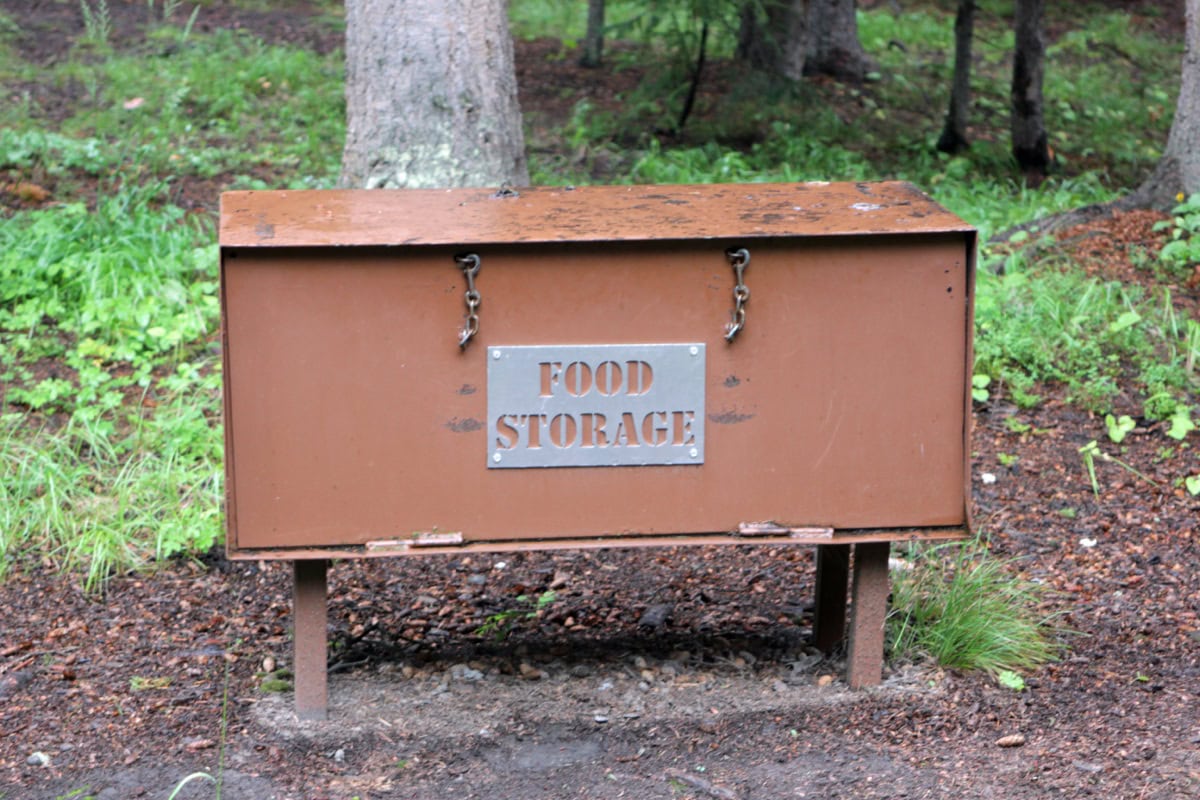
Camping in bear territory is a beautiful experience, but it demands strict discipline. The golden rule is that absolutely nothing with a scent goes inside your tent. And that doesn’t just mean food — it includes toothpaste, deodorant, sunscreen, empty food wrappers, and even clothes you were wearing while roasting sausages over the campfire.
All these items need to be locked in your car overnight (if you’re car camping), or stored in the special metal bear-proof containers that are mandatory at every campsite in Canada’s national parks. If you’re backcountry camping, you’ll need to carry your own portable container and hang your food from trees well away from your tent.
9. Wildlife jams: Traffic jams caused by animals
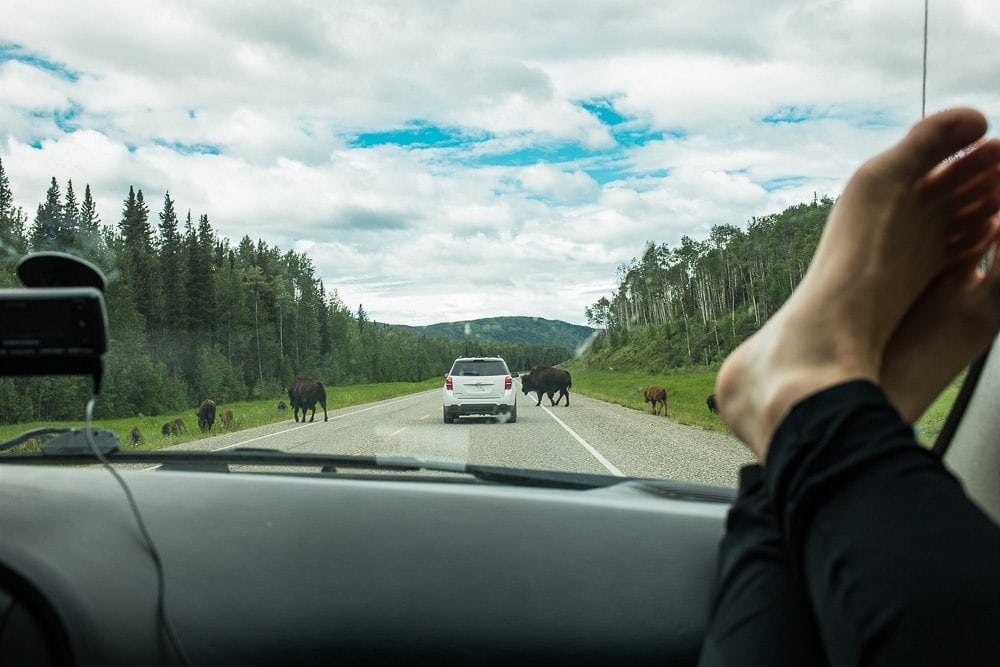
When driving through Canada’s parks, you’ll almost certainly experience a “wildlife jam” or “bear jam” — a line of dozens of cars suddenly stopped in the middle of the road because someone spotted a bear on the verge. Remember that when observing wildlife from your car, you should maintain a speed of at least 15 km/h if traffic allows. Coming to a complete stop creates very dangerous situations.
And here’s the crucial part: never get out of your car. You’ll regularly see people standing with cameras two metres from a bear, but it’s not only extremely dangerous — it’s also illegal, and rangers hand out on-the-spot fines of 135 € and more.

10. Trail safety with children
Travelling with kids into the wilderness is wonderful, but it requires even greater caution. Children are smaller, often move quickly and unpredictably, and can look like easier prey to predators. The rule in Canada is clear: children under 12 should always walk in the middle of the group between adults on trails and must never run ahead or lag behind.
Teach children to make noise — have them recite rhymes or sing songs every 30 seconds. If you encounter a bear, immediately pick up smaller children (which prevents them from running away in panic) and follow the standard retreat procedures.
11. What to do if a bear attacks your tent
This is probably the ultimate nightmare scenario, and thankfully it’s extremely rare — especially if you follow the food storage rules above. But if a bear does surprise you in your tent at night, trying to get inside, tearing at the fabric, or stomping on the tent, do not play dead under any circumstances.
Wrapped up in a sleeping bag, you’d be completely defenceless and would probably only survive by sheer luck. Get out of the tent immediately, spray the bear, scream at the top of your lungs, and hit it with anything you can get your hands on — this is a purely predatory attack and your life literally depends on it.
12. Important emergency numbers
If something unexpected happens, or you see a very aggressive bear (or spot other tourists breaking the rules and feeding wildlife), it’s good to know who to call. In all national parks, the standard emergency number 911 works and will connect you to the Royal Canadian Mounted Police (RCMP).
On top of that, it’s wise to save the direct numbers for local park warden dispatch, who deal specifically with wildlife issues. In Banff, call 403-762-1470 and in Jasper 780-852-6155. Save these numbers on your phone, even though mobile signal is often non-existent in remote backcountry areas.
Where to stay in bear country and a note on dogs
When planning a trip to the Canadian Rockies, you’ll most likely be choosing accommodation in one of the three main hubs: Banff, Jasper, or Canmore. All of these towns sit right in the heart of the wilderness. Prices during the summer season are steep — expect to pay roughly 130 to 260 € per night for two people on average. Campsites are cheaper (around 20 to 40 €), but you’ll need to book them up to six months in advance. For the best deals, search and compare options on Booking.com.
And one important note about pets — don’t bring a dog to Canada’s national parks if you can avoid it. Dogs are a massive attractant for bears (they perceive them as an annoying coyote or wolf). Many attacks have started when a dog ran off into the forest, provoked a bear, and then panicked back to its owners with the bear in hot pursuit. On top of that, dogs are completely banned from many of the most popular trails to protect the wildlife.
Banff and Canmore: the tourism heartland
Banff is a gorgeous little town packed with restaurants and shops, where bears regularly wander the outer streets. Both towns enforce strict rubbish rules — those special bear-proof bins aren’t there for decoration. Bears can crack open a regular bin in five minutes flat, and I’m speaking from personal experience 😁
In Banff, we fell in love with the cosy Moose Hotel & Suites, which has amazing rooftop outdoor pools. If you’re after something more laid-back and a bit easier on the wallet, Canmore Rocky Mountain Inn just outside the park gates is a great shout.
Jasper: the wilder north
Jasper, located several hundred kilometres further north along the famous Icefields Parkway, has a much more relaxed and wilder atmosphere than the more commercialised Banff. The landscape is vast, and the populations of both bears and majestic moose and elk are incredibly dense.
If you want to experience true log-cabin romance, check out the Fairmont Jasper Park Lodge, where wildlife literally wanders past your window and you feel like you’re living inside a National Geographic documentary. A more affordable and very pleasant alternative is Whistler’s Inn, right in the centre of town. You can also browse unique local experiences and tours through GetYourGuide.
 🚗 Car rental on the roadVerified rental cars for your trip
Search with the DiscoverCars comparison engine — it compares prices from dozens of local and international rental companies, and most bookings come with free cancellation.
Compare car prices →Frequently asked questions (FAQ)
This is probably the single most common question that lands in our inbox from across the entire blog, so I’ll do my best to give it a thorough answer — along with a few other things people regularly ask us when they’re packing their bags for Canada.
What kind of bears live in Canada?
There are three main species of bears in Canada. The most common is the black bear, which you’ll encounter almost everywhere. In the mountain regions of western Canada (Alberta, British Columbia), you’ll find the massive and more territorial grizzly bear. In the far north and Arctic regions, there are polar bears. Lukáš and I primarily encountered the first two species, since seeing polar bears requires quite specific and challenging Arctic expeditions.
What should I watch out for in Canada?
When visiting the Canadian wilderness, you need to be careful primarily around wildlife (bears, moose, cougars), from which you must maintain a safe distance—that’s 100 meters from bears and 30 meters from other wildlife. Also, don’t underestimate rapidly changing mountain weather, zero cell phone signal on most trails, and draconian fines for breaking nature protection rules, which local rangers hand out without any compromise whatsoever.
What should I do if I encounter a bear in the forest?
Stop and stay calm. Don’t run—bears are much faster and running will only encourage them to chase. Speak to the animal in a calm, deep voice and slowly back away. If the bear attacks, it depends on the species. With a grizzly, play dead and protect your neck; with a black bear, fight back actively and aggressively. In both cases, have your bear spray ready and unlocked in your hand.
Which bear is the most dangerous?
In Canada’s tourist areas, a female grizzly with cubs is considered the most dangerous to humans, as she attacks extremely aggressively out of protective instinct and with tremendous force. In terms of overall predatory aggression, the polar bear is probably the most dangerous, as it normally views humans as food. However, you definitely won’t encounter polar bears in the southern national parks and typical tourist destinations.
Can I bring my own bear spray on a plane?
No, it’s strictly forbidden. Bear spray falls under the category of pressurized and toxic containers and you cannot pack it in your carry-on or any checked luggage. You simply have to buy it (around €50) or rent it (around €4 per day) once you’re in Canada, and before your flight home, return it or give it to someone.
How many people do bears kill in Canada each year?
While attacks get a lot of media attention and look terrifying, they’re actually quite rare. Over the past 100 years, bears have killed roughly 80 people in Canada—that’s less than one person per year. The vast majority of these tragedies happened because people ignored safety rules, went alone, moved quietly, or carelessly camped with fragrant food in their tent.
What are wildlife jams (bear jams)?
These are dangerous traffic jams caused by tourists suddenly stopping their cars in the middle of the road to photograph a bear or deer right by the roadside. In Canada, it’s strictly forbidden to get out of your car in these situations, and you can face a hefty fine. The correct procedure is to slow down briefly to 15 km/h, take a photo through a slightly opened window, and smoothly continue driving so you don’t stress the animal or hold up traffic.
Tips and Tricks for Your Vacation
Don’t Overpay for Flights
Search for flights on Kayak. It’s our favorite search engine because it scans the websites of all airlines and always finds the cheapest connection.
Book Your Accommodation Smartly
The best experiences we’ve had when looking for accommodation (from Alaska to Morocco) are with Booking.com, where hotels, apartments, and entire houses are usually the cheapest and most widely available.
Don’t Forget Travel Insurance
Good travel insurance will protect you against illness, accidents, theft, or flight cancellations. We’ve had a few hospital visits abroad, so we know how important it is to have proper insurance arranged.
Where we insure ourselves: SafetyWing (simple monthly subscription) and TrueTraveller (for extra-long trips).
Find the Best Experiences
Get Your Guide is a huge online marketplace where you can book guided walks, trips, skip-the-line tickets, tours, and much more. We always find some extra fun there!


