

Some places look exactly like a postcard — and then there’s Lunenburg, which looks even better. When my mum and I first turned onto the hill above the harbour and rows of colourful houses spread out below us like a box of crayons, we both just stared in disbelief. 😅
Lunenburg Canada is a tiny town on the south coast of Nova Scotia that UNESCO inscribed as a World Heritage Site — and rightly so. Picture cobbled lanes lined with houses in shades from lemon yellow through salmon pink to turquoise, a harbour full of sailing ships, the scent of freshly boiled lobster drifting through the air, and above it all a sky that behaves as though it were painted by a romantic artist after a couple of pints. Perfection, basically.
In this article you’ll find 15 things to see and do in Lunenburg and the surrounding area — from a stroll through the historic centre to a rum tasting at a local distillery and a day trip to nearby Mahone Bay. I’ll tell you the best time to visit, where to stay, how much it all costs, and where to get the best lobster supper on the entire South Shore.
TL;DR
- Lunenburg is a UNESCO-listed town on Nova Scotia’s south coast — about an hour’s drive from Halifax.
- It’s at its best from June to October, when the weather is pleasant and all the restaurants and museums are open. September and early October are ideal — fewer tourists, beautiful autumn colours.
- One day is enough to explore Lunenburg itself, but with day trips (Mahone Bay, Blue Rocks, beaches) I’d recommend 2–3 days.
- Top attractions: the colourful waterfront, the famous schooner Bluenose II, the Fisheries Museum of the Atlantic, and a walk through the historic old town.
- Don’t miss a lobster supper — lobster on the South Shore doesn’t get any fresher than this.
- At Ironworks Distillery you can taste blueberry rum and apple brandy that’ll blow you away (in the best possible way).
- A car is essential — public transport is virtually non-existent. From Halifax it’s a lovely hour-long drive along the Lighthouse Route with gorgeous views.
- Budget for 2–3 days for two comes to roughly €580–€720 including accommodation, food, and activities.
The full destination guide: Nova Scotia — guide and what to see
When to visit Lunenburg and how to get there
Lunenburg sits about 100 km southwest of Halifax and there’s really only one sensible way to get here — by car. Public transport to Nova Scotia’s south coast is, shall we say, more theoretical than practical. But don’t see that as a downside — the drive from Halifax along the legendary Lighthouse Route (Highway 3) is an experience in itself. It winds along the coast past picturesque coves, tiny fishing villages, and the odd lighthouse. An hour-long drive that feels like five minutes.
How to get to Lunenburg
By air, you’ll fly into Halifax (YHZ) — from the UK, there are direct flights with airlines like WestJet and Air Canada (seasonally from London), or connections via Toronto or Montreal. We’ve had great luck finding affordable fares through Kiwi — it’s our go-to flight search engine and occasionally throws up surprisingly good deals on transatlantic routes.
Pick up a hire car at Halifax airport — you really can’t do Nova Scotia without one. We’ve been happy long-term users of DiscoverCars, which we use all over the world. Hire prices sit around 250–400 CAD/week (roughly €170–€270). Summer is pricier, so I’d recommend booking well in advance.
If you’re planning a bigger road trip across Canada, Nova Scotia makes a perfect complement to the west coast — a completely different world, but equally stunning.
Best time to visit
June to October — that’s the season on the South Shore. Most restaurants, museums, and attractions are open during this window and the weather is pleasant (18–25 °C in summer, 10–18 °C in autumn).
- July and August are the warmest and busiest months. Expect higher accommodation prices and more crowds, but festivals are in full swing (the Lunenburg Folk Harbour Festival in August is brilliant).
- September and early October — our favourite time to visit. The tourist hordes have gone, prices drop, restaurants are still open, and the autumn colours begin. Nova Scotia in autumn is arguably one of the most beautiful corners of Canada we’ve seen.
- November through May I’d avoid. Many businesses shut up shop, the weather turns harsh, and the town loses its buzz. That said, if you want Lunenburg all to yourself and don’t mind the cold, why not.
💡 TIP: Fog is completely normal on Nova Scotia’s coast, especially in the mornings and in July. Don’t panic — it usually lifts by midday, giving way to a gorgeous sunny afternoon. Or just head a few kilometres inland, where it’s often clear.
Where to stay in Lunenburg and how much it costs
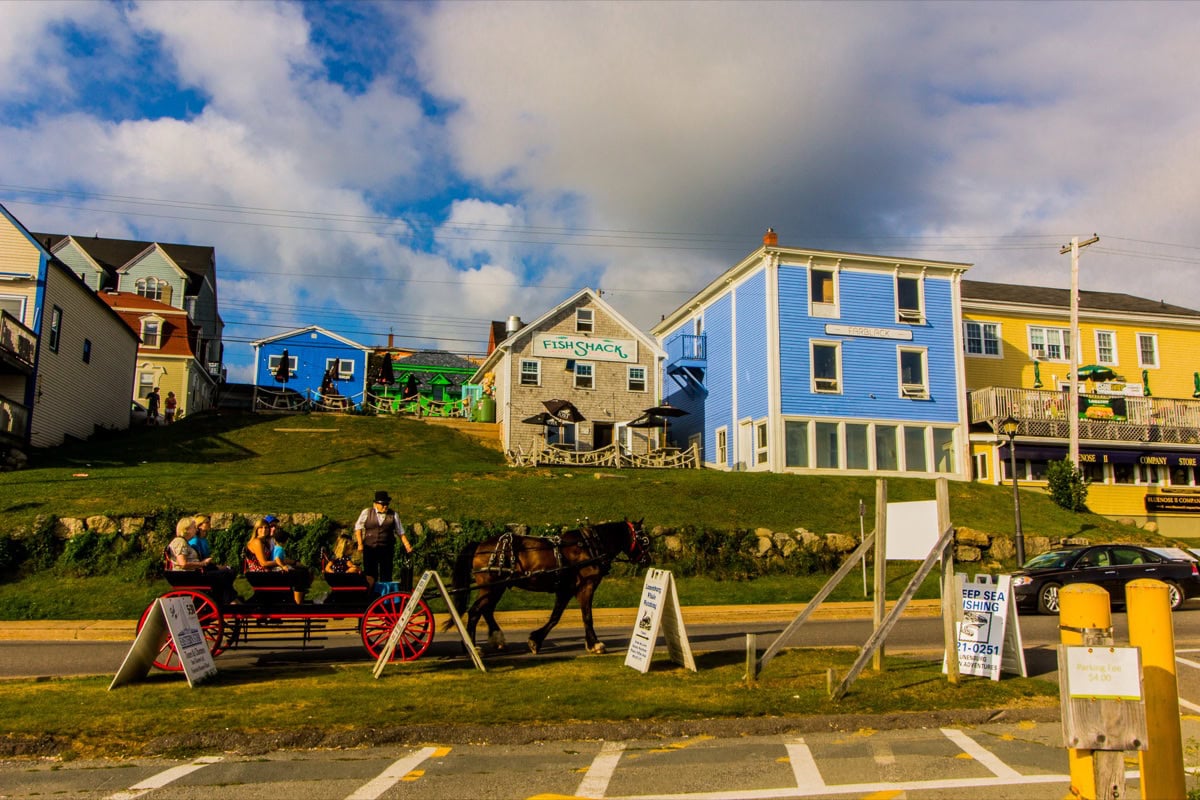
Lunenburg is a small town and accommodation options are limited, so I’d strongly recommend booking ahead — especially in summer. On the upside, the town is so compact that it doesn’t really matter where you stay; everything is within a few minutes’ walk.
Types of accommodation and price ranges
- B&Bs and guesthouses — the most characteristic way to stay in Lunenburg. Many occupy historic 18th- and 19th-century homes with beautifully appointed interiors. Prices range from about 150–280 CAD/night (€100–€190).
- Hotels — there are a handful in Lunenburg, and none of them are concrete boxes. Think boutique style. Expect to pay 180–350 CAD/night (€120–€240).
- Airbnb and holiday lets — if you’re staying several nights, these tend to be better value. Entire flats from 120 CAD/night (€80).
One of the most popular places to stay is Mariner King Inn — a gorgeous historic house right in the centre with beautiful rooms and superb breakfasts. If you’d prefer something right on the water, try the Lunenburg Arms Hotel with harbour views.
For those who prefer a quieter setting just outside the centre, Kaulbach House Historic Inn is a wonderful choice — a Victorian house with lovely gardens and rooms that make you feel like you’ve stepped into another century (the good kind — there’s definitely a proper shower 😁).
How much does a holiday in Lunenburg cost
Budget for 2–3 days for two (mid-range, comfortable but not extravagant):
- Accommodation: 2 nights × 200 CAD = 400 CAD (€270)
- Food and drink: lobster supper, lunches, cafés — approx. 300–400 CAD (€200–€270)
- Activities and admission: Fisheries Museum, Ironworks Distillery, possibly whale watching — approx. 100–200 CAD (€70–€135)
- Petrol: Halifax return + day trips around the area — approx. 60 CAD (€40)
Total: roughly 860–1,060 CAD (€580–€720) for two over 2–3 days.
Canada isn’t a cheap destination in general, but the South Shore is more reasonably priced than places like Vancouver or Banff. Accommodation is the biggest expense — if you find a good Airbnb, you can bring the overall budget down quite a bit.
15 things to see and do in Lunenburg Canada
Let’s get to the main event — what to actually see and do in Lunenburg. The town may be small, but it packs a surprising punch. You could easily spend an entire day here and wish you had two. From the colourful harbour to museums, a distillery, and a hilltop viewpoint that’ll make your jaw drop — here’s the best of the lot.
1. The colourful Lunenburg waterfront
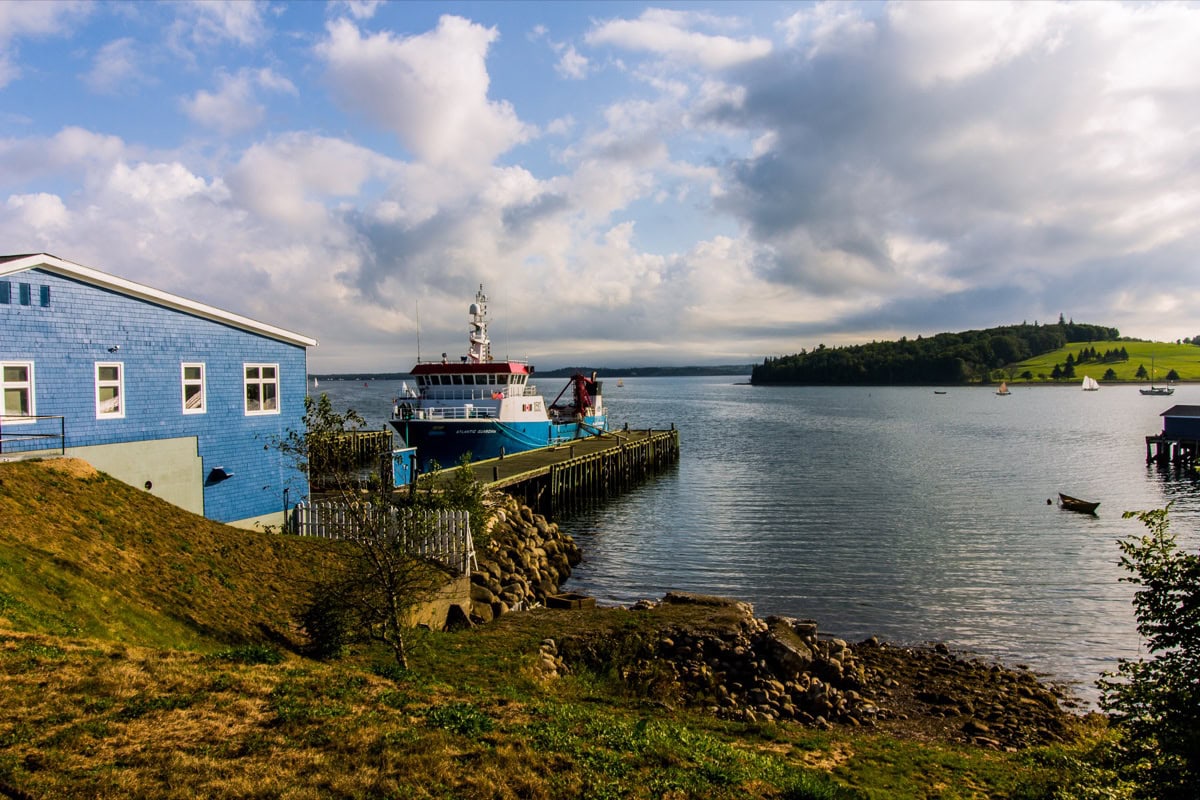
This is the view you’ve seen in every photograph of Nova Scotia. A row of colourful buildings lining the harbour, fishing boats bobbing on the waves, houses reflected in the water. It’s even more beautiful in person than in pictures — and I say that as someone who’d looked at Lunenburg photos hundreds of times before we arrived.
The waterfront is relatively short — you can walk its length in ten minutes. But that’s part of the charm. There’s no over-the-top tourist zone, no stalls hawking fridge magnets and keychains (well, almost none). Just handsome old buildings, mostly from the 18th and 19th centuries, now home to restaurants, galleries, and little shops.
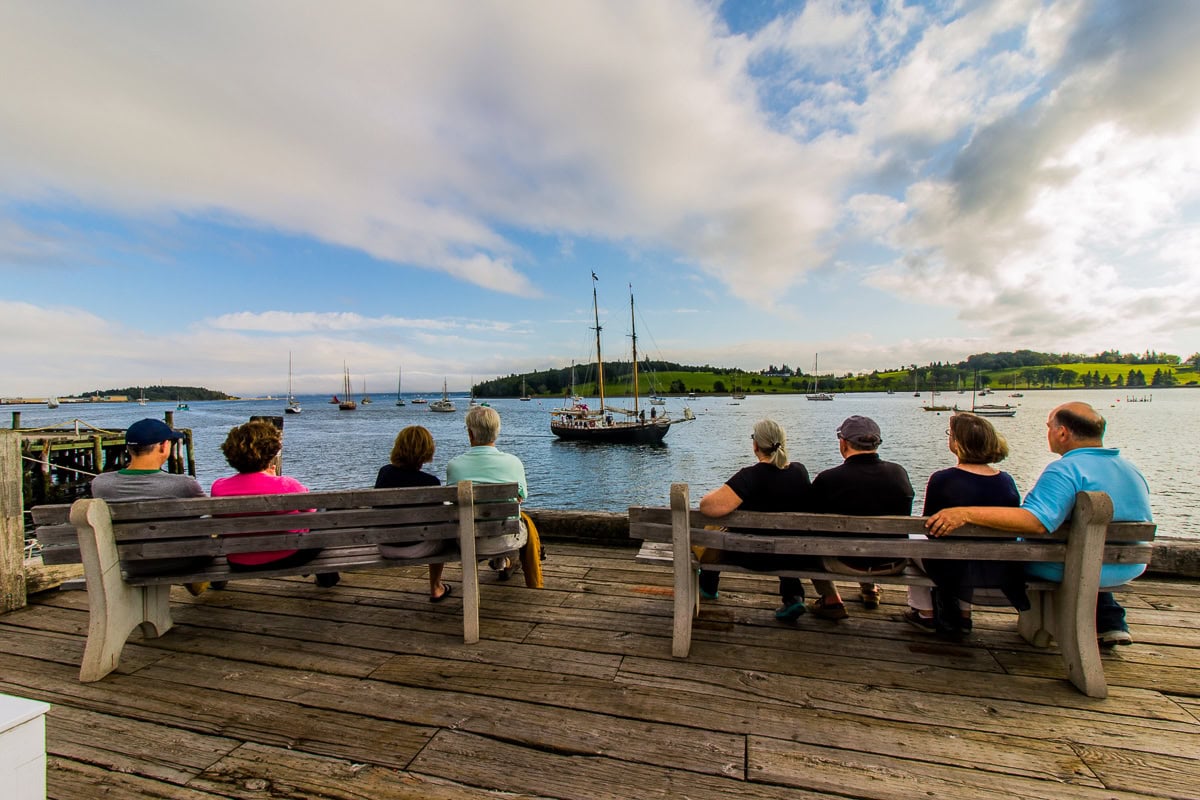
The best photos are taken from the wharf opposite the colourful houses — ideally in the morning, when the light is soft and the crowds haven’t arrived yet. Or at sunset, when the entire harbour glows golden. We spent about an hour just sitting on a bench and taking it all in. Sometimes that’s the best thing you can do in a new town.
💡 TIP: If you arrive in fog (and be prepared for it, especially in the morning), the waterfront takes on a completely different, mysterious atmosphere. The colourful buildings emerge from the mist like ghosts and the harbour falls silent. It’s beautiful in a different way, but beautiful all the same.
2. A walk through the UNESCO historic old town
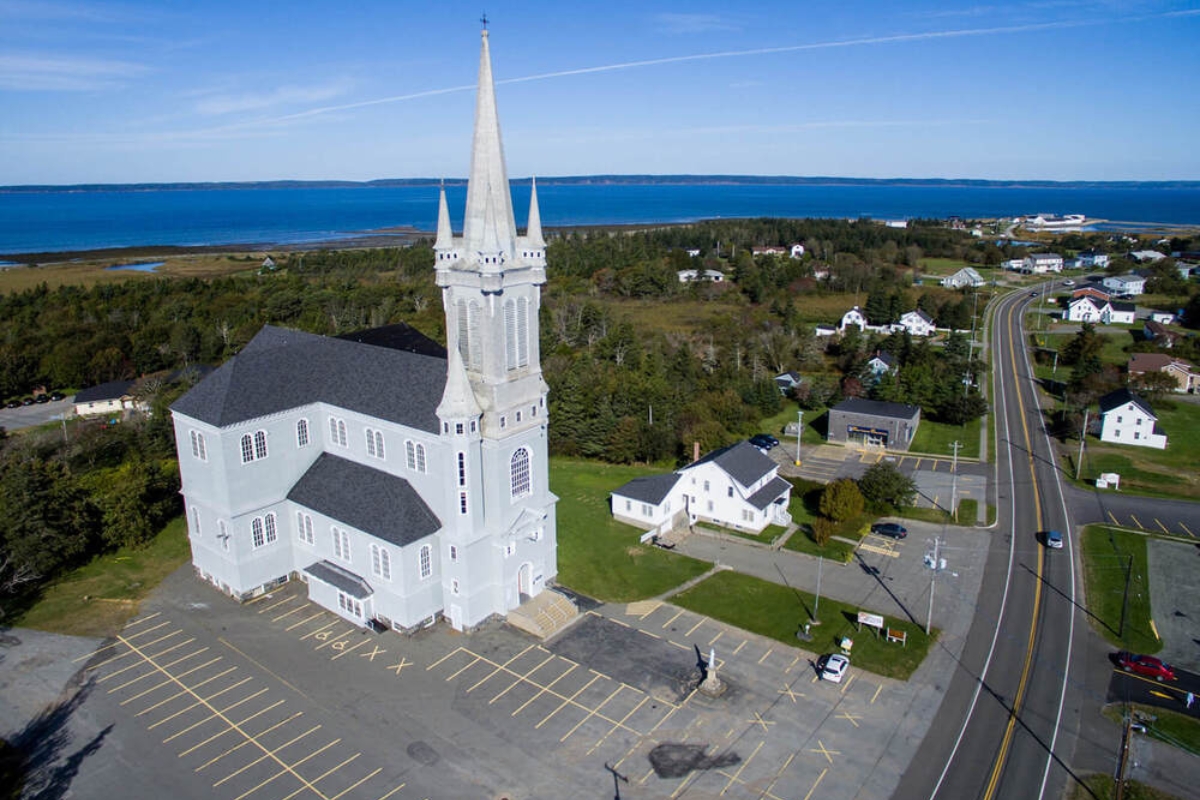
Lunenburg has been a UNESCO World Heritage Site since 1995, and the reason is simple — the entire old town has preserved its original character from the British colonial era. The street grid is the very same one the British laid out in 1753, and most of the houses date from the 18th and 19th centuries.
What fascinates me about Lunenburg is that UNESCO status here doesn’t mean a museum under glass. People actually live here. Families occupy those colourful houses, run cafés, and grow tomatoes in their gardens. It’s a living, breathing town, not an exhibit.
Wander along Montague Street and Pelham Street — this is where you’ll find the finest examples of colonial architecture. Pay attention to the details — ornamental gables, brightly painted doors, gardens bursting with hydrangeas. Every house is a different shade, and together they form a joyful mosaic that makes you feel like you’ve wandered into a children’s storybook.
Be sure to climb up to St. John’s Anglican Church on the hill — from here you get a stunning view of the harbour and the entire old town. The church itself is beautiful (though sadly it burned down in 2001 and had to be rebuilt), but it’s really the view that makes the short uphill trudge worthwhile. 😁
3. Bluenose II — the legendary schooner
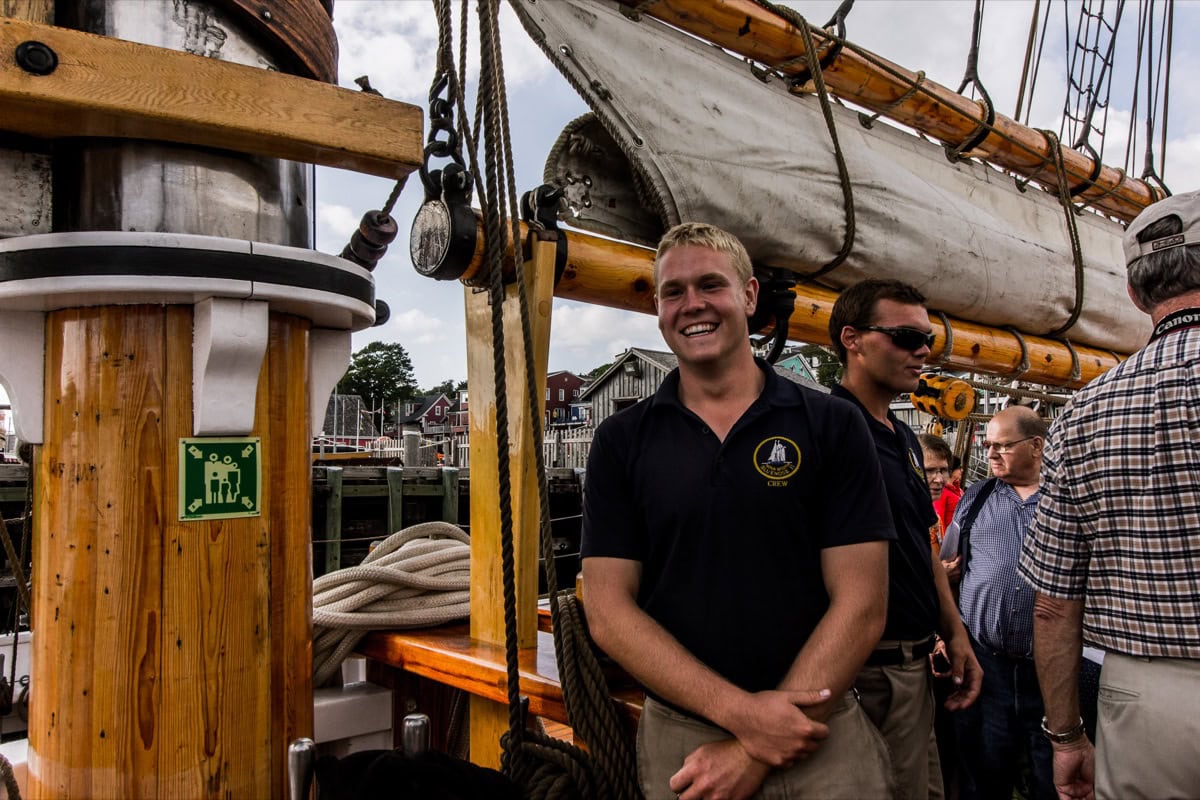
If you know only one thing about Lunenburg, it’s probably the Bluenose. This legendary racing and fishing schooner is so famous that it’s depicted on the Canadian ten-cent coin — and her replica, Bluenose II, calls Lunenburg her home port.
Bluenose II is a magnificent wooden sailing ship that you can admire from the wharf for free (whenever she’s in port), or you can head out on a two-hour sail across the bay. I’d wholeheartedly recommend the latter — sailing on a historic schooner along the Nova Scotia coast is an experience you won’t forget.
Sailings usually run from June to September, with tickets around 50–60 CAD/person (€35–€40). They sell out quickly, so book in advance — ideally as soon as you know your dates.
⚠️ HEADS UP: Bluenose II occasionally sails off to festivals or goes into maintenance and simply won’t be in port. Before you plan your entire trip around her, check the website to confirm she’ll be in Lunenburg on your chosen dates.
4. Fisheries Museum of the Atlantic — stories of the sea
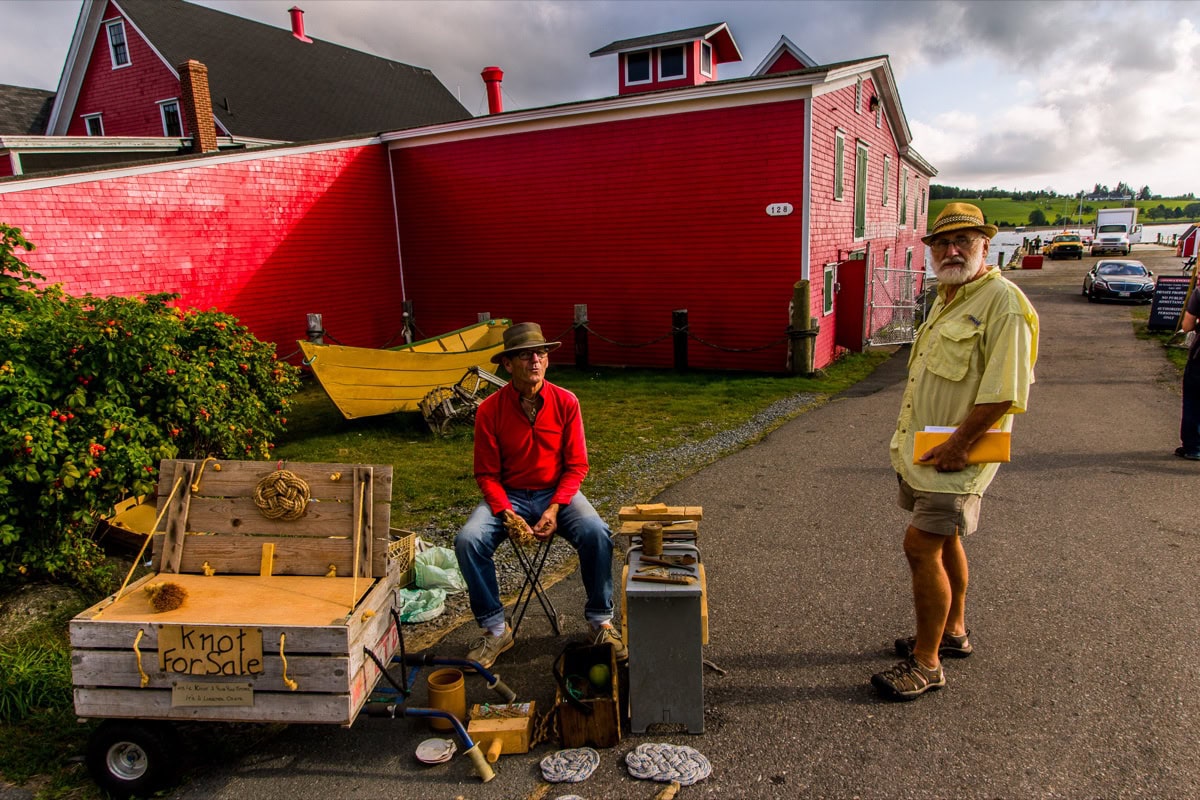
This museum sits right on the waterfront and is arguably the best museum on the entire South Shore — possibly in all of Nova Scotia. It’s not some dull affair of glass cases and laminated labels. It’s interactive, engaging, and tells the stories of the fishermen who made their living on the Atlantic for centuries.
Inside you’ll find exhibits on the history of lobster fishing (including how a lobster actually works — fascinating!), the famous Bluenose, shipwrecks and rescues, and if you’re lucky, a live aquarium with local marine creatures.
Admission is about 15 CAD/person (€10) and the museum is open from May to October. Allow 1.5–2 hours for your visit.
Outside the museum, historic vessels are moored alongside — including an old fishing schooner. The deck is open to visitors and makes for great photos.
5. Ironworks Distillery — blueberry rum and other delights
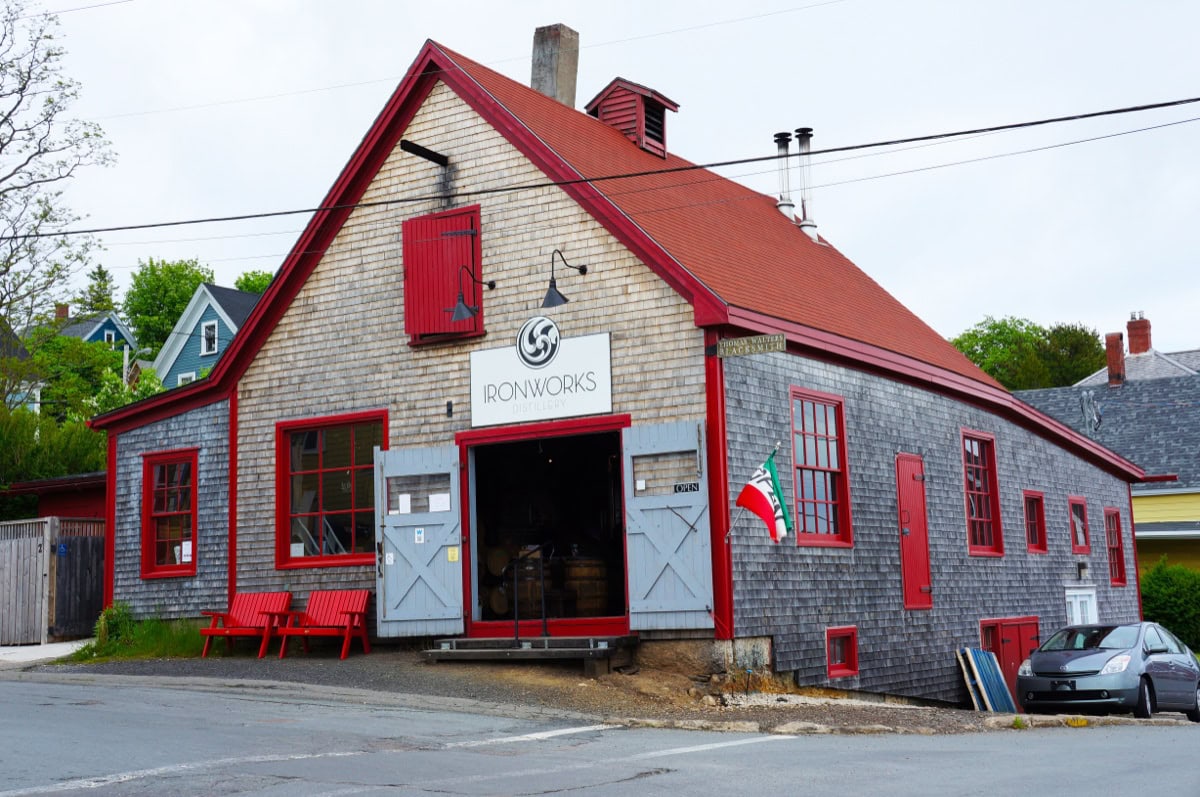
This is where Lunenburg won me over completely. Ironworks Distillery occupies a former blacksmith’s forge (hence the name) right on the waterfront and produces some of the most interesting spirits I’ve ever tasted.
Their speciality is blueberry rum — it sounds odd, but it tastes fantastic. They also offer apple brandy, vodka, and a range of liqueurs. A tasting costs around 15 CAD (€10) and you’ll sample 4–5 products with a guided explanation of the distilling process. The guides are enthusiastic and funny — you can tell they genuinely love what they do.
If something takes your fancy (and it will, I guarantee it), you can buy a bottle in the shop on-site. Their blueberry rum makes the perfect Nova Scotia souvenir — original, local, and ridiculously good.
💡 TIP: Tastings usually run from May to October, typically daily. In winter they have limited opening hours, so check the website beforehand.
6. Hike to Gallows Hill — the best view of Lunenburg
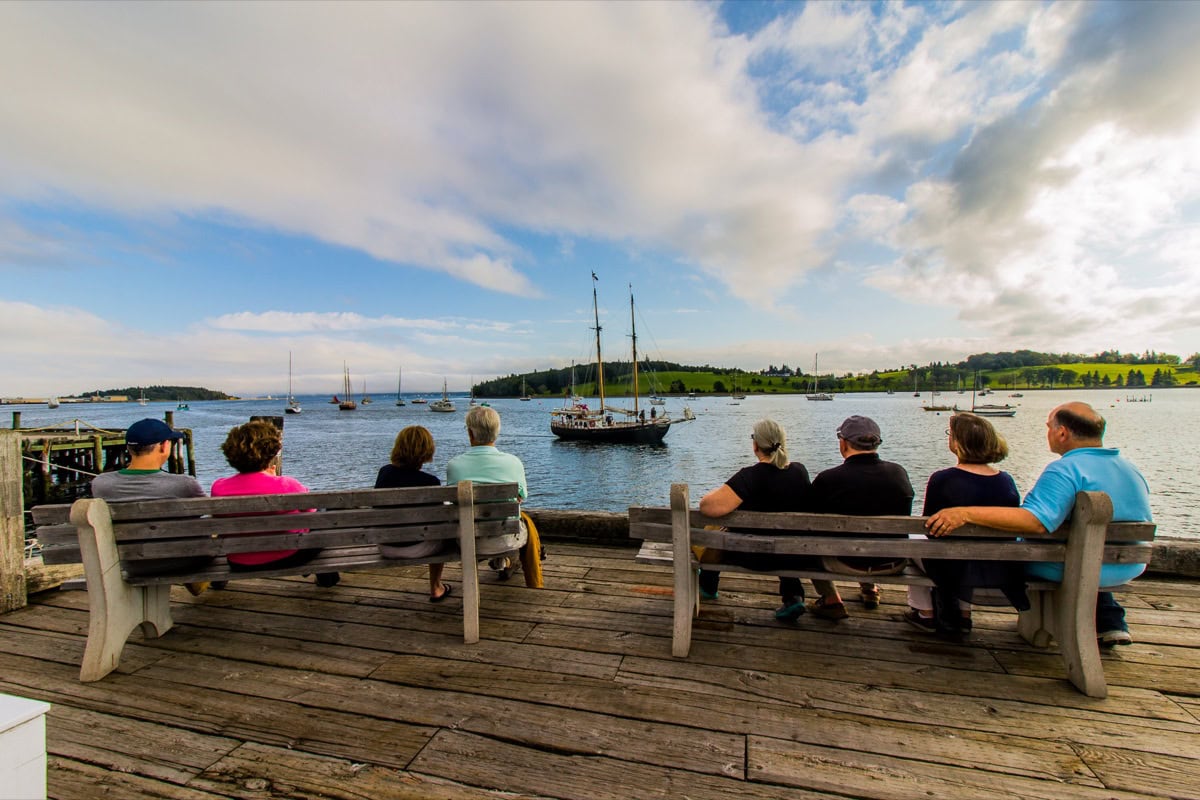
This spot rarely appears in guidebooks, but ask any local and they’ll recommend it straight away. Gallows Hill (yes, it’s called Gallows Hill, but don’t worry — today it’s a peaceful little park) offers arguably the best panoramic view of the entire town.
From the hilltop you can see the colourful old town, the harbour, Bluenose II (if she’s in port), the bay, and on a clear day, islands on the horizon. It’s an ideal spot for both sunrise and sunset.
The walk takes about 15 minutes from the town centre — it’s uphill, but nothing strenuous. At the top there are benches and grass where you can sit and soak up the view. We brought a bottle of wine and some cheese up here and had a romantic dinner with a view that would cost hundreds at a restaurant. ☺️
7. Blue Rocks — a fishing village from another era
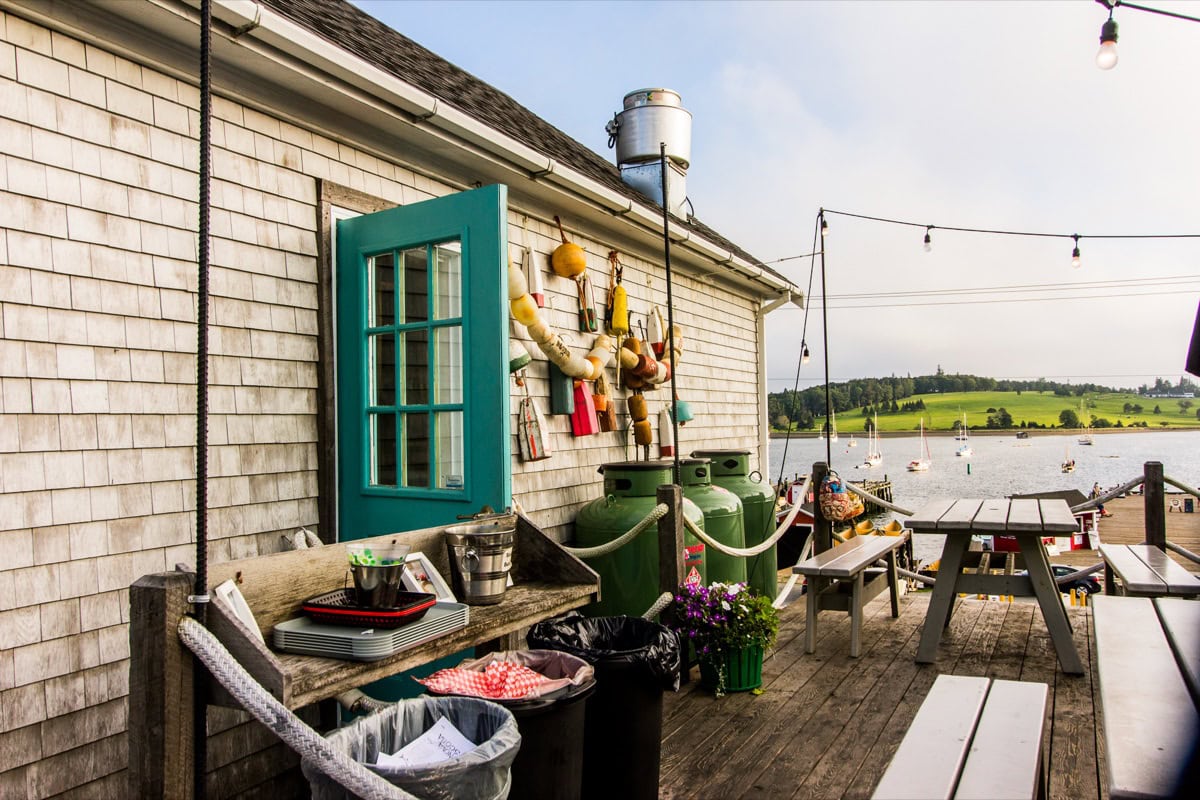
About 10 minutes’ drive from Lunenburg lies Blue Rocks — a tiny fishing settlement that looks as though time stopped here around 1920. Grey wooden shacks, wrecks of old boats, lichen-covered rocks, and water everywhere you look.
Blue Rocks isn’t a tourist attraction in the traditional sense — there’s no museum, no café, and barely a car park (well, one small one). It’s simply an authentic fishing community where a handful of families still live and fish. And that’s precisely what makes it so beautiful.
For photographers, it’s paradise. The light does incredible things here, especially in the morning and in fog. And if you’re into kayaking, Blue Rocks is the starting point for a gorgeous paddling route through the surrounding islands.
⚠️ Note: Please remember that people live here. Stay off private property, don’t photograph into people’s windows, and park only in designated spots. It’s a tiny community and tourists who treat it like a safari park understandably aren’t appreciated.
8. Kayaking the bay — Lunenburg from the water
One of the loveliest ways to experience Lunenburg is from the water. Several local companies offer kayak tours along the coast — from gentle paddles around the bay to full-day excursions to nearby islands.
From a kayak you see the colourful waterfront from an entirely different perspective. Plus you’ll likely encounter seals — they’re everywhere around here. Fearless, curious, and adorable. One popped up right beneath our kayak and I nearly toppled into the water from the fright. 😅
Tours typically cost around 60–90 CAD/person (€40–€60) for 2–3 hours and include all equipment and instruction. Even complete beginners can manage the basic bay route.
9. Lunenburg Academy — a school with a view
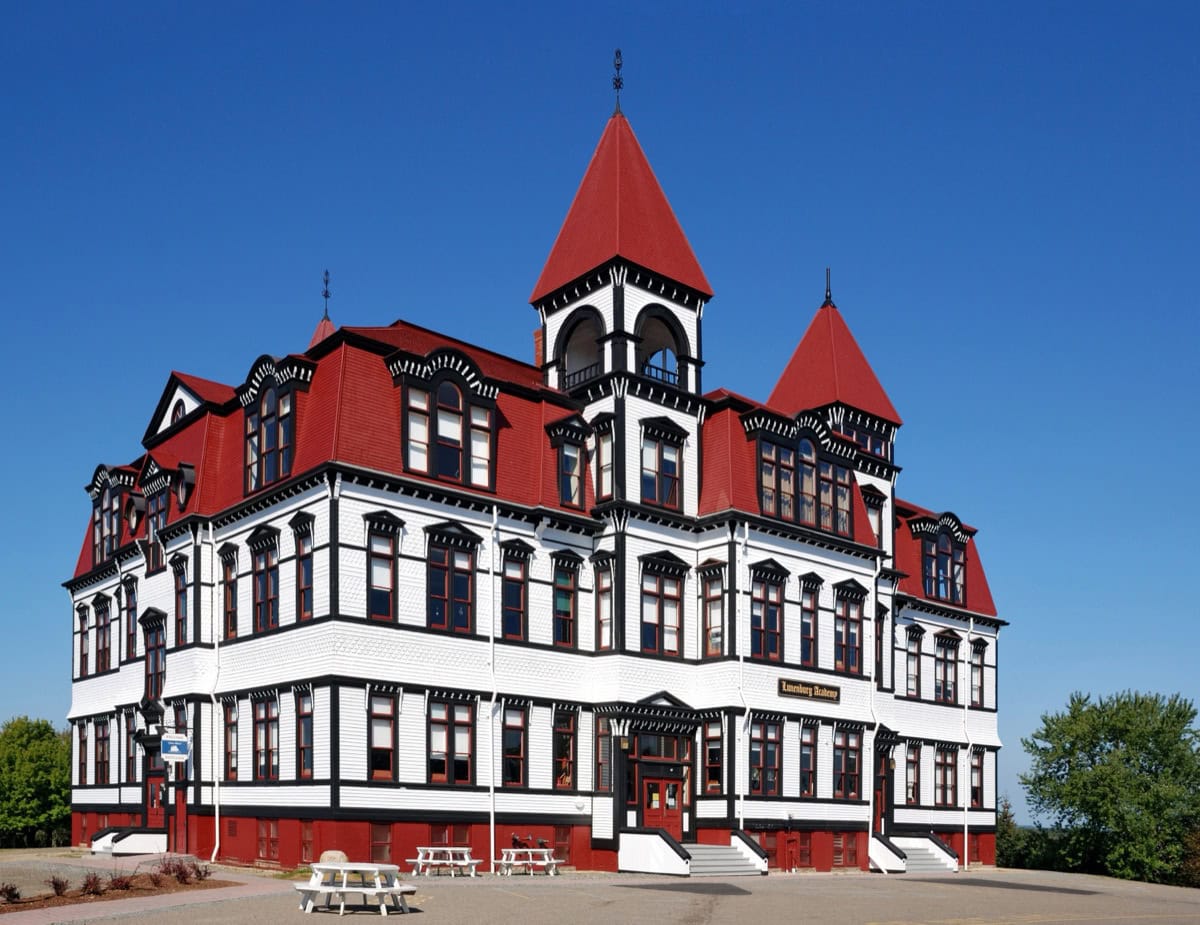
The enormous white building on the hill above town that you can see from practically everywhere — that’s Lunenburg Academy, a former school dating from 1895. It’s one of the most photographed buildings in town, and no wonder. The architecture is striking — turrets, arched windows, and that commanding hilltop position.
Today it serves as a community centre, and part of it is open to the public. But even if you don’t get inside, the walk up is worth it for the view alone. From the lawn in front of the Academy you get a gorgeous panoramic vista of the town and harbour.
10. Sunset on the wharf — the cheapest experience in Lunenburg
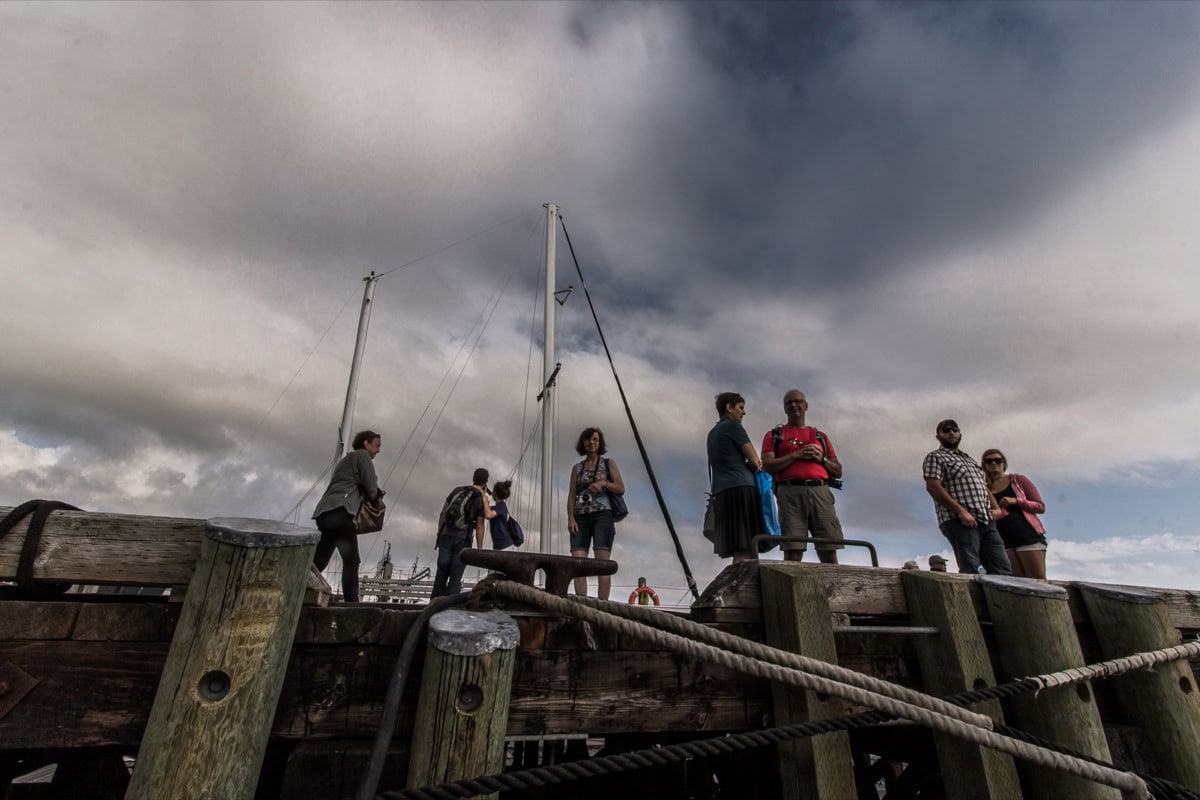
This is our favourite “tip” and it won’t cost you a penny. In the evening, grab a bottle of local wine or beer from one of the shops on the waterfront, sit yourself on the wharf, and watch the sun go down over the harbour.
Sunset in Lunenburg is something special — light bounces off the colourful houses, the water turns pink and orange, and the whole town goes quiet. It’s one of those moments when you think: “This is why I travel.”

Map of points of interest for your phone
Around Lunenburg: 5 day trips you shouldn’t miss
Lunenburg itself is gorgeous, but the surrounding South Shore has so many other treasures that it would be a shame to limit yourself to one town. All the following trips are within 30–60 minutes by car and can easily be combined into one packed day.
11. Mahone Bay — three churches and heaps of charm
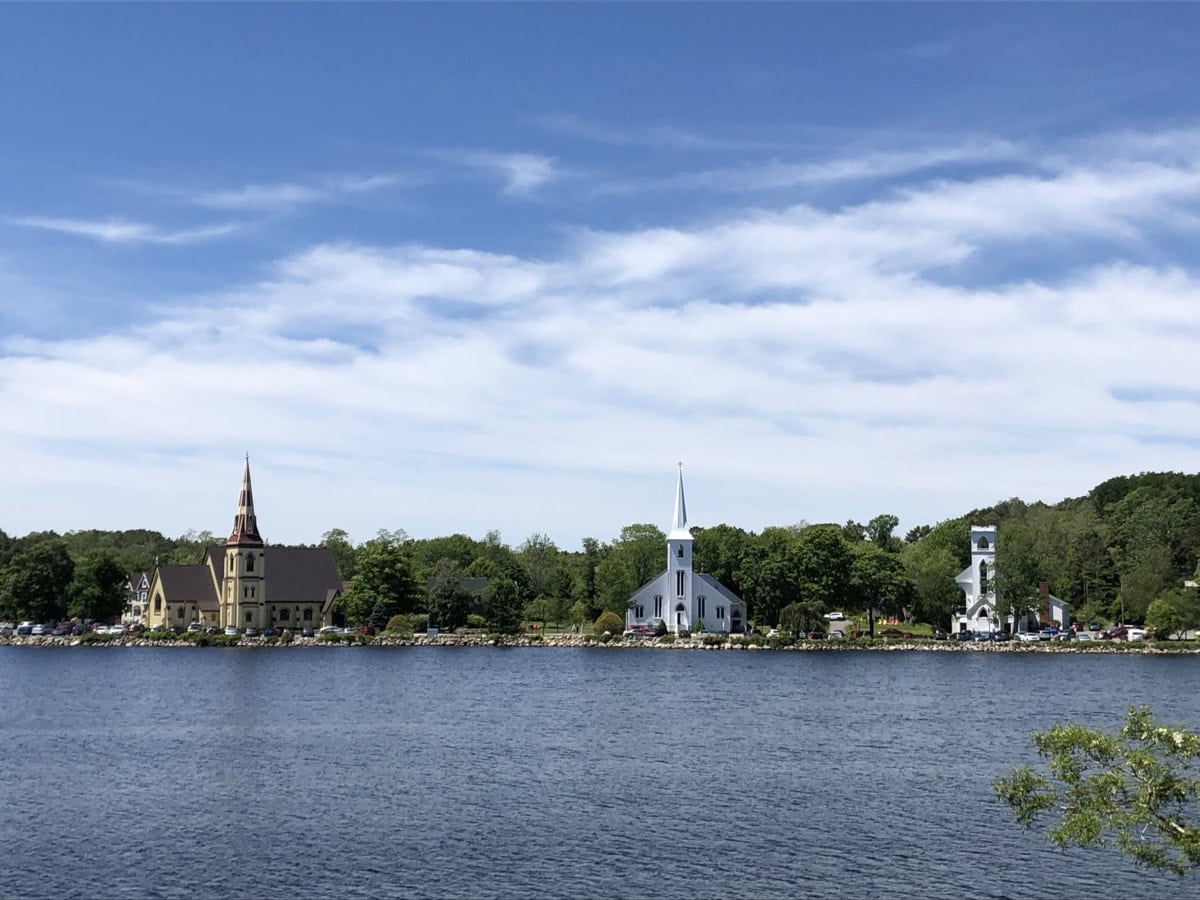
About 25 minutes’ drive from Lunenburg lies Mahone Bay — a town that might be even more photogenic than Lunenburg itself (and that’s saying something). The iconic view of three churches side by side reflected in the water of the bay is one of the most photographed scenes in all of Canada.
Mahone Bay is smaller and quieter than Lunenburg, with a lovely main street full of galleries, artisan shops, and cafés. It’s ideal for a morning trip — stroll through town, grab a coffee with a bay view, pick up some hand-made candles or pottery, and head back.
If you’re visiting in July, you might catch the Mahone Bay Scarecrow Festival — the whole town is decorated with hundreds of creative scarecrows. It’s absurd, funny, and utterly charming. In August there’s the Mahone Bay Classic Boat Festival with a parade of historic sailing vessels.
💡 TIP: On the road from Lunenburg to Mahone Bay, stop at the viewpoint by the road — there’s a car park with a sign, and the view over the bay dotted with dozens of tiny islands is beautiful.
12. Ovens Natural Park — sea caves and gold
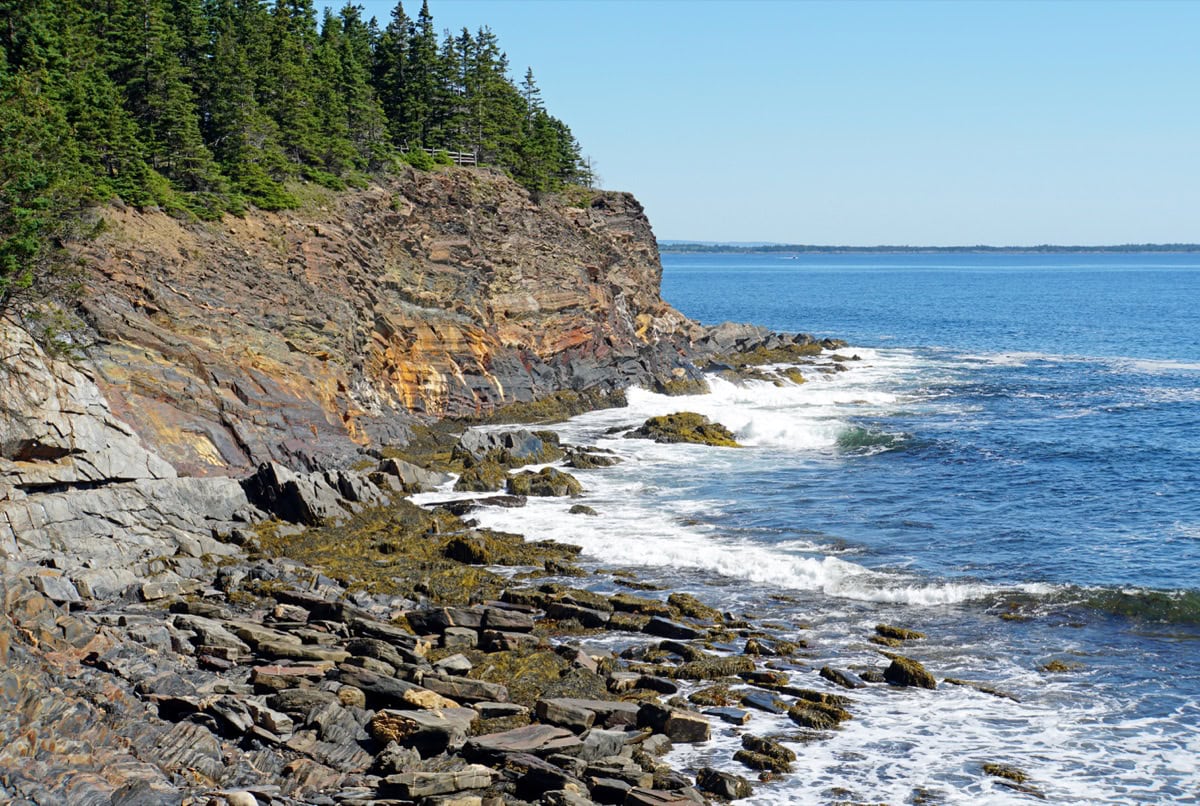
About 20 minutes’ drive south of Lunenburg you’ll find Ovens Natural Park — a privately owned park on a clifftop above the ocean where you can walk a trail along sea caves carved into the rock by the waves. The scenery is dramatic — waves crash into the caves and the echo carries for hundreds of metres.
Fun bonus: there was a gold rush here in the 19th century, and you can still pan for gold on the beach today. Yes, really. The park lends out panning equipment and instructions, and people do occasionally find something (don’t get too excited — we’re talking specks, not nuggets 😁).
Admission is around 15 CAD/person (€10) and the park is open from May to October. You can even camp here if you fancy falling asleep to the sound of the waves.
13. Lighthouse Route — a coastal drive
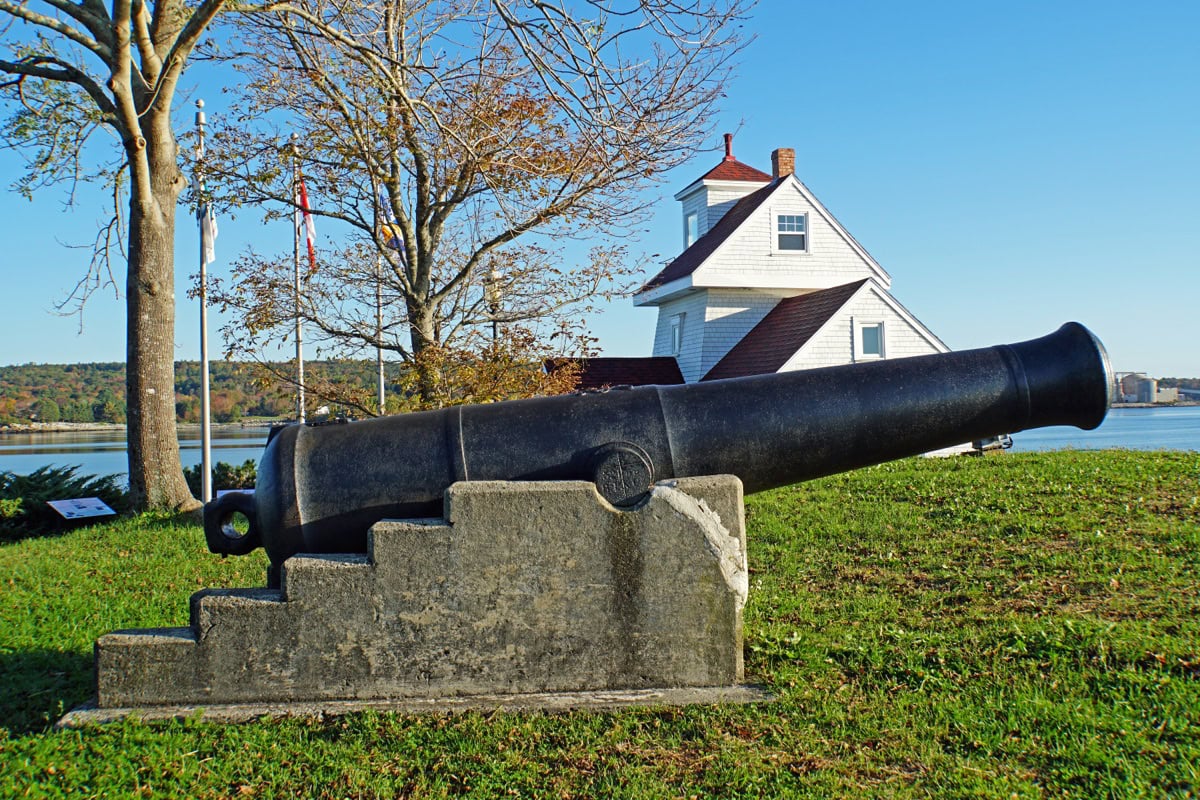
The Lighthouse Route is a scenic road that runs along Nova Scotia’s entire south coast from Halifax through Lunenburg all the way to Yarmouth. You don’t need to drive the whole thing — even individual sections are stunning.
I’d especially recommend the Lunenburg → Liverpool stretch, where you’ll pass several beautiful lighthouses, wild beaches, and picturesque fishing villages. Stop at Hirtle’s Beach — one of the most beautiful (and least visited) beaches on the South Shore. Miles of white sand, dunes, and barely a soul in sight.
For lighthouse lovers, a stop at Peggy’s Cove (in the Halifax direction) is a must — arguably the most famous lighthouse in all of Canada. It’s busier with tourists, but the view of the granite rocks and the ocean is worth it. Just please stay behind the barriers — waves regularly sweep people off the rocks here, and it’s no joke.
14. LaHave Bakery — Nova Scotia’s most famous bakery
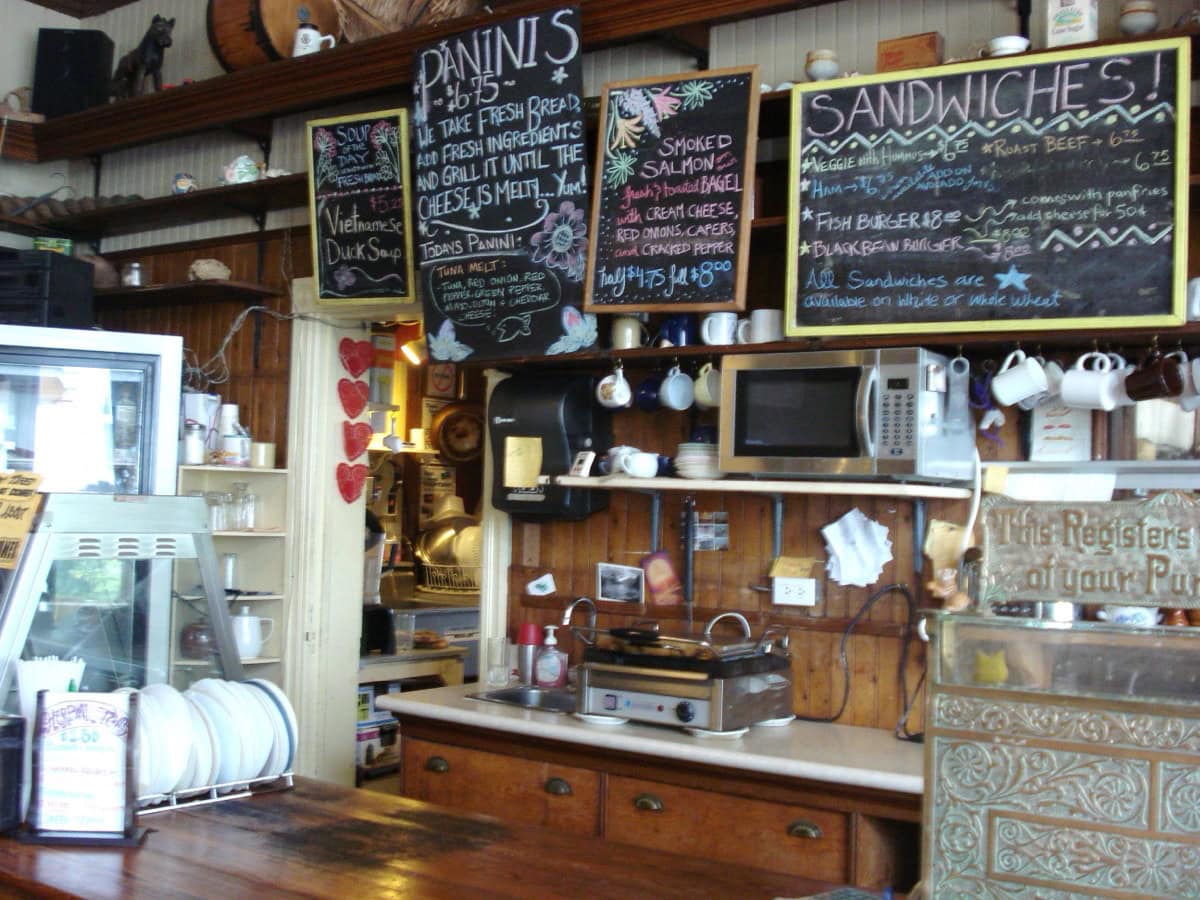
On the road west from Lunenburg, in the tiny village of LaHave, stands a bakery that’s legendary across the entire province. LaHave Bakery bakes bread, pastries, and croissants from local ingredients, and people drive here from all over Nova Scotia.
Their sourdough bread is phenomenal — crispy crust, soft centre, absolutely perfect. And the pastries… well, let’s just say we bought a whole bag and it lasted about two hours of driving. 😅
The bakery opens early and I’d recommend arriving sooner rather than later — popular items sell out fast. It’s a perfect stop on the way to or from Lunenburg.
15. Whale watching from Lunenburg or nearby
The waters off Nova Scotia’s coast are home to humpback whales, fin whales, and even North Atlantic right whales (one of the rarest species on Earth). Whale-watching season runs from June to October, and several boats depart from the Lunenburg area.
Trips usually last 3–4 hours and cost around 70–100 CAD/person (€47–€67). No one can guarantee a sighting, but the odds during peak season are very high — most operators report a success rate of around 95%.
💡 TIP: Bring warm layers even if it’s hot on land. It’s always chilly on the water, and the wind will cut right through you after a couple of hours. If you’re prone to seasickness, a preventative tablet is a wise move.
What to eat and drink: a foodie’s guide
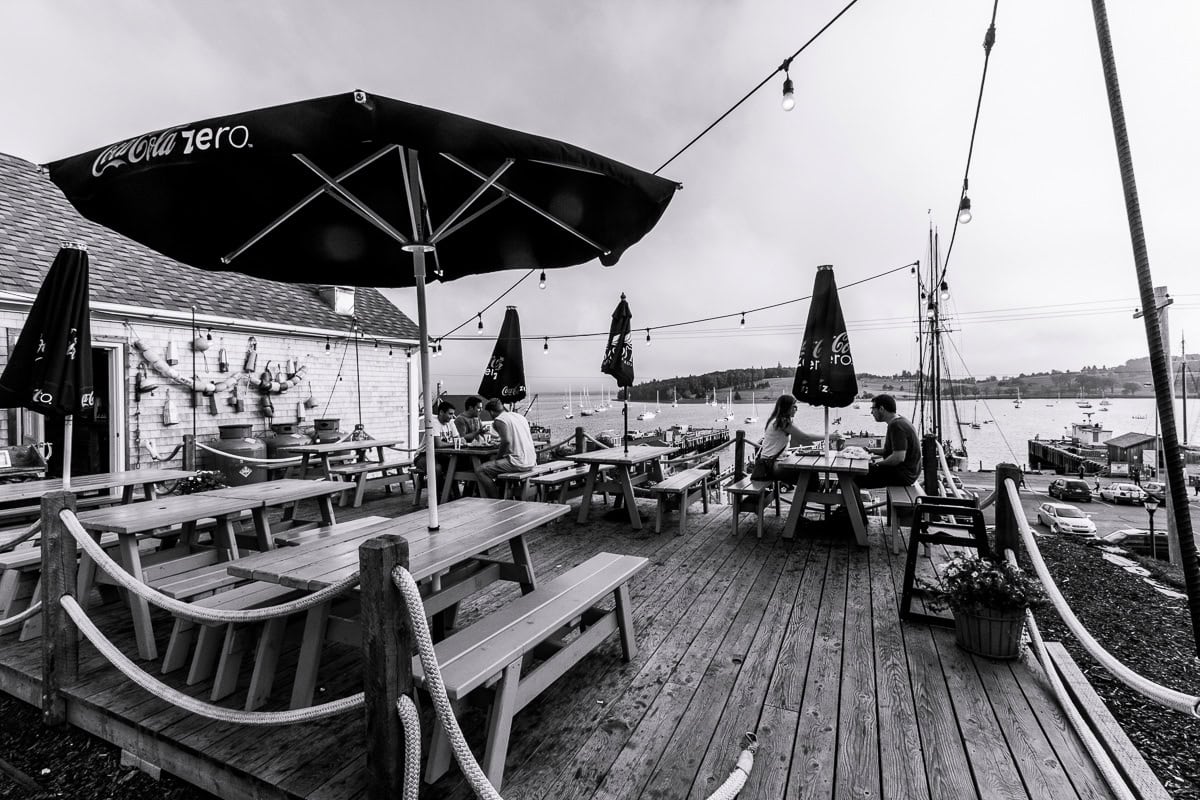
Food on the South Shore is a topic I could devote an entire article to. Nova Scotia is a seafood lover’s paradise — lobster, mussels, scallops, salmon… everything fresh, local, and prepared with care. And Lunenburg, as a historic fishing town, does this exceptionally well.
Lobster supper — a mandatory stop
If you’re in Nova Scotia and don’t have a lobster supper, it’s like going to London and skipping the British Museum. A whole lobster — boiled or grilled — with melted butter, corn on the cob, and potato salad. It’s simple food, but the taste… just wow.
Almost every restaurant in Lunenburg and the surrounding area serves lobster, but for the most authentic experience I’d recommend restaurants right on the waterfront or in the nearby fishing villages. Expect to pay around 35–60 CAD (€24–€40) for a whole lobster, depending on the size and time of year.
Our favourite restaurants in Lunenburg
- The Grand Banker Bar & Grill — right on the waterfront with harbour views. Excellent fish & chips and lobster, naturally. Prices reflect the location (i.e. on the higher side), but the quality is top-notch.
- Salt Shaker Deli — a smaller, informal bistro with fantastic sandwiches and soups. Their seafood chowder is probably the best thing I ate on the entire South Shore.
- The Knot Pub — a classic nautical pub with a great atmosphere, local beer, and solid food at reasonable prices. Perfect for an evening out.
- Rum Runner Restaurant — slightly more upscale with beautiful views and creative cuisine built around local ingredients. Their tasting menu is well worth it.
- South Shore Fish Shack — if you want something quick and authentic, this fish “shack” serves fresh fish & chips and lobster rolls right by the harbour. No fuss, just good food.
What to drink
- Local craft beer — Nova Scotia has a surprisingly strong craft beer scene. Look out for brews from Boxing Rock Brewing (from nearby Shelburne) or Garrison Brewing (from Halifax).
- Rum and spirits from Ironworks — as I mentioned above, the blueberry rum is an experience in itself.
- Wines from Gaspereau Valley — Nova Scotia even has its own wine region! The white wines in particular (Tidal Bay is the local speciality) are well worth a try.
Practical tips and tricks
How much time to spend in Lunenburg
One full day is enough for the town itself. If you want to explore the surroundings too (Mahone Bay, Blue Rocks, Ovens, beaches), plan for 2–3 days. We spent three days here and could have stayed longer — the South Shore pace is addictive.
What to pack
The weather on Nova Scotia’s coast is unpredictable. Even in summer, mornings can be foggy and chilly before clearing into 25 °C sunshine by the afternoon. I’d recommend layering — a lightweight waterproof jacket and a windbreaker are essentials. For day trips you’ll want comfortable hiking shoes, and if you’re planning to walk on rocks (Blue Rocks, Ovens), grippy soles are a must.
For a complete packing checklist, have a look at our guide on how to pack a carry-on bag.
Internet and eSIM
Wi-Fi in Lunenburg’s hotels and cafés works perfectly fine. Coverage in the more remote parts of the South Shore, however, can be patchy — mobile signal drops in and out. If you need to stay online while on the move, I’d recommend getting an eSIM before you go — you can read about our experience with Holafly in our Holafly review.
Travel insurance
Never travel to Canada without insurance — healthcare there is astronomically expensive. Even a simple trip to A&E can set you back thousands of dollars. For shorter trips we’d recommend a standard UK travel insurance policy, and for longer stays SafetyWing is great — read our detailed comparison in the SafetyWing review.
FAQ — Frequently asked questions about Lunenburg and Nova Scotia
How far is Lunenburg from Halifax?
Lunenburg is about 100 km southwest of Halifax. The drive takes roughly an hour along Highway 3 (the Lighthouse Route), which is a scenic and beautiful road in its own right. There’s essentially no direct public transport between Halifax and Lunenburg, so a car is a must.
How many days do I need in Lunenburg?
One full day is enough for the town itself. If you want to explore the surrounding area — Mahone Bay, Blue Rocks, Ovens Natural Park, beaches, and the Lighthouse Route — I’d recommend at least 2–3 days. The South Shore really does have a lot to offer.
Is Lunenburg safe?
Yes, Lunenburg is a very safe town. Crime is minimal and the atmosphere is friendly. The only things to watch out for are slippery rocks along the coast (especially after rain) and strong waves on exposed beaches. As a general rule on Nova Scotia’s coast — respect the ocean and don’t venture too close to cliff edges.
Who founded Lunenburg and what’s the colonial history?
Lunenburg was founded in 1753 by the British, who brought settlers primarily from Germany, Switzerland, and southern France — hence the somewhat un-British name. Canada as a whole has a rich colonial history — the French arrived first (from the 16th century), followed by the British (from the 18th century), and both cultures are still reflected in the country’s architecture, cuisine, and language today. In Lunenburg, the German and British influence is visible in the old town’s architecture, which earned it UNESCO World Heritage status.
Can you combine Lunenburg with Peggy’s Cove?
Absolutely — and it’s actually the ideal combination. Peggy’s Cove sits roughly halfway between Halifax and Lunenburg. I’d recommend driving from Halifax via Peggy’s Cove to Lunenburg (or vice versa) and making a full day of it. Just bear in mind that Peggy’s Cove gets very crowded, especially when cruise ships dock in Halifax.
What else is Nova Scotia known for besides Lunenburg?
Nova Scotia is famous for its dramatic coastline, seafood (especially lobster!), lighthouses, friendly locals, and Celtic culture (on Cape Breton Island, Gaelic is still spoken and bagpipes are played). You’ll also find some of the highest tides in the world at the Bay of Fundy, and the stunning Cabot Trail — one of the most scenic drives in North America.
What currency is used in Canada and how much does Lunenburg cost?
Canada uses the Canadian dollar (CAD). At the time of writing, the exchange rate is roughly 1 CAD = €0.67 (or about £0.57). Card payments are accepted virtually everywhere — even in small shops and at markets. We didn’t need any cash at all in Lunenburg. A total holiday budget for the South Shore over 2–3 days for two comes to roughly 860–1,060 CAD, which is approximately €580–€720 including accommodation, food, activities, and petrol.
Tips and Tricks for Your Vacation
Don’t Overpay for Flights
Search for flights on Kayak. It’s our favorite search engine because it scans the websites of all airlines and always finds the cheapest connection.
Book Your Accommodation Smartly
The best experiences we’ve had when looking for accommodation (from Alaska to Morocco) are with Booking.com, where hotels, apartments, and entire houses are usually the cheapest and most widely available.
 🚗 Car rental on the roadVerified rental cars in Nova Scotia
Search with the DiscoverCars comparison engine — it compares prices from dozens of local and international rental companies, and most bookings come with free cancellation.
Compare car prices in Nova Scotia →Don’t Forget Travel Insurance
Good travel insurance will protect you against illness, accidents, theft, or flight cancellations. We’ve had a few hospital visits abroad, so we know how important it is to have proper insurance arranged.
Where we insure ourselves: SafetyWing (simple monthly subscription) and TrueTraveller (for extra-long trips).
Find the Best Experiences
Get Your Guide is a huge online marketplace where you can book guided walks, trips, skip-the-line tickets, tours, and much more. We always find some extra fun there!
More from Nova Scotia
Full guide → Day tripsHalifax, Canada: 8 Things to See & Do + Best Day Trips Around Nova Scotia
 What to seeDigby, Nova Scotia: 15 Tips on What to See and Do in the Scallop Capital
 What to seeCape Breton Highlands National Park, Nova Scotia, Canada: 16 Things to See and Do
 What to seeCabot Trail, Nova Scotia: 15 Things to See and Do
 What to seePeggy’s Cove, Nova Scotia: Guide to Canada’s Most Iconic Fishing Village


