Rhodes, Greece: 21 Best Things to Do and See

TL;DRRhodes has it all: the medieval Old Town with its knights’ monuments, the picture-postcard village of Lindos with its acropolis, and gorgeous beaches all along the coast. The best time to visit is May to October, when temperatures hit 25–30°C and the sea’s lovely for swimming, especially July to September. Hire a car so you can explore properly — the island’s best hidden corners and idyllic beaches are scattered all over the place.

Rhodes, one of Greece’s most beloved islands, attracts over 2.5 million visitors annually. My childhood trip to this enchanting island remains one of my fondest family memories. In this guide, we’ll highlight the best things to do and see in Rhodes, top places to stay, and insider tips on finding affordable tours. Plus, we’ll share the ideal times to plan your visit to make the most of your trip.

Best Hotels in Rhodes

The northern part of Rhodes, including its capital city, and the island’s east coast are the main hubs of tourism. This area is home to the majority of resorts, making it an excellent choice for families with children.

One standout option is the Atlantica Dreams Resort, an all-inclusive hotel that caters to both families and couples, offering a perfect blend of relaxation and activities for all ages.

Best Places to Rent a Car in Rhodes

If traveling by bus isn’t your style or you want the freedom to explore the hidden gems of Rhodes, renting a car is the way to go. We’ve had great experiences using DiscoverCars when renting a vehicle in Greece.

With your own car, you can discover the island’s hidden corners at your own pace. You’ll be amazed by the charming agricultural landscapes dotted with olive groves and the sweeping hills covered in thorny shrubs. Plus, you’ll stumble upon stunning beaches around nearly every bend.

Best Travel Agencies for Affordable Tours in Rhodes

If you prefer not to travel to Rhodes independently, we recommend browsing tours on the Invia portal. It offers the largest selection of tours from 150 Czech travel agencies, making it easy to compare prices and find the best deal for your trip.

Best Time to Visit Rhodes

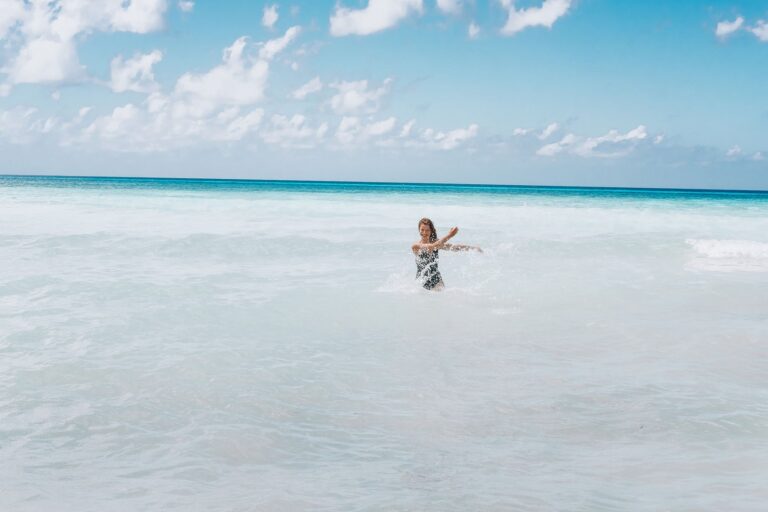
Rhodes is one of the warmest Greek islands, making it a great destination from late spring to early autumn. For those wondering when to visit, the best time is between May and October, when temperatures range from 25 to 30°C (77 to 86°F). If swimming is a priority, July, August, and September offer the warmest waters.

MoonAverage temperature (°C)Water temperature (°C)
January1217
February1316
March1516
April1817
May2219
June2622
July2924
August3025
September2724
October2323
November1820
December1418

21 Best Things to Do and See in Rhodes

Rhodes offers a wealth of activities and sights, making it difficult to see everything in just one week. To help you make the most of your trip, we’ve compiled a list of the island’s most beautiful spots and top activities, allowing you to choose what interests you most. For those who want to experience it all, we suggest planning a 14-day stay in Rhodes.

Rhodes town

I had the chance to visit Rhodes as a child, and it sparked my love for Greek culture, history, and ancient sites. But if cultural landmarks aren’t your thing, you can still enjoy simply wandering through the charming narrow streets and exploring the many shops and boutiques. ☺️

Castello: Palace of the Grand Master of the Knights of Rhodes

The Palace of the Grand Master of the Knights of Rhodes, also known as Kastello, is a stunning medieval castle and one of the few examples of Gothic architecture in Greece. Originally built as a citadel, it later served as both a residence and a fortress for the Knights of St. John.

The palace was originally built in the late 7th century and underwent repairs after an earthquake in 1481. In 1522, following the Ottoman Empire’s conquest of the island, it served as a headquarters and fortress.

In 1856, a lightning storm triggered an explosion in a powder magazine, which partially destroyed the palace. During the Italian occupation of Rhodes from 1937 to 1940, the damaged sections were restored by Italian architect Vittorio Mesturino, though the restoration faced criticism for lacking historical accuracy.

Rhodes Archaeological Museum

The Rhodes Archaeological Museum is housed in the Great Hospital of the Knights, a historic structure built between 1440 and 1489. As a UNESCO World Heritage Site, the museum boasts an impressive collection of classical, Hellenistic, and archaic artifacts, including sculptures, funerary objects, and decorative items.

Noteworthy exhibits include the renowned Tomb of Calliaris, the statue of Venus, the bathing Aphrodite, “Drunken Dionysos,” and the headless statue of Artemis. On the ground floor, visitors can explore artifacts from the Ottoman era and the period of the Knights, along with various other historical finds.

PeriodOpening daysOpening hoursAdmission (Adults)Admission (Reduced)Special ticket package
April 1 – 31. OctoberMonday – Sunday8:00 – 17:30 (last entry at 17:00)6 €3 €10 €
November 1 – 31. MarchTuesday – Sunday (Monday closed)8:00 – 15:00 (last entry at 14:30)6 €3 €10 €

Clock tower (Roloi) in Rhodes

The Clock Tower (Roloi) in Rhodes is the highest point in the Old Town, though it may not catch your eye at first glance. The ideal time to visit is after dark when its illuminated facade creates a truly captivating sight.

The Clock Tower, dating back to 1852, was originally used to notify the Greek population of Turkish time during Ottoman rule. Today, visitors can climb a steep wooden staircase to the top, where historical photographs documenting the tower’s extensive restoration are displayed.

While the view from the top is somewhat limited due to small windows, the tower remains a popular spot for watching the sunset. The €5 entrance fee also includes a complimentary drink at the outdoor café by the tower’s entrance.

Ruins of the Church of Our Lady at the Castle

The ruins of the Church of Our Lady at the Castle, also known as the Virgin of the Burgh, are located in the medieval town of Rhodes, near the Gate of the Virgin Mary. Originally built as a Gothic Roman Catholic church in the 14th century, it was likely one of the first structures erected by the Knights of St. John. During the Turkish occupation of Rhodes, the church was converted into a mosque.

Only three apses and portions of a small chapel remain from the original church, as much of the structure was destroyed during World War II bombings. This site is particularly significant, as it is one of the few surviving Roman Catholic churches from that era on the Greek islands. The name “Burgh” refers to the bourgeoisie who lived in this part of town, distinguishing them from the knights.

The church ruins are open to the public with no admission fee or set visiting hours, allowing visitors to explore this historic site freely at any time.

Kahal Shalom Synagogue

Kahal Shalom Synagogue in Rhodes, the oldest synagogue in Greece, is located in the Jewish quarter known as La Juderia. Built in 1577, it remains active to this day.

This Sephardic synagogue endured challenging times, particularly during the Turkish occupation and World War II, which saw the tragic decline of the island’s Jewish community. Today, it also houses the Jewish Museum of Rhodes, preserving the rich history of the Jewish presence on the island.

AdmissionOpening hoursNotes
6 € (children under 12 free)10:00 – 15:00 (1 April – 31 October), Winter season: closed, visits by appointmentClosed on Saturdays and public holidays

Schmetterlingstal (Valley of the Butterflies) Rhodes

One of my favorite experiences in Rhodes was visiting the Valley of the Butterflies (Petaloudes). You can explore this beautiful spot on your own through a GetYourGuide booking or join a tour arranged by a tour operator.

The Valley of the Butterflies, also known as Petaloudes or Schmetterlingstal, is located on the western side of Rhodes, about 5 kilometers southeast of the village of Theologos.

The Valley of the Butterflies is one of Rhodes’ most popular attractions, where you can witness thousands of Panaxia butterflies (Quadripunctaria Poda) gathering during the summer months to breed. Due to its popularity, it’s highly recommended to purchase tickets in advance.

This serene valley is home to the unique Zitia tree, which creates cool, shaded paths that are ideal for the butterflies and a favorite spot for them to rest.

Here’s what you need to know about entrance fees and opening hours for the Valley of the Butterflies:

PeriodOpening hoursAdmission (Adults)Admission (Children under 12 years)
June 1 – 14. September8:00 – 18:005 €Free
September 15 – 31. May8:30 – 16:303 €Free

As previously mentioned, you can buy tickets and book tours to the Rhodes Valley of the Butterflies through GetYourGuide.

Lindos, the heart of Rhodes

This charming port town on the island’s east coast, located about 52 km from the airport, is a must-see when visiting Rhodes.

Lindos is known for its stunning medieval fortress and ancient acropolis, with a temple perched high above the whitewashed houses. You can hike up to the top or opt for a donkey ride for a unique experience.

For photography enthusiasts, Lindos is a paradise. Be sure to allow plenty of time to capture the striking contrast between the white buildings and the fortress atop the rocky hill.

The temple offers breathtaking views of St. Paul’s Bay, with its crystal-clear waters that are perfect for snorkeling.

Lindos also features two beautiful sandy beaches, providing the perfect spot to cool off in the sea or relax in the sun after exploring the town. For a unique souvenir, consider picking up hand-embroidered tablecloths and fabrics—traditional crafts that trace back to the time of Alexander the Great.

Acropolis in Lindos

In the historic village of Lindos, you’ll find charming whitewashed houses along narrow, winding streets, all beneath the ancient Acropolis perched on a hilltop. Explore the impressive ancient ruins while enjoying stunning views of the Aegean Sea’s vibrant blue waters.

Filerimos

For hiking enthusiasts and those who appreciate panoramic views, Filerimos Hill in Rhodes is a must-visit. This 267-meter-high hill is located just 8 km southwest of the capital. The trail to the summit spans four kilometers, offering a scenic and rewarding hike.

At the summit, where the acropolis of ancient Ialyssos once stood, you’ll find monuments from various historical eras: the ruins of a monastery from the Knights’ period, remnants of the Temple of Athena, a Crusader church, and parts of Byzantine fortifications. The main highlight is the 15-meter-high cross-shaped tower, offering stunning views that stretch all the way to the coast of Asia Minor.

Kameiros

Kameiros is one of the three ancient cities on Rhodes, situated on the island’s west coast at the base of Mount Akramytis, near the stunning sandy beach of Ayios Minas. Founded in the 10th century BC, Kameiros is even mentioned by Homer. The city thrived during the 7th century BC but suffered destruction from earthquakes in 226 BC and again in 142 BC.

Ancient Kameiros was once among the most powerful cities of its time. In the 5th century BC, it joined forces with Lindos and Ialyssos to form the influential city-state of Rhodes. Kameiros was primarily an agricultural hub, known for producing olive oil, wine, and figs. During its golden age in the 6th century BC, it became the first city on Rhodes to mint its own coins and controlled the western and central parts of the island.

Built on three levels along the northwest coast, about 50 km from the city of Rhodes, the ruins of this ancient city now form a significant archaeological site, attracting visitors with its rich history and stunning location.

The most beautiful beaches, coves and thermal springs in Rhodes

Rhodes is one of the most renowned Greek islands, boasting numerous breathtaking beaches perfect for swimming, snorkeling, and windsurfing. Let’s explore some of the most beautiful beaches that Rhodes has to offer.

Prasonisi

Prasonisi, also known as Prassoníssi, is a cape situated at the southern tip of Rhodes, approximately 92 km from Rhodes Town and 40 km from Lindos. The name Prasonisi translates to “green island” in Greek. In the summer months, when water levels drop, this unique spot transforms into a peninsula, connecting it to the main island of Rhodes.

Prasonisi is renowned for its beautiful beach, considered one of the most stunning in Rhodes. Prasonisi Beach is a true paradise for windsurfing enthusiasts, especially in July and August when the northern winds, known as meltemi, sweep through the area.

During these months, the beach is bustling with activity, offering the perfect opportunity to watch skilled windsurfers in action every day.

St. Paul’s Beach

St. Paul’s Beach, also known as Agios Pavlos Beach, is situated on the southeast coast of Rhodes, close to Lindos. The beach offers a picturesque view of the rocky hilltop crowned by the Acropolis of Lindos, adding a touch of history to its stunning coastal scenery.

The beach features soft golden sand and crystal-clear turquoise waters, making it perfect for families with children, who can safely swim in the shallow areas near the shore.

According to local legend, St. Paul landed here with his ship in 51 AD, which is how the beach got its name. While you’re there, don’t miss the chance to visit the charming St. Paul’s Church, a quaint white chapel perched on a hill overlooking the bay, adding a serene touch to the beautiful landscape.

Tsambika beach

With its soft golden sand and warm Mediterranean waters, Tsambika Beach is easily one of our favorites.

Tsambika Beach is located 25 km south of Rhodes Town, nestled beneath the rocky hill where the Tsambika Monastery sits. The beach offers sun loungers and umbrellas for rent at 20 euros, and thrill-seekers can enjoy activities like jet-skiing and parasailing. An inflatable water park is also available, providing fun for both children and adults. Visitors can find a variety of bars and restaurants along the beach, as well as convenient amenities such as showers and restrooms.

Kalithea Hot Springs

The hot springs of Kalithea, located just 9 km from Rhodes Town, are among the island’s top tourist attractions. Known as Kalithea Springs or Kallithea Terme (Πηγές Καλλιθέας in Greek), this site has been renowned for its therapeutic and medicinal properties since the 7th century. While the thermal springs are no longer active, visitors can still explore the historic bathing areas and enjoy the rich heritage of this beautiful location.

This enchanting location is surrounded by lush gardens, featuring waterfalls and elegant oriental-style buildings. Today, it stands as one of the most iconic landmarks in Rhodes. Although the original spa facilities are no longer in use, the beautifully restored site, nestled among palm and pine trees, now hosts charming restaurants and cafes, offering visitors a unique blend of history and relaxation.

Anthony Quinn’s Cove

The bay, named after the famous actor Anthony Quinn, who fell in love with Rhodes while filming The Guns of Navarone in 1961, is a charming spot. Though relatively small, it spans about 10 meters in width and 250 meters in length, offering an intimate and picturesque setting.

Actor Anthony Quinn was so captivated by this secluded cove that he purchased a plot of land here.

If you’re traveling from Rhodes Town, the fastest route to Anthony Quinn Beach is via the Rhodes-Lindos provincial road, followed by the turn towards Kallithea. The drive takes about 20 minutes and covers roughly 15 kilometers. Once you arrive, you’ll find free parking on site and a short set of steps leading down to the bay.

Monolithos Castle

Monolithos Castle on Rhodes, built in the 14th century by the Knights to control the sea and protect locals from pirate raids, is one of the four main castles on the island.

Perched atop a 236-meter-high cliff, Monolithos Castle offers stunning views of the coastline and commands the landscape near the village of Monolithos in southwestern Rhodes. The walk to the castle entrance is short and accessible. Inside, you’ll find ancient reservoirs and the ruins of the whitewashed Church of St. Panteleimon.

Monolithos Castle is open to visitors every day, around the clock, with free admission.

Monolithos CastleInformation
Opening hoursMonday to Sunday, 24/7 (open area)
AdmissionFree
AddressVillage of Monolithos, Western Rhodes
TransportTaxi, Bus, Car, Motorcycle, Bicycle

Tips for excursions in Rhodes

In Rhodes, you can enjoy activities like kayaking, diving, or even taking a romantic boat trip that includes a barbecue featuring Greek specialties. If you’re traveling with a tour operator, tours can be easily booked through your guide, or you can book independently, as we did, using GetYourGuide.

Kayaking on the pirate route

Kayaking is one of our favorite activities in Greece, and it’s easy to book, whether through your guide or GetYourGuide. We prefer using GetYourGuide, as we haven’t traveled with a tour operator for over a year, though I did visit Rhodes with a travel agency a long time ago.

This kayaking adventure follows the famous Pirate Route, starting at Kathara Beach in Faliraki. There, you’ll meet your guide and receive a safety briefing before setting off in your own two-seater kayak.

Throughout the trip, you’ll have the opportunity to swim directly from your kayak, explore sea caves and hidden beaches, and enjoy a picnic lunch on a popular local beach. You can also snorkel or take a leap into the water from the rocks for a bit of extra fun.

Fast boat trip to the island of Symi

In Rhodes, you can take a scenic trip to the island of Symi, either through your tour operator or conveniently via GetYourGuide. This 6.5-hour cruise offers breathtaking views of Rhodes Old Town and the picturesque Symi Island, famous for its neoclassical houses mirrored in the calm sea.

Onboard a modern speedboat, you can soak up the sun on the outdoor deck or unwind in the air-conditioned interior, enjoying panoramic views of the Rhodes city walls, Old Town minarets, the medieval clock, and the Sea Gate. Along the way, you’ll also pass landmarks such as the 46-meter-high Naillac Tower, the Rhodes Windmills, St. Nicholas Fortress, and the Rhodes Aquarium.

Once you arrive at Symi Bay, you’ll have over three hours to explore the island’s unique charm before making your return to Rhodes.

Eight-hour expedition around the north of the island

Discover the hidden gems of Northern Rhodes on a full-day 4WD safari tour. This 8-hour adventure takes you deep into the island’s interior, offering breathtaking panoramic views and revealing lesser-known, yet enchanting locations.

When you book through GetYourGuide, you’ll enjoy convenient pick-up directly from your hotel, with service available in Rhodes Town, Ialyssos, Ixia, Kalithea, Faliraki, Afandou, and Kolymbia.

The tour price includes hotel transfers, a delicious lunch (with wine) at a traditional taverna, and the guidance of a multilingual expert, ensuring a memorable and seamless experience.

Romantic sunset cruise with Greek barbecue

For a more romantic experience, consider booking a sunset boat trip with a Greek BBQ through GetYourGuide. Departing from Mandraki Harbour in Rhodes, you’ll sail to the beautiful Kalithea Springs, where you can take a refreshing swim in the crystal-clear waters or simply relax on deck and take in the stunning views.

During the cruise, enjoy unlimited drinks from the open bar, featuring Aperol Spritz, beer, wine, and a variety of other cocktails and beverages. The highlight of the trip is a delicious, authentic Greek BBQ, adding a perfect touch to your evening on the water.

Sightseeing tour of Rhodes by Hop-on Hop-off bus

Lukas and I are big fans of using hop-on hop-off buses. They provide a comfortable way to see all the key sights in just about an hour. With the flexibility to hop on and off throughout the day, you can explore the city at your own pace.

The buses are air-conditioned, making for a pleasant ride, and they take you to all the must-see spots, including Elli Beach, the Aquarium with its fascinating Mediterranean marine life, the old town, and the historic site where the Colossus of Rhodes once stood.

Diving in Rhodes

Scuba diving with GetYourGuide is another great option, suitable for both beginners and more experienced divers. Before the dive, you’ll receive a thorough safety briefing and have ample time to practice breathing underwater.

Please note that this activity is not recommended for children under 8 years old, pregnant women, or individuals with heart conditions, respiratory issues, or epilepsy.

lukas a lucka
Lukáš and Lucie recommend
Where to stay in Rhodes
2 accommodations — hotels and other accommodation options

What does Rhodes look like after the 2023 fire?

By October, many areas of Rhodes showed little evidence of the fire. You can see how it looked in the autumn in the video.

Frequently Asked Questions

When is it windy in Rhodes?

In Rhodes, north-westerly winds, known as Meltemi, usually 4-6 in strength, prevail during the summer months. These winds are weaker in May and June, stronger in July and August and disappear in autumn when the high Balkan barometric pressure drops.

Where does it blow in Rhodes?

On Rhodes, the west side of the island is windier with rougher beaches, while the east side is calmer but usually warmer.

When to fly to Rhodes

It’s best to fly to Rhodes in July or August if you’re planning to go swimming and want guaranteed sunny weather. June and September are also pleasant.

When to go to Rhodes?

The best time to go to Rhodes is in July or August, when the weather is at its best.

What is Rhodes?

Rhodes is a Greek island, one of the most visited islands in Greece.

Where is it not blowing in Rhodes?

On Rhodes, it doesn’t blow on the east side.

Is Rhodes safe?

Yes, Rhodes is safe, as are all the islands of Greece.

How big is Rhodes?

The island of Rhodes is spear-shaped, 49.5 miles (79.7 km) long and 24 miles (38 km) wide, with a total area of approximately 541 square miles (1,400 km²) and approximately 137 miles (220 km) of coastline.

Do I need water shoes for Rhodes?

Yes, water shoes are recommended in Rhodes, especially if you are visiting pebble beaches or rocky areas where there may be sharp rocks and urchins.

What is the sea like in Rhodes?

The sea in Rhodes is beautiful, clean and warm.

Tips and Tricks for Your Vacation

Don’t Overpay for Flights

Search for flights on Kayak. It’s our favorite search engine because it scans the websites of all airlines and always finds the cheapest connection.

Book Your Accommodation Smartly

The best experiences we’ve had when looking for accommodation (from Alaska to Morocco) are with Booking.com, where hotels, apartments, and entire houses are usually the cheapest and most widely available.

Don’t Forget Travel Insurance

Good travel insurance will protect you against illness, accidents, theft, or flight cancellations. We’ve had a few hospital visits abroad, so we know how important it is to have proper insurance arranged.

Where we insure ourselves: SafetyWing (best for everyone) and TrueTraveller (for extra-long trips).

Why don’t we recommend any Czech insurance company? Because they have too many restrictions. They set limits on the number of days abroad, travel insurance via a credit card often requires you to pay medical expenses only with that card, and they frequently limit the number of returns to the Czech Republic.

Find the Best Experiences

Get Your Guide is a huge online marketplace where you can book guided walks, trips, skip-the-line tickets, tours, and much more. We always find some extra fun there!
Mykonos, Greece: 15 Best Things to Do and See

TL;DRMykonos serves up a mix of history, beaches and nightlife, and here are 15 ideas to build a holiday around — from Chora, with its Kato Mili windmills and the church of Panagia Paraportiani, to Little Venice and a trip to the island of Delos, 30 minutes away by boat. The main season, June to August, is best for beaches and partying, while April–May and September–October bring quieter crowds and lower prices. Beaches range from the wild Paradise and Super Paradise to the exclusive Psarou and the laid-back Agios Sostis. Budget €100–€150 a day per person for mid-range comfort, with lunch at a taverna costing €15–€25 and bar drinks from €8.

When you hear Greece, most of us picture white houses with blue shutters, crystal clear sea, tzatziki, and an atmosphere that instantly transports you into the life from the Mamma Mia movie. Mykonos is precisely that kind of place.

This small island in the Cyclades archipelago has become synonymous in recent years with luxury holidays, endless nightlife, and beautiful beaches. It’s nicknamed “the Greek Ibiza”, and it’s no wonder. After sunset, this idyllic Mediterranean island transforms into an entertainment epicenter, attracting visitors from all over the world. But Mykonos offers much more than just parties. So let’s check out 15 tips on what to do and see there.

Summary for those who Don’t Have Time to Read the Whole Article

  • Best time to visit: High season (June-August) for parties and beaches, April-May and September-October for a calmer atmosphere and better prices.
  • Accommodation: In the capital Chora for nightlife, in the Ornos or Platis Gialos areas for peace and relaxation (e.g., Margie Mykonos Hotel or Hotel Charrissi)
  • Don’t miss: Kato Mili Windmills, Little Venice, Panagia Paraportiani Church, a trip to Delos island.
  • Transport: It’s ideal to rent a car, as not all beaches are easily accessible by bus; you can book it through a trusted portal DiscoverCars.
  • Budget: Medium to higher price range, lunch in a tavern 15-25 €, drink in a bar from 8 €.

When to Go to Mykonos

Mykonos has its charm in every season, but each brings something different.

Summer Months (June – August)

The main tourist season is when Mykonos truly comes alive. Temperatures range around 25-30°C, the sea is wonderfully warm, and all beach clubs, restaurants, and hotels are open. This is also the time of the largest tourist crowds and highest prices. If you’re planning a summer holiday in Mykonos, book your accommodation well in advance.

Late Spring and Early Autumn (April-May / September-October)

These months offer a happy medium. The weather is still pleasant, with temperatures around 20-25°C, but without the summer crowds. Accommodation prices are more reasonable, and you can enjoy the island more peacefully. In October, the sea can even still retain summer temperatures.

Winter Months (November – March)

Winter in Mykonos is quiet, and many businesses are closed. Temperatures hover around 15°C, and the weather can be unpredictable. On the other hand, if you’re looking for authentic island life without tourists and low prices, it can be an interesting option for your visit.

Read also: Skiathos Holiday

Mykonos: where to Stay

The choice of accommodation in Mykonos depends on the type of holiday you prefer. If you want to be in the center of the action, then choose Chora. The quieter areas are Ornos and Platis Gialos. We recommend these accommodations:

15 Tips on What to See and Do in Mykonos

Let’s take a look at 15 tips on what to see and do in Mykonos.

Mykonos Town (Chora)

Mykonos Town is a living museum of Cycladic architecture. Narrow cobbled streets wind between white cube houses with blue shutters and doors, creating a perfect labyrinth full of surprises. Every alley leads to a small square, a tiny church, or a viewpoint. It’s liveliest here in the evening, when the lights come on and restaurants open.

A walk through the town is an experience in itself. You’ll come across galleries, boutiques with Greek fashion, traditional taverns, and bars. The town’s atmosphere changes throughout the day – in the morning it’s calm and romantic, in the afternoon it fills with tourists, and in the evening it comes alive with nightlife.

Kato Mili Windmills

A row of six windmills on a hill above Mykonos is the most photographed motif on the entire island. These white structures with wooden sails date back to the 16th century and originally served to grind grain. Today, they are not only a tourist attraction but also offer a perfect viewpoint over the town and harbor.

It’s most beautiful here at sunset, when the windmills are beautifully silhouetted against the orange sky. Footpaths lead around the windmills, allowing you to reach various viewpoints.

Little Venice

On the southern edge of the capital, you’ll find a district with the poetic name Little Venice. Colorful houses with wooden balconies literally touch the sea surface, reminiscent of the famous Italian city on water. Most of these houses now host restaurants, cafes, and bars with terraces overlooking the sea.

Panagia Paraportiani Church

On the northern edge of the town stands one of the most unusual churches you’ll ever see. Panagia Paraportiani looks more like a modern sculpture than a traditional sanctuary. In fact, it’s a complex of five small churches that were gradually added from the 15th to the 17th century.

The church is most beautiful in the evening at sunset, when its unusual outlines create a silhouette against the blue sky.

Delos Island

Just a 30-minute boat ride from Mykonos lies one of the most significant archaeological sites in all of Greece. According to mythology, Delos Island is the birthplace of the god Apollo and his sister Artemis, and thus it was a sacred place for the ancient Greeks for centuries.

Today, you can walk among the ruins of temples, a theater, commercial quarters, and admire the famous Terrace of the Lions. A trip to Delos is a must-see for anyone who loves history and wants to explore the roots of European civilization. Boats depart several times a day from Mykonos Town harbor.

Paradise Beach

Paradise Beach is legendary among beach party lovers. During the day, it’s a beautiful sandy beach with clear water, but in the afternoon it transforms into a giant open-air dance floor. The Paradise Beach Club hosts events with famous names from all over the world.

Super Paradise Beach

Even wilder than Paradise is the neighboring Super Paradise Beach. The Cavo Paradiso beach club is among the most famous on the entire island.

You might also like: Zakynthos Holiday

Psarou Beach

Psarou is the most exclusive beach in Mykonos, regularly visited by celebrities and wealthy tourists. The famous Nammos beach club offers luxurious sunbeds, first-class service, and premium cocktails. The prices are commensurate, but the experience is unforgettable.

Agios Sostis Beach

At the opposite end from the party beaches lies Agios Sostis on the northern coast. This quiet beach is surrounded by nature and often visited only by locals. There is no infrastructure here, so bring your own supplies. It’s an ideal place for relaxation and reading a book.

Ano Mera Village

In the island’s interior lies the traditional village of Ano Mera, which represents the quieter side of Mykonos. The main square is lined with taverns where you can taste local specialties without tourist markups. Also visit the beautiful 16th-century Panagia Tourliani Monastery with its rich decoration and historical icons.

Archaeological and Maritime Museum

For culture lovers, Mykonos offers two interesting museums. The Archaeological Museum displays finds from Delos island and Mykonos itself, including beautiful ancient sculptures and pottery. The Maritime Museum focuses on the long maritime tradition of the Cyclades and exhibits ship models, navigation instruments, and historical maps.

Elia Beach

Elia is the longest beach in Mykonos, with fine sand and a gently sloping seabed, making it an ideal place for families with children. The beach offers full services, including taverns, sunbed rentals, and water sports.

Sunset at 180° Sunset Bar

For an unforgettable sunset, head to the 180° Sunset Bar, located on a hill above the town with panoramic views of the Aegean Sea. The bar is designed so that nothing obstructs your view of the setting sun. Reservations are necessary, especially on weekends.

Nightlife

Your holiday in Mykonos wouldn’t be complete without experiencing the local nightlife. The town offers a wide range of options for going out – from bars with sea views to wild dance clubs. Skandinavian Disco is among the most famous, Jackie O’ is a popular dance club, and Galleraki offers excellent cocktails.

Water Sports and Diving

The clear waters around Mykonos offer excellent conditions for diving and snorkeling. You’ll find underwater walls, caves, and shipwrecks here. Diving centers are located on Paradise, Lia, and Kalafatis beaches. For adrenaline junkies, jetskiing, parasailing, or wakeboarding are also available.

lukas a lucka
Lukáš and Lucie recommend
Where to stay in Mykonos
4 accommodations — hotels and other lodging options

FAQ

How much does a holiday in Mykonos cost?

Mykonos is one of the more expensive destinations in Greece. Expect a budget of 100-150 € per person per day for a mid-range standard, including accommodation, food, and activities. A more luxurious stay can cost several hundred euros per day.

Is Mykonos suitable for a family holiday?

Definitely yes, if you choose the right place. Avoid the party area around Paradise Beach and stay, for example, in Ornos or Platis Gialos. The island offers beautiful beaches and cultural sights suitable for children too.

How to get to Mykonos from the Czech Republic?

The most convenient is a flight with a layover in Athens. During the summer season, direct flights are sometimes available. An alternative is to go to Vienna and take a direct connection with Ryanair from there (summer only).

Is it necessary to book accommodation in advance?

Absolutely yes, especially for the summer season. Quality accommodation at reasonable prices sells out months in advance.

Do I need a car in Mykonos?

You don’t need one, but beaches are not very well accessible by bus; however, you can use a taxi instead of a car.

Tips and Tricks for Your Vacation

Don’t Overpay for Flights

Search for flights on Kayak. It’s our favorite search engine because it scans the websites of all airlines and always finds the cheapest connection.

Book Your Accommodation Smartly

The best experiences we’ve had when looking for accommodation (from Alaska to Morocco) are with Booking.com, where hotels, apartments, and entire houses are usually the cheapest and most widely available.

Don’t Forget Travel Insurance

Good travel insurance will protect you against illness, accidents, theft, or flight cancellations. We’ve had a few hospital visits abroad, so we know how important it is to have proper insurance arranged.

Where we insure ourselves: SafetyWing (best for everyone) and TrueTraveller (for extra-long trips).

Why don’t we recommend any Czech insurance company? Because they have too many restrictions. They set limits on the number of days abroad, travel insurance via a credit card often requires you to pay medical expenses only with that card, and they frequently limit the number of returns to the Czech Republic.

Find the Best Experiences

Get Your Guide is a huge online marketplace where you can book guided walks, trips, skip-the-line tickets, tours, and much more. We always find some extra fun there!
Santorini, Greece: 16 Best Things to Do and See

TL;DRSantorini has 24 top picks for what to see and do, from black and red sand beaches to volcano trips, wineries and ancient ruins. Highlights include Perissa beach with its black sand, Kokkini (Red Beach) with its red cliffs, romantic Oia and its sunsets, the capital Fira, and the archaeological site of Akrotiri, buried by the eruption of Thera around 1627 BC. Swimming weather is best from June to September, with July and August as peak season and temperatures above 30°C, while June and September are quieter alternatives. It’s also worth taking a boat trip out to the Nea Kameni volcano and the hot springs, or trying Assyrtiko wine at the Santo Wines winery, where a tour with tasting costs €12 a head.

Santorini, one of Greece’s most stunning and photogenic islands, attracts over two million visitors each year—and it’s easy to see why. Unlike other Greek islands, Santorini offers unique beaches with striking black and red sands, alongside charming whitewashed villages topped with iconic blue-domed roofs. The island’s breathtaking sunsets and romantic ambiance make it a must-visit destination.

If you’re planning a trip, here’s a guide to the best things to do and see in Santorini to make the most of your holiday.

Best Time to Visit Greece

For those seeking the best weather in Santorini, plan your visit for July or August. However, these months coincide with peak tourist season. If you prefer a quieter atmosphere while still enjoying warm seas, June or September are ideal alternatives.

  • High Season (July and August): Santorini sees over two million visitors annually, with the majority arriving during these peak months. July and August offer perfect swimming conditions, with daytime temperatures often exceeding 30°C. Be prepared for large crowds and higher accommodation rates during this time.
  • Transition Season (May, June, September, October): Temperatures remain pleasant, ranging from 20°C to 30°C, and the sea stays warm enough for swimming. With fewer tourists, you can enjoy a more relaxed atmosphere and slightly lower prices.
  • Low Season (November to April): These months bring cooler temperatures, often dropping below 15°C, and the sea becomes too cold for swimming. Many hotels and restaurants close during this period, but it’s an opportunity to explore Santorini without the crowds and experience authentic Greek life.
MoonAverage air temperature (°C)Average sea temperature (°C)
January12 – 1616
February12 – 1616
March13 – 1716
April15 – 2017
May20 – 2519
June24 – 2922
July26 – 3024
August26 – 3025
September24 – 2824
October20 – 2522
November17 – 2220
December13 – 1718

Where to find the cheapest and best tours to Santorini

For the best and most affordable tours to Santorini, I recommend using the Invia portal. This popular travel platform offers a wide range of options from over 150 Czech travel agencies, allowing you to easily compare prices and find the best deal.

To avoid any hassle, it’s a good idea to book your trip early through their First Minute Deals. Santorini is a highly sought-after destination, and waiting for last-minute deals can mean missing out on the best options. However, occasionally, Invia offers such great last-minute deals that they can be even more affordable than planning your trip independently.

Best Places to Rent a Car in Santorini

If you prefer exploring Santorini on your own, renting a car at the airport is a convenient option. For years, we’ve relied on DiscoverCars, a platform that allows you to effortlessly compare offers from various rental providers to find the best deal.

Best Hotels in Santorini

For those seeking luxury accommodation in Santorini, the AVAL All Suite Hotel is an excellent choice. Renowned for its modern and spotless suites, this hotel offers guests a high level of comfort, including in-room whirlpools for a touch of indulgence. Located in Messaria, right in the heart of the island, it serves as the perfect base for exploring all that Santorini has to offer.

An even more luxurious option is the Olvos Luxury Suites, though it may be beyond the budget for some travelers.

16 Best Things to Do and See in Santorini

Wondering what to see and do in Santorini? Rest assured, boredom is not an option on this stunning island. Known as the jewel of the Cyclades, Santorini offers unique experiences, from exploring its striking black and red sand beaches to visiting fascinating archaeological sites and hiking around a volcanic crater.

The most beautiful beaches and marinas in Santorini, Greece

Santorini’s beaches are truly breathtaking, renowned for their unique character and volcanic origins. Each one offers a distinct experience, whether you prefer the dramatic black sand, vibrant red cliffs, or serene hidden coves. However, don’t expect the typical white sand you’ll find on islands like Lefkada or Corfu.

Perissa Beach Black Sand Beach

As mentioned earlier, Santorini’s beaches are quite unlike those on other Greek islands, thanks to the island’s volcanic origins. For example, Perissa Beach features striking black sand that creates a stunning contrast with the crystal-clear waters, offering a truly unique experience.

Kokkini beach

Kokkini, or Red Beach, is anything but ordinary. It’s famous for its striking red cliffs and sand, which give the water a stunning dark turquoise hue. While reaching the beach can be a bit challenging, the breathtaking views of the colorful cliffs and the excellent snorkeling opportunities make it well worth the effort.

Kamari beach

Kamari Beach offers a different vibe compared to the typical Greek postcard scenes. This beach features a long stretch of black pebbles, creating a unique coastal experience. It’s lined with numerous bars and restaurants overlooking the sea, making it the perfect spot to savor a glass of Greek wine or a refreshing summer cocktail while soaking in the vibrant holiday atmosphere.

Ammoudi Bay

Ammoudi Bay, a charming harbor nestled beneath the cliffs of Oia, is a favorite spot for romantic dinners. Visitors can enjoy a swim in its tranquil waters or take a boat trip to the nearby island of Palea Kameni to explore the volcano.

Sights in Santorini

History enthusiasts will find plenty to love in Santorini. The island is rich with prehistoric and ancient landmarks, as well as the iconic traditional Greek architecture.

Fira

A visit to Santorini isn’t complete without exploring its capital, Fira. This charming town is known for its iconic white, cube-shaped buildings that line the edge of the dramatic caldera. Fira also offers breathtaking views of the coastline, especially at sunset, when the entire town is bathed in a warm, golden glow.

Agios Theodori

The Church of Agios Theodori is a beautiful example of traditional Greek architecture, featuring bright white walls and a distinctive blue dome. It offers a serene atmosphere for quiet reflection and serves as a stunning backdrop for photography. ☺️

Akrotiri

Akrotiri in Santorini is one of Greece’s most fascinating archaeological sites and a must-see for history enthusiasts and lovers of ancient civilizations. This ancient city was buried beneath volcanic ash during a massive eruption of the Thera volcano around 1627 BC, making it one of the best-preserved remnants of Minoan civilization.

If you plan to visit, it’s a good idea to purchase tickets in advance through GetYourGuide, unless you’re traveling to Santorini with a tour operator.

Ancient Thera

Ancient Thera, a significant archaeological site, sits atop Mesa Vouno in Santorini, Greece. Once the island’s capital, this ancient settlement offers breathtaking views of the Aegean Sea. Its strategic hilltop location was chosen for both defense and its stunning panoramas.

As you explore the ruins of Ancient Thera, you’ll discover remnants of public buildings, houses, streets, and a theatre. The site is particularly notable for its well-preserved wall paintings and various artifacts that provide a glimpse into the past.

Tips for Hiking in Santorini’s Volcanic Landscape

Santorini offers incredible nature walks and adventures, highlighting the island’s volcanic origins and stunning panoramic views.

A boat trip to the hot springs and a walk to the volcano

Embark on an unforgettable journey to the heart of Santorini’s volcanic landscape with a boat trip to the crater of Nea Kameni. Your adventure begins with a scenic walk from the port of Fira, where you can take in the views and encounter the island’s famous donkeys along the way. Upon reaching Nea Kameni, challenge yourself with a half-hour hike to the summit of the volcano, where you can observe sulfuric fumes and steam rising from the crater—a powerful reminder of the island’s volcanic activity.

The trail is lined with jagged lava rocks and vibrant flowers that contrast beautifully with the dark volcanic terrain. Be sure to bring plenty of water and wear sturdy shoes for the hike.

A highlight of the trip is a stop at the hot springs, accessible by swimming from the boat. While the water may feel cool initially, it warms up as you get closer to the springs. For those who prefer not to swim, you can relax on the boat and enjoy the views.

You can easily book this excursion through GetYourGuide for a seamless experience.

Horseback riding in volcanic landscape

For a truly unique experience, consider booking a horseback tour through the volcanic landscape with GetYourGuide. It’s an unforgettable way to explore Santorini’s stunning terrain.

Gastronomy and winemaking in Santorini

Santorini’s gastronomy is as remarkable as its landscape. The island’s unique volcanic soil imparts a distinctive flavor to its local produce, making the culinary experience truly unforgettable.

Be sure to try traditional dishes like fava, a creamy mashed chickpea dish, and tomatokeftedes, flavorful tomato fritters with a spicy kick. Santorini’s wines, particularly the renowned Assyrtiko variety, are celebrated for their fresh, mineral-rich taste that pairs perfectly with the island’s cuisine.

Santo Winery

Santo Wines in Santorini is a must-visit for wine enthusiasts and anyone looking to experience the island’s stunning beauty. Located near the village of Pyrgos, this winery is perched on a cliff, offering spectacular views of the caldera.

Visitors can enjoy a wide selection of local wines, and for a more immersive experience, there’s a tasting menu featuring Greek specialties, priced at €110 or €125 for two people. A tour of the winery costs €12 per person, including a 20-minute guided tour and a tasting of two signature wines: the Assyrtiko and the Kameni.

The winery also features a shop where you can purchase Santo wines and a variety of local gourmet products. Open year-round, Santo Wines stays open until midnight during the summer, allowing guests to soak in the evening ambiance while watching the sunset over the caldera.

For those traveling by bus, direct routes to Santo Wines are available from Fira, Perissa, and Akrotiri.

Domaine Sigalas winery

Domaine Sigalas Winery, nestled in the charming village of Oia, Santorini, is renowned for producing high-quality wines that have gained international acclaim and numerous awards.

Founded by Paris Sigalas in 1991, the winery began in the family cellar and expanded in 1998 with the establishment of a modern facility and a 30-hectare vineyard. Here, Paris cultivates local grape varieties such as Assyrtiko, Aidani, Athiri, Gaidouria, Platana, and Mavrotragano. The winery adopted the name “Domaine Sigalas” in 2003.

Reaching the winery is convenient by bus, with the nearest stop on the Oia-Fira route just a 20-minute walk away.

Wine museum in a natural cave

The Koutsogiannopoulos Wine Museum in Santorini is a unique attraction set inside a natural cave, eight meters underground, stretching through a 300-meter-long labyrinth. The Koutsogiannopoulos family spent 21 years bringing this incredible museum to life.

The museum showcases the history of winemaking on Santorini, covering the period from 1660 to 1970. Visitors can explore a range of engaging exhibits, including sound effects, lifelike mannequins, and authentic winemaking tools, machinery, and containers—some of which are rare finds. The exhibits walk you through each stage of wine production, from pruning and plowing to harvesting, treading, and weighing the grapes.

The Koutsogiannopoulos Wine Museum in Santorini is uniquely situated in a natural cave, eight meters underground, and spans a labyrinthine space of 300 meters. It took the Koutsogiannopoulos family 21 years of dedicated effort to bring this museum to life.

The museum showcases the rich history of winemaking and the life of Santorini’s winemakers from 1660 to 1970. The exhibition includes fascinating elements such as sound effects, displays with still mannequins, and authentic machines, tools, and containers—some of which are rare finds. Visitors can explore the various stages of wine production, from pruning and plowing to harvesting, grape treading, and weighing.

Visitors can explore the museum at their own pace with a self-guided audio tour available in 14 languages. Tickets can be conveniently purchased through GetYourGuide.

The tour concludes at the office of Grigorio Koutsogiannopoulos, the founder of the family winery, where you can view his personal belongings dating back to 1870. Afterward, guests can visit the tasting room to sample four of the finest wines produced by the family winery.

Tomato Museum

The Tomato Industrial Museum “D. Nomikos” in Santorini offers a captivating glimpse into the island’s rich history of tomato processing. Located on Vlychada Beach, surrounded by striking volcanic rock formations, the museum is housed in the former Nomikos family tomato processing factory, which was transformed into a modern museum in 2014.

Santorini’s small-fruited tomato is a signature product of the island, prized for its small size, firm skin, juicy flesh, and sweet flavor—making it perfect for tomato puree. This distinctive taste comes from the island’s arid yet nutrient-rich volcanic soil. The original factory was established by George Nomikos in 1945 and operated until 1981, when a sharp decline in tomato production led to its closure.

The museum is open from April to November, Tuesday to Sunday, from 10:00 AM to 6:00 PM. Admission is €10 for adults and €6 for children aged 12 to 18, students, and seniors over 65. Children under 12 enjoy free entry.

Getting to the museum is easy, with options including a 20-minute local bus ride from Fira, a taxi, or driving your own car, with plenty of street parking available nearby.

Fishing in Santorini

Fishing is a beloved activity in Santorini, and Santorini Fishing Tours offers an unforgettable experience for enthusiasts. Their tours combine traditional fishing with opportunities to sunbathe, savor Greek cuisine, and swim in the crystal-clear waters.

The company provides all the necessary fishing gear, and their experienced staff will guide you every step of the way. If you make a catch, you can even grill your fish on board while enjoying stunning sunset views and a glass of local wine.

Tips for other activities on the island

Santorini offers a variety of sea-based activities that are not only enjoyable but also perfect for discovering the island’s natural beauty. Whether you prefer kayaking, snorkeling, or fishing, there are plenty of opportunities for active fun on the water.

Snorkelling or yacht trip

If you’re ready for a change of pace from lounging on the beach, wine tasting, or capturing photos of white houses with blue roofs, consider taking a boat trip. You can easily book a snorkeling adventure or a relaxing day on a catamaran through GetYourGuide or with a local guide. It’s the perfect way to see Santorini from a new perspective.

Interested in visiting Santorini? Check out our article: Where to Go on Holiday in Greece.

lukas a lucka
Lukáš and Lucie recommend
Where to stay in Santorini
3 accommodations — wellness hotels, hotels and other accommodation options

Frequently Asked Questions

Where is Santorini?

Santorini is an island in the southeastern Aegean Sea.

When to go to Santorini?

If you want to swim, the ideal period is from June to September.

How to get to Santorini?

Santorini can be reached very easily by air or by ferry from mainland Greece.

How to travel around Santorini?

The easiest way is to rent a car through DiscoverCars or use local bus services.

Tips and Tricks for Your Vacation

Don’t Overpay for Flights

Search for flights on Kayak. It’s our favorite search engine because it scans the websites of all airlines and always finds the cheapest connection.

Book Your Accommodation Smartly

The best experiences we’ve had when looking for accommodation (from Alaska to Morocco) are with Booking.com, where hotels, apartments, and entire houses are usually the cheapest and most widely available.

Don’t Forget Travel Insurance

Good travel insurance will protect you against illness, accidents, theft, or flight cancellations. We’ve had a few hospital visits abroad, so we know how important it is to have proper insurance arranged.

Where we insure ourselves: SafetyWing (best for everyone) and TrueTraveller (for extra-long trips).

Why don’t we recommend any Czech insurance company? Because they have too many restrictions. They set limits on the number of days abroad, travel insurance via a credit card often requires you to pay medical expenses only with that card, and they frequently limit the number of returns to the Czech Republic.

Find the Best Experiences

Get Your Guide is a huge online marketplace where you can book guided walks, trips, skip-the-line tickets, tours, and much more. We always find some extra fun there!
MobiMatter eSIM Review: A Cheap Travel eSIM Alternative

TL;DRMobiMatter is an eSIM comparison platform launched in Dubai in 2022, stacking up deals from more than 25 providers across 200-plus destinations, including the whole Balkan region, the Caribbean, Latin America and Africa. Prices tend to come in 30–50% cheaper than rivals, with packages ranging from 1 GB to 100 GB and validity from just 1 day up to a full year — that year-long eSIM option is genuinely unusual. You install it via QR code or straight through the app within 3 months of purchase, and you can share data over hotspot. On Trustpilot it’s rated 4.2 out of 5 from more than 41,000 reviews; the downsides are an English-only app and no 24/7 support.

Travelling across multiple countries and tired of sorting out a new SIM card in each one? We’ve got a solution for you. MobiMatter offers a huge range of regional travel eSIM data plans, so you can travel across an entire continent without having to change or set anything up at the border. If that sounds like exactly what you need, keep reading our review.

TL;DR

  • What it is: MobiMatter is an aggregator of eSIM deals from various providers – it works like a comparison platform where you find the best prices in one place
  • Main advantage: Regional and global eSIM packages covering several countries at once – ideal for trips across continents
  • Coverage: More than 200 destinations, including less common ones like the entire Balkans, the Caribbean, Latin America or Africa
  • Prices: Often 30–50% cheaper than the competition, with packages starting at just a few dollars
  • Data volume: 1 GB to 100 GB, no unlimited plans
  • Validity: From 1 day up to a full year – a unique offer of annual eSIMs
  • Installation: Via QR code or directly in the app, within 3 months of purchase
  • Hotspot: Yes, you can share data with other devices
  • Drawbacks: App in English only, occasionally cluttered, support isn’t 24/7

You might also like: Holafly eSIM Review

What exactly is MobiMatter?

MobiMatter is a relatively young player in the eSIM market – it was founded in 2022 in Dubai. But it isn’t a classic eSIM provider as you might expect. It’s more of a smart comparison platform that brings together offers from various providers and operators in one place.

As a result, you often don’t buy an eSIM directly from the operator in a given country, but from one of the partner providers. And that’s exactly how MobiMatter manages to offer such great prices.

The service focuses mainly on data eSIMs, though occasionally you’ll come across packages with a few free calling minutes too. The biggest advantage, however, is the option of a single eSIM for several countries at once – ideal for anyone planning a tour of Europe or Asia.

Coverage: Where can you go with MobiMatter?

Despite being on the market for a relatively short time, MobiMatter offers eSIMs for more than 200 countries. And what’s more – its range of regional and global eSIMs is among the broadest out there.

You can choose special packages for:

  • the Caribbean,
  • the Middle East,
  • Latin America,
  • all of Europe (including the entire Balkans, Israel and Turkey),
  • all of Asia,
  • and even interesting combinations like the USA, Australia and Thailand in a single package.

The European packages are especially appealing, because they cover the vast majority of European countries, including those less common Balkan destinations where other services often fall short.

Data volume and validity

You won’t find unlimited eSIMs with MobiMatter. The standard range includes packages with 3, 5, 10, 20 or 50 GB. For the most demanding users there’s also, for example, a 100 GB eSIM for Europe, which MobiMatter resells through Airalo at exactly the same price.

Worth noting: Top-ups across countries

With almost every package you can top up your eSIM with more gigabytes. And the clever part is that you can even top up a European eSIM with data for the USA, avoiding another installation altogether. It’s a handy option for anyone who doesn’t plan their route in advance.

As for validity

You’ll typically find packages for 7, 15 or 30 days, often tied to data volume. But take note – MobiMatter also offers:

  • one-day eSIMs – ideal as a backup,
  • annual eSIMs – which you practically won’t get anywhere else,

The 1 GB packages valid for 30 days are particularly handy. While elsewhere 1 GB is only valid for 7 days, here it can serve you the whole month as a backup connection for emergencies – say, when you need to block a bank card or call a taxi.

Important note: For some packages the validity only starts once you connect to a network in the given country, while for others it starts as soon as you install it. Since some packages may include the UK as well, we recommend holding off on installation until just before you leave. Either way, you must install the eSIM within 3 months of purchase.

You might be interested in: Drimsim eSIM Review

Prices

As we already mentioned, MobiMatter is very competitively priced. That’s mainly thanks to its enormous range of different providers. For African countries, the Balkans, Latin America or the Caribbean, you’d struggle to find anything cheaper.

A little trick when choosing

Because MobiMatter offers loads of different packages, you’ll need to dig through them a bit to find the best deal.

A real-world example: Travelling to Japan but also planning to visit Thailand, Malaysia and Singapore? It’s worth paying an extra 3 dollars for an eSIM covering all 4 countries instead of just Japan. You’ll save both time and money.

Website and app: They work, but could be better

Both the website and the app are available in English only. That might be a minor hurdle for some, but you can still make reasonable sense of everything with basic English.

The layout isn’t entirely ideal – you can get a bit lost among the offers and you’ll need to spend some time finding the best-value package for your trip.

What we do appreciate

A big plus is installing the eSIM directly from the app. That’s far more convenient than tedious manual setup.

If you’re heading to several countries, try entering all the required countries into the search at once – with a bit of luck a good-value regional eSIM will pop up that’s valid in all of them.

The website covers the basics – how to install the eSIM or how to track your data usage. But if you run into a genuine problem during purchase or use, you’ll have to contact support.

Purchase and installation: Is it complicated?

So how does buying and installing work with MobiMatter?

Payment

You can only pay in US dollars, either by:

  • debit or credit card,
  • Apple Pay or Google Pay,
  • new: in cryptocurrencies (Bitcoin, Ethereum, PayPal USD, USD Coin and Tether),
  • or directly through Binance.

Installation

After your purchase you’ll get an email and a QR code will appear on your phone screen. MobiMatter has made QR code installation the preferred option, but for that you need a second device to scan it with.

Our tip: If you don’t have a second device to hand, you can also install the eSIM manually using the code from the email, straight from your phone settings. You won’t find this anywhere on the MobiMatter website, but it works without a hitch.

The easiest way

The simplest option is to buy and install directly in the app. Your purchased eSIM appears and you can tap straight on “Install” – it’s done in moments.

Note: Installation must be done within 3 months of purchase, and of course you need a phone that supports eSIM.

Can you share data via hotspot?

Yes! Since MobiMatter doesn’t offer any unlimited data packages, you’re free to use a hotspot and share your data with other devices too. Just bear in mind that your data will run down faster as a result.

Loyalty programme: Is it worth it?

MobiMatter has a loyalty programme, but it’s geared more towards regular users.

With each purchase you can choose:

  • an immediate 3% discount,
  • or 10% cashback to use next time.

The catch with cashback

Cashback sounds great, but there’s a catch – you can only redeem credits once you’ve accumulated more than 15 dollars. And what’s more, if you don’t make a single purchase within a year, your credits expire completely.

Referring friends

For referring a friend you’ll get 50% of the cost of their first purchase (up to 5 dollars). They get the same amount, but only as cashback, so they can only use it after reaching 15 dollars and on a future purchase.

Customer support: How quickly do they help?

If you ever need advice on anything, you can reach MobiMatter through their contact form, which you’ll find on the website and in the app. Just be prepared to do it in English.

Getting to the form takes a fair bit of clicking around – they’ll repeatedly push the FAQ at you, which might not help. But once you finally submit your query, they reply by email fairly quickly.

Security and data protection

MobiMatter uses a secure process for distributing eSIM profiles, which reduces the risk of misuse or data loss during installation. eSIM profiles are digital, so there’s no risk of physical damage or theft as with a classic SIM.

Data transfer during activation is encrypted, so sensitive information isn’t easily accessible to third parties. According to most users, activating and using the eSIM goes smoothly and security isn’t an issue.

For even more privacy you can use a VPN, especially on public networks.

What do other travellers say about MobiMatter?

On Trustpilot, MobiMatter has an overall rating of 4.2 out of 5 based on more than 41,000 reviews. Most users praise:

  • ease of use,
  • quick installation,
  • good connectivity in different countries,
  • great prices.

There are some negative experiences too:

  • some users found their data ran down quickly,
  • occasional activation problems,
  • more complicated complaint handling.

Pros and cons: At a glance

Curious about the pros and cons of MobiMatter?

✅ Pros

  • Huge selection of regional and global plans – we found packages here you won’t get anywhere else.
  • Low prices – often 30–50% cheaper than the competition.
  • Hotspot support – share your internet with other devices.
  • Annual eSIMs – a unique offer for frequent travellers.
  • Installation straight from the app – more convenient than QR codes.
  • Cryptocurrency payments – for fans of digital currencies.

❌ Cons

  • App layout – you can occasionally get lost among the offers.
  • English only – could be a hurdle if your English isn’t strong.
  • No 24/7 support – replies can take longer at weekends.
  • Expiring loyalty points – you lose your credits after a year without a purchase.
  • More complicated complaints – because you’re often referred back to the eSIM provider.

Who is MobiMatter ideal for?

For a quick overview, we’ve put MobiMatter side by side with its most common rivals. This is a rough comparison – prices change depending on the destination and promotions, so treat it as a guide.

ServiceCoverageData typePrice from (approx.)HotspotEnglish support
MobiMatter200+ countries (marketplace)Data (various operators)see pricing aboveDepends on plan✅ Yes
Airalo200+ countriesData packages~€3.50/GBYes✅ Yes
Holafly160+ countriesMostly unlimited dataHigher (unlimited)Limited✅ Yes
Saily (NordVPN)200+ countriesData packages~$3.99/GBYes✅ Yes
lk-sim.com (ours)200+ countriesData packagesfrom €3Yes✅ Yes
A rough comparison of eSIM providers. Always check current prices in the relevant app.

We recommend MobiMatter especially to:

  • backpackers planning a trip across multiple countries,
  • digital nomads who need a flexible connection,
  • budget travellers hunting for the best price,
  • anyone comfortable with English and a bit of tech.

It’s less suitable for:

  • travellers who need support in their own language,
  • people looking for a perfectly intuitive app with no learning curve,
  • those who need instant 24/7 support.

Verdict: Is MobiMatter worth it?

Based on our experience, we can say that yes, it’s definitely worth it. Especially if you’re planning a trip to several countries at once and don’t want the hassle of swapping SIM cards at every border.

The prices are genuinely competitive, and in many destinations (the Balkans, Latin America and Africa in particular) MobiMatter simply comes out as the cheapest option.

Yes, the layout could be clearer and support in your own language would be lovely. But if you can overlook these little things, you get a reliable service at a great price.

For anyone who isn’t put off by a bit of English and wants to save money, MobiMatter is a clear choice.

Prices, coverage and terms for eSIM services change frequently. The figures in this article are approximate and were verified in June 2026 – always check the current offer directly in the provider’s app before buying.

Frequently asked questions

What is MobiMatter and how does it work?

MobiMatter is an eSIM offer aggregator from various providers founded in 2022 in Dubai. It works as a comparison site where you can find eSIM packages from more than 25 providers for 200+ destinations in one place. This allows you to easily compare prices and choose the best deal. Purchase and installation are done online, usually within a few minutes.

What are the main advantages of MobiMatter compared to the competition?

The biggest advantage is the regional and global eSIM packages – you can travel across entire Europe or Asia with a single eSIM without switching at borders. MobiMatter offers some of the lowest prices on the market (often 30-50% cheaper than competitors) and unique annual eSIM plans that you practically can’t find elsewhere. Coverage includes even less common destinations like the entire Balkans, Caribbean, or Africa.

How long does it take to install an eSIM from MobiMatter?

The installation of an eSIM usually takes 3-5 minutes. After purchase, you’ll receive an email with a QR code, or you can install the eSIM directly in the MobiMatter app with one click. The installation must be completed within 3 months of purchase. We recommend installing the eSIM just before departure, as some packages start their validity period upon installation.

Can I share internet via hotspot with MobiMatter eSIM?

Yes, hotspot is possible with all data packages. Since MobiMatter doesn’t offer unlimited plans, you can share data with other devices without any issues. Just keep in mind that when sharing, your data depletes faster, so calculate in advance how many gigabytes you’ll need.

How much does an eSIM from MobiMatter cost?

Prices start from just a few dollars for short-term packages. For example, you can get 5 GB for Europe for 7 dollars, 20 GB for the USA for 17 dollars. Annual global packages with 13 GB cost around 42 dollars. Specific prices depend on the destination, data volume, and validity period. You can pay by card, Apple/Google Pay, or cryptocurrencies.

Does MobiMatter work in Czechia or Slovakia?

Yes, some European regional packages include the Czech Republic and Slovakia. If you have a European eSIM with coverage in the Czech Republic, you can use it at home too. However, be aware that validity may start running from installation – that’s why we recommend installing it just before you start using it.

Tips and Tricks for Your Vacation

Don’t Overpay for Flights

Search for flights on Kayak. It’s our favorite search engine because it scans the websites of all airlines and always finds the cheapest connection.

Book Your Accommodation Smartly

The best experiences we’ve had when looking for accommodation (from Alaska to Morocco) are with Booking.com, where hotels, apartments, and entire houses are usually the cheapest and most widely available.

Don’t Forget Travel Insurance

Good travel insurance will protect you against illness, accidents, theft, or flight cancellations. We’ve had a few hospital visits abroad, so we know how important it is to have proper insurance arranged.

Where we insure ourselves: SafetyWing (best for everyone) and TrueTraveller (for extra-long trips).

Why don’t we recommend any Czech insurance company? Because they have too many restrictions. They set limits on the number of days abroad, travel insurance via a credit card often requires you to pay medical expenses only with that card, and they frequently limit the number of returns to the Czech Republic.

Find the Best Experiences

Get Your Guide is a huge online marketplace where you can book guided walks, trips, skip-the-line tickets, tours, and much more. We always find some extra fun there!
Monty eSIM Review: A Cheap Travel eSIM Worth It?

TL;DRMonty eSIM is a data-only eSIM from Monty UK Global Limited covering more than 190 countries, with prices starting at $0.99 and 1 GB European bundles (Switzerland, Turkey) from just $1.99 — a cheap option, though not a flawless one. Data plans range from 500 MB to 50 GB with validity of 7 to 30 days, and setup via QR code takes a few minutes. There’s no support for phone calls, though, and customer service only runs in English over WhatsApp. The main downside is patchy connectivity and latency as high as 300 ms, with problems reported in Egypt, Dubai and Vietnam, while customer support rates just 2.5/5 on Trustpilot. On the plus side, you get 10% cashback after your third purchase, plus the option to top up data. Overall it scores 3.5/5 — fine for casual travel around Europe, less so for work trips where you need reliable internet access.

Planning a trip abroad and looking for a reliable internet connection without sky-high roaming charges? Monty eSIM markets itself as an affordable travel eSIM and a budget alternative to traditional SIM cards. Let’s take a look at whether this service is genuinely worth your attention, or whether the low price comes with compromises in quality.

TL;DR

  • Coverage in 190+ countries
  • Data plans from $0.99
  • App in English only, installation via QR code
  • No phone calls – data plans only
  • Main advantages: Very low prices, especially for Europe (1 GB from $1.99), quick and simple installation in minutes, 10% cashback for regular customers, regional and global plans, the option to top up your data
  • Main drawbacks: Unstable connection in some locations, high latency (issues with video calls), support only via WhatsApp, English only, frequent complaints about customer support, no unlimited plans
  • Verdict: A cheap option for low-maintenance travellers across Europe. For business trips and a stable connection, you’re better off choosing a pricier but more reliable provider.

Read also: Drimsim Review

What Is Monty eSIM?

Monty eSIM is a digital SIM card from Monty UK Global Limited, offering travel data plans in more than 190 countries worldwide. The service launched on 1 September 2022 and has been trying to compete with the established players in the eSIM market ever since.

The main advantage of eSIM technology is that you don’t need a physical SIM card – everything is installed digitally, straight onto your phone, using a QR code. That means no hunting for SIM card shops after you land, no swapping tiny cards, and no risk of losing your original SIM.

Coverage and Data Plan Options

What kind of coverage and plans does Monty eSIM offer? Read on.

Country Availability

Monty eSIM covers over 190 countries, putting it among the top eSIM providers. Most plans work across several countries at once, which is handy if you’re planning to visit a few destinations on a single trip.

The lineup includes:

  • local plans for individual countries,
  • regional plans (for Europe, Asia, Latin America, for example),
  • global plans – be careful, not all of them actually work everywhere, so always check the list of supported countries before you buy.

Data Volume and Validity

Data plans start at a modest 500 MB and go all the way up to 50 GB. For most countries you’ll find at least a 10 GB plan, which should be plenty for everyday use.

Plan validity usually ranges between 7 and 30 days, depending on the price. The shorter the validity period, the lower the price for the same amount of data.

Important note: Validity starts when you connect to a local network, not when you buy the plan. So if you buy an eSIM for Switzerland that also works in the UK and install it at home, the clock starts ticking while you’re still in Britain. We recommend activating the plan as late as possible before you leave and switching the eSIM off while you’re still at home.

You might also like: Yesim eSIM Review

Prices – Are They Really That Good?

Prices start from just $0.99 (around €0.90), which sounds tempting. The best deals are above all for:

  • Europe – Switzerland or Turkey, for example: 1 GB from just $1.99,
  • popular Asian destinations – good prices for Thailand and Vietnam,
  • North America – competitive deals for the USA and Canada,

Less attractive are the plans for Balkan countries such as Albania or Montenegro.

A Curious Quirk About Pricing

An interesting paradox is the pricing for Martinique and Guadeloupe. These Caribbean islands belong to France, so EU rules apply there. In theory, then, you could use an EU eSIM plan for $2.15 instead of a dedicated Caribbean plan costing $6.99.

Most plans allow top-ups, so if you run out of data, you don’t have to install a new eSIM – you can simply recharge your existing one.

Installation and Use

How do you install Monty eSIM?

How to Install It

The installation process really is straightforward:

  1. Download the app Monty eSIM (iOS or Android).
  2. Check compatibility – make sure your phone supports eSIM.
  3. Choose a plan and pay (by card, Apple Pay or Google Pay).
  4. Scan the QR code that arrives in your email.
  5. Activate on arrival in your destination country.

The app is intuitive and easy to navigate, so anyone should be able to find their way around. The downside may be that it’s only available in English.

Registration and Login

Monty uses an unusual login method – instead of a password, it sends you a verification code by email every time you log in. This can be a little annoying at times, but on the plus side, in practice you only really log in when making a purchase.

Connection Speed and Quality

This is where things start to get complicated. According to tests and user reviews, Monty eSIM’s performance is inconsistent.

What Works Well

  • Download and upload speeds are surprisingly good in cities.
  • Basic use – web browsing, social media, email – works without a hitch.
  • Streaming generally works fine.

What Works Less Well

  • High latency (ping) – in some cases up to 300 ms, due to distant routing via the USA.
  • Unstable connection in rural and less developed areas.
  • Problems with video calls because of the high latency.
  • Online gaming – not really usable.

Some users reported that the connection stopped working altogether after a few days of use, especially in Egypt, Dubai and Vietnam. Others complained about frequent dropouts – the connection would work, then disconnect, and you’d have to toggle airplane mode on and off.

Hotspot and Data Sharing

Technically, hotspot is enabled on most plans, which means you can share your connection with other devices. That’s great if you need to connect a laptop or tablet.

But beware: Some users reported issues with the hotspot not working even when it was supposed to be supported. On top of that, sharing via hotspot eats through your data significantly faster.

You might be interested in: Holafly Review

Customer Support – Monty eSIM’s Weak Spot?

This is where Monty eSIM falls down the most. While it offers 24/7 support, the quality of service is very uneven:

The Positives

  • 24/7 availability,
  • fairly quick responses (in some cases).

The Negatives

  • WhatsApp only – email and the contact form just redirect you to WhatsApp, which isn’t ideal for anyone who doesn’t use the app.
  • English only.
  • Inconsistent quality – while support can handle everyday queries, when it comes to technical problems (a hotspot that won’t work or connection dropouts, for example), they often can’t offer a solution.
  • Refund problems – some users were refused a refund even when the service didn’t work at all.

Loyalty Programme

Monty eSIM offers one of the most generous cashback schemes on the market – 10% of every purchase goes back into your account. Is there a catch? The cashback only kicks in after your third purchase, and then with every one after that.

On top of that, Monty eSIM runs a referral programme – bring a friend on board and you both get $3 in credit.

For frequent travellers this programme can pay off, but for occasional users it’s not all that appealing.

Monty eSIM Pros and Cons – Summary

So let’s wrap it all up.

✅ Pros

  • Very competitive prices, especially in Europe
  • Wide coverage in more than 190 countries
  • Simple installation via the app
  • 10% cashback for repeat customers
  • The option to top up your data
  • Regional and global plans
  • Hotspot is (in theory) supported

❌ Cons

  • No unlimited data plans
  • Unstable connection in some areas
  • High latency due to distant routing
  • Customer support via WhatsApp only
  • English only
  • Activation problems for some users
  • Doesn’t work for traditional phone calls (data only)
  • Mixed experiences with refunds

Who Is Monty eSIM Right For?

Monty eSIM can be a good choice for:

  • Travel around Europe – this is where the prices are genuinely good value.
  • Low-maintenance users – if you only need a basic connection for WhatsApp, maps and social media.
  • Frequent travellers – thanks to the cashback programme.
  • Budget travellers – if price is your main consideration.

We don’t recommend Monty eSIM for:

  • Business trips that require a stable, fast connection.
  • Video calls – the high latency causes problems.
  • Online gaming – the same latency issue.
  • Remote areas – a higher risk of dropouts.
  • Users who need reliable support in a language other than English.

Alternatives to Monty eSIM

For a quick overview, we’ve lined Monty eSIM up against its most common competitors. This is a rough comparison – prices vary by destination and promotions, so treat it as a guide.

ServiceCoverageData typePrice from (approx.)HotspotEnglish support
Monty eSIM190+ countriesData planssee pricing aboveYes✅ Yes
Airalo200+ countriesData plans~€3.50/GBYes✅ Yes
Holafly160+ countriesMainly unlimited dataHigher (unlimited)Limited✅ Yes
Saily (NordVPN)200+ countriesData plans~$3.99/GBYes✅ Yes
lk-sim.com (ours)200+ countriesData plansfrom €3Yes✅ Yes
A rough comparison of eSIM providers. Always check the latest prices in the relevant app.

If Monty eSIM hasn’t won you over, consider these proven alternatives:

  • Airalo – the best-known provider, with solid support,
  • Yesim – excellent ratings and reliability,
  • Nomad – quality service at good prices,
  • Saily – focused on security and privacy,
  • Holafly – a favourite for long trips.

Final Verdict

Monty eSIM is an interesting budget alternative for travellers who want to save money and don’t mind the odd technical hiccup. The low prices and wide coverage are tempting, but you have to accept that quality and reliability won’t always be consistent.

If you’re travelling around Europe, only need a basic connection and enjoy a bit of an adventure (including the occasional troubleshooting session), Monty eSIM can be a good choice. But if you need a stable connection for work, video calls or simply for peace of mind, you’re better off spending a few dollars more on a more established provider.

Our rating: 3.5/5 – great as a cheap backup option or for undemanding use, but not for anyone expecting a premium service.

💡 Handy Tip

Before buying, always read the latest reviews for your specific destination – experiences vary dramatically from country to country. And don’t forget to check whether your phone is compatible with eSIM technology!

Prices, coverage and terms for eSIM services change frequently. The details in this article are approximate and were verified in June 2026 – always check the current offer directly in the provider’s app before buying.

Frequently Asked Questions

How much does Monty eSIM cost?

Prices start from 0.99 USD for the smallest packages. The most popular packages for Europe cost from 1.99 USD for 1 GB. The price depends on the destination, data volume (500 MB to 50 GB) and validity period (7-30 days). Topping up an existing package is also possible.

Is Monty eSIM reliable?

The experiences are mixed. In major cities and in Europe, it usually works well. In some countries (Egypt, Vietnam, Dubai), users have reported frequent outages and poor connection quality. The Trustpilot rating is only 2.5/5, which suggests issues with service consistency.

Does Monty eSIM hotspot work?

Yes, hotspot is theoretically supported on most packages. You can share the connection with other devices. However, some users have reported issues with hotspot functionality despite official support. Sharing data also significantly speeds up its consumption.

How fast is the connection with Monty eSIM?

Download and upload speeds in cities are usually good (4G/LTE, sometimes 5G). The problem is high latency (up to 300 ms) due to routing through the USA, which causes issues with video calls and online gaming. In rural areas, the connection tends to be slower or unstable.

Tips and Tricks for Your Vacation

Don’t Overpay for Flights

Search for flights on Kayak. It’s our favorite search engine because it scans the websites of all airlines and always finds the cheapest connection.

Book Your Accommodation Smartly

The best experiences we’ve had when looking for accommodation (from Alaska to Morocco) are with Booking.com, where hotels, apartments, and entire houses are usually the cheapest and most widely available.

Don’t Forget Travel Insurance

Good travel insurance will protect you against illness, accidents, theft, or flight cancellations. We’ve had a few hospital visits abroad, so we know how important it is to have proper insurance arranged.

Where we insure ourselves: SafetyWing (best for everyone) and TrueTraveller (for extra-long trips).

Why don’t we recommend any Czech insurance company? Because they have too many restrictions. They set limits on the number of days abroad, travel insurance via a credit card often requires you to pay medical expenses only with that card, and they frequently limit the number of returns to the Czech Republic.

Find the Best Experiences

Get Your Guide is a huge online marketplace where you can book guided walks, trips, skip-the-line tickets, tours, and much more. We always find some extra fun there!
New York in 3 Days: What to See on Your Holiday

TL;DRThis three-day New York itinerary splits the city by neighbourhood: day one covers Midtown (Central Park, Top of the Rock, Rockefeller Centre, Times Square, then a Broadway show in the evening), day two takes in Brooklyn and the Financial District (Brooklyn Bridge, DUMBO, the Statue of Liberty, Wall Street, the 9/11 Memorial), and day three is for a museum of your choice plus skyscrapers like the Chrysler Building, Grand Central Terminal and the Empire State Building. Excluding flights, budget $650–$1,500 a head, and the New York CityPASS can knock up to 34% off admission prices. Base yourself on Manhattan itself, ideally in Midtown, Flatiron or the Financial District. May, June, September and October are the best months to go, and the subway now runs on contactless OMNY payments at $3 a ride.

Wondering what to see in New York in 3 days? We’ve visited New York several times and know the city pretty well by now. Whether you’re planning your New York holidays or a quick city break, here’s a tried-and-tested itinerary that will help you see the very best of New York in just 72 hours.

New York holidays: What to see in 3 days in New York

Weather: When to Visit New York? 

The best time to visit New York is during autumn, winter, and spring. In summer, the city can get uncomfortably hot, and even though you can always duck into a museum to cool off, there are simply better destinations for a summer holiday. Plus, summer brings the biggest crowds of tourists.

Although winter months can be bitterly cold, there’s nothing quite as magical as New York blanketed in snow. The most beautiful months to visit are May, June, September, and October.

MonthAverage Max. Temp (°C)Average Min. Temp (°C)Average Rainfall (mm)Average Rainy Days
January3-39410
February4-2799
March9111010
April16711411
May221210511
June271811210
July292011711
August28191129
September24151088
October1891128
November1241029
December6-110110

Where to Stay in New York: Best Hotels

For a 3-day visit to New York, we recommend staying right on Manhattan so you don’t waste precious time commuting from other boroughs. New York is enormous, and getting around takes much longer than you might expect.

Our favourite hotels include Artezen Hotel on Wall Street and Best Western Plus Soho Hotel near SoHo and Chinatown.

Where to stay in New York: Best Western Plus Soho Hotel

How to Save Up to 34% on Admission in New York

Pick up a New York CityPASS on GetYourGuide and save around 34% on admission fees. It includes entry to:

  • Empire State Building
  • American Museum of Natural History

Plus, you get to choose 3 of the following attractions:

  • Top of the Rock® Observation Deck
  • Ferry Access to Statue of Liberty and Ellis Island
  • 9/11 Memorial and Museum
  • Circle Line Sightseeing Cruises
  • Intrepid Sea, Air, and Space Museum
  • Guggenheim Museum

What to See in New York in 3 Days: Itinerary

We’ve put this itinerary together to minimise unnecessary travel — so you’re not zigzagging across the city all day. If you decide to swap any activities around, check the map first to make sure you’re not adding extra miles to your day.

Day 1: Midtown Manhattan

  • Depending on how early you get up, kick off your morning with a stroll through Central Park — no visit to New York would be complete without it. You definitely won’t cover the entire park though; it spans over 340 hectares! 😁
What to see in New York?
Top of the Rock – observation deck
  • Top of the Rock – there’s nothing quite like seeing the city from above. If you haven’t bought a CityPass, grab your ticket for Top of the Rock on GetYourGuide. From here, you’ll get stunning views of the famous Empire State Building. You can of course go up the Empire State Building too, but in our opinion, the views from Top of the Rock are far better.
  • Have a wander around Rockefeller Center. If you’re a LEGO fan, pop into the store on 5th Avenue before heading to St. Patrick’s Cathedral. This iconic Catholic church sits on Fifth Avenue in the heart of New York, right opposite the Rockefeller Center.
  • Art lovers should head to MoMA – the Museum of Modern Art. Otherwise, continue towards Times Square, where you’ll find dazzling billboards and famous shops like Hershey’s Chocolate World and the Disney Store.
  • Round off your day with a walk along Broadway and Columbus Circle. We highly recommend catching a Broadway show — you can safely buy tickets on GetYourGuide. Don’t buy tickets from street vendors! They’re often scams.

Day 2: Brooklyn and Financial District

  • Start your second day in Brooklyn at the Brooklyn Heights Promenade, which offers breathtaking views of the Manhattan skyline. From here, make your way to Brooklyn Bridge via the DUMBO neighbourhood. (DUMBO — short for “Down Under the Manhattan Bridge Overpass” — is a small but vibrant neighbourhood in Brooklyn, sitting right between the Brooklyn and Manhattan bridges. You’ll get gorgeous views of Brooklyn Bridge from here.)
New York in 3 days: Brooklyn Bridge
Brooklyn Bridge
  • Battery Park – Take a stroll through Battery Park, where you’ll find The Sphere, a peace symbol that originally stood between the Twin Towers at the World Trade Center before being damaged in the September 11 attacks and relocated here. From Battery Park, you can catch a ferry to Ellis Island and the Statue of Liberty. If you haven’t included Statue of Liberty access in your CityPass, book your ticket on GetYourGuide to skip the queue.

💡 TIP: Try the ferry search engine and price comparison tool Ferryscanner.

What to see in New York: Statue of Liberty
  • Once you’re back on the mainland, head to Wall Street and explore the world’s most famous financial district. Keep an eye out for the iconic Charging Bull statue, which symbolises an optimistic and thriving financial market.
  • From there, make your way to the 9/11 Memorial and Museum — a deeply moving site and museum created in memory of the nearly 3,000 people who lost their lives in the terrorist attacks of September 11, 2001. It stands on the very spot where the Twin Towers of the World Trade Center once stood.
  • If you still have time, we highly recommend visiting the One World Observatory. You can book your ticket on GetYourGuide.
  • Combine dinner with a wander through Little Italy or Chinatown.

Day 3: Museums or Attractions of Your Choice

Visit at least one museum that catches your eye — you won’t regret it. Here are our top picks:

  • The Metropolitan Museum of Art (The Met) — home to two million works of art, including paintings by Vincent van Gogh, Rembrandt, Vermeer, Cézanne, and Titian.
  • The Guggenheim Museum — just a short walk from The Met, it houses works by Pablo Picasso, Vincent van Gogh, Wassily Kandinsky, and many more leading artists.
  • The Intrepid Museum — officially known as the Intrepid Sea, Air & Space Museum, it’s a must for anyone fascinated by aircraft, ships, submarines, and space exploration.
  • New Museum — if you love contemporary art as much as we do, this is one of the best museums in the world for it.
  • American Museum of Natural History — one of the most popular museums on the planet, welcoming over 5 million visitors each year.
American Museum of Natural History
  • Next, head to the Chrysler Building — one of New York’s most iconic skyscrapers, built in 1930 in the stunning Art Deco style.
  • From the Chrysler Building, it’s a short walk to Grand Central Station (Grand Central Terminal), the iconic railway station you might recognise from the film Friends with Benefits, starring Mila Kunis and Justin Timberlake.
  • From here, continue to the Empire State Building. If you have enough time, you can ride the lift to the top — just make sure you’ve booked your ticket in advance (for example, through GetYourGuide).
  • If your legs aren’t aching too much, walk from the Empire State Building to another landmark skyscraper: the Flatiron Building, famous for its distinctive wedge shape.
What to see in New York: Flatiron Building
  • For your final evening, we recommend an evening cruise around Manhattan — we did this ourselves and it was an absolutely brilliant experience. We found ours on GetYourGuide. Availability varies by season, with different cruises running in winter and summer.
lukas a lucka
Lukáš and Lucie recommend
Where to stay in New York
3 accommodations — hotels and other lodging options

Read More

Want to know whether New York is safe, what else there is to see, or what to eat while you’re there? Check out our article with 44 tips on what to see in New York.

Planning a longer stay? Read our guide on what to see in New York in 5 days.

Tips and Tricks for Your Vacation

Don’t Overpay for Flights

Search for flights on Kayak. It’s our favorite search engine because it scans the websites of all airlines and always finds the cheapest connection.

Book Your Accommodation Smartly

The best experiences we’ve had when looking for accommodation (from Alaska to Morocco) are with Booking.com, where hotels, apartments, and entire houses are usually the cheapest and most widely available.

Don’t Forget Travel Insurance

Good travel insurance will protect you against illness, accidents, theft, or flight cancellations. We’ve had a few hospital visits abroad, so we know how important it is to have proper insurance arranged.

Where we insure ourselves: SafetyWing (best for everyone) and TrueTraveller (for extra-long trips).

Why don’t we recommend any Czech insurance company? Because they have too many restrictions. They set limits on the number of days abroad, travel insurance via a credit card often requires you to pay medical expenses only with that card, and they frequently limit the number of returns to the Czech Republic.

Find the Best Experiences

Get Your Guide is a huge online marketplace where you can book guided walks, trips, skip-the-line tickets, tours, and much more. We always find some extra fun there!
New York, USA: What to See in 5 Days + Tips on How to Save

TL;DRThis 2026 New York itinerary comes in three lengths: 3 days (Statue of Liberty, Brooklyn Bridge, Times Square, Empire State Building), 5 days (adding Brooklyn, museums, SoHo, Chelsea Market, the High Line) and 7 days (throwing in Williamsburg, DUMBO and Coney Island). Budget for 5 days per person ranges from 27 000 Kč for backpacking through 46 000–70 000 Kč for mid-range travel up to 92 000+ Kč for a comfortable trip, covering flights, accommodation, food, transport and tickets. Worth considering are city passes: Go City Explorer (5 attractions, around $139) for 3 days, CityPASS ($146) for 5 days and Go City All-Inclusive ($289) for 7 days. May, June, September and October are the best months to visit, with pleasant weather and fewer crowds.

Have you read our article with 44 tips on what to see in New York but you don’t know how to put it together in 5 days, or you’re here for the first time and need help with your itinerary? Whether you want inspiration on what to see in New York in 5 days, are looking for tips on which part of New York to stay in or are wondering how to save money on tickets, read on to find out.

Weather New York: when to fly to New York?

For me the best time is autumn, winter and spring, in summer it was too hot in New York and there were too many tourists. In general, however, every period has something to it. Even though it’s quite cold in December and January in New York, it’s a magical time, especially when it snows.

I found New York the most beautiful in May, June, September and October.

MoonAverage max. temperature (°C)Average minimum temperature (°C)Average rainfall (mm)Average number of rainy days
January3-39410
February4-2799
March9111010
April16711411
May221210511
June271811210
July292011711
August28191129
September24151088
October1891128
November1241029
December6-110110

Where to stay in New York

I mentioned in a previous article about New York ( what to see in 3 days ) that it’s best to stay in Manhattan so you don’t have to waste time moving from other parts of the city.

If you’re lucky and they have availability, I recommend either the Artezen Hotel on Wall Street or the Best Western Plus Soho Hotel near SoHo and Chinatown.

How to save up to 34% on New York City admission

On GetYourGuide you can buy a New York CityPASS, which saves you about 34% on admission. As part of New York CityPass, you have access to:

  • Empire State Building
  • American Museum of Natural History

And then you can choose 3 of these attractions

  • Top of the Rock® Observation Deck
  • Ferry Access to Statue of Liberty and Ellis Island
  • 9/11 Memorial and Museum
  • Circle Line Sightseeing Cruises
  • Intrepid Sea, Air, and Space Museum
  • Guggenheim Museum

What to see in New York in 5 days: itinerary

Five days is quite enough time to see New York, unless you’re like me and feel the need to see all the museums – even a week is not enough. 😁 Let’s take a look at what to see in 5 days in New York.

Day 1: Midtown Manhattan

  • Start your stroll in Central Park, this iconic park is over 340 hectares so you won’t get through the whole thing, but it’s nice to get your bones moving in the morning and avoid the biggest crowds and meet the locals.
  • Top of the Rock – Personally, this is my favorite sight in New York, and I’ve really been to all of them, and more than once. It has a view of the Empire State Building. If for some reason you don’t buy a CityPass, buy a Top of the Rock ticket at GetYourGuide.
  • From here, take a proper tour of Rockefeller Center, those of you who like the Christmas movie Home Alone will probably want to take a picture in front of Radio City Music Hall, and for us LEGO fans, a stop at the 5th Avenue store is a must before continuing on to St. Patrick’s Cathedral .
  • If you like art, there’s room to visit MoMA – Museum of Modern Art, or continue on to Time Square, where, in addition to the luminous billboards, you’ll find some of the famous shops like Hershey’s Chocolate World and Disney.
  • End the day with a stroll along Broadway and Columbus Circle. For those of you who speak English well, we recommend going to a show, it’s worth it (you can buy a ticket safely on GetYourGuide, for example). Don’t buy tickets on the street! They’re usually scams.

Day 2: Brooklyn and the Financial District

  • We’ll start our second day in Brooklyn – on the popular Brooklyn Heights Promenade, stretching your legs and taking panoramic photos overlooking Manhattan.
  • Then we slowly move to the Brooklyn Bridge through the DUMBO district. (DUMBO, short for “Down Under the Manhattan Bridge Overpass,” is a small but significant neighborhood in Brooklyn, located on the border between Brooklyn and Manhattan. You have beautiful views of the Brooklyn Bridge from here).
  • Battery Park – The second big stop is Battery Park, where you’ll find The Sphere, a peace symbol that stood between the Twin Towers at the World Trade Center before it was damaged in the 9/11 attacks. September and subsequently moved here.
  • From Battery Park, take the ferry to Ellis Island and the Statue of Liberty. If you don’t buy your entry to the Statue of Liberty as part of CityPass, you can buy it through GetYourGuide so you don’t spend time in line for tickets.
  • From Battery Park, head straight to the 9/11 Memorial and Museum – it’s both a memorial and a museum created in memory of the nearly 3,000 people who died in the 9/11 terrorist attacks. September 2001 at the World Trade Center. You’ll find it where the World Trade Center Twin Towers stood .
  • You’ll see how much time you have, but if you have any left, you can also visit the One World Observatory. You can buy your ticket again via GetYourGuide.

Day 3: Museums or attractions of your choice

Dedicate the third day to the museums, New York has some of the best museums in the world and they are interesting even for those who were last in a museum in high school. 😁

  • The Metropolitan Museum – it houses two million works of art, including paintings by artists such as Vincent van Gogh, Rembrandt, Vermeer, Cézanne, and Titian.
  • The Guggenheim Museum – which is a short walk from the Metropolitan Museum of Art and houses works by many leading artists, including Pablo Picasso, Vincent van Gogh and Wassily Kandinsky.
  • The Intrepid Museum – officially known as the Intrepid Sea, Air & Space Museum – for anyone interested in planes, ships, submarines and space.
  • American Museum of Natural History – one of the most popular museums in the world, visited by over 5 million people a year.
  • Head over to the Chrysler Building and see one of New York’s most iconic skyscrapers, built in 1930 in the Art Deco style.
  • From the Chrysler Building , it’s a short walk to Grand Central Station / Grand Central Terminal, the iconic train station you may recognize from the movie Friends with Benefits, starring Mila Kunis and Justin Timberlake.
  • From here you can go to the Empire State Building, if you have enough time you can go up. But make sure you have bought a ticket in advance (for example, via GetYourGuide).
  • From the Empire State Building, if your feet aren’t aching yet, take a walk to the next major skyscraper: the Flatiron Building, which is shaped like an iron.
  • For the evening we recommend going on an evening cruise around Manhattan, we did it and it was a great experience. That’s when we found her on GetYourGuide. Availability is by season. In winter they run different cruises than in summer.

Day 4. SoHo and ChinaTown

  • You’ll probably want to take a break from museums, so we’ll head to SoHo, known for its impressive cast-iron buildings from the late 19th and early 20th century. This neighbourhood has always been known as the centre of the art scene.
  • From here we move on to Chinatown, on the way you can stop at the unusual Museumof Ice Cream or if you love contemporary art, I recommend the New Museum.
  • And it’s going to Chinatown! As soon as you enter, you’ll suddenly find yourself in a whole different world 😁 You can even buy a food tour of Chinatown and Little Italy on GetYourGuide .
  • If you’ve already seen New York’s Chinatown, don’t forget another very popular neighborhood – the Italian one, called Little Italy. Historically, there was quite a large community of Italians living here, unfortunately it is getting smaller and smaller, which is why we recommend visiting it as soon as possible.
  • Now you have to decide where you stand in terms of time, either catch up on something you missed in the previous days or we have a tip for you for an afternoon trip – head to Coney Island, but you need plenty of time, it will take you an hour just to get there.
  • Coney Island features a historic amusement park with the world-famous Cyclone roller coaster, one of the oldest wooden roller coasters in the world, and the Wonder Wheel, a giant wheel offering beautiful views
  • In addition, Coney Island is simply alive, especially in the summer there are a lot of events and there is also a relatively large public beach.

Day 5. Chelsea and Greenwich

  • On our last day, we’ll head to Chelsea Market first thing in the morning, which is located in one of the most elegant neighborhoods in New York. Here you can buy original souvenirs instead of the traditional trinkets sold on every corner.
  • There are two other contemporary art museums/galleries near Chelsea Market that are worth mentioning (and visiting, but I know not everyone is an art fanatic), one of them is the David Zwirner and the other is Whitney Museum .
  • From Chelsea Market, head towards the High Line Park. It is an innovative park located on a former railway line, 9 meters above the city and offers beautiful views of New York.
  • After that, we’ll head to Hudson Yards, where you’ll find more interesting buildings from recent years. One of the most beautiful is probably the Vessel, a structure of interconnected staircases that form a unique tower resembling an inverted beehive.
  • Another interesting structure is The Edge observation deck, built in 2020. It is the highest outdoor observation deck in the Western Hemisphere, located at 345 metres at 100. of the 30 Hudson Yards skyscraper. Unlike traditional observation decks, the Edge rises 24 metres from the side of the building, creating the illusion of being suspended in mid-air. Be sure to buy your ticket in advance on GetYourGuide so you don’t stand in line.
  • Another interesting building is The Shed, an art centre dedicated to various art forms. But what is interesting is the construction of the building, half of the building is fixed to the high-rise building, the other half functions as a movable extension, which can, if necessary, cover part of the adjacent courtyard and create a temporary hall for 1,250 seated and up to 2,000 standing spectators.
  • Move over to Greenwich Village, this neighborhood was a hotspot in the 60s. a 70. years 20. century epicentre of the civil rights movement, the feminist movement and the LGBT movement, and has been home to famous American artists such as Bob Dylan, Andy Warhol and Jackson Pollock.
  • Plan an unusual experience for your last day , we were surprised to find that a helicopter flight over New York is actually quite affordable (at least when compared to prices elsewhere).
lukas a lucka
Lukáš and Lucie recommend
Where to stay in New York
3 accommodations — hotels and other lodging options

Where to go next

Want to know if New York is safe, what else to see or what to try? Read our next article with 44 tips on what to see in New York.

After all, you won’t be in New York for five days, but only three? Read, what to see in New York in 3 days.

Tips and Tricks for Your Vacation

Don’t Overpay for Flights

Search for flights on Kayak. It’s our favorite search engine because it scans the websites of all airlines and always finds the cheapest connection.

Book Your Accommodation Smartly

The best experiences we’ve had when looking for accommodation (from Alaska to Morocco) are with Booking.com, where hotels, apartments, and entire houses are usually the cheapest and most widely available.

Don’t Forget Travel Insurance

Good travel insurance will protect you against illness, accidents, theft, or flight cancellations. We’ve had a few hospital visits abroad, so we know how important it is to have proper insurance arranged.

Where we insure ourselves: SafetyWing (best for everyone) and TrueTraveller (for extra-long trips).

Why don’t we recommend any Czech insurance company? Because they have too many restrictions. They set limits on the number of days abroad, travel insurance via a credit card often requires you to pay medical expenses only with that card, and they frequently limit the number of returns to the Czech Republic.

Find the Best Experiences

Get Your Guide is a huge online marketplace where you can book guided walks, trips, skip-the-line tickets, tours, and much more. We always find some extra fun there!
Where to Holiday in Egypt: 20 Best Places to Visit in 2026

TL;DREgypt for 2025/2026 brings 20 holiday ideas, from buzzing Hurghada and quieter Marsa Alam to Sinai’s Sharm El Sheikh, laid-back Dahab and upmarket El Gouna, plus landmarks like the Pyramids of Giza, Cairo’s new Grand Egyptian Museum (GEM), Luxor with the Valley of the Kings, and southern Abu Simbel. The best time to visit is April, May, October and November, with temperatures of 28–32°C, while summer brings brutal heat well over 40 degrees. A direct flight to Hurghada takes four and a quarter hours, a tourist visa costs $25 (about £20), and entry to the GEM comes in at roughly $30 (£24). The Red Sea ranks among the world’s best diving spots, thanks to reefs like Ras Mohammed and the SS Thistlegorm wreck.

You know that miserable feeling when it’s grey and dreary outside, a cold drizzle is swirling around, and you trudge off to work in the morning while it’s still pitch dark? At moments like these it’s genuinely hard not to daydream about some beautiful spot where the warm sun is shining on your back right now and the air smells temptingly of the sea. Imagine a destination that works as a reliable emergency brake against that classic winter gloom and serves up gorgeous warmth just five hours’ flight from the UK. That destination is Egypt, and if you’re wondering where to holiday in Egypt, you’re in exactly the right place.

Egypt offers such an incredible variety of experiences that you can mix and match them precisely to suit your current mood. You can fly out purely to switch your brain off by the pool, but once the bug bites, the very next day you could be standing open-mouthed in front of thousand-year-old pyramids, or floating in a diving mask above a coral reef teeming with colourful fish that look like they’ve just swum straight out of an animated film.

Getting your head around that huge range of resorts and excursions can sometimes be a real puzzle, which is exactly why I’ve put together this detailed guide to make it easy. Inside you’ll find 20 specific tips for amazing places, whether you’re after a bustling promenade full of little shops, a quiet bay for a full day of snorkelling, or a proper adventure deep in the desert. We’ll walk through the very best areas, take a look at the newly opened museum in Cairo, and of course I’ll add essential practical advice on visas and some honest warnings on how to avoid the most persistent street touts.

TL;DR

  • Best resorts: Hurghada is enormous and absolutely ideal for families and first-timers, while Marsa Alam further south offers complete peace, far better-preserved reefs and slightly warmer sea during the winter months.
  • When to go: The main season for a really pleasant holiday runs from October to April, when temperatures are lovely and bearable, while in summer you can definitely expect extreme heat over forty degrees that’s only survivable in the water, not while sightseeing around baking-hot monuments.
  • New attraction: In Cairo, after endless years of waiting, the Grand Egyptian Museum (GEM) is finally opening, where for the very first time in history the entire staggering treasure from Tutankhamun’s tomb is on display in full.
  • Visas and money: A standard tourist visa costs 25 USD (around 23 €) and you pay in Egyptian pounds, while many monuments now accept card only, so you keep small amounts of cash mainly for tips, known as baksheesh.
  • Underwater world: The Red Sea quite rightly and for years has ranked among the very best diving destinations in the whole world, and in many hotels there the most gorgeous corals begin just a few metres from your beach lounger.
  • Safety and health: Tourist resorts are carefully guarded and genuinely very safe, but trust me, you should always drink only bottled water and definitely remember to pack sturdy water shoes against sea urchins and sharp coral fragments.

When to Go to Egypt and Where, by Season

A huge advantage of a Red Sea holiday is the brilliant fact that you can come here practically any time of year, you just need to set your own expectations a little in advance. The most pleasant time to visit is clearly spring and autumn, specifically April, May, October and November, when air temperatures in this absolutely ideal period hover around a comfortable 28 to 32 degrees, the sea is beautifully warmed up, and the evenings are just balmy enough for long stints outside with a glass of wine.

If you’re planning to escape the harshest part of the British winter, though, choose your destination a touch more carefully. January and February are Egypt’s coolest months overall, with daytime temperatures sometimes dropping to around 20 degrees, and a fairly cold sea breeze often blows along the coast, so in the evening you’ll be bundling up in a jumper. In this chillier period the absolute winner for me is the area further south, because the sea and the air there are simply always a few degrees warmer than in the north.

The summer months of July and August, on the other hand, mean genuinely extreme heat for the whole country, routinely climbing over 40 degrees in the shade, when the sea feels more like a heated thermal spa and is completely still, which is guaranteed to be loved by everyone who enjoys grilling themselves on the beach. Summer is, however, completely unsuitable for travelling to monuments in Cairo or Luxor, because the ever-present scorching stone and total lack of shade turn such a trip into a physical endurance test I certainly wouldn’t wish on you 😅.

For a detailed overview of exactly what temperatures and conditions await you in each month, do read our comprehensive article When to Visit Egypt / Weather. You’ll also find a specific comparison of water temperatures between the various big resorts, so you can pick the very best option for your dream holiday that fits your dates perfectly.

Where to Stay in Egypt

Among specific resorts that consistently score well, we can name Steigenberger Al Dau Beach in Hurghada, Steigenberger Coraya Beach in peaceful Marsa Alam, Reef Oasis Beach Resort in Sharm with a reef right off the beach, or the family-friendly Fort Arabesque in Makadi Bay. You’ll find more detailed hotel tips in the articles about the individual resorts.

Choosing the right hotel is absolutely crucial in this country, because let’s be honest, you’ll probably spend a substantial part of your holiday in your sprawling all-inclusive resort and its quality will fundamentally shape your overall experience. When hunting for the perfect spot, I recommend focusing on three main things, the very first of which is the so-called house reef. Trust me, if a hotel has beautiful corals right by the beach, it’s simply priceless for snorkelling lovers, who then don’t have to reach for their wallet every day and pay for expensive boat trips.

The second hugely important factor is the entry into the sea itself and the overall location of the chosen bay, so it’s worth checking reviews in advance to see whether you have to walk to deeper water along a kilometre-long wooden jetty, which can often be closed entirely due to strong wind and big waves. The completely ideal choice for calm family swimming with children is rather hotels in naturally sheltered bays, where the water surface stays beautifully calm even on the breezier days.

The standard of accommodation by the sea can vary quite a lot even within that lavish five-star category, which is why it’s always best to choose primarily based on verified personal experiences and recommendations from other travellers. If you’re after guaranteed luxury and top-class service right in the heart of the action, the Steigenberger ALDAU Beach Hotel is a sure bet for me with its enormous pools where you’ll want for nothing. For lovers of total quiet and snorkelling in the south, a fantastic choice is the Jaz Lamaya Resort, which sits in that magical sheltered bay with a gorgeous reef and no big waves.

And if you’re heading to the Sinai Peninsula this year and crave truly premium service, the wonderful Rixos Sharm El Sheikh offers brilliant views and absolutely flawless dining. To get a better idea of which area will actually suit you best, make yourself a coffee and have a look at our detailed article Hurghada or Marsa Alam?.

💡 Tip for the best prices on packages and flights: Accommodation prices are constantly changing and it really pays to keep an eye on them for a while, so before you rush into buying anything, check out our comparison of Egypt holiday deals, where our clever AI compares offers from various operators on exactly the same hotels and dates every day. If you’d rather fly out independently, definitely keep an eye on flight prices, which our system faithfully updates for you every twenty minutes.

Where to Holiday in Egypt: The Best Resorts

This is simply the single most important choice before you even take off, because the coastline stretches hundreds of kilometres and individual resorts differ enormously, even though on those pretty catalogue photos they can all look fairly similar. In some places wild nightclubs and bellowing pool animators await you, while elsewhere you’ll find total silence broken only by the soothing murmur of the waves.

So pick your resort precisely according to how you imagine your ideal relaxing moment by the sea, because it will soon become your base camp for all your excursions. Let’s take a look together at the nine most interesting locations, from bustling centres with little cafés to those beautifully hidden, exclusive bays.

1. Hurghada Is a Buzzing Classic for Everyone

Hurghada is without doubt the biggest, liveliest and historically most accessible Egyptian resort, the one that once shaped all of the mass tourism here. You’ll find absolutely everything, from enormous complexes full of colourful water slides to the bustling new marina, where in the evening you can enjoy a great coffee and watch the luxury yachts. It’s an absolutely ideal choice for families with small children, and for all of you flying out for the very first time who want everything close at hand.

A huge plus of this popular spot is the short direct flight from the UK, taking just under six hours, so after landing you don’t have to endure endless hours on a coach through scorching wasteland, because plenty of the lovely hotels are only about fifteen minutes’ drive from the airport. The honest downside of the old centre itself is, unfortunately, that there are usually no nice coral reefs by the beaches, so for slightly better snorkelling you simply have to head out on paid boat trips to the open sea.

Luckily the town also has its own very authentic original centre called El Dahar, where you can happily lose yourself in a typical Arab market, haggle endlessly over the price of fragrant spices and soak up a good dose of that local North African chaos 😅. If you’d like to know even more, all the details and specific excursion tips are nicely written up in our article Hurghada: 13 Tips.

2. Marsa Alam Offers a Diving Paradise and Peace

While the northern coast seems never to sleep, the Marsa Alam area lying roughly 270 kilometres further south is a genuine, utterly undisturbed oasis of quiet, beloved mainly by passionate divers and by people who simply desperately need to escape the noisy crowds and stress. You won’t find any big town here, nor even those busy shopping promenades, because most of the sprawling hotels stand somewhat in isolation in the desert along that gorgeous coastline.

The main draw here, of course, is the breathtaking nature, since this area offers some of the best-preserved house reefs in the whole country, which begin essentially right at the edge of the beach and are wonderfully full of life. Trust me, you can quite routinely swim side by side with enormous sea turtles here, and with a bit of travel luck you might even spot a rare dugong, or sea cow, in the famous Abu Dabbab bay.

Another huge bonus is the very favourable local climate, because thanks to its markedly more southerly position closer to the equator, both the sea and the air here are demonstrably warmer during our winter months, so for that gloomy January getaway it’s about the best possible choice for me. For lots more inspiration and practical advice, do have a look at our detailed article Marsa Alam: 13 Tips.

3. Sharm el-Sheikh Is the Jewel of the Sinai Peninsula

You’ll find this famous little town right on the southern tip of the Sinai Peninsula, and trust me, it has a completely different, far more European atmosphere than the African part of the country. Above all those luxury resorts loom imposing rocky mountains, giving the whole coast a dramatic and wonderfully photogenic look. The centre of all the action is the exceptionally lively Naama Bay, where plenty of modern cafés and little shops await you.

The very best of it, though, is hidden beneath the salty surface, and you absolutely must take a peek. The area is world-renowned for top-class diving, because it lies right next to the famous Ras Mohammed National Park. The coral walls here drop incredibly steeply into vast blue depths, and the colourfulness of the local reefs takes the breath away even of seasoned divers with thousands of dives under their belt.

Great news for us comfort-loving travellers is that, after years of breaks, direct charter flights from the UK are running again, so the need for those tedious, tiring connections falls away entirely ☺️. We’ve written up everything interesting about this breathtaking destination in our detailed guide Sharm el-Sheikh: 13 Tips.

4. Dahab Is a Bohemian Village Without Big Resorts

If the mere thought of shouting animators and organised entertainment in some giant all-inclusive hotel gives you goosebumps, head off instead to discover Dahab. This laid-back little town on the eastern coast of Sinai grew out of an original Bedouin village, and in the seventies it was discovered by free-spirited hippies. To this day it has kept a wonderfully informal atmosphere full of small family guesthouses and charming beach cafés.

Today this place is a literal magnet for independent backpackers and modern digital nomads who love to work with a view of the waves. It’s also a famous mecca for freedivers, mainly thanks to its proximity to the iconic, slightly terrifying spot known as the Blue Hole, a chasm over a hundred metres deep just a stone’s throw from the shore. You can conveniently rent snorkelling gear on pretty much every corner here for a few coins.

Thanks to a specific funnel formed by the surrounding mountains, a very strong and steady wind also blows here almost constantly, which makes the spot an absolutely fantastic base for windsurfing. It’s probably not the ideal destination for those of you looking for traditional luxury pools and marble lobbies, but if you want to soak up an authentic alternative atmosphere and sip a drink with your feet buried in the sand among cushions on the beach, you’ll definitely be thrilled 😅.

5. El Gouna Feels Like an Egyptian Venice Full of Luxury

Imagine incredibly clean, litter-free streets, luxury millionaires’ yachts moored at the jetty, and not a single annoying vendor trying to shout at you. That’s exactly what El Gouna is like, a very exclusive, gated resort lying about twenty-five kilometres north of the busy airport. It was built entirely artificially on a rather intricate network of interwoven canals, which is why it’s rightly nicknamed the Egyptian Venice.

This whole lovely little town functions as a safe, carefully guarded microcosm with thoroughly premium services. The hotels here are often of a much higher standard than in the rest of the country, and there’s a strong emphasis on ecology and overall sustainability. It’s an ideal retreat for more demanding travellers or couples on a romantic holiday who want to enjoy a glass of good wine in complete peace and privacy.

The shallow turquoise lagoons with their soft sandy bottoms are also absolutely perfect for safely learning kitesurfing, because the water here is calm as a mirror. Just bear in mind that for this above-standard peace and high level of service you’ll pay a little more than for the classic offers, but every now and then you simply have to treat yourself to a bit of luxury 🙂.

6. Makadi Bay Offers Family Comfort in a Calm Bay

About thirty kilometres south of the city bustle lies Makadi Bay, which to me represents the absolutely perfect holiday compromise. It’s no longer the totally remote wilderness you get in the south, yet at the same time you won’t find any noisy city centre full of honking cars, which is a considerable relief. The whole area is made up of essentially just a row of large, modern resorts that are quite cleverly linked by a nice pedestrian promenade.

This area is exceptionally popular with families with small children, for several very practical reasons. Most of the hotels here have fantastic water parks within their grounds, and the entry into the sea from the beach is beautifully gradual. You don’t need to worry at all about giant waves here, because the bay is naturally and very well sheltered from strong winds off the open sea.

And what’s the best part of all? The bay hides in its waters very decent and colourful coral reefs for divers, within really convenient reach of the hotels. So for your first snorkelling adventures you really don’t have to immediately buy expensive full-day boat cruises; usually you just need to swim a little way from the shore and there it is, right in front of you 😁.

7. Soma Bay Means Golf, Kite and Premium Peace

A little further south, the beautiful Soma Bay peninsula bites deep into the waters. This gated area is a true synonym for peace and a higher standard, because the hotels are a decent distance apart and don’t stand crammed one on top of the other. You’ll find mostly premium hotel brands here offering enormous clean pools and very luxurious wellness centres for that perfect moment of complete relaxation.

The place is world-famous mainly for two absolutely exceptional things that draw connoisseurs from all over Europe. The first is a top-class eighteen-hole golf course, which turns incredibly green right in the middle of the yellow desert with a view over the deep-blue sea. The second is the utterly phenomenal conditions for water sports, since the local bay acts as a kind of perfect wind tunnel.

For enthusiastic divers and swimmers, a gorgeous house reef hides just beneath the surface, formed of several enormous coral towers rising right up to the surface itself. It’s simply a place that wonderfully combines sporty activity with luxurious relaxation in a spot where genuinely nothing will disturb you, so you can just sit down, rest and enjoy your holiday to the full.

8. Sahl Hasheesh Is Modern Elegance Near the Airport

Sahl Hasheesh is a relatively new and, in my view, very cleverly thought-out resort lying just a few kilometres south of the main airport. In practice that means one huge advantage for you: a lightning-quick and very comfortable transfer straight to your hotel. Trust me, that feeling of getting from the plane to your room and your longed-for poolside lounger in an incredible half an hour, without any pointless, exhausting wait on a coach, is simply priceless.

The whole resort has been designed from the very start in a very modern, beautifully airy and pleasantly orderly way. Its main landmark is a twelve-kilometre paved promenade lined with tall palm trees, along which you can safely stroll at leisure with a coffee in hand, or try renting one of those popular little electric vehicles. The architecture of many local hotels also often resembles lavish palaces straight out of the romantic tales of the Thousand and One Nights.

In the sheltered, calm bay the sea is usually very gentle, and there’s even an interesting underwater curiosity hidden here for all you curious swimmers. Just off the shore, an artificial sunken city full of statues and columns has been created, which is gradually being overgrown by corals and forms an absolutely fantastic, slightly mysterious backdrop for beginner snorkellers with a mask 🙂.

9. Marsa Matrouh Hides Turquoise African Mediterranean

When people think of a holiday in this country, almost everyone automatically pictures just the sun-drenched Red Sea. But up in the north there’s also a surprisingly long Mediterranean coastline, and its main jewel is the absolutely gorgeous resort of Marsa Matrouh. Prepare for a completely different visual experience, because the water here has an incredible turquoise colour and all those long beaches are covered in snow-white sand whose hue more closely resembles some exotic Caribbean.

This little town is a very popular summer refuge for wealthier Egyptians themselves, who flee here somewhat en masse from the scorching August heat of Cairo. That’s precisely why you’ll feel a far more authentic and traditional local atmosphere here than in the classic big international resorts in the east. You’ll find here, for example, the breathtaking rocky Agiba lagoon, which is cleverly hidden away from the biggest crowds.

It’s hugely important to know, however, that the tourist season here actually works the complete opposite way to the south. This whole area comes alive exclusively in summer, from June to September, when the climate is very pleasant, while in the winter months a very cold wind blows in off the sea and you certainly won’t be jumping into the water unless you’re a dedicated cold-water enthusiast 😁.

What to See: Ancient Egypt’s Monuments

After all, to fly thousands of kilometres just for the sea and not see up close even a tiny piece of the area’s striking thousand-year history would, in my view, be a fairly big sin. The very most famous ancient monuments are scattered along the life-giving Nile, and most of them can surprisingly comfortably be managed as an organised full-day trip from the coast, often using a quick domestic flight or one of those classic overnight sleeper coaches.

When planning all these longer trips, please reckon with one very important practical thing, namely that the air conditioning on long-distance coaches runs constantly at maximum. So definitely pack a warmer hoodie or a light jumper in your day bag so you don’t needlessly catch a chill on the very first day. Below I’ll introduce you to five of the very biggest historical icons that draw people from all over the world, and which we cover in detail in our big article What to See in Egypt.

10. The Pyramids of Giza and the Mysterious Sphinx Take Your Breath Away

Standing on your own two feet beneath the only surviving wonder of the ancient world is an immensely powerful feeling that honestly cannot be satisfactorily captured by even the most beautiful photograph. The three enormous, majestic pyramids led by the famous Great Pyramid of Khufu, and the iconic Great Sphinx, rise at the very edge of the searing desert, while the noisy twenty-million-strong capital presses relentlessly in from the other side. Trust me, only up close do you fully grasp the utterly insane scale and the unbelievable weight of all those stone blocks.

When you head out here, please arm yourself with a big dose of patience and don’t let the ever-present and sometimes quite pushy touts get to you. The whole site is enormous and someone will constantly be trying to foist on you a camel ride supposedly almost for free, which is that absolutely classic tourist trick meaning that getting on is free, but for getting off the poor animal you’ll then pay easily twenty euros. The best defence here is dead simple: just keep repeating, with a kind smile but very firmly, an English “no” and resolutely carry on with your unhurried stroll.

If you want to bag the very best and most famous photos without the annoying crowds, head off on foot a little further to the elevated panoramic viewpoint in the desert, from where you can beautifully capture all three pyramids in one absolutely perfect line. Note that entry right into the heart of the largest pyramid carries an extra fee, and because of the quite noticeable lack of fresh air it’s more of a small athletic feat 😅.

11. Cairo and the New Grand Egyptian Museum (GEM)

Cairo itself is simply an enormous city that, on arrival, will either completely absorb you with its untamed energy, or make you want to flee immediately because of all the ever-present noise. It’s a very chaotic and at the same time immensely fascinating mix of all sorts of cultures, where in endless traffic jams battered old cars weave between donkey carts and the air smells intensely of mysterious exotic spices. Apart from the gorgeous old Islamic centre, though, for most of us the biggest draw is of course that breathtaking ancient history.

One huge and truly long-awaited piece of news is that, just by the pyramids, the architecturally staggering Grand Egyptian Museum, known by the abbreviation GEM, has finally opened in full. It’s by far the largest archaeological museum in the whole world dedicated to one single civilisation, where under one gigantic roof over a hundred thousand breathtaking historical exhibits await you, leaving you shaking your head in disbelief.

The absolute crowning glory of this immense exhibition is the fact that, for the very first time in modern history, the entire treasure from Tutankhamun’s tomb is on display in full, including his iconic, breathtaking golden death mask. A practical aside for you: tickets for foreigners cost around 30 dollars, that’s about 28 euros, and be very careful, because they’re now bought exclusively online through the official system, so you simply won’t get anywhere with paper cash in your pocket on the spot.

12. Luxor and the Famous Valley of the Kings

The city of Luxor, which lies nicely in the south of the country, is nicknamed among us travellers the largest open-air museum in the world, and really not without reason. This breathtaking little town on the fertile banks of the Nile was once the famous Thebes, and trust me, the concentration of immense monuments here is incredible. As you wander the eastern bank, you’ll be amazed by the gigantic Karnak temple complex with its enormous and absolutely fascinating, richly decorated hall of columns.

The western bank of the river, by contrast, belonged in antiquity exclusively to the dead, and strange funeral rituals took place here. This is precisely where you’ll find the famous and mysterious Valley of the Kings hidden in the parched sandstone cliffs, where pharaohs had elaborate tombs cunningly carved deep underground, just to protect them from greedy robbers. What’s perhaps most fascinating of all is the fact that the thousand-year-old wall paintings have kept their incredibly rich and vivid colours to this day, as if someone had painted them only yesterday.

A basic purchased ticket to this valley normally lets you enter any three of the open tombs, with the exception of the most famous ones, such as Tutankhamun’s, for which there’s always a hefty surcharge. Honestly, though, I have to warn you that during the summer months the heat here is genuinely unbearable, because the surrounding rocks act like a baking oven, so head out ideally first thing in the morning before you turn into a walking grilled chicken 😅.

lukas a lucka
Lukáš and Lucie recommend
Where to Stay in Egypt
6 accommodations — wellness hotels, resorts and other lodging options

13. A Nile Cruise Reveals History From the Deck

If, like me, you long to experience a bit of real old-world romance and feel, at least for a little while, like a character in a gripping Agatha Christie novel, definitely head out on a multi-day Nile cruise. It’s probably by far the most comfortable and elegant way to get to know the southern part of the country in real depth. The cruise itself usually takes place on a very comfortable cabin boat with full board and a small rooftop pool, and this treat typically lasts three or four nights.

A huge advantage of this easygoing way of travelling is simply the fact that you don’t have to laboriously pack and move from hotel to hotel every day, which is something I genuinely appreciate on my travels. Imagine waking up comfortably in the morning in your cosy cabin, the boat already nicely moored by a new ancient temple, you explore it in complete calm with a local guide, and after a good lunch you’re back sitting with a coffee on the sun deck, dreamily watching the banks slip by.

During this cruise heading south, you regularly stop at amazing and very well-preserved monuments, such as the unique double temple at Kom Ombo, which will give you goosebumps. You can easily buy this wonderful cruise as a standalone intensive sightseeing trip, or very cleverly combine it with a following week of relaxation on the beach, which to me seems like the absolutely ideal way to take home the maximum experience from your holiday while still getting a bit of rest.

14. Abu Simbel and Calm Nubian Aswan

The southern city of Aswan is a kind of figurative hot gateway to black Africa, and it gives off a completely different, far calmer and friendlier Nubian atmosphere than the incredibly hurried Cairo to the north. Across the wide river, white sailing boats called feluccas glide along elegantly and quietly, and on one such little island in the middle of the current stands the most beautiful temple of Philae, lovingly dedicated to the mighty goddess Isis.

The main and most important reason why people venture all the way to that distant south near the Sudanese border, though, is the staggering, colossal complex of Abu Simbel, which you must see with your own eyes. The two gorgeous rock temples, built here long ago by the mighty pharaoh Ramesses II, are guarded by enormous twenty-metre stone statues of the immensely self-assured ruler himself, gazing intently somewhere into the distance.

The story of this mysterious, magical place is fascinating mainly in that the temples had to be, in the 1960s, completely cut into thousands of blocks and moved tens of metres higher. Otherwise, because of the construction of a huge dam, they would have vanished forever beneath the surface of a newly forming artificial lake, and we’d see nothing at all of that splendour, which would have been a genuinely enormous loss for all of humanity.

What to Experience: The Red Sea and the Desert

Trust me, this country really isn’t just dry old mummies and ancient stone temples breathing nothing but the past. Two enormous and very wild natural playgrounds, namely the deep sea and the endless desert, will offer you adrenaline and visual experiences that make people return here with enormous enthusiasm even ten times in their lifetime. You just need to overcome a little holiday laziness and leave the safety and comfort of your favourite beach lounger for a few hours 🙂.

15. World-Class Diving in the Red Sea

Whether you’re a very experienced professional diver or have never breathed from a steel tank in your life, the local underwater world will guaranteed bring you to your knees. This wonderful area has long and very rightly ranked among the top ten best diving destinations in the world, and for us Europeans it’s clearly the most accessible top tier, incredibly full of varied, colourful life.

For very advanced and certified divers there are legendary, slightly more demanding spots somewhere far out on the open sea. You can explore the famous wreck of the British ship SS Thistlegorm, still brimming to this day with rusty motorbikes and ammunition from the Second World War, or take a boat out to far-flung reefs like Elphinstone, popular for watching those breathtaking oceanic whitetip sharks.

If, on the other hand, you’re like a fish out of water and a total beginner only just discovering the water bit by bit, don’t worry at all, because almost every larger hotel has good access to a certified dive centre. For a few tens of euros they’ll very happily take you on a so-called try dive in shallow water, during which the instructor safely holds your hand the whole time and carefully watches your every breath, so there’s nothing to be afraid of.

16. Snorkelling and the Beauty of House Reefs

Don’t fancy lugging heavy neoprene gear around in the crazy African heat, and a bit daunted by the very idea of deep water? That doesn’t matter at all, because a lot of the most beautiful underwater life takes place at a safe depth of just a few metres below the surface, where the warmest sunlight reaches. For us slightly lazier travellers there’s also the huge benefit of those already-mentioned house reefs, which you can reach comfortably straight from the warm hotel beach.

Essentially you just need to put on a well-fitting mask, take a few slow strokes, and suddenly you’re above a coral reef where, right up close, shoals of brilliantly colourful fish swim past you, playful parrotfish contentedly nibble at the corals, and through it all glide majestic, if slightly venomous, lionfish. Especially in the more remote areas in the south and on Sinai, these reefs are still in incredibly good natural condition, so you’ve genuinely got plenty to look forward to.

Please, though, bear in mind one absolutely crucial rule every time you enter the water, which I urge upon you. Corals are extremely fragile and very sensitive living organisms, so never stand on them, never touch them with your hands, and genuinely don’t take anything from the sea home as a souvenir. And don’t forget to faithfully pack sturdy water shoes in your suitcase, which will protect you from a very painful moment after stepping on a hidden sea urchin 😅

17. Ras Mohammed National Park Is Full of Life

On the utterly sun-drenched southern tip of the Sinai Peninsula you’ll find the very first and historically oldest Egyptian national park, known as Ras Mohammed. It’s precisely at this unique spot that the waters of the Gulf of Suez and the Gulf of Aqaba meet and mingle wildly, creating fairly strong sea currents that constantly bring in vast amounts of much-needed nutrients for the whole underwater ecosystem.

The most famous and probably most photographed spot in this whole sprawling park is without doubt the dive at Shark and Yolanda Reef. Trust me, even if you’re not diving with heavy gear on your back, just the boat trip combined with ordinary snorkelling is an incredible once-in-a-lifetime experience, because beneath the surface you’ll see enormous shoals of barracuda and perhaps even the slightly comical cargo of toilet bowls from the sunken ship Yolanda.

You can also very easily reach this wonderful park by land in pleasantly air-conditioned off-road vehicles, which you’ll appreciate especially in the scorching summer. There you can bathe in a magical, very salty pool that, according to old Bedouin legends, supposedly grants secret wishes, and see the unique mangrove groves that miraculously manage to grow right in the salty seawater.

18. Desert Safari Under the Stars

While at the harsh midday hour the endless desert looks more like an inhospitable, deadly furnace, come evening it transforms into an absolutely magical place full of long shadows. A half-day adventurous desert safari is a very popular and fairly cheap addition to an ordinary beach stay, organised from pretty much every larger resort, and usually starts with an afternoon adrenaline ride on fairly noisy quad bikes over the high sand dunes.

Most of these popular trips also include a short stop in a traditional, if honestly slightly touristy, Bedouin village, where you’ll see flatbread baked over a fire. The most beautiful and, for me personally, calmest moment of the whole trip, though, is the sunset itself, when the ever-present sand turns an incredibly rich orange and almost blood-red, from which you won’t be able to take your eyes.

After a simple but very tasty vegetarian dinner prepared over an open fire comes the main reason you’d go into the night desert at all. That’s the absolutely staggering, dark night sky, because thanks to the total lack of light pollution you’ll see the shining Milky Way as sharply and clearly as perhaps nowhere in our overcrowded Europe 🙂

19. The White Desert Looks Like a Landscape From Another Planet

If you sometimes long for a genuine and slightly rougher adventure far from the safe tourist centres with their perfectly blue pools, the deep Western Desert hides one of the greatest natural wonders of all Africa. The gorgeous White Desert National Park looks exactly as its name suggests, because this whole sprawling area is strewn with giant, brilliantly white limestone formations that the tireless wind has gradually sculpted into the shapes of giant mushrooms and all sorts of animals.

I’ll warn you honestly that this is definitely no longer a simple afternoon trip just outside the hotel, but a proper and noticeably more demanding multi-day expedition, which usually begins with a long drive to the Bahariya Oasis. There, with local and very experienced guides, you climb into specially adapted off-road vehicles and set off on a long journey deep into the wilderness, where you can forget about any phone signal altogether.

The absolutely strongest and most romantic experience of the whole trip, though, is the overnight stay in a Bedouin tent itself, or even just in a warm sleeping bag right under the stars among these strange limestone sculptures. Especially at early dawn the rocks catch gorgeous pink and purple pastel tones, so you’ll suddenly feel like a bold explorer on the surface of a completely unknown planet.

20. The Siwa Oasis Is a Remote Berber Wonder

Even further into the hot west, not far from the carefully guarded border with Libya, lies the fascinating Siwa Oasis. If you’re after genuine exotica, head right here, because it’s one of the very most remote and most authentic places in all of North Africa, which was physically isolated from the rest of Egyptian civilisation for centuries, and thanks to that it has beautifully preserved its own distinctive Berber culture and customs.

The main visual landmark of this green oasis is the vast and very fertile palm groves and the ancient mud fortress of Shali, which feels incredibly imposing even though it’s already crumbling a little before your eyes. The atmosphere of the whole little town is unbelievably slow, quiet and calming, so along the dusty sandy lanes people quite routinely get about only on old bicycles or on wooden carts pulled by adorable little donkeys.

A huge draw for modern travellers, though, is the gorgeous local turquoise salt pools, in which the salt concentration is so extremely high that you’ll float effortlessly on the surface like a cork. I’ll honestly admit that the journey here from Cairo takes over ten hours on a wearisome overnight coach, but the amazing memories and photos are one hundred percent worth that moment of discomfort ☺️

Practical Info: Visa, Money and Safety

Preparing for a trouble-free trip to this breathtaking North African country fortunately isn’t especially complicated, but there are still a few very important bureaucratic and practical rules worth knowing well in advance. Trust me, that way you’ll save yourself a load of needless stress and money in the moment after stepping off the plane, and you won’t be caught out by the local quirks, which do differ quite a bit from our European ones.

That essential paperwork and visa requirement is the absolute basis. Your dream trip on a UK passport, which must be valid for at least six months after your return, unfortunately won’t happen without a standard single-entry tourist visa. This entry visa costs a flat 25 US dollars everywhere, which is roughly 23 euros, and entitles you to a peaceful stay of a maximum of thirty days in the country.

Essentially you have two options for obtaining this important document. Either you sort it out in advance from the comfort of home online via the official visa2egypt portal, or you simply buy it on arrival. But here comes one of my big honest warnings and a big watch-out at the airport: buy your visa exclusively at the official bank counter, and calmly ignore the reps at the so-called VIP desks who’ll rather cheekily push it on you for fifty dollars under the false pretext of some faster processing. We explain all these official formalities in detail in the article Egypt Visa.

For some of you, though, there’s one very pleasant exception, and that’s the so-called Sinai stamp, which is entirely free. You get it essentially automatically on arrival at the airport in Sharm el-Sheikh and it’s valid for fifteen lovely days, but be careful, because it limits you exclusively to staying in the southern Sinai area. If you then wanted to head off on one of those long trips to the pyramids, this stamp unfortunately won’t be enough and you’d have to arrange it differently.

As for money, the official state currency is the Egyptian pound (EGP), and the exchange rate is fairly favourable for us, hovering around 1.7 pence per pound. Although in the big tourist resorts people routinely and happily deal in cash euros or dollars, for those traditional purchases at fragrant markets or paying local taxis it’s always far better to pay in their local currency, so you don’t needlessly lose out on a really bad rate.

What has, however, changed radically for the better in recent years is paying for entry tickets themselves. Imagine that today, at many of those significant monuments, right at the pyramids or in the wonderful Grand Egyptian Museum (GEM), they accept card only and will simply send you away with any cash. Still, definitely keep that classic paper cash in small denominations for the so-called baksheesh, or tips, on which this smiling local culture of service is literally built.

In practice, you’d routinely give a few small pounds to a kind porter for help with your luggage, around twenty pounds a day for the hard-working hotel housekeeper, and roughly five to ten euros to the brilliant guides on full-day trips. Always try to have enough small notes on you, because the locals can’t do anything at all with our metal euro or dollar coins at their bank and simply can’t exchange them.

Safety and health are perhaps the most frequent topics of discussion over every glass of wine before departure. As for ordinary crime, the big seaside tourist resorts are genuinely very carefully guarded by police and absolutely safe, as confirmed by official UK Foreign Office advice. A separate chapter is the constantly media-hyped shark attacks, which are, however, statistically extremely rare, as long as you follow the most important basic rule and don’t swim in the sea at dusk or very early in the morning, when these marine predators routinely hunt for food.

Trust me, far more likely than some film-style shark encounter is the so-called pharaoh’s revenge, those dreadfully unpleasant stomach troubles 😅. The golden rule for survival is actually simple: never drink tap water and be very careful even with ice in mixed drinks, unless you know for absolute certain it’s made from bottled water. If these troubles do catch up with you despite everything, forget about your usual medicines from home and buy the very effective and cheap medicine Antinal at any local pharmacy.

A big test of your frazzled nerves can also be the very persistent street touts at the monuments and colourful markets, who’ll try to put enormous psychological pressure on you. Your basic defence is to never take anything from them into your hands that they smilingly call a wonderful free gift, because they’ll immediately, very aggressively demand payment. Simply learn to say a clear no with a light smile but very firmly, and just keep walking with a calm head.

Egypt With Kids and Who It’s Ideal For

If you’re just considering a proper big family holiday, know that this local culture is exceptionally welcoming to families with small children and genuinely loves them. The shorter flight, lasting just a little over five hours from the UK, is manageable with cartoons on a tablet in hand even for most of our little preschoolers without any major hysterical fits, and the sprawling all-inclusive resorts are fantastically and down-to-the-last-detail prepared for every conceivable family need.

Right within the sprawling hotel grounds you’ll routinely find enormous colourful water parks, perfectly safe kids’ clubs and entertainment programmes so rich that they’ll guarantee, with a smile, that you won’t know a thing about your beloved offspring for half a day and can enjoy a moment to yourself. Of the popular resorts, the best for families is clearly big Hurghada or the sheltered and beautifully calm Makadi Bay, where the entry into the sea is exemplary shallow, gently sandy, and there’s absolutely no danger of nasty waves.

Overall it’s simply an absolutely ideal and very affordable destination for all of you who are looking to reliably warm up your frozen bones in the middle of our ugly European winter with an excellent value-for-money ratio. Honestly, though, it’s probably not quite the right place for die-hard introverts seeking utterly calm wilderness with no people, or for those of you who genuinely struggle with the constant Arab haggling and the distinctive noise of the oriental street.

Where to Eat

Dining during a seaside holiday usually takes the form of those wonderfully abundant hotel buffets, where you’ll always find a nice mix of classic European and slightly adapted local cuisine. If you’re a vegetarian like me, I’ve got genuinely great news for you, because the traditional Arab cuisine is full of absolutely amazing and hearty meatless dishes, so you certainly won’t be left with just dry pasta and a sad salad.

An absolute national treasure you must one hundred percent try is the street dish called koshary. It’s a wonderfully hearty, very cheap carb bomb, which wittily mixes lentils, rice, chickpeas and pasta in one bowl, all of it topped with a mildly spicy tomato sauce and generously sprinkled with wonderfully crispy fried onions.

Among the other meatless delights at buffets or in local restaurants, you’ll routinely come across excellent chickpea or bean falafel, lovingly called ta’meya by the locals, and of course the best silky-smooth hummus or creamy aubergine dip baba ganoush. For breakfast Egyptians most often eat ful medames, a very slowly and long-cooked mash of fava beans, richly seasoned with cumin and olive oil. The locals do adore grilled meats or fish above all else, but here you’ll get by on a plant-based diet like royalty.

Where to Next

If you’re tempted by a much more detailed and deeper exploration of specific popular destinations, we’ve prepared a series of very detailed guides for you, to make your planning as easy as possible. Read our article Hurghada: 13 Tips, where we break down this busiest centre full of fun in detail, or explore the considerably calmer and quieter south in the guide Marsa Alam: 13 Tips.

For those of you tempted instead by the rugged beauty of the mountains and the very best diving far and wide, I recommend heading straight to the article Sharm el-Sheikh: 13 Tips. And if you’re now sitting over your coffee, still not quite sure which of those two most famous areas to choose for your first trip, our detailed comparison article will definitely help Hurghada or Marsa Alam?.

We haven’t forgotten history lovers and practical advice either, because it simply wouldn’t work without them. For those who want to soak up the truly mysterious atmosphere of antiquity and are planning trips to the pyramids, we’ve put together a comprehensive list What to See in Egypt. And so you don’t, heaven forbid, forget anything important at home, definitely run through our very practical checklist What to Pack for an Egypt Holiday at your leisure before packing your suitcase.

Frequently Asked Questions

When is the best time to go to Egypt?

The absolute best and most pleasant weather here is roughly from October to April, when daytime temperatures hover between a lovely 28 to 32 degrees, which is simply perfect for warming up frozen bones. Spring and autumn are the absolutely ideal compromise for that endless swimming in the sea and occasional exploration of scorching monuments. In summer, on the other hand, expect extreme heat over 40 degrees, and that’s really only for the biggest heat lovers.

Is Egypt safe and what about sharks?

The tourist resorts by the Red Sea are really very carefully guarded and officially designated as safe by the Ministry of Foreign Affairs itself. Shark attacks are statistically extremely rare, and it’s more than enough to follow the sensible ban on swimming early in the morning or at sunset and always swim only in the designated zones, so you definitely don’t need to worry.

Do I need a visa for Egypt?

Yes, Czech citizens need a standard tourist visa for entry, which costs 25 USD. You can conveniently arrange it in advance online through the visa2egypt portal, or simply purchase it at the bank counter right upon arrival at the airport. A major exception is the free Sinai stamp, but you’ll only get that if you stay exclusively in the popular southern Sinai.

Should I choose Hurghada or Marsa Alam?

Hurghada is significantly busier, full of large water parks and nightlife, which is absolutely great especially for families with restless children. Marsa Alam in the south, on the other hand, is a real oasis of tranquility, has much nicer and more vibrant coral reefs right at the hotel beach, and in the winter months always offers a sea that’s a few degrees warmer, which I personally quite appreciate.

How long does the flight to Egypt take?

A direct charter flight from Prague to the somewhat more northern Hurghada takes a very pleasant four hours and fifteen minutes, so you’ll barely have time to read a few chapters of your book. The flight to the more southern destination of Marsa Alam takes about fifteen minutes longer. To the popular Sharm el-Sheikh in Sinai, direct flights take just over four hours.

What currency is used and what about tips?

The official state currency is the Egyptian pound, but at resorts they commonly and happily accept euros and dollars as well. For entrance fees to monuments today you primarily need a payment card, but definitely keep some small cash on hand for baksheesh, which is simply an absolute social norm here for kind housekeepers or helpful drivers.

How to defend yourself against touts and salespeople?

I’ll be honest with you, in the street bazaars and at the pyramids, you’ll face quite a bit of pressure. The key to success is not to take anything into your hands that seems to be free, because then they’ll obviously want money from you, and most importantly, learn to say no with a smile but really firmly and just keep walking 😅.

Do I need water shoes for the sea?

Definitely pack them, trust me. The Red Sea is incredibly full of life, and besides the beautiful colorful fish, inconspicuous sea urchins, sharp shell fragments, or very stinging fire coral sometimes hide near the coral reefs. Those sturdy water shoes will reliably save you from a lot of unnecessary and, most importantly, painful health complications that you really don’t want to deal with on vacation.

Tips and Tricks for Your Vacation

Don’t Overpay for Flights

Search for flights on Kayak. It’s our favorite search engine because it scans the websites of all airlines and always finds the cheapest connection.

Book Your Accommodation Smartly

The best experiences we’ve had when looking for accommodation (from Alaska to Morocco) are with Booking.com, where hotels, apartments, and entire houses are usually the cheapest and most widely available.

Don’t Forget Travel Insurance

Good travel insurance will protect you against illness, accidents, theft, or flight cancellations. We’ve had a few hospital visits abroad, so we know how important it is to have proper insurance arranged.

Where we insure ourselves: SafetyWing (best for everyone) and TrueTraveller (for extra-long trips).

Why don’t we recommend any Czech insurance company? Because they have too many restrictions. They set limits on the number of days abroad, travel insurance via a credit card often requires you to pay medical expenses only with that card, and they frequently limit the number of returns to the Czech Republic.

Find the Best Experiences

Get Your Guide is a huge online marketplace where you can book guided walks, trips, skip-the-line tickets, tours, and much more. We always find some extra fun there!
Road Trip Vancouver to Banff: 7-10 Day Itinerary Through the Rockies

TL;DRPlan on 7 to 10 days for the road trip from Vancouver to Banff, covering around 850 kilometres (at least nine hours of actual driving). The route runs through Kamloops, Revelstoke, Golden and Yoho National Park before reaching icons like Lake Louise, Moraine Lake and the Icefields Parkway with Peyto Lake. The best time to go is late June or the turn of August into September, when wildfire smoke tends to clear out, or the second half of September for the golden larches in Larch Valley. Car hire firms charge 300 to 500 CAD for one-way drop-off between Vancouver and Calgary, while the Canada Strong Pass gets you free entry to all national parks from 19 June to 7 September 2026.

Planning a road trip from Vancouver to Banff? Let me warn you about one thing right at the start. When you glance at the map, it’s easy to fall for a brutal optical illusion and assume that getting from Vancouver to Banff National Park is basically just a hop down the road. The reality is that you’re facing roughly 850 kilometres and at least nine hours of pure driving without a single stop for a toilet break or to photograph the bears loitering by the roadside. This is an absolutely iconic route that pulls you through temperate rainforests, the dry semi-desert of interior British Columbia, all the way to the dramatic limestone walls of the Rocky Mountains that will leave you gasping for breath. So let’s map out the itinerary properly so you arrive prepared and leave with a full memory card.

TL;DR

  • Car rental and one-way fee: If you pick the car up in Vancouver and drop it off in Calgary, rental companies will charge you a so-called drop fee of 300 to 500 CAD (roughly £170 to £290).
  • Canadian distances are deceptive: The ideal pace for this route is 7 to 10 days, and anything shorter means you’ll spend most of your holiday just staring at the tail lights of the RVs in front of you.
  • Park entry in 2026: The Canadian government has introduced the so-called Canada Strong Pass, which gives you free entry to all national parks from 19 June to 7 September 2026.
  • Moraine Lake without cars: You can no longer reach Canada’s most beautiful lake by private car at all — you have to book a spot on the Parks Canada shuttle bus well in advance.
  • Watch for smoke and wildlife: August and September are wildfire season in British Columbia, while in autumn you need to watch out for aggressive elk during the rutting season in Banff.

When to set off on your Vancouver to Banff road trip

Western Canada plays by its own rules, and the weather in the Rockies cheerfully ignores the calendar. It’s perfectly normal for one in five days to be rained out — or even snowed on — in the middle of summer, so you genuinely have to pack for every kind of weather. Locals fondly nickname June “Monsoon June” thanks to the frequent rain, but this is also when you’ll find the greenest meadows and the waterfalls at full power.

The biggest tourist crush hits the region in July and August, when the roads are snow-free and the lakes have thawed beautifully, but the risk of wildfires also rises. August is traditionally the smoke month in British Columbia, when visibility can drop to almost nothing and the sun looks like nothing more than an ominous red dot in the sky. If you’re coming primarily for perfect photos of those turquoise lakes, a far safer bet is late June or the turn of August and September, when the air usually clears. Winter is a chapter all of its own — temperatures routinely plunge to -30 °C, and your summer sleeping bag definitely won’t cut it up here.

An absolutely magical time is the second half of September, when the so-called Larch Madness kicks off. The needles of the mountain larches turn brilliant gold, and crowds of hikers head out to Larch Valley to see this beauty with their own eyes. In autumn, though, you really must be extremely careful around the wildlife, because the elk rut is in full swing and the males can be extremely aggressive — they’ll even charge at cars. For a family holiday or a first visit I’d definitely recommend taking advantage of the generous government scheme, the Canada Strong Pass, which will save you a tidy sum on entry fees between 19 June and 7 September 2026, since it makes all national parks completely free. The regular annual Discovery Pass would otherwise set you back 83.50 CAD per adult.

Where to stay on the way from Vancouver to the Rockies

💡 Tip for accommodation and experiences: We like to search for places to stay on Booking.com, where the cancellation terms tend to be the best. For tickets, tours and activities it pays to compare and book through GetYourGuide.

Planning your overnight stops along this route takes strategic thinking, because prices in the very heart of the national parks reach astronomical heights. As you make your way from Vancouver, several transit towns present themselves with brilliant infrastructure that cost nowhere near as much as the mountain resorts. During the season you simply won’t find a room without booking at least a few months ahead, so forget the beloved “we’ll just turn up and see” approach right now.

For the first stage of the trip, the town of Kamloops is an absolutely ideal place to spend the night, with dozens of classic motels and nicer hotels where the average price hovers around a reasonable 150 to 250 CAD (about £85 to £145) per night. Over the following days you’ll head into the mountains, and the charming little town of Revelstoke makes a perfect base in British Columbia. Mercifully it lacks the slightly snobbish arrogance of its more famous cousin Banff, yet its scenery is no less breathtaking. A more luxurious stay here might be the Sutton Place Revelstoke at around 300 CAD, while backpackers will appreciate the clean HI Revelstoke hostel, where a bed costs about 80 CAD.

The real dilemma, however, awaits once you cross into Alberta, where prices shoot through the roof. Banff itself is a gorgeous hub of action with pretty little streets, but accommodation here commonly starts at 600 CAD (over £340) for a single night in season — not to mention the famous Fairmont Chateau Lake Louise at over 800 CAD a night. A much smarter strategy is to drive about twenty minutes further and stay in the neighbouring town of Canmore. It sits just beyond the national park boundary and feels more like an authentic mountaineering base camp. Beautiful apartments with a kitchenette, like the Blackstone Mountain Lodge, can be found here through the popular portal Booking for 350 to 450 CAD. For a multi-day stay that adds up to enormous savings, and you also get to cook from your own supplies.

Where to eat well along the way

Finding good food around the national parks can sometimes be a bit of a challenge, especially if you don’t want to splash out a fortune every day on overpriced tourist traps. On the journey from Vancouver to Alberta, though, there’s no shortage of brilliant spots where you can eat not only deliciously but for a reasonable price too. The golden rule usually applies: the further you are from the main highways and the iconic lakes, the more authentic and cheaper the food gets.

On top of that, don’t forget to stock up on plenty of snacks for the car. Hunger on the long mountain drives can sour your mood faster than overcast skies, so I recommend filling the boot with water and energy bars at the very first decent town stop.

Tried and tested food stops

In Kamloops, a safe bet is The Noble Pig Brewhouse, where they brew fantastic beer and make excellent pulled-meat sandwiches. It’s an ideal spot to relax in the evening after the first long drive out of Vancouver. The portions here are huge, so you can happily share one dish and still have plenty left over.

Once you reach Banff and fancy something properly Canadian, hunt down a classic poutine in one of the local bistros. Chips topped with cheese curds and smothered in hot gravy will get you back on your feet after a full day of hiking more reliably than a litre of coffee. They do it brilliantly at Banff Poutine right in the centre of town, where queues sometimes form, but it’s definitely worth a try.

10 stretches and stops to see on the Vancouver to Banff road trip

It doesn’t look like much on the map, but the whole route from the Pacific coast to the foot of the Rocky Mountains makes for a proper, full itinerary. For each stretch you’ll learn how long you’ll be driving, exactly where to stop, and which mistakes to strategically avoid, so you can enjoy the journey without any needless stress.

1. From Vancouver through Fraser Canyon to Kamloops

Distance: 350 km, Driving time: 4 hours

For this first stretch, ideally set off from Vancouver right around eight in the morning to avoid the worst of the rush hour. Highway 1 will get you out of the city fairly quickly, and after roughly two hours of driving you’ll arrive in the picturesque little town of Hope, where you absolutely must stretch your legs. Here you’ll find the fascinating Othello Tunnels, an easy 3.5-kilometre walk leading through old railway tunnels carved straight into the solid granite. It’s a great start to the whole road trip and the perfect spot for your first morning coffee.

As soon as you leave Hope, the landscape begins to change dramatically before your very eyes. The rainforests and ever-present greenery of the coast give way, and you’ll drive through the deep valley of Fraser Canyon, where the character of nature shifts to almost dry semi-desert. If you’re passing through here in the autumn of 2026, be sure to make a little detour to Roderick Haig-Brown Provincial Park near the Adams River. A so-called “big year” will be taking place there, when more than two million sockeye salmon spawn in the river — an utterly astonishing spectacle, and entry is completely free, too. In the afternoon you’ll roll calmly into Kamloops, which makes a perfect logistical point for your first overnight stop on the route.

💡 Tip: Don’t stock up on food in Vancouver, where everything is needlessly expensive. Wait and stop at the supermarkets in Kamloops instead, where you can grab big barrels of water and snacks for the coming days in the mountains at far friendlier prices.

2. Entering the mountains and the cedar forests of Revelstoke

Distance: 210 km, Driving time: 2.5 hours

On the second morning, the mountains you’ve been longing for are finally waiting — specifically the Columbia Mountains in British Columbia. The drive to Revelstoke passes beautifully, and on arrival you definitely shouldn’t skip Mount Revelstoke National Park. It’s the only national park in all of Canada where you can comfortably drive your car up the stunning 26-kilometre Meadows in the Sky Parkway almost to the very summit. If you visit during August, you’ll be greeted at the top by gorgeously blooming alpine meadows bursting with colour and offering fantastic views down into the valley.

On the way to town, don’t forget to stop for a short stroll along the wooden boardwalks known as the Giant Cedars Boardwalk. You’ll walk through an ancient cedar forest — known technically as an inland temperate rainforest — where an incredible sense of calm and silence washes over you. The trees themselves are hundreds of years old and the walk takes barely half an hour, so it suits smaller children too.

For the evening I recommend spending time in the centre of Revelstoke, which offers plenty of brilliant independent cafés and a very relaxed, authentic mountain atmosphere. The town hasn’t yet succumbed to mass tourism the way the Alberta resorts have, so you can still soak up that genuine, unpretentious Canadian mountaineering vibe.

💡 Tip: Unlike Alberta, British Columbia charges a 12% tax on goods and services, so if you’re planning bigger souvenir purchases, it pays to hold off until you’re across the provincial border.

3. Over the glacial pass to Golden

Distance: 150 km, Driving time: 2 hours

This stretch may be shorter in kilometres, but you’ll spend far more time on it thanks to the breathtaking views. You’ll be crossing the famous Rogers Pass right in the heart of Glacier National Park. Be sure to stop at the local Discovery Centre, where you’ll learn utterly fascinating stories about how nineteenth-century railway workers waged a futile and often tragic battle against the enormous avalanches. The scenery here is gloriously rugged, and the road twists beneath steep peaks and glaciers that look almost within arm’s reach from the car window.

Do watch the weather carefully here, though, because the pass is known for its rapid changes and even in summer a snow shower can catch you out. Your destination for the lunch break will be the town of Golden, sitting at the strategic confluence of two glacial rivers and offering plenty of pleasant bistros. You can have lunch and gather your strength before entering the most famous national parks waiting for you just around the next bend in the highway.

💡 Tip: If you’re travelling as a family and love animals, just beyond Golden lies the Northern Lights Wildlife Wolf Centre. You’ll learn a huge amount about protecting Canada’s wolves, and it’s a great change of pace on a long day of driving, especially if you need a break from the demanding mountain treks.

4. The hidden gem of Yoho National Park

Distance: 80 km, Driving time: 1 hour (plus long stops)

Sadly, most travellers just blast mindlessly through Yoho in British Columbia, eager to get to Banff as fast as possible. You, however, should hit the brakes and stop right at the Natural Bridge, a stunning natural stone bridge beneath which the turquoise Kicking Horse River roars wildly. It’s a captivating sight, seeing how the water carved its way through the solid rock over thousands of years.

A little further on you must turn off to the absolutely fairy-tale Emerald Lake, which boasts a green so rich you won’t believe your own eyes. There’s nowhere near the crush of people you’ll find at the better-known lakes in Alberta, and a stroll around the shore is pure balm for the soul. You can also rent a canoe here, though the rental prices climb fairly high in season. Only towards evening will you cross the provincial border at the Continental Divide, set your watches forward by an hour, and ceremonially enter Banff National Park, where Alberta waives the provincial tax and everything is suddenly 7% cheaper.

💡 Tip: If you love exclusivity and a bit of planning adrenaline, try entering the Yoho lottery for access to the strictly protected Lake O’Hara, where private cars are banned. For the 2026 season, applications run from 2 to 23 March. Sadly the chance of winning is only around 10 to 20 percent, but if you succeed you’ll experience the most beautiful turquoise lakes completely free of crowds.

lukas a lucka
Lukáš and Lucie recommend
Where to Stay in Banff and the Rocky Mountains
5 accommodations — hotels, wellness hotels and other lodging options

5. Morning magic at the legendary Lake Louise

Distance from Banff/Canmore: 60 km, Driving time: 45 minutes

Visiting Lake Louise demands logistics on the level of a military operation, because parking at the lake costs 36.75 CAD per day (about £21), the enormous car park is hopelessly full before six in the morning, and the wardens then turn most cars away without mercy. It’s far more convenient to use the park-and-ride lots and arrive on the official Parks Canada shuttle bus. The sunrise over the lake is absolutely worth the early start, though, especially when the first rays catch the Victoria Glacier in the background.

Once you’ve had your fill of the views from below, set off on the hike up to the historic Lake Agnes Tea House. This trail is 3.4 kilometres long with a 400-metre elevation gain, and at the top you’ll find a charming tea house from 1901 that has no electricity at all — all its supplies are carried up on the staff’s backs. Your reward will be a beautifully brewed cup of tea and fresh pastries, but don’t forget to bring plenty of cash, because they really don’t take cards up here.

💡 Tip: If you want to fulfil the dream of paddling out onto the lake in a canoe from the iconic Fairmont Boathouse, prepare a hefty wad of cash. For non-resident guests, an hour’s boat rental costs an astronomical 170 CAD, so it pays to fill the boat with up to three people to split the cost.

6. Moraine Lake and the new rules for 2026

Distance from Lake Louise: 14 km (by bus only)

Moraine Lake, with its famous Valley of the Ten Peaks, is probably the single most photographed landscape in all of Canada. It’s precisely because of this extreme interest that a strict ban on private cars has been in force here since 2023 — a new reality you need to prepare for. Your only chance is to book a Parks Canada shuttle bus, whose system opens for the 2026 season at exactly 8:00 Mountain Time on 15 April. Expect a queue of a comfortable 75,000 people in the online line, and the booking fee is 3.50 CAD.

If you manage to grab a ticket for the very earliest morning service, you’ll experience something unreal. You’ll climb to the iconic rocky viewpoint known as the Rockpile, often nicknamed the “Twenty Dollar View” because this scene once adorned the Canadian twenty-dollar note. You’ll watch open-mouthed as the sun slowly tints the sharp mountain peaks pink while they reflect in the utterly still, deeply turquoise water. This is exactly why you get up at four in the morning, and suddenly the queue for the bus makes perfect sense. 😁

💡 Tip: If you miss the April bus booking window, don’t despair. Roughly 60% of capacity is released via a so-called rolling release system, always exactly two days before the planned departure at 8:00 in the morning. You’ll have to be glued to your computer clicking lightning-fast, though, because the tickets vanish within seconds.

7. Downtown Banff, hot springs and the gondola

Distance: getting around within town

The town of Banff itself is enchanting, even though it bursts at the seams in the summer season under the onslaught of tourists from all over the world. Take a walk along the main street, Banff Avenue, with its iconic view of Cascade Mountain, and then turn your attention to the historic Cave & Basin site. It was right here in 1883 that railway workers discovered the hot springs, giving rise to Canada’s very first national park. Swimming is strictly forbidden here to protect an endangered species of snail, but the historical exhibition is absolutely fascinating.

Before sunset I warmly recommend riding the Banff Gondola up to the summit of Sulphur Mountain. Tickets are dynamically priced and cost around 60 to 80 CAD, on top of which in 2026 you’ll need to add a further 17.50 CAD for parking at the lower station. But the views from the wooden boardwalks on the roof of the world are worth every cent. In the evening you can soak your hike-weary muscles in the outdoor pools at Banff Upper Hot Springs, where the entry fee is surprisingly very reasonable, hovering around 19.75 CAD.

💡 Tip: If you’re planning a more upmarket dinner in town, I recommend the renowned The Bison Restaurant. They focus on local Alberta ingredients and the menu changes with the season. It’s definitely worth a try, especially if a full day of hiking leaves you craving something more than a petrol-station sandwich.

8. Bow Valley Parkway and safe wildlife watching

Distance: 50 km of scenic driving

Instead of moving between Banff and Lake Louise on the dull, fast highway, drop down onto the parallel scenic road, the Bow Valley Parkway (signposted as Highway 1A). The speed limit here is strictly capped at just 30 km/h to protect the wildlife and cyclists, which makes it an absolutely ideal alternative for slow travel. It’s right on this route that you have a huge chance of spotting, from the safety of your own car, a black bear gorging itself on fresh berries just off the road.

About halfway along, be sure to stop and head off to explore the popular Johnston Canyon. It’s a very accessible, easy walk where concrete pathways and iron catwalks suspended right against the rock face reliably lead you to the beautiful Lower and Upper Falls. It’s only 1.2 kilometres to the lower waterfall, so even smaller children or older travellers can manage the trail without any trouble. In summer, a pleasant refreshing mist forms around the falling water, providing wonderful relief from the heat.

💡 Tip: For photographing the morning reflections of the mountains on the water’s surface, head to the nearby Vermilion Lakes. They’re shallow lakes just outside the town of Banff, and on a windless day you’ll capture the most beautiful mirror photographs of the iconic Mount Rundle without having to elbow your way through crowds of other tourists.

9. The epic drive along the glacial Icefields Parkway

Distance: 230 km towards Jasper

The Icefields Parkway (Highway 93) is simply one of those roads you want to drive slowly with the window rolled down, where every other bend along all 232 kilometres is worth framing on a wall. First thing in the morning, make a stop at Bow Lake, where the legendary red roof of the historic Num-Ti-Jah Lodge, reflected against the glacier, makes for a perfect composition.

A little further on, a climb to the renowned Peyto Lake awaits, sitting at the highest point of the pass at over two thousand metres above sea level. The colour of this lake is so unbelievably blue that it looks almost like it’s from another planet, and from a bird’s-eye view its shape resembles a giant wolf’s head. If you drive all the way to the Athabasca Glacier, you can try a ride on the special Ice Explorer bus straight onto the ice mass, which costs around 116 CAD.

💡 Tip: There’s absolutely no mobile signal on this entire highway, and there are no wildlife fences either, so you really need to drive carefully and have your offline maps downloaded. The only place to fill up along the way is Saskatchewan Crossing, but the petrol prices there are utterly astronomical, so fill up your tank in the morning back in Banff or Lake Louise.

10. Alternatives and extending the itinerary with islands and dinosaurs

Distance: depending on the route chosen

If you have more than a week (and why not?), it pays to stretch the route out and add two detours that would be a shame to miss. Right at the start of the trip you can add a detour to wild Vancouver Island, reached by ferry with BC Ferries. The crossing costs around 117 CAD per car plus 18.50 CAD per passenger. You’ll need to book your tickets at least three weeks ahead, though, otherwise you risk spending up to six hours waiting at the port. On the island you’ll find the gorgeous capital, Victoria, or whale watching out on the open ocean.

Before flying out of Alberta, a brilliant option is to take a day trip from Calgary to the parched Badlands region around the town of Drumheller. The landscape here changes dramatically from high mountains to deep canyons, and you’ll find the world-class palaeontology museum, the Royal Tyrrell Museum, where entry costs 25 CAD.

💡 Tip: If you’re thinking of heading north along the Icefields Parkway all the way to Jasper, don’t forget to very carefully check accommodation availability in advance. The national park is still recovering from the devastating wildfire of July 2024, and the rebuilding of the town and some hiking trails, such as the popular Maligne Canyon, will take a while yet.

Where to go next in Canada

If you enjoyed this itinerary and are looking for more inspiration for your trip to the land of maple syrup, I’ve prepared some other detailed articles for you. They’re packed with practical tips for each individual region:

Frequently asked questions

When planning a road trip this big, plenty of practical questions always crop up. Looking at the map, it’s easy to get your head in a spin with all the options and rules.

That’s why I’ve put together answers to the most common questions you send me. You’ll find everything here from the paperwork to sorting out mobile data, so you don’t forget anything important before you fly out.

Do I need a visa to enter Canada?

As Czech citizens, you don’t need a traditional visa, but you must obtain an electronic eTA registration. It costs just 7 CAD, you can apply for it online, and it’s valid for a full five years or until your passport expires. Be very careful and apply exclusively through the official Canadian government website (canada.ca/eTA), because the internet is full of fraudulent agencies that will happily charge you up to 100 dollars for the same form. Warning: without an approved eTA, you won’t be allowed to board the plane.

What to do when you encounter a bear on the trail?

The basic rule is to always carry so-called bear spray with you (spray against bears), which costs approximately 40 to 60 CAD and has a range of up to 9 meters. Always keep it clipped to your chest or belt, never hide it at the bottom of your backpack. If you see a bear, don’t approach it, don’t run away, and slowly back away while talking to the animal in a calm voice.

Can I bring bear spray on a plane?

No, absolutely not. You are not allowed to take it on the plane either in your carry-on or checked baggage, as this is strictly prohibited by airline regulations (IATA). You must purchase the spray only after arrival at outdoor stores in Canada and dispose of it in special disposal bins at the airport before your flight back home.

How does health insurance work for Canada?

Healthcare in Canada is astronomically expensive and a day in a hospital bed can easily cost 5,000 CAD, so don’t even get on the plane without quality insurance. You’ll need insurance with a limit of at least €200,000 to €400,000 and don’t forget to check that it explicitly covers high-altitude hiking above 2,000 meters above sea level. I highly recommend checking out our SafetyWing review, for example.

How to Sort Out Mobile Data in Canada?

Data from a Czech SIM card will reliably ruin you in roaming. The ideal and very affordable solution is to get an electronic SIM card (eSIM) before departure, through which you’ll get enough data for navigation for a few dozen euros. Read our Holafly eSIM review, which we’ve tested in many countries and which offers unlimited data, or you can use cheaper packages from Airalo. Keep in mind though that once you drive onto the Icefields Parkway, the signal will drop to zero and don’t expect much of it in the mountains, so download offline maps in advance, ideally Google Maps for driving and AllTrails for hikes.

Is Jasper National Park already operational after the major wildfire?

The majority of natural landmarks in Jasper National Park are opening to tourists in the 2026 season, but the town itself is still recovering from the aftermath of a massive wildfire from summer 2024, which destroyed roughly 30% of all buildings. If you’re planning to visit and stay overnight, you must verify well in advance with your specific hotel whether their building is operational and whether they’re actually accepting guests. Also be aware that some popular trails, such as Maligne Canyon or the Edith Cavell Road access road, remain closed in 2026 due to ongoing repairs.

How does the one-way fee (drop fee) work for cars?

If you rent a car at the airport in Vancouver and want to return it at the airport in Calgary, rental companies will charge you a so-called drop fee (one-way fee). This fee typically ranges between €185 to €310. It’s quite a steep price, but if you only have about a week for the entire trip, it makes sense to pay it. You’ll save a huge amount of precious time and won’t have to drive the entire 850 kilometers back to the coast the same way. EXCERPT: Planning a road trip from Vancouver to Banff National Park? We’ve prepared a detailed 7 to 10-day itinerary for you with the most beautiful stops in the mountains.

Tips and Tricks for Your Vacation

Don’t Overpay for Flights

Search for flights on Kayak. It’s our favorite search engine because it scans the websites of all airlines and always finds the cheapest connection.

Book Your Accommodation Smartly

The best experiences we’ve had when looking for accommodation (from Alaska to Morocco) are with Booking.com, where hotels, apartments, and entire houses are usually the cheapest and most widely available.

Don’t Forget Travel Insurance

Good travel insurance will protect you against illness, accidents, theft, or flight cancellations. We’ve had a few hospital visits abroad, so we know how important it is to have proper insurance arranged.

Where we insure ourselves: SafetyWing (best for everyone) and TrueTraveller (for extra-long trips).

Why don’t we recommend any Czech insurance company? Because they have too many restrictions. They set limits on the number of days abroad, travel insurance via a credit card often requires you to pay medical expenses only with that card, and they frequently limit the number of returns to the Czech Republic.

Find the Best Experiences

Get Your Guide is a huge online marketplace where you can book guided walks, trips, skip-the-line tickets, tours, and much more. We always find some extra fun there!
Provence, France: 14 Best Things to See and Do in 2026

TL;DRProvence comes with fourteen highlights worth building a trip around. Start with Marseille‘s buzzing old port and the Le Panier district, then head to the limestone inlets of the Calanques National Park — the coves of En-Vau and Sugiton, the latter requiring a booking from 11 June once 2026 rules kick in. Add elegant Aix-en-Provence and its Cours Mirabeau boulevard, the Gothic Papal Palace in Avignon, and the purple fields of the Valensole plateau near Sénanque Abbey. May, June and September are the best months to go, with lavender blooming from late June through mid-July. Rooms in the 2026 season run €120–€180 a night, tolls come to roughly €9.50 per 100 kilometres, and entry to the Papal Palace costs around €12.

The sun in this part of Provence, France burns with such intensity that at high noon the colours lose their sharp outlines and fade into a blinding white. The air here smells of pine resin, salt water and the ever-present lavender, while the soundtrack is provided by the deafening rattle of thousands of cicadas. Provence simply isn’t your average holiday destination — it’s a completely immersive, physical experience that gets under your skin instantly. And it’s not just the polished, romantic postcard from the movies, where people endlessly sip rosé on the terrace of an old stone house.

It’s also the harsh, relentless mistral wind that can blow for days on end and scour the sky into an unbelievably crystalline blue. You’ll discover the parched earth, the brutal summer temperatures climbing past forty degrees, and the raw, pulsing energy of the big port cities. If you really want to understand this gorgeous corner of France, I’d recommend experiencing it in all its contrasts and not settling for just the best-known tourist draws.

Lose yourself in the narrow lanes of bustling towns, scramble sweatily up the limestone cliffs above turquoise fjords, and let the cool of vast Gothic halls wash over you. Then, just before sunset, pull over by an endless purple field humming gently with millions of busy bees. In this article we’ll focus on the true heart of the region, where history was written, where the famous painter Cézanne created his masterpieces, and where the finest scents in the world are born.

TL;DR

  • Nature reservations: The Sugiton calanque in Calanques National Park requires a mandatory free online booking via QR code for 2026; the system opens on 11 June.
  • Driving into Marseille: From 2026, Marseille enforces a strict low-emission zone (ZFE) that bans cars with Crit’Air 4 and 5 stickers under threat of a hefty fine.
  • When to see lavender: The best time to visit the purple fields on the Valensole plateau is from late June to mid-July; by August most fields have sadly been harvested.
  • Avoid August: July and August bring extreme heat above 40 °C and enormous crowds. You’ll find far more pleasant temperatures and atmosphere in May, June or September.
  • The Papal Palace, upgraded: From May 2026, Avignon offers an interactive HistoPad on the tour, using augmented reality to bring the empty Gothic halls back to their original glory.
  • Transport and tolls: Exploring the smaller villages in the Luberon mountains is practically impossible without a rental car. Motorway tolls run roughly €9.50 per 100 kilometres.
  • Dining rules: In French restaurants, lunch is served strictly between noon and 2pm. Later in the afternoon you’ll get a coffee or some nibbles at most.

When to Visit Provence

The ideal months for visiting this fragrant region are May, June and the whole of September, when the weather is at its most pleasant and the entire landscape feels wonderfully fresh. The days are already gloriously long, the sun is just warm enough for wandering between landmarks, and the tourist crowds are still very manageable. You can enjoy your morning coffee on a small square in peace, without battling dozens of other travellers for a free chair — and you’ll dodge the highest seasonal prices for accommodation too.

July and August, on the other hand, are an absolute extreme in both climate and traffic, because temperatures in the south routinely hit 35 to 43 °C and shade becomes a precious commodity. Stone-built historic towns soak up heat during the day and radiate it long past midnight, so sleeping in the un-airconditioned rooms of old houses becomes nearly impossible. France’s summer holidays also begin around the start of July, last a full eight weeks, and the whole country relocates en masse and without compromise to the sun-drenched south.

Huge traffic jams build up on the motorways in summer, which the locals fondly call “the black days”, because traffic on the main arteries grinds to a complete halt. This happens especially at the turn of July and August on the main A6 and A7 motorways, when enormous waves of holidaymakers swap over. If you decide to travel during this window, arm yourself with patience, always keep a big supply of drinking water in the car, and forget about a smooth journey.

A phenomenon unique to the whole region is the cold north-westerly wind called the mistral, which can dramatically derail your carefully laid plans. It blows most often in winter and spring, but it can easily catch you out in the middle of a hot summer too, knocking the perceived temperature down by a good few degrees. The mistral is fairly unpleasant when you’re on the coast, but on the upside it reliably blows away every last cloud and delivers the most dazzling blue sky you’ve ever seen.

Where to Stay in Provence

💡 Tip for accommodation and experiences: We like to find our stays on Booking.com, which usually has the best cancellation policies. For tickets, tours and activities, it pays to compare and book through GetYourGuide.

Choosing the right base is absolutely key to exploring the region, because the distances between individual sights can be surprisingly large and you definitely don’t want to spend hours in the car shuttling around. If you prefer the buzz of the city and excellent access to restaurants, I’d recommend looking for accommodation right in Aix-en-Provence or Avignon. These vibrant towns offer great infrastructure, gorgeous historic centres, and in the evening you’ll find dozens of open spots where you can enjoy excellent cheeses, olives and a traditional Provençal ratatouille with a fresh, crusty baguette.

For those of you chasing total tranquillity and that famous bookish romance straight out of Peter Mayle’s novels, the Luberon mountains and their little stone villages will be the ideal choice. Accommodation here often takes the form of old, renovated farmhouses with a pool, surrounded by silent vineyards and silvery olive groves. Prices for 2026 remain fairly high: expect to pay at least €120 to €180 per night for a decent double room in high season, with the more luxurious hotels charging easily three times that. So be sure to book your hideaway through Booking well in advance, because rooms vanish at lightning speed.

As for specific favourite hotels, I can recommend the Hotel de l’Horloge right in the historic heart of Avignon, which offers beautiful views from the windows and sits just a few steps from the main sights, including the Papal Palace itself. In elegant Aix-en-Provence, a great and well-proven choice is the Aquabella Hôtel & Spa, where after a full day on your feet you can recover beautifully in the spacious thermal baths surrounded by ancient walls. And if you crave absolute luxury amid unspoilt nature, take a look at the Hotel Les Bories & Spa near the stunning village of Gordes, offering first-rate wellness and incredible peace far from the main roads.

14 Things to Do in Provence

Let’s take a look together at the very best this varied region has to offer. I’ve put together fourteen specific tips to guide you from the raw harbour lanes through deep limestone fjords to quiet abbeys lost in endless fields of fragrant lavender. I’ll show you how to dodge the biggest crowds and where to find the most beautiful views.

1. Marseille and Its Buzzing Old Port

Forget classic Parisian elegance for a moment, because Marseille is a giant Mediterranean melting pot, mixing influences from across North Africa, Corsica and Italy. It’s France’s oldest city — loud, chaotic and immensely authentic — so it will either swallow you up instantly or you’ll leave with relief after a few hours. But it’s well worth giving it a chance, because you simply won’t find this kind of raw life force anywhere else in France.

At the heart of it all is the Vieux-Port, the Old Port, where the whole city lives from the crack of dawn until late at night. Just after sunrise, local fishermen sell their overnight catch straight from their wooden boats; in the afternoon the crowds promenade, and in the evening the quayside bars fill to bursting. Right next to the port rises Le Panier, the oldest and once-feared quarter, now transformed into a labyrinth of steep lanes full of colourful street art, bistros and small galleries.

Despite the city’s rough reputation, the tourist zones are perfectly safe; after dark, just steer clear of the Noailles and Belsunce districts and the area around the Saint-Charles main station. If you’re driving here, don’t forget the strict ZFE low-emission zone in force from 2026, which absolutely bans cars with Crit’Air 4 and 5 stickers under threat of a fine of €68 to €375. You’ll find more detail about the city in our separate article on Marseille.

💡 Tip: Head into Le Panier ideally right after breakfast, when the narrow lanes are still completely empty and you can photograph the ever-present street art in peace, without crowds of tourists in the shot.

2. The View from Notre-Dame de la Garde Basilica

You’ll get the best possible view over this fascinating urban chaos by heading up to the gorgeous Notre-Dame de la Garde basilica. This iconic building sits atop a steep limestone hill a full 150 metres above the sea, and the golden statue of the Virgin Mary on its bell tower acts as an unmissable beacon for the whole surrounding area.

The climb up in summer heat is a small purgatory, but that 360-degree view over the sea, the islands and the endless city below you is absolutely worth a bit of sweat. If you don’t fancy walking, you can take the little tourist train that runs regularly straight from the Old Port. Inside, the basilica will surprise you with hundreds of votive plaques and model boats, brought here by sailors praying for a safe return home.

You’ll discover the city’s thoroughly modern face down by the water, where the architectural gem MuCEM stands — the Museum of European and Mediterranean Civilisations. The building itself looks like a dark cube wrapped in incredibly delicate concrete lacework, connected to the historic Fort Saint-Jean by a photogenic suspended footbridge. After that, you can stroll along La Corniche, a five-kilometre coastal promenade, where you’ll see local kids leaping off the cliffs straight into the waves.

💡 Tip: Plan your visit to the basilica for late afternoon, when the sun is slowly sinking over the sea and the whole city turns an incredibly photogenic golden hue.

3. Calanques National Park and the En-Vau Cove

Just beyond the gates of the bustling metropolis, an entirely different world begins, full of untouched nature. Calanques National Park is a belt of bright white limestone cliffs plunging steeply into the sea, creating deep, narrow coves that strongly resemble Norwegian fjords. Here, though, the water is the colour of bright blue curaçao, and the air smells of sun-baked pine needles and salt.

The best base for exploring this beauty is the little fishing town of Cassis, from where you can set off on foot to the most famous coves. The trail starts at Port-Miou harbour, packed with white yachts, continues past the far more intimate Port-Pin cove, and after about an hour and a quarter of demanding hiking over rocks and roots, leads you to the iconic En-Vau. The cliffs tower high above a narrow strip of pebble beach, and the water is icily refreshing even on the hottest August days, because the sun reaches in for only a small part of the day.

The terrain here is genuinely rough, so leave the flip-flops at the hotel and kit yourself out with sturdy shoes and a huge supply of drinking water, because you won’t find a single spring or refreshment stand along the way. In summer, the car parks at the trailheads are hopelessly full well before nine in the morning.

💡 Tip: If you’re not exactly a fan of demanding hiking, buy a ticket at Cassis harbour for a sightseeing boat that will cruise you comfortably through the majestic coves — tickets are easy to grab in advance online too.

4. The Sugiton Cove and the New Rules for 2026

Overtourism has hit some parts of the national park so brutally that the management has had to take unprecedented steps to protect the fragile local nature. If you long to visit the stunning Sugiton cove, which is a little more accessible from the Marseille side, you’ll need a mandatory online booking during the summer season.

For 2026, this free booking is compulsory from mid-June until mid-September. The reservation system officially opens on 11 June 2026 at 9am, so be sure to mark that date in your calendar if you’re planning a summer trip. After a successful registration you’ll receive a unique QR code, which park rangers strictly check right at the access path — without it, they simply won’t let you go any further.

A single booking is strictly limited to a maximum of five people per code, and daily capacities disappear from the official website at lightning speed. It also often happens that, due to the high risk of summer wildfires, the authorities shut the entire limestone massif overnight. So always check the latest information on the website before your trip, or download the park’s mobile app.

💡 Tip: Even with a valid Sugiton reservation on your phone, set off at dawn — that way you’ll dodge not only the lines of other lucky QR-code holders but, above all, the murderous midday sun.

5. The Harbour Town of Cassis and Its Charm

While Marseille is wild and untamed, the little fishing town of Cassis is its complete opposite. It’s a very neat, picturesque and fairly pricey resort that, in summer, is literally bursting at the seams under the enormous influx of French and foreign day-trippers. The town is dominated by an ancient stone castle perched on a cliff high above the turquoise bay.

Stroll around the colourful harbour, where luxury white yachts bob next to traditional fishing boats, and take a seat in one of the many terraces with a sea view. The local restaurants serve excellent meat-free specialities — I’d definitely recommend you try the traditional Provençal vegetable soup or the fresh local cheeses with a crusty baguette and olive oil.

Cassis is also world-famous for its fantastic white wines, grown on sunny terraced vineyards rising just behind the town. Wines bearing the AOC Cassis label have a subtly salty, mineral taste that pairs absolutely perfectly with light summer lunches and a leisurely glass at sunset.

💡 Tip: Parking in the very centre of Cassis is practically impossible in summer, so use the large Les Gorguettes park-and-ride above town, from where a cheap and reliable shuttle bus runs into the centre.

6. Aix-en-Provence and the Famous Cours Mirabeau

The town of Aix-en-Provence, known simply as Aix, is the perfect embodiment of polished, bourgeois elegance. It’s a very proud town of a thousand fountains, shady plane-tree avenues and gorgeous ochre façades, where time drifts along at a pleasantly slow pace. The ever-present fountains provide much-needed refreshment on hot summer days and lend the town its unmistakable soundtrack.

The whole social scene revolves around Cours Mirabeau, a wide and majestic boulevard lined with trees and luxury cafés. The main local discipline is to sit on a terrace, order an espresso for about €2.50, and discreetly watch the stylishly dressed passers-by. At the very start of the boulevard you’ll be wowed by the enormous La Rotonde fountain with its three statues symbolising justice, art and agriculture, while a little further on you’ll come across the stunning Saint-Sauveur Cathedral, a textbook of architecture from the 5th to the 17th century.

If you find yourself in town on a Saturday morning, you absolutely can’t miss the huge local markets. They’re exactly what you imagine when you think of a Provençal market full of colours and scents. You’ll find mounds of marinated olives, dozens of kinds of local cheese, fresh fruit, linen shirts and handmade lavender soaps.

💡 Tip: As you wander the town, don’t forget to try calissons, a traditional local sweet made of almond paste and candied melon, shaped like a small diamond and sold in gorgeous tin boxes.

7. In the Footsteps of Painter Paul Cézanne

Above all, Aix is inseparably tied to the figure of the famous Impressionist and father of modern art, Paul Cézanne. This brilliant painter was born here, created his greatest works here, and left an indelible mark on the streets and the surrounding landscape. The whole town is literally threaded with brass paving studs bearing the letter C, which guide you step by step through the places connected with his extraordinary life.

The greatest experience is visiting the Atelier des Lauves, his last working studio, which has been preserved exactly as he left it before his death. In the bright room with its enormous window, his old dusty brushes, work smocks and the small objects and models he so loved to paint in his famous still lifes still lie around.

The second absolutely key stop is then the family estate Bastide Jas de Bouffan, which has undergone an extensive and costly restoration. It was finally reopened to the public in 2025 and is fully operational for the 2026 season, but always check the current opening hours online in advance, as they change fairly often with the time of year at these sites.

💡 Tip: Head a little way out of town to the Terrain des Peintres hill, from where Cézanne most often painted his beloved Montagne Sainte-Victoire massif. Here you’ll find beautiful reproductions of his paintings set right into the landscape.

8. Avignon and the Majestic Papal Palace

When, in the fourteenth century, the papal court surprisingly moved from Rome to Avignon, it turned this once-sleepy town on the banks of the Rhône into the very centre of the Christian world. What they left behind is the Palais des Papes, the Papal Palace, by far the largest Gothic building in the world. It looks more like an impregnable military fortress than a spiritual residence, and its bare stone walls and massive towers still command enormous respect today.

Basic admission to the palace interior costs around €12, and touring the labyrinth of corridors takes at least two hours. For 2026, the palace has also prepared a big technological novelty: from 1 May, visitors receive an innovative HistoPad included in the ticket price. It’s a special tablet with augmented-reality features that transforms the empty, cold stone halls back into their magnificent 14th-century form.

Thanks to this amazing technology, you’ll see rich historical frescoes, period painted furniture and virtually flickering fires in the enormous hearths. Without this clever guide, the visit would be just a fairly ordinary walk through empty corridors. For more detail about the city, be sure to read our in-depth article on Avignon.

💡 Tip: The palace’s vast courtyard gets incredibly hot in summer, so I’d recommend going on the tour early in the morning at opening time, when the stone halls are still pleasantly cool from the night.

lukas a lucka
Lukáš and Lucie recommend
Where to stay in Provence
4 accommodations — hotels, wellness hotels and other lodging options

9. The Legendary Avignon Bridge

When visiting Avignon you absolutely can’t miss the famous Pont Saint-Bénézet, which most people know by its popular name, the Avignon Bridge. It’s precisely the bridge sung about in the famous French children’s song “Sur le pont d’Avignon”, and which today rather comically ends halfway across the rushing Rhône, because devastating spring floods swept the rest of it away for good long ago.

Instead of buying separate tickets, I warmly recommend you pay a little extra for the great-value combined ticket at €15.50, which will let you into both the Papal Palace and onto the surviving arches of this medieval bridge. The walk across the bridge doesn’t take long, but it offers an absolutely superb view back over the heavily fortified town and the monumental palace.

On the bridge itself there’s also a small two-storey chapel of Saint Nicholas, where boatmen and bargees once prayed for a safe journey across the unpredictable river. A walk along the Rhône is then a very pleasant way to break up a hot afternoon, once you’ve had enough of the sun-baked city streets.

💡 Tip: You’ll get the most beautiful photo of the whole bridge with the palace in the background from the opposite bank of the river, or from the Île de la Barthelasse island, reached by a free ferry straight from the historic centre.

10. Pont du Gard and the Evening Light Show

About thirty kilometres from Avignon stands one of the most breathtaking historic monuments in all of France, the enormous Roman aqueduct Pont du Gard. This three-tiered stone giant, listed by UNESCO, has survived an incredible two thousand years of floods and wars, and to this day it takes your breath away with its sheer engineering perfection and remarkable architectural elegance.

Walking access to the aqueduct and into the surrounding countryside is completely free, but be prepared for fairly high parking fees, which effectively function as a fixed entry charge for the whole carload. Without a car you can get here on a local bus from Avignon or from the town of Nîmes, but the services don’t run very often, so you’ll need to keep a close eye on the timetables. On hot days you can also swim right in the River Gardon beneath the arches of the bridge.

In the 2026 summer season, prepare yourself for some incredible evening magic too. From 15 May to 20 September the bridge will be beautifully and artistically lit after dark, and during the peak season from 4 July to 30 August a spectacular audiovisual show takes place. Seeing these ancient arches play in every colour under the starry summer sky is an experience you really shouldn’t miss.

💡 Tip: Bring a blanket and a picnic basket full of Provençal cheeses and vegetables, settle on the riverbank before sunset, and wait calmly until full darkness for the light show to begin.

11. The Village of Gordes in the Luberon

If you’re after precisely that romantic Provence from the pages of Peter Mayle’s books, you have to head into the stunning Luberon mountains. This is where you’ll find the famous villages clinging to hilltops, known as “perched villages”, which regularly win national polls for the most beautiful historic villages in all of France.

Begin your exploring in Gordes, because the very approach to this village is a visual event in itself. The road suddenly takes a sharp bend and before you appears a cascade of pale stone houses glued to a steep cliff, majestically crowned by a Renaissance castle. Stop at the viewpoint just before the village and soak in that perfect view — even though in summer you’ll have to fight for a good spot with dozens of other photographers.

Inside the village, you’ll find winding cobbled lanes, pricey boutiques, cosy cafés and superb views deep into the green valley. Gordes is extremely popular and gets genuinely packed in summer, so I’d recommend coming early in the morning, while the narrow lanes are still relatively passable and you can find some quiet corners. You can easily combine the trip with a visit to the nearby Sénanque abbey.

💡 Tip: Don’t miss the fascinating visit to the underground labyrinth Caves du Palais Saint Firmin right beneath the centre of Gordes, where you’ll see old carved olive-oil presses and escape the summer heat for a while.

12. Roussillon and Its Red Ochre Cliffs

Just a few kilometres on from Gordes lies the village of Roussillon, which at first glance looks as if someone had mistakenly transported it here from the Wild West in Colorado. While the rest of the Luberon is traditionally built from pale limestone, Roussillon sits on a vast deposit of natural ochre, and all the houses here glow in shades from bright yellow to deep blood red.

Definitely pay for entry to the famous ochre trail, Le Sentier des Ocres, which starts right at the edge of the village. You’ll walk through former quarries where the coloured cliffs form an utterly surreal landscape, contrasting with the deep-green pines and the blue sky. The trail has two well-marked loops: the shorter takes about thirty minutes, the longer just under an hour. If you have time, be sure to stop at the quieter nearby Ménerbes or at the river source in Fontaine-de-Vaucluse.

When visiting the ochre quarries, keep one very important rule in mind: the fine red dust instantly gets everywhere, so definitely don’t wear white canvas shoes or light-coloured clothing on this trip, because natural ochre washes out incredibly badly and leaves permanent stains.

💡 Tip: Stop by the small local shops and buy natural ochre pigments in powder form, sold here in little jars — a completely unique souvenir for any painting lover.

13. Blooming Lavender on the Valensole Plateau

Many people arrive in this region only in August, pay a fortune for accommodation, and then just stare tearfully at harvested, parched brown fields. Lavender, you see, doesn’t wait for your holiday — it has its own clearly defined natural cycle. The main flowering season runs roughly from mid-June to the end of July, with the absolute purple peak falling at the turn of these two months.

The most famous spot for the most iconic photographs is the sprawling Valensole plateau, where endless fields of purple beauty stretch literally to the horizon and beyond. The variety grown here is mostly lavandin, a robust hybrid forming huge, photogenic bushes with a very strong scent. In peak season, prepare for massive crowds of tourists posing with hats in every spare row.

Be extremely careful about timing your trip around the local festivals, a common tourist trap. The famous Valensole festival is always held on the third Sunday in July, which sounds like the ideal date, but in reality it’s a celebration of the approaching harvest. So it can easily happen that you arrive at the festival, buy some fragrant soaps, but the prettiest surrounding fields have sadly already been cut down to the ground.

💡 Tip: If you want to experience Valensole in bloom without hundreds of coaches and the stress, come in the last week of June and be in the fields around half past six in the morning, when the sun is just rising and the colours are at their most vivid.

14. Sénanque Abbey and the Quieter Fields at Sault

You’ll capture the truly iconic and probably the most famous photograph in all of France at the Notre-Dame de Sénanque abbey near Gordes. It’s a plain Romanesque Cistercian abbey from the 12th century, in front of which a perfect strip of purple lavender stretches in absolute symmetry. The monks still live here in silence, growing plants and bottling excellent home-made honey.

It’s a place of absolute calm and spiritual contemplation — unless, that is, you come here in mid-July at high noon, when the small car park bursts at the seams under the enormous onslaught of tour coaches. If, however, you’re tied to a late-summer holiday date, your salvation will be the Albion plateau and the area around the little town of Sault.

This area lies at a notably higher altitude, so the lavender here blooms markedly later, peaks in mid-July and often keeps flowering into early August. Only true lavender is grown here, which has somewhat smaller bushes than the lavandin on Valensole, but boasts a far finer and more refined scent. The atmosphere is also incomparably calmer, and the local festival is held only on 15 August.

💡 Tip: A very narrow and winding access road leads to Sénanque abbey, where two cars can only pass each other with enormous difficulty, so drive very carefully and strictly observe the one-way system if it’s signposted at the time.

Where to Go Next from Provence

If you have a car and plenty of free time, this region offers loads of further options for seamlessly continuing your exploration. If you love dramatic scenery and don’t mind driving above deep chasms, be sure to head out to explore the nearby Verdon Gorge, often called the Grand Canyon of Europe, which offers absolutely fantastic views and pedalo rental right on the turquoise river.

And if you’ve had enough of the sun-baked interior and crave a bit of luxury, a sea breeze and pebble beaches, just move a little further east. There the famous French Riviera awaits, with towns like Nice, Cannes and Monaco, where you can soak up the atmosphere of luxury yachts and elegant seaside promenades.

Experiences & tickets
traveler-rated · GetYourGuide
Marseille: Jewish Heritage Tour
★★★★★ 4.7 · 5 reviews
from €550
I want this experience →
🔗 These are affiliate links — they don't change your price and help us create content. · All experiences →

Frequently Asked Questions

When is the best time for lavender in Provence?

“`html
You have the greatest certainty of blooming purple fields always from the end of June roughly until mid-July. In the lower elevations at Valensole, the harvest begins around mid-July, while the higher-altitude Sault keeps blooming until early August, before agricultural machinery rolls in there too.
“`

Is the city of Marseille safe for tourists?

Standard tourist zones like Vieux-Port, the museum district and the historic center are completely safe. Drug-related crime takes place in isolated northern suburbs that you’ll never visit as a tourist. In the center, just watch out for pickpockets in crowds or on the metro, same as in other big cities, and after dark avoid the area around Saint-Charles station and the Noailles and Belsunce neighborhoods.

What is the ZFE zone in Marseille and how is it changing in 2026?

This is a strict low-emission zone in the wider city center that operates 24 hours a day. From 2026, there’s an absolute ban on entry for cars with Crit’Air 4 and 5 stickers, including vehicles with Czech license plates. You must purchase the environmental sticker in advance online for approximately €5; without it, you risk a fine ranging from €68 to €375.

How to best get around the region?

Major cities like Marseille, Aix or Avignon are excellently connected by TGV high-speed trains and local services, but you practically won’t get to smaller villages in the Luberon mountains and lavender fields without your own or rental car. I recommend booking a car well in advance directly at the airport.

How much does the toll cost on French motorways?

In France, there are no classic motorway vignettes; tolls are paid in cash or by card directly at toll booths. The indicative price for 2026 is around €9.50 per 100 kilometers driven, so longer journeys can put quite a strain on your budget.

When are the restaurants open and what’s the situation with English?

The French strictly observe meal times. You can only get the lunch menu between 12:00 and 14:00. If you arrive later, the kitchen will already be closed and won’t open again until dinner around 19:00. When communicating with staff, always start with a greeting “Bonjour” before switching to English – this small gesture of respect for the language can work wonders.

How much does food in a restaurant cost?

Prices in 2026 aren’t exactly the lowest. A classic three-course lunch menu at a bistro will cost you 15 to 25 euros, while a standard dinner without wine will set you back at least 20 to 35 euros per person. A 15% service charge is already included by law in the price of the meal, so an additional tip isn’t strictly necessary.

Tips and Tricks for Your Vacation

Don’t Overpay for Flights

Search for flights on Kayak. It’s our favorite search engine because it scans the websites of all airlines and always finds the cheapest connection.

Book Your Accommodation Smartly

The best experiences we’ve had when looking for accommodation (from Alaska to Morocco) are with Booking.com, where hotels, apartments, and entire houses are usually the cheapest and most widely available.

Don’t Forget Travel Insurance

Good travel insurance will protect you against illness, accidents, theft, or flight cancellations. We’ve had a few hospital visits abroad, so we know how important it is to have proper insurance arranged.

Where we insure ourselves: SafetyWing (best for everyone) and TrueTraveller (for extra-long trips).

Why don’t we recommend any Czech insurance company? Because they have too many restrictions. They set limits on the number of days abroad, travel insurance via a credit card often requires you to pay medical expenses only with that card, and they frequently limit the number of returns to the Czech Republic.

Find the Best Experiences

Get Your Guide is a huge online marketplace where you can book guided walks, trips, skip-the-line tickets, tours, and much more. We always find some extra fun there!