You know that feeling when you’re wandering through the streets in the evening and suddenly the intoxicating smell of toasted corn tortillas, lime and fresh coriander hits your nose? That’s exactly how real Mexico smells. Forget Tex-Mex, the hard corn shells from European supermarkets, or the bland cheese stuffed into a burrito. Real Mexican food is colourful, incredibly diverse, and above all seriously addictive.
In this guide you’ll find 20 tips on the best Mexican food to try in Mexico. Together we’ll look at iconic dishes, regional specialities, and how to enjoy local street food without the dreaded stomach troubles. And because Lukáš and I don’t eat meat, I’ll show you how to survive in Mexico as a vegetarian and which hidden traps to watch out for.
TL;DR
- Cultural heritage: Mexican food is so unique that in 2010 it became the first national cuisine to be added to the UNESCO list.
- Core ingredients: Everything revolves around corn, beans and chilli. Corn goes through a process called nixtamalisation, which makes the tortillas soft and nutritious.
- Street food: The best food is often found on the street. The golden rule: eat where there’s a queue of locals and the food moves fast.
- A trap for vegetarians: Lots of dishes (including beans and rice) have pork lard (manteca) or meat stock added. Always ask whether a dish is truly meat-free.
- Regional differences: Oaxaca is a paradise for mole sauces and mezcal, the Yucatán is famous for slow-roasted meat, and Mexico City is the hub of top-tier fine dining and brilliant street food alike.
The full destination guide: Mexico — guide and what to see
What makes Mexican food so special
Before we dive into specific dishes, let’s talk about why Mexican gastronomy is such a big deal. It’s not just about the heat. In reality it’s a fascinating mix of ancient indigenous traditions and Spanish influences.
Did you know that Mexican food was added to the UNESCO list of intangible cultural heritage back in 2010? The foundation of everything is the sacred trinity: corn, beans and chilli. Corn has been grown here for millennia, and locals use an ancient process called nixtamalisation. The kernels are cooked in an alkaline solution (often with lime), which releases nutrients and turns the corn into that perfect, pliable tortilla dough known as masa. Without nixtamalisation, Mexican cuisine simply wouldn’t exist.
💡 Tip: If you spot piles of blue, red or yellow tortillas at the market, definitely give them a try. Each corn variety has a slightly different, earthier flavour.
20 Mexican Food Dishes to Try (Not Just in Mexico City)
Mexican food is incredibly varied, and picking just twenty dishes is almost a superhuman task. I’ve split them into logical categories so you know exactly what to order at a stall or in a restaurant. Prices obviously vary depending on whether you’re eating on the street or in a fancier place, but for orientation I’ve listed typical street food prices (1 Mexican peso, MXN, is roughly €0.05).
Tortilla heaven
The corn tortilla is essentially cutlery in Mexico. You’ll find these classics on every corner.
1. Tacos
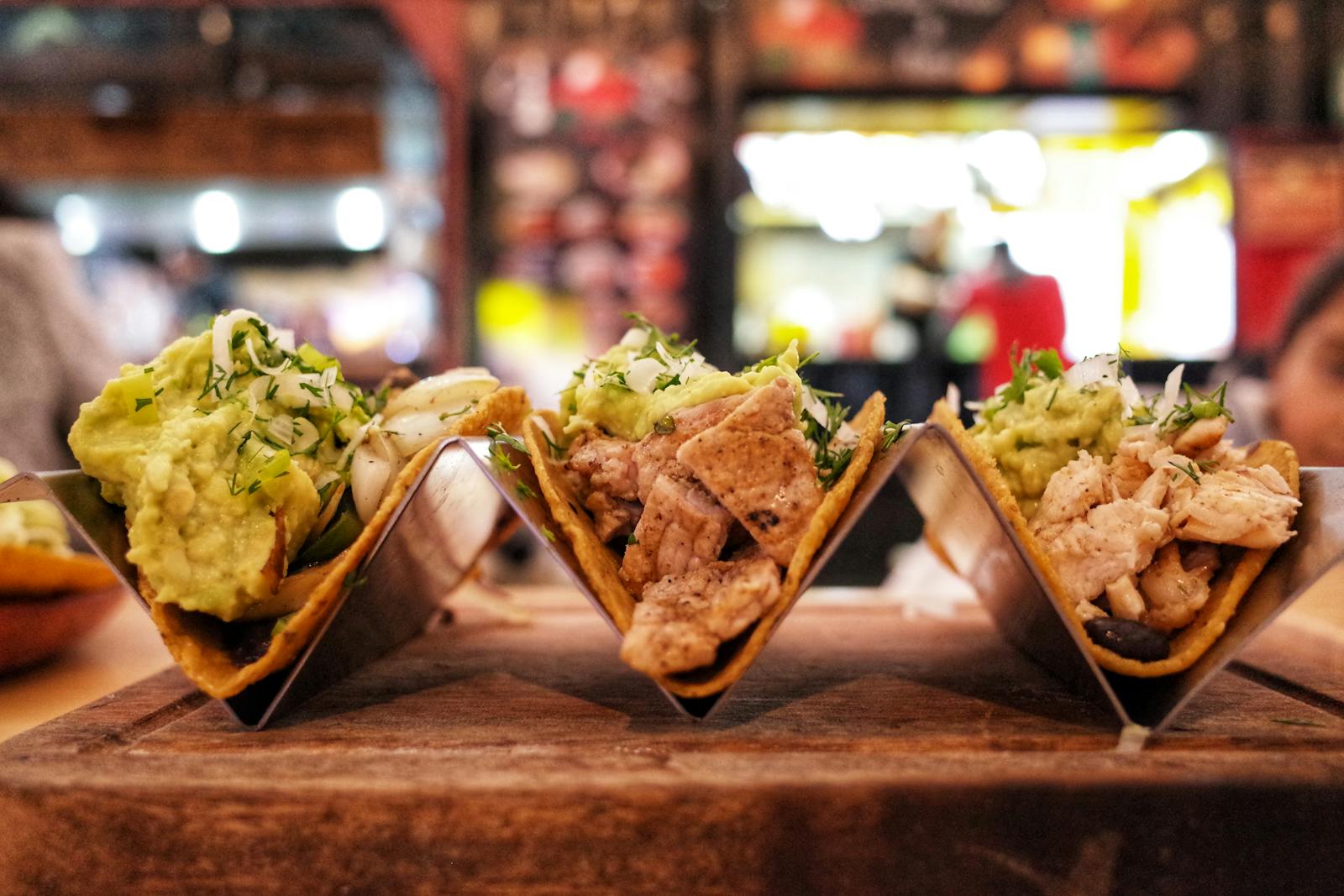
The taco is the absolute basic. It’s a small, soft corn tortilla filled with just about anything. Travellers and foodies agree that real tacos al pastor are worth the trip especially in Mexico City, where the meat is roasted on a vertical spit called a trompo (a bit like a kebab) and sliced with a piece of pineapple. If you’re a vegetarian like us, you’ll love tacos with nopales (cactus), mushrooms or flor de calabaza (squash blossom). A single street taco typically costs around 15–25 MXN (€0.70–1.20).
2. Quesadilla
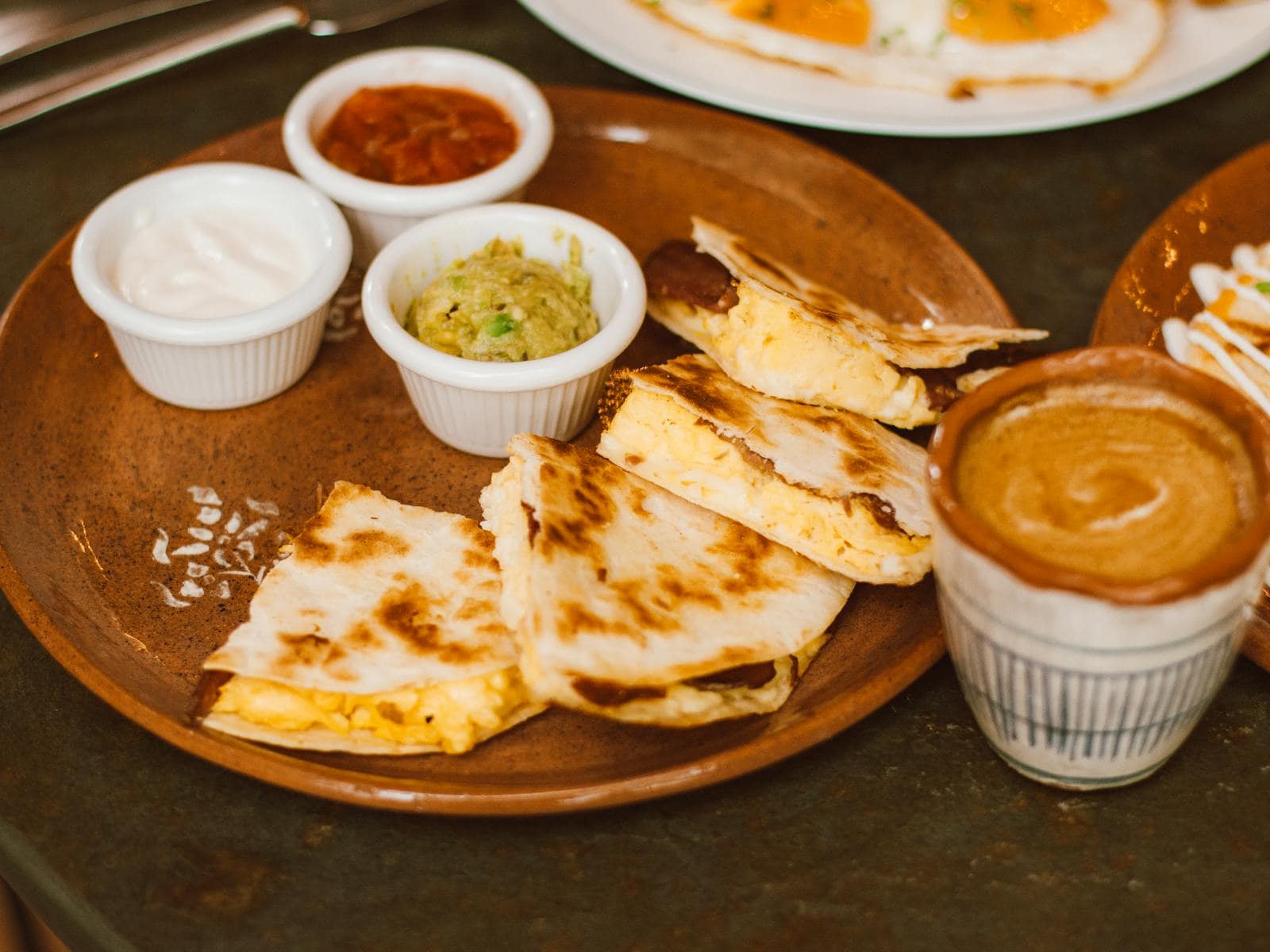
Back home we know quesadillas as two wheat tortillas glued together with cheese. In Mexico (especially in the central regions) it’s often a single corn tortilla folded in half and toasted on a hot griddle called a comal. It might be filled with quesillo cheese, but in Mexico City you often have to ask for cheese explicitly (con queso), otherwise you’ll just get a tortilla with a filling such as mushrooms or potatoes.
3. Enchiladas
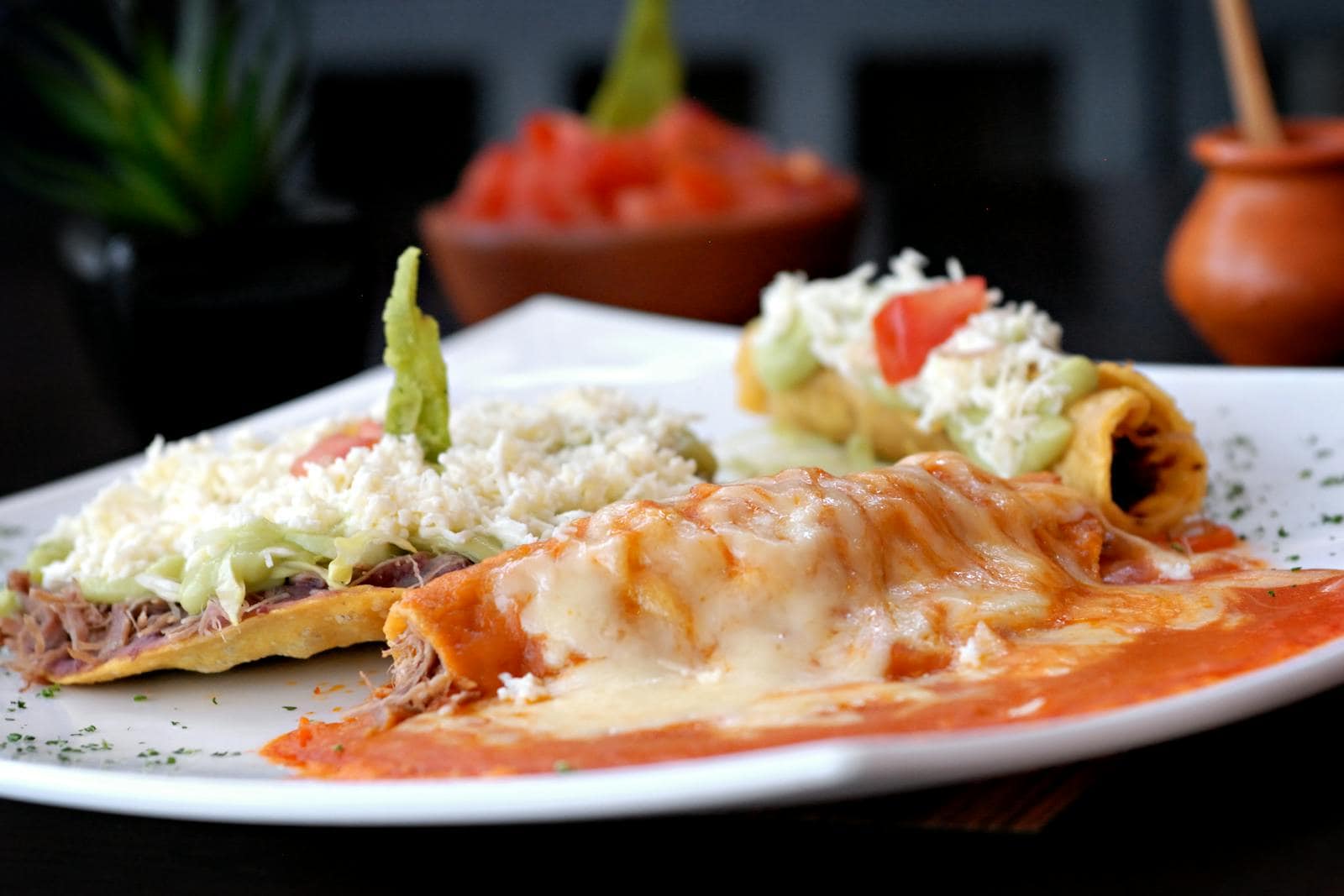
Picture soft corn tortillas filled with cheese, beans or meat, rolled up on a plate and generously smothered in sauce. Enchiladas verdes are doused in a spicy green sauce made from tomatillos (green tomatoes), while enchiladas rojas get a red chilli sauce. Finally they’re topped with fresh cheese, onion and a drizzle of sour cream. It’s the perfect comfort food, and a restaurant portion will set you back around 120–180 MXN (€6–9).
4. Tamales
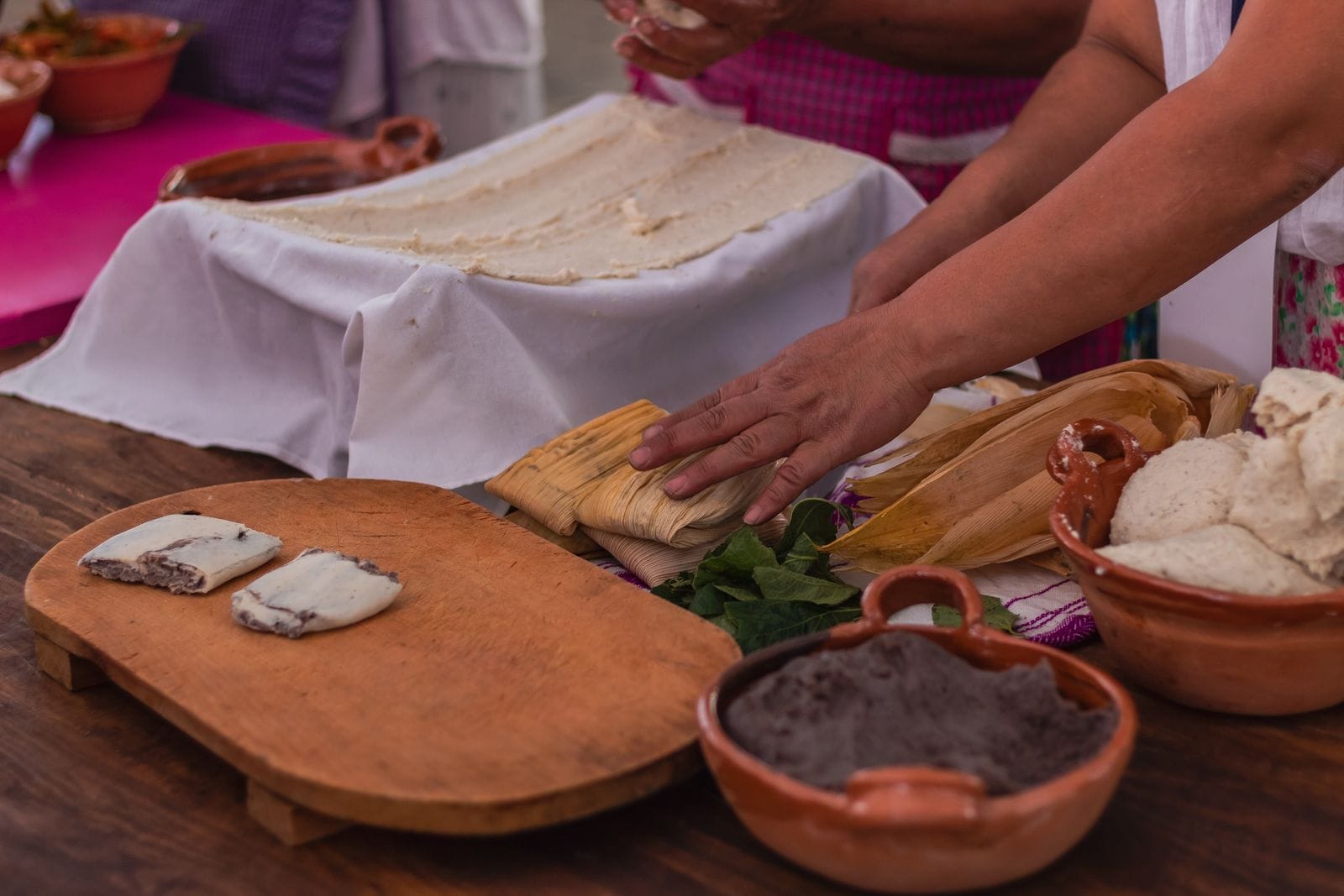
Tamales are basically little gifts. They’re made of corn dough (masa) filled with sauce, cheese, vegetables or meat, wrapped in a corn or banana leaf and steamed. They’re a classic breakfast that locals grab from street vendors on their way to work. Wrapped in the leaf, the dough beautifully soaks up the aroma. They usually cost around 20–30 MXN (€1–1.50).
Sauces and dips
Mexico lives and breathes sauces, and with every meal you’ll get at least two different bowls placed on your table.
5. Guacamole
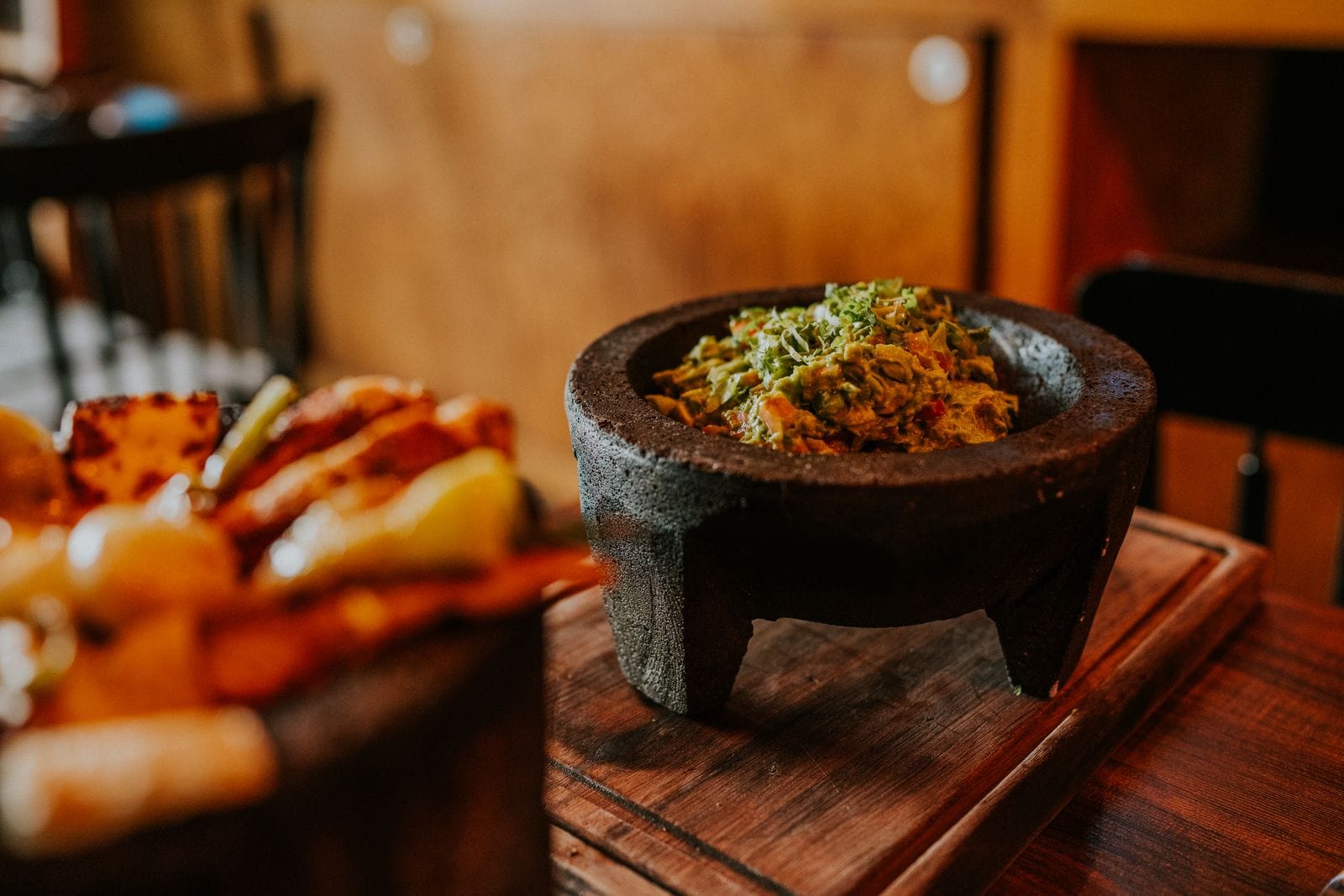
There’s probably no more famous Mexican export than guacamole. But in Mexico it’s a thousand times better than the stuff you buy in a plastic tub back home. It’s made from perfectly ripe avocados (which taste like butter here), fresh coriander, lime, onion and sometimes a little tomato. It’s served with crunchy totopos (tortilla chips).
6. Mole
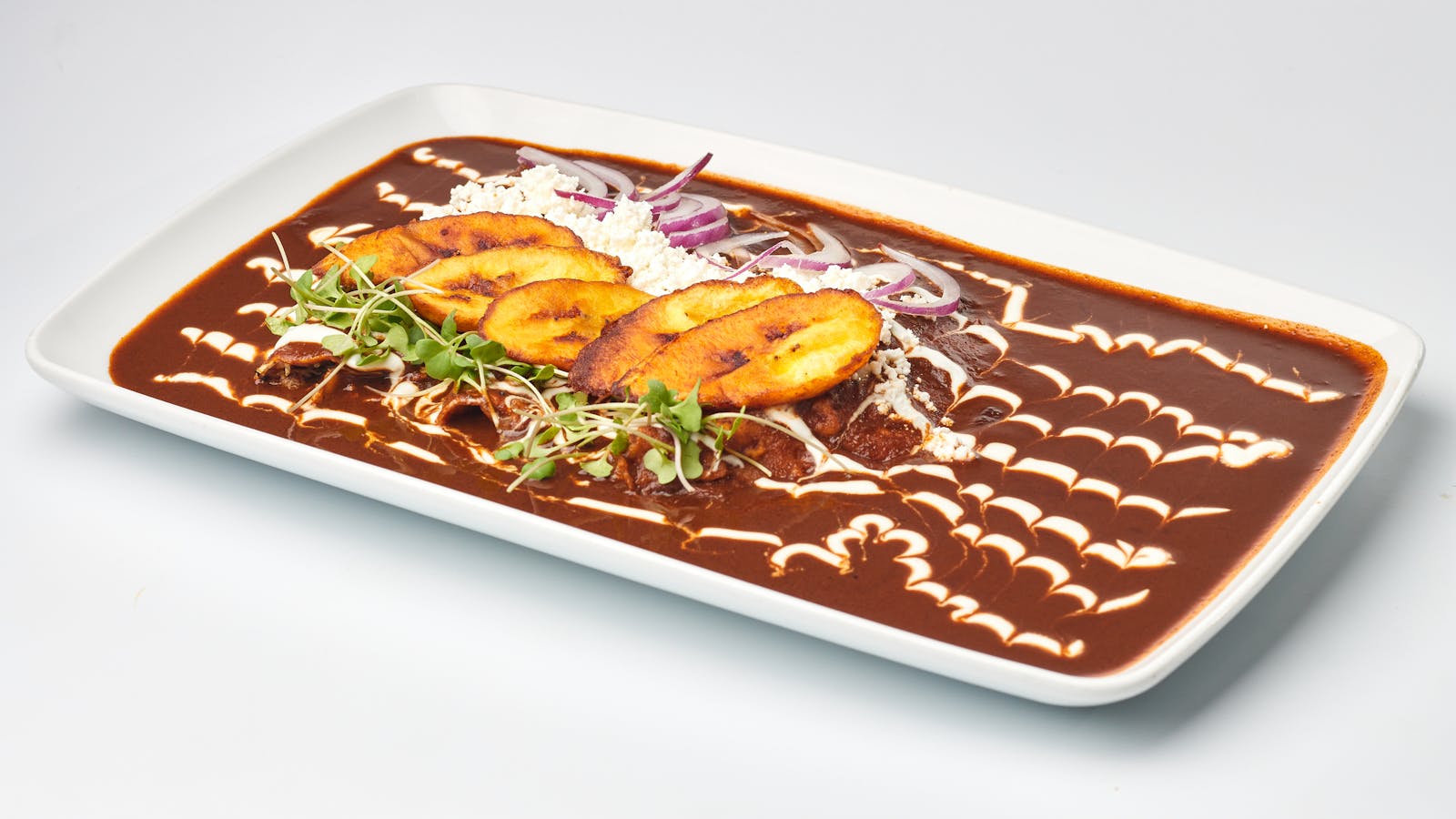
The word mole simply means sauce, and it’s the absolute pinnacle of Mexican gastronomy. Oaxaca is often recommended as the culinary heart of Mexico, and this is where the famous mole negro comes from. This dark, incredibly complex sauce can be made from up to thirty different ingredients, including dried chillies, spices, nuts and a piece of dark chocolate. It’s rich, slightly sweet, earthy and spicy all at once.
7. Salsas (Pico de gallo, Salsa verde and roja)
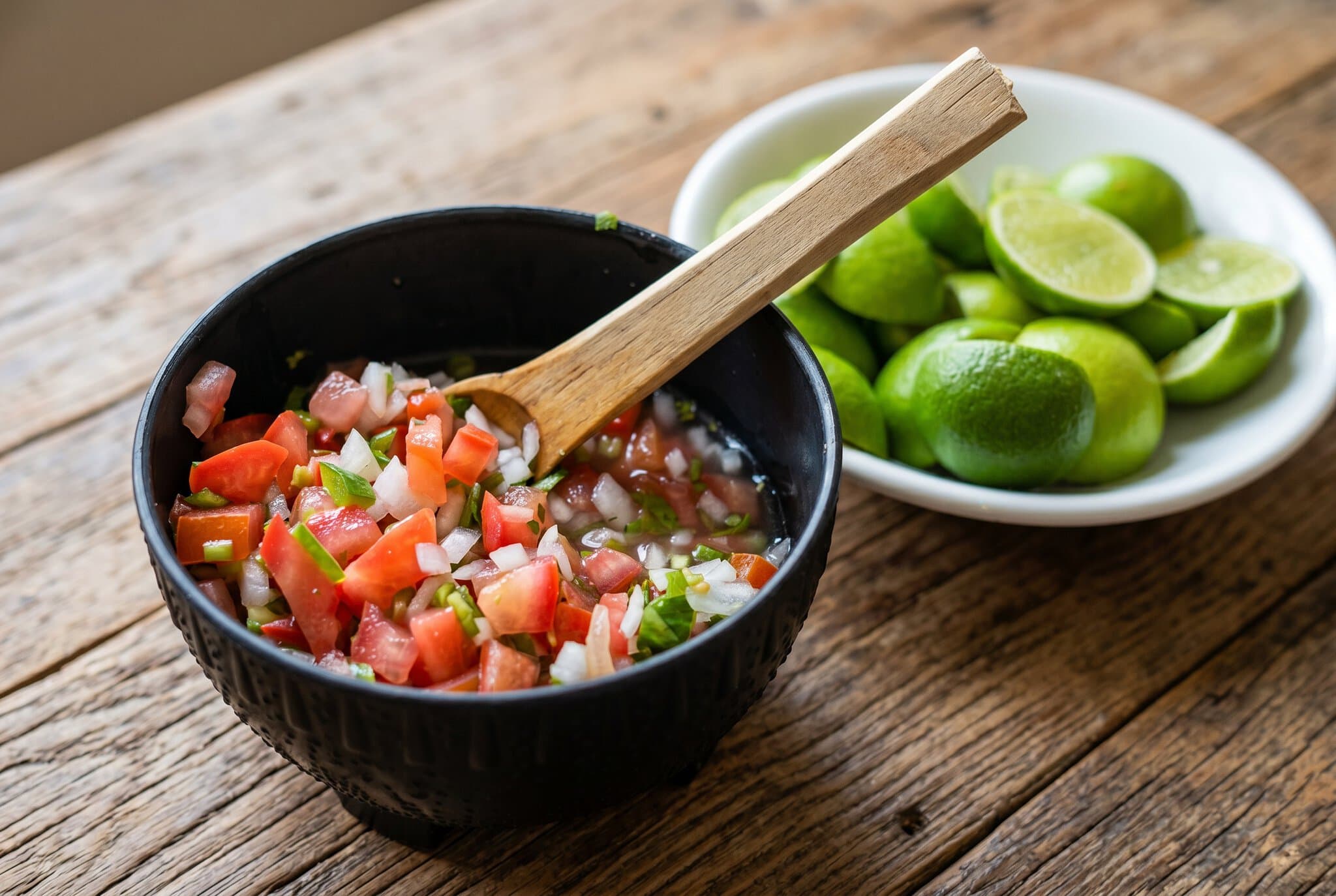
Salsa is the foundation of everything. Pico de gallo is a fresh mix of chopped tomatoes, onion, coriander and jalapeños. Salsa verde is cooked from green tomatillos and has a pleasantly tangy flavour, while salsa roja, made from red tomatoes and chillies, is often properly hot. Always dab a tiny bit on the back of your hand first so you know what level of heat you’re dealing with 😅.
Street food treats
The best culinary life in Mexico happens on the street. This is where you’ll find the things a fancy restaurant could never teach you to love.
8. Elote
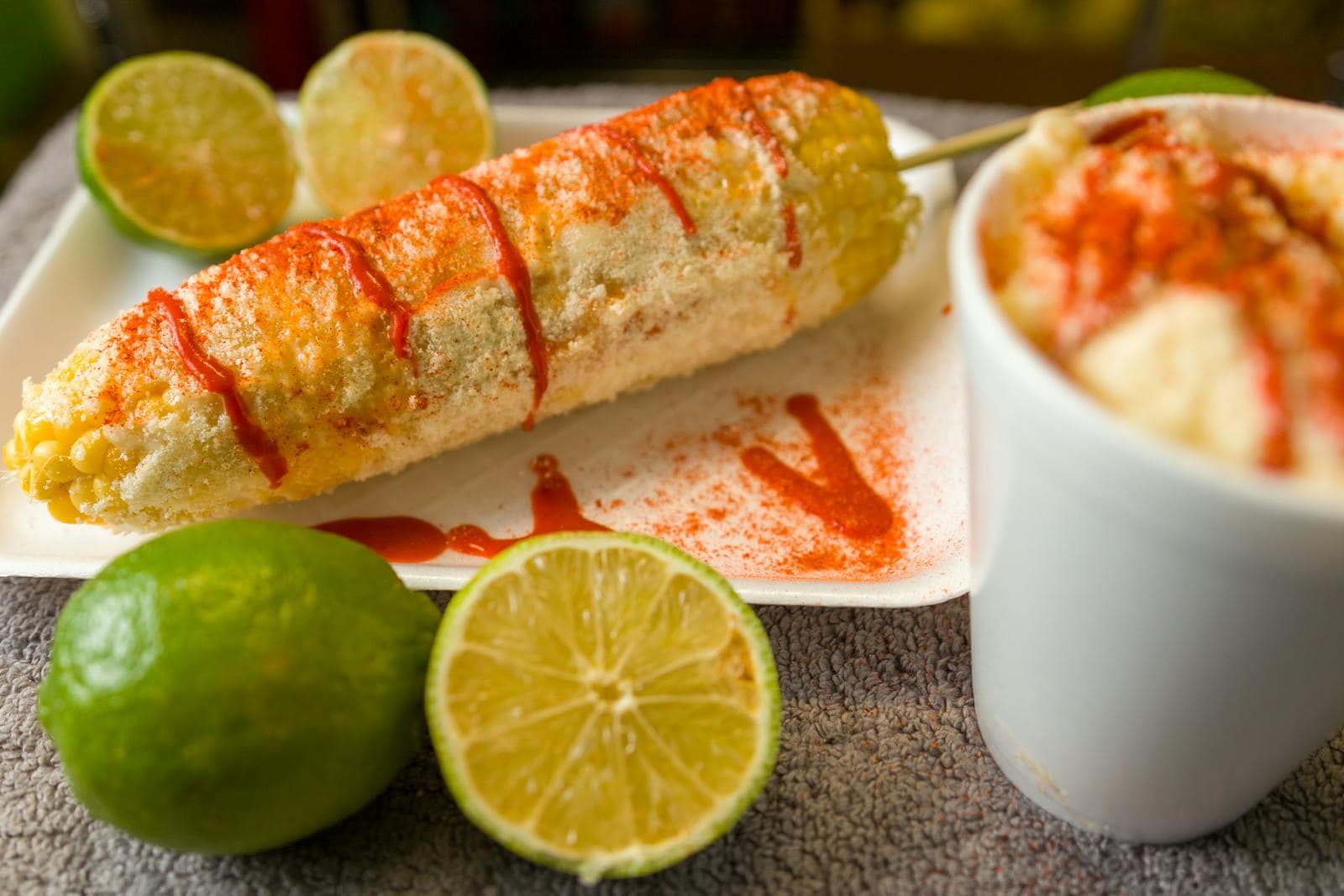
When you spot a cart with steam rising from it, run towards it. Elote is boiled or grilled corn on the cob skewered on a stick, which the vendor generously slathers with mayonnaise and sprinkles with crumbled cotija cheese, chilli powder and a squeeze of lime. It sounds odd, but the combination of sweet corn, salty cheese and spicy chilli is simply divine. It costs around 30 MXN (€1.50).
9. Esquites
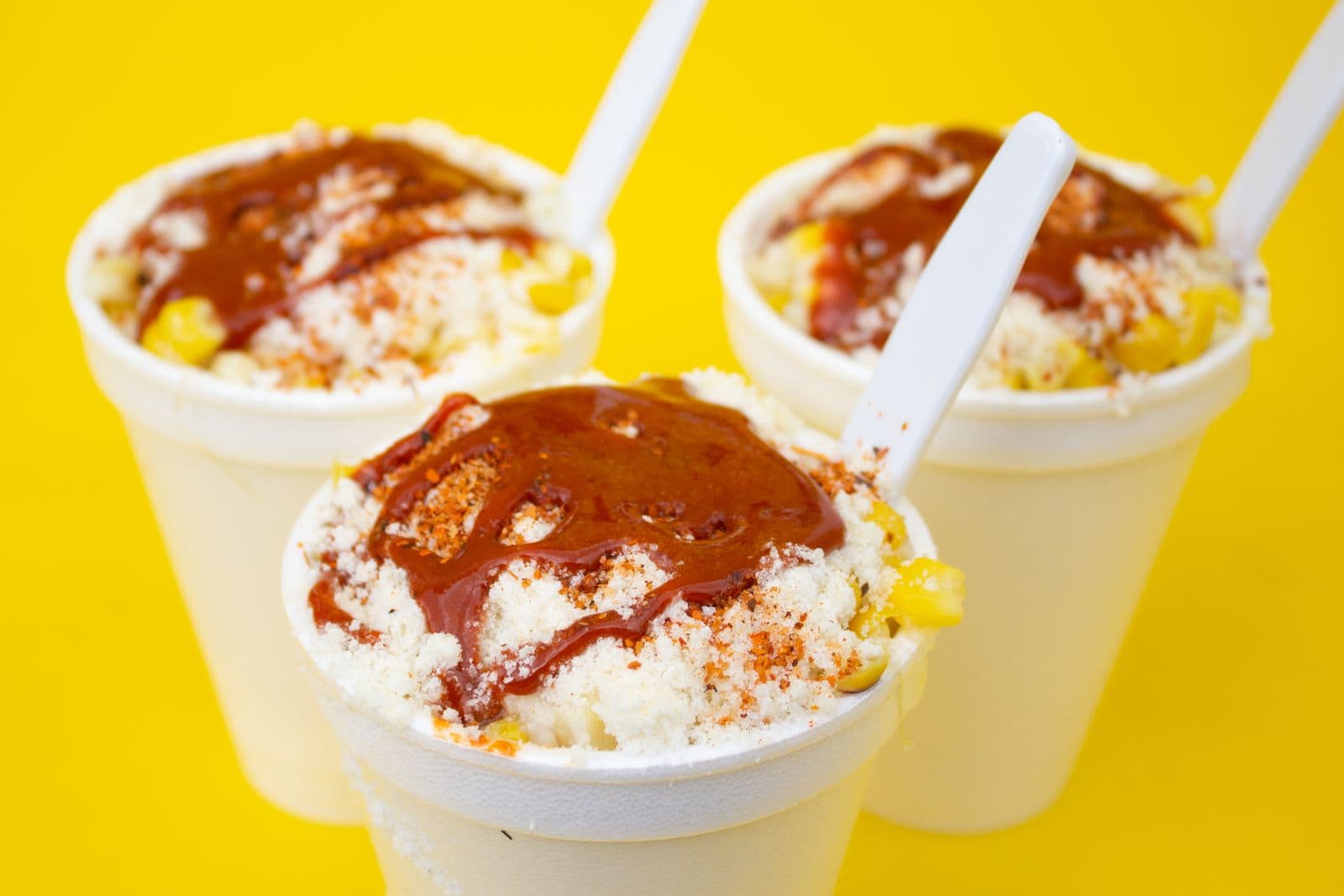
If you’d rather not get messy from elote, go for esquites. It’s exactly the same thing, except the kernels are already cut off the cob and served in a small cup with the same toppings. Often the herb epazote is added too, lending a distinctive, slightly earthy flavour.
10. Tlayuda
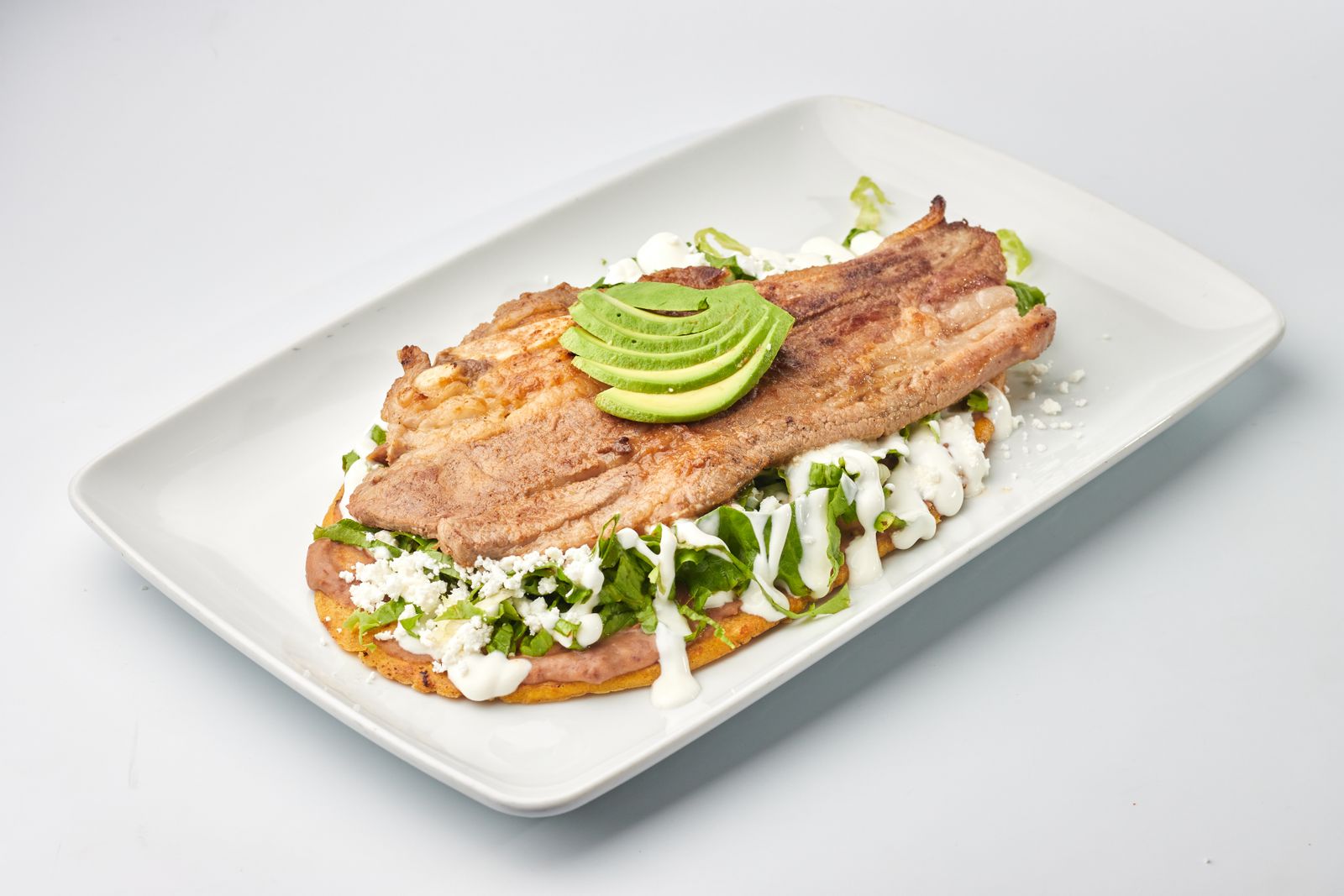
This is an Oaxacan marvel, sometimes nicknamed the Mexican pizza. It’s a huge, thin and crispy corn tortilla spread with bean paste (watch out for the lard), topped with stringy quesillo cheese, tomatoes and avocado, then toasted over charcoal. It’s a massive portion that’s easy to share.
11. Tlacoyos
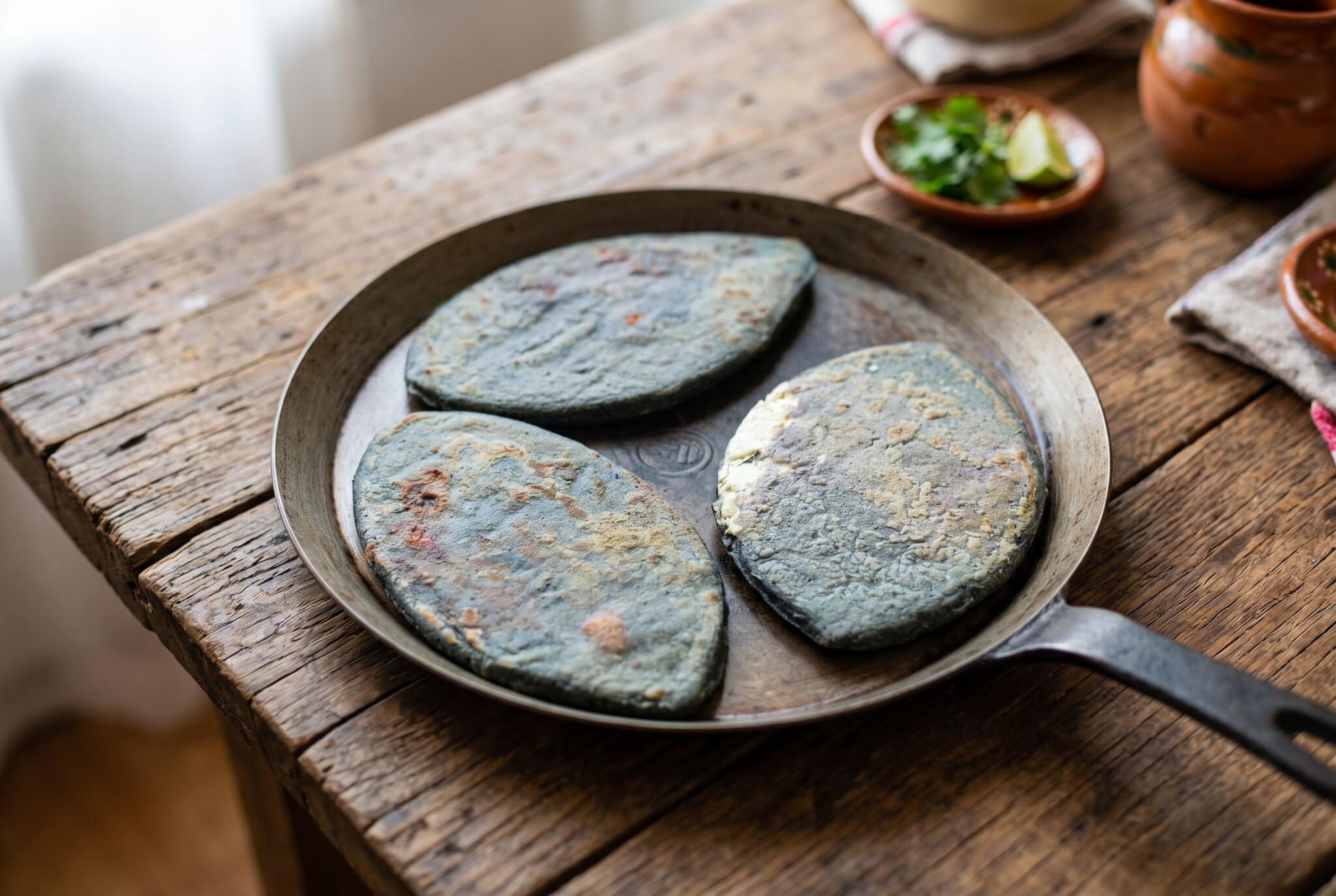
A thicker, oval corn patty made from blue or white corn, with beans or fava beans baked right into it before toasting. On top you’ll find cactus salad (nopales), cheese and salsa. It’s a brilliant, hearty vegetarian option that costs next to nothing on the street.
Soups to warm you up (and cure a hangover)
Mexicans love their soups and believe they can cure everything from a broken heart to a tequila hangover.
12. Sopa Azteca (Tortilla soup)
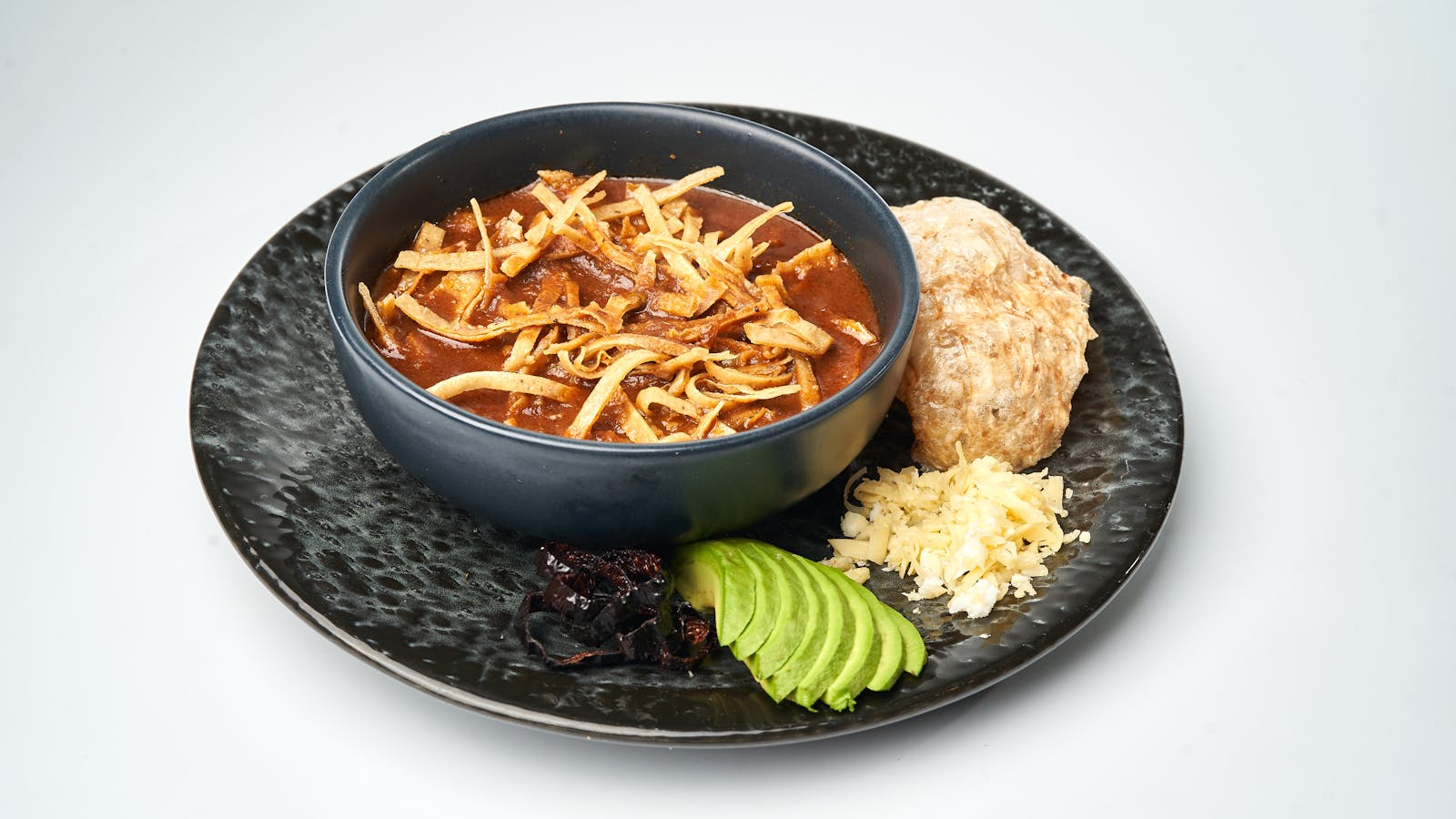
A rich tomato broth flavoured with the herb epazote and pasilla chillies. Right in front of you they’ll add crispy strips of fried tortilla, diced avocado, panela cheese and sour cream. The warmth of the soup melts the cheese beautifully. For me, it’s probably the best soup in the world.
13. Pozole
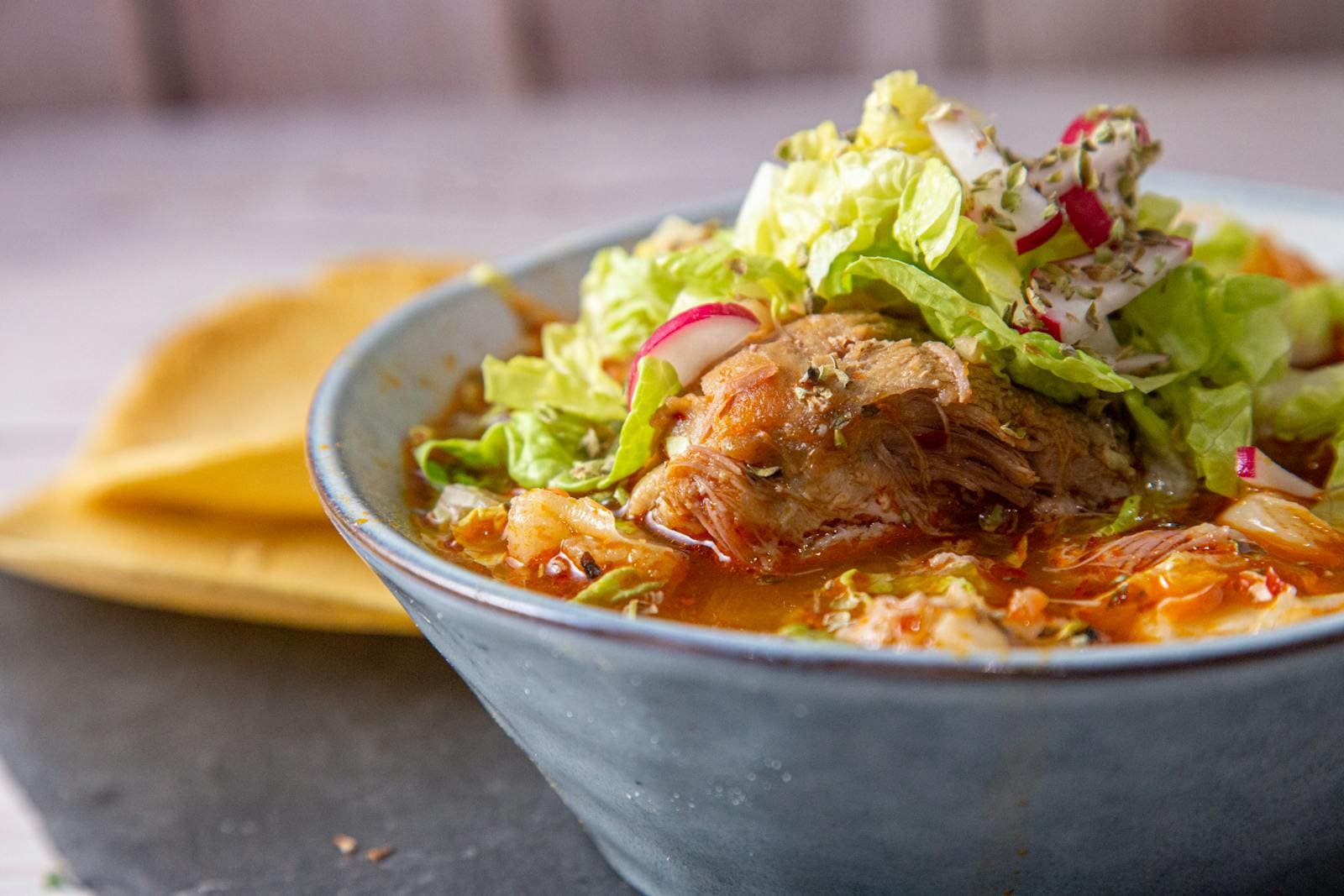
A traditional hearty soup built around giant nixtamalised corn (cacahuazintle). Locals most often eat pozole with pork, but in many places they also make a phenomenal vegetarian version with mushrooms (pozole de hongos). You top it yourself with shredded radish, lettuce, onion, oregano and lime. A bowl usually costs around 100 MXN (€5).
Something sweet
Mexican desserts are very sweet, often fried, and always a delight.
14. Churros
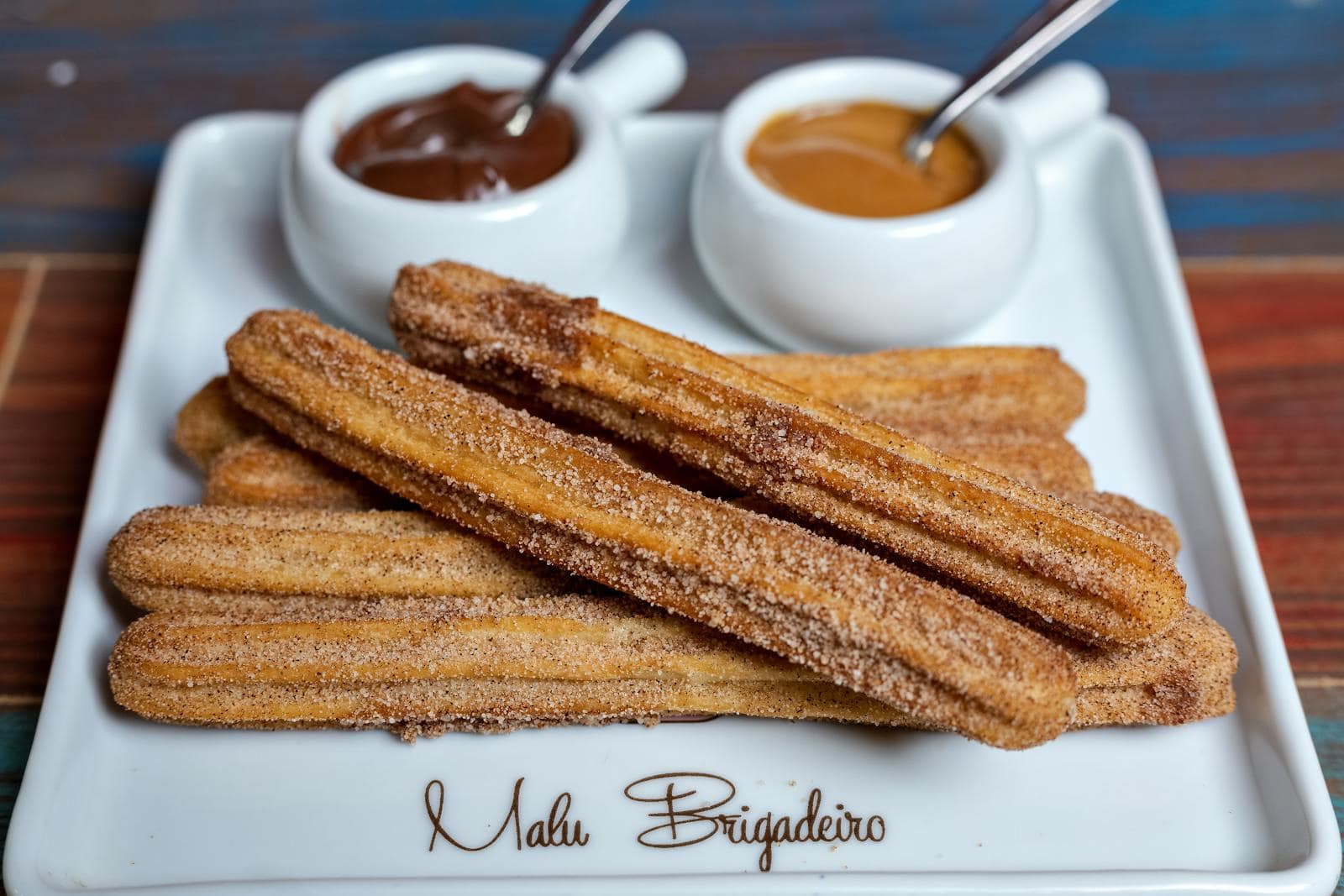
Originally a Spanish treat made from choux pastry, churros have become thoroughly at home here. The dough is fried into long, ridged sticks until golden and immediately coated in a mix of sugar and cinnamon. Crispy on the outside, soft inside. They’re best with a cup of hot chocolate for dipping.
15. Marquesitas
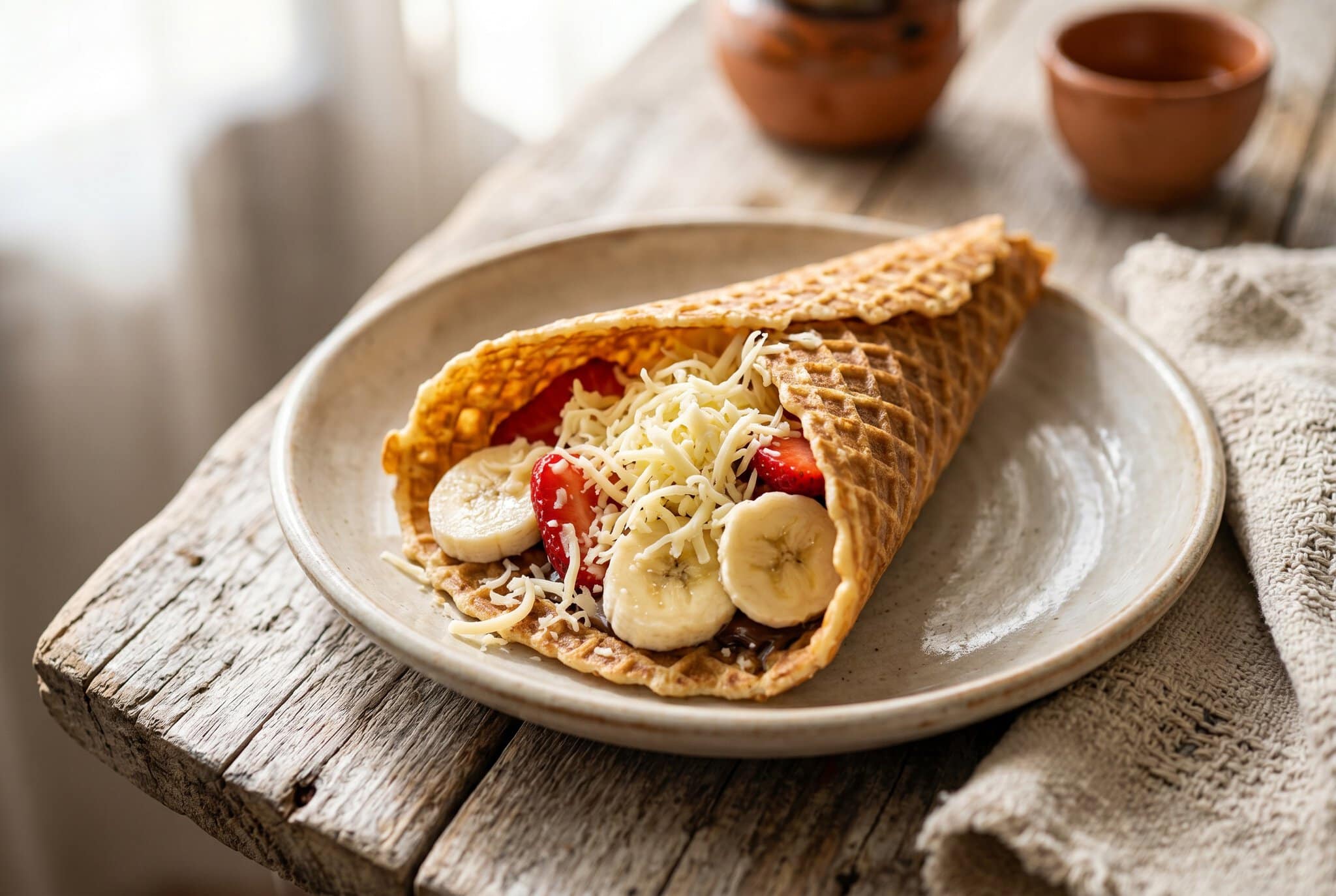
Crispy rolled pancakes that you’ll mostly come across in the Yucatán. The batter is as thin as a wafer. Inside hides an utterly crazy but brilliant combination: grated Dutch Edam cheese (they call it queso de bola) paired with something sweet, typically dulce de leche caramel, Nutella or jam.
Regional pride
These dishes are so specific to their regions that you simply have to know about them, even if you won’t try some of them because of the meat.
16. Cochinita pibil (Yucatán)
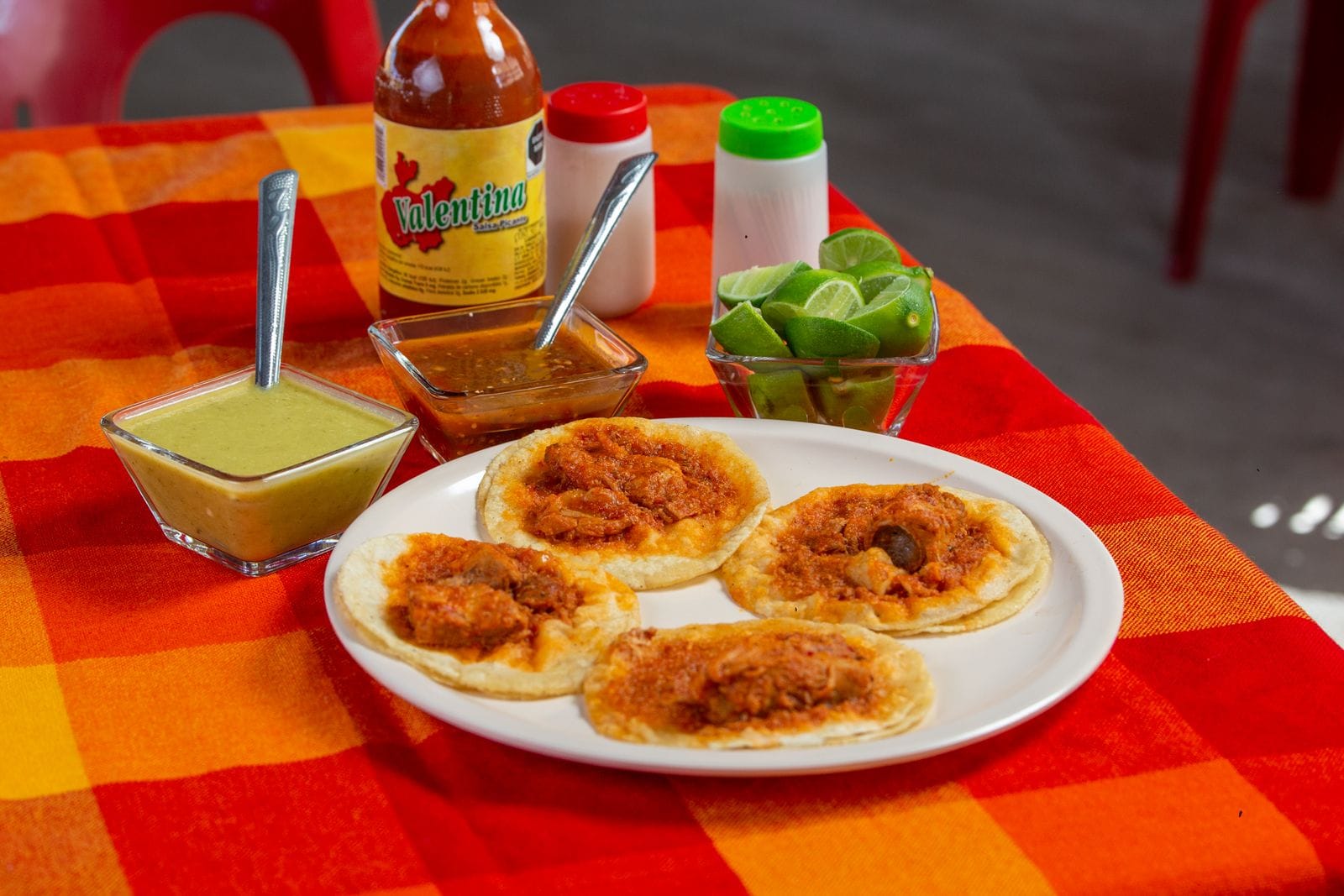
The pride of the Yucatán, made of pork marinated in a red paste of achiote seeds and the juice of bitter oranges. According to guides to regional cuisines, it’s traditionally wrapped in banana leaves and roasted overnight in an underground pit called a pib. It’s served with pickled red onion and habanero salsa.
17. Chiles en nogada (Puebla)
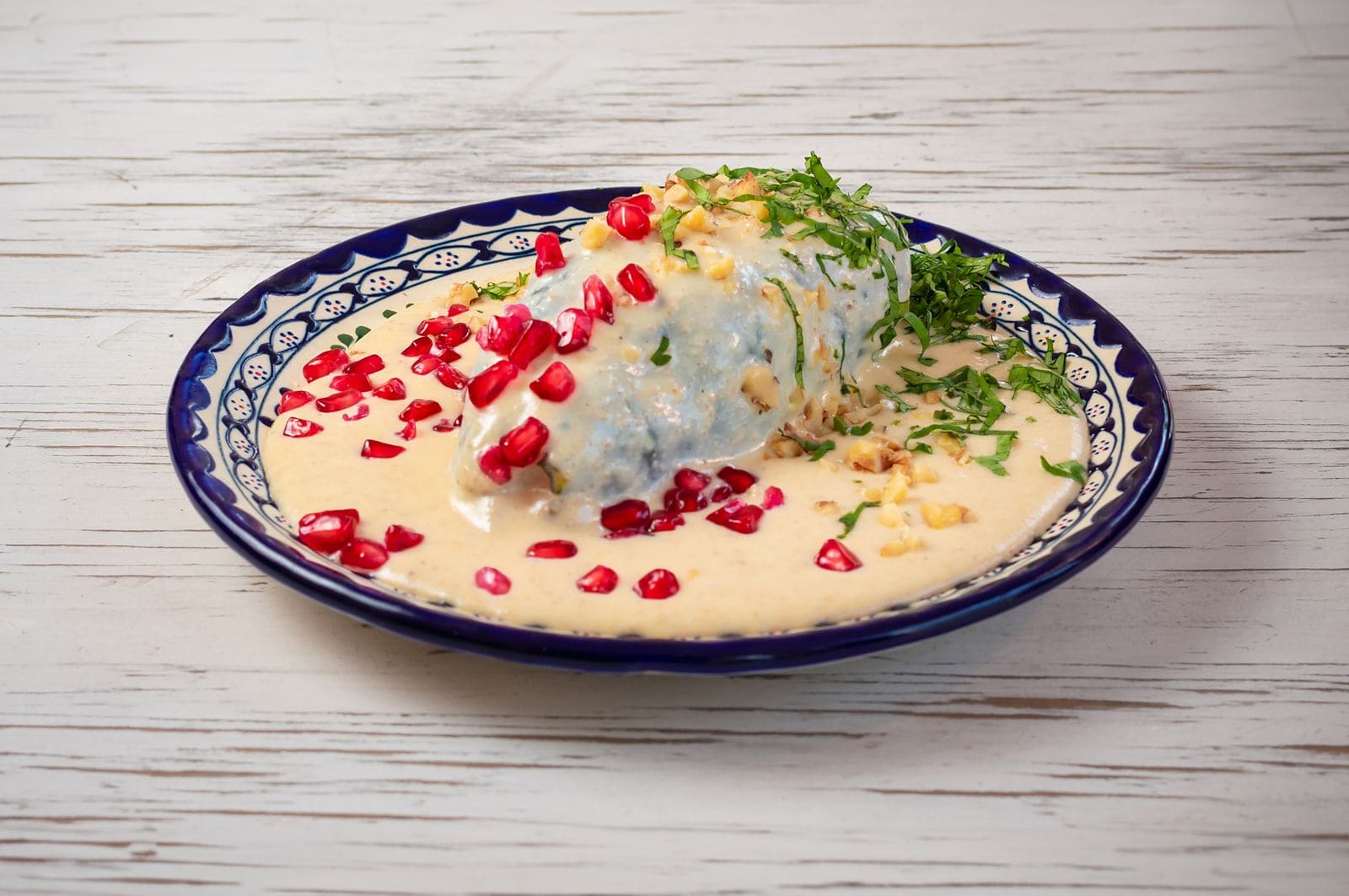
One of the most visually stunning dishes in Mexico, bearing the colours of the Mexican flag (green, white, red). It’s a large green poblano pepper stuffed with a mixture of meat, fruit and nuts, draped in a white walnut sauce (nogada) and sprinkled with red pomegranate seeds. It’s seasonal, served mainly around September for Independence Day.
18. Carnitas (Michoacán)
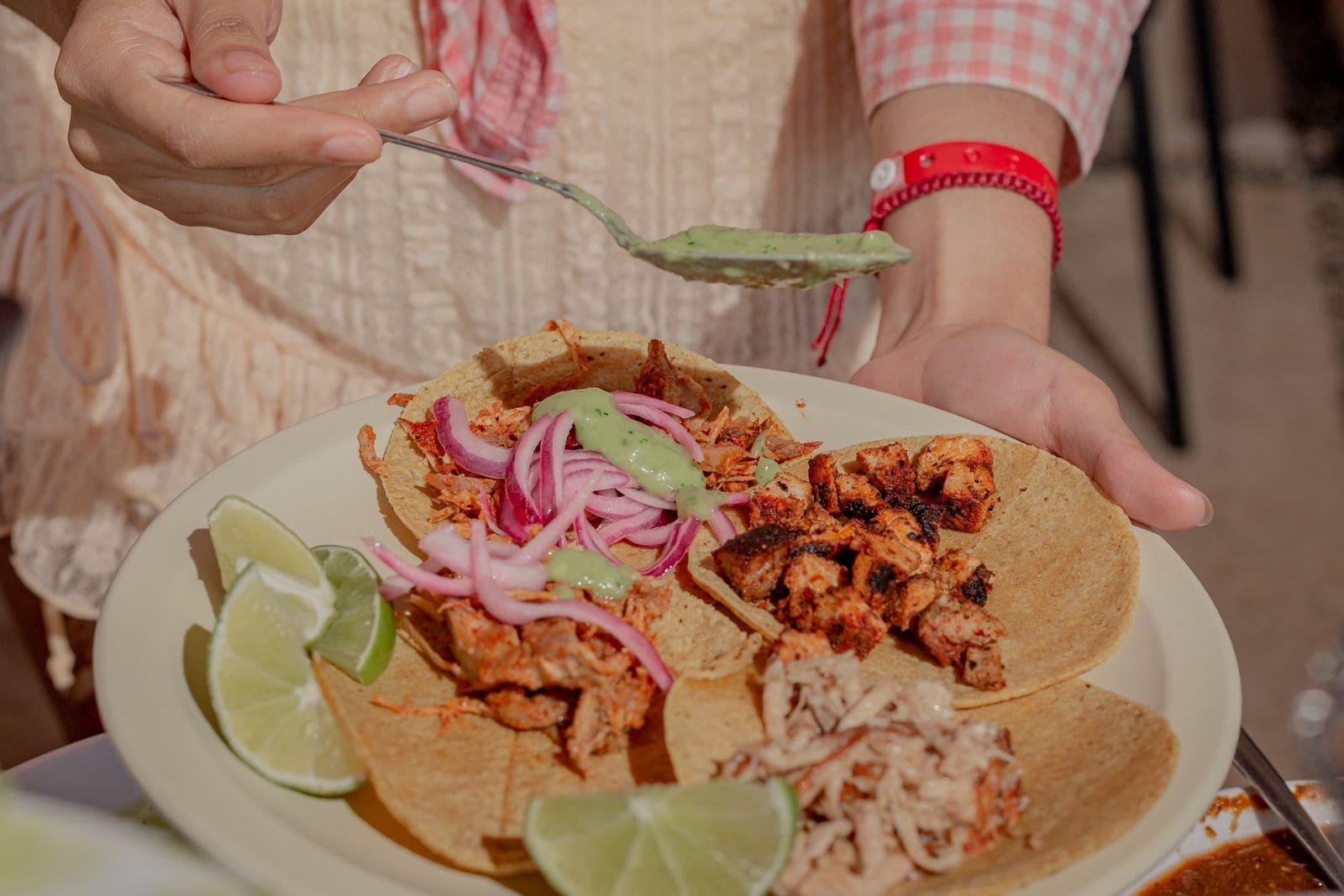
Another meat classic, this time from the Michoacán region. It’s pork slowly confited (braised in its own fat) in huge copper pots until perfectly tender. It’s commonly turned into tacos at street stalls.
19. Carne asada (Northern Mexico)
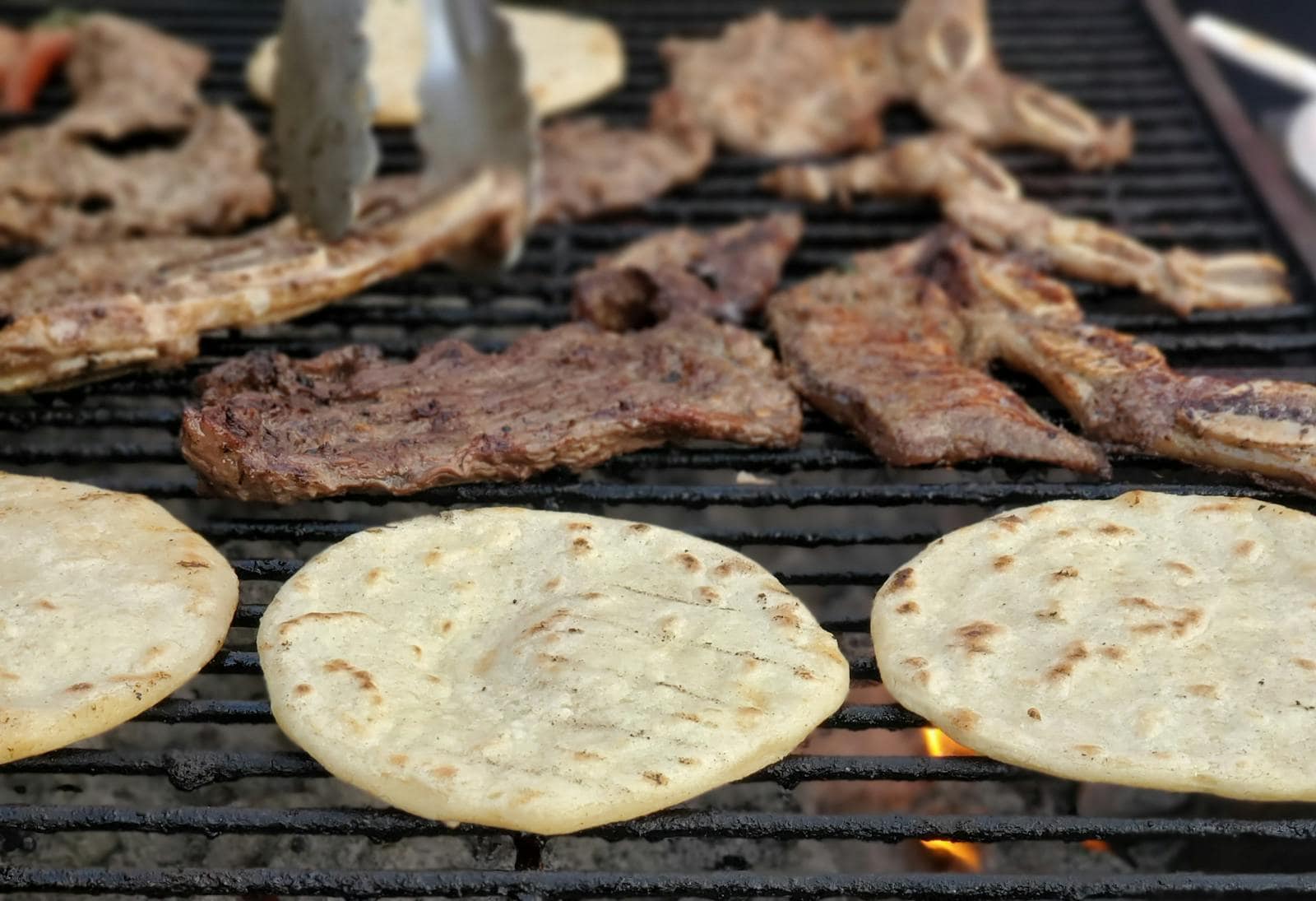
While the south lives on pork and corn, the rugged north of Mexico is cattle country and home to wheat tortillas. Carne asada is marinated beef grilled over an open fire, served in a wheat tortilla with guacamole and spicy salsa.
20. Fish tacos (Baja California)
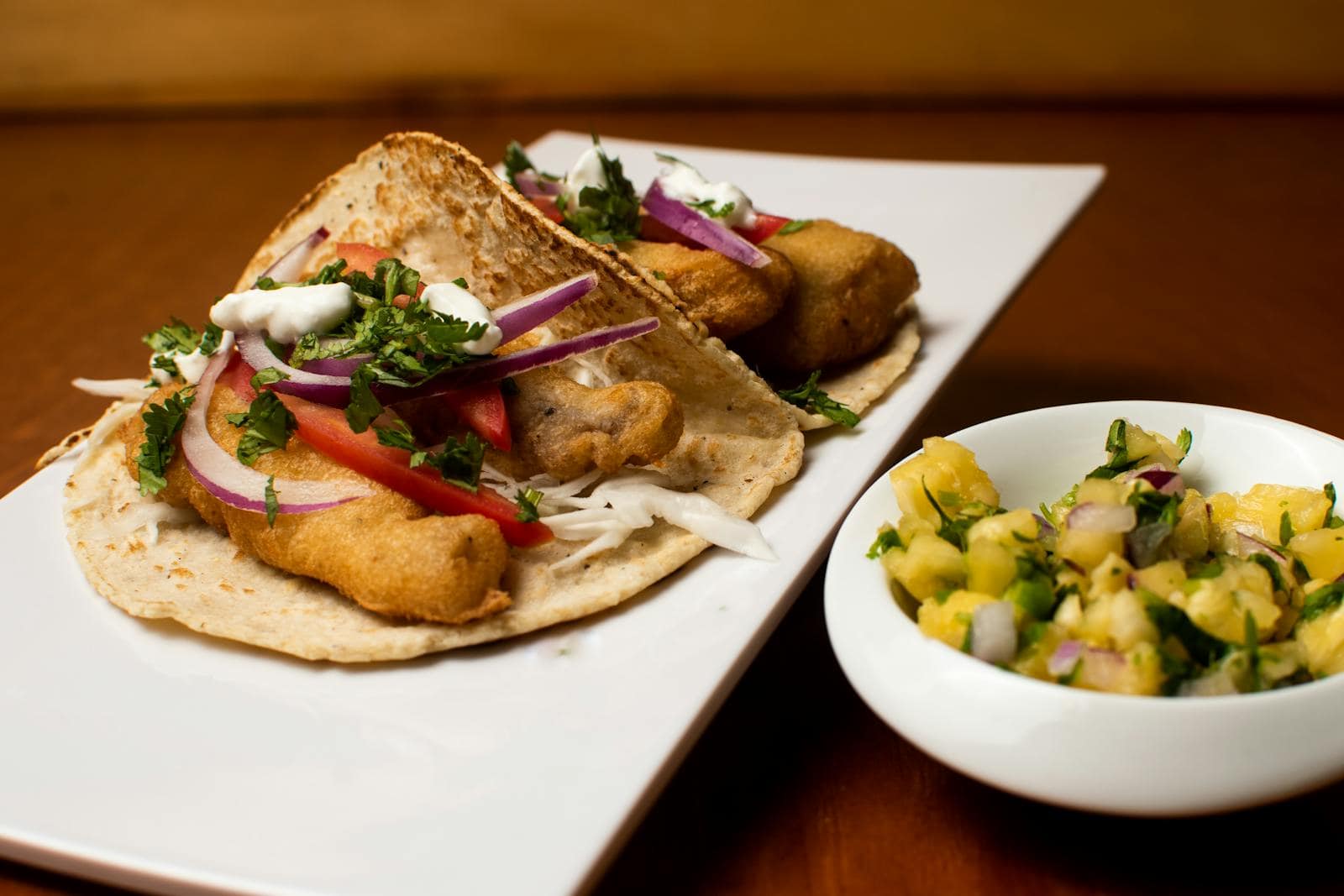
The Baja California peninsula is famous for its fish tacos. Pieces of white fish are coated in batter, fried until golden and served in a tortilla with shredded cabbage, pico de gallo and a creamy mayonnaise sauce.
Street food: how to do it safely
Eating street food in Mexico is an experience it would be a crime to miss, yet plenty of people are scared of “Montezuma’s revenge”. We eat on the street all the time, and you just need to follow a few basic rules.
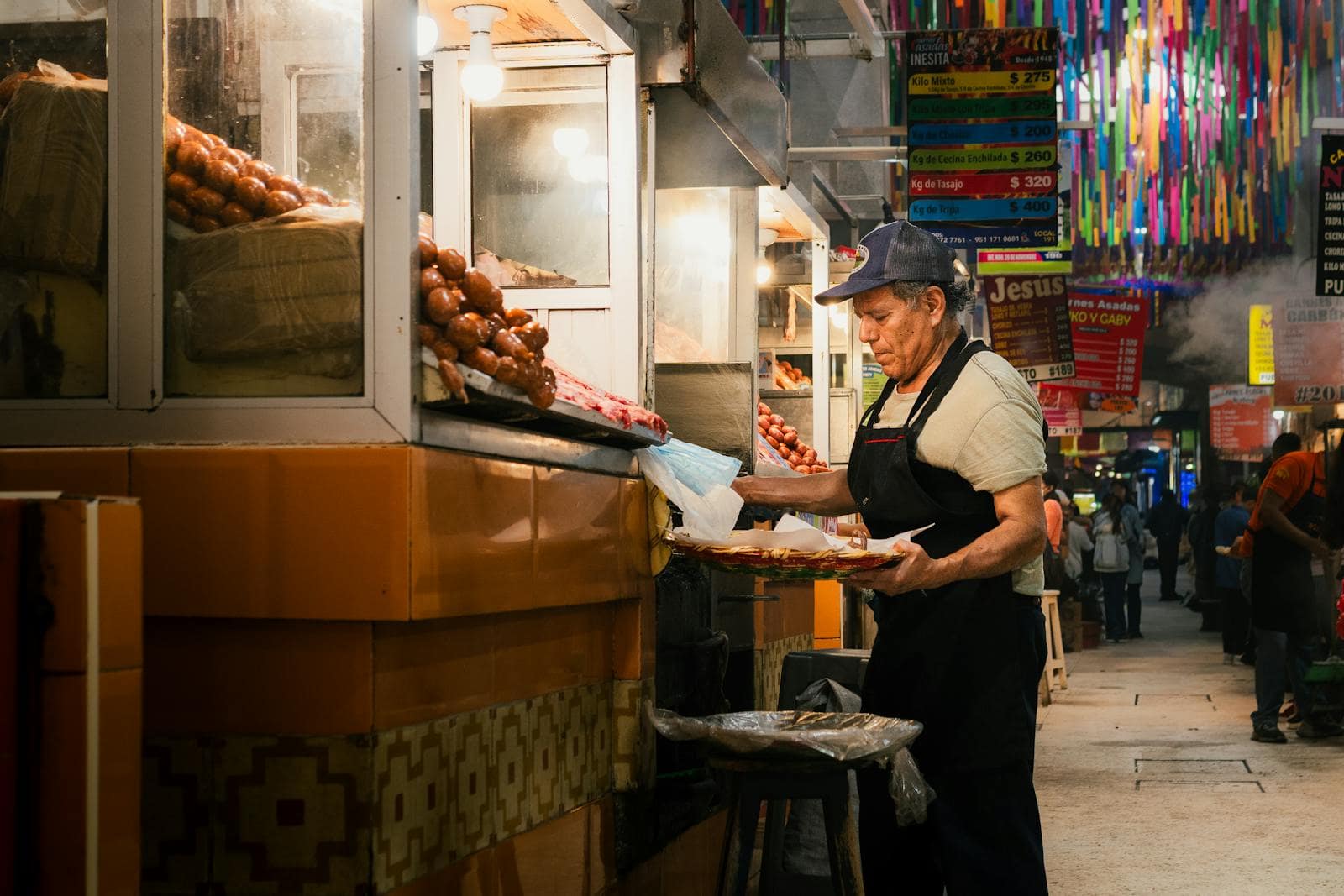
The most reliable street food rule according to seasoned travellers is simple: eat where there’s a queue of locals and where the food turns over fast. That means the ingredients are fresh and haven’t been sitting out in the sun. After all, the locals wouldn’t want to poison themselves either.
The classic traveller’s rule applies: “Boil it, cook it, peel it, or forget it.” Choose stalls where you can see the food being prepared right in front of you and served hot. A big hygiene red flag is when the same person who’s preparing your food (often with bare hands) also handles the money. Ideally a stall should have one person cooking and another taking payment, or the vendor should use a plastic bag as a glove when handling cash.
💡 Tip: Always drink bottled water only. If you’re having drinks with ice (hielo), in tourist areas and good restaurants the ice is made from purified water. On the street, though, it’s best to skip the ice altogether.
Mexican drinks — from agave to chocolate
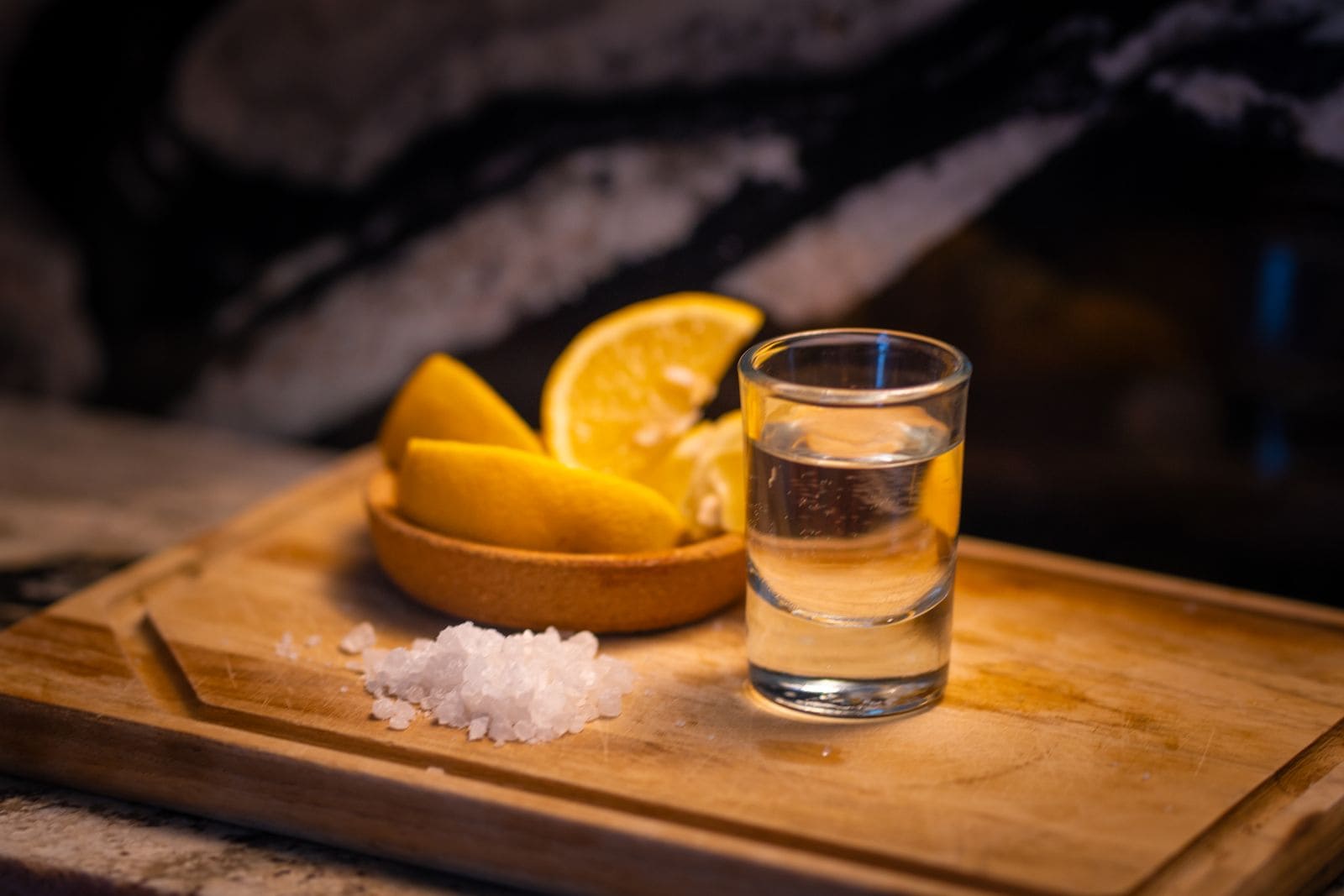
Mexico isn’t just about the food, but also the drinks that complement it perfectly. Here are a few things you have to try:
- Mezcal: While tequila may only be made from blue agave in a specific region, mezcal in Oaxaca is produced from more than 30 species of agave. The agave hearts (piñas) are slowly roasted in underground pits, giving mezcal its distinctive smoky flavour. It’s sipped slowly from small bowls (copita) and accompanied by orange slices with salt mixed with crushed worms (sal de gusano).
- Tequila: Proper tequila made from 100% Weber blue agave tastes nothing like the stuff you knock back at a club. You don’t down it with lemon and salt — you sip it slowly.
- Agua fresca: Fresh water blended with fruit. You’ll come across flavours like watermelon, mango, tamarind or sweet rice horchata with cinnamon. A refreshing icy drink that’s brilliant for cooling the burn of chilli.
- Champurrado: Travellers strongly recommend champurrado. It’s an incredibly thick, velvety hot chocolate thickened with masa corn dough, scented with cinnamon and real Oaxacan chocolate. It’s almost a drinkable dessert, perfect with morning churros.
- Café de olla: Traditional Mexican coffee brewed in a clay pot (olla) with brown cane sugar (piloncillo) and a stick of cinnamon. It’s very sweet and smells wonderful.
Vegetarians and vegans in Mexico
Although Mexican food is full of fresh vegetables, beans and corn, for vegetarians and vegans it can be a bit of a minefield.
Vegetarians need to watch out for hidden animal fat. Refried beans (frijoles refritos), tamale dough and various street patties are very commonly made with pork lard (manteca de cerdo). It gives the food a distinctive flavour and texture, but it’s a problem for us. Likewise, red rice (arroz rojo) and various soups are often cooked with meat stock (typically chicken).
- When you order, it’s always best to ask:
- ¿Tiene manteca? (Does it have lard in it?)
- ¿Lleva caldo de pollo/carne? (Does it contain chicken/meat stock?)
- Soy vegetariano/a. (I’m a vegetarian.)
Safe choices for us tend to be quesadillas filled with cheese and mushrooms, esquites (corn in a cup), tlacoyos with beans, or cactus salad. And in good restaurants they now know exactly what’s needed and will happily offer you a purely vegetarian version.
Regional cuisine: where to eat best?
Every state in Mexico has its own pride and its own signature dishes. So where do you find the very best?
Mexico City (CDMX): A city of extremes. You’ll find some of the best street food in the world here (especially tacos al pastor and churros), but it’s also a mecca of fine dining. Restaurants like Quintonil (ranked the world’s third best in 2025) and Pujol define modern gastronomy.
Oaxaca: The culinary heart of Mexico. Read our Mexico City guide to help you plan where to go. Oaxaca is home to seven kinds of mole, giant tlayudas and the best mezcal. The Michelin Guide arrived here in 2024, sparking a huge boom, so for the top spots (like Levadura de Olla) you’ll need to book weeks in advance.
Yucatán: The tropical south, where food blends with Maya traditions. The Yucatán is a completely different world, and this is where the iconic cochinita pibil comes from. The Caribbean influence shows in the greater use of bitter oranges, achiote seeds and super-spicy habanero peppers. Mérida is a great base for sampling Yucatecan specialities.
Puebla: A beautiful colonial city near Mexico City, the birthplace of the rich chocolate-and-chilli mole poblano and the seasonal stuffed peppers chiles en nogada.
Practical tips to finish
When you set off to discover Mexican flavours, a few practical pointers will come in handy:
- Tipping (Propina): In restaurants 10–15% is standard. Watch out — sometimes it’s already included on the bill as “servicio”, so you don’t tip twice. At street stalls tipping isn’t usually expected; at most you round up the amount.
- Card payments and ATMs: Street food can only be paid for in cash (keep plenty of small change on you). Better establishments take cards. When withdrawing from an ATM, watch out for DCC (Dynamic Currency Conversion) — the machine will offer you a poor exchange rate with a markup of easily 8–9%. Always decline this conversion and let it be charged in the local currency.
- How to order: Don’t be afraid to speak up at the market. Just point and say “Uno de este, por favor” (One of this, please). Locals appreciate any attempt at Spanish.
Where to next
- Mexico City Guide: What to See and Do
- Yucatán, Mexico: Road Trip Itinerary and What to See
- Mérida, Mexico: City Guide and Day Trip Ideas
- What to See in Mexico: The Complete Guide
- Book guided gastronomy and street food tours on GetYourGuide.
Frequently asked questions
How spicy is Mexican food really?
The food itself often isn’t spicy at all. Corn tortillas, meat, beans, and rice are mild at their base. You control the spiciness yourself with salsa (sauces) that they bring to your table in small bowls.
Is it safe to eat fruit and vegetables from street vendors?
Peeled fruit (like mango or pineapple) that the vendor cuts right in front of you is completely safe and really delicious. Watch out for pre-cut fruit salads that might have been sitting in the sun, or vegetable garnishes washed in unboiled water.
Can I drink tap water in Mexico?
No, tap water in Mexico isn’t safe to drink and could cause you serious stomach problems. Always drink only bottled water (agua purificada) and use it for brushing your teeth too.
What is nixtamalization?
It’s an ancient process where corn kernels are cooked and soaked in an alkaline solution (usually with lime). This releases nutrients, softens the hull, and transforms the corn into pliable dough for tortillas.
How much does street food cost in Mexico?
Street food is very cheap. One taco will cost you roughly 15 to 25 pesos (€0.70 to €1.20), elote corn around 30 pesos (€1.40) and a more filling quesadilla on the street costs around 40 to 50 pesos (€1.90 to €2.40).
What to drink in Mexico besides alcohol?
The best choice is the so-called aguas frescas, which are refreshing drinks made from blended fresh fruit and water. Also very popular is horchata (a sweet rice drink with cinnamon) or jamaica (iced hibiscus tea).
How do I know if a street food stall is safe?
The best indicator is a queue of locals. If there’s a crowd at a stall and the food is moving quickly, it means the ingredients are fresh and tasty. Also notice whether the vendor has a clean working environment.
Tips and Tricks for Your Vacation
Don’t Overpay for Flights
Search for flights on Kayak. It’s our favorite search engine because it scans the websites of all airlines and always finds the cheapest connection.
Book Your Accommodation Smartly
The best experiences we’ve had when looking for accommodation (from Alaska to Morocco) are with Booking.com, where hotels, apartments, and entire houses are usually the cheapest and most widely available.
 🚗 Car rental on the roadVerified rental cars in Mexico
Search with the DiscoverCars comparison engine — it compares prices from dozens of local and international rental companies, and most bookings come with free cancellation.
Compare car prices in Mexico →Don’t Forget Travel Insurance
Good travel insurance will protect you against illness, accidents, theft, or flight cancellations. We’ve had a few hospital visits abroad, so we know how important it is to have proper insurance arranged.
Where we insure ourselves: SafetyWing (simple monthly subscription) and TrueTraveller (for extra-long trips).
Find the Best Experiences
Get Your Guide is a huge online marketplace where you can book guided walks, trips, skip-the-line tickets, tours, and much more. We always find some extra fun there!